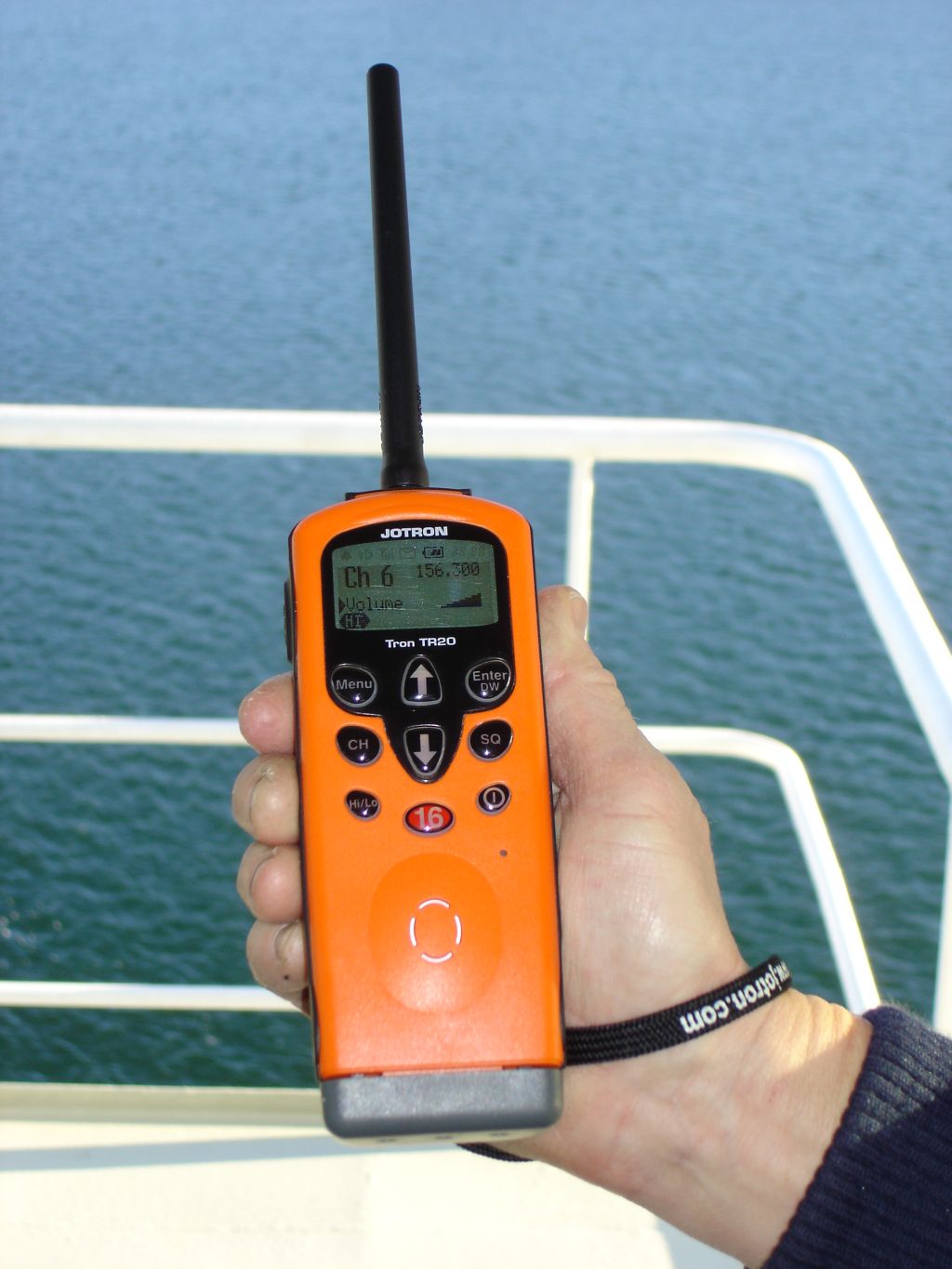
What to check on a GMDSS VHF Radio.
A GMDSS VHF radio is a marine VHF transceiver built to a specific SOLAS-mandated standard that adds Digital Selective Calling (DSC) on channel 70, distress, urgency and safety call handling, and integration with GPS position input so a distress alert automatically carries the vessel's position and MMSI identity. Where a standard leisure VHF only offers voice on the working channels, GMDSS-approved sets must support automated DSC distress alerting, controlled test call functions, and continuous watchkeeping on channel 70, which is what makes them the mandatory equipment class for GMDSS sea…
What makes this type
A GMDSS VHF radio is a marine VHF transceiver built to a specific SOLAS-mandated standard that adds Digital Selective Calling (DSC) on channel 70, distress, urgency and safety call handling, and integration with GPS position input so a distress alert automatically carries the vessel's position and MMSI identity. Where a standard leisure VHF only offers voice on the working channels, GMDSS-approved sets must support automated DSC distress alerting, controlled test call functions, and continuous watchkeeping on channel 70, which is what makes them the mandatory equipment class for GMDSS sea area A1 coverage and a component of area A2-A4 fits alongside MF/HF and satellite equipment.
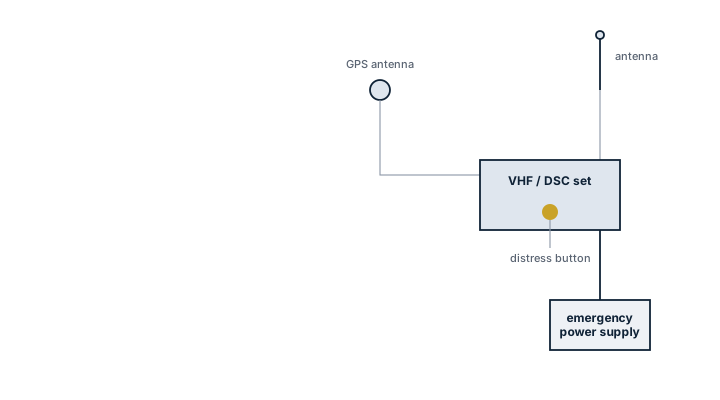
Main components
Transceiver unit
The main radio, providing voice communication on marine VHF channels and DSC on channel 70, usually with a dedicated distress button under a spring-loaded cover.
DSC controller
Encodes and decodes digital selective calling messages, handling distress, all-ships, individual and group calls, and formats them per the ITU-R M.493 protocol.
GPS interface
Receives position data, typically via NMEA 0183 or 2000 from the ship's GPS, so a distress alert transmits current position without manual entry.
Antenna and coaxial run
A dedicated VHF antenna, usually masthead-mounted for maximum line-of-sight range, with the coax run length affecting signal loss over longer installations.
Handset / remote stations
Bridge wing or secondary handsets on larger vessels, wired back to the main transceiver so calls can be placed from multiple positions.
Selection / Sizing
- GMDSS sea area notation of the vessel (A1 through A4), which determines whether VHF DSC alone satisfies the radio fit or must be paired with MF/HF and Inmarsat equipment.
- Number of stations required: bridge, bridge wings, and any secondary conning position.
- Integration requirements with the ship's existing GPS, AIS and voyage data recorder for position feed and call logging.
- Battery backup arrangement to meet the minimum operating time required if main and emergency power are lost.
Regulations / Class
SOLAS Ch. IV mandates GMDSS radio equipment scaled to the ship's sea area notation, and GMDSS VHF with DSC is required on virtually all SOLAS vessels regardless of area since it covers the minimum A1 range. The set must carry wheelmark or equivalent type approval confirming compliance with the relevant IMO performance standards and ITU-R recommendations for DSC. Flag administrations require a valid radio survey and a GMDSS radio operator's certificate for the crew member responsible for distress communications, and the equipment is checked at each periodic radio survey along with battery and antenna condition.
Typical faults
| Fault | Consequence |
|---|---|
| Antenna cable or connector corrosion | Reduced transmit range, sometimes not apparent until an actual distress call fails to reach shore |
| GPS feed loss or wrong NMEA configuration | DSC distress alert transmits without position data, delaying search and rescue response |
| Battery backup failure or expired cells | Set drops out during a blackout, exactly when it is most likely to be needed |
| MMSI programmed incorrectly or left at default | Distress alerts are misidentified or rejected by coast stations, delaying response |
| Routine test calls not logged or channel 70 watch left off | Deficiency at port state control, and a real reduction in the ship's ability to receive alerts |
What to look for in a supplier
- Wheelmark type approval matching the flag state's accepted equipment list, confirmed before ordering rather than after installation.
- Documented compatibility with the ship's existing GPS and AIS data feeds to avoid a separate integration project.
- Availability of an approved installer for the antenna and coax run, since poor installation is a common cause of range complaints unrelated to the set itself.
- Spare parts and service support recognised by the flag administration for warranty and survey purposes.
Test the DSC distress function using the controlled test call procedure, never a live distress call, and confirm the GPS position field is actually populating before signing off the radio survey as complete.