What to check on a Intrusion Detection System.
Unlike the CCTV that records what happened, an intrusion detection system is built to actively alarm the moment an unauthorised access attempt occurs, whether or not anyone is watching a screen at that instant. It sits within the wider security equipment fit alongside access control and CCTV, but its specific job is monitoring restricted spaces defined under the ship's approved Ship Security Plan - steering gear rooms, cargo control rooms, bridge access points below the navigating bridge, and similar sensitive areas - and raising an immediate alarm at a manned…
What sets an intrusion detection system apart
Unlike the CCTV that records what happened, an intrusion detection system is built to actively alarm the moment an unauthorised access attempt occurs, whether or not anyone is watching a screen at that instant. It sits within the wider security equipment fit alongside access control and CCTV, but its specific job is monitoring restricted spaces defined under the ship's approved Ship Security Plan - steering gear rooms, cargo control rooms, bridge access points below the navigating bridge, and similar sensitive areas - and raising an immediate alarm at a manned location if one is breached outside authorised hours or by an unauthorised route.
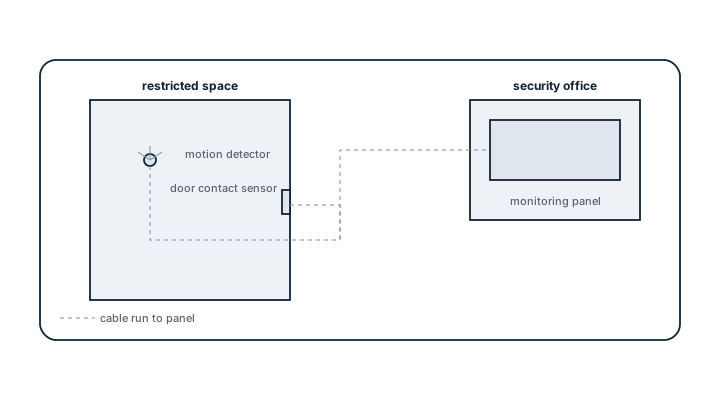
Main components
- Door contacts / magnetic switches - detect when a monitored door or hatch is opened, the most common and lowest false-alarm-rate sensor type.
- Motion detectors (PIR or microwave) - cover open areas within a restricted space, sensing movement rather than a specific access point.
- Perimeter sensors - fitted along gangways, weather deck access points or fencing on vessels carrying such boundaries, detecting climbing or crossing attempts.
- Control panel / monitoring station - aggregates all sensor inputs, typically on the bridge or in a dedicated security office, sounding a local and/or remote alarm on activation.
- Backup power supply - keeps the system operating through a mains power interruption, since a security system that fails silently on power loss defeats its purpose.
Selection / Sizing
Coverage is dictated by the ship's approved Ship Security Plan (SSP), which identifies which spaces are restricted and at what security level each type of monitoring is required - a plan-driven decision, not a generic product sizing exercise. Sensor type is matched to the space: door contacts for defined access points, motion detection for open restricted areas, and perimeter detection where the ship's layout allows unauthorised boarding from the waterside. Integration with the existing access control and CCTV systems is usually a deciding factor, since a security officer working from three unconnected monitoring panels responds slower than one working from a single integrated display.
Regulations / Class
The ISPS Code, made mandatory under SOLAS Ch. XI-2, requires ships to have security measures for restricted areas appropriate to the security level in force, which is the regulatory basis for fitting intrusion detection rather than a prescriptive equipment list - the Code sets the outcome (monitored and controlled restricted areas) and leaves the specific technology to the ship security plan approved by the flag administration or recognised security organisation. Equipment does not carry a class notation in the way navigation or machinery equipment does, but its function is verified as part of ISPS Code compliance audits and the ship's International Ship Security Certificate renewal.
Typical faults
| Fault | Consequence |
|---|---|
| Door contact misalignment after door adjustment or repair | False alarms or, worse, no alarm on a genuine unauthorised opening |
| Motion detector fouled by dust, insects or condensation in engine spaces | False alarms that lead crew to start ignoring the system |
| Backup battery not tested or degraded | System goes dark during a power interruption, exactly when it may be needed |
| Sensors not included in the restricted area list after a Ship Security Plan amendment | Newly designated restricted space left unmonitored, a genuine ISPS compliance gap |
What to look for in a supplier
- Sensor types proven reliable in the marine environment (vibration, salt air, temperature extremes), not adapted from shoreside building security products without marine rating.
- Integration capability with the vessel's existing access control and CCTV rather than a standalone system requiring separate monitoring.
- Documented false alarm rate and maintenance requirements, since a system that cries wolf gets ignored.
A monitored door alarm that goes off routinely during normal cargo or maintenance work gets muted or ignored within weeks - keep the sensor list matched to what the Ship Security Plan actually designates as restricted, nothing more, or the crew stops trusting it.