Radar SART
A 9 GHz radar SART carries no position fix and sends no message of its own; it stays silent until a searching vessel's X-band radar sweeps over it, then answers with a line of twelve expanding dots on that vessel's screen, turning a drifting liferaft into a visible bearing line long before it would show as a normal echo.
Read more — Radar SART explained ▾
What sets a radar SART apart
A search and rescue transponder is a passive device: it carries no GPS, no distress message and no satellite link. It listens for the 9 GHz pulse of a nearby marine radar and, once triggered, retransmits a swept response that the searching set paints as a line of about twelve dots spaced roughly 0.6 nautical miles apart, walking outward from the transponder's true position toward the edge of the display. That pattern is unmistakable against normal sea and rain clutter, which is the whole point. It differs from an AIS-SART, which broadcasts its own position over VHF and needs no interrogating radar at all, and from an EPIRB, which alerts a satellite system and rescue coordination centre long before any ship is close enough to search. A radar SART only works in the final stage of a rescue, once a unit with a 9 GHz radar is already within its response range, typically several miles depending on the searching vessel's antenna height and the SART's own mounting height above the water.

Main components
- Transceiver — a combined receiver and low-power transmitter tuned to the marine X-band, switched into standby by a manual or automatic activation.
- Telescopic or fixed antenna — extended for use, raising the effective height and therefore the detection range.
- Battery pack — a sealed primary cell sized for standby plus active operating life, with a marked expiry date.
- Housing — a waterproof, buoyant case designed to float upright with the antenna clear of the water if it goes overboard on its own.
- Bracket — fitted inside a liferaft or on a lifeboat, holding the unit until it is manually released and hoisted on its pole.
Selecting and sizing a SART
There is little variation in operating principle between models, so selection comes down to endurance, mounting and serviceability rather than performance tuning.
| Criterion | What it decides |
|---|---|
| Battery endurance | Minimum 96 hours standby followed by 8 hours of continuous operation is the baseline most approvals are built around. |
| Mounting method | Fixed bracket on a lifeboat versus loose stowage inside a liferaft for hand deployment on the pole supplied with it. |
| Battery replacement type | Sealed unit replaced whole versus a serviceable pack, which affects who can carry out the periodic exchange. |
| Number carried | Set by vessel type and survival craft arrangement rather than by choice. |
Regulations and class requirements
GMDSS carriage requirements under SOLAS set out how many radar transponders (radar SART, AIS-SART, or a mix) a vessel must carry according to its size and trading area — cargo ships of 500 GT and above typically carry two, smaller cargo ships one, positioned so at least one is readily accessible for each side of the vessel. Devices must meet IMO performance standards for radar transponders, and the battery expiry date is checked at each safety equipment survey; a SART with an expired battery is treated as missing equipment, not as present-but-degraded.
Typical faults
| Fault | Consequence |
|---|---|
| Battery past expiry date | Unit may power on for a self-test but fail to sustain the full response duration during an actual search. |
| Corroded antenna contacts | Weak or intermittent response pattern, sometimes only visible at short range. |
| Bracket release mechanism seized | Crew cannot free the unit quickly when abandoning ship under pressure. |
| Stored with antenna collapsed and never extended in drills | Crew unfamiliar with deployment when it matters, wasting time in the water. |
What to look for in a supplier
- Valid type approval referencing current IMO performance standards for radar transponders.
- Battery service life that lines up with the liferaft's own service interval, so both are replaced on the same visit.
- Bracket and case compatible with the liferaft or lifeboat model already fitted, avoiding a retrofit of the mounting.
- Documented self-test procedure that a crew member can run without opening the sealed housing.
Never key a SART's self-test near port radar traffic for longer than the test tone lasts — the response pattern looks exactly like a real distress signal on any radar within range, and pilot stations have chased false alarms started by a well-meaning drill.
3 manufacturers · 5 models
McMurdo
2
- Antenna, feeder or casing damage reduces communication or locating performance and may cause self-test faults
- Battery, emergency-power or power-supply deterioration causes resets, low-voltage alarms or failure to operate
- Water ingress or corrosion causes intermittent operation, damaged connectors or internal faults
- Configuration, registration or identity errors cause incorrect vessel or beacon information
- Internal transceiver, display or control faults cause failed self-tests, missing communications or unavailable emergency functions
- Long 96‑hour standby battery ensures readiness for extended voyages
- Compact, self‑contained unit with easy mounting bracket
- Automatic activation on X‑band radar illumination – no manual switch required
- Meets SOLAS mandatory requirements for all sea‑going vessels
- Proven McMurdo reliability and worldwide support network
- Mechanical telescoping antenna can seize or fail if not regularly exercised
- Battery must be replaced after its service life; expiry may go unnoticed without monitoring
- Corrosion of the storage bracket in harsh marine environments requires periodic inspection
- Limited detection range compared with newer AIS‑based SARTs
- No built‑in digital interface for integration with modern bridge systems
- Antenna, feeder or casing damage reduces communication or locating performance and may cause self-test faults
- Battery, emergency-power or power-supply deterioration causes resets, low-voltage alarms or failure to operate
- Water ingress or corrosion causes intermittent operation, damaged connectors or internal faults
- Configuration, registration or identity errors cause incorrect vessel or beacon information
- Internal transceiver, display or control faults cause failed self-tests, missing communications or unavailable emergency functions
- Automatic water‑activated switch reduces reliance on manual activation
- 5‑year sealed battery life meets SOLAS requirements with minimal replacement cost
- USCG and IMO SOLAS type approval ensures regulatory compliance worldwide
- Compact, lightweight design fits easily into existing life‑saving appliance lockers
- Simple annual self‑test procedure verifies functionality without special equipment
- Battery performance degrades after the 5‑year service interval, requiring replacement
- Antenna corrosion can occur in harsh saltwater environments if not inspected regularly
- Mechanical activation switch may fail, rendering the unit inoperative until serviced
- Limited detection range (≈2 NM) compared with satellite EPIRBs that provide global location
- Provides only radar‑based indication; no GPS coordinates are transmitted
Sailor / Cobham
2
- Antenna, feeder or casing damage reduces communication or locating performance and may cause self-test faults
- Battery, emergency-power or power-supply deterioration causes resets, low-voltage alarms or failure to operate
- Water ingress or corrosion causes intermittent operation, damaged connectors or internal faults
- Configuration, registration or identity errors cause incorrect vessel or beacon information
- Internal transceiver, display or control faults cause failed self-tests, missing communications or unavailable emergency functions
- Fully compliant with SOLAS Chapter V requirements for merchant ships
- Standard 9 GHz frequency ensures compatibility with all maritime radars
- 96‑hour standby battery life reduces the frequency of battery checks
- Compact, self‑contained unit simplifies installation on decks and lifeboats
- Battery shelf‑life is limited; periodic replacement is required to maintain readiness
- Field reports of housing seal degradation in harsh marine environments
- Antenna deployment must be tested regularly to verify proper operation
- Antenna, feeder or casing damage reduces communication or locating performance and may cause self-test faults
- Battery, emergency-power or power-supply deterioration causes resets, low-voltage alarms or failure to operate
- Water ingress or corrosion causes intermittent operation, damaged connectors or internal faults
- Configuration, registration or identity errors cause incorrect vessel or beacon information
- Internal transceiver, display or control faults cause failed self-tests, missing communications or unavailable emergency functions
- Proven SOLAS‑compliant design with long market history
- Simple one‑button activation – minimal crew training required
- Long battery shelf life (several years) and up to 96 hours of operation after activation
- Robust waterproof housing suitable for harsh marine environments
- Fully compatible with any standard X‑band ship radar
- Legacy analog device – no AIS or digital monitoring capability
- Battery must be tested annually and replaced on schedule despite long shelf life
- Reported issues with antenna cracking and mechanical switch failure over time
- No continuous self‑diagnostic beyond the annual battery test
- Effectiveness limited to vessels equipped with X‑band radar
JRC
1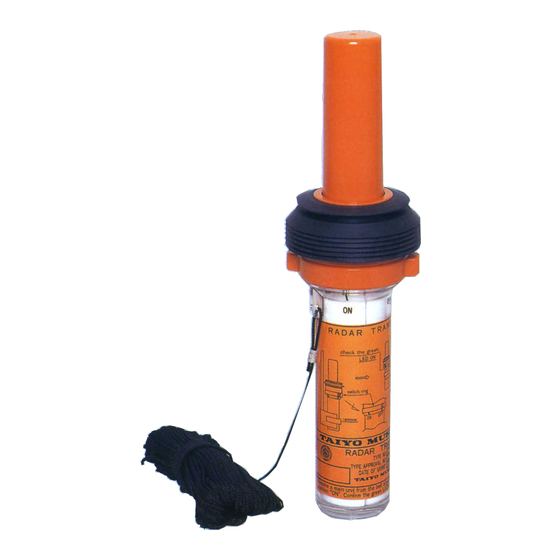
- Antenna, feeder or casing damage reduces communication or locating performance and may cause self-test faults
- Battery, emergency-power or power-supply deterioration causes resets, low-voltage alarms or failure to operate
- Water ingress or corrosion causes intermittent operation, damaged connectors or internal faults
- Configuration, registration or identity errors cause incorrect vessel or beacon information
- Internal transceiver, display or control faults cause failed self-tests, missing communications or unavailable emergency functions
- ClassNK approved, meeting high classification standards
- Integrated GMDSS compliance (SOLAS‑mandated)
- Standard 9 GHz frequency ensures compatibility with all AIS‑compatible radars
- Widely used on Japanese fleet vessels, indicating proven field reliability
- Compact unit suitable for installation on deck or survival craft
- Battery has a limited service life and must be replaced according to expiry dates
- Antenna can be vulnerable to mechanical damage in harsh weather
- Reported water‑seal failures require careful periodic inspection
- No built‑in self‑test indicator; verification relies on external testing equipment