"> AIS SART - Equipment Database

AIS SART

medium 4 models total

An AIS-SART broadcasts a repeating distress position over the AIS channels rather than answering a radar pulse, so it shows up as a labelled icon on any ECDIS or AIS display within VHF range instead of a train of dots on a radar screen.

Read more — AIS SART explained

What sets AIS-SART apart

Where a conventional radar SART works passively, only responding when interrogated by a 9 GHz radar, an AIS Search and Rescue Transmitter actively broadcasts its own position, using an internal or built-in GPS fix, over AIS Class A message formats on the standard AIS VHF channels. Any vessel or aircraft with an AIS receiver within VHF range sees a distinctive AIS-SART icon and identity on its ECDIS or dedicated AIS display, together with the survival craft's position and course, without needing to be actively sweeping a radar at the time. The two devices solve the same problem with different physics and are frequently carried alongside each other rather than as substitutes.
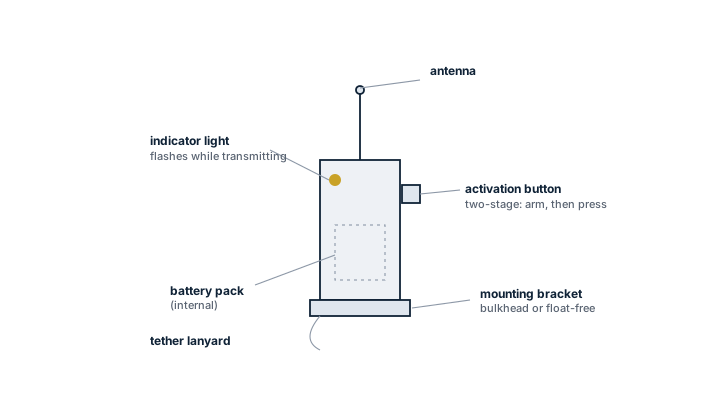
AIS-SART construction
Cutaway of an AIS search and rescue transmitter showing the antenna, indicator light, internal battery, two-stage activation button and the float-free mounting bracket with tether.

Main components

GPS receiver

An internal satellite positioning receiver that fixes the unit's own position for inclusion in each transmitted message.

VHF transmitter

Transmits on the AIS channels in a distinctive repeating pattern recognised by receiving AIS equipment as a distress transmission rather than a normal vessel target.

Battery

A sealed primary battery sized for a standby period followed by a minimum active transmission duration, commonly rated for around 96 hours of operation once activated.

Float-free or manual housing

Some units are integrated with float-free arrangements similar to an EPIRB bracket; most survival-craft units remain manually deployed, carried into the raft or boat by crew.

Where it fits alongside other locating devices

An AIS-SART complements rather than replaces the EPIRB and radar SART already required aboard. The EPIRB alerts the shore-based search and rescue system via satellite; the radar SART and AIS-SART both help a searching unit that is already in the area pinpoint the exact position of survivors. AIS-SART has the advantage of working with any modern AIS-equipped ship, which now covers the large majority of the world merchant fleet, and of giving a clear position readout rather than requiring the searching officer to interpret a line of radar dots.

Regulations and class

IMO has accepted AIS-SART as an alternative to a radar SART under the GMDSS carriage requirements of SOLAS III, meaning a ship may satisfy part of its SART carriage requirement with an AIS-SART instead of, or alongside, a radar SART, subject to flag state acceptance. Equipment must carry appropriate type approval confirming compliance with the relevant IEC standard for AIS-SART performance.

Typical faults

  • Expired battery — as with the radar SART, the most common failure found at survey is a battery past its marked expiry date.
  • GPS fix delay in poor sky view — a unit activated inside a covered life raft can take longer to acquire a position fix, delaying the first accurate position report.
  • Confusion with radar SART carriage credit — crews sometimes assume an AIS-SART satisfies the full SART carriage requirement when flag state rules only allow it as a partial substitute; this is a paperwork and compliance fault rather than a technical one.
  • Weak signal from low antenna height — VHF range from a survival craft at sea level is limited, so detection range depends heavily on the searching vessel's own antenna height.

What to look for in a supplier

  • Type approval confirming compliance with the applicable AIS-SART performance standard and flag state acceptance for carriage credit.
  • Clearly marked battery expiry date and GPS fix time specification.
  • Housing suited to the specific survival craft bracket already fitted.
  • Confirmation of which portion of the SOLAS III SART requirement the unit is accepted to satisfy under the relevant flag administration.

Check with the flag administration before assuming an AIS-SART alone satisfies the full SART carriage requirement — some administrations still require at least one radar SART aboard regardless of AIS-SART fit.
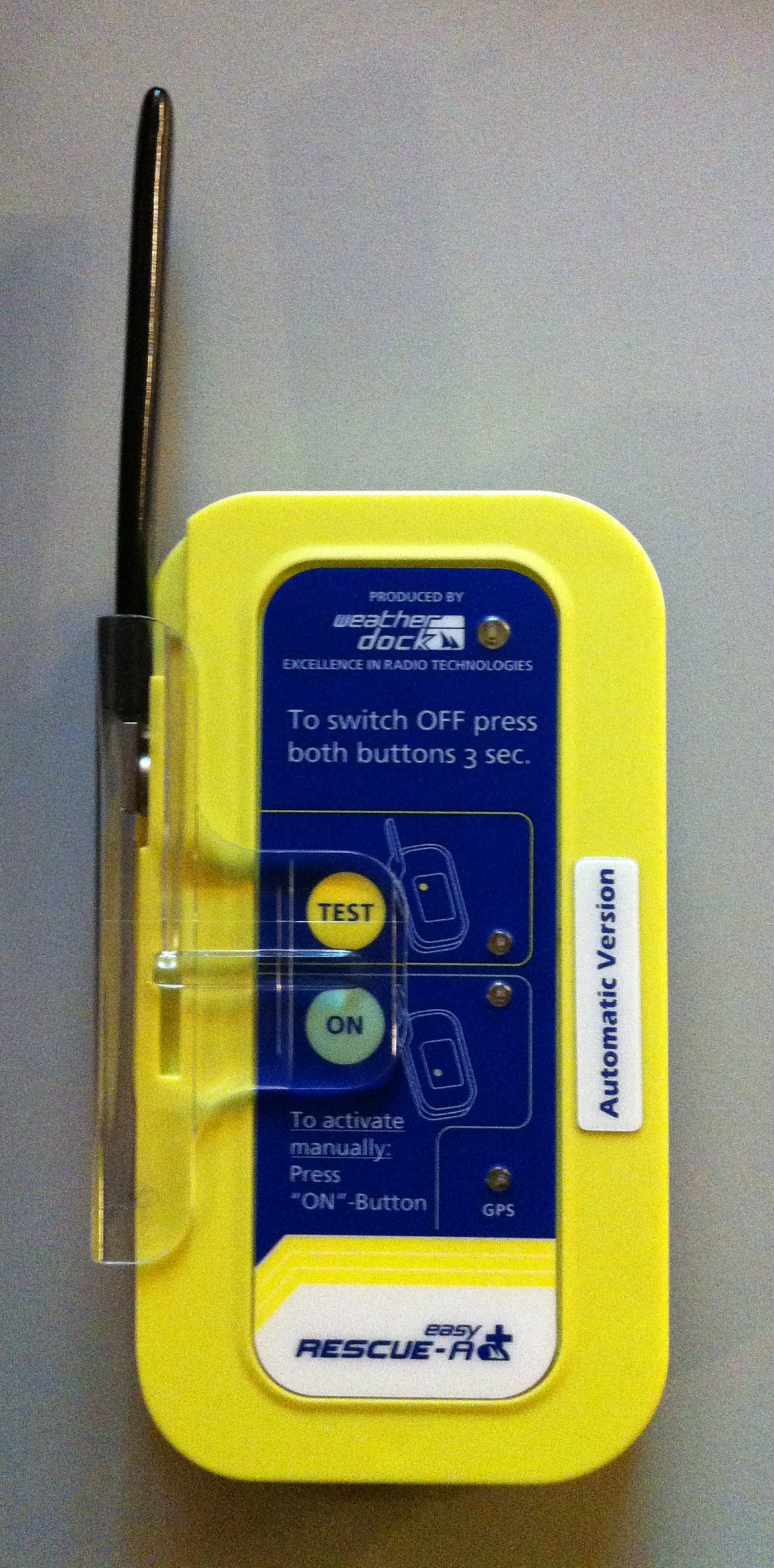
AIS-SART
AIS-SART. Photo: S.J. de Waard, CC BY-SA 3.0, via Wikimedia Commons

4 manufacturers · 4 models

ACR

1
ACR AIS SART
AIS SART
AIS SART / 96 hrs · Navigation Data / Sensor · AIS-based Search and Rescue Transponder
Battery life
96 hrs
Solas required
ja
Common Failures & Inspection Points
  • Antenna, feeder or casing damage reduces communication or locating performance and may cause self-test faults
  • Battery, emergency-power or power-supply deterioration causes resets, low-voltage alarms or failure to operate
  • Water ingress or corrosion causes intermittent operation, damaged connectors or internal faults
  • Configuration, registration or identity errors cause incorrect vessel or beacon information
  • Internal transceiver, display or control faults cause failed self-tests, missing communications or unavailable emergency functions
Service: Inspect antennas, casing, mounting, power supplies, emergency batteries, controls and programmed identity data as applicable. Perform only approved self-tests and permitted radio tests. Verify accessibility, release arrangements and emergency-power availability where required. Refer to manufacturer and regulatory documentation for the exact figure for test and replacement criteria.
Spare Parts: Carry fuses, handsets or microphones where applicable, approved batteries or chargers, antenna connectors, mounting or release parts and supported control modules.
Strengths
  • Long battery endurance (up to 96 hrs) reduces replacement frequency during voyages
  • Full SOLAS compliance – required equipment for many commercial vessels
  • US‑made with wide availability of spare parts and service support
  • Digital AIS signal integrates directly with vessel bridge displays and nearby ships' AIS receivers
Weaknesses
  • Battery must be replaced on a strict schedule; failure to do so can compromise performance
  • Antenna telescoping mechanism has reported jamming or sticking in harsh environments
  • Water‑activation sensor may not trigger reliably if the device is improperly sealed or exposed to debris
Typical Vessels: Passenger shipsTankersContainer vesselsBulk carriersOffshore supply vesselsFishing vessels over 500 GT requiring SOLAS equipment
Certifications: SOLAS Chapter V (1974) – AIS SART requirementUSCG Type Approval
Decision Guide: Choose if the vessel must meet SOLAS AIS‑SART requirements, you value a long‑life battery and prefer US‑based support. Avoid if you have experienced repeated antenna deployment problems or if a radar‑based SART is preferred for higher passive detection range.
Use Cases: Distress, safety, ship-to-ship, ship-to-shore and search-and-rescue service.

McMurdo

1
McMurdo SmartFind S5 AIS SART
SmartFind S5 AIS SART
AIS SART / 96 hrs · Navigation Data / Sensor · AIS-based Search and Rescue Transponder
Battery life
96 hrs
Solas required
ja
Frequency
161.975/162.025 MHz
Common Failures & Inspection Points
  • Antenna, feeder or casing damage reduces communication or locating performance and may cause self-test faults
  • Battery, emergency-power or power-supply deterioration causes resets, low-voltage alarms or failure to operate
  • Water ingress or corrosion causes intermittent operation, damaged connectors or internal faults
  • Configuration, registration or identity errors cause incorrect vessel or beacon information
  • Internal transceiver, display or control faults cause failed self-tests, missing communications or unavailable emergency functions
Service: Inspect antennas, casing, mounting, power supplies, emergency batteries, controls and programmed identity data as applicable. Perform only approved self-tests and permitted radio tests. Verify accessibility, release arrangements and emergency-power availability where required. Refer to manufacturer and regulatory documentation for the exact figure for test and replacement criteria.
Spare Parts: Carry fuses, handsets or microphones where applicable, approved batteries or chargers, antenna connectors, mounting or release parts and supported control modules.
Strengths
  • 96 hour battery life exceeds many competing AIS SARTs
  • Directly integrates with vessel AIS receivers and shore‑based VTS, improving detection range in coastal waters
  • SOLAS‑approved and ready for mandatory installation on applicable vessels
  • Self‑test function allows routine verification without removing the unit
  • Compact design simplifies mounting on a variety of ship types
Weaknesses
  • Relies on VHF line‑of‑sight; effectiveness limited in open ocean compared with satellite EPIRBs
  • Antenna deployment can be hindered by fouling or mechanical blockage
  • Battery must be replaced strictly according to the printed expiry date, adding maintenance overhead
  • Hydrostatic release mechanism may fail if not inspected annually
Typical Vessels: Container shipBulk carrierTankerPassenger ferryOffshore supply vesselGeneral cargo vessel
Certifications: SOLAS
Decision Guide: Choose if you need a SOLAS‑compliant distress device that works with existing AIS infrastructure and offers long battery endurance. Avoid if your operation requires global satellite coverage independent of VHF range or if maintenance resources for annual hydrostatic checks are limited.
Use Cases: Distress, safety, ship-to-ship, ship-to-shore and search-and-rescue service.

Sailor / Cobham

1
Sailor (Cobham) AIS SART
AIS SART
AIS SART / 96 hrs · Navigation Data / Sensor · AIS-based Search and Rescue Transponder
Battery life
96 hrs
Solas required
ja
Common Failures & Inspection Points
  • Antenna, feeder or casing damage reduces communication or locating performance and may cause self-test faults
  • Battery, emergency-power or power-supply deterioration causes resets, low-voltage alarms or failure to operate
  • Water ingress or corrosion causes intermittent operation, damaged connectors or internal faults
  • Configuration, registration or identity errors cause incorrect vessel or beacon information
  • Internal transceiver, display or control faults cause failed self-tests, missing communications or unavailable emergency functions
Service: Inspect antennas, casing, mounting, power supplies, emergency batteries, controls and programmed identity data as applicable. Perform only approved self-tests and permitted radio tests. Verify accessibility, release arrangements and emergency-power availability where required. Refer to manufacturer and regulatory documentation for the exact figure for test and replacement criteria.
Spare Parts: Carry fuses, handsets or microphones where applicable, approved batteries or chargers, antenna connectors, mounting or release parts and supported control modules.
Strengths
  • SOLAS‑compliant device required for most commercial vessels
  • Long battery life of up to 96 hours, reducing the need for frequent replacement
  • Digital AIS signal provides precise GPS position to nearby ships and rescue assets
  • Integrated into Sailor safety pack for streamlined installation and maintenance
  • Automatic activation on water immersion reduces reliance on manual operation
Weaknesses
  • Battery must be replaced before expiry; failure can render the SART inoperative
  • Float‑free release test is mandatory and must be performed regularly to retain certification
  • GPS antenna is exposed and vulnerable to damage in harsh weather or heavy fouling
  • Only effective where AIS receivers are present; limited benefit in AIS‑blind areas
  • No built‑in self‑diagnostic display – status checks rely on external inspection
Typical Vessels: Container shipBulk carrierTankerPassenger vesselOffshore supply vesselFishing vessel
Decision Guide: Choose if you need a SOLAS‑approved SART with long battery endurance and AIS integration, especially for vessels that already carry AIS equipment and can perform regular float‑free release testing. Avoid if your operation cannot guarantee routine battery replacement or antenna protection, or if the vessel operates frequently in regions where AIS coverage is poor.
Use Cases: Distress, safety, ship-to-ship, ship-to-shore and search-and-rescue service.

Weatherdock

1
Weatherdock easyRescue AIS SART
easyRescue AIS SART
AIS SART / 96 hrs · Navigation Data / Sensor · AIS SART
Battery life
96 hrs
Solas required
ja
Common Failures & Inspection Points
  • Antenna, feeder or casing damage reduces communication or locating performance and may cause self-test faults
  • Battery, emergency-power or power-supply deterioration causes resets, low-voltage alarms or failure to operate
  • Water ingress or corrosion causes intermittent operation, damaged connectors or internal faults
  • Configuration, registration or identity errors cause incorrect vessel or beacon information
  • Internal transceiver, display or control faults cause failed self-tests, missing communications or unavailable emergency functions
Service: Inspect antennas, casing, mounting, power supplies, emergency batteries, controls and programmed identity data as applicable. Perform only approved self-tests and permitted radio tests. Verify accessibility, release arrangements and emergency-power availability where required. Refer to manufacturer and regulatory documentation for the exact figure for test and replacement criteria.
Spare Parts: Carry fuses, handsets or microphones where applicable, approved batteries or chargers, antenna connectors, mounting or release parts and supported control modules.
Strengths
  • Compact and lightweight – saves valuable deck space
  • Long battery endurance of up to 96 hours (per specification)
  • German engineering reputation for reliability
  • Fully compliant with SOLAS AIS‑SART performance standards
Weaknesses
  • Reduced internal battery size may limit performance in very cold water
  • GPS position lock can be slower than larger‑format SARTs
  • Limited publicly documented salt‑water activation testing
Typical Vessels: Passenger ferriesCoastal and offshore supply vesselsWorkboats and crew transfer vesselsSmall tankers and container ships where deck space is at a premium
Certifications: SOLAS (IMO) complianceCE Marking
Decision Guide: Choose if you need a space‑saving AIS SART with proven SOLAS compliance and long battery life, especially on vessels with limited deck area or where German build quality is valued. Avoid if rapid GPS acquisition is critical or if the vessel operates in extreme cold where maximum battery capacity is required.
Use Cases: Distress, safety, ship-to-ship, ship-to-shore and search-and-rescue service.