"> Screw Pump - Equipment Database

Screw Pump

medium 456 models total

A screw pump moves fuel and lube oil with meshing helical rotors instead of gears or vanes, giving a smooth, low-pulsation flow that tolerates the viscosity swings of heavy fuel far better than a gear pump of the same duty.

Read more — Screw Pump explained

What sets a screw pump apart

A screw pump is a positive displacement pump that moves liquid axially along meshing helical rotors (typically one power rotor driving one or two idler rotors) instead of trapping it between gear teeth or sliding vanes. The rotor geometry gives an almost pulsation-free, continuous flow, which matters for fuel injection supply and transfer duties where pressure spikes cause noise and wear elsewhere in the system. Compared with a gear pump, a screw pump tolerates a wider viscosity range with less efficiency loss, which is why it is the standard choice for heavy fuel oil (HFO) transfer and supply, where viscosity can swing several hundred centistokes between a cold start and normal running temperature. Screw pumps also run quieter and with less shaft vibration than gear or vane types at the same flow and pressure, an advantage in engine rooms with pumps mounted close to accommodation spaces.
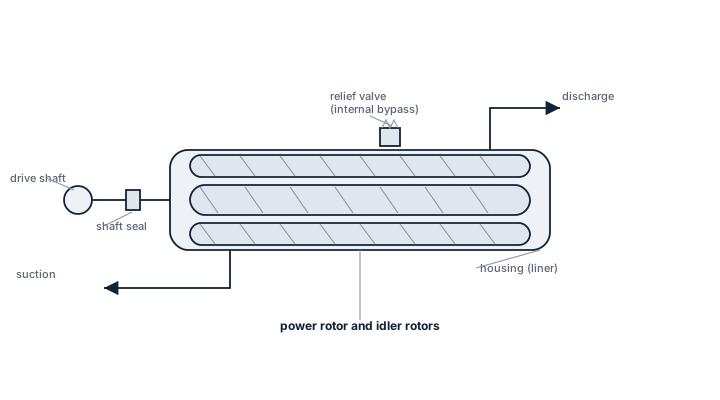
Three-screw pump, rotor arrangement
Cutaway of a three-screw pump showing the central power rotor meshing with two idler rotors inside the housing liner, the driven shaft with its seal, the suction and discharge ports, and the internal relief valve.

Main components

Power rotor and idler rotor(s)

The power rotor is driven directly by the motor; idler rotors mesh with it and are turned only by the fluid film and rotor contact, not by a separate gear train in most designs, which keeps the pump simple and reduces parts subject to wear.

Housing / stator

Precision-bored housing that the rotors run in with close clearance; this clearance is what determines volumetric efficiency and how much internal slip, and therefore capacity loss, occurs at a given viscosity.

Mechanical seal or packed gland

Seals the shaft where it passes through the housing; mechanical seals dominate on modern fuel and lube oil screw pumps for tighter leak control.

Relief valve

Fitted internally or on the discharge line, since a positive displacement pump will build pressure indefinitely against a closed valve and must have a path to relieve it.

Selection and sizing

  • Viscosity range - the single most important selection parameter for fuel duty; the pump must maintain rated flow across the full range from cold-start to operating temperature.
  • Differential pressure - fuel supply pumps typically run at several bar; boosting or circulating pumps in HFO systems can run higher against injection system back-pressure.
  • NPSH available - suction conditions from the service tank, especially on transfer duty pulling from a nearly empty tank.
  • Rotor material and clearance - tighter clearances raise volumetric efficiency but reduce tolerance to solids or wear debris in the fluid.

Regulations and class

Fuel oil supply and transfer pumps fall under the classification society's machinery rules for essential auxiliary systems, which typically require duplication of fuel supply pumps to the main engine so a single pump failure does not stop propulsion. Class also reviews the relief valve setting and pressure rating of the pump and its piping as part of the fuel system approval. There is no IMO instrument specific to screw pumps; requirements apply to the fuel and lube oil systems they serve, under MARPOL Annex I for oil-handling arrangements and under class rules for redundancy of essential services.

Typical faults

FaultConsequence
Rotor and housing wear (increased clearance)falling volumetric efficiency, especially noticeable on light, low-viscosity fuel
Mechanical seal failurefuel or oil leakage at the shaft, a fire and slip hazard in the engine room
Relief valve stuck or incorrectly seteither nuisance recirculation losing capacity, or overpressure of piping if stuck shut
Cavitation on suctionnoise, rotor pitting and falling output, usually from a restricted suction line or a nearly empty tank

What to look for in a supplier

  • Published performance curves across the actual viscosity range the fuel or oil will see in service, not just at a single reference viscosity.
  • Rotor and housing material suited to the fluid, including compatibility with low-sulphur and biofuel blends now common in fuel systems.
  • Spare rotor sets and seal kits genuinely available for the model, since screw pump rotors are precision parts not produced by third parties.

A screw pump that loses capacity is almost always wear, not a blockage - rising slip through worn rotor clearance shows up first as reduced flow at normal running temperature, well before any alarm trips.

Technical drawings & plates

Historical engineering archive — public domain sources, cited per plate. Principles shown remain valid; always consult the OEM manual for model-specific data.

Double-screw low-pitch pump.
Boilerman 3 & 2, NAVPERS 10535-C, U.S. Navy (1955) — public domain
Cutaway view of triple-screw high-pitch pump.
Boilerman 3 & 2, NAVPERS 10535-C, U.S. Navy (1955) — public domain
Dismantled triple-screw high-pitch pump.
Boilerman 3 & 2, NAVPERS 10535-C, U.S. Navy (1955) — public domain
Cutaway view of triple-screw high-pitch pump.
Engineman 2, NAVPERS 10540, U.S. Navy (1957) — public domain

16 manufacturers · 456 models

IMO Pump

15 ✓ 15 verified
Series 3D ✓ verified
Application
General purpose: lubrication, fuel transport and burner service, low pressure hydraulic applications, hydraulic elevator service
Common Failures & Inspection Points
  • Area: Rotor-to-rotor and rotor-to-housing clearance dimensions checked with dial gauge and compared against OEM wear limit values (measurement with gauges to be performed)
    Check: Rotor-to-rotor and rotor-to-housing clearance dimensions checked with dial gauge and compared against OEM wear limit values (measurement with gauges to be performed)
  • Area: Mechanical shaft seal and gasket tightness inspection: check for leaks, cracks, discolouration or hardening; inspect wear of seal ring surfaces
    Check: Mechanical shaft seal and gasket tightness inspection: check for leaks, cracks, discolouration or hardening; inspect wear of seal ring surfaces
  • Area: Housing bore, rotor surfaces and cover plate for scratches, corrosion pitting or surface wear inspection (check cleanability)
    Check: Housing bore, rotor surfaces and cover plate for scratches, corrosion pitting or surface wear inspection (check cleanability)
  • Area: Inspection of bearings and bearing clearances: radial clearance and axial clearance checked with suitable measuring instruments; note any wear and heating
    Check: Inspection of bearings and bearing clearances: radial clearance and axial clearance checked with suitable measuring instruments; note any wear and heating
  • Area: Pressure relief valve and overpressure protection functional test; check setting values against manufacturer specification
    Check: Pressure relief valve and overpressure protection functional test; check setting values against manufacturer specification
  • Area: Suction strainer and inlet filter inspect for contamination and blockage; monitor pressure drop across filter
    Check: Suction strainer and inlet filter inspect for contamination and blockage; monitor pressure drop across filter
  • Area: Operating noise, vibration and unusual sounds diagnose (indication of internal wear pattern)
    Check: Operating noise, vibration and unusual sounds diagnose (indication of internal wear pattern)
  • Area: Fastening elements, fastening bolts and coupling alignment check; pump-motor/drive alignment re-measure
    Check: Fastening elements, fastening bolts and coupling alignment check; pump-motor/drive alignment re-measure

Typ-universelle Inspektionspunkte fuer Pumps (verifiziert, 2026-06).

Series 3E ✓ verified
Application
Fuel oil transfer, machinery lubrication, general industrial pumping
Common Failures & Inspection Points
  • Area: Rotor-to-rotor and rotor-to-housing clearance dimensions checked with dial gauge and compared against OEM wear limit values (measurement with gauges to be performed)
    Check: Rotor-to-rotor and rotor-to-housing clearance dimensions checked with dial gauge and compared against OEM wear limit values (measurement with gauges to be performed)
  • Area: Mechanical shaft seal and gasket tightness inspection: check for leaks, cracks, discolouration or hardening; inspect wear of seal ring surfaces
    Check: Mechanical shaft seal and gasket tightness inspection: check for leaks, cracks, discolouration or hardening; inspect wear of seal ring surfaces
  • Area: Housing bore, rotor surfaces and cover plate for scratches, corrosion pitting or surface wear inspection (check cleanability)
    Check: Housing bore, rotor surfaces and cover plate for scratches, corrosion pitting or surface wear inspection (check cleanability)
  • Area: Inspection of bearings and bearing clearances: radial clearance and axial clearance checked with suitable measuring instruments; note any wear and heating
    Check: Inspection of bearings and bearing clearances: radial clearance and axial clearance checked with suitable measuring instruments; note any wear and heating
  • Area: Pressure relief valve and overpressure protection functional test; check setting values against manufacturer specification
    Check: Pressure relief valve and overpressure protection functional test; check setting values against manufacturer specification
  • Area: Suction strainer and inlet filter inspect for contamination and blockage; monitor pressure drop across filter
    Check: Suction strainer and inlet filter inspect for contamination and blockage; monitor pressure drop across filter
  • Area: Operating noise, vibration and unusual sounds diagnose (indication of internal wear pattern)
    Check: Operating noise, vibration and unusual sounds diagnose (indication of internal wear pattern)
  • Area: Fastening elements, fastening bolts and coupling alignment check; pump-motor/drive alignment re-measure
    Check: Fastening elements, fastening bolts and coupling alignment check; pump-motor/drive alignment re-measure

Typ-universelle Inspektionspunkte fuer Pumps (verifiziert, 2026-06).

Series 3G ✓ verified
Application
Lubrication, hydraulic and control oil services
Common Failures & Inspection Points
  • Area: Rotor-to-rotor and rotor-to-housing clearance dimensions checked with dial gauge and compared against OEM wear limit values (measurement with gauges to be performed)
    Check: Rotor-to-rotor and rotor-to-housing clearance dimensions checked with dial gauge and compared against OEM wear limit values (measurement with gauges to be performed)
  • Area: Mechanical shaft seal and gasket tightness inspection: check for leaks, cracks, discolouration or hardening; inspect wear of seal ring surfaces
    Check: Mechanical shaft seal and gasket tightness inspection: check for leaks, cracks, discolouration or hardening; inspect wear of seal ring surfaces
  • Area: Housing bore, rotor surfaces and cover plate for scratches, corrosion pitting or surface wear inspection (check cleanability)
    Check: Housing bore, rotor surfaces and cover plate for scratches, corrosion pitting or surface wear inspection (check cleanability)
  • Area: Inspection of bearings and bearing clearances: radial clearance and axial clearance checked with suitable measuring instruments; note any wear and heating
    Check: Inspection of bearings and bearing clearances: radial clearance and axial clearance checked with suitable measuring instruments; note any wear and heating
  • Area: Pressure relief valve and overpressure protection functional test; check setting values against manufacturer specification
    Check: Pressure relief valve and overpressure protection functional test; check setting values against manufacturer specification
  • Area: Suction strainer and inlet filter inspect for contamination and blockage; monitor pressure drop across filter
    Check: Suction strainer and inlet filter inspect for contamination and blockage; monitor pressure drop across filter
  • Area: Operating noise, vibration and unusual sounds diagnose (indication of internal wear pattern)
    Check: Operating noise, vibration and unusual sounds diagnose (indication of internal wear pattern)
  • Area: Fastening elements, fastening bolts and coupling alignment check; pump-motor/drive alignment re-measure
    Check: Fastening elements, fastening bolts and coupling alignment check; pump-motor/drive alignment re-measure

Typ-universelle Inspektionspunkte fuer Pumps (verifiziert, 2026-06).

Series 3L (E3L) ✓ verified
Application
Lubrication services in industrial, oil and gas, power generation, and lubrication systems
Common Failures & Inspection Points
  • Area: Rotor-to-rotor and rotor-to-housing clearance dimensions checked with dial gauge and compared against OEM wear limit values (measurement with gauges to be performed)
    Check: Rotor-to-rotor and rotor-to-housing clearance dimensions checked with dial gauge and compared against OEM wear limit values (measurement with gauges to be performed)
  • Area: Mechanical shaft seal and gasket tightness inspection: check for leaks, cracks, discolouration or hardening; inspect wear of seal ring surfaces
    Check: Mechanical shaft seal and gasket tightness inspection: check for leaks, cracks, discolouration or hardening; inspect wear of seal ring surfaces
  • Area: Housing bore, rotor surfaces and cover plate for scratches, corrosion pitting or surface wear inspection (check cleanability)
    Check: Housing bore, rotor surfaces and cover plate for scratches, corrosion pitting or surface wear inspection (check cleanability)
  • Area: Inspection of bearings and bearing clearances: radial clearance and axial clearance checked with suitable measuring instruments; note any wear and heating
    Check: Inspection of bearings and bearing clearances: radial clearance and axial clearance checked with suitable measuring instruments; note any wear and heating
  • Area: Pressure relief valve and overpressure protection functional test; check setting values against manufacturer specification
    Check: Pressure relief valve and overpressure protection functional test; check setting values against manufacturer specification
  • Area: Suction strainer and inlet filter inspect for contamination and blockage; monitor pressure drop across filter
    Check: Suction strainer and inlet filter inspect for contamination and blockage; monitor pressure drop across filter
  • Area: Operating noise, vibration and unusual sounds diagnose (indication of internal wear pattern)
    Check: Operating noise, vibration and unusual sounds diagnose (indication of internal wear pattern)
  • Area: Fastening elements, fastening bolts and coupling alignment check; pump-motor/drive alignment re-measure
    Check: Fastening elements, fastening bolts and coupling alignment check; pump-motor/drive alignment re-measure

Typ-universelle Inspektionspunkte fuer Pumps (verifiziert, 2026-06).

Series 6D ✓ verified
Application
Fuel oil burners, high pressure trunion lubrication for ball mills, crude oil pipeline service, non-cyclic hydraulic applications
Common Failures & Inspection Points
  • Area: Rotor-to-rotor and rotor-to-housing clearance dimensions checked with dial gauge and compared against OEM wear limit values (measurement with gauges to be performed)
    Check: Rotor-to-rotor and rotor-to-housing clearance dimensions checked with dial gauge and compared against OEM wear limit values (measurement with gauges to be performed)
  • Area: Mechanical shaft seal and gasket tightness inspection: check for leaks, cracks, discolouration or hardening; inspect wear of seal ring surfaces
    Check: Mechanical shaft seal and gasket tightness inspection: check for leaks, cracks, discolouration or hardening; inspect wear of seal ring surfaces
  • Area: Housing bore, rotor surfaces and cover plate for scratches, corrosion pitting or surface wear inspection (check cleanability)
    Check: Housing bore, rotor surfaces and cover plate for scratches, corrosion pitting or surface wear inspection (check cleanability)
  • Area: Inspection of bearings and bearing clearances: radial clearance and axial clearance checked with suitable measuring instruments; note any wear and heating
    Check: Inspection of bearings and bearing clearances: radial clearance and axial clearance checked with suitable measuring instruments; note any wear and heating
  • Area: Pressure relief valve and overpressure protection functional test; check setting values against manufacturer specification
    Check: Pressure relief valve and overpressure protection functional test; check setting values against manufacturer specification
  • Area: Suction strainer and inlet filter inspect for contamination and blockage; monitor pressure drop across filter
    Check: Suction strainer and inlet filter inspect for contamination and blockage; monitor pressure drop across filter
  • Area: Operating noise, vibration and unusual sounds diagnose (indication of internal wear pattern)
    Check: Operating noise, vibration and unusual sounds diagnose (indication of internal wear pattern)
  • Area: Fastening elements, fastening bolts and coupling alignment check; pump-motor/drive alignment re-measure
    Check: Fastening elements, fastening bolts and coupling alignment check; pump-motor/drive alignment re-measure

Typ-universelle Inspektionspunkte fuer Pumps (verifiziert, 2026-06).

Series 12D ✓ verified
Application
High pressure service on petroleum and similar viscosity liquids
Common Failures & Inspection Points
  • Area: Rotor-to-rotor and rotor-to-housing clearance dimensions checked with dial gauge and compared against OEM wear limit values (measurement with gauges to be performed)
    Check: Rotor-to-rotor and rotor-to-housing clearance dimensions checked with dial gauge and compared against OEM wear limit values (measurement with gauges to be performed)
  • Area: Mechanical shaft seal and gasket tightness inspection: check for leaks, cracks, discolouration or hardening; inspect wear of seal ring surfaces
    Check: Mechanical shaft seal and gasket tightness inspection: check for leaks, cracks, discolouration or hardening; inspect wear of seal ring surfaces
  • Area: Housing bore, rotor surfaces and cover plate for scratches, corrosion pitting or surface wear inspection (check cleanability)
    Check: Housing bore, rotor surfaces and cover plate for scratches, corrosion pitting or surface wear inspection (check cleanability)
  • Area: Inspection of bearings and bearing clearances: radial clearance and axial clearance checked with suitable measuring instruments; note any wear and heating
    Check: Inspection of bearings and bearing clearances: radial clearance and axial clearance checked with suitable measuring instruments; note any wear and heating
  • Area: Pressure relief valve and overpressure protection functional test; check setting values against manufacturer specification
    Check: Pressure relief valve and overpressure protection functional test; check setting values against manufacturer specification
  • Area: Suction strainer and inlet filter inspect for contamination and blockage; monitor pressure drop across filter
    Check: Suction strainer and inlet filter inspect for contamination and blockage; monitor pressure drop across filter
  • Area: Operating noise, vibration and unusual sounds diagnose (indication of internal wear pattern)
    Check: Operating noise, vibration and unusual sounds diagnose (indication of internal wear pattern)
  • Area: Fastening elements, fastening bolts and coupling alignment check; pump-motor/drive alignment re-measure
    Check: Fastening elements, fastening bolts and coupling alignment check; pump-motor/drive alignment re-measure

Typ-universelle Inspektionspunkte fuer Pumps (verifiziert, 2026-06).

Series 12L ✓ verified
Application
Very high pressure service for compressor gas sealing, fluid power and hydrostatic bearing applications
Common Failures & Inspection Points
  • Area: Rotor-to-rotor and rotor-to-housing clearance dimensions checked with dial gauge and compared against OEM wear limit values (measurement with gauges to be performed)
    Check: Rotor-to-rotor and rotor-to-housing clearance dimensions checked with dial gauge and compared against OEM wear limit values (measurement with gauges to be performed)
  • Area: Mechanical shaft seal and gasket tightness inspection: check for leaks, cracks, discolouration or hardening; inspect wear of seal ring surfaces
    Check: Mechanical shaft seal and gasket tightness inspection: check for leaks, cracks, discolouration or hardening; inspect wear of seal ring surfaces
  • Area: Housing bore, rotor surfaces and cover plate for scratches, corrosion pitting or surface wear inspection (check cleanability)
    Check: Housing bore, rotor surfaces and cover plate for scratches, corrosion pitting or surface wear inspection (check cleanability)
  • Area: Inspection of bearings and bearing clearances: radial clearance and axial clearance checked with suitable measuring instruments; note any wear and heating
    Check: Inspection of bearings and bearing clearances: radial clearance and axial clearance checked with suitable measuring instruments; note any wear and heating
  • Area: Pressure relief valve and overpressure protection functional test; check setting values against manufacturer specification
    Check: Pressure relief valve and overpressure protection functional test; check setting values against manufacturer specification
  • Area: Suction strainer and inlet filter inspect for contamination and blockage; monitor pressure drop across filter
    Check: Suction strainer and inlet filter inspect for contamination and blockage; monitor pressure drop across filter
  • Area: Operating noise, vibration and unusual sounds diagnose (indication of internal wear pattern)
    Check: Operating noise, vibration and unusual sounds diagnose (indication of internal wear pattern)
  • Area: Fastening elements, fastening bolts and coupling alignment check; pump-motor/drive alignment re-measure
    Check: Fastening elements, fastening bolts and coupling alignment check; pump-motor/drive alignment re-measure

Typ-universelle Inspektionspunkte fuer Pumps (verifiziert, 2026-06).

Series 4SFC ✓ verified
Application
Hydraulic and lubricating oils, general industrial applications
Common Failures & Inspection Points
  • Area: Rotor-to-rotor and rotor-to-housing clearance dimensions checked with dial gauge and compared against OEM wear limit values (measurement with gauges to be performed)
    Check: Rotor-to-rotor and rotor-to-housing clearance dimensions checked with dial gauge and compared against OEM wear limit values (measurement with gauges to be performed)
  • Area: Mechanical shaft seal and gasket tightness inspection: check for leaks, cracks, discolouration or hardening; inspect wear of seal ring surfaces
    Check: Mechanical shaft seal and gasket tightness inspection: check for leaks, cracks, discolouration or hardening; inspect wear of seal ring surfaces
  • Area: Housing bore, rotor surfaces and cover plate for scratches, corrosion pitting or surface wear inspection (check cleanability)
    Check: Housing bore, rotor surfaces and cover plate for scratches, corrosion pitting or surface wear inspection (check cleanability)
  • Area: Inspection of bearings and bearing clearances: radial clearance and axial clearance checked with suitable measuring instruments; note any wear and heating
    Check: Inspection of bearings and bearing clearances: radial clearance and axial clearance checked with suitable measuring instruments; note any wear and heating
  • Area: Pressure relief valve and overpressure protection functional test; check setting values against manufacturer specification
    Check: Pressure relief valve and overpressure protection functional test; check setting values against manufacturer specification
  • Area: Suction strainer and inlet filter inspect for contamination and blockage; monitor pressure drop across filter
    Check: Suction strainer and inlet filter inspect for contamination and blockage; monitor pressure drop across filter
  • Area: Operating noise, vibration and unusual sounds diagnose (indication of internal wear pattern)
    Check: Operating noise, vibration and unusual sounds diagnose (indication of internal wear pattern)
  • Area: Fastening elements, fastening bolts and coupling alignment check; pump-motor/drive alignment re-measure
    Check: Fastening elements, fastening bolts and coupling alignment check; pump-motor/drive alignment re-measure

Typ-universelle Inspektionspunkte fuer Pumps (verifiziert, 2026-06).

Series 4U/4T ✓ verified
Application
Medium pressure fluid power (cyclic) and gas sealing on compressors
Common Failures & Inspection Points
  • Area: Rotor-to-rotor and rotor-to-housing clearance dimensions checked with dial gauge and compared against OEM wear limit values (measurement with gauges to be performed)
    Check: Rotor-to-rotor and rotor-to-housing clearance dimensions checked with dial gauge and compared against OEM wear limit values (measurement with gauges to be performed)
  • Area: Mechanical shaft seal and gasket tightness inspection: check for leaks, cracks, discolouration or hardening; inspect wear of seal ring surfaces
    Check: Mechanical shaft seal and gasket tightness inspection: check for leaks, cracks, discolouration or hardening; inspect wear of seal ring surfaces
  • Area: Housing bore, rotor surfaces and cover plate for scratches, corrosion pitting or surface wear inspection (check cleanability)
    Check: Housing bore, rotor surfaces and cover plate for scratches, corrosion pitting or surface wear inspection (check cleanability)
  • Area: Inspection of bearings and bearing clearances: radial clearance and axial clearance checked with suitable measuring instruments; note any wear and heating
    Check: Inspection of bearings and bearing clearances: radial clearance and axial clearance checked with suitable measuring instruments; note any wear and heating
  • Area: Pressure relief valve and overpressure protection functional test; check setting values against manufacturer specification
    Check: Pressure relief valve and overpressure protection functional test; check setting values against manufacturer specification
  • Area: Suction strainer and inlet filter inspect for contamination and blockage; monitor pressure drop across filter
    Check: Suction strainer and inlet filter inspect for contamination and blockage; monitor pressure drop across filter
  • Area: Operating noise, vibration and unusual sounds diagnose (indication of internal wear pattern)
    Check: Operating noise, vibration and unusual sounds diagnose (indication of internal wear pattern)
  • Area: Fastening elements, fastening bolts and coupling alignment check; pump-motor/drive alignment re-measure
    Check: Fastening elements, fastening bolts and coupling alignment check; pump-motor/drive alignment re-measure

Typ-universelle Inspektionspunkte fuer Pumps (verifiziert, 2026-06).

Series 6U/6T ✓ verified
Application
High pressure fluid power (cyclic pressure) and medium pressure gas sealing on compressors
Common Failures & Inspection Points
  • Area: Rotor-to-rotor and rotor-to-housing clearance dimensions checked with dial gauge and compared against OEM wear limit values (measurement with gauges to be performed)
    Check: Rotor-to-rotor and rotor-to-housing clearance dimensions checked with dial gauge and compared against OEM wear limit values (measurement with gauges to be performed)
  • Area: Mechanical shaft seal and gasket tightness inspection: check for leaks, cracks, discolouration or hardening; inspect wear of seal ring surfaces
    Check: Mechanical shaft seal and gasket tightness inspection: check for leaks, cracks, discolouration or hardening; inspect wear of seal ring surfaces
  • Area: Housing bore, rotor surfaces and cover plate for scratches, corrosion pitting or surface wear inspection (check cleanability)
    Check: Housing bore, rotor surfaces and cover plate for scratches, corrosion pitting or surface wear inspection (check cleanability)
  • Area: Inspection of bearings and bearing clearances: radial clearance and axial clearance checked with suitable measuring instruments; note any wear and heating
    Check: Inspection of bearings and bearing clearances: radial clearance and axial clearance checked with suitable measuring instruments; note any wear and heating
  • Area: Pressure relief valve and overpressure protection functional test; check setting values against manufacturer specification
    Check: Pressure relief valve and overpressure protection functional test; check setting values against manufacturer specification
  • Area: Suction strainer and inlet filter inspect for contamination and blockage; monitor pressure drop across filter
    Check: Suction strainer and inlet filter inspect for contamination and blockage; monitor pressure drop across filter
  • Area: Operating noise, vibration and unusual sounds diagnose (indication of internal wear pattern)
    Check: Operating noise, vibration and unusual sounds diagnose (indication of internal wear pattern)
  • Area: Fastening elements, fastening bolts and coupling alignment check; pump-motor/drive alignment re-measure
    Check: Fastening elements, fastening bolts and coupling alignment check; pump-motor/drive alignment re-measure

Typ-universelle Inspektionspunkte fuer Pumps (verifiziert, 2026-06).

Series USNP/4PIC ✓ verified
Application
Direct drive by submersible electric motors, hydraulic elevator applications
Common Failures & Inspection Points
  • Area: Rotor-to-rotor and rotor-to-housing clearance dimensions checked with dial gauge and compared against OEM wear limit values (measurement with gauges to be performed)
    Check: Rotor-to-rotor and rotor-to-housing clearance dimensions checked with dial gauge and compared against OEM wear limit values (measurement with gauges to be performed)
  • Area: Mechanical shaft seal and gasket tightness inspection: check for leaks, cracks, discolouration or hardening; inspect wear of seal ring surfaces
    Check: Mechanical shaft seal and gasket tightness inspection: check for leaks, cracks, discolouration or hardening; inspect wear of seal ring surfaces
  • Area: Housing bore, rotor surfaces and cover plate for scratches, corrosion pitting or surface wear inspection (check cleanability)
    Check: Housing bore, rotor surfaces and cover plate for scratches, corrosion pitting or surface wear inspection (check cleanability)
  • Area: Inspection of bearings and bearing clearances: radial clearance and axial clearance checked with suitable measuring instruments; note any wear and heating
    Check: Inspection of bearings and bearing clearances: radial clearance and axial clearance checked with suitable measuring instruments; note any wear and heating
  • Area: Pressure relief valve and overpressure protection functional test; check setting values against manufacturer specification
    Check: Pressure relief valve and overpressure protection functional test; check setting values against manufacturer specification
  • Area: Suction strainer and inlet filter inspect for contamination and blockage; monitor pressure drop across filter
    Check: Suction strainer and inlet filter inspect for contamination and blockage; monitor pressure drop across filter
  • Area: Operating noise, vibration and unusual sounds diagnose (indication of internal wear pattern)
    Check: Operating noise, vibration and unusual sounds diagnose (indication of internal wear pattern)
  • Area: Fastening elements, fastening bolts and coupling alignment check; pump-motor/drive alignment re-measure
    Check: Fastening elements, fastening bolts and coupling alignment check; pump-motor/drive alignment re-measure

Typ-universelle Inspektionspunkte fuer Pumps (verifiziert, 2026-06).

Series C324 ✓ verified
Application
Machinery lubrication, fuel oil transfer, burner services, asphalt and vacuum tower bottoms processing
Common Failures & Inspection Points
  • Area: Rotor-to-rotor and rotor-to-housing clearance dimensions checked with dial gauge and compared against OEM wear limit values (measurement with gauges to be performed)
    Check: Rotor-to-rotor and rotor-to-housing clearance dimensions checked with dial gauge and compared against OEM wear limit values (measurement with gauges to be performed)
  • Area: Mechanical shaft seal and gasket tightness inspection: check for leaks, cracks, discolouration or hardening; inspect wear of seal ring surfaces
    Check: Mechanical shaft seal and gasket tightness inspection: check for leaks, cracks, discolouration or hardening; inspect wear of seal ring surfaces
  • Area: Housing bore, rotor surfaces and cover plate for scratches, corrosion pitting or surface wear inspection (check cleanability)
    Check: Housing bore, rotor surfaces and cover plate for scratches, corrosion pitting or surface wear inspection (check cleanability)
  • Area: Inspection of bearings and bearing clearances: radial clearance and axial clearance checked with suitable measuring instruments; note any wear and heating
    Check: Inspection of bearings and bearing clearances: radial clearance and axial clearance checked with suitable measuring instruments; note any wear and heating
  • Area: Pressure relief valve and overpressure protection functional test; check setting values against manufacturer specification
    Check: Pressure relief valve and overpressure protection functional test; check setting values against manufacturer specification
  • Area: Suction strainer and inlet filter inspect for contamination and blockage; monitor pressure drop across filter
    Check: Suction strainer and inlet filter inspect for contamination and blockage; monitor pressure drop across filter
  • Area: Operating noise, vibration and unusual sounds diagnose (indication of internal wear pattern)
    Check: Operating noise, vibration and unusual sounds diagnose (indication of internal wear pattern)
  • Area: Fastening elements, fastening bolts and coupling alignment check; pump-motor/drive alignment re-measure
    Check: Fastening elements, fastening bolts and coupling alignment check; pump-motor/drive alignment re-measure

Typ-universelle Inspektionspunkte fuer Pumps (verifiziert, 2026-06).

Series T324 ✓ verified
Application
Crude oil processing and fuel transport
Common Failures & Inspection Points
  • Area: Rotor-to-rotor and rotor-to-housing clearance dimensions checked with dial gauge and compared against OEM wear limit values (measurement with gauges to be performed)
    Check: Rotor-to-rotor and rotor-to-housing clearance dimensions checked with dial gauge and compared against OEM wear limit values (measurement with gauges to be performed)
  • Area: Mechanical shaft seal and gasket tightness inspection: check for leaks, cracks, discolouration or hardening; inspect wear of seal ring surfaces
    Check: Mechanical shaft seal and gasket tightness inspection: check for leaks, cracks, discolouration or hardening; inspect wear of seal ring surfaces
  • Area: Housing bore, rotor surfaces and cover plate for scratches, corrosion pitting or surface wear inspection (check cleanability)
    Check: Housing bore, rotor surfaces and cover plate for scratches, corrosion pitting or surface wear inspection (check cleanability)
  • Area: Inspection of bearings and bearing clearances: radial clearance and axial clearance checked with suitable measuring instruments; note any wear and heating
    Check: Inspection of bearings and bearing clearances: radial clearance and axial clearance checked with suitable measuring instruments; note any wear and heating
  • Area: Pressure relief valve and overpressure protection functional test; check setting values against manufacturer specification
    Check: Pressure relief valve and overpressure protection functional test; check setting values against manufacturer specification
  • Area: Suction strainer and inlet filter inspect for contamination and blockage; monitor pressure drop across filter
    Check: Suction strainer and inlet filter inspect for contamination and blockage; monitor pressure drop across filter
  • Area: Operating noise, vibration and unusual sounds diagnose (indication of internal wear pattern)
    Check: Operating noise, vibration and unusual sounds diagnose (indication of internal wear pattern)
  • Area: Fastening elements, fastening bolts and coupling alignment check; pump-motor/drive alignment re-measure
    Check: Fastening elements, fastening bolts and coupling alignment check; pump-motor/drive alignment re-measure

Typ-universelle Inspektionspunkte fuer Pumps (verifiziert, 2026-06).

Series 323F ✓ verified
Application
Tank farm services, loading/unloading terminals, power plants, asphalt processing and transfer
Common Failures & Inspection Points
  • Area: Rotor-to-rotor and rotor-to-housing clearance dimensions checked with dial gauge and compared against OEM wear limit values (measurement with gauges to be performed)
    Check: Rotor-to-rotor and rotor-to-housing clearance dimensions checked with dial gauge and compared against OEM wear limit values (measurement with gauges to be performed)
  • Area: Mechanical shaft seal and gasket tightness inspection: check for leaks, cracks, discolouration or hardening; inspect wear of seal ring surfaces
    Check: Mechanical shaft seal and gasket tightness inspection: check for leaks, cracks, discolouration or hardening; inspect wear of seal ring surfaces
  • Area: Housing bore, rotor surfaces and cover plate for scratches, corrosion pitting or surface wear inspection (check cleanability)
    Check: Housing bore, rotor surfaces and cover plate for scratches, corrosion pitting or surface wear inspection (check cleanability)
  • Area: Inspection of bearings and bearing clearances: radial clearance and axial clearance checked with suitable measuring instruments; note any wear and heating
    Check: Inspection of bearings and bearing clearances: radial clearance and axial clearance checked with suitable measuring instruments; note any wear and heating
  • Area: Pressure relief valve and overpressure protection functional test; check setting values against manufacturer specification
    Check: Pressure relief valve and overpressure protection functional test; check setting values against manufacturer specification
  • Area: Suction strainer and inlet filter inspect for contamination and blockage; monitor pressure drop across filter
    Check: Suction strainer and inlet filter inspect for contamination and blockage; monitor pressure drop across filter
  • Area: Operating noise, vibration and unusual sounds diagnose (indication of internal wear pattern)
    Check: Operating noise, vibration and unusual sounds diagnose (indication of internal wear pattern)
  • Area: Fastening elements, fastening bolts and coupling alignment check; pump-motor/drive alignment re-measure
    Check: Fastening elements, fastening bolts and coupling alignment check; pump-motor/drive alignment re-measure

Typ-universelle Inspektionspunkte fuer Pumps (verifiziert, 2026-06).

Series UCF ✓ verified
Application
Industrial applications, power generation, oil & gas operations, lubrication systems
Common Failures & Inspection Points
  • Area: Rotor-to-rotor and rotor-to-housing clearance dimensions checked with dial gauge and compared against OEM wear limit values (measurement with gauges to be performed)
    Check: Rotor-to-rotor and rotor-to-housing clearance dimensions checked with dial gauge and compared against OEM wear limit values (measurement with gauges to be performed)
  • Area: Mechanical shaft seal and gasket tightness inspection: check for leaks, cracks, discolouration or hardening; inspect wear of seal ring surfaces
    Check: Mechanical shaft seal and gasket tightness inspection: check for leaks, cracks, discolouration or hardening; inspect wear of seal ring surfaces
  • Area: Housing bore, rotor surfaces and cover plate for scratches, corrosion pitting or surface wear inspection (check cleanability)
    Check: Housing bore, rotor surfaces and cover plate for scratches, corrosion pitting or surface wear inspection (check cleanability)
  • Area: Inspection of bearings and bearing clearances: radial clearance and axial clearance checked with suitable measuring instruments; note any wear and heating
    Check: Inspection of bearings and bearing clearances: radial clearance and axial clearance checked with suitable measuring instruments; note any wear and heating
  • Area: Pressure relief valve and overpressure protection functional test; check setting values against manufacturer specification
    Check: Pressure relief valve and overpressure protection functional test; check setting values against manufacturer specification
  • Area: Suction strainer and inlet filter inspect for contamination and blockage; monitor pressure drop across filter
    Check: Suction strainer and inlet filter inspect for contamination and blockage; monitor pressure drop across filter
  • Area: Operating noise, vibration and unusual sounds diagnose (indication of internal wear pattern)
    Check: Operating noise, vibration and unusual sounds diagnose (indication of internal wear pattern)
  • Area: Fastening elements, fastening bolts and coupling alignment check; pump-motor/drive alignment re-measure
    Check: Fastening elements, fastening bolts and coupling alignment check; pump-motor/drive alignment re-measure

Typ-universelle Inspektionspunkte fuer Pumps (verifiziert, 2026-06).

Roto Pumps

13 ✓ 13 verified
RD Series (D41, D43, D45, D47, D49, D51, D53, D55) ✓ verified
Application
Small capacity moderate pressure dosing and transfer duties
Common Failures & Inspection Points
  • Area: Rotor-zu-Rotor-Spiel mit Fühlerlehren gegen OEM-Spezifikation messen (kritischer Verschleißindikator)
    Check: Rotor-zu-Rotor-Spiel mit Fühlerlehren gegen OEM-Spezifikation messen (kritischer Verschleißindikator)
  • Area: Shaft seal ring and sliding ring seal inspect for wear, leaks and integrity
    Check: Shaft seal ring and sliding ring seal inspect for wear, leaks and integrity
  • Area: Flexible coupling check for alignment and wear; monitor torque transmission
    Check: Flexible coupling check for alignment and wear; monitor torque transmission
  • Area: Pressure relief valve test for function and cracking pressure (verify 100% bypass capability)
    Check: Pressure relief valve test for function and cracking pressure (verify 100% bypass capability)
  • Area: Stator inner surface inspect for elastomer wear, cracks and fatigue marks
    Check: Stator inner surface inspect for elastomer wear, cracks and fatigue marks
  • Area: Operating temperature and system pressure continuously monitor and compare with rated values
    Check: Operating temperature and system pressure continuously monitor and compare with rated values
  • Area: Perform vibration analysis for early detection of bearing wear or imbalance
    Check: Perform vibration analysis for early detection of bearing wear or imbalance
  • Area: Measure bearing clearances and check bearing noise for unusual tones
    Check: Measure bearing clearances and check bearing noise for unusual tones

Typ-universelle Inspektionspunkte fuer Pumps (verifiziert, 2026-06).

RM Series (M50-M72+) - Standard Geometry ✓ verified
Application
Medium to large capacity continuous transfer and pumping duties
Common Failures & Inspection Points
  • Area: Rotor-zu-Rotor-Spiel mit Fühlerlehren gegen OEM-Spezifikation messen (kritischer Verschleißindikator)
    Check: Rotor-zu-Rotor-Spiel mit Fühlerlehren gegen OEM-Spezifikation messen (kritischer Verschleißindikator)
  • Area: Shaft seal ring and sliding ring seal inspect for wear, leaks and integrity
    Check: Shaft seal ring and sliding ring seal inspect for wear, leaks and integrity
  • Area: Flexible coupling check for alignment and wear; monitor torque transmission
    Check: Flexible coupling check for alignment and wear; monitor torque transmission
  • Area: Pressure relief valve test for function and cracking pressure (verify 100% bypass capability)
    Check: Pressure relief valve test for function and cracking pressure (verify 100% bypass capability)
  • Area: Stator inner surface inspect for elastomer wear, cracks and fatigue marks
    Check: Stator inner surface inspect for elastomer wear, cracks and fatigue marks
  • Area: Operating temperature and system pressure continuously monitor and compare with rated values
    Check: Operating temperature and system pressure continuously monitor and compare with rated values
  • Area: Perform vibration analysis for early detection of bearing wear or imbalance
    Check: Perform vibration analysis for early detection of bearing wear or imbalance
  • Area: Measure bearing clearances and check bearing noise for unusual tones
    Check: Measure bearing clearances and check bearing noise for unusual tones

Typ-universelle Inspektionspunkte fuer Pumps (verifiziert, 2026-06).

RL Series - Extended Geometry ✓ verified
Application
Extra large capacity general purpose applications
Common Failures & Inspection Points
  • Area: Rotor-zu-Rotor-Spiel mit Fühlerlehren gegen OEM-Spezifikation messen (kritischer Verschleißindikator)
    Check: Rotor-zu-Rotor-Spiel mit Fühlerlehren gegen OEM-Spezifikation messen (kritischer Verschleißindikator)
  • Area: Shaft seal ring and sliding ring seal inspect for wear, leaks and integrity
    Check: Shaft seal ring and sliding ring seal inspect for wear, leaks and integrity
  • Area: Flexible coupling check for alignment and wear; monitor torque transmission
    Check: Flexible coupling check for alignment and wear; monitor torque transmission
  • Area: Pressure relief valve test for function and cracking pressure (verify 100% bypass capability)
    Check: Pressure relief valve test for function and cracking pressure (verify 100% bypass capability)
  • Area: Stator inner surface inspect for elastomer wear, cracks and fatigue marks
    Check: Stator inner surface inspect for elastomer wear, cracks and fatigue marks
  • Area: Operating temperature and system pressure continuously monitor and compare with rated values
    Check: Operating temperature and system pressure continuously monitor and compare with rated values
  • Area: Perform vibration analysis for early detection of bearing wear or imbalance
    Check: Perform vibration analysis for early detection of bearing wear or imbalance
  • Area: Measure bearing clearances and check bearing noise for unusual tones
    Check: Measure bearing clearances and check bearing noise for unusual tones

Typ-universelle Inspektionspunkte fuer Pumps (verifiziert, 2026-06).

RJ Series Dosing Pump ✓ verified
Application
Chemical dosing and metering across wastewater, chemical, pharmaceutical industries
Common Failures & Inspection Points
  • Area: Rotor-zu-Rotor-Spiel mit Fühlerlehren gegen OEM-Spezifikation messen (kritischer Verschleißindikator)
    Check: Rotor-zu-Rotor-Spiel mit Fühlerlehren gegen OEM-Spezifikation messen (kritischer Verschleißindikator)
  • Area: Shaft seal ring and sliding ring seal inspect for wear, leaks and integrity
    Check: Shaft seal ring and sliding ring seal inspect for wear, leaks and integrity
  • Area: Flexible coupling check for alignment and wear; monitor torque transmission
    Check: Flexible coupling check for alignment and wear; monitor torque transmission
  • Area: Pressure relief valve test for function and cracking pressure (verify 100% bypass capability)
    Check: Pressure relief valve test for function and cracking pressure (verify 100% bypass capability)
  • Area: Stator inner surface inspect for elastomer wear, cracks and fatigue marks
    Check: Stator inner surface inspect for elastomer wear, cracks and fatigue marks
  • Area: Operating temperature and system pressure continuously monitor and compare with rated values
    Check: Operating temperature and system pressure continuously monitor and compare with rated values
  • Area: Perform vibration analysis for early detection of bearing wear or imbalance
    Check: Perform vibration analysis for early detection of bearing wear or imbalance
  • Area: Measure bearing clearances and check bearing noise for unusual tones
    Check: Measure bearing clearances and check bearing noise for unusual tones

Typ-universelle Inspektionspunkte fuer Pumps (verifiziert, 2026-06).

DM Series ✓ verified
Application
Food, beverage and cosmetic processing with high viscosity media
Common Failures & Inspection Points
  • Area: Rotor-zu-Rotor-Spiel mit Fühlerlehren gegen OEM-Spezifikation messen (kritischer Verschleißindikator)
    Check: Rotor-zu-Rotor-Spiel mit Fühlerlehren gegen OEM-Spezifikation messen (kritischer Verschleißindikator)
  • Area: Shaft seal ring and sliding ring seal inspect for wear, leaks and integrity
    Check: Shaft seal ring and sliding ring seal inspect for wear, leaks and integrity
  • Area: Flexible coupling check for alignment and wear; monitor torque transmission
    Check: Flexible coupling check for alignment and wear; monitor torque transmission
  • Area: Pressure relief valve test for function and cracking pressure (verify 100% bypass capability)
    Check: Pressure relief valve test for function and cracking pressure (verify 100% bypass capability)
  • Area: Stator inner surface inspect for elastomer wear, cracks and fatigue marks
    Check: Stator inner surface inspect for elastomer wear, cracks and fatigue marks
  • Area: Operating temperature and system pressure continuously monitor and compare with rated values
    Check: Operating temperature and system pressure continuously monitor and compare with rated values
  • Area: Perform vibration analysis for early detection of bearing wear or imbalance
    Check: Perform vibration analysis for early detection of bearing wear or imbalance
  • Area: Measure bearing clearances and check bearing noise for unusual tones
    Check: Measure bearing clearances and check bearing noise for unusual tones

Typ-universelle Inspektionspunkte fuer Pumps (verifiziert, 2026-06).

DC Series ✓ verified
Application
Domestic and industrial sewage treatment, general purpose
Common Failures & Inspection Points
  • Area: Rotor-zu-Rotor-Spiel mit Fühlerlehren gegen OEM-Spezifikation messen (kritischer Verschleißindikator)
    Check: Rotor-zu-Rotor-Spiel mit Fühlerlehren gegen OEM-Spezifikation messen (kritischer Verschleißindikator)
  • Area: Shaft seal ring and sliding ring seal inspect for wear, leaks and integrity
    Check: Shaft seal ring and sliding ring seal inspect for wear, leaks and integrity
  • Area: Flexible coupling check for alignment and wear; monitor torque transmission
    Check: Flexible coupling check for alignment and wear; monitor torque transmission
  • Area: Pressure relief valve test for function and cracking pressure (verify 100% bypass capability)
    Check: Pressure relief valve test for function and cracking pressure (verify 100% bypass capability)
  • Area: Stator inner surface inspect for elastomer wear, cracks and fatigue marks
    Check: Stator inner surface inspect for elastomer wear, cracks and fatigue marks
  • Area: Operating temperature and system pressure continuously monitor and compare with rated values
    Check: Operating temperature and system pressure continuously monitor and compare with rated values
  • Area: Perform vibration analysis for early detection of bearing wear or imbalance
    Check: Perform vibration analysis for early detection of bearing wear or imbalance
  • Area: Measure bearing clearances and check bearing noise for unusual tones
    Check: Measure bearing clearances and check bearing noise for unusual tones

Typ-universelle Inspektionspunkte fuer Pumps (verifiziert, 2026-06).

P-Range Progressive Cavity Pump ✓ verified
Application
Modern applications with superior efficiency and reliability
Common Failures & Inspection Points
  • Area: Rotor-zu-Rotor-Spiel mit Fühlerlehren gegen OEM-Spezifikation messen (kritischer Verschleißindikator)
    Check: Rotor-zu-Rotor-Spiel mit Fühlerlehren gegen OEM-Spezifikation messen (kritischer Verschleißindikator)
  • Area: Shaft seal ring and sliding ring seal inspect for wear, leaks and integrity
    Check: Shaft seal ring and sliding ring seal inspect for wear, leaks and integrity
  • Area: Flexible coupling check for alignment and wear; monitor torque transmission
    Check: Flexible coupling check for alignment and wear; monitor torque transmission
  • Area: Pressure relief valve test for function and cracking pressure (verify 100% bypass capability)
    Check: Pressure relief valve test for function and cracking pressure (verify 100% bypass capability)
  • Area: Stator inner surface inspect for elastomer wear, cracks and fatigue marks
    Check: Stator inner surface inspect for elastomer wear, cracks and fatigue marks
  • Area: Operating temperature and system pressure continuously monitor and compare with rated values
    Check: Operating temperature and system pressure continuously monitor and compare with rated values
  • Area: Perform vibration analysis for early detection of bearing wear or imbalance
    Check: Perform vibration analysis for early detection of bearing wear or imbalance
  • Area: Measure bearing clearances and check bearing noise for unusual tones
    Check: Measure bearing clearances and check bearing noise for unusual tones

Typ-universelle Inspektionspunkte fuer Pumps (verifiziert, 2026-06).

Roto KWIK Pump (MIP) ✓ verified
Application
Maintenance in Place applications requiring fast service access
Common Failures & Inspection Points
  • Area: Rotor-zu-Rotor-Spiel mit Fühlerlehren gegen OEM-Spezifikation messen (kritischer Verschleißindikator)
    Check: Rotor-zu-Rotor-Spiel mit Fühlerlehren gegen OEM-Spezifikation messen (kritischer Verschleißindikator)
  • Area: Shaft seal ring and sliding ring seal inspect for wear, leaks and integrity
    Check: Shaft seal ring and sliding ring seal inspect for wear, leaks and integrity
  • Area: Flexible coupling check for alignment and wear; monitor torque transmission
    Check: Flexible coupling check for alignment and wear; monitor torque transmission
  • Area: Pressure relief valve test for function and cracking pressure (verify 100% bypass capability)
    Check: Pressure relief valve test for function and cracking pressure (verify 100% bypass capability)
  • Area: Stator inner surface inspect for elastomer wear, cracks and fatigue marks
    Check: Stator inner surface inspect for elastomer wear, cracks and fatigue marks
  • Area: Operating temperature and system pressure continuously monitor and compare with rated values
    Check: Operating temperature and system pressure continuously monitor and compare with rated values
  • Area: Perform vibration analysis for early detection of bearing wear or imbalance
    Check: Perform vibration analysis for early detection of bearing wear or imbalance
  • Area: Measure bearing clearances and check bearing noise for unusual tones
    Check: Measure bearing clearances and check bearing noise for unusual tones

Typ-universelle Inspektionspunkte fuer Pumps (verifiziert, 2026-06).

Roto Cake Pump ✓ verified
Application
Solids-laden sludge cake with high dry solid contents up to 45%
Common Failures & Inspection Points
  • Area: Rotor-zu-Rotor-Spiel mit Fühlerlehren gegen OEM-Spezifikation messen (kritischer Verschleißindikator)
    Check: Rotor-zu-Rotor-Spiel mit Fühlerlehren gegen OEM-Spezifikation messen (kritischer Verschleißindikator)
  • Area: Shaft seal ring and sliding ring seal inspect for wear, leaks and integrity
    Check: Shaft seal ring and sliding ring seal inspect for wear, leaks and integrity
  • Area: Flexible coupling check for alignment and wear; monitor torque transmission
    Check: Flexible coupling check for alignment and wear; monitor torque transmission
  • Area: Pressure relief valve test for function and cracking pressure (verify 100% bypass capability)
    Check: Pressure relief valve test for function and cracking pressure (verify 100% bypass capability)
  • Area: Stator inner surface inspect for elastomer wear, cracks and fatigue marks
    Check: Stator inner surface inspect for elastomer wear, cracks and fatigue marks
  • Area: Operating temperature and system pressure continuously monitor and compare with rated values
    Check: Operating temperature and system pressure continuously monitor and compare with rated values
  • Area: Perform vibration analysis for early detection of bearing wear or imbalance
    Check: Perform vibration analysis for early detection of bearing wear or imbalance
  • Area: Measure bearing clearances and check bearing noise for unusual tones
    Check: Measure bearing clearances and check bearing noise for unusual tones

Typ-universelle Inspektionspunkte fuer Pumps (verifiziert, 2026-06).

MC Series ✓ verified
Application
General pumping and transfer duties
Common Failures & Inspection Points
  • Area: Rotor-zu-Rotor-Spiel mit Fühlerlehren gegen OEM-Spezifikation messen (kritischer Verschleißindikator)
    Check: Rotor-zu-Rotor-Spiel mit Fühlerlehren gegen OEM-Spezifikation messen (kritischer Verschleißindikator)
  • Area: Shaft seal ring and sliding ring seal inspect for wear, leaks and integrity
    Check: Shaft seal ring and sliding ring seal inspect for wear, leaks and integrity
  • Area: Flexible coupling check for alignment and wear; monitor torque transmission
    Check: Flexible coupling check for alignment and wear; monitor torque transmission
  • Area: Pressure relief valve test for function and cracking pressure (verify 100% bypass capability)
    Check: Pressure relief valve test for function and cracking pressure (verify 100% bypass capability)
  • Area: Stator inner surface inspect for elastomer wear, cracks and fatigue marks
    Check: Stator inner surface inspect for elastomer wear, cracks and fatigue marks
  • Area: Operating temperature and system pressure continuously monitor and compare with rated values
    Check: Operating temperature and system pressure continuously monitor and compare with rated values
  • Area: Perform vibration analysis for early detection of bearing wear or imbalance
    Check: Perform vibration analysis for early detection of bearing wear or imbalance
  • Area: Measure bearing clearances and check bearing noise for unusual tones
    Check: Measure bearing clearances and check bearing noise for unusual tones

Typ-universelle Inspektionspunkte fuer Pumps (verifiziert, 2026-06).

RV Series - Vertical Twin Screw ✓ verified
Application
Space-constrained vertical installations, clean and lubricating fluids
Common Failures & Inspection Points
  • Area: Rotor-zu-Rotor-Spiel mit Fühlerlehren gegen OEM-Spezifikation messen (kritischer Verschleißindikator)
    Check: Rotor-zu-Rotor-Spiel mit Fühlerlehren gegen OEM-Spezifikation messen (kritischer Verschleißindikator)
  • Area: Shaft seal ring and sliding ring seal inspect for wear, leaks and integrity
    Check: Shaft seal ring and sliding ring seal inspect for wear, leaks and integrity
  • Area: Flexible coupling check for alignment and wear; monitor torque transmission
    Check: Flexible coupling check for alignment and wear; monitor torque transmission
  • Area: Pressure relief valve test for function and cracking pressure (verify 100% bypass capability)
    Check: Pressure relief valve test for function and cracking pressure (verify 100% bypass capability)
  • Area: Stator inner surface inspect for elastomer wear, cracks and fatigue marks
    Check: Stator inner surface inspect for elastomer wear, cracks and fatigue marks
  • Area: Operating temperature and system pressure continuously monitor and compare with rated values
    Check: Operating temperature and system pressure continuously monitor and compare with rated values
  • Area: Perform vibration analysis for early detection of bearing wear or imbalance
    Check: Perform vibration analysis for early detection of bearing wear or imbalance
  • Area: Measure bearing clearances and check bearing noise for unusual tones
    Check: Measure bearing clearances and check bearing noise for unusual tones

Typ-universelle Inspektionspunkte fuer Pumps (verifiziert, 2026-06).

RE Series - Horizontal External Bearing Twin Screw ✓ verified
Application
Handling fluids at varying temperatures and viscosities with corrosive/abrasive characteristics
Common Failures & Inspection Points
  • Area: Rotor-zu-Rotor-Spiel mit Fühlerlehren gegen OEM-Spezifikation messen (kritischer Verschleißindikator)
    Check: Rotor-zu-Rotor-Spiel mit Fühlerlehren gegen OEM-Spezifikation messen (kritischer Verschleißindikator)
  • Area: Shaft seal ring and sliding ring seal inspect for wear, leaks and integrity
    Check: Shaft seal ring and sliding ring seal inspect for wear, leaks and integrity
  • Area: Flexible coupling check for alignment and wear; monitor torque transmission
    Check: Flexible coupling check for alignment and wear; monitor torque transmission
  • Area: Pressure relief valve test for function and cracking pressure (verify 100% bypass capability)
    Check: Pressure relief valve test for function and cracking pressure (verify 100% bypass capability)
  • Area: Stator inner surface inspect for elastomer wear, cracks and fatigue marks
    Check: Stator inner surface inspect for elastomer wear, cracks and fatigue marks
  • Area: Operating temperature and system pressure continuously monitor and compare with rated values
    Check: Operating temperature and system pressure continuously monitor and compare with rated values
  • Area: Perform vibration analysis for early detection of bearing wear or imbalance
    Check: Perform vibration analysis for early detection of bearing wear or imbalance
  • Area: Measure bearing clearances and check bearing noise for unusual tones
    Check: Measure bearing clearances and check bearing noise for unusual tones

Typ-universelle Inspektionspunkte fuer Pumps (verifiziert, 2026-06).

RI Series - Horizontal Internal Bearing Twin Screw ✓ verified
Application
Clean and lubricating media with internal bearing lubrication
Common Failures & Inspection Points
  • Area: Rotor-zu-Rotor-Spiel mit Fühlerlehren gegen OEM-Spezifikation messen (kritischer Verschleißindikator)
    Check: Rotor-zu-Rotor-Spiel mit Fühlerlehren gegen OEM-Spezifikation messen (kritischer Verschleißindikator)
  • Area: Shaft seal ring and sliding ring seal inspect for wear, leaks and integrity
    Check: Shaft seal ring and sliding ring seal inspect for wear, leaks and integrity
  • Area: Flexible coupling check for alignment and wear; monitor torque transmission
    Check: Flexible coupling check for alignment and wear; monitor torque transmission
  • Area: Pressure relief valve test for function and cracking pressure (verify 100% bypass capability)
    Check: Pressure relief valve test for function and cracking pressure (verify 100% bypass capability)
  • Area: Stator inner surface inspect for elastomer wear, cracks and fatigue marks
    Check: Stator inner surface inspect for elastomer wear, cracks and fatigue marks
  • Area: Operating temperature and system pressure continuously monitor and compare with rated values
    Check: Operating temperature and system pressure continuously monitor and compare with rated values
  • Area: Perform vibration analysis for early detection of bearing wear or imbalance
    Check: Perform vibration analysis for early detection of bearing wear or imbalance
  • Area: Measure bearing clearances and check bearing noise for unusual tones
    Check: Measure bearing clearances and check bearing noise for unusual tones

Typ-universelle Inspektionspunkte fuer Pumps (verifiziert, 2026-06).

Blackmer

12 ✓ 12 verified
S Series Twin Screw Pumps - 2HM/2VM ✓ verified
Application
General fluid transfer, temperature control fluids, thermal oil
Common Failures & Inspection Points
  • Area: Pressure gauge monitoring on suction and discharge lines near pump inlet/outlet
    Check: Pressure gauge monitoring on suction and discharge lines near pump inlet/outlet
  • Area: Installation of external pressure relief/bypass valve in discharge line to prevent overpressure
    Check: Installation of external pressure relief/bypass valve in discharge line to prevent overpressure
  • Area: Pump lubrication system condition and oil level verification at regular intervals
    Check: Pump lubrication system condition and oil level verification at regular intervals
  • Area: Seal integrity inspection and monitoring for any leakage during operation
    Check: Seal integrity inspection and monitoring for any leakage during operation
  • Area: Pump operating temperature monitoring (ensure temperature within rated maximum for model)
    Check: Pump operating temperature monitoring (ensure temperature within rated maximum for model)
  • Area: Adequate facility ventilation and purge gas supply (no smoking/fire zones, well-ventilated operating site)
    Check: Adequate facility ventilation and purge gas supply (no smoking/fire zones, well-ventilated operating site)
  • Area: Prevention of dry-running operation (pump must not run dry to avoid sealing damage)
    Check: Prevention of dry-running operation (pump must not run dry to avoid sealing damage)
  • Area: Vibration and noise monitoring to detect internal wear or mechanical issues
    Check: Vibration and noise monitoring to detect internal wear or mechanical issues

Typ-universelle Inspektionspunkte fuer Pumps (verifiziert, 2026-06).

S Series Twin Screw Pumps - 2HR/2VR ✓ verified
Application
High-temperature fluid transfer, bitumen, thermal oils
Common Failures & Inspection Points
  • Area: Pressure gauge monitoring on suction and discharge lines near pump inlet/outlet
    Check: Pressure gauge monitoring on suction and discharge lines near pump inlet/outlet
  • Area: Installation of external pressure relief/bypass valve in discharge line to prevent overpressure
    Check: Installation of external pressure relief/bypass valve in discharge line to prevent overpressure
  • Area: Pump lubrication system condition and oil level verification at regular intervals
    Check: Pump lubrication system condition and oil level verification at regular intervals
  • Area: Seal integrity inspection and monitoring for any leakage during operation
    Check: Seal integrity inspection and monitoring for any leakage during operation
  • Area: Pump operating temperature monitoring (ensure temperature within rated maximum for model)
    Check: Pump operating temperature monitoring (ensure temperature within rated maximum for model)
  • Area: Adequate facility ventilation and purge gas supply (no smoking/fire zones, well-ventilated operating site)
    Check: Adequate facility ventilation and purge gas supply (no smoking/fire zones, well-ventilated operating site)
  • Area: Prevention of dry-running operation (pump must not run dry to avoid sealing damage)
    Check: Prevention of dry-running operation (pump must not run dry to avoid sealing damage)
  • Area: Vibration and noise monitoring to detect internal wear or mechanical issues
    Check: Vibration and noise monitoring to detect internal wear or mechanical issues

Typ-universelle Inspektionspunkte fuer Pumps (verifiziert, 2026-06).

S Series Twin Screw Pumps - 2HE/2VE ✓ verified
Application
Emulsion transfer, juice processing, low-pressure applications
Common Failures & Inspection Points
  • Area: Pressure gauge monitoring on suction and discharge lines near pump inlet/outlet
    Check: Pressure gauge monitoring on suction and discharge lines near pump inlet/outlet
  • Area: Installation of external pressure relief/bypass valve in discharge line to prevent overpressure
    Check: Installation of external pressure relief/bypass valve in discharge line to prevent overpressure
  • Area: Pump lubrication system condition and oil level verification at regular intervals
    Check: Pump lubrication system condition and oil level verification at regular intervals
  • Area: Seal integrity inspection and monitoring for any leakage during operation
    Check: Seal integrity inspection and monitoring for any leakage during operation
  • Area: Pump operating temperature monitoring (ensure temperature within rated maximum for model)
    Check: Pump operating temperature monitoring (ensure temperature within rated maximum for model)
  • Area: Adequate facility ventilation and purge gas supply (no smoking/fire zones, well-ventilated operating site)
    Check: Adequate facility ventilation and purge gas supply (no smoking/fire zones, well-ventilated operating site)
  • Area: Prevention of dry-running operation (pump must not run dry to avoid sealing damage)
    Check: Prevention of dry-running operation (pump must not run dry to avoid sealing damage)
  • Area: Vibration and noise monitoring to detect internal wear or mechanical issues
    Check: Vibration and noise monitoring to detect internal wear or mechanical issues

Typ-universelle Inspektionspunkte fuer Pumps (verifiziert, 2026-06).

S Series Twin Screw Pumps - 2HH ✓ verified
Application
High-pressure, high-viscosity fluid transfer, industrial oils
Common Failures & Inspection Points
  • Area: Pressure gauge monitoring on suction and discharge lines near pump inlet/outlet
    Check: Pressure gauge monitoring on suction and discharge lines near pump inlet/outlet
  • Area: Installation of external pressure relief/bypass valve in discharge line to prevent overpressure
    Check: Installation of external pressure relief/bypass valve in discharge line to prevent overpressure
  • Area: Pump lubrication system condition and oil level verification at regular intervals
    Check: Pump lubrication system condition and oil level verification at regular intervals
  • Area: Seal integrity inspection and monitoring for any leakage during operation
    Check: Seal integrity inspection and monitoring for any leakage during operation
  • Area: Pump operating temperature monitoring (ensure temperature within rated maximum for model)
    Check: Pump operating temperature monitoring (ensure temperature within rated maximum for model)
  • Area: Adequate facility ventilation and purge gas supply (no smoking/fire zones, well-ventilated operating site)
    Check: Adequate facility ventilation and purge gas supply (no smoking/fire zones, well-ventilated operating site)
  • Area: Prevention of dry-running operation (pump must not run dry to avoid sealing damage)
    Check: Prevention of dry-running operation (pump must not run dry to avoid sealing damage)
  • Area: Vibration and noise monitoring to detect internal wear or mechanical issues
    Check: Vibration and noise monitoring to detect internal wear or mechanical issues

Typ-universelle Inspektionspunkte fuer Pumps (verifiziert, 2026-06).

S Series Twin Screw Pumps - 2HC ✓ verified
Application
High-capacity, low-pressure transfer, fuels, oils
Common Failures & Inspection Points
  • Area: Pressure gauge monitoring on suction and discharge lines near pump inlet/outlet
    Check: Pressure gauge monitoring on suction and discharge lines near pump inlet/outlet
  • Area: Installation of external pressure relief/bypass valve in discharge line to prevent overpressure
    Check: Installation of external pressure relief/bypass valve in discharge line to prevent overpressure
  • Area: Pump lubrication system condition and oil level verification at regular intervals
    Check: Pump lubrication system condition and oil level verification at regular intervals
  • Area: Seal integrity inspection and monitoring for any leakage during operation
    Check: Seal integrity inspection and monitoring for any leakage during operation
  • Area: Pump operating temperature monitoring (ensure temperature within rated maximum for model)
    Check: Pump operating temperature monitoring (ensure temperature within rated maximum for model)
  • Area: Adequate facility ventilation and purge gas supply (no smoking/fire zones, well-ventilated operating site)
    Check: Adequate facility ventilation and purge gas supply (no smoking/fire zones, well-ventilated operating site)
  • Area: Prevention of dry-running operation (pump must not run dry to avoid sealing damage)
    Check: Prevention of dry-running operation (pump must not run dry to avoid sealing damage)
  • Area: Vibration and noise monitoring to detect internal wear or mechanical issues
    Check: Vibration and noise monitoring to detect internal wear or mechanical issues

Typ-universelle Inspektionspunkte fuer Pumps (verifiziert, 2026-06).

S Series Twin Screw Pumps - 2H ✓ verified
Application
General duty, versatile fluid transfer, moderate viscosity fluids
Common Failures & Inspection Points
  • Area: Pressure gauge monitoring on suction and discharge lines near pump inlet/outlet
    Check: Pressure gauge monitoring on suction and discharge lines near pump inlet/outlet
  • Area: Installation of external pressure relief/bypass valve in discharge line to prevent overpressure
    Check: Installation of external pressure relief/bypass valve in discharge line to prevent overpressure
  • Area: Pump lubrication system condition and oil level verification at regular intervals
    Check: Pump lubrication system condition and oil level verification at regular intervals
  • Area: Seal integrity inspection and monitoring for any leakage during operation
    Check: Seal integrity inspection and monitoring for any leakage during operation
  • Area: Pump operating temperature monitoring (ensure temperature within rated maximum for model)
    Check: Pump operating temperature monitoring (ensure temperature within rated maximum for model)
  • Area: Adequate facility ventilation and purge gas supply (no smoking/fire zones, well-ventilated operating site)
    Check: Adequate facility ventilation and purge gas supply (no smoking/fire zones, well-ventilated operating site)
  • Area: Prevention of dry-running operation (pump must not run dry to avoid sealing damage)
    Check: Prevention of dry-running operation (pump must not run dry to avoid sealing damage)
  • Area: Vibration and noise monitoring to detect internal wear or mechanical issues
    Check: Vibration and noise monitoring to detect internal wear or mechanical issues

Typ-universelle Inspektionspunkte fuer Pumps (verifiziert, 2026-06).

S Series Multi-Phase Twin Screw Pumps - 2MPS...B ✓ verified
Application
Water-oil separation, low-pressure multi-phase applications, gas handling up to 80%
Common Failures & Inspection Points
  • Area: Pressure gauge monitoring on suction and discharge lines near pump inlet/outlet
    Check: Pressure gauge monitoring on suction and discharge lines near pump inlet/outlet
  • Area: Installation of external pressure relief/bypass valve in discharge line to prevent overpressure
    Check: Installation of external pressure relief/bypass valve in discharge line to prevent overpressure
  • Area: Pump lubrication system condition and oil level verification at regular intervals
    Check: Pump lubrication system condition and oil level verification at regular intervals
  • Area: Seal integrity inspection and monitoring for any leakage during operation
    Check: Seal integrity inspection and monitoring for any leakage during operation
  • Area: Pump operating temperature monitoring (ensure temperature within rated maximum for model)
    Check: Pump operating temperature monitoring (ensure temperature within rated maximum for model)
  • Area: Adequate facility ventilation and purge gas supply (no smoking/fire zones, well-ventilated operating site)
    Check: Adequate facility ventilation and purge gas supply (no smoking/fire zones, well-ventilated operating site)
  • Area: Prevention of dry-running operation (pump must not run dry to avoid sealing damage)
    Check: Prevention of dry-running operation (pump must not run dry to avoid sealing damage)
  • Area: Vibration and noise monitoring to detect internal wear or mechanical issues
    Check: Vibration and noise monitoring to detect internal wear or mechanical issues

Typ-universelle Inspektionspunkte fuer Pumps (verifiziert, 2026-06).

S Series Multi-Phase Twin Screw Pumps - 2MPS...H ✓ verified
Application
Multi-phase fluid transfer, gas handling up to 97%, oilfield operations
Common Failures & Inspection Points
  • Area: Pressure gauge monitoring on suction and discharge lines near pump inlet/outlet
    Check: Pressure gauge monitoring on suction and discharge lines near pump inlet/outlet
  • Area: Installation of external pressure relief/bypass valve in discharge line to prevent overpressure
    Check: Installation of external pressure relief/bypass valve in discharge line to prevent overpressure
  • Area: Pump lubrication system condition and oil level verification at regular intervals
    Check: Pump lubrication system condition and oil level verification at regular intervals
  • Area: Seal integrity inspection and monitoring for any leakage during operation
    Check: Seal integrity inspection and monitoring for any leakage during operation
  • Area: Pump operating temperature monitoring (ensure temperature within rated maximum for model)
    Check: Pump operating temperature monitoring (ensure temperature within rated maximum for model)
  • Area: Adequate facility ventilation and purge gas supply (no smoking/fire zones, well-ventilated operating site)
    Check: Adequate facility ventilation and purge gas supply (no smoking/fire zones, well-ventilated operating site)
  • Area: Prevention of dry-running operation (pump must not run dry to avoid sealing damage)
    Check: Prevention of dry-running operation (pump must not run dry to avoid sealing damage)
  • Area: Vibration and noise monitoring to detect internal wear or mechanical issues
    Check: Vibration and noise monitoring to detect internal wear or mechanical issues

Typ-universelle Inspektionspunkte fuer Pumps (verifiziert, 2026-06).

S Series Multi-Phase Twin Screw Pumps - 2MP ✓ verified
Application
High-pressure multi-phase fluid transfer, gas handling up to 97%
Common Failures & Inspection Points
  • Area: Pressure gauge monitoring on suction and discharge lines near pump inlet/outlet
    Check: Pressure gauge monitoring on suction and discharge lines near pump inlet/outlet
  • Area: Installation of external pressure relief/bypass valve in discharge line to prevent overpressure
    Check: Installation of external pressure relief/bypass valve in discharge line to prevent overpressure
  • Area: Pump lubrication system condition and oil level verification at regular intervals
    Check: Pump lubrication system condition and oil level verification at regular intervals
  • Area: Seal integrity inspection and monitoring for any leakage during operation
    Check: Seal integrity inspection and monitoring for any leakage during operation
  • Area: Pump operating temperature monitoring (ensure temperature within rated maximum for model)
    Check: Pump operating temperature monitoring (ensure temperature within rated maximum for model)
  • Area: Adequate facility ventilation and purge gas supply (no smoking/fire zones, well-ventilated operating site)
    Check: Adequate facility ventilation and purge gas supply (no smoking/fire zones, well-ventilated operating site)
  • Area: Prevention of dry-running operation (pump must not run dry to avoid sealing damage)
    Check: Prevention of dry-running operation (pump must not run dry to avoid sealing damage)
  • Area: Vibration and noise monitoring to detect internal wear or mechanical issues
    Check: Vibration and noise monitoring to detect internal wear or mechanical issues

Typ-universelle Inspektionspunkte fuer Pumps (verifiziert, 2026-06).

S Series Triple Screw Pumps - 3N ✓ verified
Application
Lubricating oils, hydraulic oils, fuel oils, diesel transfer
Common Failures & Inspection Points
  • Area: Pressure gauge monitoring on suction and discharge lines near pump inlet/outlet
    Check: Pressure gauge monitoring on suction and discharge lines near pump inlet/outlet
  • Area: Installation of external pressure relief/bypass valve in discharge line to prevent overpressure
    Check: Installation of external pressure relief/bypass valve in discharge line to prevent overpressure
  • Area: Pump lubrication system condition and oil level verification at regular intervals
    Check: Pump lubrication system condition and oil level verification at regular intervals
  • Area: Seal integrity inspection and monitoring for any leakage during operation
    Check: Seal integrity inspection and monitoring for any leakage during operation
  • Area: Pump operating temperature monitoring (ensure temperature within rated maximum for model)
    Check: Pump operating temperature monitoring (ensure temperature within rated maximum for model)
  • Area: Adequate facility ventilation and purge gas supply (no smoking/fire zones, well-ventilated operating site)
    Check: Adequate facility ventilation and purge gas supply (no smoking/fire zones, well-ventilated operating site)
  • Area: Prevention of dry-running operation (pump must not run dry to avoid sealing damage)
    Check: Prevention of dry-running operation (pump must not run dry to avoid sealing damage)
  • Area: Vibration and noise monitoring to detect internal wear or mechanical issues
    Check: Vibration and noise monitoring to detect internal wear or mechanical issues

Typ-universelle Inspektionspunkte fuer Pumps (verifiziert, 2026-06).

S Series Triple Screw Pumps - 3M ✓ verified
Application
High-pressure fuel and hydraulic oil transfer, marine and industrial applications
Common Failures & Inspection Points
  • Area: Pressure gauge monitoring on suction and discharge lines near pump inlet/outlet
    Check: Pressure gauge monitoring on suction and discharge lines near pump inlet/outlet
  • Area: Installation of external pressure relief/bypass valve in discharge line to prevent overpressure
    Check: Installation of external pressure relief/bypass valve in discharge line to prevent overpressure
  • Area: Pump lubrication system condition and oil level verification at regular intervals
    Check: Pump lubrication system condition and oil level verification at regular intervals
  • Area: Seal integrity inspection and monitoring for any leakage during operation
    Check: Seal integrity inspection and monitoring for any leakage during operation
  • Area: Pump operating temperature monitoring (ensure temperature within rated maximum for model)
    Check: Pump operating temperature monitoring (ensure temperature within rated maximum for model)
  • Area: Adequate facility ventilation and purge gas supply (no smoking/fire zones, well-ventilated operating site)
    Check: Adequate facility ventilation and purge gas supply (no smoking/fire zones, well-ventilated operating site)
  • Area: Prevention of dry-running operation (pump must not run dry to avoid sealing damage)
    Check: Prevention of dry-running operation (pump must not run dry to avoid sealing damage)
  • Area: Vibration and noise monitoring to detect internal wear or mechanical issues
    Check: Vibration and noise monitoring to detect internal wear or mechanical issues

Typ-universelle Inspektionspunkte fuer Pumps (verifiziert, 2026-06).

S Series Triple Screw Pumps - 3PF ✓ verified
Application
Fuel systems, furnace heating systems, hydraulic transmission, low-flow applications
Common Failures & Inspection Points
  • Area: Pressure gauge monitoring on suction and discharge lines near pump inlet/outlet
    Check: Pressure gauge monitoring on suction and discharge lines near pump inlet/outlet
  • Area: Installation of external pressure relief/bypass valve in discharge line to prevent overpressure
    Check: Installation of external pressure relief/bypass valve in discharge line to prevent overpressure
  • Area: Pump lubrication system condition and oil level verification at regular intervals
    Check: Pump lubrication system condition and oil level verification at regular intervals
  • Area: Seal integrity inspection and monitoring for any leakage during operation
    Check: Seal integrity inspection and monitoring for any leakage during operation
  • Area: Pump operating temperature monitoring (ensure temperature within rated maximum for model)
    Check: Pump operating temperature monitoring (ensure temperature within rated maximum for model)
  • Area: Adequate facility ventilation and purge gas supply (no smoking/fire zones, well-ventilated operating site)
    Check: Adequate facility ventilation and purge gas supply (no smoking/fire zones, well-ventilated operating site)
  • Area: Prevention of dry-running operation (pump must not run dry to avoid sealing damage)
    Check: Prevention of dry-running operation (pump must not run dry to avoid sealing damage)
  • Area: Vibration and noise monitoring to detect internal wear or mechanical issues
    Check: Vibration and noise monitoring to detect internal wear or mechanical issues

Typ-universelle Inspektionspunkte fuer Pumps (verifiziert, 2026-06).

Pumpenfabrik Wangen

7 ✓ 7 verified
WANGEN Twin NG 70 ✓ verified
Application
Hygienic twin screw pump for low to highly viscous, volatile or gaseous products in food & beverage, chemical, and cosmetics industries
Common Failures & Inspection Points
  • Area: Spindle shaft synchronization and alignment (for Twin NG models with fast-X-change technology)
    Check: Spindle shaft synchronization and alignment (for Twin NG models with fast-X-change technology)
  • Area: Mechanical seal condition and cartridge design integrity
    Check: Mechanical seal condition and cartridge design integrity
  • Area: Rotor and stator wear patterns and clearances
    Check: Rotor and stator wear patterns and clearances
  • Area: Suction and discharge port connections and dead space deposits
    Check: Suction and discharge port connections and dead space deposits
  • Area: Bearing bracket self-centering mechanism and coupling alignment
    Check: Bearing bracket self-centering mechanism and coupling alignment
  • Area: Coreless screw conveyor integrity (for VarioTwin models)
    Check: Coreless screw conveyor integrity (for VarioTwin models)
  • Area: Hopper and feed mechanism sealing and residue buildup
    Check: Hopper and feed mechanism sealing and residue buildup
  • Area: Temperature and pressure gauge readings during operation
    Check: Temperature and pressure gauge readings during operation

Typ-universelle Inspektionspunkte fuer Pumps (verifiziert, 2026-06).

WANGEN Twin NG 104 ✓ verified
Application
Hygienic twin screw pump for low to highly viscous, volatile or gaseous products in food & beverage, chemical, and cosmetics industries
Common Failures & Inspection Points
  • Area: Spindle shaft synchronization and alignment (for Twin NG models with fast-X-change technology)
    Check: Spindle shaft synchronization and alignment (for Twin NG models with fast-X-change technology)
  • Area: Mechanical seal condition and cartridge design integrity
    Check: Mechanical seal condition and cartridge design integrity
  • Area: Rotor and stator wear patterns and clearances
    Check: Rotor and stator wear patterns and clearances
  • Area: Suction and discharge port connections and dead space deposits
    Check: Suction and discharge port connections and dead space deposits
  • Area: Bearing bracket self-centering mechanism and coupling alignment
    Check: Bearing bracket self-centering mechanism and coupling alignment
  • Area: Coreless screw conveyor integrity (for VarioTwin models)
    Check: Coreless screw conveyor integrity (for VarioTwin models)
  • Area: Hopper and feed mechanism sealing and residue buildup
    Check: Hopper and feed mechanism sealing and residue buildup
  • Area: Temperature and pressure gauge readings during operation
    Check: Temperature and pressure gauge readings during operation

Typ-universelle Inspektionspunkte fuer Pumps (verifiziert, 2026-06).

WANGEN Twin NG 130 ✓ verified
Application
Hygienic twin screw pump for low to highly viscous, volatile or gaseous products in food & beverage, chemical, and cosmetics industries
Common Failures & Inspection Points
  • Area: Spindle shaft synchronization and alignment (for Twin NG models with fast-X-change technology)
    Check: Spindle shaft synchronization and alignment (for Twin NG models with fast-X-change technology)
  • Area: Mechanical seal condition and cartridge design integrity
    Check: Mechanical seal condition and cartridge design integrity
  • Area: Rotor and stator wear patterns and clearances
    Check: Rotor and stator wear patterns and clearances
  • Area: Suction and discharge port connections and dead space deposits
    Check: Suction and discharge port connections and dead space deposits
  • Area: Bearing bracket self-centering mechanism and coupling alignment
    Check: Bearing bracket self-centering mechanism and coupling alignment
  • Area: Coreless screw conveyor integrity (for VarioTwin models)
    Check: Coreless screw conveyor integrity (for VarioTwin models)
  • Area: Hopper and feed mechanism sealing and residue buildup
    Check: Hopper and feed mechanism sealing and residue buildup
  • Area: Temperature and pressure gauge readings during operation
    Check: Temperature and pressure gauge readings during operation

Typ-universelle Inspektionspunkte fuer Pumps (verifiziert, 2026-06).

WANGEN Twin NG 180 ✓ verified
Application
Hygienic twin screw pump for low to highly viscous, volatile or gaseous products in food & beverage, chemical, and cosmetics industries
Common Failures & Inspection Points
  • Area: Spindle shaft synchronization and alignment (for Twin NG models with fast-X-change technology)
    Check: Spindle shaft synchronization and alignment (for Twin NG models with fast-X-change technology)
  • Area: Mechanical seal condition and cartridge design integrity
    Check: Mechanical seal condition and cartridge design integrity
  • Area: Rotor and stator wear patterns and clearances
    Check: Rotor and stator wear patterns and clearances
  • Area: Suction and discharge port connections and dead space deposits
    Check: Suction and discharge port connections and dead space deposits
  • Area: Bearing bracket self-centering mechanism and coupling alignment
    Check: Bearing bracket self-centering mechanism and coupling alignment
  • Area: Coreless screw conveyor integrity (for VarioTwin models)
    Check: Coreless screw conveyor integrity (for VarioTwin models)
  • Area: Hopper and feed mechanism sealing and residue buildup
    Check: Hopper and feed mechanism sealing and residue buildup
  • Area: Temperature and pressure gauge readings during operation
    Check: Temperature and pressure gauge readings during operation

Typ-universelle Inspektionspunkte fuer Pumps (verifiziert, 2026-06).

WANGEN VarioTwin NG 104 ✓ verified
Application
Hygienic twin screw pump feeder unit for forced feeding of high-viscosity, non-flowable media in food, bakery, dairy, meat processing, cosmetics, and chemical applications
Common Failures & Inspection Points
  • Area: Spindle shaft synchronization and alignment (for Twin NG models with fast-X-change technology)
    Check: Spindle shaft synchronization and alignment (for Twin NG models with fast-X-change technology)
  • Area: Mechanical seal condition and cartridge design integrity
    Check: Mechanical seal condition and cartridge design integrity
  • Area: Rotor and stator wear patterns and clearances
    Check: Rotor and stator wear patterns and clearances
  • Area: Suction and discharge port connections and dead space deposits
    Check: Suction and discharge port connections and dead space deposits
  • Area: Bearing bracket self-centering mechanism and coupling alignment
    Check: Bearing bracket self-centering mechanism and coupling alignment
  • Area: Coreless screw conveyor integrity (for VarioTwin models)
    Check: Coreless screw conveyor integrity (for VarioTwin models)
  • Area: Hopper and feed mechanism sealing and residue buildup
    Check: Hopper and feed mechanism sealing and residue buildup
  • Area: Temperature and pressure gauge readings during operation
    Check: Temperature and pressure gauge readings during operation

Typ-universelle Inspektionspunkte fuer Pumps (verifiziert, 2026-06).

WANGEN VarioTwin NG 130 ✓ verified
Application
Hygienic twin screw pump feeder unit for forced feeding of high-viscosity, non-flowable media in food, bakery, dairy, meat processing, cosmetics, and chemical applications
Common Failures & Inspection Points
  • Area: Spindle shaft synchronization and alignment (for Twin NG models with fast-X-change technology)
    Check: Spindle shaft synchronization and alignment (for Twin NG models with fast-X-change technology)
  • Area: Mechanical seal condition and cartridge design integrity
    Check: Mechanical seal condition and cartridge design integrity
  • Area: Rotor and stator wear patterns and clearances
    Check: Rotor and stator wear patterns and clearances
  • Area: Suction and discharge port connections and dead space deposits
    Check: Suction and discharge port connections and dead space deposits
  • Area: Bearing bracket self-centering mechanism and coupling alignment
    Check: Bearing bracket self-centering mechanism and coupling alignment
  • Area: Coreless screw conveyor integrity (for VarioTwin models)
    Check: Coreless screw conveyor integrity (for VarioTwin models)
  • Area: Hopper and feed mechanism sealing and residue buildup
    Check: Hopper and feed mechanism sealing and residue buildup
  • Area: Temperature and pressure gauge readings during operation
    Check: Temperature and pressure gauge readings during operation

Typ-universelle Inspektionspunkte fuer Pumps (verifiziert, 2026-06).

WANGEN KL-S ✓ verified
Application
Self-priming progressing cavity pump for universal applications across agriculture, biogas, food processing, waste treatment, chemical handling
Common Failures & Inspection Points
  • Area: Spindle shaft synchronization and alignment (for Twin NG models with fast-X-change technology)
    Check: Spindle shaft synchronization and alignment (for Twin NG models with fast-X-change technology)
  • Area: Mechanical seal condition and cartridge design integrity
    Check: Mechanical seal condition and cartridge design integrity
  • Area: Rotor and stator wear patterns and clearances
    Check: Rotor and stator wear patterns and clearances
  • Area: Suction and discharge port connections and dead space deposits
    Check: Suction and discharge port connections and dead space deposits
  • Area: Bearing bracket self-centering mechanism and coupling alignment
    Check: Bearing bracket self-centering mechanism and coupling alignment
  • Area: Coreless screw conveyor integrity (for VarioTwin models)
    Check: Coreless screw conveyor integrity (for VarioTwin models)
  • Area: Hopper and feed mechanism sealing and residue buildup
    Check: Hopper and feed mechanism sealing and residue buildup
  • Area: Temperature and pressure gauge readings during operation
    Check: Temperature and pressure gauge readings during operation

Typ-universelle Inspektionspunkte fuer Pumps (verifiziert, 2026-06).

SPX FLOW / Celeros Flow Technology

7 ✓ 7 verified
TRIRO Three Screw Pump - T-Range ✓ verified
Application
Low cost general industrial pump for clean liquids; bulk transfer applications
Common Failures & Inspection Points
  • Area: Rotor-to-rotor clearance measurement and wear tolerance verification against OEM specifications
    Check: Rotor-to-rotor clearance measurement and wear tolerance verification against OEM specifications
  • Area: Rotor-to-casing clearance inspection using feeler gauges to detect excessive wear and internal slip
    Check: Rotor-to-casing clearance inspection using feeler gauges to detect excessive wear and internal slip
  • Area: Timing gear condition assessment and backlash measurement
    Check: Timing gear condition assessment and backlash measurement
  • Area: Mechanical seal integrity and material compatibility inspection for contamination pathways
    Check: Mechanical seal integrity and material compatibility inspection for contamination pathways
  • Area: Gasket and seal condition check for deterioration, leakage, and sanitary separation effectiveness
    Check: Gasket and seal condition check for deterioration, leakage, and sanitary separation effectiveness
  • Area: Bearing lubrication level and oil condition (viscosity, contamination, moisture content)
    Check: Bearing lubrication level and oil condition (viscosity, contamination, moisture content)
  • Area: Coupling alignment, wear, and guard integrity verification
    Check: Coupling alignment, wear, and guard integrity verification
  • Area: Suction and discharge line pressure and temperature monitoring for abnormal operation
    Check: Suction and discharge line pressure and temperature monitoring for abnormal operation

Typ-universelle Inspektionspunkte fuer Pumps (verifiziert, 2026-06).

TRIRO Three Screw Pump - C-Range ✓ verified
Application
Medium pressure high flow applications on clean liquids; offshore oil and gas forced lubrication systems
Common Failures & Inspection Points
  • Area: Rotor-to-rotor clearance measurement and wear tolerance verification against OEM specifications
    Check: Rotor-to-rotor clearance measurement and wear tolerance verification against OEM specifications
  • Area: Rotor-to-casing clearance inspection using feeler gauges to detect excessive wear and internal slip
    Check: Rotor-to-casing clearance inspection using feeler gauges to detect excessive wear and internal slip
  • Area: Timing gear condition assessment and backlash measurement
    Check: Timing gear condition assessment and backlash measurement
  • Area: Mechanical seal integrity and material compatibility inspection for contamination pathways
    Check: Mechanical seal integrity and material compatibility inspection for contamination pathways
  • Area: Gasket and seal condition check for deterioration, leakage, and sanitary separation effectiveness
    Check: Gasket and seal condition check for deterioration, leakage, and sanitary separation effectiveness
  • Area: Bearing lubrication level and oil condition (viscosity, contamination, moisture content)
    Check: Bearing lubrication level and oil condition (viscosity, contamination, moisture content)
  • Area: Coupling alignment, wear, and guard integrity verification
    Check: Coupling alignment, wear, and guard integrity verification
  • Area: Suction and discharge line pressure and temperature monitoring for abnormal operation
    Check: Suction and discharge line pressure and temperature monitoring for abnormal operation

Typ-universelle Inspektionspunkte fuer Pumps (verifiziert, 2026-06).

TRIRO Three Screw Pump - E-Range ✓ verified
Application
Medium pressure high flow applications on clean liquids
Common Failures & Inspection Points
  • Area: Rotor-to-rotor clearance measurement and wear tolerance verification against OEM specifications
    Check: Rotor-to-rotor clearance measurement and wear tolerance verification against OEM specifications
  • Area: Rotor-to-casing clearance inspection using feeler gauges to detect excessive wear and internal slip
    Check: Rotor-to-casing clearance inspection using feeler gauges to detect excessive wear and internal slip
  • Area: Timing gear condition assessment and backlash measurement
    Check: Timing gear condition assessment and backlash measurement
  • Area: Mechanical seal integrity and material compatibility inspection for contamination pathways
    Check: Mechanical seal integrity and material compatibility inspection for contamination pathways
  • Area: Gasket and seal condition check for deterioration, leakage, and sanitary separation effectiveness
    Check: Gasket and seal condition check for deterioration, leakage, and sanitary separation effectiveness
  • Area: Bearing lubrication level and oil condition (viscosity, contamination, moisture content)
    Check: Bearing lubrication level and oil condition (viscosity, contamination, moisture content)
  • Area: Coupling alignment, wear, and guard integrity verification
    Check: Coupling alignment, wear, and guard integrity verification
  • Area: Suction and discharge line pressure and temperature monitoring for abnormal operation
    Check: Suction and discharge line pressure and temperature monitoring for abnormal operation

Typ-universelle Inspektionspunkte fuer Pumps (verifiziert, 2026-06).

TRIRO Three Screw Pump - H-Range ✓ verified
Application
High pressure applications on clean liquids
Common Failures & Inspection Points
  • Area: Rotor-to-rotor clearance measurement and wear tolerance verification against OEM specifications
    Check: Rotor-to-rotor clearance measurement and wear tolerance verification against OEM specifications
  • Area: Rotor-to-casing clearance inspection using feeler gauges to detect excessive wear and internal slip
    Check: Rotor-to-casing clearance inspection using feeler gauges to detect excessive wear and internal slip
  • Area: Timing gear condition assessment and backlash measurement
    Check: Timing gear condition assessment and backlash measurement
  • Area: Mechanical seal integrity and material compatibility inspection for contamination pathways
    Check: Mechanical seal integrity and material compatibility inspection for contamination pathways
  • Area: Gasket and seal condition check for deterioration, leakage, and sanitary separation effectiveness
    Check: Gasket and seal condition check for deterioration, leakage, and sanitary separation effectiveness
  • Area: Bearing lubrication level and oil condition (viscosity, contamination, moisture content)
    Check: Bearing lubrication level and oil condition (viscosity, contamination, moisture content)
  • Area: Coupling alignment, wear, and guard integrity verification
    Check: Coupling alignment, wear, and guard integrity verification
  • Area: Suction and discharge line pressure and temperature monitoring for abnormal operation
    Check: Suction and discharge line pressure and temperature monitoring for abnormal operation

Typ-universelle Inspektionspunkte fuer Pumps (verifiziert, 2026-06).

TRIRO Three Screw Pump - C6000 Range ✓ verified
Application
Clean lubricating liquid transfer; lubricating oils, fuel oils and derivatives; process applications for additives, grease, bitumen/asphalt
Common Failures & Inspection Points
  • Area: Rotor-to-rotor clearance measurement and wear tolerance verification against OEM specifications
    Check: Rotor-to-rotor clearance measurement and wear tolerance verification against OEM specifications
  • Area: Rotor-to-casing clearance inspection using feeler gauges to detect excessive wear and internal slip
    Check: Rotor-to-casing clearance inspection using feeler gauges to detect excessive wear and internal slip
  • Area: Timing gear condition assessment and backlash measurement
    Check: Timing gear condition assessment and backlash measurement
  • Area: Mechanical seal integrity and material compatibility inspection for contamination pathways
    Check: Mechanical seal integrity and material compatibility inspection for contamination pathways
  • Area: Gasket and seal condition check for deterioration, leakage, and sanitary separation effectiveness
    Check: Gasket and seal condition check for deterioration, leakage, and sanitary separation effectiveness
  • Area: Bearing lubrication level and oil condition (viscosity, contamination, moisture content)
    Check: Bearing lubrication level and oil condition (viscosity, contamination, moisture content)
  • Area: Coupling alignment, wear, and guard integrity verification
    Check: Coupling alignment, wear, and guard integrity verification
  • Area: Suction and discharge line pressure and temperature monitoring for abnormal operation
    Check: Suction and discharge line pressure and temperature monitoring for abnormal operation

Typ-universelle Inspektionspunkte fuer Pumps (verifiziert, 2026-06).

TRIRO Three Screw Pump - Marine ✓ verified
Application
Heavy fuel oil and fuel transfer in marine environments; marine lubrication and bunkering
Common Failures & Inspection Points
  • Area: Rotor-to-rotor clearance measurement and wear tolerance verification against OEM specifications
    Check: Rotor-to-rotor clearance measurement and wear tolerance verification against OEM specifications
  • Area: Rotor-to-casing clearance inspection using feeler gauges to detect excessive wear and internal slip
    Check: Rotor-to-casing clearance inspection using feeler gauges to detect excessive wear and internal slip
  • Area: Timing gear condition assessment and backlash measurement
    Check: Timing gear condition assessment and backlash measurement
  • Area: Mechanical seal integrity and material compatibility inspection for contamination pathways
    Check: Mechanical seal integrity and material compatibility inspection for contamination pathways
  • Area: Gasket and seal condition check for deterioration, leakage, and sanitary separation effectiveness
    Check: Gasket and seal condition check for deterioration, leakage, and sanitary separation effectiveness
  • Area: Bearing lubrication level and oil condition (viscosity, contamination, moisture content)
    Check: Bearing lubrication level and oil condition (viscosity, contamination, moisture content)
  • Area: Coupling alignment, wear, and guard integrity verification
    Check: Coupling alignment, wear, and guard integrity verification
  • Area: Suction and discharge line pressure and temperature monitoring for abnormal operation
    Check: Suction and discharge line pressure and temperature monitoring for abnormal operation

Typ-universelle Inspektionspunkte fuer Pumps (verifiziert, 2026-06).

Twinro Two Screw Pump ✓ verified
Application
Bulk transfer of lubricating and non-lubricating liquids; petroleum products, palm oils, fatty acids, water emulsions, lube oils, fuel oils
Common Failures & Inspection Points
  • Area: Rotor-to-rotor clearance measurement and wear tolerance verification against OEM specifications
    Check: Rotor-to-rotor clearance measurement and wear tolerance verification against OEM specifications
  • Area: Rotor-to-casing clearance inspection using feeler gauges to detect excessive wear and internal slip
    Check: Rotor-to-casing clearance inspection using feeler gauges to detect excessive wear and internal slip
  • Area: Timing gear condition assessment and backlash measurement
    Check: Timing gear condition assessment and backlash measurement
  • Area: Mechanical seal integrity and material compatibility inspection for contamination pathways
    Check: Mechanical seal integrity and material compatibility inspection for contamination pathways
  • Area: Gasket and seal condition check for deterioration, leakage, and sanitary separation effectiveness
    Check: Gasket and seal condition check for deterioration, leakage, and sanitary separation effectiveness
  • Area: Bearing lubrication level and oil condition (viscosity, contamination, moisture content)
    Check: Bearing lubrication level and oil condition (viscosity, contamination, moisture content)
  • Area: Coupling alignment, wear, and guard integrity verification
    Check: Coupling alignment, wear, and guard integrity verification
  • Area: Suction and discharge line pressure and temperature monitoring for abnormal operation
    Check: Suction and discharge line pressure and temperature monitoring for abnormal operation

Typ-universelle Inspektionspunkte fuer Pumps (verifiziert, 2026-06).

DESMI

6 ✓ 1 verified
DESMI ROTAN GP 50 unverified
· 1.5 kW · fuel oil
Pump Type
screw
Flow (m³/h)
5
Power (kW)
1.5
Medium
fuel oil
Common Failures & Inspection Points
  • Internal screw or liner wear caused by abrasive contamination or prolonged service, resulting in reduced capacity and increased internal leakage
  • Dry running or poor inlet supply caused by empty tanks, closed valves or suction restriction, resulting in abnormal noise, rapid heating or seizure risk
  • Shaft-seal leakage caused by worn sealing faces or misalignment, resulting in visible oil or fuel leakage
  • Bearing or timing-component deterioration caused by contamination, misalignment or lubrication problems, resulting in vibration and abnormal mechanical noise
  • Relief-valve malfunction caused by deposits, incorrect setting or mechanical sticking, resulting in abnormal discharge pressure or inability to protect the pump
Service: Check suction strainers, inlet conditions, shaft seals, bearings, drive coupling and relief arrangements. Monitor discharge pressure, noise, vibration and delivery for signs of internal wear or suction starvation. Avoid running the pump dry and verify that heating arrangements for viscous fluids are functioning where fitted. Inspect for external leakage and confirm that the handled fluid remains within the viscosity range intended for the installed pump. During overhaul, inspect screws, liners and bearings for scoring or contact. Refer to the manufacturer documentation for the exact clearances, relief settings and wear limits.
Spare Parts: Keep shaft seals, bearings, gaskets, coupling elements and relief-valve service parts appropriate to the installed model. For critical fuel or lubricating-oil service, manufacturer-recommended rotating or screw-set spares may be justified. Verify exact compatibility by model and serial number.
Use Cases: Fuel-oil transfer and supply, lubricating-oil circulation and other clean or moderately contaminated viscous-liquid duties on marine and offshore installations.
DESMI ROTAN GP 100 unverified
· 3.0 kW · fuel oil
Pump Type
screw
Flow (m³/h)
10
Power (kW)
3.0
Medium
fuel oil
Common Failures & Inspection Points
  • Internal screw or liner wear caused by abrasive contamination or prolonged service, resulting in reduced capacity and increased internal leakage
  • Dry running or poor inlet supply caused by empty tanks, closed valves or suction restriction, resulting in abnormal noise, rapid heating or seizure risk
  • Shaft-seal leakage caused by worn sealing faces or misalignment, resulting in visible oil or fuel leakage
  • Bearing or timing-component deterioration caused by contamination, misalignment or lubrication problems, resulting in vibration and abnormal mechanical noise
  • Relief-valve malfunction caused by deposits, incorrect setting or mechanical sticking, resulting in abnormal discharge pressure or inability to protect the pump
Service: Check suction strainers, inlet conditions, shaft seals, bearings, drive coupling and relief arrangements. Monitor discharge pressure, noise, vibration and delivery for signs of internal wear or suction starvation. Avoid running the pump dry and verify that heating arrangements for viscous fluids are functioning where fitted. Inspect for external leakage and confirm that the handled fluid remains within the viscosity range intended for the installed pump. During overhaul, inspect screws, liners and bearings for scoring or contact. Refer to the manufacturer documentation for the exact clearances, relief settings and wear limits.
Spare Parts: Keep shaft seals, bearings, gaskets, coupling elements and relief-valve service parts appropriate to the installed model. For critical fuel or lubricating-oil service, manufacturer-recommended rotating or screw-set spares may be justified. Verify exact compatibility by model and serial number.
Use Cases: Fuel-oil transfer and supply, lubricating-oil circulation and other clean or moderately contaminated viscous-liquid duties on marine and offshore installations.
DESMI ROTAN GP 200 unverified
· 5.5 kW · fuel oil
Pump Type
screw
Flow (m³/h)
20
Power (kW)
5.5
Medium
fuel oil
Common Failures & Inspection Points
  • Internal screw or liner wear caused by abrasive contamination or prolonged service, resulting in reduced capacity and increased internal leakage
  • Dry running or poor inlet supply caused by empty tanks, closed valves or suction restriction, resulting in abnormal noise, rapid heating or seizure risk
  • Shaft-seal leakage caused by worn sealing faces or misalignment, resulting in visible oil or fuel leakage
  • Bearing or timing-component deterioration caused by contamination, misalignment or lubrication problems, resulting in vibration and abnormal mechanical noise
  • Relief-valve malfunction caused by deposits, incorrect setting or mechanical sticking, resulting in abnormal discharge pressure or inability to protect the pump
Service: Check suction strainers, inlet conditions, shaft seals, bearings, drive coupling and relief arrangements. Monitor discharge pressure, noise, vibration and delivery for signs of internal wear or suction starvation. Avoid running the pump dry and verify that heating arrangements for viscous fluids are functioning where fitted. Inspect for external leakage and confirm that the handled fluid remains within the viscosity range intended for the installed pump. During overhaul, inspect screws, liners and bearings for scoring or contact. Refer to the manufacturer documentation for the exact clearances, relief settings and wear limits.
Spare Parts: Keep shaft seals, bearings, gaskets, coupling elements and relief-valve service parts appropriate to the installed model. For critical fuel or lubricating-oil service, manufacturer-recommended rotating or screw-set spares may be justified. Verify exact compatibility by model and serial number.
Use Cases: Fuel-oil transfer and supply, lubricating-oil circulation and other clean or moderately contaminated viscous-liquid duties on marine and offshore installations.
DESMI ROTAN GG 80 unverified
· 2.2 kW · lube oil
Pump Type
screw
Flow (m³/h)
8
Power (kW)
2.2
Medium
lube oil
Common Failures & Inspection Points
  • Internal screw or liner wear caused by abrasive contamination or prolonged service, resulting in reduced capacity and increased internal leakage
  • Dry running or poor inlet supply caused by empty tanks, closed valves or suction restriction, resulting in abnormal noise, rapid heating or seizure risk
  • Shaft-seal leakage caused by worn sealing faces or misalignment, resulting in visible oil or fuel leakage
  • Bearing or timing-component deterioration caused by contamination, misalignment or lubrication problems, resulting in vibration and abnormal mechanical noise
  • Relief-valve malfunction caused by deposits, incorrect setting or mechanical sticking, resulting in abnormal discharge pressure or inability to protect the pump
Service: Check suction strainers, inlet conditions, shaft seals, bearings, drive coupling and relief arrangements. Monitor discharge pressure, noise, vibration and delivery for signs of internal wear or suction starvation. Avoid running the pump dry and verify that heating arrangements for viscous fluids are functioning where fitted. Inspect for external leakage and confirm that the handled fluid remains within the viscosity range intended for the installed pump. During overhaul, inspect screws, liners and bearings for scoring or contact. Refer to the manufacturer documentation for the exact clearances, relief settings and wear limits.
Spare Parts: Keep shaft seals, bearings, gaskets, coupling elements and relief-valve service parts appropriate to the installed model. For critical fuel or lubricating-oil service, manufacturer-recommended rotating or screw-set spares may be justified. Verify exact compatibility by model and serial number.
Use Cases: Fuel-oil transfer and supply, lubricating-oil circulation and other clean or moderately contaminated viscous-liquid duties on marine and offshore installations.
DESMI ROTAN GG 160 unverified
· 4.0 kW · lube oil
Pump Type
screw
Flow (m³/h)
16
Power (kW)
4.0
Medium
lube oil
Common Failures & Inspection Points
  • Internal screw or liner wear caused by abrasive contamination or prolonged service, resulting in reduced capacity and increased internal leakage
  • Dry running or poor inlet supply caused by empty tanks, closed valves or suction restriction, resulting in abnormal noise, rapid heating or seizure risk
  • Shaft-seal leakage caused by worn sealing faces or misalignment, resulting in visible oil or fuel leakage
  • Bearing or timing-component deterioration caused by contamination, misalignment or lubrication problems, resulting in vibration and abnormal mechanical noise
  • Relief-valve malfunction caused by deposits, incorrect setting or mechanical sticking, resulting in abnormal discharge pressure or inability to protect the pump
Service: Check suction strainers, inlet conditions, shaft seals, bearings, drive coupling and relief arrangements. Monitor discharge pressure, noise, vibration and delivery for signs of internal wear or suction starvation. Avoid running the pump dry and verify that heating arrangements for viscous fluids are functioning where fitted. Inspect for external leakage and confirm that the handled fluid remains within the viscosity range intended for the installed pump. During overhaul, inspect screws, liners and bearings for scoring or contact. Refer to the manufacturer documentation for the exact clearances, relief settings and wear limits.
Spare Parts: Keep shaft seals, bearings, gaskets, coupling elements and relief-valve service parts appropriate to the installed model. For critical fuel or lubricating-oil service, manufacturer-recommended rotating or screw-set spares may be justified. Verify exact compatibility by model and serial number.
Use Cases: Fuel-oil transfer and supply, lubricating-oil circulation and other clean or moderately contaminated viscous-liquid duties on marine and offshore installations.
K-Series Triple Screw Pump (KF/KH/KV variants) ✓ verified
Application
Industrial fluid transfer - Clean, non-abrasive liquids, fuel, diesel, gas, lube oil
Common Failures & Inspection Points
  • Area: Suction and discharge line pressures and vibration levels during operation to detect cavitation or excessive wear
    Check: Suction and discharge line pressures and vibration levels during operation to detect cavitation or excessive wear
  • Area: Seal condition and leakage rates at shaft seals and gland packings for evidence of degradation
    Check: Seal condition and leakage rates at shaft seals and gland packings for evidence of degradation
  • Area: Oil level and condition in bearing housings; check for emulsification, contamination, or thermal discoloration
    Check: Oil level and condition in bearing housings; check for emulsification, contamination, or thermal discoloration
  • Area: Pump outlet flow rate and temperature rise to verify performance against published curves and identify blockages
    Check: Pump outlet flow rate and temperature rise to verify performance against published curves and identify blockages
  • Area: Suction strainer or inlet screen differential pressure and cleanliness of internal components
    Check: Suction strainer or inlet screen differential pressure and cleanliness of internal components
  • Area: Bearing noise and vibration signature using ultrasonic or accelerometer equipment; compare baseline measurements
    Check: Bearing noise and vibration signature using ultrasonic or accelerometer equipment; compare baseline measurements
  • Area: Coupling alignment, bolts, and flexible element condition if shaft-coupled to motor
    Check: Coupling alignment, bolts, and flexible element condition if shaft-coupled to motor
  • Area: Casings, impellers (or screws for screw pumps), and internal wear plates for erosion, corrosion, or mechanical damage
    Check: Casings, impellers (or screws for screw pumps), and internal wear plates for erosion, corrosion, or mechanical damage

Typ-universelle Inspektionspunkte fuer Pumps (verifiziert, 2026-06).

Leistritz

5 ✓ 5 verified
L2 Series ✓ verified
Application
Twin-screw, low-pressure positive displacement pump for slightly aggressive, slightly abrasive, low to high-viscosity fluids with good or poor lubricity. Suitable for asphalt pumping, heavy fuel oils, lube oils.
Common Failures & Inspection Points
  • Area: Check bearing housing and bearing clearance - inspect bearing wear and axial/radial clearance
    Check: Check bearing housing and bearing clearance - inspect bearing wear and axial/radial clearance
  • Area: Check shaft seal/simmer ring - inspect leakage, wear and functional capability
    Check: Check shaft seal/simmer ring - inspect leakage, wear and functional capability
  • Area: Inspect rotors for wear and damage - inspect surface, tooth flanks and corners
    Check: Inspect rotors for wear and damage - inspect surface, tooth flanks and corners
  • Area: Check pressure control valve and safety valve - check actuation, sealing and functional capability
    Check: Check pressure control valve and safety valve - check actuation, sealing and functional capability
  • Area: Check oil level and oil quality - inspect viscosity, contamination level and abrasive content
    Check: Check oil level and oil quality - inspect viscosity, contamination level and abrasive content
  • Area: Check flange bolting and seals - inspect wear, corrosion, leakage, bolt tightness
    Check: Check flange bolting and seals - inspect wear, corrosion, leakage, bolt tightness
  • Area: Check vibrations, noise and temperature behavior - Unusual vibrations, bearing noise, overtemperature
    Check: Check vibrations, noise and temperature behavior - Unusual vibrations, bearing noise, overtemperature
  • Area: Check electric motor and coupling - Monitor bearing wear, alignment and coupling wear
    Check: Check electric motor and coupling - Monitor bearing wear, alignment and coupling wear

Typ-universelle Inspektionspunkte fuer Pumps (verifiziert, 2026-06).

L3NG ✓ verified
Application
Three-screw, low-pressure, self-priming positive displacement pump for non-abrasive lubricating fluids. Used for feed/booster pumps, transfer pumps, diesel and heavy fuel oil applications in shipbuilding.
Common Failures & Inspection Points
  • Area: Check bearing housing and bearing clearance - inspect bearing wear and axial/radial clearance
    Check: Check bearing housing and bearing clearance - inspect bearing wear and axial/radial clearance
  • Area: Check shaft seal/simmer ring - inspect leakage, wear and functional capability
    Check: Check shaft seal/simmer ring - inspect leakage, wear and functional capability
  • Area: Inspect rotors for wear and damage - inspect surface, tooth flanks and corners
    Check: Inspect rotors for wear and damage - inspect surface, tooth flanks and corners
  • Area: Check pressure control valve and safety valve - check actuation, sealing and functional capability
    Check: Check pressure control valve and safety valve - check actuation, sealing and functional capability
  • Area: Check oil level and oil quality - inspect viscosity, contamination level and abrasive content
    Check: Check oil level and oil quality - inspect viscosity, contamination level and abrasive content
  • Area: Check flange bolting and seals - inspect wear, corrosion, leakage, bolt tightness
    Check: Check flange bolting and seals - inspect wear, corrosion, leakage, bolt tightness
  • Area: Check vibrations, noise and temperature behavior - Unusual vibrations, bearing noise, overtemperature
    Check: Check vibrations, noise and temperature behavior - Unusual vibrations, bearing noise, overtemperature
  • Area: Check electric motor and coupling - Monitor bearing wear, alignment and coupling wear
    Check: Check electric motor and coupling - Monitor bearing wear, alignment and coupling wear

Typ-universelle Inspektionspunkte fuer Pumps (verifiziert, 2026-06).

Leistritz L3HG
L3HG ✓ verified
Application
Three-screw, high-pressure, self-priming positive displacement pump for non-abrasive lubricating fluids.
Common Failures & Inspection Points
  • Area: Check bearing housing and bearing clearance - inspect bearing wear and axial/radial clearance
    Check: Check bearing housing and bearing clearance - inspect bearing wear and axial/radial clearance
  • Area: Check shaft seal/simmer ring - inspect leakage, wear and functional capability
    Check: Check shaft seal/simmer ring - inspect leakage, wear and functional capability
  • Area: Inspect rotors for wear and damage - inspect surface, tooth flanks and corners
    Check: Inspect rotors for wear and damage - inspect surface, tooth flanks and corners
  • Area: Check pressure control valve and safety valve - check actuation, sealing and functional capability
    Check: Check pressure control valve and safety valve - check actuation, sealing and functional capability
  • Area: Check oil level and oil quality - inspect viscosity, contamination level and abrasive content
    Check: Check oil level and oil quality - inspect viscosity, contamination level and abrasive content
  • Area: Check flange bolting and seals - inspect wear, corrosion, leakage, bolt tightness
    Check: Check flange bolting and seals - inspect wear, corrosion, leakage, bolt tightness
  • Area: Check vibrations, noise and temperature behavior - Unusual vibrations, bearing noise, overtemperature
    Check: Check vibrations, noise and temperature behavior - Unusual vibrations, bearing noise, overtemperature
  • Area: Check electric motor and coupling - Monitor bearing wear, alignment and coupling wear
    Check: Check electric motor and coupling - Monitor bearing wear, alignment and coupling wear

Typ-universelle Inspektionspunkte fuer Pumps (verifiziert, 2026-06).

L4MG410 ✓ verified
Application
Twin-screw, medium-pressure, double-volute pump for multiphase applications in upstream oil and gas. Handles gas-liquid mixtures with up to 95% gas content.
Common Failures & Inspection Points
  • Area: Check bearing housing and bearing clearance - inspect bearing wear and axial/radial clearance
    Check: Check bearing housing and bearing clearance - inspect bearing wear and axial/radial clearance
  • Area: Check shaft seal/simmer ring - inspect leakage, wear and functional capability
    Check: Check shaft seal/simmer ring - inspect leakage, wear and functional capability
  • Area: Inspect rotors for wear and damage - inspect surface, tooth flanks and corners
    Check: Inspect rotors for wear and damage - inspect surface, tooth flanks and corners
  • Area: Check pressure control valve and safety valve - check actuation, sealing and functional capability
    Check: Check pressure control valve and safety valve - check actuation, sealing and functional capability
  • Area: Check oil level and oil quality - inspect viscosity, contamination level and abrasive content
    Check: Check oil level and oil quality - inspect viscosity, contamination level and abrasive content
  • Area: Check flange bolting and seals - inspect wear, corrosion, leakage, bolt tightness
    Check: Check flange bolting and seals - inspect wear, corrosion, leakage, bolt tightness
  • Area: Check vibrations, noise and temperature behavior - Unusual vibrations, bearing noise, overtemperature
    Check: Check vibrations, noise and temperature behavior - Unusual vibrations, bearing noise, overtemperature
  • Area: Check electric motor and coupling - Monitor bearing wear, alignment and coupling wear
    Check: Check electric motor and coupling - Monitor bearing wear, alignment and coupling wear

Typ-universelle Inspektionspunkte fuer Pumps (verifiziert, 2026-06).

L5 ✓ verified
Application
Five-screw, low-pressure, single-volute, self-priming positive displacement pump for aggressive, light-abrasive, low to high-viscosity fluids. Asphalt, heavy fuel oils, lube oils, specialty compounds.
Common Failures & Inspection Points
  • Area: Check bearing housing and bearing clearance - inspect bearing wear and axial/radial clearance
    Check: Check bearing housing and bearing clearance - inspect bearing wear and axial/radial clearance
  • Area: Check shaft seal/simmer ring - inspect leakage, wear and functional capability
    Check: Check shaft seal/simmer ring - inspect leakage, wear and functional capability
  • Area: Inspect rotors for wear and damage - inspect surface, tooth flanks and corners
    Check: Inspect rotors for wear and damage - inspect surface, tooth flanks and corners
  • Area: Check pressure control valve and safety valve - check actuation, sealing and functional capability
    Check: Check pressure control valve and safety valve - check actuation, sealing and functional capability
  • Area: Check oil level and oil quality - inspect viscosity, contamination level and abrasive content
    Check: Check oil level and oil quality - inspect viscosity, contamination level and abrasive content
  • Area: Check flange bolting and seals - inspect wear, corrosion, leakage, bolt tightness
    Check: Check flange bolting and seals - inspect wear, corrosion, leakage, bolt tightness
  • Area: Check vibrations, noise and temperature behavior - Unusual vibrations, bearing noise, overtemperature
    Check: Check vibrations, noise and temperature behavior - Unusual vibrations, bearing noise, overtemperature
  • Area: Check electric motor and coupling - Monitor bearing wear, alignment and coupling wear
    Check: Check electric motor and coupling - Monitor bearing wear, alignment and coupling wear

Typ-universelle Inspektionspunkte fuer Pumps (verifiziert, 2026-06).

NETZSCH Pumps & Systems

4 ✓ 4 verified
NOTOS 2NS Two Screw Pump ✓ verified
Application
Light to heavy lubricating materials with medium to high viscosity; non-abrasive to slightly abrasive, corrosive and non-corrosive liquids; wastewater, chemicals, lubricants
Common Failures & Inspection Points
  • Area: Visual inspection for leakage at shaft seals and connection points; document leakage status
    Check: Visual inspection for leakage at shaft seals and connection points; document leakage status
  • Area: Monitoring of vibration and noise - changes can indicate wear or bearing damage
    Check: Monitoring of vibration and noise - changes can indicate wear or bearing damage
  • Area: Regular oil analysis and oil change (typically every 1,000 operating hours) to monitor wear and contamination
    Check: Regular oil analysis and oil change (typically every 1,000 operating hours) to monitor wear and contamination
  • Area: Inspect bearing flanges, bearings and bolted connections for wear and loose fasteners
    Check: Inspect bearing flanges, bearings and bolted connections for wear and loose fasteners
  • Area: Check pressure and flow rates for deviations from setpoint values - indication of internal leakage
    Check: Check pressure and flow rates for deviations from setpoint values - indication of internal leakage
  • Area: Visual inspection of bolt, bush and seals for wear pattern or surface damage
    Check: Visual inspection of bolt, bush and seals for wear pattern or surface damage
  • Area: Check operating temperature and medium temperature - abnormal temperature rise indicates increased friction
    Check: Check operating temperature and medium temperature - abnormal temperature rise indicates increased friction
  • Area: Routine inspection of shaft seals and cartridge seals (especially on 2NSH hygienic line); check double seals
    Check: Routine inspection of shaft seals and cartridge seals (especially on 2NSH hygienic line); check double seals

Typ-universelle Inspektionspunkte fuer Pumps (verifiziert, 2026-06).

NOTOS 3NS Three Screw Pump ✓ verified
Application
Oil and gas, lubrication, fuel oil applications, slurry, fuel, wastewater; LACT pipeline booster pumps
Common Failures & Inspection Points
  • Area: Visual inspection for leakage at shaft seals and connection points; document leakage status
    Check: Visual inspection for leakage at shaft seals and connection points; document leakage status
  • Area: Monitoring of vibration and noise - changes can indicate wear or bearing damage
    Check: Monitoring of vibration and noise - changes can indicate wear or bearing damage
  • Area: Regular oil analysis and oil change (typically every 1,000 operating hours) to monitor wear and contamination
    Check: Regular oil analysis and oil change (typically every 1,000 operating hours) to monitor wear and contamination
  • Area: Inspect bearing flanges, bearings and bolted connections for wear and loose fasteners
    Check: Inspect bearing flanges, bearings and bolted connections for wear and loose fasteners
  • Area: Check pressure and flow rates for deviations from setpoint values - indication of internal leakage
    Check: Check pressure and flow rates for deviations from setpoint values - indication of internal leakage
  • Area: Visual inspection of bolt, bush and seals for wear pattern or surface damage
    Check: Visual inspection of bolt, bush and seals for wear pattern or surface damage
  • Area: Check operating temperature and medium temperature - abnormal temperature rise indicates increased friction
    Check: Check operating temperature and medium temperature - abnormal temperature rise indicates increased friction
  • Area: Routine inspection of shaft seals and cartridge seals (especially on 2NSH hygienic line); check double seals
    Check: Routine inspection of shaft seals and cartridge seals (especially on 2NSH hygienic line); check double seals

Typ-universelle Inspektionspunkte fuer Pumps (verifiziert, 2026-06).

NOTOS 4NS Geared Twin Screw Pump ✓ verified
Application
Asphalt handling, tank farms, power generation, shipping, process industry; wastewater, chemicals; high flow capacity applications
Common Failures & Inspection Points
  • Area: Visual inspection for leakage at shaft seals and connection points; document leakage status
    Check: Visual inspection for leakage at shaft seals and connection points; document leakage status
  • Area: Monitoring of vibration and noise - changes can indicate wear or bearing damage
    Check: Monitoring of vibration and noise - changes can indicate wear or bearing damage
  • Area: Regular oil analysis and oil change (typically every 1,000 operating hours) to monitor wear and contamination
    Check: Regular oil analysis and oil change (typically every 1,000 operating hours) to monitor wear and contamination
  • Area: Inspect bearing flanges, bearings and bolted connections for wear and loose fasteners
    Check: Inspect bearing flanges, bearings and bolted connections for wear and loose fasteners
  • Area: Check pressure and flow rates for deviations from setpoint values - indication of internal leakage
    Check: Check pressure and flow rates for deviations from setpoint values - indication of internal leakage
  • Area: Visual inspection of bolt, bush and seals for wear pattern or surface damage
    Check: Visual inspection of bolt, bush and seals for wear pattern or surface damage
  • Area: Check operating temperature and medium temperature - abnormal temperature rise indicates increased friction
    Check: Check operating temperature and medium temperature - abnormal temperature rise indicates increased friction
  • Area: Routine inspection of shaft seals and cartridge seals (especially on 2NSH hygienic line); check double seals
    Check: Routine inspection of shaft seals and cartridge seals (especially on 2NSH hygienic line); check double seals

Typ-universelle Inspektionspunkte fuer Pumps (verifiziert, 2026-06).

NOTOS 2NSH Hygienic Twin Screw Pump ✓ verified
Application
Food industry, pharmaceutical, hygienic applications, chocolate, fruit juices, yoghurt, chemicals, food products
Common Failures & Inspection Points
  • Area: Visual inspection for leakage at shaft seals and connection points; document leakage status
    Check: Visual inspection for leakage at shaft seals and connection points; document leakage status
  • Area: Monitoring of vibration and noise - changes can indicate wear or bearing damage
    Check: Monitoring of vibration and noise - changes can indicate wear or bearing damage
  • Area: Regular oil analysis and oil change (typically every 1,000 operating hours) to monitor wear and contamination
    Check: Regular oil analysis and oil change (typically every 1,000 operating hours) to monitor wear and contamination
  • Area: Inspect bearing flanges, bearings and bolted connections for wear and loose fasteners
    Check: Inspect bearing flanges, bearings and bolted connections for wear and loose fasteners
  • Area: Check pressure and flow rates for deviations from setpoint values - indication of internal leakage
    Check: Check pressure and flow rates for deviations from setpoint values - indication of internal leakage
  • Area: Visual inspection of bolt, bush and seals for wear pattern or surface damage
    Check: Visual inspection of bolt, bush and seals for wear pattern or surface damage
  • Area: Check operating temperature and medium temperature - abnormal temperature rise indicates increased friction
    Check: Check operating temperature and medium temperature - abnormal temperature rise indicates increased friction
  • Area: Routine inspection of shaft seals and cartridge seals (especially on 2NSH hygienic line); check double seals
    Check: Routine inspection of shaft seals and cartridge seals (especially on 2NSH hygienic line); check double seals

Typ-universelle Inspektionspunkte fuer Pumps (verifiziert, 2026-06).

Flowserve

2 ✓ 2 verified
TSP (Twin Screw Pump) ✓ verified
Application
Crude oil handling, high viscosity fluids, cargo loading/unloading, polymers
Common Failures & Inspection Points
  • Area: Check coupling alignment and verify foundation bolts are properly torqued
    Check: Check coupling alignment and verify foundation bolts are properly torqued
  • Area: Inspect shaft seal condition daily and check for leakage
    Check: Inspect shaft seal condition daily and check for leakage
  • Area: Examine and clean suction strainer regularly; monitor pressure differential
    Check: Examine and clean suction strainer regularly; monitor pressure differential
  • Area: Inspect mechanical seal faces for wear, erosion, or damage during maintenance
    Check: Inspect mechanical seal faces for wear, erosion, or damage during maintenance
  • Area: Check bearing oil level and analyze oil condition for contamination
    Check: Check bearing oil level and analyze oil condition for contamination
  • Area: Monitor bearing temperature and listen for abnormal noise
    Check: Monitor bearing temperature and listen for abnormal noise
  • Area: Verify discharge pressure and flow rate against design specifications
    Check: Verify discharge pressure and flow rate against design specifications
  • Area: Monitor vibration levels as early warning of bearing or seal failure
    Check: Monitor vibration levels as early warning of bearing or seal failure

Typ-universelle Inspektionspunkte fuer Pumps (verifiziert, 2026-06).

MP1 (Multiphase Twin Screw Pump family) ✓ verified
Application
Multiphase crude oil, gas-liquid-solids mixtures, high viscosity applications
Common Failures & Inspection Points
  • Area: Check coupling alignment and verify foundation bolts are properly torqued
    Check: Check coupling alignment and verify foundation bolts are properly torqued
  • Area: Inspect shaft seal condition daily and check for leakage
    Check: Inspect shaft seal condition daily and check for leakage
  • Area: Examine and clean suction strainer regularly; monitor pressure differential
    Check: Examine and clean suction strainer regularly; monitor pressure differential
  • Area: Inspect mechanical seal faces for wear, erosion, or damage during maintenance
    Check: Inspect mechanical seal faces for wear, erosion, or damage during maintenance
  • Area: Check bearing oil level and analyze oil condition for contamination
    Check: Check bearing oil level and analyze oil condition for contamination
  • Area: Monitor bearing temperature and listen for abnormal noise
    Check: Monitor bearing temperature and listen for abnormal noise
  • Area: Verify discharge pressure and flow rate against design specifications
    Check: Verify discharge pressure and flow rate against design specifications
  • Area: Monitor vibration levels as early warning of bearing or seal failure
    Check: Monitor vibration levels as early warning of bearing or seal failure

Typ-universelle Inspektionspunkte fuer Pumps (verifiziert, 2026-06).

IMO AB (Colfax)

208
IMO ACE Series unverified
Model Family
ACE
Pump Type
3-screw
Application
fuel
Common Failures & Inspection Points
  • Internal screw or liner wear caused by abrasive contamination or prolonged service, resulting in reduced capacity and increased internal leakage
  • Dry running or poor inlet supply caused by empty tanks, closed valves or suction restriction, resulting in abnormal noise, rapid heating or seizure risk
  • Shaft-seal leakage caused by worn sealing faces or misalignment, resulting in visible oil or fuel leakage
  • Bearing or timing-component deterioration caused by contamination, misalignment or lubrication problems, resulting in vibration and abnormal mechanical noise
  • Relief-valve malfunction caused by deposits, incorrect adjustment or sticking, resulting in abnormal discharge pressure or inability to protect the pump
Service: Check suction strainers, inlet conditions, shaft seals, bearings, drive coupling and relief arrangements. Monitor discharge pressure, noise, vibration and delivery for signs of internal wear or suction starvation. Avoid running the pump dry and verify heating arrangements for viscous fluids where fitted. Inspect for external leakage and confirm the handled fluid is suitable for the installed pump. During overhaul, inspect screws, liners and bearings for scoring or contact. Refer to the manufacturer documentation for exact clearances, relief settings and wear limits.
Spare Parts: Keep shaft seals, bearings, gaskets, coupling elements and relief-valve service parts appropriate to the installed model. For critical fuel or lubricating-oil service, manufacturer-recommended rotating or screw-set spares may be justified. Verify exact compatibility by model and serial number.
Use Cases: Fuel-oil transfer and supply, lubricating-oil circulation and other viscous-liquid duties on marine and offshore installations.
IMO ACE 1e6 unverified
Model Family
ACE
Pump Type
3-screw
Flow Rate (m³/h)
1
Pressure (bar)
6
Application
fuel
Common Failures & Inspection Points
  • Loss of flow caused by suction blockage, air ingress, internal wear or incorrect valve lineup, noticed as low discharge pressure or no delivery
  • Seal or gland leakage caused by wear, dry running, corrosion or shaft damage, noticed as visible liquid leakage
  • Bearing or drive deterioration caused by poor lubrication, misalignment or overload, noticed as heat, vibration or abnormal noise
  • Internal fouling, erosion or wear caused by debris or unsuitable liquid condition, noticed as reduced capacity and higher drive load
  • Motor, starter or control failure caused by electrical or sensor faults, noticed as failure to start, nuisance trip or unstable operation
Service: Trend suction/discharge pressure, flow where available, motor current, vibration, bearing temperature and leakage. Inspect strainers, valves, seals, bearings, coupling, foundation and rotation and verify standby/changeover arrangements for critical services. Apply pump-type-specific manufacturer limits during overhaul.
Spare Parts: Carry seals or packing, gaskets, bearings, coupling elements, filter/strainer consumables and selected motor/starter parts. Critical duties may justify a spare impeller, rotor/stator, screw/gear set or complete pump according to the actual pump principle.
Use Cases: Used throughout machinery, cargo and deck systems for transfer and circulation of seawater, freshwater, fuel, lubricating oil, sludge, bilge mixtures and other compatible liquids.
IMO ACE 1e10 unverified
Model Family
ACE
Pump Type
3-screw
Flow Rate (m³/h)
1
Pressure (bar)
10
Application
fuel
Common Failures & Inspection Points
  • Loss of suction from empty source tank, closed valve, blocked strainer, air ingress, or poor priming causes low discharge pressure, cavitation noise, or no flow
  • Seal or packing wear caused by ageing, dry running, shaft movement, or contamination produces visible leakage or loss of suction
  • Bearing, coupling, gear, rotor, screw, impeller, or stator wear from poor lubrication, misalignment, debris, or normal service causes vibration, noise, heat, or reduced capacity
  • Internal wear, erosion, or excessive clearances caused by abrasive or corrosive media reduces discharge pressure and increases recirculation or running time
  • Motor, hydraulic drive, protection, or control faults caused by overload, electrical failure, or actuator problems result in trips, failed starting, or unstable speed
Service: Check suction and discharge conditions, strainers, leakage, seal area, bearings, vibration, noise, coupling alignment, driver load, valve lineup, and delivered performance. Inspect internal clearances or wear parts only to maker procedures; refer to manufacturer documentation for exact limits and settings.
Spare Parts: Typical spares include shaft seals or packing, O-rings and gaskets, bearings, coupling elements, wear rings or internal wear parts appropriate to the pump principle, and critical driver or control items recommended by the manufacturer.
Use Cases: Used across merchant, offshore, passenger, fishing, tug, and workboat systems for ballast, bilge, cooling, fuel, lubrication, cargo, fire, freshwater, sewage, and other liquid-transfer duties according to the specific pump type.
IMO ACE 1e16 unverified
Model Family
ACE
Pump Type
3-screw
Flow Rate (m³/h)
1
Pressure (bar)
16
Application
fuel
Common Failures & Inspection Points
  • Loss of suction from empty source tank, closed valve, blocked strainer, air ingress, or poor priming causes low discharge pressure, cavitation noise, or no flow
  • Seal or packing wear caused by ageing, dry running, shaft movement, or contamination produces visible leakage or loss of suction
  • Bearing, coupling, gear, rotor, screw, impeller, or stator wear from poor lubrication, misalignment, debris, or normal service causes vibration, noise, heat, or reduced capacity
  • Internal wear, erosion, or excessive clearances caused by abrasive or corrosive media reduces discharge pressure and increases recirculation or running time
  • Motor, hydraulic drive, protection, or control faults caused by overload, electrical failure, or actuator problems result in trips, failed starting, or unstable speed
Service: Check suction and discharge conditions, strainers, leakage, seal area, bearings, vibration, noise, coupling alignment, driver load, valve lineup, and delivered performance. Inspect internal clearances or wear parts only to maker procedures; refer to manufacturer documentation for exact limits and settings.
Spare Parts: Typical spares include shaft seals or packing, O-rings and gaskets, bearings, coupling elements, wear rings or internal wear parts appropriate to the pump principle, and critical driver or control items recommended by the manufacturer.
Use Cases: Used across merchant, offshore, passenger, fishing, tug, and workboat systems for ballast, bilge, cooling, fuel, lubrication, cargo, fire, freshwater, sewage, and other liquid-transfer duties according to the specific pump type.
IMO ACE 1e25 unverified
Model Family
ACE
Pump Type
3-screw
Flow Rate (m³/h)
1
Pressure (bar)
25
Application
fuel
Common Failures & Inspection Points
  • Loss of suction from empty source tank, closed valve, blocked strainer, air ingress, or poor priming causes low discharge pressure, cavitation noise, or no flow
  • Seal or packing wear caused by ageing, dry running, shaft movement, or contamination produces visible leakage or loss of suction
  • Bearing, coupling, gear, rotor, screw, impeller, or stator wear from poor lubrication, misalignment, debris, or normal service causes vibration, noise, heat, or reduced capacity
  • Internal wear, erosion, or excessive clearances caused by abrasive or corrosive media reduces discharge pressure and increases recirculation or running time
  • Motor, hydraulic drive, protection, or control faults caused by overload, electrical failure, or actuator problems result in trips, failed starting, or unstable speed
Service: Check suction and discharge conditions, strainers, leakage, seal area, bearings, vibration, noise, coupling alignment, driver load, valve lineup, and delivered performance. Inspect internal clearances or wear parts only to maker procedures; refer to manufacturer documentation for exact limits and settings.
Spare Parts: Typical spares include shaft seals or packing, O-rings and gaskets, bearings, coupling elements, wear rings or internal wear parts appropriate to the pump principle, and critical driver or control items recommended by the manufacturer.
Use Cases: Used across merchant, offshore, passenger, fishing, tug, and workboat systems for ballast, bilge, cooling, fuel, lubrication, cargo, fire, freshwater, sewage, and other liquid-transfer duties according to the specific pump type.
IMO ACE 3e6 unverified
Model Family
ACE
Pump Type
3-screw
Flow Rate (m³/h)
3
Pressure (bar)
6
Application
fuel
Common Failures & Inspection Points
  • Loss of flow caused by suction blockage, air ingress, internal wear or incorrect valve lineup, noticed as low discharge pressure or no delivery
  • Seal or gland leakage caused by wear, dry running, corrosion or shaft damage, noticed as visible liquid leakage
  • Bearing or drive deterioration caused by poor lubrication, misalignment or overload, noticed as heat, vibration or abnormal noise
  • Internal fouling, erosion or wear caused by debris or unsuitable liquid condition, noticed as reduced capacity and higher drive load
  • Motor, starter or control failure caused by electrical or sensor faults, noticed as failure to start, nuisance trip or unstable operation
Service: Trend suction/discharge pressure, flow where available, motor current, vibration, bearing temperature and leakage. Inspect strainers, valves, seals, bearings, coupling, foundation and rotation and verify standby/changeover arrangements for critical services. Apply pump-type-specific manufacturer limits during overhaul.
Spare Parts: Carry seals or packing, gaskets, bearings, coupling elements, filter/strainer consumables and selected motor/starter parts. Critical duties may justify a spare impeller, rotor/stator, screw/gear set or complete pump according to the actual pump principle.
Use Cases: Used throughout machinery, cargo and deck systems for transfer and circulation of seawater, freshwater, fuel, lubricating oil, sludge, bilge mixtures and other compatible liquids.
IMO ACE 3e10 unverified
Model Family
ACE
Pump Type
3-screw
Flow Rate (m³/h)
3
Pressure (bar)
10
Application
fuel
Common Failures & Inspection Points
  • Loss of suction from empty source tank, closed valve, blocked strainer, air ingress, or poor priming causes low discharge pressure, cavitation noise, or no flow
  • Seal or packing wear caused by ageing, dry running, shaft movement, or contamination produces visible leakage or loss of suction
  • Bearing, coupling, gear, rotor, screw, impeller, or stator wear from poor lubrication, misalignment, debris, or normal service causes vibration, noise, heat, or reduced capacity
  • Internal wear, erosion, or excessive clearances caused by abrasive or corrosive media reduces discharge pressure and increases recirculation or running time
  • Motor, hydraulic drive, protection, or control faults caused by overload, electrical failure, or actuator problems result in trips, failed starting, or unstable speed
Service: Check suction and discharge conditions, strainers, leakage, seal area, bearings, vibration, noise, coupling alignment, driver load, valve lineup, and delivered performance. Inspect internal clearances or wear parts only to maker procedures; refer to manufacturer documentation for exact limits and settings.
Spare Parts: Typical spares include shaft seals or packing, O-rings and gaskets, bearings, coupling elements, wear rings or internal wear parts appropriate to the pump principle, and critical driver or control items recommended by the manufacturer.
Use Cases: Used across merchant, offshore, passenger, fishing, tug, and workboat systems for ballast, bilge, cooling, fuel, lubrication, cargo, fire, freshwater, sewage, and other liquid-transfer duties according to the specific pump type.
IMO ACE 3e16 unverified
Model Family
ACE
Pump Type
3-screw
Flow Rate (m³/h)
3
Pressure (bar)
16
Application
fuel
Common Failures & Inspection Points
  • Loss of suction from empty source tank, closed valve, blocked strainer, air ingress, or poor priming causes low discharge pressure, cavitation noise, or no flow
  • Seal or packing wear caused by ageing, dry running, shaft movement, or contamination produces visible leakage or loss of suction
  • Bearing, coupling, gear, rotor, screw, impeller, or stator wear from poor lubrication, misalignment, debris, or normal service causes vibration, noise, heat, or reduced capacity
  • Internal wear, erosion, or excessive clearances caused by abrasive or corrosive media reduces discharge pressure and increases recirculation or running time
  • Motor, hydraulic drive, protection, or control faults caused by overload, electrical failure, or actuator problems result in trips, failed starting, or unstable speed
Service: Check suction and discharge conditions, strainers, leakage, seal area, bearings, vibration, noise, coupling alignment, driver load, valve lineup, and delivered performance. Inspect internal clearances or wear parts only to maker procedures; refer to manufacturer documentation for exact limits and settings.
Spare Parts: Typical spares include shaft seals or packing, O-rings and gaskets, bearings, coupling elements, wear rings or internal wear parts appropriate to the pump principle, and critical driver or control items recommended by the manufacturer.
Use Cases: Used across merchant, offshore, passenger, fishing, tug, and workboat systems for ballast, bilge, cooling, fuel, lubrication, cargo, fire, freshwater, sewage, and other liquid-transfer duties according to the specific pump type.
IMO ACE 3e25 unverified
Model Family
ACE
Pump Type
3-screw
Flow Rate (m³/h)
3
Pressure (bar)
25
Application
fuel
Common Failures & Inspection Points
  • Loss of suction from empty source tank, closed valve, blocked strainer, air ingress, or poor priming causes low discharge pressure, cavitation noise, or no flow
  • Seal or packing wear caused by ageing, dry running, shaft movement, or contamination produces visible leakage or loss of suction
  • Bearing, coupling, gear, rotor, screw, impeller, or stator wear from poor lubrication, misalignment, debris, or normal service causes vibration, noise, heat, or reduced capacity
  • Internal wear, erosion, or excessive clearances caused by abrasive or corrosive media reduces discharge pressure and increases recirculation or running time
  • Motor, hydraulic drive, protection, or control faults caused by overload, electrical failure, or actuator problems result in trips, failed starting, or unstable speed
Service: Check suction and discharge conditions, strainers, leakage, seal area, bearings, vibration, noise, coupling alignment, driver load, valve lineup, and delivered performance. Inspect internal clearances or wear parts only to maker procedures; refer to manufacturer documentation for exact limits and settings.
Spare Parts: Typical spares include shaft seals or packing, O-rings and gaskets, bearings, coupling elements, wear rings or internal wear parts appropriate to the pump principle, and critical driver or control items recommended by the manufacturer.
Use Cases: Used across merchant, offshore, passenger, fishing, tug, and workboat systems for ballast, bilge, cooling, fuel, lubrication, cargo, fire, freshwater, sewage, and other liquid-transfer duties according to the specific pump type.
IMO ACE 5e6 unverified
Model Family
ACE
Pump Type
3-screw
Flow Rate (m³/h)
5
Pressure (bar)
6
Application
fuel
Common Failures & Inspection Points
  • Loss of flow caused by suction blockage, air ingress, internal wear or incorrect valve lineup, noticed as low discharge pressure or no delivery
  • Seal or gland leakage caused by wear, dry running, corrosion or shaft damage, noticed as visible liquid leakage
  • Bearing or drive deterioration caused by poor lubrication, misalignment or overload, noticed as heat, vibration or abnormal noise
  • Internal fouling, erosion or wear caused by debris or unsuitable liquid condition, noticed as reduced capacity and higher drive load
  • Motor, starter or control failure caused by electrical or sensor faults, noticed as failure to start, nuisance trip or unstable operation
Service: Trend suction/discharge pressure, flow where available, motor current, vibration, bearing temperature and leakage. Inspect strainers, valves, seals, bearings, coupling, foundation and rotation and verify standby/changeover arrangements for critical services. Apply pump-type-specific manufacturer limits during overhaul.
Spare Parts: Carry seals or packing, gaskets, bearings, coupling elements, filter/strainer consumables and selected motor/starter parts. Critical duties may justify a spare impeller, rotor/stator, screw/gear set or complete pump according to the actual pump principle.
Use Cases: Used throughout machinery, cargo and deck systems for transfer and circulation of seawater, freshwater, fuel, lubricating oil, sludge, bilge mixtures and other compatible liquids.
IMO ACE 5e10 unverified
Model Family
ACE
Pump Type
3-screw
Flow Rate (m³/h)
5
Pressure (bar)
10
Application
fuel
Common Failures & Inspection Points
  • Loss of suction from empty source tank, closed valve, blocked strainer, air ingress, or poor priming causes low discharge pressure, cavitation noise, or no flow
  • Seal or packing wear caused by ageing, dry running, shaft movement, or contamination produces visible leakage or loss of suction
  • Bearing, coupling, gear, rotor, screw, impeller, or stator wear from poor lubrication, misalignment, debris, or normal service causes vibration, noise, heat, or reduced capacity
  • Internal wear, erosion, or excessive clearances caused by abrasive or corrosive media reduces discharge pressure and increases recirculation or running time
  • Motor, hydraulic drive, protection, or control faults caused by overload, electrical failure, or actuator problems result in trips, failed starting, or unstable speed
Service: Check suction and discharge conditions, strainers, leakage, seal area, bearings, vibration, noise, coupling alignment, driver load, valve lineup, and delivered performance. Inspect internal clearances or wear parts only to maker procedures; refer to manufacturer documentation for exact limits and settings.
Spare Parts: Typical spares include shaft seals or packing, O-rings and gaskets, bearings, coupling elements, wear rings or internal wear parts appropriate to the pump principle, and critical driver or control items recommended by the manufacturer.
Use Cases: Used across merchant, offshore, passenger, fishing, tug, and workboat systems for ballast, bilge, cooling, fuel, lubrication, cargo, fire, freshwater, sewage, and other liquid-transfer duties according to the specific pump type.
IMO ACE 5e16 unverified
Model Family
ACE
Pump Type
3-screw
Flow Rate (m³/h)
5
Pressure (bar)
16
Application
fuel
Common Failures & Inspection Points
  • Loss of suction from empty source tank, closed valve, blocked strainer, air ingress, or poor priming causes low discharge pressure, cavitation noise, or no flow
  • Seal or packing wear caused by ageing, dry running, shaft movement, or contamination produces visible leakage or loss of suction
  • Bearing, coupling, gear, rotor, screw, impeller, or stator wear from poor lubrication, misalignment, debris, or normal service causes vibration, noise, heat, or reduced capacity
  • Internal wear, erosion, or excessive clearances caused by abrasive or corrosive media reduces discharge pressure and increases recirculation or running time
  • Motor, hydraulic drive, protection, or control faults caused by overload, electrical failure, or actuator problems result in trips, failed starting, or unstable speed
Service: Check suction and discharge conditions, strainers, leakage, seal area, bearings, vibration, noise, coupling alignment, driver load, valve lineup, and delivered performance. Inspect internal clearances or wear parts only to maker procedures; refer to manufacturer documentation for exact limits and settings.
Spare Parts: Typical spares include shaft seals or packing, O-rings and gaskets, bearings, coupling elements, wear rings or internal wear parts appropriate to the pump principle, and critical driver or control items recommended by the manufacturer.
Use Cases: Used across merchant, offshore, passenger, fishing, tug, and workboat systems for ballast, bilge, cooling, fuel, lubrication, cargo, fire, freshwater, sewage, and other liquid-transfer duties according to the specific pump type.
IMO ACE 5e25 unverified
Model Family
ACE
Pump Type
3-screw
Flow Rate (m³/h)
5
Pressure (bar)
25
Application
fuel
Common Failures & Inspection Points
  • Loss of suction from empty source tank, closed valve, blocked strainer, air ingress, or poor priming causes low discharge pressure, cavitation noise, or no flow
  • Seal or packing wear caused by ageing, dry running, shaft movement, or contamination produces visible leakage or loss of suction
  • Bearing, coupling, gear, rotor, screw, impeller, or stator wear from poor lubrication, misalignment, debris, or normal service causes vibration, noise, heat, or reduced capacity
  • Internal wear, erosion, or excessive clearances caused by abrasive or corrosive media reduces discharge pressure and increases recirculation or running time
  • Motor, hydraulic drive, protection, or control faults caused by overload, electrical failure, or actuator problems result in trips, failed starting, or unstable speed
Service: Check suction and discharge conditions, strainers, leakage, seal area, bearings, vibration, noise, coupling alignment, driver load, valve lineup, and delivered performance. Inspect internal clearances or wear parts only to maker procedures; refer to manufacturer documentation for exact limits and settings.
Spare Parts: Typical spares include shaft seals or packing, O-rings and gaskets, bearings, coupling elements, wear rings or internal wear parts appropriate to the pump principle, and critical driver or control items recommended by the manufacturer.
Use Cases: Used across merchant, offshore, passenger, fishing, tug, and workboat systems for ballast, bilge, cooling, fuel, lubrication, cargo, fire, freshwater, sewage, and other liquid-transfer duties according to the specific pump type.
IMO ACE 10e6 unverified
Model Family
ACE
Pump Type
3-screw
Flow Rate (m³/h)
10
Pressure (bar)
6
Application
fuel
Common Failures & Inspection Points
  • Loss of suction from empty source tank, closed valve, blocked strainer, air ingress, or poor priming causes low discharge pressure, cavitation noise, or no flow
  • Seal or packing wear caused by ageing, dry running, shaft movement, or contamination produces visible leakage or loss of suction
  • Bearing, coupling, gear, rotor, screw, impeller, or stator wear from poor lubrication, misalignment, debris, or normal service causes vibration, noise, heat, or reduced capacity
  • Internal wear, erosion, or excessive clearances caused by abrasive or corrosive media reduces discharge pressure and increases recirculation or running time
  • Motor, hydraulic drive, protection, or control faults caused by overload, electrical failure, or actuator problems result in trips, failed starting, or unstable speed
Service: Check suction and discharge conditions, strainers, leakage, seal area, bearings, vibration, noise, coupling alignment, driver load, valve lineup, and delivered performance. Inspect internal clearances or wear parts only to maker procedures; refer to manufacturer documentation for exact limits and settings.
Spare Parts: Typical spares include shaft seals or packing, O-rings and gaskets, bearings, coupling elements, wear rings or internal wear parts appropriate to the pump principle, and critical driver or control items recommended by the manufacturer.
Use Cases: Used across merchant, offshore, passenger, fishing, tug, and workboat systems for ballast, bilge, cooling, fuel, lubrication, cargo, fire, freshwater, sewage, and other liquid-transfer duties according to the specific pump type.
IMO ACE 10e10 unverified
Model Family
ACE
Pump Type
3-screw
Flow Rate (m³/h)
10
Pressure (bar)
10
Application
fuel
Common Failures & Inspection Points
  • Loss of suction from empty source tank, closed valve, blocked strainer, air ingress, or poor priming causes low discharge pressure, cavitation noise, or no flow
  • Seal or packing wear caused by ageing, dry running, shaft movement, or contamination produces visible leakage or loss of suction
  • Bearing, coupling, gear, rotor, screw, impeller, or stator wear from poor lubrication, misalignment, debris, or normal service causes vibration, noise, heat, or reduced capacity
  • Internal wear, erosion, or excessive clearances caused by abrasive or corrosive media reduces discharge pressure and increases recirculation or running time
  • Motor, hydraulic drive, protection, or control faults caused by overload, electrical failure, or actuator problems result in trips, failed starting, or unstable speed
Service: Check suction and discharge conditions, strainers, leakage, seal area, bearings, vibration, noise, coupling alignment, driver load, valve lineup, and delivered performance. Inspect internal clearances or wear parts only to maker procedures; refer to manufacturer documentation for exact limits and settings.
Spare Parts: Typical spares include shaft seals or packing, O-rings and gaskets, bearings, coupling elements, wear rings or internal wear parts appropriate to the pump principle, and critical driver or control items recommended by the manufacturer.
Use Cases: Used across merchant, offshore, passenger, fishing, tug, and workboat systems for ballast, bilge, cooling, fuel, lubrication, cargo, fire, freshwater, sewage, and other liquid-transfer duties according to the specific pump type.
IMO ACE 10e16 unverified
Model Family
ACE
Pump Type
3-screw
Flow Rate (m³/h)
10
Pressure (bar)
16
Application
fuel
Common Failures & Inspection Points
  • Loss of suction from empty source tank, closed valve, blocked strainer, air ingress, or poor priming causes low discharge pressure, cavitation noise, or no flow
  • Seal or packing wear caused by ageing, dry running, shaft movement, or contamination produces visible leakage or loss of suction
  • Bearing, coupling, gear, rotor, screw, impeller, or stator wear from poor lubrication, misalignment, debris, or normal service causes vibration, noise, heat, or reduced capacity
  • Internal wear, erosion, or excessive clearances caused by abrasive or corrosive media reduces discharge pressure and increases recirculation or running time
  • Motor, hydraulic drive, protection, or control faults caused by overload, electrical failure, or actuator problems result in trips, failed starting, or unstable speed
Service: Check suction and discharge conditions, strainers, leakage, seal area, bearings, vibration, noise, coupling alignment, driver load, valve lineup, and delivered performance. Inspect internal clearances or wear parts only to maker procedures; refer to manufacturer documentation for exact limits and settings.
Spare Parts: Typical spares include shaft seals or packing, O-rings and gaskets, bearings, coupling elements, wear rings or internal wear parts appropriate to the pump principle, and critical driver or control items recommended by the manufacturer.
Use Cases: Used across merchant, offshore, passenger, fishing, tug, and workboat systems for ballast, bilge, cooling, fuel, lubrication, cargo, fire, freshwater, sewage, and other liquid-transfer duties according to the specific pump type.
IMO ACE 10e25 unverified
Model Family
ACE
Pump Type
3-screw
Flow Rate (m³/h)
10
Pressure (bar)
25
Application
fuel
Common Failures & Inspection Points
  • Loss of suction from empty source tank, closed valve, blocked strainer, air ingress, or poor priming causes low discharge pressure, cavitation noise, or no flow
  • Seal or packing wear caused by ageing, dry running, shaft movement, or contamination produces visible leakage or loss of suction
  • Bearing, coupling, gear, rotor, screw, impeller, or stator wear from poor lubrication, misalignment, debris, or normal service causes vibration, noise, heat, or reduced capacity
  • Internal wear, erosion, or excessive clearances caused by abrasive or corrosive media reduces discharge pressure and increases recirculation or running time
  • Motor, hydraulic drive, protection, or control faults caused by overload, electrical failure, or actuator problems result in trips, failed starting, or unstable speed
Service: Check suction and discharge conditions, strainers, leakage, seal area, bearings, vibration, noise, coupling alignment, driver load, valve lineup, and delivered performance. Inspect internal clearances or wear parts only to maker procedures; refer to manufacturer documentation for exact limits and settings.
Spare Parts: Typical spares include shaft seals or packing, O-rings and gaskets, bearings, coupling elements, wear rings or internal wear parts appropriate to the pump principle, and critical driver or control items recommended by the manufacturer.
Use Cases: Used across merchant, offshore, passenger, fishing, tug, and workboat systems for ballast, bilge, cooling, fuel, lubrication, cargo, fire, freshwater, sewage, and other liquid-transfer duties according to the specific pump type.
IMO ACE 25e6 unverified
Model Family
ACE
Pump Type
3-screw
Flow Rate (m³/h)
25
Pressure (bar)
6
Application
fuel
Common Failures & Inspection Points
  • Loss of suction from empty source tank, closed valve, blocked strainer, air ingress, or poor priming causes low discharge pressure, cavitation noise, or no flow
  • Seal or packing wear caused by ageing, dry running, shaft movement, or contamination produces visible leakage or loss of suction
  • Bearing, coupling, gear, rotor, screw, impeller, or stator wear from poor lubrication, misalignment, debris, or normal service causes vibration, noise, heat, or reduced capacity
  • Internal wear, erosion, or excessive clearances caused by abrasive or corrosive media reduces discharge pressure and increases recirculation or running time
  • Motor, hydraulic drive, protection, or control faults caused by overload, electrical failure, or actuator problems result in trips, failed starting, or unstable speed
Service: Check suction and discharge conditions, strainers, leakage, seal area, bearings, vibration, noise, coupling alignment, driver load, valve lineup, and delivered performance. Inspect internal clearances or wear parts only to maker procedures; refer to manufacturer documentation for exact limits and settings.
Spare Parts: Typical spares include shaft seals or packing, O-rings and gaskets, bearings, coupling elements, wear rings or internal wear parts appropriate to the pump principle, and critical driver or control items recommended by the manufacturer.
Use Cases: Used across merchant, offshore, passenger, fishing, tug, and workboat systems for ballast, bilge, cooling, fuel, lubrication, cargo, fire, freshwater, sewage, and other liquid-transfer duties according to the specific pump type.
IMO ACE 25e10 unverified
Model Family
ACE
Pump Type
3-screw
Flow Rate (m³/h)
25
Pressure (bar)
10
Application
fuel
Common Failures & Inspection Points
  • Loss of suction from empty source tank, closed valve, blocked strainer, air ingress, or poor priming causes low discharge pressure, cavitation noise, or no flow
  • Seal or packing wear caused by ageing, dry running, shaft movement, or contamination produces visible leakage or loss of suction
  • Bearing, coupling, gear, rotor, screw, impeller, or stator wear from poor lubrication, misalignment, debris, or normal service causes vibration, noise, heat, or reduced capacity
  • Internal wear, erosion, or excessive clearances caused by abrasive or corrosive media reduces discharge pressure and increases recirculation or running time
  • Motor, hydraulic drive, protection, or control faults caused by overload, electrical failure, or actuator problems result in trips, failed starting, or unstable speed
Service: Check suction and discharge conditions, strainers, leakage, seal area, bearings, vibration, noise, coupling alignment, driver load, valve lineup, and delivered performance. Inspect internal clearances or wear parts only to maker procedures; refer to manufacturer documentation for exact limits and settings.
Spare Parts: Typical spares include shaft seals or packing, O-rings and gaskets, bearings, coupling elements, wear rings or internal wear parts appropriate to the pump principle, and critical driver or control items recommended by the manufacturer.
Use Cases: Used across merchant, offshore, passenger, fishing, tug, and workboat systems for ballast, bilge, cooling, fuel, lubrication, cargo, fire, freshwater, sewage, and other liquid-transfer duties according to the specific pump type.
IMO ACE 25e16 unverified
Model Family
ACE
Pump Type
3-screw
Flow Rate (m³/h)
25
Pressure (bar)
16
Application
fuel
Common Failures & Inspection Points
  • Loss of suction from empty source tank, closed valve, blocked strainer, air ingress, or poor priming causes low discharge pressure, cavitation noise, or no flow
  • Seal or packing wear caused by ageing, dry running, shaft movement, or contamination produces visible leakage or loss of suction
  • Bearing, coupling, gear, rotor, screw, impeller, or stator wear from poor lubrication, misalignment, debris, or normal service causes vibration, noise, heat, or reduced capacity
  • Internal wear, erosion, or excessive clearances caused by abrasive or corrosive media reduces discharge pressure and increases recirculation or running time
  • Motor, hydraulic drive, protection, or control faults caused by overload, electrical failure, or actuator problems result in trips, failed starting, or unstable speed
Service: Check suction and discharge conditions, strainers, leakage, seal area, bearings, vibration, noise, coupling alignment, driver load, valve lineup, and delivered performance. Inspect internal clearances or wear parts only to maker procedures; refer to manufacturer documentation for exact limits and settings.
Spare Parts: Typical spares include shaft seals or packing, O-rings and gaskets, bearings, coupling elements, wear rings or internal wear parts appropriate to the pump principle, and critical driver or control items recommended by the manufacturer.
Use Cases: Used across merchant, offshore, passenger, fishing, tug, and workboat systems for ballast, bilge, cooling, fuel, lubrication, cargo, fire, freshwater, sewage, and other liquid-transfer duties according to the specific pump type.
IMO ACE 25e25 unverified
Model Family
ACE
Pump Type
3-screw
Flow Rate (m³/h)
25
Pressure (bar)
25
Application
fuel
Common Failures & Inspection Points
  • Loss of suction from empty source tank, closed valve, blocked strainer, air ingress, or poor priming causes low discharge pressure, cavitation noise, or no flow
  • Seal or packing wear caused by ageing, dry running, shaft movement, or contamination produces visible leakage or loss of suction
  • Bearing, coupling, gear, rotor, screw, impeller, or stator wear from poor lubrication, misalignment, debris, or normal service causes vibration, noise, heat, or reduced capacity
  • Internal wear, erosion, or excessive clearances caused by abrasive or corrosive media reduces discharge pressure and increases recirculation or running time
  • Motor, hydraulic drive, protection, or control faults caused by overload, electrical failure, or actuator problems result in trips, failed starting, or unstable speed
Service: Check suction and discharge conditions, strainers, leakage, seal area, bearings, vibration, noise, coupling alignment, driver load, valve lineup, and delivered performance. Inspect internal clearances or wear parts only to maker procedures; refer to manufacturer documentation for exact limits and settings.
Spare Parts: Typical spares include shaft seals or packing, O-rings and gaskets, bearings, coupling elements, wear rings or internal wear parts appropriate to the pump principle, and critical driver or control items recommended by the manufacturer.
Use Cases: Used across merchant, offshore, passenger, fishing, tug, and workboat systems for ballast, bilge, cooling, fuel, lubrication, cargo, fire, freshwater, sewage, and other liquid-transfer duties according to the specific pump type.
IMO ACE 50e6 unverified
Model Family
ACE
Pump Type
3-screw
Flow Rate (m³/h)
50
Pressure (bar)
6
Application
fuel
Common Failures & Inspection Points
  • Loss of suction from empty source tank, closed valve, blocked strainer, air ingress, or poor priming causes low discharge pressure, cavitation noise, or no flow
  • Seal or packing wear caused by ageing, dry running, shaft movement, or contamination produces visible leakage or loss of suction
  • Bearing, coupling, gear, rotor, screw, impeller, or stator wear from poor lubrication, misalignment, debris, or normal service causes vibration, noise, heat, or reduced capacity
  • Internal wear, erosion, or excessive clearances caused by abrasive or corrosive media reduces discharge pressure and increases recirculation or running time
  • Motor, hydraulic drive, protection, or control faults caused by overload, electrical failure, or actuator problems result in trips, failed starting, or unstable speed
Service: Check suction and discharge conditions, strainers, leakage, seal area, bearings, vibration, noise, coupling alignment, driver load, valve lineup, and delivered performance. Inspect internal clearances or wear parts only to maker procedures; refer to manufacturer documentation for exact limits and settings.
Spare Parts: Typical spares include shaft seals or packing, O-rings and gaskets, bearings, coupling elements, wear rings or internal wear parts appropriate to the pump principle, and critical driver or control items recommended by the manufacturer.
Use Cases: Used across merchant, offshore, passenger, fishing, tug, and workboat systems for ballast, bilge, cooling, fuel, lubrication, cargo, fire, freshwater, sewage, and other liquid-transfer duties according to the specific pump type.
IMO ACE 50e10 unverified
Model Family
ACE
Pump Type
3-screw
Flow Rate (m³/h)
50
Pressure (bar)
10
Application
fuel
Common Failures & Inspection Points
  • Loss of suction from empty source tank, closed valve, blocked strainer, air ingress, or poor priming causes low discharge pressure, cavitation noise, or no flow
  • Seal or packing wear caused by ageing, dry running, shaft movement, or contamination produces visible leakage or loss of suction
  • Bearing, coupling, gear, rotor, screw, impeller, or stator wear from poor lubrication, misalignment, debris, or normal service causes vibration, noise, heat, or reduced capacity
  • Internal wear, erosion, or excessive clearances caused by abrasive or corrosive media reduces discharge pressure and increases recirculation or running time
  • Motor, hydraulic drive, protection, or control faults caused by overload, electrical failure, or actuator problems result in trips, failed starting, or unstable speed
Service: Check suction and discharge conditions, strainers, leakage, seal area, bearings, vibration, noise, coupling alignment, driver load, valve lineup, and delivered performance. Inspect internal clearances or wear parts only to maker procedures; refer to manufacturer documentation for exact limits and settings.
Spare Parts: Typical spares include shaft seals or packing, O-rings and gaskets, bearings, coupling elements, wear rings or internal wear parts appropriate to the pump principle, and critical driver or control items recommended by the manufacturer.
Use Cases: Used across merchant, offshore, passenger, fishing, tug, and workboat systems for ballast, bilge, cooling, fuel, lubrication, cargo, fire, freshwater, sewage, and other liquid-transfer duties according to the specific pump type.
IMO ACE 50e16 unverified
Model Family
ACE
Pump Type
3-screw
Flow Rate (m³/h)
50
Pressure (bar)
16
Application
fuel
Common Failures & Inspection Points
  • Loss of suction from empty source tank, closed valve, blocked strainer, air ingress, or poor priming causes low discharge pressure, cavitation noise, or no flow
  • Seal or packing wear caused by ageing, dry running, shaft movement, or contamination produces visible leakage or loss of suction
  • Bearing, coupling, gear, rotor, screw, impeller, or stator wear from poor lubrication, misalignment, debris, or normal service causes vibration, noise, heat, or reduced capacity
  • Internal wear, erosion, or excessive clearances caused by abrasive or corrosive media reduces discharge pressure and increases recirculation or running time
  • Motor, hydraulic drive, protection, or control faults caused by overload, electrical failure, or actuator problems result in trips, failed starting, or unstable speed
Service: Check suction and discharge conditions, strainers, leakage, seal area, bearings, vibration, noise, coupling alignment, driver load, valve lineup, and delivered performance. Inspect internal clearances or wear parts only to maker procedures; refer to manufacturer documentation for exact limits and settings.
Spare Parts: Typical spares include shaft seals or packing, O-rings and gaskets, bearings, coupling elements, wear rings or internal wear parts appropriate to the pump principle, and critical driver or control items recommended by the manufacturer.
Use Cases: Used across merchant, offshore, passenger, fishing, tug, and workboat systems for ballast, bilge, cooling, fuel, lubrication, cargo, fire, freshwater, sewage, and other liquid-transfer duties according to the specific pump type.
IMO ACE 50e25 unverified
Model Family
ACE
Pump Type
3-screw
Flow Rate (m³/h)
50
Pressure (bar)
25
Application
fuel
Common Failures & Inspection Points
  • Loss of suction from empty source tank, closed valve, blocked strainer, air ingress, or poor priming causes low discharge pressure, cavitation noise, or no flow
  • Seal or packing wear caused by ageing, dry running, shaft movement, or contamination produces visible leakage or loss of suction
  • Bearing, coupling, gear, rotor, screw, impeller, or stator wear from poor lubrication, misalignment, debris, or normal service causes vibration, noise, heat, or reduced capacity
  • Internal wear, erosion, or excessive clearances caused by abrasive or corrosive media reduces discharge pressure and increases recirculation or running time
  • Motor, hydraulic drive, protection, or control faults caused by overload, electrical failure, or actuator problems result in trips, failed starting, or unstable speed
Service: Check suction and discharge conditions, strainers, leakage, seal area, bearings, vibration, noise, coupling alignment, driver load, valve lineup, and delivered performance. Inspect internal clearances or wear parts only to maker procedures; refer to manufacturer documentation for exact limits and settings.
Spare Parts: Typical spares include shaft seals or packing, O-rings and gaskets, bearings, coupling elements, wear rings or internal wear parts appropriate to the pump principle, and critical driver or control items recommended by the manufacturer.
Use Cases: Used across merchant, offshore, passenger, fishing, tug, and workboat systems for ballast, bilge, cooling, fuel, lubrication, cargo, fire, freshwater, sewage, and other liquid-transfer duties according to the specific pump type.
IMO ACE 100e6 unverified
Model Family
ACE
Pump Type
3-screw
Flow Rate (m³/h)
100
Pressure (bar)
6
Application
fuel
Common Failures & Inspection Points
  • Loss of suction from empty source tank, closed valve, blocked strainer, air ingress, or poor priming causes low discharge pressure, cavitation noise, or no flow
  • Seal or packing wear caused by ageing, dry running, shaft movement, or contamination produces visible leakage or loss of suction
  • Bearing, coupling, gear, rotor, screw, impeller, or stator wear from poor lubrication, misalignment, debris, or normal service causes vibration, noise, heat, or reduced capacity
  • Internal wear, erosion, or excessive clearances caused by abrasive or corrosive media reduces discharge pressure and increases recirculation or running time
  • Motor, hydraulic drive, protection, or control faults caused by overload, electrical failure, or actuator problems result in trips, failed starting, or unstable speed
Service: Check suction and discharge conditions, strainers, leakage, seal area, bearings, vibration, noise, coupling alignment, driver load, valve lineup, and delivered performance. Inspect internal clearances or wear parts only to maker procedures; refer to manufacturer documentation for exact limits and settings.
Spare Parts: Typical spares include shaft seals or packing, O-rings and gaskets, bearings, coupling elements, wear rings or internal wear parts appropriate to the pump principle, and critical driver or control items recommended by the manufacturer.
Use Cases: Used across merchant, offshore, passenger, fishing, tug, and workboat systems for ballast, bilge, cooling, fuel, lubrication, cargo, fire, freshwater, sewage, and other liquid-transfer duties according to the specific pump type.
IMO ACE 100e10 unverified
Model Family
ACE
Pump Type
3-screw
Flow Rate (m³/h)
100
Pressure (bar)
10
Application
fuel
Common Failures & Inspection Points
  • Internal screw or liner wear caused by abrasive contamination or prolonged service, resulting in reduced capacity and increased internal leakage
  • Dry running or poor inlet supply caused by empty tanks, closed valves or suction restriction, resulting in abnormal noise, rapid heating or seizure risk
  • Shaft-seal leakage caused by worn sealing faces or misalignment, resulting in visible oil or fuel leakage
  • Bearing or timing-component deterioration caused by contamination, misalignment or lubrication problems, resulting in vibration and abnormal mechanical noise
  • Relief-valve malfunction caused by deposits, incorrect setting or mechanical sticking, resulting in abnormal discharge pressure or inability to protect the pump
Service: Check suction strainers, inlet conditions, shaft seals, bearings, drive coupling and relief arrangements. Monitor discharge pressure, noise, vibration and delivery for signs of internal wear or suction starvation. Avoid running the pump dry and verify that heating arrangements for viscous fluids are functioning where fitted. Inspect for external leakage and confirm that the handled fluid remains within the viscosity range intended for the installed pump. During overhaul, inspect screws, liners and bearings for scoring or contact. Refer to the manufacturer documentation for the exact clearances, relief settings and wear limits.
Spare Parts: Keep shaft seals, bearings, gaskets, coupling elements and relief-valve service parts appropriate to the installed model. For critical fuel or lubricating-oil service, manufacturer-recommended rotating or screw-set spares may be justified. Verify exact compatibility by model and serial number.
Use Cases: Fuel-oil transfer and supply, lubricating-oil circulation and other clean or moderately contaminated viscous-liquid duties on marine and offshore installations.
IMO ACE 100e16 unverified
Model Family
ACE
Pump Type
3-screw
Flow Rate (m³/h)
100
Pressure (bar)
16
Application
fuel
Common Failures & Inspection Points
  • Internal screw or liner wear caused by abrasive contamination or prolonged service, resulting in reduced capacity and increased internal leakage
  • Dry running or poor inlet supply caused by empty tanks, closed valves or suction restriction, resulting in abnormal noise, rapid heating or seizure risk
  • Shaft-seal leakage caused by worn sealing faces or misalignment, resulting in visible oil or fuel leakage
  • Bearing or timing-component deterioration caused by contamination, misalignment or lubrication problems, resulting in vibration and abnormal mechanical noise
  • Relief-valve malfunction caused by deposits, incorrect setting or mechanical sticking, resulting in abnormal discharge pressure or inability to protect the pump
Service: Check suction strainers, inlet conditions, shaft seals, bearings, drive coupling and relief arrangements. Monitor discharge pressure, noise, vibration and delivery for signs of internal wear or suction starvation. Avoid running the pump dry and verify that heating arrangements for viscous fluids are functioning where fitted. Inspect for external leakage and confirm that the handled fluid remains within the viscosity range intended for the installed pump. During overhaul, inspect screws, liners and bearings for scoring or contact. Refer to the manufacturer documentation for the exact clearances, relief settings and wear limits.
Spare Parts: Keep shaft seals, bearings, gaskets, coupling elements and relief-valve service parts appropriate to the installed model. For critical fuel or lubricating-oil service, manufacturer-recommended rotating or screw-set spares may be justified. Verify exact compatibility by model and serial number.
Use Cases: Fuel-oil transfer and supply, lubricating-oil circulation and other clean or moderately contaminated viscous-liquid duties on marine and offshore installations.
IMO ACE 100e25 unverified
Model Family
ACE
Pump Type
3-screw
Flow Rate (m³/h)
100
Pressure (bar)
25
Application
fuel
Common Failures & Inspection Points
  • Internal screw or liner wear caused by abrasive contamination or prolonged service, resulting in reduced capacity and increased internal leakage
  • Dry running or poor inlet supply caused by empty tanks, closed valves or suction restriction, resulting in abnormal noise, rapid heating or seizure risk
  • Shaft-seal leakage caused by worn sealing faces or misalignment, resulting in visible oil or fuel leakage
  • Bearing or timing-component deterioration caused by contamination, misalignment or lubrication problems, resulting in vibration and abnormal mechanical noise
  • Relief-valve malfunction caused by deposits, incorrect setting or mechanical sticking, resulting in abnormal discharge pressure or inability to protect the pump
Service: Check suction strainers, inlet conditions, shaft seals, bearings, drive coupling and relief arrangements. Monitor discharge pressure, noise, vibration and delivery for signs of internal wear or suction starvation. Avoid running the pump dry and verify that heating arrangements for viscous fluids are functioning where fitted. Inspect for external leakage and confirm that the handled fluid remains within the viscosity range intended for the installed pump. During overhaul, inspect screws, liners and bearings for scoring or contact. Refer to the manufacturer documentation for the exact clearances, relief settings and wear limits.
Spare Parts: Keep shaft seals, bearings, gaskets, coupling elements and relief-valve service parts appropriate to the installed model. For critical fuel or lubricating-oil service, manufacturer-recommended rotating or screw-set spares may be justified. Verify exact compatibility by model and serial number.
Use Cases: Fuel-oil transfer and supply, lubricating-oil circulation and other clean or moderately contaminated viscous-liquid duties on marine and offshore installations.
IMO ACE 200e6 unverified
Model Family
ACE
Pump Type
3-screw
Flow Rate (m³/h)
200
Pressure (bar)
6
Application
fuel
Common Failures & Inspection Points
  • Loss of suction from empty source tank, closed valve, blocked strainer, air ingress, or poor priming causes low discharge pressure, cavitation noise, or no flow
  • Seal or packing wear caused by ageing, dry running, shaft movement, or contamination produces visible leakage or loss of suction
  • Bearing, coupling, gear, rotor, screw, impeller, or stator wear from poor lubrication, misalignment, debris, or normal service causes vibration, noise, heat, or reduced capacity
  • Internal wear, erosion, or excessive clearances caused by abrasive or corrosive media reduces discharge pressure and increases recirculation or running time
  • Motor, hydraulic drive, protection, or control faults caused by overload, electrical failure, or actuator problems result in trips, failed starting, or unstable speed
Service: Check suction and discharge conditions, strainers, leakage, seal area, bearings, vibration, noise, coupling alignment, driver load, valve lineup, and delivered performance. Inspect internal clearances or wear parts only to maker procedures; refer to manufacturer documentation for exact limits and settings.
Spare Parts: Typical spares include shaft seals or packing, O-rings and gaskets, bearings, coupling elements, wear rings or internal wear parts appropriate to the pump principle, and critical driver or control items recommended by the manufacturer.
Use Cases: Used across merchant, offshore, passenger, fishing, tug, and workboat systems for ballast, bilge, cooling, fuel, lubrication, cargo, fire, freshwater, sewage, and other liquid-transfer duties according to the specific pump type.
IMO ACE 200e10 unverified
Model Family
ACE
Pump Type
3-screw
Flow Rate (m³/h)
200
Pressure (bar)
10
Application
fuel
Common Failures & Inspection Points
  • Internal screw or liner wear caused by abrasive contamination or prolonged service, resulting in reduced capacity and increased internal leakage
  • Dry running or poor inlet supply caused by empty tanks, closed valves or suction restriction, resulting in abnormal noise, rapid heating or seizure risk
  • Shaft-seal leakage caused by worn sealing faces or misalignment, resulting in visible oil or fuel leakage
  • Bearing or timing-component deterioration caused by contamination, misalignment or lubrication problems, resulting in vibration and abnormal mechanical noise
  • Relief-valve malfunction caused by deposits, incorrect setting or mechanical sticking, resulting in abnormal discharge pressure or inability to protect the pump
Service: Check suction strainers, inlet conditions, shaft seals, bearings, drive coupling and relief arrangements. Monitor discharge pressure, noise, vibration and delivery for signs of internal wear or suction starvation. Avoid running the pump dry and verify that heating arrangements for viscous fluids are functioning where fitted. Inspect for external leakage and confirm that the handled fluid remains within the viscosity range intended for the installed pump. During overhaul, inspect screws, liners and bearings for scoring or contact. Refer to the manufacturer documentation for the exact clearances, relief settings and wear limits.
Spare Parts: Keep shaft seals, bearings, gaskets, coupling elements and relief-valve service parts appropriate to the installed model. For critical fuel or lubricating-oil service, manufacturer-recommended rotating or screw-set spares may be justified. Verify exact compatibility by model and serial number.
Use Cases: Fuel-oil transfer and supply, lubricating-oil circulation and other clean or moderately contaminated viscous-liquid duties on marine and offshore installations.
IMO ACE 200e16 unverified
Model Family
ACE
Pump Type
3-screw
Flow Rate (m³/h)
200
Pressure (bar)
16
Application
fuel
Common Failures & Inspection Points
  • Internal screw or liner wear caused by abrasive contamination or prolonged service, resulting in reduced capacity and increased internal leakage
  • Dry running or poor inlet supply caused by empty tanks, closed valves or suction restriction, resulting in abnormal noise, rapid heating or seizure risk
  • Shaft-seal leakage caused by worn sealing faces or misalignment, resulting in visible oil or fuel leakage
  • Bearing or timing-component deterioration caused by contamination, misalignment or lubrication problems, resulting in vibration and abnormal mechanical noise
  • Relief-valve malfunction caused by deposits, incorrect setting or mechanical sticking, resulting in abnormal discharge pressure or inability to protect the pump
Service: Check suction strainers, inlet conditions, shaft seals, bearings, drive coupling and relief arrangements. Monitor discharge pressure, noise, vibration and delivery for signs of internal wear or suction starvation. Avoid running the pump dry and verify that heating arrangements for viscous fluids are functioning where fitted. Inspect for external leakage and confirm that the handled fluid remains within the viscosity range intended for the installed pump. During overhaul, inspect screws, liners and bearings for scoring or contact. Refer to the manufacturer documentation for the exact clearances, relief settings and wear limits.
Spare Parts: Keep shaft seals, bearings, gaskets, coupling elements and relief-valve service parts appropriate to the installed model. For critical fuel or lubricating-oil service, manufacturer-recommended rotating or screw-set spares may be justified. Verify exact compatibility by model and serial number.
Use Cases: Fuel-oil transfer and supply, lubricating-oil circulation and other clean or moderately contaminated viscous-liquid duties on marine and offshore installations.
IMO ACE 200e25 unverified
Model Family
ACE
Pump Type
3-screw
Flow Rate (m³/h)
200
Pressure (bar)
25
Application
fuel
Common Failures & Inspection Points
  • Internal screw or liner wear caused by abrasive contamination or prolonged service, resulting in reduced capacity and increased internal leakage
  • Dry running or poor inlet supply caused by empty tanks, closed valves or suction restriction, resulting in abnormal noise, rapid heating or seizure risk
  • Shaft-seal leakage caused by worn sealing faces or misalignment, resulting in visible oil or fuel leakage
  • Bearing or timing-component deterioration caused by contamination, misalignment or lubrication problems, resulting in vibration and abnormal mechanical noise
  • Relief-valve malfunction caused by deposits, incorrect setting or mechanical sticking, resulting in abnormal discharge pressure or inability to protect the pump
Service: Check suction strainers, inlet conditions, shaft seals, bearings, drive coupling and relief arrangements. Monitor discharge pressure, noise, vibration and delivery for signs of internal wear or suction starvation. Avoid running the pump dry and verify that heating arrangements for viscous fluids are functioning where fitted. Inspect for external leakage and confirm that the handled fluid remains within the viscosity range intended for the installed pump. During overhaul, inspect screws, liners and bearings for scoring or contact. Refer to the manufacturer documentation for the exact clearances, relief settings and wear limits.
Spare Parts: Keep shaft seals, bearings, gaskets, coupling elements and relief-valve service parts appropriate to the installed model. For critical fuel or lubricating-oil service, manufacturer-recommended rotating or screw-set spares may be justified. Verify exact compatibility by model and serial number.
Use Cases: Fuel-oil transfer and supply, lubricating-oil circulation and other clean or moderately contaminated viscous-liquid duties on marine and offshore installations.
IMO ACF Series unverified
Model Family
ACF
Pump Type
3-screw
Application
fuel
Common Failures & Inspection Points
  • Internal screw or liner wear caused by abrasive contamination or prolonged service, resulting in reduced capacity and increased internal leakage
  • Dry running or poor inlet supply caused by empty tanks, closed valves or suction restriction, resulting in abnormal noise, rapid heating or seizure risk
  • Shaft-seal leakage caused by worn sealing faces or misalignment, resulting in visible oil or fuel leakage
  • Bearing or timing-component deterioration caused by contamination, misalignment or lubrication problems, resulting in vibration and abnormal mechanical noise
  • Relief-valve malfunction caused by deposits, incorrect adjustment or sticking, resulting in abnormal discharge pressure or inability to protect the pump
Service: Check suction strainers, inlet conditions, shaft seals, bearings, drive coupling and relief arrangements. Monitor discharge pressure, noise, vibration and delivery for signs of internal wear or suction starvation. Avoid running the pump dry and verify heating arrangements for viscous fluids where fitted. Inspect for external leakage and confirm the handled fluid is suitable for the installed pump. During overhaul, inspect screws, liners and bearings for scoring or contact. Refer to the manufacturer documentation for exact clearances, relief settings and wear limits.
Spare Parts: Keep shaft seals, bearings, gaskets, coupling elements and relief-valve service parts appropriate to the installed model. For critical fuel or lubricating-oil service, manufacturer-recommended rotating or screw-set spares may be justified. Verify exact compatibility by model and serial number.
Use Cases: Fuel-oil transfer and supply, lubricating-oil circulation and other viscous-liquid duties on marine and offshore installations.
IMO ACF 1e6 unverified
Model Family
ACF
Pump Type
3-screw
Flow Rate (m³/h)
1
Pressure (bar)
6
Application
fuel
Common Failures & Inspection Points
  • Loss of flow caused by suction blockage, air ingress, internal wear or incorrect valve lineup, noticed as low discharge pressure or no delivery
  • Seal or gland leakage caused by wear, dry running, corrosion or shaft damage, noticed as visible liquid leakage
  • Bearing or drive deterioration caused by poor lubrication, misalignment or overload, noticed as heat, vibration or abnormal noise
  • Internal fouling, erosion or wear caused by debris or unsuitable liquid condition, noticed as reduced capacity and higher drive load
  • Motor, starter or control failure caused by electrical or sensor faults, noticed as failure to start, nuisance trip or unstable operation
Service: Trend suction/discharge pressure, flow where available, motor current, vibration, bearing temperature and leakage. Inspect strainers, valves, seals, bearings, coupling, foundation and rotation and verify standby/changeover arrangements for critical services. Apply pump-type-specific manufacturer limits during overhaul.
Spare Parts: Carry seals or packing, gaskets, bearings, coupling elements, filter/strainer consumables and selected motor/starter parts. Critical duties may justify a spare impeller, rotor/stator, screw/gear set or complete pump according to the actual pump principle.
Use Cases: Used throughout machinery, cargo and deck systems for transfer and circulation of seawater, freshwater, fuel, lubricating oil, sludge, bilge mixtures and other compatible liquids.
IMO ACF 1e10 unverified
Model Family
ACF
Pump Type
3-screw
Flow Rate (m³/h)
1
Pressure (bar)
10
Application
fuel
Common Failures & Inspection Points
  • Loss of suction from empty source tank, closed valve, blocked strainer, air ingress, or poor priming causes low discharge pressure, cavitation noise, or no flow
  • Seal or packing wear caused by ageing, dry running, shaft movement, or contamination produces visible leakage or loss of suction
  • Bearing, coupling, gear, rotor, screw, impeller, or stator wear from poor lubrication, misalignment, debris, or normal service causes vibration, noise, heat, or reduced capacity
  • Internal wear, erosion, or excessive clearances caused by abrasive or corrosive media reduces discharge pressure and increases recirculation or running time
  • Motor, hydraulic drive, protection, or control faults caused by overload, electrical failure, or actuator problems result in trips, failed starting, or unstable speed
Service: Check suction and discharge conditions, strainers, leakage, seal area, bearings, vibration, noise, coupling alignment, driver load, valve lineup, and delivered performance. Inspect internal clearances or wear parts only to maker procedures; refer to manufacturer documentation for exact limits and settings.
Spare Parts: Typical spares include shaft seals or packing, O-rings and gaskets, bearings, coupling elements, wear rings or internal wear parts appropriate to the pump principle, and critical driver or control items recommended by the manufacturer.
Use Cases: Used across merchant, offshore, passenger, fishing, tug, and workboat systems for ballast, bilge, cooling, fuel, lubrication, cargo, fire, freshwater, sewage, and other liquid-transfer duties according to the specific pump type.
IMO ACF 1e16 unverified
Model Family
ACF
Pump Type
3-screw
Flow Rate (m³/h)
1
Pressure (bar)
16
Application
fuel
Common Failures & Inspection Points
  • Loss of suction from empty source tank, closed valve, blocked strainer, air ingress, or poor priming causes low discharge pressure, cavitation noise, or no flow
  • Seal or packing wear caused by ageing, dry running, shaft movement, or contamination produces visible leakage or loss of suction
  • Bearing, coupling, gear, rotor, screw, impeller, or stator wear from poor lubrication, misalignment, debris, or normal service causes vibration, noise, heat, or reduced capacity
  • Internal wear, erosion, or excessive clearances caused by abrasive or corrosive media reduces discharge pressure and increases recirculation or running time
  • Motor, hydraulic drive, protection, or control faults caused by overload, electrical failure, or actuator problems result in trips, failed starting, or unstable speed
Service: Check suction and discharge conditions, strainers, leakage, seal area, bearings, vibration, noise, coupling alignment, driver load, valve lineup, and delivered performance. Inspect internal clearances or wear parts only to maker procedures; refer to manufacturer documentation for exact limits and settings.
Spare Parts: Typical spares include shaft seals or packing, O-rings and gaskets, bearings, coupling elements, wear rings or internal wear parts appropriate to the pump principle, and critical driver or control items recommended by the manufacturer.
Use Cases: Used across merchant, offshore, passenger, fishing, tug, and workboat systems for ballast, bilge, cooling, fuel, lubrication, cargo, fire, freshwater, sewage, and other liquid-transfer duties according to the specific pump type.
IMO ACF 1e25 unverified
Model Family
ACF
Pump Type
3-screw
Flow Rate (m³/h)
1
Pressure (bar)
25
Application
fuel
Common Failures & Inspection Points
  • Loss of suction from empty source tank, closed valve, blocked strainer, air ingress, or poor priming causes low discharge pressure, cavitation noise, or no flow
  • Seal or packing wear caused by ageing, dry running, shaft movement, or contamination produces visible leakage or loss of suction
  • Bearing, coupling, gear, rotor, screw, impeller, or stator wear from poor lubrication, misalignment, debris, or normal service causes vibration, noise, heat, or reduced capacity
  • Internal wear, erosion, or excessive clearances caused by abrasive or corrosive media reduces discharge pressure and increases recirculation or running time
  • Motor, hydraulic drive, protection, or control faults caused by overload, electrical failure, or actuator problems result in trips, failed starting, or unstable speed
Service: Check suction and discharge conditions, strainers, leakage, seal area, bearings, vibration, noise, coupling alignment, driver load, valve lineup, and delivered performance. Inspect internal clearances or wear parts only to maker procedures; refer to manufacturer documentation for exact limits and settings.
Spare Parts: Typical spares include shaft seals or packing, O-rings and gaskets, bearings, coupling elements, wear rings or internal wear parts appropriate to the pump principle, and critical driver or control items recommended by the manufacturer.
Use Cases: Used across merchant, offshore, passenger, fishing, tug, and workboat systems for ballast, bilge, cooling, fuel, lubrication, cargo, fire, freshwater, sewage, and other liquid-transfer duties according to the specific pump type.
IMO ACF 3e6 unverified
Model Family
ACF
Pump Type
3-screw
Flow Rate (m³/h)
3
Pressure (bar)
6
Application
fuel
Common Failures & Inspection Points
  • Loss of flow caused by suction blockage, air ingress, internal wear or incorrect valve lineup, noticed as low discharge pressure or no delivery
  • Seal or gland leakage caused by wear, dry running, corrosion or shaft damage, noticed as visible liquid leakage
  • Bearing or drive deterioration caused by poor lubrication, misalignment or overload, noticed as heat, vibration or abnormal noise
  • Internal fouling, erosion or wear caused by debris or unsuitable liquid condition, noticed as reduced capacity and higher drive load
  • Motor, starter or control failure caused by electrical or sensor faults, noticed as failure to start, nuisance trip or unstable operation
Service: Trend suction/discharge pressure, flow where available, motor current, vibration, bearing temperature and leakage. Inspect strainers, valves, seals, bearings, coupling, foundation and rotation and verify standby/changeover arrangements for critical services. Apply pump-type-specific manufacturer limits during overhaul.
Spare Parts: Carry seals or packing, gaskets, bearings, coupling elements, filter/strainer consumables and selected motor/starter parts. Critical duties may justify a spare impeller, rotor/stator, screw/gear set or complete pump according to the actual pump principle.
Use Cases: Used throughout machinery, cargo and deck systems for transfer and circulation of seawater, freshwater, fuel, lubricating oil, sludge, bilge mixtures and other compatible liquids.
IMO ACF 3e10 unverified
Model Family
ACF
Pump Type
3-screw
Flow Rate (m³/h)
3
Pressure (bar)
10
Application
fuel
Common Failures & Inspection Points
  • Loss of suction from empty source tank, closed valve, blocked strainer, air ingress, or poor priming causes low discharge pressure, cavitation noise, or no flow
  • Seal or packing wear caused by ageing, dry running, shaft movement, or contamination produces visible leakage or loss of suction
  • Bearing, coupling, gear, rotor, screw, impeller, or stator wear from poor lubrication, misalignment, debris, or normal service causes vibration, noise, heat, or reduced capacity
  • Internal wear, erosion, or excessive clearances caused by abrasive or corrosive media reduces discharge pressure and increases recirculation or running time
  • Motor, hydraulic drive, protection, or control faults caused by overload, electrical failure, or actuator problems result in trips, failed starting, or unstable speed
Service: Check suction and discharge conditions, strainers, leakage, seal area, bearings, vibration, noise, coupling alignment, driver load, valve lineup, and delivered performance. Inspect internal clearances or wear parts only to maker procedures; refer to manufacturer documentation for exact limits and settings.
Spare Parts: Typical spares include shaft seals or packing, O-rings and gaskets, bearings, coupling elements, wear rings or internal wear parts appropriate to the pump principle, and critical driver or control items recommended by the manufacturer.
Use Cases: Used across merchant, offshore, passenger, fishing, tug, and workboat systems for ballast, bilge, cooling, fuel, lubrication, cargo, fire, freshwater, sewage, and other liquid-transfer duties according to the specific pump type.
IMO ACF 3e16 unverified
Model Family
ACF
Pump Type
3-screw
Flow Rate (m³/h)
3
Pressure (bar)
16
Application
fuel
Common Failures & Inspection Points
  • Loss of suction from empty source tank, closed valve, blocked strainer, air ingress, or poor priming causes low discharge pressure, cavitation noise, or no flow
  • Seal or packing wear caused by ageing, dry running, shaft movement, or contamination produces visible leakage or loss of suction
  • Bearing, coupling, gear, rotor, screw, impeller, or stator wear from poor lubrication, misalignment, debris, or normal service causes vibration, noise, heat, or reduced capacity
  • Internal wear, erosion, or excessive clearances caused by abrasive or corrosive media reduces discharge pressure and increases recirculation or running time
  • Motor, hydraulic drive, protection, or control faults caused by overload, electrical failure, or actuator problems result in trips, failed starting, or unstable speed
Service: Check suction and discharge conditions, strainers, leakage, seal area, bearings, vibration, noise, coupling alignment, driver load, valve lineup, and delivered performance. Inspect internal clearances or wear parts only to maker procedures; refer to manufacturer documentation for exact limits and settings.
Spare Parts: Typical spares include shaft seals or packing, O-rings and gaskets, bearings, coupling elements, wear rings or internal wear parts appropriate to the pump principle, and critical driver or control items recommended by the manufacturer.
Use Cases: Used across merchant, offshore, passenger, fishing, tug, and workboat systems for ballast, bilge, cooling, fuel, lubrication, cargo, fire, freshwater, sewage, and other liquid-transfer duties according to the specific pump type.
IMO ACF 3e25 unverified
Model Family
ACF
Pump Type
3-screw
Flow Rate (m³/h)
3
Pressure (bar)
25
Application
fuel
Common Failures & Inspection Points
  • Loss of suction from empty source tank, closed valve, blocked strainer, air ingress, or poor priming causes low discharge pressure, cavitation noise, or no flow
  • Seal or packing wear caused by ageing, dry running, shaft movement, or contamination produces visible leakage or loss of suction
  • Bearing, coupling, gear, rotor, screw, impeller, or stator wear from poor lubrication, misalignment, debris, or normal service causes vibration, noise, heat, or reduced capacity
  • Internal wear, erosion, or excessive clearances caused by abrasive or corrosive media reduces discharge pressure and increases recirculation or running time
  • Motor, hydraulic drive, protection, or control faults caused by overload, electrical failure, or actuator problems result in trips, failed starting, or unstable speed
Service: Check suction and discharge conditions, strainers, leakage, seal area, bearings, vibration, noise, coupling alignment, driver load, valve lineup, and delivered performance. Inspect internal clearances or wear parts only to maker procedures; refer to manufacturer documentation for exact limits and settings.
Spare Parts: Typical spares include shaft seals or packing, O-rings and gaskets, bearings, coupling elements, wear rings or internal wear parts appropriate to the pump principle, and critical driver or control items recommended by the manufacturer.
Use Cases: Used across merchant, offshore, passenger, fishing, tug, and workboat systems for ballast, bilge, cooling, fuel, lubrication, cargo, fire, freshwater, sewage, and other liquid-transfer duties according to the specific pump type.
IMO ACF 5e6 unverified
Model Family
ACF
Pump Type
3-screw
Flow Rate (m³/h)
5
Pressure (bar)
6
Application
fuel
Common Failures & Inspection Points
  • Loss of flow caused by suction blockage, air ingress, internal wear or incorrect valve lineup, noticed as low discharge pressure or no delivery
  • Seal or gland leakage caused by wear, dry running, corrosion or shaft damage, noticed as visible liquid leakage
  • Bearing or drive deterioration caused by poor lubrication, misalignment or overload, noticed as heat, vibration or abnormal noise
  • Internal fouling, erosion or wear caused by debris or unsuitable liquid condition, noticed as reduced capacity and higher drive load
  • Motor, starter or control failure caused by electrical or sensor faults, noticed as failure to start, nuisance trip or unstable operation
Service: Trend suction/discharge pressure, flow where available, motor current, vibration, bearing temperature and leakage. Inspect strainers, valves, seals, bearings, coupling, foundation and rotation and verify standby/changeover arrangements for critical services. Apply pump-type-specific manufacturer limits during overhaul.
Spare Parts: Carry seals or packing, gaskets, bearings, coupling elements, filter/strainer consumables and selected motor/starter parts. Critical duties may justify a spare impeller, rotor/stator, screw/gear set or complete pump according to the actual pump principle.
Use Cases: Used throughout machinery, cargo and deck systems for transfer and circulation of seawater, freshwater, fuel, lubricating oil, sludge, bilge mixtures and other compatible liquids.
IMO ACF 5e10 unverified
Model Family
ACF
Pump Type
3-screw
Flow Rate (m³/h)
5
Pressure (bar)
10
Application
fuel
Common Failures & Inspection Points
  • Loss of suction from empty source tank, closed valve, blocked strainer, air ingress, or poor priming causes low discharge pressure, cavitation noise, or no flow
  • Seal or packing wear caused by ageing, dry running, shaft movement, or contamination produces visible leakage or loss of suction
  • Bearing, coupling, gear, rotor, screw, impeller, or stator wear from poor lubrication, misalignment, debris, or normal service causes vibration, noise, heat, or reduced capacity
  • Internal wear, erosion, or excessive clearances caused by abrasive or corrosive media reduces discharge pressure and increases recirculation or running time
  • Motor, hydraulic drive, protection, or control faults caused by overload, electrical failure, or actuator problems result in trips, failed starting, or unstable speed
Service: Check suction and discharge conditions, strainers, leakage, seal area, bearings, vibration, noise, coupling alignment, driver load, valve lineup, and delivered performance. Inspect internal clearances or wear parts only to maker procedures; refer to manufacturer documentation for exact limits and settings.
Spare Parts: Typical spares include shaft seals or packing, O-rings and gaskets, bearings, coupling elements, wear rings or internal wear parts appropriate to the pump principle, and critical driver or control items recommended by the manufacturer.
Use Cases: Used across merchant, offshore, passenger, fishing, tug, and workboat systems for ballast, bilge, cooling, fuel, lubrication, cargo, fire, freshwater, sewage, and other liquid-transfer duties according to the specific pump type.
IMO ACF 5e16 unverified
Model Family
ACF
Pump Type
3-screw
Flow Rate (m³/h)
5
Pressure (bar)
16
Application
fuel
Common Failures & Inspection Points
  • Loss of suction from empty source tank, closed valve, blocked strainer, air ingress, or poor priming causes low discharge pressure, cavitation noise, or no flow
  • Seal or packing wear caused by ageing, dry running, shaft movement, or contamination produces visible leakage or loss of suction
  • Bearing, coupling, gear, rotor, screw, impeller, or stator wear from poor lubrication, misalignment, debris, or normal service causes vibration, noise, heat, or reduced capacity
  • Internal wear, erosion, or excessive clearances caused by abrasive or corrosive media reduces discharge pressure and increases recirculation or running time
  • Motor, hydraulic drive, protection, or control faults caused by overload, electrical failure, or actuator problems result in trips, failed starting, or unstable speed
Service: Check suction and discharge conditions, strainers, leakage, seal area, bearings, vibration, noise, coupling alignment, driver load, valve lineup, and delivered performance. Inspect internal clearances or wear parts only to maker procedures; refer to manufacturer documentation for exact limits and settings.
Spare Parts: Typical spares include shaft seals or packing, O-rings and gaskets, bearings, coupling elements, wear rings or internal wear parts appropriate to the pump principle, and critical driver or control items recommended by the manufacturer.
Use Cases: Used across merchant, offshore, passenger, fishing, tug, and workboat systems for ballast, bilge, cooling, fuel, lubrication, cargo, fire, freshwater, sewage, and other liquid-transfer duties according to the specific pump type.
IMO ACF 5e25 unverified
Model Family
ACF
Pump Type
3-screw
Flow Rate (m³/h)
5
Pressure (bar)
25
Application
fuel
Common Failures & Inspection Points
  • Loss of suction from empty source tank, closed valve, blocked strainer, air ingress, or poor priming causes low discharge pressure, cavitation noise, or no flow
  • Seal or packing wear caused by ageing, dry running, shaft movement, or contamination produces visible leakage or loss of suction
  • Bearing, coupling, gear, rotor, screw, impeller, or stator wear from poor lubrication, misalignment, debris, or normal service causes vibration, noise, heat, or reduced capacity
  • Internal wear, erosion, or excessive clearances caused by abrasive or corrosive media reduces discharge pressure and increases recirculation or running time
  • Motor, hydraulic drive, protection, or control faults caused by overload, electrical failure, or actuator problems result in trips, failed starting, or unstable speed
Service: Check suction and discharge conditions, strainers, leakage, seal area, bearings, vibration, noise, coupling alignment, driver load, valve lineup, and delivered performance. Inspect internal clearances or wear parts only to maker procedures; refer to manufacturer documentation for exact limits and settings.
Spare Parts: Typical spares include shaft seals or packing, O-rings and gaskets, bearings, coupling elements, wear rings or internal wear parts appropriate to the pump principle, and critical driver or control items recommended by the manufacturer.
Use Cases: Used across merchant, offshore, passenger, fishing, tug, and workboat systems for ballast, bilge, cooling, fuel, lubrication, cargo, fire, freshwater, sewage, and other liquid-transfer duties according to the specific pump type.
IMO ACF 10e6 unverified
Model Family
ACF
Pump Type
3-screw
Flow Rate (m³/h)
10
Pressure (bar)
6
Application
fuel
Common Failures & Inspection Points
  • Loss of suction from empty source tank, closed valve, blocked strainer, air ingress, or poor priming causes low discharge pressure, cavitation noise, or no flow
  • Seal or packing wear caused by ageing, dry running, shaft movement, or contamination produces visible leakage or loss of suction
  • Bearing, coupling, gear, rotor, screw, impeller, or stator wear from poor lubrication, misalignment, debris, or normal service causes vibration, noise, heat, or reduced capacity
  • Internal wear, erosion, or excessive clearances caused by abrasive or corrosive media reduces discharge pressure and increases recirculation or running time
  • Motor, hydraulic drive, protection, or control faults caused by overload, electrical failure, or actuator problems result in trips, failed starting, or unstable speed
Service: Check suction and discharge conditions, strainers, leakage, seal area, bearings, vibration, noise, coupling alignment, driver load, valve lineup, and delivered performance. Inspect internal clearances or wear parts only to maker procedures; refer to manufacturer documentation for exact limits and settings.
Spare Parts: Typical spares include shaft seals or packing, O-rings and gaskets, bearings, coupling elements, wear rings or internal wear parts appropriate to the pump principle, and critical driver or control items recommended by the manufacturer.
Use Cases: Used across merchant, offshore, passenger, fishing, tug, and workboat systems for ballast, bilge, cooling, fuel, lubrication, cargo, fire, freshwater, sewage, and other liquid-transfer duties according to the specific pump type.
IMO ACF 10e10 unverified
Model Family
ACF
Pump Type
3-screw
Flow Rate (m³/h)
10
Pressure (bar)
10
Application
fuel
Common Failures & Inspection Points
  • Loss of suction from empty source tank, closed valve, blocked strainer, air ingress, or poor priming causes low discharge pressure, cavitation noise, or no flow
  • Seal or packing wear caused by ageing, dry running, shaft movement, or contamination produces visible leakage or loss of suction
  • Bearing, coupling, gear, rotor, screw, impeller, or stator wear from poor lubrication, misalignment, debris, or normal service causes vibration, noise, heat, or reduced capacity
  • Internal wear, erosion, or excessive clearances caused by abrasive or corrosive media reduces discharge pressure and increases recirculation or running time
  • Motor, hydraulic drive, protection, or control faults caused by overload, electrical failure, or actuator problems result in trips, failed starting, or unstable speed
Service: Check suction and discharge conditions, strainers, leakage, seal area, bearings, vibration, noise, coupling alignment, driver load, valve lineup, and delivered performance. Inspect internal clearances or wear parts only to maker procedures; refer to manufacturer documentation for exact limits and settings.
Spare Parts: Typical spares include shaft seals or packing, O-rings and gaskets, bearings, coupling elements, wear rings or internal wear parts appropriate to the pump principle, and critical driver or control items recommended by the manufacturer.
Use Cases: Used across merchant, offshore, passenger, fishing, tug, and workboat systems for ballast, bilge, cooling, fuel, lubrication, cargo, fire, freshwater, sewage, and other liquid-transfer duties according to the specific pump type.
IMO ACF 10e16 unverified
Model Family
ACF
Pump Type
3-screw
Flow Rate (m³/h)
10
Pressure (bar)
16
Application
fuel
Common Failures & Inspection Points
  • Loss of suction from empty source tank, closed valve, blocked strainer, air ingress, or poor priming causes low discharge pressure, cavitation noise, or no flow
  • Seal or packing wear caused by ageing, dry running, shaft movement, or contamination produces visible leakage or loss of suction
  • Bearing, coupling, gear, rotor, screw, impeller, or stator wear from poor lubrication, misalignment, debris, or normal service causes vibration, noise, heat, or reduced capacity
  • Internal wear, erosion, or excessive clearances caused by abrasive or corrosive media reduces discharge pressure and increases recirculation or running time
  • Motor, hydraulic drive, protection, or control faults caused by overload, electrical failure, or actuator problems result in trips, failed starting, or unstable speed
Service: Check suction and discharge conditions, strainers, leakage, seal area, bearings, vibration, noise, coupling alignment, driver load, valve lineup, and delivered performance. Inspect internal clearances or wear parts only to maker procedures; refer to manufacturer documentation for exact limits and settings.
Spare Parts: Typical spares include shaft seals or packing, O-rings and gaskets, bearings, coupling elements, wear rings or internal wear parts appropriate to the pump principle, and critical driver or control items recommended by the manufacturer.
Use Cases: Used across merchant, offshore, passenger, fishing, tug, and workboat systems for ballast, bilge, cooling, fuel, lubrication, cargo, fire, freshwater, sewage, and other liquid-transfer duties according to the specific pump type.
IMO ACF 10e25 unverified
Model Family
ACF
Pump Type
3-screw
Flow Rate (m³/h)
10
Pressure (bar)
25
Application
fuel
Common Failures & Inspection Points
  • Loss of suction from empty source tank, closed valve, blocked strainer, air ingress, or poor priming causes low discharge pressure, cavitation noise, or no flow
  • Seal or packing wear caused by ageing, dry running, shaft movement, or contamination produces visible leakage or loss of suction
  • Bearing, coupling, gear, rotor, screw, impeller, or stator wear from poor lubrication, misalignment, debris, or normal service causes vibration, noise, heat, or reduced capacity
  • Internal wear, erosion, or excessive clearances caused by abrasive or corrosive media reduces discharge pressure and increases recirculation or running time
  • Motor, hydraulic drive, protection, or control faults caused by overload, electrical failure, or actuator problems result in trips, failed starting, or unstable speed
Service: Check suction and discharge conditions, strainers, leakage, seal area, bearings, vibration, noise, coupling alignment, driver load, valve lineup, and delivered performance. Inspect internal clearances or wear parts only to maker procedures; refer to manufacturer documentation for exact limits and settings.
Spare Parts: Typical spares include shaft seals or packing, O-rings and gaskets, bearings, coupling elements, wear rings or internal wear parts appropriate to the pump principle, and critical driver or control items recommended by the manufacturer.
Use Cases: Used across merchant, offshore, passenger, fishing, tug, and workboat systems for ballast, bilge, cooling, fuel, lubrication, cargo, fire, freshwater, sewage, and other liquid-transfer duties according to the specific pump type.
IMO ACF 25e6 unverified
Model Family
ACF
Pump Type
3-screw
Flow Rate (m³/h)
25
Pressure (bar)
6
Application
fuel
Common Failures & Inspection Points
  • Loss of suction from empty source tank, closed valve, blocked strainer, air ingress, or poor priming causes low discharge pressure, cavitation noise, or no flow
  • Seal or packing wear caused by ageing, dry running, shaft movement, or contamination produces visible leakage or loss of suction
  • Bearing, coupling, gear, rotor, screw, impeller, or stator wear from poor lubrication, misalignment, debris, or normal service causes vibration, noise, heat, or reduced capacity
  • Internal wear, erosion, or excessive clearances caused by abrasive or corrosive media reduces discharge pressure and increases recirculation or running time
  • Motor, hydraulic drive, protection, or control faults caused by overload, electrical failure, or actuator problems result in trips, failed starting, or unstable speed
Service: Check suction and discharge conditions, strainers, leakage, seal area, bearings, vibration, noise, coupling alignment, driver load, valve lineup, and delivered performance. Inspect internal clearances or wear parts only to maker procedures; refer to manufacturer documentation for exact limits and settings.
Spare Parts: Typical spares include shaft seals or packing, O-rings and gaskets, bearings, coupling elements, wear rings or internal wear parts appropriate to the pump principle, and critical driver or control items recommended by the manufacturer.
Use Cases: Used across merchant, offshore, passenger, fishing, tug, and workboat systems for ballast, bilge, cooling, fuel, lubrication, cargo, fire, freshwater, sewage, and other liquid-transfer duties according to the specific pump type.
IMO ACF 25e10 unverified
Model Family
ACF
Pump Type
3-screw
Flow Rate (m³/h)
25
Pressure (bar)
10
Application
fuel
Common Failures & Inspection Points
  • Loss of suction from empty source tank, closed valve, blocked strainer, air ingress, or poor priming causes low discharge pressure, cavitation noise, or no flow
  • Seal or packing wear caused by ageing, dry running, shaft movement, or contamination produces visible leakage or loss of suction
  • Bearing, coupling, gear, rotor, screw, impeller, or stator wear from poor lubrication, misalignment, debris, or normal service causes vibration, noise, heat, or reduced capacity
  • Internal wear, erosion, or excessive clearances caused by abrasive or corrosive media reduces discharge pressure and increases recirculation or running time
  • Motor, hydraulic drive, protection, or control faults caused by overload, electrical failure, or actuator problems result in trips, failed starting, or unstable speed
Service: Check suction and discharge conditions, strainers, leakage, seal area, bearings, vibration, noise, coupling alignment, driver load, valve lineup, and delivered performance. Inspect internal clearances or wear parts only to maker procedures; refer to manufacturer documentation for exact limits and settings.
Spare Parts: Typical spares include shaft seals or packing, O-rings and gaskets, bearings, coupling elements, wear rings or internal wear parts appropriate to the pump principle, and critical driver or control items recommended by the manufacturer.
Use Cases: Used across merchant, offshore, passenger, fishing, tug, and workboat systems for ballast, bilge, cooling, fuel, lubrication, cargo, fire, freshwater, sewage, and other liquid-transfer duties according to the specific pump type.
IMO ACF 25e16 unverified
Model Family
ACF
Pump Type
3-screw
Flow Rate (m³/h)
25
Pressure (bar)
16
Application
fuel
Common Failures & Inspection Points
  • Loss of suction from empty source tank, closed valve, blocked strainer, air ingress, or poor priming causes low discharge pressure, cavitation noise, or no flow
  • Seal or packing wear caused by ageing, dry running, shaft movement, or contamination produces visible leakage or loss of suction
  • Bearing, coupling, gear, rotor, screw, impeller, or stator wear from poor lubrication, misalignment, debris, or normal service causes vibration, noise, heat, or reduced capacity
  • Internal wear, erosion, or excessive clearances caused by abrasive or corrosive media reduces discharge pressure and increases recirculation or running time
  • Motor, hydraulic drive, protection, or control faults caused by overload, electrical failure, or actuator problems result in trips, failed starting, or unstable speed
Service: Check suction and discharge conditions, strainers, leakage, seal area, bearings, vibration, noise, coupling alignment, driver load, valve lineup, and delivered performance. Inspect internal clearances or wear parts only to maker procedures; refer to manufacturer documentation for exact limits and settings.
Spare Parts: Typical spares include shaft seals or packing, O-rings and gaskets, bearings, coupling elements, wear rings or internal wear parts appropriate to the pump principle, and critical driver or control items recommended by the manufacturer.
Use Cases: Used across merchant, offshore, passenger, fishing, tug, and workboat systems for ballast, bilge, cooling, fuel, lubrication, cargo, fire, freshwater, sewage, and other liquid-transfer duties according to the specific pump type.
IMO ACF 25e25 unverified
Model Family
ACF
Pump Type
3-screw
Flow Rate (m³/h)
25
Pressure (bar)
25
Application
fuel
Common Failures & Inspection Points
  • Loss of suction from empty source tank, closed valve, blocked strainer, air ingress, or poor priming causes low discharge pressure, cavitation noise, or no flow
  • Seal or packing wear caused by ageing, dry running, shaft movement, or contamination produces visible leakage or loss of suction
  • Bearing, coupling, gear, rotor, screw, impeller, or stator wear from poor lubrication, misalignment, debris, or normal service causes vibration, noise, heat, or reduced capacity
  • Internal wear, erosion, or excessive clearances caused by abrasive or corrosive media reduces discharge pressure and increases recirculation or running time
  • Motor, hydraulic drive, protection, or control faults caused by overload, electrical failure, or actuator problems result in trips, failed starting, or unstable speed
Service: Check suction and discharge conditions, strainers, leakage, seal area, bearings, vibration, noise, coupling alignment, driver load, valve lineup, and delivered performance. Inspect internal clearances or wear parts only to maker procedures; refer to manufacturer documentation for exact limits and settings.
Spare Parts: Typical spares include shaft seals or packing, O-rings and gaskets, bearings, coupling elements, wear rings or internal wear parts appropriate to the pump principle, and critical driver or control items recommended by the manufacturer.
Use Cases: Used across merchant, offshore, passenger, fishing, tug, and workboat systems for ballast, bilge, cooling, fuel, lubrication, cargo, fire, freshwater, sewage, and other liquid-transfer duties according to the specific pump type.
IMO ACF 50e6 unverified
Model Family
ACF
Pump Type
3-screw
Flow Rate (m³/h)
50
Pressure (bar)
6
Application
fuel
Common Failures & Inspection Points
  • Loss of suction from empty source tank, closed valve, blocked strainer, air ingress, or poor priming causes low discharge pressure, cavitation noise, or no flow
  • Seal or packing wear caused by ageing, dry running, shaft movement, or contamination produces visible leakage or loss of suction
  • Bearing, coupling, gear, rotor, screw, impeller, or stator wear from poor lubrication, misalignment, debris, or normal service causes vibration, noise, heat, or reduced capacity
  • Internal wear, erosion, or excessive clearances caused by abrasive or corrosive media reduces discharge pressure and increases recirculation or running time
  • Motor, hydraulic drive, protection, or control faults caused by overload, electrical failure, or actuator problems result in trips, failed starting, or unstable speed
Service: Check suction and discharge conditions, strainers, leakage, seal area, bearings, vibration, noise, coupling alignment, driver load, valve lineup, and delivered performance. Inspect internal clearances or wear parts only to maker procedures; refer to manufacturer documentation for exact limits and settings.
Spare Parts: Typical spares include shaft seals or packing, O-rings and gaskets, bearings, coupling elements, wear rings or internal wear parts appropriate to the pump principle, and critical driver or control items recommended by the manufacturer.
Use Cases: Used across merchant, offshore, passenger, fishing, tug, and workboat systems for ballast, bilge, cooling, fuel, lubrication, cargo, fire, freshwater, sewage, and other liquid-transfer duties according to the specific pump type.
IMO ACF 50e10 unverified
Model Family
ACF
Pump Type
3-screw
Flow Rate (m³/h)
50
Pressure (bar)
10
Application
fuel
Common Failures & Inspection Points
  • Loss of suction from empty source tank, closed valve, blocked strainer, air ingress, or poor priming causes low discharge pressure, cavitation noise, or no flow
  • Seal or packing wear caused by ageing, dry running, shaft movement, or contamination produces visible leakage or loss of suction
  • Bearing, coupling, gear, rotor, screw, impeller, or stator wear from poor lubrication, misalignment, debris, or normal service causes vibration, noise, heat, or reduced capacity
  • Internal wear, erosion, or excessive clearances caused by abrasive or corrosive media reduces discharge pressure and increases recirculation or running time
  • Motor, hydraulic drive, protection, or control faults caused by overload, electrical failure, or actuator problems result in trips, failed starting, or unstable speed
Service: Check suction and discharge conditions, strainers, leakage, seal area, bearings, vibration, noise, coupling alignment, driver load, valve lineup, and delivered performance. Inspect internal clearances or wear parts only to maker procedures; refer to manufacturer documentation for exact limits and settings.
Spare Parts: Typical spares include shaft seals or packing, O-rings and gaskets, bearings, coupling elements, wear rings or internal wear parts appropriate to the pump principle, and critical driver or control items recommended by the manufacturer.
Use Cases: Used across merchant, offshore, passenger, fishing, tug, and workboat systems for ballast, bilge, cooling, fuel, lubrication, cargo, fire, freshwater, sewage, and other liquid-transfer duties according to the specific pump type.
IMO ACF 50e16 unverified
Model Family
ACF
Pump Type
3-screw
Flow Rate (m³/h)
50
Pressure (bar)
16
Application
fuel
Common Failures & Inspection Points
  • Loss of suction from empty source tank, closed valve, blocked strainer, air ingress, or poor priming causes low discharge pressure, cavitation noise, or no flow
  • Seal or packing wear caused by ageing, dry running, shaft movement, or contamination produces visible leakage or loss of suction
  • Bearing, coupling, gear, rotor, screw, impeller, or stator wear from poor lubrication, misalignment, debris, or normal service causes vibration, noise, heat, or reduced capacity
  • Internal wear, erosion, or excessive clearances caused by abrasive or corrosive media reduces discharge pressure and increases recirculation or running time
  • Motor, hydraulic drive, protection, or control faults caused by overload, electrical failure, or actuator problems result in trips, failed starting, or unstable speed
Service: Check suction and discharge conditions, strainers, leakage, seal area, bearings, vibration, noise, coupling alignment, driver load, valve lineup, and delivered performance. Inspect internal clearances or wear parts only to maker procedures; refer to manufacturer documentation for exact limits and settings.
Spare Parts: Typical spares include shaft seals or packing, O-rings and gaskets, bearings, coupling elements, wear rings or internal wear parts appropriate to the pump principle, and critical driver or control items recommended by the manufacturer.
Use Cases: Used across merchant, offshore, passenger, fishing, tug, and workboat systems for ballast, bilge, cooling, fuel, lubrication, cargo, fire, freshwater, sewage, and other liquid-transfer duties according to the specific pump type.
IMO ACF 50e25 unverified
Model Family
ACF
Pump Type
3-screw
Flow Rate (m³/h)
50
Pressure (bar)
25
Application
fuel
Common Failures & Inspection Points
  • Loss of suction from empty source tank, closed valve, blocked strainer, air ingress, or poor priming causes low discharge pressure, cavitation noise, or no flow
  • Seal or packing wear caused by ageing, dry running, shaft movement, or contamination produces visible leakage or loss of suction
  • Bearing, coupling, gear, rotor, screw, impeller, or stator wear from poor lubrication, misalignment, debris, or normal service causes vibration, noise, heat, or reduced capacity
  • Internal wear, erosion, or excessive clearances caused by abrasive or corrosive media reduces discharge pressure and increases recirculation or running time
  • Motor, hydraulic drive, protection, or control faults caused by overload, electrical failure, or actuator problems result in trips, failed starting, or unstable speed
Service: Check suction and discharge conditions, strainers, leakage, seal area, bearings, vibration, noise, coupling alignment, driver load, valve lineup, and delivered performance. Inspect internal clearances or wear parts only to maker procedures; refer to manufacturer documentation for exact limits and settings.
Spare Parts: Typical spares include shaft seals or packing, O-rings and gaskets, bearings, coupling elements, wear rings or internal wear parts appropriate to the pump principle, and critical driver or control items recommended by the manufacturer.
Use Cases: Used across merchant, offshore, passenger, fishing, tug, and workboat systems for ballast, bilge, cooling, fuel, lubrication, cargo, fire, freshwater, sewage, and other liquid-transfer duties according to the specific pump type.
IMO ACF 100e6 unverified
Model Family
ACF
Pump Type
3-screw
Flow Rate (m³/h)
100
Pressure (bar)
6
Application
fuel
Common Failures & Inspection Points
  • Loss of suction from empty source tank, closed valve, blocked strainer, air ingress, or poor priming causes low discharge pressure, cavitation noise, or no flow
  • Seal or packing wear caused by ageing, dry running, shaft movement, or contamination produces visible leakage or loss of suction
  • Bearing, coupling, gear, rotor, screw, impeller, or stator wear from poor lubrication, misalignment, debris, or normal service causes vibration, noise, heat, or reduced capacity
  • Internal wear, erosion, or excessive clearances caused by abrasive or corrosive media reduces discharge pressure and increases recirculation or running time
  • Motor, hydraulic drive, protection, or control faults caused by overload, electrical failure, or actuator problems result in trips, failed starting, or unstable speed
Service: Check suction and discharge conditions, strainers, leakage, seal area, bearings, vibration, noise, coupling alignment, driver load, valve lineup, and delivered performance. Inspect internal clearances or wear parts only to maker procedures; refer to manufacturer documentation for exact limits and settings.
Spare Parts: Typical spares include shaft seals or packing, O-rings and gaskets, bearings, coupling elements, wear rings or internal wear parts appropriate to the pump principle, and critical driver or control items recommended by the manufacturer.
Use Cases: Used across merchant, offshore, passenger, fishing, tug, and workboat systems for ballast, bilge, cooling, fuel, lubrication, cargo, fire, freshwater, sewage, and other liquid-transfer duties according to the specific pump type.
IMO ACF 100e10 unverified
Model Family
ACF
Pump Type
3-screw
Flow Rate (m³/h)
100
Pressure (bar)
10
Application
fuel
Common Failures & Inspection Points
  • Internal screw or liner wear caused by abrasive contamination or prolonged service, resulting in reduced capacity and increased internal leakage
  • Dry running or poor inlet supply caused by empty tanks, closed valves or suction restriction, resulting in abnormal noise, rapid heating or seizure risk
  • Shaft-seal leakage caused by worn sealing faces or misalignment, resulting in visible oil or fuel leakage
  • Bearing or timing-component deterioration caused by contamination, misalignment or lubrication problems, resulting in vibration and abnormal mechanical noise
  • Relief-valve malfunction caused by deposits, incorrect setting or mechanical sticking, resulting in abnormal discharge pressure or inability to protect the pump
Service: Check suction strainers, inlet conditions, shaft seals, bearings, drive coupling and relief arrangements. Monitor discharge pressure, noise, vibration and delivery for signs of internal wear or suction starvation. Avoid running the pump dry and verify that heating arrangements for viscous fluids are functioning where fitted. Inspect for external leakage and confirm that the handled fluid remains within the viscosity range intended for the installed pump. During overhaul, inspect screws, liners and bearings for scoring or contact. Refer to the manufacturer documentation for the exact clearances, relief settings and wear limits.
Spare Parts: Keep shaft seals, bearings, gaskets, coupling elements and relief-valve service parts appropriate to the installed model. For critical fuel or lubricating-oil service, manufacturer-recommended rotating or screw-set spares may be justified. Verify exact compatibility by model and serial number.
Use Cases: Fuel-oil transfer and supply, lubricating-oil circulation and other clean or moderately contaminated viscous-liquid duties on marine and offshore installations.
IMO ACF 100e16 unverified
Model Family
ACF
Pump Type
3-screw
Flow Rate (m³/h)
100
Pressure (bar)
16
Application
fuel
Common Failures & Inspection Points
  • Internal screw or liner wear caused by abrasive contamination or prolonged service, resulting in reduced capacity and increased internal leakage
  • Dry running or poor inlet supply caused by empty tanks, closed valves or suction restriction, resulting in abnormal noise, rapid heating or seizure risk
  • Shaft-seal leakage caused by worn sealing faces or misalignment, resulting in visible oil or fuel leakage
  • Bearing or timing-component deterioration caused by contamination, misalignment or lubrication problems, resulting in vibration and abnormal mechanical noise
  • Relief-valve malfunction caused by deposits, incorrect setting or mechanical sticking, resulting in abnormal discharge pressure or inability to protect the pump
Service: Check suction strainers, inlet conditions, shaft seals, bearings, drive coupling and relief arrangements. Monitor discharge pressure, noise, vibration and delivery for signs of internal wear or suction starvation. Avoid running the pump dry and verify that heating arrangements for viscous fluids are functioning where fitted. Inspect for external leakage and confirm that the handled fluid remains within the viscosity range intended for the installed pump. During overhaul, inspect screws, liners and bearings for scoring or contact. Refer to the manufacturer documentation for the exact clearances, relief settings and wear limits.
Spare Parts: Keep shaft seals, bearings, gaskets, coupling elements and relief-valve service parts appropriate to the installed model. For critical fuel or lubricating-oil service, manufacturer-recommended rotating or screw-set spares may be justified. Verify exact compatibility by model and serial number.
Use Cases: Fuel-oil transfer and supply, lubricating-oil circulation and other clean or moderately contaminated viscous-liquid duties on marine and offshore installations.
IMO ACF 100e25 unverified
Model Family
ACF
Pump Type
3-screw
Flow Rate (m³/h)
100
Pressure (bar)
25
Application
fuel
Common Failures & Inspection Points
  • Internal screw or liner wear caused by abrasive contamination or prolonged service, resulting in reduced capacity and increased internal leakage
  • Dry running or poor inlet supply caused by empty tanks, closed valves or suction restriction, resulting in abnormal noise, rapid heating or seizure risk
  • Shaft-seal leakage caused by worn sealing faces or misalignment, resulting in visible oil or fuel leakage
  • Bearing or timing-component deterioration caused by contamination, misalignment or lubrication problems, resulting in vibration and abnormal mechanical noise
  • Relief-valve malfunction caused by deposits, incorrect setting or mechanical sticking, resulting in abnormal discharge pressure or inability to protect the pump
Service: Check suction strainers, inlet conditions, shaft seals, bearings, drive coupling and relief arrangements. Monitor discharge pressure, noise, vibration and delivery for signs of internal wear or suction starvation. Avoid running the pump dry and verify that heating arrangements for viscous fluids are functioning where fitted. Inspect for external leakage and confirm that the handled fluid remains within the viscosity range intended for the installed pump. During overhaul, inspect screws, liners and bearings for scoring or contact. Refer to the manufacturer documentation for the exact clearances, relief settings and wear limits.
Spare Parts: Keep shaft seals, bearings, gaskets, coupling elements and relief-valve service parts appropriate to the installed model. For critical fuel or lubricating-oil service, manufacturer-recommended rotating or screw-set spares may be justified. Verify exact compatibility by model and serial number.
Use Cases: Fuel-oil transfer and supply, lubricating-oil circulation and other clean or moderately contaminated viscous-liquid duties on marine and offshore installations.
IMO ACG Series unverified
Model Family
ACG
Pump Type
3-screw
Application
lube
Common Failures & Inspection Points
  • Internal screw or liner wear caused by abrasive contamination or prolonged service, resulting in reduced capacity and increased internal leakage
  • Dry running or poor inlet supply caused by empty tanks, closed valves or suction restriction, resulting in abnormal noise, rapid heating or seizure risk
  • Shaft-seal leakage caused by worn sealing faces or misalignment, resulting in visible oil or fuel leakage
  • Bearing or timing-component deterioration caused by contamination, misalignment or lubrication problems, resulting in vibration and abnormal mechanical noise
  • Relief-valve malfunction caused by deposits, incorrect adjustment or sticking, resulting in abnormal discharge pressure or inability to protect the pump
Service: Check suction strainers, inlet conditions, shaft seals, bearings, drive coupling and relief arrangements. Monitor discharge pressure, noise, vibration and delivery for signs of internal wear or suction starvation. Avoid running the pump dry and verify heating arrangements for viscous fluids where fitted. Inspect for external leakage and confirm the handled fluid is suitable for the installed pump. During overhaul, inspect screws, liners and bearings for scoring or contact. Refer to the manufacturer documentation for exact clearances, relief settings and wear limits.
Spare Parts: Keep shaft seals, bearings, gaskets, coupling elements and relief-valve service parts appropriate to the installed model. For critical fuel or lubricating-oil service, manufacturer-recommended rotating or screw-set spares may be justified. Verify exact compatibility by model and serial number.
Use Cases: Fuel-oil transfer and supply, lubricating-oil circulation and other viscous-liquid duties on marine and offshore installations.
IMO ACG 1e6 unverified
Model Family
ACG
Pump Type
3-screw
Flow Rate (m³/h)
1
Pressure (bar)
6
Application
lube
Common Failures & Inspection Points
  • Loss of flow caused by suction blockage, air ingress, internal wear or incorrect valve lineup, noticed as low discharge pressure or no delivery
  • Seal or gland leakage caused by wear, dry running, corrosion or shaft damage, noticed as visible liquid leakage
  • Bearing or drive deterioration caused by poor lubrication, misalignment or overload, noticed as heat, vibration or abnormal noise
  • Internal fouling, erosion or wear caused by debris or unsuitable liquid condition, noticed as reduced capacity and higher drive load
  • Motor, starter or control failure caused by electrical or sensor faults, noticed as failure to start, nuisance trip or unstable operation
Service: Trend suction/discharge pressure, flow where available, motor current, vibration, bearing temperature and leakage. Inspect strainers, valves, seals, bearings, coupling, foundation and rotation and verify standby/changeover arrangements for critical services. Apply pump-type-specific manufacturer limits during overhaul.
Spare Parts: Carry seals or packing, gaskets, bearings, coupling elements, filter/strainer consumables and selected motor/starter parts. Critical duties may justify a spare impeller, rotor/stator, screw/gear set or complete pump according to the actual pump principle.
Use Cases: Used throughout machinery, cargo and deck systems for transfer and circulation of seawater, freshwater, fuel, lubricating oil, sludge, bilge mixtures and other compatible liquids.
IMO ACG 1e10 unverified
Model Family
ACG
Pump Type
3-screw
Flow Rate (m³/h)
1
Pressure (bar)
10
Application
lube
Common Failures & Inspection Points
  • Loss of suction from empty source tank, closed valve, blocked strainer, air ingress, or poor priming causes low discharge pressure, cavitation noise, or no flow
  • Seal or packing wear caused by ageing, dry running, shaft movement, or contamination produces visible leakage or loss of suction
  • Bearing, coupling, gear, rotor, screw, impeller, or stator wear from poor lubrication, misalignment, debris, or normal service causes vibration, noise, heat, or reduced capacity
  • Internal wear, erosion, or excessive clearances caused by abrasive or corrosive media reduces discharge pressure and increases recirculation or running time
  • Motor, hydraulic drive, protection, or control faults caused by overload, electrical failure, or actuator problems result in trips, failed starting, or unstable speed
Service: Check suction and discharge conditions, strainers, leakage, seal area, bearings, vibration, noise, coupling alignment, driver load, valve lineup, and delivered performance. Inspect internal clearances or wear parts only to maker procedures; refer to manufacturer documentation for exact limits and settings.
Spare Parts: Typical spares include shaft seals or packing, O-rings and gaskets, bearings, coupling elements, wear rings or internal wear parts appropriate to the pump principle, and critical driver or control items recommended by the manufacturer.
Use Cases: Used across merchant, offshore, passenger, fishing, tug, and workboat systems for ballast, bilge, cooling, fuel, lubrication, cargo, fire, freshwater, sewage, and other liquid-transfer duties according to the specific pump type.
IMO ACG 1e16 unverified
Model Family
ACG
Pump Type
3-screw
Flow Rate (m³/h)
1
Pressure (bar)
16
Application
lube
Common Failures & Inspection Points
  • Loss of suction from empty source tank, closed valve, blocked strainer, air ingress, or poor priming causes low discharge pressure, cavitation noise, or no flow
  • Seal or packing wear caused by ageing, dry running, shaft movement, or contamination produces visible leakage or loss of suction
  • Bearing, coupling, gear, rotor, screw, impeller, or stator wear from poor lubrication, misalignment, debris, or normal service causes vibration, noise, heat, or reduced capacity
  • Internal wear, erosion, or excessive clearances caused by abrasive or corrosive media reduces discharge pressure and increases recirculation or running time
  • Motor, hydraulic drive, protection, or control faults caused by overload, electrical failure, or actuator problems result in trips, failed starting, or unstable speed
Service: Check suction and discharge conditions, strainers, leakage, seal area, bearings, vibration, noise, coupling alignment, driver load, valve lineup, and delivered performance. Inspect internal clearances or wear parts only to maker procedures; refer to manufacturer documentation for exact limits and settings.
Spare Parts: Typical spares include shaft seals or packing, O-rings and gaskets, bearings, coupling elements, wear rings or internal wear parts appropriate to the pump principle, and critical driver or control items recommended by the manufacturer.
Use Cases: Used across merchant, offshore, passenger, fishing, tug, and workboat systems for ballast, bilge, cooling, fuel, lubrication, cargo, fire, freshwater, sewage, and other liquid-transfer duties according to the specific pump type.
IMO ACG 1e25 unverified
Model Family
ACG
Pump Type
3-screw
Flow Rate (m³/h)
1
Pressure (bar)
25
Application
lube
Common Failures & Inspection Points
  • Loss of suction from empty source tank, closed valve, blocked strainer, air ingress, or poor priming causes low discharge pressure, cavitation noise, or no flow
  • Seal or packing wear caused by ageing, dry running, shaft movement, or contamination produces visible leakage or loss of suction
  • Bearing, coupling, gear, rotor, screw, impeller, or stator wear from poor lubrication, misalignment, debris, or normal service causes vibration, noise, heat, or reduced capacity
  • Internal wear, erosion, or excessive clearances caused by abrasive or corrosive media reduces discharge pressure and increases recirculation or running time
  • Motor, hydraulic drive, protection, or control faults caused by overload, electrical failure, or actuator problems result in trips, failed starting, or unstable speed
Service: Check suction and discharge conditions, strainers, leakage, seal area, bearings, vibration, noise, coupling alignment, driver load, valve lineup, and delivered performance. Inspect internal clearances or wear parts only to maker procedures; refer to manufacturer documentation for exact limits and settings.
Spare Parts: Typical spares include shaft seals or packing, O-rings and gaskets, bearings, coupling elements, wear rings or internal wear parts appropriate to the pump principle, and critical driver or control items recommended by the manufacturer.
Use Cases: Used across merchant, offshore, passenger, fishing, tug, and workboat systems for ballast, bilge, cooling, fuel, lubrication, cargo, fire, freshwater, sewage, and other liquid-transfer duties according to the specific pump type.
IMO ACG 3e6 unverified
Model Family
ACG
Pump Type
3-screw
Flow Rate (m³/h)
3
Pressure (bar)
6
Application
lube
Common Failures & Inspection Points
  • Loss of flow caused by suction blockage, air ingress, internal wear or incorrect valve lineup, noticed as low discharge pressure or no delivery
  • Seal or gland leakage caused by wear, dry running, corrosion or shaft damage, noticed as visible liquid leakage
  • Bearing or drive deterioration caused by poor lubrication, misalignment or overload, noticed as heat, vibration or abnormal noise
  • Internal fouling, erosion or wear caused by debris or unsuitable liquid condition, noticed as reduced capacity and higher drive load
  • Motor, starter or control failure caused by electrical or sensor faults, noticed as failure to start, nuisance trip or unstable operation
Service: Trend suction/discharge pressure, flow where available, motor current, vibration, bearing temperature and leakage. Inspect strainers, valves, seals, bearings, coupling, foundation and rotation and verify standby/changeover arrangements for critical services. Apply pump-type-specific manufacturer limits during overhaul.
Spare Parts: Carry seals or packing, gaskets, bearings, coupling elements, filter/strainer consumables and selected motor/starter parts. Critical duties may justify a spare impeller, rotor/stator, screw/gear set or complete pump according to the actual pump principle.
Use Cases: Used throughout machinery, cargo and deck systems for transfer and circulation of seawater, freshwater, fuel, lubricating oil, sludge, bilge mixtures and other compatible liquids.
IMO ACG 3e10 unverified
Model Family
ACG
Pump Type
3-screw
Flow Rate (m³/h)
3
Pressure (bar)
10
Application
lube
Common Failures & Inspection Points
  • Loss of suction from empty source tank, closed valve, blocked strainer, air ingress, or poor priming causes low discharge pressure, cavitation noise, or no flow
  • Seal or packing wear caused by ageing, dry running, shaft movement, or contamination produces visible leakage or loss of suction
  • Bearing, coupling, gear, rotor, screw, impeller, or stator wear from poor lubrication, misalignment, debris, or normal service causes vibration, noise, heat, or reduced capacity
  • Internal wear, erosion, or excessive clearances caused by abrasive or corrosive media reduces discharge pressure and increases recirculation or running time
  • Motor, hydraulic drive, protection, or control faults caused by overload, electrical failure, or actuator problems result in trips, failed starting, or unstable speed
Service: Check suction and discharge conditions, strainers, leakage, seal area, bearings, vibration, noise, coupling alignment, driver load, valve lineup, and delivered performance. Inspect internal clearances or wear parts only to maker procedures; refer to manufacturer documentation for exact limits and settings.
Spare Parts: Typical spares include shaft seals or packing, O-rings and gaskets, bearings, coupling elements, wear rings or internal wear parts appropriate to the pump principle, and critical driver or control items recommended by the manufacturer.
Use Cases: Used across merchant, offshore, passenger, fishing, tug, and workboat systems for ballast, bilge, cooling, fuel, lubrication, cargo, fire, freshwater, sewage, and other liquid-transfer duties according to the specific pump type.
IMO ACG 3e16 unverified
Model Family
ACG
Pump Type
3-screw
Flow Rate (m³/h)
3
Pressure (bar)
16
Application
lube
Common Failures & Inspection Points
  • Loss of suction from empty source tank, closed valve, blocked strainer, air ingress, or poor priming causes low discharge pressure, cavitation noise, or no flow
  • Seal or packing wear caused by ageing, dry running, shaft movement, or contamination produces visible leakage or loss of suction
  • Bearing, coupling, gear, rotor, screw, impeller, or stator wear from poor lubrication, misalignment, debris, or normal service causes vibration, noise, heat, or reduced capacity
  • Internal wear, erosion, or excessive clearances caused by abrasive or corrosive media reduces discharge pressure and increases recirculation or running time
  • Motor, hydraulic drive, protection, or control faults caused by overload, electrical failure, or actuator problems result in trips, failed starting, or unstable speed
Service: Check suction and discharge conditions, strainers, leakage, seal area, bearings, vibration, noise, coupling alignment, driver load, valve lineup, and delivered performance. Inspect internal clearances or wear parts only to maker procedures; refer to manufacturer documentation for exact limits and settings.
Spare Parts: Typical spares include shaft seals or packing, O-rings and gaskets, bearings, coupling elements, wear rings or internal wear parts appropriate to the pump principle, and critical driver or control items recommended by the manufacturer.
Use Cases: Used across merchant, offshore, passenger, fishing, tug, and workboat systems for ballast, bilge, cooling, fuel, lubrication, cargo, fire, freshwater, sewage, and other liquid-transfer duties according to the specific pump type.
IMO ACG 3e25 unverified
Model Family
ACG
Pump Type
3-screw
Flow Rate (m³/h)
3
Pressure (bar)
25
Application
lube
Common Failures & Inspection Points
  • Loss of suction from empty source tank, closed valve, blocked strainer, air ingress, or poor priming causes low discharge pressure, cavitation noise, or no flow
  • Seal or packing wear caused by ageing, dry running, shaft movement, or contamination produces visible leakage or loss of suction
  • Bearing, coupling, gear, rotor, screw, impeller, or stator wear from poor lubrication, misalignment, debris, or normal service causes vibration, noise, heat, or reduced capacity
  • Internal wear, erosion, or excessive clearances caused by abrasive or corrosive media reduces discharge pressure and increases recirculation or running time
  • Motor, hydraulic drive, protection, or control faults caused by overload, electrical failure, or actuator problems result in trips, failed starting, or unstable speed
Service: Check suction and discharge conditions, strainers, leakage, seal area, bearings, vibration, noise, coupling alignment, driver load, valve lineup, and delivered performance. Inspect internal clearances or wear parts only to maker procedures; refer to manufacturer documentation for exact limits and settings.
Spare Parts: Typical spares include shaft seals or packing, O-rings and gaskets, bearings, coupling elements, wear rings or internal wear parts appropriate to the pump principle, and critical driver or control items recommended by the manufacturer.
Use Cases: Used across merchant, offshore, passenger, fishing, tug, and workboat systems for ballast, bilge, cooling, fuel, lubrication, cargo, fire, freshwater, sewage, and other liquid-transfer duties according to the specific pump type.
IMO ACG 5e6 unverified
Model Family
ACG
Pump Type
3-screw
Flow Rate (m³/h)
5
Pressure (bar)
6
Application
lube
Common Failures & Inspection Points
  • Loss of flow caused by suction blockage, air ingress, internal wear or incorrect valve lineup, noticed as low discharge pressure or no delivery
  • Seal or gland leakage caused by wear, dry running, corrosion or shaft damage, noticed as visible liquid leakage
  • Bearing or drive deterioration caused by poor lubrication, misalignment or overload, noticed as heat, vibration or abnormal noise
  • Internal fouling, erosion or wear caused by debris or unsuitable liquid condition, noticed as reduced capacity and higher drive load
  • Motor, starter or control failure caused by electrical or sensor faults, noticed as failure to start, nuisance trip or unstable operation
Service: Trend suction/discharge pressure, flow where available, motor current, vibration, bearing temperature and leakage. Inspect strainers, valves, seals, bearings, coupling, foundation and rotation and verify standby/changeover arrangements for critical services. Apply pump-type-specific manufacturer limits during overhaul.
Spare Parts: Carry seals or packing, gaskets, bearings, coupling elements, filter/strainer consumables and selected motor/starter parts. Critical duties may justify a spare impeller, rotor/stator, screw/gear set or complete pump according to the actual pump principle.
Use Cases: Used throughout machinery, cargo and deck systems for transfer and circulation of seawater, freshwater, fuel, lubricating oil, sludge, bilge mixtures and other compatible liquids.
IMO ACG 5e10 unverified
Model Family
ACG
Pump Type
3-screw
Flow Rate (m³/h)
5
Pressure (bar)
10
Application
lube
Common Failures & Inspection Points
  • Loss of suction from empty source tank, closed valve, blocked strainer, air ingress, or poor priming causes low discharge pressure, cavitation noise, or no flow
  • Seal or packing wear caused by ageing, dry running, shaft movement, or contamination produces visible leakage or loss of suction
  • Bearing, coupling, gear, rotor, screw, impeller, or stator wear from poor lubrication, misalignment, debris, or normal service causes vibration, noise, heat, or reduced capacity
  • Internal wear, erosion, or excessive clearances caused by abrasive or corrosive media reduces discharge pressure and increases recirculation or running time
  • Motor, hydraulic drive, protection, or control faults caused by overload, electrical failure, or actuator problems result in trips, failed starting, or unstable speed
Service: Check suction and discharge conditions, strainers, leakage, seal area, bearings, vibration, noise, coupling alignment, driver load, valve lineup, and delivered performance. Inspect internal clearances or wear parts only to maker procedures; refer to manufacturer documentation for exact limits and settings.
Spare Parts: Typical spares include shaft seals or packing, O-rings and gaskets, bearings, coupling elements, wear rings or internal wear parts appropriate to the pump principle, and critical driver or control items recommended by the manufacturer.
Use Cases: Used across merchant, offshore, passenger, fishing, tug, and workboat systems for ballast, bilge, cooling, fuel, lubrication, cargo, fire, freshwater, sewage, and other liquid-transfer duties according to the specific pump type.
IMO ACG 5e16 unverified
Model Family
ACG
Pump Type
3-screw
Flow Rate (m³/h)
5
Pressure (bar)
16
Application
lube
Common Failures & Inspection Points
  • Loss of suction from empty source tank, closed valve, blocked strainer, air ingress, or poor priming causes low discharge pressure, cavitation noise, or no flow
  • Seal or packing wear caused by ageing, dry running, shaft movement, or contamination produces visible leakage or loss of suction
  • Bearing, coupling, gear, rotor, screw, impeller, or stator wear from poor lubrication, misalignment, debris, or normal service causes vibration, noise, heat, or reduced capacity
  • Internal wear, erosion, or excessive clearances caused by abrasive or corrosive media reduces discharge pressure and increases recirculation or running time
  • Motor, hydraulic drive, protection, or control faults caused by overload, electrical failure, or actuator problems result in trips, failed starting, or unstable speed
Service: Check suction and discharge conditions, strainers, leakage, seal area, bearings, vibration, noise, coupling alignment, driver load, valve lineup, and delivered performance. Inspect internal clearances or wear parts only to maker procedures; refer to manufacturer documentation for exact limits and settings.
Spare Parts: Typical spares include shaft seals or packing, O-rings and gaskets, bearings, coupling elements, wear rings or internal wear parts appropriate to the pump principle, and critical driver or control items recommended by the manufacturer.
Use Cases: Used across merchant, offshore, passenger, fishing, tug, and workboat systems for ballast, bilge, cooling, fuel, lubrication, cargo, fire, freshwater, sewage, and other liquid-transfer duties according to the specific pump type.
IMO ACG 5e25 unverified
Model Family
ACG
Pump Type
3-screw
Flow Rate (m³/h)
5
Pressure (bar)
25
Application
lube
Common Failures & Inspection Points
  • Loss of suction from empty source tank, closed valve, blocked strainer, air ingress, or poor priming causes low discharge pressure, cavitation noise, or no flow
  • Seal or packing wear caused by ageing, dry running, shaft movement, or contamination produces visible leakage or loss of suction
  • Bearing, coupling, gear, rotor, screw, impeller, or stator wear from poor lubrication, misalignment, debris, or normal service causes vibration, noise, heat, or reduced capacity
  • Internal wear, erosion, or excessive clearances caused by abrasive or corrosive media reduces discharge pressure and increases recirculation or running time
  • Motor, hydraulic drive, protection, or control faults caused by overload, electrical failure, or actuator problems result in trips, failed starting, or unstable speed
Service: Check suction and discharge conditions, strainers, leakage, seal area, bearings, vibration, noise, coupling alignment, driver load, valve lineup, and delivered performance. Inspect internal clearances or wear parts only to maker procedures; refer to manufacturer documentation for exact limits and settings.
Spare Parts: Typical spares include shaft seals or packing, O-rings and gaskets, bearings, coupling elements, wear rings or internal wear parts appropriate to the pump principle, and critical driver or control items recommended by the manufacturer.
Use Cases: Used across merchant, offshore, passenger, fishing, tug, and workboat systems for ballast, bilge, cooling, fuel, lubrication, cargo, fire, freshwater, sewage, and other liquid-transfer duties according to the specific pump type.
IMO ACG 10e6 unverified
Model Family
ACG
Pump Type
3-screw
Flow Rate (m³/h)
10
Pressure (bar)
6
Application
lube
Common Failures & Inspection Points
  • Loss of suction from empty source tank, closed valve, blocked strainer, air ingress, or poor priming causes low discharge pressure, cavitation noise, or no flow
  • Seal or packing wear caused by ageing, dry running, shaft movement, or contamination produces visible leakage or loss of suction
  • Bearing, coupling, gear, rotor, screw, impeller, or stator wear from poor lubrication, misalignment, debris, or normal service causes vibration, noise, heat, or reduced capacity
  • Internal wear, erosion, or excessive clearances caused by abrasive or corrosive media reduces discharge pressure and increases recirculation or running time
  • Motor, hydraulic drive, protection, or control faults caused by overload, electrical failure, or actuator problems result in trips, failed starting, or unstable speed
Service: Check suction and discharge conditions, strainers, leakage, seal area, bearings, vibration, noise, coupling alignment, driver load, valve lineup, and delivered performance. Inspect internal clearances or wear parts only to maker procedures; refer to manufacturer documentation for exact limits and settings.
Spare Parts: Typical spares include shaft seals or packing, O-rings and gaskets, bearings, coupling elements, wear rings or internal wear parts appropriate to the pump principle, and critical driver or control items recommended by the manufacturer.
Use Cases: Used across merchant, offshore, passenger, fishing, tug, and workboat systems for ballast, bilge, cooling, fuel, lubrication, cargo, fire, freshwater, sewage, and other liquid-transfer duties according to the specific pump type.
IMO ACG 10e10 unverified
Model Family
ACG
Pump Type
3-screw
Flow Rate (m³/h)
10
Pressure (bar)
10
Application
lube
Common Failures & Inspection Points
  • Loss of suction from empty source tank, closed valve, blocked strainer, air ingress, or poor priming causes low discharge pressure, cavitation noise, or no flow
  • Seal or packing wear caused by ageing, dry running, shaft movement, or contamination produces visible leakage or loss of suction
  • Bearing, coupling, gear, rotor, screw, impeller, or stator wear from poor lubrication, misalignment, debris, or normal service causes vibration, noise, heat, or reduced capacity
  • Internal wear, erosion, or excessive clearances caused by abrasive or corrosive media reduces discharge pressure and increases recirculation or running time
  • Motor, hydraulic drive, protection, or control faults caused by overload, electrical failure, or actuator problems result in trips, failed starting, or unstable speed
Service: Check suction and discharge conditions, strainers, leakage, seal area, bearings, vibration, noise, coupling alignment, driver load, valve lineup, and delivered performance. Inspect internal clearances or wear parts only to maker procedures; refer to manufacturer documentation for exact limits and settings.
Spare Parts: Typical spares include shaft seals or packing, O-rings and gaskets, bearings, coupling elements, wear rings or internal wear parts appropriate to the pump principle, and critical driver or control items recommended by the manufacturer.
Use Cases: Used across merchant, offshore, passenger, fishing, tug, and workboat systems for ballast, bilge, cooling, fuel, lubrication, cargo, fire, freshwater, sewage, and other liquid-transfer duties according to the specific pump type.
IMO ACG 10e16 unverified
Model Family
ACG
Pump Type
3-screw
Flow Rate (m³/h)
10
Pressure (bar)
16
Application
lube
Common Failures & Inspection Points
  • Loss of suction from empty source tank, closed valve, blocked strainer, air ingress, or poor priming causes low discharge pressure, cavitation noise, or no flow
  • Seal or packing wear caused by ageing, dry running, shaft movement, or contamination produces visible leakage or loss of suction
  • Bearing, coupling, gear, rotor, screw, impeller, or stator wear from poor lubrication, misalignment, debris, or normal service causes vibration, noise, heat, or reduced capacity
  • Internal wear, erosion, or excessive clearances caused by abrasive or corrosive media reduces discharge pressure and increases recirculation or running time
  • Motor, hydraulic drive, protection, or control faults caused by overload, electrical failure, or actuator problems result in trips, failed starting, or unstable speed
Service: Check suction and discharge conditions, strainers, leakage, seal area, bearings, vibration, noise, coupling alignment, driver load, valve lineup, and delivered performance. Inspect internal clearances or wear parts only to maker procedures; refer to manufacturer documentation for exact limits and settings.
Spare Parts: Typical spares include shaft seals or packing, O-rings and gaskets, bearings, coupling elements, wear rings or internal wear parts appropriate to the pump principle, and critical driver or control items recommended by the manufacturer.
Use Cases: Used across merchant, offshore, passenger, fishing, tug, and workboat systems for ballast, bilge, cooling, fuel, lubrication, cargo, fire, freshwater, sewage, and other liquid-transfer duties according to the specific pump type.
IMO ACG 10e25 unverified
Model Family
ACG
Pump Type
3-screw
Flow Rate (m³/h)
10
Pressure (bar)
25
Application
lube
Common Failures & Inspection Points
  • Loss of suction from empty source tank, closed valve, blocked strainer, air ingress, or poor priming causes low discharge pressure, cavitation noise, or no flow
  • Seal or packing wear caused by ageing, dry running, shaft movement, or contamination produces visible leakage or loss of suction
  • Bearing, coupling, gear, rotor, screw, impeller, or stator wear from poor lubrication, misalignment, debris, or normal service causes vibration, noise, heat, or reduced capacity
  • Internal wear, erosion, or excessive clearances caused by abrasive or corrosive media reduces discharge pressure and increases recirculation or running time
  • Motor, hydraulic drive, protection, or control faults caused by overload, electrical failure, or actuator problems result in trips, failed starting, or unstable speed
Service: Check suction and discharge conditions, strainers, leakage, seal area, bearings, vibration, noise, coupling alignment, driver load, valve lineup, and delivered performance. Inspect internal clearances or wear parts only to maker procedures; refer to manufacturer documentation for exact limits and settings.
Spare Parts: Typical spares include shaft seals or packing, O-rings and gaskets, bearings, coupling elements, wear rings or internal wear parts appropriate to the pump principle, and critical driver or control items recommended by the manufacturer.
Use Cases: Used across merchant, offshore, passenger, fishing, tug, and workboat systems for ballast, bilge, cooling, fuel, lubrication, cargo, fire, freshwater, sewage, and other liquid-transfer duties according to the specific pump type.
IMO ACG 25e6 unverified
Model Family
ACG
Pump Type
3-screw
Flow Rate (m³/h)
25
Pressure (bar)
6
Application
lube
Common Failures & Inspection Points
  • Loss of suction from empty source tank, closed valve, blocked strainer, air ingress, or poor priming causes low discharge pressure, cavitation noise, or no flow
  • Seal or packing wear caused by ageing, dry running, shaft movement, or contamination produces visible leakage or loss of suction
  • Bearing, coupling, gear, rotor, screw, impeller, or stator wear from poor lubrication, misalignment, debris, or normal service causes vibration, noise, heat, or reduced capacity
  • Internal wear, erosion, or excessive clearances caused by abrasive or corrosive media reduces discharge pressure and increases recirculation or running time
  • Motor, hydraulic drive, protection, or control faults caused by overload, electrical failure, or actuator problems result in trips, failed starting, or unstable speed
Service: Check suction and discharge conditions, strainers, leakage, seal area, bearings, vibration, noise, coupling alignment, driver load, valve lineup, and delivered performance. Inspect internal clearances or wear parts only to maker procedures; refer to manufacturer documentation for exact limits and settings.
Spare Parts: Typical spares include shaft seals or packing, O-rings and gaskets, bearings, coupling elements, wear rings or internal wear parts appropriate to the pump principle, and critical driver or control items recommended by the manufacturer.
Use Cases: Used across merchant, offshore, passenger, fishing, tug, and workboat systems for ballast, bilge, cooling, fuel, lubrication, cargo, fire, freshwater, sewage, and other liquid-transfer duties according to the specific pump type.
IMO ACG 25e10 unverified
Model Family
ACG
Pump Type
3-screw
Flow Rate (m³/h)
25
Pressure (bar)
10
Application
lube
Common Failures & Inspection Points
  • Loss of suction from empty source tank, closed valve, blocked strainer, air ingress, or poor priming causes low discharge pressure, cavitation noise, or no flow
  • Seal or packing wear caused by ageing, dry running, shaft movement, or contamination produces visible leakage or loss of suction
  • Bearing, coupling, gear, rotor, screw, impeller, or stator wear from poor lubrication, misalignment, debris, or normal service causes vibration, noise, heat, or reduced capacity
  • Internal wear, erosion, or excessive clearances caused by abrasive or corrosive media reduces discharge pressure and increases recirculation or running time
  • Motor, hydraulic drive, protection, or control faults caused by overload, electrical failure, or actuator problems result in trips, failed starting, or unstable speed
Service: Check suction and discharge conditions, strainers, leakage, seal area, bearings, vibration, noise, coupling alignment, driver load, valve lineup, and delivered performance. Inspect internal clearances or wear parts only to maker procedures; refer to manufacturer documentation for exact limits and settings.
Spare Parts: Typical spares include shaft seals or packing, O-rings and gaskets, bearings, coupling elements, wear rings or internal wear parts appropriate to the pump principle, and critical driver or control items recommended by the manufacturer.
Use Cases: Used across merchant, offshore, passenger, fishing, tug, and workboat systems for ballast, bilge, cooling, fuel, lubrication, cargo, fire, freshwater, sewage, and other liquid-transfer duties according to the specific pump type.
IMO ACG 25e16 unverified
Model Family
ACG
Pump Type
3-screw
Flow Rate (m³/h)
25
Pressure (bar)
16
Application
lube
Common Failures & Inspection Points
  • Loss of suction from empty source tank, closed valve, blocked strainer, air ingress, or poor priming causes low discharge pressure, cavitation noise, or no flow
  • Seal or packing wear caused by ageing, dry running, shaft movement, or contamination produces visible leakage or loss of suction
  • Bearing, coupling, gear, rotor, screw, impeller, or stator wear from poor lubrication, misalignment, debris, or normal service causes vibration, noise, heat, or reduced capacity
  • Internal wear, erosion, or excessive clearances caused by abrasive or corrosive media reduces discharge pressure and increases recirculation or running time
  • Motor, hydraulic drive, protection, or control faults caused by overload, electrical failure, or actuator problems result in trips, failed starting, or unstable speed
Service: Check suction and discharge conditions, strainers, leakage, seal area, bearings, vibration, noise, coupling alignment, driver load, valve lineup, and delivered performance. Inspect internal clearances or wear parts only to maker procedures; refer to manufacturer documentation for exact limits and settings.
Spare Parts: Typical spares include shaft seals or packing, O-rings and gaskets, bearings, coupling elements, wear rings or internal wear parts appropriate to the pump principle, and critical driver or control items recommended by the manufacturer.
Use Cases: Used across merchant, offshore, passenger, fishing, tug, and workboat systems for ballast, bilge, cooling, fuel, lubrication, cargo, fire, freshwater, sewage, and other liquid-transfer duties according to the specific pump type.
IMO ACG 25e25 unverified
Model Family
ACG
Pump Type
3-screw
Flow Rate (m³/h)
25
Pressure (bar)
25
Application
lube
Common Failures & Inspection Points
  • Loss of suction from empty source tank, closed valve, blocked strainer, air ingress, or poor priming causes low discharge pressure, cavitation noise, or no flow
  • Seal or packing wear caused by ageing, dry running, shaft movement, or contamination produces visible leakage or loss of suction
  • Bearing, coupling, gear, rotor, screw, impeller, or stator wear from poor lubrication, misalignment, debris, or normal service causes vibration, noise, heat, or reduced capacity
  • Internal wear, erosion, or excessive clearances caused by abrasive or corrosive media reduces discharge pressure and increases recirculation or running time
  • Motor, hydraulic drive, protection, or control faults caused by overload, electrical failure, or actuator problems result in trips, failed starting, or unstable speed
Service: Check suction and discharge conditions, strainers, leakage, seal area, bearings, vibration, noise, coupling alignment, driver load, valve lineup, and delivered performance. Inspect internal clearances or wear parts only to maker procedures; refer to manufacturer documentation for exact limits and settings.
Spare Parts: Typical spares include shaft seals or packing, O-rings and gaskets, bearings, coupling elements, wear rings or internal wear parts appropriate to the pump principle, and critical driver or control items recommended by the manufacturer.
Use Cases: Used across merchant, offshore, passenger, fishing, tug, and workboat systems for ballast, bilge, cooling, fuel, lubrication, cargo, fire, freshwater, sewage, and other liquid-transfer duties according to the specific pump type.
IMO ACG 50e6 unverified
Model Family
ACG
Pump Type
3-screw
Flow Rate (m³/h)
50
Pressure (bar)
6
Application
lube
Common Failures & Inspection Points
  • Loss of suction from empty source tank, closed valve, blocked strainer, air ingress, or poor priming causes low discharge pressure, cavitation noise, or no flow
  • Seal or packing wear caused by ageing, dry running, shaft movement, or contamination produces visible leakage or loss of suction
  • Bearing, coupling, gear, rotor, screw, impeller, or stator wear from poor lubrication, misalignment, debris, or normal service causes vibration, noise, heat, or reduced capacity
  • Internal wear, erosion, or excessive clearances caused by abrasive or corrosive media reduces discharge pressure and increases recirculation or running time
  • Motor, hydraulic drive, protection, or control faults caused by overload, electrical failure, or actuator problems result in trips, failed starting, or unstable speed
Service: Check suction and discharge conditions, strainers, leakage, seal area, bearings, vibration, noise, coupling alignment, driver load, valve lineup, and delivered performance. Inspect internal clearances or wear parts only to maker procedures; refer to manufacturer documentation for exact limits and settings.
Spare Parts: Typical spares include shaft seals or packing, O-rings and gaskets, bearings, coupling elements, wear rings or internal wear parts appropriate to the pump principle, and critical driver or control items recommended by the manufacturer.
Use Cases: Used across merchant, offshore, passenger, fishing, tug, and workboat systems for ballast, bilge, cooling, fuel, lubrication, cargo, fire, freshwater, sewage, and other liquid-transfer duties according to the specific pump type.
IMO ACG 50e10 unverified
Model Family
ACG
Pump Type
3-screw
Flow Rate (m³/h)
50
Pressure (bar)
10
Application
lube
Common Failures & Inspection Points
  • Loss of suction from empty source tank, closed valve, blocked strainer, air ingress, or poor priming causes low discharge pressure, cavitation noise, or no flow
  • Seal or packing wear caused by ageing, dry running, shaft movement, or contamination produces visible leakage or loss of suction
  • Bearing, coupling, gear, rotor, screw, impeller, or stator wear from poor lubrication, misalignment, debris, or normal service causes vibration, noise, heat, or reduced capacity
  • Internal wear, erosion, or excessive clearances caused by abrasive or corrosive media reduces discharge pressure and increases recirculation or running time
  • Motor, hydraulic drive, protection, or control faults caused by overload, electrical failure, or actuator problems result in trips, failed starting, or unstable speed
Service: Check suction and discharge conditions, strainers, leakage, seal area, bearings, vibration, noise, coupling alignment, driver load, valve lineup, and delivered performance. Inspect internal clearances or wear parts only to maker procedures; refer to manufacturer documentation for exact limits and settings.
Spare Parts: Typical spares include shaft seals or packing, O-rings and gaskets, bearings, coupling elements, wear rings or internal wear parts appropriate to the pump principle, and critical driver or control items recommended by the manufacturer.
Use Cases: Used across merchant, offshore, passenger, fishing, tug, and workboat systems for ballast, bilge, cooling, fuel, lubrication, cargo, fire, freshwater, sewage, and other liquid-transfer duties according to the specific pump type.
IMO ACG 50e16 unverified
Model Family
ACG
Pump Type
3-screw
Flow Rate (m³/h)
50
Pressure (bar)
16
Application
lube
Common Failures & Inspection Points
  • Loss of suction from empty source tank, closed valve, blocked strainer, air ingress, or poor priming causes low discharge pressure, cavitation noise, or no flow
  • Seal or packing wear caused by ageing, dry running, shaft movement, or contamination produces visible leakage or loss of suction
  • Bearing, coupling, gear, rotor, screw, impeller, or stator wear from poor lubrication, misalignment, debris, or normal service causes vibration, noise, heat, or reduced capacity
  • Internal wear, erosion, or excessive clearances caused by abrasive or corrosive media reduces discharge pressure and increases recirculation or running time
  • Motor, hydraulic drive, protection, or control faults caused by overload, electrical failure, or actuator problems result in trips, failed starting, or unstable speed
Service: Check suction and discharge conditions, strainers, leakage, seal area, bearings, vibration, noise, coupling alignment, driver load, valve lineup, and delivered performance. Inspect internal clearances or wear parts only to maker procedures; refer to manufacturer documentation for exact limits and settings.
Spare Parts: Typical spares include shaft seals or packing, O-rings and gaskets, bearings, coupling elements, wear rings or internal wear parts appropriate to the pump principle, and critical driver or control items recommended by the manufacturer.
Use Cases: Used across merchant, offshore, passenger, fishing, tug, and workboat systems for ballast, bilge, cooling, fuel, lubrication, cargo, fire, freshwater, sewage, and other liquid-transfer duties according to the specific pump type.
IMO ACG 50e25 unverified
Model Family
ACG
Pump Type
3-screw
Flow Rate (m³/h)
50
Pressure (bar)
25
Application
lube
Common Failures & Inspection Points
  • Loss of suction from empty source tank, closed valve, blocked strainer, air ingress, or poor priming causes low discharge pressure, cavitation noise, or no flow
  • Seal or packing wear caused by ageing, dry running, shaft movement, or contamination produces visible leakage or loss of suction
  • Bearing, coupling, gear, rotor, screw, impeller, or stator wear from poor lubrication, misalignment, debris, or normal service causes vibration, noise, heat, or reduced capacity
  • Internal wear, erosion, or excessive clearances caused by abrasive or corrosive media reduces discharge pressure and increases recirculation or running time
  • Motor, hydraulic drive, protection, or control faults caused by overload, electrical failure, or actuator problems result in trips, failed starting, or unstable speed
Service: Check suction and discharge conditions, strainers, leakage, seal area, bearings, vibration, noise, coupling alignment, driver load, valve lineup, and delivered performance. Inspect internal clearances or wear parts only to maker procedures; refer to manufacturer documentation for exact limits and settings.
Spare Parts: Typical spares include shaft seals or packing, O-rings and gaskets, bearings, coupling elements, wear rings or internal wear parts appropriate to the pump principle, and critical driver or control items recommended by the manufacturer.
Use Cases: Used across merchant, offshore, passenger, fishing, tug, and workboat systems for ballast, bilge, cooling, fuel, lubrication, cargo, fire, freshwater, sewage, and other liquid-transfer duties according to the specific pump type.
IMO ACG 100e6 unverified
Model Family
ACG
Pump Type
3-screw
Flow Rate (m³/h)
100
Pressure (bar)
6
Application
lube
Common Failures & Inspection Points
  • Loss of suction from empty source tank, closed valve, blocked strainer, air ingress, or poor priming causes low discharge pressure, cavitation noise, or no flow
  • Seal or packing wear caused by ageing, dry running, shaft movement, or contamination produces visible leakage or loss of suction
  • Bearing, coupling, gear, rotor, screw, impeller, or stator wear from poor lubrication, misalignment, debris, or normal service causes vibration, noise, heat, or reduced capacity
  • Internal wear, erosion, or excessive clearances caused by abrasive or corrosive media reduces discharge pressure and increases recirculation or running time
  • Motor, hydraulic drive, protection, or control faults caused by overload, electrical failure, or actuator problems result in trips, failed starting, or unstable speed
Service: Check suction and discharge conditions, strainers, leakage, seal area, bearings, vibration, noise, coupling alignment, driver load, valve lineup, and delivered performance. Inspect internal clearances or wear parts only to maker procedures; refer to manufacturer documentation for exact limits and settings.
Spare Parts: Typical spares include shaft seals or packing, O-rings and gaskets, bearings, coupling elements, wear rings or internal wear parts appropriate to the pump principle, and critical driver or control items recommended by the manufacturer.
Use Cases: Used across merchant, offshore, passenger, fishing, tug, and workboat systems for ballast, bilge, cooling, fuel, lubrication, cargo, fire, freshwater, sewage, and other liquid-transfer duties according to the specific pump type.
IMO ACG 100e10 unverified
Model Family
ACG
Pump Type
3-screw
Flow Rate (m³/h)
100
Pressure (bar)
10
Application
lube
Common Failures & Inspection Points
  • Internal screw or liner wear caused by abrasive contamination or prolonged service, resulting in reduced capacity and increased internal leakage
  • Dry running or poor inlet supply caused by empty tanks, closed valves or suction restriction, resulting in abnormal noise, rapid heating or seizure risk
  • Shaft-seal leakage caused by worn sealing faces or misalignment, resulting in visible oil or fuel leakage
  • Bearing or timing-component deterioration caused by contamination, misalignment or lubrication problems, resulting in vibration and abnormal mechanical noise
  • Relief-valve malfunction caused by deposits, incorrect setting or mechanical sticking, resulting in abnormal discharge pressure or inability to protect the pump
Service: Check suction strainers, inlet conditions, shaft seals, bearings, drive coupling and relief arrangements. Monitor discharge pressure, noise, vibration and delivery for signs of internal wear or suction starvation. Avoid running the pump dry and verify that heating arrangements for viscous fluids are functioning where fitted. Inspect for external leakage and confirm that the handled fluid remains within the viscosity range intended for the installed pump. During overhaul, inspect screws, liners and bearings for scoring or contact. Refer to the manufacturer documentation for the exact clearances, relief settings and wear limits.
Spare Parts: Keep shaft seals, bearings, gaskets, coupling elements and relief-valve service parts appropriate to the installed model. For critical fuel or lubricating-oil service, manufacturer-recommended rotating or screw-set spares may be justified. Verify exact compatibility by model and serial number.
Use Cases: Fuel-oil transfer and supply, lubricating-oil circulation and other clean or moderately contaminated viscous-liquid duties on marine and offshore installations.
IMO ACG 100e16 unverified
Model Family
ACG
Pump Type
3-screw
Flow Rate (m³/h)
100
Pressure (bar)
16
Application
lube
Common Failures & Inspection Points
  • Internal screw or liner wear caused by abrasive contamination or prolonged service, resulting in reduced capacity and increased internal leakage
  • Dry running or poor inlet supply caused by empty tanks, closed valves or suction restriction, resulting in abnormal noise, rapid heating or seizure risk
  • Shaft-seal leakage caused by worn sealing faces or misalignment, resulting in visible oil or fuel leakage
  • Bearing or timing-component deterioration caused by contamination, misalignment or lubrication problems, resulting in vibration and abnormal mechanical noise
  • Relief-valve malfunction caused by deposits, incorrect setting or mechanical sticking, resulting in abnormal discharge pressure or inability to protect the pump
Service: Check suction strainers, inlet conditions, shaft seals, bearings, drive coupling and relief arrangements. Monitor discharge pressure, noise, vibration and delivery for signs of internal wear or suction starvation. Avoid running the pump dry and verify that heating arrangements for viscous fluids are functioning where fitted. Inspect for external leakage and confirm that the handled fluid remains within the viscosity range intended for the installed pump. During overhaul, inspect screws, liners and bearings for scoring or contact. Refer to the manufacturer documentation for the exact clearances, relief settings and wear limits.
Spare Parts: Keep shaft seals, bearings, gaskets, coupling elements and relief-valve service parts appropriate to the installed model. For critical fuel or lubricating-oil service, manufacturer-recommended rotating or screw-set spares may be justified. Verify exact compatibility by model and serial number.
Use Cases: Fuel-oil transfer and supply, lubricating-oil circulation and other clean or moderately contaminated viscous-liquid duties on marine and offshore installations.
IMO ACG 100e25 unverified
Model Family
ACG
Pump Type
3-screw
Flow Rate (m³/h)
100
Pressure (bar)
25
Application
lube
Common Failures & Inspection Points
  • Internal screw or liner wear caused by abrasive contamination or prolonged service, resulting in reduced capacity and increased internal leakage
  • Dry running or poor inlet supply caused by empty tanks, closed valves or suction restriction, resulting in abnormal noise, rapid heating or seizure risk
  • Shaft-seal leakage caused by worn sealing faces or misalignment, resulting in visible oil or fuel leakage
  • Bearing or timing-component deterioration caused by contamination, misalignment or lubrication problems, resulting in vibration and abnormal mechanical noise
  • Relief-valve malfunction caused by deposits, incorrect setting or mechanical sticking, resulting in abnormal discharge pressure or inability to protect the pump
Service: Check suction strainers, inlet conditions, shaft seals, bearings, drive coupling and relief arrangements. Monitor discharge pressure, noise, vibration and delivery for signs of internal wear or suction starvation. Avoid running the pump dry and verify that heating arrangements for viscous fluids are functioning where fitted. Inspect for external leakage and confirm that the handled fluid remains within the viscosity range intended for the installed pump. During overhaul, inspect screws, liners and bearings for scoring or contact. Refer to the manufacturer documentation for the exact clearances, relief settings and wear limits.
Spare Parts: Keep shaft seals, bearings, gaskets, coupling elements and relief-valve service parts appropriate to the installed model. For critical fuel or lubricating-oil service, manufacturer-recommended rotating or screw-set spares may be justified. Verify exact compatibility by model and serial number.
Use Cases: Fuel-oil transfer and supply, lubricating-oil circulation and other clean or moderately contaminated viscous-liquid duties on marine and offshore installations.
IMO ACG 200e6 unverified
Model Family
ACG
Pump Type
3-screw
Flow Rate (m³/h)
200
Pressure (bar)
6
Application
lube
Common Failures & Inspection Points
  • Loss of suction from empty source tank, closed valve, blocked strainer, air ingress, or poor priming causes low discharge pressure, cavitation noise, or no flow
  • Seal or packing wear caused by ageing, dry running, shaft movement, or contamination produces visible leakage or loss of suction
  • Bearing, coupling, gear, rotor, screw, impeller, or stator wear from poor lubrication, misalignment, debris, or normal service causes vibration, noise, heat, or reduced capacity
  • Internal wear, erosion, or excessive clearances caused by abrasive or corrosive media reduces discharge pressure and increases recirculation or running time
  • Motor, hydraulic drive, protection, or control faults caused by overload, electrical failure, or actuator problems result in trips, failed starting, or unstable speed
Service: Check suction and discharge conditions, strainers, leakage, seal area, bearings, vibration, noise, coupling alignment, driver load, valve lineup, and delivered performance. Inspect internal clearances or wear parts only to maker procedures; refer to manufacturer documentation for exact limits and settings.
Spare Parts: Typical spares include shaft seals or packing, O-rings and gaskets, bearings, coupling elements, wear rings or internal wear parts appropriate to the pump principle, and critical driver or control items recommended by the manufacturer.
Use Cases: Used across merchant, offshore, passenger, fishing, tug, and workboat systems for ballast, bilge, cooling, fuel, lubrication, cargo, fire, freshwater, sewage, and other liquid-transfer duties according to the specific pump type.
IMO ACG 200e10 unverified
Model Family
ACG
Pump Type
3-screw
Flow Rate (m³/h)
200
Pressure (bar)
10
Application
lube
Common Failures & Inspection Points
  • Internal screw or liner wear caused by abrasive contamination or prolonged service, resulting in reduced capacity and increased internal leakage
  • Dry running or poor inlet supply caused by empty tanks, closed valves or suction restriction, resulting in abnormal noise, rapid heating or seizure risk
  • Shaft-seal leakage caused by worn sealing faces or misalignment, resulting in visible oil or fuel leakage
  • Bearing or timing-component deterioration caused by contamination, misalignment or lubrication problems, resulting in vibration and abnormal mechanical noise
  • Relief-valve malfunction caused by deposits, incorrect setting or mechanical sticking, resulting in abnormal discharge pressure or inability to protect the pump
Service: Check suction strainers, inlet conditions, shaft seals, bearings, drive coupling and relief arrangements. Monitor discharge pressure, noise, vibration and delivery for signs of internal wear or suction starvation. Avoid running the pump dry and verify that heating arrangements for viscous fluids are functioning where fitted. Inspect for external leakage and confirm that the handled fluid remains within the viscosity range intended for the installed pump. During overhaul, inspect screws, liners and bearings for scoring or contact. Refer to the manufacturer documentation for the exact clearances, relief settings and wear limits.
Spare Parts: Keep shaft seals, bearings, gaskets, coupling elements and relief-valve service parts appropriate to the installed model. For critical fuel or lubricating-oil service, manufacturer-recommended rotating or screw-set spares may be justified. Verify exact compatibility by model and serial number.
Use Cases: Fuel-oil transfer and supply, lubricating-oil circulation and other clean or moderately contaminated viscous-liquid duties on marine and offshore installations.
IMO ACG 200e16 unverified
Model Family
ACG
Pump Type
3-screw
Flow Rate (m³/h)
200
Pressure (bar)
16
Application
lube
Common Failures & Inspection Points
  • Internal screw or liner wear caused by abrasive contamination or prolonged service, resulting in reduced capacity and increased internal leakage
  • Dry running or poor inlet supply caused by empty tanks, closed valves or suction restriction, resulting in abnormal noise, rapid heating or seizure risk
  • Shaft-seal leakage caused by worn sealing faces or misalignment, resulting in visible oil or fuel leakage
  • Bearing or timing-component deterioration caused by contamination, misalignment or lubrication problems, resulting in vibration and abnormal mechanical noise
  • Relief-valve malfunction caused by deposits, incorrect setting or mechanical sticking, resulting in abnormal discharge pressure or inability to protect the pump
Service: Check suction strainers, inlet conditions, shaft seals, bearings, drive coupling and relief arrangements. Monitor discharge pressure, noise, vibration and delivery for signs of internal wear or suction starvation. Avoid running the pump dry and verify that heating arrangements for viscous fluids are functioning where fitted. Inspect for external leakage and confirm that the handled fluid remains within the viscosity range intended for the installed pump. During overhaul, inspect screws, liners and bearings for scoring or contact. Refer to the manufacturer documentation for the exact clearances, relief settings and wear limits.
Spare Parts: Keep shaft seals, bearings, gaskets, coupling elements and relief-valve service parts appropriate to the installed model. For critical fuel or lubricating-oil service, manufacturer-recommended rotating or screw-set spares may be justified. Verify exact compatibility by model and serial number.
Use Cases: Fuel-oil transfer and supply, lubricating-oil circulation and other clean or moderately contaminated viscous-liquid duties on marine and offshore installations.
IMO ACG 200e25 unverified
Model Family
ACG
Pump Type
3-screw
Flow Rate (m³/h)
200
Pressure (bar)
25
Application
lube
Common Failures & Inspection Points
  • Internal screw or liner wear caused by abrasive contamination or prolonged service, resulting in reduced capacity and increased internal leakage
  • Dry running or poor inlet supply caused by empty tanks, closed valves or suction restriction, resulting in abnormal noise, rapid heating or seizure risk
  • Shaft-seal leakage caused by worn sealing faces or misalignment, resulting in visible oil or fuel leakage
  • Bearing or timing-component deterioration caused by contamination, misalignment or lubrication problems, resulting in vibration and abnormal mechanical noise
  • Relief-valve malfunction caused by deposits, incorrect setting or mechanical sticking, resulting in abnormal discharge pressure or inability to protect the pump
Service: Check suction strainers, inlet conditions, shaft seals, bearings, drive coupling and relief arrangements. Monitor discharge pressure, noise, vibration and delivery for signs of internal wear or suction starvation. Avoid running the pump dry and verify that heating arrangements for viscous fluids are functioning where fitted. Inspect for external leakage and confirm that the handled fluid remains within the viscosity range intended for the installed pump. During overhaul, inspect screws, liners and bearings for scoring or contact. Refer to the manufacturer documentation for the exact clearances, relief settings and wear limits.
Spare Parts: Keep shaft seals, bearings, gaskets, coupling elements and relief-valve service parts appropriate to the installed model. For critical fuel or lubricating-oil service, manufacturer-recommended rotating or screw-set spares may be justified. Verify exact compatibility by model and serial number.
Use Cases: Fuel-oil transfer and supply, lubricating-oil circulation and other clean or moderately contaminated viscous-liquid duties on marine and offshore installations.
IMO ACG 500e6 unverified
Model Family
ACG
Pump Type
3-screw
Flow Rate (m³/h)
500
Pressure (bar)
6
Application
lube
Common Failures & Inspection Points
  • Loss of suction from empty source tank, closed valve, blocked strainer, air ingress, or poor priming causes low discharge pressure, cavitation noise, or no flow
  • Seal or packing wear caused by ageing, dry running, shaft movement, or contamination produces visible leakage or loss of suction
  • Bearing, coupling, gear, rotor, screw, impeller, or stator wear from poor lubrication, misalignment, debris, or normal service causes vibration, noise, heat, or reduced capacity
  • Internal wear, erosion, or excessive clearances caused by abrasive or corrosive media reduces discharge pressure and increases recirculation or running time
  • Motor, hydraulic drive, protection, or control faults caused by overload, electrical failure, or actuator problems result in trips, failed starting, or unstable speed
Service: Check suction and discharge conditions, strainers, leakage, seal area, bearings, vibration, noise, coupling alignment, driver load, valve lineup, and delivered performance. Inspect internal clearances or wear parts only to maker procedures; refer to manufacturer documentation for exact limits and settings.
Spare Parts: Typical spares include shaft seals or packing, O-rings and gaskets, bearings, coupling elements, wear rings or internal wear parts appropriate to the pump principle, and critical driver or control items recommended by the manufacturer.
Use Cases: Used across merchant, offshore, passenger, fishing, tug, and workboat systems for ballast, bilge, cooling, fuel, lubrication, cargo, fire, freshwater, sewage, and other liquid-transfer duties according to the specific pump type.
IMO ACG 500e10 unverified
Model Family
ACG
Pump Type
3-screw
Flow Rate (m³/h)
500
Pressure (bar)
10
Application
lube
Common Failures & Inspection Points
  • Internal screw or liner wear caused by abrasive contamination or prolonged service, resulting in reduced capacity and increased internal leakage
  • Dry running or poor inlet supply caused by empty tanks, closed valves or suction restriction, resulting in abnormal noise, rapid heating or seizure risk
  • Shaft-seal leakage caused by worn sealing faces or misalignment, resulting in visible oil or fuel leakage
  • Bearing or timing-component deterioration caused by contamination, misalignment or lubrication problems, resulting in vibration and abnormal mechanical noise
  • Relief-valve malfunction caused by deposits, incorrect setting or mechanical sticking, resulting in abnormal discharge pressure or inability to protect the pump
Service: Check suction strainers, inlet conditions, shaft seals, bearings, drive coupling and relief arrangements. Monitor discharge pressure, noise, vibration and delivery for signs of internal wear or suction starvation. Avoid running the pump dry and verify that heating arrangements for viscous fluids are functioning where fitted. Inspect for external leakage and confirm that the handled fluid remains within the viscosity range intended for the installed pump. During overhaul, inspect screws, liners and bearings for scoring or contact. Refer to the manufacturer documentation for the exact clearances, relief settings and wear limits.
Spare Parts: Keep shaft seals, bearings, gaskets, coupling elements and relief-valve service parts appropriate to the installed model. For critical fuel or lubricating-oil service, manufacturer-recommended rotating or screw-set spares may be justified. Verify exact compatibility by model and serial number.
Use Cases: Fuel-oil transfer and supply, lubricating-oil circulation and other clean or moderately contaminated viscous-liquid duties on marine and offshore installations.
IMO ACG 500e16 unverified
Model Family
ACG
Pump Type
3-screw
Flow Rate (m³/h)
500
Pressure (bar)
16
Application
lube
Common Failures & Inspection Points
  • Internal screw or liner wear caused by abrasive contamination or prolonged service, resulting in reduced capacity and increased internal leakage
  • Dry running or poor inlet supply caused by empty tanks, closed valves or suction restriction, resulting in abnormal noise, rapid heating or seizure risk
  • Shaft-seal leakage caused by worn sealing faces or misalignment, resulting in visible oil or fuel leakage
  • Bearing or timing-component deterioration caused by contamination, misalignment or lubrication problems, resulting in vibration and abnormal mechanical noise
  • Relief-valve malfunction caused by deposits, incorrect setting or mechanical sticking, resulting in abnormal discharge pressure or inability to protect the pump
Service: Check suction strainers, inlet conditions, shaft seals, bearings, drive coupling and relief arrangements. Monitor discharge pressure, noise, vibration and delivery for signs of internal wear or suction starvation. Avoid running the pump dry and verify that heating arrangements for viscous fluids are functioning where fitted. Inspect for external leakage and confirm that the handled fluid remains within the viscosity range intended for the installed pump. During overhaul, inspect screws, liners and bearings for scoring or contact. Refer to the manufacturer documentation for the exact clearances, relief settings and wear limits.
Spare Parts: Keep shaft seals, bearings, gaskets, coupling elements and relief-valve service parts appropriate to the installed model. For critical fuel or lubricating-oil service, manufacturer-recommended rotating or screw-set spares may be justified. Verify exact compatibility by model and serial number.
Use Cases: Fuel-oil transfer and supply, lubricating-oil circulation and other clean or moderately contaminated viscous-liquid duties on marine and offshore installations.
IMO ACG 500e25 unverified
Model Family
ACG
Pump Type
3-screw
Flow Rate (m³/h)
500
Pressure (bar)
25
Application
lube
Common Failures & Inspection Points
  • Internal screw or liner wear caused by abrasive contamination or prolonged service, resulting in reduced capacity and increased internal leakage
  • Dry running or poor inlet supply caused by empty tanks, closed valves or suction restriction, resulting in abnormal noise, rapid heating or seizure risk
  • Shaft-seal leakage caused by worn sealing faces or misalignment, resulting in visible oil or fuel leakage
  • Bearing or timing-component deterioration caused by contamination, misalignment or lubrication problems, resulting in vibration and abnormal mechanical noise
  • Relief-valve malfunction caused by deposits, incorrect setting or mechanical sticking, resulting in abnormal discharge pressure or inability to protect the pump
Service: Check suction strainers, inlet conditions, shaft seals, bearings, drive coupling and relief arrangements. Monitor discharge pressure, noise, vibration and delivery for signs of internal wear or suction starvation. Avoid running the pump dry and verify that heating arrangements for viscous fluids are functioning where fitted. Inspect for external leakage and confirm that the handled fluid remains within the viscosity range intended for the installed pump. During overhaul, inspect screws, liners and bearings for scoring or contact. Refer to the manufacturer documentation for the exact clearances, relief settings and wear limits.
Spare Parts: Keep shaft seals, bearings, gaskets, coupling elements and relief-valve service parts appropriate to the installed model. For critical fuel or lubricating-oil service, manufacturer-recommended rotating or screw-set spares may be justified. Verify exact compatibility by model and serial number.
Use Cases: Fuel-oil transfer and supply, lubricating-oil circulation and other clean or moderately contaminated viscous-liquid duties on marine and offshore installations.
IMO AMG Series unverified
Model Family
AMG
Pump Type
3-screw
Application
lube
Common Failures & Inspection Points
  • Internal screw or liner wear caused by abrasive contamination or prolonged service, resulting in reduced capacity and increased internal leakage
  • Dry running or poor inlet supply caused by empty tanks, closed valves or suction restriction, resulting in abnormal noise, rapid heating or seizure risk
  • Shaft-seal leakage caused by worn sealing faces or misalignment, resulting in visible oil or fuel leakage
  • Bearing or timing-component deterioration caused by contamination, misalignment or lubrication problems, resulting in vibration and abnormal mechanical noise
  • Relief-valve malfunction caused by deposits, incorrect adjustment or sticking, resulting in abnormal discharge pressure or inability to protect the pump
Service: Check suction strainers, inlet conditions, shaft seals, bearings, drive coupling and relief arrangements. Monitor discharge pressure, noise, vibration and delivery for signs of internal wear or suction starvation. Avoid running the pump dry and verify heating arrangements for viscous fluids where fitted. Inspect for external leakage and confirm the handled fluid is suitable for the installed pump. During overhaul, inspect screws, liners and bearings for scoring or contact. Refer to the manufacturer documentation for exact clearances, relief settings and wear limits.
Spare Parts: Keep shaft seals, bearings, gaskets, coupling elements and relief-valve service parts appropriate to the installed model. For critical fuel or lubricating-oil service, manufacturer-recommended rotating or screw-set spares may be justified. Verify exact compatibility by model and serial number.
Use Cases: Fuel-oil transfer and supply, lubricating-oil circulation and other viscous-liquid duties on marine and offshore installations.
IMO AMG 5e6 unverified
Model Family
AMG
Pump Type
3-screw
Flow Rate (m³/h)
5
Pressure (bar)
6
Application
lube
Common Failures & Inspection Points
  • Loss of flow caused by suction blockage, air ingress, internal wear or incorrect valve lineup, noticed as low discharge pressure or no delivery
  • Seal or gland leakage caused by wear, dry running, corrosion or shaft damage, noticed as visible liquid leakage
  • Bearing or drive deterioration caused by poor lubrication, misalignment or overload, noticed as heat, vibration or abnormal noise
  • Internal fouling, erosion or wear caused by debris or unsuitable liquid condition, noticed as reduced capacity and higher drive load
  • Motor, starter or control failure caused by electrical or sensor faults, noticed as failure to start, nuisance trip or unstable operation
Service: Trend suction/discharge pressure, flow where available, motor current, vibration, bearing temperature and leakage. Inspect strainers, valves, seals, bearings, coupling, foundation and rotation and verify standby/changeover arrangements for critical services. Apply pump-type-specific manufacturer limits during overhaul.
Spare Parts: Carry seals or packing, gaskets, bearings, coupling elements, filter/strainer consumables and selected motor/starter parts. Critical duties may justify a spare impeller, rotor/stator, screw/gear set or complete pump according to the actual pump principle.
Use Cases: Used throughout machinery, cargo and deck systems for transfer and circulation of seawater, freshwater, fuel, lubricating oil, sludge, bilge mixtures and other compatible liquids.
IMO AMG 5e10 unverified
Model Family
AMG
Pump Type
3-screw
Flow Rate (m³/h)
5
Pressure (bar)
10
Application
lube
Common Failures & Inspection Points
  • Loss of suction from empty source tank, closed valve, blocked strainer, air ingress, or poor priming causes low discharge pressure, cavitation noise, or no flow
  • Seal or packing wear caused by ageing, dry running, shaft movement, or contamination produces visible leakage or loss of suction
  • Bearing, coupling, gear, rotor, screw, impeller, or stator wear from poor lubrication, misalignment, debris, or normal service causes vibration, noise, heat, or reduced capacity
  • Internal wear, erosion, or excessive clearances caused by abrasive or corrosive media reduces discharge pressure and increases recirculation or running time
  • Motor, hydraulic drive, protection, or control faults caused by overload, electrical failure, or actuator problems result in trips, failed starting, or unstable speed
Service: Check suction and discharge conditions, strainers, leakage, seal area, bearings, vibration, noise, coupling alignment, driver load, valve lineup, and delivered performance. Inspect internal clearances or wear parts only to maker procedures; refer to manufacturer documentation for exact limits and settings.
Spare Parts: Typical spares include shaft seals or packing, O-rings and gaskets, bearings, coupling elements, wear rings or internal wear parts appropriate to the pump principle, and critical driver or control items recommended by the manufacturer.
Use Cases: Used across merchant, offshore, passenger, fishing, tug, and workboat systems for ballast, bilge, cooling, fuel, lubrication, cargo, fire, freshwater, sewage, and other liquid-transfer duties according to the specific pump type.
IMO AMG 5e16 unverified
Model Family
AMG
Pump Type
3-screw
Flow Rate (m³/h)
5
Pressure (bar)
16
Application
lube
Common Failures & Inspection Points
  • Loss of suction from empty source tank, closed valve, blocked strainer, air ingress, or poor priming causes low discharge pressure, cavitation noise, or no flow
  • Seal or packing wear caused by ageing, dry running, shaft movement, or contamination produces visible leakage or loss of suction
  • Bearing, coupling, gear, rotor, screw, impeller, or stator wear from poor lubrication, misalignment, debris, or normal service causes vibration, noise, heat, or reduced capacity
  • Internal wear, erosion, or excessive clearances caused by abrasive or corrosive media reduces discharge pressure and increases recirculation or running time
  • Motor, hydraulic drive, protection, or control faults caused by overload, electrical failure, or actuator problems result in trips, failed starting, or unstable speed
Service: Check suction and discharge conditions, strainers, leakage, seal area, bearings, vibration, noise, coupling alignment, driver load, valve lineup, and delivered performance. Inspect internal clearances or wear parts only to maker procedures; refer to manufacturer documentation for exact limits and settings.
Spare Parts: Typical spares include shaft seals or packing, O-rings and gaskets, bearings, coupling elements, wear rings or internal wear parts appropriate to the pump principle, and critical driver or control items recommended by the manufacturer.
Use Cases: Used across merchant, offshore, passenger, fishing, tug, and workboat systems for ballast, bilge, cooling, fuel, lubrication, cargo, fire, freshwater, sewage, and other liquid-transfer duties according to the specific pump type.
IMO AMG 5e25 unverified
Model Family
AMG
Pump Type
3-screw
Flow Rate (m³/h)
5
Pressure (bar)
25
Application
lube
Common Failures & Inspection Points
  • Loss of suction from empty source tank, closed valve, blocked strainer, air ingress, or poor priming causes low discharge pressure, cavitation noise, or no flow
  • Seal or packing wear caused by ageing, dry running, shaft movement, or contamination produces visible leakage or loss of suction
  • Bearing, coupling, gear, rotor, screw, impeller, or stator wear from poor lubrication, misalignment, debris, or normal service causes vibration, noise, heat, or reduced capacity
  • Internal wear, erosion, or excessive clearances caused by abrasive or corrosive media reduces discharge pressure and increases recirculation or running time
  • Motor, hydraulic drive, protection, or control faults caused by overload, electrical failure, or actuator problems result in trips, failed starting, or unstable speed
Service: Check suction and discharge conditions, strainers, leakage, seal area, bearings, vibration, noise, coupling alignment, driver load, valve lineup, and delivered performance. Inspect internal clearances or wear parts only to maker procedures; refer to manufacturer documentation for exact limits and settings.
Spare Parts: Typical spares include shaft seals or packing, O-rings and gaskets, bearings, coupling elements, wear rings or internal wear parts appropriate to the pump principle, and critical driver or control items recommended by the manufacturer.
Use Cases: Used across merchant, offshore, passenger, fishing, tug, and workboat systems for ballast, bilge, cooling, fuel, lubrication, cargo, fire, freshwater, sewage, and other liquid-transfer duties according to the specific pump type.
IMO AMG 10e6 unverified
Model Family
AMG
Pump Type
3-screw
Flow Rate (m³/h)
10
Pressure (bar)
6
Application
lube
Common Failures & Inspection Points
  • Loss of suction from empty source tank, closed valve, blocked strainer, air ingress, or poor priming causes low discharge pressure, cavitation noise, or no flow
  • Seal or packing wear caused by ageing, dry running, shaft movement, or contamination produces visible leakage or loss of suction
  • Bearing, coupling, gear, rotor, screw, impeller, or stator wear from poor lubrication, misalignment, debris, or normal service causes vibration, noise, heat, or reduced capacity
  • Internal wear, erosion, or excessive clearances caused by abrasive or corrosive media reduces discharge pressure and increases recirculation or running time
  • Motor, hydraulic drive, protection, or control faults caused by overload, electrical failure, or actuator problems result in trips, failed starting, or unstable speed
Service: Check suction and discharge conditions, strainers, leakage, seal area, bearings, vibration, noise, coupling alignment, driver load, valve lineup, and delivered performance. Inspect internal clearances or wear parts only to maker procedures; refer to manufacturer documentation for exact limits and settings.
Spare Parts: Typical spares include shaft seals or packing, O-rings and gaskets, bearings, coupling elements, wear rings or internal wear parts appropriate to the pump principle, and critical driver or control items recommended by the manufacturer.
Use Cases: Used across merchant, offshore, passenger, fishing, tug, and workboat systems for ballast, bilge, cooling, fuel, lubrication, cargo, fire, freshwater, sewage, and other liquid-transfer duties according to the specific pump type.
IMO AMG 10e10 unverified
Model Family
AMG
Pump Type
3-screw
Flow Rate (m³/h)
10
Pressure (bar)
10
Application
lube
Common Failures & Inspection Points
  • Loss of suction from empty source tank, closed valve, blocked strainer, air ingress, or poor priming causes low discharge pressure, cavitation noise, or no flow
  • Seal or packing wear caused by ageing, dry running, shaft movement, or contamination produces visible leakage or loss of suction
  • Bearing, coupling, gear, rotor, screw, impeller, or stator wear from poor lubrication, misalignment, debris, or normal service causes vibration, noise, heat, or reduced capacity
  • Internal wear, erosion, or excessive clearances caused by abrasive or corrosive media reduces discharge pressure and increases recirculation or running time
  • Motor, hydraulic drive, protection, or control faults caused by overload, electrical failure, or actuator problems result in trips, failed starting, or unstable speed
Service: Check suction and discharge conditions, strainers, leakage, seal area, bearings, vibration, noise, coupling alignment, driver load, valve lineup, and delivered performance. Inspect internal clearances or wear parts only to maker procedures; refer to manufacturer documentation for exact limits and settings.
Spare Parts: Typical spares include shaft seals or packing, O-rings and gaskets, bearings, coupling elements, wear rings or internal wear parts appropriate to the pump principle, and critical driver or control items recommended by the manufacturer.
Use Cases: Used across merchant, offshore, passenger, fishing, tug, and workboat systems for ballast, bilge, cooling, fuel, lubrication, cargo, fire, freshwater, sewage, and other liquid-transfer duties according to the specific pump type.
IMO AMG 10e16 unverified
Model Family
AMG
Pump Type
3-screw
Flow Rate (m³/h)
10
Pressure (bar)
16
Application
lube
Common Failures & Inspection Points
  • Loss of suction from empty source tank, closed valve, blocked strainer, air ingress, or poor priming causes low discharge pressure, cavitation noise, or no flow
  • Seal or packing wear caused by ageing, dry running, shaft movement, or contamination produces visible leakage or loss of suction
  • Bearing, coupling, gear, rotor, screw, impeller, or stator wear from poor lubrication, misalignment, debris, or normal service causes vibration, noise, heat, or reduced capacity
  • Internal wear, erosion, or excessive clearances caused by abrasive or corrosive media reduces discharge pressure and increases recirculation or running time
  • Motor, hydraulic drive, protection, or control faults caused by overload, electrical failure, or actuator problems result in trips, failed starting, or unstable speed
Service: Check suction and discharge conditions, strainers, leakage, seal area, bearings, vibration, noise, coupling alignment, driver load, valve lineup, and delivered performance. Inspect internal clearances or wear parts only to maker procedures; refer to manufacturer documentation for exact limits and settings.
Spare Parts: Typical spares include shaft seals or packing, O-rings and gaskets, bearings, coupling elements, wear rings or internal wear parts appropriate to the pump principle, and critical driver or control items recommended by the manufacturer.
Use Cases: Used across merchant, offshore, passenger, fishing, tug, and workboat systems for ballast, bilge, cooling, fuel, lubrication, cargo, fire, freshwater, sewage, and other liquid-transfer duties according to the specific pump type.
IMO AMG 10e25 unverified
Model Family
AMG
Pump Type
3-screw
Flow Rate (m³/h)
10
Pressure (bar)
25
Application
lube
Common Failures & Inspection Points
  • Loss of suction from empty source tank, closed valve, blocked strainer, air ingress, or poor priming causes low discharge pressure, cavitation noise, or no flow
  • Seal or packing wear caused by ageing, dry running, shaft movement, or contamination produces visible leakage or loss of suction
  • Bearing, coupling, gear, rotor, screw, impeller, or stator wear from poor lubrication, misalignment, debris, or normal service causes vibration, noise, heat, or reduced capacity
  • Internal wear, erosion, or excessive clearances caused by abrasive or corrosive media reduces discharge pressure and increases recirculation or running time
  • Motor, hydraulic drive, protection, or control faults caused by overload, electrical failure, or actuator problems result in trips, failed starting, or unstable speed
Service: Check suction and discharge conditions, strainers, leakage, seal area, bearings, vibration, noise, coupling alignment, driver load, valve lineup, and delivered performance. Inspect internal clearances or wear parts only to maker procedures; refer to manufacturer documentation for exact limits and settings.
Spare Parts: Typical spares include shaft seals or packing, O-rings and gaskets, bearings, coupling elements, wear rings or internal wear parts appropriate to the pump principle, and critical driver or control items recommended by the manufacturer.
Use Cases: Used across merchant, offshore, passenger, fishing, tug, and workboat systems for ballast, bilge, cooling, fuel, lubrication, cargo, fire, freshwater, sewage, and other liquid-transfer duties according to the specific pump type.
IMO AMG 25e6 unverified
Model Family
AMG
Pump Type
3-screw
Flow Rate (m³/h)
25
Pressure (bar)
6
Application
lube
Common Failures & Inspection Points
  • Loss of suction from empty source tank, closed valve, blocked strainer, air ingress, or poor priming causes low discharge pressure, cavitation noise, or no flow
  • Seal or packing wear caused by ageing, dry running, shaft movement, or contamination produces visible leakage or loss of suction
  • Bearing, coupling, gear, rotor, screw, impeller, or stator wear from poor lubrication, misalignment, debris, or normal service causes vibration, noise, heat, or reduced capacity
  • Internal wear, erosion, or excessive clearances caused by abrasive or corrosive media reduces discharge pressure and increases recirculation or running time
  • Motor, hydraulic drive, protection, or control faults caused by overload, electrical failure, or actuator problems result in trips, failed starting, or unstable speed
Service: Check suction and discharge conditions, strainers, leakage, seal area, bearings, vibration, noise, coupling alignment, driver load, valve lineup, and delivered performance. Inspect internal clearances or wear parts only to maker procedures; refer to manufacturer documentation for exact limits and settings.
Spare Parts: Typical spares include shaft seals or packing, O-rings and gaskets, bearings, coupling elements, wear rings or internal wear parts appropriate to the pump principle, and critical driver or control items recommended by the manufacturer.
Use Cases: Used across merchant, offshore, passenger, fishing, tug, and workboat systems for ballast, bilge, cooling, fuel, lubrication, cargo, fire, freshwater, sewage, and other liquid-transfer duties according to the specific pump type.
IMO AMG 25e10 unverified
Model Family
AMG
Pump Type
3-screw
Flow Rate (m³/h)
25
Pressure (bar)
10
Application
lube
Common Failures & Inspection Points
  • Loss of suction from empty source tank, closed valve, blocked strainer, air ingress, or poor priming causes low discharge pressure, cavitation noise, or no flow
  • Seal or packing wear caused by ageing, dry running, shaft movement, or contamination produces visible leakage or loss of suction
  • Bearing, coupling, gear, rotor, screw, impeller, or stator wear from poor lubrication, misalignment, debris, or normal service causes vibration, noise, heat, or reduced capacity
  • Internal wear, erosion, or excessive clearances caused by abrasive or corrosive media reduces discharge pressure and increases recirculation or running time
  • Motor, hydraulic drive, protection, or control faults caused by overload, electrical failure, or actuator problems result in trips, failed starting, or unstable speed
Service: Check suction and discharge conditions, strainers, leakage, seal area, bearings, vibration, noise, coupling alignment, driver load, valve lineup, and delivered performance. Inspect internal clearances or wear parts only to maker procedures; refer to manufacturer documentation for exact limits and settings.
Spare Parts: Typical spares include shaft seals or packing, O-rings and gaskets, bearings, coupling elements, wear rings or internal wear parts appropriate to the pump principle, and critical driver or control items recommended by the manufacturer.
Use Cases: Used across merchant, offshore, passenger, fishing, tug, and workboat systems for ballast, bilge, cooling, fuel, lubrication, cargo, fire, freshwater, sewage, and other liquid-transfer duties according to the specific pump type.
IMO AMG 25e16 unverified
Model Family
AMG
Pump Type
3-screw
Flow Rate (m³/h)
25
Pressure (bar)
16
Application
lube
Common Failures & Inspection Points
  • Loss of suction from empty source tank, closed valve, blocked strainer, air ingress, or poor priming causes low discharge pressure, cavitation noise, or no flow
  • Seal or packing wear caused by ageing, dry running, shaft movement, or contamination produces visible leakage or loss of suction
  • Bearing, coupling, gear, rotor, screw, impeller, or stator wear from poor lubrication, misalignment, debris, or normal service causes vibration, noise, heat, or reduced capacity
  • Internal wear, erosion, or excessive clearances caused by abrasive or corrosive media reduces discharge pressure and increases recirculation or running time
  • Motor, hydraulic drive, protection, or control faults caused by overload, electrical failure, or actuator problems result in trips, failed starting, or unstable speed
Service: Check suction and discharge conditions, strainers, leakage, seal area, bearings, vibration, noise, coupling alignment, driver load, valve lineup, and delivered performance. Inspect internal clearances or wear parts only to maker procedures; refer to manufacturer documentation for exact limits and settings.
Spare Parts: Typical spares include shaft seals or packing, O-rings and gaskets, bearings, coupling elements, wear rings or internal wear parts appropriate to the pump principle, and critical driver or control items recommended by the manufacturer.
Use Cases: Used across merchant, offshore, passenger, fishing, tug, and workboat systems for ballast, bilge, cooling, fuel, lubrication, cargo, fire, freshwater, sewage, and other liquid-transfer duties according to the specific pump type.
IMO AMG 25e25 unverified
Model Family
AMG
Pump Type
3-screw
Flow Rate (m³/h)
25
Pressure (bar)
25
Application
lube
Common Failures & Inspection Points
  • Loss of suction from empty source tank, closed valve, blocked strainer, air ingress, or poor priming causes low discharge pressure, cavitation noise, or no flow
  • Seal or packing wear caused by ageing, dry running, shaft movement, or contamination produces visible leakage or loss of suction
  • Bearing, coupling, gear, rotor, screw, impeller, or stator wear from poor lubrication, misalignment, debris, or normal service causes vibration, noise, heat, or reduced capacity
  • Internal wear, erosion, or excessive clearances caused by abrasive or corrosive media reduces discharge pressure and increases recirculation or running time
  • Motor, hydraulic drive, protection, or control faults caused by overload, electrical failure, or actuator problems result in trips, failed starting, or unstable speed
Service: Check suction and discharge conditions, strainers, leakage, seal area, bearings, vibration, noise, coupling alignment, driver load, valve lineup, and delivered performance. Inspect internal clearances or wear parts only to maker procedures; refer to manufacturer documentation for exact limits and settings.
Spare Parts: Typical spares include shaft seals or packing, O-rings and gaskets, bearings, coupling elements, wear rings or internal wear parts appropriate to the pump principle, and critical driver or control items recommended by the manufacturer.
Use Cases: Used across merchant, offshore, passenger, fishing, tug, and workboat systems for ballast, bilge, cooling, fuel, lubrication, cargo, fire, freshwater, sewage, and other liquid-transfer duties according to the specific pump type.
IMO AMG 50e6 unverified
Model Family
AMG
Pump Type
3-screw
Flow Rate (m³/h)
50
Pressure (bar)
6
Application
lube
Common Failures & Inspection Points
  • Loss of suction from empty source tank, closed valve, blocked strainer, air ingress, or poor priming causes low discharge pressure, cavitation noise, or no flow
  • Seal or packing wear caused by ageing, dry running, shaft movement, or contamination produces visible leakage or loss of suction
  • Bearing, coupling, gear, rotor, screw, impeller, or stator wear from poor lubrication, misalignment, debris, or normal service causes vibration, noise, heat, or reduced capacity
  • Internal wear, erosion, or excessive clearances caused by abrasive or corrosive media reduces discharge pressure and increases recirculation or running time
  • Motor, hydraulic drive, protection, or control faults caused by overload, electrical failure, or actuator problems result in trips, failed starting, or unstable speed
Service: Check suction and discharge conditions, strainers, leakage, seal area, bearings, vibration, noise, coupling alignment, driver load, valve lineup, and delivered performance. Inspect internal clearances or wear parts only to maker procedures; refer to manufacturer documentation for exact limits and settings.
Spare Parts: Typical spares include shaft seals or packing, O-rings and gaskets, bearings, coupling elements, wear rings or internal wear parts appropriate to the pump principle, and critical driver or control items recommended by the manufacturer.
Use Cases: Used across merchant, offshore, passenger, fishing, tug, and workboat systems for ballast, bilge, cooling, fuel, lubrication, cargo, fire, freshwater, sewage, and other liquid-transfer duties according to the specific pump type.
IMO AMG 50e10 unverified
Model Family
AMG
Pump Type
3-screw
Flow Rate (m³/h)
50
Pressure (bar)
10
Application
lube
Common Failures & Inspection Points
  • Loss of suction from empty source tank, closed valve, blocked strainer, air ingress, or poor priming causes low discharge pressure, cavitation noise, or no flow
  • Seal or packing wear caused by ageing, dry running, shaft movement, or contamination produces visible leakage or loss of suction
  • Bearing, coupling, gear, rotor, screw, impeller, or stator wear from poor lubrication, misalignment, debris, or normal service causes vibration, noise, heat, or reduced capacity
  • Internal wear, erosion, or excessive clearances caused by abrasive or corrosive media reduces discharge pressure and increases recirculation or running time
  • Motor, hydraulic drive, protection, or control faults caused by overload, electrical failure, or actuator problems result in trips, failed starting, or unstable speed
Service: Check suction and discharge conditions, strainers, leakage, seal area, bearings, vibration, noise, coupling alignment, driver load, valve lineup, and delivered performance. Inspect internal clearances or wear parts only to maker procedures; refer to manufacturer documentation for exact limits and settings.
Spare Parts: Typical spares include shaft seals or packing, O-rings and gaskets, bearings, coupling elements, wear rings or internal wear parts appropriate to the pump principle, and critical driver or control items recommended by the manufacturer.
Use Cases: Used across merchant, offshore, passenger, fishing, tug, and workboat systems for ballast, bilge, cooling, fuel, lubrication, cargo, fire, freshwater, sewage, and other liquid-transfer duties according to the specific pump type.
IMO AMG 50e16 unverified
Model Family
AMG
Pump Type
3-screw
Flow Rate (m³/h)
50
Pressure (bar)
16
Application
lube
Common Failures & Inspection Points
  • Loss of suction from empty source tank, closed valve, blocked strainer, air ingress, or poor priming causes low discharge pressure, cavitation noise, or no flow
  • Seal or packing wear caused by ageing, dry running, shaft movement, or contamination produces visible leakage or loss of suction
  • Bearing, coupling, gear, rotor, screw, impeller, or stator wear from poor lubrication, misalignment, debris, or normal service causes vibration, noise, heat, or reduced capacity
  • Internal wear, erosion, or excessive clearances caused by abrasive or corrosive media reduces discharge pressure and increases recirculation or running time
  • Motor, hydraulic drive, protection, or control faults caused by overload, electrical failure, or actuator problems result in trips, failed starting, or unstable speed
Service: Check suction and discharge conditions, strainers, leakage, seal area, bearings, vibration, noise, coupling alignment, driver load, valve lineup, and delivered performance. Inspect internal clearances or wear parts only to maker procedures; refer to manufacturer documentation for exact limits and settings.
Spare Parts: Typical spares include shaft seals or packing, O-rings and gaskets, bearings, coupling elements, wear rings or internal wear parts appropriate to the pump principle, and critical driver or control items recommended by the manufacturer.
Use Cases: Used across merchant, offshore, passenger, fishing, tug, and workboat systems for ballast, bilge, cooling, fuel, lubrication, cargo, fire, freshwater, sewage, and other liquid-transfer duties according to the specific pump type.
IMO AMG 50e25 unverified
Model Family
AMG
Pump Type
3-screw
Flow Rate (m³/h)
50
Pressure (bar)
25
Application
lube
Common Failures & Inspection Points
  • Loss of suction from empty source tank, closed valve, blocked strainer, air ingress, or poor priming causes low discharge pressure, cavitation noise, or no flow
  • Seal or packing wear caused by ageing, dry running, shaft movement, or contamination produces visible leakage or loss of suction
  • Bearing, coupling, gear, rotor, screw, impeller, or stator wear from poor lubrication, misalignment, debris, or normal service causes vibration, noise, heat, or reduced capacity
  • Internal wear, erosion, or excessive clearances caused by abrasive or corrosive media reduces discharge pressure and increases recirculation or running time
  • Motor, hydraulic drive, protection, or control faults caused by overload, electrical failure, or actuator problems result in trips, failed starting, or unstable speed
Service: Check suction and discharge conditions, strainers, leakage, seal area, bearings, vibration, noise, coupling alignment, driver load, valve lineup, and delivered performance. Inspect internal clearances or wear parts only to maker procedures; refer to manufacturer documentation for exact limits and settings.
Spare Parts: Typical spares include shaft seals or packing, O-rings and gaskets, bearings, coupling elements, wear rings or internal wear parts appropriate to the pump principle, and critical driver or control items recommended by the manufacturer.
Use Cases: Used across merchant, offshore, passenger, fishing, tug, and workboat systems for ballast, bilge, cooling, fuel, lubrication, cargo, fire, freshwater, sewage, and other liquid-transfer duties according to the specific pump type.
IMO AMG 100e6 unverified
Model Family
AMG
Pump Type
3-screw
Flow Rate (m³/h)
100
Pressure (bar)
6
Application
lube
Common Failures & Inspection Points
  • Loss of suction from empty source tank, closed valve, blocked strainer, air ingress, or poor priming causes low discharge pressure, cavitation noise, or no flow
  • Seal or packing wear caused by ageing, dry running, shaft movement, or contamination produces visible leakage or loss of suction
  • Bearing, coupling, gear, rotor, screw, impeller, or stator wear from poor lubrication, misalignment, debris, or normal service causes vibration, noise, heat, or reduced capacity
  • Internal wear, erosion, or excessive clearances caused by abrasive or corrosive media reduces discharge pressure and increases recirculation or running time
  • Motor, hydraulic drive, protection, or control faults caused by overload, electrical failure, or actuator problems result in trips, failed starting, or unstable speed
Service: Check suction and discharge conditions, strainers, leakage, seal area, bearings, vibration, noise, coupling alignment, driver load, valve lineup, and delivered performance. Inspect internal clearances or wear parts only to maker procedures; refer to manufacturer documentation for exact limits and settings.
Spare Parts: Typical spares include shaft seals or packing, O-rings and gaskets, bearings, coupling elements, wear rings or internal wear parts appropriate to the pump principle, and critical driver or control items recommended by the manufacturer.
Use Cases: Used across merchant, offshore, passenger, fishing, tug, and workboat systems for ballast, bilge, cooling, fuel, lubrication, cargo, fire, freshwater, sewage, and other liquid-transfer duties according to the specific pump type.
IMO AMG 100e10 unverified
Model Family
AMG
Pump Type
3-screw
Flow Rate (m³/h)
100
Pressure (bar)
10
Application
lube
Common Failures & Inspection Points
  • Internal screw or liner wear caused by abrasive contamination or prolonged service, resulting in reduced capacity and increased internal leakage
  • Dry running or poor inlet supply caused by empty tanks, closed valves or suction restriction, resulting in abnormal noise, rapid heating or seizure risk
  • Shaft-seal leakage caused by worn sealing faces or misalignment, resulting in visible oil or fuel leakage
  • Bearing or timing-component deterioration caused by contamination, misalignment or lubrication problems, resulting in vibration and abnormal mechanical noise
  • Relief-valve malfunction caused by deposits, incorrect setting or mechanical sticking, resulting in abnormal discharge pressure or inability to protect the pump
Service: Check suction strainers, inlet conditions, shaft seals, bearings, drive coupling and relief arrangements. Monitor discharge pressure, noise, vibration and delivery for signs of internal wear or suction starvation. Avoid running the pump dry and verify that heating arrangements for viscous fluids are functioning where fitted. Inspect for external leakage and confirm that the handled fluid remains within the viscosity range intended for the installed pump. During overhaul, inspect screws, liners and bearings for scoring or contact. Refer to the manufacturer documentation for the exact clearances, relief settings and wear limits.
Spare Parts: Keep shaft seals, bearings, gaskets, coupling elements and relief-valve service parts appropriate to the installed model. For critical fuel or lubricating-oil service, manufacturer-recommended rotating or screw-set spares may be justified. Verify exact compatibility by model and serial number.
Use Cases: Fuel-oil transfer and supply, lubricating-oil circulation and other clean or moderately contaminated viscous-liquid duties on marine and offshore installations.
IMO AMG 100e16 unverified
Model Family
AMG
Pump Type
3-screw
Flow Rate (m³/h)
100
Pressure (bar)
16
Application
lube
Common Failures & Inspection Points
  • Internal screw or liner wear caused by abrasive contamination or prolonged service, resulting in reduced capacity and increased internal leakage
  • Dry running or poor inlet supply caused by empty tanks, closed valves or suction restriction, resulting in abnormal noise, rapid heating or seizure risk
  • Shaft-seal leakage caused by worn sealing faces or misalignment, resulting in visible oil or fuel leakage
  • Bearing or timing-component deterioration caused by contamination, misalignment or lubrication problems, resulting in vibration and abnormal mechanical noise
  • Relief-valve malfunction caused by deposits, incorrect setting or mechanical sticking, resulting in abnormal discharge pressure or inability to protect the pump
Service: Check suction strainers, inlet conditions, shaft seals, bearings, drive coupling and relief arrangements. Monitor discharge pressure, noise, vibration and delivery for signs of internal wear or suction starvation. Avoid running the pump dry and verify that heating arrangements for viscous fluids are functioning where fitted. Inspect for external leakage and confirm that the handled fluid remains within the viscosity range intended for the installed pump. During overhaul, inspect screws, liners and bearings for scoring or contact. Refer to the manufacturer documentation for the exact clearances, relief settings and wear limits.
Spare Parts: Keep shaft seals, bearings, gaskets, coupling elements and relief-valve service parts appropriate to the installed model. For critical fuel or lubricating-oil service, manufacturer-recommended rotating or screw-set spares may be justified. Verify exact compatibility by model and serial number.
Use Cases: Fuel-oil transfer and supply, lubricating-oil circulation and other clean or moderately contaminated viscous-liquid duties on marine and offshore installations.
IMO AMG 100e25 unverified
Model Family
AMG
Pump Type
3-screw
Flow Rate (m³/h)
100
Pressure (bar)
25
Application
lube
Common Failures & Inspection Points
  • Internal screw or liner wear caused by abrasive contamination or prolonged service, resulting in reduced capacity and increased internal leakage
  • Dry running or poor inlet supply caused by empty tanks, closed valves or suction restriction, resulting in abnormal noise, rapid heating or seizure risk
  • Shaft-seal leakage caused by worn sealing faces or misalignment, resulting in visible oil or fuel leakage
  • Bearing or timing-component deterioration caused by contamination, misalignment or lubrication problems, resulting in vibration and abnormal mechanical noise
  • Relief-valve malfunction caused by deposits, incorrect setting or mechanical sticking, resulting in abnormal discharge pressure or inability to protect the pump
Service: Check suction strainers, inlet conditions, shaft seals, bearings, drive coupling and relief arrangements. Monitor discharge pressure, noise, vibration and delivery for signs of internal wear or suction starvation. Avoid running the pump dry and verify that heating arrangements for viscous fluids are functioning where fitted. Inspect for external leakage and confirm that the handled fluid remains within the viscosity range intended for the installed pump. During overhaul, inspect screws, liners and bearings for scoring or contact. Refer to the manufacturer documentation for the exact clearances, relief settings and wear limits.
Spare Parts: Keep shaft seals, bearings, gaskets, coupling elements and relief-valve service parts appropriate to the installed model. For critical fuel or lubricating-oil service, manufacturer-recommended rotating or screw-set spares may be justified. Verify exact compatibility by model and serial number.
Use Cases: Fuel-oil transfer and supply, lubricating-oil circulation and other clean or moderately contaminated viscous-liquid duties on marine and offshore installations.
IMO ARG Series unverified
Model Family
ARG
Pump Type
3-screw
Application
fuel
Common Failures & Inspection Points
  • Internal screw or liner wear caused by abrasive contamination or prolonged service, resulting in reduced capacity and increased internal leakage
  • Dry running or poor inlet supply caused by empty tanks, closed valves or suction restriction, resulting in abnormal noise, rapid heating or seizure risk
  • Shaft-seal leakage caused by worn sealing faces or misalignment, resulting in visible oil or fuel leakage
  • Bearing or timing-component deterioration caused by contamination, misalignment or lubrication problems, resulting in vibration and abnormal mechanical noise
  • Relief-valve malfunction caused by deposits, incorrect adjustment or sticking, resulting in abnormal discharge pressure or inability to protect the pump
Service: Check suction strainers, inlet conditions, shaft seals, bearings, drive coupling and relief arrangements. Monitor discharge pressure, noise, vibration and delivery for signs of internal wear or suction starvation. Avoid running the pump dry and verify heating arrangements for viscous fluids where fitted. Inspect for external leakage and confirm the handled fluid is suitable for the installed pump. During overhaul, inspect screws, liners and bearings for scoring or contact. Refer to the manufacturer documentation for exact clearances, relief settings and wear limits.
Spare Parts: Keep shaft seals, bearings, gaskets, coupling elements and relief-valve service parts appropriate to the installed model. For critical fuel or lubricating-oil service, manufacturer-recommended rotating or screw-set spares may be justified. Verify exact compatibility by model and serial number.
Use Cases: Fuel-oil transfer and supply, lubricating-oil circulation and other viscous-liquid duties on marine and offshore installations.
IMO ARG 5e6 unverified
Model Family
ARG
Pump Type
3-screw
Flow Rate (m³/h)
5
Pressure (bar)
6
Application
fuel
Common Failures & Inspection Points
  • Loss of flow caused by suction blockage, air ingress, internal wear or incorrect valve lineup, noticed as low discharge pressure or no delivery
  • Seal or gland leakage caused by wear, dry running, corrosion or shaft damage, noticed as visible liquid leakage
  • Bearing or drive deterioration caused by poor lubrication, misalignment or overload, noticed as heat, vibration or abnormal noise
  • Internal fouling, erosion or wear caused by debris or unsuitable liquid condition, noticed as reduced capacity and higher drive load
  • Motor, starter or control failure caused by electrical or sensor faults, noticed as failure to start, nuisance trip or unstable operation
Service: Trend suction/discharge pressure, flow where available, motor current, vibration, bearing temperature and leakage. Inspect strainers, valves, seals, bearings, coupling, foundation and rotation and verify standby/changeover arrangements for critical services. Apply pump-type-specific manufacturer limits during overhaul.
Spare Parts: Carry seals or packing, gaskets, bearings, coupling elements, filter/strainer consumables and selected motor/starter parts. Critical duties may justify a spare impeller, rotor/stator, screw/gear set or complete pump according to the actual pump principle.
Use Cases: Used throughout machinery, cargo and deck systems for transfer and circulation of seawater, freshwater, fuel, lubricating oil, sludge, bilge mixtures and other compatible liquids.
IMO ARG 5e10 unverified
Model Family
ARG
Pump Type
3-screw
Flow Rate (m³/h)
5
Pressure (bar)
10
Application
fuel
Common Failures & Inspection Points
  • Loss of suction from empty source tank, closed valve, blocked strainer, air ingress, or poor priming causes low discharge pressure, cavitation noise, or no flow
  • Seal or packing wear caused by ageing, dry running, shaft movement, or contamination produces visible leakage or loss of suction
  • Bearing, coupling, gear, rotor, screw, impeller, or stator wear from poor lubrication, misalignment, debris, or normal service causes vibration, noise, heat, or reduced capacity
  • Internal wear, erosion, or excessive clearances caused by abrasive or corrosive media reduces discharge pressure and increases recirculation or running time
  • Motor, hydraulic drive, protection, or control faults caused by overload, electrical failure, or actuator problems result in trips, failed starting, or unstable speed
Service: Check suction and discharge conditions, strainers, leakage, seal area, bearings, vibration, noise, coupling alignment, driver load, valve lineup, and delivered performance. Inspect internal clearances or wear parts only to maker procedures; refer to manufacturer documentation for exact limits and settings.
Spare Parts: Typical spares include shaft seals or packing, O-rings and gaskets, bearings, coupling elements, wear rings or internal wear parts appropriate to the pump principle, and critical driver or control items recommended by the manufacturer.
Use Cases: Used across merchant, offshore, passenger, fishing, tug, and workboat systems for ballast, bilge, cooling, fuel, lubrication, cargo, fire, freshwater, sewage, and other liquid-transfer duties according to the specific pump type.
IMO ARG 5e16 unverified
Model Family
ARG
Pump Type
3-screw
Flow Rate (m³/h)
5
Pressure (bar)
16
Application
fuel
Common Failures & Inspection Points
  • Loss of suction from empty source tank, closed valve, blocked strainer, air ingress, or poor priming causes low discharge pressure, cavitation noise, or no flow
  • Seal or packing wear caused by ageing, dry running, shaft movement, or contamination produces visible leakage or loss of suction
  • Bearing, coupling, gear, rotor, screw, impeller, or stator wear from poor lubrication, misalignment, debris, or normal service causes vibration, noise, heat, or reduced capacity
  • Internal wear, erosion, or excessive clearances caused by abrasive or corrosive media reduces discharge pressure and increases recirculation or running time
  • Motor, hydraulic drive, protection, or control faults caused by overload, electrical failure, or actuator problems result in trips, failed starting, or unstable speed
Service: Check suction and discharge conditions, strainers, leakage, seal area, bearings, vibration, noise, coupling alignment, driver load, valve lineup, and delivered performance. Inspect internal clearances or wear parts only to maker procedures; refer to manufacturer documentation for exact limits and settings.
Spare Parts: Typical spares include shaft seals or packing, O-rings and gaskets, bearings, coupling elements, wear rings or internal wear parts appropriate to the pump principle, and critical driver or control items recommended by the manufacturer.
Use Cases: Used across merchant, offshore, passenger, fishing, tug, and workboat systems for ballast, bilge, cooling, fuel, lubrication, cargo, fire, freshwater, sewage, and other liquid-transfer duties according to the specific pump type.
IMO ARG 5e25 unverified
Model Family
ARG
Pump Type
3-screw
Flow Rate (m³/h)
5
Pressure (bar)
25
Application
fuel
Common Failures & Inspection Points
  • Loss of suction from empty source tank, closed valve, blocked strainer, air ingress, or poor priming causes low discharge pressure, cavitation noise, or no flow
  • Seal or packing wear caused by ageing, dry running, shaft movement, or contamination produces visible leakage or loss of suction
  • Bearing, coupling, gear, rotor, screw, impeller, or stator wear from poor lubrication, misalignment, debris, or normal service causes vibration, noise, heat, or reduced capacity
  • Internal wear, erosion, or excessive clearances caused by abrasive or corrosive media reduces discharge pressure and increases recirculation or running time
  • Motor, hydraulic drive, protection, or control faults caused by overload, electrical failure, or actuator problems result in trips, failed starting, or unstable speed
Service: Check suction and discharge conditions, strainers, leakage, seal area, bearings, vibration, noise, coupling alignment, driver load, valve lineup, and delivered performance. Inspect internal clearances or wear parts only to maker procedures; refer to manufacturer documentation for exact limits and settings.
Spare Parts: Typical spares include shaft seals or packing, O-rings and gaskets, bearings, coupling elements, wear rings or internal wear parts appropriate to the pump principle, and critical driver or control items recommended by the manufacturer.
Use Cases: Used across merchant, offshore, passenger, fishing, tug, and workboat systems for ballast, bilge, cooling, fuel, lubrication, cargo, fire, freshwater, sewage, and other liquid-transfer duties according to the specific pump type.
IMO ARG 10e6 unverified
Model Family
ARG
Pump Type
3-screw
Flow Rate (m³/h)
10
Pressure (bar)
6
Application
fuel
Common Failures & Inspection Points
  • Loss of suction from empty source tank, closed valve, blocked strainer, air ingress, or poor priming causes low discharge pressure, cavitation noise, or no flow
  • Seal or packing wear caused by ageing, dry running, shaft movement, or contamination produces visible leakage or loss of suction
  • Bearing, coupling, gear, rotor, screw, impeller, or stator wear from poor lubrication, misalignment, debris, or normal service causes vibration, noise, heat, or reduced capacity
  • Internal wear, erosion, or excessive clearances caused by abrasive or corrosive media reduces discharge pressure and increases recirculation or running time
  • Motor, hydraulic drive, protection, or control faults caused by overload, electrical failure, or actuator problems result in trips, failed starting, or unstable speed
Service: Check suction and discharge conditions, strainers, leakage, seal area, bearings, vibration, noise, coupling alignment, driver load, valve lineup, and delivered performance. Inspect internal clearances or wear parts only to maker procedures; refer to manufacturer documentation for exact limits and settings.
Spare Parts: Typical spares include shaft seals or packing, O-rings and gaskets, bearings, coupling elements, wear rings or internal wear parts appropriate to the pump principle, and critical driver or control items recommended by the manufacturer.
Use Cases: Used across merchant, offshore, passenger, fishing, tug, and workboat systems for ballast, bilge, cooling, fuel, lubrication, cargo, fire, freshwater, sewage, and other liquid-transfer duties according to the specific pump type.
IMO ARG 10e10 unverified
Model Family
ARG
Pump Type
3-screw
Flow Rate (m³/h)
10
Pressure (bar)
10
Application
fuel
Common Failures & Inspection Points
  • Loss of suction from empty source tank, closed valve, blocked strainer, air ingress, or poor priming causes low discharge pressure, cavitation noise, or no flow
  • Seal or packing wear caused by ageing, dry running, shaft movement, or contamination produces visible leakage or loss of suction
  • Bearing, coupling, gear, rotor, screw, impeller, or stator wear from poor lubrication, misalignment, debris, or normal service causes vibration, noise, heat, or reduced capacity
  • Internal wear, erosion, or excessive clearances caused by abrasive or corrosive media reduces discharge pressure and increases recirculation or running time
  • Motor, hydraulic drive, protection, or control faults caused by overload, electrical failure, or actuator problems result in trips, failed starting, or unstable speed
Service: Check suction and discharge conditions, strainers, leakage, seal area, bearings, vibration, noise, coupling alignment, driver load, valve lineup, and delivered performance. Inspect internal clearances or wear parts only to maker procedures; refer to manufacturer documentation for exact limits and settings.
Spare Parts: Typical spares include shaft seals or packing, O-rings and gaskets, bearings, coupling elements, wear rings or internal wear parts appropriate to the pump principle, and critical driver or control items recommended by the manufacturer.
Use Cases: Used across merchant, offshore, passenger, fishing, tug, and workboat systems for ballast, bilge, cooling, fuel, lubrication, cargo, fire, freshwater, sewage, and other liquid-transfer duties according to the specific pump type.
IMO ARG 10e16 unverified
Model Family
ARG
Pump Type
3-screw
Flow Rate (m³/h)
10
Pressure (bar)
16
Application
fuel
Common Failures & Inspection Points
  • Loss of suction from empty source tank, closed valve, blocked strainer, air ingress, or poor priming causes low discharge pressure, cavitation noise, or no flow
  • Seal or packing wear caused by ageing, dry running, shaft movement, or contamination produces visible leakage or loss of suction
  • Bearing, coupling, gear, rotor, screw, impeller, or stator wear from poor lubrication, misalignment, debris, or normal service causes vibration, noise, heat, or reduced capacity
  • Internal wear, erosion, or excessive clearances caused by abrasive or corrosive media reduces discharge pressure and increases recirculation or running time
  • Motor, hydraulic drive, protection, or control faults caused by overload, electrical failure, or actuator problems result in trips, failed starting, or unstable speed
Service: Check suction and discharge conditions, strainers, leakage, seal area, bearings, vibration, noise, coupling alignment, driver load, valve lineup, and delivered performance. Inspect internal clearances or wear parts only to maker procedures; refer to manufacturer documentation for exact limits and settings.
Spare Parts: Typical spares include shaft seals or packing, O-rings and gaskets, bearings, coupling elements, wear rings or internal wear parts appropriate to the pump principle, and critical driver or control items recommended by the manufacturer.
Use Cases: Used across merchant, offshore, passenger, fishing, tug, and workboat systems for ballast, bilge, cooling, fuel, lubrication, cargo, fire, freshwater, sewage, and other liquid-transfer duties according to the specific pump type.
IMO ARG 10e25 unverified
Model Family
ARG
Pump Type
3-screw
Flow Rate (m³/h)
10
Pressure (bar)
25
Application
fuel
Common Failures & Inspection Points
  • Loss of suction from empty source tank, closed valve, blocked strainer, air ingress, or poor priming causes low discharge pressure, cavitation noise, or no flow
  • Seal or packing wear caused by ageing, dry running, shaft movement, or contamination produces visible leakage or loss of suction
  • Bearing, coupling, gear, rotor, screw, impeller, or stator wear from poor lubrication, misalignment, debris, or normal service causes vibration, noise, heat, or reduced capacity
  • Internal wear, erosion, or excessive clearances caused by abrasive or corrosive media reduces discharge pressure and increases recirculation or running time
  • Motor, hydraulic drive, protection, or control faults caused by overload, electrical failure, or actuator problems result in trips, failed starting, or unstable speed
Service: Check suction and discharge conditions, strainers, leakage, seal area, bearings, vibration, noise, coupling alignment, driver load, valve lineup, and delivered performance. Inspect internal clearances or wear parts only to maker procedures; refer to manufacturer documentation for exact limits and settings.
Spare Parts: Typical spares include shaft seals or packing, O-rings and gaskets, bearings, coupling elements, wear rings or internal wear parts appropriate to the pump principle, and critical driver or control items recommended by the manufacturer.
Use Cases: Used across merchant, offshore, passenger, fishing, tug, and workboat systems for ballast, bilge, cooling, fuel, lubrication, cargo, fire, freshwater, sewage, and other liquid-transfer duties according to the specific pump type.
IMO ARG 25e6 unverified
Model Family
ARG
Pump Type
3-screw
Flow Rate (m³/h)
25
Pressure (bar)
6
Application
fuel
Common Failures & Inspection Points
  • Loss of suction from empty source tank, closed valve, blocked strainer, air ingress, or poor priming causes low discharge pressure, cavitation noise, or no flow
  • Seal or packing wear caused by ageing, dry running, shaft movement, or contamination produces visible leakage or loss of suction
  • Bearing, coupling, gear, rotor, screw, impeller, or stator wear from poor lubrication, misalignment, debris, or normal service causes vibration, noise, heat, or reduced capacity
  • Internal wear, erosion, or excessive clearances caused by abrasive or corrosive media reduces discharge pressure and increases recirculation or running time
  • Motor, hydraulic drive, protection, or control faults caused by overload, electrical failure, or actuator problems result in trips, failed starting, or unstable speed
Service: Check suction and discharge conditions, strainers, leakage, seal area, bearings, vibration, noise, coupling alignment, driver load, valve lineup, and delivered performance. Inspect internal clearances or wear parts only to maker procedures; refer to manufacturer documentation for exact limits and settings.
Spare Parts: Typical spares include shaft seals or packing, O-rings and gaskets, bearings, coupling elements, wear rings or internal wear parts appropriate to the pump principle, and critical driver or control items recommended by the manufacturer.
Use Cases: Used across merchant, offshore, passenger, fishing, tug, and workboat systems for ballast, bilge, cooling, fuel, lubrication, cargo, fire, freshwater, sewage, and other liquid-transfer duties according to the specific pump type.
IMO ARG 25e10 unverified
Model Family
ARG
Pump Type
3-screw
Flow Rate (m³/h)
25
Pressure (bar)
10
Application
fuel
Common Failures & Inspection Points
  • Loss of suction from empty source tank, closed valve, blocked strainer, air ingress, or poor priming causes low discharge pressure, cavitation noise, or no flow
  • Seal or packing wear caused by ageing, dry running, shaft movement, or contamination produces visible leakage or loss of suction
  • Bearing, coupling, gear, rotor, screw, impeller, or stator wear from poor lubrication, misalignment, debris, or normal service causes vibration, noise, heat, or reduced capacity
  • Internal wear, erosion, or excessive clearances caused by abrasive or corrosive media reduces discharge pressure and increases recirculation or running time
  • Motor, hydraulic drive, protection, or control faults caused by overload, electrical failure, or actuator problems result in trips, failed starting, or unstable speed
Service: Check suction and discharge conditions, strainers, leakage, seal area, bearings, vibration, noise, coupling alignment, driver load, valve lineup, and delivered performance. Inspect internal clearances or wear parts only to maker procedures; refer to manufacturer documentation for exact limits and settings.
Spare Parts: Typical spares include shaft seals or packing, O-rings and gaskets, bearings, coupling elements, wear rings or internal wear parts appropriate to the pump principle, and critical driver or control items recommended by the manufacturer.
Use Cases: Used across merchant, offshore, passenger, fishing, tug, and workboat systems for ballast, bilge, cooling, fuel, lubrication, cargo, fire, freshwater, sewage, and other liquid-transfer duties according to the specific pump type.
IMO ARG 25e16 unverified
Model Family
ARG
Pump Type
3-screw
Flow Rate (m³/h)
25
Pressure (bar)
16
Application
fuel
Common Failures & Inspection Points
  • Loss of suction from empty source tank, closed valve, blocked strainer, air ingress, or poor priming causes low discharge pressure, cavitation noise, or no flow
  • Seal or packing wear caused by ageing, dry running, shaft movement, or contamination produces visible leakage or loss of suction
  • Bearing, coupling, gear, rotor, screw, impeller, or stator wear from poor lubrication, misalignment, debris, or normal service causes vibration, noise, heat, or reduced capacity
  • Internal wear, erosion, or excessive clearances caused by abrasive or corrosive media reduces discharge pressure and increases recirculation or running time
  • Motor, hydraulic drive, protection, or control faults caused by overload, electrical failure, or actuator problems result in trips, failed starting, or unstable speed
Service: Check suction and discharge conditions, strainers, leakage, seal area, bearings, vibration, noise, coupling alignment, driver load, valve lineup, and delivered performance. Inspect internal clearances or wear parts only to maker procedures; refer to manufacturer documentation for exact limits and settings.
Spare Parts: Typical spares include shaft seals or packing, O-rings and gaskets, bearings, coupling elements, wear rings or internal wear parts appropriate to the pump principle, and critical driver or control items recommended by the manufacturer.
Use Cases: Used across merchant, offshore, passenger, fishing, tug, and workboat systems for ballast, bilge, cooling, fuel, lubrication, cargo, fire, freshwater, sewage, and other liquid-transfer duties according to the specific pump type.
IMO ARG 25e25 unverified
Model Family
ARG
Pump Type
3-screw
Flow Rate (m³/h)
25
Pressure (bar)
25
Application
fuel
Common Failures & Inspection Points
  • Loss of suction from empty source tank, closed valve, blocked strainer, air ingress, or poor priming causes low discharge pressure, cavitation noise, or no flow
  • Seal or packing wear caused by ageing, dry running, shaft movement, or contamination produces visible leakage or loss of suction
  • Bearing, coupling, gear, rotor, screw, impeller, or stator wear from poor lubrication, misalignment, debris, or normal service causes vibration, noise, heat, or reduced capacity
  • Internal wear, erosion, or excessive clearances caused by abrasive or corrosive media reduces discharge pressure and increases recirculation or running time
  • Motor, hydraulic drive, protection, or control faults caused by overload, electrical failure, or actuator problems result in trips, failed starting, or unstable speed
Service: Check suction and discharge conditions, strainers, leakage, seal area, bearings, vibration, noise, coupling alignment, driver load, valve lineup, and delivered performance. Inspect internal clearances or wear parts only to maker procedures; refer to manufacturer documentation for exact limits and settings.
Spare Parts: Typical spares include shaft seals or packing, O-rings and gaskets, bearings, coupling elements, wear rings or internal wear parts appropriate to the pump principle, and critical driver or control items recommended by the manufacturer.
Use Cases: Used across merchant, offshore, passenger, fishing, tug, and workboat systems for ballast, bilge, cooling, fuel, lubrication, cargo, fire, freshwater, sewage, and other liquid-transfer duties according to the specific pump type.
IMO ARG 50e6 unverified
Model Family
ARG
Pump Type
3-screw
Flow Rate (m³/h)
50
Pressure (bar)
6
Application
fuel
Common Failures & Inspection Points
  • Loss of suction from empty source tank, closed valve, blocked strainer, air ingress, or poor priming causes low discharge pressure, cavitation noise, or no flow
  • Seal or packing wear caused by ageing, dry running, shaft movement, or contamination produces visible leakage or loss of suction
  • Bearing, coupling, gear, rotor, screw, impeller, or stator wear from poor lubrication, misalignment, debris, or normal service causes vibration, noise, heat, or reduced capacity
  • Internal wear, erosion, or excessive clearances caused by abrasive or corrosive media reduces discharge pressure and increases recirculation or running time
  • Motor, hydraulic drive, protection, or control faults caused by overload, electrical failure, or actuator problems result in trips, failed starting, or unstable speed
Service: Check suction and discharge conditions, strainers, leakage, seal area, bearings, vibration, noise, coupling alignment, driver load, valve lineup, and delivered performance. Inspect internal clearances or wear parts only to maker procedures; refer to manufacturer documentation for exact limits and settings.
Spare Parts: Typical spares include shaft seals or packing, O-rings and gaskets, bearings, coupling elements, wear rings or internal wear parts appropriate to the pump principle, and critical driver or control items recommended by the manufacturer.
Use Cases: Used across merchant, offshore, passenger, fishing, tug, and workboat systems for ballast, bilge, cooling, fuel, lubrication, cargo, fire, freshwater, sewage, and other liquid-transfer duties according to the specific pump type.
IMO ARG 50e10 unverified
Model Family
ARG
Pump Type
3-screw
Flow Rate (m³/h)
50
Pressure (bar)
10
Application
fuel
Common Failures & Inspection Points
  • Loss of suction from empty source tank, closed valve, blocked strainer, air ingress, or poor priming causes low discharge pressure, cavitation noise, or no flow
  • Seal or packing wear caused by ageing, dry running, shaft movement, or contamination produces visible leakage or loss of suction
  • Bearing, coupling, gear, rotor, screw, impeller, or stator wear from poor lubrication, misalignment, debris, or normal service causes vibration, noise, heat, or reduced capacity
  • Internal wear, erosion, or excessive clearances caused by abrasive or corrosive media reduces discharge pressure and increases recirculation or running time
  • Motor, hydraulic drive, protection, or control faults caused by overload, electrical failure, or actuator problems result in trips, failed starting, or unstable speed
Service: Check suction and discharge conditions, strainers, leakage, seal area, bearings, vibration, noise, coupling alignment, driver load, valve lineup, and delivered performance. Inspect internal clearances or wear parts only to maker procedures; refer to manufacturer documentation for exact limits and settings.
Spare Parts: Typical spares include shaft seals or packing, O-rings and gaskets, bearings, coupling elements, wear rings or internal wear parts appropriate to the pump principle, and critical driver or control items recommended by the manufacturer.
Use Cases: Used across merchant, offshore, passenger, fishing, tug, and workboat systems for ballast, bilge, cooling, fuel, lubrication, cargo, fire, freshwater, sewage, and other liquid-transfer duties according to the specific pump type.
IMO ARG 50e16 unverified
Model Family
ARG
Pump Type
3-screw
Flow Rate (m³/h)
50
Pressure (bar)
16
Application
fuel
Common Failures & Inspection Points
  • Loss of suction from empty source tank, closed valve, blocked strainer, air ingress, or poor priming causes low discharge pressure, cavitation noise, or no flow
  • Seal or packing wear caused by ageing, dry running, shaft movement, or contamination produces visible leakage or loss of suction
  • Bearing, coupling, gear, rotor, screw, impeller, or stator wear from poor lubrication, misalignment, debris, or normal service causes vibration, noise, heat, or reduced capacity
  • Internal wear, erosion, or excessive clearances caused by abrasive or corrosive media reduces discharge pressure and increases recirculation or running time
  • Motor, hydraulic drive, protection, or control faults caused by overload, electrical failure, or actuator problems result in trips, failed starting, or unstable speed
Service: Check suction and discharge conditions, strainers, leakage, seal area, bearings, vibration, noise, coupling alignment, driver load, valve lineup, and delivered performance. Inspect internal clearances or wear parts only to maker procedures; refer to manufacturer documentation for exact limits and settings.
Spare Parts: Typical spares include shaft seals or packing, O-rings and gaskets, bearings, coupling elements, wear rings or internal wear parts appropriate to the pump principle, and critical driver or control items recommended by the manufacturer.
Use Cases: Used across merchant, offshore, passenger, fishing, tug, and workboat systems for ballast, bilge, cooling, fuel, lubrication, cargo, fire, freshwater, sewage, and other liquid-transfer duties according to the specific pump type.
IMO ARG 50e25 unverified
Model Family
ARG
Pump Type
3-screw
Flow Rate (m³/h)
50
Pressure (bar)
25
Application
fuel
Common Failures & Inspection Points
  • Loss of suction from empty source tank, closed valve, blocked strainer, air ingress, or poor priming causes low discharge pressure, cavitation noise, or no flow
  • Seal or packing wear caused by ageing, dry running, shaft movement, or contamination produces visible leakage or loss of suction
  • Bearing, coupling, gear, rotor, screw, impeller, or stator wear from poor lubrication, misalignment, debris, or normal service causes vibration, noise, heat, or reduced capacity
  • Internal wear, erosion, or excessive clearances caused by abrasive or corrosive media reduces discharge pressure and increases recirculation or running time
  • Motor, hydraulic drive, protection, or control faults caused by overload, electrical failure, or actuator problems result in trips, failed starting, or unstable speed
Service: Check suction and discharge conditions, strainers, leakage, seal area, bearings, vibration, noise, coupling alignment, driver load, valve lineup, and delivered performance. Inspect internal clearances or wear parts only to maker procedures; refer to manufacturer documentation for exact limits and settings.
Spare Parts: Typical spares include shaft seals or packing, O-rings and gaskets, bearings, coupling elements, wear rings or internal wear parts appropriate to the pump principle, and critical driver or control items recommended by the manufacturer.
Use Cases: Used across merchant, offshore, passenger, fishing, tug, and workboat systems for ballast, bilge, cooling, fuel, lubrication, cargo, fire, freshwater, sewage, and other liquid-transfer duties according to the specific pump type.
IMO ARG 100e6 unverified
Model Family
ARG
Pump Type
3-screw
Flow Rate (m³/h)
100
Pressure (bar)
6
Application
fuel
Common Failures & Inspection Points
  • Loss of suction from empty source tank, closed valve, blocked strainer, air ingress, or poor priming causes low discharge pressure, cavitation noise, or no flow
  • Seal or packing wear caused by ageing, dry running, shaft movement, or contamination produces visible leakage or loss of suction
  • Bearing, coupling, gear, rotor, screw, impeller, or stator wear from poor lubrication, misalignment, debris, or normal service causes vibration, noise, heat, or reduced capacity
  • Internal wear, erosion, or excessive clearances caused by abrasive or corrosive media reduces discharge pressure and increases recirculation or running time
  • Motor, hydraulic drive, protection, or control faults caused by overload, electrical failure, or actuator problems result in trips, failed starting, or unstable speed
Service: Check suction and discharge conditions, strainers, leakage, seal area, bearings, vibration, noise, coupling alignment, driver load, valve lineup, and delivered performance. Inspect internal clearances or wear parts only to maker procedures; refer to manufacturer documentation for exact limits and settings.
Spare Parts: Typical spares include shaft seals or packing, O-rings and gaskets, bearings, coupling elements, wear rings or internal wear parts appropriate to the pump principle, and critical driver or control items recommended by the manufacturer.
Use Cases: Used across merchant, offshore, passenger, fishing, tug, and workboat systems for ballast, bilge, cooling, fuel, lubrication, cargo, fire, freshwater, sewage, and other liquid-transfer duties according to the specific pump type.
IMO ARG 100e10 unverified
Model Family
ARG
Pump Type
3-screw
Flow Rate (m³/h)
100
Pressure (bar)
10
Application
fuel
Common Failures & Inspection Points
  • Internal screw or liner wear caused by abrasive contamination or prolonged service, resulting in reduced capacity and increased internal leakage
  • Dry running or poor inlet supply caused by empty tanks, closed valves or suction restriction, resulting in abnormal noise, rapid heating or seizure risk
  • Shaft-seal leakage caused by worn sealing faces or misalignment, resulting in visible oil or fuel leakage
  • Bearing or timing-component deterioration caused by contamination, misalignment or lubrication problems, resulting in vibration and abnormal mechanical noise
  • Relief-valve malfunction caused by deposits, incorrect setting or mechanical sticking, resulting in abnormal discharge pressure or inability to protect the pump
Service: Check suction strainers, inlet conditions, shaft seals, bearings, drive coupling and relief arrangements. Monitor discharge pressure, noise, vibration and delivery for signs of internal wear or suction starvation. Avoid running the pump dry and verify that heating arrangements for viscous fluids are functioning where fitted. Inspect for external leakage and confirm that the handled fluid remains within the viscosity range intended for the installed pump. During overhaul, inspect screws, liners and bearings for scoring or contact. Refer to the manufacturer documentation for the exact clearances, relief settings and wear limits.
Spare Parts: Keep shaft seals, bearings, gaskets, coupling elements and relief-valve service parts appropriate to the installed model. For critical fuel or lubricating-oil service, manufacturer-recommended rotating or screw-set spares may be justified. Verify exact compatibility by model and serial number.
Use Cases: Fuel-oil transfer and supply, lubricating-oil circulation and other clean or moderately contaminated viscous-liquid duties on marine and offshore installations.
IMO ARG 100e16 unverified
Model Family
ARG
Pump Type
3-screw
Flow Rate (m³/h)
100
Pressure (bar)
16
Application
fuel
Common Failures & Inspection Points
  • Internal screw or liner wear caused by abrasive contamination or prolonged service, resulting in reduced capacity and increased internal leakage
  • Dry running or poor inlet supply caused by empty tanks, closed valves or suction restriction, resulting in abnormal noise, rapid heating or seizure risk
  • Shaft-seal leakage caused by worn sealing faces or misalignment, resulting in visible oil or fuel leakage
  • Bearing or timing-component deterioration caused by contamination, misalignment or lubrication problems, resulting in vibration and abnormal mechanical noise
  • Relief-valve malfunction caused by deposits, incorrect setting or mechanical sticking, resulting in abnormal discharge pressure or inability to protect the pump
Service: Check suction strainers, inlet conditions, shaft seals, bearings, drive coupling and relief arrangements. Monitor discharge pressure, noise, vibration and delivery for signs of internal wear or suction starvation. Avoid running the pump dry and verify that heating arrangements for viscous fluids are functioning where fitted. Inspect for external leakage and confirm that the handled fluid remains within the viscosity range intended for the installed pump. During overhaul, inspect screws, liners and bearings for scoring or contact. Refer to the manufacturer documentation for the exact clearances, relief settings and wear limits.
Spare Parts: Keep shaft seals, bearings, gaskets, coupling elements and relief-valve service parts appropriate to the installed model. For critical fuel or lubricating-oil service, manufacturer-recommended rotating or screw-set spares may be justified. Verify exact compatibility by model and serial number.
Use Cases: Fuel-oil transfer and supply, lubricating-oil circulation and other clean or moderately contaminated viscous-liquid duties on marine and offshore installations.
IMO ARG 100e25 unverified
Model Family
ARG
Pump Type
3-screw
Flow Rate (m³/h)
100
Pressure (bar)
25
Application
fuel
Common Failures & Inspection Points
  • Internal screw or liner wear caused by abrasive contamination or prolonged service, resulting in reduced capacity and increased internal leakage
  • Dry running or poor inlet supply caused by empty tanks, closed valves or suction restriction, resulting in abnormal noise, rapid heating or seizure risk
  • Shaft-seal leakage caused by worn sealing faces or misalignment, resulting in visible oil or fuel leakage
  • Bearing or timing-component deterioration caused by contamination, misalignment or lubrication problems, resulting in vibration and abnormal mechanical noise
  • Relief-valve malfunction caused by deposits, incorrect setting or mechanical sticking, resulting in abnormal discharge pressure or inability to protect the pump
Service: Check suction strainers, inlet conditions, shaft seals, bearings, drive coupling and relief arrangements. Monitor discharge pressure, noise, vibration and delivery for signs of internal wear or suction starvation. Avoid running the pump dry and verify that heating arrangements for viscous fluids are functioning where fitted. Inspect for external leakage and confirm that the handled fluid remains within the viscosity range intended for the installed pump. During overhaul, inspect screws, liners and bearings for scoring or contact. Refer to the manufacturer documentation for the exact clearances, relief settings and wear limits.
Spare Parts: Keep shaft seals, bearings, gaskets, coupling elements and relief-valve service parts appropriate to the installed model. For critical fuel or lubricating-oil service, manufacturer-recommended rotating or screw-set spares may be justified. Verify exact compatibility by model and serial number.
Use Cases: Fuel-oil transfer and supply, lubricating-oil circulation and other clean or moderately contaminated viscous-liquid duties on marine and offshore installations.
IMO ARG 200e6 unverified
Model Family
ARG
Pump Type
3-screw
Flow Rate (m³/h)
200
Pressure (bar)
6
Application
fuel
Common Failures & Inspection Points
  • Loss of suction from empty source tank, closed valve, blocked strainer, air ingress, or poor priming causes low discharge pressure, cavitation noise, or no flow
  • Seal or packing wear caused by ageing, dry running, shaft movement, or contamination produces visible leakage or loss of suction
  • Bearing, coupling, gear, rotor, screw, impeller, or stator wear from poor lubrication, misalignment, debris, or normal service causes vibration, noise, heat, or reduced capacity
  • Internal wear, erosion, or excessive clearances caused by abrasive or corrosive media reduces discharge pressure and increases recirculation or running time
  • Motor, hydraulic drive, protection, or control faults caused by overload, electrical failure, or actuator problems result in trips, failed starting, or unstable speed
Service: Check suction and discharge conditions, strainers, leakage, seal area, bearings, vibration, noise, coupling alignment, driver load, valve lineup, and delivered performance. Inspect internal clearances or wear parts only to maker procedures; refer to manufacturer documentation for exact limits and settings.
Spare Parts: Typical spares include shaft seals or packing, O-rings and gaskets, bearings, coupling elements, wear rings or internal wear parts appropriate to the pump principle, and critical driver or control items recommended by the manufacturer.
Use Cases: Used across merchant, offshore, passenger, fishing, tug, and workboat systems for ballast, bilge, cooling, fuel, lubrication, cargo, fire, freshwater, sewage, and other liquid-transfer duties according to the specific pump type.
IMO ARG 200e10 unverified
Model Family
ARG
Pump Type
3-screw
Flow Rate (m³/h)
200
Pressure (bar)
10
Application
fuel
Common Failures & Inspection Points
  • Internal screw or liner wear caused by abrasive contamination or prolonged service, resulting in reduced capacity and increased internal leakage
  • Dry running or poor inlet supply caused by empty tanks, closed valves or suction restriction, resulting in abnormal noise, rapid heating or seizure risk
  • Shaft-seal leakage caused by worn sealing faces or misalignment, resulting in visible oil or fuel leakage
  • Bearing or timing-component deterioration caused by contamination, misalignment or lubrication problems, resulting in vibration and abnormal mechanical noise
  • Relief-valve malfunction caused by deposits, incorrect setting or mechanical sticking, resulting in abnormal discharge pressure or inability to protect the pump
Service: Check suction strainers, inlet conditions, shaft seals, bearings, drive coupling and relief arrangements. Monitor discharge pressure, noise, vibration and delivery for signs of internal wear or suction starvation. Avoid running the pump dry and verify that heating arrangements for viscous fluids are functioning where fitted. Inspect for external leakage and confirm that the handled fluid remains within the viscosity range intended for the installed pump. During overhaul, inspect screws, liners and bearings for scoring or contact. Refer to the manufacturer documentation for the exact clearances, relief settings and wear limits.
Spare Parts: Keep shaft seals, bearings, gaskets, coupling elements and relief-valve service parts appropriate to the installed model. For critical fuel or lubricating-oil service, manufacturer-recommended rotating or screw-set spares may be justified. Verify exact compatibility by model and serial number.
Use Cases: Fuel-oil transfer and supply, lubricating-oil circulation and other clean or moderately contaminated viscous-liquid duties on marine and offshore installations.
IMO ARG 200e16 unverified
Model Family
ARG
Pump Type
3-screw
Flow Rate (m³/h)
200
Pressure (bar)
16
Application
fuel
Common Failures & Inspection Points
  • Internal screw or liner wear caused by abrasive contamination or prolonged service, resulting in reduced capacity and increased internal leakage
  • Dry running or poor inlet supply caused by empty tanks, closed valves or suction restriction, resulting in abnormal noise, rapid heating or seizure risk
  • Shaft-seal leakage caused by worn sealing faces or misalignment, resulting in visible oil or fuel leakage
  • Bearing or timing-component deterioration caused by contamination, misalignment or lubrication problems, resulting in vibration and abnormal mechanical noise
  • Relief-valve malfunction caused by deposits, incorrect setting or mechanical sticking, resulting in abnormal discharge pressure or inability to protect the pump
Service: Check suction strainers, inlet conditions, shaft seals, bearings, drive coupling and relief arrangements. Monitor discharge pressure, noise, vibration and delivery for signs of internal wear or suction starvation. Avoid running the pump dry and verify that heating arrangements for viscous fluids are functioning where fitted. Inspect for external leakage and confirm that the handled fluid remains within the viscosity range intended for the installed pump. During overhaul, inspect screws, liners and bearings for scoring or contact. Refer to the manufacturer documentation for the exact clearances, relief settings and wear limits.
Spare Parts: Keep shaft seals, bearings, gaskets, coupling elements and relief-valve service parts appropriate to the installed model. For critical fuel or lubricating-oil service, manufacturer-recommended rotating or screw-set spares may be justified. Verify exact compatibility by model and serial number.
Use Cases: Fuel-oil transfer and supply, lubricating-oil circulation and other clean or moderately contaminated viscous-liquid duties on marine and offshore installations.
IMO ARG 200e25 unverified
Model Family
ARG
Pump Type
3-screw
Flow Rate (m³/h)
200
Pressure (bar)
25
Application
fuel
Common Failures & Inspection Points
  • Internal screw or liner wear caused by abrasive contamination or prolonged service, resulting in reduced capacity and increased internal leakage
  • Dry running or poor inlet supply caused by empty tanks, closed valves or suction restriction, resulting in abnormal noise, rapid heating or seizure risk
  • Shaft-seal leakage caused by worn sealing faces or misalignment, resulting in visible oil or fuel leakage
  • Bearing or timing-component deterioration caused by contamination, misalignment or lubrication problems, resulting in vibration and abnormal mechanical noise
  • Relief-valve malfunction caused by deposits, incorrect setting or mechanical sticking, resulting in abnormal discharge pressure or inability to protect the pump
Service: Check suction strainers, inlet conditions, shaft seals, bearings, drive coupling and relief arrangements. Monitor discharge pressure, noise, vibration and delivery for signs of internal wear or suction starvation. Avoid running the pump dry and verify that heating arrangements for viscous fluids are functioning where fitted. Inspect for external leakage and confirm that the handled fluid remains within the viscosity range intended for the installed pump. During overhaul, inspect screws, liners and bearings for scoring or contact. Refer to the manufacturer documentation for the exact clearances, relief settings and wear limits.
Spare Parts: Keep shaft seals, bearings, gaskets, coupling elements and relief-valve service parts appropriate to the installed model. For critical fuel or lubricating-oil service, manufacturer-recommended rotating or screw-set spares may be justified. Verify exact compatibility by model and serial number.
Use Cases: Fuel-oil transfer and supply, lubricating-oil circulation and other clean or moderately contaminated viscous-liquid duties on marine and offshore installations.
IMO AMH Series unverified
Model Family
AMH
Pump Type
3-screw
Application
fuel
Common Failures & Inspection Points
  • Internal screw or liner wear caused by abrasive contamination or prolonged service, resulting in reduced capacity and increased internal leakage
  • Dry running or poor inlet supply caused by empty tanks, closed valves or suction restriction, resulting in abnormal noise, rapid heating or seizure risk
  • Shaft-seal leakage caused by worn sealing faces or misalignment, resulting in visible oil or fuel leakage
  • Bearing or timing-component deterioration caused by contamination, misalignment or lubrication problems, resulting in vibration and abnormal mechanical noise
  • Relief-valve malfunction caused by deposits, incorrect adjustment or sticking, resulting in abnormal discharge pressure or inability to protect the pump
Service: Check suction strainers, inlet conditions, shaft seals, bearings, drive coupling and relief arrangements. Monitor discharge pressure, noise, vibration and delivery for signs of internal wear or suction starvation. Avoid running the pump dry and verify heating arrangements for viscous fluids where fitted. Inspect for external leakage and confirm the handled fluid is suitable for the installed pump. During overhaul, inspect screws, liners and bearings for scoring or contact. Refer to the manufacturer documentation for exact clearances, relief settings and wear limits.
Spare Parts: Keep shaft seals, bearings, gaskets, coupling elements and relief-valve service parts appropriate to the installed model. For critical fuel or lubricating-oil service, manufacturer-recommended rotating or screw-set spares may be justified. Verify exact compatibility by model and serial number.
Use Cases: Fuel-oil transfer and supply, lubricating-oil circulation and other viscous-liquid duties on marine and offshore installations.
IMO AMH 1e6 unverified
Model Family
AMH
Pump Type
3-screw
Flow Rate (m³/h)
1
Pressure (bar)
6
Application
fuel
Common Failures & Inspection Points
  • Loss of flow caused by suction blockage, air ingress, internal wear or incorrect valve lineup, noticed as low discharge pressure or no delivery
  • Seal or gland leakage caused by wear, dry running, corrosion or shaft damage, noticed as visible liquid leakage
  • Bearing or drive deterioration caused by poor lubrication, misalignment or overload, noticed as heat, vibration or abnormal noise
  • Internal fouling, erosion or wear caused by debris or unsuitable liquid condition, noticed as reduced capacity and higher drive load
  • Motor, starter or control failure caused by electrical or sensor faults, noticed as failure to start, nuisance trip or unstable operation
Service: Trend suction/discharge pressure, flow where available, motor current, vibration, bearing temperature and leakage. Inspect strainers, valves, seals, bearings, coupling, foundation and rotation and verify standby/changeover arrangements for critical services. Apply pump-type-specific manufacturer limits during overhaul.
Spare Parts: Carry seals or packing, gaskets, bearings, coupling elements, filter/strainer consumables and selected motor/starter parts. Critical duties may justify a spare impeller, rotor/stator, screw/gear set or complete pump according to the actual pump principle.
Use Cases: Used throughout machinery, cargo and deck systems for transfer and circulation of seawater, freshwater, fuel, lubricating oil, sludge, bilge mixtures and other compatible liquids.
IMO AMH 1e10 unverified
Model Family
AMH
Pump Type
3-screw
Flow Rate (m³/h)
1
Pressure (bar)
10
Application
fuel
Common Failures & Inspection Points
  • Loss of suction from empty source tank, closed valve, blocked strainer, air ingress, or poor priming causes low discharge pressure, cavitation noise, or no flow
  • Seal or packing wear caused by ageing, dry running, shaft movement, or contamination produces visible leakage or loss of suction
  • Bearing, coupling, gear, rotor, screw, impeller, or stator wear from poor lubrication, misalignment, debris, or normal service causes vibration, noise, heat, or reduced capacity
  • Internal wear, erosion, or excessive clearances caused by abrasive or corrosive media reduces discharge pressure and increases recirculation or running time
  • Motor, hydraulic drive, protection, or control faults caused by overload, electrical failure, or actuator problems result in trips, failed starting, or unstable speed
Service: Check suction and discharge conditions, strainers, leakage, seal area, bearings, vibration, noise, coupling alignment, driver load, valve lineup, and delivered performance. Inspect internal clearances or wear parts only to maker procedures; refer to manufacturer documentation for exact limits and settings.
Spare Parts: Typical spares include shaft seals or packing, O-rings and gaskets, bearings, coupling elements, wear rings or internal wear parts appropriate to the pump principle, and critical driver or control items recommended by the manufacturer.
Use Cases: Used across merchant, offshore, passenger, fishing, tug, and workboat systems for ballast, bilge, cooling, fuel, lubrication, cargo, fire, freshwater, sewage, and other liquid-transfer duties according to the specific pump type.
IMO AMH 1e16 unverified
Model Family
AMH
Pump Type
3-screw
Flow Rate (m³/h)
1
Pressure (bar)
16
Application
fuel
Common Failures & Inspection Points
  • Loss of suction from empty source tank, closed valve, blocked strainer, air ingress, or poor priming causes low discharge pressure, cavitation noise, or no flow
  • Seal or packing wear caused by ageing, dry running, shaft movement, or contamination produces visible leakage or loss of suction
  • Bearing, coupling, gear, rotor, screw, impeller, or stator wear from poor lubrication, misalignment, debris, or normal service causes vibration, noise, heat, or reduced capacity
  • Internal wear, erosion, or excessive clearances caused by abrasive or corrosive media reduces discharge pressure and increases recirculation or running time
  • Motor, hydraulic drive, protection, or control faults caused by overload, electrical failure, or actuator problems result in trips, failed starting, or unstable speed
Service: Check suction and discharge conditions, strainers, leakage, seal area, bearings, vibration, noise, coupling alignment, driver load, valve lineup, and delivered performance. Inspect internal clearances or wear parts only to maker procedures; refer to manufacturer documentation for exact limits and settings.
Spare Parts: Typical spares include shaft seals or packing, O-rings and gaskets, bearings, coupling elements, wear rings or internal wear parts appropriate to the pump principle, and critical driver or control items recommended by the manufacturer.
Use Cases: Used across merchant, offshore, passenger, fishing, tug, and workboat systems for ballast, bilge, cooling, fuel, lubrication, cargo, fire, freshwater, sewage, and other liquid-transfer duties according to the specific pump type.
IMO AMH 1e25 unverified
Model Family
AMH
Pump Type
3-screw
Flow Rate (m³/h)
1
Pressure (bar)
25
Application
fuel
Common Failures & Inspection Points
  • Loss of suction from empty source tank, closed valve, blocked strainer, air ingress, or poor priming causes low discharge pressure, cavitation noise, or no flow
  • Seal or packing wear caused by ageing, dry running, shaft movement, or contamination produces visible leakage or loss of suction
  • Bearing, coupling, gear, rotor, screw, impeller, or stator wear from poor lubrication, misalignment, debris, or normal service causes vibration, noise, heat, or reduced capacity
  • Internal wear, erosion, or excessive clearances caused by abrasive or corrosive media reduces discharge pressure and increases recirculation or running time
  • Motor, hydraulic drive, protection, or control faults caused by overload, electrical failure, or actuator problems result in trips, failed starting, or unstable speed
Service: Check suction and discharge conditions, strainers, leakage, seal area, bearings, vibration, noise, coupling alignment, driver load, valve lineup, and delivered performance. Inspect internal clearances or wear parts only to maker procedures; refer to manufacturer documentation for exact limits and settings.
Spare Parts: Typical spares include shaft seals or packing, O-rings and gaskets, bearings, coupling elements, wear rings or internal wear parts appropriate to the pump principle, and critical driver or control items recommended by the manufacturer.
Use Cases: Used across merchant, offshore, passenger, fishing, tug, and workboat systems for ballast, bilge, cooling, fuel, lubrication, cargo, fire, freshwater, sewage, and other liquid-transfer duties according to the specific pump type.
IMO AMH 3e6 unverified
Model Family
AMH
Pump Type
3-screw
Flow Rate (m³/h)
3
Pressure (bar)
6
Application
fuel
Common Failures & Inspection Points
  • Loss of flow caused by suction blockage, air ingress, internal wear or incorrect valve lineup, noticed as low discharge pressure or no delivery
  • Seal or gland leakage caused by wear, dry running, corrosion or shaft damage, noticed as visible liquid leakage
  • Bearing or drive deterioration caused by poor lubrication, misalignment or overload, noticed as heat, vibration or abnormal noise
  • Internal fouling, erosion or wear caused by debris or unsuitable liquid condition, noticed as reduced capacity and higher drive load
  • Motor, starter or control failure caused by electrical or sensor faults, noticed as failure to start, nuisance trip or unstable operation
Service: Trend suction/discharge pressure, flow where available, motor current, vibration, bearing temperature and leakage. Inspect strainers, valves, seals, bearings, coupling, foundation and rotation and verify standby/changeover arrangements for critical services. Apply pump-type-specific manufacturer limits during overhaul.
Spare Parts: Carry seals or packing, gaskets, bearings, coupling elements, filter/strainer consumables and selected motor/starter parts. Critical duties may justify a spare impeller, rotor/stator, screw/gear set or complete pump according to the actual pump principle.
Use Cases: Used throughout machinery, cargo and deck systems for transfer and circulation of seawater, freshwater, fuel, lubricating oil, sludge, bilge mixtures and other compatible liquids.
IMO AMH 3e10 unverified
Model Family
AMH
Pump Type
3-screw
Flow Rate (m³/h)
3
Pressure (bar)
10
Application
fuel
Common Failures & Inspection Points
  • Loss of suction from empty source tank, closed valve, blocked strainer, air ingress, or poor priming causes low discharge pressure, cavitation noise, or no flow
  • Seal or packing wear caused by ageing, dry running, shaft movement, or contamination produces visible leakage or loss of suction
  • Bearing, coupling, gear, rotor, screw, impeller, or stator wear from poor lubrication, misalignment, debris, or normal service causes vibration, noise, heat, or reduced capacity
  • Internal wear, erosion, or excessive clearances caused by abrasive or corrosive media reduces discharge pressure and increases recirculation or running time
  • Motor, hydraulic drive, protection, or control faults caused by overload, electrical failure, or actuator problems result in trips, failed starting, or unstable speed
Service: Check suction and discharge conditions, strainers, leakage, seal area, bearings, vibration, noise, coupling alignment, driver load, valve lineup, and delivered performance. Inspect internal clearances or wear parts only to maker procedures; refer to manufacturer documentation for exact limits and settings.
Spare Parts: Typical spares include shaft seals or packing, O-rings and gaskets, bearings, coupling elements, wear rings or internal wear parts appropriate to the pump principle, and critical driver or control items recommended by the manufacturer.
Use Cases: Used across merchant, offshore, passenger, fishing, tug, and workboat systems for ballast, bilge, cooling, fuel, lubrication, cargo, fire, freshwater, sewage, and other liquid-transfer duties according to the specific pump type.
IMO AMH 3e16 unverified
Model Family
AMH
Pump Type
3-screw
Flow Rate (m³/h)
3
Pressure (bar)
16
Application
fuel
Common Failures & Inspection Points
  • Loss of suction from empty source tank, closed valve, blocked strainer, air ingress, or poor priming causes low discharge pressure, cavitation noise, or no flow
  • Seal or packing wear caused by ageing, dry running, shaft movement, or contamination produces visible leakage or loss of suction
  • Bearing, coupling, gear, rotor, screw, impeller, or stator wear from poor lubrication, misalignment, debris, or normal service causes vibration, noise, heat, or reduced capacity
  • Internal wear, erosion, or excessive clearances caused by abrasive or corrosive media reduces discharge pressure and increases recirculation or running time
  • Motor, hydraulic drive, protection, or control faults caused by overload, electrical failure, or actuator problems result in trips, failed starting, or unstable speed
Service: Check suction and discharge conditions, strainers, leakage, seal area, bearings, vibration, noise, coupling alignment, driver load, valve lineup, and delivered performance. Inspect internal clearances or wear parts only to maker procedures; refer to manufacturer documentation for exact limits and settings.
Spare Parts: Typical spares include shaft seals or packing, O-rings and gaskets, bearings, coupling elements, wear rings or internal wear parts appropriate to the pump principle, and critical driver or control items recommended by the manufacturer.
Use Cases: Used across merchant, offshore, passenger, fishing, tug, and workboat systems for ballast, bilge, cooling, fuel, lubrication, cargo, fire, freshwater, sewage, and other liquid-transfer duties according to the specific pump type.
IMO AMH 3e25 unverified
Model Family
AMH
Pump Type
3-screw
Flow Rate (m³/h)
3
Pressure (bar)
25
Application
fuel
Common Failures & Inspection Points
  • Loss of suction from empty source tank, closed valve, blocked strainer, air ingress, or poor priming causes low discharge pressure, cavitation noise, or no flow
  • Seal or packing wear caused by ageing, dry running, shaft movement, or contamination produces visible leakage or loss of suction
  • Bearing, coupling, gear, rotor, screw, impeller, or stator wear from poor lubrication, misalignment, debris, or normal service causes vibration, noise, heat, or reduced capacity
  • Internal wear, erosion, or excessive clearances caused by abrasive or corrosive media reduces discharge pressure and increases recirculation or running time
  • Motor, hydraulic drive, protection, or control faults caused by overload, electrical failure, or actuator problems result in trips, failed starting, or unstable speed
Service: Check suction and discharge conditions, strainers, leakage, seal area, bearings, vibration, noise, coupling alignment, driver load, valve lineup, and delivered performance. Inspect internal clearances or wear parts only to maker procedures; refer to manufacturer documentation for exact limits and settings.
Spare Parts: Typical spares include shaft seals or packing, O-rings and gaskets, bearings, coupling elements, wear rings or internal wear parts appropriate to the pump principle, and critical driver or control items recommended by the manufacturer.
Use Cases: Used across merchant, offshore, passenger, fishing, tug, and workboat systems for ballast, bilge, cooling, fuel, lubrication, cargo, fire, freshwater, sewage, and other liquid-transfer duties according to the specific pump type.
IMO AMH 5e6 unverified
Model Family
AMH
Pump Type
3-screw
Flow Rate (m³/h)
5
Pressure (bar)
6
Application
fuel
Common Failures & Inspection Points
  • Loss of flow caused by suction blockage, air ingress, internal wear or incorrect valve lineup, noticed as low discharge pressure or no delivery
  • Seal or gland leakage caused by wear, dry running, corrosion or shaft damage, noticed as visible liquid leakage
  • Bearing or drive deterioration caused by poor lubrication, misalignment or overload, noticed as heat, vibration or abnormal noise
  • Internal fouling, erosion or wear caused by debris or unsuitable liquid condition, noticed as reduced capacity and higher drive load
  • Motor, starter or control failure caused by electrical or sensor faults, noticed as failure to start, nuisance trip or unstable operation
Service: Trend suction/discharge pressure, flow where available, motor current, vibration, bearing temperature and leakage. Inspect strainers, valves, seals, bearings, coupling, foundation and rotation and verify standby/changeover arrangements for critical services. Apply pump-type-specific manufacturer limits during overhaul.
Spare Parts: Carry seals or packing, gaskets, bearings, coupling elements, filter/strainer consumables and selected motor/starter parts. Critical duties may justify a spare impeller, rotor/stator, screw/gear set or complete pump according to the actual pump principle.
Use Cases: Used throughout machinery, cargo and deck systems for transfer and circulation of seawater, freshwater, fuel, lubricating oil, sludge, bilge mixtures and other compatible liquids.
IMO AMH 5e10 unverified
Model Family
AMH
Pump Type
3-screw
Flow Rate (m³/h)
5
Pressure (bar)
10
Application
fuel
Common Failures & Inspection Points
  • Loss of suction from empty source tank, closed valve, blocked strainer, air ingress, or poor priming causes low discharge pressure, cavitation noise, or no flow
  • Seal or packing wear caused by ageing, dry running, shaft movement, or contamination produces visible leakage or loss of suction
  • Bearing, coupling, gear, rotor, screw, impeller, or stator wear from poor lubrication, misalignment, debris, or normal service causes vibration, noise, heat, or reduced capacity
  • Internal wear, erosion, or excessive clearances caused by abrasive or corrosive media reduces discharge pressure and increases recirculation or running time
  • Motor, hydraulic drive, protection, or control faults caused by overload, electrical failure, or actuator problems result in trips, failed starting, or unstable speed
Service: Check suction and discharge conditions, strainers, leakage, seal area, bearings, vibration, noise, coupling alignment, driver load, valve lineup, and delivered performance. Inspect internal clearances or wear parts only to maker procedures; refer to manufacturer documentation for exact limits and settings.
Spare Parts: Typical spares include shaft seals or packing, O-rings and gaskets, bearings, coupling elements, wear rings or internal wear parts appropriate to the pump principle, and critical driver or control items recommended by the manufacturer.
Use Cases: Used across merchant, offshore, passenger, fishing, tug, and workboat systems for ballast, bilge, cooling, fuel, lubrication, cargo, fire, freshwater, sewage, and other liquid-transfer duties according to the specific pump type.
IMO AMH 5e16 unverified
Model Family
AMH
Pump Type
3-screw
Flow Rate (m³/h)
5
Pressure (bar)
16
Application
fuel
Common Failures & Inspection Points
  • Loss of suction from empty source tank, closed valve, blocked strainer, air ingress, or poor priming causes low discharge pressure, cavitation noise, or no flow
  • Seal or packing wear caused by ageing, dry running, shaft movement, or contamination produces visible leakage or loss of suction
  • Bearing, coupling, gear, rotor, screw, impeller, or stator wear from poor lubrication, misalignment, debris, or normal service causes vibration, noise, heat, or reduced capacity
  • Internal wear, erosion, or excessive clearances caused by abrasive or corrosive media reduces discharge pressure and increases recirculation or running time
  • Motor, hydraulic drive, protection, or control faults caused by overload, electrical failure, or actuator problems result in trips, failed starting, or unstable speed
Service: Check suction and discharge conditions, strainers, leakage, seal area, bearings, vibration, noise, coupling alignment, driver load, valve lineup, and delivered performance. Inspect internal clearances or wear parts only to maker procedures; refer to manufacturer documentation for exact limits and settings.
Spare Parts: Typical spares include shaft seals or packing, O-rings and gaskets, bearings, coupling elements, wear rings or internal wear parts appropriate to the pump principle, and critical driver or control items recommended by the manufacturer.
Use Cases: Used across merchant, offshore, passenger, fishing, tug, and workboat systems for ballast, bilge, cooling, fuel, lubrication, cargo, fire, freshwater, sewage, and other liquid-transfer duties according to the specific pump type.
IMO AMH 5e25 unverified
Model Family
AMH
Pump Type
3-screw
Flow Rate (m³/h)
5
Pressure (bar)
25
Application
fuel
Common Failures & Inspection Points
  • Loss of suction from empty source tank, closed valve, blocked strainer, air ingress, or poor priming causes low discharge pressure, cavitation noise, or no flow
  • Seal or packing wear caused by ageing, dry running, shaft movement, or contamination produces visible leakage or loss of suction
  • Bearing, coupling, gear, rotor, screw, impeller, or stator wear from poor lubrication, misalignment, debris, or normal service causes vibration, noise, heat, or reduced capacity
  • Internal wear, erosion, or excessive clearances caused by abrasive or corrosive media reduces discharge pressure and increases recirculation or running time
  • Motor, hydraulic drive, protection, or control faults caused by overload, electrical failure, or actuator problems result in trips, failed starting, or unstable speed
Service: Check suction and discharge conditions, strainers, leakage, seal area, bearings, vibration, noise, coupling alignment, driver load, valve lineup, and delivered performance. Inspect internal clearances or wear parts only to maker procedures; refer to manufacturer documentation for exact limits and settings.
Spare Parts: Typical spares include shaft seals or packing, O-rings and gaskets, bearings, coupling elements, wear rings or internal wear parts appropriate to the pump principle, and critical driver or control items recommended by the manufacturer.
Use Cases: Used across merchant, offshore, passenger, fishing, tug, and workboat systems for ballast, bilge, cooling, fuel, lubrication, cargo, fire, freshwater, sewage, and other liquid-transfer duties according to the specific pump type.
IMO AMH 10e6 unverified
Model Family
AMH
Pump Type
3-screw
Flow Rate (m³/h)
10
Pressure (bar)
6
Application
fuel
Common Failures & Inspection Points
  • Loss of suction from empty source tank, closed valve, blocked strainer, air ingress, or poor priming causes low discharge pressure, cavitation noise, or no flow
  • Seal or packing wear caused by ageing, dry running, shaft movement, or contamination produces visible leakage or loss of suction
  • Bearing, coupling, gear, rotor, screw, impeller, or stator wear from poor lubrication, misalignment, debris, or normal service causes vibration, noise, heat, or reduced capacity
  • Internal wear, erosion, or excessive clearances caused by abrasive or corrosive media reduces discharge pressure and increases recirculation or running time
  • Motor, hydraulic drive, protection, or control faults caused by overload, electrical failure, or actuator problems result in trips, failed starting, or unstable speed
Service: Check suction and discharge conditions, strainers, leakage, seal area, bearings, vibration, noise, coupling alignment, driver load, valve lineup, and delivered performance. Inspect internal clearances or wear parts only to maker procedures; refer to manufacturer documentation for exact limits and settings.
Spare Parts: Typical spares include shaft seals or packing, O-rings and gaskets, bearings, coupling elements, wear rings or internal wear parts appropriate to the pump principle, and critical driver or control items recommended by the manufacturer.
Use Cases: Used across merchant, offshore, passenger, fishing, tug, and workboat systems for ballast, bilge, cooling, fuel, lubrication, cargo, fire, freshwater, sewage, and other liquid-transfer duties according to the specific pump type.
IMO AMH 10e10 unverified
Model Family
AMH
Pump Type
3-screw
Flow Rate (m³/h)
10
Pressure (bar)
10
Application
fuel
Common Failures & Inspection Points
  • Loss of suction from empty source tank, closed valve, blocked strainer, air ingress, or poor priming causes low discharge pressure, cavitation noise, or no flow
  • Seal or packing wear caused by ageing, dry running, shaft movement, or contamination produces visible leakage or loss of suction
  • Bearing, coupling, gear, rotor, screw, impeller, or stator wear from poor lubrication, misalignment, debris, or normal service causes vibration, noise, heat, or reduced capacity
  • Internal wear, erosion, or excessive clearances caused by abrasive or corrosive media reduces discharge pressure and increases recirculation or running time
  • Motor, hydraulic drive, protection, or control faults caused by overload, electrical failure, or actuator problems result in trips, failed starting, or unstable speed
Service: Check suction and discharge conditions, strainers, leakage, seal area, bearings, vibration, noise, coupling alignment, driver load, valve lineup, and delivered performance. Inspect internal clearances or wear parts only to maker procedures; refer to manufacturer documentation for exact limits and settings.
Spare Parts: Typical spares include shaft seals or packing, O-rings and gaskets, bearings, coupling elements, wear rings or internal wear parts appropriate to the pump principle, and critical driver or control items recommended by the manufacturer.
Use Cases: Used across merchant, offshore, passenger, fishing, tug, and workboat systems for ballast, bilge, cooling, fuel, lubrication, cargo, fire, freshwater, sewage, and other liquid-transfer duties according to the specific pump type.
IMO AMH 10e16 unverified
Model Family
AMH
Pump Type
3-screw
Flow Rate (m³/h)
10
Pressure (bar)
16
Application
fuel
Common Failures & Inspection Points
  • Loss of suction from empty source tank, closed valve, blocked strainer, air ingress, or poor priming causes low discharge pressure, cavitation noise, or no flow
  • Seal or packing wear caused by ageing, dry running, shaft movement, or contamination produces visible leakage or loss of suction
  • Bearing, coupling, gear, rotor, screw, impeller, or stator wear from poor lubrication, misalignment, debris, or normal service causes vibration, noise, heat, or reduced capacity
  • Internal wear, erosion, or excessive clearances caused by abrasive or corrosive media reduces discharge pressure and increases recirculation or running time
  • Motor, hydraulic drive, protection, or control faults caused by overload, electrical failure, or actuator problems result in trips, failed starting, or unstable speed
Service: Check suction and discharge conditions, strainers, leakage, seal area, bearings, vibration, noise, coupling alignment, driver load, valve lineup, and delivered performance. Inspect internal clearances or wear parts only to maker procedures; refer to manufacturer documentation for exact limits and settings.
Spare Parts: Typical spares include shaft seals or packing, O-rings and gaskets, bearings, coupling elements, wear rings or internal wear parts appropriate to the pump principle, and critical driver or control items recommended by the manufacturer.
Use Cases: Used across merchant, offshore, passenger, fishing, tug, and workboat systems for ballast, bilge, cooling, fuel, lubrication, cargo, fire, freshwater, sewage, and other liquid-transfer duties according to the specific pump type.
IMO AMH 10e25 unverified
Model Family
AMH
Pump Type
3-screw
Flow Rate (m³/h)
10
Pressure (bar)
25
Application
fuel
Common Failures & Inspection Points
  • Loss of suction from empty source tank, closed valve, blocked strainer, air ingress, or poor priming causes low discharge pressure, cavitation noise, or no flow
  • Seal or packing wear caused by ageing, dry running, shaft movement, or contamination produces visible leakage or loss of suction
  • Bearing, coupling, gear, rotor, screw, impeller, or stator wear from poor lubrication, misalignment, debris, or normal service causes vibration, noise, heat, or reduced capacity
  • Internal wear, erosion, or excessive clearances caused by abrasive or corrosive media reduces discharge pressure and increases recirculation or running time
  • Motor, hydraulic drive, protection, or control faults caused by overload, electrical failure, or actuator problems result in trips, failed starting, or unstable speed
Service: Check suction and discharge conditions, strainers, leakage, seal area, bearings, vibration, noise, coupling alignment, driver load, valve lineup, and delivered performance. Inspect internal clearances or wear parts only to maker procedures; refer to manufacturer documentation for exact limits and settings.
Spare Parts: Typical spares include shaft seals or packing, O-rings and gaskets, bearings, coupling elements, wear rings or internal wear parts appropriate to the pump principle, and critical driver or control items recommended by the manufacturer.
Use Cases: Used across merchant, offshore, passenger, fishing, tug, and workboat systems for ballast, bilge, cooling, fuel, lubrication, cargo, fire, freshwater, sewage, and other liquid-transfer duties according to the specific pump type.
IMO AMH 25e6 unverified
Model Family
AMH
Pump Type
3-screw
Flow Rate (m³/h)
25
Pressure (bar)
6
Application
fuel
Common Failures & Inspection Points
  • Loss of suction from empty source tank, closed valve, blocked strainer, air ingress, or poor priming causes low discharge pressure, cavitation noise, or no flow
  • Seal or packing wear caused by ageing, dry running, shaft movement, or contamination produces visible leakage or loss of suction
  • Bearing, coupling, gear, rotor, screw, impeller, or stator wear from poor lubrication, misalignment, debris, or normal service causes vibration, noise, heat, or reduced capacity
  • Internal wear, erosion, or excessive clearances caused by abrasive or corrosive media reduces discharge pressure and increases recirculation or running time
  • Motor, hydraulic drive, protection, or control faults caused by overload, electrical failure, or actuator problems result in trips, failed starting, or unstable speed
Service: Check suction and discharge conditions, strainers, leakage, seal area, bearings, vibration, noise, coupling alignment, driver load, valve lineup, and delivered performance. Inspect internal clearances or wear parts only to maker procedures; refer to manufacturer documentation for exact limits and settings.
Spare Parts: Typical spares include shaft seals or packing, O-rings and gaskets, bearings, coupling elements, wear rings or internal wear parts appropriate to the pump principle, and critical driver or control items recommended by the manufacturer.
Use Cases: Used across merchant, offshore, passenger, fishing, tug, and workboat systems for ballast, bilge, cooling, fuel, lubrication, cargo, fire, freshwater, sewage, and other liquid-transfer duties according to the specific pump type.
IMO AMH 25e10 unverified
Model Family
AMH
Pump Type
3-screw
Flow Rate (m³/h)
25
Pressure (bar)
10
Application
fuel
Common Failures & Inspection Points
  • Loss of suction from empty source tank, closed valve, blocked strainer, air ingress, or poor priming causes low discharge pressure, cavitation noise, or no flow
  • Seal or packing wear caused by ageing, dry running, shaft movement, or contamination produces visible leakage or loss of suction
  • Bearing, coupling, gear, rotor, screw, impeller, or stator wear from poor lubrication, misalignment, debris, or normal service causes vibration, noise, heat, or reduced capacity
  • Internal wear, erosion, or excessive clearances caused by abrasive or corrosive media reduces discharge pressure and increases recirculation or running time
  • Motor, hydraulic drive, protection, or control faults caused by overload, electrical failure, or actuator problems result in trips, failed starting, or unstable speed
Service: Check suction and discharge conditions, strainers, leakage, seal area, bearings, vibration, noise, coupling alignment, driver load, valve lineup, and delivered performance. Inspect internal clearances or wear parts only to maker procedures; refer to manufacturer documentation for exact limits and settings.
Spare Parts: Typical spares include shaft seals or packing, O-rings and gaskets, bearings, coupling elements, wear rings or internal wear parts appropriate to the pump principle, and critical driver or control items recommended by the manufacturer.
Use Cases: Used across merchant, offshore, passenger, fishing, tug, and workboat systems for ballast, bilge, cooling, fuel, lubrication, cargo, fire, freshwater, sewage, and other liquid-transfer duties according to the specific pump type.
IMO AMH 25e16 unverified
Model Family
AMH
Pump Type
3-screw
Flow Rate (m³/h)
25
Pressure (bar)
16
Application
fuel
Common Failures & Inspection Points
  • Loss of suction from empty source tank, closed valve, blocked strainer, air ingress, or poor priming causes low discharge pressure, cavitation noise, or no flow
  • Seal or packing wear caused by ageing, dry running, shaft movement, or contamination produces visible leakage or loss of suction
  • Bearing, coupling, gear, rotor, screw, impeller, or stator wear from poor lubrication, misalignment, debris, or normal service causes vibration, noise, heat, or reduced capacity
  • Internal wear, erosion, or excessive clearances caused by abrasive or corrosive media reduces discharge pressure and increases recirculation or running time
  • Motor, hydraulic drive, protection, or control faults caused by overload, electrical failure, or actuator problems result in trips, failed starting, or unstable speed
Service: Check suction and discharge conditions, strainers, leakage, seal area, bearings, vibration, noise, coupling alignment, driver load, valve lineup, and delivered performance. Inspect internal clearances or wear parts only to maker procedures; refer to manufacturer documentation for exact limits and settings.
Spare Parts: Typical spares include shaft seals or packing, O-rings and gaskets, bearings, coupling elements, wear rings or internal wear parts appropriate to the pump principle, and critical driver or control items recommended by the manufacturer.
Use Cases: Used across merchant, offshore, passenger, fishing, tug, and workboat systems for ballast, bilge, cooling, fuel, lubrication, cargo, fire, freshwater, sewage, and other liquid-transfer duties according to the specific pump type.
IMO AMH 25e25 unverified
Model Family
AMH
Pump Type
3-screw
Flow Rate (m³/h)
25
Pressure (bar)
25
Application
fuel
Common Failures & Inspection Points
  • Loss of suction from empty source tank, closed valve, blocked strainer, air ingress, or poor priming causes low discharge pressure, cavitation noise, or no flow
  • Seal or packing wear caused by ageing, dry running, shaft movement, or contamination produces visible leakage or loss of suction
  • Bearing, coupling, gear, rotor, screw, impeller, or stator wear from poor lubrication, misalignment, debris, or normal service causes vibration, noise, heat, or reduced capacity
  • Internal wear, erosion, or excessive clearances caused by abrasive or corrosive media reduces discharge pressure and increases recirculation or running time
  • Motor, hydraulic drive, protection, or control faults caused by overload, electrical failure, or actuator problems result in trips, failed starting, or unstable speed
Service: Check suction and discharge conditions, strainers, leakage, seal area, bearings, vibration, noise, coupling alignment, driver load, valve lineup, and delivered performance. Inspect internal clearances or wear parts only to maker procedures; refer to manufacturer documentation for exact limits and settings.
Spare Parts: Typical spares include shaft seals or packing, O-rings and gaskets, bearings, coupling elements, wear rings or internal wear parts appropriate to the pump principle, and critical driver or control items recommended by the manufacturer.
Use Cases: Used across merchant, offshore, passenger, fishing, tug, and workboat systems for ballast, bilge, cooling, fuel, lubrication, cargo, fire, freshwater, sewage, and other liquid-transfer duties according to the specific pump type.
IMO ACM Series unverified
Model Family
ACM
Pump Type
3-screw
Application
lube
Common Failures & Inspection Points
  • Internal screw or liner wear caused by abrasive contamination or prolonged service, resulting in reduced capacity and increased internal leakage
  • Dry running or poor inlet supply caused by empty tanks, closed valves or suction restriction, resulting in abnormal noise, rapid heating or seizure risk
  • Shaft-seal leakage caused by worn sealing faces or misalignment, resulting in visible oil or fuel leakage
  • Bearing or timing-component deterioration caused by contamination, misalignment or lubrication problems, resulting in vibration and abnormal mechanical noise
  • Relief-valve malfunction caused by deposits, incorrect adjustment or sticking, resulting in abnormal discharge pressure or inability to protect the pump
Service: Check suction strainers, inlet conditions, shaft seals, bearings, drive coupling and relief arrangements. Monitor discharge pressure, noise, vibration and delivery for signs of internal wear or suction starvation. Avoid running the pump dry and verify heating arrangements for viscous fluids where fitted. Inspect for external leakage and confirm the handled fluid is suitable for the installed pump. During overhaul, inspect screws, liners and bearings for scoring or contact. Refer to the manufacturer documentation for exact clearances, relief settings and wear limits.
Spare Parts: Keep shaft seals, bearings, gaskets, coupling elements and relief-valve service parts appropriate to the installed model. For critical fuel or lubricating-oil service, manufacturer-recommended rotating or screw-set spares may be justified. Verify exact compatibility by model and serial number.
Use Cases: Fuel-oil transfer and supply, lubricating-oil circulation and other viscous-liquid duties on marine and offshore installations.
IMO ACM 1e6 unverified
Model Family
ACM
Pump Type
3-screw
Flow Rate (m³/h)
1
Pressure (bar)
6
Application
lube
Common Failures & Inspection Points
  • Loss of flow caused by suction blockage, air ingress, internal wear or incorrect valve lineup, noticed as low discharge pressure or no delivery
  • Seal or gland leakage caused by wear, dry running, corrosion or shaft damage, noticed as visible liquid leakage
  • Bearing or drive deterioration caused by poor lubrication, misalignment or overload, noticed as heat, vibration or abnormal noise
  • Internal fouling, erosion or wear caused by debris or unsuitable liquid condition, noticed as reduced capacity and higher drive load
  • Motor, starter or control failure caused by electrical or sensor faults, noticed as failure to start, nuisance trip or unstable operation
Service: Trend suction/discharge pressure, flow where available, motor current, vibration, bearing temperature and leakage. Inspect strainers, valves, seals, bearings, coupling, foundation and rotation and verify standby/changeover arrangements for critical services. Apply pump-type-specific manufacturer limits during overhaul.
Spare Parts: Carry seals or packing, gaskets, bearings, coupling elements, filter/strainer consumables and selected motor/starter parts. Critical duties may justify a spare impeller, rotor/stator, screw/gear set or complete pump according to the actual pump principle.
Use Cases: Used throughout machinery, cargo and deck systems for transfer and circulation of seawater, freshwater, fuel, lubricating oil, sludge, bilge mixtures and other compatible liquids.
IMO ACM 1e10 unverified
Model Family
ACM
Pump Type
3-screw
Flow Rate (m³/h)
1
Pressure (bar)
10
Application
lube
Common Failures & Inspection Points
  • Loss of suction from empty source tank, closed valve, blocked strainer, air ingress, or poor priming causes low discharge pressure, cavitation noise, or no flow
  • Seal or packing wear caused by ageing, dry running, shaft movement, or contamination produces visible leakage or loss of suction
  • Bearing, coupling, gear, rotor, screw, impeller, or stator wear from poor lubrication, misalignment, debris, or normal service causes vibration, noise, heat, or reduced capacity
  • Internal wear, erosion, or excessive clearances caused by abrasive or corrosive media reduces discharge pressure and increases recirculation or running time
  • Motor, hydraulic drive, protection, or control faults caused by overload, electrical failure, or actuator problems result in trips, failed starting, or unstable speed
Service: Check suction and discharge conditions, strainers, leakage, seal area, bearings, vibration, noise, coupling alignment, driver load, valve lineup, and delivered performance. Inspect internal clearances or wear parts only to maker procedures; refer to manufacturer documentation for exact limits and settings.
Spare Parts: Typical spares include shaft seals or packing, O-rings and gaskets, bearings, coupling elements, wear rings or internal wear parts appropriate to the pump principle, and critical driver or control items recommended by the manufacturer.
Use Cases: Used across merchant, offshore, passenger, fishing, tug, and workboat systems for ballast, bilge, cooling, fuel, lubrication, cargo, fire, freshwater, sewage, and other liquid-transfer duties according to the specific pump type.
IMO ACM 1e16 unverified
Model Family
ACM
Pump Type
3-screw
Flow Rate (m³/h)
1
Pressure (bar)
16
Application
lube
Common Failures & Inspection Points
  • Loss of suction from empty source tank, closed valve, blocked strainer, air ingress, or poor priming causes low discharge pressure, cavitation noise, or no flow
  • Seal or packing wear caused by ageing, dry running, shaft movement, or contamination produces visible leakage or loss of suction
  • Bearing, coupling, gear, rotor, screw, impeller, or stator wear from poor lubrication, misalignment, debris, or normal service causes vibration, noise, heat, or reduced capacity
  • Internal wear, erosion, or excessive clearances caused by abrasive or corrosive media reduces discharge pressure and increases recirculation or running time
  • Motor, hydraulic drive, protection, or control faults caused by overload, electrical failure, or actuator problems result in trips, failed starting, or unstable speed
Service: Check suction and discharge conditions, strainers, leakage, seal area, bearings, vibration, noise, coupling alignment, driver load, valve lineup, and delivered performance. Inspect internal clearances or wear parts only to maker procedures; refer to manufacturer documentation for exact limits and settings.
Spare Parts: Typical spares include shaft seals or packing, O-rings and gaskets, bearings, coupling elements, wear rings or internal wear parts appropriate to the pump principle, and critical driver or control items recommended by the manufacturer.
Use Cases: Used across merchant, offshore, passenger, fishing, tug, and workboat systems for ballast, bilge, cooling, fuel, lubrication, cargo, fire, freshwater, sewage, and other liquid-transfer duties according to the specific pump type.
IMO ACM 1e25 unverified
Model Family
ACM
Pump Type
3-screw
Flow Rate (m³/h)
1
Pressure (bar)
25
Application
lube
Common Failures & Inspection Points
  • Loss of suction from empty source tank, closed valve, blocked strainer, air ingress, or poor priming causes low discharge pressure, cavitation noise, or no flow
  • Seal or packing wear caused by ageing, dry running, shaft movement, or contamination produces visible leakage or loss of suction
  • Bearing, coupling, gear, rotor, screw, impeller, or stator wear from poor lubrication, misalignment, debris, or normal service causes vibration, noise, heat, or reduced capacity
  • Internal wear, erosion, or excessive clearances caused by abrasive or corrosive media reduces discharge pressure and increases recirculation or running time
  • Motor, hydraulic drive, protection, or control faults caused by overload, electrical failure, or actuator problems result in trips, failed starting, or unstable speed
Service: Check suction and discharge conditions, strainers, leakage, seal area, bearings, vibration, noise, coupling alignment, driver load, valve lineup, and delivered performance. Inspect internal clearances or wear parts only to maker procedures; refer to manufacturer documentation for exact limits and settings.
Spare Parts: Typical spares include shaft seals or packing, O-rings and gaskets, bearings, coupling elements, wear rings or internal wear parts appropriate to the pump principle, and critical driver or control items recommended by the manufacturer.
Use Cases: Used across merchant, offshore, passenger, fishing, tug, and workboat systems for ballast, bilge, cooling, fuel, lubrication, cargo, fire, freshwater, sewage, and other liquid-transfer duties according to the specific pump type.
IMO ACM 3e6 unverified
Model Family
ACM
Pump Type
3-screw
Flow Rate (m³/h)
3
Pressure (bar)
6
Application
lube
Common Failures & Inspection Points
  • Loss of flow caused by suction blockage, air ingress, internal wear or incorrect valve lineup, noticed as low discharge pressure or no delivery
  • Seal or gland leakage caused by wear, dry running, corrosion or shaft damage, noticed as visible liquid leakage
  • Bearing or drive deterioration caused by poor lubrication, misalignment or overload, noticed as heat, vibration or abnormal noise
  • Internal fouling, erosion or wear caused by debris or unsuitable liquid condition, noticed as reduced capacity and higher drive load
  • Motor, starter or control failure caused by electrical or sensor faults, noticed as failure to start, nuisance trip or unstable operation
Service: Trend suction/discharge pressure, flow where available, motor current, vibration, bearing temperature and leakage. Inspect strainers, valves, seals, bearings, coupling, foundation and rotation and verify standby/changeover arrangements for critical services. Apply pump-type-specific manufacturer limits during overhaul.
Spare Parts: Carry seals or packing, gaskets, bearings, coupling elements, filter/strainer consumables and selected motor/starter parts. Critical duties may justify a spare impeller, rotor/stator, screw/gear set or complete pump according to the actual pump principle.
Use Cases: Used throughout machinery, cargo and deck systems for transfer and circulation of seawater, freshwater, fuel, lubricating oil, sludge, bilge mixtures and other compatible liquids.
IMO ACM 3e10 unverified
Model Family
ACM
Pump Type
3-screw
Flow Rate (m³/h)
3
Pressure (bar)
10
Application
lube
Common Failures & Inspection Points
  • Loss of suction from empty source tank, closed valve, blocked strainer, air ingress, or poor priming causes low discharge pressure, cavitation noise, or no flow
  • Seal or packing wear caused by ageing, dry running, shaft movement, or contamination produces visible leakage or loss of suction
  • Bearing, coupling, gear, rotor, screw, impeller, or stator wear from poor lubrication, misalignment, debris, or normal service causes vibration, noise, heat, or reduced capacity
  • Internal wear, erosion, or excessive clearances caused by abrasive or corrosive media reduces discharge pressure and increases recirculation or running time
  • Motor, hydraulic drive, protection, or control faults caused by overload, electrical failure, or actuator problems result in trips, failed starting, or unstable speed
Service: Check suction and discharge conditions, strainers, leakage, seal area, bearings, vibration, noise, coupling alignment, driver load, valve lineup, and delivered performance. Inspect internal clearances or wear parts only to maker procedures; refer to manufacturer documentation for exact limits and settings.
Spare Parts: Typical spares include shaft seals or packing, O-rings and gaskets, bearings, coupling elements, wear rings or internal wear parts appropriate to the pump principle, and critical driver or control items recommended by the manufacturer.
Use Cases: Used across merchant, offshore, passenger, fishing, tug, and workboat systems for ballast, bilge, cooling, fuel, lubrication, cargo, fire, freshwater, sewage, and other liquid-transfer duties according to the specific pump type.
IMO ACM 3e16 unverified
Model Family
ACM
Pump Type
3-screw
Flow Rate (m³/h)
3
Pressure (bar)
16
Application
lube
Common Failures & Inspection Points
  • Loss of suction from empty source tank, closed valve, blocked strainer, air ingress, or poor priming causes low discharge pressure, cavitation noise, or no flow
  • Seal or packing wear caused by ageing, dry running, shaft movement, or contamination produces visible leakage or loss of suction
  • Bearing, coupling, gear, rotor, screw, impeller, or stator wear from poor lubrication, misalignment, debris, or normal service causes vibration, noise, heat, or reduced capacity
  • Internal wear, erosion, or excessive clearances caused by abrasive or corrosive media reduces discharge pressure and increases recirculation or running time
  • Motor, hydraulic drive, protection, or control faults caused by overload, electrical failure, or actuator problems result in trips, failed starting, or unstable speed
Service: Check suction and discharge conditions, strainers, leakage, seal area, bearings, vibration, noise, coupling alignment, driver load, valve lineup, and delivered performance. Inspect internal clearances or wear parts only to maker procedures; refer to manufacturer documentation for exact limits and settings.
Spare Parts: Typical spares include shaft seals or packing, O-rings and gaskets, bearings, coupling elements, wear rings or internal wear parts appropriate to the pump principle, and critical driver or control items recommended by the manufacturer.
Use Cases: Used across merchant, offshore, passenger, fishing, tug, and workboat systems for ballast, bilge, cooling, fuel, lubrication, cargo, fire, freshwater, sewage, and other liquid-transfer duties according to the specific pump type.
IMO ACM 3e25 unverified
Model Family
ACM
Pump Type
3-screw
Flow Rate (m³/h)
3
Pressure (bar)
25
Application
lube
Common Failures & Inspection Points
  • Loss of suction from empty source tank, closed valve, blocked strainer, air ingress, or poor priming causes low discharge pressure, cavitation noise, or no flow
  • Seal or packing wear caused by ageing, dry running, shaft movement, or contamination produces visible leakage or loss of suction
  • Bearing, coupling, gear, rotor, screw, impeller, or stator wear from poor lubrication, misalignment, debris, or normal service causes vibration, noise, heat, or reduced capacity
  • Internal wear, erosion, or excessive clearances caused by abrasive or corrosive media reduces discharge pressure and increases recirculation or running time
  • Motor, hydraulic drive, protection, or control faults caused by overload, electrical failure, or actuator problems result in trips, failed starting, or unstable speed
Service: Check suction and discharge conditions, strainers, leakage, seal area, bearings, vibration, noise, coupling alignment, driver load, valve lineup, and delivered performance. Inspect internal clearances or wear parts only to maker procedures; refer to manufacturer documentation for exact limits and settings.
Spare Parts: Typical spares include shaft seals or packing, O-rings and gaskets, bearings, coupling elements, wear rings or internal wear parts appropriate to the pump principle, and critical driver or control items recommended by the manufacturer.
Use Cases: Used across merchant, offshore, passenger, fishing, tug, and workboat systems for ballast, bilge, cooling, fuel, lubrication, cargo, fire, freshwater, sewage, and other liquid-transfer duties according to the specific pump type.
IMO ACM 5e6 unverified
Model Family
ACM
Pump Type
3-screw
Flow Rate (m³/h)
5
Pressure (bar)
6
Application
lube
Common Failures & Inspection Points
  • Loss of flow caused by suction blockage, air ingress, internal wear or incorrect valve lineup, noticed as low discharge pressure or no delivery
  • Seal or gland leakage caused by wear, dry running, corrosion or shaft damage, noticed as visible liquid leakage
  • Bearing or drive deterioration caused by poor lubrication, misalignment or overload, noticed as heat, vibration or abnormal noise
  • Internal fouling, erosion or wear caused by debris or unsuitable liquid condition, noticed as reduced capacity and higher drive load
  • Motor, starter or control failure caused by electrical or sensor faults, noticed as failure to start, nuisance trip or unstable operation
Service: Trend suction/discharge pressure, flow where available, motor current, vibration, bearing temperature and leakage. Inspect strainers, valves, seals, bearings, coupling, foundation and rotation and verify standby/changeover arrangements for critical services. Apply pump-type-specific manufacturer limits during overhaul.
Spare Parts: Carry seals or packing, gaskets, bearings, coupling elements, filter/strainer consumables and selected motor/starter parts. Critical duties may justify a spare impeller, rotor/stator, screw/gear set or complete pump according to the actual pump principle.
Use Cases: Used throughout machinery, cargo and deck systems for transfer and circulation of seawater, freshwater, fuel, lubricating oil, sludge, bilge mixtures and other compatible liquids.
IMO ACM 5e10 unverified
Model Family
ACM
Pump Type
3-screw
Flow Rate (m³/h)
5
Pressure (bar)
10
Application
lube
Common Failures & Inspection Points
  • Loss of suction from empty source tank, closed valve, blocked strainer, air ingress, or poor priming causes low discharge pressure, cavitation noise, or no flow
  • Seal or packing wear caused by ageing, dry running, shaft movement, or contamination produces visible leakage or loss of suction
  • Bearing, coupling, gear, rotor, screw, impeller, or stator wear from poor lubrication, misalignment, debris, or normal service causes vibration, noise, heat, or reduced capacity
  • Internal wear, erosion, or excessive clearances caused by abrasive or corrosive media reduces discharge pressure and increases recirculation or running time
  • Motor, hydraulic drive, protection, or control faults caused by overload, electrical failure, or actuator problems result in trips, failed starting, or unstable speed
Service: Check suction and discharge conditions, strainers, leakage, seal area, bearings, vibration, noise, coupling alignment, driver load, valve lineup, and delivered performance. Inspect internal clearances or wear parts only to maker procedures; refer to manufacturer documentation for exact limits and settings.
Spare Parts: Typical spares include shaft seals or packing, O-rings and gaskets, bearings, coupling elements, wear rings or internal wear parts appropriate to the pump principle, and critical driver or control items recommended by the manufacturer.
Use Cases: Used across merchant, offshore, passenger, fishing, tug, and workboat systems for ballast, bilge, cooling, fuel, lubrication, cargo, fire, freshwater, sewage, and other liquid-transfer duties according to the specific pump type.
IMO ACM 5e16 unverified
Model Family
ACM
Pump Type
3-screw
Flow Rate (m³/h)
5
Pressure (bar)
16
Application
lube
Common Failures & Inspection Points
  • Loss of suction from empty source tank, closed valve, blocked strainer, air ingress, or poor priming causes low discharge pressure, cavitation noise, or no flow
  • Seal or packing wear caused by ageing, dry running, shaft movement, or contamination produces visible leakage or loss of suction
  • Bearing, coupling, gear, rotor, screw, impeller, or stator wear from poor lubrication, misalignment, debris, or normal service causes vibration, noise, heat, or reduced capacity
  • Internal wear, erosion, or excessive clearances caused by abrasive or corrosive media reduces discharge pressure and increases recirculation or running time
  • Motor, hydraulic drive, protection, or control faults caused by overload, electrical failure, or actuator problems result in trips, failed starting, or unstable speed
Service: Check suction and discharge conditions, strainers, leakage, seal area, bearings, vibration, noise, coupling alignment, driver load, valve lineup, and delivered performance. Inspect internal clearances or wear parts only to maker procedures; refer to manufacturer documentation for exact limits and settings.
Spare Parts: Typical spares include shaft seals or packing, O-rings and gaskets, bearings, coupling elements, wear rings or internal wear parts appropriate to the pump principle, and critical driver or control items recommended by the manufacturer.
Use Cases: Used across merchant, offshore, passenger, fishing, tug, and workboat systems for ballast, bilge, cooling, fuel, lubrication, cargo, fire, freshwater, sewage, and other liquid-transfer duties according to the specific pump type.
IMO ACM 5e25 unverified
Model Family
ACM
Pump Type
3-screw
Flow Rate (m³/h)
5
Pressure (bar)
25
Application
lube
Common Failures & Inspection Points
  • Loss of suction from empty source tank, closed valve, blocked strainer, air ingress, or poor priming causes low discharge pressure, cavitation noise, or no flow
  • Seal or packing wear caused by ageing, dry running, shaft movement, or contamination produces visible leakage or loss of suction
  • Bearing, coupling, gear, rotor, screw, impeller, or stator wear from poor lubrication, misalignment, debris, or normal service causes vibration, noise, heat, or reduced capacity
  • Internal wear, erosion, or excessive clearances caused by abrasive or corrosive media reduces discharge pressure and increases recirculation or running time
  • Motor, hydraulic drive, protection, or control faults caused by overload, electrical failure, or actuator problems result in trips, failed starting, or unstable speed
Service: Check suction and discharge conditions, strainers, leakage, seal area, bearings, vibration, noise, coupling alignment, driver load, valve lineup, and delivered performance. Inspect internal clearances or wear parts only to maker procedures; refer to manufacturer documentation for exact limits and settings.
Spare Parts: Typical spares include shaft seals or packing, O-rings and gaskets, bearings, coupling elements, wear rings or internal wear parts appropriate to the pump principle, and critical driver or control items recommended by the manufacturer.
Use Cases: Used across merchant, offshore, passenger, fishing, tug, and workboat systems for ballast, bilge, cooling, fuel, lubrication, cargo, fire, freshwater, sewage, and other liquid-transfer duties according to the specific pump type.
IMO ACM 10e6 unverified
Model Family
ACM
Pump Type
3-screw
Flow Rate (m³/h)
10
Pressure (bar)
6
Application
lube
Common Failures & Inspection Points
  • Loss of suction from empty source tank, closed valve, blocked strainer, air ingress, or poor priming causes low discharge pressure, cavitation noise, or no flow
  • Seal or packing wear caused by ageing, dry running, shaft movement, or contamination produces visible leakage or loss of suction
  • Bearing, coupling, gear, rotor, screw, impeller, or stator wear from poor lubrication, misalignment, debris, or normal service causes vibration, noise, heat, or reduced capacity
  • Internal wear, erosion, or excessive clearances caused by abrasive or corrosive media reduces discharge pressure and increases recirculation or running time
  • Motor, hydraulic drive, protection, or control faults caused by overload, electrical failure, or actuator problems result in trips, failed starting, or unstable speed
Service: Check suction and discharge conditions, strainers, leakage, seal area, bearings, vibration, noise, coupling alignment, driver load, valve lineup, and delivered performance. Inspect internal clearances or wear parts only to maker procedures; refer to manufacturer documentation for exact limits and settings.
Spare Parts: Typical spares include shaft seals or packing, O-rings and gaskets, bearings, coupling elements, wear rings or internal wear parts appropriate to the pump principle, and critical driver or control items recommended by the manufacturer.
Use Cases: Used across merchant, offshore, passenger, fishing, tug, and workboat systems for ballast, bilge, cooling, fuel, lubrication, cargo, fire, freshwater, sewage, and other liquid-transfer duties according to the specific pump type.
IMO ACM 10e10 unverified
Model Family
ACM
Pump Type
3-screw
Flow Rate (m³/h)
10
Pressure (bar)
10
Application
lube
Common Failures & Inspection Points
  • Loss of suction from empty source tank, closed valve, blocked strainer, air ingress, or poor priming causes low discharge pressure, cavitation noise, or no flow
  • Seal or packing wear caused by ageing, dry running, shaft movement, or contamination produces visible leakage or loss of suction
  • Bearing, coupling, gear, rotor, screw, impeller, or stator wear from poor lubrication, misalignment, debris, or normal service causes vibration, noise, heat, or reduced capacity
  • Internal wear, erosion, or excessive clearances caused by abrasive or corrosive media reduces discharge pressure and increases recirculation or running time
  • Motor, hydraulic drive, protection, or control faults caused by overload, electrical failure, or actuator problems result in trips, failed starting, or unstable speed
Service: Check suction and discharge conditions, strainers, leakage, seal area, bearings, vibration, noise, coupling alignment, driver load, valve lineup, and delivered performance. Inspect internal clearances or wear parts only to maker procedures; refer to manufacturer documentation for exact limits and settings.
Spare Parts: Typical spares include shaft seals or packing, O-rings and gaskets, bearings, coupling elements, wear rings or internal wear parts appropriate to the pump principle, and critical driver or control items recommended by the manufacturer.
Use Cases: Used across merchant, offshore, passenger, fishing, tug, and workboat systems for ballast, bilge, cooling, fuel, lubrication, cargo, fire, freshwater, sewage, and other liquid-transfer duties according to the specific pump type.
IMO ACM 10e16 unverified
Model Family
ACM
Pump Type
3-screw
Flow Rate (m³/h)
10
Pressure (bar)
16
Application
lube
Common Failures & Inspection Points
  • Loss of suction from empty source tank, closed valve, blocked strainer, air ingress, or poor priming causes low discharge pressure, cavitation noise, or no flow
  • Seal or packing wear caused by ageing, dry running, shaft movement, or contamination produces visible leakage or loss of suction
  • Bearing, coupling, gear, rotor, screw, impeller, or stator wear from poor lubrication, misalignment, debris, or normal service causes vibration, noise, heat, or reduced capacity
  • Internal wear, erosion, or excessive clearances caused by abrasive or corrosive media reduces discharge pressure and increases recirculation or running time
  • Motor, hydraulic drive, protection, or control faults caused by overload, electrical failure, or actuator problems result in trips, failed starting, or unstable speed
Service: Check suction and discharge conditions, strainers, leakage, seal area, bearings, vibration, noise, coupling alignment, driver load, valve lineup, and delivered performance. Inspect internal clearances or wear parts only to maker procedures; refer to manufacturer documentation for exact limits and settings.
Spare Parts: Typical spares include shaft seals or packing, O-rings and gaskets, bearings, coupling elements, wear rings or internal wear parts appropriate to the pump principle, and critical driver or control items recommended by the manufacturer.
Use Cases: Used across merchant, offshore, passenger, fishing, tug, and workboat systems for ballast, bilge, cooling, fuel, lubrication, cargo, fire, freshwater, sewage, and other liquid-transfer duties according to the specific pump type.
IMO ACM 10e25 unverified
Model Family
ACM
Pump Type
3-screw
Flow Rate (m³/h)
10
Pressure (bar)
25
Application
lube
Common Failures & Inspection Points
  • Loss of suction from empty source tank, closed valve, blocked strainer, air ingress, or poor priming causes low discharge pressure, cavitation noise, or no flow
  • Seal or packing wear caused by ageing, dry running, shaft movement, or contamination produces visible leakage or loss of suction
  • Bearing, coupling, gear, rotor, screw, impeller, or stator wear from poor lubrication, misalignment, debris, or normal service causes vibration, noise, heat, or reduced capacity
  • Internal wear, erosion, or excessive clearances caused by abrasive or corrosive media reduces discharge pressure and increases recirculation or running time
  • Motor, hydraulic drive, protection, or control faults caused by overload, electrical failure, or actuator problems result in trips, failed starting, or unstable speed
Service: Check suction and discharge conditions, strainers, leakage, seal area, bearings, vibration, noise, coupling alignment, driver load, valve lineup, and delivered performance. Inspect internal clearances or wear parts only to maker procedures; refer to manufacturer documentation for exact limits and settings.
Spare Parts: Typical spares include shaft seals or packing, O-rings and gaskets, bearings, coupling elements, wear rings or internal wear parts appropriate to the pump principle, and critical driver or control items recommended by the manufacturer.
Use Cases: Used across merchant, offshore, passenger, fishing, tug, and workboat systems for ballast, bilge, cooling, fuel, lubrication, cargo, fire, freshwater, sewage, and other liquid-transfer duties according to the specific pump type.
IMO LMD Series unverified
Model Family
LMD
Pump Type
3-screw
Application
fuel
Common Failures & Inspection Points
  • Internal screw or liner wear caused by abrasive contamination or prolonged service, resulting in reduced capacity and increased internal leakage
  • Dry running or poor inlet supply caused by empty tanks, closed valves or suction restriction, resulting in abnormal noise, rapid heating or seizure risk
  • Shaft-seal leakage caused by worn sealing faces or misalignment, resulting in visible oil or fuel leakage
  • Bearing or timing-component deterioration caused by contamination, misalignment or lubrication problems, resulting in vibration and abnormal mechanical noise
  • Relief-valve malfunction caused by deposits, incorrect adjustment or sticking, resulting in abnormal discharge pressure or inability to protect the pump
Service: Check suction strainers, inlet conditions, shaft seals, bearings, drive coupling and relief arrangements. Monitor discharge pressure, noise, vibration and delivery for signs of internal wear or suction starvation. Avoid running the pump dry and verify heating arrangements for viscous fluids where fitted. Inspect for external leakage and confirm the handled fluid is suitable for the installed pump. During overhaul, inspect screws, liners and bearings for scoring or contact. Refer to the manufacturer documentation for exact clearances, relief settings and wear limits.
Spare Parts: Keep shaft seals, bearings, gaskets, coupling elements and relief-valve service parts appropriate to the installed model. For critical fuel or lubricating-oil service, manufacturer-recommended rotating or screw-set spares may be justified. Verify exact compatibility by model and serial number.
Use Cases: Fuel-oil transfer and supply, lubricating-oil circulation and other viscous-liquid duties on marine and offshore installations.
IMO LMD 10e6 unverified
Model Family
LMD
Pump Type
3-screw
Flow Rate (m³/h)
10
Pressure (bar)
6
Application
fuel
Common Failures & Inspection Points
  • Loss of suction from empty source tank, closed valve, blocked strainer, air ingress, or poor priming causes low discharge pressure, cavitation noise, or no flow
  • Seal or packing wear caused by ageing, dry running, shaft movement, or contamination produces visible leakage or loss of suction
  • Bearing, coupling, gear, rotor, screw, impeller, or stator wear from poor lubrication, misalignment, debris, or normal service causes vibration, noise, heat, or reduced capacity
  • Internal wear, erosion, or excessive clearances caused by abrasive or corrosive media reduces discharge pressure and increases recirculation or running time
  • Motor, hydraulic drive, protection, or control faults caused by overload, electrical failure, or actuator problems result in trips, failed starting, or unstable speed
Service: Check suction and discharge conditions, strainers, leakage, seal area, bearings, vibration, noise, coupling alignment, driver load, valve lineup, and delivered performance. Inspect internal clearances or wear parts only to maker procedures; refer to manufacturer documentation for exact limits and settings.
Spare Parts: Typical spares include shaft seals or packing, O-rings and gaskets, bearings, coupling elements, wear rings or internal wear parts appropriate to the pump principle, and critical driver or control items recommended by the manufacturer.
Use Cases: Used across merchant, offshore, passenger, fishing, tug, and workboat systems for ballast, bilge, cooling, fuel, lubrication, cargo, fire, freshwater, sewage, and other liquid-transfer duties according to the specific pump type.
IMO LMD 10e10 unverified
Model Family
LMD
Pump Type
3-screw
Flow Rate (m³/h)
10
Pressure (bar)
10
Application
fuel
Common Failures & Inspection Points
  • Loss of suction from empty source tank, closed valve, blocked strainer, air ingress, or poor priming causes low discharge pressure, cavitation noise, or no flow
  • Seal or packing wear caused by ageing, dry running, shaft movement, or contamination produces visible leakage or loss of suction
  • Bearing, coupling, gear, rotor, screw, impeller, or stator wear from poor lubrication, misalignment, debris, or normal service causes vibration, noise, heat, or reduced capacity
  • Internal wear, erosion, or excessive clearances caused by abrasive or corrosive media reduces discharge pressure and increases recirculation or running time
  • Motor, hydraulic drive, protection, or control faults caused by overload, electrical failure, or actuator problems result in trips, failed starting, or unstable speed
Service: Check suction and discharge conditions, strainers, leakage, seal area, bearings, vibration, noise, coupling alignment, driver load, valve lineup, and delivered performance. Inspect internal clearances or wear parts only to maker procedures; refer to manufacturer documentation for exact limits and settings.
Spare Parts: Typical spares include shaft seals or packing, O-rings and gaskets, bearings, coupling elements, wear rings or internal wear parts appropriate to the pump principle, and critical driver or control items recommended by the manufacturer.
Use Cases: Used across merchant, offshore, passenger, fishing, tug, and workboat systems for ballast, bilge, cooling, fuel, lubrication, cargo, fire, freshwater, sewage, and other liquid-transfer duties according to the specific pump type.
IMO LMD 10e16 unverified
Model Family
LMD
Pump Type
3-screw
Flow Rate (m³/h)
10
Pressure (bar)
16
Application
fuel
Common Failures & Inspection Points
  • Loss of suction from empty source tank, closed valve, blocked strainer, air ingress, or poor priming causes low discharge pressure, cavitation noise, or no flow
  • Seal or packing wear caused by ageing, dry running, shaft movement, or contamination produces visible leakage or loss of suction
  • Bearing, coupling, gear, rotor, screw, impeller, or stator wear from poor lubrication, misalignment, debris, or normal service causes vibration, noise, heat, or reduced capacity
  • Internal wear, erosion, or excessive clearances caused by abrasive or corrosive media reduces discharge pressure and increases recirculation or running time
  • Motor, hydraulic drive, protection, or control faults caused by overload, electrical failure, or actuator problems result in trips, failed starting, or unstable speed
Service: Check suction and discharge conditions, strainers, leakage, seal area, bearings, vibration, noise, coupling alignment, driver load, valve lineup, and delivered performance. Inspect internal clearances or wear parts only to maker procedures; refer to manufacturer documentation for exact limits and settings.
Spare Parts: Typical spares include shaft seals or packing, O-rings and gaskets, bearings, coupling elements, wear rings or internal wear parts appropriate to the pump principle, and critical driver or control items recommended by the manufacturer.
Use Cases: Used across merchant, offshore, passenger, fishing, tug, and workboat systems for ballast, bilge, cooling, fuel, lubrication, cargo, fire, freshwater, sewage, and other liquid-transfer duties according to the specific pump type.
IMO LMD 10e25 unverified
Model Family
LMD
Pump Type
3-screw
Flow Rate (m³/h)
10
Pressure (bar)
25
Application
fuel
Common Failures & Inspection Points
  • Loss of suction from empty source tank, closed valve, blocked strainer, air ingress, or poor priming causes low discharge pressure, cavitation noise, or no flow
  • Seal or packing wear caused by ageing, dry running, shaft movement, or contamination produces visible leakage or loss of suction
  • Bearing, coupling, gear, rotor, screw, impeller, or stator wear from poor lubrication, misalignment, debris, or normal service causes vibration, noise, heat, or reduced capacity
  • Internal wear, erosion, or excessive clearances caused by abrasive or corrosive media reduces discharge pressure and increases recirculation or running time
  • Motor, hydraulic drive, protection, or control faults caused by overload, electrical failure, or actuator problems result in trips, failed starting, or unstable speed
Service: Check suction and discharge conditions, strainers, leakage, seal area, bearings, vibration, noise, coupling alignment, driver load, valve lineup, and delivered performance. Inspect internal clearances or wear parts only to maker procedures; refer to manufacturer documentation for exact limits and settings.
Spare Parts: Typical spares include shaft seals or packing, O-rings and gaskets, bearings, coupling elements, wear rings or internal wear parts appropriate to the pump principle, and critical driver or control items recommended by the manufacturer.
Use Cases: Used across merchant, offshore, passenger, fishing, tug, and workboat systems for ballast, bilge, cooling, fuel, lubrication, cargo, fire, freshwater, sewage, and other liquid-transfer duties according to the specific pump type.
IMO LMD 25e6 unverified
Model Family
LMD
Pump Type
3-screw
Flow Rate (m³/h)
25
Pressure (bar)
6
Application
fuel
Common Failures & Inspection Points
  • Loss of suction from empty source tank, closed valve, blocked strainer, air ingress, or poor priming causes low discharge pressure, cavitation noise, or no flow
  • Seal or packing wear caused by ageing, dry running, shaft movement, or contamination produces visible leakage or loss of suction
  • Bearing, coupling, gear, rotor, screw, impeller, or stator wear from poor lubrication, misalignment, debris, or normal service causes vibration, noise, heat, or reduced capacity
  • Internal wear, erosion, or excessive clearances caused by abrasive or corrosive media reduces discharge pressure and increases recirculation or running time
  • Motor, hydraulic drive, protection, or control faults caused by overload, electrical failure, or actuator problems result in trips, failed starting, or unstable speed
Service: Check suction and discharge conditions, strainers, leakage, seal area, bearings, vibration, noise, coupling alignment, driver load, valve lineup, and delivered performance. Inspect internal clearances or wear parts only to maker procedures; refer to manufacturer documentation for exact limits and settings.
Spare Parts: Typical spares include shaft seals or packing, O-rings and gaskets, bearings, coupling elements, wear rings or internal wear parts appropriate to the pump principle, and critical driver or control items recommended by the manufacturer.
Use Cases: Used across merchant, offshore, passenger, fishing, tug, and workboat systems for ballast, bilge, cooling, fuel, lubrication, cargo, fire, freshwater, sewage, and other liquid-transfer duties according to the specific pump type.
IMO LMD 25e10 unverified
Model Family
LMD
Pump Type
3-screw
Flow Rate (m³/h)
25
Pressure (bar)
10
Application
fuel
Common Failures & Inspection Points
  • Loss of suction from empty source tank, closed valve, blocked strainer, air ingress, or poor priming causes low discharge pressure, cavitation noise, or no flow
  • Seal or packing wear caused by ageing, dry running, shaft movement, or contamination produces visible leakage or loss of suction
  • Bearing, coupling, gear, rotor, screw, impeller, or stator wear from poor lubrication, misalignment, debris, or normal service causes vibration, noise, heat, or reduced capacity
  • Internal wear, erosion, or excessive clearances caused by abrasive or corrosive media reduces discharge pressure and increases recirculation or running time
  • Motor, hydraulic drive, protection, or control faults caused by overload, electrical failure, or actuator problems result in trips, failed starting, or unstable speed
Service: Check suction and discharge conditions, strainers, leakage, seal area, bearings, vibration, noise, coupling alignment, driver load, valve lineup, and delivered performance. Inspect internal clearances or wear parts only to maker procedures; refer to manufacturer documentation for exact limits and settings.
Spare Parts: Typical spares include shaft seals or packing, O-rings and gaskets, bearings, coupling elements, wear rings or internal wear parts appropriate to the pump principle, and critical driver or control items recommended by the manufacturer.
Use Cases: Used across merchant, offshore, passenger, fishing, tug, and workboat systems for ballast, bilge, cooling, fuel, lubrication, cargo, fire, freshwater, sewage, and other liquid-transfer duties according to the specific pump type.
IMO LMD 25e16 unverified
Model Family
LMD
Pump Type
3-screw
Flow Rate (m³/h)
25
Pressure (bar)
16
Application
fuel
Common Failures & Inspection Points
  • Loss of suction from empty source tank, closed valve, blocked strainer, air ingress, or poor priming causes low discharge pressure, cavitation noise, or no flow
  • Seal or packing wear caused by ageing, dry running, shaft movement, or contamination produces visible leakage or loss of suction
  • Bearing, coupling, gear, rotor, screw, impeller, or stator wear from poor lubrication, misalignment, debris, or normal service causes vibration, noise, heat, or reduced capacity
  • Internal wear, erosion, or excessive clearances caused by abrasive or corrosive media reduces discharge pressure and increases recirculation or running time
  • Motor, hydraulic drive, protection, or control faults caused by overload, electrical failure, or actuator problems result in trips, failed starting, or unstable speed
Service: Check suction and discharge conditions, strainers, leakage, seal area, bearings, vibration, noise, coupling alignment, driver load, valve lineup, and delivered performance. Inspect internal clearances or wear parts only to maker procedures; refer to manufacturer documentation for exact limits and settings.
Spare Parts: Typical spares include shaft seals or packing, O-rings and gaskets, bearings, coupling elements, wear rings or internal wear parts appropriate to the pump principle, and critical driver or control items recommended by the manufacturer.
Use Cases: Used across merchant, offshore, passenger, fishing, tug, and workboat systems for ballast, bilge, cooling, fuel, lubrication, cargo, fire, freshwater, sewage, and other liquid-transfer duties according to the specific pump type.
IMO LMD 25e25 unverified
Model Family
LMD
Pump Type
3-screw
Flow Rate (m³/h)
25
Pressure (bar)
25
Application
fuel
Common Failures & Inspection Points
  • Loss of suction from empty source tank, closed valve, blocked strainer, air ingress, or poor priming causes low discharge pressure, cavitation noise, or no flow
  • Seal or packing wear caused by ageing, dry running, shaft movement, or contamination produces visible leakage or loss of suction
  • Bearing, coupling, gear, rotor, screw, impeller, or stator wear from poor lubrication, misalignment, debris, or normal service causes vibration, noise, heat, or reduced capacity
  • Internal wear, erosion, or excessive clearances caused by abrasive or corrosive media reduces discharge pressure and increases recirculation or running time
  • Motor, hydraulic drive, protection, or control faults caused by overload, electrical failure, or actuator problems result in trips, failed starting, or unstable speed
Service: Check suction and discharge conditions, strainers, leakage, seal area, bearings, vibration, noise, coupling alignment, driver load, valve lineup, and delivered performance. Inspect internal clearances or wear parts only to maker procedures; refer to manufacturer documentation for exact limits and settings.
Spare Parts: Typical spares include shaft seals or packing, O-rings and gaskets, bearings, coupling elements, wear rings or internal wear parts appropriate to the pump principle, and critical driver or control items recommended by the manufacturer.
Use Cases: Used across merchant, offshore, passenger, fishing, tug, and workboat systems for ballast, bilge, cooling, fuel, lubrication, cargo, fire, freshwater, sewage, and other liquid-transfer duties according to the specific pump type.
IMO LMD 50e6 unverified
Model Family
LMD
Pump Type
3-screw
Flow Rate (m³/h)
50
Pressure (bar)
6
Application
fuel
Common Failures & Inspection Points
  • Loss of suction from empty source tank, closed valve, blocked strainer, air ingress, or poor priming causes low discharge pressure, cavitation noise, or no flow
  • Seal or packing wear caused by ageing, dry running, shaft movement, or contamination produces visible leakage or loss of suction
  • Bearing, coupling, gear, rotor, screw, impeller, or stator wear from poor lubrication, misalignment, debris, or normal service causes vibration, noise, heat, or reduced capacity
  • Internal wear, erosion, or excessive clearances caused by abrasive or corrosive media reduces discharge pressure and increases recirculation or running time
  • Motor, hydraulic drive, protection, or control faults caused by overload, electrical failure, or actuator problems result in trips, failed starting, or unstable speed
Service: Check suction and discharge conditions, strainers, leakage, seal area, bearings, vibration, noise, coupling alignment, driver load, valve lineup, and delivered performance. Inspect internal clearances or wear parts only to maker procedures; refer to manufacturer documentation for exact limits and settings.
Spare Parts: Typical spares include shaft seals or packing, O-rings and gaskets, bearings, coupling elements, wear rings or internal wear parts appropriate to the pump principle, and critical driver or control items recommended by the manufacturer.
Use Cases: Used across merchant, offshore, passenger, fishing, tug, and workboat systems for ballast, bilge, cooling, fuel, lubrication, cargo, fire, freshwater, sewage, and other liquid-transfer duties according to the specific pump type.
IMO LMD 50e10 unverified
Model Family
LMD
Pump Type
3-screw
Flow Rate (m³/h)
50
Pressure (bar)
10
Application
fuel
Common Failures & Inspection Points
  • Loss of suction from empty source tank, closed valve, blocked strainer, air ingress, or poor priming causes low discharge pressure, cavitation noise, or no flow
  • Seal or packing wear caused by ageing, dry running, shaft movement, or contamination produces visible leakage or loss of suction
  • Bearing, coupling, gear, rotor, screw, impeller, or stator wear from poor lubrication, misalignment, debris, or normal service causes vibration, noise, heat, or reduced capacity
  • Internal wear, erosion, or excessive clearances caused by abrasive or corrosive media reduces discharge pressure and increases recirculation or running time
  • Motor, hydraulic drive, protection, or control faults caused by overload, electrical failure, or actuator problems result in trips, failed starting, or unstable speed
Service: Check suction and discharge conditions, strainers, leakage, seal area, bearings, vibration, noise, coupling alignment, driver load, valve lineup, and delivered performance. Inspect internal clearances or wear parts only to maker procedures; refer to manufacturer documentation for exact limits and settings.
Spare Parts: Typical spares include shaft seals or packing, O-rings and gaskets, bearings, coupling elements, wear rings or internal wear parts appropriate to the pump principle, and critical driver or control items recommended by the manufacturer.
Use Cases: Used across merchant, offshore, passenger, fishing, tug, and workboat systems for ballast, bilge, cooling, fuel, lubrication, cargo, fire, freshwater, sewage, and other liquid-transfer duties according to the specific pump type.
IMO LMD 50e16 unverified
Model Family
LMD
Pump Type
3-screw
Flow Rate (m³/h)
50
Pressure (bar)
16
Application
fuel
Common Failures & Inspection Points
  • Loss of suction from empty source tank, closed valve, blocked strainer, air ingress, or poor priming causes low discharge pressure, cavitation noise, or no flow
  • Seal or packing wear caused by ageing, dry running, shaft movement, or contamination produces visible leakage or loss of suction
  • Bearing, coupling, gear, rotor, screw, impeller, or stator wear from poor lubrication, misalignment, debris, or normal service causes vibration, noise, heat, or reduced capacity
  • Internal wear, erosion, or excessive clearances caused by abrasive or corrosive media reduces discharge pressure and increases recirculation or running time
  • Motor, hydraulic drive, protection, or control faults caused by overload, electrical failure, or actuator problems result in trips, failed starting, or unstable speed
Service: Check suction and discharge conditions, strainers, leakage, seal area, bearings, vibration, noise, coupling alignment, driver load, valve lineup, and delivered performance. Inspect internal clearances or wear parts only to maker procedures; refer to manufacturer documentation for exact limits and settings.
Spare Parts: Typical spares include shaft seals or packing, O-rings and gaskets, bearings, coupling elements, wear rings or internal wear parts appropriate to the pump principle, and critical driver or control items recommended by the manufacturer.
Use Cases: Used across merchant, offshore, passenger, fishing, tug, and workboat systems for ballast, bilge, cooling, fuel, lubrication, cargo, fire, freshwater, sewage, and other liquid-transfer duties according to the specific pump type.
IMO LMD 50e25 unverified
Model Family
LMD
Pump Type
3-screw
Flow Rate (m³/h)
50
Pressure (bar)
25
Application
fuel
Common Failures & Inspection Points
  • Loss of suction from empty source tank, closed valve, blocked strainer, air ingress, or poor priming causes low discharge pressure, cavitation noise, or no flow
  • Seal or packing wear caused by ageing, dry running, shaft movement, or contamination produces visible leakage or loss of suction
  • Bearing, coupling, gear, rotor, screw, impeller, or stator wear from poor lubrication, misalignment, debris, or normal service causes vibration, noise, heat, or reduced capacity
  • Internal wear, erosion, or excessive clearances caused by abrasive or corrosive media reduces discharge pressure and increases recirculation or running time
  • Motor, hydraulic drive, protection, or control faults caused by overload, electrical failure, or actuator problems result in trips, failed starting, or unstable speed
Service: Check suction and discharge conditions, strainers, leakage, seal area, bearings, vibration, noise, coupling alignment, driver load, valve lineup, and delivered performance. Inspect internal clearances or wear parts only to maker procedures; refer to manufacturer documentation for exact limits and settings.
Spare Parts: Typical spares include shaft seals or packing, O-rings and gaskets, bearings, coupling elements, wear rings or internal wear parts appropriate to the pump principle, and critical driver or control items recommended by the manufacturer.
Use Cases: Used across merchant, offshore, passenger, fishing, tug, and workboat systems for ballast, bilge, cooling, fuel, lubrication, cargo, fire, freshwater, sewage, and other liquid-transfer duties according to the specific pump type.
IMO LMD 100e6 unverified
Model Family
LMD
Pump Type
3-screw
Flow Rate (m³/h)
100
Pressure (bar)
6
Application
fuel
Common Failures & Inspection Points
  • Loss of suction from empty source tank, closed valve, blocked strainer, air ingress, or poor priming causes low discharge pressure, cavitation noise, or no flow
  • Seal or packing wear caused by ageing, dry running, shaft movement, or contamination produces visible leakage or loss of suction
  • Bearing, coupling, gear, rotor, screw, impeller, or stator wear from poor lubrication, misalignment, debris, or normal service causes vibration, noise, heat, or reduced capacity
  • Internal wear, erosion, or excessive clearances caused by abrasive or corrosive media reduces discharge pressure and increases recirculation or running time
  • Motor, hydraulic drive, protection, or control faults caused by overload, electrical failure, or actuator problems result in trips, failed starting, or unstable speed
Service: Check suction and discharge conditions, strainers, leakage, seal area, bearings, vibration, noise, coupling alignment, driver load, valve lineup, and delivered performance. Inspect internal clearances or wear parts only to maker procedures; refer to manufacturer documentation for exact limits and settings.
Spare Parts: Typical spares include shaft seals or packing, O-rings and gaskets, bearings, coupling elements, wear rings or internal wear parts appropriate to the pump principle, and critical driver or control items recommended by the manufacturer.
Use Cases: Used across merchant, offshore, passenger, fishing, tug, and workboat systems for ballast, bilge, cooling, fuel, lubrication, cargo, fire, freshwater, sewage, and other liquid-transfer duties according to the specific pump type.
IMO LMD 100e10 unverified
Model Family
LMD
Pump Type
3-screw
Flow Rate (m³/h)
100
Pressure (bar)
10
Application
fuel
Common Failures & Inspection Points
  • Internal screw or liner wear caused by abrasive contamination or prolonged service, resulting in reduced capacity and increased internal leakage
  • Dry running or poor inlet supply caused by empty tanks, closed valves or suction restriction, resulting in abnormal noise, rapid heating or seizure risk
  • Shaft-seal leakage caused by worn sealing faces or misalignment, resulting in visible oil or fuel leakage
  • Bearing or timing-component deterioration caused by contamination, misalignment or lubrication problems, resulting in vibration and abnormal mechanical noise
  • Relief-valve malfunction caused by deposits, incorrect setting or mechanical sticking, resulting in abnormal discharge pressure or inability to protect the pump
Service: Check suction strainers, inlet conditions, shaft seals, bearings, drive coupling and relief arrangements. Monitor discharge pressure, noise, vibration and delivery for signs of internal wear or suction starvation. Avoid running the pump dry and verify that heating arrangements for viscous fluids are functioning where fitted. Inspect for external leakage and confirm that the handled fluid remains within the viscosity range intended for the installed pump. During overhaul, inspect screws, liners and bearings for scoring or contact. Refer to the manufacturer documentation for the exact clearances, relief settings and wear limits.
Spare Parts: Keep shaft seals, bearings, gaskets, coupling elements and relief-valve service parts appropriate to the installed model. For critical fuel or lubricating-oil service, manufacturer-recommended rotating or screw-set spares may be justified. Verify exact compatibility by model and serial number.
Use Cases: Fuel-oil transfer and supply, lubricating-oil circulation and other clean or moderately contaminated viscous-liquid duties on marine and offshore installations.
IMO LMD 100e16 unverified
Model Family
LMD
Pump Type
3-screw
Flow Rate (m³/h)
100
Pressure (bar)
16
Application
fuel
Common Failures & Inspection Points
  • Internal screw or liner wear caused by abrasive contamination or prolonged service, resulting in reduced capacity and increased internal leakage
  • Dry running or poor inlet supply caused by empty tanks, closed valves or suction restriction, resulting in abnormal noise, rapid heating or seizure risk
  • Shaft-seal leakage caused by worn sealing faces or misalignment, resulting in visible oil or fuel leakage
  • Bearing or timing-component deterioration caused by contamination, misalignment or lubrication problems, resulting in vibration and abnormal mechanical noise
  • Relief-valve malfunction caused by deposits, incorrect setting or mechanical sticking, resulting in abnormal discharge pressure or inability to protect the pump
Service: Check suction strainers, inlet conditions, shaft seals, bearings, drive coupling and relief arrangements. Monitor discharge pressure, noise, vibration and delivery for signs of internal wear or suction starvation. Avoid running the pump dry and verify that heating arrangements for viscous fluids are functioning where fitted. Inspect for external leakage and confirm that the handled fluid remains within the viscosity range intended for the installed pump. During overhaul, inspect screws, liners and bearings for scoring or contact. Refer to the manufacturer documentation for the exact clearances, relief settings and wear limits.
Spare Parts: Keep shaft seals, bearings, gaskets, coupling elements and relief-valve service parts appropriate to the installed model. For critical fuel or lubricating-oil service, manufacturer-recommended rotating or screw-set spares may be justified. Verify exact compatibility by model and serial number.
Use Cases: Fuel-oil transfer and supply, lubricating-oil circulation and other clean or moderately contaminated viscous-liquid duties on marine and offshore installations.
IMO LMD 100e25 unverified
Model Family
LMD
Pump Type
3-screw
Flow Rate (m³/h)
100
Pressure (bar)
25
Application
fuel
Common Failures & Inspection Points
  • Internal screw or liner wear caused by abrasive contamination or prolonged service, resulting in reduced capacity and increased internal leakage
  • Dry running or poor inlet supply caused by empty tanks, closed valves or suction restriction, resulting in abnormal noise, rapid heating or seizure risk
  • Shaft-seal leakage caused by worn sealing faces or misalignment, resulting in visible oil or fuel leakage
  • Bearing or timing-component deterioration caused by contamination, misalignment or lubrication problems, resulting in vibration and abnormal mechanical noise
  • Relief-valve malfunction caused by deposits, incorrect setting or mechanical sticking, resulting in abnormal discharge pressure or inability to protect the pump
Service: Check suction strainers, inlet conditions, shaft seals, bearings, drive coupling and relief arrangements. Monitor discharge pressure, noise, vibration and delivery for signs of internal wear or suction starvation. Avoid running the pump dry and verify that heating arrangements for viscous fluids are functioning where fitted. Inspect for external leakage and confirm that the handled fluid remains within the viscosity range intended for the installed pump. During overhaul, inspect screws, liners and bearings for scoring or contact. Refer to the manufacturer documentation for the exact clearances, relief settings and wear limits.
Spare Parts: Keep shaft seals, bearings, gaskets, coupling elements and relief-valve service parts appropriate to the installed model. For critical fuel or lubricating-oil service, manufacturer-recommended rotating or screw-set spares may be justified. Verify exact compatibility by model and serial number.
Use Cases: Fuel-oil transfer and supply, lubricating-oil circulation and other clean or moderately contaminated viscous-liquid duties on marine and offshore installations.
IMO LMD 200e6 unverified
Model Family
LMD
Pump Type
3-screw
Flow Rate (m³/h)
200
Pressure (bar)
6
Application
fuel
Common Failures & Inspection Points
  • Loss of suction from empty source tank, closed valve, blocked strainer, air ingress, or poor priming causes low discharge pressure, cavitation noise, or no flow
  • Seal or packing wear caused by ageing, dry running, shaft movement, or contamination produces visible leakage or loss of suction
  • Bearing, coupling, gear, rotor, screw, impeller, or stator wear from poor lubrication, misalignment, debris, or normal service causes vibration, noise, heat, or reduced capacity
  • Internal wear, erosion, or excessive clearances caused by abrasive or corrosive media reduces discharge pressure and increases recirculation or running time
  • Motor, hydraulic drive, protection, or control faults caused by overload, electrical failure, or actuator problems result in trips, failed starting, or unstable speed
Service: Check suction and discharge conditions, strainers, leakage, seal area, bearings, vibration, noise, coupling alignment, driver load, valve lineup, and delivered performance. Inspect internal clearances or wear parts only to maker procedures; refer to manufacturer documentation for exact limits and settings.
Spare Parts: Typical spares include shaft seals or packing, O-rings and gaskets, bearings, coupling elements, wear rings or internal wear parts appropriate to the pump principle, and critical driver or control items recommended by the manufacturer.
Use Cases: Used across merchant, offshore, passenger, fishing, tug, and workboat systems for ballast, bilge, cooling, fuel, lubrication, cargo, fire, freshwater, sewage, and other liquid-transfer duties according to the specific pump type.
IMO LMD 200e10 unverified
Model Family
LMD
Pump Type
3-screw
Flow Rate (m³/h)
200
Pressure (bar)
10
Application
fuel
Common Failures & Inspection Points
  • Internal screw or liner wear caused by abrasive contamination or prolonged service, resulting in reduced capacity and increased internal leakage
  • Dry running or poor inlet supply caused by empty tanks, closed valves or suction restriction, resulting in abnormal noise, rapid heating or seizure risk
  • Shaft-seal leakage caused by worn sealing faces or misalignment, resulting in visible oil or fuel leakage
  • Bearing or timing-component deterioration caused by contamination, misalignment or lubrication problems, resulting in vibration and abnormal mechanical noise
  • Relief-valve malfunction caused by deposits, incorrect setting or mechanical sticking, resulting in abnormal discharge pressure or inability to protect the pump
Service: Check suction strainers, inlet conditions, shaft seals, bearings, drive coupling and relief arrangements. Monitor discharge pressure, noise, vibration and delivery for signs of internal wear or suction starvation. Avoid running the pump dry and verify that heating arrangements for viscous fluids are functioning where fitted. Inspect for external leakage and confirm that the handled fluid remains within the viscosity range intended for the installed pump. During overhaul, inspect screws, liners and bearings for scoring or contact. Refer to the manufacturer documentation for the exact clearances, relief settings and wear limits.
Spare Parts: Keep shaft seals, bearings, gaskets, coupling elements and relief-valve service parts appropriate to the installed model. For critical fuel or lubricating-oil service, manufacturer-recommended rotating or screw-set spares may be justified. Verify exact compatibility by model and serial number.
Use Cases: Fuel-oil transfer and supply, lubricating-oil circulation and other clean or moderately contaminated viscous-liquid duties on marine and offshore installations.
IMO LMD 200e16 unverified
Model Family
LMD
Pump Type
3-screw
Flow Rate (m³/h)
200
Pressure (bar)
16
Application
fuel
Common Failures & Inspection Points
  • Internal screw or liner wear caused by abrasive contamination or prolonged service, resulting in reduced capacity and increased internal leakage
  • Dry running or poor inlet supply caused by empty tanks, closed valves or suction restriction, resulting in abnormal noise, rapid heating or seizure risk
  • Shaft-seal leakage caused by worn sealing faces or misalignment, resulting in visible oil or fuel leakage
  • Bearing or timing-component deterioration caused by contamination, misalignment or lubrication problems, resulting in vibration and abnormal mechanical noise
  • Relief-valve malfunction caused by deposits, incorrect setting or mechanical sticking, resulting in abnormal discharge pressure or inability to protect the pump
Service: Check suction strainers, inlet conditions, shaft seals, bearings, drive coupling and relief arrangements. Monitor discharge pressure, noise, vibration and delivery for signs of internal wear or suction starvation. Avoid running the pump dry and verify that heating arrangements for viscous fluids are functioning where fitted. Inspect for external leakage and confirm that the handled fluid remains within the viscosity range intended for the installed pump. During overhaul, inspect screws, liners and bearings for scoring or contact. Refer to the manufacturer documentation for the exact clearances, relief settings and wear limits.
Spare Parts: Keep shaft seals, bearings, gaskets, coupling elements and relief-valve service parts appropriate to the installed model. For critical fuel or lubricating-oil service, manufacturer-recommended rotating or screw-set spares may be justified. Verify exact compatibility by model and serial number.
Use Cases: Fuel-oil transfer and supply, lubricating-oil circulation and other clean or moderately contaminated viscous-liquid duties on marine and offshore installations.
IMO LMD 200e25 unverified
Model Family
LMD
Pump Type
3-screw
Flow Rate (m³/h)
200
Pressure (bar)
25
Application
fuel
Common Failures & Inspection Points
  • Internal screw or liner wear caused by abrasive contamination or prolonged service, resulting in reduced capacity and increased internal leakage
  • Dry running or poor inlet supply caused by empty tanks, closed valves or suction restriction, resulting in abnormal noise, rapid heating or seizure risk
  • Shaft-seal leakage caused by worn sealing faces or misalignment, resulting in visible oil or fuel leakage
  • Bearing or timing-component deterioration caused by contamination, misalignment or lubrication problems, resulting in vibration and abnormal mechanical noise
  • Relief-valve malfunction caused by deposits, incorrect setting or mechanical sticking, resulting in abnormal discharge pressure or inability to protect the pump
Service: Check suction strainers, inlet conditions, shaft seals, bearings, drive coupling and relief arrangements. Monitor discharge pressure, noise, vibration and delivery for signs of internal wear or suction starvation. Avoid running the pump dry and verify that heating arrangements for viscous fluids are functioning where fitted. Inspect for external leakage and confirm that the handled fluid remains within the viscosity range intended for the installed pump. During overhaul, inspect screws, liners and bearings for scoring or contact. Refer to the manufacturer documentation for the exact clearances, relief settings and wear limits.
Spare Parts: Keep shaft seals, bearings, gaskets, coupling elements and relief-valve service parts appropriate to the installed model. For critical fuel or lubricating-oil service, manufacturer-recommended rotating or screw-set spares may be justified. Verify exact compatibility by model and serial number.
Use Cases: Fuel-oil transfer and supply, lubricating-oil circulation and other clean or moderately contaminated viscous-liquid duties on marine and offshore installations.
IMO LMD 500e6 unverified
Model Family
LMD
Pump Type
3-screw
Flow Rate (m³/h)
500
Pressure (bar)
6
Application
fuel
Common Failures & Inspection Points
  • Loss of suction from empty source tank, closed valve, blocked strainer, air ingress, or poor priming causes low discharge pressure, cavitation noise, or no flow
  • Seal or packing wear caused by ageing, dry running, shaft movement, or contamination produces visible leakage or loss of suction
  • Bearing, coupling, gear, rotor, screw, impeller, or stator wear from poor lubrication, misalignment, debris, or normal service causes vibration, noise, heat, or reduced capacity
  • Internal wear, erosion, or excessive clearances caused by abrasive or corrosive media reduces discharge pressure and increases recirculation or running time
  • Motor, hydraulic drive, protection, or control faults caused by overload, electrical failure, or actuator problems result in trips, failed starting, or unstable speed
Service: Check suction and discharge conditions, strainers, leakage, seal area, bearings, vibration, noise, coupling alignment, driver load, valve lineup, and delivered performance. Inspect internal clearances or wear parts only to maker procedures; refer to manufacturer documentation for exact limits and settings.
Spare Parts: Typical spares include shaft seals or packing, O-rings and gaskets, bearings, coupling elements, wear rings or internal wear parts appropriate to the pump principle, and critical driver or control items recommended by the manufacturer.
Use Cases: Used across merchant, offshore, passenger, fishing, tug, and workboat systems for ballast, bilge, cooling, fuel, lubrication, cargo, fire, freshwater, sewage, and other liquid-transfer duties according to the specific pump type.
IMO LMD 500e10 unverified
Model Family
LMD
Pump Type
3-screw
Flow Rate (m³/h)
500
Pressure (bar)
10
Application
fuel
Common Failures & Inspection Points
  • Internal screw or liner wear caused by abrasive contamination or prolonged service, resulting in reduced capacity and increased internal leakage
  • Dry running or poor inlet supply caused by empty tanks, closed valves or suction restriction, resulting in abnormal noise, rapid heating or seizure risk
  • Shaft-seal leakage caused by worn sealing faces or misalignment, resulting in visible oil or fuel leakage
  • Bearing or timing-component deterioration caused by contamination, misalignment or lubrication problems, resulting in vibration and abnormal mechanical noise
  • Relief-valve malfunction caused by deposits, incorrect setting or mechanical sticking, resulting in abnormal discharge pressure or inability to protect the pump
Service: Check suction strainers, inlet conditions, shaft seals, bearings, drive coupling and relief arrangements. Monitor discharge pressure, noise, vibration and delivery for signs of internal wear or suction starvation. Avoid running the pump dry and verify that heating arrangements for viscous fluids are functioning where fitted. Inspect for external leakage and confirm that the handled fluid remains within the viscosity range intended for the installed pump. During overhaul, inspect screws, liners and bearings for scoring or contact. Refer to the manufacturer documentation for the exact clearances, relief settings and wear limits.
Spare Parts: Keep shaft seals, bearings, gaskets, coupling elements and relief-valve service parts appropriate to the installed model. For critical fuel or lubricating-oil service, manufacturer-recommended rotating or screw-set spares may be justified. Verify exact compatibility by model and serial number.
Use Cases: Fuel-oil transfer and supply, lubricating-oil circulation and other clean or moderately contaminated viscous-liquid duties on marine and offshore installations.
IMO LMD 500e16 unverified
Model Family
LMD
Pump Type
3-screw
Flow Rate (m³/h)
500
Pressure (bar)
16
Application
fuel
Common Failures & Inspection Points
  • Internal screw or liner wear caused by abrasive contamination or prolonged service, resulting in reduced capacity and increased internal leakage
  • Dry running or poor inlet supply caused by empty tanks, closed valves or suction restriction, resulting in abnormal noise, rapid heating or seizure risk
  • Shaft-seal leakage caused by worn sealing faces or misalignment, resulting in visible oil or fuel leakage
  • Bearing or timing-component deterioration caused by contamination, misalignment or lubrication problems, resulting in vibration and abnormal mechanical noise
  • Relief-valve malfunction caused by deposits, incorrect setting or mechanical sticking, resulting in abnormal discharge pressure or inability to protect the pump
Service: Check suction strainers, inlet conditions, shaft seals, bearings, drive coupling and relief arrangements. Monitor discharge pressure, noise, vibration and delivery for signs of internal wear or suction starvation. Avoid running the pump dry and verify that heating arrangements for viscous fluids are functioning where fitted. Inspect for external leakage and confirm that the handled fluid remains within the viscosity range intended for the installed pump. During overhaul, inspect screws, liners and bearings for scoring or contact. Refer to the manufacturer documentation for the exact clearances, relief settings and wear limits.
Spare Parts: Keep shaft seals, bearings, gaskets, coupling elements and relief-valve service parts appropriate to the installed model. For critical fuel or lubricating-oil service, manufacturer-recommended rotating or screw-set spares may be justified. Verify exact compatibility by model and serial number.
Use Cases: Fuel-oil transfer and supply, lubricating-oil circulation and other clean or moderately contaminated viscous-liquid duties on marine and offshore installations.
IMO LMD 500e25 unverified
Model Family
LMD
Pump Type
3-screw
Flow Rate (m³/h)
500
Pressure (bar)
25
Application
fuel
Common Failures & Inspection Points
  • Internal screw or liner wear caused by abrasive contamination or prolonged service, resulting in reduced capacity and increased internal leakage
  • Dry running or poor inlet supply caused by empty tanks, closed valves or suction restriction, resulting in abnormal noise, rapid heating or seizure risk
  • Shaft-seal leakage caused by worn sealing faces or misalignment, resulting in visible oil or fuel leakage
  • Bearing or timing-component deterioration caused by contamination, misalignment or lubrication problems, resulting in vibration and abnormal mechanical noise
  • Relief-valve malfunction caused by deposits, incorrect setting or mechanical sticking, resulting in abnormal discharge pressure or inability to protect the pump
Service: Check suction strainers, inlet conditions, shaft seals, bearings, drive coupling and relief arrangements. Monitor discharge pressure, noise, vibration and delivery for signs of internal wear or suction starvation. Avoid running the pump dry and verify that heating arrangements for viscous fluids are functioning where fitted. Inspect for external leakage and confirm that the handled fluid remains within the viscosity range intended for the installed pump. During overhaul, inspect screws, liners and bearings for scoring or contact. Refer to the manufacturer documentation for the exact clearances, relief settings and wear limits.
Spare Parts: Keep shaft seals, bearings, gaskets, coupling elements and relief-valve service parts appropriate to the installed model. For critical fuel or lubricating-oil service, manufacturer-recommended rotating or screw-set spares may be justified. Verify exact compatibility by model and serial number.
Use Cases: Fuel-oil transfer and supply, lubricating-oil circulation and other clean or moderately contaminated viscous-liquid duties on marine and offshore installations.

Allweiler

143
Allweiler ALLMARINE MI Series unverified
Model Family
ALLMARINE MI
Pump Type
screw
Application
fuel
Common Failures & Inspection Points
  • Loss of suction or cavitation caused by low inlet head, blocked strainers, closed valves or air ingress can produce noise, vibration and reduced delivery
  • Seal or gasket deterioration caused by wear, temperature or chemical attack can produce visible leakage or loss of prime
  • Bearing, shaft or coupling wear caused by misalignment, poor lubrication or prolonged vibration can show as rising noise, temperature or vibration
  • Impeller, screw, rotor or internal pumping-element wear caused by solids, corrosion or abrasive service can result in reduced capacity and longer transfer times
  • Driver or control faults caused by motor, hydraulic, protection or instrumentation problems can cause failure to start, trips or unstable speed
Service: Inspect for leakage, vibration, abnormal noise, bearing condition, coupling alignment, seal condition and secure foundations. Check suction strainers, valves and piping for restrictions or air ingress and confirm that instruments and protection devices respond correctly. Compare operating condition with the maker's documentation and vessel records; refer to manufacturer documentation for exact clearances and wear limits.
Spare Parts: Hold the maker-recommended seal kit, gaskets, bearings, coupling elements, strainers or filter parts and selected internal wear components appropriate to the specific pump and liquid service.
Use Cases: Engine-room, ballast, bilge, cooling, cargo-transfer and other marine liquid-handling duties on commercial and specialist vessels.
Allweiler ALLMARINE MI 1-6 unverified
Model Family
ALLMARINE MI
Pump Type
screw
Flow Rate (m³/h)
1
Pressure (bar)
6
Application
fuel
Common Failures & Inspection Points
  • Internal screw or liner wear caused by abrasive contamination or prolonged service, resulting in reduced capacity and increased internal leakage
  • Dry running or poor inlet supply caused by empty tanks, closed valves or suction restriction, resulting in abnormal noise, rapid heating or seizure risk
  • Shaft-seal leakage caused by worn sealing faces or misalignment, resulting in visible oil or fuel leakage
  • Bearing or timing-component deterioration caused by contamination, misalignment or lubrication problems, resulting in vibration and abnormal mechanical noise
  • Relief-valve malfunction caused by deposits, incorrect adjustment or sticking, resulting in abnormal discharge pressure or inability to protect the pump
Service: Check suction strainers, inlet conditions, shaft seals, bearings, drive coupling and relief arrangements. Monitor discharge pressure, noise, vibration and delivery for signs of internal wear or suction starvation. Avoid running the pump dry and verify heating arrangements for viscous fluids where fitted. Inspect for external leakage and confirm the handled fluid is suitable for the installed pump. During overhaul, inspect screws, liners and bearings for scoring or contact. Refer to the manufacturer documentation for exact clearances, relief settings and wear limits.
Spare Parts: Keep shaft seals, bearings, gaskets, coupling elements and relief-valve service parts appropriate to the installed model. For critical fuel or lubricating-oil service, manufacturer-recommended rotating or screw-set spares may be justified. Verify exact compatibility by model and serial number.
Use Cases: Fuel-oil transfer and supply, lubricating-oil circulation and other viscous-liquid duties on marine and offshore installations.
Allweiler ALLMARINE MI 1-10 unverified
Model Family
ALLMARINE MI
Pump Type
screw
Flow Rate (m³/h)
1
Pressure (bar)
10
Application
fuel
Common Failures & Inspection Points
  • Poor suction conditions, blockage or air ingress cause low flow, cavitation-like noise or unstable discharge
  • Seal, packing or gasket wear causes visible leakage and falling pressure
  • Bearing, shaft or coupling wear causes vibration, abnormal noise or rising temperature
  • Impeller, screw or pumping-element wear or fouling reduces capacity and can increase motor load
  • Motor, hydraulic-drive, valve or control faults cause failure to start, reduced speed or protective trips
Service: Inspect suction condition, strainers, seals, bearings, coupling or drive, foundation, leakage and associated control valves. Trend pressure, flow, vibration and motor load where available. Investigate abnormal noise, cavitation or repeated trips promptly. Refer to the manufacturer documentation for the exact figure for clearances, wear and pressure limits.
Spare Parts: Carry seals or packing, bearings where appropriate, coupling parts, gaskets, filters and critical hydraulic or electrical control spares for the installed pump type.
Use Cases: Ballast, bilge, cargo, fire, cooling, fuel, lubricating-oil and other shipboard liquid-transfer duties.
Allweiler ALLMARINE MI 1-16 unverified
Model Family
ALLMARINE MI
Pump Type
screw
Flow Rate (m³/h)
1
Pressure (bar)
16
Application
fuel
Common Failures & Inspection Points
  • Poor suction conditions, blockage or air ingress cause low flow, cavitation-like noise or unstable discharge
  • Seal, packing or gasket wear causes visible leakage and falling pressure
  • Bearing, shaft or coupling wear causes vibration, abnormal noise or rising temperature
  • Impeller, screw or pumping-element wear or fouling reduces capacity and can increase motor load
  • Motor, hydraulic-drive, valve or control faults cause failure to start, reduced speed or protective trips
Service: Inspect suction condition, strainers, seals, bearings, coupling or drive, foundation, leakage and associated control valves. Trend pressure, flow, vibration and motor load where available. Investigate abnormal noise, cavitation or repeated trips promptly. Refer to the manufacturer documentation for the exact figure for clearances, wear and pressure limits.
Spare Parts: Carry seals or packing, bearings where appropriate, coupling parts, gaskets, filters and critical hydraulic or electrical control spares for the installed pump type.
Use Cases: Ballast, bilge, cargo, fire, cooling, fuel, lubricating-oil and other shipboard liquid-transfer duties.
Allweiler ALLMARINE MI 3-6 unverified
Model Family
ALLMARINE MI
Pump Type
screw
Flow Rate (m³/h)
3
Pressure (bar)
6
Application
fuel
Common Failures & Inspection Points
  • Internal screw or liner wear caused by abrasive contamination or prolonged service, resulting in reduced capacity and increased internal leakage
  • Dry running or poor inlet supply caused by empty tanks, closed valves or suction restriction, resulting in abnormal noise, rapid heating or seizure risk
  • Shaft-seal leakage caused by worn sealing faces or misalignment, resulting in visible oil or fuel leakage
  • Bearing or timing-component deterioration caused by contamination, misalignment or lubrication problems, resulting in vibration and abnormal mechanical noise
  • Relief-valve malfunction caused by deposits, incorrect adjustment or sticking, resulting in abnormal discharge pressure or inability to protect the pump
Service: Check suction strainers, inlet conditions, shaft seals, bearings, drive coupling and relief arrangements. Monitor discharge pressure, noise, vibration and delivery for signs of internal wear or suction starvation. Avoid running the pump dry and verify heating arrangements for viscous fluids where fitted. Inspect for external leakage and confirm the handled fluid is suitable for the installed pump. During overhaul, inspect screws, liners and bearings for scoring or contact. Refer to the manufacturer documentation for exact clearances, relief settings and wear limits.
Spare Parts: Keep shaft seals, bearings, gaskets, coupling elements and relief-valve service parts appropriate to the installed model. For critical fuel or lubricating-oil service, manufacturer-recommended rotating or screw-set spares may be justified. Verify exact compatibility by model and serial number.
Use Cases: Fuel-oil transfer and supply, lubricating-oil circulation and other viscous-liquid duties on marine and offshore installations.
Allweiler ALLMARINE MI 3-10 unverified
Model Family
ALLMARINE MI
Pump Type
screw
Flow Rate (m³/h)
3
Pressure (bar)
10
Application
fuel
Common Failures & Inspection Points
  • Poor suction conditions, blockage or air ingress cause low flow, cavitation-like noise or unstable discharge
  • Seal, packing or gasket wear causes visible leakage and falling pressure
  • Bearing, shaft or coupling wear causes vibration, abnormal noise or rising temperature
  • Impeller, screw or pumping-element wear or fouling reduces capacity and can increase motor load
  • Motor, hydraulic-drive, valve or control faults cause failure to start, reduced speed or protective trips
Service: Inspect suction condition, strainers, seals, bearings, coupling or drive, foundation, leakage and associated control valves. Trend pressure, flow, vibration and motor load where available. Investigate abnormal noise, cavitation or repeated trips promptly. Refer to the manufacturer documentation for the exact figure for clearances, wear and pressure limits.
Spare Parts: Carry seals or packing, bearings where appropriate, coupling parts, gaskets, filters and critical hydraulic or electrical control spares for the installed pump type.
Use Cases: Ballast, bilge, cargo, fire, cooling, fuel, lubricating-oil and other shipboard liquid-transfer duties.
Allweiler ALLMARINE MI 3-16 unverified
Model Family
ALLMARINE MI
Pump Type
screw
Flow Rate (m³/h)
3
Pressure (bar)
16
Application
fuel
Common Failures & Inspection Points
  • Poor suction conditions, blockage or air ingress cause low flow, cavitation-like noise or unstable discharge
  • Seal, packing or gasket wear causes visible leakage and falling pressure
  • Bearing, shaft or coupling wear causes vibration, abnormal noise or rising temperature
  • Impeller, screw or pumping-element wear or fouling reduces capacity and can increase motor load
  • Motor, hydraulic-drive, valve or control faults cause failure to start, reduced speed or protective trips
Service: Inspect suction condition, strainers, seals, bearings, coupling or drive, foundation, leakage and associated control valves. Trend pressure, flow, vibration and motor load where available. Investigate abnormal noise, cavitation or repeated trips promptly. Refer to the manufacturer documentation for the exact figure for clearances, wear and pressure limits.
Spare Parts: Carry seals or packing, bearings where appropriate, coupling parts, gaskets, filters and critical hydraulic or electrical control spares for the installed pump type.
Use Cases: Ballast, bilge, cargo, fire, cooling, fuel, lubricating-oil and other shipboard liquid-transfer duties.
Allweiler ALLMARINE MI 5-6 unverified
Model Family
ALLMARINE MI
Pump Type
screw
Flow Rate (m³/h)
5
Pressure (bar)
6
Application
fuel
Common Failures & Inspection Points
  • Internal screw or liner wear caused by abrasive contamination or prolonged service, resulting in reduced capacity and increased internal leakage
  • Dry running or poor inlet supply caused by empty tanks, closed valves or suction restriction, resulting in abnormal noise, rapid heating or seizure risk
  • Shaft-seal leakage caused by worn sealing faces or misalignment, resulting in visible oil or fuel leakage
  • Bearing or timing-component deterioration caused by contamination, misalignment or lubrication problems, resulting in vibration and abnormal mechanical noise
  • Relief-valve malfunction caused by deposits, incorrect adjustment or sticking, resulting in abnormal discharge pressure or inability to protect the pump
Service: Check suction strainers, inlet conditions, shaft seals, bearings, drive coupling and relief arrangements. Monitor discharge pressure, noise, vibration and delivery for signs of internal wear or suction starvation. Avoid running the pump dry and verify heating arrangements for viscous fluids where fitted. Inspect for external leakage and confirm the handled fluid is suitable for the installed pump. During overhaul, inspect screws, liners and bearings for scoring or contact. Refer to the manufacturer documentation for exact clearances, relief settings and wear limits.
Spare Parts: Keep shaft seals, bearings, gaskets, coupling elements and relief-valve service parts appropriate to the installed model. For critical fuel or lubricating-oil service, manufacturer-recommended rotating or screw-set spares may be justified. Verify exact compatibility by model and serial number.
Use Cases: Fuel-oil transfer and supply, lubricating-oil circulation and other viscous-liquid duties on marine and offshore installations.
Allweiler ALLMARINE MI 5-10 unverified
Model Family
ALLMARINE MI
Pump Type
screw
Flow Rate (m³/h)
5
Pressure (bar)
10
Application
fuel
Common Failures & Inspection Points
  • Poor suction conditions, blockage or air ingress cause low flow, cavitation-like noise or unstable discharge
  • Seal, packing or gasket wear causes visible leakage and falling pressure
  • Bearing, shaft or coupling wear causes vibration, abnormal noise or rising temperature
  • Impeller, screw or pumping-element wear or fouling reduces capacity and can increase motor load
  • Motor, hydraulic-drive, valve or control faults cause failure to start, reduced speed or protective trips
Service: Inspect suction condition, strainers, seals, bearings, coupling or drive, foundation, leakage and associated control valves. Trend pressure, flow, vibration and motor load where available. Investigate abnormal noise, cavitation or repeated trips promptly. Refer to the manufacturer documentation for the exact figure for clearances, wear and pressure limits.
Spare Parts: Carry seals or packing, bearings where appropriate, coupling parts, gaskets, filters and critical hydraulic or electrical control spares for the installed pump type.
Use Cases: Ballast, bilge, cargo, fire, cooling, fuel, lubricating-oil and other shipboard liquid-transfer duties.
Allweiler ALLMARINE MI 5-16 unverified
Model Family
ALLMARINE MI
Pump Type
screw
Flow Rate (m³/h)
5
Pressure (bar)
16
Application
fuel
Common Failures & Inspection Points
  • Poor suction conditions, blockage or air ingress cause low flow, cavitation-like noise or unstable discharge
  • Seal, packing or gasket wear causes visible leakage and falling pressure
  • Bearing, shaft or coupling wear causes vibration, abnormal noise or rising temperature
  • Impeller, screw or pumping-element wear or fouling reduces capacity and can increase motor load
  • Motor, hydraulic-drive, valve or control faults cause failure to start, reduced speed or protective trips
Service: Inspect suction condition, strainers, seals, bearings, coupling or drive, foundation, leakage and associated control valves. Trend pressure, flow, vibration and motor load where available. Investigate abnormal noise, cavitation or repeated trips promptly. Refer to the manufacturer documentation for the exact figure for clearances, wear and pressure limits.
Spare Parts: Carry seals or packing, bearings where appropriate, coupling parts, gaskets, filters and critical hydraulic or electrical control spares for the installed pump type.
Use Cases: Ballast, bilge, cargo, fire, cooling, fuel, lubricating-oil and other shipboard liquid-transfer duties.
Allweiler ALLMARINE MI 10-6 unverified
Model Family
ALLMARINE MI
Pump Type
screw
Flow Rate (m³/h)
10
Pressure (bar)
6
Application
fuel
Common Failures & Inspection Points
  • Internal screw or liner wear caused by abrasive contamination or prolonged service, resulting in reduced capacity and increased internal leakage
  • Dry running or poor inlet supply caused by empty tanks, closed valves or suction restriction, resulting in abnormal noise, rapid heating or seizure risk
  • Shaft-seal leakage caused by worn sealing faces or misalignment, resulting in visible oil or fuel leakage
  • Bearing or timing-component deterioration caused by contamination, misalignment or lubrication problems, resulting in vibration and abnormal mechanical noise
  • Relief-valve malfunction caused by deposits, incorrect adjustment or sticking, resulting in abnormal discharge pressure or inability to protect the pump
Service: Check suction strainers, inlet conditions, shaft seals, bearings, drive coupling and relief arrangements. Monitor discharge pressure, noise, vibration and delivery for signs of internal wear or suction starvation. Avoid running the pump dry and verify heating arrangements for viscous fluids where fitted. Inspect for external leakage and confirm the handled fluid is suitable for the installed pump. During overhaul, inspect screws, liners and bearings for scoring or contact. Refer to the manufacturer documentation for exact clearances, relief settings and wear limits.
Spare Parts: Keep shaft seals, bearings, gaskets, coupling elements and relief-valve service parts appropriate to the installed model. For critical fuel or lubricating-oil service, manufacturer-recommended rotating or screw-set spares may be justified. Verify exact compatibility by model and serial number.
Use Cases: Fuel-oil transfer and supply, lubricating-oil circulation and other viscous-liquid duties on marine and offshore installations.
Allweiler ALLMARINE MI 10-10 unverified
Model Family
ALLMARINE MI
Pump Type
screw
Flow Rate (m³/h)
10
Pressure (bar)
10
Application
fuel
Common Failures & Inspection Points
  • Loss of suction from empty source tank, closed valve, blocked strainer, air ingress, or poor priming causes low discharge pressure, cavitation noise, or no flow
  • Seal or packing wear caused by ageing, dry running, shaft movement, or contamination produces visible leakage or loss of suction
  • Bearing, coupling, gear, rotor, screw, impeller, or stator wear from poor lubrication, misalignment, debris, or normal service causes vibration, noise, heat, or reduced capacity
  • Internal wear, erosion, or excessive clearances caused by abrasive or corrosive media reduces discharge pressure and increases recirculation or running time
  • Motor, hydraulic drive, protection, or control faults caused by overload, electrical failure, or actuator problems result in trips, failed starting, or unstable speed
Service: Check suction and discharge conditions, strainers, leakage, seal area, bearings, vibration, noise, coupling alignment, driver load, valve lineup, and delivered performance. Inspect internal clearances or wear parts only to maker procedures; refer to manufacturer documentation for exact limits and settings.
Spare Parts: Typical spares include shaft seals or packing, O-rings and gaskets, bearings, coupling elements, wear rings or internal wear parts appropriate to the pump principle, and critical driver or control items recommended by the manufacturer.
Use Cases: Used across merchant, offshore, passenger, fishing, tug, and workboat systems for ballast, bilge, cooling, fuel, lubrication, cargo, fire, freshwater, sewage, and other liquid-transfer duties according to the specific pump type.
Allweiler ALLMARINE MI 10-16 unverified
Model Family
ALLMARINE MI
Pump Type
screw
Flow Rate (m³/h)
10
Pressure (bar)
16
Application
fuel
Common Failures & Inspection Points
  • Loss of suction from empty source tank, closed valve, blocked strainer, air ingress, or poor priming causes low discharge pressure, cavitation noise, or no flow
  • Seal or packing wear caused by ageing, dry running, shaft movement, or contamination produces visible leakage or loss of suction
  • Bearing, coupling, gear, rotor, screw, impeller, or stator wear from poor lubrication, misalignment, debris, or normal service causes vibration, noise, heat, or reduced capacity
  • Internal wear, erosion, or excessive clearances caused by abrasive or corrosive media reduces discharge pressure and increases recirculation or running time
  • Motor, hydraulic drive, protection, or control faults caused by overload, electrical failure, or actuator problems result in trips, failed starting, or unstable speed
Service: Check suction and discharge conditions, strainers, leakage, seal area, bearings, vibration, noise, coupling alignment, driver load, valve lineup, and delivered performance. Inspect internal clearances or wear parts only to maker procedures; refer to manufacturer documentation for exact limits and settings.
Spare Parts: Typical spares include shaft seals or packing, O-rings and gaskets, bearings, coupling elements, wear rings or internal wear parts appropriate to the pump principle, and critical driver or control items recommended by the manufacturer.
Use Cases: Used across merchant, offshore, passenger, fishing, tug, and workboat systems for ballast, bilge, cooling, fuel, lubrication, cargo, fire, freshwater, sewage, and other liquid-transfer duties according to the specific pump type.
Allweiler ALLMARINE MI 15-6 unverified
Model Family
ALLMARINE MI
Pump Type
screw
Flow Rate (m³/h)
15
Pressure (bar)
6
Application
fuel
Common Failures & Inspection Points
  • Internal screw or liner wear caused by abrasive contamination or prolonged service, resulting in reduced capacity and increased internal leakage
  • Dry running or poor inlet supply caused by empty tanks, closed valves or suction restriction, resulting in abnormal noise, rapid heating or seizure risk
  • Shaft-seal leakage caused by worn sealing faces or misalignment, resulting in visible oil or fuel leakage
  • Bearing or timing-component deterioration caused by contamination, misalignment or lubrication problems, resulting in vibration and abnormal mechanical noise
  • Relief-valve malfunction caused by deposits, incorrect adjustment or sticking, resulting in abnormal discharge pressure or inability to protect the pump
Service: Check suction strainers, inlet conditions, shaft seals, bearings, drive coupling and relief arrangements. Monitor discharge pressure, noise, vibration and delivery for signs of internal wear or suction starvation. Avoid running the pump dry and verify heating arrangements for viscous fluids where fitted. Inspect for external leakage and confirm the handled fluid is suitable for the installed pump. During overhaul, inspect screws, liners and bearings for scoring or contact. Refer to the manufacturer documentation for exact clearances, relief settings and wear limits.
Spare Parts: Keep shaft seals, bearings, gaskets, coupling elements and relief-valve service parts appropriate to the installed model. For critical fuel or lubricating-oil service, manufacturer-recommended rotating or screw-set spares may be justified. Verify exact compatibility by model and serial number.
Use Cases: Fuel-oil transfer and supply, lubricating-oil circulation and other viscous-liquid duties on marine and offshore installations.
Allweiler ALLMARINE MI 15-10 unverified
Model Family
ALLMARINE MI
Pump Type
screw
Flow Rate (m³/h)
15
Pressure (bar)
10
Application
fuel
Common Failures & Inspection Points
  • Loss of suction from empty source tank, closed valve, blocked strainer, air ingress, or poor priming causes low discharge pressure, cavitation noise, or no flow
  • Seal or packing wear caused by ageing, dry running, shaft movement, or contamination produces visible leakage or loss of suction
  • Bearing, coupling, gear, rotor, screw, impeller, or stator wear from poor lubrication, misalignment, debris, or normal service causes vibration, noise, heat, or reduced capacity
  • Internal wear, erosion, or excessive clearances caused by abrasive or corrosive media reduces discharge pressure and increases recirculation or running time
  • Motor, hydraulic drive, protection, or control faults caused by overload, electrical failure, or actuator problems result in trips, failed starting, or unstable speed
Service: Check suction and discharge conditions, strainers, leakage, seal area, bearings, vibration, noise, coupling alignment, driver load, valve lineup, and delivered performance. Inspect internal clearances or wear parts only to maker procedures; refer to manufacturer documentation for exact limits and settings.
Spare Parts: Typical spares include shaft seals or packing, O-rings and gaskets, bearings, coupling elements, wear rings or internal wear parts appropriate to the pump principle, and critical driver or control items recommended by the manufacturer.
Use Cases: Used across merchant, offshore, passenger, fishing, tug, and workboat systems for ballast, bilge, cooling, fuel, lubrication, cargo, fire, freshwater, sewage, and other liquid-transfer duties according to the specific pump type.
Allweiler ALLMARINE MI 15-16 unverified
Model Family
ALLMARINE MI
Pump Type
screw
Flow Rate (m³/h)
15
Pressure (bar)
16
Application
fuel
Common Failures & Inspection Points
  • Loss of suction from empty source tank, closed valve, blocked strainer, air ingress, or poor priming causes low discharge pressure, cavitation noise, or no flow
  • Seal or packing wear caused by ageing, dry running, shaft movement, or contamination produces visible leakage or loss of suction
  • Bearing, coupling, gear, rotor, screw, impeller, or stator wear from poor lubrication, misalignment, debris, or normal service causes vibration, noise, heat, or reduced capacity
  • Internal wear, erosion, or excessive clearances caused by abrasive or corrosive media reduces discharge pressure and increases recirculation or running time
  • Motor, hydraulic drive, protection, or control faults caused by overload, electrical failure, or actuator problems result in trips, failed starting, or unstable speed
Service: Check suction and discharge conditions, strainers, leakage, seal area, bearings, vibration, noise, coupling alignment, driver load, valve lineup, and delivered performance. Inspect internal clearances or wear parts only to maker procedures; refer to manufacturer documentation for exact limits and settings.
Spare Parts: Typical spares include shaft seals or packing, O-rings and gaskets, bearings, coupling elements, wear rings or internal wear parts appropriate to the pump principle, and critical driver or control items recommended by the manufacturer.
Use Cases: Used across merchant, offshore, passenger, fishing, tug, and workboat systems for ballast, bilge, cooling, fuel, lubrication, cargo, fire, freshwater, sewage, and other liquid-transfer duties according to the specific pump type.
Allweiler ALLMARINE MI 25-6 unverified
Model Family
ALLMARINE MI
Pump Type
screw
Flow Rate (m³/h)
25
Pressure (bar)
6
Application
fuel
Common Failures & Inspection Points
  • Internal screw or liner wear caused by abrasive contamination or prolonged service, resulting in reduced capacity and increased internal leakage
  • Dry running or poor inlet supply caused by empty tanks, closed valves or suction restriction, resulting in abnormal noise, rapid heating or seizure risk
  • Shaft-seal leakage caused by worn sealing faces or misalignment, resulting in visible oil or fuel leakage
  • Bearing or timing-component deterioration caused by contamination, misalignment or lubrication problems, resulting in vibration and abnormal mechanical noise
  • Relief-valve malfunction caused by deposits, incorrect adjustment or sticking, resulting in abnormal discharge pressure or inability to protect the pump
Service: Check suction strainers, inlet conditions, shaft seals, bearings, drive coupling and relief arrangements. Monitor discharge pressure, noise, vibration and delivery for signs of internal wear or suction starvation. Avoid running the pump dry and verify heating arrangements for viscous fluids where fitted. Inspect for external leakage and confirm the handled fluid is suitable for the installed pump. During overhaul, inspect screws, liners and bearings for scoring or contact. Refer to the manufacturer documentation for exact clearances, relief settings and wear limits.
Spare Parts: Keep shaft seals, bearings, gaskets, coupling elements and relief-valve service parts appropriate to the installed model. For critical fuel or lubricating-oil service, manufacturer-recommended rotating or screw-set spares may be justified. Verify exact compatibility by model and serial number.
Use Cases: Fuel-oil transfer and supply, lubricating-oil circulation and other viscous-liquid duties on marine and offshore installations.
Allweiler ALLMARINE MI 25-10 unverified
Model Family
ALLMARINE MI
Pump Type
screw
Flow Rate (m³/h)
25
Pressure (bar)
10
Application
fuel
Common Failures & Inspection Points
  • Loss of suction from empty source tank, closed valve, blocked strainer, air ingress, or poor priming causes low discharge pressure, cavitation noise, or no flow
  • Seal or packing wear caused by ageing, dry running, shaft movement, or contamination produces visible leakage or loss of suction
  • Bearing, coupling, gear, rotor, screw, impeller, or stator wear from poor lubrication, misalignment, debris, or normal service causes vibration, noise, heat, or reduced capacity
  • Internal wear, erosion, or excessive clearances caused by abrasive or corrosive media reduces discharge pressure and increases recirculation or running time
  • Motor, hydraulic drive, protection, or control faults caused by overload, electrical failure, or actuator problems result in trips, failed starting, or unstable speed
Service: Check suction and discharge conditions, strainers, leakage, seal area, bearings, vibration, noise, coupling alignment, driver load, valve lineup, and delivered performance. Inspect internal clearances or wear parts only to maker procedures; refer to manufacturer documentation for exact limits and settings.
Spare Parts: Typical spares include shaft seals or packing, O-rings and gaskets, bearings, coupling elements, wear rings or internal wear parts appropriate to the pump principle, and critical driver or control items recommended by the manufacturer.
Use Cases: Used across merchant, offshore, passenger, fishing, tug, and workboat systems for ballast, bilge, cooling, fuel, lubrication, cargo, fire, freshwater, sewage, and other liquid-transfer duties according to the specific pump type.
Allweiler ALLMARINE MI 25-16 unverified
Model Family
ALLMARINE MI
Pump Type
screw
Flow Rate (m³/h)
25
Pressure (bar)
16
Application
fuel
Common Failures & Inspection Points
  • Loss of suction from empty source tank, closed valve, blocked strainer, air ingress, or poor priming causes low discharge pressure, cavitation noise, or no flow
  • Seal or packing wear caused by ageing, dry running, shaft movement, or contamination produces visible leakage or loss of suction
  • Bearing, coupling, gear, rotor, screw, impeller, or stator wear from poor lubrication, misalignment, debris, or normal service causes vibration, noise, heat, or reduced capacity
  • Internal wear, erosion, or excessive clearances caused by abrasive or corrosive media reduces discharge pressure and increases recirculation or running time
  • Motor, hydraulic drive, protection, or control faults caused by overload, electrical failure, or actuator problems result in trips, failed starting, or unstable speed
Service: Check suction and discharge conditions, strainers, leakage, seal area, bearings, vibration, noise, coupling alignment, driver load, valve lineup, and delivered performance. Inspect internal clearances or wear parts only to maker procedures; refer to manufacturer documentation for exact limits and settings.
Spare Parts: Typical spares include shaft seals or packing, O-rings and gaskets, bearings, coupling elements, wear rings or internal wear parts appropriate to the pump principle, and critical driver or control items recommended by the manufacturer.
Use Cases: Used across merchant, offshore, passenger, fishing, tug, and workboat systems for ballast, bilge, cooling, fuel, lubrication, cargo, fire, freshwater, sewage, and other liquid-transfer duties according to the specific pump type.
Allweiler ALLMARINE MI 50-6 unverified
Model Family
ALLMARINE MI
Pump Type
screw
Flow Rate (m³/h)
50
Pressure (bar)
6
Application
fuel
Common Failures & Inspection Points
  • Internal screw or liner wear caused by abrasive contamination or prolonged service, resulting in reduced capacity and increased internal leakage
  • Dry running or poor inlet supply caused by empty tanks, closed valves or suction restriction, resulting in abnormal noise, rapid heating or seizure risk
  • Shaft-seal leakage caused by worn sealing faces or misalignment, resulting in visible oil or fuel leakage
  • Bearing or timing-component deterioration caused by contamination, misalignment or lubrication problems, resulting in vibration and abnormal mechanical noise
  • Relief-valve malfunction caused by deposits, incorrect adjustment or sticking, resulting in abnormal discharge pressure or inability to protect the pump
Service: Check suction strainers, inlet conditions, shaft seals, bearings, drive coupling and relief arrangements. Monitor discharge pressure, noise, vibration and delivery for signs of internal wear or suction starvation. Avoid running the pump dry and verify heating arrangements for viscous fluids where fitted. Inspect for external leakage and confirm the handled fluid is suitable for the installed pump. During overhaul, inspect screws, liners and bearings for scoring or contact. Refer to the manufacturer documentation for exact clearances, relief settings and wear limits.
Spare Parts: Keep shaft seals, bearings, gaskets, coupling elements and relief-valve service parts appropriate to the installed model. For critical fuel or lubricating-oil service, manufacturer-recommended rotating or screw-set spares may be justified. Verify exact compatibility by model and serial number.
Use Cases: Fuel-oil transfer and supply, lubricating-oil circulation and other viscous-liquid duties on marine and offshore installations.
Allweiler ALLMARINE MI 50-10 unverified
Model Family
ALLMARINE MI
Pump Type
screw
Flow Rate (m³/h)
50
Pressure (bar)
10
Application
fuel
Common Failures & Inspection Points
  • Loss of suction from empty source tank, closed valve, blocked strainer, air ingress, or poor priming causes low discharge pressure, cavitation noise, or no flow
  • Seal or packing wear caused by ageing, dry running, shaft movement, or contamination produces visible leakage or loss of suction
  • Bearing, coupling, gear, rotor, screw, impeller, or stator wear from poor lubrication, misalignment, debris, or normal service causes vibration, noise, heat, or reduced capacity
  • Internal wear, erosion, or excessive clearances caused by abrasive or corrosive media reduces discharge pressure and increases recirculation or running time
  • Motor, hydraulic drive, protection, or control faults caused by overload, electrical failure, or actuator problems result in trips, failed starting, or unstable speed
Service: Check suction and discharge conditions, strainers, leakage, seal area, bearings, vibration, noise, coupling alignment, driver load, valve lineup, and delivered performance. Inspect internal clearances or wear parts only to maker procedures; refer to manufacturer documentation for exact limits and settings.
Spare Parts: Typical spares include shaft seals or packing, O-rings and gaskets, bearings, coupling elements, wear rings or internal wear parts appropriate to the pump principle, and critical driver or control items recommended by the manufacturer.
Use Cases: Used across merchant, offshore, passenger, fishing, tug, and workboat systems for ballast, bilge, cooling, fuel, lubrication, cargo, fire, freshwater, sewage, and other liquid-transfer duties according to the specific pump type.
Allweiler ALLMARINE MI 50-16 unverified
Model Family
ALLMARINE MI
Pump Type
screw
Flow Rate (m³/h)
50
Pressure (bar)
16
Application
fuel
Common Failures & Inspection Points
  • Loss of suction from empty source tank, closed valve, blocked strainer, air ingress, or poor priming causes low discharge pressure, cavitation noise, or no flow
  • Seal or packing wear caused by ageing, dry running, shaft movement, or contamination produces visible leakage or loss of suction
  • Bearing, coupling, gear, rotor, screw, impeller, or stator wear from poor lubrication, misalignment, debris, or normal service causes vibration, noise, heat, or reduced capacity
  • Internal wear, erosion, or excessive clearances caused by abrasive or corrosive media reduces discharge pressure and increases recirculation or running time
  • Motor, hydraulic drive, protection, or control faults caused by overload, electrical failure, or actuator problems result in trips, failed starting, or unstable speed
Service: Check suction and discharge conditions, strainers, leakage, seal area, bearings, vibration, noise, coupling alignment, driver load, valve lineup, and delivered performance. Inspect internal clearances or wear parts only to maker procedures; refer to manufacturer documentation for exact limits and settings.
Spare Parts: Typical spares include shaft seals or packing, O-rings and gaskets, bearings, coupling elements, wear rings or internal wear parts appropriate to the pump principle, and critical driver or control items recommended by the manufacturer.
Use Cases: Used across merchant, offshore, passenger, fishing, tug, and workboat systems for ballast, bilge, cooling, fuel, lubrication, cargo, fire, freshwater, sewage, and other liquid-transfer duties according to the specific pump type.
Allweiler ALLMARINE MA Series unverified
Model Family
ALLMARINE MA
Pump Type
screw
Application
lube
Common Failures & Inspection Points
  • Loss of suction or cavitation caused by low inlet head, blocked strainers, closed valves or air ingress can produce noise, vibration and reduced delivery
  • Seal or gasket deterioration caused by wear, temperature or chemical attack can produce visible leakage or loss of prime
  • Bearing, shaft or coupling wear caused by misalignment, poor lubrication or prolonged vibration can show as rising noise, temperature or vibration
  • Impeller, screw, rotor or internal pumping-element wear caused by solids, corrosion or abrasive service can result in reduced capacity and longer transfer times
  • Driver or control faults caused by motor, hydraulic, protection or instrumentation problems can cause failure to start, trips or unstable speed
Service: Inspect for leakage, vibration, abnormal noise, bearing condition, coupling alignment, seal condition and secure foundations. Check suction strainers, valves and piping for restrictions or air ingress and confirm that instruments and protection devices respond correctly. Compare operating condition with the maker's documentation and vessel records; refer to manufacturer documentation for exact clearances and wear limits.
Spare Parts: Hold the maker-recommended seal kit, gaskets, bearings, coupling elements, strainers or filter parts and selected internal wear components appropriate to the specific pump and liquid service.
Use Cases: Engine-room, ballast, bilge, cooling, cargo-transfer and other marine liquid-handling duties on commercial and specialist vessels.
Allweiler ALLMARINE MA 1-6 unverified
Model Family
ALLMARINE MA
Pump Type
screw
Flow Rate (m³/h)
1
Pressure (bar)
6
Application
lube
Common Failures & Inspection Points
  • Internal screw or liner wear caused by abrasive contamination or prolonged service, resulting in reduced capacity and increased internal leakage
  • Dry running or poor inlet supply caused by empty tanks, closed valves or suction restriction, resulting in abnormal noise, rapid heating or seizure risk
  • Shaft-seal leakage caused by worn sealing faces or misalignment, resulting in visible oil or fuel leakage
  • Bearing or timing-component deterioration caused by contamination, misalignment or lubrication problems, resulting in vibration and abnormal mechanical noise
  • Relief-valve malfunction caused by deposits, incorrect adjustment or sticking, resulting in abnormal discharge pressure or inability to protect the pump
Service: Check suction strainers, inlet conditions, shaft seals, bearings, drive coupling and relief arrangements. Monitor discharge pressure, noise, vibration and delivery for signs of internal wear or suction starvation. Avoid running the pump dry and verify heating arrangements for viscous fluids where fitted. Inspect for external leakage and confirm the handled fluid is suitable for the installed pump. During overhaul, inspect screws, liners and bearings for scoring or contact. Refer to the manufacturer documentation for exact clearances, relief settings and wear limits.
Spare Parts: Keep shaft seals, bearings, gaskets, coupling elements and relief-valve service parts appropriate to the installed model. For critical fuel or lubricating-oil service, manufacturer-recommended rotating or screw-set spares may be justified. Verify exact compatibility by model and serial number.
Use Cases: Fuel-oil transfer and supply, lubricating-oil circulation and other viscous-liquid duties on marine and offshore installations.
Allweiler ALLMARINE MA 1-10 unverified
Model Family
ALLMARINE MA
Pump Type
screw
Flow Rate (m³/h)
1
Pressure (bar)
10
Application
lube
Common Failures & Inspection Points
  • Poor suction conditions, blockage or air ingress cause low flow, cavitation-like noise or unstable discharge
  • Seal, packing or gasket wear causes visible leakage and falling pressure
  • Bearing, shaft or coupling wear causes vibration, abnormal noise or rising temperature
  • Impeller, screw or pumping-element wear or fouling reduces capacity and can increase motor load
  • Motor, hydraulic-drive, valve or control faults cause failure to start, reduced speed or protective trips
Service: Inspect suction condition, strainers, seals, bearings, coupling or drive, foundation, leakage and associated control valves. Trend pressure, flow, vibration and motor load where available. Investigate abnormal noise, cavitation or repeated trips promptly. Refer to the manufacturer documentation for the exact figure for clearances, wear and pressure limits.
Spare Parts: Carry seals or packing, bearings where appropriate, coupling parts, gaskets, filters and critical hydraulic or electrical control spares for the installed pump type.
Use Cases: Ballast, bilge, cargo, fire, cooling, fuel, lubricating-oil and other shipboard liquid-transfer duties.
Allweiler ALLMARINE MA 1-16 unverified
Model Family
ALLMARINE MA
Pump Type
screw
Flow Rate (m³/h)
1
Pressure (bar)
16
Application
lube
Common Failures & Inspection Points
  • Poor suction conditions, blockage or air ingress cause low flow, cavitation-like noise or unstable discharge
  • Seal, packing or gasket wear causes visible leakage and falling pressure
  • Bearing, shaft or coupling wear causes vibration, abnormal noise or rising temperature
  • Impeller, screw or pumping-element wear or fouling reduces capacity and can increase motor load
  • Motor, hydraulic-drive, valve or control faults cause failure to start, reduced speed or protective trips
Service: Inspect suction condition, strainers, seals, bearings, coupling or drive, foundation, leakage and associated control valves. Trend pressure, flow, vibration and motor load where available. Investigate abnormal noise, cavitation or repeated trips promptly. Refer to the manufacturer documentation for the exact figure for clearances, wear and pressure limits.
Spare Parts: Carry seals or packing, bearings where appropriate, coupling parts, gaskets, filters and critical hydraulic or electrical control spares for the installed pump type.
Use Cases: Ballast, bilge, cargo, fire, cooling, fuel, lubricating-oil and other shipboard liquid-transfer duties.
Allweiler ALLMARINE MA 3-6 unverified
Model Family
ALLMARINE MA
Pump Type
screw
Flow Rate (m³/h)
3
Pressure (bar)
6
Application
lube
Common Failures & Inspection Points
  • Internal screw or liner wear caused by abrasive contamination or prolonged service, resulting in reduced capacity and increased internal leakage
  • Dry running or poor inlet supply caused by empty tanks, closed valves or suction restriction, resulting in abnormal noise, rapid heating or seizure risk
  • Shaft-seal leakage caused by worn sealing faces or misalignment, resulting in visible oil or fuel leakage
  • Bearing or timing-component deterioration caused by contamination, misalignment or lubrication problems, resulting in vibration and abnormal mechanical noise
  • Relief-valve malfunction caused by deposits, incorrect adjustment or sticking, resulting in abnormal discharge pressure or inability to protect the pump
Service: Check suction strainers, inlet conditions, shaft seals, bearings, drive coupling and relief arrangements. Monitor discharge pressure, noise, vibration and delivery for signs of internal wear or suction starvation. Avoid running the pump dry and verify heating arrangements for viscous fluids where fitted. Inspect for external leakage and confirm the handled fluid is suitable for the installed pump. During overhaul, inspect screws, liners and bearings for scoring or contact. Refer to the manufacturer documentation for exact clearances, relief settings and wear limits.
Spare Parts: Keep shaft seals, bearings, gaskets, coupling elements and relief-valve service parts appropriate to the installed model. For critical fuel or lubricating-oil service, manufacturer-recommended rotating or screw-set spares may be justified. Verify exact compatibility by model and serial number.
Use Cases: Fuel-oil transfer and supply, lubricating-oil circulation and other viscous-liquid duties on marine and offshore installations.
Allweiler ALLMARINE MA 3-10 unverified
Model Family
ALLMARINE MA
Pump Type
screw
Flow Rate (m³/h)
3
Pressure (bar)
10
Application
lube
Common Failures & Inspection Points
  • Poor suction conditions, blockage or air ingress cause low flow, cavitation-like noise or unstable discharge
  • Seal, packing or gasket wear causes visible leakage and falling pressure
  • Bearing, shaft or coupling wear causes vibration, abnormal noise or rising temperature
  • Impeller, screw or pumping-element wear or fouling reduces capacity and can increase motor load
  • Motor, hydraulic-drive, valve or control faults cause failure to start, reduced speed or protective trips
Service: Inspect suction condition, strainers, seals, bearings, coupling or drive, foundation, leakage and associated control valves. Trend pressure, flow, vibration and motor load where available. Investigate abnormal noise, cavitation or repeated trips promptly. Refer to the manufacturer documentation for the exact figure for clearances, wear and pressure limits.
Spare Parts: Carry seals or packing, bearings where appropriate, coupling parts, gaskets, filters and critical hydraulic or electrical control spares for the installed pump type.
Use Cases: Ballast, bilge, cargo, fire, cooling, fuel, lubricating-oil and other shipboard liquid-transfer duties.
Allweiler ALLMARINE MA 3-16 unverified
Model Family
ALLMARINE MA
Pump Type
screw
Flow Rate (m³/h)
3
Pressure (bar)
16
Application
lube
Common Failures & Inspection Points
  • Poor suction conditions, blockage or air ingress cause low flow, cavitation-like noise or unstable discharge
  • Seal, packing or gasket wear causes visible leakage and falling pressure
  • Bearing, shaft or coupling wear causes vibration, abnormal noise or rising temperature
  • Impeller, screw or pumping-element wear or fouling reduces capacity and can increase motor load
  • Motor, hydraulic-drive, valve or control faults cause failure to start, reduced speed or protective trips
Service: Inspect suction condition, strainers, seals, bearings, coupling or drive, foundation, leakage and associated control valves. Trend pressure, flow, vibration and motor load where available. Investigate abnormal noise, cavitation or repeated trips promptly. Refer to the manufacturer documentation for the exact figure for clearances, wear and pressure limits.
Spare Parts: Carry seals or packing, bearings where appropriate, coupling parts, gaskets, filters and critical hydraulic or electrical control spares for the installed pump type.
Use Cases: Ballast, bilge, cargo, fire, cooling, fuel, lubricating-oil and other shipboard liquid-transfer duties.
Allweiler ALLMARINE MA 5-6 unverified
Model Family
ALLMARINE MA
Pump Type
screw
Flow Rate (m³/h)
5
Pressure (bar)
6
Application
lube
Common Failures & Inspection Points
  • Internal screw or liner wear caused by abrasive contamination or prolonged service, resulting in reduced capacity and increased internal leakage
  • Dry running or poor inlet supply caused by empty tanks, closed valves or suction restriction, resulting in abnormal noise, rapid heating or seizure risk
  • Shaft-seal leakage caused by worn sealing faces or misalignment, resulting in visible oil or fuel leakage
  • Bearing or timing-component deterioration caused by contamination, misalignment or lubrication problems, resulting in vibration and abnormal mechanical noise
  • Relief-valve malfunction caused by deposits, incorrect adjustment or sticking, resulting in abnormal discharge pressure or inability to protect the pump
Service: Check suction strainers, inlet conditions, shaft seals, bearings, drive coupling and relief arrangements. Monitor discharge pressure, noise, vibration and delivery for signs of internal wear or suction starvation. Avoid running the pump dry and verify heating arrangements for viscous fluids where fitted. Inspect for external leakage and confirm the handled fluid is suitable for the installed pump. During overhaul, inspect screws, liners and bearings for scoring or contact. Refer to the manufacturer documentation for exact clearances, relief settings and wear limits.
Spare Parts: Keep shaft seals, bearings, gaskets, coupling elements and relief-valve service parts appropriate to the installed model. For critical fuel or lubricating-oil service, manufacturer-recommended rotating or screw-set spares may be justified. Verify exact compatibility by model and serial number.
Use Cases: Fuel-oil transfer and supply, lubricating-oil circulation and other viscous-liquid duties on marine and offshore installations.
Allweiler ALLMARINE MA 5-10 unverified
Model Family
ALLMARINE MA
Pump Type
screw
Flow Rate (m³/h)
5
Pressure (bar)
10
Application
lube
Common Failures & Inspection Points
  • Poor suction conditions, blockage or air ingress cause low flow, cavitation-like noise or unstable discharge
  • Seal, packing or gasket wear causes visible leakage and falling pressure
  • Bearing, shaft or coupling wear causes vibration, abnormal noise or rising temperature
  • Impeller, screw or pumping-element wear or fouling reduces capacity and can increase motor load
  • Motor, hydraulic-drive, valve or control faults cause failure to start, reduced speed or protective trips
Service: Inspect suction condition, strainers, seals, bearings, coupling or drive, foundation, leakage and associated control valves. Trend pressure, flow, vibration and motor load where available. Investigate abnormal noise, cavitation or repeated trips promptly. Refer to the manufacturer documentation for the exact figure for clearances, wear and pressure limits.
Spare Parts: Carry seals or packing, bearings where appropriate, coupling parts, gaskets, filters and critical hydraulic or electrical control spares for the installed pump type.
Use Cases: Ballast, bilge, cargo, fire, cooling, fuel, lubricating-oil and other shipboard liquid-transfer duties.
Allweiler ALLMARINE MA 5-16 unverified
Model Family
ALLMARINE MA
Pump Type
screw
Flow Rate (m³/h)
5
Pressure (bar)
16
Application
lube
Common Failures & Inspection Points
  • Poor suction conditions, blockage or air ingress cause low flow, cavitation-like noise or unstable discharge
  • Seal, packing or gasket wear causes visible leakage and falling pressure
  • Bearing, shaft or coupling wear causes vibration, abnormal noise or rising temperature
  • Impeller, screw or pumping-element wear or fouling reduces capacity and can increase motor load
  • Motor, hydraulic-drive, valve or control faults cause failure to start, reduced speed or protective trips
Service: Inspect suction condition, strainers, seals, bearings, coupling or drive, foundation, leakage and associated control valves. Trend pressure, flow, vibration and motor load where available. Investigate abnormal noise, cavitation or repeated trips promptly. Refer to the manufacturer documentation for the exact figure for clearances, wear and pressure limits.
Spare Parts: Carry seals or packing, bearings where appropriate, coupling parts, gaskets, filters and critical hydraulic or electrical control spares for the installed pump type.
Use Cases: Ballast, bilge, cargo, fire, cooling, fuel, lubricating-oil and other shipboard liquid-transfer duties.
Allweiler ALLMARINE MA 10-6 unverified
Model Family
ALLMARINE MA
Pump Type
screw
Flow Rate (m³/h)
10
Pressure (bar)
6
Application
lube
Common Failures & Inspection Points
  • Internal screw or liner wear caused by abrasive contamination or prolonged service, resulting in reduced capacity and increased internal leakage
  • Dry running or poor inlet supply caused by empty tanks, closed valves or suction restriction, resulting in abnormal noise, rapid heating or seizure risk
  • Shaft-seal leakage caused by worn sealing faces or misalignment, resulting in visible oil or fuel leakage
  • Bearing or timing-component deterioration caused by contamination, misalignment or lubrication problems, resulting in vibration and abnormal mechanical noise
  • Relief-valve malfunction caused by deposits, incorrect adjustment or sticking, resulting in abnormal discharge pressure or inability to protect the pump
Service: Check suction strainers, inlet conditions, shaft seals, bearings, drive coupling and relief arrangements. Monitor discharge pressure, noise, vibration and delivery for signs of internal wear or suction starvation. Avoid running the pump dry and verify heating arrangements for viscous fluids where fitted. Inspect for external leakage and confirm the handled fluid is suitable for the installed pump. During overhaul, inspect screws, liners and bearings for scoring or contact. Refer to the manufacturer documentation for exact clearances, relief settings and wear limits.
Spare Parts: Keep shaft seals, bearings, gaskets, coupling elements and relief-valve service parts appropriate to the installed model. For critical fuel or lubricating-oil service, manufacturer-recommended rotating or screw-set spares may be justified. Verify exact compatibility by model and serial number.
Use Cases: Fuel-oil transfer and supply, lubricating-oil circulation and other viscous-liquid duties on marine and offshore installations.
Allweiler ALLMARINE MA 10-10 unverified
Model Family
ALLMARINE MA
Pump Type
screw
Flow Rate (m³/h)
10
Pressure (bar)
10
Application
lube
Common Failures & Inspection Points
  • Loss of suction from empty source tank, closed valve, blocked strainer, air ingress, or poor priming causes low discharge pressure, cavitation noise, or no flow
  • Seal or packing wear caused by ageing, dry running, shaft movement, or contamination produces visible leakage or loss of suction
  • Bearing, coupling, gear, rotor, screw, impeller, or stator wear from poor lubrication, misalignment, debris, or normal service causes vibration, noise, heat, or reduced capacity
  • Internal wear, erosion, or excessive clearances caused by abrasive or corrosive media reduces discharge pressure and increases recirculation or running time
  • Motor, hydraulic drive, protection, or control faults caused by overload, electrical failure, or actuator problems result in trips, failed starting, or unstable speed
Service: Check suction and discharge conditions, strainers, leakage, seal area, bearings, vibration, noise, coupling alignment, driver load, valve lineup, and delivered performance. Inspect internal clearances or wear parts only to maker procedures; refer to manufacturer documentation for exact limits and settings.
Spare Parts: Typical spares include shaft seals or packing, O-rings and gaskets, bearings, coupling elements, wear rings or internal wear parts appropriate to the pump principle, and critical driver or control items recommended by the manufacturer.
Use Cases: Used across merchant, offshore, passenger, fishing, tug, and workboat systems for ballast, bilge, cooling, fuel, lubrication, cargo, fire, freshwater, sewage, and other liquid-transfer duties according to the specific pump type.
Allweiler ALLMARINE MA 10-16 unverified
Model Family
ALLMARINE MA
Pump Type
screw
Flow Rate (m³/h)
10
Pressure (bar)
16
Application
lube
Common Failures & Inspection Points
  • Loss of suction from empty source tank, closed valve, blocked strainer, air ingress, or poor priming causes low discharge pressure, cavitation noise, or no flow
  • Seal or packing wear caused by ageing, dry running, shaft movement, or contamination produces visible leakage or loss of suction
  • Bearing, coupling, gear, rotor, screw, impeller, or stator wear from poor lubrication, misalignment, debris, or normal service causes vibration, noise, heat, or reduced capacity
  • Internal wear, erosion, or excessive clearances caused by abrasive or corrosive media reduces discharge pressure and increases recirculation or running time
  • Motor, hydraulic drive, protection, or control faults caused by overload, electrical failure, or actuator problems result in trips, failed starting, or unstable speed
Service: Check suction and discharge conditions, strainers, leakage, seal area, bearings, vibration, noise, coupling alignment, driver load, valve lineup, and delivered performance. Inspect internal clearances or wear parts only to maker procedures; refer to manufacturer documentation for exact limits and settings.
Spare Parts: Typical spares include shaft seals or packing, O-rings and gaskets, bearings, coupling elements, wear rings or internal wear parts appropriate to the pump principle, and critical driver or control items recommended by the manufacturer.
Use Cases: Used across merchant, offshore, passenger, fishing, tug, and workboat systems for ballast, bilge, cooling, fuel, lubrication, cargo, fire, freshwater, sewage, and other liquid-transfer duties according to the specific pump type.
Allweiler ALLMARINE MA 25-6 unverified
Model Family
ALLMARINE MA
Pump Type
screw
Flow Rate (m³/h)
25
Pressure (bar)
6
Application
lube
Common Failures & Inspection Points
  • Internal screw or liner wear caused by abrasive contamination or prolonged service, resulting in reduced capacity and increased internal leakage
  • Dry running or poor inlet supply caused by empty tanks, closed valves or suction restriction, resulting in abnormal noise, rapid heating or seizure risk
  • Shaft-seal leakage caused by worn sealing faces or misalignment, resulting in visible oil or fuel leakage
  • Bearing or timing-component deterioration caused by contamination, misalignment or lubrication problems, resulting in vibration and abnormal mechanical noise
  • Relief-valve malfunction caused by deposits, incorrect adjustment or sticking, resulting in abnormal discharge pressure or inability to protect the pump
Service: Check suction strainers, inlet conditions, shaft seals, bearings, drive coupling and relief arrangements. Monitor discharge pressure, noise, vibration and delivery for signs of internal wear or suction starvation. Avoid running the pump dry and verify heating arrangements for viscous fluids where fitted. Inspect for external leakage and confirm the handled fluid is suitable for the installed pump. During overhaul, inspect screws, liners and bearings for scoring or contact. Refer to the manufacturer documentation for exact clearances, relief settings and wear limits.
Spare Parts: Keep shaft seals, bearings, gaskets, coupling elements and relief-valve service parts appropriate to the installed model. For critical fuel or lubricating-oil service, manufacturer-recommended rotating or screw-set spares may be justified. Verify exact compatibility by model and serial number.
Use Cases: Fuel-oil transfer and supply, lubricating-oil circulation and other viscous-liquid duties on marine and offshore installations.
Allweiler ALLMARINE MA 25-10 unverified
Model Family
ALLMARINE MA
Pump Type
screw
Flow Rate (m³/h)
25
Pressure (bar)
10
Application
lube
Common Failures & Inspection Points
  • Loss of suction from empty source tank, closed valve, blocked strainer, air ingress, or poor priming causes low discharge pressure, cavitation noise, or no flow
  • Seal or packing wear caused by ageing, dry running, shaft movement, or contamination produces visible leakage or loss of suction
  • Bearing, coupling, gear, rotor, screw, impeller, or stator wear from poor lubrication, misalignment, debris, or normal service causes vibration, noise, heat, or reduced capacity
  • Internal wear, erosion, or excessive clearances caused by abrasive or corrosive media reduces discharge pressure and increases recirculation or running time
  • Motor, hydraulic drive, protection, or control faults caused by overload, electrical failure, or actuator problems result in trips, failed starting, or unstable speed
Service: Check suction and discharge conditions, strainers, leakage, seal area, bearings, vibration, noise, coupling alignment, driver load, valve lineup, and delivered performance. Inspect internal clearances or wear parts only to maker procedures; refer to manufacturer documentation for exact limits and settings.
Spare Parts: Typical spares include shaft seals or packing, O-rings and gaskets, bearings, coupling elements, wear rings or internal wear parts appropriate to the pump principle, and critical driver or control items recommended by the manufacturer.
Use Cases: Used across merchant, offshore, passenger, fishing, tug, and workboat systems for ballast, bilge, cooling, fuel, lubrication, cargo, fire, freshwater, sewage, and other liquid-transfer duties according to the specific pump type.
Allweiler ALLMARINE MA 25-16 unverified
Model Family
ALLMARINE MA
Pump Type
screw
Flow Rate (m³/h)
25
Pressure (bar)
16
Application
lube
Common Failures & Inspection Points
  • Loss of suction from empty source tank, closed valve, blocked strainer, air ingress, or poor priming causes low discharge pressure, cavitation noise, or no flow
  • Seal or packing wear caused by ageing, dry running, shaft movement, or contamination produces visible leakage or loss of suction
  • Bearing, coupling, gear, rotor, screw, impeller, or stator wear from poor lubrication, misalignment, debris, or normal service causes vibration, noise, heat, or reduced capacity
  • Internal wear, erosion, or excessive clearances caused by abrasive or corrosive media reduces discharge pressure and increases recirculation or running time
  • Motor, hydraulic drive, protection, or control faults caused by overload, electrical failure, or actuator problems result in trips, failed starting, or unstable speed
Service: Check suction and discharge conditions, strainers, leakage, seal area, bearings, vibration, noise, coupling alignment, driver load, valve lineup, and delivered performance. Inspect internal clearances or wear parts only to maker procedures; refer to manufacturer documentation for exact limits and settings.
Spare Parts: Typical spares include shaft seals or packing, O-rings and gaskets, bearings, coupling elements, wear rings or internal wear parts appropriate to the pump principle, and critical driver or control items recommended by the manufacturer.
Use Cases: Used across merchant, offshore, passenger, fishing, tug, and workboat systems for ballast, bilge, cooling, fuel, lubrication, cargo, fire, freshwater, sewage, and other liquid-transfer duties according to the specific pump type.
Allweiler ALLMARINE MA 50-6 unverified
Model Family
ALLMARINE MA
Pump Type
screw
Flow Rate (m³/h)
50
Pressure (bar)
6
Application
lube
Common Failures & Inspection Points
  • Internal screw or liner wear caused by abrasive contamination or prolonged service, resulting in reduced capacity and increased internal leakage
  • Dry running or poor inlet supply caused by empty tanks, closed valves or suction restriction, resulting in abnormal noise, rapid heating or seizure risk
  • Shaft-seal leakage caused by worn sealing faces or misalignment, resulting in visible oil or fuel leakage
  • Bearing or timing-component deterioration caused by contamination, misalignment or lubrication problems, resulting in vibration and abnormal mechanical noise
  • Relief-valve malfunction caused by deposits, incorrect adjustment or sticking, resulting in abnormal discharge pressure or inability to protect the pump
Service: Check suction strainers, inlet conditions, shaft seals, bearings, drive coupling and relief arrangements. Monitor discharge pressure, noise, vibration and delivery for signs of internal wear or suction starvation. Avoid running the pump dry and verify heating arrangements for viscous fluids where fitted. Inspect for external leakage and confirm the handled fluid is suitable for the installed pump. During overhaul, inspect screws, liners and bearings for scoring or contact. Refer to the manufacturer documentation for exact clearances, relief settings and wear limits.
Spare Parts: Keep shaft seals, bearings, gaskets, coupling elements and relief-valve service parts appropriate to the installed model. For critical fuel or lubricating-oil service, manufacturer-recommended rotating or screw-set spares may be justified. Verify exact compatibility by model and serial number.
Use Cases: Fuel-oil transfer and supply, lubricating-oil circulation and other viscous-liquid duties on marine and offshore installations.
Allweiler ALLMARINE MA 50-10 unverified
Model Family
ALLMARINE MA
Pump Type
screw
Flow Rate (m³/h)
50
Pressure (bar)
10
Application
lube
Common Failures & Inspection Points
  • Loss of suction from empty source tank, closed valve, blocked strainer, air ingress, or poor priming causes low discharge pressure, cavitation noise, or no flow
  • Seal or packing wear caused by ageing, dry running, shaft movement, or contamination produces visible leakage or loss of suction
  • Bearing, coupling, gear, rotor, screw, impeller, or stator wear from poor lubrication, misalignment, debris, or normal service causes vibration, noise, heat, or reduced capacity
  • Internal wear, erosion, or excessive clearances caused by abrasive or corrosive media reduces discharge pressure and increases recirculation or running time
  • Motor, hydraulic drive, protection, or control faults caused by overload, electrical failure, or actuator problems result in trips, failed starting, or unstable speed
Service: Check suction and discharge conditions, strainers, leakage, seal area, bearings, vibration, noise, coupling alignment, driver load, valve lineup, and delivered performance. Inspect internal clearances or wear parts only to maker procedures; refer to manufacturer documentation for exact limits and settings.
Spare Parts: Typical spares include shaft seals or packing, O-rings and gaskets, bearings, coupling elements, wear rings or internal wear parts appropriate to the pump principle, and critical driver or control items recommended by the manufacturer.
Use Cases: Used across merchant, offshore, passenger, fishing, tug, and workboat systems for ballast, bilge, cooling, fuel, lubrication, cargo, fire, freshwater, sewage, and other liquid-transfer duties according to the specific pump type.
Allweiler ALLMARINE MA 50-16 unverified
Model Family
ALLMARINE MA
Pump Type
screw
Flow Rate (m³/h)
50
Pressure (bar)
16
Application
lube
Common Failures & Inspection Points
  • Loss of suction from empty source tank, closed valve, blocked strainer, air ingress, or poor priming causes low discharge pressure, cavitation noise, or no flow
  • Seal or packing wear caused by ageing, dry running, shaft movement, or contamination produces visible leakage or loss of suction
  • Bearing, coupling, gear, rotor, screw, impeller, or stator wear from poor lubrication, misalignment, debris, or normal service causes vibration, noise, heat, or reduced capacity
  • Internal wear, erosion, or excessive clearances caused by abrasive or corrosive media reduces discharge pressure and increases recirculation or running time
  • Motor, hydraulic drive, protection, or control faults caused by overload, electrical failure, or actuator problems result in trips, failed starting, or unstable speed
Service: Check suction and discharge conditions, strainers, leakage, seal area, bearings, vibration, noise, coupling alignment, driver load, valve lineup, and delivered performance. Inspect internal clearances or wear parts only to maker procedures; refer to manufacturer documentation for exact limits and settings.
Spare Parts: Typical spares include shaft seals or packing, O-rings and gaskets, bearings, coupling elements, wear rings or internal wear parts appropriate to the pump principle, and critical driver or control items recommended by the manufacturer.
Use Cases: Used across merchant, offshore, passenger, fishing, tug, and workboat systems for ballast, bilge, cooling, fuel, lubrication, cargo, fire, freshwater, sewage, and other liquid-transfer duties according to the specific pump type.
Allweiler ALLMARINE MAH Series unverified
Model Family
ALLMARINE MAH
Pump Type
screw
Application
fuel
Common Failures & Inspection Points
  • Poor suction conditions, blockage or air ingress cause low flow, cavitation-like noise or unstable discharge
  • Seal, packing or gasket wear causes visible leakage and falling system pressure
  • Bearing, shaft or coupling wear causes vibration, abnormal noise or rising temperature
  • Impeller, screw or other pumping-element wear or fouling reduces capacity and may increase drive load
  • Motor, hydraulic-drive, valve or control faults cause failure to start, reduced speed or protective trips
Service: Inspect suction condition, strainers, seals, bearings, coupling or drive, foundation, leakage and associated valves. Trend pressure, flow, vibration and drive load where available. Investigate cavitation, abnormal noise or recurring trips promptly. Refer to the manufacturer documentation for the exact figure for clearances, wear limits and pressure settings.
Spare Parts: Carry seals or packing, bearings where appropriate, coupling parts, gaskets, filters and critical hydraulic or electrical control spares for the installed pump type.
Use Cases: Cooling, ballast, bilge, fire, fuel, lubricating-oil, cargo and general liquid-transfer duties.
Allweiler ALLMARINE MAH 5-6 unverified
Model Family
ALLMARINE MAH
Pump Type
screw
Flow Rate (m³/h)
5
Pressure (bar)
6
Application
fuel
Common Failures & Inspection Points
  • Internal screw or liner wear caused by abrasive contamination or prolonged service, resulting in reduced capacity and increased internal leakage
  • Dry running or poor inlet supply caused by empty tanks, closed valves or suction restriction, resulting in abnormal noise, rapid heating or seizure risk
  • Shaft-seal leakage caused by worn sealing faces or misalignment, resulting in visible oil or fuel leakage
  • Bearing or timing-component deterioration caused by contamination, misalignment or lubrication problems, resulting in vibration and abnormal mechanical noise
  • Relief-valve malfunction caused by deposits, incorrect adjustment or sticking, resulting in abnormal discharge pressure or inability to protect the pump
Service: Check suction strainers, inlet conditions, shaft seals, bearings, drive coupling and relief arrangements. Monitor discharge pressure, noise, vibration and delivery for signs of internal wear or suction starvation. Avoid running the pump dry and verify heating arrangements for viscous fluids where fitted. Inspect for external leakage and confirm the handled fluid is suitable for the installed pump. During overhaul, inspect screws, liners and bearings for scoring or contact. Refer to the manufacturer documentation for exact clearances, relief settings and wear limits.
Spare Parts: Keep shaft seals, bearings, gaskets, coupling elements and relief-valve service parts appropriate to the installed model. For critical fuel or lubricating-oil service, manufacturer-recommended rotating or screw-set spares may be justified. Verify exact compatibility by model and serial number.
Use Cases: Fuel-oil transfer and supply, lubricating-oil circulation and other viscous-liquid duties on marine and offshore installations.
Allweiler ALLMARINE MAH 5-10 unverified
Model Family
ALLMARINE MAH
Pump Type
screw
Flow Rate (m³/h)
5
Pressure (bar)
10
Application
fuel
Common Failures & Inspection Points
  • Loss of suction from empty source tank, closed valve, blocked strainer, air ingress, or poor priming causes low discharge pressure, cavitation noise, or no flow
  • Seal or packing wear caused by ageing, dry running, shaft movement, or contamination produces visible leakage or loss of suction
  • Bearing, coupling, gear, rotor, screw, impeller, or stator wear from poor lubrication, misalignment, debris, or normal service causes vibration, noise, heat, or reduced capacity
  • Internal wear, erosion, or excessive clearances caused by abrasive or corrosive media reduces discharge pressure and increases recirculation or running time
  • Motor, hydraulic drive, protection, or control faults caused by overload, electrical failure, or actuator problems result in trips, failed starting, or unstable speed
Service: Check suction and discharge conditions, strainers, leakage, seal area, bearings, vibration, noise, coupling alignment, driver load, valve lineup, and delivered performance. Inspect internal clearances or wear parts only to maker procedures; refer to manufacturer documentation for exact limits and settings.
Spare Parts: Typical spares include shaft seals or packing, O-rings and gaskets, bearings, coupling elements, wear rings or internal wear parts appropriate to the pump principle, and critical driver or control items recommended by the manufacturer.
Use Cases: Used across merchant, offshore, passenger, fishing, tug, and workboat systems for ballast, bilge, cooling, fuel, lubrication, cargo, fire, freshwater, sewage, and other liquid-transfer duties according to the specific pump type.
Allweiler ALLMARINE MAH 5-16 unverified
Model Family
ALLMARINE MAH
Pump Type
screw
Flow Rate (m³/h)
5
Pressure (bar)
16
Application
fuel
Common Failures & Inspection Points
  • Loss of suction from empty source tank, closed valve, blocked strainer, air ingress, or poor priming causes low discharge pressure, cavitation noise, or no flow
  • Seal or packing wear caused by ageing, dry running, shaft movement, or contamination produces visible leakage or loss of suction
  • Bearing, coupling, gear, rotor, screw, impeller, or stator wear from poor lubrication, misalignment, debris, or normal service causes vibration, noise, heat, or reduced capacity
  • Internal wear, erosion, or excessive clearances caused by abrasive or corrosive media reduces discharge pressure and increases recirculation or running time
  • Motor, hydraulic drive, protection, or control faults caused by overload, electrical failure, or actuator problems result in trips, failed starting, or unstable speed
Service: Check suction and discharge conditions, strainers, leakage, seal area, bearings, vibration, noise, coupling alignment, driver load, valve lineup, and delivered performance. Inspect internal clearances or wear parts only to maker procedures; refer to manufacturer documentation for exact limits and settings.
Spare Parts: Typical spares include shaft seals or packing, O-rings and gaskets, bearings, coupling elements, wear rings or internal wear parts appropriate to the pump principle, and critical driver or control items recommended by the manufacturer.
Use Cases: Used across merchant, offshore, passenger, fishing, tug, and workboat systems for ballast, bilge, cooling, fuel, lubrication, cargo, fire, freshwater, sewage, and other liquid-transfer duties according to the specific pump type.
Allweiler ALLMARINE MAH 10-6 unverified
Model Family
ALLMARINE MAH
Pump Type
screw
Flow Rate (m³/h)
10
Pressure (bar)
6
Application
fuel
Common Failures & Inspection Points
  • Poor suction conditions, blockage or air ingress cause low flow, cavitation-like noise or unstable discharge
  • Seal, packing or gasket wear causes visible leakage and falling pressure
  • Bearing, shaft or coupling wear causes vibration, abnormal noise or rising temperature
  • Impeller, screw or pumping-element wear or fouling reduces capacity and can increase motor load
  • Motor, hydraulic-drive, valve or control faults cause failure to start, reduced speed or protective trips
Service: Inspect suction condition, strainers, seals, bearings, coupling or drive, foundation, leakage and associated control valves. Trend pressure, flow, vibration and motor load where available. Investigate abnormal noise, cavitation or repeated trips promptly. Refer to the manufacturer documentation for the exact figure for clearances, wear and pressure limits.
Spare Parts: Carry seals or packing, bearings where appropriate, coupling parts, gaskets, filters and critical hydraulic or electrical control spares for the installed pump type.
Use Cases: Ballast, bilge, cargo, fire, cooling, fuel, lubricating-oil and other shipboard liquid-transfer duties.
Allweiler ALLMARINE MAH 10-10 unverified
Model Family
ALLMARINE MAH
Pump Type
screw
Flow Rate (m³/h)
10
Pressure (bar)
10
Application
fuel
Common Failures & Inspection Points
  • Loss of suction from empty source tank, closed valve, blocked strainer, air ingress, or poor priming causes low discharge pressure, cavitation noise, or no flow
  • Seal or packing wear caused by ageing, dry running, shaft movement, or contamination produces visible leakage or loss of suction
  • Bearing, coupling, gear, rotor, screw, impeller, or stator wear from poor lubrication, misalignment, debris, or normal service causes vibration, noise, heat, or reduced capacity
  • Internal wear, erosion, or excessive clearances caused by abrasive or corrosive media reduces discharge pressure and increases recirculation or running time
  • Motor, hydraulic drive, protection, or control faults caused by overload, electrical failure, or actuator problems result in trips, failed starting, or unstable speed
Service: Check suction and discharge conditions, strainers, leakage, seal area, bearings, vibration, noise, coupling alignment, driver load, valve lineup, and delivered performance. Inspect internal clearances or wear parts only to maker procedures; refer to manufacturer documentation for exact limits and settings.
Spare Parts: Typical spares include shaft seals or packing, O-rings and gaskets, bearings, coupling elements, wear rings or internal wear parts appropriate to the pump principle, and critical driver or control items recommended by the manufacturer.
Use Cases: Used across merchant, offshore, passenger, fishing, tug, and workboat systems for ballast, bilge, cooling, fuel, lubrication, cargo, fire, freshwater, sewage, and other liquid-transfer duties according to the specific pump type.
Allweiler ALLMARINE MAH 10-16 unverified
Model Family
ALLMARINE MAH
Pump Type
screw
Flow Rate (m³/h)
10
Pressure (bar)
16
Application
fuel
Common Failures & Inspection Points
  • Loss of suction from empty source tank, closed valve, blocked strainer, air ingress, or poor priming causes low discharge pressure, cavitation noise, or no flow
  • Seal or packing wear caused by ageing, dry running, shaft movement, or contamination produces visible leakage or loss of suction
  • Bearing, coupling, gear, rotor, screw, impeller, or stator wear from poor lubrication, misalignment, debris, or normal service causes vibration, noise, heat, or reduced capacity
  • Internal wear, erosion, or excessive clearances caused by abrasive or corrosive media reduces discharge pressure and increases recirculation or running time
  • Motor, hydraulic drive, protection, or control faults caused by overload, electrical failure, or actuator problems result in trips, failed starting, or unstable speed
Service: Check suction and discharge conditions, strainers, leakage, seal area, bearings, vibration, noise, coupling alignment, driver load, valve lineup, and delivered performance. Inspect internal clearances or wear parts only to maker procedures; refer to manufacturer documentation for exact limits and settings.
Spare Parts: Typical spares include shaft seals or packing, O-rings and gaskets, bearings, coupling elements, wear rings or internal wear parts appropriate to the pump principle, and critical driver or control items recommended by the manufacturer.
Use Cases: Used across merchant, offshore, passenger, fishing, tug, and workboat systems for ballast, bilge, cooling, fuel, lubrication, cargo, fire, freshwater, sewage, and other liquid-transfer duties according to the specific pump type.
Allweiler ALLMARINE MAH 25-6 unverified
Model Family
ALLMARINE MAH
Pump Type
screw
Flow Rate (m³/h)
25
Pressure (bar)
6
Application
fuel
Common Failures & Inspection Points
  • Poor suction conditions, blockage or air ingress cause low flow, cavitation-like noise or unstable discharge
  • Seal, packing or gasket wear causes visible leakage and falling pressure
  • Bearing, shaft or coupling wear causes vibration, abnormal noise or rising temperature
  • Impeller, screw or pumping-element wear or fouling reduces capacity and can increase motor load
  • Motor, hydraulic-drive, valve or control faults cause failure to start, reduced speed or protective trips
Service: Inspect suction condition, strainers, seals, bearings, coupling or drive, foundation, leakage and associated control valves. Trend pressure, flow, vibration and motor load where available. Investigate abnormal noise, cavitation or repeated trips promptly. Refer to the manufacturer documentation for the exact figure for clearances, wear and pressure limits.
Spare Parts: Carry seals or packing, bearings where appropriate, coupling parts, gaskets, filters and critical hydraulic or electrical control spares for the installed pump type.
Use Cases: Ballast, bilge, cargo, fire, cooling, fuel, lubricating-oil and other shipboard liquid-transfer duties.
Allweiler ALLMARINE MAH 25-10 unverified
Model Family
ALLMARINE MAH
Pump Type
screw
Flow Rate (m³/h)
25
Pressure (bar)
10
Application
fuel
Common Failures & Inspection Points
  • Loss of suction from empty source tank, closed valve, blocked strainer, air ingress, or poor priming causes low discharge pressure, cavitation noise, or no flow
  • Seal or packing wear caused by ageing, dry running, shaft movement, or contamination produces visible leakage or loss of suction
  • Bearing, coupling, gear, rotor, screw, impeller, or stator wear from poor lubrication, misalignment, debris, or normal service causes vibration, noise, heat, or reduced capacity
  • Internal wear, erosion, or excessive clearances caused by abrasive or corrosive media reduces discharge pressure and increases recirculation or running time
  • Motor, hydraulic drive, protection, or control faults caused by overload, electrical failure, or actuator problems result in trips, failed starting, or unstable speed
Service: Check suction and discharge conditions, strainers, leakage, seal area, bearings, vibration, noise, coupling alignment, driver load, valve lineup, and delivered performance. Inspect internal clearances or wear parts only to maker procedures; refer to manufacturer documentation for exact limits and settings.
Spare Parts: Typical spares include shaft seals or packing, O-rings and gaskets, bearings, coupling elements, wear rings or internal wear parts appropriate to the pump principle, and critical driver or control items recommended by the manufacturer.
Use Cases: Used across merchant, offshore, passenger, fishing, tug, and workboat systems for ballast, bilge, cooling, fuel, lubrication, cargo, fire, freshwater, sewage, and other liquid-transfer duties according to the specific pump type.
Allweiler ALLMARINE MAH 25-16 unverified
Model Family
ALLMARINE MAH
Pump Type
screw
Flow Rate (m³/h)
25
Pressure (bar)
16
Application
fuel
Common Failures & Inspection Points
  • Loss of suction from empty source tank, closed valve, blocked strainer, air ingress, or poor priming causes low discharge pressure, cavitation noise, or no flow
  • Seal or packing wear caused by ageing, dry running, shaft movement, or contamination produces visible leakage or loss of suction
  • Bearing, coupling, gear, rotor, screw, impeller, or stator wear from poor lubrication, misalignment, debris, or normal service causes vibration, noise, heat, or reduced capacity
  • Internal wear, erosion, or excessive clearances caused by abrasive or corrosive media reduces discharge pressure and increases recirculation or running time
  • Motor, hydraulic drive, protection, or control faults caused by overload, electrical failure, or actuator problems result in trips, failed starting, or unstable speed
Service: Check suction and discharge conditions, strainers, leakage, seal area, bearings, vibration, noise, coupling alignment, driver load, valve lineup, and delivered performance. Inspect internal clearances or wear parts only to maker procedures; refer to manufacturer documentation for exact limits and settings.
Spare Parts: Typical spares include shaft seals or packing, O-rings and gaskets, bearings, coupling elements, wear rings or internal wear parts appropriate to the pump principle, and critical driver or control items recommended by the manufacturer.
Use Cases: Used across merchant, offshore, passenger, fishing, tug, and workboat systems for ballast, bilge, cooling, fuel, lubrication, cargo, fire, freshwater, sewage, and other liquid-transfer duties according to the specific pump type.
Allweiler ALLMARINE MAH 50-6 unverified
Model Family
ALLMARINE MAH
Pump Type
screw
Flow Rate (m³/h)
50
Pressure (bar)
6
Application
fuel
Common Failures & Inspection Points
  • Poor suction conditions, blockage or air ingress cause low flow, cavitation-like noise or unstable discharge
  • Seal, packing or gasket wear causes visible leakage and falling pressure
  • Bearing, shaft or coupling wear causes vibration, abnormal noise or rising temperature
  • Impeller, screw or pumping-element wear or fouling reduces capacity and can increase motor load
  • Motor, hydraulic-drive, valve or control faults cause failure to start, reduced speed or protective trips
Service: Inspect suction condition, strainers, seals, bearings, coupling or drive, foundation, leakage and associated control valves. Trend pressure, flow, vibration and motor load where available. Investigate abnormal noise, cavitation or repeated trips promptly. Refer to the manufacturer documentation for the exact figure for clearances, wear and pressure limits.
Spare Parts: Carry seals or packing, bearings where appropriate, coupling parts, gaskets, filters and critical hydraulic or electrical control spares for the installed pump type.
Use Cases: Ballast, bilge, cargo, fire, cooling, fuel, lubricating-oil and other shipboard liquid-transfer duties.
Allweiler ALLMARINE MAH 50-10 unverified
Model Family
ALLMARINE MAH
Pump Type
screw
Flow Rate (m³/h)
50
Pressure (bar)
10
Application
fuel
Common Failures & Inspection Points
  • Loss of suction from empty source tank, closed valve, blocked strainer, air ingress, or poor priming causes low discharge pressure, cavitation noise, or no flow
  • Seal or packing wear caused by ageing, dry running, shaft movement, or contamination produces visible leakage or loss of suction
  • Bearing, coupling, gear, rotor, screw, impeller, or stator wear from poor lubrication, misalignment, debris, or normal service causes vibration, noise, heat, or reduced capacity
  • Internal wear, erosion, or excessive clearances caused by abrasive or corrosive media reduces discharge pressure and increases recirculation or running time
  • Motor, hydraulic drive, protection, or control faults caused by overload, electrical failure, or actuator problems result in trips, failed starting, or unstable speed
Service: Check suction and discharge conditions, strainers, leakage, seal area, bearings, vibration, noise, coupling alignment, driver load, valve lineup, and delivered performance. Inspect internal clearances or wear parts only to maker procedures; refer to manufacturer documentation for exact limits and settings.
Spare Parts: Typical spares include shaft seals or packing, O-rings and gaskets, bearings, coupling elements, wear rings or internal wear parts appropriate to the pump principle, and critical driver or control items recommended by the manufacturer.
Use Cases: Used across merchant, offshore, passenger, fishing, tug, and workboat systems for ballast, bilge, cooling, fuel, lubrication, cargo, fire, freshwater, sewage, and other liquid-transfer duties according to the specific pump type.
Allweiler ALLMARINE MAH 50-16 unverified
Model Family
ALLMARINE MAH
Pump Type
screw
Flow Rate (m³/h)
50
Pressure (bar)
16
Application
fuel
Common Failures & Inspection Points
  • Loss of suction from empty source tank, closed valve, blocked strainer, air ingress, or poor priming causes low discharge pressure, cavitation noise, or no flow
  • Seal or packing wear caused by ageing, dry running, shaft movement, or contamination produces visible leakage or loss of suction
  • Bearing, coupling, gear, rotor, screw, impeller, or stator wear from poor lubrication, misalignment, debris, or normal service causes vibration, noise, heat, or reduced capacity
  • Internal wear, erosion, or excessive clearances caused by abrasive or corrosive media reduces discharge pressure and increases recirculation or running time
  • Motor, hydraulic drive, protection, or control faults caused by overload, electrical failure, or actuator problems result in trips, failed starting, or unstable speed
Service: Check suction and discharge conditions, strainers, leakage, seal area, bearings, vibration, noise, coupling alignment, driver load, valve lineup, and delivered performance. Inspect internal clearances or wear parts only to maker procedures; refer to manufacturer documentation for exact limits and settings.
Spare Parts: Typical spares include shaft seals or packing, O-rings and gaskets, bearings, coupling elements, wear rings or internal wear parts appropriate to the pump principle, and critical driver or control items recommended by the manufacturer.
Use Cases: Used across merchant, offshore, passenger, fishing, tug, and workboat systems for ballast, bilge, cooling, fuel, lubrication, cargo, fire, freshwater, sewage, and other liquid-transfer duties according to the specific pump type.
Allweiler ALLMARINE MAH 80-6 unverified
Model Family
ALLMARINE MAH
Pump Type
screw
Flow Rate (m³/h)
80
Pressure (bar)
6
Application
fuel
Common Failures & Inspection Points
  • Poor suction conditions, blockage or air ingress cause low flow, cavitation-like noise or unstable discharge
  • Seal, packing or gasket wear causes visible leakage and falling pressure
  • Bearing, shaft or coupling wear causes vibration, abnormal noise or rising temperature
  • Impeller, screw or pumping-element wear or fouling reduces capacity and can increase motor load
  • Motor, hydraulic-drive, valve or control faults cause failure to start, reduced speed or protective trips
Service: Inspect suction condition, strainers, seals, bearings, coupling or drive, foundation, leakage and associated control valves. Trend pressure, flow, vibration and motor load where available. Investigate abnormal noise, cavitation or repeated trips promptly. Refer to the manufacturer documentation for the exact figure for clearances, wear and pressure limits.
Spare Parts: Carry seals or packing, bearings where appropriate, coupling parts, gaskets, filters and critical hydraulic or electrical control spares for the installed pump type.
Use Cases: Ballast, bilge, cargo, fire, cooling, fuel, lubricating-oil and other shipboard liquid-transfer duties.
Allweiler ALLMARINE MAH 80-10 unverified
Model Family
ALLMARINE MAH
Pump Type
screw
Flow Rate (m³/h)
80
Pressure (bar)
10
Application
fuel
Common Failures & Inspection Points
  • Loss of suction from empty source tank, closed valve, blocked strainer, air ingress, or poor priming causes low discharge pressure, cavitation noise, or no flow
  • Seal or packing wear caused by ageing, dry running, shaft movement, or contamination produces visible leakage or loss of suction
  • Bearing, coupling, gear, rotor, screw, impeller, or stator wear from poor lubrication, misalignment, debris, or normal service causes vibration, noise, heat, or reduced capacity
  • Internal wear, erosion, or excessive clearances caused by abrasive or corrosive media reduces discharge pressure and increases recirculation or running time
  • Motor, hydraulic drive, protection, or control faults caused by overload, electrical failure, or actuator problems result in trips, failed starting, or unstable speed
Service: Check suction and discharge conditions, strainers, leakage, seal area, bearings, vibration, noise, coupling alignment, driver load, valve lineup, and delivered performance. Inspect internal clearances or wear parts only to maker procedures; refer to manufacturer documentation for exact limits and settings.
Spare Parts: Typical spares include shaft seals or packing, O-rings and gaskets, bearings, coupling elements, wear rings or internal wear parts appropriate to the pump principle, and critical driver or control items recommended by the manufacturer.
Use Cases: Used across merchant, offshore, passenger, fishing, tug, and workboat systems for ballast, bilge, cooling, fuel, lubrication, cargo, fire, freshwater, sewage, and other liquid-transfer duties according to the specific pump type.
Allweiler ALLMARINE MAH 80-16 unverified
Model Family
ALLMARINE MAH
Pump Type
screw
Flow Rate (m³/h)
80
Pressure (bar)
16
Application
fuel
Common Failures & Inspection Points
  • Loss of suction from empty source tank, closed valve, blocked strainer, air ingress, or poor priming causes low discharge pressure, cavitation noise, or no flow
  • Seal or packing wear caused by ageing, dry running, shaft movement, or contamination produces visible leakage or loss of suction
  • Bearing, coupling, gear, rotor, screw, impeller, or stator wear from poor lubrication, misalignment, debris, or normal service causes vibration, noise, heat, or reduced capacity
  • Internal wear, erosion, or excessive clearances caused by abrasive or corrosive media reduces discharge pressure and increases recirculation or running time
  • Motor, hydraulic drive, protection, or control faults caused by overload, electrical failure, or actuator problems result in trips, failed starting, or unstable speed
Service: Check suction and discharge conditions, strainers, leakage, seal area, bearings, vibration, noise, coupling alignment, driver load, valve lineup, and delivered performance. Inspect internal clearances or wear parts only to maker procedures; refer to manufacturer documentation for exact limits and settings.
Spare Parts: Typical spares include shaft seals or packing, O-rings and gaskets, bearings, coupling elements, wear rings or internal wear parts appropriate to the pump principle, and critical driver or control items recommended by the manufacturer.
Use Cases: Used across merchant, offshore, passenger, fishing, tug, and workboat systems for ballast, bilge, cooling, fuel, lubrication, cargo, fire, freshwater, sewage, and other liquid-transfer duties according to the specific pump type.
Allweiler ALLMARINE MAI Series unverified
Model Family
ALLMARINE MAI
Pump Type
screw
Application
fuel
Common Failures & Inspection Points
  • Poor suction conditions, blockage or air ingress cause low flow, cavitation-like noise or unstable discharge
  • Seal, packing or gasket wear causes visible leakage and falling system pressure
  • Bearing, shaft or coupling wear causes vibration, abnormal noise or rising temperature
  • Impeller, screw or other pumping-element wear or fouling reduces capacity and may increase drive load
  • Motor, hydraulic-drive, valve or control faults cause failure to start, reduced speed or protective trips
Service: Inspect suction condition, strainers, seals, bearings, coupling or drive, foundation, leakage and associated valves. Trend pressure, flow, vibration and drive load where available. Investigate cavitation, abnormal noise or recurring trips promptly. Refer to the manufacturer documentation for the exact figure for clearances, wear limits and pressure settings.
Spare Parts: Carry seals or packing, bearings where appropriate, coupling parts, gaskets, filters and critical hydraulic or electrical control spares for the installed pump type.
Use Cases: Cooling, ballast, bilge, fire, fuel, lubricating-oil, cargo and general liquid-transfer duties.
Allweiler ALLMARINE MAI 1-6 unverified
Model Family
ALLMARINE MAI
Pump Type
screw
Flow Rate (m³/h)
1
Pressure (bar)
6
Application
fuel
Common Failures & Inspection Points
  • Internal screw or liner wear caused by abrasive contamination or prolonged service, resulting in reduced capacity and increased internal leakage
  • Dry running or poor inlet supply caused by empty tanks, closed valves or suction restriction, resulting in abnormal noise, rapid heating or seizure risk
  • Shaft-seal leakage caused by worn sealing faces or misalignment, resulting in visible oil or fuel leakage
  • Bearing or timing-component deterioration caused by contamination, misalignment or lubrication problems, resulting in vibration and abnormal mechanical noise
  • Relief-valve malfunction caused by deposits, incorrect adjustment or sticking, resulting in abnormal discharge pressure or inability to protect the pump
Service: Check suction strainers, inlet conditions, shaft seals, bearings, drive coupling and relief arrangements. Monitor discharge pressure, noise, vibration and delivery for signs of internal wear or suction starvation. Avoid running the pump dry and verify heating arrangements for viscous fluids where fitted. Inspect for external leakage and confirm the handled fluid is suitable for the installed pump. During overhaul, inspect screws, liners and bearings for scoring or contact. Refer to the manufacturer documentation for exact clearances, relief settings and wear limits.
Spare Parts: Keep shaft seals, bearings, gaskets, coupling elements and relief-valve service parts appropriate to the installed model. For critical fuel or lubricating-oil service, manufacturer-recommended rotating or screw-set spares may be justified. Verify exact compatibility by model and serial number.
Use Cases: Fuel-oil transfer and supply, lubricating-oil circulation and other viscous-liquid duties on marine and offshore installations.
Allweiler ALLMARINE MAI 1-10 unverified
Model Family
ALLMARINE MAI
Pump Type
screw
Flow Rate (m³/h)
1
Pressure (bar)
10
Application
fuel
Common Failures & Inspection Points
  • Loss of suction from empty source tank, closed valve, blocked strainer, air ingress, or poor priming causes low discharge pressure, cavitation noise, or no flow
  • Seal or packing wear caused by ageing, dry running, shaft movement, or contamination produces visible leakage or loss of suction
  • Bearing, coupling, gear, rotor, screw, impeller, or stator wear from poor lubrication, misalignment, debris, or normal service causes vibration, noise, heat, or reduced capacity
  • Internal wear, erosion, or excessive clearances caused by abrasive or corrosive media reduces discharge pressure and increases recirculation or running time
  • Motor, hydraulic drive, protection, or control faults caused by overload, electrical failure, or actuator problems result in trips, failed starting, or unstable speed
Service: Check suction and discharge conditions, strainers, leakage, seal area, bearings, vibration, noise, coupling alignment, driver load, valve lineup, and delivered performance. Inspect internal clearances or wear parts only to maker procedures; refer to manufacturer documentation for exact limits and settings.
Spare Parts: Typical spares include shaft seals or packing, O-rings and gaskets, bearings, coupling elements, wear rings or internal wear parts appropriate to the pump principle, and critical driver or control items recommended by the manufacturer.
Use Cases: Used across merchant, offshore, passenger, fishing, tug, and workboat systems for ballast, bilge, cooling, fuel, lubrication, cargo, fire, freshwater, sewage, and other liquid-transfer duties according to the specific pump type.
Allweiler ALLMARINE MAI 1-16 unverified
Model Family
ALLMARINE MAI
Pump Type
screw
Flow Rate (m³/h)
1
Pressure (bar)
16
Application
fuel
Common Failures & Inspection Points
  • Loss of suction from empty source tank, closed valve, blocked strainer, air ingress, or poor priming causes low discharge pressure, cavitation noise, or no flow
  • Seal or packing wear caused by ageing, dry running, shaft movement, or contamination produces visible leakage or loss of suction
  • Bearing, coupling, gear, rotor, screw, impeller, or stator wear from poor lubrication, misalignment, debris, or normal service causes vibration, noise, heat, or reduced capacity
  • Internal wear, erosion, or excessive clearances caused by abrasive or corrosive media reduces discharge pressure and increases recirculation or running time
  • Motor, hydraulic drive, protection, or control faults caused by overload, electrical failure, or actuator problems result in trips, failed starting, or unstable speed
Service: Check suction and discharge conditions, strainers, leakage, seal area, bearings, vibration, noise, coupling alignment, driver load, valve lineup, and delivered performance. Inspect internal clearances or wear parts only to maker procedures; refer to manufacturer documentation for exact limits and settings.
Spare Parts: Typical spares include shaft seals or packing, O-rings and gaskets, bearings, coupling elements, wear rings or internal wear parts appropriate to the pump principle, and critical driver or control items recommended by the manufacturer.
Use Cases: Used across merchant, offshore, passenger, fishing, tug, and workboat systems for ballast, bilge, cooling, fuel, lubrication, cargo, fire, freshwater, sewage, and other liquid-transfer duties according to the specific pump type.
Allweiler ALLMARINE MAI 3-6 unverified
Model Family
ALLMARINE MAI
Pump Type
screw
Flow Rate (m³/h)
3
Pressure (bar)
6
Application
fuel
Common Failures & Inspection Points
  • Internal screw or liner wear caused by abrasive contamination or prolonged service, resulting in reduced capacity and increased internal leakage
  • Dry running or poor inlet supply caused by empty tanks, closed valves or suction restriction, resulting in abnormal noise, rapid heating or seizure risk
  • Shaft-seal leakage caused by worn sealing faces or misalignment, resulting in visible oil or fuel leakage
  • Bearing or timing-component deterioration caused by contamination, misalignment or lubrication problems, resulting in vibration and abnormal mechanical noise
  • Relief-valve malfunction caused by deposits, incorrect adjustment or sticking, resulting in abnormal discharge pressure or inability to protect the pump
Service: Check suction strainers, inlet conditions, shaft seals, bearings, drive coupling and relief arrangements. Monitor discharge pressure, noise, vibration and delivery for signs of internal wear or suction starvation. Avoid running the pump dry and verify heating arrangements for viscous fluids where fitted. Inspect for external leakage and confirm the handled fluid is suitable for the installed pump. During overhaul, inspect screws, liners and bearings for scoring or contact. Refer to the manufacturer documentation for exact clearances, relief settings and wear limits.
Spare Parts: Keep shaft seals, bearings, gaskets, coupling elements and relief-valve service parts appropriate to the installed model. For critical fuel or lubricating-oil service, manufacturer-recommended rotating or screw-set spares may be justified. Verify exact compatibility by model and serial number.
Use Cases: Fuel-oil transfer and supply, lubricating-oil circulation and other viscous-liquid duties on marine and offshore installations.
Allweiler ALLMARINE MAI 3-10 unverified
Model Family
ALLMARINE MAI
Pump Type
screw
Flow Rate (m³/h)
3
Pressure (bar)
10
Application
fuel
Common Failures & Inspection Points
  • Loss of suction from empty source tank, closed valve, blocked strainer, air ingress, or poor priming causes low discharge pressure, cavitation noise, or no flow
  • Seal or packing wear caused by ageing, dry running, shaft movement, or contamination produces visible leakage or loss of suction
  • Bearing, coupling, gear, rotor, screw, impeller, or stator wear from poor lubrication, misalignment, debris, or normal service causes vibration, noise, heat, or reduced capacity
  • Internal wear, erosion, or excessive clearances caused by abrasive or corrosive media reduces discharge pressure and increases recirculation or running time
  • Motor, hydraulic drive, protection, or control faults caused by overload, electrical failure, or actuator problems result in trips, failed starting, or unstable speed
Service: Check suction and discharge conditions, strainers, leakage, seal area, bearings, vibration, noise, coupling alignment, driver load, valve lineup, and delivered performance. Inspect internal clearances or wear parts only to maker procedures; refer to manufacturer documentation for exact limits and settings.
Spare Parts: Typical spares include shaft seals or packing, O-rings and gaskets, bearings, coupling elements, wear rings or internal wear parts appropriate to the pump principle, and critical driver or control items recommended by the manufacturer.
Use Cases: Used across merchant, offshore, passenger, fishing, tug, and workboat systems for ballast, bilge, cooling, fuel, lubrication, cargo, fire, freshwater, sewage, and other liquid-transfer duties according to the specific pump type.
Allweiler ALLMARINE MAI 3-16 unverified
Model Family
ALLMARINE MAI
Pump Type
screw
Flow Rate (m³/h)
3
Pressure (bar)
16
Application
fuel
Common Failures & Inspection Points
  • Loss of suction from empty source tank, closed valve, blocked strainer, air ingress, or poor priming causes low discharge pressure, cavitation noise, or no flow
  • Seal or packing wear caused by ageing, dry running, shaft movement, or contamination produces visible leakage or loss of suction
  • Bearing, coupling, gear, rotor, screw, impeller, or stator wear from poor lubrication, misalignment, debris, or normal service causes vibration, noise, heat, or reduced capacity
  • Internal wear, erosion, or excessive clearances caused by abrasive or corrosive media reduces discharge pressure and increases recirculation or running time
  • Motor, hydraulic drive, protection, or control faults caused by overload, electrical failure, or actuator problems result in trips, failed starting, or unstable speed
Service: Check suction and discharge conditions, strainers, leakage, seal area, bearings, vibration, noise, coupling alignment, driver load, valve lineup, and delivered performance. Inspect internal clearances or wear parts only to maker procedures; refer to manufacturer documentation for exact limits and settings.
Spare Parts: Typical spares include shaft seals or packing, O-rings and gaskets, bearings, coupling elements, wear rings or internal wear parts appropriate to the pump principle, and critical driver or control items recommended by the manufacturer.
Use Cases: Used across merchant, offshore, passenger, fishing, tug, and workboat systems for ballast, bilge, cooling, fuel, lubrication, cargo, fire, freshwater, sewage, and other liquid-transfer duties according to the specific pump type.
Allweiler ALLMARINE MAI 5-6 unverified
Model Family
ALLMARINE MAI
Pump Type
screw
Flow Rate (m³/h)
5
Pressure (bar)
6
Application
fuel
Common Failures & Inspection Points
  • Internal screw or liner wear caused by abrasive contamination or prolonged service, resulting in reduced capacity and increased internal leakage
  • Dry running or poor inlet supply caused by empty tanks, closed valves or suction restriction, resulting in abnormal noise, rapid heating or seizure risk
  • Shaft-seal leakage caused by worn sealing faces or misalignment, resulting in visible oil or fuel leakage
  • Bearing or timing-component deterioration caused by contamination, misalignment or lubrication problems, resulting in vibration and abnormal mechanical noise
  • Relief-valve malfunction caused by deposits, incorrect adjustment or sticking, resulting in abnormal discharge pressure or inability to protect the pump
Service: Check suction strainers, inlet conditions, shaft seals, bearings, drive coupling and relief arrangements. Monitor discharge pressure, noise, vibration and delivery for signs of internal wear or suction starvation. Avoid running the pump dry and verify heating arrangements for viscous fluids where fitted. Inspect for external leakage and confirm the handled fluid is suitable for the installed pump. During overhaul, inspect screws, liners and bearings for scoring or contact. Refer to the manufacturer documentation for exact clearances, relief settings and wear limits.
Spare Parts: Keep shaft seals, bearings, gaskets, coupling elements and relief-valve service parts appropriate to the installed model. For critical fuel or lubricating-oil service, manufacturer-recommended rotating or screw-set spares may be justified. Verify exact compatibility by model and serial number.
Use Cases: Fuel-oil transfer and supply, lubricating-oil circulation and other viscous-liquid duties on marine and offshore installations.
Allweiler ALLMARINE MAI 5-10 unverified
Model Family
ALLMARINE MAI
Pump Type
screw
Flow Rate (m³/h)
5
Pressure (bar)
10
Application
fuel
Common Failures & Inspection Points
  • Loss of suction from empty source tank, closed valve, blocked strainer, air ingress, or poor priming causes low discharge pressure, cavitation noise, or no flow
  • Seal or packing wear caused by ageing, dry running, shaft movement, or contamination produces visible leakage or loss of suction
  • Bearing, coupling, gear, rotor, screw, impeller, or stator wear from poor lubrication, misalignment, debris, or normal service causes vibration, noise, heat, or reduced capacity
  • Internal wear, erosion, or excessive clearances caused by abrasive or corrosive media reduces discharge pressure and increases recirculation or running time
  • Motor, hydraulic drive, protection, or control faults caused by overload, electrical failure, or actuator problems result in trips, failed starting, or unstable speed
Service: Check suction and discharge conditions, strainers, leakage, seal area, bearings, vibration, noise, coupling alignment, driver load, valve lineup, and delivered performance. Inspect internal clearances or wear parts only to maker procedures; refer to manufacturer documentation for exact limits and settings.
Spare Parts: Typical spares include shaft seals or packing, O-rings and gaskets, bearings, coupling elements, wear rings or internal wear parts appropriate to the pump principle, and critical driver or control items recommended by the manufacturer.
Use Cases: Used across merchant, offshore, passenger, fishing, tug, and workboat systems for ballast, bilge, cooling, fuel, lubrication, cargo, fire, freshwater, sewage, and other liquid-transfer duties according to the specific pump type.
Allweiler ALLMARINE MAI 5-16 unverified
Model Family
ALLMARINE MAI
Pump Type
screw
Flow Rate (m³/h)
5
Pressure (bar)
16
Application
fuel
Common Failures & Inspection Points
  • Loss of suction from empty source tank, closed valve, blocked strainer, air ingress, or poor priming causes low discharge pressure, cavitation noise, or no flow
  • Seal or packing wear caused by ageing, dry running, shaft movement, or contamination produces visible leakage or loss of suction
  • Bearing, coupling, gear, rotor, screw, impeller, or stator wear from poor lubrication, misalignment, debris, or normal service causes vibration, noise, heat, or reduced capacity
  • Internal wear, erosion, or excessive clearances caused by abrasive or corrosive media reduces discharge pressure and increases recirculation or running time
  • Motor, hydraulic drive, protection, or control faults caused by overload, electrical failure, or actuator problems result in trips, failed starting, or unstable speed
Service: Check suction and discharge conditions, strainers, leakage, seal area, bearings, vibration, noise, coupling alignment, driver load, valve lineup, and delivered performance. Inspect internal clearances or wear parts only to maker procedures; refer to manufacturer documentation for exact limits and settings.
Spare Parts: Typical spares include shaft seals or packing, O-rings and gaskets, bearings, coupling elements, wear rings or internal wear parts appropriate to the pump principle, and critical driver or control items recommended by the manufacturer.
Use Cases: Used across merchant, offshore, passenger, fishing, tug, and workboat systems for ballast, bilge, cooling, fuel, lubrication, cargo, fire, freshwater, sewage, and other liquid-transfer duties according to the specific pump type.
Allweiler ALLMARINE MAI 10-6 unverified
Model Family
ALLMARINE MAI
Pump Type
screw
Flow Rate (m³/h)
10
Pressure (bar)
6
Application
fuel
Common Failures & Inspection Points
  • Poor suction conditions, blockage or air ingress cause low flow, cavitation-like noise or unstable discharge
  • Seal, packing or gasket wear causes visible leakage and falling pressure
  • Bearing, shaft or coupling wear causes vibration, abnormal noise or rising temperature
  • Impeller, screw or pumping-element wear or fouling reduces capacity and can increase motor load
  • Motor, hydraulic-drive, valve or control faults cause failure to start, reduced speed or protective trips
Service: Inspect suction condition, strainers, seals, bearings, coupling or drive, foundation, leakage and associated control valves. Trend pressure, flow, vibration and motor load where available. Investigate abnormal noise, cavitation or repeated trips promptly. Refer to the manufacturer documentation for the exact figure for clearances, wear and pressure limits.
Spare Parts: Carry seals or packing, bearings where appropriate, coupling parts, gaskets, filters and critical hydraulic or electrical control spares for the installed pump type.
Use Cases: Ballast, bilge, cargo, fire, cooling, fuel, lubricating-oil and other shipboard liquid-transfer duties.
Allweiler ALLMARINE MAI 10-10 unverified
Model Family
ALLMARINE MAI
Pump Type
screw
Flow Rate (m³/h)
10
Pressure (bar)
10
Application
fuel
Common Failures & Inspection Points
  • Loss of suction from empty source tank, closed valve, blocked strainer, air ingress, or poor priming causes low discharge pressure, cavitation noise, or no flow
  • Seal or packing wear caused by ageing, dry running, shaft movement, or contamination produces visible leakage or loss of suction
  • Bearing, coupling, gear, rotor, screw, impeller, or stator wear from poor lubrication, misalignment, debris, or normal service causes vibration, noise, heat, or reduced capacity
  • Internal wear, erosion, or excessive clearances caused by abrasive or corrosive media reduces discharge pressure and increases recirculation or running time
  • Motor, hydraulic drive, protection, or control faults caused by overload, electrical failure, or actuator problems result in trips, failed starting, or unstable speed
Service: Check suction and discharge conditions, strainers, leakage, seal area, bearings, vibration, noise, coupling alignment, driver load, valve lineup, and delivered performance. Inspect internal clearances or wear parts only to maker procedures; refer to manufacturer documentation for exact limits and settings.
Spare Parts: Typical spares include shaft seals or packing, O-rings and gaskets, bearings, coupling elements, wear rings or internal wear parts appropriate to the pump principle, and critical driver or control items recommended by the manufacturer.
Use Cases: Used across merchant, offshore, passenger, fishing, tug, and workboat systems for ballast, bilge, cooling, fuel, lubrication, cargo, fire, freshwater, sewage, and other liquid-transfer duties according to the specific pump type.
Allweiler ALLMARINE MAI 10-16 unverified
Model Family
ALLMARINE MAI
Pump Type
screw
Flow Rate (m³/h)
10
Pressure (bar)
16
Application
fuel
Common Failures & Inspection Points
  • Loss of suction from empty source tank, closed valve, blocked strainer, air ingress, or poor priming causes low discharge pressure, cavitation noise, or no flow
  • Seal or packing wear caused by ageing, dry running, shaft movement, or contamination produces visible leakage or loss of suction
  • Bearing, coupling, gear, rotor, screw, impeller, or stator wear from poor lubrication, misalignment, debris, or normal service causes vibration, noise, heat, or reduced capacity
  • Internal wear, erosion, or excessive clearances caused by abrasive or corrosive media reduces discharge pressure and increases recirculation or running time
  • Motor, hydraulic drive, protection, or control faults caused by overload, electrical failure, or actuator problems result in trips, failed starting, or unstable speed
Service: Check suction and discharge conditions, strainers, leakage, seal area, bearings, vibration, noise, coupling alignment, driver load, valve lineup, and delivered performance. Inspect internal clearances or wear parts only to maker procedures; refer to manufacturer documentation for exact limits and settings.
Spare Parts: Typical spares include shaft seals or packing, O-rings and gaskets, bearings, coupling elements, wear rings or internal wear parts appropriate to the pump principle, and critical driver or control items recommended by the manufacturer.
Use Cases: Used across merchant, offshore, passenger, fishing, tug, and workboat systems for ballast, bilge, cooling, fuel, lubrication, cargo, fire, freshwater, sewage, and other liquid-transfer duties according to the specific pump type.
Allweiler ALLMARINE MAI 15-6 unverified
Model Family
ALLMARINE MAI
Pump Type
screw
Flow Rate (m³/h)
15
Pressure (bar)
6
Application
fuel
Common Failures & Inspection Points
  • Poor suction conditions, blockage or air ingress cause low flow, cavitation-like noise or unstable discharge
  • Seal, packing or gasket wear causes visible leakage and falling pressure
  • Bearing, shaft or coupling wear causes vibration, abnormal noise or rising temperature
  • Impeller, screw or pumping-element wear or fouling reduces capacity and can increase motor load
  • Motor, hydraulic-drive, valve or control faults cause failure to start, reduced speed or protective trips
Service: Inspect suction condition, strainers, seals, bearings, coupling or drive, foundation, leakage and associated control valves. Trend pressure, flow, vibration and motor load where available. Investigate abnormal noise, cavitation or repeated trips promptly. Refer to the manufacturer documentation for the exact figure for clearances, wear and pressure limits.
Spare Parts: Carry seals or packing, bearings where appropriate, coupling parts, gaskets, filters and critical hydraulic or electrical control spares for the installed pump type.
Use Cases: Ballast, bilge, cargo, fire, cooling, fuel, lubricating-oil and other shipboard liquid-transfer duties.
Allweiler ALLMARINE MAI 15-10 unverified
Model Family
ALLMARINE MAI
Pump Type
screw
Flow Rate (m³/h)
15
Pressure (bar)
10
Application
fuel
Common Failures & Inspection Points
  • Loss of suction from empty source tank, closed valve, blocked strainer, air ingress, or poor priming causes low discharge pressure, cavitation noise, or no flow
  • Seal or packing wear caused by ageing, dry running, shaft movement, or contamination produces visible leakage or loss of suction
  • Bearing, coupling, gear, rotor, screw, impeller, or stator wear from poor lubrication, misalignment, debris, or normal service causes vibration, noise, heat, or reduced capacity
  • Internal wear, erosion, or excessive clearances caused by abrasive or corrosive media reduces discharge pressure and increases recirculation or running time
  • Motor, hydraulic drive, protection, or control faults caused by overload, electrical failure, or actuator problems result in trips, failed starting, or unstable speed
Service: Check suction and discharge conditions, strainers, leakage, seal area, bearings, vibration, noise, coupling alignment, driver load, valve lineup, and delivered performance. Inspect internal clearances or wear parts only to maker procedures; refer to manufacturer documentation for exact limits and settings.
Spare Parts: Typical spares include shaft seals or packing, O-rings and gaskets, bearings, coupling elements, wear rings or internal wear parts appropriate to the pump principle, and critical driver or control items recommended by the manufacturer.
Use Cases: Used across merchant, offshore, passenger, fishing, tug, and workboat systems for ballast, bilge, cooling, fuel, lubrication, cargo, fire, freshwater, sewage, and other liquid-transfer duties according to the specific pump type.
Allweiler ALLMARINE MAI 15-16 unverified
Model Family
ALLMARINE MAI
Pump Type
screw
Flow Rate (m³/h)
15
Pressure (bar)
16
Application
fuel
Common Failures & Inspection Points
  • Loss of suction from empty source tank, closed valve, blocked strainer, air ingress, or poor priming causes low discharge pressure, cavitation noise, or no flow
  • Seal or packing wear caused by ageing, dry running, shaft movement, or contamination produces visible leakage or loss of suction
  • Bearing, coupling, gear, rotor, screw, impeller, or stator wear from poor lubrication, misalignment, debris, or normal service causes vibration, noise, heat, or reduced capacity
  • Internal wear, erosion, or excessive clearances caused by abrasive or corrosive media reduces discharge pressure and increases recirculation or running time
  • Motor, hydraulic drive, protection, or control faults caused by overload, electrical failure, or actuator problems result in trips, failed starting, or unstable speed
Service: Check suction and discharge conditions, strainers, leakage, seal area, bearings, vibration, noise, coupling alignment, driver load, valve lineup, and delivered performance. Inspect internal clearances or wear parts only to maker procedures; refer to manufacturer documentation for exact limits and settings.
Spare Parts: Typical spares include shaft seals or packing, O-rings and gaskets, bearings, coupling elements, wear rings or internal wear parts appropriate to the pump principle, and critical driver or control items recommended by the manufacturer.
Use Cases: Used across merchant, offshore, passenger, fishing, tug, and workboat systems for ballast, bilge, cooling, fuel, lubrication, cargo, fire, freshwater, sewage, and other liquid-transfer duties according to the specific pump type.
Allweiler SNF Series unverified
Model Family
SNF
Pump Type
screw
Application
fuel
Common Failures & Inspection Points
  • Internal screw or liner wear caused by abrasive contamination or prolonged service, resulting in reduced capacity and increased internal leakage
  • Dry running or poor inlet supply caused by empty tanks, closed valves or suction restriction, resulting in abnormal noise, rapid heating or seizure risk
  • Shaft-seal leakage caused by worn sealing faces or misalignment, resulting in visible oil or fuel leakage
  • Bearing or timing-component deterioration caused by contamination, misalignment or lubrication problems, resulting in vibration and abnormal mechanical noise
  • Relief-valve malfunction caused by deposits, incorrect adjustment or sticking, resulting in abnormal discharge pressure or inability to protect the pump
Service: Check suction strainers, inlet conditions, shaft seals, bearings, drive coupling and relief arrangements. Monitor discharge pressure, noise, vibration and delivery for signs of internal wear or suction starvation. Avoid running the pump dry and verify heating arrangements for viscous fluids where fitted. Inspect for external leakage and confirm the handled fluid is suitable for the installed pump. During overhaul, inspect screws, liners and bearings for scoring or contact. Refer to the manufacturer documentation for exact clearances, relief settings and wear limits.
Spare Parts: Keep shaft seals, bearings, gaskets, coupling elements and relief-valve service parts appropriate to the installed model. For critical fuel or lubricating-oil service, manufacturer-recommended rotating or screw-set spares may be justified. Verify exact compatibility by model and serial number.
Use Cases: Fuel-oil transfer and supply, lubricating-oil circulation and other viscous-liquid duties on marine and offshore installations.
Allweiler SNF 1-6 unverified
Model Family
SNF
Pump Type
screw
Flow Rate (m³/h)
1
Pressure (bar)
6
Application
fuel
Common Failures & Inspection Points
  • Loss of flow caused by suction blockage, air ingress, internal wear or incorrect valve lineup, noticed as low discharge pressure or no delivery
  • Seal or gland leakage caused by wear, dry running, corrosion or shaft damage, noticed as visible liquid leakage
  • Bearing or drive deterioration caused by poor lubrication, misalignment or overload, noticed as heat, vibration or abnormal noise
  • Internal fouling, erosion or wear caused by debris or unsuitable liquid condition, noticed as reduced capacity and higher drive load
  • Motor, starter or control failure caused by electrical or sensor faults, noticed as failure to start, nuisance trip or unstable operation
Service: Trend suction/discharge pressure, flow where available, motor current, vibration, bearing temperature and leakage. Inspect strainers, valves, seals, bearings, coupling, foundation and rotation and verify standby/changeover arrangements for critical services. Apply pump-type-specific manufacturer limits during overhaul.
Spare Parts: Carry seals or packing, gaskets, bearings, coupling elements, filter/strainer consumables and selected motor/starter parts. Critical duties may justify a spare impeller, rotor/stator, screw/gear set or complete pump according to the actual pump principle.
Use Cases: Used throughout machinery, cargo and deck systems for transfer and circulation of seawater, freshwater, fuel, lubricating oil, sludge, bilge mixtures and other compatible liquids.
Allweiler SNF 1-10 unverified
Model Family
SNF
Pump Type
screw
Flow Rate (m³/h)
1
Pressure (bar)
10
Application
fuel
Common Failures & Inspection Points
  • Loss of suction from empty source tank, closed valve, blocked strainer, air ingress, or poor priming causes low discharge pressure, cavitation noise, or no flow
  • Seal or packing wear caused by ageing, dry running, shaft movement, or contamination produces visible leakage or loss of suction
  • Bearing, coupling, gear, rotor, screw, impeller, or stator wear from poor lubrication, misalignment, debris, or normal service causes vibration, noise, heat, or reduced capacity
  • Internal wear, erosion, or excessive clearances caused by abrasive or corrosive media reduces discharge pressure and increases recirculation or running time
  • Motor, hydraulic drive, protection, or control faults caused by overload, electrical failure, or actuator problems result in trips, failed starting, or unstable speed
Service: Check suction and discharge conditions, strainers, leakage, seal area, bearings, vibration, noise, coupling alignment, driver load, valve lineup, and delivered performance. Inspect internal clearances or wear parts only to maker procedures; refer to manufacturer documentation for exact limits and settings.
Spare Parts: Typical spares include shaft seals or packing, O-rings and gaskets, bearings, coupling elements, wear rings or internal wear parts appropriate to the pump principle, and critical driver or control items recommended by the manufacturer.
Use Cases: Used across merchant, offshore, passenger, fishing, tug, and workboat systems for ballast, bilge, cooling, fuel, lubrication, cargo, fire, freshwater, sewage, and other liquid-transfer duties according to the specific pump type.
Allweiler SNF 1-16 unverified
Model Family
SNF
Pump Type
screw
Flow Rate (m³/h)
1
Pressure (bar)
16
Application
fuel
Common Failures & Inspection Points
  • Loss of suction from empty source tank, closed valve, blocked strainer, air ingress, or poor priming causes low discharge pressure, cavitation noise, or no flow
  • Seal or packing wear caused by ageing, dry running, shaft movement, or contamination produces visible leakage or loss of suction
  • Bearing, coupling, gear, rotor, screw, impeller, or stator wear from poor lubrication, misalignment, debris, or normal service causes vibration, noise, heat, or reduced capacity
  • Internal wear, erosion, or excessive clearances caused by abrasive or corrosive media reduces discharge pressure and increases recirculation or running time
  • Motor, hydraulic drive, protection, or control faults caused by overload, electrical failure, or actuator problems result in trips, failed starting, or unstable speed
Service: Check suction and discharge conditions, strainers, leakage, seal area, bearings, vibration, noise, coupling alignment, driver load, valve lineup, and delivered performance. Inspect internal clearances or wear parts only to maker procedures; refer to manufacturer documentation for exact limits and settings.
Spare Parts: Typical spares include shaft seals or packing, O-rings and gaskets, bearings, coupling elements, wear rings or internal wear parts appropriate to the pump principle, and critical driver or control items recommended by the manufacturer.
Use Cases: Used across merchant, offshore, passenger, fishing, tug, and workboat systems for ballast, bilge, cooling, fuel, lubrication, cargo, fire, freshwater, sewage, and other liquid-transfer duties according to the specific pump type.
Allweiler SNF 3-6 unverified
Model Family
SNF
Pump Type
screw
Flow Rate (m³/h)
3
Pressure (bar)
6
Application
fuel
Common Failures & Inspection Points
  • Loss of flow caused by suction blockage, air ingress, internal wear or incorrect valve lineup, noticed as low discharge pressure or no delivery
  • Seal or gland leakage caused by wear, dry running, corrosion or shaft damage, noticed as visible liquid leakage
  • Bearing or drive deterioration caused by poor lubrication, misalignment or overload, noticed as heat, vibration or abnormal noise
  • Internal fouling, erosion or wear caused by debris or unsuitable liquid condition, noticed as reduced capacity and higher drive load
  • Motor, starter or control failure caused by electrical or sensor faults, noticed as failure to start, nuisance trip or unstable operation
Service: Trend suction/discharge pressure, flow where available, motor current, vibration, bearing temperature and leakage. Inspect strainers, valves, seals, bearings, coupling, foundation and rotation and verify standby/changeover arrangements for critical services. Apply pump-type-specific manufacturer limits during overhaul.
Spare Parts: Carry seals or packing, gaskets, bearings, coupling elements, filter/strainer consumables and selected motor/starter parts. Critical duties may justify a spare impeller, rotor/stator, screw/gear set or complete pump according to the actual pump principle.
Use Cases: Used throughout machinery, cargo and deck systems for transfer and circulation of seawater, freshwater, fuel, lubricating oil, sludge, bilge mixtures and other compatible liquids.
Allweiler SNF 3-10 unverified
Model Family
SNF
Pump Type
screw
Flow Rate (m³/h)
3
Pressure (bar)
10
Application
fuel
Common Failures & Inspection Points
  • Loss of suction from empty source tank, closed valve, blocked strainer, air ingress, or poor priming causes low discharge pressure, cavitation noise, or no flow
  • Seal or packing wear caused by ageing, dry running, shaft movement, or contamination produces visible leakage or loss of suction
  • Bearing, coupling, gear, rotor, screw, impeller, or stator wear from poor lubrication, misalignment, debris, or normal service causes vibration, noise, heat, or reduced capacity
  • Internal wear, erosion, or excessive clearances caused by abrasive or corrosive media reduces discharge pressure and increases recirculation or running time
  • Motor, hydraulic drive, protection, or control faults caused by overload, electrical failure, or actuator problems result in trips, failed starting, or unstable speed
Service: Check suction and discharge conditions, strainers, leakage, seal area, bearings, vibration, noise, coupling alignment, driver load, valve lineup, and delivered performance. Inspect internal clearances or wear parts only to maker procedures; refer to manufacturer documentation for exact limits and settings.
Spare Parts: Typical spares include shaft seals or packing, O-rings and gaskets, bearings, coupling elements, wear rings or internal wear parts appropriate to the pump principle, and critical driver or control items recommended by the manufacturer.
Use Cases: Used across merchant, offshore, passenger, fishing, tug, and workboat systems for ballast, bilge, cooling, fuel, lubrication, cargo, fire, freshwater, sewage, and other liquid-transfer duties according to the specific pump type.
Allweiler SNF 3-16 unverified
Model Family
SNF
Pump Type
screw
Flow Rate (m³/h)
3
Pressure (bar)
16
Application
fuel
Common Failures & Inspection Points
  • Loss of suction from empty source tank, closed valve, blocked strainer, air ingress, or poor priming causes low discharge pressure, cavitation noise, or no flow
  • Seal or packing wear caused by ageing, dry running, shaft movement, or contamination produces visible leakage or loss of suction
  • Bearing, coupling, gear, rotor, screw, impeller, or stator wear from poor lubrication, misalignment, debris, or normal service causes vibration, noise, heat, or reduced capacity
  • Internal wear, erosion, or excessive clearances caused by abrasive or corrosive media reduces discharge pressure and increases recirculation or running time
  • Motor, hydraulic drive, protection, or control faults caused by overload, electrical failure, or actuator problems result in trips, failed starting, or unstable speed
Service: Check suction and discharge conditions, strainers, leakage, seal area, bearings, vibration, noise, coupling alignment, driver load, valve lineup, and delivered performance. Inspect internal clearances or wear parts only to maker procedures; refer to manufacturer documentation for exact limits and settings.
Spare Parts: Typical spares include shaft seals or packing, O-rings and gaskets, bearings, coupling elements, wear rings or internal wear parts appropriate to the pump principle, and critical driver or control items recommended by the manufacturer.
Use Cases: Used across merchant, offshore, passenger, fishing, tug, and workboat systems for ballast, bilge, cooling, fuel, lubrication, cargo, fire, freshwater, sewage, and other liquid-transfer duties according to the specific pump type.
Allweiler SNF 5-6 unverified
Model Family
SNF
Pump Type
screw
Flow Rate (m³/h)
5
Pressure (bar)
6
Application
fuel
Common Failures & Inspection Points
  • Loss of flow caused by suction blockage, air ingress, internal wear or incorrect valve lineup, noticed as low discharge pressure or no delivery
  • Seal or gland leakage caused by wear, dry running, corrosion or shaft damage, noticed as visible liquid leakage
  • Bearing or drive deterioration caused by poor lubrication, misalignment or overload, noticed as heat, vibration or abnormal noise
  • Internal fouling, erosion or wear caused by debris or unsuitable liquid condition, noticed as reduced capacity and higher drive load
  • Motor, starter or control failure caused by electrical or sensor faults, noticed as failure to start, nuisance trip or unstable operation
Service: Trend suction/discharge pressure, flow where available, motor current, vibration, bearing temperature and leakage. Inspect strainers, valves, seals, bearings, coupling, foundation and rotation and verify standby/changeover arrangements for critical services. Apply pump-type-specific manufacturer limits during overhaul.
Spare Parts: Carry seals or packing, gaskets, bearings, coupling elements, filter/strainer consumables and selected motor/starter parts. Critical duties may justify a spare impeller, rotor/stator, screw/gear set or complete pump according to the actual pump principle.
Use Cases: Used throughout machinery, cargo and deck systems for transfer and circulation of seawater, freshwater, fuel, lubricating oil, sludge, bilge mixtures and other compatible liquids.
Allweiler SNF 5-10 unverified
Model Family
SNF
Pump Type
screw
Flow Rate (m³/h)
5
Pressure (bar)
10
Application
fuel
Common Failures & Inspection Points
  • Loss of suction from empty source tank, closed valve, blocked strainer, air ingress, or poor priming causes low discharge pressure, cavitation noise, or no flow
  • Seal or packing wear caused by ageing, dry running, shaft movement, or contamination produces visible leakage or loss of suction
  • Bearing, coupling, gear, rotor, screw, impeller, or stator wear from poor lubrication, misalignment, debris, or normal service causes vibration, noise, heat, or reduced capacity
  • Internal wear, erosion, or excessive clearances caused by abrasive or corrosive media reduces discharge pressure and increases recirculation or running time
  • Motor, hydraulic drive, protection, or control faults caused by overload, electrical failure, or actuator problems result in trips, failed starting, or unstable speed
Service: Check suction and discharge conditions, strainers, leakage, seal area, bearings, vibration, noise, coupling alignment, driver load, valve lineup, and delivered performance. Inspect internal clearances or wear parts only to maker procedures; refer to manufacturer documentation for exact limits and settings.
Spare Parts: Typical spares include shaft seals or packing, O-rings and gaskets, bearings, coupling elements, wear rings or internal wear parts appropriate to the pump principle, and critical driver or control items recommended by the manufacturer.
Use Cases: Used across merchant, offshore, passenger, fishing, tug, and workboat systems for ballast, bilge, cooling, fuel, lubrication, cargo, fire, freshwater, sewage, and other liquid-transfer duties according to the specific pump type.
Allweiler SNF 5-16 unverified
Model Family
SNF
Pump Type
screw
Flow Rate (m³/h)
5
Pressure (bar)
16
Application
fuel
Common Failures & Inspection Points
  • Loss of suction from empty source tank, closed valve, blocked strainer, air ingress, or poor priming causes low discharge pressure, cavitation noise, or no flow
  • Seal or packing wear caused by ageing, dry running, shaft movement, or contamination produces visible leakage or loss of suction
  • Bearing, coupling, gear, rotor, screw, impeller, or stator wear from poor lubrication, misalignment, debris, or normal service causes vibration, noise, heat, or reduced capacity
  • Internal wear, erosion, or excessive clearances caused by abrasive or corrosive media reduces discharge pressure and increases recirculation or running time
  • Motor, hydraulic drive, protection, or control faults caused by overload, electrical failure, or actuator problems result in trips, failed starting, or unstable speed
Service: Check suction and discharge conditions, strainers, leakage, seal area, bearings, vibration, noise, coupling alignment, driver load, valve lineup, and delivered performance. Inspect internal clearances or wear parts only to maker procedures; refer to manufacturer documentation for exact limits and settings.
Spare Parts: Typical spares include shaft seals or packing, O-rings and gaskets, bearings, coupling elements, wear rings or internal wear parts appropriate to the pump principle, and critical driver or control items recommended by the manufacturer.
Use Cases: Used across merchant, offshore, passenger, fishing, tug, and workboat systems for ballast, bilge, cooling, fuel, lubrication, cargo, fire, freshwater, sewage, and other liquid-transfer duties according to the specific pump type.
Allweiler SNF 10-6 unverified
Model Family
SNF
Pump Type
screw
Flow Rate (m³/h)
10
Pressure (bar)
6
Application
fuel
Common Failures & Inspection Points
  • Loss of suction from empty source tank, closed valve, blocked strainer, air ingress, or poor priming causes low discharge pressure, cavitation noise, or no flow
  • Seal or packing wear caused by ageing, dry running, shaft movement, or contamination produces visible leakage or loss of suction
  • Bearing, coupling, gear, rotor, screw, impeller, or stator wear from poor lubrication, misalignment, debris, or normal service causes vibration, noise, heat, or reduced capacity
  • Internal wear, erosion, or excessive clearances caused by abrasive or corrosive media reduces discharge pressure and increases recirculation or running time
  • Motor, hydraulic drive, protection, or control faults caused by overload, electrical failure, or actuator problems result in trips, failed starting, or unstable speed
Service: Check suction and discharge conditions, strainers, leakage, seal area, bearings, vibration, noise, coupling alignment, driver load, valve lineup, and delivered performance. Inspect internal clearances or wear parts only to maker procedures; refer to manufacturer documentation for exact limits and settings.
Spare Parts: Typical spares include shaft seals or packing, O-rings and gaskets, bearings, coupling elements, wear rings or internal wear parts appropriate to the pump principle, and critical driver or control items recommended by the manufacturer.
Use Cases: Used across merchant, offshore, passenger, fishing, tug, and workboat systems for ballast, bilge, cooling, fuel, lubrication, cargo, fire, freshwater, sewage, and other liquid-transfer duties according to the specific pump type.
Allweiler SNF 10-10 unverified
Model Family
SNF
Pump Type
screw
Flow Rate (m³/h)
10
Pressure (bar)
10
Application
fuel
Common Failures & Inspection Points
  • Loss of suction from empty source tank, closed valve, blocked strainer, air ingress, or poor priming causes low discharge pressure, cavitation noise, or no flow
  • Seal or packing wear caused by ageing, dry running, shaft movement, or contamination produces visible leakage or loss of suction
  • Bearing, coupling, gear, rotor, screw, impeller, or stator wear from poor lubrication, misalignment, debris, or normal service causes vibration, noise, heat, or reduced capacity
  • Internal wear, erosion, or excessive clearances caused by abrasive or corrosive media reduces discharge pressure and increases recirculation or running time
  • Motor, hydraulic drive, protection, or control faults caused by overload, electrical failure, or actuator problems result in trips, failed starting, or unstable speed
Service: Check suction and discharge conditions, strainers, leakage, seal area, bearings, vibration, noise, coupling alignment, driver load, valve lineup, and delivered performance. Inspect internal clearances or wear parts only to maker procedures; refer to manufacturer documentation for exact limits and settings.
Spare Parts: Typical spares include shaft seals or packing, O-rings and gaskets, bearings, coupling elements, wear rings or internal wear parts appropriate to the pump principle, and critical driver or control items recommended by the manufacturer.
Use Cases: Used across merchant, offshore, passenger, fishing, tug, and workboat systems for ballast, bilge, cooling, fuel, lubrication, cargo, fire, freshwater, sewage, and other liquid-transfer duties according to the specific pump type.
Allweiler SNF 10-16 unverified
Model Family
SNF
Pump Type
screw
Flow Rate (m³/h)
10
Pressure (bar)
16
Application
fuel
Common Failures & Inspection Points
  • Loss of suction from empty source tank, closed valve, blocked strainer, air ingress, or poor priming causes low discharge pressure, cavitation noise, or no flow
  • Seal or packing wear caused by ageing, dry running, shaft movement, or contamination produces visible leakage or loss of suction
  • Bearing, coupling, gear, rotor, screw, impeller, or stator wear from poor lubrication, misalignment, debris, or normal service causes vibration, noise, heat, or reduced capacity
  • Internal wear, erosion, or excessive clearances caused by abrasive or corrosive media reduces discharge pressure and increases recirculation or running time
  • Motor, hydraulic drive, protection, or control faults caused by overload, electrical failure, or actuator problems result in trips, failed starting, or unstable speed
Service: Check suction and discharge conditions, strainers, leakage, seal area, bearings, vibration, noise, coupling alignment, driver load, valve lineup, and delivered performance. Inspect internal clearances or wear parts only to maker procedures; refer to manufacturer documentation for exact limits and settings.
Spare Parts: Typical spares include shaft seals or packing, O-rings and gaskets, bearings, coupling elements, wear rings or internal wear parts appropriate to the pump principle, and critical driver or control items recommended by the manufacturer.
Use Cases: Used across merchant, offshore, passenger, fishing, tug, and workboat systems for ballast, bilge, cooling, fuel, lubrication, cargo, fire, freshwater, sewage, and other liquid-transfer duties according to the specific pump type.
Allweiler SNF 25-6 unverified
Model Family
SNF
Pump Type
screw
Flow Rate (m³/h)
25
Pressure (bar)
6
Application
fuel
Common Failures & Inspection Points
  • Loss of suction from empty source tank, closed valve, blocked strainer, air ingress, or poor priming causes low discharge pressure, cavitation noise, or no flow
  • Seal or packing wear caused by ageing, dry running, shaft movement, or contamination produces visible leakage or loss of suction
  • Bearing, coupling, gear, rotor, screw, impeller, or stator wear from poor lubrication, misalignment, debris, or normal service causes vibration, noise, heat, or reduced capacity
  • Internal wear, erosion, or excessive clearances caused by abrasive or corrosive media reduces discharge pressure and increases recirculation or running time
  • Motor, hydraulic drive, protection, or control faults caused by overload, electrical failure, or actuator problems result in trips, failed starting, or unstable speed
Service: Check suction and discharge conditions, strainers, leakage, seal area, bearings, vibration, noise, coupling alignment, driver load, valve lineup, and delivered performance. Inspect internal clearances or wear parts only to maker procedures; refer to manufacturer documentation for exact limits and settings.
Spare Parts: Typical spares include shaft seals or packing, O-rings and gaskets, bearings, coupling elements, wear rings or internal wear parts appropriate to the pump principle, and critical driver or control items recommended by the manufacturer.
Use Cases: Used across merchant, offshore, passenger, fishing, tug, and workboat systems for ballast, bilge, cooling, fuel, lubrication, cargo, fire, freshwater, sewage, and other liquid-transfer duties according to the specific pump type.
Allweiler SNF 25-10 unverified
Model Family
SNF
Pump Type
screw
Flow Rate (m³/h)
25
Pressure (bar)
10
Application
fuel
Common Failures & Inspection Points
  • Loss of suction from empty source tank, closed valve, blocked strainer, air ingress, or poor priming causes low discharge pressure, cavitation noise, or no flow
  • Seal or packing wear caused by ageing, dry running, shaft movement, or contamination produces visible leakage or loss of suction
  • Bearing, coupling, gear, rotor, screw, impeller, or stator wear from poor lubrication, misalignment, debris, or normal service causes vibration, noise, heat, or reduced capacity
  • Internal wear, erosion, or excessive clearances caused by abrasive or corrosive media reduces discharge pressure and increases recirculation or running time
  • Motor, hydraulic drive, protection, or control faults caused by overload, electrical failure, or actuator problems result in trips, failed starting, or unstable speed
Service: Check suction and discharge conditions, strainers, leakage, seal area, bearings, vibration, noise, coupling alignment, driver load, valve lineup, and delivered performance. Inspect internal clearances or wear parts only to maker procedures; refer to manufacturer documentation for exact limits and settings.
Spare Parts: Typical spares include shaft seals or packing, O-rings and gaskets, bearings, coupling elements, wear rings or internal wear parts appropriate to the pump principle, and critical driver or control items recommended by the manufacturer.
Use Cases: Used across merchant, offshore, passenger, fishing, tug, and workboat systems for ballast, bilge, cooling, fuel, lubrication, cargo, fire, freshwater, sewage, and other liquid-transfer duties according to the specific pump type.
Allweiler SNF 25-16 unverified
Model Family
SNF
Pump Type
screw
Flow Rate (m³/h)
25
Pressure (bar)
16
Application
fuel
Common Failures & Inspection Points
  • Loss of suction from empty source tank, closed valve, blocked strainer, air ingress, or poor priming causes low discharge pressure, cavitation noise, or no flow
  • Seal or packing wear caused by ageing, dry running, shaft movement, or contamination produces visible leakage or loss of suction
  • Bearing, coupling, gear, rotor, screw, impeller, or stator wear from poor lubrication, misalignment, debris, or normal service causes vibration, noise, heat, or reduced capacity
  • Internal wear, erosion, or excessive clearances caused by abrasive or corrosive media reduces discharge pressure and increases recirculation or running time
  • Motor, hydraulic drive, protection, or control faults caused by overload, electrical failure, or actuator problems result in trips, failed starting, or unstable speed
Service: Check suction and discharge conditions, strainers, leakage, seal area, bearings, vibration, noise, coupling alignment, driver load, valve lineup, and delivered performance. Inspect internal clearances or wear parts only to maker procedures; refer to manufacturer documentation for exact limits and settings.
Spare Parts: Typical spares include shaft seals or packing, O-rings and gaskets, bearings, coupling elements, wear rings or internal wear parts appropriate to the pump principle, and critical driver or control items recommended by the manufacturer.
Use Cases: Used across merchant, offshore, passenger, fishing, tug, and workboat systems for ballast, bilge, cooling, fuel, lubrication, cargo, fire, freshwater, sewage, and other liquid-transfer duties according to the specific pump type.
Allweiler SNF 50-6 unverified
Model Family
SNF
Pump Type
screw
Flow Rate (m³/h)
50
Pressure (bar)
6
Application
fuel
Common Failures & Inspection Points
  • Loss of suction from empty source tank, closed valve, blocked strainer, air ingress, or poor priming causes low discharge pressure, cavitation noise, or no flow
  • Seal or packing wear caused by ageing, dry running, shaft movement, or contamination produces visible leakage or loss of suction
  • Bearing, coupling, gear, rotor, screw, impeller, or stator wear from poor lubrication, misalignment, debris, or normal service causes vibration, noise, heat, or reduced capacity
  • Internal wear, erosion, or excessive clearances caused by abrasive or corrosive media reduces discharge pressure and increases recirculation or running time
  • Motor, hydraulic drive, protection, or control faults caused by overload, electrical failure, or actuator problems result in trips, failed starting, or unstable speed
Service: Check suction and discharge conditions, strainers, leakage, seal area, bearings, vibration, noise, coupling alignment, driver load, valve lineup, and delivered performance. Inspect internal clearances or wear parts only to maker procedures; refer to manufacturer documentation for exact limits and settings.
Spare Parts: Typical spares include shaft seals or packing, O-rings and gaskets, bearings, coupling elements, wear rings or internal wear parts appropriate to the pump principle, and critical driver or control items recommended by the manufacturer.
Use Cases: Used across merchant, offshore, passenger, fishing, tug, and workboat systems for ballast, bilge, cooling, fuel, lubrication, cargo, fire, freshwater, sewage, and other liquid-transfer duties according to the specific pump type.
Allweiler SNF 50-10 unverified
Model Family
SNF
Pump Type
screw
Flow Rate (m³/h)
50
Pressure (bar)
10
Application
fuel
Common Failures & Inspection Points
  • Loss of suction from empty source tank, closed valve, blocked strainer, air ingress, or poor priming causes low discharge pressure, cavitation noise, or no flow
  • Seal or packing wear caused by ageing, dry running, shaft movement, or contamination produces visible leakage or loss of suction
  • Bearing, coupling, gear, rotor, screw, impeller, or stator wear from poor lubrication, misalignment, debris, or normal service causes vibration, noise, heat, or reduced capacity
  • Internal wear, erosion, or excessive clearances caused by abrasive or corrosive media reduces discharge pressure and increases recirculation or running time
  • Motor, hydraulic drive, protection, or control faults caused by overload, electrical failure, or actuator problems result in trips, failed starting, or unstable speed
Service: Check suction and discharge conditions, strainers, leakage, seal area, bearings, vibration, noise, coupling alignment, driver load, valve lineup, and delivered performance. Inspect internal clearances or wear parts only to maker procedures; refer to manufacturer documentation for exact limits and settings.
Spare Parts: Typical spares include shaft seals or packing, O-rings and gaskets, bearings, coupling elements, wear rings or internal wear parts appropriate to the pump principle, and critical driver or control items recommended by the manufacturer.
Use Cases: Used across merchant, offshore, passenger, fishing, tug, and workboat systems for ballast, bilge, cooling, fuel, lubrication, cargo, fire, freshwater, sewage, and other liquid-transfer duties according to the specific pump type.
Allweiler SNF 50-16 unverified
Model Family
SNF
Pump Type
screw
Flow Rate (m³/h)
50
Pressure (bar)
16
Application
fuel
Common Failures & Inspection Points
  • Loss of suction from empty source tank, closed valve, blocked strainer, air ingress, or poor priming causes low discharge pressure, cavitation noise, or no flow
  • Seal or packing wear caused by ageing, dry running, shaft movement, or contamination produces visible leakage or loss of suction
  • Bearing, coupling, gear, rotor, screw, impeller, or stator wear from poor lubrication, misalignment, debris, or normal service causes vibration, noise, heat, or reduced capacity
  • Internal wear, erosion, or excessive clearances caused by abrasive or corrosive media reduces discharge pressure and increases recirculation or running time
  • Motor, hydraulic drive, protection, or control faults caused by overload, electrical failure, or actuator problems result in trips, failed starting, or unstable speed
Service: Check suction and discharge conditions, strainers, leakage, seal area, bearings, vibration, noise, coupling alignment, driver load, valve lineup, and delivered performance. Inspect internal clearances or wear parts only to maker procedures; refer to manufacturer documentation for exact limits and settings.
Spare Parts: Typical spares include shaft seals or packing, O-rings and gaskets, bearings, coupling elements, wear rings or internal wear parts appropriate to the pump principle, and critical driver or control items recommended by the manufacturer.
Use Cases: Used across merchant, offshore, passenger, fishing, tug, and workboat systems for ballast, bilge, cooling, fuel, lubrication, cargo, fire, freshwater, sewage, and other liquid-transfer duties according to the specific pump type.
Allweiler SNF 80-6 unverified
Model Family
SNF
Pump Type
screw
Flow Rate (m³/h)
80
Pressure (bar)
6
Application
fuel
Common Failures & Inspection Points
  • Loss of suction from empty source tank, closed valve, blocked strainer, air ingress, or poor priming causes low discharge pressure, cavitation noise, or no flow
  • Seal or packing wear caused by ageing, dry running, shaft movement, or contamination produces visible leakage or loss of suction
  • Bearing, coupling, gear, rotor, screw, impeller, or stator wear from poor lubrication, misalignment, debris, or normal service causes vibration, noise, heat, or reduced capacity
  • Internal wear, erosion, or excessive clearances caused by abrasive or corrosive media reduces discharge pressure and increases recirculation or running time
  • Motor, hydraulic drive, protection, or control faults caused by overload, electrical failure, or actuator problems result in trips, failed starting, or unstable speed
Service: Check suction and discharge conditions, strainers, leakage, seal area, bearings, vibration, noise, coupling alignment, driver load, valve lineup, and delivered performance. Inspect internal clearances or wear parts only to maker procedures; refer to manufacturer documentation for exact limits and settings.
Spare Parts: Typical spares include shaft seals or packing, O-rings and gaskets, bearings, coupling elements, wear rings or internal wear parts appropriate to the pump principle, and critical driver or control items recommended by the manufacturer.
Use Cases: Used across merchant, offshore, passenger, fishing, tug, and workboat systems for ballast, bilge, cooling, fuel, lubrication, cargo, fire, freshwater, sewage, and other liquid-transfer duties according to the specific pump type.
Allweiler SNF 80-10 unverified
Model Family
SNF
Pump Type
screw
Flow Rate (m³/h)
80
Pressure (bar)
10
Application
fuel
Common Failures & Inspection Points
  • Loss of suction from empty source tank, closed valve, blocked strainer, air ingress, or poor priming causes low discharge pressure, cavitation noise, or no flow
  • Seal or packing wear caused by ageing, dry running, shaft movement, or contamination produces visible leakage or loss of suction
  • Bearing, coupling, gear, rotor, screw, impeller, or stator wear from poor lubrication, misalignment, debris, or normal service causes vibration, noise, heat, or reduced capacity
  • Internal wear, erosion, or excessive clearances caused by abrasive or corrosive media reduces discharge pressure and increases recirculation or running time
  • Motor, hydraulic drive, protection, or control faults caused by overload, electrical failure, or actuator problems result in trips, failed starting, or unstable speed
Service: Check suction and discharge conditions, strainers, leakage, seal area, bearings, vibration, noise, coupling alignment, driver load, valve lineup, and delivered performance. Inspect internal clearances or wear parts only to maker procedures; refer to manufacturer documentation for exact limits and settings.
Spare Parts: Typical spares include shaft seals or packing, O-rings and gaskets, bearings, coupling elements, wear rings or internal wear parts appropriate to the pump principle, and critical driver or control items recommended by the manufacturer.
Use Cases: Used across merchant, offshore, passenger, fishing, tug, and workboat systems for ballast, bilge, cooling, fuel, lubrication, cargo, fire, freshwater, sewage, and other liquid-transfer duties according to the specific pump type.
Allweiler SNF 80-16 unverified
Model Family
SNF
Pump Type
screw
Flow Rate (m³/h)
80
Pressure (bar)
16
Application
fuel
Common Failures & Inspection Points
  • Loss of suction from empty source tank, closed valve, blocked strainer, air ingress, or poor priming causes low discharge pressure, cavitation noise, or no flow
  • Seal or packing wear caused by ageing, dry running, shaft movement, or contamination produces visible leakage or loss of suction
  • Bearing, coupling, gear, rotor, screw, impeller, or stator wear from poor lubrication, misalignment, debris, or normal service causes vibration, noise, heat, or reduced capacity
  • Internal wear, erosion, or excessive clearances caused by abrasive or corrosive media reduces discharge pressure and increases recirculation or running time
  • Motor, hydraulic drive, protection, or control faults caused by overload, electrical failure, or actuator problems result in trips, failed starting, or unstable speed
Service: Check suction and discharge conditions, strainers, leakage, seal area, bearings, vibration, noise, coupling alignment, driver load, valve lineup, and delivered performance. Inspect internal clearances or wear parts only to maker procedures; refer to manufacturer documentation for exact limits and settings.
Spare Parts: Typical spares include shaft seals or packing, O-rings and gaskets, bearings, coupling elements, wear rings or internal wear parts appropriate to the pump principle, and critical driver or control items recommended by the manufacturer.
Use Cases: Used across merchant, offshore, passenger, fishing, tug, and workboat systems for ballast, bilge, cooling, fuel, lubrication, cargo, fire, freshwater, sewage, and other liquid-transfer duties according to the specific pump type.
Allweiler SNH Series unverified
Model Family
SNH
Pump Type
screw
Application
lube
Allweiler SNH 1-6 unverified
Model Family
SNH
Pump Type
screw
Flow Rate (m³/h)
1
Pressure (bar)
6
Application
lube
Common Failures & Inspection Points
  • Loss of flow caused by suction blockage, air ingress, internal wear or incorrect valve lineup, noticed as low discharge pressure or no delivery
  • Seal or gland leakage caused by wear, dry running, corrosion or shaft damage, noticed as visible liquid leakage
  • Bearing or drive deterioration caused by poor lubrication, misalignment or overload, noticed as heat, vibration or abnormal noise
  • Internal fouling, erosion or wear caused by debris or unsuitable liquid condition, noticed as reduced capacity and higher drive load
  • Motor, starter or control failure caused by electrical or sensor faults, noticed as failure to start, nuisance trip or unstable operation
Service: Trend suction/discharge pressure, flow where available, motor current, vibration, bearing temperature and leakage. Inspect strainers, valves, seals, bearings, coupling, foundation and rotation and verify standby/changeover arrangements for critical services. Apply pump-type-specific manufacturer limits during overhaul.
Spare Parts: Carry seals or packing, gaskets, bearings, coupling elements, filter/strainer consumables and selected motor/starter parts. Critical duties may justify a spare impeller, rotor/stator, screw/gear set or complete pump according to the actual pump principle.
Use Cases: Used throughout machinery, cargo and deck systems for transfer and circulation of seawater, freshwater, fuel, lubricating oil, sludge, bilge mixtures and other compatible liquids.
Allweiler SNH 1-10 unverified
Model Family
SNH
Pump Type
screw
Flow Rate (m³/h)
1
Pressure (bar)
10
Application
lube
Common Failures & Inspection Points
  • Loss of suction from empty source tank, closed valve, blocked strainer, air ingress, or poor priming causes low discharge pressure, cavitation noise, or no flow
  • Seal or packing wear caused by ageing, dry running, shaft movement, or contamination produces visible leakage or loss of suction
  • Bearing, coupling, gear, rotor, screw, impeller, or stator wear from poor lubrication, misalignment, debris, or normal service causes vibration, noise, heat, or reduced capacity
  • Internal wear, erosion, or excessive clearances caused by abrasive or corrosive media reduces discharge pressure and increases recirculation or running time
  • Motor, hydraulic drive, protection, or control faults caused by overload, electrical failure, or actuator problems result in trips, failed starting, or unstable speed
Service: Check suction and discharge conditions, strainers, leakage, seal area, bearings, vibration, noise, coupling alignment, driver load, valve lineup, and delivered performance. Inspect internal clearances or wear parts only to maker procedures; refer to manufacturer documentation for exact limits and settings.
Spare Parts: Typical spares include shaft seals or packing, O-rings and gaskets, bearings, coupling elements, wear rings or internal wear parts appropriate to the pump principle, and critical driver or control items recommended by the manufacturer.
Use Cases: Used across merchant, offshore, passenger, fishing, tug, and workboat systems for ballast, bilge, cooling, fuel, lubrication, cargo, fire, freshwater, sewage, and other liquid-transfer duties according to the specific pump type.
Allweiler SNH 1-16 unverified
Model Family
SNH
Pump Type
screw
Flow Rate (m³/h)
1
Pressure (bar)
16
Application
lube
Common Failures & Inspection Points
  • Loss of suction from empty source tank, closed valve, blocked strainer, air ingress, or poor priming causes low discharge pressure, cavitation noise, or no flow
  • Seal or packing wear caused by ageing, dry running, shaft movement, or contamination produces visible leakage or loss of suction
  • Bearing, coupling, gear, rotor, screw, impeller, or stator wear from poor lubrication, misalignment, debris, or normal service causes vibration, noise, heat, or reduced capacity
  • Internal wear, erosion, or excessive clearances caused by abrasive or corrosive media reduces discharge pressure and increases recirculation or running time
  • Motor, hydraulic drive, protection, or control faults caused by overload, electrical failure, or actuator problems result in trips, failed starting, or unstable speed
Service: Check suction and discharge conditions, strainers, leakage, seal area, bearings, vibration, noise, coupling alignment, driver load, valve lineup, and delivered performance. Inspect internal clearances or wear parts only to maker procedures; refer to manufacturer documentation for exact limits and settings.
Spare Parts: Typical spares include shaft seals or packing, O-rings and gaskets, bearings, coupling elements, wear rings or internal wear parts appropriate to the pump principle, and critical driver or control items recommended by the manufacturer.
Use Cases: Used across merchant, offshore, passenger, fishing, tug, and workboat systems for ballast, bilge, cooling, fuel, lubrication, cargo, fire, freshwater, sewage, and other liquid-transfer duties according to the specific pump type.
Allweiler SNH 3-6 unverified
Model Family
SNH
Pump Type
screw
Flow Rate (m³/h)
3
Pressure (bar)
6
Application
lube
Common Failures & Inspection Points
  • Loss of flow caused by suction blockage, air ingress, internal wear or incorrect valve lineup, noticed as low discharge pressure or no delivery
  • Seal or gland leakage caused by wear, dry running, corrosion or shaft damage, noticed as visible liquid leakage
  • Bearing or drive deterioration caused by poor lubrication, misalignment or overload, noticed as heat, vibration or abnormal noise
  • Internal fouling, erosion or wear caused by debris or unsuitable liquid condition, noticed as reduced capacity and higher drive load
  • Motor, starter or control failure caused by electrical or sensor faults, noticed as failure to start, nuisance trip or unstable operation
Service: Trend suction/discharge pressure, flow where available, motor current, vibration, bearing temperature and leakage. Inspect strainers, valves, seals, bearings, coupling, foundation and rotation and verify standby/changeover arrangements for critical services. Apply pump-type-specific manufacturer limits during overhaul.
Spare Parts: Carry seals or packing, gaskets, bearings, coupling elements, filter/strainer consumables and selected motor/starter parts. Critical duties may justify a spare impeller, rotor/stator, screw/gear set or complete pump according to the actual pump principle.
Use Cases: Used throughout machinery, cargo and deck systems for transfer and circulation of seawater, freshwater, fuel, lubricating oil, sludge, bilge mixtures and other compatible liquids.
Allweiler SNH 3-10 unverified
Model Family
SNH
Pump Type
screw
Flow Rate (m³/h)
3
Pressure (bar)
10
Application
lube
Common Failures & Inspection Points
  • Loss of suction from empty source tank, closed valve, blocked strainer, air ingress, or poor priming causes low discharge pressure, cavitation noise, or no flow
  • Seal or packing wear caused by ageing, dry running, shaft movement, or contamination produces visible leakage or loss of suction
  • Bearing, coupling, gear, rotor, screw, impeller, or stator wear from poor lubrication, misalignment, debris, or normal service causes vibration, noise, heat, or reduced capacity
  • Internal wear, erosion, or excessive clearances caused by abrasive or corrosive media reduces discharge pressure and increases recirculation or running time
  • Motor, hydraulic drive, protection, or control faults caused by overload, electrical failure, or actuator problems result in trips, failed starting, or unstable speed
Service: Check suction and discharge conditions, strainers, leakage, seal area, bearings, vibration, noise, coupling alignment, driver load, valve lineup, and delivered performance. Inspect internal clearances or wear parts only to maker procedures; refer to manufacturer documentation for exact limits and settings.
Spare Parts: Typical spares include shaft seals or packing, O-rings and gaskets, bearings, coupling elements, wear rings or internal wear parts appropriate to the pump principle, and critical driver or control items recommended by the manufacturer.
Use Cases: Used across merchant, offshore, passenger, fishing, tug, and workboat systems for ballast, bilge, cooling, fuel, lubrication, cargo, fire, freshwater, sewage, and other liquid-transfer duties according to the specific pump type.
Allweiler SNH 3-16 unverified
Model Family
SNH
Pump Type
screw
Flow Rate (m³/h)
3
Pressure (bar)
16
Application
lube
Common Failures & Inspection Points
  • Loss of suction from empty source tank, closed valve, blocked strainer, air ingress, or poor priming causes low discharge pressure, cavitation noise, or no flow
  • Seal or packing wear caused by ageing, dry running, shaft movement, or contamination produces visible leakage or loss of suction
  • Bearing, coupling, gear, rotor, screw, impeller, or stator wear from poor lubrication, misalignment, debris, or normal service causes vibration, noise, heat, or reduced capacity
  • Internal wear, erosion, or excessive clearances caused by abrasive or corrosive media reduces discharge pressure and increases recirculation or running time
  • Motor, hydraulic drive, protection, or control faults caused by overload, electrical failure, or actuator problems result in trips, failed starting, or unstable speed
Service: Check suction and discharge conditions, strainers, leakage, seal area, bearings, vibration, noise, coupling alignment, driver load, valve lineup, and delivered performance. Inspect internal clearances or wear parts only to maker procedures; refer to manufacturer documentation for exact limits and settings.
Spare Parts: Typical spares include shaft seals or packing, O-rings and gaskets, bearings, coupling elements, wear rings or internal wear parts appropriate to the pump principle, and critical driver or control items recommended by the manufacturer.
Use Cases: Used across merchant, offshore, passenger, fishing, tug, and workboat systems for ballast, bilge, cooling, fuel, lubrication, cargo, fire, freshwater, sewage, and other liquid-transfer duties according to the specific pump type.
Allweiler SNH 5-6 unverified
Model Family
SNH
Pump Type
screw
Flow Rate (m³/h)
5
Pressure (bar)
6
Application
lube
Common Failures & Inspection Points
  • Loss of flow caused by suction blockage, air ingress, internal wear or incorrect valve lineup, noticed as low discharge pressure or no delivery
  • Seal or gland leakage caused by wear, dry running, corrosion or shaft damage, noticed as visible liquid leakage
  • Bearing or drive deterioration caused by poor lubrication, misalignment or overload, noticed as heat, vibration or abnormal noise
  • Internal fouling, erosion or wear caused by debris or unsuitable liquid condition, noticed as reduced capacity and higher drive load
  • Motor, starter or control failure caused by electrical or sensor faults, noticed as failure to start, nuisance trip or unstable operation
Service: Trend suction/discharge pressure, flow where available, motor current, vibration, bearing temperature and leakage. Inspect strainers, valves, seals, bearings, coupling, foundation and rotation and verify standby/changeover arrangements for critical services. Apply pump-type-specific manufacturer limits during overhaul.
Spare Parts: Carry seals or packing, gaskets, bearings, coupling elements, filter/strainer consumables and selected motor/starter parts. Critical duties may justify a spare impeller, rotor/stator, screw/gear set or complete pump according to the actual pump principle.
Use Cases: Used throughout machinery, cargo and deck systems for transfer and circulation of seawater, freshwater, fuel, lubricating oil, sludge, bilge mixtures and other compatible liquids.
Allweiler SNH 5-10 unverified
Model Family
SNH
Pump Type
screw
Flow Rate (m³/h)
5
Pressure (bar)
10
Application
lube
Common Failures & Inspection Points
  • Loss of suction from empty source tank, closed valve, blocked strainer, air ingress, or poor priming causes low discharge pressure, cavitation noise, or no flow
  • Seal or packing wear caused by ageing, dry running, shaft movement, or contamination produces visible leakage or loss of suction
  • Bearing, coupling, gear, rotor, screw, impeller, or stator wear from poor lubrication, misalignment, debris, or normal service causes vibration, noise, heat, or reduced capacity
  • Internal wear, erosion, or excessive clearances caused by abrasive or corrosive media reduces discharge pressure and increases recirculation or running time
  • Motor, hydraulic drive, protection, or control faults caused by overload, electrical failure, or actuator problems result in trips, failed starting, or unstable speed
Service: Check suction and discharge conditions, strainers, leakage, seal area, bearings, vibration, noise, coupling alignment, driver load, valve lineup, and delivered performance. Inspect internal clearances or wear parts only to maker procedures; refer to manufacturer documentation for exact limits and settings.
Spare Parts: Typical spares include shaft seals or packing, O-rings and gaskets, bearings, coupling elements, wear rings or internal wear parts appropriate to the pump principle, and critical driver or control items recommended by the manufacturer.
Use Cases: Used across merchant, offshore, passenger, fishing, tug, and workboat systems for ballast, bilge, cooling, fuel, lubrication, cargo, fire, freshwater, sewage, and other liquid-transfer duties according to the specific pump type.
Allweiler SNH 5-16 unverified
Model Family
SNH
Pump Type
screw
Flow Rate (m³/h)
5
Pressure (bar)
16
Application
lube
Common Failures & Inspection Points
  • Loss of suction from empty source tank, closed valve, blocked strainer, air ingress, or poor priming causes low discharge pressure, cavitation noise, or no flow
  • Seal or packing wear caused by ageing, dry running, shaft movement, or contamination produces visible leakage or loss of suction
  • Bearing, coupling, gear, rotor, screw, impeller, or stator wear from poor lubrication, misalignment, debris, or normal service causes vibration, noise, heat, or reduced capacity
  • Internal wear, erosion, or excessive clearances caused by abrasive or corrosive media reduces discharge pressure and increases recirculation or running time
  • Motor, hydraulic drive, protection, or control faults caused by overload, electrical failure, or actuator problems result in trips, failed starting, or unstable speed
Service: Check suction and discharge conditions, strainers, leakage, seal area, bearings, vibration, noise, coupling alignment, driver load, valve lineup, and delivered performance. Inspect internal clearances or wear parts only to maker procedures; refer to manufacturer documentation for exact limits and settings.
Spare Parts: Typical spares include shaft seals or packing, O-rings and gaskets, bearings, coupling elements, wear rings or internal wear parts appropriate to the pump principle, and critical driver or control items recommended by the manufacturer.
Use Cases: Used across merchant, offshore, passenger, fishing, tug, and workboat systems for ballast, bilge, cooling, fuel, lubrication, cargo, fire, freshwater, sewage, and other liquid-transfer duties according to the specific pump type.
Allweiler SNH 10-6 unverified
Model Family
SNH
Pump Type
screw
Flow Rate (m³/h)
10
Pressure (bar)
6
Application
lube
Common Failures & Inspection Points
  • Loss of suction from empty source tank, closed valve, blocked strainer, air ingress, or poor priming causes low discharge pressure, cavitation noise, or no flow
  • Seal or packing wear caused by ageing, dry running, shaft movement, or contamination produces visible leakage or loss of suction
  • Bearing, coupling, gear, rotor, screw, impeller, or stator wear from poor lubrication, misalignment, debris, or normal service causes vibration, noise, heat, or reduced capacity
  • Internal wear, erosion, or excessive clearances caused by abrasive or corrosive media reduces discharge pressure and increases recirculation or running time
  • Motor, hydraulic drive, protection, or control faults caused by overload, electrical failure, or actuator problems result in trips, failed starting, or unstable speed
Service: Check suction and discharge conditions, strainers, leakage, seal area, bearings, vibration, noise, coupling alignment, driver load, valve lineup, and delivered performance. Inspect internal clearances or wear parts only to maker procedures; refer to manufacturer documentation for exact limits and settings.
Spare Parts: Typical spares include shaft seals or packing, O-rings and gaskets, bearings, coupling elements, wear rings or internal wear parts appropriate to the pump principle, and critical driver or control items recommended by the manufacturer.
Use Cases: Used across merchant, offshore, passenger, fishing, tug, and workboat systems for ballast, bilge, cooling, fuel, lubrication, cargo, fire, freshwater, sewage, and other liquid-transfer duties according to the specific pump type.
Allweiler SNH 10-10 unverified
Model Family
SNH
Pump Type
screw
Flow Rate (m³/h)
10
Pressure (bar)
10
Application
lube
Common Failures & Inspection Points
  • Loss of suction from empty source tank, closed valve, blocked strainer, air ingress, or poor priming causes low discharge pressure, cavitation noise, or no flow
  • Seal or packing wear caused by ageing, dry running, shaft movement, or contamination produces visible leakage or loss of suction
  • Bearing, coupling, gear, rotor, screw, impeller, or stator wear from poor lubrication, misalignment, debris, or normal service causes vibration, noise, heat, or reduced capacity
  • Internal wear, erosion, or excessive clearances caused by abrasive or corrosive media reduces discharge pressure and increases recirculation or running time
  • Motor, hydraulic drive, protection, or control faults caused by overload, electrical failure, or actuator problems result in trips, failed starting, or unstable speed
Service: Check suction and discharge conditions, strainers, leakage, seal area, bearings, vibration, noise, coupling alignment, driver load, valve lineup, and delivered performance. Inspect internal clearances or wear parts only to maker procedures; refer to manufacturer documentation for exact limits and settings.
Spare Parts: Typical spares include shaft seals or packing, O-rings and gaskets, bearings, coupling elements, wear rings or internal wear parts appropriate to the pump principle, and critical driver or control items recommended by the manufacturer.
Use Cases: Used across merchant, offshore, passenger, fishing, tug, and workboat systems for ballast, bilge, cooling, fuel, lubrication, cargo, fire, freshwater, sewage, and other liquid-transfer duties according to the specific pump type.
Allweiler SNH 10-16 unverified
Model Family
SNH
Pump Type
screw
Flow Rate (m³/h)
10
Pressure (bar)
16
Application
lube
Common Failures & Inspection Points
  • Loss of suction from empty source tank, closed valve, blocked strainer, air ingress, or poor priming causes low discharge pressure, cavitation noise, or no flow
  • Seal or packing wear caused by ageing, dry running, shaft movement, or contamination produces visible leakage or loss of suction
  • Bearing, coupling, gear, rotor, screw, impeller, or stator wear from poor lubrication, misalignment, debris, or normal service causes vibration, noise, heat, or reduced capacity
  • Internal wear, erosion, or excessive clearances caused by abrasive or corrosive media reduces discharge pressure and increases recirculation or running time
  • Motor, hydraulic drive, protection, or control faults caused by overload, electrical failure, or actuator problems result in trips, failed starting, or unstable speed
Service: Check suction and discharge conditions, strainers, leakage, seal area, bearings, vibration, noise, coupling alignment, driver load, valve lineup, and delivered performance. Inspect internal clearances or wear parts only to maker procedures; refer to manufacturer documentation for exact limits and settings.
Spare Parts: Typical spares include shaft seals or packing, O-rings and gaskets, bearings, coupling elements, wear rings or internal wear parts appropriate to the pump principle, and critical driver or control items recommended by the manufacturer.
Use Cases: Used across merchant, offshore, passenger, fishing, tug, and workboat systems for ballast, bilge, cooling, fuel, lubrication, cargo, fire, freshwater, sewage, and other liquid-transfer duties according to the specific pump type.
Allweiler SNH 25-6 unverified
Model Family
SNH
Pump Type
screw
Flow Rate (m³/h)
25
Pressure (bar)
6
Application
lube
Common Failures & Inspection Points
  • Loss of suction from empty source tank, closed valve, blocked strainer, air ingress, or poor priming causes low discharge pressure, cavitation noise, or no flow
  • Seal or packing wear caused by ageing, dry running, shaft movement, or contamination produces visible leakage or loss of suction
  • Bearing, coupling, gear, rotor, screw, impeller, or stator wear from poor lubrication, misalignment, debris, or normal service causes vibration, noise, heat, or reduced capacity
  • Internal wear, erosion, or excessive clearances caused by abrasive or corrosive media reduces discharge pressure and increases recirculation or running time
  • Motor, hydraulic drive, protection, or control faults caused by overload, electrical failure, or actuator problems result in trips, failed starting, or unstable speed
Service: Check suction and discharge conditions, strainers, leakage, seal area, bearings, vibration, noise, coupling alignment, driver load, valve lineup, and delivered performance. Inspect internal clearances or wear parts only to maker procedures; refer to manufacturer documentation for exact limits and settings.
Spare Parts: Typical spares include shaft seals or packing, O-rings and gaskets, bearings, coupling elements, wear rings or internal wear parts appropriate to the pump principle, and critical driver or control items recommended by the manufacturer.
Use Cases: Used across merchant, offshore, passenger, fishing, tug, and workboat systems for ballast, bilge, cooling, fuel, lubrication, cargo, fire, freshwater, sewage, and other liquid-transfer duties according to the specific pump type.
Allweiler SNH 25-10 unverified
Model Family
SNH
Pump Type
screw
Flow Rate (m³/h)
25
Pressure (bar)
10
Application
lube
Common Failures & Inspection Points
  • Loss of suction from empty source tank, closed valve, blocked strainer, air ingress, or poor priming causes low discharge pressure, cavitation noise, or no flow
  • Seal or packing wear caused by ageing, dry running, shaft movement, or contamination produces visible leakage or loss of suction
  • Bearing, coupling, gear, rotor, screw, impeller, or stator wear from poor lubrication, misalignment, debris, or normal service causes vibration, noise, heat, or reduced capacity
  • Internal wear, erosion, or excessive clearances caused by abrasive or corrosive media reduces discharge pressure and increases recirculation or running time
  • Motor, hydraulic drive, protection, or control faults caused by overload, electrical failure, or actuator problems result in trips, failed starting, or unstable speed
Service: Check suction and discharge conditions, strainers, leakage, seal area, bearings, vibration, noise, coupling alignment, driver load, valve lineup, and delivered performance. Inspect internal clearances or wear parts only to maker procedures; refer to manufacturer documentation for exact limits and settings.
Spare Parts: Typical spares include shaft seals or packing, O-rings and gaskets, bearings, coupling elements, wear rings or internal wear parts appropriate to the pump principle, and critical driver or control items recommended by the manufacturer.
Use Cases: Used across merchant, offshore, passenger, fishing, tug, and workboat systems for ballast, bilge, cooling, fuel, lubrication, cargo, fire, freshwater, sewage, and other liquid-transfer duties according to the specific pump type.
Allweiler SNH 25-16 unverified
Model Family
SNH
Pump Type
screw
Flow Rate (m³/h)
25
Pressure (bar)
16
Application
lube
Common Failures & Inspection Points
  • Loss of suction from empty source tank, closed valve, blocked strainer, air ingress, or poor priming causes low discharge pressure, cavitation noise, or no flow
  • Seal or packing wear caused by ageing, dry running, shaft movement, or contamination produces visible leakage or loss of suction
  • Bearing, coupling, gear, rotor, screw, impeller, or stator wear from poor lubrication, misalignment, debris, or normal service causes vibration, noise, heat, or reduced capacity
  • Internal wear, erosion, or excessive clearances caused by abrasive or corrosive media reduces discharge pressure and increases recirculation or running time
  • Motor, hydraulic drive, protection, or control faults caused by overload, electrical failure, or actuator problems result in trips, failed starting, or unstable speed
Service: Check suction and discharge conditions, strainers, leakage, seal area, bearings, vibration, noise, coupling alignment, driver load, valve lineup, and delivered performance. Inspect internal clearances or wear parts only to maker procedures; refer to manufacturer documentation for exact limits and settings.
Spare Parts: Typical spares include shaft seals or packing, O-rings and gaskets, bearings, coupling elements, wear rings or internal wear parts appropriate to the pump principle, and critical driver or control items recommended by the manufacturer.
Use Cases: Used across merchant, offshore, passenger, fishing, tug, and workboat systems for ballast, bilge, cooling, fuel, lubrication, cargo, fire, freshwater, sewage, and other liquid-transfer duties according to the specific pump type.
Allweiler SPF Series unverified
Model Family
SPF
Pump Type
screw
Application
fuel
Common Failures & Inspection Points
  • Internal screw or liner wear caused by abrasive contamination or prolonged service, resulting in reduced capacity and increased internal leakage
  • Dry running or poor inlet supply caused by empty tanks, closed valves or suction restriction, resulting in abnormal noise, rapid heating or seizure risk
  • Shaft-seal leakage caused by worn sealing faces or misalignment, resulting in visible oil or fuel leakage
  • Bearing or timing-component deterioration caused by contamination, misalignment or lubrication problems, resulting in vibration and abnormal mechanical noise
  • Relief-valve malfunction caused by deposits, incorrect adjustment or sticking, resulting in abnormal discharge pressure or inability to protect the pump
Service: Check suction strainers, inlet conditions, shaft seals, bearings, drive coupling and relief arrangements. Monitor discharge pressure, noise, vibration and delivery for signs of internal wear or suction starvation. Avoid running the pump dry and verify heating arrangements for viscous fluids where fitted. Inspect for external leakage and confirm the handled fluid is suitable for the installed pump. During overhaul, inspect screws, liners and bearings for scoring or contact. Refer to the manufacturer documentation for exact clearances, relief settings and wear limits.
Spare Parts: Keep shaft seals, bearings, gaskets, coupling elements and relief-valve service parts appropriate to the installed model. For critical fuel or lubricating-oil service, manufacturer-recommended rotating or screw-set spares may be justified. Verify exact compatibility by model and serial number.
Use Cases: Fuel-oil transfer and supply, lubricating-oil circulation and other viscous-liquid duties on marine and offshore installations.
Allweiler SPF 5-6 unverified
Model Family
SPF
Pump Type
screw
Flow Rate (m³/h)
5
Pressure (bar)
6
Application
fuel
Common Failures & Inspection Points
  • Loss of flow caused by suction blockage, air ingress, internal wear or incorrect valve lineup, noticed as low discharge pressure or no delivery
  • Seal or gland leakage caused by wear, dry running, corrosion or shaft damage, noticed as visible liquid leakage
  • Bearing or drive deterioration caused by poor lubrication, misalignment or overload, noticed as heat, vibration or abnormal noise
  • Internal fouling, erosion or wear caused by debris or unsuitable liquid condition, noticed as reduced capacity and higher drive load
  • Motor, starter or control failure caused by electrical or sensor faults, noticed as failure to start, nuisance trip or unstable operation
Service: Trend suction/discharge pressure, flow where available, motor current, vibration, bearing temperature and leakage. Inspect strainers, valves, seals, bearings, coupling, foundation and rotation and verify standby/changeover arrangements for critical services. Apply pump-type-specific manufacturer limits during overhaul.
Spare Parts: Carry seals or packing, gaskets, bearings, coupling elements, filter/strainer consumables and selected motor/starter parts. Critical duties may justify a spare impeller, rotor/stator, screw/gear set or complete pump according to the actual pump principle.
Use Cases: Used throughout machinery, cargo and deck systems for transfer and circulation of seawater, freshwater, fuel, lubricating oil, sludge, bilge mixtures and other compatible liquids.
Allweiler SPF 5-10 unverified
Model Family
SPF
Pump Type
screw
Flow Rate (m³/h)
5
Pressure (bar)
10
Application
fuel
Common Failures & Inspection Points
  • Loss of suction from empty source tank, closed valve, blocked strainer, air ingress, or poor priming causes low discharge pressure, cavitation noise, or no flow
  • Seal or packing wear caused by ageing, dry running, shaft movement, or contamination produces visible leakage or loss of suction
  • Bearing, coupling, gear, rotor, screw, impeller, or stator wear from poor lubrication, misalignment, debris, or normal service causes vibration, noise, heat, or reduced capacity
  • Internal wear, erosion, or excessive clearances caused by abrasive or corrosive media reduces discharge pressure and increases recirculation or running time
  • Motor, hydraulic drive, protection, or control faults caused by overload, electrical failure, or actuator problems result in trips, failed starting, or unstable speed
Service: Check suction and discharge conditions, strainers, leakage, seal area, bearings, vibration, noise, coupling alignment, driver load, valve lineup, and delivered performance. Inspect internal clearances or wear parts only to maker procedures; refer to manufacturer documentation for exact limits and settings.
Spare Parts: Typical spares include shaft seals or packing, O-rings and gaskets, bearings, coupling elements, wear rings or internal wear parts appropriate to the pump principle, and critical driver or control items recommended by the manufacturer.
Use Cases: Used across merchant, offshore, passenger, fishing, tug, and workboat systems for ballast, bilge, cooling, fuel, lubrication, cargo, fire, freshwater, sewage, and other liquid-transfer duties according to the specific pump type.
Allweiler SPF 5-16 unverified
Model Family
SPF
Pump Type
screw
Flow Rate (m³/h)
5
Pressure (bar)
16
Application
fuel
Common Failures & Inspection Points
  • Loss of suction from empty source tank, closed valve, blocked strainer, air ingress, or poor priming causes low discharge pressure, cavitation noise, or no flow
  • Seal or packing wear caused by ageing, dry running, shaft movement, or contamination produces visible leakage or loss of suction
  • Bearing, coupling, gear, rotor, screw, impeller, or stator wear from poor lubrication, misalignment, debris, or normal service causes vibration, noise, heat, or reduced capacity
  • Internal wear, erosion, or excessive clearances caused by abrasive or corrosive media reduces discharge pressure and increases recirculation or running time
  • Motor, hydraulic drive, protection, or control faults caused by overload, electrical failure, or actuator problems result in trips, failed starting, or unstable speed
Service: Check suction and discharge conditions, strainers, leakage, seal area, bearings, vibration, noise, coupling alignment, driver load, valve lineup, and delivered performance. Inspect internal clearances or wear parts only to maker procedures; refer to manufacturer documentation for exact limits and settings.
Spare Parts: Typical spares include shaft seals or packing, O-rings and gaskets, bearings, coupling elements, wear rings or internal wear parts appropriate to the pump principle, and critical driver or control items recommended by the manufacturer.
Use Cases: Used across merchant, offshore, passenger, fishing, tug, and workboat systems for ballast, bilge, cooling, fuel, lubrication, cargo, fire, freshwater, sewage, and other liquid-transfer duties according to the specific pump type.
Allweiler SPF 10-6 unverified
Model Family
SPF
Pump Type
screw
Flow Rate (m³/h)
10
Pressure (bar)
6
Application
fuel
Common Failures & Inspection Points
  • Loss of suction from empty source tank, closed valve, blocked strainer, air ingress, or poor priming causes low discharge pressure, cavitation noise, or no flow
  • Seal or packing wear caused by ageing, dry running, shaft movement, or contamination produces visible leakage or loss of suction
  • Bearing, coupling, gear, rotor, screw, impeller, or stator wear from poor lubrication, misalignment, debris, or normal service causes vibration, noise, heat, or reduced capacity
  • Internal wear, erosion, or excessive clearances caused by abrasive or corrosive media reduces discharge pressure and increases recirculation or running time
  • Motor, hydraulic drive, protection, or control faults caused by overload, electrical failure, or actuator problems result in trips, failed starting, or unstable speed
Service: Check suction and discharge conditions, strainers, leakage, seal area, bearings, vibration, noise, coupling alignment, driver load, valve lineup, and delivered performance. Inspect internal clearances or wear parts only to maker procedures; refer to manufacturer documentation for exact limits and settings.
Spare Parts: Typical spares include shaft seals or packing, O-rings and gaskets, bearings, coupling elements, wear rings or internal wear parts appropriate to the pump principle, and critical driver or control items recommended by the manufacturer.
Use Cases: Used across merchant, offshore, passenger, fishing, tug, and workboat systems for ballast, bilge, cooling, fuel, lubrication, cargo, fire, freshwater, sewage, and other liquid-transfer duties according to the specific pump type.
Allweiler SPF 10-10 unverified
Model Family
SPF
Pump Type
screw
Flow Rate (m³/h)
10
Pressure (bar)
10
Application
fuel
Common Failures & Inspection Points
  • Loss of suction from empty source tank, closed valve, blocked strainer, air ingress, or poor priming causes low discharge pressure, cavitation noise, or no flow
  • Seal or packing wear caused by ageing, dry running, shaft movement, or contamination produces visible leakage or loss of suction
  • Bearing, coupling, gear, rotor, screw, impeller, or stator wear from poor lubrication, misalignment, debris, or normal service causes vibration, noise, heat, or reduced capacity
  • Internal wear, erosion, or excessive clearances caused by abrasive or corrosive media reduces discharge pressure and increases recirculation or running time
  • Motor, hydraulic drive, protection, or control faults caused by overload, electrical failure, or actuator problems result in trips, failed starting, or unstable speed
Service: Check suction and discharge conditions, strainers, leakage, seal area, bearings, vibration, noise, coupling alignment, driver load, valve lineup, and delivered performance. Inspect internal clearances or wear parts only to maker procedures; refer to manufacturer documentation for exact limits and settings.
Spare Parts: Typical spares include shaft seals or packing, O-rings and gaskets, bearings, coupling elements, wear rings or internal wear parts appropriate to the pump principle, and critical driver or control items recommended by the manufacturer.
Use Cases: Used across merchant, offshore, passenger, fishing, tug, and workboat systems for ballast, bilge, cooling, fuel, lubrication, cargo, fire, freshwater, sewage, and other liquid-transfer duties according to the specific pump type.
Allweiler SPF 10-16 unverified
Model Family
SPF
Pump Type
screw
Flow Rate (m³/h)
10
Pressure (bar)
16
Application
fuel
Common Failures & Inspection Points
  • Loss of suction from empty source tank, closed valve, blocked strainer, air ingress, or poor priming causes low discharge pressure, cavitation noise, or no flow
  • Seal or packing wear caused by ageing, dry running, shaft movement, or contamination produces visible leakage or loss of suction
  • Bearing, coupling, gear, rotor, screw, impeller, or stator wear from poor lubrication, misalignment, debris, or normal service causes vibration, noise, heat, or reduced capacity
  • Internal wear, erosion, or excessive clearances caused by abrasive or corrosive media reduces discharge pressure and increases recirculation or running time
  • Motor, hydraulic drive, protection, or control faults caused by overload, electrical failure, or actuator problems result in trips, failed starting, or unstable speed
Service: Check suction and discharge conditions, strainers, leakage, seal area, bearings, vibration, noise, coupling alignment, driver load, valve lineup, and delivered performance. Inspect internal clearances or wear parts only to maker procedures; refer to manufacturer documentation for exact limits and settings.
Spare Parts: Typical spares include shaft seals or packing, O-rings and gaskets, bearings, coupling elements, wear rings or internal wear parts appropriate to the pump principle, and critical driver or control items recommended by the manufacturer.
Use Cases: Used across merchant, offshore, passenger, fishing, tug, and workboat systems for ballast, bilge, cooling, fuel, lubrication, cargo, fire, freshwater, sewage, and other liquid-transfer duties according to the specific pump type.
Allweiler SPF 25-6 unverified
Model Family
SPF
Pump Type
screw
Flow Rate (m³/h)
25
Pressure (bar)
6
Application
fuel
Common Failures & Inspection Points
  • Loss of suction from empty source tank, closed valve, blocked strainer, air ingress, or poor priming causes low discharge pressure, cavitation noise, or no flow
  • Seal or packing wear caused by ageing, dry running, shaft movement, or contamination produces visible leakage or loss of suction
  • Bearing, coupling, gear, rotor, screw, impeller, or stator wear from poor lubrication, misalignment, debris, or normal service causes vibration, noise, heat, or reduced capacity
  • Internal wear, erosion, or excessive clearances caused by abrasive or corrosive media reduces discharge pressure and increases recirculation or running time
  • Motor, hydraulic drive, protection, or control faults caused by overload, electrical failure, or actuator problems result in trips, failed starting, or unstable speed
Service: Check suction and discharge conditions, strainers, leakage, seal area, bearings, vibration, noise, coupling alignment, driver load, valve lineup, and delivered performance. Inspect internal clearances or wear parts only to maker procedures; refer to manufacturer documentation for exact limits and settings.
Spare Parts: Typical spares include shaft seals or packing, O-rings and gaskets, bearings, coupling elements, wear rings or internal wear parts appropriate to the pump principle, and critical driver or control items recommended by the manufacturer.
Use Cases: Used across merchant, offshore, passenger, fishing, tug, and workboat systems for ballast, bilge, cooling, fuel, lubrication, cargo, fire, freshwater, sewage, and other liquid-transfer duties according to the specific pump type.
Allweiler SPF 25-10 unverified
Model Family
SPF
Pump Type
screw
Flow Rate (m³/h)
25
Pressure (bar)
10
Application
fuel
Common Failures & Inspection Points
  • Loss of suction from empty source tank, closed valve, blocked strainer, air ingress, or poor priming causes low discharge pressure, cavitation noise, or no flow
  • Seal or packing wear caused by ageing, dry running, shaft movement, or contamination produces visible leakage or loss of suction
  • Bearing, coupling, gear, rotor, screw, impeller, or stator wear from poor lubrication, misalignment, debris, or normal service causes vibration, noise, heat, or reduced capacity
  • Internal wear, erosion, or excessive clearances caused by abrasive or corrosive media reduces discharge pressure and increases recirculation or running time
  • Motor, hydraulic drive, protection, or control faults caused by overload, electrical failure, or actuator problems result in trips, failed starting, or unstable speed
Service: Check suction and discharge conditions, strainers, leakage, seal area, bearings, vibration, noise, coupling alignment, driver load, valve lineup, and delivered performance. Inspect internal clearances or wear parts only to maker procedures; refer to manufacturer documentation for exact limits and settings.
Spare Parts: Typical spares include shaft seals or packing, O-rings and gaskets, bearings, coupling elements, wear rings or internal wear parts appropriate to the pump principle, and critical driver or control items recommended by the manufacturer.
Use Cases: Used across merchant, offshore, passenger, fishing, tug, and workboat systems for ballast, bilge, cooling, fuel, lubrication, cargo, fire, freshwater, sewage, and other liquid-transfer duties according to the specific pump type.
Allweiler SPF 25-16 unverified
Model Family
SPF
Pump Type
screw
Flow Rate (m³/h)
25
Pressure (bar)
16
Application
fuel
Common Failures & Inspection Points
  • Loss of suction from empty source tank, closed valve, blocked strainer, air ingress, or poor priming causes low discharge pressure, cavitation noise, or no flow
  • Seal or packing wear caused by ageing, dry running, shaft movement, or contamination produces visible leakage or loss of suction
  • Bearing, coupling, gear, rotor, screw, impeller, or stator wear from poor lubrication, misalignment, debris, or normal service causes vibration, noise, heat, or reduced capacity
  • Internal wear, erosion, or excessive clearances caused by abrasive or corrosive media reduces discharge pressure and increases recirculation or running time
  • Motor, hydraulic drive, protection, or control faults caused by overload, electrical failure, or actuator problems result in trips, failed starting, or unstable speed
Service: Check suction and discharge conditions, strainers, leakage, seal area, bearings, vibration, noise, coupling alignment, driver load, valve lineup, and delivered performance. Inspect internal clearances or wear parts only to maker procedures; refer to manufacturer documentation for exact limits and settings.
Spare Parts: Typical spares include shaft seals or packing, O-rings and gaskets, bearings, coupling elements, wear rings or internal wear parts appropriate to the pump principle, and critical driver or control items recommended by the manufacturer.
Use Cases: Used across merchant, offshore, passenger, fishing, tug, and workboat systems for ballast, bilge, cooling, fuel, lubrication, cargo, fire, freshwater, sewage, and other liquid-transfer duties according to the specific pump type.
Allweiler SPF 50-6 unverified
Model Family
SPF
Pump Type
screw
Flow Rate (m³/h)
50
Pressure (bar)
6
Application
fuel
Common Failures & Inspection Points
  • Loss of suction from empty source tank, closed valve, blocked strainer, air ingress, or poor priming causes low discharge pressure, cavitation noise, or no flow
  • Seal or packing wear caused by ageing, dry running, shaft movement, or contamination produces visible leakage or loss of suction
  • Bearing, coupling, gear, rotor, screw, impeller, or stator wear from poor lubrication, misalignment, debris, or normal service causes vibration, noise, heat, or reduced capacity
  • Internal wear, erosion, or excessive clearances caused by abrasive or corrosive media reduces discharge pressure and increases recirculation or running time
  • Motor, hydraulic drive, protection, or control faults caused by overload, electrical failure, or actuator problems result in trips, failed starting, or unstable speed
Service: Check suction and discharge conditions, strainers, leakage, seal area, bearings, vibration, noise, coupling alignment, driver load, valve lineup, and delivered performance. Inspect internal clearances or wear parts only to maker procedures; refer to manufacturer documentation for exact limits and settings.
Spare Parts: Typical spares include shaft seals or packing, O-rings and gaskets, bearings, coupling elements, wear rings or internal wear parts appropriate to the pump principle, and critical driver or control items recommended by the manufacturer.
Use Cases: Used across merchant, offshore, passenger, fishing, tug, and workboat systems for ballast, bilge, cooling, fuel, lubrication, cargo, fire, freshwater, sewage, and other liquid-transfer duties according to the specific pump type.
Allweiler SPF 50-10 unverified
Model Family
SPF
Pump Type
screw
Flow Rate (m³/h)
50
Pressure (bar)
10
Application
fuel
Common Failures & Inspection Points
  • Loss of suction from empty source tank, closed valve, blocked strainer, air ingress, or poor priming causes low discharge pressure, cavitation noise, or no flow
  • Seal or packing wear caused by ageing, dry running, shaft movement, or contamination produces visible leakage or loss of suction
  • Bearing, coupling, gear, rotor, screw, impeller, or stator wear from poor lubrication, misalignment, debris, or normal service causes vibration, noise, heat, or reduced capacity
  • Internal wear, erosion, or excessive clearances caused by abrasive or corrosive media reduces discharge pressure and increases recirculation or running time
  • Motor, hydraulic drive, protection, or control faults caused by overload, electrical failure, or actuator problems result in trips, failed starting, or unstable speed
Service: Check suction and discharge conditions, strainers, leakage, seal area, bearings, vibration, noise, coupling alignment, driver load, valve lineup, and delivered performance. Inspect internal clearances or wear parts only to maker procedures; refer to manufacturer documentation for exact limits and settings.
Spare Parts: Typical spares include shaft seals or packing, O-rings and gaskets, bearings, coupling elements, wear rings or internal wear parts appropriate to the pump principle, and critical driver or control items recommended by the manufacturer.
Use Cases: Used across merchant, offshore, passenger, fishing, tug, and workboat systems for ballast, bilge, cooling, fuel, lubrication, cargo, fire, freshwater, sewage, and other liquid-transfer duties according to the specific pump type.
Allweiler SPF 50-16 unverified
Model Family
SPF
Pump Type
screw
Flow Rate (m³/h)
50
Pressure (bar)
16
Application
fuel
Common Failures & Inspection Points
  • Loss of suction from empty source tank, closed valve, blocked strainer, air ingress, or poor priming causes low discharge pressure, cavitation noise, or no flow
  • Seal or packing wear caused by ageing, dry running, shaft movement, or contamination produces visible leakage or loss of suction
  • Bearing, coupling, gear, rotor, screw, impeller, or stator wear from poor lubrication, misalignment, debris, or normal service causes vibration, noise, heat, or reduced capacity
  • Internal wear, erosion, or excessive clearances caused by abrasive or corrosive media reduces discharge pressure and increases recirculation or running time
  • Motor, hydraulic drive, protection, or control faults caused by overload, electrical failure, or actuator problems result in trips, failed starting, or unstable speed
Service: Check suction and discharge conditions, strainers, leakage, seal area, bearings, vibration, noise, coupling alignment, driver load, valve lineup, and delivered performance. Inspect internal clearances or wear parts only to maker procedures; refer to manufacturer documentation for exact limits and settings.
Spare Parts: Typical spares include shaft seals or packing, O-rings and gaskets, bearings, coupling elements, wear rings or internal wear parts appropriate to the pump principle, and critical driver or control items recommended by the manufacturer.
Use Cases: Used across merchant, offshore, passenger, fishing, tug, and workboat systems for ballast, bilge, cooling, fuel, lubrication, cargo, fire, freshwater, sewage, and other liquid-transfer duties according to the specific pump type.
Allweiler SN Series unverified
Model Family
SN
Pump Type
screw
Application
fuel
Common Failures & Inspection Points
  • Air ingress or loss of prime reduces suction performance, noticed as low discharge pressure, fluctuating flow or cavitation noise
  • Blocked strainers or restricted suction causes cavitation and reduced capacity, noticed as vibration and poor flow
  • Mechanical-seal or gland wear causes leakage around the shaft and may lead to bearing contamination
  • Bearing or alignment problems cause abnormal noise, vibration and rising bearing temperature
  • Impeller, rotor or internal wear reduces hydraulic performance, noticed as lower pressure or flow at normal operating conditions
Service: Inspect leakage, coupling or drive condition, mounting, vibration, bearing condition, suction strainers and valve positions. Verify normal pressure and flow trends, motor current and local/remote control where fitted. Check seals and running clearances in accordance with the pump design; refer to manufacturer documentation for exact allowable clearances and performance figures.
Spare Parts: Carry the correct shaft-seal or gland parts, gaskets and O-rings, bearings where justified by criticality, coupling elements and model-specific wear parts such as impellers, rotors, stators or internal bushings as applicable.
Use Cases: Used in fuel-oil, lubricating-oil and other machinery-service systems.
Allweiler SN 1-6 unverified
Model Family
SN
Pump Type
screw
Flow Rate (m³/h)
1
Pressure (bar)
6
Application
fuel
Common Failures & Inspection Points
  • Loss of flow caused by suction blockage, air ingress, internal wear or incorrect valve lineup, noticed as low discharge pressure or no delivery
  • Seal or gland leakage caused by wear, dry running, corrosion or shaft damage, noticed as visible liquid leakage
  • Bearing or drive deterioration caused by poor lubrication, misalignment or overload, noticed as heat, vibration or abnormal noise
  • Internal fouling, erosion or wear caused by debris or unsuitable liquid condition, noticed as reduced capacity and higher drive load
  • Motor, starter or control failure caused by electrical or sensor faults, noticed as failure to start, nuisance trip or unstable operation
Service: Trend suction/discharge pressure, flow where available, motor current, vibration, bearing temperature and leakage. Inspect strainers, valves, seals, bearings, coupling, foundation and rotation and verify standby/changeover arrangements for critical services. Apply pump-type-specific manufacturer limits during overhaul.
Spare Parts: Carry seals or packing, gaskets, bearings, coupling elements, filter/strainer consumables and selected motor/starter parts. Critical duties may justify a spare impeller, rotor/stator, screw/gear set or complete pump according to the actual pump principle.
Use Cases: Used throughout machinery, cargo and deck systems for transfer and circulation of seawater, freshwater, fuel, lubricating oil, sludge, bilge mixtures and other compatible liquids.
Allweiler SN 1-10 unverified
Model Family
SN
Pump Type
screw
Flow Rate (m³/h)
1
Pressure (bar)
10
Application
fuel
Common Failures & Inspection Points
  • Loss of suction from empty source tank, closed valve, blocked strainer, air ingress, or poor priming causes low discharge pressure, cavitation noise, or no flow
  • Seal or packing wear caused by ageing, dry running, shaft movement, or contamination produces visible leakage or loss of suction
  • Bearing, coupling, gear, rotor, screw, impeller, or stator wear from poor lubrication, misalignment, debris, or normal service causes vibration, noise, heat, or reduced capacity
  • Internal wear, erosion, or excessive clearances caused by abrasive or corrosive media reduces discharge pressure and increases recirculation or running time
  • Motor, hydraulic drive, protection, or control faults caused by overload, electrical failure, or actuator problems result in trips, failed starting, or unstable speed
Service: Check suction and discharge conditions, strainers, leakage, seal area, bearings, vibration, noise, coupling alignment, driver load, valve lineup, and delivered performance. Inspect internal clearances or wear parts only to maker procedures; refer to manufacturer documentation for exact limits and settings.
Spare Parts: Typical spares include shaft seals or packing, O-rings and gaskets, bearings, coupling elements, wear rings or internal wear parts appropriate to the pump principle, and critical driver or control items recommended by the manufacturer.
Use Cases: Used across merchant, offshore, passenger, fishing, tug, and workboat systems for ballast, bilge, cooling, fuel, lubrication, cargo, fire, freshwater, sewage, and other liquid-transfer duties according to the specific pump type.
Allweiler SN 1-16 unverified
Model Family
SN
Pump Type
screw
Flow Rate (m³/h)
1
Pressure (bar)
16
Application
fuel
Common Failures & Inspection Points
  • Loss of suction from empty source tank, closed valve, blocked strainer, air ingress, or poor priming causes low discharge pressure, cavitation noise, or no flow
  • Seal or packing wear caused by ageing, dry running, shaft movement, or contamination produces visible leakage or loss of suction
  • Bearing, coupling, gear, rotor, screw, impeller, or stator wear from poor lubrication, misalignment, debris, or normal service causes vibration, noise, heat, or reduced capacity
  • Internal wear, erosion, or excessive clearances caused by abrasive or corrosive media reduces discharge pressure and increases recirculation or running time
  • Motor, hydraulic drive, protection, or control faults caused by overload, electrical failure, or actuator problems result in trips, failed starting, or unstable speed
Service: Check suction and discharge conditions, strainers, leakage, seal area, bearings, vibration, noise, coupling alignment, driver load, valve lineup, and delivered performance. Inspect internal clearances or wear parts only to maker procedures; refer to manufacturer documentation for exact limits and settings.
Spare Parts: Typical spares include shaft seals or packing, O-rings and gaskets, bearings, coupling elements, wear rings or internal wear parts appropriate to the pump principle, and critical driver or control items recommended by the manufacturer.
Use Cases: Used across merchant, offshore, passenger, fishing, tug, and workboat systems for ballast, bilge, cooling, fuel, lubrication, cargo, fire, freshwater, sewage, and other liquid-transfer duties according to the specific pump type.
Allweiler SN 3-6 unverified
Model Family
SN
Pump Type
screw
Flow Rate (m³/h)
3
Pressure (bar)
6
Application
fuel
Common Failures & Inspection Points
  • Loss of flow caused by suction blockage, air ingress, internal wear or incorrect valve lineup, noticed as low discharge pressure or no delivery
  • Seal or gland leakage caused by wear, dry running, corrosion or shaft damage, noticed as visible liquid leakage
  • Bearing or drive deterioration caused by poor lubrication, misalignment or overload, noticed as heat, vibration or abnormal noise
  • Internal fouling, erosion or wear caused by debris or unsuitable liquid condition, noticed as reduced capacity and higher drive load
  • Motor, starter or control failure caused by electrical or sensor faults, noticed as failure to start, nuisance trip or unstable operation
Service: Trend suction/discharge pressure, flow where available, motor current, vibration, bearing temperature and leakage. Inspect strainers, valves, seals, bearings, coupling, foundation and rotation and verify standby/changeover arrangements for critical services. Apply pump-type-specific manufacturer limits during overhaul.
Spare Parts: Carry seals or packing, gaskets, bearings, coupling elements, filter/strainer consumables and selected motor/starter parts. Critical duties may justify a spare impeller, rotor/stator, screw/gear set or complete pump according to the actual pump principle.
Use Cases: Used throughout machinery, cargo and deck systems for transfer and circulation of seawater, freshwater, fuel, lubricating oil, sludge, bilge mixtures and other compatible liquids.
Allweiler SN 3-10 unverified
Model Family
SN
Pump Type
screw
Flow Rate (m³/h)
3
Pressure (bar)
10
Application
fuel
Common Failures & Inspection Points
  • Loss of suction from empty source tank, closed valve, blocked strainer, air ingress, or poor priming causes low discharge pressure, cavitation noise, or no flow
  • Seal or packing wear caused by ageing, dry running, shaft movement, or contamination produces visible leakage or loss of suction
  • Bearing, coupling, gear, rotor, screw, impeller, or stator wear from poor lubrication, misalignment, debris, or normal service causes vibration, noise, heat, or reduced capacity
  • Internal wear, erosion, or excessive clearances caused by abrasive or corrosive media reduces discharge pressure and increases recirculation or running time
  • Motor, hydraulic drive, protection, or control faults caused by overload, electrical failure, or actuator problems result in trips, failed starting, or unstable speed
Service: Check suction and discharge conditions, strainers, leakage, seal area, bearings, vibration, noise, coupling alignment, driver load, valve lineup, and delivered performance. Inspect internal clearances or wear parts only to maker procedures; refer to manufacturer documentation for exact limits and settings.
Spare Parts: Typical spares include shaft seals or packing, O-rings and gaskets, bearings, coupling elements, wear rings or internal wear parts appropriate to the pump principle, and critical driver or control items recommended by the manufacturer.
Use Cases: Used across merchant, offshore, passenger, fishing, tug, and workboat systems for ballast, bilge, cooling, fuel, lubrication, cargo, fire, freshwater, sewage, and other liquid-transfer duties according to the specific pump type.
Allweiler SN 3-16 unverified
Model Family
SN
Pump Type
screw
Flow Rate (m³/h)
3
Pressure (bar)
16
Application
fuel
Common Failures & Inspection Points
  • Loss of suction from empty source tank, closed valve, blocked strainer, air ingress, or poor priming causes low discharge pressure, cavitation noise, or no flow
  • Seal or packing wear caused by ageing, dry running, shaft movement, or contamination produces visible leakage or loss of suction
  • Bearing, coupling, gear, rotor, screw, impeller, or stator wear from poor lubrication, misalignment, debris, or normal service causes vibration, noise, heat, or reduced capacity
  • Internal wear, erosion, or excessive clearances caused by abrasive or corrosive media reduces discharge pressure and increases recirculation or running time
  • Motor, hydraulic drive, protection, or control faults caused by overload, electrical failure, or actuator problems result in trips, failed starting, or unstable speed
Service: Check suction and discharge conditions, strainers, leakage, seal area, bearings, vibration, noise, coupling alignment, driver load, valve lineup, and delivered performance. Inspect internal clearances or wear parts only to maker procedures; refer to manufacturer documentation for exact limits and settings.
Spare Parts: Typical spares include shaft seals or packing, O-rings and gaskets, bearings, coupling elements, wear rings or internal wear parts appropriate to the pump principle, and critical driver or control items recommended by the manufacturer.
Use Cases: Used across merchant, offshore, passenger, fishing, tug, and workboat systems for ballast, bilge, cooling, fuel, lubrication, cargo, fire, freshwater, sewage, and other liquid-transfer duties according to the specific pump type.
Allweiler SN 5-6 unverified
Model Family
SN
Pump Type
screw
Flow Rate (m³/h)
5
Pressure (bar)
6
Application
fuel
Common Failures & Inspection Points
  • Loss of flow caused by suction blockage, air ingress, internal wear or incorrect valve lineup, noticed as low discharge pressure or no delivery
  • Seal or gland leakage caused by wear, dry running, corrosion or shaft damage, noticed as visible liquid leakage
  • Bearing or drive deterioration caused by poor lubrication, misalignment or overload, noticed as heat, vibration or abnormal noise
  • Internal fouling, erosion or wear caused by debris or unsuitable liquid condition, noticed as reduced capacity and higher drive load
  • Motor, starter or control failure caused by electrical or sensor faults, noticed as failure to start, nuisance trip or unstable operation
Service: Trend suction/discharge pressure, flow where available, motor current, vibration, bearing temperature and leakage. Inspect strainers, valves, seals, bearings, coupling, foundation and rotation and verify standby/changeover arrangements for critical services. Apply pump-type-specific manufacturer limits during overhaul.
Spare Parts: Carry seals or packing, gaskets, bearings, coupling elements, filter/strainer consumables and selected motor/starter parts. Critical duties may justify a spare impeller, rotor/stator, screw/gear set or complete pump according to the actual pump principle.
Use Cases: Used throughout machinery, cargo and deck systems for transfer and circulation of seawater, freshwater, fuel, lubricating oil, sludge, bilge mixtures and other compatible liquids.
Allweiler SN 5-10 unverified
Model Family
SN
Pump Type
screw
Flow Rate (m³/h)
5
Pressure (bar)
10
Application
fuel
Common Failures & Inspection Points
  • Loss of suction from empty source tank, closed valve, blocked strainer, air ingress, or poor priming causes low discharge pressure, cavitation noise, or no flow
  • Seal or packing wear caused by ageing, dry running, shaft movement, or contamination produces visible leakage or loss of suction
  • Bearing, coupling, gear, rotor, screw, impeller, or stator wear from poor lubrication, misalignment, debris, or normal service causes vibration, noise, heat, or reduced capacity
  • Internal wear, erosion, or excessive clearances caused by abrasive or corrosive media reduces discharge pressure and increases recirculation or running time
  • Motor, hydraulic drive, protection, or control faults caused by overload, electrical failure, or actuator problems result in trips, failed starting, or unstable speed
Service: Check suction and discharge conditions, strainers, leakage, seal area, bearings, vibration, noise, coupling alignment, driver load, valve lineup, and delivered performance. Inspect internal clearances or wear parts only to maker procedures; refer to manufacturer documentation for exact limits and settings.
Spare Parts: Typical spares include shaft seals or packing, O-rings and gaskets, bearings, coupling elements, wear rings or internal wear parts appropriate to the pump principle, and critical driver or control items recommended by the manufacturer.
Use Cases: Used across merchant, offshore, passenger, fishing, tug, and workboat systems for ballast, bilge, cooling, fuel, lubrication, cargo, fire, freshwater, sewage, and other liquid-transfer duties according to the specific pump type.
Allweiler SN 5-16 unverified
Model Family
SN
Pump Type
screw
Flow Rate (m³/h)
5
Pressure (bar)
16
Application
fuel
Common Failures & Inspection Points
  • Loss of suction from empty source tank, closed valve, blocked strainer, air ingress, or poor priming causes low discharge pressure, cavitation noise, or no flow
  • Seal or packing wear caused by ageing, dry running, shaft movement, or contamination produces visible leakage or loss of suction
  • Bearing, coupling, gear, rotor, screw, impeller, or stator wear from poor lubrication, misalignment, debris, or normal service causes vibration, noise, heat, or reduced capacity
  • Internal wear, erosion, or excessive clearances caused by abrasive or corrosive media reduces discharge pressure and increases recirculation or running time
  • Motor, hydraulic drive, protection, or control faults caused by overload, electrical failure, or actuator problems result in trips, failed starting, or unstable speed
Service: Check suction and discharge conditions, strainers, leakage, seal area, bearings, vibration, noise, coupling alignment, driver load, valve lineup, and delivered performance. Inspect internal clearances or wear parts only to maker procedures; refer to manufacturer documentation for exact limits and settings.
Spare Parts: Typical spares include shaft seals or packing, O-rings and gaskets, bearings, coupling elements, wear rings or internal wear parts appropriate to the pump principle, and critical driver or control items recommended by the manufacturer.
Use Cases: Used across merchant, offshore, passenger, fishing, tug, and workboat systems for ballast, bilge, cooling, fuel, lubrication, cargo, fire, freshwater, sewage, and other liquid-transfer duties according to the specific pump type.
Allweiler SN 10-6 unverified
Model Family
SN
Pump Type
screw
Flow Rate (m³/h)
10
Pressure (bar)
6
Application
fuel
Common Failures & Inspection Points
  • Loss of flow caused by suction blockage, air ingress, internal wear or incorrect valve lineup, noticed as low discharge pressure or no delivery
  • Seal or gland leakage caused by wear, dry running, corrosion or shaft damage, noticed as visible liquid leakage
  • Bearing or drive deterioration caused by poor lubrication, misalignment or overload, noticed as heat, vibration or abnormal noise
  • Internal fouling, erosion or wear caused by debris or unsuitable liquid condition, noticed as reduced capacity and higher drive load
  • Motor, starter or control failure caused by electrical or sensor faults, noticed as failure to start, nuisance trip or unstable operation
Service: Trend suction/discharge pressure, flow where available, motor current, vibration, bearing temperature and leakage. Inspect strainers, valves, seals, bearings, coupling, foundation and rotation and verify standby/changeover arrangements for critical services. Apply pump-type-specific manufacturer limits during overhaul.
Spare Parts: Carry seals or packing, gaskets, bearings, coupling elements, filter/strainer consumables and selected motor/starter parts. Critical duties may justify a spare impeller, rotor/stator, screw/gear set or complete pump according to the actual pump principle.
Use Cases: Used throughout machinery, cargo and deck systems for transfer and circulation of seawater, freshwater, fuel, lubricating oil, sludge, bilge mixtures and other compatible liquids.
Allweiler SN 10-10 unverified
Model Family
SN
Pump Type
screw
Flow Rate (m³/h)
10
Pressure (bar)
10
Application
fuel
Common Failures & Inspection Points
  • Loss of suction from empty source tank, closed valve, blocked strainer, air ingress, or poor priming causes low discharge pressure, cavitation noise, or no flow
  • Seal or packing wear caused by ageing, dry running, shaft movement, or contamination produces visible leakage or loss of suction
  • Bearing, coupling, gear, rotor, screw, impeller, or stator wear from poor lubrication, misalignment, debris, or normal service causes vibration, noise, heat, or reduced capacity
  • Internal wear, erosion, or excessive clearances caused by abrasive or corrosive media reduces discharge pressure and increases recirculation or running time
  • Motor, hydraulic drive, protection, or control faults caused by overload, electrical failure, or actuator problems result in trips, failed starting, or unstable speed
Service: Check suction and discharge conditions, strainers, leakage, seal area, bearings, vibration, noise, coupling alignment, driver load, valve lineup, and delivered performance. Inspect internal clearances or wear parts only to maker procedures; refer to manufacturer documentation for exact limits and settings.
Spare Parts: Typical spares include shaft seals or packing, O-rings and gaskets, bearings, coupling elements, wear rings or internal wear parts appropriate to the pump principle, and critical driver or control items recommended by the manufacturer.
Use Cases: Used across merchant, offshore, passenger, fishing, tug, and workboat systems for ballast, bilge, cooling, fuel, lubrication, cargo, fire, freshwater, sewage, and other liquid-transfer duties according to the specific pump type.
Allweiler SN 10-16 unverified
Model Family
SN
Pump Type
screw
Flow Rate (m³/h)
10
Pressure (bar)
16
Application
fuel
Allweiler SN 25-6 unverified
Model Family
SN
Pump Type
screw
Flow Rate (m³/h)
25
Pressure (bar)
6
Application
fuel
Common Failures & Inspection Points
  • Loss of flow caused by suction blockage, air ingress, internal wear or incorrect valve lineup, noticed as low discharge pressure or no delivery
  • Seal or gland leakage caused by wear, dry running, corrosion or shaft damage, noticed as visible liquid leakage
  • Bearing or drive deterioration caused by poor lubrication, misalignment or overload, noticed as heat, vibration or abnormal noise
  • Internal fouling, erosion or wear caused by debris or unsuitable liquid condition, noticed as reduced capacity and higher drive load
  • Motor, starter or control failure caused by electrical or sensor faults, noticed as failure to start, nuisance trip or unstable operation
Service: Trend suction/discharge pressure, flow where available, motor current, vibration, bearing temperature and leakage. Inspect strainers, valves, seals, bearings, coupling, foundation and rotation and verify standby/changeover arrangements for critical services. Apply pump-type-specific manufacturer limits during overhaul.
Spare Parts: Carry seals or packing, gaskets, bearings, coupling elements, filter/strainer consumables and selected motor/starter parts. Critical duties may justify a spare impeller, rotor/stator, screw/gear set or complete pump according to the actual pump principle.
Use Cases: Used throughout machinery, cargo and deck systems for transfer and circulation of seawater, freshwater, fuel, lubricating oil, sludge, bilge mixtures and other compatible liquids.
Allweiler SN 25-10 unverified
Model Family
SN
Pump Type
screw
Flow Rate (m³/h)
25
Pressure (bar)
10
Application
fuel
Common Failures & Inspection Points
  • Loss of suction from empty source tank, closed valve, blocked strainer, air ingress, or poor priming causes low discharge pressure, cavitation noise, or no flow
  • Seal or packing wear caused by ageing, dry running, shaft movement, or contamination produces visible leakage or loss of suction
  • Bearing, coupling, gear, rotor, screw, impeller, or stator wear from poor lubrication, misalignment, debris, or normal service causes vibration, noise, heat, or reduced capacity
  • Internal wear, erosion, or excessive clearances caused by abrasive or corrosive media reduces discharge pressure and increases recirculation or running time
  • Motor, hydraulic drive, protection, or control faults caused by overload, electrical failure, or actuator problems result in trips, failed starting, or unstable speed
Service: Check suction and discharge conditions, strainers, leakage, seal area, bearings, vibration, noise, coupling alignment, driver load, valve lineup, and delivered performance. Inspect internal clearances or wear parts only to maker procedures; refer to manufacturer documentation for exact limits and settings.
Spare Parts: Typical spares include shaft seals or packing, O-rings and gaskets, bearings, coupling elements, wear rings or internal wear parts appropriate to the pump principle, and critical driver or control items recommended by the manufacturer.
Use Cases: Used across merchant, offshore, passenger, fishing, tug, and workboat systems for ballast, bilge, cooling, fuel, lubrication, cargo, fire, freshwater, sewage, and other liquid-transfer duties according to the specific pump type.
Allweiler SN 25-16 unverified
Model Family
SN
Pump Type
screw
Flow Rate (m³/h)
25
Pressure (bar)
16
Application
fuel
Common Failures & Inspection Points
  • Loss of suction from empty source tank, closed valve, blocked strainer, air ingress, or poor priming causes low discharge pressure, cavitation noise, or no flow
  • Seal or packing wear caused by ageing, dry running, shaft movement, or contamination produces visible leakage or loss of suction
  • Bearing, coupling, gear, rotor, screw, impeller, or stator wear from poor lubrication, misalignment, debris, or normal service causes vibration, noise, heat, or reduced capacity
  • Internal wear, erosion, or excessive clearances caused by abrasive or corrosive media reduces discharge pressure and increases recirculation or running time
  • Motor, hydraulic drive, protection, or control faults caused by overload, electrical failure, or actuator problems result in trips, failed starting, or unstable speed
Service: Check suction and discharge conditions, strainers, leakage, seal area, bearings, vibration, noise, coupling alignment, driver load, valve lineup, and delivered performance. Inspect internal clearances or wear parts only to maker procedures; refer to manufacturer documentation for exact limits and settings.
Spare Parts: Typical spares include shaft seals or packing, O-rings and gaskets, bearings, coupling elements, wear rings or internal wear parts appropriate to the pump principle, and critical driver or control items recommended by the manufacturer.
Use Cases: Used across merchant, offshore, passenger, fishing, tug, and workboat systems for ballast, bilge, cooling, fuel, lubrication, cargo, fire, freshwater, sewage, and other liquid-transfer duties according to the specific pump type.
Allweiler SN 50-6 unverified
Model Family
SN
Pump Type
screw
Flow Rate (m³/h)
50
Pressure (bar)
6
Application
fuel
Common Failures & Inspection Points
  • Loss of flow caused by suction blockage, air ingress, internal wear or incorrect valve lineup, noticed as low discharge pressure or no delivery
  • Seal or gland leakage caused by wear, dry running, corrosion or shaft damage, noticed as visible liquid leakage
  • Bearing or drive deterioration caused by poor lubrication, misalignment or overload, noticed as heat, vibration or abnormal noise
  • Internal fouling, erosion or wear caused by debris or unsuitable liquid condition, noticed as reduced capacity and higher drive load
  • Motor, starter or control failure caused by electrical or sensor faults, noticed as failure to start, nuisance trip or unstable operation
Service: Trend suction/discharge pressure, flow where available, motor current, vibration, bearing temperature and leakage. Inspect strainers, valves, seals, bearings, coupling, foundation and rotation and verify standby/changeover arrangements for critical services. Apply pump-type-specific manufacturer limits during overhaul.
Spare Parts: Carry seals or packing, gaskets, bearings, coupling elements, filter/strainer consumables and selected motor/starter parts. Critical duties may justify a spare impeller, rotor/stator, screw/gear set or complete pump according to the actual pump principle.
Use Cases: Used throughout machinery, cargo and deck systems for transfer and circulation of seawater, freshwater, fuel, lubricating oil, sludge, bilge mixtures and other compatible liquids.
Allweiler SN 50-10 unverified
Model Family
SN
Pump Type
screw
Flow Rate (m³/h)
50
Pressure (bar)
10
Application
fuel
Common Failures & Inspection Points
  • Loss of suction from empty source tank, closed valve, blocked strainer, air ingress, or poor priming causes low discharge pressure, cavitation noise, or no flow
  • Seal or packing wear caused by ageing, dry running, shaft movement, or contamination produces visible leakage or loss of suction
  • Bearing, coupling, gear, rotor, screw, impeller, or stator wear from poor lubrication, misalignment, debris, or normal service causes vibration, noise, heat, or reduced capacity
  • Internal wear, erosion, or excessive clearances caused by abrasive or corrosive media reduces discharge pressure and increases recirculation or running time
  • Motor, hydraulic drive, protection, or control faults caused by overload, electrical failure, or actuator problems result in trips, failed starting, or unstable speed
Service: Check suction and discharge conditions, strainers, leakage, seal area, bearings, vibration, noise, coupling alignment, driver load, valve lineup, and delivered performance. Inspect internal clearances or wear parts only to maker procedures; refer to manufacturer documentation for exact limits and settings.
Spare Parts: Typical spares include shaft seals or packing, O-rings and gaskets, bearings, coupling elements, wear rings or internal wear parts appropriate to the pump principle, and critical driver or control items recommended by the manufacturer.
Use Cases: Used across merchant, offshore, passenger, fishing, tug, and workboat systems for ballast, bilge, cooling, fuel, lubrication, cargo, fire, freshwater, sewage, and other liquid-transfer duties according to the specific pump type.
Allweiler SN 50-16 unverified
Model Family
SN
Pump Type
screw
Flow Rate (m³/h)
50
Pressure (bar)
16
Application
fuel
Common Failures & Inspection Points
  • Loss of suction from empty source tank, closed valve, blocked strainer, air ingress, or poor priming causes low discharge pressure, cavitation noise, or no flow
  • Seal or packing wear caused by ageing, dry running, shaft movement, or contamination produces visible leakage or loss of suction
  • Bearing, coupling, gear, rotor, screw, impeller, or stator wear from poor lubrication, misalignment, debris, or normal service causes vibration, noise, heat, or reduced capacity
  • Internal wear, erosion, or excessive clearances caused by abrasive or corrosive media reduces discharge pressure and increases recirculation or running time
  • Motor, hydraulic drive, protection, or control faults caused by overload, electrical failure, or actuator problems result in trips, failed starting, or unstable speed
Service: Check suction and discharge conditions, strainers, leakage, seal area, bearings, vibration, noise, coupling alignment, driver load, valve lineup, and delivered performance. Inspect internal clearances or wear parts only to maker procedures; refer to manufacturer documentation for exact limits and settings.
Spare Parts: Typical spares include shaft seals or packing, O-rings and gaskets, bearings, coupling elements, wear rings or internal wear parts appropriate to the pump principle, and critical driver or control items recommended by the manufacturer.
Use Cases: Used across merchant, offshore, passenger, fishing, tug, and workboat systems for ballast, bilge, cooling, fuel, lubrication, cargo, fire, freshwater, sewage, and other liquid-transfer duties according to the specific pump type.

Iron Pump

16
Iron Pump ONPR Series unverified
Model Family
ONPR
Pump Type
screw
Application
fuel
Common Failures & Inspection Points
  • Internal screw or liner wear caused by abrasive contamination or prolonged service, resulting in reduced capacity and increased internal leakage
  • Dry running or poor inlet supply caused by empty tanks, closed valves or suction restriction, resulting in abnormal noise, rapid heating or seizure risk
  • Shaft-seal leakage caused by worn sealing faces or misalignment, resulting in visible oil or fuel leakage
  • Bearing or timing-component deterioration caused by contamination, misalignment or lubrication problems, resulting in vibration and abnormal mechanical noise
  • Relief-valve malfunction caused by deposits, incorrect adjustment or sticking, resulting in abnormal discharge pressure or inability to protect the pump
Service: Check suction strainers, inlet conditions, shaft seals, bearings, drive coupling and relief arrangements. Monitor discharge pressure, noise, vibration and delivery for signs of internal wear or suction starvation. Avoid running the pump dry and verify heating arrangements for viscous fluids where fitted. Inspect for external leakage and confirm the handled fluid is suitable for the installed pump. During overhaul, inspect screws, liners and bearings for scoring or contact. Refer to the manufacturer documentation for exact clearances, relief settings and wear limits.
Spare Parts: Keep shaft seals, bearings, gaskets, coupling elements and relief-valve service parts appropriate to the installed model. For critical fuel or lubricating-oil service, manufacturer-recommended rotating or screw-set spares may be justified. Verify exact compatibility by model and serial number.
Use Cases: Fuel-oil transfer and supply, lubricating-oil circulation and other viscous-liquid duties on marine and offshore installations.
Iron Pump ONPR 5/11 unverified
Model Family
ONPR
Pump Type
screw
Flow Rate (m³/h)
5
Head (m)
11
Application
fuel
Common Failures & Inspection Points
  • Air ingress or loss of prime reduces suction performance, noticed as low discharge pressure, fluctuating flow or cavitation noise
  • Blocked strainers or restricted suction causes cavitation and reduced capacity, noticed as vibration and poor flow
  • Mechanical-seal or gland wear causes leakage around the shaft and may lead to bearing contamination
  • Bearing or alignment problems cause abnormal noise, vibration and rising bearing temperature
  • Impeller, rotor or internal wear reduces hydraulic performance, noticed as lower pressure or flow at normal operating conditions
Service: Inspect leakage, coupling or drive condition, mounting, vibration, bearing condition, suction strainers and valve positions. Verify normal pressure and flow trends, motor current and local/remote control where fitted. Check seals and running clearances in accordance with the pump design; refer to manufacturer documentation for exact allowable clearances and performance figures.
Spare Parts: Carry the correct shaft-seal or gland parts, gaskets and O-rings, bearings where justified by criticality, coupling elements and model-specific wear parts such as impellers, rotors, stators or internal bushings as applicable.
Use Cases: Used in fuel-oil, lubricating-oil and other machinery-service systems.
Iron Pump ONPR 5/17 unverified
Model Family
ONPR
Pump Type
screw
Flow Rate (m³/h)
5
Head (m)
17
Application
fuel
Common Failures & Inspection Points
  • Air ingress or loss of prime reduces suction performance, noticed as low discharge pressure, fluctuating flow or cavitation noise
  • Blocked strainers or restricted suction causes cavitation and reduced capacity, noticed as vibration and poor flow
  • Mechanical-seal or gland wear causes leakage around the shaft and may lead to bearing contamination
  • Bearing or alignment problems cause abnormal noise, vibration and rising bearing temperature
  • Impeller, rotor or internal wear reduces hydraulic performance, noticed as lower pressure or flow at normal operating conditions
Service: Inspect leakage, coupling or drive condition, mounting, vibration, bearing condition, suction strainers and valve positions. Verify normal pressure and flow trends, motor current and local/remote control where fitted. Check seals and running clearances in accordance with the pump design; refer to manufacturer documentation for exact allowable clearances and performance figures.
Spare Parts: Carry the correct shaft-seal or gland parts, gaskets and O-rings, bearings where justified by criticality, coupling elements and model-specific wear parts such as impellers, rotors, stators or internal bushings as applicable.
Use Cases: Used in fuel-oil, lubricating-oil and other machinery-service systems.
Iron Pump ONPR 5/29 unverified
Model Family
ONPR
Pump Type
screw
Flow Rate (m³/h)
5
Head (m)
29
Application
fuel
Common Failures & Inspection Points
  • Air ingress or loss of prime reduces suction performance, noticed as low discharge pressure, fluctuating flow or cavitation noise
  • Blocked strainers or restricted suction causes cavitation and reduced capacity, noticed as vibration and poor flow
  • Mechanical-seal or gland wear causes leakage around the shaft and may lead to bearing contamination
  • Bearing or alignment problems cause abnormal noise, vibration and rising bearing temperature
  • Impeller, rotor or internal wear reduces hydraulic performance, noticed as lower pressure or flow at normal operating conditions
Service: Inspect leakage, coupling or drive condition, mounting, vibration, bearing condition, suction strainers and valve positions. Verify normal pressure and flow trends, motor current and local/remote control where fitted. Check seals and running clearances in accordance with the pump design; refer to manufacturer documentation for exact allowable clearances and performance figures.
Spare Parts: Carry the correct shaft-seal or gland parts, gaskets and O-rings, bearings where justified by criticality, coupling elements and model-specific wear parts such as impellers, rotors, stators or internal bushings as applicable.
Use Cases: Used in fuel-oil, lubricating-oil and other machinery-service systems.
Iron Pump ONPR 10/13 unverified
Model Family
ONPR
Pump Type
screw
Flow Rate (m³/h)
10
Head (m)
13
Application
fuel
Common Failures & Inspection Points
  • Internal screw or liner wear caused by abrasive contamination or prolonged service, resulting in reduced capacity and increased internal leakage
  • Dry running or poor inlet supply caused by empty tanks, closed valves or suction restriction, resulting in abnormal noise, rapid heating or seizure risk
  • Shaft-seal leakage caused by worn sealing faces or misalignment, resulting in visible oil or fuel leakage
  • Bearing or timing-component deterioration caused by contamination, misalignment or lubrication problems, resulting in vibration and abnormal mechanical noise
  • Relief-valve malfunction caused by deposits, incorrect adjustment or sticking, resulting in abnormal discharge pressure or inability to protect the pump
Service: Check suction strainers, inlet conditions, shaft seals, bearings, drive coupling and relief arrangements. Monitor discharge pressure, noise, vibration and delivery for signs of internal wear or suction starvation. Avoid running the pump dry and verify heating arrangements for viscous fluids where fitted. Inspect for external leakage and confirm the handled fluid is suitable for the installed pump. During overhaul, inspect screws, liners and bearings for scoring or contact. Refer to the manufacturer documentation for exact clearances, relief settings and wear limits.
Spare Parts: Keep shaft seals, bearings, gaskets, coupling elements and relief-valve service parts appropriate to the installed model. For critical fuel or lubricating-oil service, manufacturer-recommended rotating or screw-set spares may be justified. Verify exact compatibility by model and serial number.
Use Cases: Fuel-oil transfer and supply, lubricating-oil circulation and other viscous-liquid duties on marine and offshore installations.
Iron Pump ONPR 10/20 unverified
Model Family
ONPR
Pump Type
screw
Flow Rate (m³/h)
10
Head (m)
20
Application
fuel
Common Failures & Inspection Points
  • Internal screw or liner wear caused by abrasive contamination or prolonged service, resulting in reduced capacity and increased internal leakage
  • Dry running or poor inlet supply caused by empty tanks, closed valves or suction restriction, resulting in abnormal noise, rapid heating or seizure risk
  • Shaft-seal leakage caused by worn sealing faces or misalignment, resulting in visible oil or fuel leakage
  • Bearing or timing-component deterioration caused by contamination, misalignment or lubrication problems, resulting in vibration and abnormal mechanical noise
  • Relief-valve malfunction caused by deposits, incorrect adjustment or sticking, resulting in abnormal discharge pressure or inability to protect the pump
Service: Check suction strainers, inlet conditions, shaft seals, bearings, drive coupling and relief arrangements. Monitor discharge pressure, noise, vibration and delivery for signs of internal wear or suction starvation. Avoid running the pump dry and verify heating arrangements for viscous fluids where fitted. Inspect for external leakage and confirm the handled fluid is suitable for the installed pump. During overhaul, inspect screws, liners and bearings for scoring or contact. Refer to the manufacturer documentation for exact clearances, relief settings and wear limits.
Spare Parts: Keep shaft seals, bearings, gaskets, coupling elements and relief-valve service parts appropriate to the installed model. For critical fuel or lubricating-oil service, manufacturer-recommended rotating or screw-set spares may be justified. Verify exact compatibility by model and serial number.
Use Cases: Fuel-oil transfer and supply, lubricating-oil circulation and other viscous-liquid duties on marine and offshore installations.
Iron Pump ONPR 10/33 unverified
Model Family
ONPR
Pump Type
screw
Flow Rate (m³/h)
10
Head (m)
33
Application
fuel
Common Failures & Inspection Points
  • Internal screw or liner wear caused by abrasive contamination or prolonged service, resulting in reduced capacity and increased internal leakage
  • Dry running or poor inlet supply caused by empty tanks, closed valves or suction restriction, resulting in abnormal noise, rapid heating or seizure risk
  • Shaft-seal leakage caused by worn sealing faces or misalignment, resulting in visible oil or fuel leakage
  • Bearing or timing-component deterioration caused by contamination, misalignment or lubrication problems, resulting in vibration and abnormal mechanical noise
  • Relief-valve malfunction caused by deposits, incorrect adjustment or sticking, resulting in abnormal discharge pressure or inability to protect the pump
Service: Check suction strainers, inlet conditions, shaft seals, bearings, drive coupling and relief arrangements. Monitor discharge pressure, noise, vibration and delivery for signs of internal wear or suction starvation. Avoid running the pump dry and verify heating arrangements for viscous fluids where fitted. Inspect for external leakage and confirm the handled fluid is suitable for the installed pump. During overhaul, inspect screws, liners and bearings for scoring or contact. Refer to the manufacturer documentation for exact clearances, relief settings and wear limits.
Spare Parts: Keep shaft seals, bearings, gaskets, coupling elements and relief-valve service parts appropriate to the installed model. For critical fuel or lubricating-oil service, manufacturer-recommended rotating or screw-set spares may be justified. Verify exact compatibility by model and serial number.
Use Cases: Fuel-oil transfer and supply, lubricating-oil circulation and other viscous-liquid duties on marine and offshore installations.
Iron Pump ONPR 25/17 unverified
Model Family
ONPR
Pump Type
screw
Flow Rate (m³/h)
25
Head (m)
17
Application
fuel
Common Failures & Inspection Points
  • Internal screw or liner wear caused by abrasive contamination or prolonged service, resulting in reduced capacity and increased internal leakage
  • Dry running or poor inlet supply caused by empty tanks, closed valves or suction restriction, resulting in abnormal noise, rapid heating or seizure risk
  • Shaft-seal leakage caused by worn sealing faces or misalignment, resulting in visible oil or fuel leakage
  • Bearing or timing-component deterioration caused by contamination, misalignment or lubrication problems, resulting in vibration and abnormal mechanical noise
  • Relief-valve malfunction caused by deposits, incorrect adjustment or sticking, resulting in abnormal discharge pressure or inability to protect the pump
Service: Check suction strainers, inlet conditions, shaft seals, bearings, drive coupling and relief arrangements. Monitor discharge pressure, noise, vibration and delivery for signs of internal wear or suction starvation. Avoid running the pump dry and verify heating arrangements for viscous fluids where fitted. Inspect for external leakage and confirm the handled fluid is suitable for the installed pump. During overhaul, inspect screws, liners and bearings for scoring or contact. Refer to the manufacturer documentation for exact clearances, relief settings and wear limits.
Spare Parts: Keep shaft seals, bearings, gaskets, coupling elements and relief-valve service parts appropriate to the installed model. For critical fuel or lubricating-oil service, manufacturer-recommended rotating or screw-set spares may be justified. Verify exact compatibility by model and serial number.
Use Cases: Fuel-oil transfer and supply, lubricating-oil circulation and other viscous-liquid duties on marine and offshore installations.
Iron Pump ONPR 25/27 unverified
Model Family
ONPR
Pump Type
screw
Flow Rate (m³/h)
25
Head (m)
27
Application
fuel
Common Failures & Inspection Points
  • Internal screw or liner wear caused by abrasive contamination or prolonged service, resulting in reduced capacity and increased internal leakage
  • Dry running or poor inlet supply caused by empty tanks, closed valves or suction restriction, resulting in abnormal noise, rapid heating or seizure risk
  • Shaft-seal leakage caused by worn sealing faces or misalignment, resulting in visible oil or fuel leakage
  • Bearing or timing-component deterioration caused by contamination, misalignment or lubrication problems, resulting in vibration and abnormal mechanical noise
  • Relief-valve malfunction caused by deposits, incorrect adjustment or sticking, resulting in abnormal discharge pressure or inability to protect the pump
Service: Check suction strainers, inlet conditions, shaft seals, bearings, drive coupling and relief arrangements. Monitor discharge pressure, noise, vibration and delivery for signs of internal wear or suction starvation. Avoid running the pump dry and verify heating arrangements for viscous fluids where fitted. Inspect for external leakage and confirm the handled fluid is suitable for the installed pump. During overhaul, inspect screws, liners and bearings for scoring or contact. Refer to the manufacturer documentation for exact clearances, relief settings and wear limits.
Spare Parts: Keep shaft seals, bearings, gaskets, coupling elements and relief-valve service parts appropriate to the installed model. For critical fuel or lubricating-oil service, manufacturer-recommended rotating or screw-set spares may be justified. Verify exact compatibility by model and serial number.
Use Cases: Fuel-oil transfer and supply, lubricating-oil circulation and other viscous-liquid duties on marine and offshore installations.
Iron Pump ONPR 25/45 unverified
Model Family
ONPR
Pump Type
screw
Flow Rate (m³/h)
25
Head (m)
45
Application
fuel
Common Failures & Inspection Points
  • Internal screw or liner wear caused by abrasive contamination or prolonged service, resulting in reduced capacity and increased internal leakage
  • Dry running or poor inlet supply caused by empty tanks, closed valves or suction restriction, resulting in abnormal noise, rapid heating or seizure risk
  • Shaft-seal leakage caused by worn sealing faces or misalignment, resulting in visible oil or fuel leakage
  • Bearing or timing-component deterioration caused by contamination, misalignment or lubrication problems, resulting in vibration and abnormal mechanical noise
  • Relief-valve malfunction caused by deposits, incorrect adjustment or sticking, resulting in abnormal discharge pressure or inability to protect the pump
Service: Check suction strainers, inlet conditions, shaft seals, bearings, drive coupling and relief arrangements. Monitor discharge pressure, noise, vibration and delivery for signs of internal wear or suction starvation. Avoid running the pump dry and verify heating arrangements for viscous fluids where fitted. Inspect for external leakage and confirm the handled fluid is suitable for the installed pump. During overhaul, inspect screws, liners and bearings for scoring or contact. Refer to the manufacturer documentation for exact clearances, relief settings and wear limits.
Spare Parts: Keep shaft seals, bearings, gaskets, coupling elements and relief-valve service parts appropriate to the installed model. For critical fuel or lubricating-oil service, manufacturer-recommended rotating or screw-set spares may be justified. Verify exact compatibility by model and serial number.
Use Cases: Fuel-oil transfer and supply, lubricating-oil circulation and other viscous-liquid duties on marine and offshore installations.
Iron Pump ONPR 50/25 unverified
Model Family
ONPR
Pump Type
screw
Flow Rate (m³/h)
50
Head (m)
25
Application
fuel
Common Failures & Inspection Points
  • Internal screw or liner wear caused by abrasive contamination or prolonged service, resulting in reduced capacity and increased internal leakage
  • Dry running or poor inlet supply caused by empty tanks, closed valves or suction restriction, resulting in abnormal noise, rapid heating or seizure risk
  • Shaft-seal leakage caused by worn sealing faces or misalignment, resulting in visible oil or fuel leakage
  • Bearing or timing-component deterioration caused by contamination, misalignment or lubrication problems, resulting in vibration and abnormal mechanical noise
  • Relief-valve malfunction caused by deposits, incorrect adjustment or sticking, resulting in abnormal discharge pressure or inability to protect the pump
Service: Check suction strainers, inlet conditions, shaft seals, bearings, drive coupling and relief arrangements. Monitor discharge pressure, noise, vibration and delivery for signs of internal wear or suction starvation. Avoid running the pump dry and verify heating arrangements for viscous fluids where fitted. Inspect for external leakage and confirm the handled fluid is suitable for the installed pump. During overhaul, inspect screws, liners and bearings for scoring or contact. Refer to the manufacturer documentation for exact clearances, relief settings and wear limits.
Spare Parts: Keep shaft seals, bearings, gaskets, coupling elements and relief-valve service parts appropriate to the installed model. For critical fuel or lubricating-oil service, manufacturer-recommended rotating or screw-set spares may be justified. Verify exact compatibility by model and serial number.
Use Cases: Fuel-oil transfer and supply, lubricating-oil circulation and other viscous-liquid duties on marine and offshore installations.
Iron Pump ONPR 50/40 unverified
Model Family
ONPR
Pump Type
screw
Flow Rate (m³/h)
50
Head (m)
40
Application
fuel
Common Failures & Inspection Points
  • Internal screw or liner wear caused by abrasive contamination or prolonged service, resulting in reduced capacity and increased internal leakage
  • Dry running or poor inlet supply caused by empty tanks, closed valves or suction restriction, resulting in abnormal noise, rapid heating or seizure risk
  • Shaft-seal leakage caused by worn sealing faces or misalignment, resulting in visible oil or fuel leakage
  • Bearing or timing-component deterioration caused by contamination, misalignment or lubrication problems, resulting in vibration and abnormal mechanical noise
  • Relief-valve malfunction caused by deposits, incorrect adjustment or sticking, resulting in abnormal discharge pressure or inability to protect the pump
Service: Check suction strainers, inlet conditions, shaft seals, bearings, drive coupling and relief arrangements. Monitor discharge pressure, noise, vibration and delivery for signs of internal wear or suction starvation. Avoid running the pump dry and verify heating arrangements for viscous fluids where fitted. Inspect for external leakage and confirm the handled fluid is suitable for the installed pump. During overhaul, inspect screws, liners and bearings for scoring or contact. Refer to the manufacturer documentation for exact clearances, relief settings and wear limits.
Spare Parts: Keep shaft seals, bearings, gaskets, coupling elements and relief-valve service parts appropriate to the installed model. For critical fuel or lubricating-oil service, manufacturer-recommended rotating or screw-set spares may be justified. Verify exact compatibility by model and serial number.
Use Cases: Fuel-oil transfer and supply, lubricating-oil circulation and other viscous-liquid duties on marine and offshore installations.
Iron Pump ONPR 50/65 unverified
Model Family
ONPR
Pump Type
screw
Flow Rate (m³/h)
50
Head (m)
65
Application
fuel
Common Failures & Inspection Points
  • Internal screw or liner wear caused by abrasive contamination or prolonged service, resulting in reduced capacity and increased internal leakage
  • Dry running or poor inlet supply caused by empty tanks, closed valves or suction restriction, resulting in abnormal noise, rapid heating or seizure risk
  • Shaft-seal leakage caused by worn sealing faces or misalignment, resulting in visible oil or fuel leakage
  • Bearing or timing-component deterioration caused by contamination, misalignment or lubrication problems, resulting in vibration and abnormal mechanical noise
  • Relief-valve malfunction caused by deposits, incorrect adjustment or sticking, resulting in abnormal discharge pressure or inability to protect the pump
Service: Check suction strainers, inlet conditions, shaft seals, bearings, drive coupling and relief arrangements. Monitor discharge pressure, noise, vibration and delivery for signs of internal wear or suction starvation. Avoid running the pump dry and verify heating arrangements for viscous fluids where fitted. Inspect for external leakage and confirm the handled fluid is suitable for the installed pump. During overhaul, inspect screws, liners and bearings for scoring or contact. Refer to the manufacturer documentation for exact clearances, relief settings and wear limits.
Spare Parts: Keep shaft seals, bearings, gaskets, coupling elements and relief-valve service parts appropriate to the installed model. For critical fuel or lubricating-oil service, manufacturer-recommended rotating or screw-set spares may be justified. Verify exact compatibility by model and serial number.
Use Cases: Fuel-oil transfer and supply, lubricating-oil circulation and other viscous-liquid duties on marine and offshore installations.
Iron Pump ONPR 100/40 unverified
Model Family
ONPR
Pump Type
screw
Flow Rate (m³/h)
100
Head (m)
40
Application
fuel
Common Failures & Inspection Points
  • Internal screw or liner wear caused by abrasive contamination or prolonged service, resulting in reduced capacity and increased internal leakage
  • Dry running or poor inlet supply caused by empty tanks, closed valves or suction restriction, resulting in abnormal noise, rapid heating or seizure risk
  • Shaft-seal leakage caused by worn sealing faces or misalignment, resulting in visible oil or fuel leakage
  • Bearing or timing-component deterioration caused by contamination, misalignment or lubrication problems, resulting in vibration and abnormal mechanical noise
  • Relief-valve malfunction caused by deposits, incorrect adjustment or sticking, resulting in abnormal discharge pressure or inability to protect the pump
Service: Check suction strainers, inlet conditions, shaft seals, bearings, drive coupling and relief arrangements. Monitor discharge pressure, noise, vibration and delivery for signs of internal wear or suction starvation. Avoid running the pump dry and verify heating arrangements for viscous fluids where fitted. Inspect for external leakage and confirm the handled fluid is suitable for the installed pump. During overhaul, inspect screws, liners and bearings for scoring or contact. Refer to the manufacturer documentation for exact clearances, relief settings and wear limits.
Spare Parts: Keep shaft seals, bearings, gaskets, coupling elements and relief-valve service parts appropriate to the installed model. For critical fuel or lubricating-oil service, manufacturer-recommended rotating or screw-set spares may be justified. Verify exact compatibility by model and serial number.
Use Cases: Fuel-oil transfer and supply, lubricating-oil circulation and other viscous-liquid duties on marine and offshore installations.
Iron Pump ONPR 100/65 unverified
Model Family
ONPR
Pump Type
screw
Flow Rate (m³/h)
100
Head (m)
65
Application
fuel
Common Failures & Inspection Points
  • Internal screw or liner wear caused by abrasive contamination or prolonged service, resulting in reduced capacity and increased internal leakage
  • Dry running or poor inlet supply caused by empty tanks, closed valves or suction restriction, resulting in abnormal noise, rapid heating or seizure risk
  • Shaft-seal leakage caused by worn sealing faces or misalignment, resulting in visible oil or fuel leakage
  • Bearing or timing-component deterioration caused by contamination, misalignment or lubrication problems, resulting in vibration and abnormal mechanical noise
  • Relief-valve malfunction caused by deposits, incorrect adjustment or sticking, resulting in abnormal discharge pressure or inability to protect the pump
Service: Check suction strainers, inlet conditions, shaft seals, bearings, drive coupling and relief arrangements. Monitor discharge pressure, noise, vibration and delivery for signs of internal wear or suction starvation. Avoid running the pump dry and verify heating arrangements for viscous fluids where fitted. Inspect for external leakage and confirm the handled fluid is suitable for the installed pump. During overhaul, inspect screws, liners and bearings for scoring or contact. Refer to the manufacturer documentation for exact clearances, relief settings and wear limits.
Spare Parts: Keep shaft seals, bearings, gaskets, coupling elements and relief-valve service parts appropriate to the installed model. For critical fuel or lubricating-oil service, manufacturer-recommended rotating or screw-set spares may be justified. Verify exact compatibility by model and serial number.
Use Cases: Fuel-oil transfer and supply, lubricating-oil circulation and other viscous-liquid duties on marine and offshore installations.
Iron Pump ONPR 100/105 unverified
Model Family
ONPR
Pump Type
screw
Flow Rate (m³/h)
100
Head (m)
105
Application
fuel
Common Failures & Inspection Points
  • Poor suction conditions, blockage or air ingress cause low flow, cavitation-like noise or unstable discharge
  • Seal, packing or gasket wear causes visible leakage and falling pressure
  • Bearing, shaft or coupling wear causes vibration, abnormal noise or rising temperature
  • Impeller, screw or pumping-element wear or fouling reduces capacity and can increase motor load
  • Motor, hydraulic-drive, valve or control faults cause failure to start, reduced speed or protective trips
Service: Inspect suction condition, strainers, seals, bearings, coupling or drive, foundation, leakage and associated control valves. Trend pressure, flow, vibration and motor load where available. Investigate abnormal noise, cavitation or repeated trips promptly. Refer to the manufacturer documentation for the exact figure for clearances, wear and pressure limits.
Spare Parts: Carry seals or packing, bearings where appropriate, coupling parts, gaskets, filters and critical hydraulic or electrical control spares for the installed pump type.
Use Cases: Ballast, bilge, cargo, fire, cooling, fuel, lubricating-oil and other shipboard liquid-transfer duties.

IMO Pumps

10
IMO ACE 025N3 NVBP unverified
· 0.75 kW · lube oil
Pump Type
3-screw
Flow (m³/h)
2.5
Power (kW)
0.75
Medium
lube oil
Common Failures & Inspection Points
  • Internal screw or liner wear caused by abrasive contamination or prolonged service, resulting in reduced capacity and increased internal leakage
  • Dry running or poor inlet supply caused by empty tanks, closed valves or suction restriction, resulting in abnormal noise, rapid heating or seizure risk
  • Shaft-seal leakage caused by worn sealing faces or misalignment, resulting in visible oil or fuel leakage
  • Bearing or timing-component deterioration caused by contamination, misalignment or lubrication problems, resulting in vibration and abnormal mechanical noise
  • Relief-valve malfunction caused by deposits, incorrect adjustment or sticking, resulting in abnormal discharge pressure or inability to protect the pump
Service: Check suction strainers, inlet conditions, shaft seals, bearings, drive coupling and relief arrangements. Monitor discharge pressure, noise, vibration and delivery for signs of internal wear or suction starvation. Avoid running the pump dry and verify heating arrangements for viscous fluids where fitted. Inspect for external leakage and confirm the handled fluid is suitable for the installed pump. During overhaul, inspect screws, liners and bearings for scoring or contact. Refer to the manufacturer documentation for exact clearances, relief settings and wear limits.
Spare Parts: Keep shaft seals, bearings, gaskets, coupling elements and relief-valve service parts appropriate to the installed model. For critical fuel or lubricating-oil service, manufacturer-recommended rotating or screw-set spares may be justified. Verify exact compatibility by model and serial number.
Use Cases: Fuel-oil transfer and supply, lubricating-oil circulation and other viscous-liquid duties on marine and offshore installations.
IMO ACE 038N3 NVBP unverified
· 1.1 kW · lube oil
Pump Type
3-screw
Flow (m³/h)
3.8
Power (kW)
1.1
Medium
lube oil
Common Failures & Inspection Points
  • Internal screw or liner wear caused by abrasive contamination or prolonged service, resulting in reduced capacity and increased internal leakage
  • Dry running or poor inlet supply caused by empty tanks, closed valves or suction restriction, resulting in abnormal noise, rapid heating or seizure risk
  • Shaft-seal leakage caused by worn sealing faces or misalignment, resulting in visible oil or fuel leakage
  • Bearing or timing-component deterioration caused by contamination, misalignment or lubrication problems, resulting in vibration and abnormal mechanical noise
  • Relief-valve malfunction caused by deposits, incorrect adjustment or sticking, resulting in abnormal discharge pressure or inability to protect the pump
Service: Check suction strainers, inlet conditions, shaft seals, bearings, drive coupling and relief arrangements. Monitor discharge pressure, noise, vibration and delivery for signs of internal wear or suction starvation. Avoid running the pump dry and verify heating arrangements for viscous fluids where fitted. Inspect for external leakage and confirm the handled fluid is suitable for the installed pump. During overhaul, inspect screws, liners and bearings for scoring or contact. Refer to the manufacturer documentation for exact clearances, relief settings and wear limits.
Spare Parts: Keep shaft seals, bearings, gaskets, coupling elements and relief-valve service parts appropriate to the installed model. For critical fuel or lubricating-oil service, manufacturer-recommended rotating or screw-set spares may be justified. Verify exact compatibility by model and serial number.
Use Cases: Fuel-oil transfer and supply, lubricating-oil circulation and other viscous-liquid duties on marine and offshore installations.
IMO ACE 060K3 NVBP unverified
· 1.5 kW · lube oil
Pump Type
3-screw
Flow (m³/h)
6.0
Power (kW)
1.5
Medium
lube oil
Common Failures & Inspection Points
  • Internal screw or liner wear caused by abrasive contamination or prolonged service, resulting in reduced capacity and increased internal leakage
  • Dry running or poor inlet supply caused by empty tanks, closed valves or suction restriction, resulting in abnormal noise, rapid heating or seizure risk
  • Shaft-seal leakage caused by worn sealing faces or misalignment, resulting in visible oil or fuel leakage
  • Bearing or timing-component deterioration caused by contamination, misalignment or lubrication problems, resulting in vibration and abnormal mechanical noise
  • Relief-valve malfunction caused by deposits, incorrect adjustment or sticking, resulting in abnormal discharge pressure or inability to protect the pump
Service: Check suction strainers, inlet conditions, shaft seals, bearings, drive coupling and relief arrangements. Monitor discharge pressure, noise, vibration and delivery for signs of internal wear or suction starvation. Avoid running the pump dry and verify heating arrangements for viscous fluids where fitted. Inspect for external leakage and confirm the handled fluid is suitable for the installed pump. During overhaul, inspect screws, liners and bearings for scoring or contact. Refer to the manufacturer documentation for exact clearances, relief settings and wear limits.
Spare Parts: Keep shaft seals, bearings, gaskets, coupling elements and relief-valve service parts appropriate to the installed model. For critical fuel or lubricating-oil service, manufacturer-recommended rotating or screw-set spares may be justified. Verify exact compatibility by model and serial number.
Use Cases: Fuel-oil transfer and supply, lubricating-oil circulation and other viscous-liquid duties on marine and offshore installations.
IMO ACE 110N3 NVBP unverified
· 3.0 kW · lube oil
Pump Type
3-screw
Flow (m³/h)
11.0
Power (kW)
3.0
Medium
lube oil
Common Failures & Inspection Points
  • Internal screw or liner wear caused by abrasive contamination or prolonged service, resulting in reduced capacity and increased internal leakage
  • Dry running or poor inlet supply caused by empty tanks, closed valves or suction restriction, resulting in abnormal noise, rapid heating or seizure risk
  • Shaft-seal leakage caused by worn sealing faces or misalignment, resulting in visible oil or fuel leakage
  • Bearing or timing-component deterioration caused by contamination, misalignment or lubrication problems, resulting in vibration and abnormal mechanical noise
  • Relief-valve malfunction caused by deposits, incorrect adjustment or sticking, resulting in abnormal discharge pressure or inability to protect the pump
Service: Check suction strainers, inlet conditions, shaft seals, bearings, drive coupling and relief arrangements. Monitor discharge pressure, noise, vibration and delivery for signs of internal wear or suction starvation. Avoid running the pump dry and verify heating arrangements for viscous fluids where fitted. Inspect for external leakage and confirm the handled fluid is suitable for the installed pump. During overhaul, inspect screws, liners and bearings for scoring or contact. Refer to the manufacturer documentation for exact clearances, relief settings and wear limits.
Spare Parts: Keep shaft seals, bearings, gaskets, coupling elements and relief-valve service parts appropriate to the installed model. For critical fuel or lubricating-oil service, manufacturer-recommended rotating or screw-set spares may be justified. Verify exact compatibility by model and serial number.
Use Cases: Fuel-oil transfer and supply, lubricating-oil circulation and other viscous-liquid duties on marine and offshore installations.
IMO ACF 080K4 NVBP unverified
· 2.2 kW · fuel oil
Pump Type
3-screw
Flow (m³/h)
8.0
Power (kW)
2.2
Medium
fuel oil
Common Failures & Inspection Points
  • Internal screw or liner wear caused by abrasive contamination or prolonged service, resulting in reduced capacity and increased internal leakage
  • Dry running or poor inlet supply caused by empty tanks, closed valves or suction restriction, resulting in abnormal noise, rapid heating or seizure risk
  • Shaft-seal leakage caused by worn sealing faces or misalignment, resulting in visible oil or fuel leakage
  • Bearing or timing-component deterioration caused by contamination, misalignment or lubrication problems, resulting in vibration and abnormal mechanical noise
  • Relief-valve malfunction caused by deposits, incorrect adjustment or sticking, resulting in abnormal discharge pressure or inability to protect the pump
Service: Check suction strainers, inlet conditions, shaft seals, bearings, drive coupling and relief arrangements. Monitor discharge pressure, noise, vibration and delivery for signs of internal wear or suction starvation. Avoid running the pump dry and verify heating arrangements for viscous fluids where fitted. Inspect for external leakage and confirm the handled fluid is suitable for the installed pump. During overhaul, inspect screws, liners and bearings for scoring or contact. Refer to the manufacturer documentation for exact clearances, relief settings and wear limits.
Spare Parts: Keep shaft seals, bearings, gaskets, coupling elements and relief-valve service parts appropriate to the installed model. For critical fuel or lubricating-oil service, manufacturer-recommended rotating or screw-set spares may be justified. Verify exact compatibility by model and serial number.
Use Cases: Fuel-oil transfer and supply, lubricating-oil circulation and other viscous-liquid duties on marine and offshore installations.
IMO ACF 100N4 NVBP unverified
· 3.0 kW · fuel oil
Pump Type
3-screw
Flow (m³/h)
10.0
Power (kW)
3.0
Medium
fuel oil
Common Failures & Inspection Points
  • Internal screw or liner wear caused by abrasive contamination or prolonged service, resulting in reduced capacity and increased internal leakage
  • Dry running or poor inlet supply caused by empty tanks, closed valves or suction restriction, resulting in abnormal noise, rapid heating or seizure risk
  • Shaft-seal leakage caused by worn sealing faces or misalignment, resulting in visible oil or fuel leakage
  • Bearing or timing-component deterioration caused by contamination, misalignment or lubrication problems, resulting in vibration and abnormal mechanical noise
  • Relief-valve malfunction caused by deposits, incorrect adjustment or sticking, resulting in abnormal discharge pressure or inability to protect the pump
Service: Check suction strainers, inlet conditions, shaft seals, bearings, drive coupling and relief arrangements. Monitor discharge pressure, noise, vibration and delivery for signs of internal wear or suction starvation. Avoid running the pump dry and verify heating arrangements for viscous fluids where fitted. Inspect for external leakage and confirm the handled fluid is suitable for the installed pump. During overhaul, inspect screws, liners and bearings for scoring or contact. Refer to the manufacturer documentation for exact clearances, relief settings and wear limits.
Spare Parts: Keep shaft seals, bearings, gaskets, coupling elements and relief-valve service parts appropriate to the installed model. For critical fuel or lubricating-oil service, manufacturer-recommended rotating or screw-set spares may be justified. Verify exact compatibility by model and serial number.
Use Cases: Fuel-oil transfer and supply, lubricating-oil circulation and other viscous-liquid duties on marine and offshore installations.
IMO ACF 150N4 NVBP unverified
· 4.0 kW · fuel oil
Pump Type
3-screw
Flow (m³/h)
15.0
Power (kW)
4.0
Medium
fuel oil
Common Failures & Inspection Points
  • Internal screw or liner wear caused by abrasive contamination or prolonged service, resulting in reduced capacity and increased internal leakage
  • Dry running or poor inlet supply caused by empty tanks, closed valves or suction restriction, resulting in abnormal noise, rapid heating or seizure risk
  • Shaft-seal leakage caused by worn sealing faces or misalignment, resulting in visible oil or fuel leakage
  • Bearing or timing-component deterioration caused by contamination, misalignment or lubrication problems, resulting in vibration and abnormal mechanical noise
  • Relief-valve malfunction caused by deposits, incorrect adjustment or sticking, resulting in abnormal discharge pressure or inability to protect the pump
Service: Check suction strainers, inlet conditions, shaft seals, bearings, drive coupling and relief arrangements. Monitor discharge pressure, noise, vibration and delivery for signs of internal wear or suction starvation. Avoid running the pump dry and verify heating arrangements for viscous fluids where fitted. Inspect for external leakage and confirm the handled fluid is suitable for the installed pump. During overhaul, inspect screws, liners and bearings for scoring or contact. Refer to the manufacturer documentation for exact clearances, relief settings and wear limits.
Spare Parts: Keep shaft seals, bearings, gaskets, coupling elements and relief-valve service parts appropriate to the installed model. For critical fuel or lubricating-oil service, manufacturer-recommended rotating or screw-set spares may be justified. Verify exact compatibility by model and serial number.
Use Cases: Fuel-oil transfer and supply, lubricating-oil circulation and other viscous-liquid duties on marine and offshore installations.
IMO ACG 060N7 NVBP unverified
· 1.5 kW · fuel oil HFO
Pump Type
3-screw
Flow (m³/h)
6.0
Power (kW)
1.5
Medium
fuel oil HFO
Common Failures & Inspection Points
  • Internal screw or liner wear caused by abrasive contamination or prolonged service, resulting in reduced capacity and increased internal leakage
  • Dry running or poor inlet supply caused by empty tanks, closed valves or suction restriction, resulting in abnormal noise, rapid heating or seizure risk
  • Shaft-seal leakage caused by worn sealing faces or misalignment, resulting in visible oil or fuel leakage
  • Bearing or timing-component deterioration caused by contamination, misalignment or lubrication problems, resulting in vibration and abnormal mechanical noise
  • Relief-valve malfunction caused by deposits, incorrect adjustment or sticking, resulting in abnormal discharge pressure or inability to protect the pump
Service: Check suction strainers, inlet conditions, shaft seals, bearings, drive coupling and relief arrangements. Monitor discharge pressure, noise, vibration and delivery for signs of internal wear or suction starvation. Avoid running the pump dry and verify heating arrangements for viscous fluids where fitted. Inspect for external leakage and confirm the handled fluid is suitable for the installed pump. During overhaul, inspect screws, liners and bearings for scoring or contact. Refer to the manufacturer documentation for exact clearances, relief settings and wear limits.
Spare Parts: Keep shaft seals, bearings, gaskets, coupling elements and relief-valve service parts appropriate to the installed model. For critical fuel or lubricating-oil service, manufacturer-recommended rotating or screw-set spares may be justified. Verify exact compatibility by model and serial number.
Use Cases: Fuel-oil transfer and supply, lubricating-oil circulation and other viscous-liquid duties on marine and offshore installations.
IMO ACG 110N7 NVBP unverified
· 3.0 kW · fuel oil HFO
Pump Type
3-screw
Flow (m³/h)
11.0
Power (kW)
3.0
Medium
fuel oil HFO
Common Failures & Inspection Points
  • Internal screw or liner wear caused by abrasive contamination or prolonged service, resulting in reduced capacity and increased internal leakage
  • Dry running or poor inlet supply caused by empty tanks, closed valves or suction restriction, resulting in abnormal noise, rapid heating or seizure risk
  • Shaft-seal leakage caused by worn sealing faces or misalignment, resulting in visible oil or fuel leakage
  • Bearing or timing-component deterioration caused by contamination, misalignment or lubrication problems, resulting in vibration and abnormal mechanical noise
  • Relief-valve malfunction caused by deposits, incorrect adjustment or sticking, resulting in abnormal discharge pressure or inability to protect the pump
Service: Check suction strainers, inlet conditions, shaft seals, bearings, drive coupling and relief arrangements. Monitor discharge pressure, noise, vibration and delivery for signs of internal wear or suction starvation. Avoid running the pump dry and verify heating arrangements for viscous fluids where fitted. Inspect for external leakage and confirm the handled fluid is suitable for the installed pump. During overhaul, inspect screws, liners and bearings for scoring or contact. Refer to the manufacturer documentation for exact clearances, relief settings and wear limits.
Spare Parts: Keep shaft seals, bearings, gaskets, coupling elements and relief-valve service parts appropriate to the installed model. For critical fuel or lubricating-oil service, manufacturer-recommended rotating or screw-set spares may be justified. Verify exact compatibility by model and serial number.
Use Cases: Fuel-oil transfer and supply, lubricating-oil circulation and other viscous-liquid duties on marine and offshore installations.
IMO ACG 200N7 NVBP unverified
· 5.5 kW · fuel oil HFO
Pump Type
3-screw
Flow (m³/h)
20.0
Power (kW)
5.5
Medium
fuel oil HFO
Common Failures & Inspection Points
  • Internal screw or liner wear caused by abrasive contamination or prolonged service, resulting in reduced capacity and increased internal leakage
  • Dry running or poor inlet supply caused by empty tanks, closed valves or suction restriction, resulting in abnormal noise, rapid heating or seizure risk
  • Shaft-seal leakage caused by worn sealing faces or misalignment, resulting in visible oil or fuel leakage
  • Bearing or timing-component deterioration caused by contamination, misalignment or lubrication problems, resulting in vibration and abnormal mechanical noise
  • Relief-valve malfunction caused by deposits, incorrect adjustment or sticking, resulting in abnormal discharge pressure or inability to protect the pump
Service: Check suction strainers, inlet conditions, shaft seals, bearings, drive coupling and relief arrangements. Monitor discharge pressure, noise, vibration and delivery for signs of internal wear or suction starvation. Avoid running the pump dry and verify heating arrangements for viscous fluids where fitted. Inspect for external leakage and confirm the handled fluid is suitable for the installed pump. During overhaul, inspect screws, liners and bearings for scoring or contact. Refer to the manufacturer documentation for exact clearances, relief settings and wear limits.
Spare Parts: Keep shaft seals, bearings, gaskets, coupling elements and relief-valve service parts appropriate to the installed model. For critical fuel or lubricating-oil service, manufacturer-recommended rotating or screw-set spares may be justified. Verify exact compatibility by model and serial number.
Use Cases: Fuel-oil transfer and supply, lubricating-oil circulation and other viscous-liquid duties on marine and offshore installations.

Alfa Laval

3
Alfa Laval ALSP 30 unverified
· 1.1 kW · fuel oil/lube oil
Pump Type
3-screw
Flow (m³/h)
3
Power (kW)
1.1
Medium
fuel oil/lube oil
Common Failures & Inspection Points
  • Internal screw or liner wear caused by abrasive contamination or prolonged service, resulting in reduced capacity and increased internal leakage
  • Dry running or poor inlet supply caused by empty tanks, closed valves or suction restriction, resulting in abnormal noise, rapid heating or seizure risk
  • Shaft-seal leakage caused by worn sealing faces or misalignment, resulting in visible oil or fuel leakage
  • Bearing or timing-component deterioration caused by contamination, misalignment or lubrication problems, resulting in vibration and abnormal mechanical noise
  • Relief-valve malfunction caused by deposits, incorrect adjustment or sticking, resulting in abnormal discharge pressure or inability to protect the pump
Service: Check suction strainers, inlet conditions, shaft seals, bearings, drive coupling and relief arrangements. Monitor discharge pressure, noise, vibration and delivery for signs of internal wear or suction starvation. Avoid running the pump dry and verify heating arrangements for viscous fluids where fitted. Inspect for external leakage and confirm the handled fluid is suitable for the installed pump. During overhaul, inspect screws, liners and bearings for scoring or contact. Refer to the manufacturer documentation for exact clearances, relief settings and wear limits.
Spare Parts: Keep shaft seals, bearings, gaskets, coupling elements and relief-valve service parts appropriate to the installed model. For critical fuel or lubricating-oil service, manufacturer-recommended rotating or screw-set spares may be justified. Verify exact compatibility by model and serial number.
Use Cases: Fuel-oil transfer and supply, lubricating-oil circulation and other viscous-liquid duties on marine and offshore installations.
Alfa Laval ALSP 60 unverified
· 2.2 kW · fuel oil/lube oil
Pump Type
3-screw
Flow (m³/h)
6
Power (kW)
2.2
Medium
fuel oil/lube oil
Common Failures & Inspection Points
  • Internal screw or liner wear caused by abrasive contamination or prolonged service, resulting in reduced capacity and increased internal leakage
  • Dry running or poor inlet supply caused by empty tanks, closed valves or suction restriction, resulting in abnormal noise, rapid heating or seizure risk
  • Shaft-seal leakage caused by worn sealing faces or misalignment, resulting in visible oil or fuel leakage
  • Bearing or timing-component deterioration caused by contamination, misalignment or lubrication problems, resulting in vibration and abnormal mechanical noise
  • Relief-valve malfunction caused by deposits, incorrect adjustment or sticking, resulting in abnormal discharge pressure or inability to protect the pump
Service: Check suction strainers, inlet conditions, shaft seals, bearings, drive coupling and relief arrangements. Monitor discharge pressure, noise, vibration and delivery for signs of internal wear or suction starvation. Avoid running the pump dry and verify heating arrangements for viscous fluids where fitted. Inspect for external leakage and confirm the handled fluid is suitable for the installed pump. During overhaul, inspect screws, liners and bearings for scoring or contact. Refer to the manufacturer documentation for exact clearances, relief settings and wear limits.
Spare Parts: Keep shaft seals, bearings, gaskets, coupling elements and relief-valve service parts appropriate to the installed model. For critical fuel or lubricating-oil service, manufacturer-recommended rotating or screw-set spares may be justified. Verify exact compatibility by model and serial number.
Use Cases: Fuel-oil transfer and supply, lubricating-oil circulation and other viscous-liquid duties on marine and offshore installations.
Alfa Laval ALSP 120 unverified
· 4.0 kW · fuel oil/lube oil
Pump Type
3-screw
Flow (m³/h)
12
Power (kW)
4.0
Medium
fuel oil/lube oil
Common Failures & Inspection Points
  • Poor suction conditions, blockage or air ingress cause low flow, cavitation-like noise or unstable discharge
  • Seal, packing or gasket wear causes visible leakage and falling pressure
  • Bearing, shaft or coupling wear causes vibration, abnormal noise or rising temperature
  • Impeller, screw or pumping-element wear or fouling reduces capacity and can increase motor load
  • Motor, hydraulic-drive, valve or control faults cause failure to start, reduced speed or protective trips
Service: Inspect suction condition, strainers, seals, bearings, coupling or drive, foundation, leakage and associated control valves. Trend pressure, flow, vibration and motor load where available. Investigate abnormal noise, cavitation or repeated trips promptly. Refer to the manufacturer documentation for the exact figure for clearances, wear and pressure limits.
Spare Parts: Carry seals or packing, bearings where appropriate, coupling parts, gaskets, filters and critical hydraulic or electrical control spares for the installed pump type.
Use Cases: Ballast, bilge, cargo, fire, cooling, fuel, lubricating-oil and other shipboard liquid-transfer duties.

IMO

3
ACG 052
50 m³/h @ 10 bar · 15.0 kW · Lube Oil · Triple-screw lubricating oil pump
Medium
Lube Oil
Power (kW)
15
Type
Triple Screw
Common Failures & Inspection Points
  • Poor suction conditions, blockage or air ingress cause low flow, cavitation-like noise or unstable discharge
  • Seal, packing or gasket wear causes visible leakage and falling system pressure
  • Bearing, shaft or coupling wear causes vibration, abnormal noise or rising temperature
  • Impeller, screw or other pumping-element wear or fouling reduces capacity and may increase drive load
  • Motor, hydraulic-drive, valve or control faults cause failure to start, reduced speed or protective trips
Service: Inspect suction condition, strainers, seals, bearings, coupling or drive, foundation, leakage and associated valves. Trend pressure, flow, vibration and drive load where available. Investigate cavitation, abnormal noise or recurring trips promptly. Refer to the manufacturer documentation for the exact figure for clearances, wear limits and pressure settings.
Spare Parts: Carry seals or packing, bearings where appropriate, coupling parts, gaskets, filters and critical hydraulic or electrical control spares for the installed pump type.
Strengths
  • High volumetric efficiency with minimal flow ripple, ideal for steady lube‑oil supply
  • Compact footprint compared with multi‑stage centrifugal pumps
  • Integrated mechanical seal reduces external leakage points
  • Screw clearance can be inspected and adjusted at defined intervals (8000 hrs)
  • Relatively low power consumption for the delivered flow rate
Weaknesses
  • Screw wear accelerates if oil is contaminated; requires strict filtration
  • Mechanical seal life limited to ~16 000 hrs, increasing scheduled maintenance
  • Relief valve may stick under high‑temperature operation, demanding frequent checks
  • Bearing failure risk if shaft alignment is not maintained during installation
  • Limited flow capacity compared with larger centrifugal alternatives
Typical Vessels: TankerBulk carrierContainer shipGeneral cargo vesselOffshore supply vessel
Decision Guide: Choose if: you need a compact, low‑pulsation lube‑oil pump for medium‑size vessels and can maintain strict oil cleanliness and regular seal inspections. Avoid if: the installation environment has high contamination risk, limited maintenance windows, or requires very high flow rates beyond screw‑pump capability.
Use Cases: Cooling, ballast, bilge, fire, fuel, lubricating-oil, cargo and general liquid-transfer duties.
ACE 032
32 m³/h @ 12 bar · 11.0 kW · Fuel Oil · Triple screw fuel oil pump
Medium
Fuel Oil
Power (kW)
11
Type
Triple Screw
Common Failures & Inspection Points
  • Poor suction conditions, blockage or air ingress cause low flow, cavitation-like noise or unstable discharge
  • Seal, packing or gasket wear causes visible leakage and falling system pressure
  • Bearing, shaft or coupling wear causes vibration, abnormal noise or rising temperature
  • Impeller, screw or other pumping-element wear or fouling reduces capacity and may increase drive load
  • Motor, hydraulic-drive, valve or control faults cause failure to start, reduced speed or protective trips
Service: Inspect suction condition, strainers, seals, bearings, coupling or drive, foundation, leakage and associated valves. Trend pressure, flow, vibration and drive load where available. Investigate cavitation, abnormal noise or recurring trips promptly. Refer to the manufacturer documentation for the exact figure for clearances, wear limits and pressure settings.
Spare Parts: Carry seals or packing, bearings where appropriate, coupling parts, gaskets, filters and critical hydraulic or electrical control spares for the installed pump type.
Strengths
  • Low pulsation flow suitable for viscous HFO
  • Compact 11 kW motor size fits small to medium vessels
  • Self‑priming capability reduces start‑up time
  • Gentle handling minimizes shear damage to lubricating oils
Weaknesses
  • Screw scoring if fuel contains contaminants or water
  • Seal leakage can occur at higher oil viscosities
  • Requires pre‑heating of HFO and frequent strainer cleaning
  • Relief valve setpoint (14 bar) may be high for some low‑pressure systems
Typical Vessels: Product tankerBulk carrier with fuel oil transfer needsOffshore supply vesselGeneral cargo ship with diesel generators
Decision Guide: Choose if you need a compact, low‑pulsation pump for HFO on vessels where pre‑heating and regular maintenance are acceptable. Avoid if fuel quality control is poor, or if the installation cannot accommodate a 14 bar relief setting.
Use Cases: Cooling, ballast, bilge, fire, fuel, lubricating-oil, cargo and general liquid-transfer duties.
IMO AB ACE 038
ACE 038
38 m³/h @ 8 bar · 7.5 kW · Fuel Oil · Triple screw fuel oil pump
Medium
Fuel Oil
Power (kW)
7.5
Type
Triple Screw
Common Failures & Inspection Points
  • Poor suction conditions, blockage or air ingress cause low flow, cavitation-like noise or unstable discharge
  • Seal, packing or gasket wear causes visible leakage and falling system pressure
  • Bearing, shaft or coupling wear causes vibration, abnormal noise or rising temperature
  • Impeller, screw or other pumping-element wear or fouling reduces capacity and may increase drive load
  • Motor, hydraulic-drive, valve or control faults cause failure to start, reduced speed or protective trips
Service: Inspect suction condition, strainers, seals, bearings, coupling or drive, foundation, leakage and associated valves. Trend pressure, flow, vibration and drive load where available. Investigate cavitation, abnormal noise or recurring trips promptly. Refer to the manufacturer documentation for the exact figure for clearances, wear limits and pressure settings.
Spare Parts: Carry seals or packing, bearings where appropriate, coupling parts, gaskets, filters and critical hydraulic or electrical control spares for the installed pump type.
Strengths
  • Low pulsation flow ideal for fuel oil purification
  • Self‑priming and tolerant of viscous fuels
  • Compact footprint suitable for confined engine rooms
  • Moderate power (7.5 kW) gives good efficiency at low to medium flow rates
  • Simple mechanical design eases routine inspection
Weaknesses
  • Screw wear requires periodic monitoring and possible re‑grinding
  • Mechanical seal failures are a known failure mode
  • Coupling misalignment can develop if not checked every 4 000 h
  • Limited maximum flow compared with larger centrifugal pumps
  • Replacement parts may be specific to IMO AB, affecting spares availability
Typical Vessels: Product tankerOil‑fuel carrierOffshore supply vesselCruise shipContainer ship (auxiliary fuel system)
Decision Guide: Choose if you need a reliable, low‑pulsation fuel oil pump in a space‑constrained installation and can commit to regular coupling alignment checks. Avoid if the vessel requires high flow rates, very high overall efficiency, or if spare parts logistics for IMO AB are problematic.
Use Cases: Cooling, ballast, bilge, fire, fuel, lubricating-oil, cargo and general liquid-transfer duties.

Kracht

2
KF-80
80 L/min @ 16 bar · 5.5 kW · Fuel Oil · Gear pump
Medium
Fuel Oil
Power (kW)
5.5
Type
Gear Pump
Common Failures & Inspection Points
  • Poor suction conditions, blockage or air ingress cause low flow, cavitation-like noise or unstable discharge
  • Seal, packing or gasket wear causes visible leakage and falling system pressure
  • Bearing, shaft or coupling wear causes vibration, abnormal noise or rising temperature
  • Impeller, screw or other pumping-element wear or fouling reduces capacity and may increase drive load
  • Motor, hydraulic-drive, valve or control faults cause failure to start, reduced speed or protective trips
Service: Inspect suction condition, strainers, seals, bearings, coupling or drive, foundation, leakage and associated valves. Trend pressure, flow, vibration and drive load where available. Investigate cavitation, abnormal noise or recurring trips promptly. Refer to the manufacturer documentation for the exact figure for clearances, wear limits and pressure settings.
Spare Parts: Carry seals or packing, bearings where appropriate, coupling parts, gaskets, filters and critical hydraulic or electrical control spares for the installed pump type.
Strengths
  • Compact size and low power consumption (5.5 kW) suitable for space‑constrained installations
  • Self‑priming capability eliminates the need for external priming equipment
  • Robust Kracht brand reputation for marine service reliability
  • Straightforward maintenance – shaft seals are replaced on a defined 8,000 hr interval
  • Adequate flow rates for auxiliary and main fuel oil supply on medium‑sized vessels
Weaknesses
  • Gear tooth wear can lead to reduced efficiency and requires periodic inspection
  • Cavitation risk when pumping high‑viscosity fuels or at low NPSH conditions
  • Relief valve may malfunction if not regularly tested, potentially causing over‑pressure
  • Limited maximum flow compared with larger centrifugal fuel pumps
  • Sensitive to improper seal installation – leakage can develop before the 8,000 hr interval
Typical Vessels: Product tankerChemical tankerOffshore supply vesselMedium‑size container shipCruise ship auxiliary systems
Decision Guide: Choose if you need a reliable, low‑power fuel oil pump with self‑priming ability for medium‑viscosity fuels and have regular maintenance intervals available. Avoid if the installation requires very high flow rates, will operate with high‑viscosity or contaminated fuel, or cannot guarantee periodic seal and relief‑valve checks.
Use Cases: Cooling, ballast, bilge, fire, fuel, lubricating-oil, cargo and general liquid-transfer duties.
Kracht KF-150
KF-150
150 L/min @ 10 bar · 7.5 kW · Lube Oil · gear lube oil pump
Medium
Lube Oil
Power (kW)
7.5
Type
Gear Pump
Common Failures & Inspection Points
  • Poor suction conditions, blockage or air ingress cause low flow, cavitation-like noise or unstable discharge
  • Seal, packing or gasket wear causes visible leakage and falling system pressure
  • Bearing, shaft or coupling wear causes vibration, abnormal noise or rising temperature
  • Impeller, screw or other pumping-element wear or fouling reduces capacity and may increase drive load
  • Motor, hydraulic-drive, valve or control faults cause failure to start, reduced speed or protective trips
Service: Inspect suction condition, strainers, seals, bearings, coupling or drive, foundation, leakage and associated valves. Trend pressure, flow, vibration and drive load where available. Investigate cavitation, abnormal noise or recurring trips promptly. Refer to the manufacturer documentation for the exact figure for clearances, wear limits and pressure settings.
Spare Parts: Carry seals or packing, bearings where appropriate, coupling parts, gaskets, filters and critical hydraulic or electrical control spares for the installed pump type.
Strengths
  • Low power consumption (7.5 kW) suitable for auxiliary service
  • Compact design fits tight engine room spaces
  • Straightforward overhaul procedures – gear backlash check and seal replacement intervals are well defined
  • Kracht reputation for robust construction in marine environments
Weaknesses
  • Gear wear accelerates if oil is not properly filtered
  • Bearing failures reported when operating beyond design temperature limits
  • Shaft seal leakage requires replacement every ~12 000 h
  • Limited pressure capability compared with larger screw‑type pumps
Typical Vessels: TankerContainer shipBulk carrierOffshore supply vesselGeneral cargo vessel
Decision Guide: Choose if: you need a small, low‑power lube oil pump for main engine or gearbox lubrication and can maintain strict oil filtration and seal replacement schedules. Avoid if: high pressure or contamination‑tolerant pumping is required, or if longer seal intervals are critical.
Use Cases: Cooling, ballast, bilge, fire, fuel, lubricating-oil, cargo and general liquid-transfer duties.