Main Cooling Seawater Pump (Centrifugal)
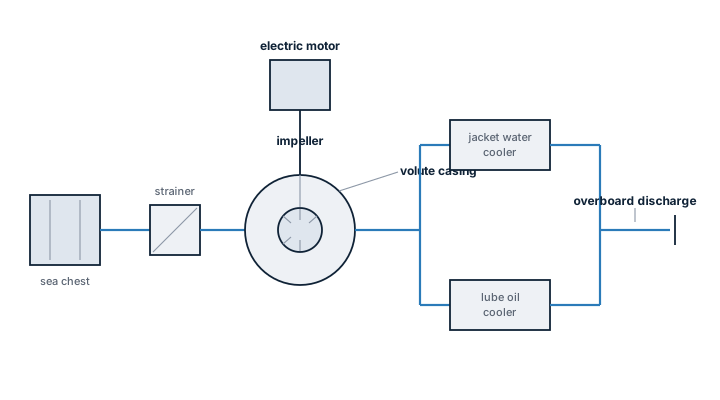
The main SW cooling pump moves the largest continuous volume of any pump in the engine room, drawing from a sea chest and pushing through the main engine jacket water and lube oil coolers before overboard discharge if it trips, the main engine has minutes, not hours, before a slowdown or shutdown follows.
Read more — Main Cooling Seawater Pump (Centrifugal) explained ▾
What sets the main cooling seawater pump apart
Among the engine room's centrifugal pumps, the main SW cooling pump handles the highest continuous flow rate of any single unit sized to carry the full heat rejection of the main engine jacket water system and the lube oil coolers in one pass, plus auxiliary engine and generator cooling where a common system is used. Unlike a fuel or lube oil pump, it draws raw seawater through a sea chest and strainer rather than clean fluid from a closed tank, which shapes almost everything about its material selection and maintenance pattern. It is normally arranged in duty/standby pairs, because a stopped cooling pump forces an immediate main engine load reduction and, if not restored, a shutdown on high jacket water temperature within minutes.
Main components
Casing and impeller
A single or double volute cast casing houses a closed or semi-open impeller, typically bronze or a nickel-aluminium bronze alloy chosen for seawater corrosion resistance rather than the cast iron common on freshwater duties. Wear rings at the impeller eye maintain clearance and are a routine replacement item.
Shaft seal
Mechanical seals have largely replaced packed glands on main cooling pumps because a packed gland's deliberate weep, tolerable on a bilge or general service pump, is undesirable on a unit running continuously at full flow. A mechanical seal failure shows as a steady drip rather than the gradual increase a packing gland gives as warning.
Drive and coupling
Direct-coupled to an electric motor through a flexible coupling in almost all installations; shaft-driven arrangements off the main engine exist on older tonnage but are uncommon on new construction because they remove standby redundancy when the main engine itself is stopped.
Selection and sizing
Sizing follows the heat load of the systems it serves, not a generic flow figure:
- Capacity is set by the combined cooling water demand of the main engine jacket water and lube oil coolers at maximum continuous rating, plus margin for fouling.
- Head must overcome sea chest suction lift, strainer and cooler pressure drop, and static discharge height to the overboard valve.
- Impeller and casing material must suit the seawater temperature range the vessel will trade in, since tropical seawater accelerates both corrosion and biofouling.
- NPSH available at the sea chest, particularly at high sea chest position or in rough weather when suction can aerate, sets the practical suction lift limit.
Regulations and class
Class rules require a standby cooling pump capable of taking over automatically or by quick manual start, sized to carry the full cooling load on its own, since loss of cooling is treated as a machinery casualty risk rather than a routine trip. Periodic survey covers the pump as part of the essential auxiliary machinery inventory, with the sea chest, strainer and overboard valves surveyed on the same cycle as other hull penetrations below the waterline. IACS UR guidance on essential services expects duty/standby redundancy and automatic changeover on low pressure or high jacket water temperature.
Typical faults
| Fault | Cause | Consequence |
|---|---|---|
| Falling discharge pressure | Sea chest strainer fouled with marine growth or debris | Reduced cooling flow, rising jacket water temperature |
| Loss of suction / cavitation noise | Air drawn in at low sea chest during heavy rolling, or seal air ingress | Impeller erosion, unstable flow, pump trip on low pressure |
| Bearing overheating | Misalignment after coupling work or lubrication lapse | Bearing seizure, unplanned pump stop |
| Steady weep at shaft seal | Mechanical seal face wear | Progressive leakage, eventual loss of prime if unattended |
What to look for in a supplier
- Impeller and casing material certified for continuous seawater duty, not a freshwater-rated alternative.
- Performance curve covering the full range from sea chest fouled to clean, so the standby pump is not marginal when the duty unit is dirty.
- Spare parts commonality with the standby pump if both are the same model, simplifying the onboard spares list.
- Mechanical seal cartridge design that allows replacement without pulling the full pump from its baseplate.
Log discharge pressure at a fixed engine load every watch a slow decline over days points to strainer fouling long before the alarm sounds, and gives time to switch to standby before jacket water temperature actually rises.
Typical Manufacturers
24 manufacturers · 76 models
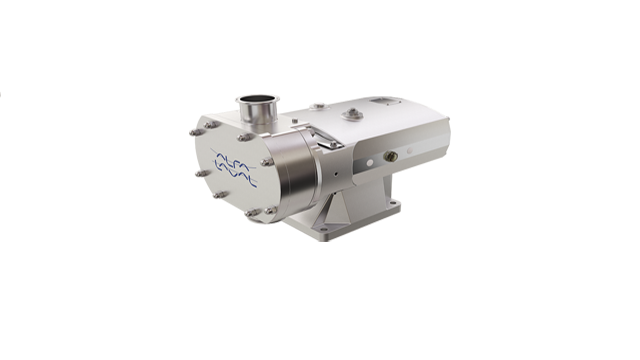
Alfa Laval
46
- Poor suction conditions, blockage or air ingress cause low flow, cavitation-like noise or unstable discharge
- Seal, packing or gasket wear causes visible leakage and falling system pressure
- Bearing, shaft or coupling wear causes vibration, abnormal noise or rising temperature
- Impeller, screw or other pumping-element wear or fouling reduces capacity and may increase drive load
- Motor, hydraulic-drive, valve or control faults cause failure to start, reduced speed or protective trips


Thordon Bearings
4- Mechanical face seal leakage after 8,000-12,000 operating hours
- Impeller erosion due to cavitation at insufficient NPSH
- Shaft bearing wear after 15,000-20,000 hours
- Coupling misalignment causes vibration and premature bearing wear
- Mechanical face seal leakage after 8,000-12,000 operating hours
- Impeller erosion due to cavitation at insufficient NPSH
- Shaft bearing wear after 15,000-20,000 hours
- Coupling misalignment causes vibration and premature bearing wear
- Mechanical face seal leakage after 8,000-12,000 operating hours
- Impeller erosion due to cavitation at insufficient NPSH
- Shaft bearing wear after 15,000-20,000 hours
- Coupling misalignment causes vibration and premature bearing wear

- Mechanical face seal leakage after 8,000-12,000 operating hours
- Impeller erosion due to cavitation at insufficient NPSH
- Shaft bearing wear after 15,000-20,000 hours
- Coupling misalignment causes vibration and premature bearing wear
Napier Turbochargers - A Division of Wabtec UK
3- Mechanical face seal leakage after 8,000-12,000 operating hours
- Impeller erosion due to cavitation at insufficient NPSH
- Shaft bearing wear after 15,000-20,000 hours
- Coupling misalignment causes vibration and premature bearing wear
- Mechanical face seal leakage after 8,000-12,000 operating hours
- Impeller erosion due to cavitation at insufficient NPSH
- Shaft bearing wear after 15,000-20,000 hours
- Coupling misalignment causes vibration and premature bearing wear
- Mechanical face seal leakage after 8,000-12,000 operating hours
- Impeller erosion due to cavitation at insufficient NPSH
- Shaft bearing wear after 15,000-20,000 hours
- Coupling misalignment causes vibration and premature bearing wear
SJS
3Azcue
1- Poor suction conditions, blockage or air ingress cause low flow, cavitation-like noise or unstable discharge
- Seal, packing or gasket wear causes visible leakage and falling system pressure
- Bearing, shaft or coupling wear causes vibration, abnormal noise or rising temperature
- Impeller, screw or other pumping-element wear or fouling reduces capacity and may increase drive load
- Motor, hydraulic-drive, valve or control faults cause failure to start, reduced speed or protective trips
- Bronze impeller provides excellent resistance to seawater corrosion
- Grease‑lubricated bearings allow extended maintenance intervals (≈2000 h)
- Simple mechanical construction facilitates on‑board servicing and parts replacement
- Azcue brand reputation for durability in harsh marine environments
- Shaft sleeve is prone to corrosion if not inspected regularly
- Reported seal failures can lead to leakage under high temperature conditions
- Cavitation damage possible when suction head is insufficient or flow is restricted
- Grease bearing requires periodic re‑greasing, unlike oil‑lubricated alternatives
DAIHATSU INFINEARTH MFG
1Dräger Safety AG & Co. KGaA
1ETUDES ET PRODUCTIONS SCHLUMBERGER SAS
1GEA Westfalia Separator Group
1- Mechanical face seal leakage after 8,000-12,000 operating hours
- Impeller erosion due to cavitation at insufficient NPSH
- Shaft bearing wear after 15,000-20,000 hours
- Coupling misalignment causes vibration and premature bearing wear
Heinzmann
1HEISHIN PUMP WORKS
1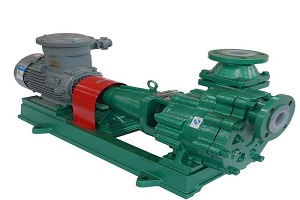
IMO
1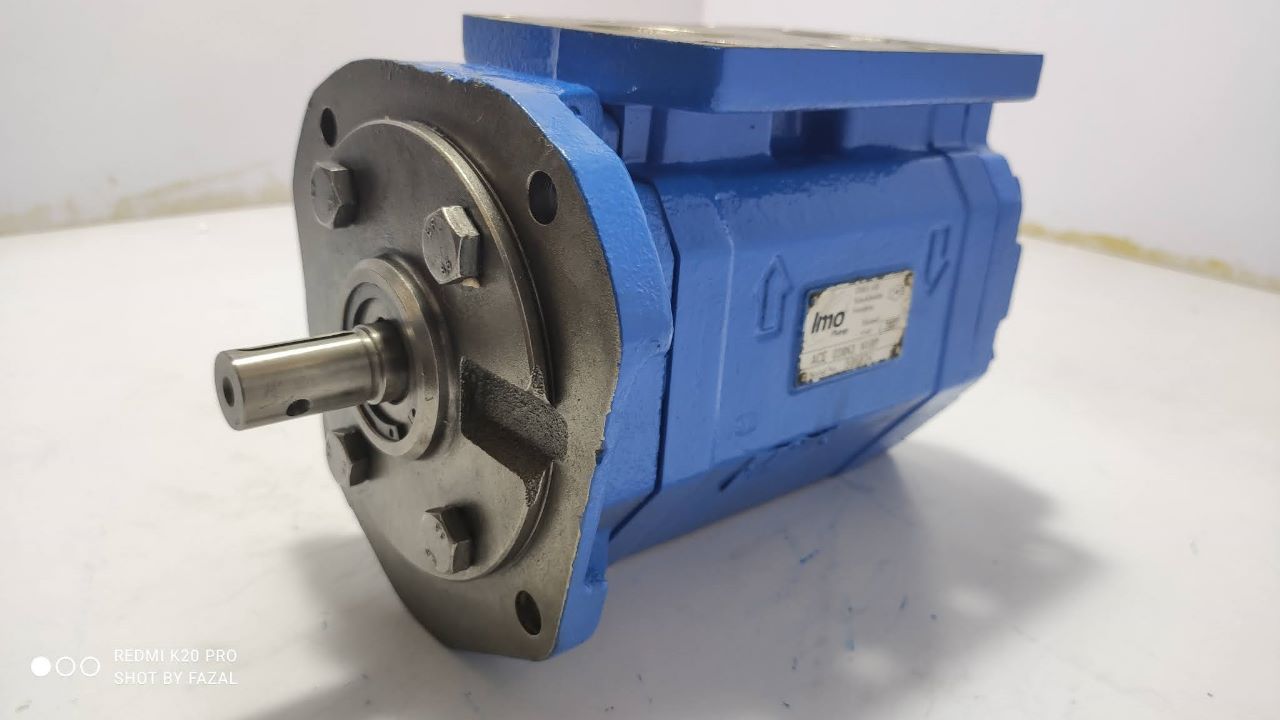
- Poor suction conditions, blockage or air ingress cause low flow, cavitation-like noise or unstable discharge
- Seal, packing or gasket wear causes visible leakage and falling system pressure
- Bearing, shaft or coupling wear causes vibration, abnormal noise or rising temperature
- Impeller, screw or other pumping-element wear or fouling reduces capacity and may increase drive load
- Motor, hydraulic-drive, valve or control faults cause failure to start, reduced speed or protective trips
- High flow rate and pressure capability
- Robust design for harsh marine environment
- Low maintenance requirements with replaceable mechanical seal
- Potential for impeller erosion from sand/debris if not properly maintained
- Bearing wear can occur if not regularly checked and replaced
- Mechanical seal leakage can be a common issue if not replaced as recommended
InLine Hydraulik
1Iron Pump
1
- Poor suction conditions, blockage or air ingress cause low flow, cavitation-like noise or unstable discharge
- Seal, packing or gasket wear causes visible leakage and falling system pressure
- Bearing, shaft or coupling wear causes vibration, abnormal noise or rising temperature
- Impeller, screw or other pumping-element wear or fouling reduces capacity and may increase drive load
- Motor, hydraulic-drive, valve or control faults cause failure to start, reduced speed or protective trips
- High flow capacity suitable for large merchant vessels
- Robust cast‑iron construction with built‑in sacrificial anodes for corrosion protection
- Simple direct‑coupled drive, easy to align and maintain
- Proven reliability in long‑term sea service
- Straightforward access for routine inspection and part replacement
- Wear ring erosion reported under high‑speed operation
- Requires precise alignment; misalignment can cause coupling wear
- Bearing overheating risk if lubrication is not closely monitored
- Relatively heavy and bulky compared with aluminium or composite alternatives
- Fixed impeller speed limits flexibility for variable‑speed cooling demands
Johnson Controls International Korea
1Kongsberg Maritime
1Marioff
1Master Field Mechanical Equipment
1MHWirth
1Nikkiso ACD
1Sero PumpSystems
1
Shinko Industries
1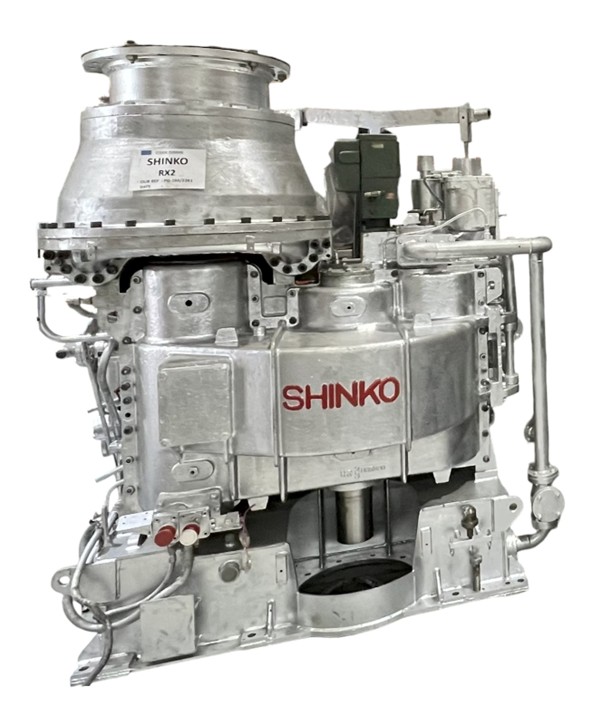
- Poor suction conditions, blockage or air ingress cause low flow, cavitation-like noise or unstable discharge
- Seal, packing or gasket wear causes visible leakage and falling system pressure
- Bearing, shaft or coupling wear causes vibration, abnormal noise or rising temperature
- Impeller, screw or other pumping-element wear or fouling reduces capacity and may increase drive load
- Motor, hydraulic-drive, valve or control faults cause failure to start, reduced speed or protective trips
- High flow capacity (~350 m³/h) suitable for medium‑to‑large marine diesel engines
- Robust alloy construction (bronze/stainless) offering good corrosion resistance in saltwater
- Integrated suction strainer simplifies installation and protects the impeller
- OEM Shinko mechanical seals are readily available, facilitating maintenance
- Compact footprint fits confined engine‑room spaces
- Impeller surface can pit if seawater contains high levels of suspended solids or aggressive organisms
- Mechanical seal wear requires scheduled replacement to avoid leaks
- Suction strainer may clog in fouling conditions, demanding regular cleaning
- Limited head capability compared with larger‑capacity pumps; not ideal for very high‑pressure loops
- Weight and mounting hardware can be substantial on smaller vessels