"> Fuel Oil Supply/Booster Pump - Equipment Database

Fuel Oil Supply/Booster Pump

critical 66 models total

A fuel oil supply/booster pump raises fuel from the settling or service tank to the pressure the main or auxiliary engine's injection system needs, and on heavy fuel installations does so against a viscosity and temperature the pump was specifically sized for.

Read more — Fuel Oil Supply/Booster Pump explained

What Sets Supply/Booster Pumps Apart

A supply pump moves fuel at modest, near-atmospheric pressure from tank to the day tank or mixing unit; a booster pump raises that fuel further, to the pressure the injection pumps or common-rail system actually require, often 4-10 bar for conventional injection and considerably higher for common-rail engines. On a heavy fuel oil (HFO) installation, the booster stage works in series with a heater and viscosity control loop, because HFO must reach injection viscosity, not just injection pressure, or atomization at the nozzle fails. Distillate fuel (MGO/MDO) installations skip the heating stage but still need the booster pump sized for the engine's rail pressure and flow.
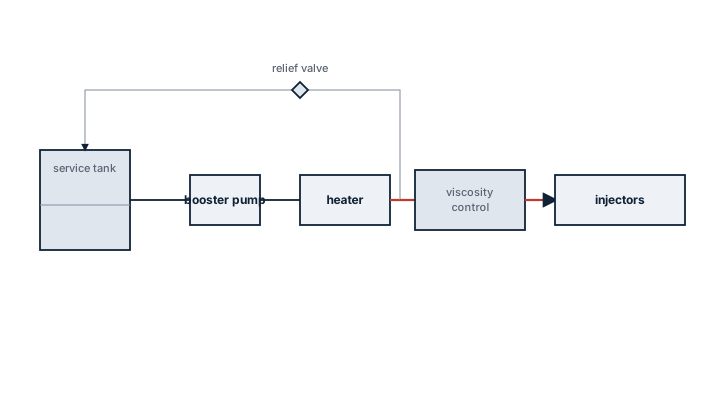
Fuel oil supply/booster pump system
Flow schematic from the service tank through the booster pump and heater to viscosity control and the engine injectors, with a relief line returning excess heated fuel to the tank.

Main Components

Pump Element

Almost always a positive displacement type, typically a screw or gear pump, chosen because fuel oil viscosity varies too widely for a centrifugal pump to hold a stable delivery pressure across the operating range.

Relief Valve

Protects the pump and downstream piping against dead-heading if a valve is shut with the pump running; set to open just above normal working pressure.

Duplex Filter

Fitted upstream to protect the close-tolerance pump elements and injection equipment from abrasive particles; changeable on load without stopping flow.

Mechanical Seal or Packing

Seals the shaft against the pumped fuel; mechanical seals dominate on modern installations for lower leakage and less maintenance than packed glands.

Selection and Sizing

  • Delivery pressure and flow matched to the specific engine's injection or common-rail system, not a generic figure
  • Viscosity range the pump element can handle, since HFO service means a far wider range than MGO-only service
  • Material selection for the pump casing and internals against the fuel's sulfur and corrosivity
  • Standby capacity: class requires a duplicate pump able to take over without manual reconfiguration under way

Regulations and Class

Class rules require duplicated fuel oil supply and booster pumps for the main propulsion engine, arranged so that failure of one does not stop propulsion, with standby start typically automatic or from the engine control room. MARPOL Annex VI governs the fuel's sulfur content the pump ultimately delivers to the engine, which matters for material compatibility when a vessel switches between HFO and low-sulfur fuels for emission control area transits.

Typical Faults

FaultConsequence
Mechanical seal wear from running dry during tank changeoverFuel leakage into the bilge or pump room, a fire and pollution risk
Relief valve set point drifted lowChronic loss of delivery pressure at the injectors, poor combustion
Duplex filter not switched over before it clogsPump cavitation and reduced flow, worst case an unplanned changeover under load
Standby pump left in manual isolation after maintenanceNo automatic backup if the running pump fails, a single point of failure that class assumed was covered

What to Look for in a Supplier

  • Pump curve data matched against the specific engine maker's fuel system requirement, not a catalog match by flow alone
  • Material certificates for wetted parts appropriate to the fuel sulfur range the ship will actually burn
  • Spare rotor/seal kits available for the exact model, since fuel pumps are wear items in continuous service

After every fuel switchover between HFO and low-sulfur distillate, confirm the standby pump is back in automatic - it is routinely left in manual during the changeover and forgotten.

4000h
Service Interval
20 yr
Typical Lifetime

Typical Manufacturers

Aalborg IMO

7 manufacturers · 66 models

Bornemann (ITT Bornemann)

20 ✓ 20 verified
W9 ✓ verified
Application
Fuel oil transfer, tank terminals, marine fuel supply
Common Failures & Inspection Points
  • Area: Pump cavitation and suction performance degradation
    Check: Verify NPSH available exceeds pump NPSH required (typically 1.5-4m for Bornemann pumps); inspect suction line for blockages, check fuel tank level, confirm no air leaks in inlet lines
  • Area: Mechanical seal failure and fuel leakage
    Check: Visually inspect mechanical seal housing for external leaks; monitor seal cavity temperature; confirm proper seal material selection for fuel type (API-682 compliance); check seal lubrication reservoir level
  • Area: Bearing wear and shaft misalignment
    Check: Monitor pump vibration and temperature at bearing housings; check shaft alignment with dial indicator (TIR tolerance typically <0.05mm); inspect bearing lubrication (oil level and condition) every 500-1000 hours
  • Area: Rotor/stator degradation in progressive cavity pumps (EH, E2H, ES series)
    Check: Measure discharge pressure drop vs. specification; inspect rotor surface for scoring or wear (endoscopy if possible); verify stator elastomer material compatibility with fuel type; replace rotor/stator assembly when wear exceeds 10% of design tolerance
  • Area: Fuel contamination and strainer blockage
    Check: Inspect inlet strainer/filter mesh condition monthly; measure pressure drop across strainer; verify fuel cleanliness per ISO 4406 code (recommend <18/16/13 for fuel pumps); change strainer element when pressure drop exceeds manufacturer specification (typically 0.3-0.5 bar)

Typ-universelle Inspektionspunkte fuer Pumps (verifiziert, 2026-06).

[08.08.2026] Datenblattlink entfernt (seite leer): https://www.bornemann.com/en-US/Industries/Downstream/Tank-Terminals/
W-Series (W10, W9.10, W9.10zk-67) ✓ verified
Application
Heavy fuel oil transfer, marine cargo, industrial fuel pumping
Common Failures & Inspection Points
  • Area: Pump cavitation and suction performance degradation
    Check: Verify NPSH available exceeds pump NPSH required (typically 1.5-4m for Bornemann pumps); inspect suction line for blockages, check fuel tank level, confirm no air leaks in inlet lines
  • Area: Mechanical seal failure and fuel leakage
    Check: Visually inspect mechanical seal housing for external leaks; monitor seal cavity temperature; confirm proper seal material selection for fuel type (API-682 compliance); check seal lubrication reservoir level
  • Area: Bearing wear and shaft misalignment
    Check: Monitor pump vibration and temperature at bearing housings; check shaft alignment with dial indicator (TIR tolerance typically <0.05mm); inspect bearing lubrication (oil level and condition) every 500-1000 hours
  • Area: Rotor/stator degradation in progressive cavity pumps (EH, E2H, ES series)
    Check: Measure discharge pressure drop vs. specification; inspect rotor surface for scoring or wear (endoscopy if possible); verify stator elastomer material compatibility with fuel type; replace rotor/stator assembly when wear exceeds 10% of design tolerance
  • Area: Fuel contamination and strainer blockage
    Check: Inspect inlet strainer/filter mesh condition monthly; measure pressure drop across strainer; verify fuel cleanliness per ISO 4406 code (recommend <18/16/13 for fuel pumps); change strainer element when pressure drop exceeds manufacturer specification (typically 0.3-0.5 bar)

Typ-universelle Inspektionspunkte fuer Pumps (verifiziert, 2026-06).

[08.08.2026] Datenblattlink entfernt (fehler 404): https://www.german-legacy-pumps.com/en/spare-parts-3/bornemann-pumps/w/w9-10/
HC/VHC-Series ✓ verified
Application
Compact fuel oil, high-capacity general industrial pumping
Common Failures & Inspection Points
  • Area: Pump cavitation and suction performance degradation
    Check: Verify NPSH available exceeds pump NPSH required (typically 1.5-4m for Bornemann pumps); inspect suction line for blockages, check fuel tank level, confirm no air leaks in inlet lines
  • Area: Mechanical seal failure and fuel leakage
    Check: Visually inspect mechanical seal housing for external leaks; monitor seal cavity temperature; confirm proper seal material selection for fuel type (API-682 compliance); check seal lubrication reservoir level
  • Area: Bearing wear and shaft misalignment
    Check: Monitor pump vibration and temperature at bearing housings; check shaft alignment with dial indicator (TIR tolerance typically <0.05mm); inspect bearing lubrication (oil level and condition) every 500-1000 hours
  • Area: Rotor/stator degradation in progressive cavity pumps (EH, E2H, ES series)
    Check: Measure discharge pressure drop vs. specification; inspect rotor surface for scoring or wear (endoscopy if possible); verify stator elastomer material compatibility with fuel type; replace rotor/stator assembly when wear exceeds 10% of design tolerance
  • Area: Fuel contamination and strainer blockage
    Check: Inspect inlet strainer/filter mesh condition monthly; measure pressure drop across strainer; verify fuel cleanliness per ISO 4406 code (recommend <18/16/13 for fuel pumps); change strainer element when pressure drop exceeds manufacturer specification (typically 0.3-0.5 bar)

Typ-universelle Inspektionspunkte fuer Pumps (verifiziert, 2026-06).

VHC (High-Capacity variant) ✓ verified
Application
Heavy fuel oil supply, high-viscosity fuel transfer
Common Failures & Inspection Points
  • Area: Pump cavitation and suction performance degradation
    Check: Verify NPSH available exceeds pump NPSH required (typically 1.5-4m for Bornemann pumps); inspect suction line for blockages, check fuel tank level, confirm no air leaks in inlet lines
  • Area: Mechanical seal failure and fuel leakage
    Check: Visually inspect mechanical seal housing for external leaks; monitor seal cavity temperature; confirm proper seal material selection for fuel type (API-682 compliance); check seal lubrication reservoir level
  • Area: Bearing wear and shaft misalignment
    Check: Monitor pump vibration and temperature at bearing housings; check shaft alignment with dial indicator (TIR tolerance typically <0.05mm); inspect bearing lubrication (oil level and condition) every 500-1000 hours
  • Area: Rotor/stator degradation in progressive cavity pumps (EH, E2H, ES series)
    Check: Measure discharge pressure drop vs. specification; inspect rotor surface for scoring or wear (endoscopy if possible); verify stator elastomer material compatibility with fuel type; replace rotor/stator assembly when wear exceeds 10% of design tolerance
  • Area: Fuel contamination and strainer blockage
    Check: Inspect inlet strainer/filter mesh condition monthly; measure pressure drop across strainer; verify fuel cleanliness per ISO 4406 code (recommend <18/16/13 for fuel pumps); change strainer element when pressure drop exceeds manufacturer specification (typically 0.3-0.5 bar)

Typ-universelle Inspektionspunkte fuer Pumps (verifiziert, 2026-06).

[08.08.2026] Datenblattlink entfernt (seite leer): https://www.bornemann.com/products/vhc
EH 1024 ✓ verified
Application
Progressive cavity pump for fuel oil and heating oil
Common Failures & Inspection Points
  • Area: Pump cavitation and suction performance degradation
    Check: Verify NPSH available exceeds pump NPSH required (typically 1.5-4m for Bornemann pumps); inspect suction line for blockages, check fuel tank level, confirm no air leaks in inlet lines
  • Area: Mechanical seal failure and fuel leakage
    Check: Visually inspect mechanical seal housing for external leaks; monitor seal cavity temperature; confirm proper seal material selection for fuel type (API-682 compliance); check seal lubrication reservoir level
  • Area: Bearing wear and shaft misalignment
    Check: Monitor pump vibration and temperature at bearing housings; check shaft alignment with dial indicator (TIR tolerance typically <0.05mm); inspect bearing lubrication (oil level and condition) every 500-1000 hours
  • Area: Rotor/stator degradation in progressive cavity pumps (EH, E2H, ES series)
    Check: Measure discharge pressure drop vs. specification; inspect rotor surface for scoring or wear (endoscopy if possible); verify stator elastomer material compatibility with fuel type; replace rotor/stator assembly when wear exceeds 10% of design tolerance
  • Area: Fuel contamination and strainer blockage
    Check: Inspect inlet strainer/filter mesh condition monthly; measure pressure drop across strainer; verify fuel cleanliness per ISO 4406 code (recommend <18/16/13 for fuel pumps); change strainer element when pressure drop exceeds manufacturer specification (typically 0.3-0.5 bar)

Typ-universelle Inspektionspunkte fuer Pumps (verifiziert, 2026-06).

EH 1900 ✓ verified
Application
Industrial heating oil and fuel supply
Common Failures & Inspection Points
  • Area: Pump cavitation and suction performance degradation
    Check: Verify NPSH available exceeds pump NPSH required (typically 1.5-4m for Bornemann pumps); inspect suction line for blockages, check fuel tank level, confirm no air leaks in inlet lines
  • Area: Mechanical seal failure and fuel leakage
    Check: Visually inspect mechanical seal housing for external leaks; monitor seal cavity temperature; confirm proper seal material selection for fuel type (API-682 compliance); check seal lubrication reservoir level
  • Area: Bearing wear and shaft misalignment
    Check: Monitor pump vibration and temperature at bearing housings; check shaft alignment with dial indicator (TIR tolerance typically <0.05mm); inspect bearing lubrication (oil level and condition) every 500-1000 hours
  • Area: Rotor/stator degradation in progressive cavity pumps (EH, E2H, ES series)
    Check: Measure discharge pressure drop vs. specification; inspect rotor surface for scoring or wear (endoscopy if possible); verify stator elastomer material compatibility with fuel type; replace rotor/stator assembly when wear exceeds 10% of design tolerance
  • Area: Fuel contamination and strainer blockage
    Check: Inspect inlet strainer/filter mesh condition monthly; measure pressure drop across strainer; verify fuel cleanliness per ISO 4406 code (recommend <18/16/13 for fuel pumps); change strainer element when pressure drop exceeds manufacturer specification (typically 0.3-0.5 bar)

Typ-universelle Inspektionspunkte fuer Pumps (verifiziert, 2026-06).

E2H 1500 ✓ verified
Application
Progressive cavity fuel and heating oil pump
Common Failures & Inspection Points
  • Area: Pump cavitation and suction performance degradation
    Check: Verify NPSH available exceeds pump NPSH required (typically 1.5-4m for Bornemann pumps); inspect suction line for blockages, check fuel tank level, confirm no air leaks in inlet lines
  • Area: Mechanical seal failure and fuel leakage
    Check: Visually inspect mechanical seal housing for external leaks; monitor seal cavity temperature; confirm proper seal material selection for fuel type (API-682 compliance); check seal lubrication reservoir level
  • Area: Bearing wear and shaft misalignment
    Check: Monitor pump vibration and temperature at bearing housings; check shaft alignment with dial indicator (TIR tolerance typically <0.05mm); inspect bearing lubrication (oil level and condition) every 500-1000 hours
  • Area: Rotor/stator degradation in progressive cavity pumps (EH, E2H, ES series)
    Check: Measure discharge pressure drop vs. specification; inspect rotor surface for scoring or wear (endoscopy if possible); verify stator elastomer material compatibility with fuel type; replace rotor/stator assembly when wear exceeds 10% of design tolerance
  • Area: Fuel contamination and strainer blockage
    Check: Inspect inlet strainer/filter mesh condition monthly; measure pressure drop across strainer; verify fuel cleanliness per ISO 4406 code (recommend <18/16/13 for fuel pumps); change strainer element when pressure drop exceeds manufacturer specification (typically 0.3-0.5 bar)

Typ-universelle Inspektionspunkte fuer Pumps (verifiziert, 2026-06).

E2H 1024 ✓ verified
Application
Compact heating oil and fuel supply
Common Failures & Inspection Points
  • Area: Pump cavitation and suction performance degradation
    Check: Verify NPSH available exceeds pump NPSH required (typically 1.5-4m for Bornemann pumps); inspect suction line for blockages, check fuel tank level, confirm no air leaks in inlet lines
  • Area: Mechanical seal failure and fuel leakage
    Check: Visually inspect mechanical seal housing for external leaks; monitor seal cavity temperature; confirm proper seal material selection for fuel type (API-682 compliance); check seal lubrication reservoir level
  • Area: Bearing wear and shaft misalignment
    Check: Monitor pump vibration and temperature at bearing housings; check shaft alignment with dial indicator (TIR tolerance typically <0.05mm); inspect bearing lubrication (oil level and condition) every 500-1000 hours
  • Area: Rotor/stator degradation in progressive cavity pumps (EH, E2H, ES series)
    Check: Measure discharge pressure drop vs. specification; inspect rotor surface for scoring or wear (endoscopy if possible); verify stator elastomer material compatibility with fuel type; replace rotor/stator assembly when wear exceeds 10% of design tolerance
  • Area: Fuel contamination and strainer blockage
    Check: Inspect inlet strainer/filter mesh condition monthly; measure pressure drop across strainer; verify fuel cleanliness per ISO 4406 code (recommend <18/16/13 for fuel pumps); change strainer element when pressure drop exceeds manufacturer specification (typically 0.3-0.5 bar)

Typ-universelle Inspektionspunkte fuer Pumps (verifiziert, 2026-06).

EL-Series (Close-coupled design) ✓ verified
Application
Compact heating oil, fuel transfer, industrial applications
Common Failures & Inspection Points
  • Area: Pump cavitation and suction performance degradation
    Check: Verify NPSH available exceeds pump NPSH required (typically 1.5-4m for Bornemann pumps); inspect suction line for blockages, check fuel tank level, confirm no air leaks in inlet lines
  • Area: Mechanical seal failure and fuel leakage
    Check: Visually inspect mechanical seal housing for external leaks; monitor seal cavity temperature; confirm proper seal material selection for fuel type (API-682 compliance); check seal lubrication reservoir level
  • Area: Bearing wear and shaft misalignment
    Check: Monitor pump vibration and temperature at bearing housings; check shaft alignment with dial indicator (TIR tolerance typically <0.05mm); inspect bearing lubrication (oil level and condition) every 500-1000 hours
  • Area: Rotor/stator degradation in progressive cavity pumps (EH, E2H, ES series)
    Check: Measure discharge pressure drop vs. specification; inspect rotor surface for scoring or wear (endoscopy if possible); verify stator elastomer material compatibility with fuel type; replace rotor/stator assembly when wear exceeds 10% of design tolerance
  • Area: Fuel contamination and strainer blockage
    Check: Inspect inlet strainer/filter mesh condition monthly; measure pressure drop across strainer; verify fuel cleanliness per ISO 4406 code (recommend <18/16/13 for fuel pumps); change strainer element when pressure drop exceeds manufacturer specification (typically 0.3-0.5 bar)

Typ-universelle Inspektionspunkte fuer Pumps (verifiziert, 2026-06).

SLH-4U ✓ verified
Application
Sanitary/aseptic fuel and viscous medium transfer
Common Failures & Inspection Points
  • Area: Pump cavitation and suction performance degradation
    Check: Verify NPSH available exceeds pump NPSH required (typically 1.5-4m for Bornemann pumps); inspect suction line for blockages, check fuel tank level, confirm no air leaks in inlet lines
  • Area: Mechanical seal failure and fuel leakage
    Check: Visually inspect mechanical seal housing for external leaks; monitor seal cavity temperature; confirm proper seal material selection for fuel type (API-682 compliance); check seal lubrication reservoir level
  • Area: Bearing wear and shaft misalignment
    Check: Monitor pump vibration and temperature at bearing housings; check shaft alignment with dial indicator (TIR tolerance typically <0.05mm); inspect bearing lubrication (oil level and condition) every 500-1000 hours
  • Area: Rotor/stator degradation in progressive cavity pumps (EH, E2H, ES series)
    Check: Measure discharge pressure drop vs. specification; inspect rotor surface for scoring or wear (endoscopy if possible); verify stator elastomer material compatibility with fuel type; replace rotor/stator assembly when wear exceeds 10% of design tolerance
  • Area: Fuel contamination and strainer blockage
    Check: Inspect inlet strainer/filter mesh condition monthly; measure pressure drop across strainer; verify fuel cleanliness per ISO 4406 code (recommend <18/16/13 for fuel pumps); change strainer element when pressure drop exceeds manufacturer specification (typically 0.3-0.5 bar)

Typ-universelle Inspektionspunkte fuer Pumps (verifiziert, 2026-06).

[08.08.2026] Datenblattlink entfernt (seite leer): https://www.bornemann.com/products/slh-5g
SLH-4G ✓ verified
Application
Premium fuel and high-viscosity medium transfer
Common Failures & Inspection Points
  • Area: Pump cavitation and suction performance degradation
    Check: Verify NPSH available exceeds pump NPSH required (typically 1.5-4m for Bornemann pumps); inspect suction line for blockages, check fuel tank level, confirm no air leaks in inlet lines
  • Area: Mechanical seal failure and fuel leakage
    Check: Visually inspect mechanical seal housing for external leaks; monitor seal cavity temperature; confirm proper seal material selection for fuel type (API-682 compliance); check seal lubrication reservoir level
  • Area: Bearing wear and shaft misalignment
    Check: Monitor pump vibration and temperature at bearing housings; check shaft alignment with dial indicator (TIR tolerance typically <0.05mm); inspect bearing lubrication (oil level and condition) every 500-1000 hours
  • Area: Rotor/stator degradation in progressive cavity pumps (EH, E2H, ES series)
    Check: Measure discharge pressure drop vs. specification; inspect rotor surface for scoring or wear (endoscopy if possible); verify stator elastomer material compatibility with fuel type; replace rotor/stator assembly when wear exceeds 10% of design tolerance
  • Area: Fuel contamination and strainer blockage
    Check: Inspect inlet strainer/filter mesh condition monthly; measure pressure drop across strainer; verify fuel cleanliness per ISO 4406 code (recommend <18/16/13 for fuel pumps); change strainer element when pressure drop exceeds manufacturer specification (typically 0.3-0.5 bar)

Typ-universelle Inspektionspunkte fuer Pumps (verifiziert, 2026-06).

SLH-5G ✓ verified
Application
Flexible fuel pumping, aseptic and universal processes
Common Failures & Inspection Points
  • Area: Pump cavitation and suction performance degradation
    Check: Verify NPSH available exceeds pump NPSH required (typically 1.5-4m for Bornemann pumps); inspect suction line for blockages, check fuel tank level, confirm no air leaks in inlet lines
  • Area: Mechanical seal failure and fuel leakage
    Check: Visually inspect mechanical seal housing for external leaks; monitor seal cavity temperature; confirm proper seal material selection for fuel type (API-682 compliance); check seal lubrication reservoir level
  • Area: Bearing wear and shaft misalignment
    Check: Monitor pump vibration and temperature at bearing housings; check shaft alignment with dial indicator (TIR tolerance typically <0.05mm); inspect bearing lubrication (oil level and condition) every 500-1000 hours
  • Area: Rotor/stator degradation in progressive cavity pumps (EH, E2H, ES series)
    Check: Measure discharge pressure drop vs. specification; inspect rotor surface for scoring or wear (endoscopy if possible); verify stator elastomer material compatibility with fuel type; replace rotor/stator assembly when wear exceeds 10% of design tolerance
  • Area: Fuel contamination and strainer blockage
    Check: Inspect inlet strainer/filter mesh condition monthly; measure pressure drop across strainer; verify fuel cleanliness per ISO 4406 code (recommend <18/16/13 for fuel pumps); change strainer element when pressure drop exceeds manufacturer specification (typically 0.3-0.5 bar)

Typ-universelle Inspektionspunkte fuer Pumps (verifiziert, 2026-06).

SLW-Series ✓ verified
Application
Hermetically sealed fuel and high-pressure transfer
Common Failures & Inspection Points
  • Area: Pump cavitation and suction performance degradation
    Check: Verify NPSH available exceeds pump NPSH required (typically 1.5-4m for Bornemann pumps); inspect suction line for blockages, check fuel tank level, confirm no air leaks in inlet lines
  • Area: Mechanical seal failure and fuel leakage
    Check: Visually inspect mechanical seal housing for external leaks; monitor seal cavity temperature; confirm proper seal material selection for fuel type (API-682 compliance); check seal lubrication reservoir level
  • Area: Bearing wear and shaft misalignment
    Check: Monitor pump vibration and temperature at bearing housings; check shaft alignment with dial indicator (TIR tolerance typically <0.05mm); inspect bearing lubrication (oil level and condition) every 500-1000 hours
  • Area: Rotor/stator degradation in progressive cavity pumps (EH, E2H, ES series)
    Check: Measure discharge pressure drop vs. specification; inspect rotor surface for scoring or wear (endoscopy if possible); verify stator elastomer material compatibility with fuel type; replace rotor/stator assembly when wear exceeds 10% of design tolerance
  • Area: Fuel contamination and strainer blockage
    Check: Inspect inlet strainer/filter mesh condition monthly; measure pressure drop across strainer; verify fuel cleanliness per ISO 4406 code (recommend <18/16/13 for fuel pumps); change strainer element when pressure drop exceeds manufacturer specification (typically 0.3-0.5 bar)

Typ-universelle Inspektionspunkte fuer Pumps (verifiziert, 2026-06).

[08.08.2026] Datenblattlink entfernt (seite leer): https://www.bornemann.com/en-US/Products/Twin-Screw-Pumps/SLW/
MPC (Multiphase Pump Compressor) ✓ verified
Application
Multiphase fuel/oil-gas boosting in upstream oil production
Common Failures & Inspection Points
  • Area: Pump cavitation and suction performance degradation
    Check: Verify NPSH available exceeds pump NPSH required (typically 1.5-4m for Bornemann pumps); inspect suction line for blockages, check fuel tank level, confirm no air leaks in inlet lines
  • Area: Mechanical seal failure and fuel leakage
    Check: Visually inspect mechanical seal housing for external leaks; monitor seal cavity temperature; confirm proper seal material selection for fuel type (API-682 compliance); check seal lubrication reservoir level
  • Area: Bearing wear and shaft misalignment
    Check: Monitor pump vibration and temperature at bearing housings; check shaft alignment with dial indicator (TIR tolerance typically <0.05mm); inspect bearing lubrication (oil level and condition) every 500-1000 hours
  • Area: Rotor/stator degradation in progressive cavity pumps (EH, E2H, ES series)
    Check: Measure discharge pressure drop vs. specification; inspect rotor surface for scoring or wear (endoscopy if possible); verify stator elastomer material compatibility with fuel type; replace rotor/stator assembly when wear exceeds 10% of design tolerance
  • Area: Fuel contamination and strainer blockage
    Check: Inspect inlet strainer/filter mesh condition monthly; measure pressure drop across strainer; verify fuel cleanliness per ISO 4406 code (recommend <18/16/13 for fuel pumps); change strainer element when pressure drop exceeds manufacturer specification (typically 0.3-0.5 bar)

Typ-universelle Inspektionspunkte fuer Pumps (verifiziert, 2026-06).

[08.08.2026] Datenblattlink entfernt (seite leer): https://www.bornemann.com/en-US/Products/Multiphase-Boosting/Multiphase-Boosting-Technology/
MPC-335 ✓ verified
Application
Large-scale multiphase fuel/oil-gas booster
Common Failures & Inspection Points
  • Area: Pump cavitation and suction performance degradation
    Check: Verify NPSH available exceeds pump NPSH required (typically 1.5-4m for Bornemann pumps); inspect suction line for blockages, check fuel tank level, confirm no air leaks in inlet lines
  • Area: Mechanical seal failure and fuel leakage
    Check: Visually inspect mechanical seal housing for external leaks; monitor seal cavity temperature; confirm proper seal material selection for fuel type (API-682 compliance); check seal lubrication reservoir level
  • Area: Bearing wear and shaft misalignment
    Check: Monitor pump vibration and temperature at bearing housings; check shaft alignment with dial indicator (TIR tolerance typically <0.05mm); inspect bearing lubrication (oil level and condition) every 500-1000 hours
  • Area: Rotor/stator degradation in progressive cavity pumps (EH, E2H, ES series)
    Check: Measure discharge pressure drop vs. specification; inspect rotor surface for scoring or wear (endoscopy if possible); verify stator elastomer material compatibility with fuel type; replace rotor/stator assembly when wear exceeds 10% of design tolerance
  • Area: Fuel contamination and strainer blockage
    Check: Inspect inlet strainer/filter mesh condition monthly; measure pressure drop across strainer; verify fuel cleanliness per ISO 4406 code (recommend <18/16/13 for fuel pumps); change strainer element when pressure drop exceeds manufacturer specification (typically 0.3-0.5 bar)

Typ-universelle Inspektionspunkte fuer Pumps (verifiziert, 2026-06).

[08.08.2026] Datenblattlink entfernt (seite leer): https://www.bornemann.com/en-US/Industries/Upstream/conventional-multiphase-boosting/
MPC-268 ✓ verified
Application
Multiphase fuel booster for medium-scale production
Common Failures & Inspection Points
  • Area: Pump cavitation and suction performance degradation
    Check: Verify NPSH available exceeds pump NPSH required (typically 1.5-4m for Bornemann pumps); inspect suction line for blockages, check fuel tank level, confirm no air leaks in inlet lines
  • Area: Mechanical seal failure and fuel leakage
    Check: Visually inspect mechanical seal housing for external leaks; monitor seal cavity temperature; confirm proper seal material selection for fuel type (API-682 compliance); check seal lubrication reservoir level
  • Area: Bearing wear and shaft misalignment
    Check: Monitor pump vibration and temperature at bearing housings; check shaft alignment with dial indicator (TIR tolerance typically <0.05mm); inspect bearing lubrication (oil level and condition) every 500-1000 hours
  • Area: Rotor/stator degradation in progressive cavity pumps (EH, E2H, ES series)
    Check: Measure discharge pressure drop vs. specification; inspect rotor surface for scoring or wear (endoscopy if possible); verify stator elastomer material compatibility with fuel type; replace rotor/stator assembly when wear exceeds 10% of design tolerance
  • Area: Fuel contamination and strainer blockage
    Check: Inspect inlet strainer/filter mesh condition monthly; measure pressure drop across strainer; verify fuel cleanliness per ISO 4406 code (recommend <18/16/13 for fuel pumps); change strainer element when pressure drop exceeds manufacturer specification (typically 0.3-0.5 bar)

Typ-universelle Inspektionspunkte fuer Pumps (verifiziert, 2026-06).

[08.08.2026] Datenblattlink entfernt (seite leer): https://www.bornemann.com/en-US/Products/Multiphase-Boosting/Multiphase-Boosting-Technology/
MPC HC (High Capacity variant) ✓ verified
Application
High-capacity multiphase fuel and oil-gas boosting
Common Failures & Inspection Points
  • Area: Pump cavitation and suction performance degradation
    Check: Verify NPSH available exceeds pump NPSH required (typically 1.5-4m for Bornemann pumps); inspect suction line for blockages, check fuel tank level, confirm no air leaks in inlet lines
  • Area: Mechanical seal failure and fuel leakage
    Check: Visually inspect mechanical seal housing for external leaks; monitor seal cavity temperature; confirm proper seal material selection for fuel type (API-682 compliance); check seal lubrication reservoir level
  • Area: Bearing wear and shaft misalignment
    Check: Monitor pump vibration and temperature at bearing housings; check shaft alignment with dial indicator (TIR tolerance typically <0.05mm); inspect bearing lubrication (oil level and condition) every 500-1000 hours
  • Area: Rotor/stator degradation in progressive cavity pumps (EH, E2H, ES series)
    Check: Measure discharge pressure drop vs. specification; inspect rotor surface for scoring or wear (endoscopy if possible); verify stator elastomer material compatibility with fuel type; replace rotor/stator assembly when wear exceeds 10% of design tolerance
  • Area: Fuel contamination and strainer blockage
    Check: Inspect inlet strainer/filter mesh condition monthly; measure pressure drop across strainer; verify fuel cleanliness per ISO 4406 code (recommend <18/16/13 for fuel pumps); change strainer element when pressure drop exceeds manufacturer specification (typically 0.3-0.5 bar)

Typ-universelle Inspektionspunkte fuer Pumps (verifiziert, 2026-06).

[08.08.2026] Datenblattlink entfernt (seite leer): https://www.bornemann.com/products/mpc-hc
ES-Series (Eccentric Screw) ✓ verified
Application
Industrial fuel oil and heating oil transfer
Common Failures & Inspection Points
  • Area: Pump cavitation and suction performance degradation
    Check: Verify NPSH available exceeds pump NPSH required (typically 1.5-4m for Bornemann pumps); inspect suction line for blockages, check fuel tank level, confirm no air leaks in inlet lines
  • Area: Mechanical seal failure and fuel leakage
    Check: Visually inspect mechanical seal housing for external leaks; monitor seal cavity temperature; confirm proper seal material selection for fuel type (API-682 compliance); check seal lubrication reservoir level
  • Area: Bearing wear and shaft misalignment
    Check: Monitor pump vibration and temperature at bearing housings; check shaft alignment with dial indicator (TIR tolerance typically <0.05mm); inspect bearing lubrication (oil level and condition) every 500-1000 hours
  • Area: Rotor/stator degradation in progressive cavity pumps (EH, E2H, ES series)
    Check: Measure discharge pressure drop vs. specification; inspect rotor surface for scoring or wear (endoscopy if possible); verify stator elastomer material compatibility with fuel type; replace rotor/stator assembly when wear exceeds 10% of design tolerance
  • Area: Fuel contamination and strainer blockage
    Check: Inspect inlet strainer/filter mesh condition monthly; measure pressure drop across strainer; verify fuel cleanliness per ISO 4406 code (recommend <18/16/13 for fuel pumps); change strainer element when pressure drop exceeds manufacturer specification (typically 0.3-0.5 bar)

Typ-universelle Inspektionspunkte fuer Pumps (verifiziert, 2026-06).

ER-Series ✓ verified
Application
Fuel oil, high-viscosity industrial transfer
Common Failures & Inspection Points
  • Area: Pump cavitation and suction performance degradation
    Check: Verify NPSH available exceeds pump NPSH required (typically 1.5-4m for Bornemann pumps); inspect suction line for blockages, check fuel tank level, confirm no air leaks in inlet lines
  • Area: Mechanical seal failure and fuel leakage
    Check: Visually inspect mechanical seal housing for external leaks; monitor seal cavity temperature; confirm proper seal material selection for fuel type (API-682 compliance); check seal lubrication reservoir level
  • Area: Bearing wear and shaft misalignment
    Check: Monitor pump vibration and temperature at bearing housings; check shaft alignment with dial indicator (TIR tolerance typically <0.05mm); inspect bearing lubrication (oil level and condition) every 500-1000 hours
  • Area: Rotor/stator degradation in progressive cavity pumps (EH, E2H, ES series)
    Check: Measure discharge pressure drop vs. specification; inspect rotor surface for scoring or wear (endoscopy if possible); verify stator elastomer material compatibility with fuel type; replace rotor/stator assembly when wear exceeds 10% of design tolerance
  • Area: Fuel contamination and strainer blockage
    Check: Inspect inlet strainer/filter mesh condition monthly; measure pressure drop across strainer; verify fuel cleanliness per ISO 4406 code (recommend <18/16/13 for fuel pumps); change strainer element when pressure drop exceeds manufacturer specification (typically 0.3-0.5 bar)

Typ-universelle Inspektionspunkte fuer Pumps (verifiziert, 2026-06).

EU-Series ✓ verified
Application
Compact fuel and heating oil supply
Common Failures & Inspection Points
  • Area: Pump cavitation and suction performance degradation
    Check: Verify NPSH available exceeds pump NPSH required (typically 1.5-4m for Bornemann pumps); inspect suction line for blockages, check fuel tank level, confirm no air leaks in inlet lines
  • Area: Mechanical seal failure and fuel leakage
    Check: Visually inspect mechanical seal housing for external leaks; monitor seal cavity temperature; confirm proper seal material selection for fuel type (API-682 compliance); check seal lubrication reservoir level
  • Area: Bearing wear and shaft misalignment
    Check: Monitor pump vibration and temperature at bearing housings; check shaft alignment with dial indicator (TIR tolerance typically <0.05mm); inspect bearing lubrication (oil level and condition) every 500-1000 hours
  • Area: Rotor/stator degradation in progressive cavity pumps (EH, E2H, ES series)
    Check: Measure discharge pressure drop vs. specification; inspect rotor surface for scoring or wear (endoscopy if possible); verify stator elastomer material compatibility with fuel type; replace rotor/stator assembly when wear exceeds 10% of design tolerance
  • Area: Fuel contamination and strainer blockage
    Check: Inspect inlet strainer/filter mesh condition monthly; measure pressure drop across strainer; verify fuel cleanliness per ISO 4406 code (recommend <18/16/13 for fuel pumps); change strainer element when pressure drop exceeds manufacturer specification (typically 0.3-0.5 bar)

Typ-universelle Inspektionspunkte fuer Pumps (verifiziert, 2026-06).

IMO/Colfax

16 ✓ 16 verified
3E Series (87P, 87, 95, 118P, 118, 143J, 143, 162, 187Y, 187M, 187, 200) ✓ verified
Application
Fuel oil transfer, boost, stripping and burner service; machinery lubrication
Common Failures & Inspection Points
  • Area: Mechanical seal wear and leakage
    Check: Check discharge point for leakage; normal is ~10 drops/minute at gland. Inspect seal surfaces for scoring or erosion under magnification. Measure leakage rate and compare to baseline. For packing-type seals, verify gland tension is not excessive.
  • Area: Abnormal noise and vibration
    Check: Monitor airborne noise levels (normal <70 dBA for IMO pumps). Listen for grinding, whistling, or cavitation sounds during operation. Use vibration meter to establish baseline readings at motor/pump interface. Excessive noise may indicate cavitation, bearing wear, or misalignment.
  • Area: Suction/discharge line corrosion and blockage
    Check: Visually inspect all pipes, fittings, and manifolds for corrosion, pitting, or scale buildup. Check inlet strainer for clogging (pressure differential indicates blockage). Verify valve positions (suction/discharge) are correct and check valves operate freely without sticking.
  • Area: Bearing and rotor damage
    Check: Inspect pump casing exterior for cracks or seepage around bearing surfaces. Listen for grinding noise during manual shaft rotation (pump unpressurized). Verify rotor rotation is smooth with no binding. Check bearing lubrication points are adequately greased per maintenance schedule.
  • Area: Motor/pump alignment and coupling integrity
    Check: Check coupling bolts for looseness (0.5mm runout maximum acceptable). Verify pump base bolts are tight on mounting surface. Use alignment laser to check motor-to-pump centerline (within 0.05mm TIR). Inspect coupling for cracks, wear, or contamination.

Typ-universelle Inspektionspunkte fuer Pumps (verifiziert, 2026-06).

3D Series (106, 118, 137, 156, 187Y, 187M, 187, 218L, 218, 250P, 250, 275E, 275, 312P, 312, 337, 350, 400P, 400) ✓ verified
Application
General purpose fuel transfer, burner service, lubrication, low-pressure hydraulic
Common Failures & Inspection Points
  • Area: Mechanical seal wear and leakage
    Check: Check discharge point for leakage; normal is ~10 drops/minute at gland. Inspect seal surfaces for scoring or erosion under magnification. Measure leakage rate and compare to baseline. For packing-type seals, verify gland tension is not excessive.
  • Area: Abnormal noise and vibration
    Check: Monitor airborne noise levels (normal <70 dBA for IMO pumps). Listen for grinding, whistling, or cavitation sounds during operation. Use vibration meter to establish baseline readings at motor/pump interface. Excessive noise may indicate cavitation, bearing wear, or misalignment.
  • Area: Suction/discharge line corrosion and blockage
    Check: Visually inspect all pipes, fittings, and manifolds for corrosion, pitting, or scale buildup. Check inlet strainer for clogging (pressure differential indicates blockage). Verify valve positions (suction/discharge) are correct and check valves operate freely without sticking.
  • Area: Bearing and rotor damage
    Check: Inspect pump casing exterior for cracks or seepage around bearing surfaces. Listen for grinding noise during manual shaft rotation (pump unpressurized). Verify rotor rotation is smooth with no binding. Check bearing lubrication points are adequately greased per maintenance schedule.
  • Area: Motor/pump alignment and coupling integrity
    Check: Check coupling bolts for looseness (0.5mm runout maximum acceptable). Verify pump base bolts are tight on mounting surface. Use alignment laser to check motor-to-pump centerline (within 0.05mm TIR). Inspect coupling for cracks, wear, or contamination.

Typ-universelle Inspektionspunkte fuer Pumps (verifiziert, 2026-06).

12D Series (106, 118, 137, 156, 187, 218L, 218, 250, 275E, 275, 312P, 312, 350, 400P) ✓ verified
Application
High-pressure petroleum and crude oil services, fuel boost, hydraulic applications
Common Failures & Inspection Points
  • Area: Mechanical seal wear and leakage
    Check: Check discharge point for leakage; normal is ~10 drops/minute at gland. Inspect seal surfaces for scoring or erosion under magnification. Measure leakage rate and compare to baseline. For packing-type seals, verify gland tension is not excessive.
  • Area: Abnormal noise and vibration
    Check: Monitor airborne noise levels (normal <70 dBA for IMO pumps). Listen for grinding, whistling, or cavitation sounds during operation. Use vibration meter to establish baseline readings at motor/pump interface. Excessive noise may indicate cavitation, bearing wear, or misalignment.
  • Area: Suction/discharge line corrosion and blockage
    Check: Visually inspect all pipes, fittings, and manifolds for corrosion, pitting, or scale buildup. Check inlet strainer for clogging (pressure differential indicates blockage). Verify valve positions (suction/discharge) are correct and check valves operate freely without sticking.
  • Area: Bearing and rotor damage
    Check: Inspect pump casing exterior for cracks or seepage around bearing surfaces. Listen for grinding noise during manual shaft rotation (pump unpressurized). Verify rotor rotation is smooth with no binding. Check bearing lubrication points are adequately greased per maintenance schedule.
  • Area: Motor/pump alignment and coupling integrity
    Check: Check coupling bolts for looseness (0.5mm runout maximum acceptable). Verify pump base bolts are tight on mounting surface. Use alignment laser to check motor-to-pump centerline (within 0.05mm TIR). Inspect coupling for cracks, wear, or contamination.

Typ-universelle Inspektionspunkte fuer Pumps (verifiziert, 2026-06).

6D Series (106, 118, 137, 156, 187, 218, 250, 275, 312P, 312, 350, 400P, 400) ✓ verified
Application
Medium-pressure fuel oil burners, mill lubrication, pipeline transport, crude oil
Common Failures & Inspection Points
  • Area: Mechanical seal wear and leakage
    Check: Check discharge point for leakage; normal is ~10 drops/minute at gland. Inspect seal surfaces for scoring or erosion under magnification. Measure leakage rate and compare to baseline. For packing-type seals, verify gland tension is not excessive.
  • Area: Abnormal noise and vibration
    Check: Monitor airborne noise levels (normal <70 dBA for IMO pumps). Listen for grinding, whistling, or cavitation sounds during operation. Use vibration meter to establish baseline readings at motor/pump interface. Excessive noise may indicate cavitation, bearing wear, or misalignment.
  • Area: Suction/discharge line corrosion and blockage
    Check: Visually inspect all pipes, fittings, and manifolds for corrosion, pitting, or scale buildup. Check inlet strainer for clogging (pressure differential indicates blockage). Verify valve positions (suction/discharge) are correct and check valves operate freely without sticking.
  • Area: Bearing and rotor damage
    Check: Inspect pump casing exterior for cracks or seepage around bearing surfaces. Listen for grinding noise during manual shaft rotation (pump unpressurized). Verify rotor rotation is smooth with no binding. Check bearing lubrication points are adequately greased per maintenance schedule.
  • Area: Motor/pump alignment and coupling integrity
    Check: Check coupling bolts for looseness (0.5mm runout maximum acceptable). Verify pump base bolts are tight on mounting surface. Use alignment laser to check motor-to-pump centerline (within 0.05mm TIR). Inspect coupling for cracks, wear, or contamination.

Typ-universelle Inspektionspunkte fuer Pumps (verifiziert, 2026-06).

3G Series (095-1.2D, 095-1.6D, 095-2.0D, 118-1.6D, 118-2.0D, 143-1.5D, 143-1.7D, 143-2.0D, 162-1.6D, 162-2.0D) ✓ verified
Application
Fuel transfer, lubrication, light industrial pumping applications
Common Failures & Inspection Points
  • Area: Mechanical seal wear and leakage
    Check: Check discharge point for leakage; normal is ~10 drops/minute at gland. Inspect seal surfaces for scoring or erosion under magnification. Measure leakage rate and compare to baseline. For packing-type seals, verify gland tension is not excessive.
  • Area: Abnormal noise and vibration
    Check: Monitor airborne noise levels (normal <70 dBA for IMO pumps). Listen for grinding, whistling, or cavitation sounds during operation. Use vibration meter to establish baseline readings at motor/pump interface. Excessive noise may indicate cavitation, bearing wear, or misalignment.
  • Area: Suction/discharge line corrosion and blockage
    Check: Visually inspect all pipes, fittings, and manifolds for corrosion, pitting, or scale buildup. Check inlet strainer for clogging (pressure differential indicates blockage). Verify valve positions (suction/discharge) are correct and check valves operate freely without sticking.
  • Area: Bearing and rotor damage
    Check: Inspect pump casing exterior for cracks or seepage around bearing surfaces. Listen for grinding noise during manual shaft rotation (pump unpressurized). Verify rotor rotation is smooth with no binding. Check bearing lubrication points are adequately greased per maintenance schedule.
  • Area: Motor/pump alignment and coupling integrity
    Check: Check coupling bolts for looseness (0.5mm runout maximum acceptable). Verify pump base bolts are tight on mounting surface. Use alignment laser to check motor-to-pump centerline (within 0.05mm TIR). Inspect coupling for cracks, wear, or contamination.

Typ-universelle Inspektionspunkte fuer Pumps (verifiziert, 2026-06).

ACG Series (045, 052, 060, 070) ✓ verified
Application
Low-pressure fuel oil, lubrication, vegetable oil, hydraulic fluid supply
Common Failures & Inspection Points
  • Area: Mechanical seal wear and leakage
    Check: Check discharge point for leakage; normal is ~10 drops/minute at gland. Inspect seal surfaces for scoring or erosion under magnification. Measure leakage rate and compare to baseline. For packing-type seals, verify gland tension is not excessive.
  • Area: Abnormal noise and vibration
    Check: Monitor airborne noise levels (normal <70 dBA for IMO pumps). Listen for grinding, whistling, or cavitation sounds during operation. Use vibration meter to establish baseline readings at motor/pump interface. Excessive noise may indicate cavitation, bearing wear, or misalignment.
  • Area: Suction/discharge line corrosion and blockage
    Check: Visually inspect all pipes, fittings, and manifolds for corrosion, pitting, or scale buildup. Check inlet strainer for clogging (pressure differential indicates blockage). Verify valve positions (suction/discharge) are correct and check valves operate freely without sticking.
  • Area: Bearing and rotor damage
    Check: Inspect pump casing exterior for cracks or seepage around bearing surfaces. Listen for grinding noise during manual shaft rotation (pump unpressurized). Verify rotor rotation is smooth with no binding. Check bearing lubrication points are adequately greased per maintenance schedule.
  • Area: Motor/pump alignment and coupling integrity
    Check: Check coupling bolts for looseness (0.5mm runout maximum acceptable). Verify pump base bolts are tight on mounting surface. Use alignment laser to check motor-to-pump centerline (within 0.05mm TIR). Inspect coupling for cracks, wear, or contamination.

Typ-universelle Inspektionspunkte fuer Pumps (verifiziert, 2026-06).

ACE Series (025, 032, 038) ✓ verified
Application
Low-pressure fuel oil, lubrication, purifier feed systems
Common Failures & Inspection Points
  • Area: Mechanical seal wear and leakage
    Check: Check discharge point for leakage; normal is ~10 drops/minute at gland. Inspect seal surfaces for scoring or erosion under magnification. Measure leakage rate and compare to baseline. For packing-type seals, verify gland tension is not excessive.
  • Area: Abnormal noise and vibration
    Check: Monitor airborne noise levels (normal <70 dBA for IMO pumps). Listen for grinding, whistling, or cavitation sounds during operation. Use vibration meter to establish baseline readings at motor/pump interface. Excessive noise may indicate cavitation, bearing wear, or misalignment.
  • Area: Suction/discharge line corrosion and blockage
    Check: Visually inspect all pipes, fittings, and manifolds for corrosion, pitting, or scale buildup. Check inlet strainer for clogging (pressure differential indicates blockage). Verify valve positions (suction/discharge) are correct and check valves operate freely without sticking.
  • Area: Bearing and rotor damage
    Check: Inspect pump casing exterior for cracks or seepage around bearing surfaces. Listen for grinding noise during manual shaft rotation (pump unpressurized). Verify rotor rotation is smooth with no binding. Check bearing lubrication points are adequately greased per maintenance schedule.
  • Area: Motor/pump alignment and coupling integrity
    Check: Check coupling bolts for looseness (0.5mm runout maximum acceptable). Verify pump base bolts are tight on mounting surface. Use alignment laser to check motor-to-pump centerline (within 0.05mm TIR). Inspect coupling for cracks, wear, or contamination.

Typ-universelle Inspektionspunkte fuer Pumps (verifiziert, 2026-06).

IMO/Colfax ACF Series (080, 100, 110, 125, 140)
ACF Series (080, 100, 110, 125, 140) ✓ verified
Application
Medium-pressure fuel transfer, supply, and burner service
Common Failures & Inspection Points
  • Area: Mechanical seal wear and leakage
    Check: Check discharge point for leakage; normal is ~10 drops/minute at gland. Inspect seal surfaces for scoring or erosion under magnification. Measure leakage rate and compare to baseline. For packing-type seals, verify gland tension is not excessive.
  • Area: Abnormal noise and vibration
    Check: Monitor airborne noise levels (normal <70 dBA for IMO pumps). Listen for grinding, whistling, or cavitation sounds during operation. Use vibration meter to establish baseline readings at motor/pump interface. Excessive noise may indicate cavitation, bearing wear, or misalignment.
  • Area: Suction/discharge line corrosion and blockage
    Check: Visually inspect all pipes, fittings, and manifolds for corrosion, pitting, or scale buildup. Check inlet strainer for clogging (pressure differential indicates blockage). Verify valve positions (suction/discharge) are correct and check valves operate freely without sticking.
  • Area: Bearing and rotor damage
    Check: Inspect pump casing exterior for cracks or seepage around bearing surfaces. Listen for grinding noise during manual shaft rotation (pump unpressurized). Verify rotor rotation is smooth with no binding. Check bearing lubrication points are adequately greased per maintenance schedule.
  • Area: Motor/pump alignment and coupling integrity
    Check: Check coupling bolts for looseness (0.5mm runout maximum acceptable). Verify pump base bolts are tight on mounting surface. Use alignment laser to check motor-to-pump centerline (within 0.05mm TIR). Inspect coupling for cracks, wear, or contamination.

Typ-universelle Inspektionspunkte fuer Pumps (verifiziert, 2026-06).

LPE Series (025, 032, 038) ✓ verified
Application
Low-pressure fuel oil transfer, purifier feed, and burner supply
Common Failures & Inspection Points
  • Area: Mechanical seal wear and leakage
    Check: Check discharge point for leakage; normal is ~10 drops/minute at gland. Inspect seal surfaces for scoring or erosion under magnification. Measure leakage rate and compare to baseline. For packing-type seals, verify gland tension is not excessive.
  • Area: Abnormal noise and vibration
    Check: Monitor airborne noise levels (normal <70 dBA for IMO pumps). Listen for grinding, whistling, or cavitation sounds during operation. Use vibration meter to establish baseline readings at motor/pump interface. Excessive noise may indicate cavitation, bearing wear, or misalignment.
  • Area: Suction/discharge line corrosion and blockage
    Check: Visually inspect all pipes, fittings, and manifolds for corrosion, pitting, or scale buildup. Check inlet strainer for clogging (pressure differential indicates blockage). Verify valve positions (suction/discharge) are correct and check valves operate freely without sticking.
  • Area: Bearing and rotor damage
    Check: Inspect pump casing exterior for cracks or seepage around bearing surfaces. Listen for grinding noise during manual shaft rotation (pump unpressurized). Verify rotor rotation is smooth with no binding. Check bearing lubrication points are adequately greased per maintenance schedule.
  • Area: Motor/pump alignment and coupling integrity
    Check: Check coupling bolts for looseness (0.5mm runout maximum acceptable). Verify pump base bolts are tight on mounting surface. Use alignment laser to check motor-to-pump centerline (within 0.05mm TIR). Inspect coupling for cracks, wear, or contamination.

Typ-universelle Inspektionspunkte fuer Pumps (verifiziert, 2026-06).

[08.08.2026] Datenblattlink entfernt (fehler 406): https://www.imo.se/low-pressure-pumps.php
LPD Series ✓ verified
Application
Low-pressure general-purpose fuel and lubrication supply
Common Failures & Inspection Points
  • Area: Mechanical seal wear and leakage
    Check: Check discharge point for leakage; normal is ~10 drops/minute at gland. Inspect seal surfaces for scoring or erosion under magnification. Measure leakage rate and compare to baseline. For packing-type seals, verify gland tension is not excessive.
  • Area: Abnormal noise and vibration
    Check: Monitor airborne noise levels (normal <70 dBA for IMO pumps). Listen for grinding, whistling, or cavitation sounds during operation. Use vibration meter to establish baseline readings at motor/pump interface. Excessive noise may indicate cavitation, bearing wear, or misalignment.
  • Area: Suction/discharge line corrosion and blockage
    Check: Visually inspect all pipes, fittings, and manifolds for corrosion, pitting, or scale buildup. Check inlet strainer for clogging (pressure differential indicates blockage). Verify valve positions (suction/discharge) are correct and check valves operate freely without sticking.
  • Area: Bearing and rotor damage
    Check: Inspect pump casing exterior for cracks or seepage around bearing surfaces. Listen for grinding noise during manual shaft rotation (pump unpressurized). Verify rotor rotation is smooth with no binding. Check bearing lubrication points are adequately greased per maintenance schedule.
  • Area: Motor/pump alignment and coupling integrity
    Check: Check coupling bolts for looseness (0.5mm runout maximum acceptable). Verify pump base bolts are tight on mounting surface. Use alignment laser to check motor-to-pump centerline (within 0.05mm TIR). Inspect coupling for cracks, wear, or contamination.

Typ-universelle Inspektionspunkte fuer Pumps (verifiziert, 2026-06).

[08.08.2026] Datenblattlink entfernt (fehler 406): https://www.imo.se/low-pressure-pumps.php
LPQ Series ✓ verified
Application
Low-pressure fuel transfer, booster, and purifier feed systems
Common Failures & Inspection Points
  • Area: Mechanical seal wear and leakage
    Check: Check discharge point for leakage; normal is ~10 drops/minute at gland. Inspect seal surfaces for scoring or erosion under magnification. Measure leakage rate and compare to baseline. For packing-type seals, verify gland tension is not excessive.
  • Area: Abnormal noise and vibration
    Check: Monitor airborne noise levels (normal <70 dBA for IMO pumps). Listen for grinding, whistling, or cavitation sounds during operation. Use vibration meter to establish baseline readings at motor/pump interface. Excessive noise may indicate cavitation, bearing wear, or misalignment.
  • Area: Suction/discharge line corrosion and blockage
    Check: Visually inspect all pipes, fittings, and manifolds for corrosion, pitting, or scale buildup. Check inlet strainer for clogging (pressure differential indicates blockage). Verify valve positions (suction/discharge) are correct and check valves operate freely without sticking.
  • Area: Bearing and rotor damage
    Check: Inspect pump casing exterior for cracks or seepage around bearing surfaces. Listen for grinding noise during manual shaft rotation (pump unpressurized). Verify rotor rotation is smooth with no binding. Check bearing lubrication points are adequately greased per maintenance schedule.
  • Area: Motor/pump alignment and coupling integrity
    Check: Check coupling bolts for looseness (0.5mm runout maximum acceptable). Verify pump base bolts are tight on mounting surface. Use alignment laser to check motor-to-pump centerline (within 0.05mm TIR). Inspect coupling for cracks, wear, or contamination.

Typ-universelle Inspektionspunkte fuer Pumps (verifiziert, 2026-06).

ABF Series (080, 090, 100, 110, 125, 140) ✓ verified
Application
Low-pressure fuel transfer and supply applications
Common Failures & Inspection Points
  • Area: Mechanical seal wear and leakage
    Check: Check discharge point for leakage; normal is ~10 drops/minute at gland. Inspect seal surfaces for scoring or erosion under magnification. Measure leakage rate and compare to baseline. For packing-type seals, verify gland tension is not excessive.
  • Area: Abnormal noise and vibration
    Check: Monitor airborne noise levels (normal <70 dBA for IMO pumps). Listen for grinding, whistling, or cavitation sounds during operation. Use vibration meter to establish baseline readings at motor/pump interface. Excessive noise may indicate cavitation, bearing wear, or misalignment.
  • Area: Suction/discharge line corrosion and blockage
    Check: Visually inspect all pipes, fittings, and manifolds for corrosion, pitting, or scale buildup. Check inlet strainer for clogging (pressure differential indicates blockage). Verify valve positions (suction/discharge) are correct and check valves operate freely without sticking.
  • Area: Bearing and rotor damage
    Check: Inspect pump casing exterior for cracks or seepage around bearing surfaces. Listen for grinding noise during manual shaft rotation (pump unpressurized). Verify rotor rotation is smooth with no binding. Check bearing lubrication points are adequately greased per maintenance schedule.
  • Area: Motor/pump alignment and coupling integrity
    Check: Check coupling bolts for looseness (0.5mm runout maximum acceptable). Verify pump base bolts are tight on mounting surface. Use alignment laser to check motor-to-pump centerline (within 0.05mm TIR). Inspect coupling for cracks, wear, or contamination.

Typ-universelle Inspektionspunkte fuer Pumps (verifiziert, 2026-06).

IMO/Colfax ABQ Series (100, 110, 125, 140, 160, 180)
ABQ Series (100, 110, 125, 140, 160, 180) ✓ verified
Application
Low-pressure fuel booster and transfer applications
Common Failures & Inspection Points
  • Area: Mechanical seal wear and leakage
    Check: Check discharge point for leakage; normal is ~10 drops/minute at gland. Inspect seal surfaces for scoring or erosion under magnification. Measure leakage rate and compare to baseline. For packing-type seals, verify gland tension is not excessive.
  • Area: Abnormal noise and vibration
    Check: Monitor airborne noise levels (normal <70 dBA for IMO pumps). Listen for grinding, whistling, or cavitation sounds during operation. Use vibration meter to establish baseline readings at motor/pump interface. Excessive noise may indicate cavitation, bearing wear, or misalignment.
  • Area: Suction/discharge line corrosion and blockage
    Check: Visually inspect all pipes, fittings, and manifolds for corrosion, pitting, or scale buildup. Check inlet strainer for clogging (pressure differential indicates blockage). Verify valve positions (suction/discharge) are correct and check valves operate freely without sticking.
  • Area: Bearing and rotor damage
    Check: Inspect pump casing exterior for cracks or seepage around bearing surfaces. Listen for grinding noise during manual shaft rotation (pump unpressurized). Verify rotor rotation is smooth with no binding. Check bearing lubrication points are adequately greased per maintenance schedule.
  • Area: Motor/pump alignment and coupling integrity
    Check: Check coupling bolts for looseness (0.5mm runout maximum acceptable). Verify pump base bolts are tight on mounting surface. Use alignment laser to check motor-to-pump centerline (within 0.05mm TIR). Inspect coupling for cracks, wear, or contamination.

Typ-universelle Inspektionspunkte fuer Pumps (verifiziert, 2026-06).

ACD Series (025) ✓ verified
Application
Low-pressure fuel and lubrication supply
Common Failures & Inspection Points
  • Area: Mechanical seal wear and leakage
    Check: Check discharge point for leakage; normal is ~10 drops/minute at gland. Inspect seal surfaces for scoring or erosion under magnification. Measure leakage rate and compare to baseline. For packing-type seals, verify gland tension is not excessive.
  • Area: Abnormal noise and vibration
    Check: Monitor airborne noise levels (normal <70 dBA for IMO pumps). Listen for grinding, whistling, or cavitation sounds during operation. Use vibration meter to establish baseline readings at motor/pump interface. Excessive noise may indicate cavitation, bearing wear, or misalignment.
  • Area: Suction/discharge line corrosion and blockage
    Check: Visually inspect all pipes, fittings, and manifolds for corrosion, pitting, or scale buildup. Check inlet strainer for clogging (pressure differential indicates blockage). Verify valve positions (suction/discharge) are correct and check valves operate freely without sticking.
  • Area: Bearing and rotor damage
    Check: Inspect pump casing exterior for cracks or seepage around bearing surfaces. Listen for grinding noise during manual shaft rotation (pump unpressurized). Verify rotor rotation is smooth with no binding. Check bearing lubrication points are adequately greased per maintenance schedule.
  • Area: Motor/pump alignment and coupling integrity
    Check: Check coupling bolts for looseness (0.5mm runout maximum acceptable). Verify pump base bolts are tight on mounting surface. Use alignment laser to check motor-to-pump centerline (within 0.05mm TIR). Inspect coupling for cracks, wear, or contamination.

Typ-universelle Inspektionspunkte fuer Pumps (verifiziert, 2026-06).

413IC-800JD Series ✓ verified
Application
Deep well submerged vertical operation; barge/tanker unloading service
Common Failures & Inspection Points
  • Area: Mechanical seal wear and leakage
    Check: Check discharge point for leakage; normal is ~10 drops/minute at gland. Inspect seal surfaces for scoring or erosion under magnification. Measure leakage rate and compare to baseline. For packing-type seals, verify gland tension is not excessive.
  • Area: Abnormal noise and vibration
    Check: Monitor airborne noise levels (normal <70 dBA for IMO pumps). Listen for grinding, whistling, or cavitation sounds during operation. Use vibration meter to establish baseline readings at motor/pump interface. Excessive noise may indicate cavitation, bearing wear, or misalignment.
  • Area: Suction/discharge line corrosion and blockage
    Check: Visually inspect all pipes, fittings, and manifolds for corrosion, pitting, or scale buildup. Check inlet strainer for clogging (pressure differential indicates blockage). Verify valve positions (suction/discharge) are correct and check valves operate freely without sticking.
  • Area: Bearing and rotor damage
    Check: Inspect pump casing exterior for cracks or seepage around bearing surfaces. Listen for grinding noise during manual shaft rotation (pump unpressurized). Verify rotor rotation is smooth with no binding. Check bearing lubrication points are adequately greased per maintenance schedule.
  • Area: Motor/pump alignment and coupling integrity
    Check: Check coupling bolts for looseness (0.5mm runout maximum acceptable). Verify pump base bolts are tight on mounting surface. Use alignment laser to check motor-to-pump centerline (within 0.05mm TIR). Inspect coupling for cracks, wear, or contamination.

Typ-universelle Inspektionspunkte fuer Pumps (verifiziert, 2026-06).

IMO/Colfax OptiLine Series (ACG 045, LPE4, magnetic-coupled sealless pumps)
OptiLine Series (ACG 045, LPE4, magnetic-coupled sealless pumps) ✓ verified
Application
Sealed fuel booster and supply applications with zero shaft leakage
Common Failures & Inspection Points
  • Area: Mechanical seal wear and leakage
    Check: Check discharge point for leakage; normal is ~10 drops/minute at gland. Inspect seal surfaces for scoring or erosion under magnification. Measure leakage rate and compare to baseline. For packing-type seals, verify gland tension is not excessive.
  • Area: Abnormal noise and vibration
    Check: Monitor airborne noise levels (normal <70 dBA for IMO pumps). Listen for grinding, whistling, or cavitation sounds during operation. Use vibration meter to establish baseline readings at motor/pump interface. Excessive noise may indicate cavitation, bearing wear, or misalignment.
  • Area: Suction/discharge line corrosion and blockage
    Check: Visually inspect all pipes, fittings, and manifolds for corrosion, pitting, or scale buildup. Check inlet strainer for clogging (pressure differential indicates blockage). Verify valve positions (suction/discharge) are correct and check valves operate freely without sticking.
  • Area: Bearing and rotor damage
    Check: Inspect pump casing exterior for cracks or seepage around bearing surfaces. Listen for grinding noise during manual shaft rotation (pump unpressurized). Verify rotor rotation is smooth with no binding. Check bearing lubrication points are adequately greased per maintenance schedule.
  • Area: Motor/pump alignment and coupling integrity
    Check: Check coupling bolts for looseness (0.5mm runout maximum acceptable). Verify pump base bolts are tight on mounting surface. Use alignment laser to check motor-to-pump centerline (within 0.05mm TIR). Inspect coupling for cracks, wear, or contamination.

Typ-universelle Inspektionspunkte fuer Pumps (verifiziert, 2026-06).

KRAL

13 ✓ 13 verified
K 5-660 Series ✓ verified
Application
Fuel booster pump for heating oil and diesel supply, booster modules, burner stations
Common Failures & Inspection Points
  • Area: Mechanical seal wear and leakage at main shaft outlet (non-magnetic coupling variants)
    Check: Visual inspection for product leakage at mechanical seal chamber; check vent hole for deposits. Perform every 4 weeks per KRAL specifications. For high-temperature applications (>180°C), verify use of magnetic coupling variant to prevent seal degradation.
  • Area: Bearing deterioration and excessive operating hours without replacement
    Check: Monitor operating hours; KRAL recommends bearing renewal every 20,000 operating hours maximum. Verify that pre-lubricated sealed external bearings remain sealed and show no signs of contamination. Check for unusual noise or vibration indicating bearing wear.
  • Area: Suction-side pressure and cavitation due to filter/strainer blockage or excessive suction head
    Check: Check suction-side pressure gauge every 2 weeks minimum. Verify filter/strainer is not clogged using pressure differential indicator. Measure main discharge pressure with gauge. Confirm suction head is within specification (max atmospheric pressure minus vapor pressure). Excess cavitation causes noise, vibration, and mechanical damage.
  • Area: Coupling misalignment causing noise, vibration, and bearing/shaft damage
    Check: Inspect shaft coupling alignment using hairline gauge and feeler gauge at multiple peripheral points. Check radial displacement (max tolerance per KRAL specs). Verify angular displacement with hairline gauge. Measure axial displacement using slide gauge. Misalignment is a primary cause of premature failure in screw pump installations.
  • Area: Leakage vent hole blockage preventing normal drainage and causing seal chamber deposits
    Check: Insert flexible soft arbor into leakage vent hole to verify permeability. Check for deposits that prevent free draining. Clean if necessary. Blockage can lead to accumulation of product residue and premature mechanical seal failure. Perform inspection every maintenance cycle.

Typ-universelle Inspektionspunkte fuer Pumps (verifiziert, 2026-06).

K 851-1301 Series ✓ verified
Application
High-capacity fuel booster pump for industrial and maritime applications
Common Failures & Inspection Points
  • Area: Mechanical seal wear and leakage at main shaft outlet (non-magnetic coupling variants)
    Check: Visual inspection for product leakage at mechanical seal chamber; check vent hole for deposits. Perform every 4 weeks per KRAL specifications. For high-temperature applications (>180°C), verify use of magnetic coupling variant to prevent seal degradation.
  • Area: Bearing deterioration and excessive operating hours without replacement
    Check: Monitor operating hours; KRAL recommends bearing renewal every 20,000 operating hours maximum. Verify that pre-lubricated sealed external bearings remain sealed and show no signs of contamination. Check for unusual noise or vibration indicating bearing wear.
  • Area: Suction-side pressure and cavitation due to filter/strainer blockage or excessive suction head
    Check: Check suction-side pressure gauge every 2 weeks minimum. Verify filter/strainer is not clogged using pressure differential indicator. Measure main discharge pressure with gauge. Confirm suction head is within specification (max atmospheric pressure minus vapor pressure). Excess cavitation causes noise, vibration, and mechanical damage.
  • Area: Coupling misalignment causing noise, vibration, and bearing/shaft damage
    Check: Inspect shaft coupling alignment using hairline gauge and feeler gauge at multiple peripheral points. Check radial displacement (max tolerance per KRAL specs). Verify angular displacement with hairline gauge. Measure axial displacement using slide gauge. Misalignment is a primary cause of premature failure in screw pump installations.
  • Area: Leakage vent hole blockage preventing normal drainage and causing seal chamber deposits
    Check: Insert flexible soft arbor into leakage vent hole to verify permeability. Check for deposits that prevent free draining. Clean if necessary. Blockage can lead to accumulation of product residue and premature mechanical seal failure. Perform inspection every maintenance cycle.

Typ-universelle Inspektionspunkte fuer Pumps (verifiziert, 2026-06).

K 1500-1700 Series ✓ verified
Application
Extra-large fuel supply and booster pump for marine and industrial systems
Common Failures & Inspection Points
  • Area: Mechanical seal wear and leakage at main shaft outlet (non-magnetic coupling variants)
    Check: Visual inspection for product leakage at mechanical seal chamber; check vent hole for deposits. Perform every 4 weeks per KRAL specifications. For high-temperature applications (>180°C), verify use of magnetic coupling variant to prevent seal degradation.
  • Area: Bearing deterioration and excessive operating hours without replacement
    Check: Monitor operating hours; KRAL recommends bearing renewal every 20,000 operating hours maximum. Verify that pre-lubricated sealed external bearings remain sealed and show no signs of contamination. Check for unusual noise or vibration indicating bearing wear.
  • Area: Suction-side pressure and cavitation due to filter/strainer blockage or excessive suction head
    Check: Check suction-side pressure gauge every 2 weeks minimum. Verify filter/strainer is not clogged using pressure differential indicator. Measure main discharge pressure with gauge. Confirm suction head is within specification (max atmospheric pressure minus vapor pressure). Excess cavitation causes noise, vibration, and mechanical damage.
  • Area: Coupling misalignment causing noise, vibration, and bearing/shaft damage
    Check: Inspect shaft coupling alignment using hairline gauge and feeler gauge at multiple peripheral points. Check radial displacement (max tolerance per KRAL specs). Verify angular displacement with hairline gauge. Measure axial displacement using slide gauge. Misalignment is a primary cause of premature failure in screw pump installations.
  • Area: Leakage vent hole blockage preventing normal drainage and causing seal chamber deposits
    Check: Insert flexible soft arbor into leakage vent hole to verify permeability. Check for deposits that prevent free draining. Clean if necessary. Blockage can lead to accumulation of product residue and premature mechanical seal failure. Perform inspection every maintenance cycle.

Typ-universelle Inspektionspunkte fuer Pumps (verifiziert, 2026-06).

K 2200-2900 Series ✓ verified
Application
Maximum-capacity fuel supply pump for large-scale marine booster modules
Common Failures & Inspection Points
  • Area: Mechanical seal wear and leakage at main shaft outlet (non-magnetic coupling variants)
    Check: Visual inspection for product leakage at mechanical seal chamber; check vent hole for deposits. Perform every 4 weeks per KRAL specifications. For high-temperature applications (>180°C), verify use of magnetic coupling variant to prevent seal degradation.
  • Area: Bearing deterioration and excessive operating hours without replacement
    Check: Monitor operating hours; KRAL recommends bearing renewal every 20,000 operating hours maximum. Verify that pre-lubricated sealed external bearings remain sealed and show no signs of contamination. Check for unusual noise or vibration indicating bearing wear.
  • Area: Suction-side pressure and cavitation due to filter/strainer blockage or excessive suction head
    Check: Check suction-side pressure gauge every 2 weeks minimum. Verify filter/strainer is not clogged using pressure differential indicator. Measure main discharge pressure with gauge. Confirm suction head is within specification (max atmospheric pressure minus vapor pressure). Excess cavitation causes noise, vibration, and mechanical damage.
  • Area: Coupling misalignment causing noise, vibration, and bearing/shaft damage
    Check: Inspect shaft coupling alignment using hairline gauge and feeler gauge at multiple peripheral points. Check radial displacement (max tolerance per KRAL specs). Verify angular displacement with hairline gauge. Measure axial displacement using slide gauge. Misalignment is a primary cause of premature failure in screw pump installations.
  • Area: Leakage vent hole blockage preventing normal drainage and causing seal chamber deposits
    Check: Insert flexible soft arbor into leakage vent hole to verify permeability. Check for deposits that prevent free draining. Clean if necessary. Blockage can lead to accumulation of product residue and premature mechanical seal failure. Perform inspection every maintenance cycle.

Typ-universelle Inspektionspunkte fuer Pumps (verifiziert, 2026-06).

K Series with Magnetic Coupling (MAG variant) ✓ verified
Application
High-temperature fuel booster pump for extreme thermal applications
Common Failures & Inspection Points
  • Area: Mechanical seal wear and leakage at main shaft outlet (non-magnetic coupling variants)
    Check: Visual inspection for product leakage at mechanical seal chamber; check vent hole for deposits. Perform every 4 weeks per KRAL specifications. For high-temperature applications (>180°C), verify use of magnetic coupling variant to prevent seal degradation.
  • Area: Bearing deterioration and excessive operating hours without replacement
    Check: Monitor operating hours; KRAL recommends bearing renewal every 20,000 operating hours maximum. Verify that pre-lubricated sealed external bearings remain sealed and show no signs of contamination. Check for unusual noise or vibration indicating bearing wear.
  • Area: Suction-side pressure and cavitation due to filter/strainer blockage or excessive suction head
    Check: Check suction-side pressure gauge every 2 weeks minimum. Verify filter/strainer is not clogged using pressure differential indicator. Measure main discharge pressure with gauge. Confirm suction head is within specification (max atmospheric pressure minus vapor pressure). Excess cavitation causes noise, vibration, and mechanical damage.
  • Area: Coupling misalignment causing noise, vibration, and bearing/shaft damage
    Check: Inspect shaft coupling alignment using hairline gauge and feeler gauge at multiple peripheral points. Check radial displacement (max tolerance per KRAL specs). Verify angular displacement with hairline gauge. Measure axial displacement using slide gauge. Misalignment is a primary cause of premature failure in screw pump installations.
  • Area: Leakage vent hole blockage preventing normal drainage and causing seal chamber deposits
    Check: Insert flexible soft arbor into leakage vent hole to verify permeability. Check for deposits that prevent free draining. Clean if necessary. Blockage can lead to accumulation of product residue and premature mechanical seal failure. Perform inspection every maintenance cycle.

Typ-universelle Inspektionspunkte fuer Pumps (verifiziert, 2026-06).

G Series (6 sizes) ✓ verified
Application
Universal fuel booster pump for power plants and industrial heating systems
Common Failures & Inspection Points
  • Area: Mechanical seal wear and leakage at main shaft outlet (non-magnetic coupling variants)
    Check: Visual inspection for product leakage at mechanical seal chamber; check vent hole for deposits. Perform every 4 weeks per KRAL specifications. For high-temperature applications (>180°C), verify use of magnetic coupling variant to prevent seal degradation.
  • Area: Bearing deterioration and excessive operating hours without replacement
    Check: Monitor operating hours; KRAL recommends bearing renewal every 20,000 operating hours maximum. Verify that pre-lubricated sealed external bearings remain sealed and show no signs of contamination. Check for unusual noise or vibration indicating bearing wear.
  • Area: Suction-side pressure and cavitation due to filter/strainer blockage or excessive suction head
    Check: Check suction-side pressure gauge every 2 weeks minimum. Verify filter/strainer is not clogged using pressure differential indicator. Measure main discharge pressure with gauge. Confirm suction head is within specification (max atmospheric pressure minus vapor pressure). Excess cavitation causes noise, vibration, and mechanical damage.
  • Area: Coupling misalignment causing noise, vibration, and bearing/shaft damage
    Check: Inspect shaft coupling alignment using hairline gauge and feeler gauge at multiple peripheral points. Check radial displacement (max tolerance per KRAL specs). Verify angular displacement with hairline gauge. Measure axial displacement using slide gauge. Misalignment is a primary cause of premature failure in screw pump installations.
  • Area: Leakage vent hole blockage preventing normal drainage and causing seal chamber deposits
    Check: Insert flexible soft arbor into leakage vent hole to verify permeability. Check for deposits that prevent free draining. Clean if necessary. Blockage can lead to accumulation of product residue and premature mechanical seal failure. Perform inspection every maintenance cycle.

Typ-universelle Inspektionspunkte fuer Pumps (verifiziert, 2026-06).

L Series (multiple sizes) ✓ verified
Application
Medium-pressure fuel booster pump for heating oil and diesel supply
Common Failures & Inspection Points
  • Area: Mechanical seal wear and leakage at main shaft outlet (non-magnetic coupling variants)
    Check: Visual inspection for product leakage at mechanical seal chamber; check vent hole for deposits. Perform every 4 weeks per KRAL specifications. For high-temperature applications (>180°C), verify use of magnetic coupling variant to prevent seal degradation.
  • Area: Bearing deterioration and excessive operating hours without replacement
    Check: Monitor operating hours; KRAL recommends bearing renewal every 20,000 operating hours maximum. Verify that pre-lubricated sealed external bearings remain sealed and show no signs of contamination. Check for unusual noise or vibration indicating bearing wear.
  • Area: Suction-side pressure and cavitation due to filter/strainer blockage or excessive suction head
    Check: Check suction-side pressure gauge every 2 weeks minimum. Verify filter/strainer is not clogged using pressure differential indicator. Measure main discharge pressure with gauge. Confirm suction head is within specification (max atmospheric pressure minus vapor pressure). Excess cavitation causes noise, vibration, and mechanical damage.
  • Area: Coupling misalignment causing noise, vibration, and bearing/shaft damage
    Check: Inspect shaft coupling alignment using hairline gauge and feeler gauge at multiple peripheral points. Check radial displacement (max tolerance per KRAL specs). Verify angular displacement with hairline gauge. Measure axial displacement using slide gauge. Misalignment is a primary cause of premature failure in screw pump installations.
  • Area: Leakage vent hole blockage preventing normal drainage and causing seal chamber deposits
    Check: Insert flexible soft arbor into leakage vent hole to verify permeability. Check for deposits that prevent free draining. Clean if necessary. Blockage can lead to accumulation of product residue and premature mechanical seal failure. Perform inspection every maintenance cycle.

Typ-universelle Inspektionspunkte fuer Pumps (verifiziert, 2026-06).

W Series (4 sizes) ✓ verified
Application
High-pressure fuel supply pump for contaminated and abrasive media
Common Failures & Inspection Points
  • Area: Mechanical seal wear and leakage at main shaft outlet (non-magnetic coupling variants)
    Check: Visual inspection for product leakage at mechanical seal chamber; check vent hole for deposits. Perform every 4 weeks per KRAL specifications. For high-temperature applications (>180°C), verify use of magnetic coupling variant to prevent seal degradation.
  • Area: Bearing deterioration and excessive operating hours without replacement
    Check: Monitor operating hours; KRAL recommends bearing renewal every 20,000 operating hours maximum. Verify that pre-lubricated sealed external bearings remain sealed and show no signs of contamination. Check for unusual noise or vibration indicating bearing wear.
  • Area: Suction-side pressure and cavitation due to filter/strainer blockage or excessive suction head
    Check: Check suction-side pressure gauge every 2 weeks minimum. Verify filter/strainer is not clogged using pressure differential indicator. Measure main discharge pressure with gauge. Confirm suction head is within specification (max atmospheric pressure minus vapor pressure). Excess cavitation causes noise, vibration, and mechanical damage.
  • Area: Coupling misalignment causing noise, vibration, and bearing/shaft damage
    Check: Inspect shaft coupling alignment using hairline gauge and feeler gauge at multiple peripheral points. Check radial displacement (max tolerance per KRAL specs). Verify angular displacement with hairline gauge. Measure axial displacement using slide gauge. Misalignment is a primary cause of premature failure in screw pump installations.
  • Area: Leakage vent hole blockage preventing normal drainage and causing seal chamber deposits
    Check: Insert flexible soft arbor into leakage vent hole to verify permeability. Check for deposits that prevent free draining. Clean if necessary. Blockage can lead to accumulation of product residue and premature mechanical seal failure. Perform inspection every maintenance cycle.

Typ-universelle Inspektionspunkte fuer Pumps (verifiziert, 2026-06).

F Series ✓ verified
Application
High-pressure fuel pump with stainless steel construction for sealed systems
Common Failures & Inspection Points
  • Area: Mechanical seal wear and leakage at main shaft outlet (non-magnetic coupling variants)
    Check: Visual inspection for product leakage at mechanical seal chamber; check vent hole for deposits. Perform every 4 weeks per KRAL specifications. For high-temperature applications (>180°C), verify use of magnetic coupling variant to prevent seal degradation.
  • Area: Bearing deterioration and excessive operating hours without replacement
    Check: Monitor operating hours; KRAL recommends bearing renewal every 20,000 operating hours maximum. Verify that pre-lubricated sealed external bearings remain sealed and show no signs of contamination. Check for unusual noise or vibration indicating bearing wear.
  • Area: Suction-side pressure and cavitation due to filter/strainer blockage or excessive suction head
    Check: Check suction-side pressure gauge every 2 weeks minimum. Verify filter/strainer is not clogged using pressure differential indicator. Measure main discharge pressure with gauge. Confirm suction head is within specification (max atmospheric pressure minus vapor pressure). Excess cavitation causes noise, vibration, and mechanical damage.
  • Area: Coupling misalignment causing noise, vibration, and bearing/shaft damage
    Check: Inspect shaft coupling alignment using hairline gauge and feeler gauge at multiple peripheral points. Check radial displacement (max tolerance per KRAL specs). Verify angular displacement with hairline gauge. Measure axial displacement using slide gauge. Misalignment is a primary cause of premature failure in screw pump installations.
  • Area: Leakage vent hole blockage preventing normal drainage and causing seal chamber deposits
    Check: Insert flexible soft arbor into leakage vent hole to verify permeability. Check for deposits that prevent free draining. Clean if necessary. Blockage can lead to accumulation of product residue and premature mechanical seal failure. Perform inspection every maintenance cycle.

Typ-universelle Inspektionspunkte fuer Pumps (verifiziert, 2026-06).

DKC Series (Dual Station - K-Series pumps) ✓ verified
Application
Compact dual booster module for redundant marine fuel supply with 16 bar pressure
Common Failures & Inspection Points
  • Area: Mechanical seal wear and leakage at main shaft outlet (non-magnetic coupling variants)
    Check: Visual inspection for product leakage at mechanical seal chamber; check vent hole for deposits. Perform every 4 weeks per KRAL specifications. For high-temperature applications (>180°C), verify use of magnetic coupling variant to prevent seal degradation.
  • Area: Bearing deterioration and excessive operating hours without replacement
    Check: Monitor operating hours; KRAL recommends bearing renewal every 20,000 operating hours maximum. Verify that pre-lubricated sealed external bearings remain sealed and show no signs of contamination. Check for unusual noise or vibration indicating bearing wear.
  • Area: Suction-side pressure and cavitation due to filter/strainer blockage or excessive suction head
    Check: Check suction-side pressure gauge every 2 weeks minimum. Verify filter/strainer is not clogged using pressure differential indicator. Measure main discharge pressure with gauge. Confirm suction head is within specification (max atmospheric pressure minus vapor pressure). Excess cavitation causes noise, vibration, and mechanical damage.
  • Area: Coupling misalignment causing noise, vibration, and bearing/shaft damage
    Check: Inspect shaft coupling alignment using hairline gauge and feeler gauge at multiple peripheral points. Check radial displacement (max tolerance per KRAL specs). Verify angular displacement with hairline gauge. Measure axial displacement using slide gauge. Misalignment is a primary cause of premature failure in screw pump installations.
  • Area: Leakage vent hole blockage preventing normal drainage and causing seal chamber deposits
    Check: Insert flexible soft arbor into leakage vent hole to verify permeability. Check for deposits that prevent free draining. Clean if necessary. Blockage can lead to accumulation of product residue and premature mechanical seal failure. Perform inspection every maintenance cycle.

Typ-universelle Inspektionspunkte fuer Pumps (verifiziert, 2026-06).

DLC Series (Dual Station - K or L-Series pumps) ✓ verified
Application
Compact dual booster module for medium to high-pressure fuel supply with switchable redundancy
Common Failures & Inspection Points
  • Area: Mechanical seal wear and leakage at main shaft outlet (non-magnetic coupling variants)
    Check: Visual inspection for product leakage at mechanical seal chamber; check vent hole for deposits. Perform every 4 weeks per KRAL specifications. For high-temperature applications (>180°C), verify use of magnetic coupling variant to prevent seal degradation.
  • Area: Bearing deterioration and excessive operating hours without replacement
    Check: Monitor operating hours; KRAL recommends bearing renewal every 20,000 operating hours maximum. Verify that pre-lubricated sealed external bearings remain sealed and show no signs of contamination. Check for unusual noise or vibration indicating bearing wear.
  • Area: Suction-side pressure and cavitation due to filter/strainer blockage or excessive suction head
    Check: Check suction-side pressure gauge every 2 weeks minimum. Verify filter/strainer is not clogged using pressure differential indicator. Measure main discharge pressure with gauge. Confirm suction head is within specification (max atmospheric pressure minus vapor pressure). Excess cavitation causes noise, vibration, and mechanical damage.
  • Area: Coupling misalignment causing noise, vibration, and bearing/shaft damage
    Check: Inspect shaft coupling alignment using hairline gauge and feeler gauge at multiple peripheral points. Check radial displacement (max tolerance per KRAL specs). Verify angular displacement with hairline gauge. Measure axial displacement using slide gauge. Misalignment is a primary cause of premature failure in screw pump installations.
  • Area: Leakage vent hole blockage preventing normal drainage and causing seal chamber deposits
    Check: Insert flexible soft arbor into leakage vent hole to verify permeability. Check for deposits that prevent free draining. Clean if necessary. Blockage can lead to accumulation of product residue and premature mechanical seal failure. Perform inspection every maintenance cycle.

Typ-universelle Inspektionspunkte fuer Pumps (verifiziert, 2026-06).

DS/L Series (Dual Station - NE-Series pumps, low-pressure) ✓ verified
Application
Dual booster module for heavy fuel oil transfer with low pressure design
Common Failures & Inspection Points
  • Area: Mechanical seal wear and leakage at main shaft outlet (non-magnetic coupling variants)
    Check: Visual inspection for product leakage at mechanical seal chamber; check vent hole for deposits. Perform every 4 weeks per KRAL specifications. For high-temperature applications (>180°C), verify use of magnetic coupling variant to prevent seal degradation.
  • Area: Bearing deterioration and excessive operating hours without replacement
    Check: Monitor operating hours; KRAL recommends bearing renewal every 20,000 operating hours maximum. Verify that pre-lubricated sealed external bearings remain sealed and show no signs of contamination. Check for unusual noise or vibration indicating bearing wear.
  • Area: Suction-side pressure and cavitation due to filter/strainer blockage or excessive suction head
    Check: Check suction-side pressure gauge every 2 weeks minimum. Verify filter/strainer is not clogged using pressure differential indicator. Measure main discharge pressure with gauge. Confirm suction head is within specification (max atmospheric pressure minus vapor pressure). Excess cavitation causes noise, vibration, and mechanical damage.
  • Area: Coupling misalignment causing noise, vibration, and bearing/shaft damage
    Check: Inspect shaft coupling alignment using hairline gauge and feeler gauge at multiple peripheral points. Check radial displacement (max tolerance per KRAL specs). Verify angular displacement with hairline gauge. Measure axial displacement using slide gauge. Misalignment is a primary cause of premature failure in screw pump installations.
  • Area: Leakage vent hole blockage preventing normal drainage and causing seal chamber deposits
    Check: Insert flexible soft arbor into leakage vent hole to verify permeability. Check for deposits that prevent free draining. Clean if necessary. Blockage can lead to accumulation of product residue and premature mechanical seal failure. Perform inspection every maintenance cycle.

Typ-universelle Inspektionspunkte fuer Pumps (verifiziert, 2026-06).

Z Series (twin screw design) ✓ verified
Application
Large-capacity fuel transfer pump for marine and industrial applications
Common Failures & Inspection Points
  • Area: Mechanical seal wear and leakage at main shaft outlet (non-magnetic coupling variants)
    Check: Visual inspection for product leakage at mechanical seal chamber; check vent hole for deposits. Perform every 4 weeks per KRAL specifications. For high-temperature applications (>180°C), verify use of magnetic coupling variant to prevent seal degradation.
  • Area: Bearing deterioration and excessive operating hours without replacement
    Check: Monitor operating hours; KRAL recommends bearing renewal every 20,000 operating hours maximum. Verify that pre-lubricated sealed external bearings remain sealed and show no signs of contamination. Check for unusual noise or vibration indicating bearing wear.
  • Area: Suction-side pressure and cavitation due to filter/strainer blockage or excessive suction head
    Check: Check suction-side pressure gauge every 2 weeks minimum. Verify filter/strainer is not clogged using pressure differential indicator. Measure main discharge pressure with gauge. Confirm suction head is within specification (max atmospheric pressure minus vapor pressure). Excess cavitation causes noise, vibration, and mechanical damage.
  • Area: Coupling misalignment causing noise, vibration, and bearing/shaft damage
    Check: Inspect shaft coupling alignment using hairline gauge and feeler gauge at multiple peripheral points. Check radial displacement (max tolerance per KRAL specs). Verify angular displacement with hairline gauge. Measure axial displacement using slide gauge. Misalignment is a primary cause of premature failure in screw pump installations.
  • Area: Leakage vent hole blockage preventing normal drainage and causing seal chamber deposits
    Check: Insert flexible soft arbor into leakage vent hole to verify permeability. Check for deposits that prevent free draining. Clean if necessary. Blockage can lead to accumulation of product residue and premature mechanical seal failure. Perform inspection every maintenance cycle.

Typ-universelle Inspektionspunkte fuer Pumps (verifiziert, 2026-06).

Allweiler

12 ✓ 12 verified
ALLFUEL AFI 10 ✓ verified
Application
Fuel transfer, booster pump, oil firing systems
Common Failures & Inspection Points
  • Area: Mechanical seal wear and leakage (AFI series with SiC/SiC seals)
    Check: Visual inspection for external leaks at shaft seal area; pressure test inlet/outlet; check seal surface for scoring or discoloration
  • Area: Spindle surface degradation and friction losses (all 3-screw types)
    Check: Measure hardness of spindles (must remain within specification); inspect polished surfaces for scratches/pitting using 10x magnification; check for particles in fluid
  • Area: Pressure and flow deviation from nameplate (indicates internal wear)
    Check: Run differential pressure test: measure inlet vs. discharge pressure during operation; compare against max ratings (e.g., ALLFUEL max 40 bar differential); trending over time
  • Area: Fluid contamination and viscosity out-of-spec (critical for pump life)
    Check: Lab analysis of fluid: viscosity (target range per model, e.g., AFI max 1,750 mm²/s); particle count ISO 4406; temperature monitoring (max 150°C for AFI/ALLFUEL)
  • Area: Cavitation damage and abnormal vibration (indicates suction problems or misalignment)
    Check: Acoustic monitoring for high-frequency noise; ultrasonic testing of rotor surfaces; check inlet pressure (max inlet per model); verify pump alignment and mounting bolts

Typ-universelle Inspektionspunkte fuer Pumps (verifiziert, 2026-06).

ALLFUEL AFI 20 ✓ verified
Application
Fuel transfer, booster pump, oil firing systems
Common Failures & Inspection Points
  • Area: Mechanical seal wear and leakage (AFI series with SiC/SiC seals)
    Check: Visual inspection for external leaks at shaft seal area; pressure test inlet/outlet; check seal surface for scoring or discoloration
  • Area: Spindle surface degradation and friction losses (all 3-screw types)
    Check: Measure hardness of spindles (must remain within specification); inspect polished surfaces for scratches/pitting using 10x magnification; check for particles in fluid
  • Area: Pressure and flow deviation from nameplate (indicates internal wear)
    Check: Run differential pressure test: measure inlet vs. discharge pressure during operation; compare against max ratings (e.g., ALLFUEL max 40 bar differential); trending over time
  • Area: Fluid contamination and viscosity out-of-spec (critical for pump life)
    Check: Lab analysis of fluid: viscosity (target range per model, e.g., AFI max 1,750 mm²/s); particle count ISO 4406; temperature monitoring (max 150°C for AFI/ALLFUEL)
  • Area: Cavitation damage and abnormal vibration (indicates suction problems or misalignment)
    Check: Acoustic monitoring for high-frequency noise; ultrasonic testing of rotor surfaces; check inlet pressure (max inlet per model); verify pump alignment and mounting bolts

Typ-universelle Inspektionspunkte fuer Pumps (verifiziert, 2026-06).

ALLFUEL AFI 40 ✓ verified
Application
Fuel transfer, booster pump, oil firing systems, marine vessels
Common Failures & Inspection Points
  • Area: Mechanical seal wear and leakage (AFI series with SiC/SiC seals)
    Check: Visual inspection for external leaks at shaft seal area; pressure test inlet/outlet; check seal surface for scoring or discoloration
  • Area: Spindle surface degradation and friction losses (all 3-screw types)
    Check: Measure hardness of spindles (must remain within specification); inspect polished surfaces for scratches/pitting using 10x magnification; check for particles in fluid
  • Area: Pressure and flow deviation from nameplate (indicates internal wear)
    Check: Run differential pressure test: measure inlet vs. discharge pressure during operation; compare against max ratings (e.g., ALLFUEL max 40 bar differential); trending over time
  • Area: Fluid contamination and viscosity out-of-spec (critical for pump life)
    Check: Lab analysis of fluid: viscosity (target range per model, e.g., AFI max 1,750 mm²/s); particle count ISO 4406; temperature monitoring (max 150°C for AFI/ALLFUEL)
  • Area: Cavitation damage and abnormal vibration (indicates suction problems or misalignment)
    Check: Acoustic monitoring for high-frequency noise; ultrasonic testing of rotor surfaces; check inlet pressure (max inlet per model); verify pump alignment and mounting bolts

Typ-universelle Inspektionspunkte fuer Pumps (verifiziert, 2026-06).

Allweiler ALLFUEL AFM 10
ALLFUEL AFM 10 ✓ verified
Application
Fuel transfer, booster pump, magnetic coupling
Common Failures & Inspection Points
  • Area: Mechanical seal wear and leakage (AFI series with SiC/SiC seals)
    Check: Visual inspection for external leaks at shaft seal area; pressure test inlet/outlet; check seal surface for scoring or discoloration
  • Area: Spindle surface degradation and friction losses (all 3-screw types)
    Check: Measure hardness of spindles (must remain within specification); inspect polished surfaces for scratches/pitting using 10x magnification; check for particles in fluid
  • Area: Pressure and flow deviation from nameplate (indicates internal wear)
    Check: Run differential pressure test: measure inlet vs. discharge pressure during operation; compare against max ratings (e.g., ALLFUEL max 40 bar differential); trending over time
  • Area: Fluid contamination and viscosity out-of-spec (critical for pump life)
    Check: Lab analysis of fluid: viscosity (target range per model, e.g., AFI max 1,750 mm²/s); particle count ISO 4406; temperature monitoring (max 150°C for AFI/ALLFUEL)
  • Area: Cavitation damage and abnormal vibration (indicates suction problems or misalignment)
    Check: Acoustic monitoring for high-frequency noise; ultrasonic testing of rotor surfaces; check inlet pressure (max inlet per model); verify pump alignment and mounting bolts

Typ-universelle Inspektionspunkte fuer Pumps (verifiziert, 2026-06).

Allweiler ALLFUEL AFM 20
ALLFUEL AFM 20 ✓ verified
Application
Fuel transfer, booster pump, magnetic coupling
Common Failures & Inspection Points
  • Area: Mechanical seal wear and leakage (AFI series with SiC/SiC seals)
    Check: Visual inspection for external leaks at shaft seal area; pressure test inlet/outlet; check seal surface for scoring or discoloration
  • Area: Spindle surface degradation and friction losses (all 3-screw types)
    Check: Measure hardness of spindles (must remain within specification); inspect polished surfaces for scratches/pitting using 10x magnification; check for particles in fluid
  • Area: Pressure and flow deviation from nameplate (indicates internal wear)
    Check: Run differential pressure test: measure inlet vs. discharge pressure during operation; compare against max ratings (e.g., ALLFUEL max 40 bar differential); trending over time
  • Area: Fluid contamination and viscosity out-of-spec (critical for pump life)
    Check: Lab analysis of fluid: viscosity (target range per model, e.g., AFI max 1,750 mm²/s); particle count ISO 4406; temperature monitoring (max 150°C for AFI/ALLFUEL)
  • Area: Cavitation damage and abnormal vibration (indicates suction problems or misalignment)
    Check: Acoustic monitoring for high-frequency noise; ultrasonic testing of rotor surfaces; check inlet pressure (max inlet per model); verify pump alignment and mounting bolts

Typ-universelle Inspektionspunkte fuer Pumps (verifiziert, 2026-06).

Allweiler ALLFUEL AFM 40
ALLFUEL AFM 40 ✓ verified
Application
Fuel transfer, booster pump, magnetic coupling, marine
Common Failures & Inspection Points
  • Area: Mechanical seal wear and leakage (AFI series with SiC/SiC seals)
    Check: Visual inspection for external leaks at shaft seal area; pressure test inlet/outlet; check seal surface for scoring or discoloration
  • Area: Spindle surface degradation and friction losses (all 3-screw types)
    Check: Measure hardness of spindles (must remain within specification); inspect polished surfaces for scratches/pitting using 10x magnification; check for particles in fluid
  • Area: Pressure and flow deviation from nameplate (indicates internal wear)
    Check: Run differential pressure test: measure inlet vs. discharge pressure during operation; compare against max ratings (e.g., ALLFUEL max 40 bar differential); trending over time
  • Area: Fluid contamination and viscosity out-of-spec (critical for pump life)
    Check: Lab analysis of fluid: viscosity (target range per model, e.g., AFI max 1,750 mm²/s); particle count ISO 4406; temperature monitoring (max 150°C for AFI/ALLFUEL)
  • Area: Cavitation damage and abnormal vibration (indicates suction problems or misalignment)
    Check: Acoustic monitoring for high-frequency noise; ultrasonic testing of rotor surfaces; check inlet pressure (max inlet per model); verify pump alignment and mounting bolts

Typ-universelle Inspektionspunkte fuer Pumps (verifiziert, 2026-06).

SN Series (SNH/SNF/SNS variants) ✓ verified
Application
Marine fuel booster pump, transfer pump, marine fuel systems
Common Failures & Inspection Points
  • Area: Mechanical seal wear and leakage (AFI series with SiC/SiC seals)
    Check: Visual inspection for external leaks at shaft seal area; pressure test inlet/outlet; check seal surface for scoring or discoloration
  • Area: Spindle surface degradation and friction losses (all 3-screw types)
    Check: Measure hardness of spindles (must remain within specification); inspect polished surfaces for scratches/pitting using 10x magnification; check for particles in fluid
  • Area: Pressure and flow deviation from nameplate (indicates internal wear)
    Check: Run differential pressure test: measure inlet vs. discharge pressure during operation; compare against max ratings (e.g., ALLFUEL max 40 bar differential); trending over time
  • Area: Fluid contamination and viscosity out-of-spec (critical for pump life)
    Check: Lab analysis of fluid: viscosity (target range per model, e.g., AFI max 1,750 mm²/s); particle count ISO 4406; temperature monitoring (max 150°C for AFI/ALLFUEL)
  • Area: Cavitation damage and abnormal vibration (indicates suction problems or misalignment)
    Check: Acoustic monitoring for high-frequency noise; ultrasonic testing of rotor surfaces; check inlet pressure (max inlet per model); verify pump alignment and mounting bolts

Typ-universelle Inspektionspunkte fuer Pumps (verifiziert, 2026-06).

SNA Series (SNAH/SNAF/SNAF-V/SNAF-P/SNAF-S) ✓ verified
Application
Lubrication oil supply, fuel pump auxiliary systems
Common Failures & Inspection Points
  • Area: Mechanical seal wear and leakage (AFI series with SiC/SiC seals)
    Check: Visual inspection for external leaks at shaft seal area; pressure test inlet/outlet; check seal surface for scoring or discoloration
  • Area: Spindle surface degradation and friction losses (all 3-screw types)
    Check: Measure hardness of spindles (must remain within specification); inspect polished surfaces for scratches/pitting using 10x magnification; check for particles in fluid
  • Area: Pressure and flow deviation from nameplate (indicates internal wear)
    Check: Run differential pressure test: measure inlet vs. discharge pressure during operation; compare against max ratings (e.g., ALLFUEL max 40 bar differential); trending over time
  • Area: Fluid contamination and viscosity out-of-spec (critical for pump life)
    Check: Lab analysis of fluid: viscosity (target range per model, e.g., AFI max 1,750 mm²/s); particle count ISO 4406; temperature monitoring (max 150°C for AFI/ALLFUEL)
  • Area: Cavitation damage and abnormal vibration (indicates suction problems or misalignment)
    Check: Acoustic monitoring for high-frequency noise; ultrasonic testing of rotor surfaces; check inlet pressure (max inlet per model); verify pump alignment and mounting bolts

Typ-universelle Inspektionspunkte fuer Pumps (verifiziert, 2026-06).

Allweiler VH Series
VH Series ✓ verified
Application
High-pressure fuel injection, hydraulic booster pump
Common Failures & Inspection Points
  • Area: Mechanical seal wear and leakage (AFI series with SiC/SiC seals)
    Check: Visual inspection for external leaks at shaft seal area; pressure test inlet/outlet; check seal surface for scoring or discoloration
  • Area: Spindle surface degradation and friction losses (all 3-screw types)
    Check: Measure hardness of spindles (must remain within specification); inspect polished surfaces for scratches/pitting using 10x magnification; check for particles in fluid
  • Area: Pressure and flow deviation from nameplate (indicates internal wear)
    Check: Run differential pressure test: measure inlet vs. discharge pressure during operation; compare against max ratings (e.g., ALLFUEL max 40 bar differential); trending over time
  • Area: Fluid contamination and viscosity out-of-spec (critical for pump life)
    Check: Lab analysis of fluid: viscosity (target range per model, e.g., AFI max 1,750 mm²/s); particle count ISO 4406; temperature monitoring (max 150°C for AFI/ALLFUEL)
  • Area: Cavitation damage and abnormal vibration (indicates suction problems or misalignment)
    Check: Acoustic monitoring for high-frequency noise; ultrasonic testing of rotor surfaces; check inlet pressure (max inlet per model); verify pump alignment and mounting bolts

Typ-universelle Inspektionspunkte fuer Pumps (verifiziert, 2026-06).

Allweiler ALLMARINE MELO
ALLMARINE MELO ✓ verified
Application
Marine lube oil supply pump, centrifugal in-tank
Common Failures & Inspection Points
  • Area: Mechanical seal wear and leakage (AFI series with SiC/SiC seals)
    Check: Visual inspection for external leaks at shaft seal area; pressure test inlet/outlet; check seal surface for scoring or discoloration
  • Area: Spindle surface degradation and friction losses (all 3-screw types)
    Check: Measure hardness of spindles (must remain within specification); inspect polished surfaces for scratches/pitting using 10x magnification; check for particles in fluid
  • Area: Pressure and flow deviation from nameplate (indicates internal wear)
    Check: Run differential pressure test: measure inlet vs. discharge pressure during operation; compare against max ratings (e.g., ALLFUEL max 40 bar differential); trending over time
  • Area: Fluid contamination and viscosity out-of-spec (critical for pump life)
    Check: Lab analysis of fluid: viscosity (target range per model, e.g., AFI max 1,750 mm²/s); particle count ISO 4406; temperature monitoring (max 150°C for AFI/ALLFUEL)
  • Area: Cavitation damage and abnormal vibration (indicates suction problems or misalignment)
    Check: Acoustic monitoring for high-frequency noise; ultrasonic testing of rotor surfaces; check inlet pressure (max inlet per model); verify pump alignment and mounting bolts

Typ-universelle Inspektionspunkte fuer Pumps (verifiziert, 2026-06).

ALLMARINE MI-C/MI-S/MI-D (Centrifugal variants) ✓ verified
Application
Marine fuel/ballast/fire-fighting water supply
Common Failures & Inspection Points
  • Area: Mechanical seal wear and leakage (AFI series with SiC/SiC seals)
    Check: Visual inspection for external leaks at shaft seal area; pressure test inlet/outlet; check seal surface for scoring or discoloration
  • Area: Spindle surface degradation and friction losses (all 3-screw types)
    Check: Measure hardness of spindles (must remain within specification); inspect polished surfaces for scratches/pitting using 10x magnification; check for particles in fluid
  • Area: Pressure and flow deviation from nameplate (indicates internal wear)
    Check: Run differential pressure test: measure inlet vs. discharge pressure during operation; compare against max ratings (e.g., ALLFUEL max 40 bar differential); trending over time
  • Area: Fluid contamination and viscosity out-of-spec (critical for pump life)
    Check: Lab analysis of fluid: viscosity (target range per model, e.g., AFI max 1,750 mm²/s); particle count ISO 4406; temperature monitoring (max 150°C for AFI/ALLFUEL)
  • Area: Cavitation damage and abnormal vibration (indicates suction problems or misalignment)
    Check: Acoustic monitoring for high-frequency noise; ultrasonic testing of rotor surfaces; check inlet pressure (max inlet per model); verify pump alignment and mounting bolts

Typ-universelle Inspektionspunkte fuer Pumps (verifiziert, 2026-06).

ALLMARINE MA-C/MA-S (Centrifugal variants) ✓ verified
Application
Marine auxiliary supply pump, ballast/bilge water
Common Failures & Inspection Points
  • Area: Mechanical seal wear and leakage (AFI series with SiC/SiC seals)
    Check: Visual inspection for external leaks at shaft seal area; pressure test inlet/outlet; check seal surface for scoring or discoloration
  • Area: Spindle surface degradation and friction losses (all 3-screw types)
    Check: Measure hardness of spindles (must remain within specification); inspect polished surfaces for scratches/pitting using 10x magnification; check for particles in fluid
  • Area: Pressure and flow deviation from nameplate (indicates internal wear)
    Check: Run differential pressure test: measure inlet vs. discharge pressure during operation; compare against max ratings (e.g., ALLFUEL max 40 bar differential); trending over time
  • Area: Fluid contamination and viscosity out-of-spec (critical for pump life)
    Check: Lab analysis of fluid: viscosity (target range per model, e.g., AFI max 1,750 mm²/s); particle count ISO 4406; temperature monitoring (max 150°C for AFI/ALLFUEL)
  • Area: Cavitation damage and abnormal vibration (indicates suction problems or misalignment)
    Check: Acoustic monitoring for high-frequency noise; ultrasonic testing of rotor surfaces; check inlet pressure (max inlet per model); verify pump alignment and mounting bolts

Typ-universelle Inspektionspunkte fuer Pumps (verifiziert, 2026-06).

IMO

2
ACE 038K3 NVBP
10 m3/h · 5.5 kW · Fuel Oil (HFO/MDO) · fuel oil booster pump
Common Failures & Inspection Points
  • Screw rotor scoring
  • Seal leakage
  • Low suction from blocked filter
Service: Duplex filters must be cleaned regularly; auto-changeover preferred.
Spare Parts: IMO: Spare parts per manufacturer spare parts list. Keep mechanical seals and impellers on board. Lead time: 2-6 weeks depending on manufacturer.
Strengths
  • Automatic changeover minimizes downtime during pump failure or maintenance
  • Duplex filter arrangement allows cleaning without shutting down the system
Weaknesses
  • Screw rotor scoring reported in service history
  • Seal leakage can occur if not properly maintained
  • Low suction performance when filters become blocked
Decision Guide: Choose if you require automatic pump changeover and easy filter maintenance for uninterrupted fuel supply. Avoid if regular duplex‑filter cleaning cannot be guaranteed or if rotor wear is a critical concern.
Use Cases: Commonly installed in the fuel oil transfer lines of marine vessels, feeding main engines and auxiliary generators from bunker tanks.
IMO ACG 045N7 IVBP
ACG 045N7 IVBP
6 m3/h · 3.0 kW · Fuel Oil (HFO/MDO) · Centrifugal pump
Common Failures & Inspection Points
  • Internal leakage
  • Relief valve drift
  • Coupling wear
Service: Smaller three-screw variant for auxiliary engines.
Spare Parts: IMO: Spare parts per manufacturer spare parts list. Keep mechanical seals and impellers on board. Lead time: 2-6 weeks depending on manufacturer.
Strengths
  • High flow rate
  • Low maintenance requirements due to robust design
  • Compact size suitable for smaller engine rooms
Weaknesses
  • Potential for internal leakage if not properly maintained
  • Relief valve drift can occur over time
  • Coupling wear may require frequent replacement
Typical Vessels: TankersBulk CarriersGeneral Cargo Ships
Certifications: IMO Type ApprovalDNV GL Certification
Decision Guide: Choose if: You need a reliable and efficient fuel supply system for your auxiliary engines. Avoid if: You require a high-pressure pump or have limited space in the engine room.
Use Cases: Typically deployed on vessels with medium to large-sized auxiliary engines, where a reliable fuel supply is critical for safe operation

Kongsberg Maritime

2
S40-3/CA, S40-3/CA Booster
Marine-rated, per Hersteller-Datenblatt · Seawater / Freshwater / Oil · centrifugal fuel oil booster
Common Failures & Inspection Points
  • Mechanical face seal leakage after 8,000-12,000 operating hours
  • Impeller erosion due to cavitation at insufficient NPSH
  • Shaft bearing wear after 15,000-20,000 hours
  • Coupling misalignment causes vibration and premature bearing wear
Service: Face seal every 8,000-12,000 hours. Impeller inspection at docking. Shaft bearing every 15,000-20,000 hours. Coupling alignment annual inspection. Vibration measurement quarterly.
Spare Parts: Kongsberg Maritime Finland OY: Spare parts per manufacturer spare parts list. Keep mechanical seals and impellers on board. Lead time: 2-6 weeks depending on manufacturer.
Strengths
  • High flow capacity suitable for large diesel engine bunkering systems
  • Compact, modular design eases installation in confined machinery spaces
  • Integrated monitoring interface compatible with Kongsberg’s ship automation suite
  • Robust bearing and shaft design gives a long service interval (15‑20 k hrs)
  • Sliding‑ring seal replacement schedule is well defined (8‑12 k hrs) for predictable maintenance
Weaknesses
  • Sliding‑ring seal prone to leakage after 8 000–12 000 operating hours if not inspected
  • Impeller erosion can occur under insufficient NPSH, leading to cavitation damage
  • Shaft bearings show wear after 15 000–20 000 hours, requiring overhaul
  • Coupling mis‑alignment may cause vibration and premature bearing wear
  • Requires regular vibration monitoring (quarterly) and dockside impeller inspection
Typical Vessels: Crude oil tankerProduct tankerBulk carrierContainer shipCruise linerOffshore supply vessel
Decision Guide: Choose if the vessel needs a proven, high‑capacity fuel‑oil pump with compact footprint and Kongsberg support, especially where regular maintenance windows are available to address seal and bearing wear. Avoid if the installation has marginal NPSH margin or if vibration‑sensitive machinery spaces cannot accommodate the required coupling alignment tolerances.
Use Cases: Main fuel‑oil transfer from bunker tanks to engine feed lines on large diesel‑powered ships; booster function for high‑pressure delivery to main engine injection systems; secondary supply for auxiliary generators where steady pressure is critical.
Kongsberg Maritime Finland OY S50-3/CA, S50-3/CA Booster
S50-3/CA, S50-3/CA Booster
Marine-rated, per Hersteller-Datenblatt · Seawater / Freshwater / Oil · shaft‑driven centrifugal fuel‑oil pump
Common Failures & Inspection Points
  • Mechanical face seal leakage after 8,000-12,000 operating hours
  • Impeller erosion due to cavitation at insufficient NPSH
  • Shaft bearing wear after 15,000-20,000 hours
  • Coupling misalignment causes vibration and premature bearing wear
Service: Face seal every 8,000-12,000 hours. Impeller inspection at docking. Shaft bearing every 15,000-20,000 hours. Coupling alignment annual inspection. Vibration measurement quarterly.
Spare Parts: Kongsberg Maritime Finland OY: Spare parts per manufacturer spare parts list. Keep mechanical seals and impellers on board. Lead time: 2-6 weeks depending on manufacturer.
Strengths
  • Proven DNV‑approved design with long service history in tanker and bulk carrier applications
  • Mechanical (gleitring) seal allows predictable maintenance intervals (8 000–12 000 h)
  • Modular layout simplifies installation and on‑site overhaul
  • High flow capacity suitable for both supply and boost functions from a single unit
  • Robust bearing design tolerates up to 20 000 h before major refurbishment
Weaknesses
  • Sensitive to low NPSH; cavitation can erode impeller blades if suction head is insufficient
  • Mechanical‑seal leakage reported after 8 000–12 000 h if not inspected regularly
  • Bearing wear accelerates when coupling alignment is poor, leading to vibration and premature bearing failure
  • Fixed‑speed motor results in lower fuel efficiency compared with modern VSD‑driven pumps
  • Coupling flange mis‑adjustment can cause vibration and increase maintenance costs
Typical Vessels: Crude oil tankerProduct tankerChemical tankerBulk carrierContainer ship (auxiliary fuel system)Offshore supply vessel
Certifications: DNV
Decision Guide: Choose if you need a rugged, DNV‑approved centrifugal booster that fits standard shaft‑driven motor arrangements and you can guarantee adequate suction head. Avoid if the installation has limited NPSH margin or if fuel‑oil efficiency is a primary driver requiring variable‑speed operation.
Use Cases: The S50-3/CA is typically installed to boost low‑pressure fuel oil from tank manifolds to high‑pressure lines feeding main generators, auxiliary boilers, and bunkering pumps on large tankers and bulk carriers. It also serves as the primary supply pump in vessels where a single unit must handle both transfer and boosting duties.

Aalborg

1
Aalborg FOS 2-60
FOS 2-60
8 m3/h · 4.0 kW · Fuel Oil (HFO/MDO) · centrifugal booster pump with viscotherm temperature control
Common Failures & Inspection Points
  • Screw element wear
  • Pressure fluctuations
  • Seal failure
  • Viscosity control issues
Service: Part of Aalborg FOS unit; check viscotherm controller.
Spare Parts: Aalborg: Spare parts per manufacturer spare parts list. Keep mechanical seals and impellers on board. Lead time: 2-6 weeks depending on manufacturer.
Strengths
  • Integrated viscotherm controller simplifies viscosity management and reduces separate heating equipment
  • Compact, modular design fits tight tank spaces on product carriers
  • High hydraulic efficiency for the rated flow (up to ~60 m³/h) lowers power consumption
  • Proven track record in tanker fuel oil systems with straightforward maintenance access
Weaknesses
  • Screw‑type impeller wear can lead to reduced performance if not monitored
  • Pressure fluctuations may occur during rapid load changes without proper tuning
  • Mechanical seal failures reported when operating near the upper viscosity limit
  • Limited maximum pressure compared with dedicated high‑pressure booster units
Typical Vessels: Product TankerCrude Oil CarrierChemical TankerLNG Carrier (fuel oil system)Cruise Ship (auxiliary fuel supply)
Decision Guide: Choose if: you need a compact, efficient booster with built‑in temperature control for medium flow rates on tankers or vessels with limited space. Avoid if: the installation requires very high discharge pressure, handling extremely high‑viscosity fuel oil without additional heating, or you prefer a pump design without screw‑type wear elements.
Use Cases: Typically installed as the primary fuel oil supply pump on product and crude carriers, feeding the main engine after tank heating. Also used as secondary boosters for auxiliary engines or in retrofit projects where space and integration of temperature control are critical.