OceanSphereFree accountLog inDEENPL
OceanSphereENGINES
Library› Engine Room› Pumps› Screw Pump
Pumps

Screw Pump

A screw pump moves fuel and lube oil with meshing helical rotors instead of gears or vanes, giving a smooth, low-pulsation flow that tolerates the viscosity swings of heavy fuel far better than a gear pump of the same duty.

492models 23manufacturers
Models

Models in this type.

Models 301 to 400 of 492 in Screw Pump. Every row links to full specifications, documents and service notes.

AllweilerSNF 1-10 AllweilerSNF 1-16 AllweilerSNF 1-6 AllweilerSNF 10-10 AllweilerSNF 10-16 AllweilerSNF 10-6 AllweilerSNF 25-10 AllweilerSNF 25-16 AllweilerSNF 25-6 AllweilerSNF 3-10 AllweilerSNF 3-16 AllweilerSNF 3-6 AllweilerSNF 5-10 AllweilerSNF 5-16 AllweilerSNF 5-6 AllweilerSNF 50-10 AllweilerSNF 50-16 AllweilerSNF 50-6 AllweilerSNF 80-10 AllweilerSNF 80-16 AllweilerSNF 80-6 AllweilerSNF Series AllweilerSNH 1-10 AllweilerSNH 1-16 AllweilerSNH 1-6 AllweilerSNH 10-10 AllweilerSNH 10-16 AllweilerSNH 10-6 AllweilerSNH 25-10 AllweilerSNH 25-16 AllweilerSNH 25-6 AllweilerSNH 3-10 AllweilerSNH 3-16 AllweilerSNH 3-6 AllweilerSNH 5-10 AllweilerSNH 5-16 AllweilerSNH 5-6 AllweilerSNH Series AllweilerSPF 10-10 AllweilerSPF 10-16 AllweilerSPF 10-6 AllweilerSPF 25-10 AllweilerSPF 25-16 AllweilerSPF 25-6 AllweilerSPF 5-10 AllweilerSPF 5-16 AllweilerSPF 5-6 AllweilerSPF 50-10 AllweilerSPF 50-16 AllweilerSPF 50-6 AllweilerSPF Series Iron PumpONPR 10/13 Iron PumpONPR 10/20 Iron PumpONPR 10/33 Iron PumpONPR 100/105 Iron PumpONPR 100/40 Iron PumpONPR 100/65 Iron PumpONPR 25/17 Iron PumpONPR 25/27 Iron PumpONPR 25/45 Iron PumpONPR 5/11 Iron PumpONPR 5/17 Iron PumpONPR 5/29 Iron PumpONPR 50/25 Iron PumpONPR 50/40 Iron PumpONPR 50/65 Iron PumpONPR Series IMO PumpSeries 3E 100 IMO PumpSeries 12D IMO PumpSeries 12L IMO PumpSeries 323F IMO PumpSeries 3D IMO PumpSeries 3G IMO PumpSeries 3L (E3L) IMO PumpSeries 4SFC IMO PumpSeries 4U/4T IMO PumpSeries 6D IMO PumpSeries 6U/6T IMO PumpSeries C324 IMO PumpSeries T324 IMO PumpSeries UCF IMO PumpSeries USNP/4PIC Roto PumpsRD Series (D41, D43, D45, D47, D49, D51, D53, D55) 0.11 Roto PumpsDC Series Roto PumpsDM Series Roto PumpsMC Series Roto PumpsP-Range Progressive Cavity Pump Roto PumpsRE Series - Horizontal External Bearing Twin Screw Roto PumpsRI Series - Horizontal Internal Bearing Twin Screw Roto PumpsRJ Series Dosing Pump Roto PumpsRL Series - Extended Geometry Roto PumpsRM Series (M50-M72+) - Standard Geometry Roto PumpsRV Series - Vertical Twin Screw Roto PumpsRoto Cake Pump Roto PumpsRoto KWIK Pump (MIP) Taiko Kikai71M Taiko Kikai80M Taiko KikaiHNP-201 Taiko KikaiHNP-601 Taiko KikaiMSB-10
By manufacturer

Manufacturers.

All 23 manufacturers with models of Screw Pump. Names with a manufacturer page open it; the others open a search across the full library.

All manufacturers
Related types

Also in Pumps.

The other equipment types in this category.

Auxiliary Cooling SW PumpBallast PumpBilge Pump (Main + Emergency)Cargo Pump (Deepwell)Centrifugal PumpFO Circulating PumpFire Pump (Main + Emergency)Freshwater Hydrophore PumpFuel Oil Supply/Booster PumpFuel Oil Transfer PumpGear PumpGeneral Service PumpHT/LT Cooling Water PumpJacket Water Preheater PumpLO Standby/Priming PumpMain Cooling Seawater Pump (Centrifugal)Main Lube Oil PumpProgressive Cavity PumpPumpSelf-Priming PumpSludge PumpSteering Gear Hydraulic PumpStern Tube LO PumpSubmersible Pump
Knowledge

What to check on a Screw Pump.

A screw pump is a positive displacement pump that moves liquid axially along meshing helical rotors (typically one power rotor driving one or two idler rotors) instead of trapping it between gear teeth or sliding vanes. The rotor geometry gives an almost pulsation-free, continuous flow, which matters for fuel injection supply and transfer duties where pressure spikes cause noise and wear elsewhere in the system. Compared with a gear pump, a screw pump tolerates a wider viscosity range with less efficiency loss, which is why it is the standard choice…

What sets a screw pump apart

A screw pump is a positive displacement pump that moves liquid axially along meshing helical rotors (typically one power rotor driving one or two idler rotors) instead of trapping it between gear teeth or sliding vanes. The rotor geometry gives an almost pulsation-free, continuous flow, which matters for fuel injection supply and transfer duties where pressure spikes cause noise and wear elsewhere in the system. Compared with a gear pump, a screw pump tolerates a wider viscosity range with less efficiency loss, which is why it is the standard choice for heavy fuel oil (HFO) transfer and supply, where viscosity can swing several hundred centistokes between a cold start and normal running temperature. Screw pumps also run quieter and with less shaft vibration than gear or vane types at the same flow and pressure, an advantage in engine rooms with pumps mounted close to accommodation spaces.
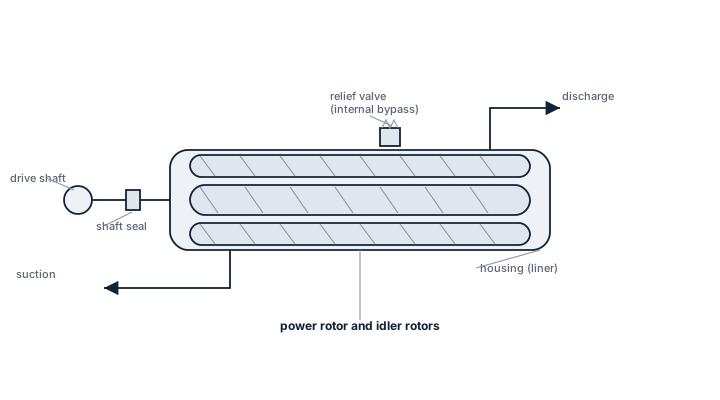
Three-screw pump, rotor arrangement
Cutaway of a three-screw pump showing the central power rotor meshing with two idler rotors inside the housing liner, the driven shaft with its seal, the suction and discharge ports, and the internal relief valve.

Main components

Power rotor and idler rotor(s)

The power rotor is driven directly by the motor; idler rotors mesh with it and are turned only by the fluid film and rotor contact, not by a separate gear train in most designs, which keeps the pump simple and reduces parts subject to wear.

Housing / stator

Precision-bored housing that the rotors run in with close clearance; this clearance is what determines volumetric efficiency and how much internal slip, and therefore capacity loss, occurs at a given viscosity.

Mechanical seal or packed gland

Seals the shaft where it passes through the housing; mechanical seals dominate on modern fuel and lube oil screw pumps for tighter leak control.

Relief valve

Fitted internally or on the discharge line, since a positive displacement pump will build pressure indefinitely against a closed valve and must have a path to relieve it.

Selection and sizing

  • Viscosity range - the single most important selection parameter for fuel duty; the pump must maintain rated flow across the full range from cold-start to operating temperature.
  • Differential pressure - fuel supply pumps typically run at several bar; boosting or circulating pumps in HFO systems can run higher against injection system back-pressure.
  • NPSH available - suction conditions from the service tank, especially on transfer duty pulling from a nearly empty tank.
  • Rotor material and clearance - tighter clearances raise volumetric efficiency but reduce tolerance to solids or wear debris in the fluid.

Regulations and class

Fuel oil supply and transfer pumps fall under the classification society's machinery rules for essential auxiliary systems, which typically require duplication of fuel supply pumps to the main engine so a single pump failure does not stop propulsion. Class also reviews the relief valve setting and pressure rating of the pump and its piping as part of the fuel system approval. There is no IMO instrument specific to screw pumps; requirements apply to the fuel and lube oil systems they serve, under MARPOL Annex I for oil-handling arrangements and under class rules for redundancy of essential services.

Typical faults

FaultConsequence
Rotor and housing wear (increased clearance)falling volumetric efficiency, especially noticeable on light, low-viscosity fuel
Mechanical seal failurefuel or oil leakage at the shaft, a fire and slip hazard in the engine room
Relief valve stuck or incorrectly seteither nuisance recirculation losing capacity, or overpressure of piping if stuck shut
Cavitation on suctionnoise, rotor pitting and falling output, usually from a restricted suction line or a nearly empty tank

What to look for in a supplier

  • Published performance curves across the actual viscosity range the fuel or oil will see in service, not just at a single reference viscosity.
  • Rotor and housing material suited to the fluid, including compatibility with low-sulphur and biofuel blends now common in fuel systems.
  • Spare rotor sets and seal kits genuinely available for the model, since screw pump rotors are precision parts not produced by third parties.

A screw pump that loses capacity is almost always wear, not a blockage - rising slip through worn rotor clearance shows up first as reduced flow at normal running temperature, well before any alarm trips.

By manufacturer AFRISOWISKASwagelokEndress+HauserAlfa Laval S.p.A.MAN Energy SolutionsWärtsiläABB MarineAlfa LavalMacGregorNovenco MarineseimihanlaimsCarrier MarineSiemens MarineAll manufacturersSpare parts by equipment
Would you like to know more?

One request. A person answers within 24 hours on working days.

Tell us the manufacturer, the model and what you need — a part, a service call, a second opinion. Our desk asks the right suppliers from a network of over 114,000 companies and comes back with a quote or a sourcing plan, not a search page.

Frequently asked

Three things people ask first.

Is Screw Pump data free?

Yes. Every model page, every guide and every datasheet for this type is readable without an account. An account adds saved searches and requests, nothing is taken away.

My model is missing — what now?

Send us the nameplate. We identify it by hand, add it to the library, and if you need a part or a service, the request is already on our desk.

Can you source a Screw Pump part?

Yes. Tell us the manufacturer, the model and what you need — our desk asks the right suppliers from a network of over 114,000 companies and comes back with a quote or a sourcing plan.