What to check on a Cargo Pump (Deepwell).
A deepwell pump does not sit in a pump room at all. The whole pump — driver, long line shaft and a multistage bowl assembly — is built into the tank itself, with the driver mounted on deck and the shaft running straight down to impeller stages close to the tank bottom. Because each tank typically carries its own dedicated deepwell pump, this design is the standard choice on chemical tankers and parcel tankers that need to keep dozens of cargo grades fully segregated: there is no shared pump room…
What makes a deepwell pump different from a pump-room installation
A deepwell pump does not sit in a pump room at all. The whole pump — driver, long line shaft and a multistage bowl assembly — is built into the tank itself, with the driver mounted on deck and the shaft running straight down to impeller stages close to the tank bottom. Because each tank typically carries its own dedicated deepwell pump, this design is the standard choice on chemical tankers and parcel tankers that need to keep dozens of cargo grades fully segregated: there is no shared pump room piping to cross-contaminate, and no bulkhead shaft seal because there is no bulkhead crossing at all. The trade-off is that the pump cannot be pulled for overhaul at sea — a line shaft failure usually means the tank is out of service until the next drydock or a diver-assisted repair.
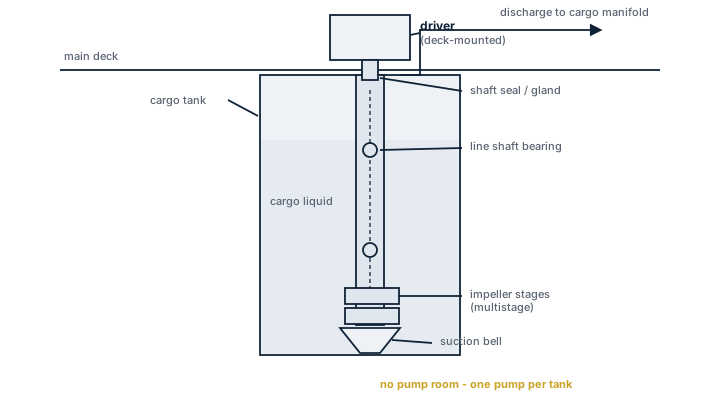
Main components
Deck-mounted driver
Electric motor or hydraulic motor sitting above the tank dome, chosen partly on whether the vessel already has a hydraulic power pack serving other deck machinery.
Line shaft
A long vertical shaft running the full depth of the tank, supported at intervals by intermediate bearings, transmitting drive from the deck motor down to the pump bowls.
Product-lubricated bearings
Most line shaft bearings are lubricated by the cargo itself rather than by grease, which means the pump must never be run with insufficient liquid around the bearings or they wear rapidly and dry.
Multistage bowl assembly
A stack of impeller stages at the bottom of the shaft, with the stage count set by how much head the cargo needs to reach the deck manifold from deep in the tank.
Selection and sizing
- Number of stages matched to tank depth and required discharge pressure at the manifold
- Bearing material compatible with every cargo grade the tank is designed to carry, since a bearing that suits crude oil may not suit an aggressive chemical cargo
- Driver type — electric versus hydraulic — decided against the vessel's existing deck machinery power supply
- Minimum submergence the bearings need before running, which sets the practical limit on how low the tank can be stripped before switching to a separate stripping arrangement
Regulations and class
The IBC Code drives much of the segregation logic behind deepwell pump installations on chemical tankers, since dedicated piping and pumping per tank is often required for cargoes that cannot share a line. Class rules address line shaft bearing design, alarm and monitoring requirements, and the arrangements needed to isolate and gas-free a tank before any internal repair to the pump.
Typical faults
- Line shaft bearing wear from running the pump with the tank nearly empty, starving the product-lubricated bearings and leading to a seized or scored shaft
- Vibration from a bent or misaligned line shaft, often the first sign of bearing wear long before the pump stops producing flow
- Deck seal leakage at the point the shaft passes through the tank top, allowing cargo vapor to reach deck level
- Corrosion or erosion of the shaft and bowl assembly over years of exposure to an aggressive cargo, found only when the pump is pulled at drydock
What to look for in a supplier
- Bearing material recommendations validated against the vessel's actual cargo list, not a generic compatibility chart
- Clear minimum submergence figures the crew can work to operationally
- Design that allows the pump to be pulled and overhauled without cutting into the tank structure
- Vibration and bearing condition monitoring options, since this is the one cargo pump type where a fault cannot simply be inspected by opening a pump room door
Respect the minimum submergence figure even when a terminal is pushing to finish stripping faster — a scored deepwell shaft bearing is a drydock repair, not a pump room job, and no amount of urgency at the berth is worth that outcome.