Anchor Windlass
An anchor windlass has to do two different jobs with the same machine: hold a stationary ship against wind and current on the brake alone, and haul in chain under power, and it is usually the brake, not the motor, that fails first.
What to check on an Anchor Windlass.
89 models from MacGregor in Anchor Windlass. Below: the full model list.
What an anchor windlass has to do
The windlass is the machine that pays out and heaves in the anchor chain, and separately from that, holds the ship at anchor once the required scope of chain is out. Those are two different duties on the same machine: heaving power comes from an electric or hydraulic motor through a gearbox to the chain wheel, also called the gypsy or cable lifter, while holding at anchor is done by the chain stopper and the windlass brake, not by the motor, which is normally declutched once the anchor is down. A windlass sized only for heaving-in speed and torque, without enough brake holding capacity, will haul chain in perfectly well and still let the ship drag if the brake is not up to the job.
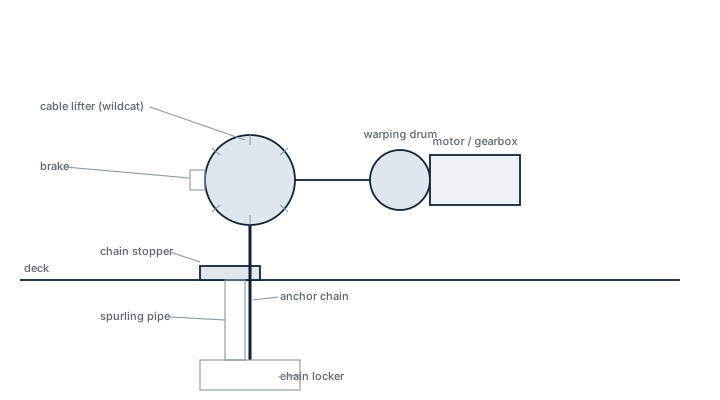
Legend
- Cable lifter (wildcat)
- Warping drum
- Band brake
- Motor and gearbox
- Chain stopper
- Deck
- Spurling pipe
- Anchor chain
- Chain locker
Main components
- Chain wheel (gypsy) — the sprocket-like wheel shaped to the chain's link size that engages the chain for heaving; wear here is measured against the chain's own wear limits
- Motor and gearbox — electric or hydraulic drive delivering heaving speed and torque, sized against the anchor and chain weight to be lifted from the deepest anchoring depth the ship is designed for
- Band brake — a friction brake around the chain wheel drum that holds the chain when the wheel is declutched from the motor; this is what actually holds the ship at anchor
- Chain stopper (bow stopper) — a separate mechanical device on deck that takes the anchor's holding load off the windlass entirely once the ship is anchored, so the brake is not left carrying the full load indefinitely
- Warping drum — often fitted alongside the chain wheel for mooring line handling, sharing the same motor
Selection and sizing
Windlass sizing follows the equipment number calculated for the ship under class rules, which sets anchor weight, chain diameter and grade, and therefore the pull and brake holding capacity the windlass must deliver. The relevant figures are:
- Chain diameter and grade, grade 3 being common on larger tonnage, which fixes chain wheel profile and required brake torque
- Heaving speed at rated pull, since class rules set a minimum continuous heaving speed with two anchors and chain hanging free
- Brake holding capacity, expressed as a multiple of the chain's breaking load, not just of the anchor weight
- Electric or hydraulic power availability on deck, which sometimes decides the drive type independent of the windlass duty itself
Regulations and class
Class societies size anchoring equipment through the equipment number formula in their rules, based on the ship's displacement, breadth and superstructure area, and this determines anchor mass, chain diameter and length, which the windlass must be able to handle. There is no SOLAS requirement to test windlass brake holding capacity by an actual anchor drop, but class surveys check chain wheel and brake condition, chain stopper operation, and confirm chain markings at each link joint are visible for scope monitoring. Windlass motors and their electrical protection are covered under the ship's general electrical equipment survey.
Read the full guide
Typical faults
| Fault | Cause | Consequence |
|---|---|---|
| Brake slipping under load | Worn brake lining, oil contamination, or incorrect brake band adjustment | Ship drags anchor in wind or current despite chain paid out correctly |
| Chain wheel and chain wear mismatch | Chain wheel not renewed when chain itself was renewed, or vice versa | Chain slips or jumps on the wheel under load, uneven wear accelerating |
| Gearbox oil contamination | Seal wear allowing seawater ingress | Reduced gearbox life, increased heaving motor load |
| Chain stopper failure to engage | Corrosion or mechanical damage to the stopper bar or pin | Full anchor holding load left on the windlass brake long-term, accelerating brake wear |
What to look for in a supplier
- Windlass rated pull and brake capacity matched to the equipment number actually calculated for the ship, not a generic size-for-size replacement
- Chain wheel profile matched to the exact chain diameter and grade fitted
- Spares availability for brake linings and gearbox components, which are the parts most often needing renewal
- Documented type test or class approval for the windlass and its brake holding capacity
A windlass that heaves chain smoothly tells you nothing about whether it will hold the ship — that is the brake's job, and the brake is the part most often neglected until the ship drags.
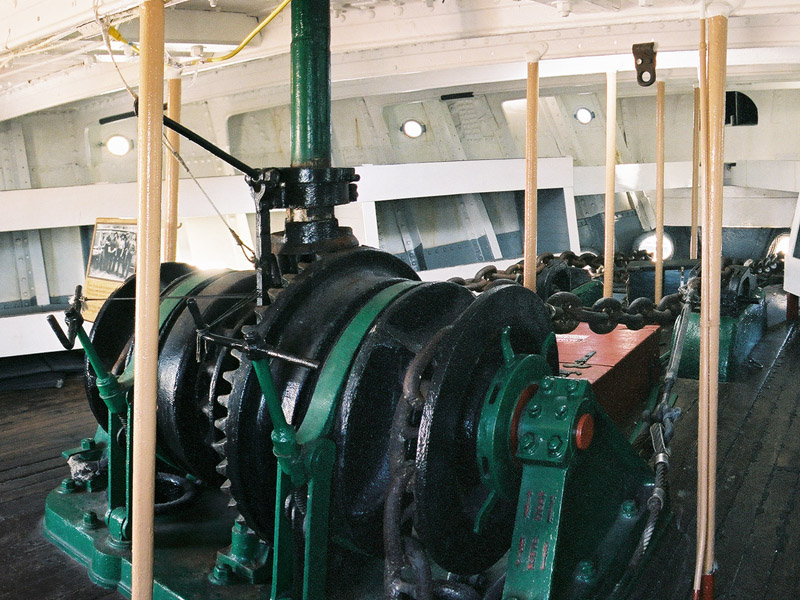
Models in this type.
The best-documented model of each manufacturer first, then the next — 89 of 89 models in Anchor Windlass. Every row links to full specifications, documents and service notes.
Manufacturers.
All 69 manufacturers with models of Anchor Windlass. Names with a manufacturer page open it; the others open a search across the full library.
All manufacturersShow all 69 manufacturers
Also in Anchor & Mooring Equipment.
The other equipment types in this category.
One request. A person reads it and replies by e-mail.
Tell us the manufacturer, the model and what you need — a part, a service call, a second opinion. A person reads every request and replies by e-mail.
No details at hand? A photo of the rating plate or the part is enough — simply attach it to the request.
Three things people ask first.
Is Anchor Windlass data free?
Yes. Every model page, every guide and every datasheet for this type is readable without an account. An account adds saved searches and requests, nothing is taken away.
My model is missing — what now?
Send us the nameplate. We identify it by hand, add it to the library, and if you need a part or a service, the request is already on our desk.
Can you source a Anchor Windlass part?
Yes. Tell us the manufacturer, the model and what you need — a person reads every request and replies by e-mail.