What to check on a Anchor Chain (Stud Link).
Every common link in stud link chain carries a cast or forged stud across its waist, locking the link into a fixed oval shape. Without that stud, a heavily loaded link flattens and kinks against its neighbours, which concentrates stress at the crown and dramatically raises the risk of sudden fracture. Stud link chain is therefore the standard for ship's anchor cable above a certain size; open link (stud-less) chain is lighter and cheaper but stays confined to smaller craft and secondary applications such as mooring pendants, where the loads…
What defines stud link chain
Every common link in stud link chain carries a cast or forged stud across its waist, locking the link into a fixed oval shape. Without that stud, a heavily loaded link flattens and kinks against its neighbours, which concentrates stress at the crown and dramatically raises the risk of sudden fracture. Stud link chain is therefore the standard for ship's anchor cable above a certain size; open link (stud-less) chain is lighter and cheaper but stays confined to smaller craft and secondary applications such as mooring pendants, where the loads and the consequences of a parted chain are smaller.
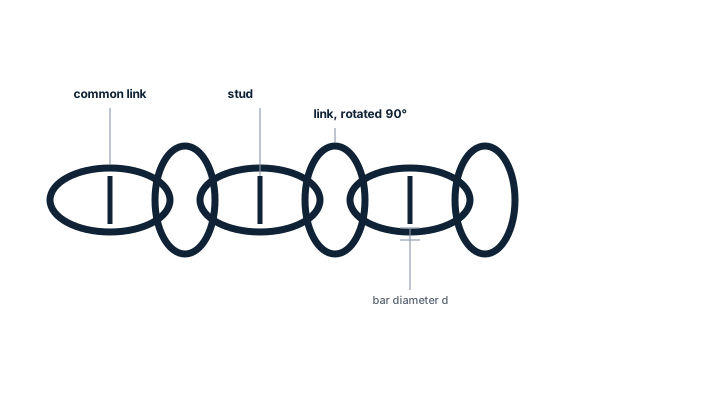
Main components
Common link
The bulk of the chain length, uniform diameter, stud fitted, manufactured and tested in batches called shots or shackles, traditionally 27.5 metres (15 fathoms) each and joined end to end to make up the full cable length.
Enlarged link and Kenter/Lugless joining shackle
Two enlarged links plus a detachable joining shackle connect each shot to the next. The joining shackle is flush with the common link profile so it runs over the windlass gypsy and through the hawse pipe without snagging.
End link, anchor shackle and swivel
The end link takes the anchor shackle, which pins the chain to the anchor shank. A swivel, usually the second or third shot back from the anchor, lets the chain untwist as the ship swings around the anchor without transmitting torsion up the whole cable.
Selection and sizing
| Grade | Relative strength | Typical use |
|---|---|---|
| U1 | Baseline (mild steel) | Smaller / older vessels |
| U2 | ~1.3x U1 | Common on modern merchant ships |
| U3 | ~1.6x U1 | Larger vessels, higher equipment numbers |
Chain diameter and total length are set from the ship's Equipment Number (EN), a class-calculated figure derived from displacement, breadth and the windage area of hull and superstructure above the waterline, not simply from tonnage.
Regulations and class
Stud link chain is built and tested to IACS Unified Requirements, with each shot proof-load and breaking-load tested by the manufacturer and certified before delivery. Class rules call for periodic survey of chain diameter, and a common working limit is that a chain is due for replacement or end-for-ending once wear reduces the mean diameter by around 12 percent from as-built, though the exact figure is set by the class society's rules and the ship's approved equipment. Certificates for chain and accessories must be kept aboard and match the class equipment register.
Typical faults
| Fault | Consequence |
|---|---|
| Uniform diameter loss from wear against the gypsy and hawse pipe | Reduced breaking strength, eventually below the class survey limit |
| Pitting or grooving from corrosion in the chain locker | Localised weak points that standard diameter gauging can miss |
| Stud loosened or lost | Link deforms under load, raising the chance of sudden failure at that point |
| Joining shackle mismatched or reversed | Snags on the gypsy or in the hawse pipe, damages the windlass under load |
What to look for in a supplier
- Full mill and batch test certificates for the actual chain delivered, not a generic type certificate
- Grade and diameter matched exactly to the ship's approved Equipment Number, not just "similar to the old chain"
- Joining shackles and swivels from a manufacturer whose profile is confirmed compatible with the existing gypsy wheel
- Willingness to end-for-end or re-certify used chain rather than only sell new
Chain wear rarely happens evenly along the whole length; measure diameter at several points on each shot, especially the sections that ride over the gypsy most often, before trusting a single spot-check figure.