What to check on a Mooring Lines (Synthetic).
Synthetic mooring lines are ropes made from high-tenacity fibres — polyester, polypropylene, nylon, or high-modulus fibres such as HMPE (Dyneema/Spectra type) and aramid — laid up or braided into a mooring line. They differ from steel wire mainly in elasticity and weight: a synthetic line stretches considerably more before failure, which cushions shock loads from surge and ship movement, but that stored energy is released violently if the line parts. Different fibres serve different roles on the same vessel — nylon for high stretch on tug lines, polyester for a…
What this type is
Synthetic mooring lines are ropes made from high-tenacity fibres — polyester, polypropylene, nylon, or high-modulus fibres such as HMPE (Dyneema/Spectra type) and aramid — laid up or braided into a mooring line. They differ from steel wire mainly in elasticity and weight: a synthetic line stretches considerably more before failure, which cushions shock loads from surge and ship movement, but that stored energy is released violently if the line parts. Different fibres serve different roles on the same vessel — nylon for high stretch on tug lines, polyester for a stiffer general mooring line, HMPE where high strength at low weight matters and stretch must be limited.
Construction and fibre types
- Polyester — moderate stretch, good UV and abrasion resistance, the common choice for general mooring duty.
- Nylon (polyamide) — highest stretch of the common fibres, used where shock absorption matters most, but loses strength when wet.
- Polypropylene — cheap and buoyant, lower strength and poor UV life, mostly seen on smaller craft or messenger lines.
- HMPE — very high strength-to-weight, low stretch, expensive, used where line weight or minimum breaking load per diameter is the constraint.
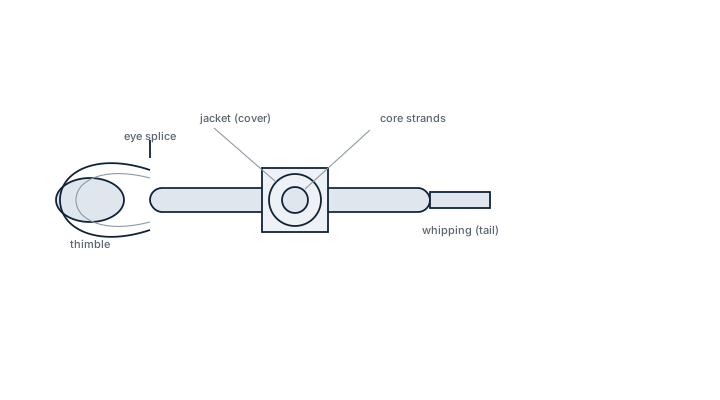
- Core-and-jacket constructions — a strength-bearing core fibre protected by a braided jacket that takes the chafe, common on high-modulus lines.
Selection and sizing
Selection starts from the vessel's line design break force and mooring arrangement, not from rope diameter alone — different fibres reach the same minimum breaking load at different diameters and weights. Class societies and OCIMF guidance (for tankers, the Mooring Equipment Guidelines) set the minimum breaking load the mooring system must achieve, and the individual line's MBL, not its diameter, is what the mooring plan is built around.
| Fibre | Relative stretch at break | Typical role |
|---|---|---|
| Nylon | High (25-40%) | Shock-absorbing lines, tug lines |
| Polyester | Moderate (12-18%) | General mooring lines |
| HMPE | Low (3-5%) | High-strength, low-stretch duty |
Regulations and class
OCIMF's Mooring Equipment Guidelines (MEG4) set the accepted framework for line strength, retirement criteria and snap-back zone marking on tankers, and are widely applied more broadly in practice. Class societies require mooring lines to match the vessel's approved mooring arrangement plan, and lines are subject to periodic condition inspection with retirement based on age, visible damage, and a percentage loss of strength rather than a fixed calendar life alone.
Typical faults
- Internal fibre damage from repeated shock loading that is invisible from the outside — the line looks sound but has lost real strength.
- UV degradation on polypropylene and unprotected polyester left rigged for long periods, weakening the outer fibres.
- Chafe at the fairlead or bitts where the jacket is worn through, exposing the load-bearing core.
- Contamination with oil or chemicals that some fibres, particularly polypropylene, tolerate poorly.
What to look for in a supplier
- A certified minimum breaking load matching the vessel's mooring arrangement, not just a diameter match to the old line.
- Manufacture and test certificates traceable to the specific coil delivered.
- Fibre choice justified against the vessel's trade — UV exposure, expected shock loading, and berth type.
- Clear retirement guidance from the maker so the crew has objective criteria, not just visual judgement.
Mark and enforce the snap-back zone every time a synthetic line is under load — the elasticity that makes these ropes forgiving on the winch is exactly what makes a parted line dangerous at a distance from the point of failure.