OceanSphere
Engines

Windlass

medium 150 models total
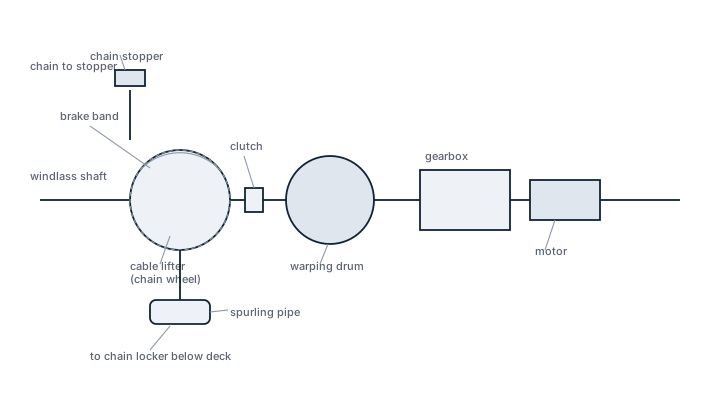
Anchor windlass for raising/lowering anchor and chain.

103 manufacturers · 150 models

MacGregor

13
MacGregor Anchor handling / towing winches
Model Number
Anchor Handling Winches
Technical Specifications
Brake Holding Capacity (first layer)
Up to 500 tonnes, or ISO/classification society compliant
Load Capacity
5 to 300 tonnes on first layer (configurable)
Windlass with Chain Stopper
Brake must withstand min. 45% of chain cable breaking strength
Windlass without Chain Stopper
Brake must withstand min. 80% of chain cable breaking strength
Drum Configuration
Single to triple drums, modular HPU or full electrical drive
Product Lines
  • Hatlapa (merchant ship segment, anchor handling)
  • Pusnes (offshore mooring systems, eccentric fairlead chain stopper EFCS)
  • Triplex (chain stopper systems)
  • MacGregor MEW (electrical drive)
  • MacGregor MHW (modular hydraulic power unit)
Common Failures & Inspection Points
  • Area: Brake Holding Capacity insufficiency or deterioration
    Check: Conduct brake rendering test using Brake Testing Kit or torque spanner method. Accept only if PRIMARY brake holds min. 60% of ship design MBL. Test after every brake lining renewal, before delivery, within 30 days takeover, and annually. Adjust lining if wear exceeds 40% residual thickness.
  • Area: Chain/Gypsy Wear, Corrosion, Pitting (gypsy teeth, chain links)
    Check: Measure link diameter at wear points - maximum 12% reduction allowed by class rules. Inspect for cracks, distortion, corrosion pitting, especially under gypsy where crevice corrosion occurs. Monitor for abrasion from rocks/sand. In saltwater, check galvanized steel for oxidation; in stainless, examine for crevice attack in oxygen-starved spots.
  • Area: Hydraulic System Contamination (brake efficiency loss)
    Check: Check hydraulic lines and piping monthly for leaks, tightness, proper valve function. Inspect hydraulic fluid condition (contamination, moisture, oil breakdown). Oil, moisture, or heavy rust on brake lining/drum can reduce holding capacity up to 75%. Temperature monitoring on hydraulic pipelines indicates lubrication issues.
  • Area: Brake Lining Wear (linings must maintain adequate thickness)
    Check: Inspect brake lining thickness regularly - renewal required when residual thickness drops below 50-60% of original (e.g., 8mm original -> replace at 4-5mm). Check for discoloration, scorching, unevenness, rough spots. Replace upper AND lower linings simultaneously. On non-tank vessels, renew at every drydock regardless of condition.
  • Area: Chain Stopper Hydraulic Function & Mechanical Lock (Pusnes EFCS, Hatlapa roller stopper)
    Check: Test hydraulic-operated chain stopper self-locking release capability under FULL DESIGN LOAD. Verify proper engagement/disengagement cycles. For Pusnes EFCS: check eccentric mechanism for wear, hydraulic pressure (motor protection integration). For Hatlapa roller stopper: inspect roller wear, high-pressure hydraulic motor function. Examine for leaks, cracks, corrosion on stopper pins/bushings.
  • Area: Foundation Integrity & Corrosion (windlass mounting, fairlead supports)
    Check: Examine foundation bolts, welds, support frame before and after heavy anchoring/mooring operations for stress cracks, corrosion pitting, galvanic corrosion at dissimilar metal joints (fairlead/deck interface). Verify no settlement or deformation. In rough weather operations, monitor for fatigue cracking under excessive loads. Apply protective coatings where needed (zinc-rich primer + topcoat).

Typ-universelle Inspektions-/Wartungspunkte fuer Anchor & Mooring Equipment (MacGregor + DNV/OSHA, 2026-06). Per-Modell-Specs NICHT auto-gefuellt.

MacGregor Chain pulling winches
Model Number
Chain Pulling Winches
Technical Specifications
Brake Holding Capacity (first layer)
Up to 500 tonnes, or ISO/classification society compliant
Load Capacity
5 to 300 tonnes on first layer (configurable)
Windlass with Chain Stopper
Brake must withstand min. 45% of chain cable breaking strength
Windlass without Chain Stopper
Brake must withstand min. 80% of chain cable breaking strength
Drum Configuration
Single to triple drums, modular HPU or full electrical drive
Product Lines
  • Hatlapa (merchant ship segment, anchor handling)
  • Pusnes (offshore mooring systems, eccentric fairlead chain stopper EFCS)
  • Triplex (chain stopper systems)
  • MacGregor MEW (electrical drive)
  • MacGregor MHW (modular hydraulic power unit)
Common Failures & Inspection Points
  • Area: Brake Holding Capacity insufficiency or deterioration
    Check: Conduct brake rendering test using Brake Testing Kit or torque spanner method. Accept only if PRIMARY brake holds min. 60% of ship design MBL. Test after every brake lining renewal, before delivery, within 30 days takeover, and annually. Adjust lining if wear exceeds 40% residual thickness.
  • Area: Chain/Gypsy Wear, Corrosion, Pitting (gypsy teeth, chain links)
    Check: Measure link diameter at wear points - maximum 12% reduction allowed by class rules. Inspect for cracks, distortion, corrosion pitting, especially under gypsy where crevice corrosion occurs. Monitor for abrasion from rocks/sand. In saltwater, check galvanized steel for oxidation; in stainless, examine for crevice attack in oxygen-starved spots.
  • Area: Hydraulic System Contamination (brake efficiency loss)
    Check: Check hydraulic lines and piping monthly for leaks, tightness, proper valve function. Inspect hydraulic fluid condition (contamination, moisture, oil breakdown). Oil, moisture, or heavy rust on brake lining/drum can reduce holding capacity up to 75%. Temperature monitoring on hydraulic pipelines indicates lubrication issues.
  • Area: Brake Lining Wear (linings must maintain adequate thickness)
    Check: Inspect brake lining thickness regularly - renewal required when residual thickness drops below 50-60% of original (e.g., 8mm original -> replace at 4-5mm). Check for discoloration, scorching, unevenness, rough spots. Replace upper AND lower linings simultaneously. On non-tank vessels, renew at every drydock regardless of condition.
  • Area: Chain Stopper Hydraulic Function & Mechanical Lock (Pusnes EFCS, Hatlapa roller stopper)
    Check: Test hydraulic-operated chain stopper self-locking release capability under FULL DESIGN LOAD. Verify proper engagement/disengagement cycles. For Pusnes EFCS: check eccentric mechanism for wear, hydraulic pressure (motor protection integration). For Hatlapa roller stopper: inspect roller wear, high-pressure hydraulic motor function. Examine for leaks, cracks, corrosion on stopper pins/bushings.
  • Area: Foundation Integrity & Corrosion (windlass mounting, fairlead supports)
    Check: Examine foundation bolts, welds, support frame before and after heavy anchoring/mooring operations for stress cracks, corrosion pitting, galvanic corrosion at dissimilar metal joints (fairlead/deck interface). Verify no settlement or deformation. In rough weather operations, monitor for fatigue cracking under excessive loads. Apply protective coatings where needed (zinc-rich primer + topcoat).

Typ-universelle Inspektions-/Wartungspunkte fuer Anchor & Mooring Equipment (MacGregor + DNV/OSHA, 2026-06). Per-Modell-Specs NICHT auto-gefuellt.

MacGregor Sternrollers
Model Number
Sternrollers
Technical Specifications
Brake Holding Capacity (first layer)
Up to 500 tonnes, or ISO/classification society compliant
Load Capacity
5 to 300 tonnes on first layer (configurable)
Windlass with Chain Stopper
Brake must withstand min. 45% of chain cable breaking strength
Windlass without Chain Stopper
Brake must withstand min. 80% of chain cable breaking strength
Drum Configuration
Single to triple drums, modular HPU or full electrical drive
Product Lines
  • Hatlapa (merchant ship segment, anchor handling)
  • Pusnes (offshore mooring systems, eccentric fairlead chain stopper EFCS)
  • Triplex (chain stopper systems)
  • MacGregor MEW (electrical drive)
  • MacGregor MHW (modular hydraulic power unit)
Common Failures & Inspection Points
  • Area: Brake Holding Capacity insufficiency or deterioration
    Check: Conduct brake rendering test using Brake Testing Kit or torque spanner method. Accept only if PRIMARY brake holds min. 60% of ship design MBL. Test after every brake lining renewal, before delivery, within 30 days takeover, and annually. Adjust lining if wear exceeds 40% residual thickness.
  • Area: Chain/Gypsy Wear, Corrosion, Pitting (gypsy teeth, chain links)
    Check: Measure link diameter at wear points - maximum 12% reduction allowed by class rules. Inspect for cracks, distortion, corrosion pitting, especially under gypsy where crevice corrosion occurs. Monitor for abrasion from rocks/sand. In saltwater, check galvanized steel for oxidation; in stainless, examine for crevice attack in oxygen-starved spots.
  • Area: Hydraulic System Contamination (brake efficiency loss)
    Check: Check hydraulic lines and piping monthly for leaks, tightness, proper valve function. Inspect hydraulic fluid condition (contamination, moisture, oil breakdown). Oil, moisture, or heavy rust on brake lining/drum can reduce holding capacity up to 75%. Temperature monitoring on hydraulic pipelines indicates lubrication issues.
  • Area: Brake Lining Wear (linings must maintain adequate thickness)
    Check: Inspect brake lining thickness regularly - renewal required when residual thickness drops below 50-60% of original (e.g., 8mm original -> replace at 4-5mm). Check for discoloration, scorching, unevenness, rough spots. Replace upper AND lower linings simultaneously. On non-tank vessels, renew at every drydock regardless of condition.
  • Area: Chain Stopper Hydraulic Function & Mechanical Lock (Pusnes EFCS, Hatlapa roller stopper)
    Check: Test hydraulic-operated chain stopper self-locking release capability under FULL DESIGN LOAD. Verify proper engagement/disengagement cycles. For Pusnes EFCS: check eccentric mechanism for wear, hydraulic pressure (motor protection integration). For Hatlapa roller stopper: inspect roller wear, high-pressure hydraulic motor function. Examine for leaks, cracks, corrosion on stopper pins/bushings.
  • Area: Foundation Integrity & Corrosion (windlass mounting, fairlead supports)
    Check: Examine foundation bolts, welds, support frame before and after heavy anchoring/mooring operations for stress cracks, corrosion pitting, galvanic corrosion at dissimilar metal joints (fairlead/deck interface). Verify no settlement or deformation. In rough weather operations, monitor for fatigue cracking under excessive loads. Apply protective coatings where needed (zinc-rich primer + topcoat).

Typ-universelle Inspektions-/Wartungspunkte fuer Anchor & Mooring Equipment (MacGregor + DNV/OSHA, 2026-06). Per-Modell-Specs NICHT auto-gefuellt.

MacGregor Shark jaws
Model Number
Shark Jaws
Technical Specifications
Brake Holding Capacity (first layer)
Up to 500 tonnes, or ISO/classification society compliant
Load Capacity
5 to 300 tonnes on first layer (configurable)
Windlass with Chain Stopper
Brake must withstand min. 45% of chain cable breaking strength
Windlass without Chain Stopper
Brake must withstand min. 80% of chain cable breaking strength
Drum Configuration
Single to triple drums, modular HPU or full electrical drive
Product Lines
  • Hatlapa (merchant ship segment, anchor handling)
  • Pusnes (offshore mooring systems, eccentric fairlead chain stopper EFCS)
  • Triplex (chain stopper systems)
  • MacGregor MEW (electrical drive)
  • MacGregor MHW (modular hydraulic power unit)
Common Failures & Inspection Points
  • Area: Brake Holding Capacity insufficiency or deterioration
    Check: Conduct brake rendering test using Brake Testing Kit or torque spanner method. Accept only if PRIMARY brake holds min. 60% of ship design MBL. Test after every brake lining renewal, before delivery, within 30 days takeover, and annually. Adjust lining if wear exceeds 40% residual thickness.
  • Area: Chain/Gypsy Wear, Corrosion, Pitting (gypsy teeth, chain links)
    Check: Measure link diameter at wear points - maximum 12% reduction allowed by class rules. Inspect for cracks, distortion, corrosion pitting, especially under gypsy where crevice corrosion occurs. Monitor for abrasion from rocks/sand. In saltwater, check galvanized steel for oxidation; in stainless, examine for crevice attack in oxygen-starved spots.
  • Area: Hydraulic System Contamination (brake efficiency loss)
    Check: Check hydraulic lines and piping monthly for leaks, tightness, proper valve function. Inspect hydraulic fluid condition (contamination, moisture, oil breakdown). Oil, moisture, or heavy rust on brake lining/drum can reduce holding capacity up to 75%. Temperature monitoring on hydraulic pipelines indicates lubrication issues.
  • Area: Brake Lining Wear (linings must maintain adequate thickness)
    Check: Inspect brake lining thickness regularly - renewal required when residual thickness drops below 50-60% of original (e.g., 8mm original -> replace at 4-5mm). Check for discoloration, scorching, unevenness, rough spots. Replace upper AND lower linings simultaneously. On non-tank vessels, renew at every drydock regardless of condition.
  • Area: Chain Stopper Hydraulic Function & Mechanical Lock (Pusnes EFCS, Hatlapa roller stopper)
    Check: Test hydraulic-operated chain stopper self-locking release capability under FULL DESIGN LOAD. Verify proper engagement/disengagement cycles. For Pusnes EFCS: check eccentric mechanism for wear, hydraulic pressure (motor protection integration). For Hatlapa roller stopper: inspect roller wear, high-pressure hydraulic motor function. Examine for leaks, cracks, corrosion on stopper pins/bushings.
  • Area: Foundation Integrity & Corrosion (windlass mounting, fairlead supports)
    Check: Examine foundation bolts, welds, support frame before and after heavy anchoring/mooring operations for stress cracks, corrosion pitting, galvanic corrosion at dissimilar metal joints (fairlead/deck interface). Verify no settlement or deformation. In rough weather operations, monitor for fatigue cracking under excessive loads. Apply protective coatings where needed (zinc-rich primer + topcoat).

Typ-universelle Inspektions-/Wartungspunkte fuer Anchor & Mooring Equipment (MacGregor + DNV/OSHA, 2026-06). Per-Modell-Specs NICHT auto-gefuellt.

MacGregor guide pins
Model Number
Guide Pins
Technical Specifications
Brake Holding Capacity (first layer)
Up to 500 tonnes, or ISO/classification society compliant
Load Capacity
5 to 300 tonnes on first layer (configurable)
Windlass with Chain Stopper
Brake must withstand min. 45% of chain cable breaking strength
Windlass without Chain Stopper
Brake must withstand min. 80% of chain cable breaking strength
Drum Configuration
Single to triple drums, modular HPU or full electrical drive
Product Lines
  • Hatlapa (merchant ship segment, anchor handling)
  • Pusnes (offshore mooring systems, eccentric fairlead chain stopper EFCS)
  • Triplex (chain stopper systems)
  • MacGregor MEW (electrical drive)
  • MacGregor MHW (modular hydraulic power unit)
Common Failures & Inspection Points
  • Area: Brake Holding Capacity insufficiency or deterioration
    Check: Conduct brake rendering test using Brake Testing Kit or torque spanner method. Accept only if PRIMARY brake holds min. 60% of ship design MBL. Test after every brake lining renewal, before delivery, within 30 days takeover, and annually. Adjust lining if wear exceeds 40% residual thickness.
  • Area: Chain/Gypsy Wear, Corrosion, Pitting (gypsy teeth, chain links)
    Check: Measure link diameter at wear points - maximum 12% reduction allowed by class rules. Inspect for cracks, distortion, corrosion pitting, especially under gypsy where crevice corrosion occurs. Monitor for abrasion from rocks/sand. In saltwater, check galvanized steel for oxidation; in stainless, examine for crevice attack in oxygen-starved spots.
  • Area: Hydraulic System Contamination (brake efficiency loss)
    Check: Check hydraulic lines and piping monthly for leaks, tightness, proper valve function. Inspect hydraulic fluid condition (contamination, moisture, oil breakdown). Oil, moisture, or heavy rust on brake lining/drum can reduce holding capacity up to 75%. Temperature monitoring on hydraulic pipelines indicates lubrication issues.
  • Area: Brake Lining Wear (linings must maintain adequate thickness)
    Check: Inspect brake lining thickness regularly - renewal required when residual thickness drops below 50-60% of original (e.g., 8mm original -> replace at 4-5mm). Check for discoloration, scorching, unevenness, rough spots. Replace upper AND lower linings simultaneously. On non-tank vessels, renew at every drydock regardless of condition.
  • Area: Chain Stopper Hydraulic Function & Mechanical Lock (Pusnes EFCS, Hatlapa roller stopper)
    Check: Test hydraulic-operated chain stopper self-locking release capability under FULL DESIGN LOAD. Verify proper engagement/disengagement cycles. For Pusnes EFCS: check eccentric mechanism for wear, hydraulic pressure (motor protection integration). For Hatlapa roller stopper: inspect roller wear, high-pressure hydraulic motor function. Examine for leaks, cracks, corrosion on stopper pins/bushings.
  • Area: Foundation Integrity & Corrosion (windlass mounting, fairlead supports)
    Check: Examine foundation bolts, welds, support frame before and after heavy anchoring/mooring operations for stress cracks, corrosion pitting, galvanic corrosion at dissimilar metal joints (fairlead/deck interface). Verify no settlement or deformation. In rough weather operations, monitor for fatigue cracking under excessive loads. Apply protective coatings where needed (zinc-rich primer + topcoat).

Typ-universelle Inspektions-/Wartungspunkte fuer Anchor & Mooring Equipment (MacGregor + DNV/OSHA, 2026-06). Per-Modell-Specs NICHT auto-gefuellt.

MacGregor stop pins
Model Number
Stop Pins
Technical Specifications
Brake Holding Capacity (first layer)
Up to 500 tonnes, or ISO/classification society compliant
Load Capacity
5 to 300 tonnes on first layer (configurable)
Windlass with Chain Stopper
Brake must withstand min. 45% of chain cable breaking strength
Windlass without Chain Stopper
Brake must withstand min. 80% of chain cable breaking strength
Drum Configuration
Single to triple drums, modular HPU or full electrical drive
Product Lines
  • Hatlapa (merchant ship segment, anchor handling)
  • Pusnes (offshore mooring systems, eccentric fairlead chain stopper EFCS)
  • Triplex (chain stopper systems)
  • MacGregor MEW (electrical drive)
  • MacGregor MHW (modular hydraulic power unit)
Common Failures & Inspection Points
  • Area: Brake Holding Capacity insufficiency or deterioration
    Check: Conduct brake rendering test using Brake Testing Kit or torque spanner method. Accept only if PRIMARY brake holds min. 60% of ship design MBL. Test after every brake lining renewal, before delivery, within 30 days takeover, and annually. Adjust lining if wear exceeds 40% residual thickness.
  • Area: Chain/Gypsy Wear, Corrosion, Pitting (gypsy teeth, chain links)
    Check: Measure link diameter at wear points - maximum 12% reduction allowed by class rules. Inspect for cracks, distortion, corrosion pitting, especially under gypsy where crevice corrosion occurs. Monitor for abrasion from rocks/sand. In saltwater, check galvanized steel for oxidation; in stainless, examine for crevice attack in oxygen-starved spots.
  • Area: Hydraulic System Contamination (brake efficiency loss)
    Check: Check hydraulic lines and piping monthly for leaks, tightness, proper valve function. Inspect hydraulic fluid condition (contamination, moisture, oil breakdown). Oil, moisture, or heavy rust on brake lining/drum can reduce holding capacity up to 75%. Temperature monitoring on hydraulic pipelines indicates lubrication issues.
  • Area: Brake Lining Wear (linings must maintain adequate thickness)
    Check: Inspect brake lining thickness regularly - renewal required when residual thickness drops below 50-60% of original (e.g., 8mm original -> replace at 4-5mm). Check for discoloration, scorching, unevenness, rough spots. Replace upper AND lower linings simultaneously. On non-tank vessels, renew at every drydock regardless of condition.
  • Area: Chain Stopper Hydraulic Function & Mechanical Lock (Pusnes EFCS, Hatlapa roller stopper)
    Check: Test hydraulic-operated chain stopper self-locking release capability under FULL DESIGN LOAD. Verify proper engagement/disengagement cycles. For Pusnes EFCS: check eccentric mechanism for wear, hydraulic pressure (motor protection integration). For Hatlapa roller stopper: inspect roller wear, high-pressure hydraulic motor function. Examine for leaks, cracks, corrosion on stopper pins/bushings.
  • Area: Foundation Integrity & Corrosion (windlass mounting, fairlead supports)
    Check: Examine foundation bolts, welds, support frame before and after heavy anchoring/mooring operations for stress cracks, corrosion pitting, galvanic corrosion at dissimilar metal joints (fairlead/deck interface). Verify no settlement or deformation. In rough weather operations, monitor for fatigue cracking under excessive loads. Apply protective coatings where needed (zinc-rich primer + topcoat).

Typ-universelle Inspektions-/Wartungspunkte fuer Anchor & Mooring Equipment (MacGregor + DNV/OSHA, 2026-06). Per-Modell-Specs NICHT auto-gefuellt.

MacGregor Wire clamp
Model Number
Wire Clamp
Technical Specifications
Brake Holding Capacity (first layer)
Up to 500 tonnes, or ISO/classification society compliant
Load Capacity
5 to 300 tonnes on first layer (configurable)
Windlass with Chain Stopper
Brake must withstand min. 45% of chain cable breaking strength
Windlass without Chain Stopper
Brake must withstand min. 80% of chain cable breaking strength
Drum Configuration
Single to triple drums, modular HPU or full electrical drive
Product Lines
  • Hatlapa (merchant ship segment, anchor handling)
  • Pusnes (offshore mooring systems, eccentric fairlead chain stopper EFCS)
  • Triplex (chain stopper systems)
  • MacGregor MEW (electrical drive)
  • MacGregor MHW (modular hydraulic power unit)
Common Failures & Inspection Points
  • Area: Brake Holding Capacity insufficiency or deterioration
    Check: Conduct brake rendering test using Brake Testing Kit or torque spanner method. Accept only if PRIMARY brake holds min. 60% of ship design MBL. Test after every brake lining renewal, before delivery, within 30 days takeover, and annually. Adjust lining if wear exceeds 40% residual thickness.
  • Area: Chain/Gypsy Wear, Corrosion, Pitting (gypsy teeth, chain links)
    Check: Measure link diameter at wear points - maximum 12% reduction allowed by class rules. Inspect for cracks, distortion, corrosion pitting, especially under gypsy where crevice corrosion occurs. Monitor for abrasion from rocks/sand. In saltwater, check galvanized steel for oxidation; in stainless, examine for crevice attack in oxygen-starved spots.
  • Area: Hydraulic System Contamination (brake efficiency loss)
    Check: Check hydraulic lines and piping monthly for leaks, tightness, proper valve function. Inspect hydraulic fluid condition (contamination, moisture, oil breakdown). Oil, moisture, or heavy rust on brake lining/drum can reduce holding capacity up to 75%. Temperature monitoring on hydraulic pipelines indicates lubrication issues.
  • Area: Brake Lining Wear (linings must maintain adequate thickness)
    Check: Inspect brake lining thickness regularly - renewal required when residual thickness drops below 50-60% of original (e.g., 8mm original -> replace at 4-5mm). Check for discoloration, scorching, unevenness, rough spots. Replace upper AND lower linings simultaneously. On non-tank vessels, renew at every drydock regardless of condition.
  • Area: Chain Stopper Hydraulic Function & Mechanical Lock (Pusnes EFCS, Hatlapa roller stopper)
    Check: Test hydraulic-operated chain stopper self-locking release capability under FULL DESIGN LOAD. Verify proper engagement/disengagement cycles. For Pusnes EFCS: check eccentric mechanism for wear, hydraulic pressure (motor protection integration). For Hatlapa roller stopper: inspect roller wear, high-pressure hydraulic motor function. Examine for leaks, cracks, corrosion on stopper pins/bushings.
  • Area: Foundation Integrity & Corrosion (windlass mounting, fairlead supports)
    Check: Examine foundation bolts, welds, support frame before and after heavy anchoring/mooring operations for stress cracks, corrosion pitting, galvanic corrosion at dissimilar metal joints (fairlead/deck interface). Verify no settlement or deformation. In rough weather operations, monitor for fatigue cracking under excessive loads. Apply protective coatings where needed (zinc-rich primer + topcoat).

Typ-universelle Inspektions-/Wartungspunkte fuer Anchor & Mooring Equipment (MacGregor + DNV/OSHA, 2026-06). Per-Modell-Specs NICHT auto-gefuellt.

MacGregor Chain wheel manipulator
Model Number
Chain Wheel Manipulator
Technical Specifications
Brake Holding Capacity (first layer)
Up to 500 tonnes, or ISO/classification society compliant
Load Capacity
5 to 300 tonnes on first layer (configurable)
Windlass with Chain Stopper
Brake must withstand min. 45% of chain cable breaking strength
Windlass without Chain Stopper
Brake must withstand min. 80% of chain cable breaking strength
Drum Configuration
Single to triple drums, modular HPU or full electrical drive
Product Lines
  • Hatlapa (merchant ship segment, anchor handling)
  • Pusnes (offshore mooring systems, eccentric fairlead chain stopper EFCS)
  • Triplex (chain stopper systems)
  • MacGregor MEW (electrical drive)
  • MacGregor MHW (modular hydraulic power unit)
Common Failures & Inspection Points
  • Area: Brake Holding Capacity insufficiency or deterioration
    Check: Conduct brake rendering test using Brake Testing Kit or torque spanner method. Accept only if PRIMARY brake holds min. 60% of ship design MBL. Test after every brake lining renewal, before delivery, within 30 days takeover, and annually. Adjust lining if wear exceeds 40% residual thickness.
  • Area: Chain/Gypsy Wear, Corrosion, Pitting (gypsy teeth, chain links)
    Check: Measure link diameter at wear points - maximum 12% reduction allowed by class rules. Inspect for cracks, distortion, corrosion pitting, especially under gypsy where crevice corrosion occurs. Monitor for abrasion from rocks/sand. In saltwater, check galvanized steel for oxidation; in stainless, examine for crevice attack in oxygen-starved spots.
  • Area: Hydraulic System Contamination (brake efficiency loss)
    Check: Check hydraulic lines and piping monthly for leaks, tightness, proper valve function. Inspect hydraulic fluid condition (contamination, moisture, oil breakdown). Oil, moisture, or heavy rust on brake lining/drum can reduce holding capacity up to 75%. Temperature monitoring on hydraulic pipelines indicates lubrication issues.
  • Area: Brake Lining Wear (linings must maintain adequate thickness)
    Check: Inspect brake lining thickness regularly - renewal required when residual thickness drops below 50-60% of original (e.g., 8mm original -> replace at 4-5mm). Check for discoloration, scorching, unevenness, rough spots. Replace upper AND lower linings simultaneously. On non-tank vessels, renew at every drydock regardless of condition.
  • Area: Chain Stopper Hydraulic Function & Mechanical Lock (Pusnes EFCS, Hatlapa roller stopper)
    Check: Test hydraulic-operated chain stopper self-locking release capability under FULL DESIGN LOAD. Verify proper engagement/disengagement cycles. For Pusnes EFCS: check eccentric mechanism for wear, hydraulic pressure (motor protection integration). For Hatlapa roller stopper: inspect roller wear, high-pressure hydraulic motor function. Examine for leaks, cracks, corrosion on stopper pins/bushings.
  • Area: Foundation Integrity & Corrosion (windlass mounting, fairlead supports)
    Check: Examine foundation bolts, welds, support frame before and after heavy anchoring/mooring operations for stress cracks, corrosion pitting, galvanic corrosion at dissimilar metal joints (fairlead/deck interface). Verify no settlement or deformation. In rough weather operations, monitor for fatigue cracking under excessive loads. Apply protective coatings where needed (zinc-rich primer + topcoat).

Typ-universelle Inspektions-/Wartungspunkte fuer Anchor & Mooring Equipment (MacGregor + DNV/OSHA, 2026-06). Per-Modell-Specs NICHT auto-gefuellt.

AW-E180 Electric Windlass
180 kN · Anchor Chain / Mooring Lines
Safe Working Load (kN)
180
Chain diameter (mm)
64
Speed m min
9
Drive
electric
Technical Specifications
Brake Holding Capacity (first layer)
Up to 500 tonnes, or ISO/classification society compliant
Load Capacity
5 to 300 tonnes on first layer (configurable)
Windlass with Chain Stopper
Brake must withstand min. 45% of chain cable breaking strength
Windlass without Chain Stopper
Brake must withstand min. 80% of chain cable breaking strength
Drum Configuration
Single to triple drums, modular HPU or full electrical drive
Product Lines
  • Hatlapa (merchant ship segment, anchor handling)
  • Pusnes (offshore mooring systems, eccentric fairlead chain stopper EFCS)
  • Triplex (chain stopper systems)
  • MacGregor MEW (electrical drive)
  • MacGregor MHW (modular hydraulic power unit)
Common Failures & Inspection Points
  • Area: Brake Holding Capacity insufficiency or deterioration
    Check: Conduct brake rendering test using Brake Testing Kit or torque spanner method. Accept only if PRIMARY brake holds min. 60% of ship design MBL. Test after every brake lining renewal, before delivery, within 30 days takeover, and annually. Adjust lining if wear exceeds 40% residual thickness.
  • Area: Chain/Gypsy Wear, Corrosion, Pitting (gypsy teeth, chain links)
    Check: Measure link diameter at wear points - maximum 12% reduction allowed by class rules. Inspect for cracks, distortion, corrosion pitting, especially under gypsy where crevice corrosion occurs. Monitor for abrasion from rocks/sand. In saltwater, check galvanized steel for oxidation; in stainless, examine for crevice attack in oxygen-starved spots.
  • Area: Hydraulic System Contamination (brake efficiency loss)
    Check: Check hydraulic lines and piping monthly for leaks, tightness, proper valve function. Inspect hydraulic fluid condition (contamination, moisture, oil breakdown). Oil, moisture, or heavy rust on brake lining/drum can reduce holding capacity up to 75%. Temperature monitoring on hydraulic pipelines indicates lubrication issues.
  • Area: Brake Lining Wear (linings must maintain adequate thickness)
    Check: Inspect brake lining thickness regularly - renewal required when residual thickness drops below 50-60% of original (e.g., 8mm original -> replace at 4-5mm). Check for discoloration, scorching, unevenness, rough spots. Replace upper AND lower linings simultaneously. On non-tank vessels, renew at every drydock regardless of condition.
  • Area: Chain Stopper Hydraulic Function & Mechanical Lock (Pusnes EFCS, Hatlapa roller stopper)
    Check: Test hydraulic-operated chain stopper self-locking release capability under FULL DESIGN LOAD. Verify proper engagement/disengagement cycles. For Pusnes EFCS: check eccentric mechanism for wear, hydraulic pressure (motor protection integration). For Hatlapa roller stopper: inspect roller wear, high-pressure hydraulic motor function. Examine for leaks, cracks, corrosion on stopper pins/bushings.
  • Area: Foundation Integrity & Corrosion (windlass mounting, fairlead supports)
    Check: Examine foundation bolts, welds, support frame before and after heavy anchoring/mooring operations for stress cracks, corrosion pitting, galvanic corrosion at dissimilar metal joints (fairlead/deck interface). Verify no settlement or deformation. In rough weather operations, monitor for fatigue cracking under excessive loads. Apply protective coatings where needed (zinc-rich primer + topcoat).

Typ-universelle Inspektions-/Wartungspunkte fuer Anchor & Mooring Equipment (MacGregor + DNV/OSHA, 2026-06). Per-Modell-Specs NICHT auto-gefuellt.

Service: Change gearbox oil every 4000 hours; inspect limit switches quarterly.
Spare Parts: MacGregor Pusnes: Bremsbeläge an Bord vorhalten. Lead time: 3-6 Wochen.
AW-H400 Hydraulic Windlass
400 kN · Anchor Chain / Mooring Lines
Safe Working Load (kN)
400
Chain diameter (mm)
92
Speed m min
9
Drive
hydraulic
Technical Specifications
Brake Holding Capacity (first layer)
Up to 500 tonnes, or ISO/classification society compliant
Load Capacity
5 to 300 tonnes on first layer (configurable)
Windlass with Chain Stopper
Brake must withstand min. 45% of chain cable breaking strength
Windlass without Chain Stopper
Brake must withstand min. 80% of chain cable breaking strength
Drum Configuration
Single to triple drums, modular HPU or full electrical drive
Product Lines
  • Hatlapa (merchant ship segment, anchor handling)
  • Pusnes (offshore mooring systems, eccentric fairlead chain stopper EFCS)
  • Triplex (chain stopper systems)
  • MacGregor MEW (electrical drive)
  • MacGregor MHW (modular hydraulic power unit)
Common Failures & Inspection Points
  • Area: Brake Holding Capacity insufficiency or deterioration
    Check: Conduct brake rendering test using Brake Testing Kit or torque spanner method. Accept only if PRIMARY brake holds min. 60% of ship design MBL. Test after every brake lining renewal, before delivery, within 30 days takeover, and annually. Adjust lining if wear exceeds 40% residual thickness.
  • Area: Chain/Gypsy Wear, Corrosion, Pitting (gypsy teeth, chain links)
    Check: Measure link diameter at wear points - maximum 12% reduction allowed by class rules. Inspect for cracks, distortion, corrosion pitting, especially under gypsy where crevice corrosion occurs. Monitor for abrasion from rocks/sand. In saltwater, check galvanized steel for oxidation; in stainless, examine for crevice attack in oxygen-starved spots.
  • Area: Hydraulic System Contamination (brake efficiency loss)
    Check: Check hydraulic lines and piping monthly for leaks, tightness, proper valve function. Inspect hydraulic fluid condition (contamination, moisture, oil breakdown). Oil, moisture, or heavy rust on brake lining/drum can reduce holding capacity up to 75%. Temperature monitoring on hydraulic pipelines indicates lubrication issues.
  • Area: Brake Lining Wear (linings must maintain adequate thickness)
    Check: Inspect brake lining thickness regularly - renewal required when residual thickness drops below 50-60% of original (e.g., 8mm original -> replace at 4-5mm). Check for discoloration, scorching, unevenness, rough spots. Replace upper AND lower linings simultaneously. On non-tank vessels, renew at every drydock regardless of condition.
  • Area: Chain Stopper Hydraulic Function & Mechanical Lock (Pusnes EFCS, Hatlapa roller stopper)
    Check: Test hydraulic-operated chain stopper self-locking release capability under FULL DESIGN LOAD. Verify proper engagement/disengagement cycles. For Pusnes EFCS: check eccentric mechanism for wear, hydraulic pressure (motor protection integration). For Hatlapa roller stopper: inspect roller wear, high-pressure hydraulic motor function. Examine for leaks, cracks, corrosion on stopper pins/bushings.
  • Area: Foundation Integrity & Corrosion (windlass mounting, fairlead supports)
    Check: Examine foundation bolts, welds, support frame before and after heavy anchoring/mooring operations for stress cracks, corrosion pitting, galvanic corrosion at dissimilar metal joints (fairlead/deck interface). Verify no settlement or deformation. In rough weather operations, monitor for fatigue cracking under excessive loads. Apply protective coatings where needed (zinc-rich primer + topcoat).

Typ-universelle Inspektions-/Wartungspunkte fuer Anchor & Mooring Equipment (MacGregor + DNV/OSHA, 2026-06). Per-Modell-Specs NICHT auto-gefuellt.

Service: Monitor HPU oil temperature; replace filters every 2000 hours.
Spare Parts: MacGregor Pusnes: Bremsbeläge an Bord vorhalten. Lead time: 3-6 Wochen.
AW-E250 Electric Windlass
250 kN · Anchor Chain / Mooring Lines
Safe Working Load (kN)
250
Chain diameter (mm)
76
Speed m min
9
Drive
electric
Technical Specifications
Brake Holding Capacity (first layer)
Up to 500 tonnes, or ISO/classification society compliant
Load Capacity
5 to 300 tonnes on first layer (configurable)
Windlass with Chain Stopper
Brake must withstand min. 45% of chain cable breaking strength
Windlass without Chain Stopper
Brake must withstand min. 80% of chain cable breaking strength
Drum Configuration
Single to triple drums, modular HPU or full electrical drive
Product Lines
  • Hatlapa (merchant ship segment, anchor handling)
  • Pusnes (offshore mooring systems, eccentric fairlead chain stopper EFCS)
  • Triplex (chain stopper systems)
  • MacGregor MEW (electrical drive)
  • MacGregor MHW (modular hydraulic power unit)
Common Failures & Inspection Points
  • Area: Brake Holding Capacity insufficiency or deterioration
    Check: Conduct brake rendering test using Brake Testing Kit or torque spanner method. Accept only if PRIMARY brake holds min. 60% of ship design MBL. Test after every brake lining renewal, before delivery, within 30 days takeover, and annually. Adjust lining if wear exceeds 40% residual thickness.
  • Area: Chain/Gypsy Wear, Corrosion, Pitting (gypsy teeth, chain links)
    Check: Measure link diameter at wear points - maximum 12% reduction allowed by class rules. Inspect for cracks, distortion, corrosion pitting, especially under gypsy where crevice corrosion occurs. Monitor for abrasion from rocks/sand. In saltwater, check galvanized steel for oxidation; in stainless, examine for crevice attack in oxygen-starved spots.
  • Area: Hydraulic System Contamination (brake efficiency loss)
    Check: Check hydraulic lines and piping monthly for leaks, tightness, proper valve function. Inspect hydraulic fluid condition (contamination, moisture, oil breakdown). Oil, moisture, or heavy rust on brake lining/drum can reduce holding capacity up to 75%. Temperature monitoring on hydraulic pipelines indicates lubrication issues.
  • Area: Brake Lining Wear (linings must maintain adequate thickness)
    Check: Inspect brake lining thickness regularly - renewal required when residual thickness drops below 50-60% of original (e.g., 8mm original -> replace at 4-5mm). Check for discoloration, scorching, unevenness, rough spots. Replace upper AND lower linings simultaneously. On non-tank vessels, renew at every drydock regardless of condition.
  • Area: Chain Stopper Hydraulic Function & Mechanical Lock (Pusnes EFCS, Hatlapa roller stopper)
    Check: Test hydraulic-operated chain stopper self-locking release capability under FULL DESIGN LOAD. Verify proper engagement/disengagement cycles. For Pusnes EFCS: check eccentric mechanism for wear, hydraulic pressure (motor protection integration). For Hatlapa roller stopper: inspect roller wear, high-pressure hydraulic motor function. Examine for leaks, cracks, corrosion on stopper pins/bushings.
  • Area: Foundation Integrity & Corrosion (windlass mounting, fairlead supports)
    Check: Examine foundation bolts, welds, support frame before and after heavy anchoring/mooring operations for stress cracks, corrosion pitting, galvanic corrosion at dissimilar metal joints (fairlead/deck interface). Verify no settlement or deformation. In rough weather operations, monitor for fatigue cracking under excessive loads. Apply protective coatings where needed (zinc-rich primer + topcoat).

Typ-universelle Inspektions-/Wartungspunkte fuer Anchor & Mooring Equipment (MacGregor + DNV/OSHA, 2026-06). Per-Modell-Specs NICHT auto-gefuellt.

Service: Align coupling during docking; calibrate encoder sensor annually.
Spare Parts: MacGregor Pusnes: Bremsbeläge an Bord vorhalten. Lead time: 3-6 Wochen.
AW-H600 Hydraulic Windlass
600 kN · Anchor Chain / Mooring Lines
Safe Working Load (kN)
600
Chain diameter (mm)
107
Speed m min
9
Drive
hydraulic
Technical Specifications
Brake Holding Capacity (first layer)
Up to 500 tonnes, or ISO/classification society compliant
Load Capacity
5 to 300 tonnes on first layer (configurable)
Windlass with Chain Stopper
Brake must withstand min. 45% of chain cable breaking strength
Windlass without Chain Stopper
Brake must withstand min. 80% of chain cable breaking strength
Drum Configuration
Single to triple drums, modular HPU or full electrical drive
Product Lines
  • Hatlapa (merchant ship segment, anchor handling)
  • Pusnes (offshore mooring systems, eccentric fairlead chain stopper EFCS)
  • Triplex (chain stopper systems)
  • MacGregor MEW (electrical drive)
  • MacGregor MHW (modular hydraulic power unit)
Common Failures & Inspection Points
  • Area: Brake Holding Capacity insufficiency or deterioration
    Check: Conduct brake rendering test using Brake Testing Kit or torque spanner method. Accept only if PRIMARY brake holds min. 60% of ship design MBL. Test after every brake lining renewal, before delivery, within 30 days takeover, and annually. Adjust lining if wear exceeds 40% residual thickness.
  • Area: Chain/Gypsy Wear, Corrosion, Pitting (gypsy teeth, chain links)
    Check: Measure link diameter at wear points - maximum 12% reduction allowed by class rules. Inspect for cracks, distortion, corrosion pitting, especially under gypsy where crevice corrosion occurs. Monitor for abrasion from rocks/sand. In saltwater, check galvanized steel for oxidation; in stainless, examine for crevice attack in oxygen-starved spots.
  • Area: Hydraulic System Contamination (brake efficiency loss)
    Check: Check hydraulic lines and piping monthly for leaks, tightness, proper valve function. Inspect hydraulic fluid condition (contamination, moisture, oil breakdown). Oil, moisture, or heavy rust on brake lining/drum can reduce holding capacity up to 75%. Temperature monitoring on hydraulic pipelines indicates lubrication issues.
  • Area: Brake Lining Wear (linings must maintain adequate thickness)
    Check: Inspect brake lining thickness regularly - renewal required when residual thickness drops below 50-60% of original (e.g., 8mm original -> replace at 4-5mm). Check for discoloration, scorching, unevenness, rough spots. Replace upper AND lower linings simultaneously. On non-tank vessels, renew at every drydock regardless of condition.
  • Area: Chain Stopper Hydraulic Function & Mechanical Lock (Pusnes EFCS, Hatlapa roller stopper)
    Check: Test hydraulic-operated chain stopper self-locking release capability under FULL DESIGN LOAD. Verify proper engagement/disengagement cycles. For Pusnes EFCS: check eccentric mechanism for wear, hydraulic pressure (motor protection integration). For Hatlapa roller stopper: inspect roller wear, high-pressure hydraulic motor function. Examine for leaks, cracks, corrosion on stopper pins/bushings.
  • Area: Foundation Integrity & Corrosion (windlass mounting, fairlead supports)
    Check: Examine foundation bolts, welds, support frame before and after heavy anchoring/mooring operations for stress cracks, corrosion pitting, galvanic corrosion at dissimilar metal joints (fairlead/deck interface). Verify no settlement or deformation. In rough weather operations, monitor for fatigue cracking under excessive loads. Apply protective coatings where needed (zinc-rich primer + topcoat).

Typ-universelle Inspektions-/Wartungspunkte fuer Anchor & Mooring Equipment (MacGregor + DNV/OSHA, 2026-06). Per-Modell-Specs NICHT auto-gefuellt.

Service: NDT gypsy every dry-dock; replace HPU motor insulation at 20000 hours.
Spare Parts: MacGregor Pusnes: Bremsbeläge an Bord vorhalten. Lead time: 3-6 Wochen.
MacGregor Pusnes AW-Combined 300
AW-Combined 300
300 kN · Anchor Chain / Mooring Lines
Safe Working Load (kN)
300
Chain diameter (mm)
81
Speed m min
9
Drive
hydraulic
Technical Specifications
Brake Holding Capacity (first layer)
Up to 500 tonnes, or ISO/classification society compliant
Load Capacity
5 to 300 tonnes on first layer (configurable)
Windlass with Chain Stopper
Brake must withstand min. 45% of chain cable breaking strength
Windlass without Chain Stopper
Brake must withstand min. 80% of chain cable breaking strength
Drum Configuration
Single to triple drums, modular HPU or full electrical drive
Product Lines
  • Hatlapa (merchant ship segment, anchor handling)
  • Pusnes (offshore mooring systems, eccentric fairlead chain stopper EFCS)
  • Triplex (chain stopper systems)
  • MacGregor MEW (electrical drive)
  • MacGregor MHW (modular hydraulic power unit)
Common Failures & Inspection Points
  • Area: Brake Holding Capacity insufficiency or deterioration
    Check: Conduct brake rendering test using Brake Testing Kit or torque spanner method. Accept only if PRIMARY brake holds min. 60% of ship design MBL. Test after every brake lining renewal, before delivery, within 30 days takeover, and annually. Adjust lining if wear exceeds 40% residual thickness.
  • Area: Chain/Gypsy Wear, Corrosion, Pitting (gypsy teeth, chain links)
    Check: Measure link diameter at wear points - maximum 12% reduction allowed by class rules. Inspect for cracks, distortion, corrosion pitting, especially under gypsy where crevice corrosion occurs. Monitor for abrasion from rocks/sand. In saltwater, check galvanized steel for oxidation; in stainless, examine for crevice attack in oxygen-starved spots.
  • Area: Hydraulic System Contamination (brake efficiency loss)
    Check: Check hydraulic lines and piping monthly for leaks, tightness, proper valve function. Inspect hydraulic fluid condition (contamination, moisture, oil breakdown). Oil, moisture, or heavy rust on brake lining/drum can reduce holding capacity up to 75%. Temperature monitoring on hydraulic pipelines indicates lubrication issues.
  • Area: Brake Lining Wear (linings must maintain adequate thickness)
    Check: Inspect brake lining thickness regularly - renewal required when residual thickness drops below 50-60% of original (e.g., 8mm original -> replace at 4-5mm). Check for discoloration, scorching, unevenness, rough spots. Replace upper AND lower linings simultaneously. On non-tank vessels, renew at every drydock regardless of condition.
  • Area: Chain Stopper Hydraulic Function & Mechanical Lock (Pusnes EFCS, Hatlapa roller stopper)
    Check: Test hydraulic-operated chain stopper self-locking release capability under FULL DESIGN LOAD. Verify proper engagement/disengagement cycles. For Pusnes EFCS: check eccentric mechanism for wear, hydraulic pressure (motor protection integration). For Hatlapa roller stopper: inspect roller wear, high-pressure hydraulic motor function. Examine for leaks, cracks, corrosion on stopper pins/bushings.
  • Area: Foundation Integrity & Corrosion (windlass mounting, fairlead supports)
    Check: Examine foundation bolts, welds, support frame before and after heavy anchoring/mooring operations for stress cracks, corrosion pitting, galvanic corrosion at dissimilar metal joints (fairlead/deck interface). Verify no settlement or deformation. In rough weather operations, monitor for fatigue cracking under excessive loads. Apply protective coatings where needed (zinc-rich primer + topcoat).

Typ-universelle Inspektions-/Wartungspunkte fuer Anchor & Mooring Equipment (MacGregor + DNV/OSHA, 2026-06). Per-Modell-Specs NICHT auto-gefuellt.

Service: Inspect clutch plates every 4000 hours.
Spare Parts: MacGregor Pusnes: Bremsbeläge an Bord vorhalten. Lead time: 3-6 Wochen.

Kongsberg

5
Kongsberg Maritime AW-200 Electric Windlass
AW-200 Electric Windlass
200 kN · Anchor Chain / Mooring Lines
Safe Working Load (kN)
200
Chain diameter (mm)
73
Speed m min
9
Drive
electric
Common Failures & Inspection Points
  • Motor overheating
  • Brake lining wear
  • Chain gypsy wear
  • Encoder failure
Service: Annual brake inspection; grease gypsy teeth every 500 hours.
Spare Parts: Kongsberg Maritime: Bremsbeläge an Bord vorhalten. Lead time: 3-6 Wochen.
Kongsberg Maritime AW-350 Electric Windlass
AW-350 Electric Windlass
350 kN · Anchor Chain / Mooring Lines
Safe Working Load (kN)
350
Chain diameter (mm)
87
Speed m min
9
Drive
electric
Common Failures & Inspection Points
  • VFD fault
  • Chain stopper alignment
  • Brake drum scoring
Service: Check VFD cooling fans quarterly; torque chain stopper bolts annually.
Spare Parts: Kongsberg Maritime: Bremsbeläge an Bord vorhalten. Lead time: 3-6 Wochen.
Kongsberg Maritime AW-500 Hydraulic Windlass
AW-500 Hydraulic Windlass
500 kN · Anchor Chain / Mooring Lines
Safe Working Load (kN)
500
Chain diameter (mm)
97
Speed m min
9
Drive
hydraulic
Common Failures & Inspection Points
  • Hydraulic seal leakage
  • Pressure relief valve drift
  • Gypsy insert wear
Service: Replace seals at 8000 hours; check relief valve setting annually.
Spare Parts: Kongsberg Maritime: Bremsbeläge an Bord vorhalten. Lead time: 3-6 Wochen.
AW-150 Combined Windlass-Mooring
150 kN · Anchor Chain / Mooring Lines
Safe Working Load (kN)
150
Chain diameter (mm)
58
Speed m min
9
Drive
electric
Common Failures & Inspection Points
  • Split drum seal failure
  • Clutch engagement issues
  • Warping drum wear
Service: Inspect clutch mechanism every 2000 hours.
Spare Parts: Kongsberg Maritime: Bremsbeläge an Bord vorhalten. Lead time: 3-6 Wochen.
AW-280 Electric Windlass
280 kN · Anchor Chain / Mooring Lines
Safe Working Load (kN)
280
Chain diameter (mm)
78
Speed m min
9
Drive
electric
Common Failures & Inspection Points
  • Chain counter malfunction
  • Motor brush wear
  • Brake spring fatigue
Service: Calibrate chain counter annually; replace brushes at 6000 hours.
Spare Parts: Kongsberg Maritime: Bremsbeläge an Bord vorhalten. Lead time: 3-6 Wochen.

Brattvaag

3
BV-HW200 Hydraulic Windlass
200 kN · Anchor Chain / Mooring Lines
Safe Working Load (kN)
200
Chain diameter (mm)
68
Speed m min
9
Drive
hydraulic
Common Failures & Inspection Points
  • Swivel joint leakage
  • Clutch band wear
  • Foundation bolt corrosion
Service: NDT foundation welds at dry-dock; replace clutch bands at 6000 hours.
Spare Parts: Brattvaag: Bremsbeläge an Bord vorhalten. Lead time: 3-6 Wochen.
BV-HW350 Hydraulic Windlass
350 kN · Anchor Chain / Mooring Lines
Safe Working Load (kN)
350
Chain diameter (mm)
87
Speed m min
9
Drive
hydraulic
Common Failures & Inspection Points
  • High-pressure hose burst
  • Gypsy tooth fracture
  • Brake fade under load
Service: Replace high-pressure hoses every 4 years; NDT gypsy teeth at dry-dock.
Spare Parts: Brattvaag: Bremsbeläge an Bord vorhalten. Lead time: 3-6 Wochen.
BV-HW500 Hydraulic Windlass
500 kN · Anchor Chain / Mooring Lines
Safe Working Load (kN)
500
Chain diameter (mm)
97
Speed m min
9
Drive
hydraulic
Common Failures & Inspection Points
  • Accumulator bladder failure
  • Pump cavitation
  • Chain tensioner malfunction
Service: Pre-charge accumulators quarterly; verify pump suction line integrity.
Spare Parts: Brattvaag: Bremsbeläge an Bord vorhalten. Lead time: 3-6 Wochen.

BROBERG SWEDEN

3
PS-320HD
Model Number
RCDA100001MS
GS-330S
Model Number
RCDA100001MN
PS-280HD
Model Number
RCDA100001MR

CSSC Marine Equipment

3
CW-E150 Electric Windlass
150 kN · Anchor Chain / Mooring Lines
Safe Working Load (kN)
150
Chain diameter (mm)
58
Speed m min
9
Drive
electric
Common Failures & Inspection Points
  • Contactor pitting
  • Gearbox noise
  • Chain pocket insert wear
Service: Replace contactors at 5000 operations; monitor gearbox vibration.
Spare Parts: CSSC Marine Equipment: Bremsbeläge an Bord vorhalten. Lead time: 3-6 Wochen.
CW-E280 Electric Windlass
280 kN · Anchor Chain / Mooring Lines
Safe Working Load (kN)
280
Chain diameter (mm)
78
Speed m min
9
Drive
electric
Common Failures & Inspection Points
  • Motor bearing failure
  • Control panel corrosion
  • Brake spring fatigue
Service: Marine-grade enclosure required for control panel; grease motor bearings quarterly.
Spare Parts: CSSC Marine Equipment: Bremsbeläge an Bord vorhalten. Lead time: 3-6 Wochen.
CW-H400 Hydraulic Windlass
400 kN · Anchor Chain / Mooring Lines
Safe Working Load (kN)
400
Chain diameter (mm)
92
Speed m min
9
Drive
hydraulic
Common Failures & Inspection Points
  • HPU filter clogging
  • Cylinder rod scoring
  • Chain stopper pin wear
Service: Replace HPU filters monthly in dusty environments; chrome-plate cylinder rods.
Spare Parts: CSSC Marine Equipment: Bremsbeläge an Bord vorhalten. Lead time: 3-6 Wochen.

Jiangyin Neptune Marine Appliance

3
NPT/DW110Z winch
IMO Approved
ja
Model Number
MEDB0000BWU
NPT/DW110S winch
IMO Approved
ja
Model Number
MEDB0000BWT
Winch NPT 50 DW
IMO Approved
ja
Model Number
MEDB00006EN

Kawasaki Heavy Industries

3
KW-E220 Electric Windlass
220 kN · Anchor Chain / Mooring Lines
Safe Working Load (kN)
220
Chain diameter (mm)
70
Speed m min
9
Drive
electric
Common Failures & Inspection Points
  • Planetary gear wear
  • Slip ring corrosion
  • Foundation cracking
Service: Inspect planetary gears at 6000 hours; protect slip rings from moisture.
Spare Parts: Kawasaki Heavy Industries: Bremsbeläge an Bord vorhalten. Lead time: 3-6 Wochen.
KW-H350 Hydraulic Windlass
350 kN · Anchor Chain / Mooring Lines
Safe Working Load (kN)
350
Chain diameter (mm)
87
Speed m min
9
Drive
hydraulic
Common Failures & Inspection Points
  • Axial piston pump wear
  • Manifold valve leakage
  • Chain gypsy scoring
Service: Replace pump pistons at 10000 hours; check manifold torques annually.
Spare Parts: Kawasaki Heavy Industries: Bremsbeläge an Bord vorhalten. Lead time: 3-6 Wochen.
KW-E400 Electric Windlass
400 kN · Anchor Chain / Mooring Lines · Electric Windlass
Safe Working Load (kN)
400
Chain diameter (mm)
92
Speed m min
9
Drive
electric
Common Failures & Inspection Points
  • Transformer overheating
  • Brake actuator failure
  • Chain counter sensor
Service: Monitor transformer temperature; test brake actuator quarterly.
Spare Parts: Kawasaki Heavy Industries: Bremsbeläge an Bord vorhalten. Lead time: 3-6 Wochen.
Strengths
  • High pulling power with a safe working load of 400 kN
  • Electric drive reduces maintenance and increases safety
  • Suitable for large vessels requiring heavy-duty anchor handling
  • Quarterly testing of the brake actuator ensures reliability
Weaknesses
  • Transformer overheating can be a significant issue if not monitored
  • Brake actuator failure can lead to operational downtime
  • Chain counter sensor failures may affect accuracy
Typical Vessels: TankerBulk CarrierContainer
Certifications: DNV
Decision Guide: Choose if you prioritize high pulling power, reduced maintenance, and increased safety in anchor handling operations. Avoid if you are concerned about potential transformer overheating issues or require a windlass with a proven track record of reliability in extreme weather conditions.
Use Cases: Typically deployed on large commercial vessels such as tankers, bulk carriers, and container ships that require heavy-duty anchor handling capabilities.

PTR Holland Group

3
THETIS U.S.D. Pilot ladder ISO-799-1-6-3 to ISO-799-1-76-3, and THETIS standard O.S. Pilot ladder ISO-799-1-6-3 to ISO-799-1-76-3
IMO Approved
ja
Model Number
MEDB00002T9
GOLIATH U.S.D. Pilot ladder ISO799-1-6-3 to ISO799-1-76-3, and GOLIATH standard O.S. Pilot ladder ISO799-1-6-3 to ISO799-1-76-3
IMO Approved
ja
Model Number
MEDB00006N8
NEREUS U.S.D. Pilot ladder ISO-799-1-6-3 to ISO-799-1-76-3, and NEREUS standard O.S. Pilot ladder ISO-799-1-6-3 to ISO-799-1-76-3
IMO Approved
ja
Model Number
MEDB00002T7

AB OQS-Ocean Quality Systems

2
Ocean Explorer 72
Model Number
RCDG000000R
Ocean Explorer OE60
Model Number
RCDG000000K

Astilleros Astondoa

2
Astondoa 80
Model Number
RCDB0000085
Astondoa 80 GLX Sound
Model Number
RCDA100001FH

Bryne Winch Solution

2
Certificate MEDD000022D
IMO Approved
ja
Model Number
MEDD000022D
H02, H03, H04, H07, H12
Model Number
TAS0000258

Candela Technology

2
Candela P12
Model Number
TACC000001S
Certificate TACC000001K
Model Number
TACC000001K

EFINOR ALLAIS

2
ESUS-190/SURFER 19000 Wheelhouse V1, ESUS-190/SURFER 19000 Wheelhouse V2
Model Number
TACC0000010
Surfer 210X
Model Number
TACC000001F

European Safety Systems

2
Certificate MEDD00000GV
IMO Approved
ja
Model Number
MEDD00000GV
Certificate MERD00000GV
Model Number
MERD00000GV

Fjord d.o.o

2
MANTA 850
Model Number
RCDA100001T2
Manta 555
Model Number
RCDA100001H9

Jiangsu Huayan Marine Equipment

2
Pilot ladder type HYP-B-B
IMO Approved
ja
Model Number
MEDB000011E
Pilot Ladder type HYP-B-B2
IMO Approved
ja
Model Number
MEDB000012H

Karmoy Winch

2
Karmoy Winch KAW-E180 Electric Windlass
KAW-E180 Electric Windlass
180 kN · Anchor Chain / Mooring Lines
Safe Working Load (kN)
180
Chain diameter (mm)
64
Speed m min
9
Drive
electric
Common Failures & Inspection Points
  • Encoder failure in cold weather
  • Brake pad glazing
  • Cable gland water ingress
Service: Use arctic-grade lubricants below -20C; inspect cable glands for water ingress.
Spare Parts: Karmoy Winch: Bremsbeläge an Bord vorhalten. Lead time: 3-6 Wochen.
Karmoy Winch KAW-H250 Hydraulic Windlass
KAW-H250 Hydraulic Windlass
250 kN · Anchor Chain / Mooring Lines
Safe Working Load (kN)
250
Chain diameter (mm)
76
Speed m min
9
Drive
hydraulic
Common Failures & Inspection Points
  • Hydraulic motor seal leak
  • Brake accumulator pre-charge loss
  • Chain counter failure
Service: Check accumulator nitrogen pre-charge quarterly.
Spare Parts: Karmoy Winch: Bremsbeläge an Bord vorhalten. Lead time: 3-6 Wochen.

Kökény Nóra

2
WAKE Pro 230
Model Number
RCDP0000034
GTX Limited 300
Model Number
RCDP0000033

Major Sandor

2
RXP X 300 RS-Carbon
Model Number
RCDP000000G
Sea Doo RXP X 300 RS
Model Number
RCDP000000F

Nelt d.o.o

2
NELT 506
Model Number
RCDA100001HU
NELT 405
Model Number
RCDA100001HT

Nimbus Produktion i Mariestad

2
Paragon 31 Cabin/Fly
Model Number
RCDF000002F
Paragon 25 Cabin
Model Number
RCDF000002E

Norway Marine Supply

2
310 RIB
Model Number
RCDA100001H8
270 RIB
Model Number
RCDA100001H7

Oy Marino

2
Marino Mustang
Model Number
RCDB000003N
Marino Swing
Model Number
RCDB000003R

Salona Grupa d.o.o

2
Salona 39, Salona 380
Model Number
RCDA100001EX
Salona S46
Model Number
RCDB00000C2

Seascape d.o.o

2
Beneteau First 36
Model Number
RCDA100001SV
Beneteau First 24 SE
Model Number
RCDA100001RX

Van Schie

2
Van Schie Modular Pontoon System 4500x2250x770
Model Number
TACC000000V
Modular Pontoon VSP1250
Model Number
TACC000001G

Yancheng Shenli Rope-Making

2
Pilot ladder ISO 799-1:2019-S6-L1.98 to ISO 799-1:2019-80-L26.4
IMO Approved
ja
Model Number
MEDB00000FF
Certificate MEDD000008S
IMO Approved
ja
Model Number
MEDD000008S

A-SPE Europe Spolka Jawna

1
Certificate MEDD000015Y
IMO Approved
ja
Model Number
MEDD000015Y

A.W. Niemeyer

1
AWN-260E
Model Number
RCDA1000019W

AQWIA Kft

1
Certificate RCDB00000E0
Model Number
RCDB00000E0

Artemis Technologies

1
TMV1
Model Number
TACC000001A

Beta Marine

1
Engine Family Beta Marine FBTAN.898KCB
Model Number
RCDB000004G

Bourbon Mobility S.A.S.U

1
Surfer 200x, Surfer 200x-G
Model Number
TACC000000W

BUKH

1
V8P series
Model Number
RCDB00000D5

BURA GUMENJACI d.o.o

1
BURA 5.0
Model Number
RCDA100001T5

Chantier Naval Couach CNC S

1
FIV143
Model Number
TACC0000011

Csaba Mikesz

1
Bombardier SeaDoo GTR 230
Model Number
RCDP000002Z

DEMCON unmanned systems

1
DUS V5750
Model Number
TACC000001X

DREWIL ENTERSHIP

1
Pilot Ladder - PL - Type A, B1 and B2
IMO Approved
ja
Model Number
MEDB000001G

Drágár Péter

1
SeaDoo RXT X 260 RS
Model Number
RCDP0000036

EJET d.o.o

1
Certificate RCDA100001U1
Model Number
RCDA100001U1

EKO PLOVILA

1
SARAC-550
Model Number
RCDA100001M9

FORMATEK d.o.o

1
Certificate RCDA100001TV
Model Number
RCDA100001TV

Fr. Fassmer

1
Rescue boat winch DEW8
IMO Approved
ja
Model Number
MEDF00000D7

Framecomp

1
Vuoksi
Model Number
RCDB00000CF

GROS INOX doo

1
Real 500
Model Number
RCDA100001H4

GROSINOX doo

1
Zenit 27
Model Number
RCDA100001NC

Hatecke

1
Certificate RCDB00000DV
Model Number
RCDB00000DV

Hendricks Shipping Group

1
AY-550
Model Number
RCDA100001MU

Hochiki Europe (UK)

1
Certificate MEDE000000B
IMO Approved
ja
Model Number
MEDE000000B

Hyun Chang Industries

1
DOLPHIN HC-A-A
IMO Approved
ja
Model Number
MEDB00004GY

JEMAR NORPOWER

1
30ft seismic workboat .01SE (seismic), 30ft seismic workboat .02MP (multipurpose)
Model Number
TACC0000016

Jiangsu Yiqi Ship Technology

1
Pilot Ladder
IMO Approved
ja
Model Number
MEDB00003RV

Jiangyan City Marine Outfitting

1
Pilot ladder ISO799-1-S6-L3 to ISO799-1-S54-L3+
IMO Approved
ja
Model Number
MEDB00006KB

Kace

1
WP960SW SWH (Short Wheelhouse), WP960SW LWH (Long Wheelhouse)
Model Number
TACC0000012

Kverneland Aqua

1
Hydraulic davit winch 3t
IMO Approved
ja
Model Number
MEDB000086H

Kóródi Imre

1
GTX Limited 300
Model Number
RCDP0000030

Lovas János Attila

1
RXP X 300
Model Number
RCDP0000032

Lucky Wood doo

1
Lucky Wood 37
Model Number
RCDA100001R5

Mare Safety

1
Mare DC 12 WM
Model Number
TACC000000M

Marine Alutech

1
Watercat 1600 FRV
Model Number
TACC000001E

Marine Diesel Engineering

1
VGT series
Model Number
RCDB0000084

Maritime Robotics

1
Mariner USV
Model Number
TACC0000019

N. Sundin Dockstavarvet

1
CB90
Model Number
TACC0000026

NAUTI

1
Focus 810
Model Number
RCDA100001HW

NAVALPORT YARDS-CONSTRUCAO NAVAL UNIPESSOAL LDA

1
SEA RIBS 860 PRO/LUX/OPEN
Model Number
RCDA100001RM

NAVALTECNICA - COSTRUZIONI NAVALI

1
NT7
Model Number
TACC000001Y

Naya Design Kft

1
NAYA 7M
Model Number
RCDA100001JD

New Madera RIBs

1
MR1250 Outboard
Model Number
RCDF000002X

NEX Marine doo

1
Certificate RCDA100001UE
Model Number
RCDA100001UE

Origo Klip d.o.o

1
ORIGO KLIP 300
Model Number
RCDA100001H2

Oy Nautor

1
Swan 65
Model Number
RCDB000009M

Planet Marine d.o.o

1
OPTIMUS 5
Model Number
RCDA100001T3

Pro Nautik

1
Bavaria 39 HT
Model Number
RCDP0000001

Qingdao Good Brother Marine Lifesaving Appliances

1
ISO799-1-S12-L3 to ISO799-1-S90-L3
IMO Approved
ja
Model Number
MEDB00004WJ

Rolls-Royce Solutions

1
MTU-V2000-01-RCD2
Model Number
RCDB000002F

S.Z.R. Elko Vladimir Prisic PR Futog

1
Model KRIPTO
Model Number
RCDA100001TD

SAILART Segelboote

1
Sailart 18
Model Number
RCDA100001NY

Shanghai Martian Ship Equipment

1
DMSE-PL
IMO Approved
ja
Model Number
MEDB00008TY

Shanghai Qiangang Industrial

1
QHPL
IMO Approved
ja
Model Number
MEDB00008ZZ

Shanghai Yibei Safety Equipment

1
Pilot Ladder YBPL
IMO Approved
ja
Model Number
MEDB0000AVZ

Shanghai Zhouqin Maritime Equipment

1
Pilot ladder; type KJYST
IMO Approved
ja
Model Number
MEDB0000AY5

Skibsplast

1
Skibsplast 665DC
Model Number
RCD-B-383

SPASOJEVIC ZORAN PR BOAT TEAM NOVI SAD

1
GT STAR
Model Number
RCDA100001SE

SSAB Europe

1
Certificate MEDD00000C9
IMO Approved
ja
Model Number
MEDD00000C9

Stevan Mihajlov Preduzetnik SZR ZA Izradu Proizvoda OD PL

1
Blue Marine 600
Model Number
RCDA100001KZ

Storm Cranes

1
Certificate MEDF00001YH
IMO Approved
ja
Model Number
MEDF00001YH

Streit Marine FZ

1
12.0 m Patrol Boat- Landing Craft 12 CC
Model Number
TACC0000022

TARSIS ASTILLEROS

1
Tarsis 28
Model Number
RCDA100001HZ

TERITA EOOD

1
TAYMEN 425
Model Number
RCDA100001B5

Tibor Hornyak

1
Antares 7.80
Model Number
RCDP000002K

TO DELETE

1
YACHT PRI380V
Model Number
RCDA100001RN

Trend Marine Products

1
Sargasso S
Model Number
RCDB00000B8

TTS Bohai Machinery (Dalian)

1
winch Hull. No. AD0049
IMO Approved
ja
Model Number
MEDG00000RY

UNIPLAST BK d.o.o. Struga

1
Manta Ray 420
Model Number
RCDA100001ST

Viktor Posa

1
Bombardier SaeDoo RXT X 300 RS
Model Number
RCDP0000011

Viro d.o.o

1
SHIPMAN 63
Model Number
RCDB000009Z

Yinson Electric

1
12m Fast Crew Transfer Boat
Model Number
TACC000001V

Zhenjiang DH Marine Equipment

1
DW25 Boat Winch
IMO Approved
ja
Model Number
MEDB00001MC

Zhenjiang Marine Auxiliary Machinery Works

1
Life/Rescueboat winch, type D48S and D48Z,
Pull force per Hersteller-Datenblatt · Anchor Chain / Mooring Lines
IMO Approved
ja
Model Number
MEDF000005G
Common Failures & Inspection Points
  • Band brake Belagverschleiß bei häufigen Hafenmanövern
  • Wildcat-Taschenverschleiß nach 15.000+ Betriebsstunden
  • Hydraulikmotor-Dichtungsleck bei hydraulischen Varianten
  • Elektromotor-Isolationsfehler durch Deckbelastung und Feuchtigkeit
Service: Bremsbelag-Inspektion alle 6 Monate. Getriebeöl-Wechsel alle 2 Jahre. Wildcat-Messung bei Dockung. Motor-Isolationstest jährlich.
Spare Parts: Zhenjiang Marine Auxiliary Machinery Works: Bremsbeläge an Bord vorhalten. Lead time: 3-6 Wochen.

ZIPA Marine Wholesale

1
ZIPA-PL
IMO Approved
ja
Model Number
MEDB00005X1

Zoltán AGÁRDI

1
Bombardier RXT aS 260 RS
Model Number
RCDP000002S

Öregrund Marine Service

1
Viggo C10
Model Number
RCDA100001RK