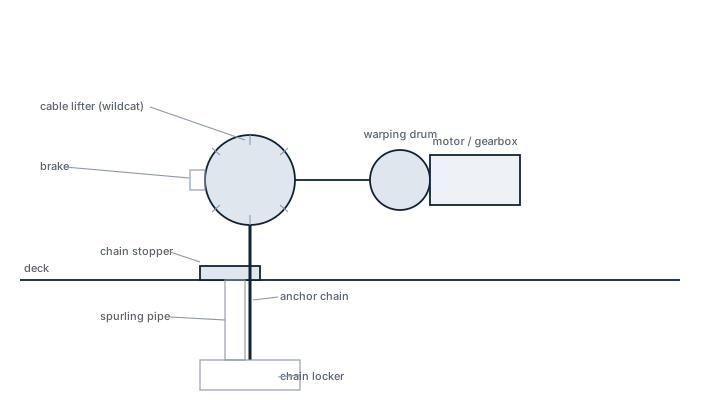
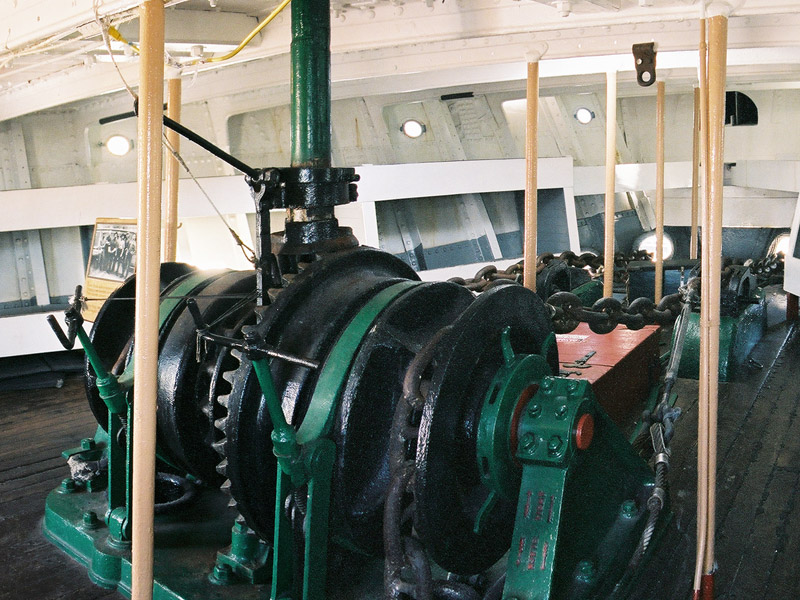
Anchor Windlass
47 manufacturers · 1088 models
DMT Marine
38 ✓ 22 verified- Area: Chain wear exceeding 12% diameter reductionCheck: Measure link diameter at critical wear points with calipers; compare against original specifications
- Area: Hydraulic oil contamination or water ingress (milky appearance)Check: Visual inspection of oil color/clarity monthly; check for emulsification; test moisture content; verify seal integrity
- Area: Brake holding force degradation or clutch slippageCheck: Perform emergency braking test under load; measure brake band wear; test clutch engagement/disengagement function
- Area: Gear contact surface degradation (>30% loss) causing abnormal noiseCheck: Visual inspection of gear teeth contact pattern; listen for grinding noise during operation; measure contact area ratio (minimum 70%)
- Area: Corrosion, electrical degradation, or arcing in power connectionsCheck: Visual inspection of all electrical terminals; disassemble corroded connections; clean with wire brush and electrical cleaner; verify no burn marks or pitting
Typ-universelle Inspektionspunkte fuer Anchor & Mooring Equipment (verifiziert, 2026-06).
- Area: Chain wear exceeding 12% diameter reductionCheck: Measure link diameter at critical wear points with calipers; compare against original specifications
- Area: Hydraulic oil contamination or water ingress (milky appearance)Check: Visual inspection of oil color/clarity monthly; check for emulsification; test moisture content; verify seal integrity
- Area: Brake holding force degradation or clutch slippageCheck: Perform emergency braking test under load; measure brake band wear; test clutch engagement/disengagement function
- Area: Gear contact surface degradation (>30% loss) causing abnormal noiseCheck: Visual inspection of gear teeth contact pattern; listen for grinding noise during operation; measure contact area ratio (minimum 70%)
- Area: Corrosion, electrical degradation, or arcing in power connectionsCheck: Visual inspection of all electrical terminals; disassemble corroded connections; clean with wire brush and electrical cleaner; verify no burn marks or pitting
Typ-universelle Inspektionspunkte fuer Anchor & Mooring Equipment (verifiziert, 2026-06).
- Area: Chain wear exceeding 12% diameter reductionCheck: Measure link diameter at critical wear points with calipers; compare against original specifications
- Area: Hydraulic oil contamination or water ingress (milky appearance)Check: Visual inspection of oil color/clarity monthly; check for emulsification; test moisture content; verify seal integrity
- Area: Brake holding force degradation or clutch slippageCheck: Perform emergency braking test under load; measure brake band wear; test clutch engagement/disengagement function
- Area: Gear contact surface degradation (>30% loss) causing abnormal noiseCheck: Visual inspection of gear teeth contact pattern; listen for grinding noise during operation; measure contact area ratio (minimum 70%)
- Area: Corrosion, electrical degradation, or arcing in power connectionsCheck: Visual inspection of all electrical terminals; disassemble corroded connections; clean with wire brush and electrical cleaner; verify no burn marks or pitting
Typ-universelle Inspektionspunkte fuer Anchor & Mooring Equipment (verifiziert, 2026-06).
- Area: Chain wear exceeding 12% diameter reductionCheck: Measure link diameter at critical wear points with calipers; compare against original specifications
- Area: Hydraulic oil contamination or water ingress (milky appearance)Check: Visual inspection of oil color/clarity monthly; check for emulsification; test moisture content; verify seal integrity
- Area: Brake holding force degradation or clutch slippageCheck: Perform emergency braking test under load; measure brake band wear; test clutch engagement/disengagement function
- Area: Gear contact surface degradation (>30% loss) causing abnormal noiseCheck: Visual inspection of gear teeth contact pattern; listen for grinding noise during operation; measure contact area ratio (minimum 70%)
- Area: Corrosion, electrical degradation, or arcing in power connectionsCheck: Visual inspection of all electrical terminals; disassemble corroded connections; clean with wire brush and electrical cleaner; verify no burn marks or pitting
Typ-universelle Inspektionspunkte fuer Anchor & Mooring Equipment (verifiziert, 2026-06).
- Area: Chain wear exceeding 12% diameter reductionCheck: Measure link diameter at critical wear points with calipers; compare against original specifications
- Area: Hydraulic oil contamination or water ingress (milky appearance)Check: Visual inspection of oil color/clarity monthly; check for emulsification; test moisture content; verify seal integrity
- Area: Brake holding force degradation or clutch slippageCheck: Perform emergency braking test under load; measure brake band wear; test clutch engagement/disengagement function
- Area: Gear contact surface degradation (>30% loss) causing abnormal noiseCheck: Visual inspection of gear teeth contact pattern; listen for grinding noise during operation; measure contact area ratio (minimum 70%)
- Area: Corrosion, electrical degradation, or arcing in power connectionsCheck: Visual inspection of all electrical terminals; disassemble corroded connections; clean with wire brush and electrical cleaner; verify no burn marks or pitting
Typ-universelle Inspektionspunkte fuer Anchor & Mooring Equipment (verifiziert, 2026-06).
- Area: Chain wear exceeding 12% diameter reductionCheck: Measure link diameter at critical wear points with calipers; compare against original specifications
- Area: Hydraulic oil contamination or water ingress (milky appearance)Check: Visual inspection of oil color/clarity monthly; check for emulsification; test moisture content; verify seal integrity
- Area: Brake holding force degradation or clutch slippageCheck: Perform emergency braking test under load; measure brake band wear; test clutch engagement/disengagement function
- Area: Gear contact surface degradation (>30% loss) causing abnormal noiseCheck: Visual inspection of gear teeth contact pattern; listen for grinding noise during operation; measure contact area ratio (minimum 70%)
- Area: Corrosion, electrical degradation, or arcing in power connectionsCheck: Visual inspection of all electrical terminals; disassemble corroded connections; clean with wire brush and electrical cleaner; verify no burn marks or pitting
Typ-universelle Inspektionspunkte fuer Anchor & Mooring Equipment (verifiziert, 2026-06).
- Area: Chain wear exceeding 12% diameter reductionCheck: Measure link diameter at critical wear points with calipers; compare against original specifications
- Area: Hydraulic oil contamination or water ingress (milky appearance)Check: Visual inspection of oil color/clarity monthly; check for emulsification; test moisture content; verify seal integrity
- Area: Brake holding force degradation or clutch slippageCheck: Perform emergency braking test under load; measure brake band wear; test clutch engagement/disengagement function
- Area: Gear contact surface degradation (>30% loss) causing abnormal noiseCheck: Visual inspection of gear teeth contact pattern; listen for grinding noise during operation; measure contact area ratio (minimum 70%)
- Area: Corrosion, electrical degradation, or arcing in power connectionsCheck: Visual inspection of all electrical terminals; disassemble corroded connections; clean with wire brush and electrical cleaner; verify no burn marks or pitting
Typ-universelle Inspektionspunkte fuer Anchor & Mooring Equipment (verifiziert, 2026-06).
- Area: Chain wear exceeding 12% diameter reductionCheck: Measure link diameter at critical wear points with calipers; compare against original specifications
- Area: Hydraulic oil contamination or water ingress (milky appearance)Check: Visual inspection of oil color/clarity monthly; check for emulsification; test moisture content; verify seal integrity
- Area: Brake holding force degradation or clutch slippageCheck: Perform emergency braking test under load; measure brake band wear; test clutch engagement/disengagement function
- Area: Gear contact surface degradation (>30% loss) causing abnormal noiseCheck: Visual inspection of gear teeth contact pattern; listen for grinding noise during operation; measure contact area ratio (minimum 70%)
- Area: Corrosion, electrical degradation, or arcing in power connectionsCheck: Visual inspection of all electrical terminals; disassemble corroded connections; clean with wire brush and electrical cleaner; verify no burn marks or pitting
Typ-universelle Inspektionspunkte fuer Anchor & Mooring Equipment (verifiziert, 2026-06).
- Area: Chain wear exceeding 12% diameter reductionCheck: Measure link diameter at critical wear points with calipers; compare against original specifications
- Area: Hydraulic oil contamination or water ingress (milky appearance)Check: Visual inspection of oil color/clarity monthly; check for emulsification; test moisture content; verify seal integrity
- Area: Brake holding force degradation or clutch slippageCheck: Perform emergency braking test under load; measure brake band wear; test clutch engagement/disengagement function
- Area: Gear contact surface degradation (>30% loss) causing abnormal noiseCheck: Visual inspection of gear teeth contact pattern; listen for grinding noise during operation; measure contact area ratio (minimum 70%)
- Area: Corrosion, electrical degradation, or arcing in power connectionsCheck: Visual inspection of all electrical terminals; disassemble corroded connections; clean with wire brush and electrical cleaner; verify no burn marks or pitting
Typ-universelle Inspektionspunkte fuer Anchor & Mooring Equipment (verifiziert, 2026-06).
- Area: Chain wear exceeding 12% diameter reductionCheck: Measure link diameter at critical wear points with calipers; compare against original specifications
- Area: Hydraulic oil contamination or water ingress (milky appearance)Check: Visual inspection of oil color/clarity monthly; check for emulsification; test moisture content; verify seal integrity
- Area: Brake holding force degradation or clutch slippageCheck: Perform emergency braking test under load; measure brake band wear; test clutch engagement/disengagement function
- Area: Gear contact surface degradation (>30% loss) causing abnormal noiseCheck: Visual inspection of gear teeth contact pattern; listen for grinding noise during operation; measure contact area ratio (minimum 70%)
- Area: Corrosion, electrical degradation, or arcing in power connectionsCheck: Visual inspection of all electrical terminals; disassemble corroded connections; clean with wire brush and electrical cleaner; verify no burn marks or pitting
Typ-universelle Inspektionspunkte fuer Anchor & Mooring Equipment (verifiziert, 2026-06).
- Area: Chain wear exceeding 12% diameter reductionCheck: Measure link diameter at critical wear points with calipers; compare against original specifications
- Area: Hydraulic oil contamination or water ingress (milky appearance)Check: Visual inspection of oil color/clarity monthly; check for emulsification; test moisture content; verify seal integrity
- Area: Brake holding force degradation or clutch slippageCheck: Perform emergency braking test under load; measure brake band wear; test clutch engagement/disengagement function
- Area: Gear contact surface degradation (>30% loss) causing abnormal noiseCheck: Visual inspection of gear teeth contact pattern; listen for grinding noise during operation; measure contact area ratio (minimum 70%)
- Area: Corrosion, electrical degradation, or arcing in power connectionsCheck: Visual inspection of all electrical terminals; disassemble corroded connections; clean with wire brush and electrical cleaner; verify no burn marks or pitting
Typ-universelle Inspektionspunkte fuer Anchor & Mooring Equipment (verifiziert, 2026-06).
- Area: Chain wear exceeding 12% diameter reductionCheck: Measure link diameter at critical wear points with calipers; compare against original specifications
- Area: Hydraulic oil contamination or water ingress (milky appearance)Check: Visual inspection of oil color/clarity monthly; check for emulsification; test moisture content; verify seal integrity
- Area: Brake holding force degradation or clutch slippageCheck: Perform emergency braking test under load; measure brake band wear; test clutch engagement/disengagement function
- Area: Gear contact surface degradation (>30% loss) causing abnormal noiseCheck: Visual inspection of gear teeth contact pattern; listen for grinding noise during operation; measure contact area ratio (minimum 70%)
- Area: Corrosion, electrical degradation, or arcing in power connectionsCheck: Visual inspection of all electrical terminals; disassemble corroded connections; clean with wire brush and electrical cleaner; verify no burn marks or pitting
Typ-universelle Inspektionspunkte fuer Anchor & Mooring Equipment (verifiziert, 2026-06).
- Area: Chain wear exceeding 12% diameter reductionCheck: Measure link diameter at critical wear points with calipers; compare against original specifications
- Area: Hydraulic oil contamination or water ingress (milky appearance)Check: Visual inspection of oil color/clarity monthly; check for emulsification; test moisture content; verify seal integrity
- Area: Brake holding force degradation or clutch slippageCheck: Perform emergency braking test under load; measure brake band wear; test clutch engagement/disengagement function
- Area: Gear contact surface degradation (>30% loss) causing abnormal noiseCheck: Visual inspection of gear teeth contact pattern; listen for grinding noise during operation; measure contact area ratio (minimum 70%)
- Area: Corrosion, electrical degradation, or arcing in power connectionsCheck: Visual inspection of all electrical terminals; disassemble corroded connections; clean with wire brush and electrical cleaner; verify no burn marks or pitting
Typ-universelle Inspektionspunkte fuer Anchor & Mooring Equipment (verifiziert, 2026-06).
- Area: Chain wear exceeding 12% diameter reductionCheck: Measure link diameter at critical wear points with calipers; compare against original specifications
- Area: Hydraulic oil contamination or water ingress (milky appearance)Check: Visual inspection of oil color/clarity monthly; check for emulsification; test moisture content; verify seal integrity
- Area: Brake holding force degradation or clutch slippageCheck: Perform emergency braking test under load; measure brake band wear; test clutch engagement/disengagement function
- Area: Gear contact surface degradation (>30% loss) causing abnormal noiseCheck: Visual inspection of gear teeth contact pattern; listen for grinding noise during operation; measure contact area ratio (minimum 70%)
- Area: Corrosion, electrical degradation, or arcing in power connectionsCheck: Visual inspection of all electrical terminals; disassemble corroded connections; clean with wire brush and electrical cleaner; verify no burn marks or pitting
Typ-universelle Inspektionspunkte fuer Anchor & Mooring Equipment (verifiziert, 2026-06).
- Area: Chain wear exceeding 12% diameter reductionCheck: Measure link diameter at critical wear points with calipers; compare against original specifications
- Area: Hydraulic oil contamination or water ingress (milky appearance)Check: Visual inspection of oil color/clarity monthly; check for emulsification; test moisture content; verify seal integrity
- Area: Brake holding force degradation or clutch slippageCheck: Perform emergency braking test under load; measure brake band wear; test clutch engagement/disengagement function
- Area: Gear contact surface degradation (>30% loss) causing abnormal noiseCheck: Visual inspection of gear teeth contact pattern; listen for grinding noise during operation; measure contact area ratio (minimum 70%)
- Area: Corrosion, electrical degradation, or arcing in power connectionsCheck: Visual inspection of all electrical terminals; disassemble corroded connections; clean with wire brush and electrical cleaner; verify no burn marks or pitting
Typ-universelle Inspektionspunkte fuer Anchor & Mooring Equipment (verifiziert, 2026-06).
- Area: Chain wear exceeding 12% diameter reductionCheck: Measure link diameter at critical wear points with calipers; compare against original specifications
- Area: Hydraulic oil contamination or water ingress (milky appearance)Check: Visual inspection of oil color/clarity monthly; check for emulsification; test moisture content; verify seal integrity
- Area: Brake holding force degradation or clutch slippageCheck: Perform emergency braking test under load; measure brake band wear; test clutch engagement/disengagement function
- Area: Gear contact surface degradation (>30% loss) causing abnormal noiseCheck: Visual inspection of gear teeth contact pattern; listen for grinding noise during operation; measure contact area ratio (minimum 70%)
- Area: Corrosion, electrical degradation, or arcing in power connectionsCheck: Visual inspection of all electrical terminals; disassemble corroded connections; clean with wire brush and electrical cleaner; verify no burn marks or pitting
Typ-universelle Inspektionspunkte fuer Anchor & Mooring Equipment (verifiziert, 2026-06).
- Area: Chain wear exceeding 12% diameter reductionCheck: Measure link diameter at critical wear points with calipers; compare against original specifications
- Area: Hydraulic oil contamination or water ingress (milky appearance)Check: Visual inspection of oil color/clarity monthly; check for emulsification; test moisture content; verify seal integrity
- Area: Brake holding force degradation or clutch slippageCheck: Perform emergency braking test under load; measure brake band wear; test clutch engagement/disengagement function
- Area: Gear contact surface degradation (>30% loss) causing abnormal noiseCheck: Visual inspection of gear teeth contact pattern; listen for grinding noise during operation; measure contact area ratio (minimum 70%)
- Area: Corrosion, electrical degradation, or arcing in power connectionsCheck: Visual inspection of all electrical terminals; disassemble corroded connections; clean with wire brush and electrical cleaner; verify no burn marks or pitting
Typ-universelle Inspektionspunkte fuer Anchor & Mooring Equipment (verifiziert, 2026-06).
- Area: Chain wear exceeding 12% diameter reductionCheck: Measure link diameter at critical wear points with calipers; compare against original specifications
- Area: Hydraulic oil contamination or water ingress (milky appearance)Check: Visual inspection of oil color/clarity monthly; check for emulsification; test moisture content; verify seal integrity
- Area: Brake holding force degradation or clutch slippageCheck: Perform emergency braking test under load; measure brake band wear; test clutch engagement/disengagement function
- Area: Gear contact surface degradation (>30% loss) causing abnormal noiseCheck: Visual inspection of gear teeth contact pattern; listen for grinding noise during operation; measure contact area ratio (minimum 70%)
- Area: Corrosion, electrical degradation, or arcing in power connectionsCheck: Visual inspection of all electrical terminals; disassemble corroded connections; clean with wire brush and electrical cleaner; verify no burn marks or pitting
Typ-universelle Inspektionspunkte fuer Anchor & Mooring Equipment (verifiziert, 2026-06).
- Area: Chain wear exceeding 12% diameter reductionCheck: Measure link diameter at critical wear points with calipers; compare against original specifications
- Area: Hydraulic oil contamination or water ingress (milky appearance)Check: Visual inspection of oil color/clarity monthly; check for emulsification; test moisture content; verify seal integrity
- Area: Brake holding force degradation or clutch slippageCheck: Perform emergency braking test under load; measure brake band wear; test clutch engagement/disengagement function
- Area: Gear contact surface degradation (>30% loss) causing abnormal noiseCheck: Visual inspection of gear teeth contact pattern; listen for grinding noise during operation; measure contact area ratio (minimum 70%)
- Area: Corrosion, electrical degradation, or arcing in power connectionsCheck: Visual inspection of all electrical terminals; disassemble corroded connections; clean with wire brush and electrical cleaner; verify no burn marks or pitting
Typ-universelle Inspektionspunkte fuer Anchor & Mooring Equipment (verifiziert, 2026-06).
- Area: Chain wear exceeding 12% diameter reductionCheck: Measure link diameter at critical wear points with calipers; compare against original specifications
- Area: Hydraulic oil contamination or water ingress (milky appearance)Check: Visual inspection of oil color/clarity monthly; check for emulsification; test moisture content; verify seal integrity
- Area: Brake holding force degradation or clutch slippageCheck: Perform emergency braking test under load; measure brake band wear; test clutch engagement/disengagement function
- Area: Gear contact surface degradation (>30% loss) causing abnormal noiseCheck: Visual inspection of gear teeth contact pattern; listen for grinding noise during operation; measure contact area ratio (minimum 70%)
- Area: Corrosion, electrical degradation, or arcing in power connectionsCheck: Visual inspection of all electrical terminals; disassemble corroded connections; clean with wire brush and electrical cleaner; verify no burn marks or pitting
Typ-universelle Inspektionspunkte fuer Anchor & Mooring Equipment (verifiziert, 2026-06).
- Area: Chain wear exceeding 12% diameter reductionCheck: Measure link diameter at critical wear points with calipers; compare against original specifications
- Area: Hydraulic oil contamination or water ingress (milky appearance)Check: Visual inspection of oil color/clarity monthly; check for emulsification; test moisture content; verify seal integrity
- Area: Brake holding force degradation or clutch slippageCheck: Perform emergency braking test under load; measure brake band wear; test clutch engagement/disengagement function
- Area: Gear contact surface degradation (>30% loss) causing abnormal noiseCheck: Visual inspection of gear teeth contact pattern; listen for grinding noise during operation; measure contact area ratio (minimum 70%)
- Area: Corrosion, electrical degradation, or arcing in power connectionsCheck: Visual inspection of all electrical terminals; disassemble corroded connections; clean with wire brush and electrical cleaner; verify no burn marks or pitting
Typ-universelle Inspektionspunkte fuer Anchor & Mooring Equipment (verifiziert, 2026-06).
- Area: Chain wear exceeding 12% diameter reductionCheck: Measure link diameter at critical wear points with calipers; compare against original specifications
- Area: Hydraulic oil contamination or water ingress (milky appearance)Check: Visual inspection of oil color/clarity monthly; check for emulsification; test moisture content; verify seal integrity
- Area: Brake holding force degradation or clutch slippageCheck: Perform emergency braking test under load; measure brake band wear; test clutch engagement/disengagement function
- Area: Gear contact surface degradation (>30% loss) causing abnormal noiseCheck: Visual inspection of gear teeth contact pattern; listen for grinding noise during operation; measure contact area ratio (minimum 70%)
- Area: Corrosion, electrical degradation, or arcing in power connectionsCheck: Visual inspection of all electrical terminals; disassemble corroded connections; clean with wire brush and electrical cleaner; verify no burn marks or pitting
Typ-universelle Inspektionspunkte fuer Anchor & Mooring Equipment (verifiziert, 2026-06).
Adria Winch
33 ✓ 12 verified- Area: Chain certificate and material grade verification (K2, K3 conformity to ISO 1704)Check: Verify stud link chain grade certification and tensile strength test certificates for correct K-series designation
- Area: Hydraulic pressure and flow rate accuracy under dynamic loadCheck: Pressure gauge calibration, flow rate measurement during full-load pull test at first layer capacity
- Area: Brake holding force and safety margin (must exceed 80% of chain breaking strength)Check: Dynamometer brake holding test under maximum load; verify holding force exceeds regulatory minimums per SOLAS/DNV
- Area: Corrosion protection coating integrity for harsh marine environmentsCheck: Salt spray test (ASTM B117) on gearbox metalization and steel frame coatings; visual inspection for coating damage
- Area: Motor insulation class and thermal protection under continuous operationCheck: Motor winding insulation resistance measurement; thermal overload relay calibration for 30-minute duty cycle
Typ-universelle Inspektionspunkte fuer Anchor & Mooring Equipment (verifiziert, 2026-06).
- Area: Chain certificate and material grade verification (K2, K3 conformity to ISO 1704)Check: Verify stud link chain grade certification and tensile strength test certificates for correct K-series designation
- Area: Hydraulic pressure and flow rate accuracy under dynamic loadCheck: Pressure gauge calibration, flow rate measurement during full-load pull test at first layer capacity
- Area: Brake holding force and safety margin (must exceed 80% of chain breaking strength)Check: Dynamometer brake holding test under maximum load; verify holding force exceeds regulatory minimums per SOLAS/DNV
- Area: Corrosion protection coating integrity for harsh marine environmentsCheck: Salt spray test (ASTM B117) on gearbox metalization and steel frame coatings; visual inspection for coating damage
- Area: Motor insulation class and thermal protection under continuous operationCheck: Motor winding insulation resistance measurement; thermal overload relay calibration for 30-minute duty cycle
Typ-universelle Inspektionspunkte fuer Anchor & Mooring Equipment (verifiziert, 2026-06).
- Area: Chain certificate and material grade verification (K2, K3 conformity to ISO 1704)Check: Verify stud link chain grade certification and tensile strength test certificates for correct K-series designation
- Area: Hydraulic pressure and flow rate accuracy under dynamic loadCheck: Pressure gauge calibration, flow rate measurement during full-load pull test at first layer capacity
- Area: Brake holding force and safety margin (must exceed 80% of chain breaking strength)Check: Dynamometer brake holding test under maximum load; verify holding force exceeds regulatory minimums per SOLAS/DNV
- Area: Corrosion protection coating integrity for harsh marine environmentsCheck: Salt spray test (ASTM B117) on gearbox metalization and steel frame coatings; visual inspection for coating damage
- Area: Motor insulation class and thermal protection under continuous operationCheck: Motor winding insulation resistance measurement; thermal overload relay calibration for 30-minute duty cycle
Typ-universelle Inspektionspunkte fuer Anchor & Mooring Equipment (verifiziert, 2026-06).
- Area: Chain certificate and material grade verification (K2, K3 conformity to ISO 1704)Check: Verify stud link chain grade certification and tensile strength test certificates for correct K-series designation
- Area: Hydraulic pressure and flow rate accuracy under dynamic loadCheck: Pressure gauge calibration, flow rate measurement during full-load pull test at first layer capacity
- Area: Brake holding force and safety margin (must exceed 80% of chain breaking strength)Check: Dynamometer brake holding test under maximum load; verify holding force exceeds regulatory minimums per SOLAS/DNV
- Area: Corrosion protection coating integrity for harsh marine environmentsCheck: Salt spray test (ASTM B117) on gearbox metalization and steel frame coatings; visual inspection for coating damage
- Area: Motor insulation class and thermal protection under continuous operationCheck: Motor winding insulation resistance measurement; thermal overload relay calibration for 30-minute duty cycle
Typ-universelle Inspektionspunkte fuer Anchor & Mooring Equipment (verifiziert, 2026-06).
- Area: Chain certificate and material grade verification (K2, K3 conformity to ISO 1704)Check: Verify stud link chain grade certification and tensile strength test certificates for correct K-series designation
- Area: Hydraulic pressure and flow rate accuracy under dynamic loadCheck: Pressure gauge calibration, flow rate measurement during full-load pull test at first layer capacity
- Area: Brake holding force and safety margin (must exceed 80% of chain breaking strength)Check: Dynamometer brake holding test under maximum load; verify holding force exceeds regulatory minimums per SOLAS/DNV
- Area: Corrosion protection coating integrity for harsh marine environmentsCheck: Salt spray test (ASTM B117) on gearbox metalization and steel frame coatings; visual inspection for coating damage
- Area: Motor insulation class and thermal protection under continuous operationCheck: Motor winding insulation resistance measurement; thermal overload relay calibration for 30-minute duty cycle
Typ-universelle Inspektionspunkte fuer Anchor & Mooring Equipment (verifiziert, 2026-06).
- Area: Chain certificate and material grade verification (K2, K3 conformity to ISO 1704)Check: Verify stud link chain grade certification and tensile strength test certificates for correct K-series designation
- Area: Hydraulic pressure and flow rate accuracy under dynamic loadCheck: Pressure gauge calibration, flow rate measurement during full-load pull test at first layer capacity
- Area: Brake holding force and safety margin (must exceed 80% of chain breaking strength)Check: Dynamometer brake holding test under maximum load; verify holding force exceeds regulatory minimums per SOLAS/DNV
- Area: Corrosion protection coating integrity for harsh marine environmentsCheck: Salt spray test (ASTM B117) on gearbox metalization and steel frame coatings; visual inspection for coating damage
- Area: Motor insulation class and thermal protection under continuous operationCheck: Motor winding insulation resistance measurement; thermal overload relay calibration for 30-minute duty cycle
Typ-universelle Inspektionspunkte fuer Anchor & Mooring Equipment (verifiziert, 2026-06).
- Area: Chain certificate and material grade verification (K2, K3 conformity to ISO 1704)Check: Verify stud link chain grade certification and tensile strength test certificates for correct K-series designation
- Area: Hydraulic pressure and flow rate accuracy under dynamic loadCheck: Pressure gauge calibration, flow rate measurement during full-load pull test at first layer capacity
- Area: Brake holding force and safety margin (must exceed 80% of chain breaking strength)Check: Dynamometer brake holding test under maximum load; verify holding force exceeds regulatory minimums per SOLAS/DNV
- Area: Corrosion protection coating integrity for harsh marine environmentsCheck: Salt spray test (ASTM B117) on gearbox metalization and steel frame coatings; visual inspection for coating damage
- Area: Motor insulation class and thermal protection under continuous operationCheck: Motor winding insulation resistance measurement; thermal overload relay calibration for 30-minute duty cycle
Typ-universelle Inspektionspunkte fuer Anchor & Mooring Equipment (verifiziert, 2026-06).
- Area: Chain certificate and material grade verification (K2, K3 conformity to ISO 1704)Check: Verify stud link chain grade certification and tensile strength test certificates for correct K-series designation
- Area: Hydraulic pressure and flow rate accuracy under dynamic loadCheck: Pressure gauge calibration, flow rate measurement during full-load pull test at first layer capacity
- Area: Brake holding force and safety margin (must exceed 80% of chain breaking strength)Check: Dynamometer brake holding test under maximum load; verify holding force exceeds regulatory minimums per SOLAS/DNV
- Area: Corrosion protection coating integrity for harsh marine environmentsCheck: Salt spray test (ASTM B117) on gearbox metalization and steel frame coatings; visual inspection for coating damage
- Area: Motor insulation class and thermal protection under continuous operationCheck: Motor winding insulation resistance measurement; thermal overload relay calibration for 30-minute duty cycle
Typ-universelle Inspektionspunkte fuer Anchor & Mooring Equipment (verifiziert, 2026-06).
- Area: Chain certificate and material grade verification (K2, K3 conformity to ISO 1704)Check: Verify stud link chain grade certification and tensile strength test certificates for correct K-series designation
- Area: Hydraulic pressure and flow rate accuracy under dynamic loadCheck: Pressure gauge calibration, flow rate measurement during full-load pull test at first layer capacity
- Area: Brake holding force and safety margin (must exceed 80% of chain breaking strength)Check: Dynamometer brake holding test under maximum load; verify holding force exceeds regulatory minimums per SOLAS/DNV
- Area: Corrosion protection coating integrity for harsh marine environmentsCheck: Salt spray test (ASTM B117) on gearbox metalization and steel frame coatings; visual inspection for coating damage
- Area: Motor insulation class and thermal protection under continuous operationCheck: Motor winding insulation resistance measurement; thermal overload relay calibration for 30-minute duty cycle
Typ-universelle Inspektionspunkte fuer Anchor & Mooring Equipment (verifiziert, 2026-06).
- Area: Chain certificate and material grade verification (K2, K3 conformity to ISO 1704)Check: Verify stud link chain grade certification and tensile strength test certificates for correct K-series designation
- Area: Hydraulic pressure and flow rate accuracy under dynamic loadCheck: Pressure gauge calibration, flow rate measurement during full-load pull test at first layer capacity
- Area: Brake holding force and safety margin (must exceed 80% of chain breaking strength)Check: Dynamometer brake holding test under maximum load; verify holding force exceeds regulatory minimums per SOLAS/DNV
- Area: Corrosion protection coating integrity for harsh marine environmentsCheck: Salt spray test (ASTM B117) on gearbox metalization and steel frame coatings; visual inspection for coating damage
- Area: Motor insulation class and thermal protection under continuous operationCheck: Motor winding insulation resistance measurement; thermal overload relay calibration for 30-minute duty cycle
Typ-universelle Inspektionspunkte fuer Anchor & Mooring Equipment (verifiziert, 2026-06).
- Area: Chain certificate and material grade verification (K2, K3 conformity to ISO 1704)Check: Verify stud link chain grade certification and tensile strength test certificates for correct K-series designation
- Area: Hydraulic pressure and flow rate accuracy under dynamic loadCheck: Pressure gauge calibration, flow rate measurement during full-load pull test at first layer capacity
- Area: Brake holding force and safety margin (must exceed 80% of chain breaking strength)Check: Dynamometer brake holding test under maximum load; verify holding force exceeds regulatory minimums per SOLAS/DNV
- Area: Corrosion protection coating integrity for harsh marine environmentsCheck: Salt spray test (ASTM B117) on gearbox metalization and steel frame coatings; visual inspection for coating damage
- Area: Motor insulation class and thermal protection under continuous operationCheck: Motor winding insulation resistance measurement; thermal overload relay calibration for 30-minute duty cycle
Typ-universelle Inspektionspunkte fuer Anchor & Mooring Equipment (verifiziert, 2026-06).
- Area: Chain certificate and material grade verification (K2, K3 conformity to ISO 1704)Check: Verify stud link chain grade certification and tensile strength test certificates for correct K-series designation
- Area: Hydraulic pressure and flow rate accuracy under dynamic loadCheck: Pressure gauge calibration, flow rate measurement during full-load pull test at first layer capacity
- Area: Brake holding force and safety margin (must exceed 80% of chain breaking strength)Check: Dynamometer brake holding test under maximum load; verify holding force exceeds regulatory minimums per SOLAS/DNV
- Area: Corrosion protection coating integrity for harsh marine environmentsCheck: Salt spray test (ASTM B117) on gearbox metalization and steel frame coatings; visual inspection for coating damage
- Area: Motor insulation class and thermal protection under continuous operationCheck: Motor winding insulation resistance measurement; thermal overload relay calibration for 30-minute duty cycle
Typ-universelle Inspektionspunkte fuer Anchor & Mooring Equipment (verifiziert, 2026-06).
Maxwell Marine
18 ✓ 18 verified- Area: Band brake inspection and wear monitoring - brake lining thickness must be checked regularly and replaced when worn thin (critical for controlled anchor lowerinCheck: Band brake inspection and wear monitoring - brake lining thickness must be checked regularly and replaced when worn thin (critical for controlled anchor lowering)
- Area: Clutch mechanism condition - verify jaw teeth engagement, shaft splines integrity, and free movement; never engage/disengage under loadCheck: Clutch mechanism condition - verify jaw teeth engagement, shaft splines integrity, and free movement; never engage/disengage under load
- Area: Hydraulic fluid level and quality - check oil level monthly, monitor fluid condition for degradation, and bleed air from hydraulic systemsCheck: Hydraulic fluid level and quality - check oil level monthly, monitor fluid condition for degradation, and bleed air from hydraulic systems
- Area: Motor and drive system condition - test under no-load operation, verify electrical connections, check for corrosion on DC/AC motor terminalsCheck: Motor and drive system condition - test under no-load operation, verify electrical connections, check for corrosion on DC/AC motor terminals
- Area: Gearbox and chainwheel inspection - monitor Wave Design chainwheel for wear and deformation; verify worm and worm-wheel drive integrityCheck: Gearbox and chainwheel inspection - monitor Wave Design chainwheel for wear and deformation; verify worm and worm-wheel drive integrity
- Area: Foundation and securing bolts - inspect deck installation points, mounting bolts torque, and overall structural integrityCheck: Foundation and securing bolts - inspect deck installation points, mounting bolts torque, and overall structural integrity
- Area: Chain stripper/gypsy performance - verify smooth chain feeding into gypsy, check for chain jamming or binding in the wheelCheck: Chain stripper/gypsy performance - verify smooth chain feeding into gypsy, check for chain jamming or binding in the wheel
- Area: Lubrication system - grease all plain bearings through grease nipples per manufacturer schedule; lubricate gear teeth and bearing surfacesCheck: Lubrication system - grease all plain bearings through grease nipples per manufacturer schedule; lubricate gear teeth and bearing surfaces
Typ-universelle Inspektionspunkte fuer Anchor & Mooring Equipment (verifiziert, 2026-06).
- Area: Band brake inspection and wear monitoring - brake lining thickness must be checked regularly and replaced when worn thin (critical for controlled anchor lowerinCheck: Band brake inspection and wear monitoring - brake lining thickness must be checked regularly and replaced when worn thin (critical for controlled anchor lowering)
- Area: Clutch mechanism condition - verify jaw teeth engagement, shaft splines integrity, and free movement; never engage/disengage under loadCheck: Clutch mechanism condition - verify jaw teeth engagement, shaft splines integrity, and free movement; never engage/disengage under load
- Area: Hydraulic fluid level and quality - check oil level monthly, monitor fluid condition for degradation, and bleed air from hydraulic systemsCheck: Hydraulic fluid level and quality - check oil level monthly, monitor fluid condition for degradation, and bleed air from hydraulic systems
- Area: Motor and drive system condition - test under no-load operation, verify electrical connections, check for corrosion on DC/AC motor terminalsCheck: Motor and drive system condition - test under no-load operation, verify electrical connections, check for corrosion on DC/AC motor terminals
- Area: Gearbox and chainwheel inspection - monitor Wave Design chainwheel for wear and deformation; verify worm and worm-wheel drive integrityCheck: Gearbox and chainwheel inspection - monitor Wave Design chainwheel for wear and deformation; verify worm and worm-wheel drive integrity
- Area: Foundation and securing bolts - inspect deck installation points, mounting bolts torque, and overall structural integrityCheck: Foundation and securing bolts - inspect deck installation points, mounting bolts torque, and overall structural integrity
- Area: Chain stripper/gypsy performance - verify smooth chain feeding into gypsy, check for chain jamming or binding in the wheelCheck: Chain stripper/gypsy performance - verify smooth chain feeding into gypsy, check for chain jamming or binding in the wheel
- Area: Lubrication system - grease all plain bearings through grease nipples per manufacturer schedule; lubricate gear teeth and bearing surfacesCheck: Lubrication system - grease all plain bearings through grease nipples per manufacturer schedule; lubricate gear teeth and bearing surfaces
Typ-universelle Inspektionspunkte fuer Anchor & Mooring Equipment (verifiziert, 2026-06).
- Area: Band brake inspection and wear monitoring - brake lining thickness must be checked regularly and replaced when worn thin (critical for controlled anchor lowerinCheck: Band brake inspection and wear monitoring - brake lining thickness must be checked regularly and replaced when worn thin (critical for controlled anchor lowering)
- Area: Clutch mechanism condition - verify jaw teeth engagement, shaft splines integrity, and free movement; never engage/disengage under loadCheck: Clutch mechanism condition - verify jaw teeth engagement, shaft splines integrity, and free movement; never engage/disengage under load
- Area: Hydraulic fluid level and quality - check oil level monthly, monitor fluid condition for degradation, and bleed air from hydraulic systemsCheck: Hydraulic fluid level and quality - check oil level monthly, monitor fluid condition for degradation, and bleed air from hydraulic systems
- Area: Motor and drive system condition - test under no-load operation, verify electrical connections, check for corrosion on DC/AC motor terminalsCheck: Motor and drive system condition - test under no-load operation, verify electrical connections, check for corrosion on DC/AC motor terminals
- Area: Gearbox and chainwheel inspection - monitor Wave Design chainwheel for wear and deformation; verify worm and worm-wheel drive integrityCheck: Gearbox and chainwheel inspection - monitor Wave Design chainwheel for wear and deformation; verify worm and worm-wheel drive integrity
- Area: Foundation and securing bolts - inspect deck installation points, mounting bolts torque, and overall structural integrityCheck: Foundation and securing bolts - inspect deck installation points, mounting bolts torque, and overall structural integrity
- Area: Chain stripper/gypsy performance - verify smooth chain feeding into gypsy, check for chain jamming or binding in the wheelCheck: Chain stripper/gypsy performance - verify smooth chain feeding into gypsy, check for chain jamming or binding in the wheel
- Area: Lubrication system - grease all plain bearings through grease nipples per manufacturer schedule; lubricate gear teeth and bearing surfacesCheck: Lubrication system - grease all plain bearings through grease nipples per manufacturer schedule; lubricate gear teeth and bearing surfaces
Typ-universelle Inspektionspunkte fuer Anchor & Mooring Equipment (verifiziert, 2026-06).
- Area: Band brake inspection and wear monitoring - brake lining thickness must be checked regularly and replaced when worn thin (critical for controlled anchor lowerinCheck: Band brake inspection and wear monitoring - brake lining thickness must be checked regularly and replaced when worn thin (critical for controlled anchor lowering)
- Area: Clutch mechanism condition - verify jaw teeth engagement, shaft splines integrity, and free movement; never engage/disengage under loadCheck: Clutch mechanism condition - verify jaw teeth engagement, shaft splines integrity, and free movement; never engage/disengage under load
- Area: Hydraulic fluid level and quality - check oil level monthly, monitor fluid condition for degradation, and bleed air from hydraulic systemsCheck: Hydraulic fluid level and quality - check oil level monthly, monitor fluid condition for degradation, and bleed air from hydraulic systems
- Area: Motor and drive system condition - test under no-load operation, verify electrical connections, check for corrosion on DC/AC motor terminalsCheck: Motor and drive system condition - test under no-load operation, verify electrical connections, check for corrosion on DC/AC motor terminals
- Area: Gearbox and chainwheel inspection - monitor Wave Design chainwheel for wear and deformation; verify worm and worm-wheel drive integrityCheck: Gearbox and chainwheel inspection - monitor Wave Design chainwheel for wear and deformation; verify worm and worm-wheel drive integrity
- Area: Foundation and securing bolts - inspect deck installation points, mounting bolts torque, and overall structural integrityCheck: Foundation and securing bolts - inspect deck installation points, mounting bolts torque, and overall structural integrity
- Area: Chain stripper/gypsy performance - verify smooth chain feeding into gypsy, check for chain jamming or binding in the wheelCheck: Chain stripper/gypsy performance - verify smooth chain feeding into gypsy, check for chain jamming or binding in the wheel
- Area: Lubrication system - grease all plain bearings through grease nipples per manufacturer schedule; lubricate gear teeth and bearing surfacesCheck: Lubrication system - grease all plain bearings through grease nipples per manufacturer schedule; lubricate gear teeth and bearing surfaces
Typ-universelle Inspektionspunkte fuer Anchor & Mooring Equipment (verifiziert, 2026-06).
- Area: Band brake inspection and wear monitoring - brake lining thickness must be checked regularly and replaced when worn thin (critical for controlled anchor lowerinCheck: Band brake inspection and wear monitoring - brake lining thickness must be checked regularly and replaced when worn thin (critical for controlled anchor lowering)
- Area: Clutch mechanism condition - verify jaw teeth engagement, shaft splines integrity, and free movement; never engage/disengage under loadCheck: Clutch mechanism condition - verify jaw teeth engagement, shaft splines integrity, and free movement; never engage/disengage under load
- Area: Hydraulic fluid level and quality - check oil level monthly, monitor fluid condition for degradation, and bleed air from hydraulic systemsCheck: Hydraulic fluid level and quality - check oil level monthly, monitor fluid condition for degradation, and bleed air from hydraulic systems
- Area: Motor and drive system condition - test under no-load operation, verify electrical connections, check for corrosion on DC/AC motor terminalsCheck: Motor and drive system condition - test under no-load operation, verify electrical connections, check for corrosion on DC/AC motor terminals
- Area: Gearbox and chainwheel inspection - monitor Wave Design chainwheel for wear and deformation; verify worm and worm-wheel drive integrityCheck: Gearbox and chainwheel inspection - monitor Wave Design chainwheel for wear and deformation; verify worm and worm-wheel drive integrity
- Area: Foundation and securing bolts - inspect deck installation points, mounting bolts torque, and overall structural integrityCheck: Foundation and securing bolts - inspect deck installation points, mounting bolts torque, and overall structural integrity
- Area: Chain stripper/gypsy performance - verify smooth chain feeding into gypsy, check for chain jamming or binding in the wheelCheck: Chain stripper/gypsy performance - verify smooth chain feeding into gypsy, check for chain jamming or binding in the wheel
- Area: Lubrication system - grease all plain bearings through grease nipples per manufacturer schedule; lubricate gear teeth and bearing surfacesCheck: Lubrication system - grease all plain bearings through grease nipples per manufacturer schedule; lubricate gear teeth and bearing surfaces
Typ-universelle Inspektionspunkte fuer Anchor & Mooring Equipment (verifiziert, 2026-06).
- Area: Band brake inspection and wear monitoring - brake lining thickness must be checked regularly and replaced when worn thin (critical for controlled anchor lowerinCheck: Band brake inspection and wear monitoring - brake lining thickness must be checked regularly and replaced when worn thin (critical for controlled anchor lowering)
- Area: Clutch mechanism condition - verify jaw teeth engagement, shaft splines integrity, and free movement; never engage/disengage under loadCheck: Clutch mechanism condition - verify jaw teeth engagement, shaft splines integrity, and free movement; never engage/disengage under load
- Area: Hydraulic fluid level and quality - check oil level monthly, monitor fluid condition for degradation, and bleed air from hydraulic systemsCheck: Hydraulic fluid level and quality - check oil level monthly, monitor fluid condition for degradation, and bleed air from hydraulic systems
- Area: Motor and drive system condition - test under no-load operation, verify electrical connections, check for corrosion on DC/AC motor terminalsCheck: Motor and drive system condition - test under no-load operation, verify electrical connections, check for corrosion on DC/AC motor terminals
- Area: Gearbox and chainwheel inspection - monitor Wave Design chainwheel for wear and deformation; verify worm and worm-wheel drive integrityCheck: Gearbox and chainwheel inspection - monitor Wave Design chainwheel for wear and deformation; verify worm and worm-wheel drive integrity
- Area: Foundation and securing bolts - inspect deck installation points, mounting bolts torque, and overall structural integrityCheck: Foundation and securing bolts - inspect deck installation points, mounting bolts torque, and overall structural integrity
- Area: Chain stripper/gypsy performance - verify smooth chain feeding into gypsy, check for chain jamming or binding in the wheelCheck: Chain stripper/gypsy performance - verify smooth chain feeding into gypsy, check for chain jamming or binding in the wheel
- Area: Lubrication system - grease all plain bearings through grease nipples per manufacturer schedule; lubricate gear teeth and bearing surfacesCheck: Lubrication system - grease all plain bearings through grease nipples per manufacturer schedule; lubricate gear teeth and bearing surfaces
Typ-universelle Inspektionspunkte fuer Anchor & Mooring Equipment (verifiziert, 2026-06).
- Area: Band brake inspection and wear monitoring - brake lining thickness must be checked regularly and replaced when worn thin (critical for controlled anchor lowerinCheck: Band brake inspection and wear monitoring - brake lining thickness must be checked regularly and replaced when worn thin (critical for controlled anchor lowering)
- Area: Clutch mechanism condition - verify jaw teeth engagement, shaft splines integrity, and free movement; never engage/disengage under loadCheck: Clutch mechanism condition - verify jaw teeth engagement, shaft splines integrity, and free movement; never engage/disengage under load
- Area: Hydraulic fluid level and quality - check oil level monthly, monitor fluid condition for degradation, and bleed air from hydraulic systemsCheck: Hydraulic fluid level and quality - check oil level monthly, monitor fluid condition for degradation, and bleed air from hydraulic systems
- Area: Motor and drive system condition - test under no-load operation, verify electrical connections, check for corrosion on DC/AC motor terminalsCheck: Motor and drive system condition - test under no-load operation, verify electrical connections, check for corrosion on DC/AC motor terminals
- Area: Gearbox and chainwheel inspection - monitor Wave Design chainwheel for wear and deformation; verify worm and worm-wheel drive integrityCheck: Gearbox and chainwheel inspection - monitor Wave Design chainwheel for wear and deformation; verify worm and worm-wheel drive integrity
- Area: Foundation and securing bolts - inspect deck installation points, mounting bolts torque, and overall structural integrityCheck: Foundation and securing bolts - inspect deck installation points, mounting bolts torque, and overall structural integrity
- Area: Chain stripper/gypsy performance - verify smooth chain feeding into gypsy, check for chain jamming or binding in the wheelCheck: Chain stripper/gypsy performance - verify smooth chain feeding into gypsy, check for chain jamming or binding in the wheel
- Area: Lubrication system - grease all plain bearings through grease nipples per manufacturer schedule; lubricate gear teeth and bearing surfacesCheck: Lubrication system - grease all plain bearings through grease nipples per manufacturer schedule; lubricate gear teeth and bearing surfaces
Typ-universelle Inspektionspunkte fuer Anchor & Mooring Equipment (verifiziert, 2026-06).
- Area: Band brake inspection and wear monitoring - brake lining thickness must be checked regularly and replaced when worn thin (critical for controlled anchor lowerinCheck: Band brake inspection and wear monitoring - brake lining thickness must be checked regularly and replaced when worn thin (critical for controlled anchor lowering)
- Area: Clutch mechanism condition - verify jaw teeth engagement, shaft splines integrity, and free movement; never engage/disengage under loadCheck: Clutch mechanism condition - verify jaw teeth engagement, shaft splines integrity, and free movement; never engage/disengage under load
- Area: Hydraulic fluid level and quality - check oil level monthly, monitor fluid condition for degradation, and bleed air from hydraulic systemsCheck: Hydraulic fluid level and quality - check oil level monthly, monitor fluid condition for degradation, and bleed air from hydraulic systems
- Area: Motor and drive system condition - test under no-load operation, verify electrical connections, check for corrosion on DC/AC motor terminalsCheck: Motor and drive system condition - test under no-load operation, verify electrical connections, check for corrosion on DC/AC motor terminals
- Area: Gearbox and chainwheel inspection - monitor Wave Design chainwheel for wear and deformation; verify worm and worm-wheel drive integrityCheck: Gearbox and chainwheel inspection - monitor Wave Design chainwheel for wear and deformation; verify worm and worm-wheel drive integrity
- Area: Foundation and securing bolts - inspect deck installation points, mounting bolts torque, and overall structural integrityCheck: Foundation and securing bolts - inspect deck installation points, mounting bolts torque, and overall structural integrity
- Area: Chain stripper/gypsy performance - verify smooth chain feeding into gypsy, check for chain jamming or binding in the wheelCheck: Chain stripper/gypsy performance - verify smooth chain feeding into gypsy, check for chain jamming or binding in the wheel
- Area: Lubrication system - grease all plain bearings through grease nipples per manufacturer schedule; lubricate gear teeth and bearing surfacesCheck: Lubrication system - grease all plain bearings through grease nipples per manufacturer schedule; lubricate gear teeth and bearing surfaces
Typ-universelle Inspektionspunkte fuer Anchor & Mooring Equipment (verifiziert, 2026-06).
- Area: Band brake inspection and wear monitoring - brake lining thickness must be checked regularly and replaced when worn thin (critical for controlled anchor lowerinCheck: Band brake inspection and wear monitoring - brake lining thickness must be checked regularly and replaced when worn thin (critical for controlled anchor lowering)
- Area: Clutch mechanism condition - verify jaw teeth engagement, shaft splines integrity, and free movement; never engage/disengage under loadCheck: Clutch mechanism condition - verify jaw teeth engagement, shaft splines integrity, and free movement; never engage/disengage under load
- Area: Hydraulic fluid level and quality - check oil level monthly, monitor fluid condition for degradation, and bleed air from hydraulic systemsCheck: Hydraulic fluid level and quality - check oil level monthly, monitor fluid condition for degradation, and bleed air from hydraulic systems
- Area: Motor and drive system condition - test under no-load operation, verify electrical connections, check for corrosion on DC/AC motor terminalsCheck: Motor and drive system condition - test under no-load operation, verify electrical connections, check for corrosion on DC/AC motor terminals
- Area: Gearbox and chainwheel inspection - monitor Wave Design chainwheel for wear and deformation; verify worm and worm-wheel drive integrityCheck: Gearbox and chainwheel inspection - monitor Wave Design chainwheel for wear and deformation; verify worm and worm-wheel drive integrity
- Area: Foundation and securing bolts - inspect deck installation points, mounting bolts torque, and overall structural integrityCheck: Foundation and securing bolts - inspect deck installation points, mounting bolts torque, and overall structural integrity
- Area: Chain stripper/gypsy performance - verify smooth chain feeding into gypsy, check for chain jamming or binding in the wheelCheck: Chain stripper/gypsy performance - verify smooth chain feeding into gypsy, check for chain jamming or binding in the wheel
- Area: Lubrication system - grease all plain bearings through grease nipples per manufacturer schedule; lubricate gear teeth and bearing surfacesCheck: Lubrication system - grease all plain bearings through grease nipples per manufacturer schedule; lubricate gear teeth and bearing surfaces
Typ-universelle Inspektionspunkte fuer Anchor & Mooring Equipment (verifiziert, 2026-06).
- Area: Band brake inspection and wear monitoring - brake lining thickness must be checked regularly and replaced when worn thin (critical for controlled anchor lowerinCheck: Band brake inspection and wear monitoring - brake lining thickness must be checked regularly and replaced when worn thin (critical for controlled anchor lowering)
- Area: Clutch mechanism condition - verify jaw teeth engagement, shaft splines integrity, and free movement; never engage/disengage under loadCheck: Clutch mechanism condition - verify jaw teeth engagement, shaft splines integrity, and free movement; never engage/disengage under load
- Area: Hydraulic fluid level and quality - check oil level monthly, monitor fluid condition for degradation, and bleed air from hydraulic systemsCheck: Hydraulic fluid level and quality - check oil level monthly, monitor fluid condition for degradation, and bleed air from hydraulic systems
- Area: Motor and drive system condition - test under no-load operation, verify electrical connections, check for corrosion on DC/AC motor terminalsCheck: Motor and drive system condition - test under no-load operation, verify electrical connections, check for corrosion on DC/AC motor terminals
- Area: Gearbox and chainwheel inspection - monitor Wave Design chainwheel for wear and deformation; verify worm and worm-wheel drive integrityCheck: Gearbox and chainwheel inspection - monitor Wave Design chainwheel for wear and deformation; verify worm and worm-wheel drive integrity
- Area: Foundation and securing bolts - inspect deck installation points, mounting bolts torque, and overall structural integrityCheck: Foundation and securing bolts - inspect deck installation points, mounting bolts torque, and overall structural integrity
- Area: Chain stripper/gypsy performance - verify smooth chain feeding into gypsy, check for chain jamming or binding in the wheelCheck: Chain stripper/gypsy performance - verify smooth chain feeding into gypsy, check for chain jamming or binding in the wheel
- Area: Lubrication system - grease all plain bearings through grease nipples per manufacturer schedule; lubricate gear teeth and bearing surfacesCheck: Lubrication system - grease all plain bearings through grease nipples per manufacturer schedule; lubricate gear teeth and bearing surfaces
Typ-universelle Inspektionspunkte fuer Anchor & Mooring Equipment (verifiziert, 2026-06).
- Area: Band brake inspection and wear monitoring - brake lining thickness must be checked regularly and replaced when worn thin (critical for controlled anchor lowerinCheck: Band brake inspection and wear monitoring - brake lining thickness must be checked regularly and replaced when worn thin (critical for controlled anchor lowering)
- Area: Clutch mechanism condition - verify jaw teeth engagement, shaft splines integrity, and free movement; never engage/disengage under loadCheck: Clutch mechanism condition - verify jaw teeth engagement, shaft splines integrity, and free movement; never engage/disengage under load
- Area: Hydraulic fluid level and quality - check oil level monthly, monitor fluid condition for degradation, and bleed air from hydraulic systemsCheck: Hydraulic fluid level and quality - check oil level monthly, monitor fluid condition for degradation, and bleed air from hydraulic systems
- Area: Motor and drive system condition - test under no-load operation, verify electrical connections, check for corrosion on DC/AC motor terminalsCheck: Motor and drive system condition - test under no-load operation, verify electrical connections, check for corrosion on DC/AC motor terminals
- Area: Gearbox and chainwheel inspection - monitor Wave Design chainwheel for wear and deformation; verify worm and worm-wheel drive integrityCheck: Gearbox and chainwheel inspection - monitor Wave Design chainwheel for wear and deformation; verify worm and worm-wheel drive integrity
- Area: Foundation and securing bolts - inspect deck installation points, mounting bolts torque, and overall structural integrityCheck: Foundation and securing bolts - inspect deck installation points, mounting bolts torque, and overall structural integrity
- Area: Chain stripper/gypsy performance - verify smooth chain feeding into gypsy, check for chain jamming or binding in the wheelCheck: Chain stripper/gypsy performance - verify smooth chain feeding into gypsy, check for chain jamming or binding in the wheel
- Area: Lubrication system - grease all plain bearings through grease nipples per manufacturer schedule; lubricate gear teeth and bearing surfacesCheck: Lubrication system - grease all plain bearings through grease nipples per manufacturer schedule; lubricate gear teeth and bearing surfaces
Typ-universelle Inspektionspunkte fuer Anchor & Mooring Equipment (verifiziert, 2026-06).
- Area: Band brake inspection and wear monitoring - brake lining thickness must be checked regularly and replaced when worn thin (critical for controlled anchor lowerinCheck: Band brake inspection and wear monitoring - brake lining thickness must be checked regularly and replaced when worn thin (critical for controlled anchor lowering)
- Area: Clutch mechanism condition - verify jaw teeth engagement, shaft splines integrity, and free movement; never engage/disengage under loadCheck: Clutch mechanism condition - verify jaw teeth engagement, shaft splines integrity, and free movement; never engage/disengage under load
- Area: Hydraulic fluid level and quality - check oil level monthly, monitor fluid condition for degradation, and bleed air from hydraulic systemsCheck: Hydraulic fluid level and quality - check oil level monthly, monitor fluid condition for degradation, and bleed air from hydraulic systems
- Area: Motor and drive system condition - test under no-load operation, verify electrical connections, check for corrosion on DC/AC motor terminalsCheck: Motor and drive system condition - test under no-load operation, verify electrical connections, check for corrosion on DC/AC motor terminals
- Area: Gearbox and chainwheel inspection - monitor Wave Design chainwheel for wear and deformation; verify worm and worm-wheel drive integrityCheck: Gearbox and chainwheel inspection - monitor Wave Design chainwheel for wear and deformation; verify worm and worm-wheel drive integrity
- Area: Foundation and securing bolts - inspect deck installation points, mounting bolts torque, and overall structural integrityCheck: Foundation and securing bolts - inspect deck installation points, mounting bolts torque, and overall structural integrity
- Area: Chain stripper/gypsy performance - verify smooth chain feeding into gypsy, check for chain jamming or binding in the wheelCheck: Chain stripper/gypsy performance - verify smooth chain feeding into gypsy, check for chain jamming or binding in the wheel
- Area: Lubrication system - grease all plain bearings through grease nipples per manufacturer schedule; lubricate gear teeth and bearing surfacesCheck: Lubrication system - grease all plain bearings through grease nipples per manufacturer schedule; lubricate gear teeth and bearing surfaces
Typ-universelle Inspektionspunkte fuer Anchor & Mooring Equipment (verifiziert, 2026-06).
- Area: Band brake inspection and wear monitoring - brake lining thickness must be checked regularly and replaced when worn thin (critical for controlled anchor lowerinCheck: Band brake inspection and wear monitoring - brake lining thickness must be checked regularly and replaced when worn thin (critical for controlled anchor lowering)
- Area: Clutch mechanism condition - verify jaw teeth engagement, shaft splines integrity, and free movement; never engage/disengage under loadCheck: Clutch mechanism condition - verify jaw teeth engagement, shaft splines integrity, and free movement; never engage/disengage under load
- Area: Hydraulic fluid level and quality - check oil level monthly, monitor fluid condition for degradation, and bleed air from hydraulic systemsCheck: Hydraulic fluid level and quality - check oil level monthly, monitor fluid condition for degradation, and bleed air from hydraulic systems
- Area: Motor and drive system condition - test under no-load operation, verify electrical connections, check for corrosion on DC/AC motor terminalsCheck: Motor and drive system condition - test under no-load operation, verify electrical connections, check for corrosion on DC/AC motor terminals
- Area: Gearbox and chainwheel inspection - monitor Wave Design chainwheel for wear and deformation; verify worm and worm-wheel drive integrityCheck: Gearbox and chainwheel inspection - monitor Wave Design chainwheel for wear and deformation; verify worm and worm-wheel drive integrity
- Area: Foundation and securing bolts - inspect deck installation points, mounting bolts torque, and overall structural integrityCheck: Foundation and securing bolts - inspect deck installation points, mounting bolts torque, and overall structural integrity
- Area: Chain stripper/gypsy performance - verify smooth chain feeding into gypsy, check for chain jamming or binding in the wheelCheck: Chain stripper/gypsy performance - verify smooth chain feeding into gypsy, check for chain jamming or binding in the wheel
- Area: Lubrication system - grease all plain bearings through grease nipples per manufacturer schedule; lubricate gear teeth and bearing surfacesCheck: Lubrication system - grease all plain bearings through grease nipples per manufacturer schedule; lubricate gear teeth and bearing surfaces
Typ-universelle Inspektionspunkte fuer Anchor & Mooring Equipment (verifiziert, 2026-06).
- Area: Band brake inspection and wear monitoring - brake lining thickness must be checked regularly and replaced when worn thin (critical for controlled anchor lowerinCheck: Band brake inspection and wear monitoring - brake lining thickness must be checked regularly and replaced when worn thin (critical for controlled anchor lowering)
- Area: Clutch mechanism condition - verify jaw teeth engagement, shaft splines integrity, and free movement; never engage/disengage under loadCheck: Clutch mechanism condition - verify jaw teeth engagement, shaft splines integrity, and free movement; never engage/disengage under load
- Area: Hydraulic fluid level and quality - check oil level monthly, monitor fluid condition for degradation, and bleed air from hydraulic systemsCheck: Hydraulic fluid level and quality - check oil level monthly, monitor fluid condition for degradation, and bleed air from hydraulic systems
- Area: Motor and drive system condition - test under no-load operation, verify electrical connections, check for corrosion on DC/AC motor terminalsCheck: Motor and drive system condition - test under no-load operation, verify electrical connections, check for corrosion on DC/AC motor terminals
- Area: Gearbox and chainwheel inspection - monitor Wave Design chainwheel for wear and deformation; verify worm and worm-wheel drive integrityCheck: Gearbox and chainwheel inspection - monitor Wave Design chainwheel for wear and deformation; verify worm and worm-wheel drive integrity
- Area: Foundation and securing bolts - inspect deck installation points, mounting bolts torque, and overall structural integrityCheck: Foundation and securing bolts - inspect deck installation points, mounting bolts torque, and overall structural integrity
- Area: Chain stripper/gypsy performance - verify smooth chain feeding into gypsy, check for chain jamming or binding in the wheelCheck: Chain stripper/gypsy performance - verify smooth chain feeding into gypsy, check for chain jamming or binding in the wheel
- Area: Lubrication system - grease all plain bearings through grease nipples per manufacturer schedule; lubricate gear teeth and bearing surfacesCheck: Lubrication system - grease all plain bearings through grease nipples per manufacturer schedule; lubricate gear teeth and bearing surfaces
Typ-universelle Inspektionspunkte fuer Anchor & Mooring Equipment (verifiziert, 2026-06).
- Area: Band brake inspection and wear monitoring - brake lining thickness must be checked regularly and replaced when worn thin (critical for controlled anchor lowerinCheck: Band brake inspection and wear monitoring - brake lining thickness must be checked regularly and replaced when worn thin (critical for controlled anchor lowering)
- Area: Clutch mechanism condition - verify jaw teeth engagement, shaft splines integrity, and free movement; never engage/disengage under loadCheck: Clutch mechanism condition - verify jaw teeth engagement, shaft splines integrity, and free movement; never engage/disengage under load
- Area: Hydraulic fluid level and quality - check oil level monthly, monitor fluid condition for degradation, and bleed air from hydraulic systemsCheck: Hydraulic fluid level and quality - check oil level monthly, monitor fluid condition for degradation, and bleed air from hydraulic systems
- Area: Motor and drive system condition - test under no-load operation, verify electrical connections, check for corrosion on DC/AC motor terminalsCheck: Motor and drive system condition - test under no-load operation, verify electrical connections, check for corrosion on DC/AC motor terminals
- Area: Gearbox and chainwheel inspection - monitor Wave Design chainwheel for wear and deformation; verify worm and worm-wheel drive integrityCheck: Gearbox and chainwheel inspection - monitor Wave Design chainwheel for wear and deformation; verify worm and worm-wheel drive integrity
- Area: Foundation and securing bolts - inspect deck installation points, mounting bolts torque, and overall structural integrityCheck: Foundation and securing bolts - inspect deck installation points, mounting bolts torque, and overall structural integrity
- Area: Chain stripper/gypsy performance - verify smooth chain feeding into gypsy, check for chain jamming or binding in the wheelCheck: Chain stripper/gypsy performance - verify smooth chain feeding into gypsy, check for chain jamming or binding in the wheel
- Area: Lubrication system - grease all plain bearings through grease nipples per manufacturer schedule; lubricate gear teeth and bearing surfacesCheck: Lubrication system - grease all plain bearings through grease nipples per manufacturer schedule; lubricate gear teeth and bearing surfaces
Typ-universelle Inspektionspunkte fuer Anchor & Mooring Equipment (verifiziert, 2026-06).
- Area: Band brake inspection and wear monitoring - brake lining thickness must be checked regularly and replaced when worn thin (critical for controlled anchor lowerinCheck: Band brake inspection and wear monitoring - brake lining thickness must be checked regularly and replaced when worn thin (critical for controlled anchor lowering)
- Area: Clutch mechanism condition - verify jaw teeth engagement, shaft splines integrity, and free movement; never engage/disengage under loadCheck: Clutch mechanism condition - verify jaw teeth engagement, shaft splines integrity, and free movement; never engage/disengage under load
- Area: Hydraulic fluid level and quality - check oil level monthly, monitor fluid condition for degradation, and bleed air from hydraulic systemsCheck: Hydraulic fluid level and quality - check oil level monthly, monitor fluid condition for degradation, and bleed air from hydraulic systems
- Area: Motor and drive system condition - test under no-load operation, verify electrical connections, check for corrosion on DC/AC motor terminalsCheck: Motor and drive system condition - test under no-load operation, verify electrical connections, check for corrosion on DC/AC motor terminals
- Area: Gearbox and chainwheel inspection - monitor Wave Design chainwheel for wear and deformation; verify worm and worm-wheel drive integrityCheck: Gearbox and chainwheel inspection - monitor Wave Design chainwheel for wear and deformation; verify worm and worm-wheel drive integrity
- Area: Foundation and securing bolts - inspect deck installation points, mounting bolts torque, and overall structural integrityCheck: Foundation and securing bolts - inspect deck installation points, mounting bolts torque, and overall structural integrity
- Area: Chain stripper/gypsy performance - verify smooth chain feeding into gypsy, check for chain jamming or binding in the wheelCheck: Chain stripper/gypsy performance - verify smooth chain feeding into gypsy, check for chain jamming or binding in the wheel
- Area: Lubrication system - grease all plain bearings through grease nipples per manufacturer schedule; lubricate gear teeth and bearing surfacesCheck: Lubrication system - grease all plain bearings through grease nipples per manufacturer schedule; lubricate gear teeth and bearing surfaces
Typ-universelle Inspektionspunkte fuer Anchor & Mooring Equipment (verifiziert, 2026-06).
- Area: Band brake inspection and wear monitoring - brake lining thickness must be checked regularly and replaced when worn thin (critical for controlled anchor lowerinCheck: Band brake inspection and wear monitoring - brake lining thickness must be checked regularly and replaced when worn thin (critical for controlled anchor lowering)
- Area: Clutch mechanism condition - verify jaw teeth engagement, shaft splines integrity, and free movement; never engage/disengage under loadCheck: Clutch mechanism condition - verify jaw teeth engagement, shaft splines integrity, and free movement; never engage/disengage under load
- Area: Hydraulic fluid level and quality - check oil level monthly, monitor fluid condition for degradation, and bleed air from hydraulic systemsCheck: Hydraulic fluid level and quality - check oil level monthly, monitor fluid condition for degradation, and bleed air from hydraulic systems
- Area: Motor and drive system condition - test under no-load operation, verify electrical connections, check for corrosion on DC/AC motor terminalsCheck: Motor and drive system condition - test under no-load operation, verify electrical connections, check for corrosion on DC/AC motor terminals
- Area: Gearbox and chainwheel inspection - monitor Wave Design chainwheel for wear and deformation; verify worm and worm-wheel drive integrityCheck: Gearbox and chainwheel inspection - monitor Wave Design chainwheel for wear and deformation; verify worm and worm-wheel drive integrity
- Area: Foundation and securing bolts - inspect deck installation points, mounting bolts torque, and overall structural integrityCheck: Foundation and securing bolts - inspect deck installation points, mounting bolts torque, and overall structural integrity
- Area: Chain stripper/gypsy performance - verify smooth chain feeding into gypsy, check for chain jamming or binding in the wheelCheck: Chain stripper/gypsy performance - verify smooth chain feeding into gypsy, check for chain jamming or binding in the wheel
- Area: Lubrication system - grease all plain bearings through grease nipples per manufacturer schedule; lubricate gear teeth and bearing surfacesCheck: Lubrication system - grease all plain bearings through grease nipples per manufacturer schedule; lubricate gear teeth and bearing surfaces
Typ-universelle Inspektionspunkte fuer Anchor & Mooring Equipment (verifiziert, 2026-06).
- Area: Band brake inspection and wear monitoring - brake lining thickness must be checked regularly and replaced when worn thin (critical for controlled anchor lowerinCheck: Band brake inspection and wear monitoring - brake lining thickness must be checked regularly and replaced when worn thin (critical for controlled anchor lowering)
- Area: Clutch mechanism condition - verify jaw teeth engagement, shaft splines integrity, and free movement; never engage/disengage under loadCheck: Clutch mechanism condition - verify jaw teeth engagement, shaft splines integrity, and free movement; never engage/disengage under load
- Area: Hydraulic fluid level and quality - check oil level monthly, monitor fluid condition for degradation, and bleed air from hydraulic systemsCheck: Hydraulic fluid level and quality - check oil level monthly, monitor fluid condition for degradation, and bleed air from hydraulic systems
- Area: Motor and drive system condition - test under no-load operation, verify electrical connections, check for corrosion on DC/AC motor terminalsCheck: Motor and drive system condition - test under no-load operation, verify electrical connections, check for corrosion on DC/AC motor terminals
- Area: Gearbox and chainwheel inspection - monitor Wave Design chainwheel for wear and deformation; verify worm and worm-wheel drive integrityCheck: Gearbox and chainwheel inspection - monitor Wave Design chainwheel for wear and deformation; verify worm and worm-wheel drive integrity
- Area: Foundation and securing bolts - inspect deck installation points, mounting bolts torque, and overall structural integrityCheck: Foundation and securing bolts - inspect deck installation points, mounting bolts torque, and overall structural integrity
- Area: Chain stripper/gypsy performance - verify smooth chain feeding into gypsy, check for chain jamming or binding in the wheelCheck: Chain stripper/gypsy performance - verify smooth chain feeding into gypsy, check for chain jamming or binding in the wheel
- Area: Lubrication system - grease all plain bearings through grease nipples per manufacturer schedule; lubricate gear teeth and bearing surfacesCheck: Lubrication system - grease all plain bearings through grease nipples per manufacturer schedule; lubricate gear teeth and bearing surfaces
Typ-universelle Inspektionspunkte fuer Anchor & Mooring Equipment (verifiziert, 2026-06).
Data Hidrolik
13 ✓ 13 verified- Area: Band brake wear and friction lining degradation leading to uncontrolled chain runoutCheck: Inspect brake band friction linings for wear thickness; verify brake holding capacity under load; check brake band adjustment and tightness of fixing plates
- Area: Gypsy/wildcat wear causing improper chain engagement and potential chain slipping during anchoring operationsCheck: Visually inspect gypsy teeth for wear or damage; verify chain fits snugly in gypsy without slipping; check for proper load holding before deployment
- Area: Clutch (dog clutch/cone clutch) disengagement failure preventing independent operation of gypsy and warping drumCheck: Test clutch engagement and disengagement operation; verify smooth transition between gypsy and warping drum; check for bearing play or worn clutch teeth
- Area: Drive shaft and bearing deterioration due to corrosion or inadequate lubrication compromising operational reliabilityCheck: Inspect stainless steel drive shaft for corrosion, bending, or surface defects; verify bearing condition and lubrication levels; check for unusual vibration or grinding noises during operation
- Area: Hydraulic system fluid degradation or pressure loss affecting windlass performance in hydraulic-driven modelsCheck: Sample hydraulic oil for contamination and degradation; verify system pressure against specifications; inspect hose connections for leaks; bleed air from system
Typ-universelle Inspektionspunkte fuer Anchor & Mooring Equipment (verifiziert, 2026-06).
- Area: Band brake wear and friction lining degradation leading to uncontrolled chain runoutCheck: Inspect brake band friction linings for wear thickness; verify brake holding capacity under load; check brake band adjustment and tightness of fixing plates
- Area: Gypsy/wildcat wear causing improper chain engagement and potential chain slipping during anchoring operationsCheck: Visually inspect gypsy teeth for wear or damage; verify chain fits snugly in gypsy without slipping; check for proper load holding before deployment
- Area: Clutch (dog clutch/cone clutch) disengagement failure preventing independent operation of gypsy and warping drumCheck: Test clutch engagement and disengagement operation; verify smooth transition between gypsy and warping drum; check for bearing play or worn clutch teeth
- Area: Drive shaft and bearing deterioration due to corrosion or inadequate lubrication compromising operational reliabilityCheck: Inspect stainless steel drive shaft for corrosion, bending, or surface defects; verify bearing condition and lubrication levels; check for unusual vibration or grinding noises during operation
- Area: Hydraulic system fluid degradation or pressure loss affecting windlass performance in hydraulic-driven modelsCheck: Sample hydraulic oil for contamination and degradation; verify system pressure against specifications; inspect hose connections for leaks; bleed air from system
Typ-universelle Inspektionspunkte fuer Anchor & Mooring Equipment (verifiziert, 2026-06).
- Area: Band brake wear and friction lining degradation leading to uncontrolled chain runoutCheck: Inspect brake band friction linings for wear thickness; verify brake holding capacity under load; check brake band adjustment and tightness of fixing plates
- Area: Gypsy/wildcat wear causing improper chain engagement and potential chain slipping during anchoring operationsCheck: Visually inspect gypsy teeth for wear or damage; verify chain fits snugly in gypsy without slipping; check for proper load holding before deployment
- Area: Clutch (dog clutch/cone clutch) disengagement failure preventing independent operation of gypsy and warping drumCheck: Test clutch engagement and disengagement operation; verify smooth transition between gypsy and warping drum; check for bearing play or worn clutch teeth
- Area: Drive shaft and bearing deterioration due to corrosion or inadequate lubrication compromising operational reliabilityCheck: Inspect stainless steel drive shaft for corrosion, bending, or surface defects; verify bearing condition and lubrication levels; check for unusual vibration or grinding noises during operation
- Area: Hydraulic system fluid degradation or pressure loss affecting windlass performance in hydraulic-driven modelsCheck: Sample hydraulic oil for contamination and degradation; verify system pressure against specifications; inspect hose connections for leaks; bleed air from system
Typ-universelle Inspektionspunkte fuer Anchor & Mooring Equipment (verifiziert, 2026-06).
- Area: Band brake wear and friction lining degradation leading to uncontrolled chain runoutCheck: Inspect brake band friction linings for wear thickness; verify brake holding capacity under load; check brake band adjustment and tightness of fixing plates
- Area: Gypsy/wildcat wear causing improper chain engagement and potential chain slipping during anchoring operationsCheck: Visually inspect gypsy teeth for wear or damage; verify chain fits snugly in gypsy without slipping; check for proper load holding before deployment
- Area: Clutch (dog clutch/cone clutch) disengagement failure preventing independent operation of gypsy and warping drumCheck: Test clutch engagement and disengagement operation; verify smooth transition between gypsy and warping drum; check for bearing play or worn clutch teeth
- Area: Drive shaft and bearing deterioration due to corrosion or inadequate lubrication compromising operational reliabilityCheck: Inspect stainless steel drive shaft for corrosion, bending, or surface defects; verify bearing condition and lubrication levels; check for unusual vibration or grinding noises during operation
- Area: Hydraulic system fluid degradation or pressure loss affecting windlass performance in hydraulic-driven modelsCheck: Sample hydraulic oil for contamination and degradation; verify system pressure against specifications; inspect hose connections for leaks; bleed air from system
Typ-universelle Inspektionspunkte fuer Anchor & Mooring Equipment (verifiziert, 2026-06).
- Area: Band brake wear and friction lining degradation leading to uncontrolled chain runoutCheck: Inspect brake band friction linings for wear thickness; verify brake holding capacity under load; check brake band adjustment and tightness of fixing plates
- Area: Gypsy/wildcat wear causing improper chain engagement and potential chain slipping during anchoring operationsCheck: Visually inspect gypsy teeth for wear or damage; verify chain fits snugly in gypsy without slipping; check for proper load holding before deployment
- Area: Clutch (dog clutch/cone clutch) disengagement failure preventing independent operation of gypsy and warping drumCheck: Test clutch engagement and disengagement operation; verify smooth transition between gypsy and warping drum; check for bearing play or worn clutch teeth
- Area: Drive shaft and bearing deterioration due to corrosion or inadequate lubrication compromising operational reliabilityCheck: Inspect stainless steel drive shaft for corrosion, bending, or surface defects; verify bearing condition and lubrication levels; check for unusual vibration or grinding noises during operation
- Area: Hydraulic system fluid degradation or pressure loss affecting windlass performance in hydraulic-driven modelsCheck: Sample hydraulic oil for contamination and degradation; verify system pressure against specifications; inspect hose connections for leaks; bleed air from system
Typ-universelle Inspektionspunkte fuer Anchor & Mooring Equipment (verifiziert, 2026-06).
- Area: Band brake wear and friction lining degradation leading to uncontrolled chain runoutCheck: Inspect brake band friction linings for wear thickness; verify brake holding capacity under load; check brake band adjustment and tightness of fixing plates
- Area: Gypsy/wildcat wear causing improper chain engagement and potential chain slipping during anchoring operationsCheck: Visually inspect gypsy teeth for wear or damage; verify chain fits snugly in gypsy without slipping; check for proper load holding before deployment
- Area: Clutch (dog clutch/cone clutch) disengagement failure preventing independent operation of gypsy and warping drumCheck: Test clutch engagement and disengagement operation; verify smooth transition between gypsy and warping drum; check for bearing play or worn clutch teeth
- Area: Drive shaft and bearing deterioration due to corrosion or inadequate lubrication compromising operational reliabilityCheck: Inspect stainless steel drive shaft for corrosion, bending, or surface defects; verify bearing condition and lubrication levels; check for unusual vibration or grinding noises during operation
- Area: Hydraulic system fluid degradation or pressure loss affecting windlass performance in hydraulic-driven modelsCheck: Sample hydraulic oil for contamination and degradation; verify system pressure against specifications; inspect hose connections for leaks; bleed air from system
Typ-universelle Inspektionspunkte fuer Anchor & Mooring Equipment (verifiziert, 2026-06).
- Area: Band brake wear and friction lining degradation leading to uncontrolled chain runoutCheck: Inspect brake band friction linings for wear thickness; verify brake holding capacity under load; check brake band adjustment and tightness of fixing plates
- Area: Gypsy/wildcat wear causing improper chain engagement and potential chain slipping during anchoring operationsCheck: Visually inspect gypsy teeth for wear or damage; verify chain fits snugly in gypsy without slipping; check for proper load holding before deployment
- Area: Clutch (dog clutch/cone clutch) disengagement failure preventing independent operation of gypsy and warping drumCheck: Test clutch engagement and disengagement operation; verify smooth transition between gypsy and warping drum; check for bearing play or worn clutch teeth
- Area: Drive shaft and bearing deterioration due to corrosion or inadequate lubrication compromising operational reliabilityCheck: Inspect stainless steel drive shaft for corrosion, bending, or surface defects; verify bearing condition and lubrication levels; check for unusual vibration or grinding noises during operation
- Area: Hydraulic system fluid degradation or pressure loss affecting windlass performance in hydraulic-driven modelsCheck: Sample hydraulic oil for contamination and degradation; verify system pressure against specifications; inspect hose connections for leaks; bleed air from system
Typ-universelle Inspektionspunkte fuer Anchor & Mooring Equipment (verifiziert, 2026-06).
- Area: Band brake wear and friction lining degradation leading to uncontrolled chain runoutCheck: Inspect brake band friction linings for wear thickness; verify brake holding capacity under load; check brake band adjustment and tightness of fixing plates
- Area: Gypsy/wildcat wear causing improper chain engagement and potential chain slipping during anchoring operationsCheck: Visually inspect gypsy teeth for wear or damage; verify chain fits snugly in gypsy without slipping; check for proper load holding before deployment
- Area: Clutch (dog clutch/cone clutch) disengagement failure preventing independent operation of gypsy and warping drumCheck: Test clutch engagement and disengagement operation; verify smooth transition between gypsy and warping drum; check for bearing play or worn clutch teeth
- Area: Drive shaft and bearing deterioration due to corrosion or inadequate lubrication compromising operational reliabilityCheck: Inspect stainless steel drive shaft for corrosion, bending, or surface defects; verify bearing condition and lubrication levels; check for unusual vibration or grinding noises during operation
- Area: Hydraulic system fluid degradation or pressure loss affecting windlass performance in hydraulic-driven modelsCheck: Sample hydraulic oil for contamination and degradation; verify system pressure against specifications; inspect hose connections for leaks; bleed air from system
Typ-universelle Inspektionspunkte fuer Anchor & Mooring Equipment (verifiziert, 2026-06).
- Area: Band brake wear and friction lining degradation leading to uncontrolled chain runoutCheck: Inspect brake band friction linings for wear thickness; verify brake holding capacity under load; check brake band adjustment and tightness of fixing plates
- Area: Gypsy/wildcat wear causing improper chain engagement and potential chain slipping during anchoring operationsCheck: Visually inspect gypsy teeth for wear or damage; verify chain fits snugly in gypsy without slipping; check for proper load holding before deployment
- Area: Clutch (dog clutch/cone clutch) disengagement failure preventing independent operation of gypsy and warping drumCheck: Test clutch engagement and disengagement operation; verify smooth transition between gypsy and warping drum; check for bearing play or worn clutch teeth
- Area: Drive shaft and bearing deterioration due to corrosion or inadequate lubrication compromising operational reliabilityCheck: Inspect stainless steel drive shaft for corrosion, bending, or surface defects; verify bearing condition and lubrication levels; check for unusual vibration or grinding noises during operation
- Area: Hydraulic system fluid degradation or pressure loss affecting windlass performance in hydraulic-driven modelsCheck: Sample hydraulic oil for contamination and degradation; verify system pressure against specifications; inspect hose connections for leaks; bleed air from system
Typ-universelle Inspektionspunkte fuer Anchor & Mooring Equipment (verifiziert, 2026-06).
- Area: Band brake wear and friction lining degradation leading to uncontrolled chain runoutCheck: Inspect brake band friction linings for wear thickness; verify brake holding capacity under load; check brake band adjustment and tightness of fixing plates
- Area: Gypsy/wildcat wear causing improper chain engagement and potential chain slipping during anchoring operationsCheck: Visually inspect gypsy teeth for wear or damage; verify chain fits snugly in gypsy without slipping; check for proper load holding before deployment
- Area: Clutch (dog clutch/cone clutch) disengagement failure preventing independent operation of gypsy and warping drumCheck: Test clutch engagement and disengagement operation; verify smooth transition between gypsy and warping drum; check for bearing play or worn clutch teeth
- Area: Drive shaft and bearing deterioration due to corrosion or inadequate lubrication compromising operational reliabilityCheck: Inspect stainless steel drive shaft for corrosion, bending, or surface defects; verify bearing condition and lubrication levels; check for unusual vibration or grinding noises during operation
- Area: Hydraulic system fluid degradation or pressure loss affecting windlass performance in hydraulic-driven modelsCheck: Sample hydraulic oil for contamination and degradation; verify system pressure against specifications; inspect hose connections for leaks; bleed air from system
Typ-universelle Inspektionspunkte fuer Anchor & Mooring Equipment (verifiziert, 2026-06).
- Area: Band brake wear and friction lining degradation leading to uncontrolled chain runoutCheck: Inspect brake band friction linings for wear thickness; verify brake holding capacity under load; check brake band adjustment and tightness of fixing plates
- Area: Gypsy/wildcat wear causing improper chain engagement and potential chain slipping during anchoring operationsCheck: Visually inspect gypsy teeth for wear or damage; verify chain fits snugly in gypsy without slipping; check for proper load holding before deployment
- Area: Clutch (dog clutch/cone clutch) disengagement failure preventing independent operation of gypsy and warping drumCheck: Test clutch engagement and disengagement operation; verify smooth transition between gypsy and warping drum; check for bearing play or worn clutch teeth
- Area: Drive shaft and bearing deterioration due to corrosion or inadequate lubrication compromising operational reliabilityCheck: Inspect stainless steel drive shaft for corrosion, bending, or surface defects; verify bearing condition and lubrication levels; check for unusual vibration or grinding noises during operation
- Area: Hydraulic system fluid degradation or pressure loss affecting windlass performance in hydraulic-driven modelsCheck: Sample hydraulic oil for contamination and degradation; verify system pressure against specifications; inspect hose connections for leaks; bleed air from system
Typ-universelle Inspektionspunkte fuer Anchor & Mooring Equipment (verifiziert, 2026-06).
- Area: Band brake wear and friction lining degradation leading to uncontrolled chain runoutCheck: Inspect brake band friction linings for wear thickness; verify brake holding capacity under load; check brake band adjustment and tightness of fixing plates
- Area: Gypsy/wildcat wear causing improper chain engagement and potential chain slipping during anchoring operationsCheck: Visually inspect gypsy teeth for wear or damage; verify chain fits snugly in gypsy without slipping; check for proper load holding before deployment
- Area: Clutch (dog clutch/cone clutch) disengagement failure preventing independent operation of gypsy and warping drumCheck: Test clutch engagement and disengagement operation; verify smooth transition between gypsy and warping drum; check for bearing play or worn clutch teeth
- Area: Drive shaft and bearing deterioration due to corrosion or inadequate lubrication compromising operational reliabilityCheck: Inspect stainless steel drive shaft for corrosion, bending, or surface defects; verify bearing condition and lubrication levels; check for unusual vibration or grinding noises during operation
- Area: Hydraulic system fluid degradation or pressure loss affecting windlass performance in hydraulic-driven modelsCheck: Sample hydraulic oil for contamination and degradation; verify system pressure against specifications; inspect hose connections for leaks; bleed air from system
Typ-universelle Inspektionspunkte fuer Anchor & Mooring Equipment (verifiziert, 2026-06).
- Area: Band brake wear and friction lining degradation leading to uncontrolled chain runoutCheck: Inspect brake band friction linings for wear thickness; verify brake holding capacity under load; check brake band adjustment and tightness of fixing plates
- Area: Gypsy/wildcat wear causing improper chain engagement and potential chain slipping during anchoring operationsCheck: Visually inspect gypsy teeth for wear or damage; verify chain fits snugly in gypsy without slipping; check for proper load holding before deployment
- Area: Clutch (dog clutch/cone clutch) disengagement failure preventing independent operation of gypsy and warping drumCheck: Test clutch engagement and disengagement operation; verify smooth transition between gypsy and warping drum; check for bearing play or worn clutch teeth
- Area: Drive shaft and bearing deterioration due to corrosion or inadequate lubrication compromising operational reliabilityCheck: Inspect stainless steel drive shaft for corrosion, bending, or surface defects; verify bearing condition and lubrication levels; check for unusual vibration or grinding noises during operation
- Area: Hydraulic system fluid degradation or pressure loss affecting windlass performance in hydraulic-driven modelsCheck: Sample hydraulic oil for contamination and degradation; verify system pressure against specifications; inspect hose connections for leaks; bleed air from system
Typ-universelle Inspektionspunkte fuer Anchor & Mooring Equipment (verifiziert, 2026-06).
Lewmar
13 ✓ 13 verified- Area: Clutch and gypsy assembly: inspect for wear, corrosion, and proper engagement; clean and re-grease annually with waterproof marine greaseCheck: Clutch and gypsy assembly: inspect for wear, corrosion, and proper engagement; clean and re-grease annually with waterproof marine grease
- Area: Worm gearbox internals: check for unusual noises or vibrations; grease main shaft, bearings, and gear assembly every 6-12 months with appropriate marine lubricaCheck: Worm gearbox internals: check for unusual noises or vibrations; grease main shaft, bearings, and gear assembly every 6-12 months with appropriate marine lubricant
- Area: Cone clutch surfaces (V-Series): inspect beveled edges and drive surfaces; clean with scotchbrite if corroded; apply protective waterproof grease but avoid satuCheck: Cone clutch surfaces (V-Series): inspect beveled edges and drive surfaces; clean with scotchbrite if corroded; apply protective waterproof grease but avoid saturating beveled edges
- Area: Shaft seals and O-ring gaskets: verify integrity to prevent saltwater intrusion into motor and gearbox cavity; replace with factory Lewmar seals, not generic haCheck: Shaft seals and O-ring gaskets: verify integrity to prevent saltwater intrusion into motor and gearbox cavity; replace with factory Lewmar seals, not generic hardware-store items
- Area: Motor windings and electrical connections: ensure all connections are clean and corrosion-free; check circuit breaker and amperage draw for abnormalitiesCheck: Motor windings and electrical connections: ensure all connections are clean and corrosion-free; check circuit breaker and amperage draw for abnormalities
- Area: Rope/chain compatibility and wear: verify correct gypsy size for installed rode; inspect chain for broken links, corrosion, and proper seating in gypsy teethCheck: Rope/chain compatibility and wear: verify correct gypsy size for installed rode; inspect chain for broken links, corrosion, and proper seating in gypsy teeth
- Area: Band brake system (if equipped): check brake pad wear and binding function; verify fail-safe anchor lock mechanism operates freelyCheck: Band brake system (if equipped): check brake pad wear and binding function; verify fail-safe anchor lock mechanism operates freely
- Area: Housing and stainless steel surfaces: wash with fresh water every 6 months to remove salt accumulation; check 316 stainless casing for corrosion, especially aroCheck: Housing and stainless steel surfaces: wash with fresh water every 6 months to remove salt accumulation; check 316 stainless casing for corrosion, especially around welds and fastener contact points
Typ-universelle Inspektionspunkte fuer Anchor & Mooring Equipment (verifiziert, 2026-06).
- Area: Clutch and gypsy assembly: inspect for wear, corrosion, and proper engagement; clean and re-grease annually with waterproof marine greaseCheck: Clutch and gypsy assembly: inspect for wear, corrosion, and proper engagement; clean and re-grease annually with waterproof marine grease
- Area: Worm gearbox internals: check for unusual noises or vibrations; grease main shaft, bearings, and gear assembly every 6-12 months with appropriate marine lubricaCheck: Worm gearbox internals: check for unusual noises or vibrations; grease main shaft, bearings, and gear assembly every 6-12 months with appropriate marine lubricant
- Area: Cone clutch surfaces (V-Series): inspect beveled edges and drive surfaces; clean with scotchbrite if corroded; apply protective waterproof grease but avoid satuCheck: Cone clutch surfaces (V-Series): inspect beveled edges and drive surfaces; clean with scotchbrite if corroded; apply protective waterproof grease but avoid saturating beveled edges
- Area: Shaft seals and O-ring gaskets: verify integrity to prevent saltwater intrusion into motor and gearbox cavity; replace with factory Lewmar seals, not generic haCheck: Shaft seals and O-ring gaskets: verify integrity to prevent saltwater intrusion into motor and gearbox cavity; replace with factory Lewmar seals, not generic hardware-store items
- Area: Motor windings and electrical connections: ensure all connections are clean and corrosion-free; check circuit breaker and amperage draw for abnormalitiesCheck: Motor windings and electrical connections: ensure all connections are clean and corrosion-free; check circuit breaker and amperage draw for abnormalities
- Area: Rope/chain compatibility and wear: verify correct gypsy size for installed rode; inspect chain for broken links, corrosion, and proper seating in gypsy teethCheck: Rope/chain compatibility and wear: verify correct gypsy size for installed rode; inspect chain for broken links, corrosion, and proper seating in gypsy teeth
- Area: Band brake system (if equipped): check brake pad wear and binding function; verify fail-safe anchor lock mechanism operates freelyCheck: Band brake system (if equipped): check brake pad wear and binding function; verify fail-safe anchor lock mechanism operates freely
- Area: Housing and stainless steel surfaces: wash with fresh water every 6 months to remove salt accumulation; check 316 stainless casing for corrosion, especially aroCheck: Housing and stainless steel surfaces: wash with fresh water every 6 months to remove salt accumulation; check 316 stainless casing for corrosion, especially around welds and fastener contact points
Typ-universelle Inspektionspunkte fuer Anchor & Mooring Equipment (verifiziert, 2026-06).
- Area: Clutch and gypsy assembly: inspect for wear, corrosion, and proper engagement; clean and re-grease annually with waterproof marine greaseCheck: Clutch and gypsy assembly: inspect for wear, corrosion, and proper engagement; clean and re-grease annually with waterproof marine grease
- Area: Worm gearbox internals: check for unusual noises or vibrations; grease main shaft, bearings, and gear assembly every 6-12 months with appropriate marine lubricaCheck: Worm gearbox internals: check for unusual noises or vibrations; grease main shaft, bearings, and gear assembly every 6-12 months with appropriate marine lubricant
- Area: Cone clutch surfaces (V-Series): inspect beveled edges and drive surfaces; clean with scotchbrite if corroded; apply protective waterproof grease but avoid satuCheck: Cone clutch surfaces (V-Series): inspect beveled edges and drive surfaces; clean with scotchbrite if corroded; apply protective waterproof grease but avoid saturating beveled edges
- Area: Shaft seals and O-ring gaskets: verify integrity to prevent saltwater intrusion into motor and gearbox cavity; replace with factory Lewmar seals, not generic haCheck: Shaft seals and O-ring gaskets: verify integrity to prevent saltwater intrusion into motor and gearbox cavity; replace with factory Lewmar seals, not generic hardware-store items
- Area: Motor windings and electrical connections: ensure all connections are clean and corrosion-free; check circuit breaker and amperage draw for abnormalitiesCheck: Motor windings and electrical connections: ensure all connections are clean and corrosion-free; check circuit breaker and amperage draw for abnormalities
- Area: Rope/chain compatibility and wear: verify correct gypsy size for installed rode; inspect chain for broken links, corrosion, and proper seating in gypsy teethCheck: Rope/chain compatibility and wear: verify correct gypsy size for installed rode; inspect chain for broken links, corrosion, and proper seating in gypsy teeth
- Area: Band brake system (if equipped): check brake pad wear and binding function; verify fail-safe anchor lock mechanism operates freelyCheck: Band brake system (if equipped): check brake pad wear and binding function; verify fail-safe anchor lock mechanism operates freely
- Area: Housing and stainless steel surfaces: wash with fresh water every 6 months to remove salt accumulation; check 316 stainless casing for corrosion, especially aroCheck: Housing and stainless steel surfaces: wash with fresh water every 6 months to remove salt accumulation; check 316 stainless casing for corrosion, especially around welds and fastener contact points
Typ-universelle Inspektionspunkte fuer Anchor & Mooring Equipment (verifiziert, 2026-06).
- Area: Clutch and gypsy assembly: inspect for wear, corrosion, and proper engagement; clean and re-grease annually with waterproof marine greaseCheck: Clutch and gypsy assembly: inspect for wear, corrosion, and proper engagement; clean and re-grease annually with waterproof marine grease
- Area: Worm gearbox internals: check for unusual noises or vibrations; grease main shaft, bearings, and gear assembly every 6-12 months with appropriate marine lubricaCheck: Worm gearbox internals: check for unusual noises or vibrations; grease main shaft, bearings, and gear assembly every 6-12 months with appropriate marine lubricant
- Area: Cone clutch surfaces (V-Series): inspect beveled edges and drive surfaces; clean with scotchbrite if corroded; apply protective waterproof grease but avoid satuCheck: Cone clutch surfaces (V-Series): inspect beveled edges and drive surfaces; clean with scotchbrite if corroded; apply protective waterproof grease but avoid saturating beveled edges
- Area: Shaft seals and O-ring gaskets: verify integrity to prevent saltwater intrusion into motor and gearbox cavity; replace with factory Lewmar seals, not generic haCheck: Shaft seals and O-ring gaskets: verify integrity to prevent saltwater intrusion into motor and gearbox cavity; replace with factory Lewmar seals, not generic hardware-store items
- Area: Motor windings and electrical connections: ensure all connections are clean and corrosion-free; check circuit breaker and amperage draw for abnormalitiesCheck: Motor windings and electrical connections: ensure all connections are clean and corrosion-free; check circuit breaker and amperage draw for abnormalities
- Area: Rope/chain compatibility and wear: verify correct gypsy size for installed rode; inspect chain for broken links, corrosion, and proper seating in gypsy teethCheck: Rope/chain compatibility and wear: verify correct gypsy size for installed rode; inspect chain for broken links, corrosion, and proper seating in gypsy teeth
- Area: Band brake system (if equipped): check brake pad wear and binding function; verify fail-safe anchor lock mechanism operates freelyCheck: Band brake system (if equipped): check brake pad wear and binding function; verify fail-safe anchor lock mechanism operates freely
- Area: Housing and stainless steel surfaces: wash with fresh water every 6 months to remove salt accumulation; check 316 stainless casing for corrosion, especially aroCheck: Housing and stainless steel surfaces: wash with fresh water every 6 months to remove salt accumulation; check 316 stainless casing for corrosion, especially around welds and fastener contact points
Typ-universelle Inspektionspunkte fuer Anchor & Mooring Equipment (verifiziert, 2026-06).
- Area: Clutch and gypsy assembly: inspect for wear, corrosion, and proper engagement; clean and re-grease annually with waterproof marine greaseCheck: Clutch and gypsy assembly: inspect for wear, corrosion, and proper engagement; clean and re-grease annually with waterproof marine grease
- Area: Worm gearbox internals: check for unusual noises or vibrations; grease main shaft, bearings, and gear assembly every 6-12 months with appropriate marine lubricaCheck: Worm gearbox internals: check for unusual noises or vibrations; grease main shaft, bearings, and gear assembly every 6-12 months with appropriate marine lubricant
- Area: Cone clutch surfaces (V-Series): inspect beveled edges and drive surfaces; clean with scotchbrite if corroded; apply protective waterproof grease but avoid satuCheck: Cone clutch surfaces (V-Series): inspect beveled edges and drive surfaces; clean with scotchbrite if corroded; apply protective waterproof grease but avoid saturating beveled edges
- Area: Shaft seals and O-ring gaskets: verify integrity to prevent saltwater intrusion into motor and gearbox cavity; replace with factory Lewmar seals, not generic haCheck: Shaft seals and O-ring gaskets: verify integrity to prevent saltwater intrusion into motor and gearbox cavity; replace with factory Lewmar seals, not generic hardware-store items
- Area: Motor windings and electrical connections: ensure all connections are clean and corrosion-free; check circuit breaker and amperage draw for abnormalitiesCheck: Motor windings and electrical connections: ensure all connections are clean and corrosion-free; check circuit breaker and amperage draw for abnormalities
- Area: Rope/chain compatibility and wear: verify correct gypsy size for installed rode; inspect chain for broken links, corrosion, and proper seating in gypsy teethCheck: Rope/chain compatibility and wear: verify correct gypsy size for installed rode; inspect chain for broken links, corrosion, and proper seating in gypsy teeth
- Area: Band brake system (if equipped): check brake pad wear and binding function; verify fail-safe anchor lock mechanism operates freelyCheck: Band brake system (if equipped): check brake pad wear and binding function; verify fail-safe anchor lock mechanism operates freely
- Area: Housing and stainless steel surfaces: wash with fresh water every 6 months to remove salt accumulation; check 316 stainless casing for corrosion, especially aroCheck: Housing and stainless steel surfaces: wash with fresh water every 6 months to remove salt accumulation; check 316 stainless casing for corrosion, especially around welds and fastener contact points
Typ-universelle Inspektionspunkte fuer Anchor & Mooring Equipment (verifiziert, 2026-06).
- Area: Clutch and gypsy assembly: inspect for wear, corrosion, and proper engagement; clean and re-grease annually with waterproof marine greaseCheck: Clutch and gypsy assembly: inspect for wear, corrosion, and proper engagement; clean and re-grease annually with waterproof marine grease
- Area: Worm gearbox internals: check for unusual noises or vibrations; grease main shaft, bearings, and gear assembly every 6-12 months with appropriate marine lubricaCheck: Worm gearbox internals: check for unusual noises or vibrations; grease main shaft, bearings, and gear assembly every 6-12 months with appropriate marine lubricant
- Area: Cone clutch surfaces (V-Series): inspect beveled edges and drive surfaces; clean with scotchbrite if corroded; apply protective waterproof grease but avoid satuCheck: Cone clutch surfaces (V-Series): inspect beveled edges and drive surfaces; clean with scotchbrite if corroded; apply protective waterproof grease but avoid saturating beveled edges
- Area: Shaft seals and O-ring gaskets: verify integrity to prevent saltwater intrusion into motor and gearbox cavity; replace with factory Lewmar seals, not generic haCheck: Shaft seals and O-ring gaskets: verify integrity to prevent saltwater intrusion into motor and gearbox cavity; replace with factory Lewmar seals, not generic hardware-store items
- Area: Motor windings and electrical connections: ensure all connections are clean and corrosion-free; check circuit breaker and amperage draw for abnormalitiesCheck: Motor windings and electrical connections: ensure all connections are clean and corrosion-free; check circuit breaker and amperage draw for abnormalities
- Area: Rope/chain compatibility and wear: verify correct gypsy size for installed rode; inspect chain for broken links, corrosion, and proper seating in gypsy teethCheck: Rope/chain compatibility and wear: verify correct gypsy size for installed rode; inspect chain for broken links, corrosion, and proper seating in gypsy teeth
- Area: Band brake system (if equipped): check brake pad wear and binding function; verify fail-safe anchor lock mechanism operates freelyCheck: Band brake system (if equipped): check brake pad wear and binding function; verify fail-safe anchor lock mechanism operates freely
- Area: Housing and stainless steel surfaces: wash with fresh water every 6 months to remove salt accumulation; check 316 stainless casing for corrosion, especially aroCheck: Housing and stainless steel surfaces: wash with fresh water every 6 months to remove salt accumulation; check 316 stainless casing for corrosion, especially around welds and fastener contact points
Typ-universelle Inspektionspunkte fuer Anchor & Mooring Equipment (verifiziert, 2026-06).
- Area: Clutch and gypsy assembly: inspect for wear, corrosion, and proper engagement; clean and re-grease annually with waterproof marine greaseCheck: Clutch and gypsy assembly: inspect for wear, corrosion, and proper engagement; clean and re-grease annually with waterproof marine grease
- Area: Worm gearbox internals: check for unusual noises or vibrations; grease main shaft, bearings, and gear assembly every 6-12 months with appropriate marine lubricaCheck: Worm gearbox internals: check for unusual noises or vibrations; grease main shaft, bearings, and gear assembly every 6-12 months with appropriate marine lubricant
- Area: Cone clutch surfaces (V-Series): inspect beveled edges and drive surfaces; clean with scotchbrite if corroded; apply protective waterproof grease but avoid satuCheck: Cone clutch surfaces (V-Series): inspect beveled edges and drive surfaces; clean with scotchbrite if corroded; apply protective waterproof grease but avoid saturating beveled edges
- Area: Shaft seals and O-ring gaskets: verify integrity to prevent saltwater intrusion into motor and gearbox cavity; replace with factory Lewmar seals, not generic haCheck: Shaft seals and O-ring gaskets: verify integrity to prevent saltwater intrusion into motor and gearbox cavity; replace with factory Lewmar seals, not generic hardware-store items
- Area: Motor windings and electrical connections: ensure all connections are clean and corrosion-free; check circuit breaker and amperage draw for abnormalitiesCheck: Motor windings and electrical connections: ensure all connections are clean and corrosion-free; check circuit breaker and amperage draw for abnormalities
- Area: Rope/chain compatibility and wear: verify correct gypsy size for installed rode; inspect chain for broken links, corrosion, and proper seating in gypsy teethCheck: Rope/chain compatibility and wear: verify correct gypsy size for installed rode; inspect chain for broken links, corrosion, and proper seating in gypsy teeth
- Area: Band brake system (if equipped): check brake pad wear and binding function; verify fail-safe anchor lock mechanism operates freelyCheck: Band brake system (if equipped): check brake pad wear and binding function; verify fail-safe anchor lock mechanism operates freely
- Area: Housing and stainless steel surfaces: wash with fresh water every 6 months to remove salt accumulation; check 316 stainless casing for corrosion, especially aroCheck: Housing and stainless steel surfaces: wash with fresh water every 6 months to remove salt accumulation; check 316 stainless casing for corrosion, especially around welds and fastener contact points
Typ-universelle Inspektionspunkte fuer Anchor & Mooring Equipment (verifiziert, 2026-06).
- Area: Clutch and gypsy assembly: inspect for wear, corrosion, and proper engagement; clean and re-grease annually with waterproof marine greaseCheck: Clutch and gypsy assembly: inspect for wear, corrosion, and proper engagement; clean and re-grease annually with waterproof marine grease
- Area: Worm gearbox internals: check for unusual noises or vibrations; grease main shaft, bearings, and gear assembly every 6-12 months with appropriate marine lubricaCheck: Worm gearbox internals: check for unusual noises or vibrations; grease main shaft, bearings, and gear assembly every 6-12 months with appropriate marine lubricant
- Area: Cone clutch surfaces (V-Series): inspect beveled edges and drive surfaces; clean with scotchbrite if corroded; apply protective waterproof grease but avoid satuCheck: Cone clutch surfaces (V-Series): inspect beveled edges and drive surfaces; clean with scotchbrite if corroded; apply protective waterproof grease but avoid saturating beveled edges
- Area: Shaft seals and O-ring gaskets: verify integrity to prevent saltwater intrusion into motor and gearbox cavity; replace with factory Lewmar seals, not generic haCheck: Shaft seals and O-ring gaskets: verify integrity to prevent saltwater intrusion into motor and gearbox cavity; replace with factory Lewmar seals, not generic hardware-store items
- Area: Motor windings and electrical connections: ensure all connections are clean and corrosion-free; check circuit breaker and amperage draw for abnormalitiesCheck: Motor windings and electrical connections: ensure all connections are clean and corrosion-free; check circuit breaker and amperage draw for abnormalities
- Area: Rope/chain compatibility and wear: verify correct gypsy size for installed rode; inspect chain for broken links, corrosion, and proper seating in gypsy teethCheck: Rope/chain compatibility and wear: verify correct gypsy size for installed rode; inspect chain for broken links, corrosion, and proper seating in gypsy teeth
- Area: Band brake system (if equipped): check brake pad wear and binding function; verify fail-safe anchor lock mechanism operates freelyCheck: Band brake system (if equipped): check brake pad wear and binding function; verify fail-safe anchor lock mechanism operates freely
- Area: Housing and stainless steel surfaces: wash with fresh water every 6 months to remove salt accumulation; check 316 stainless casing for corrosion, especially aroCheck: Housing and stainless steel surfaces: wash with fresh water every 6 months to remove salt accumulation; check 316 stainless casing for corrosion, especially around welds and fastener contact points
Typ-universelle Inspektionspunkte fuer Anchor & Mooring Equipment (verifiziert, 2026-06).
- Area: Clutch and gypsy assembly: inspect for wear, corrosion, and proper engagement; clean and re-grease annually with waterproof marine greaseCheck: Clutch and gypsy assembly: inspect for wear, corrosion, and proper engagement; clean and re-grease annually with waterproof marine grease
- Area: Worm gearbox internals: check for unusual noises or vibrations; grease main shaft, bearings, and gear assembly every 6-12 months with appropriate marine lubricaCheck: Worm gearbox internals: check for unusual noises or vibrations; grease main shaft, bearings, and gear assembly every 6-12 months with appropriate marine lubricant
- Area: Cone clutch surfaces (V-Series): inspect beveled edges and drive surfaces; clean with scotchbrite if corroded; apply protective waterproof grease but avoid satuCheck: Cone clutch surfaces (V-Series): inspect beveled edges and drive surfaces; clean with scotchbrite if corroded; apply protective waterproof grease but avoid saturating beveled edges
- Area: Shaft seals and O-ring gaskets: verify integrity to prevent saltwater intrusion into motor and gearbox cavity; replace with factory Lewmar seals, not generic haCheck: Shaft seals and O-ring gaskets: verify integrity to prevent saltwater intrusion into motor and gearbox cavity; replace with factory Lewmar seals, not generic hardware-store items
- Area: Motor windings and electrical connections: ensure all connections are clean and corrosion-free; check circuit breaker and amperage draw for abnormalitiesCheck: Motor windings and electrical connections: ensure all connections are clean and corrosion-free; check circuit breaker and amperage draw for abnormalities
- Area: Rope/chain compatibility and wear: verify correct gypsy size for installed rode; inspect chain for broken links, corrosion, and proper seating in gypsy teethCheck: Rope/chain compatibility and wear: verify correct gypsy size for installed rode; inspect chain for broken links, corrosion, and proper seating in gypsy teeth
- Area: Band brake system (if equipped): check brake pad wear and binding function; verify fail-safe anchor lock mechanism operates freelyCheck: Band brake system (if equipped): check brake pad wear and binding function; verify fail-safe anchor lock mechanism operates freely
- Area: Housing and stainless steel surfaces: wash with fresh water every 6 months to remove salt accumulation; check 316 stainless casing for corrosion, especially aroCheck: Housing and stainless steel surfaces: wash with fresh water every 6 months to remove salt accumulation; check 316 stainless casing for corrosion, especially around welds and fastener contact points
Typ-universelle Inspektionspunkte fuer Anchor & Mooring Equipment (verifiziert, 2026-06).
- Area: Clutch and gypsy assembly: inspect for wear, corrosion, and proper engagement; clean and re-grease annually with waterproof marine greaseCheck: Clutch and gypsy assembly: inspect for wear, corrosion, and proper engagement; clean and re-grease annually with waterproof marine grease
- Area: Worm gearbox internals: check for unusual noises or vibrations; grease main shaft, bearings, and gear assembly every 6-12 months with appropriate marine lubricaCheck: Worm gearbox internals: check for unusual noises or vibrations; grease main shaft, bearings, and gear assembly every 6-12 months with appropriate marine lubricant
- Area: Cone clutch surfaces (V-Series): inspect beveled edges and drive surfaces; clean with scotchbrite if corroded; apply protective waterproof grease but avoid satuCheck: Cone clutch surfaces (V-Series): inspect beveled edges and drive surfaces; clean with scotchbrite if corroded; apply protective waterproof grease but avoid saturating beveled edges
- Area: Shaft seals and O-ring gaskets: verify integrity to prevent saltwater intrusion into motor and gearbox cavity; replace with factory Lewmar seals, not generic haCheck: Shaft seals and O-ring gaskets: verify integrity to prevent saltwater intrusion into motor and gearbox cavity; replace with factory Lewmar seals, not generic hardware-store items
- Area: Motor windings and electrical connections: ensure all connections are clean and corrosion-free; check circuit breaker and amperage draw for abnormalitiesCheck: Motor windings and electrical connections: ensure all connections are clean and corrosion-free; check circuit breaker and amperage draw for abnormalities
- Area: Rope/chain compatibility and wear: verify correct gypsy size for installed rode; inspect chain for broken links, corrosion, and proper seating in gypsy teethCheck: Rope/chain compatibility and wear: verify correct gypsy size for installed rode; inspect chain for broken links, corrosion, and proper seating in gypsy teeth
- Area: Band brake system (if equipped): check brake pad wear and binding function; verify fail-safe anchor lock mechanism operates freelyCheck: Band brake system (if equipped): check brake pad wear and binding function; verify fail-safe anchor lock mechanism operates freely
- Area: Housing and stainless steel surfaces: wash with fresh water every 6 months to remove salt accumulation; check 316 stainless casing for corrosion, especially aroCheck: Housing and stainless steel surfaces: wash with fresh water every 6 months to remove salt accumulation; check 316 stainless casing for corrosion, especially around welds and fastener contact points
Typ-universelle Inspektionspunkte fuer Anchor & Mooring Equipment (verifiziert, 2026-06).
- Area: Clutch and gypsy assembly: inspect for wear, corrosion, and proper engagement; clean and re-grease annually with waterproof marine greaseCheck: Clutch and gypsy assembly: inspect for wear, corrosion, and proper engagement; clean and re-grease annually with waterproof marine grease
- Area: Worm gearbox internals: check for unusual noises or vibrations; grease main shaft, bearings, and gear assembly every 6-12 months with appropriate marine lubricaCheck: Worm gearbox internals: check for unusual noises or vibrations; grease main shaft, bearings, and gear assembly every 6-12 months with appropriate marine lubricant
- Area: Cone clutch surfaces (V-Series): inspect beveled edges and drive surfaces; clean with scotchbrite if corroded; apply protective waterproof grease but avoid satuCheck: Cone clutch surfaces (V-Series): inspect beveled edges and drive surfaces; clean with scotchbrite if corroded; apply protective waterproof grease but avoid saturating beveled edges
- Area: Shaft seals and O-ring gaskets: verify integrity to prevent saltwater intrusion into motor and gearbox cavity; replace with factory Lewmar seals, not generic haCheck: Shaft seals and O-ring gaskets: verify integrity to prevent saltwater intrusion into motor and gearbox cavity; replace with factory Lewmar seals, not generic hardware-store items
- Area: Motor windings and electrical connections: ensure all connections are clean and corrosion-free; check circuit breaker and amperage draw for abnormalitiesCheck: Motor windings and electrical connections: ensure all connections are clean and corrosion-free; check circuit breaker and amperage draw for abnormalities
- Area: Rope/chain compatibility and wear: verify correct gypsy size for installed rode; inspect chain for broken links, corrosion, and proper seating in gypsy teethCheck: Rope/chain compatibility and wear: verify correct gypsy size for installed rode; inspect chain for broken links, corrosion, and proper seating in gypsy teeth
- Area: Band brake system (if equipped): check brake pad wear and binding function; verify fail-safe anchor lock mechanism operates freelyCheck: Band brake system (if equipped): check brake pad wear and binding function; verify fail-safe anchor lock mechanism operates freely
- Area: Housing and stainless steel surfaces: wash with fresh water every 6 months to remove salt accumulation; check 316 stainless casing for corrosion, especially aroCheck: Housing and stainless steel surfaces: wash with fresh water every 6 months to remove salt accumulation; check 316 stainless casing for corrosion, especially around welds and fastener contact points
Typ-universelle Inspektionspunkte fuer Anchor & Mooring Equipment (verifiziert, 2026-06).
- Area: Clutch and gypsy assembly: inspect for wear, corrosion, and proper engagement; clean and re-grease annually with waterproof marine greaseCheck: Clutch and gypsy assembly: inspect for wear, corrosion, and proper engagement; clean and re-grease annually with waterproof marine grease
- Area: Worm gearbox internals: check for unusual noises or vibrations; grease main shaft, bearings, and gear assembly every 6-12 months with appropriate marine lubricaCheck: Worm gearbox internals: check for unusual noises or vibrations; grease main shaft, bearings, and gear assembly every 6-12 months with appropriate marine lubricant
- Area: Cone clutch surfaces (V-Series): inspect beveled edges and drive surfaces; clean with scotchbrite if corroded; apply protective waterproof grease but avoid satuCheck: Cone clutch surfaces (V-Series): inspect beveled edges and drive surfaces; clean with scotchbrite if corroded; apply protective waterproof grease but avoid saturating beveled edges
- Area: Shaft seals and O-ring gaskets: verify integrity to prevent saltwater intrusion into motor and gearbox cavity; replace with factory Lewmar seals, not generic haCheck: Shaft seals and O-ring gaskets: verify integrity to prevent saltwater intrusion into motor and gearbox cavity; replace with factory Lewmar seals, not generic hardware-store items
- Area: Motor windings and electrical connections: ensure all connections are clean and corrosion-free; check circuit breaker and amperage draw for abnormalitiesCheck: Motor windings and electrical connections: ensure all connections are clean and corrosion-free; check circuit breaker and amperage draw for abnormalities
- Area: Rope/chain compatibility and wear: verify correct gypsy size for installed rode; inspect chain for broken links, corrosion, and proper seating in gypsy teethCheck: Rope/chain compatibility and wear: verify correct gypsy size for installed rode; inspect chain for broken links, corrosion, and proper seating in gypsy teeth
- Area: Band brake system (if equipped): check brake pad wear and binding function; verify fail-safe anchor lock mechanism operates freelyCheck: Band brake system (if equipped): check brake pad wear and binding function; verify fail-safe anchor lock mechanism operates freely
- Area: Housing and stainless steel surfaces: wash with fresh water every 6 months to remove salt accumulation; check 316 stainless casing for corrosion, especially aroCheck: Housing and stainless steel surfaces: wash with fresh water every 6 months to remove salt accumulation; check 316 stainless casing for corrosion, especially around welds and fastener contact points
Typ-universelle Inspektionspunkte fuer Anchor & Mooring Equipment (verifiziert, 2026-06).
- Area: Clutch and gypsy assembly: inspect for wear, corrosion, and proper engagement; clean and re-grease annually with waterproof marine greaseCheck: Clutch and gypsy assembly: inspect for wear, corrosion, and proper engagement; clean and re-grease annually with waterproof marine grease
- Area: Worm gearbox internals: check for unusual noises or vibrations; grease main shaft, bearings, and gear assembly every 6-12 months with appropriate marine lubricaCheck: Worm gearbox internals: check for unusual noises or vibrations; grease main shaft, bearings, and gear assembly every 6-12 months with appropriate marine lubricant
- Area: Cone clutch surfaces (V-Series): inspect beveled edges and drive surfaces; clean with scotchbrite if corroded; apply protective waterproof grease but avoid satuCheck: Cone clutch surfaces (V-Series): inspect beveled edges and drive surfaces; clean with scotchbrite if corroded; apply protective waterproof grease but avoid saturating beveled edges
- Area: Shaft seals and O-ring gaskets: verify integrity to prevent saltwater intrusion into motor and gearbox cavity; replace with factory Lewmar seals, not generic haCheck: Shaft seals and O-ring gaskets: verify integrity to prevent saltwater intrusion into motor and gearbox cavity; replace with factory Lewmar seals, not generic hardware-store items
- Area: Motor windings and electrical connections: ensure all connections are clean and corrosion-free; check circuit breaker and amperage draw for abnormalitiesCheck: Motor windings and electrical connections: ensure all connections are clean and corrosion-free; check circuit breaker and amperage draw for abnormalities
- Area: Rope/chain compatibility and wear: verify correct gypsy size for installed rode; inspect chain for broken links, corrosion, and proper seating in gypsy teethCheck: Rope/chain compatibility and wear: verify correct gypsy size for installed rode; inspect chain for broken links, corrosion, and proper seating in gypsy teeth
- Area: Band brake system (if equipped): check brake pad wear and binding function; verify fail-safe anchor lock mechanism operates freelyCheck: Band brake system (if equipped): check brake pad wear and binding function; verify fail-safe anchor lock mechanism operates freely
- Area: Housing and stainless steel surfaces: wash with fresh water every 6 months to remove salt accumulation; check 316 stainless casing for corrosion, especially aroCheck: Housing and stainless steel surfaces: wash with fresh water every 6 months to remove salt accumulation; check 316 stainless casing for corrosion, especially around welds and fastener contact points
Typ-universelle Inspektionspunkte fuer Anchor & Mooring Equipment (verifiziert, 2026-06).
MacGregor Pusnes (Cargotec)
6 ✓ 6 verified- Area: Brake system wear and hydraulic leakageCheck: Inspect brake friction lining thickness, check for oil seepage around brake assemblies, test brake holding force
- Area: Hydraulic system pressure degradation and fluid conditionCheck: Measure system pressure (standard ~250 bar), check hydraulic fluid color and viscosity, inspect pump/motor condition
- Area: Chain drum surface corrosion and mechanical damageCheck: Visual inspection of drum surface for corrosion, check for dents/wear on drum grooves, assess chain lifter alignment
- Area: Motor electrical connections and control system functionalityCheck: Test motor windings for insulation resistance, check electrical connectors for corrosion, verify control valve response
- Area: Structural integrity and fastener securityCheck: Inspect welded joints for cracks, check all bolted connections for tightness, assess foundation mounting integrity
Typ-universelle Inspektionspunkte fuer Anchor & Mooring Equipment (verifiziert, 2026-06).
- Area: Brake system wear and hydraulic leakageCheck: Inspect brake friction lining thickness, check for oil seepage around brake assemblies, test brake holding force
- Area: Hydraulic system pressure degradation and fluid conditionCheck: Measure system pressure (standard ~250 bar), check hydraulic fluid color and viscosity, inspect pump/motor condition
- Area: Chain drum surface corrosion and mechanical damageCheck: Visual inspection of drum surface for corrosion, check for dents/wear on drum grooves, assess chain lifter alignment
- Area: Motor electrical connections and control system functionalityCheck: Test motor windings for insulation resistance, check electrical connectors for corrosion, verify control valve response
- Area: Structural integrity and fastener securityCheck: Inspect welded joints for cracks, check all bolted connections for tightness, assess foundation mounting integrity
Typ-universelle Inspektionspunkte fuer Anchor & Mooring Equipment (verifiziert, 2026-06).
- Area: Brake system wear and hydraulic leakageCheck: Inspect brake friction lining thickness, check for oil seepage around brake assemblies, test brake holding force
- Area: Hydraulic system pressure degradation and fluid conditionCheck: Measure system pressure (standard ~250 bar), check hydraulic fluid color and viscosity, inspect pump/motor condition
- Area: Chain drum surface corrosion and mechanical damageCheck: Visual inspection of drum surface for corrosion, check for dents/wear on drum grooves, assess chain lifter alignment
- Area: Motor electrical connections and control system functionalityCheck: Test motor windings for insulation resistance, check electrical connectors for corrosion, verify control valve response
- Area: Structural integrity and fastener securityCheck: Inspect welded joints for cracks, check all bolted connections for tightness, assess foundation mounting integrity
Typ-universelle Inspektionspunkte fuer Anchor & Mooring Equipment (verifiziert, 2026-06).
- Area: Brake system wear and hydraulic leakageCheck: Inspect brake friction lining thickness, check for oil seepage around brake assemblies, test brake holding force
- Area: Hydraulic system pressure degradation and fluid conditionCheck: Measure system pressure (standard ~250 bar), check hydraulic fluid color and viscosity, inspect pump/motor condition
- Area: Chain drum surface corrosion and mechanical damageCheck: Visual inspection of drum surface for corrosion, check for dents/wear on drum grooves, assess chain lifter alignment
- Area: Motor electrical connections and control system functionalityCheck: Test motor windings for insulation resistance, check electrical connectors for corrosion, verify control valve response
- Area: Structural integrity and fastener securityCheck: Inspect welded joints for cracks, check all bolted connections for tightness, assess foundation mounting integrity
Typ-universelle Inspektionspunkte fuer Anchor & Mooring Equipment (verifiziert, 2026-06).
- Area: Brake system wear and hydraulic leakageCheck: Inspect brake friction lining thickness, check for oil seepage around brake assemblies, test brake holding force
- Area: Hydraulic system pressure degradation and fluid conditionCheck: Measure system pressure (standard ~250 bar), check hydraulic fluid color and viscosity, inspect pump/motor condition
- Area: Chain drum surface corrosion and mechanical damageCheck: Visual inspection of drum surface for corrosion, check for dents/wear on drum grooves, assess chain lifter alignment
- Area: Motor electrical connections and control system functionalityCheck: Test motor windings for insulation resistance, check electrical connectors for corrosion, verify control valve response
- Area: Structural integrity and fastener securityCheck: Inspect welded joints for cracks, check all bolted connections for tightness, assess foundation mounting integrity
Typ-universelle Inspektionspunkte fuer Anchor & Mooring Equipment (verifiziert, 2026-06).
- Area: Brake system wear and hydraulic leakageCheck: Inspect brake friction lining thickness, check for oil seepage around brake assemblies, test brake holding force
- Area: Hydraulic system pressure degradation and fluid conditionCheck: Measure system pressure (standard ~250 bar), check hydraulic fluid color and viscosity, inspect pump/motor condition
- Area: Chain drum surface corrosion and mechanical damageCheck: Visual inspection of drum surface for corrosion, check for dents/wear on drum grooves, assess chain lifter alignment
- Area: Motor electrical connections and control system functionalityCheck: Test motor windings for insulation resistance, check electrical connectors for corrosion, verify control valve response
- Area: Structural integrity and fastener securityCheck: Inspect welded joints for cracks, check all bolted connections for tightness, assess foundation mounting integrity
Typ-universelle Inspektionspunkte fuer Anchor & Mooring Equipment (verifiziert, 2026-06).
Nippon Pusnes Co., Ltd.
4 ✓ 4 verified- Area: Brake system wear and hydraulic leakageCheck: Inspect brake friction lining thickness, check for oil seepage around brake assemblies, test brake holding force
- Area: Hydraulic system pressure degradation and fluid conditionCheck: Measure system pressure (standard ~250 bar), check hydraulic fluid color and viscosity, inspect pump/motor condition
- Area: Chain drum surface corrosion and mechanical damageCheck: Visual inspection of drum surface for corrosion, check for dents/wear on drum grooves, assess chain lifter alignment
- Area: Motor electrical connections and control system functionalityCheck: Test motor windings for insulation resistance, check electrical connectors for corrosion, verify control valve response
- Area: Structural integrity and fastener securityCheck: Inspect welded joints for cracks, check all bolted connections for tightness, assess foundation mounting integrity
Typ-universelle Inspektionspunkte fuer Anchor & Mooring Equipment (verifiziert, 2026-06).
- Area: Brake system wear and hydraulic leakageCheck: Inspect brake friction lining thickness, check for oil seepage around brake assemblies, test brake holding force
- Area: Hydraulic system pressure degradation and fluid conditionCheck: Measure system pressure (standard ~250 bar), check hydraulic fluid color and viscosity, inspect pump/motor condition
- Area: Chain drum surface corrosion and mechanical damageCheck: Visual inspection of drum surface for corrosion, check for dents/wear on drum grooves, assess chain lifter alignment
- Area: Motor electrical connections and control system functionalityCheck: Test motor windings for insulation resistance, check electrical connectors for corrosion, verify control valve response
- Area: Structural integrity and fastener securityCheck: Inspect welded joints for cracks, check all bolted connections for tightness, assess foundation mounting integrity
Typ-universelle Inspektionspunkte fuer Anchor & Mooring Equipment (verifiziert, 2026-06).
- Area: Brake system wear and hydraulic leakageCheck: Inspect brake friction lining thickness, check for oil seepage around brake assemblies, test brake holding force
- Area: Hydraulic system pressure degradation and fluid conditionCheck: Measure system pressure (standard ~250 bar), check hydraulic fluid color and viscosity, inspect pump/motor condition
- Area: Chain drum surface corrosion and mechanical damageCheck: Visual inspection of drum surface for corrosion, check for dents/wear on drum grooves, assess chain lifter alignment
- Area: Motor electrical connections and control system functionalityCheck: Test motor windings for insulation resistance, check electrical connectors for corrosion, verify control valve response
- Area: Structural integrity and fastener securityCheck: Inspect welded joints for cracks, check all bolted connections for tightness, assess foundation mounting integrity
Typ-universelle Inspektionspunkte fuer Anchor & Mooring Equipment (verifiziert, 2026-06).
- Area: Brake system wear and hydraulic leakageCheck: Inspect brake friction lining thickness, check for oil seepage around brake assemblies, test brake holding force
- Area: Hydraulic system pressure degradation and fluid conditionCheck: Measure system pressure (standard ~250 bar), check hydraulic fluid color and viscosity, inspect pump/motor condition
- Area: Chain drum surface corrosion and mechanical damageCheck: Visual inspection of drum surface for corrosion, check for dents/wear on drum grooves, assess chain lifter alignment
- Area: Motor electrical connections and control system functionalityCheck: Test motor windings for insulation resistance, check electrical connectors for corrosion, verify control valve response
- Area: Structural integrity and fastener securityCheck: Inspect welded joints for cracks, check all bolted connections for tightness, assess foundation mounting integrity
Typ-universelle Inspektionspunkte fuer Anchor & Mooring Equipment (verifiziert, 2026-06).
Hatlapa (Uetersener Maschinenfabrik GmbH & Co. KG)
3 ✓ 3 verified- Area: Main shaft condition and alignment verificationCheck: Inspect for wear, cracks, corrosion, and proper alignment; verify shaft runout and concentricity
- Area: Drum surface integrity and winding capacityCheck: Check drum surface for pitting, corrosion, wear grooves; verify chain winding patterns and rope guiding
- Area: Gearbox and bearing conditionCheck: Inspect gear teeth for wear/damage, verify bearing play, check lubrication levels and oil condition
- Area: Drive motor performance and electrical connectionsCheck: Test electric motor or hydraulic motor functionality, verify motor mounting, check electrical terminals for corrosion and proper connections
- Area: Brake and control system operationCheck: Verify brake holding capacity under load, test emergency stop functionality, inspect control lever/hydraulic valve operation and responsiveness
Typ-universelle Inspektionspunkte fuer Anchor & Mooring Equipment (verifiziert, 2026-06).
- Area: Main shaft condition and alignment verificationCheck: Inspect for wear, cracks, corrosion, and proper alignment; verify shaft runout and concentricity
- Area: Drum surface integrity and winding capacityCheck: Check drum surface for pitting, corrosion, wear grooves; verify chain winding patterns and rope guiding
- Area: Gearbox and bearing conditionCheck: Inspect gear teeth for wear/damage, verify bearing play, check lubrication levels and oil condition
- Area: Drive motor performance and electrical connectionsCheck: Test electric motor or hydraulic motor functionality, verify motor mounting, check electrical terminals for corrosion and proper connections
- Area: Brake and control system operationCheck: Verify brake holding capacity under load, test emergency stop functionality, inspect control lever/hydraulic valve operation and responsiveness
Typ-universelle Inspektionspunkte fuer Anchor & Mooring Equipment (verifiziert, 2026-06).
- Area: Main shaft condition and alignment verificationCheck: Inspect for wear, cracks, corrosion, and proper alignment; verify shaft runout and concentricity
- Area: Drum surface integrity and winding capacityCheck: Check drum surface for pitting, corrosion, wear grooves; verify chain winding patterns and rope guiding
- Area: Gearbox and bearing conditionCheck: Inspect gear teeth for wear/damage, verify bearing play, check lubrication levels and oil condition
- Area: Drive motor performance and electrical connectionsCheck: Test electric motor or hydraulic motor functionality, verify motor mounting, check electrical terminals for corrosion and proper connections
- Area: Brake and control system operationCheck: Verify brake holding capacity under load, test emergency stop functionality, inspect control lever/hydraulic valve operation and responsiveness
Typ-universelle Inspektionspunkte fuer Anchor & Mooring Equipment (verifiziert, 2026-06).
Rolls-Royce Brattvaag
2 ✓ 2 verified- Area: Hydraulic System IntegrityCheck: Verify hydraulic line seals, connections, and fluid levels; inspect for leaks or pressure anomalies (standard inspection per IMO Guidelines for Anchor-Handling Winches MSC.1-Circ.1662)
- Area: Cable/Chain ConditionCheck: Inspect anchor chain and wire rope for corrosion, kinks, broken strands, and proper tensioning; verify drum winding integrity
- Area: Brake System PerformanceCheck: Test hydraulic brake activation and holding capacity under load; check band brake condition and adjustment (applicable to MW and SL series)
- Area: Motor and Drive UnitCheck: Verify motor insulation resistance, bearing condition, coupling alignment, and control system responsiveness
- Area: Structural and Mechanical ComponentsCheck: Inspect welded seams, gearbox condition, drum bearings, and load-bearing structure for cracks or deformation
Typ-universelle Inspektionspunkte fuer Anchor & Mooring Equipment (verifiziert, 2026-06).
- Area: Hydraulic System IntegrityCheck: Verify hydraulic line seals, connections, and fluid levels; inspect for leaks or pressure anomalies (standard inspection per IMO Guidelines for Anchor-Handling Winches MSC.1-Circ.1662)
- Area: Cable/Chain ConditionCheck: Inspect anchor chain and wire rope for corrosion, kinks, broken strands, and proper tensioning; verify drum winding integrity
- Area: Brake System PerformanceCheck: Test hydraulic brake activation and holding capacity under load; check band brake condition and adjustment (applicable to MW and SL series)
- Area: Motor and Drive UnitCheck: Verify motor insulation resistance, bearing condition, coupling alignment, and control system responsiveness
- Area: Structural and Mechanical ComponentsCheck: Inspect welded seams, gearbox condition, drum bearings, and load-bearing structure for cracks or deformation
Typ-universelle Inspektionspunkte fuer Anchor & Mooring Equipment (verifiziert, 2026-06).
Data Hirolik
1 ✓ 1 verified- Area: Band brake wear and friction lining degradation leading to uncontrolled chain runoutCheck: Inspect brake band friction linings for wear thickness; verify brake holding capacity under load; check brake band adjustment and tightness of fixing plates
- Area: Gypsy/wildcat wear causing improper chain engagement and potential chain slipping during anchoring operationsCheck: Visually inspect gypsy teeth for wear or damage; verify chain fits snugly in gypsy without slipping; check for proper load holding before deployment
- Area: Clutch (dog clutch/cone clutch) disengagement failure preventing independent operation of gypsy and warping drumCheck: Test clutch engagement and disengagement operation; verify smooth transition between gypsy and warping drum; check for bearing play or worn clutch teeth
- Area: Drive shaft and bearing deterioration due to corrosion or inadequate lubrication compromising operational reliabilityCheck: Inspect stainless steel drive shaft for corrosion, bending, or surface defects; verify bearing condition and lubrication levels; check for unusual vibration or grinding noises during operation
- Area: Hydraulic system fluid degradation or pressure loss affecting windlass performance in hydraulic-driven modelsCheck: Sample hydraulic oil for contamination and degradation; verify system pressure against specifications; inspect hose connections for leaks; bleed air from system
Typ-universelle Inspektionspunkte fuer Anchor & Mooring Equipment (verifiziert, 2026-06).
Hatlapa-Group
1 ✓ 1 verified- Area: Band brake or friction brake condition and wear compensation adjustmentCheck: Band brake or friction brake condition and wear compensation adjustment
- Area: Chain drum wear, spooling alignment, and tooth engagement on gypsyCheck: Chain drum wear, spooling alignment, and tooth engagement on gypsy
- Area: Gearbox oil level, type (SAE 90 hypoid), and contamination checkCheck: Gearbox oil level, type (SAE 90 hypoid), and contamination check
- Area: Hydraulic system pressure, fluid level, and filter contamination (if applicable)Check: Hydraulic system pressure, fluid level, and filter contamination (if applicable)
- Area: Motor/engine coupling condition and drive shaft seal integrityCheck: Motor/engine coupling condition and drive shaft seal integrity
- Area: Electrical control panel contacts, emergency stop function, and limit switchesCheck: Electrical control panel contacts, emergency stop function, and limit switches
- Area: Bearing greasing points and temperature monitoringCheck: Bearing greasing points and temperature monitoring
- Area: Chain stopper and cable lifter mechanical functionCheck: Chain stopper and cable lifter mechanical function
Typ-universelle Inspektionspunkte fuer Anchor & Mooring Equipment (verifiziert, 2026-06).
Rapp Marine/Rapp Hydema
1 ✓ 1 verified- Area: Brake System FunctionalityCheck: Test braking action under full load; verify holding capacity and controlled lowering of chain/anchor
- Area: Hydraulic System PressureCheck: Pressure test at 1.5 times maximum working pressure; verify pump/motor output at rated specifications
- Area: Chain and Cable ConditionCheck: Visual inspection for wear, corrosion, kinks; certification of breaking strength per DNV/ABS standards
- Area: Hoisting/Lowering PerformanceCheck: Run windlass under nominal load in both directions for 30 minutes minimum; verify smooth operation without slippage
- Area: Structural IntegrityCheck: Visual inspection of welds, fasteners, mounting brackets; check for corrosion, fatigue cracks, and proper grounding
Typ-universelle Inspektionspunkte fuer Anchor & Mooring Equipment (verifiziert, 2026-06).
Generic Chain Cable
177Generic Anchor
135Kongsberg
77- BW-50
- BW-100
- BW-150
- BW-300
- 15
- 160
- Band brake wear
- Warping drum clutch wear
- Hydraulic motor seal failure
- Wildcat pocket wear
- RR AW-50
- RR AW-100
- RR AW-200
- RR AW-300
- RR AW-500
- 15
- 250
- Band brake lining wear — replacement every 5-10 years
- Planetary gear bearing failure after 20,000+ hrs
- Hydraulic motor seal leak (hydraulic models)
- Chain wildcat pocket wear from heavy anchor operations
- Electric motor insulation failure from deck exposure/moisture
MacGregor
76
- Brake Holding Capacity (first layer)
- Up to 500 tonnes, or ISO/classification society compliant
- Load Capacity
- 5 to 300 tonnes on first layer (configurable)
- Windlass with Chain Stopper
- Brake must withstand min. 45% of chain cable breaking strength
- Windlass without Chain Stopper
- Brake must withstand min. 80% of chain cable breaking strength
- Drum Configuration
- Single to triple drums, modular HPU or full electrical drive
- Hatlapa (merchant ship segment, anchor handling)
- Pusnes (offshore mooring systems, eccentric fairlead chain stopper EFCS)
- Triplex (chain stopper systems)
- MacGregor MEW (electrical drive)
- MacGregor MHW (modular hydraulic power unit)
- Area: Brake Holding Capacity insufficiency or deteriorationCheck: Conduct brake rendering test using Brake Testing Kit or torque spanner method. Accept only if PRIMARY brake holds min. 60% of ship design MBL. Test after every brake lining renewal, before delivery, within 30 days takeover, and annually. Adjust lining if wear exceeds 40% residual thickness.
- Area: Chain/Gypsy Wear, Corrosion, Pitting (gypsy teeth, chain links)Check: Measure link diameter at wear points - maximum 12% reduction allowed by class rules. Inspect for cracks, distortion, corrosion pitting, especially under gypsy where crevice corrosion occurs. Monitor for abrasion from rocks/sand. In saltwater, check galvanized steel for oxidation; in stainless, examine for crevice attack in oxygen-starved spots.
- Area: Hydraulic System Contamination (brake efficiency loss)Check: Check hydraulic lines and piping monthly for leaks, tightness, proper valve function. Inspect hydraulic fluid condition (contamination, moisture, oil breakdown). Oil, moisture, or heavy rust on brake lining/drum can reduce holding capacity up to 75%. Temperature monitoring on hydraulic pipelines indicates lubrication issues.
- Area: Brake Lining Wear (linings must maintain adequate thickness)Check: Inspect brake lining thickness regularly - renewal required when residual thickness drops below 50-60% of original (e.g., 8mm original -> replace at 4-5mm). Check for discoloration, scorching, unevenness, rough spots. Replace upper AND lower linings simultaneously. On non-tank vessels, renew at every drydock regardless of condition.
- Area: Chain Stopper Hydraulic Function & Mechanical Lock (Pusnes EFCS, Hatlapa roller stopper)Check: Test hydraulic-operated chain stopper self-locking release capability under FULL DESIGN LOAD. Verify proper engagement/disengagement cycles. For Pusnes EFCS: check eccentric mechanism for wear, hydraulic pressure (motor protection integration). For Hatlapa roller stopper: inspect roller wear, high-pressure hydraulic motor function. Examine for leaks, cracks, corrosion on stopper pins/bushings.
- Area: Foundation Integrity & Corrosion (windlass mounting, fairlead supports)Check: Examine foundation bolts, welds, support frame before and after heavy anchoring/mooring operations for stress cracks, corrosion pitting, galvanic corrosion at dissimilar metal joints (fairlead/deck interface). Verify no settlement or deformation. In rough weather operations, monitor for fatigue cracking under excessive loads. Apply protective coatings where needed (zinc-rich primer + topcoat).
Typ-universelle Inspektions-/Wartungspunkte fuer Anchor & Mooring Equipment (MacGregor + DNV/OSHA, 2026-06). Per-Modell-Specs NICHT auto-gefuellt.
- Brake Holding Capacity (first layer)
- Up to 500 tonnes, or ISO/classification society compliant
- Load Capacity
- 5 to 300 tonnes on first layer (configurable)
- Windlass with Chain Stopper
- Brake must withstand min. 45% of chain cable breaking strength
- Windlass without Chain Stopper
- Brake must withstand min. 80% of chain cable breaking strength
- Drum Configuration
- Single to triple drums, modular HPU or full electrical drive
- Hatlapa (merchant ship segment, anchor handling)
- Pusnes (offshore mooring systems, eccentric fairlead chain stopper EFCS)
- Triplex (chain stopper systems)
- MacGregor MEW (electrical drive)
- MacGregor MHW (modular hydraulic power unit)
- Area: Brake Holding Capacity insufficiency or deteriorationCheck: Conduct brake rendering test using Brake Testing Kit or torque spanner method. Accept only if PRIMARY brake holds min. 60% of ship design MBL. Test after every brake lining renewal, before delivery, within 30 days takeover, and annually. Adjust lining if wear exceeds 40% residual thickness.
- Area: Chain/Gypsy Wear, Corrosion, Pitting (gypsy teeth, chain links)Check: Measure link diameter at wear points - maximum 12% reduction allowed by class rules. Inspect for cracks, distortion, corrosion pitting, especially under gypsy where crevice corrosion occurs. Monitor for abrasion from rocks/sand. In saltwater, check galvanized steel for oxidation; in stainless, examine for crevice attack in oxygen-starved spots.
- Area: Hydraulic System Contamination (brake efficiency loss)Check: Check hydraulic lines and piping monthly for leaks, tightness, proper valve function. Inspect hydraulic fluid condition (contamination, moisture, oil breakdown). Oil, moisture, or heavy rust on brake lining/drum can reduce holding capacity up to 75%. Temperature monitoring on hydraulic pipelines indicates lubrication issues.
- Area: Brake Lining Wear (linings must maintain adequate thickness)Check: Inspect brake lining thickness regularly - renewal required when residual thickness drops below 50-60% of original (e.g., 8mm original -> replace at 4-5mm). Check for discoloration, scorching, unevenness, rough spots. Replace upper AND lower linings simultaneously. On non-tank vessels, renew at every drydock regardless of condition.
- Area: Chain Stopper Hydraulic Function & Mechanical Lock (Pusnes EFCS, Hatlapa roller stopper)Check: Test hydraulic-operated chain stopper self-locking release capability under FULL DESIGN LOAD. Verify proper engagement/disengagement cycles. For Pusnes EFCS: check eccentric mechanism for wear, hydraulic pressure (motor protection integration). For Hatlapa roller stopper: inspect roller wear, high-pressure hydraulic motor function. Examine for leaks, cracks, corrosion on stopper pins/bushings.
- Area: Foundation Integrity & Corrosion (windlass mounting, fairlead supports)Check: Examine foundation bolts, welds, support frame before and after heavy anchoring/mooring operations for stress cracks, corrosion pitting, galvanic corrosion at dissimilar metal joints (fairlead/deck interface). Verify no settlement or deformation. In rough weather operations, monitor for fatigue cracking under excessive loads. Apply protective coatings where needed (zinc-rich primer + topcoat).
Typ-universelle Inspektions-/Wartungspunkte fuer Anchor & Mooring Equipment (MacGregor + DNV/OSHA, 2026-06). Per-Modell-Specs NICHT auto-gefuellt.
- Brake Holding Capacity (first layer)
- Up to 500 tonnes, or ISO/classification society compliant
- Load Capacity
- 5 to 300 tonnes on first layer (configurable)
- Windlass with Chain Stopper
- Brake must withstand min. 45% of chain cable breaking strength
- Windlass without Chain Stopper
- Brake must withstand min. 80% of chain cable breaking strength
- Drum Configuration
- Single to triple drums, modular HPU or full electrical drive
- Hatlapa (merchant ship segment, anchor handling)
- Pusnes (offshore mooring systems, eccentric fairlead chain stopper EFCS)
- Triplex (chain stopper systems)
- MacGregor MEW (electrical drive)
- MacGregor MHW (modular hydraulic power unit)
- Area: Brake Holding Capacity insufficiency or deteriorationCheck: Conduct brake rendering test using Brake Testing Kit or torque spanner method. Accept only if PRIMARY brake holds min. 60% of ship design MBL. Test after every brake lining renewal, before delivery, within 30 days takeover, and annually. Adjust lining if wear exceeds 40% residual thickness.
- Area: Chain/Gypsy Wear, Corrosion, Pitting (gypsy teeth, chain links)Check: Measure link diameter at wear points - maximum 12% reduction allowed by class rules. Inspect for cracks, distortion, corrosion pitting, especially under gypsy where crevice corrosion occurs. Monitor for abrasion from rocks/sand. In saltwater, check galvanized steel for oxidation; in stainless, examine for crevice attack in oxygen-starved spots.
- Area: Hydraulic System Contamination (brake efficiency loss)Check: Check hydraulic lines and piping monthly for leaks, tightness, proper valve function. Inspect hydraulic fluid condition (contamination, moisture, oil breakdown). Oil, moisture, or heavy rust on brake lining/drum can reduce holding capacity up to 75%. Temperature monitoring on hydraulic pipelines indicates lubrication issues.
- Area: Brake Lining Wear (linings must maintain adequate thickness)Check: Inspect brake lining thickness regularly - renewal required when residual thickness drops below 50-60% of original (e.g., 8mm original -> replace at 4-5mm). Check for discoloration, scorching, unevenness, rough spots. Replace upper AND lower linings simultaneously. On non-tank vessels, renew at every drydock regardless of condition.
- Area: Chain Stopper Hydraulic Function & Mechanical Lock (Pusnes EFCS, Hatlapa roller stopper)Check: Test hydraulic-operated chain stopper self-locking release capability under FULL DESIGN LOAD. Verify proper engagement/disengagement cycles. For Pusnes EFCS: check eccentric mechanism for wear, hydraulic pressure (motor protection integration). For Hatlapa roller stopper: inspect roller wear, high-pressure hydraulic motor function. Examine for leaks, cracks, corrosion on stopper pins/bushings.
- Area: Foundation Integrity & Corrosion (windlass mounting, fairlead supports)Check: Examine foundation bolts, welds, support frame before and after heavy anchoring/mooring operations for stress cracks, corrosion pitting, galvanic corrosion at dissimilar metal joints (fairlead/deck interface). Verify no settlement or deformation. In rough weather operations, monitor for fatigue cracking under excessive loads. Apply protective coatings where needed (zinc-rich primer + topcoat).
Typ-universelle Inspektions-/Wartungspunkte fuer Anchor & Mooring Equipment (MacGregor + DNV/OSHA, 2026-06). Per-Modell-Specs NICHT auto-gefuellt.
- Brake Holding Capacity (first layer)
- Up to 500 tonnes, or ISO/classification society compliant
- Load Capacity
- 5 to 300 tonnes on first layer (configurable)
- Windlass with Chain Stopper
- Brake must withstand min. 45% of chain cable breaking strength
- Windlass without Chain Stopper
- Brake must withstand min. 80% of chain cable breaking strength
- Drum Configuration
- Single to triple drums, modular HPU or full electrical drive
- Hatlapa (merchant ship segment, anchor handling)
- Pusnes (offshore mooring systems, eccentric fairlead chain stopper EFCS)
- Triplex (chain stopper systems)
- MacGregor MEW (electrical drive)
- MacGregor MHW (modular hydraulic power unit)
- Area: Brake Holding Capacity insufficiency or deteriorationCheck: Conduct brake rendering test using Brake Testing Kit or torque spanner method. Accept only if PRIMARY brake holds min. 60% of ship design MBL. Test after every brake lining renewal, before delivery, within 30 days takeover, and annually. Adjust lining if wear exceeds 40% residual thickness.
- Area: Chain/Gypsy Wear, Corrosion, Pitting (gypsy teeth, chain links)Check: Measure link diameter at wear points - maximum 12% reduction allowed by class rules. Inspect for cracks, distortion, corrosion pitting, especially under gypsy where crevice corrosion occurs. Monitor for abrasion from rocks/sand. In saltwater, check galvanized steel for oxidation; in stainless, examine for crevice attack in oxygen-starved spots.
- Area: Hydraulic System Contamination (brake efficiency loss)Check: Check hydraulic lines and piping monthly for leaks, tightness, proper valve function. Inspect hydraulic fluid condition (contamination, moisture, oil breakdown). Oil, moisture, or heavy rust on brake lining/drum can reduce holding capacity up to 75%. Temperature monitoring on hydraulic pipelines indicates lubrication issues.
- Area: Brake Lining Wear (linings must maintain adequate thickness)Check: Inspect brake lining thickness regularly - renewal required when residual thickness drops below 50-60% of original (e.g., 8mm original -> replace at 4-5mm). Check for discoloration, scorching, unevenness, rough spots. Replace upper AND lower linings simultaneously. On non-tank vessels, renew at every drydock regardless of condition.
- Area: Chain Stopper Hydraulic Function & Mechanical Lock (Pusnes EFCS, Hatlapa roller stopper)Check: Test hydraulic-operated chain stopper self-locking release capability under FULL DESIGN LOAD. Verify proper engagement/disengagement cycles. For Pusnes EFCS: check eccentric mechanism for wear, hydraulic pressure (motor protection integration). For Hatlapa roller stopper: inspect roller wear, high-pressure hydraulic motor function. Examine for leaks, cracks, corrosion on stopper pins/bushings.
- Area: Foundation Integrity & Corrosion (windlass mounting, fairlead supports)Check: Examine foundation bolts, welds, support frame before and after heavy anchoring/mooring operations for stress cracks, corrosion pitting, galvanic corrosion at dissimilar metal joints (fairlead/deck interface). Verify no settlement or deformation. In rough weather operations, monitor for fatigue cracking under excessive loads. Apply protective coatings where needed (zinc-rich primer + topcoat).
Typ-universelle Inspektions-/Wartungspunkte fuer Anchor & Mooring Equipment (MacGregor + DNV/OSHA, 2026-06). Per-Modell-Specs NICHT auto-gefuellt.
- Brake Holding Capacity (first layer)
- Up to 500 tonnes, or ISO/classification society compliant
- Load Capacity
- 5 to 300 tonnes on first layer (configurable)
- Windlass with Chain Stopper
- Brake must withstand min. 45% of chain cable breaking strength
- Windlass without Chain Stopper
- Brake must withstand min. 80% of chain cable breaking strength
- Drum Configuration
- Single to triple drums, modular HPU or full electrical drive
- Hatlapa (merchant ship segment, anchor handling)
- Pusnes (offshore mooring systems, eccentric fairlead chain stopper EFCS)
- Triplex (chain stopper systems)
- MacGregor MEW (electrical drive)
- MacGregor MHW (modular hydraulic power unit)
- Area: Brake Holding Capacity insufficiency or deteriorationCheck: Conduct brake rendering test using Brake Testing Kit or torque spanner method. Accept only if PRIMARY brake holds min. 60% of ship design MBL. Test after every brake lining renewal, before delivery, within 30 days takeover, and annually. Adjust lining if wear exceeds 40% residual thickness.
- Area: Chain/Gypsy Wear, Corrosion, Pitting (gypsy teeth, chain links)Check: Measure link diameter at wear points - maximum 12% reduction allowed by class rules. Inspect for cracks, distortion, corrosion pitting, especially under gypsy where crevice corrosion occurs. Monitor for abrasion from rocks/sand. In saltwater, check galvanized steel for oxidation; in stainless, examine for crevice attack in oxygen-starved spots.
- Area: Hydraulic System Contamination (brake efficiency loss)Check: Check hydraulic lines and piping monthly for leaks, tightness, proper valve function. Inspect hydraulic fluid condition (contamination, moisture, oil breakdown). Oil, moisture, or heavy rust on brake lining/drum can reduce holding capacity up to 75%. Temperature monitoring on hydraulic pipelines indicates lubrication issues.
- Area: Brake Lining Wear (linings must maintain adequate thickness)Check: Inspect brake lining thickness regularly - renewal required when residual thickness drops below 50-60% of original (e.g., 8mm original -> replace at 4-5mm). Check for discoloration, scorching, unevenness, rough spots. Replace upper AND lower linings simultaneously. On non-tank vessels, renew at every drydock regardless of condition.
- Area: Chain Stopper Hydraulic Function & Mechanical Lock (Pusnes EFCS, Hatlapa roller stopper)Check: Test hydraulic-operated chain stopper self-locking release capability under FULL DESIGN LOAD. Verify proper engagement/disengagement cycles. For Pusnes EFCS: check eccentric mechanism for wear, hydraulic pressure (motor protection integration). For Hatlapa roller stopper: inspect roller wear, high-pressure hydraulic motor function. Examine for leaks, cracks, corrosion on stopper pins/bushings.
- Area: Foundation Integrity & Corrosion (windlass mounting, fairlead supports)Check: Examine foundation bolts, welds, support frame before and after heavy anchoring/mooring operations for stress cracks, corrosion pitting, galvanic corrosion at dissimilar metal joints (fairlead/deck interface). Verify no settlement or deformation. In rough weather operations, monitor for fatigue cracking under excessive loads. Apply protective coatings where needed (zinc-rich primer + topcoat).
Typ-universelle Inspektions-/Wartungspunkte fuer Anchor & Mooring Equipment (MacGregor + DNV/OSHA, 2026-06). Per-Modell-Specs NICHT auto-gefuellt.
- Brake Holding Capacity (first layer)
- Up to 500 tonnes, or ISO/classification society compliant
- Load Capacity
- 5 to 300 tonnes on first layer (configurable)
- Windlass with Chain Stopper
- Brake must withstand min. 45% of chain cable breaking strength
- Windlass without Chain Stopper
- Brake must withstand min. 80% of chain cable breaking strength
- Drum Configuration
- Single to triple drums, modular HPU or full electrical drive
- Hatlapa (merchant ship segment, anchor handling)
- Pusnes (offshore mooring systems, eccentric fairlead chain stopper EFCS)
- Triplex (chain stopper systems)
- MacGregor MEW (electrical drive)
- MacGregor MHW (modular hydraulic power unit)
- Area: Brake Holding Capacity insufficiency or deteriorationCheck: Conduct brake rendering test using Brake Testing Kit or torque spanner method. Accept only if PRIMARY brake holds min. 60% of ship design MBL. Test after every brake lining renewal, before delivery, within 30 days takeover, and annually. Adjust lining if wear exceeds 40% residual thickness.
- Area: Chain/Gypsy Wear, Corrosion, Pitting (gypsy teeth, chain links)Check: Measure link diameter at wear points - maximum 12% reduction allowed by class rules. Inspect for cracks, distortion, corrosion pitting, especially under gypsy where crevice corrosion occurs. Monitor for abrasion from rocks/sand. In saltwater, check galvanized steel for oxidation; in stainless, examine for crevice attack in oxygen-starved spots.
- Area: Hydraulic System Contamination (brake efficiency loss)Check: Check hydraulic lines and piping monthly for leaks, tightness, proper valve function. Inspect hydraulic fluid condition (contamination, moisture, oil breakdown). Oil, moisture, or heavy rust on brake lining/drum can reduce holding capacity up to 75%. Temperature monitoring on hydraulic pipelines indicates lubrication issues.
- Area: Brake Lining Wear (linings must maintain adequate thickness)Check: Inspect brake lining thickness regularly - renewal required when residual thickness drops below 50-60% of original (e.g., 8mm original -> replace at 4-5mm). Check for discoloration, scorching, unevenness, rough spots. Replace upper AND lower linings simultaneously. On non-tank vessels, renew at every drydock regardless of condition.
- Area: Chain Stopper Hydraulic Function & Mechanical Lock (Pusnes EFCS, Hatlapa roller stopper)Check: Test hydraulic-operated chain stopper self-locking release capability under FULL DESIGN LOAD. Verify proper engagement/disengagement cycles. For Pusnes EFCS: check eccentric mechanism for wear, hydraulic pressure (motor protection integration). For Hatlapa roller stopper: inspect roller wear, high-pressure hydraulic motor function. Examine for leaks, cracks, corrosion on stopper pins/bushings.
- Area: Foundation Integrity & Corrosion (windlass mounting, fairlead supports)Check: Examine foundation bolts, welds, support frame before and after heavy anchoring/mooring operations for stress cracks, corrosion pitting, galvanic corrosion at dissimilar metal joints (fairlead/deck interface). Verify no settlement or deformation. In rough weather operations, monitor for fatigue cracking under excessive loads. Apply protective coatings where needed (zinc-rich primer + topcoat).
Typ-universelle Inspektions-/Wartungspunkte fuer Anchor & Mooring Equipment (MacGregor + DNV/OSHA, 2026-06). Per-Modell-Specs NICHT auto-gefuellt.
- Brake Holding Capacity (first layer)
- Up to 500 tonnes, or ISO/classification society compliant
- Load Capacity
- 5 to 300 tonnes on first layer (configurable)
- Windlass with Chain Stopper
- Brake must withstand min. 45% of chain cable breaking strength
- Windlass without Chain Stopper
- Brake must withstand min. 80% of chain cable breaking strength
- Drum Configuration
- Single to triple drums, modular HPU or full electrical drive
- Hatlapa (merchant ship segment, anchor handling)
- Pusnes (offshore mooring systems, eccentric fairlead chain stopper EFCS)
- Triplex (chain stopper systems)
- MacGregor MEW (electrical drive)
- MacGregor MHW (modular hydraulic power unit)
- Area: Brake Holding Capacity insufficiency or deteriorationCheck: Conduct brake rendering test using Brake Testing Kit or torque spanner method. Accept only if PRIMARY brake holds min. 60% of ship design MBL. Test after every brake lining renewal, before delivery, within 30 days takeover, and annually. Adjust lining if wear exceeds 40% residual thickness.
- Area: Chain/Gypsy Wear, Corrosion, Pitting (gypsy teeth, chain links)Check: Measure link diameter at wear points - maximum 12% reduction allowed by class rules. Inspect for cracks, distortion, corrosion pitting, especially under gypsy where crevice corrosion occurs. Monitor for abrasion from rocks/sand. In saltwater, check galvanized steel for oxidation; in stainless, examine for crevice attack in oxygen-starved spots.
- Area: Hydraulic System Contamination (brake efficiency loss)Check: Check hydraulic lines and piping monthly for leaks, tightness, proper valve function. Inspect hydraulic fluid condition (contamination, moisture, oil breakdown). Oil, moisture, or heavy rust on brake lining/drum can reduce holding capacity up to 75%. Temperature monitoring on hydraulic pipelines indicates lubrication issues.
- Area: Brake Lining Wear (linings must maintain adequate thickness)Check: Inspect brake lining thickness regularly - renewal required when residual thickness drops below 50-60% of original (e.g., 8mm original -> replace at 4-5mm). Check for discoloration, scorching, unevenness, rough spots. Replace upper AND lower linings simultaneously. On non-tank vessels, renew at every drydock regardless of condition.
- Area: Chain Stopper Hydraulic Function & Mechanical Lock (Pusnes EFCS, Hatlapa roller stopper)Check: Test hydraulic-operated chain stopper self-locking release capability under FULL DESIGN LOAD. Verify proper engagement/disengagement cycles. For Pusnes EFCS: check eccentric mechanism for wear, hydraulic pressure (motor protection integration). For Hatlapa roller stopper: inspect roller wear, high-pressure hydraulic motor function. Examine for leaks, cracks, corrosion on stopper pins/bushings.
- Area: Foundation Integrity & Corrosion (windlass mounting, fairlead supports)Check: Examine foundation bolts, welds, support frame before and after heavy anchoring/mooring operations for stress cracks, corrosion pitting, galvanic corrosion at dissimilar metal joints (fairlead/deck interface). Verify no settlement or deformation. In rough weather operations, monitor for fatigue cracking under excessive loads. Apply protective coatings where needed (zinc-rich primer + topcoat).
Typ-universelle Inspektions-/Wartungspunkte fuer Anchor & Mooring Equipment (MacGregor + DNV/OSHA, 2026-06). Per-Modell-Specs NICHT auto-gefuellt.
- Brake Holding Capacity (first layer)
- Up to 500 tonnes, or ISO/classification society compliant
- Load Capacity
- 5 to 300 tonnes on first layer (configurable)
- Windlass with Chain Stopper
- Brake must withstand min. 45% of chain cable breaking strength
- Windlass without Chain Stopper
- Brake must withstand min. 80% of chain cable breaking strength
- Drum Configuration
- Single to triple drums, modular HPU or full electrical drive
- Hatlapa (merchant ship segment, anchor handling)
- Pusnes (offshore mooring systems, eccentric fairlead chain stopper EFCS)
- Triplex (chain stopper systems)
- MacGregor MEW (electrical drive)
- MacGregor MHW (modular hydraulic power unit)
- Area: Brake Holding Capacity insufficiency or deteriorationCheck: Conduct brake rendering test using Brake Testing Kit or torque spanner method. Accept only if PRIMARY brake holds min. 60% of ship design MBL. Test after every brake lining renewal, before delivery, within 30 days takeover, and annually. Adjust lining if wear exceeds 40% residual thickness.
- Area: Chain/Gypsy Wear, Corrosion, Pitting (gypsy teeth, chain links)Check: Measure link diameter at wear points - maximum 12% reduction allowed by class rules. Inspect for cracks, distortion, corrosion pitting, especially under gypsy where crevice corrosion occurs. Monitor for abrasion from rocks/sand. In saltwater, check galvanized steel for oxidation; in stainless, examine for crevice attack in oxygen-starved spots.
- Area: Hydraulic System Contamination (brake efficiency loss)Check: Check hydraulic lines and piping monthly for leaks, tightness, proper valve function. Inspect hydraulic fluid condition (contamination, moisture, oil breakdown). Oil, moisture, or heavy rust on brake lining/drum can reduce holding capacity up to 75%. Temperature monitoring on hydraulic pipelines indicates lubrication issues.
- Area: Brake Lining Wear (linings must maintain adequate thickness)Check: Inspect brake lining thickness regularly - renewal required when residual thickness drops below 50-60% of original (e.g., 8mm original -> replace at 4-5mm). Check for discoloration, scorching, unevenness, rough spots. Replace upper AND lower linings simultaneously. On non-tank vessels, renew at every drydock regardless of condition.
- Area: Chain Stopper Hydraulic Function & Mechanical Lock (Pusnes EFCS, Hatlapa roller stopper)Check: Test hydraulic-operated chain stopper self-locking release capability under FULL DESIGN LOAD. Verify proper engagement/disengagement cycles. For Pusnes EFCS: check eccentric mechanism for wear, hydraulic pressure (motor protection integration). For Hatlapa roller stopper: inspect roller wear, high-pressure hydraulic motor function. Examine for leaks, cracks, corrosion on stopper pins/bushings.
- Area: Foundation Integrity & Corrosion (windlass mounting, fairlead supports)Check: Examine foundation bolts, welds, support frame before and after heavy anchoring/mooring operations for stress cracks, corrosion pitting, galvanic corrosion at dissimilar metal joints (fairlead/deck interface). Verify no settlement or deformation. In rough weather operations, monitor for fatigue cracking under excessive loads. Apply protective coatings where needed (zinc-rich primer + topcoat).
Typ-universelle Inspektions-/Wartungspunkte fuer Anchor & Mooring Equipment (MacGregor + DNV/OSHA, 2026-06). Per-Modell-Specs NICHT auto-gefuellt.
- Brake Holding Capacity (first layer)
- Up to 500 tonnes, or ISO/classification society compliant
- Load Capacity
- 5 to 300 tonnes on first layer (configurable)
- Windlass with Chain Stopper
- Brake must withstand min. 45% of chain cable breaking strength
- Windlass without Chain Stopper
- Brake must withstand min. 80% of chain cable breaking strength
- Drum Configuration
- Single to triple drums, modular HPU or full electrical drive
- Hatlapa (merchant ship segment, anchor handling)
- Pusnes (offshore mooring systems, eccentric fairlead chain stopper EFCS)
- Triplex (chain stopper systems)
- MacGregor MEW (electrical drive)
- MacGregor MHW (modular hydraulic power unit)
- Area: Brake Holding Capacity insufficiency or deteriorationCheck: Conduct brake rendering test using Brake Testing Kit or torque spanner method. Accept only if PRIMARY brake holds min. 60% of ship design MBL. Test after every brake lining renewal, before delivery, within 30 days takeover, and annually. Adjust lining if wear exceeds 40% residual thickness.
- Area: Chain/Gypsy Wear, Corrosion, Pitting (gypsy teeth, chain links)Check: Measure link diameter at wear points - maximum 12% reduction allowed by class rules. Inspect for cracks, distortion, corrosion pitting, especially under gypsy where crevice corrosion occurs. Monitor for abrasion from rocks/sand. In saltwater, check galvanized steel for oxidation; in stainless, examine for crevice attack in oxygen-starved spots.
- Area: Hydraulic System Contamination (brake efficiency loss)Check: Check hydraulic lines and piping monthly for leaks, tightness, proper valve function. Inspect hydraulic fluid condition (contamination, moisture, oil breakdown). Oil, moisture, or heavy rust on brake lining/drum can reduce holding capacity up to 75%. Temperature monitoring on hydraulic pipelines indicates lubrication issues.
- Area: Brake Lining Wear (linings must maintain adequate thickness)Check: Inspect brake lining thickness regularly - renewal required when residual thickness drops below 50-60% of original (e.g., 8mm original -> replace at 4-5mm). Check for discoloration, scorching, unevenness, rough spots. Replace upper AND lower linings simultaneously. On non-tank vessels, renew at every drydock regardless of condition.
- Area: Chain Stopper Hydraulic Function & Mechanical Lock (Pusnes EFCS, Hatlapa roller stopper)Check: Test hydraulic-operated chain stopper self-locking release capability under FULL DESIGN LOAD. Verify proper engagement/disengagement cycles. For Pusnes EFCS: check eccentric mechanism for wear, hydraulic pressure (motor protection integration). For Hatlapa roller stopper: inspect roller wear, high-pressure hydraulic motor function. Examine for leaks, cracks, corrosion on stopper pins/bushings.
- Area: Foundation Integrity & Corrosion (windlass mounting, fairlead supports)Check: Examine foundation bolts, welds, support frame before and after heavy anchoring/mooring operations for stress cracks, corrosion pitting, galvanic corrosion at dissimilar metal joints (fairlead/deck interface). Verify no settlement or deformation. In rough weather operations, monitor for fatigue cracking under excessive loads. Apply protective coatings where needed (zinc-rich primer + topcoat).
Typ-universelle Inspektions-/Wartungspunkte fuer Anchor & Mooring Equipment (MacGregor + DNV/OSHA, 2026-06). Per-Modell-Specs NICHT auto-gefuellt.
- Brake Holding Capacity (first layer)
- Up to 500 tonnes, or ISO/classification society compliant
- Load Capacity
- 5 to 300 tonnes on first layer (configurable)
- Windlass with Chain Stopper
- Brake must withstand min. 45% of chain cable breaking strength
- Windlass without Chain Stopper
- Brake must withstand min. 80% of chain cable breaking strength
- Drum Configuration
- Single to triple drums, modular HPU or full electrical drive
- Hatlapa (merchant ship segment, anchor handling)
- Pusnes (offshore mooring systems, eccentric fairlead chain stopper EFCS)
- Triplex (chain stopper systems)
- MacGregor MEW (electrical drive)
- MacGregor MHW (modular hydraulic power unit)
- Area: Brake Holding Capacity insufficiency or deteriorationCheck: Conduct brake rendering test using Brake Testing Kit or torque spanner method. Accept only if PRIMARY brake holds min. 60% of ship design MBL. Test after every brake lining renewal, before delivery, within 30 days takeover, and annually. Adjust lining if wear exceeds 40% residual thickness.
- Area: Chain/Gypsy Wear, Corrosion, Pitting (gypsy teeth, chain links)Check: Measure link diameter at wear points - maximum 12% reduction allowed by class rules. Inspect for cracks, distortion, corrosion pitting, especially under gypsy where crevice corrosion occurs. Monitor for abrasion from rocks/sand. In saltwater, check galvanized steel for oxidation; in stainless, examine for crevice attack in oxygen-starved spots.
- Area: Hydraulic System Contamination (brake efficiency loss)Check: Check hydraulic lines and piping monthly for leaks, tightness, proper valve function. Inspect hydraulic fluid condition (contamination, moisture, oil breakdown). Oil, moisture, or heavy rust on brake lining/drum can reduce holding capacity up to 75%. Temperature monitoring on hydraulic pipelines indicates lubrication issues.
- Area: Brake Lining Wear (linings must maintain adequate thickness)Check: Inspect brake lining thickness regularly - renewal required when residual thickness drops below 50-60% of original (e.g., 8mm original -> replace at 4-5mm). Check for discoloration, scorching, unevenness, rough spots. Replace upper AND lower linings simultaneously. On non-tank vessels, renew at every drydock regardless of condition.
- Area: Chain Stopper Hydraulic Function & Mechanical Lock (Pusnes EFCS, Hatlapa roller stopper)Check: Test hydraulic-operated chain stopper self-locking release capability under FULL DESIGN LOAD. Verify proper engagement/disengagement cycles. For Pusnes EFCS: check eccentric mechanism for wear, hydraulic pressure (motor protection integration). For Hatlapa roller stopper: inspect roller wear, high-pressure hydraulic motor function. Examine for leaks, cracks, corrosion on stopper pins/bushings.
- Area: Foundation Integrity & Corrosion (windlass mounting, fairlead supports)Check: Examine foundation bolts, welds, support frame before and after heavy anchoring/mooring operations for stress cracks, corrosion pitting, galvanic corrosion at dissimilar metal joints (fairlead/deck interface). Verify no settlement or deformation. In rough weather operations, monitor for fatigue cracking under excessive loads. Apply protective coatings where needed (zinc-rich primer + topcoat).
Typ-universelle Inspektions-/Wartungspunkte fuer Anchor & Mooring Equipment (MacGregor + DNV/OSHA, 2026-06). Per-Modell-Specs NICHT auto-gefuellt.
- Brake Holding Capacity (first layer)
- Up to 500 tonnes, or ISO/classification society compliant
- Load Capacity
- 5 to 300 tonnes on first layer (configurable)
- Windlass with Chain Stopper
- Brake must withstand min. 45% of chain cable breaking strength
- Windlass without Chain Stopper
- Brake must withstand min. 80% of chain cable breaking strength
- Drum Configuration
- Single to triple drums, modular HPU or full electrical drive
- Hatlapa (merchant ship segment, anchor handling)
- Pusnes (offshore mooring systems, eccentric fairlead chain stopper EFCS)
- Triplex (chain stopper systems)
- MacGregor MEW (electrical drive)
- MacGregor MHW (modular hydraulic power unit)
- Area: Brake Holding Capacity insufficiency or deteriorationCheck: Conduct brake rendering test using Brake Testing Kit or torque spanner method. Accept only if PRIMARY brake holds min. 60% of ship design MBL. Test after every brake lining renewal, before delivery, within 30 days takeover, and annually. Adjust lining if wear exceeds 40% residual thickness.
- Area: Chain/Gypsy Wear, Corrosion, Pitting (gypsy teeth, chain links)Check: Measure link diameter at wear points - maximum 12% reduction allowed by class rules. Inspect for cracks, distortion, corrosion pitting, especially under gypsy where crevice corrosion occurs. Monitor for abrasion from rocks/sand. In saltwater, check galvanized steel for oxidation; in stainless, examine for crevice attack in oxygen-starved spots.
- Area: Hydraulic System Contamination (brake efficiency loss)Check: Check hydraulic lines and piping monthly for leaks, tightness, proper valve function. Inspect hydraulic fluid condition (contamination, moisture, oil breakdown). Oil, moisture, or heavy rust on brake lining/drum can reduce holding capacity up to 75%. Temperature monitoring on hydraulic pipelines indicates lubrication issues.
- Area: Brake Lining Wear (linings must maintain adequate thickness)Check: Inspect brake lining thickness regularly - renewal required when residual thickness drops below 50-60% of original (e.g., 8mm original -> replace at 4-5mm). Check for discoloration, scorching, unevenness, rough spots. Replace upper AND lower linings simultaneously. On non-tank vessels, renew at every drydock regardless of condition.
- Area: Chain Stopper Hydraulic Function & Mechanical Lock (Pusnes EFCS, Hatlapa roller stopper)Check: Test hydraulic-operated chain stopper self-locking release capability under FULL DESIGN LOAD. Verify proper engagement/disengagement cycles. For Pusnes EFCS: check eccentric mechanism for wear, hydraulic pressure (motor protection integration). For Hatlapa roller stopper: inspect roller wear, high-pressure hydraulic motor function. Examine for leaks, cracks, corrosion on stopper pins/bushings.
- Area: Foundation Integrity & Corrosion (windlass mounting, fairlead supports)Check: Examine foundation bolts, welds, support frame before and after heavy anchoring/mooring operations for stress cracks, corrosion pitting, galvanic corrosion at dissimilar metal joints (fairlead/deck interface). Verify no settlement or deformation. In rough weather operations, monitor for fatigue cracking under excessive loads. Apply protective coatings where needed (zinc-rich primer + topcoat).
Typ-universelle Inspektions-/Wartungspunkte fuer Anchor & Mooring Equipment (MacGregor + DNV/OSHA, 2026-06). Per-Modell-Specs NICHT auto-gefuellt.
- Brake Holding Capacity (first layer)
- Up to 500 tonnes, or ISO/classification society compliant
- Load Capacity
- 5 to 300 tonnes on first layer (configurable)
- Windlass with Chain Stopper
- Brake must withstand min. 45% of chain cable breaking strength
- Windlass without Chain Stopper
- Brake must withstand min. 80% of chain cable breaking strength
- Drum Configuration
- Single to triple drums, modular HPU or full electrical drive
- Hatlapa (merchant ship segment, anchor handling)
- Pusnes (offshore mooring systems, eccentric fairlead chain stopper EFCS)
- Triplex (chain stopper systems)
- MacGregor MEW (electrical drive)
- MacGregor MHW (modular hydraulic power unit)
- Area: Brake Holding Capacity insufficiency or deteriorationCheck: Conduct brake rendering test using Brake Testing Kit or torque spanner method. Accept only if PRIMARY brake holds min. 60% of ship design MBL. Test after every brake lining renewal, before delivery, within 30 days takeover, and annually. Adjust lining if wear exceeds 40% residual thickness.
- Area: Chain/Gypsy Wear, Corrosion, Pitting (gypsy teeth, chain links)Check: Measure link diameter at wear points - maximum 12% reduction allowed by class rules. Inspect for cracks, distortion, corrosion pitting, especially under gypsy where crevice corrosion occurs. Monitor for abrasion from rocks/sand. In saltwater, check galvanized steel for oxidation; in stainless, examine for crevice attack in oxygen-starved spots.
- Area: Hydraulic System Contamination (brake efficiency loss)Check: Check hydraulic lines and piping monthly for leaks, tightness, proper valve function. Inspect hydraulic fluid condition (contamination, moisture, oil breakdown). Oil, moisture, or heavy rust on brake lining/drum can reduce holding capacity up to 75%. Temperature monitoring on hydraulic pipelines indicates lubrication issues.
- Area: Brake Lining Wear (linings must maintain adequate thickness)Check: Inspect brake lining thickness regularly - renewal required when residual thickness drops below 50-60% of original (e.g., 8mm original -> replace at 4-5mm). Check for discoloration, scorching, unevenness, rough spots. Replace upper AND lower linings simultaneously. On non-tank vessels, renew at every drydock regardless of condition.
- Area: Chain Stopper Hydraulic Function & Mechanical Lock (Pusnes EFCS, Hatlapa roller stopper)Check: Test hydraulic-operated chain stopper self-locking release capability under FULL DESIGN LOAD. Verify proper engagement/disengagement cycles. For Pusnes EFCS: check eccentric mechanism for wear, hydraulic pressure (motor protection integration). For Hatlapa roller stopper: inspect roller wear, high-pressure hydraulic motor function. Examine for leaks, cracks, corrosion on stopper pins/bushings.
- Area: Foundation Integrity & Corrosion (windlass mounting, fairlead supports)Check: Examine foundation bolts, welds, support frame before and after heavy anchoring/mooring operations for stress cracks, corrosion pitting, galvanic corrosion at dissimilar metal joints (fairlead/deck interface). Verify no settlement or deformation. In rough weather operations, monitor for fatigue cracking under excessive loads. Apply protective coatings where needed (zinc-rich primer + topcoat).
Typ-universelle Inspektions-/Wartungspunkte fuer Anchor & Mooring Equipment (MacGregor + DNV/OSHA, 2026-06). Per-Modell-Specs NICHT auto-gefuellt.
- Brake Holding Capacity (first layer)
- Up to 500 tonnes, or ISO/classification society compliant
- Load Capacity
- 5 to 300 tonnes on first layer (configurable)
- Windlass with Chain Stopper
- Brake must withstand min. 45% of chain cable breaking strength
- Windlass without Chain Stopper
- Brake must withstand min. 80% of chain cable breaking strength
- Drum Configuration
- Single to triple drums, modular HPU or full electrical drive
- Hatlapa (merchant ship segment, anchor handling)
- Pusnes (offshore mooring systems, eccentric fairlead chain stopper EFCS)
- Triplex (chain stopper systems)
- MacGregor MEW (electrical drive)
- MacGregor MHW (modular hydraulic power unit)
- Area: Brake Holding Capacity insufficiency or deteriorationCheck: Conduct brake rendering test using Brake Testing Kit or torque spanner method. Accept only if PRIMARY brake holds min. 60% of ship design MBL. Test after every brake lining renewal, before delivery, within 30 days takeover, and annually. Adjust lining if wear exceeds 40% residual thickness.
- Area: Chain/Gypsy Wear, Corrosion, Pitting (gypsy teeth, chain links)Check: Measure link diameter at wear points - maximum 12% reduction allowed by class rules. Inspect for cracks, distortion, corrosion pitting, especially under gypsy where crevice corrosion occurs. Monitor for abrasion from rocks/sand. In saltwater, check galvanized steel for oxidation; in stainless, examine for crevice attack in oxygen-starved spots.
- Area: Hydraulic System Contamination (brake efficiency loss)Check: Check hydraulic lines and piping monthly for leaks, tightness, proper valve function. Inspect hydraulic fluid condition (contamination, moisture, oil breakdown). Oil, moisture, or heavy rust on brake lining/drum can reduce holding capacity up to 75%. Temperature monitoring on hydraulic pipelines indicates lubrication issues.
- Area: Brake Lining Wear (linings must maintain adequate thickness)Check: Inspect brake lining thickness regularly - renewal required when residual thickness drops below 50-60% of original (e.g., 8mm original -> replace at 4-5mm). Check for discoloration, scorching, unevenness, rough spots. Replace upper AND lower linings simultaneously. On non-tank vessels, renew at every drydock regardless of condition.
- Area: Chain Stopper Hydraulic Function & Mechanical Lock (Pusnes EFCS, Hatlapa roller stopper)Check: Test hydraulic-operated chain stopper self-locking release capability under FULL DESIGN LOAD. Verify proper engagement/disengagement cycles. For Pusnes EFCS: check eccentric mechanism for wear, hydraulic pressure (motor protection integration). For Hatlapa roller stopper: inspect roller wear, high-pressure hydraulic motor function. Examine for leaks, cracks, corrosion on stopper pins/bushings.
- Area: Foundation Integrity & Corrosion (windlass mounting, fairlead supports)Check: Examine foundation bolts, welds, support frame before and after heavy anchoring/mooring operations for stress cracks, corrosion pitting, galvanic corrosion at dissimilar metal joints (fairlead/deck interface). Verify no settlement or deformation. In rough weather operations, monitor for fatigue cracking under excessive loads. Apply protective coatings where needed (zinc-rich primer + topcoat).
Typ-universelle Inspektions-/Wartungspunkte fuer Anchor & Mooring Equipment (MacGregor + DNV/OSHA, 2026-06). Per-Modell-Specs NICHT auto-gefuellt.
- Brake Holding Capacity (first layer)
- Up to 500 tonnes, or ISO/classification society compliant
- Load Capacity
- 5 to 300 tonnes on first layer (configurable)
- Windlass with Chain Stopper
- Brake must withstand min. 45% of chain cable breaking strength
- Windlass without Chain Stopper
- Brake must withstand min. 80% of chain cable breaking strength
- Drum Configuration
- Single to triple drums, modular HPU or full electrical drive
- Hatlapa (merchant ship segment, anchor handling)
- Pusnes (offshore mooring systems, eccentric fairlead chain stopper EFCS)
- Triplex (chain stopper systems)
- MacGregor MEW (electrical drive)
- MacGregor MHW (modular hydraulic power unit)
- Area: Brake Holding Capacity insufficiency or deteriorationCheck: Conduct brake rendering test using Brake Testing Kit or torque spanner method. Accept only if PRIMARY brake holds min. 60% of ship design MBL. Test after every brake lining renewal, before delivery, within 30 days takeover, and annually. Adjust lining if wear exceeds 40% residual thickness.
- Area: Chain/Gypsy Wear, Corrosion, Pitting (gypsy teeth, chain links)Check: Measure link diameter at wear points - maximum 12% reduction allowed by class rules. Inspect for cracks, distortion, corrosion pitting, especially under gypsy where crevice corrosion occurs. Monitor for abrasion from rocks/sand. In saltwater, check galvanized steel for oxidation; in stainless, examine for crevice attack in oxygen-starved spots.
- Area: Hydraulic System Contamination (brake efficiency loss)Check: Check hydraulic lines and piping monthly for leaks, tightness, proper valve function. Inspect hydraulic fluid condition (contamination, moisture, oil breakdown). Oil, moisture, or heavy rust on brake lining/drum can reduce holding capacity up to 75%. Temperature monitoring on hydraulic pipelines indicates lubrication issues.
- Area: Brake Lining Wear (linings must maintain adequate thickness)Check: Inspect brake lining thickness regularly - renewal required when residual thickness drops below 50-60% of original (e.g., 8mm original -> replace at 4-5mm). Check for discoloration, scorching, unevenness, rough spots. Replace upper AND lower linings simultaneously. On non-tank vessels, renew at every drydock regardless of condition.
- Area: Chain Stopper Hydraulic Function & Mechanical Lock (Pusnes EFCS, Hatlapa roller stopper)Check: Test hydraulic-operated chain stopper self-locking release capability under FULL DESIGN LOAD. Verify proper engagement/disengagement cycles. For Pusnes EFCS: check eccentric mechanism for wear, hydraulic pressure (motor protection integration). For Hatlapa roller stopper: inspect roller wear, high-pressure hydraulic motor function. Examine for leaks, cracks, corrosion on stopper pins/bushings.
- Area: Foundation Integrity & Corrosion (windlass mounting, fairlead supports)Check: Examine foundation bolts, welds, support frame before and after heavy anchoring/mooring operations for stress cracks, corrosion pitting, galvanic corrosion at dissimilar metal joints (fairlead/deck interface). Verify no settlement or deformation. In rough weather operations, monitor for fatigue cracking under excessive loads. Apply protective coatings where needed (zinc-rich primer + topcoat).
Typ-universelle Inspektions-/Wartungspunkte fuer Anchor & Mooring Equipment (MacGregor + DNV/OSHA, 2026-06). Per-Modell-Specs NICHT auto-gefuellt.
- Brake Holding Capacity (first layer)
- Up to 500 tonnes, or ISO/classification society compliant
- Load Capacity
- 5 to 300 tonnes on first layer (configurable)
- Windlass with Chain Stopper
- Brake must withstand min. 45% of chain cable breaking strength
- Windlass without Chain Stopper
- Brake must withstand min. 80% of chain cable breaking strength
- Drum Configuration
- Single to triple drums, modular HPU or full electrical drive
- Hatlapa (merchant ship segment, anchor handling)
- Pusnes (offshore mooring systems, eccentric fairlead chain stopper EFCS)
- Triplex (chain stopper systems)
- MacGregor MEW (electrical drive)
- MacGregor MHW (modular hydraulic power unit)
- Area: Brake Holding Capacity insufficiency or deteriorationCheck: Conduct brake rendering test using Brake Testing Kit or torque spanner method. Accept only if PRIMARY brake holds min. 60% of ship design MBL. Test after every brake lining renewal, before delivery, within 30 days takeover, and annually. Adjust lining if wear exceeds 40% residual thickness.
- Area: Chain/Gypsy Wear, Corrosion, Pitting (gypsy teeth, chain links)Check: Measure link diameter at wear points - maximum 12% reduction allowed by class rules. Inspect for cracks, distortion, corrosion pitting, especially under gypsy where crevice corrosion occurs. Monitor for abrasion from rocks/sand. In saltwater, check galvanized steel for oxidation; in stainless, examine for crevice attack in oxygen-starved spots.
- Area: Hydraulic System Contamination (brake efficiency loss)Check: Check hydraulic lines and piping monthly for leaks, tightness, proper valve function. Inspect hydraulic fluid condition (contamination, moisture, oil breakdown). Oil, moisture, or heavy rust on brake lining/drum can reduce holding capacity up to 75%. Temperature monitoring on hydraulic pipelines indicates lubrication issues.
- Area: Brake Lining Wear (linings must maintain adequate thickness)Check: Inspect brake lining thickness regularly - renewal required when residual thickness drops below 50-60% of original (e.g., 8mm original -> replace at 4-5mm). Check for discoloration, scorching, unevenness, rough spots. Replace upper AND lower linings simultaneously. On non-tank vessels, renew at every drydock regardless of condition.
- Area: Chain Stopper Hydraulic Function & Mechanical Lock (Pusnes EFCS, Hatlapa roller stopper)Check: Test hydraulic-operated chain stopper self-locking release capability under FULL DESIGN LOAD. Verify proper engagement/disengagement cycles. For Pusnes EFCS: check eccentric mechanism for wear, hydraulic pressure (motor protection integration). For Hatlapa roller stopper: inspect roller wear, high-pressure hydraulic motor function. Examine for leaks, cracks, corrosion on stopper pins/bushings.
- Area: Foundation Integrity & Corrosion (windlass mounting, fairlead supports)Check: Examine foundation bolts, welds, support frame before and after heavy anchoring/mooring operations for stress cracks, corrosion pitting, galvanic corrosion at dissimilar metal joints (fairlead/deck interface). Verify no settlement or deformation. In rough weather operations, monitor for fatigue cracking under excessive loads. Apply protective coatings where needed (zinc-rich primer + topcoat).
Typ-universelle Inspektions-/Wartungspunkte fuer Anchor & Mooring Equipment (MacGregor + DNV/OSHA, 2026-06). Per-Modell-Specs NICHT auto-gefuellt.
- Brake Holding Capacity (first layer)
- Up to 500 tonnes, or ISO/classification society compliant
- Load Capacity
- 5 to 300 tonnes on first layer (configurable)
- Windlass with Chain Stopper
- Brake must withstand min. 45% of chain cable breaking strength
- Windlass without Chain Stopper
- Brake must withstand min. 80% of chain cable breaking strength
- Drum Configuration
- Single to triple drums, modular HPU or full electrical drive
- Hatlapa (merchant ship segment, anchor handling)
- Pusnes (offshore mooring systems, eccentric fairlead chain stopper EFCS)
- Triplex (chain stopper systems)
- MacGregor MEW (electrical drive)
- MacGregor MHW (modular hydraulic power unit)
- Area: Brake Holding Capacity insufficiency or deteriorationCheck: Conduct brake rendering test using Brake Testing Kit or torque spanner method. Accept only if PRIMARY brake holds min. 60% of ship design MBL. Test after every brake lining renewal, before delivery, within 30 days takeover, and annually. Adjust lining if wear exceeds 40% residual thickness.
- Area: Chain/Gypsy Wear, Corrosion, Pitting (gypsy teeth, chain links)Check: Measure link diameter at wear points - maximum 12% reduction allowed by class rules. Inspect for cracks, distortion, corrosion pitting, especially under gypsy where crevice corrosion occurs. Monitor for abrasion from rocks/sand. In saltwater, check galvanized steel for oxidation; in stainless, examine for crevice attack in oxygen-starved spots.
- Area: Hydraulic System Contamination (brake efficiency loss)Check: Check hydraulic lines and piping monthly for leaks, tightness, proper valve function. Inspect hydraulic fluid condition (contamination, moisture, oil breakdown). Oil, moisture, or heavy rust on brake lining/drum can reduce holding capacity up to 75%. Temperature monitoring on hydraulic pipelines indicates lubrication issues.
- Area: Brake Lining Wear (linings must maintain adequate thickness)Check: Inspect brake lining thickness regularly - renewal required when residual thickness drops below 50-60% of original (e.g., 8mm original -> replace at 4-5mm). Check for discoloration, scorching, unevenness, rough spots. Replace upper AND lower linings simultaneously. On non-tank vessels, renew at every drydock regardless of condition.
- Area: Chain Stopper Hydraulic Function & Mechanical Lock (Pusnes EFCS, Hatlapa roller stopper)Check: Test hydraulic-operated chain stopper self-locking release capability under FULL DESIGN LOAD. Verify proper engagement/disengagement cycles. For Pusnes EFCS: check eccentric mechanism for wear, hydraulic pressure (motor protection integration). For Hatlapa roller stopper: inspect roller wear, high-pressure hydraulic motor function. Examine for leaks, cracks, corrosion on stopper pins/bushings.
- Area: Foundation Integrity & Corrosion (windlass mounting, fairlead supports)Check: Examine foundation bolts, welds, support frame before and after heavy anchoring/mooring operations for stress cracks, corrosion pitting, galvanic corrosion at dissimilar metal joints (fairlead/deck interface). Verify no settlement or deformation. In rough weather operations, monitor for fatigue cracking under excessive loads. Apply protective coatings where needed (zinc-rich primer + topcoat).
Typ-universelle Inspektions-/Wartungspunkte fuer Anchor & Mooring Equipment (MacGregor + DNV/OSHA, 2026-06). Per-Modell-Specs NICHT auto-gefuellt.
- Brake Holding Capacity (first layer)
- Up to 500 tonnes, or ISO/classification society compliant
- Load Capacity
- 5 to 300 tonnes on first layer (configurable)
- Windlass with Chain Stopper
- Brake must withstand min. 45% of chain cable breaking strength
- Windlass without Chain Stopper
- Brake must withstand min. 80% of chain cable breaking strength
- Drum Configuration
- Single to triple drums, modular HPU or full electrical drive
- Hatlapa (merchant ship segment, anchor handling)
- Pusnes (offshore mooring systems, eccentric fairlead chain stopper EFCS)
- Triplex (chain stopper systems)
- MacGregor MEW (electrical drive)
- MacGregor MHW (modular hydraulic power unit)
- Area: Brake Holding Capacity insufficiency or deteriorationCheck: Conduct brake rendering test using Brake Testing Kit or torque spanner method. Accept only if PRIMARY brake holds min. 60% of ship design MBL. Test after every brake lining renewal, before delivery, within 30 days takeover, and annually. Adjust lining if wear exceeds 40% residual thickness.
- Area: Chain/Gypsy Wear, Corrosion, Pitting (gypsy teeth, chain links)Check: Measure link diameter at wear points - maximum 12% reduction allowed by class rules. Inspect for cracks, distortion, corrosion pitting, especially under gypsy where crevice corrosion occurs. Monitor for abrasion from rocks/sand. In saltwater, check galvanized steel for oxidation; in stainless, examine for crevice attack in oxygen-starved spots.
- Area: Hydraulic System Contamination (brake efficiency loss)Check: Check hydraulic lines and piping monthly for leaks, tightness, proper valve function. Inspect hydraulic fluid condition (contamination, moisture, oil breakdown). Oil, moisture, or heavy rust on brake lining/drum can reduce holding capacity up to 75%. Temperature monitoring on hydraulic pipelines indicates lubrication issues.
- Area: Brake Lining Wear (linings must maintain adequate thickness)Check: Inspect brake lining thickness regularly - renewal required when residual thickness drops below 50-60% of original (e.g., 8mm original -> replace at 4-5mm). Check for discoloration, scorching, unevenness, rough spots. Replace upper AND lower linings simultaneously. On non-tank vessels, renew at every drydock regardless of condition.
- Area: Chain Stopper Hydraulic Function & Mechanical Lock (Pusnes EFCS, Hatlapa roller stopper)Check: Test hydraulic-operated chain stopper self-locking release capability under FULL DESIGN LOAD. Verify proper engagement/disengagement cycles. For Pusnes EFCS: check eccentric mechanism for wear, hydraulic pressure (motor protection integration). For Hatlapa roller stopper: inspect roller wear, high-pressure hydraulic motor function. Examine for leaks, cracks, corrosion on stopper pins/bushings.
- Area: Foundation Integrity & Corrosion (windlass mounting, fairlead supports)Check: Examine foundation bolts, welds, support frame before and after heavy anchoring/mooring operations for stress cracks, corrosion pitting, galvanic corrosion at dissimilar metal joints (fairlead/deck interface). Verify no settlement or deformation. In rough weather operations, monitor for fatigue cracking under excessive loads. Apply protective coatings where needed (zinc-rich primer + topcoat).
Typ-universelle Inspektions-/Wartungspunkte fuer Anchor & Mooring Equipment (MacGregor + DNV/OSHA, 2026-06). Per-Modell-Specs NICHT auto-gefuellt.
- Brake Holding Capacity (first layer)
- Up to 500 tonnes, or ISO/classification society compliant
- Load Capacity
- 5 to 300 tonnes on first layer (configurable)
- Windlass with Chain Stopper
- Brake must withstand min. 45% of chain cable breaking strength
- Windlass without Chain Stopper
- Brake must withstand min. 80% of chain cable breaking strength
- Drum Configuration
- Single to triple drums, modular HPU or full electrical drive
- Hatlapa (merchant ship segment, anchor handling)
- Pusnes (offshore mooring systems, eccentric fairlead chain stopper EFCS)
- Triplex (chain stopper systems)
- MacGregor MEW (electrical drive)
- MacGregor MHW (modular hydraulic power unit)
- Area: Brake Holding Capacity insufficiency or deteriorationCheck: Conduct brake rendering test using Brake Testing Kit or torque spanner method. Accept only if PRIMARY brake holds min. 60% of ship design MBL. Test after every brake lining renewal, before delivery, within 30 days takeover, and annually. Adjust lining if wear exceeds 40% residual thickness.
- Area: Chain/Gypsy Wear, Corrosion, Pitting (gypsy teeth, chain links)Check: Measure link diameter at wear points - maximum 12% reduction allowed by class rules. Inspect for cracks, distortion, corrosion pitting, especially under gypsy where crevice corrosion occurs. Monitor for abrasion from rocks/sand. In saltwater, check galvanized steel for oxidation; in stainless, examine for crevice attack in oxygen-starved spots.
- Area: Hydraulic System Contamination (brake efficiency loss)Check: Check hydraulic lines and piping monthly for leaks, tightness, proper valve function. Inspect hydraulic fluid condition (contamination, moisture, oil breakdown). Oil, moisture, or heavy rust on brake lining/drum can reduce holding capacity up to 75%. Temperature monitoring on hydraulic pipelines indicates lubrication issues.
- Area: Brake Lining Wear (linings must maintain adequate thickness)Check: Inspect brake lining thickness regularly - renewal required when residual thickness drops below 50-60% of original (e.g., 8mm original -> replace at 4-5mm). Check for discoloration, scorching, unevenness, rough spots. Replace upper AND lower linings simultaneously. On non-tank vessels, renew at every drydock regardless of condition.
- Area: Chain Stopper Hydraulic Function & Mechanical Lock (Pusnes EFCS, Hatlapa roller stopper)Check: Test hydraulic-operated chain stopper self-locking release capability under FULL DESIGN LOAD. Verify proper engagement/disengagement cycles. For Pusnes EFCS: check eccentric mechanism for wear, hydraulic pressure (motor protection integration). For Hatlapa roller stopper: inspect roller wear, high-pressure hydraulic motor function. Examine for leaks, cracks, corrosion on stopper pins/bushings.
- Area: Foundation Integrity & Corrosion (windlass mounting, fairlead supports)Check: Examine foundation bolts, welds, support frame before and after heavy anchoring/mooring operations for stress cracks, corrosion pitting, galvanic corrosion at dissimilar metal joints (fairlead/deck interface). Verify no settlement or deformation. In rough weather operations, monitor for fatigue cracking under excessive loads. Apply protective coatings where needed (zinc-rich primer + topcoat).
Typ-universelle Inspektions-/Wartungspunkte fuer Anchor & Mooring Equipment (MacGregor + DNV/OSHA, 2026-06). Per-Modell-Specs NICHT auto-gefuellt.
- Brake Holding Capacity (first layer)
- Up to 500 tonnes, or ISO/classification society compliant
- Load Capacity
- 5 to 300 tonnes on first layer (configurable)
- Windlass with Chain Stopper
- Brake must withstand min. 45% of chain cable breaking strength
- Windlass without Chain Stopper
- Brake must withstand min. 80% of chain cable breaking strength
- Drum Configuration
- Single to triple drums, modular HPU or full electrical drive
- Hatlapa (merchant ship segment, anchor handling)
- Pusnes (offshore mooring systems, eccentric fairlead chain stopper EFCS)
- Triplex (chain stopper systems)
- MacGregor MEW (electrical drive)
- MacGregor MHW (modular hydraulic power unit)
- Area: Brake Holding Capacity insufficiency or deteriorationCheck: Conduct brake rendering test using Brake Testing Kit or torque spanner method. Accept only if PRIMARY brake holds min. 60% of ship design MBL. Test after every brake lining renewal, before delivery, within 30 days takeover, and annually. Adjust lining if wear exceeds 40% residual thickness.
- Area: Chain/Gypsy Wear, Corrosion, Pitting (gypsy teeth, chain links)Check: Measure link diameter at wear points - maximum 12% reduction allowed by class rules. Inspect for cracks, distortion, corrosion pitting, especially under gypsy where crevice corrosion occurs. Monitor for abrasion from rocks/sand. In saltwater, check galvanized steel for oxidation; in stainless, examine for crevice attack in oxygen-starved spots.
- Area: Hydraulic System Contamination (brake efficiency loss)Check: Check hydraulic lines and piping monthly for leaks, tightness, proper valve function. Inspect hydraulic fluid condition (contamination, moisture, oil breakdown). Oil, moisture, or heavy rust on brake lining/drum can reduce holding capacity up to 75%. Temperature monitoring on hydraulic pipelines indicates lubrication issues.
- Area: Brake Lining Wear (linings must maintain adequate thickness)Check: Inspect brake lining thickness regularly - renewal required when residual thickness drops below 50-60% of original (e.g., 8mm original -> replace at 4-5mm). Check for discoloration, scorching, unevenness, rough spots. Replace upper AND lower linings simultaneously. On non-tank vessels, renew at every drydock regardless of condition.
- Area: Chain Stopper Hydraulic Function & Mechanical Lock (Pusnes EFCS, Hatlapa roller stopper)Check: Test hydraulic-operated chain stopper self-locking release capability under FULL DESIGN LOAD. Verify proper engagement/disengagement cycles. For Pusnes EFCS: check eccentric mechanism for wear, hydraulic pressure (motor protection integration). For Hatlapa roller stopper: inspect roller wear, high-pressure hydraulic motor function. Examine for leaks, cracks, corrosion on stopper pins/bushings.
- Area: Foundation Integrity & Corrosion (windlass mounting, fairlead supports)Check: Examine foundation bolts, welds, support frame before and after heavy anchoring/mooring operations for stress cracks, corrosion pitting, galvanic corrosion at dissimilar metal joints (fairlead/deck interface). Verify no settlement or deformation. In rough weather operations, monitor for fatigue cracking under excessive loads. Apply protective coatings where needed (zinc-rich primer + topcoat).
Typ-universelle Inspektions-/Wartungspunkte fuer Anchor & Mooring Equipment (MacGregor + DNV/OSHA, 2026-06). Per-Modell-Specs NICHT auto-gefuellt.
- Brake Holding Capacity (first layer)
- Up to 500 tonnes, or ISO/classification society compliant
- Load Capacity
- 5 to 300 tonnes on first layer (configurable)
- Windlass with Chain Stopper
- Brake must withstand min. 45% of chain cable breaking strength
- Windlass without Chain Stopper
- Brake must withstand min. 80% of chain cable breaking strength
- Drum Configuration
- Single to triple drums, modular HPU or full electrical drive
- Hatlapa (merchant ship segment, anchor handling)
- Pusnes (offshore mooring systems, eccentric fairlead chain stopper EFCS)
- Triplex (chain stopper systems)
- MacGregor MEW (electrical drive)
- MacGregor MHW (modular hydraulic power unit)
- Area: Brake Holding Capacity insufficiency or deteriorationCheck: Conduct brake rendering test using Brake Testing Kit or torque spanner method. Accept only if PRIMARY brake holds min. 60% of ship design MBL. Test after every brake lining renewal, before delivery, within 30 days takeover, and annually. Adjust lining if wear exceeds 40% residual thickness.
- Area: Chain/Gypsy Wear, Corrosion, Pitting (gypsy teeth, chain links)Check: Measure link diameter at wear points - maximum 12% reduction allowed by class rules. Inspect for cracks, distortion, corrosion pitting, especially under gypsy where crevice corrosion occurs. Monitor for abrasion from rocks/sand. In saltwater, check galvanized steel for oxidation; in stainless, examine for crevice attack in oxygen-starved spots.
- Area: Hydraulic System Contamination (brake efficiency loss)Check: Check hydraulic lines and piping monthly for leaks, tightness, proper valve function. Inspect hydraulic fluid condition (contamination, moisture, oil breakdown). Oil, moisture, or heavy rust on brake lining/drum can reduce holding capacity up to 75%. Temperature monitoring on hydraulic pipelines indicates lubrication issues.
- Area: Brake Lining Wear (linings must maintain adequate thickness)Check: Inspect brake lining thickness regularly - renewal required when residual thickness drops below 50-60% of original (e.g., 8mm original -> replace at 4-5mm). Check for discoloration, scorching, unevenness, rough spots. Replace upper AND lower linings simultaneously. On non-tank vessels, renew at every drydock regardless of condition.
- Area: Chain Stopper Hydraulic Function & Mechanical Lock (Pusnes EFCS, Hatlapa roller stopper)Check: Test hydraulic-operated chain stopper self-locking release capability under FULL DESIGN LOAD. Verify proper engagement/disengagement cycles. For Pusnes EFCS: check eccentric mechanism for wear, hydraulic pressure (motor protection integration). For Hatlapa roller stopper: inspect roller wear, high-pressure hydraulic motor function. Examine for leaks, cracks, corrosion on stopper pins/bushings.
- Area: Foundation Integrity & Corrosion (windlass mounting, fairlead supports)Check: Examine foundation bolts, welds, support frame before and after heavy anchoring/mooring operations for stress cracks, corrosion pitting, galvanic corrosion at dissimilar metal joints (fairlead/deck interface). Verify no settlement or deformation. In rough weather operations, monitor for fatigue cracking under excessive loads. Apply protective coatings where needed (zinc-rich primer + topcoat).
Typ-universelle Inspektions-/Wartungspunkte fuer Anchor & Mooring Equipment (MacGregor + DNV/OSHA, 2026-06). Per-Modell-Specs NICHT auto-gefuellt.
- Brake Holding Capacity (first layer)
- Up to 500 tonnes, or ISO/classification society compliant
- Load Capacity
- 5 to 300 tonnes on first layer (configurable)
- Windlass with Chain Stopper
- Brake must withstand min. 45% of chain cable breaking strength
- Windlass without Chain Stopper
- Brake must withstand min. 80% of chain cable breaking strength
- Drum Configuration
- Single to triple drums, modular HPU or full electrical drive
- Hatlapa (merchant ship segment, anchor handling)
- Pusnes (offshore mooring systems, eccentric fairlead chain stopper EFCS)
- Triplex (chain stopper systems)
- MacGregor MEW (electrical drive)
- MacGregor MHW (modular hydraulic power unit)
- Area: Brake Holding Capacity insufficiency or deteriorationCheck: Conduct brake rendering test using Brake Testing Kit or torque spanner method. Accept only if PRIMARY brake holds min. 60% of ship design MBL. Test after every brake lining renewal, before delivery, within 30 days takeover, and annually. Adjust lining if wear exceeds 40% residual thickness.
- Area: Chain/Gypsy Wear, Corrosion, Pitting (gypsy teeth, chain links)Check: Measure link diameter at wear points - maximum 12% reduction allowed by class rules. Inspect for cracks, distortion, corrosion pitting, especially under gypsy where crevice corrosion occurs. Monitor for abrasion from rocks/sand. In saltwater, check galvanized steel for oxidation; in stainless, examine for crevice attack in oxygen-starved spots.
- Area: Hydraulic System Contamination (brake efficiency loss)Check: Check hydraulic lines and piping monthly for leaks, tightness, proper valve function. Inspect hydraulic fluid condition (contamination, moisture, oil breakdown). Oil, moisture, or heavy rust on brake lining/drum can reduce holding capacity up to 75%. Temperature monitoring on hydraulic pipelines indicates lubrication issues.
- Area: Brake Lining Wear (linings must maintain adequate thickness)Check: Inspect brake lining thickness regularly - renewal required when residual thickness drops below 50-60% of original (e.g., 8mm original -> replace at 4-5mm). Check for discoloration, scorching, unevenness, rough spots. Replace upper AND lower linings simultaneously. On non-tank vessels, renew at every drydock regardless of condition.
- Area: Chain Stopper Hydraulic Function & Mechanical Lock (Pusnes EFCS, Hatlapa roller stopper)Check: Test hydraulic-operated chain stopper self-locking release capability under FULL DESIGN LOAD. Verify proper engagement/disengagement cycles. For Pusnes EFCS: check eccentric mechanism for wear, hydraulic pressure (motor protection integration). For Hatlapa roller stopper: inspect roller wear, high-pressure hydraulic motor function. Examine for leaks, cracks, corrosion on stopper pins/bushings.
- Area: Foundation Integrity & Corrosion (windlass mounting, fairlead supports)Check: Examine foundation bolts, welds, support frame before and after heavy anchoring/mooring operations for stress cracks, corrosion pitting, galvanic corrosion at dissimilar metal joints (fairlead/deck interface). Verify no settlement or deformation. In rough weather operations, monitor for fatigue cracking under excessive loads. Apply protective coatings where needed (zinc-rich primer + topcoat).
Typ-universelle Inspektions-/Wartungspunkte fuer Anchor & Mooring Equipment (MacGregor + DNV/OSHA, 2026-06). Per-Modell-Specs NICHT auto-gefuellt.
- Brake Holding Capacity (first layer)
- Up to 500 tonnes, or ISO/classification society compliant
- Load Capacity
- 5 to 300 tonnes on first layer (configurable)
- Windlass with Chain Stopper
- Brake must withstand min. 45% of chain cable breaking strength
- Windlass without Chain Stopper
- Brake must withstand min. 80% of chain cable breaking strength
- Drum Configuration
- Single to triple drums, modular HPU or full electrical drive
- Hatlapa (merchant ship segment, anchor handling)
- Pusnes (offshore mooring systems, eccentric fairlead chain stopper EFCS)
- Triplex (chain stopper systems)
- MacGregor MEW (electrical drive)
- MacGregor MHW (modular hydraulic power unit)
- Area: Brake Holding Capacity insufficiency or deteriorationCheck: Conduct brake rendering test using Brake Testing Kit or torque spanner method. Accept only if PRIMARY brake holds min. 60% of ship design MBL. Test after every brake lining renewal, before delivery, within 30 days takeover, and annually. Adjust lining if wear exceeds 40% residual thickness.
- Area: Chain/Gypsy Wear, Corrosion, Pitting (gypsy teeth, chain links)Check: Measure link diameter at wear points - maximum 12% reduction allowed by class rules. Inspect for cracks, distortion, corrosion pitting, especially under gypsy where crevice corrosion occurs. Monitor for abrasion from rocks/sand. In saltwater, check galvanized steel for oxidation; in stainless, examine for crevice attack in oxygen-starved spots.
- Area: Hydraulic System Contamination (brake efficiency loss)Check: Check hydraulic lines and piping monthly for leaks, tightness, proper valve function. Inspect hydraulic fluid condition (contamination, moisture, oil breakdown). Oil, moisture, or heavy rust on brake lining/drum can reduce holding capacity up to 75%. Temperature monitoring on hydraulic pipelines indicates lubrication issues.
- Area: Brake Lining Wear (linings must maintain adequate thickness)Check: Inspect brake lining thickness regularly - renewal required when residual thickness drops below 50-60% of original (e.g., 8mm original -> replace at 4-5mm). Check for discoloration, scorching, unevenness, rough spots. Replace upper AND lower linings simultaneously. On non-tank vessels, renew at every drydock regardless of condition.
- Area: Chain Stopper Hydraulic Function & Mechanical Lock (Pusnes EFCS, Hatlapa roller stopper)Check: Test hydraulic-operated chain stopper self-locking release capability under FULL DESIGN LOAD. Verify proper engagement/disengagement cycles. For Pusnes EFCS: check eccentric mechanism for wear, hydraulic pressure (motor protection integration). For Hatlapa roller stopper: inspect roller wear, high-pressure hydraulic motor function. Examine for leaks, cracks, corrosion on stopper pins/bushings.
- Area: Foundation Integrity & Corrosion (windlass mounting, fairlead supports)Check: Examine foundation bolts, welds, support frame before and after heavy anchoring/mooring operations for stress cracks, corrosion pitting, galvanic corrosion at dissimilar metal joints (fairlead/deck interface). Verify no settlement or deformation. In rough weather operations, monitor for fatigue cracking under excessive loads. Apply protective coatings where needed (zinc-rich primer + topcoat).
Typ-universelle Inspektions-/Wartungspunkte fuer Anchor & Mooring Equipment (MacGregor + DNV/OSHA, 2026-06). Per-Modell-Specs NICHT auto-gefuellt.
- Brake Holding Capacity (first layer)
- Up to 500 tonnes, or ISO/classification society compliant
- Load Capacity
- 5 to 300 tonnes on first layer (configurable)
- Windlass with Chain Stopper
- Brake must withstand min. 45% of chain cable breaking strength
- Windlass without Chain Stopper
- Brake must withstand min. 80% of chain cable breaking strength
- Drum Configuration
- Single to triple drums, modular HPU or full electrical drive
- Hatlapa (merchant ship segment, anchor handling)
- Pusnes (offshore mooring systems, eccentric fairlead chain stopper EFCS)
- Triplex (chain stopper systems)
- MacGregor MEW (electrical drive)
- MacGregor MHW (modular hydraulic power unit)
- Area: Brake Holding Capacity insufficiency or deteriorationCheck: Conduct brake rendering test using Brake Testing Kit or torque spanner method. Accept only if PRIMARY brake holds min. 60% of ship design MBL. Test after every brake lining renewal, before delivery, within 30 days takeover, and annually. Adjust lining if wear exceeds 40% residual thickness.
- Area: Chain/Gypsy Wear, Corrosion, Pitting (gypsy teeth, chain links)Check: Measure link diameter at wear points - maximum 12% reduction allowed by class rules. Inspect for cracks, distortion, corrosion pitting, especially under gypsy where crevice corrosion occurs. Monitor for abrasion from rocks/sand. In saltwater, check galvanized steel for oxidation; in stainless, examine for crevice attack in oxygen-starved spots.
- Area: Hydraulic System Contamination (brake efficiency loss)Check: Check hydraulic lines and piping monthly for leaks, tightness, proper valve function. Inspect hydraulic fluid condition (contamination, moisture, oil breakdown). Oil, moisture, or heavy rust on brake lining/drum can reduce holding capacity up to 75%. Temperature monitoring on hydraulic pipelines indicates lubrication issues.
- Area: Brake Lining Wear (linings must maintain adequate thickness)Check: Inspect brake lining thickness regularly - renewal required when residual thickness drops below 50-60% of original (e.g., 8mm original -> replace at 4-5mm). Check for discoloration, scorching, unevenness, rough spots. Replace upper AND lower linings simultaneously. On non-tank vessels, renew at every drydock regardless of condition.
- Area: Chain Stopper Hydraulic Function & Mechanical Lock (Pusnes EFCS, Hatlapa roller stopper)Check: Test hydraulic-operated chain stopper self-locking release capability under FULL DESIGN LOAD. Verify proper engagement/disengagement cycles. For Pusnes EFCS: check eccentric mechanism for wear, hydraulic pressure (motor protection integration). For Hatlapa roller stopper: inspect roller wear, high-pressure hydraulic motor function. Examine for leaks, cracks, corrosion on stopper pins/bushings.
- Area: Foundation Integrity & Corrosion (windlass mounting, fairlead supports)Check: Examine foundation bolts, welds, support frame before and after heavy anchoring/mooring operations for stress cracks, corrosion pitting, galvanic corrosion at dissimilar metal joints (fairlead/deck interface). Verify no settlement or deformation. In rough weather operations, monitor for fatigue cracking under excessive loads. Apply protective coatings where needed (zinc-rich primer + topcoat).
Typ-universelle Inspektions-/Wartungspunkte fuer Anchor & Mooring Equipment (MacGregor + DNV/OSHA, 2026-06). Per-Modell-Specs NICHT auto-gefuellt.
- Brake Holding Capacity (first layer)
- Up to 500 tonnes, or ISO/classification society compliant
- Load Capacity
- 5 to 300 tonnes on first layer (configurable)
- Windlass with Chain Stopper
- Brake must withstand min. 45% of chain cable breaking strength
- Windlass without Chain Stopper
- Brake must withstand min. 80% of chain cable breaking strength
- Drum Configuration
- Single to triple drums, modular HPU or full electrical drive
- Hatlapa (merchant ship segment, anchor handling)
- Pusnes (offshore mooring systems, eccentric fairlead chain stopper EFCS)
- Triplex (chain stopper systems)
- MacGregor MEW (electrical drive)
- MacGregor MHW (modular hydraulic power unit)
- Area: Brake Holding Capacity insufficiency or deteriorationCheck: Conduct brake rendering test using Brake Testing Kit or torque spanner method. Accept only if PRIMARY brake holds min. 60% of ship design MBL. Test after every brake lining renewal, before delivery, within 30 days takeover, and annually. Adjust lining if wear exceeds 40% residual thickness.
- Area: Chain/Gypsy Wear, Corrosion, Pitting (gypsy teeth, chain links)Check: Measure link diameter at wear points - maximum 12% reduction allowed by class rules. Inspect for cracks, distortion, corrosion pitting, especially under gypsy where crevice corrosion occurs. Monitor for abrasion from rocks/sand. In saltwater, check galvanized steel for oxidation; in stainless, examine for crevice attack in oxygen-starved spots.
- Area: Hydraulic System Contamination (brake efficiency loss)Check: Check hydraulic lines and piping monthly for leaks, tightness, proper valve function. Inspect hydraulic fluid condition (contamination, moisture, oil breakdown). Oil, moisture, or heavy rust on brake lining/drum can reduce holding capacity up to 75%. Temperature monitoring on hydraulic pipelines indicates lubrication issues.
- Area: Brake Lining Wear (linings must maintain adequate thickness)Check: Inspect brake lining thickness regularly - renewal required when residual thickness drops below 50-60% of original (e.g., 8mm original -> replace at 4-5mm). Check for discoloration, scorching, unevenness, rough spots. Replace upper AND lower linings simultaneously. On non-tank vessels, renew at every drydock regardless of condition.
- Area: Chain Stopper Hydraulic Function & Mechanical Lock (Pusnes EFCS, Hatlapa roller stopper)Check: Test hydraulic-operated chain stopper self-locking release capability under FULL DESIGN LOAD. Verify proper engagement/disengagement cycles. For Pusnes EFCS: check eccentric mechanism for wear, hydraulic pressure (motor protection integration). For Hatlapa roller stopper: inspect roller wear, high-pressure hydraulic motor function. Examine for leaks, cracks, corrosion on stopper pins/bushings.
- Area: Foundation Integrity & Corrosion (windlass mounting, fairlead supports)Check: Examine foundation bolts, welds, support frame before and after heavy anchoring/mooring operations for stress cracks, corrosion pitting, galvanic corrosion at dissimilar metal joints (fairlead/deck interface). Verify no settlement or deformation. In rough weather operations, monitor for fatigue cracking under excessive loads. Apply protective coatings where needed (zinc-rich primer + topcoat).
Typ-universelle Inspektions-/Wartungspunkte fuer Anchor & Mooring Equipment (MacGregor + DNV/OSHA, 2026-06). Per-Modell-Specs NICHT auto-gefuellt.
- Brake Holding Capacity (first layer)
- Up to 500 tonnes, or ISO/classification society compliant
- Load Capacity
- 5 to 300 tonnes on first layer (configurable)
- Windlass with Chain Stopper
- Brake must withstand min. 45% of chain cable breaking strength
- Windlass without Chain Stopper
- Brake must withstand min. 80% of chain cable breaking strength
- Drum Configuration
- Single to triple drums, modular HPU or full electrical drive
- Hatlapa (merchant ship segment, anchor handling)
- Pusnes (offshore mooring systems, eccentric fairlead chain stopper EFCS)
- Triplex (chain stopper systems)
- MacGregor MEW (electrical drive)
- MacGregor MHW (modular hydraulic power unit)
- Area: Brake Holding Capacity insufficiency or deteriorationCheck: Conduct brake rendering test using Brake Testing Kit or torque spanner method. Accept only if PRIMARY brake holds min. 60% of ship design MBL. Test after every brake lining renewal, before delivery, within 30 days takeover, and annually. Adjust lining if wear exceeds 40% residual thickness.
- Area: Chain/Gypsy Wear, Corrosion, Pitting (gypsy teeth, chain links)Check: Measure link diameter at wear points - maximum 12% reduction allowed by class rules. Inspect for cracks, distortion, corrosion pitting, especially under gypsy where crevice corrosion occurs. Monitor for abrasion from rocks/sand. In saltwater, check galvanized steel for oxidation; in stainless, examine for crevice attack in oxygen-starved spots.
- Area: Hydraulic System Contamination (brake efficiency loss)Check: Check hydraulic lines and piping monthly for leaks, tightness, proper valve function. Inspect hydraulic fluid condition (contamination, moisture, oil breakdown). Oil, moisture, or heavy rust on brake lining/drum can reduce holding capacity up to 75%. Temperature monitoring on hydraulic pipelines indicates lubrication issues.
- Area: Brake Lining Wear (linings must maintain adequate thickness)Check: Inspect brake lining thickness regularly - renewal required when residual thickness drops below 50-60% of original (e.g., 8mm original -> replace at 4-5mm). Check for discoloration, scorching, unevenness, rough spots. Replace upper AND lower linings simultaneously. On non-tank vessels, renew at every drydock regardless of condition.
- Area: Chain Stopper Hydraulic Function & Mechanical Lock (Pusnes EFCS, Hatlapa roller stopper)Check: Test hydraulic-operated chain stopper self-locking release capability under FULL DESIGN LOAD. Verify proper engagement/disengagement cycles. For Pusnes EFCS: check eccentric mechanism for wear, hydraulic pressure (motor protection integration). For Hatlapa roller stopper: inspect roller wear, high-pressure hydraulic motor function. Examine for leaks, cracks, corrosion on stopper pins/bushings.
- Area: Foundation Integrity & Corrosion (windlass mounting, fairlead supports)Check: Examine foundation bolts, welds, support frame before and after heavy anchoring/mooring operations for stress cracks, corrosion pitting, galvanic corrosion at dissimilar metal joints (fairlead/deck interface). Verify no settlement or deformation. In rough weather operations, monitor for fatigue cracking under excessive loads. Apply protective coatings where needed (zinc-rich primer + topcoat).
Typ-universelle Inspektions-/Wartungspunkte fuer Anchor & Mooring Equipment (MacGregor + DNV/OSHA, 2026-06). Per-Modell-Specs NICHT auto-gefuellt.
- Brake Holding Capacity (first layer)
- Up to 500 tonnes, or ISO/classification society compliant
- Load Capacity
- 5 to 300 tonnes on first layer (configurable)
- Windlass with Chain Stopper
- Brake must withstand min. 45% of chain cable breaking strength
- Windlass without Chain Stopper
- Brake must withstand min. 80% of chain cable breaking strength
- Drum Configuration
- Single to triple drums, modular HPU or full electrical drive
- Hatlapa (merchant ship segment, anchor handling)
- Pusnes (offshore mooring systems, eccentric fairlead chain stopper EFCS)
- Triplex (chain stopper systems)
- MacGregor MEW (electrical drive)
- MacGregor MHW (modular hydraulic power unit)
- Area: Brake Holding Capacity insufficiency or deteriorationCheck: Conduct brake rendering test using Brake Testing Kit or torque spanner method. Accept only if PRIMARY brake holds min. 60% of ship design MBL. Test after every brake lining renewal, before delivery, within 30 days takeover, and annually. Adjust lining if wear exceeds 40% residual thickness.
- Area: Chain/Gypsy Wear, Corrosion, Pitting (gypsy teeth, chain links)Check: Measure link diameter at wear points - maximum 12% reduction allowed by class rules. Inspect for cracks, distortion, corrosion pitting, especially under gypsy where crevice corrosion occurs. Monitor for abrasion from rocks/sand. In saltwater, check galvanized steel for oxidation; in stainless, examine for crevice attack in oxygen-starved spots.
- Area: Hydraulic System Contamination (brake efficiency loss)Check: Check hydraulic lines and piping monthly for leaks, tightness, proper valve function. Inspect hydraulic fluid condition (contamination, moisture, oil breakdown). Oil, moisture, or heavy rust on brake lining/drum can reduce holding capacity up to 75%. Temperature monitoring on hydraulic pipelines indicates lubrication issues.
- Area: Brake Lining Wear (linings must maintain adequate thickness)Check: Inspect brake lining thickness regularly - renewal required when residual thickness drops below 50-60% of original (e.g., 8mm original -> replace at 4-5mm). Check for discoloration, scorching, unevenness, rough spots. Replace upper AND lower linings simultaneously. On non-tank vessels, renew at every drydock regardless of condition.
- Area: Chain Stopper Hydraulic Function & Mechanical Lock (Pusnes EFCS, Hatlapa roller stopper)Check: Test hydraulic-operated chain stopper self-locking release capability under FULL DESIGN LOAD. Verify proper engagement/disengagement cycles. For Pusnes EFCS: check eccentric mechanism for wear, hydraulic pressure (motor protection integration). For Hatlapa roller stopper: inspect roller wear, high-pressure hydraulic motor function. Examine for leaks, cracks, corrosion on stopper pins/bushings.
- Area: Foundation Integrity & Corrosion (windlass mounting, fairlead supports)Check: Examine foundation bolts, welds, support frame before and after heavy anchoring/mooring operations for stress cracks, corrosion pitting, galvanic corrosion at dissimilar metal joints (fairlead/deck interface). Verify no settlement or deformation. In rough weather operations, monitor for fatigue cracking under excessive loads. Apply protective coatings where needed (zinc-rich primer + topcoat).
Typ-universelle Inspektions-/Wartungspunkte fuer Anchor & Mooring Equipment (MacGregor + DNV/OSHA, 2026-06). Per-Modell-Specs NICHT auto-gefuellt.
- Brake Holding Capacity (first layer)
- Up to 500 tonnes, or ISO/classification society compliant
- Load Capacity
- 5 to 300 tonnes on first layer (configurable)
- Windlass with Chain Stopper
- Brake must withstand min. 45% of chain cable breaking strength
- Windlass without Chain Stopper
- Brake must withstand min. 80% of chain cable breaking strength
- Drum Configuration
- Single to triple drums, modular HPU or full electrical drive
- Hatlapa (merchant ship segment, anchor handling)
- Pusnes (offshore mooring systems, eccentric fairlead chain stopper EFCS)
- Triplex (chain stopper systems)
- MacGregor MEW (electrical drive)
- MacGregor MHW (modular hydraulic power unit)
- Area: Brake Holding Capacity insufficiency or deteriorationCheck: Conduct brake rendering test using Brake Testing Kit or torque spanner method. Accept only if PRIMARY brake holds min. 60% of ship design MBL. Test after every brake lining renewal, before delivery, within 30 days takeover, and annually. Adjust lining if wear exceeds 40% residual thickness.
- Area: Chain/Gypsy Wear, Corrosion, Pitting (gypsy teeth, chain links)Check: Measure link diameter at wear points - maximum 12% reduction allowed by class rules. Inspect for cracks, distortion, corrosion pitting, especially under gypsy where crevice corrosion occurs. Monitor for abrasion from rocks/sand. In saltwater, check galvanized steel for oxidation; in stainless, examine for crevice attack in oxygen-starved spots.
- Area: Hydraulic System Contamination (brake efficiency loss)Check: Check hydraulic lines and piping monthly for leaks, tightness, proper valve function. Inspect hydraulic fluid condition (contamination, moisture, oil breakdown). Oil, moisture, or heavy rust on brake lining/drum can reduce holding capacity up to 75%. Temperature monitoring on hydraulic pipelines indicates lubrication issues.
- Area: Brake Lining Wear (linings must maintain adequate thickness)Check: Inspect brake lining thickness regularly - renewal required when residual thickness drops below 50-60% of original (e.g., 8mm original -> replace at 4-5mm). Check for discoloration, scorching, unevenness, rough spots. Replace upper AND lower linings simultaneously. On non-tank vessels, renew at every drydock regardless of condition.
- Area: Chain Stopper Hydraulic Function & Mechanical Lock (Pusnes EFCS, Hatlapa roller stopper)Check: Test hydraulic-operated chain stopper self-locking release capability under FULL DESIGN LOAD. Verify proper engagement/disengagement cycles. For Pusnes EFCS: check eccentric mechanism for wear, hydraulic pressure (motor protection integration). For Hatlapa roller stopper: inspect roller wear, high-pressure hydraulic motor function. Examine for leaks, cracks, corrosion on stopper pins/bushings.
- Area: Foundation Integrity & Corrosion (windlass mounting, fairlead supports)Check: Examine foundation bolts, welds, support frame before and after heavy anchoring/mooring operations for stress cracks, corrosion pitting, galvanic corrosion at dissimilar metal joints (fairlead/deck interface). Verify no settlement or deformation. In rough weather operations, monitor for fatigue cracking under excessive loads. Apply protective coatings where needed (zinc-rich primer + topcoat).
Typ-universelle Inspektions-/Wartungspunkte fuer Anchor & Mooring Equipment (MacGregor + DNV/OSHA, 2026-06). Per-Modell-Specs NICHT auto-gefuellt.
- Brake Holding Capacity (first layer)
- Up to 500 tonnes, or ISO/classification society compliant
- Load Capacity
- 5 to 300 tonnes on first layer (configurable)
- Windlass with Chain Stopper
- Brake must withstand min. 45% of chain cable breaking strength
- Windlass without Chain Stopper
- Brake must withstand min. 80% of chain cable breaking strength
- Drum Configuration
- Single to triple drums, modular HPU or full electrical drive
- Hatlapa (merchant ship segment, anchor handling)
- Pusnes (offshore mooring systems, eccentric fairlead chain stopper EFCS)
- Triplex (chain stopper systems)
- MacGregor MEW (electrical drive)
- MacGregor MHW (modular hydraulic power unit)
- Area: Brake Holding Capacity insufficiency or deteriorationCheck: Conduct brake rendering test using Brake Testing Kit or torque spanner method. Accept only if PRIMARY brake holds min. 60% of ship design MBL. Test after every brake lining renewal, before delivery, within 30 days takeover, and annually. Adjust lining if wear exceeds 40% residual thickness.
- Area: Chain/Gypsy Wear, Corrosion, Pitting (gypsy teeth, chain links)Check: Measure link diameter at wear points - maximum 12% reduction allowed by class rules. Inspect for cracks, distortion, corrosion pitting, especially under gypsy where crevice corrosion occurs. Monitor for abrasion from rocks/sand. In saltwater, check galvanized steel for oxidation; in stainless, examine for crevice attack in oxygen-starved spots.
- Area: Hydraulic System Contamination (brake efficiency loss)Check: Check hydraulic lines and piping monthly for leaks, tightness, proper valve function. Inspect hydraulic fluid condition (contamination, moisture, oil breakdown). Oil, moisture, or heavy rust on brake lining/drum can reduce holding capacity up to 75%. Temperature monitoring on hydraulic pipelines indicates lubrication issues.
- Area: Brake Lining Wear (linings must maintain adequate thickness)Check: Inspect brake lining thickness regularly - renewal required when residual thickness drops below 50-60% of original (e.g., 8mm original -> replace at 4-5mm). Check for discoloration, scorching, unevenness, rough spots. Replace upper AND lower linings simultaneously. On non-tank vessels, renew at every drydock regardless of condition.
- Area: Chain Stopper Hydraulic Function & Mechanical Lock (Pusnes EFCS, Hatlapa roller stopper)Check: Test hydraulic-operated chain stopper self-locking release capability under FULL DESIGN LOAD. Verify proper engagement/disengagement cycles. For Pusnes EFCS: check eccentric mechanism for wear, hydraulic pressure (motor protection integration). For Hatlapa roller stopper: inspect roller wear, high-pressure hydraulic motor function. Examine for leaks, cracks, corrosion on stopper pins/bushings.
- Area: Foundation Integrity & Corrosion (windlass mounting, fairlead supports)Check: Examine foundation bolts, welds, support frame before and after heavy anchoring/mooring operations for stress cracks, corrosion pitting, galvanic corrosion at dissimilar metal joints (fairlead/deck interface). Verify no settlement or deformation. In rough weather operations, monitor for fatigue cracking under excessive loads. Apply protective coatings where needed (zinc-rich primer + topcoat).
Typ-universelle Inspektions-/Wartungspunkte fuer Anchor & Mooring Equipment (MacGregor + DNV/OSHA, 2026-06). Per-Modell-Specs NICHT auto-gefuellt.
- Brake Holding Capacity (first layer)
- Up to 500 tonnes, or ISO/classification society compliant
- Load Capacity
- 5 to 300 tonnes on first layer (configurable)
- Windlass with Chain Stopper
- Brake must withstand min. 45% of chain cable breaking strength
- Windlass without Chain Stopper
- Brake must withstand min. 80% of chain cable breaking strength
- Drum Configuration
- Single to triple drums, modular HPU or full electrical drive
- Hatlapa (merchant ship segment, anchor handling)
- Pusnes (offshore mooring systems, eccentric fairlead chain stopper EFCS)
- Triplex (chain stopper systems)
- MacGregor MEW (electrical drive)
- MacGregor MHW (modular hydraulic power unit)
- Area: Brake Holding Capacity insufficiency or deteriorationCheck: Conduct brake rendering test using Brake Testing Kit or torque spanner method. Accept only if PRIMARY brake holds min. 60% of ship design MBL. Test after every brake lining renewal, before delivery, within 30 days takeover, and annually. Adjust lining if wear exceeds 40% residual thickness.
- Area: Chain/Gypsy Wear, Corrosion, Pitting (gypsy teeth, chain links)Check: Measure link diameter at wear points - maximum 12% reduction allowed by class rules. Inspect for cracks, distortion, corrosion pitting, especially under gypsy where crevice corrosion occurs. Monitor for abrasion from rocks/sand. In saltwater, check galvanized steel for oxidation; in stainless, examine for crevice attack in oxygen-starved spots.
- Area: Hydraulic System Contamination (brake efficiency loss)Check: Check hydraulic lines and piping monthly for leaks, tightness, proper valve function. Inspect hydraulic fluid condition (contamination, moisture, oil breakdown). Oil, moisture, or heavy rust on brake lining/drum can reduce holding capacity up to 75%. Temperature monitoring on hydraulic pipelines indicates lubrication issues.
- Area: Brake Lining Wear (linings must maintain adequate thickness)Check: Inspect brake lining thickness regularly - renewal required when residual thickness drops below 50-60% of original (e.g., 8mm original -> replace at 4-5mm). Check for discoloration, scorching, unevenness, rough spots. Replace upper AND lower linings simultaneously. On non-tank vessels, renew at every drydock regardless of condition.
- Area: Chain Stopper Hydraulic Function & Mechanical Lock (Pusnes EFCS, Hatlapa roller stopper)Check: Test hydraulic-operated chain stopper self-locking release capability under FULL DESIGN LOAD. Verify proper engagement/disengagement cycles. For Pusnes EFCS: check eccentric mechanism for wear, hydraulic pressure (motor protection integration). For Hatlapa roller stopper: inspect roller wear, high-pressure hydraulic motor function. Examine for leaks, cracks, corrosion on stopper pins/bushings.
- Area: Foundation Integrity & Corrosion (windlass mounting, fairlead supports)Check: Examine foundation bolts, welds, support frame before and after heavy anchoring/mooring operations for stress cracks, corrosion pitting, galvanic corrosion at dissimilar metal joints (fairlead/deck interface). Verify no settlement or deformation. In rough weather operations, monitor for fatigue cracking under excessive loads. Apply protective coatings where needed (zinc-rich primer + topcoat).
Typ-universelle Inspektions-/Wartungspunkte fuer Anchor & Mooring Equipment (MacGregor + DNV/OSHA, 2026-06). Per-Modell-Specs NICHT auto-gefuellt.
- Brake Holding Capacity (first layer)
- Up to 500 tonnes, or ISO/classification society compliant
- Load Capacity
- 5 to 300 tonnes on first layer (configurable)
- Windlass with Chain Stopper
- Brake must withstand min. 45% of chain cable breaking strength
- Windlass without Chain Stopper
- Brake must withstand min. 80% of chain cable breaking strength
- Drum Configuration
- Single to triple drums, modular HPU or full electrical drive
- Hatlapa (merchant ship segment, anchor handling)
- Pusnes (offshore mooring systems, eccentric fairlead chain stopper EFCS)
- Triplex (chain stopper systems)
- MacGregor MEW (electrical drive)
- MacGregor MHW (modular hydraulic power unit)
- Area: Brake Holding Capacity insufficiency or deteriorationCheck: Conduct brake rendering test using Brake Testing Kit or torque spanner method. Accept only if PRIMARY brake holds min. 60% of ship design MBL. Test after every brake lining renewal, before delivery, within 30 days takeover, and annually. Adjust lining if wear exceeds 40% residual thickness.
- Area: Chain/Gypsy Wear, Corrosion, Pitting (gypsy teeth, chain links)Check: Measure link diameter at wear points - maximum 12% reduction allowed by class rules. Inspect for cracks, distortion, corrosion pitting, especially under gypsy where crevice corrosion occurs. Monitor for abrasion from rocks/sand. In saltwater, check galvanized steel for oxidation; in stainless, examine for crevice attack in oxygen-starved spots.
- Area: Hydraulic System Contamination (brake efficiency loss)Check: Check hydraulic lines and piping monthly for leaks, tightness, proper valve function. Inspect hydraulic fluid condition (contamination, moisture, oil breakdown). Oil, moisture, or heavy rust on brake lining/drum can reduce holding capacity up to 75%. Temperature monitoring on hydraulic pipelines indicates lubrication issues.
- Area: Brake Lining Wear (linings must maintain adequate thickness)Check: Inspect brake lining thickness regularly - renewal required when residual thickness drops below 50-60% of original (e.g., 8mm original -> replace at 4-5mm). Check for discoloration, scorching, unevenness, rough spots. Replace upper AND lower linings simultaneously. On non-tank vessels, renew at every drydock regardless of condition.
- Area: Chain Stopper Hydraulic Function & Mechanical Lock (Pusnes EFCS, Hatlapa roller stopper)Check: Test hydraulic-operated chain stopper self-locking release capability under FULL DESIGN LOAD. Verify proper engagement/disengagement cycles. For Pusnes EFCS: check eccentric mechanism for wear, hydraulic pressure (motor protection integration). For Hatlapa roller stopper: inspect roller wear, high-pressure hydraulic motor function. Examine for leaks, cracks, corrosion on stopper pins/bushings.
- Area: Foundation Integrity & Corrosion (windlass mounting, fairlead supports)Check: Examine foundation bolts, welds, support frame before and after heavy anchoring/mooring operations for stress cracks, corrosion pitting, galvanic corrosion at dissimilar metal joints (fairlead/deck interface). Verify no settlement or deformation. In rough weather operations, monitor for fatigue cracking under excessive loads. Apply protective coatings where needed (zinc-rich primer + topcoat).
Typ-universelle Inspektions-/Wartungspunkte fuer Anchor & Mooring Equipment (MacGregor + DNV/OSHA, 2026-06). Per-Modell-Specs NICHT auto-gefuellt.
- Brake Holding Capacity (first layer)
- Up to 500 tonnes, or ISO/classification society compliant
- Load Capacity
- 5 to 300 tonnes on first layer (configurable)
- Windlass with Chain Stopper
- Brake must withstand min. 45% of chain cable breaking strength
- Windlass without Chain Stopper
- Brake must withstand min. 80% of chain cable breaking strength
- Drum Configuration
- Single to triple drums, modular HPU or full electrical drive
- Hatlapa (merchant ship segment, anchor handling)
- Pusnes (offshore mooring systems, eccentric fairlead chain stopper EFCS)
- Triplex (chain stopper systems)
- MacGregor MEW (electrical drive)
- MacGregor MHW (modular hydraulic power unit)
- Area: Brake Holding Capacity insufficiency or deteriorationCheck: Conduct brake rendering test using Brake Testing Kit or torque spanner method. Accept only if PRIMARY brake holds min. 60% of ship design MBL. Test after every brake lining renewal, before delivery, within 30 days takeover, and annually. Adjust lining if wear exceeds 40% residual thickness.
- Area: Chain/Gypsy Wear, Corrosion, Pitting (gypsy teeth, chain links)Check: Measure link diameter at wear points - maximum 12% reduction allowed by class rules. Inspect for cracks, distortion, corrosion pitting, especially under gypsy where crevice corrosion occurs. Monitor for abrasion from rocks/sand. In saltwater, check galvanized steel for oxidation; in stainless, examine for crevice attack in oxygen-starved spots.
- Area: Hydraulic System Contamination (brake efficiency loss)Check: Check hydraulic lines and piping monthly for leaks, tightness, proper valve function. Inspect hydraulic fluid condition (contamination, moisture, oil breakdown). Oil, moisture, or heavy rust on brake lining/drum can reduce holding capacity up to 75%. Temperature monitoring on hydraulic pipelines indicates lubrication issues.
- Area: Brake Lining Wear (linings must maintain adequate thickness)Check: Inspect brake lining thickness regularly - renewal required when residual thickness drops below 50-60% of original (e.g., 8mm original -> replace at 4-5mm). Check for discoloration, scorching, unevenness, rough spots. Replace upper AND lower linings simultaneously. On non-tank vessels, renew at every drydock regardless of condition.
- Area: Chain Stopper Hydraulic Function & Mechanical Lock (Pusnes EFCS, Hatlapa roller stopper)Check: Test hydraulic-operated chain stopper self-locking release capability under FULL DESIGN LOAD. Verify proper engagement/disengagement cycles. For Pusnes EFCS: check eccentric mechanism for wear, hydraulic pressure (motor protection integration). For Hatlapa roller stopper: inspect roller wear, high-pressure hydraulic motor function. Examine for leaks, cracks, corrosion on stopper pins/bushings.
- Area: Foundation Integrity & Corrosion (windlass mounting, fairlead supports)Check: Examine foundation bolts, welds, support frame before and after heavy anchoring/mooring operations for stress cracks, corrosion pitting, galvanic corrosion at dissimilar metal joints (fairlead/deck interface). Verify no settlement or deformation. In rough weather operations, monitor for fatigue cracking under excessive loads. Apply protective coatings where needed (zinc-rich primer + topcoat).
Typ-universelle Inspektions-/Wartungspunkte fuer Anchor & Mooring Equipment (MacGregor + DNV/OSHA, 2026-06). Per-Modell-Specs NICHT auto-gefuellt.
- Brake Holding Capacity (first layer)
- Up to 500 tonnes, or ISO/classification society compliant
- Load Capacity
- 5 to 300 tonnes on first layer (configurable)
- Windlass with Chain Stopper
- Brake must withstand min. 45% of chain cable breaking strength
- Windlass without Chain Stopper
- Brake must withstand min. 80% of chain cable breaking strength
- Drum Configuration
- Single to triple drums, modular HPU or full electrical drive
- Hatlapa (merchant ship segment, anchor handling)
- Pusnes (offshore mooring systems, eccentric fairlead chain stopper EFCS)
- Triplex (chain stopper systems)
- MacGregor MEW (electrical drive)
- MacGregor MHW (modular hydraulic power unit)
- Area: Brake Holding Capacity insufficiency or deteriorationCheck: Conduct brake rendering test using Brake Testing Kit or torque spanner method. Accept only if PRIMARY brake holds min. 60% of ship design MBL. Test after every brake lining renewal, before delivery, within 30 days takeover, and annually. Adjust lining if wear exceeds 40% residual thickness.
- Area: Chain/Gypsy Wear, Corrosion, Pitting (gypsy teeth, chain links)Check: Measure link diameter at wear points - maximum 12% reduction allowed by class rules. Inspect for cracks, distortion, corrosion pitting, especially under gypsy where crevice corrosion occurs. Monitor for abrasion from rocks/sand. In saltwater, check galvanized steel for oxidation; in stainless, examine for crevice attack in oxygen-starved spots.
- Area: Hydraulic System Contamination (brake efficiency loss)Check: Check hydraulic lines and piping monthly for leaks, tightness, proper valve function. Inspect hydraulic fluid condition (contamination, moisture, oil breakdown). Oil, moisture, or heavy rust on brake lining/drum can reduce holding capacity up to 75%. Temperature monitoring on hydraulic pipelines indicates lubrication issues.
- Area: Brake Lining Wear (linings must maintain adequate thickness)Check: Inspect brake lining thickness regularly - renewal required when residual thickness drops below 50-60% of original (e.g., 8mm original -> replace at 4-5mm). Check for discoloration, scorching, unevenness, rough spots. Replace upper AND lower linings simultaneously. On non-tank vessels, renew at every drydock regardless of condition.
- Area: Chain Stopper Hydraulic Function & Mechanical Lock (Pusnes EFCS, Hatlapa roller stopper)Check: Test hydraulic-operated chain stopper self-locking release capability under FULL DESIGN LOAD. Verify proper engagement/disengagement cycles. For Pusnes EFCS: check eccentric mechanism for wear, hydraulic pressure (motor protection integration). For Hatlapa roller stopper: inspect roller wear, high-pressure hydraulic motor function. Examine for leaks, cracks, corrosion on stopper pins/bushings.
- Area: Foundation Integrity & Corrosion (windlass mounting, fairlead supports)Check: Examine foundation bolts, welds, support frame before and after heavy anchoring/mooring operations for stress cracks, corrosion pitting, galvanic corrosion at dissimilar metal joints (fairlead/deck interface). Verify no settlement or deformation. In rough weather operations, monitor for fatigue cracking under excessive loads. Apply protective coatings where needed (zinc-rich primer + topcoat).
Typ-universelle Inspektions-/Wartungspunkte fuer Anchor & Mooring Equipment (MacGregor + DNV/OSHA, 2026-06). Per-Modell-Specs NICHT auto-gefuellt.
- Brake Holding Capacity (first layer)
- Up to 500 tonnes, or ISO/classification society compliant
- Load Capacity
- 5 to 300 tonnes on first layer (configurable)
- Windlass with Chain Stopper
- Brake must withstand min. 45% of chain cable breaking strength
- Windlass without Chain Stopper
- Brake must withstand min. 80% of chain cable breaking strength
- Drum Configuration
- Single to triple drums, modular HPU or full electrical drive
- Hatlapa (merchant ship segment, anchor handling)
- Pusnes (offshore mooring systems, eccentric fairlead chain stopper EFCS)
- Triplex (chain stopper systems)
- MacGregor MEW (electrical drive)
- MacGregor MHW (modular hydraulic power unit)
- Area: Brake Holding Capacity insufficiency or deteriorationCheck: Conduct brake rendering test using Brake Testing Kit or torque spanner method. Accept only if PRIMARY brake holds min. 60% of ship design MBL. Test after every brake lining renewal, before delivery, within 30 days takeover, and annually. Adjust lining if wear exceeds 40% residual thickness.
- Area: Chain/Gypsy Wear, Corrosion, Pitting (gypsy teeth, chain links)Check: Measure link diameter at wear points - maximum 12% reduction allowed by class rules. Inspect for cracks, distortion, corrosion pitting, especially under gypsy where crevice corrosion occurs. Monitor for abrasion from rocks/sand. In saltwater, check galvanized steel for oxidation; in stainless, examine for crevice attack in oxygen-starved spots.
- Area: Hydraulic System Contamination (brake efficiency loss)Check: Check hydraulic lines and piping monthly for leaks, tightness, proper valve function. Inspect hydraulic fluid condition (contamination, moisture, oil breakdown). Oil, moisture, or heavy rust on brake lining/drum can reduce holding capacity up to 75%. Temperature monitoring on hydraulic pipelines indicates lubrication issues.
- Area: Brake Lining Wear (linings must maintain adequate thickness)Check: Inspect brake lining thickness regularly - renewal required when residual thickness drops below 50-60% of original (e.g., 8mm original -> replace at 4-5mm). Check for discoloration, scorching, unevenness, rough spots. Replace upper AND lower linings simultaneously. On non-tank vessels, renew at every drydock regardless of condition.
- Area: Chain Stopper Hydraulic Function & Mechanical Lock (Pusnes EFCS, Hatlapa roller stopper)Check: Test hydraulic-operated chain stopper self-locking release capability under FULL DESIGN LOAD. Verify proper engagement/disengagement cycles. For Pusnes EFCS: check eccentric mechanism for wear, hydraulic pressure (motor protection integration). For Hatlapa roller stopper: inspect roller wear, high-pressure hydraulic motor function. Examine for leaks, cracks, corrosion on stopper pins/bushings.
- Area: Foundation Integrity & Corrosion (windlass mounting, fairlead supports)Check: Examine foundation bolts, welds, support frame before and after heavy anchoring/mooring operations for stress cracks, corrosion pitting, galvanic corrosion at dissimilar metal joints (fairlead/deck interface). Verify no settlement or deformation. In rough weather operations, monitor for fatigue cracking under excessive loads. Apply protective coatings where needed (zinc-rich primer + topcoat).
Typ-universelle Inspektions-/Wartungspunkte fuer Anchor & Mooring Equipment (MacGregor + DNV/OSHA, 2026-06). Per-Modell-Specs NICHT auto-gefuellt.
- Brake Holding Capacity (first layer)
- Up to 500 tonnes, or ISO/classification society compliant
- Load Capacity
- 5 to 300 tonnes on first layer (configurable)
- Windlass with Chain Stopper
- Brake must withstand min. 45% of chain cable breaking strength
- Windlass without Chain Stopper
- Brake must withstand min. 80% of chain cable breaking strength
- Drum Configuration
- Single to triple drums, modular HPU or full electrical drive
- Hatlapa (merchant ship segment, anchor handling)
- Pusnes (offshore mooring systems, eccentric fairlead chain stopper EFCS)
- Triplex (chain stopper systems)
- MacGregor MEW (electrical drive)
- MacGregor MHW (modular hydraulic power unit)
- Area: Brake Holding Capacity insufficiency or deteriorationCheck: Conduct brake rendering test using Brake Testing Kit or torque spanner method. Accept only if PRIMARY brake holds min. 60% of ship design MBL. Test after every brake lining renewal, before delivery, within 30 days takeover, and annually. Adjust lining if wear exceeds 40% residual thickness.
- Area: Chain/Gypsy Wear, Corrosion, Pitting (gypsy teeth, chain links)Check: Measure link diameter at wear points - maximum 12% reduction allowed by class rules. Inspect for cracks, distortion, corrosion pitting, especially under gypsy where crevice corrosion occurs. Monitor for abrasion from rocks/sand. In saltwater, check galvanized steel for oxidation; in stainless, examine for crevice attack in oxygen-starved spots.
- Area: Hydraulic System Contamination (brake efficiency loss)Check: Check hydraulic lines and piping monthly for leaks, tightness, proper valve function. Inspect hydraulic fluid condition (contamination, moisture, oil breakdown). Oil, moisture, or heavy rust on brake lining/drum can reduce holding capacity up to 75%. Temperature monitoring on hydraulic pipelines indicates lubrication issues.
- Area: Brake Lining Wear (linings must maintain adequate thickness)Check: Inspect brake lining thickness regularly - renewal required when residual thickness drops below 50-60% of original (e.g., 8mm original -> replace at 4-5mm). Check for discoloration, scorching, unevenness, rough spots. Replace upper AND lower linings simultaneously. On non-tank vessels, renew at every drydock regardless of condition.
- Area: Chain Stopper Hydraulic Function & Mechanical Lock (Pusnes EFCS, Hatlapa roller stopper)Check: Test hydraulic-operated chain stopper self-locking release capability under FULL DESIGN LOAD. Verify proper engagement/disengagement cycles. For Pusnes EFCS: check eccentric mechanism for wear, hydraulic pressure (motor protection integration). For Hatlapa roller stopper: inspect roller wear, high-pressure hydraulic motor function. Examine for leaks, cracks, corrosion on stopper pins/bushings.
- Area: Foundation Integrity & Corrosion (windlass mounting, fairlead supports)Check: Examine foundation bolts, welds, support frame before and after heavy anchoring/mooring operations for stress cracks, corrosion pitting, galvanic corrosion at dissimilar metal joints (fairlead/deck interface). Verify no settlement or deformation. In rough weather operations, monitor for fatigue cracking under excessive loads. Apply protective coatings where needed (zinc-rich primer + topcoat).
Typ-universelle Inspektions-/Wartungspunkte fuer Anchor & Mooring Equipment (MacGregor + DNV/OSHA, 2026-06). Per-Modell-Specs NICHT auto-gefuellt.
- Brake Holding Capacity (first layer)
- Up to 500 tonnes, or ISO/classification society compliant
- Load Capacity
- 5 to 300 tonnes on first layer (configurable)
- Windlass with Chain Stopper
- Brake must withstand min. 45% of chain cable breaking strength
- Windlass without Chain Stopper
- Brake must withstand min. 80% of chain cable breaking strength
- Drum Configuration
- Single to triple drums, modular HPU or full electrical drive
- Hatlapa (merchant ship segment, anchor handling)
- Pusnes (offshore mooring systems, eccentric fairlead chain stopper EFCS)
- Triplex (chain stopper systems)
- MacGregor MEW (electrical drive)
- MacGregor MHW (modular hydraulic power unit)
- Area: Brake Holding Capacity insufficiency or deteriorationCheck: Conduct brake rendering test using Brake Testing Kit or torque spanner method. Accept only if PRIMARY brake holds min. 60% of ship design MBL. Test after every brake lining renewal, before delivery, within 30 days takeover, and annually. Adjust lining if wear exceeds 40% residual thickness.
- Area: Chain/Gypsy Wear, Corrosion, Pitting (gypsy teeth, chain links)Check: Measure link diameter at wear points - maximum 12% reduction allowed by class rules. Inspect for cracks, distortion, corrosion pitting, especially under gypsy where crevice corrosion occurs. Monitor for abrasion from rocks/sand. In saltwater, check galvanized steel for oxidation; in stainless, examine for crevice attack in oxygen-starved spots.
- Area: Hydraulic System Contamination (brake efficiency loss)Check: Check hydraulic lines and piping monthly for leaks, tightness, proper valve function. Inspect hydraulic fluid condition (contamination, moisture, oil breakdown). Oil, moisture, or heavy rust on brake lining/drum can reduce holding capacity up to 75%. Temperature monitoring on hydraulic pipelines indicates lubrication issues.
- Area: Brake Lining Wear (linings must maintain adequate thickness)Check: Inspect brake lining thickness regularly - renewal required when residual thickness drops below 50-60% of original (e.g., 8mm original -> replace at 4-5mm). Check for discoloration, scorching, unevenness, rough spots. Replace upper AND lower linings simultaneously. On non-tank vessels, renew at every drydock regardless of condition.
- Area: Chain Stopper Hydraulic Function & Mechanical Lock (Pusnes EFCS, Hatlapa roller stopper)Check: Test hydraulic-operated chain stopper self-locking release capability under FULL DESIGN LOAD. Verify proper engagement/disengagement cycles. For Pusnes EFCS: check eccentric mechanism for wear, hydraulic pressure (motor protection integration). For Hatlapa roller stopper: inspect roller wear, high-pressure hydraulic motor function. Examine for leaks, cracks, corrosion on stopper pins/bushings.
- Area: Foundation Integrity & Corrosion (windlass mounting, fairlead supports)Check: Examine foundation bolts, welds, support frame before and after heavy anchoring/mooring operations for stress cracks, corrosion pitting, galvanic corrosion at dissimilar metal joints (fairlead/deck interface). Verify no settlement or deformation. In rough weather operations, monitor for fatigue cracking under excessive loads. Apply protective coatings where needed (zinc-rich primer + topcoat).
Typ-universelle Inspektions-/Wartungspunkte fuer Anchor & Mooring Equipment (MacGregor + DNV/OSHA, 2026-06). Per-Modell-Specs NICHT auto-gefuellt.
- Brake Holding Capacity (first layer)
- Up to 500 tonnes, or ISO/classification society compliant
- Load Capacity
- 5 to 300 tonnes on first layer (configurable)
- Windlass with Chain Stopper
- Brake must withstand min. 45% of chain cable breaking strength
- Windlass without Chain Stopper
- Brake must withstand min. 80% of chain cable breaking strength
- Drum Configuration
- Single to triple drums, modular HPU or full electrical drive
- Hatlapa (merchant ship segment, anchor handling)
- Pusnes (offshore mooring systems, eccentric fairlead chain stopper EFCS)
- Triplex (chain stopper systems)
- MacGregor MEW (electrical drive)
- MacGregor MHW (modular hydraulic power unit)
- Area: Brake Holding Capacity insufficiency or deteriorationCheck: Conduct brake rendering test using Brake Testing Kit or torque spanner method. Accept only if PRIMARY brake holds min. 60% of ship design MBL. Test after every brake lining renewal, before delivery, within 30 days takeover, and annually. Adjust lining if wear exceeds 40% residual thickness.
- Area: Chain/Gypsy Wear, Corrosion, Pitting (gypsy teeth, chain links)Check: Measure link diameter at wear points - maximum 12% reduction allowed by class rules. Inspect for cracks, distortion, corrosion pitting, especially under gypsy where crevice corrosion occurs. Monitor for abrasion from rocks/sand. In saltwater, check galvanized steel for oxidation; in stainless, examine for crevice attack in oxygen-starved spots.
- Area: Hydraulic System Contamination (brake efficiency loss)Check: Check hydraulic lines and piping monthly for leaks, tightness, proper valve function. Inspect hydraulic fluid condition (contamination, moisture, oil breakdown). Oil, moisture, or heavy rust on brake lining/drum can reduce holding capacity up to 75%. Temperature monitoring on hydraulic pipelines indicates lubrication issues.
- Area: Brake Lining Wear (linings must maintain adequate thickness)Check: Inspect brake lining thickness regularly - renewal required when residual thickness drops below 50-60% of original (e.g., 8mm original -> replace at 4-5mm). Check for discoloration, scorching, unevenness, rough spots. Replace upper AND lower linings simultaneously. On non-tank vessels, renew at every drydock regardless of condition.
- Area: Chain Stopper Hydraulic Function & Mechanical Lock (Pusnes EFCS, Hatlapa roller stopper)Check: Test hydraulic-operated chain stopper self-locking release capability under FULL DESIGN LOAD. Verify proper engagement/disengagement cycles. For Pusnes EFCS: check eccentric mechanism for wear, hydraulic pressure (motor protection integration). For Hatlapa roller stopper: inspect roller wear, high-pressure hydraulic motor function. Examine for leaks, cracks, corrosion on stopper pins/bushings.
- Area: Foundation Integrity & Corrosion (windlass mounting, fairlead supports)Check: Examine foundation bolts, welds, support frame before and after heavy anchoring/mooring operations for stress cracks, corrosion pitting, galvanic corrosion at dissimilar metal joints (fairlead/deck interface). Verify no settlement or deformation. In rough weather operations, monitor for fatigue cracking under excessive loads. Apply protective coatings where needed (zinc-rich primer + topcoat).
Typ-universelle Inspektions-/Wartungspunkte fuer Anchor & Mooring Equipment (MacGregor + DNV/OSHA, 2026-06). Per-Modell-Specs NICHT auto-gefuellt.
- Brake Holding Capacity (first layer)
- Up to 500 tonnes, or ISO/classification society compliant
- Load Capacity
- 5 to 300 tonnes on first layer (configurable)
- Windlass with Chain Stopper
- Brake must withstand min. 45% of chain cable breaking strength
- Windlass without Chain Stopper
- Brake must withstand min. 80% of chain cable breaking strength
- Drum Configuration
- Single to triple drums, modular HPU or full electrical drive
- Hatlapa (merchant ship segment, anchor handling)
- Pusnes (offshore mooring systems, eccentric fairlead chain stopper EFCS)
- Triplex (chain stopper systems)
- MacGregor MEW (electrical drive)
- MacGregor MHW (modular hydraulic power unit)
- Area: Brake Holding Capacity insufficiency or deteriorationCheck: Conduct brake rendering test using Brake Testing Kit or torque spanner method. Accept only if PRIMARY brake holds min. 60% of ship design MBL. Test after every brake lining renewal, before delivery, within 30 days takeover, and annually. Adjust lining if wear exceeds 40% residual thickness.
- Area: Chain/Gypsy Wear, Corrosion, Pitting (gypsy teeth, chain links)Check: Measure link diameter at wear points - maximum 12% reduction allowed by class rules. Inspect for cracks, distortion, corrosion pitting, especially under gypsy where crevice corrosion occurs. Monitor for abrasion from rocks/sand. In saltwater, check galvanized steel for oxidation; in stainless, examine for crevice attack in oxygen-starved spots.
- Area: Hydraulic System Contamination (brake efficiency loss)Check: Check hydraulic lines and piping monthly for leaks, tightness, proper valve function. Inspect hydraulic fluid condition (contamination, moisture, oil breakdown). Oil, moisture, or heavy rust on brake lining/drum can reduce holding capacity up to 75%. Temperature monitoring on hydraulic pipelines indicates lubrication issues.
- Area: Brake Lining Wear (linings must maintain adequate thickness)Check: Inspect brake lining thickness regularly - renewal required when residual thickness drops below 50-60% of original (e.g., 8mm original -> replace at 4-5mm). Check for discoloration, scorching, unevenness, rough spots. Replace upper AND lower linings simultaneously. On non-tank vessels, renew at every drydock regardless of condition.
- Area: Chain Stopper Hydraulic Function & Mechanical Lock (Pusnes EFCS, Hatlapa roller stopper)Check: Test hydraulic-operated chain stopper self-locking release capability under FULL DESIGN LOAD. Verify proper engagement/disengagement cycles. For Pusnes EFCS: check eccentric mechanism for wear, hydraulic pressure (motor protection integration). For Hatlapa roller stopper: inspect roller wear, high-pressure hydraulic motor function. Examine for leaks, cracks, corrosion on stopper pins/bushings.
- Area: Foundation Integrity & Corrosion (windlass mounting, fairlead supports)Check: Examine foundation bolts, welds, support frame before and after heavy anchoring/mooring operations for stress cracks, corrosion pitting, galvanic corrosion at dissimilar metal joints (fairlead/deck interface). Verify no settlement or deformation. In rough weather operations, monitor for fatigue cracking under excessive loads. Apply protective coatings where needed (zinc-rich primer + topcoat).
Typ-universelle Inspektions-/Wartungspunkte fuer Anchor & Mooring Equipment (MacGregor + DNV/OSHA, 2026-06). Per-Modell-Specs NICHT auto-gefuellt.
- Brake Holding Capacity (first layer)
- Up to 500 tonnes, or ISO/classification society compliant
- Load Capacity
- 5 to 300 tonnes on first layer (configurable)
- Windlass with Chain Stopper
- Brake must withstand min. 45% of chain cable breaking strength
- Windlass without Chain Stopper
- Brake must withstand min. 80% of chain cable breaking strength
- Drum Configuration
- Single to triple drums, modular HPU or full electrical drive
- Hatlapa (merchant ship segment, anchor handling)
- Pusnes (offshore mooring systems, eccentric fairlead chain stopper EFCS)
- Triplex (chain stopper systems)
- MacGregor MEW (electrical drive)
- MacGregor MHW (modular hydraulic power unit)
- Area: Brake Holding Capacity insufficiency or deteriorationCheck: Conduct brake rendering test using Brake Testing Kit or torque spanner method. Accept only if PRIMARY brake holds min. 60% of ship design MBL. Test after every brake lining renewal, before delivery, within 30 days takeover, and annually. Adjust lining if wear exceeds 40% residual thickness.
- Area: Chain/Gypsy Wear, Corrosion, Pitting (gypsy teeth, chain links)Check: Measure link diameter at wear points - maximum 12% reduction allowed by class rules. Inspect for cracks, distortion, corrosion pitting, especially under gypsy where crevice corrosion occurs. Monitor for abrasion from rocks/sand. In saltwater, check galvanized steel for oxidation; in stainless, examine for crevice attack in oxygen-starved spots.
- Area: Hydraulic System Contamination (brake efficiency loss)Check: Check hydraulic lines and piping monthly for leaks, tightness, proper valve function. Inspect hydraulic fluid condition (contamination, moisture, oil breakdown). Oil, moisture, or heavy rust on brake lining/drum can reduce holding capacity up to 75%. Temperature monitoring on hydraulic pipelines indicates lubrication issues.
- Area: Brake Lining Wear (linings must maintain adequate thickness)Check: Inspect brake lining thickness regularly - renewal required when residual thickness drops below 50-60% of original (e.g., 8mm original -> replace at 4-5mm). Check for discoloration, scorching, unevenness, rough spots. Replace upper AND lower linings simultaneously. On non-tank vessels, renew at every drydock regardless of condition.
- Area: Chain Stopper Hydraulic Function & Mechanical Lock (Pusnes EFCS, Hatlapa roller stopper)Check: Test hydraulic-operated chain stopper self-locking release capability under FULL DESIGN LOAD. Verify proper engagement/disengagement cycles. For Pusnes EFCS: check eccentric mechanism for wear, hydraulic pressure (motor protection integration). For Hatlapa roller stopper: inspect roller wear, high-pressure hydraulic motor function. Examine for leaks, cracks, corrosion on stopper pins/bushings.
- Area: Foundation Integrity & Corrosion (windlass mounting, fairlead supports)Check: Examine foundation bolts, welds, support frame before and after heavy anchoring/mooring operations for stress cracks, corrosion pitting, galvanic corrosion at dissimilar metal joints (fairlead/deck interface). Verify no settlement or deformation. In rough weather operations, monitor for fatigue cracking under excessive loads. Apply protective coatings where needed (zinc-rich primer + topcoat).
Typ-universelle Inspektions-/Wartungspunkte fuer Anchor & Mooring Equipment (MacGregor + DNV/OSHA, 2026-06). Per-Modell-Specs NICHT auto-gefuellt.
- Brake Holding Capacity (first layer)
- Up to 500 tonnes, or ISO/classification society compliant
- Load Capacity
- 5 to 300 tonnes on first layer (configurable)
- Windlass with Chain Stopper
- Brake must withstand min. 45% of chain cable breaking strength
- Windlass without Chain Stopper
- Brake must withstand min. 80% of chain cable breaking strength
- Drum Configuration
- Single to triple drums, modular HPU or full electrical drive
- Hatlapa (merchant ship segment, anchor handling)
- Pusnes (offshore mooring systems, eccentric fairlead chain stopper EFCS)
- Triplex (chain stopper systems)
- MacGregor MEW (electrical drive)
- MacGregor MHW (modular hydraulic power unit)
- Area: Brake Holding Capacity insufficiency or deteriorationCheck: Conduct brake rendering test using Brake Testing Kit or torque spanner method. Accept only if PRIMARY brake holds min. 60% of ship design MBL. Test after every brake lining renewal, before delivery, within 30 days takeover, and annually. Adjust lining if wear exceeds 40% residual thickness.
- Area: Chain/Gypsy Wear, Corrosion, Pitting (gypsy teeth, chain links)Check: Measure link diameter at wear points - maximum 12% reduction allowed by class rules. Inspect for cracks, distortion, corrosion pitting, especially under gypsy where crevice corrosion occurs. Monitor for abrasion from rocks/sand. In saltwater, check galvanized steel for oxidation; in stainless, examine for crevice attack in oxygen-starved spots.
- Area: Hydraulic System Contamination (brake efficiency loss)Check: Check hydraulic lines and piping monthly for leaks, tightness, proper valve function. Inspect hydraulic fluid condition (contamination, moisture, oil breakdown). Oil, moisture, or heavy rust on brake lining/drum can reduce holding capacity up to 75%. Temperature monitoring on hydraulic pipelines indicates lubrication issues.
- Area: Brake Lining Wear (linings must maintain adequate thickness)Check: Inspect brake lining thickness regularly - renewal required when residual thickness drops below 50-60% of original (e.g., 8mm original -> replace at 4-5mm). Check for discoloration, scorching, unevenness, rough spots. Replace upper AND lower linings simultaneously. On non-tank vessels, renew at every drydock regardless of condition.
- Area: Chain Stopper Hydraulic Function & Mechanical Lock (Pusnes EFCS, Hatlapa roller stopper)Check: Test hydraulic-operated chain stopper self-locking release capability under FULL DESIGN LOAD. Verify proper engagement/disengagement cycles. For Pusnes EFCS: check eccentric mechanism for wear, hydraulic pressure (motor protection integration). For Hatlapa roller stopper: inspect roller wear, high-pressure hydraulic motor function. Examine for leaks, cracks, corrosion on stopper pins/bushings.
- Area: Foundation Integrity & Corrosion (windlass mounting, fairlead supports)Check: Examine foundation bolts, welds, support frame before and after heavy anchoring/mooring operations for stress cracks, corrosion pitting, galvanic corrosion at dissimilar metal joints (fairlead/deck interface). Verify no settlement or deformation. In rough weather operations, monitor for fatigue cracking under excessive loads. Apply protective coatings where needed (zinc-rich primer + topcoat).
Typ-universelle Inspektions-/Wartungspunkte fuer Anchor & Mooring Equipment (MacGregor + DNV/OSHA, 2026-06). Per-Modell-Specs NICHT auto-gefuellt.
- Brake Holding Capacity (first layer)
- Up to 500 tonnes, or ISO/classification society compliant
- Load Capacity
- 5 to 300 tonnes on first layer (configurable)
- Windlass with Chain Stopper
- Brake must withstand min. 45% of chain cable breaking strength
- Windlass without Chain Stopper
- Brake must withstand min. 80% of chain cable breaking strength
- Drum Configuration
- Single to triple drums, modular HPU or full electrical drive
- Hatlapa (merchant ship segment, anchor handling)
- Pusnes (offshore mooring systems, eccentric fairlead chain stopper EFCS)
- Triplex (chain stopper systems)
- MacGregor MEW (electrical drive)
- MacGregor MHW (modular hydraulic power unit)
- Area: Brake Holding Capacity insufficiency or deteriorationCheck: Conduct brake rendering test using Brake Testing Kit or torque spanner method. Accept only if PRIMARY brake holds min. 60% of ship design MBL. Test after every brake lining renewal, before delivery, within 30 days takeover, and annually. Adjust lining if wear exceeds 40% residual thickness.
- Area: Chain/Gypsy Wear, Corrosion, Pitting (gypsy teeth, chain links)Check: Measure link diameter at wear points - maximum 12% reduction allowed by class rules. Inspect for cracks, distortion, corrosion pitting, especially under gypsy where crevice corrosion occurs. Monitor for abrasion from rocks/sand. In saltwater, check galvanized steel for oxidation; in stainless, examine for crevice attack in oxygen-starved spots.
- Area: Hydraulic System Contamination (brake efficiency loss)Check: Check hydraulic lines and piping monthly for leaks, tightness, proper valve function. Inspect hydraulic fluid condition (contamination, moisture, oil breakdown). Oil, moisture, or heavy rust on brake lining/drum can reduce holding capacity up to 75%. Temperature monitoring on hydraulic pipelines indicates lubrication issues.
- Area: Brake Lining Wear (linings must maintain adequate thickness)Check: Inspect brake lining thickness regularly - renewal required when residual thickness drops below 50-60% of original (e.g., 8mm original -> replace at 4-5mm). Check for discoloration, scorching, unevenness, rough spots. Replace upper AND lower linings simultaneously. On non-tank vessels, renew at every drydock regardless of condition.
- Area: Chain Stopper Hydraulic Function & Mechanical Lock (Pusnes EFCS, Hatlapa roller stopper)Check: Test hydraulic-operated chain stopper self-locking release capability under FULL DESIGN LOAD. Verify proper engagement/disengagement cycles. For Pusnes EFCS: check eccentric mechanism for wear, hydraulic pressure (motor protection integration). For Hatlapa roller stopper: inspect roller wear, high-pressure hydraulic motor function. Examine for leaks, cracks, corrosion on stopper pins/bushings.
- Area: Foundation Integrity & Corrosion (windlass mounting, fairlead supports)Check: Examine foundation bolts, welds, support frame before and after heavy anchoring/mooring operations for stress cracks, corrosion pitting, galvanic corrosion at dissimilar metal joints (fairlead/deck interface). Verify no settlement or deformation. In rough weather operations, monitor for fatigue cracking under excessive loads. Apply protective coatings where needed (zinc-rich primer + topcoat).
Typ-universelle Inspektions-/Wartungspunkte fuer Anchor & Mooring Equipment (MacGregor + DNV/OSHA, 2026-06). Per-Modell-Specs NICHT auto-gefuellt.
- Brake Holding Capacity (first layer)
- Up to 500 tonnes, or ISO/classification society compliant
- Load Capacity
- 5 to 300 tonnes on first layer (configurable)
- Windlass with Chain Stopper
- Brake must withstand min. 45% of chain cable breaking strength
- Windlass without Chain Stopper
- Brake must withstand min. 80% of chain cable breaking strength
- Drum Configuration
- Single to triple drums, modular HPU or full electrical drive
- Hatlapa (merchant ship segment, anchor handling)
- Pusnes (offshore mooring systems, eccentric fairlead chain stopper EFCS)
- Triplex (chain stopper systems)
- MacGregor MEW (electrical drive)
- MacGregor MHW (modular hydraulic power unit)
- Area: Brake Holding Capacity insufficiency or deteriorationCheck: Conduct brake rendering test using Brake Testing Kit or torque spanner method. Accept only if PRIMARY brake holds min. 60% of ship design MBL. Test after every brake lining renewal, before delivery, within 30 days takeover, and annually. Adjust lining if wear exceeds 40% residual thickness.
- Area: Chain/Gypsy Wear, Corrosion, Pitting (gypsy teeth, chain links)Check: Measure link diameter at wear points - maximum 12% reduction allowed by class rules. Inspect for cracks, distortion, corrosion pitting, especially under gypsy where crevice corrosion occurs. Monitor for abrasion from rocks/sand. In saltwater, check galvanized steel for oxidation; in stainless, examine for crevice attack in oxygen-starved spots.
- Area: Hydraulic System Contamination (brake efficiency loss)Check: Check hydraulic lines and piping monthly for leaks, tightness, proper valve function. Inspect hydraulic fluid condition (contamination, moisture, oil breakdown). Oil, moisture, or heavy rust on brake lining/drum can reduce holding capacity up to 75%. Temperature monitoring on hydraulic pipelines indicates lubrication issues.
- Area: Brake Lining Wear (linings must maintain adequate thickness)Check: Inspect brake lining thickness regularly - renewal required when residual thickness drops below 50-60% of original (e.g., 8mm original -> replace at 4-5mm). Check for discoloration, scorching, unevenness, rough spots. Replace upper AND lower linings simultaneously. On non-tank vessels, renew at every drydock regardless of condition.
- Area: Chain Stopper Hydraulic Function & Mechanical Lock (Pusnes EFCS, Hatlapa roller stopper)Check: Test hydraulic-operated chain stopper self-locking release capability under FULL DESIGN LOAD. Verify proper engagement/disengagement cycles. For Pusnes EFCS: check eccentric mechanism for wear, hydraulic pressure (motor protection integration). For Hatlapa roller stopper: inspect roller wear, high-pressure hydraulic motor function. Examine for leaks, cracks, corrosion on stopper pins/bushings.
- Area: Foundation Integrity & Corrosion (windlass mounting, fairlead supports)Check: Examine foundation bolts, welds, support frame before and after heavy anchoring/mooring operations for stress cracks, corrosion pitting, galvanic corrosion at dissimilar metal joints (fairlead/deck interface). Verify no settlement or deformation. In rough weather operations, monitor for fatigue cracking under excessive loads. Apply protective coatings where needed (zinc-rich primer + topcoat).
Typ-universelle Inspektions-/Wartungspunkte fuer Anchor & Mooring Equipment (MacGregor + DNV/OSHA, 2026-06). Per-Modell-Specs NICHT auto-gefuellt.
- Brake Holding Capacity (first layer)
- Up to 500 tonnes, or ISO/classification society compliant
- Load Capacity
- 5 to 300 tonnes on first layer (configurable)
- Windlass with Chain Stopper
- Brake must withstand min. 45% of chain cable breaking strength
- Windlass without Chain Stopper
- Brake must withstand min. 80% of chain cable breaking strength
- Drum Configuration
- Single to triple drums, modular HPU or full electrical drive
- Hatlapa (merchant ship segment, anchor handling)
- Pusnes (offshore mooring systems, eccentric fairlead chain stopper EFCS)
- Triplex (chain stopper systems)
- MacGregor MEW (electrical drive)
- MacGregor MHW (modular hydraulic power unit)
- Area: Brake Holding Capacity insufficiency or deteriorationCheck: Conduct brake rendering test using Brake Testing Kit or torque spanner method. Accept only if PRIMARY brake holds min. 60% of ship design MBL. Test after every brake lining renewal, before delivery, within 30 days takeover, and annually. Adjust lining if wear exceeds 40% residual thickness.
- Area: Chain/Gypsy Wear, Corrosion, Pitting (gypsy teeth, chain links)Check: Measure link diameter at wear points - maximum 12% reduction allowed by class rules. Inspect for cracks, distortion, corrosion pitting, especially under gypsy where crevice corrosion occurs. Monitor for abrasion from rocks/sand. In saltwater, check galvanized steel for oxidation; in stainless, examine for crevice attack in oxygen-starved spots.
- Area: Hydraulic System Contamination (brake efficiency loss)Check: Check hydraulic lines and piping monthly for leaks, tightness, proper valve function. Inspect hydraulic fluid condition (contamination, moisture, oil breakdown). Oil, moisture, or heavy rust on brake lining/drum can reduce holding capacity up to 75%. Temperature monitoring on hydraulic pipelines indicates lubrication issues.
- Area: Brake Lining Wear (linings must maintain adequate thickness)Check: Inspect brake lining thickness regularly - renewal required when residual thickness drops below 50-60% of original (e.g., 8mm original -> replace at 4-5mm). Check for discoloration, scorching, unevenness, rough spots. Replace upper AND lower linings simultaneously. On non-tank vessels, renew at every drydock regardless of condition.
- Area: Chain Stopper Hydraulic Function & Mechanical Lock (Pusnes EFCS, Hatlapa roller stopper)Check: Test hydraulic-operated chain stopper self-locking release capability under FULL DESIGN LOAD. Verify proper engagement/disengagement cycles. For Pusnes EFCS: check eccentric mechanism for wear, hydraulic pressure (motor protection integration). For Hatlapa roller stopper: inspect roller wear, high-pressure hydraulic motor function. Examine for leaks, cracks, corrosion on stopper pins/bushings.
- Area: Foundation Integrity & Corrosion (windlass mounting, fairlead supports)Check: Examine foundation bolts, welds, support frame before and after heavy anchoring/mooring operations for stress cracks, corrosion pitting, galvanic corrosion at dissimilar metal joints (fairlead/deck interface). Verify no settlement or deformation. In rough weather operations, monitor for fatigue cracking under excessive loads. Apply protective coatings where needed (zinc-rich primer + topcoat).
Typ-universelle Inspektions-/Wartungspunkte fuer Anchor & Mooring Equipment (MacGregor + DNV/OSHA, 2026-06). Per-Modell-Specs NICHT auto-gefuellt.
- Brake Holding Capacity (first layer)
- Up to 500 tonnes, or ISO/classification society compliant
- Load Capacity
- 5 to 300 tonnes on first layer (configurable)
- Windlass with Chain Stopper
- Brake must withstand min. 45% of chain cable breaking strength
- Windlass without Chain Stopper
- Brake must withstand min. 80% of chain cable breaking strength
- Drum Configuration
- Single to triple drums, modular HPU or full electrical drive
- Hatlapa (merchant ship segment, anchor handling)
- Pusnes (offshore mooring systems, eccentric fairlead chain stopper EFCS)
- Triplex (chain stopper systems)
- MacGregor MEW (electrical drive)
- MacGregor MHW (modular hydraulic power unit)
- Area: Brake Holding Capacity insufficiency or deteriorationCheck: Conduct brake rendering test using Brake Testing Kit or torque spanner method. Accept only if PRIMARY brake holds min. 60% of ship design MBL. Test after every brake lining renewal, before delivery, within 30 days takeover, and annually. Adjust lining if wear exceeds 40% residual thickness.
- Area: Chain/Gypsy Wear, Corrosion, Pitting (gypsy teeth, chain links)Check: Measure link diameter at wear points - maximum 12% reduction allowed by class rules. Inspect for cracks, distortion, corrosion pitting, especially under gypsy where crevice corrosion occurs. Monitor for abrasion from rocks/sand. In saltwater, check galvanized steel for oxidation; in stainless, examine for crevice attack in oxygen-starved spots.
- Area: Hydraulic System Contamination (brake efficiency loss)Check: Check hydraulic lines and piping monthly for leaks, tightness, proper valve function. Inspect hydraulic fluid condition (contamination, moisture, oil breakdown). Oil, moisture, or heavy rust on brake lining/drum can reduce holding capacity up to 75%. Temperature monitoring on hydraulic pipelines indicates lubrication issues.
- Area: Brake Lining Wear (linings must maintain adequate thickness)Check: Inspect brake lining thickness regularly - renewal required when residual thickness drops below 50-60% of original (e.g., 8mm original -> replace at 4-5mm). Check for discoloration, scorching, unevenness, rough spots. Replace upper AND lower linings simultaneously. On non-tank vessels, renew at every drydock regardless of condition.
- Area: Chain Stopper Hydraulic Function & Mechanical Lock (Pusnes EFCS, Hatlapa roller stopper)Check: Test hydraulic-operated chain stopper self-locking release capability under FULL DESIGN LOAD. Verify proper engagement/disengagement cycles. For Pusnes EFCS: check eccentric mechanism for wear, hydraulic pressure (motor protection integration). For Hatlapa roller stopper: inspect roller wear, high-pressure hydraulic motor function. Examine for leaks, cracks, corrosion on stopper pins/bushings.
- Area: Foundation Integrity & Corrosion (windlass mounting, fairlead supports)Check: Examine foundation bolts, welds, support frame before and after heavy anchoring/mooring operations for stress cracks, corrosion pitting, galvanic corrosion at dissimilar metal joints (fairlead/deck interface). Verify no settlement or deformation. In rough weather operations, monitor for fatigue cracking under excessive loads. Apply protective coatings where needed (zinc-rich primer + topcoat).
Typ-universelle Inspektions-/Wartungspunkte fuer Anchor & Mooring Equipment (MacGregor + DNV/OSHA, 2026-06). Per-Modell-Specs NICHT auto-gefuellt.
- Brake Holding Capacity (first layer)
- Up to 500 tonnes, or ISO/classification society compliant
- Load Capacity
- 5 to 300 tonnes on first layer (configurable)
- Windlass with Chain Stopper
- Brake must withstand min. 45% of chain cable breaking strength
- Windlass without Chain Stopper
- Brake must withstand min. 80% of chain cable breaking strength
- Drum Configuration
- Single to triple drums, modular HPU or full electrical drive
- Hatlapa (merchant ship segment, anchor handling)
- Pusnes (offshore mooring systems, eccentric fairlead chain stopper EFCS)
- Triplex (chain stopper systems)
- MacGregor MEW (electrical drive)
- MacGregor MHW (modular hydraulic power unit)
- Area: Brake Holding Capacity insufficiency or deteriorationCheck: Conduct brake rendering test using Brake Testing Kit or torque spanner method. Accept only if PRIMARY brake holds min. 60% of ship design MBL. Test after every brake lining renewal, before delivery, within 30 days takeover, and annually. Adjust lining if wear exceeds 40% residual thickness.
- Area: Chain/Gypsy Wear, Corrosion, Pitting (gypsy teeth, chain links)Check: Measure link diameter at wear points - maximum 12% reduction allowed by class rules. Inspect for cracks, distortion, corrosion pitting, especially under gypsy where crevice corrosion occurs. Monitor for abrasion from rocks/sand. In saltwater, check galvanized steel for oxidation; in stainless, examine for crevice attack in oxygen-starved spots.
- Area: Hydraulic System Contamination (brake efficiency loss)Check: Check hydraulic lines and piping monthly for leaks, tightness, proper valve function. Inspect hydraulic fluid condition (contamination, moisture, oil breakdown). Oil, moisture, or heavy rust on brake lining/drum can reduce holding capacity up to 75%. Temperature monitoring on hydraulic pipelines indicates lubrication issues.
- Area: Brake Lining Wear (linings must maintain adequate thickness)Check: Inspect brake lining thickness regularly - renewal required when residual thickness drops below 50-60% of original (e.g., 8mm original -> replace at 4-5mm). Check for discoloration, scorching, unevenness, rough spots. Replace upper AND lower linings simultaneously. On non-tank vessels, renew at every drydock regardless of condition.
- Area: Chain Stopper Hydraulic Function & Mechanical Lock (Pusnes EFCS, Hatlapa roller stopper)Check: Test hydraulic-operated chain stopper self-locking release capability under FULL DESIGN LOAD. Verify proper engagement/disengagement cycles. For Pusnes EFCS: check eccentric mechanism for wear, hydraulic pressure (motor protection integration). For Hatlapa roller stopper: inspect roller wear, high-pressure hydraulic motor function. Examine for leaks, cracks, corrosion on stopper pins/bushings.
- Area: Foundation Integrity & Corrosion (windlass mounting, fairlead supports)Check: Examine foundation bolts, welds, support frame before and after heavy anchoring/mooring operations for stress cracks, corrosion pitting, galvanic corrosion at dissimilar metal joints (fairlead/deck interface). Verify no settlement or deformation. In rough weather operations, monitor for fatigue cracking under excessive loads. Apply protective coatings where needed (zinc-rich primer + topcoat).
Typ-universelle Inspektions-/Wartungspunkte fuer Anchor & Mooring Equipment (MacGregor + DNV/OSHA, 2026-06). Per-Modell-Specs NICHT auto-gefuellt.
- Brake Holding Capacity (first layer)
- Up to 500 tonnes, or ISO/classification society compliant
- Load Capacity
- 5 to 300 tonnes on first layer (configurable)
- Windlass with Chain Stopper
- Brake must withstand min. 45% of chain cable breaking strength
- Windlass without Chain Stopper
- Brake must withstand min. 80% of chain cable breaking strength
- Drum Configuration
- Single to triple drums, modular HPU or full electrical drive
- Hatlapa (merchant ship segment, anchor handling)
- Pusnes (offshore mooring systems, eccentric fairlead chain stopper EFCS)
- Triplex (chain stopper systems)
- MacGregor MEW (electrical drive)
- MacGregor MHW (modular hydraulic power unit)
- Area: Brake Holding Capacity insufficiency or deteriorationCheck: Conduct brake rendering test using Brake Testing Kit or torque spanner method. Accept only if PRIMARY brake holds min. 60% of ship design MBL. Test after every brake lining renewal, before delivery, within 30 days takeover, and annually. Adjust lining if wear exceeds 40% residual thickness.
- Area: Chain/Gypsy Wear, Corrosion, Pitting (gypsy teeth, chain links)Check: Measure link diameter at wear points - maximum 12% reduction allowed by class rules. Inspect for cracks, distortion, corrosion pitting, especially under gypsy where crevice corrosion occurs. Monitor for abrasion from rocks/sand. In saltwater, check galvanized steel for oxidation; in stainless, examine for crevice attack in oxygen-starved spots.
- Area: Hydraulic System Contamination (brake efficiency loss)Check: Check hydraulic lines and piping monthly for leaks, tightness, proper valve function. Inspect hydraulic fluid condition (contamination, moisture, oil breakdown). Oil, moisture, or heavy rust on brake lining/drum can reduce holding capacity up to 75%. Temperature monitoring on hydraulic pipelines indicates lubrication issues.
- Area: Brake Lining Wear (linings must maintain adequate thickness)Check: Inspect brake lining thickness regularly - renewal required when residual thickness drops below 50-60% of original (e.g., 8mm original -> replace at 4-5mm). Check for discoloration, scorching, unevenness, rough spots. Replace upper AND lower linings simultaneously. On non-tank vessels, renew at every drydock regardless of condition.
- Area: Chain Stopper Hydraulic Function & Mechanical Lock (Pusnes EFCS, Hatlapa roller stopper)Check: Test hydraulic-operated chain stopper self-locking release capability under FULL DESIGN LOAD. Verify proper engagement/disengagement cycles. For Pusnes EFCS: check eccentric mechanism for wear, hydraulic pressure (motor protection integration). For Hatlapa roller stopper: inspect roller wear, high-pressure hydraulic motor function. Examine for leaks, cracks, corrosion on stopper pins/bushings.
- Area: Foundation Integrity & Corrosion (windlass mounting, fairlead supports)Check: Examine foundation bolts, welds, support frame before and after heavy anchoring/mooring operations for stress cracks, corrosion pitting, galvanic corrosion at dissimilar metal joints (fairlead/deck interface). Verify no settlement or deformation. In rough weather operations, monitor for fatigue cracking under excessive loads. Apply protective coatings where needed (zinc-rich primer + topcoat).
Typ-universelle Inspektions-/Wartungspunkte fuer Anchor & Mooring Equipment (MacGregor + DNV/OSHA, 2026-06). Per-Modell-Specs NICHT auto-gefuellt.
- Brake Holding Capacity (first layer)
- Up to 500 tonnes, or ISO/classification society compliant
- Load Capacity
- 5 to 300 tonnes on first layer (configurable)
- Windlass with Chain Stopper
- Brake must withstand min. 45% of chain cable breaking strength
- Windlass without Chain Stopper
- Brake must withstand min. 80% of chain cable breaking strength
- Drum Configuration
- Single to triple drums, modular HPU or full electrical drive
- Hatlapa (merchant ship segment, anchor handling)
- Pusnes (offshore mooring systems, eccentric fairlead chain stopper EFCS)
- Triplex (chain stopper systems)
- MacGregor MEW (electrical drive)
- MacGregor MHW (modular hydraulic power unit)
- Area: Brake Holding Capacity insufficiency or deteriorationCheck: Conduct brake rendering test using Brake Testing Kit or torque spanner method. Accept only if PRIMARY brake holds min. 60% of ship design MBL. Test after every brake lining renewal, before delivery, within 30 days takeover, and annually. Adjust lining if wear exceeds 40% residual thickness.
- Area: Chain/Gypsy Wear, Corrosion, Pitting (gypsy teeth, chain links)Check: Measure link diameter at wear points - maximum 12% reduction allowed by class rules. Inspect for cracks, distortion, corrosion pitting, especially under gypsy where crevice corrosion occurs. Monitor for abrasion from rocks/sand. In saltwater, check galvanized steel for oxidation; in stainless, examine for crevice attack in oxygen-starved spots.
- Area: Hydraulic System Contamination (brake efficiency loss)Check: Check hydraulic lines and piping monthly for leaks, tightness, proper valve function. Inspect hydraulic fluid condition (contamination, moisture, oil breakdown). Oil, moisture, or heavy rust on brake lining/drum can reduce holding capacity up to 75%. Temperature monitoring on hydraulic pipelines indicates lubrication issues.
- Area: Brake Lining Wear (linings must maintain adequate thickness)Check: Inspect brake lining thickness regularly - renewal required when residual thickness drops below 50-60% of original (e.g., 8mm original -> replace at 4-5mm). Check for discoloration, scorching, unevenness, rough spots. Replace upper AND lower linings simultaneously. On non-tank vessels, renew at every drydock regardless of condition.
- Area: Chain Stopper Hydraulic Function & Mechanical Lock (Pusnes EFCS, Hatlapa roller stopper)Check: Test hydraulic-operated chain stopper self-locking release capability under FULL DESIGN LOAD. Verify proper engagement/disengagement cycles. For Pusnes EFCS: check eccentric mechanism for wear, hydraulic pressure (motor protection integration). For Hatlapa roller stopper: inspect roller wear, high-pressure hydraulic motor function. Examine for leaks, cracks, corrosion on stopper pins/bushings.
- Area: Foundation Integrity & Corrosion (windlass mounting, fairlead supports)Check: Examine foundation bolts, welds, support frame before and after heavy anchoring/mooring operations for stress cracks, corrosion pitting, galvanic corrosion at dissimilar metal joints (fairlead/deck interface). Verify no settlement or deformation. In rough weather operations, monitor for fatigue cracking under excessive loads. Apply protective coatings where needed (zinc-rich primer + topcoat).
Typ-universelle Inspektions-/Wartungspunkte fuer Anchor & Mooring Equipment (MacGregor + DNV/OSHA, 2026-06). Per-Modell-Specs NICHT auto-gefuellt.
- Brake Holding Capacity (first layer)
- Up to 500 tonnes, or ISO/classification society compliant
- Load Capacity
- 5 to 300 tonnes on first layer (configurable)
- Windlass with Chain Stopper
- Brake must withstand min. 45% of chain cable breaking strength
- Windlass without Chain Stopper
- Brake must withstand min. 80% of chain cable breaking strength
- Drum Configuration
- Single to triple drums, modular HPU or full electrical drive
- Hatlapa (merchant ship segment, anchor handling)
- Pusnes (offshore mooring systems, eccentric fairlead chain stopper EFCS)
- Triplex (chain stopper systems)
- MacGregor MEW (electrical drive)
- MacGregor MHW (modular hydraulic power unit)
- Area: Brake Holding Capacity insufficiency or deteriorationCheck: Conduct brake rendering test using Brake Testing Kit or torque spanner method. Accept only if PRIMARY brake holds min. 60% of ship design MBL. Test after every brake lining renewal, before delivery, within 30 days takeover, and annually. Adjust lining if wear exceeds 40% residual thickness.
- Area: Chain/Gypsy Wear, Corrosion, Pitting (gypsy teeth, chain links)Check: Measure link diameter at wear points - maximum 12% reduction allowed by class rules. Inspect for cracks, distortion, corrosion pitting, especially under gypsy where crevice corrosion occurs. Monitor for abrasion from rocks/sand. In saltwater, check galvanized steel for oxidation; in stainless, examine for crevice attack in oxygen-starved spots.
- Area: Hydraulic System Contamination (brake efficiency loss)Check: Check hydraulic lines and piping monthly for leaks, tightness, proper valve function. Inspect hydraulic fluid condition (contamination, moisture, oil breakdown). Oil, moisture, or heavy rust on brake lining/drum can reduce holding capacity up to 75%. Temperature monitoring on hydraulic pipelines indicates lubrication issues.
- Area: Brake Lining Wear (linings must maintain adequate thickness)Check: Inspect brake lining thickness regularly - renewal required when residual thickness drops below 50-60% of original (e.g., 8mm original -> replace at 4-5mm). Check for discoloration, scorching, unevenness, rough spots. Replace upper AND lower linings simultaneously. On non-tank vessels, renew at every drydock regardless of condition.
- Area: Chain Stopper Hydraulic Function & Mechanical Lock (Pusnes EFCS, Hatlapa roller stopper)Check: Test hydraulic-operated chain stopper self-locking release capability under FULL DESIGN LOAD. Verify proper engagement/disengagement cycles. For Pusnes EFCS: check eccentric mechanism for wear, hydraulic pressure (motor protection integration). For Hatlapa roller stopper: inspect roller wear, high-pressure hydraulic motor function. Examine for leaks, cracks, corrosion on stopper pins/bushings.
- Area: Foundation Integrity & Corrosion (windlass mounting, fairlead supports)Check: Examine foundation bolts, welds, support frame before and after heavy anchoring/mooring operations for stress cracks, corrosion pitting, galvanic corrosion at dissimilar metal joints (fairlead/deck interface). Verify no settlement or deformation. In rough weather operations, monitor for fatigue cracking under excessive loads. Apply protective coatings where needed (zinc-rich primer + topcoat).
Typ-universelle Inspektions-/Wartungspunkte fuer Anchor & Mooring Equipment (MacGregor + DNV/OSHA, 2026-06). Per-Modell-Specs NICHT auto-gefuellt.
- Brake Holding Capacity (first layer)
- Up to 500 tonnes, or ISO/classification society compliant
- Load Capacity
- 5 to 300 tonnes on first layer (configurable)
- Windlass with Chain Stopper
- Brake must withstand min. 45% of chain cable breaking strength
- Windlass without Chain Stopper
- Brake must withstand min. 80% of chain cable breaking strength
- Drum Configuration
- Single to triple drums, modular HPU or full electrical drive
- Hatlapa (merchant ship segment, anchor handling)
- Pusnes (offshore mooring systems, eccentric fairlead chain stopper EFCS)
- Triplex (chain stopper systems)
- MacGregor MEW (electrical drive)
- MacGregor MHW (modular hydraulic power unit)
- Area: Brake Holding Capacity insufficiency or deteriorationCheck: Conduct brake rendering test using Brake Testing Kit or torque spanner method. Accept only if PRIMARY brake holds min. 60% of ship design MBL. Test after every brake lining renewal, before delivery, within 30 days takeover, and annually. Adjust lining if wear exceeds 40% residual thickness.
- Area: Chain/Gypsy Wear, Corrosion, Pitting (gypsy teeth, chain links)Check: Measure link diameter at wear points - maximum 12% reduction allowed by class rules. Inspect for cracks, distortion, corrosion pitting, especially under gypsy where crevice corrosion occurs. Monitor for abrasion from rocks/sand. In saltwater, check galvanized steel for oxidation; in stainless, examine for crevice attack in oxygen-starved spots.
- Area: Hydraulic System Contamination (brake efficiency loss)Check: Check hydraulic lines and piping monthly for leaks, tightness, proper valve function. Inspect hydraulic fluid condition (contamination, moisture, oil breakdown). Oil, moisture, or heavy rust on brake lining/drum can reduce holding capacity up to 75%. Temperature monitoring on hydraulic pipelines indicates lubrication issues.
- Area: Brake Lining Wear (linings must maintain adequate thickness)Check: Inspect brake lining thickness regularly - renewal required when residual thickness drops below 50-60% of original (e.g., 8mm original -> replace at 4-5mm). Check for discoloration, scorching, unevenness, rough spots. Replace upper AND lower linings simultaneously. On non-tank vessels, renew at every drydock regardless of condition.
- Area: Chain Stopper Hydraulic Function & Mechanical Lock (Pusnes EFCS, Hatlapa roller stopper)Check: Test hydraulic-operated chain stopper self-locking release capability under FULL DESIGN LOAD. Verify proper engagement/disengagement cycles. For Pusnes EFCS: check eccentric mechanism for wear, hydraulic pressure (motor protection integration). For Hatlapa roller stopper: inspect roller wear, high-pressure hydraulic motor function. Examine for leaks, cracks, corrosion on stopper pins/bushings.
- Area: Foundation Integrity & Corrosion (windlass mounting, fairlead supports)Check: Examine foundation bolts, welds, support frame before and after heavy anchoring/mooring operations for stress cracks, corrosion pitting, galvanic corrosion at dissimilar metal joints (fairlead/deck interface). Verify no settlement or deformation. In rough weather operations, monitor for fatigue cracking under excessive loads. Apply protective coatings where needed (zinc-rich primer + topcoat).
Typ-universelle Inspektions-/Wartungspunkte fuer Anchor & Mooring Equipment (MacGregor + DNV/OSHA, 2026-06). Per-Modell-Specs NICHT auto-gefuellt.
- Brake Holding Capacity (first layer)
- Up to 500 tonnes, or ISO/classification society compliant
- Load Capacity
- 5 to 300 tonnes on first layer (configurable)
- Windlass with Chain Stopper
- Brake must withstand min. 45% of chain cable breaking strength
- Windlass without Chain Stopper
- Brake must withstand min. 80% of chain cable breaking strength
- Drum Configuration
- Single to triple drums, modular HPU or full electrical drive
- Hatlapa (merchant ship segment, anchor handling)
- Pusnes (offshore mooring systems, eccentric fairlead chain stopper EFCS)
- Triplex (chain stopper systems)
- MacGregor MEW (electrical drive)
- MacGregor MHW (modular hydraulic power unit)
- Area: Brake Holding Capacity insufficiency or deteriorationCheck: Conduct brake rendering test using Brake Testing Kit or torque spanner method. Accept only if PRIMARY brake holds min. 60% of ship design MBL. Test after every brake lining renewal, before delivery, within 30 days takeover, and annually. Adjust lining if wear exceeds 40% residual thickness.
- Area: Chain/Gypsy Wear, Corrosion, Pitting (gypsy teeth, chain links)Check: Measure link diameter at wear points - maximum 12% reduction allowed by class rules. Inspect for cracks, distortion, corrosion pitting, especially under gypsy where crevice corrosion occurs. Monitor for abrasion from rocks/sand. In saltwater, check galvanized steel for oxidation; in stainless, examine for crevice attack in oxygen-starved spots.
- Area: Hydraulic System Contamination (brake efficiency loss)Check: Check hydraulic lines and piping monthly for leaks, tightness, proper valve function. Inspect hydraulic fluid condition (contamination, moisture, oil breakdown). Oil, moisture, or heavy rust on brake lining/drum can reduce holding capacity up to 75%. Temperature monitoring on hydraulic pipelines indicates lubrication issues.
- Area: Brake Lining Wear (linings must maintain adequate thickness)Check: Inspect brake lining thickness regularly - renewal required when residual thickness drops below 50-60% of original (e.g., 8mm original -> replace at 4-5mm). Check for discoloration, scorching, unevenness, rough spots. Replace upper AND lower linings simultaneously. On non-tank vessels, renew at every drydock regardless of condition.
- Area: Chain Stopper Hydraulic Function & Mechanical Lock (Pusnes EFCS, Hatlapa roller stopper)Check: Test hydraulic-operated chain stopper self-locking release capability under FULL DESIGN LOAD. Verify proper engagement/disengagement cycles. For Pusnes EFCS: check eccentric mechanism for wear, hydraulic pressure (motor protection integration). For Hatlapa roller stopper: inspect roller wear, high-pressure hydraulic motor function. Examine for leaks, cracks, corrosion on stopper pins/bushings.
- Area: Foundation Integrity & Corrosion (windlass mounting, fairlead supports)Check: Examine foundation bolts, welds, support frame before and after heavy anchoring/mooring operations for stress cracks, corrosion pitting, galvanic corrosion at dissimilar metal joints (fairlead/deck interface). Verify no settlement or deformation. In rough weather operations, monitor for fatigue cracking under excessive loads. Apply protective coatings where needed (zinc-rich primer + topcoat).
Typ-universelle Inspektions-/Wartungspunkte fuer Anchor & Mooring Equipment (MacGregor + DNV/OSHA, 2026-06). Per-Modell-Specs NICHT auto-gefuellt.
- Brake Holding Capacity (first layer)
- Up to 500 tonnes, or ISO/classification society compliant
- Load Capacity
- 5 to 300 tonnes on first layer (configurable)
- Windlass with Chain Stopper
- Brake must withstand min. 45% of chain cable breaking strength
- Windlass without Chain Stopper
- Brake must withstand min. 80% of chain cable breaking strength
- Drum Configuration
- Single to triple drums, modular HPU or full electrical drive
- Hatlapa (merchant ship segment, anchor handling)
- Pusnes (offshore mooring systems, eccentric fairlead chain stopper EFCS)
- Triplex (chain stopper systems)
- MacGregor MEW (electrical drive)
- MacGregor MHW (modular hydraulic power unit)
- Area: Brake Holding Capacity insufficiency or deteriorationCheck: Conduct brake rendering test using Brake Testing Kit or torque spanner method. Accept only if PRIMARY brake holds min. 60% of ship design MBL. Test after every brake lining renewal, before delivery, within 30 days takeover, and annually. Adjust lining if wear exceeds 40% residual thickness.
- Area: Chain/Gypsy Wear, Corrosion, Pitting (gypsy teeth, chain links)Check: Measure link diameter at wear points - maximum 12% reduction allowed by class rules. Inspect for cracks, distortion, corrosion pitting, especially under gypsy where crevice corrosion occurs. Monitor for abrasion from rocks/sand. In saltwater, check galvanized steel for oxidation; in stainless, examine for crevice attack in oxygen-starved spots.
- Area: Hydraulic System Contamination (brake efficiency loss)Check: Check hydraulic lines and piping monthly for leaks, tightness, proper valve function. Inspect hydraulic fluid condition (contamination, moisture, oil breakdown). Oil, moisture, or heavy rust on brake lining/drum can reduce holding capacity up to 75%. Temperature monitoring on hydraulic pipelines indicates lubrication issues.
- Area: Brake Lining Wear (linings must maintain adequate thickness)Check: Inspect brake lining thickness regularly - renewal required when residual thickness drops below 50-60% of original (e.g., 8mm original -> replace at 4-5mm). Check for discoloration, scorching, unevenness, rough spots. Replace upper AND lower linings simultaneously. On non-tank vessels, renew at every drydock regardless of condition.
- Area: Chain Stopper Hydraulic Function & Mechanical Lock (Pusnes EFCS, Hatlapa roller stopper)Check: Test hydraulic-operated chain stopper self-locking release capability under FULL DESIGN LOAD. Verify proper engagement/disengagement cycles. For Pusnes EFCS: check eccentric mechanism for wear, hydraulic pressure (motor protection integration). For Hatlapa roller stopper: inspect roller wear, high-pressure hydraulic motor function. Examine for leaks, cracks, corrosion on stopper pins/bushings.
- Area: Foundation Integrity & Corrosion (windlass mounting, fairlead supports)Check: Examine foundation bolts, welds, support frame before and after heavy anchoring/mooring operations for stress cracks, corrosion pitting, galvanic corrosion at dissimilar metal joints (fairlead/deck interface). Verify no settlement or deformation. In rough weather operations, monitor for fatigue cracking under excessive loads. Apply protective coatings where needed (zinc-rich primer + topcoat).
Typ-universelle Inspektions-/Wartungspunkte fuer Anchor & Mooring Equipment (MacGregor + DNV/OSHA, 2026-06). Per-Modell-Specs NICHT auto-gefuellt.
- Brake Holding Capacity (first layer)
- Up to 500 tonnes, or ISO/classification society compliant
- Load Capacity
- 5 to 300 tonnes on first layer (configurable)
- Windlass with Chain Stopper
- Brake must withstand min. 45% of chain cable breaking strength
- Windlass without Chain Stopper
- Brake must withstand min. 80% of chain cable breaking strength
- Drum Configuration
- Single to triple drums, modular HPU or full electrical drive
- Hatlapa (merchant ship segment, anchor handling)
- Pusnes (offshore mooring systems, eccentric fairlead chain stopper EFCS)
- Triplex (chain stopper systems)
- MacGregor MEW (electrical drive)
- MacGregor MHW (modular hydraulic power unit)
- Area: Brake Holding Capacity insufficiency or deteriorationCheck: Conduct brake rendering test using Brake Testing Kit or torque spanner method. Accept only if PRIMARY brake holds min. 60% of ship design MBL. Test after every brake lining renewal, before delivery, within 30 days takeover, and annually. Adjust lining if wear exceeds 40% residual thickness.
- Area: Chain/Gypsy Wear, Corrosion, Pitting (gypsy teeth, chain links)Check: Measure link diameter at wear points - maximum 12% reduction allowed by class rules. Inspect for cracks, distortion, corrosion pitting, especially under gypsy where crevice corrosion occurs. Monitor for abrasion from rocks/sand. In saltwater, check galvanized steel for oxidation; in stainless, examine for crevice attack in oxygen-starved spots.
- Area: Hydraulic System Contamination (brake efficiency loss)Check: Check hydraulic lines and piping monthly for leaks, tightness, proper valve function. Inspect hydraulic fluid condition (contamination, moisture, oil breakdown). Oil, moisture, or heavy rust on brake lining/drum can reduce holding capacity up to 75%. Temperature monitoring on hydraulic pipelines indicates lubrication issues.
- Area: Brake Lining Wear (linings must maintain adequate thickness)Check: Inspect brake lining thickness regularly - renewal required when residual thickness drops below 50-60% of original (e.g., 8mm original -> replace at 4-5mm). Check for discoloration, scorching, unevenness, rough spots. Replace upper AND lower linings simultaneously. On non-tank vessels, renew at every drydock regardless of condition.
- Area: Chain Stopper Hydraulic Function & Mechanical Lock (Pusnes EFCS, Hatlapa roller stopper)Check: Test hydraulic-operated chain stopper self-locking release capability under FULL DESIGN LOAD. Verify proper engagement/disengagement cycles. For Pusnes EFCS: check eccentric mechanism for wear, hydraulic pressure (motor protection integration). For Hatlapa roller stopper: inspect roller wear, high-pressure hydraulic motor function. Examine for leaks, cracks, corrosion on stopper pins/bushings.
- Area: Foundation Integrity & Corrosion (windlass mounting, fairlead supports)Check: Examine foundation bolts, welds, support frame before and after heavy anchoring/mooring operations for stress cracks, corrosion pitting, galvanic corrosion at dissimilar metal joints (fairlead/deck interface). Verify no settlement or deformation. In rough weather operations, monitor for fatigue cracking under excessive loads. Apply protective coatings where needed (zinc-rich primer + topcoat).
Typ-universelle Inspektions-/Wartungspunkte fuer Anchor & Mooring Equipment (MacGregor + DNV/OSHA, 2026-06). Per-Modell-Specs NICHT auto-gefuellt.
- Brake Holding Capacity (first layer)
- Up to 500 tonnes, or ISO/classification society compliant
- Load Capacity
- 5 to 300 tonnes on first layer (configurable)
- Windlass with Chain Stopper
- Brake must withstand min. 45% of chain cable breaking strength
- Windlass without Chain Stopper
- Brake must withstand min. 80% of chain cable breaking strength
- Drum Configuration
- Single to triple drums, modular HPU or full electrical drive
- Hatlapa (merchant ship segment, anchor handling)
- Pusnes (offshore mooring systems, eccentric fairlead chain stopper EFCS)
- Triplex (chain stopper systems)
- MacGregor MEW (electrical drive)
- MacGregor MHW (modular hydraulic power unit)
- Area: Brake Holding Capacity insufficiency or deteriorationCheck: Conduct brake rendering test using Brake Testing Kit or torque spanner method. Accept only if PRIMARY brake holds min. 60% of ship design MBL. Test after every brake lining renewal, before delivery, within 30 days takeover, and annually. Adjust lining if wear exceeds 40% residual thickness.
- Area: Chain/Gypsy Wear, Corrosion, Pitting (gypsy teeth, chain links)Check: Measure link diameter at wear points - maximum 12% reduction allowed by class rules. Inspect for cracks, distortion, corrosion pitting, especially under gypsy where crevice corrosion occurs. Monitor for abrasion from rocks/sand. In saltwater, check galvanized steel for oxidation; in stainless, examine for crevice attack in oxygen-starved spots.
- Area: Hydraulic System Contamination (brake efficiency loss)Check: Check hydraulic lines and piping monthly for leaks, tightness, proper valve function. Inspect hydraulic fluid condition (contamination, moisture, oil breakdown). Oil, moisture, or heavy rust on brake lining/drum can reduce holding capacity up to 75%. Temperature monitoring on hydraulic pipelines indicates lubrication issues.
- Area: Brake Lining Wear (linings must maintain adequate thickness)Check: Inspect brake lining thickness regularly - renewal required when residual thickness drops below 50-60% of original (e.g., 8mm original -> replace at 4-5mm). Check for discoloration, scorching, unevenness, rough spots. Replace upper AND lower linings simultaneously. On non-tank vessels, renew at every drydock regardless of condition.
- Area: Chain Stopper Hydraulic Function & Mechanical Lock (Pusnes EFCS, Hatlapa roller stopper)Check: Test hydraulic-operated chain stopper self-locking release capability under FULL DESIGN LOAD. Verify proper engagement/disengagement cycles. For Pusnes EFCS: check eccentric mechanism for wear, hydraulic pressure (motor protection integration). For Hatlapa roller stopper: inspect roller wear, high-pressure hydraulic motor function. Examine for leaks, cracks, corrosion on stopper pins/bushings.
- Area: Foundation Integrity & Corrosion (windlass mounting, fairlead supports)Check: Examine foundation bolts, welds, support frame before and after heavy anchoring/mooring operations for stress cracks, corrosion pitting, galvanic corrosion at dissimilar metal joints (fairlead/deck interface). Verify no settlement or deformation. In rough weather operations, monitor for fatigue cracking under excessive loads. Apply protective coatings where needed (zinc-rich primer + topcoat).
Typ-universelle Inspektions-/Wartungspunkte fuer Anchor & Mooring Equipment (MacGregor + DNV/OSHA, 2026-06). Per-Modell-Specs NICHT auto-gefuellt.
- Brake Holding Capacity (first layer)
- Up to 500 tonnes, or ISO/classification society compliant
- Load Capacity
- 5 to 300 tonnes on first layer (configurable)
- Windlass with Chain Stopper
- Brake must withstand min. 45% of chain cable breaking strength
- Windlass without Chain Stopper
- Brake must withstand min. 80% of chain cable breaking strength
- Drum Configuration
- Single to triple drums, modular HPU or full electrical drive
- Hatlapa (merchant ship segment, anchor handling)
- Pusnes (offshore mooring systems, eccentric fairlead chain stopper EFCS)
- Triplex (chain stopper systems)
- MacGregor MEW (electrical drive)
- MacGregor MHW (modular hydraulic power unit)
- Area: Brake Holding Capacity insufficiency or deteriorationCheck: Conduct brake rendering test using Brake Testing Kit or torque spanner method. Accept only if PRIMARY brake holds min. 60% of ship design MBL. Test after every brake lining renewal, before delivery, within 30 days takeover, and annually. Adjust lining if wear exceeds 40% residual thickness.
- Area: Chain/Gypsy Wear, Corrosion, Pitting (gypsy teeth, chain links)Check: Measure link diameter at wear points - maximum 12% reduction allowed by class rules. Inspect for cracks, distortion, corrosion pitting, especially under gypsy where crevice corrosion occurs. Monitor for abrasion from rocks/sand. In saltwater, check galvanized steel for oxidation; in stainless, examine for crevice attack in oxygen-starved spots.
- Area: Hydraulic System Contamination (brake efficiency loss)Check: Check hydraulic lines and piping monthly for leaks, tightness, proper valve function. Inspect hydraulic fluid condition (contamination, moisture, oil breakdown). Oil, moisture, or heavy rust on brake lining/drum can reduce holding capacity up to 75%. Temperature monitoring on hydraulic pipelines indicates lubrication issues.
- Area: Brake Lining Wear (linings must maintain adequate thickness)Check: Inspect brake lining thickness regularly - renewal required when residual thickness drops below 50-60% of original (e.g., 8mm original -> replace at 4-5mm). Check for discoloration, scorching, unevenness, rough spots. Replace upper AND lower linings simultaneously. On non-tank vessels, renew at every drydock regardless of condition.
- Area: Chain Stopper Hydraulic Function & Mechanical Lock (Pusnes EFCS, Hatlapa roller stopper)Check: Test hydraulic-operated chain stopper self-locking release capability under FULL DESIGN LOAD. Verify proper engagement/disengagement cycles. For Pusnes EFCS: check eccentric mechanism for wear, hydraulic pressure (motor protection integration). For Hatlapa roller stopper: inspect roller wear, high-pressure hydraulic motor function. Examine for leaks, cracks, corrosion on stopper pins/bushings.
- Area: Foundation Integrity & Corrosion (windlass mounting, fairlead supports)Check: Examine foundation bolts, welds, support frame before and after heavy anchoring/mooring operations for stress cracks, corrosion pitting, galvanic corrosion at dissimilar metal joints (fairlead/deck interface). Verify no settlement or deformation. In rough weather operations, monitor for fatigue cracking under excessive loads. Apply protective coatings where needed (zinc-rich primer + topcoat).
Typ-universelle Inspektions-/Wartungspunkte fuer Anchor & Mooring Equipment (MacGregor + DNV/OSHA, 2026-06). Per-Modell-Specs NICHT auto-gefuellt.
- Brake Holding Capacity (first layer)
- Up to 500 tonnes, or ISO/classification society compliant
- Load Capacity
- 5 to 300 tonnes on first layer (configurable)
- Windlass with Chain Stopper
- Brake must withstand min. 45% of chain cable breaking strength
- Windlass without Chain Stopper
- Brake must withstand min. 80% of chain cable breaking strength
- Drum Configuration
- Single to triple drums, modular HPU or full electrical drive
- Hatlapa (merchant ship segment, anchor handling)
- Pusnes (offshore mooring systems, eccentric fairlead chain stopper EFCS)
- Triplex (chain stopper systems)
- MacGregor MEW (electrical drive)
- MacGregor MHW (modular hydraulic power unit)
- Area: Brake Holding Capacity insufficiency or deteriorationCheck: Conduct brake rendering test using Brake Testing Kit or torque spanner method. Accept only if PRIMARY brake holds min. 60% of ship design MBL. Test after every brake lining renewal, before delivery, within 30 days takeover, and annually. Adjust lining if wear exceeds 40% residual thickness.
- Area: Chain/Gypsy Wear, Corrosion, Pitting (gypsy teeth, chain links)Check: Measure link diameter at wear points - maximum 12% reduction allowed by class rules. Inspect for cracks, distortion, corrosion pitting, especially under gypsy where crevice corrosion occurs. Monitor for abrasion from rocks/sand. In saltwater, check galvanized steel for oxidation; in stainless, examine for crevice attack in oxygen-starved spots.
- Area: Hydraulic System Contamination (brake efficiency loss)Check: Check hydraulic lines and piping monthly for leaks, tightness, proper valve function. Inspect hydraulic fluid condition (contamination, moisture, oil breakdown). Oil, moisture, or heavy rust on brake lining/drum can reduce holding capacity up to 75%. Temperature monitoring on hydraulic pipelines indicates lubrication issues.
- Area: Brake Lining Wear (linings must maintain adequate thickness)Check: Inspect brake lining thickness regularly - renewal required when residual thickness drops below 50-60% of original (e.g., 8mm original -> replace at 4-5mm). Check for discoloration, scorching, unevenness, rough spots. Replace upper AND lower linings simultaneously. On non-tank vessels, renew at every drydock regardless of condition.
- Area: Chain Stopper Hydraulic Function & Mechanical Lock (Pusnes EFCS, Hatlapa roller stopper)Check: Test hydraulic-operated chain stopper self-locking release capability under FULL DESIGN LOAD. Verify proper engagement/disengagement cycles. For Pusnes EFCS: check eccentric mechanism for wear, hydraulic pressure (motor protection integration). For Hatlapa roller stopper: inspect roller wear, high-pressure hydraulic motor function. Examine for leaks, cracks, corrosion on stopper pins/bushings.
- Area: Foundation Integrity & Corrosion (windlass mounting, fairlead supports)Check: Examine foundation bolts, welds, support frame before and after heavy anchoring/mooring operations for stress cracks, corrosion pitting, galvanic corrosion at dissimilar metal joints (fairlead/deck interface). Verify no settlement or deformation. In rough weather operations, monitor for fatigue cracking under excessive loads. Apply protective coatings where needed (zinc-rich primer + topcoat).
Typ-universelle Inspektions-/Wartungspunkte fuer Anchor & Mooring Equipment (MacGregor + DNV/OSHA, 2026-06). Per-Modell-Specs NICHT auto-gefuellt.
- Brake Holding Capacity (first layer)
- Up to 500 tonnes, or ISO/classification society compliant
- Load Capacity
- 5 to 300 tonnes on first layer (configurable)
- Windlass with Chain Stopper
- Brake must withstand min. 45% of chain cable breaking strength
- Windlass without Chain Stopper
- Brake must withstand min. 80% of chain cable breaking strength
- Drum Configuration
- Single to triple drums, modular HPU or full electrical drive
- Hatlapa (merchant ship segment, anchor handling)
- Pusnes (offshore mooring systems, eccentric fairlead chain stopper EFCS)
- Triplex (chain stopper systems)
- MacGregor MEW (electrical drive)
- MacGregor MHW (modular hydraulic power unit)
- Area: Brake Holding Capacity insufficiency or deteriorationCheck: Conduct brake rendering test using Brake Testing Kit or torque spanner method. Accept only if PRIMARY brake holds min. 60% of ship design MBL. Test after every brake lining renewal, before delivery, within 30 days takeover, and annually. Adjust lining if wear exceeds 40% residual thickness.
- Area: Chain/Gypsy Wear, Corrosion, Pitting (gypsy teeth, chain links)Check: Measure link diameter at wear points - maximum 12% reduction allowed by class rules. Inspect for cracks, distortion, corrosion pitting, especially under gypsy where crevice corrosion occurs. Monitor for abrasion from rocks/sand. In saltwater, check galvanized steel for oxidation; in stainless, examine for crevice attack in oxygen-starved spots.
- Area: Hydraulic System Contamination (brake efficiency loss)Check: Check hydraulic lines and piping monthly for leaks, tightness, proper valve function. Inspect hydraulic fluid condition (contamination, moisture, oil breakdown). Oil, moisture, or heavy rust on brake lining/drum can reduce holding capacity up to 75%. Temperature monitoring on hydraulic pipelines indicates lubrication issues.
- Area: Brake Lining Wear (linings must maintain adequate thickness)Check: Inspect brake lining thickness regularly - renewal required when residual thickness drops below 50-60% of original (e.g., 8mm original -> replace at 4-5mm). Check for discoloration, scorching, unevenness, rough spots. Replace upper AND lower linings simultaneously. On non-tank vessels, renew at every drydock regardless of condition.
- Area: Chain Stopper Hydraulic Function & Mechanical Lock (Pusnes EFCS, Hatlapa roller stopper)Check: Test hydraulic-operated chain stopper self-locking release capability under FULL DESIGN LOAD. Verify proper engagement/disengagement cycles. For Pusnes EFCS: check eccentric mechanism for wear, hydraulic pressure (motor protection integration). For Hatlapa roller stopper: inspect roller wear, high-pressure hydraulic motor function. Examine for leaks, cracks, corrosion on stopper pins/bushings.
- Area: Foundation Integrity & Corrosion (windlass mounting, fairlead supports)Check: Examine foundation bolts, welds, support frame before and after heavy anchoring/mooring operations for stress cracks, corrosion pitting, galvanic corrosion at dissimilar metal joints (fairlead/deck interface). Verify no settlement or deformation. In rough weather operations, monitor for fatigue cracking under excessive loads. Apply protective coatings where needed (zinc-rich primer + topcoat).
Typ-universelle Inspektions-/Wartungspunkte fuer Anchor & Mooring Equipment (MacGregor + DNV/OSHA, 2026-06). Per-Modell-Specs NICHT auto-gefuellt.
- Brake Holding Capacity (first layer)
- Up to 500 tonnes, or ISO/classification society compliant
- Load Capacity
- 5 to 300 tonnes on first layer (configurable)
- Windlass with Chain Stopper
- Brake must withstand min. 45% of chain cable breaking strength
- Windlass without Chain Stopper
- Brake must withstand min. 80% of chain cable breaking strength
- Drum Configuration
- Single to triple drums, modular HPU or full electrical drive
- Hatlapa (merchant ship segment, anchor handling)
- Pusnes (offshore mooring systems, eccentric fairlead chain stopper EFCS)
- Triplex (chain stopper systems)
- MacGregor MEW (electrical drive)
- MacGregor MHW (modular hydraulic power unit)
- Area: Brake Holding Capacity insufficiency or deteriorationCheck: Conduct brake rendering test using Brake Testing Kit or torque spanner method. Accept only if PRIMARY brake holds min. 60% of ship design MBL. Test after every brake lining renewal, before delivery, within 30 days takeover, and annually. Adjust lining if wear exceeds 40% residual thickness.
- Area: Chain/Gypsy Wear, Corrosion, Pitting (gypsy teeth, chain links)Check: Measure link diameter at wear points - maximum 12% reduction allowed by class rules. Inspect for cracks, distortion, corrosion pitting, especially under gypsy where crevice corrosion occurs. Monitor for abrasion from rocks/sand. In saltwater, check galvanized steel for oxidation; in stainless, examine for crevice attack in oxygen-starved spots.
- Area: Hydraulic System Contamination (brake efficiency loss)Check: Check hydraulic lines and piping monthly for leaks, tightness, proper valve function. Inspect hydraulic fluid condition (contamination, moisture, oil breakdown). Oil, moisture, or heavy rust on brake lining/drum can reduce holding capacity up to 75%. Temperature monitoring on hydraulic pipelines indicates lubrication issues.
- Area: Brake Lining Wear (linings must maintain adequate thickness)Check: Inspect brake lining thickness regularly - renewal required when residual thickness drops below 50-60% of original (e.g., 8mm original -> replace at 4-5mm). Check for discoloration, scorching, unevenness, rough spots. Replace upper AND lower linings simultaneously. On non-tank vessels, renew at every drydock regardless of condition.
- Area: Chain Stopper Hydraulic Function & Mechanical Lock (Pusnes EFCS, Hatlapa roller stopper)Check: Test hydraulic-operated chain stopper self-locking release capability under FULL DESIGN LOAD. Verify proper engagement/disengagement cycles. For Pusnes EFCS: check eccentric mechanism for wear, hydraulic pressure (motor protection integration). For Hatlapa roller stopper: inspect roller wear, high-pressure hydraulic motor function. Examine for leaks, cracks, corrosion on stopper pins/bushings.
- Area: Foundation Integrity & Corrosion (windlass mounting, fairlead supports)Check: Examine foundation bolts, welds, support frame before and after heavy anchoring/mooring operations for stress cracks, corrosion pitting, galvanic corrosion at dissimilar metal joints (fairlead/deck interface). Verify no settlement or deformation. In rough weather operations, monitor for fatigue cracking under excessive loads. Apply protective coatings where needed (zinc-rich primer + topcoat).
Typ-universelle Inspektions-/Wartungspunkte fuer Anchor & Mooring Equipment (MacGregor + DNV/OSHA, 2026-06). Per-Modell-Specs NICHT auto-gefuellt.
- Brake Holding Capacity (first layer)
- Up to 500 tonnes, or ISO/classification society compliant
- Load Capacity
- 5 to 300 tonnes on first layer (configurable)
- Windlass with Chain Stopper
- Brake must withstand min. 45% of chain cable breaking strength
- Windlass without Chain Stopper
- Brake must withstand min. 80% of chain cable breaking strength
- Drum Configuration
- Single to triple drums, modular HPU or full electrical drive
- Hatlapa (merchant ship segment, anchor handling)
- Pusnes (offshore mooring systems, eccentric fairlead chain stopper EFCS)
- Triplex (chain stopper systems)
- MacGregor MEW (electrical drive)
- MacGregor MHW (modular hydraulic power unit)
- Area: Brake Holding Capacity insufficiency or deteriorationCheck: Conduct brake rendering test using Brake Testing Kit or torque spanner method. Accept only if PRIMARY brake holds min. 60% of ship design MBL. Test after every brake lining renewal, before delivery, within 30 days takeover, and annually. Adjust lining if wear exceeds 40% residual thickness.
- Area: Chain/Gypsy Wear, Corrosion, Pitting (gypsy teeth, chain links)Check: Measure link diameter at wear points - maximum 12% reduction allowed by class rules. Inspect for cracks, distortion, corrosion pitting, especially under gypsy where crevice corrosion occurs. Monitor for abrasion from rocks/sand. In saltwater, check galvanized steel for oxidation; in stainless, examine for crevice attack in oxygen-starved spots.
- Area: Hydraulic System Contamination (brake efficiency loss)Check: Check hydraulic lines and piping monthly for leaks, tightness, proper valve function. Inspect hydraulic fluid condition (contamination, moisture, oil breakdown). Oil, moisture, or heavy rust on brake lining/drum can reduce holding capacity up to 75%. Temperature monitoring on hydraulic pipelines indicates lubrication issues.
- Area: Brake Lining Wear (linings must maintain adequate thickness)Check: Inspect brake lining thickness regularly - renewal required when residual thickness drops below 50-60% of original (e.g., 8mm original -> replace at 4-5mm). Check for discoloration, scorching, unevenness, rough spots. Replace upper AND lower linings simultaneously. On non-tank vessels, renew at every drydock regardless of condition.
- Area: Chain Stopper Hydraulic Function & Mechanical Lock (Pusnes EFCS, Hatlapa roller stopper)Check: Test hydraulic-operated chain stopper self-locking release capability under FULL DESIGN LOAD. Verify proper engagement/disengagement cycles. For Pusnes EFCS: check eccentric mechanism for wear, hydraulic pressure (motor protection integration). For Hatlapa roller stopper: inspect roller wear, high-pressure hydraulic motor function. Examine for leaks, cracks, corrosion on stopper pins/bushings.
- Area: Foundation Integrity & Corrosion (windlass mounting, fairlead supports)Check: Examine foundation bolts, welds, support frame before and after heavy anchoring/mooring operations for stress cracks, corrosion pitting, galvanic corrosion at dissimilar metal joints (fairlead/deck interface). Verify no settlement or deformation. In rough weather operations, monitor for fatigue cracking under excessive loads. Apply protective coatings where needed (zinc-rich primer + topcoat).
Typ-universelle Inspektions-/Wartungspunkte fuer Anchor & Mooring Equipment (MacGregor + DNV/OSHA, 2026-06). Per-Modell-Specs NICHT auto-gefuellt.
- Brake Holding Capacity (first layer)
- Up to 500 tonnes, or ISO/classification society compliant
- Load Capacity
- 5 to 300 tonnes on first layer (configurable)
- Windlass with Chain Stopper
- Brake must withstand min. 45% of chain cable breaking strength
- Windlass without Chain Stopper
- Brake must withstand min. 80% of chain cable breaking strength
- Drum Configuration
- Single to triple drums, modular HPU or full electrical drive
- Hatlapa (merchant ship segment, anchor handling)
- Pusnes (offshore mooring systems, eccentric fairlead chain stopper EFCS)
- Triplex (chain stopper systems)
- MacGregor MEW (electrical drive)
- MacGregor MHW (modular hydraulic power unit)
- Area: Brake Holding Capacity insufficiency or deteriorationCheck: Conduct brake rendering test using Brake Testing Kit or torque spanner method. Accept only if PRIMARY brake holds min. 60% of ship design MBL. Test after every brake lining renewal, before delivery, within 30 days takeover, and annually. Adjust lining if wear exceeds 40% residual thickness.
- Area: Chain/Gypsy Wear, Corrosion, Pitting (gypsy teeth, chain links)Check: Measure link diameter at wear points - maximum 12% reduction allowed by class rules. Inspect for cracks, distortion, corrosion pitting, especially under gypsy where crevice corrosion occurs. Monitor for abrasion from rocks/sand. In saltwater, check galvanized steel for oxidation; in stainless, examine for crevice attack in oxygen-starved spots.
- Area: Hydraulic System Contamination (brake efficiency loss)Check: Check hydraulic lines and piping monthly for leaks, tightness, proper valve function. Inspect hydraulic fluid condition (contamination, moisture, oil breakdown). Oil, moisture, or heavy rust on brake lining/drum can reduce holding capacity up to 75%. Temperature monitoring on hydraulic pipelines indicates lubrication issues.
- Area: Brake Lining Wear (linings must maintain adequate thickness)Check: Inspect brake lining thickness regularly - renewal required when residual thickness drops below 50-60% of original (e.g., 8mm original -> replace at 4-5mm). Check for discoloration, scorching, unevenness, rough spots. Replace upper AND lower linings simultaneously. On non-tank vessels, renew at every drydock regardless of condition.
- Area: Chain Stopper Hydraulic Function & Mechanical Lock (Pusnes EFCS, Hatlapa roller stopper)Check: Test hydraulic-operated chain stopper self-locking release capability under FULL DESIGN LOAD. Verify proper engagement/disengagement cycles. For Pusnes EFCS: check eccentric mechanism for wear, hydraulic pressure (motor protection integration). For Hatlapa roller stopper: inspect roller wear, high-pressure hydraulic motor function. Examine for leaks, cracks, corrosion on stopper pins/bushings.
- Area: Foundation Integrity & Corrosion (windlass mounting, fairlead supports)Check: Examine foundation bolts, welds, support frame before and after heavy anchoring/mooring operations for stress cracks, corrosion pitting, galvanic corrosion at dissimilar metal joints (fairlead/deck interface). Verify no settlement or deformation. In rough weather operations, monitor for fatigue cracking under excessive loads. Apply protective coatings where needed (zinc-rich primer + topcoat).
Typ-universelle Inspektions-/Wartungspunkte fuer Anchor & Mooring Equipment (MacGregor + DNV/OSHA, 2026-06). Per-Modell-Specs NICHT auto-gefuellt.
- Brake Holding Capacity (first layer)
- Up to 500 tonnes, or ISO/classification society compliant
- Load Capacity
- 5 to 300 tonnes on first layer (configurable)
- Windlass with Chain Stopper
- Brake must withstand min. 45% of chain cable breaking strength
- Windlass without Chain Stopper
- Brake must withstand min. 80% of chain cable breaking strength
- Drum Configuration
- Single to triple drums, modular HPU or full electrical drive
- Hatlapa (merchant ship segment, anchor handling)
- Pusnes (offshore mooring systems, eccentric fairlead chain stopper EFCS)
- Triplex (chain stopper systems)
- MacGregor MEW (electrical drive)
- MacGregor MHW (modular hydraulic power unit)
- Area: Brake Holding Capacity insufficiency or deteriorationCheck: Conduct brake rendering test using Brake Testing Kit or torque spanner method. Accept only if PRIMARY brake holds min. 60% of ship design MBL. Test after every brake lining renewal, before delivery, within 30 days takeover, and annually. Adjust lining if wear exceeds 40% residual thickness.
- Area: Chain/Gypsy Wear, Corrosion, Pitting (gypsy teeth, chain links)Check: Measure link diameter at wear points - maximum 12% reduction allowed by class rules. Inspect for cracks, distortion, corrosion pitting, especially under gypsy where crevice corrosion occurs. Monitor for abrasion from rocks/sand. In saltwater, check galvanized steel for oxidation; in stainless, examine for crevice attack in oxygen-starved spots.
- Area: Hydraulic System Contamination (brake efficiency loss)Check: Check hydraulic lines and piping monthly for leaks, tightness, proper valve function. Inspect hydraulic fluid condition (contamination, moisture, oil breakdown). Oil, moisture, or heavy rust on brake lining/drum can reduce holding capacity up to 75%. Temperature monitoring on hydraulic pipelines indicates lubrication issues.
- Area: Brake Lining Wear (linings must maintain adequate thickness)Check: Inspect brake lining thickness regularly - renewal required when residual thickness drops below 50-60% of original (e.g., 8mm original -> replace at 4-5mm). Check for discoloration, scorching, unevenness, rough spots. Replace upper AND lower linings simultaneously. On non-tank vessels, renew at every drydock regardless of condition.
- Area: Chain Stopper Hydraulic Function & Mechanical Lock (Pusnes EFCS, Hatlapa roller stopper)Check: Test hydraulic-operated chain stopper self-locking release capability under FULL DESIGN LOAD. Verify proper engagement/disengagement cycles. For Pusnes EFCS: check eccentric mechanism for wear, hydraulic pressure (motor protection integration). For Hatlapa roller stopper: inspect roller wear, high-pressure hydraulic motor function. Examine for leaks, cracks, corrosion on stopper pins/bushings.
- Area: Foundation Integrity & Corrosion (windlass mounting, fairlead supports)Check: Examine foundation bolts, welds, support frame before and after heavy anchoring/mooring operations for stress cracks, corrosion pitting, galvanic corrosion at dissimilar metal joints (fairlead/deck interface). Verify no settlement or deformation. In rough weather operations, monitor for fatigue cracking under excessive loads. Apply protective coatings where needed (zinc-rich primer + topcoat).
Typ-universelle Inspektions-/Wartungspunkte fuer Anchor & Mooring Equipment (MacGregor + DNV/OSHA, 2026-06). Per-Modell-Specs NICHT auto-gefuellt.
- Brake Holding Capacity (first layer)
- Up to 500 tonnes, or ISO/classification society compliant
- Load Capacity
- 5 to 300 tonnes on first layer (configurable)
- Windlass with Chain Stopper
- Brake must withstand min. 45% of chain cable breaking strength
- Windlass without Chain Stopper
- Brake must withstand min. 80% of chain cable breaking strength
- Drum Configuration
- Single to triple drums, modular HPU or full electrical drive
- Hatlapa (merchant ship segment, anchor handling)
- Pusnes (offshore mooring systems, eccentric fairlead chain stopper EFCS)
- Triplex (chain stopper systems)
- MacGregor MEW (electrical drive)
- MacGregor MHW (modular hydraulic power unit)
- Area: Brake Holding Capacity insufficiency or deteriorationCheck: Conduct brake rendering test using Brake Testing Kit or torque spanner method. Accept only if PRIMARY brake holds min. 60% of ship design MBL. Test after every brake lining renewal, before delivery, within 30 days takeover, and annually. Adjust lining if wear exceeds 40% residual thickness.
- Area: Chain/Gypsy Wear, Corrosion, Pitting (gypsy teeth, chain links)Check: Measure link diameter at wear points - maximum 12% reduction allowed by class rules. Inspect for cracks, distortion, corrosion pitting, especially under gypsy where crevice corrosion occurs. Monitor for abrasion from rocks/sand. In saltwater, check galvanized steel for oxidation; in stainless, examine for crevice attack in oxygen-starved spots.
- Area: Hydraulic System Contamination (brake efficiency loss)Check: Check hydraulic lines and piping monthly for leaks, tightness, proper valve function. Inspect hydraulic fluid condition (contamination, moisture, oil breakdown). Oil, moisture, or heavy rust on brake lining/drum can reduce holding capacity up to 75%. Temperature monitoring on hydraulic pipelines indicates lubrication issues.
- Area: Brake Lining Wear (linings must maintain adequate thickness)Check: Inspect brake lining thickness regularly - renewal required when residual thickness drops below 50-60% of original (e.g., 8mm original -> replace at 4-5mm). Check for discoloration, scorching, unevenness, rough spots. Replace upper AND lower linings simultaneously. On non-tank vessels, renew at every drydock regardless of condition.
- Area: Chain Stopper Hydraulic Function & Mechanical Lock (Pusnes EFCS, Hatlapa roller stopper)Check: Test hydraulic-operated chain stopper self-locking release capability under FULL DESIGN LOAD. Verify proper engagement/disengagement cycles. For Pusnes EFCS: check eccentric mechanism for wear, hydraulic pressure (motor protection integration). For Hatlapa roller stopper: inspect roller wear, high-pressure hydraulic motor function. Examine for leaks, cracks, corrosion on stopper pins/bushings.
- Area: Foundation Integrity & Corrosion (windlass mounting, fairlead supports)Check: Examine foundation bolts, welds, support frame before and after heavy anchoring/mooring operations for stress cracks, corrosion pitting, galvanic corrosion at dissimilar metal joints (fairlead/deck interface). Verify no settlement or deformation. In rough weather operations, monitor for fatigue cracking under excessive loads. Apply protective coatings where needed (zinc-rich primer + topcoat).
Typ-universelle Inspektions-/Wartungspunkte fuer Anchor & Mooring Equipment (MacGregor + DNV/OSHA, 2026-06). Per-Modell-Specs NICHT auto-gefuellt.
- Brake Holding Capacity (first layer)
- Up to 500 tonnes, or ISO/classification society compliant
- Load Capacity
- 5 to 300 tonnes on first layer (configurable)
- Windlass with Chain Stopper
- Brake must withstand min. 45% of chain cable breaking strength
- Windlass without Chain Stopper
- Brake must withstand min. 80% of chain cable breaking strength
- Drum Configuration
- Single to triple drums, modular HPU or full electrical drive
- Hatlapa (merchant ship segment, anchor handling)
- Pusnes (offshore mooring systems, eccentric fairlead chain stopper EFCS)
- Triplex (chain stopper systems)
- MacGregor MEW (electrical drive)
- MacGregor MHW (modular hydraulic power unit)
- Area: Brake Holding Capacity insufficiency or deteriorationCheck: Conduct brake rendering test using Brake Testing Kit or torque spanner method. Accept only if PRIMARY brake holds min. 60% of ship design MBL. Test after every brake lining renewal, before delivery, within 30 days takeover, and annually. Adjust lining if wear exceeds 40% residual thickness.
- Area: Chain/Gypsy Wear, Corrosion, Pitting (gypsy teeth, chain links)Check: Measure link diameter at wear points - maximum 12% reduction allowed by class rules. Inspect for cracks, distortion, corrosion pitting, especially under gypsy where crevice corrosion occurs. Monitor for abrasion from rocks/sand. In saltwater, check galvanized steel for oxidation; in stainless, examine for crevice attack in oxygen-starved spots.
- Area: Hydraulic System Contamination (brake efficiency loss)Check: Check hydraulic lines and piping monthly for leaks, tightness, proper valve function. Inspect hydraulic fluid condition (contamination, moisture, oil breakdown). Oil, moisture, or heavy rust on brake lining/drum can reduce holding capacity up to 75%. Temperature monitoring on hydraulic pipelines indicates lubrication issues.
- Area: Brake Lining Wear (linings must maintain adequate thickness)Check: Inspect brake lining thickness regularly - renewal required when residual thickness drops below 50-60% of original (e.g., 8mm original -> replace at 4-5mm). Check for discoloration, scorching, unevenness, rough spots. Replace upper AND lower linings simultaneously. On non-tank vessels, renew at every drydock regardless of condition.
- Area: Chain Stopper Hydraulic Function & Mechanical Lock (Pusnes EFCS, Hatlapa roller stopper)Check: Test hydraulic-operated chain stopper self-locking release capability under FULL DESIGN LOAD. Verify proper engagement/disengagement cycles. For Pusnes EFCS: check eccentric mechanism for wear, hydraulic pressure (motor protection integration). For Hatlapa roller stopper: inspect roller wear, high-pressure hydraulic motor function. Examine for leaks, cracks, corrosion on stopper pins/bushings.
- Area: Foundation Integrity & Corrosion (windlass mounting, fairlead supports)Check: Examine foundation bolts, welds, support frame before and after heavy anchoring/mooring operations for stress cracks, corrosion pitting, galvanic corrosion at dissimilar metal joints (fairlead/deck interface). Verify no settlement or deformation. In rough weather operations, monitor for fatigue cracking under excessive loads. Apply protective coatings where needed (zinc-rich primer + topcoat).
Typ-universelle Inspektions-/Wartungspunkte fuer Anchor & Mooring Equipment (MacGregor + DNV/OSHA, 2026-06). Per-Modell-Specs NICHT auto-gefuellt.
- Brake Holding Capacity (first layer)
- Up to 500 tonnes, or ISO/classification society compliant
- Load Capacity
- 5 to 300 tonnes on first layer (configurable)
- Windlass with Chain Stopper
- Brake must withstand min. 45% of chain cable breaking strength
- Windlass without Chain Stopper
- Brake must withstand min. 80% of chain cable breaking strength
- Drum Configuration
- Single to triple drums, modular HPU or full electrical drive
- Hatlapa (merchant ship segment, anchor handling)
- Pusnes (offshore mooring systems, eccentric fairlead chain stopper EFCS)
- Triplex (chain stopper systems)
- MacGregor MEW (electrical drive)
- MacGregor MHW (modular hydraulic power unit)
- Area: Brake Holding Capacity insufficiency or deteriorationCheck: Conduct brake rendering test using Brake Testing Kit or torque spanner method. Accept only if PRIMARY brake holds min. 60% of ship design MBL. Test after every brake lining renewal, before delivery, within 30 days takeover, and annually. Adjust lining if wear exceeds 40% residual thickness.
- Area: Chain/Gypsy Wear, Corrosion, Pitting (gypsy teeth, chain links)Check: Measure link diameter at wear points - maximum 12% reduction allowed by class rules. Inspect for cracks, distortion, corrosion pitting, especially under gypsy where crevice corrosion occurs. Monitor for abrasion from rocks/sand. In saltwater, check galvanized steel for oxidation; in stainless, examine for crevice attack in oxygen-starved spots.
- Area: Hydraulic System Contamination (brake efficiency loss)Check: Check hydraulic lines and piping monthly for leaks, tightness, proper valve function. Inspect hydraulic fluid condition (contamination, moisture, oil breakdown). Oil, moisture, or heavy rust on brake lining/drum can reduce holding capacity up to 75%. Temperature monitoring on hydraulic pipelines indicates lubrication issues.
- Area: Brake Lining Wear (linings must maintain adequate thickness)Check: Inspect brake lining thickness regularly - renewal required when residual thickness drops below 50-60% of original (e.g., 8mm original -> replace at 4-5mm). Check for discoloration, scorching, unevenness, rough spots. Replace upper AND lower linings simultaneously. On non-tank vessels, renew at every drydock regardless of condition.
- Area: Chain Stopper Hydraulic Function & Mechanical Lock (Pusnes EFCS, Hatlapa roller stopper)Check: Test hydraulic-operated chain stopper self-locking release capability under FULL DESIGN LOAD. Verify proper engagement/disengagement cycles. For Pusnes EFCS: check eccentric mechanism for wear, hydraulic pressure (motor protection integration). For Hatlapa roller stopper: inspect roller wear, high-pressure hydraulic motor function. Examine for leaks, cracks, corrosion on stopper pins/bushings.
- Area: Foundation Integrity & Corrosion (windlass mounting, fairlead supports)Check: Examine foundation bolts, welds, support frame before and after heavy anchoring/mooring operations for stress cracks, corrosion pitting, galvanic corrosion at dissimilar metal joints (fairlead/deck interface). Verify no settlement or deformation. In rough weather operations, monitor for fatigue cracking under excessive loads. Apply protective coatings where needed (zinc-rich primer + topcoat).
Typ-universelle Inspektions-/Wartungspunkte fuer Anchor & Mooring Equipment (MacGregor + DNV/OSHA, 2026-06). Per-Modell-Specs NICHT auto-gefuellt.
- Brake Holding Capacity (first layer)
- Up to 500 tonnes, or ISO/classification society compliant
- Load Capacity
- 5 to 300 tonnes on first layer (configurable)
- Windlass with Chain Stopper
- Brake must withstand min. 45% of chain cable breaking strength
- Windlass without Chain Stopper
- Brake must withstand min. 80% of chain cable breaking strength
- Drum Configuration
- Single to triple drums, modular HPU or full electrical drive
- Hatlapa (merchant ship segment, anchor handling)
- Pusnes (offshore mooring systems, eccentric fairlead chain stopper EFCS)
- Triplex (chain stopper systems)
- MacGregor MEW (electrical drive)
- MacGregor MHW (modular hydraulic power unit)
- Area: Brake Holding Capacity insufficiency or deteriorationCheck: Conduct brake rendering test using Brake Testing Kit or torque spanner method. Accept only if PRIMARY brake holds min. 60% of ship design MBL. Test after every brake lining renewal, before delivery, within 30 days takeover, and annually. Adjust lining if wear exceeds 40% residual thickness.
- Area: Chain/Gypsy Wear, Corrosion, Pitting (gypsy teeth, chain links)Check: Measure link diameter at wear points - maximum 12% reduction allowed by class rules. Inspect for cracks, distortion, corrosion pitting, especially under gypsy where crevice corrosion occurs. Monitor for abrasion from rocks/sand. In saltwater, check galvanized steel for oxidation; in stainless, examine for crevice attack in oxygen-starved spots.
- Area: Hydraulic System Contamination (brake efficiency loss)Check: Check hydraulic lines and piping monthly for leaks, tightness, proper valve function. Inspect hydraulic fluid condition (contamination, moisture, oil breakdown). Oil, moisture, or heavy rust on brake lining/drum can reduce holding capacity up to 75%. Temperature monitoring on hydraulic pipelines indicates lubrication issues.
- Area: Brake Lining Wear (linings must maintain adequate thickness)Check: Inspect brake lining thickness regularly - renewal required when residual thickness drops below 50-60% of original (e.g., 8mm original -> replace at 4-5mm). Check for discoloration, scorching, unevenness, rough spots. Replace upper AND lower linings simultaneously. On non-tank vessels, renew at every drydock regardless of condition.
- Area: Chain Stopper Hydraulic Function & Mechanical Lock (Pusnes EFCS, Hatlapa roller stopper)Check: Test hydraulic-operated chain stopper self-locking release capability under FULL DESIGN LOAD. Verify proper engagement/disengagement cycles. For Pusnes EFCS: check eccentric mechanism for wear, hydraulic pressure (motor protection integration). For Hatlapa roller stopper: inspect roller wear, high-pressure hydraulic motor function. Examine for leaks, cracks, corrosion on stopper pins/bushings.
- Area: Foundation Integrity & Corrosion (windlass mounting, fairlead supports)Check: Examine foundation bolts, welds, support frame before and after heavy anchoring/mooring operations for stress cracks, corrosion pitting, galvanic corrosion at dissimilar metal joints (fairlead/deck interface). Verify no settlement or deformation. In rough weather operations, monitor for fatigue cracking under excessive loads. Apply protective coatings where needed (zinc-rich primer + topcoat).
Typ-universelle Inspektions-/Wartungspunkte fuer Anchor & Mooring Equipment (MacGregor + DNV/OSHA, 2026-06). Per-Modell-Specs NICHT auto-gefuellt.
- Brake Holding Capacity (first layer)
- Up to 500 tonnes, or ISO/classification society compliant
- Load Capacity
- 5 to 300 tonnes on first layer (configurable)
- Windlass with Chain Stopper
- Brake must withstand min. 45% of chain cable breaking strength
- Windlass without Chain Stopper
- Brake must withstand min. 80% of chain cable breaking strength
- Drum Configuration
- Single to triple drums, modular HPU or full electrical drive
- Hatlapa (merchant ship segment, anchor handling)
- Pusnes (offshore mooring systems, eccentric fairlead chain stopper EFCS)
- Triplex (chain stopper systems)
- MacGregor MEW (electrical drive)
- MacGregor MHW (modular hydraulic power unit)
- Area: Brake Holding Capacity insufficiency or deteriorationCheck: Conduct brake rendering test using Brake Testing Kit or torque spanner method. Accept only if PRIMARY brake holds min. 60% of ship design MBL. Test after every brake lining renewal, before delivery, within 30 days takeover, and annually. Adjust lining if wear exceeds 40% residual thickness.
- Area: Chain/Gypsy Wear, Corrosion, Pitting (gypsy teeth, chain links)Check: Measure link diameter at wear points - maximum 12% reduction allowed by class rules. Inspect for cracks, distortion, corrosion pitting, especially under gypsy where crevice corrosion occurs. Monitor for abrasion from rocks/sand. In saltwater, check galvanized steel for oxidation; in stainless, examine for crevice attack in oxygen-starved spots.
- Area: Hydraulic System Contamination (brake efficiency loss)Check: Check hydraulic lines and piping monthly for leaks, tightness, proper valve function. Inspect hydraulic fluid condition (contamination, moisture, oil breakdown). Oil, moisture, or heavy rust on brake lining/drum can reduce holding capacity up to 75%. Temperature monitoring on hydraulic pipelines indicates lubrication issues.
- Area: Brake Lining Wear (linings must maintain adequate thickness)Check: Inspect brake lining thickness regularly - renewal required when residual thickness drops below 50-60% of original (e.g., 8mm original -> replace at 4-5mm). Check for discoloration, scorching, unevenness, rough spots. Replace upper AND lower linings simultaneously. On non-tank vessels, renew at every drydock regardless of condition.
- Area: Chain Stopper Hydraulic Function & Mechanical Lock (Pusnes EFCS, Hatlapa roller stopper)Check: Test hydraulic-operated chain stopper self-locking release capability under FULL DESIGN LOAD. Verify proper engagement/disengagement cycles. For Pusnes EFCS: check eccentric mechanism for wear, hydraulic pressure (motor protection integration). For Hatlapa roller stopper: inspect roller wear, high-pressure hydraulic motor function. Examine for leaks, cracks, corrosion on stopper pins/bushings.
- Area: Foundation Integrity & Corrosion (windlass mounting, fairlead supports)Check: Examine foundation bolts, welds, support frame before and after heavy anchoring/mooring operations for stress cracks, corrosion pitting, galvanic corrosion at dissimilar metal joints (fairlead/deck interface). Verify no settlement or deformation. In rough weather operations, monitor for fatigue cracking under excessive loads. Apply protective coatings where needed (zinc-rich primer + topcoat).
Typ-universelle Inspektions-/Wartungspunkte fuer Anchor & Mooring Equipment (MacGregor + DNV/OSHA, 2026-06). Per-Modell-Specs NICHT auto-gefuellt.
- Brake Holding Capacity (first layer)
- Up to 500 tonnes, or ISO/classification society compliant
- Load Capacity
- 5 to 300 tonnes on first layer (configurable)
- Windlass with Chain Stopper
- Brake must withstand min. 45% of chain cable breaking strength
- Windlass without Chain Stopper
- Brake must withstand min. 80% of chain cable breaking strength
- Drum Configuration
- Single to triple drums, modular HPU or full electrical drive
- Hatlapa (merchant ship segment, anchor handling)
- Pusnes (offshore mooring systems, eccentric fairlead chain stopper EFCS)
- Triplex (chain stopper systems)
- MacGregor MEW (electrical drive)
- MacGregor MHW (modular hydraulic power unit)
- Area: Brake Holding Capacity insufficiency or deteriorationCheck: Conduct brake rendering test using Brake Testing Kit or torque spanner method. Accept only if PRIMARY brake holds min. 60% of ship design MBL. Test after every brake lining renewal, before delivery, within 30 days takeover, and annually. Adjust lining if wear exceeds 40% residual thickness.
- Area: Chain/Gypsy Wear, Corrosion, Pitting (gypsy teeth, chain links)Check: Measure link diameter at wear points - maximum 12% reduction allowed by class rules. Inspect for cracks, distortion, corrosion pitting, especially under gypsy where crevice corrosion occurs. Monitor for abrasion from rocks/sand. In saltwater, check galvanized steel for oxidation; in stainless, examine for crevice attack in oxygen-starved spots.
- Area: Hydraulic System Contamination (brake efficiency loss)Check: Check hydraulic lines and piping monthly for leaks, tightness, proper valve function. Inspect hydraulic fluid condition (contamination, moisture, oil breakdown). Oil, moisture, or heavy rust on brake lining/drum can reduce holding capacity up to 75%. Temperature monitoring on hydraulic pipelines indicates lubrication issues.
- Area: Brake Lining Wear (linings must maintain adequate thickness)Check: Inspect brake lining thickness regularly - renewal required when residual thickness drops below 50-60% of original (e.g., 8mm original -> replace at 4-5mm). Check for discoloration, scorching, unevenness, rough spots. Replace upper AND lower linings simultaneously. On non-tank vessels, renew at every drydock regardless of condition.
- Area: Chain Stopper Hydraulic Function & Mechanical Lock (Pusnes EFCS, Hatlapa roller stopper)Check: Test hydraulic-operated chain stopper self-locking release capability under FULL DESIGN LOAD. Verify proper engagement/disengagement cycles. For Pusnes EFCS: check eccentric mechanism for wear, hydraulic pressure (motor protection integration). For Hatlapa roller stopper: inspect roller wear, high-pressure hydraulic motor function. Examine for leaks, cracks, corrosion on stopper pins/bushings.
- Area: Foundation Integrity & Corrosion (windlass mounting, fairlead supports)Check: Examine foundation bolts, welds, support frame before and after heavy anchoring/mooring operations for stress cracks, corrosion pitting, galvanic corrosion at dissimilar metal joints (fairlead/deck interface). Verify no settlement or deformation. In rough weather operations, monitor for fatigue cracking under excessive loads. Apply protective coatings where needed (zinc-rich primer + topcoat).
Typ-universelle Inspektions-/Wartungspunkte fuer Anchor & Mooring Equipment (MacGregor + DNV/OSHA, 2026-06). Per-Modell-Specs NICHT auto-gefuellt.
- Brake Holding Capacity (first layer)
- Up to 500 tonnes, or ISO/classification society compliant
- Load Capacity
- 5 to 300 tonnes on first layer (configurable)
- Windlass with Chain Stopper
- Brake must withstand min. 45% of chain cable breaking strength
- Windlass without Chain Stopper
- Brake must withstand min. 80% of chain cable breaking strength
- Drum Configuration
- Single to triple drums, modular HPU or full electrical drive
- Hatlapa (merchant ship segment, anchor handling)
- Pusnes (offshore mooring systems, eccentric fairlead chain stopper EFCS)
- Triplex (chain stopper systems)
- MacGregor MEW (electrical drive)
- MacGregor MHW (modular hydraulic power unit)
- Area: Brake Holding Capacity insufficiency or deteriorationCheck: Conduct brake rendering test using Brake Testing Kit or torque spanner method. Accept only if PRIMARY brake holds min. 60% of ship design MBL. Test after every brake lining renewal, before delivery, within 30 days takeover, and annually. Adjust lining if wear exceeds 40% residual thickness.
- Area: Chain/Gypsy Wear, Corrosion, Pitting (gypsy teeth, chain links)Check: Measure link diameter at wear points - maximum 12% reduction allowed by class rules. Inspect for cracks, distortion, corrosion pitting, especially under gypsy where crevice corrosion occurs. Monitor for abrasion from rocks/sand. In saltwater, check galvanized steel for oxidation; in stainless, examine for crevice attack in oxygen-starved spots.
- Area: Hydraulic System Contamination (brake efficiency loss)Check: Check hydraulic lines and piping monthly for leaks, tightness, proper valve function. Inspect hydraulic fluid condition (contamination, moisture, oil breakdown). Oil, moisture, or heavy rust on brake lining/drum can reduce holding capacity up to 75%. Temperature monitoring on hydraulic pipelines indicates lubrication issues.
- Area: Brake Lining Wear (linings must maintain adequate thickness)Check: Inspect brake lining thickness regularly - renewal required when residual thickness drops below 50-60% of original (e.g., 8mm original -> replace at 4-5mm). Check for discoloration, scorching, unevenness, rough spots. Replace upper AND lower linings simultaneously. On non-tank vessels, renew at every drydock regardless of condition.
- Area: Chain Stopper Hydraulic Function & Mechanical Lock (Pusnes EFCS, Hatlapa roller stopper)Check: Test hydraulic-operated chain stopper self-locking release capability under FULL DESIGN LOAD. Verify proper engagement/disengagement cycles. For Pusnes EFCS: check eccentric mechanism for wear, hydraulic pressure (motor protection integration). For Hatlapa roller stopper: inspect roller wear, high-pressure hydraulic motor function. Examine for leaks, cracks, corrosion on stopper pins/bushings.
- Area: Foundation Integrity & Corrosion (windlass mounting, fairlead supports)Check: Examine foundation bolts, welds, support frame before and after heavy anchoring/mooring operations for stress cracks, corrosion pitting, galvanic corrosion at dissimilar metal joints (fairlead/deck interface). Verify no settlement or deformation. In rough weather operations, monitor for fatigue cracking under excessive loads. Apply protective coatings where needed (zinc-rich primer + topcoat).
Typ-universelle Inspektions-/Wartungspunkte fuer Anchor & Mooring Equipment (MacGregor + DNV/OSHA, 2026-06). Per-Modell-Specs NICHT auto-gefuellt.
- Brake Holding Capacity (first layer)
- Up to 500 tonnes, or ISO/classification society compliant
- Load Capacity
- 5 to 300 tonnes on first layer (configurable)
- Windlass with Chain Stopper
- Brake must withstand min. 45% of chain cable breaking strength
- Windlass without Chain Stopper
- Brake must withstand min. 80% of chain cable breaking strength
- Drum Configuration
- Single to triple drums, modular HPU or full electrical drive
- Hatlapa (merchant ship segment, anchor handling)
- Pusnes (offshore mooring systems, eccentric fairlead chain stopper EFCS)
- Triplex (chain stopper systems)
- MacGregor MEW (electrical drive)
- MacGregor MHW (modular hydraulic power unit)
- Area: Brake Holding Capacity insufficiency or deteriorationCheck: Conduct brake rendering test using Brake Testing Kit or torque spanner method. Accept only if PRIMARY brake holds min. 60% of ship design MBL. Test after every brake lining renewal, before delivery, within 30 days takeover, and annually. Adjust lining if wear exceeds 40% residual thickness.
- Area: Chain/Gypsy Wear, Corrosion, Pitting (gypsy teeth, chain links)Check: Measure link diameter at wear points - maximum 12% reduction allowed by class rules. Inspect for cracks, distortion, corrosion pitting, especially under gypsy where crevice corrosion occurs. Monitor for abrasion from rocks/sand. In saltwater, check galvanized steel for oxidation; in stainless, examine for crevice attack in oxygen-starved spots.
- Area: Hydraulic System Contamination (brake efficiency loss)Check: Check hydraulic lines and piping monthly for leaks, tightness, proper valve function. Inspect hydraulic fluid condition (contamination, moisture, oil breakdown). Oil, moisture, or heavy rust on brake lining/drum can reduce holding capacity up to 75%. Temperature monitoring on hydraulic pipelines indicates lubrication issues.
- Area: Brake Lining Wear (linings must maintain adequate thickness)Check: Inspect brake lining thickness regularly - renewal required when residual thickness drops below 50-60% of original (e.g., 8mm original -> replace at 4-5mm). Check for discoloration, scorching, unevenness, rough spots. Replace upper AND lower linings simultaneously. On non-tank vessels, renew at every drydock regardless of condition.
- Area: Chain Stopper Hydraulic Function & Mechanical Lock (Pusnes EFCS, Hatlapa roller stopper)Check: Test hydraulic-operated chain stopper self-locking release capability under FULL DESIGN LOAD. Verify proper engagement/disengagement cycles. For Pusnes EFCS: check eccentric mechanism for wear, hydraulic pressure (motor protection integration). For Hatlapa roller stopper: inspect roller wear, high-pressure hydraulic motor function. Examine for leaks, cracks, corrosion on stopper pins/bushings.
- Area: Foundation Integrity & Corrosion (windlass mounting, fairlead supports)Check: Examine foundation bolts, welds, support frame before and after heavy anchoring/mooring operations for stress cracks, corrosion pitting, galvanic corrosion at dissimilar metal joints (fairlead/deck interface). Verify no settlement or deformation. In rough weather operations, monitor for fatigue cracking under excessive loads. Apply protective coatings where needed (zinc-rich primer + topcoat).
Typ-universelle Inspektions-/Wartungspunkte fuer Anchor & Mooring Equipment (MacGregor + DNV/OSHA, 2026-06). Per-Modell-Specs NICHT auto-gefuellt.
- Brake Holding Capacity (first layer)
- Up to 500 tonnes, or ISO/classification society compliant
- Load Capacity
- 5 to 300 tonnes on first layer (configurable)
- Windlass with Chain Stopper
- Brake must withstand min. 45% of chain cable breaking strength
- Windlass without Chain Stopper
- Brake must withstand min. 80% of chain cable breaking strength
- Drum Configuration
- Single to triple drums, modular HPU or full electrical drive
- Hatlapa (merchant ship segment, anchor handling)
- Pusnes (offshore mooring systems, eccentric fairlead chain stopper EFCS)
- Triplex (chain stopper systems)
- MacGregor MEW (electrical drive)
- MacGregor MHW (modular hydraulic power unit)
- Area: Brake Holding Capacity insufficiency or deteriorationCheck: Conduct brake rendering test using Brake Testing Kit or torque spanner method. Accept only if PRIMARY brake holds min. 60% of ship design MBL. Test after every brake lining renewal, before delivery, within 30 days takeover, and annually. Adjust lining if wear exceeds 40% residual thickness.
- Area: Chain/Gypsy Wear, Corrosion, Pitting (gypsy teeth, chain links)Check: Measure link diameter at wear points - maximum 12% reduction allowed by class rules. Inspect for cracks, distortion, corrosion pitting, especially under gypsy where crevice corrosion occurs. Monitor for abrasion from rocks/sand. In saltwater, check galvanized steel for oxidation; in stainless, examine for crevice attack in oxygen-starved spots.
- Area: Hydraulic System Contamination (brake efficiency loss)Check: Check hydraulic lines and piping monthly for leaks, tightness, proper valve function. Inspect hydraulic fluid condition (contamination, moisture, oil breakdown). Oil, moisture, or heavy rust on brake lining/drum can reduce holding capacity up to 75%. Temperature monitoring on hydraulic pipelines indicates lubrication issues.
- Area: Brake Lining Wear (linings must maintain adequate thickness)Check: Inspect brake lining thickness regularly - renewal required when residual thickness drops below 50-60% of original (e.g., 8mm original -> replace at 4-5mm). Check for discoloration, scorching, unevenness, rough spots. Replace upper AND lower linings simultaneously. On non-tank vessels, renew at every drydock regardless of condition.
- Area: Chain Stopper Hydraulic Function & Mechanical Lock (Pusnes EFCS, Hatlapa roller stopper)Check: Test hydraulic-operated chain stopper self-locking release capability under FULL DESIGN LOAD. Verify proper engagement/disengagement cycles. For Pusnes EFCS: check eccentric mechanism for wear, hydraulic pressure (motor protection integration). For Hatlapa roller stopper: inspect roller wear, high-pressure hydraulic motor function. Examine for leaks, cracks, corrosion on stopper pins/bushings.
- Area: Foundation Integrity & Corrosion (windlass mounting, fairlead supports)Check: Examine foundation bolts, welds, support frame before and after heavy anchoring/mooring operations for stress cracks, corrosion pitting, galvanic corrosion at dissimilar metal joints (fairlead/deck interface). Verify no settlement or deformation. In rough weather operations, monitor for fatigue cracking under excessive loads. Apply protective coatings where needed (zinc-rich primer + topcoat).
Typ-universelle Inspektions-/Wartungspunkte fuer Anchor & Mooring Equipment (MacGregor + DNV/OSHA, 2026-06). Per-Modell-Specs NICHT auto-gefuellt.
- Brake Holding Capacity (first layer)
- Up to 500 tonnes, or ISO/classification society compliant
- Load Capacity
- 5 to 300 tonnes on first layer (configurable)
- Windlass with Chain Stopper
- Brake must withstand min. 45% of chain cable breaking strength
- Windlass without Chain Stopper
- Brake must withstand min. 80% of chain cable breaking strength
- Drum Configuration
- Single to triple drums, modular HPU or full electrical drive
- Hatlapa (merchant ship segment, anchor handling)
- Pusnes (offshore mooring systems, eccentric fairlead chain stopper EFCS)
- Triplex (chain stopper systems)
- MacGregor MEW (electrical drive)
- MacGregor MHW (modular hydraulic power unit)
- Area: Brake Holding Capacity insufficiency or deteriorationCheck: Conduct brake rendering test using Brake Testing Kit or torque spanner method. Accept only if PRIMARY brake holds min. 60% of ship design MBL. Test after every brake lining renewal, before delivery, within 30 days takeover, and annually. Adjust lining if wear exceeds 40% residual thickness.
- Area: Chain/Gypsy Wear, Corrosion, Pitting (gypsy teeth, chain links)Check: Measure link diameter at wear points - maximum 12% reduction allowed by class rules. Inspect for cracks, distortion, corrosion pitting, especially under gypsy where crevice corrosion occurs. Monitor for abrasion from rocks/sand. In saltwater, check galvanized steel for oxidation; in stainless, examine for crevice attack in oxygen-starved spots.
- Area: Hydraulic System Contamination (brake efficiency loss)Check: Check hydraulic lines and piping monthly for leaks, tightness, proper valve function. Inspect hydraulic fluid condition (contamination, moisture, oil breakdown). Oil, moisture, or heavy rust on brake lining/drum can reduce holding capacity up to 75%. Temperature monitoring on hydraulic pipelines indicates lubrication issues.
- Area: Brake Lining Wear (linings must maintain adequate thickness)Check: Inspect brake lining thickness regularly - renewal required when residual thickness drops below 50-60% of original (e.g., 8mm original -> replace at 4-5mm). Check for discoloration, scorching, unevenness, rough spots. Replace upper AND lower linings simultaneously. On non-tank vessels, renew at every drydock regardless of condition.
- Area: Chain Stopper Hydraulic Function & Mechanical Lock (Pusnes EFCS, Hatlapa roller stopper)Check: Test hydraulic-operated chain stopper self-locking release capability under FULL DESIGN LOAD. Verify proper engagement/disengagement cycles. For Pusnes EFCS: check eccentric mechanism for wear, hydraulic pressure (motor protection integration). For Hatlapa roller stopper: inspect roller wear, high-pressure hydraulic motor function. Examine for leaks, cracks, corrosion on stopper pins/bushings.
- Area: Foundation Integrity & Corrosion (windlass mounting, fairlead supports)Check: Examine foundation bolts, welds, support frame before and after heavy anchoring/mooring operations for stress cracks, corrosion pitting, galvanic corrosion at dissimilar metal joints (fairlead/deck interface). Verify no settlement or deformation. In rough weather operations, monitor for fatigue cracking under excessive loads. Apply protective coatings where needed (zinc-rich primer + topcoat).
Typ-universelle Inspektions-/Wartungspunkte fuer Anchor & Mooring Equipment (MacGregor + DNV/OSHA, 2026-06). Per-Modell-Specs NICHT auto-gefuellt.
- Brake Holding Capacity (first layer)
- Up to 500 tonnes, or ISO/classification society compliant
- Load Capacity
- 5 to 300 tonnes on first layer (configurable)
- Windlass with Chain Stopper
- Brake must withstand min. 45% of chain cable breaking strength
- Windlass without Chain Stopper
- Brake must withstand min. 80% of chain cable breaking strength
- Drum Configuration
- Single to triple drums, modular HPU or full electrical drive
- Hatlapa (merchant ship segment, anchor handling)
- Pusnes (offshore mooring systems, eccentric fairlead chain stopper EFCS)
- Triplex (chain stopper systems)
- MacGregor MEW (electrical drive)
- MacGregor MHW (modular hydraulic power unit)
- Area: Brake Holding Capacity insufficiency or deteriorationCheck: Conduct brake rendering test using Brake Testing Kit or torque spanner method. Accept only if PRIMARY brake holds min. 60% of ship design MBL. Test after every brake lining renewal, before delivery, within 30 days takeover, and annually. Adjust lining if wear exceeds 40% residual thickness.
- Area: Chain/Gypsy Wear, Corrosion, Pitting (gypsy teeth, chain links)Check: Measure link diameter at wear points - maximum 12% reduction allowed by class rules. Inspect for cracks, distortion, corrosion pitting, especially under gypsy where crevice corrosion occurs. Monitor for abrasion from rocks/sand. In saltwater, check galvanized steel for oxidation; in stainless, examine for crevice attack in oxygen-starved spots.
- Area: Hydraulic System Contamination (brake efficiency loss)Check: Check hydraulic lines and piping monthly for leaks, tightness, proper valve function. Inspect hydraulic fluid condition (contamination, moisture, oil breakdown). Oil, moisture, or heavy rust on brake lining/drum can reduce holding capacity up to 75%. Temperature monitoring on hydraulic pipelines indicates lubrication issues.
- Area: Brake Lining Wear (linings must maintain adequate thickness)Check: Inspect brake lining thickness regularly - renewal required when residual thickness drops below 50-60% of original (e.g., 8mm original -> replace at 4-5mm). Check for discoloration, scorching, unevenness, rough spots. Replace upper AND lower linings simultaneously. On non-tank vessels, renew at every drydock regardless of condition.
- Area: Chain Stopper Hydraulic Function & Mechanical Lock (Pusnes EFCS, Hatlapa roller stopper)Check: Test hydraulic-operated chain stopper self-locking release capability under FULL DESIGN LOAD. Verify proper engagement/disengagement cycles. For Pusnes EFCS: check eccentric mechanism for wear, hydraulic pressure (motor protection integration). For Hatlapa roller stopper: inspect roller wear, high-pressure hydraulic motor function. Examine for leaks, cracks, corrosion on stopper pins/bushings.
- Area: Foundation Integrity & Corrosion (windlass mounting, fairlead supports)Check: Examine foundation bolts, welds, support frame before and after heavy anchoring/mooring operations for stress cracks, corrosion pitting, galvanic corrosion at dissimilar metal joints (fairlead/deck interface). Verify no settlement or deformation. In rough weather operations, monitor for fatigue cracking under excessive loads. Apply protective coatings where needed (zinc-rich primer + topcoat).
Typ-universelle Inspektions-/Wartungspunkte fuer Anchor & Mooring Equipment (MacGregor + DNV/OSHA, 2026-06). Per-Modell-Specs NICHT auto-gefuellt.
- Brake Holding Capacity (first layer)
- Up to 500 tonnes, or ISO/classification society compliant
- Load Capacity
- 5 to 300 tonnes on first layer (configurable)
- Windlass with Chain Stopper
- Brake must withstand min. 45% of chain cable breaking strength
- Windlass without Chain Stopper
- Brake must withstand min. 80% of chain cable breaking strength
- Drum Configuration
- Single to triple drums, modular HPU or full electrical drive
- Hatlapa (merchant ship segment, anchor handling)
- Pusnes (offshore mooring systems, eccentric fairlead chain stopper EFCS)
- Triplex (chain stopper systems)
- MacGregor MEW (electrical drive)
- MacGregor MHW (modular hydraulic power unit)
- Area: Brake Holding Capacity insufficiency or deteriorationCheck: Conduct brake rendering test using Brake Testing Kit or torque spanner method. Accept only if PRIMARY brake holds min. 60% of ship design MBL. Test after every brake lining renewal, before delivery, within 30 days takeover, and annually. Adjust lining if wear exceeds 40% residual thickness.
- Area: Chain/Gypsy Wear, Corrosion, Pitting (gypsy teeth, chain links)Check: Measure link diameter at wear points - maximum 12% reduction allowed by class rules. Inspect for cracks, distortion, corrosion pitting, especially under gypsy where crevice corrosion occurs. Monitor for abrasion from rocks/sand. In saltwater, check galvanized steel for oxidation; in stainless, examine for crevice attack in oxygen-starved spots.
- Area: Hydraulic System Contamination (brake efficiency loss)Check: Check hydraulic lines and piping monthly for leaks, tightness, proper valve function. Inspect hydraulic fluid condition (contamination, moisture, oil breakdown). Oil, moisture, or heavy rust on brake lining/drum can reduce holding capacity up to 75%. Temperature monitoring on hydraulic pipelines indicates lubrication issues.
- Area: Brake Lining Wear (linings must maintain adequate thickness)Check: Inspect brake lining thickness regularly - renewal required when residual thickness drops below 50-60% of original (e.g., 8mm original -> replace at 4-5mm). Check for discoloration, scorching, unevenness, rough spots. Replace upper AND lower linings simultaneously. On non-tank vessels, renew at every drydock regardless of condition.
- Area: Chain Stopper Hydraulic Function & Mechanical Lock (Pusnes EFCS, Hatlapa roller stopper)Check: Test hydraulic-operated chain stopper self-locking release capability under FULL DESIGN LOAD. Verify proper engagement/disengagement cycles. For Pusnes EFCS: check eccentric mechanism for wear, hydraulic pressure (motor protection integration). For Hatlapa roller stopper: inspect roller wear, high-pressure hydraulic motor function. Examine for leaks, cracks, corrosion on stopper pins/bushings.
- Area: Foundation Integrity & Corrosion (windlass mounting, fairlead supports)Check: Examine foundation bolts, welds, support frame before and after heavy anchoring/mooring operations for stress cracks, corrosion pitting, galvanic corrosion at dissimilar metal joints (fairlead/deck interface). Verify no settlement or deformation. In rough weather operations, monitor for fatigue cracking under excessive loads. Apply protective coatings where needed (zinc-rich primer + topcoat).
Typ-universelle Inspektions-/Wartungspunkte fuer Anchor & Mooring Equipment (MacGregor + DNV/OSHA, 2026-06). Per-Modell-Specs NICHT auto-gefuellt.
- Brake Holding Capacity (first layer)
- Up to 500 tonnes, or ISO/classification society compliant
- Load Capacity
- 5 to 300 tonnes on first layer (configurable)
- Windlass with Chain Stopper
- Brake must withstand min. 45% of chain cable breaking strength
- Windlass without Chain Stopper
- Brake must withstand min. 80% of chain cable breaking strength
- Drum Configuration
- Single to triple drums, modular HPU or full electrical drive
- Hatlapa (merchant ship segment, anchor handling)
- Pusnes (offshore mooring systems, eccentric fairlead chain stopper EFCS)
- Triplex (chain stopper systems)
- MacGregor MEW (electrical drive)
- MacGregor MHW (modular hydraulic power unit)
- Area: Brake Holding Capacity insufficiency or deteriorationCheck: Conduct brake rendering test using Brake Testing Kit or torque spanner method. Accept only if PRIMARY brake holds min. 60% of ship design MBL. Test after every brake lining renewal, before delivery, within 30 days takeover, and annually. Adjust lining if wear exceeds 40% residual thickness.
- Area: Chain/Gypsy Wear, Corrosion, Pitting (gypsy teeth, chain links)Check: Measure link diameter at wear points - maximum 12% reduction allowed by class rules. Inspect for cracks, distortion, corrosion pitting, especially under gypsy where crevice corrosion occurs. Monitor for abrasion from rocks/sand. In saltwater, check galvanized steel for oxidation; in stainless, examine for crevice attack in oxygen-starved spots.
- Area: Hydraulic System Contamination (brake efficiency loss)Check: Check hydraulic lines and piping monthly for leaks, tightness, proper valve function. Inspect hydraulic fluid condition (contamination, moisture, oil breakdown). Oil, moisture, or heavy rust on brake lining/drum can reduce holding capacity up to 75%. Temperature monitoring on hydraulic pipelines indicates lubrication issues.
- Area: Brake Lining Wear (linings must maintain adequate thickness)Check: Inspect brake lining thickness regularly - renewal required when residual thickness drops below 50-60% of original (e.g., 8mm original -> replace at 4-5mm). Check for discoloration, scorching, unevenness, rough spots. Replace upper AND lower linings simultaneously. On non-tank vessels, renew at every drydock regardless of condition.
- Area: Chain Stopper Hydraulic Function & Mechanical Lock (Pusnes EFCS, Hatlapa roller stopper)Check: Test hydraulic-operated chain stopper self-locking release capability under FULL DESIGN LOAD. Verify proper engagement/disengagement cycles. For Pusnes EFCS: check eccentric mechanism for wear, hydraulic pressure (motor protection integration). For Hatlapa roller stopper: inspect roller wear, high-pressure hydraulic motor function. Examine for leaks, cracks, corrosion on stopper pins/bushings.
- Area: Foundation Integrity & Corrosion (windlass mounting, fairlead supports)Check: Examine foundation bolts, welds, support frame before and after heavy anchoring/mooring operations for stress cracks, corrosion pitting, galvanic corrosion at dissimilar metal joints (fairlead/deck interface). Verify no settlement or deformation. In rough weather operations, monitor for fatigue cracking under excessive loads. Apply protective coatings where needed (zinc-rich primer + topcoat).
Typ-universelle Inspektions-/Wartungspunkte fuer Anchor & Mooring Equipment (MacGregor + DNV/OSHA, 2026-06). Per-Modell-Specs NICHT auto-gefuellt.
- Brake Holding Capacity (first layer)
- Up to 500 tonnes, or ISO/classification society compliant
- Load Capacity
- 5 to 300 tonnes on first layer (configurable)
- Windlass with Chain Stopper
- Brake must withstand min. 45% of chain cable breaking strength
- Windlass without Chain Stopper
- Brake must withstand min. 80% of chain cable breaking strength
- Drum Configuration
- Single to triple drums, modular HPU or full electrical drive
- Hatlapa (merchant ship segment, anchor handling)
- Pusnes (offshore mooring systems, eccentric fairlead chain stopper EFCS)
- Triplex (chain stopper systems)
- MacGregor MEW (electrical drive)
- MacGregor MHW (modular hydraulic power unit)
- Area: Brake Holding Capacity insufficiency or deteriorationCheck: Conduct brake rendering test using Brake Testing Kit or torque spanner method. Accept only if PRIMARY brake holds min. 60% of ship design MBL. Test after every brake lining renewal, before delivery, within 30 days takeover, and annually. Adjust lining if wear exceeds 40% residual thickness.
- Area: Chain/Gypsy Wear, Corrosion, Pitting (gypsy teeth, chain links)Check: Measure link diameter at wear points - maximum 12% reduction allowed by class rules. Inspect for cracks, distortion, corrosion pitting, especially under gypsy where crevice corrosion occurs. Monitor for abrasion from rocks/sand. In saltwater, check galvanized steel for oxidation; in stainless, examine for crevice attack in oxygen-starved spots.
- Area: Hydraulic System Contamination (brake efficiency loss)Check: Check hydraulic lines and piping monthly for leaks, tightness, proper valve function. Inspect hydraulic fluid condition (contamination, moisture, oil breakdown). Oil, moisture, or heavy rust on brake lining/drum can reduce holding capacity up to 75%. Temperature monitoring on hydraulic pipelines indicates lubrication issues.
- Area: Brake Lining Wear (linings must maintain adequate thickness)Check: Inspect brake lining thickness regularly - renewal required when residual thickness drops below 50-60% of original (e.g., 8mm original -> replace at 4-5mm). Check for discoloration, scorching, unevenness, rough spots. Replace upper AND lower linings simultaneously. On non-tank vessels, renew at every drydock regardless of condition.
- Area: Chain Stopper Hydraulic Function & Mechanical Lock (Pusnes EFCS, Hatlapa roller stopper)Check: Test hydraulic-operated chain stopper self-locking release capability under FULL DESIGN LOAD. Verify proper engagement/disengagement cycles. For Pusnes EFCS: check eccentric mechanism for wear, hydraulic pressure (motor protection integration). For Hatlapa roller stopper: inspect roller wear, high-pressure hydraulic motor function. Examine for leaks, cracks, corrosion on stopper pins/bushings.
- Area: Foundation Integrity & Corrosion (windlass mounting, fairlead supports)Check: Examine foundation bolts, welds, support frame before and after heavy anchoring/mooring operations for stress cracks, corrosion pitting, galvanic corrosion at dissimilar metal joints (fairlead/deck interface). Verify no settlement or deformation. In rough weather operations, monitor for fatigue cracking under excessive loads. Apply protective coatings where needed (zinc-rich primer + topcoat).
Typ-universelle Inspektions-/Wartungspunkte fuer Anchor & Mooring Equipment (MacGregor + DNV/OSHA, 2026-06). Per-Modell-Specs NICHT auto-gefuellt.
- Brake Holding Capacity (first layer)
- Up to 500 tonnes, or ISO/classification society compliant
- Load Capacity
- 5 to 300 tonnes on first layer (configurable)
- Windlass with Chain Stopper
- Brake must withstand min. 45% of chain cable breaking strength
- Windlass without Chain Stopper
- Brake must withstand min. 80% of chain cable breaking strength
- Drum Configuration
- Single to triple drums, modular HPU or full electrical drive
- Hatlapa (merchant ship segment, anchor handling)
- Pusnes (offshore mooring systems, eccentric fairlead chain stopper EFCS)
- Triplex (chain stopper systems)
- MacGregor MEW (electrical drive)
- MacGregor MHW (modular hydraulic power unit)
- Area: Brake Holding Capacity insufficiency or deteriorationCheck: Conduct brake rendering test using Brake Testing Kit or torque spanner method. Accept only if PRIMARY brake holds min. 60% of ship design MBL. Test after every brake lining renewal, before delivery, within 30 days takeover, and annually. Adjust lining if wear exceeds 40% residual thickness.
- Area: Chain/Gypsy Wear, Corrosion, Pitting (gypsy teeth, chain links)Check: Measure link diameter at wear points - maximum 12% reduction allowed by class rules. Inspect for cracks, distortion, corrosion pitting, especially under gypsy where crevice corrosion occurs. Monitor for abrasion from rocks/sand. In saltwater, check galvanized steel for oxidation; in stainless, examine for crevice attack in oxygen-starved spots.
- Area: Hydraulic System Contamination (brake efficiency loss)Check: Check hydraulic lines and piping monthly for leaks, tightness, proper valve function. Inspect hydraulic fluid condition (contamination, moisture, oil breakdown). Oil, moisture, or heavy rust on brake lining/drum can reduce holding capacity up to 75%. Temperature monitoring on hydraulic pipelines indicates lubrication issues.
- Area: Brake Lining Wear (linings must maintain adequate thickness)Check: Inspect brake lining thickness regularly - renewal required when residual thickness drops below 50-60% of original (e.g., 8mm original -> replace at 4-5mm). Check for discoloration, scorching, unevenness, rough spots. Replace upper AND lower linings simultaneously. On non-tank vessels, renew at every drydock regardless of condition.
- Area: Chain Stopper Hydraulic Function & Mechanical Lock (Pusnes EFCS, Hatlapa roller stopper)Check: Test hydraulic-operated chain stopper self-locking release capability under FULL DESIGN LOAD. Verify proper engagement/disengagement cycles. For Pusnes EFCS: check eccentric mechanism for wear, hydraulic pressure (motor protection integration). For Hatlapa roller stopper: inspect roller wear, high-pressure hydraulic motor function. Examine for leaks, cracks, corrosion on stopper pins/bushings.
- Area: Foundation Integrity & Corrosion (windlass mounting, fairlead supports)Check: Examine foundation bolts, welds, support frame before and after heavy anchoring/mooring operations for stress cracks, corrosion pitting, galvanic corrosion at dissimilar metal joints (fairlead/deck interface). Verify no settlement or deformation. In rough weather operations, monitor for fatigue cracking under excessive loads. Apply protective coatings where needed (zinc-rich primer + topcoat).
Typ-universelle Inspektions-/Wartungspunkte fuer Anchor & Mooring Equipment (MacGregor + DNV/OSHA, 2026-06). Per-Modell-Specs NICHT auto-gefuellt.
- Brake Holding Capacity (first layer)
- Up to 500 tonnes, or ISO/classification society compliant
- Load Capacity
- 5 to 300 tonnes on first layer (configurable)
- Windlass with Chain Stopper
- Brake must withstand min. 45% of chain cable breaking strength
- Windlass without Chain Stopper
- Brake must withstand min. 80% of chain cable breaking strength
- Drum Configuration
- Single to triple drums, modular HPU or full electrical drive
- Hatlapa (merchant ship segment, anchor handling)
- Pusnes (offshore mooring systems, eccentric fairlead chain stopper EFCS)
- Triplex (chain stopper systems)
- MacGregor MEW (electrical drive)
- MacGregor MHW (modular hydraulic power unit)
- Area: Brake Holding Capacity insufficiency or deteriorationCheck: Conduct brake rendering test using Brake Testing Kit or torque spanner method. Accept only if PRIMARY brake holds min. 60% of ship design MBL. Test after every brake lining renewal, before delivery, within 30 days takeover, and annually. Adjust lining if wear exceeds 40% residual thickness.
- Area: Chain/Gypsy Wear, Corrosion, Pitting (gypsy teeth, chain links)Check: Measure link diameter at wear points - maximum 12% reduction allowed by class rules. Inspect for cracks, distortion, corrosion pitting, especially under gypsy where crevice corrosion occurs. Monitor for abrasion from rocks/sand. In saltwater, check galvanized steel for oxidation; in stainless, examine for crevice attack in oxygen-starved spots.
- Area: Hydraulic System Contamination (brake efficiency loss)Check: Check hydraulic lines and piping monthly for leaks, tightness, proper valve function. Inspect hydraulic fluid condition (contamination, moisture, oil breakdown). Oil, moisture, or heavy rust on brake lining/drum can reduce holding capacity up to 75%. Temperature monitoring on hydraulic pipelines indicates lubrication issues.
- Area: Brake Lining Wear (linings must maintain adequate thickness)Check: Inspect brake lining thickness regularly - renewal required when residual thickness drops below 50-60% of original (e.g., 8mm original -> replace at 4-5mm). Check for discoloration, scorching, unevenness, rough spots. Replace upper AND lower linings simultaneously. On non-tank vessels, renew at every drydock regardless of condition.
- Area: Chain Stopper Hydraulic Function & Mechanical Lock (Pusnes EFCS, Hatlapa roller stopper)Check: Test hydraulic-operated chain stopper self-locking release capability under FULL DESIGN LOAD. Verify proper engagement/disengagement cycles. For Pusnes EFCS: check eccentric mechanism for wear, hydraulic pressure (motor protection integration). For Hatlapa roller stopper: inspect roller wear, high-pressure hydraulic motor function. Examine for leaks, cracks, corrosion on stopper pins/bushings.
- Area: Foundation Integrity & Corrosion (windlass mounting, fairlead supports)Check: Examine foundation bolts, welds, support frame before and after heavy anchoring/mooring operations for stress cracks, corrosion pitting, galvanic corrosion at dissimilar metal joints (fairlead/deck interface). Verify no settlement or deformation. In rough weather operations, monitor for fatigue cracking under excessive loads. Apply protective coatings where needed (zinc-rich primer + topcoat).
Typ-universelle Inspektions-/Wartungspunkte fuer Anchor & Mooring Equipment (MacGregor + DNV/OSHA, 2026-06). Per-Modell-Specs NICHT auto-gefuellt.
- AW-50
- AW-100
- AW-200
- AW-400
- AW-600
- 15
- 300
- Brake Holding Capacity (first layer)
- Up to 500 tonnes, or ISO/classification society compliant
- Load Capacity
- 5 to 300 tonnes on first layer (configurable)
- Windlass with Chain Stopper
- Brake must withstand min. 45% of chain cable breaking strength
- Windlass without Chain Stopper
- Brake must withstand min. 80% of chain cable breaking strength
- Drum Configuration
- Single to triple drums, modular HPU or full electrical drive
- Hatlapa (merchant ship segment, anchor handling)
- Pusnes (offshore mooring systems, eccentric fairlead chain stopper EFCS)
- Triplex (chain stopper systems)
- MacGregor MEW (electrical drive)
- MacGregor MHW (modular hydraulic power unit)
- Area: Brake Holding Capacity insufficiency or deteriorationCheck: Conduct brake rendering test using Brake Testing Kit or torque spanner method. Accept only if PRIMARY brake holds min. 60% of ship design MBL. Test after every brake lining renewal, before delivery, within 30 days takeover, and annually. Adjust lining if wear exceeds 40% residual thickness.
- Area: Chain/Gypsy Wear, Corrosion, Pitting (gypsy teeth, chain links)Check: Measure link diameter at wear points - maximum 12% reduction allowed by class rules. Inspect for cracks, distortion, corrosion pitting, especially under gypsy where crevice corrosion occurs. Monitor for abrasion from rocks/sand. In saltwater, check galvanized steel for oxidation; in stainless, examine for crevice attack in oxygen-starved spots.
- Area: Hydraulic System Contamination (brake efficiency loss)Check: Check hydraulic lines and piping monthly for leaks, tightness, proper valve function. Inspect hydraulic fluid condition (contamination, moisture, oil breakdown). Oil, moisture, or heavy rust on brake lining/drum can reduce holding capacity up to 75%. Temperature monitoring on hydraulic pipelines indicates lubrication issues.
- Area: Brake Lining Wear (linings must maintain adequate thickness)Check: Inspect brake lining thickness regularly - renewal required when residual thickness drops below 50-60% of original (e.g., 8mm original -> replace at 4-5mm). Check for discoloration, scorching, unevenness, rough spots. Replace upper AND lower linings simultaneously. On non-tank vessels, renew at every drydock regardless of condition.
- Area: Chain Stopper Hydraulic Function & Mechanical Lock (Pusnes EFCS, Hatlapa roller stopper)Check: Test hydraulic-operated chain stopper self-locking release capability under FULL DESIGN LOAD. Verify proper engagement/disengagement cycles. For Pusnes EFCS: check eccentric mechanism for wear, hydraulic pressure (motor protection integration). For Hatlapa roller stopper: inspect roller wear, high-pressure hydraulic motor function. Examine for leaks, cracks, corrosion on stopper pins/bushings.
- Area: Foundation Integrity & Corrosion (windlass mounting, fairlead supports)Check: Examine foundation bolts, welds, support frame before and after heavy anchoring/mooring operations for stress cracks, corrosion pitting, galvanic corrosion at dissimilar metal joints (fairlead/deck interface). Verify no settlement or deformation. In rough weather operations, monitor for fatigue cracking under excessive loads. Apply protective coatings where needed (zinc-rich primer + topcoat).
Typ-universelle Inspektions-/Wartungspunkte fuer Anchor & Mooring Equipment (MacGregor + DNV/OSHA, 2026-06). Per-Modell-Specs NICHT auto-gefuellt.
Hatlapa
73Brattvaag
53CSSC Marine
53Towimor
51Karmøy Winch
42Beihai Marine
36Rapp Marine
34DMC Marine
33SEC Marine
33CSSC Marine Equipment
22Karmoy Winch
14Aukra Maritime
8ACE Winches
7Fukushima
7Brake Hydraulik
6Rolls-Royce Marine
2Zhenjiang Marine Auxiliary Machinery Works
2- Band brake Belagverschleiß bei häufigen Hafenmanövern
- Wildcat-Taschenverschleiß nach 15.000+ Betriebsstunden
- Hydraulikmotor-Dichtungsleck bei hydraulischen Varianten
- Elektromotor-Isolationsfehler durch Deckbelastung und Feuchtigkeit
- Band brake Belagverschleiß bei häufigen Hafenmanövern
- Wildcat-Taschenverschleiß nach 15.000+ Betriebsstunden
- Hydraulikmotor-Dichtungsleck bei hydraulischen Varianten
- Elektromotor-Isolationsfehler durch Deckbelastung und Feuchtigkeit
Coastal Marine Equipment / CME (China)
1- CME-50
- CME-100
- CME-200
- CME-400
- 15
- 200
- Band brake lining quality inconsistency
- Gear quality varies between production batches
- Motor insulation issues in tropical/humid climates
- Casting quality variations
CSSC
1
- Gearbox bearing wear
- Brake spring fatigue
- Paint/coating failure in tropical service
CSSC Luzhou Zhenjiang Marine Auxiliary Machinery
1- Band brake Belagverschleiß bei häufigen Hafenmanövern
- Wildcat-Taschenverschleiß nach 15.000+ Betriebsstunden
- Hydraulikmotor-Dichtungsleck bei hydraulischen Varianten
- Elektromotor-Isolationsfehler durch Deckbelastung und Feuchtigkeit
DMT Marine Equipment (South Korea)
1- DMT-AW-50
- DMT-AW-100
- DMT-AW-200
- DMT-AW-500
- 15
- 250
- Band brake lining wear
- Gear housing oil leaks
- Motor insulation issues
- Wildcat pocket wear
Fluidmecanica / Rapp Marine (Spain/Norway)
1
- FM-AW-30
- FM-AW-50
- FM-AW-100
- FM-AW-200
- 10
- 100
- Hydraulic motor seal leakage
- Band brake wear
- Hydraulic hose deterioration from UV/weather exposure
Fukushima (Japan)
1
- FK-50
- FK-100
- FK-200
- FK-400
- 15
- 250
- Band brake wear
- Gear oil leakage from seal aging
- Motor bearing failure
Kawasaki
1- Inverter drive faults
- Encoder feedback loss
- Brake disc glazing
Kawasaki Heavy Industries (Japan)
1- KAW-50
- KAW-100
- KAW-200
- KAW-300
- 15
- 200
- Band brake wear
- Planetary gear bearing fatigue
- Motor insulation degradation from weather exposure
- Wildcat pocket wear
Kocks-Ardelt / Liebherr (Germany)
1
- KA-AW-50
- KA-AW-100
- KA-AW-200
- KA-AW-300
- 15
- 160
- Band brake lining wear
- Gear housing seal degradation
- Electric motor bearing failure from weather exposure
MAN Energy Solutions
1- AV-50
- AV-100
- AH-150
- AH-300
- AH-500
- 15
- 250
- Worm gear wear after 15,000-20,000 hrs (older models)
- Band brake lining wear
- Hydraulic motor seal leakage
- Chain stopper pawl wear
Mitsubishi Heavy Industries (Japan)
1- MHI-AW-100
- MHI-AW-200
- MHI-AW-400
- MHI-AW-600
- 30
- 300
- Band brake lining wear
- Planetary gear bearing fatigue on high-duty models
- Motor insulation degradation
Plimsoll
1
- Solenoid valve sticking
- Shaft seal leakage
- Control panel corrosion
Rolls-Royce
1
- Brake band wear
- Motor overheating under prolonged load
- Chain gypsy scoring
Towimor (Poland)
1- TW-AW-30
- TW-AW-50
- TW-AW-100
- TW-AW-200
- 10
- 100
- Band brake wear
- Worm gear wear (older models)
- Motor moisture ingress