What to check on a Wire Rope (Mooring).
Steel wire rope stretches very little compared with a synthetic fibre mooring line of the same breaking strength, so it holds a ship in position with less surge as the tide or swell moves the vessel against its lines. That low elasticity is also its main hazard: wire stores far less energy before it parts than fibre rope, and when it does part the recoil is faster and less predictable, which is why the whipping danger zone around a working wire is treated with more caution than around a synthetic…
What sets mooring wire rope apart
Steel wire rope stretches very little compared with a synthetic fibre mooring line of the same breaking strength, so it holds a ship in position with less surge as the tide or swell moves the vessel against its lines. That low elasticity is also its main hazard: wire stores far less energy before it parts than fibre rope, and when it does part the recoil is faster and less predictable, which is why the whipping danger zone around a working wire is treated with more caution than around a synthetic line. Wire is chosen over fibre mainly on larger ships and for permanent installations such as winch drums, where its resistance to abrasion, UV and chafe outlasts fibre rope run under the same conditions, and where the mooring arrangement is designed around a stiffer line that does not creep under sustained load the way fibre does.
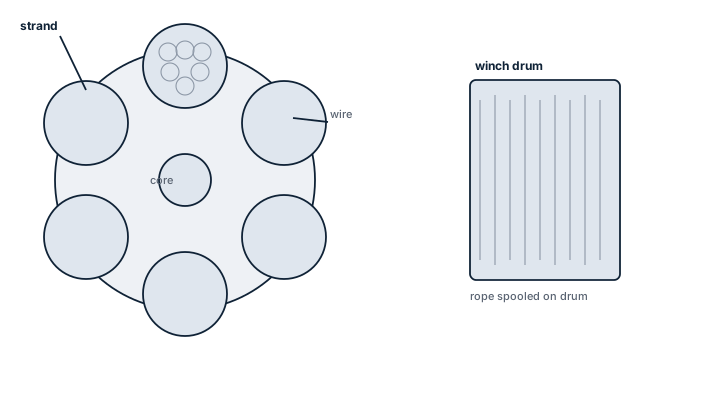
Construction and main types
- Strand construction — typically 6 or 8 strands laid around a core, described as, for example, 6x36 or 6x41, where the numbers indicate strands and wires per strand
- Core — fibre core for flexibility or independent wire rope core (IWRC) for higher strength and heat resistance
- Lay direction — right or left hand, ordinary or lang lay, matched to the sheaves and drum the wire runs over
- Galvanising or coating — bright, galvanised, or coated finish, selected against the corrosion environment the wire works in
Selection and sizing
- Minimum breaking load against the ship's mooring line pull requirement from the mooring arrangement plan, not just a general strength margin
- Diameter matched to the winch drum, fairlead and bitts already fitted — wire cannot simply be upsized without checking the whole lead
- Lay and construction matched to the drum grooving and the number of bending cycles the line will see in service
- Corrosion protection matched to whether the wire is permanently wet, stored on an open drum, or used only occasionally
Regulations and class
Class rules and IACS unified requirements for anchoring and mooring equipment specify how mooring line breaking strength is determined for the ship's equipment number, and set inspection and discard criteria for wire rope based on visible wire breaks per lay length, corrosion and diameter reduction. Wires used with mooring winches are also subject to the winch's own rendering and holding capacity, which must be matched to the wire, not just to a generic safe working load.
Typical faults
| Fault | Cause | Consequence |
|---|---|---|
| Broken wires concentrated in one section | Repeated bending over the same sheave or drum point (fatigue) | Localised loss of strength well before the rope's average condition suggests replacement |
| Birdcaging or core protrusion | Sudden shock load or a snatch load while the wire is slack | Permanent deformation and a weak point that will not straighten out |
| Internal corrosion | Moisture trapped inside the strands under a coating that looks sound outside | Strength loss invisible from a surface inspection alone |
| Kinking | Wire run out or handled without controlling the twist | A sharp local bend that becomes a permanent weak point and often the first place the wire later parts |
What to look for in a supplier
- A certified breaking load test certificate traceable to the specific coil or reel supplied
- Construction and lay matched to the vessel's existing drums and fairleads, confirmed before ordering, not assumed
- Corrosion protection suited to the trading area and stowage arrangement
- Guidance on discard criteria supplied with the rope so the crew has a documented reference for inspection
Never assess mooring wire on outward appearance alone: cut a short test length when replacement is due and check for internal corrosion, since a wire that looks sound on the surface can have already lost significant strength inside the strands.