What to check on a Mooring Winch.
A mooring winch is a powered drum that stores and tensions mooring lines - wire rope, synthetic rope, or a combination - used to hold the ship alongside a berth. It is a distinct machine from the anchor windlass, which handles anchor chain and is built for the very different loading pattern of veering and heaving chain under its own weight and holding power. Mooring winches range from simple split-drum warping winches with manual brakes to fully automatic constant-tension winches that pay line in or out on their own to…
What Defines a Mooring Winch
A mooring winch is a powered drum that stores and tensions mooring lines - wire rope, synthetic rope, or a combination - used to hold the ship alongside a berth. It is a distinct machine from the anchor windlass, which handles anchor chain and is built for the very different loading pattern of veering and heaving chain under its own weight and holding power. Mooring winches range from simple split-drum warping winches with manual brakes to fully automatic constant-tension winches that pay line in or out on their own to hold a set tension as the ship surges with tide, wash or wind, common on terminals where lines must stay taut without constant crew attention.
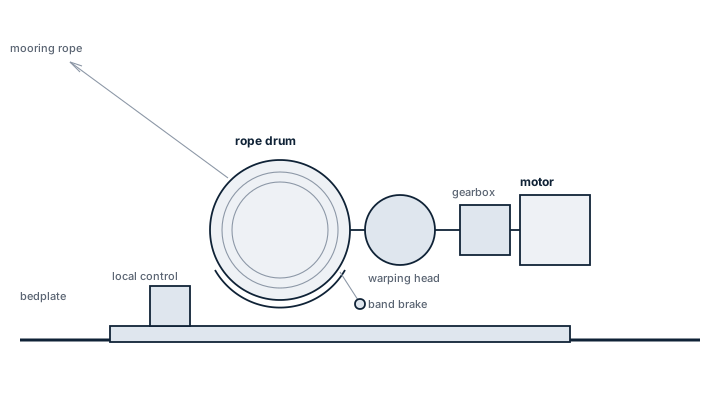
Main components
Drum and storage reel
A split drum holds the working turns of rope under load with a friction brake, often paired with a separate storage reel that holds the bulk of the line's length.
Drive and gearbox
Electric or hydraulic motor through a reduction gearbox; hydraulic drives are common where high torque at low speed and smooth constant-tension control are needed.
Brake
A band or disc brake holds the line under static load once the winch has taken up tension; brake holding capacity, not motor power, usually determines the winch's rated mooring load.
Tension control system
On automatic mooring winches, a load cell or hydraulic pressure sensor feeds a controller that pays line in or out to hold a pre-set tension, with alarms if tension exceeds a safe limit.
Selection and sizing
- Rated line pull and brake holding capacity, sized against the vessel's mooring arrangement and expected environmental loads at its typical berths
- Drum capacity for the rope diameter and length specified in the ship's mooring line schedule
- Line speed, since faster heaving in reduces time alongside during mooring operations
- Automatic constant-tension capability, needed on tankers and gas carriers at exposed terminals but often unnecessary on vessels with attended mooring stations
- Drive type: electric for simplicity and lower maintenance, hydraulic for smoother tension control under variable load
Class and regulatory requirements
Classification societies set requirements for mooring winch design loads based on the vessel's mooring equipment line, derived from the ship's equipment number, covering minimum line pull, brake holding capacity and safe working load of associated fittings. Where automatic tension winches are fitted, class rules require the tension alarm and safe working load limits to be verified during commissioning and periodic survey. Industry guidance from bodies such as OCIMF, applied through terminal and port state requirements on tankers, sets additional expectations for mooring line management plans and winch maintenance records, though these sit outside class rules themselves.
Typical faults
| Fault | Cause | Consequence |
|---|---|---|
| Brake slippage | Worn brake lining or oil contamination on the brake surface | Line pays out under load, vessel surges off the berth |
| Rope crushing or damage on the drum | Uneven spooling, riding turns on the storage reel | Reduced line strength, sudden failure under load |
| Hydraulic system leakage | Worn seals in motor or control valves | Loss of tension control, inconsistent automatic mode performance |
| Load cell drift | Sensor calibration lost over time | Automatic winch holds the wrong tension, false alarms or missed overload |
What to look for in a supplier
- Brake holding capacity certified by test, not calculated only, against the rated line pull
- Compatibility of drum and fairlead geometry with the specific rope type the vessel will use
- Documented automatic tension control performance if constant-tension mode is specified
- Access for maintenance of brake bands and gearbox without major disassembly, since mooring stations are often tight, exposed spaces
Never trust a brake by its rated figure alone - test it under an actual measured load at commissioning and at each survey, since a brake that slips only becomes obvious the one time it truly matters, in a surge with the gangway still rigged.