What to check on a Anchor Handling Winch.
A windlass moves a ship's own anchor up and down a near-vertical chain locker run. An anchor handling winch does something different: it pays out and hauls in wire or chain under constantly changing load and angle, often to a rig anchor lying on the seabed hundreds of metres away, while the vessel itself is moving. The winch has to render line out under shock loading without losing control of tension, then recover it again at working speed. That render-and-recover capability, not raw pulling power alone, is what separates a…
What sets an anchor handling winch apart
A windlass moves a ship's own anchor up and down a near-vertical chain locker run. An anchor handling winch does something different: it pays out and hauls in wire or chain under constantly changing load and angle, often to a rig anchor lying on the seabed hundreds of metres away, while the vessel itself is moving. The winch has to render line out under shock loading without losing control of tension, then recover it again at working speed. That render-and-recover capability, not raw pulling power alone, is what separates a true anchor handling winch from a mooring winch fitted with a bigger motor.
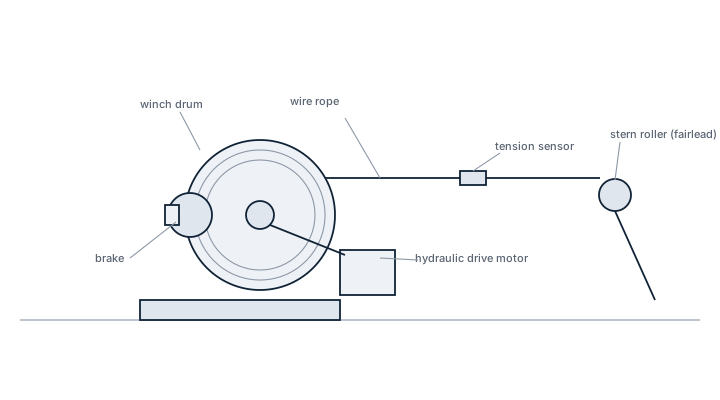
Main components
Winch drums
Most AHTS vessels carry a double-drum arrangement: a main working drum for the anchor wire or chain, and one or two tugger drums for handling pennants, buoys and messenger lines during the pick-up. Drum capacity is stated in metres of wire at a given diameter, and spooling quality, level-wind or diamond-groove, affects how evenly the wire pays out under load.
Brake and render system
The band or disc brake holds static load, but the render system is what protects the wire and the deck crew when a sudden peak load comes on, typically hydraulic pressure relief on the winch motor circuit that lets the drum pay out line in a controlled slip rather than parting the wire or overloading the fairleads.
Shark jaw and towing pins
Mounted at the stern roller, the shark jaw closes on the chain or wire to take load off the winch while the vessel repositions, and towing pins guide the wire onto the centreline during recovery so it does not saw sideways against the roller.
Power pack and control console
Hydraulic power units size the winch's line pull and render speed; the control console gives the winch operator direct sightline to the stern roller and instrumentation for line tension, drum position and wire payout.
Sizing and selection
Selection is driven by the anchor handling and bollard pull rating of the vessel rather than the winch in isolation. Key figures to compare:
- Rated line pull in tonnes, at first layer and at full drum
- Brake holding load, normally well above rated pull
- Wire diameter, construction and drum capacity in metres
- Render speed and maximum permissible peak load before automatic slip
- Tugger winch pull for pennant and buoy handling
Regulations and class
Class societies apply a dedicated notation for anchor handling and towing winches, such as DNV's TMON or equivalent notations from ABS and Lloyd's Register, covering brake capacity, render performance and control redundancy. Wire rope in use is subject to periodic inspection and discard criteria under class rules, and the winch itself is included in the vessel's planned maintenance and periodic load testing regime.
Typical faults
- Wire rope fatigue from repeated fleet angle over the stern roller, leading to broken wires and eventual parting under load
- Brake lining wear reducing holding capacity, allowing drift-back when anchor load is static
- Hydraulic seal leakage on the render valve, causing erratic tension control and shock loading of the wire
- Level-wind misalignment, so the wire crushes itself on the drum and shortens service life
What to look for in a supplier
- Documented render/recover performance curves, not just rated line pull
- Class type approval for the winch and its control system
- Spare parts and wire rope lead times matched to the vessel's operating area
- Control system compatible with the vessel's existing DP or bridge instrumentation
Watch the render valve setting after any hydraulic system overhaul: a valve set too tight defeats the whole point of the winch and turns a controlled render into a wire-parting event.