OceanSphere
Engines

Cargo Tank Coating

medium 224 / 224 models (Inspector)

Cargo tank coating on a chemical or product tanker is chosen against the specific cargo list the vessel intends to carry, not applied as a generic corrosion barrier, because chemical resistance and cargo compatibility rule out most coating systems that would otherwise be adequate anti-corrosive paint.

Read more — Cargo Tank Coating explained

What sets cargo tank coating apart

Deck and ballast tank coatings mainly resist corrosion from seawater and atmosphere. Cargo tank coating on a chemical or product tanker has a second, often harder job: it must resist chemical attack from whatever the charterer loads next, and it must not contaminate that cargo with taste, odour or dissolved coating material. A tanker's Certificate of Fitness lists an approved cargo list matched to its coating type; carrying a cargo not on that list, or one the coating is not proven against, can mean cargo rejection at the discharge port even if the ship itself is undamaged.
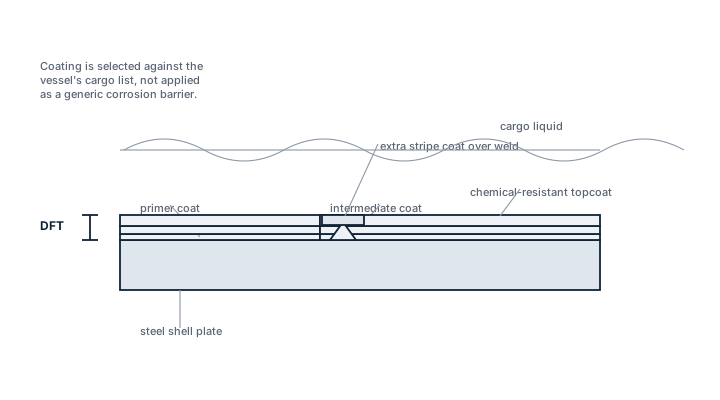
Cargo tank coating build-up
Cross section through a cargo tank steel shell plate showing the primer, intermediate and chemical-resistant topcoat layers, an extra stripe coat over a weld seam, the dry film thickness callout and the cargo liquid above the finished surface.

Main coating types

Epoxy-phenolic

The most widely used cargo tank coating on product and chemical tankers; good general chemical resistance and a long track record, but it can be attacked by strong acids and some solvents, and its cargo list must be checked cargo by cargo.

Zinc silicate

Very hard and abrasion-resistant, common for clean petroleum products, but unsuitable for many chemical cargoes and sensitive to cargoes that react with zinc.

Stainless steel, uncoated

Not a coating at all but the alternative to one: tanks built in stainless steel avoid the cargo-list restriction entirely at the cost of much higher newbuild price, and are standard on dedicated chemical carriers trading a wide cargo range.

Surface preparation

Coating performance depends as much on the steel surface profile achieved before application, through blast cleaning to a specified roughness and cleanliness grade, as on the coating chemistry itself; a correctly specified coating over poor surface preparation fails early regardless.

Selection

  • Intended cargo list: the coating manufacturer's cargo resistance list must cover every cargo the charter party or trading pattern expects, checked at the specified concentration and temperature.
  • Number of coats and total dry film thickness, since chemical resistance depends on achieving full, pinhole-free coverage at the specified thickness.
  • Cargo temperature range: heated cargoes push some coating systems outside their proven resistance envelope even for a cargo they otherwise tolerate.
  • Cure time and conditions before first cargo loading; a coating loaded before full cure gives up its chemical resistance early.

Regulations and class

IMO's IBC Code governs which cargoes a chemical tanker may carry and drives the coating or material requirement recorded on the Certificate of Fitness. The coating manufacturer's recognised cargo resistance list is cross-checked against the ship's intended trade at newbuilding and whenever a new cargo is proposed. Class and flag surveys include periodic tank coating condition surveys, with breakdown coverage thresholds that can trigger a Condition of Class if exceeded.

Typical faults

FaultCauseConsequence
BlisteringSolvent or moisture trapped under the coating during application or early cargo exposureCoating breakdown, exposed steel, potential cargo contamination
Cargo staining or off-spec cargoCoating not resistant to the actual cargo loaded, or loaded before full cureCargo rejection or downgrade at discharge, commercial claim against the ship
Localised breakdown at welds and edgesInsufficient stripe coating on edges and welds during applicationEarly corrosion starting at high-stress points, spreading under the coating
Coating loss from mechanical cleaningRepeated aggressive tank cleaning such as high-pressure hotwashProgressive thinning, reduced remaining chemical resistance life

What to look for in a supplier

  • A current, IMO-recognised cargo resistance list covering the specific cargoes the ship intends to trade.
  • Documented surface preparation standard and application procedure, with a qualified applicator and independent film-thickness inspection during application.
  • Batch traceability for the coating used, since cargo claims can require proof of which product and batch was applied.
  • Track record on comparable tonnage in the same trade, since chemical tanker coatings are judged over years of cargo exposure.

Never treat "epoxy coated" as a single specification; the same generic coating family covers products with very different cargo lists, and the document that matters names the exact product and its approved cargoes.

Inspector Mode Show All 224 / 224 with inspector value

21 manufacturers · 224 models

Jotun

46
Tankguard Special
Coverage 4-6 m2/L · Hull/Tank Protection Coating · Tank coating / tank lining
Type
epoxy
Chemical resistance
IMO_list
Dry film thickness um
250
Technical Specifications
Jotamastic 90 DFT
100 µm (Trockenfilm-Dicke)
Marathon IQ2 Maximum DFT
bis 500 µm, solidentfrei (98% Volumen)
Penguard Primer DFT
60–120 µm typisch
SeaQuantum Ultra VOC-Gehalt
Niedrig (<340 g/l); IMO AFS/CONF/26 konform
Haftungs-anforderung
≥5 MPa; ASTM D3359 Level 0–1
Salzsprühwiderstand (ASTM B117)
>1,000 hours typical; Marine Heavy-Duty 500–2,000 h
Product Lines
  • Jotamastic 90/87/80 (Epoxy Mastic Primer)
  • Marathon IQ2 (solventfrei Epoxy Topcoat)
  • Penguard Primer/HB/Universal (High-MW Epoxy Primer)
  • SeaQuantum Ultra III/S/SP (Antifouling Silyl-Acrylat)
  • SeaForce Shield/Active/Active Plus (Biozidbasierte Antifouling)
🎯 Application Area
Vessel Types: TankerBulk CarrierContainer
Technology: Tank coating / tank lining
Application: Tank coating from Jotun's Tankguard series. Special — for ballast and drinking water tanks. Resistant to seawater, ballast water and depending on variant various chemicals and petroleum products.
Selection Guide: Choose if: Tank-Innenbeschichtung gemaess IMO/SOLAS. Avoid if: Nicht fuer externe Unterwasser-Bereiche.
✔ Strengths
  • • IMO-PSPC-konform
  • • Breite chemische Bestaendigkeit
  • • Lange Standzeit in Tanks
⚠ Weaknesses
  • • Erfordert sorgfaeltige Oberflaechenvorbereitung
  • • Strikte Applikationsbedingungen
Common Failures & Inspection Points
  • Area: Unzureichende Schichtdicke (DFT) = Keine Korrosionsschutz-Garantie
    Check: Measure with coating thickness gauge (gage) per SSPC-PA2. Example: Jotamastic 90 shall be 100 µm = passed; <75 µm = rework required. Statistical sampling: minimum 20 points/m².
  • Area: Schlechte Haftung (Adhesion-Versagen) = Abblätterung/Delaminierung
    Check: Cross-Hatch-Adhäsionstest (ASTM D3359) durchführen: 6mm Rasterabstände, Klebeband aufreißen. Bewertung: Level 0 = beste Haftung (0% Verlust). Level ≥3 = Schicht-Versagen → Nacharbeiten. Alternativ: Pull-off Test >5 MPa.
  • Area: Unvollständige Aushärtung = Weiche/klebrige Oberfläche, reduzierte Härte
    Check: Pencil hardness test (ASTM D3363) perform: guide pencil at 45° angle with pressure over surface. Expected for epoxy after 7 days: ≥H (hard). Observe test duration per TDS (typically 24–48h hard-dry, 7 days full cure).
  • Area: Surface preparation non-conforming (too rough/too smooth surface) = adhesion defect
    Check: Surface roughness inspect: ISO 8501-1 grade Sa 2½ (medium roughness) or white-metal. Surface roughness: 30–85 µm (ISO 8503-2, fine–medium). Visual + surface roughness gauge (profile gauge) use.
  • Area: Holiday/Pinhole-Defekte = lokale Korrosion trotz Beschichtung
    Check: Holiday detector (spark tester for >250 µm; low-volt sponge for <500 µm) guide over entire area systematically. Defects localize and mark with red marking → must be repaired before operation.
  • Area: PSPC/IMO non-conformity = tanks fail classification (ballast/cargo)
    Check: IMO PSPC certificate of coating system inspect (ballast tank coatings, COT = cargo oil tank). Salt spray test references (ASTM B117) ≥500 hours for ballast, ≥1000–2000h for heavy marine applications inspect. Certificates: ClassNK, Lloyd's Register.

Type-universal inspection/maintenance points for paint & coating systems (Jotun, Mega-Schwarm 2026-06). Per-model specs not auto-filled.

Service: Verify cargo compatibility before loading; cure fully before first cargo.
Spare Parts: Jotun: Touch-Up Farbe in allen verwendeten Systemen an Bord vorhalten. Anoden per Dockungsbedarf.
Strengths
  • IMO-PSPC-konform
  • Breite chemische Bestaendigkeit
  • Lange Standzeit in Tanks
Weaknesses
  • Erfordert sorgfaeltige Oberflaechenvorbereitung
  • Strikte Applikationsbedingungen
Jotun Tankguard Zinc
Tankguard Zinc
Coverage 5-7 m2/L · Hull/Tank Protection Coating · Tank coating / tank lining
Type
zinc_silicate
Dry film thickness um
75
Technical Specifications
Jotamastic 90 DFT
100 µm (Trockenfilm-Dicke)
Marathon IQ2 Maximum DFT
bis 500 µm, solidentfrei (98% Volumen)
Penguard Primer DFT
60–120 µm typisch
SeaQuantum Ultra VOC-Gehalt
Niedrig (<340 g/l); IMO AFS/CONF/26 konform
Haftungs-anforderung
≥5 MPa; ASTM D3359 Level 0–1
Salzsprühwiderstand (ASTM B117)
>1,000 hours typical; Marine Heavy-Duty 500–2,000 h
Product Lines
  • Jotamastic 90/87/80 (Epoxy Mastic Primer)
  • Marathon IQ2 (solventfrei Epoxy Topcoat)
  • Penguard Primer/HB/Universal (High-MW Epoxy Primer)
  • SeaQuantum Ultra III/S/SP (Antifouling Silyl-Acrylat)
  • SeaForce Shield/Active/Active Plus (Biozidbasierte Antifouling)
🎯 Application Area
Vessel Types: TankerBulk CarrierContainer
Technology: Tank coating / tank lining
Application: Tank coating from Jotun's Tankguard series. Zinc — zinc-rich primer for tank bottom areas. Resistant to seawater, ballast water and depending on variant various chemicals and petroleum products.
Selection Guide: Choose if: Tank-Innenbeschichtung gemaess IMO/SOLAS. Avoid if: Nicht fuer externe Unterwasser-Bereiche.
✔ Strengths
  • • IMO-PSPC-konform
  • • Breite chemische Bestaendigkeit
  • • Lange Standzeit in Tanks
⚠ Weaknesses
  • • Erfordert sorgfaeltige Oberflaechenvorbereitung
  • • Strikte Applikationsbedingungen
Common Failures & Inspection Points
  • Area: Unzureichende Schichtdicke (DFT) = Keine Korrosionsschutz-Garantie
    Check: Measure with coating thickness gauge (gage) per SSPC-PA2. Example: Jotamastic 90 shall be 100 µm = passed; <75 µm = rework required. Statistical sampling: minimum 20 points/m².
  • Area: Schlechte Haftung (Adhesion-Versagen) = Abblätterung/Delaminierung
    Check: Cross-Hatch-Adhäsionstest (ASTM D3359) durchführen: 6mm Rasterabstände, Klebeband aufreißen. Bewertung: Level 0 = beste Haftung (0% Verlust). Level ≥3 = Schicht-Versagen → Nacharbeiten. Alternativ: Pull-off Test >5 MPa.
  • Area: Unvollständige Aushärtung = Weiche/klebrige Oberfläche, reduzierte Härte
    Check: Pencil hardness test (ASTM D3363) perform: guide pencil at 45° angle with pressure over surface. Expected for epoxy after 7 days: ≥H (hard). Observe test duration per TDS (typically 24–48h hard-dry, 7 days full cure).
  • Area: Surface preparation non-conforming (too rough/too smooth surface) = adhesion defect
    Check: Surface roughness inspect: ISO 8501-1 grade Sa 2½ (medium roughness) or white-metal. Surface roughness: 30–85 µm (ISO 8503-2, fine–medium). Visual + surface roughness gauge (profile gauge) use.
  • Area: Holiday/Pinhole-Defekte = lokale Korrosion trotz Beschichtung
    Check: Holiday detector (spark tester for >250 µm; low-volt sponge for <500 µm) guide over entire area systematically. Defects localize and mark with red marking → must be repaired before operation.
  • Area: PSPC/IMO non-conformity = tanks fail classification (ballast/cargo)
    Check: IMO PSPC certificate of coating system inspect (ballast tank coatings, COT = cargo oil tank). Salt spray test references (ASTM B117) ≥500 hours for ballast, ≥1000–2000h for heavy marine applications inspect. Certificates: ClassNK, Lloyd's Register.

Type-universal inspection/maintenance points for paint & coating systems (Jotun, Mega-Schwarm 2026-06). Per-model specs not auto-filled.

Service: Apply in thin coats; ensure full solvent release between coats.
Spare Parts: Jotun: Touch-Up Farbe in allen verwendeten Systemen an Bord vorhalten. Anoden per Dockungsbedarf.
Strengths
  • IMO-PSPC-konform
  • Breite chemische Bestaendigkeit
  • Lange Standzeit in Tanks
Weaknesses
  • Erfordert sorgfaeltige Oberflaechenvorbereitung
  • Strikte Applikationsbedingungen
Tankguard Zinc 2100
Type
Zinc Silicate Cargo Tank
Technical Specifications
Jotamastic 90 DFT
100 µm (Trockenfilm-Dicke)
Marathon IQ2 Maximum DFT
bis 500 µm, solidentfrei (98% Volumen)
Penguard Primer DFT
60–120 µm typisch
SeaQuantum Ultra VOC-Gehalt
Niedrig (<340 g/l); IMO AFS/CONF/26 konform
Haftungs-anforderung
≥5 MPa; ASTM D3359 Level 0–1
Salzsprühwiderstand (ASTM B117)
>1,000 hours typical; Marine Heavy-Duty 500–2,000 h
Product Lines
  • Jotamastic 90/87/80 (Epoxy Mastic Primer)
  • Marathon IQ2 (solventfrei Epoxy Topcoat)
  • Penguard Primer/HB/Universal (High-MW Epoxy Primer)
  • SeaQuantum Ultra III/S/SP (Antifouling Silyl-Acrylat)
  • SeaForce Shield/Active/Active Plus (Biozidbasierte Antifouling)
🎯 Application Area
Application data not yet recorded.
Common Failures & Inspection Points
  • Area: Unzureichende Schichtdicke (DFT) = Keine Korrosionsschutz-Garantie
    Check: Measure with coating thickness gauge (gage) per SSPC-PA2. Example: Jotamastic 90 shall be 100 µm = passed; <75 µm = rework required. Statistical sampling: minimum 20 points/m².
  • Area: Schlechte Haftung (Adhesion-Versagen) = Abblätterung/Delaminierung
    Check: Cross-Hatch-Adhäsionstest (ASTM D3359) durchführen: 6mm Rasterabstände, Klebeband aufreißen. Bewertung: Level 0 = beste Haftung (0% Verlust). Level ≥3 = Schicht-Versagen → Nacharbeiten. Alternativ: Pull-off Test >5 MPa.
  • Area: Unvollständige Aushärtung = Weiche/klebrige Oberfläche, reduzierte Härte
    Check: Pencil hardness test (ASTM D3363) perform: guide pencil at 45° angle with pressure over surface. Expected for epoxy after 7 days: ≥H (hard). Observe test duration per TDS (typically 24–48h hard-dry, 7 days full cure).
  • Area: Surface preparation non-conforming (too rough/too smooth surface) = adhesion defect
    Check: Surface roughness inspect: ISO 8501-1 grade Sa 2½ (medium roughness) or white-metal. Surface roughness: 30–85 µm (ISO 8503-2, fine–medium). Visual + surface roughness gauge (profile gauge) use.
  • Area: Holiday/Pinhole-Defekte = lokale Korrosion trotz Beschichtung
    Check: Holiday detector (spark tester for >250 µm; low-volt sponge for <500 µm) guide over entire area systematically. Defects localize and mark with red marking → must be repaired before operation.
  • Area: PSPC/IMO non-conformity = tanks fail classification (ballast/cargo)
    Check: IMO PSPC certificate of coating system inspect (ballast tank coatings, COT = cargo oil tank). Salt spray test references (ASTM B117) ≥500 hours for ballast, ≥1000–2000h for heavy marine applications inspect. Certificates: ClassNK, Lloyd's Register.

Type-universal inspection/maintenance points for paint & coating systems (Jotun, Mega-Schwarm 2026-06). Per-model specs not auto-filled.

Tankguard Special 2101
Type
Pure Epoxy Cargo Tank
Technical Specifications
Jotamastic 90 DFT
100 µm (Trockenfilm-Dicke)
Marathon IQ2 Maximum DFT
bis 500 µm, solidentfrei (98% Volumen)
Penguard Primer DFT
60–120 µm typisch
SeaQuantum Ultra VOC-Gehalt
Niedrig (<340 g/l); IMO AFS/CONF/26 konform
Haftungs-anforderung
≥5 MPa; ASTM D3359 Level 0–1
Salzsprühwiderstand (ASTM B117)
>1,000 hours typical; Marine Heavy-Duty 500–2,000 h
Product Lines
  • Jotamastic 90/87/80 (Epoxy Mastic Primer)
  • Marathon IQ2 (solventfrei Epoxy Topcoat)
  • Penguard Primer/HB/Universal (High-MW Epoxy Primer)
  • SeaQuantum Ultra III/S/SP (Antifouling Silyl-Acrylat)
  • SeaForce Shield/Active/Active Plus (Biozidbasierte Antifouling)
🎯 Application Area
Application data not yet recorded.
Common Failures & Inspection Points
  • Area: Unzureichende Schichtdicke (DFT) = Keine Korrosionsschutz-Garantie
    Check: Measure with coating thickness gauge (gage) per SSPC-PA2. Example: Jotamastic 90 shall be 100 µm = passed; <75 µm = rework required. Statistical sampling: minimum 20 points/m².
  • Area: Schlechte Haftung (Adhesion-Versagen) = Abblätterung/Delaminierung
    Check: Cross-Hatch-Adhäsionstest (ASTM D3359) durchführen: 6mm Rasterabstände, Klebeband aufreißen. Bewertung: Level 0 = beste Haftung (0% Verlust). Level ≥3 = Schicht-Versagen → Nacharbeiten. Alternativ: Pull-off Test >5 MPa.
  • Area: Unvollständige Aushärtung = Weiche/klebrige Oberfläche, reduzierte Härte
    Check: Pencil hardness test (ASTM D3363) perform: guide pencil at 45° angle with pressure over surface. Expected for epoxy after 7 days: ≥H (hard). Observe test duration per TDS (typically 24–48h hard-dry, 7 days full cure).
  • Area: Surface preparation non-conforming (too rough/too smooth surface) = adhesion defect
    Check: Surface roughness inspect: ISO 8501-1 grade Sa 2½ (medium roughness) or white-metal. Surface roughness: 30–85 µm (ISO 8503-2, fine–medium). Visual + surface roughness gauge (profile gauge) use.
  • Area: Holiday/Pinhole-Defekte = lokale Korrosion trotz Beschichtung
    Check: Holiday detector (spark tester for >250 µm; low-volt sponge for <500 µm) guide over entire area systematically. Defects localize and mark with red marking → must be repaired before operation.
  • Area: PSPC/IMO non-conformity = tanks fail classification (ballast/cargo)
    Check: IMO PSPC certificate of coating system inspect (ballast tank coatings, COT = cargo oil tank). Salt spray test references (ASTM B117) ≥500 hours for ballast, ≥1000–2000h for heavy marine applications inspect. Certificates: ClassNK, Lloyd's Register.

Type-universal inspection/maintenance points for paint & coating systems (Jotun, Mega-Schwarm 2026-06). Per-model specs not auto-filled.

Tankguard HB 2102
Type
Hi-Build Cargo Epoxy
Technical Specifications
Jotamastic 90 DFT
100 µm (Trockenfilm-Dicke)
Marathon IQ2 Maximum DFT
bis 500 µm, solidentfrei (98% Volumen)
Penguard Primer DFT
60–120 µm typisch
SeaQuantum Ultra VOC-Gehalt
Niedrig (<340 g/l); IMO AFS/CONF/26 konform
Haftungs-anforderung
≥5 MPa; ASTM D3359 Level 0–1
Salzsprühwiderstand (ASTM B117)
>1,000 hours typical; Marine Heavy-Duty 500–2,000 h
Product Lines
  • Jotamastic 90/87/80 (Epoxy Mastic Primer)
  • Marathon IQ2 (solventfrei Epoxy Topcoat)
  • Penguard Primer/HB/Universal (High-MW Epoxy Primer)
  • SeaQuantum Ultra III/S/SP (Antifouling Silyl-Acrylat)
  • SeaForce Shield/Active/Active Plus (Biozidbasierte Antifouling)
🎯 Application Area
Application data not yet recorded.
Common Failures & Inspection Points
  • Area: Unzureichende Schichtdicke (DFT) = Keine Korrosionsschutz-Garantie
    Check: Measure with coating thickness gauge (gage) per SSPC-PA2. Example: Jotamastic 90 shall be 100 µm = passed; <75 µm = rework required. Statistical sampling: minimum 20 points/m².
  • Area: Schlechte Haftung (Adhesion-Versagen) = Abblätterung/Delaminierung
    Check: Cross-Hatch-Adhäsionstest (ASTM D3359) durchführen: 6mm Rasterabstände, Klebeband aufreißen. Bewertung: Level 0 = beste Haftung (0% Verlust). Level ≥3 = Schicht-Versagen → Nacharbeiten. Alternativ: Pull-off Test >5 MPa.
  • Area: Unvollständige Aushärtung = Weiche/klebrige Oberfläche, reduzierte Härte
    Check: Pencil hardness test (ASTM D3363) perform: guide pencil at 45° angle with pressure over surface. Expected for epoxy after 7 days: ≥H (hard). Observe test duration per TDS (typically 24–48h hard-dry, 7 days full cure).
  • Area: Surface preparation non-conforming (too rough/too smooth surface) = adhesion defect
    Check: Surface roughness inspect: ISO 8501-1 grade Sa 2½ (medium roughness) or white-metal. Surface roughness: 30–85 µm (ISO 8503-2, fine–medium). Visual + surface roughness gauge (profile gauge) use.
  • Area: Holiday/Pinhole-Defekte = lokale Korrosion trotz Beschichtung
    Check: Holiday detector (spark tester for >250 µm; low-volt sponge for <500 µm) guide over entire area systematically. Defects localize and mark with red marking → must be repaired before operation.
  • Area: PSPC/IMO non-conformity = tanks fail classification (ballast/cargo)
    Check: IMO PSPC certificate of coating system inspect (ballast tank coatings, COT = cargo oil tank). Salt spray test references (ASTM B117) ≥500 hours for ballast, ≥1000–2000h for heavy marine applications inspect. Certificates: ClassNK, Lloyd's Register.

Type-universal inspection/maintenance points for paint & coating systems (Jotun, Mega-Schwarm 2026-06). Per-model specs not auto-filled.

Jotun Phenolic Epoxy Tank
Type
Phenolic Epoxy
Chemical resistant
ja
Technical Specifications
Jotamastic 90 DFT
100 µm (Trockenfilm-Dicke)
Marathon IQ2 Maximum DFT
bis 500 µm, solidentfrei (98% Volumen)
Penguard Primer DFT
60–120 µm typisch
SeaQuantum Ultra VOC-Gehalt
Niedrig (<340 g/l); IMO AFS/CONF/26 konform
Haftungs-anforderung
≥5 MPa; ASTM D3359 Level 0–1
Salzsprühwiderstand (ASTM B117)
>1,000 hours typical; Marine Heavy-Duty 500–2,000 h
Product Lines
  • Jotamastic 90/87/80 (Epoxy Mastic Primer)
  • Marathon IQ2 (solventfrei Epoxy Topcoat)
  • Penguard Primer/HB/Universal (High-MW Epoxy Primer)
  • SeaQuantum Ultra III/S/SP (Antifouling Silyl-Acrylat)
  • SeaForce Shield/Active/Active Plus (Biozidbasierte Antifouling)
🎯 Application Area
Application data not yet recorded.
Common Failures & Inspection Points
  • Area: Unzureichende Schichtdicke (DFT) = Keine Korrosionsschutz-Garantie
    Check: Measure with coating thickness gauge (gage) per SSPC-PA2. Example: Jotamastic 90 shall be 100 µm = passed; <75 µm = rework required. Statistical sampling: minimum 20 points/m².
  • Area: Schlechte Haftung (Adhesion-Versagen) = Abblätterung/Delaminierung
    Check: Cross-Hatch-Adhäsionstest (ASTM D3359) durchführen: 6mm Rasterabstände, Klebeband aufreißen. Bewertung: Level 0 = beste Haftung (0% Verlust). Level ≥3 = Schicht-Versagen → Nacharbeiten. Alternativ: Pull-off Test >5 MPa.
  • Area: Unvollständige Aushärtung = Weiche/klebrige Oberfläche, reduzierte Härte
    Check: Pencil hardness test (ASTM D3363) perform: guide pencil at 45° angle with pressure over surface. Expected for epoxy after 7 days: ≥H (hard). Observe test duration per TDS (typically 24–48h hard-dry, 7 days full cure).
  • Area: Surface preparation non-conforming (too rough/too smooth surface) = adhesion defect
    Check: Surface roughness inspect: ISO 8501-1 grade Sa 2½ (medium roughness) or white-metal. Surface roughness: 30–85 µm (ISO 8503-2, fine–medium). Visual + surface roughness gauge (profile gauge) use.
  • Area: Holiday/Pinhole-Defekte = lokale Korrosion trotz Beschichtung
    Check: Holiday detector (spark tester for >250 µm; low-volt sponge for <500 µm) guide over entire area systematically. Defects localize and mark with red marking → must be repaired before operation.
  • Area: PSPC/IMO non-conformity = tanks fail classification (ballast/cargo)
    Check: IMO PSPC certificate of coating system inspect (ballast tank coatings, COT = cargo oil tank). Salt spray test references (ASTM B117) ≥500 hours for ballast, ≥1000–2000h for heavy marine applications inspect. Certificates: ClassNK, Lloyd's Register.

Type-universal inspection/maintenance points for paint & coating systems (Jotun, Mega-Schwarm 2026-06). Per-model specs not auto-filled.

Jotun Novolac Epoxy Tank
Type
Novolac Epoxy
High temp
ja
Technical Specifications
Jotamastic 90 DFT
100 µm (Trockenfilm-Dicke)
Marathon IQ2 Maximum DFT
bis 500 µm, solidentfrei (98% Volumen)
Penguard Primer DFT
60–120 µm typisch
SeaQuantum Ultra VOC-Gehalt
Niedrig (<340 g/l); IMO AFS/CONF/26 konform
Haftungs-anforderung
≥5 MPa; ASTM D3359 Level 0–1
Salzsprühwiderstand (ASTM B117)
>1,000 hours typical; Marine Heavy-Duty 500–2,000 h
Product Lines
  • Jotamastic 90/87/80 (Epoxy Mastic Primer)
  • Marathon IQ2 (solventfrei Epoxy Topcoat)
  • Penguard Primer/HB/Universal (High-MW Epoxy Primer)
  • SeaQuantum Ultra III/S/SP (Antifouling Silyl-Acrylat)
  • SeaForce Shield/Active/Active Plus (Biozidbasierte Antifouling)
🎯 Application Area
Application data not yet recorded.
Common Failures & Inspection Points
  • Area: Unzureichende Schichtdicke (DFT) = Keine Korrosionsschutz-Garantie
    Check: Measure with coating thickness gauge (gage) per SSPC-PA2. Example: Jotamastic 90 shall be 100 µm = passed; <75 µm = rework required. Statistical sampling: minimum 20 points/m².
  • Area: Schlechte Haftung (Adhesion-Versagen) = Abblätterung/Delaminierung
    Check: Cross-Hatch-Adhäsionstest (ASTM D3359) durchführen: 6mm Rasterabstände, Klebeband aufreißen. Bewertung: Level 0 = beste Haftung (0% Verlust). Level ≥3 = Schicht-Versagen → Nacharbeiten. Alternativ: Pull-off Test >5 MPa.
  • Area: Unvollständige Aushärtung = Weiche/klebrige Oberfläche, reduzierte Härte
    Check: Pencil hardness test (ASTM D3363) perform: guide pencil at 45° angle with pressure over surface. Expected for epoxy after 7 days: ≥H (hard). Observe test duration per TDS (typically 24–48h hard-dry, 7 days full cure).
  • Area: Surface preparation non-conforming (too rough/too smooth surface) = adhesion defect
    Check: Surface roughness inspect: ISO 8501-1 grade Sa 2½ (medium roughness) or white-metal. Surface roughness: 30–85 µm (ISO 8503-2, fine–medium). Visual + surface roughness gauge (profile gauge) use.
  • Area: Holiday/Pinhole-Defekte = lokale Korrosion trotz Beschichtung
    Check: Holiday detector (spark tester for >250 µm; low-volt sponge for <500 µm) guide over entire area systematically. Defects localize and mark with red marking → must be repaired before operation.
  • Area: PSPC/IMO non-conformity = tanks fail classification (ballast/cargo)
    Check: IMO PSPC certificate of coating system inspect (ballast tank coatings, COT = cargo oil tank). Salt spray test references (ASTM B117) ≥500 hours for ballast, ≥1000–2000h for heavy marine applications inspect. Certificates: ClassNK, Lloyd's Register.

Type-universal inspection/maintenance points for paint & coating systems (Jotun, Mega-Schwarm 2026-06). Per-model specs not auto-filled.

Jotun Tank Lining 40°C-C
Max temp (°C)
40
Type
High Temperature Tank Lining
Technical Specifications
Jotamastic 90 DFT
100 µm (Trockenfilm-Dicke)
Marathon IQ2 Maximum DFT
bis 500 µm, solidentfrei (98% Volumen)
Penguard Primer DFT
60–120 µm typisch
SeaQuantum Ultra VOC-Gehalt
Niedrig (<340 g/l); IMO AFS/CONF/26 konform
Haftungs-anforderung
≥5 MPa; ASTM D3359 Level 0–1
Salzsprühwiderstand (ASTM B117)
>1,000 hours typical; Marine Heavy-Duty 500–2,000 h
Product Lines
  • Jotamastic 90/87/80 (Epoxy Mastic Primer)
  • Marathon IQ2 (solventfrei Epoxy Topcoat)
  • Penguard Primer/HB/Universal (High-MW Epoxy Primer)
  • SeaQuantum Ultra III/S/SP (Antifouling Silyl-Acrylat)
  • SeaForce Shield/Active/Active Plus (Biozidbasierte Antifouling)
🎯 Application Area
Application data not yet recorded.
Common Failures & Inspection Points
  • Area: Unzureichende Schichtdicke (DFT) = Keine Korrosionsschutz-Garantie
    Check: Measure with coating thickness gauge (gage) per SSPC-PA2. Example: Jotamastic 90 shall be 100 µm = passed; <75 µm = rework required. Statistical sampling: minimum 20 points/m².
  • Area: Schlechte Haftung (Adhesion-Versagen) = Abblätterung/Delaminierung
    Check: Cross-Hatch-Adhäsionstest (ASTM D3359) durchführen: 6mm Rasterabstände, Klebeband aufreißen. Bewertung: Level 0 = beste Haftung (0% Verlust). Level ≥3 = Schicht-Versagen → Nacharbeiten. Alternativ: Pull-off Test >5 MPa.
  • Area: Unvollständige Aushärtung = Weiche/klebrige Oberfläche, reduzierte Härte
    Check: Pencil hardness test (ASTM D3363) perform: guide pencil at 45° angle with pressure over surface. Expected for epoxy after 7 days: ≥H (hard). Observe test duration per TDS (typically 24–48h hard-dry, 7 days full cure).
  • Area: Surface preparation non-conforming (too rough/too smooth surface) = adhesion defect
    Check: Surface roughness inspect: ISO 8501-1 grade Sa 2½ (medium roughness) or white-metal. Surface roughness: 30–85 µm (ISO 8503-2, fine–medium). Visual + surface roughness gauge (profile gauge) use.
  • Area: Holiday/Pinhole-Defekte = lokale Korrosion trotz Beschichtung
    Check: Holiday detector (spark tester for >250 µm; low-volt sponge for <500 µm) guide over entire area systematically. Defects localize and mark with red marking → must be repaired before operation.
  • Area: PSPC/IMO non-conformity = tanks fail classification (ballast/cargo)
    Check: IMO PSPC certificate of coating system inspect (ballast tank coatings, COT = cargo oil tank). Salt spray test references (ASTM B117) ≥500 hours for ballast, ≥1000–2000h for heavy marine applications inspect. Certificates: ClassNK, Lloyd's Register.

Type-universal inspection/maintenance points for paint & coating systems (Jotun, Mega-Schwarm 2026-06). Per-model specs not auto-filled.

Jotun Tank Lining 60°C-C
Max temp (°C)
60
Type
High Temperature Tank Lining
Technical Specifications
Jotamastic 90 DFT
100 µm (Trockenfilm-Dicke)
Marathon IQ2 Maximum DFT
bis 500 µm, solidentfrei (98% Volumen)
Penguard Primer DFT
60–120 µm typisch
SeaQuantum Ultra VOC-Gehalt
Niedrig (<340 g/l); IMO AFS/CONF/26 konform
Haftungs-anforderung
≥5 MPa; ASTM D3359 Level 0–1
Salzsprühwiderstand (ASTM B117)
>1,000 hours typical; Marine Heavy-Duty 500–2,000 h
Product Lines
  • Jotamastic 90/87/80 (Epoxy Mastic Primer)
  • Marathon IQ2 (solventfrei Epoxy Topcoat)
  • Penguard Primer/HB/Universal (High-MW Epoxy Primer)
  • SeaQuantum Ultra III/S/SP (Antifouling Silyl-Acrylat)
  • SeaForce Shield/Active/Active Plus (Biozidbasierte Antifouling)
🎯 Application Area
Application data not yet recorded.
Common Failures & Inspection Points
  • Area: Unzureichende Schichtdicke (DFT) = Keine Korrosionsschutz-Garantie
    Check: Measure with coating thickness gauge (gage) per SSPC-PA2. Example: Jotamastic 90 shall be 100 µm = passed; <75 µm = rework required. Statistical sampling: minimum 20 points/m².
  • Area: Schlechte Haftung (Adhesion-Versagen) = Abblätterung/Delaminierung
    Check: Cross-Hatch-Adhäsionstest (ASTM D3359) durchführen: 6mm Rasterabstände, Klebeband aufreißen. Bewertung: Level 0 = beste Haftung (0% Verlust). Level ≥3 = Schicht-Versagen → Nacharbeiten. Alternativ: Pull-off Test >5 MPa.
  • Area: Unvollständige Aushärtung = Weiche/klebrige Oberfläche, reduzierte Härte
    Check: Pencil hardness test (ASTM D3363) perform: guide pencil at 45° angle with pressure over surface. Expected for epoxy after 7 days: ≥H (hard). Observe test duration per TDS (typically 24–48h hard-dry, 7 days full cure).
  • Area: Surface preparation non-conforming (too rough/too smooth surface) = adhesion defect
    Check: Surface roughness inspect: ISO 8501-1 grade Sa 2½ (medium roughness) or white-metal. Surface roughness: 30–85 µm (ISO 8503-2, fine–medium). Visual + surface roughness gauge (profile gauge) use.
  • Area: Holiday/Pinhole-Defekte = lokale Korrosion trotz Beschichtung
    Check: Holiday detector (spark tester for >250 µm; low-volt sponge for <500 µm) guide over entire area systematically. Defects localize and mark with red marking → must be repaired before operation.
  • Area: PSPC/IMO non-conformity = tanks fail classification (ballast/cargo)
    Check: IMO PSPC certificate of coating system inspect (ballast tank coatings, COT = cargo oil tank). Salt spray test references (ASTM B117) ≥500 hours for ballast, ≥1000–2000h for heavy marine applications inspect. Certificates: ClassNK, Lloyd's Register.

Type-universal inspection/maintenance points for paint & coating systems (Jotun, Mega-Schwarm 2026-06). Per-model specs not auto-filled.

Jotun Tank Lining 80°C-C
Max temp (°C)
80
Type
High Temperature Tank Lining
Technical Specifications
Jotamastic 90 DFT
100 µm (Trockenfilm-Dicke)
Marathon IQ2 Maximum DFT
bis 500 µm, solidentfrei (98% Volumen)
Penguard Primer DFT
60–120 µm typisch
SeaQuantum Ultra VOC-Gehalt
Niedrig (<340 g/l); IMO AFS/CONF/26 konform
Haftungs-anforderung
≥5 MPa; ASTM D3359 Level 0–1
Salzsprühwiderstand (ASTM B117)
>1,000 hours typical; Marine Heavy-Duty 500–2,000 h
Product Lines
  • Jotamastic 90/87/80 (Epoxy Mastic Primer)
  • Marathon IQ2 (solventfrei Epoxy Topcoat)
  • Penguard Primer/HB/Universal (High-MW Epoxy Primer)
  • SeaQuantum Ultra III/S/SP (Antifouling Silyl-Acrylat)
  • SeaForce Shield/Active/Active Plus (Biozidbasierte Antifouling)
🎯 Application Area
Application data not yet recorded.
Common Failures & Inspection Points
  • Area: Unzureichende Schichtdicke (DFT) = Keine Korrosionsschutz-Garantie
    Check: Measure with coating thickness gauge (gage) per SSPC-PA2. Example: Jotamastic 90 shall be 100 µm = passed; <75 µm = rework required. Statistical sampling: minimum 20 points/m².
  • Area: Schlechte Haftung (Adhesion-Versagen) = Abblätterung/Delaminierung
    Check: Cross-Hatch-Adhäsionstest (ASTM D3359) durchführen: 6mm Rasterabstände, Klebeband aufreißen. Bewertung: Level 0 = beste Haftung (0% Verlust). Level ≥3 = Schicht-Versagen → Nacharbeiten. Alternativ: Pull-off Test >5 MPa.
  • Area: Unvollständige Aushärtung = Weiche/klebrige Oberfläche, reduzierte Härte
    Check: Pencil hardness test (ASTM D3363) perform: guide pencil at 45° angle with pressure over surface. Expected for epoxy after 7 days: ≥H (hard). Observe test duration per TDS (typically 24–48h hard-dry, 7 days full cure).
  • Area: Surface preparation non-conforming (too rough/too smooth surface) = adhesion defect
    Check: Surface roughness inspect: ISO 8501-1 grade Sa 2½ (medium roughness) or white-metal. Surface roughness: 30–85 µm (ISO 8503-2, fine–medium). Visual + surface roughness gauge (profile gauge) use.
  • Area: Holiday/Pinhole-Defekte = lokale Korrosion trotz Beschichtung
    Check: Holiday detector (spark tester for >250 µm; low-volt sponge for <500 µm) guide over entire area systematically. Defects localize and mark with red marking → must be repaired before operation.
  • Area: PSPC/IMO non-conformity = tanks fail classification (ballast/cargo)
    Check: IMO PSPC certificate of coating system inspect (ballast tank coatings, COT = cargo oil tank). Salt spray test references (ASTM B117) ≥500 hours for ballast, ≥1000–2000h for heavy marine applications inspect. Certificates: ClassNK, Lloyd's Register.

Type-universal inspection/maintenance points for paint & coating systems (Jotun, Mega-Schwarm 2026-06). Per-model specs not auto-filled.

Jotun Tank Lining 100°C-C
Max temp (°C)
100
Type
High Temperature Tank Lining
Technical Specifications
Jotamastic 90 DFT
100 µm (Trockenfilm-Dicke)
Marathon IQ2 Maximum DFT
bis 500 µm, solidentfrei (98% Volumen)
Penguard Primer DFT
60–120 µm typisch
SeaQuantum Ultra VOC-Gehalt
Niedrig (<340 g/l); IMO AFS/CONF/26 konform
Haftungs-anforderung
≥5 MPa; ASTM D3359 Level 0–1
Salzsprühwiderstand (ASTM B117)
>1,000 hours typical; Marine Heavy-Duty 500–2,000 h
Product Lines
  • Jotamastic 90/87/80 (Epoxy Mastic Primer)
  • Marathon IQ2 (solventfrei Epoxy Topcoat)
  • Penguard Primer/HB/Universal (High-MW Epoxy Primer)
  • SeaQuantum Ultra III/S/SP (Antifouling Silyl-Acrylat)
  • SeaForce Shield/Active/Active Plus (Biozidbasierte Antifouling)
🎯 Application Area
Application data not yet recorded.
Common Failures & Inspection Points
  • Area: Unzureichende Schichtdicke (DFT) = Keine Korrosionsschutz-Garantie
    Check: Measure with coating thickness gauge (gage) per SSPC-PA2. Example: Jotamastic 90 shall be 100 µm = passed; <75 µm = rework required. Statistical sampling: minimum 20 points/m².
  • Area: Schlechte Haftung (Adhesion-Versagen) = Abblätterung/Delaminierung
    Check: Cross-Hatch-Adhäsionstest (ASTM D3359) durchführen: 6mm Rasterabstände, Klebeband aufreißen. Bewertung: Level 0 = beste Haftung (0% Verlust). Level ≥3 = Schicht-Versagen → Nacharbeiten. Alternativ: Pull-off Test >5 MPa.
  • Area: Unvollständige Aushärtung = Weiche/klebrige Oberfläche, reduzierte Härte
    Check: Pencil hardness test (ASTM D3363) perform: guide pencil at 45° angle with pressure over surface. Expected for epoxy after 7 days: ≥H (hard). Observe test duration per TDS (typically 24–48h hard-dry, 7 days full cure).
  • Area: Surface preparation non-conforming (too rough/too smooth surface) = adhesion defect
    Check: Surface roughness inspect: ISO 8501-1 grade Sa 2½ (medium roughness) or white-metal. Surface roughness: 30–85 µm (ISO 8503-2, fine–medium). Visual + surface roughness gauge (profile gauge) use.
  • Area: Holiday/Pinhole-Defekte = lokale Korrosion trotz Beschichtung
    Check: Holiday detector (spark tester for >250 µm; low-volt sponge for <500 µm) guide over entire area systematically. Defects localize and mark with red marking → must be repaired before operation.
  • Area: PSPC/IMO non-conformity = tanks fail classification (ballast/cargo)
    Check: IMO PSPC certificate of coating system inspect (ballast tank coatings, COT = cargo oil tank). Salt spray test references (ASTM B117) ≥500 hours for ballast, ≥1000–2000h for heavy marine applications inspect. Certificates: ClassNK, Lloyd's Register.

Type-universal inspection/maintenance points for paint & coating systems (Jotun, Mega-Schwarm 2026-06). Per-model specs not auto-filled.

Jotun Tank Lining 120°C-C
Max temp (°C)
120
Type
High Temperature Tank Lining
Technical Specifications
Jotamastic 90 DFT
100 µm (Trockenfilm-Dicke)
Marathon IQ2 Maximum DFT
bis 500 µm, solidentfrei (98% Volumen)
Penguard Primer DFT
60–120 µm typisch
SeaQuantum Ultra VOC-Gehalt
Niedrig (<340 g/l); IMO AFS/CONF/26 konform
Haftungs-anforderung
≥5 MPa; ASTM D3359 Level 0–1
Salzsprühwiderstand (ASTM B117)
>1,000 hours typical; Marine Heavy-Duty 500–2,000 h
Product Lines
  • Jotamastic 90/87/80 (Epoxy Mastic Primer)
  • Marathon IQ2 (solventfrei Epoxy Topcoat)
  • Penguard Primer/HB/Universal (High-MW Epoxy Primer)
  • SeaQuantum Ultra III/S/SP (Antifouling Silyl-Acrylat)
  • SeaForce Shield/Active/Active Plus (Biozidbasierte Antifouling)
🎯 Application Area
Application data not yet recorded.
Common Failures & Inspection Points
  • Area: Unzureichende Schichtdicke (DFT) = Keine Korrosionsschutz-Garantie
    Check: Measure with coating thickness gauge (gage) per SSPC-PA2. Example: Jotamastic 90 shall be 100 µm = passed; <75 µm = rework required. Statistical sampling: minimum 20 points/m².
  • Area: Schlechte Haftung (Adhesion-Versagen) = Abblätterung/Delaminierung
    Check: Cross-Hatch-Adhäsionstest (ASTM D3359) durchführen: 6mm Rasterabstände, Klebeband aufreißen. Bewertung: Level 0 = beste Haftung (0% Verlust). Level ≥3 = Schicht-Versagen → Nacharbeiten. Alternativ: Pull-off Test >5 MPa.
  • Area: Unvollständige Aushärtung = Weiche/klebrige Oberfläche, reduzierte Härte
    Check: Pencil hardness test (ASTM D3363) perform: guide pencil at 45° angle with pressure over surface. Expected for epoxy after 7 days: ≥H (hard). Observe test duration per TDS (typically 24–48h hard-dry, 7 days full cure).
  • Area: Surface preparation non-conforming (too rough/too smooth surface) = adhesion defect
    Check: Surface roughness inspect: ISO 8501-1 grade Sa 2½ (medium roughness) or white-metal. Surface roughness: 30–85 µm (ISO 8503-2, fine–medium). Visual + surface roughness gauge (profile gauge) use.
  • Area: Holiday/Pinhole-Defekte = lokale Korrosion trotz Beschichtung
    Check: Holiday detector (spark tester for >250 µm; low-volt sponge for <500 µm) guide over entire area systematically. Defects localize and mark with red marking → must be repaired before operation.
  • Area: PSPC/IMO non-conformity = tanks fail classification (ballast/cargo)
    Check: IMO PSPC certificate of coating system inspect (ballast tank coatings, COT = cargo oil tank). Salt spray test references (ASTM B117) ≥500 hours for ballast, ≥1000–2000h for heavy marine applications inspect. Certificates: ClassNK, Lloyd's Register.

Type-universal inspection/maintenance points for paint & coating systems (Jotun, Mega-Schwarm 2026-06). Per-model specs not auto-filled.

Jotun Tank Lining 150°C-C
Max temp (°C)
150
Type
High Temperature Tank Lining
Technical Specifications
Jotamastic 90 DFT
100 µm (Trockenfilm-Dicke)
Marathon IQ2 Maximum DFT
bis 500 µm, solidentfrei (98% Volumen)
Penguard Primer DFT
60–120 µm typisch
SeaQuantum Ultra VOC-Gehalt
Niedrig (<340 g/l); IMO AFS/CONF/26 konform
Haftungs-anforderung
≥5 MPa; ASTM D3359 Level 0–1
Salzsprühwiderstand (ASTM B117)
>1,000 hours typical; Marine Heavy-Duty 500–2,000 h
Product Lines
  • Jotamastic 90/87/80 (Epoxy Mastic Primer)
  • Marathon IQ2 (solventfrei Epoxy Topcoat)
  • Penguard Primer/HB/Universal (High-MW Epoxy Primer)
  • SeaQuantum Ultra III/S/SP (Antifouling Silyl-Acrylat)
  • SeaForce Shield/Active/Active Plus (Biozidbasierte Antifouling)
🎯 Application Area
Application data not yet recorded.
Common Failures & Inspection Points
  • Area: Unzureichende Schichtdicke (DFT) = Keine Korrosionsschutz-Garantie
    Check: Measure with coating thickness gauge (gage) per SSPC-PA2. Example: Jotamastic 90 shall be 100 µm = passed; <75 µm = rework required. Statistical sampling: minimum 20 points/m².
  • Area: Schlechte Haftung (Adhesion-Versagen) = Abblätterung/Delaminierung
    Check: Cross-Hatch-Adhäsionstest (ASTM D3359) durchführen: 6mm Rasterabstände, Klebeband aufreißen. Bewertung: Level 0 = beste Haftung (0% Verlust). Level ≥3 = Schicht-Versagen → Nacharbeiten. Alternativ: Pull-off Test >5 MPa.
  • Area: Unvollständige Aushärtung = Weiche/klebrige Oberfläche, reduzierte Härte
    Check: Pencil hardness test (ASTM D3363) perform: guide pencil at 45° angle with pressure over surface. Expected for epoxy after 7 days: ≥H (hard). Observe test duration per TDS (typically 24–48h hard-dry, 7 days full cure).
  • Area: Surface preparation non-conforming (too rough/too smooth surface) = adhesion defect
    Check: Surface roughness inspect: ISO 8501-1 grade Sa 2½ (medium roughness) or white-metal. Surface roughness: 30–85 µm (ISO 8503-2, fine–medium). Visual + surface roughness gauge (profile gauge) use.
  • Area: Holiday/Pinhole-Defekte = lokale Korrosion trotz Beschichtung
    Check: Holiday detector (spark tester for >250 µm; low-volt sponge for <500 µm) guide over entire area systematically. Defects localize and mark with red marking → must be repaired before operation.
  • Area: PSPC/IMO non-conformity = tanks fail classification (ballast/cargo)
    Check: IMO PSPC certificate of coating system inspect (ballast tank coatings, COT = cargo oil tank). Salt spray test references (ASTM B117) ≥500 hours for ballast, ≥1000–2000h for heavy marine applications inspect. Certificates: ClassNK, Lloyd's Register.

Type-universal inspection/maintenance points for paint & coating systems (Jotun, Mega-Schwarm 2026-06). Per-model specs not auto-filled.

Jotun Tank Lining 180°C-C
Max temp (°C)
180
Type
High Temperature Tank Lining
Technical Specifications
Jotamastic 90 DFT
100 µm (Trockenfilm-Dicke)
Marathon IQ2 Maximum DFT
bis 500 µm, solidentfrei (98% Volumen)
Penguard Primer DFT
60–120 µm typisch
SeaQuantum Ultra VOC-Gehalt
Niedrig (<340 g/l); IMO AFS/CONF/26 konform
Haftungs-anforderung
≥5 MPa; ASTM D3359 Level 0–1
Salzsprühwiderstand (ASTM B117)
>1,000 hours typical; Marine Heavy-Duty 500–2,000 h
Product Lines
  • Jotamastic 90/87/80 (Epoxy Mastic Primer)
  • Marathon IQ2 (solventfrei Epoxy Topcoat)
  • Penguard Primer/HB/Universal (High-MW Epoxy Primer)
  • SeaQuantum Ultra III/S/SP (Antifouling Silyl-Acrylat)
  • SeaForce Shield/Active/Active Plus (Biozidbasierte Antifouling)
🎯 Application Area
Application data not yet recorded.
Common Failures & Inspection Points
  • Area: Unzureichende Schichtdicke (DFT) = Keine Korrosionsschutz-Garantie
    Check: Measure with coating thickness gauge (gage) per SSPC-PA2. Example: Jotamastic 90 shall be 100 µm = passed; <75 µm = rework required. Statistical sampling: minimum 20 points/m².
  • Area: Schlechte Haftung (Adhesion-Versagen) = Abblätterung/Delaminierung
    Check: Cross-Hatch-Adhäsionstest (ASTM D3359) durchführen: 6mm Rasterabstände, Klebeband aufreißen. Bewertung: Level 0 = beste Haftung (0% Verlust). Level ≥3 = Schicht-Versagen → Nacharbeiten. Alternativ: Pull-off Test >5 MPa.
  • Area: Unvollständige Aushärtung = Weiche/klebrige Oberfläche, reduzierte Härte
    Check: Pencil hardness test (ASTM D3363) perform: guide pencil at 45° angle with pressure over surface. Expected for epoxy after 7 days: ≥H (hard). Observe test duration per TDS (typically 24–48h hard-dry, 7 days full cure).
  • Area: Surface preparation non-conforming (too rough/too smooth surface) = adhesion defect
    Check: Surface roughness inspect: ISO 8501-1 grade Sa 2½ (medium roughness) or white-metal. Surface roughness: 30–85 µm (ISO 8503-2, fine–medium). Visual + surface roughness gauge (profile gauge) use.
  • Area: Holiday/Pinhole-Defekte = lokale Korrosion trotz Beschichtung
    Check: Holiday detector (spark tester for >250 µm; low-volt sponge for <500 µm) guide over entire area systematically. Defects localize and mark with red marking → must be repaired before operation.
  • Area: PSPC/IMO non-conformity = tanks fail classification (ballast/cargo)
    Check: IMO PSPC certificate of coating system inspect (ballast tank coatings, COT = cargo oil tank). Salt spray test references (ASTM B117) ≥500 hours for ballast, ≥1000–2000h for heavy marine applications inspect. Certificates: ClassNK, Lloyd's Register.

Type-universal inspection/maintenance points for paint & coating systems (Jotun, Mega-Schwarm 2026-06). Per-model specs not auto-filled.

Jotun Tank Lining 200°C-C
Max temp (°C)
200
Type
High Temperature Tank Lining
Technical Specifications
Jotamastic 90 DFT
100 µm (Trockenfilm-Dicke)
Marathon IQ2 Maximum DFT
bis 500 µm, solidentfrei (98% Volumen)
Penguard Primer DFT
60–120 µm typisch
SeaQuantum Ultra VOC-Gehalt
Niedrig (<340 g/l); IMO AFS/CONF/26 konform
Haftungs-anforderung
≥5 MPa; ASTM D3359 Level 0–1
Salzsprühwiderstand (ASTM B117)
>1,000 hours typical; Marine Heavy-Duty 500–2,000 h
Product Lines
  • Jotamastic 90/87/80 (Epoxy Mastic Primer)
  • Marathon IQ2 (solventfrei Epoxy Topcoat)
  • Penguard Primer/HB/Universal (High-MW Epoxy Primer)
  • SeaQuantum Ultra III/S/SP (Antifouling Silyl-Acrylat)
  • SeaForce Shield/Active/Active Plus (Biozidbasierte Antifouling)
🎯 Application Area
Application data not yet recorded.
Common Failures & Inspection Points
  • Area: Unzureichende Schichtdicke (DFT) = Keine Korrosionsschutz-Garantie
    Check: Measure with coating thickness gauge (gage) per SSPC-PA2. Example: Jotamastic 90 shall be 100 µm = passed; <75 µm = rework required. Statistical sampling: minimum 20 points/m².
  • Area: Schlechte Haftung (Adhesion-Versagen) = Abblätterung/Delaminierung
    Check: Cross-Hatch-Adhäsionstest (ASTM D3359) durchführen: 6mm Rasterabstände, Klebeband aufreißen. Bewertung: Level 0 = beste Haftung (0% Verlust). Level ≥3 = Schicht-Versagen → Nacharbeiten. Alternativ: Pull-off Test >5 MPa.
  • Area: Unvollständige Aushärtung = Weiche/klebrige Oberfläche, reduzierte Härte
    Check: Pencil hardness test (ASTM D3363) perform: guide pencil at 45° angle with pressure over surface. Expected for epoxy after 7 days: ≥H (hard). Observe test duration per TDS (typically 24–48h hard-dry, 7 days full cure).
  • Area: Surface preparation non-conforming (too rough/too smooth surface) = adhesion defect
    Check: Surface roughness inspect: ISO 8501-1 grade Sa 2½ (medium roughness) or white-metal. Surface roughness: 30–85 µm (ISO 8503-2, fine–medium). Visual + surface roughness gauge (profile gauge) use.
  • Area: Holiday/Pinhole-Defekte = lokale Korrosion trotz Beschichtung
    Check: Holiday detector (spark tester for >250 µm; low-volt sponge for <500 µm) guide over entire area systematically. Defects localize and mark with red marking → must be repaired before operation.
  • Area: PSPC/IMO non-conformity = tanks fail classification (ballast/cargo)
    Check: IMO PSPC certificate of coating system inspect (ballast tank coatings, COT = cargo oil tank). Salt spray test references (ASTM B117) ≥500 hours for ballast, ≥1000–2000h for heavy marine applications inspect. Certificates: ClassNK, Lloyd's Register.

Type-universal inspection/maintenance points for paint & coating systems (Jotun, Mega-Schwarm 2026-06). Per-model specs not auto-filled.

Jotun Sewage Tank-C
Application
Sewage Tank
Technical Specifications
Jotamastic 90 DFT
100 µm (Trockenfilm-Dicke)
Marathon IQ2 Maximum DFT
bis 500 µm, solidentfrei (98% Volumen)
Penguard Primer DFT
60–120 µm typisch
SeaQuantum Ultra VOC-Gehalt
Niedrig (<340 g/l); IMO AFS/CONF/26 konform
Haftungs-anforderung
≥5 MPa; ASTM D3359 Level 0–1
Salzsprühwiderstand (ASTM B117)
>1,000 hours typical; Marine Heavy-Duty 500–2,000 h
Product Lines
  • Jotamastic 90/87/80 (Epoxy Mastic Primer)
  • Marathon IQ2 (solventfrei Epoxy Topcoat)
  • Penguard Primer/HB/Universal (High-MW Epoxy Primer)
  • SeaQuantum Ultra III/S/SP (Antifouling Silyl-Acrylat)
  • SeaForce Shield/Active/Active Plus (Biozidbasierte Antifouling)
🎯 Application Area
Application data not yet recorded.
Common Failures & Inspection Points
  • Area: Unzureichende Schichtdicke (DFT) = Keine Korrosionsschutz-Garantie
    Check: Measure with coating thickness gauge (gage) per SSPC-PA2. Example: Jotamastic 90 shall be 100 µm = passed; <75 µm = rework required. Statistical sampling: minimum 20 points/m².
  • Area: Schlechte Haftung (Adhesion-Versagen) = Abblätterung/Delaminierung
    Check: Cross-Hatch-Adhäsionstest (ASTM D3359) durchführen: 6mm Rasterabstände, Klebeband aufreißen. Bewertung: Level 0 = beste Haftung (0% Verlust). Level ≥3 = Schicht-Versagen → Nacharbeiten. Alternativ: Pull-off Test >5 MPa.
  • Area: Unvollständige Aushärtung = Weiche/klebrige Oberfläche, reduzierte Härte
    Check: Pencil hardness test (ASTM D3363) perform: guide pencil at 45° angle with pressure over surface. Expected for epoxy after 7 days: ≥H (hard). Observe test duration per TDS (typically 24–48h hard-dry, 7 days full cure).
  • Area: Surface preparation non-conforming (too rough/too smooth surface) = adhesion defect
    Check: Surface roughness inspect: ISO 8501-1 grade Sa 2½ (medium roughness) or white-metal. Surface roughness: 30–85 µm (ISO 8503-2, fine–medium). Visual + surface roughness gauge (profile gauge) use.
  • Area: Holiday/Pinhole-Defekte = lokale Korrosion trotz Beschichtung
    Check: Holiday detector (spark tester for >250 µm; low-volt sponge for <500 µm) guide over entire area systematically. Defects localize and mark with red marking → must be repaired before operation.
  • Area: PSPC/IMO non-conformity = tanks fail classification (ballast/cargo)
    Check: IMO PSPC certificate of coating system inspect (ballast tank coatings, COT = cargo oil tank). Salt spray test references (ASTM B117) ≥500 hours for ballast, ≥1000–2000h for heavy marine applications inspect. Certificates: ClassNK, Lloyd's Register.

Type-universal inspection/maintenance points for paint & coating systems (Jotun, Mega-Schwarm 2026-06). Per-model specs not auto-filled.

Jotun Freshwater Tank-C
Application
Freshwater Tank
Technical Specifications
Jotamastic 90 DFT
100 µm (Trockenfilm-Dicke)
Marathon IQ2 Maximum DFT
bis 500 µm, solidentfrei (98% Volumen)
Penguard Primer DFT
60–120 µm typisch
SeaQuantum Ultra VOC-Gehalt
Niedrig (<340 g/l); IMO AFS/CONF/26 konform
Haftungs-anforderung
≥5 MPa; ASTM D3359 Level 0–1
Salzsprühwiderstand (ASTM B117)
>1,000 hours typical; Marine Heavy-Duty 500–2,000 h
Product Lines
  • Jotamastic 90/87/80 (Epoxy Mastic Primer)
  • Marathon IQ2 (solventfrei Epoxy Topcoat)
  • Penguard Primer/HB/Universal (High-MW Epoxy Primer)
  • SeaQuantum Ultra III/S/SP (Antifouling Silyl-Acrylat)
  • SeaForce Shield/Active/Active Plus (Biozidbasierte Antifouling)
🎯 Application Area
Application data not yet recorded.
Common Failures & Inspection Points
  • Area: Unzureichende Schichtdicke (DFT) = Keine Korrosionsschutz-Garantie
    Check: Measure with coating thickness gauge (gage) per SSPC-PA2. Example: Jotamastic 90 shall be 100 µm = passed; <75 µm = rework required. Statistical sampling: minimum 20 points/m².
  • Area: Schlechte Haftung (Adhesion-Versagen) = Abblätterung/Delaminierung
    Check: Cross-Hatch-Adhäsionstest (ASTM D3359) durchführen: 6mm Rasterabstände, Klebeband aufreißen. Bewertung: Level 0 = beste Haftung (0% Verlust). Level ≥3 = Schicht-Versagen → Nacharbeiten. Alternativ: Pull-off Test >5 MPa.
  • Area: Unvollständige Aushärtung = Weiche/klebrige Oberfläche, reduzierte Härte
    Check: Pencil hardness test (ASTM D3363) perform: guide pencil at 45° angle with pressure over surface. Expected for epoxy after 7 days: ≥H (hard). Observe test duration per TDS (typically 24–48h hard-dry, 7 days full cure).
  • Area: Surface preparation non-conforming (too rough/too smooth surface) = adhesion defect
    Check: Surface roughness inspect: ISO 8501-1 grade Sa 2½ (medium roughness) or white-metal. Surface roughness: 30–85 µm (ISO 8503-2, fine–medium). Visual + surface roughness gauge (profile gauge) use.
  • Area: Holiday/Pinhole-Defekte = lokale Korrosion trotz Beschichtung
    Check: Holiday detector (spark tester for >250 µm; low-volt sponge for <500 µm) guide over entire area systematically. Defects localize and mark with red marking → must be repaired before operation.
  • Area: PSPC/IMO non-conformity = tanks fail classification (ballast/cargo)
    Check: IMO PSPC certificate of coating system inspect (ballast tank coatings, COT = cargo oil tank). Salt spray test references (ASTM B117) ≥500 hours for ballast, ≥1000–2000h for heavy marine applications inspect. Certificates: ClassNK, Lloyd's Register.

Type-universal inspection/maintenance points for paint & coating systems (Jotun, Mega-Schwarm 2026-06). Per-model specs not auto-filled.

Jotun Fuel Oil Tank-C
Application
Fuel Oil Tank
Technical Specifications
Jotamastic 90 DFT
100 µm (Trockenfilm-Dicke)
Marathon IQ2 Maximum DFT
bis 500 µm, solidentfrei (98% Volumen)
Penguard Primer DFT
60–120 µm typisch
SeaQuantum Ultra VOC-Gehalt
Niedrig (<340 g/l); IMO AFS/CONF/26 konform
Haftungs-anforderung
≥5 MPa; ASTM D3359 Level 0–1
Salzsprühwiderstand (ASTM B117)
>1,000 hours typical; Marine Heavy-Duty 500–2,000 h
Product Lines
  • Jotamastic 90/87/80 (Epoxy Mastic Primer)
  • Marathon IQ2 (solventfrei Epoxy Topcoat)
  • Penguard Primer/HB/Universal (High-MW Epoxy Primer)
  • SeaQuantum Ultra III/S/SP (Antifouling Silyl-Acrylat)
  • SeaForce Shield/Active/Active Plus (Biozidbasierte Antifouling)
🎯 Application Area
Application data not yet recorded.
Common Failures & Inspection Points
  • Area: Unzureichende Schichtdicke (DFT) = Keine Korrosionsschutz-Garantie
    Check: Measure with coating thickness gauge (gage) per SSPC-PA2. Example: Jotamastic 90 shall be 100 µm = passed; <75 µm = rework required. Statistical sampling: minimum 20 points/m².
  • Area: Schlechte Haftung (Adhesion-Versagen) = Abblätterung/Delaminierung
    Check: Cross-Hatch-Adhäsionstest (ASTM D3359) durchführen: 6mm Rasterabstände, Klebeband aufreißen. Bewertung: Level 0 = beste Haftung (0% Verlust). Level ≥3 = Schicht-Versagen → Nacharbeiten. Alternativ: Pull-off Test >5 MPa.
  • Area: Unvollständige Aushärtung = Weiche/klebrige Oberfläche, reduzierte Härte
    Check: Pencil hardness test (ASTM D3363) perform: guide pencil at 45° angle with pressure over surface. Expected for epoxy after 7 days: ≥H (hard). Observe test duration per TDS (typically 24–48h hard-dry, 7 days full cure).
  • Area: Surface preparation non-conforming (too rough/too smooth surface) = adhesion defect
    Check: Surface roughness inspect: ISO 8501-1 grade Sa 2½ (medium roughness) or white-metal. Surface roughness: 30–85 µm (ISO 8503-2, fine–medium). Visual + surface roughness gauge (profile gauge) use.
  • Area: Holiday/Pinhole-Defekte = lokale Korrosion trotz Beschichtung
    Check: Holiday detector (spark tester for >250 µm; low-volt sponge for <500 µm) guide over entire area systematically. Defects localize and mark with red marking → must be repaired before operation.
  • Area: PSPC/IMO non-conformity = tanks fail classification (ballast/cargo)
    Check: IMO PSPC certificate of coating system inspect (ballast tank coatings, COT = cargo oil tank). Salt spray test references (ASTM B117) ≥500 hours for ballast, ≥1000–2000h for heavy marine applications inspect. Certificates: ClassNK, Lloyd's Register.

Type-universal inspection/maintenance points for paint & coating systems (Jotun, Mega-Schwarm 2026-06). Per-model specs not auto-filled.

Jotun Lube Oil Tank-C
Application
Lube Oil Tank
Technical Specifications
Jotamastic 90 DFT
100 µm (Trockenfilm-Dicke)
Marathon IQ2 Maximum DFT
bis 500 µm, solidentfrei (98% Volumen)
Penguard Primer DFT
60–120 µm typisch
SeaQuantum Ultra VOC-Gehalt
Niedrig (<340 g/l); IMO AFS/CONF/26 konform
Haftungs-anforderung
≥5 MPa; ASTM D3359 Level 0–1
Salzsprühwiderstand (ASTM B117)
>1,000 hours typical; Marine Heavy-Duty 500–2,000 h
Product Lines
  • Jotamastic 90/87/80 (Epoxy Mastic Primer)
  • Marathon IQ2 (solventfrei Epoxy Topcoat)
  • Penguard Primer/HB/Universal (High-MW Epoxy Primer)
  • SeaQuantum Ultra III/S/SP (Antifouling Silyl-Acrylat)
  • SeaForce Shield/Active/Active Plus (Biozidbasierte Antifouling)
🎯 Application Area
Application data not yet recorded.
Common Failures & Inspection Points
  • Area: Unzureichende Schichtdicke (DFT) = Keine Korrosionsschutz-Garantie
    Check: Measure with coating thickness gauge (gage) per SSPC-PA2. Example: Jotamastic 90 shall be 100 µm = passed; <75 µm = rework required. Statistical sampling: minimum 20 points/m².
  • Area: Schlechte Haftung (Adhesion-Versagen) = Abblätterung/Delaminierung
    Check: Cross-Hatch-Adhäsionstest (ASTM D3359) durchführen: 6mm Rasterabstände, Klebeband aufreißen. Bewertung: Level 0 = beste Haftung (0% Verlust). Level ≥3 = Schicht-Versagen → Nacharbeiten. Alternativ: Pull-off Test >5 MPa.
  • Area: Unvollständige Aushärtung = Weiche/klebrige Oberfläche, reduzierte Härte
    Check: Pencil hardness test (ASTM D3363) perform: guide pencil at 45° angle with pressure over surface. Expected for epoxy after 7 days: ≥H (hard). Observe test duration per TDS (typically 24–48h hard-dry, 7 days full cure).
  • Area: Surface preparation non-conforming (too rough/too smooth surface) = adhesion defect
    Check: Surface roughness inspect: ISO 8501-1 grade Sa 2½ (medium roughness) or white-metal. Surface roughness: 30–85 µm (ISO 8503-2, fine–medium). Visual + surface roughness gauge (profile gauge) use.
  • Area: Holiday/Pinhole-Defekte = lokale Korrosion trotz Beschichtung
    Check: Holiday detector (spark tester for >250 µm; low-volt sponge for <500 µm) guide over entire area systematically. Defects localize and mark with red marking → must be repaired before operation.
  • Area: PSPC/IMO non-conformity = tanks fail classification (ballast/cargo)
    Check: IMO PSPC certificate of coating system inspect (ballast tank coatings, COT = cargo oil tank). Salt spray test references (ASTM B117) ≥500 hours for ballast, ≥1000–2000h for heavy marine applications inspect. Certificates: ClassNK, Lloyd's Register.

Type-universal inspection/maintenance points for paint & coating systems (Jotun, Mega-Schwarm 2026-06). Per-model specs not auto-filled.

Jotun Chemical Tank IMO II-C
Application
Chemical Tank IMO II
Technical Specifications
Jotamastic 90 DFT
100 µm (Trockenfilm-Dicke)
Marathon IQ2 Maximum DFT
bis 500 µm, solidentfrei (98% Volumen)
Penguard Primer DFT
60–120 µm typisch
SeaQuantum Ultra VOC-Gehalt
Niedrig (<340 g/l); IMO AFS/CONF/26 konform
Haftungs-anforderung
≥5 MPa; ASTM D3359 Level 0–1
Salzsprühwiderstand (ASTM B117)
>1,000 hours typical; Marine Heavy-Duty 500–2,000 h
Product Lines
  • Jotamastic 90/87/80 (Epoxy Mastic Primer)
  • Marathon IQ2 (solventfrei Epoxy Topcoat)
  • Penguard Primer/HB/Universal (High-MW Epoxy Primer)
  • SeaQuantum Ultra III/S/SP (Antifouling Silyl-Acrylat)
  • SeaForce Shield/Active/Active Plus (Biozidbasierte Antifouling)
🎯 Application Area
Application data not yet recorded.
Common Failures & Inspection Points
  • Area: Unzureichende Schichtdicke (DFT) = Keine Korrosionsschutz-Garantie
    Check: Measure with coating thickness gauge (gage) per SSPC-PA2. Example: Jotamastic 90 shall be 100 µm = passed; <75 µm = rework required. Statistical sampling: minimum 20 points/m².
  • Area: Schlechte Haftung (Adhesion-Versagen) = Abblätterung/Delaminierung
    Check: Cross-Hatch-Adhäsionstest (ASTM D3359) durchführen: 6mm Rasterabstände, Klebeband aufreißen. Bewertung: Level 0 = beste Haftung (0% Verlust). Level ≥3 = Schicht-Versagen → Nacharbeiten. Alternativ: Pull-off Test >5 MPa.
  • Area: Unvollständige Aushärtung = Weiche/klebrige Oberfläche, reduzierte Härte
    Check: Pencil hardness test (ASTM D3363) perform: guide pencil at 45° angle with pressure over surface. Expected for epoxy after 7 days: ≥H (hard). Observe test duration per TDS (typically 24–48h hard-dry, 7 days full cure).
  • Area: Surface preparation non-conforming (too rough/too smooth surface) = adhesion defect
    Check: Surface roughness inspect: ISO 8501-1 grade Sa 2½ (medium roughness) or white-metal. Surface roughness: 30–85 µm (ISO 8503-2, fine–medium). Visual + surface roughness gauge (profile gauge) use.
  • Area: Holiday/Pinhole-Defekte = lokale Korrosion trotz Beschichtung
    Check: Holiday detector (spark tester for >250 µm; low-volt sponge for <500 µm) guide over entire area systematically. Defects localize and mark with red marking → must be repaired before operation.
  • Area: PSPC/IMO non-conformity = tanks fail classification (ballast/cargo)
    Check: IMO PSPC certificate of coating system inspect (ballast tank coatings, COT = cargo oil tank). Salt spray test references (ASTM B117) ≥500 hours for ballast, ≥1000–2000h for heavy marine applications inspect. Certificates: ClassNK, Lloyd's Register.

Type-universal inspection/maintenance points for paint & coating systems (Jotun, Mega-Schwarm 2026-06). Per-model specs not auto-filled.

Jotun Chemical Tank IMO III-C
Application
Chemical Tank IMO III
Technical Specifications
Jotamastic 90 DFT
100 µm (Trockenfilm-Dicke)
Marathon IQ2 Maximum DFT
bis 500 µm, solidentfrei (98% Volumen)
Penguard Primer DFT
60–120 µm typisch
SeaQuantum Ultra VOC-Gehalt
Niedrig (<340 g/l); IMO AFS/CONF/26 konform
Haftungs-anforderung
≥5 MPa; ASTM D3359 Level 0–1
Salzsprühwiderstand (ASTM B117)
>1,000 hours typical; Marine Heavy-Duty 500–2,000 h
Product Lines
  • Jotamastic 90/87/80 (Epoxy Mastic Primer)
  • Marathon IQ2 (solventfrei Epoxy Topcoat)
  • Penguard Primer/HB/Universal (High-MW Epoxy Primer)
  • SeaQuantum Ultra III/S/SP (Antifouling Silyl-Acrylat)
  • SeaForce Shield/Active/Active Plus (Biozidbasierte Antifouling)
🎯 Application Area
Application data not yet recorded.
Common Failures & Inspection Points
  • Area: Unzureichende Schichtdicke (DFT) = Keine Korrosionsschutz-Garantie
    Check: Measure with coating thickness gauge (gage) per SSPC-PA2. Example: Jotamastic 90 shall be 100 µm = passed; <75 µm = rework required. Statistical sampling: minimum 20 points/m².
  • Area: Schlechte Haftung (Adhesion-Versagen) = Abblätterung/Delaminierung
    Check: Cross-Hatch-Adhäsionstest (ASTM D3359) durchführen: 6mm Rasterabstände, Klebeband aufreißen. Bewertung: Level 0 = beste Haftung (0% Verlust). Level ≥3 = Schicht-Versagen → Nacharbeiten. Alternativ: Pull-off Test >5 MPa.
  • Area: Unvollständige Aushärtung = Weiche/klebrige Oberfläche, reduzierte Härte
    Check: Pencil hardness test (ASTM D3363) perform: guide pencil at 45° angle with pressure over surface. Expected for epoxy after 7 days: ≥H (hard). Observe test duration per TDS (typically 24–48h hard-dry, 7 days full cure).
  • Area: Surface preparation non-conforming (too rough/too smooth surface) = adhesion defect
    Check: Surface roughness inspect: ISO 8501-1 grade Sa 2½ (medium roughness) or white-metal. Surface roughness: 30–85 µm (ISO 8503-2, fine–medium). Visual + surface roughness gauge (profile gauge) use.
  • Area: Holiday/Pinhole-Defekte = lokale Korrosion trotz Beschichtung
    Check: Holiday detector (spark tester for >250 µm; low-volt sponge for <500 µm) guide over entire area systematically. Defects localize and mark with red marking → must be repaired before operation.
  • Area: PSPC/IMO non-conformity = tanks fail classification (ballast/cargo)
    Check: IMO PSPC certificate of coating system inspect (ballast tank coatings, COT = cargo oil tank). Salt spray test references (ASTM B117) ≥500 hours for ballast, ≥1000–2000h for heavy marine applications inspect. Certificates: ClassNK, Lloyd's Register.

Type-universal inspection/maintenance points for paint & coating systems (Jotun, Mega-Schwarm 2026-06). Per-model specs not auto-filled.

Tankguard HB
Product Line
Tankguard
Coating Type
tank
Application Method
airless spray
Dft (µm)
200
Voc (g/l)
190
Overcoating Interval (h)
10
Technical Specifications
Jotamastic 90 DFT
100 µm (Trockenfilm-Dicke)
Marathon IQ2 Maximum DFT
bis 500 µm, solidentfrei (98% Volumen)
Penguard Primer DFT
60–120 µm typisch
SeaQuantum Ultra VOC-Gehalt
Niedrig (<340 g/l); IMO AFS/CONF/26 konform
Haftungs-anforderung
≥5 MPa; ASTM D3359 Level 0–1
Salzsprühwiderstand (ASTM B117)
>1,000 hours typical; Marine Heavy-Duty 500–2,000 h
Product Lines
  • Jotamastic 90/87/80 (Epoxy Mastic Primer)
  • Marathon IQ2 (solventfrei Epoxy Topcoat)
  • Penguard Primer/HB/Universal (High-MW Epoxy Primer)
  • SeaQuantum Ultra III/S/SP (Antifouling Silyl-Acrylat)
  • SeaForce Shield/Active/Active Plus (Biozidbasierte Antifouling)
🎯 Application Area
Application data not yet recorded.
Common Failures & Inspection Points
  • Area: Unzureichende Schichtdicke (DFT) = Keine Korrosionsschutz-Garantie
    Check: Measure with coating thickness gauge (gage) per SSPC-PA2. Example: Jotamastic 90 shall be 100 µm = passed; <75 µm = rework required. Statistical sampling: minimum 20 points/m².
  • Area: Schlechte Haftung (Adhesion-Versagen) = Abblätterung/Delaminierung
    Check: Cross-Hatch-Adhäsionstest (ASTM D3359) durchführen: 6mm Rasterabstände, Klebeband aufreißen. Bewertung: Level 0 = beste Haftung (0% Verlust). Level ≥3 = Schicht-Versagen → Nacharbeiten. Alternativ: Pull-off Test >5 MPa.
  • Area: Unvollständige Aushärtung = Weiche/klebrige Oberfläche, reduzierte Härte
    Check: Pencil hardness test (ASTM D3363) perform: guide pencil at 45° angle with pressure over surface. Expected for epoxy after 7 days: ≥H (hard). Observe test duration per TDS (typically 24–48h hard-dry, 7 days full cure).
  • Area: Surface preparation non-conforming (too rough/too smooth surface) = adhesion defect
    Check: Surface roughness inspect: ISO 8501-1 grade Sa 2½ (medium roughness) or white-metal. Surface roughness: 30–85 µm (ISO 8503-2, fine–medium). Visual + surface roughness gauge (profile gauge) use.
  • Area: Holiday/Pinhole-Defekte = lokale Korrosion trotz Beschichtung
    Check: Holiday detector (spark tester for >250 µm; low-volt sponge for <500 µm) guide over entire area systematically. Defects localize and mark with red marking → must be repaired before operation.
  • Area: PSPC/IMO non-conformity = tanks fail classification (ballast/cargo)
    Check: IMO PSPC certificate of coating system inspect (ballast tank coatings, COT = cargo oil tank). Salt spray test references (ASTM B117) ≥500 hours for ballast, ≥1000–2000h for heavy marine applications inspect. Certificates: ClassNK, Lloyd's Register.

Type-universal inspection/maintenance points for paint & coating systems (Jotun, Mega-Schwarm 2026-06). Per-model specs not auto-filled.

Tankguard Storage
Product Line
Tankguard
Coating Type
tank
Application Method
airless spray
Dft (µm)
250
Voc (g/l)
170
Overcoating Interval (h)
12
Technical Specifications
Jotamastic 90 DFT
100 µm (Trockenfilm-Dicke)
Marathon IQ2 Maximum DFT
bis 500 µm, solidentfrei (98% Volumen)
Penguard Primer DFT
60–120 µm typisch
SeaQuantum Ultra VOC-Gehalt
Niedrig (<340 g/l); IMO AFS/CONF/26 konform
Haftungs-anforderung
≥5 MPa; ASTM D3359 Level 0–1
Salzsprühwiderstand (ASTM B117)
>1,000 hours typical; Marine Heavy-Duty 500–2,000 h
Product Lines
  • Jotamastic 90/87/80 (Epoxy Mastic Primer)
  • Marathon IQ2 (solventfrei Epoxy Topcoat)
  • Penguard Primer/HB/Universal (High-MW Epoxy Primer)
  • SeaQuantum Ultra III/S/SP (Antifouling Silyl-Acrylat)
  • SeaForce Shield/Active/Active Plus (Biozidbasierte Antifouling)
🎯 Application Area
Application data not yet recorded.
Common Failures & Inspection Points
  • Area: Unzureichende Schichtdicke (DFT) = Keine Korrosionsschutz-Garantie
    Check: Measure with coating thickness gauge (gage) per SSPC-PA2. Example: Jotamastic 90 shall be 100 µm = passed; <75 µm = rework required. Statistical sampling: minimum 20 points/m².
  • Area: Schlechte Haftung (Adhesion-Versagen) = Abblätterung/Delaminierung
    Check: Cross-Hatch-Adhäsionstest (ASTM D3359) durchführen: 6mm Rasterabstände, Klebeband aufreißen. Bewertung: Level 0 = beste Haftung (0% Verlust). Level ≥3 = Schicht-Versagen → Nacharbeiten. Alternativ: Pull-off Test >5 MPa.
  • Area: Unvollständige Aushärtung = Weiche/klebrige Oberfläche, reduzierte Härte
    Check: Pencil hardness test (ASTM D3363) perform: guide pencil at 45° angle with pressure over surface. Expected for epoxy after 7 days: ≥H (hard). Observe test duration per TDS (typically 24–48h hard-dry, 7 days full cure).
  • Area: Surface preparation non-conforming (too rough/too smooth surface) = adhesion defect
    Check: Surface roughness inspect: ISO 8501-1 grade Sa 2½ (medium roughness) or white-metal. Surface roughness: 30–85 µm (ISO 8503-2, fine–medium). Visual + surface roughness gauge (profile gauge) use.
  • Area: Holiday/Pinhole-Defekte = lokale Korrosion trotz Beschichtung
    Check: Holiday detector (spark tester for >250 µm; low-volt sponge for <500 µm) guide over entire area systematically. Defects localize and mark with red marking → must be repaired before operation.
  • Area: PSPC/IMO non-conformity = tanks fail classification (ballast/cargo)
    Check: IMO PSPC certificate of coating system inspect (ballast tank coatings, COT = cargo oil tank). Salt spray test references (ASTM B117) ≥500 hours for ballast, ≥1000–2000h for heavy marine applications inspect. Certificates: ClassNK, Lloyd's Register.

Type-universal inspection/maintenance points for paint & coating systems (Jotun, Mega-Schwarm 2026-06). Per-model specs not auto-filled.

Tankguard HB 60C
Product Line
Tankguard
Coating Type
tank
Max. Temperature (°C)
60
Application Method
airless spray
Dft (µm)
200
Voc (g/l)
190
Overcoating Interval (h)
10
Technical Specifications
Jotamastic 90 DFT
100 µm (Trockenfilm-Dicke)
Marathon IQ2 Maximum DFT
bis 500 µm, solidentfrei (98% Volumen)
Penguard Primer DFT
60–120 µm typisch
SeaQuantum Ultra VOC-Gehalt
Niedrig (<340 g/l); IMO AFS/CONF/26 konform
Haftungs-anforderung
≥5 MPa; ASTM D3359 Level 0–1
Salzsprühwiderstand (ASTM B117)
>1,000 hours typical; Marine Heavy-Duty 500–2,000 h
Product Lines
  • Jotamastic 90/87/80 (Epoxy Mastic Primer)
  • Marathon IQ2 (solventfrei Epoxy Topcoat)
  • Penguard Primer/HB/Universal (High-MW Epoxy Primer)
  • SeaQuantum Ultra III/S/SP (Antifouling Silyl-Acrylat)
  • SeaForce Shield/Active/Active Plus (Biozidbasierte Antifouling)
🎯 Application Area
Application data not yet recorded.
Common Failures & Inspection Points
  • Area: Unzureichende Schichtdicke (DFT) = Keine Korrosionsschutz-Garantie
    Check: Measure with coating thickness gauge (gage) per SSPC-PA2. Example: Jotamastic 90 shall be 100 µm = passed; <75 µm = rework required. Statistical sampling: minimum 20 points/m².
  • Area: Schlechte Haftung (Adhesion-Versagen) = Abblätterung/Delaminierung
    Check: Cross-Hatch-Adhäsionstest (ASTM D3359) durchführen: 6mm Rasterabstände, Klebeband aufreißen. Bewertung: Level 0 = beste Haftung (0% Verlust). Level ≥3 = Schicht-Versagen → Nacharbeiten. Alternativ: Pull-off Test >5 MPa.
  • Area: Unvollständige Aushärtung = Weiche/klebrige Oberfläche, reduzierte Härte
    Check: Pencil hardness test (ASTM D3363) perform: guide pencil at 45° angle with pressure over surface. Expected for epoxy after 7 days: ≥H (hard). Observe test duration per TDS (typically 24–48h hard-dry, 7 days full cure).
  • Area: Surface preparation non-conforming (too rough/too smooth surface) = adhesion defect
    Check: Surface roughness inspect: ISO 8501-1 grade Sa 2½ (medium roughness) or white-metal. Surface roughness: 30–85 µm (ISO 8503-2, fine–medium). Visual + surface roughness gauge (profile gauge) use.
  • Area: Holiday/Pinhole-Defekte = lokale Korrosion trotz Beschichtung
    Check: Holiday detector (spark tester for >250 µm; low-volt sponge for <500 µm) guide over entire area systematically. Defects localize and mark with red marking → must be repaired before operation.
  • Area: PSPC/IMO non-conformity = tanks fail classification (ballast/cargo)
    Check: IMO PSPC certificate of coating system inspect (ballast tank coatings, COT = cargo oil tank). Salt spray test references (ASTM B117) ≥500 hours for ballast, ≥1000–2000h for heavy marine applications inspect. Certificates: ClassNK, Lloyd's Register.

Type-universal inspection/maintenance points for paint & coating systems (Jotun, Mega-Schwarm 2026-06). Per-model specs not auto-filled.

Tankguard HB 80C
Product Line
Tankguard
Coating Type
tank
Max. Temperature (°C)
80
Application Method
airless spray
Dft (µm)
200
Voc (g/l)
190
Overcoating Interval (h)
10
Technical Specifications
Jotamastic 90 DFT
100 µm (Trockenfilm-Dicke)
Marathon IQ2 Maximum DFT
bis 500 µm, solidentfrei (98% Volumen)
Penguard Primer DFT
60–120 µm typisch
SeaQuantum Ultra VOC-Gehalt
Niedrig (<340 g/l); IMO AFS/CONF/26 konform
Haftungs-anforderung
≥5 MPa; ASTM D3359 Level 0–1
Salzsprühwiderstand (ASTM B117)
>1,000 hours typical; Marine Heavy-Duty 500–2,000 h
Product Lines
  • Jotamastic 90/87/80 (Epoxy Mastic Primer)
  • Marathon IQ2 (solventfrei Epoxy Topcoat)
  • Penguard Primer/HB/Universal (High-MW Epoxy Primer)
  • SeaQuantum Ultra III/S/SP (Antifouling Silyl-Acrylat)
  • SeaForce Shield/Active/Active Plus (Biozidbasierte Antifouling)
🎯 Application Area
Application data not yet recorded.
Common Failures & Inspection Points
  • Area: Unzureichende Schichtdicke (DFT) = Keine Korrosionsschutz-Garantie
    Check: Measure with coating thickness gauge (gage) per SSPC-PA2. Example: Jotamastic 90 shall be 100 µm = passed; <75 µm = rework required. Statistical sampling: minimum 20 points/m².
  • Area: Schlechte Haftung (Adhesion-Versagen) = Abblätterung/Delaminierung
    Check: Cross-Hatch-Adhäsionstest (ASTM D3359) durchführen: 6mm Rasterabstände, Klebeband aufreißen. Bewertung: Level 0 = beste Haftung (0% Verlust). Level ≥3 = Schicht-Versagen → Nacharbeiten. Alternativ: Pull-off Test >5 MPa.
  • Area: Unvollständige Aushärtung = Weiche/klebrige Oberfläche, reduzierte Härte
    Check: Pencil hardness test (ASTM D3363) perform: guide pencil at 45° angle with pressure over surface. Expected for epoxy after 7 days: ≥H (hard). Observe test duration per TDS (typically 24–48h hard-dry, 7 days full cure).
  • Area: Surface preparation non-conforming (too rough/too smooth surface) = adhesion defect
    Check: Surface roughness inspect: ISO 8501-1 grade Sa 2½ (medium roughness) or white-metal. Surface roughness: 30–85 µm (ISO 8503-2, fine–medium). Visual + surface roughness gauge (profile gauge) use.
  • Area: Holiday/Pinhole-Defekte = lokale Korrosion trotz Beschichtung
    Check: Holiday detector (spark tester for >250 µm; low-volt sponge for <500 µm) guide over entire area systematically. Defects localize and mark with red marking → must be repaired before operation.
  • Area: PSPC/IMO non-conformity = tanks fail classification (ballast/cargo)
    Check: IMO PSPC certificate of coating system inspect (ballast tank coatings, COT = cargo oil tank). Salt spray test references (ASTM B117) ≥500 hours for ballast, ≥1000–2000h for heavy marine applications inspect. Certificates: ClassNK, Lloyd's Register.

Type-universal inspection/maintenance points for paint & coating systems (Jotun, Mega-Schwarm 2026-06). Per-model specs not auto-filled.

Tankguard HB 100C
Product Line
Tankguard
Coating Type
tank
Max. Temperature (°C)
100
Application Method
airless spray
Dft (µm)
200
Voc (g/l)
190
Overcoating Interval (h)
10
Technical Specifications
Jotamastic 90 DFT
100 µm (Trockenfilm-Dicke)
Marathon IQ2 Maximum DFT
bis 500 µm, solidentfrei (98% Volumen)
Penguard Primer DFT
60–120 µm typisch
SeaQuantum Ultra VOC-Gehalt
Niedrig (<340 g/l); IMO AFS/CONF/26 konform
Haftungs-anforderung
≥5 MPa; ASTM D3359 Level 0–1
Salzsprühwiderstand (ASTM B117)
>1,000 hours typical; Marine Heavy-Duty 500–2,000 h
Product Lines
  • Jotamastic 90/87/80 (Epoxy Mastic Primer)
  • Marathon IQ2 (solventfrei Epoxy Topcoat)
  • Penguard Primer/HB/Universal (High-MW Epoxy Primer)
  • SeaQuantum Ultra III/S/SP (Antifouling Silyl-Acrylat)
  • SeaForce Shield/Active/Active Plus (Biozidbasierte Antifouling)
🎯 Application Area
Application data not yet recorded.
Common Failures & Inspection Points
  • Area: Unzureichende Schichtdicke (DFT) = Keine Korrosionsschutz-Garantie
    Check: Measure with coating thickness gauge (gage) per SSPC-PA2. Example: Jotamastic 90 shall be 100 µm = passed; <75 µm = rework required. Statistical sampling: minimum 20 points/m².
  • Area: Schlechte Haftung (Adhesion-Versagen) = Abblätterung/Delaminierung
    Check: Cross-Hatch-Adhäsionstest (ASTM D3359) durchführen: 6mm Rasterabstände, Klebeband aufreißen. Bewertung: Level 0 = beste Haftung (0% Verlust). Level ≥3 = Schicht-Versagen → Nacharbeiten. Alternativ: Pull-off Test >5 MPa.
  • Area: Unvollständige Aushärtung = Weiche/klebrige Oberfläche, reduzierte Härte
    Check: Pencil hardness test (ASTM D3363) perform: guide pencil at 45° angle with pressure over surface. Expected for epoxy after 7 days: ≥H (hard). Observe test duration per TDS (typically 24–48h hard-dry, 7 days full cure).
  • Area: Surface preparation non-conforming (too rough/too smooth surface) = adhesion defect
    Check: Surface roughness inspect: ISO 8501-1 grade Sa 2½ (medium roughness) or white-metal. Surface roughness: 30–85 µm (ISO 8503-2, fine–medium). Visual + surface roughness gauge (profile gauge) use.
  • Area: Holiday/Pinhole-Defekte = lokale Korrosion trotz Beschichtung
    Check: Holiday detector (spark tester for >250 µm; low-volt sponge for <500 µm) guide over entire area systematically. Defects localize and mark with red marking → must be repaired before operation.
  • Area: PSPC/IMO non-conformity = tanks fail classification (ballast/cargo)
    Check: IMO PSPC certificate of coating system inspect (ballast tank coatings, COT = cargo oil tank). Salt spray test references (ASTM B117) ≥500 hours for ballast, ≥1000–2000h for heavy marine applications inspect. Certificates: ClassNK, Lloyd's Register.

Type-universal inspection/maintenance points for paint & coating systems (Jotun, Mega-Schwarm 2026-06). Per-model specs not auto-filled.

Tankguard HB 120C
Product Line
Tankguard
Coating Type
tank
Max. Temperature (°C)
120
Application Method
airless spray
Dft (µm)
200
Voc (g/l)
190
Overcoating Interval (h)
10
Technical Specifications
Jotamastic 90 DFT
100 µm (Trockenfilm-Dicke)
Marathon IQ2 Maximum DFT
bis 500 µm, solidentfrei (98% Volumen)
Penguard Primer DFT
60–120 µm typisch
SeaQuantum Ultra VOC-Gehalt
Niedrig (<340 g/l); IMO AFS/CONF/26 konform
Haftungs-anforderung
≥5 MPa; ASTM D3359 Level 0–1
Salzsprühwiderstand (ASTM B117)
>1,000 hours typical; Marine Heavy-Duty 500–2,000 h
Product Lines
  • Jotamastic 90/87/80 (Epoxy Mastic Primer)
  • Marathon IQ2 (solventfrei Epoxy Topcoat)
  • Penguard Primer/HB/Universal (High-MW Epoxy Primer)
  • SeaQuantum Ultra III/S/SP (Antifouling Silyl-Acrylat)
  • SeaForce Shield/Active/Active Plus (Biozidbasierte Antifouling)
🎯 Application Area
Application data not yet recorded.
Common Failures & Inspection Points
  • Area: Unzureichende Schichtdicke (DFT) = Keine Korrosionsschutz-Garantie
    Check: Measure with coating thickness gauge (gage) per SSPC-PA2. Example: Jotamastic 90 shall be 100 µm = passed; <75 µm = rework required. Statistical sampling: minimum 20 points/m².
  • Area: Schlechte Haftung (Adhesion-Versagen) = Abblätterung/Delaminierung
    Check: Cross-Hatch-Adhäsionstest (ASTM D3359) durchführen: 6mm Rasterabstände, Klebeband aufreißen. Bewertung: Level 0 = beste Haftung (0% Verlust). Level ≥3 = Schicht-Versagen → Nacharbeiten. Alternativ: Pull-off Test >5 MPa.
  • Area: Unvollständige Aushärtung = Weiche/klebrige Oberfläche, reduzierte Härte
    Check: Pencil hardness test (ASTM D3363) perform: guide pencil at 45° angle with pressure over surface. Expected for epoxy after 7 days: ≥H (hard). Observe test duration per TDS (typically 24–48h hard-dry, 7 days full cure).
  • Area: Surface preparation non-conforming (too rough/too smooth surface) = adhesion defect
    Check: Surface roughness inspect: ISO 8501-1 grade Sa 2½ (medium roughness) or white-metal. Surface roughness: 30–85 µm (ISO 8503-2, fine–medium). Visual + surface roughness gauge (profile gauge) use.
  • Area: Holiday/Pinhole-Defekte = lokale Korrosion trotz Beschichtung
    Check: Holiday detector (spark tester for >250 µm; low-volt sponge for <500 µm) guide over entire area systematically. Defects localize and mark with red marking → must be repaired before operation.
  • Area: PSPC/IMO non-conformity = tanks fail classification (ballast/cargo)
    Check: IMO PSPC certificate of coating system inspect (ballast tank coatings, COT = cargo oil tank). Salt spray test references (ASTM B117) ≥500 hours for ballast, ≥1000–2000h for heavy marine applications inspect. Certificates: ClassNK, Lloyd's Register.

Type-universal inspection/maintenance points for paint & coating systems (Jotun, Mega-Schwarm 2026-06). Per-model specs not auto-filled.

Tankguard HB 150C
Product Line
Tankguard
Coating Type
tank
Max. Temperature (°C)
150
Application Method
airless spray
Dft (µm)
200
Voc (g/l)
190
Overcoating Interval (h)
10
Technical Specifications
Jotamastic 90 DFT
100 µm (Trockenfilm-Dicke)
Marathon IQ2 Maximum DFT
bis 500 µm, solidentfrei (98% Volumen)
Penguard Primer DFT
60–120 µm typisch
SeaQuantum Ultra VOC-Gehalt
Niedrig (<340 g/l); IMO AFS/CONF/26 konform
Haftungs-anforderung
≥5 MPa; ASTM D3359 Level 0–1
Salzsprühwiderstand (ASTM B117)
>1,000 hours typical; Marine Heavy-Duty 500–2,000 h
Product Lines
  • Jotamastic 90/87/80 (Epoxy Mastic Primer)
  • Marathon IQ2 (solventfrei Epoxy Topcoat)
  • Penguard Primer/HB/Universal (High-MW Epoxy Primer)
  • SeaQuantum Ultra III/S/SP (Antifouling Silyl-Acrylat)
  • SeaForce Shield/Active/Active Plus (Biozidbasierte Antifouling)
🎯 Application Area
Application data not yet recorded.
Common Failures & Inspection Points
  • Area: Unzureichende Schichtdicke (DFT) = Keine Korrosionsschutz-Garantie
    Check: Measure with coating thickness gauge (gage) per SSPC-PA2. Example: Jotamastic 90 shall be 100 µm = passed; <75 µm = rework required. Statistical sampling: minimum 20 points/m².
  • Area: Schlechte Haftung (Adhesion-Versagen) = Abblätterung/Delaminierung
    Check: Cross-Hatch-Adhäsionstest (ASTM D3359) durchführen: 6mm Rasterabstände, Klebeband aufreißen. Bewertung: Level 0 = beste Haftung (0% Verlust). Level ≥3 = Schicht-Versagen → Nacharbeiten. Alternativ: Pull-off Test >5 MPa.
  • Area: Unvollständige Aushärtung = Weiche/klebrige Oberfläche, reduzierte Härte
    Check: Pencil hardness test (ASTM D3363) perform: guide pencil at 45° angle with pressure over surface. Expected for epoxy after 7 days: ≥H (hard). Observe test duration per TDS (typically 24–48h hard-dry, 7 days full cure).
  • Area: Surface preparation non-conforming (too rough/too smooth surface) = adhesion defect
    Check: Surface roughness inspect: ISO 8501-1 grade Sa 2½ (medium roughness) or white-metal. Surface roughness: 30–85 µm (ISO 8503-2, fine–medium). Visual + surface roughness gauge (profile gauge) use.
  • Area: Holiday/Pinhole-Defekte = lokale Korrosion trotz Beschichtung
    Check: Holiday detector (spark tester for >250 µm; low-volt sponge for <500 µm) guide over entire area systematically. Defects localize and mark with red marking → must be repaired before operation.
  • Area: PSPC/IMO non-conformity = tanks fail classification (ballast/cargo)
    Check: IMO PSPC certificate of coating system inspect (ballast tank coatings, COT = cargo oil tank). Salt spray test references (ASTM B117) ≥500 hours for ballast, ≥1000–2000h for heavy marine applications inspect. Certificates: ClassNK, Lloyd's Register.

Type-universal inspection/maintenance points for paint & coating systems (Jotun, Mega-Schwarm 2026-06). Per-model specs not auto-filled.

Tankguard HB 200C
Product Line
Tankguard
Coating Type
tank
Max. Temperature (°C)
200
Application Method
airless spray
Dft (µm)
200
Voc (g/l)
190
Overcoating Interval (h)
10
Technical Specifications
Jotamastic 90 DFT
100 µm (Trockenfilm-Dicke)
Marathon IQ2 Maximum DFT
bis 500 µm, solidentfrei (98% Volumen)
Penguard Primer DFT
60–120 µm typisch
SeaQuantum Ultra VOC-Gehalt
Niedrig (<340 g/l); IMO AFS/CONF/26 konform
Haftungs-anforderung
≥5 MPa; ASTM D3359 Level 0–1
Salzsprühwiderstand (ASTM B117)
>1,000 hours typical; Marine Heavy-Duty 500–2,000 h
Product Lines
  • Jotamastic 90/87/80 (Epoxy Mastic Primer)
  • Marathon IQ2 (solventfrei Epoxy Topcoat)
  • Penguard Primer/HB/Universal (High-MW Epoxy Primer)
  • SeaQuantum Ultra III/S/SP (Antifouling Silyl-Acrylat)
  • SeaForce Shield/Active/Active Plus (Biozidbasierte Antifouling)
🎯 Application Area
Application data not yet recorded.
Common Failures & Inspection Points
  • Area: Unzureichende Schichtdicke (DFT) = Keine Korrosionsschutz-Garantie
    Check: Measure with coating thickness gauge (gage) per SSPC-PA2. Example: Jotamastic 90 shall be 100 µm = passed; <75 µm = rework required. Statistical sampling: minimum 20 points/m².
  • Area: Schlechte Haftung (Adhesion-Versagen) = Abblätterung/Delaminierung
    Check: Cross-Hatch-Adhäsionstest (ASTM D3359) durchführen: 6mm Rasterabstände, Klebeband aufreißen. Bewertung: Level 0 = beste Haftung (0% Verlust). Level ≥3 = Schicht-Versagen → Nacharbeiten. Alternativ: Pull-off Test >5 MPa.
  • Area: Unvollständige Aushärtung = Weiche/klebrige Oberfläche, reduzierte Härte
    Check: Pencil hardness test (ASTM D3363) perform: guide pencil at 45° angle with pressure over surface. Expected for epoxy after 7 days: ≥H (hard). Observe test duration per TDS (typically 24–48h hard-dry, 7 days full cure).
  • Area: Surface preparation non-conforming (too rough/too smooth surface) = adhesion defect
    Check: Surface roughness inspect: ISO 8501-1 grade Sa 2½ (medium roughness) or white-metal. Surface roughness: 30–85 µm (ISO 8503-2, fine–medium). Visual + surface roughness gauge (profile gauge) use.
  • Area: Holiday/Pinhole-Defekte = lokale Korrosion trotz Beschichtung
    Check: Holiday detector (spark tester for >250 µm; low-volt sponge for <500 µm) guide over entire area systematically. Defects localize and mark with red marking → must be repaired before operation.
  • Area: PSPC/IMO non-conformity = tanks fail classification (ballast/cargo)
    Check: IMO PSPC certificate of coating system inspect (ballast tank coatings, COT = cargo oil tank). Salt spray test references (ASTM B117) ≥500 hours for ballast, ≥1000–2000h for heavy marine applications inspect. Certificates: ClassNK, Lloyd's Register.

Type-universal inspection/maintenance points for paint & coating systems (Jotun, Mega-Schwarm 2026-06). Per-model specs not auto-filled.

Tankguard CTR Methanol
Product Line
Tankguard CTR
Coating Type
tank
Chemical resistance
Methanol
Application Method
airless spray
Dft (µm)
200
Voc (g/l)
190
Overcoating Interval (h)
10
Technical Specifications
Jotamastic 90 DFT
100 µm (Trockenfilm-Dicke)
Marathon IQ2 Maximum DFT
bis 500 µm, solidentfrei (98% Volumen)
Penguard Primer DFT
60–120 µm typisch
SeaQuantum Ultra VOC-Gehalt
Niedrig (<340 g/l); IMO AFS/CONF/26 konform
Haftungs-anforderung
≥5 MPa; ASTM D3359 Level 0–1
Salzsprühwiderstand (ASTM B117)
>1,000 hours typical; Marine Heavy-Duty 500–2,000 h
Product Lines
  • Jotamastic 90/87/80 (Epoxy Mastic Primer)
  • Marathon IQ2 (solventfrei Epoxy Topcoat)
  • Penguard Primer/HB/Universal (High-MW Epoxy Primer)
  • SeaQuantum Ultra III/S/SP (Antifouling Silyl-Acrylat)
  • SeaForce Shield/Active/Active Plus (Biozidbasierte Antifouling)
🎯 Application Area
Application data not yet recorded.
Common Failures & Inspection Points
  • Area: Unzureichende Schichtdicke (DFT) = Keine Korrosionsschutz-Garantie
    Check: Measure with coating thickness gauge (gage) per SSPC-PA2. Example: Jotamastic 90 shall be 100 µm = passed; <75 µm = rework required. Statistical sampling: minimum 20 points/m².
  • Area: Schlechte Haftung (Adhesion-Versagen) = Abblätterung/Delaminierung
    Check: Cross-Hatch-Adhäsionstest (ASTM D3359) durchführen: 6mm Rasterabstände, Klebeband aufreißen. Bewertung: Level 0 = beste Haftung (0% Verlust). Level ≥3 = Schicht-Versagen → Nacharbeiten. Alternativ: Pull-off Test >5 MPa.
  • Area: Unvollständige Aushärtung = Weiche/klebrige Oberfläche, reduzierte Härte
    Check: Pencil hardness test (ASTM D3363) perform: guide pencil at 45° angle with pressure over surface. Expected for epoxy after 7 days: ≥H (hard). Observe test duration per TDS (typically 24–48h hard-dry, 7 days full cure).
  • Area: Surface preparation non-conforming (too rough/too smooth surface) = adhesion defect
    Check: Surface roughness inspect: ISO 8501-1 grade Sa 2½ (medium roughness) or white-metal. Surface roughness: 30–85 µm (ISO 8503-2, fine–medium). Visual + surface roughness gauge (profile gauge) use.
  • Area: Holiday/Pinhole-Defekte = lokale Korrosion trotz Beschichtung
    Check: Holiday detector (spark tester for >250 µm; low-volt sponge for <500 µm) guide over entire area systematically. Defects localize and mark with red marking → must be repaired before operation.
  • Area: PSPC/IMO non-conformity = tanks fail classification (ballast/cargo)
    Check: IMO PSPC certificate of coating system inspect (ballast tank coatings, COT = cargo oil tank). Salt spray test references (ASTM B117) ≥500 hours for ballast, ≥1000–2000h for heavy marine applications inspect. Certificates: ClassNK, Lloyd's Register.

Type-universal inspection/maintenance points for paint & coating systems (Jotun, Mega-Schwarm 2026-06). Per-model specs not auto-filled.

Tankguard CTR Ethanol
Product Line
Tankguard CTR
Coating Type
tank
Chemical resistance
Ethanol
Application Method
airless spray
Dft (µm)
200
Voc (g/l)
190
Overcoating Interval (h)
10
Technical Specifications
Jotamastic 90 DFT
100 µm (Trockenfilm-Dicke)
Marathon IQ2 Maximum DFT
bis 500 µm, solidentfrei (98% Volumen)
Penguard Primer DFT
60–120 µm typisch
SeaQuantum Ultra VOC-Gehalt
Niedrig (<340 g/l); IMO AFS/CONF/26 konform
Haftungs-anforderung
≥5 MPa; ASTM D3359 Level 0–1
Salzsprühwiderstand (ASTM B117)
>1,000 hours typical; Marine Heavy-Duty 500–2,000 h
Product Lines
  • Jotamastic 90/87/80 (Epoxy Mastic Primer)
  • Marathon IQ2 (solventfrei Epoxy Topcoat)
  • Penguard Primer/HB/Universal (High-MW Epoxy Primer)
  • SeaQuantum Ultra III/S/SP (Antifouling Silyl-Acrylat)
  • SeaForce Shield/Active/Active Plus (Biozidbasierte Antifouling)
🎯 Application Area
Application data not yet recorded.
Common Failures & Inspection Points
  • Area: Unzureichende Schichtdicke (DFT) = Keine Korrosionsschutz-Garantie
    Check: Measure with coating thickness gauge (gage) per SSPC-PA2. Example: Jotamastic 90 shall be 100 µm = passed; <75 µm = rework required. Statistical sampling: minimum 20 points/m².
  • Area: Schlechte Haftung (Adhesion-Versagen) = Abblätterung/Delaminierung
    Check: Cross-Hatch-Adhäsionstest (ASTM D3359) durchführen: 6mm Rasterabstände, Klebeband aufreißen. Bewertung: Level 0 = beste Haftung (0% Verlust). Level ≥3 = Schicht-Versagen → Nacharbeiten. Alternativ: Pull-off Test >5 MPa.
  • Area: Unvollständige Aushärtung = Weiche/klebrige Oberfläche, reduzierte Härte
    Check: Pencil hardness test (ASTM D3363) perform: guide pencil at 45° angle with pressure over surface. Expected for epoxy after 7 days: ≥H (hard). Observe test duration per TDS (typically 24–48h hard-dry, 7 days full cure).
  • Area: Surface preparation non-conforming (too rough/too smooth surface) = adhesion defect
    Check: Surface roughness inspect: ISO 8501-1 grade Sa 2½ (medium roughness) or white-metal. Surface roughness: 30–85 µm (ISO 8503-2, fine–medium). Visual + surface roughness gauge (profile gauge) use.
  • Area: Holiday/Pinhole-Defekte = lokale Korrosion trotz Beschichtung
    Check: Holiday detector (spark tester for >250 µm; low-volt sponge for <500 µm) guide over entire area systematically. Defects localize and mark with red marking → must be repaired before operation.
  • Area: PSPC/IMO non-conformity = tanks fail classification (ballast/cargo)
    Check: IMO PSPC certificate of coating system inspect (ballast tank coatings, COT = cargo oil tank). Salt spray test references (ASTM B117) ≥500 hours for ballast, ≥1000–2000h for heavy marine applications inspect. Certificates: ClassNK, Lloyd's Register.

Type-universal inspection/maintenance points for paint & coating systems (Jotun, Mega-Schwarm 2026-06). Per-model specs not auto-filled.

Tankguard CTR Xylene
Product Line
Tankguard CTR
Coating Type
tank
Chemical resistance
Xylene
Application Method
airless spray
Dft (µm)
200
Voc (g/l)
190
Overcoating Interval (h)
10
Technical Specifications
Jotamastic 90 DFT
100 µm (Trockenfilm-Dicke)
Marathon IQ2 Maximum DFT
bis 500 µm, solidentfrei (98% Volumen)
Penguard Primer DFT
60–120 µm typisch
SeaQuantum Ultra VOC-Gehalt
Niedrig (<340 g/l); IMO AFS/CONF/26 konform
Haftungs-anforderung
≥5 MPa; ASTM D3359 Level 0–1
Salzsprühwiderstand (ASTM B117)
>1,000 hours typical; Marine Heavy-Duty 500–2,000 h
Product Lines
  • Jotamastic 90/87/80 (Epoxy Mastic Primer)
  • Marathon IQ2 (solventfrei Epoxy Topcoat)
  • Penguard Primer/HB/Universal (High-MW Epoxy Primer)
  • SeaQuantum Ultra III/S/SP (Antifouling Silyl-Acrylat)
  • SeaForce Shield/Active/Active Plus (Biozidbasierte Antifouling)
🎯 Application Area
Application data not yet recorded.
Common Failures & Inspection Points
  • Area: Unzureichende Schichtdicke (DFT) = Keine Korrosionsschutz-Garantie
    Check: Measure with coating thickness gauge (gage) per SSPC-PA2. Example: Jotamastic 90 shall be 100 µm = passed; <75 µm = rework required. Statistical sampling: minimum 20 points/m².
  • Area: Schlechte Haftung (Adhesion-Versagen) = Abblätterung/Delaminierung
    Check: Cross-Hatch-Adhäsionstest (ASTM D3359) durchführen: 6mm Rasterabstände, Klebeband aufreißen. Bewertung: Level 0 = beste Haftung (0% Verlust). Level ≥3 = Schicht-Versagen → Nacharbeiten. Alternativ: Pull-off Test >5 MPa.
  • Area: Unvollständige Aushärtung = Weiche/klebrige Oberfläche, reduzierte Härte
    Check: Pencil hardness test (ASTM D3363) perform: guide pencil at 45° angle with pressure over surface. Expected for epoxy after 7 days: ≥H (hard). Observe test duration per TDS (typically 24–48h hard-dry, 7 days full cure).
  • Area: Surface preparation non-conforming (too rough/too smooth surface) = adhesion defect
    Check: Surface roughness inspect: ISO 8501-1 grade Sa 2½ (medium roughness) or white-metal. Surface roughness: 30–85 µm (ISO 8503-2, fine–medium). Visual + surface roughness gauge (profile gauge) use.
  • Area: Holiday/Pinhole-Defekte = lokale Korrosion trotz Beschichtung
    Check: Holiday detector (spark tester for >250 µm; low-volt sponge for <500 µm) guide over entire area systematically. Defects localize and mark with red marking → must be repaired before operation.
  • Area: PSPC/IMO non-conformity = tanks fail classification (ballast/cargo)
    Check: IMO PSPC certificate of coating system inspect (ballast tank coatings, COT = cargo oil tank). Salt spray test references (ASTM B117) ≥500 hours for ballast, ≥1000–2000h for heavy marine applications inspect. Certificates: ClassNK, Lloyd's Register.

Type-universal inspection/maintenance points for paint & coating systems (Jotun, Mega-Schwarm 2026-06). Per-model specs not auto-filled.

Tankguard CTR Palm Oil
Product Line
Tankguard CTR
Coating Type
tank
Chemical resistance
Palm Oil
Application Method
airless spray
Dft (µm)
200
Voc (g/l)
190
Overcoating Interval (h)
10
Technical Specifications
Jotamastic 90 DFT
100 µm (Trockenfilm-Dicke)
Marathon IQ2 Maximum DFT
bis 500 µm, solidentfrei (98% Volumen)
Penguard Primer DFT
60–120 µm typisch
SeaQuantum Ultra VOC-Gehalt
Niedrig (<340 g/l); IMO AFS/CONF/26 konform
Haftungs-anforderung
≥5 MPa; ASTM D3359 Level 0–1
Salzsprühwiderstand (ASTM B117)
>1,000 hours typical; Marine Heavy-Duty 500–2,000 h
Product Lines
  • Jotamastic 90/87/80 (Epoxy Mastic Primer)
  • Marathon IQ2 (solventfrei Epoxy Topcoat)
  • Penguard Primer/HB/Universal (High-MW Epoxy Primer)
  • SeaQuantum Ultra III/S/SP (Antifouling Silyl-Acrylat)
  • SeaForce Shield/Active/Active Plus (Biozidbasierte Antifouling)
🎯 Application Area
Application data not yet recorded.
Common Failures & Inspection Points
  • Area: Unzureichende Schichtdicke (DFT) = Keine Korrosionsschutz-Garantie
    Check: Measure with coating thickness gauge (gage) per SSPC-PA2. Example: Jotamastic 90 shall be 100 µm = passed; <75 µm = rework required. Statistical sampling: minimum 20 points/m².
  • Area: Schlechte Haftung (Adhesion-Versagen) = Abblätterung/Delaminierung
    Check: Cross-Hatch-Adhäsionstest (ASTM D3359) durchführen: 6mm Rasterabstände, Klebeband aufreißen. Bewertung: Level 0 = beste Haftung (0% Verlust). Level ≥3 = Schicht-Versagen → Nacharbeiten. Alternativ: Pull-off Test >5 MPa.
  • Area: Unvollständige Aushärtung = Weiche/klebrige Oberfläche, reduzierte Härte
    Check: Pencil hardness test (ASTM D3363) perform: guide pencil at 45° angle with pressure over surface. Expected for epoxy after 7 days: ≥H (hard). Observe test duration per TDS (typically 24–48h hard-dry, 7 days full cure).
  • Area: Surface preparation non-conforming (too rough/too smooth surface) = adhesion defect
    Check: Surface roughness inspect: ISO 8501-1 grade Sa 2½ (medium roughness) or white-metal. Surface roughness: 30–85 µm (ISO 8503-2, fine–medium). Visual + surface roughness gauge (profile gauge) use.
  • Area: Holiday/Pinhole-Defekte = lokale Korrosion trotz Beschichtung
    Check: Holiday detector (spark tester for >250 µm; low-volt sponge for <500 µm) guide over entire area systematically. Defects localize and mark with red marking → must be repaired before operation.
  • Area: PSPC/IMO non-conformity = tanks fail classification (ballast/cargo)
    Check: IMO PSPC certificate of coating system inspect (ballast tank coatings, COT = cargo oil tank). Salt spray test references (ASTM B117) ≥500 hours for ballast, ≥1000–2000h for heavy marine applications inspect. Certificates: ClassNK, Lloyd's Register.

Type-universal inspection/maintenance points for paint & coating systems (Jotun, Mega-Schwarm 2026-06). Per-model specs not auto-filled.

Tankguard CTR Sulfuric Acid 10%
Product Line
Tankguard CTR
Coating Type
tank
Chemical resistance
Sulfuric Acid 10%
Application Method
airless spray
Dft (µm)
200
Voc (g/l)
190
Overcoating Interval (h)
10
Technical Specifications
Jotamastic 90 DFT
100 µm (Trockenfilm-Dicke)
Marathon IQ2 Maximum DFT
bis 500 µm, solidentfrei (98% Volumen)
Penguard Primer DFT
60–120 µm typisch
SeaQuantum Ultra VOC-Gehalt
Niedrig (<340 g/l); IMO AFS/CONF/26 konform
Haftungs-anforderung
≥5 MPa; ASTM D3359 Level 0–1
Salzsprühwiderstand (ASTM B117)
>1,000 hours typical; Marine Heavy-Duty 500–2,000 h
Product Lines
  • Jotamastic 90/87/80 (Epoxy Mastic Primer)
  • Marathon IQ2 (solventfrei Epoxy Topcoat)
  • Penguard Primer/HB/Universal (High-MW Epoxy Primer)
  • SeaQuantum Ultra III/S/SP (Antifouling Silyl-Acrylat)
  • SeaForce Shield/Active/Active Plus (Biozidbasierte Antifouling)
🎯 Application Area
Application data not yet recorded.
Common Failures & Inspection Points
  • Area: Unzureichende Schichtdicke (DFT) = Keine Korrosionsschutz-Garantie
    Check: Measure with coating thickness gauge (gage) per SSPC-PA2. Example: Jotamastic 90 shall be 100 µm = passed; <75 µm = rework required. Statistical sampling: minimum 20 points/m².
  • Area: Schlechte Haftung (Adhesion-Versagen) = Abblätterung/Delaminierung
    Check: Cross-Hatch-Adhäsionstest (ASTM D3359) durchführen: 6mm Rasterabstände, Klebeband aufreißen. Bewertung: Level 0 = beste Haftung (0% Verlust). Level ≥3 = Schicht-Versagen → Nacharbeiten. Alternativ: Pull-off Test >5 MPa.
  • Area: Unvollständige Aushärtung = Weiche/klebrige Oberfläche, reduzierte Härte
    Check: Pencil hardness test (ASTM D3363) perform: guide pencil at 45° angle with pressure over surface. Expected for epoxy after 7 days: ≥H (hard). Observe test duration per TDS (typically 24–48h hard-dry, 7 days full cure).
  • Area: Surface preparation non-conforming (too rough/too smooth surface) = adhesion defect
    Check: Surface roughness inspect: ISO 8501-1 grade Sa 2½ (medium roughness) or white-metal. Surface roughness: 30–85 µm (ISO 8503-2, fine–medium). Visual + surface roughness gauge (profile gauge) use.
  • Area: Holiday/Pinhole-Defekte = lokale Korrosion trotz Beschichtung
    Check: Holiday detector (spark tester for >250 µm; low-volt sponge for <500 µm) guide over entire area systematically. Defects localize and mark with red marking → must be repaired before operation.
  • Area: PSPC/IMO non-conformity = tanks fail classification (ballast/cargo)
    Check: IMO PSPC certificate of coating system inspect (ballast tank coatings, COT = cargo oil tank). Salt spray test references (ASTM B117) ≥500 hours for ballast, ≥1000–2000h for heavy marine applications inspect. Certificates: ClassNK, Lloyd's Register.

Type-universal inspection/maintenance points for paint & coating systems (Jotun, Mega-Schwarm 2026-06). Per-model specs not auto-filled.

Tankguard CTR Sodium Hydroxide 50%
Product Line
Tankguard CTR
Coating Type
tank
Chemical resistance
Sodium Hydroxide 50%
Application Method
airless spray
Dft (µm)
200
Voc (g/l)
190
Overcoating Interval (h)
10
Technical Specifications
Jotamastic 90 DFT
100 µm (Trockenfilm-Dicke)
Marathon IQ2 Maximum DFT
bis 500 µm, solidentfrei (98% Volumen)
Penguard Primer DFT
60–120 µm typisch
SeaQuantum Ultra VOC-Gehalt
Niedrig (<340 g/l); IMO AFS/CONF/26 konform
Haftungs-anforderung
≥5 MPa; ASTM D3359 Level 0–1
Salzsprühwiderstand (ASTM B117)
>1,000 hours typical; Marine Heavy-Duty 500–2,000 h
Product Lines
  • Jotamastic 90/87/80 (Epoxy Mastic Primer)
  • Marathon IQ2 (solventfrei Epoxy Topcoat)
  • Penguard Primer/HB/Universal (High-MW Epoxy Primer)
  • SeaQuantum Ultra III/S/SP (Antifouling Silyl-Acrylat)
  • SeaForce Shield/Active/Active Plus (Biozidbasierte Antifouling)
🎯 Application Area
Application data not yet recorded.
Common Failures & Inspection Points
  • Area: Unzureichende Schichtdicke (DFT) = Keine Korrosionsschutz-Garantie
    Check: Measure with coating thickness gauge (gage) per SSPC-PA2. Example: Jotamastic 90 shall be 100 µm = passed; <75 µm = rework required. Statistical sampling: minimum 20 points/m².
  • Area: Schlechte Haftung (Adhesion-Versagen) = Abblätterung/Delaminierung
    Check: Cross-Hatch-Adhäsionstest (ASTM D3359) durchführen: 6mm Rasterabstände, Klebeband aufreißen. Bewertung: Level 0 = beste Haftung (0% Verlust). Level ≥3 = Schicht-Versagen → Nacharbeiten. Alternativ: Pull-off Test >5 MPa.
  • Area: Unvollständige Aushärtung = Weiche/klebrige Oberfläche, reduzierte Härte
    Check: Pencil hardness test (ASTM D3363) perform: guide pencil at 45° angle with pressure over surface. Expected for epoxy after 7 days: ≥H (hard). Observe test duration per TDS (typically 24–48h hard-dry, 7 days full cure).
  • Area: Surface preparation non-conforming (too rough/too smooth surface) = adhesion defect
    Check: Surface roughness inspect: ISO 8501-1 grade Sa 2½ (medium roughness) or white-metal. Surface roughness: 30–85 µm (ISO 8503-2, fine–medium). Visual + surface roughness gauge (profile gauge) use.
  • Area: Holiday/Pinhole-Defekte = lokale Korrosion trotz Beschichtung
    Check: Holiday detector (spark tester for >250 µm; low-volt sponge for <500 µm) guide over entire area systematically. Defects localize and mark with red marking → must be repaired before operation.
  • Area: PSPC/IMO non-conformity = tanks fail classification (ballast/cargo)
    Check: IMO PSPC certificate of coating system inspect (ballast tank coatings, COT = cargo oil tank). Salt spray test references (ASTM B117) ≥500 hours for ballast, ≥1000–2000h for heavy marine applications inspect. Certificates: ClassNK, Lloyd's Register.

Type-universal inspection/maintenance points for paint & coating systems (Jotun, Mega-Schwarm 2026-06). Per-model specs not auto-filled.

Tankguard Pipe Potable Water
Product Line
Tankguard Pipe
Coating Type
pipe_coating
Fluid resistance
Potable Water
Application Method
airless spray
Dft (µm)
200
Voc (g/l)
190
Technical Specifications
Jotamastic 90 DFT
100 µm (Trockenfilm-Dicke)
Marathon IQ2 Maximum DFT
bis 500 µm, solidentfrei (98% Volumen)
Penguard Primer DFT
60–120 µm typisch
SeaQuantum Ultra VOC-Gehalt
Niedrig (<340 g/l); IMO AFS/CONF/26 konform
Haftungs-anforderung
≥5 MPa; ASTM D3359 Level 0–1
Salzsprühwiderstand (ASTM B117)
>1,000 hours typical; Marine Heavy-Duty 500–2,000 h
Product Lines
  • Jotamastic 90/87/80 (Epoxy Mastic Primer)
  • Marathon IQ2 (solventfrei Epoxy Topcoat)
  • Penguard Primer/HB/Universal (High-MW Epoxy Primer)
  • SeaQuantum Ultra III/S/SP (Antifouling Silyl-Acrylat)
  • SeaForce Shield/Active/Active Plus (Biozidbasierte Antifouling)
🎯 Application Area
Application data not yet recorded.
Common Failures & Inspection Points
  • Area: Unzureichende Schichtdicke (DFT) = Keine Korrosionsschutz-Garantie
    Check: Measure with coating thickness gauge (gage) per SSPC-PA2. Example: Jotamastic 90 shall be 100 µm = passed; <75 µm = rework required. Statistical sampling: minimum 20 points/m².
  • Area: Schlechte Haftung (Adhesion-Versagen) = Abblätterung/Delaminierung
    Check: Cross-Hatch-Adhäsionstest (ASTM D3359) durchführen: 6mm Rasterabstände, Klebeband aufreißen. Bewertung: Level 0 = beste Haftung (0% Verlust). Level ≥3 = Schicht-Versagen → Nacharbeiten. Alternativ: Pull-off Test >5 MPa.
  • Area: Unvollständige Aushärtung = Weiche/klebrige Oberfläche, reduzierte Härte
    Check: Pencil hardness test (ASTM D3363) perform: guide pencil at 45° angle with pressure over surface. Expected for epoxy after 7 days: ≥H (hard). Observe test duration per TDS (typically 24–48h hard-dry, 7 days full cure).
  • Area: Surface preparation non-conforming (too rough/too smooth surface) = adhesion defect
    Check: Surface roughness inspect: ISO 8501-1 grade Sa 2½ (medium roughness) or white-metal. Surface roughness: 30–85 µm (ISO 8503-2, fine–medium). Visual + surface roughness gauge (profile gauge) use.
  • Area: Holiday/Pinhole-Defekte = lokale Korrosion trotz Beschichtung
    Check: Holiday detector (spark tester for >250 µm; low-volt sponge for <500 µm) guide over entire area systematically. Defects localize and mark with red marking → must be repaired before operation.
  • Area: PSPC/IMO non-conformity = tanks fail classification (ballast/cargo)
    Check: IMO PSPC certificate of coating system inspect (ballast tank coatings, COT = cargo oil tank). Salt spray test references (ASTM B117) ≥500 hours for ballast, ≥1000–2000h for heavy marine applications inspect. Certificates: ClassNK, Lloyd's Register.

Type-universal inspection/maintenance points for paint & coating systems (Jotun, Mega-Schwarm 2026-06). Per-model specs not auto-filled.

Tankguard Pipe Seawater Cooling
Product Line
Tankguard Pipe
Coating Type
pipe_coating
Fluid resistance
Seawater Cooling
Application Method
airless spray
Dft (µm)
200
Voc (g/l)
190
Technical Specifications
Jotamastic 90 DFT
100 µm (Trockenfilm-Dicke)
Marathon IQ2 Maximum DFT
bis 500 µm, solidentfrei (98% Volumen)
Penguard Primer DFT
60–120 µm typisch
SeaQuantum Ultra VOC-Gehalt
Niedrig (<340 g/l); IMO AFS/CONF/26 konform
Haftungs-anforderung
≥5 MPa; ASTM D3359 Level 0–1
Salzsprühwiderstand (ASTM B117)
>1,000 hours typical; Marine Heavy-Duty 500–2,000 h
Product Lines
  • Jotamastic 90/87/80 (Epoxy Mastic Primer)
  • Marathon IQ2 (solventfrei Epoxy Topcoat)
  • Penguard Primer/HB/Universal (High-MW Epoxy Primer)
  • SeaQuantum Ultra III/S/SP (Antifouling Silyl-Acrylat)
  • SeaForce Shield/Active/Active Plus (Biozidbasierte Antifouling)
🎯 Application Area
Application data not yet recorded.
Common Failures & Inspection Points
  • Area: Unzureichende Schichtdicke (DFT) = Keine Korrosionsschutz-Garantie
    Check: Measure with coating thickness gauge (gage) per SSPC-PA2. Example: Jotamastic 90 shall be 100 µm = passed; <75 µm = rework required. Statistical sampling: minimum 20 points/m².
  • Area: Schlechte Haftung (Adhesion-Versagen) = Abblätterung/Delaminierung
    Check: Cross-Hatch-Adhäsionstest (ASTM D3359) durchführen: 6mm Rasterabstände, Klebeband aufreißen. Bewertung: Level 0 = beste Haftung (0% Verlust). Level ≥3 = Schicht-Versagen → Nacharbeiten. Alternativ: Pull-off Test >5 MPa.
  • Area: Unvollständige Aushärtung = Weiche/klebrige Oberfläche, reduzierte Härte
    Check: Pencil hardness test (ASTM D3363) perform: guide pencil at 45° angle with pressure over surface. Expected for epoxy after 7 days: ≥H (hard). Observe test duration per TDS (typically 24–48h hard-dry, 7 days full cure).
  • Area: Surface preparation non-conforming (too rough/too smooth surface) = adhesion defect
    Check: Surface roughness inspect: ISO 8501-1 grade Sa 2½ (medium roughness) or white-metal. Surface roughness: 30–85 µm (ISO 8503-2, fine–medium). Visual + surface roughness gauge (profile gauge) use.
  • Area: Holiday/Pinhole-Defekte = lokale Korrosion trotz Beschichtung
    Check: Holiday detector (spark tester for >250 µm; low-volt sponge for <500 µm) guide over entire area systematically. Defects localize and mark with red marking → must be repaired before operation.
  • Area: PSPC/IMO non-conformity = tanks fail classification (ballast/cargo)
    Check: IMO PSPC certificate of coating system inspect (ballast tank coatings, COT = cargo oil tank). Salt spray test references (ASTM B117) ≥500 hours for ballast, ≥1000–2000h for heavy marine applications inspect. Certificates: ClassNK, Lloyd's Register.

Type-universal inspection/maintenance points for paint & coating systems (Jotun, Mega-Schwarm 2026-06). Per-model specs not auto-filled.

Tankguard Pipe Fuel Oil
Product Line
Tankguard Pipe
Coating Type
pipe_coating
Fluid resistance
Fuel Oil
Application Method
airless spray
Dft (µm)
200
Voc (g/l)
190
Technical Specifications
Jotamastic 90 DFT
100 µm (Trockenfilm-Dicke)
Marathon IQ2 Maximum DFT
bis 500 µm, solidentfrei (98% Volumen)
Penguard Primer DFT
60–120 µm typisch
SeaQuantum Ultra VOC-Gehalt
Niedrig (<340 g/l); IMO AFS/CONF/26 konform
Haftungs-anforderung
≥5 MPa; ASTM D3359 Level 0–1
Salzsprühwiderstand (ASTM B117)
>1,000 hours typical; Marine Heavy-Duty 500–2,000 h
Product Lines
  • Jotamastic 90/87/80 (Epoxy Mastic Primer)
  • Marathon IQ2 (solventfrei Epoxy Topcoat)
  • Penguard Primer/HB/Universal (High-MW Epoxy Primer)
  • SeaQuantum Ultra III/S/SP (Antifouling Silyl-Acrylat)
  • SeaForce Shield/Active/Active Plus (Biozidbasierte Antifouling)
🎯 Application Area
Application data not yet recorded.
Common Failures & Inspection Points
  • Area: Unzureichende Schichtdicke (DFT) = Keine Korrosionsschutz-Garantie
    Check: Measure with coating thickness gauge (gage) per SSPC-PA2. Example: Jotamastic 90 shall be 100 µm = passed; <75 µm = rework required. Statistical sampling: minimum 20 points/m².
  • Area: Schlechte Haftung (Adhesion-Versagen) = Abblätterung/Delaminierung
    Check: Cross-Hatch-Adhäsionstest (ASTM D3359) durchführen: 6mm Rasterabstände, Klebeband aufreißen. Bewertung: Level 0 = beste Haftung (0% Verlust). Level ≥3 = Schicht-Versagen → Nacharbeiten. Alternativ: Pull-off Test >5 MPa.
  • Area: Unvollständige Aushärtung = Weiche/klebrige Oberfläche, reduzierte Härte
    Check: Pencil hardness test (ASTM D3363) perform: guide pencil at 45° angle with pressure over surface. Expected for epoxy after 7 days: ≥H (hard). Observe test duration per TDS (typically 24–48h hard-dry, 7 days full cure).
  • Area: Surface preparation non-conforming (too rough/too smooth surface) = adhesion defect
    Check: Surface roughness inspect: ISO 8501-1 grade Sa 2½ (medium roughness) or white-metal. Surface roughness: 30–85 µm (ISO 8503-2, fine–medium). Visual + surface roughness gauge (profile gauge) use.
  • Area: Holiday/Pinhole-Defekte = lokale Korrosion trotz Beschichtung
    Check: Holiday detector (spark tester for >250 µm; low-volt sponge for <500 µm) guide over entire area systematically. Defects localize and mark with red marking → must be repaired before operation.
  • Area: PSPC/IMO non-conformity = tanks fail classification (ballast/cargo)
    Check: IMO PSPC certificate of coating system inspect (ballast tank coatings, COT = cargo oil tank). Salt spray test references (ASTM B117) ≥500 hours for ballast, ≥1000–2000h for heavy marine applications inspect. Certificates: ClassNK, Lloyd's Register.

Type-universal inspection/maintenance points for paint & coating systems (Jotun, Mega-Schwarm 2026-06). Per-model specs not auto-filled.

Tankguard Pipe Lube Oil
Product Line
Tankguard Pipe
Coating Type
pipe_coating
Fluid resistance
Lube Oil
Application Method
airless spray
Dft (µm)
200
Voc (g/l)
190
Technical Specifications
Jotamastic 90 DFT
100 µm (Trockenfilm-Dicke)
Marathon IQ2 Maximum DFT
bis 500 µm, solidentfrei (98% Volumen)
Penguard Primer DFT
60–120 µm typisch
SeaQuantum Ultra VOC-Gehalt
Niedrig (<340 g/l); IMO AFS/CONF/26 konform
Haftungs-anforderung
≥5 MPa; ASTM D3359 Level 0–1
Salzsprühwiderstand (ASTM B117)
>1,000 hours typical; Marine Heavy-Duty 500–2,000 h
Product Lines
  • Jotamastic 90/87/80 (Epoxy Mastic Primer)
  • Marathon IQ2 (solventfrei Epoxy Topcoat)
  • Penguard Primer/HB/Universal (High-MW Epoxy Primer)
  • SeaQuantum Ultra III/S/SP (Antifouling Silyl-Acrylat)
  • SeaForce Shield/Active/Active Plus (Biozidbasierte Antifouling)
🎯 Application Area
Application data not yet recorded.
Common Failures & Inspection Points
  • Area: Unzureichende Schichtdicke (DFT) = Keine Korrosionsschutz-Garantie
    Check: Measure with coating thickness gauge (gage) per SSPC-PA2. Example: Jotamastic 90 shall be 100 µm = passed; <75 µm = rework required. Statistical sampling: minimum 20 points/m².
  • Area: Schlechte Haftung (Adhesion-Versagen) = Abblätterung/Delaminierung
    Check: Cross-Hatch-Adhäsionstest (ASTM D3359) durchführen: 6mm Rasterabstände, Klebeband aufreißen. Bewertung: Level 0 = beste Haftung (0% Verlust). Level ≥3 = Schicht-Versagen → Nacharbeiten. Alternativ: Pull-off Test >5 MPa.
  • Area: Unvollständige Aushärtung = Weiche/klebrige Oberfläche, reduzierte Härte
    Check: Pencil hardness test (ASTM D3363) perform: guide pencil at 45° angle with pressure over surface. Expected for epoxy after 7 days: ≥H (hard). Observe test duration per TDS (typically 24–48h hard-dry, 7 days full cure).
  • Area: Surface preparation non-conforming (too rough/too smooth surface) = adhesion defect
    Check: Surface roughness inspect: ISO 8501-1 grade Sa 2½ (medium roughness) or white-metal. Surface roughness: 30–85 µm (ISO 8503-2, fine–medium). Visual + surface roughness gauge (profile gauge) use.
  • Area: Holiday/Pinhole-Defekte = lokale Korrosion trotz Beschichtung
    Check: Holiday detector (spark tester for >250 µm; low-volt sponge for <500 µm) guide over entire area systematically. Defects localize and mark with red marking → must be repaired before operation.
  • Area: PSPC/IMO non-conformity = tanks fail classification (ballast/cargo)
    Check: IMO PSPC certificate of coating system inspect (ballast tank coatings, COT = cargo oil tank). Salt spray test references (ASTM B117) ≥500 hours for ballast, ≥1000–2000h for heavy marine applications inspect. Certificates: ClassNK, Lloyd's Register.

Type-universal inspection/maintenance points for paint & coating systems (Jotun, Mega-Schwarm 2026-06). Per-model specs not auto-filled.

Tankguard Pipe Hydraulic
Product Line
Tankguard Pipe
Coating Type
pipe_coating
Fluid resistance
Hydraulic
Application Method
airless spray
Dft (µm)
200
Voc (g/l)
190
Technical Specifications
Jotamastic 90 DFT
100 µm (Trockenfilm-Dicke)
Marathon IQ2 Maximum DFT
bis 500 µm, solidentfrei (98% Volumen)
Penguard Primer DFT
60–120 µm typisch
SeaQuantum Ultra VOC-Gehalt
Niedrig (<340 g/l); IMO AFS/CONF/26 konform
Haftungs-anforderung
≥5 MPa; ASTM D3359 Level 0–1
Salzsprühwiderstand (ASTM B117)
>1,000 hours typical; Marine Heavy-Duty 500–2,000 h
Product Lines
  • Jotamastic 90/87/80 (Epoxy Mastic Primer)
  • Marathon IQ2 (solventfrei Epoxy Topcoat)
  • Penguard Primer/HB/Universal (High-MW Epoxy Primer)
  • SeaQuantum Ultra III/S/SP (Antifouling Silyl-Acrylat)
  • SeaForce Shield/Active/Active Plus (Biozidbasierte Antifouling)
🎯 Application Area
Application data not yet recorded.
Common Failures & Inspection Points
  • Area: Unzureichende Schichtdicke (DFT) = Keine Korrosionsschutz-Garantie
    Check: Measure with coating thickness gauge (gage) per SSPC-PA2. Example: Jotamastic 90 shall be 100 µm = passed; <75 µm = rework required. Statistical sampling: minimum 20 points/m².
  • Area: Schlechte Haftung (Adhesion-Versagen) = Abblätterung/Delaminierung
    Check: Cross-Hatch-Adhäsionstest (ASTM D3359) durchführen: 6mm Rasterabstände, Klebeband aufreißen. Bewertung: Level 0 = beste Haftung (0% Verlust). Level ≥3 = Schicht-Versagen → Nacharbeiten. Alternativ: Pull-off Test >5 MPa.
  • Area: Unvollständige Aushärtung = Weiche/klebrige Oberfläche, reduzierte Härte
    Check: Pencil hardness test (ASTM D3363) perform: guide pencil at 45° angle with pressure over surface. Expected for epoxy after 7 days: ≥H (hard). Observe test duration per TDS (typically 24–48h hard-dry, 7 days full cure).
  • Area: Surface preparation non-conforming (too rough/too smooth surface) = adhesion defect
    Check: Surface roughness inspect: ISO 8501-1 grade Sa 2½ (medium roughness) or white-metal. Surface roughness: 30–85 µm (ISO 8503-2, fine–medium). Visual + surface roughness gauge (profile gauge) use.
  • Area: Holiday/Pinhole-Defekte = lokale Korrosion trotz Beschichtung
    Check: Holiday detector (spark tester for >250 µm; low-volt sponge for <500 µm) guide over entire area systematically. Defects localize and mark with red marking → must be repaired before operation.
  • Area: PSPC/IMO non-conformity = tanks fail classification (ballast/cargo)
    Check: IMO PSPC certificate of coating system inspect (ballast tank coatings, COT = cargo oil tank). Salt spray test references (ASTM B117) ≥500 hours for ballast, ≥1000–2000h for heavy marine applications inspect. Certificates: ClassNK, Lloyd's Register.

Type-universal inspection/maintenance points for paint & coating systems (Jotun, Mega-Schwarm 2026-06). Per-model specs not auto-filled.

Jotacote Container Lining
Product Line
Jotacote Container
Coating Type
container_interior
Application Method
airless spray
Dft (µm)
200
Voc (g/l)
200
Technical Specifications
Jotamastic 90 DFT
100 µm (Trockenfilm-Dicke)
Marathon IQ2 Maximum DFT
bis 500 µm, solidentfrei (98% Volumen)
Penguard Primer DFT
60–120 µm typisch
SeaQuantum Ultra VOC-Gehalt
Niedrig (<340 g/l); IMO AFS/CONF/26 konform
Haftungs-anforderung
≥5 MPa; ASTM D3359 Level 0–1
Salzsprühwiderstand (ASTM B117)
>1,000 hours typical; Marine Heavy-Duty 500–2,000 h
Product Lines
  • Jotamastic 90/87/80 (Epoxy Mastic Primer)
  • Marathon IQ2 (solventfrei Epoxy Topcoat)
  • Penguard Primer/HB/Universal (High-MW Epoxy Primer)
  • SeaQuantum Ultra III/S/SP (Antifouling Silyl-Acrylat)
  • SeaForce Shield/Active/Active Plus (Biozidbasierte Antifouling)
🎯 Application Area
Application data not yet recorded.
Common Failures & Inspection Points
  • Area: Unzureichende Schichtdicke (DFT) = Keine Korrosionsschutz-Garantie
    Check: Measure with coating thickness gauge (gage) per SSPC-PA2. Example: Jotamastic 90 shall be 100 µm = passed; <75 µm = rework required. Statistical sampling: minimum 20 points/m².
  • Area: Schlechte Haftung (Adhesion-Versagen) = Abblätterung/Delaminierung
    Check: Cross-Hatch-Adhäsionstest (ASTM D3359) durchführen: 6mm Rasterabstände, Klebeband aufreißen. Bewertung: Level 0 = beste Haftung (0% Verlust). Level ≥3 = Schicht-Versagen → Nacharbeiten. Alternativ: Pull-off Test >5 MPa.
  • Area: Unvollständige Aushärtung = Weiche/klebrige Oberfläche, reduzierte Härte
    Check: Pencil hardness test (ASTM D3363) perform: guide pencil at 45° angle with pressure over surface. Expected for epoxy after 7 days: ≥H (hard). Observe test duration per TDS (typically 24–48h hard-dry, 7 days full cure).
  • Area: Surface preparation non-conforming (too rough/too smooth surface) = adhesion defect
    Check: Surface roughness inspect: ISO 8501-1 grade Sa 2½ (medium roughness) or white-metal. Surface roughness: 30–85 µm (ISO 8503-2, fine–medium). Visual + surface roughness gauge (profile gauge) use.
  • Area: Holiday/Pinhole-Defekte = lokale Korrosion trotz Beschichtung
    Check: Holiday detector (spark tester for >250 µm; low-volt sponge for <500 µm) guide over entire area systematically. Defects localize and mark with red marking → must be repaired before operation.
  • Area: PSPC/IMO non-conformity = tanks fail classification (ballast/cargo)
    Check: IMO PSPC certificate of coating system inspect (ballast tank coatings, COT = cargo oil tank). Salt spray test references (ASTM B117) ≥500 hours for ballast, ≥1000–2000h for heavy marine applications inspect. Certificates: ClassNK, Lloyd's Register.

Type-universal inspection/maintenance points for paint & coating systems (Jotun, Mega-Schwarm 2026-06). Per-model specs not auto-filled.

Jotun A/S Tankguard Storage HS
Tankguard Storage HS
Per coating specification · Hull/Tank Protection Coating · Tank coating / tank lining
Model Number
TAK000029K
Technical Specifications
Jotamastic 90 DFT
100 µm (Trockenfilm-Dicke)
Marathon IQ2 Maximum DFT
bis 500 µm, solidentfrei (98% Volumen)
Penguard Primer DFT
60–120 µm typisch
SeaQuantum Ultra VOC-Gehalt
Niedrig (<340 g/l); IMO AFS/CONF/26 konform
Haftungs-anforderung
≥5 MPa; ASTM D3359 Level 0–1
Salzsprühwiderstand (ASTM B117)
>1,000 hours typical; Marine Heavy-Duty 500–2,000 h
Product Lines
  • Jotamastic 90/87/80 (Epoxy Mastic Primer)
  • Marathon IQ2 (solventfrei Epoxy Topcoat)
  • Penguard Primer/HB/Universal (High-MW Epoxy Primer)
  • SeaQuantum Ultra III/S/SP (Antifouling Silyl-Acrylat)
  • SeaForce Shield/Active/Active Plus (Biozidbasierte Antifouling)
🎯 Application Area
Vessel Types: TankerBulk CarrierContainer
Technology: Tank coating / tank lining
Application: Tank coating of the Tankguard series by Jotun. Storage HS — high-solids for chemical storage tanks. Resistant to seawater, ballast water and depending on variant various chemicals and petroleum products.
Selection Guide: Choose if: Tank-Innenbeschichtung gemaess IMO/SOLAS. Avoid if: Nicht fuer externe Unterwasser-Bereiche.
✔ Strengths
  • • IMO-PSPC-konform
  • • Breite chemische Bestaendigkeit
  • • Lange Standzeit in Tanks
⚠ Weaknesses
  • • Erfordert sorgfaeltige Oberflaechenvorbereitung
  • • Strikte Applikationsbedingungen
Common Failures & Inspection Points
  • Area: Unzureichende Schichtdicke (DFT) = Keine Korrosionsschutz-Garantie
    Check: Measure with coating thickness gauge (gage) per SSPC-PA2. Example: Jotamastic 90 shall be 100 µm = passed; <75 µm = rework required. Statistical sampling: minimum 20 points/m².
  • Area: Schlechte Haftung (Adhesion-Versagen) = Abblätterung/Delaminierung
    Check: Cross-Hatch-Adhäsionstest (ASTM D3359) durchführen: 6mm Rasterabstände, Klebeband aufreißen. Bewertung: Level 0 = beste Haftung (0% Verlust). Level ≥3 = Schicht-Versagen → Nacharbeiten. Alternativ: Pull-off Test >5 MPa.
  • Area: Unvollständige Aushärtung = Weiche/klebrige Oberfläche, reduzierte Härte
    Check: Pencil hardness test (ASTM D3363) perform: guide pencil at 45° angle with pressure over surface. Expected for epoxy after 7 days: ≥H (hard). Observe test duration per TDS (typically 24–48h hard-dry, 7 days full cure).
  • Area: Surface preparation non-conforming (too rough/too smooth surface) = adhesion defect
    Check: Surface roughness inspect: ISO 8501-1 grade Sa 2½ (medium roughness) or white-metal. Surface roughness: 30–85 µm (ISO 8503-2, fine–medium). Visual + surface roughness gauge (profile gauge) use.
  • Area: Holiday/Pinhole-Defekte = lokale Korrosion trotz Beschichtung
    Check: Holiday detector (spark tester for >250 µm; low-volt sponge for <500 µm) guide over entire area systematically. Defects localize and mark with red marking → must be repaired before operation.
  • Area: PSPC/IMO non-conformity = tanks fail classification (ballast/cargo)
    Check: IMO PSPC certificate of coating system inspect (ballast tank coatings, COT = cargo oil tank). Salt spray test references (ASTM B117) ≥500 hours for ballast, ≥1000–2000h for heavy marine applications inspect. Certificates: ClassNK, Lloyd's Register.

Type-universal inspection/maintenance points for paint & coating systems (Jotun, Mega-Schwarm 2026-06). Per-model specs not auto-filled.

Service: Coating inspection at docking. Anode check every 6 months. Touch-up work on damage immediately. Antifouling renewal at docking (every 5 years).
Spare Parts: Jotun A/S: Touch-Up Farbe in allen verwendeten Systemen an Bord vorhalten. Anoden per Dockungsbedarf.
Strengths
  • IMO-PSPC-konform
  • Breite chemische Bestaendigkeit
  • Lange Standzeit in Tanks
Weaknesses
  • Erfordert sorgfaeltige Oberflaechenvorbereitung
  • Strikte Applikationsbedingungen
Jotun A/S Tankguard Storage
Tankguard Storage
Per coating specification · Hull/Tank Protection Coating · Tank coating / tank lining
Model Number
TAK000019U
Technical Specifications
Jotamastic 90 DFT
100 µm (Trockenfilm-Dicke)
Marathon IQ2 Maximum DFT
bis 500 µm, solidentfrei (98% Volumen)
Penguard Primer DFT
60–120 µm typisch
SeaQuantum Ultra VOC-Gehalt
Niedrig (<340 g/l); IMO AFS/CONF/26 konform
Haftungs-anforderung
≥5 MPa; ASTM D3359 Level 0–1
Salzsprühwiderstand (ASTM B117)
>1,000 hours typical; Marine Heavy-Duty 500–2,000 h
Product Lines
  • Jotamastic 90/87/80 (Epoxy Mastic Primer)
  • Marathon IQ2 (solventfrei Epoxy Topcoat)
  • Penguard Primer/HB/Universal (High-MW Epoxy Primer)
  • SeaQuantum Ultra III/S/SP (Antifouling Silyl-Acrylat)
  • SeaForce Shield/Active/Active Plus (Biozidbasierte Antifouling)
🎯 Application Area
Vessel Types: TankerBulk CarrierContainer
Technology: Tank coating / tank lining
Application: Tank coating of the Tankguard series by Jotun. Storage — for chemical and product tanks. Resistant to seawater, ballast water and depending on variant various chemicals and petroleum products.
Selection Guide: Choose if: Tank-Innenbeschichtung gemaess IMO/SOLAS. Avoid if: Nicht fuer externe Unterwasser-Bereiche.
✔ Strengths
  • • IMO-PSPC-konform
  • • Breite chemische Bestaendigkeit
  • • Lange Standzeit in Tanks
⚠ Weaknesses
  • • Erfordert sorgfaeltige Oberflaechenvorbereitung
  • • Strikte Applikationsbedingungen
Common Failures & Inspection Points
  • Area: Unzureichende Schichtdicke (DFT) = Keine Korrosionsschutz-Garantie
    Check: Measure with coating thickness gauge (gage) per SSPC-PA2. Example: Jotamastic 90 shall be 100 µm = passed; <75 µm = rework required. Statistical sampling: minimum 20 points/m².
  • Area: Schlechte Haftung (Adhesion-Versagen) = Abblätterung/Delaminierung
    Check: Cross-Hatch-Adhäsionstest (ASTM D3359) durchführen: 6mm Rasterabstände, Klebeband aufreißen. Bewertung: Level 0 = beste Haftung (0% Verlust). Level ≥3 = Schicht-Versagen → Nacharbeiten. Alternativ: Pull-off Test >5 MPa.
  • Area: Unvollständige Aushärtung = Weiche/klebrige Oberfläche, reduzierte Härte
    Check: Pencil hardness test (ASTM D3363) perform: guide pencil at 45° angle with pressure over surface. Expected for epoxy after 7 days: ≥H (hard). Observe test duration per TDS (typically 24–48h hard-dry, 7 days full cure).
  • Area: Surface preparation non-conforming (too rough/too smooth surface) = adhesion defect
    Check: Surface roughness inspect: ISO 8501-1 grade Sa 2½ (medium roughness) or white-metal. Surface roughness: 30–85 µm (ISO 8503-2, fine–medium). Visual + surface roughness gauge (profile gauge) use.
  • Area: Holiday/Pinhole-Defekte = lokale Korrosion trotz Beschichtung
    Check: Holiday detector (spark tester for >250 µm; low-volt sponge for <500 µm) guide over entire area systematically. Defects localize and mark with red marking → must be repaired before operation.
  • Area: PSPC/IMO non-conformity = tanks fail classification (ballast/cargo)
    Check: IMO PSPC certificate of coating system inspect (ballast tank coatings, COT = cargo oil tank). Salt spray test references (ASTM B117) ≥500 hours for ballast, ≥1000–2000h for heavy marine applications inspect. Certificates: ClassNK, Lloyd's Register.

Type-universal inspection/maintenance points for paint & coating systems (Jotun, Mega-Schwarm 2026-06). Per-model specs not auto-filled.

Service: Coating inspection at docking. Anode check every 6 months. Touch-up work on damage immediately. Antifouling renewal at docking (every 5 years).
Spare Parts: Jotun A/S: Touch-Up Farbe in allen verwendeten Systemen an Bord vorhalten. Anoden per Dockungsbedarf.
Strengths
  • IMO-PSPC-konform
  • Breite chemische Bestaendigkeit
  • Lange Standzeit in Tanks
Weaknesses
  • Erfordert sorgfaeltige Oberflaechenvorbereitung
  • Strikte Applikationsbedingungen
Jotun A/S Tankguard HB Classic
Tankguard HB Classic
Per coating specification · Hull/Tank Protection Coating · Tank coating / tank lining
Model Number
TAK00000UC
Technical Specifications
Jotamastic 90 DFT
100 µm (Trockenfilm-Dicke)
Marathon IQ2 Maximum DFT
bis 500 µm, solidentfrei (98% Volumen)
Penguard Primer DFT
60–120 µm typisch
SeaQuantum Ultra VOC-Gehalt
Niedrig (<340 g/l); IMO AFS/CONF/26 konform
Haftungs-anforderung
≥5 MPa; ASTM D3359 Level 0–1
Salzsprühwiderstand (ASTM B117)
>1,000 hours typical; Marine Heavy-Duty 500–2,000 h
Product Lines
  • Jotamastic 90/87/80 (Epoxy Mastic Primer)
  • Marathon IQ2 (solventfrei Epoxy Topcoat)
  • Penguard Primer/HB/Universal (High-MW Epoxy Primer)
  • SeaQuantum Ultra III/S/SP (Antifouling Silyl-Acrylat)
  • SeaForce Shield/Active/Active Plus (Biozidbasierte Antifouling)
🎯 Application Area
Vessel Types: TankerBulk CarrierContainer
Technology: Tank coating / tank lining
Application: Tank coating of the Tankguard series by Jotun. HB Classic — high-build for cargo and ballast tanks. Resistant to seawater, ballast water and, depending on variant, various chemicals and petroleum products.
Selection Guide: Choose if: Tank-Innenbeschichtung gemaess IMO/SOLAS. Avoid if: Nicht fuer externe Unterwasser-Bereiche.
✔ Strengths
  • • IMO-PSPC-konform
  • • Breite chemische Bestaendigkeit
  • • Lange Standzeit in Tanks
⚠ Weaknesses
  • • Erfordert sorgfaeltige Oberflaechenvorbereitung
  • • Strikte Applikationsbedingungen
Common Failures & Inspection Points
  • Area: Unzureichende Schichtdicke (DFT) = Keine Korrosionsschutz-Garantie
    Check: Measure with coating thickness gauge (gage) per SSPC-PA2. Example: Jotamastic 90 shall be 100 µm = passed; <75 µm = rework required. Statistical sampling: minimum 20 points/m².
  • Area: Schlechte Haftung (Adhesion-Versagen) = Abblätterung/Delaminierung
    Check: Cross-Hatch-Adhäsionstest (ASTM D3359) durchführen: 6mm Rasterabstände, Klebeband aufreißen. Bewertung: Level 0 = beste Haftung (0% Verlust). Level ≥3 = Schicht-Versagen → Nacharbeiten. Alternativ: Pull-off Test >5 MPa.
  • Area: Unvollständige Aushärtung = Weiche/klebrige Oberfläche, reduzierte Härte
    Check: Pencil hardness test (ASTM D3363) perform: guide pencil at 45° angle with pressure over surface. Expected for epoxy after 7 days: ≥H (hard). Observe test duration per TDS (typically 24–48h hard-dry, 7 days full cure).
  • Area: Surface preparation non-conforming (too rough/too smooth surface) = adhesion defect
    Check: Surface roughness inspect: ISO 8501-1 grade Sa 2½ (medium roughness) or white-metal. Surface roughness: 30–85 µm (ISO 8503-2, fine–medium). Visual + surface roughness gauge (profile gauge) use.
  • Area: Holiday/Pinhole-Defekte = lokale Korrosion trotz Beschichtung
    Check: Holiday detector (spark tester for >250 µm; low-volt sponge for <500 µm) guide over entire area systematically. Defects localize and mark with red marking → must be repaired before operation.
  • Area: PSPC/IMO non-conformity = tanks fail classification (ballast/cargo)
    Check: IMO PSPC certificate of coating system inspect (ballast tank coatings, COT = cargo oil tank). Salt spray test references (ASTM B117) ≥500 hours for ballast, ≥1000–2000h for heavy marine applications inspect. Certificates: ClassNK, Lloyd's Register.

Type-universal inspection/maintenance points for paint & coating systems (Jotun, Mega-Schwarm 2026-06). Per-model specs not auto-filled.

Service: Coating inspection at docking. Anode check every 6 months. Touch-up work on damage immediately. Antifouling renewal at docking (every 5 years).
Spare Parts: Jotun A/S: Touch-Up Farbe in allen verwendeten Systemen an Bord vorhalten. Anoden per Dockungsbedarf.
Strengths
  • IMO-PSPC-konform
  • Breite chemische Bestaendigkeit
  • Lange Standzeit in Tanks
Weaknesses
  • Erfordert sorgfaeltige Oberflaechenvorbereitung
  • Strikte Applikationsbedingungen
Tankguard HB Classic
Model Number
TAK0000088
🎯 Application Area
Application data not yet recorded.
Tankguard Special Ultra
Model Number
TAK00002MZ
🎯 Application Area
Application data not yet recorded.

Hempel

40
Hempadur 85671 Cargo
Type
Cargo Tank Epoxy
Chemical resistant
ja
Technical Specifications
DFT Standard (Hempadur PSPC)
320 µm total / 2×160 µm pro Schicht
DFT (Globic Antifouling)
100 µm Trockenfilm
Aushärtungszeit (Hempadur)
1–2 months full cure; 5–47 hours reworking window (temperature dependent)
Oberflächenrauhheit Anforderung
Sa 2.5 ISO 8501-1, Rugotest No. 3 or ISO roughness mean (G)
Haftungs-Mindestwert (Pull-off)
≥2,5 MPa allgemein; ≥5 MPa Immersion; ≥8 MPa >250 µm Gesamtdicke
Brennstoff-Ersparnis (Hempaguard X7)
21% über 90-Monats-Docking-Intervall (DNV validiert)
Aushärtungs-Temperaturkorrektionen
T ↓10°C → Aushärtungszeit ×2; T ↑10°C → ÷2
Product Lines
  • Hempadur (epoxy primers and intermediate coats)
  • Hempaguard (Silicon-Hydrogel Rumpfbeschichtung fuer Brennstoffeffizienz)
  • Globic (Antifouling mit Nano-Acrylat-Technologie)
🎯 Application Area
Application data not yet recorded.
Common Failures & Inspection Points
  • Area: Insufficient surface roughness or preparation before coating
    Check: Sa 2.5 (ISO 8501-1) surface roughness with Rugotest No. 3 or ISO comparator rough-medium inspect; visual inspection white surface
  • Area: Salt contamination reduces adhesion and causes blistering
    Check: Ion tester before/after blast cleaning (ISO 8502-1/2/3); limit value <50 mg/m² PSPC
  • Area: Dry film thickness <80% specification or >120% causes failure
    Check: DFT meter use; 90% measured values ≥256 µm at 320 µm nominal; edges with stripe coating; all values document
  • Area: Unvollständige Aushärtung → schlechte Schicht-Bindung, Wassereintritt, Blasenbildung
    Check: Cure time per manufacturer instructions (Hempadur 15570: 5-47 hours); temperature monitoring (T ↓10°C ×2); full cure 1-2 months before test
  • Area: Intercoat adhesion failure (<2.5 MPa) causes peeling and corrosion
    Check: ISO 4624 pull-off test after 1-2 months full cure; minimum adhesion ≥5 MPa immersion; ≥8 MPa >250 µm; 3 measurements/100 m²
  • Area: Oberflächenmängel (Blasen, Risse, Kratzer, ungleichmäßige Deckkraft) ermöglichen Wassereintritt
    Check: Visual 100% inspection for blisters/scratches/peeling; surface roughness global max. 125 µm inspect; finish standard per ship class

Type-universal inspection/maintenance points for paint & coating systems (Hempel, Mega-Swarm 2026-06). Per-model specs not auto-populated.

Hempadur 35900 Cargo
Type
Pure Epoxy Cargo Tank
Technical Specifications
DFT Standard (Hempadur PSPC)
320 µm total / 2×160 µm pro Schicht
DFT (Globic Antifouling)
100 µm Trockenfilm
Aushärtungszeit (Hempadur)
1–2 months full cure; 5–47 hours reworking window (temperature dependent)
Oberflächenrauhheit Anforderung
Sa 2.5 ISO 8501-1, Rugotest No. 3 or ISO roughness mean (G)
Haftungs-Mindestwert (Pull-off)
≥2,5 MPa allgemein; ≥5 MPa Immersion; ≥8 MPa >250 µm Gesamtdicke
Brennstoff-Ersparnis (Hempaguard X7)
21% über 90-Monats-Docking-Intervall (DNV validiert)
Aushärtungs-Temperaturkorrektionen
T ↓10°C → Aushärtungszeit ×2; T ↑10°C → ÷2
Product Lines
  • Hempadur (epoxy primers and intermediate coats)
  • Hempaguard (Silicon-Hydrogel Rumpfbeschichtung fuer Brennstoffeffizienz)
  • Globic (Antifouling mit Nano-Acrylat-Technologie)
🎯 Application Area
Application data not yet recorded.
Common Failures & Inspection Points
  • Area: Insufficient surface roughness or preparation before coating
    Check: Sa 2.5 (ISO 8501-1) surface roughness with Rugotest No. 3 or ISO comparator rough-medium inspect; visual inspection white surface
  • Area: Salt contamination reduces adhesion and causes blistering
    Check: Ion tester before/after blast cleaning (ISO 8502-1/2/3); limit value <50 mg/m² PSPC
  • Area: Dry film thickness <80% specification or >120% causes failure
    Check: DFT meter use; 90% measured values ≥256 µm at 320 µm nominal; edges with stripe coating; all values document
  • Area: Unvollständige Aushärtung → schlechte Schicht-Bindung, Wassereintritt, Blasenbildung
    Check: Cure time per manufacturer instructions (Hempadur 15570: 5-47 hours); temperature monitoring (T ↓10°C ×2); full cure 1-2 months before test
  • Area: Intercoat adhesion failure (<2.5 MPa) causes peeling and corrosion
    Check: ISO 4624 pull-off test after 1-2 months full cure; minimum adhesion ≥5 MPa immersion; ≥8 MPa >250 µm; 3 measurements/100 m²
  • Area: Oberflächenmängel (Blasen, Risse, Kratzer, ungleichmäßige Deckkraft) ermöglichen Wassereintritt
    Check: Visual 100% inspection for blisters/scratches/peeling; surface roughness global max. 125 µm inspect; finish standard per ship class

Type-universal inspection/maintenance points for paint & coating systems (Hempel, Mega-Swarm 2026-06). Per-model specs not auto-populated.

Hempel Phenolic Epoxy Tank
Type
Phenolic Epoxy
Chemical resistant
ja
Technical Specifications
DFT Standard (Hempadur PSPC)
320 µm total / 2×160 µm pro Schicht
DFT (Globic Antifouling)
100 µm Trockenfilm
Aushärtungszeit (Hempadur)
1–2 months full cure; 5–47 hours reworking window (temperature dependent)
Oberflächenrauhheit Anforderung
Sa 2.5 ISO 8501-1, Rugotest No. 3 or ISO roughness mean (G)
Haftungs-Mindestwert (Pull-off)
≥2,5 MPa allgemein; ≥5 MPa Immersion; ≥8 MPa >250 µm Gesamtdicke
Brennstoff-Ersparnis (Hempaguard X7)
21% über 90-Monats-Docking-Intervall (DNV validiert)
Aushärtungs-Temperaturkorrektionen
T ↓10°C → Aushärtungszeit ×2; T ↑10°C → ÷2
Product Lines
  • Hempadur (epoxy primers and intermediate coats)
  • Hempaguard (Silicon-Hydrogel Rumpfbeschichtung fuer Brennstoffeffizienz)
  • Globic (Antifouling mit Nano-Acrylat-Technologie)
🎯 Application Area
Application data not yet recorded.
Common Failures & Inspection Points
  • Area: Insufficient surface roughness or preparation before coating
    Check: Sa 2.5 (ISO 8501-1) surface roughness with Rugotest No. 3 or ISO comparator rough-medium inspect; visual inspection white surface
  • Area: Salt contamination reduces adhesion and causes blistering
    Check: Ion tester before/after blast cleaning (ISO 8502-1/2/3); limit value <50 mg/m² PSPC
  • Area: Dry film thickness <80% specification or >120% causes failure
    Check: DFT meter use; 90% measured values ≥256 µm at 320 µm nominal; edges with stripe coating; all values document
  • Area: Unvollständige Aushärtung → schlechte Schicht-Bindung, Wassereintritt, Blasenbildung
    Check: Cure time per manufacturer instructions (Hempadur 15570: 5-47 hours); temperature monitoring (T ↓10°C ×2); full cure 1-2 months before test
  • Area: Intercoat adhesion failure (<2.5 MPa) causes peeling and corrosion
    Check: ISO 4624 pull-off test after 1-2 months full cure; minimum adhesion ≥5 MPa immersion; ≥8 MPa >250 µm; 3 measurements/100 m²
  • Area: Oberflächenmängel (Blasen, Risse, Kratzer, ungleichmäßige Deckkraft) ermöglichen Wassereintritt
    Check: Visual 100% inspection for blisters/scratches/peeling; surface roughness global max. 125 µm inspect; finish standard per ship class

Type-universal inspection/maintenance points for paint & coating systems (Hempel, Mega-Swarm 2026-06). Per-model specs not auto-populated.

Hempel Novolac Epoxy Tank
Type
Novolac Epoxy
High temp
ja
Technical Specifications
DFT Standard (Hempadur PSPC)
320 µm total / 2×160 µm pro Schicht
DFT (Globic Antifouling)
100 µm Trockenfilm
Aushärtungszeit (Hempadur)
1–2 months full cure; 5–47 hours reworking window (temperature dependent)
Oberflächenrauhheit Anforderung
Sa 2.5 ISO 8501-1, Rugotest No. 3 or ISO roughness mean (G)
Haftungs-Mindestwert (Pull-off)
≥2,5 MPa allgemein; ≥5 MPa Immersion; ≥8 MPa >250 µm Gesamtdicke
Brennstoff-Ersparnis (Hempaguard X7)
21% über 90-Monats-Docking-Intervall (DNV validiert)
Aushärtungs-Temperaturkorrektionen
T ↓10°C → Aushärtungszeit ×2; T ↑10°C → ÷2
Product Lines
  • Hempadur (epoxy primers and intermediate coats)
  • Hempaguard (Silicon-Hydrogel Rumpfbeschichtung fuer Brennstoffeffizienz)
  • Globic (Antifouling mit Nano-Acrylat-Technologie)
🎯 Application Area
Application data not yet recorded.
Common Failures & Inspection Points
  • Area: Insufficient surface roughness or preparation before coating
    Check: Sa 2.5 (ISO 8501-1) surface roughness with Rugotest No. 3 or ISO comparator rough-medium inspect; visual inspection white surface
  • Area: Salt contamination reduces adhesion and causes blistering
    Check: Ion tester before/after blast cleaning (ISO 8502-1/2/3); limit value <50 mg/m² PSPC
  • Area: Dry film thickness <80% specification or >120% causes failure
    Check: DFT meter use; 90% measured values ≥256 µm at 320 µm nominal; edges with stripe coating; all values document
  • Area: Unvollständige Aushärtung → schlechte Schicht-Bindung, Wassereintritt, Blasenbildung
    Check: Cure time per manufacturer instructions (Hempadur 15570: 5-47 hours); temperature monitoring (T ↓10°C ×2); full cure 1-2 months before test
  • Area: Intercoat adhesion failure (<2.5 MPa) causes peeling and corrosion
    Check: ISO 4624 pull-off test after 1-2 months full cure; minimum adhesion ≥5 MPa immersion; ≥8 MPa >250 µm; 3 measurements/100 m²
  • Area: Oberflächenmängel (Blasen, Risse, Kratzer, ungleichmäßige Deckkraft) ermöglichen Wassereintritt
    Check: Visual 100% inspection for blisters/scratches/peeling; surface roughness global max. 125 µm inspect; finish standard per ship class

Type-universal inspection/maintenance points for paint & coating systems (Hempel, Mega-Swarm 2026-06). Per-model specs not auto-populated.

Hempel Tank Lining 40°C-C
Max temp (°C)
40
Type
High Temperature Tank Lining
Technical Specifications
DFT Standard (Hempadur PSPC)
320 µm total / 2×160 µm pro Schicht
DFT (Globic Antifouling)
100 µm Trockenfilm
Aushärtungszeit (Hempadur)
1–2 months full cure; 5–47 hours reworking window (temperature dependent)
Oberflächenrauhheit Anforderung
Sa 2.5 ISO 8501-1, Rugotest No. 3 or ISO roughness mean (G)
Haftungs-Mindestwert (Pull-off)
≥2,5 MPa allgemein; ≥5 MPa Immersion; ≥8 MPa >250 µm Gesamtdicke
Brennstoff-Ersparnis (Hempaguard X7)
21% über 90-Monats-Docking-Intervall (DNV validiert)
Aushärtungs-Temperaturkorrektionen
T ↓10°C → Aushärtungszeit ×2; T ↑10°C → ÷2
Product Lines
  • Hempadur (epoxy primers and intermediate coats)
  • Hempaguard (Silicon-Hydrogel Rumpfbeschichtung fuer Brennstoffeffizienz)
  • Globic (Antifouling mit Nano-Acrylat-Technologie)
🎯 Application Area
Application data not yet recorded.
Common Failures & Inspection Points
  • Area: Insufficient surface roughness or preparation before coating
    Check: Sa 2.5 (ISO 8501-1) surface roughness with Rugotest No. 3 or ISO comparator rough-medium inspect; visual inspection white surface
  • Area: Salt contamination reduces adhesion and causes blistering
    Check: Ion tester before/after blast cleaning (ISO 8502-1/2/3); limit value <50 mg/m² PSPC
  • Area: Dry film thickness <80% specification or >120% causes failure
    Check: DFT meter use; 90% measured values ≥256 µm at 320 µm nominal; edges with stripe coating; all values document
  • Area: Unvollständige Aushärtung → schlechte Schicht-Bindung, Wassereintritt, Blasenbildung
    Check: Cure time per manufacturer instructions (Hempadur 15570: 5-47 hours); temperature monitoring (T ↓10°C ×2); full cure 1-2 months before test
  • Area: Intercoat adhesion failure (<2.5 MPa) causes peeling and corrosion
    Check: ISO 4624 pull-off test after 1-2 months full cure; minimum adhesion ≥5 MPa immersion; ≥8 MPa >250 µm; 3 measurements/100 m²
  • Area: Oberflächenmängel (Blasen, Risse, Kratzer, ungleichmäßige Deckkraft) ermöglichen Wassereintritt
    Check: Visual 100% inspection for blisters/scratches/peeling; surface roughness global max. 125 µm inspect; finish standard per ship class

Type-universal inspection/maintenance points for paint & coating systems (Hempel, Mega-Swarm 2026-06). Per-model specs not auto-populated.

Hempel Tank Lining 60°C-C
Max temp (°C)
60
Type
High Temperature Tank Lining
Technical Specifications
DFT Standard (Hempadur PSPC)
320 µm total / 2×160 µm pro Schicht
DFT (Globic Antifouling)
100 µm Trockenfilm
Aushärtungszeit (Hempadur)
1–2 months full cure; 5–47 hours reworking window (temperature dependent)
Oberflächenrauhheit Anforderung
Sa 2.5 ISO 8501-1, Rugotest No. 3 or ISO roughness mean (G)
Haftungs-Mindestwert (Pull-off)
≥2,5 MPa allgemein; ≥5 MPa Immersion; ≥8 MPa >250 µm Gesamtdicke
Brennstoff-Ersparnis (Hempaguard X7)
21% über 90-Monats-Docking-Intervall (DNV validiert)
Aushärtungs-Temperaturkorrektionen
T ↓10°C → Aushärtungszeit ×2; T ↑10°C → ÷2
Product Lines
  • Hempadur (epoxy primers and intermediate coats)
  • Hempaguard (Silicon-Hydrogel Rumpfbeschichtung fuer Brennstoffeffizienz)
  • Globic (Antifouling mit Nano-Acrylat-Technologie)
🎯 Application Area
Application data not yet recorded.
Common Failures & Inspection Points
  • Area: Insufficient surface roughness or preparation before coating
    Check: Sa 2.5 (ISO 8501-1) surface roughness with Rugotest No. 3 or ISO comparator rough-medium inspect; visual inspection white surface
  • Area: Salt contamination reduces adhesion and causes blistering
    Check: Ion tester before/after blast cleaning (ISO 8502-1/2/3); limit value <50 mg/m² PSPC
  • Area: Dry film thickness <80% specification or >120% causes failure
    Check: DFT meter use; 90% measured values ≥256 µm at 320 µm nominal; edges with stripe coating; all values document
  • Area: Unvollständige Aushärtung → schlechte Schicht-Bindung, Wassereintritt, Blasenbildung
    Check: Cure time per manufacturer instructions (Hempadur 15570: 5-47 hours); temperature monitoring (T ↓10°C ×2); full cure 1-2 months before test
  • Area: Intercoat adhesion failure (<2.5 MPa) causes peeling and corrosion
    Check: ISO 4624 pull-off test after 1-2 months full cure; minimum adhesion ≥5 MPa immersion; ≥8 MPa >250 µm; 3 measurements/100 m²
  • Area: Oberflächenmängel (Blasen, Risse, Kratzer, ungleichmäßige Deckkraft) ermöglichen Wassereintritt
    Check: Visual 100% inspection for blisters/scratches/peeling; surface roughness global max. 125 µm inspect; finish standard per ship class

Type-universal inspection/maintenance points for paint & coating systems (Hempel, Mega-Swarm 2026-06). Per-model specs not auto-populated.

Hempel Tank Lining 80°C-C
Max temp (°C)
80
Type
High Temperature Tank Lining
Technical Specifications
DFT Standard (Hempadur PSPC)
320 µm total / 2×160 µm pro Schicht
DFT (Globic Antifouling)
100 µm Trockenfilm
Aushärtungszeit (Hempadur)
1–2 months full cure; 5–47 hours reworking window (temperature dependent)
Oberflächenrauhheit Anforderung
Sa 2.5 ISO 8501-1, Rugotest No. 3 or ISO roughness mean (G)
Haftungs-Mindestwert (Pull-off)
≥2,5 MPa allgemein; ≥5 MPa Immersion; ≥8 MPa >250 µm Gesamtdicke
Brennstoff-Ersparnis (Hempaguard X7)
21% über 90-Monats-Docking-Intervall (DNV validiert)
Aushärtungs-Temperaturkorrektionen
T ↓10°C → Aushärtungszeit ×2; T ↑10°C → ÷2
Product Lines
  • Hempadur (epoxy primers and intermediate coats)
  • Hempaguard (Silicon-Hydrogel Rumpfbeschichtung fuer Brennstoffeffizienz)
  • Globic (Antifouling mit Nano-Acrylat-Technologie)
🎯 Application Area
Application data not yet recorded.
Common Failures & Inspection Points
  • Area: Insufficient surface roughness or preparation before coating
    Check: Sa 2.5 (ISO 8501-1) surface roughness with Rugotest No. 3 or ISO comparator rough-medium inspect; visual inspection white surface
  • Area: Salt contamination reduces adhesion and causes blistering
    Check: Ion tester before/after blast cleaning (ISO 8502-1/2/3); limit value <50 mg/m² PSPC
  • Area: Dry film thickness <80% specification or >120% causes failure
    Check: DFT meter use; 90% measured values ≥256 µm at 320 µm nominal; edges with stripe coating; all values document
  • Area: Unvollständige Aushärtung → schlechte Schicht-Bindung, Wassereintritt, Blasenbildung
    Check: Cure time per manufacturer instructions (Hempadur 15570: 5-47 hours); temperature monitoring (T ↓10°C ×2); full cure 1-2 months before test
  • Area: Intercoat adhesion failure (<2.5 MPa) causes peeling and corrosion
    Check: ISO 4624 pull-off test after 1-2 months full cure; minimum adhesion ≥5 MPa immersion; ≥8 MPa >250 µm; 3 measurements/100 m²
  • Area: Oberflächenmängel (Blasen, Risse, Kratzer, ungleichmäßige Deckkraft) ermöglichen Wassereintritt
    Check: Visual 100% inspection for blisters/scratches/peeling; surface roughness global max. 125 µm inspect; finish standard per ship class

Type-universal inspection/maintenance points for paint & coating systems (Hempel, Mega-Swarm 2026-06). Per-model specs not auto-populated.

Hempel Tank Lining 100°C-C
Max temp (°C)
100
Type
High Temperature Tank Lining
Technical Specifications
DFT Standard (Hempadur PSPC)
320 µm total / 2×160 µm pro Schicht
DFT (Globic Antifouling)
100 µm Trockenfilm
Aushärtungszeit (Hempadur)
1–2 months full cure; 5–47 hours reworking window (temperature dependent)
Oberflächenrauhheit Anforderung
Sa 2.5 ISO 8501-1, Rugotest No. 3 or ISO roughness mean (G)
Haftungs-Mindestwert (Pull-off)
≥2,5 MPa allgemein; ≥5 MPa Immersion; ≥8 MPa >250 µm Gesamtdicke
Brennstoff-Ersparnis (Hempaguard X7)
21% über 90-Monats-Docking-Intervall (DNV validiert)
Aushärtungs-Temperaturkorrektionen
T ↓10°C → Aushärtungszeit ×2; T ↑10°C → ÷2
Product Lines
  • Hempadur (epoxy primers and intermediate coats)
  • Hempaguard (Silicon-Hydrogel Rumpfbeschichtung fuer Brennstoffeffizienz)
  • Globic (Antifouling mit Nano-Acrylat-Technologie)
🎯 Application Area
Application data not yet recorded.
Common Failures & Inspection Points
  • Area: Insufficient surface roughness or preparation before coating
    Check: Sa 2.5 (ISO 8501-1) surface roughness with Rugotest No. 3 or ISO comparator rough-medium inspect; visual inspection white surface
  • Area: Salt contamination reduces adhesion and causes blistering
    Check: Ion tester before/after blast cleaning (ISO 8502-1/2/3); limit value <50 mg/m² PSPC
  • Area: Dry film thickness <80% specification or >120% causes failure
    Check: DFT meter use; 90% measured values ≥256 µm at 320 µm nominal; edges with stripe coating; all values document
  • Area: Unvollständige Aushärtung → schlechte Schicht-Bindung, Wassereintritt, Blasenbildung
    Check: Cure time per manufacturer instructions (Hempadur 15570: 5-47 hours); temperature monitoring (T ↓10°C ×2); full cure 1-2 months before test
  • Area: Intercoat adhesion failure (<2.5 MPa) causes peeling and corrosion
    Check: ISO 4624 pull-off test after 1-2 months full cure; minimum adhesion ≥5 MPa immersion; ≥8 MPa >250 µm; 3 measurements/100 m²
  • Area: Oberflächenmängel (Blasen, Risse, Kratzer, ungleichmäßige Deckkraft) ermöglichen Wassereintritt
    Check: Visual 100% inspection for blisters/scratches/peeling; surface roughness global max. 125 µm inspect; finish standard per ship class

Type-universal inspection/maintenance points for paint & coating systems (Hempel, Mega-Swarm 2026-06). Per-model specs not auto-populated.

Hempel Tank Lining 120°C-C
Max temp (°C)
120
Type
High Temperature Tank Lining
Technical Specifications
DFT Standard (Hempadur PSPC)
320 µm total / 2×160 µm pro Schicht
DFT (Globic Antifouling)
100 µm Trockenfilm
Aushärtungszeit (Hempadur)
1–2 months full cure; 5–47 hours reworking window (temperature dependent)
Oberflächenrauhheit Anforderung
Sa 2.5 ISO 8501-1, Rugotest No. 3 or ISO roughness mean (G)
Haftungs-Mindestwert (Pull-off)
≥2,5 MPa allgemein; ≥5 MPa Immersion; ≥8 MPa >250 µm Gesamtdicke
Brennstoff-Ersparnis (Hempaguard X7)
21% über 90-Monats-Docking-Intervall (DNV validiert)
Aushärtungs-Temperaturkorrektionen
T ↓10°C → Aushärtungszeit ×2; T ↑10°C → ÷2
Product Lines
  • Hempadur (epoxy primers and intermediate coats)
  • Hempaguard (Silicon-Hydrogel Rumpfbeschichtung fuer Brennstoffeffizienz)
  • Globic (Antifouling mit Nano-Acrylat-Technologie)
🎯 Application Area
Application data not yet recorded.
Common Failures & Inspection Points
  • Area: Insufficient surface roughness or preparation before coating
    Check: Sa 2.5 (ISO 8501-1) surface roughness with Rugotest No. 3 or ISO comparator rough-medium inspect; visual inspection white surface
  • Area: Salt contamination reduces adhesion and causes blistering
    Check: Ion tester before/after blast cleaning (ISO 8502-1/2/3); limit value <50 mg/m² PSPC
  • Area: Dry film thickness <80% specification or >120% causes failure
    Check: DFT meter use; 90% measured values ≥256 µm at 320 µm nominal; edges with stripe coating; all values document
  • Area: Unvollständige Aushärtung → schlechte Schicht-Bindung, Wassereintritt, Blasenbildung
    Check: Cure time per manufacturer instructions (Hempadur 15570: 5-47 hours); temperature monitoring (T ↓10°C ×2); full cure 1-2 months before test
  • Area: Intercoat adhesion failure (<2.5 MPa) causes peeling and corrosion
    Check: ISO 4624 pull-off test after 1-2 months full cure; minimum adhesion ≥5 MPa immersion; ≥8 MPa >250 µm; 3 measurements/100 m²
  • Area: Oberflächenmängel (Blasen, Risse, Kratzer, ungleichmäßige Deckkraft) ermöglichen Wassereintritt
    Check: Visual 100% inspection for blisters/scratches/peeling; surface roughness global max. 125 µm inspect; finish standard per ship class

Type-universal inspection/maintenance points for paint & coating systems (Hempel, Mega-Swarm 2026-06). Per-model specs not auto-populated.

Hempel Tank Lining 150°C-C
Max temp (°C)
150
Type
High Temperature Tank Lining
Technical Specifications
DFT Standard (Hempadur PSPC)
320 µm total / 2×160 µm pro Schicht
DFT (Globic Antifouling)
100 µm Trockenfilm
Aushärtungszeit (Hempadur)
1–2 months full cure; 5–47 hours reworking window (temperature dependent)
Oberflächenrauhheit Anforderung
Sa 2.5 ISO 8501-1, Rugotest No. 3 or ISO roughness mean (G)
Haftungs-Mindestwert (Pull-off)
≥2,5 MPa allgemein; ≥5 MPa Immersion; ≥8 MPa >250 µm Gesamtdicke
Brennstoff-Ersparnis (Hempaguard X7)
21% über 90-Monats-Docking-Intervall (DNV validiert)
Aushärtungs-Temperaturkorrektionen
T ↓10°C → Aushärtungszeit ×2; T ↑10°C → ÷2
Product Lines
  • Hempadur (epoxy primers and intermediate coats)
  • Hempaguard (Silicon-Hydrogel Rumpfbeschichtung fuer Brennstoffeffizienz)
  • Globic (Antifouling mit Nano-Acrylat-Technologie)
🎯 Application Area
Application data not yet recorded.
Common Failures & Inspection Points
  • Area: Insufficient surface roughness or preparation before coating
    Check: Sa 2.5 (ISO 8501-1) surface roughness with Rugotest No. 3 or ISO comparator rough-medium inspect; visual inspection white surface
  • Area: Salt contamination reduces adhesion and causes blistering
    Check: Ion tester before/after blast cleaning (ISO 8502-1/2/3); limit value <50 mg/m² PSPC
  • Area: Dry film thickness <80% specification or >120% causes failure
    Check: DFT meter use; 90% measured values ≥256 µm at 320 µm nominal; edges with stripe coating; all values document
  • Area: Unvollständige Aushärtung → schlechte Schicht-Bindung, Wassereintritt, Blasenbildung
    Check: Cure time per manufacturer instructions (Hempadur 15570: 5-47 hours); temperature monitoring (T ↓10°C ×2); full cure 1-2 months before test
  • Area: Intercoat adhesion failure (<2.5 MPa) causes peeling and corrosion
    Check: ISO 4624 pull-off test after 1-2 months full cure; minimum adhesion ≥5 MPa immersion; ≥8 MPa >250 µm; 3 measurements/100 m²
  • Area: Oberflächenmängel (Blasen, Risse, Kratzer, ungleichmäßige Deckkraft) ermöglichen Wassereintritt
    Check: Visual 100% inspection for blisters/scratches/peeling; surface roughness global max. 125 µm inspect; finish standard per ship class

Type-universal inspection/maintenance points for paint & coating systems (Hempel, Mega-Swarm 2026-06). Per-model specs not auto-populated.

Hempel Tank Lining 180°C-C
Max temp (°C)
180
Type
High Temperature Tank Lining
Technical Specifications
DFT Standard (Hempadur PSPC)
320 µm total / 2×160 µm pro Schicht
DFT (Globic Antifouling)
100 µm Trockenfilm
Aushärtungszeit (Hempadur)
1–2 months full cure; 5–47 hours reworking window (temperature dependent)
Oberflächenrauhheit Anforderung
Sa 2.5 ISO 8501-1, Rugotest No. 3 or ISO roughness mean (G)
Haftungs-Mindestwert (Pull-off)
≥2,5 MPa allgemein; ≥5 MPa Immersion; ≥8 MPa >250 µm Gesamtdicke
Brennstoff-Ersparnis (Hempaguard X7)
21% über 90-Monats-Docking-Intervall (DNV validiert)
Aushärtungs-Temperaturkorrektionen
T ↓10°C → Aushärtungszeit ×2; T ↑10°C → ÷2
Product Lines
  • Hempadur (epoxy primers and intermediate coats)
  • Hempaguard (Silicon-Hydrogel Rumpfbeschichtung fuer Brennstoffeffizienz)
  • Globic (Antifouling mit Nano-Acrylat-Technologie)
🎯 Application Area
Application data not yet recorded.
Common Failures & Inspection Points
  • Area: Insufficient surface roughness or preparation before coating
    Check: Sa 2.5 (ISO 8501-1) surface roughness with Rugotest No. 3 or ISO comparator rough-medium inspect; visual inspection white surface
  • Area: Salt contamination reduces adhesion and causes blistering
    Check: Ion tester before/after blast cleaning (ISO 8502-1/2/3); limit value <50 mg/m² PSPC
  • Area: Dry film thickness <80% specification or >120% causes failure
    Check: DFT meter use; 90% measured values ≥256 µm at 320 µm nominal; edges with stripe coating; all values document
  • Area: Unvollständige Aushärtung → schlechte Schicht-Bindung, Wassereintritt, Blasenbildung
    Check: Cure time per manufacturer instructions (Hempadur 15570: 5-47 hours); temperature monitoring (T ↓10°C ×2); full cure 1-2 months before test
  • Area: Intercoat adhesion failure (<2.5 MPa) causes peeling and corrosion
    Check: ISO 4624 pull-off test after 1-2 months full cure; minimum adhesion ≥5 MPa immersion; ≥8 MPa >250 µm; 3 measurements/100 m²
  • Area: Oberflächenmängel (Blasen, Risse, Kratzer, ungleichmäßige Deckkraft) ermöglichen Wassereintritt
    Check: Visual 100% inspection for blisters/scratches/peeling; surface roughness global max. 125 µm inspect; finish standard per ship class

Type-universal inspection/maintenance points for paint & coating systems (Hempel, Mega-Swarm 2026-06). Per-model specs not auto-populated.

Hempel Tank Lining 200°C-C
Max temp (°C)
200
Type
High Temperature Tank Lining
Technical Specifications
DFT Standard (Hempadur PSPC)
320 µm total / 2×160 µm pro Schicht
DFT (Globic Antifouling)
100 µm Trockenfilm
Aushärtungszeit (Hempadur)
1–2 months full cure; 5–47 hours reworking window (temperature dependent)
Oberflächenrauhheit Anforderung
Sa 2.5 ISO 8501-1, Rugotest No. 3 or ISO roughness mean (G)
Haftungs-Mindestwert (Pull-off)
≥2,5 MPa allgemein; ≥5 MPa Immersion; ≥8 MPa >250 µm Gesamtdicke
Brennstoff-Ersparnis (Hempaguard X7)
21% über 90-Monats-Docking-Intervall (DNV validiert)
Aushärtungs-Temperaturkorrektionen
T ↓10°C → Aushärtungszeit ×2; T ↑10°C → ÷2
Product Lines
  • Hempadur (epoxy primers and intermediate coats)
  • Hempaguard (Silicon-Hydrogel Rumpfbeschichtung fuer Brennstoffeffizienz)
  • Globic (Antifouling mit Nano-Acrylat-Technologie)
🎯 Application Area
Application data not yet recorded.
Common Failures & Inspection Points
  • Area: Insufficient surface roughness or preparation before coating
    Check: Sa 2.5 (ISO 8501-1) surface roughness with Rugotest No. 3 or ISO comparator rough-medium inspect; visual inspection white surface
  • Area: Salt contamination reduces adhesion and causes blistering
    Check: Ion tester before/after blast cleaning (ISO 8502-1/2/3); limit value <50 mg/m² PSPC
  • Area: Dry film thickness <80% specification or >120% causes failure
    Check: DFT meter use; 90% measured values ≥256 µm at 320 µm nominal; edges with stripe coating; all values document
  • Area: Unvollständige Aushärtung → schlechte Schicht-Bindung, Wassereintritt, Blasenbildung
    Check: Cure time per manufacturer instructions (Hempadur 15570: 5-47 hours); temperature monitoring (T ↓10°C ×2); full cure 1-2 months before test
  • Area: Intercoat adhesion failure (<2.5 MPa) causes peeling and corrosion
    Check: ISO 4624 pull-off test after 1-2 months full cure; minimum adhesion ≥5 MPa immersion; ≥8 MPa >250 µm; 3 measurements/100 m²
  • Area: Oberflächenmängel (Blasen, Risse, Kratzer, ungleichmäßige Deckkraft) ermöglichen Wassereintritt
    Check: Visual 100% inspection for blisters/scratches/peeling; surface roughness global max. 125 µm inspect; finish standard per ship class

Type-universal inspection/maintenance points for paint & coating systems (Hempel, Mega-Swarm 2026-06). Per-model specs not auto-populated.

Hempel Sewage Tank-C
Application
Sewage Tank
Technical Specifications
DFT Standard (Hempadur PSPC)
320 µm total / 2×160 µm pro Schicht
DFT (Globic Antifouling)
100 µm Trockenfilm
Aushärtungszeit (Hempadur)
1–2 months full cure; 5–47 hours reworking window (temperature dependent)
Oberflächenrauhheit Anforderung
Sa 2.5 ISO 8501-1, Rugotest No. 3 or ISO roughness mean (G)
Haftungs-Mindestwert (Pull-off)
≥2,5 MPa allgemein; ≥5 MPa Immersion; ≥8 MPa >250 µm Gesamtdicke
Brennstoff-Ersparnis (Hempaguard X7)
21% über 90-Monats-Docking-Intervall (DNV validiert)
Aushärtungs-Temperaturkorrektionen
T ↓10°C → Aushärtungszeit ×2; T ↑10°C → ÷2
Product Lines
  • Hempadur (epoxy primers and intermediate coats)
  • Hempaguard (Silicon-Hydrogel Rumpfbeschichtung fuer Brennstoffeffizienz)
  • Globic (Antifouling mit Nano-Acrylat-Technologie)
🎯 Application Area
Application data not yet recorded.
Common Failures & Inspection Points
  • Area: Insufficient surface roughness or preparation before coating
    Check: Sa 2.5 (ISO 8501-1) surface roughness with Rugotest No. 3 or ISO comparator rough-medium inspect; visual inspection white surface
  • Area: Salt contamination reduces adhesion and causes blistering
    Check: Ion tester before/after blast cleaning (ISO 8502-1/2/3); limit value <50 mg/m² PSPC
  • Area: Dry film thickness <80% specification or >120% causes failure
    Check: DFT meter use; 90% measured values ≥256 µm at 320 µm nominal; edges with stripe coating; all values document
  • Area: Unvollständige Aushärtung → schlechte Schicht-Bindung, Wassereintritt, Blasenbildung
    Check: Cure time per manufacturer instructions (Hempadur 15570: 5-47 hours); temperature monitoring (T ↓10°C ×2); full cure 1-2 months before test
  • Area: Intercoat adhesion failure (<2.5 MPa) causes peeling and corrosion
    Check: ISO 4624 pull-off test after 1-2 months full cure; minimum adhesion ≥5 MPa immersion; ≥8 MPa >250 µm; 3 measurements/100 m²
  • Area: Oberflächenmängel (Blasen, Risse, Kratzer, ungleichmäßige Deckkraft) ermöglichen Wassereintritt
    Check: Visual 100% inspection for blisters/scratches/peeling; surface roughness global max. 125 µm inspect; finish standard per ship class

Type-universal inspection/maintenance points for paint & coating systems (Hempel, Mega-Swarm 2026-06). Per-model specs not auto-populated.

Hempel Freshwater Tank-C
Application
Freshwater Tank
Technical Specifications
DFT Standard (Hempadur PSPC)
320 µm total / 2×160 µm pro Schicht
DFT (Globic Antifouling)
100 µm Trockenfilm
Aushärtungszeit (Hempadur)
1–2 months full cure; 5–47 hours reworking window (temperature dependent)
Oberflächenrauhheit Anforderung
Sa 2.5 ISO 8501-1, Rugotest No. 3 or ISO roughness mean (G)
Haftungs-Mindestwert (Pull-off)
≥2,5 MPa allgemein; ≥5 MPa Immersion; ≥8 MPa >250 µm Gesamtdicke
Brennstoff-Ersparnis (Hempaguard X7)
21% über 90-Monats-Docking-Intervall (DNV validiert)
Aushärtungs-Temperaturkorrektionen
T ↓10°C → Aushärtungszeit ×2; T ↑10°C → ÷2
Product Lines
  • Hempadur (epoxy primers and intermediate coats)
  • Hempaguard (Silicon-Hydrogel Rumpfbeschichtung fuer Brennstoffeffizienz)
  • Globic (Antifouling mit Nano-Acrylat-Technologie)
🎯 Application Area
Application data not yet recorded.
Common Failures & Inspection Points
  • Area: Insufficient surface roughness or preparation before coating
    Check: Sa 2.5 (ISO 8501-1) surface roughness with Rugotest No. 3 or ISO comparator rough-medium inspect; visual inspection white surface
  • Area: Salt contamination reduces adhesion and causes blistering
    Check: Ion tester before/after blast cleaning (ISO 8502-1/2/3); limit value <50 mg/m² PSPC
  • Area: Dry film thickness <80% specification or >120% causes failure
    Check: DFT meter use; 90% measured values ≥256 µm at 320 µm nominal; edges with stripe coating; all values document
  • Area: Unvollständige Aushärtung → schlechte Schicht-Bindung, Wassereintritt, Blasenbildung
    Check: Cure time per manufacturer instructions (Hempadur 15570: 5-47 hours); temperature monitoring (T ↓10°C ×2); full cure 1-2 months before test
  • Area: Intercoat adhesion failure (<2.5 MPa) causes peeling and corrosion
    Check: ISO 4624 pull-off test after 1-2 months full cure; minimum adhesion ≥5 MPa immersion; ≥8 MPa >250 µm; 3 measurements/100 m²
  • Area: Oberflächenmängel (Blasen, Risse, Kratzer, ungleichmäßige Deckkraft) ermöglichen Wassereintritt
    Check: Visual 100% inspection for blisters/scratches/peeling; surface roughness global max. 125 µm inspect; finish standard per ship class

Type-universal inspection/maintenance points for paint & coating systems (Hempel, Mega-Swarm 2026-06). Per-model specs not auto-populated.

Hempel Fuel Oil Tank-C
Application
Fuel Oil Tank
Technical Specifications
DFT Standard (Hempadur PSPC)
320 µm total / 2×160 µm pro Schicht
DFT (Globic Antifouling)
100 µm Trockenfilm
Aushärtungszeit (Hempadur)
1–2 months full cure; 5–47 hours reworking window (temperature dependent)
Oberflächenrauhheit Anforderung
Sa 2.5 ISO 8501-1, Rugotest No. 3 or ISO roughness mean (G)
Haftungs-Mindestwert (Pull-off)
≥2,5 MPa allgemein; ≥5 MPa Immersion; ≥8 MPa >250 µm Gesamtdicke
Brennstoff-Ersparnis (Hempaguard X7)
21% über 90-Monats-Docking-Intervall (DNV validiert)
Aushärtungs-Temperaturkorrektionen
T ↓10°C → Aushärtungszeit ×2; T ↑10°C → ÷2
Product Lines
  • Hempadur (epoxy primers and intermediate coats)
  • Hempaguard (Silicon-Hydrogel Rumpfbeschichtung fuer Brennstoffeffizienz)
  • Globic (Antifouling mit Nano-Acrylat-Technologie)
🎯 Application Area
Application data not yet recorded.
Common Failures & Inspection Points
  • Area: Insufficient surface roughness or preparation before coating
    Check: Sa 2.5 (ISO 8501-1) surface roughness with Rugotest No. 3 or ISO comparator rough-medium inspect; visual inspection white surface
  • Area: Salt contamination reduces adhesion and causes blistering
    Check: Ion tester before/after blast cleaning (ISO 8502-1/2/3); limit value <50 mg/m² PSPC
  • Area: Dry film thickness <80% specification or >120% causes failure
    Check: DFT meter use; 90% measured values ≥256 µm at 320 µm nominal; edges with stripe coating; all values document
  • Area: Unvollständige Aushärtung → schlechte Schicht-Bindung, Wassereintritt, Blasenbildung
    Check: Cure time per manufacturer instructions (Hempadur 15570: 5-47 hours); temperature monitoring (T ↓10°C ×2); full cure 1-2 months before test
  • Area: Intercoat adhesion failure (<2.5 MPa) causes peeling and corrosion
    Check: ISO 4624 pull-off test after 1-2 months full cure; minimum adhesion ≥5 MPa immersion; ≥8 MPa >250 µm; 3 measurements/100 m²
  • Area: Oberflächenmängel (Blasen, Risse, Kratzer, ungleichmäßige Deckkraft) ermöglichen Wassereintritt
    Check: Visual 100% inspection for blisters/scratches/peeling; surface roughness global max. 125 µm inspect; finish standard per ship class

Type-universal inspection/maintenance points for paint & coating systems (Hempel, Mega-Swarm 2026-06). Per-model specs not auto-populated.

Hempel Lube Oil Tank-C
Application
Lube Oil Tank
Technical Specifications
DFT Standard (Hempadur PSPC)
320 µm total / 2×160 µm pro Schicht
DFT (Globic Antifouling)
100 µm Trockenfilm
Aushärtungszeit (Hempadur)
1–2 months full cure; 5–47 hours reworking window (temperature dependent)
Oberflächenrauhheit Anforderung
Sa 2.5 ISO 8501-1, Rugotest No. 3 or ISO roughness mean (G)
Haftungs-Mindestwert (Pull-off)
≥2,5 MPa allgemein; ≥5 MPa Immersion; ≥8 MPa >250 µm Gesamtdicke
Brennstoff-Ersparnis (Hempaguard X7)
21% über 90-Monats-Docking-Intervall (DNV validiert)
Aushärtungs-Temperaturkorrektionen
T ↓10°C → Aushärtungszeit ×2; T ↑10°C → ÷2
Product Lines
  • Hempadur (epoxy primers and intermediate coats)
  • Hempaguard (Silicon-Hydrogel Rumpfbeschichtung fuer Brennstoffeffizienz)
  • Globic (Antifouling mit Nano-Acrylat-Technologie)
🎯 Application Area
Application data not yet recorded.
Common Failures & Inspection Points
  • Area: Insufficient surface roughness or preparation before coating
    Check: Sa 2.5 (ISO 8501-1) surface roughness with Rugotest No. 3 or ISO comparator rough-medium inspect; visual inspection white surface
  • Area: Salt contamination reduces adhesion and causes blistering
    Check: Ion tester before/after blast cleaning (ISO 8502-1/2/3); limit value <50 mg/m² PSPC
  • Area: Dry film thickness <80% specification or >120% causes failure
    Check: DFT meter use; 90% measured values ≥256 µm at 320 µm nominal; edges with stripe coating; all values document
  • Area: Unvollständige Aushärtung → schlechte Schicht-Bindung, Wassereintritt, Blasenbildung
    Check: Cure time per manufacturer instructions (Hempadur 15570: 5-47 hours); temperature monitoring (T ↓10°C ×2); full cure 1-2 months before test
  • Area: Intercoat adhesion failure (<2.5 MPa) causes peeling and corrosion
    Check: ISO 4624 pull-off test after 1-2 months full cure; minimum adhesion ≥5 MPa immersion; ≥8 MPa >250 µm; 3 measurements/100 m²
  • Area: Oberflächenmängel (Blasen, Risse, Kratzer, ungleichmäßige Deckkraft) ermöglichen Wassereintritt
    Check: Visual 100% inspection for blisters/scratches/peeling; surface roughness global max. 125 µm inspect; finish standard per ship class

Type-universal inspection/maintenance points for paint & coating systems (Hempel, Mega-Swarm 2026-06). Per-model specs not auto-populated.

Hempel Chemical Tank IMO II-C
Application
Chemical Tank IMO II
Technical Specifications
DFT Standard (Hempadur PSPC)
320 µm total / 2×160 µm pro Schicht
DFT (Globic Antifouling)
100 µm Trockenfilm
Aushärtungszeit (Hempadur)
1–2 months full cure; 5–47 hours reworking window (temperature dependent)
Oberflächenrauhheit Anforderung
Sa 2.5 ISO 8501-1, Rugotest No. 3 or ISO roughness mean (G)
Haftungs-Mindestwert (Pull-off)
≥2,5 MPa allgemein; ≥5 MPa Immersion; ≥8 MPa >250 µm Gesamtdicke
Brennstoff-Ersparnis (Hempaguard X7)
21% über 90-Monats-Docking-Intervall (DNV validiert)
Aushärtungs-Temperaturkorrektionen
T ↓10°C → Aushärtungszeit ×2; T ↑10°C → ÷2
Product Lines
  • Hempadur (epoxy primers and intermediate coats)
  • Hempaguard (Silicon-Hydrogel Rumpfbeschichtung fuer Brennstoffeffizienz)
  • Globic (Antifouling mit Nano-Acrylat-Technologie)
🎯 Application Area
Application data not yet recorded.
Common Failures & Inspection Points
  • Area: Insufficient surface roughness or preparation before coating
    Check: Sa 2.5 (ISO 8501-1) surface roughness with Rugotest No. 3 or ISO comparator rough-medium inspect; visual inspection white surface
  • Area: Salt contamination reduces adhesion and causes blistering
    Check: Ion tester before/after blast cleaning (ISO 8502-1/2/3); limit value <50 mg/m² PSPC
  • Area: Dry film thickness <80% specification or >120% causes failure
    Check: DFT meter use; 90% measured values ≥256 µm at 320 µm nominal; edges with stripe coating; all values document
  • Area: Unvollständige Aushärtung → schlechte Schicht-Bindung, Wassereintritt, Blasenbildung
    Check: Cure time per manufacturer instructions (Hempadur 15570: 5-47 hours); temperature monitoring (T ↓10°C ×2); full cure 1-2 months before test
  • Area: Intercoat adhesion failure (<2.5 MPa) causes peeling and corrosion
    Check: ISO 4624 pull-off test after 1-2 months full cure; minimum adhesion ≥5 MPa immersion; ≥8 MPa >250 µm; 3 measurements/100 m²
  • Area: Oberflächenmängel (Blasen, Risse, Kratzer, ungleichmäßige Deckkraft) ermöglichen Wassereintritt
    Check: Visual 100% inspection for blisters/scratches/peeling; surface roughness global max. 125 µm inspect; finish standard per ship class

Type-universal inspection/maintenance points for paint & coating systems (Hempel, Mega-Swarm 2026-06). Per-model specs not auto-populated.

Hempel Chemical Tank IMO III-C
Application
Chemical Tank IMO III
Technical Specifications
DFT Standard (Hempadur PSPC)
320 µm total / 2×160 µm pro Schicht
DFT (Globic Antifouling)
100 µm Trockenfilm
Aushärtungszeit (Hempadur)
1–2 months full cure; 5–47 hours reworking window (temperature dependent)
Oberflächenrauhheit Anforderung
Sa 2.5 ISO 8501-1, Rugotest No. 3 or ISO roughness mean (G)
Haftungs-Mindestwert (Pull-off)
≥2,5 MPa allgemein; ≥5 MPa Immersion; ≥8 MPa >250 µm Gesamtdicke
Brennstoff-Ersparnis (Hempaguard X7)
21% über 90-Monats-Docking-Intervall (DNV validiert)
Aushärtungs-Temperaturkorrektionen
T ↓10°C → Aushärtungszeit ×2; T ↑10°C → ÷2
Product Lines
  • Hempadur (epoxy primers and intermediate coats)
  • Hempaguard (Silicon-Hydrogel Rumpfbeschichtung fuer Brennstoffeffizienz)
  • Globic (Antifouling mit Nano-Acrylat-Technologie)
🎯 Application Area
Application data not yet recorded.
Common Failures & Inspection Points
  • Area: Insufficient surface roughness or preparation before coating
    Check: Sa 2.5 (ISO 8501-1) surface roughness with Rugotest No. 3 or ISO comparator rough-medium inspect; visual inspection white surface
  • Area: Salt contamination reduces adhesion and causes blistering
    Check: Ion tester before/after blast cleaning (ISO 8502-1/2/3); limit value <50 mg/m² PSPC
  • Area: Dry film thickness <80% specification or >120% causes failure
    Check: DFT meter use; 90% measured values ≥256 µm at 320 µm nominal; edges with stripe coating; all values document
  • Area: Unvollständige Aushärtung → schlechte Schicht-Bindung, Wassereintritt, Blasenbildung
    Check: Cure time per manufacturer instructions (Hempadur 15570: 5-47 hours); temperature monitoring (T ↓10°C ×2); full cure 1-2 months before test
  • Area: Intercoat adhesion failure (<2.5 MPa) causes peeling and corrosion
    Check: ISO 4624 pull-off test after 1-2 months full cure; minimum adhesion ≥5 MPa immersion; ≥8 MPa >250 µm; 3 measurements/100 m²
  • Area: Oberflächenmängel (Blasen, Risse, Kratzer, ungleichmäßige Deckkraft) ermöglichen Wassereintritt
    Check: Visual 100% inspection for blisters/scratches/peeling; surface roughness global max. 125 µm inspect; finish standard per ship class

Type-universal inspection/maintenance points for paint & coating systems (Hempel, Mega-Swarm 2026-06). Per-model specs not auto-populated.

Versiline CUI 56990
Product Line
Versiline
Coating Type
tank
Application Method
airless spray
Dft (µm)
250
Voc (g/l)
165
Overcoating Interval (h)
12
Technical Specifications
DFT Standard (Hempadur PSPC)
320 µm total / 2×160 µm pro Schicht
DFT (Globic Antifouling)
100 µm Trockenfilm
Aushärtungszeit (Hempadur)
1–2 months full cure; 5–47 hours reworking window (temperature dependent)
Oberflächenrauhheit Anforderung
Sa 2.5 ISO 8501-1, Rugotest No. 3 or ISO roughness mean (G)
Haftungs-Mindestwert (Pull-off)
≥2,5 MPa allgemein; ≥5 MPa Immersion; ≥8 MPa >250 µm Gesamtdicke
Brennstoff-Ersparnis (Hempaguard X7)
21% über 90-Monats-Docking-Intervall (DNV validiert)
Aushärtungs-Temperaturkorrektionen
T ↓10°C → Aushärtungszeit ×2; T ↑10°C → ÷2
Product Lines
  • Hempadur (epoxy primers and intermediate coats)
  • Hempaguard (Silicon-Hydrogel Rumpfbeschichtung fuer Brennstoffeffizienz)
  • Globic (Antifouling mit Nano-Acrylat-Technologie)
🎯 Application Area
Application data not yet recorded.
Common Failures & Inspection Points
  • Area: Insufficient surface roughness or preparation before coating
    Check: Sa 2.5 (ISO 8501-1) surface roughness with Rugotest No. 3 or ISO comparator rough-medium inspect; visual inspection white surface
  • Area: Salt contamination reduces adhesion and causes blistering
    Check: Ion tester before/after blast cleaning (ISO 8502-1/2/3); limit value <50 mg/m² PSPC
  • Area: Dry film thickness <80% specification or >120% causes failure
    Check: DFT meter use; 90% measured values ≥256 µm at 320 µm nominal; edges with stripe coating; all values document
  • Area: Unvollständige Aushärtung → schlechte Schicht-Bindung, Wassereintritt, Blasenbildung
    Check: Cure time per manufacturer instructions (Hempadur 15570: 5-47 hours); temperature monitoring (T ↓10°C ×2); full cure 1-2 months before test
  • Area: Intercoat adhesion failure (<2.5 MPa) causes peeling and corrosion
    Check: ISO 4624 pull-off test after 1-2 months full cure; minimum adhesion ≥5 MPa immersion; ≥8 MPa >250 µm; 3 measurements/100 m²
  • Area: Oberflächenmängel (Blasen, Risse, Kratzer, ungleichmäßige Deckkraft) ermöglichen Wassereintritt
    Check: Visual 100% inspection for blisters/scratches/peeling; surface roughness global max. 125 µm inspect; finish standard per ship class

Type-universal inspection/maintenance points for paint & coating systems (Hempel, Mega-Swarm 2026-06). Per-model specs not auto-populated.

Hempadur 85671 Tank Lining
Product Line
Hempadur
Coating Type
tank
Application Method
airless spray
Dft (µm)
200
Voc (g/l)
185
Overcoating Interval (h)
10
Technical Specifications
DFT Standard (Hempadur PSPC)
320 µm total / 2×160 µm pro Schicht
DFT (Globic Antifouling)
100 µm Trockenfilm
Aushärtungszeit (Hempadur)
1–2 months full cure; 5–47 hours reworking window (temperature dependent)
Oberflächenrauhheit Anforderung
Sa 2.5 ISO 8501-1, Rugotest No. 3 or ISO roughness mean (G)
Haftungs-Mindestwert (Pull-off)
≥2,5 MPa allgemein; ≥5 MPa Immersion; ≥8 MPa >250 µm Gesamtdicke
Brennstoff-Ersparnis (Hempaguard X7)
21% über 90-Monats-Docking-Intervall (DNV validiert)
Aushärtungs-Temperaturkorrektionen
T ↓10°C → Aushärtungszeit ×2; T ↑10°C → ÷2
Product Lines
  • Hempadur (epoxy primers and intermediate coats)
  • Hempaguard (Silicon-Hydrogel Rumpfbeschichtung fuer Brennstoffeffizienz)
  • Globic (Antifouling mit Nano-Acrylat-Technologie)
🎯 Application Area
Application data not yet recorded.
Common Failures & Inspection Points
  • Area: Insufficient surface roughness or preparation before coating
    Check: Sa 2.5 (ISO 8501-1) surface roughness with Rugotest No. 3 or ISO comparator rough-medium inspect; visual inspection white surface
  • Area: Salt contamination reduces adhesion and causes blistering
    Check: Ion tester before/after blast cleaning (ISO 8502-1/2/3); limit value <50 mg/m² PSPC
  • Area: Dry film thickness <80% specification or >120% causes failure
    Check: DFT meter use; 90% measured values ≥256 µm at 320 µm nominal; edges with stripe coating; all values document
  • Area: Unvollständige Aushärtung → schlechte Schicht-Bindung, Wassereintritt, Blasenbildung
    Check: Cure time per manufacturer instructions (Hempadur 15570: 5-47 hours); temperature monitoring (T ↓10°C ×2); full cure 1-2 months before test
  • Area: Intercoat adhesion failure (<2.5 MPa) causes peeling and corrosion
    Check: ISO 4624 pull-off test after 1-2 months full cure; minimum adhesion ≥5 MPa immersion; ≥8 MPa >250 µm; 3 measurements/100 m²
  • Area: Oberflächenmängel (Blasen, Risse, Kratzer, ungleichmäßige Deckkraft) ermöglichen Wassereintritt
    Check: Visual 100% inspection for blisters/scratches/peeling; surface roughness global max. 125 µm inspect; finish standard per ship class

Type-universal inspection/maintenance points for paint & coating systems (Hempel, Mega-Swarm 2026-06). Per-model specs not auto-populated.

Hempadur 85671 60C Tank
Product Line
Hempadur
Coating Type
tank
Max. Temperature (°C)
60
Application Method
airless spray
Dft (µm)
200
Voc (g/l)
185
Overcoating Interval (h)
10
Technical Specifications
DFT Standard (Hempadur PSPC)
320 µm total / 2×160 µm pro Schicht
DFT (Globic Antifouling)
100 µm Trockenfilm
Aushärtungszeit (Hempadur)
1–2 months full cure; 5–47 hours reworking window (temperature dependent)
Oberflächenrauhheit Anforderung
Sa 2.5 ISO 8501-1, Rugotest No. 3 or ISO roughness mean (G)
Haftungs-Mindestwert (Pull-off)
≥2,5 MPa allgemein; ≥5 MPa Immersion; ≥8 MPa >250 µm Gesamtdicke
Brennstoff-Ersparnis (Hempaguard X7)
21% über 90-Monats-Docking-Intervall (DNV validiert)
Aushärtungs-Temperaturkorrektionen
T ↓10°C → Aushärtungszeit ×2; T ↑10°C → ÷2
Product Lines
  • Hempadur (epoxy primers and intermediate coats)
  • Hempaguard (Silicon-Hydrogel Rumpfbeschichtung fuer Brennstoffeffizienz)
  • Globic (Antifouling mit Nano-Acrylat-Technologie)
🎯 Application Area
Application data not yet recorded.
Common Failures & Inspection Points
  • Area: Insufficient surface roughness or preparation before coating
    Check: Sa 2.5 (ISO 8501-1) surface roughness with Rugotest No. 3 or ISO comparator rough-medium inspect; visual inspection white surface
  • Area: Salt contamination reduces adhesion and causes blistering
    Check: Ion tester before/after blast cleaning (ISO 8502-1/2/3); limit value <50 mg/m² PSPC
  • Area: Dry film thickness <80% specification or >120% causes failure
    Check: DFT meter use; 90% measured values ≥256 µm at 320 µm nominal; edges with stripe coating; all values document
  • Area: Unvollständige Aushärtung → schlechte Schicht-Bindung, Wassereintritt, Blasenbildung
    Check: Cure time per manufacturer instructions (Hempadur 15570: 5-47 hours); temperature monitoring (T ↓10°C ×2); full cure 1-2 months before test
  • Area: Intercoat adhesion failure (<2.5 MPa) causes peeling and corrosion
    Check: ISO 4624 pull-off test after 1-2 months full cure; minimum adhesion ≥5 MPa immersion; ≥8 MPa >250 µm; 3 measurements/100 m²
  • Area: Oberflächenmängel (Blasen, Risse, Kratzer, ungleichmäßige Deckkraft) ermöglichen Wassereintritt
    Check: Visual 100% inspection for blisters/scratches/peeling; surface roughness global max. 125 µm inspect; finish standard per ship class

Type-universal inspection/maintenance points for paint & coating systems (Hempel, Mega-Swarm 2026-06). Per-model specs not auto-populated.

Hempadur 85671 80C Tank
Product Line
Hempadur
Coating Type
tank
Max. Temperature (°C)
80
Application Method
airless spray
Dft (µm)
200
Voc (g/l)
185
Overcoating Interval (h)
10
Technical Specifications
DFT Standard (Hempadur PSPC)
320 µm total / 2×160 µm pro Schicht
DFT (Globic Antifouling)
100 µm Trockenfilm
Aushärtungszeit (Hempadur)
1–2 months full cure; 5–47 hours reworking window (temperature dependent)
Oberflächenrauhheit Anforderung
Sa 2.5 ISO 8501-1, Rugotest No. 3 or ISO roughness mean (G)
Haftungs-Mindestwert (Pull-off)
≥2,5 MPa allgemein; ≥5 MPa Immersion; ≥8 MPa >250 µm Gesamtdicke
Brennstoff-Ersparnis (Hempaguard X7)
21% über 90-Monats-Docking-Intervall (DNV validiert)
Aushärtungs-Temperaturkorrektionen
T ↓10°C → Aushärtungszeit ×2; T ↑10°C → ÷2
Product Lines
  • Hempadur (epoxy primers and intermediate coats)
  • Hempaguard (Silicon-Hydrogel Rumpfbeschichtung fuer Brennstoffeffizienz)
  • Globic (Antifouling mit Nano-Acrylat-Technologie)
🎯 Application Area
Application data not yet recorded.
Common Failures & Inspection Points
  • Area: Insufficient surface roughness or preparation before coating
    Check: Sa 2.5 (ISO 8501-1) surface roughness with Rugotest No. 3 or ISO comparator rough-medium inspect; visual inspection white surface
  • Area: Salt contamination reduces adhesion and causes blistering
    Check: Ion tester before/after blast cleaning (ISO 8502-1/2/3); limit value <50 mg/m² PSPC
  • Area: Dry film thickness <80% specification or >120% causes failure
    Check: DFT meter use; 90% measured values ≥256 µm at 320 µm nominal; edges with stripe coating; all values document
  • Area: Unvollständige Aushärtung → schlechte Schicht-Bindung, Wassereintritt, Blasenbildung
    Check: Cure time per manufacturer instructions (Hempadur 15570: 5-47 hours); temperature monitoring (T ↓10°C ×2); full cure 1-2 months before test
  • Area: Intercoat adhesion failure (<2.5 MPa) causes peeling and corrosion
    Check: ISO 4624 pull-off test after 1-2 months full cure; minimum adhesion ≥5 MPa immersion; ≥8 MPa >250 µm; 3 measurements/100 m²
  • Area: Oberflächenmängel (Blasen, Risse, Kratzer, ungleichmäßige Deckkraft) ermöglichen Wassereintritt
    Check: Visual 100% inspection for blisters/scratches/peeling; surface roughness global max. 125 µm inspect; finish standard per ship class

Type-universal inspection/maintenance points for paint & coating systems (Hempel, Mega-Swarm 2026-06). Per-model specs not auto-populated.

Hempadur 85671 100C Tank
Product Line
Hempadur
Coating Type
tank
Max. Temperature (°C)
100
Application Method
airless spray
Dft (µm)
200
Voc (g/l)
185
Overcoating Interval (h)
10
Technical Specifications
DFT Standard (Hempadur PSPC)
320 µm total / 2×160 µm pro Schicht
DFT (Globic Antifouling)
100 µm Trockenfilm
Aushärtungszeit (Hempadur)
1–2 months full cure; 5–47 hours reworking window (temperature dependent)
Oberflächenrauhheit Anforderung
Sa 2.5 ISO 8501-1, Rugotest No. 3 or ISO roughness mean (G)
Haftungs-Mindestwert (Pull-off)
≥2,5 MPa allgemein; ≥5 MPa Immersion; ≥8 MPa >250 µm Gesamtdicke
Brennstoff-Ersparnis (Hempaguard X7)
21% über 90-Monats-Docking-Intervall (DNV validiert)
Aushärtungs-Temperaturkorrektionen
T ↓10°C → Aushärtungszeit ×2; T ↑10°C → ÷2
Product Lines
  • Hempadur (epoxy primers and intermediate coats)
  • Hempaguard (Silicon-Hydrogel Rumpfbeschichtung fuer Brennstoffeffizienz)
  • Globic (Antifouling mit Nano-Acrylat-Technologie)
🎯 Application Area
Application data not yet recorded.
Common Failures & Inspection Points
  • Area: Insufficient surface roughness or preparation before coating
    Check: Sa 2.5 (ISO 8501-1) surface roughness with Rugotest No. 3 or ISO comparator rough-medium inspect; visual inspection white surface
  • Area: Salt contamination reduces adhesion and causes blistering
    Check: Ion tester before/after blast cleaning (ISO 8502-1/2/3); limit value <50 mg/m² PSPC
  • Area: Dry film thickness <80% specification or >120% causes failure
    Check: DFT meter use; 90% measured values ≥256 µm at 320 µm nominal; edges with stripe coating; all values document
  • Area: Unvollständige Aushärtung → schlechte Schicht-Bindung, Wassereintritt, Blasenbildung
    Check: Cure time per manufacturer instructions (Hempadur 15570: 5-47 hours); temperature monitoring (T ↓10°C ×2); full cure 1-2 months before test
  • Area: Intercoat adhesion failure (<2.5 MPa) causes peeling and corrosion
    Check: ISO 4624 pull-off test after 1-2 months full cure; minimum adhesion ≥5 MPa immersion; ≥8 MPa >250 µm; 3 measurements/100 m²
  • Area: Oberflächenmängel (Blasen, Risse, Kratzer, ungleichmäßige Deckkraft) ermöglichen Wassereintritt
    Check: Visual 100% inspection for blisters/scratches/peeling; surface roughness global max. 125 µm inspect; finish standard per ship class

Type-universal inspection/maintenance points for paint & coating systems (Hempel, Mega-Swarm 2026-06). Per-model specs not auto-populated.

Hempadur 85671 120C Tank
Product Line
Hempadur
Coating Type
tank
Max. Temperature (°C)
120
Application Method
airless spray
Dft (µm)
200
Voc (g/l)
185
Overcoating Interval (h)
10
Technical Specifications
DFT Standard (Hempadur PSPC)
320 µm total / 2×160 µm pro Schicht
DFT (Globic Antifouling)
100 µm Trockenfilm
Aushärtungszeit (Hempadur)
1–2 months full cure; 5–47 hours reworking window (temperature dependent)
Oberflächenrauhheit Anforderung
Sa 2.5 ISO 8501-1, Rugotest No. 3 or ISO roughness mean (G)
Haftungs-Mindestwert (Pull-off)
≥2,5 MPa allgemein; ≥5 MPa Immersion; ≥8 MPa >250 µm Gesamtdicke
Brennstoff-Ersparnis (Hempaguard X7)
21% über 90-Monats-Docking-Intervall (DNV validiert)
Aushärtungs-Temperaturkorrektionen
T ↓10°C → Aushärtungszeit ×2; T ↑10°C → ÷2
Product Lines
  • Hempadur (epoxy primers and intermediate coats)
  • Hempaguard (Silicon-Hydrogel Rumpfbeschichtung fuer Brennstoffeffizienz)
  • Globic (Antifouling mit Nano-Acrylat-Technologie)
🎯 Application Area
Application data not yet recorded.
Common Failures & Inspection Points
  • Area: Insufficient surface roughness or preparation before coating
    Check: Sa 2.5 (ISO 8501-1) surface roughness with Rugotest No. 3 or ISO comparator rough-medium inspect; visual inspection white surface
  • Area: Salt contamination reduces adhesion and causes blistering
    Check: Ion tester before/after blast cleaning (ISO 8502-1/2/3); limit value <50 mg/m² PSPC
  • Area: Dry film thickness <80% specification or >120% causes failure
    Check: DFT meter use; 90% measured values ≥256 µm at 320 µm nominal; edges with stripe coating; all values document
  • Area: Unvollständige Aushärtung → schlechte Schicht-Bindung, Wassereintritt, Blasenbildung
    Check: Cure time per manufacturer instructions (Hempadur 15570: 5-47 hours); temperature monitoring (T ↓10°C ×2); full cure 1-2 months before test
  • Area: Intercoat adhesion failure (<2.5 MPa) causes peeling and corrosion
    Check: ISO 4624 pull-off test after 1-2 months full cure; minimum adhesion ≥5 MPa immersion; ≥8 MPa >250 µm; 3 measurements/100 m²
  • Area: Oberflächenmängel (Blasen, Risse, Kratzer, ungleichmäßige Deckkraft) ermöglichen Wassereintritt
    Check: Visual 100% inspection for blisters/scratches/peeling; surface roughness global max. 125 µm inspect; finish standard per ship class

Type-universal inspection/maintenance points for paint & coating systems (Hempel, Mega-Swarm 2026-06). Per-model specs not auto-populated.

Hempadur 85671 150C Tank
Product Line
Hempadur
Coating Type
tank
Max. Temperature (°C)
150
Application Method
airless spray
Dft (µm)
200
Voc (g/l)
185
Overcoating Interval (h)
10
Technical Specifications
DFT Standard (Hempadur PSPC)
320 µm total / 2×160 µm pro Schicht
DFT (Globic Antifouling)
100 µm Trockenfilm
Aushärtungszeit (Hempadur)
1–2 months full cure; 5–47 hours reworking window (temperature dependent)
Oberflächenrauhheit Anforderung
Sa 2.5 ISO 8501-1, Rugotest No. 3 or ISO roughness mean (G)
Haftungs-Mindestwert (Pull-off)
≥2,5 MPa allgemein; ≥5 MPa Immersion; ≥8 MPa >250 µm Gesamtdicke
Brennstoff-Ersparnis (Hempaguard X7)
21% über 90-Monats-Docking-Intervall (DNV validiert)
Aushärtungs-Temperaturkorrektionen
T ↓10°C → Aushärtungszeit ×2; T ↑10°C → ÷2
Product Lines
  • Hempadur (epoxy primers and intermediate coats)
  • Hempaguard (Silicon-Hydrogel Rumpfbeschichtung fuer Brennstoffeffizienz)
  • Globic (Antifouling mit Nano-Acrylat-Technologie)
🎯 Application Area
Application data not yet recorded.
Common Failures & Inspection Points
  • Area: Insufficient surface roughness or preparation before coating
    Check: Sa 2.5 (ISO 8501-1) surface roughness with Rugotest No. 3 or ISO comparator rough-medium inspect; visual inspection white surface
  • Area: Salt contamination reduces adhesion and causes blistering
    Check: Ion tester before/after blast cleaning (ISO 8502-1/2/3); limit value <50 mg/m² PSPC
  • Area: Dry film thickness <80% specification or >120% causes failure
    Check: DFT meter use; 90% measured values ≥256 µm at 320 µm nominal; edges with stripe coating; all values document
  • Area: Unvollständige Aushärtung → schlechte Schicht-Bindung, Wassereintritt, Blasenbildung
    Check: Cure time per manufacturer instructions (Hempadur 15570: 5-47 hours); temperature monitoring (T ↓10°C ×2); full cure 1-2 months before test
  • Area: Intercoat adhesion failure (<2.5 MPa) causes peeling and corrosion
    Check: ISO 4624 pull-off test after 1-2 months full cure; minimum adhesion ≥5 MPa immersion; ≥8 MPa >250 µm; 3 measurements/100 m²
  • Area: Oberflächenmängel (Blasen, Risse, Kratzer, ungleichmäßige Deckkraft) ermöglichen Wassereintritt
    Check: Visual 100% inspection for blisters/scratches/peeling; surface roughness global max. 125 µm inspect; finish standard per ship class

Type-universal inspection/maintenance points for paint & coating systems (Hempel, Mega-Swarm 2026-06). Per-model specs not auto-populated.

Hempadur 85671 200C Tank
Product Line
Hempadur
Coating Type
tank
Max. Temperature (°C)
200
Application Method
airless spray
Dft (µm)
200
Voc (g/l)
185
Overcoating Interval (h)
10
Technical Specifications
DFT Standard (Hempadur PSPC)
320 µm total / 2×160 µm pro Schicht
DFT (Globic Antifouling)
100 µm Trockenfilm
Aushärtungszeit (Hempadur)
1–2 months full cure; 5–47 hours reworking window (temperature dependent)
Oberflächenrauhheit Anforderung
Sa 2.5 ISO 8501-1, Rugotest No. 3 or ISO roughness mean (G)
Haftungs-Mindestwert (Pull-off)
≥2,5 MPa allgemein; ≥5 MPa Immersion; ≥8 MPa >250 µm Gesamtdicke
Brennstoff-Ersparnis (Hempaguard X7)
21% über 90-Monats-Docking-Intervall (DNV validiert)
Aushärtungs-Temperaturkorrektionen
T ↓10°C → Aushärtungszeit ×2; T ↑10°C → ÷2
Product Lines
  • Hempadur (epoxy primers and intermediate coats)
  • Hempaguard (Silicon-Hydrogel Rumpfbeschichtung fuer Brennstoffeffizienz)
  • Globic (Antifouling mit Nano-Acrylat-Technologie)
🎯 Application Area
Application data not yet recorded.
Common Failures & Inspection Points
  • Area: Insufficient surface roughness or preparation before coating
    Check: Sa 2.5 (ISO 8501-1) surface roughness with Rugotest No. 3 or ISO comparator rough-medium inspect; visual inspection white surface
  • Area: Salt contamination reduces adhesion and causes blistering
    Check: Ion tester before/after blast cleaning (ISO 8502-1/2/3); limit value <50 mg/m² PSPC
  • Area: Dry film thickness <80% specification or >120% causes failure
    Check: DFT meter use; 90% measured values ≥256 µm at 320 µm nominal; edges with stripe coating; all values document
  • Area: Unvollständige Aushärtung → schlechte Schicht-Bindung, Wassereintritt, Blasenbildung
    Check: Cure time per manufacturer instructions (Hempadur 15570: 5-47 hours); temperature monitoring (T ↓10°C ×2); full cure 1-2 months before test
  • Area: Intercoat adhesion failure (<2.5 MPa) causes peeling and corrosion
    Check: ISO 4624 pull-off test after 1-2 months full cure; minimum adhesion ≥5 MPa immersion; ≥8 MPa >250 µm; 3 measurements/100 m²
  • Area: Oberflächenmängel (Blasen, Risse, Kratzer, ungleichmäßige Deckkraft) ermöglichen Wassereintritt
    Check: Visual 100% inspection for blisters/scratches/peeling; surface roughness global max. 125 µm inspect; finish standard per ship class

Type-universal inspection/maintenance points for paint & coating systems (Hempel, Mega-Swarm 2026-06). Per-model specs not auto-populated.

Hempadur CTR Methanol
Product Line
Hempadur CTR
Coating Type
tank
Chemical resistance
Methanol
Application Method
airless spray
Dft (µm)
200
Voc (g/l)
190
Overcoating Interval (h)
10
Technical Specifications
DFT Standard (Hempadur PSPC)
320 µm total / 2×160 µm pro Schicht
DFT (Globic Antifouling)
100 µm Trockenfilm
Aushärtungszeit (Hempadur)
1–2 months full cure; 5–47 hours reworking window (temperature dependent)
Oberflächenrauhheit Anforderung
Sa 2.5 ISO 8501-1, Rugotest No. 3 or ISO roughness mean (G)
Haftungs-Mindestwert (Pull-off)
≥2,5 MPa allgemein; ≥5 MPa Immersion; ≥8 MPa >250 µm Gesamtdicke
Brennstoff-Ersparnis (Hempaguard X7)
21% über 90-Monats-Docking-Intervall (DNV validiert)
Aushärtungs-Temperaturkorrektionen
T ↓10°C → Aushärtungszeit ×2; T ↑10°C → ÷2
Product Lines
  • Hempadur (epoxy primers and intermediate coats)
  • Hempaguard (Silicon-Hydrogel Rumpfbeschichtung fuer Brennstoffeffizienz)
  • Globic (Antifouling mit Nano-Acrylat-Technologie)
🎯 Application Area
Application data not yet recorded.
Common Failures & Inspection Points
  • Area: Insufficient surface roughness or preparation before coating
    Check: Sa 2.5 (ISO 8501-1) surface roughness with Rugotest No. 3 or ISO comparator rough-medium inspect; visual inspection white surface
  • Area: Salt contamination reduces adhesion and causes blistering
    Check: Ion tester before/after blast cleaning (ISO 8502-1/2/3); limit value <50 mg/m² PSPC
  • Area: Dry film thickness <80% specification or >120% causes failure
    Check: DFT meter use; 90% measured values ≥256 µm at 320 µm nominal; edges with stripe coating; all values document
  • Area: Unvollständige Aushärtung → schlechte Schicht-Bindung, Wassereintritt, Blasenbildung
    Check: Cure time per manufacturer instructions (Hempadur 15570: 5-47 hours); temperature monitoring (T ↓10°C ×2); full cure 1-2 months before test
  • Area: Intercoat adhesion failure (<2.5 MPa) causes peeling and corrosion
    Check: ISO 4624 pull-off test after 1-2 months full cure; minimum adhesion ≥5 MPa immersion; ≥8 MPa >250 µm; 3 measurements/100 m²
  • Area: Oberflächenmängel (Blasen, Risse, Kratzer, ungleichmäßige Deckkraft) ermöglichen Wassereintritt
    Check: Visual 100% inspection for blisters/scratches/peeling; surface roughness global max. 125 µm inspect; finish standard per ship class

Type-universal inspection/maintenance points for paint & coating systems (Hempel, Mega-Swarm 2026-06). Per-model specs not auto-populated.

Hempadur CTR Ethanol
Product Line
Hempadur CTR
Coating Type
tank
Chemical resistance
Ethanol
Application Method
airless spray
Dft (µm)
200
Voc (g/l)
190
Overcoating Interval (h)
10
Technical Specifications
DFT Standard (Hempadur PSPC)
320 µm total / 2×160 µm pro Schicht
DFT (Globic Antifouling)
100 µm Trockenfilm
Aushärtungszeit (Hempadur)
1–2 months full cure; 5–47 hours reworking window (temperature dependent)
Oberflächenrauhheit Anforderung
Sa 2.5 ISO 8501-1, Rugotest No. 3 or ISO roughness mean (G)
Haftungs-Mindestwert (Pull-off)
≥2,5 MPa allgemein; ≥5 MPa Immersion; ≥8 MPa >250 µm Gesamtdicke
Brennstoff-Ersparnis (Hempaguard X7)
21% über 90-Monats-Docking-Intervall (DNV validiert)
Aushärtungs-Temperaturkorrektionen
T ↓10°C → Aushärtungszeit ×2; T ↑10°C → ÷2
Product Lines
  • Hempadur (epoxy primers and intermediate coats)
  • Hempaguard (Silicon-Hydrogel Rumpfbeschichtung fuer Brennstoffeffizienz)
  • Globic (Antifouling mit Nano-Acrylat-Technologie)
🎯 Application Area
Application data not yet recorded.
Common Failures & Inspection Points
  • Area: Insufficient surface roughness or preparation before coating
    Check: Sa 2.5 (ISO 8501-1) surface roughness with Rugotest No. 3 or ISO comparator rough-medium inspect; visual inspection white surface
  • Area: Salt contamination reduces adhesion and causes blistering
    Check: Ion tester before/after blast cleaning (ISO 8502-1/2/3); limit value <50 mg/m² PSPC
  • Area: Dry film thickness <80% specification or >120% causes failure
    Check: DFT meter use; 90% measured values ≥256 µm at 320 µm nominal; edges with stripe coating; all values document
  • Area: Unvollständige Aushärtung → schlechte Schicht-Bindung, Wassereintritt, Blasenbildung
    Check: Cure time per manufacturer instructions (Hempadur 15570: 5-47 hours); temperature monitoring (T ↓10°C ×2); full cure 1-2 months before test
  • Area: Intercoat adhesion failure (<2.5 MPa) causes peeling and corrosion
    Check: ISO 4624 pull-off test after 1-2 months full cure; minimum adhesion ≥5 MPa immersion; ≥8 MPa >250 µm; 3 measurements/100 m²
  • Area: Oberflächenmängel (Blasen, Risse, Kratzer, ungleichmäßige Deckkraft) ermöglichen Wassereintritt
    Check: Visual 100% inspection for blisters/scratches/peeling; surface roughness global max. 125 µm inspect; finish standard per ship class

Type-universal inspection/maintenance points for paint & coating systems (Hempel, Mega-Swarm 2026-06). Per-model specs not auto-populated.

Hempadur CTR Xylene
Product Line
Hempadur CTR
Coating Type
tank
Chemical resistance
Xylene
Application Method
airless spray
Dft (µm)
200
Voc (g/l)
190
Overcoating Interval (h)
10
Technical Specifications
DFT Standard (Hempadur PSPC)
320 µm total / 2×160 µm pro Schicht
DFT (Globic Antifouling)
100 µm Trockenfilm
Aushärtungszeit (Hempadur)
1–2 months full cure; 5–47 hours reworking window (temperature dependent)
Oberflächenrauhheit Anforderung
Sa 2.5 ISO 8501-1, Rugotest No. 3 or ISO roughness mean (G)
Haftungs-Mindestwert (Pull-off)
≥2,5 MPa allgemein; ≥5 MPa Immersion; ≥8 MPa >250 µm Gesamtdicke
Brennstoff-Ersparnis (Hempaguard X7)
21% über 90-Monats-Docking-Intervall (DNV validiert)
Aushärtungs-Temperaturkorrektionen
T ↓10°C → Aushärtungszeit ×2; T ↑10°C → ÷2
Product Lines
  • Hempadur (epoxy primers and intermediate coats)
  • Hempaguard (Silicon-Hydrogel Rumpfbeschichtung fuer Brennstoffeffizienz)
  • Globic (Antifouling mit Nano-Acrylat-Technologie)
🎯 Application Area
Application data not yet recorded.
Common Failures & Inspection Points
  • Area: Insufficient surface roughness or preparation before coating
    Check: Sa 2.5 (ISO 8501-1) surface roughness with Rugotest No. 3 or ISO comparator rough-medium inspect; visual inspection white surface
  • Area: Salt contamination reduces adhesion and causes blistering
    Check: Ion tester before/after blast cleaning (ISO 8502-1/2/3); limit value <50 mg/m² PSPC
  • Area: Dry film thickness <80% specification or >120% causes failure
    Check: DFT meter use; 90% measured values ≥256 µm at 320 µm nominal; edges with stripe coating; all values document
  • Area: Unvollständige Aushärtung → schlechte Schicht-Bindung, Wassereintritt, Blasenbildung
    Check: Cure time per manufacturer instructions (Hempadur 15570: 5-47 hours); temperature monitoring (T ↓10°C ×2); full cure 1-2 months before test
  • Area: Intercoat adhesion failure (<2.5 MPa) causes peeling and corrosion
    Check: ISO 4624 pull-off test after 1-2 months full cure; minimum adhesion ≥5 MPa immersion; ≥8 MPa >250 µm; 3 measurements/100 m²
  • Area: Oberflächenmängel (Blasen, Risse, Kratzer, ungleichmäßige Deckkraft) ermöglichen Wassereintritt
    Check: Visual 100% inspection for blisters/scratches/peeling; surface roughness global max. 125 µm inspect; finish standard per ship class

Type-universal inspection/maintenance points for paint & coating systems (Hempel, Mega-Swarm 2026-06). Per-model specs not auto-populated.

Hempadur CTR Palm Oil
Product Line
Hempadur CTR
Coating Type
tank
Chemical resistance
Palm Oil
Application Method
airless spray
Dft (µm)
200
Voc (g/l)
190
Overcoating Interval (h)
10
Technical Specifications
DFT Standard (Hempadur PSPC)
320 µm total / 2×160 µm pro Schicht
DFT (Globic Antifouling)
100 µm Trockenfilm
Aushärtungszeit (Hempadur)
1–2 months full cure; 5–47 hours reworking window (temperature dependent)
Oberflächenrauhheit Anforderung
Sa 2.5 ISO 8501-1, Rugotest No. 3 or ISO roughness mean (G)
Haftungs-Mindestwert (Pull-off)
≥2,5 MPa allgemein; ≥5 MPa Immersion; ≥8 MPa >250 µm Gesamtdicke
Brennstoff-Ersparnis (Hempaguard X7)
21% über 90-Monats-Docking-Intervall (DNV validiert)
Aushärtungs-Temperaturkorrektionen
T ↓10°C → Aushärtungszeit ×2; T ↑10°C → ÷2
Product Lines
  • Hempadur (epoxy primers and intermediate coats)
  • Hempaguard (Silicon-Hydrogel Rumpfbeschichtung fuer Brennstoffeffizienz)
  • Globic (Antifouling mit Nano-Acrylat-Technologie)
🎯 Application Area
Application data not yet recorded.
Common Failures & Inspection Points
  • Area: Insufficient surface roughness or preparation before coating
    Check: Sa 2.5 (ISO 8501-1) surface roughness with Rugotest No. 3 or ISO comparator rough-medium inspect; visual inspection white surface
  • Area: Salt contamination reduces adhesion and causes blistering
    Check: Ion tester before/after blast cleaning (ISO 8502-1/2/3); limit value <50 mg/m² PSPC
  • Area: Dry film thickness <80% specification or >120% causes failure
    Check: DFT meter use; 90% measured values ≥256 µm at 320 µm nominal; edges with stripe coating; all values document
  • Area: Unvollständige Aushärtung → schlechte Schicht-Bindung, Wassereintritt, Blasenbildung
    Check: Cure time per manufacturer instructions (Hempadur 15570: 5-47 hours); temperature monitoring (T ↓10°C ×2); full cure 1-2 months before test
  • Area: Intercoat adhesion failure (<2.5 MPa) causes peeling and corrosion
    Check: ISO 4624 pull-off test after 1-2 months full cure; minimum adhesion ≥5 MPa immersion; ≥8 MPa >250 µm; 3 measurements/100 m²
  • Area: Oberflächenmängel (Blasen, Risse, Kratzer, ungleichmäßige Deckkraft) ermöglichen Wassereintritt
    Check: Visual 100% inspection for blisters/scratches/peeling; surface roughness global max. 125 µm inspect; finish standard per ship class

Type-universal inspection/maintenance points for paint & coating systems (Hempel, Mega-Swarm 2026-06). Per-model specs not auto-populated.

Hempadur CTR Sulfuric Acid 10%
Product Line
Hempadur CTR
Coating Type
tank
Chemical resistance
Sulfuric Acid 10%
Application Method
airless spray
Dft (µm)
200
Voc (g/l)
190
Overcoating Interval (h)
10
Technical Specifications
DFT Standard (Hempadur PSPC)
320 µm total / 2×160 µm pro Schicht
DFT (Globic Antifouling)
100 µm Trockenfilm
Aushärtungszeit (Hempadur)
1–2 months full cure; 5–47 hours reworking window (temperature dependent)
Oberflächenrauhheit Anforderung
Sa 2.5 ISO 8501-1, Rugotest No. 3 or ISO roughness mean (G)
Haftungs-Mindestwert (Pull-off)
≥2,5 MPa allgemein; ≥5 MPa Immersion; ≥8 MPa >250 µm Gesamtdicke
Brennstoff-Ersparnis (Hempaguard X7)
21% über 90-Monats-Docking-Intervall (DNV validiert)
Aushärtungs-Temperaturkorrektionen
T ↓10°C → Aushärtungszeit ×2; T ↑10°C → ÷2
Product Lines
  • Hempadur (epoxy primers and intermediate coats)
  • Hempaguard (Silicon-Hydrogel Rumpfbeschichtung fuer Brennstoffeffizienz)
  • Globic (Antifouling mit Nano-Acrylat-Technologie)
🎯 Application Area
Application data not yet recorded.
Common Failures & Inspection Points
  • Area: Insufficient surface roughness or preparation before coating
    Check: Sa 2.5 (ISO 8501-1) surface roughness with Rugotest No. 3 or ISO comparator rough-medium inspect; visual inspection white surface
  • Area: Salt contamination reduces adhesion and causes blistering
    Check: Ion tester before/after blast cleaning (ISO 8502-1/2/3); limit value <50 mg/m² PSPC
  • Area: Dry film thickness <80% specification or >120% causes failure
    Check: DFT meter use; 90% measured values ≥256 µm at 320 µm nominal; edges with stripe coating; all values document
  • Area: Unvollständige Aushärtung → schlechte Schicht-Bindung, Wassereintritt, Blasenbildung
    Check: Cure time per manufacturer instructions (Hempadur 15570: 5-47 hours); temperature monitoring (T ↓10°C ×2); full cure 1-2 months before test
  • Area: Intercoat adhesion failure (<2.5 MPa) causes peeling and corrosion
    Check: ISO 4624 pull-off test after 1-2 months full cure; minimum adhesion ≥5 MPa immersion; ≥8 MPa >250 µm; 3 measurements/100 m²
  • Area: Oberflächenmängel (Blasen, Risse, Kratzer, ungleichmäßige Deckkraft) ermöglichen Wassereintritt
    Check: Visual 100% inspection for blisters/scratches/peeling; surface roughness global max. 125 µm inspect; finish standard per ship class

Type-universal inspection/maintenance points for paint & coating systems (Hempel, Mega-Swarm 2026-06). Per-model specs not auto-populated.

Hempadur CTR Sodium Hydroxide 50%
Product Line
Hempadur CTR
Coating Type
tank
Chemical resistance
Sodium Hydroxide 50%
Application Method
airless spray
Dft (µm)
200
Voc (g/l)
190
Overcoating Interval (h)
10
Technical Specifications
DFT Standard (Hempadur PSPC)
320 µm total / 2×160 µm pro Schicht
DFT (Globic Antifouling)
100 µm Trockenfilm
Aushärtungszeit (Hempadur)
1–2 months full cure; 5–47 hours reworking window (temperature dependent)
Oberflächenrauhheit Anforderung
Sa 2.5 ISO 8501-1, Rugotest No. 3 or ISO roughness mean (G)
Haftungs-Mindestwert (Pull-off)
≥2,5 MPa allgemein; ≥5 MPa Immersion; ≥8 MPa >250 µm Gesamtdicke
Brennstoff-Ersparnis (Hempaguard X7)
21% über 90-Monats-Docking-Intervall (DNV validiert)
Aushärtungs-Temperaturkorrektionen
T ↓10°C → Aushärtungszeit ×2; T ↑10°C → ÷2
Product Lines
  • Hempadur (epoxy primers and intermediate coats)
  • Hempaguard (Silicon-Hydrogel Rumpfbeschichtung fuer Brennstoffeffizienz)
  • Globic (Antifouling mit Nano-Acrylat-Technologie)
🎯 Application Area
Application data not yet recorded.
Common Failures & Inspection Points
  • Area: Insufficient surface roughness or preparation before coating
    Check: Sa 2.5 (ISO 8501-1) surface roughness with Rugotest No. 3 or ISO comparator rough-medium inspect; visual inspection white surface
  • Area: Salt contamination reduces adhesion and causes blistering
    Check: Ion tester before/after blast cleaning (ISO 8502-1/2/3); limit value <50 mg/m² PSPC
  • Area: Dry film thickness <80% specification or >120% causes failure
    Check: DFT meter use; 90% measured values ≥256 µm at 320 µm nominal; edges with stripe coating; all values document
  • Area: Unvollständige Aushärtung → schlechte Schicht-Bindung, Wassereintritt, Blasenbildung
    Check: Cure time per manufacturer instructions (Hempadur 15570: 5-47 hours); temperature monitoring (T ↓10°C ×2); full cure 1-2 months before test
  • Area: Intercoat adhesion failure (<2.5 MPa) causes peeling and corrosion
    Check: ISO 4624 pull-off test after 1-2 months full cure; minimum adhesion ≥5 MPa immersion; ≥8 MPa >250 µm; 3 measurements/100 m²
  • Area: Oberflächenmängel (Blasen, Risse, Kratzer, ungleichmäßige Deckkraft) ermöglichen Wassereintritt
    Check: Visual 100% inspection for blisters/scratches/peeling; surface roughness global max. 125 µm inspect; finish standard per ship class

Type-universal inspection/maintenance points for paint & coating systems (Hempel, Mega-Swarm 2026-06). Per-model specs not auto-populated.

Hempadur Pipe Potable Water
Product Line
Hempadur Pipe
Coating Type
pipe_coating
Fluid resistance
Potable Water
Application Method
airless spray
Dft (µm)
200
Voc (g/l)
190
Technical Specifications
DFT Standard (Hempadur PSPC)
320 µm total / 2×160 µm pro Schicht
DFT (Globic Antifouling)
100 µm Trockenfilm
Aushärtungszeit (Hempadur)
1–2 months full cure; 5–47 hours reworking window (temperature dependent)
Oberflächenrauhheit Anforderung
Sa 2.5 ISO 8501-1, Rugotest No. 3 or ISO roughness mean (G)
Haftungs-Mindestwert (Pull-off)
≥2,5 MPa allgemein; ≥5 MPa Immersion; ≥8 MPa >250 µm Gesamtdicke
Brennstoff-Ersparnis (Hempaguard X7)
21% über 90-Monats-Docking-Intervall (DNV validiert)
Aushärtungs-Temperaturkorrektionen
T ↓10°C → Aushärtungszeit ×2; T ↑10°C → ÷2
Product Lines
  • Hempadur (epoxy primers and intermediate coats)
  • Hempaguard (Silicon-Hydrogel Rumpfbeschichtung fuer Brennstoffeffizienz)
  • Globic (Antifouling mit Nano-Acrylat-Technologie)
🎯 Application Area
Application data not yet recorded.
Common Failures & Inspection Points
  • Area: Insufficient surface roughness or preparation before coating
    Check: Sa 2.5 (ISO 8501-1) surface roughness with Rugotest No. 3 or ISO comparator rough-medium inspect; visual inspection white surface
  • Area: Salt contamination reduces adhesion and causes blistering
    Check: Ion tester before/after blast cleaning (ISO 8502-1/2/3); limit value <50 mg/m² PSPC
  • Area: Dry film thickness <80% specification or >120% causes failure
    Check: DFT meter use; 90% measured values ≥256 µm at 320 µm nominal; edges with stripe coating; all values document
  • Area: Unvollständige Aushärtung → schlechte Schicht-Bindung, Wassereintritt, Blasenbildung
    Check: Cure time per manufacturer instructions (Hempadur 15570: 5-47 hours); temperature monitoring (T ↓10°C ×2); full cure 1-2 months before test
  • Area: Intercoat adhesion failure (<2.5 MPa) causes peeling and corrosion
    Check: ISO 4624 pull-off test after 1-2 months full cure; minimum adhesion ≥5 MPa immersion; ≥8 MPa >250 µm; 3 measurements/100 m²
  • Area: Oberflächenmängel (Blasen, Risse, Kratzer, ungleichmäßige Deckkraft) ermöglichen Wassereintritt
    Check: Visual 100% inspection for blisters/scratches/peeling; surface roughness global max. 125 µm inspect; finish standard per ship class

Type-universal inspection/maintenance points for paint & coating systems (Hempel, Mega-Swarm 2026-06). Per-model specs not auto-populated.

Hempadur Pipe Seawater Cooling
Product Line
Hempadur Pipe
Coating Type
pipe_coating
Fluid resistance
Seawater Cooling
Application Method
airless spray
Dft (µm)
200
Voc (g/l)
190
Technical Specifications
DFT Standard (Hempadur PSPC)
320 µm total / 2×160 µm pro Schicht
DFT (Globic Antifouling)
100 µm Trockenfilm
Aushärtungszeit (Hempadur)
1–2 months full cure; 5–47 hours reworking window (temperature dependent)
Oberflächenrauhheit Anforderung
Sa 2.5 ISO 8501-1, Rugotest No. 3 or ISO roughness mean (G)
Haftungs-Mindestwert (Pull-off)
≥2,5 MPa allgemein; ≥5 MPa Immersion; ≥8 MPa >250 µm Gesamtdicke
Brennstoff-Ersparnis (Hempaguard X7)
21% über 90-Monats-Docking-Intervall (DNV validiert)
Aushärtungs-Temperaturkorrektionen
T ↓10°C → Aushärtungszeit ×2; T ↑10°C → ÷2
Product Lines
  • Hempadur (epoxy primers and intermediate coats)
  • Hempaguard (Silicon-Hydrogel Rumpfbeschichtung fuer Brennstoffeffizienz)
  • Globic (Antifouling mit Nano-Acrylat-Technologie)
🎯 Application Area
Application data not yet recorded.
Common Failures & Inspection Points
  • Area: Insufficient surface roughness or preparation before coating
    Check: Sa 2.5 (ISO 8501-1) surface roughness with Rugotest No. 3 or ISO comparator rough-medium inspect; visual inspection white surface
  • Area: Salt contamination reduces adhesion and causes blistering
    Check: Ion tester before/after blast cleaning (ISO 8502-1/2/3); limit value <50 mg/m² PSPC
  • Area: Dry film thickness <80% specification or >120% causes failure
    Check: DFT meter use; 90% measured values ≥256 µm at 320 µm nominal; edges with stripe coating; all values document
  • Area: Unvollständige Aushärtung → schlechte Schicht-Bindung, Wassereintritt, Blasenbildung
    Check: Cure time per manufacturer instructions (Hempadur 15570: 5-47 hours); temperature monitoring (T ↓10°C ×2); full cure 1-2 months before test
  • Area: Intercoat adhesion failure (<2.5 MPa) causes peeling and corrosion
    Check: ISO 4624 pull-off test after 1-2 months full cure; minimum adhesion ≥5 MPa immersion; ≥8 MPa >250 µm; 3 measurements/100 m²
  • Area: Oberflächenmängel (Blasen, Risse, Kratzer, ungleichmäßige Deckkraft) ermöglichen Wassereintritt
    Check: Visual 100% inspection for blisters/scratches/peeling; surface roughness global max. 125 µm inspect; finish standard per ship class

Type-universal inspection/maintenance points for paint & coating systems (Hempel, Mega-Swarm 2026-06). Per-model specs not auto-populated.

Hempadur Pipe Fuel Oil
Product Line
Hempadur Pipe
Coating Type
pipe_coating
Fluid resistance
Fuel Oil
Application Method
airless spray
Dft (µm)
200
Voc (g/l)
190
Technical Specifications
DFT Standard (Hempadur PSPC)
320 µm total / 2×160 µm pro Schicht
DFT (Globic Antifouling)
100 µm Trockenfilm
Aushärtungszeit (Hempadur)
1–2 months full cure; 5–47 hours reworking window (temperature dependent)
Oberflächenrauhheit Anforderung
Sa 2.5 ISO 8501-1, Rugotest No. 3 or ISO roughness mean (G)
Haftungs-Mindestwert (Pull-off)
≥2,5 MPa allgemein; ≥5 MPa Immersion; ≥8 MPa >250 µm Gesamtdicke
Brennstoff-Ersparnis (Hempaguard X7)
21% über 90-Monats-Docking-Intervall (DNV validiert)
Aushärtungs-Temperaturkorrektionen
T ↓10°C → Aushärtungszeit ×2; T ↑10°C → ÷2
Product Lines
  • Hempadur (epoxy primers and intermediate coats)
  • Hempaguard (Silicon-Hydrogel Rumpfbeschichtung fuer Brennstoffeffizienz)
  • Globic (Antifouling mit Nano-Acrylat-Technologie)
🎯 Application Area
Application data not yet recorded.
Common Failures & Inspection Points
  • Area: Insufficient surface roughness or preparation before coating
    Check: Sa 2.5 (ISO 8501-1) surface roughness with Rugotest No. 3 or ISO comparator rough-medium inspect; visual inspection white surface
  • Area: Salt contamination reduces adhesion and causes blistering
    Check: Ion tester before/after blast cleaning (ISO 8502-1/2/3); limit value <50 mg/m² PSPC
  • Area: Dry film thickness <80% specification or >120% causes failure
    Check: DFT meter use; 90% measured values ≥256 µm at 320 µm nominal; edges with stripe coating; all values document
  • Area: Unvollständige Aushärtung → schlechte Schicht-Bindung, Wassereintritt, Blasenbildung
    Check: Cure time per manufacturer instructions (Hempadur 15570: 5-47 hours); temperature monitoring (T ↓10°C ×2); full cure 1-2 months before test
  • Area: Intercoat adhesion failure (<2.5 MPa) causes peeling and corrosion
    Check: ISO 4624 pull-off test after 1-2 months full cure; minimum adhesion ≥5 MPa immersion; ≥8 MPa >250 µm; 3 measurements/100 m²
  • Area: Oberflächenmängel (Blasen, Risse, Kratzer, ungleichmäßige Deckkraft) ermöglichen Wassereintritt
    Check: Visual 100% inspection for blisters/scratches/peeling; surface roughness global max. 125 µm inspect; finish standard per ship class

Type-universal inspection/maintenance points for paint & coating systems (Hempel, Mega-Swarm 2026-06). Per-model specs not auto-populated.

Hempadur Pipe Lube Oil
Product Line
Hempadur Pipe
Coating Type
pipe_coating
Fluid resistance
Lube Oil
Application Method
airless spray
Dft (µm)
200
Voc (g/l)
190
Technical Specifications
DFT Standard (Hempadur PSPC)
320 µm total / 2×160 µm pro Schicht
DFT (Globic Antifouling)
100 µm Trockenfilm
Aushärtungszeit (Hempadur)
1–2 months full cure; 5–47 hours reworking window (temperature dependent)
Oberflächenrauhheit Anforderung
Sa 2.5 ISO 8501-1, Rugotest No. 3 or ISO roughness mean (G)
Haftungs-Mindestwert (Pull-off)
≥2,5 MPa allgemein; ≥5 MPa Immersion; ≥8 MPa >250 µm Gesamtdicke
Brennstoff-Ersparnis (Hempaguard X7)
21% über 90-Monats-Docking-Intervall (DNV validiert)
Aushärtungs-Temperaturkorrektionen
T ↓10°C → Aushärtungszeit ×2; T ↑10°C → ÷2
Product Lines
  • Hempadur (epoxy primers and intermediate coats)
  • Hempaguard (Silicon-Hydrogel Rumpfbeschichtung fuer Brennstoffeffizienz)
  • Globic (Antifouling mit Nano-Acrylat-Technologie)
🎯 Application Area
Application data not yet recorded.
Common Failures & Inspection Points
  • Area: Insufficient surface roughness or preparation before coating
    Check: Sa 2.5 (ISO 8501-1) surface roughness with Rugotest No. 3 or ISO comparator rough-medium inspect; visual inspection white surface
  • Area: Salt contamination reduces adhesion and causes blistering
    Check: Ion tester before/after blast cleaning (ISO 8502-1/2/3); limit value <50 mg/m² PSPC
  • Area: Dry film thickness <80% specification or >120% causes failure
    Check: DFT meter use; 90% measured values ≥256 µm at 320 µm nominal; edges with stripe coating; all values document
  • Area: Unvollständige Aushärtung → schlechte Schicht-Bindung, Wassereintritt, Blasenbildung
    Check: Cure time per manufacturer instructions (Hempadur 15570: 5-47 hours); temperature monitoring (T ↓10°C ×2); full cure 1-2 months before test
  • Area: Intercoat adhesion failure (<2.5 MPa) causes peeling and corrosion
    Check: ISO 4624 pull-off test after 1-2 months full cure; minimum adhesion ≥5 MPa immersion; ≥8 MPa >250 µm; 3 measurements/100 m²
  • Area: Oberflächenmängel (Blasen, Risse, Kratzer, ungleichmäßige Deckkraft) ermöglichen Wassereintritt
    Check: Visual 100% inspection for blisters/scratches/peeling; surface roughness global max. 125 µm inspect; finish standard per ship class

Type-universal inspection/maintenance points for paint & coating systems (Hempel, Mega-Swarm 2026-06). Per-model specs not auto-populated.

Hempadur Pipe Hydraulic
Product Line
Hempadur Pipe
Coating Type
pipe_coating
Fluid resistance
Hydraulic
Application Method
airless spray
Dft (µm)
200
Voc (g/l)
190
Technical Specifications
DFT Standard (Hempadur PSPC)
320 µm total / 2×160 µm pro Schicht
DFT (Globic Antifouling)
100 µm Trockenfilm
Aushärtungszeit (Hempadur)
1–2 months full cure; 5–47 hours reworking window (temperature dependent)
Oberflächenrauhheit Anforderung
Sa 2.5 ISO 8501-1, Rugotest No. 3 or ISO roughness mean (G)
Haftungs-Mindestwert (Pull-off)
≥2,5 MPa allgemein; ≥5 MPa Immersion; ≥8 MPa >250 µm Gesamtdicke
Brennstoff-Ersparnis (Hempaguard X7)
21% über 90-Monats-Docking-Intervall (DNV validiert)
Aushärtungs-Temperaturkorrektionen
T ↓10°C → Aushärtungszeit ×2; T ↑10°C → ÷2
Product Lines
  • Hempadur (epoxy primers and intermediate coats)
  • Hempaguard (Silicon-Hydrogel Rumpfbeschichtung fuer Brennstoffeffizienz)
  • Globic (Antifouling mit Nano-Acrylat-Technologie)
🎯 Application Area
Application data not yet recorded.
Common Failures & Inspection Points
  • Area: Insufficient surface roughness or preparation before coating
    Check: Sa 2.5 (ISO 8501-1) surface roughness with Rugotest No. 3 or ISO comparator rough-medium inspect; visual inspection white surface
  • Area: Salt contamination reduces adhesion and causes blistering
    Check: Ion tester before/after blast cleaning (ISO 8502-1/2/3); limit value <50 mg/m² PSPC
  • Area: Dry film thickness <80% specification or >120% causes failure
    Check: DFT meter use; 90% measured values ≥256 µm at 320 µm nominal; edges with stripe coating; all values document
  • Area: Unvollständige Aushärtung → schlechte Schicht-Bindung, Wassereintritt, Blasenbildung
    Check: Cure time per manufacturer instructions (Hempadur 15570: 5-47 hours); temperature monitoring (T ↓10°C ×2); full cure 1-2 months before test
  • Area: Intercoat adhesion failure (<2.5 MPa) causes peeling and corrosion
    Check: ISO 4624 pull-off test after 1-2 months full cure; minimum adhesion ≥5 MPa immersion; ≥8 MPa >250 µm; 3 measurements/100 m²
  • Area: Oberflächenmängel (Blasen, Risse, Kratzer, ungleichmäßige Deckkraft) ermöglichen Wassereintritt
    Check: Visual 100% inspection for blisters/scratches/peeling; surface roughness global max. 125 µm inspect; finish standard per ship class

Type-universal inspection/maintenance points for paint & coating systems (Hempel, Mega-Swarm 2026-06). Per-model specs not auto-populated.

Hempadur Container Interior Lining
Product Line
Hempadur Container Interior
Coating Type
container_interior
Application Method
airless spray
Dft (µm)
200
Voc (g/l)
200
Technical Specifications
DFT Standard (Hempadur PSPC)
320 µm total / 2×160 µm pro Schicht
DFT (Globic Antifouling)
100 µm Trockenfilm
Aushärtungszeit (Hempadur)
1–2 months full cure; 5–47 hours reworking window (temperature dependent)
Oberflächenrauhheit Anforderung
Sa 2.5 ISO 8501-1, Rugotest No. 3 or ISO roughness mean (G)
Haftungs-Mindestwert (Pull-off)
≥2,5 MPa allgemein; ≥5 MPa Immersion; ≥8 MPa >250 µm Gesamtdicke
Brennstoff-Ersparnis (Hempaguard X7)
21% über 90-Monats-Docking-Intervall (DNV validiert)
Aushärtungs-Temperaturkorrektionen
T ↓10°C → Aushärtungszeit ×2; T ↑10°C → ÷2
Product Lines
  • Hempadur (epoxy primers and intermediate coats)
  • Hempaguard (Silicon-Hydrogel Rumpfbeschichtung fuer Brennstoffeffizienz)
  • Globic (Antifouling mit Nano-Acrylat-Technologie)
🎯 Application Area
Application data not yet recorded.
Common Failures & Inspection Points
  • Area: Insufficient surface roughness or preparation before coating
    Check: Sa 2.5 (ISO 8501-1) surface roughness with Rugotest No. 3 or ISO comparator rough-medium inspect; visual inspection white surface
  • Area: Salt contamination reduces adhesion and causes blistering
    Check: Ion tester before/after blast cleaning (ISO 8502-1/2/3); limit value <50 mg/m² PSPC
  • Area: Dry film thickness <80% specification or >120% causes failure
    Check: DFT meter use; 90% measured values ≥256 µm at 320 µm nominal; edges with stripe coating; all values document
  • Area: Unvollständige Aushärtung → schlechte Schicht-Bindung, Wassereintritt, Blasenbildung
    Check: Cure time per manufacturer instructions (Hempadur 15570: 5-47 hours); temperature monitoring (T ↓10°C ×2); full cure 1-2 months before test
  • Area: Intercoat adhesion failure (<2.5 MPa) causes peeling and corrosion
    Check: ISO 4624 pull-off test after 1-2 months full cure; minimum adhesion ≥5 MPa immersion; ≥8 MPa >250 µm; 3 measurements/100 m²
  • Area: Oberflächenmängel (Blasen, Risse, Kratzer, ungleichmäßige Deckkraft) ermöglichen Wassereintritt
    Check: Visual 100% inspection for blisters/scratches/peeling; surface roughness global max. 125 µm inspect; finish standard per ship class

Type-universal inspection/maintenance points for paint & coating systems (Hempel, Mega-Swarm 2026-06). Per-model specs not auto-populated.

Hempadur 15460
Model Number
TAK00001X0
🎯 Application Area
Application data not yet recorded.
Hempadur 15600 and Hempadur 15601
Model Number
TAK00000DA
🎯 Application Area
Application data not yet recorded.

Sherwin-Williams Marine

26
Sherwin-Williams Marine Dura-Plate 6000
Dura-Plate 6000
Type
Cargo Tank Epoxy
Chemical resistant
ja
Technical Specifications
Volume Solids (Seaguard 5000 HS)
73 ± 2% gemischt
Mischverhaeltnis
1:1 by volume (two-component)
VOC (EPA Method 24)
<250 g/L
Nenndicke DFT
0,1778–0,2540 mm (7–10 mils)
PSPC 90/10 DFT-Regel
90% der Messungen ≥ NDFT; 10% mindestens ≥ 0,9×NDFT (typisch 320 µm für Ballasttank)
Oberflächenprofil (nach Blastdreinigung)
ISO 8501-3 P2; minimum 2 mm rounded edge after grinding
Product Lines
  • Seaguard 5000 HS (High-Solids Epoxy Primer)
  • Seaguard Marine Epoxy
  • Pro-Line Series (Pro-Glo Xpress, Pro-Line 4800, Pro-Line 3000)
  • Sher-Loxane 800 (Epoxy-Polyurethane Hybrid)
  • Seaguard 1000
  • Seaguard 6100
🎯 Application Area
Application data not yet recorded.
Common Failures & Inspection Points
  • Area: Dry Film Thickness (DFT) does not meet PSPC 90/10 requirement
    Check: Perform DFT measurement with calibrated wet film thickness gauge (ASTM D7091): 90% of all measurements ≥ nominal DFT; maximum 10% may be between 0.9×NDFT and NDFT. Minimum 3 measurements per square meter required. Measurement only after minimum 1 week drying time.
  • Area: Haftung des Beschichtungssystems zu Substrat unzureichend (Abloesung)
    Check: Perform pull-off adhesion test (ASTM D4541) with portable adhesion tester: glue dolly to dry layer (≥1 week cure), increase perpendicular tensile force at constant rate until failure. Determine reading in MPa/PSI. Classify failure mode (adhesion failure at substrate, layer-to-layer failure or substrate failure). Minimum 5 test points per application area.
  • Area: Surface profile (anchor pattern) insufficient for adhesion after blast cleaning
    Check: Measure surface profile per ASTM D4417 (Method B: depth micrometer, Method C: replica tape) BEFORE application. Determine Mean Maximum Profile (h_max) by averaging at least 20 peak-to-valley measurements. Required profile typically 50–75 µm for epoxy systems. If too shallow (<50 µm): blast clean again; if too deep (>75 µm): not acceptable.
  • Area: Fehlstellen (Pinholes/Holidays) in der Beschichtung — Korrosionsnukleation
    Check: Deploy holiday/pinhole detector: low-voltage wet brush method (≤500 µm thickness) or high-voltage spark tester (>250 µm). Move electrode surface step-by-step over all surfaces. Alarm/needle indication shows defect. Mark and document. Alternatively: UV-pigment method for large-area tank testing in darkness.
  • Area: Application conditions (temperature/humidity/dew point) violate PSPC requirements — adhesion and cure failures
    Check: During application and cure continuously document: steel temperature (surface temperature with infrared pyrometer), relative humidity (hygrometer), dew point. Ensure steel temperature is at least 3°C above dew point (condensation risk). Air temperature between 2–43°C (Seaguard 5000 HS: 35–110°F). Document in inspection record with date/time.
  • Area: Visuelle Maengel: Glanzgrad, Farbkontinuitaet, Kratzer, Blasen, Schalebildung, Kratzer
    Check: Inspect visually against reference standard per ASTM D4141 Method C (gloss/color). Scan surfaces for weak points: scratches, blisters (pores), shell formation, scratches, color spots. Measure defect area with calipers and document photographically. Some surface defects (small scratches <5 mm²) are acceptable per PSPC tolerances; blisters or shell formation = rework required.

Type universal inspection/maintenance points for Paint & Coating Systems (Sherwin-Williams Marine, Mega-Schwarm 2026-06). Per-model specs not auto-populated.

Sherwin-Williams Marine Tank Clad HS
Tank Clad HS
Type
High Solid Tank Coating
Technical Specifications
Volume Solids (Seaguard 5000 HS)
73 ± 2% gemischt
Mischverhaeltnis
1:1 by volume (two-component)
VOC (EPA Method 24)
<250 g/L
Nenndicke DFT
0,1778–0,2540 mm (7–10 mils)
PSPC 90/10 DFT-Regel
90% der Messungen ≥ NDFT; 10% mindestens ≥ 0,9×NDFT (typisch 320 µm für Ballasttank)
Oberflächenprofil (nach Blastdreinigung)
ISO 8501-3 P2; minimum 2 mm rounded edge after grinding
Product Lines
  • Seaguard 5000 HS (High-Solids Epoxy Primer)
  • Seaguard Marine Epoxy
  • Pro-Line Series (Pro-Glo Xpress, Pro-Line 4800, Pro-Line 3000)
  • Sher-Loxane 800 (Epoxy-Polyurethane Hybrid)
  • Seaguard 1000
  • Seaguard 6100
🎯 Application Area
Application data not yet recorded.
Common Failures & Inspection Points
  • Area: Dry Film Thickness (DFT) does not meet PSPC 90/10 requirement
    Check: Perform DFT measurement with calibrated wet film thickness gauge (ASTM D7091): 90% of all measurements ≥ nominal DFT; maximum 10% may be between 0.9×NDFT and NDFT. Minimum 3 measurements per square meter required. Measurement only after minimum 1 week drying time.
  • Area: Haftung des Beschichtungssystems zu Substrat unzureichend (Abloesung)
    Check: Perform pull-off adhesion test (ASTM D4541) with portable adhesion tester: glue dolly to dry layer (≥1 week cure), increase perpendicular tensile force at constant rate until failure. Determine reading in MPa/PSI. Classify failure mode (adhesion failure at substrate, layer-to-layer failure or substrate failure). Minimum 5 test points per application area.
  • Area: Surface profile (anchor pattern) insufficient for adhesion after blast cleaning
    Check: Measure surface profile per ASTM D4417 (Method B: depth micrometer, Method C: replica tape) BEFORE application. Determine Mean Maximum Profile (h_max) by averaging at least 20 peak-to-valley measurements. Required profile typically 50–75 µm for epoxy systems. If too shallow (<50 µm): blast clean again; if too deep (>75 µm): not acceptable.
  • Area: Fehlstellen (Pinholes/Holidays) in der Beschichtung — Korrosionsnukleation
    Check: Deploy holiday/pinhole detector: low-voltage wet brush method (≤500 µm thickness) or high-voltage spark tester (>250 µm). Move electrode surface step-by-step over all surfaces. Alarm/needle indication shows defect. Mark and document. Alternatively: UV-pigment method for large-area tank testing in darkness.
  • Area: Application conditions (temperature/humidity/dew point) violate PSPC requirements — adhesion and cure failures
    Check: During application and cure continuously document: steel temperature (surface temperature with infrared pyrometer), relative humidity (hygrometer), dew point. Ensure steel temperature is at least 3°C above dew point (condensation risk). Air temperature between 2–43°C (Seaguard 5000 HS: 35–110°F). Document in inspection record with date/time.
  • Area: Visuelle Maengel: Glanzgrad, Farbkontinuitaet, Kratzer, Blasen, Schalebildung, Kratzer
    Check: Inspect visually against reference standard per ASTM D4141 Method C (gloss/color). Scan surfaces for weak points: scratches, blisters (pores), shell formation, scratches, color spots. Measure defect area with calipers and document photographically. Some surface defects (small scratches <5 mm²) are acceptable per PSPC tolerances; blisters or shell formation = rework required.

Type universal inspection/maintenance points for Paint & Coating Systems (Sherwin-Williams Marine, Mega-Schwarm 2026-06). Per-model specs not auto-populated.

Sherwin-Williams Marine Phenolic Epoxy Tank
Type
Phenolic Epoxy
Chemical resistant
ja
Technical Specifications
Volume Solids (Seaguard 5000 HS)
73 ± 2% gemischt
Mischverhaeltnis
1:1 by volume (two-component)
VOC (EPA Method 24)
<250 g/L
Nenndicke DFT
0,1778–0,2540 mm (7–10 mils)
PSPC 90/10 DFT-Regel
90% der Messungen ≥ NDFT; 10% mindestens ≥ 0,9×NDFT (typisch 320 µm für Ballasttank)
Oberflächenprofil (nach Blastdreinigung)
ISO 8501-3 P2; minimum 2 mm rounded edge after grinding
Product Lines
  • Seaguard 5000 HS (High-Solids Epoxy Primer)
  • Seaguard Marine Epoxy
  • Pro-Line Series (Pro-Glo Xpress, Pro-Line 4800, Pro-Line 3000)
  • Sher-Loxane 800 (Epoxy-Polyurethane Hybrid)
  • Seaguard 1000
  • Seaguard 6100
🎯 Application Area
Application data not yet recorded.
Common Failures & Inspection Points
  • Area: Dry Film Thickness (DFT) does not meet PSPC 90/10 requirement
    Check: Perform DFT measurement with calibrated wet film thickness gauge (ASTM D7091): 90% of all measurements ≥ nominal DFT; maximum 10% may be between 0.9×NDFT and NDFT. Minimum 3 measurements per square meter required. Measurement only after minimum 1 week drying time.
  • Area: Haftung des Beschichtungssystems zu Substrat unzureichend (Abloesung)
    Check: Perform pull-off adhesion test (ASTM D4541) with portable adhesion tester: glue dolly to dry layer (≥1 week cure), increase perpendicular tensile force at constant rate until failure. Determine reading in MPa/PSI. Classify failure mode (adhesion failure at substrate, layer-to-layer failure or substrate failure). Minimum 5 test points per application area.
  • Area: Surface profile (anchor pattern) insufficient for adhesion after blast cleaning
    Check: Measure surface profile per ASTM D4417 (Method B: depth micrometer, Method C: replica tape) BEFORE application. Determine Mean Maximum Profile (h_max) by averaging at least 20 peak-to-valley measurements. Required profile typically 50–75 µm for epoxy systems. If too shallow (<50 µm): blast clean again; if too deep (>75 µm): not acceptable.
  • Area: Fehlstellen (Pinholes/Holidays) in der Beschichtung — Korrosionsnukleation
    Check: Deploy holiday/pinhole detector: low-voltage wet brush method (≤500 µm thickness) or high-voltage spark tester (>250 µm). Move electrode surface step-by-step over all surfaces. Alarm/needle indication shows defect. Mark and document. Alternatively: UV-pigment method for large-area tank testing in darkness.
  • Area: Application conditions (temperature/humidity/dew point) violate PSPC requirements — adhesion and cure failures
    Check: During application and cure continuously document: steel temperature (surface temperature with infrared pyrometer), relative humidity (hygrometer), dew point. Ensure steel temperature is at least 3°C above dew point (condensation risk). Air temperature between 2–43°C (Seaguard 5000 HS: 35–110°F). Document in inspection record with date/time.
  • Area: Visuelle Maengel: Glanzgrad, Farbkontinuitaet, Kratzer, Blasen, Schalebildung, Kratzer
    Check: Inspect visually against reference standard per ASTM D4141 Method C (gloss/color). Scan surfaces for weak points: scratches, blisters (pores), shell formation, scratches, color spots. Measure defect area with calipers and document photographically. Some surface defects (small scratches <5 mm²) are acceptable per PSPC tolerances; blisters or shell formation = rework required.

Type universal inspection/maintenance points for Paint & Coating Systems (Sherwin-Williams Marine, Mega-Schwarm 2026-06). Per-model specs not auto-populated.

Sherwin-Williams Marine Sherwin-Williams Marine Novolac Epoxy Tank
Sherwin-Williams Marine Novolac Epoxy Tank
Type
Novolac Epoxy
High temp
ja
Technical Specifications
Volume Solids (Seaguard 5000 HS)
73 ± 2% gemischt
Mischverhaeltnis
1:1 by volume (two-component)
VOC (EPA Method 24)
<250 g/L
Nenndicke DFT
0,1778–0,2540 mm (7–10 mils)
PSPC 90/10 DFT-Regel
90% der Messungen ≥ NDFT; 10% mindestens ≥ 0,9×NDFT (typisch 320 µm für Ballasttank)
Oberflächenprofil (nach Blastdreinigung)
ISO 8501-3 P2; minimum 2 mm rounded edge after grinding
Product Lines
  • Seaguard 5000 HS (High-Solids Epoxy Primer)
  • Seaguard Marine Epoxy
  • Pro-Line Series (Pro-Glo Xpress, Pro-Line 4800, Pro-Line 3000)
  • Sher-Loxane 800 (Epoxy-Polyurethane Hybrid)
  • Seaguard 1000
  • Seaguard 6100
🎯 Application Area
Application data not yet recorded.
Common Failures & Inspection Points
  • Area: Dry Film Thickness (DFT) does not meet PSPC 90/10 requirement
    Check: Perform DFT measurement with calibrated wet film thickness gauge (ASTM D7091): 90% of all measurements ≥ nominal DFT; maximum 10% may be between 0.9×NDFT and NDFT. Minimum 3 measurements per square meter required. Measurement only after minimum 1 week drying time.
  • Area: Haftung des Beschichtungssystems zu Substrat unzureichend (Abloesung)
    Check: Perform pull-off adhesion test (ASTM D4541) with portable adhesion tester: glue dolly to dry layer (≥1 week cure), increase perpendicular tensile force at constant rate until failure. Determine reading in MPa/PSI. Classify failure mode (adhesion failure at substrate, layer-to-layer failure or substrate failure). Minimum 5 test points per application area.
  • Area: Surface profile (anchor pattern) insufficient for adhesion after blast cleaning
    Check: Measure surface profile per ASTM D4417 (Method B: depth micrometer, Method C: replica tape) BEFORE application. Determine Mean Maximum Profile (h_max) by averaging at least 20 peak-to-valley measurements. Required profile typically 50–75 µm for epoxy systems. If too shallow (<50 µm): blast clean again; if too deep (>75 µm): not acceptable.
  • Area: Fehlstellen (Pinholes/Holidays) in der Beschichtung — Korrosionsnukleation
    Check: Deploy holiday/pinhole detector: low-voltage wet brush method (≤500 µm thickness) or high-voltage spark tester (>250 µm). Move electrode surface step-by-step over all surfaces. Alarm/needle indication shows defect. Mark and document. Alternatively: UV-pigment method for large-area tank testing in darkness.
  • Area: Application conditions (temperature/humidity/dew point) violate PSPC requirements — adhesion and cure failures
    Check: During application and cure continuously document: steel temperature (surface temperature with infrared pyrometer), relative humidity (hygrometer), dew point. Ensure steel temperature is at least 3°C above dew point (condensation risk). Air temperature between 2–43°C (Seaguard 5000 HS: 35–110°F). Document in inspection record with date/time.
  • Area: Visuelle Maengel: Glanzgrad, Farbkontinuitaet, Kratzer, Blasen, Schalebildung, Kratzer
    Check: Inspect visually against reference standard per ASTM D4141 Method C (gloss/color). Scan surfaces for weak points: scratches, blisters (pores), shell formation, scratches, color spots. Measure defect area with calipers and document photographically. Some surface defects (small scratches <5 mm²) are acceptable per PSPC tolerances; blisters or shell formation = rework required.

Type universal inspection/maintenance points for Paint & Coating Systems (Sherwin-Williams Marine, Mega-Schwarm 2026-06). Per-model specs not auto-populated.

Sherwin-Williams Marine Tank Lining 40°C-C
Max temp (°C)
40
Type
High Temperature Tank Lining
Technical Specifications
Volume Solids (Seaguard 5000 HS)
73 ± 2% gemischt
Mischverhaeltnis
1:1 by volume (two-component)
VOC (EPA Method 24)
<250 g/L
Nenndicke DFT
0,1778–0,2540 mm (7–10 mils)
PSPC 90/10 DFT-Regel
90% der Messungen ≥ NDFT; 10% mindestens ≥ 0,9×NDFT (typisch 320 µm für Ballasttank)
Oberflächenprofil (nach Blastdreinigung)
ISO 8501-3 P2; minimum 2 mm rounded edge after grinding
Product Lines
  • Seaguard 5000 HS (High-Solids Epoxy Primer)
  • Seaguard Marine Epoxy
  • Pro-Line Series (Pro-Glo Xpress, Pro-Line 4800, Pro-Line 3000)
  • Sher-Loxane 800 (Epoxy-Polyurethane Hybrid)
  • Seaguard 1000
  • Seaguard 6100
🎯 Application Area
Application data not yet recorded.
Common Failures & Inspection Points
  • Area: Dry Film Thickness (DFT) does not meet PSPC 90/10 requirement
    Check: Perform DFT measurement with calibrated wet film thickness gauge (ASTM D7091): 90% of all measurements ≥ nominal DFT; maximum 10% may be between 0.9×NDFT and NDFT. Minimum 3 measurements per square meter required. Measurement only after minimum 1 week drying time.
  • Area: Haftung des Beschichtungssystems zu Substrat unzureichend (Abloesung)
    Check: Perform pull-off adhesion test (ASTM D4541) with portable adhesion tester: glue dolly to dry layer (≥1 week cure), increase perpendicular tensile force at constant rate until failure. Determine reading in MPa/PSI. Classify failure mode (adhesion failure at substrate, layer-to-layer failure or substrate failure). Minimum 5 test points per application area.
  • Area: Surface profile (anchor pattern) insufficient for adhesion after blast cleaning
    Check: Measure surface profile per ASTM D4417 (Method B: depth micrometer, Method C: replica tape) BEFORE application. Determine Mean Maximum Profile (h_max) by averaging at least 20 peak-to-valley measurements. Required profile typically 50–75 µm for epoxy systems. If too shallow (<50 µm): blast clean again; if too deep (>75 µm): not acceptable.
  • Area: Fehlstellen (Pinholes/Holidays) in der Beschichtung — Korrosionsnukleation
    Check: Deploy holiday/pinhole detector: low-voltage wet brush method (≤500 µm thickness) or high-voltage spark tester (>250 µm). Move electrode surface step-by-step over all surfaces. Alarm/needle indication shows defect. Mark and document. Alternatively: UV-pigment method for large-area tank testing in darkness.
  • Area: Application conditions (temperature/humidity/dew point) violate PSPC requirements — adhesion and cure failures
    Check: During application and cure continuously document: steel temperature (surface temperature with infrared pyrometer), relative humidity (hygrometer), dew point. Ensure steel temperature is at least 3°C above dew point (condensation risk). Air temperature between 2–43°C (Seaguard 5000 HS: 35–110°F). Document in inspection record with date/time.
  • Area: Visuelle Maengel: Glanzgrad, Farbkontinuitaet, Kratzer, Blasen, Schalebildung, Kratzer
    Check: Inspect visually against reference standard per ASTM D4141 Method C (gloss/color). Scan surfaces for weak points: scratches, blisters (pores), shell formation, scratches, color spots. Measure defect area with calipers and document photographically. Some surface defects (small scratches <5 mm²) are acceptable per PSPC tolerances; blisters or shell formation = rework required.

Type universal inspection/maintenance points for Paint & Coating Systems (Sherwin-Williams Marine, Mega-Schwarm 2026-06). Per-model specs not auto-populated.

Sherwin-Williams Marine Tank Lining 60°C-C
Max temp (°C)
60
Type
High Temperature Tank Lining
Technical Specifications
Volume Solids (Seaguard 5000 HS)
73 ± 2% gemischt
Mischverhaeltnis
1:1 by volume (two-component)
VOC (EPA Method 24)
<250 g/L
Nenndicke DFT
0,1778–0,2540 mm (7–10 mils)
PSPC 90/10 DFT-Regel
90% der Messungen ≥ NDFT; 10% mindestens ≥ 0,9×NDFT (typisch 320 µm für Ballasttank)
Oberflächenprofil (nach Blastdreinigung)
ISO 8501-3 P2; minimum 2 mm rounded edge after grinding
Product Lines
  • Seaguard 5000 HS (High-Solids Epoxy Primer)
  • Seaguard Marine Epoxy
  • Pro-Line Series (Pro-Glo Xpress, Pro-Line 4800, Pro-Line 3000)
  • Sher-Loxane 800 (Epoxy-Polyurethane Hybrid)
  • Seaguard 1000
  • Seaguard 6100
🎯 Application Area
Application data not yet recorded.
Common Failures & Inspection Points
  • Area: Dry Film Thickness (DFT) does not meet PSPC 90/10 requirement
    Check: Perform DFT measurement with calibrated wet film thickness gauge (ASTM D7091): 90% of all measurements ≥ nominal DFT; maximum 10% may be between 0.9×NDFT and NDFT. Minimum 3 measurements per square meter required. Measurement only after minimum 1 week drying time.
  • Area: Haftung des Beschichtungssystems zu Substrat unzureichend (Abloesung)
    Check: Perform pull-off adhesion test (ASTM D4541) with portable adhesion tester: glue dolly to dry layer (≥1 week cure), increase perpendicular tensile force at constant rate until failure. Determine reading in MPa/PSI. Classify failure mode (adhesion failure at substrate, layer-to-layer failure or substrate failure). Minimum 5 test points per application area.
  • Area: Surface profile (anchor pattern) insufficient for adhesion after blast cleaning
    Check: Measure surface profile per ASTM D4417 (Method B: depth micrometer, Method C: replica tape) BEFORE application. Determine Mean Maximum Profile (h_max) by averaging at least 20 peak-to-valley measurements. Required profile typically 50–75 µm for epoxy systems. If too shallow (<50 µm): blast clean again; if too deep (>75 µm): not acceptable.
  • Area: Fehlstellen (Pinholes/Holidays) in der Beschichtung — Korrosionsnukleation
    Check: Deploy holiday/pinhole detector: low-voltage wet brush method (≤500 µm thickness) or high-voltage spark tester (>250 µm). Move electrode surface step-by-step over all surfaces. Alarm/needle indication shows defect. Mark and document. Alternatively: UV-pigment method for large-area tank testing in darkness.
  • Area: Application conditions (temperature/humidity/dew point) violate PSPC requirements — adhesion and cure failures
    Check: During application and cure continuously document: steel temperature (surface temperature with infrared pyrometer), relative humidity (hygrometer), dew point. Ensure steel temperature is at least 3°C above dew point (condensation risk). Air temperature between 2–43°C (Seaguard 5000 HS: 35–110°F). Document in inspection record with date/time.
  • Area: Visuelle Maengel: Glanzgrad, Farbkontinuitaet, Kratzer, Blasen, Schalebildung, Kratzer
    Check: Inspect visually against reference standard per ASTM D4141 Method C (gloss/color). Scan surfaces for weak points: scratches, blisters (pores), shell formation, scratches, color spots. Measure defect area with calipers and document photographically. Some surface defects (small scratches <5 mm²) are acceptable per PSPC tolerances; blisters or shell formation = rework required.

Type universal inspection/maintenance points for Paint & Coating Systems (Sherwin-Williams Marine, Mega-Schwarm 2026-06). Per-model specs not auto-populated.

Sherwin-Williams Marine Tank Lining 80°C-C
Max temp (°C)
80
Type
High Temperature Tank Lining
Technical Specifications
Volume Solids (Seaguard 5000 HS)
73 ± 2% gemischt
Mischverhaeltnis
1:1 by volume (two-component)
VOC (EPA Method 24)
<250 g/L
Nenndicke DFT
0,1778–0,2540 mm (7–10 mils)
PSPC 90/10 DFT-Regel
90% der Messungen ≥ NDFT; 10% mindestens ≥ 0,9×NDFT (typisch 320 µm für Ballasttank)
Oberflächenprofil (nach Blastdreinigung)
ISO 8501-3 P2; minimum 2 mm rounded edge after grinding
Product Lines
  • Seaguard 5000 HS (High-Solids Epoxy Primer)
  • Seaguard Marine Epoxy
  • Pro-Line Series (Pro-Glo Xpress, Pro-Line 4800, Pro-Line 3000)
  • Sher-Loxane 800 (Epoxy-Polyurethane Hybrid)
  • Seaguard 1000
  • Seaguard 6100
🎯 Application Area
Application data not yet recorded.
Common Failures & Inspection Points
  • Area: Dry Film Thickness (DFT) does not meet PSPC 90/10 requirement
    Check: Perform DFT measurement with calibrated wet film thickness gauge (ASTM D7091): 90% of all measurements ≥ nominal DFT; maximum 10% may be between 0.9×NDFT and NDFT. Minimum 3 measurements per square meter required. Measurement only after minimum 1 week drying time.
  • Area: Haftung des Beschichtungssystems zu Substrat unzureichend (Abloesung)
    Check: Perform pull-off adhesion test (ASTM D4541) with portable adhesion tester: glue dolly to dry layer (≥1 week cure), increase perpendicular tensile force at constant rate until failure. Determine reading in MPa/PSI. Classify failure mode (adhesion failure at substrate, layer-to-layer failure or substrate failure). Minimum 5 test points per application area.
  • Area: Surface profile (anchor pattern) insufficient for adhesion after blast cleaning
    Check: Measure surface profile per ASTM D4417 (Method B: depth micrometer, Method C: replica tape) BEFORE application. Determine Mean Maximum Profile (h_max) by averaging at least 20 peak-to-valley measurements. Required profile typically 50–75 µm for epoxy systems. If too shallow (<50 µm): blast clean again; if too deep (>75 µm): not acceptable.
  • Area: Fehlstellen (Pinholes/Holidays) in der Beschichtung — Korrosionsnukleation
    Check: Deploy holiday/pinhole detector: low-voltage wet brush method (≤500 µm thickness) or high-voltage spark tester (>250 µm). Move electrode surface step-by-step over all surfaces. Alarm/needle indication shows defect. Mark and document. Alternatively: UV-pigment method for large-area tank testing in darkness.
  • Area: Application conditions (temperature/humidity/dew point) violate PSPC requirements — adhesion and cure failures
    Check: During application and cure continuously document: steel temperature (surface temperature with infrared pyrometer), relative humidity (hygrometer), dew point. Ensure steel temperature is at least 3°C above dew point (condensation risk). Air temperature between 2–43°C (Seaguard 5000 HS: 35–110°F). Document in inspection record with date/time.
  • Area: Visuelle Maengel: Glanzgrad, Farbkontinuitaet, Kratzer, Blasen, Schalebildung, Kratzer
    Check: Inspect visually against reference standard per ASTM D4141 Method C (gloss/color). Scan surfaces for weak points: scratches, blisters (pores), shell formation, scratches, color spots. Measure defect area with calipers and document photographically. Some surface defects (small scratches <5 mm²) are acceptable per PSPC tolerances; blisters or shell formation = rework required.

Type universal inspection/maintenance points for Paint & Coating Systems (Sherwin-Williams Marine, Mega-Schwarm 2026-06). Per-model specs not auto-populated.

Sherwin-Williams Marine Tank Lining 100°C-C
Max temp (°C)
100
Type
High Temperature Tank Lining
Technical Specifications
Volume Solids (Seaguard 5000 HS)
73 ± 2% gemischt
Mischverhaeltnis
1:1 by volume (two-component)
VOC (EPA Method 24)
<250 g/L
Nenndicke DFT
0,1778–0,2540 mm (7–10 mils)
PSPC 90/10 DFT-Regel
90% der Messungen ≥ NDFT; 10% mindestens ≥ 0,9×NDFT (typisch 320 µm für Ballasttank)
Oberflächenprofil (nach Blastdreinigung)
ISO 8501-3 P2; minimum 2 mm rounded edge after grinding
Product Lines
  • Seaguard 5000 HS (High-Solids Epoxy Primer)
  • Seaguard Marine Epoxy
  • Pro-Line Series (Pro-Glo Xpress, Pro-Line 4800, Pro-Line 3000)
  • Sher-Loxane 800 (Epoxy-Polyurethane Hybrid)
  • Seaguard 1000
  • Seaguard 6100
🎯 Application Area
Application data not yet recorded.
Common Failures & Inspection Points
  • Area: Dry Film Thickness (DFT) does not meet PSPC 90/10 requirement
    Check: Perform DFT measurement with calibrated wet film thickness gauge (ASTM D7091): 90% of all measurements ≥ nominal DFT; maximum 10% may be between 0.9×NDFT and NDFT. Minimum 3 measurements per square meter required. Measurement only after minimum 1 week drying time.
  • Area: Haftung des Beschichtungssystems zu Substrat unzureichend (Abloesung)
    Check: Perform pull-off adhesion test (ASTM D4541) with portable adhesion tester: glue dolly to dry layer (≥1 week cure), increase perpendicular tensile force at constant rate until failure. Determine reading in MPa/PSI. Classify failure mode (adhesion failure at substrate, layer-to-layer failure or substrate failure). Minimum 5 test points per application area.
  • Area: Surface profile (anchor pattern) insufficient for adhesion after blast cleaning
    Check: Measure surface profile per ASTM D4417 (Method B: depth micrometer, Method C: replica tape) BEFORE application. Determine Mean Maximum Profile (h_max) by averaging at least 20 peak-to-valley measurements. Required profile typically 50–75 µm for epoxy systems. If too shallow (<50 µm): blast clean again; if too deep (>75 µm): not acceptable.
  • Area: Fehlstellen (Pinholes/Holidays) in der Beschichtung — Korrosionsnukleation
    Check: Deploy holiday/pinhole detector: low-voltage wet brush method (≤500 µm thickness) or high-voltage spark tester (>250 µm). Move electrode surface step-by-step over all surfaces. Alarm/needle indication shows defect. Mark and document. Alternatively: UV-pigment method for large-area tank testing in darkness.
  • Area: Application conditions (temperature/humidity/dew point) violate PSPC requirements — adhesion and cure failures
    Check: During application and cure continuously document: steel temperature (surface temperature with infrared pyrometer), relative humidity (hygrometer), dew point. Ensure steel temperature is at least 3°C above dew point (condensation risk). Air temperature between 2–43°C (Seaguard 5000 HS: 35–110°F). Document in inspection record with date/time.
  • Area: Visuelle Maengel: Glanzgrad, Farbkontinuitaet, Kratzer, Blasen, Schalebildung, Kratzer
    Check: Inspect visually against reference standard per ASTM D4141 Method C (gloss/color). Scan surfaces for weak points: scratches, blisters (pores), shell formation, scratches, color spots. Measure defect area with calipers and document photographically. Some surface defects (small scratches <5 mm²) are acceptable per PSPC tolerances; blisters or shell formation = rework required.

Type universal inspection/maintenance points for Paint & Coating Systems (Sherwin-Williams Marine, Mega-Schwarm 2026-06). Per-model specs not auto-populated.

Sherwin-Williams Marine Tank Lining 120°C-C
Max temp (°C)
120
Type
High Temperature Tank Lining
Technical Specifications
Volume Solids (Seaguard 5000 HS)
73 ± 2% gemischt
Mischverhaeltnis
1:1 by volume (two-component)
VOC (EPA Method 24)
<250 g/L
Nenndicke DFT
0,1778–0,2540 mm (7–10 mils)
PSPC 90/10 DFT-Regel
90% der Messungen ≥ NDFT; 10% mindestens ≥ 0,9×NDFT (typisch 320 µm für Ballasttank)
Oberflächenprofil (nach Blastdreinigung)
ISO 8501-3 P2; minimum 2 mm rounded edge after grinding
Product Lines
  • Seaguard 5000 HS (High-Solids Epoxy Primer)
  • Seaguard Marine Epoxy
  • Pro-Line Series (Pro-Glo Xpress, Pro-Line 4800, Pro-Line 3000)
  • Sher-Loxane 800 (Epoxy-Polyurethane Hybrid)
  • Seaguard 1000
  • Seaguard 6100
🎯 Application Area
Application data not yet recorded.
Common Failures & Inspection Points
  • Area: Dry Film Thickness (DFT) does not meet PSPC 90/10 requirement
    Check: Perform DFT measurement with calibrated wet film thickness gauge (ASTM D7091): 90% of all measurements ≥ nominal DFT; maximum 10% may be between 0.9×NDFT and NDFT. Minimum 3 measurements per square meter required. Measurement only after minimum 1 week drying time.
  • Area: Haftung des Beschichtungssystems zu Substrat unzureichend (Abloesung)
    Check: Perform pull-off adhesion test (ASTM D4541) with portable adhesion tester: glue dolly to dry layer (≥1 week cure), increase perpendicular tensile force at constant rate until failure. Determine reading in MPa/PSI. Classify failure mode (adhesion failure at substrate, layer-to-layer failure or substrate failure). Minimum 5 test points per application area.
  • Area: Surface profile (anchor pattern) insufficient for adhesion after blast cleaning
    Check: Measure surface profile per ASTM D4417 (Method B: depth micrometer, Method C: replica tape) BEFORE application. Determine Mean Maximum Profile (h_max) by averaging at least 20 peak-to-valley measurements. Required profile typically 50–75 µm for epoxy systems. If too shallow (<50 µm): blast clean again; if too deep (>75 µm): not acceptable.
  • Area: Fehlstellen (Pinholes/Holidays) in der Beschichtung — Korrosionsnukleation
    Check: Deploy holiday/pinhole detector: low-voltage wet brush method (≤500 µm thickness) or high-voltage spark tester (>250 µm). Move electrode surface step-by-step over all surfaces. Alarm/needle indication shows defect. Mark and document. Alternatively: UV-pigment method for large-area tank testing in darkness.
  • Area: Application conditions (temperature/humidity/dew point) violate PSPC requirements — adhesion and cure failures
    Check: During application and cure continuously document: steel temperature (surface temperature with infrared pyrometer), relative humidity (hygrometer), dew point. Ensure steel temperature is at least 3°C above dew point (condensation risk). Air temperature between 2–43°C (Seaguard 5000 HS: 35–110°F). Document in inspection record with date/time.
  • Area: Visuelle Maengel: Glanzgrad, Farbkontinuitaet, Kratzer, Blasen, Schalebildung, Kratzer
    Check: Inspect visually against reference standard per ASTM D4141 Method C (gloss/color). Scan surfaces for weak points: scratches, blisters (pores), shell formation, scratches, color spots. Measure defect area with calipers and document photographically. Some surface defects (small scratches <5 mm²) are acceptable per PSPC tolerances; blisters or shell formation = rework required.

Type universal inspection/maintenance points for Paint & Coating Systems (Sherwin-Williams Marine, Mega-Schwarm 2026-06). Per-model specs not auto-populated.

Sherwin-Williams Marine Tank Lining 150°C-C
Max temp (°C)
150
Type
High Temperature Tank Lining
Technical Specifications
Volume Solids (Seaguard 5000 HS)
73 ± 2% gemischt
Mischverhaeltnis
1:1 by volume (two-component)
VOC (EPA Method 24)
<250 g/L
Nenndicke DFT
0,1778–0,2540 mm (7–10 mils)
PSPC 90/10 DFT-Regel
90% der Messungen ≥ NDFT; 10% mindestens ≥ 0,9×NDFT (typisch 320 µm für Ballasttank)
Oberflächenprofil (nach Blastdreinigung)
ISO 8501-3 P2; minimum 2 mm rounded edge after grinding
Product Lines
  • Seaguard 5000 HS (High-Solids Epoxy Primer)
  • Seaguard Marine Epoxy
  • Pro-Line Series (Pro-Glo Xpress, Pro-Line 4800, Pro-Line 3000)
  • Sher-Loxane 800 (Epoxy-Polyurethane Hybrid)
  • Seaguard 1000
  • Seaguard 6100
🎯 Application Area
Application data not yet recorded.
Common Failures & Inspection Points
  • Area: Dry Film Thickness (DFT) does not meet PSPC 90/10 requirement
    Check: Perform DFT measurement with calibrated wet film thickness gauge (ASTM D7091): 90% of all measurements ≥ nominal DFT; maximum 10% may be between 0.9×NDFT and NDFT. Minimum 3 measurements per square meter required. Measurement only after minimum 1 week drying time.
  • Area: Haftung des Beschichtungssystems zu Substrat unzureichend (Abloesung)
    Check: Perform pull-off adhesion test (ASTM D4541) with portable adhesion tester: glue dolly to dry layer (≥1 week cure), increase perpendicular tensile force at constant rate until failure. Determine reading in MPa/PSI. Classify failure mode (adhesion failure at substrate, layer-to-layer failure or substrate failure). Minimum 5 test points per application area.
  • Area: Surface profile (anchor pattern) insufficient for adhesion after blast cleaning
    Check: Measure surface profile per ASTM D4417 (Method B: depth micrometer, Method C: replica tape) BEFORE application. Determine Mean Maximum Profile (h_max) by averaging at least 20 peak-to-valley measurements. Required profile typically 50–75 µm for epoxy systems. If too shallow (<50 µm): blast clean again; if too deep (>75 µm): not acceptable.
  • Area: Fehlstellen (Pinholes/Holidays) in der Beschichtung — Korrosionsnukleation
    Check: Deploy holiday/pinhole detector: low-voltage wet brush method (≤500 µm thickness) or high-voltage spark tester (>250 µm). Move electrode surface step-by-step over all surfaces. Alarm/needle indication shows defect. Mark and document. Alternatively: UV-pigment method for large-area tank testing in darkness.
  • Area: Application conditions (temperature/humidity/dew point) violate PSPC requirements — adhesion and cure failures
    Check: During application and cure continuously document: steel temperature (surface temperature with infrared pyrometer), relative humidity (hygrometer), dew point. Ensure steel temperature is at least 3°C above dew point (condensation risk). Air temperature between 2–43°C (Seaguard 5000 HS: 35–110°F). Document in inspection record with date/time.
  • Area: Visuelle Maengel: Glanzgrad, Farbkontinuitaet, Kratzer, Blasen, Schalebildung, Kratzer
    Check: Inspect visually against reference standard per ASTM D4141 Method C (gloss/color). Scan surfaces for weak points: scratches, blisters (pores), shell formation, scratches, color spots. Measure defect area with calipers and document photographically. Some surface defects (small scratches <5 mm²) are acceptable per PSPC tolerances; blisters or shell formation = rework required.

Type universal inspection/maintenance points for Paint & Coating Systems (Sherwin-Williams Marine, Mega-Schwarm 2026-06). Per-model specs not auto-populated.

Sherwin-Williams Marine Tank Lining 180°C-C
Max temp (°C)
180
Type
High Temperature Tank Lining
Technical Specifications
Volume Solids (Seaguard 5000 HS)
73 ± 2% gemischt
Mischverhaeltnis
1:1 by volume (two-component)
VOC (EPA Method 24)
<250 g/L
Nenndicke DFT
0,1778–0,2540 mm (7–10 mils)
PSPC 90/10 DFT-Regel
90% der Messungen ≥ NDFT; 10% mindestens ≥ 0,9×NDFT (typisch 320 µm für Ballasttank)
Oberflächenprofil (nach Blastdreinigung)
ISO 8501-3 P2; minimum 2 mm rounded edge after grinding
Product Lines
  • Seaguard 5000 HS (High-Solids Epoxy Primer)
  • Seaguard Marine Epoxy
  • Pro-Line Series (Pro-Glo Xpress, Pro-Line 4800, Pro-Line 3000)
  • Sher-Loxane 800 (Epoxy-Polyurethane Hybrid)
  • Seaguard 1000
  • Seaguard 6100
🎯 Application Area
Application data not yet recorded.
Common Failures & Inspection Points
  • Area: Dry Film Thickness (DFT) does not meet PSPC 90/10 requirement
    Check: Perform DFT measurement with calibrated wet film thickness gauge (ASTM D7091): 90% of all measurements ≥ nominal DFT; maximum 10% may be between 0.9×NDFT and NDFT. Minimum 3 measurements per square meter required. Measurement only after minimum 1 week drying time.
  • Area: Haftung des Beschichtungssystems zu Substrat unzureichend (Abloesung)
    Check: Perform pull-off adhesion test (ASTM D4541) with portable adhesion tester: glue dolly to dry layer (≥1 week cure), increase perpendicular tensile force at constant rate until failure. Determine reading in MPa/PSI. Classify failure mode (adhesion failure at substrate, layer-to-layer failure or substrate failure). Minimum 5 test points per application area.
  • Area: Surface profile (anchor pattern) insufficient for adhesion after blast cleaning
    Check: Measure surface profile per ASTM D4417 (Method B: depth micrometer, Method C: replica tape) BEFORE application. Determine Mean Maximum Profile (h_max) by averaging at least 20 peak-to-valley measurements. Required profile typically 50–75 µm for epoxy systems. If too shallow (<50 µm): blast clean again; if too deep (>75 µm): not acceptable.
  • Area: Fehlstellen (Pinholes/Holidays) in der Beschichtung — Korrosionsnukleation
    Check: Deploy holiday/pinhole detector: low-voltage wet brush method (≤500 µm thickness) or high-voltage spark tester (>250 µm). Move electrode surface step-by-step over all surfaces. Alarm/needle indication shows defect. Mark and document. Alternatively: UV-pigment method for large-area tank testing in darkness.
  • Area: Application conditions (temperature/humidity/dew point) violate PSPC requirements — adhesion and cure failures
    Check: During application and cure continuously document: steel temperature (surface temperature with infrared pyrometer), relative humidity (hygrometer), dew point. Ensure steel temperature is at least 3°C above dew point (condensation risk). Air temperature between 2–43°C (Seaguard 5000 HS: 35–110°F). Document in inspection record with date/time.
  • Area: Visuelle Maengel: Glanzgrad, Farbkontinuitaet, Kratzer, Blasen, Schalebildung, Kratzer
    Check: Inspect visually against reference standard per ASTM D4141 Method C (gloss/color). Scan surfaces for weak points: scratches, blisters (pores), shell formation, scratches, color spots. Measure defect area with calipers and document photographically. Some surface defects (small scratches <5 mm²) are acceptable per PSPC tolerances; blisters or shell formation = rework required.

Type universal inspection/maintenance points for Paint & Coating Systems (Sherwin-Williams Marine, Mega-Schwarm 2026-06). Per-model specs not auto-populated.

Sherwin-Williams Marine Tank Lining 200°C-C
Max temp (°C)
200
Type
High Temperature Tank Lining
Technical Specifications
Volume Solids (Seaguard 5000 HS)
73 ± 2% gemischt
Mischverhaeltnis
1:1 by volume (two-component)
VOC (EPA Method 24)
<250 g/L
Nenndicke DFT
0,1778–0,2540 mm (7–10 mils)
PSPC 90/10 DFT-Regel
90% der Messungen ≥ NDFT; 10% mindestens ≥ 0,9×NDFT (typisch 320 µm für Ballasttank)
Oberflächenprofil (nach Blastdreinigung)
ISO 8501-3 P2; minimum 2 mm rounded edge after grinding
Product Lines
  • Seaguard 5000 HS (High-Solids Epoxy Primer)
  • Seaguard Marine Epoxy
  • Pro-Line Series (Pro-Glo Xpress, Pro-Line 4800, Pro-Line 3000)
  • Sher-Loxane 800 (Epoxy-Polyurethane Hybrid)
  • Seaguard 1000
  • Seaguard 6100
🎯 Application Area
Application data not yet recorded.
Common Failures & Inspection Points
  • Area: Dry Film Thickness (DFT) does not meet PSPC 90/10 requirement
    Check: Perform DFT measurement with calibrated wet film thickness gauge (ASTM D7091): 90% of all measurements ≥ nominal DFT; maximum 10% may be between 0.9×NDFT and NDFT. Minimum 3 measurements per square meter required. Measurement only after minimum 1 week drying time.
  • Area: Haftung des Beschichtungssystems zu Substrat unzureichend (Abloesung)
    Check: Perform pull-off adhesion test (ASTM D4541) with portable adhesion tester: glue dolly to dry layer (≥1 week cure), increase perpendicular tensile force at constant rate until failure. Determine reading in MPa/PSI. Classify failure mode (adhesion failure at substrate, layer-to-layer failure or substrate failure). Minimum 5 test points per application area.
  • Area: Surface profile (anchor pattern) insufficient for adhesion after blast cleaning
    Check: Measure surface profile per ASTM D4417 (Method B: depth micrometer, Method C: replica tape) BEFORE application. Determine Mean Maximum Profile (h_max) by averaging at least 20 peak-to-valley measurements. Required profile typically 50–75 µm for epoxy systems. If too shallow (<50 µm): blast clean again; if too deep (>75 µm): not acceptable.
  • Area: Fehlstellen (Pinholes/Holidays) in der Beschichtung — Korrosionsnukleation
    Check: Deploy holiday/pinhole detector: low-voltage wet brush method (≤500 µm thickness) or high-voltage spark tester (>250 µm). Move electrode surface step-by-step over all surfaces. Alarm/needle indication shows defect. Mark and document. Alternatively: UV-pigment method for large-area tank testing in darkness.
  • Area: Application conditions (temperature/humidity/dew point) violate PSPC requirements — adhesion and cure failures
    Check: During application and cure continuously document: steel temperature (surface temperature with infrared pyrometer), relative humidity (hygrometer), dew point. Ensure steel temperature is at least 3°C above dew point (condensation risk). Air temperature between 2–43°C (Seaguard 5000 HS: 35–110°F). Document in inspection record with date/time.
  • Area: Visuelle Maengel: Glanzgrad, Farbkontinuitaet, Kratzer, Blasen, Schalebildung, Kratzer
    Check: Inspect visually against reference standard per ASTM D4141 Method C (gloss/color). Scan surfaces for weak points: scratches, blisters (pores), shell formation, scratches, color spots. Measure defect area with calipers and document photographically. Some surface defects (small scratches <5 mm²) are acceptable per PSPC tolerances; blisters or shell formation = rework required.

Type universal inspection/maintenance points for Paint & Coating Systems (Sherwin-Williams Marine, Mega-Schwarm 2026-06). Per-model specs not auto-populated.

Sherwin-Williams Marine Sewage Tank-C
Application
Sewage Tank
Technical Specifications
Volume Solids (Seaguard 5000 HS)
73 ± 2% gemischt
Mischverhaeltnis
1:1 by volume (two-component)
VOC (EPA Method 24)
<250 g/L
Nenndicke DFT
0,1778–0,2540 mm (7–10 mils)
PSPC 90/10 DFT-Regel
90% der Messungen ≥ NDFT; 10% mindestens ≥ 0,9×NDFT (typisch 320 µm für Ballasttank)
Oberflächenprofil (nach Blastdreinigung)
ISO 8501-3 P2; minimum 2 mm rounded edge after grinding
Product Lines
  • Seaguard 5000 HS (High-Solids Epoxy Primer)
  • Seaguard Marine Epoxy
  • Pro-Line Series (Pro-Glo Xpress, Pro-Line 4800, Pro-Line 3000)
  • Sher-Loxane 800 (Epoxy-Polyurethane Hybrid)
  • Seaguard 1000
  • Seaguard 6100
🎯 Application Area
Application data not yet recorded.
Common Failures & Inspection Points
  • Area: Dry Film Thickness (DFT) does not meet PSPC 90/10 requirement
    Check: Perform DFT measurement with calibrated wet film thickness gauge (ASTM D7091): 90% of all measurements ≥ nominal DFT; maximum 10% may be between 0.9×NDFT and NDFT. Minimum 3 measurements per square meter required. Measurement only after minimum 1 week drying time.
  • Area: Haftung des Beschichtungssystems zu Substrat unzureichend (Abloesung)
    Check: Perform pull-off adhesion test (ASTM D4541) with portable adhesion tester: glue dolly to dry layer (≥1 week cure), increase perpendicular tensile force at constant rate until failure. Determine reading in MPa/PSI. Classify failure mode (adhesion failure at substrate, layer-to-layer failure or substrate failure). Minimum 5 test points per application area.
  • Area: Surface profile (anchor pattern) insufficient for adhesion after blast cleaning
    Check: Measure surface profile per ASTM D4417 (Method B: depth micrometer, Method C: replica tape) BEFORE application. Determine Mean Maximum Profile (h_max) by averaging at least 20 peak-to-valley measurements. Required profile typically 50–75 µm for epoxy systems. If too shallow (<50 µm): blast clean again; if too deep (>75 µm): not acceptable.
  • Area: Fehlstellen (Pinholes/Holidays) in der Beschichtung — Korrosionsnukleation
    Check: Deploy holiday/pinhole detector: low-voltage wet brush method (≤500 µm thickness) or high-voltage spark tester (>250 µm). Move electrode surface step-by-step over all surfaces. Alarm/needle indication shows defect. Mark and document. Alternatively: UV-pigment method for large-area tank testing in darkness.
  • Area: Application conditions (temperature/humidity/dew point) violate PSPC requirements — adhesion and cure failures
    Check: During application and cure continuously document: steel temperature (surface temperature with infrared pyrometer), relative humidity (hygrometer), dew point. Ensure steel temperature is at least 3°C above dew point (condensation risk). Air temperature between 2–43°C (Seaguard 5000 HS: 35–110°F). Document in inspection record with date/time.
  • Area: Visuelle Maengel: Glanzgrad, Farbkontinuitaet, Kratzer, Blasen, Schalebildung, Kratzer
    Check: Inspect visually against reference standard per ASTM D4141 Method C (gloss/color). Scan surfaces for weak points: scratches, blisters (pores), shell formation, scratches, color spots. Measure defect area with calipers and document photographically. Some surface defects (small scratches <5 mm²) are acceptable per PSPC tolerances; blisters or shell formation = rework required.

Type universal inspection/maintenance points for Paint & Coating Systems (Sherwin-Williams Marine, Mega-Schwarm 2026-06). Per-model specs not auto-populated.

Sherwin-Williams Marine Freshwater Tank-C
Application
Freshwater Tank
Technical Specifications
Volume Solids (Seaguard 5000 HS)
73 ± 2% gemischt
Mischverhaeltnis
1:1 by volume (two-component)
VOC (EPA Method 24)
<250 g/L
Nenndicke DFT
0,1778–0,2540 mm (7–10 mils)
PSPC 90/10 DFT-Regel
90% der Messungen ≥ NDFT; 10% mindestens ≥ 0,9×NDFT (typisch 320 µm für Ballasttank)
Oberflächenprofil (nach Blastdreinigung)
ISO 8501-3 P2; minimum 2 mm rounded edge after grinding
Product Lines
  • Seaguard 5000 HS (High-Solids Epoxy Primer)
  • Seaguard Marine Epoxy
  • Pro-Line Series (Pro-Glo Xpress, Pro-Line 4800, Pro-Line 3000)
  • Sher-Loxane 800 (Epoxy-Polyurethane Hybrid)
  • Seaguard 1000
  • Seaguard 6100
🎯 Application Area
Application data not yet recorded.
Common Failures & Inspection Points
  • Area: Dry Film Thickness (DFT) does not meet PSPC 90/10 requirement
    Check: Perform DFT measurement with calibrated wet film thickness gauge (ASTM D7091): 90% of all measurements ≥ nominal DFT; maximum 10% may be between 0.9×NDFT and NDFT. Minimum 3 measurements per square meter required. Measurement only after minimum 1 week drying time.
  • Area: Haftung des Beschichtungssystems zu Substrat unzureichend (Abloesung)
    Check: Perform pull-off adhesion test (ASTM D4541) with portable adhesion tester: glue dolly to dry layer (≥1 week cure), increase perpendicular tensile force at constant rate until failure. Determine reading in MPa/PSI. Classify failure mode (adhesion failure at substrate, layer-to-layer failure or substrate failure). Minimum 5 test points per application area.
  • Area: Surface profile (anchor pattern) insufficient for adhesion after blast cleaning
    Check: Measure surface profile per ASTM D4417 (Method B: depth micrometer, Method C: replica tape) BEFORE application. Determine Mean Maximum Profile (h_max) by averaging at least 20 peak-to-valley measurements. Required profile typically 50–75 µm for epoxy systems. If too shallow (<50 µm): blast clean again; if too deep (>75 µm): not acceptable.
  • Area: Fehlstellen (Pinholes/Holidays) in der Beschichtung — Korrosionsnukleation
    Check: Deploy holiday/pinhole detector: low-voltage wet brush method (≤500 µm thickness) or high-voltage spark tester (>250 µm). Move electrode surface step-by-step over all surfaces. Alarm/needle indication shows defect. Mark and document. Alternatively: UV-pigment method for large-area tank testing in darkness.
  • Area: Application conditions (temperature/humidity/dew point) violate PSPC requirements — adhesion and cure failures
    Check: During application and cure continuously document: steel temperature (surface temperature with infrared pyrometer), relative humidity (hygrometer), dew point. Ensure steel temperature is at least 3°C above dew point (condensation risk). Air temperature between 2–43°C (Seaguard 5000 HS: 35–110°F). Document in inspection record with date/time.
  • Area: Visuelle Maengel: Glanzgrad, Farbkontinuitaet, Kratzer, Blasen, Schalebildung, Kratzer
    Check: Inspect visually against reference standard per ASTM D4141 Method C (gloss/color). Scan surfaces for weak points: scratches, blisters (pores), shell formation, scratches, color spots. Measure defect area with calipers and document photographically. Some surface defects (small scratches <5 mm²) are acceptable per PSPC tolerances; blisters or shell formation = rework required.

Type universal inspection/maintenance points for Paint & Coating Systems (Sherwin-Williams Marine, Mega-Schwarm 2026-06). Per-model specs not auto-populated.

Sherwin-Williams Marine Fuel Oil Tank-C
Application
Fuel Oil Tank
Technical Specifications
Volume Solids (Seaguard 5000 HS)
73 ± 2% gemischt
Mischverhaeltnis
1:1 by volume (two-component)
VOC (EPA Method 24)
<250 g/L
Nenndicke DFT
0,1778–0,2540 mm (7–10 mils)
PSPC 90/10 DFT-Regel
90% der Messungen ≥ NDFT; 10% mindestens ≥ 0,9×NDFT (typisch 320 µm für Ballasttank)
Oberflächenprofil (nach Blastdreinigung)
ISO 8501-3 P2; minimum 2 mm rounded edge after grinding
Product Lines
  • Seaguard 5000 HS (High-Solids Epoxy Primer)
  • Seaguard Marine Epoxy
  • Pro-Line Series (Pro-Glo Xpress, Pro-Line 4800, Pro-Line 3000)
  • Sher-Loxane 800 (Epoxy-Polyurethane Hybrid)
  • Seaguard 1000
  • Seaguard 6100
🎯 Application Area
Application data not yet recorded.
Common Failures & Inspection Points
  • Area: Dry Film Thickness (DFT) does not meet PSPC 90/10 requirement
    Check: Perform DFT measurement with calibrated wet film thickness gauge (ASTM D7091): 90% of all measurements ≥ nominal DFT; maximum 10% may be between 0.9×NDFT and NDFT. Minimum 3 measurements per square meter required. Measurement only after minimum 1 week drying time.
  • Area: Haftung des Beschichtungssystems zu Substrat unzureichend (Abloesung)
    Check: Perform pull-off adhesion test (ASTM D4541) with portable adhesion tester: glue dolly to dry layer (≥1 week cure), increase perpendicular tensile force at constant rate until failure. Determine reading in MPa/PSI. Classify failure mode (adhesion failure at substrate, layer-to-layer failure or substrate failure). Minimum 5 test points per application area.
  • Area: Surface profile (anchor pattern) insufficient for adhesion after blast cleaning
    Check: Measure surface profile per ASTM D4417 (Method B: depth micrometer, Method C: replica tape) BEFORE application. Determine Mean Maximum Profile (h_max) by averaging at least 20 peak-to-valley measurements. Required profile typically 50–75 µm for epoxy systems. If too shallow (<50 µm): blast clean again; if too deep (>75 µm): not acceptable.
  • Area: Fehlstellen (Pinholes/Holidays) in der Beschichtung — Korrosionsnukleation
    Check: Deploy holiday/pinhole detector: low-voltage wet brush method (≤500 µm thickness) or high-voltage spark tester (>250 µm). Move electrode surface step-by-step over all surfaces. Alarm/needle indication shows defect. Mark and document. Alternatively: UV-pigment method for large-area tank testing in darkness.
  • Area: Application conditions (temperature/humidity/dew point) violate PSPC requirements — adhesion and cure failures
    Check: During application and cure continuously document: steel temperature (surface temperature with infrared pyrometer), relative humidity (hygrometer), dew point. Ensure steel temperature is at least 3°C above dew point (condensation risk). Air temperature between 2–43°C (Seaguard 5000 HS: 35–110°F). Document in inspection record with date/time.
  • Area: Visuelle Maengel: Glanzgrad, Farbkontinuitaet, Kratzer, Blasen, Schalebildung, Kratzer
    Check: Inspect visually against reference standard per ASTM D4141 Method C (gloss/color). Scan surfaces for weak points: scratches, blisters (pores), shell formation, scratches, color spots. Measure defect area with calipers and document photographically. Some surface defects (small scratches <5 mm²) are acceptable per PSPC tolerances; blisters or shell formation = rework required.

Type universal inspection/maintenance points for Paint & Coating Systems (Sherwin-Williams Marine, Mega-Schwarm 2026-06). Per-model specs not auto-populated.

Sherwin-Williams Marine Lube Oil Tank-C
Application
Lube Oil Tank
Technical Specifications
Volume Solids (Seaguard 5000 HS)
73 ± 2% gemischt
Mischverhaeltnis
1:1 by volume (two-component)
VOC (EPA Method 24)
<250 g/L
Nenndicke DFT
0,1778–0,2540 mm (7–10 mils)
PSPC 90/10 DFT-Regel
90% der Messungen ≥ NDFT; 10% mindestens ≥ 0,9×NDFT (typisch 320 µm für Ballasttank)
Oberflächenprofil (nach Blastdreinigung)
ISO 8501-3 P2; minimum 2 mm rounded edge after grinding
Product Lines
  • Seaguard 5000 HS (High-Solids Epoxy Primer)
  • Seaguard Marine Epoxy
  • Pro-Line Series (Pro-Glo Xpress, Pro-Line 4800, Pro-Line 3000)
  • Sher-Loxane 800 (Epoxy-Polyurethane Hybrid)
  • Seaguard 1000
  • Seaguard 6100
🎯 Application Area
Application data not yet recorded.
Common Failures & Inspection Points
  • Area: Dry Film Thickness (DFT) does not meet PSPC 90/10 requirement
    Check: Perform DFT measurement with calibrated wet film thickness gauge (ASTM D7091): 90% of all measurements ≥ nominal DFT; maximum 10% may be between 0.9×NDFT and NDFT. Minimum 3 measurements per square meter required. Measurement only after minimum 1 week drying time.
  • Area: Haftung des Beschichtungssystems zu Substrat unzureichend (Abloesung)
    Check: Perform pull-off adhesion test (ASTM D4541) with portable adhesion tester: glue dolly to dry layer (≥1 week cure), increase perpendicular tensile force at constant rate until failure. Determine reading in MPa/PSI. Classify failure mode (adhesion failure at substrate, layer-to-layer failure or substrate failure). Minimum 5 test points per application area.
  • Area: Surface profile (anchor pattern) insufficient for adhesion after blast cleaning
    Check: Measure surface profile per ASTM D4417 (Method B: depth micrometer, Method C: replica tape) BEFORE application. Determine Mean Maximum Profile (h_max) by averaging at least 20 peak-to-valley measurements. Required profile typically 50–75 µm for epoxy systems. If too shallow (<50 µm): blast clean again; if too deep (>75 µm): not acceptable.
  • Area: Fehlstellen (Pinholes/Holidays) in der Beschichtung — Korrosionsnukleation
    Check: Deploy holiday/pinhole detector: low-voltage wet brush method (≤500 µm thickness) or high-voltage spark tester (>250 µm). Move electrode surface step-by-step over all surfaces. Alarm/needle indication shows defect. Mark and document. Alternatively: UV-pigment method for large-area tank testing in darkness.
  • Area: Application conditions (temperature/humidity/dew point) violate PSPC requirements — adhesion and cure failures
    Check: During application and cure continuously document: steel temperature (surface temperature with infrared pyrometer), relative humidity (hygrometer), dew point. Ensure steel temperature is at least 3°C above dew point (condensation risk). Air temperature between 2–43°C (Seaguard 5000 HS: 35–110°F). Document in inspection record with date/time.
  • Area: Visuelle Maengel: Glanzgrad, Farbkontinuitaet, Kratzer, Blasen, Schalebildung, Kratzer
    Check: Inspect visually against reference standard per ASTM D4141 Method C (gloss/color). Scan surfaces for weak points: scratches, blisters (pores), shell formation, scratches, color spots. Measure defect area with calipers and document photographically. Some surface defects (small scratches <5 mm²) are acceptable per PSPC tolerances; blisters or shell formation = rework required.

Type universal inspection/maintenance points for Paint & Coating Systems (Sherwin-Williams Marine, Mega-Schwarm 2026-06). Per-model specs not auto-populated.

Sherwin-Williams Marine Chemical Tank IMO II-C
Application
Chemical Tank IMO II
Technical Specifications
Volume Solids (Seaguard 5000 HS)
73 ± 2% gemischt
Mischverhaeltnis
1:1 by volume (two-component)
VOC (EPA Method 24)
<250 g/L
Nenndicke DFT
0,1778–0,2540 mm (7–10 mils)
PSPC 90/10 DFT-Regel
90% der Messungen ≥ NDFT; 10% mindestens ≥ 0,9×NDFT (typisch 320 µm für Ballasttank)
Oberflächenprofil (nach Blastdreinigung)
ISO 8501-3 P2; minimum 2 mm rounded edge after grinding
Product Lines
  • Seaguard 5000 HS (High-Solids Epoxy Primer)
  • Seaguard Marine Epoxy
  • Pro-Line Series (Pro-Glo Xpress, Pro-Line 4800, Pro-Line 3000)
  • Sher-Loxane 800 (Epoxy-Polyurethane Hybrid)
  • Seaguard 1000
  • Seaguard 6100
🎯 Application Area
Application data not yet recorded.
Common Failures & Inspection Points
  • Area: Dry Film Thickness (DFT) does not meet PSPC 90/10 requirement
    Check: Perform DFT measurement with calibrated wet film thickness gauge (ASTM D7091): 90% of all measurements ≥ nominal DFT; maximum 10% may be between 0.9×NDFT and NDFT. Minimum 3 measurements per square meter required. Measurement only after minimum 1 week drying time.
  • Area: Haftung des Beschichtungssystems zu Substrat unzureichend (Abloesung)
    Check: Perform pull-off adhesion test (ASTM D4541) with portable adhesion tester: glue dolly to dry layer (≥1 week cure), increase perpendicular tensile force at constant rate until failure. Determine reading in MPa/PSI. Classify failure mode (adhesion failure at substrate, layer-to-layer failure or substrate failure). Minimum 5 test points per application area.
  • Area: Surface profile (anchor pattern) insufficient for adhesion after blast cleaning
    Check: Measure surface profile per ASTM D4417 (Method B: depth micrometer, Method C: replica tape) BEFORE application. Determine Mean Maximum Profile (h_max) by averaging at least 20 peak-to-valley measurements. Required profile typically 50–75 µm for epoxy systems. If too shallow (<50 µm): blast clean again; if too deep (>75 µm): not acceptable.
  • Area: Fehlstellen (Pinholes/Holidays) in der Beschichtung — Korrosionsnukleation
    Check: Deploy holiday/pinhole detector: low-voltage wet brush method (≤500 µm thickness) or high-voltage spark tester (>250 µm). Move electrode surface step-by-step over all surfaces. Alarm/needle indication shows defect. Mark and document. Alternatively: UV-pigment method for large-area tank testing in darkness.
  • Area: Application conditions (temperature/humidity/dew point) violate PSPC requirements — adhesion and cure failures
    Check: During application and cure continuously document: steel temperature (surface temperature with infrared pyrometer), relative humidity (hygrometer), dew point. Ensure steel temperature is at least 3°C above dew point (condensation risk). Air temperature between 2–43°C (Seaguard 5000 HS: 35–110°F). Document in inspection record with date/time.
  • Area: Visuelle Maengel: Glanzgrad, Farbkontinuitaet, Kratzer, Blasen, Schalebildung, Kratzer
    Check: Inspect visually against reference standard per ASTM D4141 Method C (gloss/color). Scan surfaces for weak points: scratches, blisters (pores), shell formation, scratches, color spots. Measure defect area with calipers and document photographically. Some surface defects (small scratches <5 mm²) are acceptable per PSPC tolerances; blisters or shell formation = rework required.

Type universal inspection/maintenance points for Paint & Coating Systems (Sherwin-Williams Marine, Mega-Schwarm 2026-06). Per-model specs not auto-populated.

Sherwin-Williams Marine Chemical Tank IMO III-C
Application
Chemical Tank IMO III
Technical Specifications
Volume Solids (Seaguard 5000 HS)
73 ± 2% gemischt
Mischverhaeltnis
1:1 by volume (two-component)
VOC (EPA Method 24)
<250 g/L
Nenndicke DFT
0,1778–0,2540 mm (7–10 mils)
PSPC 90/10 DFT-Regel
90% der Messungen ≥ NDFT; 10% mindestens ≥ 0,9×NDFT (typisch 320 µm für Ballasttank)
Oberflächenprofil (nach Blastdreinigung)
ISO 8501-3 P2; minimum 2 mm rounded edge after grinding
Product Lines
  • Seaguard 5000 HS (High-Solids Epoxy Primer)
  • Seaguard Marine Epoxy
  • Pro-Line Series (Pro-Glo Xpress, Pro-Line 4800, Pro-Line 3000)
  • Sher-Loxane 800 (Epoxy-Polyurethane Hybrid)
  • Seaguard 1000
  • Seaguard 6100
🎯 Application Area
Application data not yet recorded.
Common Failures & Inspection Points
  • Area: Dry Film Thickness (DFT) does not meet PSPC 90/10 requirement
    Check: Perform DFT measurement with calibrated wet film thickness gauge (ASTM D7091): 90% of all measurements ≥ nominal DFT; maximum 10% may be between 0.9×NDFT and NDFT. Minimum 3 measurements per square meter required. Measurement only after minimum 1 week drying time.
  • Area: Haftung des Beschichtungssystems zu Substrat unzureichend (Abloesung)
    Check: Perform pull-off adhesion test (ASTM D4541) with portable adhesion tester: glue dolly to dry layer (≥1 week cure), increase perpendicular tensile force at constant rate until failure. Determine reading in MPa/PSI. Classify failure mode (adhesion failure at substrate, layer-to-layer failure or substrate failure). Minimum 5 test points per application area.
  • Area: Surface profile (anchor pattern) insufficient for adhesion after blast cleaning
    Check: Measure surface profile per ASTM D4417 (Method B: depth micrometer, Method C: replica tape) BEFORE application. Determine Mean Maximum Profile (h_max) by averaging at least 20 peak-to-valley measurements. Required profile typically 50–75 µm for epoxy systems. If too shallow (<50 µm): blast clean again; if too deep (>75 µm): not acceptable.
  • Area: Fehlstellen (Pinholes/Holidays) in der Beschichtung — Korrosionsnukleation
    Check: Deploy holiday/pinhole detector: low-voltage wet brush method (≤500 µm thickness) or high-voltage spark tester (>250 µm). Move electrode surface step-by-step over all surfaces. Alarm/needle indication shows defect. Mark and document. Alternatively: UV-pigment method for large-area tank testing in darkness.
  • Area: Application conditions (temperature/humidity/dew point) violate PSPC requirements — adhesion and cure failures
    Check: During application and cure continuously document: steel temperature (surface temperature with infrared pyrometer), relative humidity (hygrometer), dew point. Ensure steel temperature is at least 3°C above dew point (condensation risk). Air temperature between 2–43°C (Seaguard 5000 HS: 35–110°F). Document in inspection record with date/time.
  • Area: Visuelle Maengel: Glanzgrad, Farbkontinuitaet, Kratzer, Blasen, Schalebildung, Kratzer
    Check: Inspect visually against reference standard per ASTM D4141 Method C (gloss/color). Scan surfaces for weak points: scratches, blisters (pores), shell formation, scratches, color spots. Measure defect area with calipers and document photographically. Some surface defects (small scratches <5 mm²) are acceptable per PSPC tolerances; blisters or shell formation = rework required.

Type universal inspection/maintenance points for Paint & Coating Systems (Sherwin-Williams Marine, Mega-Schwarm 2026-06). Per-model specs not auto-populated.

Tank Clad HS Epoxy
Product Line
Tank Clad
Coating Type
tank
Application Method
airless spray
Dft (µm)
200
Voc (g/l)
190
Overcoating Interval (h)
10
Technical Specifications
Volume Solids (Seaguard 5000 HS)
73 ± 2% gemischt
Mischverhaeltnis
1:1 by volume (two-component)
VOC (EPA Method 24)
<250 g/L
Nenndicke DFT
0,1778–0,2540 mm (7–10 mils)
PSPC 90/10 DFT-Regel
90% der Messungen ≥ NDFT; 10% mindestens ≥ 0,9×NDFT (typisch 320 µm für Ballasttank)
Oberflächenprofil (nach Blastdreinigung)
ISO 8501-3 P2; minimum 2 mm rounded edge after grinding
Product Lines
  • Seaguard 5000 HS (High-Solids Epoxy Primer)
  • Seaguard Marine Epoxy
  • Pro-Line Series (Pro-Glo Xpress, Pro-Line 4800, Pro-Line 3000)
  • Sher-Loxane 800 (Epoxy-Polyurethane Hybrid)
  • Seaguard 1000
  • Seaguard 6100
🎯 Application Area
Application data not yet recorded.
Common Failures & Inspection Points
  • Area: Dry Film Thickness (DFT) does not meet PSPC 90/10 requirement
    Check: Perform DFT measurement with calibrated wet film thickness gauge (ASTM D7091): 90% of all measurements ≥ nominal DFT; maximum 10% may be between 0.9×NDFT and NDFT. Minimum 3 measurements per square meter required. Measurement only after minimum 1 week drying time.
  • Area: Haftung des Beschichtungssystems zu Substrat unzureichend (Abloesung)
    Check: Perform pull-off adhesion test (ASTM D4541) with portable adhesion tester: glue dolly to dry layer (≥1 week cure), increase perpendicular tensile force at constant rate until failure. Determine reading in MPa/PSI. Classify failure mode (adhesion failure at substrate, layer-to-layer failure or substrate failure). Minimum 5 test points per application area.
  • Area: Surface profile (anchor pattern) insufficient for adhesion after blast cleaning
    Check: Measure surface profile per ASTM D4417 (Method B: depth micrometer, Method C: replica tape) BEFORE application. Determine Mean Maximum Profile (h_max) by averaging at least 20 peak-to-valley measurements. Required profile typically 50–75 µm for epoxy systems. If too shallow (<50 µm): blast clean again; if too deep (>75 µm): not acceptable.
  • Area: Fehlstellen (Pinholes/Holidays) in der Beschichtung — Korrosionsnukleation
    Check: Deploy holiday/pinhole detector: low-voltage wet brush method (≤500 µm thickness) or high-voltage spark tester (>250 µm). Move electrode surface step-by-step over all surfaces. Alarm/needle indication shows defect. Mark and document. Alternatively: UV-pigment method for large-area tank testing in darkness.
  • Area: Application conditions (temperature/humidity/dew point) violate PSPC requirements — adhesion and cure failures
    Check: During application and cure continuously document: steel temperature (surface temperature with infrared pyrometer), relative humidity (hygrometer), dew point. Ensure steel temperature is at least 3°C above dew point (condensation risk). Air temperature between 2–43°C (Seaguard 5000 HS: 35–110°F). Document in inspection record with date/time.
  • Area: Visuelle Maengel: Glanzgrad, Farbkontinuitaet, Kratzer, Blasen, Schalebildung, Kratzer
    Check: Inspect visually against reference standard per ASTM D4141 Method C (gloss/color). Scan surfaces for weak points: scratches, blisters (pores), shell formation, scratches, color spots. Measure defect area with calipers and document photographically. Some surface defects (small scratches <5 mm²) are acceptable per PSPC tolerances; blisters or shell formation = rework required.

Type universal inspection/maintenance points for Paint & Coating Systems (Sherwin-Williams Marine, Mega-Schwarm 2026-06). Per-model specs not auto-populated.

Nova-Plate 325 Tank Lining
Product Line
Nova-Plate
Coating Type
tank
Application Method
airless spray
Dft (µm)
250
Voc (g/l)
175
Overcoating Interval (h)
12
Technical Specifications
Volume Solids (Seaguard 5000 HS)
73 ± 2% gemischt
Mischverhaeltnis
1:1 by volume (two-component)
VOC (EPA Method 24)
<250 g/L
Nenndicke DFT
0,1778–0,2540 mm (7–10 mils)
PSPC 90/10 DFT-Regel
90% der Messungen ≥ NDFT; 10% mindestens ≥ 0,9×NDFT (typisch 320 µm für Ballasttank)
Oberflächenprofil (nach Blastdreinigung)
ISO 8501-3 P2; minimum 2 mm rounded edge after grinding
Product Lines
  • Seaguard 5000 HS (High-Solids Epoxy Primer)
  • Seaguard Marine Epoxy
  • Pro-Line Series (Pro-Glo Xpress, Pro-Line 4800, Pro-Line 3000)
  • Sher-Loxane 800 (Epoxy-Polyurethane Hybrid)
  • Seaguard 1000
  • Seaguard 6100
🎯 Application Area
Application data not yet recorded.
Common Failures & Inspection Points
  • Area: Dry Film Thickness (DFT) does not meet PSPC 90/10 requirement
    Check: Perform DFT measurement with calibrated wet film thickness gauge (ASTM D7091): 90% of all measurements ≥ nominal DFT; maximum 10% may be between 0.9×NDFT and NDFT. Minimum 3 measurements per square meter required. Measurement only after minimum 1 week drying time.
  • Area: Haftung des Beschichtungssystems zu Substrat unzureichend (Abloesung)
    Check: Perform pull-off adhesion test (ASTM D4541) with portable adhesion tester: glue dolly to dry layer (≥1 week cure), increase perpendicular tensile force at constant rate until failure. Determine reading in MPa/PSI. Classify failure mode (adhesion failure at substrate, layer-to-layer failure or substrate failure). Minimum 5 test points per application area.
  • Area: Surface profile (anchor pattern) insufficient for adhesion after blast cleaning
    Check: Measure surface profile per ASTM D4417 (Method B: depth micrometer, Method C: replica tape) BEFORE application. Determine Mean Maximum Profile (h_max) by averaging at least 20 peak-to-valley measurements. Required profile typically 50–75 µm for epoxy systems. If too shallow (<50 µm): blast clean again; if too deep (>75 µm): not acceptable.
  • Area: Fehlstellen (Pinholes/Holidays) in der Beschichtung — Korrosionsnukleation
    Check: Deploy holiday/pinhole detector: low-voltage wet brush method (≤500 µm thickness) or high-voltage spark tester (>250 µm). Move electrode surface step-by-step over all surfaces. Alarm/needle indication shows defect. Mark and document. Alternatively: UV-pigment method for large-area tank testing in darkness.
  • Area: Application conditions (temperature/humidity/dew point) violate PSPC requirements — adhesion and cure failures
    Check: During application and cure continuously document: steel temperature (surface temperature with infrared pyrometer), relative humidity (hygrometer), dew point. Ensure steel temperature is at least 3°C above dew point (condensation risk). Air temperature between 2–43°C (Seaguard 5000 HS: 35–110°F). Document in inspection record with date/time.
  • Area: Visuelle Maengel: Glanzgrad, Farbkontinuitaet, Kratzer, Blasen, Schalebildung, Kratzer
    Check: Inspect visually against reference standard per ASTM D4141 Method C (gloss/color). Scan surfaces for weak points: scratches, blisters (pores), shell formation, scratches, color spots. Measure defect area with calipers and document photographically. Some surface defects (small scratches <5 mm²) are acceptable per PSPC tolerances; blisters or shell formation = rework required.

Type universal inspection/maintenance points for Paint & Coating Systems (Sherwin-Williams Marine, Mega-Schwarm 2026-06). Per-model specs not auto-populated.

Nova-Plate Pipe Potable Water
Product Line
Nova-Plate Pipe
Coating Type
pipe_coating
Fluid resistance
Potable Water
Application Method
airless spray
Dft (µm)
200
Voc (g/l)
190
Technical Specifications
Volume Solids (Seaguard 5000 HS)
73 ± 2% gemischt
Mischverhaeltnis
1:1 by volume (two-component)
VOC (EPA Method 24)
<250 g/L
Nenndicke DFT
0,1778–0,2540 mm (7–10 mils)
PSPC 90/10 DFT-Regel
90% der Messungen ≥ NDFT; 10% mindestens ≥ 0,9×NDFT (typisch 320 µm für Ballasttank)
Oberflächenprofil (nach Blastdreinigung)
ISO 8501-3 P2; minimum 2 mm rounded edge after grinding
Product Lines
  • Seaguard 5000 HS (High-Solids Epoxy Primer)
  • Seaguard Marine Epoxy
  • Pro-Line Series (Pro-Glo Xpress, Pro-Line 4800, Pro-Line 3000)
  • Sher-Loxane 800 (Epoxy-Polyurethane Hybrid)
  • Seaguard 1000
  • Seaguard 6100
🎯 Application Area
Application data not yet recorded.
Common Failures & Inspection Points
  • Area: Dry Film Thickness (DFT) does not meet PSPC 90/10 requirement
    Check: Perform DFT measurement with calibrated wet film thickness gauge (ASTM D7091): 90% of all measurements ≥ nominal DFT; maximum 10% may be between 0.9×NDFT and NDFT. Minimum 3 measurements per square meter required. Measurement only after minimum 1 week drying time.
  • Area: Haftung des Beschichtungssystems zu Substrat unzureichend (Abloesung)
    Check: Perform pull-off adhesion test (ASTM D4541) with portable adhesion tester: glue dolly to dry layer (≥1 week cure), increase perpendicular tensile force at constant rate until failure. Determine reading in MPa/PSI. Classify failure mode (adhesion failure at substrate, layer-to-layer failure or substrate failure). Minimum 5 test points per application area.
  • Area: Surface profile (anchor pattern) insufficient for adhesion after blast cleaning
    Check: Measure surface profile per ASTM D4417 (Method B: depth micrometer, Method C: replica tape) BEFORE application. Determine Mean Maximum Profile (h_max) by averaging at least 20 peak-to-valley measurements. Required profile typically 50–75 µm for epoxy systems. If too shallow (<50 µm): blast clean again; if too deep (>75 µm): not acceptable.
  • Area: Fehlstellen (Pinholes/Holidays) in der Beschichtung — Korrosionsnukleation
    Check: Deploy holiday/pinhole detector: low-voltage wet brush method (≤500 µm thickness) or high-voltage spark tester (>250 µm). Move electrode surface step-by-step over all surfaces. Alarm/needle indication shows defect. Mark and document. Alternatively: UV-pigment method for large-area tank testing in darkness.
  • Area: Application conditions (temperature/humidity/dew point) violate PSPC requirements — adhesion and cure failures
    Check: During application and cure continuously document: steel temperature (surface temperature with infrared pyrometer), relative humidity (hygrometer), dew point. Ensure steel temperature is at least 3°C above dew point (condensation risk). Air temperature between 2–43°C (Seaguard 5000 HS: 35–110°F). Document in inspection record with date/time.
  • Area: Visuelle Maengel: Glanzgrad, Farbkontinuitaet, Kratzer, Blasen, Schalebildung, Kratzer
    Check: Inspect visually against reference standard per ASTM D4141 Method C (gloss/color). Scan surfaces for weak points: scratches, blisters (pores), shell formation, scratches, color spots. Measure defect area with calipers and document photographically. Some surface defects (small scratches <5 mm²) are acceptable per PSPC tolerances; blisters or shell formation = rework required.

Type universal inspection/maintenance points for Paint & Coating Systems (Sherwin-Williams Marine, Mega-Schwarm 2026-06). Per-model specs not auto-populated.

Nova-Plate Pipe Seawater Cooling
Product Line
Nova-Plate Pipe
Coating Type
pipe_coating
Fluid resistance
Seawater Cooling
Application Method
airless spray
Dft (µm)
200
Voc (g/l)
190
Technical Specifications
Volume Solids (Seaguard 5000 HS)
73 ± 2% gemischt
Mischverhaeltnis
1:1 by volume (two-component)
VOC (EPA Method 24)
<250 g/L
Nenndicke DFT
0,1778–0,2540 mm (7–10 mils)
PSPC 90/10 DFT-Regel
90% der Messungen ≥ NDFT; 10% mindestens ≥ 0,9×NDFT (typisch 320 µm für Ballasttank)
Oberflächenprofil (nach Blastdreinigung)
ISO 8501-3 P2; minimum 2 mm rounded edge after grinding
Product Lines
  • Seaguard 5000 HS (High-Solids Epoxy Primer)
  • Seaguard Marine Epoxy
  • Pro-Line Series (Pro-Glo Xpress, Pro-Line 4800, Pro-Line 3000)
  • Sher-Loxane 800 (Epoxy-Polyurethane Hybrid)
  • Seaguard 1000
  • Seaguard 6100
🎯 Application Area
Application data not yet recorded.
Common Failures & Inspection Points
  • Area: Dry Film Thickness (DFT) does not meet PSPC 90/10 requirement
    Check: Perform DFT measurement with calibrated wet film thickness gauge (ASTM D7091): 90% of all measurements ≥ nominal DFT; maximum 10% may be between 0.9×NDFT and NDFT. Minimum 3 measurements per square meter required. Measurement only after minimum 1 week drying time.
  • Area: Haftung des Beschichtungssystems zu Substrat unzureichend (Abloesung)
    Check: Perform pull-off adhesion test (ASTM D4541) with portable adhesion tester: glue dolly to dry layer (≥1 week cure), increase perpendicular tensile force at constant rate until failure. Determine reading in MPa/PSI. Classify failure mode (adhesion failure at substrate, layer-to-layer failure or substrate failure). Minimum 5 test points per application area.
  • Area: Surface profile (anchor pattern) insufficient for adhesion after blast cleaning
    Check: Measure surface profile per ASTM D4417 (Method B: depth micrometer, Method C: replica tape) BEFORE application. Determine Mean Maximum Profile (h_max) by averaging at least 20 peak-to-valley measurements. Required profile typically 50–75 µm for epoxy systems. If too shallow (<50 µm): blast clean again; if too deep (>75 µm): not acceptable.
  • Area: Fehlstellen (Pinholes/Holidays) in der Beschichtung — Korrosionsnukleation
    Check: Deploy holiday/pinhole detector: low-voltage wet brush method (≤500 µm thickness) or high-voltage spark tester (>250 µm). Move electrode surface step-by-step over all surfaces. Alarm/needle indication shows defect. Mark and document. Alternatively: UV-pigment method for large-area tank testing in darkness.
  • Area: Application conditions (temperature/humidity/dew point) violate PSPC requirements — adhesion and cure failures
    Check: During application and cure continuously document: steel temperature (surface temperature with infrared pyrometer), relative humidity (hygrometer), dew point. Ensure steel temperature is at least 3°C above dew point (condensation risk). Air temperature between 2–43°C (Seaguard 5000 HS: 35–110°F). Document in inspection record with date/time.
  • Area: Visuelle Maengel: Glanzgrad, Farbkontinuitaet, Kratzer, Blasen, Schalebildung, Kratzer
    Check: Inspect visually against reference standard per ASTM D4141 Method C (gloss/color). Scan surfaces for weak points: scratches, blisters (pores), shell formation, scratches, color spots. Measure defect area with calipers and document photographically. Some surface defects (small scratches <5 mm²) are acceptable per PSPC tolerances; blisters or shell formation = rework required.

Type universal inspection/maintenance points for Paint & Coating Systems (Sherwin-Williams Marine, Mega-Schwarm 2026-06). Per-model specs not auto-populated.

Nova-Plate Pipe Fuel Oil
Product Line
Nova-Plate Pipe
Coating Type
pipe_coating
Fluid resistance
Fuel Oil
Application Method
airless spray
Dft (µm)
200
Voc (g/l)
190
Technical Specifications
Volume Solids (Seaguard 5000 HS)
73 ± 2% gemischt
Mischverhaeltnis
1:1 by volume (two-component)
VOC (EPA Method 24)
<250 g/L
Nenndicke DFT
0,1778–0,2540 mm (7–10 mils)
PSPC 90/10 DFT-Regel
90% der Messungen ≥ NDFT; 10% mindestens ≥ 0,9×NDFT (typisch 320 µm für Ballasttank)
Oberflächenprofil (nach Blastdreinigung)
ISO 8501-3 P2; minimum 2 mm rounded edge after grinding
Product Lines
  • Seaguard 5000 HS (High-Solids Epoxy Primer)
  • Seaguard Marine Epoxy
  • Pro-Line Series (Pro-Glo Xpress, Pro-Line 4800, Pro-Line 3000)
  • Sher-Loxane 800 (Epoxy-Polyurethane Hybrid)
  • Seaguard 1000
  • Seaguard 6100
🎯 Application Area
Application data not yet recorded.
Common Failures & Inspection Points
  • Area: Dry Film Thickness (DFT) does not meet PSPC 90/10 requirement
    Check: Perform DFT measurement with calibrated wet film thickness gauge (ASTM D7091): 90% of all measurements ≥ nominal DFT; maximum 10% may be between 0.9×NDFT and NDFT. Minimum 3 measurements per square meter required. Measurement only after minimum 1 week drying time.
  • Area: Haftung des Beschichtungssystems zu Substrat unzureichend (Abloesung)
    Check: Perform pull-off adhesion test (ASTM D4541) with portable adhesion tester: glue dolly to dry layer (≥1 week cure), increase perpendicular tensile force at constant rate until failure. Determine reading in MPa/PSI. Classify failure mode (adhesion failure at substrate, layer-to-layer failure or substrate failure). Minimum 5 test points per application area.
  • Area: Surface profile (anchor pattern) insufficient for adhesion after blast cleaning
    Check: Measure surface profile per ASTM D4417 (Method B: depth micrometer, Method C: replica tape) BEFORE application. Determine Mean Maximum Profile (h_max) by averaging at least 20 peak-to-valley measurements. Required profile typically 50–75 µm for epoxy systems. If too shallow (<50 µm): blast clean again; if too deep (>75 µm): not acceptable.
  • Area: Fehlstellen (Pinholes/Holidays) in der Beschichtung — Korrosionsnukleation
    Check: Deploy holiday/pinhole detector: low-voltage wet brush method (≤500 µm thickness) or high-voltage spark tester (>250 µm). Move electrode surface step-by-step over all surfaces. Alarm/needle indication shows defect. Mark and document. Alternatively: UV-pigment method for large-area tank testing in darkness.
  • Area: Application conditions (temperature/humidity/dew point) violate PSPC requirements — adhesion and cure failures
    Check: During application and cure continuously document: steel temperature (surface temperature with infrared pyrometer), relative humidity (hygrometer), dew point. Ensure steel temperature is at least 3°C above dew point (condensation risk). Air temperature between 2–43°C (Seaguard 5000 HS: 35–110°F). Document in inspection record with date/time.
  • Area: Visuelle Maengel: Glanzgrad, Farbkontinuitaet, Kratzer, Blasen, Schalebildung, Kratzer
    Check: Inspect visually against reference standard per ASTM D4141 Method C (gloss/color). Scan surfaces for weak points: scratches, blisters (pores), shell formation, scratches, color spots. Measure defect area with calipers and document photographically. Some surface defects (small scratches <5 mm²) are acceptable per PSPC tolerances; blisters or shell formation = rework required.

Type universal inspection/maintenance points for Paint & Coating Systems (Sherwin-Williams Marine, Mega-Schwarm 2026-06). Per-model specs not auto-populated.

Nova-Plate Pipe Lube Oil
Product Line
Nova-Plate Pipe
Coating Type
pipe_coating
Fluid resistance
Lube Oil
Application Method
airless spray
Dft (µm)
200
Voc (g/l)
190
Technical Specifications
Volume Solids (Seaguard 5000 HS)
73 ± 2% gemischt
Mischverhaeltnis
1:1 by volume (two-component)
VOC (EPA Method 24)
<250 g/L
Nenndicke DFT
0,1778–0,2540 mm (7–10 mils)
PSPC 90/10 DFT-Regel
90% der Messungen ≥ NDFT; 10% mindestens ≥ 0,9×NDFT (typisch 320 µm für Ballasttank)
Oberflächenprofil (nach Blastdreinigung)
ISO 8501-3 P2; minimum 2 mm rounded edge after grinding
Product Lines
  • Seaguard 5000 HS (High-Solids Epoxy Primer)
  • Seaguard Marine Epoxy
  • Pro-Line Series (Pro-Glo Xpress, Pro-Line 4800, Pro-Line 3000)
  • Sher-Loxane 800 (Epoxy-Polyurethane Hybrid)
  • Seaguard 1000
  • Seaguard 6100
🎯 Application Area
Application data not yet recorded.
Common Failures & Inspection Points
  • Area: Dry Film Thickness (DFT) does not meet PSPC 90/10 requirement
    Check: Perform DFT measurement with calibrated wet film thickness gauge (ASTM D7091): 90% of all measurements ≥ nominal DFT; maximum 10% may be between 0.9×NDFT and NDFT. Minimum 3 measurements per square meter required. Measurement only after minimum 1 week drying time.
  • Area: Haftung des Beschichtungssystems zu Substrat unzureichend (Abloesung)
    Check: Perform pull-off adhesion test (ASTM D4541) with portable adhesion tester: glue dolly to dry layer (≥1 week cure), increase perpendicular tensile force at constant rate until failure. Determine reading in MPa/PSI. Classify failure mode (adhesion failure at substrate, layer-to-layer failure or substrate failure). Minimum 5 test points per application area.
  • Area: Surface profile (anchor pattern) insufficient for adhesion after blast cleaning
    Check: Measure surface profile per ASTM D4417 (Method B: depth micrometer, Method C: replica tape) BEFORE application. Determine Mean Maximum Profile (h_max) by averaging at least 20 peak-to-valley measurements. Required profile typically 50–75 µm for epoxy systems. If too shallow (<50 µm): blast clean again; if too deep (>75 µm): not acceptable.
  • Area: Fehlstellen (Pinholes/Holidays) in der Beschichtung — Korrosionsnukleation
    Check: Deploy holiday/pinhole detector: low-voltage wet brush method (≤500 µm thickness) or high-voltage spark tester (>250 µm). Move electrode surface step-by-step over all surfaces. Alarm/needle indication shows defect. Mark and document. Alternatively: UV-pigment method for large-area tank testing in darkness.
  • Area: Application conditions (temperature/humidity/dew point) violate PSPC requirements — adhesion and cure failures
    Check: During application and cure continuously document: steel temperature (surface temperature with infrared pyrometer), relative humidity (hygrometer), dew point. Ensure steel temperature is at least 3°C above dew point (condensation risk). Air temperature between 2–43°C (Seaguard 5000 HS: 35–110°F). Document in inspection record with date/time.
  • Area: Visuelle Maengel: Glanzgrad, Farbkontinuitaet, Kratzer, Blasen, Schalebildung, Kratzer
    Check: Inspect visually against reference standard per ASTM D4141 Method C (gloss/color). Scan surfaces for weak points: scratches, blisters (pores), shell formation, scratches, color spots. Measure defect area with calipers and document photographically. Some surface defects (small scratches <5 mm²) are acceptable per PSPC tolerances; blisters or shell formation = rework required.

Type universal inspection/maintenance points for Paint & Coating Systems (Sherwin-Williams Marine, Mega-Schwarm 2026-06). Per-model specs not auto-populated.

Nova-Plate Pipe Hydraulic
Product Line
Nova-Plate Pipe
Coating Type
pipe_coating
Fluid resistance
Hydraulic
Application Method
airless spray
Dft (µm)
200
Voc (g/l)
190
Technical Specifications
Volume Solids (Seaguard 5000 HS)
73 ± 2% gemischt
Mischverhaeltnis
1:1 by volume (two-component)
VOC (EPA Method 24)
<250 g/L
Nenndicke DFT
0,1778–0,2540 mm (7–10 mils)
PSPC 90/10 DFT-Regel
90% der Messungen ≥ NDFT; 10% mindestens ≥ 0,9×NDFT (typisch 320 µm für Ballasttank)
Oberflächenprofil (nach Blastdreinigung)
ISO 8501-3 P2; minimum 2 mm rounded edge after grinding
Product Lines
  • Seaguard 5000 HS (High-Solids Epoxy Primer)
  • Seaguard Marine Epoxy
  • Pro-Line Series (Pro-Glo Xpress, Pro-Line 4800, Pro-Line 3000)
  • Sher-Loxane 800 (Epoxy-Polyurethane Hybrid)
  • Seaguard 1000
  • Seaguard 6100
🎯 Application Area
Application data not yet recorded.
Common Failures & Inspection Points
  • Area: Dry Film Thickness (DFT) does not meet PSPC 90/10 requirement
    Check: Perform DFT measurement with calibrated wet film thickness gauge (ASTM D7091): 90% of all measurements ≥ nominal DFT; maximum 10% may be between 0.9×NDFT and NDFT. Minimum 3 measurements per square meter required. Measurement only after minimum 1 week drying time.
  • Area: Haftung des Beschichtungssystems zu Substrat unzureichend (Abloesung)
    Check: Perform pull-off adhesion test (ASTM D4541) with portable adhesion tester: glue dolly to dry layer (≥1 week cure), increase perpendicular tensile force at constant rate until failure. Determine reading in MPa/PSI. Classify failure mode (adhesion failure at substrate, layer-to-layer failure or substrate failure). Minimum 5 test points per application area.
  • Area: Surface profile (anchor pattern) insufficient for adhesion after blast cleaning
    Check: Measure surface profile per ASTM D4417 (Method B: depth micrometer, Method C: replica tape) BEFORE application. Determine Mean Maximum Profile (h_max) by averaging at least 20 peak-to-valley measurements. Required profile typically 50–75 µm for epoxy systems. If too shallow (<50 µm): blast clean again; if too deep (>75 µm): not acceptable.
  • Area: Fehlstellen (Pinholes/Holidays) in der Beschichtung — Korrosionsnukleation
    Check: Deploy holiday/pinhole detector: low-voltage wet brush method (≤500 µm thickness) or high-voltage spark tester (>250 µm). Move electrode surface step-by-step over all surfaces. Alarm/needle indication shows defect. Mark and document. Alternatively: UV-pigment method for large-area tank testing in darkness.
  • Area: Application conditions (temperature/humidity/dew point) violate PSPC requirements — adhesion and cure failures
    Check: During application and cure continuously document: steel temperature (surface temperature with infrared pyrometer), relative humidity (hygrometer), dew point. Ensure steel temperature is at least 3°C above dew point (condensation risk). Air temperature between 2–43°C (Seaguard 5000 HS: 35–110°F). Document in inspection record with date/time.
  • Area: Visuelle Maengel: Glanzgrad, Farbkontinuitaet, Kratzer, Blasen, Schalebildung, Kratzer
    Check: Inspect visually against reference standard per ASTM D4141 Method C (gloss/color). Scan surfaces for weak points: scratches, blisters (pores), shell formation, scratches, color spots. Measure defect area with calipers and document photographically. Some surface defects (small scratches <5 mm²) are acceptable per PSPC tolerances; blisters or shell formation = rework required.

Type universal inspection/maintenance points for Paint & Coating Systems (Sherwin-Williams Marine, Mega-Schwarm 2026-06). Per-model specs not auto-populated.

Macropoxy Container Lining
Product Line
Macropoxy Container
Coating Type
container_interior
Application Method
airless spray
Dft (µm)
200
Voc (g/l)
200
Technical Specifications
Volume Solids (Seaguard 5000 HS)
73 ± 2% gemischt
Mischverhaeltnis
1:1 by volume (two-component)
VOC (EPA Method 24)
<250 g/L
Nenndicke DFT
0,1778–0,2540 mm (7–10 mils)
PSPC 90/10 DFT-Regel
90% der Messungen ≥ NDFT; 10% mindestens ≥ 0,9×NDFT (typisch 320 µm für Ballasttank)
Oberflächenprofil (nach Blastdreinigung)
ISO 8501-3 P2; minimum 2 mm rounded edge after grinding
Product Lines
  • Seaguard 5000 HS (High-Solids Epoxy Primer)
  • Seaguard Marine Epoxy
  • Pro-Line Series (Pro-Glo Xpress, Pro-Line 4800, Pro-Line 3000)
  • Sher-Loxane 800 (Epoxy-Polyurethane Hybrid)
  • Seaguard 1000
  • Seaguard 6100
🎯 Application Area
Application data not yet recorded.
Common Failures & Inspection Points
  • Area: Dry Film Thickness (DFT) does not meet PSPC 90/10 requirement
    Check: Perform DFT measurement with calibrated wet film thickness gauge (ASTM D7091): 90% of all measurements ≥ nominal DFT; maximum 10% may be between 0.9×NDFT and NDFT. Minimum 3 measurements per square meter required. Measurement only after minimum 1 week drying time.
  • Area: Haftung des Beschichtungssystems zu Substrat unzureichend (Abloesung)
    Check: Perform pull-off adhesion test (ASTM D4541) with portable adhesion tester: glue dolly to dry layer (≥1 week cure), increase perpendicular tensile force at constant rate until failure. Determine reading in MPa/PSI. Classify failure mode (adhesion failure at substrate, layer-to-layer failure or substrate failure). Minimum 5 test points per application area.
  • Area: Surface profile (anchor pattern) insufficient for adhesion after blast cleaning
    Check: Measure surface profile per ASTM D4417 (Method B: depth micrometer, Method C: replica tape) BEFORE application. Determine Mean Maximum Profile (h_max) by averaging at least 20 peak-to-valley measurements. Required profile typically 50–75 µm for epoxy systems. If too shallow (<50 µm): blast clean again; if too deep (>75 µm): not acceptable.
  • Area: Fehlstellen (Pinholes/Holidays) in der Beschichtung — Korrosionsnukleation
    Check: Deploy holiday/pinhole detector: low-voltage wet brush method (≤500 µm thickness) or high-voltage spark tester (>250 µm). Move electrode surface step-by-step over all surfaces. Alarm/needle indication shows defect. Mark and document. Alternatively: UV-pigment method for large-area tank testing in darkness.
  • Area: Application conditions (temperature/humidity/dew point) violate PSPC requirements — adhesion and cure failures
    Check: During application and cure continuously document: steel temperature (surface temperature with infrared pyrometer), relative humidity (hygrometer), dew point. Ensure steel temperature is at least 3°C above dew point (condensation risk). Air temperature between 2–43°C (Seaguard 5000 HS: 35–110°F). Document in inspection record with date/time.
  • Area: Visuelle Maengel: Glanzgrad, Farbkontinuitaet, Kratzer, Blasen, Schalebildung, Kratzer
    Check: Inspect visually against reference standard per ASTM D4141 Method C (gloss/color). Scan surfaces for weak points: scratches, blisters (pores), shell formation, scratches, color spots. Measure defect area with calipers and document photographically. Some surface defects (small scratches <5 mm²) are acceptable per PSPC tolerances; blisters or shell formation = rework required.

Type universal inspection/maintenance points for Paint & Coating Systems (Sherwin-Williams Marine, Mega-Schwarm 2026-06). Per-model specs not auto-populated.

International / AkzoNobel

20
Interline 925 unverified
Product Line
Interline
Coating Type
tank
Application Method
airless spray
Dft (µm)
150
Voc (g/l)
210
Overcoating Interval (h)
8
🎯 Application Area
Application: Corrosion, fouling, chemical, slip or fire protection of hull, tanks, decks and machinery spaces according to the listed coating system.
Common Failures & Inspection Points
  • Blistering caused by moisture, osmotic contamination or poor surface preparation, resulting in raised bubbles and localized coating loss
  • Delamination caused by inadequate surface preparation, contamination or incompatible overcoating, resulting in peeling or loss of adhesion
  • Underfilm corrosion caused by coating damage, holidays or poor edge coverage, resulting in rust staining and progressive coating breakdown
  • Cracking or embrittlement caused by excessive film build, aging or substrate movement, resulting in visible cracks and loss of barrier protection
  • Abrasion, impact or chemical attack caused by service exposure, resulting in worn areas, discoloration or exposed substrate
Service: Inspect coated surfaces for blistering, rusting, cracking, peeling, mechanical damage and edge breakdown. Identify and remove the cause of moisture, contamination or chemical attack before local repair. Prepare the substrate and apply compatible repair coats according to the approved coating specification. Maintain batch, mixing, curing and environmental records where required by the vessel coating plan. Pay particular attention to welds, edges, drains and high-abrasion zones. Refer to the manufacturer documentation for the exact figure for surface preparation, dry-film thickness, curing and overcoating requirements.
Spare Parts: Keep compatible primer, intermediate and topcoat materials required by the vessel coating scheme together with approved thinners, repair materials and application consumables. Coating shelf life and storage conditions must be respected. Do not substitute a different coating chemistry without compatibility and approval checks.
Interline 975 unverified
Product Line
Interline
Coating Type
tank
Application Method
airless spray
Dft (µm)
200
Voc (g/l)
185
Overcoating Interval (h)
10
🎯 Application Area
Application: Corrosion, fouling, chemical, slip or fire protection of hull, tanks, decks and machinery spaces according to the listed coating system.
Common Failures & Inspection Points
  • Blistering caused by moisture, osmotic contamination or poor surface preparation, resulting in raised bubbles and localized coating loss
  • Delamination caused by inadequate surface preparation, contamination or incompatible overcoating, resulting in peeling or loss of adhesion
  • Underfilm corrosion caused by coating damage, holidays or poor edge coverage, resulting in rust staining and progressive coating breakdown
  • Cracking or embrittlement caused by excessive film build, aging or substrate movement, resulting in visible cracks and loss of barrier protection
  • Abrasion, impact or chemical attack caused by service exposure, resulting in worn areas, discoloration or exposed substrate
Service: Inspect coated surfaces for blistering, rusting, cracking, peeling, mechanical damage and edge breakdown. Identify and remove the cause of moisture, contamination or chemical attack before local repair. Prepare the substrate and apply compatible repair coats according to the approved coating specification. Maintain batch, mixing, curing and environmental records where required by the vessel coating plan. Pay particular attention to welds, edges, drains and high-abrasion zones. Refer to the manufacturer documentation for the exact figure for surface preparation, dry-film thickness, curing and overcoating requirements.
Spare Parts: Keep compatible primer, intermediate and topcoat materials required by the vessel coating scheme together with approved thinners, repair materials and application consumables. Coating shelf life and storage conditions must be respected. Do not substitute a different coating chemistry without compatibility and approval checks.
Interline 925 60C unverified
Product Line
Interline
Coating Type
tank
Max. Temperature (°C)
60
Application Method
airless spray
Dft (µm)
150
Voc (g/l)
210
Overcoating Interval (h)
8
🎯 Application Area
Application: It is used for marine corrosion and surface protection on merchant ships, passenger vessels, offshore units or other vessel types where this equipment category is fitted.
Common Failures & Inspection Points
  • Blistering caused by moisture, osmotic contamination or poor surface preparation, resulting in raised bubbles and localized coating loss
  • Delamination caused by inadequate surface preparation, contamination or incompatible overcoating, resulting in peeling or loss of adhesion
  • Underfilm corrosion caused by coating damage, holidays or poor edge coverage, resulting in rust staining and progressive coating breakdown
  • Cracking or embrittlement caused by excessive film build, aging or substrate movement, resulting in visible cracks and loss of barrier protection
  • Abrasion, impact or chemical attack caused by service exposure, resulting in worn areas, discoloration or exposed substrate
Service: Inspect coated surfaces for blistering, rusting, cracking, peeling, mechanical damage and edge breakdown. Identify and remove the cause of moisture, contamination or chemical attack before local repair. Prepare the substrate and apply compatible repair coats according to the approved coating specification. Maintain batch, mixing, curing and environmental records where required by the vessel coating plan. Pay particular attention to welds, edges, drains and high-abrasion zones. Refer to the manufacturer documentation for the exact figure for surface preparation, dry-film thickness, curing and overcoating requirements.
Spare Parts: Keep compatible primer, intermediate and topcoat materials required by the vessel coating scheme together with approved thinners, repair materials and application consumables. Respect shelf life and storage conditions and do not substitute a different coating chemistry without compatibility checks.
Interline 925 80C unverified
Product Line
Interline
Coating Type
tank
Max. Temperature (°C)
80
Application Method
airless spray
Dft (µm)
150
Voc (g/l)
210
Overcoating Interval (h)
8
🎯 Application Area
Application: It is used for marine corrosion and surface protection on merchant ships, passenger vessels, offshore units or other vessel types where this equipment category is fitted.
Common Failures & Inspection Points
  • Blistering caused by moisture, osmotic contamination or poor surface preparation, resulting in raised bubbles and localized coating loss
  • Delamination caused by inadequate surface preparation, contamination or incompatible overcoating, resulting in peeling or loss of adhesion
  • Underfilm corrosion caused by coating damage, holidays or poor edge coverage, resulting in rust staining and progressive coating breakdown
  • Cracking or embrittlement caused by excessive film build, aging or substrate movement, resulting in visible cracks and loss of barrier protection
  • Abrasion, impact or chemical attack caused by service exposure, resulting in worn areas, discoloration or exposed substrate
Service: Inspect coated surfaces for blistering, rusting, cracking, peeling, mechanical damage and edge breakdown. Identify and remove the cause of moisture, contamination or chemical attack before local repair. Prepare the substrate and apply compatible repair coats according to the approved coating specification. Maintain batch, mixing, curing and environmental records where required by the vessel coating plan. Pay particular attention to welds, edges, drains and high-abrasion zones. Refer to the manufacturer documentation for the exact figure for surface preparation, dry-film thickness, curing and overcoating requirements.
Spare Parts: Keep compatible primer, intermediate and topcoat materials required by the vessel coating scheme together with approved thinners, repair materials and application consumables. Respect shelf life and storage conditions and do not substitute a different coating chemistry without compatibility checks.
Interline 925 100C unverified
Product Line
Interline
Coating Type
tank
Max. Temperature (°C)
100
Application Method
airless spray
Dft (µm)
150
Voc (g/l)
210
Overcoating Interval (h)
8
🎯 Application Area
Application: It is used for marine corrosion and surface protection on merchant ships, passenger vessels, offshore units or other vessel types where this equipment category is fitted.
Common Failures & Inspection Points
  • Blistering caused by moisture, osmotic contamination or poor surface preparation, resulting in raised bubbles and localized coating loss
  • Delamination caused by inadequate surface preparation, contamination or incompatible overcoating, resulting in peeling or loss of adhesion
  • Underfilm corrosion caused by coating damage, holidays or poor edge coverage, resulting in rust staining and progressive coating breakdown
  • Cracking or embrittlement caused by excessive film build, aging or substrate movement, resulting in visible cracks and loss of barrier protection
  • Abrasion, impact or chemical attack caused by service exposure, resulting in worn areas, discoloration or exposed substrate
Service: Inspect coated surfaces for blistering, rusting, cracking, peeling, mechanical damage and edge breakdown. Identify and remove the cause of moisture, contamination or chemical attack before local repair. Prepare the substrate and apply compatible repair coats according to the approved coating specification. Maintain batch, mixing, curing and environmental records where required by the vessel coating plan. Pay particular attention to welds, edges, drains and high-abrasion zones. Refer to the manufacturer documentation for the exact figure for surface preparation, dry-film thickness, curing and overcoating requirements.
Spare Parts: Keep compatible primer, intermediate and topcoat materials required by the vessel coating scheme together with approved thinners, repair materials and application consumables. Respect shelf life and storage conditions and do not substitute a different coating chemistry without compatibility checks.
Interline 925 120C unverified
Product Line
Interline
Coating Type
tank
Max. Temperature (°C)
120
Application Method
airless spray
Dft (µm)
150
Voc (g/l)
210
Overcoating Interval (h)
8
🎯 Application Area
Application: It is used for marine corrosion and surface protection on merchant ships, passenger vessels, offshore units or other vessel types where this equipment category is fitted.
Common Failures & Inspection Points
  • Blistering caused by moisture, osmotic contamination or poor surface preparation, resulting in raised bubbles and localized coating loss
  • Delamination caused by inadequate surface preparation, contamination or incompatible overcoating, resulting in peeling or loss of adhesion
  • Underfilm corrosion caused by coating damage, holidays or poor edge coverage, resulting in rust staining and progressive coating breakdown
  • Cracking or embrittlement caused by excessive film build, aging or substrate movement, resulting in visible cracks and loss of barrier protection
  • Abrasion, impact or chemical attack caused by service exposure, resulting in worn areas, discoloration or exposed substrate
Service: Inspect coated surfaces for blistering, rusting, cracking, peeling, mechanical damage and edge breakdown. Identify and remove the cause of moisture, contamination or chemical attack before local repair. Prepare the substrate and apply compatible repair coats according to the approved coating specification. Maintain batch, mixing, curing and environmental records where required by the vessel coating plan. Pay particular attention to welds, edges, drains and high-abrasion zones. Refer to the manufacturer documentation for the exact figure for surface preparation, dry-film thickness, curing and overcoating requirements.
Spare Parts: Keep compatible primer, intermediate and topcoat materials required by the vessel coating scheme together with approved thinners, repair materials and application consumables. Respect shelf life and storage conditions and do not substitute a different coating chemistry without compatibility checks.
Interline 925 150C unverified
Product Line
Interline
Coating Type
tank
Max. Temperature (°C)
150
Application Method
airless spray
Dft (µm)
150
Voc (g/l)
210
Overcoating Interval (h)
8
🎯 Application Area
Application: It is used for marine corrosion and surface protection on merchant ships, passenger vessels, offshore units or other vessel types where this equipment category is fitted.
Common Failures & Inspection Points
  • Blistering caused by moisture, osmotic contamination or poor surface preparation, resulting in raised bubbles and localized coating loss
  • Delamination caused by inadequate surface preparation, contamination or incompatible overcoating, resulting in peeling or loss of adhesion
  • Underfilm corrosion caused by coating damage, holidays or poor edge coverage, resulting in rust staining and progressive coating breakdown
  • Cracking or embrittlement caused by excessive film build, aging or substrate movement, resulting in visible cracks and loss of barrier protection
  • Abrasion, impact or chemical attack caused by service exposure, resulting in worn areas, discoloration or exposed substrate
Service: Inspect coated surfaces for blistering, rusting, cracking, peeling, mechanical damage and edge breakdown. Identify and remove the cause of moisture, contamination or chemical attack before local repair. Prepare the substrate and apply compatible repair coats according to the approved coating specification. Maintain batch, mixing, curing and environmental records where required by the vessel coating plan. Pay particular attention to welds, edges, drains and high-abrasion zones. Refer to the manufacturer documentation for the exact figure for surface preparation, dry-film thickness, curing and overcoating requirements.
Spare Parts: Keep compatible primer, intermediate and topcoat materials required by the vessel coating scheme together with approved thinners, repair materials and application consumables. Respect shelf life and storage conditions and do not substitute a different coating chemistry without compatibility checks.
Interline 925 200C unverified
Product Line
Interline
Coating Type
tank
Max. Temperature (°C)
200
Application Method
airless spray
Dft (µm)
150
Voc (g/l)
210
Overcoating Interval (h)
8
🎯 Application Area
Application: It is used for marine corrosion and surface protection on merchant ships, passenger vessels, offshore units or other vessel types where this equipment category is fitted.
Common Failures & Inspection Points
  • Blistering caused by moisture, osmotic contamination or poor surface preparation, resulting in raised bubbles and localized coating loss
  • Delamination caused by inadequate surface preparation, contamination or incompatible overcoating, resulting in peeling or loss of adhesion
  • Underfilm corrosion caused by coating damage, holidays or poor edge coverage, resulting in rust staining and progressive coating breakdown
  • Cracking or embrittlement caused by excessive film build, aging or substrate movement, resulting in visible cracks and loss of barrier protection
  • Abrasion, impact or chemical attack caused by service exposure, resulting in worn areas, discoloration or exposed substrate
Service: Inspect coated surfaces for blistering, rusting, cracking, peeling, mechanical damage and edge breakdown. Identify and remove the cause of moisture, contamination or chemical attack before local repair. Prepare the substrate and apply compatible repair coats according to the approved coating specification. Maintain batch, mixing, curing and environmental records where required by the vessel coating plan. Pay particular attention to welds, edges, drains and high-abrasion zones. Refer to the manufacturer documentation for the exact figure for surface preparation, dry-film thickness, curing and overcoating requirements.
Spare Parts: Keep compatible primer, intermediate and topcoat materials required by the vessel coating scheme together with approved thinners, repair materials and application consumables. Respect shelf life and storage conditions and do not substitute a different coating chemistry without compatibility checks.
Interline CTR Methanol unverified
Product Line
Interline CTR
Coating Type
tank
Chemical resistance
Methanol
Application Method
airless spray
Dft (µm)
200
Voc (g/l)
190
Overcoating Interval (h)
10
🎯 Application Area
Application: It is used for marine corrosion and surface protection on merchant ships, passenger vessels, offshore units or other vessel types where this equipment category is fitted.
Common Failures & Inspection Points
  • Blistering caused by moisture, osmotic contamination or poor surface preparation, resulting in raised bubbles and localized coating loss
  • Delamination caused by inadequate surface preparation, contamination or incompatible overcoating, resulting in peeling or loss of adhesion
  • Underfilm corrosion caused by coating damage, holidays or poor edge coverage, resulting in rust staining and progressive coating breakdown
  • Cracking or embrittlement caused by excessive film build, aging or substrate movement, resulting in visible cracks and loss of barrier protection
  • Abrasion, impact or chemical attack caused by service exposure, resulting in worn areas, discoloration or exposed substrate
Service: Inspect coated surfaces for blistering, rusting, cracking, peeling, mechanical damage and edge breakdown. Identify and remove the cause of moisture, contamination or chemical attack before local repair. Prepare the substrate and apply compatible repair coats according to the approved coating specification. Maintain batch, mixing, curing and environmental records where required by the vessel coating plan. Pay particular attention to welds, edges, drains and high-abrasion zones. Refer to the manufacturer documentation for the exact figure for surface preparation, dry-film thickness, curing and overcoating requirements.
Spare Parts: Keep compatible primer, intermediate and topcoat materials required by the vessel coating scheme together with approved thinners, repair materials and application consumables. Respect shelf life and storage conditions and do not substitute a different coating chemistry without compatibility checks.
Interline CTR Ethanol unverified
Product Line
Interline CTR
Coating Type
tank
Chemical resistance
Ethanol
Application Method
airless spray
Dft (µm)
200
Voc (g/l)
190
Overcoating Interval (h)
10
🎯 Application Area
Application: It is used for marine corrosion and surface protection on merchant ships, passenger vessels, offshore units or other vessel types where this equipment category is fitted.
Common Failures & Inspection Points
  • Blistering caused by moisture, osmotic contamination or poor surface preparation, resulting in raised bubbles and localized coating loss
  • Delamination caused by inadequate surface preparation, contamination or incompatible overcoating, resulting in peeling or loss of adhesion
  • Underfilm corrosion caused by coating damage, holidays or poor edge coverage, resulting in rust staining and progressive coating breakdown
  • Cracking or embrittlement caused by excessive film build, aging or substrate movement, resulting in visible cracks and loss of barrier protection
  • Abrasion, impact or chemical attack caused by service exposure, resulting in worn areas, discoloration or exposed substrate
Service: Inspect coated surfaces for blistering, rusting, cracking, peeling, mechanical damage and edge breakdown. Identify and remove the cause of moisture, contamination or chemical attack before local repair. Prepare the substrate and apply compatible repair coats according to the approved coating specification. Maintain batch, mixing, curing and environmental records where required by the vessel coating plan. Pay particular attention to welds, edges, drains and high-abrasion zones. Refer to the manufacturer documentation for the exact figure for surface preparation, dry-film thickness, curing and overcoating requirements.
Spare Parts: Keep compatible primer, intermediate and topcoat materials required by the vessel coating scheme together with approved thinners, repair materials and application consumables. Respect shelf life and storage conditions and do not substitute a different coating chemistry without compatibility checks.
Interline CTR Xylene unverified
Product Line
Interline CTR
Coating Type
tank
Chemical resistance
Xylene
Application Method
airless spray
Dft (µm)
200
Voc (g/l)
190
Overcoating Interval (h)
10
🎯 Application Area
Application: It is used for marine corrosion and surface protection on merchant ships, passenger vessels, offshore units or other vessel types where this equipment category is fitted.
Common Failures & Inspection Points
  • Blistering caused by moisture, osmotic contamination or poor surface preparation, resulting in raised bubbles and localized coating loss
  • Delamination caused by inadequate surface preparation, contamination or incompatible overcoating, resulting in peeling or loss of adhesion
  • Underfilm corrosion caused by coating damage, holidays or poor edge coverage, resulting in rust staining and progressive coating breakdown
  • Cracking or embrittlement caused by excessive film build, aging or substrate movement, resulting in visible cracks and loss of barrier protection
  • Abrasion, impact or chemical attack caused by service exposure, resulting in worn areas, discoloration or exposed substrate
Service: Inspect coated surfaces for blistering, rusting, cracking, peeling, mechanical damage and edge breakdown. Identify and remove the cause of moisture, contamination or chemical attack before local repair. Prepare the substrate and apply compatible repair coats according to the approved coating specification. Maintain batch, mixing, curing and environmental records where required by the vessel coating plan. Pay particular attention to welds, edges, drains and high-abrasion zones. Refer to the manufacturer documentation for the exact figure for surface preparation, dry-film thickness, curing and overcoating requirements.
Spare Parts: Keep compatible primer, intermediate and topcoat materials required by the vessel coating scheme together with approved thinners, repair materials and application consumables. Respect shelf life and storage conditions and do not substitute a different coating chemistry without compatibility checks.
Interline CTR Palm Oil unverified
Product Line
Interline CTR
Coating Type
tank
Chemical resistance
Palm Oil
Application Method
airless spray
Dft (µm)
200
Voc (g/l)
190
Overcoating Interval (h)
10
🎯 Application Area
Application: It is used for marine corrosion and surface protection on merchant ships, passenger vessels, offshore units or other vessel types where this equipment category is fitted.
Common Failures & Inspection Points
  • Blistering caused by moisture, osmotic contamination or poor surface preparation, resulting in raised bubbles and localized coating loss
  • Delamination caused by inadequate surface preparation, contamination or incompatible overcoating, resulting in peeling or loss of adhesion
  • Underfilm corrosion caused by coating damage, holidays or poor edge coverage, resulting in rust staining and progressive coating breakdown
  • Cracking or embrittlement caused by excessive film build, aging or substrate movement, resulting in visible cracks and loss of barrier protection
  • Abrasion, impact or chemical attack caused by service exposure, resulting in worn areas, discoloration or exposed substrate
Service: Inspect coated surfaces for blistering, rusting, cracking, peeling, mechanical damage and edge breakdown. Identify and remove the cause of moisture, contamination or chemical attack before local repair. Prepare the substrate and apply compatible repair coats according to the approved coating specification. Maintain batch, mixing, curing and environmental records where required by the vessel coating plan. Pay particular attention to welds, edges, drains and high-abrasion zones. Refer to the manufacturer documentation for the exact figure for surface preparation, dry-film thickness, curing and overcoating requirements.
Spare Parts: Keep compatible primer, intermediate and topcoat materials required by the vessel coating scheme together with approved thinners, repair materials and application consumables. Respect shelf life and storage conditions and do not substitute a different coating chemistry without compatibility checks.
Interline CTR Sulfuric Acid 10% unverified
Product Line
Interline CTR
Coating Type
tank
Chemical resistance
Sulfuric Acid 10%
Application Method
airless spray
Dft (µm)
200
Voc (g/l)
190
Overcoating Interval (h)
10
🎯 Application Area
Application: Used throughout ships and offshore units for corrosion protection, fouling control, deck safety and protection of tanks or exposed structures.
Common Failures & Inspection Points
  • Poor surface preparation can cause early loss of adhesion, seen as peeling, blistering or underfilm corrosion
  • Contamination or moisture during application can create coating defects, noticed as pinholes, craters, soft film or poor cure
  • Mechanical damage can expose the substrate, seen as scratches, impact damage or localized rusting
  • Incompatible overcoating or incorrect application sequence can cause wrinkling or delamination, found during inspection
  • Ageing and environmental attack can reduce film integrity, seen as chalking, erosion, cracking or fouling depending on service
Service: Inspect coating continuity, adhesion-related defects, corrosion breakthrough and damage at welds, edges and high-wear areas. Repairs should use the approved coating scheme and surface-preparation procedure. Film thickness, curing times and environmental application limits not supplied in the source entry must be taken from the coating manufacturer’s documentation.
Spare Parts: Maintain compatible repair coating, approved thinner or cleaner where permitted, and the vessel’s standard surface-preparation and application consumables.
Interline CTR Sodium Hydroxide 50% unverified
Product Line
Interline CTR
Coating Type
tank
Chemical resistance
Sodium Hydroxide 50%
Application Method
airless spray
Dft (µm)
200
Voc (g/l)
190
Overcoating Interval (h)
10
🎯 Application Area
Application: Used throughout ships and offshore units for corrosion protection, fouling control, deck safety and protection of tanks or exposed structures.
Common Failures & Inspection Points
  • Poor surface preparation can cause early loss of adhesion, seen as peeling, blistering or underfilm corrosion
  • Contamination or moisture during application can create coating defects, noticed as pinholes, craters, soft film or poor cure
  • Mechanical damage can expose the substrate, seen as scratches, impact damage or localized rusting
  • Incompatible overcoating or incorrect application sequence can cause wrinkling or delamination, found during inspection
  • Ageing and environmental attack can reduce film integrity, seen as chalking, erosion, cracking or fouling depending on service
Service: Inspect coating continuity, adhesion-related defects, corrosion breakthrough and damage at welds, edges and high-wear areas. Repairs should use the approved coating scheme and surface-preparation procedure. Film thickness, curing times and environmental application limits not supplied in the source entry must be taken from the coating manufacturer’s documentation.
Spare Parts: Maintain compatible repair coating, approved thinner or cleaner where permitted, and the vessel’s standard surface-preparation and application consumables.
Interline Pipe Potable Water unverified
Product Line
Interline Pipe
Coating Type
pipe_coating
Fluid resistance
Potable Water
Application Method
airless spray
Dft (µm)
200
Voc (g/l)
190
🎯 Application Area
Application: Used throughout ships and offshore units for corrosion protection, fouling control, deck safety and protection of tanks or exposed structures.
Common Failures & Inspection Points
  • Poor surface preparation can cause early loss of adhesion, seen as peeling, blistering or underfilm corrosion
  • Contamination or moisture during application can create coating defects, noticed as pinholes, craters, soft film or poor cure
  • Mechanical damage can expose the substrate, seen as scratches, impact damage or localized rusting
  • Incompatible overcoating or incorrect application sequence can cause wrinkling or delamination, found during inspection
  • Ageing and environmental attack can reduce film integrity, seen as chalking, erosion, cracking or fouling depending on service
Service: Inspect coating continuity, adhesion-related defects, corrosion breakthrough and damage at welds, edges and high-wear areas. Repairs should use the approved coating scheme and surface-preparation procedure. Film thickness, curing times and environmental application limits not supplied in the source entry must be taken from the coating manufacturer’s documentation.
Spare Parts: Maintain compatible repair coating, approved thinner or cleaner where permitted, and the vessel’s standard surface-preparation and application consumables.
Interline Pipe Seawater Cooling unverified
Product Line
Interline Pipe
Coating Type
pipe_coating
Fluid resistance
Seawater Cooling
Application Method
airless spray
Dft (µm)
200
Voc (g/l)
190
🎯 Application Area
Application: Used throughout ships and offshore units for corrosion protection, fouling control, deck safety and protection of tanks or exposed structures.
Common Failures & Inspection Points
  • Poor surface preparation can cause early loss of adhesion, seen as peeling, blistering or underfilm corrosion
  • Contamination or moisture during application can create coating defects, noticed as pinholes, craters, soft film or poor cure
  • Mechanical damage can expose the substrate, seen as scratches, impact damage or localized rusting
  • Incompatible overcoating or incorrect application sequence can cause wrinkling or delamination, found during inspection
  • Ageing and environmental attack can reduce film integrity, seen as chalking, erosion, cracking or fouling depending on service
Service: Inspect coating continuity, adhesion-related defects, corrosion breakthrough and damage at welds, edges and high-wear areas. Repairs should use the approved coating scheme and surface-preparation procedure. Film thickness, curing times and environmental application limits not supplied in the source entry must be taken from the coating manufacturer’s documentation.
Spare Parts: Maintain compatible repair coating, approved thinner or cleaner where permitted, and the vessel’s standard surface-preparation and application consumables.
Interline Pipe Fuel Oil unverified
Product Line
Interline Pipe
Coating Type
pipe_coating
Fluid resistance
Fuel Oil
Application Method
airless spray
Dft (µm)
200
Voc (g/l)
190
🎯 Application Area
Application: Used throughout ships and offshore units for corrosion protection, fouling control, deck safety and protection of tanks or exposed structures.
Common Failures & Inspection Points
  • Poor surface preparation can cause early loss of adhesion, seen as peeling, blistering or underfilm corrosion
  • Contamination or moisture during application can create coating defects, noticed as pinholes, craters, soft film or poor cure
  • Mechanical damage can expose the substrate, seen as scratches, impact damage or localized rusting
  • Incompatible overcoating or incorrect application sequence can cause wrinkling or delamination, found during inspection
  • Ageing and environmental attack can reduce film integrity, seen as chalking, erosion, cracking or fouling depending on service
Service: Inspect coating continuity, adhesion-related defects, corrosion breakthrough and damage at welds, edges and high-wear areas. Repairs should use the approved coating scheme and surface-preparation procedure. Film thickness, curing times and environmental application limits not supplied in the source entry must be taken from the coating manufacturer’s documentation.
Spare Parts: Maintain compatible repair coating, approved thinner or cleaner where permitted, and the vessel’s standard surface-preparation and application consumables.
Interline Pipe Lube Oil unverified
Product Line
Interline Pipe
Coating Type
pipe_coating
Fluid resistance
Lube Oil
Application Method
airless spray
Dft (µm)
200
Voc (g/l)
190
🎯 Application Area
Application: Used throughout ships and offshore units for corrosion protection, fouling control, deck safety and protection of tanks or exposed structures.
Common Failures & Inspection Points
  • Poor surface preparation can cause early loss of adhesion, seen as peeling, blistering or underfilm corrosion
  • Contamination or moisture during application can create coating defects, noticed as pinholes, craters, soft film or poor cure
  • Mechanical damage can expose the substrate, seen as scratches, impact damage or localized rusting
  • Incompatible overcoating or incorrect application sequence can cause wrinkling or delamination, found during inspection
  • Ageing and environmental attack can reduce film integrity, seen as chalking, erosion, cracking or fouling depending on service
Service: Inspect coating continuity, adhesion-related defects, corrosion breakthrough and damage at welds, edges and high-wear areas. Repairs should use the approved coating scheme and surface-preparation procedure. Film thickness, curing times and environmental application limits not supplied in the source entry must be taken from the coating manufacturer’s documentation.
Spare Parts: Maintain compatible repair coating, approved thinner or cleaner where permitted, and the vessel’s standard surface-preparation and application consumables.
Interline Pipe Hydraulic unverified
Product Line
Interline Pipe
Coating Type
pipe_coating
Fluid resistance
Hydraulic
Application Method
airless spray
Dft (µm)
200
Voc (g/l)
190
🎯 Application Area
Application: Used throughout ships and offshore units for corrosion protection, fouling control, deck safety and protection of tanks or exposed structures.
Common Failures & Inspection Points
  • Poor surface preparation can cause early loss of adhesion, seen as peeling, blistering or underfilm corrosion
  • Contamination or moisture during application can create coating defects, noticed as pinholes, craters, soft film or poor cure
  • Mechanical damage can expose the substrate, seen as scratches, impact damage or localized rusting
  • Incompatible overcoating or incorrect application sequence can cause wrinkling or delamination, found during inspection
  • Ageing and environmental attack can reduce film integrity, seen as chalking, erosion, cracking or fouling depending on service
Service: Inspect coating continuity, adhesion-related defects, corrosion breakthrough and damage at welds, edges and high-wear areas. Repairs should use the approved coating scheme and surface-preparation procedure. Film thickness, curing times and environmental application limits not supplied in the source entry must be taken from the coating manufacturer’s documentation.
Spare Parts: Maintain compatible repair coating, approved thinner or cleaner where permitted, and the vessel’s standard surface-preparation and application consumables.
Intergard Container Lining unverified
Product Line
Intergard Container
Coating Type
container_interior
Application Method
airless spray
Dft (µm)
200
Voc (g/l)
200
🎯 Application Area
Application: Used throughout ships and offshore units for corrosion protection, fouling control, deck safety and protection of tanks or exposed structures.
Common Failures & Inspection Points
  • Poor surface preparation can cause early loss of adhesion, seen as peeling, blistering or underfilm corrosion
  • Contamination or moisture during application can create coating defects, noticed as pinholes, craters, soft film or poor cure
  • Mechanical damage can expose the substrate, seen as scratches, impact damage or localized rusting
  • Incompatible overcoating or incorrect application sequence can cause wrinkling or delamination, found during inspection
  • Ageing and environmental attack can reduce film integrity, seen as chalking, erosion, cracking or fouling depending on service
Service: Inspect coating continuity, adhesion-related defects, corrosion breakthrough and damage at welds, edges and high-wear areas. Repairs should use the approved coating scheme and surface-preparation procedure. Film thickness, curing times and environmental application limits not supplied in the source entry must be taken from the coating manufacturer’s documentation.
Spare Parts: Maintain compatible repair coating, approved thinner or cleaner where permitted, and the vessel’s standard surface-preparation and application consumables.

PPG / Sigma

20
SigmaLine 523 unverified
Product Line
SigmaLine
Coating Type
tank
Application Method
airless spray
Dft (µm)
200
Voc (g/l)
180
Overcoating Interval (h)
10
🎯 Application Area
Application: Hull, deck, topside, tank and machinery-space corrosion or protective coating maintenance on marine vessels.
Common Failures & Inspection Points
  • Poor adhesion caused by inadequate surface preparation, contamination or incompatible layers can appear as peeling, blistering or flaking
  • Underfilm corrosion caused by coating damage, salts or moisture can show as rust staining, blistering or localized breakdown
  • Cracking or premature wear caused by excessive film build, movement or mechanical abrasion can expose the substrate
  • Curing defects caused by unsuitable temperature, humidity or mixing can leave soft, tacky or uneven coating
  • Chemical or ultraviolet degradation outside the coating's intended service can cause chalking, discoloration, loss of gloss or erosion
Service: Inspect coating continuity, adhesion defects, rusting, blistering, cracking and mechanical damage, and identify the underlying substrate condition before repair. Confirm surface preparation, product compatibility and curing requirements from the approved coating specification. Refer to manufacturer documentation for exact mixing ratios, film thicknesses, overcoating intervals and environmental limits.
Spare Parts: Keep only correctly identified and in-date coating products, compatible thinners or cleaners where specified, surface-preparation consumables and application equipment appropriate to the approved vessel coating system.
SigmaLine 786 unverified
Product Line
SigmaLine
Coating Type
tank
Application Method
airless spray
Dft (µm)
250
Voc (g/l)
170
Overcoating Interval (h)
12
🎯 Application Area
Application: Hull, deck, topside, tank and machinery-space corrosion or protective coating maintenance on marine vessels.
Common Failures & Inspection Points
  • Poor adhesion caused by inadequate surface preparation, contamination or incompatible layers can appear as peeling, blistering or flaking
  • Underfilm corrosion caused by coating damage, salts or moisture can show as rust staining, blistering or localized breakdown
  • Cracking or premature wear caused by excessive film build, movement or mechanical abrasion can expose the substrate
  • Curing defects caused by unsuitable temperature, humidity or mixing can leave soft, tacky or uneven coating
  • Chemical or ultraviolet degradation outside the coating's intended service can cause chalking, discoloration, loss of gloss or erosion
Service: Inspect coating continuity, adhesion defects, rusting, blistering, cracking and mechanical damage, and identify the underlying substrate condition before repair. Confirm surface preparation, product compatibility and curing requirements from the approved coating specification. Refer to manufacturer documentation for exact mixing ratios, film thicknesses, overcoating intervals and environmental limits.
Spare Parts: Keep only correctly identified and in-date coating products, compatible thinners or cleaners where specified, surface-preparation consumables and application equipment appropriate to the approved vessel coating system.
SigmaLine 523 60C unverified
Product Line
SigmaLine
Coating Type
tank
Max. Temperature (°C)
60
Application Method
airless spray
Dft (µm)
200
Voc (g/l)
180
Overcoating Interval (h)
10
🎯 Application Area
Application: Used on hulls, ballast tanks, cargo tanks, decks, superstructures, machinery spaces, and fire-protected areas on all vessel types.
Common Failures & Inspection Points
  • Poor surface preparation leaves rust, salts, oil, or dust beneath the coating and causes early blistering, delamination, or underfilm corrosion
  • Mechanical damage from impact, abrasion, cargo, or maintenance exposes the substrate and produces localized corrosion
  • Incorrect application conditions or film build cause pinholes, runs, cracking, incomplete cure, or weak adhesion
  • Chemical, UV, immersion, or temperature exposure beyond the coating capability causes softening, chalking, discoloration, or erosion
  • Ageing and repeated maintenance create incompatible layers or weak interfaces that peel during inspection or cleaning
Service: Inspect coating continuity, adhesion condition, rusting, blistering, cracking, mechanical damage, weld and edge coverage, and areas exposed to standing water or cargo. Surface preparation, environmental limits, dry-film thickness, curing, and compatibility must follow the approved coating specification and manufacturer documentation.
Spare Parts: Keep compatible primer, topcoat or repair material from the approved coating system, together with manufacturer-specified thinners, fillers, and repair consumables; do not substitute unapproved products.
SigmaLine 523 80C unverified
Product Line
SigmaLine
Coating Type
tank
Max. Temperature (°C)
80
Application Method
airless spray
Dft (µm)
200
Voc (g/l)
180
Overcoating Interval (h)
10
🎯 Application Area
Application: Used on hulls, ballast tanks, cargo tanks, decks, superstructures, machinery spaces, and fire-protected areas on all vessel types.
Common Failures & Inspection Points
  • Poor surface preparation leaves rust, salts, oil, or dust beneath the coating and causes early blistering, delamination, or underfilm corrosion
  • Mechanical damage from impact, abrasion, cargo, or maintenance exposes the substrate and produces localized corrosion
  • Incorrect application conditions or film build cause pinholes, runs, cracking, incomplete cure, or weak adhesion
  • Chemical, UV, immersion, or temperature exposure beyond the coating capability causes softening, chalking, discoloration, or erosion
  • Ageing and repeated maintenance create incompatible layers or weak interfaces that peel during inspection or cleaning
Service: Inspect coating continuity, adhesion condition, rusting, blistering, cracking, mechanical damage, weld and edge coverage, and areas exposed to standing water or cargo. Surface preparation, environmental limits, dry-film thickness, curing, and compatibility must follow the approved coating specification and manufacturer documentation.
Spare Parts: Keep compatible primer, topcoat or repair material from the approved coating system, together with manufacturer-specified thinners, fillers, and repair consumables; do not substitute unapproved products.
SigmaLine 523 100C unverified
Product Line
SigmaLine
Coating Type
tank
Max. Temperature (°C)
100
Application Method
airless spray
Dft (µm)
200
Voc (g/l)
180
Overcoating Interval (h)
10
🎯 Application Area
Application: Used on hulls, ballast tanks, cargo tanks, decks, superstructures, machinery spaces, and fire-protected areas on all vessel types.
Common Failures & Inspection Points
  • Poor surface preparation leaves rust, salts, oil, or dust beneath the coating and causes early blistering, delamination, or underfilm corrosion
  • Mechanical damage from impact, abrasion, cargo, or maintenance exposes the substrate and produces localized corrosion
  • Incorrect application conditions or film build cause pinholes, runs, cracking, incomplete cure, or weak adhesion
  • Chemical, UV, immersion, or temperature exposure beyond the coating capability causes softening, chalking, discoloration, or erosion
  • Ageing and repeated maintenance create incompatible layers or weak interfaces that peel during inspection or cleaning
Service: Inspect coating continuity, adhesion condition, rusting, blistering, cracking, mechanical damage, weld and edge coverage, and areas exposed to standing water or cargo. Surface preparation, environmental limits, dry-film thickness, curing, and compatibility must follow the approved coating specification and manufacturer documentation.
Spare Parts: Keep compatible primer, topcoat or repair material from the approved coating system, together with manufacturer-specified thinners, fillers, and repair consumables; do not substitute unapproved products.
SigmaLine 523 120C unverified
Product Line
SigmaLine
Coating Type
tank
Max. Temperature (°C)
120
Application Method
airless spray
Dft (µm)
200
Voc (g/l)
180
Overcoating Interval (h)
10
🎯 Application Area
Application: Used on hulls, ballast tanks, cargo tanks, decks, superstructures, machinery spaces, and fire-protected areas on all vessel types.
Common Failures & Inspection Points
  • Poor surface preparation leaves rust, salts, oil, or dust beneath the coating and causes early blistering, delamination, or underfilm corrosion
  • Mechanical damage from impact, abrasion, cargo, or maintenance exposes the substrate and produces localized corrosion
  • Incorrect application conditions or film build cause pinholes, runs, cracking, incomplete cure, or weak adhesion
  • Chemical, UV, immersion, or temperature exposure beyond the coating capability causes softening, chalking, discoloration, or erosion
  • Ageing and repeated maintenance create incompatible layers or weak interfaces that peel during inspection or cleaning
Service: Inspect coating continuity, adhesion condition, rusting, blistering, cracking, mechanical damage, weld and edge coverage, and areas exposed to standing water or cargo. Surface preparation, environmental limits, dry-film thickness, curing, and compatibility must follow the approved coating specification and manufacturer documentation.
Spare Parts: Keep compatible primer, topcoat or repair material from the approved coating system, together with manufacturer-specified thinners, fillers, and repair consumables; do not substitute unapproved products.
SigmaLine 523 150C unverified
Product Line
SigmaLine
Coating Type
tank
Max. Temperature (°C)
150
Application Method
airless spray
Dft (µm)
200
Voc (g/l)
180
Overcoating Interval (h)
10
🎯 Application Area
Application: Used on hulls, ballast tanks, cargo tanks, decks, superstructures, machinery spaces, and fire-protected areas on all vessel types.
Common Failures & Inspection Points
  • Poor surface preparation leaves rust, salts, oil, or dust beneath the coating and causes early blistering, delamination, or underfilm corrosion
  • Mechanical damage from impact, abrasion, cargo, or maintenance exposes the substrate and produces localized corrosion
  • Incorrect application conditions or film build cause pinholes, runs, cracking, incomplete cure, or weak adhesion
  • Chemical, UV, immersion, or temperature exposure beyond the coating capability causes softening, chalking, discoloration, or erosion
  • Ageing and repeated maintenance create incompatible layers or weak interfaces that peel during inspection or cleaning
Service: Inspect coating continuity, adhesion condition, rusting, blistering, cracking, mechanical damage, weld and edge coverage, and areas exposed to standing water or cargo. Surface preparation, environmental limits, dry-film thickness, curing, and compatibility must follow the approved coating specification and manufacturer documentation.
Spare Parts: Keep compatible primer, topcoat or repair material from the approved coating system, together with manufacturer-specified thinners, fillers, and repair consumables; do not substitute unapproved products.
SigmaLine 523 200C unverified
Product Line
SigmaLine
Coating Type
tank
Max. Temperature (°C)
200
Application Method
airless spray
Dft (µm)
200
Voc (g/l)
180
Overcoating Interval (h)
10
🎯 Application Area
Application: Used on hulls, ballast tanks, cargo tanks, decks, superstructures, machinery spaces, and fire-protected areas on all vessel types.
Common Failures & Inspection Points
  • Poor surface preparation leaves rust, salts, oil, or dust beneath the coating and causes early blistering, delamination, or underfilm corrosion
  • Mechanical damage from impact, abrasion, cargo, or maintenance exposes the substrate and produces localized corrosion
  • Incorrect application conditions or film build cause pinholes, runs, cracking, incomplete cure, or weak adhesion
  • Chemical, UV, immersion, or temperature exposure beyond the coating capability causes softening, chalking, discoloration, or erosion
  • Ageing and repeated maintenance create incompatible layers or weak interfaces that peel during inspection or cleaning
Service: Inspect coating continuity, adhesion condition, rusting, blistering, cracking, mechanical damage, weld and edge coverage, and areas exposed to standing water or cargo. Surface preparation, environmental limits, dry-film thickness, curing, and compatibility must follow the approved coating specification and manufacturer documentation.
Spare Parts: Keep compatible primer, topcoat or repair material from the approved coating system, together with manufacturer-specified thinners, fillers, and repair consumables; do not substitute unapproved products.
SigmaLine CTR Methanol unverified
Product Line
SigmaLine CTR
Coating Type
tank
Chemical resistance
Methanol
Application Method
airless spray
Dft (µm)
200
Voc (g/l)
190
Overcoating Interval (h)
10
🎯 Application Area
Application: Hull, ballast tank, cargo tank, deck, superstructure and structural corrosion protection.
Common Failures & Inspection Points
  • Poor surface preparation causes loss of adhesion, blistering or early coating breakdown
  • Incorrect application or curing conditions cause runs, pinholes, incomplete cure or premature wear
  • Mechanical damage exposes the substrate and leads to localized corrosion
  • Chemical, cargo or immersion incompatibility causes softening, swelling, discoloration or delamination
  • Incorrect mixing or overcoating practice causes poor cure or intercoat adhesion
Service: Inspect coating continuity, adhesion, cracking, blistering, rusting and mechanical damage. Review surface preparation and application records where available and determine whether failure is local or systemic. Repair only with compatible products and approved preparation. Refer to the coating manufacturer's documentation for the exact figure for film thickness, mixing, cure and environmental limits.
Spare Parts: Keep compatible touch-up coating, approved thinner or cleaner, repair primers and application consumables in accordance with the vessel coating maintenance plan.
SigmaLine CTR Ethanol unverified
Product Line
SigmaLine CTR
Coating Type
tank
Chemical resistance
Ethanol
Application Method
airless spray
Dft (µm)
200
Voc (g/l)
190
Overcoating Interval (h)
10
🎯 Application Area
Application: Used on hulls, decks, ballast/cargo tanks, machinery spaces and exposed structures according to coating type and service environment. This entry applies specifically to the Cargo Tank Coating variant identified as PPG / Sigma SigmaLine CTR Ethanol.
Common Failures & Inspection Points
  • Adhesion loss from inadequate surface preparation or contamination, typically indicated by flaking, peeling or blistering
  • Osmotic blistering or moisture entrapment, typically indicated by blisters and localized coating breakdown
  • Mechanical damage or abrasion, typically indicated by exposed substrate, scratches or coating loss
  • Incorrect mixing/application conditions, typically indicated by poor curing, soft film or uneven finish
  • Chemical or UV degradation beyond the coating's service suitability, typically indicated by chalking, discoloration or premature breakdown
Service: Inspect coating continuity, rusting, blistering, cracking and mechanical damage; prepare surfaces and apply repair coats strictly to the approved coating specification and manufacturer data, including exact film thickness and curing requirements.
Spare Parts: Maintain compatible primer, intermediate/topcoat materials, thinners and repair consumables within shelf-life and storage requirements; use only products approved for the existing coating scheme.
SigmaLine CTR Xylene unverified
Product Line
SigmaLine CTR
Coating Type
tank
Chemical resistance
Xylene
Application Method
airless spray
Dft (µm)
200
Voc (g/l)
190
Overcoating Interval (h)
10
🎯 Application Area
Application: Used on hulls, decks, ballast/cargo tanks, machinery spaces and exposed structures according to coating type and service environment. This entry applies specifically to the Cargo Tank Coating variant identified as PPG / Sigma SigmaLine CTR Xylene.
Common Failures & Inspection Points
  • Adhesion loss from inadequate surface preparation or contamination, typically indicated by flaking, peeling or blistering
  • Osmotic blistering or moisture entrapment, typically indicated by blisters and localized coating breakdown
  • Mechanical damage or abrasion, typically indicated by exposed substrate, scratches or coating loss
  • Incorrect mixing/application conditions, typically indicated by poor curing, soft film or uneven finish
  • Chemical or UV degradation beyond the coating's service suitability, typically indicated by chalking, discoloration or premature breakdown
Service: Inspect coating continuity, rusting, blistering, cracking and mechanical damage; prepare surfaces and apply repair coats strictly to the approved coating specification and manufacturer data, including exact film thickness and curing requirements.
Spare Parts: Maintain compatible primer, intermediate/topcoat materials, thinners and repair consumables within shelf-life and storage requirements; use only products approved for the existing coating scheme.
SigmaLine CTR Palm Oil unverified
Product Line
SigmaLine CTR
Coating Type
tank
Chemical resistance
Palm Oil
Application Method
airless spray
Dft (µm)
200
Voc (g/l)
190
Overcoating Interval (h)
10
🎯 Application Area
Application: Hull, ballast tank, cargo tank, deck, superstructure and structural corrosion protection.
Common Failures & Inspection Points
  • Poor surface preparation causes loss of adhesion, blistering or early coating breakdown
  • Incorrect application or curing conditions cause runs, pinholes, incomplete cure or premature wear
  • Mechanical damage exposes the substrate and leads to localized corrosion
  • Chemical, cargo or immersion incompatibility causes softening, swelling, discoloration or delamination
  • Incorrect mixing or overcoating practice causes poor cure or intercoat adhesion
Service: Inspect coating continuity, adhesion, cracking, blistering, rusting and mechanical damage. Review surface preparation and application records where available and determine whether failure is local or systemic. Repair only with compatible products and approved preparation. Refer to the coating manufacturer's documentation for the exact figure for film thickness, mixing, cure and environmental limits.
Spare Parts: Keep compatible touch-up coating, approved thinner or cleaner, repair primers and application consumables in accordance with the vessel coating maintenance plan.
SigmaLine CTR Sulfuric Acid 10% unverified
Product Line
SigmaLine CTR
Coating Type
tank
Chemical resistance
Sulfuric Acid 10%
Application Method
airless spray
Dft (µm)
200
Voc (g/l)
190
Overcoating Interval (h)
10
🎯 Application Area
Application: It is used for marine corrosion and surface protection on merchant ships, passenger vessels, offshore units or other vessel types where this equipment category is fitted.
Common Failures & Inspection Points
  • Blistering caused by moisture, osmotic contamination or poor surface preparation, resulting in raised bubbles and localized coating loss
  • Delamination caused by inadequate surface preparation, contamination or incompatible overcoating, resulting in peeling or loss of adhesion
  • Underfilm corrosion caused by coating damage, holidays or poor edge coverage, resulting in rust staining and progressive coating breakdown
  • Cracking or embrittlement caused by excessive film build, aging or substrate movement, resulting in visible cracks and loss of barrier protection
  • Abrasion, impact or chemical attack caused by service exposure, resulting in worn areas, discoloration or exposed substrate
Service: Inspect coated surfaces for blistering, rusting, cracking, peeling, mechanical damage and edge breakdown. Identify and remove the cause of moisture, contamination or chemical attack before local repair. Prepare the substrate and apply compatible repair coats according to the approved coating specification. Maintain batch, mixing, curing and environmental records where required by the vessel coating plan. Pay particular attention to welds, edges, drains and high-abrasion zones. Refer to the manufacturer documentation for the exact figure for surface preparation, dry-film thickness, curing and overcoating requirements.
Spare Parts: Keep compatible primer, intermediate and topcoat materials required by the vessel coating scheme together with approved thinners, repair materials and application consumables. Respect shelf life and storage conditions and do not substitute a different coating chemistry without compatibility checks.
SigmaLine CTR Sodium Hydroxide 50% unverified
Product Line
SigmaLine CTR
Coating Type
tank
Chemical resistance
Sodium Hydroxide 50%
Application Method
airless spray
Dft (µm)
200
Voc (g/l)
190
Overcoating Interval (h)
10
🎯 Application Area
Application: It is used for marine corrosion and surface protection on merchant ships, passenger vessels, offshore units or other vessel types where this equipment category is fitted.
Common Failures & Inspection Points
  • Blistering caused by moisture, osmotic contamination or poor surface preparation, resulting in raised bubbles and localized coating loss
  • Delamination caused by inadequate surface preparation, contamination or incompatible overcoating, resulting in peeling or loss of adhesion
  • Underfilm corrosion caused by coating damage, holidays or poor edge coverage, resulting in rust staining and progressive coating breakdown
  • Cracking or embrittlement caused by excessive film build, aging or substrate movement, resulting in visible cracks and loss of barrier protection
  • Abrasion, impact or chemical attack caused by service exposure, resulting in worn areas, discoloration or exposed substrate
Service: Inspect coated surfaces for blistering, rusting, cracking, peeling, mechanical damage and edge breakdown. Identify and remove the cause of moisture, contamination or chemical attack before local repair. Prepare the substrate and apply compatible repair coats according to the approved coating specification. Maintain batch, mixing, curing and environmental records where required by the vessel coating plan. Pay particular attention to welds, edges, drains and high-abrasion zones. Refer to the manufacturer documentation for the exact figure for surface preparation, dry-film thickness, curing and overcoating requirements.
Spare Parts: Keep compatible primer, intermediate and topcoat materials required by the vessel coating scheme together with approved thinners, repair materials and application consumables. Respect shelf life and storage conditions and do not substitute a different coating chemistry without compatibility checks.
SigmaLine Pipe Potable Water unverified
Product Line
SigmaLine Pipe
Coating Type
pipe_coating
Fluid resistance
Potable Water
Application Method
airless spray
Dft (µm)
200
Voc (g/l)
190
🎯 Application Area
Application: Corrosion, fouling, chemical, slip or fire protection of hull, tanks, decks and machinery spaces according to the listed coating system.
Common Failures & Inspection Points
  • Blistering caused by moisture, osmotic contamination or poor surface preparation, resulting in raised bubbles and localized coating loss
  • Delamination caused by inadequate surface preparation, contamination or incompatible overcoating, resulting in peeling or loss of adhesion
  • Underfilm corrosion caused by coating damage, holidays or poor edge coverage, resulting in rust staining and progressive coating breakdown
  • Cracking or embrittlement caused by excessive film build, aging or substrate movement, resulting in visible cracks and loss of barrier protection
  • Abrasion, impact or chemical attack caused by service exposure, resulting in worn areas, discoloration or exposed substrate
Service: Inspect coated surfaces for blistering, rusting, cracking, peeling, mechanical damage and edge breakdown. Identify and remove the cause of moisture, contamination or chemical attack before local repair. Prepare the substrate and apply compatible repair coats according to the approved coating specification. Maintain batch, mixing, curing and environmental records where required by the vessel coating plan. Pay particular attention to welds, edges, drains and high-abrasion zones. Refer to the manufacturer documentation for the exact figure for surface preparation, dry-film thickness, curing and overcoating requirements.
Spare Parts: Keep compatible primer, intermediate and topcoat materials required by the vessel coating scheme together with approved thinners, repair materials and application consumables. Coating shelf life and storage conditions must be respected. Do not substitute a different coating chemistry without compatibility and approval checks.
SigmaLine Pipe Seawater Cooling unverified
Product Line
SigmaLine Pipe
Coating Type
pipe_coating
Fluid resistance
Seawater Cooling
Application Method
airless spray
Dft (µm)
200
Voc (g/l)
190
🎯 Application Area
Application: It is used for marine corrosion and surface protection on merchant ships, passenger vessels, offshore units or other vessel types where this equipment category is fitted.
Common Failures & Inspection Points
  • Blistering caused by moisture, osmotic contamination or poor surface preparation, resulting in raised bubbles and localized coating loss
  • Delamination caused by inadequate surface preparation, contamination or incompatible overcoating, resulting in peeling or loss of adhesion
  • Underfilm corrosion caused by coating damage, holidays or poor edge coverage, resulting in rust staining and progressive coating breakdown
  • Cracking or embrittlement caused by excessive film build, aging or substrate movement, resulting in visible cracks and loss of barrier protection
  • Abrasion, impact or chemical attack caused by service exposure, resulting in worn areas, discoloration or exposed substrate
Service: Inspect coated surfaces for blistering, rusting, cracking, peeling, mechanical damage and edge breakdown. Identify and remove the cause of moisture, contamination or chemical attack before local repair. Prepare the substrate and apply compatible repair coats according to the approved coating specification. Maintain batch, mixing, curing and environmental records where required by the vessel coating plan. Pay particular attention to welds, edges, drains and high-abrasion zones. Refer to the manufacturer documentation for the exact figure for surface preparation, dry-film thickness, curing and overcoating requirements.
Spare Parts: Keep compatible primer, intermediate and topcoat materials required by the vessel coating scheme together with approved thinners, repair materials and application consumables. Respect shelf life and storage conditions and do not substitute a different coating chemistry without compatibility checks.
SigmaLine Pipe Fuel Oil unverified
Product Line
SigmaLine Pipe
Coating Type
pipe_coating
Fluid resistance
Fuel Oil
Application Method
airless spray
Dft (µm)
200
Voc (g/l)
190
🎯 Application Area
Application: Hull, ballast tank, cargo tank, deck, superstructure and structural corrosion protection.
Common Failures & Inspection Points
  • Poor surface preparation causes loss of adhesion, blistering or early coating breakdown
  • Incorrect application or curing conditions cause runs, pinholes, incomplete cure or premature wear
  • Mechanical damage exposes the substrate and leads to localized corrosion
  • Chemical, cargo or immersion incompatibility causes softening, swelling, discoloration or delamination
  • Incorrect mixing or overcoating practice causes poor cure or intercoat adhesion
Service: Inspect coating continuity, adhesion, cracking, blistering, rusting and mechanical damage. Review surface preparation and application records where available and determine whether failure is local or systemic. Repair only with compatible products and approved preparation. Refer to the coating manufacturer's documentation for the exact figure for film thickness, mixing, cure and environmental limits.
Spare Parts: Keep compatible touch-up coating, approved thinner or cleaner, repair primers and application consumables in accordance with the vessel coating maintenance plan.
SigmaLine Pipe Lube Oil unverified
Product Line
SigmaLine Pipe
Coating Type
pipe_coating
Fluid resistance
Lube Oil
Application Method
airless spray
Dft (µm)
200
Voc (g/l)
190
🎯 Application Area
Application: Hull, ballast tank, cargo tank, deck, superstructure and structural corrosion protection.
Common Failures & Inspection Points
  • Poor surface preparation causes loss of adhesion, blistering or early coating breakdown
  • Incorrect application or curing conditions cause runs, pinholes, incomplete cure or premature wear
  • Mechanical damage exposes the substrate and leads to localized corrosion
  • Chemical, cargo or immersion incompatibility causes softening, swelling, discoloration or delamination
  • Incorrect mixing or overcoating practice causes poor cure or intercoat adhesion
Service: Inspect coating continuity, adhesion, cracking, blistering, rusting and mechanical damage. Review surface preparation and application records where available and determine whether failure is local or systemic. Repair only with compatible products and approved preparation. Refer to the coating manufacturer's documentation for the exact figure for film thickness, mixing, cure and environmental limits.
Spare Parts: Keep compatible touch-up coating, approved thinner or cleaner, repair primers and application consumables in accordance with the vessel coating maintenance plan.
SigmaLine Pipe Hydraulic unverified
Product Line
SigmaLine Pipe
Coating Type
pipe_coating
Fluid resistance
Hydraulic
Application Method
airless spray
Dft (µm)
200
Voc (g/l)
190
🎯 Application Area
Application: Hull, ballast tank, cargo tank, deck, superstructure and structural corrosion protection.
Common Failures & Inspection Points
  • Poor surface preparation causes loss of adhesion, blistering or early coating breakdown
  • Incorrect application or curing conditions cause runs, pinholes, incomplete cure or premature wear
  • Mechanical damage exposes the substrate and leads to localized corrosion
  • Chemical, cargo or immersion incompatibility causes softening, swelling, discoloration or delamination
  • Incorrect mixing or overcoating practice causes poor cure or intercoat adhesion
Service: Inspect coating continuity, adhesion, cracking, blistering, rusting and mechanical damage. Review surface preparation and application records where available and determine whether failure is local or systemic. Repair only with compatible products and approved preparation. Refer to the coating manufacturer's documentation for the exact figure for film thickness, mixing, cure and environmental limits.
Spare Parts: Keep compatible touch-up coating, approved thinner or cleaner, repair primers and application consumables in accordance with the vessel coating maintenance plan.
SigmaCover Container Lining unverified
Product Line
SigmaCover Container
Coating Type
container_interior
Application Method
airless spray
Dft (µm)
200
Voc (g/l)
200
🎯 Application Area
Application: Corrosion, fouling, chemical, slip or fire protection of hull, tanks, decks and machinery spaces according to the listed coating system.
Common Failures & Inspection Points
  • Blistering caused by moisture, osmotic contamination or poor surface preparation, resulting in raised bubbles and localized coating loss
  • Delamination caused by inadequate surface preparation, contamination or incompatible overcoating, resulting in peeling or loss of adhesion
  • Underfilm corrosion caused by coating damage, holidays or poor edge coverage, resulting in rust staining and progressive coating breakdown
  • Cracking or embrittlement caused by excessive film build, aging or substrate movement, resulting in visible cracks and loss of barrier protection
  • Abrasion, impact or chemical attack caused by service exposure, resulting in worn areas, discoloration or exposed substrate
Service: Inspect coated surfaces for blistering, rusting, cracking, peeling, mechanical damage and edge breakdown. Identify and remove the cause of moisture, contamination or chemical attack before local repair. Prepare the substrate and apply compatible repair coats according to the approved coating specification. Maintain batch, mixing, curing and environmental records where required by the vessel coating plan. Pay particular attention to welds, edges, drains and high-abrasion zones. Refer to the manufacturer documentation for the exact figure for surface preparation, dry-film thickness, curing and overcoating requirements.
Spare Parts: Keep compatible primer, intermediate and topcoat materials required by the vessel coating scheme together with approved thinners, repair materials and application consumables. Coating shelf life and storage conditions must be respected. Do not substitute a different coating chemistry without compatibility and approval checks.

International Paint / AkzoNobel

19
Intergard 7000 unverified
Type
Cargo Tank Epoxy
Chemical resistant
ja
🎯 Application Area
Application: It is used for marine corrosion and surface protection on merchant ships, passenger vessels, offshore units or other vessel types where this equipment category is fitted.
Common Failures & Inspection Points
  • Blistering caused by moisture, osmotic contamination or poor surface preparation, resulting in raised bubbles and localized coating loss
  • Delamination caused by inadequate surface preparation, contamination or incompatible overcoating, resulting in peeling or loss of adhesion
  • Underfilm corrosion caused by coating damage, holidays or poor edge coverage, resulting in rust staining and progressive coating breakdown
  • Cracking or embrittlement caused by excessive film build, aging or substrate movement, resulting in visible cracks and loss of barrier protection
  • Abrasion, impact or chemical attack caused by service exposure, resulting in worn areas, discoloration or exposed substrate
Service: Inspect coated surfaces for blistering, rusting, cracking, peeling, mechanical damage and edge breakdown. Identify and remove the cause of moisture, contamination or chemical attack before local repair. Prepare the substrate and apply compatible repair coats according to the approved coating specification. Maintain batch, mixing, curing and environmental records where required by the vessel coating plan. Pay particular attention to welds, edges, drains and high-abrasion zones. Refer to the manufacturer documentation for the exact figure for surface preparation, dry-film thickness, curing and overcoating requirements.
Spare Parts: Keep compatible primer, intermediate and topcoat materials required by the vessel coating scheme together with approved thinners, repair materials and application consumables. Respect shelf life and storage conditions and do not substitute a different coating chemistry without compatibility checks.
International Paint / AkzoNobel Interline 9001
Interline 9001 unverified
Type
Multi-Cargo Tank Coating
🎯 Application Area
Application: It is used for marine corrosion and surface protection on merchant ships, passenger vessels, offshore units or other vessel types where this equipment category is fitted.
Common Failures & Inspection Points
  • Blistering caused by moisture, osmotic contamination or poor surface preparation, resulting in raised bubbles and localized coating loss
  • Delamination caused by inadequate surface preparation, contamination or incompatible overcoating, resulting in peeling or loss of adhesion
  • Underfilm corrosion caused by coating damage, holidays or poor edge coverage, resulting in rust staining and progressive coating breakdown
  • Cracking or embrittlement caused by excessive film build, aging or substrate movement, resulting in visible cracks and loss of barrier protection
  • Abrasion, impact or chemical attack caused by service exposure, resulting in worn areas, discoloration or exposed substrate
Service: Inspect coated surfaces for blistering, rusting, cracking, peeling, mechanical damage and edge breakdown. Identify and remove the cause of moisture, contamination or chemical attack before local repair. Prepare the substrate and apply compatible repair coats according to the approved coating specification. Maintain batch, mixing, curing and environmental records where required by the vessel coating plan. Pay particular attention to welds, edges, drains and high-abrasion zones. Refer to the manufacturer documentation for the exact figure for surface preparation, dry-film thickness, curing and overcoating requirements.
Spare Parts: Keep compatible primer, intermediate and topcoat materials required by the vessel coating scheme together with approved thinners, repair materials and application consumables. Respect shelf life and storage conditions and do not substitute a different coating chemistry without compatibility checks.
Interline 399 unverified
Type
Modified Epoxy Cargo
🎯 Application Area
Application: It is used for marine corrosion and surface protection on merchant ships, passenger vessels, offshore units or other vessel types where this equipment category is fitted.
Common Failures & Inspection Points
  • Blistering caused by moisture, osmotic contamination or poor surface preparation, resulting in raised bubbles and localized coating loss
  • Delamination caused by inadequate surface preparation, contamination or incompatible overcoating, resulting in peeling or loss of adhesion
  • Underfilm corrosion caused by coating damage, holidays or poor edge coverage, resulting in rust staining and progressive coating breakdown
  • Cracking or embrittlement caused by excessive film build, aging or substrate movement, resulting in visible cracks and loss of barrier protection
  • Abrasion, impact or chemical attack caused by service exposure, resulting in worn areas, discoloration or exposed substrate
Service: Inspect coated surfaces for blistering, rusting, cracking, peeling, mechanical damage and edge breakdown. Identify and remove the cause of moisture, contamination or chemical attack before local repair. Prepare the substrate and apply compatible repair coats according to the approved coating specification. Maintain batch, mixing, curing and environmental records where required by the vessel coating plan. Pay particular attention to welds, edges, drains and high-abrasion zones. Refer to the manufacturer documentation for the exact figure for surface preparation, dry-film thickness, curing and overcoating requirements.
Spare Parts: Keep compatible primer, intermediate and topcoat materials required by the vessel coating scheme together with approved thinners, repair materials and application consumables. Respect shelf life and storage conditions and do not substitute a different coating chemistry without compatibility checks.
International Paint Phenolic Epoxy Tank unverified
Type
Phenolic Epoxy
Chemical resistant
ja
🎯 Application Area
Application: Used throughout ships and offshore units for corrosion protection, fouling control, deck safety and protection of tanks or exposed structures.
Common Failures & Inspection Points
  • Poor surface preparation can cause early loss of adhesion, seen as peeling, blistering or underfilm corrosion
  • Contamination or moisture during application can create coating defects, noticed as pinholes, craters, soft film or poor cure
  • Mechanical damage can expose the substrate, seen as scratches, impact damage or localized rusting
  • Incompatible overcoating or incorrect application sequence can cause wrinkling or delamination, found during inspection
  • Ageing and environmental attack can reduce film integrity, seen as chalking, erosion, cracking or fouling depending on service
Service: Inspect coating continuity, adhesion-related defects, corrosion breakthrough and damage at welds, edges and high-wear areas. Repairs should use the approved coating scheme and surface-preparation procedure. Film thickness, curing times and environmental application limits not supplied in the source entry must be taken from the coating manufacturer’s documentation.
Spare Parts: Maintain compatible repair coating, approved thinner or cleaner where permitted, and the vessel’s standard surface-preparation and application consumables.
International Paint Novolac Epoxy Tank unverified
Type
Novolac Epoxy
High temp
ja
🎯 Application Area
Application: Used throughout ships and offshore units for corrosion protection, fouling control, deck safety and protection of tanks or exposed structures.
Common Failures & Inspection Points
  • Poor surface preparation can cause early loss of adhesion, seen as peeling, blistering or underfilm corrosion
  • Contamination or moisture during application can create coating defects, noticed as pinholes, craters, soft film or poor cure
  • Mechanical damage can expose the substrate, seen as scratches, impact damage or localized rusting
  • Incompatible overcoating or incorrect application sequence can cause wrinkling or delamination, found during inspection
  • Ageing and environmental attack can reduce film integrity, seen as chalking, erosion, cracking or fouling depending on service
Service: Inspect coating continuity, adhesion-related defects, corrosion breakthrough and damage at welds, edges and high-wear areas. Repairs should use the approved coating scheme and surface-preparation procedure. Film thickness, curing times and environmental application limits not supplied in the source entry must be taken from the coating manufacturer’s documentation.
Spare Parts: Maintain compatible repair coating, approved thinner or cleaner where permitted, and the vessel’s standard surface-preparation and application consumables.
International Paint Tank Lining 40°C-C unverified
Max temp (°C)
40
Type
High Temperature Tank Lining
🎯 Application Area
Application: Used throughout ships and offshore units for corrosion protection, fouling control, deck safety and protection of tanks or exposed structures.
Common Failures & Inspection Points
  • Poor surface preparation can cause early loss of adhesion, seen as peeling, blistering or underfilm corrosion
  • Contamination or moisture during application can create coating defects, noticed as pinholes, craters, soft film or poor cure
  • Mechanical damage can expose the substrate, seen as scratches, impact damage or localized rusting
  • Incompatible overcoating or incorrect application sequence can cause wrinkling or delamination, found during inspection
  • Ageing and environmental attack can reduce film integrity, seen as chalking, erosion, cracking or fouling depending on service
Service: Inspect coating continuity, adhesion-related defects, corrosion breakthrough and damage at welds, edges and high-wear areas. Repairs should use the approved coating scheme and surface-preparation procedure. Film thickness, curing times and environmental application limits not supplied in the source entry must be taken from the coating manufacturer’s documentation.
Spare Parts: Maintain compatible repair coating, approved thinner or cleaner where permitted, and the vessel’s standard surface-preparation and application consumables.
International Paint Tank Lining 60°C-C unverified
Max temp (°C)
60
Type
High Temperature Tank Lining
🎯 Application Area
Application: Used throughout ships and offshore units for corrosion protection, fouling control, deck safety and protection of tanks or exposed structures.
Common Failures & Inspection Points
  • Poor surface preparation can cause early loss of adhesion, seen as peeling, blistering or underfilm corrosion
  • Contamination or moisture during application can create coating defects, noticed as pinholes, craters, soft film or poor cure
  • Mechanical damage can expose the substrate, seen as scratches, impact damage or localized rusting
  • Incompatible overcoating or incorrect application sequence can cause wrinkling or delamination, found during inspection
  • Ageing and environmental attack can reduce film integrity, seen as chalking, erosion, cracking or fouling depending on service
Service: Inspect coating continuity, adhesion-related defects, corrosion breakthrough and damage at welds, edges and high-wear areas. Repairs should use the approved coating scheme and surface-preparation procedure. Film thickness, curing times and environmental application limits not supplied in the source entry must be taken from the coating manufacturer’s documentation.
Spare Parts: Maintain compatible repair coating, approved thinner or cleaner where permitted, and the vessel’s standard surface-preparation and application consumables.
International Paint Tank Lining 80°C-C unverified
Max temp (°C)
80
Type
High Temperature Tank Lining
🎯 Application Area
Application: Used throughout ships and offshore units for corrosion protection, fouling control, deck safety and protection of tanks or exposed structures.
Common Failures & Inspection Points
  • Poor surface preparation can cause early loss of adhesion, seen as peeling, blistering or underfilm corrosion
  • Contamination or moisture during application can create coating defects, noticed as pinholes, craters, soft film or poor cure
  • Mechanical damage can expose the substrate, seen as scratches, impact damage or localized rusting
  • Incompatible overcoating or incorrect application sequence can cause wrinkling or delamination, found during inspection
  • Ageing and environmental attack can reduce film integrity, seen as chalking, erosion, cracking or fouling depending on service
Service: Inspect coating continuity, adhesion-related defects, corrosion breakthrough and damage at welds, edges and high-wear areas. Repairs should use the approved coating scheme and surface-preparation procedure. Film thickness, curing times and environmental application limits not supplied in the source entry must be taken from the coating manufacturer’s documentation.
Spare Parts: Maintain compatible repair coating, approved thinner or cleaner where permitted, and the vessel’s standard surface-preparation and application consumables.
International Paint Tank Lining 100°C-C unverified
Max temp (°C)
100
Type
High Temperature Tank Lining
🎯 Application Area
Application: Used throughout ships and offshore units for corrosion protection, fouling control, deck safety and protection of tanks or exposed structures.
Common Failures & Inspection Points
  • Poor surface preparation can cause early loss of adhesion, seen as peeling, blistering or underfilm corrosion
  • Contamination or moisture during application can create coating defects, noticed as pinholes, craters, soft film or poor cure
  • Mechanical damage can expose the substrate, seen as scratches, impact damage or localized rusting
  • Incompatible overcoating or incorrect application sequence can cause wrinkling or delamination, found during inspection
  • Ageing and environmental attack can reduce film integrity, seen as chalking, erosion, cracking or fouling depending on service
Service: Inspect coating continuity, adhesion-related defects, corrosion breakthrough and damage at welds, edges and high-wear areas. Repairs should use the approved coating scheme and surface-preparation procedure. Film thickness, curing times and environmental application limits not supplied in the source entry must be taken from the coating manufacturer’s documentation.
Spare Parts: Maintain compatible repair coating, approved thinner or cleaner where permitted, and the vessel’s standard surface-preparation and application consumables.
International Paint Tank Lining 120°C-C unverified
Max temp (°C)
120
Type
High Temperature Tank Lining
🎯 Application Area
Application: Used throughout ships and offshore units for corrosion protection, fouling control, deck safety and protection of tanks or exposed structures.
Common Failures & Inspection Points
  • Poor surface preparation can cause early loss of adhesion, seen as peeling, blistering or underfilm corrosion
  • Contamination or moisture during application can create coating defects, noticed as pinholes, craters, soft film or poor cure
  • Mechanical damage can expose the substrate, seen as scratches, impact damage or localized rusting
  • Incompatible overcoating or incorrect application sequence can cause wrinkling or delamination, found during inspection
  • Ageing and environmental attack can reduce film integrity, seen as chalking, erosion, cracking or fouling depending on service
Service: Inspect coating continuity, adhesion-related defects, corrosion breakthrough and damage at welds, edges and high-wear areas. Repairs should use the approved coating scheme and surface-preparation procedure. Film thickness, curing times and environmental application limits not supplied in the source entry must be taken from the coating manufacturer’s documentation.
Spare Parts: Maintain compatible repair coating, approved thinner or cleaner where permitted, and the vessel’s standard surface-preparation and application consumables.
International Paint Tank Lining 150°C-C unverified
Max temp (°C)
150
Type
High Temperature Tank Lining
🎯 Application Area
Application: Used throughout ships and offshore units for corrosion protection, fouling control, deck safety and protection of tanks or exposed structures.
Common Failures & Inspection Points
  • Poor surface preparation can cause early loss of adhesion, seen as peeling, blistering or underfilm corrosion
  • Contamination or moisture during application can create coating defects, noticed as pinholes, craters, soft film or poor cure
  • Mechanical damage can expose the substrate, seen as scratches, impact damage or localized rusting
  • Incompatible overcoating or incorrect application sequence can cause wrinkling or delamination, found during inspection
  • Ageing and environmental attack can reduce film integrity, seen as chalking, erosion, cracking or fouling depending on service
Service: Inspect coating continuity, adhesion-related defects, corrosion breakthrough and damage at welds, edges and high-wear areas. Repairs should use the approved coating scheme and surface-preparation procedure. Film thickness, curing times and environmental application limits not supplied in the source entry must be taken from the coating manufacturer’s documentation.
Spare Parts: Maintain compatible repair coating, approved thinner or cleaner where permitted, and the vessel’s standard surface-preparation and application consumables.
International Paint Tank Lining 180°C-C unverified
Max temp (°C)
180
Type
High Temperature Tank Lining
🎯 Application Area
Application: Used throughout ships and offshore units for corrosion protection, fouling control, deck safety and protection of tanks or exposed structures.
Common Failures & Inspection Points
  • Poor surface preparation can cause early loss of adhesion, seen as peeling, blistering or underfilm corrosion
  • Contamination or moisture during application can create coating defects, noticed as pinholes, craters, soft film or poor cure
  • Mechanical damage can expose the substrate, seen as scratches, impact damage or localized rusting
  • Incompatible overcoating or incorrect application sequence can cause wrinkling or delamination, found during inspection
  • Ageing and environmental attack can reduce film integrity, seen as chalking, erosion, cracking or fouling depending on service
Service: Inspect coating continuity, adhesion-related defects, corrosion breakthrough and damage at welds, edges and high-wear areas. Repairs should use the approved coating scheme and surface-preparation procedure. Film thickness, curing times and environmental application limits not supplied in the source entry must be taken from the coating manufacturer’s documentation.
Spare Parts: Maintain compatible repair coating, approved thinner or cleaner where permitted, and the vessel’s standard surface-preparation and application consumables.
International Paint Tank Lining 200°C-C unverified
Max temp (°C)
200
Type
High Temperature Tank Lining
🎯 Application Area
Application: Used throughout ships and offshore units for corrosion protection, fouling control, deck safety and protection of tanks or exposed structures.
Common Failures & Inspection Points
  • Poor surface preparation can cause early loss of adhesion, seen as peeling, blistering or underfilm corrosion
  • Contamination or moisture during application can create coating defects, noticed as pinholes, craters, soft film or poor cure
  • Mechanical damage can expose the substrate, seen as scratches, impact damage or localized rusting
  • Incompatible overcoating or incorrect application sequence can cause wrinkling or delamination, found during inspection
  • Ageing and environmental attack can reduce film integrity, seen as chalking, erosion, cracking or fouling depending on service
Service: Inspect coating continuity, adhesion-related defects, corrosion breakthrough and damage at welds, edges and high-wear areas. Repairs should use the approved coating scheme and surface-preparation procedure. Film thickness, curing times and environmental application limits not supplied in the source entry must be taken from the coating manufacturer’s documentation.
Spare Parts: Maintain compatible repair coating, approved thinner or cleaner where permitted, and the vessel’s standard surface-preparation and application consumables.
International Paint Sewage Tank-C unverified
Application
Sewage Tank
🎯 Application Area
Application: Used throughout ships and offshore units for corrosion protection, fouling control, deck safety and protection of tanks or exposed structures.
Common Failures & Inspection Points
  • Poor surface preparation can cause early loss of adhesion, seen as peeling, blistering or underfilm corrosion
  • Contamination or moisture during application can create coating defects, noticed as pinholes, craters, soft film or poor cure
  • Mechanical damage can expose the substrate, seen as scratches, impact damage or localized rusting
  • Incompatible overcoating or incorrect application sequence can cause wrinkling or delamination, found during inspection
  • Ageing and environmental attack can reduce film integrity, seen as chalking, erosion, cracking or fouling depending on service
Service: Inspect coating continuity, adhesion-related defects, corrosion breakthrough and damage at welds, edges and high-wear areas. Repairs should use the approved coating scheme and surface-preparation procedure. Film thickness, curing times and environmental application limits not supplied in the source entry must be taken from the coating manufacturer’s documentation.
Spare Parts: Maintain compatible repair coating, approved thinner or cleaner where permitted, and the vessel’s standard surface-preparation and application consumables.
International Paint Freshwater Tank-C unverified
Application
Freshwater Tank
🎯 Application Area
Application: Used throughout ships and offshore units for corrosion protection, fouling control, deck safety and protection of tanks or exposed structures.
Common Failures & Inspection Points
  • Poor surface preparation can cause early loss of adhesion, seen as peeling, blistering or underfilm corrosion
  • Contamination or moisture during application can create coating defects, noticed as pinholes, craters, soft film or poor cure
  • Mechanical damage can expose the substrate, seen as scratches, impact damage or localized rusting
  • Incompatible overcoating or incorrect application sequence can cause wrinkling or delamination, found during inspection
  • Ageing and environmental attack can reduce film integrity, seen as chalking, erosion, cracking or fouling depending on service
Service: Inspect coating continuity, adhesion-related defects, corrosion breakthrough and damage at welds, edges and high-wear areas. Repairs should use the approved coating scheme and surface-preparation procedure. Film thickness, curing times and environmental application limits not supplied in the source entry must be taken from the coating manufacturer’s documentation.
Spare Parts: Maintain compatible repair coating, approved thinner or cleaner where permitted, and the vessel’s standard surface-preparation and application consumables.
International Paint Fuel Oil Tank-C unverified
Application
Fuel Oil Tank
🎯 Application Area
Application: Used throughout ships and offshore units for corrosion protection, fouling control, deck safety and protection of tanks or exposed structures.
Common Failures & Inspection Points
  • Poor surface preparation can cause early loss of adhesion, seen as peeling, blistering or underfilm corrosion
  • Contamination or moisture during application can create coating defects, noticed as pinholes, craters, soft film or poor cure
  • Mechanical damage can expose the substrate, seen as scratches, impact damage or localized rusting
  • Incompatible overcoating or incorrect application sequence can cause wrinkling or delamination, found during inspection
  • Ageing and environmental attack can reduce film integrity, seen as chalking, erosion, cracking or fouling depending on service
Service: Inspect coating continuity, adhesion-related defects, corrosion breakthrough and damage at welds, edges and high-wear areas. Repairs should use the approved coating scheme and surface-preparation procedure. Film thickness, curing times and environmental application limits not supplied in the source entry must be taken from the coating manufacturer’s documentation.
Spare Parts: Maintain compatible repair coating, approved thinner or cleaner where permitted, and the vessel’s standard surface-preparation and application consumables.
International Paint Lube Oil Tank-C unverified
Application
Lube Oil Tank
🎯 Application Area
Application: Used throughout ships and offshore units for corrosion protection, fouling control, deck safety and protection of tanks or exposed structures.
Common Failures & Inspection Points
  • Poor surface preparation can cause early loss of adhesion, seen as peeling, blistering or underfilm corrosion
  • Contamination or moisture during application can create coating defects, noticed as pinholes, craters, soft film or poor cure
  • Mechanical damage can expose the substrate, seen as scratches, impact damage or localized rusting
  • Incompatible overcoating or incorrect application sequence can cause wrinkling or delamination, found during inspection
  • Ageing and environmental attack can reduce film integrity, seen as chalking, erosion, cracking or fouling depending on service
Service: Inspect coating continuity, adhesion-related defects, corrosion breakthrough and damage at welds, edges and high-wear areas. Repairs should use the approved coating scheme and surface-preparation procedure. Film thickness, curing times and environmental application limits not supplied in the source entry must be taken from the coating manufacturer’s documentation.
Spare Parts: Maintain compatible repair coating, approved thinner or cleaner where permitted, and the vessel’s standard surface-preparation and application consumables.
International Paint Chemical Tank IMO II-C unverified
Application
Chemical Tank IMO II
🎯 Application Area
Application: Used throughout ships and offshore units for corrosion protection, fouling control, deck safety and protection of tanks or exposed structures.
Common Failures & Inspection Points
  • Poor surface preparation can cause early loss of adhesion, seen as peeling, blistering or underfilm corrosion
  • Contamination or moisture during application can create coating defects, noticed as pinholes, craters, soft film or poor cure
  • Mechanical damage can expose the substrate, seen as scratches, impact damage or localized rusting
  • Incompatible overcoating or incorrect application sequence can cause wrinkling or delamination, found during inspection
  • Ageing and environmental attack can reduce film integrity, seen as chalking, erosion, cracking or fouling depending on service
Service: Inspect coating continuity, adhesion-related defects, corrosion breakthrough and damage at welds, edges and high-wear areas. Repairs should use the approved coating scheme and surface-preparation procedure. Film thickness, curing times and environmental application limits not supplied in the source entry must be taken from the coating manufacturer’s documentation.
Spare Parts: Maintain compatible repair coating, approved thinner or cleaner where permitted, and the vessel’s standard surface-preparation and application consumables.
International Paint Chemical Tank IMO III-C unverified
Application
Chemical Tank IMO III
🎯 Application Area
Application: Used throughout ships and offshore units for corrosion protection, fouling control, deck safety and protection of tanks or exposed structures.
Common Failures & Inspection Points
  • Poor surface preparation can cause early loss of adhesion, seen as peeling, blistering or underfilm corrosion
  • Contamination or moisture during application can create coating defects, noticed as pinholes, craters, soft film or poor cure
  • Mechanical damage can expose the substrate, seen as scratches, impact damage or localized rusting
  • Incompatible overcoating or incorrect application sequence can cause wrinkling or delamination, found during inspection
  • Ageing and environmental attack can reduce film integrity, seen as chalking, erosion, cracking or fouling depending on service
Service: Inspect coating continuity, adhesion-related defects, corrosion breakthrough and damage at welds, edges and high-wear areas. Repairs should use the approved coating scheme and surface-preparation procedure. Film thickness, curing times and environmental application limits not supplied in the source entry must be taken from the coating manufacturer’s documentation.
Spare Parts: Maintain compatible repair coating, approved thinner or cleaner where permitted, and the vessel’s standard surface-preparation and application consumables.

PPG / Sigma Coatings

18
SigmaCover 640 Cargo unverified
Type
Cargo Tank Coating
Chemical resistant
ja
🎯 Application Area
Application: It is used for marine corrosion and surface protection on merchant ships, passenger vessels, offshore units or other vessel types where this equipment category is fitted.
Common Failures & Inspection Points
  • Blistering caused by moisture, osmotic contamination or poor surface preparation, resulting in raised bubbles and localized coating loss
  • Delamination caused by inadequate surface preparation, contamination or incompatible overcoating, resulting in peeling or loss of adhesion
  • Underfilm corrosion caused by coating damage, holidays or poor edge coverage, resulting in rust staining and progressive coating breakdown
  • Cracking or embrittlement caused by excessive film build, aging or substrate movement, resulting in visible cracks and loss of barrier protection
  • Abrasion, impact or chemical attack caused by service exposure, resulting in worn areas, discoloration or exposed substrate
Service: Inspect coated surfaces for blistering, rusting, cracking, peeling, mechanical damage and edge breakdown. Identify and remove the cause of moisture, contamination or chemical attack before local repair. Prepare the substrate and apply compatible repair coats according to the approved coating specification. Maintain batch, mixing, curing and environmental records where required by the vessel coating plan. Pay particular attention to welds, edges, drains and high-abrasion zones. Refer to the manufacturer documentation for the exact figure for surface preparation, dry-film thickness, curing and overcoating requirements.
Spare Parts: Keep compatible primer, intermediate and topcoat materials required by the vessel coating scheme together with approved thinners, repair materials and application consumables. Respect shelf life and storage conditions and do not substitute a different coating chemistry without compatibility checks.
SigmaCover 641 Cargo unverified
Type
Pure Epoxy Cargo Tank
🎯 Application Area
Application: It is used for marine corrosion and surface protection on merchant ships, passenger vessels, offshore units or other vessel types where this equipment category is fitted.
Common Failures & Inspection Points
  • Blistering caused by moisture, osmotic contamination or poor surface preparation, resulting in raised bubbles and localized coating loss
  • Delamination caused by inadequate surface preparation, contamination or incompatible overcoating, resulting in peeling or loss of adhesion
  • Underfilm corrosion caused by coating damage, holidays or poor edge coverage, resulting in rust staining and progressive coating breakdown
  • Cracking or embrittlement caused by excessive film build, aging or substrate movement, resulting in visible cracks and loss of barrier protection
  • Abrasion, impact or chemical attack caused by service exposure, resulting in worn areas, discoloration or exposed substrate
Service: Inspect coated surfaces for blistering, rusting, cracking, peeling, mechanical damage and edge breakdown. Identify and remove the cause of moisture, contamination or chemical attack before local repair. Prepare the substrate and apply compatible repair coats according to the approved coating specification. Maintain batch, mixing, curing and environmental records where required by the vessel coating plan. Pay particular attention to welds, edges, drains and high-abrasion zones. Refer to the manufacturer documentation for the exact figure for surface preparation, dry-film thickness, curing and overcoating requirements.
Spare Parts: Keep compatible primer, intermediate and topcoat materials required by the vessel coating scheme together with approved thinners, repair materials and application consumables. Respect shelf life and storage conditions and do not substitute a different coating chemistry without compatibility checks.
PPG Phenolic Epoxy Tank unverified
Type
Phenolic Epoxy
Chemical resistant
ja
🎯 Application Area
Application: It is used for marine corrosion and surface protection on merchant ships, passenger vessels, offshore units or other vessel types where this equipment category is fitted.
Common Failures & Inspection Points
  • Blistering caused by moisture, osmotic contamination or poor surface preparation, resulting in raised bubbles and localized coating loss
  • Delamination caused by inadequate surface preparation, contamination or incompatible overcoating, resulting in peeling or loss of adhesion
  • Underfilm corrosion caused by coating damage, holidays or poor edge coverage, resulting in rust staining and progressive coating breakdown
  • Cracking or embrittlement caused by excessive film build, aging or substrate movement, resulting in visible cracks and loss of barrier protection
  • Abrasion, impact or chemical attack caused by service exposure, resulting in worn areas, discoloration or exposed substrate
Service: Inspect coated surfaces for blistering, rusting, cracking, peeling, mechanical damage and edge breakdown. Identify and remove the cause of moisture, contamination or chemical attack before local repair. Prepare the substrate and apply compatible repair coats according to the approved coating specification. Maintain batch, mixing, curing and environmental records where required by the vessel coating plan. Pay particular attention to welds, edges, drains and high-abrasion zones. Refer to the manufacturer documentation for the exact figure for surface preparation, dry-film thickness, curing and overcoating requirements.
Spare Parts: Keep compatible primer, intermediate and topcoat materials required by the vessel coating scheme together with approved thinners, repair materials and application consumables. Respect shelf life and storage conditions and do not substitute a different coating chemistry without compatibility checks.
PPG Novolac Epoxy Tank unverified
Type
Novolac Epoxy
High temp
ja
🎯 Application Area
Application: It is used for marine corrosion and surface protection on merchant ships, passenger vessels, offshore units or other vessel types where this equipment category is fitted.
Common Failures & Inspection Points
  • Blistering caused by moisture, osmotic contamination or poor surface preparation, resulting in raised bubbles and localized coating loss
  • Delamination caused by inadequate surface preparation, contamination or incompatible overcoating, resulting in peeling or loss of adhesion
  • Underfilm corrosion caused by coating damage, holidays or poor edge coverage, resulting in rust staining and progressive coating breakdown
  • Cracking or embrittlement caused by excessive film build, aging or substrate movement, resulting in visible cracks and loss of barrier protection
  • Abrasion, impact or chemical attack caused by service exposure, resulting in worn areas, discoloration or exposed substrate
Service: Inspect coated surfaces for blistering, rusting, cracking, peeling, mechanical damage and edge breakdown. Identify and remove the cause of moisture, contamination or chemical attack before local repair. Prepare the substrate and apply compatible repair coats according to the approved coating specification. Maintain batch, mixing, curing and environmental records where required by the vessel coating plan. Pay particular attention to welds, edges, drains and high-abrasion zones. Refer to the manufacturer documentation for the exact figure for surface preparation, dry-film thickness, curing and overcoating requirements.
Spare Parts: Keep compatible primer, intermediate and topcoat materials required by the vessel coating scheme together with approved thinners, repair materials and application consumables. Respect shelf life and storage conditions and do not substitute a different coating chemistry without compatibility checks.
PPG Tank Lining 40°C-C unverified
Max temp (°C)
40
Type
High Temperature Tank Lining
🎯 Application Area
Application: It is used for marine corrosion and surface protection on merchant ships, passenger vessels, offshore units or other vessel types where this equipment category is fitted.
Common Failures & Inspection Points
  • Blistering caused by moisture, osmotic contamination or poor surface preparation, resulting in raised bubbles and localized coating loss
  • Delamination caused by inadequate surface preparation, contamination or incompatible overcoating, resulting in peeling or loss of adhesion
  • Underfilm corrosion caused by coating damage, holidays or poor edge coverage, resulting in rust staining and progressive coating breakdown
  • Cracking or embrittlement caused by excessive film build, aging or substrate movement, resulting in visible cracks and loss of barrier protection
  • Abrasion, impact or chemical attack caused by service exposure, resulting in worn areas, discoloration or exposed substrate
Service: Inspect coated surfaces for blistering, rusting, cracking, peeling, mechanical damage and edge breakdown. Identify and remove the cause of moisture, contamination or chemical attack before local repair. Prepare the substrate and apply compatible repair coats according to the approved coating specification. Maintain batch, mixing, curing and environmental records where required by the vessel coating plan. Pay particular attention to welds, edges, drains and high-abrasion zones. Refer to the manufacturer documentation for the exact figure for surface preparation, dry-film thickness, curing and overcoating requirements.
Spare Parts: Keep compatible primer, intermediate and topcoat materials required by the vessel coating scheme together with approved thinners, repair materials and application consumables. Respect shelf life and storage conditions and do not substitute a different coating chemistry without compatibility checks.
PPG Tank Lining 60°C-C unverified
Max temp (°C)
60
Type
High Temperature Tank Lining
🎯 Application Area
Application: It is used for marine corrosion and surface protection on merchant ships, passenger vessels, offshore units or other vessel types where this equipment category is fitted.
Common Failures & Inspection Points
  • Blistering caused by moisture, osmotic contamination or poor surface preparation, resulting in raised bubbles and localized coating loss
  • Delamination caused by inadequate surface preparation, contamination or incompatible overcoating, resulting in peeling or loss of adhesion
  • Underfilm corrosion caused by coating damage, holidays or poor edge coverage, resulting in rust staining and progressive coating breakdown
  • Cracking or embrittlement caused by excessive film build, aging or substrate movement, resulting in visible cracks and loss of barrier protection
  • Abrasion, impact or chemical attack caused by service exposure, resulting in worn areas, discoloration or exposed substrate
Service: Inspect coated surfaces for blistering, rusting, cracking, peeling, mechanical damage and edge breakdown. Identify and remove the cause of moisture, contamination or chemical attack before local repair. Prepare the substrate and apply compatible repair coats according to the approved coating specification. Maintain batch, mixing, curing and environmental records where required by the vessel coating plan. Pay particular attention to welds, edges, drains and high-abrasion zones. Refer to the manufacturer documentation for the exact figure for surface preparation, dry-film thickness, curing and overcoating requirements.
Spare Parts: Keep compatible primer, intermediate and topcoat materials required by the vessel coating scheme together with approved thinners, repair materials and application consumables. Respect shelf life and storage conditions and do not substitute a different coating chemistry without compatibility checks.
PPG Tank Lining 80°C-C unverified
Max temp (°C)
80
Type
High Temperature Tank Lining
🎯 Application Area
Application: It is used for marine corrosion and surface protection on merchant ships, passenger vessels, offshore units or other vessel types where this equipment category is fitted.
Common Failures & Inspection Points
  • Blistering caused by moisture, osmotic contamination or poor surface preparation, resulting in raised bubbles and localized coating loss
  • Delamination caused by inadequate surface preparation, contamination or incompatible overcoating, resulting in peeling or loss of adhesion
  • Underfilm corrosion caused by coating damage, holidays or poor edge coverage, resulting in rust staining and progressive coating breakdown
  • Cracking or embrittlement caused by excessive film build, aging or substrate movement, resulting in visible cracks and loss of barrier protection
  • Abrasion, impact or chemical attack caused by service exposure, resulting in worn areas, discoloration or exposed substrate
Service: Inspect coated surfaces for blistering, rusting, cracking, peeling, mechanical damage and edge breakdown. Identify and remove the cause of moisture, contamination or chemical attack before local repair. Prepare the substrate and apply compatible repair coats according to the approved coating specification. Maintain batch, mixing, curing and environmental records where required by the vessel coating plan. Pay particular attention to welds, edges, drains and high-abrasion zones. Refer to the manufacturer documentation for the exact figure for surface preparation, dry-film thickness, curing and overcoating requirements.
Spare Parts: Keep compatible primer, intermediate and topcoat materials required by the vessel coating scheme together with approved thinners, repair materials and application consumables. Respect shelf life and storage conditions and do not substitute a different coating chemistry without compatibility checks.
PPG Tank Lining 100°C-C unverified
Max temp (°C)
100
Type
High Temperature Tank Lining
🎯 Application Area
Application: It is used for marine corrosion and surface protection on merchant ships, passenger vessels, offshore units or other vessel types where this equipment category is fitted.
Common Failures & Inspection Points
  • Blistering caused by moisture, osmotic contamination or poor surface preparation, resulting in raised bubbles and localized coating loss
  • Delamination caused by inadequate surface preparation, contamination or incompatible overcoating, resulting in peeling or loss of adhesion
  • Underfilm corrosion caused by coating damage, holidays or poor edge coverage, resulting in rust staining and progressive coating breakdown
  • Cracking or embrittlement caused by excessive film build, aging or substrate movement, resulting in visible cracks and loss of barrier protection
  • Abrasion, impact or chemical attack caused by service exposure, resulting in worn areas, discoloration or exposed substrate
Service: Inspect coated surfaces for blistering, rusting, cracking, peeling, mechanical damage and edge breakdown. Identify and remove the cause of moisture, contamination or chemical attack before local repair. Prepare the substrate and apply compatible repair coats according to the approved coating specification. Maintain batch, mixing, curing and environmental records where required by the vessel coating plan. Pay particular attention to welds, edges, drains and high-abrasion zones. Refer to the manufacturer documentation for the exact figure for surface preparation, dry-film thickness, curing and overcoating requirements.
Spare Parts: Keep compatible primer, intermediate and topcoat materials required by the vessel coating scheme together with approved thinners, repair materials and application consumables. Respect shelf life and storage conditions and do not substitute a different coating chemistry without compatibility checks.
PPG Tank Lining 120°C-C unverified
Max temp (°C)
120
Type
High Temperature Tank Lining
🎯 Application Area
Application: It is used for marine corrosion and surface protection on merchant ships, passenger vessels, offshore units or other vessel types where this equipment category is fitted.
Common Failures & Inspection Points
  • Blistering caused by moisture, osmotic contamination or poor surface preparation, resulting in raised bubbles and localized coating loss
  • Delamination caused by inadequate surface preparation, contamination or incompatible overcoating, resulting in peeling or loss of adhesion
  • Underfilm corrosion caused by coating damage, holidays or poor edge coverage, resulting in rust staining and progressive coating breakdown
  • Cracking or embrittlement caused by excessive film build, aging or substrate movement, resulting in visible cracks and loss of barrier protection
  • Abrasion, impact or chemical attack caused by service exposure, resulting in worn areas, discoloration or exposed substrate
Service: Inspect coated surfaces for blistering, rusting, cracking, peeling, mechanical damage and edge breakdown. Identify and remove the cause of moisture, contamination or chemical attack before local repair. Prepare the substrate and apply compatible repair coats according to the approved coating specification. Maintain batch, mixing, curing and environmental records where required by the vessel coating plan. Pay particular attention to welds, edges, drains and high-abrasion zones. Refer to the manufacturer documentation for the exact figure for surface preparation, dry-film thickness, curing and overcoating requirements.
Spare Parts: Keep compatible primer, intermediate and topcoat materials required by the vessel coating scheme together with approved thinners, repair materials and application consumables. Respect shelf life and storage conditions and do not substitute a different coating chemistry without compatibility checks.
PPG Tank Lining 150°C-C unverified
Max temp (°C)
150
Type
High Temperature Tank Lining
🎯 Application Area
Application: It is used for marine corrosion and surface protection on merchant ships, passenger vessels, offshore units or other vessel types where this equipment category is fitted.
Common Failures & Inspection Points
  • Blistering caused by moisture, osmotic contamination or poor surface preparation, resulting in raised bubbles and localized coating loss
  • Delamination caused by inadequate surface preparation, contamination or incompatible overcoating, resulting in peeling or loss of adhesion
  • Underfilm corrosion caused by coating damage, holidays or poor edge coverage, resulting in rust staining and progressive coating breakdown
  • Cracking or embrittlement caused by excessive film build, aging or substrate movement, resulting in visible cracks and loss of barrier protection
  • Abrasion, impact or chemical attack caused by service exposure, resulting in worn areas, discoloration or exposed substrate
Service: Inspect coated surfaces for blistering, rusting, cracking, peeling, mechanical damage and edge breakdown. Identify and remove the cause of moisture, contamination or chemical attack before local repair. Prepare the substrate and apply compatible repair coats according to the approved coating specification. Maintain batch, mixing, curing and environmental records where required by the vessel coating plan. Pay particular attention to welds, edges, drains and high-abrasion zones. Refer to the manufacturer documentation for the exact figure for surface preparation, dry-film thickness, curing and overcoating requirements.
Spare Parts: Keep compatible primer, intermediate and topcoat materials required by the vessel coating scheme together with approved thinners, repair materials and application consumables. Respect shelf life and storage conditions and do not substitute a different coating chemistry without compatibility checks.
PPG Tank Lining 180°C-C unverified
Max temp (°C)
180
Type
High Temperature Tank Lining
🎯 Application Area
Application: It is used for marine corrosion and surface protection on merchant ships, passenger vessels, offshore units or other vessel types where this equipment category is fitted.
Common Failures & Inspection Points
  • Blistering caused by moisture, osmotic contamination or poor surface preparation, resulting in raised bubbles and localized coating loss
  • Delamination caused by inadequate surface preparation, contamination or incompatible overcoating, resulting in peeling or loss of adhesion
  • Underfilm corrosion caused by coating damage, holidays or poor edge coverage, resulting in rust staining and progressive coating breakdown
  • Cracking or embrittlement caused by excessive film build, aging or substrate movement, resulting in visible cracks and loss of barrier protection
  • Abrasion, impact or chemical attack caused by service exposure, resulting in worn areas, discoloration or exposed substrate
Service: Inspect coated surfaces for blistering, rusting, cracking, peeling, mechanical damage and edge breakdown. Identify and remove the cause of moisture, contamination or chemical attack before local repair. Prepare the substrate and apply compatible repair coats according to the approved coating specification. Maintain batch, mixing, curing and environmental records where required by the vessel coating plan. Pay particular attention to welds, edges, drains and high-abrasion zones. Refer to the manufacturer documentation for the exact figure for surface preparation, dry-film thickness, curing and overcoating requirements.
Spare Parts: Keep compatible primer, intermediate and topcoat materials required by the vessel coating scheme together with approved thinners, repair materials and application consumables. Respect shelf life and storage conditions and do not substitute a different coating chemistry without compatibility checks.
PPG Tank Lining 200°C-C unverified
Max temp (°C)
200
Type
High Temperature Tank Lining
🎯 Application Area
Application: It is used for marine corrosion and surface protection on merchant ships, passenger vessels, offshore units or other vessel types where this equipment category is fitted.
Common Failures & Inspection Points
  • Blistering caused by moisture, osmotic contamination or poor surface preparation, resulting in raised bubbles and localized coating loss
  • Delamination caused by inadequate surface preparation, contamination or incompatible overcoating, resulting in peeling or loss of adhesion
  • Underfilm corrosion caused by coating damage, holidays or poor edge coverage, resulting in rust staining and progressive coating breakdown
  • Cracking or embrittlement caused by excessive film build, aging or substrate movement, resulting in visible cracks and loss of barrier protection
  • Abrasion, impact or chemical attack caused by service exposure, resulting in worn areas, discoloration or exposed substrate
Service: Inspect coated surfaces for blistering, rusting, cracking, peeling, mechanical damage and edge breakdown. Identify and remove the cause of moisture, contamination or chemical attack before local repair. Prepare the substrate and apply compatible repair coats according to the approved coating specification. Maintain batch, mixing, curing and environmental records where required by the vessel coating plan. Pay particular attention to welds, edges, drains and high-abrasion zones. Refer to the manufacturer documentation for the exact figure for surface preparation, dry-film thickness, curing and overcoating requirements.
Spare Parts: Keep compatible primer, intermediate and topcoat materials required by the vessel coating scheme together with approved thinners, repair materials and application consumables. Respect shelf life and storage conditions and do not substitute a different coating chemistry without compatibility checks.
PPG Sewage Tank-C unverified
Application
Sewage Tank
🎯 Application Area
Application: Used throughout ships and offshore units for corrosion protection, fouling control, deck safety and protection of tanks or exposed structures.
Common Failures & Inspection Points
  • Poor surface preparation can cause early loss of adhesion, seen as peeling, blistering or underfilm corrosion
  • Contamination or moisture during application can create coating defects, noticed as pinholes, craters, soft film or poor cure
  • Mechanical damage can expose the substrate, seen as scratches, impact damage or localized rusting
  • Incompatible overcoating or incorrect application sequence can cause wrinkling or delamination, found during inspection
  • Ageing and environmental attack can reduce film integrity, seen as chalking, erosion, cracking or fouling depending on service
Service: Inspect coating continuity, adhesion-related defects, corrosion breakthrough and damage at welds, edges and high-wear areas. Repairs should use the approved coating scheme and surface-preparation procedure. Film thickness, curing times and environmental application limits not supplied in the source entry must be taken from the coating manufacturer’s documentation.
Spare Parts: Maintain compatible repair coating, approved thinner or cleaner where permitted, and the vessel’s standard surface-preparation and application consumables.
PPG Freshwater Tank-C unverified
Application
Freshwater Tank
🎯 Application Area
Application: Used throughout ships and offshore units for corrosion protection, fouling control, deck safety and protection of tanks or exposed structures.
Common Failures & Inspection Points
  • Poor surface preparation can cause early loss of adhesion, seen as peeling, blistering or underfilm corrosion
  • Contamination or moisture during application can create coating defects, noticed as pinholes, craters, soft film or poor cure
  • Mechanical damage can expose the substrate, seen as scratches, impact damage or localized rusting
  • Incompatible overcoating or incorrect application sequence can cause wrinkling or delamination, found during inspection
  • Ageing and environmental attack can reduce film integrity, seen as chalking, erosion, cracking or fouling depending on service
Service: Inspect coating continuity, adhesion-related defects, corrosion breakthrough and damage at welds, edges and high-wear areas. Repairs should use the approved coating scheme and surface-preparation procedure. Film thickness, curing times and environmental application limits not supplied in the source entry must be taken from the coating manufacturer’s documentation.
Spare Parts: Maintain compatible repair coating, approved thinner or cleaner where permitted, and the vessel’s standard surface-preparation and application consumables.
PPG Fuel Oil Tank-C unverified
Application
Fuel Oil Tank
🎯 Application Area
Application: Used throughout ships and offshore units for corrosion protection, fouling control, deck safety and protection of tanks or exposed structures.
Common Failures & Inspection Points
  • Poor surface preparation can cause early loss of adhesion, seen as peeling, blistering or underfilm corrosion
  • Contamination or moisture during application can create coating defects, noticed as pinholes, craters, soft film or poor cure
  • Mechanical damage can expose the substrate, seen as scratches, impact damage or localized rusting
  • Incompatible overcoating or incorrect application sequence can cause wrinkling or delamination, found during inspection
  • Ageing and environmental attack can reduce film integrity, seen as chalking, erosion, cracking or fouling depending on service
Service: Inspect coating continuity, adhesion-related defects, corrosion breakthrough and damage at welds, edges and high-wear areas. Repairs should use the approved coating scheme and surface-preparation procedure. Film thickness, curing times and environmental application limits not supplied in the source entry must be taken from the coating manufacturer’s documentation.
Spare Parts: Maintain compatible repair coating, approved thinner or cleaner where permitted, and the vessel’s standard surface-preparation and application consumables.
PPG Lube Oil Tank-C unverified
Application
Lube Oil Tank
🎯 Application Area
Application: Used throughout ships and offshore units for corrosion protection, fouling control, deck safety and protection of tanks or exposed structures.
Common Failures & Inspection Points
  • Poor surface preparation can cause early loss of adhesion, seen as peeling, blistering or underfilm corrosion
  • Contamination or moisture during application can create coating defects, noticed as pinholes, craters, soft film or poor cure
  • Mechanical damage can expose the substrate, seen as scratches, impact damage or localized rusting
  • Incompatible overcoating or incorrect application sequence can cause wrinkling or delamination, found during inspection
  • Ageing and environmental attack can reduce film integrity, seen as chalking, erosion, cracking or fouling depending on service
Service: Inspect coating continuity, adhesion-related defects, corrosion breakthrough and damage at welds, edges and high-wear areas. Repairs should use the approved coating scheme and surface-preparation procedure. Film thickness, curing times and environmental application limits not supplied in the source entry must be taken from the coating manufacturer’s documentation.
Spare Parts: Maintain compatible repair coating, approved thinner or cleaner where permitted, and the vessel’s standard surface-preparation and application consumables.
PPG Chemical Tank IMO II-C unverified
Application
Chemical Tank IMO II
🎯 Application Area
Application: Used throughout ships and offshore units for corrosion protection, fouling control, deck safety and protection of tanks or exposed structures.
Common Failures & Inspection Points
  • Poor surface preparation can cause early loss of adhesion, seen as peeling, blistering or underfilm corrosion
  • Contamination or moisture during application can create coating defects, noticed as pinholes, craters, soft film or poor cure
  • Mechanical damage can expose the substrate, seen as scratches, impact damage or localized rusting
  • Incompatible overcoating or incorrect application sequence can cause wrinkling or delamination, found during inspection
  • Ageing and environmental attack can reduce film integrity, seen as chalking, erosion, cracking or fouling depending on service
Service: Inspect coating continuity, adhesion-related defects, corrosion breakthrough and damage at welds, edges and high-wear areas. Repairs should use the approved coating scheme and surface-preparation procedure. Film thickness, curing times and environmental application limits not supplied in the source entry must be taken from the coating manufacturer’s documentation.
Spare Parts: Maintain compatible repair coating, approved thinner or cleaner where permitted, and the vessel’s standard surface-preparation and application consumables.
PPG Chemical Tank IMO III-C unverified
Application
Chemical Tank IMO III
🎯 Application Area
Application: Used throughout ships and offshore units for corrosion protection, fouling control, deck safety and protection of tanks or exposed structures.
Common Failures & Inspection Points
  • Poor surface preparation can cause early loss of adhesion, seen as peeling, blistering or underfilm corrosion
  • Contamination or moisture during application can create coating defects, noticed as pinholes, craters, soft film or poor cure
  • Mechanical damage can expose the substrate, seen as scratches, impact damage or localized rusting
  • Incompatible overcoating or incorrect application sequence can cause wrinkling or delamination, found during inspection
  • Ageing and environmental attack can reduce film integrity, seen as chalking, erosion, cracking or fouling depending on service
Service: Inspect coating continuity, adhesion-related defects, corrosion breakthrough and damage at welds, edges and high-wear areas. Repairs should use the approved coating scheme and surface-preparation procedure. Film thickness, curing times and environmental application limits not supplied in the source entry must be taken from the coating manufacturer’s documentation.
Spare Parts: Maintain compatible repair coating, approved thinner or cleaner where permitted, and the vessel’s standard surface-preparation and application consumables.

AkzoNobel / International Paint

11
Interline 399
Coverage 4-5 m2/L · Hull/Tank Protection Coating · epoxy‑phenolic cargo tank coating
Type
epoxy_phenolic
Chemical resistance
IMO_list
Dry film thickness um
225
🎯 Application Area
Vessel Types: Chemical tankerOil product tankerLPG carrier
Technology: epoxy‑phenolic cargo tank coating
Application: Hull, ballast tank, cargo tank, deck, superstructure, pipework and fire-protection coating systems.
Selection Guide: Choose if: you need a coating that complies with IMO D‑2, offers robust resistance to the standard IMO chemical list, and can tolerate a relatively thick film for long‑term durability. Avoid if: the cargo includes aggressive solvents known to attack epoxy‑phenolic systems, budget or schedule constraints limit extensive surface preparation, or you require a thinner, faster‑cure coating.
✔ Strengths
  • • Excellent resistance to the full IMO-listed range of chemicals
  • • High mechanical strength and low permeability at a dry film thickness of ~225 µm
  • • Proven adhesion and long service life in tanker applications
  • • Meets IMO D-2 requirements for cargo tank coatings
  • • Suitable for both new construction and refurbishment projects
⚠ Weaknesses
  • • Potential softening when exposed to aggressive solvents not covered by the IMO list
  • • Risk of cargo staining if surface preparation or application is inadequate
  • • Application‑related pinholes can occur without strict quality control
  • • Relatively thick coating increases cure time and labor cost
  • • Requires 100 % holiday detection and thorough verification of cargo compatibility
Common Failures & Inspection Points
  • Poor surface preparation causes loss of adhesion, blistering or early coating breakdown
  • Incorrect film build or application conditions cause runs, pinholes, incomplete cure or premature wear
  • Mechanical damage exposes the substrate and leads to localized corrosion
  • Chemical, cargo or immersion incompatibility causes softening, swelling, discoloration or delamination
  • Incorrect mixing, induction or overcoating practice causes poor cure or intercoat adhesion
Service: Inspect coating continuity, adhesion, cracking, blistering, rusting and mechanical damage. Review surface preparation and application records where available and identify whether failures are local or systemic. Repair only with compatible products and approved preparation. Refer to the coating manufacturer's documentation for the exact figure for film thickness, mixing ratio, cure time and environmental limits.
Spare Parts: Keep compatible touch-up coating, approved thinner or cleaner, repair primers and application consumables in accordance with the vessel coating maintenance plan.
Strengths
  • Excellent resistance to the full IMO-listed range of chemicals
  • High mechanical strength and low permeability at a dry film thickness of ~225 µm
  • Proven adhesion and long service life in tanker applications
  • Meets IMO D-2 requirements for cargo tank coatings
  • Suitable for both new construction and refurbishment projects
Weaknesses
  • Potential softening when exposed to aggressive solvents not covered by the IMO list
  • Risk of cargo staining if surface preparation or application is inadequate
  • Application‑related pinholes can occur without strict quality control
  • Relatively thick coating increases cure time and labor cost
  • Requires 100 % holiday detection and thorough verification of cargo compatibility
Certifications: IMO D-2
Interbond 998PB
Model Number
TAK00002JS
🎯 Application Area
Application data not yet recorded.
Intershield 300
Model Number
TAK00002JN
🎯 Application Area
Application data not yet recorded.
Interbond 808
Model Number
TAK00002JR
🎯 Application Area
Application data not yet recorded.
Intershield 300HS
Model Number
TAK00001WH
🎯 Application Area
Application data not yet recorded.
Interline 704HS
Model Number
TAK00002DS
🎯 Application Area
Application data not yet recorded.
Intergard 7600
Model Number
TAK00001CV
🎯 Application Area
Application data not yet recorded.
Interline 704
Model Number
TAK00002A4
🎯 Application Area
Application data not yet recorded.
Intergard 9700
Model Number
TAK000024N
🎯 Application Area
Application data not yet recorded.
Intergard 9700 (1 x 320 µm) (one-coat system)
Model Number
TAK000024M
🎯 Application Area
Application data not yet recorded.
INTERLINE 704HS
Model Number
TAK000021X
🎯 Application Area
Application data not yet recorded.

KCC Corporation, Ulsan Plant

5
Korepox EH2352
Model Number
TAK0000090
🎯 Application Area
Application data not yet recorded.
Korepox EH2352(HS) + Korepox EH2352
Model Number
TAK00002NB
🎯 Application Area
Application data not yet recorded.
Korepox Tanker Shelter EP174(T)(New Version)
Model Number
TAK000011E
🎯 Application Area
Application data not yet recorded.
KOREPOX EH2351
Model Number
TAK00000MV
🎯 Application Area
Application data not yet recorded.
KOREPOX EH2350
Model Number
TAK00000Y2
🎯 Application Area
Application data not yet recorded.

PPG

3
SIGMAPRIME® 700 HSV and SIGMAPRIME® 700 HSV LT
Model Number
TAK000020B
🎯 Application Area
Application data not yet recorded.
SIGMAGUARD 720
Model Number
TAK00002BK
🎯 Application Area
Application data not yet recorded.
SIGMAPRIME 200 and SIGMAPRIME 200 LT
Model Number
TAK000018R
🎯 Application Area
Application data not yet recorded.

Carboline

2
Plasite 7159 HAR unverified
Product Line
Plasite
Coating Type
tank
Application Method
airless spray
Dft (µm)
500
Voc (g/l)
120
Overcoating Interval (h)
16
🎯 Application Area
Application: Hull, deck, topside, tank and machinery-space corrosion or protective coating maintenance on marine vessels.
Common Failures & Inspection Points
  • Poor adhesion caused by inadequate surface preparation, contamination or incompatible layers can appear as peeling, blistering or flaking
  • Underfilm corrosion caused by coating damage, salts or moisture can show as rust staining, blistering or localized breakdown
  • Cracking or premature wear caused by excessive film build, movement or mechanical abrasion can expose the substrate
  • Curing defects caused by unsuitable temperature, humidity or mixing can leave soft, tacky or uneven coating
  • Chemical or ultraviolet degradation outside the coating's intended service can cause chalking, discoloration, loss of gloss or erosion
Service: Inspect coating continuity, adhesion defects, rusting, blistering, cracking and mechanical damage, and identify the underlying substrate condition before repair. Confirm surface preparation, product compatibility and curing requirements from the approved coating specification. Refer to manufacturer documentation for exact mixing ratios, film thicknesses, overcoating intervals and environmental limits.
Spare Parts: Keep only correctly identified and in-date coating products, compatible thinners or cleaners where specified, surface-preparation consumables and application equipment appropriate to the approved vessel coating system.
Carboguard Container Lining unverified
Product Line
Carboguard Container
Coating Type
container_interior
Application Method
airless spray
Dft (µm)
200
Voc (g/l)
200
🎯 Application Area
Application: Corrosion, fouling, chemical, slip or fire protection of hull, tanks, decks and machinery spaces according to the listed coating system.
Common Failures & Inspection Points
  • Blistering caused by moisture, osmotic contamination or poor surface preparation, resulting in raised bubbles and localized coating loss
  • Delamination caused by inadequate surface preparation, contamination or incompatible overcoating, resulting in peeling or loss of adhesion
  • Underfilm corrosion caused by coating damage, holidays or poor edge coverage, resulting in rust staining and progressive coating breakdown
  • Cracking or embrittlement caused by excessive film build, aging or substrate movement, resulting in visible cracks and loss of barrier protection
  • Abrasion, impact or chemical attack caused by service exposure, resulting in worn areas, discoloration or exposed substrate
Service: Inspect coated surfaces for blistering, rusting, cracking, peeling, mechanical damage and edge breakdown. Identify and remove the cause of moisture, contamination or chemical attack before local repair. Prepare the substrate and apply compatible repair coats according to the approved coating specification. Maintain batch, mixing, curing and environmental records where required by the vessel coating plan. Pay particular attention to welds, edges, drains and high-abrasion zones. Refer to the manufacturer documentation for the exact figure for surface preparation, dry-film thickness, curing and overcoating requirements.
Spare Parts: Keep compatible primer, intermediate and topcoat materials required by the vessel coating scheme together with approved thinners, repair materials and application consumables. Coating shelf life and storage conditions must be respected. Do not substitute a different coating chemistry without compatibility and approval checks.

Chugoku Marine Paints

2
Chugoku Marine Paints Phenolic Epoxy Tank unverified
Type
Phenolic Epoxy
Chemical resistant
ja
🎯 Application Area
Application: Used throughout ships and offshore units for corrosion protection, fouling control, deck safety and protection of tanks or exposed structures.
Common Failures & Inspection Points
  • Poor surface preparation can cause early loss of adhesion, seen as peeling, blistering or underfilm corrosion
  • Contamination or moisture during application can create coating defects, noticed as pinholes, craters, soft film or poor cure
  • Mechanical damage can expose the substrate, seen as scratches, impact damage or localized rusting
  • Incompatible overcoating or incorrect application sequence can cause wrinkling or delamination, found during inspection
  • Ageing and environmental attack can reduce film integrity, seen as chalking, erosion, cracking or fouling depending on service
Service: Inspect coating continuity, adhesion-related defects, corrosion breakthrough and damage at welds, edges and high-wear areas. Repairs should use the approved coating scheme and surface-preparation procedure. Film thickness, curing times and environmental application limits not supplied in the source entry must be taken from the coating manufacturer’s documentation.
Spare Parts: Maintain compatible repair coating, approved thinner or cleaner where permitted, and the vessel’s standard surface-preparation and application consumables.
Chugoku Marine Paints Novolac Epoxy Tank unverified
Type
Novolac Epoxy
High temp
ja
🎯 Application Area
Application: Used throughout ships and offshore units for corrosion protection, fouling control, deck safety and protection of tanks or exposed structures.
Common Failures & Inspection Points
  • Poor surface preparation can cause early loss of adhesion, seen as peeling, blistering or underfilm corrosion
  • Contamination or moisture during application can create coating defects, noticed as pinholes, craters, soft film or poor cure
  • Mechanical damage can expose the substrate, seen as scratches, impact damage or localized rusting
  • Incompatible overcoating or incorrect application sequence can cause wrinkling or delamination, found during inspection
  • Ageing and environmental attack can reduce film integrity, seen as chalking, erosion, cracking or fouling depending on service
Service: Inspect coating continuity, adhesion-related defects, corrosion breakthrough and damage at welds, edges and high-wear areas. Repairs should use the approved coating scheme and surface-preparation procedure. Film thickness, curing times and environmental application limits not supplied in the source entry must be taken from the coating manufacturer’s documentation.
Spare Parts: Maintain compatible repair coating, approved thinner or cleaner where permitted, and the vessel’s standard surface-preparation and application consumables.

Chugoku Marine Paints, Ltd. (Hiroshima Head Office)

2
BANNOH 500 and BANNOH 500 QD
Model Number
TAK00002BF
🎯 Application Area
Application data not yet recorded.
EPICON T-500
Model Number
TAK000013E
🎯 Application Area
Application data not yet recorded.

Chugoku Samhwa Paints

2
BANNOH 1500 and BANNOH 1500 QD
Model Number
TAK000001V
🎯 Application Area
Application data not yet recorded.
EPICON T-500
Model Number
TAK0000126
🎯 Application Area
Application data not yet recorded.

Nippon Paint Marine

2
Nippon Paint Marine Phenolic Epoxy Tank unverified
Type
Phenolic Epoxy
Chemical resistant
ja
🎯 Application Area
Application: Used throughout ships and offshore units for corrosion protection, fouling control, deck safety and protection of tanks or exposed structures.
Common Failures & Inspection Points
  • Poor surface preparation can cause early loss of adhesion, seen as peeling, blistering or underfilm corrosion
  • Contamination or moisture during application can create coating defects, noticed as pinholes, craters, soft film or poor cure
  • Mechanical damage can expose the substrate, seen as scratches, impact damage or localized rusting
  • Incompatible overcoating or incorrect application sequence can cause wrinkling or delamination, found during inspection
  • Ageing and environmental attack can reduce film integrity, seen as chalking, erosion, cracking or fouling depending on service
Service: Inspect coating continuity, adhesion-related defects, corrosion breakthrough and damage at welds, edges and high-wear areas. Repairs should use the approved coating scheme and surface-preparation procedure. Film thickness, curing times and environmental application limits not supplied in the source entry must be taken from the coating manufacturer’s documentation.
Spare Parts: Maintain compatible repair coating, approved thinner or cleaner where permitted, and the vessel’s standard surface-preparation and application consumables.
Nippon Paint Marine Novolac Epoxy Tank unverified
Type
Novolac Epoxy
High temp
ja
🎯 Application Area
Application: Used throughout ships and offshore units for corrosion protection, fouling control, deck safety and protection of tanks or exposed structures.
Common Failures & Inspection Points
  • Poor surface preparation can cause early loss of adhesion, seen as peeling, blistering or underfilm corrosion
  • Contamination or moisture during application can create coating defects, noticed as pinholes, craters, soft film or poor cure
  • Mechanical damage can expose the substrate, seen as scratches, impact damage or localized rusting
  • Incompatible overcoating or incorrect application sequence can cause wrinkling or delamination, found during inspection
  • Ageing and environmental attack can reduce film integrity, seen as chalking, erosion, cracking or fouling depending on service
Service: Inspect coating continuity, adhesion-related defects, corrosion breakthrough and damage at welds, edges and high-wear areas. Repairs should use the approved coating scheme and surface-preparation procedure. Film thickness, curing times and environmental application limits not supplied in the source entry must be taken from the coating manufacturer’s documentation.
Spare Parts: Maintain compatible repair coating, approved thinner or cleaner where permitted, and the vessel’s standard surface-preparation and application consumables.

Kangnam Jevisco

1
KCI Edmarine K21AC
Model Number
TAK0000091
🎯 Application Area
Application data not yet recorded.

KCC(Kunshan)

1
EP174T
Model Number
TAK00002FR
🎯 Application Area
Application data not yet recorded.

Nippon Paint Marine Coatings

1
NOA PC 700
Model Number
TAK00001X6
🎯 Application Area
Application data not yet recorded.

The Transocean Marine Paint Association

1
Transpoxy Masterbond BT
Model Number
TAK00000GB
🎯 Application Area
Application data not yet recorded.

Xiamen SunRui Ship Coating

1
725-H46-07
Model Number
TAK000024J
🎯 Application Area
Application data not yet recorded.

Yung Chi Paint & Varnish Mfg

1
EP-4556F
Model Number
TAK00000TF
🎯 Application Area
Application data not yet recorded.