What to check on a Deck Anti-Slip Coating.
Ordinary deck paint is judged on adhesion, corrosion protection and film build in microns. Anti-slip coating adds a fourth requirement that has nothing to do with the paint film itself: measurable skid resistance underfoot in wet, oily or icy conditions. That resistance comes almost entirely from a layer of hard aggregate broadcast into the wet coating, not from the resin, so the aggregate grade and broadcast rate matter as much as the paint specification.
What sets anti-slip coating apart from standard deck paint
Ordinary deck paint is judged on adhesion, corrosion protection and film build in microns. Anti-slip coating adds a fourth requirement that has nothing to do with the paint film itself: measurable skid resistance underfoot in wet, oily or icy conditions. That resistance comes almost entirely from a layer of hard aggregate broadcast into the wet coating, not from the resin, so the aggregate grade and broadcast rate matter as much as the paint specification.
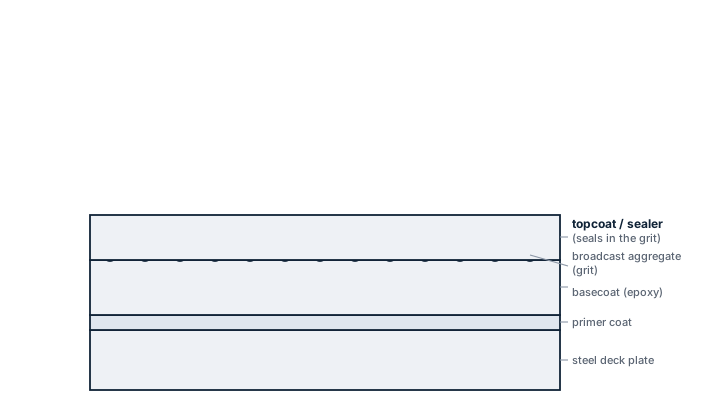
Main components of the system
Primer and tie coat
A standard anticorrosive primer system is applied first, matched to the steel preparation grade achieved on deck, since the anti-slip topcoat is only as durable as the steel and primer underneath it.
Binder coat
An epoxy or polyurethane binder is applied at a build thick enough to hold the aggregate mechanically once cured, typically several times the dry film thickness of a plain topcoat.
Aggregate
Aluminium oxide, silicon carbide or graded quartz sand is broadcast into the wet binder by hand or spray gun while it is still tacky, then the excess that did not bond is swept off once the coat has cured.
Sealer or topcoat
A thin sealer coat is often applied over the aggregate to lock the grains in place and reduce the chance of loose particles working free underfoot or embedding in bare feet and boots.
Selection criteria
Selection is driven by traffic type and exposure rather than colour: helideck coatings need a specific aggregate grade and friction value tied to helicopter operating approval, engine room floor plates need oil resistance the weather deck does not, and gangway and stair tread areas need a finer aggregate that will not tear bare skin on a barefoot crew member while still passing a slip test.
- Traffic type — foot only, wheeled trolley traffic, or helicopter operations.
- Exposure — open weather deck, engine room, or accommodation walkway.
- Aggregate grade — coarser grades give higher friction but wear footwear and clothing faster.
- Chemical exposure — oil, fuel or cargo residue calls for a chemically resistant binder, not just a hard one.
Regulations and class
Helideck coatings are assessed against friction and colour requirements tied to helicopter landing approval rather than a generic class rule, and the coating condition is checked as part of the periodic helideck inspection. On escape routes and open decks, class surveyors look at coating condition as part of the general structural and safety inspection rather than applying a dedicated anti-slip standard, so consistent maintenance history matters more than a certificate at delivery.
Typical faults
- Aggregate loss — from under-broadcasting or a binder coat applied too thin, leaving smooth patches that fail underfoot exactly where traffic is heaviest.
- Blistering — from moisture trapped under the coating on a deck that was not fully dry during application, showing up months later as bubbles that trap water and accelerate corrosion.
- Chalking and colour loss — from UV exposure on an epoxy binder not intended for topside use, which also signals the binder is losing hardness and grip.
- Edge lifting at deck fittings — from inadequate surface preparation around bolted equipment, giving water a path under the coating.
What to look for in a supplier
- A documented friction test result for the specific aggregate and broadcast rate proposed, not a generic product datasheet figure.
- Helideck approval documentation if the coating is intended for that area.
- Compatibility confirmation with the existing primer system if this is a partial recoat rather than a full strip.
- Recommended surface preparation standard and minimum recoat interval in writing.
Never judge an anti-slip deck by eye from a dry inspection — walk it wet in deck boots, because that is the only test that matches how it will actually be used.