What to check on a Antifouling Coating (Underwater).
Antifouling is applied over an anticorrosive primer system and is the only coat in the underwater package designed to actively resist marine growth rather than just protect steel. Two working principles dominate: biocide-release coatings (self-polishing copolymer or controlled-depletion types) that wear away at a controlled rate, exposing fresh biocide as the outer layer erodes, and fouling-release coatings (silicone or fluoropolymer) that carry no biocide and instead present a low-friction, low-adhesion surface that sheds growth once the ship reaches a few knots. The choice between the two is a trading-pattern decision…
What makes antifouling different from other hull coatings
Antifouling is applied over an anticorrosive primer system and is the only coat in the underwater package designed to actively resist marine growth rather than just protect steel. Two working principles dominate: biocide-release coatings (self-polishing copolymer or controlled-depletion types) that wear away at a controlled rate, exposing fresh biocide as the outer layer erodes, and fouling-release coatings (silicone or fluoropolymer) that carry no biocide and instead present a low-friction, low-adhesion surface that sheds growth once the ship reaches a few knots. The choice between the two is a trading-pattern decision as much as a technical one.
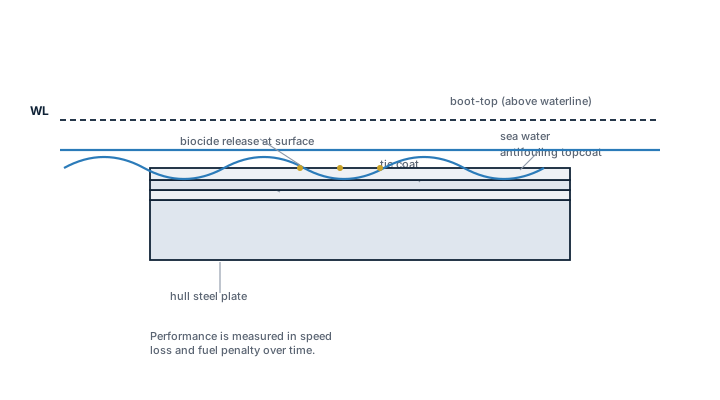
Main components of the underwater system
Anticorrosive primer
Epoxy-based coats that isolate the steel from seawater and provide adhesion for the layers above; applied to a specified dry film thickness after abrasive blasting to a defined surface cleanliness standard.
Tie coat
Used mainly under fouling-release systems, this intermediate layer bonds the silicone topcoat to the anticorrosive system, since silicone does not adhere reliably to epoxy on its own.
Antifouling topcoat
The active layer, applied in one or more coats to a total dry film thickness set by the intended docking interval, typically 60 to 90 months for modern self-polishing systems.
Boot top and niche area coatings
Separate formulations cover the waterline, sea chests, thruster tunnels and rudder - areas with different exposure and flow conditions that plain hull antifouling does not always suit.
Selection and sizing
Selection is driven by trading pattern (idle time alongside versus continuous steaming speed), intended docking interval, hull colour requirements, and local biocide regulations in the ship's trading area. Film thickness is specified per coat and checked with a wet film gauge during application and a dry film gauge afterward; under-thickness shortens service life, over-thickness increases the risk of cracking and premature loss of biocide release control.
Regulations and class
The IMO Anti-Fouling Systems (AFS) Convention bans organotin compounds such as TBT and requires an International Anti-fouling System Certificate confirming the coating in use is compliant. Some port states and coastal jurisdictions apply additional biocide-release limits. Class does not approve the coating itself but records the underwater coating system and docking history as part of the ship's condition assessment.
Typical faults
- Application over an unready surface - insufficient blast profile or residual salt contamination causes early adhesion failure and blistering, exposing bare steel well before the next docking.
- Wrong system for the trading pattern - a self-polishing coating on a ship with long idle periods loses its polishing action and fouls at the waterline and in low-flow niche areas.
- Incompatible overcoating - applying a new antifouling type directly over an old, incompatible one causes lifting and flaking within one season.
- Cathodic protection interaction - impressed current systems set too aggressively can disbond coating near anodes, leaving unprotected patches that foul first.
- Under-thickness at edges and welds - thin film at structural edges wears through early, giving early fouling patches that spread if left untreated.
What to look for in a supplier
- A documented service history of the specific product on similar trading patterns and hull speeds, not just laboratory panel results.
- Technical support for surface preparation and application supervision during docking, since application quality decides most of the coating's real-world life.
- A written compatibility statement when overcoating an existing system from a different manufacturer.
- Compliance documentation for the AFS Convention and any additional biocide restrictions in the ship's trading region.
Speed loss and fuel penalty creep up gradually - track hull performance against a baseline curve rather than waiting for a visible fouling report to decide the next docking date.