"> Epoxy Primer - Equipment Database

Epoxy Primer

medium 558 models total

Epoxy primer cures by chemical cross-linking between a resin and a curing agent rather than by solvent evaporation, which gives it the low permeability ballast tank and hull coatings need, but also means mixing ratio, pot life and recoat window all matter more than with a single-pack paint.

Read more — Epoxy Primer explained

What Makes an Epoxy Primer Different

Epoxy primer is a two-component coating: a resin and a polyamide or amine curing agent that react chemically once mixed, cross-linking into a dense film rather than simply drying as solvent evaporates the way an alkyd primer does. That cross-linked structure is what gives it low permeability and strong adhesion to correctly prepared steel, and it is why epoxy primer is the standard choice under ballast tank, cargo hold and hull coating systems. It differs from a zinc-rich primer, which protects sacrificially rather than as a barrier, from a shop primer, a thin weldable coating meant only to protect steel during fabrication and not to serve as a system coat, and from surface-tolerant epoxy variants formulated to bond over marginal, hand-tool-cleaned steel rather than a full abrasive blast.
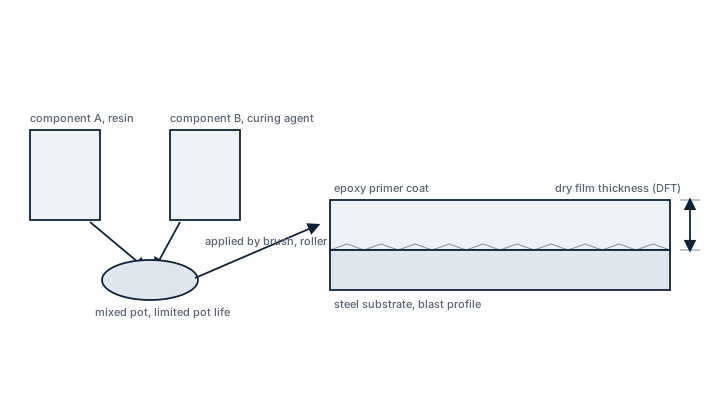
Epoxy primer, mixing and applied film
Left, the two components of an epoxy primer, resin and curing agent, combined into a mixed pot of limited pot life and applied to the surface. Right, a cross-section of the cured primer film on a blast-profiled steel substrate with its dry film thickness marked.

Main Types and Where They Are Used

  • Standard epoxy primer – applied over blast-cleaned steel for ballast tanks, cargo holds and the hull under antifouling.
  • Surface-tolerant epoxy – formulated for maintenance touch-up on rusted or pitted steel where full re-blasting is not practical.
  • Coal tar epoxy – an older formulation still found in service, though largely phased out of new construction for health and VOC reasons.
  • Contrast-shaded epoxy primer – pigmented differently from the stripe or topcoat specifically so thin spots and holidays show up during inspection.

Application and Sizing Considerations

Dry film thickness is usually targeted in the range of roughly 100 to 150 microns per coat, with extra stripe coats worked into welds and edges where the film naturally thins. Pot life once the two components are mixed is limited and shortens sharply as ambient temperature rises, so mixed quantities have to match what can actually be applied within that window. Surface preparation grade drives adhesion and service life more than almost any other variable, and there is a defined overcoating window between primer and the next coat: recoat too late and the surface needs re-abrading before the next coat will bond properly.

Regulations and Class

New vessels are covered by the IMO Performance Standard for Protective Coatings for ballast tanks and void spaces, which sets minimum dry film thickness, required surface preparation, and demands that the coating system itself be type-approved and tested against the standard, not just individually compliant products applied in any combination. Class surveyors assess coating condition and breakdown during hull and tank surveys, and the extent of coating breakdown found can directly affect how much close-up survey and thickness measurement is required.

Typical Faults

FaultConsequence
Insufficient surface preparation, residual rust or saltEarly adhesion failure and blistering
Overcoating outside the recoat window without re-abradingIntercoat delamination between primer and topcoat
Application below minimum temperature or dew point marginPoor cure, amine blush on the surface, reduced hardness
Incorrect mixing ratio or inadequate induction timeIncomplete cure, a soft or tacky film that never fully hardens
Thin film at welds and edges (edge effect)Premature corrosion starting at these high-stress points despite good flat-area coverage

What to Look for in a Supplier

  • A valid Performance Standard for Protective Coatings type-approval certificate where the product is destined for ballast tanks or void spaces.
  • A technical data sheet with dry film thickness range, pot life and recoat window matched to the yard or repair conditions expected.
  • Batch traceability and clear shelf-life and storage guidance, since epoxy components degrade if stored badly before use.
  • Field technical support for application supervision, not only product supply.

Touch-dry is not the same as fully cured; ballast tanks coated with epoxy primer should not be filled until the manufacturer's full cure time has passed, which is longer than the time it takes for the surface to stop feeling tacky.

12 manufacturers · 558 models

Jotun

108
Jotamastic 87 Standard
Type
Surface Tolerant Epoxy
Dft (µm)
200
Technical Specifications
Jotamastic 90 DFT
100 µm (Trockenfilm-Dicke)
Marathon IQ2 Maximum DFT
bis 500 µm, solidentfrei (98% Volumen)
Penguard Primer DFT
60–120 µm typisch
SeaQuantum Ultra VOC-Gehalt
Niedrig (<340 g/l); IMO AFS/CONF/26 konform
Haftungs-anforderung
≥5 MPa; ASTM D3359 Level 0–1
Salzsprühwiderstand (ASTM B117)
>1,000 hours typical; Marine Heavy-Duty 500–2,000 h
Product Lines
  • Jotamastic 90/87/80 (Epoxy Mastic Primer)
  • Marathon IQ2 (solventfrei Epoxy Topcoat)
  • Penguard Primer/HB/Universal (High-MW Epoxy Primer)
  • SeaQuantum Ultra III/S/SP (Antifouling Silyl-Acrylat)
  • SeaForce Shield/Active/Active Plus (Biozidbasierte Antifouling)
🎯 Application Area
Application data not yet recorded.
Common Failures & Inspection Points
  • Area: Unzureichende Schichtdicke (DFT) = Keine Korrosionsschutz-Garantie
    Check: Measure with coating thickness gauge (gage) per SSPC-PA2. Example: Jotamastic 90 shall be 100 µm = passed; <75 µm = rework required. Statistical sampling: minimum 20 points/m².
  • Area: Schlechte Haftung (Adhesion-Versagen) = Abblätterung/Delaminierung
    Check: Cross-Hatch-Adhäsionstest (ASTM D3359) durchführen: 6mm Rasterabstände, Klebeband aufreißen. Bewertung: Level 0 = beste Haftung (0% Verlust). Level ≥3 = Schicht-Versagen → Nacharbeiten. Alternativ: Pull-off Test >5 MPa.
  • Area: Unvollständige Aushärtung = Weiche/klebrige Oberfläche, reduzierte Härte
    Check: Pencil hardness test (ASTM D3363) perform: guide pencil at 45° angle with pressure over surface. Expected for epoxy after 7 days: ≥H (hard). Observe test duration per TDS (typically 24–48h hard-dry, 7 days full cure).
  • Area: Surface preparation non-conforming (too rough/too smooth surface) = adhesion defect
    Check: Surface roughness inspect: ISO 8501-1 grade Sa 2½ (medium roughness) or white-metal. Surface roughness: 30–85 µm (ISO 8503-2, fine–medium). Visual + surface roughness gauge (profile gauge) use.
  • Area: Holiday/Pinhole-Defekte = lokale Korrosion trotz Beschichtung
    Check: Holiday detector (spark tester for >250 µm; low-volt sponge for <500 µm) guide over entire area systematically. Defects localize and mark with red marking → must be repaired before operation.
  • Area: PSPC/IMO non-conformity = tanks fail classification (ballast/cargo)
    Check: IMO PSPC certificate of coating system inspect (ballast tank coatings, COT = cargo oil tank). Salt spray test references (ASTM B117) ≥500 hours for ballast, ≥1000–2000h for heavy marine applications inspect. Certificates: ClassNK, Lloyd's Register.

Type-universal inspection/maintenance points for paint & coating systems (Jotun, Mega-Schwarm 2026-06). Per-model specs not auto-filled.

Jotamastic 90 Hi-Build
Type
Hi-Build Epoxy
Dft (µm)
350
Technical Specifications
Jotamastic 90 DFT
100 µm (Trockenfilm-Dicke)
Marathon IQ2 Maximum DFT
bis 500 µm, solidentfrei (98% Volumen)
Penguard Primer DFT
60–120 µm typisch
SeaQuantum Ultra VOC-Gehalt
Niedrig (<340 g/l); IMO AFS/CONF/26 konform
Haftungs-anforderung
≥5 MPa; ASTM D3359 Level 0–1
Salzsprühwiderstand (ASTM B117)
>1,000 hours typical; Marine Heavy-Duty 500–2,000 h
Product Lines
  • Jotamastic 90/87/80 (Epoxy Mastic Primer)
  • Marathon IQ2 (solventfrei Epoxy Topcoat)
  • Penguard Primer/HB/Universal (High-MW Epoxy Primer)
  • SeaQuantum Ultra III/S/SP (Antifouling Silyl-Acrylat)
  • SeaForce Shield/Active/Active Plus (Biozidbasierte Antifouling)
🎯 Application Area
Application data not yet recorded.
Common Failures & Inspection Points
  • Area: Unzureichende Schichtdicke (DFT) = Keine Korrosionsschutz-Garantie
    Check: Measure with coating thickness gauge (gage) per SSPC-PA2. Example: Jotamastic 90 shall be 100 µm = passed; <75 µm = rework required. Statistical sampling: minimum 20 points/m².
  • Area: Schlechte Haftung (Adhesion-Versagen) = Abblätterung/Delaminierung
    Check: Cross-Hatch-Adhäsionstest (ASTM D3359) durchführen: 6mm Rasterabstände, Klebeband aufreißen. Bewertung: Level 0 = beste Haftung (0% Verlust). Level ≥3 = Schicht-Versagen → Nacharbeiten. Alternativ: Pull-off Test >5 MPa.
  • Area: Unvollständige Aushärtung = Weiche/klebrige Oberfläche, reduzierte Härte
    Check: Pencil hardness test (ASTM D3363) perform: guide pencil at 45° angle with pressure over surface. Expected for epoxy after 7 days: ≥H (hard). Observe test duration per TDS (typically 24–48h hard-dry, 7 days full cure).
  • Area: Surface preparation non-conforming (too rough/too smooth surface) = adhesion defect
    Check: Surface roughness inspect: ISO 8501-1 grade Sa 2½ (medium roughness) or white-metal. Surface roughness: 30–85 µm (ISO 8503-2, fine–medium). Visual + surface roughness gauge (profile gauge) use.
  • Area: Holiday/Pinhole-Defekte = lokale Korrosion trotz Beschichtung
    Check: Holiday detector (spark tester for >250 µm; low-volt sponge for <500 µm) guide over entire area systematically. Defects localize and mark with red marking → must be repaired before operation.
  • Area: PSPC/IMO non-conformity = tanks fail classification (ballast/cargo)
    Check: IMO PSPC certificate of coating system inspect (ballast tank coatings, COT = cargo oil tank). Salt spray test references (ASTM B117) ≥500 hours for ballast, ≥1000–2000h for heavy marine applications inspect. Certificates: ClassNK, Lloyd's Register.

Type-universal inspection/maintenance points for paint & coating systems (Jotun, Mega-Schwarm 2026-06). Per-model specs not auto-filled.

Jotun Jotamastic Smart Pack
Jotamastic Smart Pack
Type
Epoxy Mastic
Dft (µm)
200
Technical Specifications
Jotamastic 90 DFT
100 µm (Trockenfilm-Dicke)
Marathon IQ2 Maximum DFT
bis 500 µm, solidentfrei (98% Volumen)
Penguard Primer DFT
60–120 µm typisch
SeaQuantum Ultra VOC-Gehalt
Niedrig (<340 g/l); IMO AFS/CONF/26 konform
Haftungs-anforderung
≥5 MPa; ASTM D3359 Level 0–1
Salzsprühwiderstand (ASTM B117)
>1,000 hours typical; Marine Heavy-Duty 500–2,000 h
Product Lines
  • Jotamastic 90/87/80 (Epoxy Mastic Primer)
  • Marathon IQ2 (solventfrei Epoxy Topcoat)
  • Penguard Primer/HB/Universal (High-MW Epoxy Primer)
  • SeaQuantum Ultra III/S/SP (Antifouling Silyl-Acrylat)
  • SeaForce Shield/Active/Active Plus (Biozidbasierte Antifouling)
🎯 Application Area
Application data not yet recorded.
Common Failures & Inspection Points
  • Area: Unzureichende Schichtdicke (DFT) = Keine Korrosionsschutz-Garantie
    Check: Measure with coating thickness gauge (gage) per SSPC-PA2. Example: Jotamastic 90 shall be 100 µm = passed; <75 µm = rework required. Statistical sampling: minimum 20 points/m².
  • Area: Schlechte Haftung (Adhesion-Versagen) = Abblätterung/Delaminierung
    Check: Cross-Hatch-Adhäsionstest (ASTM D3359) durchführen: 6mm Rasterabstände, Klebeband aufreißen. Bewertung: Level 0 = beste Haftung (0% Verlust). Level ≥3 = Schicht-Versagen → Nacharbeiten. Alternativ: Pull-off Test >5 MPa.
  • Area: Unvollständige Aushärtung = Weiche/klebrige Oberfläche, reduzierte Härte
    Check: Pencil hardness test (ASTM D3363) perform: guide pencil at 45° angle with pressure over surface. Expected for epoxy after 7 days: ≥H (hard). Observe test duration per TDS (typically 24–48h hard-dry, 7 days full cure).
  • Area: Surface preparation non-conforming (too rough/too smooth surface) = adhesion defect
    Check: Surface roughness inspect: ISO 8501-1 grade Sa 2½ (medium roughness) or white-metal. Surface roughness: 30–85 µm (ISO 8503-2, fine–medium). Visual + surface roughness gauge (profile gauge) use.
  • Area: Holiday/Pinhole-Defekte = lokale Korrosion trotz Beschichtung
    Check: Holiday detector (spark tester for >250 µm; low-volt sponge for <500 µm) guide over entire area systematically. Defects localize and mark with red marking → must be repaired before operation.
  • Area: PSPC/IMO non-conformity = tanks fail classification (ballast/cargo)
    Check: IMO PSPC certificate of coating system inspect (ballast tank coatings, COT = cargo oil tank). Salt spray test references (ASTM B117) ≥500 hours for ballast, ≥1000–2000h for heavy marine applications inspect. Certificates: ClassNK, Lloyd's Register.

Type-universal inspection/maintenance points for paint & coating systems (Jotun, Mega-Schwarm 2026-06). Per-model specs not auto-filled.

Penguard Express
Type
Fast-Drying Epoxy Primer
Dft (µm)
150
Technical Specifications
Jotamastic 90 DFT
100 µm (Trockenfilm-Dicke)
Marathon IQ2 Maximum DFT
bis 500 µm, solidentfrei (98% Volumen)
Penguard Primer DFT
60–120 µm typisch
SeaQuantum Ultra VOC-Gehalt
Niedrig (<340 g/l); IMO AFS/CONF/26 konform
Haftungs-anforderung
≥5 MPa; ASTM D3359 Level 0–1
Salzsprühwiderstand (ASTM B117)
>1,000 hours typical; Marine Heavy-Duty 500–2,000 h
Product Lines
  • Jotamastic 90/87/80 (Epoxy Mastic Primer)
  • Marathon IQ2 (solventfrei Epoxy Topcoat)
  • Penguard Primer/HB/Universal (High-MW Epoxy Primer)
  • SeaQuantum Ultra III/S/SP (Antifouling Silyl-Acrylat)
  • SeaForce Shield/Active/Active Plus (Biozidbasierte Antifouling)
🎯 Application Area
Application data not yet recorded.
Common Failures & Inspection Points
  • Area: Unzureichende Schichtdicke (DFT) = Keine Korrosionsschutz-Garantie
    Check: Measure with coating thickness gauge (gage) per SSPC-PA2. Example: Jotamastic 90 shall be 100 µm = passed; <75 µm = rework required. Statistical sampling: minimum 20 points/m².
  • Area: Schlechte Haftung (Adhesion-Versagen) = Abblätterung/Delaminierung
    Check: Cross-Hatch-Adhäsionstest (ASTM D3359) durchführen: 6mm Rasterabstände, Klebeband aufreißen. Bewertung: Level 0 = beste Haftung (0% Verlust). Level ≥3 = Schicht-Versagen → Nacharbeiten. Alternativ: Pull-off Test >5 MPa.
  • Area: Unvollständige Aushärtung = Weiche/klebrige Oberfläche, reduzierte Härte
    Check: Pencil hardness test (ASTM D3363) perform: guide pencil at 45° angle with pressure over surface. Expected for epoxy after 7 days: ≥H (hard). Observe test duration per TDS (typically 24–48h hard-dry, 7 days full cure).
  • Area: Surface preparation non-conforming (too rough/too smooth surface) = adhesion defect
    Check: Surface roughness inspect: ISO 8501-1 grade Sa 2½ (medium roughness) or white-metal. Surface roughness: 30–85 µm (ISO 8503-2, fine–medium). Visual + surface roughness gauge (profile gauge) use.
  • Area: Holiday/Pinhole-Defekte = lokale Korrosion trotz Beschichtung
    Check: Holiday detector (spark tester for >250 µm; low-volt sponge for <500 µm) guide over entire area systematically. Defects localize and mark with red marking → must be repaired before operation.
  • Area: PSPC/IMO non-conformity = tanks fail classification (ballast/cargo)
    Check: IMO PSPC certificate of coating system inspect (ballast tank coatings, COT = cargo oil tank). Salt spray test references (ASTM B117) ≥500 hours for ballast, ≥1000–2000h for heavy marine applications inspect. Certificates: ClassNK, Lloyd's Register.

Type-universal inspection/maintenance points for paint & coating systems (Jotun, Mega-Schwarm 2026-06). Per-model specs not auto-filled.

Penguard HB
Type
Hi-Build Epoxy Primer
Dft (µm)
250
Technical Specifications
Jotamastic 90 DFT
100 µm (Trockenfilm-Dicke)
Marathon IQ2 Maximum DFT
bis 500 µm, solidentfrei (98% Volumen)
Penguard Primer DFT
60–120 µm typisch
SeaQuantum Ultra VOC-Gehalt
Niedrig (<340 g/l); IMO AFS/CONF/26 konform
Haftungs-anforderung
≥5 MPa; ASTM D3359 Level 0–1
Salzsprühwiderstand (ASTM B117)
>1,000 hours typical; Marine Heavy-Duty 500–2,000 h
Product Lines
  • Jotamastic 90/87/80 (Epoxy Mastic Primer)
  • Marathon IQ2 (solventfrei Epoxy Topcoat)
  • Penguard Primer/HB/Universal (High-MW Epoxy Primer)
  • SeaQuantum Ultra III/S/SP (Antifouling Silyl-Acrylat)
  • SeaForce Shield/Active/Active Plus (Biozidbasierte Antifouling)
🎯 Application Area
Application data not yet recorded.
Common Failures & Inspection Points
  • Area: Unzureichende Schichtdicke (DFT) = Keine Korrosionsschutz-Garantie
    Check: Measure with coating thickness gauge (gage) per SSPC-PA2. Example: Jotamastic 90 shall be 100 µm = passed; <75 µm = rework required. Statistical sampling: minimum 20 points/m².
  • Area: Schlechte Haftung (Adhesion-Versagen) = Abblätterung/Delaminierung
    Check: Cross-Hatch-Adhäsionstest (ASTM D3359) durchführen: 6mm Rasterabstände, Klebeband aufreißen. Bewertung: Level 0 = beste Haftung (0% Verlust). Level ≥3 = Schicht-Versagen → Nacharbeiten. Alternativ: Pull-off Test >5 MPa.
  • Area: Unvollständige Aushärtung = Weiche/klebrige Oberfläche, reduzierte Härte
    Check: Pencil hardness test (ASTM D3363) perform: guide pencil at 45° angle with pressure over surface. Expected for epoxy after 7 days: ≥H (hard). Observe test duration per TDS (typically 24–48h hard-dry, 7 days full cure).
  • Area: Surface preparation non-conforming (too rough/too smooth surface) = adhesion defect
    Check: Surface roughness inspect: ISO 8501-1 grade Sa 2½ (medium roughness) or white-metal. Surface roughness: 30–85 µm (ISO 8503-2, fine–medium). Visual + surface roughness gauge (profile gauge) use.
  • Area: Holiday/Pinhole-Defekte = lokale Korrosion trotz Beschichtung
    Check: Holiday detector (spark tester for >250 µm; low-volt sponge for <500 µm) guide over entire area systematically. Defects localize and mark with red marking → must be repaired before operation.
  • Area: PSPC/IMO non-conformity = tanks fail classification (ballast/cargo)
    Check: IMO PSPC certificate of coating system inspect (ballast tank coatings, COT = cargo oil tank). Salt spray test references (ASTM B117) ≥500 hours for ballast, ≥1000–2000h for heavy marine applications inspect. Certificates: ClassNK, Lloyd's Register.

Type-universal inspection/maintenance points for paint & coating systems (Jotun, Mega-Schwarm 2026-06). Per-model specs not auto-filled.

Penguard Primer
Type
Epoxy Primer
Dft (µm)
100
Technical Specifications
Jotamastic 90 DFT
100 µm (Trockenfilm-Dicke)
Marathon IQ2 Maximum DFT
bis 500 µm, solidentfrei (98% Volumen)
Penguard Primer DFT
60–120 µm typisch
SeaQuantum Ultra VOC-Gehalt
Niedrig (<340 g/l); IMO AFS/CONF/26 konform
Haftungs-anforderung
≥5 MPa; ASTM D3359 Level 0–1
Salzsprühwiderstand (ASTM B117)
>1,000 hours typical; Marine Heavy-Duty 500–2,000 h
Product Lines
  • Jotamastic 90/87/80 (Epoxy Mastic Primer)
  • Marathon IQ2 (solventfrei Epoxy Topcoat)
  • Penguard Primer/HB/Universal (High-MW Epoxy Primer)
  • SeaQuantum Ultra III/S/SP (Antifouling Silyl-Acrylat)
  • SeaForce Shield/Active/Active Plus (Biozidbasierte Antifouling)
🎯 Application Area
Application data not yet recorded.
Common Failures & Inspection Points
  • Area: Unzureichende Schichtdicke (DFT) = Keine Korrosionsschutz-Garantie
    Check: Measure with coating thickness gauge (gage) per SSPC-PA2. Example: Jotamastic 90 shall be 100 µm = passed; <75 µm = rework required. Statistical sampling: minimum 20 points/m².
  • Area: Schlechte Haftung (Adhesion-Versagen) = Abblätterung/Delaminierung
    Check: Cross-Hatch-Adhäsionstest (ASTM D3359) durchführen: 6mm Rasterabstände, Klebeband aufreißen. Bewertung: Level 0 = beste Haftung (0% Verlust). Level ≥3 = Schicht-Versagen → Nacharbeiten. Alternativ: Pull-off Test >5 MPa.
  • Area: Unvollständige Aushärtung = Weiche/klebrige Oberfläche, reduzierte Härte
    Check: Pencil hardness test (ASTM D3363) perform: guide pencil at 45° angle with pressure over surface. Expected for epoxy after 7 days: ≥H (hard). Observe test duration per TDS (typically 24–48h hard-dry, 7 days full cure).
  • Area: Surface preparation non-conforming (too rough/too smooth surface) = adhesion defect
    Check: Surface roughness inspect: ISO 8501-1 grade Sa 2½ (medium roughness) or white-metal. Surface roughness: 30–85 µm (ISO 8503-2, fine–medium). Visual + surface roughness gauge (profile gauge) use.
  • Area: Holiday/Pinhole-Defekte = lokale Korrosion trotz Beschichtung
    Check: Holiday detector (spark tester for >250 µm; low-volt sponge for <500 µm) guide over entire area systematically. Defects localize and mark with red marking → must be repaired before operation.
  • Area: PSPC/IMO non-conformity = tanks fail classification (ballast/cargo)
    Check: IMO PSPC certificate of coating system inspect (ballast tank coatings, COT = cargo oil tank). Salt spray test references (ASTM B117) ≥500 hours for ballast, ≥1000–2000h for heavy marine applications inspect. Certificates: ClassNK, Lloyd's Register.

Type-universal inspection/maintenance points for paint & coating systems (Jotun, Mega-Schwarm 2026-06). Per-model specs not auto-filled.

Jotacote Universal Shop Primer
Type
Shop Primer
Zinc rich
ja
Technical Specifications
Jotamastic 90 DFT
100 µm (Trockenfilm-Dicke)
Marathon IQ2 Maximum DFT
bis 500 µm, solidentfrei (98% Volumen)
Penguard Primer DFT
60–120 µm typisch
SeaQuantum Ultra VOC-Gehalt
Niedrig (<340 g/l); IMO AFS/CONF/26 konform
Haftungs-anforderung
≥5 MPa; ASTM D3359 Level 0–1
Salzsprühwiderstand (ASTM B117)
>1,000 hours typical; Marine Heavy-Duty 500–2,000 h
Product Lines
  • Jotamastic 90/87/80 (Epoxy Mastic Primer)
  • Marathon IQ2 (solventfrei Epoxy Topcoat)
  • Penguard Primer/HB/Universal (High-MW Epoxy Primer)
  • SeaQuantum Ultra III/S/SP (Antifouling Silyl-Acrylat)
  • SeaForce Shield/Active/Active Plus (Biozidbasierte Antifouling)
🎯 Application Area
Application data not yet recorded.
Common Failures & Inspection Points
  • Area: Unzureichende Schichtdicke (DFT) = Keine Korrosionsschutz-Garantie
    Check: Measure with coating thickness gauge (gage) per SSPC-PA2. Example: Jotamastic 90 shall be 100 µm = passed; <75 µm = rework required. Statistical sampling: minimum 20 points/m².
  • Area: Schlechte Haftung (Adhesion-Versagen) = Abblätterung/Delaminierung
    Check: Cross-Hatch-Adhäsionstest (ASTM D3359) durchführen: 6mm Rasterabstände, Klebeband aufreißen. Bewertung: Level 0 = beste Haftung (0% Verlust). Level ≥3 = Schicht-Versagen → Nacharbeiten. Alternativ: Pull-off Test >5 MPa.
  • Area: Unvollständige Aushärtung = Weiche/klebrige Oberfläche, reduzierte Härte
    Check: Pencil hardness test (ASTM D3363) perform: guide pencil at 45° angle with pressure over surface. Expected for epoxy after 7 days: ≥H (hard). Observe test duration per TDS (typically 24–48h hard-dry, 7 days full cure).
  • Area: Surface preparation non-conforming (too rough/too smooth surface) = adhesion defect
    Check: Surface roughness inspect: ISO 8501-1 grade Sa 2½ (medium roughness) or white-metal. Surface roughness: 30–85 µm (ISO 8503-2, fine–medium). Visual + surface roughness gauge (profile gauge) use.
  • Area: Holiday/Pinhole-Defekte = lokale Korrosion trotz Beschichtung
    Check: Holiday detector (spark tester for >250 µm; low-volt sponge for <500 µm) guide over entire area systematically. Defects localize and mark with red marking → must be repaired before operation.
  • Area: PSPC/IMO non-conformity = tanks fail classification (ballast/cargo)
    Check: IMO PSPC certificate of coating system inspect (ballast tank coatings, COT = cargo oil tank). Salt spray test references (ASTM B117) ≥500 hours for ballast, ≥1000–2000h for heavy marine applications inspect. Certificates: ClassNK, Lloyd's Register.

Type-universal inspection/maintenance points for paint & coating systems (Jotun, Mega-Schwarm 2026-06). Per-model specs not auto-filled.

Penguard HB 100µm
Dft (µm)
100
Technical Specifications
Jotamastic 90 DFT
100 µm (Trockenfilm-Dicke)
Marathon IQ2 Maximum DFT
bis 500 µm, solidentfrei (98% Volumen)
Penguard Primer DFT
60–120 µm typisch
SeaQuantum Ultra VOC-Gehalt
Niedrig (<340 g/l); IMO AFS/CONF/26 konform
Haftungs-anforderung
≥5 MPa; ASTM D3359 Level 0–1
Salzsprühwiderstand (ASTM B117)
>1,000 hours typical; Marine Heavy-Duty 500–2,000 h
Product Lines
  • Jotamastic 90/87/80 (Epoxy Mastic Primer)
  • Marathon IQ2 (solventfrei Epoxy Topcoat)
  • Penguard Primer/HB/Universal (High-MW Epoxy Primer)
  • SeaQuantum Ultra III/S/SP (Antifouling Silyl-Acrylat)
  • SeaForce Shield/Active/Active Plus (Biozidbasierte Antifouling)
🎯 Application Area
Application data not yet recorded.
Common Failures & Inspection Points
  • Area: Unzureichende Schichtdicke (DFT) = Keine Korrosionsschutz-Garantie
    Check: Measure with coating thickness gauge (gage) per SSPC-PA2. Example: Jotamastic 90 shall be 100 µm = passed; <75 µm = rework required. Statistical sampling: minimum 20 points/m².
  • Area: Schlechte Haftung (Adhesion-Versagen) = Abblätterung/Delaminierung
    Check: Cross-Hatch-Adhäsionstest (ASTM D3359) durchführen: 6mm Rasterabstände, Klebeband aufreißen. Bewertung: Level 0 = beste Haftung (0% Verlust). Level ≥3 = Schicht-Versagen → Nacharbeiten. Alternativ: Pull-off Test >5 MPa.
  • Area: Unvollständige Aushärtung = Weiche/klebrige Oberfläche, reduzierte Härte
    Check: Pencil hardness test (ASTM D3363) perform: guide pencil at 45° angle with pressure over surface. Expected for epoxy after 7 days: ≥H (hard). Observe test duration per TDS (typically 24–48h hard-dry, 7 days full cure).
  • Area: Surface preparation non-conforming (too rough/too smooth surface) = adhesion defect
    Check: Surface roughness inspect: ISO 8501-1 grade Sa 2½ (medium roughness) or white-metal. Surface roughness: 30–85 µm (ISO 8503-2, fine–medium). Visual + surface roughness gauge (profile gauge) use.
  • Area: Holiday/Pinhole-Defekte = lokale Korrosion trotz Beschichtung
    Check: Holiday detector (spark tester for >250 µm; low-volt sponge for <500 µm) guide over entire area systematically. Defects localize and mark with red marking → must be repaired before operation.
  • Area: PSPC/IMO non-conformity = tanks fail classification (ballast/cargo)
    Check: IMO PSPC certificate of coating system inspect (ballast tank coatings, COT = cargo oil tank). Salt spray test references (ASTM B117) ≥500 hours for ballast, ≥1000–2000h for heavy marine applications inspect. Certificates: ClassNK, Lloyd's Register.

Type-universal inspection/maintenance points for paint & coating systems (Jotun, Mega-Schwarm 2026-06). Per-model specs not auto-filled.

Penguard HB 150µm
Dft (µm)
150
Technical Specifications
Jotamastic 90 DFT
100 µm (Trockenfilm-Dicke)
Marathon IQ2 Maximum DFT
bis 500 µm, solidentfrei (98% Volumen)
Penguard Primer DFT
60–120 µm typisch
SeaQuantum Ultra VOC-Gehalt
Niedrig (<340 g/l); IMO AFS/CONF/26 konform
Haftungs-anforderung
≥5 MPa; ASTM D3359 Level 0–1
Salzsprühwiderstand (ASTM B117)
>1,000 hours typical; Marine Heavy-Duty 500–2,000 h
Product Lines
  • Jotamastic 90/87/80 (Epoxy Mastic Primer)
  • Marathon IQ2 (solventfrei Epoxy Topcoat)
  • Penguard Primer/HB/Universal (High-MW Epoxy Primer)
  • SeaQuantum Ultra III/S/SP (Antifouling Silyl-Acrylat)
  • SeaForce Shield/Active/Active Plus (Biozidbasierte Antifouling)
🎯 Application Area
Application data not yet recorded.
Common Failures & Inspection Points
  • Area: Unzureichende Schichtdicke (DFT) = Keine Korrosionsschutz-Garantie
    Check: Measure with coating thickness gauge (gage) per SSPC-PA2. Example: Jotamastic 90 shall be 100 µm = passed; <75 µm = rework required. Statistical sampling: minimum 20 points/m².
  • Area: Schlechte Haftung (Adhesion-Versagen) = Abblätterung/Delaminierung
    Check: Cross-Hatch-Adhäsionstest (ASTM D3359) durchführen: 6mm Rasterabstände, Klebeband aufreißen. Bewertung: Level 0 = beste Haftung (0% Verlust). Level ≥3 = Schicht-Versagen → Nacharbeiten. Alternativ: Pull-off Test >5 MPa.
  • Area: Unvollständige Aushärtung = Weiche/klebrige Oberfläche, reduzierte Härte
    Check: Pencil hardness test (ASTM D3363) perform: guide pencil at 45° angle with pressure over surface. Expected for epoxy after 7 days: ≥H (hard). Observe test duration per TDS (typically 24–48h hard-dry, 7 days full cure).
  • Area: Surface preparation non-conforming (too rough/too smooth surface) = adhesion defect
    Check: Surface roughness inspect: ISO 8501-1 grade Sa 2½ (medium roughness) or white-metal. Surface roughness: 30–85 µm (ISO 8503-2, fine–medium). Visual + surface roughness gauge (profile gauge) use.
  • Area: Holiday/Pinhole-Defekte = lokale Korrosion trotz Beschichtung
    Check: Holiday detector (spark tester for >250 µm; low-volt sponge for <500 µm) guide over entire area systematically. Defects localize and mark with red marking → must be repaired before operation.
  • Area: PSPC/IMO non-conformity = tanks fail classification (ballast/cargo)
    Check: IMO PSPC certificate of coating system inspect (ballast tank coatings, COT = cargo oil tank). Salt spray test references (ASTM B117) ≥500 hours for ballast, ≥1000–2000h for heavy marine applications inspect. Certificates: ClassNK, Lloyd's Register.

Type-universal inspection/maintenance points for paint & coating systems (Jotun, Mega-Schwarm 2026-06). Per-model specs not auto-filled.

Penguard HB 200µm
Dft (µm)
200
Technical Specifications
Jotamastic 90 DFT
100 µm (Trockenfilm-Dicke)
Marathon IQ2 Maximum DFT
bis 500 µm, solidentfrei (98% Volumen)
Penguard Primer DFT
60–120 µm typisch
SeaQuantum Ultra VOC-Gehalt
Niedrig (<340 g/l); IMO AFS/CONF/26 konform
Haftungs-anforderung
≥5 MPa; ASTM D3359 Level 0–1
Salzsprühwiderstand (ASTM B117)
>1,000 hours typical; Marine Heavy-Duty 500–2,000 h
Product Lines
  • Jotamastic 90/87/80 (Epoxy Mastic Primer)
  • Marathon IQ2 (solventfrei Epoxy Topcoat)
  • Penguard Primer/HB/Universal (High-MW Epoxy Primer)
  • SeaQuantum Ultra III/S/SP (Antifouling Silyl-Acrylat)
  • SeaForce Shield/Active/Active Plus (Biozidbasierte Antifouling)
🎯 Application Area
Application data not yet recorded.
Common Failures & Inspection Points
  • Area: Unzureichende Schichtdicke (DFT) = Keine Korrosionsschutz-Garantie
    Check: Measure with coating thickness gauge (gage) per SSPC-PA2. Example: Jotamastic 90 shall be 100 µm = passed; <75 µm = rework required. Statistical sampling: minimum 20 points/m².
  • Area: Schlechte Haftung (Adhesion-Versagen) = Abblätterung/Delaminierung
    Check: Cross-Hatch-Adhäsionstest (ASTM D3359) durchführen: 6mm Rasterabstände, Klebeband aufreißen. Bewertung: Level 0 = beste Haftung (0% Verlust). Level ≥3 = Schicht-Versagen → Nacharbeiten. Alternativ: Pull-off Test >5 MPa.
  • Area: Unvollständige Aushärtung = Weiche/klebrige Oberfläche, reduzierte Härte
    Check: Pencil hardness test (ASTM D3363) perform: guide pencil at 45° angle with pressure over surface. Expected for epoxy after 7 days: ≥H (hard). Observe test duration per TDS (typically 24–48h hard-dry, 7 days full cure).
  • Area: Surface preparation non-conforming (too rough/too smooth surface) = adhesion defect
    Check: Surface roughness inspect: ISO 8501-1 grade Sa 2½ (medium roughness) or white-metal. Surface roughness: 30–85 µm (ISO 8503-2, fine–medium). Visual + surface roughness gauge (profile gauge) use.
  • Area: Holiday/Pinhole-Defekte = lokale Korrosion trotz Beschichtung
    Check: Holiday detector (spark tester for >250 µm; low-volt sponge for <500 µm) guide over entire area systematically. Defects localize and mark with red marking → must be repaired before operation.
  • Area: PSPC/IMO non-conformity = tanks fail classification (ballast/cargo)
    Check: IMO PSPC certificate of coating system inspect (ballast tank coatings, COT = cargo oil tank). Salt spray test references (ASTM B117) ≥500 hours for ballast, ≥1000–2000h for heavy marine applications inspect. Certificates: ClassNK, Lloyd's Register.

Type-universal inspection/maintenance points for paint & coating systems (Jotun, Mega-Schwarm 2026-06). Per-model specs not auto-filled.

Penguard HB 250µm
Dft (µm)
250
Technical Specifications
Jotamastic 90 DFT
100 µm (Trockenfilm-Dicke)
Marathon IQ2 Maximum DFT
bis 500 µm, solidentfrei (98% Volumen)
Penguard Primer DFT
60–120 µm typisch
SeaQuantum Ultra VOC-Gehalt
Niedrig (<340 g/l); IMO AFS/CONF/26 konform
Haftungs-anforderung
≥5 MPa; ASTM D3359 Level 0–1
Salzsprühwiderstand (ASTM B117)
>1,000 hours typical; Marine Heavy-Duty 500–2,000 h
Product Lines
  • Jotamastic 90/87/80 (Epoxy Mastic Primer)
  • Marathon IQ2 (solventfrei Epoxy Topcoat)
  • Penguard Primer/HB/Universal (High-MW Epoxy Primer)
  • SeaQuantum Ultra III/S/SP (Antifouling Silyl-Acrylat)
  • SeaForce Shield/Active/Active Plus (Biozidbasierte Antifouling)
🎯 Application Area
Application data not yet recorded.
Common Failures & Inspection Points
  • Area: Unzureichende Schichtdicke (DFT) = Keine Korrosionsschutz-Garantie
    Check: Measure with coating thickness gauge (gage) per SSPC-PA2. Example: Jotamastic 90 shall be 100 µm = passed; <75 µm = rework required. Statistical sampling: minimum 20 points/m².
  • Area: Schlechte Haftung (Adhesion-Versagen) = Abblätterung/Delaminierung
    Check: Cross-Hatch-Adhäsionstest (ASTM D3359) durchführen: 6mm Rasterabstände, Klebeband aufreißen. Bewertung: Level 0 = beste Haftung (0% Verlust). Level ≥3 = Schicht-Versagen → Nacharbeiten. Alternativ: Pull-off Test >5 MPa.
  • Area: Unvollständige Aushärtung = Weiche/klebrige Oberfläche, reduzierte Härte
    Check: Pencil hardness test (ASTM D3363) perform: guide pencil at 45° angle with pressure over surface. Expected for epoxy after 7 days: ≥H (hard). Observe test duration per TDS (typically 24–48h hard-dry, 7 days full cure).
  • Area: Surface preparation non-conforming (too rough/too smooth surface) = adhesion defect
    Check: Surface roughness inspect: ISO 8501-1 grade Sa 2½ (medium roughness) or white-metal. Surface roughness: 30–85 µm (ISO 8503-2, fine–medium). Visual + surface roughness gauge (profile gauge) use.
  • Area: Holiday/Pinhole-Defekte = lokale Korrosion trotz Beschichtung
    Check: Holiday detector (spark tester for >250 µm; low-volt sponge for <500 µm) guide over entire area systematically. Defects localize and mark with red marking → must be repaired before operation.
  • Area: PSPC/IMO non-conformity = tanks fail classification (ballast/cargo)
    Check: IMO PSPC certificate of coating system inspect (ballast tank coatings, COT = cargo oil tank). Salt spray test references (ASTM B117) ≥500 hours for ballast, ≥1000–2000h for heavy marine applications inspect. Certificates: ClassNK, Lloyd's Register.

Type-universal inspection/maintenance points for paint & coating systems (Jotun, Mega-Schwarm 2026-06). Per-model specs not auto-filled.

Penguard HB 300µm
Dft (µm)
300
Technical Specifications
Jotamastic 90 DFT
100 µm (Trockenfilm-Dicke)
Marathon IQ2 Maximum DFT
bis 500 µm, solidentfrei (98% Volumen)
Penguard Primer DFT
60–120 µm typisch
SeaQuantum Ultra VOC-Gehalt
Niedrig (<340 g/l); IMO AFS/CONF/26 konform
Haftungs-anforderung
≥5 MPa; ASTM D3359 Level 0–1
Salzsprühwiderstand (ASTM B117)
>1,000 hours typical; Marine Heavy-Duty 500–2,000 h
Product Lines
  • Jotamastic 90/87/80 (Epoxy Mastic Primer)
  • Marathon IQ2 (solventfrei Epoxy Topcoat)
  • Penguard Primer/HB/Universal (High-MW Epoxy Primer)
  • SeaQuantum Ultra III/S/SP (Antifouling Silyl-Acrylat)
  • SeaForce Shield/Active/Active Plus (Biozidbasierte Antifouling)
🎯 Application Area
Application data not yet recorded.
Common Failures & Inspection Points
  • Area: Unzureichende Schichtdicke (DFT) = Keine Korrosionsschutz-Garantie
    Check: Measure with coating thickness gauge (gage) per SSPC-PA2. Example: Jotamastic 90 shall be 100 µm = passed; <75 µm = rework required. Statistical sampling: minimum 20 points/m².
  • Area: Schlechte Haftung (Adhesion-Versagen) = Abblätterung/Delaminierung
    Check: Cross-Hatch-Adhäsionstest (ASTM D3359) durchführen: 6mm Rasterabstände, Klebeband aufreißen. Bewertung: Level 0 = beste Haftung (0% Verlust). Level ≥3 = Schicht-Versagen → Nacharbeiten. Alternativ: Pull-off Test >5 MPa.
  • Area: Unvollständige Aushärtung = Weiche/klebrige Oberfläche, reduzierte Härte
    Check: Pencil hardness test (ASTM D3363) perform: guide pencil at 45° angle with pressure over surface. Expected for epoxy after 7 days: ≥H (hard). Observe test duration per TDS (typically 24–48h hard-dry, 7 days full cure).
  • Area: Surface preparation non-conforming (too rough/too smooth surface) = adhesion defect
    Check: Surface roughness inspect: ISO 8501-1 grade Sa 2½ (medium roughness) or white-metal. Surface roughness: 30–85 µm (ISO 8503-2, fine–medium). Visual + surface roughness gauge (profile gauge) use.
  • Area: Holiday/Pinhole-Defekte = lokale Korrosion trotz Beschichtung
    Check: Holiday detector (spark tester for >250 µm; low-volt sponge for <500 µm) guide over entire area systematically. Defects localize and mark with red marking → must be repaired before operation.
  • Area: PSPC/IMO non-conformity = tanks fail classification (ballast/cargo)
    Check: IMO PSPC certificate of coating system inspect (ballast tank coatings, COT = cargo oil tank). Salt spray test references (ASTM B117) ≥500 hours for ballast, ≥1000–2000h for heavy marine applications inspect. Certificates: ClassNK, Lloyd's Register.

Type-universal inspection/maintenance points for paint & coating systems (Jotun, Mega-Schwarm 2026-06). Per-model specs not auto-filled.

Penguard HB 350µm
Dft (µm)
350
Technical Specifications
Jotamastic 90 DFT
100 µm (Trockenfilm-Dicke)
Marathon IQ2 Maximum DFT
bis 500 µm, solidentfrei (98% Volumen)
Penguard Primer DFT
60–120 µm typisch
SeaQuantum Ultra VOC-Gehalt
Niedrig (<340 g/l); IMO AFS/CONF/26 konform
Haftungs-anforderung
≥5 MPa; ASTM D3359 Level 0–1
Salzsprühwiderstand (ASTM B117)
>1,000 hours typical; Marine Heavy-Duty 500–2,000 h
Product Lines
  • Jotamastic 90/87/80 (Epoxy Mastic Primer)
  • Marathon IQ2 (solventfrei Epoxy Topcoat)
  • Penguard Primer/HB/Universal (High-MW Epoxy Primer)
  • SeaQuantum Ultra III/S/SP (Antifouling Silyl-Acrylat)
  • SeaForce Shield/Active/Active Plus (Biozidbasierte Antifouling)
🎯 Application Area
Application data not yet recorded.
Common Failures & Inspection Points
  • Area: Unzureichende Schichtdicke (DFT) = Keine Korrosionsschutz-Garantie
    Check: Measure with coating thickness gauge (gage) per SSPC-PA2. Example: Jotamastic 90 shall be 100 µm = passed; <75 µm = rework required. Statistical sampling: minimum 20 points/m².
  • Area: Schlechte Haftung (Adhesion-Versagen) = Abblätterung/Delaminierung
    Check: Cross-Hatch-Adhäsionstest (ASTM D3359) durchführen: 6mm Rasterabstände, Klebeband aufreißen. Bewertung: Level 0 = beste Haftung (0% Verlust). Level ≥3 = Schicht-Versagen → Nacharbeiten. Alternativ: Pull-off Test >5 MPa.
  • Area: Unvollständige Aushärtung = Weiche/klebrige Oberfläche, reduzierte Härte
    Check: Pencil hardness test (ASTM D3363) perform: guide pencil at 45° angle with pressure over surface. Expected for epoxy after 7 days: ≥H (hard). Observe test duration per TDS (typically 24–48h hard-dry, 7 days full cure).
  • Area: Surface preparation non-conforming (too rough/too smooth surface) = adhesion defect
    Check: Surface roughness inspect: ISO 8501-1 grade Sa 2½ (medium roughness) or white-metal. Surface roughness: 30–85 µm (ISO 8503-2, fine–medium). Visual + surface roughness gauge (profile gauge) use.
  • Area: Holiday/Pinhole-Defekte = lokale Korrosion trotz Beschichtung
    Check: Holiday detector (spark tester for >250 µm; low-volt sponge for <500 µm) guide over entire area systematically. Defects localize and mark with red marking → must be repaired before operation.
  • Area: PSPC/IMO non-conformity = tanks fail classification (ballast/cargo)
    Check: IMO PSPC certificate of coating system inspect (ballast tank coatings, COT = cargo oil tank). Salt spray test references (ASTM B117) ≥500 hours for ballast, ≥1000–2000h for heavy marine applications inspect. Certificates: ClassNK, Lloyd's Register.

Type-universal inspection/maintenance points for paint & coating systems (Jotun, Mega-Schwarm 2026-06). Per-model specs not auto-filled.

Penguard HB 400µm
Dft (µm)
400
Technical Specifications
Jotamastic 90 DFT
100 µm (Trockenfilm-Dicke)
Marathon IQ2 Maximum DFT
bis 500 µm, solidentfrei (98% Volumen)
Penguard Primer DFT
60–120 µm typisch
SeaQuantum Ultra VOC-Gehalt
Niedrig (<340 g/l); IMO AFS/CONF/26 konform
Haftungs-anforderung
≥5 MPa; ASTM D3359 Level 0–1
Salzsprühwiderstand (ASTM B117)
>1,000 hours typical; Marine Heavy-Duty 500–2,000 h
Product Lines
  • Jotamastic 90/87/80 (Epoxy Mastic Primer)
  • Marathon IQ2 (solventfrei Epoxy Topcoat)
  • Penguard Primer/HB/Universal (High-MW Epoxy Primer)
  • SeaQuantum Ultra III/S/SP (Antifouling Silyl-Acrylat)
  • SeaForce Shield/Active/Active Plus (Biozidbasierte Antifouling)
🎯 Application Area
Application data not yet recorded.
Common Failures & Inspection Points
  • Area: Unzureichende Schichtdicke (DFT) = Keine Korrosionsschutz-Garantie
    Check: Measure with coating thickness gauge (gage) per SSPC-PA2. Example: Jotamastic 90 shall be 100 µm = passed; <75 µm = rework required. Statistical sampling: minimum 20 points/m².
  • Area: Schlechte Haftung (Adhesion-Versagen) = Abblätterung/Delaminierung
    Check: Cross-Hatch-Adhäsionstest (ASTM D3359) durchführen: 6mm Rasterabstände, Klebeband aufreißen. Bewertung: Level 0 = beste Haftung (0% Verlust). Level ≥3 = Schicht-Versagen → Nacharbeiten. Alternativ: Pull-off Test >5 MPa.
  • Area: Unvollständige Aushärtung = Weiche/klebrige Oberfläche, reduzierte Härte
    Check: Pencil hardness test (ASTM D3363) perform: guide pencil at 45° angle with pressure over surface. Expected for epoxy after 7 days: ≥H (hard). Observe test duration per TDS (typically 24–48h hard-dry, 7 days full cure).
  • Area: Surface preparation non-conforming (too rough/too smooth surface) = adhesion defect
    Check: Surface roughness inspect: ISO 8501-1 grade Sa 2½ (medium roughness) or white-metal. Surface roughness: 30–85 µm (ISO 8503-2, fine–medium). Visual + surface roughness gauge (profile gauge) use.
  • Area: Holiday/Pinhole-Defekte = lokale Korrosion trotz Beschichtung
    Check: Holiday detector (spark tester for >250 µm; low-volt sponge for <500 µm) guide over entire area systematically. Defects localize and mark with red marking → must be repaired before operation.
  • Area: PSPC/IMO non-conformity = tanks fail classification (ballast/cargo)
    Check: IMO PSPC certificate of coating system inspect (ballast tank coatings, COT = cargo oil tank). Salt spray test references (ASTM B117) ≥500 hours for ballast, ≥1000–2000h for heavy marine applications inspect. Certificates: ClassNK, Lloyd's Register.

Type-universal inspection/maintenance points for paint & coating systems (Jotun, Mega-Schwarm 2026-06). Per-model specs not auto-filled.

Penguard HB 500µm
Dft (µm)
500
Technical Specifications
Jotamastic 90 DFT
100 µm (Trockenfilm-Dicke)
Marathon IQ2 Maximum DFT
bis 500 µm, solidentfrei (98% Volumen)
Penguard Primer DFT
60–120 µm typisch
SeaQuantum Ultra VOC-Gehalt
Niedrig (<340 g/l); IMO AFS/CONF/26 konform
Haftungs-anforderung
≥5 MPa; ASTM D3359 Level 0–1
Salzsprühwiderstand (ASTM B117)
>1,000 hours typical; Marine Heavy-Duty 500–2,000 h
Product Lines
  • Jotamastic 90/87/80 (Epoxy Mastic Primer)
  • Marathon IQ2 (solventfrei Epoxy Topcoat)
  • Penguard Primer/HB/Universal (High-MW Epoxy Primer)
  • SeaQuantum Ultra III/S/SP (Antifouling Silyl-Acrylat)
  • SeaForce Shield/Active/Active Plus (Biozidbasierte Antifouling)
🎯 Application Area
Application data not yet recorded.
Common Failures & Inspection Points
  • Area: Unzureichende Schichtdicke (DFT) = Keine Korrosionsschutz-Garantie
    Check: Measure with coating thickness gauge (gage) per SSPC-PA2. Example: Jotamastic 90 shall be 100 µm = passed; <75 µm = rework required. Statistical sampling: minimum 20 points/m².
  • Area: Schlechte Haftung (Adhesion-Versagen) = Abblätterung/Delaminierung
    Check: Cross-Hatch-Adhäsionstest (ASTM D3359) durchführen: 6mm Rasterabstände, Klebeband aufreißen. Bewertung: Level 0 = beste Haftung (0% Verlust). Level ≥3 = Schicht-Versagen → Nacharbeiten. Alternativ: Pull-off Test >5 MPa.
  • Area: Unvollständige Aushärtung = Weiche/klebrige Oberfläche, reduzierte Härte
    Check: Pencil hardness test (ASTM D3363) perform: guide pencil at 45° angle with pressure over surface. Expected for epoxy after 7 days: ≥H (hard). Observe test duration per TDS (typically 24–48h hard-dry, 7 days full cure).
  • Area: Surface preparation non-conforming (too rough/too smooth surface) = adhesion defect
    Check: Surface roughness inspect: ISO 8501-1 grade Sa 2½ (medium roughness) or white-metal. Surface roughness: 30–85 µm (ISO 8503-2, fine–medium). Visual + surface roughness gauge (profile gauge) use.
  • Area: Holiday/Pinhole-Defekte = lokale Korrosion trotz Beschichtung
    Check: Holiday detector (spark tester for >250 µm; low-volt sponge for <500 µm) guide over entire area systematically. Defects localize and mark with red marking → must be repaired before operation.
  • Area: PSPC/IMO non-conformity = tanks fail classification (ballast/cargo)
    Check: IMO PSPC certificate of coating system inspect (ballast tank coatings, COT = cargo oil tank). Salt spray test references (ASTM B117) ≥500 hours for ballast, ≥1000–2000h for heavy marine applications inspect. Certificates: ClassNK, Lloyd's Register.

Type-universal inspection/maintenance points for paint & coating systems (Jotun, Mega-Schwarm 2026-06). Per-model specs not auto-filled.

Jotacote GF 90
Type
Glass Flake Epoxy
Dft (µm)
500
Technical Specifications
Jotamastic 90 DFT
100 µm (Trockenfilm-Dicke)
Marathon IQ2 Maximum DFT
bis 500 µm, solidentfrei (98% Volumen)
Penguard Primer DFT
60–120 µm typisch
SeaQuantum Ultra VOC-Gehalt
Niedrig (<340 g/l); IMO AFS/CONF/26 konform
Haftungs-anforderung
≥5 MPa; ASTM D3359 Level 0–1
Salzsprühwiderstand (ASTM B117)
>1,000 hours typical; Marine Heavy-Duty 500–2,000 h
Product Lines
  • Jotamastic 90/87/80 (Epoxy Mastic Primer)
  • Marathon IQ2 (solventfrei Epoxy Topcoat)
  • Penguard Primer/HB/Universal (High-MW Epoxy Primer)
  • SeaQuantum Ultra III/S/SP (Antifouling Silyl-Acrylat)
  • SeaForce Shield/Active/Active Plus (Biozidbasierte Antifouling)
🎯 Application Area
Application data not yet recorded.
Common Failures & Inspection Points
  • Area: Unzureichende Schichtdicke (DFT) = Keine Korrosionsschutz-Garantie
    Check: Measure with coating thickness gauge (gage) per SSPC-PA2. Example: Jotamastic 90 shall be 100 µm = passed; <75 µm = rework required. Statistical sampling: minimum 20 points/m².
  • Area: Schlechte Haftung (Adhesion-Versagen) = Abblätterung/Delaminierung
    Check: Cross-Hatch-Adhäsionstest (ASTM D3359) durchführen: 6mm Rasterabstände, Klebeband aufreißen. Bewertung: Level 0 = beste Haftung (0% Verlust). Level ≥3 = Schicht-Versagen → Nacharbeiten. Alternativ: Pull-off Test >5 MPa.
  • Area: Unvollständige Aushärtung = Weiche/klebrige Oberfläche, reduzierte Härte
    Check: Pencil hardness test (ASTM D3363) perform: guide pencil at 45° angle with pressure over surface. Expected for epoxy after 7 days: ≥H (hard). Observe test duration per TDS (typically 24–48h hard-dry, 7 days full cure).
  • Area: Surface preparation non-conforming (too rough/too smooth surface) = adhesion defect
    Check: Surface roughness inspect: ISO 8501-1 grade Sa 2½ (medium roughness) or white-metal. Surface roughness: 30–85 µm (ISO 8503-2, fine–medium). Visual + surface roughness gauge (profile gauge) use.
  • Area: Holiday/Pinhole-Defekte = lokale Korrosion trotz Beschichtung
    Check: Holiday detector (spark tester for >250 µm; low-volt sponge for <500 µm) guide over entire area systematically. Defects localize and mark with red marking → must be repaired before operation.
  • Area: PSPC/IMO non-conformity = tanks fail classification (ballast/cargo)
    Check: IMO PSPC certificate of coating system inspect (ballast tank coatings, COT = cargo oil tank). Salt spray test references (ASTM B117) ≥500 hours for ballast, ≥1000–2000h for heavy marine applications inspect. Certificates: ClassNK, Lloyd's Register.

Type-universal inspection/maintenance points for paint & coating systems (Jotun, Mega-Schwarm 2026-06). Per-model specs not auto-filled.

Jota Primer Hull Bottom
Application
Hull Bottom
Technical Specifications
Jotamastic 90 DFT
100 µm (Trockenfilm-Dicke)
Marathon IQ2 Maximum DFT
bis 500 µm, solidentfrei (98% Volumen)
Penguard Primer DFT
60–120 µm typisch
SeaQuantum Ultra VOC-Gehalt
Niedrig (<340 g/l); IMO AFS/CONF/26 konform
Haftungs-anforderung
≥5 MPa; ASTM D3359 Level 0–1
Salzsprühwiderstand (ASTM B117)
>1,000 hours typical; Marine Heavy-Duty 500–2,000 h
Product Lines
  • Jotamastic 90/87/80 (Epoxy Mastic Primer)
  • Marathon IQ2 (solventfrei Epoxy Topcoat)
  • Penguard Primer/HB/Universal (High-MW Epoxy Primer)
  • SeaQuantum Ultra III/S/SP (Antifouling Silyl-Acrylat)
  • SeaForce Shield/Active/Active Plus (Biozidbasierte Antifouling)
🎯 Application Area
Application data not yet recorded.
Common Failures & Inspection Points
  • Area: Unzureichende Schichtdicke (DFT) = Keine Korrosionsschutz-Garantie
    Check: Measure with coating thickness gauge (gage) per SSPC-PA2. Example: Jotamastic 90 shall be 100 µm = passed; <75 µm = rework required. Statistical sampling: minimum 20 points/m².
  • Area: Schlechte Haftung (Adhesion-Versagen) = Abblätterung/Delaminierung
    Check: Cross-Hatch-Adhäsionstest (ASTM D3359) durchführen: 6mm Rasterabstände, Klebeband aufreißen. Bewertung: Level 0 = beste Haftung (0% Verlust). Level ≥3 = Schicht-Versagen → Nacharbeiten. Alternativ: Pull-off Test >5 MPa.
  • Area: Unvollständige Aushärtung = Weiche/klebrige Oberfläche, reduzierte Härte
    Check: Pencil hardness test (ASTM D3363) perform: guide pencil at 45° angle with pressure over surface. Expected for epoxy after 7 days: ≥H (hard). Observe test duration per TDS (typically 24–48h hard-dry, 7 days full cure).
  • Area: Surface preparation non-conforming (too rough/too smooth surface) = adhesion defect
    Check: Surface roughness inspect: ISO 8501-1 grade Sa 2½ (medium roughness) or white-metal. Surface roughness: 30–85 µm (ISO 8503-2, fine–medium). Visual + surface roughness gauge (profile gauge) use.
  • Area: Holiday/Pinhole-Defekte = lokale Korrosion trotz Beschichtung
    Check: Holiday detector (spark tester for >250 µm; low-volt sponge for <500 µm) guide over entire area systematically. Defects localize and mark with red marking → must be repaired before operation.
  • Area: PSPC/IMO non-conformity = tanks fail classification (ballast/cargo)
    Check: IMO PSPC certificate of coating system inspect (ballast tank coatings, COT = cargo oil tank). Salt spray test references (ASTM B117) ≥500 hours for ballast, ≥1000–2000h for heavy marine applications inspect. Certificates: ClassNK, Lloyd's Register.

Type-universal inspection/maintenance points for paint & coating systems (Jotun, Mega-Schwarm 2026-06). Per-model specs not auto-filled.

Jota Primer Hull Vertical
Application
Hull Vertical
Technical Specifications
Jotamastic 90 DFT
100 µm (Trockenfilm-Dicke)
Marathon IQ2 Maximum DFT
bis 500 µm, solidentfrei (98% Volumen)
Penguard Primer DFT
60–120 µm typisch
SeaQuantum Ultra VOC-Gehalt
Niedrig (<340 g/l); IMO AFS/CONF/26 konform
Haftungs-anforderung
≥5 MPa; ASTM D3359 Level 0–1
Salzsprühwiderstand (ASTM B117)
>1,000 hours typical; Marine Heavy-Duty 500–2,000 h
Product Lines
  • Jotamastic 90/87/80 (Epoxy Mastic Primer)
  • Marathon IQ2 (solventfrei Epoxy Topcoat)
  • Penguard Primer/HB/Universal (High-MW Epoxy Primer)
  • SeaQuantum Ultra III/S/SP (Antifouling Silyl-Acrylat)
  • SeaForce Shield/Active/Active Plus (Biozidbasierte Antifouling)
🎯 Application Area
Application data not yet recorded.
Common Failures & Inspection Points
  • Area: Unzureichende Schichtdicke (DFT) = Keine Korrosionsschutz-Garantie
    Check: Measure with coating thickness gauge (gage) per SSPC-PA2. Example: Jotamastic 90 shall be 100 µm = passed; <75 µm = rework required. Statistical sampling: minimum 20 points/m².
  • Area: Schlechte Haftung (Adhesion-Versagen) = Abblätterung/Delaminierung
    Check: Cross-Hatch-Adhäsionstest (ASTM D3359) durchführen: 6mm Rasterabstände, Klebeband aufreißen. Bewertung: Level 0 = beste Haftung (0% Verlust). Level ≥3 = Schicht-Versagen → Nacharbeiten. Alternativ: Pull-off Test >5 MPa.
  • Area: Unvollständige Aushärtung = Weiche/klebrige Oberfläche, reduzierte Härte
    Check: Pencil hardness test (ASTM D3363) perform: guide pencil at 45° angle with pressure over surface. Expected for epoxy after 7 days: ≥H (hard). Observe test duration per TDS (typically 24–48h hard-dry, 7 days full cure).
  • Area: Surface preparation non-conforming (too rough/too smooth surface) = adhesion defect
    Check: Surface roughness inspect: ISO 8501-1 grade Sa 2½ (medium roughness) or white-metal. Surface roughness: 30–85 µm (ISO 8503-2, fine–medium). Visual + surface roughness gauge (profile gauge) use.
  • Area: Holiday/Pinhole-Defekte = lokale Korrosion trotz Beschichtung
    Check: Holiday detector (spark tester for >250 µm; low-volt sponge for <500 µm) guide over entire area systematically. Defects localize and mark with red marking → must be repaired before operation.
  • Area: PSPC/IMO non-conformity = tanks fail classification (ballast/cargo)
    Check: IMO PSPC certificate of coating system inspect (ballast tank coatings, COT = cargo oil tank). Salt spray test references (ASTM B117) ≥500 hours for ballast, ≥1000–2000h for heavy marine applications inspect. Certificates: ClassNK, Lloyd's Register.

Type-universal inspection/maintenance points for paint & coating systems (Jotun, Mega-Schwarm 2026-06). Per-model specs not auto-filled.

Jota Primer Boot Topping
Application
Boot Topping
Technical Specifications
Jotamastic 90 DFT
100 µm (Trockenfilm-Dicke)
Marathon IQ2 Maximum DFT
bis 500 µm, solidentfrei (98% Volumen)
Penguard Primer DFT
60–120 µm typisch
SeaQuantum Ultra VOC-Gehalt
Niedrig (<340 g/l); IMO AFS/CONF/26 konform
Haftungs-anforderung
≥5 MPa; ASTM D3359 Level 0–1
Salzsprühwiderstand (ASTM B117)
>1,000 hours typical; Marine Heavy-Duty 500–2,000 h
Product Lines
  • Jotamastic 90/87/80 (Epoxy Mastic Primer)
  • Marathon IQ2 (solventfrei Epoxy Topcoat)
  • Penguard Primer/HB/Universal (High-MW Epoxy Primer)
  • SeaQuantum Ultra III/S/SP (Antifouling Silyl-Acrylat)
  • SeaForce Shield/Active/Active Plus (Biozidbasierte Antifouling)
🎯 Application Area
Application data not yet recorded.
Common Failures & Inspection Points
  • Area: Unzureichende Schichtdicke (DFT) = Keine Korrosionsschutz-Garantie
    Check: Measure with coating thickness gauge (gage) per SSPC-PA2. Example: Jotamastic 90 shall be 100 µm = passed; <75 µm = rework required. Statistical sampling: minimum 20 points/m².
  • Area: Schlechte Haftung (Adhesion-Versagen) = Abblätterung/Delaminierung
    Check: Cross-Hatch-Adhäsionstest (ASTM D3359) durchführen: 6mm Rasterabstände, Klebeband aufreißen. Bewertung: Level 0 = beste Haftung (0% Verlust). Level ≥3 = Schicht-Versagen → Nacharbeiten. Alternativ: Pull-off Test >5 MPa.
  • Area: Unvollständige Aushärtung = Weiche/klebrige Oberfläche, reduzierte Härte
    Check: Pencil hardness test (ASTM D3363) perform: guide pencil at 45° angle with pressure over surface. Expected for epoxy after 7 days: ≥H (hard). Observe test duration per TDS (typically 24–48h hard-dry, 7 days full cure).
  • Area: Surface preparation non-conforming (too rough/too smooth surface) = adhesion defect
    Check: Surface roughness inspect: ISO 8501-1 grade Sa 2½ (medium roughness) or white-metal. Surface roughness: 30–85 µm (ISO 8503-2, fine–medium). Visual + surface roughness gauge (profile gauge) use.
  • Area: Holiday/Pinhole-Defekte = lokale Korrosion trotz Beschichtung
    Check: Holiday detector (spark tester for >250 µm; low-volt sponge for <500 µm) guide over entire area systematically. Defects localize and mark with red marking → must be repaired before operation.
  • Area: PSPC/IMO non-conformity = tanks fail classification (ballast/cargo)
    Check: IMO PSPC certificate of coating system inspect (ballast tank coatings, COT = cargo oil tank). Salt spray test references (ASTM B117) ≥500 hours for ballast, ≥1000–2000h for heavy marine applications inspect. Certificates: ClassNK, Lloyd's Register.

Type-universal inspection/maintenance points for paint & coating systems (Jotun, Mega-Schwarm 2026-06). Per-model specs not auto-filled.

Jota Primer Waterline
Application
Waterline
Technical Specifications
Jotamastic 90 DFT
100 µm (Trockenfilm-Dicke)
Marathon IQ2 Maximum DFT
bis 500 µm, solidentfrei (98% Volumen)
Penguard Primer DFT
60–120 µm typisch
SeaQuantum Ultra VOC-Gehalt
Niedrig (<340 g/l); IMO AFS/CONF/26 konform
Haftungs-anforderung
≥5 MPa; ASTM D3359 Level 0–1
Salzsprühwiderstand (ASTM B117)
>1,000 hours typical; Marine Heavy-Duty 500–2,000 h
Product Lines
  • Jotamastic 90/87/80 (Epoxy Mastic Primer)
  • Marathon IQ2 (solventfrei Epoxy Topcoat)
  • Penguard Primer/HB/Universal (High-MW Epoxy Primer)
  • SeaQuantum Ultra III/S/SP (Antifouling Silyl-Acrylat)
  • SeaForce Shield/Active/Active Plus (Biozidbasierte Antifouling)
🎯 Application Area
Application data not yet recorded.
Common Failures & Inspection Points
  • Area: Unzureichende Schichtdicke (DFT) = Keine Korrosionsschutz-Garantie
    Check: Measure with coating thickness gauge (gage) per SSPC-PA2. Example: Jotamastic 90 shall be 100 µm = passed; <75 µm = rework required. Statistical sampling: minimum 20 points/m².
  • Area: Schlechte Haftung (Adhesion-Versagen) = Abblätterung/Delaminierung
    Check: Cross-Hatch-Adhäsionstest (ASTM D3359) durchführen: 6mm Rasterabstände, Klebeband aufreißen. Bewertung: Level 0 = beste Haftung (0% Verlust). Level ≥3 = Schicht-Versagen → Nacharbeiten. Alternativ: Pull-off Test >5 MPa.
  • Area: Unvollständige Aushärtung = Weiche/klebrige Oberfläche, reduzierte Härte
    Check: Pencil hardness test (ASTM D3363) perform: guide pencil at 45° angle with pressure over surface. Expected for epoxy after 7 days: ≥H (hard). Observe test duration per TDS (typically 24–48h hard-dry, 7 days full cure).
  • Area: Surface preparation non-conforming (too rough/too smooth surface) = adhesion defect
    Check: Surface roughness inspect: ISO 8501-1 grade Sa 2½ (medium roughness) or white-metal. Surface roughness: 30–85 µm (ISO 8503-2, fine–medium). Visual + surface roughness gauge (profile gauge) use.
  • Area: Holiday/Pinhole-Defekte = lokale Korrosion trotz Beschichtung
    Check: Holiday detector (spark tester for >250 µm; low-volt sponge for <500 µm) guide over entire area systematically. Defects localize and mark with red marking → must be repaired before operation.
  • Area: PSPC/IMO non-conformity = tanks fail classification (ballast/cargo)
    Check: IMO PSPC certificate of coating system inspect (ballast tank coatings, COT = cargo oil tank). Salt spray test references (ASTM B117) ≥500 hours for ballast, ≥1000–2000h for heavy marine applications inspect. Certificates: ClassNK, Lloyd's Register.

Type-universal inspection/maintenance points for paint & coating systems (Jotun, Mega-Schwarm 2026-06). Per-model specs not auto-filled.

Jota Primer Superstructure
Application
Superstructure
Technical Specifications
Jotamastic 90 DFT
100 µm (Trockenfilm-Dicke)
Marathon IQ2 Maximum DFT
bis 500 µm, solidentfrei (98% Volumen)
Penguard Primer DFT
60–120 µm typisch
SeaQuantum Ultra VOC-Gehalt
Niedrig (<340 g/l); IMO AFS/CONF/26 konform
Haftungs-anforderung
≥5 MPa; ASTM D3359 Level 0–1
Salzsprühwiderstand (ASTM B117)
>1,000 hours typical; Marine Heavy-Duty 500–2,000 h
Product Lines
  • Jotamastic 90/87/80 (Epoxy Mastic Primer)
  • Marathon IQ2 (solventfrei Epoxy Topcoat)
  • Penguard Primer/HB/Universal (High-MW Epoxy Primer)
  • SeaQuantum Ultra III/S/SP (Antifouling Silyl-Acrylat)
  • SeaForce Shield/Active/Active Plus (Biozidbasierte Antifouling)
🎯 Application Area
Application data not yet recorded.
Common Failures & Inspection Points
  • Area: Unzureichende Schichtdicke (DFT) = Keine Korrosionsschutz-Garantie
    Check: Measure with coating thickness gauge (gage) per SSPC-PA2. Example: Jotamastic 90 shall be 100 µm = passed; <75 µm = rework required. Statistical sampling: minimum 20 points/m².
  • Area: Schlechte Haftung (Adhesion-Versagen) = Abblätterung/Delaminierung
    Check: Cross-Hatch-Adhäsionstest (ASTM D3359) durchführen: 6mm Rasterabstände, Klebeband aufreißen. Bewertung: Level 0 = beste Haftung (0% Verlust). Level ≥3 = Schicht-Versagen → Nacharbeiten. Alternativ: Pull-off Test >5 MPa.
  • Area: Unvollständige Aushärtung = Weiche/klebrige Oberfläche, reduzierte Härte
    Check: Pencil hardness test (ASTM D3363) perform: guide pencil at 45° angle with pressure over surface. Expected for epoxy after 7 days: ≥H (hard). Observe test duration per TDS (typically 24–48h hard-dry, 7 days full cure).
  • Area: Surface preparation non-conforming (too rough/too smooth surface) = adhesion defect
    Check: Surface roughness inspect: ISO 8501-1 grade Sa 2½ (medium roughness) or white-metal. Surface roughness: 30–85 µm (ISO 8503-2, fine–medium). Visual + surface roughness gauge (profile gauge) use.
  • Area: Holiday/Pinhole-Defekte = lokale Korrosion trotz Beschichtung
    Check: Holiday detector (spark tester for >250 µm; low-volt sponge for <500 µm) guide over entire area systematically. Defects localize and mark with red marking → must be repaired before operation.
  • Area: PSPC/IMO non-conformity = tanks fail classification (ballast/cargo)
    Check: IMO PSPC certificate of coating system inspect (ballast tank coatings, COT = cargo oil tank). Salt spray test references (ASTM B117) ≥500 hours for ballast, ≥1000–2000h for heavy marine applications inspect. Certificates: ClassNK, Lloyd's Register.

Type-universal inspection/maintenance points for paint & coating systems (Jotun, Mega-Schwarm 2026-06). Per-model specs not auto-filled.

Jota Primer Engine Room
Application
Engine Room
Technical Specifications
Jotamastic 90 DFT
100 µm (Trockenfilm-Dicke)
Marathon IQ2 Maximum DFT
bis 500 µm, solidentfrei (98% Volumen)
Penguard Primer DFT
60–120 µm typisch
SeaQuantum Ultra VOC-Gehalt
Niedrig (<340 g/l); IMO AFS/CONF/26 konform
Haftungs-anforderung
≥5 MPa; ASTM D3359 Level 0–1
Salzsprühwiderstand (ASTM B117)
>1,000 hours typical; Marine Heavy-Duty 500–2,000 h
Product Lines
  • Jotamastic 90/87/80 (Epoxy Mastic Primer)
  • Marathon IQ2 (solventfrei Epoxy Topcoat)
  • Penguard Primer/HB/Universal (High-MW Epoxy Primer)
  • SeaQuantum Ultra III/S/SP (Antifouling Silyl-Acrylat)
  • SeaForce Shield/Active/Active Plus (Biozidbasierte Antifouling)
🎯 Application Area
Application data not yet recorded.
Common Failures & Inspection Points
  • Area: Unzureichende Schichtdicke (DFT) = Keine Korrosionsschutz-Garantie
    Check: Measure with coating thickness gauge (gage) per SSPC-PA2. Example: Jotamastic 90 shall be 100 µm = passed; <75 µm = rework required. Statistical sampling: minimum 20 points/m².
  • Area: Schlechte Haftung (Adhesion-Versagen) = Abblätterung/Delaminierung
    Check: Cross-Hatch-Adhäsionstest (ASTM D3359) durchführen: 6mm Rasterabstände, Klebeband aufreißen. Bewertung: Level 0 = beste Haftung (0% Verlust). Level ≥3 = Schicht-Versagen → Nacharbeiten. Alternativ: Pull-off Test >5 MPa.
  • Area: Unvollständige Aushärtung = Weiche/klebrige Oberfläche, reduzierte Härte
    Check: Pencil hardness test (ASTM D3363) perform: guide pencil at 45° angle with pressure over surface. Expected for epoxy after 7 days: ≥H (hard). Observe test duration per TDS (typically 24–48h hard-dry, 7 days full cure).
  • Area: Surface preparation non-conforming (too rough/too smooth surface) = adhesion defect
    Check: Surface roughness inspect: ISO 8501-1 grade Sa 2½ (medium roughness) or white-metal. Surface roughness: 30–85 µm (ISO 8503-2, fine–medium). Visual + surface roughness gauge (profile gauge) use.
  • Area: Holiday/Pinhole-Defekte = lokale Korrosion trotz Beschichtung
    Check: Holiday detector (spark tester for >250 µm; low-volt sponge for <500 µm) guide over entire area systematically. Defects localize and mark with red marking → must be repaired before operation.
  • Area: PSPC/IMO non-conformity = tanks fail classification (ballast/cargo)
    Check: IMO PSPC certificate of coating system inspect (ballast tank coatings, COT = cargo oil tank). Salt spray test references (ASTM B117) ≥500 hours for ballast, ≥1000–2000h for heavy marine applications inspect. Certificates: ClassNK, Lloyd's Register.

Type-universal inspection/maintenance points for paint & coating systems (Jotun, Mega-Schwarm 2026-06). Per-model specs not auto-filled.

Jota Primer Bilge
Application
Bilge
Technical Specifications
Jotamastic 90 DFT
100 µm (Trockenfilm-Dicke)
Marathon IQ2 Maximum DFT
bis 500 µm, solidentfrei (98% Volumen)
Penguard Primer DFT
60–120 µm typisch
SeaQuantum Ultra VOC-Gehalt
Niedrig (<340 g/l); IMO AFS/CONF/26 konform
Haftungs-anforderung
≥5 MPa; ASTM D3359 Level 0–1
Salzsprühwiderstand (ASTM B117)
>1,000 hours typical; Marine Heavy-Duty 500–2,000 h
Product Lines
  • Jotamastic 90/87/80 (Epoxy Mastic Primer)
  • Marathon IQ2 (solventfrei Epoxy Topcoat)
  • Penguard Primer/HB/Universal (High-MW Epoxy Primer)
  • SeaQuantum Ultra III/S/SP (Antifouling Silyl-Acrylat)
  • SeaForce Shield/Active/Active Plus (Biozidbasierte Antifouling)
🎯 Application Area
Application data not yet recorded.
Common Failures & Inspection Points
  • Area: Unzureichende Schichtdicke (DFT) = Keine Korrosionsschutz-Garantie
    Check: Measure with coating thickness gauge (gage) per SSPC-PA2. Example: Jotamastic 90 shall be 100 µm = passed; <75 µm = rework required. Statistical sampling: minimum 20 points/m².
  • Area: Schlechte Haftung (Adhesion-Versagen) = Abblätterung/Delaminierung
    Check: Cross-Hatch-Adhäsionstest (ASTM D3359) durchführen: 6mm Rasterabstände, Klebeband aufreißen. Bewertung: Level 0 = beste Haftung (0% Verlust). Level ≥3 = Schicht-Versagen → Nacharbeiten. Alternativ: Pull-off Test >5 MPa.
  • Area: Unvollständige Aushärtung = Weiche/klebrige Oberfläche, reduzierte Härte
    Check: Pencil hardness test (ASTM D3363) perform: guide pencil at 45° angle with pressure over surface. Expected for epoxy after 7 days: ≥H (hard). Observe test duration per TDS (typically 24–48h hard-dry, 7 days full cure).
  • Area: Surface preparation non-conforming (too rough/too smooth surface) = adhesion defect
    Check: Surface roughness inspect: ISO 8501-1 grade Sa 2½ (medium roughness) or white-metal. Surface roughness: 30–85 µm (ISO 8503-2, fine–medium). Visual + surface roughness gauge (profile gauge) use.
  • Area: Holiday/Pinhole-Defekte = lokale Korrosion trotz Beschichtung
    Check: Holiday detector (spark tester for >250 µm; low-volt sponge for <500 µm) guide over entire area systematically. Defects localize and mark with red marking → must be repaired before operation.
  • Area: PSPC/IMO non-conformity = tanks fail classification (ballast/cargo)
    Check: IMO PSPC certificate of coating system inspect (ballast tank coatings, COT = cargo oil tank). Salt spray test references (ASTM B117) ≥500 hours for ballast, ≥1000–2000h for heavy marine applications inspect. Certificates: ClassNK, Lloyd's Register.

Type-universal inspection/maintenance points for paint & coating systems (Jotun, Mega-Schwarm 2026-06). Per-model specs not auto-filled.

Jota Primer Chain Locker
Application
Chain Locker
Technical Specifications
Jotamastic 90 DFT
100 µm (Trockenfilm-Dicke)
Marathon IQ2 Maximum DFT
bis 500 µm, solidentfrei (98% Volumen)
Penguard Primer DFT
60–120 µm typisch
SeaQuantum Ultra VOC-Gehalt
Niedrig (<340 g/l); IMO AFS/CONF/26 konform
Haftungs-anforderung
≥5 MPa; ASTM D3359 Level 0–1
Salzsprühwiderstand (ASTM B117)
>1,000 hours typical; Marine Heavy-Duty 500–2,000 h
Product Lines
  • Jotamastic 90/87/80 (Epoxy Mastic Primer)
  • Marathon IQ2 (solventfrei Epoxy Topcoat)
  • Penguard Primer/HB/Universal (High-MW Epoxy Primer)
  • SeaQuantum Ultra III/S/SP (Antifouling Silyl-Acrylat)
  • SeaForce Shield/Active/Active Plus (Biozidbasierte Antifouling)
🎯 Application Area
Application data not yet recorded.
Common Failures & Inspection Points
  • Area: Unzureichende Schichtdicke (DFT) = Keine Korrosionsschutz-Garantie
    Check: Measure with coating thickness gauge (gage) per SSPC-PA2. Example: Jotamastic 90 shall be 100 µm = passed; <75 µm = rework required. Statistical sampling: minimum 20 points/m².
  • Area: Schlechte Haftung (Adhesion-Versagen) = Abblätterung/Delaminierung
    Check: Cross-Hatch-Adhäsionstest (ASTM D3359) durchführen: 6mm Rasterabstände, Klebeband aufreißen. Bewertung: Level 0 = beste Haftung (0% Verlust). Level ≥3 = Schicht-Versagen → Nacharbeiten. Alternativ: Pull-off Test >5 MPa.
  • Area: Unvollständige Aushärtung = Weiche/klebrige Oberfläche, reduzierte Härte
    Check: Pencil hardness test (ASTM D3363) perform: guide pencil at 45° angle with pressure over surface. Expected for epoxy after 7 days: ≥H (hard). Observe test duration per TDS (typically 24–48h hard-dry, 7 days full cure).
  • Area: Surface preparation non-conforming (too rough/too smooth surface) = adhesion defect
    Check: Surface roughness inspect: ISO 8501-1 grade Sa 2½ (medium roughness) or white-metal. Surface roughness: 30–85 µm (ISO 8503-2, fine–medium). Visual + surface roughness gauge (profile gauge) use.
  • Area: Holiday/Pinhole-Defekte = lokale Korrosion trotz Beschichtung
    Check: Holiday detector (spark tester for >250 µm; low-volt sponge for <500 µm) guide over entire area systematically. Defects localize and mark with red marking → must be repaired before operation.
  • Area: PSPC/IMO non-conformity = tanks fail classification (ballast/cargo)
    Check: IMO PSPC certificate of coating system inspect (ballast tank coatings, COT = cargo oil tank). Salt spray test references (ASTM B117) ≥500 hours for ballast, ≥1000–2000h for heavy marine applications inspect. Certificates: ClassNK, Lloyd's Register.

Type-universal inspection/maintenance points for paint & coating systems (Jotun, Mega-Schwarm 2026-06). Per-model specs not auto-filled.

Jota Primer Deck House
Application
Deck House
Technical Specifications
Jotamastic 90 DFT
100 µm (Trockenfilm-Dicke)
Marathon IQ2 Maximum DFT
bis 500 µm, solidentfrei (98% Volumen)
Penguard Primer DFT
60–120 µm typisch
SeaQuantum Ultra VOC-Gehalt
Niedrig (<340 g/l); IMO AFS/CONF/26 konform
Haftungs-anforderung
≥5 MPa; ASTM D3359 Level 0–1
Salzsprühwiderstand (ASTM B117)
>1,000 hours typical; Marine Heavy-Duty 500–2,000 h
Product Lines
  • Jotamastic 90/87/80 (Epoxy Mastic Primer)
  • Marathon IQ2 (solventfrei Epoxy Topcoat)
  • Penguard Primer/HB/Universal (High-MW Epoxy Primer)
  • SeaQuantum Ultra III/S/SP (Antifouling Silyl-Acrylat)
  • SeaForce Shield/Active/Active Plus (Biozidbasierte Antifouling)
🎯 Application Area
Application data not yet recorded.
Common Failures & Inspection Points
  • Area: Unzureichende Schichtdicke (DFT) = Keine Korrosionsschutz-Garantie
    Check: Measure with coating thickness gauge (gage) per SSPC-PA2. Example: Jotamastic 90 shall be 100 µm = passed; <75 µm = rework required. Statistical sampling: minimum 20 points/m².
  • Area: Schlechte Haftung (Adhesion-Versagen) = Abblätterung/Delaminierung
    Check: Cross-Hatch-Adhäsionstest (ASTM D3359) durchführen: 6mm Rasterabstände, Klebeband aufreißen. Bewertung: Level 0 = beste Haftung (0% Verlust). Level ≥3 = Schicht-Versagen → Nacharbeiten. Alternativ: Pull-off Test >5 MPa.
  • Area: Unvollständige Aushärtung = Weiche/klebrige Oberfläche, reduzierte Härte
    Check: Pencil hardness test (ASTM D3363) perform: guide pencil at 45° angle with pressure over surface. Expected for epoxy after 7 days: ≥H (hard). Observe test duration per TDS (typically 24–48h hard-dry, 7 days full cure).
  • Area: Surface preparation non-conforming (too rough/too smooth surface) = adhesion defect
    Check: Surface roughness inspect: ISO 8501-1 grade Sa 2½ (medium roughness) or white-metal. Surface roughness: 30–85 µm (ISO 8503-2, fine–medium). Visual + surface roughness gauge (profile gauge) use.
  • Area: Holiday/Pinhole-Defekte = lokale Korrosion trotz Beschichtung
    Check: Holiday detector (spark tester for >250 µm; low-volt sponge for <500 µm) guide over entire area systematically. Defects localize and mark with red marking → must be repaired before operation.
  • Area: PSPC/IMO non-conformity = tanks fail classification (ballast/cargo)
    Check: IMO PSPC certificate of coating system inspect (ballast tank coatings, COT = cargo oil tank). Salt spray test references (ASTM B117) ≥500 hours for ballast, ≥1000–2000h for heavy marine applications inspect. Certificates: ClassNK, Lloyd's Register.

Type-universal inspection/maintenance points for paint & coating systems (Jotun, Mega-Schwarm 2026-06). Per-model specs not auto-filled.

Jota Primer Funnel/Stack
Application
Funnel/Stack
Technical Specifications
Jotamastic 90 DFT
100 µm (Trockenfilm-Dicke)
Marathon IQ2 Maximum DFT
bis 500 µm, solidentfrei (98% Volumen)
Penguard Primer DFT
60–120 µm typisch
SeaQuantum Ultra VOC-Gehalt
Niedrig (<340 g/l); IMO AFS/CONF/26 konform
Haftungs-anforderung
≥5 MPa; ASTM D3359 Level 0–1
Salzsprühwiderstand (ASTM B117)
>1,000 hours typical; Marine Heavy-Duty 500–2,000 h
Product Lines
  • Jotamastic 90/87/80 (Epoxy Mastic Primer)
  • Marathon IQ2 (solventfrei Epoxy Topcoat)
  • Penguard Primer/HB/Universal (High-MW Epoxy Primer)
  • SeaQuantum Ultra III/S/SP (Antifouling Silyl-Acrylat)
  • SeaForce Shield/Active/Active Plus (Biozidbasierte Antifouling)
🎯 Application Area
Application data not yet recorded.
Common Failures & Inspection Points
  • Area: Unzureichende Schichtdicke (DFT) = Keine Korrosionsschutz-Garantie
    Check: Measure with coating thickness gauge (gage) per SSPC-PA2. Example: Jotamastic 90 shall be 100 µm = passed; <75 µm = rework required. Statistical sampling: minimum 20 points/m².
  • Area: Schlechte Haftung (Adhesion-Versagen) = Abblätterung/Delaminierung
    Check: Cross-Hatch-Adhäsionstest (ASTM D3359) durchführen: 6mm Rasterabstände, Klebeband aufreißen. Bewertung: Level 0 = beste Haftung (0% Verlust). Level ≥3 = Schicht-Versagen → Nacharbeiten. Alternativ: Pull-off Test >5 MPa.
  • Area: Unvollständige Aushärtung = Weiche/klebrige Oberfläche, reduzierte Härte
    Check: Pencil hardness test (ASTM D3363) perform: guide pencil at 45° angle with pressure over surface. Expected for epoxy after 7 days: ≥H (hard). Observe test duration per TDS (typically 24–48h hard-dry, 7 days full cure).
  • Area: Surface preparation non-conforming (too rough/too smooth surface) = adhesion defect
    Check: Surface roughness inspect: ISO 8501-1 grade Sa 2½ (medium roughness) or white-metal. Surface roughness: 30–85 µm (ISO 8503-2, fine–medium). Visual + surface roughness gauge (profile gauge) use.
  • Area: Holiday/Pinhole-Defekte = lokale Korrosion trotz Beschichtung
    Check: Holiday detector (spark tester for >250 µm; low-volt sponge for <500 µm) guide over entire area systematically. Defects localize and mark with red marking → must be repaired before operation.
  • Area: PSPC/IMO non-conformity = tanks fail classification (ballast/cargo)
    Check: IMO PSPC certificate of coating system inspect (ballast tank coatings, COT = cargo oil tank). Salt spray test references (ASTM B117) ≥500 hours for ballast, ≥1000–2000h for heavy marine applications inspect. Certificates: ClassNK, Lloyd's Register.

Type-universal inspection/maintenance points for paint & coating systems (Jotun, Mega-Schwarm 2026-06). Per-model specs not auto-filled.

Jota Primer Mast/Derrick
Application
Mast/Derrick
Technical Specifications
Jotamastic 90 DFT
100 µm (Trockenfilm-Dicke)
Marathon IQ2 Maximum DFT
bis 500 µm, solidentfrei (98% Volumen)
Penguard Primer DFT
60–120 µm typisch
SeaQuantum Ultra VOC-Gehalt
Niedrig (<340 g/l); IMO AFS/CONF/26 konform
Haftungs-anforderung
≥5 MPa; ASTM D3359 Level 0–1
Salzsprühwiderstand (ASTM B117)
>1,000 hours typical; Marine Heavy-Duty 500–2,000 h
Product Lines
  • Jotamastic 90/87/80 (Epoxy Mastic Primer)
  • Marathon IQ2 (solventfrei Epoxy Topcoat)
  • Penguard Primer/HB/Universal (High-MW Epoxy Primer)
  • SeaQuantum Ultra III/S/SP (Antifouling Silyl-Acrylat)
  • SeaForce Shield/Active/Active Plus (Biozidbasierte Antifouling)
🎯 Application Area
Application data not yet recorded.
Common Failures & Inspection Points
  • Area: Unzureichende Schichtdicke (DFT) = Keine Korrosionsschutz-Garantie
    Check: Measure with coating thickness gauge (gage) per SSPC-PA2. Example: Jotamastic 90 shall be 100 µm = passed; <75 µm = rework required. Statistical sampling: minimum 20 points/m².
  • Area: Schlechte Haftung (Adhesion-Versagen) = Abblätterung/Delaminierung
    Check: Cross-Hatch-Adhäsionstest (ASTM D3359) durchführen: 6mm Rasterabstände, Klebeband aufreißen. Bewertung: Level 0 = beste Haftung (0% Verlust). Level ≥3 = Schicht-Versagen → Nacharbeiten. Alternativ: Pull-off Test >5 MPa.
  • Area: Unvollständige Aushärtung = Weiche/klebrige Oberfläche, reduzierte Härte
    Check: Pencil hardness test (ASTM D3363) perform: guide pencil at 45° angle with pressure over surface. Expected for epoxy after 7 days: ≥H (hard). Observe test duration per TDS (typically 24–48h hard-dry, 7 days full cure).
  • Area: Surface preparation non-conforming (too rough/too smooth surface) = adhesion defect
    Check: Surface roughness inspect: ISO 8501-1 grade Sa 2½ (medium roughness) or white-metal. Surface roughness: 30–85 µm (ISO 8503-2, fine–medium). Visual + surface roughness gauge (profile gauge) use.
  • Area: Holiday/Pinhole-Defekte = lokale Korrosion trotz Beschichtung
    Check: Holiday detector (spark tester for >250 µm; low-volt sponge for <500 µm) guide over entire area systematically. Defects localize and mark with red marking → must be repaired before operation.
  • Area: PSPC/IMO non-conformity = tanks fail classification (ballast/cargo)
    Check: IMO PSPC certificate of coating system inspect (ballast tank coatings, COT = cargo oil tank). Salt spray test references (ASTM B117) ≥500 hours for ballast, ≥1000–2000h for heavy marine applications inspect. Certificates: ClassNK, Lloyd's Register.

Type-universal inspection/maintenance points for paint & coating systems (Jotun, Mega-Schwarm 2026-06). Per-model specs not auto-filled.

Jota Primer Pipe External
Application
Pipe External
Technical Specifications
Jotamastic 90 DFT
100 µm (Trockenfilm-Dicke)
Marathon IQ2 Maximum DFT
bis 500 µm, solidentfrei (98% Volumen)
Penguard Primer DFT
60–120 µm typisch
SeaQuantum Ultra VOC-Gehalt
Niedrig (<340 g/l); IMO AFS/CONF/26 konform
Haftungs-anforderung
≥5 MPa; ASTM D3359 Level 0–1
Salzsprühwiderstand (ASTM B117)
>1,000 hours typical; Marine Heavy-Duty 500–2,000 h
Product Lines
  • Jotamastic 90/87/80 (Epoxy Mastic Primer)
  • Marathon IQ2 (solventfrei Epoxy Topcoat)
  • Penguard Primer/HB/Universal (High-MW Epoxy Primer)
  • SeaQuantum Ultra III/S/SP (Antifouling Silyl-Acrylat)
  • SeaForce Shield/Active/Active Plus (Biozidbasierte Antifouling)
🎯 Application Area
Application data not yet recorded.
Common Failures & Inspection Points
  • Area: Unzureichende Schichtdicke (DFT) = Keine Korrosionsschutz-Garantie
    Check: Measure with coating thickness gauge (gage) per SSPC-PA2. Example: Jotamastic 90 shall be 100 µm = passed; <75 µm = rework required. Statistical sampling: minimum 20 points/m².
  • Area: Schlechte Haftung (Adhesion-Versagen) = Abblätterung/Delaminierung
    Check: Cross-Hatch-Adhäsionstest (ASTM D3359) durchführen: 6mm Rasterabstände, Klebeband aufreißen. Bewertung: Level 0 = beste Haftung (0% Verlust). Level ≥3 = Schicht-Versagen → Nacharbeiten. Alternativ: Pull-off Test >5 MPa.
  • Area: Unvollständige Aushärtung = Weiche/klebrige Oberfläche, reduzierte Härte
    Check: Pencil hardness test (ASTM D3363) perform: guide pencil at 45° angle with pressure over surface. Expected for epoxy after 7 days: ≥H (hard). Observe test duration per TDS (typically 24–48h hard-dry, 7 days full cure).
  • Area: Surface preparation non-conforming (too rough/too smooth surface) = adhesion defect
    Check: Surface roughness inspect: ISO 8501-1 grade Sa 2½ (medium roughness) or white-metal. Surface roughness: 30–85 µm (ISO 8503-2, fine–medium). Visual + surface roughness gauge (profile gauge) use.
  • Area: Holiday/Pinhole-Defekte = lokale Korrosion trotz Beschichtung
    Check: Holiday detector (spark tester for >250 µm; low-volt sponge for <500 µm) guide over entire area systematically. Defects localize and mark with red marking → must be repaired before operation.
  • Area: PSPC/IMO non-conformity = tanks fail classification (ballast/cargo)
    Check: IMO PSPC certificate of coating system inspect (ballast tank coatings, COT = cargo oil tank). Salt spray test references (ASTM B117) ≥500 hours for ballast, ≥1000–2000h for heavy marine applications inspect. Certificates: ClassNK, Lloyd's Register.

Type-universal inspection/maintenance points for paint & coating systems (Jotun, Mega-Schwarm 2026-06). Per-model specs not auto-filled.

Jota Primer Pipe Internal
Application
Pipe Internal
Technical Specifications
Jotamastic 90 DFT
100 µm (Trockenfilm-Dicke)
Marathon IQ2 Maximum DFT
bis 500 µm, solidentfrei (98% Volumen)
Penguard Primer DFT
60–120 µm typisch
SeaQuantum Ultra VOC-Gehalt
Niedrig (<340 g/l); IMO AFS/CONF/26 konform
Haftungs-anforderung
≥5 MPa; ASTM D3359 Level 0–1
Salzsprühwiderstand (ASTM B117)
>1,000 hours typical; Marine Heavy-Duty 500–2,000 h
Product Lines
  • Jotamastic 90/87/80 (Epoxy Mastic Primer)
  • Marathon IQ2 (solventfrei Epoxy Topcoat)
  • Penguard Primer/HB/Universal (High-MW Epoxy Primer)
  • SeaQuantum Ultra III/S/SP (Antifouling Silyl-Acrylat)
  • SeaForce Shield/Active/Active Plus (Biozidbasierte Antifouling)
🎯 Application Area
Application data not yet recorded.
Common Failures & Inspection Points
  • Area: Unzureichende Schichtdicke (DFT) = Keine Korrosionsschutz-Garantie
    Check: Measure with coating thickness gauge (gage) per SSPC-PA2. Example: Jotamastic 90 shall be 100 µm = passed; <75 µm = rework required. Statistical sampling: minimum 20 points/m².
  • Area: Schlechte Haftung (Adhesion-Versagen) = Abblätterung/Delaminierung
    Check: Cross-Hatch-Adhäsionstest (ASTM D3359) durchführen: 6mm Rasterabstände, Klebeband aufreißen. Bewertung: Level 0 = beste Haftung (0% Verlust). Level ≥3 = Schicht-Versagen → Nacharbeiten. Alternativ: Pull-off Test >5 MPa.
  • Area: Unvollständige Aushärtung = Weiche/klebrige Oberfläche, reduzierte Härte
    Check: Pencil hardness test (ASTM D3363) perform: guide pencil at 45° angle with pressure over surface. Expected for epoxy after 7 days: ≥H (hard). Observe test duration per TDS (typically 24–48h hard-dry, 7 days full cure).
  • Area: Surface preparation non-conforming (too rough/too smooth surface) = adhesion defect
    Check: Surface roughness inspect: ISO 8501-1 grade Sa 2½ (medium roughness) or white-metal. Surface roughness: 30–85 µm (ISO 8503-2, fine–medium). Visual + surface roughness gauge (profile gauge) use.
  • Area: Holiday/Pinhole-Defekte = lokale Korrosion trotz Beschichtung
    Check: Holiday detector (spark tester for >250 µm; low-volt sponge for <500 µm) guide over entire area systematically. Defects localize and mark with red marking → must be repaired before operation.
  • Area: PSPC/IMO non-conformity = tanks fail classification (ballast/cargo)
    Check: IMO PSPC certificate of coating system inspect (ballast tank coatings, COT = cargo oil tank). Salt spray test references (ASTM B117) ≥500 hours for ballast, ≥1000–2000h for heavy marine applications inspect. Certificates: ClassNK, Lloyd's Register.

Type-universal inspection/maintenance points for paint & coating systems (Jotun, Mega-Schwarm 2026-06). Per-model specs not auto-filled.

Jota Primer Void Space
Application
Void Space
Technical Specifications
Jotamastic 90 DFT
100 µm (Trockenfilm-Dicke)
Marathon IQ2 Maximum DFT
bis 500 µm, solidentfrei (98% Volumen)
Penguard Primer DFT
60–120 µm typisch
SeaQuantum Ultra VOC-Gehalt
Niedrig (<340 g/l); IMO AFS/CONF/26 konform
Haftungs-anforderung
≥5 MPa; ASTM D3359 Level 0–1
Salzsprühwiderstand (ASTM B117)
>1,000 hours typical; Marine Heavy-Duty 500–2,000 h
Product Lines
  • Jotamastic 90/87/80 (Epoxy Mastic Primer)
  • Marathon IQ2 (solventfrei Epoxy Topcoat)
  • Penguard Primer/HB/Universal (High-MW Epoxy Primer)
  • SeaQuantum Ultra III/S/SP (Antifouling Silyl-Acrylat)
  • SeaForce Shield/Active/Active Plus (Biozidbasierte Antifouling)
🎯 Application Area
Application data not yet recorded.
Common Failures & Inspection Points
  • Area: Unzureichende Schichtdicke (DFT) = Keine Korrosionsschutz-Garantie
    Check: Measure with coating thickness gauge (gage) per SSPC-PA2. Example: Jotamastic 90 shall be 100 µm = passed; <75 µm = rework required. Statistical sampling: minimum 20 points/m².
  • Area: Schlechte Haftung (Adhesion-Versagen) = Abblätterung/Delaminierung
    Check: Cross-Hatch-Adhäsionstest (ASTM D3359) durchführen: 6mm Rasterabstände, Klebeband aufreißen. Bewertung: Level 0 = beste Haftung (0% Verlust). Level ≥3 = Schicht-Versagen → Nacharbeiten. Alternativ: Pull-off Test >5 MPa.
  • Area: Unvollständige Aushärtung = Weiche/klebrige Oberfläche, reduzierte Härte
    Check: Pencil hardness test (ASTM D3363) perform: guide pencil at 45° angle with pressure over surface. Expected for epoxy after 7 days: ≥H (hard). Observe test duration per TDS (typically 24–48h hard-dry, 7 days full cure).
  • Area: Surface preparation non-conforming (too rough/too smooth surface) = adhesion defect
    Check: Surface roughness inspect: ISO 8501-1 grade Sa 2½ (medium roughness) or white-metal. Surface roughness: 30–85 µm (ISO 8503-2, fine–medium). Visual + surface roughness gauge (profile gauge) use.
  • Area: Holiday/Pinhole-Defekte = lokale Korrosion trotz Beschichtung
    Check: Holiday detector (spark tester for >250 µm; low-volt sponge for <500 µm) guide over entire area systematically. Defects localize and mark with red marking → must be repaired before operation.
  • Area: PSPC/IMO non-conformity = tanks fail classification (ballast/cargo)
    Check: IMO PSPC certificate of coating system inspect (ballast tank coatings, COT = cargo oil tank). Salt spray test references (ASTM B117) ≥500 hours for ballast, ≥1000–2000h for heavy marine applications inspect. Certificates: ClassNK, Lloyd's Register.

Type-universal inspection/maintenance points for paint & coating systems (Jotun, Mega-Schwarm 2026-06). Per-model specs not auto-filled.

Jota Primer Dry Dock Block
Application
Dry Dock Block
Technical Specifications
Jotamastic 90 DFT
100 µm (Trockenfilm-Dicke)
Marathon IQ2 Maximum DFT
bis 500 µm, solidentfrei (98% Volumen)
Penguard Primer DFT
60–120 µm typisch
SeaQuantum Ultra VOC-Gehalt
Niedrig (<340 g/l); IMO AFS/CONF/26 konform
Haftungs-anforderung
≥5 MPa; ASTM D3359 Level 0–1
Salzsprühwiderstand (ASTM B117)
>1,000 hours typical; Marine Heavy-Duty 500–2,000 h
Product Lines
  • Jotamastic 90/87/80 (Epoxy Mastic Primer)
  • Marathon IQ2 (solventfrei Epoxy Topcoat)
  • Penguard Primer/HB/Universal (High-MW Epoxy Primer)
  • SeaQuantum Ultra III/S/SP (Antifouling Silyl-Acrylat)
  • SeaForce Shield/Active/Active Plus (Biozidbasierte Antifouling)
🎯 Application Area
Application data not yet recorded.
Common Failures & Inspection Points
  • Area: Unzureichende Schichtdicke (DFT) = Keine Korrosionsschutz-Garantie
    Check: Measure with coating thickness gauge (gage) per SSPC-PA2. Example: Jotamastic 90 shall be 100 µm = passed; <75 µm = rework required. Statistical sampling: minimum 20 points/m².
  • Area: Schlechte Haftung (Adhesion-Versagen) = Abblätterung/Delaminierung
    Check: Cross-Hatch-Adhäsionstest (ASTM D3359) durchführen: 6mm Rasterabstände, Klebeband aufreißen. Bewertung: Level 0 = beste Haftung (0% Verlust). Level ≥3 = Schicht-Versagen → Nacharbeiten. Alternativ: Pull-off Test >5 MPa.
  • Area: Unvollständige Aushärtung = Weiche/klebrige Oberfläche, reduzierte Härte
    Check: Pencil hardness test (ASTM D3363) perform: guide pencil at 45° angle with pressure over surface. Expected for epoxy after 7 days: ≥H (hard). Observe test duration per TDS (typically 24–48h hard-dry, 7 days full cure).
  • Area: Surface preparation non-conforming (too rough/too smooth surface) = adhesion defect
    Check: Surface roughness inspect: ISO 8501-1 grade Sa 2½ (medium roughness) or white-metal. Surface roughness: 30–85 µm (ISO 8503-2, fine–medium). Visual + surface roughness gauge (profile gauge) use.
  • Area: Holiday/Pinhole-Defekte = lokale Korrosion trotz Beschichtung
    Check: Holiday detector (spark tester for >250 µm; low-volt sponge for <500 µm) guide over entire area systematically. Defects localize and mark with red marking → must be repaired before operation.
  • Area: PSPC/IMO non-conformity = tanks fail classification (ballast/cargo)
    Check: IMO PSPC certificate of coating system inspect (ballast tank coatings, COT = cargo oil tank). Salt spray test references (ASTM B117) ≥500 hours for ballast, ≥1000–2000h for heavy marine applications inspect. Certificates: ClassNK, Lloyd's Register.

Type-universal inspection/maintenance points for paint & coating systems (Jotun, Mega-Schwarm 2026-06). Per-model specs not auto-filled.

Jotun Zinc Silicate Primer
Type
Inorganic Zinc Silicate
Technical Specifications
Jotamastic 90 DFT
100 µm (Trockenfilm-Dicke)
Marathon IQ2 Maximum DFT
bis 500 µm, solidentfrei (98% Volumen)
Penguard Primer DFT
60–120 µm typisch
SeaQuantum Ultra VOC-Gehalt
Niedrig (<340 g/l); IMO AFS/CONF/26 konform
Haftungs-anforderung
≥5 MPa; ASTM D3359 Level 0–1
Salzsprühwiderstand (ASTM B117)
>1,000 hours typical; Marine Heavy-Duty 500–2,000 h
Product Lines
  • Jotamastic 90/87/80 (Epoxy Mastic Primer)
  • Marathon IQ2 (solventfrei Epoxy Topcoat)
  • Penguard Primer/HB/Universal (High-MW Epoxy Primer)
  • SeaQuantum Ultra III/S/SP (Antifouling Silyl-Acrylat)
  • SeaForce Shield/Active/Active Plus (Biozidbasierte Antifouling)
🎯 Application Area
Application data not yet recorded.
Common Failures & Inspection Points
  • Area: Unzureichende Schichtdicke (DFT) = Keine Korrosionsschutz-Garantie
    Check: Measure with coating thickness gauge (gage) per SSPC-PA2. Example: Jotamastic 90 shall be 100 µm = passed; <75 µm = rework required. Statistical sampling: minimum 20 points/m².
  • Area: Schlechte Haftung (Adhesion-Versagen) = Abblätterung/Delaminierung
    Check: Cross-Hatch-Adhäsionstest (ASTM D3359) durchführen: 6mm Rasterabstände, Klebeband aufreißen. Bewertung: Level 0 = beste Haftung (0% Verlust). Level ≥3 = Schicht-Versagen → Nacharbeiten. Alternativ: Pull-off Test >5 MPa.
  • Area: Unvollständige Aushärtung = Weiche/klebrige Oberfläche, reduzierte Härte
    Check: Pencil hardness test (ASTM D3363) perform: guide pencil at 45° angle with pressure over surface. Expected for epoxy after 7 days: ≥H (hard). Observe test duration per TDS (typically 24–48h hard-dry, 7 days full cure).
  • Area: Surface preparation non-conforming (too rough/too smooth surface) = adhesion defect
    Check: Surface roughness inspect: ISO 8501-1 grade Sa 2½ (medium roughness) or white-metal. Surface roughness: 30–85 µm (ISO 8503-2, fine–medium). Visual + surface roughness gauge (profile gauge) use.
  • Area: Holiday/Pinhole-Defekte = lokale Korrosion trotz Beschichtung
    Check: Holiday detector (spark tester for >250 µm; low-volt sponge for <500 µm) guide over entire area systematically. Defects localize and mark with red marking → must be repaired before operation.
  • Area: PSPC/IMO non-conformity = tanks fail classification (ballast/cargo)
    Check: IMO PSPC certificate of coating system inspect (ballast tank coatings, COT = cargo oil tank). Salt spray test references (ASTM B117) ≥500 hours for ballast, ≥1000–2000h for heavy marine applications inspect. Certificates: ClassNK, Lloyd's Register.

Type-universal inspection/maintenance points for paint & coating systems (Jotun, Mega-Schwarm 2026-06). Per-model specs not auto-filled.

Jotun Zinc Epoxy Primer
Type
Organic Zinc Epoxy
Technical Specifications
Jotamastic 90 DFT
100 µm (Trockenfilm-Dicke)
Marathon IQ2 Maximum DFT
bis 500 µm, solidentfrei (98% Volumen)
Penguard Primer DFT
60–120 µm typisch
SeaQuantum Ultra VOC-Gehalt
Niedrig (<340 g/l); IMO AFS/CONF/26 konform
Haftungs-anforderung
≥5 MPa; ASTM D3359 Level 0–1
Salzsprühwiderstand (ASTM B117)
>1,000 hours typical; Marine Heavy-Duty 500–2,000 h
Product Lines
  • Jotamastic 90/87/80 (Epoxy Mastic Primer)
  • Marathon IQ2 (solventfrei Epoxy Topcoat)
  • Penguard Primer/HB/Universal (High-MW Epoxy Primer)
  • SeaQuantum Ultra III/S/SP (Antifouling Silyl-Acrylat)
  • SeaForce Shield/Active/Active Plus (Biozidbasierte Antifouling)
🎯 Application Area
Application data not yet recorded.
Common Failures & Inspection Points
  • Area: Unzureichende Schichtdicke (DFT) = Keine Korrosionsschutz-Garantie
    Check: Measure with coating thickness gauge (gage) per SSPC-PA2. Example: Jotamastic 90 shall be 100 µm = passed; <75 µm = rework required. Statistical sampling: minimum 20 points/m².
  • Area: Schlechte Haftung (Adhesion-Versagen) = Abblätterung/Delaminierung
    Check: Cross-Hatch-Adhäsionstest (ASTM D3359) durchführen: 6mm Rasterabstände, Klebeband aufreißen. Bewertung: Level 0 = beste Haftung (0% Verlust). Level ≥3 = Schicht-Versagen → Nacharbeiten. Alternativ: Pull-off Test >5 MPa.
  • Area: Unvollständige Aushärtung = Weiche/klebrige Oberfläche, reduzierte Härte
    Check: Pencil hardness test (ASTM D3363) perform: guide pencil at 45° angle with pressure over surface. Expected for epoxy after 7 days: ≥H (hard). Observe test duration per TDS (typically 24–48h hard-dry, 7 days full cure).
  • Area: Surface preparation non-conforming (too rough/too smooth surface) = adhesion defect
    Check: Surface roughness inspect: ISO 8501-1 grade Sa 2½ (medium roughness) or white-metal. Surface roughness: 30–85 µm (ISO 8503-2, fine–medium). Visual + surface roughness gauge (profile gauge) use.
  • Area: Holiday/Pinhole-Defekte = lokale Korrosion trotz Beschichtung
    Check: Holiday detector (spark tester for >250 µm; low-volt sponge for <500 µm) guide over entire area systematically. Defects localize and mark with red marking → must be repaired before operation.
  • Area: PSPC/IMO non-conformity = tanks fail classification (ballast/cargo)
    Check: IMO PSPC certificate of coating system inspect (ballast tank coatings, COT = cargo oil tank). Salt spray test references (ASTM B117) ≥500 hours for ballast, ≥1000–2000h for heavy marine applications inspect. Certificates: ClassNK, Lloyd's Register.

Type-universal inspection/maintenance points for paint & coating systems (Jotun, Mega-Schwarm 2026-06). Per-model specs not auto-filled.

Jotun Aluminium Primer
Type
Aluminium Pigmented Primer
Technical Specifications
Jotamastic 90 DFT
100 µm (Trockenfilm-Dicke)
Marathon IQ2 Maximum DFT
bis 500 µm, solidentfrei (98% Volumen)
Penguard Primer DFT
60–120 µm typisch
SeaQuantum Ultra VOC-Gehalt
Niedrig (<340 g/l); IMO AFS/CONF/26 konform
Haftungs-anforderung
≥5 MPa; ASTM D3359 Level 0–1
Salzsprühwiderstand (ASTM B117)
>1,000 hours typical; Marine Heavy-Duty 500–2,000 h
Product Lines
  • Jotamastic 90/87/80 (Epoxy Mastic Primer)
  • Marathon IQ2 (solventfrei Epoxy Topcoat)
  • Penguard Primer/HB/Universal (High-MW Epoxy Primer)
  • SeaQuantum Ultra III/S/SP (Antifouling Silyl-Acrylat)
  • SeaForce Shield/Active/Active Plus (Biozidbasierte Antifouling)
🎯 Application Area
Application data not yet recorded.
Common Failures & Inspection Points
  • Area: Unzureichende Schichtdicke (DFT) = Keine Korrosionsschutz-Garantie
    Check: Measure with coating thickness gauge (gage) per SSPC-PA2. Example: Jotamastic 90 shall be 100 µm = passed; <75 µm = rework required. Statistical sampling: minimum 20 points/m².
  • Area: Schlechte Haftung (Adhesion-Versagen) = Abblätterung/Delaminierung
    Check: Cross-Hatch-Adhäsionstest (ASTM D3359) durchführen: 6mm Rasterabstände, Klebeband aufreißen. Bewertung: Level 0 = beste Haftung (0% Verlust). Level ≥3 = Schicht-Versagen → Nacharbeiten. Alternativ: Pull-off Test >5 MPa.
  • Area: Unvollständige Aushärtung = Weiche/klebrige Oberfläche, reduzierte Härte
    Check: Pencil hardness test (ASTM D3363) perform: guide pencil at 45° angle with pressure over surface. Expected for epoxy after 7 days: ≥H (hard). Observe test duration per TDS (typically 24–48h hard-dry, 7 days full cure).
  • Area: Surface preparation non-conforming (too rough/too smooth surface) = adhesion defect
    Check: Surface roughness inspect: ISO 8501-1 grade Sa 2½ (medium roughness) or white-metal. Surface roughness: 30–85 µm (ISO 8503-2, fine–medium). Visual + surface roughness gauge (profile gauge) use.
  • Area: Holiday/Pinhole-Defekte = lokale Korrosion trotz Beschichtung
    Check: Holiday detector (spark tester for >250 µm; low-volt sponge for <500 µm) guide over entire area systematically. Defects localize and mark with red marking → must be repaired before operation.
  • Area: PSPC/IMO non-conformity = tanks fail classification (ballast/cargo)
    Check: IMO PSPC certificate of coating system inspect (ballast tank coatings, COT = cargo oil tank). Salt spray test references (ASTM B117) ≥500 hours for ballast, ≥1000–2000h for heavy marine applications inspect. Certificates: ClassNK, Lloyd's Register.

Type-universal inspection/maintenance points for paint & coating systems (Jotun, Mega-Schwarm 2026-06). Per-model specs not auto-filled.

Jotun Weld-Through Primer
Type
Weld-Through Shop Primer
Technical Specifications
Jotamastic 90 DFT
100 µm (Trockenfilm-Dicke)
Marathon IQ2 Maximum DFT
bis 500 µm, solidentfrei (98% Volumen)
Penguard Primer DFT
60–120 µm typisch
SeaQuantum Ultra VOC-Gehalt
Niedrig (<340 g/l); IMO AFS/CONF/26 konform
Haftungs-anforderung
≥5 MPa; ASTM D3359 Level 0–1
Salzsprühwiderstand (ASTM B117)
>1,000 hours typical; Marine Heavy-Duty 500–2,000 h
Product Lines
  • Jotamastic 90/87/80 (Epoxy Mastic Primer)
  • Marathon IQ2 (solventfrei Epoxy Topcoat)
  • Penguard Primer/HB/Universal (High-MW Epoxy Primer)
  • SeaQuantum Ultra III/S/SP (Antifouling Silyl-Acrylat)
  • SeaForce Shield/Active/Active Plus (Biozidbasierte Antifouling)
🎯 Application Area
Application data not yet recorded.
Common Failures & Inspection Points
  • Area: Unzureichende Schichtdicke (DFT) = Keine Korrosionsschutz-Garantie
    Check: Measure with coating thickness gauge (gage) per SSPC-PA2. Example: Jotamastic 90 shall be 100 µm = passed; <75 µm = rework required. Statistical sampling: minimum 20 points/m².
  • Area: Schlechte Haftung (Adhesion-Versagen) = Abblätterung/Delaminierung
    Check: Cross-Hatch-Adhäsionstest (ASTM D3359) durchführen: 6mm Rasterabstände, Klebeband aufreißen. Bewertung: Level 0 = beste Haftung (0% Verlust). Level ≥3 = Schicht-Versagen → Nacharbeiten. Alternativ: Pull-off Test >5 MPa.
  • Area: Unvollständige Aushärtung = Weiche/klebrige Oberfläche, reduzierte Härte
    Check: Pencil hardness test (ASTM D3363) perform: guide pencil at 45° angle with pressure over surface. Expected for epoxy after 7 days: ≥H (hard). Observe test duration per TDS (typically 24–48h hard-dry, 7 days full cure).
  • Area: Surface preparation non-conforming (too rough/too smooth surface) = adhesion defect
    Check: Surface roughness inspect: ISO 8501-1 grade Sa 2½ (medium roughness) or white-metal. Surface roughness: 30–85 µm (ISO 8503-2, fine–medium). Visual + surface roughness gauge (profile gauge) use.
  • Area: Holiday/Pinhole-Defekte = lokale Korrosion trotz Beschichtung
    Check: Holiday detector (spark tester for >250 µm; low-volt sponge for <500 µm) guide over entire area systematically. Defects localize and mark with red marking → must be repaired before operation.
  • Area: PSPC/IMO non-conformity = tanks fail classification (ballast/cargo)
    Check: IMO PSPC certificate of coating system inspect (ballast tank coatings, COT = cargo oil tank). Salt spray test references (ASTM B117) ≥500 hours for ballast, ≥1000–2000h for heavy marine applications inspect. Certificates: ClassNK, Lloyd's Register.

Type-universal inspection/maintenance points for paint & coating systems (Jotun, Mega-Schwarm 2026-06). Per-model specs not auto-filled.

Jotun Chlorinated Rubber Primer
Type
Chlorinated Rubber
Technical Specifications
Jotamastic 90 DFT
100 µm (Trockenfilm-Dicke)
Marathon IQ2 Maximum DFT
bis 500 µm, solidentfrei (98% Volumen)
Penguard Primer DFT
60–120 µm typisch
SeaQuantum Ultra VOC-Gehalt
Niedrig (<340 g/l); IMO AFS/CONF/26 konform
Haftungs-anforderung
≥5 MPa; ASTM D3359 Level 0–1
Salzsprühwiderstand (ASTM B117)
>1,000 hours typical; Marine Heavy-Duty 500–2,000 h
Product Lines
  • Jotamastic 90/87/80 (Epoxy Mastic Primer)
  • Marathon IQ2 (solventfrei Epoxy Topcoat)
  • Penguard Primer/HB/Universal (High-MW Epoxy Primer)
  • SeaQuantum Ultra III/S/SP (Antifouling Silyl-Acrylat)
  • SeaForce Shield/Active/Active Plus (Biozidbasierte Antifouling)
🎯 Application Area
Application data not yet recorded.
Common Failures & Inspection Points
  • Area: Unzureichende Schichtdicke (DFT) = Keine Korrosionsschutz-Garantie
    Check: Measure with coating thickness gauge (gage) per SSPC-PA2. Example: Jotamastic 90 shall be 100 µm = passed; <75 µm = rework required. Statistical sampling: minimum 20 points/m².
  • Area: Schlechte Haftung (Adhesion-Versagen) = Abblätterung/Delaminierung
    Check: Cross-Hatch-Adhäsionstest (ASTM D3359) durchführen: 6mm Rasterabstände, Klebeband aufreißen. Bewertung: Level 0 = beste Haftung (0% Verlust). Level ≥3 = Schicht-Versagen → Nacharbeiten. Alternativ: Pull-off Test >5 MPa.
  • Area: Unvollständige Aushärtung = Weiche/klebrige Oberfläche, reduzierte Härte
    Check: Pencil hardness test (ASTM D3363) perform: guide pencil at 45° angle with pressure over surface. Expected for epoxy after 7 days: ≥H (hard). Observe test duration per TDS (typically 24–48h hard-dry, 7 days full cure).
  • Area: Surface preparation non-conforming (too rough/too smooth surface) = adhesion defect
    Check: Surface roughness inspect: ISO 8501-1 grade Sa 2½ (medium roughness) or white-metal. Surface roughness: 30–85 µm (ISO 8503-2, fine–medium). Visual + surface roughness gauge (profile gauge) use.
  • Area: Holiday/Pinhole-Defekte = lokale Korrosion trotz Beschichtung
    Check: Holiday detector (spark tester for >250 µm; low-volt sponge for <500 µm) guide over entire area systematically. Defects localize and mark with red marking → must be repaired before operation.
  • Area: PSPC/IMO non-conformity = tanks fail classification (ballast/cargo)
    Check: IMO PSPC certificate of coating system inspect (ballast tank coatings, COT = cargo oil tank). Salt spray test references (ASTM B117) ≥500 hours for ballast, ≥1000–2000h for heavy marine applications inspect. Certificates: ClassNK, Lloyd's Register.

Type-universal inspection/maintenance points for paint & coating systems (Jotun, Mega-Schwarm 2026-06). Per-model specs not auto-filled.

Jotun Vinyl Tar Primer
Type
Vinyl Tar Coal
Technical Specifications
Jotamastic 90 DFT
100 µm (Trockenfilm-Dicke)
Marathon IQ2 Maximum DFT
bis 500 µm, solidentfrei (98% Volumen)
Penguard Primer DFT
60–120 µm typisch
SeaQuantum Ultra VOC-Gehalt
Niedrig (<340 g/l); IMO AFS/CONF/26 konform
Haftungs-anforderung
≥5 MPa; ASTM D3359 Level 0–1
Salzsprühwiderstand (ASTM B117)
>1,000 hours typical; Marine Heavy-Duty 500–2,000 h
Product Lines
  • Jotamastic 90/87/80 (Epoxy Mastic Primer)
  • Marathon IQ2 (solventfrei Epoxy Topcoat)
  • Penguard Primer/HB/Universal (High-MW Epoxy Primer)
  • SeaQuantum Ultra III/S/SP (Antifouling Silyl-Acrylat)
  • SeaForce Shield/Active/Active Plus (Biozidbasierte Antifouling)
🎯 Application Area
Application data not yet recorded.
Common Failures & Inspection Points
  • Area: Unzureichende Schichtdicke (DFT) = Keine Korrosionsschutz-Garantie
    Check: Measure with coating thickness gauge (gage) per SSPC-PA2. Example: Jotamastic 90 shall be 100 µm = passed; <75 µm = rework required. Statistical sampling: minimum 20 points/m².
  • Area: Schlechte Haftung (Adhesion-Versagen) = Abblätterung/Delaminierung
    Check: Cross-Hatch-Adhäsionstest (ASTM D3359) durchführen: 6mm Rasterabstände, Klebeband aufreißen. Bewertung: Level 0 = beste Haftung (0% Verlust). Level ≥3 = Schicht-Versagen → Nacharbeiten. Alternativ: Pull-off Test >5 MPa.
  • Area: Unvollständige Aushärtung = Weiche/klebrige Oberfläche, reduzierte Härte
    Check: Pencil hardness test (ASTM D3363) perform: guide pencil at 45° angle with pressure over surface. Expected for epoxy after 7 days: ≥H (hard). Observe test duration per TDS (typically 24–48h hard-dry, 7 days full cure).
  • Area: Surface preparation non-conforming (too rough/too smooth surface) = adhesion defect
    Check: Surface roughness inspect: ISO 8501-1 grade Sa 2½ (medium roughness) or white-metal. Surface roughness: 30–85 µm (ISO 8503-2, fine–medium). Visual + surface roughness gauge (profile gauge) use.
  • Area: Holiday/Pinhole-Defekte = lokale Korrosion trotz Beschichtung
    Check: Holiday detector (spark tester for >250 µm; low-volt sponge for <500 µm) guide over entire area systematically. Defects localize and mark with red marking → must be repaired before operation.
  • Area: PSPC/IMO non-conformity = tanks fail classification (ballast/cargo)
    Check: IMO PSPC certificate of coating system inspect (ballast tank coatings, COT = cargo oil tank). Salt spray test references (ASTM B117) ≥500 hours for ballast, ≥1000–2000h for heavy marine applications inspect. Certificates: ClassNK, Lloyd's Register.

Type-universal inspection/maintenance points for paint & coating systems (Jotun, Mega-Schwarm 2026-06). Per-model specs not auto-filled.

Jotun Thinner No.1
Type
Thinner/Cleaner
Technical Specifications
Jotamastic 90 DFT
100 µm (Trockenfilm-Dicke)
Marathon IQ2 Maximum DFT
bis 500 µm, solidentfrei (98% Volumen)
Penguard Primer DFT
60–120 µm typisch
SeaQuantum Ultra VOC-Gehalt
Niedrig (<340 g/l); IMO AFS/CONF/26 konform
Haftungs-anforderung
≥5 MPa; ASTM D3359 Level 0–1
Salzsprühwiderstand (ASTM B117)
>1,000 hours typical; Marine Heavy-Duty 500–2,000 h
Product Lines
  • Jotamastic 90/87/80 (Epoxy Mastic Primer)
  • Marathon IQ2 (solventfrei Epoxy Topcoat)
  • Penguard Primer/HB/Universal (High-MW Epoxy Primer)
  • SeaQuantum Ultra III/S/SP (Antifouling Silyl-Acrylat)
  • SeaForce Shield/Active/Active Plus (Biozidbasierte Antifouling)
🎯 Application Area
Application data not yet recorded.
Common Failures & Inspection Points
  • Area: Unzureichende Schichtdicke (DFT) = Keine Korrosionsschutz-Garantie
    Check: Measure with coating thickness gauge (gage) per SSPC-PA2. Example: Jotamastic 90 shall be 100 µm = passed; <75 µm = rework required. Statistical sampling: minimum 20 points/m².
  • Area: Schlechte Haftung (Adhesion-Versagen) = Abblätterung/Delaminierung
    Check: Cross-Hatch-Adhäsionstest (ASTM D3359) durchführen: 6mm Rasterabstände, Klebeband aufreißen. Bewertung: Level 0 = beste Haftung (0% Verlust). Level ≥3 = Schicht-Versagen → Nacharbeiten. Alternativ: Pull-off Test >5 MPa.
  • Area: Unvollständige Aushärtung = Weiche/klebrige Oberfläche, reduzierte Härte
    Check: Pencil hardness test (ASTM D3363) perform: guide pencil at 45° angle with pressure over surface. Expected for epoxy after 7 days: ≥H (hard). Observe test duration per TDS (typically 24–48h hard-dry, 7 days full cure).
  • Area: Surface preparation non-conforming (too rough/too smooth surface) = adhesion defect
    Check: Surface roughness inspect: ISO 8501-1 grade Sa 2½ (medium roughness) or white-metal. Surface roughness: 30–85 µm (ISO 8503-2, fine–medium). Visual + surface roughness gauge (profile gauge) use.
  • Area: Holiday/Pinhole-Defekte = lokale Korrosion trotz Beschichtung
    Check: Holiday detector (spark tester for >250 µm; low-volt sponge for <500 µm) guide over entire area systematically. Defects localize and mark with red marking → must be repaired before operation.
  • Area: PSPC/IMO non-conformity = tanks fail classification (ballast/cargo)
    Check: IMO PSPC certificate of coating system inspect (ballast tank coatings, COT = cargo oil tank). Salt spray test references (ASTM B117) ≥500 hours for ballast, ≥1000–2000h for heavy marine applications inspect. Certificates: ClassNK, Lloyd's Register.

Type-universal inspection/maintenance points for paint & coating systems (Jotun, Mega-Schwarm 2026-06). Per-model specs not auto-filled.

Jotun Thinner No.2
Type
Thinner/Cleaner
Technical Specifications
Jotamastic 90 DFT
100 µm (Trockenfilm-Dicke)
Marathon IQ2 Maximum DFT
bis 500 µm, solidentfrei (98% Volumen)
Penguard Primer DFT
60–120 µm typisch
SeaQuantum Ultra VOC-Gehalt
Niedrig (<340 g/l); IMO AFS/CONF/26 konform
Haftungs-anforderung
≥5 MPa; ASTM D3359 Level 0–1
Salzsprühwiderstand (ASTM B117)
>1,000 hours typical; Marine Heavy-Duty 500–2,000 h
Product Lines
  • Jotamastic 90/87/80 (Epoxy Mastic Primer)
  • Marathon IQ2 (solventfrei Epoxy Topcoat)
  • Penguard Primer/HB/Universal (High-MW Epoxy Primer)
  • SeaQuantum Ultra III/S/SP (Antifouling Silyl-Acrylat)
  • SeaForce Shield/Active/Active Plus (Biozidbasierte Antifouling)
🎯 Application Area
Application data not yet recorded.
Common Failures & Inspection Points
  • Area: Unzureichende Schichtdicke (DFT) = Keine Korrosionsschutz-Garantie
    Check: Measure with coating thickness gauge (gage) per SSPC-PA2. Example: Jotamastic 90 shall be 100 µm = passed; <75 µm = rework required. Statistical sampling: minimum 20 points/m².
  • Area: Schlechte Haftung (Adhesion-Versagen) = Abblätterung/Delaminierung
    Check: Cross-Hatch-Adhäsionstest (ASTM D3359) durchführen: 6mm Rasterabstände, Klebeband aufreißen. Bewertung: Level 0 = beste Haftung (0% Verlust). Level ≥3 = Schicht-Versagen → Nacharbeiten. Alternativ: Pull-off Test >5 MPa.
  • Area: Unvollständige Aushärtung = Weiche/klebrige Oberfläche, reduzierte Härte
    Check: Pencil hardness test (ASTM D3363) perform: guide pencil at 45° angle with pressure over surface. Expected for epoxy after 7 days: ≥H (hard). Observe test duration per TDS (typically 24–48h hard-dry, 7 days full cure).
  • Area: Surface preparation non-conforming (too rough/too smooth surface) = adhesion defect
    Check: Surface roughness inspect: ISO 8501-1 grade Sa 2½ (medium roughness) or white-metal. Surface roughness: 30–85 µm (ISO 8503-2, fine–medium). Visual + surface roughness gauge (profile gauge) use.
  • Area: Holiday/Pinhole-Defekte = lokale Korrosion trotz Beschichtung
    Check: Holiday detector (spark tester for >250 µm; low-volt sponge for <500 µm) guide over entire area systematically. Defects localize and mark with red marking → must be repaired before operation.
  • Area: PSPC/IMO non-conformity = tanks fail classification (ballast/cargo)
    Check: IMO PSPC certificate of coating system inspect (ballast tank coatings, COT = cargo oil tank). Salt spray test references (ASTM B117) ≥500 hours for ballast, ≥1000–2000h for heavy marine applications inspect. Certificates: ClassNK, Lloyd's Register.

Type-universal inspection/maintenance points for paint & coating systems (Jotun, Mega-Schwarm 2026-06). Per-model specs not auto-filled.

Jotun Thinner No.5
Type
Thinner/Cleaner
Technical Specifications
Jotamastic 90 DFT
100 µm (Trockenfilm-Dicke)
Marathon IQ2 Maximum DFT
bis 500 µm, solidentfrei (98% Volumen)
Penguard Primer DFT
60–120 µm typisch
SeaQuantum Ultra VOC-Gehalt
Niedrig (<340 g/l); IMO AFS/CONF/26 konform
Haftungs-anforderung
≥5 MPa; ASTM D3359 Level 0–1
Salzsprühwiderstand (ASTM B117)
>1,000 hours typical; Marine Heavy-Duty 500–2,000 h
Product Lines
  • Jotamastic 90/87/80 (Epoxy Mastic Primer)
  • Marathon IQ2 (solventfrei Epoxy Topcoat)
  • Penguard Primer/HB/Universal (High-MW Epoxy Primer)
  • SeaQuantum Ultra III/S/SP (Antifouling Silyl-Acrylat)
  • SeaForce Shield/Active/Active Plus (Biozidbasierte Antifouling)
🎯 Application Area
Application data not yet recorded.
Common Failures & Inspection Points
  • Area: Unzureichende Schichtdicke (DFT) = Keine Korrosionsschutz-Garantie
    Check: Measure with coating thickness gauge (gage) per SSPC-PA2. Example: Jotamastic 90 shall be 100 µm = passed; <75 µm = rework required. Statistical sampling: minimum 20 points/m².
  • Area: Schlechte Haftung (Adhesion-Versagen) = Abblätterung/Delaminierung
    Check: Cross-Hatch-Adhäsionstest (ASTM D3359) durchführen: 6mm Rasterabstände, Klebeband aufreißen. Bewertung: Level 0 = beste Haftung (0% Verlust). Level ≥3 = Schicht-Versagen → Nacharbeiten. Alternativ: Pull-off Test >5 MPa.
  • Area: Unvollständige Aushärtung = Weiche/klebrige Oberfläche, reduzierte Härte
    Check: Pencil hardness test (ASTM D3363) perform: guide pencil at 45° angle with pressure over surface. Expected for epoxy after 7 days: ≥H (hard). Observe test duration per TDS (typically 24–48h hard-dry, 7 days full cure).
  • Area: Surface preparation non-conforming (too rough/too smooth surface) = adhesion defect
    Check: Surface roughness inspect: ISO 8501-1 grade Sa 2½ (medium roughness) or white-metal. Surface roughness: 30–85 µm (ISO 8503-2, fine–medium). Visual + surface roughness gauge (profile gauge) use.
  • Area: Holiday/Pinhole-Defekte = lokale Korrosion trotz Beschichtung
    Check: Holiday detector (spark tester for >250 µm; low-volt sponge for <500 µm) guide over entire area systematically. Defects localize and mark with red marking → must be repaired before operation.
  • Area: PSPC/IMO non-conformity = tanks fail classification (ballast/cargo)
    Check: IMO PSPC certificate of coating system inspect (ballast tank coatings, COT = cargo oil tank). Salt spray test references (ASTM B117) ≥500 hours for ballast, ≥1000–2000h for heavy marine applications inspect. Certificates: ClassNK, Lloyd's Register.

Type-universal inspection/maintenance points for paint & coating systems (Jotun, Mega-Schwarm 2026-06). Per-model specs not auto-filled.

Jotun Surface Cleaner
Type
Thinner/Cleaner
Technical Specifications
Jotamastic 90 DFT
100 µm (Trockenfilm-Dicke)
Marathon IQ2 Maximum DFT
bis 500 µm, solidentfrei (98% Volumen)
Penguard Primer DFT
60–120 µm typisch
SeaQuantum Ultra VOC-Gehalt
Niedrig (<340 g/l); IMO AFS/CONF/26 konform
Haftungs-anforderung
≥5 MPa; ASTM D3359 Level 0–1
Salzsprühwiderstand (ASTM B117)
>1,000 hours typical; Marine Heavy-Duty 500–2,000 h
Product Lines
  • Jotamastic 90/87/80 (Epoxy Mastic Primer)
  • Marathon IQ2 (solventfrei Epoxy Topcoat)
  • Penguard Primer/HB/Universal (High-MW Epoxy Primer)
  • SeaQuantum Ultra III/S/SP (Antifouling Silyl-Acrylat)
  • SeaForce Shield/Active/Active Plus (Biozidbasierte Antifouling)
🎯 Application Area
Application data not yet recorded.
Common Failures & Inspection Points
  • Area: Unzureichende Schichtdicke (DFT) = Keine Korrosionsschutz-Garantie
    Check: Measure with coating thickness gauge (gage) per SSPC-PA2. Example: Jotamastic 90 shall be 100 µm = passed; <75 µm = rework required. Statistical sampling: minimum 20 points/m².
  • Area: Schlechte Haftung (Adhesion-Versagen) = Abblätterung/Delaminierung
    Check: Cross-Hatch-Adhäsionstest (ASTM D3359) durchführen: 6mm Rasterabstände, Klebeband aufreißen. Bewertung: Level 0 = beste Haftung (0% Verlust). Level ≥3 = Schicht-Versagen → Nacharbeiten. Alternativ: Pull-off Test >5 MPa.
  • Area: Unvollständige Aushärtung = Weiche/klebrige Oberfläche, reduzierte Härte
    Check: Pencil hardness test (ASTM D3363) perform: guide pencil at 45° angle with pressure over surface. Expected for epoxy after 7 days: ≥H (hard). Observe test duration per TDS (typically 24–48h hard-dry, 7 days full cure).
  • Area: Surface preparation non-conforming (too rough/too smooth surface) = adhesion defect
    Check: Surface roughness inspect: ISO 8501-1 grade Sa 2½ (medium roughness) or white-metal. Surface roughness: 30–85 µm (ISO 8503-2, fine–medium). Visual + surface roughness gauge (profile gauge) use.
  • Area: Holiday/Pinhole-Defekte = lokale Korrosion trotz Beschichtung
    Check: Holiday detector (spark tester for >250 µm; low-volt sponge for <500 µm) guide over entire area systematically. Defects localize and mark with red marking → must be repaired before operation.
  • Area: PSPC/IMO non-conformity = tanks fail classification (ballast/cargo)
    Check: IMO PSPC certificate of coating system inspect (ballast tank coatings, COT = cargo oil tank). Salt spray test references (ASTM B117) ≥500 hours for ballast, ≥1000–2000h for heavy marine applications inspect. Certificates: ClassNK, Lloyd's Register.

Type-universal inspection/maintenance points for paint & coating systems (Jotun, Mega-Schwarm 2026-06). Per-model specs not auto-filled.

Jotun Degreaser
Type
Thinner/Cleaner
Technical Specifications
Jotamastic 90 DFT
100 µm (Trockenfilm-Dicke)
Marathon IQ2 Maximum DFT
bis 500 µm, solidentfrei (98% Volumen)
Penguard Primer DFT
60–120 µm typisch
SeaQuantum Ultra VOC-Gehalt
Niedrig (<340 g/l); IMO AFS/CONF/26 konform
Haftungs-anforderung
≥5 MPa; ASTM D3359 Level 0–1
Salzsprühwiderstand (ASTM B117)
>1,000 hours typical; Marine Heavy-Duty 500–2,000 h
Product Lines
  • Jotamastic 90/87/80 (Epoxy Mastic Primer)
  • Marathon IQ2 (solventfrei Epoxy Topcoat)
  • Penguard Primer/HB/Universal (High-MW Epoxy Primer)
  • SeaQuantum Ultra III/S/SP (Antifouling Silyl-Acrylat)
  • SeaForce Shield/Active/Active Plus (Biozidbasierte Antifouling)
🎯 Application Area
Application data not yet recorded.
Common Failures & Inspection Points
  • Area: Unzureichende Schichtdicke (DFT) = Keine Korrosionsschutz-Garantie
    Check: Measure with coating thickness gauge (gage) per SSPC-PA2. Example: Jotamastic 90 shall be 100 µm = passed; <75 µm = rework required. Statistical sampling: minimum 20 points/m².
  • Area: Schlechte Haftung (Adhesion-Versagen) = Abblätterung/Delaminierung
    Check: Cross-Hatch-Adhäsionstest (ASTM D3359) durchführen: 6mm Rasterabstände, Klebeband aufreißen. Bewertung: Level 0 = beste Haftung (0% Verlust). Level ≥3 = Schicht-Versagen → Nacharbeiten. Alternativ: Pull-off Test >5 MPa.
  • Area: Unvollständige Aushärtung = Weiche/klebrige Oberfläche, reduzierte Härte
    Check: Pencil hardness test (ASTM D3363) perform: guide pencil at 45° angle with pressure over surface. Expected for epoxy after 7 days: ≥H (hard). Observe test duration per TDS (typically 24–48h hard-dry, 7 days full cure).
  • Area: Surface preparation non-conforming (too rough/too smooth surface) = adhesion defect
    Check: Surface roughness inspect: ISO 8501-1 grade Sa 2½ (medium roughness) or white-metal. Surface roughness: 30–85 µm (ISO 8503-2, fine–medium). Visual + surface roughness gauge (profile gauge) use.
  • Area: Holiday/Pinhole-Defekte = lokale Korrosion trotz Beschichtung
    Check: Holiday detector (spark tester for >250 µm; low-volt sponge for <500 µm) guide over entire area systematically. Defects localize and mark with red marking → must be repaired before operation.
  • Area: PSPC/IMO non-conformity = tanks fail classification (ballast/cargo)
    Check: IMO PSPC certificate of coating system inspect (ballast tank coatings, COT = cargo oil tank). Salt spray test references (ASTM B117) ≥500 hours for ballast, ≥1000–2000h for heavy marine applications inspect. Certificates: ClassNK, Lloyd's Register.

Type-universal inspection/maintenance points for paint & coating systems (Jotun, Mega-Schwarm 2026-06). Per-model specs not auto-filled.

Jotamastic 87 1L-C
Pack size
1L
Technical Specifications
Jotamastic 90 DFT
100 µm (Trockenfilm-Dicke)
Marathon IQ2 Maximum DFT
bis 500 µm, solidentfrei (98% Volumen)
Penguard Primer DFT
60–120 µm typisch
SeaQuantum Ultra VOC-Gehalt
Niedrig (<340 g/l); IMO AFS/CONF/26 konform
Haftungs-anforderung
≥5 MPa; ASTM D3359 Level 0–1
Salzsprühwiderstand (ASTM B117)
>1,000 hours typical; Marine Heavy-Duty 500–2,000 h
Product Lines
  • Jotamastic 90/87/80 (Epoxy Mastic Primer)
  • Marathon IQ2 (solventfrei Epoxy Topcoat)
  • Penguard Primer/HB/Universal (High-MW Epoxy Primer)
  • SeaQuantum Ultra III/S/SP (Antifouling Silyl-Acrylat)
  • SeaForce Shield/Active/Active Plus (Biozidbasierte Antifouling)
🎯 Application Area
Application data not yet recorded.
Common Failures & Inspection Points
  • Area: Unzureichende Schichtdicke (DFT) = Keine Korrosionsschutz-Garantie
    Check: Measure with coating thickness gauge (gage) per SSPC-PA2. Example: Jotamastic 90 shall be 100 µm = passed; <75 µm = rework required. Statistical sampling: minimum 20 points/m².
  • Area: Schlechte Haftung (Adhesion-Versagen) = Abblätterung/Delaminierung
    Check: Cross-Hatch-Adhäsionstest (ASTM D3359) durchführen: 6mm Rasterabstände, Klebeband aufreißen. Bewertung: Level 0 = beste Haftung (0% Verlust). Level ≥3 = Schicht-Versagen → Nacharbeiten. Alternativ: Pull-off Test >5 MPa.
  • Area: Unvollständige Aushärtung = Weiche/klebrige Oberfläche, reduzierte Härte
    Check: Pencil hardness test (ASTM D3363) perform: guide pencil at 45° angle with pressure over surface. Expected for epoxy after 7 days: ≥H (hard). Observe test duration per TDS (typically 24–48h hard-dry, 7 days full cure).
  • Area: Surface preparation non-conforming (too rough/too smooth surface) = adhesion defect
    Check: Surface roughness inspect: ISO 8501-1 grade Sa 2½ (medium roughness) or white-metal. Surface roughness: 30–85 µm (ISO 8503-2, fine–medium). Visual + surface roughness gauge (profile gauge) use.
  • Area: Holiday/Pinhole-Defekte = lokale Korrosion trotz Beschichtung
    Check: Holiday detector (spark tester for >250 µm; low-volt sponge for <500 µm) guide over entire area systematically. Defects localize and mark with red marking → must be repaired before operation.
  • Area: PSPC/IMO non-conformity = tanks fail classification (ballast/cargo)
    Check: IMO PSPC certificate of coating system inspect (ballast tank coatings, COT = cargo oil tank). Salt spray test references (ASTM B117) ≥500 hours for ballast, ≥1000–2000h for heavy marine applications inspect. Certificates: ClassNK, Lloyd's Register.

Type-universal inspection/maintenance points for paint & coating systems (Jotun, Mega-Schwarm 2026-06). Per-model specs not auto-filled.

Jotamastic 90 1L-C
Pack size
1L
Technical Specifications
Jotamastic 90 DFT
100 µm (Trockenfilm-Dicke)
Marathon IQ2 Maximum DFT
bis 500 µm, solidentfrei (98% Volumen)
Penguard Primer DFT
60–120 µm typisch
SeaQuantum Ultra VOC-Gehalt
Niedrig (<340 g/l); IMO AFS/CONF/26 konform
Haftungs-anforderung
≥5 MPa; ASTM D3359 Level 0–1
Salzsprühwiderstand (ASTM B117)
>1,000 hours typical; Marine Heavy-Duty 500–2,000 h
Product Lines
  • Jotamastic 90/87/80 (Epoxy Mastic Primer)
  • Marathon IQ2 (solventfrei Epoxy Topcoat)
  • Penguard Primer/HB/Universal (High-MW Epoxy Primer)
  • SeaQuantum Ultra III/S/SP (Antifouling Silyl-Acrylat)
  • SeaForce Shield/Active/Active Plus (Biozidbasierte Antifouling)
🎯 Application Area
Application data not yet recorded.
Common Failures & Inspection Points
  • Area: Unzureichende Schichtdicke (DFT) = Keine Korrosionsschutz-Garantie
    Check: Measure with coating thickness gauge (gage) per SSPC-PA2. Example: Jotamastic 90 shall be 100 µm = passed; <75 µm = rework required. Statistical sampling: minimum 20 points/m².
  • Area: Schlechte Haftung (Adhesion-Versagen) = Abblätterung/Delaminierung
    Check: Cross-Hatch-Adhäsionstest (ASTM D3359) durchführen: 6mm Rasterabstände, Klebeband aufreißen. Bewertung: Level 0 = beste Haftung (0% Verlust). Level ≥3 = Schicht-Versagen → Nacharbeiten. Alternativ: Pull-off Test >5 MPa.
  • Area: Unvollständige Aushärtung = Weiche/klebrige Oberfläche, reduzierte Härte
    Check: Pencil hardness test (ASTM D3363) perform: guide pencil at 45° angle with pressure over surface. Expected for epoxy after 7 days: ≥H (hard). Observe test duration per TDS (typically 24–48h hard-dry, 7 days full cure).
  • Area: Surface preparation non-conforming (too rough/too smooth surface) = adhesion defect
    Check: Surface roughness inspect: ISO 8501-1 grade Sa 2½ (medium roughness) or white-metal. Surface roughness: 30–85 µm (ISO 8503-2, fine–medium). Visual + surface roughness gauge (profile gauge) use.
  • Area: Holiday/Pinhole-Defekte = lokale Korrosion trotz Beschichtung
    Check: Holiday detector (spark tester for >250 µm; low-volt sponge for <500 µm) guide over entire area systematically. Defects localize and mark with red marking → must be repaired before operation.
  • Area: PSPC/IMO non-conformity = tanks fail classification (ballast/cargo)
    Check: IMO PSPC certificate of coating system inspect (ballast tank coatings, COT = cargo oil tank). Salt spray test references (ASTM B117) ≥500 hours for ballast, ≥1000–2000h for heavy marine applications inspect. Certificates: ClassNK, Lloyd's Register.

Type-universal inspection/maintenance points for paint & coating systems (Jotun, Mega-Schwarm 2026-06). Per-model specs not auto-filled.

Penguard Express 1L-C
Pack size
1L
Technical Specifications
Jotamastic 90 DFT
100 µm (Trockenfilm-Dicke)
Marathon IQ2 Maximum DFT
bis 500 µm, solidentfrei (98% Volumen)
Penguard Primer DFT
60–120 µm typisch
SeaQuantum Ultra VOC-Gehalt
Niedrig (<340 g/l); IMO AFS/CONF/26 konform
Haftungs-anforderung
≥5 MPa; ASTM D3359 Level 0–1
Salzsprühwiderstand (ASTM B117)
>1,000 hours typical; Marine Heavy-Duty 500–2,000 h
Product Lines
  • Jotamastic 90/87/80 (Epoxy Mastic Primer)
  • Marathon IQ2 (solventfrei Epoxy Topcoat)
  • Penguard Primer/HB/Universal (High-MW Epoxy Primer)
  • SeaQuantum Ultra III/S/SP (Antifouling Silyl-Acrylat)
  • SeaForce Shield/Active/Active Plus (Biozidbasierte Antifouling)
🎯 Application Area
Application data not yet recorded.
Common Failures & Inspection Points
  • Area: Unzureichende Schichtdicke (DFT) = Keine Korrosionsschutz-Garantie
    Check: Measure with coating thickness gauge (gage) per SSPC-PA2. Example: Jotamastic 90 shall be 100 µm = passed; <75 µm = rework required. Statistical sampling: minimum 20 points/m².
  • Area: Schlechte Haftung (Adhesion-Versagen) = Abblätterung/Delaminierung
    Check: Cross-Hatch-Adhäsionstest (ASTM D3359) durchführen: 6mm Rasterabstände, Klebeband aufreißen. Bewertung: Level 0 = beste Haftung (0% Verlust). Level ≥3 = Schicht-Versagen → Nacharbeiten. Alternativ: Pull-off Test >5 MPa.
  • Area: Unvollständige Aushärtung = Weiche/klebrige Oberfläche, reduzierte Härte
    Check: Pencil hardness test (ASTM D3363) perform: guide pencil at 45° angle with pressure over surface. Expected for epoxy after 7 days: ≥H (hard). Observe test duration per TDS (typically 24–48h hard-dry, 7 days full cure).
  • Area: Surface preparation non-conforming (too rough/too smooth surface) = adhesion defect
    Check: Surface roughness inspect: ISO 8501-1 grade Sa 2½ (medium roughness) or white-metal. Surface roughness: 30–85 µm (ISO 8503-2, fine–medium). Visual + surface roughness gauge (profile gauge) use.
  • Area: Holiday/Pinhole-Defekte = lokale Korrosion trotz Beschichtung
    Check: Holiday detector (spark tester for >250 µm; low-volt sponge for <500 µm) guide over entire area systematically. Defects localize and mark with red marking → must be repaired before operation.
  • Area: PSPC/IMO non-conformity = tanks fail classification (ballast/cargo)
    Check: IMO PSPC certificate of coating system inspect (ballast tank coatings, COT = cargo oil tank). Salt spray test references (ASTM B117) ≥500 hours for ballast, ≥1000–2000h for heavy marine applications inspect. Certificates: ClassNK, Lloyd's Register.

Type-universal inspection/maintenance points for paint & coating systems (Jotun, Mega-Schwarm 2026-06). Per-model specs not auto-filled.

Jotamastic 87 2.5L-C
Pack size
2.5L
Technical Specifications
Jotamastic 90 DFT
100 µm (Trockenfilm-Dicke)
Marathon IQ2 Maximum DFT
bis 500 µm, solidentfrei (98% Volumen)
Penguard Primer DFT
60–120 µm typisch
SeaQuantum Ultra VOC-Gehalt
Niedrig (<340 g/l); IMO AFS/CONF/26 konform
Haftungs-anforderung
≥5 MPa; ASTM D3359 Level 0–1
Salzsprühwiderstand (ASTM B117)
>1,000 hours typical; Marine Heavy-Duty 500–2,000 h
Product Lines
  • Jotamastic 90/87/80 (Epoxy Mastic Primer)
  • Marathon IQ2 (solventfrei Epoxy Topcoat)
  • Penguard Primer/HB/Universal (High-MW Epoxy Primer)
  • SeaQuantum Ultra III/S/SP (Antifouling Silyl-Acrylat)
  • SeaForce Shield/Active/Active Plus (Biozidbasierte Antifouling)
🎯 Application Area
Application data not yet recorded.
Common Failures & Inspection Points
  • Area: Unzureichende Schichtdicke (DFT) = Keine Korrosionsschutz-Garantie
    Check: Measure with coating thickness gauge (gage) per SSPC-PA2. Example: Jotamastic 90 shall be 100 µm = passed; <75 µm = rework required. Statistical sampling: minimum 20 points/m².
  • Area: Schlechte Haftung (Adhesion-Versagen) = Abblätterung/Delaminierung
    Check: Cross-Hatch-Adhäsionstest (ASTM D3359) durchführen: 6mm Rasterabstände, Klebeband aufreißen. Bewertung: Level 0 = beste Haftung (0% Verlust). Level ≥3 = Schicht-Versagen → Nacharbeiten. Alternativ: Pull-off Test >5 MPa.
  • Area: Unvollständige Aushärtung = Weiche/klebrige Oberfläche, reduzierte Härte
    Check: Pencil hardness test (ASTM D3363) perform: guide pencil at 45° angle with pressure over surface. Expected for epoxy after 7 days: ≥H (hard). Observe test duration per TDS (typically 24–48h hard-dry, 7 days full cure).
  • Area: Surface preparation non-conforming (too rough/too smooth surface) = adhesion defect
    Check: Surface roughness inspect: ISO 8501-1 grade Sa 2½ (medium roughness) or white-metal. Surface roughness: 30–85 µm (ISO 8503-2, fine–medium). Visual + surface roughness gauge (profile gauge) use.
  • Area: Holiday/Pinhole-Defekte = lokale Korrosion trotz Beschichtung
    Check: Holiday detector (spark tester for >250 µm; low-volt sponge for <500 µm) guide over entire area systematically. Defects localize and mark with red marking → must be repaired before operation.
  • Area: PSPC/IMO non-conformity = tanks fail classification (ballast/cargo)
    Check: IMO PSPC certificate of coating system inspect (ballast tank coatings, COT = cargo oil tank). Salt spray test references (ASTM B117) ≥500 hours for ballast, ≥1000–2000h for heavy marine applications inspect. Certificates: ClassNK, Lloyd's Register.

Type-universal inspection/maintenance points for paint & coating systems (Jotun, Mega-Schwarm 2026-06). Per-model specs not auto-filled.

Jotamastic 90 2.5L-C
Pack size
2.5L
Technical Specifications
Jotamastic 90 DFT
100 µm (Trockenfilm-Dicke)
Marathon IQ2 Maximum DFT
bis 500 µm, solidentfrei (98% Volumen)
Penguard Primer DFT
60–120 µm typisch
SeaQuantum Ultra VOC-Gehalt
Niedrig (<340 g/l); IMO AFS/CONF/26 konform
Haftungs-anforderung
≥5 MPa; ASTM D3359 Level 0–1
Salzsprühwiderstand (ASTM B117)
>1,000 hours typical; Marine Heavy-Duty 500–2,000 h
Product Lines
  • Jotamastic 90/87/80 (Epoxy Mastic Primer)
  • Marathon IQ2 (solventfrei Epoxy Topcoat)
  • Penguard Primer/HB/Universal (High-MW Epoxy Primer)
  • SeaQuantum Ultra III/S/SP (Antifouling Silyl-Acrylat)
  • SeaForce Shield/Active/Active Plus (Biozidbasierte Antifouling)
🎯 Application Area
Application data not yet recorded.
Common Failures & Inspection Points
  • Area: Unzureichende Schichtdicke (DFT) = Keine Korrosionsschutz-Garantie
    Check: Measure with coating thickness gauge (gage) per SSPC-PA2. Example: Jotamastic 90 shall be 100 µm = passed; <75 µm = rework required. Statistical sampling: minimum 20 points/m².
  • Area: Schlechte Haftung (Adhesion-Versagen) = Abblätterung/Delaminierung
    Check: Cross-Hatch-Adhäsionstest (ASTM D3359) durchführen: 6mm Rasterabstände, Klebeband aufreißen. Bewertung: Level 0 = beste Haftung (0% Verlust). Level ≥3 = Schicht-Versagen → Nacharbeiten. Alternativ: Pull-off Test >5 MPa.
  • Area: Unvollständige Aushärtung = Weiche/klebrige Oberfläche, reduzierte Härte
    Check: Pencil hardness test (ASTM D3363) perform: guide pencil at 45° angle with pressure over surface. Expected for epoxy after 7 days: ≥H (hard). Observe test duration per TDS (typically 24–48h hard-dry, 7 days full cure).
  • Area: Surface preparation non-conforming (too rough/too smooth surface) = adhesion defect
    Check: Surface roughness inspect: ISO 8501-1 grade Sa 2½ (medium roughness) or white-metal. Surface roughness: 30–85 µm (ISO 8503-2, fine–medium). Visual + surface roughness gauge (profile gauge) use.
  • Area: Holiday/Pinhole-Defekte = lokale Korrosion trotz Beschichtung
    Check: Holiday detector (spark tester for >250 µm; low-volt sponge for <500 µm) guide over entire area systematically. Defects localize and mark with red marking → must be repaired before operation.
  • Area: PSPC/IMO non-conformity = tanks fail classification (ballast/cargo)
    Check: IMO PSPC certificate of coating system inspect (ballast tank coatings, COT = cargo oil tank). Salt spray test references (ASTM B117) ≥500 hours for ballast, ≥1000–2000h for heavy marine applications inspect. Certificates: ClassNK, Lloyd's Register.

Type-universal inspection/maintenance points for paint & coating systems (Jotun, Mega-Schwarm 2026-06). Per-model specs not auto-filled.

Penguard Express 2.5L-C
Pack size
2.5L
Technical Specifications
Jotamastic 90 DFT
100 µm (Trockenfilm-Dicke)
Marathon IQ2 Maximum DFT
bis 500 µm, solidentfrei (98% Volumen)
Penguard Primer DFT
60–120 µm typisch
SeaQuantum Ultra VOC-Gehalt
Niedrig (<340 g/l); IMO AFS/CONF/26 konform
Haftungs-anforderung
≥5 MPa; ASTM D3359 Level 0–1
Salzsprühwiderstand (ASTM B117)
>1,000 hours typical; Marine Heavy-Duty 500–2,000 h
Product Lines
  • Jotamastic 90/87/80 (Epoxy Mastic Primer)
  • Marathon IQ2 (solventfrei Epoxy Topcoat)
  • Penguard Primer/HB/Universal (High-MW Epoxy Primer)
  • SeaQuantum Ultra III/S/SP (Antifouling Silyl-Acrylat)
  • SeaForce Shield/Active/Active Plus (Biozidbasierte Antifouling)
🎯 Application Area
Application data not yet recorded.
Common Failures & Inspection Points
  • Area: Unzureichende Schichtdicke (DFT) = Keine Korrosionsschutz-Garantie
    Check: Measure with coating thickness gauge (gage) per SSPC-PA2. Example: Jotamastic 90 shall be 100 µm = passed; <75 µm = rework required. Statistical sampling: minimum 20 points/m².
  • Area: Schlechte Haftung (Adhesion-Versagen) = Abblätterung/Delaminierung
    Check: Cross-Hatch-Adhäsionstest (ASTM D3359) durchführen: 6mm Rasterabstände, Klebeband aufreißen. Bewertung: Level 0 = beste Haftung (0% Verlust). Level ≥3 = Schicht-Versagen → Nacharbeiten. Alternativ: Pull-off Test >5 MPa.
  • Area: Unvollständige Aushärtung = Weiche/klebrige Oberfläche, reduzierte Härte
    Check: Pencil hardness test (ASTM D3363) perform: guide pencil at 45° angle with pressure over surface. Expected for epoxy after 7 days: ≥H (hard). Observe test duration per TDS (typically 24–48h hard-dry, 7 days full cure).
  • Area: Surface preparation non-conforming (too rough/too smooth surface) = adhesion defect
    Check: Surface roughness inspect: ISO 8501-1 grade Sa 2½ (medium roughness) or white-metal. Surface roughness: 30–85 µm (ISO 8503-2, fine–medium). Visual + surface roughness gauge (profile gauge) use.
  • Area: Holiday/Pinhole-Defekte = lokale Korrosion trotz Beschichtung
    Check: Holiday detector (spark tester for >250 µm; low-volt sponge for <500 µm) guide over entire area systematically. Defects localize and mark with red marking → must be repaired before operation.
  • Area: PSPC/IMO non-conformity = tanks fail classification (ballast/cargo)
    Check: IMO PSPC certificate of coating system inspect (ballast tank coatings, COT = cargo oil tank). Salt spray test references (ASTM B117) ≥500 hours for ballast, ≥1000–2000h for heavy marine applications inspect. Certificates: ClassNK, Lloyd's Register.

Type-universal inspection/maintenance points for paint & coating systems (Jotun, Mega-Schwarm 2026-06). Per-model specs not auto-filled.

Jotamastic 87 5L-C
Pack size
5L
Technical Specifications
Jotamastic 90 DFT
100 µm (Trockenfilm-Dicke)
Marathon IQ2 Maximum DFT
bis 500 µm, solidentfrei (98% Volumen)
Penguard Primer DFT
60–120 µm typisch
SeaQuantum Ultra VOC-Gehalt
Niedrig (<340 g/l); IMO AFS/CONF/26 konform
Haftungs-anforderung
≥5 MPa; ASTM D3359 Level 0–1
Salzsprühwiderstand (ASTM B117)
>1,000 hours typical; Marine Heavy-Duty 500–2,000 h
Product Lines
  • Jotamastic 90/87/80 (Epoxy Mastic Primer)
  • Marathon IQ2 (solventfrei Epoxy Topcoat)
  • Penguard Primer/HB/Universal (High-MW Epoxy Primer)
  • SeaQuantum Ultra III/S/SP (Antifouling Silyl-Acrylat)
  • SeaForce Shield/Active/Active Plus (Biozidbasierte Antifouling)
🎯 Application Area
Application data not yet recorded.
Common Failures & Inspection Points
  • Area: Unzureichende Schichtdicke (DFT) = Keine Korrosionsschutz-Garantie
    Check: Measure with coating thickness gauge (gage) per SSPC-PA2. Example: Jotamastic 90 shall be 100 µm = passed; <75 µm = rework required. Statistical sampling: minimum 20 points/m².
  • Area: Schlechte Haftung (Adhesion-Versagen) = Abblätterung/Delaminierung
    Check: Cross-Hatch-Adhäsionstest (ASTM D3359) durchführen: 6mm Rasterabstände, Klebeband aufreißen. Bewertung: Level 0 = beste Haftung (0% Verlust). Level ≥3 = Schicht-Versagen → Nacharbeiten. Alternativ: Pull-off Test >5 MPa.
  • Area: Unvollständige Aushärtung = Weiche/klebrige Oberfläche, reduzierte Härte
    Check: Pencil hardness test (ASTM D3363) perform: guide pencil at 45° angle with pressure over surface. Expected for epoxy after 7 days: ≥H (hard). Observe test duration per TDS (typically 24–48h hard-dry, 7 days full cure).
  • Area: Surface preparation non-conforming (too rough/too smooth surface) = adhesion defect
    Check: Surface roughness inspect: ISO 8501-1 grade Sa 2½ (medium roughness) or white-metal. Surface roughness: 30–85 µm (ISO 8503-2, fine–medium). Visual + surface roughness gauge (profile gauge) use.
  • Area: Holiday/Pinhole-Defekte = lokale Korrosion trotz Beschichtung
    Check: Holiday detector (spark tester for >250 µm; low-volt sponge for <500 µm) guide over entire area systematically. Defects localize and mark with red marking → must be repaired before operation.
  • Area: PSPC/IMO non-conformity = tanks fail classification (ballast/cargo)
    Check: IMO PSPC certificate of coating system inspect (ballast tank coatings, COT = cargo oil tank). Salt spray test references (ASTM B117) ≥500 hours for ballast, ≥1000–2000h for heavy marine applications inspect. Certificates: ClassNK, Lloyd's Register.

Type-universal inspection/maintenance points for paint & coating systems (Jotun, Mega-Schwarm 2026-06). Per-model specs not auto-filled.

Jotamastic 90 5L-C
Pack size
5L
Technical Specifications
Jotamastic 90 DFT
100 µm (Trockenfilm-Dicke)
Marathon IQ2 Maximum DFT
bis 500 µm, solidentfrei (98% Volumen)
Penguard Primer DFT
60–120 µm typisch
SeaQuantum Ultra VOC-Gehalt
Niedrig (<340 g/l); IMO AFS/CONF/26 konform
Haftungs-anforderung
≥5 MPa; ASTM D3359 Level 0–1
Salzsprühwiderstand (ASTM B117)
>1,000 hours typical; Marine Heavy-Duty 500–2,000 h
Product Lines
  • Jotamastic 90/87/80 (Epoxy Mastic Primer)
  • Marathon IQ2 (solventfrei Epoxy Topcoat)
  • Penguard Primer/HB/Universal (High-MW Epoxy Primer)
  • SeaQuantum Ultra III/S/SP (Antifouling Silyl-Acrylat)
  • SeaForce Shield/Active/Active Plus (Biozidbasierte Antifouling)
🎯 Application Area
Application data not yet recorded.
Common Failures & Inspection Points
  • Area: Unzureichende Schichtdicke (DFT) = Keine Korrosionsschutz-Garantie
    Check: Measure with coating thickness gauge (gage) per SSPC-PA2. Example: Jotamastic 90 shall be 100 µm = passed; <75 µm = rework required. Statistical sampling: minimum 20 points/m².
  • Area: Schlechte Haftung (Adhesion-Versagen) = Abblätterung/Delaminierung
    Check: Cross-Hatch-Adhäsionstest (ASTM D3359) durchführen: 6mm Rasterabstände, Klebeband aufreißen. Bewertung: Level 0 = beste Haftung (0% Verlust). Level ≥3 = Schicht-Versagen → Nacharbeiten. Alternativ: Pull-off Test >5 MPa.
  • Area: Unvollständige Aushärtung = Weiche/klebrige Oberfläche, reduzierte Härte
    Check: Pencil hardness test (ASTM D3363) perform: guide pencil at 45° angle with pressure over surface. Expected for epoxy after 7 days: ≥H (hard). Observe test duration per TDS (typically 24–48h hard-dry, 7 days full cure).
  • Area: Surface preparation non-conforming (too rough/too smooth surface) = adhesion defect
    Check: Surface roughness inspect: ISO 8501-1 grade Sa 2½ (medium roughness) or white-metal. Surface roughness: 30–85 µm (ISO 8503-2, fine–medium). Visual + surface roughness gauge (profile gauge) use.
  • Area: Holiday/Pinhole-Defekte = lokale Korrosion trotz Beschichtung
    Check: Holiday detector (spark tester for >250 µm; low-volt sponge for <500 µm) guide over entire area systematically. Defects localize and mark with red marking → must be repaired before operation.
  • Area: PSPC/IMO non-conformity = tanks fail classification (ballast/cargo)
    Check: IMO PSPC certificate of coating system inspect (ballast tank coatings, COT = cargo oil tank). Salt spray test references (ASTM B117) ≥500 hours for ballast, ≥1000–2000h for heavy marine applications inspect. Certificates: ClassNK, Lloyd's Register.

Type-universal inspection/maintenance points for paint & coating systems (Jotun, Mega-Schwarm 2026-06). Per-model specs not auto-filled.

Penguard Express 5L-C
Pack size
5L
Technical Specifications
Jotamastic 90 DFT
100 µm (Trockenfilm-Dicke)
Marathon IQ2 Maximum DFT
bis 500 µm, solidentfrei (98% Volumen)
Penguard Primer DFT
60–120 µm typisch
SeaQuantum Ultra VOC-Gehalt
Niedrig (<340 g/l); IMO AFS/CONF/26 konform
Haftungs-anforderung
≥5 MPa; ASTM D3359 Level 0–1
Salzsprühwiderstand (ASTM B117)
>1,000 hours typical; Marine Heavy-Duty 500–2,000 h
Product Lines
  • Jotamastic 90/87/80 (Epoxy Mastic Primer)
  • Marathon IQ2 (solventfrei Epoxy Topcoat)
  • Penguard Primer/HB/Universal (High-MW Epoxy Primer)
  • SeaQuantum Ultra III/S/SP (Antifouling Silyl-Acrylat)
  • SeaForce Shield/Active/Active Plus (Biozidbasierte Antifouling)
🎯 Application Area
Application data not yet recorded.
Common Failures & Inspection Points
  • Area: Unzureichende Schichtdicke (DFT) = Keine Korrosionsschutz-Garantie
    Check: Measure with coating thickness gauge (gage) per SSPC-PA2. Example: Jotamastic 90 shall be 100 µm = passed; <75 µm = rework required. Statistical sampling: minimum 20 points/m².
  • Area: Schlechte Haftung (Adhesion-Versagen) = Abblätterung/Delaminierung
    Check: Cross-Hatch-Adhäsionstest (ASTM D3359) durchführen: 6mm Rasterabstände, Klebeband aufreißen. Bewertung: Level 0 = beste Haftung (0% Verlust). Level ≥3 = Schicht-Versagen → Nacharbeiten. Alternativ: Pull-off Test >5 MPa.
  • Area: Unvollständige Aushärtung = Weiche/klebrige Oberfläche, reduzierte Härte
    Check: Pencil hardness test (ASTM D3363) perform: guide pencil at 45° angle with pressure over surface. Expected for epoxy after 7 days: ≥H (hard). Observe test duration per TDS (typically 24–48h hard-dry, 7 days full cure).
  • Area: Surface preparation non-conforming (too rough/too smooth surface) = adhesion defect
    Check: Surface roughness inspect: ISO 8501-1 grade Sa 2½ (medium roughness) or white-metal. Surface roughness: 30–85 µm (ISO 8503-2, fine–medium). Visual + surface roughness gauge (profile gauge) use.
  • Area: Holiday/Pinhole-Defekte = lokale Korrosion trotz Beschichtung
    Check: Holiday detector (spark tester for >250 µm; low-volt sponge for <500 µm) guide over entire area systematically. Defects localize and mark with red marking → must be repaired before operation.
  • Area: PSPC/IMO non-conformity = tanks fail classification (ballast/cargo)
    Check: IMO PSPC certificate of coating system inspect (ballast tank coatings, COT = cargo oil tank). Salt spray test references (ASTM B117) ≥500 hours for ballast, ≥1000–2000h for heavy marine applications inspect. Certificates: ClassNK, Lloyd's Register.

Type-universal inspection/maintenance points for paint & coating systems (Jotun, Mega-Schwarm 2026-06). Per-model specs not auto-filled.

Jotamastic 87 10L-C
Pack size
10L
Technical Specifications
Jotamastic 90 DFT
100 µm (Trockenfilm-Dicke)
Marathon IQ2 Maximum DFT
bis 500 µm, solidentfrei (98% Volumen)
Penguard Primer DFT
60–120 µm typisch
SeaQuantum Ultra VOC-Gehalt
Niedrig (<340 g/l); IMO AFS/CONF/26 konform
Haftungs-anforderung
≥5 MPa; ASTM D3359 Level 0–1
Salzsprühwiderstand (ASTM B117)
>1,000 hours typical; Marine Heavy-Duty 500–2,000 h
Product Lines
  • Jotamastic 90/87/80 (Epoxy Mastic Primer)
  • Marathon IQ2 (solventfrei Epoxy Topcoat)
  • Penguard Primer/HB/Universal (High-MW Epoxy Primer)
  • SeaQuantum Ultra III/S/SP (Antifouling Silyl-Acrylat)
  • SeaForce Shield/Active/Active Plus (Biozidbasierte Antifouling)
🎯 Application Area
Application data not yet recorded.
Common Failures & Inspection Points
  • Area: Unzureichende Schichtdicke (DFT) = Keine Korrosionsschutz-Garantie
    Check: Measure with coating thickness gauge (gage) per SSPC-PA2. Example: Jotamastic 90 shall be 100 µm = passed; <75 µm = rework required. Statistical sampling: minimum 20 points/m².
  • Area: Schlechte Haftung (Adhesion-Versagen) = Abblätterung/Delaminierung
    Check: Cross-Hatch-Adhäsionstest (ASTM D3359) durchführen: 6mm Rasterabstände, Klebeband aufreißen. Bewertung: Level 0 = beste Haftung (0% Verlust). Level ≥3 = Schicht-Versagen → Nacharbeiten. Alternativ: Pull-off Test >5 MPa.
  • Area: Unvollständige Aushärtung = Weiche/klebrige Oberfläche, reduzierte Härte
    Check: Pencil hardness test (ASTM D3363) perform: guide pencil at 45° angle with pressure over surface. Expected for epoxy after 7 days: ≥H (hard). Observe test duration per TDS (typically 24–48h hard-dry, 7 days full cure).
  • Area: Surface preparation non-conforming (too rough/too smooth surface) = adhesion defect
    Check: Surface roughness inspect: ISO 8501-1 grade Sa 2½ (medium roughness) or white-metal. Surface roughness: 30–85 µm (ISO 8503-2, fine–medium). Visual + surface roughness gauge (profile gauge) use.
  • Area: Holiday/Pinhole-Defekte = lokale Korrosion trotz Beschichtung
    Check: Holiday detector (spark tester for >250 µm; low-volt sponge for <500 µm) guide over entire area systematically. Defects localize and mark with red marking → must be repaired before operation.
  • Area: PSPC/IMO non-conformity = tanks fail classification (ballast/cargo)
    Check: IMO PSPC certificate of coating system inspect (ballast tank coatings, COT = cargo oil tank). Salt spray test references (ASTM B117) ≥500 hours for ballast, ≥1000–2000h for heavy marine applications inspect. Certificates: ClassNK, Lloyd's Register.

Type-universal inspection/maintenance points for paint & coating systems (Jotun, Mega-Schwarm 2026-06). Per-model specs not auto-filled.

Jotamastic 90 10L-C
Pack size
10L
Technical Specifications
Jotamastic 90 DFT
100 µm (Trockenfilm-Dicke)
Marathon IQ2 Maximum DFT
bis 500 µm, solidentfrei (98% Volumen)
Penguard Primer DFT
60–120 µm typisch
SeaQuantum Ultra VOC-Gehalt
Niedrig (<340 g/l); IMO AFS/CONF/26 konform
Haftungs-anforderung
≥5 MPa; ASTM D3359 Level 0–1
Salzsprühwiderstand (ASTM B117)
>1,000 hours typical; Marine Heavy-Duty 500–2,000 h
Product Lines
  • Jotamastic 90/87/80 (Epoxy Mastic Primer)
  • Marathon IQ2 (solventfrei Epoxy Topcoat)
  • Penguard Primer/HB/Universal (High-MW Epoxy Primer)
  • SeaQuantum Ultra III/S/SP (Antifouling Silyl-Acrylat)
  • SeaForce Shield/Active/Active Plus (Biozidbasierte Antifouling)
🎯 Application Area
Application data not yet recorded.
Common Failures & Inspection Points
  • Area: Unzureichende Schichtdicke (DFT) = Keine Korrosionsschutz-Garantie
    Check: Measure with coating thickness gauge (gage) per SSPC-PA2. Example: Jotamastic 90 shall be 100 µm = passed; <75 µm = rework required. Statistical sampling: minimum 20 points/m².
  • Area: Schlechte Haftung (Adhesion-Versagen) = Abblätterung/Delaminierung
    Check: Cross-Hatch-Adhäsionstest (ASTM D3359) durchführen: 6mm Rasterabstände, Klebeband aufreißen. Bewertung: Level 0 = beste Haftung (0% Verlust). Level ≥3 = Schicht-Versagen → Nacharbeiten. Alternativ: Pull-off Test >5 MPa.
  • Area: Unvollständige Aushärtung = Weiche/klebrige Oberfläche, reduzierte Härte
    Check: Pencil hardness test (ASTM D3363) perform: guide pencil at 45° angle with pressure over surface. Expected for epoxy after 7 days: ≥H (hard). Observe test duration per TDS (typically 24–48h hard-dry, 7 days full cure).
  • Area: Surface preparation non-conforming (too rough/too smooth surface) = adhesion defect
    Check: Surface roughness inspect: ISO 8501-1 grade Sa 2½ (medium roughness) or white-metal. Surface roughness: 30–85 µm (ISO 8503-2, fine–medium). Visual + surface roughness gauge (profile gauge) use.
  • Area: Holiday/Pinhole-Defekte = lokale Korrosion trotz Beschichtung
    Check: Holiday detector (spark tester for >250 µm; low-volt sponge for <500 µm) guide over entire area systematically. Defects localize and mark with red marking → must be repaired before operation.
  • Area: PSPC/IMO non-conformity = tanks fail classification (ballast/cargo)
    Check: IMO PSPC certificate of coating system inspect (ballast tank coatings, COT = cargo oil tank). Salt spray test references (ASTM B117) ≥500 hours for ballast, ≥1000–2000h for heavy marine applications inspect. Certificates: ClassNK, Lloyd's Register.

Type-universal inspection/maintenance points for paint & coating systems (Jotun, Mega-Schwarm 2026-06). Per-model specs not auto-filled.

Penguard Express 10L-C
Pack size
10L
Technical Specifications
Jotamastic 90 DFT
100 µm (Trockenfilm-Dicke)
Marathon IQ2 Maximum DFT
bis 500 µm, solidentfrei (98% Volumen)
Penguard Primer DFT
60–120 µm typisch
SeaQuantum Ultra VOC-Gehalt
Niedrig (<340 g/l); IMO AFS/CONF/26 konform
Haftungs-anforderung
≥5 MPa; ASTM D3359 Level 0–1
Salzsprühwiderstand (ASTM B117)
>1,000 hours typical; Marine Heavy-Duty 500–2,000 h
Product Lines
  • Jotamastic 90/87/80 (Epoxy Mastic Primer)
  • Marathon IQ2 (solventfrei Epoxy Topcoat)
  • Penguard Primer/HB/Universal (High-MW Epoxy Primer)
  • SeaQuantum Ultra III/S/SP (Antifouling Silyl-Acrylat)
  • SeaForce Shield/Active/Active Plus (Biozidbasierte Antifouling)
🎯 Application Area
Application data not yet recorded.
Common Failures & Inspection Points
  • Area: Unzureichende Schichtdicke (DFT) = Keine Korrosionsschutz-Garantie
    Check: Measure with coating thickness gauge (gage) per SSPC-PA2. Example: Jotamastic 90 shall be 100 µm = passed; <75 µm = rework required. Statistical sampling: minimum 20 points/m².
  • Area: Schlechte Haftung (Adhesion-Versagen) = Abblätterung/Delaminierung
    Check: Cross-Hatch-Adhäsionstest (ASTM D3359) durchführen: 6mm Rasterabstände, Klebeband aufreißen. Bewertung: Level 0 = beste Haftung (0% Verlust). Level ≥3 = Schicht-Versagen → Nacharbeiten. Alternativ: Pull-off Test >5 MPa.
  • Area: Unvollständige Aushärtung = Weiche/klebrige Oberfläche, reduzierte Härte
    Check: Pencil hardness test (ASTM D3363) perform: guide pencil at 45° angle with pressure over surface. Expected for epoxy after 7 days: ≥H (hard). Observe test duration per TDS (typically 24–48h hard-dry, 7 days full cure).
  • Area: Surface preparation non-conforming (too rough/too smooth surface) = adhesion defect
    Check: Surface roughness inspect: ISO 8501-1 grade Sa 2½ (medium roughness) or white-metal. Surface roughness: 30–85 µm (ISO 8503-2, fine–medium). Visual + surface roughness gauge (profile gauge) use.
  • Area: Holiday/Pinhole-Defekte = lokale Korrosion trotz Beschichtung
    Check: Holiday detector (spark tester for >250 µm; low-volt sponge for <500 µm) guide over entire area systematically. Defects localize and mark with red marking → must be repaired before operation.
  • Area: PSPC/IMO non-conformity = tanks fail classification (ballast/cargo)
    Check: IMO PSPC certificate of coating system inspect (ballast tank coatings, COT = cargo oil tank). Salt spray test references (ASTM B117) ≥500 hours for ballast, ≥1000–2000h for heavy marine applications inspect. Certificates: ClassNK, Lloyd's Register.

Type-universal inspection/maintenance points for paint & coating systems (Jotun, Mega-Schwarm 2026-06). Per-model specs not auto-filled.

Jotamastic 87 15L-C
Pack size
15L
Technical Specifications
Jotamastic 90 DFT
100 µm (Trockenfilm-Dicke)
Marathon IQ2 Maximum DFT
bis 500 µm, solidentfrei (98% Volumen)
Penguard Primer DFT
60–120 µm typisch
SeaQuantum Ultra VOC-Gehalt
Niedrig (<340 g/l); IMO AFS/CONF/26 konform
Haftungs-anforderung
≥5 MPa; ASTM D3359 Level 0–1
Salzsprühwiderstand (ASTM B117)
>1,000 hours typical; Marine Heavy-Duty 500–2,000 h
Product Lines
  • Jotamastic 90/87/80 (Epoxy Mastic Primer)
  • Marathon IQ2 (solventfrei Epoxy Topcoat)
  • Penguard Primer/HB/Universal (High-MW Epoxy Primer)
  • SeaQuantum Ultra III/S/SP (Antifouling Silyl-Acrylat)
  • SeaForce Shield/Active/Active Plus (Biozidbasierte Antifouling)
🎯 Application Area
Application data not yet recorded.
Common Failures & Inspection Points
  • Area: Unzureichende Schichtdicke (DFT) = Keine Korrosionsschutz-Garantie
    Check: Measure with coating thickness gauge (gage) per SSPC-PA2. Example: Jotamastic 90 shall be 100 µm = passed; <75 µm = rework required. Statistical sampling: minimum 20 points/m².
  • Area: Schlechte Haftung (Adhesion-Versagen) = Abblätterung/Delaminierung
    Check: Cross-Hatch-Adhäsionstest (ASTM D3359) durchführen: 6mm Rasterabstände, Klebeband aufreißen. Bewertung: Level 0 = beste Haftung (0% Verlust). Level ≥3 = Schicht-Versagen → Nacharbeiten. Alternativ: Pull-off Test >5 MPa.
  • Area: Unvollständige Aushärtung = Weiche/klebrige Oberfläche, reduzierte Härte
    Check: Pencil hardness test (ASTM D3363) perform: guide pencil at 45° angle with pressure over surface. Expected for epoxy after 7 days: ≥H (hard). Observe test duration per TDS (typically 24–48h hard-dry, 7 days full cure).
  • Area: Surface preparation non-conforming (too rough/too smooth surface) = adhesion defect
    Check: Surface roughness inspect: ISO 8501-1 grade Sa 2½ (medium roughness) or white-metal. Surface roughness: 30–85 µm (ISO 8503-2, fine–medium). Visual + surface roughness gauge (profile gauge) use.
  • Area: Holiday/Pinhole-Defekte = lokale Korrosion trotz Beschichtung
    Check: Holiday detector (spark tester for >250 µm; low-volt sponge for <500 µm) guide over entire area systematically. Defects localize and mark with red marking → must be repaired before operation.
  • Area: PSPC/IMO non-conformity = tanks fail classification (ballast/cargo)
    Check: IMO PSPC certificate of coating system inspect (ballast tank coatings, COT = cargo oil tank). Salt spray test references (ASTM B117) ≥500 hours for ballast, ≥1000–2000h for heavy marine applications inspect. Certificates: ClassNK, Lloyd's Register.

Type-universal inspection/maintenance points for paint & coating systems (Jotun, Mega-Schwarm 2026-06). Per-model specs not auto-filled.

Jotamastic 90 15L-C
Pack size
15L
Technical Specifications
Jotamastic 90 DFT
100 µm (Trockenfilm-Dicke)
Marathon IQ2 Maximum DFT
bis 500 µm, solidentfrei (98% Volumen)
Penguard Primer DFT
60–120 µm typisch
SeaQuantum Ultra VOC-Gehalt
Niedrig (<340 g/l); IMO AFS/CONF/26 konform
Haftungs-anforderung
≥5 MPa; ASTM D3359 Level 0–1
Salzsprühwiderstand (ASTM B117)
>1,000 hours typical; Marine Heavy-Duty 500–2,000 h
Product Lines
  • Jotamastic 90/87/80 (Epoxy Mastic Primer)
  • Marathon IQ2 (solventfrei Epoxy Topcoat)
  • Penguard Primer/HB/Universal (High-MW Epoxy Primer)
  • SeaQuantum Ultra III/S/SP (Antifouling Silyl-Acrylat)
  • SeaForce Shield/Active/Active Plus (Biozidbasierte Antifouling)
🎯 Application Area
Application data not yet recorded.
Common Failures & Inspection Points
  • Area: Unzureichende Schichtdicke (DFT) = Keine Korrosionsschutz-Garantie
    Check: Measure with coating thickness gauge (gage) per SSPC-PA2. Example: Jotamastic 90 shall be 100 µm = passed; <75 µm = rework required. Statistical sampling: minimum 20 points/m².
  • Area: Schlechte Haftung (Adhesion-Versagen) = Abblätterung/Delaminierung
    Check: Cross-Hatch-Adhäsionstest (ASTM D3359) durchführen: 6mm Rasterabstände, Klebeband aufreißen. Bewertung: Level 0 = beste Haftung (0% Verlust). Level ≥3 = Schicht-Versagen → Nacharbeiten. Alternativ: Pull-off Test >5 MPa.
  • Area: Unvollständige Aushärtung = Weiche/klebrige Oberfläche, reduzierte Härte
    Check: Pencil hardness test (ASTM D3363) perform: guide pencil at 45° angle with pressure over surface. Expected for epoxy after 7 days: ≥H (hard). Observe test duration per TDS (typically 24–48h hard-dry, 7 days full cure).
  • Area: Surface preparation non-conforming (too rough/too smooth surface) = adhesion defect
    Check: Surface roughness inspect: ISO 8501-1 grade Sa 2½ (medium roughness) or white-metal. Surface roughness: 30–85 µm (ISO 8503-2, fine–medium). Visual + surface roughness gauge (profile gauge) use.
  • Area: Holiday/Pinhole-Defekte = lokale Korrosion trotz Beschichtung
    Check: Holiday detector (spark tester for >250 µm; low-volt sponge for <500 µm) guide over entire area systematically. Defects localize and mark with red marking → must be repaired before operation.
  • Area: PSPC/IMO non-conformity = tanks fail classification (ballast/cargo)
    Check: IMO PSPC certificate of coating system inspect (ballast tank coatings, COT = cargo oil tank). Salt spray test references (ASTM B117) ≥500 hours for ballast, ≥1000–2000h for heavy marine applications inspect. Certificates: ClassNK, Lloyd's Register.

Type-universal inspection/maintenance points for paint & coating systems (Jotun, Mega-Schwarm 2026-06). Per-model specs not auto-filled.

Penguard Express 15L-C
Pack size
15L
Technical Specifications
Jotamastic 90 DFT
100 µm (Trockenfilm-Dicke)
Marathon IQ2 Maximum DFT
bis 500 µm, solidentfrei (98% Volumen)
Penguard Primer DFT
60–120 µm typisch
SeaQuantum Ultra VOC-Gehalt
Niedrig (<340 g/l); IMO AFS/CONF/26 konform
Haftungs-anforderung
≥5 MPa; ASTM D3359 Level 0–1
Salzsprühwiderstand (ASTM B117)
>1,000 hours typical; Marine Heavy-Duty 500–2,000 h
Product Lines
  • Jotamastic 90/87/80 (Epoxy Mastic Primer)
  • Marathon IQ2 (solventfrei Epoxy Topcoat)
  • Penguard Primer/HB/Universal (High-MW Epoxy Primer)
  • SeaQuantum Ultra III/S/SP (Antifouling Silyl-Acrylat)
  • SeaForce Shield/Active/Active Plus (Biozidbasierte Antifouling)
🎯 Application Area
Application data not yet recorded.
Common Failures & Inspection Points
  • Area: Unzureichende Schichtdicke (DFT) = Keine Korrosionsschutz-Garantie
    Check: Measure with coating thickness gauge (gage) per SSPC-PA2. Example: Jotamastic 90 shall be 100 µm = passed; <75 µm = rework required. Statistical sampling: minimum 20 points/m².
  • Area: Schlechte Haftung (Adhesion-Versagen) = Abblätterung/Delaminierung
    Check: Cross-Hatch-Adhäsionstest (ASTM D3359) durchführen: 6mm Rasterabstände, Klebeband aufreißen. Bewertung: Level 0 = beste Haftung (0% Verlust). Level ≥3 = Schicht-Versagen → Nacharbeiten. Alternativ: Pull-off Test >5 MPa.
  • Area: Unvollständige Aushärtung = Weiche/klebrige Oberfläche, reduzierte Härte
    Check: Pencil hardness test (ASTM D3363) perform: guide pencil at 45° angle with pressure over surface. Expected for epoxy after 7 days: ≥H (hard). Observe test duration per TDS (typically 24–48h hard-dry, 7 days full cure).
  • Area: Surface preparation non-conforming (too rough/too smooth surface) = adhesion defect
    Check: Surface roughness inspect: ISO 8501-1 grade Sa 2½ (medium roughness) or white-metal. Surface roughness: 30–85 µm (ISO 8503-2, fine–medium). Visual + surface roughness gauge (profile gauge) use.
  • Area: Holiday/Pinhole-Defekte = lokale Korrosion trotz Beschichtung
    Check: Holiday detector (spark tester for >250 µm; low-volt sponge for <500 µm) guide over entire area systematically. Defects localize and mark with red marking → must be repaired before operation.
  • Area: PSPC/IMO non-conformity = tanks fail classification (ballast/cargo)
    Check: IMO PSPC certificate of coating system inspect (ballast tank coatings, COT = cargo oil tank). Salt spray test references (ASTM B117) ≥500 hours for ballast, ≥1000–2000h for heavy marine applications inspect. Certificates: ClassNK, Lloyd's Register.

Type-universal inspection/maintenance points for paint & coating systems (Jotun, Mega-Schwarm 2026-06). Per-model specs not auto-filled.

Jotamastic 87 20L-C
Pack size
20L
Technical Specifications
Jotamastic 90 DFT
100 µm (Trockenfilm-Dicke)
Marathon IQ2 Maximum DFT
bis 500 µm, solidentfrei (98% Volumen)
Penguard Primer DFT
60–120 µm typisch
SeaQuantum Ultra VOC-Gehalt
Niedrig (<340 g/l); IMO AFS/CONF/26 konform
Haftungs-anforderung
≥5 MPa; ASTM D3359 Level 0–1
Salzsprühwiderstand (ASTM B117)
>1,000 hours typical; Marine Heavy-Duty 500–2,000 h
Product Lines
  • Jotamastic 90/87/80 (Epoxy Mastic Primer)
  • Marathon IQ2 (solventfrei Epoxy Topcoat)
  • Penguard Primer/HB/Universal (High-MW Epoxy Primer)
  • SeaQuantum Ultra III/S/SP (Antifouling Silyl-Acrylat)
  • SeaForce Shield/Active/Active Plus (Biozidbasierte Antifouling)
🎯 Application Area
Application data not yet recorded.
Common Failures & Inspection Points
  • Area: Unzureichende Schichtdicke (DFT) = Keine Korrosionsschutz-Garantie
    Check: Measure with coating thickness gauge (gage) per SSPC-PA2. Example: Jotamastic 90 shall be 100 µm = passed; <75 µm = rework required. Statistical sampling: minimum 20 points/m².
  • Area: Schlechte Haftung (Adhesion-Versagen) = Abblätterung/Delaminierung
    Check: Cross-Hatch-Adhäsionstest (ASTM D3359) durchführen: 6mm Rasterabstände, Klebeband aufreißen. Bewertung: Level 0 = beste Haftung (0% Verlust). Level ≥3 = Schicht-Versagen → Nacharbeiten. Alternativ: Pull-off Test >5 MPa.
  • Area: Unvollständige Aushärtung = Weiche/klebrige Oberfläche, reduzierte Härte
    Check: Pencil hardness test (ASTM D3363) perform: guide pencil at 45° angle with pressure over surface. Expected for epoxy after 7 days: ≥H (hard). Observe test duration per TDS (typically 24–48h hard-dry, 7 days full cure).
  • Area: Surface preparation non-conforming (too rough/too smooth surface) = adhesion defect
    Check: Surface roughness inspect: ISO 8501-1 grade Sa 2½ (medium roughness) or white-metal. Surface roughness: 30–85 µm (ISO 8503-2, fine–medium). Visual + surface roughness gauge (profile gauge) use.
  • Area: Holiday/Pinhole-Defekte = lokale Korrosion trotz Beschichtung
    Check: Holiday detector (spark tester for >250 µm; low-volt sponge for <500 µm) guide over entire area systematically. Defects localize and mark with red marking → must be repaired before operation.
  • Area: PSPC/IMO non-conformity = tanks fail classification (ballast/cargo)
    Check: IMO PSPC certificate of coating system inspect (ballast tank coatings, COT = cargo oil tank). Salt spray test references (ASTM B117) ≥500 hours for ballast, ≥1000–2000h for heavy marine applications inspect. Certificates: ClassNK, Lloyd's Register.

Type-universal inspection/maintenance points for paint & coating systems (Jotun, Mega-Schwarm 2026-06). Per-model specs not auto-filled.

Jotamastic 90 20L-C
Pack size
20L
Technical Specifications
Jotamastic 90 DFT
100 µm (Trockenfilm-Dicke)
Marathon IQ2 Maximum DFT
bis 500 µm, solidentfrei (98% Volumen)
Penguard Primer DFT
60–120 µm typisch
SeaQuantum Ultra VOC-Gehalt
Niedrig (<340 g/l); IMO AFS/CONF/26 konform
Haftungs-anforderung
≥5 MPa; ASTM D3359 Level 0–1
Salzsprühwiderstand (ASTM B117)
>1,000 hours typical; Marine Heavy-Duty 500–2,000 h
Product Lines
  • Jotamastic 90/87/80 (Epoxy Mastic Primer)
  • Marathon IQ2 (solventfrei Epoxy Topcoat)
  • Penguard Primer/HB/Universal (High-MW Epoxy Primer)
  • SeaQuantum Ultra III/S/SP (Antifouling Silyl-Acrylat)
  • SeaForce Shield/Active/Active Plus (Biozidbasierte Antifouling)
🎯 Application Area
Application data not yet recorded.
Common Failures & Inspection Points
  • Area: Unzureichende Schichtdicke (DFT) = Keine Korrosionsschutz-Garantie
    Check: Measure with coating thickness gauge (gage) per SSPC-PA2. Example: Jotamastic 90 shall be 100 µm = passed; <75 µm = rework required. Statistical sampling: minimum 20 points/m².
  • Area: Schlechte Haftung (Adhesion-Versagen) = Abblätterung/Delaminierung
    Check: Cross-Hatch-Adhäsionstest (ASTM D3359) durchführen: 6mm Rasterabstände, Klebeband aufreißen. Bewertung: Level 0 = beste Haftung (0% Verlust). Level ≥3 = Schicht-Versagen → Nacharbeiten. Alternativ: Pull-off Test >5 MPa.
  • Area: Unvollständige Aushärtung = Weiche/klebrige Oberfläche, reduzierte Härte
    Check: Pencil hardness test (ASTM D3363) perform: guide pencil at 45° angle with pressure over surface. Expected for epoxy after 7 days: ≥H (hard). Observe test duration per TDS (typically 24–48h hard-dry, 7 days full cure).
  • Area: Surface preparation non-conforming (too rough/too smooth surface) = adhesion defect
    Check: Surface roughness inspect: ISO 8501-1 grade Sa 2½ (medium roughness) or white-metal. Surface roughness: 30–85 µm (ISO 8503-2, fine–medium). Visual + surface roughness gauge (profile gauge) use.
  • Area: Holiday/Pinhole-Defekte = lokale Korrosion trotz Beschichtung
    Check: Holiday detector (spark tester for >250 µm; low-volt sponge for <500 µm) guide over entire area systematically. Defects localize and mark with red marking → must be repaired before operation.
  • Area: PSPC/IMO non-conformity = tanks fail classification (ballast/cargo)
    Check: IMO PSPC certificate of coating system inspect (ballast tank coatings, COT = cargo oil tank). Salt spray test references (ASTM B117) ≥500 hours for ballast, ≥1000–2000h for heavy marine applications inspect. Certificates: ClassNK, Lloyd's Register.

Type-universal inspection/maintenance points for paint & coating systems (Jotun, Mega-Schwarm 2026-06). Per-model specs not auto-filled.

Penguard Express 20L-C
Pack size
20L
Technical Specifications
Jotamastic 90 DFT
100 µm (Trockenfilm-Dicke)
Marathon IQ2 Maximum DFT
bis 500 µm, solidentfrei (98% Volumen)
Penguard Primer DFT
60–120 µm typisch
SeaQuantum Ultra VOC-Gehalt
Niedrig (<340 g/l); IMO AFS/CONF/26 konform
Haftungs-anforderung
≥5 MPa; ASTM D3359 Level 0–1
Salzsprühwiderstand (ASTM B117)
>1,000 hours typical; Marine Heavy-Duty 500–2,000 h
Product Lines
  • Jotamastic 90/87/80 (Epoxy Mastic Primer)
  • Marathon IQ2 (solventfrei Epoxy Topcoat)
  • Penguard Primer/HB/Universal (High-MW Epoxy Primer)
  • SeaQuantum Ultra III/S/SP (Antifouling Silyl-Acrylat)
  • SeaForce Shield/Active/Active Plus (Biozidbasierte Antifouling)
🎯 Application Area
Application data not yet recorded.
Common Failures & Inspection Points
  • Area: Unzureichende Schichtdicke (DFT) = Keine Korrosionsschutz-Garantie
    Check: Measure with coating thickness gauge (gage) per SSPC-PA2. Example: Jotamastic 90 shall be 100 µm = passed; <75 µm = rework required. Statistical sampling: minimum 20 points/m².
  • Area: Schlechte Haftung (Adhesion-Versagen) = Abblätterung/Delaminierung
    Check: Cross-Hatch-Adhäsionstest (ASTM D3359) durchführen: 6mm Rasterabstände, Klebeband aufreißen. Bewertung: Level 0 = beste Haftung (0% Verlust). Level ≥3 = Schicht-Versagen → Nacharbeiten. Alternativ: Pull-off Test >5 MPa.
  • Area: Unvollständige Aushärtung = Weiche/klebrige Oberfläche, reduzierte Härte
    Check: Pencil hardness test (ASTM D3363) perform: guide pencil at 45° angle with pressure over surface. Expected for epoxy after 7 days: ≥H (hard). Observe test duration per TDS (typically 24–48h hard-dry, 7 days full cure).
  • Area: Surface preparation non-conforming (too rough/too smooth surface) = adhesion defect
    Check: Surface roughness inspect: ISO 8501-1 grade Sa 2½ (medium roughness) or white-metal. Surface roughness: 30–85 µm (ISO 8503-2, fine–medium). Visual + surface roughness gauge (profile gauge) use.
  • Area: Holiday/Pinhole-Defekte = lokale Korrosion trotz Beschichtung
    Check: Holiday detector (spark tester for >250 µm; low-volt sponge for <500 µm) guide over entire area systematically. Defects localize and mark with red marking → must be repaired before operation.
  • Area: PSPC/IMO non-conformity = tanks fail classification (ballast/cargo)
    Check: IMO PSPC certificate of coating system inspect (ballast tank coatings, COT = cargo oil tank). Salt spray test references (ASTM B117) ≥500 hours for ballast, ≥1000–2000h for heavy marine applications inspect. Certificates: ClassNK, Lloyd's Register.

Type-universal inspection/maintenance points for paint & coating systems (Jotun, Mega-Schwarm 2026-06). Per-model specs not auto-filled.

Jotun Primer for Mild Steel-C
Substrate
Mild Steel
Technical Specifications
Jotamastic 90 DFT
100 µm (Trockenfilm-Dicke)
Marathon IQ2 Maximum DFT
bis 500 µm, solidentfrei (98% Volumen)
Penguard Primer DFT
60–120 µm typisch
SeaQuantum Ultra VOC-Gehalt
Niedrig (<340 g/l); IMO AFS/CONF/26 konform
Haftungs-anforderung
≥5 MPa; ASTM D3359 Level 0–1
Salzsprühwiderstand (ASTM B117)
>1,000 hours typical; Marine Heavy-Duty 500–2,000 h
Product Lines
  • Jotamastic 90/87/80 (Epoxy Mastic Primer)
  • Marathon IQ2 (solventfrei Epoxy Topcoat)
  • Penguard Primer/HB/Universal (High-MW Epoxy Primer)
  • SeaQuantum Ultra III/S/SP (Antifouling Silyl-Acrylat)
  • SeaForce Shield/Active/Active Plus (Biozidbasierte Antifouling)
🎯 Application Area
Application data not yet recorded.
Common Failures & Inspection Points
  • Area: Unzureichende Schichtdicke (DFT) = Keine Korrosionsschutz-Garantie
    Check: Measure with coating thickness gauge (gage) per SSPC-PA2. Example: Jotamastic 90 shall be 100 µm = passed; <75 µm = rework required. Statistical sampling: minimum 20 points/m².
  • Area: Schlechte Haftung (Adhesion-Versagen) = Abblätterung/Delaminierung
    Check: Cross-Hatch-Adhäsionstest (ASTM D3359) durchführen: 6mm Rasterabstände, Klebeband aufreißen. Bewertung: Level 0 = beste Haftung (0% Verlust). Level ≥3 = Schicht-Versagen → Nacharbeiten. Alternativ: Pull-off Test >5 MPa.
  • Area: Unvollständige Aushärtung = Weiche/klebrige Oberfläche, reduzierte Härte
    Check: Pencil hardness test (ASTM D3363) perform: guide pencil at 45° angle with pressure over surface. Expected for epoxy after 7 days: ≥H (hard). Observe test duration per TDS (typically 24–48h hard-dry, 7 days full cure).
  • Area: Surface preparation non-conforming (too rough/too smooth surface) = adhesion defect
    Check: Surface roughness inspect: ISO 8501-1 grade Sa 2½ (medium roughness) or white-metal. Surface roughness: 30–85 µm (ISO 8503-2, fine–medium). Visual + surface roughness gauge (profile gauge) use.
  • Area: Holiday/Pinhole-Defekte = lokale Korrosion trotz Beschichtung
    Check: Holiday detector (spark tester for >250 µm; low-volt sponge for <500 µm) guide over entire area systematically. Defects localize and mark with red marking → must be repaired before operation.
  • Area: PSPC/IMO non-conformity = tanks fail classification (ballast/cargo)
    Check: IMO PSPC certificate of coating system inspect (ballast tank coatings, COT = cargo oil tank). Salt spray test references (ASTM B117) ≥500 hours for ballast, ≥1000–2000h for heavy marine applications inspect. Certificates: ClassNK, Lloyd's Register.

Type-universal inspection/maintenance points for paint & coating systems (Jotun, Mega-Schwarm 2026-06). Per-model specs not auto-filled.

Jotun Primer for Stainless Steel-C
Substrate
Stainless Steel
Technical Specifications
Jotamastic 90 DFT
100 µm (Trockenfilm-Dicke)
Marathon IQ2 Maximum DFT
bis 500 µm, solidentfrei (98% Volumen)
Penguard Primer DFT
60–120 µm typisch
SeaQuantum Ultra VOC-Gehalt
Niedrig (<340 g/l); IMO AFS/CONF/26 konform
Haftungs-anforderung
≥5 MPa; ASTM D3359 Level 0–1
Salzsprühwiderstand (ASTM B117)
>1,000 hours typical; Marine Heavy-Duty 500–2,000 h
Product Lines
  • Jotamastic 90/87/80 (Epoxy Mastic Primer)
  • Marathon IQ2 (solventfrei Epoxy Topcoat)
  • Penguard Primer/HB/Universal (High-MW Epoxy Primer)
  • SeaQuantum Ultra III/S/SP (Antifouling Silyl-Acrylat)
  • SeaForce Shield/Active/Active Plus (Biozidbasierte Antifouling)
🎯 Application Area
Application data not yet recorded.
Common Failures & Inspection Points
  • Area: Unzureichende Schichtdicke (DFT) = Keine Korrosionsschutz-Garantie
    Check: Measure with coating thickness gauge (gage) per SSPC-PA2. Example: Jotamastic 90 shall be 100 µm = passed; <75 µm = rework required. Statistical sampling: minimum 20 points/m².
  • Area: Schlechte Haftung (Adhesion-Versagen) = Abblätterung/Delaminierung
    Check: Cross-Hatch-Adhäsionstest (ASTM D3359) durchführen: 6mm Rasterabstände, Klebeband aufreißen. Bewertung: Level 0 = beste Haftung (0% Verlust). Level ≥3 = Schicht-Versagen → Nacharbeiten. Alternativ: Pull-off Test >5 MPa.
  • Area: Unvollständige Aushärtung = Weiche/klebrige Oberfläche, reduzierte Härte
    Check: Pencil hardness test (ASTM D3363) perform: guide pencil at 45° angle with pressure over surface. Expected for epoxy after 7 days: ≥H (hard). Observe test duration per TDS (typically 24–48h hard-dry, 7 days full cure).
  • Area: Surface preparation non-conforming (too rough/too smooth surface) = adhesion defect
    Check: Surface roughness inspect: ISO 8501-1 grade Sa 2½ (medium roughness) or white-metal. Surface roughness: 30–85 µm (ISO 8503-2, fine–medium). Visual + surface roughness gauge (profile gauge) use.
  • Area: Holiday/Pinhole-Defekte = lokale Korrosion trotz Beschichtung
    Check: Holiday detector (spark tester for >250 µm; low-volt sponge for <500 µm) guide over entire area systematically. Defects localize and mark with red marking → must be repaired before operation.
  • Area: PSPC/IMO non-conformity = tanks fail classification (ballast/cargo)
    Check: IMO PSPC certificate of coating system inspect (ballast tank coatings, COT = cargo oil tank). Salt spray test references (ASTM B117) ≥500 hours for ballast, ≥1000–2000h for heavy marine applications inspect. Certificates: ClassNK, Lloyd's Register.

Type-universal inspection/maintenance points for paint & coating systems (Jotun, Mega-Schwarm 2026-06). Per-model specs not auto-filled.

Jotun Primer for Aluminium-C
Substrate
Aluminium
Technical Specifications
Jotamastic 90 DFT
100 µm (Trockenfilm-Dicke)
Marathon IQ2 Maximum DFT
bis 500 µm, solidentfrei (98% Volumen)
Penguard Primer DFT
60–120 µm typisch
SeaQuantum Ultra VOC-Gehalt
Niedrig (<340 g/l); IMO AFS/CONF/26 konform
Haftungs-anforderung
≥5 MPa; ASTM D3359 Level 0–1
Salzsprühwiderstand (ASTM B117)
>1,000 hours typical; Marine Heavy-Duty 500–2,000 h
Product Lines
  • Jotamastic 90/87/80 (Epoxy Mastic Primer)
  • Marathon IQ2 (solventfrei Epoxy Topcoat)
  • Penguard Primer/HB/Universal (High-MW Epoxy Primer)
  • SeaQuantum Ultra III/S/SP (Antifouling Silyl-Acrylat)
  • SeaForce Shield/Active/Active Plus (Biozidbasierte Antifouling)
🎯 Application Area
Application data not yet recorded.
Common Failures & Inspection Points
  • Area: Unzureichende Schichtdicke (DFT) = Keine Korrosionsschutz-Garantie
    Check: Measure with coating thickness gauge (gage) per SSPC-PA2. Example: Jotamastic 90 shall be 100 µm = passed; <75 µm = rework required. Statistical sampling: minimum 20 points/m².
  • Area: Schlechte Haftung (Adhesion-Versagen) = Abblätterung/Delaminierung
    Check: Cross-Hatch-Adhäsionstest (ASTM D3359) durchführen: 6mm Rasterabstände, Klebeband aufreißen. Bewertung: Level 0 = beste Haftung (0% Verlust). Level ≥3 = Schicht-Versagen → Nacharbeiten. Alternativ: Pull-off Test >5 MPa.
  • Area: Unvollständige Aushärtung = Weiche/klebrige Oberfläche, reduzierte Härte
    Check: Pencil hardness test (ASTM D3363) perform: guide pencil at 45° angle with pressure over surface. Expected for epoxy after 7 days: ≥H (hard). Observe test duration per TDS (typically 24–48h hard-dry, 7 days full cure).
  • Area: Surface preparation non-conforming (too rough/too smooth surface) = adhesion defect
    Check: Surface roughness inspect: ISO 8501-1 grade Sa 2½ (medium roughness) or white-metal. Surface roughness: 30–85 µm (ISO 8503-2, fine–medium). Visual + surface roughness gauge (profile gauge) use.
  • Area: Holiday/Pinhole-Defekte = lokale Korrosion trotz Beschichtung
    Check: Holiday detector (spark tester for >250 µm; low-volt sponge for <500 µm) guide over entire area systematically. Defects localize and mark with red marking → must be repaired before operation.
  • Area: PSPC/IMO non-conformity = tanks fail classification (ballast/cargo)
    Check: IMO PSPC certificate of coating system inspect (ballast tank coatings, COT = cargo oil tank). Salt spray test references (ASTM B117) ≥500 hours for ballast, ≥1000–2000h for heavy marine applications inspect. Certificates: ClassNK, Lloyd's Register.

Type-universal inspection/maintenance points for paint & coating systems (Jotun, Mega-Schwarm 2026-06). Per-model specs not auto-filled.

Jotun Primer for GRP/FRP-C
Substrate
GRP/FRP
Technical Specifications
Jotamastic 90 DFT
100 µm (Trockenfilm-Dicke)
Marathon IQ2 Maximum DFT
bis 500 µm, solidentfrei (98% Volumen)
Penguard Primer DFT
60–120 µm typisch
SeaQuantum Ultra VOC-Gehalt
Niedrig (<340 g/l); IMO AFS/CONF/26 konform
Haftungs-anforderung
≥5 MPa; ASTM D3359 Level 0–1
Salzsprühwiderstand (ASTM B117)
>1,000 hours typical; Marine Heavy-Duty 500–2,000 h
Product Lines
  • Jotamastic 90/87/80 (Epoxy Mastic Primer)
  • Marathon IQ2 (solventfrei Epoxy Topcoat)
  • Penguard Primer/HB/Universal (High-MW Epoxy Primer)
  • SeaQuantum Ultra III/S/SP (Antifouling Silyl-Acrylat)
  • SeaForce Shield/Active/Active Plus (Biozidbasierte Antifouling)
🎯 Application Area
Application data not yet recorded.
Common Failures & Inspection Points
  • Area: Unzureichende Schichtdicke (DFT) = Keine Korrosionsschutz-Garantie
    Check: Measure with coating thickness gauge (gage) per SSPC-PA2. Example: Jotamastic 90 shall be 100 µm = passed; <75 µm = rework required. Statistical sampling: minimum 20 points/m².
  • Area: Schlechte Haftung (Adhesion-Versagen) = Abblätterung/Delaminierung
    Check: Cross-Hatch-Adhäsionstest (ASTM D3359) durchführen: 6mm Rasterabstände, Klebeband aufreißen. Bewertung: Level 0 = beste Haftung (0% Verlust). Level ≥3 = Schicht-Versagen → Nacharbeiten. Alternativ: Pull-off Test >5 MPa.
  • Area: Unvollständige Aushärtung = Weiche/klebrige Oberfläche, reduzierte Härte
    Check: Pencil hardness test (ASTM D3363) perform: guide pencil at 45° angle with pressure over surface. Expected for epoxy after 7 days: ≥H (hard). Observe test duration per TDS (typically 24–48h hard-dry, 7 days full cure).
  • Area: Surface preparation non-conforming (too rough/too smooth surface) = adhesion defect
    Check: Surface roughness inspect: ISO 8501-1 grade Sa 2½ (medium roughness) or white-metal. Surface roughness: 30–85 µm (ISO 8503-2, fine–medium). Visual + surface roughness gauge (profile gauge) use.
  • Area: Holiday/Pinhole-Defekte = lokale Korrosion trotz Beschichtung
    Check: Holiday detector (spark tester for >250 µm; low-volt sponge for <500 µm) guide over entire area systematically. Defects localize and mark with red marking → must be repaired before operation.
  • Area: PSPC/IMO non-conformity = tanks fail classification (ballast/cargo)
    Check: IMO PSPC certificate of coating system inspect (ballast tank coatings, COT = cargo oil tank). Salt spray test references (ASTM B117) ≥500 hours for ballast, ≥1000–2000h for heavy marine applications inspect. Certificates: ClassNK, Lloyd's Register.

Type-universal inspection/maintenance points for paint & coating systems (Jotun, Mega-Schwarm 2026-06). Per-model specs not auto-filled.

Jotun Primer for Galvanized Steel-C
Substrate
Galvanized Steel
Technical Specifications
Jotamastic 90 DFT
100 µm (Trockenfilm-Dicke)
Marathon IQ2 Maximum DFT
bis 500 µm, solidentfrei (98% Volumen)
Penguard Primer DFT
60–120 µm typisch
SeaQuantum Ultra VOC-Gehalt
Niedrig (<340 g/l); IMO AFS/CONF/26 konform
Haftungs-anforderung
≥5 MPa; ASTM D3359 Level 0–1
Salzsprühwiderstand (ASTM B117)
>1,000 hours typical; Marine Heavy-Duty 500–2,000 h
Product Lines
  • Jotamastic 90/87/80 (Epoxy Mastic Primer)
  • Marathon IQ2 (solventfrei Epoxy Topcoat)
  • Penguard Primer/HB/Universal (High-MW Epoxy Primer)
  • SeaQuantum Ultra III/S/SP (Antifouling Silyl-Acrylat)
  • SeaForce Shield/Active/Active Plus (Biozidbasierte Antifouling)
🎯 Application Area
Application data not yet recorded.
Common Failures & Inspection Points
  • Area: Unzureichende Schichtdicke (DFT) = Keine Korrosionsschutz-Garantie
    Check: Measure with coating thickness gauge (gage) per SSPC-PA2. Example: Jotamastic 90 shall be 100 µm = passed; <75 µm = rework required. Statistical sampling: minimum 20 points/m².
  • Area: Schlechte Haftung (Adhesion-Versagen) = Abblätterung/Delaminierung
    Check: Cross-Hatch-Adhäsionstest (ASTM D3359) durchführen: 6mm Rasterabstände, Klebeband aufreißen. Bewertung: Level 0 = beste Haftung (0% Verlust). Level ≥3 = Schicht-Versagen → Nacharbeiten. Alternativ: Pull-off Test >5 MPa.
  • Area: Unvollständige Aushärtung = Weiche/klebrige Oberfläche, reduzierte Härte
    Check: Pencil hardness test (ASTM D3363) perform: guide pencil at 45° angle with pressure over surface. Expected for epoxy after 7 days: ≥H (hard). Observe test duration per TDS (typically 24–48h hard-dry, 7 days full cure).
  • Area: Surface preparation non-conforming (too rough/too smooth surface) = adhesion defect
    Check: Surface roughness inspect: ISO 8501-1 grade Sa 2½ (medium roughness) or white-metal. Surface roughness: 30–85 µm (ISO 8503-2, fine–medium). Visual + surface roughness gauge (profile gauge) use.
  • Area: Holiday/Pinhole-Defekte = lokale Korrosion trotz Beschichtung
    Check: Holiday detector (spark tester for >250 µm; low-volt sponge for <500 µm) guide over entire area systematically. Defects localize and mark with red marking → must be repaired before operation.
  • Area: PSPC/IMO non-conformity = tanks fail classification (ballast/cargo)
    Check: IMO PSPC certificate of coating system inspect (ballast tank coatings, COT = cargo oil tank). Salt spray test references (ASTM B117) ≥500 hours for ballast, ≥1000–2000h for heavy marine applications inspect. Certificates: ClassNK, Lloyd's Register.

Type-universal inspection/maintenance points for paint & coating systems (Jotun, Mega-Schwarm 2026-06). Per-model specs not auto-filled.

Jotun Primer for Concrete-C
Substrate
Concrete
Technical Specifications
Jotamastic 90 DFT
100 µm (Trockenfilm-Dicke)
Marathon IQ2 Maximum DFT
bis 500 µm, solidentfrei (98% Volumen)
Penguard Primer DFT
60–120 µm typisch
SeaQuantum Ultra VOC-Gehalt
Niedrig (<340 g/l); IMO AFS/CONF/26 konform
Haftungs-anforderung
≥5 MPa; ASTM D3359 Level 0–1
Salzsprühwiderstand (ASTM B117)
>1,000 hours typical; Marine Heavy-Duty 500–2,000 h
Product Lines
  • Jotamastic 90/87/80 (Epoxy Mastic Primer)
  • Marathon IQ2 (solventfrei Epoxy Topcoat)
  • Penguard Primer/HB/Universal (High-MW Epoxy Primer)
  • SeaQuantum Ultra III/S/SP (Antifouling Silyl-Acrylat)
  • SeaForce Shield/Active/Active Plus (Biozidbasierte Antifouling)
🎯 Application Area
Application data not yet recorded.
Common Failures & Inspection Points
  • Area: Unzureichende Schichtdicke (DFT) = Keine Korrosionsschutz-Garantie
    Check: Measure with coating thickness gauge (gage) per SSPC-PA2. Example: Jotamastic 90 shall be 100 µm = passed; <75 µm = rework required. Statistical sampling: minimum 20 points/m².
  • Area: Schlechte Haftung (Adhesion-Versagen) = Abblätterung/Delaminierung
    Check: Cross-Hatch-Adhäsionstest (ASTM D3359) durchführen: 6mm Rasterabstände, Klebeband aufreißen. Bewertung: Level 0 = beste Haftung (0% Verlust). Level ≥3 = Schicht-Versagen → Nacharbeiten. Alternativ: Pull-off Test >5 MPa.
  • Area: Unvollständige Aushärtung = Weiche/klebrige Oberfläche, reduzierte Härte
    Check: Pencil hardness test (ASTM D3363) perform: guide pencil at 45° angle with pressure over surface. Expected for epoxy after 7 days: ≥H (hard). Observe test duration per TDS (typically 24–48h hard-dry, 7 days full cure).
  • Area: Surface preparation non-conforming (too rough/too smooth surface) = adhesion defect
    Check: Surface roughness inspect: ISO 8501-1 grade Sa 2½ (medium roughness) or white-metal. Surface roughness: 30–85 µm (ISO 8503-2, fine–medium). Visual + surface roughness gauge (profile gauge) use.
  • Area: Holiday/Pinhole-Defekte = lokale Korrosion trotz Beschichtung
    Check: Holiday detector (spark tester for >250 µm; low-volt sponge for <500 µm) guide over entire area systematically. Defects localize and mark with red marking → must be repaired before operation.
  • Area: PSPC/IMO non-conformity = tanks fail classification (ballast/cargo)
    Check: IMO PSPC certificate of coating system inspect (ballast tank coatings, COT = cargo oil tank). Salt spray test references (ASTM B117) ≥500 hours for ballast, ≥1000–2000h for heavy marine applications inspect. Certificates: ClassNK, Lloyd's Register.

Type-universal inspection/maintenance points for paint & coating systems (Jotun, Mega-Schwarm 2026-06). Per-model specs not auto-filled.

Jotamastic 87 Aluminium
Product Line
Jotamastic
Coating Type
epoxy
Application Method
airless spray
Dft (µm)
200
Voc (g/l)
210
Overcoating Interval (h)
8
Technical Specifications
Jotamastic 90 DFT
100 µm (Trockenfilm-Dicke)
Marathon IQ2 Maximum DFT
bis 500 µm, solidentfrei (98% Volumen)
Penguard Primer DFT
60–120 µm typisch
SeaQuantum Ultra VOC-Gehalt
Niedrig (<340 g/l); IMO AFS/CONF/26 konform
Haftungs-anforderung
≥5 MPa; ASTM D3359 Level 0–1
Salzsprühwiderstand (ASTM B117)
>1,000 hours typical; Marine Heavy-Duty 500–2,000 h
Product Lines
  • Jotamastic 90/87/80 (Epoxy Mastic Primer)
  • Marathon IQ2 (solventfrei Epoxy Topcoat)
  • Penguard Primer/HB/Universal (High-MW Epoxy Primer)
  • SeaQuantum Ultra III/S/SP (Antifouling Silyl-Acrylat)
  • SeaForce Shield/Active/Active Plus (Biozidbasierte Antifouling)
🎯 Application Area
Application data not yet recorded.
Common Failures & Inspection Points
  • Area: Unzureichende Schichtdicke (DFT) = Keine Korrosionsschutz-Garantie
    Check: Measure with coating thickness gauge (gage) per SSPC-PA2. Example: Jotamastic 90 shall be 100 µm = passed; <75 µm = rework required. Statistical sampling: minimum 20 points/m².
  • Area: Schlechte Haftung (Adhesion-Versagen) = Abblätterung/Delaminierung
    Check: Cross-Hatch-Adhäsionstest (ASTM D3359) durchführen: 6mm Rasterabstände, Klebeband aufreißen. Bewertung: Level 0 = beste Haftung (0% Verlust). Level ≥3 = Schicht-Versagen → Nacharbeiten. Alternativ: Pull-off Test >5 MPa.
  • Area: Unvollständige Aushärtung = Weiche/klebrige Oberfläche, reduzierte Härte
    Check: Pencil hardness test (ASTM D3363) perform: guide pencil at 45° angle with pressure over surface. Expected for epoxy after 7 days: ≥H (hard). Observe test duration per TDS (typically 24–48h hard-dry, 7 days full cure).
  • Area: Surface preparation non-conforming (too rough/too smooth surface) = adhesion defect
    Check: Surface roughness inspect: ISO 8501-1 grade Sa 2½ (medium roughness) or white-metal. Surface roughness: 30–85 µm (ISO 8503-2, fine–medium). Visual + surface roughness gauge (profile gauge) use.
  • Area: Holiday/Pinhole-Defekte = lokale Korrosion trotz Beschichtung
    Check: Holiday detector (spark tester for >250 µm; low-volt sponge for <500 µm) guide over entire area systematically. Defects localize and mark with red marking → must be repaired before operation.
  • Area: PSPC/IMO non-conformity = tanks fail classification (ballast/cargo)
    Check: IMO PSPC certificate of coating system inspect (ballast tank coatings, COT = cargo oil tank). Salt spray test references (ASTM B117) ≥500 hours for ballast, ≥1000–2000h for heavy marine applications inspect. Certificates: ClassNK, Lloyd's Register.

Type-universal inspection/maintenance points for paint & coating systems (Jotun, Mega-Schwarm 2026-06). Per-model specs not auto-filled.

Jotamastic 80
Product Line
Jotamastic
Coating Type
epoxy
Application Method
airless spray
Dft (µm)
125
Voc (g/l)
260
Overcoating Interval (h)
6
Technical Specifications
Jotamastic 90 DFT
100 µm (Trockenfilm-Dicke)
Marathon IQ2 Maximum DFT
bis 500 µm, solidentfrei (98% Volumen)
Penguard Primer DFT
60–120 µm typisch
SeaQuantum Ultra VOC-Gehalt
Niedrig (<340 g/l); IMO AFS/CONF/26 konform
Haftungs-anforderung
≥5 MPa; ASTM D3359 Level 0–1
Salzsprühwiderstand (ASTM B117)
>1,000 hours typical; Marine Heavy-Duty 500–2,000 h
Product Lines
  • Jotamastic 90/87/80 (Epoxy Mastic Primer)
  • Marathon IQ2 (solventfrei Epoxy Topcoat)
  • Penguard Primer/HB/Universal (High-MW Epoxy Primer)
  • SeaQuantum Ultra III/S/SP (Antifouling Silyl-Acrylat)
  • SeaForce Shield/Active/Active Plus (Biozidbasierte Antifouling)
🎯 Application Area
Application data not yet recorded.
Common Failures & Inspection Points
  • Area: Unzureichende Schichtdicke (DFT) = Keine Korrosionsschutz-Garantie
    Check: Measure with coating thickness gauge (gage) per SSPC-PA2. Example: Jotamastic 90 shall be 100 µm = passed; <75 µm = rework required. Statistical sampling: minimum 20 points/m².
  • Area: Schlechte Haftung (Adhesion-Versagen) = Abblätterung/Delaminierung
    Check: Cross-Hatch-Adhäsionstest (ASTM D3359) durchführen: 6mm Rasterabstände, Klebeband aufreißen. Bewertung: Level 0 = beste Haftung (0% Verlust). Level ≥3 = Schicht-Versagen → Nacharbeiten. Alternativ: Pull-off Test >5 MPa.
  • Area: Unvollständige Aushärtung = Weiche/klebrige Oberfläche, reduzierte Härte
    Check: Pencil hardness test (ASTM D3363) perform: guide pencil at 45° angle with pressure over surface. Expected for epoxy after 7 days: ≥H (hard). Observe test duration per TDS (typically 24–48h hard-dry, 7 days full cure).
  • Area: Surface preparation non-conforming (too rough/too smooth surface) = adhesion defect
    Check: Surface roughness inspect: ISO 8501-1 grade Sa 2½ (medium roughness) or white-metal. Surface roughness: 30–85 µm (ISO 8503-2, fine–medium). Visual + surface roughness gauge (profile gauge) use.
  • Area: Holiday/Pinhole-Defekte = lokale Korrosion trotz Beschichtung
    Check: Holiday detector (spark tester for >250 µm; low-volt sponge for <500 µm) guide over entire area systematically. Defects localize and mark with red marking → must be repaired before operation.
  • Area: PSPC/IMO non-conformity = tanks fail classification (ballast/cargo)
    Check: IMO PSPC certificate of coating system inspect (ballast tank coatings, COT = cargo oil tank). Salt spray test references (ASTM B117) ≥500 hours for ballast, ≥1000–2000h for heavy marine applications inspect. Certificates: ClassNK, Lloyd's Register.

Type-universal inspection/maintenance points for paint & coating systems (Jotun, Mega-Schwarm 2026-06). Per-model specs not auto-filled.

Jotamastic 90 HB
Product Line
Jotamastic
Coating Type
epoxy
Application Method
airless spray
Dft (µm)
250
Voc (g/l)
175
Overcoating Interval (h)
10
Technical Specifications
Jotamastic 90 DFT
100 µm (Trockenfilm-Dicke)
Marathon IQ2 Maximum DFT
bis 500 µm, solidentfrei (98% Volumen)
Penguard Primer DFT
60–120 µm typisch
SeaQuantum Ultra VOC-Gehalt
Niedrig (<340 g/l); IMO AFS/CONF/26 konform
Haftungs-anforderung
≥5 MPa; ASTM D3359 Level 0–1
Salzsprühwiderstand (ASTM B117)
>1,000 hours typical; Marine Heavy-Duty 500–2,000 h
Product Lines
  • Jotamastic 90/87/80 (Epoxy Mastic Primer)
  • Marathon IQ2 (solventfrei Epoxy Topcoat)
  • Penguard Primer/HB/Universal (High-MW Epoxy Primer)
  • SeaQuantum Ultra III/S/SP (Antifouling Silyl-Acrylat)
  • SeaForce Shield/Active/Active Plus (Biozidbasierte Antifouling)
🎯 Application Area
Application data not yet recorded.
Common Failures & Inspection Points
  • Area: Unzureichende Schichtdicke (DFT) = Keine Korrosionsschutz-Garantie
    Check: Measure with coating thickness gauge (gage) per SSPC-PA2. Example: Jotamastic 90 shall be 100 µm = passed; <75 µm = rework required. Statistical sampling: minimum 20 points/m².
  • Area: Schlechte Haftung (Adhesion-Versagen) = Abblätterung/Delaminierung
    Check: Cross-Hatch-Adhäsionstest (ASTM D3359) durchführen: 6mm Rasterabstände, Klebeband aufreißen. Bewertung: Level 0 = beste Haftung (0% Verlust). Level ≥3 = Schicht-Versagen → Nacharbeiten. Alternativ: Pull-off Test >5 MPa.
  • Area: Unvollständige Aushärtung = Weiche/klebrige Oberfläche, reduzierte Härte
    Check: Pencil hardness test (ASTM D3363) perform: guide pencil at 45° angle with pressure over surface. Expected for epoxy after 7 days: ≥H (hard). Observe test duration per TDS (typically 24–48h hard-dry, 7 days full cure).
  • Area: Surface preparation non-conforming (too rough/too smooth surface) = adhesion defect
    Check: Surface roughness inspect: ISO 8501-1 grade Sa 2½ (medium roughness) or white-metal. Surface roughness: 30–85 µm (ISO 8503-2, fine–medium). Visual + surface roughness gauge (profile gauge) use.
  • Area: Holiday/Pinhole-Defekte = lokale Korrosion trotz Beschichtung
    Check: Holiday detector (spark tester for >250 µm; low-volt sponge for <500 µm) guide over entire area systematically. Defects localize and mark with red marking → must be repaired before operation.
  • Area: PSPC/IMO non-conformity = tanks fail classification (ballast/cargo)
    Check: IMO PSPC certificate of coating system inspect (ballast tank coatings, COT = cargo oil tank). Salt spray test references (ASTM B117) ≥500 hours for ballast, ≥1000–2000h for heavy marine applications inspect. Certificates: ClassNK, Lloyd's Register.

Type-universal inspection/maintenance points for paint & coating systems (Jotun, Mega-Schwarm 2026-06). Per-model specs not auto-filled.

Penguard Express ZP
Product Line
Penguard
Coating Type
epoxy
Application Method
airless spray
Dft (µm)
50
Voc (g/l)
350
Overcoating Interval (h)
1
Technical Specifications
Jotamastic 90 DFT
100 µm (Trockenfilm-Dicke)
Marathon IQ2 Maximum DFT
bis 500 µm, solidentfrei (98% Volumen)
Penguard Primer DFT
60–120 µm typisch
SeaQuantum Ultra VOC-Gehalt
Niedrig (<340 g/l); IMO AFS/CONF/26 konform
Haftungs-anforderung
≥5 MPa; ASTM D3359 Level 0–1
Salzsprühwiderstand (ASTM B117)
>1,000 hours typical; Marine Heavy-Duty 500–2,000 h
Product Lines
  • Jotamastic 90/87/80 (Epoxy Mastic Primer)
  • Marathon IQ2 (solventfrei Epoxy Topcoat)
  • Penguard Primer/HB/Universal (High-MW Epoxy Primer)
  • SeaQuantum Ultra III/S/SP (Antifouling Silyl-Acrylat)
  • SeaForce Shield/Active/Active Plus (Biozidbasierte Antifouling)
🎯 Application Area
Application data not yet recorded.
Common Failures & Inspection Points
  • Area: Unzureichende Schichtdicke (DFT) = Keine Korrosionsschutz-Garantie
    Check: Measure with coating thickness gauge (gage) per SSPC-PA2. Example: Jotamastic 90 shall be 100 µm = passed; <75 µm = rework required. Statistical sampling: minimum 20 points/m².
  • Area: Schlechte Haftung (Adhesion-Versagen) = Abblätterung/Delaminierung
    Check: Cross-Hatch-Adhäsionstest (ASTM D3359) durchführen: 6mm Rasterabstände, Klebeband aufreißen. Bewertung: Level 0 = beste Haftung (0% Verlust). Level ≥3 = Schicht-Versagen → Nacharbeiten. Alternativ: Pull-off Test >5 MPa.
  • Area: Unvollständige Aushärtung = Weiche/klebrige Oberfläche, reduzierte Härte
    Check: Pencil hardness test (ASTM D3363) perform: guide pencil at 45° angle with pressure over surface. Expected for epoxy after 7 days: ≥H (hard). Observe test duration per TDS (typically 24–48h hard-dry, 7 days full cure).
  • Area: Surface preparation non-conforming (too rough/too smooth surface) = adhesion defect
    Check: Surface roughness inspect: ISO 8501-1 grade Sa 2½ (medium roughness) or white-metal. Surface roughness: 30–85 µm (ISO 8503-2, fine–medium). Visual + surface roughness gauge (profile gauge) use.
  • Area: Holiday/Pinhole-Defekte = lokale Korrosion trotz Beschichtung
    Check: Holiday detector (spark tester for >250 µm; low-volt sponge for <500 µm) guide over entire area systematically. Defects localize and mark with red marking → must be repaired before operation.
  • Area: PSPC/IMO non-conformity = tanks fail classification (ballast/cargo)
    Check: IMO PSPC certificate of coating system inspect (ballast tank coatings, COT = cargo oil tank). Salt spray test references (ASTM B117) ≥500 hours for ballast, ≥1000–2000h for heavy marine applications inspect. Certificates: ClassNK, Lloyd's Register.

Type-universal inspection/maintenance points for paint & coating systems (Jotun, Mega-Schwarm 2026-06). Per-model specs not auto-filled.

Penguard Special
Product Line
Penguard
Coating Type
epoxy
Application Method
airless spray
Dft (µm)
125
Voc (g/l)
240
Overcoating Interval (h)
6
Technical Specifications
Jotamastic 90 DFT
100 µm (Trockenfilm-Dicke)
Marathon IQ2 Maximum DFT
bis 500 µm, solidentfrei (98% Volumen)
Penguard Primer DFT
60–120 µm typisch
SeaQuantum Ultra VOC-Gehalt
Niedrig (<340 g/l); IMO AFS/CONF/26 konform
Haftungs-anforderung
≥5 MPa; ASTM D3359 Level 0–1
Salzsprühwiderstand (ASTM B117)
>1,000 hours typical; Marine Heavy-Duty 500–2,000 h
Product Lines
  • Jotamastic 90/87/80 (Epoxy Mastic Primer)
  • Marathon IQ2 (solventfrei Epoxy Topcoat)
  • Penguard Primer/HB/Universal (High-MW Epoxy Primer)
  • SeaQuantum Ultra III/S/SP (Antifouling Silyl-Acrylat)
  • SeaForce Shield/Active/Active Plus (Biozidbasierte Antifouling)
🎯 Application Area
Application data not yet recorded.
Common Failures & Inspection Points
  • Area: Unzureichende Schichtdicke (DFT) = Keine Korrosionsschutz-Garantie
    Check: Measure with coating thickness gauge (gage) per SSPC-PA2. Example: Jotamastic 90 shall be 100 µm = passed; <75 µm = rework required. Statistical sampling: minimum 20 points/m².
  • Area: Schlechte Haftung (Adhesion-Versagen) = Abblätterung/Delaminierung
    Check: Cross-Hatch-Adhäsionstest (ASTM D3359) durchführen: 6mm Rasterabstände, Klebeband aufreißen. Bewertung: Level 0 = beste Haftung (0% Verlust). Level ≥3 = Schicht-Versagen → Nacharbeiten. Alternativ: Pull-off Test >5 MPa.
  • Area: Unvollständige Aushärtung = Weiche/klebrige Oberfläche, reduzierte Härte
    Check: Pencil hardness test (ASTM D3363) perform: guide pencil at 45° angle with pressure over surface. Expected for epoxy after 7 days: ≥H (hard). Observe test duration per TDS (typically 24–48h hard-dry, 7 days full cure).
  • Area: Surface preparation non-conforming (too rough/too smooth surface) = adhesion defect
    Check: Surface roughness inspect: ISO 8501-1 grade Sa 2½ (medium roughness) or white-metal. Surface roughness: 30–85 µm (ISO 8503-2, fine–medium). Visual + surface roughness gauge (profile gauge) use.
  • Area: Holiday/Pinhole-Defekte = lokale Korrosion trotz Beschichtung
    Check: Holiday detector (spark tester for >250 µm; low-volt sponge for <500 µm) guide over entire area systematically. Defects localize and mark with red marking → must be repaired before operation.
  • Area: PSPC/IMO non-conformity = tanks fail classification (ballast/cargo)
    Check: IMO PSPC certificate of coating system inspect (ballast tank coatings, COT = cargo oil tank). Salt spray test references (ASTM B117) ≥500 hours for ballast, ≥1000–2000h for heavy marine applications inspect. Certificates: ClassNK, Lloyd's Register.

Type-universal inspection/maintenance points for paint & coating systems (Jotun, Mega-Schwarm 2026-06). Per-model specs not auto-filled.

Penguard Midcoat MIO
Product Line
Penguard
Coating Type
epoxy
Application Method
airless spray
Dft (µm)
150
Voc (g/l)
210
Overcoating Interval (h)
8
Technical Specifications
Jotamastic 90 DFT
100 µm (Trockenfilm-Dicke)
Marathon IQ2 Maximum DFT
bis 500 µm, solidentfrei (98% Volumen)
Penguard Primer DFT
60–120 µm typisch
SeaQuantum Ultra VOC-Gehalt
Niedrig (<340 g/l); IMO AFS/CONF/26 konform
Haftungs-anforderung
≥5 MPa; ASTM D3359 Level 0–1
Salzsprühwiderstand (ASTM B117)
>1,000 hours typical; Marine Heavy-Duty 500–2,000 h
Product Lines
  • Jotamastic 90/87/80 (Epoxy Mastic Primer)
  • Marathon IQ2 (solventfrei Epoxy Topcoat)
  • Penguard Primer/HB/Universal (High-MW Epoxy Primer)
  • SeaQuantum Ultra III/S/SP (Antifouling Silyl-Acrylat)
  • SeaForce Shield/Active/Active Plus (Biozidbasierte Antifouling)
🎯 Application Area
Application data not yet recorded.
Common Failures & Inspection Points
  • Area: Unzureichende Schichtdicke (DFT) = Keine Korrosionsschutz-Garantie
    Check: Measure with coating thickness gauge (gage) per SSPC-PA2. Example: Jotamastic 90 shall be 100 µm = passed; <75 µm = rework required. Statistical sampling: minimum 20 points/m².
  • Area: Schlechte Haftung (Adhesion-Versagen) = Abblätterung/Delaminierung
    Check: Cross-Hatch-Adhäsionstest (ASTM D3359) durchführen: 6mm Rasterabstände, Klebeband aufreißen. Bewertung: Level 0 = beste Haftung (0% Verlust). Level ≥3 = Schicht-Versagen → Nacharbeiten. Alternativ: Pull-off Test >5 MPa.
  • Area: Unvollständige Aushärtung = Weiche/klebrige Oberfläche, reduzierte Härte
    Check: Pencil hardness test (ASTM D3363) perform: guide pencil at 45° angle with pressure over surface. Expected for epoxy after 7 days: ≥H (hard). Observe test duration per TDS (typically 24–48h hard-dry, 7 days full cure).
  • Area: Surface preparation non-conforming (too rough/too smooth surface) = adhesion defect
    Check: Surface roughness inspect: ISO 8501-1 grade Sa 2½ (medium roughness) or white-metal. Surface roughness: 30–85 µm (ISO 8503-2, fine–medium). Visual + surface roughness gauge (profile gauge) use.
  • Area: Holiday/Pinhole-Defekte = lokale Korrosion trotz Beschichtung
    Check: Holiday detector (spark tester for >250 µm; low-volt sponge for <500 µm) guide over entire area systematically. Defects localize and mark with red marking → must be repaired before operation.
  • Area: PSPC/IMO non-conformity = tanks fail classification (ballast/cargo)
    Check: IMO PSPC certificate of coating system inspect (ballast tank coatings, COT = cargo oil tank). Salt spray test references (ASTM B117) ≥500 hours for ballast, ≥1000–2000h for heavy marine applications inspect. Certificates: ClassNK, Lloyd's Register.

Type-universal inspection/maintenance points for paint & coating systems (Jotun, Mega-Schwarm 2026-06). Per-model specs not auto-filled.

Jotacote Universal S120
Product Line
Jotacote
Coating Type
epoxy
Application Method
airless spray
Dft (µm)
250
Voc (g/l)
165
Overcoating Interval (h)
10
Technical Specifications
Jotamastic 90 DFT
100 µm (Trockenfilm-Dicke)
Marathon IQ2 Maximum DFT
bis 500 µm, solidentfrei (98% Volumen)
Penguard Primer DFT
60–120 µm typisch
SeaQuantum Ultra VOC-Gehalt
Niedrig (<340 g/l); IMO AFS/CONF/26 konform
Haftungs-anforderung
≥5 MPa; ASTM D3359 Level 0–1
Salzsprühwiderstand (ASTM B117)
>1,000 hours typical; Marine Heavy-Duty 500–2,000 h
Product Lines
  • Jotamastic 90/87/80 (Epoxy Mastic Primer)
  • Marathon IQ2 (solventfrei Epoxy Topcoat)
  • Penguard Primer/HB/Universal (High-MW Epoxy Primer)
  • SeaQuantum Ultra III/S/SP (Antifouling Silyl-Acrylat)
  • SeaForce Shield/Active/Active Plus (Biozidbasierte Antifouling)
🎯 Application Area
Application data not yet recorded.
Common Failures & Inspection Points
  • Area: Unzureichende Schichtdicke (DFT) = Keine Korrosionsschutz-Garantie
    Check: Measure with coating thickness gauge (gage) per SSPC-PA2. Example: Jotamastic 90 shall be 100 µm = passed; <75 µm = rework required. Statistical sampling: minimum 20 points/m².
  • Area: Schlechte Haftung (Adhesion-Versagen) = Abblätterung/Delaminierung
    Check: Cross-Hatch-Adhäsionstest (ASTM D3359) durchführen: 6mm Rasterabstände, Klebeband aufreißen. Bewertung: Level 0 = beste Haftung (0% Verlust). Level ≥3 = Schicht-Versagen → Nacharbeiten. Alternativ: Pull-off Test >5 MPa.
  • Area: Unvollständige Aushärtung = Weiche/klebrige Oberfläche, reduzierte Härte
    Check: Pencil hardness test (ASTM D3363) perform: guide pencil at 45° angle with pressure over surface. Expected for epoxy after 7 days: ≥H (hard). Observe test duration per TDS (typically 24–48h hard-dry, 7 days full cure).
  • Area: Surface preparation non-conforming (too rough/too smooth surface) = adhesion defect
    Check: Surface roughness inspect: ISO 8501-1 grade Sa 2½ (medium roughness) or white-metal. Surface roughness: 30–85 µm (ISO 8503-2, fine–medium). Visual + surface roughness gauge (profile gauge) use.
  • Area: Holiday/Pinhole-Defekte = lokale Korrosion trotz Beschichtung
    Check: Holiday detector (spark tester for >250 µm; low-volt sponge for <500 µm) guide over entire area systematically. Defects localize and mark with red marking → must be repaired before operation.
  • Area: PSPC/IMO non-conformity = tanks fail classification (ballast/cargo)
    Check: IMO PSPC certificate of coating system inspect (ballast tank coatings, COT = cargo oil tank). Salt spray test references (ASTM B117) ≥500 hours for ballast, ≥1000–2000h for heavy marine applications inspect. Certificates: ClassNK, Lloyd's Register.

Type-universal inspection/maintenance points for paint & coating systems (Jotun, Mega-Schwarm 2026-06). Per-model specs not auto-filled.

Jotamastic Smart Pack 90
Product Line
Jotamastic
Coating Type
epoxy
Application Method
airless spray
Dft (µm)
250
Voc (g/l)
170
Overcoating Interval (h)
10
Technical Specifications
Jotamastic 90 DFT
100 µm (Trockenfilm-Dicke)
Marathon IQ2 Maximum DFT
bis 500 µm, solidentfrei (98% Volumen)
Penguard Primer DFT
60–120 µm typisch
SeaQuantum Ultra VOC-Gehalt
Niedrig (<340 g/l); IMO AFS/CONF/26 konform
Haftungs-anforderung
≥5 MPa; ASTM D3359 Level 0–1
Salzsprühwiderstand (ASTM B117)
>1,000 hours typical; Marine Heavy-Duty 500–2,000 h
Product Lines
  • Jotamastic 90/87/80 (Epoxy Mastic Primer)
  • Marathon IQ2 (solventfrei Epoxy Topcoat)
  • Penguard Primer/HB/Universal (High-MW Epoxy Primer)
  • SeaQuantum Ultra III/S/SP (Antifouling Silyl-Acrylat)
  • SeaForce Shield/Active/Active Plus (Biozidbasierte Antifouling)
🎯 Application Area
Application data not yet recorded.
Common Failures & Inspection Points
  • Area: Unzureichende Schichtdicke (DFT) = Keine Korrosionsschutz-Garantie
    Check: Measure with coating thickness gauge (gage) per SSPC-PA2. Example: Jotamastic 90 shall be 100 µm = passed; <75 µm = rework required. Statistical sampling: minimum 20 points/m².
  • Area: Schlechte Haftung (Adhesion-Versagen) = Abblätterung/Delaminierung
    Check: Cross-Hatch-Adhäsionstest (ASTM D3359) durchführen: 6mm Rasterabstände, Klebeband aufreißen. Bewertung: Level 0 = beste Haftung (0% Verlust). Level ≥3 = Schicht-Versagen → Nacharbeiten. Alternativ: Pull-off Test >5 MPa.
  • Area: Unvollständige Aushärtung = Weiche/klebrige Oberfläche, reduzierte Härte
    Check: Pencil hardness test (ASTM D3363) perform: guide pencil at 45° angle with pressure over surface. Expected for epoxy after 7 days: ≥H (hard). Observe test duration per TDS (typically 24–48h hard-dry, 7 days full cure).
  • Area: Surface preparation non-conforming (too rough/too smooth surface) = adhesion defect
    Check: Surface roughness inspect: ISO 8501-1 grade Sa 2½ (medium roughness) or white-metal. Surface roughness: 30–85 µm (ISO 8503-2, fine–medium). Visual + surface roughness gauge (profile gauge) use.
  • Area: Holiday/Pinhole-Defekte = lokale Korrosion trotz Beschichtung
    Check: Holiday detector (spark tester for >250 µm; low-volt sponge for <500 µm) guide over entire area systematically. Defects localize and mark with red marking → must be repaired before operation.
  • Area: PSPC/IMO non-conformity = tanks fail classification (ballast/cargo)
    Check: IMO PSPC certificate of coating system inspect (ballast tank coatings, COT = cargo oil tank). Salt spray test references (ASTM B117) ≥500 hours for ballast, ≥1000–2000h for heavy marine applications inspect. Certificates: ClassNK, Lloyd's Register.

Type-universal inspection/maintenance points for paint & coating systems (Jotun, Mega-Schwarm 2026-06). Per-model specs not auto-filled.

Penguard TopCoat
Product Line
Penguard
Coating Type
epoxy
Application Method
airless spray
Dft (µm)
75
Voc (g/l)
300
Overcoating Interval (h)
4
Technical Specifications
Jotamastic 90 DFT
100 µm (Trockenfilm-Dicke)
Marathon IQ2 Maximum DFT
bis 500 µm, solidentfrei (98% Volumen)
Penguard Primer DFT
60–120 µm typisch
SeaQuantum Ultra VOC-Gehalt
Niedrig (<340 g/l); IMO AFS/CONF/26 konform
Haftungs-anforderung
≥5 MPa; ASTM D3359 Level 0–1
Salzsprühwiderstand (ASTM B117)
>1,000 hours typical; Marine Heavy-Duty 500–2,000 h
Product Lines
  • Jotamastic 90/87/80 (Epoxy Mastic Primer)
  • Marathon IQ2 (solventfrei Epoxy Topcoat)
  • Penguard Primer/HB/Universal (High-MW Epoxy Primer)
  • SeaQuantum Ultra III/S/SP (Antifouling Silyl-Acrylat)
  • SeaForce Shield/Active/Active Plus (Biozidbasierte Antifouling)
🎯 Application Area
Application data not yet recorded.
Common Failures & Inspection Points
  • Area: Unzureichende Schichtdicke (DFT) = Keine Korrosionsschutz-Garantie
    Check: Measure with coating thickness gauge (gage) per SSPC-PA2. Example: Jotamastic 90 shall be 100 µm = passed; <75 µm = rework required. Statistical sampling: minimum 20 points/m².
  • Area: Schlechte Haftung (Adhesion-Versagen) = Abblätterung/Delaminierung
    Check: Cross-Hatch-Adhäsionstest (ASTM D3359) durchführen: 6mm Rasterabstände, Klebeband aufreißen. Bewertung: Level 0 = beste Haftung (0% Verlust). Level ≥3 = Schicht-Versagen → Nacharbeiten. Alternativ: Pull-off Test >5 MPa.
  • Area: Unvollständige Aushärtung = Weiche/klebrige Oberfläche, reduzierte Härte
    Check: Pencil hardness test (ASTM D3363) perform: guide pencil at 45° angle with pressure over surface. Expected for epoxy after 7 days: ≥H (hard). Observe test duration per TDS (typically 24–48h hard-dry, 7 days full cure).
  • Area: Surface preparation non-conforming (too rough/too smooth surface) = adhesion defect
    Check: Surface roughness inspect: ISO 8501-1 grade Sa 2½ (medium roughness) or white-metal. Surface roughness: 30–85 µm (ISO 8503-2, fine–medium). Visual + surface roughness gauge (profile gauge) use.
  • Area: Holiday/Pinhole-Defekte = lokale Korrosion trotz Beschichtung
    Check: Holiday detector (spark tester for >250 µm; low-volt sponge for <500 µm) guide over entire area systematically. Defects localize and mark with red marking → must be repaired before operation.
  • Area: PSPC/IMO non-conformity = tanks fail classification (ballast/cargo)
    Check: IMO PSPC certificate of coating system inspect (ballast tank coatings, COT = cargo oil tank). Salt spray test references (ASTM B117) ≥500 hours for ballast, ≥1000–2000h for heavy marine applications inspect. Certificates: ClassNK, Lloyd's Register.

Type-universal inspection/maintenance points for paint & coating systems (Jotun, Mega-Schwarm 2026-06). Per-model specs not auto-filled.

Penguard FC
Product Line
Penguard
Coating Type
epoxy
Application Method
airless spray
Dft (µm)
100
Voc (g/l)
290
Overcoating Interval (h)
4
Technical Specifications
Jotamastic 90 DFT
100 µm (Trockenfilm-Dicke)
Marathon IQ2 Maximum DFT
bis 500 µm, solidentfrei (98% Volumen)
Penguard Primer DFT
60–120 µm typisch
SeaQuantum Ultra VOC-Gehalt
Niedrig (<340 g/l); IMO AFS/CONF/26 konform
Haftungs-anforderung
≥5 MPa; ASTM D3359 Level 0–1
Salzsprühwiderstand (ASTM B117)
>1,000 hours typical; Marine Heavy-Duty 500–2,000 h
Product Lines
  • Jotamastic 90/87/80 (Epoxy Mastic Primer)
  • Marathon IQ2 (solventfrei Epoxy Topcoat)
  • Penguard Primer/HB/Universal (High-MW Epoxy Primer)
  • SeaQuantum Ultra III/S/SP (Antifouling Silyl-Acrylat)
  • SeaForce Shield/Active/Active Plus (Biozidbasierte Antifouling)
🎯 Application Area
Application data not yet recorded.
Common Failures & Inspection Points
  • Area: Unzureichende Schichtdicke (DFT) = Keine Korrosionsschutz-Garantie
    Check: Measure with coating thickness gauge (gage) per SSPC-PA2. Example: Jotamastic 90 shall be 100 µm = passed; <75 µm = rework required. Statistical sampling: minimum 20 points/m².
  • Area: Schlechte Haftung (Adhesion-Versagen) = Abblätterung/Delaminierung
    Check: Cross-Hatch-Adhäsionstest (ASTM D3359) durchführen: 6mm Rasterabstände, Klebeband aufreißen. Bewertung: Level 0 = beste Haftung (0% Verlust). Level ≥3 = Schicht-Versagen → Nacharbeiten. Alternativ: Pull-off Test >5 MPa.
  • Area: Unvollständige Aushärtung = Weiche/klebrige Oberfläche, reduzierte Härte
    Check: Pencil hardness test (ASTM D3363) perform: guide pencil at 45° angle with pressure over surface. Expected for epoxy after 7 days: ≥H (hard). Observe test duration per TDS (typically 24–48h hard-dry, 7 days full cure).
  • Area: Surface preparation non-conforming (too rough/too smooth surface) = adhesion defect
    Check: Surface roughness inspect: ISO 8501-1 grade Sa 2½ (medium roughness) or white-metal. Surface roughness: 30–85 µm (ISO 8503-2, fine–medium). Visual + surface roughness gauge (profile gauge) use.
  • Area: Holiday/Pinhole-Defekte = lokale Korrosion trotz Beschichtung
    Check: Holiday detector (spark tester for >250 µm; low-volt sponge for <500 µm) guide over entire area systematically. Defects localize and mark with red marking → must be repaired before operation.
  • Area: PSPC/IMO non-conformity = tanks fail classification (ballast/cargo)
    Check: IMO PSPC certificate of coating system inspect (ballast tank coatings, COT = cargo oil tank). Salt spray test references (ASTM B117) ≥500 hours for ballast, ≥1000–2000h for heavy marine applications inspect. Certificates: ClassNK, Lloyd's Register.

Type-universal inspection/maintenance points for paint & coating systems (Jotun, Mega-Schwarm 2026-06). Per-model specs not auto-filled.

Jotun Barrier 80 ZP
Product Line
Barrier
Coating Type
zinc_silicate
Application Method
airless spray
Dft (µm)
60
Voc (g/l)
360
Overcoating Interval (h)
2
Technical Specifications
Jotamastic 90 DFT
100 µm (Trockenfilm-Dicke)
Marathon IQ2 Maximum DFT
bis 500 µm, solidentfrei (98% Volumen)
Penguard Primer DFT
60–120 µm typisch
SeaQuantum Ultra VOC-Gehalt
Niedrig (<340 g/l); IMO AFS/CONF/26 konform
Haftungs-anforderung
≥5 MPa; ASTM D3359 Level 0–1
Salzsprühwiderstand (ASTM B117)
>1,000 hours typical; Marine Heavy-Duty 500–2,000 h
Product Lines
  • Jotamastic 90/87/80 (Epoxy Mastic Primer)
  • Marathon IQ2 (solventfrei Epoxy Topcoat)
  • Penguard Primer/HB/Universal (High-MW Epoxy Primer)
  • SeaQuantum Ultra III/S/SP (Antifouling Silyl-Acrylat)
  • SeaForce Shield/Active/Active Plus (Biozidbasierte Antifouling)
🎯 Application Area
Application data not yet recorded.
Common Failures & Inspection Points
  • Area: Unzureichende Schichtdicke (DFT) = Keine Korrosionsschutz-Garantie
    Check: Measure with coating thickness gauge (gage) per SSPC-PA2. Example: Jotamastic 90 shall be 100 µm = passed; <75 µm = rework required. Statistical sampling: minimum 20 points/m².
  • Area: Schlechte Haftung (Adhesion-Versagen) = Abblätterung/Delaminierung
    Check: Cross-Hatch-Adhäsionstest (ASTM D3359) durchführen: 6mm Rasterabstände, Klebeband aufreißen. Bewertung: Level 0 = beste Haftung (0% Verlust). Level ≥3 = Schicht-Versagen → Nacharbeiten. Alternativ: Pull-off Test >5 MPa.
  • Area: Unvollständige Aushärtung = Weiche/klebrige Oberfläche, reduzierte Härte
    Check: Pencil hardness test (ASTM D3363) perform: guide pencil at 45° angle with pressure over surface. Expected for epoxy after 7 days: ≥H (hard). Observe test duration per TDS (typically 24–48h hard-dry, 7 days full cure).
  • Area: Surface preparation non-conforming (too rough/too smooth surface) = adhesion defect
    Check: Surface roughness inspect: ISO 8501-1 grade Sa 2½ (medium roughness) or white-metal. Surface roughness: 30–85 µm (ISO 8503-2, fine–medium). Visual + surface roughness gauge (profile gauge) use.
  • Area: Holiday/Pinhole-Defekte = lokale Korrosion trotz Beschichtung
    Check: Holiday detector (spark tester for >250 µm; low-volt sponge for <500 µm) guide over entire area systematically. Defects localize and mark with red marking → must be repaired before operation.
  • Area: PSPC/IMO non-conformity = tanks fail classification (ballast/cargo)
    Check: IMO PSPC certificate of coating system inspect (ballast tank coatings, COT = cargo oil tank). Salt spray test references (ASTM B117) ≥500 hours for ballast, ≥1000–2000h for heavy marine applications inspect. Certificates: ClassNK, Lloyd's Register.

Type-universal inspection/maintenance points for paint & coating systems (Jotun, Mega-Schwarm 2026-06). Per-model specs not auto-filled.

Jotamastic 87 WB
Product Line
Jotamastic
Coating Type
epoxy_waterborne
Application Method
airless spray
Dft (µm)
125
Voc (g/l)
45
Overcoating Interval (h)
8
Technical Specifications
Jotamastic 90 DFT
100 µm (Trockenfilm-Dicke)
Marathon IQ2 Maximum DFT
bis 500 µm, solidentfrei (98% Volumen)
Penguard Primer DFT
60–120 µm typisch
SeaQuantum Ultra VOC-Gehalt
Niedrig (<340 g/l); IMO AFS/CONF/26 konform
Haftungs-anforderung
≥5 MPa; ASTM D3359 Level 0–1
Salzsprühwiderstand (ASTM B117)
>1,000 hours typical; Marine Heavy-Duty 500–2,000 h
Product Lines
  • Jotamastic 90/87/80 (Epoxy Mastic Primer)
  • Marathon IQ2 (solventfrei Epoxy Topcoat)
  • Penguard Primer/HB/Universal (High-MW Epoxy Primer)
  • SeaQuantum Ultra III/S/SP (Antifouling Silyl-Acrylat)
  • SeaForce Shield/Active/Active Plus (Biozidbasierte Antifouling)
🎯 Application Area
Application data not yet recorded.
Common Failures & Inspection Points
  • Area: Unzureichende Schichtdicke (DFT) = Keine Korrosionsschutz-Garantie
    Check: Measure with coating thickness gauge (gage) per SSPC-PA2. Example: Jotamastic 90 shall be 100 µm = passed; <75 µm = rework required. Statistical sampling: minimum 20 points/m².
  • Area: Schlechte Haftung (Adhesion-Versagen) = Abblätterung/Delaminierung
    Check: Cross-Hatch-Adhäsionstest (ASTM D3359) durchführen: 6mm Rasterabstände, Klebeband aufreißen. Bewertung: Level 0 = beste Haftung (0% Verlust). Level ≥3 = Schicht-Versagen → Nacharbeiten. Alternativ: Pull-off Test >5 MPa.
  • Area: Unvollständige Aushärtung = Weiche/klebrige Oberfläche, reduzierte Härte
    Check: Pencil hardness test (ASTM D3363) perform: guide pencil at 45° angle with pressure over surface. Expected for epoxy after 7 days: ≥H (hard). Observe test duration per TDS (typically 24–48h hard-dry, 7 days full cure).
  • Area: Surface preparation non-conforming (too rough/too smooth surface) = adhesion defect
    Check: Surface roughness inspect: ISO 8501-1 grade Sa 2½ (medium roughness) or white-metal. Surface roughness: 30–85 µm (ISO 8503-2, fine–medium). Visual + surface roughness gauge (profile gauge) use.
  • Area: Holiday/Pinhole-Defekte = lokale Korrosion trotz Beschichtung
    Check: Holiday detector (spark tester for >250 µm; low-volt sponge for <500 µm) guide over entire area systematically. Defects localize and mark with red marking → must be repaired before operation.
  • Area: PSPC/IMO non-conformity = tanks fail classification (ballast/cargo)
    Check: IMO PSPC certificate of coating system inspect (ballast tank coatings, COT = cargo oil tank). Salt spray test references (ASTM B117) ≥500 hours for ballast, ≥1000–2000h for heavy marine applications inspect. Certificates: ClassNK, Lloyd's Register.

Type-universal inspection/maintenance points for paint & coating systems (Jotun, Mega-Schwarm 2026-06). Per-model specs not auto-filled.

Jotun UW Hull Tie-Coat
Product Line
Jotun UW Hull
Coating Type
epoxy
Hull position
underwater
Application Method
airless spray
Dft (µm)
125
Voc (g/l)
230
Overcoating Interval (h)
6
Technical Specifications
Jotamastic 90 DFT
100 µm (Trockenfilm-Dicke)
Marathon IQ2 Maximum DFT
bis 500 µm, solidentfrei (98% Volumen)
Penguard Primer DFT
60–120 µm typisch
SeaQuantum Ultra VOC-Gehalt
Niedrig (<340 g/l); IMO AFS/CONF/26 konform
Haftungs-anforderung
≥5 MPa; ASTM D3359 Level 0–1
Salzsprühwiderstand (ASTM B117)
>1,000 hours typical; Marine Heavy-Duty 500–2,000 h
Product Lines
  • Jotamastic 90/87/80 (Epoxy Mastic Primer)
  • Marathon IQ2 (solventfrei Epoxy Topcoat)
  • Penguard Primer/HB/Universal (High-MW Epoxy Primer)
  • SeaQuantum Ultra III/S/SP (Antifouling Silyl-Acrylat)
  • SeaForce Shield/Active/Active Plus (Biozidbasierte Antifouling)
🎯 Application Area
Application data not yet recorded.
Common Failures & Inspection Points
  • Area: Unzureichende Schichtdicke (DFT) = Keine Korrosionsschutz-Garantie
    Check: Measure with coating thickness gauge (gage) per SSPC-PA2. Example: Jotamastic 90 shall be 100 µm = passed; <75 µm = rework required. Statistical sampling: minimum 20 points/m².
  • Area: Schlechte Haftung (Adhesion-Versagen) = Abblätterung/Delaminierung
    Check: Cross-Hatch-Adhäsionstest (ASTM D3359) durchführen: 6mm Rasterabstände, Klebeband aufreißen. Bewertung: Level 0 = beste Haftung (0% Verlust). Level ≥3 = Schicht-Versagen → Nacharbeiten. Alternativ: Pull-off Test >5 MPa.
  • Area: Unvollständige Aushärtung = Weiche/klebrige Oberfläche, reduzierte Härte
    Check: Pencil hardness test (ASTM D3363) perform: guide pencil at 45° angle with pressure over surface. Expected for epoxy after 7 days: ≥H (hard). Observe test duration per TDS (typically 24–48h hard-dry, 7 days full cure).
  • Area: Surface preparation non-conforming (too rough/too smooth surface) = adhesion defect
    Check: Surface roughness inspect: ISO 8501-1 grade Sa 2½ (medium roughness) or white-metal. Surface roughness: 30–85 µm (ISO 8503-2, fine–medium). Visual + surface roughness gauge (profile gauge) use.
  • Area: Holiday/Pinhole-Defekte = lokale Korrosion trotz Beschichtung
    Check: Holiday detector (spark tester for >250 µm; low-volt sponge for <500 µm) guide over entire area systematically. Defects localize and mark with red marking → must be repaired before operation.
  • Area: PSPC/IMO non-conformity = tanks fail classification (ballast/cargo)
    Check: IMO PSPC certificate of coating system inspect (ballast tank coatings, COT = cargo oil tank). Salt spray test references (ASTM B117) ≥500 hours for ballast, ≥1000–2000h for heavy marine applications inspect. Certificates: ClassNK, Lloyd's Register.

Type-universal inspection/maintenance points for paint & coating systems (Jotun, Mega-Schwarm 2026-06). Per-model specs not auto-filled.

Jotun UW Hull Sealer
Product Line
Jotun UW Hull
Coating Type
epoxy
Hull position
underwater
Application Method
airless spray
Dft (µm)
125
Voc (g/l)
230
Overcoating Interval (h)
6
Technical Specifications
Jotamastic 90 DFT
100 µm (Trockenfilm-Dicke)
Marathon IQ2 Maximum DFT
bis 500 µm, solidentfrei (98% Volumen)
Penguard Primer DFT
60–120 µm typisch
SeaQuantum Ultra VOC-Gehalt
Niedrig (<340 g/l); IMO AFS/CONF/26 konform
Haftungs-anforderung
≥5 MPa; ASTM D3359 Level 0–1
Salzsprühwiderstand (ASTM B117)
>1,000 hours typical; Marine Heavy-Duty 500–2,000 h
Product Lines
  • Jotamastic 90/87/80 (Epoxy Mastic Primer)
  • Marathon IQ2 (solventfrei Epoxy Topcoat)
  • Penguard Primer/HB/Universal (High-MW Epoxy Primer)
  • SeaQuantum Ultra III/S/SP (Antifouling Silyl-Acrylat)
  • SeaForce Shield/Active/Active Plus (Biozidbasierte Antifouling)
🎯 Application Area
Application data not yet recorded.
Common Failures & Inspection Points
  • Area: Unzureichende Schichtdicke (DFT) = Keine Korrosionsschutz-Garantie
    Check: Measure with coating thickness gauge (gage) per SSPC-PA2. Example: Jotamastic 90 shall be 100 µm = passed; <75 µm = rework required. Statistical sampling: minimum 20 points/m².
  • Area: Schlechte Haftung (Adhesion-Versagen) = Abblätterung/Delaminierung
    Check: Cross-Hatch-Adhäsionstest (ASTM D3359) durchführen: 6mm Rasterabstände, Klebeband aufreißen. Bewertung: Level 0 = beste Haftung (0% Verlust). Level ≥3 = Schicht-Versagen → Nacharbeiten. Alternativ: Pull-off Test >5 MPa.
  • Area: Unvollständige Aushärtung = Weiche/klebrige Oberfläche, reduzierte Härte
    Check: Pencil hardness test (ASTM D3363) perform: guide pencil at 45° angle with pressure over surface. Expected for epoxy after 7 days: ≥H (hard). Observe test duration per TDS (typically 24–48h hard-dry, 7 days full cure).
  • Area: Surface preparation non-conforming (too rough/too smooth surface) = adhesion defect
    Check: Surface roughness inspect: ISO 8501-1 grade Sa 2½ (medium roughness) or white-metal. Surface roughness: 30–85 µm (ISO 8503-2, fine–medium). Visual + surface roughness gauge (profile gauge) use.
  • Area: Holiday/Pinhole-Defekte = lokale Korrosion trotz Beschichtung
    Check: Holiday detector (spark tester for >250 µm; low-volt sponge for <500 µm) guide over entire area systematically. Defects localize and mark with red marking → must be repaired before operation.
  • Area: PSPC/IMO non-conformity = tanks fail classification (ballast/cargo)
    Check: IMO PSPC certificate of coating system inspect (ballast tank coatings, COT = cargo oil tank). Salt spray test references (ASTM B117) ≥500 hours for ballast, ≥1000–2000h for heavy marine applications inspect. Certificates: ClassNK, Lloyd's Register.

Type-universal inspection/maintenance points for paint & coating systems (Jotun, Mega-Schwarm 2026-06). Per-model specs not auto-filled.

Jotun UW Hull Anti-Corrosive
Product Line
Jotun UW Hull
Coating Type
epoxy
Hull position
underwater
Application Method
airless spray
Dft (µm)
125
Voc (g/l)
230
Overcoating Interval (h)
6
Technical Specifications
Jotamastic 90 DFT
100 µm (Trockenfilm-Dicke)
Marathon IQ2 Maximum DFT
bis 500 µm, solidentfrei (98% Volumen)
Penguard Primer DFT
60–120 µm typisch
SeaQuantum Ultra VOC-Gehalt
Niedrig (<340 g/l); IMO AFS/CONF/26 konform
Haftungs-anforderung
≥5 MPa; ASTM D3359 Level 0–1
Salzsprühwiderstand (ASTM B117)
>1,000 hours typical; Marine Heavy-Duty 500–2,000 h
Product Lines
  • Jotamastic 90/87/80 (Epoxy Mastic Primer)
  • Marathon IQ2 (solventfrei Epoxy Topcoat)
  • Penguard Primer/HB/Universal (High-MW Epoxy Primer)
  • SeaQuantum Ultra III/S/SP (Antifouling Silyl-Acrylat)
  • SeaForce Shield/Active/Active Plus (Biozidbasierte Antifouling)
🎯 Application Area
Application data not yet recorded.
Common Failures & Inspection Points
  • Area: Unzureichende Schichtdicke (DFT) = Keine Korrosionsschutz-Garantie
    Check: Measure with coating thickness gauge (gage) per SSPC-PA2. Example: Jotamastic 90 shall be 100 µm = passed; <75 µm = rework required. Statistical sampling: minimum 20 points/m².
  • Area: Schlechte Haftung (Adhesion-Versagen) = Abblätterung/Delaminierung
    Check: Cross-Hatch-Adhäsionstest (ASTM D3359) durchführen: 6mm Rasterabstände, Klebeband aufreißen. Bewertung: Level 0 = beste Haftung (0% Verlust). Level ≥3 = Schicht-Versagen → Nacharbeiten. Alternativ: Pull-off Test >5 MPa.
  • Area: Unvollständige Aushärtung = Weiche/klebrige Oberfläche, reduzierte Härte
    Check: Pencil hardness test (ASTM D3363) perform: guide pencil at 45° angle with pressure over surface. Expected for epoxy after 7 days: ≥H (hard). Observe test duration per TDS (typically 24–48h hard-dry, 7 days full cure).
  • Area: Surface preparation non-conforming (too rough/too smooth surface) = adhesion defect
    Check: Surface roughness inspect: ISO 8501-1 grade Sa 2½ (medium roughness) or white-metal. Surface roughness: 30–85 µm (ISO 8503-2, fine–medium). Visual + surface roughness gauge (profile gauge) use.
  • Area: Holiday/Pinhole-Defekte = lokale Korrosion trotz Beschichtung
    Check: Holiday detector (spark tester for >250 µm; low-volt sponge for <500 µm) guide over entire area systematically. Defects localize and mark with red marking → must be repaired before operation.
  • Area: PSPC/IMO non-conformity = tanks fail classification (ballast/cargo)
    Check: IMO PSPC certificate of coating system inspect (ballast tank coatings, COT = cargo oil tank). Salt spray test references (ASTM B117) ≥500 hours for ballast, ≥1000–2000h for heavy marine applications inspect. Certificates: ClassNK, Lloyd's Register.

Type-universal inspection/maintenance points for paint & coating systems (Jotun, Mega-Schwarm 2026-06). Per-model specs not auto-filled.

Jotamastic UHS 100mu
Product Line
Jotamastic UHS
Coating Type
epoxy
Dft (µm)
100
Application Method
airless spray
Voc (g/l)
240
Technical Specifications
Jotamastic 90 DFT
100 µm (Trockenfilm-Dicke)
Marathon IQ2 Maximum DFT
bis 500 µm, solidentfrei (98% Volumen)
Penguard Primer DFT
60–120 µm typisch
SeaQuantum Ultra VOC-Gehalt
Niedrig (<340 g/l); IMO AFS/CONF/26 konform
Haftungs-anforderung
≥5 MPa; ASTM D3359 Level 0–1
Salzsprühwiderstand (ASTM B117)
>1,000 hours typical; Marine Heavy-Duty 500–2,000 h
Product Lines
  • Jotamastic 90/87/80 (Epoxy Mastic Primer)
  • Marathon IQ2 (solventfrei Epoxy Topcoat)
  • Penguard Primer/HB/Universal (High-MW Epoxy Primer)
  • SeaQuantum Ultra III/S/SP (Antifouling Silyl-Acrylat)
  • SeaForce Shield/Active/Active Plus (Biozidbasierte Antifouling)
🎯 Application Area
Application data not yet recorded.
Common Failures & Inspection Points
  • Area: Unzureichende Schichtdicke (DFT) = Keine Korrosionsschutz-Garantie
    Check: Measure with coating thickness gauge (gage) per SSPC-PA2. Example: Jotamastic 90 shall be 100 µm = passed; <75 µm = rework required. Statistical sampling: minimum 20 points/m².
  • Area: Schlechte Haftung (Adhesion-Versagen) = Abblätterung/Delaminierung
    Check: Cross-Hatch-Adhäsionstest (ASTM D3359) durchführen: 6mm Rasterabstände, Klebeband aufreißen. Bewertung: Level 0 = beste Haftung (0% Verlust). Level ≥3 = Schicht-Versagen → Nacharbeiten. Alternativ: Pull-off Test >5 MPa.
  • Area: Unvollständige Aushärtung = Weiche/klebrige Oberfläche, reduzierte Härte
    Check: Pencil hardness test (ASTM D3363) perform: guide pencil at 45° angle with pressure over surface. Expected for epoxy after 7 days: ≥H (hard). Observe test duration per TDS (typically 24–48h hard-dry, 7 days full cure).
  • Area: Surface preparation non-conforming (too rough/too smooth surface) = adhesion defect
    Check: Surface roughness inspect: ISO 8501-1 grade Sa 2½ (medium roughness) or white-metal. Surface roughness: 30–85 µm (ISO 8503-2, fine–medium). Visual + surface roughness gauge (profile gauge) use.
  • Area: Holiday/Pinhole-Defekte = lokale Korrosion trotz Beschichtung
    Check: Holiday detector (spark tester for >250 µm; low-volt sponge for <500 µm) guide over entire area systematically. Defects localize and mark with red marking → must be repaired before operation.
  • Area: PSPC/IMO non-conformity = tanks fail classification (ballast/cargo)
    Check: IMO PSPC certificate of coating system inspect (ballast tank coatings, COT = cargo oil tank). Salt spray test references (ASTM B117) ≥500 hours for ballast, ≥1000–2000h for heavy marine applications inspect. Certificates: ClassNK, Lloyd's Register.

Type-universal inspection/maintenance points for paint & coating systems (Jotun, Mega-Schwarm 2026-06). Per-model specs not auto-filled.

Jotamastic UHS 125mu
Product Line
Jotamastic UHS
Coating Type
epoxy
Dft (µm)
125
Application Method
airless spray
Voc (g/l)
215
Technical Specifications
Jotamastic 90 DFT
100 µm (Trockenfilm-Dicke)
Marathon IQ2 Maximum DFT
bis 500 µm, solidentfrei (98% Volumen)
Penguard Primer DFT
60–120 µm typisch
SeaQuantum Ultra VOC-Gehalt
Niedrig (<340 g/l); IMO AFS/CONF/26 konform
Haftungs-anforderung
≥5 MPa; ASTM D3359 Level 0–1
Salzsprühwiderstand (ASTM B117)
>1,000 hours typical; Marine Heavy-Duty 500–2,000 h
Product Lines
  • Jotamastic 90/87/80 (Epoxy Mastic Primer)
  • Marathon IQ2 (solventfrei Epoxy Topcoat)
  • Penguard Primer/HB/Universal (High-MW Epoxy Primer)
  • SeaQuantum Ultra III/S/SP (Antifouling Silyl-Acrylat)
  • SeaForce Shield/Active/Active Plus (Biozidbasierte Antifouling)
🎯 Application Area
Application data not yet recorded.
Common Failures & Inspection Points
  • Area: Unzureichende Schichtdicke (DFT) = Keine Korrosionsschutz-Garantie
    Check: Measure with coating thickness gauge (gage) per SSPC-PA2. Example: Jotamastic 90 shall be 100 µm = passed; <75 µm = rework required. Statistical sampling: minimum 20 points/m².
  • Area: Schlechte Haftung (Adhesion-Versagen) = Abblätterung/Delaminierung
    Check: Cross-Hatch-Adhäsionstest (ASTM D3359) durchführen: 6mm Rasterabstände, Klebeband aufreißen. Bewertung: Level 0 = beste Haftung (0% Verlust). Level ≥3 = Schicht-Versagen → Nacharbeiten. Alternativ: Pull-off Test >5 MPa.
  • Area: Unvollständige Aushärtung = Weiche/klebrige Oberfläche, reduzierte Härte
    Check: Pencil hardness test (ASTM D3363) perform: guide pencil at 45° angle with pressure over surface. Expected for epoxy after 7 days: ≥H (hard). Observe test duration per TDS (typically 24–48h hard-dry, 7 days full cure).
  • Area: Surface preparation non-conforming (too rough/too smooth surface) = adhesion defect
    Check: Surface roughness inspect: ISO 8501-1 grade Sa 2½ (medium roughness) or white-metal. Surface roughness: 30–85 µm (ISO 8503-2, fine–medium). Visual + surface roughness gauge (profile gauge) use.
  • Area: Holiday/Pinhole-Defekte = lokale Korrosion trotz Beschichtung
    Check: Holiday detector (spark tester for >250 µm; low-volt sponge for <500 µm) guide over entire area systematically. Defects localize and mark with red marking → must be repaired before operation.
  • Area: PSPC/IMO non-conformity = tanks fail classification (ballast/cargo)
    Check: IMO PSPC certificate of coating system inspect (ballast tank coatings, COT = cargo oil tank). Salt spray test references (ASTM B117) ≥500 hours for ballast, ≥1000–2000h for heavy marine applications inspect. Certificates: ClassNK, Lloyd's Register.

Type-universal inspection/maintenance points for paint & coating systems (Jotun, Mega-Schwarm 2026-06). Per-model specs not auto-filled.

Jotamastic UHS 150mu
Product Line
Jotamastic UHS
Coating Type
epoxy
Dft (µm)
150
Application Method
airless spray
Voc (g/l)
190
Technical Specifications
Jotamastic 90 DFT
100 µm (Trockenfilm-Dicke)
Marathon IQ2 Maximum DFT
bis 500 µm, solidentfrei (98% Volumen)
Penguard Primer DFT
60–120 µm typisch
SeaQuantum Ultra VOC-Gehalt
Niedrig (<340 g/l); IMO AFS/CONF/26 konform
Haftungs-anforderung
≥5 MPa; ASTM D3359 Level 0–1
Salzsprühwiderstand (ASTM B117)
>1,000 hours typical; Marine Heavy-Duty 500–2,000 h
Product Lines
  • Jotamastic 90/87/80 (Epoxy Mastic Primer)
  • Marathon IQ2 (solventfrei Epoxy Topcoat)
  • Penguard Primer/HB/Universal (High-MW Epoxy Primer)
  • SeaQuantum Ultra III/S/SP (Antifouling Silyl-Acrylat)
  • SeaForce Shield/Active/Active Plus (Biozidbasierte Antifouling)
🎯 Application Area
Application data not yet recorded.
Common Failures & Inspection Points
  • Area: Unzureichende Schichtdicke (DFT) = Keine Korrosionsschutz-Garantie
    Check: Measure with coating thickness gauge (gage) per SSPC-PA2. Example: Jotamastic 90 shall be 100 µm = passed; <75 µm = rework required. Statistical sampling: minimum 20 points/m².
  • Area: Schlechte Haftung (Adhesion-Versagen) = Abblätterung/Delaminierung
    Check: Cross-Hatch-Adhäsionstest (ASTM D3359) durchführen: 6mm Rasterabstände, Klebeband aufreißen. Bewertung: Level 0 = beste Haftung (0% Verlust). Level ≥3 = Schicht-Versagen → Nacharbeiten. Alternativ: Pull-off Test >5 MPa.
  • Area: Unvollständige Aushärtung = Weiche/klebrige Oberfläche, reduzierte Härte
    Check: Pencil hardness test (ASTM D3363) perform: guide pencil at 45° angle with pressure over surface. Expected for epoxy after 7 days: ≥H (hard). Observe test duration per TDS (typically 24–48h hard-dry, 7 days full cure).
  • Area: Surface preparation non-conforming (too rough/too smooth surface) = adhesion defect
    Check: Surface roughness inspect: ISO 8501-1 grade Sa 2½ (medium roughness) or white-metal. Surface roughness: 30–85 µm (ISO 8503-2, fine–medium). Visual + surface roughness gauge (profile gauge) use.
  • Area: Holiday/Pinhole-Defekte = lokale Korrosion trotz Beschichtung
    Check: Holiday detector (spark tester for >250 µm; low-volt sponge for <500 µm) guide over entire area systematically. Defects localize and mark with red marking → must be repaired before operation.
  • Area: PSPC/IMO non-conformity = tanks fail classification (ballast/cargo)
    Check: IMO PSPC certificate of coating system inspect (ballast tank coatings, COT = cargo oil tank). Salt spray test references (ASTM B117) ≥500 hours for ballast, ≥1000–2000h for heavy marine applications inspect. Certificates: ClassNK, Lloyd's Register.

Type-universal inspection/maintenance points for paint & coating systems (Jotun, Mega-Schwarm 2026-06). Per-model specs not auto-filled.

Jotamastic UHS 175mu
Product Line
Jotamastic UHS
Coating Type
epoxy
Dft (µm)
175
Application Method
airless spray
Voc (g/l)
165
Technical Specifications
Jotamastic 90 DFT
100 µm (Trockenfilm-Dicke)
Marathon IQ2 Maximum DFT
bis 500 µm, solidentfrei (98% Volumen)
Penguard Primer DFT
60–120 µm typisch
SeaQuantum Ultra VOC-Gehalt
Niedrig (<340 g/l); IMO AFS/CONF/26 konform
Haftungs-anforderung
≥5 MPa; ASTM D3359 Level 0–1
Salzsprühwiderstand (ASTM B117)
>1,000 hours typical; Marine Heavy-Duty 500–2,000 h
Product Lines
  • Jotamastic 90/87/80 (Epoxy Mastic Primer)
  • Marathon IQ2 (solventfrei Epoxy Topcoat)
  • Penguard Primer/HB/Universal (High-MW Epoxy Primer)
  • SeaQuantum Ultra III/S/SP (Antifouling Silyl-Acrylat)
  • SeaForce Shield/Active/Active Plus (Biozidbasierte Antifouling)
🎯 Application Area
Application data not yet recorded.
Common Failures & Inspection Points
  • Area: Unzureichende Schichtdicke (DFT) = Keine Korrosionsschutz-Garantie
    Check: Measure with coating thickness gauge (gage) per SSPC-PA2. Example: Jotamastic 90 shall be 100 µm = passed; <75 µm = rework required. Statistical sampling: minimum 20 points/m².
  • Area: Schlechte Haftung (Adhesion-Versagen) = Abblätterung/Delaminierung
    Check: Cross-Hatch-Adhäsionstest (ASTM D3359) durchführen: 6mm Rasterabstände, Klebeband aufreißen. Bewertung: Level 0 = beste Haftung (0% Verlust). Level ≥3 = Schicht-Versagen → Nacharbeiten. Alternativ: Pull-off Test >5 MPa.
  • Area: Unvollständige Aushärtung = Weiche/klebrige Oberfläche, reduzierte Härte
    Check: Pencil hardness test (ASTM D3363) perform: guide pencil at 45° angle with pressure over surface. Expected for epoxy after 7 days: ≥H (hard). Observe test duration per TDS (typically 24–48h hard-dry, 7 days full cure).
  • Area: Surface preparation non-conforming (too rough/too smooth surface) = adhesion defect
    Check: Surface roughness inspect: ISO 8501-1 grade Sa 2½ (medium roughness) or white-metal. Surface roughness: 30–85 µm (ISO 8503-2, fine–medium). Visual + surface roughness gauge (profile gauge) use.
  • Area: Holiday/Pinhole-Defekte = lokale Korrosion trotz Beschichtung
    Check: Holiday detector (spark tester for >250 µm; low-volt sponge for <500 µm) guide over entire area systematically. Defects localize and mark with red marking → must be repaired before operation.
  • Area: PSPC/IMO non-conformity = tanks fail classification (ballast/cargo)
    Check: IMO PSPC certificate of coating system inspect (ballast tank coatings, COT = cargo oil tank). Salt spray test references (ASTM B117) ≥500 hours for ballast, ≥1000–2000h for heavy marine applications inspect. Certificates: ClassNK, Lloyd's Register.

Type-universal inspection/maintenance points for paint & coating systems (Jotun, Mega-Schwarm 2026-06). Per-model specs not auto-filled.

Jotamastic UHS 200mu
Product Line
Jotamastic UHS
Coating Type
epoxy
Dft (µm)
200
Application Method
airless spray
Voc (g/l)
140
Technical Specifications
Jotamastic 90 DFT
100 µm (Trockenfilm-Dicke)
Marathon IQ2 Maximum DFT
bis 500 µm, solidentfrei (98% Volumen)
Penguard Primer DFT
60–120 µm typisch
SeaQuantum Ultra VOC-Gehalt
Niedrig (<340 g/l); IMO AFS/CONF/26 konform
Haftungs-anforderung
≥5 MPa; ASTM D3359 Level 0–1
Salzsprühwiderstand (ASTM B117)
>1,000 hours typical; Marine Heavy-Duty 500–2,000 h
Product Lines
  • Jotamastic 90/87/80 (Epoxy Mastic Primer)
  • Marathon IQ2 (solventfrei Epoxy Topcoat)
  • Penguard Primer/HB/Universal (High-MW Epoxy Primer)
  • SeaQuantum Ultra III/S/SP (Antifouling Silyl-Acrylat)
  • SeaForce Shield/Active/Active Plus (Biozidbasierte Antifouling)
🎯 Application Area
Application data not yet recorded.
Common Failures & Inspection Points
  • Area: Unzureichende Schichtdicke (DFT) = Keine Korrosionsschutz-Garantie
    Check: Measure with coating thickness gauge (gage) per SSPC-PA2. Example: Jotamastic 90 shall be 100 µm = passed; <75 µm = rework required. Statistical sampling: minimum 20 points/m².
  • Area: Schlechte Haftung (Adhesion-Versagen) = Abblätterung/Delaminierung
    Check: Cross-Hatch-Adhäsionstest (ASTM D3359) durchführen: 6mm Rasterabstände, Klebeband aufreißen. Bewertung: Level 0 = beste Haftung (0% Verlust). Level ≥3 = Schicht-Versagen → Nacharbeiten. Alternativ: Pull-off Test >5 MPa.
  • Area: Unvollständige Aushärtung = Weiche/klebrige Oberfläche, reduzierte Härte
    Check: Pencil hardness test (ASTM D3363) perform: guide pencil at 45° angle with pressure over surface. Expected for epoxy after 7 days: ≥H (hard). Observe test duration per TDS (typically 24–48h hard-dry, 7 days full cure).
  • Area: Surface preparation non-conforming (too rough/too smooth surface) = adhesion defect
    Check: Surface roughness inspect: ISO 8501-1 grade Sa 2½ (medium roughness) or white-metal. Surface roughness: 30–85 µm (ISO 8503-2, fine–medium). Visual + surface roughness gauge (profile gauge) use.
  • Area: Holiday/Pinhole-Defekte = lokale Korrosion trotz Beschichtung
    Check: Holiday detector (spark tester for >250 µm; low-volt sponge for <500 µm) guide over entire area systematically. Defects localize and mark with red marking → must be repaired before operation.
  • Area: PSPC/IMO non-conformity = tanks fail classification (ballast/cargo)
    Check: IMO PSPC certificate of coating system inspect (ballast tank coatings, COT = cargo oil tank). Salt spray test references (ASTM B117) ≥500 hours for ballast, ≥1000–2000h for heavy marine applications inspect. Certificates: ClassNK, Lloyd's Register.

Type-universal inspection/maintenance points for paint & coating systems (Jotun, Mega-Schwarm 2026-06). Per-model specs not auto-filled.

Jotamastic UHS 250mu
Product Line
Jotamastic UHS
Coating Type
epoxy
Dft (µm)
250
Application Method
airless spray
Voc (g/l)
100
Technical Specifications
Jotamastic 90 DFT
100 µm (Trockenfilm-Dicke)
Marathon IQ2 Maximum DFT
bis 500 µm, solidentfrei (98% Volumen)
Penguard Primer DFT
60–120 µm typisch
SeaQuantum Ultra VOC-Gehalt
Niedrig (<340 g/l); IMO AFS/CONF/26 konform
Haftungs-anforderung
≥5 MPa; ASTM D3359 Level 0–1
Salzsprühwiderstand (ASTM B117)
>1,000 hours typical; Marine Heavy-Duty 500–2,000 h
Product Lines
  • Jotamastic 90/87/80 (Epoxy Mastic Primer)
  • Marathon IQ2 (solventfrei Epoxy Topcoat)
  • Penguard Primer/HB/Universal (High-MW Epoxy Primer)
  • SeaQuantum Ultra III/S/SP (Antifouling Silyl-Acrylat)
  • SeaForce Shield/Active/Active Plus (Biozidbasierte Antifouling)
🎯 Application Area
Application data not yet recorded.
Common Failures & Inspection Points
  • Area: Unzureichende Schichtdicke (DFT) = Keine Korrosionsschutz-Garantie
    Check: Measure with coating thickness gauge (gage) per SSPC-PA2. Example: Jotamastic 90 shall be 100 µm = passed; <75 µm = rework required. Statistical sampling: minimum 20 points/m².
  • Area: Schlechte Haftung (Adhesion-Versagen) = Abblätterung/Delaminierung
    Check: Cross-Hatch-Adhäsionstest (ASTM D3359) durchführen: 6mm Rasterabstände, Klebeband aufreißen. Bewertung: Level 0 = beste Haftung (0% Verlust). Level ≥3 = Schicht-Versagen → Nacharbeiten. Alternativ: Pull-off Test >5 MPa.
  • Area: Unvollständige Aushärtung = Weiche/klebrige Oberfläche, reduzierte Härte
    Check: Pencil hardness test (ASTM D3363) perform: guide pencil at 45° angle with pressure over surface. Expected for epoxy after 7 days: ≥H (hard). Observe test duration per TDS (typically 24–48h hard-dry, 7 days full cure).
  • Area: Surface preparation non-conforming (too rough/too smooth surface) = adhesion defect
    Check: Surface roughness inspect: ISO 8501-1 grade Sa 2½ (medium roughness) or white-metal. Surface roughness: 30–85 µm (ISO 8503-2, fine–medium). Visual + surface roughness gauge (profile gauge) use.
  • Area: Holiday/Pinhole-Defekte = lokale Korrosion trotz Beschichtung
    Check: Holiday detector (spark tester for >250 µm; low-volt sponge for <500 µm) guide over entire area systematically. Defects localize and mark with red marking → must be repaired before operation.
  • Area: PSPC/IMO non-conformity = tanks fail classification (ballast/cargo)
    Check: IMO PSPC certificate of coating system inspect (ballast tank coatings, COT = cargo oil tank). Salt spray test references (ASTM B117) ≥500 hours for ballast, ≥1000–2000h for heavy marine applications inspect. Certificates: ClassNK, Lloyd's Register.

Type-universal inspection/maintenance points for paint & coating systems (Jotun, Mega-Schwarm 2026-06). Per-model specs not auto-filled.

Jotamastic UHS 300mu
Product Line
Jotamastic UHS
Coating Type
epoxy
Dft (µm)
300
Application Method
airless spray
Voc (g/l)
100
Technical Specifications
Jotamastic 90 DFT
100 µm (Trockenfilm-Dicke)
Marathon IQ2 Maximum DFT
bis 500 µm, solidentfrei (98% Volumen)
Penguard Primer DFT
60–120 µm typisch
SeaQuantum Ultra VOC-Gehalt
Niedrig (<340 g/l); IMO AFS/CONF/26 konform
Haftungs-anforderung
≥5 MPa; ASTM D3359 Level 0–1
Salzsprühwiderstand (ASTM B117)
>1,000 hours typical; Marine Heavy-Duty 500–2,000 h
Product Lines
  • Jotamastic 90/87/80 (Epoxy Mastic Primer)
  • Marathon IQ2 (solventfrei Epoxy Topcoat)
  • Penguard Primer/HB/Universal (High-MW Epoxy Primer)
  • SeaQuantum Ultra III/S/SP (Antifouling Silyl-Acrylat)
  • SeaForce Shield/Active/Active Plus (Biozidbasierte Antifouling)
🎯 Application Area
Application data not yet recorded.
Common Failures & Inspection Points
  • Area: Unzureichende Schichtdicke (DFT) = Keine Korrosionsschutz-Garantie
    Check: Measure with coating thickness gauge (gage) per SSPC-PA2. Example: Jotamastic 90 shall be 100 µm = passed; <75 µm = rework required. Statistical sampling: minimum 20 points/m².
  • Area: Schlechte Haftung (Adhesion-Versagen) = Abblätterung/Delaminierung
    Check: Cross-Hatch-Adhäsionstest (ASTM D3359) durchführen: 6mm Rasterabstände, Klebeband aufreißen. Bewertung: Level 0 = beste Haftung (0% Verlust). Level ≥3 = Schicht-Versagen → Nacharbeiten. Alternativ: Pull-off Test >5 MPa.
  • Area: Unvollständige Aushärtung = Weiche/klebrige Oberfläche, reduzierte Härte
    Check: Pencil hardness test (ASTM D3363) perform: guide pencil at 45° angle with pressure over surface. Expected for epoxy after 7 days: ≥H (hard). Observe test duration per TDS (typically 24–48h hard-dry, 7 days full cure).
  • Area: Surface preparation non-conforming (too rough/too smooth surface) = adhesion defect
    Check: Surface roughness inspect: ISO 8501-1 grade Sa 2½ (medium roughness) or white-metal. Surface roughness: 30–85 µm (ISO 8503-2, fine–medium). Visual + surface roughness gauge (profile gauge) use.
  • Area: Holiday/Pinhole-Defekte = lokale Korrosion trotz Beschichtung
    Check: Holiday detector (spark tester for >250 µm; low-volt sponge for <500 µm) guide over entire area systematically. Defects localize and mark with red marking → must be repaired before operation.
  • Area: PSPC/IMO non-conformity = tanks fail classification (ballast/cargo)
    Check: IMO PSPC certificate of coating system inspect (ballast tank coatings, COT = cargo oil tank). Salt spray test references (ASTM B117) ≥500 hours for ballast, ≥1000–2000h for heavy marine applications inspect. Certificates: ClassNK, Lloyd's Register.

Type-universal inspection/maintenance points for paint & coating systems (Jotun, Mega-Schwarm 2026-06). Per-model specs not auto-filled.

Jotamastic UHS 350mu
Product Line
Jotamastic UHS
Coating Type
epoxy
Dft (µm)
350
Application Method
airless spray
Voc (g/l)
100
Technical Specifications
Jotamastic 90 DFT
100 µm (Trockenfilm-Dicke)
Marathon IQ2 Maximum DFT
bis 500 µm, solidentfrei (98% Volumen)
Penguard Primer DFT
60–120 µm typisch
SeaQuantum Ultra VOC-Gehalt
Niedrig (<340 g/l); IMO AFS/CONF/26 konform
Haftungs-anforderung
≥5 MPa; ASTM D3359 Level 0–1
Salzsprühwiderstand (ASTM B117)
>1,000 hours typical; Marine Heavy-Duty 500–2,000 h
Product Lines
  • Jotamastic 90/87/80 (Epoxy Mastic Primer)
  • Marathon IQ2 (solventfrei Epoxy Topcoat)
  • Penguard Primer/HB/Universal (High-MW Epoxy Primer)
  • SeaQuantum Ultra III/S/SP (Antifouling Silyl-Acrylat)
  • SeaForce Shield/Active/Active Plus (Biozidbasierte Antifouling)
🎯 Application Area
Application data not yet recorded.
Common Failures & Inspection Points
  • Area: Unzureichende Schichtdicke (DFT) = Keine Korrosionsschutz-Garantie
    Check: Measure with coating thickness gauge (gage) per SSPC-PA2. Example: Jotamastic 90 shall be 100 µm = passed; <75 µm = rework required. Statistical sampling: minimum 20 points/m².
  • Area: Schlechte Haftung (Adhesion-Versagen) = Abblätterung/Delaminierung
    Check: Cross-Hatch-Adhäsionstest (ASTM D3359) durchführen: 6mm Rasterabstände, Klebeband aufreißen. Bewertung: Level 0 = beste Haftung (0% Verlust). Level ≥3 = Schicht-Versagen → Nacharbeiten. Alternativ: Pull-off Test >5 MPa.
  • Area: Unvollständige Aushärtung = Weiche/klebrige Oberfläche, reduzierte Härte
    Check: Pencil hardness test (ASTM D3363) perform: guide pencil at 45° angle with pressure over surface. Expected for epoxy after 7 days: ≥H (hard). Observe test duration per TDS (typically 24–48h hard-dry, 7 days full cure).
  • Area: Surface preparation non-conforming (too rough/too smooth surface) = adhesion defect
    Check: Surface roughness inspect: ISO 8501-1 grade Sa 2½ (medium roughness) or white-metal. Surface roughness: 30–85 µm (ISO 8503-2, fine–medium). Visual + surface roughness gauge (profile gauge) use.
  • Area: Holiday/Pinhole-Defekte = lokale Korrosion trotz Beschichtung
    Check: Holiday detector (spark tester for >250 µm; low-volt sponge for <500 µm) guide over entire area systematically. Defects localize and mark with red marking → must be repaired before operation.
  • Area: PSPC/IMO non-conformity = tanks fail classification (ballast/cargo)
    Check: IMO PSPC certificate of coating system inspect (ballast tank coatings, COT = cargo oil tank). Salt spray test references (ASTM B117) ≥500 hours for ballast, ≥1000–2000h for heavy marine applications inspect. Certificates: ClassNK, Lloyd's Register.

Type-universal inspection/maintenance points for paint & coating systems (Jotun, Mega-Schwarm 2026-06). Per-model specs not auto-filled.

Jotamastic UHS 400mu
Product Line
Jotamastic UHS
Coating Type
epoxy
Dft (µm)
400
Application Method
airless spray
Voc (g/l)
100
Technical Specifications
Jotamastic 90 DFT
100 µm (Trockenfilm-Dicke)
Marathon IQ2 Maximum DFT
bis 500 µm, solidentfrei (98% Volumen)
Penguard Primer DFT
60–120 µm typisch
SeaQuantum Ultra VOC-Gehalt
Niedrig (<340 g/l); IMO AFS/CONF/26 konform
Haftungs-anforderung
≥5 MPa; ASTM D3359 Level 0–1
Salzsprühwiderstand (ASTM B117)
>1,000 hours typical; Marine Heavy-Duty 500–2,000 h
Product Lines
  • Jotamastic 90/87/80 (Epoxy Mastic Primer)
  • Marathon IQ2 (solventfrei Epoxy Topcoat)
  • Penguard Primer/HB/Universal (High-MW Epoxy Primer)
  • SeaQuantum Ultra III/S/SP (Antifouling Silyl-Acrylat)
  • SeaForce Shield/Active/Active Plus (Biozidbasierte Antifouling)
🎯 Application Area
Application data not yet recorded.
Common Failures & Inspection Points
  • Area: Unzureichende Schichtdicke (DFT) = Keine Korrosionsschutz-Garantie
    Check: Measure with coating thickness gauge (gage) per SSPC-PA2. Example: Jotamastic 90 shall be 100 µm = passed; <75 µm = rework required. Statistical sampling: minimum 20 points/m².
  • Area: Schlechte Haftung (Adhesion-Versagen) = Abblätterung/Delaminierung
    Check: Cross-Hatch-Adhäsionstest (ASTM D3359) durchführen: 6mm Rasterabstände, Klebeband aufreißen. Bewertung: Level 0 = beste Haftung (0% Verlust). Level ≥3 = Schicht-Versagen → Nacharbeiten. Alternativ: Pull-off Test >5 MPa.
  • Area: Unvollständige Aushärtung = Weiche/klebrige Oberfläche, reduzierte Härte
    Check: Pencil hardness test (ASTM D3363) perform: guide pencil at 45° angle with pressure over surface. Expected for epoxy after 7 days: ≥H (hard). Observe test duration per TDS (typically 24–48h hard-dry, 7 days full cure).
  • Area: Surface preparation non-conforming (too rough/too smooth surface) = adhesion defect
    Check: Surface roughness inspect: ISO 8501-1 grade Sa 2½ (medium roughness) or white-metal. Surface roughness: 30–85 µm (ISO 8503-2, fine–medium). Visual + surface roughness gauge (profile gauge) use.
  • Area: Holiday/Pinhole-Defekte = lokale Korrosion trotz Beschichtung
    Check: Holiday detector (spark tester for >250 µm; low-volt sponge for <500 µm) guide over entire area systematically. Defects localize and mark with red marking → must be repaired before operation.
  • Area: PSPC/IMO non-conformity = tanks fail classification (ballast/cargo)
    Check: IMO PSPC certificate of coating system inspect (ballast tank coatings, COT = cargo oil tank). Salt spray test references (ASTM B117) ≥500 hours for ballast, ≥1000–2000h for heavy marine applications inspect. Certificates: ClassNK, Lloyd's Register.

Type-universal inspection/maintenance points for paint & coating systems (Jotun, Mega-Schwarm 2026-06). Per-model specs not auto-filled.

Jotamastic UHS 450mu
Product Line
Jotamastic UHS
Coating Type
epoxy
Dft (µm)
450
Application Method
airless spray
Voc (g/l)
100
Technical Specifications
Jotamastic 90 DFT
100 µm (Trockenfilm-Dicke)
Marathon IQ2 Maximum DFT
bis 500 µm, solidentfrei (98% Volumen)
Penguard Primer DFT
60–120 µm typisch
SeaQuantum Ultra VOC-Gehalt
Niedrig (<340 g/l); IMO AFS/CONF/26 konform
Haftungs-anforderung
≥5 MPa; ASTM D3359 Level 0–1
Salzsprühwiderstand (ASTM B117)
>1,000 hours typical; Marine Heavy-Duty 500–2,000 h
Product Lines
  • Jotamastic 90/87/80 (Epoxy Mastic Primer)
  • Marathon IQ2 (solventfrei Epoxy Topcoat)
  • Penguard Primer/HB/Universal (High-MW Epoxy Primer)
  • SeaQuantum Ultra III/S/SP (Antifouling Silyl-Acrylat)
  • SeaForce Shield/Active/Active Plus (Biozidbasierte Antifouling)
🎯 Application Area
Application data not yet recorded.
Common Failures & Inspection Points
  • Area: Unzureichende Schichtdicke (DFT) = Keine Korrosionsschutz-Garantie
    Check: Measure with coating thickness gauge (gage) per SSPC-PA2. Example: Jotamastic 90 shall be 100 µm = passed; <75 µm = rework required. Statistical sampling: minimum 20 points/m².
  • Area: Schlechte Haftung (Adhesion-Versagen) = Abblätterung/Delaminierung
    Check: Cross-Hatch-Adhäsionstest (ASTM D3359) durchführen: 6mm Rasterabstände, Klebeband aufreißen. Bewertung: Level 0 = beste Haftung (0% Verlust). Level ≥3 = Schicht-Versagen → Nacharbeiten. Alternativ: Pull-off Test >5 MPa.
  • Area: Unvollständige Aushärtung = Weiche/klebrige Oberfläche, reduzierte Härte
    Check: Pencil hardness test (ASTM D3363) perform: guide pencil at 45° angle with pressure over surface. Expected for epoxy after 7 days: ≥H (hard). Observe test duration per TDS (typically 24–48h hard-dry, 7 days full cure).
  • Area: Surface preparation non-conforming (too rough/too smooth surface) = adhesion defect
    Check: Surface roughness inspect: ISO 8501-1 grade Sa 2½ (medium roughness) or white-metal. Surface roughness: 30–85 µm (ISO 8503-2, fine–medium). Visual + surface roughness gauge (profile gauge) use.
  • Area: Holiday/Pinhole-Defekte = lokale Korrosion trotz Beschichtung
    Check: Holiday detector (spark tester for >250 µm; low-volt sponge for <500 µm) guide over entire area systematically. Defects localize and mark with red marking → must be repaired before operation.
  • Area: PSPC/IMO non-conformity = tanks fail classification (ballast/cargo)
    Check: IMO PSPC certificate of coating system inspect (ballast tank coatings, COT = cargo oil tank). Salt spray test references (ASTM B117) ≥500 hours for ballast, ≥1000–2000h for heavy marine applications inspect. Certificates: ClassNK, Lloyd's Register.

Type-universal inspection/maintenance points for paint & coating systems (Jotun, Mega-Schwarm 2026-06). Per-model specs not auto-filled.

Jotamastic UHS 500mu
Product Line
Jotamastic UHS
Coating Type
epoxy
Dft (µm)
500
Application Method
airless spray
Voc (g/l)
100
Technical Specifications
Jotamastic 90 DFT
100 µm (Trockenfilm-Dicke)
Marathon IQ2 Maximum DFT
bis 500 µm, solidentfrei (98% Volumen)
Penguard Primer DFT
60–120 µm typisch
SeaQuantum Ultra VOC-Gehalt
Niedrig (<340 g/l); IMO AFS/CONF/26 konform
Haftungs-anforderung
≥5 MPa; ASTM D3359 Level 0–1
Salzsprühwiderstand (ASTM B117)
>1,000 hours typical; Marine Heavy-Duty 500–2,000 h
Product Lines
  • Jotamastic 90/87/80 (Epoxy Mastic Primer)
  • Marathon IQ2 (solventfrei Epoxy Topcoat)
  • Penguard Primer/HB/Universal (High-MW Epoxy Primer)
  • SeaQuantum Ultra III/S/SP (Antifouling Silyl-Acrylat)
  • SeaForce Shield/Active/Active Plus (Biozidbasierte Antifouling)
🎯 Application Area
Application data not yet recorded.
Common Failures & Inspection Points
  • Area: Unzureichende Schichtdicke (DFT) = Keine Korrosionsschutz-Garantie
    Check: Measure with coating thickness gauge (gage) per SSPC-PA2. Example: Jotamastic 90 shall be 100 µm = passed; <75 µm = rework required. Statistical sampling: minimum 20 points/m².
  • Area: Schlechte Haftung (Adhesion-Versagen) = Abblätterung/Delaminierung
    Check: Cross-Hatch-Adhäsionstest (ASTM D3359) durchführen: 6mm Rasterabstände, Klebeband aufreißen. Bewertung: Level 0 = beste Haftung (0% Verlust). Level ≥3 = Schicht-Versagen → Nacharbeiten. Alternativ: Pull-off Test >5 MPa.
  • Area: Unvollständige Aushärtung = Weiche/klebrige Oberfläche, reduzierte Härte
    Check: Pencil hardness test (ASTM D3363) perform: guide pencil at 45° angle with pressure over surface. Expected for epoxy after 7 days: ≥H (hard). Observe test duration per TDS (typically 24–48h hard-dry, 7 days full cure).
  • Area: Surface preparation non-conforming (too rough/too smooth surface) = adhesion defect
    Check: Surface roughness inspect: ISO 8501-1 grade Sa 2½ (medium roughness) or white-metal. Surface roughness: 30–85 µm (ISO 8503-2, fine–medium). Visual + surface roughness gauge (profile gauge) use.
  • Area: Holiday/Pinhole-Defekte = lokale Korrosion trotz Beschichtung
    Check: Holiday detector (spark tester for >250 µm; low-volt sponge for <500 µm) guide over entire area systematically. Defects localize and mark with red marking → must be repaired before operation.
  • Area: PSPC/IMO non-conformity = tanks fail classification (ballast/cargo)
    Check: IMO PSPC certificate of coating system inspect (ballast tank coatings, COT = cargo oil tank). Salt spray test references (ASTM B117) ≥500 hours for ballast, ≥1000–2000h for heavy marine applications inspect. Certificates: ClassNK, Lloyd's Register.

Type-universal inspection/maintenance points for paint & coating systems (Jotun, Mega-Schwarm 2026-06). Per-model specs not auto-filled.

Penguard Steel Primer
Product Line
Penguard
Coating Type
epoxy
Substrate
Steel
Application Method
airless spray
Dft (µm)
125
Voc (g/l)
230
Technical Specifications
Jotamastic 90 DFT
100 µm (Trockenfilm-Dicke)
Marathon IQ2 Maximum DFT
bis 500 µm, solidentfrei (98% Volumen)
Penguard Primer DFT
60–120 µm typisch
SeaQuantum Ultra VOC-Gehalt
Niedrig (<340 g/l); IMO AFS/CONF/26 konform
Haftungs-anforderung
≥5 MPa; ASTM D3359 Level 0–1
Salzsprühwiderstand (ASTM B117)
>1,000 hours typical; Marine Heavy-Duty 500–2,000 h
Product Lines
  • Jotamastic 90/87/80 (Epoxy Mastic Primer)
  • Marathon IQ2 (solventfrei Epoxy Topcoat)
  • Penguard Primer/HB/Universal (High-MW Epoxy Primer)
  • SeaQuantum Ultra III/S/SP (Antifouling Silyl-Acrylat)
  • SeaForce Shield/Active/Active Plus (Biozidbasierte Antifouling)
🎯 Application Area
Application data not yet recorded.
Common Failures & Inspection Points
  • Area: Unzureichende Schichtdicke (DFT) = Keine Korrosionsschutz-Garantie
    Check: Measure with coating thickness gauge (gage) per SSPC-PA2. Example: Jotamastic 90 shall be 100 µm = passed; <75 µm = rework required. Statistical sampling: minimum 20 points/m².
  • Area: Schlechte Haftung (Adhesion-Versagen) = Abblätterung/Delaminierung
    Check: Cross-Hatch-Adhäsionstest (ASTM D3359) durchführen: 6mm Rasterabstände, Klebeband aufreißen. Bewertung: Level 0 = beste Haftung (0% Verlust). Level ≥3 = Schicht-Versagen → Nacharbeiten. Alternativ: Pull-off Test >5 MPa.
  • Area: Unvollständige Aushärtung = Weiche/klebrige Oberfläche, reduzierte Härte
    Check: Pencil hardness test (ASTM D3363) perform: guide pencil at 45° angle with pressure over surface. Expected for epoxy after 7 days: ≥H (hard). Observe test duration per TDS (typically 24–48h hard-dry, 7 days full cure).
  • Area: Surface preparation non-conforming (too rough/too smooth surface) = adhesion defect
    Check: Surface roughness inspect: ISO 8501-1 grade Sa 2½ (medium roughness) or white-metal. Surface roughness: 30–85 µm (ISO 8503-2, fine–medium). Visual + surface roughness gauge (profile gauge) use.
  • Area: Holiday/Pinhole-Defekte = lokale Korrosion trotz Beschichtung
    Check: Holiday detector (spark tester for >250 µm; low-volt sponge for <500 µm) guide over entire area systematically. Defects localize and mark with red marking → must be repaired before operation.
  • Area: PSPC/IMO non-conformity = tanks fail classification (ballast/cargo)
    Check: IMO PSPC certificate of coating system inspect (ballast tank coatings, COT = cargo oil tank). Salt spray test references (ASTM B117) ≥500 hours for ballast, ≥1000–2000h for heavy marine applications inspect. Certificates: ClassNK, Lloyd's Register.

Type-universal inspection/maintenance points for paint & coating systems (Jotun, Mega-Schwarm 2026-06). Per-model specs not auto-filled.

Penguard Aluminium Primer
Product Line
Penguard
Coating Type
epoxy
Substrate
Aluminium
Application Method
airless spray
Dft (µm)
125
Voc (g/l)
230
Technical Specifications
Jotamastic 90 DFT
100 µm (Trockenfilm-Dicke)
Marathon IQ2 Maximum DFT
bis 500 µm, solidentfrei (98% Volumen)
Penguard Primer DFT
60–120 µm typisch
SeaQuantum Ultra VOC-Gehalt
Niedrig (<340 g/l); IMO AFS/CONF/26 konform
Haftungs-anforderung
≥5 MPa; ASTM D3359 Level 0–1
Salzsprühwiderstand (ASTM B117)
>1,000 hours typical; Marine Heavy-Duty 500–2,000 h
Product Lines
  • Jotamastic 90/87/80 (Epoxy Mastic Primer)
  • Marathon IQ2 (solventfrei Epoxy Topcoat)
  • Penguard Primer/HB/Universal (High-MW Epoxy Primer)
  • SeaQuantum Ultra III/S/SP (Antifouling Silyl-Acrylat)
  • SeaForce Shield/Active/Active Plus (Biozidbasierte Antifouling)
🎯 Application Area
Application data not yet recorded.
Common Failures & Inspection Points
  • Area: Unzureichende Schichtdicke (DFT) = Keine Korrosionsschutz-Garantie
    Check: Measure with coating thickness gauge (gage) per SSPC-PA2. Example: Jotamastic 90 shall be 100 µm = passed; <75 µm = rework required. Statistical sampling: minimum 20 points/m².
  • Area: Schlechte Haftung (Adhesion-Versagen) = Abblätterung/Delaminierung
    Check: Cross-Hatch-Adhäsionstest (ASTM D3359) durchführen: 6mm Rasterabstände, Klebeband aufreißen. Bewertung: Level 0 = beste Haftung (0% Verlust). Level ≥3 = Schicht-Versagen → Nacharbeiten. Alternativ: Pull-off Test >5 MPa.
  • Area: Unvollständige Aushärtung = Weiche/klebrige Oberfläche, reduzierte Härte
    Check: Pencil hardness test (ASTM D3363) perform: guide pencil at 45° angle with pressure over surface. Expected for epoxy after 7 days: ≥H (hard). Observe test duration per TDS (typically 24–48h hard-dry, 7 days full cure).
  • Area: Surface preparation non-conforming (too rough/too smooth surface) = adhesion defect
    Check: Surface roughness inspect: ISO 8501-1 grade Sa 2½ (medium roughness) or white-metal. Surface roughness: 30–85 µm (ISO 8503-2, fine–medium). Visual + surface roughness gauge (profile gauge) use.
  • Area: Holiday/Pinhole-Defekte = lokale Korrosion trotz Beschichtung
    Check: Holiday detector (spark tester for >250 µm; low-volt sponge for <500 µm) guide over entire area systematically. Defects localize and mark with red marking → must be repaired before operation.
  • Area: PSPC/IMO non-conformity = tanks fail classification (ballast/cargo)
    Check: IMO PSPC certificate of coating system inspect (ballast tank coatings, COT = cargo oil tank). Salt spray test references (ASTM B117) ≥500 hours for ballast, ≥1000–2000h for heavy marine applications inspect. Certificates: ClassNK, Lloyd's Register.

Type-universal inspection/maintenance points for paint & coating systems (Jotun, Mega-Schwarm 2026-06). Per-model specs not auto-filled.

Penguard Galvanized Steel Primer
Product Line
Penguard
Coating Type
epoxy
Substrate
Galvanized Steel
Application Method
airless spray
Dft (µm)
125
Voc (g/l)
230
Technical Specifications
Jotamastic 90 DFT
100 µm (Trockenfilm-Dicke)
Marathon IQ2 Maximum DFT
bis 500 µm, solidentfrei (98% Volumen)
Penguard Primer DFT
60–120 µm typisch
SeaQuantum Ultra VOC-Gehalt
Niedrig (<340 g/l); IMO AFS/CONF/26 konform
Haftungs-anforderung
≥5 MPa; ASTM D3359 Level 0–1
Salzsprühwiderstand (ASTM B117)
>1,000 hours typical; Marine Heavy-Duty 500–2,000 h
Product Lines
  • Jotamastic 90/87/80 (Epoxy Mastic Primer)
  • Marathon IQ2 (solventfrei Epoxy Topcoat)
  • Penguard Primer/HB/Universal (High-MW Epoxy Primer)
  • SeaQuantum Ultra III/S/SP (Antifouling Silyl-Acrylat)
  • SeaForce Shield/Active/Active Plus (Biozidbasierte Antifouling)
🎯 Application Area
Application data not yet recorded.
Common Failures & Inspection Points
  • Area: Unzureichende Schichtdicke (DFT) = Keine Korrosionsschutz-Garantie
    Check: Measure with coating thickness gauge (gage) per SSPC-PA2. Example: Jotamastic 90 shall be 100 µm = passed; <75 µm = rework required. Statistical sampling: minimum 20 points/m².
  • Area: Schlechte Haftung (Adhesion-Versagen) = Abblätterung/Delaminierung
    Check: Cross-Hatch-Adhäsionstest (ASTM D3359) durchführen: 6mm Rasterabstände, Klebeband aufreißen. Bewertung: Level 0 = beste Haftung (0% Verlust). Level ≥3 = Schicht-Versagen → Nacharbeiten. Alternativ: Pull-off Test >5 MPa.
  • Area: Unvollständige Aushärtung = Weiche/klebrige Oberfläche, reduzierte Härte
    Check: Pencil hardness test (ASTM D3363) perform: guide pencil at 45° angle with pressure over surface. Expected for epoxy after 7 days: ≥H (hard). Observe test duration per TDS (typically 24–48h hard-dry, 7 days full cure).
  • Area: Surface preparation non-conforming (too rough/too smooth surface) = adhesion defect
    Check: Surface roughness inspect: ISO 8501-1 grade Sa 2½ (medium roughness) or white-metal. Surface roughness: 30–85 µm (ISO 8503-2, fine–medium). Visual + surface roughness gauge (profile gauge) use.
  • Area: Holiday/Pinhole-Defekte = lokale Korrosion trotz Beschichtung
    Check: Holiday detector (spark tester for >250 µm; low-volt sponge for <500 µm) guide over entire area systematically. Defects localize and mark with red marking → must be repaired before operation.
  • Area: PSPC/IMO non-conformity = tanks fail classification (ballast/cargo)
    Check: IMO PSPC certificate of coating system inspect (ballast tank coatings, COT = cargo oil tank). Salt spray test references (ASTM B117) ≥500 hours for ballast, ≥1000–2000h for heavy marine applications inspect. Certificates: ClassNK, Lloyd's Register.

Type-universal inspection/maintenance points for paint & coating systems (Jotun, Mega-Schwarm 2026-06). Per-model specs not auto-filled.

Penguard Stainless Steel Primer
Product Line
Penguard
Coating Type
epoxy
Substrate
Stainless Steel
Application Method
airless spray
Dft (µm)
125
Voc (g/l)
230
Technical Specifications
Jotamastic 90 DFT
100 µm (Trockenfilm-Dicke)
Marathon IQ2 Maximum DFT
bis 500 µm, solidentfrei (98% Volumen)
Penguard Primer DFT
60–120 µm typisch
SeaQuantum Ultra VOC-Gehalt
Niedrig (<340 g/l); IMO AFS/CONF/26 konform
Haftungs-anforderung
≥5 MPa; ASTM D3359 Level 0–1
Salzsprühwiderstand (ASTM B117)
>1,000 hours typical; Marine Heavy-Duty 500–2,000 h
Product Lines
  • Jotamastic 90/87/80 (Epoxy Mastic Primer)
  • Marathon IQ2 (solventfrei Epoxy Topcoat)
  • Penguard Primer/HB/Universal (High-MW Epoxy Primer)
  • SeaQuantum Ultra III/S/SP (Antifouling Silyl-Acrylat)
  • SeaForce Shield/Active/Active Plus (Biozidbasierte Antifouling)
🎯 Application Area
Application data not yet recorded.
Common Failures & Inspection Points
  • Area: Unzureichende Schichtdicke (DFT) = Keine Korrosionsschutz-Garantie
    Check: Measure with coating thickness gauge (gage) per SSPC-PA2. Example: Jotamastic 90 shall be 100 µm = passed; <75 µm = rework required. Statistical sampling: minimum 20 points/m².
  • Area: Schlechte Haftung (Adhesion-Versagen) = Abblätterung/Delaminierung
    Check: Cross-Hatch-Adhäsionstest (ASTM D3359) durchführen: 6mm Rasterabstände, Klebeband aufreißen. Bewertung: Level 0 = beste Haftung (0% Verlust). Level ≥3 = Schicht-Versagen → Nacharbeiten. Alternativ: Pull-off Test >5 MPa.
  • Area: Unvollständige Aushärtung = Weiche/klebrige Oberfläche, reduzierte Härte
    Check: Pencil hardness test (ASTM D3363) perform: guide pencil at 45° angle with pressure over surface. Expected for epoxy after 7 days: ≥H (hard). Observe test duration per TDS (typically 24–48h hard-dry, 7 days full cure).
  • Area: Surface preparation non-conforming (too rough/too smooth surface) = adhesion defect
    Check: Surface roughness inspect: ISO 8501-1 grade Sa 2½ (medium roughness) or white-metal. Surface roughness: 30–85 µm (ISO 8503-2, fine–medium). Visual + surface roughness gauge (profile gauge) use.
  • Area: Holiday/Pinhole-Defekte = lokale Korrosion trotz Beschichtung
    Check: Holiday detector (spark tester for >250 µm; low-volt sponge for <500 µm) guide over entire area systematically. Defects localize and mark with red marking → must be repaired before operation.
  • Area: PSPC/IMO non-conformity = tanks fail classification (ballast/cargo)
    Check: IMO PSPC certificate of coating system inspect (ballast tank coatings, COT = cargo oil tank). Salt spray test references (ASTM B117) ≥500 hours for ballast, ≥1000–2000h for heavy marine applications inspect. Certificates: ClassNK, Lloyd's Register.

Type-universal inspection/maintenance points for paint & coating systems (Jotun, Mega-Schwarm 2026-06). Per-model specs not auto-filled.

Penguard Concrete Primer
Product Line
Penguard
Coating Type
epoxy
Substrate
Concrete
Application Method
airless spray
Dft (µm)
125
Voc (g/l)
230
Technical Specifications
Jotamastic 90 DFT
100 µm (Trockenfilm-Dicke)
Marathon IQ2 Maximum DFT
bis 500 µm, solidentfrei (98% Volumen)
Penguard Primer DFT
60–120 µm typisch
SeaQuantum Ultra VOC-Gehalt
Niedrig (<340 g/l); IMO AFS/CONF/26 konform
Haftungs-anforderung
≥5 MPa; ASTM D3359 Level 0–1
Salzsprühwiderstand (ASTM B117)
>1,000 hours typical; Marine Heavy-Duty 500–2,000 h
Product Lines
  • Jotamastic 90/87/80 (Epoxy Mastic Primer)
  • Marathon IQ2 (solventfrei Epoxy Topcoat)
  • Penguard Primer/HB/Universal (High-MW Epoxy Primer)
  • SeaQuantum Ultra III/S/SP (Antifouling Silyl-Acrylat)
  • SeaForce Shield/Active/Active Plus (Biozidbasierte Antifouling)
🎯 Application Area
Application data not yet recorded.
Common Failures & Inspection Points
  • Area: Unzureichende Schichtdicke (DFT) = Keine Korrosionsschutz-Garantie
    Check: Measure with coating thickness gauge (gage) per SSPC-PA2. Example: Jotamastic 90 shall be 100 µm = passed; <75 µm = rework required. Statistical sampling: minimum 20 points/m².
  • Area: Schlechte Haftung (Adhesion-Versagen) = Abblätterung/Delaminierung
    Check: Cross-Hatch-Adhäsionstest (ASTM D3359) durchführen: 6mm Rasterabstände, Klebeband aufreißen. Bewertung: Level 0 = beste Haftung (0% Verlust). Level ≥3 = Schicht-Versagen → Nacharbeiten. Alternativ: Pull-off Test >5 MPa.
  • Area: Unvollständige Aushärtung = Weiche/klebrige Oberfläche, reduzierte Härte
    Check: Pencil hardness test (ASTM D3363) perform: guide pencil at 45° angle with pressure over surface. Expected for epoxy after 7 days: ≥H (hard). Observe test duration per TDS (typically 24–48h hard-dry, 7 days full cure).
  • Area: Surface preparation non-conforming (too rough/too smooth surface) = adhesion defect
    Check: Surface roughness inspect: ISO 8501-1 grade Sa 2½ (medium roughness) or white-metal. Surface roughness: 30–85 µm (ISO 8503-2, fine–medium). Visual + surface roughness gauge (profile gauge) use.
  • Area: Holiday/Pinhole-Defekte = lokale Korrosion trotz Beschichtung
    Check: Holiday detector (spark tester for >250 µm; low-volt sponge for <500 µm) guide over entire area systematically. Defects localize and mark with red marking → must be repaired before operation.
  • Area: PSPC/IMO non-conformity = tanks fail classification (ballast/cargo)
    Check: IMO PSPC certificate of coating system inspect (ballast tank coatings, COT = cargo oil tank). Salt spray test references (ASTM B117) ≥500 hours for ballast, ≥1000–2000h for heavy marine applications inspect. Certificates: ClassNK, Lloyd's Register.

Type-universal inspection/maintenance points for paint & coating systems (Jotun, Mega-Schwarm 2026-06). Per-model specs not auto-filled.

Penguard GRP/FRP Primer
Product Line
Penguard
Coating Type
epoxy
Substrate
GRP/FRP
Application Method
airless spray
Dft (µm)
125
Voc (g/l)
230
Technical Specifications
Jotamastic 90 DFT
100 µm (Trockenfilm-Dicke)
Marathon IQ2 Maximum DFT
bis 500 µm, solidentfrei (98% Volumen)
Penguard Primer DFT
60–120 µm typisch
SeaQuantum Ultra VOC-Gehalt
Niedrig (<340 g/l); IMO AFS/CONF/26 konform
Haftungs-anforderung
≥5 MPa; ASTM D3359 Level 0–1
Salzsprühwiderstand (ASTM B117)
>1,000 hours typical; Marine Heavy-Duty 500–2,000 h
Product Lines
  • Jotamastic 90/87/80 (Epoxy Mastic Primer)
  • Marathon IQ2 (solventfrei Epoxy Topcoat)
  • Penguard Primer/HB/Universal (High-MW Epoxy Primer)
  • SeaQuantum Ultra III/S/SP (Antifouling Silyl-Acrylat)
  • SeaForce Shield/Active/Active Plus (Biozidbasierte Antifouling)
🎯 Application Area
Application data not yet recorded.
Common Failures & Inspection Points
  • Area: Unzureichende Schichtdicke (DFT) = Keine Korrosionsschutz-Garantie
    Check: Measure with coating thickness gauge (gage) per SSPC-PA2. Example: Jotamastic 90 shall be 100 µm = passed; <75 µm = rework required. Statistical sampling: minimum 20 points/m².
  • Area: Schlechte Haftung (Adhesion-Versagen) = Abblätterung/Delaminierung
    Check: Cross-Hatch-Adhäsionstest (ASTM D3359) durchführen: 6mm Rasterabstände, Klebeband aufreißen. Bewertung: Level 0 = beste Haftung (0% Verlust). Level ≥3 = Schicht-Versagen → Nacharbeiten. Alternativ: Pull-off Test >5 MPa.
  • Area: Unvollständige Aushärtung = Weiche/klebrige Oberfläche, reduzierte Härte
    Check: Pencil hardness test (ASTM D3363) perform: guide pencil at 45° angle with pressure over surface. Expected for epoxy after 7 days: ≥H (hard). Observe test duration per TDS (typically 24–48h hard-dry, 7 days full cure).
  • Area: Surface preparation non-conforming (too rough/too smooth surface) = adhesion defect
    Check: Surface roughness inspect: ISO 8501-1 grade Sa 2½ (medium roughness) or white-metal. Surface roughness: 30–85 µm (ISO 8503-2, fine–medium). Visual + surface roughness gauge (profile gauge) use.
  • Area: Holiday/Pinhole-Defekte = lokale Korrosion trotz Beschichtung
    Check: Holiday detector (spark tester for >250 µm; low-volt sponge for <500 µm) guide over entire area systematically. Defects localize and mark with red marking → must be repaired before operation.
  • Area: PSPC/IMO non-conformity = tanks fail classification (ballast/cargo)
    Check: IMO PSPC certificate of coating system inspect (ballast tank coatings, COT = cargo oil tank). Salt spray test references (ASTM B117) ≥500 hours for ballast, ≥1000–2000h for heavy marine applications inspect. Certificates: ClassNK, Lloyd's Register.

Type-universal inspection/maintenance points for paint & coating systems (Jotun, Mega-Schwarm 2026-06). Per-model specs not auto-filled.

Jotamastic Tropical Grade
Product Line
Jotamastic
Coating Type
epoxy
Climate grade
Tropical
Pot life (h)
1
Min application temp (°C)
40
Application Method
airless spray
Dft (µm)
150
Voc (g/l)
220
Technical Specifications
Jotamastic 90 DFT
100 µm (Trockenfilm-Dicke)
Marathon IQ2 Maximum DFT
bis 500 µm, solidentfrei (98% Volumen)
Penguard Primer DFT
60–120 µm typisch
SeaQuantum Ultra VOC-Gehalt
Niedrig (<340 g/l); IMO AFS/CONF/26 konform
Haftungs-anforderung
≥5 MPa; ASTM D3359 Level 0–1
Salzsprühwiderstand (ASTM B117)
>1,000 hours typical; Marine Heavy-Duty 500–2,000 h
Product Lines
  • Jotamastic 90/87/80 (Epoxy Mastic Primer)
  • Marathon IQ2 (solventfrei Epoxy Topcoat)
  • Penguard Primer/HB/Universal (High-MW Epoxy Primer)
  • SeaQuantum Ultra III/S/SP (Antifouling Silyl-Acrylat)
  • SeaForce Shield/Active/Active Plus (Biozidbasierte Antifouling)
🎯 Application Area
Application data not yet recorded.
Common Failures & Inspection Points
  • Area: Unzureichende Schichtdicke (DFT) = Keine Korrosionsschutz-Garantie
    Check: Measure with coating thickness gauge (gage) per SSPC-PA2. Example: Jotamastic 90 shall be 100 µm = passed; <75 µm = rework required. Statistical sampling: minimum 20 points/m².
  • Area: Schlechte Haftung (Adhesion-Versagen) = Abblätterung/Delaminierung
    Check: Cross-Hatch-Adhäsionstest (ASTM D3359) durchführen: 6mm Rasterabstände, Klebeband aufreißen. Bewertung: Level 0 = beste Haftung (0% Verlust). Level ≥3 = Schicht-Versagen → Nacharbeiten. Alternativ: Pull-off Test >5 MPa.
  • Area: Unvollständige Aushärtung = Weiche/klebrige Oberfläche, reduzierte Härte
    Check: Pencil hardness test (ASTM D3363) perform: guide pencil at 45° angle with pressure over surface. Expected for epoxy after 7 days: ≥H (hard). Observe test duration per TDS (typically 24–48h hard-dry, 7 days full cure).
  • Area: Surface preparation non-conforming (too rough/too smooth surface) = adhesion defect
    Check: Surface roughness inspect: ISO 8501-1 grade Sa 2½ (medium roughness) or white-metal. Surface roughness: 30–85 µm (ISO 8503-2, fine–medium). Visual + surface roughness gauge (profile gauge) use.
  • Area: Holiday/Pinhole-Defekte = lokale Korrosion trotz Beschichtung
    Check: Holiday detector (spark tester for >250 µm; low-volt sponge for <500 µm) guide over entire area systematically. Defects localize and mark with red marking → must be repaired before operation.
  • Area: PSPC/IMO non-conformity = tanks fail classification (ballast/cargo)
    Check: IMO PSPC certificate of coating system inspect (ballast tank coatings, COT = cargo oil tank). Salt spray test references (ASTM B117) ≥500 hours for ballast, ≥1000–2000h for heavy marine applications inspect. Certificates: ClassNK, Lloyd's Register.

Type-universal inspection/maintenance points for paint & coating systems (Jotun, Mega-Schwarm 2026-06). Per-model specs not auto-filled.

Jotamastic Standard Grade
Product Line
Jotamastic
Coating Type
epoxy
Climate grade
Standard
Pot life (h)
4
Min application temp (°C)
23
Application Method
airless spray
Dft (µm)
150
Voc (g/l)
220
Technical Specifications
Jotamastic 90 DFT
100 µm (Trockenfilm-Dicke)
Marathon IQ2 Maximum DFT
bis 500 µm, solidentfrei (98% Volumen)
Penguard Primer DFT
60–120 µm typisch
SeaQuantum Ultra VOC-Gehalt
Niedrig (<340 g/l); IMO AFS/CONF/26 konform
Haftungs-anforderung
≥5 MPa; ASTM D3359 Level 0–1
Salzsprühwiderstand (ASTM B117)
>1,000 hours typical; Marine Heavy-Duty 500–2,000 h
Product Lines
  • Jotamastic 90/87/80 (Epoxy Mastic Primer)
  • Marathon IQ2 (solventfrei Epoxy Topcoat)
  • Penguard Primer/HB/Universal (High-MW Epoxy Primer)
  • SeaQuantum Ultra III/S/SP (Antifouling Silyl-Acrylat)
  • SeaForce Shield/Active/Active Plus (Biozidbasierte Antifouling)
🎯 Application Area
Application data not yet recorded.
Common Failures & Inspection Points
  • Area: Unzureichende Schichtdicke (DFT) = Keine Korrosionsschutz-Garantie
    Check: Measure with coating thickness gauge (gage) per SSPC-PA2. Example: Jotamastic 90 shall be 100 µm = passed; <75 µm = rework required. Statistical sampling: minimum 20 points/m².
  • Area: Schlechte Haftung (Adhesion-Versagen) = Abblätterung/Delaminierung
    Check: Cross-Hatch-Adhäsionstest (ASTM D3359) durchführen: 6mm Rasterabstände, Klebeband aufreißen. Bewertung: Level 0 = beste Haftung (0% Verlust). Level ≥3 = Schicht-Versagen → Nacharbeiten. Alternativ: Pull-off Test >5 MPa.
  • Area: Unvollständige Aushärtung = Weiche/klebrige Oberfläche, reduzierte Härte
    Check: Pencil hardness test (ASTM D3363) perform: guide pencil at 45° angle with pressure over surface. Expected for epoxy after 7 days: ≥H (hard). Observe test duration per TDS (typically 24–48h hard-dry, 7 days full cure).
  • Area: Surface preparation non-conforming (too rough/too smooth surface) = adhesion defect
    Check: Surface roughness inspect: ISO 8501-1 grade Sa 2½ (medium roughness) or white-metal. Surface roughness: 30–85 µm (ISO 8503-2, fine–medium). Visual + surface roughness gauge (profile gauge) use.
  • Area: Holiday/Pinhole-Defekte = lokale Korrosion trotz Beschichtung
    Check: Holiday detector (spark tester for >250 µm; low-volt sponge for <500 µm) guide over entire area systematically. Defects localize and mark with red marking → must be repaired before operation.
  • Area: PSPC/IMO non-conformity = tanks fail classification (ballast/cargo)
    Check: IMO PSPC certificate of coating system inspect (ballast tank coatings, COT = cargo oil tank). Salt spray test references (ASTM B117) ≥500 hours for ballast, ≥1000–2000h for heavy marine applications inspect. Certificates: ClassNK, Lloyd's Register.

Type-universal inspection/maintenance points for paint & coating systems (Jotun, Mega-Schwarm 2026-06). Per-model specs not auto-filled.

Jotamastic Winter Grade Grade
Product Line
Jotamastic
Coating Type
epoxy
Climate grade
Winter Grade
Pot life (h)
8
Min application temp (°C)
5
Application Method
airless spray
Dft (µm)
150
Voc (g/l)
220
Technical Specifications
Jotamastic 90 DFT
100 µm (Trockenfilm-Dicke)
Marathon IQ2 Maximum DFT
bis 500 µm, solidentfrei (98% Volumen)
Penguard Primer DFT
60–120 µm typisch
SeaQuantum Ultra VOC-Gehalt
Niedrig (<340 g/l); IMO AFS/CONF/26 konform
Haftungs-anforderung
≥5 MPa; ASTM D3359 Level 0–1
Salzsprühwiderstand (ASTM B117)
>1,000 hours typical; Marine Heavy-Duty 500–2,000 h
Product Lines
  • Jotamastic 90/87/80 (Epoxy Mastic Primer)
  • Marathon IQ2 (solventfrei Epoxy Topcoat)
  • Penguard Primer/HB/Universal (High-MW Epoxy Primer)
  • SeaQuantum Ultra III/S/SP (Antifouling Silyl-Acrylat)
  • SeaForce Shield/Active/Active Plus (Biozidbasierte Antifouling)
🎯 Application Area
Application data not yet recorded.
Common Failures & Inspection Points
  • Area: Unzureichende Schichtdicke (DFT) = Keine Korrosionsschutz-Garantie
    Check: Measure with coating thickness gauge (gage) per SSPC-PA2. Example: Jotamastic 90 shall be 100 µm = passed; <75 µm = rework required. Statistical sampling: minimum 20 points/m².
  • Area: Schlechte Haftung (Adhesion-Versagen) = Abblätterung/Delaminierung
    Check: Cross-Hatch-Adhäsionstest (ASTM D3359) durchführen: 6mm Rasterabstände, Klebeband aufreißen. Bewertung: Level 0 = beste Haftung (0% Verlust). Level ≥3 = Schicht-Versagen → Nacharbeiten. Alternativ: Pull-off Test >5 MPa.
  • Area: Unvollständige Aushärtung = Weiche/klebrige Oberfläche, reduzierte Härte
    Check: Pencil hardness test (ASTM D3363) perform: guide pencil at 45° angle with pressure over surface. Expected for epoxy after 7 days: ≥H (hard). Observe test duration per TDS (typically 24–48h hard-dry, 7 days full cure).
  • Area: Surface preparation non-conforming (too rough/too smooth surface) = adhesion defect
    Check: Surface roughness inspect: ISO 8501-1 grade Sa 2½ (medium roughness) or white-metal. Surface roughness: 30–85 µm (ISO 8503-2, fine–medium). Visual + surface roughness gauge (profile gauge) use.
  • Area: Holiday/Pinhole-Defekte = lokale Korrosion trotz Beschichtung
    Check: Holiday detector (spark tester for >250 µm; low-volt sponge for <500 µm) guide over entire area systematically. Defects localize and mark with red marking → must be repaired before operation.
  • Area: PSPC/IMO non-conformity = tanks fail classification (ballast/cargo)
    Check: IMO PSPC certificate of coating system inspect (ballast tank coatings, COT = cargo oil tank). Salt spray test references (ASTM B117) ≥500 hours for ballast, ≥1000–2000h for heavy marine applications inspect. Certificates: ClassNK, Lloyd's Register.

Type-universal inspection/maintenance points for paint & coating systems (Jotun, Mega-Schwarm 2026-06). Per-model specs not auto-filled.

Jotamastic Arctic Grade
Product Line
Jotamastic
Coating Type
epoxy
Climate grade
Arctic
Pot life (h)
12
Min application temp (°C)
-10
Application Method
airless spray
Dft (µm)
150
Voc (g/l)
220
Technical Specifications
Jotamastic 90 DFT
100 µm (Trockenfilm-Dicke)
Marathon IQ2 Maximum DFT
bis 500 µm, solidentfrei (98% Volumen)
Penguard Primer DFT
60–120 µm typisch
SeaQuantum Ultra VOC-Gehalt
Niedrig (<340 g/l); IMO AFS/CONF/26 konform
Haftungs-anforderung
≥5 MPa; ASTM D3359 Level 0–1
Salzsprühwiderstand (ASTM B117)
>1,000 hours typical; Marine Heavy-Duty 500–2,000 h
Product Lines
  • Jotamastic 90/87/80 (Epoxy Mastic Primer)
  • Marathon IQ2 (solventfrei Epoxy Topcoat)
  • Penguard Primer/HB/Universal (High-MW Epoxy Primer)
  • SeaQuantum Ultra III/S/SP (Antifouling Silyl-Acrylat)
  • SeaForce Shield/Active/Active Plus (Biozidbasierte Antifouling)
🎯 Application Area
Application data not yet recorded.
Common Failures & Inspection Points
  • Area: Unzureichende Schichtdicke (DFT) = Keine Korrosionsschutz-Garantie
    Check: Measure with coating thickness gauge (gage) per SSPC-PA2. Example: Jotamastic 90 shall be 100 µm = passed; <75 µm = rework required. Statistical sampling: minimum 20 points/m².
  • Area: Schlechte Haftung (Adhesion-Versagen) = Abblätterung/Delaminierung
    Check: Cross-Hatch-Adhäsionstest (ASTM D3359) durchführen: 6mm Rasterabstände, Klebeband aufreißen. Bewertung: Level 0 = beste Haftung (0% Verlust). Level ≥3 = Schicht-Versagen → Nacharbeiten. Alternativ: Pull-off Test >5 MPa.
  • Area: Unvollständige Aushärtung = Weiche/klebrige Oberfläche, reduzierte Härte
    Check: Pencil hardness test (ASTM D3363) perform: guide pencil at 45° angle with pressure over surface. Expected for epoxy after 7 days: ≥H (hard). Observe test duration per TDS (typically 24–48h hard-dry, 7 days full cure).
  • Area: Surface preparation non-conforming (too rough/too smooth surface) = adhesion defect
    Check: Surface roughness inspect: ISO 8501-1 grade Sa 2½ (medium roughness) or white-metal. Surface roughness: 30–85 µm (ISO 8503-2, fine–medium). Visual + surface roughness gauge (profile gauge) use.
  • Area: Holiday/Pinhole-Defekte = lokale Korrosion trotz Beschichtung
    Check: Holiday detector (spark tester for >250 µm; low-volt sponge for <500 µm) guide over entire area systematically. Defects localize and mark with red marking → must be repaired before operation.
  • Area: PSPC/IMO non-conformity = tanks fail classification (ballast/cargo)
    Check: IMO PSPC certificate of coating system inspect (ballast tank coatings, COT = cargo oil tank). Salt spray test references (ASTM B117) ≥500 hours for ballast, ≥1000–2000h for heavy marine applications inspect. Certificates: ClassNK, Lloyd's Register.

Type-universal inspection/maintenance points for paint & coating systems (Jotun, Mega-Schwarm 2026-06). Per-model specs not auto-filled.

Barrier Zinc 75% ZP
Product Line
Barrier Zinc
Coating Type
zinc_rich_primer
Zinc content pct
75
Application Method
airless spray
Dft (µm)
75
Voc (g/l)
340
Technical Specifications
Jotamastic 90 DFT
100 µm (Trockenfilm-Dicke)
Marathon IQ2 Maximum DFT
bis 500 µm, solidentfrei (98% Volumen)
Penguard Primer DFT
60–120 µm typisch
SeaQuantum Ultra VOC-Gehalt
Niedrig (<340 g/l); IMO AFS/CONF/26 konform
Haftungs-anforderung
≥5 MPa; ASTM D3359 Level 0–1
Salzsprühwiderstand (ASTM B117)
>1,000 hours typical; Marine Heavy-Duty 500–2,000 h
Product Lines
  • Jotamastic 90/87/80 (Epoxy Mastic Primer)
  • Marathon IQ2 (solventfrei Epoxy Topcoat)
  • Penguard Primer/HB/Universal (High-MW Epoxy Primer)
  • SeaQuantum Ultra III/S/SP (Antifouling Silyl-Acrylat)
  • SeaForce Shield/Active/Active Plus (Biozidbasierte Antifouling)
🎯 Application Area
Application data not yet recorded.
Common Failures & Inspection Points
  • Area: Unzureichende Schichtdicke (DFT) = Keine Korrosionsschutz-Garantie
    Check: Measure with coating thickness gauge (gage) per SSPC-PA2. Example: Jotamastic 90 shall be 100 µm = passed; <75 µm = rework required. Statistical sampling: minimum 20 points/m².
  • Area: Schlechte Haftung (Adhesion-Versagen) = Abblätterung/Delaminierung
    Check: Cross-Hatch-Adhäsionstest (ASTM D3359) durchführen: 6mm Rasterabstände, Klebeband aufreißen. Bewertung: Level 0 = beste Haftung (0% Verlust). Level ≥3 = Schicht-Versagen → Nacharbeiten. Alternativ: Pull-off Test >5 MPa.
  • Area: Unvollständige Aushärtung = Weiche/klebrige Oberfläche, reduzierte Härte
    Check: Pencil hardness test (ASTM D3363) perform: guide pencil at 45° angle with pressure over surface. Expected for epoxy after 7 days: ≥H (hard). Observe test duration per TDS (typically 24–48h hard-dry, 7 days full cure).
  • Area: Surface preparation non-conforming (too rough/too smooth surface) = adhesion defect
    Check: Surface roughness inspect: ISO 8501-1 grade Sa 2½ (medium roughness) or white-metal. Surface roughness: 30–85 µm (ISO 8503-2, fine–medium). Visual + surface roughness gauge (profile gauge) use.
  • Area: Holiday/Pinhole-Defekte = lokale Korrosion trotz Beschichtung
    Check: Holiday detector (spark tester for >250 µm; low-volt sponge for <500 µm) guide over entire area systematically. Defects localize and mark with red marking → must be repaired before operation.
  • Area: PSPC/IMO non-conformity = tanks fail classification (ballast/cargo)
    Check: IMO PSPC certificate of coating system inspect (ballast tank coatings, COT = cargo oil tank). Salt spray test references (ASTM B117) ≥500 hours for ballast, ≥1000–2000h for heavy marine applications inspect. Certificates: ClassNK, Lloyd's Register.

Type-universal inspection/maintenance points for paint & coating systems (Jotun, Mega-Schwarm 2026-06). Per-model specs not auto-filled.

Barrier Zinc 80% ZP
Product Line
Barrier Zinc
Coating Type
zinc_rich_primer
Zinc content pct
80
Application Method
airless spray
Dft (µm)
75
Voc (g/l)
340
Technical Specifications
Jotamastic 90 DFT
100 µm (Trockenfilm-Dicke)
Marathon IQ2 Maximum DFT
bis 500 µm, solidentfrei (98% Volumen)
Penguard Primer DFT
60–120 µm typisch
SeaQuantum Ultra VOC-Gehalt
Niedrig (<340 g/l); IMO AFS/CONF/26 konform
Haftungs-anforderung
≥5 MPa; ASTM D3359 Level 0–1
Salzsprühwiderstand (ASTM B117)
>1,000 hours typical; Marine Heavy-Duty 500–2,000 h
Product Lines
  • Jotamastic 90/87/80 (Epoxy Mastic Primer)
  • Marathon IQ2 (solventfrei Epoxy Topcoat)
  • Penguard Primer/HB/Universal (High-MW Epoxy Primer)
  • SeaQuantum Ultra III/S/SP (Antifouling Silyl-Acrylat)
  • SeaForce Shield/Active/Active Plus (Biozidbasierte Antifouling)
🎯 Application Area
Application data not yet recorded.
Common Failures & Inspection Points
  • Area: Unzureichende Schichtdicke (DFT) = Keine Korrosionsschutz-Garantie
    Check: Measure with coating thickness gauge (gage) per SSPC-PA2. Example: Jotamastic 90 shall be 100 µm = passed; <75 µm = rework required. Statistical sampling: minimum 20 points/m².
  • Area: Schlechte Haftung (Adhesion-Versagen) = Abblätterung/Delaminierung
    Check: Cross-Hatch-Adhäsionstest (ASTM D3359) durchführen: 6mm Rasterabstände, Klebeband aufreißen. Bewertung: Level 0 = beste Haftung (0% Verlust). Level ≥3 = Schicht-Versagen → Nacharbeiten. Alternativ: Pull-off Test >5 MPa.
  • Area: Unvollständige Aushärtung = Weiche/klebrige Oberfläche, reduzierte Härte
    Check: Pencil hardness test (ASTM D3363) perform: guide pencil at 45° angle with pressure over surface. Expected for epoxy after 7 days: ≥H (hard). Observe test duration per TDS (typically 24–48h hard-dry, 7 days full cure).
  • Area: Surface preparation non-conforming (too rough/too smooth surface) = adhesion defect
    Check: Surface roughness inspect: ISO 8501-1 grade Sa 2½ (medium roughness) or white-metal. Surface roughness: 30–85 µm (ISO 8503-2, fine–medium). Visual + surface roughness gauge (profile gauge) use.
  • Area: Holiday/Pinhole-Defekte = lokale Korrosion trotz Beschichtung
    Check: Holiday detector (spark tester for >250 µm; low-volt sponge for <500 µm) guide over entire area systematically. Defects localize and mark with red marking → must be repaired before operation.
  • Area: PSPC/IMO non-conformity = tanks fail classification (ballast/cargo)
    Check: IMO PSPC certificate of coating system inspect (ballast tank coatings, COT = cargo oil tank). Salt spray test references (ASTM B117) ≥500 hours for ballast, ≥1000–2000h for heavy marine applications inspect. Certificates: ClassNK, Lloyd's Register.

Type-universal inspection/maintenance points for paint & coating systems (Jotun, Mega-Schwarm 2026-06). Per-model specs not auto-filled.

Barrier Zinc 85% ZP
Product Line
Barrier Zinc
Coating Type
zinc_rich_primer
Zinc content pct
85
Application Method
airless spray
Dft (µm)
75
Voc (g/l)
340
Technical Specifications
Jotamastic 90 DFT
100 µm (Trockenfilm-Dicke)
Marathon IQ2 Maximum DFT
bis 500 µm, solidentfrei (98% Volumen)
Penguard Primer DFT
60–120 µm typisch
SeaQuantum Ultra VOC-Gehalt
Niedrig (<340 g/l); IMO AFS/CONF/26 konform
Haftungs-anforderung
≥5 MPa; ASTM D3359 Level 0–1
Salzsprühwiderstand (ASTM B117)
>1,000 hours typical; Marine Heavy-Duty 500–2,000 h
Product Lines
  • Jotamastic 90/87/80 (Epoxy Mastic Primer)
  • Marathon IQ2 (solventfrei Epoxy Topcoat)
  • Penguard Primer/HB/Universal (High-MW Epoxy Primer)
  • SeaQuantum Ultra III/S/SP (Antifouling Silyl-Acrylat)
  • SeaForce Shield/Active/Active Plus (Biozidbasierte Antifouling)
🎯 Application Area
Application data not yet recorded.
Common Failures & Inspection Points
  • Area: Unzureichende Schichtdicke (DFT) = Keine Korrosionsschutz-Garantie
    Check: Measure with coating thickness gauge (gage) per SSPC-PA2. Example: Jotamastic 90 shall be 100 µm = passed; <75 µm = rework required. Statistical sampling: minimum 20 points/m².
  • Area: Schlechte Haftung (Adhesion-Versagen) = Abblätterung/Delaminierung
    Check: Cross-Hatch-Adhäsionstest (ASTM D3359) durchführen: 6mm Rasterabstände, Klebeband aufreißen. Bewertung: Level 0 = beste Haftung (0% Verlust). Level ≥3 = Schicht-Versagen → Nacharbeiten. Alternativ: Pull-off Test >5 MPa.
  • Area: Unvollständige Aushärtung = Weiche/klebrige Oberfläche, reduzierte Härte
    Check: Pencil hardness test (ASTM D3363) perform: guide pencil at 45° angle with pressure over surface. Expected for epoxy after 7 days: ≥H (hard). Observe test duration per TDS (typically 24–48h hard-dry, 7 days full cure).
  • Area: Surface preparation non-conforming (too rough/too smooth surface) = adhesion defect
    Check: Surface roughness inspect: ISO 8501-1 grade Sa 2½ (medium roughness) or white-metal. Surface roughness: 30–85 µm (ISO 8503-2, fine–medium). Visual + surface roughness gauge (profile gauge) use.
  • Area: Holiday/Pinhole-Defekte = lokale Korrosion trotz Beschichtung
    Check: Holiday detector (spark tester for >250 µm; low-volt sponge for <500 µm) guide over entire area systematically. Defects localize and mark with red marking → must be repaired before operation.
  • Area: PSPC/IMO non-conformity = tanks fail classification (ballast/cargo)
    Check: IMO PSPC certificate of coating system inspect (ballast tank coatings, COT = cargo oil tank). Salt spray test references (ASTM B117) ≥500 hours for ballast, ≥1000–2000h for heavy marine applications inspect. Certificates: ClassNK, Lloyd's Register.

Type-universal inspection/maintenance points for paint & coating systems (Jotun, Mega-Schwarm 2026-06). Per-model specs not auto-filled.

Barrier Zinc 90% ZP
Product Line
Barrier Zinc
Coating Type
zinc_rich_primer
Zinc content pct
90
Application Method
airless spray
Dft (µm)
75
Voc (g/l)
340
Technical Specifications
Jotamastic 90 DFT
100 µm (Trockenfilm-Dicke)
Marathon IQ2 Maximum DFT
bis 500 µm, solidentfrei (98% Volumen)
Penguard Primer DFT
60–120 µm typisch
SeaQuantum Ultra VOC-Gehalt
Niedrig (<340 g/l); IMO AFS/CONF/26 konform
Haftungs-anforderung
≥5 MPa; ASTM D3359 Level 0–1
Salzsprühwiderstand (ASTM B117)
>1,000 hours typical; Marine Heavy-Duty 500–2,000 h
Product Lines
  • Jotamastic 90/87/80 (Epoxy Mastic Primer)
  • Marathon IQ2 (solventfrei Epoxy Topcoat)
  • Penguard Primer/HB/Universal (High-MW Epoxy Primer)
  • SeaQuantum Ultra III/S/SP (Antifouling Silyl-Acrylat)
  • SeaForce Shield/Active/Active Plus (Biozidbasierte Antifouling)
🎯 Application Area
Application data not yet recorded.
Common Failures & Inspection Points
  • Area: Unzureichende Schichtdicke (DFT) = Keine Korrosionsschutz-Garantie
    Check: Measure with coating thickness gauge (gage) per SSPC-PA2. Example: Jotamastic 90 shall be 100 µm = passed; <75 µm = rework required. Statistical sampling: minimum 20 points/m².
  • Area: Schlechte Haftung (Adhesion-Versagen) = Abblätterung/Delaminierung
    Check: Cross-Hatch-Adhäsionstest (ASTM D3359) durchführen: 6mm Rasterabstände, Klebeband aufreißen. Bewertung: Level 0 = beste Haftung (0% Verlust). Level ≥3 = Schicht-Versagen → Nacharbeiten. Alternativ: Pull-off Test >5 MPa.
  • Area: Unvollständige Aushärtung = Weiche/klebrige Oberfläche, reduzierte Härte
    Check: Pencil hardness test (ASTM D3363) perform: guide pencil at 45° angle with pressure over surface. Expected for epoxy after 7 days: ≥H (hard). Observe test duration per TDS (typically 24–48h hard-dry, 7 days full cure).
  • Area: Surface preparation non-conforming (too rough/too smooth surface) = adhesion defect
    Check: Surface roughness inspect: ISO 8501-1 grade Sa 2½ (medium roughness) or white-metal. Surface roughness: 30–85 µm (ISO 8503-2, fine–medium). Visual + surface roughness gauge (profile gauge) use.
  • Area: Holiday/Pinhole-Defekte = lokale Korrosion trotz Beschichtung
    Check: Holiday detector (spark tester for >250 µm; low-volt sponge for <500 µm) guide over entire area systematically. Defects localize and mark with red marking → must be repaired before operation.
  • Area: PSPC/IMO non-conformity = tanks fail classification (ballast/cargo)
    Check: IMO PSPC certificate of coating system inspect (ballast tank coatings, COT = cargo oil tank). Salt spray test references (ASTM B117) ≥500 hours for ballast, ≥1000–2000h for heavy marine applications inspect. Certificates: ClassNK, Lloyd's Register.

Type-universal inspection/maintenance points for paint & coating systems (Jotun, Mega-Schwarm 2026-06). Per-model specs not auto-filled.

SeaQuantum TC Standard
Product Line
SeaQuantum TC
Coating Type
tie_coat
For fouling release
ja
Application Method
airless spray
Dft (µm)
100
Voc (g/l)
220
Technical Specifications
Jotamastic 90 DFT
100 µm (Trockenfilm-Dicke)
Marathon IQ2 Maximum DFT
bis 500 µm, solidentfrei (98% Volumen)
Penguard Primer DFT
60–120 µm typisch
SeaQuantum Ultra VOC-Gehalt
Niedrig (<340 g/l); IMO AFS/CONF/26 konform
Haftungs-anforderung
≥5 MPa; ASTM D3359 Level 0–1
Salzsprühwiderstand (ASTM B117)
>1,000 hours typical; Marine Heavy-Duty 500–2,000 h
Product Lines
  • Jotamastic 90/87/80 (Epoxy Mastic Primer)
  • Marathon IQ2 (solventfrei Epoxy Topcoat)
  • Penguard Primer/HB/Universal (High-MW Epoxy Primer)
  • SeaQuantum Ultra III/S/SP (Antifouling Silyl-Acrylat)
  • SeaForce Shield/Active/Active Plus (Biozidbasierte Antifouling)
🎯 Application Area
Application data not yet recorded.
Common Failures & Inspection Points
  • Area: Unzureichende Schichtdicke (DFT) = Keine Korrosionsschutz-Garantie
    Check: Measure with coating thickness gauge (gage) per SSPC-PA2. Example: Jotamastic 90 shall be 100 µm = passed; <75 µm = rework required. Statistical sampling: minimum 20 points/m².
  • Area: Schlechte Haftung (Adhesion-Versagen) = Abblätterung/Delaminierung
    Check: Cross-Hatch-Adhäsionstest (ASTM D3359) durchführen: 6mm Rasterabstände, Klebeband aufreißen. Bewertung: Level 0 = beste Haftung (0% Verlust). Level ≥3 = Schicht-Versagen → Nacharbeiten. Alternativ: Pull-off Test >5 MPa.
  • Area: Unvollständige Aushärtung = Weiche/klebrige Oberfläche, reduzierte Härte
    Check: Pencil hardness test (ASTM D3363) perform: guide pencil at 45° angle with pressure over surface. Expected for epoxy after 7 days: ≥H (hard). Observe test duration per TDS (typically 24–48h hard-dry, 7 days full cure).
  • Area: Surface preparation non-conforming (too rough/too smooth surface) = adhesion defect
    Check: Surface roughness inspect: ISO 8501-1 grade Sa 2½ (medium roughness) or white-metal. Surface roughness: 30–85 µm (ISO 8503-2, fine–medium). Visual + surface roughness gauge (profile gauge) use.
  • Area: Holiday/Pinhole-Defekte = lokale Korrosion trotz Beschichtung
    Check: Holiday detector (spark tester for >250 µm; low-volt sponge for <500 µm) guide over entire area systematically. Defects localize and mark with red marking → must be repaired before operation.
  • Area: PSPC/IMO non-conformity = tanks fail classification (ballast/cargo)
    Check: IMO PSPC certificate of coating system inspect (ballast tank coatings, COT = cargo oil tank). Salt spray test references (ASTM B117) ≥500 hours for ballast, ≥1000–2000h for heavy marine applications inspect. Certificates: ClassNK, Lloyd's Register.

Type-universal inspection/maintenance points for paint & coating systems (Jotun, Mega-Schwarm 2026-06). Per-model specs not auto-filled.

SeaQuantum TC HB
Product Line
SeaQuantum TC
Coating Type
tie_coat
For fouling release
ja
Application Method
airless spray
Dft (µm)
150
Voc (g/l)
220
Technical Specifications
Jotamastic 90 DFT
100 µm (Trockenfilm-Dicke)
Marathon IQ2 Maximum DFT
bis 500 µm, solidentfrei (98% Volumen)
Penguard Primer DFT
60–120 µm typisch
SeaQuantum Ultra VOC-Gehalt
Niedrig (<340 g/l); IMO AFS/CONF/26 konform
Haftungs-anforderung
≥5 MPa; ASTM D3359 Level 0–1
Salzsprühwiderstand (ASTM B117)
>1,000 hours typical; Marine Heavy-Duty 500–2,000 h
Product Lines
  • Jotamastic 90/87/80 (Epoxy Mastic Primer)
  • Marathon IQ2 (solventfrei Epoxy Topcoat)
  • Penguard Primer/HB/Universal (High-MW Epoxy Primer)
  • SeaQuantum Ultra III/S/SP (Antifouling Silyl-Acrylat)
  • SeaForce Shield/Active/Active Plus (Biozidbasierte Antifouling)
🎯 Application Area
Application data not yet recorded.
Common Failures & Inspection Points
  • Area: Unzureichende Schichtdicke (DFT) = Keine Korrosionsschutz-Garantie
    Check: Measure with coating thickness gauge (gage) per SSPC-PA2. Example: Jotamastic 90 shall be 100 µm = passed; <75 µm = rework required. Statistical sampling: minimum 20 points/m².
  • Area: Schlechte Haftung (Adhesion-Versagen) = Abblätterung/Delaminierung
    Check: Cross-Hatch-Adhäsionstest (ASTM D3359) durchführen: 6mm Rasterabstände, Klebeband aufreißen. Bewertung: Level 0 = beste Haftung (0% Verlust). Level ≥3 = Schicht-Versagen → Nacharbeiten. Alternativ: Pull-off Test >5 MPa.
  • Area: Unvollständige Aushärtung = Weiche/klebrige Oberfläche, reduzierte Härte
    Check: Pencil hardness test (ASTM D3363) perform: guide pencil at 45° angle with pressure over surface. Expected for epoxy after 7 days: ≥H (hard). Observe test duration per TDS (typically 24–48h hard-dry, 7 days full cure).
  • Area: Surface preparation non-conforming (too rough/too smooth surface) = adhesion defect
    Check: Surface roughness inspect: ISO 8501-1 grade Sa 2½ (medium roughness) or white-metal. Surface roughness: 30–85 µm (ISO 8503-2, fine–medium). Visual + surface roughness gauge (profile gauge) use.
  • Area: Holiday/Pinhole-Defekte = lokale Korrosion trotz Beschichtung
    Check: Holiday detector (spark tester for >250 µm; low-volt sponge for <500 µm) guide over entire area systematically. Defects localize and mark with red marking → must be repaired before operation.
  • Area: PSPC/IMO non-conformity = tanks fail classification (ballast/cargo)
    Check: IMO PSPC certificate of coating system inspect (ballast tank coatings, COT = cargo oil tank). Salt spray test references (ASTM B117) ≥500 hours for ballast, ≥1000–2000h for heavy marine applications inspect. Certificates: ClassNK, Lloyd's Register.

Type-universal inspection/maintenance points for paint & coating systems (Jotun, Mega-Schwarm 2026-06). Per-model specs not auto-filled.

Hempel

98
Hempadur 15570
Type
Hi-Build Epoxy
Dft (µm)
200
Technical Specifications
DFT Standard (Hempadur PSPC)
320 µm total / 2×160 µm pro Schicht
DFT (Globic Antifouling)
100 µm Trockenfilm
Aushärtungszeit (Hempadur)
1–2 months full cure; 5–47 hours reworking window (temperature dependent)
Oberflächenrauhheit Anforderung
Sa 2.5 ISO 8501-1, Rugotest No. 3 or ISO roughness mean (G)
Haftungs-Mindestwert (Pull-off)
≥2,5 MPa allgemein; ≥5 MPa Immersion; ≥8 MPa >250 µm Gesamtdicke
Brennstoff-Ersparnis (Hempaguard X7)
21% über 90-Monats-Docking-Intervall (DNV validiert)
Aushärtungs-Temperaturkorrektionen
T ↓10°C → Aushärtungszeit ×2; T ↑10°C → ÷2
Product Lines
  • Hempadur (epoxy primers and intermediate coats)
  • Hempaguard (Silicon-Hydrogel Rumpfbeschichtung fuer Brennstoffeffizienz)
  • Globic (Antifouling mit Nano-Acrylat-Technologie)
🎯 Application Area
Application data not yet recorded.
Common Failures & Inspection Points
  • Area: Insufficient surface roughness or preparation before coating
    Check: Sa 2.5 (ISO 8501-1) surface roughness with Rugotest No. 3 or ISO comparator rough-medium inspect; visual inspection white surface
  • Area: Salt contamination reduces adhesion and causes blistering
    Check: Ion tester before/after blast cleaning (ISO 8502-1/2/3); limit value <50 mg/m² PSPC
  • Area: Dry film thickness <80% specification or >120% causes failure
    Check: DFT meter use; 90% measured values ≥256 µm at 320 µm nominal; edges with stripe coating; all values document
  • Area: Unvollständige Aushärtung → schlechte Schicht-Bindung, Wassereintritt, Blasenbildung
    Check: Cure time per manufacturer instructions (Hempadur 15570: 5-47 hours); temperature monitoring (T ↓10°C ×2); full cure 1-2 months before test
  • Area: Intercoat adhesion failure (<2.5 MPa) causes peeling and corrosion
    Check: ISO 4624 pull-off test after 1-2 months full cure; minimum adhesion ≥5 MPa immersion; ≥8 MPa >250 µm; 3 measurements/100 m²
  • Area: Oberflächenmängel (Blasen, Risse, Kratzer, ungleichmäßige Deckkraft) ermöglichen Wassereintritt
    Check: Visual 100% inspection for blisters/scratches/peeling; surface roughness global max. 125 µm inspect; finish standard per ship class

Type-universal inspection/maintenance points for paint & coating systems (Hempel, Mega-Swarm 2026-06). Per-model specs not auto-populated.

Hempadur 35560
Type
Abrasion Resistant Epoxy
Dft (µm)
300
Technical Specifications
DFT Standard (Hempadur PSPC)
320 µm total / 2×160 µm pro Schicht
DFT (Globic Antifouling)
100 µm Trockenfilm
Aushärtungszeit (Hempadur)
1–2 months full cure; 5–47 hours reworking window (temperature dependent)
Oberflächenrauhheit Anforderung
Sa 2.5 ISO 8501-1, Rugotest No. 3 or ISO roughness mean (G)
Haftungs-Mindestwert (Pull-off)
≥2,5 MPa allgemein; ≥5 MPa Immersion; ≥8 MPa >250 µm Gesamtdicke
Brennstoff-Ersparnis (Hempaguard X7)
21% über 90-Monats-Docking-Intervall (DNV validiert)
Aushärtungs-Temperaturkorrektionen
T ↓10°C → Aushärtungszeit ×2; T ↑10°C → ÷2
Product Lines
  • Hempadur (epoxy primers and intermediate coats)
  • Hempaguard (Silicon-Hydrogel Rumpfbeschichtung fuer Brennstoffeffizienz)
  • Globic (Antifouling mit Nano-Acrylat-Technologie)
🎯 Application Area
Application data not yet recorded.
Common Failures & Inspection Points
  • Area: Insufficient surface roughness or preparation before coating
    Check: Sa 2.5 (ISO 8501-1) surface roughness with Rugotest No. 3 or ISO comparator rough-medium inspect; visual inspection white surface
  • Area: Salt contamination reduces adhesion and causes blistering
    Check: Ion tester before/after blast cleaning (ISO 8502-1/2/3); limit value <50 mg/m² PSPC
  • Area: Dry film thickness <80% specification or >120% causes failure
    Check: DFT meter use; 90% measured values ≥256 µm at 320 µm nominal; edges with stripe coating; all values document
  • Area: Unvollständige Aushärtung → schlechte Schicht-Bindung, Wassereintritt, Blasenbildung
    Check: Cure time per manufacturer instructions (Hempadur 15570: 5-47 hours); temperature monitoring (T ↓10°C ×2); full cure 1-2 months before test
  • Area: Intercoat adhesion failure (<2.5 MPa) causes peeling and corrosion
    Check: ISO 4624 pull-off test after 1-2 months full cure; minimum adhesion ≥5 MPa immersion; ≥8 MPa >250 µm; 3 measurements/100 m²
  • Area: Oberflächenmängel (Blasen, Risse, Kratzer, ungleichmäßige Deckkraft) ermöglichen Wassereintritt
    Check: Visual 100% inspection for blisters/scratches/peeling; surface roughness global max. 125 µm inspect; finish standard per ship class

Type-universal inspection/maintenance points for paint & coating systems (Hempel, Mega-Swarm 2026-06). Per-model specs not auto-populated.

Hempadur Multi-Strength 45751
Type
Multi-Purpose Epoxy
Dft (µm)
200
Technical Specifications
DFT Standard (Hempadur PSPC)
320 µm total / 2×160 µm pro Schicht
DFT (Globic Antifouling)
100 µm Trockenfilm
Aushärtungszeit (Hempadur)
1–2 months full cure; 5–47 hours reworking window (temperature dependent)
Oberflächenrauhheit Anforderung
Sa 2.5 ISO 8501-1, Rugotest No. 3 or ISO roughness mean (G)
Haftungs-Mindestwert (Pull-off)
≥2,5 MPa allgemein; ≥5 MPa Immersion; ≥8 MPa >250 µm Gesamtdicke
Brennstoff-Ersparnis (Hempaguard X7)
21% über 90-Monats-Docking-Intervall (DNV validiert)
Aushärtungs-Temperaturkorrektionen
T ↓10°C → Aushärtungszeit ×2; T ↑10°C → ÷2
Product Lines
  • Hempadur (epoxy primers and intermediate coats)
  • Hempaguard (Silicon-Hydrogel Rumpfbeschichtung fuer Brennstoffeffizienz)
  • Globic (Antifouling mit Nano-Acrylat-Technologie)
🎯 Application Area
Application data not yet recorded.
Common Failures & Inspection Points
  • Area: Insufficient surface roughness or preparation before coating
    Check: Sa 2.5 (ISO 8501-1) surface roughness with Rugotest No. 3 or ISO comparator rough-medium inspect; visual inspection white surface
  • Area: Salt contamination reduces adhesion and causes blistering
    Check: Ion tester before/after blast cleaning (ISO 8502-1/2/3); limit value <50 mg/m² PSPC
  • Area: Dry film thickness <80% specification or >120% causes failure
    Check: DFT meter use; 90% measured values ≥256 µm at 320 µm nominal; edges with stripe coating; all values document
  • Area: Unvollständige Aushärtung → schlechte Schicht-Bindung, Wassereintritt, Blasenbildung
    Check: Cure time per manufacturer instructions (Hempadur 15570: 5-47 hours); temperature monitoring (T ↓10°C ×2); full cure 1-2 months before test
  • Area: Intercoat adhesion failure (<2.5 MPa) causes peeling and corrosion
    Check: ISO 4624 pull-off test after 1-2 months full cure; minimum adhesion ≥5 MPa immersion; ≥8 MPa >250 µm; 3 measurements/100 m²
  • Area: Oberflächenmängel (Blasen, Risse, Kratzer, ungleichmäßige Deckkraft) ermöglichen Wassereintritt
    Check: Visual 100% inspection for blisters/scratches/peeling; surface roughness global max. 125 µm inspect; finish standard per ship class

Type-universal inspection/maintenance points for paint & coating systems (Hempel, Mega-Swarm 2026-06). Per-model specs not auto-populated.

Hempadur Quattro 17634
Type
Surface Tolerant Epoxy
Dft (µm)
200
Technical Specifications
DFT Standard (Hempadur PSPC)
320 µm total / 2×160 µm pro Schicht
DFT (Globic Antifouling)
100 µm Trockenfilm
Aushärtungszeit (Hempadur)
1–2 months full cure; 5–47 hours reworking window (temperature dependent)
Oberflächenrauhheit Anforderung
Sa 2.5 ISO 8501-1, Rugotest No. 3 or ISO roughness mean (G)
Haftungs-Mindestwert (Pull-off)
≥2,5 MPa allgemein; ≥5 MPa Immersion; ≥8 MPa >250 µm Gesamtdicke
Brennstoff-Ersparnis (Hempaguard X7)
21% über 90-Monats-Docking-Intervall (DNV validiert)
Aushärtungs-Temperaturkorrektionen
T ↓10°C → Aushärtungszeit ×2; T ↑10°C → ÷2
Product Lines
  • Hempadur (epoxy primers and intermediate coats)
  • Hempaguard (Silicon-Hydrogel Rumpfbeschichtung fuer Brennstoffeffizienz)
  • Globic (Antifouling mit Nano-Acrylat-Technologie)
🎯 Application Area
Application data not yet recorded.
Common Failures & Inspection Points
  • Area: Insufficient surface roughness or preparation before coating
    Check: Sa 2.5 (ISO 8501-1) surface roughness with Rugotest No. 3 or ISO comparator rough-medium inspect; visual inspection white surface
  • Area: Salt contamination reduces adhesion and causes blistering
    Check: Ion tester before/after blast cleaning (ISO 8502-1/2/3); limit value <50 mg/m² PSPC
  • Area: Dry film thickness <80% specification or >120% causes failure
    Check: DFT meter use; 90% measured values ≥256 µm at 320 µm nominal; edges with stripe coating; all values document
  • Area: Unvollständige Aushärtung → schlechte Schicht-Bindung, Wassereintritt, Blasenbildung
    Check: Cure time per manufacturer instructions (Hempadur 15570: 5-47 hours); temperature monitoring (T ↓10°C ×2); full cure 1-2 months before test
  • Area: Intercoat adhesion failure (<2.5 MPa) causes peeling and corrosion
    Check: ISO 4624 pull-off test after 1-2 months full cure; minimum adhesion ≥5 MPa immersion; ≥8 MPa >250 µm; 3 measurements/100 m²
  • Area: Oberflächenmängel (Blasen, Risse, Kratzer, ungleichmäßige Deckkraft) ermöglichen Wassereintritt
    Check: Visual 100% inspection for blisters/scratches/peeling; surface roughness global max. 125 µm inspect; finish standard per ship class

Type-universal inspection/maintenance points for paint & coating systems (Hempel, Mega-Swarm 2026-06). Per-model specs not auto-populated.

Hempaprime Multi 500 19990
Type
Multi-Purpose Primer
Dft (µm)
100
Technical Specifications
DFT Standard (Hempadur PSPC)
320 µm total / 2×160 µm pro Schicht
DFT (Globic Antifouling)
100 µm Trockenfilm
Aushärtungszeit (Hempadur)
1–2 months full cure; 5–47 hours reworking window (temperature dependent)
Oberflächenrauhheit Anforderung
Sa 2.5 ISO 8501-1, Rugotest No. 3 or ISO roughness mean (G)
Haftungs-Mindestwert (Pull-off)
≥2,5 MPa allgemein; ≥5 MPa Immersion; ≥8 MPa >250 µm Gesamtdicke
Brennstoff-Ersparnis (Hempaguard X7)
21% über 90-Monats-Docking-Intervall (DNV validiert)
Aushärtungs-Temperaturkorrektionen
T ↓10°C → Aushärtungszeit ×2; T ↑10°C → ÷2
Product Lines
  • Hempadur (epoxy primers and intermediate coats)
  • Hempaguard (Silicon-Hydrogel Rumpfbeschichtung fuer Brennstoffeffizienz)
  • Globic (Antifouling mit Nano-Acrylat-Technologie)
🎯 Application Area
Application data not yet recorded.
Common Failures & Inspection Points
  • Area: Insufficient surface roughness or preparation before coating
    Check: Sa 2.5 (ISO 8501-1) surface roughness with Rugotest No. 3 or ISO comparator rough-medium inspect; visual inspection white surface
  • Area: Salt contamination reduces adhesion and causes blistering
    Check: Ion tester before/after blast cleaning (ISO 8502-1/2/3); limit value <50 mg/m² PSPC
  • Area: Dry film thickness <80% specification or >120% causes failure
    Check: DFT meter use; 90% measured values ≥256 µm at 320 µm nominal; edges with stripe coating; all values document
  • Area: Unvollständige Aushärtung → schlechte Schicht-Bindung, Wassereintritt, Blasenbildung
    Check: Cure time per manufacturer instructions (Hempadur 15570: 5-47 hours); temperature monitoring (T ↓10°C ×2); full cure 1-2 months before test
  • Area: Intercoat adhesion failure (<2.5 MPa) causes peeling and corrosion
    Check: ISO 4624 pull-off test after 1-2 months full cure; minimum adhesion ≥5 MPa immersion; ≥8 MPa >250 µm; 3 measurements/100 m²
  • Area: Oberflächenmängel (Blasen, Risse, Kratzer, ungleichmäßige Deckkraft) ermöglichen Wassereintritt
    Check: Visual 100% inspection for blisters/scratches/peeling; surface roughness global max. 125 µm inspect; finish standard per ship class

Type-universal inspection/maintenance points for paint & coating systems (Hempel, Mega-Swarm 2026-06). Per-model specs not auto-populated.

Hempaprime Multi 500 19990 Shop
Type
Shop Primer
Zinc rich
ja
Technical Specifications
DFT Standard (Hempadur PSPC)
320 µm total / 2×160 µm pro Schicht
DFT (Globic Antifouling)
100 µm Trockenfilm
Aushärtungszeit (Hempadur)
1–2 months full cure; 5–47 hours reworking window (temperature dependent)
Oberflächenrauhheit Anforderung
Sa 2.5 ISO 8501-1, Rugotest No. 3 or ISO roughness mean (G)
Haftungs-Mindestwert (Pull-off)
≥2,5 MPa allgemein; ≥5 MPa Immersion; ≥8 MPa >250 µm Gesamtdicke
Brennstoff-Ersparnis (Hempaguard X7)
21% über 90-Monats-Docking-Intervall (DNV validiert)
Aushärtungs-Temperaturkorrektionen
T ↓10°C → Aushärtungszeit ×2; T ↑10°C → ÷2
Product Lines
  • Hempadur (epoxy primers and intermediate coats)
  • Hempaguard (Silicon-Hydrogel Rumpfbeschichtung fuer Brennstoffeffizienz)
  • Globic (Antifouling mit Nano-Acrylat-Technologie)
🎯 Application Area
Application data not yet recorded.
Common Failures & Inspection Points
  • Area: Insufficient surface roughness or preparation before coating
    Check: Sa 2.5 (ISO 8501-1) surface roughness with Rugotest No. 3 or ISO comparator rough-medium inspect; visual inspection white surface
  • Area: Salt contamination reduces adhesion and causes blistering
    Check: Ion tester before/after blast cleaning (ISO 8502-1/2/3); limit value <50 mg/m² PSPC
  • Area: Dry film thickness <80% specification or >120% causes failure
    Check: DFT meter use; 90% measured values ≥256 µm at 320 µm nominal; edges with stripe coating; all values document
  • Area: Unvollständige Aushärtung → schlechte Schicht-Bindung, Wassereintritt, Blasenbildung
    Check: Cure time per manufacturer instructions (Hempadur 15570: 5-47 hours); temperature monitoring (T ↓10°C ×2); full cure 1-2 months before test
  • Area: Intercoat adhesion failure (<2.5 MPa) causes peeling and corrosion
    Check: ISO 4624 pull-off test after 1-2 months full cure; minimum adhesion ≥5 MPa immersion; ≥8 MPa >250 µm; 3 measurements/100 m²
  • Area: Oberflächenmängel (Blasen, Risse, Kratzer, ungleichmäßige Deckkraft) ermöglichen Wassereintritt
    Check: Visual 100% inspection for blisters/scratches/peeling; surface roughness global max. 125 µm inspect; finish standard per ship class

Type-universal inspection/maintenance points for paint & coating systems (Hempel, Mega-Swarm 2026-06). Per-model specs not auto-populated.

Hempadur Generic 100µm
Dft (µm)
100
Technical Specifications
DFT Standard (Hempadur PSPC)
320 µm total / 2×160 µm pro Schicht
DFT (Globic Antifouling)
100 µm Trockenfilm
Aushärtungszeit (Hempadur)
1–2 months full cure; 5–47 hours reworking window (temperature dependent)
Oberflächenrauhheit Anforderung
Sa 2.5 ISO 8501-1, Rugotest No. 3 or ISO roughness mean (G)
Haftungs-Mindestwert (Pull-off)
≥2,5 MPa allgemein; ≥5 MPa Immersion; ≥8 MPa >250 µm Gesamtdicke
Brennstoff-Ersparnis (Hempaguard X7)
21% über 90-Monats-Docking-Intervall (DNV validiert)
Aushärtungs-Temperaturkorrektionen
T ↓10°C → Aushärtungszeit ×2; T ↑10°C → ÷2
Product Lines
  • Hempadur (epoxy primers and intermediate coats)
  • Hempaguard (Silicon-Hydrogel Rumpfbeschichtung fuer Brennstoffeffizienz)
  • Globic (Antifouling mit Nano-Acrylat-Technologie)
🎯 Application Area
Application data not yet recorded.
Common Failures & Inspection Points
  • Area: Insufficient surface roughness or preparation before coating
    Check: Sa 2.5 (ISO 8501-1) surface roughness with Rugotest No. 3 or ISO comparator rough-medium inspect; visual inspection white surface
  • Area: Salt contamination reduces adhesion and causes blistering
    Check: Ion tester before/after blast cleaning (ISO 8502-1/2/3); limit value <50 mg/m² PSPC
  • Area: Dry film thickness <80% specification or >120% causes failure
    Check: DFT meter use; 90% measured values ≥256 µm at 320 µm nominal; edges with stripe coating; all values document
  • Area: Unvollständige Aushärtung → schlechte Schicht-Bindung, Wassereintritt, Blasenbildung
    Check: Cure time per manufacturer instructions (Hempadur 15570: 5-47 hours); temperature monitoring (T ↓10°C ×2); full cure 1-2 months before test
  • Area: Intercoat adhesion failure (<2.5 MPa) causes peeling and corrosion
    Check: ISO 4624 pull-off test after 1-2 months full cure; minimum adhesion ≥5 MPa immersion; ≥8 MPa >250 µm; 3 measurements/100 m²
  • Area: Oberflächenmängel (Blasen, Risse, Kratzer, ungleichmäßige Deckkraft) ermöglichen Wassereintritt
    Check: Visual 100% inspection for blisters/scratches/peeling; surface roughness global max. 125 µm inspect; finish standard per ship class

Type-universal inspection/maintenance points for paint & coating systems (Hempel, Mega-Swarm 2026-06). Per-model specs not auto-populated.

Hempadur Generic 150µm
Dft (µm)
150
Technical Specifications
DFT Standard (Hempadur PSPC)
320 µm total / 2×160 µm pro Schicht
DFT (Globic Antifouling)
100 µm Trockenfilm
Aushärtungszeit (Hempadur)
1–2 months full cure; 5–47 hours reworking window (temperature dependent)
Oberflächenrauhheit Anforderung
Sa 2.5 ISO 8501-1, Rugotest No. 3 or ISO roughness mean (G)
Haftungs-Mindestwert (Pull-off)
≥2,5 MPa allgemein; ≥5 MPa Immersion; ≥8 MPa >250 µm Gesamtdicke
Brennstoff-Ersparnis (Hempaguard X7)
21% über 90-Monats-Docking-Intervall (DNV validiert)
Aushärtungs-Temperaturkorrektionen
T ↓10°C → Aushärtungszeit ×2; T ↑10°C → ÷2
Product Lines
  • Hempadur (epoxy primers and intermediate coats)
  • Hempaguard (Silicon-Hydrogel Rumpfbeschichtung fuer Brennstoffeffizienz)
  • Globic (Antifouling mit Nano-Acrylat-Technologie)
🎯 Application Area
Application data not yet recorded.
Common Failures & Inspection Points
  • Area: Insufficient surface roughness or preparation before coating
    Check: Sa 2.5 (ISO 8501-1) surface roughness with Rugotest No. 3 or ISO comparator rough-medium inspect; visual inspection white surface
  • Area: Salt contamination reduces adhesion and causes blistering
    Check: Ion tester before/after blast cleaning (ISO 8502-1/2/3); limit value <50 mg/m² PSPC
  • Area: Dry film thickness <80% specification or >120% causes failure
    Check: DFT meter use; 90% measured values ≥256 µm at 320 µm nominal; edges with stripe coating; all values document
  • Area: Unvollständige Aushärtung → schlechte Schicht-Bindung, Wassereintritt, Blasenbildung
    Check: Cure time per manufacturer instructions (Hempadur 15570: 5-47 hours); temperature monitoring (T ↓10°C ×2); full cure 1-2 months before test
  • Area: Intercoat adhesion failure (<2.5 MPa) causes peeling and corrosion
    Check: ISO 4624 pull-off test after 1-2 months full cure; minimum adhesion ≥5 MPa immersion; ≥8 MPa >250 µm; 3 measurements/100 m²
  • Area: Oberflächenmängel (Blasen, Risse, Kratzer, ungleichmäßige Deckkraft) ermöglichen Wassereintritt
    Check: Visual 100% inspection for blisters/scratches/peeling; surface roughness global max. 125 µm inspect; finish standard per ship class

Type-universal inspection/maintenance points for paint & coating systems (Hempel, Mega-Swarm 2026-06). Per-model specs not auto-populated.

Hempadur Generic 200µm
Dft (µm)
200
Technical Specifications
DFT Standard (Hempadur PSPC)
320 µm total / 2×160 µm pro Schicht
DFT (Globic Antifouling)
100 µm Trockenfilm
Aushärtungszeit (Hempadur)
1–2 months full cure; 5–47 hours reworking window (temperature dependent)
Oberflächenrauhheit Anforderung
Sa 2.5 ISO 8501-1, Rugotest No. 3 or ISO roughness mean (G)
Haftungs-Mindestwert (Pull-off)
≥2,5 MPa allgemein; ≥5 MPa Immersion; ≥8 MPa >250 µm Gesamtdicke
Brennstoff-Ersparnis (Hempaguard X7)
21% über 90-Monats-Docking-Intervall (DNV validiert)
Aushärtungs-Temperaturkorrektionen
T ↓10°C → Aushärtungszeit ×2; T ↑10°C → ÷2
Product Lines
  • Hempadur (epoxy primers and intermediate coats)
  • Hempaguard (Silicon-Hydrogel Rumpfbeschichtung fuer Brennstoffeffizienz)
  • Globic (Antifouling mit Nano-Acrylat-Technologie)
🎯 Application Area
Application data not yet recorded.
Common Failures & Inspection Points
  • Area: Insufficient surface roughness or preparation before coating
    Check: Sa 2.5 (ISO 8501-1) surface roughness with Rugotest No. 3 or ISO comparator rough-medium inspect; visual inspection white surface
  • Area: Salt contamination reduces adhesion and causes blistering
    Check: Ion tester before/after blast cleaning (ISO 8502-1/2/3); limit value <50 mg/m² PSPC
  • Area: Dry film thickness <80% specification or >120% causes failure
    Check: DFT meter use; 90% measured values ≥256 µm at 320 µm nominal; edges with stripe coating; all values document
  • Area: Unvollständige Aushärtung → schlechte Schicht-Bindung, Wassereintritt, Blasenbildung
    Check: Cure time per manufacturer instructions (Hempadur 15570: 5-47 hours); temperature monitoring (T ↓10°C ×2); full cure 1-2 months before test
  • Area: Intercoat adhesion failure (<2.5 MPa) causes peeling and corrosion
    Check: ISO 4624 pull-off test after 1-2 months full cure; minimum adhesion ≥5 MPa immersion; ≥8 MPa >250 µm; 3 measurements/100 m²
  • Area: Oberflächenmängel (Blasen, Risse, Kratzer, ungleichmäßige Deckkraft) ermöglichen Wassereintritt
    Check: Visual 100% inspection for blisters/scratches/peeling; surface roughness global max. 125 µm inspect; finish standard per ship class

Type-universal inspection/maintenance points for paint & coating systems (Hempel, Mega-Swarm 2026-06). Per-model specs not auto-populated.

Hempadur Generic 250µm
Dft (µm)
250
Technical Specifications
DFT Standard (Hempadur PSPC)
320 µm total / 2×160 µm pro Schicht
DFT (Globic Antifouling)
100 µm Trockenfilm
Aushärtungszeit (Hempadur)
1–2 months full cure; 5–47 hours reworking window (temperature dependent)
Oberflächenrauhheit Anforderung
Sa 2.5 ISO 8501-1, Rugotest No. 3 or ISO roughness mean (G)
Haftungs-Mindestwert (Pull-off)
≥2,5 MPa allgemein; ≥5 MPa Immersion; ≥8 MPa >250 µm Gesamtdicke
Brennstoff-Ersparnis (Hempaguard X7)
21% über 90-Monats-Docking-Intervall (DNV validiert)
Aushärtungs-Temperaturkorrektionen
T ↓10°C → Aushärtungszeit ×2; T ↑10°C → ÷2
Product Lines
  • Hempadur (epoxy primers and intermediate coats)
  • Hempaguard (Silicon-Hydrogel Rumpfbeschichtung fuer Brennstoffeffizienz)
  • Globic (Antifouling mit Nano-Acrylat-Technologie)
🎯 Application Area
Application data not yet recorded.
Common Failures & Inspection Points
  • Area: Insufficient surface roughness or preparation before coating
    Check: Sa 2.5 (ISO 8501-1) surface roughness with Rugotest No. 3 or ISO comparator rough-medium inspect; visual inspection white surface
  • Area: Salt contamination reduces adhesion and causes blistering
    Check: Ion tester before/after blast cleaning (ISO 8502-1/2/3); limit value <50 mg/m² PSPC
  • Area: Dry film thickness <80% specification or >120% causes failure
    Check: DFT meter use; 90% measured values ≥256 µm at 320 µm nominal; edges with stripe coating; all values document
  • Area: Unvollständige Aushärtung → schlechte Schicht-Bindung, Wassereintritt, Blasenbildung
    Check: Cure time per manufacturer instructions (Hempadur 15570: 5-47 hours); temperature monitoring (T ↓10°C ×2); full cure 1-2 months before test
  • Area: Intercoat adhesion failure (<2.5 MPa) causes peeling and corrosion
    Check: ISO 4624 pull-off test after 1-2 months full cure; minimum adhesion ≥5 MPa immersion; ≥8 MPa >250 µm; 3 measurements/100 m²
  • Area: Oberflächenmängel (Blasen, Risse, Kratzer, ungleichmäßige Deckkraft) ermöglichen Wassereintritt
    Check: Visual 100% inspection for blisters/scratches/peeling; surface roughness global max. 125 µm inspect; finish standard per ship class

Type-universal inspection/maintenance points for paint & coating systems (Hempel, Mega-Swarm 2026-06). Per-model specs not auto-populated.

Hempadur Generic 300µm
Dft (µm)
300
Technical Specifications
DFT Standard (Hempadur PSPC)
320 µm total / 2×160 µm pro Schicht
DFT (Globic Antifouling)
100 µm Trockenfilm
Aushärtungszeit (Hempadur)
1–2 months full cure; 5–47 hours reworking window (temperature dependent)
Oberflächenrauhheit Anforderung
Sa 2.5 ISO 8501-1, Rugotest No. 3 or ISO roughness mean (G)
Haftungs-Mindestwert (Pull-off)
≥2,5 MPa allgemein; ≥5 MPa Immersion; ≥8 MPa >250 µm Gesamtdicke
Brennstoff-Ersparnis (Hempaguard X7)
21% über 90-Monats-Docking-Intervall (DNV validiert)
Aushärtungs-Temperaturkorrektionen
T ↓10°C → Aushärtungszeit ×2; T ↑10°C → ÷2
Product Lines
  • Hempadur (epoxy primers and intermediate coats)
  • Hempaguard (Silicon-Hydrogel Rumpfbeschichtung fuer Brennstoffeffizienz)
  • Globic (Antifouling mit Nano-Acrylat-Technologie)
🎯 Application Area
Application data not yet recorded.
Common Failures & Inspection Points
  • Area: Insufficient surface roughness or preparation before coating
    Check: Sa 2.5 (ISO 8501-1) surface roughness with Rugotest No. 3 or ISO comparator rough-medium inspect; visual inspection white surface
  • Area: Salt contamination reduces adhesion and causes blistering
    Check: Ion tester before/after blast cleaning (ISO 8502-1/2/3); limit value <50 mg/m² PSPC
  • Area: Dry film thickness <80% specification or >120% causes failure
    Check: DFT meter use; 90% measured values ≥256 µm at 320 µm nominal; edges with stripe coating; all values document
  • Area: Unvollständige Aushärtung → schlechte Schicht-Bindung, Wassereintritt, Blasenbildung
    Check: Cure time per manufacturer instructions (Hempadur 15570: 5-47 hours); temperature monitoring (T ↓10°C ×2); full cure 1-2 months before test
  • Area: Intercoat adhesion failure (<2.5 MPa) causes peeling and corrosion
    Check: ISO 4624 pull-off test after 1-2 months full cure; minimum adhesion ≥5 MPa immersion; ≥8 MPa >250 µm; 3 measurements/100 m²
  • Area: Oberflächenmängel (Blasen, Risse, Kratzer, ungleichmäßige Deckkraft) ermöglichen Wassereintritt
    Check: Visual 100% inspection for blisters/scratches/peeling; surface roughness global max. 125 µm inspect; finish standard per ship class

Type-universal inspection/maintenance points for paint & coating systems (Hempel, Mega-Swarm 2026-06). Per-model specs not auto-populated.

Hempadur Generic 350µm
Dft (µm)
350
Technical Specifications
DFT Standard (Hempadur PSPC)
320 µm total / 2×160 µm pro Schicht
DFT (Globic Antifouling)
100 µm Trockenfilm
Aushärtungszeit (Hempadur)
1–2 months full cure; 5–47 hours reworking window (temperature dependent)
Oberflächenrauhheit Anforderung
Sa 2.5 ISO 8501-1, Rugotest No. 3 or ISO roughness mean (G)
Haftungs-Mindestwert (Pull-off)
≥2,5 MPa allgemein; ≥5 MPa Immersion; ≥8 MPa >250 µm Gesamtdicke
Brennstoff-Ersparnis (Hempaguard X7)
21% über 90-Monats-Docking-Intervall (DNV validiert)
Aushärtungs-Temperaturkorrektionen
T ↓10°C → Aushärtungszeit ×2; T ↑10°C → ÷2
Product Lines
  • Hempadur (epoxy primers and intermediate coats)
  • Hempaguard (Silicon-Hydrogel Rumpfbeschichtung fuer Brennstoffeffizienz)
  • Globic (Antifouling mit Nano-Acrylat-Technologie)
🎯 Application Area
Application data not yet recorded.
Common Failures & Inspection Points
  • Area: Insufficient surface roughness or preparation before coating
    Check: Sa 2.5 (ISO 8501-1) surface roughness with Rugotest No. 3 or ISO comparator rough-medium inspect; visual inspection white surface
  • Area: Salt contamination reduces adhesion and causes blistering
    Check: Ion tester before/after blast cleaning (ISO 8502-1/2/3); limit value <50 mg/m² PSPC
  • Area: Dry film thickness <80% specification or >120% causes failure
    Check: DFT meter use; 90% measured values ≥256 µm at 320 µm nominal; edges with stripe coating; all values document
  • Area: Unvollständige Aushärtung → schlechte Schicht-Bindung, Wassereintritt, Blasenbildung
    Check: Cure time per manufacturer instructions (Hempadur 15570: 5-47 hours); temperature monitoring (T ↓10°C ×2); full cure 1-2 months before test
  • Area: Intercoat adhesion failure (<2.5 MPa) causes peeling and corrosion
    Check: ISO 4624 pull-off test after 1-2 months full cure; minimum adhesion ≥5 MPa immersion; ≥8 MPa >250 µm; 3 measurements/100 m²
  • Area: Oberflächenmängel (Blasen, Risse, Kratzer, ungleichmäßige Deckkraft) ermöglichen Wassereintritt
    Check: Visual 100% inspection for blisters/scratches/peeling; surface roughness global max. 125 µm inspect; finish standard per ship class

Type-universal inspection/maintenance points for paint & coating systems (Hempel, Mega-Swarm 2026-06). Per-model specs not auto-populated.

Hempadur Generic 400µm
Dft (µm)
400
Technical Specifications
DFT Standard (Hempadur PSPC)
320 µm total / 2×160 µm pro Schicht
DFT (Globic Antifouling)
100 µm Trockenfilm
Aushärtungszeit (Hempadur)
1–2 months full cure; 5–47 hours reworking window (temperature dependent)
Oberflächenrauhheit Anforderung
Sa 2.5 ISO 8501-1, Rugotest No. 3 or ISO roughness mean (G)
Haftungs-Mindestwert (Pull-off)
≥2,5 MPa allgemein; ≥5 MPa Immersion; ≥8 MPa >250 µm Gesamtdicke
Brennstoff-Ersparnis (Hempaguard X7)
21% über 90-Monats-Docking-Intervall (DNV validiert)
Aushärtungs-Temperaturkorrektionen
T ↓10°C → Aushärtungszeit ×2; T ↑10°C → ÷2
Product Lines
  • Hempadur (epoxy primers and intermediate coats)
  • Hempaguard (Silicon-Hydrogel Rumpfbeschichtung fuer Brennstoffeffizienz)
  • Globic (Antifouling mit Nano-Acrylat-Technologie)
🎯 Application Area
Application data not yet recorded.
Common Failures & Inspection Points
  • Area: Insufficient surface roughness or preparation before coating
    Check: Sa 2.5 (ISO 8501-1) surface roughness with Rugotest No. 3 or ISO comparator rough-medium inspect; visual inspection white surface
  • Area: Salt contamination reduces adhesion and causes blistering
    Check: Ion tester before/after blast cleaning (ISO 8502-1/2/3); limit value <50 mg/m² PSPC
  • Area: Dry film thickness <80% specification or >120% causes failure
    Check: DFT meter use; 90% measured values ≥256 µm at 320 µm nominal; edges with stripe coating; all values document
  • Area: Unvollständige Aushärtung → schlechte Schicht-Bindung, Wassereintritt, Blasenbildung
    Check: Cure time per manufacturer instructions (Hempadur 15570: 5-47 hours); temperature monitoring (T ↓10°C ×2); full cure 1-2 months before test
  • Area: Intercoat adhesion failure (<2.5 MPa) causes peeling and corrosion
    Check: ISO 4624 pull-off test after 1-2 months full cure; minimum adhesion ≥5 MPa immersion; ≥8 MPa >250 µm; 3 measurements/100 m²
  • Area: Oberflächenmängel (Blasen, Risse, Kratzer, ungleichmäßige Deckkraft) ermöglichen Wassereintritt
    Check: Visual 100% inspection for blisters/scratches/peeling; surface roughness global max. 125 µm inspect; finish standard per ship class

Type-universal inspection/maintenance points for paint & coating systems (Hempel, Mega-Swarm 2026-06). Per-model specs not auto-populated.

Hempadur Generic 500µm
Dft (µm)
500
Technical Specifications
DFT Standard (Hempadur PSPC)
320 µm total / 2×160 µm pro Schicht
DFT (Globic Antifouling)
100 µm Trockenfilm
Aushärtungszeit (Hempadur)
1–2 months full cure; 5–47 hours reworking window (temperature dependent)
Oberflächenrauhheit Anforderung
Sa 2.5 ISO 8501-1, Rugotest No. 3 or ISO roughness mean (G)
Haftungs-Mindestwert (Pull-off)
≥2,5 MPa allgemein; ≥5 MPa Immersion; ≥8 MPa >250 µm Gesamtdicke
Brennstoff-Ersparnis (Hempaguard X7)
21% über 90-Monats-Docking-Intervall (DNV validiert)
Aushärtungs-Temperaturkorrektionen
T ↓10°C → Aushärtungszeit ×2; T ↑10°C → ÷2
Product Lines
  • Hempadur (epoxy primers and intermediate coats)
  • Hempaguard (Silicon-Hydrogel Rumpfbeschichtung fuer Brennstoffeffizienz)
  • Globic (Antifouling mit Nano-Acrylat-Technologie)
🎯 Application Area
Application data not yet recorded.
Common Failures & Inspection Points
  • Area: Insufficient surface roughness or preparation before coating
    Check: Sa 2.5 (ISO 8501-1) surface roughness with Rugotest No. 3 or ISO comparator rough-medium inspect; visual inspection white surface
  • Area: Salt contamination reduces adhesion and causes blistering
    Check: Ion tester before/after blast cleaning (ISO 8502-1/2/3); limit value <50 mg/m² PSPC
  • Area: Dry film thickness <80% specification or >120% causes failure
    Check: DFT meter use; 90% measured values ≥256 µm at 320 µm nominal; edges with stripe coating; all values document
  • Area: Unvollständige Aushärtung → schlechte Schicht-Bindung, Wassereintritt, Blasenbildung
    Check: Cure time per manufacturer instructions (Hempadur 15570: 5-47 hours); temperature monitoring (T ↓10°C ×2); full cure 1-2 months before test
  • Area: Intercoat adhesion failure (<2.5 MPa) causes peeling and corrosion
    Check: ISO 4624 pull-off test after 1-2 months full cure; minimum adhesion ≥5 MPa immersion; ≥8 MPa >250 µm; 3 measurements/100 m²
  • Area: Oberflächenmängel (Blasen, Risse, Kratzer, ungleichmäßige Deckkraft) ermöglichen Wassereintritt
    Check: Visual 100% inspection for blisters/scratches/peeling; surface roughness global max. 125 µm inspect; finish standard per ship class

Type-universal inspection/maintenance points for paint & coating systems (Hempel, Mega-Swarm 2026-06). Per-model specs not auto-populated.

Hempadur GF 35870
Type
Glass Flake Epoxy
Dft (µm)
500
Technical Specifications
DFT Standard (Hempadur PSPC)
320 µm total / 2×160 µm pro Schicht
DFT (Globic Antifouling)
100 µm Trockenfilm
Aushärtungszeit (Hempadur)
1–2 months full cure; 5–47 hours reworking window (temperature dependent)
Oberflächenrauhheit Anforderung
Sa 2.5 ISO 8501-1, Rugotest No. 3 or ISO roughness mean (G)
Haftungs-Mindestwert (Pull-off)
≥2,5 MPa allgemein; ≥5 MPa Immersion; ≥8 MPa >250 µm Gesamtdicke
Brennstoff-Ersparnis (Hempaguard X7)
21% über 90-Monats-Docking-Intervall (DNV validiert)
Aushärtungs-Temperaturkorrektionen
T ↓10°C → Aushärtungszeit ×2; T ↑10°C → ÷2
Product Lines
  • Hempadur (epoxy primers and intermediate coats)
  • Hempaguard (Silicon-Hydrogel Rumpfbeschichtung fuer Brennstoffeffizienz)
  • Globic (Antifouling mit Nano-Acrylat-Technologie)
🎯 Application Area
Application data not yet recorded.
Common Failures & Inspection Points
  • Area: Insufficient surface roughness or preparation before coating
    Check: Sa 2.5 (ISO 8501-1) surface roughness with Rugotest No. 3 or ISO comparator rough-medium inspect; visual inspection white surface
  • Area: Salt contamination reduces adhesion and causes blistering
    Check: Ion tester before/after blast cleaning (ISO 8502-1/2/3); limit value <50 mg/m² PSPC
  • Area: Dry film thickness <80% specification or >120% causes failure
    Check: DFT meter use; 90% measured values ≥256 µm at 320 µm nominal; edges with stripe coating; all values document
  • Area: Unvollständige Aushärtung → schlechte Schicht-Bindung, Wassereintritt, Blasenbildung
    Check: Cure time per manufacturer instructions (Hempadur 15570: 5-47 hours); temperature monitoring (T ↓10°C ×2); full cure 1-2 months before test
  • Area: Intercoat adhesion failure (<2.5 MPa) causes peeling and corrosion
    Check: ISO 4624 pull-off test after 1-2 months full cure; minimum adhesion ≥5 MPa immersion; ≥8 MPa >250 µm; 3 measurements/100 m²
  • Area: Oberflächenmängel (Blasen, Risse, Kratzer, ungleichmäßige Deckkraft) ermöglichen Wassereintritt
    Check: Visual 100% inspection for blisters/scratches/peeling; surface roughness global max. 125 µm inspect; finish standard per ship class

Type-universal inspection/maintenance points for paint & coating systems (Hempel, Mega-Swarm 2026-06). Per-model specs not auto-populated.

Hempa Primer Hull Bottom
Application
Hull Bottom
Technical Specifications
DFT Standard (Hempadur PSPC)
320 µm total / 2×160 µm pro Schicht
DFT (Globic Antifouling)
100 µm Trockenfilm
Aushärtungszeit (Hempadur)
1–2 months full cure; 5–47 hours reworking window (temperature dependent)
Oberflächenrauhheit Anforderung
Sa 2.5 ISO 8501-1, Rugotest No. 3 or ISO roughness mean (G)
Haftungs-Mindestwert (Pull-off)
≥2,5 MPa allgemein; ≥5 MPa Immersion; ≥8 MPa >250 µm Gesamtdicke
Brennstoff-Ersparnis (Hempaguard X7)
21% über 90-Monats-Docking-Intervall (DNV validiert)
Aushärtungs-Temperaturkorrektionen
T ↓10°C → Aushärtungszeit ×2; T ↑10°C → ÷2
Product Lines
  • Hempadur (epoxy primers and intermediate coats)
  • Hempaguard (Silicon-Hydrogel Rumpfbeschichtung fuer Brennstoffeffizienz)
  • Globic (Antifouling mit Nano-Acrylat-Technologie)
🎯 Application Area
Application data not yet recorded.
Common Failures & Inspection Points
  • Area: Insufficient surface roughness or preparation before coating
    Check: Sa 2.5 (ISO 8501-1) surface roughness with Rugotest No. 3 or ISO comparator rough-medium inspect; visual inspection white surface
  • Area: Salt contamination reduces adhesion and causes blistering
    Check: Ion tester before/after blast cleaning (ISO 8502-1/2/3); limit value <50 mg/m² PSPC
  • Area: Dry film thickness <80% specification or >120% causes failure
    Check: DFT meter use; 90% measured values ≥256 µm at 320 µm nominal; edges with stripe coating; all values document
  • Area: Unvollständige Aushärtung → schlechte Schicht-Bindung, Wassereintritt, Blasenbildung
    Check: Cure time per manufacturer instructions (Hempadur 15570: 5-47 hours); temperature monitoring (T ↓10°C ×2); full cure 1-2 months before test
  • Area: Intercoat adhesion failure (<2.5 MPa) causes peeling and corrosion
    Check: ISO 4624 pull-off test after 1-2 months full cure; minimum adhesion ≥5 MPa immersion; ≥8 MPa >250 µm; 3 measurements/100 m²
  • Area: Oberflächenmängel (Blasen, Risse, Kratzer, ungleichmäßige Deckkraft) ermöglichen Wassereintritt
    Check: Visual 100% inspection for blisters/scratches/peeling; surface roughness global max. 125 µm inspect; finish standard per ship class

Type-universal inspection/maintenance points for paint & coating systems (Hempel, Mega-Swarm 2026-06). Per-model specs not auto-populated.

Hempa Primer Hull Vertical
Application
Hull Vertical
Technical Specifications
DFT Standard (Hempadur PSPC)
320 µm total / 2×160 µm pro Schicht
DFT (Globic Antifouling)
100 µm Trockenfilm
Aushärtungszeit (Hempadur)
1–2 months full cure; 5–47 hours reworking window (temperature dependent)
Oberflächenrauhheit Anforderung
Sa 2.5 ISO 8501-1, Rugotest No. 3 or ISO roughness mean (G)
Haftungs-Mindestwert (Pull-off)
≥2,5 MPa allgemein; ≥5 MPa Immersion; ≥8 MPa >250 µm Gesamtdicke
Brennstoff-Ersparnis (Hempaguard X7)
21% über 90-Monats-Docking-Intervall (DNV validiert)
Aushärtungs-Temperaturkorrektionen
T ↓10°C → Aushärtungszeit ×2; T ↑10°C → ÷2
Product Lines
  • Hempadur (epoxy primers and intermediate coats)
  • Hempaguard (Silicon-Hydrogel Rumpfbeschichtung fuer Brennstoffeffizienz)
  • Globic (Antifouling mit Nano-Acrylat-Technologie)
🎯 Application Area
Application data not yet recorded.
Common Failures & Inspection Points
  • Area: Insufficient surface roughness or preparation before coating
    Check: Sa 2.5 (ISO 8501-1) surface roughness with Rugotest No. 3 or ISO comparator rough-medium inspect; visual inspection white surface
  • Area: Salt contamination reduces adhesion and causes blistering
    Check: Ion tester before/after blast cleaning (ISO 8502-1/2/3); limit value <50 mg/m² PSPC
  • Area: Dry film thickness <80% specification or >120% causes failure
    Check: DFT meter use; 90% measured values ≥256 µm at 320 µm nominal; edges with stripe coating; all values document
  • Area: Unvollständige Aushärtung → schlechte Schicht-Bindung, Wassereintritt, Blasenbildung
    Check: Cure time per manufacturer instructions (Hempadur 15570: 5-47 hours); temperature monitoring (T ↓10°C ×2); full cure 1-2 months before test
  • Area: Intercoat adhesion failure (<2.5 MPa) causes peeling and corrosion
    Check: ISO 4624 pull-off test after 1-2 months full cure; minimum adhesion ≥5 MPa immersion; ≥8 MPa >250 µm; 3 measurements/100 m²
  • Area: Oberflächenmängel (Blasen, Risse, Kratzer, ungleichmäßige Deckkraft) ermöglichen Wassereintritt
    Check: Visual 100% inspection for blisters/scratches/peeling; surface roughness global max. 125 µm inspect; finish standard per ship class

Type-universal inspection/maintenance points for paint & coating systems (Hempel, Mega-Swarm 2026-06). Per-model specs not auto-populated.

Hempa Primer Boot Topping
Application
Boot Topping
Technical Specifications
DFT Standard (Hempadur PSPC)
320 µm total / 2×160 µm pro Schicht
DFT (Globic Antifouling)
100 µm Trockenfilm
Aushärtungszeit (Hempadur)
1–2 months full cure; 5–47 hours reworking window (temperature dependent)
Oberflächenrauhheit Anforderung
Sa 2.5 ISO 8501-1, Rugotest No. 3 or ISO roughness mean (G)
Haftungs-Mindestwert (Pull-off)
≥2,5 MPa allgemein; ≥5 MPa Immersion; ≥8 MPa >250 µm Gesamtdicke
Brennstoff-Ersparnis (Hempaguard X7)
21% über 90-Monats-Docking-Intervall (DNV validiert)
Aushärtungs-Temperaturkorrektionen
T ↓10°C → Aushärtungszeit ×2; T ↑10°C → ÷2
Product Lines
  • Hempadur (epoxy primers and intermediate coats)
  • Hempaguard (Silicon-Hydrogel Rumpfbeschichtung fuer Brennstoffeffizienz)
  • Globic (Antifouling mit Nano-Acrylat-Technologie)
🎯 Application Area
Application data not yet recorded.
Common Failures & Inspection Points
  • Area: Insufficient surface roughness or preparation before coating
    Check: Sa 2.5 (ISO 8501-1) surface roughness with Rugotest No. 3 or ISO comparator rough-medium inspect; visual inspection white surface
  • Area: Salt contamination reduces adhesion and causes blistering
    Check: Ion tester before/after blast cleaning (ISO 8502-1/2/3); limit value <50 mg/m² PSPC
  • Area: Dry film thickness <80% specification or >120% causes failure
    Check: DFT meter use; 90% measured values ≥256 µm at 320 µm nominal; edges with stripe coating; all values document
  • Area: Unvollständige Aushärtung → schlechte Schicht-Bindung, Wassereintritt, Blasenbildung
    Check: Cure time per manufacturer instructions (Hempadur 15570: 5-47 hours); temperature monitoring (T ↓10°C ×2); full cure 1-2 months before test
  • Area: Intercoat adhesion failure (<2.5 MPa) causes peeling and corrosion
    Check: ISO 4624 pull-off test after 1-2 months full cure; minimum adhesion ≥5 MPa immersion; ≥8 MPa >250 µm; 3 measurements/100 m²
  • Area: Oberflächenmängel (Blasen, Risse, Kratzer, ungleichmäßige Deckkraft) ermöglichen Wassereintritt
    Check: Visual 100% inspection for blisters/scratches/peeling; surface roughness global max. 125 µm inspect; finish standard per ship class

Type-universal inspection/maintenance points for paint & coating systems (Hempel, Mega-Swarm 2026-06). Per-model specs not auto-populated.

Hempa Primer Waterline
Application
Waterline
Technical Specifications
DFT Standard (Hempadur PSPC)
320 µm total / 2×160 µm pro Schicht
DFT (Globic Antifouling)
100 µm Trockenfilm
Aushärtungszeit (Hempadur)
1–2 months full cure; 5–47 hours reworking window (temperature dependent)
Oberflächenrauhheit Anforderung
Sa 2.5 ISO 8501-1, Rugotest No. 3 or ISO roughness mean (G)
Haftungs-Mindestwert (Pull-off)
≥2,5 MPa allgemein; ≥5 MPa Immersion; ≥8 MPa >250 µm Gesamtdicke
Brennstoff-Ersparnis (Hempaguard X7)
21% über 90-Monats-Docking-Intervall (DNV validiert)
Aushärtungs-Temperaturkorrektionen
T ↓10°C → Aushärtungszeit ×2; T ↑10°C → ÷2
Product Lines
  • Hempadur (epoxy primers and intermediate coats)
  • Hempaguard (Silicon-Hydrogel Rumpfbeschichtung fuer Brennstoffeffizienz)
  • Globic (Antifouling mit Nano-Acrylat-Technologie)
🎯 Application Area
Application data not yet recorded.
Common Failures & Inspection Points
  • Area: Insufficient surface roughness or preparation before coating
    Check: Sa 2.5 (ISO 8501-1) surface roughness with Rugotest No. 3 or ISO comparator rough-medium inspect; visual inspection white surface
  • Area: Salt contamination reduces adhesion and causes blistering
    Check: Ion tester before/after blast cleaning (ISO 8502-1/2/3); limit value <50 mg/m² PSPC
  • Area: Dry film thickness <80% specification or >120% causes failure
    Check: DFT meter use; 90% measured values ≥256 µm at 320 µm nominal; edges with stripe coating; all values document
  • Area: Unvollständige Aushärtung → schlechte Schicht-Bindung, Wassereintritt, Blasenbildung
    Check: Cure time per manufacturer instructions (Hempadur 15570: 5-47 hours); temperature monitoring (T ↓10°C ×2); full cure 1-2 months before test
  • Area: Intercoat adhesion failure (<2.5 MPa) causes peeling and corrosion
    Check: ISO 4624 pull-off test after 1-2 months full cure; minimum adhesion ≥5 MPa immersion; ≥8 MPa >250 µm; 3 measurements/100 m²
  • Area: Oberflächenmängel (Blasen, Risse, Kratzer, ungleichmäßige Deckkraft) ermöglichen Wassereintritt
    Check: Visual 100% inspection for blisters/scratches/peeling; surface roughness global max. 125 µm inspect; finish standard per ship class

Type-universal inspection/maintenance points for paint & coating systems (Hempel, Mega-Swarm 2026-06). Per-model specs not auto-populated.

Hempa Primer Superstructure
Application
Superstructure
Technical Specifications
DFT Standard (Hempadur PSPC)
320 µm total / 2×160 µm pro Schicht
DFT (Globic Antifouling)
100 µm Trockenfilm
Aushärtungszeit (Hempadur)
1–2 months full cure; 5–47 hours reworking window (temperature dependent)
Oberflächenrauhheit Anforderung
Sa 2.5 ISO 8501-1, Rugotest No. 3 or ISO roughness mean (G)
Haftungs-Mindestwert (Pull-off)
≥2,5 MPa allgemein; ≥5 MPa Immersion; ≥8 MPa >250 µm Gesamtdicke
Brennstoff-Ersparnis (Hempaguard X7)
21% über 90-Monats-Docking-Intervall (DNV validiert)
Aushärtungs-Temperaturkorrektionen
T ↓10°C → Aushärtungszeit ×2; T ↑10°C → ÷2
Product Lines
  • Hempadur (epoxy primers and intermediate coats)
  • Hempaguard (Silicon-Hydrogel Rumpfbeschichtung fuer Brennstoffeffizienz)
  • Globic (Antifouling mit Nano-Acrylat-Technologie)
🎯 Application Area
Application data not yet recorded.
Common Failures & Inspection Points
  • Area: Insufficient surface roughness or preparation before coating
    Check: Sa 2.5 (ISO 8501-1) surface roughness with Rugotest No. 3 or ISO comparator rough-medium inspect; visual inspection white surface
  • Area: Salt contamination reduces adhesion and causes blistering
    Check: Ion tester before/after blast cleaning (ISO 8502-1/2/3); limit value <50 mg/m² PSPC
  • Area: Dry film thickness <80% specification or >120% causes failure
    Check: DFT meter use; 90% measured values ≥256 µm at 320 µm nominal; edges with stripe coating; all values document
  • Area: Unvollständige Aushärtung → schlechte Schicht-Bindung, Wassereintritt, Blasenbildung
    Check: Cure time per manufacturer instructions (Hempadur 15570: 5-47 hours); temperature monitoring (T ↓10°C ×2); full cure 1-2 months before test
  • Area: Intercoat adhesion failure (<2.5 MPa) causes peeling and corrosion
    Check: ISO 4624 pull-off test after 1-2 months full cure; minimum adhesion ≥5 MPa immersion; ≥8 MPa >250 µm; 3 measurements/100 m²
  • Area: Oberflächenmängel (Blasen, Risse, Kratzer, ungleichmäßige Deckkraft) ermöglichen Wassereintritt
    Check: Visual 100% inspection for blisters/scratches/peeling; surface roughness global max. 125 µm inspect; finish standard per ship class

Type-universal inspection/maintenance points for paint & coating systems (Hempel, Mega-Swarm 2026-06). Per-model specs not auto-populated.

Hempa Primer Engine Room
Application
Engine Room
Technical Specifications
DFT Standard (Hempadur PSPC)
320 µm total / 2×160 µm pro Schicht
DFT (Globic Antifouling)
100 µm Trockenfilm
Aushärtungszeit (Hempadur)
1–2 months full cure; 5–47 hours reworking window (temperature dependent)
Oberflächenrauhheit Anforderung
Sa 2.5 ISO 8501-1, Rugotest No. 3 or ISO roughness mean (G)
Haftungs-Mindestwert (Pull-off)
≥2,5 MPa allgemein; ≥5 MPa Immersion; ≥8 MPa >250 µm Gesamtdicke
Brennstoff-Ersparnis (Hempaguard X7)
21% über 90-Monats-Docking-Intervall (DNV validiert)
Aushärtungs-Temperaturkorrektionen
T ↓10°C → Aushärtungszeit ×2; T ↑10°C → ÷2
Product Lines
  • Hempadur (epoxy primers and intermediate coats)
  • Hempaguard (Silicon-Hydrogel Rumpfbeschichtung fuer Brennstoffeffizienz)
  • Globic (Antifouling mit Nano-Acrylat-Technologie)
🎯 Application Area
Application data not yet recorded.
Common Failures & Inspection Points
  • Area: Insufficient surface roughness or preparation before coating
    Check: Sa 2.5 (ISO 8501-1) surface roughness with Rugotest No. 3 or ISO comparator rough-medium inspect; visual inspection white surface
  • Area: Salt contamination reduces adhesion and causes blistering
    Check: Ion tester before/after blast cleaning (ISO 8502-1/2/3); limit value <50 mg/m² PSPC
  • Area: Dry film thickness <80% specification or >120% causes failure
    Check: DFT meter use; 90% measured values ≥256 µm at 320 µm nominal; edges with stripe coating; all values document
  • Area: Unvollständige Aushärtung → schlechte Schicht-Bindung, Wassereintritt, Blasenbildung
    Check: Cure time per manufacturer instructions (Hempadur 15570: 5-47 hours); temperature monitoring (T ↓10°C ×2); full cure 1-2 months before test
  • Area: Intercoat adhesion failure (<2.5 MPa) causes peeling and corrosion
    Check: ISO 4624 pull-off test after 1-2 months full cure; minimum adhesion ≥5 MPa immersion; ≥8 MPa >250 µm; 3 measurements/100 m²
  • Area: Oberflächenmängel (Blasen, Risse, Kratzer, ungleichmäßige Deckkraft) ermöglichen Wassereintritt
    Check: Visual 100% inspection for blisters/scratches/peeling; surface roughness global max. 125 µm inspect; finish standard per ship class

Type-universal inspection/maintenance points for paint & coating systems (Hempel, Mega-Swarm 2026-06). Per-model specs not auto-populated.

Hempa Primer Bilge
Application
Bilge
Technical Specifications
DFT Standard (Hempadur PSPC)
320 µm total / 2×160 µm pro Schicht
DFT (Globic Antifouling)
100 µm Trockenfilm
Aushärtungszeit (Hempadur)
1–2 months full cure; 5–47 hours reworking window (temperature dependent)
Oberflächenrauhheit Anforderung
Sa 2.5 ISO 8501-1, Rugotest No. 3 or ISO roughness mean (G)
Haftungs-Mindestwert (Pull-off)
≥2,5 MPa allgemein; ≥5 MPa Immersion; ≥8 MPa >250 µm Gesamtdicke
Brennstoff-Ersparnis (Hempaguard X7)
21% über 90-Monats-Docking-Intervall (DNV validiert)
Aushärtungs-Temperaturkorrektionen
T ↓10°C → Aushärtungszeit ×2; T ↑10°C → ÷2
Product Lines
  • Hempadur (epoxy primers and intermediate coats)
  • Hempaguard (Silicon-Hydrogel Rumpfbeschichtung fuer Brennstoffeffizienz)
  • Globic (Antifouling mit Nano-Acrylat-Technologie)
🎯 Application Area
Application data not yet recorded.
Common Failures & Inspection Points
  • Area: Insufficient surface roughness or preparation before coating
    Check: Sa 2.5 (ISO 8501-1) surface roughness with Rugotest No. 3 or ISO comparator rough-medium inspect; visual inspection white surface
  • Area: Salt contamination reduces adhesion and causes blistering
    Check: Ion tester before/after blast cleaning (ISO 8502-1/2/3); limit value <50 mg/m² PSPC
  • Area: Dry film thickness <80% specification or >120% causes failure
    Check: DFT meter use; 90% measured values ≥256 µm at 320 µm nominal; edges with stripe coating; all values document
  • Area: Unvollständige Aushärtung → schlechte Schicht-Bindung, Wassereintritt, Blasenbildung
    Check: Cure time per manufacturer instructions (Hempadur 15570: 5-47 hours); temperature monitoring (T ↓10°C ×2); full cure 1-2 months before test
  • Area: Intercoat adhesion failure (<2.5 MPa) causes peeling and corrosion
    Check: ISO 4624 pull-off test after 1-2 months full cure; minimum adhesion ≥5 MPa immersion; ≥8 MPa >250 µm; 3 measurements/100 m²
  • Area: Oberflächenmängel (Blasen, Risse, Kratzer, ungleichmäßige Deckkraft) ermöglichen Wassereintritt
    Check: Visual 100% inspection for blisters/scratches/peeling; surface roughness global max. 125 µm inspect; finish standard per ship class

Type-universal inspection/maintenance points for paint & coating systems (Hempel, Mega-Swarm 2026-06). Per-model specs not auto-populated.

Hempa Primer Chain Locker
Application
Chain Locker
Technical Specifications
DFT Standard (Hempadur PSPC)
320 µm total / 2×160 µm pro Schicht
DFT (Globic Antifouling)
100 µm Trockenfilm
Aushärtungszeit (Hempadur)
1–2 months full cure; 5–47 hours reworking window (temperature dependent)
Oberflächenrauhheit Anforderung
Sa 2.5 ISO 8501-1, Rugotest No. 3 or ISO roughness mean (G)
Haftungs-Mindestwert (Pull-off)
≥2,5 MPa allgemein; ≥5 MPa Immersion; ≥8 MPa >250 µm Gesamtdicke
Brennstoff-Ersparnis (Hempaguard X7)
21% über 90-Monats-Docking-Intervall (DNV validiert)
Aushärtungs-Temperaturkorrektionen
T ↓10°C → Aushärtungszeit ×2; T ↑10°C → ÷2
Product Lines
  • Hempadur (epoxy primers and intermediate coats)
  • Hempaguard (Silicon-Hydrogel Rumpfbeschichtung fuer Brennstoffeffizienz)
  • Globic (Antifouling mit Nano-Acrylat-Technologie)
🎯 Application Area
Application data not yet recorded.
Common Failures & Inspection Points
  • Area: Insufficient surface roughness or preparation before coating
    Check: Sa 2.5 (ISO 8501-1) surface roughness with Rugotest No. 3 or ISO comparator rough-medium inspect; visual inspection white surface
  • Area: Salt contamination reduces adhesion and causes blistering
    Check: Ion tester before/after blast cleaning (ISO 8502-1/2/3); limit value <50 mg/m² PSPC
  • Area: Dry film thickness <80% specification or >120% causes failure
    Check: DFT meter use; 90% measured values ≥256 µm at 320 µm nominal; edges with stripe coating; all values document
  • Area: Unvollständige Aushärtung → schlechte Schicht-Bindung, Wassereintritt, Blasenbildung
    Check: Cure time per manufacturer instructions (Hempadur 15570: 5-47 hours); temperature monitoring (T ↓10°C ×2); full cure 1-2 months before test
  • Area: Intercoat adhesion failure (<2.5 MPa) causes peeling and corrosion
    Check: ISO 4624 pull-off test after 1-2 months full cure; minimum adhesion ≥5 MPa immersion; ≥8 MPa >250 µm; 3 measurements/100 m²
  • Area: Oberflächenmängel (Blasen, Risse, Kratzer, ungleichmäßige Deckkraft) ermöglichen Wassereintritt
    Check: Visual 100% inspection for blisters/scratches/peeling; surface roughness global max. 125 µm inspect; finish standard per ship class

Type-universal inspection/maintenance points for paint & coating systems (Hempel, Mega-Swarm 2026-06). Per-model specs not auto-populated.

Hempa Primer Deck House
Application
Deck House
Technical Specifications
DFT Standard (Hempadur PSPC)
320 µm total / 2×160 µm pro Schicht
DFT (Globic Antifouling)
100 µm Trockenfilm
Aushärtungszeit (Hempadur)
1–2 months full cure; 5–47 hours reworking window (temperature dependent)
Oberflächenrauhheit Anforderung
Sa 2.5 ISO 8501-1, Rugotest No. 3 or ISO roughness mean (G)
Haftungs-Mindestwert (Pull-off)
≥2,5 MPa allgemein; ≥5 MPa Immersion; ≥8 MPa >250 µm Gesamtdicke
Brennstoff-Ersparnis (Hempaguard X7)
21% über 90-Monats-Docking-Intervall (DNV validiert)
Aushärtungs-Temperaturkorrektionen
T ↓10°C → Aushärtungszeit ×2; T ↑10°C → ÷2
Product Lines
  • Hempadur (epoxy primers and intermediate coats)
  • Hempaguard (Silicon-Hydrogel Rumpfbeschichtung fuer Brennstoffeffizienz)
  • Globic (Antifouling mit Nano-Acrylat-Technologie)
🎯 Application Area
Application data not yet recorded.
Common Failures & Inspection Points
  • Area: Insufficient surface roughness or preparation before coating
    Check: Sa 2.5 (ISO 8501-1) surface roughness with Rugotest No. 3 or ISO comparator rough-medium inspect; visual inspection white surface
  • Area: Salt contamination reduces adhesion and causes blistering
    Check: Ion tester before/after blast cleaning (ISO 8502-1/2/3); limit value <50 mg/m² PSPC
  • Area: Dry film thickness <80% specification or >120% causes failure
    Check: DFT meter use; 90% measured values ≥256 µm at 320 µm nominal; edges with stripe coating; all values document
  • Area: Unvollständige Aushärtung → schlechte Schicht-Bindung, Wassereintritt, Blasenbildung
    Check: Cure time per manufacturer instructions (Hempadur 15570: 5-47 hours); temperature monitoring (T ↓10°C ×2); full cure 1-2 months before test
  • Area: Intercoat adhesion failure (<2.5 MPa) causes peeling and corrosion
    Check: ISO 4624 pull-off test after 1-2 months full cure; minimum adhesion ≥5 MPa immersion; ≥8 MPa >250 µm; 3 measurements/100 m²
  • Area: Oberflächenmängel (Blasen, Risse, Kratzer, ungleichmäßige Deckkraft) ermöglichen Wassereintritt
    Check: Visual 100% inspection for blisters/scratches/peeling; surface roughness global max. 125 µm inspect; finish standard per ship class

Type-universal inspection/maintenance points for paint & coating systems (Hempel, Mega-Swarm 2026-06). Per-model specs not auto-populated.

Hempa Primer Funnel/Stack
Application
Funnel/Stack
Technical Specifications
DFT Standard (Hempadur PSPC)
320 µm total / 2×160 µm pro Schicht
DFT (Globic Antifouling)
100 µm Trockenfilm
Aushärtungszeit (Hempadur)
1–2 months full cure; 5–47 hours reworking window (temperature dependent)
Oberflächenrauhheit Anforderung
Sa 2.5 ISO 8501-1, Rugotest No. 3 or ISO roughness mean (G)
Haftungs-Mindestwert (Pull-off)
≥2,5 MPa allgemein; ≥5 MPa Immersion; ≥8 MPa >250 µm Gesamtdicke
Brennstoff-Ersparnis (Hempaguard X7)
21% über 90-Monats-Docking-Intervall (DNV validiert)
Aushärtungs-Temperaturkorrektionen
T ↓10°C → Aushärtungszeit ×2; T ↑10°C → ÷2
Product Lines
  • Hempadur (epoxy primers and intermediate coats)
  • Hempaguard (Silicon-Hydrogel Rumpfbeschichtung fuer Brennstoffeffizienz)
  • Globic (Antifouling mit Nano-Acrylat-Technologie)
🎯 Application Area
Application data not yet recorded.
Common Failures & Inspection Points
  • Area: Insufficient surface roughness or preparation before coating
    Check: Sa 2.5 (ISO 8501-1) surface roughness with Rugotest No. 3 or ISO comparator rough-medium inspect; visual inspection white surface
  • Area: Salt contamination reduces adhesion and causes blistering
    Check: Ion tester before/after blast cleaning (ISO 8502-1/2/3); limit value <50 mg/m² PSPC
  • Area: Dry film thickness <80% specification or >120% causes failure
    Check: DFT meter use; 90% measured values ≥256 µm at 320 µm nominal; edges with stripe coating; all values document
  • Area: Unvollständige Aushärtung → schlechte Schicht-Bindung, Wassereintritt, Blasenbildung
    Check: Cure time per manufacturer instructions (Hempadur 15570: 5-47 hours); temperature monitoring (T ↓10°C ×2); full cure 1-2 months before test
  • Area: Intercoat adhesion failure (<2.5 MPa) causes peeling and corrosion
    Check: ISO 4624 pull-off test after 1-2 months full cure; minimum adhesion ≥5 MPa immersion; ≥8 MPa >250 µm; 3 measurements/100 m²
  • Area: Oberflächenmängel (Blasen, Risse, Kratzer, ungleichmäßige Deckkraft) ermöglichen Wassereintritt
    Check: Visual 100% inspection for blisters/scratches/peeling; surface roughness global max. 125 µm inspect; finish standard per ship class

Type-universal inspection/maintenance points for paint & coating systems (Hempel, Mega-Swarm 2026-06). Per-model specs not auto-populated.

Hempa Primer Mast/Derrick
Application
Mast/Derrick
Technical Specifications
DFT Standard (Hempadur PSPC)
320 µm total / 2×160 µm pro Schicht
DFT (Globic Antifouling)
100 µm Trockenfilm
Aushärtungszeit (Hempadur)
1–2 months full cure; 5–47 hours reworking window (temperature dependent)
Oberflächenrauhheit Anforderung
Sa 2.5 ISO 8501-1, Rugotest No. 3 or ISO roughness mean (G)
Haftungs-Mindestwert (Pull-off)
≥2,5 MPa allgemein; ≥5 MPa Immersion; ≥8 MPa >250 µm Gesamtdicke
Brennstoff-Ersparnis (Hempaguard X7)
21% über 90-Monats-Docking-Intervall (DNV validiert)
Aushärtungs-Temperaturkorrektionen
T ↓10°C → Aushärtungszeit ×2; T ↑10°C → ÷2
Product Lines
  • Hempadur (epoxy primers and intermediate coats)
  • Hempaguard (Silicon-Hydrogel Rumpfbeschichtung fuer Brennstoffeffizienz)
  • Globic (Antifouling mit Nano-Acrylat-Technologie)
🎯 Application Area
Application data not yet recorded.
Common Failures & Inspection Points
  • Area: Insufficient surface roughness or preparation before coating
    Check: Sa 2.5 (ISO 8501-1) surface roughness with Rugotest No. 3 or ISO comparator rough-medium inspect; visual inspection white surface
  • Area: Salt contamination reduces adhesion and causes blistering
    Check: Ion tester before/after blast cleaning (ISO 8502-1/2/3); limit value <50 mg/m² PSPC
  • Area: Dry film thickness <80% specification or >120% causes failure
    Check: DFT meter use; 90% measured values ≥256 µm at 320 µm nominal; edges with stripe coating; all values document
  • Area: Unvollständige Aushärtung → schlechte Schicht-Bindung, Wassereintritt, Blasenbildung
    Check: Cure time per manufacturer instructions (Hempadur 15570: 5-47 hours); temperature monitoring (T ↓10°C ×2); full cure 1-2 months before test
  • Area: Intercoat adhesion failure (<2.5 MPa) causes peeling and corrosion
    Check: ISO 4624 pull-off test after 1-2 months full cure; minimum adhesion ≥5 MPa immersion; ≥8 MPa >250 µm; 3 measurements/100 m²
  • Area: Oberflächenmängel (Blasen, Risse, Kratzer, ungleichmäßige Deckkraft) ermöglichen Wassereintritt
    Check: Visual 100% inspection for blisters/scratches/peeling; surface roughness global max. 125 µm inspect; finish standard per ship class

Type-universal inspection/maintenance points for paint & coating systems (Hempel, Mega-Swarm 2026-06). Per-model specs not auto-populated.

Hempa Primer Pipe External
Application
Pipe External
Technical Specifications
DFT Standard (Hempadur PSPC)
320 µm total / 2×160 µm pro Schicht
DFT (Globic Antifouling)
100 µm Trockenfilm
Aushärtungszeit (Hempadur)
1–2 months full cure; 5–47 hours reworking window (temperature dependent)
Oberflächenrauhheit Anforderung
Sa 2.5 ISO 8501-1, Rugotest No. 3 or ISO roughness mean (G)
Haftungs-Mindestwert (Pull-off)
≥2,5 MPa allgemein; ≥5 MPa Immersion; ≥8 MPa >250 µm Gesamtdicke
Brennstoff-Ersparnis (Hempaguard X7)
21% über 90-Monats-Docking-Intervall (DNV validiert)
Aushärtungs-Temperaturkorrektionen
T ↓10°C → Aushärtungszeit ×2; T ↑10°C → ÷2
Product Lines
  • Hempadur (epoxy primers and intermediate coats)
  • Hempaguard (Silicon-Hydrogel Rumpfbeschichtung fuer Brennstoffeffizienz)
  • Globic (Antifouling mit Nano-Acrylat-Technologie)
🎯 Application Area
Application data not yet recorded.
Common Failures & Inspection Points
  • Area: Insufficient surface roughness or preparation before coating
    Check: Sa 2.5 (ISO 8501-1) surface roughness with Rugotest No. 3 or ISO comparator rough-medium inspect; visual inspection white surface
  • Area: Salt contamination reduces adhesion and causes blistering
    Check: Ion tester before/after blast cleaning (ISO 8502-1/2/3); limit value <50 mg/m² PSPC
  • Area: Dry film thickness <80% specification or >120% causes failure
    Check: DFT meter use; 90% measured values ≥256 µm at 320 µm nominal; edges with stripe coating; all values document
  • Area: Unvollständige Aushärtung → schlechte Schicht-Bindung, Wassereintritt, Blasenbildung
    Check: Cure time per manufacturer instructions (Hempadur 15570: 5-47 hours); temperature monitoring (T ↓10°C ×2); full cure 1-2 months before test
  • Area: Intercoat adhesion failure (<2.5 MPa) causes peeling and corrosion
    Check: ISO 4624 pull-off test after 1-2 months full cure; minimum adhesion ≥5 MPa immersion; ≥8 MPa >250 µm; 3 measurements/100 m²
  • Area: Oberflächenmängel (Blasen, Risse, Kratzer, ungleichmäßige Deckkraft) ermöglichen Wassereintritt
    Check: Visual 100% inspection for blisters/scratches/peeling; surface roughness global max. 125 µm inspect; finish standard per ship class

Type-universal inspection/maintenance points for paint & coating systems (Hempel, Mega-Swarm 2026-06). Per-model specs not auto-populated.

Hempa Primer Pipe Internal
Application
Pipe Internal
Technical Specifications
DFT Standard (Hempadur PSPC)
320 µm total / 2×160 µm pro Schicht
DFT (Globic Antifouling)
100 µm Trockenfilm
Aushärtungszeit (Hempadur)
1–2 months full cure; 5–47 hours reworking window (temperature dependent)
Oberflächenrauhheit Anforderung
Sa 2.5 ISO 8501-1, Rugotest No. 3 or ISO roughness mean (G)
Haftungs-Mindestwert (Pull-off)
≥2,5 MPa allgemein; ≥5 MPa Immersion; ≥8 MPa >250 µm Gesamtdicke
Brennstoff-Ersparnis (Hempaguard X7)
21% über 90-Monats-Docking-Intervall (DNV validiert)
Aushärtungs-Temperaturkorrektionen
T ↓10°C → Aushärtungszeit ×2; T ↑10°C → ÷2
Product Lines
  • Hempadur (epoxy primers and intermediate coats)
  • Hempaguard (Silicon-Hydrogel Rumpfbeschichtung fuer Brennstoffeffizienz)
  • Globic (Antifouling mit Nano-Acrylat-Technologie)
🎯 Application Area
Application data not yet recorded.
Common Failures & Inspection Points
  • Area: Insufficient surface roughness or preparation before coating
    Check: Sa 2.5 (ISO 8501-1) surface roughness with Rugotest No. 3 or ISO comparator rough-medium inspect; visual inspection white surface
  • Area: Salt contamination reduces adhesion and causes blistering
    Check: Ion tester before/after blast cleaning (ISO 8502-1/2/3); limit value <50 mg/m² PSPC
  • Area: Dry film thickness <80% specification or >120% causes failure
    Check: DFT meter use; 90% measured values ≥256 µm at 320 µm nominal; edges with stripe coating; all values document
  • Area: Unvollständige Aushärtung → schlechte Schicht-Bindung, Wassereintritt, Blasenbildung
    Check: Cure time per manufacturer instructions (Hempadur 15570: 5-47 hours); temperature monitoring (T ↓10°C ×2); full cure 1-2 months before test
  • Area: Intercoat adhesion failure (<2.5 MPa) causes peeling and corrosion
    Check: ISO 4624 pull-off test after 1-2 months full cure; minimum adhesion ≥5 MPa immersion; ≥8 MPa >250 µm; 3 measurements/100 m²
  • Area: Oberflächenmängel (Blasen, Risse, Kratzer, ungleichmäßige Deckkraft) ermöglichen Wassereintritt
    Check: Visual 100% inspection for blisters/scratches/peeling; surface roughness global max. 125 µm inspect; finish standard per ship class

Type-universal inspection/maintenance points for paint & coating systems (Hempel, Mega-Swarm 2026-06). Per-model specs not auto-populated.

Hempa Primer Void Space
Application
Void Space
Technical Specifications
DFT Standard (Hempadur PSPC)
320 µm total / 2×160 µm pro Schicht
DFT (Globic Antifouling)
100 µm Trockenfilm
Aushärtungszeit (Hempadur)
1–2 months full cure; 5–47 hours reworking window (temperature dependent)
Oberflächenrauhheit Anforderung
Sa 2.5 ISO 8501-1, Rugotest No. 3 or ISO roughness mean (G)
Haftungs-Mindestwert (Pull-off)
≥2,5 MPa allgemein; ≥5 MPa Immersion; ≥8 MPa >250 µm Gesamtdicke
Brennstoff-Ersparnis (Hempaguard X7)
21% über 90-Monats-Docking-Intervall (DNV validiert)
Aushärtungs-Temperaturkorrektionen
T ↓10°C → Aushärtungszeit ×2; T ↑10°C → ÷2
Product Lines
  • Hempadur (epoxy primers and intermediate coats)
  • Hempaguard (Silicon-Hydrogel Rumpfbeschichtung fuer Brennstoffeffizienz)
  • Globic (Antifouling mit Nano-Acrylat-Technologie)
🎯 Application Area
Application data not yet recorded.
Common Failures & Inspection Points
  • Area: Insufficient surface roughness or preparation before coating
    Check: Sa 2.5 (ISO 8501-1) surface roughness with Rugotest No. 3 or ISO comparator rough-medium inspect; visual inspection white surface
  • Area: Salt contamination reduces adhesion and causes blistering
    Check: Ion tester before/after blast cleaning (ISO 8502-1/2/3); limit value <50 mg/m² PSPC
  • Area: Dry film thickness <80% specification or >120% causes failure
    Check: DFT meter use; 90% measured values ≥256 µm at 320 µm nominal; edges with stripe coating; all values document
  • Area: Unvollständige Aushärtung → schlechte Schicht-Bindung, Wassereintritt, Blasenbildung
    Check: Cure time per manufacturer instructions (Hempadur 15570: 5-47 hours); temperature monitoring (T ↓10°C ×2); full cure 1-2 months before test
  • Area: Intercoat adhesion failure (<2.5 MPa) causes peeling and corrosion
    Check: ISO 4624 pull-off test after 1-2 months full cure; minimum adhesion ≥5 MPa immersion; ≥8 MPa >250 µm; 3 measurements/100 m²
  • Area: Oberflächenmängel (Blasen, Risse, Kratzer, ungleichmäßige Deckkraft) ermöglichen Wassereintritt
    Check: Visual 100% inspection for blisters/scratches/peeling; surface roughness global max. 125 µm inspect; finish standard per ship class

Type-universal inspection/maintenance points for paint & coating systems (Hempel, Mega-Swarm 2026-06). Per-model specs not auto-populated.

Hempa Primer Dry Dock Block
Application
Dry Dock Block
Technical Specifications
DFT Standard (Hempadur PSPC)
320 µm total / 2×160 µm pro Schicht
DFT (Globic Antifouling)
100 µm Trockenfilm
Aushärtungszeit (Hempadur)
1–2 months full cure; 5–47 hours reworking window (temperature dependent)
Oberflächenrauhheit Anforderung
Sa 2.5 ISO 8501-1, Rugotest No. 3 or ISO roughness mean (G)
Haftungs-Mindestwert (Pull-off)
≥2,5 MPa allgemein; ≥5 MPa Immersion; ≥8 MPa >250 µm Gesamtdicke
Brennstoff-Ersparnis (Hempaguard X7)
21% über 90-Monats-Docking-Intervall (DNV validiert)
Aushärtungs-Temperaturkorrektionen
T ↓10°C → Aushärtungszeit ×2; T ↑10°C → ÷2
Product Lines
  • Hempadur (epoxy primers and intermediate coats)
  • Hempaguard (Silicon-Hydrogel Rumpfbeschichtung fuer Brennstoffeffizienz)
  • Globic (Antifouling mit Nano-Acrylat-Technologie)
🎯 Application Area
Application data not yet recorded.
Common Failures & Inspection Points
  • Area: Insufficient surface roughness or preparation before coating
    Check: Sa 2.5 (ISO 8501-1) surface roughness with Rugotest No. 3 or ISO comparator rough-medium inspect; visual inspection white surface
  • Area: Salt contamination reduces adhesion and causes blistering
    Check: Ion tester before/after blast cleaning (ISO 8502-1/2/3); limit value <50 mg/m² PSPC
  • Area: Dry film thickness <80% specification or >120% causes failure
    Check: DFT meter use; 90% measured values ≥256 µm at 320 µm nominal; edges with stripe coating; all values document
  • Area: Unvollständige Aushärtung → schlechte Schicht-Bindung, Wassereintritt, Blasenbildung
    Check: Cure time per manufacturer instructions (Hempadur 15570: 5-47 hours); temperature monitoring (T ↓10°C ×2); full cure 1-2 months before test
  • Area: Intercoat adhesion failure (<2.5 MPa) causes peeling and corrosion
    Check: ISO 4624 pull-off test after 1-2 months full cure; minimum adhesion ≥5 MPa immersion; ≥8 MPa >250 µm; 3 measurements/100 m²
  • Area: Oberflächenmängel (Blasen, Risse, Kratzer, ungleichmäßige Deckkraft) ermöglichen Wassereintritt
    Check: Visual 100% inspection for blisters/scratches/peeling; surface roughness global max. 125 µm inspect; finish standard per ship class

Type-universal inspection/maintenance points for paint & coating systems (Hempel, Mega-Swarm 2026-06). Per-model specs not auto-populated.

Hempel Zinc Silicate Primer
Type
Inorganic Zinc Silicate
Technical Specifications
DFT Standard (Hempadur PSPC)
320 µm total / 2×160 µm pro Schicht
DFT (Globic Antifouling)
100 µm Trockenfilm
Aushärtungszeit (Hempadur)
1–2 months full cure; 5–47 hours reworking window (temperature dependent)
Oberflächenrauhheit Anforderung
Sa 2.5 ISO 8501-1, Rugotest No. 3 or ISO roughness mean (G)
Haftungs-Mindestwert (Pull-off)
≥2,5 MPa allgemein; ≥5 MPa Immersion; ≥8 MPa >250 µm Gesamtdicke
Brennstoff-Ersparnis (Hempaguard X7)
21% über 90-Monats-Docking-Intervall (DNV validiert)
Aushärtungs-Temperaturkorrektionen
T ↓10°C → Aushärtungszeit ×2; T ↑10°C → ÷2
Product Lines
  • Hempadur (epoxy primers and intermediate coats)
  • Hempaguard (Silicon-Hydrogel Rumpfbeschichtung fuer Brennstoffeffizienz)
  • Globic (Antifouling mit Nano-Acrylat-Technologie)
🎯 Application Area
Application data not yet recorded.
Common Failures & Inspection Points
  • Area: Insufficient surface roughness or preparation before coating
    Check: Sa 2.5 (ISO 8501-1) surface roughness with Rugotest No. 3 or ISO comparator rough-medium inspect; visual inspection white surface
  • Area: Salt contamination reduces adhesion and causes blistering
    Check: Ion tester before/after blast cleaning (ISO 8502-1/2/3); limit value <50 mg/m² PSPC
  • Area: Dry film thickness <80% specification or >120% causes failure
    Check: DFT meter use; 90% measured values ≥256 µm at 320 µm nominal; edges with stripe coating; all values document
  • Area: Unvollständige Aushärtung → schlechte Schicht-Bindung, Wassereintritt, Blasenbildung
    Check: Cure time per manufacturer instructions (Hempadur 15570: 5-47 hours); temperature monitoring (T ↓10°C ×2); full cure 1-2 months before test
  • Area: Intercoat adhesion failure (<2.5 MPa) causes peeling and corrosion
    Check: ISO 4624 pull-off test after 1-2 months full cure; minimum adhesion ≥5 MPa immersion; ≥8 MPa >250 µm; 3 measurements/100 m²
  • Area: Oberflächenmängel (Blasen, Risse, Kratzer, ungleichmäßige Deckkraft) ermöglichen Wassereintritt
    Check: Visual 100% inspection for blisters/scratches/peeling; surface roughness global max. 125 µm inspect; finish standard per ship class

Type-universal inspection/maintenance points for paint & coating systems (Hempel, Mega-Swarm 2026-06). Per-model specs not auto-populated.

Hempel Zinc Epoxy Primer
Type
Organic Zinc Epoxy
Technical Specifications
DFT Standard (Hempadur PSPC)
320 µm total / 2×160 µm pro Schicht
DFT (Globic Antifouling)
100 µm Trockenfilm
Aushärtungszeit (Hempadur)
1–2 months full cure; 5–47 hours reworking window (temperature dependent)
Oberflächenrauhheit Anforderung
Sa 2.5 ISO 8501-1, Rugotest No. 3 or ISO roughness mean (G)
Haftungs-Mindestwert (Pull-off)
≥2,5 MPa allgemein; ≥5 MPa Immersion; ≥8 MPa >250 µm Gesamtdicke
Brennstoff-Ersparnis (Hempaguard X7)
21% über 90-Monats-Docking-Intervall (DNV validiert)
Aushärtungs-Temperaturkorrektionen
T ↓10°C → Aushärtungszeit ×2; T ↑10°C → ÷2
Product Lines
  • Hempadur (epoxy primers and intermediate coats)
  • Hempaguard (Silicon-Hydrogel Rumpfbeschichtung fuer Brennstoffeffizienz)
  • Globic (Antifouling mit Nano-Acrylat-Technologie)
🎯 Application Area
Application data not yet recorded.
Common Failures & Inspection Points
  • Area: Insufficient surface roughness or preparation before coating
    Check: Sa 2.5 (ISO 8501-1) surface roughness with Rugotest No. 3 or ISO comparator rough-medium inspect; visual inspection white surface
  • Area: Salt contamination reduces adhesion and causes blistering
    Check: Ion tester before/after blast cleaning (ISO 8502-1/2/3); limit value <50 mg/m² PSPC
  • Area: Dry film thickness <80% specification or >120% causes failure
    Check: DFT meter use; 90% measured values ≥256 µm at 320 µm nominal; edges with stripe coating; all values document
  • Area: Unvollständige Aushärtung → schlechte Schicht-Bindung, Wassereintritt, Blasenbildung
    Check: Cure time per manufacturer instructions (Hempadur 15570: 5-47 hours); temperature monitoring (T ↓10°C ×2); full cure 1-2 months before test
  • Area: Intercoat adhesion failure (<2.5 MPa) causes peeling and corrosion
    Check: ISO 4624 pull-off test after 1-2 months full cure; minimum adhesion ≥5 MPa immersion; ≥8 MPa >250 µm; 3 measurements/100 m²
  • Area: Oberflächenmängel (Blasen, Risse, Kratzer, ungleichmäßige Deckkraft) ermöglichen Wassereintritt
    Check: Visual 100% inspection for blisters/scratches/peeling; surface roughness global max. 125 µm inspect; finish standard per ship class

Type-universal inspection/maintenance points for paint & coating systems (Hempel, Mega-Swarm 2026-06). Per-model specs not auto-populated.

Hempel Aluminium Primer
Type
Aluminium Pigmented Primer
Technical Specifications
DFT Standard (Hempadur PSPC)
320 µm total / 2×160 µm pro Schicht
DFT (Globic Antifouling)
100 µm Trockenfilm
Aushärtungszeit (Hempadur)
1–2 months full cure; 5–47 hours reworking window (temperature dependent)
Oberflächenrauhheit Anforderung
Sa 2.5 ISO 8501-1, Rugotest No. 3 or ISO roughness mean (G)
Haftungs-Mindestwert (Pull-off)
≥2,5 MPa allgemein; ≥5 MPa Immersion; ≥8 MPa >250 µm Gesamtdicke
Brennstoff-Ersparnis (Hempaguard X7)
21% über 90-Monats-Docking-Intervall (DNV validiert)
Aushärtungs-Temperaturkorrektionen
T ↓10°C → Aushärtungszeit ×2; T ↑10°C → ÷2
Product Lines
  • Hempadur (epoxy primers and intermediate coats)
  • Hempaguard (Silicon-Hydrogel Rumpfbeschichtung fuer Brennstoffeffizienz)
  • Globic (Antifouling mit Nano-Acrylat-Technologie)
🎯 Application Area
Application data not yet recorded.
Common Failures & Inspection Points
  • Area: Insufficient surface roughness or preparation before coating
    Check: Sa 2.5 (ISO 8501-1) surface roughness with Rugotest No. 3 or ISO comparator rough-medium inspect; visual inspection white surface
  • Area: Salt contamination reduces adhesion and causes blistering
    Check: Ion tester before/after blast cleaning (ISO 8502-1/2/3); limit value <50 mg/m² PSPC
  • Area: Dry film thickness <80% specification or >120% causes failure
    Check: DFT meter use; 90% measured values ≥256 µm at 320 µm nominal; edges with stripe coating; all values document
  • Area: Unvollständige Aushärtung → schlechte Schicht-Bindung, Wassereintritt, Blasenbildung
    Check: Cure time per manufacturer instructions (Hempadur 15570: 5-47 hours); temperature monitoring (T ↓10°C ×2); full cure 1-2 months before test
  • Area: Intercoat adhesion failure (<2.5 MPa) causes peeling and corrosion
    Check: ISO 4624 pull-off test after 1-2 months full cure; minimum adhesion ≥5 MPa immersion; ≥8 MPa >250 µm; 3 measurements/100 m²
  • Area: Oberflächenmängel (Blasen, Risse, Kratzer, ungleichmäßige Deckkraft) ermöglichen Wassereintritt
    Check: Visual 100% inspection for blisters/scratches/peeling; surface roughness global max. 125 µm inspect; finish standard per ship class

Type-universal inspection/maintenance points for paint & coating systems (Hempel, Mega-Swarm 2026-06). Per-model specs not auto-populated.

Hempel Weld-Through Primer
Type
Weld-Through Shop Primer
Technical Specifications
DFT Standard (Hempadur PSPC)
320 µm total / 2×160 µm pro Schicht
DFT (Globic Antifouling)
100 µm Trockenfilm
Aushärtungszeit (Hempadur)
1–2 months full cure; 5–47 hours reworking window (temperature dependent)
Oberflächenrauhheit Anforderung
Sa 2.5 ISO 8501-1, Rugotest No. 3 or ISO roughness mean (G)
Haftungs-Mindestwert (Pull-off)
≥2,5 MPa allgemein; ≥5 MPa Immersion; ≥8 MPa >250 µm Gesamtdicke
Brennstoff-Ersparnis (Hempaguard X7)
21% über 90-Monats-Docking-Intervall (DNV validiert)
Aushärtungs-Temperaturkorrektionen
T ↓10°C → Aushärtungszeit ×2; T ↑10°C → ÷2
Product Lines
  • Hempadur (epoxy primers and intermediate coats)
  • Hempaguard (Silicon-Hydrogel Rumpfbeschichtung fuer Brennstoffeffizienz)
  • Globic (Antifouling mit Nano-Acrylat-Technologie)
🎯 Application Area
Application data not yet recorded.
Common Failures & Inspection Points
  • Area: Insufficient surface roughness or preparation before coating
    Check: Sa 2.5 (ISO 8501-1) surface roughness with Rugotest No. 3 or ISO comparator rough-medium inspect; visual inspection white surface
  • Area: Salt contamination reduces adhesion and causes blistering
    Check: Ion tester before/after blast cleaning (ISO 8502-1/2/3); limit value <50 mg/m² PSPC
  • Area: Dry film thickness <80% specification or >120% causes failure
    Check: DFT meter use; 90% measured values ≥256 µm at 320 µm nominal; edges with stripe coating; all values document
  • Area: Unvollständige Aushärtung → schlechte Schicht-Bindung, Wassereintritt, Blasenbildung
    Check: Cure time per manufacturer instructions (Hempadur 15570: 5-47 hours); temperature monitoring (T ↓10°C ×2); full cure 1-2 months before test
  • Area: Intercoat adhesion failure (<2.5 MPa) causes peeling and corrosion
    Check: ISO 4624 pull-off test after 1-2 months full cure; minimum adhesion ≥5 MPa immersion; ≥8 MPa >250 µm; 3 measurements/100 m²
  • Area: Oberflächenmängel (Blasen, Risse, Kratzer, ungleichmäßige Deckkraft) ermöglichen Wassereintritt
    Check: Visual 100% inspection for blisters/scratches/peeling; surface roughness global max. 125 µm inspect; finish standard per ship class

Type-universal inspection/maintenance points for paint & coating systems (Hempel, Mega-Swarm 2026-06). Per-model specs not auto-populated.

Hempel Chlorinated Rubber Primer
Type
Chlorinated Rubber
Technical Specifications
DFT Standard (Hempadur PSPC)
320 µm total / 2×160 µm pro Schicht
DFT (Globic Antifouling)
100 µm Trockenfilm
Aushärtungszeit (Hempadur)
1–2 months full cure; 5–47 hours reworking window (temperature dependent)
Oberflächenrauhheit Anforderung
Sa 2.5 ISO 8501-1, Rugotest No. 3 or ISO roughness mean (G)
Haftungs-Mindestwert (Pull-off)
≥2,5 MPa allgemein; ≥5 MPa Immersion; ≥8 MPa >250 µm Gesamtdicke
Brennstoff-Ersparnis (Hempaguard X7)
21% über 90-Monats-Docking-Intervall (DNV validiert)
Aushärtungs-Temperaturkorrektionen
T ↓10°C → Aushärtungszeit ×2; T ↑10°C → ÷2
Product Lines
  • Hempadur (epoxy primers and intermediate coats)
  • Hempaguard (Silicon-Hydrogel Rumpfbeschichtung fuer Brennstoffeffizienz)
  • Globic (Antifouling mit Nano-Acrylat-Technologie)
🎯 Application Area
Application data not yet recorded.
Common Failures & Inspection Points
  • Area: Insufficient surface roughness or preparation before coating
    Check: Sa 2.5 (ISO 8501-1) surface roughness with Rugotest No. 3 or ISO comparator rough-medium inspect; visual inspection white surface
  • Area: Salt contamination reduces adhesion and causes blistering
    Check: Ion tester before/after blast cleaning (ISO 8502-1/2/3); limit value <50 mg/m² PSPC
  • Area: Dry film thickness <80% specification or >120% causes failure
    Check: DFT meter use; 90% measured values ≥256 µm at 320 µm nominal; edges with stripe coating; all values document
  • Area: Unvollständige Aushärtung → schlechte Schicht-Bindung, Wassereintritt, Blasenbildung
    Check: Cure time per manufacturer instructions (Hempadur 15570: 5-47 hours); temperature monitoring (T ↓10°C ×2); full cure 1-2 months before test
  • Area: Intercoat adhesion failure (<2.5 MPa) causes peeling and corrosion
    Check: ISO 4624 pull-off test after 1-2 months full cure; minimum adhesion ≥5 MPa immersion; ≥8 MPa >250 µm; 3 measurements/100 m²
  • Area: Oberflächenmängel (Blasen, Risse, Kratzer, ungleichmäßige Deckkraft) ermöglichen Wassereintritt
    Check: Visual 100% inspection for blisters/scratches/peeling; surface roughness global max. 125 µm inspect; finish standard per ship class

Type-universal inspection/maintenance points for paint & coating systems (Hempel, Mega-Swarm 2026-06). Per-model specs not auto-populated.

Hempel Vinyl Tar Primer
Type
Vinyl Tar Coal
Technical Specifications
DFT Standard (Hempadur PSPC)
320 µm total / 2×160 µm pro Schicht
DFT (Globic Antifouling)
100 µm Trockenfilm
Aushärtungszeit (Hempadur)
1–2 months full cure; 5–47 hours reworking window (temperature dependent)
Oberflächenrauhheit Anforderung
Sa 2.5 ISO 8501-1, Rugotest No. 3 or ISO roughness mean (G)
Haftungs-Mindestwert (Pull-off)
≥2,5 MPa allgemein; ≥5 MPa Immersion; ≥8 MPa >250 µm Gesamtdicke
Brennstoff-Ersparnis (Hempaguard X7)
21% über 90-Monats-Docking-Intervall (DNV validiert)
Aushärtungs-Temperaturkorrektionen
T ↓10°C → Aushärtungszeit ×2; T ↑10°C → ÷2
Product Lines
  • Hempadur (epoxy primers and intermediate coats)
  • Hempaguard (Silicon-Hydrogel Rumpfbeschichtung fuer Brennstoffeffizienz)
  • Globic (Antifouling mit Nano-Acrylat-Technologie)
🎯 Application Area
Application data not yet recorded.
Common Failures & Inspection Points
  • Area: Insufficient surface roughness or preparation before coating
    Check: Sa 2.5 (ISO 8501-1) surface roughness with Rugotest No. 3 or ISO comparator rough-medium inspect; visual inspection white surface
  • Area: Salt contamination reduces adhesion and causes blistering
    Check: Ion tester before/after blast cleaning (ISO 8502-1/2/3); limit value <50 mg/m² PSPC
  • Area: Dry film thickness <80% specification or >120% causes failure
    Check: DFT meter use; 90% measured values ≥256 µm at 320 µm nominal; edges with stripe coating; all values document
  • Area: Unvollständige Aushärtung → schlechte Schicht-Bindung, Wassereintritt, Blasenbildung
    Check: Cure time per manufacturer instructions (Hempadur 15570: 5-47 hours); temperature monitoring (T ↓10°C ×2); full cure 1-2 months before test
  • Area: Intercoat adhesion failure (<2.5 MPa) causes peeling and corrosion
    Check: ISO 4624 pull-off test after 1-2 months full cure; minimum adhesion ≥5 MPa immersion; ≥8 MPa >250 µm; 3 measurements/100 m²
  • Area: Oberflächenmängel (Blasen, Risse, Kratzer, ungleichmäßige Deckkraft) ermöglichen Wassereintritt
    Check: Visual 100% inspection for blisters/scratches/peeling; surface roughness global max. 125 µm inspect; finish standard per ship class

Type-universal inspection/maintenance points for paint & coating systems (Hempel, Mega-Swarm 2026-06). Per-model specs not auto-populated.

Hempel Thinner No.1
Type
Thinner/Cleaner
Technical Specifications
DFT Standard (Hempadur PSPC)
320 µm total / 2×160 µm pro Schicht
DFT (Globic Antifouling)
100 µm Trockenfilm
Aushärtungszeit (Hempadur)
1–2 months full cure; 5–47 hours reworking window (temperature dependent)
Oberflächenrauhheit Anforderung
Sa 2.5 ISO 8501-1, Rugotest No. 3 or ISO roughness mean (G)
Haftungs-Mindestwert (Pull-off)
≥2,5 MPa allgemein; ≥5 MPa Immersion; ≥8 MPa >250 µm Gesamtdicke
Brennstoff-Ersparnis (Hempaguard X7)
21% über 90-Monats-Docking-Intervall (DNV validiert)
Aushärtungs-Temperaturkorrektionen
T ↓10°C → Aushärtungszeit ×2; T ↑10°C → ÷2
Product Lines
  • Hempadur (epoxy primers and intermediate coats)
  • Hempaguard (Silicon-Hydrogel Rumpfbeschichtung fuer Brennstoffeffizienz)
  • Globic (Antifouling mit Nano-Acrylat-Technologie)
🎯 Application Area
Application data not yet recorded.
Common Failures & Inspection Points
  • Area: Insufficient surface roughness or preparation before coating
    Check: Sa 2.5 (ISO 8501-1) surface roughness with Rugotest No. 3 or ISO comparator rough-medium inspect; visual inspection white surface
  • Area: Salt contamination reduces adhesion and causes blistering
    Check: Ion tester before/after blast cleaning (ISO 8502-1/2/3); limit value <50 mg/m² PSPC
  • Area: Dry film thickness <80% specification or >120% causes failure
    Check: DFT meter use; 90% measured values ≥256 µm at 320 µm nominal; edges with stripe coating; all values document
  • Area: Unvollständige Aushärtung → schlechte Schicht-Bindung, Wassereintritt, Blasenbildung
    Check: Cure time per manufacturer instructions (Hempadur 15570: 5-47 hours); temperature monitoring (T ↓10°C ×2); full cure 1-2 months before test
  • Area: Intercoat adhesion failure (<2.5 MPa) causes peeling and corrosion
    Check: ISO 4624 pull-off test after 1-2 months full cure; minimum adhesion ≥5 MPa immersion; ≥8 MPa >250 µm; 3 measurements/100 m²
  • Area: Oberflächenmängel (Blasen, Risse, Kratzer, ungleichmäßige Deckkraft) ermöglichen Wassereintritt
    Check: Visual 100% inspection for blisters/scratches/peeling; surface roughness global max. 125 µm inspect; finish standard per ship class

Type-universal inspection/maintenance points for paint & coating systems (Hempel, Mega-Swarm 2026-06). Per-model specs not auto-populated.

Hempel Thinner No.2
Type
Thinner/Cleaner
Technical Specifications
DFT Standard (Hempadur PSPC)
320 µm total / 2×160 µm pro Schicht
DFT (Globic Antifouling)
100 µm Trockenfilm
Aushärtungszeit (Hempadur)
1–2 months full cure; 5–47 hours reworking window (temperature dependent)
Oberflächenrauhheit Anforderung
Sa 2.5 ISO 8501-1, Rugotest No. 3 or ISO roughness mean (G)
Haftungs-Mindestwert (Pull-off)
≥2,5 MPa allgemein; ≥5 MPa Immersion; ≥8 MPa >250 µm Gesamtdicke
Brennstoff-Ersparnis (Hempaguard X7)
21% über 90-Monats-Docking-Intervall (DNV validiert)
Aushärtungs-Temperaturkorrektionen
T ↓10°C → Aushärtungszeit ×2; T ↑10°C → ÷2
Product Lines
  • Hempadur (epoxy primers and intermediate coats)
  • Hempaguard (Silicon-Hydrogel Rumpfbeschichtung fuer Brennstoffeffizienz)
  • Globic (Antifouling mit Nano-Acrylat-Technologie)
🎯 Application Area
Application data not yet recorded.
Common Failures & Inspection Points
  • Area: Insufficient surface roughness or preparation before coating
    Check: Sa 2.5 (ISO 8501-1) surface roughness with Rugotest No. 3 or ISO comparator rough-medium inspect; visual inspection white surface
  • Area: Salt contamination reduces adhesion and causes blistering
    Check: Ion tester before/after blast cleaning (ISO 8502-1/2/3); limit value <50 mg/m² PSPC
  • Area: Dry film thickness <80% specification or >120% causes failure
    Check: DFT meter use; 90% measured values ≥256 µm at 320 µm nominal; edges with stripe coating; all values document
  • Area: Unvollständige Aushärtung → schlechte Schicht-Bindung, Wassereintritt, Blasenbildung
    Check: Cure time per manufacturer instructions (Hempadur 15570: 5-47 hours); temperature monitoring (T ↓10°C ×2); full cure 1-2 months before test
  • Area: Intercoat adhesion failure (<2.5 MPa) causes peeling and corrosion
    Check: ISO 4624 pull-off test after 1-2 months full cure; minimum adhesion ≥5 MPa immersion; ≥8 MPa >250 µm; 3 measurements/100 m²
  • Area: Oberflächenmängel (Blasen, Risse, Kratzer, ungleichmäßige Deckkraft) ermöglichen Wassereintritt
    Check: Visual 100% inspection for blisters/scratches/peeling; surface roughness global max. 125 µm inspect; finish standard per ship class

Type-universal inspection/maintenance points for paint & coating systems (Hempel, Mega-Swarm 2026-06). Per-model specs not auto-populated.

Hempel Thinner No.5
Type
Thinner/Cleaner
Technical Specifications
DFT Standard (Hempadur PSPC)
320 µm total / 2×160 µm pro Schicht
DFT (Globic Antifouling)
100 µm Trockenfilm
Aushärtungszeit (Hempadur)
1–2 months full cure; 5–47 hours reworking window (temperature dependent)
Oberflächenrauhheit Anforderung
Sa 2.5 ISO 8501-1, Rugotest No. 3 or ISO roughness mean (G)
Haftungs-Mindestwert (Pull-off)
≥2,5 MPa allgemein; ≥5 MPa Immersion; ≥8 MPa >250 µm Gesamtdicke
Brennstoff-Ersparnis (Hempaguard X7)
21% über 90-Monats-Docking-Intervall (DNV validiert)
Aushärtungs-Temperaturkorrektionen
T ↓10°C → Aushärtungszeit ×2; T ↑10°C → ÷2
Product Lines
  • Hempadur (epoxy primers and intermediate coats)
  • Hempaguard (Silicon-Hydrogel Rumpfbeschichtung fuer Brennstoffeffizienz)
  • Globic (Antifouling mit Nano-Acrylat-Technologie)
🎯 Application Area
Application data not yet recorded.
Common Failures & Inspection Points
  • Area: Insufficient surface roughness or preparation before coating
    Check: Sa 2.5 (ISO 8501-1) surface roughness with Rugotest No. 3 or ISO comparator rough-medium inspect; visual inspection white surface
  • Area: Salt contamination reduces adhesion and causes blistering
    Check: Ion tester before/after blast cleaning (ISO 8502-1/2/3); limit value <50 mg/m² PSPC
  • Area: Dry film thickness <80% specification or >120% causes failure
    Check: DFT meter use; 90% measured values ≥256 µm at 320 µm nominal; edges with stripe coating; all values document
  • Area: Unvollständige Aushärtung → schlechte Schicht-Bindung, Wassereintritt, Blasenbildung
    Check: Cure time per manufacturer instructions (Hempadur 15570: 5-47 hours); temperature monitoring (T ↓10°C ×2); full cure 1-2 months before test
  • Area: Intercoat adhesion failure (<2.5 MPa) causes peeling and corrosion
    Check: ISO 4624 pull-off test after 1-2 months full cure; minimum adhesion ≥5 MPa immersion; ≥8 MPa >250 µm; 3 measurements/100 m²
  • Area: Oberflächenmängel (Blasen, Risse, Kratzer, ungleichmäßige Deckkraft) ermöglichen Wassereintritt
    Check: Visual 100% inspection for blisters/scratches/peeling; surface roughness global max. 125 µm inspect; finish standard per ship class

Type-universal inspection/maintenance points for paint & coating systems (Hempel, Mega-Swarm 2026-06). Per-model specs not auto-populated.

Hempel Surface Cleaner
Type
Thinner/Cleaner
Technical Specifications
DFT Standard (Hempadur PSPC)
320 µm total / 2×160 µm pro Schicht
DFT (Globic Antifouling)
100 µm Trockenfilm
Aushärtungszeit (Hempadur)
1–2 months full cure; 5–47 hours reworking window (temperature dependent)
Oberflächenrauhheit Anforderung
Sa 2.5 ISO 8501-1, Rugotest No. 3 or ISO roughness mean (G)
Haftungs-Mindestwert (Pull-off)
≥2,5 MPa allgemein; ≥5 MPa Immersion; ≥8 MPa >250 µm Gesamtdicke
Brennstoff-Ersparnis (Hempaguard X7)
21% über 90-Monats-Docking-Intervall (DNV validiert)
Aushärtungs-Temperaturkorrektionen
T ↓10°C → Aushärtungszeit ×2; T ↑10°C → ÷2
Product Lines
  • Hempadur (epoxy primers and intermediate coats)
  • Hempaguard (Silicon-Hydrogel Rumpfbeschichtung fuer Brennstoffeffizienz)
  • Globic (Antifouling mit Nano-Acrylat-Technologie)
🎯 Application Area
Application data not yet recorded.
Common Failures & Inspection Points
  • Area: Insufficient surface roughness or preparation before coating
    Check: Sa 2.5 (ISO 8501-1) surface roughness with Rugotest No. 3 or ISO comparator rough-medium inspect; visual inspection white surface
  • Area: Salt contamination reduces adhesion and causes blistering
    Check: Ion tester before/after blast cleaning (ISO 8502-1/2/3); limit value <50 mg/m² PSPC
  • Area: Dry film thickness <80% specification or >120% causes failure
    Check: DFT meter use; 90% measured values ≥256 µm at 320 µm nominal; edges with stripe coating; all values document
  • Area: Unvollständige Aushärtung → schlechte Schicht-Bindung, Wassereintritt, Blasenbildung
    Check: Cure time per manufacturer instructions (Hempadur 15570: 5-47 hours); temperature monitoring (T ↓10°C ×2); full cure 1-2 months before test
  • Area: Intercoat adhesion failure (<2.5 MPa) causes peeling and corrosion
    Check: ISO 4624 pull-off test after 1-2 months full cure; minimum adhesion ≥5 MPa immersion; ≥8 MPa >250 µm; 3 measurements/100 m²
  • Area: Oberflächenmängel (Blasen, Risse, Kratzer, ungleichmäßige Deckkraft) ermöglichen Wassereintritt
    Check: Visual 100% inspection for blisters/scratches/peeling; surface roughness global max. 125 µm inspect; finish standard per ship class

Type-universal inspection/maintenance points for paint & coating systems (Hempel, Mega-Swarm 2026-06). Per-model specs not auto-populated.

Hempel Degreaser
Type
Thinner/Cleaner
Technical Specifications
DFT Standard (Hempadur PSPC)
320 µm total / 2×160 µm pro Schicht
DFT (Globic Antifouling)
100 µm Trockenfilm
Aushärtungszeit (Hempadur)
1–2 months full cure; 5–47 hours reworking window (temperature dependent)
Oberflächenrauhheit Anforderung
Sa 2.5 ISO 8501-1, Rugotest No. 3 or ISO roughness mean (G)
Haftungs-Mindestwert (Pull-off)
≥2,5 MPa allgemein; ≥5 MPa Immersion; ≥8 MPa >250 µm Gesamtdicke
Brennstoff-Ersparnis (Hempaguard X7)
21% über 90-Monats-Docking-Intervall (DNV validiert)
Aushärtungs-Temperaturkorrektionen
T ↓10°C → Aushärtungszeit ×2; T ↑10°C → ÷2
Product Lines
  • Hempadur (epoxy primers and intermediate coats)
  • Hempaguard (Silicon-Hydrogel Rumpfbeschichtung fuer Brennstoffeffizienz)
  • Globic (Antifouling mit Nano-Acrylat-Technologie)
🎯 Application Area
Application data not yet recorded.
Common Failures & Inspection Points
  • Area: Insufficient surface roughness or preparation before coating
    Check: Sa 2.5 (ISO 8501-1) surface roughness with Rugotest No. 3 or ISO comparator rough-medium inspect; visual inspection white surface
  • Area: Salt contamination reduces adhesion and causes blistering
    Check: Ion tester before/after blast cleaning (ISO 8502-1/2/3); limit value <50 mg/m² PSPC
  • Area: Dry film thickness <80% specification or >120% causes failure
    Check: DFT meter use; 90% measured values ≥256 µm at 320 µm nominal; edges with stripe coating; all values document
  • Area: Unvollständige Aushärtung → schlechte Schicht-Bindung, Wassereintritt, Blasenbildung
    Check: Cure time per manufacturer instructions (Hempadur 15570: 5-47 hours); temperature monitoring (T ↓10°C ×2); full cure 1-2 months before test
  • Area: Intercoat adhesion failure (<2.5 MPa) causes peeling and corrosion
    Check: ISO 4624 pull-off test after 1-2 months full cure; minimum adhesion ≥5 MPa immersion; ≥8 MPa >250 µm; 3 measurements/100 m²
  • Area: Oberflächenmängel (Blasen, Risse, Kratzer, ungleichmäßige Deckkraft) ermöglichen Wassereintritt
    Check: Visual 100% inspection for blisters/scratches/peeling; surface roughness global max. 125 µm inspect; finish standard per ship class

Type-universal inspection/maintenance points for paint & coating systems (Hempel, Mega-Swarm 2026-06). Per-model specs not auto-populated.

Hempel Primer for Mild Steel-C
Substrate
Mild Steel
Technical Specifications
DFT Standard (Hempadur PSPC)
320 µm total / 2×160 µm pro Schicht
DFT (Globic Antifouling)
100 µm Trockenfilm
Aushärtungszeit (Hempadur)
1–2 months full cure; 5–47 hours reworking window (temperature dependent)
Oberflächenrauhheit Anforderung
Sa 2.5 ISO 8501-1, Rugotest No. 3 or ISO roughness mean (G)
Haftungs-Mindestwert (Pull-off)
≥2,5 MPa allgemein; ≥5 MPa Immersion; ≥8 MPa >250 µm Gesamtdicke
Brennstoff-Ersparnis (Hempaguard X7)
21% über 90-Monats-Docking-Intervall (DNV validiert)
Aushärtungs-Temperaturkorrektionen
T ↓10°C → Aushärtungszeit ×2; T ↑10°C → ÷2
Product Lines
  • Hempadur (epoxy primers and intermediate coats)
  • Hempaguard (Silicon-Hydrogel Rumpfbeschichtung fuer Brennstoffeffizienz)
  • Globic (Antifouling mit Nano-Acrylat-Technologie)
🎯 Application Area
Application data not yet recorded.
Common Failures & Inspection Points
  • Area: Insufficient surface roughness or preparation before coating
    Check: Sa 2.5 (ISO 8501-1) surface roughness with Rugotest No. 3 or ISO comparator rough-medium inspect; visual inspection white surface
  • Area: Salt contamination reduces adhesion and causes blistering
    Check: Ion tester before/after blast cleaning (ISO 8502-1/2/3); limit value <50 mg/m² PSPC
  • Area: Dry film thickness <80% specification or >120% causes failure
    Check: DFT meter use; 90% measured values ≥256 µm at 320 µm nominal; edges with stripe coating; all values document
  • Area: Unvollständige Aushärtung → schlechte Schicht-Bindung, Wassereintritt, Blasenbildung
    Check: Cure time per manufacturer instructions (Hempadur 15570: 5-47 hours); temperature monitoring (T ↓10°C ×2); full cure 1-2 months before test
  • Area: Intercoat adhesion failure (<2.5 MPa) causes peeling and corrosion
    Check: ISO 4624 pull-off test after 1-2 months full cure; minimum adhesion ≥5 MPa immersion; ≥8 MPa >250 µm; 3 measurements/100 m²
  • Area: Oberflächenmängel (Blasen, Risse, Kratzer, ungleichmäßige Deckkraft) ermöglichen Wassereintritt
    Check: Visual 100% inspection for blisters/scratches/peeling; surface roughness global max. 125 µm inspect; finish standard per ship class

Type-universal inspection/maintenance points for paint & coating systems (Hempel, Mega-Swarm 2026-06). Per-model specs not auto-populated.

Hempel Primer for Stainless Steel-C
Substrate
Stainless Steel
Technical Specifications
DFT Standard (Hempadur PSPC)
320 µm total / 2×160 µm pro Schicht
DFT (Globic Antifouling)
100 µm Trockenfilm
Aushärtungszeit (Hempadur)
1–2 months full cure; 5–47 hours reworking window (temperature dependent)
Oberflächenrauhheit Anforderung
Sa 2.5 ISO 8501-1, Rugotest No. 3 or ISO roughness mean (G)
Haftungs-Mindestwert (Pull-off)
≥2,5 MPa allgemein; ≥5 MPa Immersion; ≥8 MPa >250 µm Gesamtdicke
Brennstoff-Ersparnis (Hempaguard X7)
21% über 90-Monats-Docking-Intervall (DNV validiert)
Aushärtungs-Temperaturkorrektionen
T ↓10°C → Aushärtungszeit ×2; T ↑10°C → ÷2
Product Lines
  • Hempadur (epoxy primers and intermediate coats)
  • Hempaguard (Silicon-Hydrogel Rumpfbeschichtung fuer Brennstoffeffizienz)
  • Globic (Antifouling mit Nano-Acrylat-Technologie)
🎯 Application Area
Application data not yet recorded.
Common Failures & Inspection Points
  • Area: Insufficient surface roughness or preparation before coating
    Check: Sa 2.5 (ISO 8501-1) surface roughness with Rugotest No. 3 or ISO comparator rough-medium inspect; visual inspection white surface
  • Area: Salt contamination reduces adhesion and causes blistering
    Check: Ion tester before/after blast cleaning (ISO 8502-1/2/3); limit value <50 mg/m² PSPC
  • Area: Dry film thickness <80% specification or >120% causes failure
    Check: DFT meter use; 90% measured values ≥256 µm at 320 µm nominal; edges with stripe coating; all values document
  • Area: Unvollständige Aushärtung → schlechte Schicht-Bindung, Wassereintritt, Blasenbildung
    Check: Cure time per manufacturer instructions (Hempadur 15570: 5-47 hours); temperature monitoring (T ↓10°C ×2); full cure 1-2 months before test
  • Area: Intercoat adhesion failure (<2.5 MPa) causes peeling and corrosion
    Check: ISO 4624 pull-off test after 1-2 months full cure; minimum adhesion ≥5 MPa immersion; ≥8 MPa >250 µm; 3 measurements/100 m²
  • Area: Oberflächenmängel (Blasen, Risse, Kratzer, ungleichmäßige Deckkraft) ermöglichen Wassereintritt
    Check: Visual 100% inspection for blisters/scratches/peeling; surface roughness global max. 125 µm inspect; finish standard per ship class

Type-universal inspection/maintenance points for paint & coating systems (Hempel, Mega-Swarm 2026-06). Per-model specs not auto-populated.

Hempel Primer for Aluminium-C
Substrate
Aluminium
Technical Specifications
DFT Standard (Hempadur PSPC)
320 µm total / 2×160 µm pro Schicht
DFT (Globic Antifouling)
100 µm Trockenfilm
Aushärtungszeit (Hempadur)
1–2 months full cure; 5–47 hours reworking window (temperature dependent)
Oberflächenrauhheit Anforderung
Sa 2.5 ISO 8501-1, Rugotest No. 3 or ISO roughness mean (G)
Haftungs-Mindestwert (Pull-off)
≥2,5 MPa allgemein; ≥5 MPa Immersion; ≥8 MPa >250 µm Gesamtdicke
Brennstoff-Ersparnis (Hempaguard X7)
21% über 90-Monats-Docking-Intervall (DNV validiert)
Aushärtungs-Temperaturkorrektionen
T ↓10°C → Aushärtungszeit ×2; T ↑10°C → ÷2
Product Lines
  • Hempadur (epoxy primers and intermediate coats)
  • Hempaguard (Silicon-Hydrogel Rumpfbeschichtung fuer Brennstoffeffizienz)
  • Globic (Antifouling mit Nano-Acrylat-Technologie)
🎯 Application Area
Application data not yet recorded.
Common Failures & Inspection Points
  • Area: Insufficient surface roughness or preparation before coating
    Check: Sa 2.5 (ISO 8501-1) surface roughness with Rugotest No. 3 or ISO comparator rough-medium inspect; visual inspection white surface
  • Area: Salt contamination reduces adhesion and causes blistering
    Check: Ion tester before/after blast cleaning (ISO 8502-1/2/3); limit value <50 mg/m² PSPC
  • Area: Dry film thickness <80% specification or >120% causes failure
    Check: DFT meter use; 90% measured values ≥256 µm at 320 µm nominal; edges with stripe coating; all values document
  • Area: Unvollständige Aushärtung → schlechte Schicht-Bindung, Wassereintritt, Blasenbildung
    Check: Cure time per manufacturer instructions (Hempadur 15570: 5-47 hours); temperature monitoring (T ↓10°C ×2); full cure 1-2 months before test
  • Area: Intercoat adhesion failure (<2.5 MPa) causes peeling and corrosion
    Check: ISO 4624 pull-off test after 1-2 months full cure; minimum adhesion ≥5 MPa immersion; ≥8 MPa >250 µm; 3 measurements/100 m²
  • Area: Oberflächenmängel (Blasen, Risse, Kratzer, ungleichmäßige Deckkraft) ermöglichen Wassereintritt
    Check: Visual 100% inspection for blisters/scratches/peeling; surface roughness global max. 125 µm inspect; finish standard per ship class

Type-universal inspection/maintenance points for paint & coating systems (Hempel, Mega-Swarm 2026-06). Per-model specs not auto-populated.

Hempel Primer for GRP/FRP-C
Substrate
GRP/FRP
Technical Specifications
DFT Standard (Hempadur PSPC)
320 µm total / 2×160 µm pro Schicht
DFT (Globic Antifouling)
100 µm Trockenfilm
Aushärtungszeit (Hempadur)
1–2 months full cure; 5–47 hours reworking window (temperature dependent)
Oberflächenrauhheit Anforderung
Sa 2.5 ISO 8501-1, Rugotest No. 3 or ISO roughness mean (G)
Haftungs-Mindestwert (Pull-off)
≥2,5 MPa allgemein; ≥5 MPa Immersion; ≥8 MPa >250 µm Gesamtdicke
Brennstoff-Ersparnis (Hempaguard X7)
21% über 90-Monats-Docking-Intervall (DNV validiert)
Aushärtungs-Temperaturkorrektionen
T ↓10°C → Aushärtungszeit ×2; T ↑10°C → ÷2
Product Lines
  • Hempadur (epoxy primers and intermediate coats)
  • Hempaguard (Silicon-Hydrogel Rumpfbeschichtung fuer Brennstoffeffizienz)
  • Globic (Antifouling mit Nano-Acrylat-Technologie)
🎯 Application Area
Application data not yet recorded.
Common Failures & Inspection Points
  • Area: Insufficient surface roughness or preparation before coating
    Check: Sa 2.5 (ISO 8501-1) surface roughness with Rugotest No. 3 or ISO comparator rough-medium inspect; visual inspection white surface
  • Area: Salt contamination reduces adhesion and causes blistering
    Check: Ion tester before/after blast cleaning (ISO 8502-1/2/3); limit value <50 mg/m² PSPC
  • Area: Dry film thickness <80% specification or >120% causes failure
    Check: DFT meter use; 90% measured values ≥256 µm at 320 µm nominal; edges with stripe coating; all values document
  • Area: Unvollständige Aushärtung → schlechte Schicht-Bindung, Wassereintritt, Blasenbildung
    Check: Cure time per manufacturer instructions (Hempadur 15570: 5-47 hours); temperature monitoring (T ↓10°C ×2); full cure 1-2 months before test
  • Area: Intercoat adhesion failure (<2.5 MPa) causes peeling and corrosion
    Check: ISO 4624 pull-off test after 1-2 months full cure; minimum adhesion ≥5 MPa immersion; ≥8 MPa >250 µm; 3 measurements/100 m²
  • Area: Oberflächenmängel (Blasen, Risse, Kratzer, ungleichmäßige Deckkraft) ermöglichen Wassereintritt
    Check: Visual 100% inspection for blisters/scratches/peeling; surface roughness global max. 125 µm inspect; finish standard per ship class

Type-universal inspection/maintenance points for paint & coating systems (Hempel, Mega-Swarm 2026-06). Per-model specs not auto-populated.

Hempel Primer for Galvanized Steel-C
Substrate
Galvanized Steel
Technical Specifications
DFT Standard (Hempadur PSPC)
320 µm total / 2×160 µm pro Schicht
DFT (Globic Antifouling)
100 µm Trockenfilm
Aushärtungszeit (Hempadur)
1–2 months full cure; 5–47 hours reworking window (temperature dependent)
Oberflächenrauhheit Anforderung
Sa 2.5 ISO 8501-1, Rugotest No. 3 or ISO roughness mean (G)
Haftungs-Mindestwert (Pull-off)
≥2,5 MPa allgemein; ≥5 MPa Immersion; ≥8 MPa >250 µm Gesamtdicke
Brennstoff-Ersparnis (Hempaguard X7)
21% über 90-Monats-Docking-Intervall (DNV validiert)
Aushärtungs-Temperaturkorrektionen
T ↓10°C → Aushärtungszeit ×2; T ↑10°C → ÷2
Product Lines
  • Hempadur (epoxy primers and intermediate coats)
  • Hempaguard (Silicon-Hydrogel Rumpfbeschichtung fuer Brennstoffeffizienz)
  • Globic (Antifouling mit Nano-Acrylat-Technologie)
🎯 Application Area
Application data not yet recorded.
Common Failures & Inspection Points
  • Area: Insufficient surface roughness or preparation before coating
    Check: Sa 2.5 (ISO 8501-1) surface roughness with Rugotest No. 3 or ISO comparator rough-medium inspect; visual inspection white surface
  • Area: Salt contamination reduces adhesion and causes blistering
    Check: Ion tester before/after blast cleaning (ISO 8502-1/2/3); limit value <50 mg/m² PSPC
  • Area: Dry film thickness <80% specification or >120% causes failure
    Check: DFT meter use; 90% measured values ≥256 µm at 320 µm nominal; edges with stripe coating; all values document
  • Area: Unvollständige Aushärtung → schlechte Schicht-Bindung, Wassereintritt, Blasenbildung
    Check: Cure time per manufacturer instructions (Hempadur 15570: 5-47 hours); temperature monitoring (T ↓10°C ×2); full cure 1-2 months before test
  • Area: Intercoat adhesion failure (<2.5 MPa) causes peeling and corrosion
    Check: ISO 4624 pull-off test after 1-2 months full cure; minimum adhesion ≥5 MPa immersion; ≥8 MPa >250 µm; 3 measurements/100 m²
  • Area: Oberflächenmängel (Blasen, Risse, Kratzer, ungleichmäßige Deckkraft) ermöglichen Wassereintritt
    Check: Visual 100% inspection for blisters/scratches/peeling; surface roughness global max. 125 µm inspect; finish standard per ship class

Type-universal inspection/maintenance points for paint & coating systems (Hempel, Mega-Swarm 2026-06). Per-model specs not auto-populated.

Hempel Primer for Concrete-C
Substrate
Concrete
Technical Specifications
DFT Standard (Hempadur PSPC)
320 µm total / 2×160 µm pro Schicht
DFT (Globic Antifouling)
100 µm Trockenfilm
Aushärtungszeit (Hempadur)
1–2 months full cure; 5–47 hours reworking window (temperature dependent)
Oberflächenrauhheit Anforderung
Sa 2.5 ISO 8501-1, Rugotest No. 3 or ISO roughness mean (G)
Haftungs-Mindestwert (Pull-off)
≥2,5 MPa allgemein; ≥5 MPa Immersion; ≥8 MPa >250 µm Gesamtdicke
Brennstoff-Ersparnis (Hempaguard X7)
21% über 90-Monats-Docking-Intervall (DNV validiert)
Aushärtungs-Temperaturkorrektionen
T ↓10°C → Aushärtungszeit ×2; T ↑10°C → ÷2
Product Lines
  • Hempadur (epoxy primers and intermediate coats)
  • Hempaguard (Silicon-Hydrogel Rumpfbeschichtung fuer Brennstoffeffizienz)
  • Globic (Antifouling mit Nano-Acrylat-Technologie)
🎯 Application Area
Application data not yet recorded.
Common Failures & Inspection Points
  • Area: Insufficient surface roughness or preparation before coating
    Check: Sa 2.5 (ISO 8501-1) surface roughness with Rugotest No. 3 or ISO comparator rough-medium inspect; visual inspection white surface
  • Area: Salt contamination reduces adhesion and causes blistering
    Check: Ion tester before/after blast cleaning (ISO 8502-1/2/3); limit value <50 mg/m² PSPC
  • Area: Dry film thickness <80% specification or >120% causes failure
    Check: DFT meter use; 90% measured values ≥256 µm at 320 µm nominal; edges with stripe coating; all values document
  • Area: Unvollständige Aushärtung → schlechte Schicht-Bindung, Wassereintritt, Blasenbildung
    Check: Cure time per manufacturer instructions (Hempadur 15570: 5-47 hours); temperature monitoring (T ↓10°C ×2); full cure 1-2 months before test
  • Area: Intercoat adhesion failure (<2.5 MPa) causes peeling and corrosion
    Check: ISO 4624 pull-off test after 1-2 months full cure; minimum adhesion ≥5 MPa immersion; ≥8 MPa >250 µm; 3 measurements/100 m²
  • Area: Oberflächenmängel (Blasen, Risse, Kratzer, ungleichmäßige Deckkraft) ermöglichen Wassereintritt
    Check: Visual 100% inspection for blisters/scratches/peeling; surface roughness global max. 125 µm inspect; finish standard per ship class

Type-universal inspection/maintenance points for paint & coating systems (Hempel, Mega-Swarm 2026-06). Per-model specs not auto-populated.

Hempadur 15130
Product Line
Hempadur
Coating Type
epoxy
Application Method
airless spray
Dft (µm)
125
Voc (g/l)
210
Overcoating Interval (h)
6
Technical Specifications
DFT Standard (Hempadur PSPC)
320 µm total / 2×160 µm pro Schicht
DFT (Globic Antifouling)
100 µm Trockenfilm
Aushärtungszeit (Hempadur)
1–2 months full cure; 5–47 hours reworking window (temperature dependent)
Oberflächenrauhheit Anforderung
Sa 2.5 ISO 8501-1, Rugotest No. 3 or ISO roughness mean (G)
Haftungs-Mindestwert (Pull-off)
≥2,5 MPa allgemein; ≥5 MPa Immersion; ≥8 MPa >250 µm Gesamtdicke
Brennstoff-Ersparnis (Hempaguard X7)
21% über 90-Monats-Docking-Intervall (DNV validiert)
Aushärtungs-Temperaturkorrektionen
T ↓10°C → Aushärtungszeit ×2; T ↑10°C → ÷2
Product Lines
  • Hempadur (epoxy primers and intermediate coats)
  • Hempaguard (Silicon-Hydrogel Rumpfbeschichtung fuer Brennstoffeffizienz)
  • Globic (Antifouling mit Nano-Acrylat-Technologie)
🎯 Application Area
Application data not yet recorded.
Common Failures & Inspection Points
  • Area: Insufficient surface roughness or preparation before coating
    Check: Sa 2.5 (ISO 8501-1) surface roughness with Rugotest No. 3 or ISO comparator rough-medium inspect; visual inspection white surface
  • Area: Salt contamination reduces adhesion and causes blistering
    Check: Ion tester before/after blast cleaning (ISO 8502-1/2/3); limit value <50 mg/m² PSPC
  • Area: Dry film thickness <80% specification or >120% causes failure
    Check: DFT meter use; 90% measured values ≥256 µm at 320 µm nominal; edges with stripe coating; all values document
  • Area: Unvollständige Aushärtung → schlechte Schicht-Bindung, Wassereintritt, Blasenbildung
    Check: Cure time per manufacturer instructions (Hempadur 15570: 5-47 hours); temperature monitoring (T ↓10°C ×2); full cure 1-2 months before test
  • Area: Intercoat adhesion failure (<2.5 MPa) causes peeling and corrosion
    Check: ISO 4624 pull-off test after 1-2 months full cure; minimum adhesion ≥5 MPa immersion; ≥8 MPa >250 µm; 3 measurements/100 m²
  • Area: Oberflächenmängel (Blasen, Risse, Kratzer, ungleichmäßige Deckkraft) ermöglichen Wassereintritt
    Check: Visual 100% inspection for blisters/scratches/peeling; surface roughness global max. 125 µm inspect; finish standard per ship class

Type-universal inspection/maintenance points for paint & coating systems (Hempel, Mega-Swarm 2026-06). Per-model specs not auto-populated.

Hempadur 47180
Product Line
Hempadur
Coating Type
epoxy
Application Method
airless spray
Dft (µm)
300
Voc (g/l)
160
Overcoating Interval (h)
12
Technical Specifications
DFT Standard (Hempadur PSPC)
320 µm total / 2×160 µm pro Schicht
DFT (Globic Antifouling)
100 µm Trockenfilm
Aushärtungszeit (Hempadur)
1–2 months full cure; 5–47 hours reworking window (temperature dependent)
Oberflächenrauhheit Anforderung
Sa 2.5 ISO 8501-1, Rugotest No. 3 or ISO roughness mean (G)
Haftungs-Mindestwert (Pull-off)
≥2,5 MPa allgemein; ≥5 MPa Immersion; ≥8 MPa >250 µm Gesamtdicke
Brennstoff-Ersparnis (Hempaguard X7)
21% über 90-Monats-Docking-Intervall (DNV validiert)
Aushärtungs-Temperaturkorrektionen
T ↓10°C → Aushärtungszeit ×2; T ↑10°C → ÷2
Product Lines
  • Hempadur (epoxy primers and intermediate coats)
  • Hempaguard (Silicon-Hydrogel Rumpfbeschichtung fuer Brennstoffeffizienz)
  • Globic (Antifouling mit Nano-Acrylat-Technologie)
🎯 Application Area
Application data not yet recorded.
Common Failures & Inspection Points
  • Area: Insufficient surface roughness or preparation before coating
    Check: Sa 2.5 (ISO 8501-1) surface roughness with Rugotest No. 3 or ISO comparator rough-medium inspect; visual inspection white surface
  • Area: Salt contamination reduces adhesion and causes blistering
    Check: Ion tester before/after blast cleaning (ISO 8502-1/2/3); limit value <50 mg/m² PSPC
  • Area: Dry film thickness <80% specification or >120% causes failure
    Check: DFT meter use; 90% measured values ≥256 µm at 320 µm nominal; edges with stripe coating; all values document
  • Area: Unvollständige Aushärtung → schlechte Schicht-Bindung, Wassereintritt, Blasenbildung
    Check: Cure time per manufacturer instructions (Hempadur 15570: 5-47 hours); temperature monitoring (T ↓10°C ×2); full cure 1-2 months before test
  • Area: Intercoat adhesion failure (<2.5 MPa) causes peeling and corrosion
    Check: ISO 4624 pull-off test after 1-2 months full cure; minimum adhesion ≥5 MPa immersion; ≥8 MPa >250 µm; 3 measurements/100 m²
  • Area: Oberflächenmängel (Blasen, Risse, Kratzer, ungleichmäßige Deckkraft) ermöglichen Wassereintritt
    Check: Visual 100% inspection for blisters/scratches/peeling; surface roughness global max. 125 µm inspect; finish standard per ship class

Type-universal inspection/maintenance points for paint & coating systems (Hempel, Mega-Swarm 2026-06). Per-model specs not auto-populated.

Hempadur Avantguard 750
Product Line
Hempadur Avantguard
Coating Type
epoxy
Application Method
airless spray
Dft (µm)
75
Voc (g/l)
340
Overcoating Interval (h)
4
Technical Specifications
DFT Standard (Hempadur PSPC)
320 µm total / 2×160 µm pro Schicht
DFT (Globic Antifouling)
100 µm Trockenfilm
Aushärtungszeit (Hempadur)
1–2 months full cure; 5–47 hours reworking window (temperature dependent)
Oberflächenrauhheit Anforderung
Sa 2.5 ISO 8501-1, Rugotest No. 3 or ISO roughness mean (G)
Haftungs-Mindestwert (Pull-off)
≥2,5 MPa allgemein; ≥5 MPa Immersion; ≥8 MPa >250 µm Gesamtdicke
Brennstoff-Ersparnis (Hempaguard X7)
21% über 90-Monats-Docking-Intervall (DNV validiert)
Aushärtungs-Temperaturkorrektionen
T ↓10°C → Aushärtungszeit ×2; T ↑10°C → ÷2
Product Lines
  • Hempadur (epoxy primers and intermediate coats)
  • Hempaguard (Silicon-Hydrogel Rumpfbeschichtung fuer Brennstoffeffizienz)
  • Globic (Antifouling mit Nano-Acrylat-Technologie)
🎯 Application Area
Application data not yet recorded.
Common Failures & Inspection Points
  • Area: Insufficient surface roughness or preparation before coating
    Check: Sa 2.5 (ISO 8501-1) surface roughness with Rugotest No. 3 or ISO comparator rough-medium inspect; visual inspection white surface
  • Area: Salt contamination reduces adhesion and causes blistering
    Check: Ion tester before/after blast cleaning (ISO 8502-1/2/3); limit value <50 mg/m² PSPC
  • Area: Dry film thickness <80% specification or >120% causes failure
    Check: DFT meter use; 90% measured values ≥256 µm at 320 µm nominal; edges with stripe coating; all values document
  • Area: Unvollständige Aushärtung → schlechte Schicht-Bindung, Wassereintritt, Blasenbildung
    Check: Cure time per manufacturer instructions (Hempadur 15570: 5-47 hours); temperature monitoring (T ↓10°C ×2); full cure 1-2 months before test
  • Area: Intercoat adhesion failure (<2.5 MPa) causes peeling and corrosion
    Check: ISO 4624 pull-off test after 1-2 months full cure; minimum adhesion ≥5 MPa immersion; ≥8 MPa >250 µm; 3 measurements/100 m²
  • Area: Oberflächenmängel (Blasen, Risse, Kratzer, ungleichmäßige Deckkraft) ermöglichen Wassereintritt
    Check: Visual 100% inspection for blisters/scratches/peeling; surface roughness global max. 125 µm inspect; finish standard per ship class

Type-universal inspection/maintenance points for paint & coating systems (Hempel, Mega-Swarm 2026-06). Per-model specs not auto-populated.

Hempadur Avantguard 550
Product Line
Hempadur Avantguard
Coating Type
epoxy
Application Method
airless spray
Dft (µm)
60
Voc (g/l)
320
Overcoating Interval (h)
4
Technical Specifications
DFT Standard (Hempadur PSPC)
320 µm total / 2×160 µm pro Schicht
DFT (Globic Antifouling)
100 µm Trockenfilm
Aushärtungszeit (Hempadur)
1–2 months full cure; 5–47 hours reworking window (temperature dependent)
Oberflächenrauhheit Anforderung
Sa 2.5 ISO 8501-1, Rugotest No. 3 or ISO roughness mean (G)
Haftungs-Mindestwert (Pull-off)
≥2,5 MPa allgemein; ≥5 MPa Immersion; ≥8 MPa >250 µm Gesamtdicke
Brennstoff-Ersparnis (Hempaguard X7)
21% über 90-Monats-Docking-Intervall (DNV validiert)
Aushärtungs-Temperaturkorrektionen
T ↓10°C → Aushärtungszeit ×2; T ↑10°C → ÷2
Product Lines
  • Hempadur (epoxy primers and intermediate coats)
  • Hempaguard (Silicon-Hydrogel Rumpfbeschichtung fuer Brennstoffeffizienz)
  • Globic (Antifouling mit Nano-Acrylat-Technologie)
🎯 Application Area
Application data not yet recorded.
Common Failures & Inspection Points
  • Area: Insufficient surface roughness or preparation before coating
    Check: Sa 2.5 (ISO 8501-1) surface roughness with Rugotest No. 3 or ISO comparator rough-medium inspect; visual inspection white surface
  • Area: Salt contamination reduces adhesion and causes blistering
    Check: Ion tester before/after blast cleaning (ISO 8502-1/2/3); limit value <50 mg/m² PSPC
  • Area: Dry film thickness <80% specification or >120% causes failure
    Check: DFT meter use; 90% measured values ≥256 µm at 320 µm nominal; edges with stripe coating; all values document
  • Area: Unvollständige Aushärtung → schlechte Schicht-Bindung, Wassereintritt, Blasenbildung
    Check: Cure time per manufacturer instructions (Hempadur 15570: 5-47 hours); temperature monitoring (T ↓10°C ×2); full cure 1-2 months before test
  • Area: Intercoat adhesion failure (<2.5 MPa) causes peeling and corrosion
    Check: ISO 4624 pull-off test after 1-2 months full cure; minimum adhesion ≥5 MPa immersion; ≥8 MPa >250 µm; 3 measurements/100 m²
  • Area: Oberflächenmängel (Blasen, Risse, Kratzer, ungleichmäßige Deckkraft) ermöglichen Wassereintritt
    Check: Visual 100% inspection for blisters/scratches/peeling; surface roughness global max. 125 µm inspect; finish standard per ship class

Type-universal inspection/maintenance points for paint & coating systems (Hempel, Mega-Swarm 2026-06). Per-model specs not auto-populated.

Hempadur 15400
Product Line
Hempadur
Coating Type
epoxy
Application Method
airless spray
Dft (µm)
125
Voc (g/l)
235
Overcoating Interval (h)
6
Technical Specifications
DFT Standard (Hempadur PSPC)
320 µm total / 2×160 µm pro Schicht
DFT (Globic Antifouling)
100 µm Trockenfilm
Aushärtungszeit (Hempadur)
1–2 months full cure; 5–47 hours reworking window (temperature dependent)
Oberflächenrauhheit Anforderung
Sa 2.5 ISO 8501-1, Rugotest No. 3 or ISO roughness mean (G)
Haftungs-Mindestwert (Pull-off)
≥2,5 MPa allgemein; ≥5 MPa Immersion; ≥8 MPa >250 µm Gesamtdicke
Brennstoff-Ersparnis (Hempaguard X7)
21% über 90-Monats-Docking-Intervall (DNV validiert)
Aushärtungs-Temperaturkorrektionen
T ↓10°C → Aushärtungszeit ×2; T ↑10°C → ÷2
Product Lines
  • Hempadur (epoxy primers and intermediate coats)
  • Hempaguard (Silicon-Hydrogel Rumpfbeschichtung fuer Brennstoffeffizienz)
  • Globic (Antifouling mit Nano-Acrylat-Technologie)
🎯 Application Area
Application data not yet recorded.
Common Failures & Inspection Points
  • Area: Insufficient surface roughness or preparation before coating
    Check: Sa 2.5 (ISO 8501-1) surface roughness with Rugotest No. 3 or ISO comparator rough-medium inspect; visual inspection white surface
  • Area: Salt contamination reduces adhesion and causes blistering
    Check: Ion tester before/after blast cleaning (ISO 8502-1/2/3); limit value <50 mg/m² PSPC
  • Area: Dry film thickness <80% specification or >120% causes failure
    Check: DFT meter use; 90% measured values ≥256 µm at 320 µm nominal; edges with stripe coating; all values document
  • Area: Unvollständige Aushärtung → schlechte Schicht-Bindung, Wassereintritt, Blasenbildung
    Check: Cure time per manufacturer instructions (Hempadur 15570: 5-47 hours); temperature monitoring (T ↓10°C ×2); full cure 1-2 months before test
  • Area: Intercoat adhesion failure (<2.5 MPa) causes peeling and corrosion
    Check: ISO 4624 pull-off test after 1-2 months full cure; minimum adhesion ≥5 MPa immersion; ≥8 MPa >250 µm; 3 measurements/100 m²
  • Area: Oberflächenmängel (Blasen, Risse, Kratzer, ungleichmäßige Deckkraft) ermöglichen Wassereintritt
    Check: Visual 100% inspection for blisters/scratches/peeling; surface roughness global max. 125 µm inspect; finish standard per ship class

Type-universal inspection/maintenance points for paint & coating systems (Hempel, Mega-Swarm 2026-06). Per-model specs not auto-populated.

Hempadur 15590
Product Line
Hempadur
Coating Type
epoxy
Application Method
airless spray
Dft (µm)
250
Voc (g/l)
175
Overcoating Interval (h)
10
Technical Specifications
DFT Standard (Hempadur PSPC)
320 µm total / 2×160 µm pro Schicht
DFT (Globic Antifouling)
100 µm Trockenfilm
Aushärtungszeit (Hempadur)
1–2 months full cure; 5–47 hours reworking window (temperature dependent)
Oberflächenrauhheit Anforderung
Sa 2.5 ISO 8501-1, Rugotest No. 3 or ISO roughness mean (G)
Haftungs-Mindestwert (Pull-off)
≥2,5 MPa allgemein; ≥5 MPa Immersion; ≥8 MPa >250 µm Gesamtdicke
Brennstoff-Ersparnis (Hempaguard X7)
21% über 90-Monats-Docking-Intervall (DNV validiert)
Aushärtungs-Temperaturkorrektionen
T ↓10°C → Aushärtungszeit ×2; T ↑10°C → ÷2
Product Lines
  • Hempadur (epoxy primers and intermediate coats)
  • Hempaguard (Silicon-Hydrogel Rumpfbeschichtung fuer Brennstoffeffizienz)
  • Globic (Antifouling mit Nano-Acrylat-Technologie)
🎯 Application Area
Application data not yet recorded.
Common Failures & Inspection Points
  • Area: Insufficient surface roughness or preparation before coating
    Check: Sa 2.5 (ISO 8501-1) surface roughness with Rugotest No. 3 or ISO comparator rough-medium inspect; visual inspection white surface
  • Area: Salt contamination reduces adhesion and causes blistering
    Check: Ion tester before/after blast cleaning (ISO 8502-1/2/3); limit value <50 mg/m² PSPC
  • Area: Dry film thickness <80% specification or >120% causes failure
    Check: DFT meter use; 90% measured values ≥256 µm at 320 µm nominal; edges with stripe coating; all values document
  • Area: Unvollständige Aushärtung → schlechte Schicht-Bindung, Wassereintritt, Blasenbildung
    Check: Cure time per manufacturer instructions (Hempadur 15570: 5-47 hours); temperature monitoring (T ↓10°C ×2); full cure 1-2 months before test
  • Area: Intercoat adhesion failure (<2.5 MPa) causes peeling and corrosion
    Check: ISO 4624 pull-off test after 1-2 months full cure; minimum adhesion ≥5 MPa immersion; ≥8 MPa >250 µm; 3 measurements/100 m²
  • Area: Oberflächenmängel (Blasen, Risse, Kratzer, ungleichmäßige Deckkraft) ermöglichen Wassereintritt
    Check: Visual 100% inspection for blisters/scratches/peeling; surface roughness global max. 125 µm inspect; finish standard per ship class

Type-universal inspection/maintenance points for paint & coating systems (Hempel, Mega-Swarm 2026-06). Per-model specs not auto-populated.

Hempadur 15300
Product Line
Hempadur
Coating Type
epoxy
Application Method
brush
Dft (µm)
100
Voc (g/l)
280
Overcoating Interval (h)
4
Technical Specifications
DFT Standard (Hempadur PSPC)
320 µm total / 2×160 µm pro Schicht
DFT (Globic Antifouling)
100 µm Trockenfilm
Aushärtungszeit (Hempadur)
1–2 months full cure; 5–47 hours reworking window (temperature dependent)
Oberflächenrauhheit Anforderung
Sa 2.5 ISO 8501-1, Rugotest No. 3 or ISO roughness mean (G)
Haftungs-Mindestwert (Pull-off)
≥2,5 MPa allgemein; ≥5 MPa Immersion; ≥8 MPa >250 µm Gesamtdicke
Brennstoff-Ersparnis (Hempaguard X7)
21% über 90-Monats-Docking-Intervall (DNV validiert)
Aushärtungs-Temperaturkorrektionen
T ↓10°C → Aushärtungszeit ×2; T ↑10°C → ÷2
Product Lines
  • Hempadur (epoxy primers and intermediate coats)
  • Hempaguard (Silicon-Hydrogel Rumpfbeschichtung fuer Brennstoffeffizienz)
  • Globic (Antifouling mit Nano-Acrylat-Technologie)
🎯 Application Area
Application data not yet recorded.
Common Failures & Inspection Points
  • Area: Insufficient surface roughness or preparation before coating
    Check: Sa 2.5 (ISO 8501-1) surface roughness with Rugotest No. 3 or ISO comparator rough-medium inspect; visual inspection white surface
  • Area: Salt contamination reduces adhesion and causes blistering
    Check: Ion tester before/after blast cleaning (ISO 8502-1/2/3); limit value <50 mg/m² PSPC
  • Area: Dry film thickness <80% specification or >120% causes failure
    Check: DFT meter use; 90% measured values ≥256 µm at 320 µm nominal; edges with stripe coating; all values document
  • Area: Unvollständige Aushärtung → schlechte Schicht-Bindung, Wassereintritt, Blasenbildung
    Check: Cure time per manufacturer instructions (Hempadur 15570: 5-47 hours); temperature monitoring (T ↓10°C ×2); full cure 1-2 months before test
  • Area: Intercoat adhesion failure (<2.5 MPa) causes peeling and corrosion
    Check: ISO 4624 pull-off test after 1-2 months full cure; minimum adhesion ≥5 MPa immersion; ≥8 MPa >250 µm; 3 measurements/100 m²
  • Area: Oberflächenmängel (Blasen, Risse, Kratzer, ungleichmäßige Deckkraft) ermöglichen Wassereintritt
    Check: Visual 100% inspection for blisters/scratches/peeling; surface roughness global max. 125 µm inspect; finish standard per ship class

Type-universal inspection/maintenance points for paint & coating systems (Hempel, Mega-Swarm 2026-06). Per-model specs not auto-populated.

Hempadur Multi-Strength 45750
Product Line
Hempadur
Coating Type
epoxy
Application Method
airless spray
Dft (µm)
200
Voc (g/l)
190
Overcoating Interval (h)
8
Technical Specifications
DFT Standard (Hempadur PSPC)
320 µm total / 2×160 µm pro Schicht
DFT (Globic Antifouling)
100 µm Trockenfilm
Aushärtungszeit (Hempadur)
1–2 months full cure; 5–47 hours reworking window (temperature dependent)
Oberflächenrauhheit Anforderung
Sa 2.5 ISO 8501-1, Rugotest No. 3 or ISO roughness mean (G)
Haftungs-Mindestwert (Pull-off)
≥2,5 MPa allgemein; ≥5 MPa Immersion; ≥8 MPa >250 µm Gesamtdicke
Brennstoff-Ersparnis (Hempaguard X7)
21% über 90-Monats-Docking-Intervall (DNV validiert)
Aushärtungs-Temperaturkorrektionen
T ↓10°C → Aushärtungszeit ×2; T ↑10°C → ÷2
Product Lines
  • Hempadur (epoxy primers and intermediate coats)
  • Hempaguard (Silicon-Hydrogel Rumpfbeschichtung fuer Brennstoffeffizienz)
  • Globic (Antifouling mit Nano-Acrylat-Technologie)
🎯 Application Area
Application data not yet recorded.
Common Failures & Inspection Points
  • Area: Insufficient surface roughness or preparation before coating
    Check: Sa 2.5 (ISO 8501-1) surface roughness with Rugotest No. 3 or ISO comparator rough-medium inspect; visual inspection white surface
  • Area: Salt contamination reduces adhesion and causes blistering
    Check: Ion tester before/after blast cleaning (ISO 8502-1/2/3); limit value <50 mg/m² PSPC
  • Area: Dry film thickness <80% specification or >120% causes failure
    Check: DFT meter use; 90% measured values ≥256 µm at 320 µm nominal; edges with stripe coating; all values document
  • Area: Unvollständige Aushärtung → schlechte Schicht-Bindung, Wassereintritt, Blasenbildung
    Check: Cure time per manufacturer instructions (Hempadur 15570: 5-47 hours); temperature monitoring (T ↓10°C ×2); full cure 1-2 months before test
  • Area: Intercoat adhesion failure (<2.5 MPa) causes peeling and corrosion
    Check: ISO 4624 pull-off test after 1-2 months full cure; minimum adhesion ≥5 MPa immersion; ≥8 MPa >250 µm; 3 measurements/100 m²
  • Area: Oberflächenmängel (Blasen, Risse, Kratzer, ungleichmäßige Deckkraft) ermöglichen Wassereintritt
    Check: Visual 100% inspection for blisters/scratches/peeling; surface roughness global max. 125 µm inspect; finish standard per ship class

Type-universal inspection/maintenance points for paint & coating systems (Hempel, Mega-Swarm 2026-06). Per-model specs not auto-populated.

Hempadur Fast Dry 17410
Product Line
Hempadur
Coating Type
epoxy
Application Method
airless spray
Dft (µm)
100
Voc (g/l)
290
Overcoating Interval (h)
2
Technical Specifications
DFT Standard (Hempadur PSPC)
320 µm total / 2×160 µm pro Schicht
DFT (Globic Antifouling)
100 µm Trockenfilm
Aushärtungszeit (Hempadur)
1–2 months full cure; 5–47 hours reworking window (temperature dependent)
Oberflächenrauhheit Anforderung
Sa 2.5 ISO 8501-1, Rugotest No. 3 or ISO roughness mean (G)
Haftungs-Mindestwert (Pull-off)
≥2,5 MPa allgemein; ≥5 MPa Immersion; ≥8 MPa >250 µm Gesamtdicke
Brennstoff-Ersparnis (Hempaguard X7)
21% über 90-Monats-Docking-Intervall (DNV validiert)
Aushärtungs-Temperaturkorrektionen
T ↓10°C → Aushärtungszeit ×2; T ↑10°C → ÷2
Product Lines
  • Hempadur (epoxy primers and intermediate coats)
  • Hempaguard (Silicon-Hydrogel Rumpfbeschichtung fuer Brennstoffeffizienz)
  • Globic (Antifouling mit Nano-Acrylat-Technologie)
🎯 Application Area
Application data not yet recorded.
Common Failures & Inspection Points
  • Area: Insufficient surface roughness or preparation before coating
    Check: Sa 2.5 (ISO 8501-1) surface roughness with Rugotest No. 3 or ISO comparator rough-medium inspect; visual inspection white surface
  • Area: Salt contamination reduces adhesion and causes blistering
    Check: Ion tester before/after blast cleaning (ISO 8502-1/2/3); limit value <50 mg/m² PSPC
  • Area: Dry film thickness <80% specification or >120% causes failure
    Check: DFT meter use; 90% measured values ≥256 µm at 320 µm nominal; edges with stripe coating; all values document
  • Area: Unvollständige Aushärtung → schlechte Schicht-Bindung, Wassereintritt, Blasenbildung
    Check: Cure time per manufacturer instructions (Hempadur 15570: 5-47 hours); temperature monitoring (T ↓10°C ×2); full cure 1-2 months before test
  • Area: Intercoat adhesion failure (<2.5 MPa) causes peeling and corrosion
    Check: ISO 4624 pull-off test after 1-2 months full cure; minimum adhesion ≥5 MPa immersion; ≥8 MPa >250 µm; 3 measurements/100 m²
  • Area: Oberflächenmängel (Blasen, Risse, Kratzer, ungleichmäßige Deckkraft) ermöglichen Wassereintritt
    Check: Visual 100% inspection for blisters/scratches/peeling; surface roughness global max. 125 µm inspect; finish standard per ship class

Type-universal inspection/maintenance points for paint & coating systems (Hempel, Mega-Swarm 2026-06). Per-model specs not auto-populated.

Hempadur Zinc 15360
Product Line
Hempadur
Coating Type
epoxy
Application Method
airless spray
Dft (µm)
50
Voc (g/l)
350
Overcoating Interval (h)
2
Technical Specifications
DFT Standard (Hempadur PSPC)
320 µm total / 2×160 µm pro Schicht
DFT (Globic Antifouling)
100 µm Trockenfilm
Aushärtungszeit (Hempadur)
1–2 months full cure; 5–47 hours reworking window (temperature dependent)
Oberflächenrauhheit Anforderung
Sa 2.5 ISO 8501-1, Rugotest No. 3 or ISO roughness mean (G)
Haftungs-Mindestwert (Pull-off)
≥2,5 MPa allgemein; ≥5 MPa Immersion; ≥8 MPa >250 µm Gesamtdicke
Brennstoff-Ersparnis (Hempaguard X7)
21% über 90-Monats-Docking-Intervall (DNV validiert)
Aushärtungs-Temperaturkorrektionen
T ↓10°C → Aushärtungszeit ×2; T ↑10°C → ÷2
Product Lines
  • Hempadur (epoxy primers and intermediate coats)
  • Hempaguard (Silicon-Hydrogel Rumpfbeschichtung fuer Brennstoffeffizienz)
  • Globic (Antifouling mit Nano-Acrylat-Technologie)
🎯 Application Area
Application data not yet recorded.
Common Failures & Inspection Points
  • Area: Insufficient surface roughness or preparation before coating
    Check: Sa 2.5 (ISO 8501-1) surface roughness with Rugotest No. 3 or ISO comparator rough-medium inspect; visual inspection white surface
  • Area: Salt contamination reduces adhesion and causes blistering
    Check: Ion tester before/after blast cleaning (ISO 8502-1/2/3); limit value <50 mg/m² PSPC
  • Area: Dry film thickness <80% specification or >120% causes failure
    Check: DFT meter use; 90% measured values ≥256 µm at 320 µm nominal; edges with stripe coating; all values document
  • Area: Unvollständige Aushärtung → schlechte Schicht-Bindung, Wassereintritt, Blasenbildung
    Check: Cure time per manufacturer instructions (Hempadur 15570: 5-47 hours); temperature monitoring (T ↓10°C ×2); full cure 1-2 months before test
  • Area: Intercoat adhesion failure (<2.5 MPa) causes peeling and corrosion
    Check: ISO 4624 pull-off test after 1-2 months full cure; minimum adhesion ≥5 MPa immersion; ≥8 MPa >250 µm; 3 measurements/100 m²
  • Area: Oberflächenmängel (Blasen, Risse, Kratzer, ungleichmäßige Deckkraft) ermöglichen Wassereintritt
    Check: Visual 100% inspection for blisters/scratches/peeling; surface roughness global max. 125 µm inspect; finish standard per ship class

Type-universal inspection/maintenance points for paint & coating systems (Hempel, Mega-Swarm 2026-06). Per-model specs not auto-populated.

Hempadur 15170
Product Line
Hempadur
Coating Type
epoxy
Application Method
airless spray
Dft (µm)
100
Voc (g/l)
265
Overcoating Interval (h)
6
Technical Specifications
DFT Standard (Hempadur PSPC)
320 µm total / 2×160 µm pro Schicht
DFT (Globic Antifouling)
100 µm Trockenfilm
Aushärtungszeit (Hempadur)
1–2 months full cure; 5–47 hours reworking window (temperature dependent)
Oberflächenrauhheit Anforderung
Sa 2.5 ISO 8501-1, Rugotest No. 3 or ISO roughness mean (G)
Haftungs-Mindestwert (Pull-off)
≥2,5 MPa allgemein; ≥5 MPa Immersion; ≥8 MPa >250 µm Gesamtdicke
Brennstoff-Ersparnis (Hempaguard X7)
21% über 90-Monats-Docking-Intervall (DNV validiert)
Aushärtungs-Temperaturkorrektionen
T ↓10°C → Aushärtungszeit ×2; T ↑10°C → ÷2
Product Lines
  • Hempadur (epoxy primers and intermediate coats)
  • Hempaguard (Silicon-Hydrogel Rumpfbeschichtung fuer Brennstoffeffizienz)
  • Globic (Antifouling mit Nano-Acrylat-Technologie)
🎯 Application Area
Application data not yet recorded.
Common Failures & Inspection Points
  • Area: Insufficient surface roughness or preparation before coating
    Check: Sa 2.5 (ISO 8501-1) surface roughness with Rugotest No. 3 or ISO comparator rough-medium inspect; visual inspection white surface
  • Area: Salt contamination reduces adhesion and causes blistering
    Check: Ion tester before/after blast cleaning (ISO 8502-1/2/3); limit value <50 mg/m² PSPC
  • Area: Dry film thickness <80% specification or >120% causes failure
    Check: DFT meter use; 90% measured values ≥256 µm at 320 µm nominal; edges with stripe coating; all values document
  • Area: Unvollständige Aushärtung → schlechte Schicht-Bindung, Wassereintritt, Blasenbildung
    Check: Cure time per manufacturer instructions (Hempadur 15570: 5-47 hours); temperature monitoring (T ↓10°C ×2); full cure 1-2 months before test
  • Area: Intercoat adhesion failure (<2.5 MPa) causes peeling and corrosion
    Check: ISO 4624 pull-off test after 1-2 months full cure; minimum adhesion ≥5 MPa immersion; ≥8 MPa >250 µm; 3 measurements/100 m²
  • Area: Oberflächenmängel (Blasen, Risse, Kratzer, ungleichmäßige Deckkraft) ermöglichen Wassereintritt
    Check: Visual 100% inspection for blisters/scratches/peeling; surface roughness global max. 125 µm inspect; finish standard per ship class

Type-universal inspection/maintenance points for paint & coating systems (Hempel, Mega-Swarm 2026-06). Per-model specs not auto-populated.

Hempadur Zinc 17360
Product Line
Hempadur
Coating Type
zinc_silicate
Application Method
airless spray
Dft (µm)
75
Voc (g/l)
340
Overcoating Interval (h)
2
Technical Specifications
DFT Standard (Hempadur PSPC)
320 µm total / 2×160 µm pro Schicht
DFT (Globic Antifouling)
100 µm Trockenfilm
Aushärtungszeit (Hempadur)
1–2 months full cure; 5–47 hours reworking window (temperature dependent)
Oberflächenrauhheit Anforderung
Sa 2.5 ISO 8501-1, Rugotest No. 3 or ISO roughness mean (G)
Haftungs-Mindestwert (Pull-off)
≥2,5 MPa allgemein; ≥5 MPa Immersion; ≥8 MPa >250 µm Gesamtdicke
Brennstoff-Ersparnis (Hempaguard X7)
21% über 90-Monats-Docking-Intervall (DNV validiert)
Aushärtungs-Temperaturkorrektionen
T ↓10°C → Aushärtungszeit ×2; T ↑10°C → ÷2
Product Lines
  • Hempadur (epoxy primers and intermediate coats)
  • Hempaguard (Silicon-Hydrogel Rumpfbeschichtung fuer Brennstoffeffizienz)
  • Globic (Antifouling mit Nano-Acrylat-Technologie)
🎯 Application Area
Application data not yet recorded.
Common Failures & Inspection Points
  • Area: Insufficient surface roughness or preparation before coating
    Check: Sa 2.5 (ISO 8501-1) surface roughness with Rugotest No. 3 or ISO comparator rough-medium inspect; visual inspection white surface
  • Area: Salt contamination reduces adhesion and causes blistering
    Check: Ion tester before/after blast cleaning (ISO 8502-1/2/3); limit value <50 mg/m² PSPC
  • Area: Dry film thickness <80% specification or >120% causes failure
    Check: DFT meter use; 90% measured values ≥256 µm at 320 µm nominal; edges with stripe coating; all values document
  • Area: Unvollständige Aushärtung → schlechte Schicht-Bindung, Wassereintritt, Blasenbildung
    Check: Cure time per manufacturer instructions (Hempadur 15570: 5-47 hours); temperature monitoring (T ↓10°C ×2); full cure 1-2 months before test
  • Area: Intercoat adhesion failure (<2.5 MPa) causes peeling and corrosion
    Check: ISO 4624 pull-off test after 1-2 months full cure; minimum adhesion ≥5 MPa immersion; ≥8 MPa >250 µm; 3 measurements/100 m²
  • Area: Oberflächenmängel (Blasen, Risse, Kratzer, ungleichmäßige Deckkraft) ermöglichen Wassereintritt
    Check: Visual 100% inspection for blisters/scratches/peeling; surface roughness global max. 125 µm inspect; finish standard per ship class

Type-universal inspection/maintenance points for paint & coating systems (Hempel, Mega-Swarm 2026-06). Per-model specs not auto-populated.

Hempadur 15100 WB
Product Line
Hempadur
Coating Type
epoxy_waterborne
Application Method
airless spray
Dft (µm)
100
Voc (g/l)
50
Overcoating Interval (h)
6
Technical Specifications
DFT Standard (Hempadur PSPC)
320 µm total / 2×160 µm pro Schicht
DFT (Globic Antifouling)
100 µm Trockenfilm
Aushärtungszeit (Hempadur)
1–2 months full cure; 5–47 hours reworking window (temperature dependent)
Oberflächenrauhheit Anforderung
Sa 2.5 ISO 8501-1, Rugotest No. 3 or ISO roughness mean (G)
Haftungs-Mindestwert (Pull-off)
≥2,5 MPa allgemein; ≥5 MPa Immersion; ≥8 MPa >250 µm Gesamtdicke
Brennstoff-Ersparnis (Hempaguard X7)
21% über 90-Monats-Docking-Intervall (DNV validiert)
Aushärtungs-Temperaturkorrektionen
T ↓10°C → Aushärtungszeit ×2; T ↑10°C → ÷2
Product Lines
  • Hempadur (epoxy primers and intermediate coats)
  • Hempaguard (Silicon-Hydrogel Rumpfbeschichtung fuer Brennstoffeffizienz)
  • Globic (Antifouling mit Nano-Acrylat-Technologie)
🎯 Application Area
Application data not yet recorded.
Common Failures & Inspection Points
  • Area: Insufficient surface roughness or preparation before coating
    Check: Sa 2.5 (ISO 8501-1) surface roughness with Rugotest No. 3 or ISO comparator rough-medium inspect; visual inspection white surface
  • Area: Salt contamination reduces adhesion and causes blistering
    Check: Ion tester before/after blast cleaning (ISO 8502-1/2/3); limit value <50 mg/m² PSPC
  • Area: Dry film thickness <80% specification or >120% causes failure
    Check: DFT meter use; 90% measured values ≥256 µm at 320 µm nominal; edges with stripe coating; all values document
  • Area: Unvollständige Aushärtung → schlechte Schicht-Bindung, Wassereintritt, Blasenbildung
    Check: Cure time per manufacturer instructions (Hempadur 15570: 5-47 hours); temperature monitoring (T ↓10°C ×2); full cure 1-2 months before test
  • Area: Intercoat adhesion failure (<2.5 MPa) causes peeling and corrosion
    Check: ISO 4624 pull-off test after 1-2 months full cure; minimum adhesion ≥5 MPa immersion; ≥8 MPa >250 µm; 3 measurements/100 m²
  • Area: Oberflächenmängel (Blasen, Risse, Kratzer, ungleichmäßige Deckkraft) ermöglichen Wassereintritt
    Check: Visual 100% inspection for blisters/scratches/peeling; surface roughness global max. 125 µm inspect; finish standard per ship class

Type-universal inspection/maintenance points for paint & coating systems (Hempel, Mega-Swarm 2026-06). Per-model specs not auto-populated.

Hempadur Mastic 55% VS
Product Line
Hempadur Mastic
Coating Type
epoxy
Volume solids pct
55
Application Method
airless spray
Dft (µm)
205
Voc (g/l)
240
Overcoating Interval (h)
8
Technical Specifications
DFT Standard (Hempadur PSPC)
320 µm total / 2×160 µm pro Schicht
DFT (Globic Antifouling)
100 µm Trockenfilm
Aushärtungszeit (Hempadur)
1–2 months full cure; 5–47 hours reworking window (temperature dependent)
Oberflächenrauhheit Anforderung
Sa 2.5 ISO 8501-1, Rugotest No. 3 or ISO roughness mean (G)
Haftungs-Mindestwert (Pull-off)
≥2,5 MPa allgemein; ≥5 MPa Immersion; ≥8 MPa >250 µm Gesamtdicke
Brennstoff-Ersparnis (Hempaguard X7)
21% über 90-Monats-Docking-Intervall (DNV validiert)
Aushärtungs-Temperaturkorrektionen
T ↓10°C → Aushärtungszeit ×2; T ↑10°C → ÷2
Product Lines
  • Hempadur (epoxy primers and intermediate coats)
  • Hempaguard (Silicon-Hydrogel Rumpfbeschichtung fuer Brennstoffeffizienz)
  • Globic (Antifouling mit Nano-Acrylat-Technologie)
🎯 Application Area
Application data not yet recorded.
Common Failures & Inspection Points
  • Area: Insufficient surface roughness or preparation before coating
    Check: Sa 2.5 (ISO 8501-1) surface roughness with Rugotest No. 3 or ISO comparator rough-medium inspect; visual inspection white surface
  • Area: Salt contamination reduces adhesion and causes blistering
    Check: Ion tester before/after blast cleaning (ISO 8502-1/2/3); limit value <50 mg/m² PSPC
  • Area: Dry film thickness <80% specification or >120% causes failure
    Check: DFT meter use; 90% measured values ≥256 µm at 320 µm nominal; edges with stripe coating; all values document
  • Area: Unvollständige Aushärtung → schlechte Schicht-Bindung, Wassereintritt, Blasenbildung
    Check: Cure time per manufacturer instructions (Hempadur 15570: 5-47 hours); temperature monitoring (T ↓10°C ×2); full cure 1-2 months before test
  • Area: Intercoat adhesion failure (<2.5 MPa) causes peeling and corrosion
    Check: ISO 4624 pull-off test after 1-2 months full cure; minimum adhesion ≥5 MPa immersion; ≥8 MPa >250 µm; 3 measurements/100 m²
  • Area: Oberflächenmängel (Blasen, Risse, Kratzer, ungleichmäßige Deckkraft) ermöglichen Wassereintritt
    Check: Visual 100% inspection for blisters/scratches/peeling; surface roughness global max. 125 µm inspect; finish standard per ship class

Type-universal inspection/maintenance points for paint & coating systems (Hempel, Mega-Swarm 2026-06). Per-model specs not auto-populated.

Hempadur Mastic 60% VS
Product Line
Hempadur Mastic
Coating Type
epoxy
Volume solids pct
60
Application Method
airless spray
Dft (µm)
210
Voc (g/l)
230
Overcoating Interval (h)
8
Technical Specifications
DFT Standard (Hempadur PSPC)
320 µm total / 2×160 µm pro Schicht
DFT (Globic Antifouling)
100 µm Trockenfilm
Aushärtungszeit (Hempadur)
1–2 months full cure; 5–47 hours reworking window (temperature dependent)
Oberflächenrauhheit Anforderung
Sa 2.5 ISO 8501-1, Rugotest No. 3 or ISO roughness mean (G)
Haftungs-Mindestwert (Pull-off)
≥2,5 MPa allgemein; ≥5 MPa Immersion; ≥8 MPa >250 µm Gesamtdicke
Brennstoff-Ersparnis (Hempaguard X7)
21% über 90-Monats-Docking-Intervall (DNV validiert)
Aushärtungs-Temperaturkorrektionen
T ↓10°C → Aushärtungszeit ×2; T ↑10°C → ÷2
Product Lines
  • Hempadur (epoxy primers and intermediate coats)
  • Hempaguard (Silicon-Hydrogel Rumpfbeschichtung fuer Brennstoffeffizienz)
  • Globic (Antifouling mit Nano-Acrylat-Technologie)
🎯 Application Area
Application data not yet recorded.
Common Failures & Inspection Points
  • Area: Insufficient surface roughness or preparation before coating
    Check: Sa 2.5 (ISO 8501-1) surface roughness with Rugotest No. 3 or ISO comparator rough-medium inspect; visual inspection white surface
  • Area: Salt contamination reduces adhesion and causes blistering
    Check: Ion tester before/after blast cleaning (ISO 8502-1/2/3); limit value <50 mg/m² PSPC
  • Area: Dry film thickness <80% specification or >120% causes failure
    Check: DFT meter use; 90% measured values ≥256 µm at 320 µm nominal; edges with stripe coating; all values document
  • Area: Unvollständige Aushärtung → schlechte Schicht-Bindung, Wassereintritt, Blasenbildung
    Check: Cure time per manufacturer instructions (Hempadur 15570: 5-47 hours); temperature monitoring (T ↓10°C ×2); full cure 1-2 months before test
  • Area: Intercoat adhesion failure (<2.5 MPa) causes peeling and corrosion
    Check: ISO 4624 pull-off test after 1-2 months full cure; minimum adhesion ≥5 MPa immersion; ≥8 MPa >250 µm; 3 measurements/100 m²
  • Area: Oberflächenmängel (Blasen, Risse, Kratzer, ungleichmäßige Deckkraft) ermöglichen Wassereintritt
    Check: Visual 100% inspection for blisters/scratches/peeling; surface roughness global max. 125 µm inspect; finish standard per ship class

Type-universal inspection/maintenance points for paint & coating systems (Hempel, Mega-Swarm 2026-06). Per-model specs not auto-populated.

Hempadur Mastic 65% VS
Product Line
Hempadur Mastic
Coating Type
epoxy
Volume solids pct
65
Application Method
airless spray
Dft (µm)
215
Voc (g/l)
220
Overcoating Interval (h)
8
Technical Specifications
DFT Standard (Hempadur PSPC)
320 µm total / 2×160 µm pro Schicht
DFT (Globic Antifouling)
100 µm Trockenfilm
Aushärtungszeit (Hempadur)
1–2 months full cure; 5–47 hours reworking window (temperature dependent)
Oberflächenrauhheit Anforderung
Sa 2.5 ISO 8501-1, Rugotest No. 3 or ISO roughness mean (G)
Haftungs-Mindestwert (Pull-off)
≥2,5 MPa allgemein; ≥5 MPa Immersion; ≥8 MPa >250 µm Gesamtdicke
Brennstoff-Ersparnis (Hempaguard X7)
21% über 90-Monats-Docking-Intervall (DNV validiert)
Aushärtungs-Temperaturkorrektionen
T ↓10°C → Aushärtungszeit ×2; T ↑10°C → ÷2
Product Lines
  • Hempadur (epoxy primers and intermediate coats)
  • Hempaguard (Silicon-Hydrogel Rumpfbeschichtung fuer Brennstoffeffizienz)
  • Globic (Antifouling mit Nano-Acrylat-Technologie)
🎯 Application Area
Application data not yet recorded.
Common Failures & Inspection Points
  • Area: Insufficient surface roughness or preparation before coating
    Check: Sa 2.5 (ISO 8501-1) surface roughness with Rugotest No. 3 or ISO comparator rough-medium inspect; visual inspection white surface
  • Area: Salt contamination reduces adhesion and causes blistering
    Check: Ion tester before/after blast cleaning (ISO 8502-1/2/3); limit value <50 mg/m² PSPC
  • Area: Dry film thickness <80% specification or >120% causes failure
    Check: DFT meter use; 90% measured values ≥256 µm at 320 µm nominal; edges with stripe coating; all values document
  • Area: Unvollständige Aushärtung → schlechte Schicht-Bindung, Wassereintritt, Blasenbildung
    Check: Cure time per manufacturer instructions (Hempadur 15570: 5-47 hours); temperature monitoring (T ↓10°C ×2); full cure 1-2 months before test
  • Area: Intercoat adhesion failure (<2.5 MPa) causes peeling and corrosion
    Check: ISO 4624 pull-off test after 1-2 months full cure; minimum adhesion ≥5 MPa immersion; ≥8 MPa >250 µm; 3 measurements/100 m²
  • Area: Oberflächenmängel (Blasen, Risse, Kratzer, ungleichmäßige Deckkraft) ermöglichen Wassereintritt
    Check: Visual 100% inspection for blisters/scratches/peeling; surface roughness global max. 125 µm inspect; finish standard per ship class

Type-universal inspection/maintenance points for paint & coating systems (Hempel, Mega-Swarm 2026-06). Per-model specs not auto-populated.

Hempadur Mastic 70% VS
Product Line
Hempadur Mastic
Coating Type
epoxy
Volume solids pct
70
Application Method
airless spray
Dft (µm)
220
Voc (g/l)
210
Overcoating Interval (h)
8
Technical Specifications
DFT Standard (Hempadur PSPC)
320 µm total / 2×160 µm pro Schicht
DFT (Globic Antifouling)
100 µm Trockenfilm
Aushärtungszeit (Hempadur)
1–2 months full cure; 5–47 hours reworking window (temperature dependent)
Oberflächenrauhheit Anforderung
Sa 2.5 ISO 8501-1, Rugotest No. 3 or ISO roughness mean (G)
Haftungs-Mindestwert (Pull-off)
≥2,5 MPa allgemein; ≥5 MPa Immersion; ≥8 MPa >250 µm Gesamtdicke
Brennstoff-Ersparnis (Hempaguard X7)
21% über 90-Monats-Docking-Intervall (DNV validiert)
Aushärtungs-Temperaturkorrektionen
T ↓10°C → Aushärtungszeit ×2; T ↑10°C → ÷2
Product Lines
  • Hempadur (epoxy primers and intermediate coats)
  • Hempaguard (Silicon-Hydrogel Rumpfbeschichtung fuer Brennstoffeffizienz)
  • Globic (Antifouling mit Nano-Acrylat-Technologie)
🎯 Application Area
Application data not yet recorded.
Common Failures & Inspection Points
  • Area: Insufficient surface roughness or preparation before coating
    Check: Sa 2.5 (ISO 8501-1) surface roughness with Rugotest No. 3 or ISO comparator rough-medium inspect; visual inspection white surface
  • Area: Salt contamination reduces adhesion and causes blistering
    Check: Ion tester before/after blast cleaning (ISO 8502-1/2/3); limit value <50 mg/m² PSPC
  • Area: Dry film thickness <80% specification or >120% causes failure
    Check: DFT meter use; 90% measured values ≥256 µm at 320 µm nominal; edges with stripe coating; all values document
  • Area: Unvollständige Aushärtung → schlechte Schicht-Bindung, Wassereintritt, Blasenbildung
    Check: Cure time per manufacturer instructions (Hempadur 15570: 5-47 hours); temperature monitoring (T ↓10°C ×2); full cure 1-2 months before test
  • Area: Intercoat adhesion failure (<2.5 MPa) causes peeling and corrosion
    Check: ISO 4624 pull-off test after 1-2 months full cure; minimum adhesion ≥5 MPa immersion; ≥8 MPa >250 µm; 3 measurements/100 m²
  • Area: Oberflächenmängel (Blasen, Risse, Kratzer, ungleichmäßige Deckkraft) ermöglichen Wassereintritt
    Check: Visual 100% inspection for blisters/scratches/peeling; surface roughness global max. 125 µm inspect; finish standard per ship class

Type-universal inspection/maintenance points for paint & coating systems (Hempel, Mega-Swarm 2026-06). Per-model specs not auto-populated.

Hempadur Mastic 75% VS
Product Line
Hempadur Mastic
Coating Type
epoxy
Volume solids pct
75
Application Method
airless spray
Dft (µm)
225
Voc (g/l)
200
Overcoating Interval (h)
8
Technical Specifications
DFT Standard (Hempadur PSPC)
320 µm total / 2×160 µm pro Schicht
DFT (Globic Antifouling)
100 µm Trockenfilm
Aushärtungszeit (Hempadur)
1–2 months full cure; 5–47 hours reworking window (temperature dependent)
Oberflächenrauhheit Anforderung
Sa 2.5 ISO 8501-1, Rugotest No. 3 or ISO roughness mean (G)
Haftungs-Mindestwert (Pull-off)
≥2,5 MPa allgemein; ≥5 MPa Immersion; ≥8 MPa >250 µm Gesamtdicke
Brennstoff-Ersparnis (Hempaguard X7)
21% über 90-Monats-Docking-Intervall (DNV validiert)
Aushärtungs-Temperaturkorrektionen
T ↓10°C → Aushärtungszeit ×2; T ↑10°C → ÷2
Product Lines
  • Hempadur (epoxy primers and intermediate coats)
  • Hempaguard (Silicon-Hydrogel Rumpfbeschichtung fuer Brennstoffeffizienz)
  • Globic (Antifouling mit Nano-Acrylat-Technologie)
🎯 Application Area
Application data not yet recorded.
Common Failures & Inspection Points
  • Area: Insufficient surface roughness or preparation before coating
    Check: Sa 2.5 (ISO 8501-1) surface roughness with Rugotest No. 3 or ISO comparator rough-medium inspect; visual inspection white surface
  • Area: Salt contamination reduces adhesion and causes blistering
    Check: Ion tester before/after blast cleaning (ISO 8502-1/2/3); limit value <50 mg/m² PSPC
  • Area: Dry film thickness <80% specification or >120% causes failure
    Check: DFT meter use; 90% measured values ≥256 µm at 320 µm nominal; edges with stripe coating; all values document
  • Area: Unvollständige Aushärtung → schlechte Schicht-Bindung, Wassereintritt, Blasenbildung
    Check: Cure time per manufacturer instructions (Hempadur 15570: 5-47 hours); temperature monitoring (T ↓10°C ×2); full cure 1-2 months before test
  • Area: Intercoat adhesion failure (<2.5 MPa) causes peeling and corrosion
    Check: ISO 4624 pull-off test after 1-2 months full cure; minimum adhesion ≥5 MPa immersion; ≥8 MPa >250 µm; 3 measurements/100 m²
  • Area: Oberflächenmängel (Blasen, Risse, Kratzer, ungleichmäßige Deckkraft) ermöglichen Wassereintritt
    Check: Visual 100% inspection for blisters/scratches/peeling; surface roughness global max. 125 µm inspect; finish standard per ship class

Type-universal inspection/maintenance points for paint & coating systems (Hempel, Mega-Swarm 2026-06). Per-model specs not auto-populated.

Hempadur Mastic 80% VS
Product Line
Hempadur Mastic
Coating Type
epoxy
Volume solids pct
80
Application Method
airless spray
Dft (µm)
230
Voc (g/l)
190
Overcoating Interval (h)
8
Technical Specifications
DFT Standard (Hempadur PSPC)
320 µm total / 2×160 µm pro Schicht
DFT (Globic Antifouling)
100 µm Trockenfilm
Aushärtungszeit (Hempadur)
1–2 months full cure; 5–47 hours reworking window (temperature dependent)
Oberflächenrauhheit Anforderung
Sa 2.5 ISO 8501-1, Rugotest No. 3 or ISO roughness mean (G)
Haftungs-Mindestwert (Pull-off)
≥2,5 MPa allgemein; ≥5 MPa Immersion; ≥8 MPa >250 µm Gesamtdicke
Brennstoff-Ersparnis (Hempaguard X7)
21% über 90-Monats-Docking-Intervall (DNV validiert)
Aushärtungs-Temperaturkorrektionen
T ↓10°C → Aushärtungszeit ×2; T ↑10°C → ÷2
Product Lines
  • Hempadur (epoxy primers and intermediate coats)
  • Hempaguard (Silicon-Hydrogel Rumpfbeschichtung fuer Brennstoffeffizienz)
  • Globic (Antifouling mit Nano-Acrylat-Technologie)
🎯 Application Area
Application data not yet recorded.
Common Failures & Inspection Points
  • Area: Insufficient surface roughness or preparation before coating
    Check: Sa 2.5 (ISO 8501-1) surface roughness with Rugotest No. 3 or ISO comparator rough-medium inspect; visual inspection white surface
  • Area: Salt contamination reduces adhesion and causes blistering
    Check: Ion tester before/after blast cleaning (ISO 8502-1/2/3); limit value <50 mg/m² PSPC
  • Area: Dry film thickness <80% specification or >120% causes failure
    Check: DFT meter use; 90% measured values ≥256 µm at 320 µm nominal; edges with stripe coating; all values document
  • Area: Unvollständige Aushärtung → schlechte Schicht-Bindung, Wassereintritt, Blasenbildung
    Check: Cure time per manufacturer instructions (Hempadur 15570: 5-47 hours); temperature monitoring (T ↓10°C ×2); full cure 1-2 months before test
  • Area: Intercoat adhesion failure (<2.5 MPa) causes peeling and corrosion
    Check: ISO 4624 pull-off test after 1-2 months full cure; minimum adhesion ≥5 MPa immersion; ≥8 MPa >250 µm; 3 measurements/100 m²
  • Area: Oberflächenmängel (Blasen, Risse, Kratzer, ungleichmäßige Deckkraft) ermöglichen Wassereintritt
    Check: Visual 100% inspection for blisters/scratches/peeling; surface roughness global max. 125 µm inspect; finish standard per ship class

Type-universal inspection/maintenance points for paint & coating systems (Hempel, Mega-Swarm 2026-06). Per-model specs not auto-populated.

Hempadur Mastic 85% VS
Product Line
Hempadur Mastic
Coating Type
epoxy
Volume solids pct
85
Application Method
airless spray
Dft (µm)
235
Voc (g/l)
180
Overcoating Interval (h)
8
Technical Specifications
DFT Standard (Hempadur PSPC)
320 µm total / 2×160 µm pro Schicht
DFT (Globic Antifouling)
100 µm Trockenfilm
Aushärtungszeit (Hempadur)
1–2 months full cure; 5–47 hours reworking window (temperature dependent)
Oberflächenrauhheit Anforderung
Sa 2.5 ISO 8501-1, Rugotest No. 3 or ISO roughness mean (G)
Haftungs-Mindestwert (Pull-off)
≥2,5 MPa allgemein; ≥5 MPa Immersion; ≥8 MPa >250 µm Gesamtdicke
Brennstoff-Ersparnis (Hempaguard X7)
21% über 90-Monats-Docking-Intervall (DNV validiert)
Aushärtungs-Temperaturkorrektionen
T ↓10°C → Aushärtungszeit ×2; T ↑10°C → ÷2
Product Lines
  • Hempadur (epoxy primers and intermediate coats)
  • Hempaguard (Silicon-Hydrogel Rumpfbeschichtung fuer Brennstoffeffizienz)
  • Globic (Antifouling mit Nano-Acrylat-Technologie)
🎯 Application Area
Application data not yet recorded.
Common Failures & Inspection Points
  • Area: Insufficient surface roughness or preparation before coating
    Check: Sa 2.5 (ISO 8501-1) surface roughness with Rugotest No. 3 or ISO comparator rough-medium inspect; visual inspection white surface
  • Area: Salt contamination reduces adhesion and causes blistering
    Check: Ion tester before/after blast cleaning (ISO 8502-1/2/3); limit value <50 mg/m² PSPC
  • Area: Dry film thickness <80% specification or >120% causes failure
    Check: DFT meter use; 90% measured values ≥256 µm at 320 µm nominal; edges with stripe coating; all values document
  • Area: Unvollständige Aushärtung → schlechte Schicht-Bindung, Wassereintritt, Blasenbildung
    Check: Cure time per manufacturer instructions (Hempadur 15570: 5-47 hours); temperature monitoring (T ↓10°C ×2); full cure 1-2 months before test
  • Area: Intercoat adhesion failure (<2.5 MPa) causes peeling and corrosion
    Check: ISO 4624 pull-off test after 1-2 months full cure; minimum adhesion ≥5 MPa immersion; ≥8 MPa >250 µm; 3 measurements/100 m²
  • Area: Oberflächenmängel (Blasen, Risse, Kratzer, ungleichmäßige Deckkraft) ermöglichen Wassereintritt
    Check: Visual 100% inspection for blisters/scratches/peeling; surface roughness global max. 125 µm inspect; finish standard per ship class

Type-universal inspection/maintenance points for paint & coating systems (Hempel, Mega-Swarm 2026-06). Per-model specs not auto-populated.

Hempel UW Hull Tie-Coat
Product Line
Hempel UW Hull
Coating Type
epoxy
Hull position
underwater
Application Method
airless spray
Dft (µm)
125
Voc (g/l)
230
Overcoating Interval (h)
6
Technical Specifications
DFT Standard (Hempadur PSPC)
320 µm total / 2×160 µm pro Schicht
DFT (Globic Antifouling)
100 µm Trockenfilm
Aushärtungszeit (Hempadur)
1–2 months full cure; 5–47 hours reworking window (temperature dependent)
Oberflächenrauhheit Anforderung
Sa 2.5 ISO 8501-1, Rugotest No. 3 or ISO roughness mean (G)
Haftungs-Mindestwert (Pull-off)
≥2,5 MPa allgemein; ≥5 MPa Immersion; ≥8 MPa >250 µm Gesamtdicke
Brennstoff-Ersparnis (Hempaguard X7)
21% über 90-Monats-Docking-Intervall (DNV validiert)
Aushärtungs-Temperaturkorrektionen
T ↓10°C → Aushärtungszeit ×2; T ↑10°C → ÷2
Product Lines
  • Hempadur (epoxy primers and intermediate coats)
  • Hempaguard (Silicon-Hydrogel Rumpfbeschichtung fuer Brennstoffeffizienz)
  • Globic (Antifouling mit Nano-Acrylat-Technologie)
🎯 Application Area
Application data not yet recorded.
Common Failures & Inspection Points
  • Area: Insufficient surface roughness or preparation before coating
    Check: Sa 2.5 (ISO 8501-1) surface roughness with Rugotest No. 3 or ISO comparator rough-medium inspect; visual inspection white surface
  • Area: Salt contamination reduces adhesion and causes blistering
    Check: Ion tester before/after blast cleaning (ISO 8502-1/2/3); limit value <50 mg/m² PSPC
  • Area: Dry film thickness <80% specification or >120% causes failure
    Check: DFT meter use; 90% measured values ≥256 µm at 320 µm nominal; edges with stripe coating; all values document
  • Area: Unvollständige Aushärtung → schlechte Schicht-Bindung, Wassereintritt, Blasenbildung
    Check: Cure time per manufacturer instructions (Hempadur 15570: 5-47 hours); temperature monitoring (T ↓10°C ×2); full cure 1-2 months before test
  • Area: Intercoat adhesion failure (<2.5 MPa) causes peeling and corrosion
    Check: ISO 4624 pull-off test after 1-2 months full cure; minimum adhesion ≥5 MPa immersion; ≥8 MPa >250 µm; 3 measurements/100 m²
  • Area: Oberflächenmängel (Blasen, Risse, Kratzer, ungleichmäßige Deckkraft) ermöglichen Wassereintritt
    Check: Visual 100% inspection for blisters/scratches/peeling; surface roughness global max. 125 µm inspect; finish standard per ship class

Type-universal inspection/maintenance points for paint & coating systems (Hempel, Mega-Swarm 2026-06). Per-model specs not auto-populated.

Hempel UW Hull Sealer
Product Line
Hempel UW Hull
Coating Type
epoxy
Hull position
underwater
Application Method
airless spray
Dft (µm)
125
Voc (g/l)
230
Overcoating Interval (h)
6
Technical Specifications
DFT Standard (Hempadur PSPC)
320 µm total / 2×160 µm pro Schicht
DFT (Globic Antifouling)
100 µm Trockenfilm
Aushärtungszeit (Hempadur)
1–2 months full cure; 5–47 hours reworking window (temperature dependent)
Oberflächenrauhheit Anforderung
Sa 2.5 ISO 8501-1, Rugotest No. 3 or ISO roughness mean (G)
Haftungs-Mindestwert (Pull-off)
≥2,5 MPa allgemein; ≥5 MPa Immersion; ≥8 MPa >250 µm Gesamtdicke
Brennstoff-Ersparnis (Hempaguard X7)
21% über 90-Monats-Docking-Intervall (DNV validiert)
Aushärtungs-Temperaturkorrektionen
T ↓10°C → Aushärtungszeit ×2; T ↑10°C → ÷2
Product Lines
  • Hempadur (epoxy primers and intermediate coats)
  • Hempaguard (Silicon-Hydrogel Rumpfbeschichtung fuer Brennstoffeffizienz)
  • Globic (Antifouling mit Nano-Acrylat-Technologie)
🎯 Application Area
Application data not yet recorded.
Common Failures & Inspection Points
  • Area: Insufficient surface roughness or preparation before coating
    Check: Sa 2.5 (ISO 8501-1) surface roughness with Rugotest No. 3 or ISO comparator rough-medium inspect; visual inspection white surface
  • Area: Salt contamination reduces adhesion and causes blistering
    Check: Ion tester before/after blast cleaning (ISO 8502-1/2/3); limit value <50 mg/m² PSPC
  • Area: Dry film thickness <80% specification or >120% causes failure
    Check: DFT meter use; 90% measured values ≥256 µm at 320 µm nominal; edges with stripe coating; all values document
  • Area: Unvollständige Aushärtung → schlechte Schicht-Bindung, Wassereintritt, Blasenbildung
    Check: Cure time per manufacturer instructions (Hempadur 15570: 5-47 hours); temperature monitoring (T ↓10°C ×2); full cure 1-2 months before test
  • Area: Intercoat adhesion failure (<2.5 MPa) causes peeling and corrosion
    Check: ISO 4624 pull-off test after 1-2 months full cure; minimum adhesion ≥5 MPa immersion; ≥8 MPa >250 µm; 3 measurements/100 m²
  • Area: Oberflächenmängel (Blasen, Risse, Kratzer, ungleichmäßige Deckkraft) ermöglichen Wassereintritt
    Check: Visual 100% inspection for blisters/scratches/peeling; surface roughness global max. 125 µm inspect; finish standard per ship class

Type-universal inspection/maintenance points for paint & coating systems (Hempel, Mega-Swarm 2026-06). Per-model specs not auto-populated.

Hempel UW Hull Anti-Corrosive
Product Line
Hempel UW Hull
Coating Type
epoxy
Hull position
underwater
Application Method
airless spray
Dft (µm)
125
Voc (g/l)
230
Overcoating Interval (h)
6
Technical Specifications
DFT Standard (Hempadur PSPC)
320 µm total / 2×160 µm pro Schicht
DFT (Globic Antifouling)
100 µm Trockenfilm
Aushärtungszeit (Hempadur)
1–2 months full cure; 5–47 hours reworking window (temperature dependent)
Oberflächenrauhheit Anforderung
Sa 2.5 ISO 8501-1, Rugotest No. 3 or ISO roughness mean (G)
Haftungs-Mindestwert (Pull-off)
≥2,5 MPa allgemein; ≥5 MPa Immersion; ≥8 MPa >250 µm Gesamtdicke
Brennstoff-Ersparnis (Hempaguard X7)
21% über 90-Monats-Docking-Intervall (DNV validiert)
Aushärtungs-Temperaturkorrektionen
T ↓10°C → Aushärtungszeit ×2; T ↑10°C → ÷2
Product Lines
  • Hempadur (epoxy primers and intermediate coats)
  • Hempaguard (Silicon-Hydrogel Rumpfbeschichtung fuer Brennstoffeffizienz)
  • Globic (Antifouling mit Nano-Acrylat-Technologie)
🎯 Application Area
Application data not yet recorded.
Common Failures & Inspection Points
  • Area: Insufficient surface roughness or preparation before coating
    Check: Sa 2.5 (ISO 8501-1) surface roughness with Rugotest No. 3 or ISO comparator rough-medium inspect; visual inspection white surface
  • Area: Salt contamination reduces adhesion and causes blistering
    Check: Ion tester before/after blast cleaning (ISO 8502-1/2/3); limit value <50 mg/m² PSPC
  • Area: Dry film thickness <80% specification or >120% causes failure
    Check: DFT meter use; 90% measured values ≥256 µm at 320 µm nominal; edges with stripe coating; all values document
  • Area: Unvollständige Aushärtung → schlechte Schicht-Bindung, Wassereintritt, Blasenbildung
    Check: Cure time per manufacturer instructions (Hempadur 15570: 5-47 hours); temperature monitoring (T ↓10°C ×2); full cure 1-2 months before test
  • Area: Intercoat adhesion failure (<2.5 MPa) causes peeling and corrosion
    Check: ISO 4624 pull-off test after 1-2 months full cure; minimum adhesion ≥5 MPa immersion; ≥8 MPa >250 µm; 3 measurements/100 m²
  • Area: Oberflächenmängel (Blasen, Risse, Kratzer, ungleichmäßige Deckkraft) ermöglichen Wassereintritt
    Check: Visual 100% inspection for blisters/scratches/peeling; surface roughness global max. 125 µm inspect; finish standard per ship class

Type-universal inspection/maintenance points for paint & coating systems (Hempel, Mega-Swarm 2026-06). Per-model specs not auto-populated.

Hempadur Universal 100mu
Product Line
Hempadur Universal
Coating Type
epoxy
Dft (µm)
100
Application Method
airless spray
Voc (g/l)
250
Technical Specifications
DFT Standard (Hempadur PSPC)
320 µm total / 2×160 µm pro Schicht
DFT (Globic Antifouling)
100 µm Trockenfilm
Aushärtungszeit (Hempadur)
1–2 months full cure; 5–47 hours reworking window (temperature dependent)
Oberflächenrauhheit Anforderung
Sa 2.5 ISO 8501-1, Rugotest No. 3 or ISO roughness mean (G)
Haftungs-Mindestwert (Pull-off)
≥2,5 MPa allgemein; ≥5 MPa Immersion; ≥8 MPa >250 µm Gesamtdicke
Brennstoff-Ersparnis (Hempaguard X7)
21% über 90-Monats-Docking-Intervall (DNV validiert)
Aushärtungs-Temperaturkorrektionen
T ↓10°C → Aushärtungszeit ×2; T ↑10°C → ÷2
Product Lines
  • Hempadur (epoxy primers and intermediate coats)
  • Hempaguard (Silicon-Hydrogel Rumpfbeschichtung fuer Brennstoffeffizienz)
  • Globic (Antifouling mit Nano-Acrylat-Technologie)
🎯 Application Area
Application data not yet recorded.
Common Failures & Inspection Points
  • Area: Insufficient surface roughness or preparation before coating
    Check: Sa 2.5 (ISO 8501-1) surface roughness with Rugotest No. 3 or ISO comparator rough-medium inspect; visual inspection white surface
  • Area: Salt contamination reduces adhesion and causes blistering
    Check: Ion tester before/after blast cleaning (ISO 8502-1/2/3); limit value <50 mg/m² PSPC
  • Area: Dry film thickness <80% specification or >120% causes failure
    Check: DFT meter use; 90% measured values ≥256 µm at 320 µm nominal; edges with stripe coating; all values document
  • Area: Unvollständige Aushärtung → schlechte Schicht-Bindung, Wassereintritt, Blasenbildung
    Check: Cure time per manufacturer instructions (Hempadur 15570: 5-47 hours); temperature monitoring (T ↓10°C ×2); full cure 1-2 months before test
  • Area: Intercoat adhesion failure (<2.5 MPa) causes peeling and corrosion
    Check: ISO 4624 pull-off test after 1-2 months full cure; minimum adhesion ≥5 MPa immersion; ≥8 MPa >250 µm; 3 measurements/100 m²
  • Area: Oberflächenmängel (Blasen, Risse, Kratzer, ungleichmäßige Deckkraft) ermöglichen Wassereintritt
    Check: Visual 100% inspection for blisters/scratches/peeling; surface roughness global max. 125 µm inspect; finish standard per ship class

Type-universal inspection/maintenance points for paint & coating systems (Hempel, Mega-Swarm 2026-06). Per-model specs not auto-populated.

Hempadur Universal 125mu
Product Line
Hempadur Universal
Coating Type
epoxy
Dft (µm)
125
Application Method
airless spray
Voc (g/l)
225
Technical Specifications
DFT Standard (Hempadur PSPC)
320 µm total / 2×160 µm pro Schicht
DFT (Globic Antifouling)
100 µm Trockenfilm
Aushärtungszeit (Hempadur)
1–2 months full cure; 5–47 hours reworking window (temperature dependent)
Oberflächenrauhheit Anforderung
Sa 2.5 ISO 8501-1, Rugotest No. 3 or ISO roughness mean (G)
Haftungs-Mindestwert (Pull-off)
≥2,5 MPa allgemein; ≥5 MPa Immersion; ≥8 MPa >250 µm Gesamtdicke
Brennstoff-Ersparnis (Hempaguard X7)
21% über 90-Monats-Docking-Intervall (DNV validiert)
Aushärtungs-Temperaturkorrektionen
T ↓10°C → Aushärtungszeit ×2; T ↑10°C → ÷2
Product Lines
  • Hempadur (epoxy primers and intermediate coats)
  • Hempaguard (Silicon-Hydrogel Rumpfbeschichtung fuer Brennstoffeffizienz)
  • Globic (Antifouling mit Nano-Acrylat-Technologie)
🎯 Application Area
Application data not yet recorded.
Common Failures & Inspection Points
  • Area: Insufficient surface roughness or preparation before coating
    Check: Sa 2.5 (ISO 8501-1) surface roughness with Rugotest No. 3 or ISO comparator rough-medium inspect; visual inspection white surface
  • Area: Salt contamination reduces adhesion and causes blistering
    Check: Ion tester before/after blast cleaning (ISO 8502-1/2/3); limit value <50 mg/m² PSPC
  • Area: Dry film thickness <80% specification or >120% causes failure
    Check: DFT meter use; 90% measured values ≥256 µm at 320 µm nominal; edges with stripe coating; all values document
  • Area: Unvollständige Aushärtung → schlechte Schicht-Bindung, Wassereintritt, Blasenbildung
    Check: Cure time per manufacturer instructions (Hempadur 15570: 5-47 hours); temperature monitoring (T ↓10°C ×2); full cure 1-2 months before test
  • Area: Intercoat adhesion failure (<2.5 MPa) causes peeling and corrosion
    Check: ISO 4624 pull-off test after 1-2 months full cure; minimum adhesion ≥5 MPa immersion; ≥8 MPa >250 µm; 3 measurements/100 m²
  • Area: Oberflächenmängel (Blasen, Risse, Kratzer, ungleichmäßige Deckkraft) ermöglichen Wassereintritt
    Check: Visual 100% inspection for blisters/scratches/peeling; surface roughness global max. 125 µm inspect; finish standard per ship class

Type-universal inspection/maintenance points for paint & coating systems (Hempel, Mega-Swarm 2026-06). Per-model specs not auto-populated.

Hempadur Universal 150mu
Product Line
Hempadur Universal
Coating Type
epoxy
Dft (µm)
150
Application Method
airless spray
Voc (g/l)
200
Technical Specifications
DFT Standard (Hempadur PSPC)
320 µm total / 2×160 µm pro Schicht
DFT (Globic Antifouling)
100 µm Trockenfilm
Aushärtungszeit (Hempadur)
1–2 months full cure; 5–47 hours reworking window (temperature dependent)
Oberflächenrauhheit Anforderung
Sa 2.5 ISO 8501-1, Rugotest No. 3 or ISO roughness mean (G)
Haftungs-Mindestwert (Pull-off)
≥2,5 MPa allgemein; ≥5 MPa Immersion; ≥8 MPa >250 µm Gesamtdicke
Brennstoff-Ersparnis (Hempaguard X7)
21% über 90-Monats-Docking-Intervall (DNV validiert)
Aushärtungs-Temperaturkorrektionen
T ↓10°C → Aushärtungszeit ×2; T ↑10°C → ÷2
Product Lines
  • Hempadur (epoxy primers and intermediate coats)
  • Hempaguard (Silicon-Hydrogel Rumpfbeschichtung fuer Brennstoffeffizienz)
  • Globic (Antifouling mit Nano-Acrylat-Technologie)
🎯 Application Area
Application data not yet recorded.
Common Failures & Inspection Points
  • Area: Insufficient surface roughness or preparation before coating
    Check: Sa 2.5 (ISO 8501-1) surface roughness with Rugotest No. 3 or ISO comparator rough-medium inspect; visual inspection white surface
  • Area: Salt contamination reduces adhesion and causes blistering
    Check: Ion tester before/after blast cleaning (ISO 8502-1/2/3); limit value <50 mg/m² PSPC
  • Area: Dry film thickness <80% specification or >120% causes failure
    Check: DFT meter use; 90% measured values ≥256 µm at 320 µm nominal; edges with stripe coating; all values document
  • Area: Unvollständige Aushärtung → schlechte Schicht-Bindung, Wassereintritt, Blasenbildung
    Check: Cure time per manufacturer instructions (Hempadur 15570: 5-47 hours); temperature monitoring (T ↓10°C ×2); full cure 1-2 months before test
  • Area: Intercoat adhesion failure (<2.5 MPa) causes peeling and corrosion
    Check: ISO 4624 pull-off test after 1-2 months full cure; minimum adhesion ≥5 MPa immersion; ≥8 MPa >250 µm; 3 measurements/100 m²
  • Area: Oberflächenmängel (Blasen, Risse, Kratzer, ungleichmäßige Deckkraft) ermöglichen Wassereintritt
    Check: Visual 100% inspection for blisters/scratches/peeling; surface roughness global max. 125 µm inspect; finish standard per ship class

Type-universal inspection/maintenance points for paint & coating systems (Hempel, Mega-Swarm 2026-06). Per-model specs not auto-populated.

Hempadur Universal 175mu
Product Line
Hempadur Universal
Coating Type
epoxy
Dft (µm)
175
Application Method
airless spray
Voc (g/l)
175
Technical Specifications
DFT Standard (Hempadur PSPC)
320 µm total / 2×160 µm pro Schicht
DFT (Globic Antifouling)
100 µm Trockenfilm
Aushärtungszeit (Hempadur)
1–2 months full cure; 5–47 hours reworking window (temperature dependent)
Oberflächenrauhheit Anforderung
Sa 2.5 ISO 8501-1, Rugotest No. 3 or ISO roughness mean (G)
Haftungs-Mindestwert (Pull-off)
≥2,5 MPa allgemein; ≥5 MPa Immersion; ≥8 MPa >250 µm Gesamtdicke
Brennstoff-Ersparnis (Hempaguard X7)
21% über 90-Monats-Docking-Intervall (DNV validiert)
Aushärtungs-Temperaturkorrektionen
T ↓10°C → Aushärtungszeit ×2; T ↑10°C → ÷2
Product Lines
  • Hempadur (epoxy primers and intermediate coats)
  • Hempaguard (Silicon-Hydrogel Rumpfbeschichtung fuer Brennstoffeffizienz)
  • Globic (Antifouling mit Nano-Acrylat-Technologie)
🎯 Application Area
Application data not yet recorded.
Common Failures & Inspection Points
  • Area: Insufficient surface roughness or preparation before coating
    Check: Sa 2.5 (ISO 8501-1) surface roughness with Rugotest No. 3 or ISO comparator rough-medium inspect; visual inspection white surface
  • Area: Salt contamination reduces adhesion and causes blistering
    Check: Ion tester before/after blast cleaning (ISO 8502-1/2/3); limit value <50 mg/m² PSPC
  • Area: Dry film thickness <80% specification or >120% causes failure
    Check: DFT meter use; 90% measured values ≥256 µm at 320 µm nominal; edges with stripe coating; all values document
  • Area: Unvollständige Aushärtung → schlechte Schicht-Bindung, Wassereintritt, Blasenbildung
    Check: Cure time per manufacturer instructions (Hempadur 15570: 5-47 hours); temperature monitoring (T ↓10°C ×2); full cure 1-2 months before test
  • Area: Intercoat adhesion failure (<2.5 MPa) causes peeling and corrosion
    Check: ISO 4624 pull-off test after 1-2 months full cure; minimum adhesion ≥5 MPa immersion; ≥8 MPa >250 µm; 3 measurements/100 m²
  • Area: Oberflächenmängel (Blasen, Risse, Kratzer, ungleichmäßige Deckkraft) ermöglichen Wassereintritt
    Check: Visual 100% inspection for blisters/scratches/peeling; surface roughness global max. 125 µm inspect; finish standard per ship class

Type-universal inspection/maintenance points for paint & coating systems (Hempel, Mega-Swarm 2026-06). Per-model specs not auto-populated.

Hempadur Universal 200mu
Product Line
Hempadur Universal
Coating Type
epoxy
Dft (µm)
200
Application Method
airless spray
Voc (g/l)
150
Technical Specifications
DFT Standard (Hempadur PSPC)
320 µm total / 2×160 µm pro Schicht
DFT (Globic Antifouling)
100 µm Trockenfilm
Aushärtungszeit (Hempadur)
1–2 months full cure; 5–47 hours reworking window (temperature dependent)
Oberflächenrauhheit Anforderung
Sa 2.5 ISO 8501-1, Rugotest No. 3 or ISO roughness mean (G)
Haftungs-Mindestwert (Pull-off)
≥2,5 MPa allgemein; ≥5 MPa Immersion; ≥8 MPa >250 µm Gesamtdicke
Brennstoff-Ersparnis (Hempaguard X7)
21% über 90-Monats-Docking-Intervall (DNV validiert)
Aushärtungs-Temperaturkorrektionen
T ↓10°C → Aushärtungszeit ×2; T ↑10°C → ÷2
Product Lines
  • Hempadur (epoxy primers and intermediate coats)
  • Hempaguard (Silicon-Hydrogel Rumpfbeschichtung fuer Brennstoffeffizienz)
  • Globic (Antifouling mit Nano-Acrylat-Technologie)
🎯 Application Area
Application data not yet recorded.
Common Failures & Inspection Points
  • Area: Insufficient surface roughness or preparation before coating
    Check: Sa 2.5 (ISO 8501-1) surface roughness with Rugotest No. 3 or ISO comparator rough-medium inspect; visual inspection white surface
  • Area: Salt contamination reduces adhesion and causes blistering
    Check: Ion tester before/after blast cleaning (ISO 8502-1/2/3); limit value <50 mg/m² PSPC
  • Area: Dry film thickness <80% specification or >120% causes failure
    Check: DFT meter use; 90% measured values ≥256 µm at 320 µm nominal; edges with stripe coating; all values document
  • Area: Unvollständige Aushärtung → schlechte Schicht-Bindung, Wassereintritt, Blasenbildung
    Check: Cure time per manufacturer instructions (Hempadur 15570: 5-47 hours); temperature monitoring (T ↓10°C ×2); full cure 1-2 months before test
  • Area: Intercoat adhesion failure (<2.5 MPa) causes peeling and corrosion
    Check: ISO 4624 pull-off test after 1-2 months full cure; minimum adhesion ≥5 MPa immersion; ≥8 MPa >250 µm; 3 measurements/100 m²
  • Area: Oberflächenmängel (Blasen, Risse, Kratzer, ungleichmäßige Deckkraft) ermöglichen Wassereintritt
    Check: Visual 100% inspection for blisters/scratches/peeling; surface roughness global max. 125 µm inspect; finish standard per ship class

Type-universal inspection/maintenance points for paint & coating systems (Hempel, Mega-Swarm 2026-06). Per-model specs not auto-populated.

Hempadur Universal 250mu
Product Line
Hempadur Universal
Coating Type
epoxy
Dft (µm)
250
Application Method
airless spray
Voc (g/l)
100
Technical Specifications
DFT Standard (Hempadur PSPC)
320 µm total / 2×160 µm pro Schicht
DFT (Globic Antifouling)
100 µm Trockenfilm
Aushärtungszeit (Hempadur)
1–2 months full cure; 5–47 hours reworking window (temperature dependent)
Oberflächenrauhheit Anforderung
Sa 2.5 ISO 8501-1, Rugotest No. 3 or ISO roughness mean (G)
Haftungs-Mindestwert (Pull-off)
≥2,5 MPa allgemein; ≥5 MPa Immersion; ≥8 MPa >250 µm Gesamtdicke
Brennstoff-Ersparnis (Hempaguard X7)
21% über 90-Monats-Docking-Intervall (DNV validiert)
Aushärtungs-Temperaturkorrektionen
T ↓10°C → Aushärtungszeit ×2; T ↑10°C → ÷2
Product Lines
  • Hempadur (epoxy primers and intermediate coats)
  • Hempaguard (Silicon-Hydrogel Rumpfbeschichtung fuer Brennstoffeffizienz)
  • Globic (Antifouling mit Nano-Acrylat-Technologie)
🎯 Application Area
Application data not yet recorded.
Common Failures & Inspection Points
  • Area: Insufficient surface roughness or preparation before coating
    Check: Sa 2.5 (ISO 8501-1) surface roughness with Rugotest No. 3 or ISO comparator rough-medium inspect; visual inspection white surface
  • Area: Salt contamination reduces adhesion and causes blistering
    Check: Ion tester before/after blast cleaning (ISO 8502-1/2/3); limit value <50 mg/m² PSPC
  • Area: Dry film thickness <80% specification or >120% causes failure
    Check: DFT meter use; 90% measured values ≥256 µm at 320 µm nominal; edges with stripe coating; all values document
  • Area: Unvollständige Aushärtung → schlechte Schicht-Bindung, Wassereintritt, Blasenbildung
    Check: Cure time per manufacturer instructions (Hempadur 15570: 5-47 hours); temperature monitoring (T ↓10°C ×2); full cure 1-2 months before test
  • Area: Intercoat adhesion failure (<2.5 MPa) causes peeling and corrosion
    Check: ISO 4624 pull-off test after 1-2 months full cure; minimum adhesion ≥5 MPa immersion; ≥8 MPa >250 µm; 3 measurements/100 m²
  • Area: Oberflächenmängel (Blasen, Risse, Kratzer, ungleichmäßige Deckkraft) ermöglichen Wassereintritt
    Check: Visual 100% inspection for blisters/scratches/peeling; surface roughness global max. 125 µm inspect; finish standard per ship class

Type-universal inspection/maintenance points for paint & coating systems (Hempel, Mega-Swarm 2026-06). Per-model specs not auto-populated.

Hempadur Universal 300mu
Product Line
Hempadur Universal
Coating Type
epoxy
Dft (µm)
300
Application Method
airless spray
Voc (g/l)
100
Technical Specifications
DFT Standard (Hempadur PSPC)
320 µm total / 2×160 µm pro Schicht
DFT (Globic Antifouling)
100 µm Trockenfilm
Aushärtungszeit (Hempadur)
1–2 months full cure; 5–47 hours reworking window (temperature dependent)
Oberflächenrauhheit Anforderung
Sa 2.5 ISO 8501-1, Rugotest No. 3 or ISO roughness mean (G)
Haftungs-Mindestwert (Pull-off)
≥2,5 MPa allgemein; ≥5 MPa Immersion; ≥8 MPa >250 µm Gesamtdicke
Brennstoff-Ersparnis (Hempaguard X7)
21% über 90-Monats-Docking-Intervall (DNV validiert)
Aushärtungs-Temperaturkorrektionen
T ↓10°C → Aushärtungszeit ×2; T ↑10°C → ÷2
Product Lines
  • Hempadur (epoxy primers and intermediate coats)
  • Hempaguard (Silicon-Hydrogel Rumpfbeschichtung fuer Brennstoffeffizienz)
  • Globic (Antifouling mit Nano-Acrylat-Technologie)
🎯 Application Area
Application data not yet recorded.
Common Failures & Inspection Points
  • Area: Insufficient surface roughness or preparation before coating
    Check: Sa 2.5 (ISO 8501-1) surface roughness with Rugotest No. 3 or ISO comparator rough-medium inspect; visual inspection white surface
  • Area: Salt contamination reduces adhesion and causes blistering
    Check: Ion tester before/after blast cleaning (ISO 8502-1/2/3); limit value <50 mg/m² PSPC
  • Area: Dry film thickness <80% specification or >120% causes failure
    Check: DFT meter use; 90% measured values ≥256 µm at 320 µm nominal; edges with stripe coating; all values document
  • Area: Unvollständige Aushärtung → schlechte Schicht-Bindung, Wassereintritt, Blasenbildung
    Check: Cure time per manufacturer instructions (Hempadur 15570: 5-47 hours); temperature monitoring (T ↓10°C ×2); full cure 1-2 months before test
  • Area: Intercoat adhesion failure (<2.5 MPa) causes peeling and corrosion
    Check: ISO 4624 pull-off test after 1-2 months full cure; minimum adhesion ≥5 MPa immersion; ≥8 MPa >250 µm; 3 measurements/100 m²
  • Area: Oberflächenmängel (Blasen, Risse, Kratzer, ungleichmäßige Deckkraft) ermöglichen Wassereintritt
    Check: Visual 100% inspection for blisters/scratches/peeling; surface roughness global max. 125 µm inspect; finish standard per ship class

Type-universal inspection/maintenance points for paint & coating systems (Hempel, Mega-Swarm 2026-06). Per-model specs not auto-populated.

Hempadur Universal 350mu
Product Line
Hempadur Universal
Coating Type
epoxy
Dft (µm)
350
Application Method
airless spray
Voc (g/l)
100
Technical Specifications
DFT Standard (Hempadur PSPC)
320 µm total / 2×160 µm pro Schicht
DFT (Globic Antifouling)
100 µm Trockenfilm
Aushärtungszeit (Hempadur)
1–2 months full cure; 5–47 hours reworking window (temperature dependent)
Oberflächenrauhheit Anforderung
Sa 2.5 ISO 8501-1, Rugotest No. 3 or ISO roughness mean (G)
Haftungs-Mindestwert (Pull-off)
≥2,5 MPa allgemein; ≥5 MPa Immersion; ≥8 MPa >250 µm Gesamtdicke
Brennstoff-Ersparnis (Hempaguard X7)
21% über 90-Monats-Docking-Intervall (DNV validiert)
Aushärtungs-Temperaturkorrektionen
T ↓10°C → Aushärtungszeit ×2; T ↑10°C → ÷2
Product Lines
  • Hempadur (epoxy primers and intermediate coats)
  • Hempaguard (Silicon-Hydrogel Rumpfbeschichtung fuer Brennstoffeffizienz)
  • Globic (Antifouling mit Nano-Acrylat-Technologie)
🎯 Application Area
Application data not yet recorded.
Common Failures & Inspection Points
  • Area: Insufficient surface roughness or preparation before coating
    Check: Sa 2.5 (ISO 8501-1) surface roughness with Rugotest No. 3 or ISO comparator rough-medium inspect; visual inspection white surface
  • Area: Salt contamination reduces adhesion and causes blistering
    Check: Ion tester before/after blast cleaning (ISO 8502-1/2/3); limit value <50 mg/m² PSPC
  • Area: Dry film thickness <80% specification or >120% causes failure
    Check: DFT meter use; 90% measured values ≥256 µm at 320 µm nominal; edges with stripe coating; all values document
  • Area: Unvollständige Aushärtung → schlechte Schicht-Bindung, Wassereintritt, Blasenbildung
    Check: Cure time per manufacturer instructions (Hempadur 15570: 5-47 hours); temperature monitoring (T ↓10°C ×2); full cure 1-2 months before test
  • Area: Intercoat adhesion failure (<2.5 MPa) causes peeling and corrosion
    Check: ISO 4624 pull-off test after 1-2 months full cure; minimum adhesion ≥5 MPa immersion; ≥8 MPa >250 µm; 3 measurements/100 m²
  • Area: Oberflächenmängel (Blasen, Risse, Kratzer, ungleichmäßige Deckkraft) ermöglichen Wassereintritt
    Check: Visual 100% inspection for blisters/scratches/peeling; surface roughness global max. 125 µm inspect; finish standard per ship class

Type-universal inspection/maintenance points for paint & coating systems (Hempel, Mega-Swarm 2026-06). Per-model specs not auto-populated.

Hempadur Universal 400mu
Product Line
Hempadur Universal
Coating Type
epoxy
Dft (µm)
400
Application Method
airless spray
Voc (g/l)
100
Technical Specifications
DFT Standard (Hempadur PSPC)
320 µm total / 2×160 µm pro Schicht
DFT (Globic Antifouling)
100 µm Trockenfilm
Aushärtungszeit (Hempadur)
1–2 months full cure; 5–47 hours reworking window (temperature dependent)
Oberflächenrauhheit Anforderung
Sa 2.5 ISO 8501-1, Rugotest No. 3 or ISO roughness mean (G)
Haftungs-Mindestwert (Pull-off)
≥2,5 MPa allgemein; ≥5 MPa Immersion; ≥8 MPa >250 µm Gesamtdicke
Brennstoff-Ersparnis (Hempaguard X7)
21% über 90-Monats-Docking-Intervall (DNV validiert)
Aushärtungs-Temperaturkorrektionen
T ↓10°C → Aushärtungszeit ×2; T ↑10°C → ÷2
Product Lines
  • Hempadur (epoxy primers and intermediate coats)
  • Hempaguard (Silicon-Hydrogel Rumpfbeschichtung fuer Brennstoffeffizienz)
  • Globic (Antifouling mit Nano-Acrylat-Technologie)
🎯 Application Area
Application data not yet recorded.
Common Failures & Inspection Points
  • Area: Insufficient surface roughness or preparation before coating
    Check: Sa 2.5 (ISO 8501-1) surface roughness with Rugotest No. 3 or ISO comparator rough-medium inspect; visual inspection white surface
  • Area: Salt contamination reduces adhesion and causes blistering
    Check: Ion tester before/after blast cleaning (ISO 8502-1/2/3); limit value <50 mg/m² PSPC
  • Area: Dry film thickness <80% specification or >120% causes failure
    Check: DFT meter use; 90% measured values ≥256 µm at 320 µm nominal; edges with stripe coating; all values document
  • Area: Unvollständige Aushärtung → schlechte Schicht-Bindung, Wassereintritt, Blasenbildung
    Check: Cure time per manufacturer instructions (Hempadur 15570: 5-47 hours); temperature monitoring (T ↓10°C ×2); full cure 1-2 months before test
  • Area: Intercoat adhesion failure (<2.5 MPa) causes peeling and corrosion
    Check: ISO 4624 pull-off test after 1-2 months full cure; minimum adhesion ≥5 MPa immersion; ≥8 MPa >250 µm; 3 measurements/100 m²
  • Area: Oberflächenmängel (Blasen, Risse, Kratzer, ungleichmäßige Deckkraft) ermöglichen Wassereintritt
    Check: Visual 100% inspection for blisters/scratches/peeling; surface roughness global max. 125 µm inspect; finish standard per ship class

Type-universal inspection/maintenance points for paint & coating systems (Hempel, Mega-Swarm 2026-06). Per-model specs not auto-populated.

Hempadur Universal 450mu
Product Line
Hempadur Universal
Coating Type
epoxy
Dft (µm)
450
Application Method
airless spray
Voc (g/l)
100
Technical Specifications
DFT Standard (Hempadur PSPC)
320 µm total / 2×160 µm pro Schicht
DFT (Globic Antifouling)
100 µm Trockenfilm
Aushärtungszeit (Hempadur)
1–2 months full cure; 5–47 hours reworking window (temperature dependent)
Oberflächenrauhheit Anforderung
Sa 2.5 ISO 8501-1, Rugotest No. 3 or ISO roughness mean (G)
Haftungs-Mindestwert (Pull-off)
≥2,5 MPa allgemein; ≥5 MPa Immersion; ≥8 MPa >250 µm Gesamtdicke
Brennstoff-Ersparnis (Hempaguard X7)
21% über 90-Monats-Docking-Intervall (DNV validiert)
Aushärtungs-Temperaturkorrektionen
T ↓10°C → Aushärtungszeit ×2; T ↑10°C → ÷2
Product Lines
  • Hempadur (epoxy primers and intermediate coats)
  • Hempaguard (Silicon-Hydrogel Rumpfbeschichtung fuer Brennstoffeffizienz)
  • Globic (Antifouling mit Nano-Acrylat-Technologie)
🎯 Application Area
Application data not yet recorded.
Common Failures & Inspection Points
  • Area: Insufficient surface roughness or preparation before coating
    Check: Sa 2.5 (ISO 8501-1) surface roughness with Rugotest No. 3 or ISO comparator rough-medium inspect; visual inspection white surface
  • Area: Salt contamination reduces adhesion and causes blistering
    Check: Ion tester before/after blast cleaning (ISO 8502-1/2/3); limit value <50 mg/m² PSPC
  • Area: Dry film thickness <80% specification or >120% causes failure
    Check: DFT meter use; 90% measured values ≥256 µm at 320 µm nominal; edges with stripe coating; all values document
  • Area: Unvollständige Aushärtung → schlechte Schicht-Bindung, Wassereintritt, Blasenbildung
    Check: Cure time per manufacturer instructions (Hempadur 15570: 5-47 hours); temperature monitoring (T ↓10°C ×2); full cure 1-2 months before test
  • Area: Intercoat adhesion failure (<2.5 MPa) causes peeling and corrosion
    Check: ISO 4624 pull-off test after 1-2 months full cure; minimum adhesion ≥5 MPa immersion; ≥8 MPa >250 µm; 3 measurements/100 m²
  • Area: Oberflächenmängel (Blasen, Risse, Kratzer, ungleichmäßige Deckkraft) ermöglichen Wassereintritt
    Check: Visual 100% inspection for blisters/scratches/peeling; surface roughness global max. 125 µm inspect; finish standard per ship class

Type-universal inspection/maintenance points for paint & coating systems (Hempel, Mega-Swarm 2026-06). Per-model specs not auto-populated.

Hempadur Universal 500mu
Product Line
Hempadur Universal
Coating Type
epoxy
Dft (µm)
500
Application Method
airless spray
Voc (g/l)
100
Technical Specifications
DFT Standard (Hempadur PSPC)
320 µm total / 2×160 µm pro Schicht
DFT (Globic Antifouling)
100 µm Trockenfilm
Aushärtungszeit (Hempadur)
1–2 months full cure; 5–47 hours reworking window (temperature dependent)
Oberflächenrauhheit Anforderung
Sa 2.5 ISO 8501-1, Rugotest No. 3 or ISO roughness mean (G)
Haftungs-Mindestwert (Pull-off)
≥2,5 MPa allgemein; ≥5 MPa Immersion; ≥8 MPa >250 µm Gesamtdicke
Brennstoff-Ersparnis (Hempaguard X7)
21% über 90-Monats-Docking-Intervall (DNV validiert)
Aushärtungs-Temperaturkorrektionen
T ↓10°C → Aushärtungszeit ×2; T ↑10°C → ÷2
Product Lines
  • Hempadur (epoxy primers and intermediate coats)
  • Hempaguard (Silicon-Hydrogel Rumpfbeschichtung fuer Brennstoffeffizienz)
  • Globic (Antifouling mit Nano-Acrylat-Technologie)
🎯 Application Area
Application data not yet recorded.
Common Failures & Inspection Points
  • Area: Insufficient surface roughness or preparation before coating
    Check: Sa 2.5 (ISO 8501-1) surface roughness with Rugotest No. 3 or ISO comparator rough-medium inspect; visual inspection white surface
  • Area: Salt contamination reduces adhesion and causes blistering
    Check: Ion tester before/after blast cleaning (ISO 8502-1/2/3); limit value <50 mg/m² PSPC
  • Area: Dry film thickness <80% specification or >120% causes failure
    Check: DFT meter use; 90% measured values ≥256 µm at 320 µm nominal; edges with stripe coating; all values document
  • Area: Unvollständige Aushärtung → schlechte Schicht-Bindung, Wassereintritt, Blasenbildung
    Check: Cure time per manufacturer instructions (Hempadur 15570: 5-47 hours); temperature monitoring (T ↓10°C ×2); full cure 1-2 months before test
  • Area: Intercoat adhesion failure (<2.5 MPa) causes peeling and corrosion
    Check: ISO 4624 pull-off test after 1-2 months full cure; minimum adhesion ≥5 MPa immersion; ≥8 MPa >250 µm; 3 measurements/100 m²
  • Area: Oberflächenmängel (Blasen, Risse, Kratzer, ungleichmäßige Deckkraft) ermöglichen Wassereintritt
    Check: Visual 100% inspection for blisters/scratches/peeling; surface roughness global max. 125 µm inspect; finish standard per ship class

Type-universal inspection/maintenance points for paint & coating systems (Hempel, Mega-Swarm 2026-06). Per-model specs not auto-populated.

Hempadur Steel Primer
Product Line
Hempadur
Coating Type
epoxy
Substrate
Steel
Application Method
airless spray
Dft (µm)
125
Voc (g/l)
230
Technical Specifications
DFT Standard (Hempadur PSPC)
320 µm total / 2×160 µm pro Schicht
DFT (Globic Antifouling)
100 µm Trockenfilm
Aushärtungszeit (Hempadur)
1–2 months full cure; 5–47 hours reworking window (temperature dependent)
Oberflächenrauhheit Anforderung
Sa 2.5 ISO 8501-1, Rugotest No. 3 or ISO roughness mean (G)
Haftungs-Mindestwert (Pull-off)
≥2,5 MPa allgemein; ≥5 MPa Immersion; ≥8 MPa >250 µm Gesamtdicke
Brennstoff-Ersparnis (Hempaguard X7)
21% über 90-Monats-Docking-Intervall (DNV validiert)
Aushärtungs-Temperaturkorrektionen
T ↓10°C → Aushärtungszeit ×2; T ↑10°C → ÷2
Product Lines
  • Hempadur (epoxy primers and intermediate coats)
  • Hempaguard (Silicon-Hydrogel Rumpfbeschichtung fuer Brennstoffeffizienz)
  • Globic (Antifouling mit Nano-Acrylat-Technologie)
🎯 Application Area
Application data not yet recorded.
Common Failures & Inspection Points
  • Area: Insufficient surface roughness or preparation before coating
    Check: Sa 2.5 (ISO 8501-1) surface roughness with Rugotest No. 3 or ISO comparator rough-medium inspect; visual inspection white surface
  • Area: Salt contamination reduces adhesion and causes blistering
    Check: Ion tester before/after blast cleaning (ISO 8502-1/2/3); limit value <50 mg/m² PSPC
  • Area: Dry film thickness <80% specification or >120% causes failure
    Check: DFT meter use; 90% measured values ≥256 µm at 320 µm nominal; edges with stripe coating; all values document
  • Area: Unvollständige Aushärtung → schlechte Schicht-Bindung, Wassereintritt, Blasenbildung
    Check: Cure time per manufacturer instructions (Hempadur 15570: 5-47 hours); temperature monitoring (T ↓10°C ×2); full cure 1-2 months before test
  • Area: Intercoat adhesion failure (<2.5 MPa) causes peeling and corrosion
    Check: ISO 4624 pull-off test after 1-2 months full cure; minimum adhesion ≥5 MPa immersion; ≥8 MPa >250 µm; 3 measurements/100 m²
  • Area: Oberflächenmängel (Blasen, Risse, Kratzer, ungleichmäßige Deckkraft) ermöglichen Wassereintritt
    Check: Visual 100% inspection for blisters/scratches/peeling; surface roughness global max. 125 µm inspect; finish standard per ship class

Type-universal inspection/maintenance points for paint & coating systems (Hempel, Mega-Swarm 2026-06). Per-model specs not auto-populated.

Hempadur Aluminium Primer
Product Line
Hempadur
Coating Type
epoxy
Substrate
Aluminium
Application Method
airless spray
Dft (µm)
125
Voc (g/l)
230
Technical Specifications
DFT Standard (Hempadur PSPC)
320 µm total / 2×160 µm pro Schicht
DFT (Globic Antifouling)
100 µm Trockenfilm
Aushärtungszeit (Hempadur)
1–2 months full cure; 5–47 hours reworking window (temperature dependent)
Oberflächenrauhheit Anforderung
Sa 2.5 ISO 8501-1, Rugotest No. 3 or ISO roughness mean (G)
Haftungs-Mindestwert (Pull-off)
≥2,5 MPa allgemein; ≥5 MPa Immersion; ≥8 MPa >250 µm Gesamtdicke
Brennstoff-Ersparnis (Hempaguard X7)
21% über 90-Monats-Docking-Intervall (DNV validiert)
Aushärtungs-Temperaturkorrektionen
T ↓10°C → Aushärtungszeit ×2; T ↑10°C → ÷2
Product Lines
  • Hempadur (epoxy primers and intermediate coats)
  • Hempaguard (Silicon-Hydrogel Rumpfbeschichtung fuer Brennstoffeffizienz)
  • Globic (Antifouling mit Nano-Acrylat-Technologie)
🎯 Application Area
Application data not yet recorded.
Common Failures & Inspection Points
  • Area: Insufficient surface roughness or preparation before coating
    Check: Sa 2.5 (ISO 8501-1) surface roughness with Rugotest No. 3 or ISO comparator rough-medium inspect; visual inspection white surface
  • Area: Salt contamination reduces adhesion and causes blistering
    Check: Ion tester before/after blast cleaning (ISO 8502-1/2/3); limit value <50 mg/m² PSPC
  • Area: Dry film thickness <80% specification or >120% causes failure
    Check: DFT meter use; 90% measured values ≥256 µm at 320 µm nominal; edges with stripe coating; all values document
  • Area: Unvollständige Aushärtung → schlechte Schicht-Bindung, Wassereintritt, Blasenbildung
    Check: Cure time per manufacturer instructions (Hempadur 15570: 5-47 hours); temperature monitoring (T ↓10°C ×2); full cure 1-2 months before test
  • Area: Intercoat adhesion failure (<2.5 MPa) causes peeling and corrosion
    Check: ISO 4624 pull-off test after 1-2 months full cure; minimum adhesion ≥5 MPa immersion; ≥8 MPa >250 µm; 3 measurements/100 m²
  • Area: Oberflächenmängel (Blasen, Risse, Kratzer, ungleichmäßige Deckkraft) ermöglichen Wassereintritt
    Check: Visual 100% inspection for blisters/scratches/peeling; surface roughness global max. 125 µm inspect; finish standard per ship class

Type-universal inspection/maintenance points for paint & coating systems (Hempel, Mega-Swarm 2026-06). Per-model specs not auto-populated.

Hempadur Galvanized Steel Primer
Product Line
Hempadur
Coating Type
epoxy
Substrate
Galvanized Steel
Application Method
airless spray
Dft (µm)
125
Voc (g/l)
230
Technical Specifications
DFT Standard (Hempadur PSPC)
320 µm total / 2×160 µm pro Schicht
DFT (Globic Antifouling)
100 µm Trockenfilm
Aushärtungszeit (Hempadur)
1–2 months full cure; 5–47 hours reworking window (temperature dependent)
Oberflächenrauhheit Anforderung
Sa 2.5 ISO 8501-1, Rugotest No. 3 or ISO roughness mean (G)
Haftungs-Mindestwert (Pull-off)
≥2,5 MPa allgemein; ≥5 MPa Immersion; ≥8 MPa >250 µm Gesamtdicke
Brennstoff-Ersparnis (Hempaguard X7)
21% über 90-Monats-Docking-Intervall (DNV validiert)
Aushärtungs-Temperaturkorrektionen
T ↓10°C → Aushärtungszeit ×2; T ↑10°C → ÷2
Product Lines
  • Hempadur (epoxy primers and intermediate coats)
  • Hempaguard (Silicon-Hydrogel Rumpfbeschichtung fuer Brennstoffeffizienz)
  • Globic (Antifouling mit Nano-Acrylat-Technologie)
🎯 Application Area
Application data not yet recorded.
Common Failures & Inspection Points
  • Area: Insufficient surface roughness or preparation before coating
    Check: Sa 2.5 (ISO 8501-1) surface roughness with Rugotest No. 3 or ISO comparator rough-medium inspect; visual inspection white surface
  • Area: Salt contamination reduces adhesion and causes blistering
    Check: Ion tester before/after blast cleaning (ISO 8502-1/2/3); limit value <50 mg/m² PSPC
  • Area: Dry film thickness <80% specification or >120% causes failure
    Check: DFT meter use; 90% measured values ≥256 µm at 320 µm nominal; edges with stripe coating; all values document
  • Area: Unvollständige Aushärtung → schlechte Schicht-Bindung, Wassereintritt, Blasenbildung
    Check: Cure time per manufacturer instructions (Hempadur 15570: 5-47 hours); temperature monitoring (T ↓10°C ×2); full cure 1-2 months before test
  • Area: Intercoat adhesion failure (<2.5 MPa) causes peeling and corrosion
    Check: ISO 4624 pull-off test after 1-2 months full cure; minimum adhesion ≥5 MPa immersion; ≥8 MPa >250 µm; 3 measurements/100 m²
  • Area: Oberflächenmängel (Blasen, Risse, Kratzer, ungleichmäßige Deckkraft) ermöglichen Wassereintritt
    Check: Visual 100% inspection for blisters/scratches/peeling; surface roughness global max. 125 µm inspect; finish standard per ship class

Type-universal inspection/maintenance points for paint & coating systems (Hempel, Mega-Swarm 2026-06). Per-model specs not auto-populated.

Hempadur Stainless Steel Primer
Product Line
Hempadur
Coating Type
epoxy
Substrate
Stainless Steel
Application Method
airless spray
Dft (µm)
125
Voc (g/l)
230
Technical Specifications
DFT Standard (Hempadur PSPC)
320 µm total / 2×160 µm pro Schicht
DFT (Globic Antifouling)
100 µm Trockenfilm
Aushärtungszeit (Hempadur)
1–2 months full cure; 5–47 hours reworking window (temperature dependent)
Oberflächenrauhheit Anforderung
Sa 2.5 ISO 8501-1, Rugotest No. 3 or ISO roughness mean (G)
Haftungs-Mindestwert (Pull-off)
≥2,5 MPa allgemein; ≥5 MPa Immersion; ≥8 MPa >250 µm Gesamtdicke
Brennstoff-Ersparnis (Hempaguard X7)
21% über 90-Monats-Docking-Intervall (DNV validiert)
Aushärtungs-Temperaturkorrektionen
T ↓10°C → Aushärtungszeit ×2; T ↑10°C → ÷2
Product Lines
  • Hempadur (epoxy primers and intermediate coats)
  • Hempaguard (Silicon-Hydrogel Rumpfbeschichtung fuer Brennstoffeffizienz)
  • Globic (Antifouling mit Nano-Acrylat-Technologie)
🎯 Application Area
Application data not yet recorded.
Common Failures & Inspection Points
  • Area: Insufficient surface roughness or preparation before coating
    Check: Sa 2.5 (ISO 8501-1) surface roughness with Rugotest No. 3 or ISO comparator rough-medium inspect; visual inspection white surface
  • Area: Salt contamination reduces adhesion and causes blistering
    Check: Ion tester before/after blast cleaning (ISO 8502-1/2/3); limit value <50 mg/m² PSPC
  • Area: Dry film thickness <80% specification or >120% causes failure
    Check: DFT meter use; 90% measured values ≥256 µm at 320 µm nominal; edges with stripe coating; all values document
  • Area: Unvollständige Aushärtung → schlechte Schicht-Bindung, Wassereintritt, Blasenbildung
    Check: Cure time per manufacturer instructions (Hempadur 15570: 5-47 hours); temperature monitoring (T ↓10°C ×2); full cure 1-2 months before test
  • Area: Intercoat adhesion failure (<2.5 MPa) causes peeling and corrosion
    Check: ISO 4624 pull-off test after 1-2 months full cure; minimum adhesion ≥5 MPa immersion; ≥8 MPa >250 µm; 3 measurements/100 m²
  • Area: Oberflächenmängel (Blasen, Risse, Kratzer, ungleichmäßige Deckkraft) ermöglichen Wassereintritt
    Check: Visual 100% inspection for blisters/scratches/peeling; surface roughness global max. 125 µm inspect; finish standard per ship class

Type-universal inspection/maintenance points for paint & coating systems (Hempel, Mega-Swarm 2026-06). Per-model specs not auto-populated.

Hempadur Concrete Primer
Product Line
Hempadur
Coating Type
epoxy
Substrate
Concrete
Application Method
airless spray
Dft (µm)
125
Voc (g/l)
230
Technical Specifications
DFT Standard (Hempadur PSPC)
320 µm total / 2×160 µm pro Schicht
DFT (Globic Antifouling)
100 µm Trockenfilm
Aushärtungszeit (Hempadur)
1–2 months full cure; 5–47 hours reworking window (temperature dependent)
Oberflächenrauhheit Anforderung
Sa 2.5 ISO 8501-1, Rugotest No. 3 or ISO roughness mean (G)
Haftungs-Mindestwert (Pull-off)
≥2,5 MPa allgemein; ≥5 MPa Immersion; ≥8 MPa >250 µm Gesamtdicke
Brennstoff-Ersparnis (Hempaguard X7)
21% über 90-Monats-Docking-Intervall (DNV validiert)
Aushärtungs-Temperaturkorrektionen
T ↓10°C → Aushärtungszeit ×2; T ↑10°C → ÷2
Product Lines
  • Hempadur (epoxy primers and intermediate coats)
  • Hempaguard (Silicon-Hydrogel Rumpfbeschichtung fuer Brennstoffeffizienz)
  • Globic (Antifouling mit Nano-Acrylat-Technologie)
🎯 Application Area
Application data not yet recorded.
Common Failures & Inspection Points
  • Area: Insufficient surface roughness or preparation before coating
    Check: Sa 2.5 (ISO 8501-1) surface roughness with Rugotest No. 3 or ISO comparator rough-medium inspect; visual inspection white surface
  • Area: Salt contamination reduces adhesion and causes blistering
    Check: Ion tester before/after blast cleaning (ISO 8502-1/2/3); limit value <50 mg/m² PSPC
  • Area: Dry film thickness <80% specification or >120% causes failure
    Check: DFT meter use; 90% measured values ≥256 µm at 320 µm nominal; edges with stripe coating; all values document
  • Area: Unvollständige Aushärtung → schlechte Schicht-Bindung, Wassereintritt, Blasenbildung
    Check: Cure time per manufacturer instructions (Hempadur 15570: 5-47 hours); temperature monitoring (T ↓10°C ×2); full cure 1-2 months before test
  • Area: Intercoat adhesion failure (<2.5 MPa) causes peeling and corrosion
    Check: ISO 4624 pull-off test after 1-2 months full cure; minimum adhesion ≥5 MPa immersion; ≥8 MPa >250 µm; 3 measurements/100 m²
  • Area: Oberflächenmängel (Blasen, Risse, Kratzer, ungleichmäßige Deckkraft) ermöglichen Wassereintritt
    Check: Visual 100% inspection for blisters/scratches/peeling; surface roughness global max. 125 µm inspect; finish standard per ship class

Type-universal inspection/maintenance points for paint & coating systems (Hempel, Mega-Swarm 2026-06). Per-model specs not auto-populated.

Hempadur GRP/FRP Primer
Product Line
Hempadur
Coating Type
epoxy
Substrate
GRP/FRP
Application Method
airless spray
Dft (µm)
125
Voc (g/l)
230
Technical Specifications
DFT Standard (Hempadur PSPC)
320 µm total / 2×160 µm pro Schicht
DFT (Globic Antifouling)
100 µm Trockenfilm
Aushärtungszeit (Hempadur)
1–2 months full cure; 5–47 hours reworking window (temperature dependent)
Oberflächenrauhheit Anforderung
Sa 2.5 ISO 8501-1, Rugotest No. 3 or ISO roughness mean (G)
Haftungs-Mindestwert (Pull-off)
≥2,5 MPa allgemein; ≥5 MPa Immersion; ≥8 MPa >250 µm Gesamtdicke
Brennstoff-Ersparnis (Hempaguard X7)
21% über 90-Monats-Docking-Intervall (DNV validiert)
Aushärtungs-Temperaturkorrektionen
T ↓10°C → Aushärtungszeit ×2; T ↑10°C → ÷2
Product Lines
  • Hempadur (epoxy primers and intermediate coats)
  • Hempaguard (Silicon-Hydrogel Rumpfbeschichtung fuer Brennstoffeffizienz)
  • Globic (Antifouling mit Nano-Acrylat-Technologie)
🎯 Application Area
Application data not yet recorded.
Common Failures & Inspection Points
  • Area: Insufficient surface roughness or preparation before coating
    Check: Sa 2.5 (ISO 8501-1) surface roughness with Rugotest No. 3 or ISO comparator rough-medium inspect; visual inspection white surface
  • Area: Salt contamination reduces adhesion and causes blistering
    Check: Ion tester before/after blast cleaning (ISO 8502-1/2/3); limit value <50 mg/m² PSPC
  • Area: Dry film thickness <80% specification or >120% causes failure
    Check: DFT meter use; 90% measured values ≥256 µm at 320 µm nominal; edges with stripe coating; all values document
  • Area: Unvollständige Aushärtung → schlechte Schicht-Bindung, Wassereintritt, Blasenbildung
    Check: Cure time per manufacturer instructions (Hempadur 15570: 5-47 hours); temperature monitoring (T ↓10°C ×2); full cure 1-2 months before test
  • Area: Intercoat adhesion failure (<2.5 MPa) causes peeling and corrosion
    Check: ISO 4624 pull-off test after 1-2 months full cure; minimum adhesion ≥5 MPa immersion; ≥8 MPa >250 µm; 3 measurements/100 m²
  • Area: Oberflächenmängel (Blasen, Risse, Kratzer, ungleichmäßige Deckkraft) ermöglichen Wassereintritt
    Check: Visual 100% inspection for blisters/scratches/peeling; surface roughness global max. 125 µm inspect; finish standard per ship class

Type-universal inspection/maintenance points for paint & coating systems (Hempel, Mega-Swarm 2026-06). Per-model specs not auto-populated.

Hempadur Tropical Grade
Product Line
Hempadur
Coating Type
epoxy
Climate grade
Tropical
Pot life (h)
1
Min application temp (°C)
40
Application Method
airless spray
Dft (µm)
150
Voc (g/l)
220
Technical Specifications
DFT Standard (Hempadur PSPC)
320 µm total / 2×160 µm pro Schicht
DFT (Globic Antifouling)
100 µm Trockenfilm
Aushärtungszeit (Hempadur)
1–2 months full cure; 5–47 hours reworking window (temperature dependent)
Oberflächenrauhheit Anforderung
Sa 2.5 ISO 8501-1, Rugotest No. 3 or ISO roughness mean (G)
Haftungs-Mindestwert (Pull-off)
≥2,5 MPa allgemein; ≥5 MPa Immersion; ≥8 MPa >250 µm Gesamtdicke
Brennstoff-Ersparnis (Hempaguard X7)
21% über 90-Monats-Docking-Intervall (DNV validiert)
Aushärtungs-Temperaturkorrektionen
T ↓10°C → Aushärtungszeit ×2; T ↑10°C → ÷2
Product Lines
  • Hempadur (epoxy primers and intermediate coats)
  • Hempaguard (Silicon-Hydrogel Rumpfbeschichtung fuer Brennstoffeffizienz)
  • Globic (Antifouling mit Nano-Acrylat-Technologie)
🎯 Application Area
Application data not yet recorded.
Common Failures & Inspection Points
  • Area: Insufficient surface roughness or preparation before coating
    Check: Sa 2.5 (ISO 8501-1) surface roughness with Rugotest No. 3 or ISO comparator rough-medium inspect; visual inspection white surface
  • Area: Salt contamination reduces adhesion and causes blistering
    Check: Ion tester before/after blast cleaning (ISO 8502-1/2/3); limit value <50 mg/m² PSPC
  • Area: Dry film thickness <80% specification or >120% causes failure
    Check: DFT meter use; 90% measured values ≥256 µm at 320 µm nominal; edges with stripe coating; all values document
  • Area: Unvollständige Aushärtung → schlechte Schicht-Bindung, Wassereintritt, Blasenbildung
    Check: Cure time per manufacturer instructions (Hempadur 15570: 5-47 hours); temperature monitoring (T ↓10°C ×2); full cure 1-2 months before test
  • Area: Intercoat adhesion failure (<2.5 MPa) causes peeling and corrosion
    Check: ISO 4624 pull-off test after 1-2 months full cure; minimum adhesion ≥5 MPa immersion; ≥8 MPa >250 µm; 3 measurements/100 m²
  • Area: Oberflächenmängel (Blasen, Risse, Kratzer, ungleichmäßige Deckkraft) ermöglichen Wassereintritt
    Check: Visual 100% inspection for blisters/scratches/peeling; surface roughness global max. 125 µm inspect; finish standard per ship class

Type-universal inspection/maintenance points for paint & coating systems (Hempel, Mega-Swarm 2026-06). Per-model specs not auto-populated.

Hempadur Standard Grade
Product Line
Hempadur
Coating Type
epoxy
Climate grade
Standard
Pot life (h)
4
Min application temp (°C)
23
Application Method
airless spray
Dft (µm)
150
Voc (g/l)
220
Technical Specifications
DFT Standard (Hempadur PSPC)
320 µm total / 2×160 µm pro Schicht
DFT (Globic Antifouling)
100 µm Trockenfilm
Aushärtungszeit (Hempadur)
1–2 months full cure; 5–47 hours reworking window (temperature dependent)
Oberflächenrauhheit Anforderung
Sa 2.5 ISO 8501-1, Rugotest No. 3 or ISO roughness mean (G)
Haftungs-Mindestwert (Pull-off)
≥2,5 MPa allgemein; ≥5 MPa Immersion; ≥8 MPa >250 µm Gesamtdicke
Brennstoff-Ersparnis (Hempaguard X7)
21% über 90-Monats-Docking-Intervall (DNV validiert)
Aushärtungs-Temperaturkorrektionen
T ↓10°C → Aushärtungszeit ×2; T ↑10°C → ÷2
Product Lines
  • Hempadur (epoxy primers and intermediate coats)
  • Hempaguard (Silicon-Hydrogel Rumpfbeschichtung fuer Brennstoffeffizienz)
  • Globic (Antifouling mit Nano-Acrylat-Technologie)
🎯 Application Area
Application data not yet recorded.
Common Failures & Inspection Points
  • Area: Insufficient surface roughness or preparation before coating
    Check: Sa 2.5 (ISO 8501-1) surface roughness with Rugotest No. 3 or ISO comparator rough-medium inspect; visual inspection white surface
  • Area: Salt contamination reduces adhesion and causes blistering
    Check: Ion tester before/after blast cleaning (ISO 8502-1/2/3); limit value <50 mg/m² PSPC
  • Area: Dry film thickness <80% specification or >120% causes failure
    Check: DFT meter use; 90% measured values ≥256 µm at 320 µm nominal; edges with stripe coating; all values document
  • Area: Unvollständige Aushärtung → schlechte Schicht-Bindung, Wassereintritt, Blasenbildung
    Check: Cure time per manufacturer instructions (Hempadur 15570: 5-47 hours); temperature monitoring (T ↓10°C ×2); full cure 1-2 months before test
  • Area: Intercoat adhesion failure (<2.5 MPa) causes peeling and corrosion
    Check: ISO 4624 pull-off test after 1-2 months full cure; minimum adhesion ≥5 MPa immersion; ≥8 MPa >250 µm; 3 measurements/100 m²
  • Area: Oberflächenmängel (Blasen, Risse, Kratzer, ungleichmäßige Deckkraft) ermöglichen Wassereintritt
    Check: Visual 100% inspection for blisters/scratches/peeling; surface roughness global max. 125 µm inspect; finish standard per ship class

Type-universal inspection/maintenance points for paint & coating systems (Hempel, Mega-Swarm 2026-06). Per-model specs not auto-populated.

Hempadur Winter Grade Grade
Product Line
Hempadur
Coating Type
epoxy
Climate grade
Winter Grade
Pot life (h)
8
Min application temp (°C)
5
Application Method
airless spray
Dft (µm)
150
Voc (g/l)
220
Technical Specifications
DFT Standard (Hempadur PSPC)
320 µm total / 2×160 µm pro Schicht
DFT (Globic Antifouling)
100 µm Trockenfilm
Aushärtungszeit (Hempadur)
1–2 months full cure; 5–47 hours reworking window (temperature dependent)
Oberflächenrauhheit Anforderung
Sa 2.5 ISO 8501-1, Rugotest No. 3 or ISO roughness mean (G)
Haftungs-Mindestwert (Pull-off)
≥2,5 MPa allgemein; ≥5 MPa Immersion; ≥8 MPa >250 µm Gesamtdicke
Brennstoff-Ersparnis (Hempaguard X7)
21% über 90-Monats-Docking-Intervall (DNV validiert)
Aushärtungs-Temperaturkorrektionen
T ↓10°C → Aushärtungszeit ×2; T ↑10°C → ÷2
Product Lines
  • Hempadur (epoxy primers and intermediate coats)
  • Hempaguard (Silicon-Hydrogel Rumpfbeschichtung fuer Brennstoffeffizienz)
  • Globic (Antifouling mit Nano-Acrylat-Technologie)
🎯 Application Area
Application data not yet recorded.
Common Failures & Inspection Points
  • Area: Insufficient surface roughness or preparation before coating
    Check: Sa 2.5 (ISO 8501-1) surface roughness with Rugotest No. 3 or ISO comparator rough-medium inspect; visual inspection white surface
  • Area: Salt contamination reduces adhesion and causes blistering
    Check: Ion tester before/after blast cleaning (ISO 8502-1/2/3); limit value <50 mg/m² PSPC
  • Area: Dry film thickness <80% specification or >120% causes failure
    Check: DFT meter use; 90% measured values ≥256 µm at 320 µm nominal; edges with stripe coating; all values document
  • Area: Unvollständige Aushärtung → schlechte Schicht-Bindung, Wassereintritt, Blasenbildung
    Check: Cure time per manufacturer instructions (Hempadur 15570: 5-47 hours); temperature monitoring (T ↓10°C ×2); full cure 1-2 months before test
  • Area: Intercoat adhesion failure (<2.5 MPa) causes peeling and corrosion
    Check: ISO 4624 pull-off test after 1-2 months full cure; minimum adhesion ≥5 MPa immersion; ≥8 MPa >250 µm; 3 measurements/100 m²
  • Area: Oberflächenmängel (Blasen, Risse, Kratzer, ungleichmäßige Deckkraft) ermöglichen Wassereintritt
    Check: Visual 100% inspection for blisters/scratches/peeling; surface roughness global max. 125 µm inspect; finish standard per ship class

Type-universal inspection/maintenance points for paint & coating systems (Hempel, Mega-Swarm 2026-06). Per-model specs not auto-populated.

Hempadur Arctic Grade
Product Line
Hempadur
Coating Type
epoxy
Climate grade
Arctic
Pot life (h)
12
Min application temp (°C)
-10
Application Method
airless spray
Dft (µm)
150
Voc (g/l)
220
Technical Specifications
DFT Standard (Hempadur PSPC)
320 µm total / 2×160 µm pro Schicht
DFT (Globic Antifouling)
100 µm Trockenfilm
Aushärtungszeit (Hempadur)
1–2 months full cure; 5–47 hours reworking window (temperature dependent)
Oberflächenrauhheit Anforderung
Sa 2.5 ISO 8501-1, Rugotest No. 3 or ISO roughness mean (G)
Haftungs-Mindestwert (Pull-off)
≥2,5 MPa allgemein; ≥5 MPa Immersion; ≥8 MPa >250 µm Gesamtdicke
Brennstoff-Ersparnis (Hempaguard X7)
21% über 90-Monats-Docking-Intervall (DNV validiert)
Aushärtungs-Temperaturkorrektionen
T ↓10°C → Aushärtungszeit ×2; T ↑10°C → ÷2
Product Lines
  • Hempadur (epoxy primers and intermediate coats)
  • Hempaguard (Silicon-Hydrogel Rumpfbeschichtung fuer Brennstoffeffizienz)
  • Globic (Antifouling mit Nano-Acrylat-Technologie)
🎯 Application Area
Application data not yet recorded.
Common Failures & Inspection Points
  • Area: Insufficient surface roughness or preparation before coating
    Check: Sa 2.5 (ISO 8501-1) surface roughness with Rugotest No. 3 or ISO comparator rough-medium inspect; visual inspection white surface
  • Area: Salt contamination reduces adhesion and causes blistering
    Check: Ion tester before/after blast cleaning (ISO 8502-1/2/3); limit value <50 mg/m² PSPC
  • Area: Dry film thickness <80% specification or >120% causes failure
    Check: DFT meter use; 90% measured values ≥256 µm at 320 µm nominal; edges with stripe coating; all values document
  • Area: Unvollständige Aushärtung → schlechte Schicht-Bindung, Wassereintritt, Blasenbildung
    Check: Cure time per manufacturer instructions (Hempadur 15570: 5-47 hours); temperature monitoring (T ↓10°C ×2); full cure 1-2 months before test
  • Area: Intercoat adhesion failure (<2.5 MPa) causes peeling and corrosion
    Check: ISO 4624 pull-off test after 1-2 months full cure; minimum adhesion ≥5 MPa immersion; ≥8 MPa >250 µm; 3 measurements/100 m²
  • Area: Oberflächenmängel (Blasen, Risse, Kratzer, ungleichmäßige Deckkraft) ermöglichen Wassereintritt
    Check: Visual 100% inspection for blisters/scratches/peeling; surface roughness global max. 125 µm inspect; finish standard per ship class

Type-universal inspection/maintenance points for paint & coating systems (Hempel, Mega-Swarm 2026-06). Per-model specs not auto-populated.

Hempadur Zinc Rich 75% ZP
Product Line
Hempadur Zinc Rich
Coating Type
zinc_rich_primer
Zinc content pct
75
Application Method
airless spray
Dft (µm)
75
Voc (g/l)
340
Technical Specifications
DFT Standard (Hempadur PSPC)
320 µm total / 2×160 µm pro Schicht
DFT (Globic Antifouling)
100 µm Trockenfilm
Aushärtungszeit (Hempadur)
1–2 months full cure; 5–47 hours reworking window (temperature dependent)
Oberflächenrauhheit Anforderung
Sa 2.5 ISO 8501-1, Rugotest No. 3 or ISO roughness mean (G)
Haftungs-Mindestwert (Pull-off)
≥2,5 MPa allgemein; ≥5 MPa Immersion; ≥8 MPa >250 µm Gesamtdicke
Brennstoff-Ersparnis (Hempaguard X7)
21% über 90-Monats-Docking-Intervall (DNV validiert)
Aushärtungs-Temperaturkorrektionen
T ↓10°C → Aushärtungszeit ×2; T ↑10°C → ÷2
Product Lines
  • Hempadur (epoxy primers and intermediate coats)
  • Hempaguard (Silicon-Hydrogel Rumpfbeschichtung fuer Brennstoffeffizienz)
  • Globic (Antifouling mit Nano-Acrylat-Technologie)
🎯 Application Area
Application data not yet recorded.
Common Failures & Inspection Points
  • Area: Insufficient surface roughness or preparation before coating
    Check: Sa 2.5 (ISO 8501-1) surface roughness with Rugotest No. 3 or ISO comparator rough-medium inspect; visual inspection white surface
  • Area: Salt contamination reduces adhesion and causes blistering
    Check: Ion tester before/after blast cleaning (ISO 8502-1/2/3); limit value <50 mg/m² PSPC
  • Area: Dry film thickness <80% specification or >120% causes failure
    Check: DFT meter use; 90% measured values ≥256 µm at 320 µm nominal; edges with stripe coating; all values document
  • Area: Unvollständige Aushärtung → schlechte Schicht-Bindung, Wassereintritt, Blasenbildung
    Check: Cure time per manufacturer instructions (Hempadur 15570: 5-47 hours); temperature monitoring (T ↓10°C ×2); full cure 1-2 months before test
  • Area: Intercoat adhesion failure (<2.5 MPa) causes peeling and corrosion
    Check: ISO 4624 pull-off test after 1-2 months full cure; minimum adhesion ≥5 MPa immersion; ≥8 MPa >250 µm; 3 measurements/100 m²
  • Area: Oberflächenmängel (Blasen, Risse, Kratzer, ungleichmäßige Deckkraft) ermöglichen Wassereintritt
    Check: Visual 100% inspection for blisters/scratches/peeling; surface roughness global max. 125 µm inspect; finish standard per ship class

Type-universal inspection/maintenance points for paint & coating systems (Hempel, Mega-Swarm 2026-06). Per-model specs not auto-populated.

Hempadur Zinc Rich 80% ZP
Product Line
Hempadur Zinc Rich
Coating Type
zinc_rich_primer
Zinc content pct
80
Application Method
airless spray
Dft (µm)
75
Voc (g/l)
340
Technical Specifications
DFT Standard (Hempadur PSPC)
320 µm total / 2×160 µm pro Schicht
DFT (Globic Antifouling)
100 µm Trockenfilm
Aushärtungszeit (Hempadur)
1–2 months full cure; 5–47 hours reworking window (temperature dependent)
Oberflächenrauhheit Anforderung
Sa 2.5 ISO 8501-1, Rugotest No. 3 or ISO roughness mean (G)
Haftungs-Mindestwert (Pull-off)
≥2,5 MPa allgemein; ≥5 MPa Immersion; ≥8 MPa >250 µm Gesamtdicke
Brennstoff-Ersparnis (Hempaguard X7)
21% über 90-Monats-Docking-Intervall (DNV validiert)
Aushärtungs-Temperaturkorrektionen
T ↓10°C → Aushärtungszeit ×2; T ↑10°C → ÷2
Product Lines
  • Hempadur (epoxy primers and intermediate coats)
  • Hempaguard (Silicon-Hydrogel Rumpfbeschichtung fuer Brennstoffeffizienz)
  • Globic (Antifouling mit Nano-Acrylat-Technologie)
🎯 Application Area
Application data not yet recorded.
Common Failures & Inspection Points
  • Area: Insufficient surface roughness or preparation before coating
    Check: Sa 2.5 (ISO 8501-1) surface roughness with Rugotest No. 3 or ISO comparator rough-medium inspect; visual inspection white surface
  • Area: Salt contamination reduces adhesion and causes blistering
    Check: Ion tester before/after blast cleaning (ISO 8502-1/2/3); limit value <50 mg/m² PSPC
  • Area: Dry film thickness <80% specification or >120% causes failure
    Check: DFT meter use; 90% measured values ≥256 µm at 320 µm nominal; edges with stripe coating; all values document
  • Area: Unvollständige Aushärtung → schlechte Schicht-Bindung, Wassereintritt, Blasenbildung
    Check: Cure time per manufacturer instructions (Hempadur 15570: 5-47 hours); temperature monitoring (T ↓10°C ×2); full cure 1-2 months before test
  • Area: Intercoat adhesion failure (<2.5 MPa) causes peeling and corrosion
    Check: ISO 4624 pull-off test after 1-2 months full cure; minimum adhesion ≥5 MPa immersion; ≥8 MPa >250 µm; 3 measurements/100 m²
  • Area: Oberflächenmängel (Blasen, Risse, Kratzer, ungleichmäßige Deckkraft) ermöglichen Wassereintritt
    Check: Visual 100% inspection for blisters/scratches/peeling; surface roughness global max. 125 µm inspect; finish standard per ship class

Type-universal inspection/maintenance points for paint & coating systems (Hempel, Mega-Swarm 2026-06). Per-model specs not auto-populated.

Hempadur Zinc Rich 85% ZP
Product Line
Hempadur Zinc Rich
Coating Type
zinc_rich_primer
Zinc content pct
85
Application Method
airless spray
Dft (µm)
75
Voc (g/l)
340
Technical Specifications
DFT Standard (Hempadur PSPC)
320 µm total / 2×160 µm pro Schicht
DFT (Globic Antifouling)
100 µm Trockenfilm
Aushärtungszeit (Hempadur)
1–2 months full cure; 5–47 hours reworking window (temperature dependent)
Oberflächenrauhheit Anforderung
Sa 2.5 ISO 8501-1, Rugotest No. 3 or ISO roughness mean (G)
Haftungs-Mindestwert (Pull-off)
≥2,5 MPa allgemein; ≥5 MPa Immersion; ≥8 MPa >250 µm Gesamtdicke
Brennstoff-Ersparnis (Hempaguard X7)
21% über 90-Monats-Docking-Intervall (DNV validiert)
Aushärtungs-Temperaturkorrektionen
T ↓10°C → Aushärtungszeit ×2; T ↑10°C → ÷2
Product Lines
  • Hempadur (epoxy primers and intermediate coats)
  • Hempaguard (Silicon-Hydrogel Rumpfbeschichtung fuer Brennstoffeffizienz)
  • Globic (Antifouling mit Nano-Acrylat-Technologie)
🎯 Application Area
Application data not yet recorded.
Common Failures & Inspection Points
  • Area: Insufficient surface roughness or preparation before coating
    Check: Sa 2.5 (ISO 8501-1) surface roughness with Rugotest No. 3 or ISO comparator rough-medium inspect; visual inspection white surface
  • Area: Salt contamination reduces adhesion and causes blistering
    Check: Ion tester before/after blast cleaning (ISO 8502-1/2/3); limit value <50 mg/m² PSPC
  • Area: Dry film thickness <80% specification or >120% causes failure
    Check: DFT meter use; 90% measured values ≥256 µm at 320 µm nominal; edges with stripe coating; all values document
  • Area: Unvollständige Aushärtung → schlechte Schicht-Bindung, Wassereintritt, Blasenbildung
    Check: Cure time per manufacturer instructions (Hempadur 15570: 5-47 hours); temperature monitoring (T ↓10°C ×2); full cure 1-2 months before test
  • Area: Intercoat adhesion failure (<2.5 MPa) causes peeling and corrosion
    Check: ISO 4624 pull-off test after 1-2 months full cure; minimum adhesion ≥5 MPa immersion; ≥8 MPa >250 µm; 3 measurements/100 m²
  • Area: Oberflächenmängel (Blasen, Risse, Kratzer, ungleichmäßige Deckkraft) ermöglichen Wassereintritt
    Check: Visual 100% inspection for blisters/scratches/peeling; surface roughness global max. 125 µm inspect; finish standard per ship class

Type-universal inspection/maintenance points for paint & coating systems (Hempel, Mega-Swarm 2026-06). Per-model specs not auto-populated.

Hempadur Zinc Rich 90% ZP
Product Line
Hempadur Zinc Rich
Coating Type
zinc_rich_primer
Zinc content pct
90
Application Method
airless spray
Dft (µm)
75
Voc (g/l)
340
Technical Specifications
DFT Standard (Hempadur PSPC)
320 µm total / 2×160 µm pro Schicht
DFT (Globic Antifouling)
100 µm Trockenfilm
Aushärtungszeit (Hempadur)
1–2 months full cure; 5–47 hours reworking window (temperature dependent)
Oberflächenrauhheit Anforderung
Sa 2.5 ISO 8501-1, Rugotest No. 3 or ISO roughness mean (G)
Haftungs-Mindestwert (Pull-off)
≥2,5 MPa allgemein; ≥5 MPa Immersion; ≥8 MPa >250 µm Gesamtdicke
Brennstoff-Ersparnis (Hempaguard X7)
21% über 90-Monats-Docking-Intervall (DNV validiert)
Aushärtungs-Temperaturkorrektionen
T ↓10°C → Aushärtungszeit ×2; T ↑10°C → ÷2
Product Lines
  • Hempadur (epoxy primers and intermediate coats)
  • Hempaguard (Silicon-Hydrogel Rumpfbeschichtung fuer Brennstoffeffizienz)
  • Globic (Antifouling mit Nano-Acrylat-Technologie)
🎯 Application Area
Application data not yet recorded.
Common Failures & Inspection Points
  • Area: Insufficient surface roughness or preparation before coating
    Check: Sa 2.5 (ISO 8501-1) surface roughness with Rugotest No. 3 or ISO comparator rough-medium inspect; visual inspection white surface
  • Area: Salt contamination reduces adhesion and causes blistering
    Check: Ion tester before/after blast cleaning (ISO 8502-1/2/3); limit value <50 mg/m² PSPC
  • Area: Dry film thickness <80% specification or >120% causes failure
    Check: DFT meter use; 90% measured values ≥256 µm at 320 µm nominal; edges with stripe coating; all values document
  • Area: Unvollständige Aushärtung → schlechte Schicht-Bindung, Wassereintritt, Blasenbildung
    Check: Cure time per manufacturer instructions (Hempadur 15570: 5-47 hours); temperature monitoring (T ↓10°C ×2); full cure 1-2 months before test
  • Area: Intercoat adhesion failure (<2.5 MPa) causes peeling and corrosion
    Check: ISO 4624 pull-off test after 1-2 months full cure; minimum adhesion ≥5 MPa immersion; ≥8 MPa >250 µm; 3 measurements/100 m²
  • Area: Oberflächenmängel (Blasen, Risse, Kratzer, ungleichmäßige Deckkraft) ermöglichen Wassereintritt
    Check: Visual 100% inspection for blisters/scratches/peeling; surface roughness global max. 125 µm inspect; finish standard per ship class

Type-universal inspection/maintenance points for paint & coating systems (Hempel, Mega-Swarm 2026-06). Per-model specs not auto-populated.

Hempaguard TC Standard
Product Line
Hempaguard TC
Coating Type
tie_coat
For fouling release
ja
Application Method
airless spray
Dft (µm)
100
Voc (g/l)
220
Technical Specifications
DFT Standard (Hempadur PSPC)
320 µm total / 2×160 µm pro Schicht
DFT (Globic Antifouling)
100 µm Trockenfilm
Aushärtungszeit (Hempadur)
1–2 months full cure; 5–47 hours reworking window (temperature dependent)
Oberflächenrauhheit Anforderung
Sa 2.5 ISO 8501-1, Rugotest No. 3 or ISO roughness mean (G)
Haftungs-Mindestwert (Pull-off)
≥2,5 MPa allgemein; ≥5 MPa Immersion; ≥8 MPa >250 µm Gesamtdicke
Brennstoff-Ersparnis (Hempaguard X7)
21% über 90-Monats-Docking-Intervall (DNV validiert)
Aushärtungs-Temperaturkorrektionen
T ↓10°C → Aushärtungszeit ×2; T ↑10°C → ÷2
Product Lines
  • Hempadur (epoxy primers and intermediate coats)
  • Hempaguard (Silicon-Hydrogel Rumpfbeschichtung fuer Brennstoffeffizienz)
  • Globic (Antifouling mit Nano-Acrylat-Technologie)
🎯 Application Area
Application data not yet recorded.
Common Failures & Inspection Points
  • Area: Insufficient surface roughness or preparation before coating
    Check: Sa 2.5 (ISO 8501-1) surface roughness with Rugotest No. 3 or ISO comparator rough-medium inspect; visual inspection white surface
  • Area: Salt contamination reduces adhesion and causes blistering
    Check: Ion tester before/after blast cleaning (ISO 8502-1/2/3); limit value <50 mg/m² PSPC
  • Area: Dry film thickness <80% specification or >120% causes failure
    Check: DFT meter use; 90% measured values ≥256 µm at 320 µm nominal; edges with stripe coating; all values document
  • Area: Unvollständige Aushärtung → schlechte Schicht-Bindung, Wassereintritt, Blasenbildung
    Check: Cure time per manufacturer instructions (Hempadur 15570: 5-47 hours); temperature monitoring (T ↓10°C ×2); full cure 1-2 months before test
  • Area: Intercoat adhesion failure (<2.5 MPa) causes peeling and corrosion
    Check: ISO 4624 pull-off test after 1-2 months full cure; minimum adhesion ≥5 MPa immersion; ≥8 MPa >250 µm; 3 measurements/100 m²
  • Area: Oberflächenmängel (Blasen, Risse, Kratzer, ungleichmäßige Deckkraft) ermöglichen Wassereintritt
    Check: Visual 100% inspection for blisters/scratches/peeling; surface roughness global max. 125 µm inspect; finish standard per ship class

Type-universal inspection/maintenance points for paint & coating systems (Hempel, Mega-Swarm 2026-06). Per-model specs not auto-populated.

Hempaguard TC HB
Product Line
Hempaguard TC
Coating Type
tie_coat
For fouling release
ja
Application Method
airless spray
Dft (µm)
150
Voc (g/l)
220
Technical Specifications
DFT Standard (Hempadur PSPC)
320 µm total / 2×160 µm pro Schicht
DFT (Globic Antifouling)
100 µm Trockenfilm
Aushärtungszeit (Hempadur)
1–2 months full cure; 5–47 hours reworking window (temperature dependent)
Oberflächenrauhheit Anforderung
Sa 2.5 ISO 8501-1, Rugotest No. 3 or ISO roughness mean (G)
Haftungs-Mindestwert (Pull-off)
≥2,5 MPa allgemein; ≥5 MPa Immersion; ≥8 MPa >250 µm Gesamtdicke
Brennstoff-Ersparnis (Hempaguard X7)
21% über 90-Monats-Docking-Intervall (DNV validiert)
Aushärtungs-Temperaturkorrektionen
T ↓10°C → Aushärtungszeit ×2; T ↑10°C → ÷2
Product Lines
  • Hempadur (epoxy primers and intermediate coats)
  • Hempaguard (Silicon-Hydrogel Rumpfbeschichtung fuer Brennstoffeffizienz)
  • Globic (Antifouling mit Nano-Acrylat-Technologie)
🎯 Application Area
Application data not yet recorded.
Common Failures & Inspection Points
  • Area: Insufficient surface roughness or preparation before coating
    Check: Sa 2.5 (ISO 8501-1) surface roughness with Rugotest No. 3 or ISO comparator rough-medium inspect; visual inspection white surface
  • Area: Salt contamination reduces adhesion and causes blistering
    Check: Ion tester before/after blast cleaning (ISO 8502-1/2/3); limit value <50 mg/m² PSPC
  • Area: Dry film thickness <80% specification or >120% causes failure
    Check: DFT meter use; 90% measured values ≥256 µm at 320 µm nominal; edges with stripe coating; all values document
  • Area: Unvollständige Aushärtung → schlechte Schicht-Bindung, Wassereintritt, Blasenbildung
    Check: Cure time per manufacturer instructions (Hempadur 15570: 5-47 hours); temperature monitoring (T ↓10°C ×2); full cure 1-2 months before test
  • Area: Intercoat adhesion failure (<2.5 MPa) causes peeling and corrosion
    Check: ISO 4624 pull-off test after 1-2 months full cure; minimum adhesion ≥5 MPa immersion; ≥8 MPa >250 µm; 3 measurements/100 m²
  • Area: Oberflächenmängel (Blasen, Risse, Kratzer, ungleichmäßige Deckkraft) ermöglichen Wassereintritt
    Check: Visual 100% inspection for blisters/scratches/peeling; surface roughness global max. 125 µm inspect; finish standard per ship class

Type-universal inspection/maintenance points for paint & coating systems (Hempel, Mega-Swarm 2026-06). Per-model specs not auto-populated.

Hempel Galvosil Cold Galv
Product Line
Hempel Galvosil
Coating Type
cold_galvanizing
Zinc content pct
92
Application Method
airless spray
Dft (µm)
75
Voc (g/l)
290
Technical Specifications
DFT Standard (Hempadur PSPC)
320 µm total / 2×160 µm pro Schicht
DFT (Globic Antifouling)
100 µm Trockenfilm
Aushärtungszeit (Hempadur)
1–2 months full cure; 5–47 hours reworking window (temperature dependent)
Oberflächenrauhheit Anforderung
Sa 2.5 ISO 8501-1, Rugotest No. 3 or ISO roughness mean (G)
Haftungs-Mindestwert (Pull-off)
≥2,5 MPa allgemein; ≥5 MPa Immersion; ≥8 MPa >250 µm Gesamtdicke
Brennstoff-Ersparnis (Hempaguard X7)
21% über 90-Monats-Docking-Intervall (DNV validiert)
Aushärtungs-Temperaturkorrektionen
T ↓10°C → Aushärtungszeit ×2; T ↑10°C → ÷2
Product Lines
  • Hempadur (epoxy primers and intermediate coats)
  • Hempaguard (Silicon-Hydrogel Rumpfbeschichtung fuer Brennstoffeffizienz)
  • Globic (Antifouling mit Nano-Acrylat-Technologie)
🎯 Application Area
Application data not yet recorded.
Common Failures & Inspection Points
  • Area: Insufficient surface roughness or preparation before coating
    Check: Sa 2.5 (ISO 8501-1) surface roughness with Rugotest No. 3 or ISO comparator rough-medium inspect; visual inspection white surface
  • Area: Salt contamination reduces adhesion and causes blistering
    Check: Ion tester before/after blast cleaning (ISO 8502-1/2/3); limit value <50 mg/m² PSPC
  • Area: Dry film thickness <80% specification or >120% causes failure
    Check: DFT meter use; 90% measured values ≥256 µm at 320 µm nominal; edges with stripe coating; all values document
  • Area: Unvollständige Aushärtung → schlechte Schicht-Bindung, Wassereintritt, Blasenbildung
    Check: Cure time per manufacturer instructions (Hempadur 15570: 5-47 hours); temperature monitoring (T ↓10°C ×2); full cure 1-2 months before test
  • Area: Intercoat adhesion failure (<2.5 MPa) causes peeling and corrosion
    Check: ISO 4624 pull-off test after 1-2 months full cure; minimum adhesion ≥5 MPa immersion; ≥8 MPa >250 µm; 3 measurements/100 m²
  • Area: Oberflächenmängel (Blasen, Risse, Kratzer, ungleichmäßige Deckkraft) ermöglichen Wassereintritt
    Check: Visual 100% inspection for blisters/scratches/peeling; surface roughness global max. 125 µm inspect; finish standard per ship class

Type-universal inspection/maintenance points for paint & coating systems (Hempel, Mega-Swarm 2026-06). Per-model specs not auto-populated.

Sherwin-Williams Marine

74
Macropoxy 646
Type
Hi-Build Epoxy
Dft (µm)
300
Technical Specifications
Volume Solids (Seaguard 5000 HS)
73 ± 2% gemischt
Mischverhaeltnis
1:1 by volume (two-component)
VOC (EPA Method 24)
<250 g/L
Nenndicke DFT
0,1778–0,2540 mm (7–10 mils)
PSPC 90/10 DFT-Regel
90% der Messungen ≥ NDFT; 10% mindestens ≥ 0,9×NDFT (typisch 320 µm für Ballasttank)
Oberflächenprofil (nach Blastdreinigung)
ISO 8501-3 P2; minimum 2 mm rounded edge after grinding
Product Lines
  • Seaguard 5000 HS (High-Solids Epoxy Primer)
  • Seaguard Marine Epoxy
  • Pro-Line Series (Pro-Glo Xpress, Pro-Line 4800, Pro-Line 3000)
  • Sher-Loxane 800 (Epoxy-Polyurethane Hybrid)
  • Seaguard 1000
  • Seaguard 6100
🎯 Application Area
Application data not yet recorded.
Common Failures & Inspection Points
  • Area: Dry Film Thickness (DFT) does not meet PSPC 90/10 requirement
    Check: Perform DFT measurement with calibrated wet film thickness gauge (ASTM D7091): 90% of all measurements ≥ nominal DFT; maximum 10% may be between 0.9×NDFT and NDFT. Minimum 3 measurements per square meter required. Measurement only after minimum 1 week drying time.
  • Area: Haftung des Beschichtungssystems zu Substrat unzureichend (Abloesung)
    Check: Perform pull-off adhesion test (ASTM D4541) with portable adhesion tester: glue dolly to dry layer (≥1 week cure), increase perpendicular tensile force at constant rate until failure. Determine reading in MPa/PSI. Classify failure mode (adhesion failure at substrate, layer-to-layer failure or substrate failure). Minimum 5 test points per application area.
  • Area: Surface profile (anchor pattern) insufficient for adhesion after blast cleaning
    Check: Measure surface profile per ASTM D4417 (Method B: depth micrometer, Method C: replica tape) BEFORE application. Determine Mean Maximum Profile (h_max) by averaging at least 20 peak-to-valley measurements. Required profile typically 50–75 µm for epoxy systems. If too shallow (<50 µm): blast clean again; if too deep (>75 µm): not acceptable.
  • Area: Fehlstellen (Pinholes/Holidays) in der Beschichtung — Korrosionsnukleation
    Check: Deploy holiday/pinhole detector: low-voltage wet brush method (≤500 µm thickness) or high-voltage spark tester (>250 µm). Move electrode surface step-by-step over all surfaces. Alarm/needle indication shows defect. Mark and document. Alternatively: UV-pigment method for large-area tank testing in darkness.
  • Area: Application conditions (temperature/humidity/dew point) violate PSPC requirements — adhesion and cure failures
    Check: During application and cure continuously document: steel temperature (surface temperature with infrared pyrometer), relative humidity (hygrometer), dew point. Ensure steel temperature is at least 3°C above dew point (condensation risk). Air temperature between 2–43°C (Seaguard 5000 HS: 35–110°F). Document in inspection record with date/time.
  • Area: Visuelle Maengel: Glanzgrad, Farbkontinuitaet, Kratzer, Blasen, Schalebildung, Kratzer
    Check: Inspect visually against reference standard per ASTM D4141 Method C (gloss/color). Scan surfaces for weak points: scratches, blisters (pores), shell formation, scratches, color spots. Measure defect area with calipers and document photographically. Some surface defects (small scratches <5 mm²) are acceptable per PSPC tolerances; blisters or shell formation = rework required.

Type universal inspection/maintenance points for Paint & Coating Systems (Sherwin-Williams Marine, Mega-Schwarm 2026-06). Per-model specs not auto-populated.

Sherwin-Williams Marine Macropoxy M330V2
Macropoxy M330V2
Type
Fast Cure Epoxy
Technical Specifications
Volume Solids (Seaguard 5000 HS)
73 ± 2% gemischt
Mischverhaeltnis
1:1 by volume (two-component)
VOC (EPA Method 24)
<250 g/L
Nenndicke DFT
0,1778–0,2540 mm (7–10 mils)
PSPC 90/10 DFT-Regel
90% der Messungen ≥ NDFT; 10% mindestens ≥ 0,9×NDFT (typisch 320 µm für Ballasttank)
Oberflächenprofil (nach Blastdreinigung)
ISO 8501-3 P2; minimum 2 mm rounded edge after grinding
Product Lines
  • Seaguard 5000 HS (High-Solids Epoxy Primer)
  • Seaguard Marine Epoxy
  • Pro-Line Series (Pro-Glo Xpress, Pro-Line 4800, Pro-Line 3000)
  • Sher-Loxane 800 (Epoxy-Polyurethane Hybrid)
  • Seaguard 1000
  • Seaguard 6100
🎯 Application Area
Application data not yet recorded.
Common Failures & Inspection Points
  • Area: Dry Film Thickness (DFT) does not meet PSPC 90/10 requirement
    Check: Perform DFT measurement with calibrated wet film thickness gauge (ASTM D7091): 90% of all measurements ≥ nominal DFT; maximum 10% may be between 0.9×NDFT and NDFT. Minimum 3 measurements per square meter required. Measurement only after minimum 1 week drying time.
  • Area: Haftung des Beschichtungssystems zu Substrat unzureichend (Abloesung)
    Check: Perform pull-off adhesion test (ASTM D4541) with portable adhesion tester: glue dolly to dry layer (≥1 week cure), increase perpendicular tensile force at constant rate until failure. Determine reading in MPa/PSI. Classify failure mode (adhesion failure at substrate, layer-to-layer failure or substrate failure). Minimum 5 test points per application area.
  • Area: Surface profile (anchor pattern) insufficient for adhesion after blast cleaning
    Check: Measure surface profile per ASTM D4417 (Method B: depth micrometer, Method C: replica tape) BEFORE application. Determine Mean Maximum Profile (h_max) by averaging at least 20 peak-to-valley measurements. Required profile typically 50–75 µm for epoxy systems. If too shallow (<50 µm): blast clean again; if too deep (>75 µm): not acceptable.
  • Area: Fehlstellen (Pinholes/Holidays) in der Beschichtung — Korrosionsnukleation
    Check: Deploy holiday/pinhole detector: low-voltage wet brush method (≤500 µm thickness) or high-voltage spark tester (>250 µm). Move electrode surface step-by-step over all surfaces. Alarm/needle indication shows defect. Mark and document. Alternatively: UV-pigment method for large-area tank testing in darkness.
  • Area: Application conditions (temperature/humidity/dew point) violate PSPC requirements — adhesion and cure failures
    Check: During application and cure continuously document: steel temperature (surface temperature with infrared pyrometer), relative humidity (hygrometer), dew point. Ensure steel temperature is at least 3°C above dew point (condensation risk). Air temperature between 2–43°C (Seaguard 5000 HS: 35–110°F). Document in inspection record with date/time.
  • Area: Visuelle Maengel: Glanzgrad, Farbkontinuitaet, Kratzer, Blasen, Schalebildung, Kratzer
    Check: Inspect visually against reference standard per ASTM D4141 Method C (gloss/color). Scan surfaces for weak points: scratches, blisters (pores), shell formation, scratches, color spots. Measure defect area with calipers and document photographically. Some surface defects (small scratches <5 mm²) are acceptable per PSPC tolerances; blisters or shell formation = rework required.

Type universal inspection/maintenance points for Paint & Coating Systems (Sherwin-Williams Marine, Mega-Schwarm 2026-06). Per-model specs not auto-populated.

Dura-Plate 235
Type
Multi-Purpose Epoxy
Dft (µm)
250
Technical Specifications
Volume Solids (Seaguard 5000 HS)
73 ± 2% gemischt
Mischverhaeltnis
1:1 by volume (two-component)
VOC (EPA Method 24)
<250 g/L
Nenndicke DFT
0,1778–0,2540 mm (7–10 mils)
PSPC 90/10 DFT-Regel
90% der Messungen ≥ NDFT; 10% mindestens ≥ 0,9×NDFT (typisch 320 µm für Ballasttank)
Oberflächenprofil (nach Blastdreinigung)
ISO 8501-3 P2; minimum 2 mm rounded edge after grinding
Product Lines
  • Seaguard 5000 HS (High-Solids Epoxy Primer)
  • Seaguard Marine Epoxy
  • Pro-Line Series (Pro-Glo Xpress, Pro-Line 4800, Pro-Line 3000)
  • Sher-Loxane 800 (Epoxy-Polyurethane Hybrid)
  • Seaguard 1000
  • Seaguard 6100
🎯 Application Area
Application data not yet recorded.
Common Failures & Inspection Points
  • Area: Dry Film Thickness (DFT) does not meet PSPC 90/10 requirement
    Check: Perform DFT measurement with calibrated wet film thickness gauge (ASTM D7091): 90% of all measurements ≥ nominal DFT; maximum 10% may be between 0.9×NDFT and NDFT. Minimum 3 measurements per square meter required. Measurement only after minimum 1 week drying time.
  • Area: Haftung des Beschichtungssystems zu Substrat unzureichend (Abloesung)
    Check: Perform pull-off adhesion test (ASTM D4541) with portable adhesion tester: glue dolly to dry layer (≥1 week cure), increase perpendicular tensile force at constant rate until failure. Determine reading in MPa/PSI. Classify failure mode (adhesion failure at substrate, layer-to-layer failure or substrate failure). Minimum 5 test points per application area.
  • Area: Surface profile (anchor pattern) insufficient for adhesion after blast cleaning
    Check: Measure surface profile per ASTM D4417 (Method B: depth micrometer, Method C: replica tape) BEFORE application. Determine Mean Maximum Profile (h_max) by averaging at least 20 peak-to-valley measurements. Required profile typically 50–75 µm for epoxy systems. If too shallow (<50 µm): blast clean again; if too deep (>75 µm): not acceptable.
  • Area: Fehlstellen (Pinholes/Holidays) in der Beschichtung — Korrosionsnukleation
    Check: Deploy holiday/pinhole detector: low-voltage wet brush method (≤500 µm thickness) or high-voltage spark tester (>250 µm). Move electrode surface step-by-step over all surfaces. Alarm/needle indication shows defect. Mark and document. Alternatively: UV-pigment method for large-area tank testing in darkness.
  • Area: Application conditions (temperature/humidity/dew point) violate PSPC requirements — adhesion and cure failures
    Check: During application and cure continuously document: steel temperature (surface temperature with infrared pyrometer), relative humidity (hygrometer), dew point. Ensure steel temperature is at least 3°C above dew point (condensation risk). Air temperature between 2–43°C (Seaguard 5000 HS: 35–110°F). Document in inspection record with date/time.
  • Area: Visuelle Maengel: Glanzgrad, Farbkontinuitaet, Kratzer, Blasen, Schalebildung, Kratzer
    Check: Inspect visually against reference standard per ASTM D4141 Method C (gloss/color). Scan surfaces for weak points: scratches, blisters (pores), shell formation, scratches, color spots. Measure defect area with calipers and document photographically. Some surface defects (small scratches <5 mm²) are acceptable per PSPC tolerances; blisters or shell formation = rework required.

Type universal inspection/maintenance points for Paint & Coating Systems (Sherwin-Williams Marine, Mega-Schwarm 2026-06). Per-model specs not auto-populated.

Sherwin-Williams Marine Transgard TG111
Transgard TG111
Type
Zinc Rich Primer
Technical Specifications
Volume Solids (Seaguard 5000 HS)
73 ± 2% gemischt
Mischverhaeltnis
1:1 by volume (two-component)
VOC (EPA Method 24)
<250 g/L
Nenndicke DFT
0,1778–0,2540 mm (7–10 mils)
PSPC 90/10 DFT-Regel
90% der Messungen ≥ NDFT; 10% mindestens ≥ 0,9×NDFT (typisch 320 µm für Ballasttank)
Oberflächenprofil (nach Blastdreinigung)
ISO 8501-3 P2; minimum 2 mm rounded edge after grinding
Product Lines
  • Seaguard 5000 HS (High-Solids Epoxy Primer)
  • Seaguard Marine Epoxy
  • Pro-Line Series (Pro-Glo Xpress, Pro-Line 4800, Pro-Line 3000)
  • Sher-Loxane 800 (Epoxy-Polyurethane Hybrid)
  • Seaguard 1000
  • Seaguard 6100
🎯 Application Area
Application data not yet recorded.
Common Failures & Inspection Points
  • Area: Dry Film Thickness (DFT) does not meet PSPC 90/10 requirement
    Check: Perform DFT measurement with calibrated wet film thickness gauge (ASTM D7091): 90% of all measurements ≥ nominal DFT; maximum 10% may be between 0.9×NDFT and NDFT. Minimum 3 measurements per square meter required. Measurement only after minimum 1 week drying time.
  • Area: Haftung des Beschichtungssystems zu Substrat unzureichend (Abloesung)
    Check: Perform pull-off adhesion test (ASTM D4541) with portable adhesion tester: glue dolly to dry layer (≥1 week cure), increase perpendicular tensile force at constant rate until failure. Determine reading in MPa/PSI. Classify failure mode (adhesion failure at substrate, layer-to-layer failure or substrate failure). Minimum 5 test points per application area.
  • Area: Surface profile (anchor pattern) insufficient for adhesion after blast cleaning
    Check: Measure surface profile per ASTM D4417 (Method B: depth micrometer, Method C: replica tape) BEFORE application. Determine Mean Maximum Profile (h_max) by averaging at least 20 peak-to-valley measurements. Required profile typically 50–75 µm for epoxy systems. If too shallow (<50 µm): blast clean again; if too deep (>75 µm): not acceptable.
  • Area: Fehlstellen (Pinholes/Holidays) in der Beschichtung — Korrosionsnukleation
    Check: Deploy holiday/pinhole detector: low-voltage wet brush method (≤500 µm thickness) or high-voltage spark tester (>250 µm). Move electrode surface step-by-step over all surfaces. Alarm/needle indication shows defect. Mark and document. Alternatively: UV-pigment method for large-area tank testing in darkness.
  • Area: Application conditions (temperature/humidity/dew point) violate PSPC requirements — adhesion and cure failures
    Check: During application and cure continuously document: steel temperature (surface temperature with infrared pyrometer), relative humidity (hygrometer), dew point. Ensure steel temperature is at least 3°C above dew point (condensation risk). Air temperature between 2–43°C (Seaguard 5000 HS: 35–110°F). Document in inspection record with date/time.
  • Area: Visuelle Maengel: Glanzgrad, Farbkontinuitaet, Kratzer, Blasen, Schalebildung, Kratzer
    Check: Inspect visually against reference standard per ASTM D4141 Method C (gloss/color). Scan surfaces for weak points: scratches, blisters (pores), shell formation, scratches, color spots. Measure defect area with calipers and document photographically. Some surface defects (small scratches <5 mm²) are acceptable per PSPC tolerances; blisters or shell formation = rework required.

Type universal inspection/maintenance points for Paint & Coating Systems (Sherwin-Williams Marine, Mega-Schwarm 2026-06). Per-model specs not auto-populated.

Zinc Clad IV Shop Primer
Type
Shop Primer
Zinc rich
ja
Technical Specifications
Volume Solids (Seaguard 5000 HS)
73 ± 2% gemischt
Mischverhaeltnis
1:1 by volume (two-component)
VOC (EPA Method 24)
<250 g/L
Nenndicke DFT
0,1778–0,2540 mm (7–10 mils)
PSPC 90/10 DFT-Regel
90% der Messungen ≥ NDFT; 10% mindestens ≥ 0,9×NDFT (typisch 320 µm für Ballasttank)
Oberflächenprofil (nach Blastdreinigung)
ISO 8501-3 P2; minimum 2 mm rounded edge after grinding
Product Lines
  • Seaguard 5000 HS (High-Solids Epoxy Primer)
  • Seaguard Marine Epoxy
  • Pro-Line Series (Pro-Glo Xpress, Pro-Line 4800, Pro-Line 3000)
  • Sher-Loxane 800 (Epoxy-Polyurethane Hybrid)
  • Seaguard 1000
  • Seaguard 6100
🎯 Application Area
Application data not yet recorded.
Common Failures & Inspection Points
  • Area: Dry Film Thickness (DFT) does not meet PSPC 90/10 requirement
    Check: Perform DFT measurement with calibrated wet film thickness gauge (ASTM D7091): 90% of all measurements ≥ nominal DFT; maximum 10% may be between 0.9×NDFT and NDFT. Minimum 3 measurements per square meter required. Measurement only after minimum 1 week drying time.
  • Area: Haftung des Beschichtungssystems zu Substrat unzureichend (Abloesung)
    Check: Perform pull-off adhesion test (ASTM D4541) with portable adhesion tester: glue dolly to dry layer (≥1 week cure), increase perpendicular tensile force at constant rate until failure. Determine reading in MPa/PSI. Classify failure mode (adhesion failure at substrate, layer-to-layer failure or substrate failure). Minimum 5 test points per application area.
  • Area: Surface profile (anchor pattern) insufficient for adhesion after blast cleaning
    Check: Measure surface profile per ASTM D4417 (Method B: depth micrometer, Method C: replica tape) BEFORE application. Determine Mean Maximum Profile (h_max) by averaging at least 20 peak-to-valley measurements. Required profile typically 50–75 µm for epoxy systems. If too shallow (<50 µm): blast clean again; if too deep (>75 µm): not acceptable.
  • Area: Fehlstellen (Pinholes/Holidays) in der Beschichtung — Korrosionsnukleation
    Check: Deploy holiday/pinhole detector: low-voltage wet brush method (≤500 µm thickness) or high-voltage spark tester (>250 µm). Move electrode surface step-by-step over all surfaces. Alarm/needle indication shows defect. Mark and document. Alternatively: UV-pigment method for large-area tank testing in darkness.
  • Area: Application conditions (temperature/humidity/dew point) violate PSPC requirements — adhesion and cure failures
    Check: During application and cure continuously document: steel temperature (surface temperature with infrared pyrometer), relative humidity (hygrometer), dew point. Ensure steel temperature is at least 3°C above dew point (condensation risk). Air temperature between 2–43°C (Seaguard 5000 HS: 35–110°F). Document in inspection record with date/time.
  • Area: Visuelle Maengel: Glanzgrad, Farbkontinuitaet, Kratzer, Blasen, Schalebildung, Kratzer
    Check: Inspect visually against reference standard per ASTM D4141 Method C (gloss/color). Scan surfaces for weak points: scratches, blisters (pores), shell formation, scratches, color spots. Measure defect area with calipers and document photographically. Some surface defects (small scratches <5 mm²) are acceptable per PSPC tolerances; blisters or shell formation = rework required.

Type universal inspection/maintenance points for Paint & Coating Systems (Sherwin-Williams Marine, Mega-Schwarm 2026-06). Per-model specs not auto-populated.

SW Primer Hull Bottom
Application
Hull Bottom
Technical Specifications
Volume Solids (Seaguard 5000 HS)
73 ± 2% gemischt
Mischverhaeltnis
1:1 by volume (two-component)
VOC (EPA Method 24)
<250 g/L
Nenndicke DFT
0,1778–0,2540 mm (7–10 mils)
PSPC 90/10 DFT-Regel
90% der Messungen ≥ NDFT; 10% mindestens ≥ 0,9×NDFT (typisch 320 µm für Ballasttank)
Oberflächenprofil (nach Blastdreinigung)
ISO 8501-3 P2; minimum 2 mm rounded edge after grinding
Product Lines
  • Seaguard 5000 HS (High-Solids Epoxy Primer)
  • Seaguard Marine Epoxy
  • Pro-Line Series (Pro-Glo Xpress, Pro-Line 4800, Pro-Line 3000)
  • Sher-Loxane 800 (Epoxy-Polyurethane Hybrid)
  • Seaguard 1000
  • Seaguard 6100
🎯 Application Area
Application data not yet recorded.
Common Failures & Inspection Points
  • Area: Dry Film Thickness (DFT) does not meet PSPC 90/10 requirement
    Check: Perform DFT measurement with calibrated wet film thickness gauge (ASTM D7091): 90% of all measurements ≥ nominal DFT; maximum 10% may be between 0.9×NDFT and NDFT. Minimum 3 measurements per square meter required. Measurement only after minimum 1 week drying time.
  • Area: Haftung des Beschichtungssystems zu Substrat unzureichend (Abloesung)
    Check: Perform pull-off adhesion test (ASTM D4541) with portable adhesion tester: glue dolly to dry layer (≥1 week cure), increase perpendicular tensile force at constant rate until failure. Determine reading in MPa/PSI. Classify failure mode (adhesion failure at substrate, layer-to-layer failure or substrate failure). Minimum 5 test points per application area.
  • Area: Surface profile (anchor pattern) insufficient for adhesion after blast cleaning
    Check: Measure surface profile per ASTM D4417 (Method B: depth micrometer, Method C: replica tape) BEFORE application. Determine Mean Maximum Profile (h_max) by averaging at least 20 peak-to-valley measurements. Required profile typically 50–75 µm for epoxy systems. If too shallow (<50 µm): blast clean again; if too deep (>75 µm): not acceptable.
  • Area: Fehlstellen (Pinholes/Holidays) in der Beschichtung — Korrosionsnukleation
    Check: Deploy holiday/pinhole detector: low-voltage wet brush method (≤500 µm thickness) or high-voltage spark tester (>250 µm). Move electrode surface step-by-step over all surfaces. Alarm/needle indication shows defect. Mark and document. Alternatively: UV-pigment method for large-area tank testing in darkness.
  • Area: Application conditions (temperature/humidity/dew point) violate PSPC requirements — adhesion and cure failures
    Check: During application and cure continuously document: steel temperature (surface temperature with infrared pyrometer), relative humidity (hygrometer), dew point. Ensure steel temperature is at least 3°C above dew point (condensation risk). Air temperature between 2–43°C (Seaguard 5000 HS: 35–110°F). Document in inspection record with date/time.
  • Area: Visuelle Maengel: Glanzgrad, Farbkontinuitaet, Kratzer, Blasen, Schalebildung, Kratzer
    Check: Inspect visually against reference standard per ASTM D4141 Method C (gloss/color). Scan surfaces for weak points: scratches, blisters (pores), shell formation, scratches, color spots. Measure defect area with calipers and document photographically. Some surface defects (small scratches <5 mm²) are acceptable per PSPC tolerances; blisters or shell formation = rework required.

Type universal inspection/maintenance points for Paint & Coating Systems (Sherwin-Williams Marine, Mega-Schwarm 2026-06). Per-model specs not auto-populated.

Sherwin-Williams Marine SW Primer Hull Vertical
SW Primer Hull Vertical
Application
Hull Vertical
Technical Specifications
Volume Solids (Seaguard 5000 HS)
73 ± 2% gemischt
Mischverhaeltnis
1:1 by volume (two-component)
VOC (EPA Method 24)
<250 g/L
Nenndicke DFT
0,1778–0,2540 mm (7–10 mils)
PSPC 90/10 DFT-Regel
90% der Messungen ≥ NDFT; 10% mindestens ≥ 0,9×NDFT (typisch 320 µm für Ballasttank)
Oberflächenprofil (nach Blastdreinigung)
ISO 8501-3 P2; minimum 2 mm rounded edge after grinding
Product Lines
  • Seaguard 5000 HS (High-Solids Epoxy Primer)
  • Seaguard Marine Epoxy
  • Pro-Line Series (Pro-Glo Xpress, Pro-Line 4800, Pro-Line 3000)
  • Sher-Loxane 800 (Epoxy-Polyurethane Hybrid)
  • Seaguard 1000
  • Seaguard 6100
🎯 Application Area
Application data not yet recorded.
Common Failures & Inspection Points
  • Area: Dry Film Thickness (DFT) does not meet PSPC 90/10 requirement
    Check: Perform DFT measurement with calibrated wet film thickness gauge (ASTM D7091): 90% of all measurements ≥ nominal DFT; maximum 10% may be between 0.9×NDFT and NDFT. Minimum 3 measurements per square meter required. Measurement only after minimum 1 week drying time.
  • Area: Haftung des Beschichtungssystems zu Substrat unzureichend (Abloesung)
    Check: Perform pull-off adhesion test (ASTM D4541) with portable adhesion tester: glue dolly to dry layer (≥1 week cure), increase perpendicular tensile force at constant rate until failure. Determine reading in MPa/PSI. Classify failure mode (adhesion failure at substrate, layer-to-layer failure or substrate failure). Minimum 5 test points per application area.
  • Area: Surface profile (anchor pattern) insufficient for adhesion after blast cleaning
    Check: Measure surface profile per ASTM D4417 (Method B: depth micrometer, Method C: replica tape) BEFORE application. Determine Mean Maximum Profile (h_max) by averaging at least 20 peak-to-valley measurements. Required profile typically 50–75 µm for epoxy systems. If too shallow (<50 µm): blast clean again; if too deep (>75 µm): not acceptable.
  • Area: Fehlstellen (Pinholes/Holidays) in der Beschichtung — Korrosionsnukleation
    Check: Deploy holiday/pinhole detector: low-voltage wet brush method (≤500 µm thickness) or high-voltage spark tester (>250 µm). Move electrode surface step-by-step over all surfaces. Alarm/needle indication shows defect. Mark and document. Alternatively: UV-pigment method for large-area tank testing in darkness.
  • Area: Application conditions (temperature/humidity/dew point) violate PSPC requirements — adhesion and cure failures
    Check: During application and cure continuously document: steel temperature (surface temperature with infrared pyrometer), relative humidity (hygrometer), dew point. Ensure steel temperature is at least 3°C above dew point (condensation risk). Air temperature between 2–43°C (Seaguard 5000 HS: 35–110°F). Document in inspection record with date/time.
  • Area: Visuelle Maengel: Glanzgrad, Farbkontinuitaet, Kratzer, Blasen, Schalebildung, Kratzer
    Check: Inspect visually against reference standard per ASTM D4141 Method C (gloss/color). Scan surfaces for weak points: scratches, blisters (pores), shell formation, scratches, color spots. Measure defect area with calipers and document photographically. Some surface defects (small scratches <5 mm²) are acceptable per PSPC tolerances; blisters or shell formation = rework required.

Type universal inspection/maintenance points for Paint & Coating Systems (Sherwin-Williams Marine, Mega-Schwarm 2026-06). Per-model specs not auto-populated.

Sherwin-Williams Marine SW Primer Boot Topping
SW Primer Boot Topping
Application
Boot Topping
Technical Specifications
Volume Solids (Seaguard 5000 HS)
73 ± 2% gemischt
Mischverhaeltnis
1:1 by volume (two-component)
VOC (EPA Method 24)
<250 g/L
Nenndicke DFT
0,1778–0,2540 mm (7–10 mils)
PSPC 90/10 DFT-Regel
90% der Messungen ≥ NDFT; 10% mindestens ≥ 0,9×NDFT (typisch 320 µm für Ballasttank)
Oberflächenprofil (nach Blastdreinigung)
ISO 8501-3 P2; minimum 2 mm rounded edge after grinding
Product Lines
  • Seaguard 5000 HS (High-Solids Epoxy Primer)
  • Seaguard Marine Epoxy
  • Pro-Line Series (Pro-Glo Xpress, Pro-Line 4800, Pro-Line 3000)
  • Sher-Loxane 800 (Epoxy-Polyurethane Hybrid)
  • Seaguard 1000
  • Seaguard 6100
🎯 Application Area
Application data not yet recorded.
Common Failures & Inspection Points
  • Area: Dry Film Thickness (DFT) does not meet PSPC 90/10 requirement
    Check: Perform DFT measurement with calibrated wet film thickness gauge (ASTM D7091): 90% of all measurements ≥ nominal DFT; maximum 10% may be between 0.9×NDFT and NDFT. Minimum 3 measurements per square meter required. Measurement only after minimum 1 week drying time.
  • Area: Haftung des Beschichtungssystems zu Substrat unzureichend (Abloesung)
    Check: Perform pull-off adhesion test (ASTM D4541) with portable adhesion tester: glue dolly to dry layer (≥1 week cure), increase perpendicular tensile force at constant rate until failure. Determine reading in MPa/PSI. Classify failure mode (adhesion failure at substrate, layer-to-layer failure or substrate failure). Minimum 5 test points per application area.
  • Area: Surface profile (anchor pattern) insufficient for adhesion after blast cleaning
    Check: Measure surface profile per ASTM D4417 (Method B: depth micrometer, Method C: replica tape) BEFORE application. Determine Mean Maximum Profile (h_max) by averaging at least 20 peak-to-valley measurements. Required profile typically 50–75 µm for epoxy systems. If too shallow (<50 µm): blast clean again; if too deep (>75 µm): not acceptable.
  • Area: Fehlstellen (Pinholes/Holidays) in der Beschichtung — Korrosionsnukleation
    Check: Deploy holiday/pinhole detector: low-voltage wet brush method (≤500 µm thickness) or high-voltage spark tester (>250 µm). Move electrode surface step-by-step over all surfaces. Alarm/needle indication shows defect. Mark and document. Alternatively: UV-pigment method for large-area tank testing in darkness.
  • Area: Application conditions (temperature/humidity/dew point) violate PSPC requirements — adhesion and cure failures
    Check: During application and cure continuously document: steel temperature (surface temperature with infrared pyrometer), relative humidity (hygrometer), dew point. Ensure steel temperature is at least 3°C above dew point (condensation risk). Air temperature between 2–43°C (Seaguard 5000 HS: 35–110°F). Document in inspection record with date/time.
  • Area: Visuelle Maengel: Glanzgrad, Farbkontinuitaet, Kratzer, Blasen, Schalebildung, Kratzer
    Check: Inspect visually against reference standard per ASTM D4141 Method C (gloss/color). Scan surfaces for weak points: scratches, blisters (pores), shell formation, scratches, color spots. Measure defect area with calipers and document photographically. Some surface defects (small scratches <5 mm²) are acceptable per PSPC tolerances; blisters or shell formation = rework required.

Type universal inspection/maintenance points for Paint & Coating Systems (Sherwin-Williams Marine, Mega-Schwarm 2026-06). Per-model specs not auto-populated.

SW Primer Waterline
Application
Waterline
Technical Specifications
Volume Solids (Seaguard 5000 HS)
73 ± 2% gemischt
Mischverhaeltnis
1:1 by volume (two-component)
VOC (EPA Method 24)
<250 g/L
Nenndicke DFT
0,1778–0,2540 mm (7–10 mils)
PSPC 90/10 DFT-Regel
90% der Messungen ≥ NDFT; 10% mindestens ≥ 0,9×NDFT (typisch 320 µm für Ballasttank)
Oberflächenprofil (nach Blastdreinigung)
ISO 8501-3 P2; minimum 2 mm rounded edge after grinding
Product Lines
  • Seaguard 5000 HS (High-Solids Epoxy Primer)
  • Seaguard Marine Epoxy
  • Pro-Line Series (Pro-Glo Xpress, Pro-Line 4800, Pro-Line 3000)
  • Sher-Loxane 800 (Epoxy-Polyurethane Hybrid)
  • Seaguard 1000
  • Seaguard 6100
🎯 Application Area
Application data not yet recorded.
Common Failures & Inspection Points
  • Area: Dry Film Thickness (DFT) does not meet PSPC 90/10 requirement
    Check: Perform DFT measurement with calibrated wet film thickness gauge (ASTM D7091): 90% of all measurements ≥ nominal DFT; maximum 10% may be between 0.9×NDFT and NDFT. Minimum 3 measurements per square meter required. Measurement only after minimum 1 week drying time.
  • Area: Haftung des Beschichtungssystems zu Substrat unzureichend (Abloesung)
    Check: Perform pull-off adhesion test (ASTM D4541) with portable adhesion tester: glue dolly to dry layer (≥1 week cure), increase perpendicular tensile force at constant rate until failure. Determine reading in MPa/PSI. Classify failure mode (adhesion failure at substrate, layer-to-layer failure or substrate failure). Minimum 5 test points per application area.
  • Area: Surface profile (anchor pattern) insufficient for adhesion after blast cleaning
    Check: Measure surface profile per ASTM D4417 (Method B: depth micrometer, Method C: replica tape) BEFORE application. Determine Mean Maximum Profile (h_max) by averaging at least 20 peak-to-valley measurements. Required profile typically 50–75 µm for epoxy systems. If too shallow (<50 µm): blast clean again; if too deep (>75 µm): not acceptable.
  • Area: Fehlstellen (Pinholes/Holidays) in der Beschichtung — Korrosionsnukleation
    Check: Deploy holiday/pinhole detector: low-voltage wet brush method (≤500 µm thickness) or high-voltage spark tester (>250 µm). Move electrode surface step-by-step over all surfaces. Alarm/needle indication shows defect. Mark and document. Alternatively: UV-pigment method for large-area tank testing in darkness.
  • Area: Application conditions (temperature/humidity/dew point) violate PSPC requirements — adhesion and cure failures
    Check: During application and cure continuously document: steel temperature (surface temperature with infrared pyrometer), relative humidity (hygrometer), dew point. Ensure steel temperature is at least 3°C above dew point (condensation risk). Air temperature between 2–43°C (Seaguard 5000 HS: 35–110°F). Document in inspection record with date/time.
  • Area: Visuelle Maengel: Glanzgrad, Farbkontinuitaet, Kratzer, Blasen, Schalebildung, Kratzer
    Check: Inspect visually against reference standard per ASTM D4141 Method C (gloss/color). Scan surfaces for weak points: scratches, blisters (pores), shell formation, scratches, color spots. Measure defect area with calipers and document photographically. Some surface defects (small scratches <5 mm²) are acceptable per PSPC tolerances; blisters or shell formation = rework required.

Type universal inspection/maintenance points for Paint & Coating Systems (Sherwin-Williams Marine, Mega-Schwarm 2026-06). Per-model specs not auto-populated.

Sherwin-Williams Marine SW Primer Superstructure
SW Primer Superstructure
Application
Superstructure
Technical Specifications
Volume Solids (Seaguard 5000 HS)
73 ± 2% gemischt
Mischverhaeltnis
1:1 by volume (two-component)
VOC (EPA Method 24)
<250 g/L
Nenndicke DFT
0,1778–0,2540 mm (7–10 mils)
PSPC 90/10 DFT-Regel
90% der Messungen ≥ NDFT; 10% mindestens ≥ 0,9×NDFT (typisch 320 µm für Ballasttank)
Oberflächenprofil (nach Blastdreinigung)
ISO 8501-3 P2; minimum 2 mm rounded edge after grinding
Product Lines
  • Seaguard 5000 HS (High-Solids Epoxy Primer)
  • Seaguard Marine Epoxy
  • Pro-Line Series (Pro-Glo Xpress, Pro-Line 4800, Pro-Line 3000)
  • Sher-Loxane 800 (Epoxy-Polyurethane Hybrid)
  • Seaguard 1000
  • Seaguard 6100
🎯 Application Area
Application data not yet recorded.
Common Failures & Inspection Points
  • Area: Dry Film Thickness (DFT) does not meet PSPC 90/10 requirement
    Check: Perform DFT measurement with calibrated wet film thickness gauge (ASTM D7091): 90% of all measurements ≥ nominal DFT; maximum 10% may be between 0.9×NDFT and NDFT. Minimum 3 measurements per square meter required. Measurement only after minimum 1 week drying time.
  • Area: Haftung des Beschichtungssystems zu Substrat unzureichend (Abloesung)
    Check: Perform pull-off adhesion test (ASTM D4541) with portable adhesion tester: glue dolly to dry layer (≥1 week cure), increase perpendicular tensile force at constant rate until failure. Determine reading in MPa/PSI. Classify failure mode (adhesion failure at substrate, layer-to-layer failure or substrate failure). Minimum 5 test points per application area.
  • Area: Surface profile (anchor pattern) insufficient for adhesion after blast cleaning
    Check: Measure surface profile per ASTM D4417 (Method B: depth micrometer, Method C: replica tape) BEFORE application. Determine Mean Maximum Profile (h_max) by averaging at least 20 peak-to-valley measurements. Required profile typically 50–75 µm for epoxy systems. If too shallow (<50 µm): blast clean again; if too deep (>75 µm): not acceptable.
  • Area: Fehlstellen (Pinholes/Holidays) in der Beschichtung — Korrosionsnukleation
    Check: Deploy holiday/pinhole detector: low-voltage wet brush method (≤500 µm thickness) or high-voltage spark tester (>250 µm). Move electrode surface step-by-step over all surfaces. Alarm/needle indication shows defect. Mark and document. Alternatively: UV-pigment method for large-area tank testing in darkness.
  • Area: Application conditions (temperature/humidity/dew point) violate PSPC requirements — adhesion and cure failures
    Check: During application and cure continuously document: steel temperature (surface temperature with infrared pyrometer), relative humidity (hygrometer), dew point. Ensure steel temperature is at least 3°C above dew point (condensation risk). Air temperature between 2–43°C (Seaguard 5000 HS: 35–110°F). Document in inspection record with date/time.
  • Area: Visuelle Maengel: Glanzgrad, Farbkontinuitaet, Kratzer, Blasen, Schalebildung, Kratzer
    Check: Inspect visually against reference standard per ASTM D4141 Method C (gloss/color). Scan surfaces for weak points: scratches, blisters (pores), shell formation, scratches, color spots. Measure defect area with calipers and document photographically. Some surface defects (small scratches <5 mm²) are acceptable per PSPC tolerances; blisters or shell formation = rework required.

Type universal inspection/maintenance points for Paint & Coating Systems (Sherwin-Williams Marine, Mega-Schwarm 2026-06). Per-model specs not auto-populated.

Sherwin-Williams Marine SW Primer Engine Room
SW Primer Engine Room
Application
Engine Room
Technical Specifications
Volume Solids (Seaguard 5000 HS)
73 ± 2% gemischt
Mischverhaeltnis
1:1 by volume (two-component)
VOC (EPA Method 24)
<250 g/L
Nenndicke DFT
0,1778–0,2540 mm (7–10 mils)
PSPC 90/10 DFT-Regel
90% der Messungen ≥ NDFT; 10% mindestens ≥ 0,9×NDFT (typisch 320 µm für Ballasttank)
Oberflächenprofil (nach Blastdreinigung)
ISO 8501-3 P2; minimum 2 mm rounded edge after grinding
Product Lines
  • Seaguard 5000 HS (High-Solids Epoxy Primer)
  • Seaguard Marine Epoxy
  • Pro-Line Series (Pro-Glo Xpress, Pro-Line 4800, Pro-Line 3000)
  • Sher-Loxane 800 (Epoxy-Polyurethane Hybrid)
  • Seaguard 1000
  • Seaguard 6100
🎯 Application Area
Application data not yet recorded.
Common Failures & Inspection Points
  • Area: Dry Film Thickness (DFT) does not meet PSPC 90/10 requirement
    Check: Perform DFT measurement with calibrated wet film thickness gauge (ASTM D7091): 90% of all measurements ≥ nominal DFT; maximum 10% may be between 0.9×NDFT and NDFT. Minimum 3 measurements per square meter required. Measurement only after minimum 1 week drying time.
  • Area: Haftung des Beschichtungssystems zu Substrat unzureichend (Abloesung)
    Check: Perform pull-off adhesion test (ASTM D4541) with portable adhesion tester: glue dolly to dry layer (≥1 week cure), increase perpendicular tensile force at constant rate until failure. Determine reading in MPa/PSI. Classify failure mode (adhesion failure at substrate, layer-to-layer failure or substrate failure). Minimum 5 test points per application area.
  • Area: Surface profile (anchor pattern) insufficient for adhesion after blast cleaning
    Check: Measure surface profile per ASTM D4417 (Method B: depth micrometer, Method C: replica tape) BEFORE application. Determine Mean Maximum Profile (h_max) by averaging at least 20 peak-to-valley measurements. Required profile typically 50–75 µm for epoxy systems. If too shallow (<50 µm): blast clean again; if too deep (>75 µm): not acceptable.
  • Area: Fehlstellen (Pinholes/Holidays) in der Beschichtung — Korrosionsnukleation
    Check: Deploy holiday/pinhole detector: low-voltage wet brush method (≤500 µm thickness) or high-voltage spark tester (>250 µm). Move electrode surface step-by-step over all surfaces. Alarm/needle indication shows defect. Mark and document. Alternatively: UV-pigment method for large-area tank testing in darkness.
  • Area: Application conditions (temperature/humidity/dew point) violate PSPC requirements — adhesion and cure failures
    Check: During application and cure continuously document: steel temperature (surface temperature with infrared pyrometer), relative humidity (hygrometer), dew point. Ensure steel temperature is at least 3°C above dew point (condensation risk). Air temperature between 2–43°C (Seaguard 5000 HS: 35–110°F). Document in inspection record with date/time.
  • Area: Visuelle Maengel: Glanzgrad, Farbkontinuitaet, Kratzer, Blasen, Schalebildung, Kratzer
    Check: Inspect visually against reference standard per ASTM D4141 Method C (gloss/color). Scan surfaces for weak points: scratches, blisters (pores), shell formation, scratches, color spots. Measure defect area with calipers and document photographically. Some surface defects (small scratches <5 mm²) are acceptable per PSPC tolerances; blisters or shell formation = rework required.

Type universal inspection/maintenance points for Paint & Coating Systems (Sherwin-Williams Marine, Mega-Schwarm 2026-06). Per-model specs not auto-populated.

SW Primer Bilge
Application
Bilge
Technical Specifications
Volume Solids (Seaguard 5000 HS)
73 ± 2% gemischt
Mischverhaeltnis
1:1 by volume (two-component)
VOC (EPA Method 24)
<250 g/L
Nenndicke DFT
0,1778–0,2540 mm (7–10 mils)
PSPC 90/10 DFT-Regel
90% der Messungen ≥ NDFT; 10% mindestens ≥ 0,9×NDFT (typisch 320 µm für Ballasttank)
Oberflächenprofil (nach Blastdreinigung)
ISO 8501-3 P2; minimum 2 mm rounded edge after grinding
Product Lines
  • Seaguard 5000 HS (High-Solids Epoxy Primer)
  • Seaguard Marine Epoxy
  • Pro-Line Series (Pro-Glo Xpress, Pro-Line 4800, Pro-Line 3000)
  • Sher-Loxane 800 (Epoxy-Polyurethane Hybrid)
  • Seaguard 1000
  • Seaguard 6100
🎯 Application Area
Application data not yet recorded.
Common Failures & Inspection Points
  • Area: Dry Film Thickness (DFT) does not meet PSPC 90/10 requirement
    Check: Perform DFT measurement with calibrated wet film thickness gauge (ASTM D7091): 90% of all measurements ≥ nominal DFT; maximum 10% may be between 0.9×NDFT and NDFT. Minimum 3 measurements per square meter required. Measurement only after minimum 1 week drying time.
  • Area: Haftung des Beschichtungssystems zu Substrat unzureichend (Abloesung)
    Check: Perform pull-off adhesion test (ASTM D4541) with portable adhesion tester: glue dolly to dry layer (≥1 week cure), increase perpendicular tensile force at constant rate until failure. Determine reading in MPa/PSI. Classify failure mode (adhesion failure at substrate, layer-to-layer failure or substrate failure). Minimum 5 test points per application area.
  • Area: Surface profile (anchor pattern) insufficient for adhesion after blast cleaning
    Check: Measure surface profile per ASTM D4417 (Method B: depth micrometer, Method C: replica tape) BEFORE application. Determine Mean Maximum Profile (h_max) by averaging at least 20 peak-to-valley measurements. Required profile typically 50–75 µm for epoxy systems. If too shallow (<50 µm): blast clean again; if too deep (>75 µm): not acceptable.
  • Area: Fehlstellen (Pinholes/Holidays) in der Beschichtung — Korrosionsnukleation
    Check: Deploy holiday/pinhole detector: low-voltage wet brush method (≤500 µm thickness) or high-voltage spark tester (>250 µm). Move electrode surface step-by-step over all surfaces. Alarm/needle indication shows defect. Mark and document. Alternatively: UV-pigment method for large-area tank testing in darkness.
  • Area: Application conditions (temperature/humidity/dew point) violate PSPC requirements — adhesion and cure failures
    Check: During application and cure continuously document: steel temperature (surface temperature with infrared pyrometer), relative humidity (hygrometer), dew point. Ensure steel temperature is at least 3°C above dew point (condensation risk). Air temperature between 2–43°C (Seaguard 5000 HS: 35–110°F). Document in inspection record with date/time.
  • Area: Visuelle Maengel: Glanzgrad, Farbkontinuitaet, Kratzer, Blasen, Schalebildung, Kratzer
    Check: Inspect visually against reference standard per ASTM D4141 Method C (gloss/color). Scan surfaces for weak points: scratches, blisters (pores), shell formation, scratches, color spots. Measure defect area with calipers and document photographically. Some surface defects (small scratches <5 mm²) are acceptable per PSPC tolerances; blisters or shell formation = rework required.

Type universal inspection/maintenance points for Paint & Coating Systems (Sherwin-Williams Marine, Mega-Schwarm 2026-06). Per-model specs not auto-populated.

Sherwin-Williams Marine SW Primer Chain Locker
SW Primer Chain Locker
Application
Chain Locker
Technical Specifications
Volume Solids (Seaguard 5000 HS)
73 ± 2% gemischt
Mischverhaeltnis
1:1 by volume (two-component)
VOC (EPA Method 24)
<250 g/L
Nenndicke DFT
0,1778–0,2540 mm (7–10 mils)
PSPC 90/10 DFT-Regel
90% der Messungen ≥ NDFT; 10% mindestens ≥ 0,9×NDFT (typisch 320 µm für Ballasttank)
Oberflächenprofil (nach Blastdreinigung)
ISO 8501-3 P2; minimum 2 mm rounded edge after grinding
Product Lines
  • Seaguard 5000 HS (High-Solids Epoxy Primer)
  • Seaguard Marine Epoxy
  • Pro-Line Series (Pro-Glo Xpress, Pro-Line 4800, Pro-Line 3000)
  • Sher-Loxane 800 (Epoxy-Polyurethane Hybrid)
  • Seaguard 1000
  • Seaguard 6100
🎯 Application Area
Application data not yet recorded.
Common Failures & Inspection Points
  • Area: Dry Film Thickness (DFT) does not meet PSPC 90/10 requirement
    Check: Perform DFT measurement with calibrated wet film thickness gauge (ASTM D7091): 90% of all measurements ≥ nominal DFT; maximum 10% may be between 0.9×NDFT and NDFT. Minimum 3 measurements per square meter required. Measurement only after minimum 1 week drying time.
  • Area: Haftung des Beschichtungssystems zu Substrat unzureichend (Abloesung)
    Check: Perform pull-off adhesion test (ASTM D4541) with portable adhesion tester: glue dolly to dry layer (≥1 week cure), increase perpendicular tensile force at constant rate until failure. Determine reading in MPa/PSI. Classify failure mode (adhesion failure at substrate, layer-to-layer failure or substrate failure). Minimum 5 test points per application area.
  • Area: Surface profile (anchor pattern) insufficient for adhesion after blast cleaning
    Check: Measure surface profile per ASTM D4417 (Method B: depth micrometer, Method C: replica tape) BEFORE application. Determine Mean Maximum Profile (h_max) by averaging at least 20 peak-to-valley measurements. Required profile typically 50–75 µm for epoxy systems. If too shallow (<50 µm): blast clean again; if too deep (>75 µm): not acceptable.
  • Area: Fehlstellen (Pinholes/Holidays) in der Beschichtung — Korrosionsnukleation
    Check: Deploy holiday/pinhole detector: low-voltage wet brush method (≤500 µm thickness) or high-voltage spark tester (>250 µm). Move electrode surface step-by-step over all surfaces. Alarm/needle indication shows defect. Mark and document. Alternatively: UV-pigment method for large-area tank testing in darkness.
  • Area: Application conditions (temperature/humidity/dew point) violate PSPC requirements — adhesion and cure failures
    Check: During application and cure continuously document: steel temperature (surface temperature with infrared pyrometer), relative humidity (hygrometer), dew point. Ensure steel temperature is at least 3°C above dew point (condensation risk). Air temperature between 2–43°C (Seaguard 5000 HS: 35–110°F). Document in inspection record with date/time.
  • Area: Visuelle Maengel: Glanzgrad, Farbkontinuitaet, Kratzer, Blasen, Schalebildung, Kratzer
    Check: Inspect visually against reference standard per ASTM D4141 Method C (gloss/color). Scan surfaces for weak points: scratches, blisters (pores), shell formation, scratches, color spots. Measure defect area with calipers and document photographically. Some surface defects (small scratches <5 mm²) are acceptable per PSPC tolerances; blisters or shell formation = rework required.

Type universal inspection/maintenance points for Paint & Coating Systems (Sherwin-Williams Marine, Mega-Schwarm 2026-06). Per-model specs not auto-populated.

SW Primer Deck House
Application
Deck House
Technical Specifications
Volume Solids (Seaguard 5000 HS)
73 ± 2% gemischt
Mischverhaeltnis
1:1 by volume (two-component)
VOC (EPA Method 24)
<250 g/L
Nenndicke DFT
0,1778–0,2540 mm (7–10 mils)
PSPC 90/10 DFT-Regel
90% der Messungen ≥ NDFT; 10% mindestens ≥ 0,9×NDFT (typisch 320 µm für Ballasttank)
Oberflächenprofil (nach Blastdreinigung)
ISO 8501-3 P2; minimum 2 mm rounded edge after grinding
Product Lines
  • Seaguard 5000 HS (High-Solids Epoxy Primer)
  • Seaguard Marine Epoxy
  • Pro-Line Series (Pro-Glo Xpress, Pro-Line 4800, Pro-Line 3000)
  • Sher-Loxane 800 (Epoxy-Polyurethane Hybrid)
  • Seaguard 1000
  • Seaguard 6100
🎯 Application Area
Application data not yet recorded.
Common Failures & Inspection Points
  • Area: Dry Film Thickness (DFT) does not meet PSPC 90/10 requirement
    Check: Perform DFT measurement with calibrated wet film thickness gauge (ASTM D7091): 90% of all measurements ≥ nominal DFT; maximum 10% may be between 0.9×NDFT and NDFT. Minimum 3 measurements per square meter required. Measurement only after minimum 1 week drying time.
  • Area: Haftung des Beschichtungssystems zu Substrat unzureichend (Abloesung)
    Check: Perform pull-off adhesion test (ASTM D4541) with portable adhesion tester: glue dolly to dry layer (≥1 week cure), increase perpendicular tensile force at constant rate until failure. Determine reading in MPa/PSI. Classify failure mode (adhesion failure at substrate, layer-to-layer failure or substrate failure). Minimum 5 test points per application area.
  • Area: Surface profile (anchor pattern) insufficient for adhesion after blast cleaning
    Check: Measure surface profile per ASTM D4417 (Method B: depth micrometer, Method C: replica tape) BEFORE application. Determine Mean Maximum Profile (h_max) by averaging at least 20 peak-to-valley measurements. Required profile typically 50–75 µm for epoxy systems. If too shallow (<50 µm): blast clean again; if too deep (>75 µm): not acceptable.
  • Area: Fehlstellen (Pinholes/Holidays) in der Beschichtung — Korrosionsnukleation
    Check: Deploy holiday/pinhole detector: low-voltage wet brush method (≤500 µm thickness) or high-voltage spark tester (>250 µm). Move electrode surface step-by-step over all surfaces. Alarm/needle indication shows defect. Mark and document. Alternatively: UV-pigment method for large-area tank testing in darkness.
  • Area: Application conditions (temperature/humidity/dew point) violate PSPC requirements — adhesion and cure failures
    Check: During application and cure continuously document: steel temperature (surface temperature with infrared pyrometer), relative humidity (hygrometer), dew point. Ensure steel temperature is at least 3°C above dew point (condensation risk). Air temperature between 2–43°C (Seaguard 5000 HS: 35–110°F). Document in inspection record with date/time.
  • Area: Visuelle Maengel: Glanzgrad, Farbkontinuitaet, Kratzer, Blasen, Schalebildung, Kratzer
    Check: Inspect visually against reference standard per ASTM D4141 Method C (gloss/color). Scan surfaces for weak points: scratches, blisters (pores), shell formation, scratches, color spots. Measure defect area with calipers and document photographically. Some surface defects (small scratches <5 mm²) are acceptable per PSPC tolerances; blisters or shell formation = rework required.

Type universal inspection/maintenance points for Paint & Coating Systems (Sherwin-Williams Marine, Mega-Schwarm 2026-06). Per-model specs not auto-populated.

Sherwin-Williams Marine SW Primer Funnel/Stack
SW Primer Funnel/Stack
Application
Funnel/Stack
Technical Specifications
Volume Solids (Seaguard 5000 HS)
73 ± 2% gemischt
Mischverhaeltnis
1:1 by volume (two-component)
VOC (EPA Method 24)
<250 g/L
Nenndicke DFT
0,1778–0,2540 mm (7–10 mils)
PSPC 90/10 DFT-Regel
90% der Messungen ≥ NDFT; 10% mindestens ≥ 0,9×NDFT (typisch 320 µm für Ballasttank)
Oberflächenprofil (nach Blastdreinigung)
ISO 8501-3 P2; minimum 2 mm rounded edge after grinding
Product Lines
  • Seaguard 5000 HS (High-Solids Epoxy Primer)
  • Seaguard Marine Epoxy
  • Pro-Line Series (Pro-Glo Xpress, Pro-Line 4800, Pro-Line 3000)
  • Sher-Loxane 800 (Epoxy-Polyurethane Hybrid)
  • Seaguard 1000
  • Seaguard 6100
🎯 Application Area
Application data not yet recorded.
Common Failures & Inspection Points
  • Area: Dry Film Thickness (DFT) does not meet PSPC 90/10 requirement
    Check: Perform DFT measurement with calibrated wet film thickness gauge (ASTM D7091): 90% of all measurements ≥ nominal DFT; maximum 10% may be between 0.9×NDFT and NDFT. Minimum 3 measurements per square meter required. Measurement only after minimum 1 week drying time.
  • Area: Haftung des Beschichtungssystems zu Substrat unzureichend (Abloesung)
    Check: Perform pull-off adhesion test (ASTM D4541) with portable adhesion tester: glue dolly to dry layer (≥1 week cure), increase perpendicular tensile force at constant rate until failure. Determine reading in MPa/PSI. Classify failure mode (adhesion failure at substrate, layer-to-layer failure or substrate failure). Minimum 5 test points per application area.
  • Area: Surface profile (anchor pattern) insufficient for adhesion after blast cleaning
    Check: Measure surface profile per ASTM D4417 (Method B: depth micrometer, Method C: replica tape) BEFORE application. Determine Mean Maximum Profile (h_max) by averaging at least 20 peak-to-valley measurements. Required profile typically 50–75 µm for epoxy systems. If too shallow (<50 µm): blast clean again; if too deep (>75 µm): not acceptable.
  • Area: Fehlstellen (Pinholes/Holidays) in der Beschichtung — Korrosionsnukleation
    Check: Deploy holiday/pinhole detector: low-voltage wet brush method (≤500 µm thickness) or high-voltage spark tester (>250 µm). Move electrode surface step-by-step over all surfaces. Alarm/needle indication shows defect. Mark and document. Alternatively: UV-pigment method for large-area tank testing in darkness.
  • Area: Application conditions (temperature/humidity/dew point) violate PSPC requirements — adhesion and cure failures
    Check: During application and cure continuously document: steel temperature (surface temperature with infrared pyrometer), relative humidity (hygrometer), dew point. Ensure steel temperature is at least 3°C above dew point (condensation risk). Air temperature between 2–43°C (Seaguard 5000 HS: 35–110°F). Document in inspection record with date/time.
  • Area: Visuelle Maengel: Glanzgrad, Farbkontinuitaet, Kratzer, Blasen, Schalebildung, Kratzer
    Check: Inspect visually against reference standard per ASTM D4141 Method C (gloss/color). Scan surfaces for weak points: scratches, blisters (pores), shell formation, scratches, color spots. Measure defect area with calipers and document photographically. Some surface defects (small scratches <5 mm²) are acceptable per PSPC tolerances; blisters or shell formation = rework required.

Type universal inspection/maintenance points for Paint & Coating Systems (Sherwin-Williams Marine, Mega-Schwarm 2026-06). Per-model specs not auto-populated.

SW Primer Mast/Derrick
Application
Mast/Derrick
Technical Specifications
Volume Solids (Seaguard 5000 HS)
73 ± 2% gemischt
Mischverhaeltnis
1:1 by volume (two-component)
VOC (EPA Method 24)
<250 g/L
Nenndicke DFT
0,1778–0,2540 mm (7–10 mils)
PSPC 90/10 DFT-Regel
90% der Messungen ≥ NDFT; 10% mindestens ≥ 0,9×NDFT (typisch 320 µm für Ballasttank)
Oberflächenprofil (nach Blastdreinigung)
ISO 8501-3 P2; minimum 2 mm rounded edge after grinding
Product Lines
  • Seaguard 5000 HS (High-Solids Epoxy Primer)
  • Seaguard Marine Epoxy
  • Pro-Line Series (Pro-Glo Xpress, Pro-Line 4800, Pro-Line 3000)
  • Sher-Loxane 800 (Epoxy-Polyurethane Hybrid)
  • Seaguard 1000
  • Seaguard 6100
🎯 Application Area
Application data not yet recorded.
Common Failures & Inspection Points
  • Area: Dry Film Thickness (DFT) does not meet PSPC 90/10 requirement
    Check: Perform DFT measurement with calibrated wet film thickness gauge (ASTM D7091): 90% of all measurements ≥ nominal DFT; maximum 10% may be between 0.9×NDFT and NDFT. Minimum 3 measurements per square meter required. Measurement only after minimum 1 week drying time.
  • Area: Haftung des Beschichtungssystems zu Substrat unzureichend (Abloesung)
    Check: Perform pull-off adhesion test (ASTM D4541) with portable adhesion tester: glue dolly to dry layer (≥1 week cure), increase perpendicular tensile force at constant rate until failure. Determine reading in MPa/PSI. Classify failure mode (adhesion failure at substrate, layer-to-layer failure or substrate failure). Minimum 5 test points per application area.
  • Area: Surface profile (anchor pattern) insufficient for adhesion after blast cleaning
    Check: Measure surface profile per ASTM D4417 (Method B: depth micrometer, Method C: replica tape) BEFORE application. Determine Mean Maximum Profile (h_max) by averaging at least 20 peak-to-valley measurements. Required profile typically 50–75 µm for epoxy systems. If too shallow (<50 µm): blast clean again; if too deep (>75 µm): not acceptable.
  • Area: Fehlstellen (Pinholes/Holidays) in der Beschichtung — Korrosionsnukleation
    Check: Deploy holiday/pinhole detector: low-voltage wet brush method (≤500 µm thickness) or high-voltage spark tester (>250 µm). Move electrode surface step-by-step over all surfaces. Alarm/needle indication shows defect. Mark and document. Alternatively: UV-pigment method for large-area tank testing in darkness.
  • Area: Application conditions (temperature/humidity/dew point) violate PSPC requirements — adhesion and cure failures
    Check: During application and cure continuously document: steel temperature (surface temperature with infrared pyrometer), relative humidity (hygrometer), dew point. Ensure steel temperature is at least 3°C above dew point (condensation risk). Air temperature between 2–43°C (Seaguard 5000 HS: 35–110°F). Document in inspection record with date/time.
  • Area: Visuelle Maengel: Glanzgrad, Farbkontinuitaet, Kratzer, Blasen, Schalebildung, Kratzer
    Check: Inspect visually against reference standard per ASTM D4141 Method C (gloss/color). Scan surfaces for weak points: scratches, blisters (pores), shell formation, scratches, color spots. Measure defect area with calipers and document photographically. Some surface defects (small scratches <5 mm²) are acceptable per PSPC tolerances; blisters or shell formation = rework required.

Type universal inspection/maintenance points for Paint & Coating Systems (Sherwin-Williams Marine, Mega-Schwarm 2026-06). Per-model specs not auto-populated.

Sherwin-Williams Marine SW Primer Pipe External
SW Primer Pipe External
Application
Pipe External
Technical Specifications
Volume Solids (Seaguard 5000 HS)
73 ± 2% gemischt
Mischverhaeltnis
1:1 by volume (two-component)
VOC (EPA Method 24)
<250 g/L
Nenndicke DFT
0,1778–0,2540 mm (7–10 mils)
PSPC 90/10 DFT-Regel
90% der Messungen ≥ NDFT; 10% mindestens ≥ 0,9×NDFT (typisch 320 µm für Ballasttank)
Oberflächenprofil (nach Blastdreinigung)
ISO 8501-3 P2; minimum 2 mm rounded edge after grinding
Product Lines
  • Seaguard 5000 HS (High-Solids Epoxy Primer)
  • Seaguard Marine Epoxy
  • Pro-Line Series (Pro-Glo Xpress, Pro-Line 4800, Pro-Line 3000)
  • Sher-Loxane 800 (Epoxy-Polyurethane Hybrid)
  • Seaguard 1000
  • Seaguard 6100
🎯 Application Area
Application data not yet recorded.
Common Failures & Inspection Points
  • Area: Dry Film Thickness (DFT) does not meet PSPC 90/10 requirement
    Check: Perform DFT measurement with calibrated wet film thickness gauge (ASTM D7091): 90% of all measurements ≥ nominal DFT; maximum 10% may be between 0.9×NDFT and NDFT. Minimum 3 measurements per square meter required. Measurement only after minimum 1 week drying time.
  • Area: Haftung des Beschichtungssystems zu Substrat unzureichend (Abloesung)
    Check: Perform pull-off adhesion test (ASTM D4541) with portable adhesion tester: glue dolly to dry layer (≥1 week cure), increase perpendicular tensile force at constant rate until failure. Determine reading in MPa/PSI. Classify failure mode (adhesion failure at substrate, layer-to-layer failure or substrate failure). Minimum 5 test points per application area.
  • Area: Surface profile (anchor pattern) insufficient for adhesion after blast cleaning
    Check: Measure surface profile per ASTM D4417 (Method B: depth micrometer, Method C: replica tape) BEFORE application. Determine Mean Maximum Profile (h_max) by averaging at least 20 peak-to-valley measurements. Required profile typically 50–75 µm for epoxy systems. If too shallow (<50 µm): blast clean again; if too deep (>75 µm): not acceptable.
  • Area: Fehlstellen (Pinholes/Holidays) in der Beschichtung — Korrosionsnukleation
    Check: Deploy holiday/pinhole detector: low-voltage wet brush method (≤500 µm thickness) or high-voltage spark tester (>250 µm). Move electrode surface step-by-step over all surfaces. Alarm/needle indication shows defect. Mark and document. Alternatively: UV-pigment method for large-area tank testing in darkness.
  • Area: Application conditions (temperature/humidity/dew point) violate PSPC requirements — adhesion and cure failures
    Check: During application and cure continuously document: steel temperature (surface temperature with infrared pyrometer), relative humidity (hygrometer), dew point. Ensure steel temperature is at least 3°C above dew point (condensation risk). Air temperature between 2–43°C (Seaguard 5000 HS: 35–110°F). Document in inspection record with date/time.
  • Area: Visuelle Maengel: Glanzgrad, Farbkontinuitaet, Kratzer, Blasen, Schalebildung, Kratzer
    Check: Inspect visually against reference standard per ASTM D4141 Method C (gloss/color). Scan surfaces for weak points: scratches, blisters (pores), shell formation, scratches, color spots. Measure defect area with calipers and document photographically. Some surface defects (small scratches <5 mm²) are acceptable per PSPC tolerances; blisters or shell formation = rework required.

Type universal inspection/maintenance points for Paint & Coating Systems (Sherwin-Williams Marine, Mega-Schwarm 2026-06). Per-model specs not auto-populated.

Sherwin-Williams Marine SW Primer Pipe Internal
SW Primer Pipe Internal
Application
Pipe Internal
Technical Specifications
Volume Solids (Seaguard 5000 HS)
73 ± 2% gemischt
Mischverhaeltnis
1:1 by volume (two-component)
VOC (EPA Method 24)
<250 g/L
Nenndicke DFT
0,1778–0,2540 mm (7–10 mils)
PSPC 90/10 DFT-Regel
90% der Messungen ≥ NDFT; 10% mindestens ≥ 0,9×NDFT (typisch 320 µm für Ballasttank)
Oberflächenprofil (nach Blastdreinigung)
ISO 8501-3 P2; minimum 2 mm rounded edge after grinding
Product Lines
  • Seaguard 5000 HS (High-Solids Epoxy Primer)
  • Seaguard Marine Epoxy
  • Pro-Line Series (Pro-Glo Xpress, Pro-Line 4800, Pro-Line 3000)
  • Sher-Loxane 800 (Epoxy-Polyurethane Hybrid)
  • Seaguard 1000
  • Seaguard 6100
🎯 Application Area
Application data not yet recorded.
Common Failures & Inspection Points
  • Area: Dry Film Thickness (DFT) does not meet PSPC 90/10 requirement
    Check: Perform DFT measurement with calibrated wet film thickness gauge (ASTM D7091): 90% of all measurements ≥ nominal DFT; maximum 10% may be between 0.9×NDFT and NDFT. Minimum 3 measurements per square meter required. Measurement only after minimum 1 week drying time.
  • Area: Haftung des Beschichtungssystems zu Substrat unzureichend (Abloesung)
    Check: Perform pull-off adhesion test (ASTM D4541) with portable adhesion tester: glue dolly to dry layer (≥1 week cure), increase perpendicular tensile force at constant rate until failure. Determine reading in MPa/PSI. Classify failure mode (adhesion failure at substrate, layer-to-layer failure or substrate failure). Minimum 5 test points per application area.
  • Area: Surface profile (anchor pattern) insufficient for adhesion after blast cleaning
    Check: Measure surface profile per ASTM D4417 (Method B: depth micrometer, Method C: replica tape) BEFORE application. Determine Mean Maximum Profile (h_max) by averaging at least 20 peak-to-valley measurements. Required profile typically 50–75 µm for epoxy systems. If too shallow (<50 µm): blast clean again; if too deep (>75 µm): not acceptable.
  • Area: Fehlstellen (Pinholes/Holidays) in der Beschichtung — Korrosionsnukleation
    Check: Deploy holiday/pinhole detector: low-voltage wet brush method (≤500 µm thickness) or high-voltage spark tester (>250 µm). Move electrode surface step-by-step over all surfaces. Alarm/needle indication shows defect. Mark and document. Alternatively: UV-pigment method for large-area tank testing in darkness.
  • Area: Application conditions (temperature/humidity/dew point) violate PSPC requirements — adhesion and cure failures
    Check: During application and cure continuously document: steel temperature (surface temperature with infrared pyrometer), relative humidity (hygrometer), dew point. Ensure steel temperature is at least 3°C above dew point (condensation risk). Air temperature between 2–43°C (Seaguard 5000 HS: 35–110°F). Document in inspection record with date/time.
  • Area: Visuelle Maengel: Glanzgrad, Farbkontinuitaet, Kratzer, Blasen, Schalebildung, Kratzer
    Check: Inspect visually against reference standard per ASTM D4141 Method C (gloss/color). Scan surfaces for weak points: scratches, blisters (pores), shell formation, scratches, color spots. Measure defect area with calipers and document photographically. Some surface defects (small scratches <5 mm²) are acceptable per PSPC tolerances; blisters or shell formation = rework required.

Type universal inspection/maintenance points for Paint & Coating Systems (Sherwin-Williams Marine, Mega-Schwarm 2026-06). Per-model specs not auto-populated.

SW Primer Void Space
Application
Void Space
Technical Specifications
Volume Solids (Seaguard 5000 HS)
73 ± 2% gemischt
Mischverhaeltnis
1:1 by volume (two-component)
VOC (EPA Method 24)
<250 g/L
Nenndicke DFT
0,1778–0,2540 mm (7–10 mils)
PSPC 90/10 DFT-Regel
90% der Messungen ≥ NDFT; 10% mindestens ≥ 0,9×NDFT (typisch 320 µm für Ballasttank)
Oberflächenprofil (nach Blastdreinigung)
ISO 8501-3 P2; minimum 2 mm rounded edge after grinding
Product Lines
  • Seaguard 5000 HS (High-Solids Epoxy Primer)
  • Seaguard Marine Epoxy
  • Pro-Line Series (Pro-Glo Xpress, Pro-Line 4800, Pro-Line 3000)
  • Sher-Loxane 800 (Epoxy-Polyurethane Hybrid)
  • Seaguard 1000
  • Seaguard 6100
🎯 Application Area
Application data not yet recorded.
Common Failures & Inspection Points
  • Area: Dry Film Thickness (DFT) does not meet PSPC 90/10 requirement
    Check: Perform DFT measurement with calibrated wet film thickness gauge (ASTM D7091): 90% of all measurements ≥ nominal DFT; maximum 10% may be between 0.9×NDFT and NDFT. Minimum 3 measurements per square meter required. Measurement only after minimum 1 week drying time.
  • Area: Haftung des Beschichtungssystems zu Substrat unzureichend (Abloesung)
    Check: Perform pull-off adhesion test (ASTM D4541) with portable adhesion tester: glue dolly to dry layer (≥1 week cure), increase perpendicular tensile force at constant rate until failure. Determine reading in MPa/PSI. Classify failure mode (adhesion failure at substrate, layer-to-layer failure or substrate failure). Minimum 5 test points per application area.
  • Area: Surface profile (anchor pattern) insufficient for adhesion after blast cleaning
    Check: Measure surface profile per ASTM D4417 (Method B: depth micrometer, Method C: replica tape) BEFORE application. Determine Mean Maximum Profile (h_max) by averaging at least 20 peak-to-valley measurements. Required profile typically 50–75 µm for epoxy systems. If too shallow (<50 µm): blast clean again; if too deep (>75 µm): not acceptable.
  • Area: Fehlstellen (Pinholes/Holidays) in der Beschichtung — Korrosionsnukleation
    Check: Deploy holiday/pinhole detector: low-voltage wet brush method (≤500 µm thickness) or high-voltage spark tester (>250 µm). Move electrode surface step-by-step over all surfaces. Alarm/needle indication shows defect. Mark and document. Alternatively: UV-pigment method for large-area tank testing in darkness.
  • Area: Application conditions (temperature/humidity/dew point) violate PSPC requirements — adhesion and cure failures
    Check: During application and cure continuously document: steel temperature (surface temperature with infrared pyrometer), relative humidity (hygrometer), dew point. Ensure steel temperature is at least 3°C above dew point (condensation risk). Air temperature between 2–43°C (Seaguard 5000 HS: 35–110°F). Document in inspection record with date/time.
  • Area: Visuelle Maengel: Glanzgrad, Farbkontinuitaet, Kratzer, Blasen, Schalebildung, Kratzer
    Check: Inspect visually against reference standard per ASTM D4141 Method C (gloss/color). Scan surfaces for weak points: scratches, blisters (pores), shell formation, scratches, color spots. Measure defect area with calipers and document photographically. Some surface defects (small scratches <5 mm²) are acceptable per PSPC tolerances; blisters or shell formation = rework required.

Type universal inspection/maintenance points for Paint & Coating Systems (Sherwin-Williams Marine, Mega-Schwarm 2026-06). Per-model specs not auto-populated.

Sherwin-Williams Marine SW Primer Dry Dock Block
SW Primer Dry Dock Block
Application
Dry Dock Block
Technical Specifications
Volume Solids (Seaguard 5000 HS)
73 ± 2% gemischt
Mischverhaeltnis
1:1 by volume (two-component)
VOC (EPA Method 24)
<250 g/L
Nenndicke DFT
0,1778–0,2540 mm (7–10 mils)
PSPC 90/10 DFT-Regel
90% der Messungen ≥ NDFT; 10% mindestens ≥ 0,9×NDFT (typisch 320 µm für Ballasttank)
Oberflächenprofil (nach Blastdreinigung)
ISO 8501-3 P2; minimum 2 mm rounded edge after grinding
Product Lines
  • Seaguard 5000 HS (High-Solids Epoxy Primer)
  • Seaguard Marine Epoxy
  • Pro-Line Series (Pro-Glo Xpress, Pro-Line 4800, Pro-Line 3000)
  • Sher-Loxane 800 (Epoxy-Polyurethane Hybrid)
  • Seaguard 1000
  • Seaguard 6100
🎯 Application Area
Application data not yet recorded.
Common Failures & Inspection Points
  • Area: Dry Film Thickness (DFT) does not meet PSPC 90/10 requirement
    Check: Perform DFT measurement with calibrated wet film thickness gauge (ASTM D7091): 90% of all measurements ≥ nominal DFT; maximum 10% may be between 0.9×NDFT and NDFT. Minimum 3 measurements per square meter required. Measurement only after minimum 1 week drying time.
  • Area: Haftung des Beschichtungssystems zu Substrat unzureichend (Abloesung)
    Check: Perform pull-off adhesion test (ASTM D4541) with portable adhesion tester: glue dolly to dry layer (≥1 week cure), increase perpendicular tensile force at constant rate until failure. Determine reading in MPa/PSI. Classify failure mode (adhesion failure at substrate, layer-to-layer failure or substrate failure). Minimum 5 test points per application area.
  • Area: Surface profile (anchor pattern) insufficient for adhesion after blast cleaning
    Check: Measure surface profile per ASTM D4417 (Method B: depth micrometer, Method C: replica tape) BEFORE application. Determine Mean Maximum Profile (h_max) by averaging at least 20 peak-to-valley measurements. Required profile typically 50–75 µm for epoxy systems. If too shallow (<50 µm): blast clean again; if too deep (>75 µm): not acceptable.
  • Area: Fehlstellen (Pinholes/Holidays) in der Beschichtung — Korrosionsnukleation
    Check: Deploy holiday/pinhole detector: low-voltage wet brush method (≤500 µm thickness) or high-voltage spark tester (>250 µm). Move electrode surface step-by-step over all surfaces. Alarm/needle indication shows defect. Mark and document. Alternatively: UV-pigment method for large-area tank testing in darkness.
  • Area: Application conditions (temperature/humidity/dew point) violate PSPC requirements — adhesion and cure failures
    Check: During application and cure continuously document: steel temperature (surface temperature with infrared pyrometer), relative humidity (hygrometer), dew point. Ensure steel temperature is at least 3°C above dew point (condensation risk). Air temperature between 2–43°C (Seaguard 5000 HS: 35–110°F). Document in inspection record with date/time.
  • Area: Visuelle Maengel: Glanzgrad, Farbkontinuitaet, Kratzer, Blasen, Schalebildung, Kratzer
    Check: Inspect visually against reference standard per ASTM D4141 Method C (gloss/color). Scan surfaces for weak points: scratches, blisters (pores), shell formation, scratches, color spots. Measure defect area with calipers and document photographically. Some surface defects (small scratches <5 mm²) are acceptable per PSPC tolerances; blisters or shell formation = rework required.

Type universal inspection/maintenance points for Paint & Coating Systems (Sherwin-Williams Marine, Mega-Schwarm 2026-06). Per-model specs not auto-populated.

Sherwin-Williams Marine Zinc Silicate Primer
Type
Inorganic Zinc Silicate
Technical Specifications
Volume Solids (Seaguard 5000 HS)
73 ± 2% gemischt
Mischverhaeltnis
1:1 by volume (two-component)
VOC (EPA Method 24)
<250 g/L
Nenndicke DFT
0,1778–0,2540 mm (7–10 mils)
PSPC 90/10 DFT-Regel
90% der Messungen ≥ NDFT; 10% mindestens ≥ 0,9×NDFT (typisch 320 µm für Ballasttank)
Oberflächenprofil (nach Blastdreinigung)
ISO 8501-3 P2; minimum 2 mm rounded edge after grinding
Product Lines
  • Seaguard 5000 HS (High-Solids Epoxy Primer)
  • Seaguard Marine Epoxy
  • Pro-Line Series (Pro-Glo Xpress, Pro-Line 4800, Pro-Line 3000)
  • Sher-Loxane 800 (Epoxy-Polyurethane Hybrid)
  • Seaguard 1000
  • Seaguard 6100
🎯 Application Area
Application data not yet recorded.
Common Failures & Inspection Points
  • Area: Dry Film Thickness (DFT) does not meet PSPC 90/10 requirement
    Check: Perform DFT measurement with calibrated wet film thickness gauge (ASTM D7091): 90% of all measurements ≥ nominal DFT; maximum 10% may be between 0.9×NDFT and NDFT. Minimum 3 measurements per square meter required. Measurement only after minimum 1 week drying time.
  • Area: Haftung des Beschichtungssystems zu Substrat unzureichend (Abloesung)
    Check: Perform pull-off adhesion test (ASTM D4541) with portable adhesion tester: glue dolly to dry layer (≥1 week cure), increase perpendicular tensile force at constant rate until failure. Determine reading in MPa/PSI. Classify failure mode (adhesion failure at substrate, layer-to-layer failure or substrate failure). Minimum 5 test points per application area.
  • Area: Surface profile (anchor pattern) insufficient for adhesion after blast cleaning
    Check: Measure surface profile per ASTM D4417 (Method B: depth micrometer, Method C: replica tape) BEFORE application. Determine Mean Maximum Profile (h_max) by averaging at least 20 peak-to-valley measurements. Required profile typically 50–75 µm for epoxy systems. If too shallow (<50 µm): blast clean again; if too deep (>75 µm): not acceptable.
  • Area: Fehlstellen (Pinholes/Holidays) in der Beschichtung — Korrosionsnukleation
    Check: Deploy holiday/pinhole detector: low-voltage wet brush method (≤500 µm thickness) or high-voltage spark tester (>250 µm). Move electrode surface step-by-step over all surfaces. Alarm/needle indication shows defect. Mark and document. Alternatively: UV-pigment method for large-area tank testing in darkness.
  • Area: Application conditions (temperature/humidity/dew point) violate PSPC requirements — adhesion and cure failures
    Check: During application and cure continuously document: steel temperature (surface temperature with infrared pyrometer), relative humidity (hygrometer), dew point. Ensure steel temperature is at least 3°C above dew point (condensation risk). Air temperature between 2–43°C (Seaguard 5000 HS: 35–110°F). Document in inspection record with date/time.
  • Area: Visuelle Maengel: Glanzgrad, Farbkontinuitaet, Kratzer, Blasen, Schalebildung, Kratzer
    Check: Inspect visually against reference standard per ASTM D4141 Method C (gloss/color). Scan surfaces for weak points: scratches, blisters (pores), shell formation, scratches, color spots. Measure defect area with calipers and document photographically. Some surface defects (small scratches <5 mm²) are acceptable per PSPC tolerances; blisters or shell formation = rework required.

Type universal inspection/maintenance points for Paint & Coating Systems (Sherwin-Williams Marine, Mega-Schwarm 2026-06). Per-model specs not auto-populated.

Sherwin-Williams Marine Zinc Epoxy Primer
Type
Organic Zinc Epoxy
Technical Specifications
Volume Solids (Seaguard 5000 HS)
73 ± 2% gemischt
Mischverhaeltnis
1:1 by volume (two-component)
VOC (EPA Method 24)
<250 g/L
Nenndicke DFT
0,1778–0,2540 mm (7–10 mils)
PSPC 90/10 DFT-Regel
90% der Messungen ≥ NDFT; 10% mindestens ≥ 0,9×NDFT (typisch 320 µm für Ballasttank)
Oberflächenprofil (nach Blastdreinigung)
ISO 8501-3 P2; minimum 2 mm rounded edge after grinding
Product Lines
  • Seaguard 5000 HS (High-Solids Epoxy Primer)
  • Seaguard Marine Epoxy
  • Pro-Line Series (Pro-Glo Xpress, Pro-Line 4800, Pro-Line 3000)
  • Sher-Loxane 800 (Epoxy-Polyurethane Hybrid)
  • Seaguard 1000
  • Seaguard 6100
🎯 Application Area
Application data not yet recorded.
Common Failures & Inspection Points
  • Area: Dry Film Thickness (DFT) does not meet PSPC 90/10 requirement
    Check: Perform DFT measurement with calibrated wet film thickness gauge (ASTM D7091): 90% of all measurements ≥ nominal DFT; maximum 10% may be between 0.9×NDFT and NDFT. Minimum 3 measurements per square meter required. Measurement only after minimum 1 week drying time.
  • Area: Haftung des Beschichtungssystems zu Substrat unzureichend (Abloesung)
    Check: Perform pull-off adhesion test (ASTM D4541) with portable adhesion tester: glue dolly to dry layer (≥1 week cure), increase perpendicular tensile force at constant rate until failure. Determine reading in MPa/PSI. Classify failure mode (adhesion failure at substrate, layer-to-layer failure or substrate failure). Minimum 5 test points per application area.
  • Area: Surface profile (anchor pattern) insufficient for adhesion after blast cleaning
    Check: Measure surface profile per ASTM D4417 (Method B: depth micrometer, Method C: replica tape) BEFORE application. Determine Mean Maximum Profile (h_max) by averaging at least 20 peak-to-valley measurements. Required profile typically 50–75 µm for epoxy systems. If too shallow (<50 µm): blast clean again; if too deep (>75 µm): not acceptable.
  • Area: Fehlstellen (Pinholes/Holidays) in der Beschichtung — Korrosionsnukleation
    Check: Deploy holiday/pinhole detector: low-voltage wet brush method (≤500 µm thickness) or high-voltage spark tester (>250 µm). Move electrode surface step-by-step over all surfaces. Alarm/needle indication shows defect. Mark and document. Alternatively: UV-pigment method for large-area tank testing in darkness.
  • Area: Application conditions (temperature/humidity/dew point) violate PSPC requirements — adhesion and cure failures
    Check: During application and cure continuously document: steel temperature (surface temperature with infrared pyrometer), relative humidity (hygrometer), dew point. Ensure steel temperature is at least 3°C above dew point (condensation risk). Air temperature between 2–43°C (Seaguard 5000 HS: 35–110°F). Document in inspection record with date/time.
  • Area: Visuelle Maengel: Glanzgrad, Farbkontinuitaet, Kratzer, Blasen, Schalebildung, Kratzer
    Check: Inspect visually against reference standard per ASTM D4141 Method C (gloss/color). Scan surfaces for weak points: scratches, blisters (pores), shell formation, scratches, color spots. Measure defect area with calipers and document photographically. Some surface defects (small scratches <5 mm²) are acceptable per PSPC tolerances; blisters or shell formation = rework required.

Type universal inspection/maintenance points for Paint & Coating Systems (Sherwin-Williams Marine, Mega-Schwarm 2026-06). Per-model specs not auto-populated.

Sherwin-Williams Marine Aluminium Primer
Type
Aluminium Pigmented Primer
Technical Specifications
Volume Solids (Seaguard 5000 HS)
73 ± 2% gemischt
Mischverhaeltnis
1:1 by volume (two-component)
VOC (EPA Method 24)
<250 g/L
Nenndicke DFT
0,1778–0,2540 mm (7–10 mils)
PSPC 90/10 DFT-Regel
90% der Messungen ≥ NDFT; 10% mindestens ≥ 0,9×NDFT (typisch 320 µm für Ballasttank)
Oberflächenprofil (nach Blastdreinigung)
ISO 8501-3 P2; minimum 2 mm rounded edge after grinding
Product Lines
  • Seaguard 5000 HS (High-Solids Epoxy Primer)
  • Seaguard Marine Epoxy
  • Pro-Line Series (Pro-Glo Xpress, Pro-Line 4800, Pro-Line 3000)
  • Sher-Loxane 800 (Epoxy-Polyurethane Hybrid)
  • Seaguard 1000
  • Seaguard 6100
🎯 Application Area
Application data not yet recorded.
Common Failures & Inspection Points
  • Area: Dry Film Thickness (DFT) does not meet PSPC 90/10 requirement
    Check: Perform DFT measurement with calibrated wet film thickness gauge (ASTM D7091): 90% of all measurements ≥ nominal DFT; maximum 10% may be between 0.9×NDFT and NDFT. Minimum 3 measurements per square meter required. Measurement only after minimum 1 week drying time.
  • Area: Haftung des Beschichtungssystems zu Substrat unzureichend (Abloesung)
    Check: Perform pull-off adhesion test (ASTM D4541) with portable adhesion tester: glue dolly to dry layer (≥1 week cure), increase perpendicular tensile force at constant rate until failure. Determine reading in MPa/PSI. Classify failure mode (adhesion failure at substrate, layer-to-layer failure or substrate failure). Minimum 5 test points per application area.
  • Area: Surface profile (anchor pattern) insufficient for adhesion after blast cleaning
    Check: Measure surface profile per ASTM D4417 (Method B: depth micrometer, Method C: replica tape) BEFORE application. Determine Mean Maximum Profile (h_max) by averaging at least 20 peak-to-valley measurements. Required profile typically 50–75 µm for epoxy systems. If too shallow (<50 µm): blast clean again; if too deep (>75 µm): not acceptable.
  • Area: Fehlstellen (Pinholes/Holidays) in der Beschichtung — Korrosionsnukleation
    Check: Deploy holiday/pinhole detector: low-voltage wet brush method (≤500 µm thickness) or high-voltage spark tester (>250 µm). Move electrode surface step-by-step over all surfaces. Alarm/needle indication shows defect. Mark and document. Alternatively: UV-pigment method for large-area tank testing in darkness.
  • Area: Application conditions (temperature/humidity/dew point) violate PSPC requirements — adhesion and cure failures
    Check: During application and cure continuously document: steel temperature (surface temperature with infrared pyrometer), relative humidity (hygrometer), dew point. Ensure steel temperature is at least 3°C above dew point (condensation risk). Air temperature between 2–43°C (Seaguard 5000 HS: 35–110°F). Document in inspection record with date/time.
  • Area: Visuelle Maengel: Glanzgrad, Farbkontinuitaet, Kratzer, Blasen, Schalebildung, Kratzer
    Check: Inspect visually against reference standard per ASTM D4141 Method C (gloss/color). Scan surfaces for weak points: scratches, blisters (pores), shell formation, scratches, color spots. Measure defect area with calipers and document photographically. Some surface defects (small scratches <5 mm²) are acceptable per PSPC tolerances; blisters or shell formation = rework required.

Type universal inspection/maintenance points for Paint & Coating Systems (Sherwin-Williams Marine, Mega-Schwarm 2026-06). Per-model specs not auto-populated.

Sherwin-Williams Marine Weld-Through Primer
Type
Weld-Through Shop Primer
Technical Specifications
Volume Solids (Seaguard 5000 HS)
73 ± 2% gemischt
Mischverhaeltnis
1:1 by volume (two-component)
VOC (EPA Method 24)
<250 g/L
Nenndicke DFT
0,1778–0,2540 mm (7–10 mils)
PSPC 90/10 DFT-Regel
90% der Messungen ≥ NDFT; 10% mindestens ≥ 0,9×NDFT (typisch 320 µm für Ballasttank)
Oberflächenprofil (nach Blastdreinigung)
ISO 8501-3 P2; minimum 2 mm rounded edge after grinding
Product Lines
  • Seaguard 5000 HS (High-Solids Epoxy Primer)
  • Seaguard Marine Epoxy
  • Pro-Line Series (Pro-Glo Xpress, Pro-Line 4800, Pro-Line 3000)
  • Sher-Loxane 800 (Epoxy-Polyurethane Hybrid)
  • Seaguard 1000
  • Seaguard 6100
🎯 Application Area
Application data not yet recorded.
Common Failures & Inspection Points
  • Area: Dry Film Thickness (DFT) does not meet PSPC 90/10 requirement
    Check: Perform DFT measurement with calibrated wet film thickness gauge (ASTM D7091): 90% of all measurements ≥ nominal DFT; maximum 10% may be between 0.9×NDFT and NDFT. Minimum 3 measurements per square meter required. Measurement only after minimum 1 week drying time.
  • Area: Haftung des Beschichtungssystems zu Substrat unzureichend (Abloesung)
    Check: Perform pull-off adhesion test (ASTM D4541) with portable adhesion tester: glue dolly to dry layer (≥1 week cure), increase perpendicular tensile force at constant rate until failure. Determine reading in MPa/PSI. Classify failure mode (adhesion failure at substrate, layer-to-layer failure or substrate failure). Minimum 5 test points per application area.
  • Area: Surface profile (anchor pattern) insufficient for adhesion after blast cleaning
    Check: Measure surface profile per ASTM D4417 (Method B: depth micrometer, Method C: replica tape) BEFORE application. Determine Mean Maximum Profile (h_max) by averaging at least 20 peak-to-valley measurements. Required profile typically 50–75 µm for epoxy systems. If too shallow (<50 µm): blast clean again; if too deep (>75 µm): not acceptable.
  • Area: Fehlstellen (Pinholes/Holidays) in der Beschichtung — Korrosionsnukleation
    Check: Deploy holiday/pinhole detector: low-voltage wet brush method (≤500 µm thickness) or high-voltage spark tester (>250 µm). Move electrode surface step-by-step over all surfaces. Alarm/needle indication shows defect. Mark and document. Alternatively: UV-pigment method for large-area tank testing in darkness.
  • Area: Application conditions (temperature/humidity/dew point) violate PSPC requirements — adhesion and cure failures
    Check: During application and cure continuously document: steel temperature (surface temperature with infrared pyrometer), relative humidity (hygrometer), dew point. Ensure steel temperature is at least 3°C above dew point (condensation risk). Air temperature between 2–43°C (Seaguard 5000 HS: 35–110°F). Document in inspection record with date/time.
  • Area: Visuelle Maengel: Glanzgrad, Farbkontinuitaet, Kratzer, Blasen, Schalebildung, Kratzer
    Check: Inspect visually against reference standard per ASTM D4141 Method C (gloss/color). Scan surfaces for weak points: scratches, blisters (pores), shell formation, scratches, color spots. Measure defect area with calipers and document photographically. Some surface defects (small scratches <5 mm²) are acceptable per PSPC tolerances; blisters or shell formation = rework required.

Type universal inspection/maintenance points for Paint & Coating Systems (Sherwin-Williams Marine, Mega-Schwarm 2026-06). Per-model specs not auto-populated.

Sherwin-Williams Marine Chlorinated Rubber Primer
Type
Chlorinated Rubber
Technical Specifications
Volume Solids (Seaguard 5000 HS)
73 ± 2% gemischt
Mischverhaeltnis
1:1 by volume (two-component)
VOC (EPA Method 24)
<250 g/L
Nenndicke DFT
0,1778–0,2540 mm (7–10 mils)
PSPC 90/10 DFT-Regel
90% der Messungen ≥ NDFT; 10% mindestens ≥ 0,9×NDFT (typisch 320 µm für Ballasttank)
Oberflächenprofil (nach Blastdreinigung)
ISO 8501-3 P2; minimum 2 mm rounded edge after grinding
Product Lines
  • Seaguard 5000 HS (High-Solids Epoxy Primer)
  • Seaguard Marine Epoxy
  • Pro-Line Series (Pro-Glo Xpress, Pro-Line 4800, Pro-Line 3000)
  • Sher-Loxane 800 (Epoxy-Polyurethane Hybrid)
  • Seaguard 1000
  • Seaguard 6100
🎯 Application Area
Application data not yet recorded.
Common Failures & Inspection Points
  • Area: Dry Film Thickness (DFT) does not meet PSPC 90/10 requirement
    Check: Perform DFT measurement with calibrated wet film thickness gauge (ASTM D7091): 90% of all measurements ≥ nominal DFT; maximum 10% may be between 0.9×NDFT and NDFT. Minimum 3 measurements per square meter required. Measurement only after minimum 1 week drying time.
  • Area: Haftung des Beschichtungssystems zu Substrat unzureichend (Abloesung)
    Check: Perform pull-off adhesion test (ASTM D4541) with portable adhesion tester: glue dolly to dry layer (≥1 week cure), increase perpendicular tensile force at constant rate until failure. Determine reading in MPa/PSI. Classify failure mode (adhesion failure at substrate, layer-to-layer failure or substrate failure). Minimum 5 test points per application area.
  • Area: Surface profile (anchor pattern) insufficient for adhesion after blast cleaning
    Check: Measure surface profile per ASTM D4417 (Method B: depth micrometer, Method C: replica tape) BEFORE application. Determine Mean Maximum Profile (h_max) by averaging at least 20 peak-to-valley measurements. Required profile typically 50–75 µm for epoxy systems. If too shallow (<50 µm): blast clean again; if too deep (>75 µm): not acceptable.
  • Area: Fehlstellen (Pinholes/Holidays) in der Beschichtung — Korrosionsnukleation
    Check: Deploy holiday/pinhole detector: low-voltage wet brush method (≤500 µm thickness) or high-voltage spark tester (>250 µm). Move electrode surface step-by-step over all surfaces. Alarm/needle indication shows defect. Mark and document. Alternatively: UV-pigment method for large-area tank testing in darkness.
  • Area: Application conditions (temperature/humidity/dew point) violate PSPC requirements — adhesion and cure failures
    Check: During application and cure continuously document: steel temperature (surface temperature with infrared pyrometer), relative humidity (hygrometer), dew point. Ensure steel temperature is at least 3°C above dew point (condensation risk). Air temperature between 2–43°C (Seaguard 5000 HS: 35–110°F). Document in inspection record with date/time.
  • Area: Visuelle Maengel: Glanzgrad, Farbkontinuitaet, Kratzer, Blasen, Schalebildung, Kratzer
    Check: Inspect visually against reference standard per ASTM D4141 Method C (gloss/color). Scan surfaces for weak points: scratches, blisters (pores), shell formation, scratches, color spots. Measure defect area with calipers and document photographically. Some surface defects (small scratches <5 mm²) are acceptable per PSPC tolerances; blisters or shell formation = rework required.

Type universal inspection/maintenance points for Paint & Coating Systems (Sherwin-Williams Marine, Mega-Schwarm 2026-06). Per-model specs not auto-populated.

Sherwin-Williams Marine Vinyl Tar Primer
Type
Vinyl Tar Coal
Technical Specifications
Volume Solids (Seaguard 5000 HS)
73 ± 2% gemischt
Mischverhaeltnis
1:1 by volume (two-component)
VOC (EPA Method 24)
<250 g/L
Nenndicke DFT
0,1778–0,2540 mm (7–10 mils)
PSPC 90/10 DFT-Regel
90% der Messungen ≥ NDFT; 10% mindestens ≥ 0,9×NDFT (typisch 320 µm für Ballasttank)
Oberflächenprofil (nach Blastdreinigung)
ISO 8501-3 P2; minimum 2 mm rounded edge after grinding
Product Lines
  • Seaguard 5000 HS (High-Solids Epoxy Primer)
  • Seaguard Marine Epoxy
  • Pro-Line Series (Pro-Glo Xpress, Pro-Line 4800, Pro-Line 3000)
  • Sher-Loxane 800 (Epoxy-Polyurethane Hybrid)
  • Seaguard 1000
  • Seaguard 6100
🎯 Application Area
Application data not yet recorded.
Common Failures & Inspection Points
  • Area: Dry Film Thickness (DFT) does not meet PSPC 90/10 requirement
    Check: Perform DFT measurement with calibrated wet film thickness gauge (ASTM D7091): 90% of all measurements ≥ nominal DFT; maximum 10% may be between 0.9×NDFT and NDFT. Minimum 3 measurements per square meter required. Measurement only after minimum 1 week drying time.
  • Area: Haftung des Beschichtungssystems zu Substrat unzureichend (Abloesung)
    Check: Perform pull-off adhesion test (ASTM D4541) with portable adhesion tester: glue dolly to dry layer (≥1 week cure), increase perpendicular tensile force at constant rate until failure. Determine reading in MPa/PSI. Classify failure mode (adhesion failure at substrate, layer-to-layer failure or substrate failure). Minimum 5 test points per application area.
  • Area: Surface profile (anchor pattern) insufficient for adhesion after blast cleaning
    Check: Measure surface profile per ASTM D4417 (Method B: depth micrometer, Method C: replica tape) BEFORE application. Determine Mean Maximum Profile (h_max) by averaging at least 20 peak-to-valley measurements. Required profile typically 50–75 µm for epoxy systems. If too shallow (<50 µm): blast clean again; if too deep (>75 µm): not acceptable.
  • Area: Fehlstellen (Pinholes/Holidays) in der Beschichtung — Korrosionsnukleation
    Check: Deploy holiday/pinhole detector: low-voltage wet brush method (≤500 µm thickness) or high-voltage spark tester (>250 µm). Move electrode surface step-by-step over all surfaces. Alarm/needle indication shows defect. Mark and document. Alternatively: UV-pigment method for large-area tank testing in darkness.
  • Area: Application conditions (temperature/humidity/dew point) violate PSPC requirements — adhesion and cure failures
    Check: During application and cure continuously document: steel temperature (surface temperature with infrared pyrometer), relative humidity (hygrometer), dew point. Ensure steel temperature is at least 3°C above dew point (condensation risk). Air temperature between 2–43°C (Seaguard 5000 HS: 35–110°F). Document in inspection record with date/time.
  • Area: Visuelle Maengel: Glanzgrad, Farbkontinuitaet, Kratzer, Blasen, Schalebildung, Kratzer
    Check: Inspect visually against reference standard per ASTM D4141 Method C (gloss/color). Scan surfaces for weak points: scratches, blisters (pores), shell formation, scratches, color spots. Measure defect area with calipers and document photographically. Some surface defects (small scratches <5 mm²) are acceptable per PSPC tolerances; blisters or shell formation = rework required.

Type universal inspection/maintenance points for Paint & Coating Systems (Sherwin-Williams Marine, Mega-Schwarm 2026-06). Per-model specs not auto-populated.

Macropoxy 646 1L-C
Pack size
1L
Technical Specifications
Volume Solids (Seaguard 5000 HS)
73 ± 2% gemischt
Mischverhaeltnis
1:1 by volume (two-component)
VOC (EPA Method 24)
<250 g/L
Nenndicke DFT
0,1778–0,2540 mm (7–10 mils)
PSPC 90/10 DFT-Regel
90% der Messungen ≥ NDFT; 10% mindestens ≥ 0,9×NDFT (typisch 320 µm für Ballasttank)
Oberflächenprofil (nach Blastdreinigung)
ISO 8501-3 P2; minimum 2 mm rounded edge after grinding
Product Lines
  • Seaguard 5000 HS (High-Solids Epoxy Primer)
  • Seaguard Marine Epoxy
  • Pro-Line Series (Pro-Glo Xpress, Pro-Line 4800, Pro-Line 3000)
  • Sher-Loxane 800 (Epoxy-Polyurethane Hybrid)
  • Seaguard 1000
  • Seaguard 6100
🎯 Application Area
Application data not yet recorded.
Common Failures & Inspection Points
  • Area: Dry Film Thickness (DFT) does not meet PSPC 90/10 requirement
    Check: Perform DFT measurement with calibrated wet film thickness gauge (ASTM D7091): 90% of all measurements ≥ nominal DFT; maximum 10% may be between 0.9×NDFT and NDFT. Minimum 3 measurements per square meter required. Measurement only after minimum 1 week drying time.
  • Area: Haftung des Beschichtungssystems zu Substrat unzureichend (Abloesung)
    Check: Perform pull-off adhesion test (ASTM D4541) with portable adhesion tester: glue dolly to dry layer (≥1 week cure), increase perpendicular tensile force at constant rate until failure. Determine reading in MPa/PSI. Classify failure mode (adhesion failure at substrate, layer-to-layer failure or substrate failure). Minimum 5 test points per application area.
  • Area: Surface profile (anchor pattern) insufficient for adhesion after blast cleaning
    Check: Measure surface profile per ASTM D4417 (Method B: depth micrometer, Method C: replica tape) BEFORE application. Determine Mean Maximum Profile (h_max) by averaging at least 20 peak-to-valley measurements. Required profile typically 50–75 µm for epoxy systems. If too shallow (<50 µm): blast clean again; if too deep (>75 µm): not acceptable.
  • Area: Fehlstellen (Pinholes/Holidays) in der Beschichtung — Korrosionsnukleation
    Check: Deploy holiday/pinhole detector: low-voltage wet brush method (≤500 µm thickness) or high-voltage spark tester (>250 µm). Move electrode surface step-by-step over all surfaces. Alarm/needle indication shows defect. Mark and document. Alternatively: UV-pigment method for large-area tank testing in darkness.
  • Area: Application conditions (temperature/humidity/dew point) violate PSPC requirements — adhesion and cure failures
    Check: During application and cure continuously document: steel temperature (surface temperature with infrared pyrometer), relative humidity (hygrometer), dew point. Ensure steel temperature is at least 3°C above dew point (condensation risk). Air temperature between 2–43°C (Seaguard 5000 HS: 35–110°F). Document in inspection record with date/time.
  • Area: Visuelle Maengel: Glanzgrad, Farbkontinuitaet, Kratzer, Blasen, Schalebildung, Kratzer
    Check: Inspect visually against reference standard per ASTM D4141 Method C (gloss/color). Scan surfaces for weak points: scratches, blisters (pores), shell formation, scratches, color spots. Measure defect area with calipers and document photographically. Some surface defects (small scratches <5 mm²) are acceptable per PSPC tolerances; blisters or shell formation = rework required.

Type universal inspection/maintenance points for Paint & Coating Systems (Sherwin-Williams Marine, Mega-Schwarm 2026-06). Per-model specs not auto-populated.

Dura-Plate 235 1L-C
Pack size
1L
Technical Specifications
Volume Solids (Seaguard 5000 HS)
73 ± 2% gemischt
Mischverhaeltnis
1:1 by volume (two-component)
VOC (EPA Method 24)
<250 g/L
Nenndicke DFT
0,1778–0,2540 mm (7–10 mils)
PSPC 90/10 DFT-Regel
90% der Messungen ≥ NDFT; 10% mindestens ≥ 0,9×NDFT (typisch 320 µm für Ballasttank)
Oberflächenprofil (nach Blastdreinigung)
ISO 8501-3 P2; minimum 2 mm rounded edge after grinding
Product Lines
  • Seaguard 5000 HS (High-Solids Epoxy Primer)
  • Seaguard Marine Epoxy
  • Pro-Line Series (Pro-Glo Xpress, Pro-Line 4800, Pro-Line 3000)
  • Sher-Loxane 800 (Epoxy-Polyurethane Hybrid)
  • Seaguard 1000
  • Seaguard 6100
🎯 Application Area
Application data not yet recorded.
Common Failures & Inspection Points
  • Area: Dry Film Thickness (DFT) does not meet PSPC 90/10 requirement
    Check: Perform DFT measurement with calibrated wet film thickness gauge (ASTM D7091): 90% of all measurements ≥ nominal DFT; maximum 10% may be between 0.9×NDFT and NDFT. Minimum 3 measurements per square meter required. Measurement only after minimum 1 week drying time.
  • Area: Haftung des Beschichtungssystems zu Substrat unzureichend (Abloesung)
    Check: Perform pull-off adhesion test (ASTM D4541) with portable adhesion tester: glue dolly to dry layer (≥1 week cure), increase perpendicular tensile force at constant rate until failure. Determine reading in MPa/PSI. Classify failure mode (adhesion failure at substrate, layer-to-layer failure or substrate failure). Minimum 5 test points per application area.
  • Area: Surface profile (anchor pattern) insufficient for adhesion after blast cleaning
    Check: Measure surface profile per ASTM D4417 (Method B: depth micrometer, Method C: replica tape) BEFORE application. Determine Mean Maximum Profile (h_max) by averaging at least 20 peak-to-valley measurements. Required profile typically 50–75 µm for epoxy systems. If too shallow (<50 µm): blast clean again; if too deep (>75 µm): not acceptable.
  • Area: Fehlstellen (Pinholes/Holidays) in der Beschichtung — Korrosionsnukleation
    Check: Deploy holiday/pinhole detector: low-voltage wet brush method (≤500 µm thickness) or high-voltage spark tester (>250 µm). Move electrode surface step-by-step over all surfaces. Alarm/needle indication shows defect. Mark and document. Alternatively: UV-pigment method for large-area tank testing in darkness.
  • Area: Application conditions (temperature/humidity/dew point) violate PSPC requirements — adhesion and cure failures
    Check: During application and cure continuously document: steel temperature (surface temperature with infrared pyrometer), relative humidity (hygrometer), dew point. Ensure steel temperature is at least 3°C above dew point (condensation risk). Air temperature between 2–43°C (Seaguard 5000 HS: 35–110°F). Document in inspection record with date/time.
  • Area: Visuelle Maengel: Glanzgrad, Farbkontinuitaet, Kratzer, Blasen, Schalebildung, Kratzer
    Check: Inspect visually against reference standard per ASTM D4141 Method C (gloss/color). Scan surfaces for weak points: scratches, blisters (pores), shell formation, scratches, color spots. Measure defect area with calipers and document photographically. Some surface defects (small scratches <5 mm²) are acceptable per PSPC tolerances; blisters or shell formation = rework required.

Type universal inspection/maintenance points for Paint & Coating Systems (Sherwin-Williams Marine, Mega-Schwarm 2026-06). Per-model specs not auto-populated.

SeaGuard 5000 1L-C
Pack size
1L
Technical Specifications
Volume Solids (Seaguard 5000 HS)
73 ± 2% gemischt
Mischverhaeltnis
1:1 by volume (two-component)
VOC (EPA Method 24)
<250 g/L
Nenndicke DFT
0,1778–0,2540 mm (7–10 mils)
PSPC 90/10 DFT-Regel
90% der Messungen ≥ NDFT; 10% mindestens ≥ 0,9×NDFT (typisch 320 µm für Ballasttank)
Oberflächenprofil (nach Blastdreinigung)
ISO 8501-3 P2; minimum 2 mm rounded edge after grinding
Product Lines
  • Seaguard 5000 HS (High-Solids Epoxy Primer)
  • Seaguard Marine Epoxy
  • Pro-Line Series (Pro-Glo Xpress, Pro-Line 4800, Pro-Line 3000)
  • Sher-Loxane 800 (Epoxy-Polyurethane Hybrid)
  • Seaguard 1000
  • Seaguard 6100
🎯 Application Area
Application data not yet recorded.
Common Failures & Inspection Points
  • Area: Dry Film Thickness (DFT) does not meet PSPC 90/10 requirement
    Check: Perform DFT measurement with calibrated wet film thickness gauge (ASTM D7091): 90% of all measurements ≥ nominal DFT; maximum 10% may be between 0.9×NDFT and NDFT. Minimum 3 measurements per square meter required. Measurement only after minimum 1 week drying time.
  • Area: Haftung des Beschichtungssystems zu Substrat unzureichend (Abloesung)
    Check: Perform pull-off adhesion test (ASTM D4541) with portable adhesion tester: glue dolly to dry layer (≥1 week cure), increase perpendicular tensile force at constant rate until failure. Determine reading in MPa/PSI. Classify failure mode (adhesion failure at substrate, layer-to-layer failure or substrate failure). Minimum 5 test points per application area.
  • Area: Surface profile (anchor pattern) insufficient for adhesion after blast cleaning
    Check: Measure surface profile per ASTM D4417 (Method B: depth micrometer, Method C: replica tape) BEFORE application. Determine Mean Maximum Profile (h_max) by averaging at least 20 peak-to-valley measurements. Required profile typically 50–75 µm for epoxy systems. If too shallow (<50 µm): blast clean again; if too deep (>75 µm): not acceptable.
  • Area: Fehlstellen (Pinholes/Holidays) in der Beschichtung — Korrosionsnukleation
    Check: Deploy holiday/pinhole detector: low-voltage wet brush method (≤500 µm thickness) or high-voltage spark tester (>250 µm). Move electrode surface step-by-step over all surfaces. Alarm/needle indication shows defect. Mark and document. Alternatively: UV-pigment method for large-area tank testing in darkness.
  • Area: Application conditions (temperature/humidity/dew point) violate PSPC requirements — adhesion and cure failures
    Check: During application and cure continuously document: steel temperature (surface temperature with infrared pyrometer), relative humidity (hygrometer), dew point. Ensure steel temperature is at least 3°C above dew point (condensation risk). Air temperature between 2–43°C (Seaguard 5000 HS: 35–110°F). Document in inspection record with date/time.
  • Area: Visuelle Maengel: Glanzgrad, Farbkontinuitaet, Kratzer, Blasen, Schalebildung, Kratzer
    Check: Inspect visually against reference standard per ASTM D4141 Method C (gloss/color). Scan surfaces for weak points: scratches, blisters (pores), shell formation, scratches, color spots. Measure defect area with calipers and document photographically. Some surface defects (small scratches <5 mm²) are acceptable per PSPC tolerances; blisters or shell formation = rework required.

Type universal inspection/maintenance points for Paint & Coating Systems (Sherwin-Williams Marine, Mega-Schwarm 2026-06). Per-model specs not auto-populated.

Macropoxy 646 2.5L-C
Pack size
2.5L
Technical Specifications
Volume Solids (Seaguard 5000 HS)
73 ± 2% gemischt
Mischverhaeltnis
1:1 by volume (two-component)
VOC (EPA Method 24)
<250 g/L
Nenndicke DFT
0,1778–0,2540 mm (7–10 mils)
PSPC 90/10 DFT-Regel
90% der Messungen ≥ NDFT; 10% mindestens ≥ 0,9×NDFT (typisch 320 µm für Ballasttank)
Oberflächenprofil (nach Blastdreinigung)
ISO 8501-3 P2; minimum 2 mm rounded edge after grinding
Product Lines
  • Seaguard 5000 HS (High-Solids Epoxy Primer)
  • Seaguard Marine Epoxy
  • Pro-Line Series (Pro-Glo Xpress, Pro-Line 4800, Pro-Line 3000)
  • Sher-Loxane 800 (Epoxy-Polyurethane Hybrid)
  • Seaguard 1000
  • Seaguard 6100
🎯 Application Area
Application data not yet recorded.
Common Failures & Inspection Points
  • Area: Dry Film Thickness (DFT) does not meet PSPC 90/10 requirement
    Check: Perform DFT measurement with calibrated wet film thickness gauge (ASTM D7091): 90% of all measurements ≥ nominal DFT; maximum 10% may be between 0.9×NDFT and NDFT. Minimum 3 measurements per square meter required. Measurement only after minimum 1 week drying time.
  • Area: Haftung des Beschichtungssystems zu Substrat unzureichend (Abloesung)
    Check: Perform pull-off adhesion test (ASTM D4541) with portable adhesion tester: glue dolly to dry layer (≥1 week cure), increase perpendicular tensile force at constant rate until failure. Determine reading in MPa/PSI. Classify failure mode (adhesion failure at substrate, layer-to-layer failure or substrate failure). Minimum 5 test points per application area.
  • Area: Surface profile (anchor pattern) insufficient for adhesion after blast cleaning
    Check: Measure surface profile per ASTM D4417 (Method B: depth micrometer, Method C: replica tape) BEFORE application. Determine Mean Maximum Profile (h_max) by averaging at least 20 peak-to-valley measurements. Required profile typically 50–75 µm for epoxy systems. If too shallow (<50 µm): blast clean again; if too deep (>75 µm): not acceptable.
  • Area: Fehlstellen (Pinholes/Holidays) in der Beschichtung — Korrosionsnukleation
    Check: Deploy holiday/pinhole detector: low-voltage wet brush method (≤500 µm thickness) or high-voltage spark tester (>250 µm). Move electrode surface step-by-step over all surfaces. Alarm/needle indication shows defect. Mark and document. Alternatively: UV-pigment method for large-area tank testing in darkness.
  • Area: Application conditions (temperature/humidity/dew point) violate PSPC requirements — adhesion and cure failures
    Check: During application and cure continuously document: steel temperature (surface temperature with infrared pyrometer), relative humidity (hygrometer), dew point. Ensure steel temperature is at least 3°C above dew point (condensation risk). Air temperature between 2–43°C (Seaguard 5000 HS: 35–110°F). Document in inspection record with date/time.
  • Area: Visuelle Maengel: Glanzgrad, Farbkontinuitaet, Kratzer, Blasen, Schalebildung, Kratzer
    Check: Inspect visually against reference standard per ASTM D4141 Method C (gloss/color). Scan surfaces for weak points: scratches, blisters (pores), shell formation, scratches, color spots. Measure defect area with calipers and document photographically. Some surface defects (small scratches <5 mm²) are acceptable per PSPC tolerances; blisters or shell formation = rework required.

Type universal inspection/maintenance points for Paint & Coating Systems (Sherwin-Williams Marine, Mega-Schwarm 2026-06). Per-model specs not auto-populated.

Dura-Plate 235 2.5L-C
Pack size
2.5L
Technical Specifications
Volume Solids (Seaguard 5000 HS)
73 ± 2% gemischt
Mischverhaeltnis
1:1 by volume (two-component)
VOC (EPA Method 24)
<250 g/L
Nenndicke DFT
0,1778–0,2540 mm (7–10 mils)
PSPC 90/10 DFT-Regel
90% der Messungen ≥ NDFT; 10% mindestens ≥ 0,9×NDFT (typisch 320 µm für Ballasttank)
Oberflächenprofil (nach Blastdreinigung)
ISO 8501-3 P2; minimum 2 mm rounded edge after grinding
Product Lines
  • Seaguard 5000 HS (High-Solids Epoxy Primer)
  • Seaguard Marine Epoxy
  • Pro-Line Series (Pro-Glo Xpress, Pro-Line 4800, Pro-Line 3000)
  • Sher-Loxane 800 (Epoxy-Polyurethane Hybrid)
  • Seaguard 1000
  • Seaguard 6100
🎯 Application Area
Application data not yet recorded.
Common Failures & Inspection Points
  • Area: Dry Film Thickness (DFT) does not meet PSPC 90/10 requirement
    Check: Perform DFT measurement with calibrated wet film thickness gauge (ASTM D7091): 90% of all measurements ≥ nominal DFT; maximum 10% may be between 0.9×NDFT and NDFT. Minimum 3 measurements per square meter required. Measurement only after minimum 1 week drying time.
  • Area: Haftung des Beschichtungssystems zu Substrat unzureichend (Abloesung)
    Check: Perform pull-off adhesion test (ASTM D4541) with portable adhesion tester: glue dolly to dry layer (≥1 week cure), increase perpendicular tensile force at constant rate until failure. Determine reading in MPa/PSI. Classify failure mode (adhesion failure at substrate, layer-to-layer failure or substrate failure). Minimum 5 test points per application area.
  • Area: Surface profile (anchor pattern) insufficient for adhesion after blast cleaning
    Check: Measure surface profile per ASTM D4417 (Method B: depth micrometer, Method C: replica tape) BEFORE application. Determine Mean Maximum Profile (h_max) by averaging at least 20 peak-to-valley measurements. Required profile typically 50–75 µm for epoxy systems. If too shallow (<50 µm): blast clean again; if too deep (>75 µm): not acceptable.
  • Area: Fehlstellen (Pinholes/Holidays) in der Beschichtung — Korrosionsnukleation
    Check: Deploy holiday/pinhole detector: low-voltage wet brush method (≤500 µm thickness) or high-voltage spark tester (>250 µm). Move electrode surface step-by-step over all surfaces. Alarm/needle indication shows defect. Mark and document. Alternatively: UV-pigment method for large-area tank testing in darkness.
  • Area: Application conditions (temperature/humidity/dew point) violate PSPC requirements — adhesion and cure failures
    Check: During application and cure continuously document: steel temperature (surface temperature with infrared pyrometer), relative humidity (hygrometer), dew point. Ensure steel temperature is at least 3°C above dew point (condensation risk). Air temperature between 2–43°C (Seaguard 5000 HS: 35–110°F). Document in inspection record with date/time.
  • Area: Visuelle Maengel: Glanzgrad, Farbkontinuitaet, Kratzer, Blasen, Schalebildung, Kratzer
    Check: Inspect visually against reference standard per ASTM D4141 Method C (gloss/color). Scan surfaces for weak points: scratches, blisters (pores), shell formation, scratches, color spots. Measure defect area with calipers and document photographically. Some surface defects (small scratches <5 mm²) are acceptable per PSPC tolerances; blisters or shell formation = rework required.

Type universal inspection/maintenance points for Paint & Coating Systems (Sherwin-Williams Marine, Mega-Schwarm 2026-06). Per-model specs not auto-populated.

SeaGuard 5000 2.5L-C
Pack size
2.5L
Technical Specifications
Volume Solids (Seaguard 5000 HS)
73 ± 2% gemischt
Mischverhaeltnis
1:1 by volume (two-component)
VOC (EPA Method 24)
<250 g/L
Nenndicke DFT
0,1778–0,2540 mm (7–10 mils)
PSPC 90/10 DFT-Regel
90% der Messungen ≥ NDFT; 10% mindestens ≥ 0,9×NDFT (typisch 320 µm für Ballasttank)
Oberflächenprofil (nach Blastdreinigung)
ISO 8501-3 P2; minimum 2 mm rounded edge after grinding
Product Lines
  • Seaguard 5000 HS (High-Solids Epoxy Primer)
  • Seaguard Marine Epoxy
  • Pro-Line Series (Pro-Glo Xpress, Pro-Line 4800, Pro-Line 3000)
  • Sher-Loxane 800 (Epoxy-Polyurethane Hybrid)
  • Seaguard 1000
  • Seaguard 6100
🎯 Application Area
Application data not yet recorded.
Common Failures & Inspection Points
  • Area: Dry Film Thickness (DFT) does not meet PSPC 90/10 requirement
    Check: Perform DFT measurement with calibrated wet film thickness gauge (ASTM D7091): 90% of all measurements ≥ nominal DFT; maximum 10% may be between 0.9×NDFT and NDFT. Minimum 3 measurements per square meter required. Measurement only after minimum 1 week drying time.
  • Area: Haftung des Beschichtungssystems zu Substrat unzureichend (Abloesung)
    Check: Perform pull-off adhesion test (ASTM D4541) with portable adhesion tester: glue dolly to dry layer (≥1 week cure), increase perpendicular tensile force at constant rate until failure. Determine reading in MPa/PSI. Classify failure mode (adhesion failure at substrate, layer-to-layer failure or substrate failure). Minimum 5 test points per application area.
  • Area: Surface profile (anchor pattern) insufficient for adhesion after blast cleaning
    Check: Measure surface profile per ASTM D4417 (Method B: depth micrometer, Method C: replica tape) BEFORE application. Determine Mean Maximum Profile (h_max) by averaging at least 20 peak-to-valley measurements. Required profile typically 50–75 µm for epoxy systems. If too shallow (<50 µm): blast clean again; if too deep (>75 µm): not acceptable.
  • Area: Fehlstellen (Pinholes/Holidays) in der Beschichtung — Korrosionsnukleation
    Check: Deploy holiday/pinhole detector: low-voltage wet brush method (≤500 µm thickness) or high-voltage spark tester (>250 µm). Move electrode surface step-by-step over all surfaces. Alarm/needle indication shows defect. Mark and document. Alternatively: UV-pigment method for large-area tank testing in darkness.
  • Area: Application conditions (temperature/humidity/dew point) violate PSPC requirements — adhesion and cure failures
    Check: During application and cure continuously document: steel temperature (surface temperature with infrared pyrometer), relative humidity (hygrometer), dew point. Ensure steel temperature is at least 3°C above dew point (condensation risk). Air temperature between 2–43°C (Seaguard 5000 HS: 35–110°F). Document in inspection record with date/time.
  • Area: Visuelle Maengel: Glanzgrad, Farbkontinuitaet, Kratzer, Blasen, Schalebildung, Kratzer
    Check: Inspect visually against reference standard per ASTM D4141 Method C (gloss/color). Scan surfaces for weak points: scratches, blisters (pores), shell formation, scratches, color spots. Measure defect area with calipers and document photographically. Some surface defects (small scratches <5 mm²) are acceptable per PSPC tolerances; blisters or shell formation = rework required.

Type universal inspection/maintenance points for Paint & Coating Systems (Sherwin-Williams Marine, Mega-Schwarm 2026-06). Per-model specs not auto-populated.

Macropoxy 646 5L-C
Pack size
5L
Technical Specifications
Volume Solids (Seaguard 5000 HS)
73 ± 2% gemischt
Mischverhaeltnis
1:1 by volume (two-component)
VOC (EPA Method 24)
<250 g/L
Nenndicke DFT
0,1778–0,2540 mm (7–10 mils)
PSPC 90/10 DFT-Regel
90% der Messungen ≥ NDFT; 10% mindestens ≥ 0,9×NDFT (typisch 320 µm für Ballasttank)
Oberflächenprofil (nach Blastdreinigung)
ISO 8501-3 P2; minimum 2 mm rounded edge after grinding
Product Lines
  • Seaguard 5000 HS (High-Solids Epoxy Primer)
  • Seaguard Marine Epoxy
  • Pro-Line Series (Pro-Glo Xpress, Pro-Line 4800, Pro-Line 3000)
  • Sher-Loxane 800 (Epoxy-Polyurethane Hybrid)
  • Seaguard 1000
  • Seaguard 6100
🎯 Application Area
Application data not yet recorded.
Common Failures & Inspection Points
  • Area: Dry Film Thickness (DFT) does not meet PSPC 90/10 requirement
    Check: Perform DFT measurement with calibrated wet film thickness gauge (ASTM D7091): 90% of all measurements ≥ nominal DFT; maximum 10% may be between 0.9×NDFT and NDFT. Minimum 3 measurements per square meter required. Measurement only after minimum 1 week drying time.
  • Area: Haftung des Beschichtungssystems zu Substrat unzureichend (Abloesung)
    Check: Perform pull-off adhesion test (ASTM D4541) with portable adhesion tester: glue dolly to dry layer (≥1 week cure), increase perpendicular tensile force at constant rate until failure. Determine reading in MPa/PSI. Classify failure mode (adhesion failure at substrate, layer-to-layer failure or substrate failure). Minimum 5 test points per application area.
  • Area: Surface profile (anchor pattern) insufficient for adhesion after blast cleaning
    Check: Measure surface profile per ASTM D4417 (Method B: depth micrometer, Method C: replica tape) BEFORE application. Determine Mean Maximum Profile (h_max) by averaging at least 20 peak-to-valley measurements. Required profile typically 50–75 µm for epoxy systems. If too shallow (<50 µm): blast clean again; if too deep (>75 µm): not acceptable.
  • Area: Fehlstellen (Pinholes/Holidays) in der Beschichtung — Korrosionsnukleation
    Check: Deploy holiday/pinhole detector: low-voltage wet brush method (≤500 µm thickness) or high-voltage spark tester (>250 µm). Move electrode surface step-by-step over all surfaces. Alarm/needle indication shows defect. Mark and document. Alternatively: UV-pigment method for large-area tank testing in darkness.
  • Area: Application conditions (temperature/humidity/dew point) violate PSPC requirements — adhesion and cure failures
    Check: During application and cure continuously document: steel temperature (surface temperature with infrared pyrometer), relative humidity (hygrometer), dew point. Ensure steel temperature is at least 3°C above dew point (condensation risk). Air temperature between 2–43°C (Seaguard 5000 HS: 35–110°F). Document in inspection record with date/time.
  • Area: Visuelle Maengel: Glanzgrad, Farbkontinuitaet, Kratzer, Blasen, Schalebildung, Kratzer
    Check: Inspect visually against reference standard per ASTM D4141 Method C (gloss/color). Scan surfaces for weak points: scratches, blisters (pores), shell formation, scratches, color spots. Measure defect area with calipers and document photographically. Some surface defects (small scratches <5 mm²) are acceptable per PSPC tolerances; blisters or shell formation = rework required.

Type universal inspection/maintenance points for Paint & Coating Systems (Sherwin-Williams Marine, Mega-Schwarm 2026-06). Per-model specs not auto-populated.

Dura-Plate 235 5L-C
Pack size
5L
Technical Specifications
Volume Solids (Seaguard 5000 HS)
73 ± 2% gemischt
Mischverhaeltnis
1:1 by volume (two-component)
VOC (EPA Method 24)
<250 g/L
Nenndicke DFT
0,1778–0,2540 mm (7–10 mils)
PSPC 90/10 DFT-Regel
90% der Messungen ≥ NDFT; 10% mindestens ≥ 0,9×NDFT (typisch 320 µm für Ballasttank)
Oberflächenprofil (nach Blastdreinigung)
ISO 8501-3 P2; minimum 2 mm rounded edge after grinding
Product Lines
  • Seaguard 5000 HS (High-Solids Epoxy Primer)
  • Seaguard Marine Epoxy
  • Pro-Line Series (Pro-Glo Xpress, Pro-Line 4800, Pro-Line 3000)
  • Sher-Loxane 800 (Epoxy-Polyurethane Hybrid)
  • Seaguard 1000
  • Seaguard 6100
🎯 Application Area
Application data not yet recorded.
Common Failures & Inspection Points
  • Area: Dry Film Thickness (DFT) does not meet PSPC 90/10 requirement
    Check: Perform DFT measurement with calibrated wet film thickness gauge (ASTM D7091): 90% of all measurements ≥ nominal DFT; maximum 10% may be between 0.9×NDFT and NDFT. Minimum 3 measurements per square meter required. Measurement only after minimum 1 week drying time.
  • Area: Haftung des Beschichtungssystems zu Substrat unzureichend (Abloesung)
    Check: Perform pull-off adhesion test (ASTM D4541) with portable adhesion tester: glue dolly to dry layer (≥1 week cure), increase perpendicular tensile force at constant rate until failure. Determine reading in MPa/PSI. Classify failure mode (adhesion failure at substrate, layer-to-layer failure or substrate failure). Minimum 5 test points per application area.
  • Area: Surface profile (anchor pattern) insufficient for adhesion after blast cleaning
    Check: Measure surface profile per ASTM D4417 (Method B: depth micrometer, Method C: replica tape) BEFORE application. Determine Mean Maximum Profile (h_max) by averaging at least 20 peak-to-valley measurements. Required profile typically 50–75 µm for epoxy systems. If too shallow (<50 µm): blast clean again; if too deep (>75 µm): not acceptable.
  • Area: Fehlstellen (Pinholes/Holidays) in der Beschichtung — Korrosionsnukleation
    Check: Deploy holiday/pinhole detector: low-voltage wet brush method (≤500 µm thickness) or high-voltage spark tester (>250 µm). Move electrode surface step-by-step over all surfaces. Alarm/needle indication shows defect. Mark and document. Alternatively: UV-pigment method for large-area tank testing in darkness.
  • Area: Application conditions (temperature/humidity/dew point) violate PSPC requirements — adhesion and cure failures
    Check: During application and cure continuously document: steel temperature (surface temperature with infrared pyrometer), relative humidity (hygrometer), dew point. Ensure steel temperature is at least 3°C above dew point (condensation risk). Air temperature between 2–43°C (Seaguard 5000 HS: 35–110°F). Document in inspection record with date/time.
  • Area: Visuelle Maengel: Glanzgrad, Farbkontinuitaet, Kratzer, Blasen, Schalebildung, Kratzer
    Check: Inspect visually against reference standard per ASTM D4141 Method C (gloss/color). Scan surfaces for weak points: scratches, blisters (pores), shell formation, scratches, color spots. Measure defect area with calipers and document photographically. Some surface defects (small scratches <5 mm²) are acceptable per PSPC tolerances; blisters or shell formation = rework required.

Type universal inspection/maintenance points for Paint & Coating Systems (Sherwin-Williams Marine, Mega-Schwarm 2026-06). Per-model specs not auto-populated.

SeaGuard 5000 5L-C
Pack size
5L
Technical Specifications
Volume Solids (Seaguard 5000 HS)
73 ± 2% gemischt
Mischverhaeltnis
1:1 by volume (two-component)
VOC (EPA Method 24)
<250 g/L
Nenndicke DFT
0,1778–0,2540 mm (7–10 mils)
PSPC 90/10 DFT-Regel
90% der Messungen ≥ NDFT; 10% mindestens ≥ 0,9×NDFT (typisch 320 µm für Ballasttank)
Oberflächenprofil (nach Blastdreinigung)
ISO 8501-3 P2; minimum 2 mm rounded edge after grinding
Product Lines
  • Seaguard 5000 HS (High-Solids Epoxy Primer)
  • Seaguard Marine Epoxy
  • Pro-Line Series (Pro-Glo Xpress, Pro-Line 4800, Pro-Line 3000)
  • Sher-Loxane 800 (Epoxy-Polyurethane Hybrid)
  • Seaguard 1000
  • Seaguard 6100
🎯 Application Area
Application data not yet recorded.
Common Failures & Inspection Points
  • Area: Dry Film Thickness (DFT) does not meet PSPC 90/10 requirement
    Check: Perform DFT measurement with calibrated wet film thickness gauge (ASTM D7091): 90% of all measurements ≥ nominal DFT; maximum 10% may be between 0.9×NDFT and NDFT. Minimum 3 measurements per square meter required. Measurement only after minimum 1 week drying time.
  • Area: Haftung des Beschichtungssystems zu Substrat unzureichend (Abloesung)
    Check: Perform pull-off adhesion test (ASTM D4541) with portable adhesion tester: glue dolly to dry layer (≥1 week cure), increase perpendicular tensile force at constant rate until failure. Determine reading in MPa/PSI. Classify failure mode (adhesion failure at substrate, layer-to-layer failure or substrate failure). Minimum 5 test points per application area.
  • Area: Surface profile (anchor pattern) insufficient for adhesion after blast cleaning
    Check: Measure surface profile per ASTM D4417 (Method B: depth micrometer, Method C: replica tape) BEFORE application. Determine Mean Maximum Profile (h_max) by averaging at least 20 peak-to-valley measurements. Required profile typically 50–75 µm for epoxy systems. If too shallow (<50 µm): blast clean again; if too deep (>75 µm): not acceptable.
  • Area: Fehlstellen (Pinholes/Holidays) in der Beschichtung — Korrosionsnukleation
    Check: Deploy holiday/pinhole detector: low-voltage wet brush method (≤500 µm thickness) or high-voltage spark tester (>250 µm). Move electrode surface step-by-step over all surfaces. Alarm/needle indication shows defect. Mark and document. Alternatively: UV-pigment method for large-area tank testing in darkness.
  • Area: Application conditions (temperature/humidity/dew point) violate PSPC requirements — adhesion and cure failures
    Check: During application and cure continuously document: steel temperature (surface temperature with infrared pyrometer), relative humidity (hygrometer), dew point. Ensure steel temperature is at least 3°C above dew point (condensation risk). Air temperature between 2–43°C (Seaguard 5000 HS: 35–110°F). Document in inspection record with date/time.
  • Area: Visuelle Maengel: Glanzgrad, Farbkontinuitaet, Kratzer, Blasen, Schalebildung, Kratzer
    Check: Inspect visually against reference standard per ASTM D4141 Method C (gloss/color). Scan surfaces for weak points: scratches, blisters (pores), shell formation, scratches, color spots. Measure defect area with calipers and document photographically. Some surface defects (small scratches <5 mm²) are acceptable per PSPC tolerances; blisters or shell formation = rework required.

Type universal inspection/maintenance points for Paint & Coating Systems (Sherwin-Williams Marine, Mega-Schwarm 2026-06). Per-model specs not auto-populated.

Macropoxy 646 10L-C
Pack size
10L
Technical Specifications
Volume Solids (Seaguard 5000 HS)
73 ± 2% gemischt
Mischverhaeltnis
1:1 by volume (two-component)
VOC (EPA Method 24)
<250 g/L
Nenndicke DFT
0,1778–0,2540 mm (7–10 mils)
PSPC 90/10 DFT-Regel
90% der Messungen ≥ NDFT; 10% mindestens ≥ 0,9×NDFT (typisch 320 µm für Ballasttank)
Oberflächenprofil (nach Blastdreinigung)
ISO 8501-3 P2; minimum 2 mm rounded edge after grinding
Product Lines
  • Seaguard 5000 HS (High-Solids Epoxy Primer)
  • Seaguard Marine Epoxy
  • Pro-Line Series (Pro-Glo Xpress, Pro-Line 4800, Pro-Line 3000)
  • Sher-Loxane 800 (Epoxy-Polyurethane Hybrid)
  • Seaguard 1000
  • Seaguard 6100
🎯 Application Area
Application data not yet recorded.
Common Failures & Inspection Points
  • Area: Dry Film Thickness (DFT) does not meet PSPC 90/10 requirement
    Check: Perform DFT measurement with calibrated wet film thickness gauge (ASTM D7091): 90% of all measurements ≥ nominal DFT; maximum 10% may be between 0.9×NDFT and NDFT. Minimum 3 measurements per square meter required. Measurement only after minimum 1 week drying time.
  • Area: Haftung des Beschichtungssystems zu Substrat unzureichend (Abloesung)
    Check: Perform pull-off adhesion test (ASTM D4541) with portable adhesion tester: glue dolly to dry layer (≥1 week cure), increase perpendicular tensile force at constant rate until failure. Determine reading in MPa/PSI. Classify failure mode (adhesion failure at substrate, layer-to-layer failure or substrate failure). Minimum 5 test points per application area.
  • Area: Surface profile (anchor pattern) insufficient for adhesion after blast cleaning
    Check: Measure surface profile per ASTM D4417 (Method B: depth micrometer, Method C: replica tape) BEFORE application. Determine Mean Maximum Profile (h_max) by averaging at least 20 peak-to-valley measurements. Required profile typically 50–75 µm for epoxy systems. If too shallow (<50 µm): blast clean again; if too deep (>75 µm): not acceptable.
  • Area: Fehlstellen (Pinholes/Holidays) in der Beschichtung — Korrosionsnukleation
    Check: Deploy holiday/pinhole detector: low-voltage wet brush method (≤500 µm thickness) or high-voltage spark tester (>250 µm). Move electrode surface step-by-step over all surfaces. Alarm/needle indication shows defect. Mark and document. Alternatively: UV-pigment method for large-area tank testing in darkness.
  • Area: Application conditions (temperature/humidity/dew point) violate PSPC requirements — adhesion and cure failures
    Check: During application and cure continuously document: steel temperature (surface temperature with infrared pyrometer), relative humidity (hygrometer), dew point. Ensure steel temperature is at least 3°C above dew point (condensation risk). Air temperature between 2–43°C (Seaguard 5000 HS: 35–110°F). Document in inspection record with date/time.
  • Area: Visuelle Maengel: Glanzgrad, Farbkontinuitaet, Kratzer, Blasen, Schalebildung, Kratzer
    Check: Inspect visually against reference standard per ASTM D4141 Method C (gloss/color). Scan surfaces for weak points: scratches, blisters (pores), shell formation, scratches, color spots. Measure defect area with calipers and document photographically. Some surface defects (small scratches <5 mm²) are acceptable per PSPC tolerances; blisters or shell formation = rework required.

Type universal inspection/maintenance points for Paint & Coating Systems (Sherwin-Williams Marine, Mega-Schwarm 2026-06). Per-model specs not auto-populated.

Dura-Plate 235 10L-C
Pack size
10L
Technical Specifications
Volume Solids (Seaguard 5000 HS)
73 ± 2% gemischt
Mischverhaeltnis
1:1 by volume (two-component)
VOC (EPA Method 24)
<250 g/L
Nenndicke DFT
0,1778–0,2540 mm (7–10 mils)
PSPC 90/10 DFT-Regel
90% der Messungen ≥ NDFT; 10% mindestens ≥ 0,9×NDFT (typisch 320 µm für Ballasttank)
Oberflächenprofil (nach Blastdreinigung)
ISO 8501-3 P2; minimum 2 mm rounded edge after grinding
Product Lines
  • Seaguard 5000 HS (High-Solids Epoxy Primer)
  • Seaguard Marine Epoxy
  • Pro-Line Series (Pro-Glo Xpress, Pro-Line 4800, Pro-Line 3000)
  • Sher-Loxane 800 (Epoxy-Polyurethane Hybrid)
  • Seaguard 1000
  • Seaguard 6100
🎯 Application Area
Application data not yet recorded.
Common Failures & Inspection Points
  • Area: Dry Film Thickness (DFT) does not meet PSPC 90/10 requirement
    Check: Perform DFT measurement with calibrated wet film thickness gauge (ASTM D7091): 90% of all measurements ≥ nominal DFT; maximum 10% may be between 0.9×NDFT and NDFT. Minimum 3 measurements per square meter required. Measurement only after minimum 1 week drying time.
  • Area: Haftung des Beschichtungssystems zu Substrat unzureichend (Abloesung)
    Check: Perform pull-off adhesion test (ASTM D4541) with portable adhesion tester: glue dolly to dry layer (≥1 week cure), increase perpendicular tensile force at constant rate until failure. Determine reading in MPa/PSI. Classify failure mode (adhesion failure at substrate, layer-to-layer failure or substrate failure). Minimum 5 test points per application area.
  • Area: Surface profile (anchor pattern) insufficient for adhesion after blast cleaning
    Check: Measure surface profile per ASTM D4417 (Method B: depth micrometer, Method C: replica tape) BEFORE application. Determine Mean Maximum Profile (h_max) by averaging at least 20 peak-to-valley measurements. Required profile typically 50–75 µm for epoxy systems. If too shallow (<50 µm): blast clean again; if too deep (>75 µm): not acceptable.
  • Area: Fehlstellen (Pinholes/Holidays) in der Beschichtung — Korrosionsnukleation
    Check: Deploy holiday/pinhole detector: low-voltage wet brush method (≤500 µm thickness) or high-voltage spark tester (>250 µm). Move electrode surface step-by-step over all surfaces. Alarm/needle indication shows defect. Mark and document. Alternatively: UV-pigment method for large-area tank testing in darkness.
  • Area: Application conditions (temperature/humidity/dew point) violate PSPC requirements — adhesion and cure failures
    Check: During application and cure continuously document: steel temperature (surface temperature with infrared pyrometer), relative humidity (hygrometer), dew point. Ensure steel temperature is at least 3°C above dew point (condensation risk). Air temperature between 2–43°C (Seaguard 5000 HS: 35–110°F). Document in inspection record with date/time.
  • Area: Visuelle Maengel: Glanzgrad, Farbkontinuitaet, Kratzer, Blasen, Schalebildung, Kratzer
    Check: Inspect visually against reference standard per ASTM D4141 Method C (gloss/color). Scan surfaces for weak points: scratches, blisters (pores), shell formation, scratches, color spots. Measure defect area with calipers and document photographically. Some surface defects (small scratches <5 mm²) are acceptable per PSPC tolerances; blisters or shell formation = rework required.

Type universal inspection/maintenance points for Paint & Coating Systems (Sherwin-Williams Marine, Mega-Schwarm 2026-06). Per-model specs not auto-populated.

SeaGuard 5000 10L-C
Pack size
10L
Technical Specifications
Volume Solids (Seaguard 5000 HS)
73 ± 2% gemischt
Mischverhaeltnis
1:1 by volume (two-component)
VOC (EPA Method 24)
<250 g/L
Nenndicke DFT
0,1778–0,2540 mm (7–10 mils)
PSPC 90/10 DFT-Regel
90% der Messungen ≥ NDFT; 10% mindestens ≥ 0,9×NDFT (typisch 320 µm für Ballasttank)
Oberflächenprofil (nach Blastdreinigung)
ISO 8501-3 P2; minimum 2 mm rounded edge after grinding
Product Lines
  • Seaguard 5000 HS (High-Solids Epoxy Primer)
  • Seaguard Marine Epoxy
  • Pro-Line Series (Pro-Glo Xpress, Pro-Line 4800, Pro-Line 3000)
  • Sher-Loxane 800 (Epoxy-Polyurethane Hybrid)
  • Seaguard 1000
  • Seaguard 6100
🎯 Application Area
Application data not yet recorded.
Common Failures & Inspection Points
  • Area: Dry Film Thickness (DFT) does not meet PSPC 90/10 requirement
    Check: Perform DFT measurement with calibrated wet film thickness gauge (ASTM D7091): 90% of all measurements ≥ nominal DFT; maximum 10% may be between 0.9×NDFT and NDFT. Minimum 3 measurements per square meter required. Measurement only after minimum 1 week drying time.
  • Area: Haftung des Beschichtungssystems zu Substrat unzureichend (Abloesung)
    Check: Perform pull-off adhesion test (ASTM D4541) with portable adhesion tester: glue dolly to dry layer (≥1 week cure), increase perpendicular tensile force at constant rate until failure. Determine reading in MPa/PSI. Classify failure mode (adhesion failure at substrate, layer-to-layer failure or substrate failure). Minimum 5 test points per application area.
  • Area: Surface profile (anchor pattern) insufficient for adhesion after blast cleaning
    Check: Measure surface profile per ASTM D4417 (Method B: depth micrometer, Method C: replica tape) BEFORE application. Determine Mean Maximum Profile (h_max) by averaging at least 20 peak-to-valley measurements. Required profile typically 50–75 µm for epoxy systems. If too shallow (<50 µm): blast clean again; if too deep (>75 µm): not acceptable.
  • Area: Fehlstellen (Pinholes/Holidays) in der Beschichtung — Korrosionsnukleation
    Check: Deploy holiday/pinhole detector: low-voltage wet brush method (≤500 µm thickness) or high-voltage spark tester (>250 µm). Move electrode surface step-by-step over all surfaces. Alarm/needle indication shows defect. Mark and document. Alternatively: UV-pigment method for large-area tank testing in darkness.
  • Area: Application conditions (temperature/humidity/dew point) violate PSPC requirements — adhesion and cure failures
    Check: During application and cure continuously document: steel temperature (surface temperature with infrared pyrometer), relative humidity (hygrometer), dew point. Ensure steel temperature is at least 3°C above dew point (condensation risk). Air temperature between 2–43°C (Seaguard 5000 HS: 35–110°F). Document in inspection record with date/time.
  • Area: Visuelle Maengel: Glanzgrad, Farbkontinuitaet, Kratzer, Blasen, Schalebildung, Kratzer
    Check: Inspect visually against reference standard per ASTM D4141 Method C (gloss/color). Scan surfaces for weak points: scratches, blisters (pores), shell formation, scratches, color spots. Measure defect area with calipers and document photographically. Some surface defects (small scratches <5 mm²) are acceptable per PSPC tolerances; blisters or shell formation = rework required.

Type universal inspection/maintenance points for Paint & Coating Systems (Sherwin-Williams Marine, Mega-Schwarm 2026-06). Per-model specs not auto-populated.

Macropoxy 646 15L-C
Pack size
15L
Technical Specifications
Volume Solids (Seaguard 5000 HS)
73 ± 2% gemischt
Mischverhaeltnis
1:1 by volume (two-component)
VOC (EPA Method 24)
<250 g/L
Nenndicke DFT
0,1778–0,2540 mm (7–10 mils)
PSPC 90/10 DFT-Regel
90% der Messungen ≥ NDFT; 10% mindestens ≥ 0,9×NDFT (typisch 320 µm für Ballasttank)
Oberflächenprofil (nach Blastdreinigung)
ISO 8501-3 P2; minimum 2 mm rounded edge after grinding
Product Lines
  • Seaguard 5000 HS (High-Solids Epoxy Primer)
  • Seaguard Marine Epoxy
  • Pro-Line Series (Pro-Glo Xpress, Pro-Line 4800, Pro-Line 3000)
  • Sher-Loxane 800 (Epoxy-Polyurethane Hybrid)
  • Seaguard 1000
  • Seaguard 6100
🎯 Application Area
Application data not yet recorded.
Common Failures & Inspection Points
  • Area: Dry Film Thickness (DFT) does not meet PSPC 90/10 requirement
    Check: Perform DFT measurement with calibrated wet film thickness gauge (ASTM D7091): 90% of all measurements ≥ nominal DFT; maximum 10% may be between 0.9×NDFT and NDFT. Minimum 3 measurements per square meter required. Measurement only after minimum 1 week drying time.
  • Area: Haftung des Beschichtungssystems zu Substrat unzureichend (Abloesung)
    Check: Perform pull-off adhesion test (ASTM D4541) with portable adhesion tester: glue dolly to dry layer (≥1 week cure), increase perpendicular tensile force at constant rate until failure. Determine reading in MPa/PSI. Classify failure mode (adhesion failure at substrate, layer-to-layer failure or substrate failure). Minimum 5 test points per application area.
  • Area: Surface profile (anchor pattern) insufficient for adhesion after blast cleaning
    Check: Measure surface profile per ASTM D4417 (Method B: depth micrometer, Method C: replica tape) BEFORE application. Determine Mean Maximum Profile (h_max) by averaging at least 20 peak-to-valley measurements. Required profile typically 50–75 µm for epoxy systems. If too shallow (<50 µm): blast clean again; if too deep (>75 µm): not acceptable.
  • Area: Fehlstellen (Pinholes/Holidays) in der Beschichtung — Korrosionsnukleation
    Check: Deploy holiday/pinhole detector: low-voltage wet brush method (≤500 µm thickness) or high-voltage spark tester (>250 µm). Move electrode surface step-by-step over all surfaces. Alarm/needle indication shows defect. Mark and document. Alternatively: UV-pigment method for large-area tank testing in darkness.
  • Area: Application conditions (temperature/humidity/dew point) violate PSPC requirements — adhesion and cure failures
    Check: During application and cure continuously document: steel temperature (surface temperature with infrared pyrometer), relative humidity (hygrometer), dew point. Ensure steel temperature is at least 3°C above dew point (condensation risk). Air temperature between 2–43°C (Seaguard 5000 HS: 35–110°F). Document in inspection record with date/time.
  • Area: Visuelle Maengel: Glanzgrad, Farbkontinuitaet, Kratzer, Blasen, Schalebildung, Kratzer
    Check: Inspect visually against reference standard per ASTM D4141 Method C (gloss/color). Scan surfaces for weak points: scratches, blisters (pores), shell formation, scratches, color spots. Measure defect area with calipers and document photographically. Some surface defects (small scratches <5 mm²) are acceptable per PSPC tolerances; blisters or shell formation = rework required.

Type universal inspection/maintenance points for Paint & Coating Systems (Sherwin-Williams Marine, Mega-Schwarm 2026-06). Per-model specs not auto-populated.

Dura-Plate 235 15L-C
Pack size
15L
Technical Specifications
Volume Solids (Seaguard 5000 HS)
73 ± 2% gemischt
Mischverhaeltnis
1:1 by volume (two-component)
VOC (EPA Method 24)
<250 g/L
Nenndicke DFT
0,1778–0,2540 mm (7–10 mils)
PSPC 90/10 DFT-Regel
90% der Messungen ≥ NDFT; 10% mindestens ≥ 0,9×NDFT (typisch 320 µm für Ballasttank)
Oberflächenprofil (nach Blastdreinigung)
ISO 8501-3 P2; minimum 2 mm rounded edge after grinding
Product Lines
  • Seaguard 5000 HS (High-Solids Epoxy Primer)
  • Seaguard Marine Epoxy
  • Pro-Line Series (Pro-Glo Xpress, Pro-Line 4800, Pro-Line 3000)
  • Sher-Loxane 800 (Epoxy-Polyurethane Hybrid)
  • Seaguard 1000
  • Seaguard 6100
🎯 Application Area
Application data not yet recorded.
Common Failures & Inspection Points
  • Area: Dry Film Thickness (DFT) does not meet PSPC 90/10 requirement
    Check: Perform DFT measurement with calibrated wet film thickness gauge (ASTM D7091): 90% of all measurements ≥ nominal DFT; maximum 10% may be between 0.9×NDFT and NDFT. Minimum 3 measurements per square meter required. Measurement only after minimum 1 week drying time.
  • Area: Haftung des Beschichtungssystems zu Substrat unzureichend (Abloesung)
    Check: Perform pull-off adhesion test (ASTM D4541) with portable adhesion tester: glue dolly to dry layer (≥1 week cure), increase perpendicular tensile force at constant rate until failure. Determine reading in MPa/PSI. Classify failure mode (adhesion failure at substrate, layer-to-layer failure or substrate failure). Minimum 5 test points per application area.
  • Area: Surface profile (anchor pattern) insufficient for adhesion after blast cleaning
    Check: Measure surface profile per ASTM D4417 (Method B: depth micrometer, Method C: replica tape) BEFORE application. Determine Mean Maximum Profile (h_max) by averaging at least 20 peak-to-valley measurements. Required profile typically 50–75 µm for epoxy systems. If too shallow (<50 µm): blast clean again; if too deep (>75 µm): not acceptable.
  • Area: Fehlstellen (Pinholes/Holidays) in der Beschichtung — Korrosionsnukleation
    Check: Deploy holiday/pinhole detector: low-voltage wet brush method (≤500 µm thickness) or high-voltage spark tester (>250 µm). Move electrode surface step-by-step over all surfaces. Alarm/needle indication shows defect. Mark and document. Alternatively: UV-pigment method for large-area tank testing in darkness.
  • Area: Application conditions (temperature/humidity/dew point) violate PSPC requirements — adhesion and cure failures
    Check: During application and cure continuously document: steel temperature (surface temperature with infrared pyrometer), relative humidity (hygrometer), dew point. Ensure steel temperature is at least 3°C above dew point (condensation risk). Air temperature between 2–43°C (Seaguard 5000 HS: 35–110°F). Document in inspection record with date/time.
  • Area: Visuelle Maengel: Glanzgrad, Farbkontinuitaet, Kratzer, Blasen, Schalebildung, Kratzer
    Check: Inspect visually against reference standard per ASTM D4141 Method C (gloss/color). Scan surfaces for weak points: scratches, blisters (pores), shell formation, scratches, color spots. Measure defect area with calipers and document photographically. Some surface defects (small scratches <5 mm²) are acceptable per PSPC tolerances; blisters or shell formation = rework required.

Type universal inspection/maintenance points for Paint & Coating Systems (Sherwin-Williams Marine, Mega-Schwarm 2026-06). Per-model specs not auto-populated.

SeaGuard 5000 15L-C
Pack size
15L
Technical Specifications
Volume Solids (Seaguard 5000 HS)
73 ± 2% gemischt
Mischverhaeltnis
1:1 by volume (two-component)
VOC (EPA Method 24)
<250 g/L
Nenndicke DFT
0,1778–0,2540 mm (7–10 mils)
PSPC 90/10 DFT-Regel
90% der Messungen ≥ NDFT; 10% mindestens ≥ 0,9×NDFT (typisch 320 µm für Ballasttank)
Oberflächenprofil (nach Blastdreinigung)
ISO 8501-3 P2; minimum 2 mm rounded edge after grinding
Product Lines
  • Seaguard 5000 HS (High-Solids Epoxy Primer)
  • Seaguard Marine Epoxy
  • Pro-Line Series (Pro-Glo Xpress, Pro-Line 4800, Pro-Line 3000)
  • Sher-Loxane 800 (Epoxy-Polyurethane Hybrid)
  • Seaguard 1000
  • Seaguard 6100
🎯 Application Area
Application data not yet recorded.
Common Failures & Inspection Points
  • Area: Dry Film Thickness (DFT) does not meet PSPC 90/10 requirement
    Check: Perform DFT measurement with calibrated wet film thickness gauge (ASTM D7091): 90% of all measurements ≥ nominal DFT; maximum 10% may be between 0.9×NDFT and NDFT. Minimum 3 measurements per square meter required. Measurement only after minimum 1 week drying time.
  • Area: Haftung des Beschichtungssystems zu Substrat unzureichend (Abloesung)
    Check: Perform pull-off adhesion test (ASTM D4541) with portable adhesion tester: glue dolly to dry layer (≥1 week cure), increase perpendicular tensile force at constant rate until failure. Determine reading in MPa/PSI. Classify failure mode (adhesion failure at substrate, layer-to-layer failure or substrate failure). Minimum 5 test points per application area.
  • Area: Surface profile (anchor pattern) insufficient for adhesion after blast cleaning
    Check: Measure surface profile per ASTM D4417 (Method B: depth micrometer, Method C: replica tape) BEFORE application. Determine Mean Maximum Profile (h_max) by averaging at least 20 peak-to-valley measurements. Required profile typically 50–75 µm for epoxy systems. If too shallow (<50 µm): blast clean again; if too deep (>75 µm): not acceptable.
  • Area: Fehlstellen (Pinholes/Holidays) in der Beschichtung — Korrosionsnukleation
    Check: Deploy holiday/pinhole detector: low-voltage wet brush method (≤500 µm thickness) or high-voltage spark tester (>250 µm). Move electrode surface step-by-step over all surfaces. Alarm/needle indication shows defect. Mark and document. Alternatively: UV-pigment method for large-area tank testing in darkness.
  • Area: Application conditions (temperature/humidity/dew point) violate PSPC requirements — adhesion and cure failures
    Check: During application and cure continuously document: steel temperature (surface temperature with infrared pyrometer), relative humidity (hygrometer), dew point. Ensure steel temperature is at least 3°C above dew point (condensation risk). Air temperature between 2–43°C (Seaguard 5000 HS: 35–110°F). Document in inspection record with date/time.
  • Area: Visuelle Maengel: Glanzgrad, Farbkontinuitaet, Kratzer, Blasen, Schalebildung, Kratzer
    Check: Inspect visually against reference standard per ASTM D4141 Method C (gloss/color). Scan surfaces for weak points: scratches, blisters (pores), shell formation, scratches, color spots. Measure defect area with calipers and document photographically. Some surface defects (small scratches <5 mm²) are acceptable per PSPC tolerances; blisters or shell formation = rework required.

Type universal inspection/maintenance points for Paint & Coating Systems (Sherwin-Williams Marine, Mega-Schwarm 2026-06). Per-model specs not auto-populated.

Macropoxy 646 20L-C
Pack size
20L
Technical Specifications
Volume Solids (Seaguard 5000 HS)
73 ± 2% gemischt
Mischverhaeltnis
1:1 by volume (two-component)
VOC (EPA Method 24)
<250 g/L
Nenndicke DFT
0,1778–0,2540 mm (7–10 mils)
PSPC 90/10 DFT-Regel
90% der Messungen ≥ NDFT; 10% mindestens ≥ 0,9×NDFT (typisch 320 µm für Ballasttank)
Oberflächenprofil (nach Blastdreinigung)
ISO 8501-3 P2; minimum 2 mm rounded edge after grinding
Product Lines
  • Seaguard 5000 HS (High-Solids Epoxy Primer)
  • Seaguard Marine Epoxy
  • Pro-Line Series (Pro-Glo Xpress, Pro-Line 4800, Pro-Line 3000)
  • Sher-Loxane 800 (Epoxy-Polyurethane Hybrid)
  • Seaguard 1000
  • Seaguard 6100
🎯 Application Area
Application data not yet recorded.
Common Failures & Inspection Points
  • Area: Dry Film Thickness (DFT) does not meet PSPC 90/10 requirement
    Check: Perform DFT measurement with calibrated wet film thickness gauge (ASTM D7091): 90% of all measurements ≥ nominal DFT; maximum 10% may be between 0.9×NDFT and NDFT. Minimum 3 measurements per square meter required. Measurement only after minimum 1 week drying time.
  • Area: Haftung des Beschichtungssystems zu Substrat unzureichend (Abloesung)
    Check: Perform pull-off adhesion test (ASTM D4541) with portable adhesion tester: glue dolly to dry layer (≥1 week cure), increase perpendicular tensile force at constant rate until failure. Determine reading in MPa/PSI. Classify failure mode (adhesion failure at substrate, layer-to-layer failure or substrate failure). Minimum 5 test points per application area.
  • Area: Surface profile (anchor pattern) insufficient for adhesion after blast cleaning
    Check: Measure surface profile per ASTM D4417 (Method B: depth micrometer, Method C: replica tape) BEFORE application. Determine Mean Maximum Profile (h_max) by averaging at least 20 peak-to-valley measurements. Required profile typically 50–75 µm for epoxy systems. If too shallow (<50 µm): blast clean again; if too deep (>75 µm): not acceptable.
  • Area: Fehlstellen (Pinholes/Holidays) in der Beschichtung — Korrosionsnukleation
    Check: Deploy holiday/pinhole detector: low-voltage wet brush method (≤500 µm thickness) or high-voltage spark tester (>250 µm). Move electrode surface step-by-step over all surfaces. Alarm/needle indication shows defect. Mark and document. Alternatively: UV-pigment method for large-area tank testing in darkness.
  • Area: Application conditions (temperature/humidity/dew point) violate PSPC requirements — adhesion and cure failures
    Check: During application and cure continuously document: steel temperature (surface temperature with infrared pyrometer), relative humidity (hygrometer), dew point. Ensure steel temperature is at least 3°C above dew point (condensation risk). Air temperature between 2–43°C (Seaguard 5000 HS: 35–110°F). Document in inspection record with date/time.
  • Area: Visuelle Maengel: Glanzgrad, Farbkontinuitaet, Kratzer, Blasen, Schalebildung, Kratzer
    Check: Inspect visually against reference standard per ASTM D4141 Method C (gloss/color). Scan surfaces for weak points: scratches, blisters (pores), shell formation, scratches, color spots. Measure defect area with calipers and document photographically. Some surface defects (small scratches <5 mm²) are acceptable per PSPC tolerances; blisters or shell formation = rework required.

Type universal inspection/maintenance points for Paint & Coating Systems (Sherwin-Williams Marine, Mega-Schwarm 2026-06). Per-model specs not auto-populated.

Dura-Plate 235 20L-C
Pack size
20L
Technical Specifications
Volume Solids (Seaguard 5000 HS)
73 ± 2% gemischt
Mischverhaeltnis
1:1 by volume (two-component)
VOC (EPA Method 24)
<250 g/L
Nenndicke DFT
0,1778–0,2540 mm (7–10 mils)
PSPC 90/10 DFT-Regel
90% der Messungen ≥ NDFT; 10% mindestens ≥ 0,9×NDFT (typisch 320 µm für Ballasttank)
Oberflächenprofil (nach Blastdreinigung)
ISO 8501-3 P2; minimum 2 mm rounded edge after grinding
Product Lines
  • Seaguard 5000 HS (High-Solids Epoxy Primer)
  • Seaguard Marine Epoxy
  • Pro-Line Series (Pro-Glo Xpress, Pro-Line 4800, Pro-Line 3000)
  • Sher-Loxane 800 (Epoxy-Polyurethane Hybrid)
  • Seaguard 1000
  • Seaguard 6100
🎯 Application Area
Application data not yet recorded.
Common Failures & Inspection Points
  • Area: Dry Film Thickness (DFT) does not meet PSPC 90/10 requirement
    Check: Perform DFT measurement with calibrated wet film thickness gauge (ASTM D7091): 90% of all measurements ≥ nominal DFT; maximum 10% may be between 0.9×NDFT and NDFT. Minimum 3 measurements per square meter required. Measurement only after minimum 1 week drying time.
  • Area: Haftung des Beschichtungssystems zu Substrat unzureichend (Abloesung)
    Check: Perform pull-off adhesion test (ASTM D4541) with portable adhesion tester: glue dolly to dry layer (≥1 week cure), increase perpendicular tensile force at constant rate until failure. Determine reading in MPa/PSI. Classify failure mode (adhesion failure at substrate, layer-to-layer failure or substrate failure). Minimum 5 test points per application area.
  • Area: Surface profile (anchor pattern) insufficient for adhesion after blast cleaning
    Check: Measure surface profile per ASTM D4417 (Method B: depth micrometer, Method C: replica tape) BEFORE application. Determine Mean Maximum Profile (h_max) by averaging at least 20 peak-to-valley measurements. Required profile typically 50–75 µm for epoxy systems. If too shallow (<50 µm): blast clean again; if too deep (>75 µm): not acceptable.
  • Area: Fehlstellen (Pinholes/Holidays) in der Beschichtung — Korrosionsnukleation
    Check: Deploy holiday/pinhole detector: low-voltage wet brush method (≤500 µm thickness) or high-voltage spark tester (>250 µm). Move electrode surface step-by-step over all surfaces. Alarm/needle indication shows defect. Mark and document. Alternatively: UV-pigment method for large-area tank testing in darkness.
  • Area: Application conditions (temperature/humidity/dew point) violate PSPC requirements — adhesion and cure failures
    Check: During application and cure continuously document: steel temperature (surface temperature with infrared pyrometer), relative humidity (hygrometer), dew point. Ensure steel temperature is at least 3°C above dew point (condensation risk). Air temperature between 2–43°C (Seaguard 5000 HS: 35–110°F). Document in inspection record with date/time.
  • Area: Visuelle Maengel: Glanzgrad, Farbkontinuitaet, Kratzer, Blasen, Schalebildung, Kratzer
    Check: Inspect visually against reference standard per ASTM D4141 Method C (gloss/color). Scan surfaces for weak points: scratches, blisters (pores), shell formation, scratches, color spots. Measure defect area with calipers and document photographically. Some surface defects (small scratches <5 mm²) are acceptable per PSPC tolerances; blisters or shell formation = rework required.

Type universal inspection/maintenance points for Paint & Coating Systems (Sherwin-Williams Marine, Mega-Schwarm 2026-06). Per-model specs not auto-populated.

SeaGuard 5000 20L-C
Pack size
20L
Technical Specifications
Volume Solids (Seaguard 5000 HS)
73 ± 2% gemischt
Mischverhaeltnis
1:1 by volume (two-component)
VOC (EPA Method 24)
<250 g/L
Nenndicke DFT
0,1778–0,2540 mm (7–10 mils)
PSPC 90/10 DFT-Regel
90% der Messungen ≥ NDFT; 10% mindestens ≥ 0,9×NDFT (typisch 320 µm für Ballasttank)
Oberflächenprofil (nach Blastdreinigung)
ISO 8501-3 P2; minimum 2 mm rounded edge after grinding
Product Lines
  • Seaguard 5000 HS (High-Solids Epoxy Primer)
  • Seaguard Marine Epoxy
  • Pro-Line Series (Pro-Glo Xpress, Pro-Line 4800, Pro-Line 3000)
  • Sher-Loxane 800 (Epoxy-Polyurethane Hybrid)
  • Seaguard 1000
  • Seaguard 6100
🎯 Application Area
Application data not yet recorded.
Common Failures & Inspection Points
  • Area: Dry Film Thickness (DFT) does not meet PSPC 90/10 requirement
    Check: Perform DFT measurement with calibrated wet film thickness gauge (ASTM D7091): 90% of all measurements ≥ nominal DFT; maximum 10% may be between 0.9×NDFT and NDFT. Minimum 3 measurements per square meter required. Measurement only after minimum 1 week drying time.
  • Area: Haftung des Beschichtungssystems zu Substrat unzureichend (Abloesung)
    Check: Perform pull-off adhesion test (ASTM D4541) with portable adhesion tester: glue dolly to dry layer (≥1 week cure), increase perpendicular tensile force at constant rate until failure. Determine reading in MPa/PSI. Classify failure mode (adhesion failure at substrate, layer-to-layer failure or substrate failure). Minimum 5 test points per application area.
  • Area: Surface profile (anchor pattern) insufficient for adhesion after blast cleaning
    Check: Measure surface profile per ASTM D4417 (Method B: depth micrometer, Method C: replica tape) BEFORE application. Determine Mean Maximum Profile (h_max) by averaging at least 20 peak-to-valley measurements. Required profile typically 50–75 µm for epoxy systems. If too shallow (<50 µm): blast clean again; if too deep (>75 µm): not acceptable.
  • Area: Fehlstellen (Pinholes/Holidays) in der Beschichtung — Korrosionsnukleation
    Check: Deploy holiday/pinhole detector: low-voltage wet brush method (≤500 µm thickness) or high-voltage spark tester (>250 µm). Move electrode surface step-by-step over all surfaces. Alarm/needle indication shows defect. Mark and document. Alternatively: UV-pigment method for large-area tank testing in darkness.
  • Area: Application conditions (temperature/humidity/dew point) violate PSPC requirements — adhesion and cure failures
    Check: During application and cure continuously document: steel temperature (surface temperature with infrared pyrometer), relative humidity (hygrometer), dew point. Ensure steel temperature is at least 3°C above dew point (condensation risk). Air temperature between 2–43°C (Seaguard 5000 HS: 35–110°F). Document in inspection record with date/time.
  • Area: Visuelle Maengel: Glanzgrad, Farbkontinuitaet, Kratzer, Blasen, Schalebildung, Kratzer
    Check: Inspect visually against reference standard per ASTM D4141 Method C (gloss/color). Scan surfaces for weak points: scratches, blisters (pores), shell formation, scratches, color spots. Measure defect area with calipers and document photographically. Some surface defects (small scratches <5 mm²) are acceptable per PSPC tolerances; blisters or shell formation = rework required.

Type universal inspection/maintenance points for Paint & Coating Systems (Sherwin-Williams Marine, Mega-Schwarm 2026-06). Per-model specs not auto-populated.

Sherwin-Williams Marine Primer for Mild Steel-C
Substrate
Mild Steel
Technical Specifications
Volume Solids (Seaguard 5000 HS)
73 ± 2% gemischt
Mischverhaeltnis
1:1 by volume (two-component)
VOC (EPA Method 24)
<250 g/L
Nenndicke DFT
0,1778–0,2540 mm (7–10 mils)
PSPC 90/10 DFT-Regel
90% der Messungen ≥ NDFT; 10% mindestens ≥ 0,9×NDFT (typisch 320 µm für Ballasttank)
Oberflächenprofil (nach Blastdreinigung)
ISO 8501-3 P2; minimum 2 mm rounded edge after grinding
Product Lines
  • Seaguard 5000 HS (High-Solids Epoxy Primer)
  • Seaguard Marine Epoxy
  • Pro-Line Series (Pro-Glo Xpress, Pro-Line 4800, Pro-Line 3000)
  • Sher-Loxane 800 (Epoxy-Polyurethane Hybrid)
  • Seaguard 1000
  • Seaguard 6100
🎯 Application Area
Application data not yet recorded.
Common Failures & Inspection Points
  • Area: Dry Film Thickness (DFT) does not meet PSPC 90/10 requirement
    Check: Perform DFT measurement with calibrated wet film thickness gauge (ASTM D7091): 90% of all measurements ≥ nominal DFT; maximum 10% may be between 0.9×NDFT and NDFT. Minimum 3 measurements per square meter required. Measurement only after minimum 1 week drying time.
  • Area: Haftung des Beschichtungssystems zu Substrat unzureichend (Abloesung)
    Check: Perform pull-off adhesion test (ASTM D4541) with portable adhesion tester: glue dolly to dry layer (≥1 week cure), increase perpendicular tensile force at constant rate until failure. Determine reading in MPa/PSI. Classify failure mode (adhesion failure at substrate, layer-to-layer failure or substrate failure). Minimum 5 test points per application area.
  • Area: Surface profile (anchor pattern) insufficient for adhesion after blast cleaning
    Check: Measure surface profile per ASTM D4417 (Method B: depth micrometer, Method C: replica tape) BEFORE application. Determine Mean Maximum Profile (h_max) by averaging at least 20 peak-to-valley measurements. Required profile typically 50–75 µm for epoxy systems. If too shallow (<50 µm): blast clean again; if too deep (>75 µm): not acceptable.
  • Area: Fehlstellen (Pinholes/Holidays) in der Beschichtung — Korrosionsnukleation
    Check: Deploy holiday/pinhole detector: low-voltage wet brush method (≤500 µm thickness) or high-voltage spark tester (>250 µm). Move electrode surface step-by-step over all surfaces. Alarm/needle indication shows defect. Mark and document. Alternatively: UV-pigment method for large-area tank testing in darkness.
  • Area: Application conditions (temperature/humidity/dew point) violate PSPC requirements — adhesion and cure failures
    Check: During application and cure continuously document: steel temperature (surface temperature with infrared pyrometer), relative humidity (hygrometer), dew point. Ensure steel temperature is at least 3°C above dew point (condensation risk). Air temperature between 2–43°C (Seaguard 5000 HS: 35–110°F). Document in inspection record with date/time.
  • Area: Visuelle Maengel: Glanzgrad, Farbkontinuitaet, Kratzer, Blasen, Schalebildung, Kratzer
    Check: Inspect visually against reference standard per ASTM D4141 Method C (gloss/color). Scan surfaces for weak points: scratches, blisters (pores), shell formation, scratches, color spots. Measure defect area with calipers and document photographically. Some surface defects (small scratches <5 mm²) are acceptable per PSPC tolerances; blisters or shell formation = rework required.

Type universal inspection/maintenance points for Paint & Coating Systems (Sherwin-Williams Marine, Mega-Schwarm 2026-06). Per-model specs not auto-populated.

Sherwin-Williams Marine Primer for Stainless Steel-C
Substrate
Stainless Steel
Technical Specifications
Volume Solids (Seaguard 5000 HS)
73 ± 2% gemischt
Mischverhaeltnis
1:1 by volume (two-component)
VOC (EPA Method 24)
<250 g/L
Nenndicke DFT
0,1778–0,2540 mm (7–10 mils)
PSPC 90/10 DFT-Regel
90% der Messungen ≥ NDFT; 10% mindestens ≥ 0,9×NDFT (typisch 320 µm für Ballasttank)
Oberflächenprofil (nach Blastdreinigung)
ISO 8501-3 P2; minimum 2 mm rounded edge after grinding
Product Lines
  • Seaguard 5000 HS (High-Solids Epoxy Primer)
  • Seaguard Marine Epoxy
  • Pro-Line Series (Pro-Glo Xpress, Pro-Line 4800, Pro-Line 3000)
  • Sher-Loxane 800 (Epoxy-Polyurethane Hybrid)
  • Seaguard 1000
  • Seaguard 6100
🎯 Application Area
Application data not yet recorded.
Common Failures & Inspection Points
  • Area: Dry Film Thickness (DFT) does not meet PSPC 90/10 requirement
    Check: Perform DFT measurement with calibrated wet film thickness gauge (ASTM D7091): 90% of all measurements ≥ nominal DFT; maximum 10% may be between 0.9×NDFT and NDFT. Minimum 3 measurements per square meter required. Measurement only after minimum 1 week drying time.
  • Area: Haftung des Beschichtungssystems zu Substrat unzureichend (Abloesung)
    Check: Perform pull-off adhesion test (ASTM D4541) with portable adhesion tester: glue dolly to dry layer (≥1 week cure), increase perpendicular tensile force at constant rate until failure. Determine reading in MPa/PSI. Classify failure mode (adhesion failure at substrate, layer-to-layer failure or substrate failure). Minimum 5 test points per application area.
  • Area: Surface profile (anchor pattern) insufficient for adhesion after blast cleaning
    Check: Measure surface profile per ASTM D4417 (Method B: depth micrometer, Method C: replica tape) BEFORE application. Determine Mean Maximum Profile (h_max) by averaging at least 20 peak-to-valley measurements. Required profile typically 50–75 µm for epoxy systems. If too shallow (<50 µm): blast clean again; if too deep (>75 µm): not acceptable.
  • Area: Fehlstellen (Pinholes/Holidays) in der Beschichtung — Korrosionsnukleation
    Check: Deploy holiday/pinhole detector: low-voltage wet brush method (≤500 µm thickness) or high-voltage spark tester (>250 µm). Move electrode surface step-by-step over all surfaces. Alarm/needle indication shows defect. Mark and document. Alternatively: UV-pigment method for large-area tank testing in darkness.
  • Area: Application conditions (temperature/humidity/dew point) violate PSPC requirements — adhesion and cure failures
    Check: During application and cure continuously document: steel temperature (surface temperature with infrared pyrometer), relative humidity (hygrometer), dew point. Ensure steel temperature is at least 3°C above dew point (condensation risk). Air temperature between 2–43°C (Seaguard 5000 HS: 35–110°F). Document in inspection record with date/time.
  • Area: Visuelle Maengel: Glanzgrad, Farbkontinuitaet, Kratzer, Blasen, Schalebildung, Kratzer
    Check: Inspect visually against reference standard per ASTM D4141 Method C (gloss/color). Scan surfaces for weak points: scratches, blisters (pores), shell formation, scratches, color spots. Measure defect area with calipers and document photographically. Some surface defects (small scratches <5 mm²) are acceptable per PSPC tolerances; blisters or shell formation = rework required.

Type universal inspection/maintenance points for Paint & Coating Systems (Sherwin-Williams Marine, Mega-Schwarm 2026-06). Per-model specs not auto-populated.

Sherwin-Williams Marine Primer for Aluminium-C
Substrate
Aluminium
Technical Specifications
Volume Solids (Seaguard 5000 HS)
73 ± 2% gemischt
Mischverhaeltnis
1:1 by volume (two-component)
VOC (EPA Method 24)
<250 g/L
Nenndicke DFT
0,1778–0,2540 mm (7–10 mils)
PSPC 90/10 DFT-Regel
90% der Messungen ≥ NDFT; 10% mindestens ≥ 0,9×NDFT (typisch 320 µm für Ballasttank)
Oberflächenprofil (nach Blastdreinigung)
ISO 8501-3 P2; minimum 2 mm rounded edge after grinding
Product Lines
  • Seaguard 5000 HS (High-Solids Epoxy Primer)
  • Seaguard Marine Epoxy
  • Pro-Line Series (Pro-Glo Xpress, Pro-Line 4800, Pro-Line 3000)
  • Sher-Loxane 800 (Epoxy-Polyurethane Hybrid)
  • Seaguard 1000
  • Seaguard 6100
🎯 Application Area
Application data not yet recorded.
Common Failures & Inspection Points
  • Area: Dry Film Thickness (DFT) does not meet PSPC 90/10 requirement
    Check: Perform DFT measurement with calibrated wet film thickness gauge (ASTM D7091): 90% of all measurements ≥ nominal DFT; maximum 10% may be between 0.9×NDFT and NDFT. Minimum 3 measurements per square meter required. Measurement only after minimum 1 week drying time.
  • Area: Haftung des Beschichtungssystems zu Substrat unzureichend (Abloesung)
    Check: Perform pull-off adhesion test (ASTM D4541) with portable adhesion tester: glue dolly to dry layer (≥1 week cure), increase perpendicular tensile force at constant rate until failure. Determine reading in MPa/PSI. Classify failure mode (adhesion failure at substrate, layer-to-layer failure or substrate failure). Minimum 5 test points per application area.
  • Area: Surface profile (anchor pattern) insufficient for adhesion after blast cleaning
    Check: Measure surface profile per ASTM D4417 (Method B: depth micrometer, Method C: replica tape) BEFORE application. Determine Mean Maximum Profile (h_max) by averaging at least 20 peak-to-valley measurements. Required profile typically 50–75 µm for epoxy systems. If too shallow (<50 µm): blast clean again; if too deep (>75 µm): not acceptable.
  • Area: Fehlstellen (Pinholes/Holidays) in der Beschichtung — Korrosionsnukleation
    Check: Deploy holiday/pinhole detector: low-voltage wet brush method (≤500 µm thickness) or high-voltage spark tester (>250 µm). Move electrode surface step-by-step over all surfaces. Alarm/needle indication shows defect. Mark and document. Alternatively: UV-pigment method for large-area tank testing in darkness.
  • Area: Application conditions (temperature/humidity/dew point) violate PSPC requirements — adhesion and cure failures
    Check: During application and cure continuously document: steel temperature (surface temperature with infrared pyrometer), relative humidity (hygrometer), dew point. Ensure steel temperature is at least 3°C above dew point (condensation risk). Air temperature between 2–43°C (Seaguard 5000 HS: 35–110°F). Document in inspection record with date/time.
  • Area: Visuelle Maengel: Glanzgrad, Farbkontinuitaet, Kratzer, Blasen, Schalebildung, Kratzer
    Check: Inspect visually against reference standard per ASTM D4141 Method C (gloss/color). Scan surfaces for weak points: scratches, blisters (pores), shell formation, scratches, color spots. Measure defect area with calipers and document photographically. Some surface defects (small scratches <5 mm²) are acceptable per PSPC tolerances; blisters or shell formation = rework required.

Type universal inspection/maintenance points for Paint & Coating Systems (Sherwin-Williams Marine, Mega-Schwarm 2026-06). Per-model specs not auto-populated.

Sherwin-Williams Marine Primer for GRP/FRP-C
Substrate
GRP/FRP
Technical Specifications
Volume Solids (Seaguard 5000 HS)
73 ± 2% gemischt
Mischverhaeltnis
1:1 by volume (two-component)
VOC (EPA Method 24)
<250 g/L
Nenndicke DFT
0,1778–0,2540 mm (7–10 mils)
PSPC 90/10 DFT-Regel
90% der Messungen ≥ NDFT; 10% mindestens ≥ 0,9×NDFT (typisch 320 µm für Ballasttank)
Oberflächenprofil (nach Blastdreinigung)
ISO 8501-3 P2; minimum 2 mm rounded edge after grinding
Product Lines
  • Seaguard 5000 HS (High-Solids Epoxy Primer)
  • Seaguard Marine Epoxy
  • Pro-Line Series (Pro-Glo Xpress, Pro-Line 4800, Pro-Line 3000)
  • Sher-Loxane 800 (Epoxy-Polyurethane Hybrid)
  • Seaguard 1000
  • Seaguard 6100
🎯 Application Area
Application data not yet recorded.
Common Failures & Inspection Points
  • Area: Dry Film Thickness (DFT) does not meet PSPC 90/10 requirement
    Check: Perform DFT measurement with calibrated wet film thickness gauge (ASTM D7091): 90% of all measurements ≥ nominal DFT; maximum 10% may be between 0.9×NDFT and NDFT. Minimum 3 measurements per square meter required. Measurement only after minimum 1 week drying time.
  • Area: Haftung des Beschichtungssystems zu Substrat unzureichend (Abloesung)
    Check: Perform pull-off adhesion test (ASTM D4541) with portable adhesion tester: glue dolly to dry layer (≥1 week cure), increase perpendicular tensile force at constant rate until failure. Determine reading in MPa/PSI. Classify failure mode (adhesion failure at substrate, layer-to-layer failure or substrate failure). Minimum 5 test points per application area.
  • Area: Surface profile (anchor pattern) insufficient for adhesion after blast cleaning
    Check: Measure surface profile per ASTM D4417 (Method B: depth micrometer, Method C: replica tape) BEFORE application. Determine Mean Maximum Profile (h_max) by averaging at least 20 peak-to-valley measurements. Required profile typically 50–75 µm for epoxy systems. If too shallow (<50 µm): blast clean again; if too deep (>75 µm): not acceptable.
  • Area: Fehlstellen (Pinholes/Holidays) in der Beschichtung — Korrosionsnukleation
    Check: Deploy holiday/pinhole detector: low-voltage wet brush method (≤500 µm thickness) or high-voltage spark tester (>250 µm). Move electrode surface step-by-step over all surfaces. Alarm/needle indication shows defect. Mark and document. Alternatively: UV-pigment method for large-area tank testing in darkness.
  • Area: Application conditions (temperature/humidity/dew point) violate PSPC requirements — adhesion and cure failures
    Check: During application and cure continuously document: steel temperature (surface temperature with infrared pyrometer), relative humidity (hygrometer), dew point. Ensure steel temperature is at least 3°C above dew point (condensation risk). Air temperature between 2–43°C (Seaguard 5000 HS: 35–110°F). Document in inspection record with date/time.
  • Area: Visuelle Maengel: Glanzgrad, Farbkontinuitaet, Kratzer, Blasen, Schalebildung, Kratzer
    Check: Inspect visually against reference standard per ASTM D4141 Method C (gloss/color). Scan surfaces for weak points: scratches, blisters (pores), shell formation, scratches, color spots. Measure defect area with calipers and document photographically. Some surface defects (small scratches <5 mm²) are acceptable per PSPC tolerances; blisters or shell formation = rework required.

Type universal inspection/maintenance points for Paint & Coating Systems (Sherwin-Williams Marine, Mega-Schwarm 2026-06). Per-model specs not auto-populated.

Sherwin-Williams Marine Primer for Galvanized Steel-C
Substrate
Galvanized Steel
Technical Specifications
Volume Solids (Seaguard 5000 HS)
73 ± 2% gemischt
Mischverhaeltnis
1:1 by volume (two-component)
VOC (EPA Method 24)
<250 g/L
Nenndicke DFT
0,1778–0,2540 mm (7–10 mils)
PSPC 90/10 DFT-Regel
90% der Messungen ≥ NDFT; 10% mindestens ≥ 0,9×NDFT (typisch 320 µm für Ballasttank)
Oberflächenprofil (nach Blastdreinigung)
ISO 8501-3 P2; minimum 2 mm rounded edge after grinding
Product Lines
  • Seaguard 5000 HS (High-Solids Epoxy Primer)
  • Seaguard Marine Epoxy
  • Pro-Line Series (Pro-Glo Xpress, Pro-Line 4800, Pro-Line 3000)
  • Sher-Loxane 800 (Epoxy-Polyurethane Hybrid)
  • Seaguard 1000
  • Seaguard 6100
🎯 Application Area
Application data not yet recorded.
Common Failures & Inspection Points
  • Area: Dry Film Thickness (DFT) does not meet PSPC 90/10 requirement
    Check: Perform DFT measurement with calibrated wet film thickness gauge (ASTM D7091): 90% of all measurements ≥ nominal DFT; maximum 10% may be between 0.9×NDFT and NDFT. Minimum 3 measurements per square meter required. Measurement only after minimum 1 week drying time.
  • Area: Haftung des Beschichtungssystems zu Substrat unzureichend (Abloesung)
    Check: Perform pull-off adhesion test (ASTM D4541) with portable adhesion tester: glue dolly to dry layer (≥1 week cure), increase perpendicular tensile force at constant rate until failure. Determine reading in MPa/PSI. Classify failure mode (adhesion failure at substrate, layer-to-layer failure or substrate failure). Minimum 5 test points per application area.
  • Area: Surface profile (anchor pattern) insufficient for adhesion after blast cleaning
    Check: Measure surface profile per ASTM D4417 (Method B: depth micrometer, Method C: replica tape) BEFORE application. Determine Mean Maximum Profile (h_max) by averaging at least 20 peak-to-valley measurements. Required profile typically 50–75 µm for epoxy systems. If too shallow (<50 µm): blast clean again; if too deep (>75 µm): not acceptable.
  • Area: Fehlstellen (Pinholes/Holidays) in der Beschichtung — Korrosionsnukleation
    Check: Deploy holiday/pinhole detector: low-voltage wet brush method (≤500 µm thickness) or high-voltage spark tester (>250 µm). Move electrode surface step-by-step over all surfaces. Alarm/needle indication shows defect. Mark and document. Alternatively: UV-pigment method for large-area tank testing in darkness.
  • Area: Application conditions (temperature/humidity/dew point) violate PSPC requirements — adhesion and cure failures
    Check: During application and cure continuously document: steel temperature (surface temperature with infrared pyrometer), relative humidity (hygrometer), dew point. Ensure steel temperature is at least 3°C above dew point (condensation risk). Air temperature between 2–43°C (Seaguard 5000 HS: 35–110°F). Document in inspection record with date/time.
  • Area: Visuelle Maengel: Glanzgrad, Farbkontinuitaet, Kratzer, Blasen, Schalebildung, Kratzer
    Check: Inspect visually against reference standard per ASTM D4141 Method C (gloss/color). Scan surfaces for weak points: scratches, blisters (pores), shell formation, scratches, color spots. Measure defect area with calipers and document photographically. Some surface defects (small scratches <5 mm²) are acceptable per PSPC tolerances; blisters or shell formation = rework required.

Type universal inspection/maintenance points for Paint & Coating Systems (Sherwin-Williams Marine, Mega-Schwarm 2026-06). Per-model specs not auto-populated.

Sherwin-Williams Marine Primer for Concrete-C
Substrate
Concrete
Technical Specifications
Volume Solids (Seaguard 5000 HS)
73 ± 2% gemischt
Mischverhaeltnis
1:1 by volume (two-component)
VOC (EPA Method 24)
<250 g/L
Nenndicke DFT
0,1778–0,2540 mm (7–10 mils)
PSPC 90/10 DFT-Regel
90% der Messungen ≥ NDFT; 10% mindestens ≥ 0,9×NDFT (typisch 320 µm für Ballasttank)
Oberflächenprofil (nach Blastdreinigung)
ISO 8501-3 P2; minimum 2 mm rounded edge after grinding
Product Lines
  • Seaguard 5000 HS (High-Solids Epoxy Primer)
  • Seaguard Marine Epoxy
  • Pro-Line Series (Pro-Glo Xpress, Pro-Line 4800, Pro-Line 3000)
  • Sher-Loxane 800 (Epoxy-Polyurethane Hybrid)
  • Seaguard 1000
  • Seaguard 6100
🎯 Application Area
Application data not yet recorded.
Common Failures & Inspection Points
  • Area: Dry Film Thickness (DFT) does not meet PSPC 90/10 requirement
    Check: Perform DFT measurement with calibrated wet film thickness gauge (ASTM D7091): 90% of all measurements ≥ nominal DFT; maximum 10% may be between 0.9×NDFT and NDFT. Minimum 3 measurements per square meter required. Measurement only after minimum 1 week drying time.
  • Area: Haftung des Beschichtungssystems zu Substrat unzureichend (Abloesung)
    Check: Perform pull-off adhesion test (ASTM D4541) with portable adhesion tester: glue dolly to dry layer (≥1 week cure), increase perpendicular tensile force at constant rate until failure. Determine reading in MPa/PSI. Classify failure mode (adhesion failure at substrate, layer-to-layer failure or substrate failure). Minimum 5 test points per application area.
  • Area: Surface profile (anchor pattern) insufficient for adhesion after blast cleaning
    Check: Measure surface profile per ASTM D4417 (Method B: depth micrometer, Method C: replica tape) BEFORE application. Determine Mean Maximum Profile (h_max) by averaging at least 20 peak-to-valley measurements. Required profile typically 50–75 µm for epoxy systems. If too shallow (<50 µm): blast clean again; if too deep (>75 µm): not acceptable.
  • Area: Fehlstellen (Pinholes/Holidays) in der Beschichtung — Korrosionsnukleation
    Check: Deploy holiday/pinhole detector: low-voltage wet brush method (≤500 µm thickness) or high-voltage spark tester (>250 µm). Move electrode surface step-by-step over all surfaces. Alarm/needle indication shows defect. Mark and document. Alternatively: UV-pigment method for large-area tank testing in darkness.
  • Area: Application conditions (temperature/humidity/dew point) violate PSPC requirements — adhesion and cure failures
    Check: During application and cure continuously document: steel temperature (surface temperature with infrared pyrometer), relative humidity (hygrometer), dew point. Ensure steel temperature is at least 3°C above dew point (condensation risk). Air temperature between 2–43°C (Seaguard 5000 HS: 35–110°F). Document in inspection record with date/time.
  • Area: Visuelle Maengel: Glanzgrad, Farbkontinuitaet, Kratzer, Blasen, Schalebildung, Kratzer
    Check: Inspect visually against reference standard per ASTM D4141 Method C (gloss/color). Scan surfaces for weak points: scratches, blisters (pores), shell formation, scratches, color spots. Measure defect area with calipers and document photographically. Some surface defects (small scratches <5 mm²) are acceptable per PSPC tolerances; blisters or shell formation = rework required.

Type universal inspection/maintenance points for Paint & Coating Systems (Sherwin-Williams Marine, Mega-Schwarm 2026-06). Per-model specs not auto-populated.

Macropoxy 920 Pre-Prime
Product Line
Macropoxy
Coating Type
epoxy
Application Method
airless spray
Dft (µm)
75
Voc (g/l)
280
Overcoating Interval (h)
4
Technical Specifications
Volume Solids (Seaguard 5000 HS)
73 ± 2% gemischt
Mischverhaeltnis
1:1 by volume (two-component)
VOC (EPA Method 24)
<250 g/L
Nenndicke DFT
0,1778–0,2540 mm (7–10 mils)
PSPC 90/10 DFT-Regel
90% der Messungen ≥ NDFT; 10% mindestens ≥ 0,9×NDFT (typisch 320 µm für Ballasttank)
Oberflächenprofil (nach Blastdreinigung)
ISO 8501-3 P2; minimum 2 mm rounded edge after grinding
Product Lines
  • Seaguard 5000 HS (High-Solids Epoxy Primer)
  • Seaguard Marine Epoxy
  • Pro-Line Series (Pro-Glo Xpress, Pro-Line 4800, Pro-Line 3000)
  • Sher-Loxane 800 (Epoxy-Polyurethane Hybrid)
  • Seaguard 1000
  • Seaguard 6100
🎯 Application Area
Application data not yet recorded.
Common Failures & Inspection Points
  • Area: Dry Film Thickness (DFT) does not meet PSPC 90/10 requirement
    Check: Perform DFT measurement with calibrated wet film thickness gauge (ASTM D7091): 90% of all measurements ≥ nominal DFT; maximum 10% may be between 0.9×NDFT and NDFT. Minimum 3 measurements per square meter required. Measurement only after minimum 1 week drying time.
  • Area: Haftung des Beschichtungssystems zu Substrat unzureichend (Abloesung)
    Check: Perform pull-off adhesion test (ASTM D4541) with portable adhesion tester: glue dolly to dry layer (≥1 week cure), increase perpendicular tensile force at constant rate until failure. Determine reading in MPa/PSI. Classify failure mode (adhesion failure at substrate, layer-to-layer failure or substrate failure). Minimum 5 test points per application area.
  • Area: Surface profile (anchor pattern) insufficient for adhesion after blast cleaning
    Check: Measure surface profile per ASTM D4417 (Method B: depth micrometer, Method C: replica tape) BEFORE application. Determine Mean Maximum Profile (h_max) by averaging at least 20 peak-to-valley measurements. Required profile typically 50–75 µm for epoxy systems. If too shallow (<50 µm): blast clean again; if too deep (>75 µm): not acceptable.
  • Area: Fehlstellen (Pinholes/Holidays) in der Beschichtung — Korrosionsnukleation
    Check: Deploy holiday/pinhole detector: low-voltage wet brush method (≤500 µm thickness) or high-voltage spark tester (>250 µm). Move electrode surface step-by-step over all surfaces. Alarm/needle indication shows defect. Mark and document. Alternatively: UV-pigment method for large-area tank testing in darkness.
  • Area: Application conditions (temperature/humidity/dew point) violate PSPC requirements — adhesion and cure failures
    Check: During application and cure continuously document: steel temperature (surface temperature with infrared pyrometer), relative humidity (hygrometer), dew point. Ensure steel temperature is at least 3°C above dew point (condensation risk). Air temperature between 2–43°C (Seaguard 5000 HS: 35–110°F). Document in inspection record with date/time.
  • Area: Visuelle Maengel: Glanzgrad, Farbkontinuitaet, Kratzer, Blasen, Schalebildung, Kratzer
    Check: Inspect visually against reference standard per ASTM D4141 Method C (gloss/color). Scan surfaces for weak points: scratches, blisters (pores), shell formation, scratches, color spots. Measure defect area with calipers and document photographically. Some surface defects (small scratches <5 mm²) are acceptable per PSPC tolerances; blisters or shell formation = rework required.

Type universal inspection/maintenance points for Paint & Coating Systems (Sherwin-Williams Marine, Mega-Schwarm 2026-06). Per-model specs not auto-populated.

Macropoxy 646 Fast Cure
Product Line
Macropoxy
Coating Type
epoxy
Application Method
airless spray
Dft (µm)
200
Voc (g/l)
195
Overcoating Interval (h)
6
Technical Specifications
Volume Solids (Seaguard 5000 HS)
73 ± 2% gemischt
Mischverhaeltnis
1:1 by volume (two-component)
VOC (EPA Method 24)
<250 g/L
Nenndicke DFT
0,1778–0,2540 mm (7–10 mils)
PSPC 90/10 DFT-Regel
90% der Messungen ≥ NDFT; 10% mindestens ≥ 0,9×NDFT (typisch 320 µm für Ballasttank)
Oberflächenprofil (nach Blastdreinigung)
ISO 8501-3 P2; minimum 2 mm rounded edge after grinding
Product Lines
  • Seaguard 5000 HS (High-Solids Epoxy Primer)
  • Seaguard Marine Epoxy
  • Pro-Line Series (Pro-Glo Xpress, Pro-Line 4800, Pro-Line 3000)
  • Sher-Loxane 800 (Epoxy-Polyurethane Hybrid)
  • Seaguard 1000
  • Seaguard 6100
🎯 Application Area
Application data not yet recorded.
Common Failures & Inspection Points
  • Area: Dry Film Thickness (DFT) does not meet PSPC 90/10 requirement
    Check: Perform DFT measurement with calibrated wet film thickness gauge (ASTM D7091): 90% of all measurements ≥ nominal DFT; maximum 10% may be between 0.9×NDFT and NDFT. Minimum 3 measurements per square meter required. Measurement only after minimum 1 week drying time.
  • Area: Haftung des Beschichtungssystems zu Substrat unzureichend (Abloesung)
    Check: Perform pull-off adhesion test (ASTM D4541) with portable adhesion tester: glue dolly to dry layer (≥1 week cure), increase perpendicular tensile force at constant rate until failure. Determine reading in MPa/PSI. Classify failure mode (adhesion failure at substrate, layer-to-layer failure or substrate failure). Minimum 5 test points per application area.
  • Area: Surface profile (anchor pattern) insufficient for adhesion after blast cleaning
    Check: Measure surface profile per ASTM D4417 (Method B: depth micrometer, Method C: replica tape) BEFORE application. Determine Mean Maximum Profile (h_max) by averaging at least 20 peak-to-valley measurements. Required profile typically 50–75 µm for epoxy systems. If too shallow (<50 µm): blast clean again; if too deep (>75 µm): not acceptable.
  • Area: Fehlstellen (Pinholes/Holidays) in der Beschichtung — Korrosionsnukleation
    Check: Deploy holiday/pinhole detector: low-voltage wet brush method (≤500 µm thickness) or high-voltage spark tester (>250 µm). Move electrode surface step-by-step over all surfaces. Alarm/needle indication shows defect. Mark and document. Alternatively: UV-pigment method for large-area tank testing in darkness.
  • Area: Application conditions (temperature/humidity/dew point) violate PSPC requirements — adhesion and cure failures
    Check: During application and cure continuously document: steel temperature (surface temperature with infrared pyrometer), relative humidity (hygrometer), dew point. Ensure steel temperature is at least 3°C above dew point (condensation risk). Air temperature between 2–43°C (Seaguard 5000 HS: 35–110°F). Document in inspection record with date/time.
  • Area: Visuelle Maengel: Glanzgrad, Farbkontinuitaet, Kratzer, Blasen, Schalebildung, Kratzer
    Check: Inspect visually against reference standard per ASTM D4141 Method C (gloss/color). Scan surfaces for weak points: scratches, blisters (pores), shell formation, scratches, color spots. Measure defect area with calipers and document photographically. Some surface defects (small scratches <5 mm²) are acceptable per PSPC tolerances; blisters or shell formation = rework required.

Type universal inspection/maintenance points for Paint & Coating Systems (Sherwin-Williams Marine, Mega-Schwarm 2026-06). Per-model specs not auto-populated.

Macropoxy 847
Product Line
Macropoxy
Coating Type
epoxy
Application Method
airless spray
Dft (µm)
150
Voc (g/l)
210
Overcoating Interval (h)
8
Technical Specifications
Volume Solids (Seaguard 5000 HS)
73 ± 2% gemischt
Mischverhaeltnis
1:1 by volume (two-component)
VOC (EPA Method 24)
<250 g/L
Nenndicke DFT
0,1778–0,2540 mm (7–10 mils)
PSPC 90/10 DFT-Regel
90% der Messungen ≥ NDFT; 10% mindestens ≥ 0,9×NDFT (typisch 320 µm für Ballasttank)
Oberflächenprofil (nach Blastdreinigung)
ISO 8501-3 P2; minimum 2 mm rounded edge after grinding
Product Lines
  • Seaguard 5000 HS (High-Solids Epoxy Primer)
  • Seaguard Marine Epoxy
  • Pro-Line Series (Pro-Glo Xpress, Pro-Line 4800, Pro-Line 3000)
  • Sher-Loxane 800 (Epoxy-Polyurethane Hybrid)
  • Seaguard 1000
  • Seaguard 6100
🎯 Application Area
Application data not yet recorded.
Common Failures & Inspection Points
  • Area: Dry Film Thickness (DFT) does not meet PSPC 90/10 requirement
    Check: Perform DFT measurement with calibrated wet film thickness gauge (ASTM D7091): 90% of all measurements ≥ nominal DFT; maximum 10% may be between 0.9×NDFT and NDFT. Minimum 3 measurements per square meter required. Measurement only after minimum 1 week drying time.
  • Area: Haftung des Beschichtungssystems zu Substrat unzureichend (Abloesung)
    Check: Perform pull-off adhesion test (ASTM D4541) with portable adhesion tester: glue dolly to dry layer (≥1 week cure), increase perpendicular tensile force at constant rate until failure. Determine reading in MPa/PSI. Classify failure mode (adhesion failure at substrate, layer-to-layer failure or substrate failure). Minimum 5 test points per application area.
  • Area: Surface profile (anchor pattern) insufficient for adhesion after blast cleaning
    Check: Measure surface profile per ASTM D4417 (Method B: depth micrometer, Method C: replica tape) BEFORE application. Determine Mean Maximum Profile (h_max) by averaging at least 20 peak-to-valley measurements. Required profile typically 50–75 µm for epoxy systems. If too shallow (<50 µm): blast clean again; if too deep (>75 µm): not acceptable.
  • Area: Fehlstellen (Pinholes/Holidays) in der Beschichtung — Korrosionsnukleation
    Check: Deploy holiday/pinhole detector: low-voltage wet brush method (≤500 µm thickness) or high-voltage spark tester (>250 µm). Move electrode surface step-by-step over all surfaces. Alarm/needle indication shows defect. Mark and document. Alternatively: UV-pigment method for large-area tank testing in darkness.
  • Area: Application conditions (temperature/humidity/dew point) violate PSPC requirements — adhesion and cure failures
    Check: During application and cure continuously document: steel temperature (surface temperature with infrared pyrometer), relative humidity (hygrometer), dew point. Ensure steel temperature is at least 3°C above dew point (condensation risk). Air temperature between 2–43°C (Seaguard 5000 HS: 35–110°F). Document in inspection record with date/time.
  • Area: Visuelle Maengel: Glanzgrad, Farbkontinuitaet, Kratzer, Blasen, Schalebildung, Kratzer
    Check: Inspect visually against reference standard per ASTM D4141 Method C (gloss/color). Scan surfaces for weak points: scratches, blisters (pores), shell formation, scratches, color spots. Measure defect area with calipers and document photographically. Some surface defects (small scratches <5 mm²) are acceptable per PSPC tolerances; blisters or shell formation = rework required.

Type universal inspection/maintenance points for Paint & Coating Systems (Sherwin-Williams Marine, Mega-Schwarm 2026-06). Per-model specs not auto-populated.

Macropoxy 267 MIO
Product Line
Macropoxy
Coating Type
epoxy
Application Method
airless spray
Dft (µm)
150
Voc (g/l)
220
Overcoating Interval (h)
8
Technical Specifications
Volume Solids (Seaguard 5000 HS)
73 ± 2% gemischt
Mischverhaeltnis
1:1 by volume (two-component)
VOC (EPA Method 24)
<250 g/L
Nenndicke DFT
0,1778–0,2540 mm (7–10 mils)
PSPC 90/10 DFT-Regel
90% der Messungen ≥ NDFT; 10% mindestens ≥ 0,9×NDFT (typisch 320 µm für Ballasttank)
Oberflächenprofil (nach Blastdreinigung)
ISO 8501-3 P2; minimum 2 mm rounded edge after grinding
Product Lines
  • Seaguard 5000 HS (High-Solids Epoxy Primer)
  • Seaguard Marine Epoxy
  • Pro-Line Series (Pro-Glo Xpress, Pro-Line 4800, Pro-Line 3000)
  • Sher-Loxane 800 (Epoxy-Polyurethane Hybrid)
  • Seaguard 1000
  • Seaguard 6100
🎯 Application Area
Application data not yet recorded.
Common Failures & Inspection Points
  • Area: Dry Film Thickness (DFT) does not meet PSPC 90/10 requirement
    Check: Perform DFT measurement with calibrated wet film thickness gauge (ASTM D7091): 90% of all measurements ≥ nominal DFT; maximum 10% may be between 0.9×NDFT and NDFT. Minimum 3 measurements per square meter required. Measurement only after minimum 1 week drying time.
  • Area: Haftung des Beschichtungssystems zu Substrat unzureichend (Abloesung)
    Check: Perform pull-off adhesion test (ASTM D4541) with portable adhesion tester: glue dolly to dry layer (≥1 week cure), increase perpendicular tensile force at constant rate until failure. Determine reading in MPa/PSI. Classify failure mode (adhesion failure at substrate, layer-to-layer failure or substrate failure). Minimum 5 test points per application area.
  • Area: Surface profile (anchor pattern) insufficient for adhesion after blast cleaning
    Check: Measure surface profile per ASTM D4417 (Method B: depth micrometer, Method C: replica tape) BEFORE application. Determine Mean Maximum Profile (h_max) by averaging at least 20 peak-to-valley measurements. Required profile typically 50–75 µm for epoxy systems. If too shallow (<50 µm): blast clean again; if too deep (>75 µm): not acceptable.
  • Area: Fehlstellen (Pinholes/Holidays) in der Beschichtung — Korrosionsnukleation
    Check: Deploy holiday/pinhole detector: low-voltage wet brush method (≤500 µm thickness) or high-voltage spark tester (>250 µm). Move electrode surface step-by-step over all surfaces. Alarm/needle indication shows defect. Mark and document. Alternatively: UV-pigment method for large-area tank testing in darkness.
  • Area: Application conditions (temperature/humidity/dew point) violate PSPC requirements — adhesion and cure failures
    Check: During application and cure continuously document: steel temperature (surface temperature with infrared pyrometer), relative humidity (hygrometer), dew point. Ensure steel temperature is at least 3°C above dew point (condensation risk). Air temperature between 2–43°C (Seaguard 5000 HS: 35–110°F). Document in inspection record with date/time.
  • Area: Visuelle Maengel: Glanzgrad, Farbkontinuitaet, Kratzer, Blasen, Schalebildung, Kratzer
    Check: Inspect visually against reference standard per ASTM D4141 Method C (gloss/color). Scan surfaces for weak points: scratches, blisters (pores), shell formation, scratches, color spots. Measure defect area with calipers and document photographically. Some surface defects (small scratches <5 mm²) are acceptable per PSPC tolerances; blisters or shell formation = rework required.

Type universal inspection/maintenance points for Paint & Coating Systems (Sherwin-Williams Marine, Mega-Schwarm 2026-06). Per-model specs not auto-populated.

SW UW Hull Tie-Coat
Product Line
SW UW Hull
Coating Type
epoxy
Hull position
underwater
Application Method
airless spray
Dft (µm)
125
Voc (g/l)
230
Overcoating Interval (h)
6
Technical Specifications
Volume Solids (Seaguard 5000 HS)
73 ± 2% gemischt
Mischverhaeltnis
1:1 by volume (two-component)
VOC (EPA Method 24)
<250 g/L
Nenndicke DFT
0,1778–0,2540 mm (7–10 mils)
PSPC 90/10 DFT-Regel
90% der Messungen ≥ NDFT; 10% mindestens ≥ 0,9×NDFT (typisch 320 µm für Ballasttank)
Oberflächenprofil (nach Blastdreinigung)
ISO 8501-3 P2; minimum 2 mm rounded edge after grinding
Product Lines
  • Seaguard 5000 HS (High-Solids Epoxy Primer)
  • Seaguard Marine Epoxy
  • Pro-Line Series (Pro-Glo Xpress, Pro-Line 4800, Pro-Line 3000)
  • Sher-Loxane 800 (Epoxy-Polyurethane Hybrid)
  • Seaguard 1000
  • Seaguard 6100
🎯 Application Area
Application data not yet recorded.
Common Failures & Inspection Points
  • Area: Dry Film Thickness (DFT) does not meet PSPC 90/10 requirement
    Check: Perform DFT measurement with calibrated wet film thickness gauge (ASTM D7091): 90% of all measurements ≥ nominal DFT; maximum 10% may be between 0.9×NDFT and NDFT. Minimum 3 measurements per square meter required. Measurement only after minimum 1 week drying time.
  • Area: Haftung des Beschichtungssystems zu Substrat unzureichend (Abloesung)
    Check: Perform pull-off adhesion test (ASTM D4541) with portable adhesion tester: glue dolly to dry layer (≥1 week cure), increase perpendicular tensile force at constant rate until failure. Determine reading in MPa/PSI. Classify failure mode (adhesion failure at substrate, layer-to-layer failure or substrate failure). Minimum 5 test points per application area.
  • Area: Surface profile (anchor pattern) insufficient for adhesion after blast cleaning
    Check: Measure surface profile per ASTM D4417 (Method B: depth micrometer, Method C: replica tape) BEFORE application. Determine Mean Maximum Profile (h_max) by averaging at least 20 peak-to-valley measurements. Required profile typically 50–75 µm for epoxy systems. If too shallow (<50 µm): blast clean again; if too deep (>75 µm): not acceptable.
  • Area: Fehlstellen (Pinholes/Holidays) in der Beschichtung — Korrosionsnukleation
    Check: Deploy holiday/pinhole detector: low-voltage wet brush method (≤500 µm thickness) or high-voltage spark tester (>250 µm). Move electrode surface step-by-step over all surfaces. Alarm/needle indication shows defect. Mark and document. Alternatively: UV-pigment method for large-area tank testing in darkness.
  • Area: Application conditions (temperature/humidity/dew point) violate PSPC requirements — adhesion and cure failures
    Check: During application and cure continuously document: steel temperature (surface temperature with infrared pyrometer), relative humidity (hygrometer), dew point. Ensure steel temperature is at least 3°C above dew point (condensation risk). Air temperature between 2–43°C (Seaguard 5000 HS: 35–110°F). Document in inspection record with date/time.
  • Area: Visuelle Maengel: Glanzgrad, Farbkontinuitaet, Kratzer, Blasen, Schalebildung, Kratzer
    Check: Inspect visually against reference standard per ASTM D4141 Method C (gloss/color). Scan surfaces for weak points: scratches, blisters (pores), shell formation, scratches, color spots. Measure defect area with calipers and document photographically. Some surface defects (small scratches <5 mm²) are acceptable per PSPC tolerances; blisters or shell formation = rework required.

Type universal inspection/maintenance points for Paint & Coating Systems (Sherwin-Williams Marine, Mega-Schwarm 2026-06). Per-model specs not auto-populated.

SW UW Hull Sealer
Product Line
SW UW Hull
Coating Type
epoxy
Hull position
underwater
Application Method
airless spray
Dft (µm)
125
Voc (g/l)
230
Overcoating Interval (h)
6
Technical Specifications
Volume Solids (Seaguard 5000 HS)
73 ± 2% gemischt
Mischverhaeltnis
1:1 by volume (two-component)
VOC (EPA Method 24)
<250 g/L
Nenndicke DFT
0,1778–0,2540 mm (7–10 mils)
PSPC 90/10 DFT-Regel
90% der Messungen ≥ NDFT; 10% mindestens ≥ 0,9×NDFT (typisch 320 µm für Ballasttank)
Oberflächenprofil (nach Blastdreinigung)
ISO 8501-3 P2; minimum 2 mm rounded edge after grinding
Product Lines
  • Seaguard 5000 HS (High-Solids Epoxy Primer)
  • Seaguard Marine Epoxy
  • Pro-Line Series (Pro-Glo Xpress, Pro-Line 4800, Pro-Line 3000)
  • Sher-Loxane 800 (Epoxy-Polyurethane Hybrid)
  • Seaguard 1000
  • Seaguard 6100
🎯 Application Area
Application data not yet recorded.
Common Failures & Inspection Points
  • Area: Dry Film Thickness (DFT) does not meet PSPC 90/10 requirement
    Check: Perform DFT measurement with calibrated wet film thickness gauge (ASTM D7091): 90% of all measurements ≥ nominal DFT; maximum 10% may be between 0.9×NDFT and NDFT. Minimum 3 measurements per square meter required. Measurement only after minimum 1 week drying time.
  • Area: Haftung des Beschichtungssystems zu Substrat unzureichend (Abloesung)
    Check: Perform pull-off adhesion test (ASTM D4541) with portable adhesion tester: glue dolly to dry layer (≥1 week cure), increase perpendicular tensile force at constant rate until failure. Determine reading in MPa/PSI. Classify failure mode (adhesion failure at substrate, layer-to-layer failure or substrate failure). Minimum 5 test points per application area.
  • Area: Surface profile (anchor pattern) insufficient for adhesion after blast cleaning
    Check: Measure surface profile per ASTM D4417 (Method B: depth micrometer, Method C: replica tape) BEFORE application. Determine Mean Maximum Profile (h_max) by averaging at least 20 peak-to-valley measurements. Required profile typically 50–75 µm for epoxy systems. If too shallow (<50 µm): blast clean again; if too deep (>75 µm): not acceptable.
  • Area: Fehlstellen (Pinholes/Holidays) in der Beschichtung — Korrosionsnukleation
    Check: Deploy holiday/pinhole detector: low-voltage wet brush method (≤500 µm thickness) or high-voltage spark tester (>250 µm). Move electrode surface step-by-step over all surfaces. Alarm/needle indication shows defect. Mark and document. Alternatively: UV-pigment method for large-area tank testing in darkness.
  • Area: Application conditions (temperature/humidity/dew point) violate PSPC requirements — adhesion and cure failures
    Check: During application and cure continuously document: steel temperature (surface temperature with infrared pyrometer), relative humidity (hygrometer), dew point. Ensure steel temperature is at least 3°C above dew point (condensation risk). Air temperature between 2–43°C (Seaguard 5000 HS: 35–110°F). Document in inspection record with date/time.
  • Area: Visuelle Maengel: Glanzgrad, Farbkontinuitaet, Kratzer, Blasen, Schalebildung, Kratzer
    Check: Inspect visually against reference standard per ASTM D4141 Method C (gloss/color). Scan surfaces for weak points: scratches, blisters (pores), shell formation, scratches, color spots. Measure defect area with calipers and document photographically. Some surface defects (small scratches <5 mm²) are acceptable per PSPC tolerances; blisters or shell formation = rework required.

Type universal inspection/maintenance points for Paint & Coating Systems (Sherwin-Williams Marine, Mega-Schwarm 2026-06). Per-model specs not auto-populated.

SW UW Hull Anti-Corrosive
Product Line
SW UW Hull
Coating Type
epoxy
Hull position
underwater
Application Method
airless spray
Dft (µm)
125
Voc (g/l)
230
Overcoating Interval (h)
6
Technical Specifications
Volume Solids (Seaguard 5000 HS)
73 ± 2% gemischt
Mischverhaeltnis
1:1 by volume (two-component)
VOC (EPA Method 24)
<250 g/L
Nenndicke DFT
0,1778–0,2540 mm (7–10 mils)
PSPC 90/10 DFT-Regel
90% der Messungen ≥ NDFT; 10% mindestens ≥ 0,9×NDFT (typisch 320 µm für Ballasttank)
Oberflächenprofil (nach Blastdreinigung)
ISO 8501-3 P2; minimum 2 mm rounded edge after grinding
Product Lines
  • Seaguard 5000 HS (High-Solids Epoxy Primer)
  • Seaguard Marine Epoxy
  • Pro-Line Series (Pro-Glo Xpress, Pro-Line 4800, Pro-Line 3000)
  • Sher-Loxane 800 (Epoxy-Polyurethane Hybrid)
  • Seaguard 1000
  • Seaguard 6100
🎯 Application Area
Application data not yet recorded.
Common Failures & Inspection Points
  • Area: Dry Film Thickness (DFT) does not meet PSPC 90/10 requirement
    Check: Perform DFT measurement with calibrated wet film thickness gauge (ASTM D7091): 90% of all measurements ≥ nominal DFT; maximum 10% may be between 0.9×NDFT and NDFT. Minimum 3 measurements per square meter required. Measurement only after minimum 1 week drying time.
  • Area: Haftung des Beschichtungssystems zu Substrat unzureichend (Abloesung)
    Check: Perform pull-off adhesion test (ASTM D4541) with portable adhesion tester: glue dolly to dry layer (≥1 week cure), increase perpendicular tensile force at constant rate until failure. Determine reading in MPa/PSI. Classify failure mode (adhesion failure at substrate, layer-to-layer failure or substrate failure). Minimum 5 test points per application area.
  • Area: Surface profile (anchor pattern) insufficient for adhesion after blast cleaning
    Check: Measure surface profile per ASTM D4417 (Method B: depth micrometer, Method C: replica tape) BEFORE application. Determine Mean Maximum Profile (h_max) by averaging at least 20 peak-to-valley measurements. Required profile typically 50–75 µm for epoxy systems. If too shallow (<50 µm): blast clean again; if too deep (>75 µm): not acceptable.
  • Area: Fehlstellen (Pinholes/Holidays) in der Beschichtung — Korrosionsnukleation
    Check: Deploy holiday/pinhole detector: low-voltage wet brush method (≤500 µm thickness) or high-voltage spark tester (>250 µm). Move electrode surface step-by-step over all surfaces. Alarm/needle indication shows defect. Mark and document. Alternatively: UV-pigment method for large-area tank testing in darkness.
  • Area: Application conditions (temperature/humidity/dew point) violate PSPC requirements — adhesion and cure failures
    Check: During application and cure continuously document: steel temperature (surface temperature with infrared pyrometer), relative humidity (hygrometer), dew point. Ensure steel temperature is at least 3°C above dew point (condensation risk). Air temperature between 2–43°C (Seaguard 5000 HS: 35–110°F). Document in inspection record with date/time.
  • Area: Visuelle Maengel: Glanzgrad, Farbkontinuitaet, Kratzer, Blasen, Schalebildung, Kratzer
    Check: Inspect visually against reference standard per ASTM D4141 Method C (gloss/color). Scan surfaces for weak points: scratches, blisters (pores), shell formation, scratches, color spots. Measure defect area with calipers and document photographically. Some surface defects (small scratches <5 mm²) are acceptable per PSPC tolerances; blisters or shell formation = rework required.

Type universal inspection/maintenance points for Paint & Coating Systems (Sherwin-Williams Marine, Mega-Schwarm 2026-06). Per-model specs not auto-populated.

Macropoxy Steel Primer
Product Line
Macropoxy
Coating Type
epoxy
Substrate
Steel
Application Method
airless spray
Dft (µm)
125
Voc (g/l)
230
Technical Specifications
Volume Solids (Seaguard 5000 HS)
73 ± 2% gemischt
Mischverhaeltnis
1:1 by volume (two-component)
VOC (EPA Method 24)
<250 g/L
Nenndicke DFT
0,1778–0,2540 mm (7–10 mils)
PSPC 90/10 DFT-Regel
90% der Messungen ≥ NDFT; 10% mindestens ≥ 0,9×NDFT (typisch 320 µm für Ballasttank)
Oberflächenprofil (nach Blastdreinigung)
ISO 8501-3 P2; minimum 2 mm rounded edge after grinding
Product Lines
  • Seaguard 5000 HS (High-Solids Epoxy Primer)
  • Seaguard Marine Epoxy
  • Pro-Line Series (Pro-Glo Xpress, Pro-Line 4800, Pro-Line 3000)
  • Sher-Loxane 800 (Epoxy-Polyurethane Hybrid)
  • Seaguard 1000
  • Seaguard 6100
🎯 Application Area
Application data not yet recorded.
Common Failures & Inspection Points
  • Area: Dry Film Thickness (DFT) does not meet PSPC 90/10 requirement
    Check: Perform DFT measurement with calibrated wet film thickness gauge (ASTM D7091): 90% of all measurements ≥ nominal DFT; maximum 10% may be between 0.9×NDFT and NDFT. Minimum 3 measurements per square meter required. Measurement only after minimum 1 week drying time.
  • Area: Haftung des Beschichtungssystems zu Substrat unzureichend (Abloesung)
    Check: Perform pull-off adhesion test (ASTM D4541) with portable adhesion tester: glue dolly to dry layer (≥1 week cure), increase perpendicular tensile force at constant rate until failure. Determine reading in MPa/PSI. Classify failure mode (adhesion failure at substrate, layer-to-layer failure or substrate failure). Minimum 5 test points per application area.
  • Area: Surface profile (anchor pattern) insufficient for adhesion after blast cleaning
    Check: Measure surface profile per ASTM D4417 (Method B: depth micrometer, Method C: replica tape) BEFORE application. Determine Mean Maximum Profile (h_max) by averaging at least 20 peak-to-valley measurements. Required profile typically 50–75 µm for epoxy systems. If too shallow (<50 µm): blast clean again; if too deep (>75 µm): not acceptable.
  • Area: Fehlstellen (Pinholes/Holidays) in der Beschichtung — Korrosionsnukleation
    Check: Deploy holiday/pinhole detector: low-voltage wet brush method (≤500 µm thickness) or high-voltage spark tester (>250 µm). Move electrode surface step-by-step over all surfaces. Alarm/needle indication shows defect. Mark and document. Alternatively: UV-pigment method for large-area tank testing in darkness.
  • Area: Application conditions (temperature/humidity/dew point) violate PSPC requirements — adhesion and cure failures
    Check: During application and cure continuously document: steel temperature (surface temperature with infrared pyrometer), relative humidity (hygrometer), dew point. Ensure steel temperature is at least 3°C above dew point (condensation risk). Air temperature between 2–43°C (Seaguard 5000 HS: 35–110°F). Document in inspection record with date/time.
  • Area: Visuelle Maengel: Glanzgrad, Farbkontinuitaet, Kratzer, Blasen, Schalebildung, Kratzer
    Check: Inspect visually against reference standard per ASTM D4141 Method C (gloss/color). Scan surfaces for weak points: scratches, blisters (pores), shell formation, scratches, color spots. Measure defect area with calipers and document photographically. Some surface defects (small scratches <5 mm²) are acceptable per PSPC tolerances; blisters or shell formation = rework required.

Type universal inspection/maintenance points for Paint & Coating Systems (Sherwin-Williams Marine, Mega-Schwarm 2026-06). Per-model specs not auto-populated.

Macropoxy Aluminium Primer
Product Line
Macropoxy
Coating Type
epoxy
Substrate
Aluminium
Application Method
airless spray
Dft (µm)
125
Voc (g/l)
230
Technical Specifications
Volume Solids (Seaguard 5000 HS)
73 ± 2% gemischt
Mischverhaeltnis
1:1 by volume (two-component)
VOC (EPA Method 24)
<250 g/L
Nenndicke DFT
0,1778–0,2540 mm (7–10 mils)
PSPC 90/10 DFT-Regel
90% der Messungen ≥ NDFT; 10% mindestens ≥ 0,9×NDFT (typisch 320 µm für Ballasttank)
Oberflächenprofil (nach Blastdreinigung)
ISO 8501-3 P2; minimum 2 mm rounded edge after grinding
Product Lines
  • Seaguard 5000 HS (High-Solids Epoxy Primer)
  • Seaguard Marine Epoxy
  • Pro-Line Series (Pro-Glo Xpress, Pro-Line 4800, Pro-Line 3000)
  • Sher-Loxane 800 (Epoxy-Polyurethane Hybrid)
  • Seaguard 1000
  • Seaguard 6100
🎯 Application Area
Application data not yet recorded.
Common Failures & Inspection Points
  • Area: Dry Film Thickness (DFT) does not meet PSPC 90/10 requirement
    Check: Perform DFT measurement with calibrated wet film thickness gauge (ASTM D7091): 90% of all measurements ≥ nominal DFT; maximum 10% may be between 0.9×NDFT and NDFT. Minimum 3 measurements per square meter required. Measurement only after minimum 1 week drying time.
  • Area: Haftung des Beschichtungssystems zu Substrat unzureichend (Abloesung)
    Check: Perform pull-off adhesion test (ASTM D4541) with portable adhesion tester: glue dolly to dry layer (≥1 week cure), increase perpendicular tensile force at constant rate until failure. Determine reading in MPa/PSI. Classify failure mode (adhesion failure at substrate, layer-to-layer failure or substrate failure). Minimum 5 test points per application area.
  • Area: Surface profile (anchor pattern) insufficient for adhesion after blast cleaning
    Check: Measure surface profile per ASTM D4417 (Method B: depth micrometer, Method C: replica tape) BEFORE application. Determine Mean Maximum Profile (h_max) by averaging at least 20 peak-to-valley measurements. Required profile typically 50–75 µm for epoxy systems. If too shallow (<50 µm): blast clean again; if too deep (>75 µm): not acceptable.
  • Area: Fehlstellen (Pinholes/Holidays) in der Beschichtung — Korrosionsnukleation
    Check: Deploy holiday/pinhole detector: low-voltage wet brush method (≤500 µm thickness) or high-voltage spark tester (>250 µm). Move electrode surface step-by-step over all surfaces. Alarm/needle indication shows defect. Mark and document. Alternatively: UV-pigment method for large-area tank testing in darkness.
  • Area: Application conditions (temperature/humidity/dew point) violate PSPC requirements — adhesion and cure failures
    Check: During application and cure continuously document: steel temperature (surface temperature with infrared pyrometer), relative humidity (hygrometer), dew point. Ensure steel temperature is at least 3°C above dew point (condensation risk). Air temperature between 2–43°C (Seaguard 5000 HS: 35–110°F). Document in inspection record with date/time.
  • Area: Visuelle Maengel: Glanzgrad, Farbkontinuitaet, Kratzer, Blasen, Schalebildung, Kratzer
    Check: Inspect visually against reference standard per ASTM D4141 Method C (gloss/color). Scan surfaces for weak points: scratches, blisters (pores), shell formation, scratches, color spots. Measure defect area with calipers and document photographically. Some surface defects (small scratches <5 mm²) are acceptable per PSPC tolerances; blisters or shell formation = rework required.

Type universal inspection/maintenance points for Paint & Coating Systems (Sherwin-Williams Marine, Mega-Schwarm 2026-06). Per-model specs not auto-populated.

Macropoxy Galvanized Steel Primer
Product Line
Macropoxy
Coating Type
epoxy
Substrate
Galvanized Steel
Application Method
airless spray
Dft (µm)
125
Voc (g/l)
230
Technical Specifications
Volume Solids (Seaguard 5000 HS)
73 ± 2% gemischt
Mischverhaeltnis
1:1 by volume (two-component)
VOC (EPA Method 24)
<250 g/L
Nenndicke DFT
0,1778–0,2540 mm (7–10 mils)
PSPC 90/10 DFT-Regel
90% der Messungen ≥ NDFT; 10% mindestens ≥ 0,9×NDFT (typisch 320 µm für Ballasttank)
Oberflächenprofil (nach Blastdreinigung)
ISO 8501-3 P2; minimum 2 mm rounded edge after grinding
Product Lines
  • Seaguard 5000 HS (High-Solids Epoxy Primer)
  • Seaguard Marine Epoxy
  • Pro-Line Series (Pro-Glo Xpress, Pro-Line 4800, Pro-Line 3000)
  • Sher-Loxane 800 (Epoxy-Polyurethane Hybrid)
  • Seaguard 1000
  • Seaguard 6100
🎯 Application Area
Application data not yet recorded.
Common Failures & Inspection Points
  • Area: Dry Film Thickness (DFT) does not meet PSPC 90/10 requirement
    Check: Perform DFT measurement with calibrated wet film thickness gauge (ASTM D7091): 90% of all measurements ≥ nominal DFT; maximum 10% may be between 0.9×NDFT and NDFT. Minimum 3 measurements per square meter required. Measurement only after minimum 1 week drying time.
  • Area: Haftung des Beschichtungssystems zu Substrat unzureichend (Abloesung)
    Check: Perform pull-off adhesion test (ASTM D4541) with portable adhesion tester: glue dolly to dry layer (≥1 week cure), increase perpendicular tensile force at constant rate until failure. Determine reading in MPa/PSI. Classify failure mode (adhesion failure at substrate, layer-to-layer failure or substrate failure). Minimum 5 test points per application area.
  • Area: Surface profile (anchor pattern) insufficient for adhesion after blast cleaning
    Check: Measure surface profile per ASTM D4417 (Method B: depth micrometer, Method C: replica tape) BEFORE application. Determine Mean Maximum Profile (h_max) by averaging at least 20 peak-to-valley measurements. Required profile typically 50–75 µm for epoxy systems. If too shallow (<50 µm): blast clean again; if too deep (>75 µm): not acceptable.
  • Area: Fehlstellen (Pinholes/Holidays) in der Beschichtung — Korrosionsnukleation
    Check: Deploy holiday/pinhole detector: low-voltage wet brush method (≤500 µm thickness) or high-voltage spark tester (>250 µm). Move electrode surface step-by-step over all surfaces. Alarm/needle indication shows defect. Mark and document. Alternatively: UV-pigment method for large-area tank testing in darkness.
  • Area: Application conditions (temperature/humidity/dew point) violate PSPC requirements — adhesion and cure failures
    Check: During application and cure continuously document: steel temperature (surface temperature with infrared pyrometer), relative humidity (hygrometer), dew point. Ensure steel temperature is at least 3°C above dew point (condensation risk). Air temperature between 2–43°C (Seaguard 5000 HS: 35–110°F). Document in inspection record with date/time.
  • Area: Visuelle Maengel: Glanzgrad, Farbkontinuitaet, Kratzer, Blasen, Schalebildung, Kratzer
    Check: Inspect visually against reference standard per ASTM D4141 Method C (gloss/color). Scan surfaces for weak points: scratches, blisters (pores), shell formation, scratches, color spots. Measure defect area with calipers and document photographically. Some surface defects (small scratches <5 mm²) are acceptable per PSPC tolerances; blisters or shell formation = rework required.

Type universal inspection/maintenance points for Paint & Coating Systems (Sherwin-Williams Marine, Mega-Schwarm 2026-06). Per-model specs not auto-populated.

Macropoxy Stainless Steel Primer
Product Line
Macropoxy
Coating Type
epoxy
Substrate
Stainless Steel
Application Method
airless spray
Dft (µm)
125
Voc (g/l)
230
Technical Specifications
Volume Solids (Seaguard 5000 HS)
73 ± 2% gemischt
Mischverhaeltnis
1:1 by volume (two-component)
VOC (EPA Method 24)
<250 g/L
Nenndicke DFT
0,1778–0,2540 mm (7–10 mils)
PSPC 90/10 DFT-Regel
90% der Messungen ≥ NDFT; 10% mindestens ≥ 0,9×NDFT (typisch 320 µm für Ballasttank)
Oberflächenprofil (nach Blastdreinigung)
ISO 8501-3 P2; minimum 2 mm rounded edge after grinding
Product Lines
  • Seaguard 5000 HS (High-Solids Epoxy Primer)
  • Seaguard Marine Epoxy
  • Pro-Line Series (Pro-Glo Xpress, Pro-Line 4800, Pro-Line 3000)
  • Sher-Loxane 800 (Epoxy-Polyurethane Hybrid)
  • Seaguard 1000
  • Seaguard 6100
🎯 Application Area
Application data not yet recorded.
Common Failures & Inspection Points
  • Area: Dry Film Thickness (DFT) does not meet PSPC 90/10 requirement
    Check: Perform DFT measurement with calibrated wet film thickness gauge (ASTM D7091): 90% of all measurements ≥ nominal DFT; maximum 10% may be between 0.9×NDFT and NDFT. Minimum 3 measurements per square meter required. Measurement only after minimum 1 week drying time.
  • Area: Haftung des Beschichtungssystems zu Substrat unzureichend (Abloesung)
    Check: Perform pull-off adhesion test (ASTM D4541) with portable adhesion tester: glue dolly to dry layer (≥1 week cure), increase perpendicular tensile force at constant rate until failure. Determine reading in MPa/PSI. Classify failure mode (adhesion failure at substrate, layer-to-layer failure or substrate failure). Minimum 5 test points per application area.
  • Area: Surface profile (anchor pattern) insufficient for adhesion after blast cleaning
    Check: Measure surface profile per ASTM D4417 (Method B: depth micrometer, Method C: replica tape) BEFORE application. Determine Mean Maximum Profile (h_max) by averaging at least 20 peak-to-valley measurements. Required profile typically 50–75 µm for epoxy systems. If too shallow (<50 µm): blast clean again; if too deep (>75 µm): not acceptable.
  • Area: Fehlstellen (Pinholes/Holidays) in der Beschichtung — Korrosionsnukleation
    Check: Deploy holiday/pinhole detector: low-voltage wet brush method (≤500 µm thickness) or high-voltage spark tester (>250 µm). Move electrode surface step-by-step over all surfaces. Alarm/needle indication shows defect. Mark and document. Alternatively: UV-pigment method for large-area tank testing in darkness.
  • Area: Application conditions (temperature/humidity/dew point) violate PSPC requirements — adhesion and cure failures
    Check: During application and cure continuously document: steel temperature (surface temperature with infrared pyrometer), relative humidity (hygrometer), dew point. Ensure steel temperature is at least 3°C above dew point (condensation risk). Air temperature between 2–43°C (Seaguard 5000 HS: 35–110°F). Document in inspection record with date/time.
  • Area: Visuelle Maengel: Glanzgrad, Farbkontinuitaet, Kratzer, Blasen, Schalebildung, Kratzer
    Check: Inspect visually against reference standard per ASTM D4141 Method C (gloss/color). Scan surfaces for weak points: scratches, blisters (pores), shell formation, scratches, color spots. Measure defect area with calipers and document photographically. Some surface defects (small scratches <5 mm²) are acceptable per PSPC tolerances; blisters or shell formation = rework required.

Type universal inspection/maintenance points for Paint & Coating Systems (Sherwin-Williams Marine, Mega-Schwarm 2026-06). Per-model specs not auto-populated.

Macropoxy Concrete Primer
Product Line
Macropoxy
Coating Type
epoxy
Substrate
Concrete
Application Method
airless spray
Dft (µm)
125
Voc (g/l)
230
Technical Specifications
Volume Solids (Seaguard 5000 HS)
73 ± 2% gemischt
Mischverhaeltnis
1:1 by volume (two-component)
VOC (EPA Method 24)
<250 g/L
Nenndicke DFT
0,1778–0,2540 mm (7–10 mils)
PSPC 90/10 DFT-Regel
90% der Messungen ≥ NDFT; 10% mindestens ≥ 0,9×NDFT (typisch 320 µm für Ballasttank)
Oberflächenprofil (nach Blastdreinigung)
ISO 8501-3 P2; minimum 2 mm rounded edge after grinding
Product Lines
  • Seaguard 5000 HS (High-Solids Epoxy Primer)
  • Seaguard Marine Epoxy
  • Pro-Line Series (Pro-Glo Xpress, Pro-Line 4800, Pro-Line 3000)
  • Sher-Loxane 800 (Epoxy-Polyurethane Hybrid)
  • Seaguard 1000
  • Seaguard 6100
🎯 Application Area
Application data not yet recorded.
Common Failures & Inspection Points
  • Area: Dry Film Thickness (DFT) does not meet PSPC 90/10 requirement
    Check: Perform DFT measurement with calibrated wet film thickness gauge (ASTM D7091): 90% of all measurements ≥ nominal DFT; maximum 10% may be between 0.9×NDFT and NDFT. Minimum 3 measurements per square meter required. Measurement only after minimum 1 week drying time.
  • Area: Haftung des Beschichtungssystems zu Substrat unzureichend (Abloesung)
    Check: Perform pull-off adhesion test (ASTM D4541) with portable adhesion tester: glue dolly to dry layer (≥1 week cure), increase perpendicular tensile force at constant rate until failure. Determine reading in MPa/PSI. Classify failure mode (adhesion failure at substrate, layer-to-layer failure or substrate failure). Minimum 5 test points per application area.
  • Area: Surface profile (anchor pattern) insufficient for adhesion after blast cleaning
    Check: Measure surface profile per ASTM D4417 (Method B: depth micrometer, Method C: replica tape) BEFORE application. Determine Mean Maximum Profile (h_max) by averaging at least 20 peak-to-valley measurements. Required profile typically 50–75 µm for epoxy systems. If too shallow (<50 µm): blast clean again; if too deep (>75 µm): not acceptable.
  • Area: Fehlstellen (Pinholes/Holidays) in der Beschichtung — Korrosionsnukleation
    Check: Deploy holiday/pinhole detector: low-voltage wet brush method (≤500 µm thickness) or high-voltage spark tester (>250 µm). Move electrode surface step-by-step over all surfaces. Alarm/needle indication shows defect. Mark and document. Alternatively: UV-pigment method for large-area tank testing in darkness.
  • Area: Application conditions (temperature/humidity/dew point) violate PSPC requirements — adhesion and cure failures
    Check: During application and cure continuously document: steel temperature (surface temperature with infrared pyrometer), relative humidity (hygrometer), dew point. Ensure steel temperature is at least 3°C above dew point (condensation risk). Air temperature between 2–43°C (Seaguard 5000 HS: 35–110°F). Document in inspection record with date/time.
  • Area: Visuelle Maengel: Glanzgrad, Farbkontinuitaet, Kratzer, Blasen, Schalebildung, Kratzer
    Check: Inspect visually against reference standard per ASTM D4141 Method C (gloss/color). Scan surfaces for weak points: scratches, blisters (pores), shell formation, scratches, color spots. Measure defect area with calipers and document photographically. Some surface defects (small scratches <5 mm²) are acceptable per PSPC tolerances; blisters or shell formation = rework required.

Type universal inspection/maintenance points for Paint & Coating Systems (Sherwin-Williams Marine, Mega-Schwarm 2026-06). Per-model specs not auto-populated.

Macropoxy GRP/FRP Primer
Product Line
Macropoxy
Coating Type
epoxy
Substrate
GRP/FRP
Application Method
airless spray
Dft (µm)
125
Voc (g/l)
230
Technical Specifications
Volume Solids (Seaguard 5000 HS)
73 ± 2% gemischt
Mischverhaeltnis
1:1 by volume (two-component)
VOC (EPA Method 24)
<250 g/L
Nenndicke DFT
0,1778–0,2540 mm (7–10 mils)
PSPC 90/10 DFT-Regel
90% der Messungen ≥ NDFT; 10% mindestens ≥ 0,9×NDFT (typisch 320 µm für Ballasttank)
Oberflächenprofil (nach Blastdreinigung)
ISO 8501-3 P2; minimum 2 mm rounded edge after grinding
Product Lines
  • Seaguard 5000 HS (High-Solids Epoxy Primer)
  • Seaguard Marine Epoxy
  • Pro-Line Series (Pro-Glo Xpress, Pro-Line 4800, Pro-Line 3000)
  • Sher-Loxane 800 (Epoxy-Polyurethane Hybrid)
  • Seaguard 1000
  • Seaguard 6100
🎯 Application Area
Application data not yet recorded.
Common Failures & Inspection Points
  • Area: Dry Film Thickness (DFT) does not meet PSPC 90/10 requirement
    Check: Perform DFT measurement with calibrated wet film thickness gauge (ASTM D7091): 90% of all measurements ≥ nominal DFT; maximum 10% may be between 0.9×NDFT and NDFT. Minimum 3 measurements per square meter required. Measurement only after minimum 1 week drying time.
  • Area: Haftung des Beschichtungssystems zu Substrat unzureichend (Abloesung)
    Check: Perform pull-off adhesion test (ASTM D4541) with portable adhesion tester: glue dolly to dry layer (≥1 week cure), increase perpendicular tensile force at constant rate until failure. Determine reading in MPa/PSI. Classify failure mode (adhesion failure at substrate, layer-to-layer failure or substrate failure). Minimum 5 test points per application area.
  • Area: Surface profile (anchor pattern) insufficient for adhesion after blast cleaning
    Check: Measure surface profile per ASTM D4417 (Method B: depth micrometer, Method C: replica tape) BEFORE application. Determine Mean Maximum Profile (h_max) by averaging at least 20 peak-to-valley measurements. Required profile typically 50–75 µm for epoxy systems. If too shallow (<50 µm): blast clean again; if too deep (>75 µm): not acceptable.
  • Area: Fehlstellen (Pinholes/Holidays) in der Beschichtung — Korrosionsnukleation
    Check: Deploy holiday/pinhole detector: low-voltage wet brush method (≤500 µm thickness) or high-voltage spark tester (>250 µm). Move electrode surface step-by-step over all surfaces. Alarm/needle indication shows defect. Mark and document. Alternatively: UV-pigment method for large-area tank testing in darkness.
  • Area: Application conditions (temperature/humidity/dew point) violate PSPC requirements — adhesion and cure failures
    Check: During application and cure continuously document: steel temperature (surface temperature with infrared pyrometer), relative humidity (hygrometer), dew point. Ensure steel temperature is at least 3°C above dew point (condensation risk). Air temperature between 2–43°C (Seaguard 5000 HS: 35–110°F). Document in inspection record with date/time.
  • Area: Visuelle Maengel: Glanzgrad, Farbkontinuitaet, Kratzer, Blasen, Schalebildung, Kratzer
    Check: Inspect visually against reference standard per ASTM D4141 Method C (gloss/color). Scan surfaces for weak points: scratches, blisters (pores), shell formation, scratches, color spots. Measure defect area with calipers and document photographically. Some surface defects (small scratches <5 mm²) are acceptable per PSPC tolerances; blisters or shell formation = rework required.

Type universal inspection/maintenance points for Paint & Coating Systems (Sherwin-Williams Marine, Mega-Schwarm 2026-06). Per-model specs not auto-populated.

Macropoxy Tropical Grade
Product Line
Macropoxy
Coating Type
epoxy
Climate grade
Tropical
Pot life (h)
1
Min application temp (°C)
40
Application Method
airless spray
Dft (µm)
150
Voc (g/l)
220
Technical Specifications
Volume Solids (Seaguard 5000 HS)
73 ± 2% gemischt
Mischverhaeltnis
1:1 by volume (two-component)
VOC (EPA Method 24)
<250 g/L
Nenndicke DFT
0,1778–0,2540 mm (7–10 mils)
PSPC 90/10 DFT-Regel
90% der Messungen ≥ NDFT; 10% mindestens ≥ 0,9×NDFT (typisch 320 µm für Ballasttank)
Oberflächenprofil (nach Blastdreinigung)
ISO 8501-3 P2; minimum 2 mm rounded edge after grinding
Product Lines
  • Seaguard 5000 HS (High-Solids Epoxy Primer)
  • Seaguard Marine Epoxy
  • Pro-Line Series (Pro-Glo Xpress, Pro-Line 4800, Pro-Line 3000)
  • Sher-Loxane 800 (Epoxy-Polyurethane Hybrid)
  • Seaguard 1000
  • Seaguard 6100
🎯 Application Area
Application data not yet recorded.
Common Failures & Inspection Points
  • Area: Dry Film Thickness (DFT) does not meet PSPC 90/10 requirement
    Check: Perform DFT measurement with calibrated wet film thickness gauge (ASTM D7091): 90% of all measurements ≥ nominal DFT; maximum 10% may be between 0.9×NDFT and NDFT. Minimum 3 measurements per square meter required. Measurement only after minimum 1 week drying time.
  • Area: Haftung des Beschichtungssystems zu Substrat unzureichend (Abloesung)
    Check: Perform pull-off adhesion test (ASTM D4541) with portable adhesion tester: glue dolly to dry layer (≥1 week cure), increase perpendicular tensile force at constant rate until failure. Determine reading in MPa/PSI. Classify failure mode (adhesion failure at substrate, layer-to-layer failure or substrate failure). Minimum 5 test points per application area.
  • Area: Surface profile (anchor pattern) insufficient for adhesion after blast cleaning
    Check: Measure surface profile per ASTM D4417 (Method B: depth micrometer, Method C: replica tape) BEFORE application. Determine Mean Maximum Profile (h_max) by averaging at least 20 peak-to-valley measurements. Required profile typically 50–75 µm for epoxy systems. If too shallow (<50 µm): blast clean again; if too deep (>75 µm): not acceptable.
  • Area: Fehlstellen (Pinholes/Holidays) in der Beschichtung — Korrosionsnukleation
    Check: Deploy holiday/pinhole detector: low-voltage wet brush method (≤500 µm thickness) or high-voltage spark tester (>250 µm). Move electrode surface step-by-step over all surfaces. Alarm/needle indication shows defect. Mark and document. Alternatively: UV-pigment method for large-area tank testing in darkness.
  • Area: Application conditions (temperature/humidity/dew point) violate PSPC requirements — adhesion and cure failures
    Check: During application and cure continuously document: steel temperature (surface temperature with infrared pyrometer), relative humidity (hygrometer), dew point. Ensure steel temperature is at least 3°C above dew point (condensation risk). Air temperature between 2–43°C (Seaguard 5000 HS: 35–110°F). Document in inspection record with date/time.
  • Area: Visuelle Maengel: Glanzgrad, Farbkontinuitaet, Kratzer, Blasen, Schalebildung, Kratzer
    Check: Inspect visually against reference standard per ASTM D4141 Method C (gloss/color). Scan surfaces for weak points: scratches, blisters (pores), shell formation, scratches, color spots. Measure defect area with calipers and document photographically. Some surface defects (small scratches <5 mm²) are acceptable per PSPC tolerances; blisters or shell formation = rework required.

Type universal inspection/maintenance points for Paint & Coating Systems (Sherwin-Williams Marine, Mega-Schwarm 2026-06). Per-model specs not auto-populated.

Macropoxy Standard Grade
Product Line
Macropoxy
Coating Type
epoxy
Climate grade
Standard
Pot life (h)
4
Min application temp (°C)
23
Application Method
airless spray
Dft (µm)
150
Voc (g/l)
220
Technical Specifications
Volume Solids (Seaguard 5000 HS)
73 ± 2% gemischt
Mischverhaeltnis
1:1 by volume (two-component)
VOC (EPA Method 24)
<250 g/L
Nenndicke DFT
0,1778–0,2540 mm (7–10 mils)
PSPC 90/10 DFT-Regel
90% der Messungen ≥ NDFT; 10% mindestens ≥ 0,9×NDFT (typisch 320 µm für Ballasttank)
Oberflächenprofil (nach Blastdreinigung)
ISO 8501-3 P2; minimum 2 mm rounded edge after grinding
Product Lines
  • Seaguard 5000 HS (High-Solids Epoxy Primer)
  • Seaguard Marine Epoxy
  • Pro-Line Series (Pro-Glo Xpress, Pro-Line 4800, Pro-Line 3000)
  • Sher-Loxane 800 (Epoxy-Polyurethane Hybrid)
  • Seaguard 1000
  • Seaguard 6100
🎯 Application Area
Application data not yet recorded.
Common Failures & Inspection Points
  • Area: Dry Film Thickness (DFT) does not meet PSPC 90/10 requirement
    Check: Perform DFT measurement with calibrated wet film thickness gauge (ASTM D7091): 90% of all measurements ≥ nominal DFT; maximum 10% may be between 0.9×NDFT and NDFT. Minimum 3 measurements per square meter required. Measurement only after minimum 1 week drying time.
  • Area: Haftung des Beschichtungssystems zu Substrat unzureichend (Abloesung)
    Check: Perform pull-off adhesion test (ASTM D4541) with portable adhesion tester: glue dolly to dry layer (≥1 week cure), increase perpendicular tensile force at constant rate until failure. Determine reading in MPa/PSI. Classify failure mode (adhesion failure at substrate, layer-to-layer failure or substrate failure). Minimum 5 test points per application area.
  • Area: Surface profile (anchor pattern) insufficient for adhesion after blast cleaning
    Check: Measure surface profile per ASTM D4417 (Method B: depth micrometer, Method C: replica tape) BEFORE application. Determine Mean Maximum Profile (h_max) by averaging at least 20 peak-to-valley measurements. Required profile typically 50–75 µm for epoxy systems. If too shallow (<50 µm): blast clean again; if too deep (>75 µm): not acceptable.
  • Area: Fehlstellen (Pinholes/Holidays) in der Beschichtung — Korrosionsnukleation
    Check: Deploy holiday/pinhole detector: low-voltage wet brush method (≤500 µm thickness) or high-voltage spark tester (>250 µm). Move electrode surface step-by-step over all surfaces. Alarm/needle indication shows defect. Mark and document. Alternatively: UV-pigment method for large-area tank testing in darkness.
  • Area: Application conditions (temperature/humidity/dew point) violate PSPC requirements — adhesion and cure failures
    Check: During application and cure continuously document: steel temperature (surface temperature with infrared pyrometer), relative humidity (hygrometer), dew point. Ensure steel temperature is at least 3°C above dew point (condensation risk). Air temperature between 2–43°C (Seaguard 5000 HS: 35–110°F). Document in inspection record with date/time.
  • Area: Visuelle Maengel: Glanzgrad, Farbkontinuitaet, Kratzer, Blasen, Schalebildung, Kratzer
    Check: Inspect visually against reference standard per ASTM D4141 Method C (gloss/color). Scan surfaces for weak points: scratches, blisters (pores), shell formation, scratches, color spots. Measure defect area with calipers and document photographically. Some surface defects (small scratches <5 mm²) are acceptable per PSPC tolerances; blisters or shell formation = rework required.

Type universal inspection/maintenance points for Paint & Coating Systems (Sherwin-Williams Marine, Mega-Schwarm 2026-06). Per-model specs not auto-populated.

Macropoxy Winter Grade Grade
Product Line
Macropoxy
Coating Type
epoxy
Climate grade
Winter Grade
Pot life (h)
8
Min application temp (°C)
5
Application Method
airless spray
Dft (µm)
150
Voc (g/l)
220
Technical Specifications
Volume Solids (Seaguard 5000 HS)
73 ± 2% gemischt
Mischverhaeltnis
1:1 by volume (two-component)
VOC (EPA Method 24)
<250 g/L
Nenndicke DFT
0,1778–0,2540 mm (7–10 mils)
PSPC 90/10 DFT-Regel
90% der Messungen ≥ NDFT; 10% mindestens ≥ 0,9×NDFT (typisch 320 µm für Ballasttank)
Oberflächenprofil (nach Blastdreinigung)
ISO 8501-3 P2; minimum 2 mm rounded edge after grinding
Product Lines
  • Seaguard 5000 HS (High-Solids Epoxy Primer)
  • Seaguard Marine Epoxy
  • Pro-Line Series (Pro-Glo Xpress, Pro-Line 4800, Pro-Line 3000)
  • Sher-Loxane 800 (Epoxy-Polyurethane Hybrid)
  • Seaguard 1000
  • Seaguard 6100
🎯 Application Area
Application data not yet recorded.
Common Failures & Inspection Points
  • Area: Dry Film Thickness (DFT) does not meet PSPC 90/10 requirement
    Check: Perform DFT measurement with calibrated wet film thickness gauge (ASTM D7091): 90% of all measurements ≥ nominal DFT; maximum 10% may be between 0.9×NDFT and NDFT. Minimum 3 measurements per square meter required. Measurement only after minimum 1 week drying time.
  • Area: Haftung des Beschichtungssystems zu Substrat unzureichend (Abloesung)
    Check: Perform pull-off adhesion test (ASTM D4541) with portable adhesion tester: glue dolly to dry layer (≥1 week cure), increase perpendicular tensile force at constant rate until failure. Determine reading in MPa/PSI. Classify failure mode (adhesion failure at substrate, layer-to-layer failure or substrate failure). Minimum 5 test points per application area.
  • Area: Surface profile (anchor pattern) insufficient for adhesion after blast cleaning
    Check: Measure surface profile per ASTM D4417 (Method B: depth micrometer, Method C: replica tape) BEFORE application. Determine Mean Maximum Profile (h_max) by averaging at least 20 peak-to-valley measurements. Required profile typically 50–75 µm for epoxy systems. If too shallow (<50 µm): blast clean again; if too deep (>75 µm): not acceptable.
  • Area: Fehlstellen (Pinholes/Holidays) in der Beschichtung — Korrosionsnukleation
    Check: Deploy holiday/pinhole detector: low-voltage wet brush method (≤500 µm thickness) or high-voltage spark tester (>250 µm). Move electrode surface step-by-step over all surfaces. Alarm/needle indication shows defect. Mark and document. Alternatively: UV-pigment method for large-area tank testing in darkness.
  • Area: Application conditions (temperature/humidity/dew point) violate PSPC requirements — adhesion and cure failures
    Check: During application and cure continuously document: steel temperature (surface temperature with infrared pyrometer), relative humidity (hygrometer), dew point. Ensure steel temperature is at least 3°C above dew point (condensation risk). Air temperature between 2–43°C (Seaguard 5000 HS: 35–110°F). Document in inspection record with date/time.
  • Area: Visuelle Maengel: Glanzgrad, Farbkontinuitaet, Kratzer, Blasen, Schalebildung, Kratzer
    Check: Inspect visually against reference standard per ASTM D4141 Method C (gloss/color). Scan surfaces for weak points: scratches, blisters (pores), shell formation, scratches, color spots. Measure defect area with calipers and document photographically. Some surface defects (small scratches <5 mm²) are acceptable per PSPC tolerances; blisters or shell formation = rework required.

Type universal inspection/maintenance points for Paint & Coating Systems (Sherwin-Williams Marine, Mega-Schwarm 2026-06). Per-model specs not auto-populated.

Macropoxy Arctic Grade
Product Line
Macropoxy
Coating Type
epoxy
Climate grade
Arctic
Pot life (h)
12
Min application temp (°C)
-10
Application Method
airless spray
Dft (µm)
150
Voc (g/l)
220
Technical Specifications
Volume Solids (Seaguard 5000 HS)
73 ± 2% gemischt
Mischverhaeltnis
1:1 by volume (two-component)
VOC (EPA Method 24)
<250 g/L
Nenndicke DFT
0,1778–0,2540 mm (7–10 mils)
PSPC 90/10 DFT-Regel
90% der Messungen ≥ NDFT; 10% mindestens ≥ 0,9×NDFT (typisch 320 µm für Ballasttank)
Oberflächenprofil (nach Blastdreinigung)
ISO 8501-3 P2; minimum 2 mm rounded edge after grinding
Product Lines
  • Seaguard 5000 HS (High-Solids Epoxy Primer)
  • Seaguard Marine Epoxy
  • Pro-Line Series (Pro-Glo Xpress, Pro-Line 4800, Pro-Line 3000)
  • Sher-Loxane 800 (Epoxy-Polyurethane Hybrid)
  • Seaguard 1000
  • Seaguard 6100
🎯 Application Area
Application data not yet recorded.
Common Failures & Inspection Points
  • Area: Dry Film Thickness (DFT) does not meet PSPC 90/10 requirement
    Check: Perform DFT measurement with calibrated wet film thickness gauge (ASTM D7091): 90% of all measurements ≥ nominal DFT; maximum 10% may be between 0.9×NDFT and NDFT. Minimum 3 measurements per square meter required. Measurement only after minimum 1 week drying time.
  • Area: Haftung des Beschichtungssystems zu Substrat unzureichend (Abloesung)
    Check: Perform pull-off adhesion test (ASTM D4541) with portable adhesion tester: glue dolly to dry layer (≥1 week cure), increase perpendicular tensile force at constant rate until failure. Determine reading in MPa/PSI. Classify failure mode (adhesion failure at substrate, layer-to-layer failure or substrate failure). Minimum 5 test points per application area.
  • Area: Surface profile (anchor pattern) insufficient for adhesion after blast cleaning
    Check: Measure surface profile per ASTM D4417 (Method B: depth micrometer, Method C: replica tape) BEFORE application. Determine Mean Maximum Profile (h_max) by averaging at least 20 peak-to-valley measurements. Required profile typically 50–75 µm for epoxy systems. If too shallow (<50 µm): blast clean again; if too deep (>75 µm): not acceptable.
  • Area: Fehlstellen (Pinholes/Holidays) in der Beschichtung — Korrosionsnukleation
    Check: Deploy holiday/pinhole detector: low-voltage wet brush method (≤500 µm thickness) or high-voltage spark tester (>250 µm). Move electrode surface step-by-step over all surfaces. Alarm/needle indication shows defect. Mark and document. Alternatively: UV-pigment method for large-area tank testing in darkness.
  • Area: Application conditions (temperature/humidity/dew point) violate PSPC requirements — adhesion and cure failures
    Check: During application and cure continuously document: steel temperature (surface temperature with infrared pyrometer), relative humidity (hygrometer), dew point. Ensure steel temperature is at least 3°C above dew point (condensation risk). Air temperature between 2–43°C (Seaguard 5000 HS: 35–110°F). Document in inspection record with date/time.
  • Area: Visuelle Maengel: Glanzgrad, Farbkontinuitaet, Kratzer, Blasen, Schalebildung, Kratzer
    Check: Inspect visually against reference standard per ASTM D4141 Method C (gloss/color). Scan surfaces for weak points: scratches, blisters (pores), shell formation, scratches, color spots. Measure defect area with calipers and document photographically. Some surface defects (small scratches <5 mm²) are acceptable per PSPC tolerances; blisters or shell formation = rework required.

Type universal inspection/maintenance points for Paint & Coating Systems (Sherwin-Williams Marine, Mega-Schwarm 2026-06). Per-model specs not auto-populated.

Zinc Clad 75% ZP
Product Line
Zinc Clad
Coating Type
zinc_rich_primer
Zinc content pct
75
Application Method
airless spray
Dft (µm)
75
Voc (g/l)
340
Technical Specifications
Volume Solids (Seaguard 5000 HS)
73 ± 2% gemischt
Mischverhaeltnis
1:1 by volume (two-component)
VOC (EPA Method 24)
<250 g/L
Nenndicke DFT
0,1778–0,2540 mm (7–10 mils)
PSPC 90/10 DFT-Regel
90% der Messungen ≥ NDFT; 10% mindestens ≥ 0,9×NDFT (typisch 320 µm für Ballasttank)
Oberflächenprofil (nach Blastdreinigung)
ISO 8501-3 P2; minimum 2 mm rounded edge after grinding
Product Lines
  • Seaguard 5000 HS (High-Solids Epoxy Primer)
  • Seaguard Marine Epoxy
  • Pro-Line Series (Pro-Glo Xpress, Pro-Line 4800, Pro-Line 3000)
  • Sher-Loxane 800 (Epoxy-Polyurethane Hybrid)
  • Seaguard 1000
  • Seaguard 6100
🎯 Application Area
Application data not yet recorded.
Common Failures & Inspection Points
  • Area: Dry Film Thickness (DFT) does not meet PSPC 90/10 requirement
    Check: Perform DFT measurement with calibrated wet film thickness gauge (ASTM D7091): 90% of all measurements ≥ nominal DFT; maximum 10% may be between 0.9×NDFT and NDFT. Minimum 3 measurements per square meter required. Measurement only after minimum 1 week drying time.
  • Area: Haftung des Beschichtungssystems zu Substrat unzureichend (Abloesung)
    Check: Perform pull-off adhesion test (ASTM D4541) with portable adhesion tester: glue dolly to dry layer (≥1 week cure), increase perpendicular tensile force at constant rate until failure. Determine reading in MPa/PSI. Classify failure mode (adhesion failure at substrate, layer-to-layer failure or substrate failure). Minimum 5 test points per application area.
  • Area: Surface profile (anchor pattern) insufficient for adhesion after blast cleaning
    Check: Measure surface profile per ASTM D4417 (Method B: depth micrometer, Method C: replica tape) BEFORE application. Determine Mean Maximum Profile (h_max) by averaging at least 20 peak-to-valley measurements. Required profile typically 50–75 µm for epoxy systems. If too shallow (<50 µm): blast clean again; if too deep (>75 µm): not acceptable.
  • Area: Fehlstellen (Pinholes/Holidays) in der Beschichtung — Korrosionsnukleation
    Check: Deploy holiday/pinhole detector: low-voltage wet brush method (≤500 µm thickness) or high-voltage spark tester (>250 µm). Move electrode surface step-by-step over all surfaces. Alarm/needle indication shows defect. Mark and document. Alternatively: UV-pigment method for large-area tank testing in darkness.
  • Area: Application conditions (temperature/humidity/dew point) violate PSPC requirements — adhesion and cure failures
    Check: During application and cure continuously document: steel temperature (surface temperature with infrared pyrometer), relative humidity (hygrometer), dew point. Ensure steel temperature is at least 3°C above dew point (condensation risk). Air temperature between 2–43°C (Seaguard 5000 HS: 35–110°F). Document in inspection record with date/time.
  • Area: Visuelle Maengel: Glanzgrad, Farbkontinuitaet, Kratzer, Blasen, Schalebildung, Kratzer
    Check: Inspect visually against reference standard per ASTM D4141 Method C (gloss/color). Scan surfaces for weak points: scratches, blisters (pores), shell formation, scratches, color spots. Measure defect area with calipers and document photographically. Some surface defects (small scratches <5 mm²) are acceptable per PSPC tolerances; blisters or shell formation = rework required.

Type universal inspection/maintenance points for Paint & Coating Systems (Sherwin-Williams Marine, Mega-Schwarm 2026-06). Per-model specs not auto-populated.

Zinc Clad 80% ZP
Product Line
Zinc Clad
Coating Type
zinc_rich_primer
Zinc content pct
80
Application Method
airless spray
Dft (µm)
75
Voc (g/l)
340
Technical Specifications
Volume Solids (Seaguard 5000 HS)
73 ± 2% gemischt
Mischverhaeltnis
1:1 by volume (two-component)
VOC (EPA Method 24)
<250 g/L
Nenndicke DFT
0,1778–0,2540 mm (7–10 mils)
PSPC 90/10 DFT-Regel
90% der Messungen ≥ NDFT; 10% mindestens ≥ 0,9×NDFT (typisch 320 µm für Ballasttank)
Oberflächenprofil (nach Blastdreinigung)
ISO 8501-3 P2; minimum 2 mm rounded edge after grinding
Product Lines
  • Seaguard 5000 HS (High-Solids Epoxy Primer)
  • Seaguard Marine Epoxy
  • Pro-Line Series (Pro-Glo Xpress, Pro-Line 4800, Pro-Line 3000)
  • Sher-Loxane 800 (Epoxy-Polyurethane Hybrid)
  • Seaguard 1000
  • Seaguard 6100
🎯 Application Area
Application data not yet recorded.
Common Failures & Inspection Points
  • Area: Dry Film Thickness (DFT) does not meet PSPC 90/10 requirement
    Check: Perform DFT measurement with calibrated wet film thickness gauge (ASTM D7091): 90% of all measurements ≥ nominal DFT; maximum 10% may be between 0.9×NDFT and NDFT. Minimum 3 measurements per square meter required. Measurement only after minimum 1 week drying time.
  • Area: Haftung des Beschichtungssystems zu Substrat unzureichend (Abloesung)
    Check: Perform pull-off adhesion test (ASTM D4541) with portable adhesion tester: glue dolly to dry layer (≥1 week cure), increase perpendicular tensile force at constant rate until failure. Determine reading in MPa/PSI. Classify failure mode (adhesion failure at substrate, layer-to-layer failure or substrate failure). Minimum 5 test points per application area.
  • Area: Surface profile (anchor pattern) insufficient for adhesion after blast cleaning
    Check: Measure surface profile per ASTM D4417 (Method B: depth micrometer, Method C: replica tape) BEFORE application. Determine Mean Maximum Profile (h_max) by averaging at least 20 peak-to-valley measurements. Required profile typically 50–75 µm for epoxy systems. If too shallow (<50 µm): blast clean again; if too deep (>75 µm): not acceptable.
  • Area: Fehlstellen (Pinholes/Holidays) in der Beschichtung — Korrosionsnukleation
    Check: Deploy holiday/pinhole detector: low-voltage wet brush method (≤500 µm thickness) or high-voltage spark tester (>250 µm). Move electrode surface step-by-step over all surfaces. Alarm/needle indication shows defect. Mark and document. Alternatively: UV-pigment method for large-area tank testing in darkness.
  • Area: Application conditions (temperature/humidity/dew point) violate PSPC requirements — adhesion and cure failures
    Check: During application and cure continuously document: steel temperature (surface temperature with infrared pyrometer), relative humidity (hygrometer), dew point. Ensure steel temperature is at least 3°C above dew point (condensation risk). Air temperature between 2–43°C (Seaguard 5000 HS: 35–110°F). Document in inspection record with date/time.
  • Area: Visuelle Maengel: Glanzgrad, Farbkontinuitaet, Kratzer, Blasen, Schalebildung, Kratzer
    Check: Inspect visually against reference standard per ASTM D4141 Method C (gloss/color). Scan surfaces for weak points: scratches, blisters (pores), shell formation, scratches, color spots. Measure defect area with calipers and document photographically. Some surface defects (small scratches <5 mm²) are acceptable per PSPC tolerances; blisters or shell formation = rework required.

Type universal inspection/maintenance points for Paint & Coating Systems (Sherwin-Williams Marine, Mega-Schwarm 2026-06). Per-model specs not auto-populated.

Zinc Clad 85% ZP
Product Line
Zinc Clad
Coating Type
zinc_rich_primer
Zinc content pct
85
Application Method
airless spray
Dft (µm)
75
Voc (g/l)
340
Technical Specifications
Volume Solids (Seaguard 5000 HS)
73 ± 2% gemischt
Mischverhaeltnis
1:1 by volume (two-component)
VOC (EPA Method 24)
<250 g/L
Nenndicke DFT
0,1778–0,2540 mm (7–10 mils)
PSPC 90/10 DFT-Regel
90% der Messungen ≥ NDFT; 10% mindestens ≥ 0,9×NDFT (typisch 320 µm für Ballasttank)
Oberflächenprofil (nach Blastdreinigung)
ISO 8501-3 P2; minimum 2 mm rounded edge after grinding
Product Lines
  • Seaguard 5000 HS (High-Solids Epoxy Primer)
  • Seaguard Marine Epoxy
  • Pro-Line Series (Pro-Glo Xpress, Pro-Line 4800, Pro-Line 3000)
  • Sher-Loxane 800 (Epoxy-Polyurethane Hybrid)
  • Seaguard 1000
  • Seaguard 6100
🎯 Application Area
Application data not yet recorded.
Common Failures & Inspection Points
  • Area: Dry Film Thickness (DFT) does not meet PSPC 90/10 requirement
    Check: Perform DFT measurement with calibrated wet film thickness gauge (ASTM D7091): 90% of all measurements ≥ nominal DFT; maximum 10% may be between 0.9×NDFT and NDFT. Minimum 3 measurements per square meter required. Measurement only after minimum 1 week drying time.
  • Area: Haftung des Beschichtungssystems zu Substrat unzureichend (Abloesung)
    Check: Perform pull-off adhesion test (ASTM D4541) with portable adhesion tester: glue dolly to dry layer (≥1 week cure), increase perpendicular tensile force at constant rate until failure. Determine reading in MPa/PSI. Classify failure mode (adhesion failure at substrate, layer-to-layer failure or substrate failure). Minimum 5 test points per application area.
  • Area: Surface profile (anchor pattern) insufficient for adhesion after blast cleaning
    Check: Measure surface profile per ASTM D4417 (Method B: depth micrometer, Method C: replica tape) BEFORE application. Determine Mean Maximum Profile (h_max) by averaging at least 20 peak-to-valley measurements. Required profile typically 50–75 µm for epoxy systems. If too shallow (<50 µm): blast clean again; if too deep (>75 µm): not acceptable.
  • Area: Fehlstellen (Pinholes/Holidays) in der Beschichtung — Korrosionsnukleation
    Check: Deploy holiday/pinhole detector: low-voltage wet brush method (≤500 µm thickness) or high-voltage spark tester (>250 µm). Move electrode surface step-by-step over all surfaces. Alarm/needle indication shows defect. Mark and document. Alternatively: UV-pigment method for large-area tank testing in darkness.
  • Area: Application conditions (temperature/humidity/dew point) violate PSPC requirements — adhesion and cure failures
    Check: During application and cure continuously document: steel temperature (surface temperature with infrared pyrometer), relative humidity (hygrometer), dew point. Ensure steel temperature is at least 3°C above dew point (condensation risk). Air temperature between 2–43°C (Seaguard 5000 HS: 35–110°F). Document in inspection record with date/time.
  • Area: Visuelle Maengel: Glanzgrad, Farbkontinuitaet, Kratzer, Blasen, Schalebildung, Kratzer
    Check: Inspect visually against reference standard per ASTM D4141 Method C (gloss/color). Scan surfaces for weak points: scratches, blisters (pores), shell formation, scratches, color spots. Measure defect area with calipers and document photographically. Some surface defects (small scratches <5 mm²) are acceptable per PSPC tolerances; blisters or shell formation = rework required.

Type universal inspection/maintenance points for Paint & Coating Systems (Sherwin-Williams Marine, Mega-Schwarm 2026-06). Per-model specs not auto-populated.

Zinc Clad 90% ZP
Product Line
Zinc Clad
Coating Type
zinc_rich_primer
Zinc content pct
90
Application Method
airless spray
Dft (µm)
75
Voc (g/l)
340
Technical Specifications
Volume Solids (Seaguard 5000 HS)
73 ± 2% gemischt
Mischverhaeltnis
1:1 by volume (two-component)
VOC (EPA Method 24)
<250 g/L
Nenndicke DFT
0,1778–0,2540 mm (7–10 mils)
PSPC 90/10 DFT-Regel
90% der Messungen ≥ NDFT; 10% mindestens ≥ 0,9×NDFT (typisch 320 µm für Ballasttank)
Oberflächenprofil (nach Blastdreinigung)
ISO 8501-3 P2; minimum 2 mm rounded edge after grinding
Product Lines
  • Seaguard 5000 HS (High-Solids Epoxy Primer)
  • Seaguard Marine Epoxy
  • Pro-Line Series (Pro-Glo Xpress, Pro-Line 4800, Pro-Line 3000)
  • Sher-Loxane 800 (Epoxy-Polyurethane Hybrid)
  • Seaguard 1000
  • Seaguard 6100
🎯 Application Area
Application data not yet recorded.
Common Failures & Inspection Points
  • Area: Dry Film Thickness (DFT) does not meet PSPC 90/10 requirement
    Check: Perform DFT measurement with calibrated wet film thickness gauge (ASTM D7091): 90% of all measurements ≥ nominal DFT; maximum 10% may be between 0.9×NDFT and NDFT. Minimum 3 measurements per square meter required. Measurement only after minimum 1 week drying time.
  • Area: Haftung des Beschichtungssystems zu Substrat unzureichend (Abloesung)
    Check: Perform pull-off adhesion test (ASTM D4541) with portable adhesion tester: glue dolly to dry layer (≥1 week cure), increase perpendicular tensile force at constant rate until failure. Determine reading in MPa/PSI. Classify failure mode (adhesion failure at substrate, layer-to-layer failure or substrate failure). Minimum 5 test points per application area.
  • Area: Surface profile (anchor pattern) insufficient for adhesion after blast cleaning
    Check: Measure surface profile per ASTM D4417 (Method B: depth micrometer, Method C: replica tape) BEFORE application. Determine Mean Maximum Profile (h_max) by averaging at least 20 peak-to-valley measurements. Required profile typically 50–75 µm for epoxy systems. If too shallow (<50 µm): blast clean again; if too deep (>75 µm): not acceptable.
  • Area: Fehlstellen (Pinholes/Holidays) in der Beschichtung — Korrosionsnukleation
    Check: Deploy holiday/pinhole detector: low-voltage wet brush method (≤500 µm thickness) or high-voltage spark tester (>250 µm). Move electrode surface step-by-step over all surfaces. Alarm/needle indication shows defect. Mark and document. Alternatively: UV-pigment method for large-area tank testing in darkness.
  • Area: Application conditions (temperature/humidity/dew point) violate PSPC requirements — adhesion and cure failures
    Check: During application and cure continuously document: steel temperature (surface temperature with infrared pyrometer), relative humidity (hygrometer), dew point. Ensure steel temperature is at least 3°C above dew point (condensation risk). Air temperature between 2–43°C (Seaguard 5000 HS: 35–110°F). Document in inspection record with date/time.
  • Area: Visuelle Maengel: Glanzgrad, Farbkontinuitaet, Kratzer, Blasen, Schalebildung, Kratzer
    Check: Inspect visually against reference standard per ASTM D4141 Method C (gloss/color). Scan surfaces for weak points: scratches, blisters (pores), shell formation, scratches, color spots. Measure defect area with calipers and document photographically. Some surface defects (small scratches <5 mm²) are acceptable per PSPC tolerances; blisters or shell formation = rework required.

Type universal inspection/maintenance points for Paint & Coating Systems (Sherwin-Williams Marine, Mega-Schwarm 2026-06). Per-model specs not auto-populated.

SeaGuard TC Standard
Product Line
SeaGuard TC
Coating Type
tie_coat
For fouling release
ja
Application Method
airless spray
Dft (µm)
100
Voc (g/l)
220
Technical Specifications
Volume Solids (Seaguard 5000 HS)
73 ± 2% gemischt
Mischverhaeltnis
1:1 by volume (two-component)
VOC (EPA Method 24)
<250 g/L
Nenndicke DFT
0,1778–0,2540 mm (7–10 mils)
PSPC 90/10 DFT-Regel
90% der Messungen ≥ NDFT; 10% mindestens ≥ 0,9×NDFT (typisch 320 µm für Ballasttank)
Oberflächenprofil (nach Blastdreinigung)
ISO 8501-3 P2; minimum 2 mm rounded edge after grinding
Product Lines
  • Seaguard 5000 HS (High-Solids Epoxy Primer)
  • Seaguard Marine Epoxy
  • Pro-Line Series (Pro-Glo Xpress, Pro-Line 4800, Pro-Line 3000)
  • Sher-Loxane 800 (Epoxy-Polyurethane Hybrid)
  • Seaguard 1000
  • Seaguard 6100
🎯 Application Area
Application data not yet recorded.
Common Failures & Inspection Points
  • Area: Dry Film Thickness (DFT) does not meet PSPC 90/10 requirement
    Check: Perform DFT measurement with calibrated wet film thickness gauge (ASTM D7091): 90% of all measurements ≥ nominal DFT; maximum 10% may be between 0.9×NDFT and NDFT. Minimum 3 measurements per square meter required. Measurement only after minimum 1 week drying time.
  • Area: Haftung des Beschichtungssystems zu Substrat unzureichend (Abloesung)
    Check: Perform pull-off adhesion test (ASTM D4541) with portable adhesion tester: glue dolly to dry layer (≥1 week cure), increase perpendicular tensile force at constant rate until failure. Determine reading in MPa/PSI. Classify failure mode (adhesion failure at substrate, layer-to-layer failure or substrate failure). Minimum 5 test points per application area.
  • Area: Surface profile (anchor pattern) insufficient for adhesion after blast cleaning
    Check: Measure surface profile per ASTM D4417 (Method B: depth micrometer, Method C: replica tape) BEFORE application. Determine Mean Maximum Profile (h_max) by averaging at least 20 peak-to-valley measurements. Required profile typically 50–75 µm for epoxy systems. If too shallow (<50 µm): blast clean again; if too deep (>75 µm): not acceptable.
  • Area: Fehlstellen (Pinholes/Holidays) in der Beschichtung — Korrosionsnukleation
    Check: Deploy holiday/pinhole detector: low-voltage wet brush method (≤500 µm thickness) or high-voltage spark tester (>250 µm). Move electrode surface step-by-step over all surfaces. Alarm/needle indication shows defect. Mark and document. Alternatively: UV-pigment method for large-area tank testing in darkness.
  • Area: Application conditions (temperature/humidity/dew point) violate PSPC requirements — adhesion and cure failures
    Check: During application and cure continuously document: steel temperature (surface temperature with infrared pyrometer), relative humidity (hygrometer), dew point. Ensure steel temperature is at least 3°C above dew point (condensation risk). Air temperature between 2–43°C (Seaguard 5000 HS: 35–110°F). Document in inspection record with date/time.
  • Area: Visuelle Maengel: Glanzgrad, Farbkontinuitaet, Kratzer, Blasen, Schalebildung, Kratzer
    Check: Inspect visually against reference standard per ASTM D4141 Method C (gloss/color). Scan surfaces for weak points: scratches, blisters (pores), shell formation, scratches, color spots. Measure defect area with calipers and document photographically. Some surface defects (small scratches <5 mm²) are acceptable per PSPC tolerances; blisters or shell formation = rework required.

Type universal inspection/maintenance points for Paint & Coating Systems (Sherwin-Williams Marine, Mega-Schwarm 2026-06). Per-model specs not auto-populated.

SeaGuard TC HB
Product Line
SeaGuard TC
Coating Type
tie_coat
For fouling release
ja
Application Method
airless spray
Dft (µm)
150
Voc (g/l)
220
Technical Specifications
Volume Solids (Seaguard 5000 HS)
73 ± 2% gemischt
Mischverhaeltnis
1:1 by volume (two-component)
VOC (EPA Method 24)
<250 g/L
Nenndicke DFT
0,1778–0,2540 mm (7–10 mils)
PSPC 90/10 DFT-Regel
90% der Messungen ≥ NDFT; 10% mindestens ≥ 0,9×NDFT (typisch 320 µm für Ballasttank)
Oberflächenprofil (nach Blastdreinigung)
ISO 8501-3 P2; minimum 2 mm rounded edge after grinding
Product Lines
  • Seaguard 5000 HS (High-Solids Epoxy Primer)
  • Seaguard Marine Epoxy
  • Pro-Line Series (Pro-Glo Xpress, Pro-Line 4800, Pro-Line 3000)
  • Sher-Loxane 800 (Epoxy-Polyurethane Hybrid)
  • Seaguard 1000
  • Seaguard 6100
🎯 Application Area
Application data not yet recorded.
Common Failures & Inspection Points
  • Area: Dry Film Thickness (DFT) does not meet PSPC 90/10 requirement
    Check: Perform DFT measurement with calibrated wet film thickness gauge (ASTM D7091): 90% of all measurements ≥ nominal DFT; maximum 10% may be between 0.9×NDFT and NDFT. Minimum 3 measurements per square meter required. Measurement only after minimum 1 week drying time.
  • Area: Haftung des Beschichtungssystems zu Substrat unzureichend (Abloesung)
    Check: Perform pull-off adhesion test (ASTM D4541) with portable adhesion tester: glue dolly to dry layer (≥1 week cure), increase perpendicular tensile force at constant rate until failure. Determine reading in MPa/PSI. Classify failure mode (adhesion failure at substrate, layer-to-layer failure or substrate failure). Minimum 5 test points per application area.
  • Area: Surface profile (anchor pattern) insufficient for adhesion after blast cleaning
    Check: Measure surface profile per ASTM D4417 (Method B: depth micrometer, Method C: replica tape) BEFORE application. Determine Mean Maximum Profile (h_max) by averaging at least 20 peak-to-valley measurements. Required profile typically 50–75 µm for epoxy systems. If too shallow (<50 µm): blast clean again; if too deep (>75 µm): not acceptable.
  • Area: Fehlstellen (Pinholes/Holidays) in der Beschichtung — Korrosionsnukleation
    Check: Deploy holiday/pinhole detector: low-voltage wet brush method (≤500 µm thickness) or high-voltage spark tester (>250 µm). Move electrode surface step-by-step over all surfaces. Alarm/needle indication shows defect. Mark and document. Alternatively: UV-pigment method for large-area tank testing in darkness.
  • Area: Application conditions (temperature/humidity/dew point) violate PSPC requirements — adhesion and cure failures
    Check: During application and cure continuously document: steel temperature (surface temperature with infrared pyrometer), relative humidity (hygrometer), dew point. Ensure steel temperature is at least 3°C above dew point (condensation risk). Air temperature between 2–43°C (Seaguard 5000 HS: 35–110°F). Document in inspection record with date/time.
  • Area: Visuelle Maengel: Glanzgrad, Farbkontinuitaet, Kratzer, Blasen, Schalebildung, Kratzer
    Check: Inspect visually against reference standard per ASTM D4141 Method C (gloss/color). Scan surfaces for weak points: scratches, blisters (pores), shell formation, scratches, color spots. Measure defect area with calipers and document photographically. Some surface defects (small scratches <5 mm²) are acceptable per PSPC tolerances; blisters or shell formation = rework required.

Type universal inspection/maintenance points for Paint & Coating Systems (Sherwin-Williams Marine, Mega-Schwarm 2026-06). Per-model specs not auto-populated.

Zinc Clad III HS Cold Galv
Product Line
Zinc Clad III HS
Coating Type
cold_galvanizing
Zinc content pct
92
Application Method
airless spray
Dft (µm)
75
Voc (g/l)
290
Technical Specifications
Volume Solids (Seaguard 5000 HS)
73 ± 2% gemischt
Mischverhaeltnis
1:1 by volume (two-component)
VOC (EPA Method 24)
<250 g/L
Nenndicke DFT
0,1778–0,2540 mm (7–10 mils)
PSPC 90/10 DFT-Regel
90% der Messungen ≥ NDFT; 10% mindestens ≥ 0,9×NDFT (typisch 320 µm für Ballasttank)
Oberflächenprofil (nach Blastdreinigung)
ISO 8501-3 P2; minimum 2 mm rounded edge after grinding
Product Lines
  • Seaguard 5000 HS (High-Solids Epoxy Primer)
  • Seaguard Marine Epoxy
  • Pro-Line Series (Pro-Glo Xpress, Pro-Line 4800, Pro-Line 3000)
  • Sher-Loxane 800 (Epoxy-Polyurethane Hybrid)
  • Seaguard 1000
  • Seaguard 6100
🎯 Application Area
Application data not yet recorded.
Common Failures & Inspection Points
  • Area: Dry Film Thickness (DFT) does not meet PSPC 90/10 requirement
    Check: Perform DFT measurement with calibrated wet film thickness gauge (ASTM D7091): 90% of all measurements ≥ nominal DFT; maximum 10% may be between 0.9×NDFT and NDFT. Minimum 3 measurements per square meter required. Measurement only after minimum 1 week drying time.
  • Area: Haftung des Beschichtungssystems zu Substrat unzureichend (Abloesung)
    Check: Perform pull-off adhesion test (ASTM D4541) with portable adhesion tester: glue dolly to dry layer (≥1 week cure), increase perpendicular tensile force at constant rate until failure. Determine reading in MPa/PSI. Classify failure mode (adhesion failure at substrate, layer-to-layer failure or substrate failure). Minimum 5 test points per application area.
  • Area: Surface profile (anchor pattern) insufficient for adhesion after blast cleaning
    Check: Measure surface profile per ASTM D4417 (Method B: depth micrometer, Method C: replica tape) BEFORE application. Determine Mean Maximum Profile (h_max) by averaging at least 20 peak-to-valley measurements. Required profile typically 50–75 µm for epoxy systems. If too shallow (<50 µm): blast clean again; if too deep (>75 µm): not acceptable.
  • Area: Fehlstellen (Pinholes/Holidays) in der Beschichtung — Korrosionsnukleation
    Check: Deploy holiday/pinhole detector: low-voltage wet brush method (≤500 µm thickness) or high-voltage spark tester (>250 µm). Move electrode surface step-by-step over all surfaces. Alarm/needle indication shows defect. Mark and document. Alternatively: UV-pigment method for large-area tank testing in darkness.
  • Area: Application conditions (temperature/humidity/dew point) violate PSPC requirements — adhesion and cure failures
    Check: During application and cure continuously document: steel temperature (surface temperature with infrared pyrometer), relative humidity (hygrometer), dew point. Ensure steel temperature is at least 3°C above dew point (condensation risk). Air temperature between 2–43°C (Seaguard 5000 HS: 35–110°F). Document in inspection record with date/time.
  • Area: Visuelle Maengel: Glanzgrad, Farbkontinuitaet, Kratzer, Blasen, Schalebildung, Kratzer
    Check: Inspect visually against reference standard per ASTM D4141 Method C (gloss/color). Scan surfaces for weak points: scratches, blisters (pores), shell formation, scratches, color spots. Measure defect area with calipers and document photographically. Some surface defects (small scratches <5 mm²) are acceptable per PSPC tolerances; blisters or shell formation = rework required.

Type universal inspection/maintenance points for Paint & Coating Systems (Sherwin-Williams Marine, Mega-Schwarm 2026-06). Per-model specs not auto-populated.

Chugoku Marine Paints

53
CMP Epicon HB Primer unverified
Type
Hi-Build Epoxy
Dft (µm)
300
🎯 Application Area
Application: It is used for marine corrosion and surface protection on merchant ships, passenger vessels, offshore units or other vessel types where this equipment category is fitted.
Common Failures & Inspection Points
  • Blistering caused by moisture, osmotic contamination or poor surface preparation, resulting in raised bubbles and localized coating loss
  • Delamination caused by inadequate surface preparation, contamination or incompatible overcoating, resulting in peeling or loss of adhesion
  • Underfilm corrosion caused by coating damage, holidays or poor edge coverage, resulting in rust staining and progressive coating breakdown
  • Cracking or embrittlement caused by excessive film build, aging or substrate movement, resulting in visible cracks and loss of barrier protection
  • Abrasion, impact or chemical attack caused by service exposure, resulting in worn areas, discoloration or exposed substrate
Service: Inspect coated surfaces for blistering, rusting, cracking, peeling, mechanical damage and edge breakdown. Identify and remove the cause of moisture, contamination or chemical attack before local repair. Prepare the substrate and apply compatible repair coats according to the approved coating specification. Maintain batch, mixing, curing and environmental records where required by the vessel coating plan. Pay particular attention to welds, edges, drains and high-abrasion zones. Refer to the manufacturer documentation for the exact figure for surface preparation, dry-film thickness, curing and overcoating requirements.
Spare Parts: Keep compatible primer, intermediate and topcoat materials required by the vessel coating scheme together with approved thinners, repair materials and application consumables. Respect shelf life and storage conditions and do not substitute a different coating chemistry without compatibility checks.
CMP Nova 2000 unverified
Type
Surface Tolerant Epoxy
🎯 Application Area
Application: Hull, ballast tank, cargo tank, deck, superstructure and structural corrosion protection.
Common Failures & Inspection Points
  • Poor surface preparation causes loss of adhesion, blistering or early coating breakdown
  • Incorrect application or curing conditions cause runs, pinholes, incomplete cure or premature wear
  • Mechanical damage exposes the substrate and leads to localized corrosion
  • Chemical, cargo or immersion incompatibility causes softening, swelling, discoloration or delamination
  • Incorrect mixing or overcoating practice causes poor cure or intercoat adhesion
Service: Inspect coating continuity, adhesion, cracking, blistering, rusting and mechanical damage. Review surface preparation and application records where available and determine whether failure is local or systemic. Repair only with compatible products and approved preparation. Refer to the coating manufacturer's documentation for the exact figure for film thickness, mixing, cure and environmental limits.
Spare Parts: Keep compatible touch-up coating, approved thinner or cleaner, repair primers and application consumables in accordance with the vessel coating maintenance plan.
CMP Bannoh 500 unverified
Type
Multi-Purpose Epoxy
🎯 Application Area
Application: Hull, ballast tank, cargo tank, deck, superstructure and structural corrosion protection.
Common Failures & Inspection Points
  • Poor surface preparation causes loss of adhesion, blistering or early coating breakdown
  • Incorrect application or curing conditions cause runs, pinholes, incomplete cure or premature wear
  • Mechanical damage exposes the substrate and leads to localized corrosion
  • Chemical, cargo or immersion incompatibility causes softening, swelling, discoloration or delamination
  • Incorrect mixing or overcoating practice causes poor cure or intercoat adhesion
Service: Inspect coating continuity, adhesion, cracking, blistering, rusting and mechanical damage. Review surface preparation and application records where available and determine whether failure is local or systemic. Repair only with compatible products and approved preparation. Refer to the coating manufacturer's documentation for the exact figure for film thickness, mixing, cure and environmental limits.
Spare Parts: Keep compatible touch-up coating, approved thinner or cleaner, repair primers and application consumables in accordance with the vessel coating maintenance plan.
CMP Primer Hull Bottom unverified
Application
Hull Bottom
🎯 Application Area
Application: Used throughout ships and offshore units for corrosion protection, fouling control, deck safety and protection of tanks or exposed structures.
Common Failures & Inspection Points
  • Poor surface preparation can cause early loss of adhesion, seen as peeling, blistering or underfilm corrosion
  • Contamination or moisture during application can create coating defects, noticed as pinholes, craters, soft film or poor cure
  • Mechanical damage can expose the substrate, seen as scratches, impact damage or localized rusting
  • Incompatible overcoating or incorrect application sequence can cause wrinkling or delamination, found during inspection
  • Ageing and environmental attack can reduce film integrity, seen as chalking, erosion, cracking or fouling depending on service
Service: Inspect coating continuity, adhesion-related defects, corrosion breakthrough and damage at welds, edges and high-wear areas. Repairs should use the approved coating scheme and surface-preparation procedure. Film thickness, curing times and environmental application limits not supplied in the source entry must be taken from the coating manufacturer’s documentation.
Spare Parts: Maintain compatible repair coating, approved thinner or cleaner where permitted, and the vessel’s standard surface-preparation and application consumables.
CMP Primer Hull Vertical unverified
Application
Hull Vertical
🎯 Application Area
Application: Used throughout ships and offshore units for corrosion protection, fouling control, deck safety and protection of tanks or exposed structures.
Common Failures & Inspection Points
  • Poor surface preparation can cause early loss of adhesion, seen as peeling, blistering or underfilm corrosion
  • Contamination or moisture during application can create coating defects, noticed as pinholes, craters, soft film or poor cure
  • Mechanical damage can expose the substrate, seen as scratches, impact damage or localized rusting
  • Incompatible overcoating or incorrect application sequence can cause wrinkling or delamination, found during inspection
  • Ageing and environmental attack can reduce film integrity, seen as chalking, erosion, cracking or fouling depending on service
Service: Inspect coating continuity, adhesion-related defects, corrosion breakthrough and damage at welds, edges and high-wear areas. Repairs should use the approved coating scheme and surface-preparation procedure. Film thickness, curing times and environmental application limits not supplied in the source entry must be taken from the coating manufacturer’s documentation.
Spare Parts: Maintain compatible repair coating, approved thinner or cleaner where permitted, and the vessel’s standard surface-preparation and application consumables.
CMP Primer Boot Topping unverified
Application
Boot Topping
🎯 Application Area
Application: Used throughout ships and offshore units for corrosion protection, fouling control, deck safety and protection of tanks or exposed structures.
Common Failures & Inspection Points
  • Poor surface preparation can cause early loss of adhesion, seen as peeling, blistering or underfilm corrosion
  • Contamination or moisture during application can create coating defects, noticed as pinholes, craters, soft film or poor cure
  • Mechanical damage can expose the substrate, seen as scratches, impact damage or localized rusting
  • Incompatible overcoating or incorrect application sequence can cause wrinkling or delamination, found during inspection
  • Ageing and environmental attack can reduce film integrity, seen as chalking, erosion, cracking or fouling depending on service
Service: Inspect coating continuity, adhesion-related defects, corrosion breakthrough and damage at welds, edges and high-wear areas. Repairs should use the approved coating scheme and surface-preparation procedure. Film thickness, curing times and environmental application limits not supplied in the source entry must be taken from the coating manufacturer’s documentation.
Spare Parts: Maintain compatible repair coating, approved thinner or cleaner where permitted, and the vessel’s standard surface-preparation and application consumables.
CMP Primer Waterline unverified
Application
Waterline
🎯 Application Area
Application: Used throughout ships and offshore units for corrosion protection, fouling control, deck safety and protection of tanks or exposed structures.
Common Failures & Inspection Points
  • Poor surface preparation can cause early loss of adhesion, seen as peeling, blistering or underfilm corrosion
  • Contamination or moisture during application can create coating defects, noticed as pinholes, craters, soft film or poor cure
  • Mechanical damage can expose the substrate, seen as scratches, impact damage or localized rusting
  • Incompatible overcoating or incorrect application sequence can cause wrinkling or delamination, found during inspection
  • Ageing and environmental attack can reduce film integrity, seen as chalking, erosion, cracking or fouling depending on service
Service: Inspect coating continuity, adhesion-related defects, corrosion breakthrough and damage at welds, edges and high-wear areas. Repairs should use the approved coating scheme and surface-preparation procedure. Film thickness, curing times and environmental application limits not supplied in the source entry must be taken from the coating manufacturer’s documentation.
Spare Parts: Maintain compatible repair coating, approved thinner or cleaner where permitted, and the vessel’s standard surface-preparation and application consumables.
CMP Primer Superstructure unverified
Application
Superstructure
🎯 Application Area
Application: Used throughout ships and offshore units for corrosion protection, fouling control, deck safety and protection of tanks or exposed structures.
Common Failures & Inspection Points
  • Poor surface preparation can cause early loss of adhesion, seen as peeling, blistering or underfilm corrosion
  • Contamination or moisture during application can create coating defects, noticed as pinholes, craters, soft film or poor cure
  • Mechanical damage can expose the substrate, seen as scratches, impact damage or localized rusting
  • Incompatible overcoating or incorrect application sequence can cause wrinkling or delamination, found during inspection
  • Ageing and environmental attack can reduce film integrity, seen as chalking, erosion, cracking or fouling depending on service
Service: Inspect coating continuity, adhesion-related defects, corrosion breakthrough and damage at welds, edges and high-wear areas. Repairs should use the approved coating scheme and surface-preparation procedure. Film thickness, curing times and environmental application limits not supplied in the source entry must be taken from the coating manufacturer’s documentation.
Spare Parts: Maintain compatible repair coating, approved thinner or cleaner where permitted, and the vessel’s standard surface-preparation and application consumables.
CMP Primer Engine Room unverified
Application
Engine Room
🎯 Application Area
Application: Used throughout ships and offshore units for corrosion protection, fouling control, deck safety and protection of tanks or exposed structures.
Common Failures & Inspection Points
  • Poor surface preparation can cause early loss of adhesion, seen as peeling, blistering or underfilm corrosion
  • Contamination or moisture during application can create coating defects, noticed as pinholes, craters, soft film or poor cure
  • Mechanical damage can expose the substrate, seen as scratches, impact damage or localized rusting
  • Incompatible overcoating or incorrect application sequence can cause wrinkling or delamination, found during inspection
  • Ageing and environmental attack can reduce film integrity, seen as chalking, erosion, cracking or fouling depending on service
Service: Inspect coating continuity, adhesion-related defects, corrosion breakthrough and damage at welds, edges and high-wear areas. Repairs should use the approved coating scheme and surface-preparation procedure. Film thickness, curing times and environmental application limits not supplied in the source entry must be taken from the coating manufacturer’s documentation.
Spare Parts: Maintain compatible repair coating, approved thinner or cleaner where permitted, and the vessel’s standard surface-preparation and application consumables.
CMP Primer Bilge unverified
Application
Bilge
🎯 Application Area
Application: It is used for marine corrosion and surface protection on merchant ships, passenger vessels, offshore units or other vessel types where this equipment category is fitted.
Common Failures & Inspection Points
  • Blistering caused by moisture, osmotic contamination or poor surface preparation, resulting in raised bubbles and localized coating loss
  • Delamination caused by inadequate surface preparation, contamination or incompatible overcoating, resulting in peeling or loss of adhesion
  • Underfilm corrosion caused by coating damage, holidays or poor edge coverage, resulting in rust staining and progressive coating breakdown
  • Cracking or embrittlement caused by excessive film build, aging or substrate movement, resulting in visible cracks and loss of barrier protection
  • Abrasion, impact or chemical attack caused by service exposure, resulting in worn areas, discoloration or exposed substrate
Service: Inspect coated surfaces for blistering, rusting, cracking, peeling, mechanical damage and edge breakdown. Identify and remove the cause of moisture, contamination or chemical attack before local repair. Prepare the substrate and apply compatible repair coats according to the approved coating specification. Maintain batch, mixing, curing and environmental records where required by the vessel coating plan. Pay particular attention to welds, edges, drains and high-abrasion zones. Refer to the manufacturer documentation for the exact figure for surface preparation, dry-film thickness, curing and overcoating requirements.
Spare Parts: Keep compatible primer, intermediate and topcoat materials required by the vessel coating scheme together with approved thinners, repair materials and application consumables. Respect shelf life and storage conditions and do not substitute a different coating chemistry without compatibility checks.
CMP Primer Chain Locker unverified
Application
Chain Locker
🎯 Application Area
Application: Used throughout ships and offshore units for corrosion protection, fouling control, deck safety and protection of tanks or exposed structures.
Common Failures & Inspection Points
  • Poor surface preparation can cause early loss of adhesion, seen as peeling, blistering or underfilm corrosion
  • Contamination or moisture during application can create coating defects, noticed as pinholes, craters, soft film or poor cure
  • Mechanical damage can expose the substrate, seen as scratches, impact damage or localized rusting
  • Incompatible overcoating or incorrect application sequence can cause wrinkling or delamination, found during inspection
  • Ageing and environmental attack can reduce film integrity, seen as chalking, erosion, cracking or fouling depending on service
Service: Inspect coating continuity, adhesion-related defects, corrosion breakthrough and damage at welds, edges and high-wear areas. Repairs should use the approved coating scheme and surface-preparation procedure. Film thickness, curing times and environmental application limits not supplied in the source entry must be taken from the coating manufacturer’s documentation.
Spare Parts: Maintain compatible repair coating, approved thinner or cleaner where permitted, and the vessel’s standard surface-preparation and application consumables.
CMP Primer Deck House unverified
Application
Deck House
🎯 Application Area
Application: Used throughout ships and offshore units for corrosion protection, fouling control, deck safety and protection of tanks or exposed structures.
Common Failures & Inspection Points
  • Poor surface preparation can cause early loss of adhesion, seen as peeling, blistering or underfilm corrosion
  • Contamination or moisture during application can create coating defects, noticed as pinholes, craters, soft film or poor cure
  • Mechanical damage can expose the substrate, seen as scratches, impact damage or localized rusting
  • Incompatible overcoating or incorrect application sequence can cause wrinkling or delamination, found during inspection
  • Ageing and environmental attack can reduce film integrity, seen as chalking, erosion, cracking or fouling depending on service
Service: Inspect coating continuity, adhesion-related defects, corrosion breakthrough and damage at welds, edges and high-wear areas. Repairs should use the approved coating scheme and surface-preparation procedure. Film thickness, curing times and environmental application limits not supplied in the source entry must be taken from the coating manufacturer’s documentation.
Spare Parts: Maintain compatible repair coating, approved thinner or cleaner where permitted, and the vessel’s standard surface-preparation and application consumables.
CMP Primer Funnel/Stack unverified
Application
Funnel/Stack
🎯 Application Area
Application: Used throughout ships and offshore units for corrosion protection, fouling control, deck safety and protection of tanks or exposed structures.
Common Failures & Inspection Points
  • Poor surface preparation can cause early loss of adhesion, seen as peeling, blistering or underfilm corrosion
  • Contamination or moisture during application can create coating defects, noticed as pinholes, craters, soft film or poor cure
  • Mechanical damage can expose the substrate, seen as scratches, impact damage or localized rusting
  • Incompatible overcoating or incorrect application sequence can cause wrinkling or delamination, found during inspection
  • Ageing and environmental attack can reduce film integrity, seen as chalking, erosion, cracking or fouling depending on service
Service: Inspect coating continuity, adhesion-related defects, corrosion breakthrough and damage at welds, edges and high-wear areas. Repairs should use the approved coating scheme and surface-preparation procedure. Film thickness, curing times and environmental application limits not supplied in the source entry must be taken from the coating manufacturer’s documentation.
Spare Parts: Maintain compatible repair coating, approved thinner or cleaner where permitted, and the vessel’s standard surface-preparation and application consumables.
CMP Primer Mast/Derrick unverified
Application
Mast/Derrick
🎯 Application Area
Application: Used throughout ships and offshore units for corrosion protection, fouling control, deck safety and protection of tanks or exposed structures.
Common Failures & Inspection Points
  • Poor surface preparation can cause early loss of adhesion, seen as peeling, blistering or underfilm corrosion
  • Contamination or moisture during application can create coating defects, noticed as pinholes, craters, soft film or poor cure
  • Mechanical damage can expose the substrate, seen as scratches, impact damage or localized rusting
  • Incompatible overcoating or incorrect application sequence can cause wrinkling or delamination, found during inspection
  • Ageing and environmental attack can reduce film integrity, seen as chalking, erosion, cracking or fouling depending on service
Service: Inspect coating continuity, adhesion-related defects, corrosion breakthrough and damage at welds, edges and high-wear areas. Repairs should use the approved coating scheme and surface-preparation procedure. Film thickness, curing times and environmental application limits not supplied in the source entry must be taken from the coating manufacturer’s documentation.
Spare Parts: Maintain compatible repair coating, approved thinner or cleaner where permitted, and the vessel’s standard surface-preparation and application consumables.
CMP Primer Pipe External unverified
Application
Pipe External
🎯 Application Area
Application: Used throughout ships and offshore units for corrosion protection, fouling control, deck safety and protection of tanks or exposed structures.
Common Failures & Inspection Points
  • Poor surface preparation can cause early loss of adhesion, seen as peeling, blistering or underfilm corrosion
  • Contamination or moisture during application can create coating defects, noticed as pinholes, craters, soft film or poor cure
  • Mechanical damage can expose the substrate, seen as scratches, impact damage or localized rusting
  • Incompatible overcoating or incorrect application sequence can cause wrinkling or delamination, found during inspection
  • Ageing and environmental attack can reduce film integrity, seen as chalking, erosion, cracking or fouling depending on service
Service: Inspect coating continuity, adhesion-related defects, corrosion breakthrough and damage at welds, edges and high-wear areas. Repairs should use the approved coating scheme and surface-preparation procedure. Film thickness, curing times and environmental application limits not supplied in the source entry must be taken from the coating manufacturer’s documentation.
Spare Parts: Maintain compatible repair coating, approved thinner or cleaner where permitted, and the vessel’s standard surface-preparation and application consumables.
CMP Primer Pipe Internal unverified
Application
Pipe Internal
🎯 Application Area
Application: Used throughout ships and offshore units for corrosion protection, fouling control, deck safety and protection of tanks or exposed structures.
Common Failures & Inspection Points
  • Poor surface preparation can cause early loss of adhesion, seen as peeling, blistering or underfilm corrosion
  • Contamination or moisture during application can create coating defects, noticed as pinholes, craters, soft film or poor cure
  • Mechanical damage can expose the substrate, seen as scratches, impact damage or localized rusting
  • Incompatible overcoating or incorrect application sequence can cause wrinkling or delamination, found during inspection
  • Ageing and environmental attack can reduce film integrity, seen as chalking, erosion, cracking or fouling depending on service
Service: Inspect coating continuity, adhesion-related defects, corrosion breakthrough and damage at welds, edges and high-wear areas. Repairs should use the approved coating scheme and surface-preparation procedure. Film thickness, curing times and environmental application limits not supplied in the source entry must be taken from the coating manufacturer’s documentation.
Spare Parts: Maintain compatible repair coating, approved thinner or cleaner where permitted, and the vessel’s standard surface-preparation and application consumables.
CMP Primer Void Space unverified
Application
Void Space
🎯 Application Area
Application: Used throughout ships and offshore units for corrosion protection, fouling control, deck safety and protection of tanks or exposed structures.
Common Failures & Inspection Points
  • Poor surface preparation can cause early loss of adhesion, seen as peeling, blistering or underfilm corrosion
  • Contamination or moisture during application can create coating defects, noticed as pinholes, craters, soft film or poor cure
  • Mechanical damage can expose the substrate, seen as scratches, impact damage or localized rusting
  • Incompatible overcoating or incorrect application sequence can cause wrinkling or delamination, found during inspection
  • Ageing and environmental attack can reduce film integrity, seen as chalking, erosion, cracking or fouling depending on service
Service: Inspect coating continuity, adhesion-related defects, corrosion breakthrough and damage at welds, edges and high-wear areas. Repairs should use the approved coating scheme and surface-preparation procedure. Film thickness, curing times and environmental application limits not supplied in the source entry must be taken from the coating manufacturer’s documentation.
Spare Parts: Maintain compatible repair coating, approved thinner or cleaner where permitted, and the vessel’s standard surface-preparation and application consumables.
CMP Primer Dry Dock Block unverified
Application
Dry Dock Block
🎯 Application Area
Application: Used throughout ships and offshore units for corrosion protection, fouling control, deck safety and protection of tanks or exposed structures.
Common Failures & Inspection Points
  • Poor surface preparation can cause early loss of adhesion, seen as peeling, blistering or underfilm corrosion
  • Contamination or moisture during application can create coating defects, noticed as pinholes, craters, soft film or poor cure
  • Mechanical damage can expose the substrate, seen as scratches, impact damage or localized rusting
  • Incompatible overcoating or incorrect application sequence can cause wrinkling or delamination, found during inspection
  • Ageing and environmental attack can reduce film integrity, seen as chalking, erosion, cracking or fouling depending on service
Service: Inspect coating continuity, adhesion-related defects, corrosion breakthrough and damage at welds, edges and high-wear areas. Repairs should use the approved coating scheme and surface-preparation procedure. Film thickness, curing times and environmental application limits not supplied in the source entry must be taken from the coating manufacturer’s documentation.
Spare Parts: Maintain compatible repair coating, approved thinner or cleaner where permitted, and the vessel’s standard surface-preparation and application consumables.
Chugoku Marine Paints Zinc Silicate Primer unverified
Type
Inorganic Zinc Silicate
🎯 Application Area
Application: Used throughout ships and offshore units for corrosion protection, fouling control, deck safety and protection of tanks or exposed structures.
Common Failures & Inspection Points
  • Poor surface preparation can cause early loss of adhesion, seen as peeling, blistering or underfilm corrosion
  • Contamination or moisture during application can create coating defects, noticed as pinholes, craters, soft film or poor cure
  • Mechanical damage can expose the substrate, seen as scratches, impact damage or localized rusting
  • Incompatible overcoating or incorrect application sequence can cause wrinkling or delamination, found during inspection
  • Ageing and environmental attack can reduce film integrity, seen as chalking, erosion, cracking or fouling depending on service
Service: Inspect coating continuity, adhesion-related defects, corrosion breakthrough and damage at welds, edges and high-wear areas. Repairs should use the approved coating scheme and surface-preparation procedure. Film thickness, curing times and environmental application limits not supplied in the source entry must be taken from the coating manufacturer’s documentation.
Spare Parts: Maintain compatible repair coating, approved thinner or cleaner where permitted, and the vessel’s standard surface-preparation and application consumables.
Chugoku Marine Paints Zinc Epoxy Primer unverified
Type
Organic Zinc Epoxy
🎯 Application Area
Application: Used throughout ships and offshore units for corrosion protection, fouling control, deck safety and protection of tanks or exposed structures.
Common Failures & Inspection Points
  • Poor surface preparation can cause early loss of adhesion, seen as peeling, blistering or underfilm corrosion
  • Contamination or moisture during application can create coating defects, noticed as pinholes, craters, soft film or poor cure
  • Mechanical damage can expose the substrate, seen as scratches, impact damage or localized rusting
  • Incompatible overcoating or incorrect application sequence can cause wrinkling or delamination, found during inspection
  • Ageing and environmental attack can reduce film integrity, seen as chalking, erosion, cracking or fouling depending on service
Service: Inspect coating continuity, adhesion-related defects, corrosion breakthrough and damage at welds, edges and high-wear areas. Repairs should use the approved coating scheme and surface-preparation procedure. Film thickness, curing times and environmental application limits not supplied in the source entry must be taken from the coating manufacturer’s documentation.
Spare Parts: Maintain compatible repair coating, approved thinner or cleaner where permitted, and the vessel’s standard surface-preparation and application consumables.
Chugoku Marine Paints Aluminium Primer unverified
Type
Aluminium Pigmented Primer
🎯 Application Area
Application: Used throughout ships and offshore units for corrosion protection, fouling control, deck safety and protection of tanks or exposed structures.
Common Failures & Inspection Points
  • Poor surface preparation can cause early loss of adhesion, seen as peeling, blistering or underfilm corrosion
  • Contamination or moisture during application can create coating defects, noticed as pinholes, craters, soft film or poor cure
  • Mechanical damage can expose the substrate, seen as scratches, impact damage or localized rusting
  • Incompatible overcoating or incorrect application sequence can cause wrinkling or delamination, found during inspection
  • Ageing and environmental attack can reduce film integrity, seen as chalking, erosion, cracking or fouling depending on service
Service: Inspect coating continuity, adhesion-related defects, corrosion breakthrough and damage at welds, edges and high-wear areas. Repairs should use the approved coating scheme and surface-preparation procedure. Film thickness, curing times and environmental application limits not supplied in the source entry must be taken from the coating manufacturer’s documentation.
Spare Parts: Maintain compatible repair coating, approved thinner or cleaner where permitted, and the vessel’s standard surface-preparation and application consumables.
Chugoku Marine Paints Weld-Through Primer unverified
Type
Weld-Through Shop Primer
🎯 Application Area
Application: Used throughout ships and offshore units for corrosion protection, fouling control, deck safety and protection of tanks or exposed structures.
Common Failures & Inspection Points
  • Poor surface preparation can cause early loss of adhesion, seen as peeling, blistering or underfilm corrosion
  • Contamination or moisture during application can create coating defects, noticed as pinholes, craters, soft film or poor cure
  • Mechanical damage can expose the substrate, seen as scratches, impact damage or localized rusting
  • Incompatible overcoating or incorrect application sequence can cause wrinkling or delamination, found during inspection
  • Ageing and environmental attack can reduce film integrity, seen as chalking, erosion, cracking or fouling depending on service
Service: Inspect coating continuity, adhesion-related defects, corrosion breakthrough and damage at welds, edges and high-wear areas. Repairs should use the approved coating scheme and surface-preparation procedure. Film thickness, curing times and environmental application limits not supplied in the source entry must be taken from the coating manufacturer’s documentation.
Spare Parts: Maintain compatible repair coating, approved thinner or cleaner where permitted, and the vessel’s standard surface-preparation and application consumables.
Chugoku Marine Paints Chlorinated Rubber Primer unverified
Type
Chlorinated Rubber
🎯 Application Area
Application: Used throughout ships and offshore units for corrosion protection, fouling control, deck safety and protection of tanks or exposed structures.
Common Failures & Inspection Points
  • Poor surface preparation can cause early loss of adhesion, seen as peeling, blistering or underfilm corrosion
  • Contamination or moisture during application can create coating defects, noticed as pinholes, craters, soft film or poor cure
  • Mechanical damage can expose the substrate, seen as scratches, impact damage or localized rusting
  • Incompatible overcoating or incorrect application sequence can cause wrinkling or delamination, found during inspection
  • Ageing and environmental attack can reduce film integrity, seen as chalking, erosion, cracking or fouling depending on service
Service: Inspect coating continuity, adhesion-related defects, corrosion breakthrough and damage at welds, edges and high-wear areas. Repairs should use the approved coating scheme and surface-preparation procedure. Film thickness, curing times and environmental application limits not supplied in the source entry must be taken from the coating manufacturer’s documentation.
Spare Parts: Maintain compatible repair coating, approved thinner or cleaner where permitted, and the vessel’s standard surface-preparation and application consumables.
Chugoku Marine Paints Vinyl Tar Primer unverified
Type
Vinyl Tar Coal
🎯 Application Area
Application: Used throughout ships and offshore units for corrosion protection, fouling control, deck safety and protection of tanks or exposed structures.
Common Failures & Inspection Points
  • Poor surface preparation can cause early loss of adhesion, seen as peeling, blistering or underfilm corrosion
  • Contamination or moisture during application can create coating defects, noticed as pinholes, craters, soft film or poor cure
  • Mechanical damage can expose the substrate, seen as scratches, impact damage or localized rusting
  • Incompatible overcoating or incorrect application sequence can cause wrinkling or delamination, found during inspection
  • Ageing and environmental attack can reduce film integrity, seen as chalking, erosion, cracking or fouling depending on service
Service: Inspect coating continuity, adhesion-related defects, corrosion breakthrough and damage at welds, edges and high-wear areas. Repairs should use the approved coating scheme and surface-preparation procedure. Film thickness, curing times and environmental application limits not supplied in the source entry must be taken from the coating manufacturer’s documentation.
Spare Parts: Maintain compatible repair coating, approved thinner or cleaner where permitted, and the vessel’s standard surface-preparation and application consumables.
CMP Epicon HB 1L-C unverified
Pack size
1L
🎯 Application Area
Application: Corrosion, fouling, chemical, slip or fire protection of hull, tanks, decks and machinery spaces according to the listed coating system.
Common Failures & Inspection Points
  • Blistering caused by moisture, osmotic contamination or poor surface preparation, resulting in raised bubbles and localized coating loss
  • Delamination caused by inadequate surface preparation, contamination or incompatible overcoating, resulting in peeling or loss of adhesion
  • Underfilm corrosion caused by coating damage, holidays or poor edge coverage, resulting in rust staining and progressive coating breakdown
  • Cracking or embrittlement caused by excessive film build, aging or substrate movement, resulting in visible cracks and loss of barrier protection
  • Abrasion, impact or chemical attack caused by service exposure, resulting in worn areas, discoloration or exposed substrate
Service: Inspect coated surfaces for blistering, rusting, cracking, peeling, mechanical damage and edge breakdown. Identify and remove the cause of moisture, contamination or chemical attack before local repair. Prepare the substrate and apply compatible repair coats according to the approved coating specification. Maintain batch, mixing, curing and environmental records where required by the vessel coating plan. Pay particular attention to welds, edges, drains and high-abrasion zones. Refer to the manufacturer documentation for the exact figure for surface preparation, dry-film thickness, curing and overcoating requirements.
Spare Parts: Keep compatible primer, intermediate and topcoat materials required by the vessel coating scheme together with approved thinners, repair materials and application consumables. Coating shelf life and storage conditions must be respected. Do not substitute a different coating chemistry without compatibility and approval checks.
CMP Nova 2000 1L-C unverified
Pack size
1L
🎯 Application Area
Application: Corrosion, fouling, chemical, slip or fire protection of hull, tanks, decks and machinery spaces according to the listed coating system.
Common Failures & Inspection Points
  • Blistering caused by moisture, osmotic contamination or poor surface preparation, resulting in raised bubbles and localized coating loss
  • Delamination caused by inadequate surface preparation, contamination or incompatible overcoating, resulting in peeling or loss of adhesion
  • Underfilm corrosion caused by coating damage, holidays or poor edge coverage, resulting in rust staining and progressive coating breakdown
  • Cracking or embrittlement caused by excessive film build, aging or substrate movement, resulting in visible cracks and loss of barrier protection
  • Abrasion, impact or chemical attack caused by service exposure, resulting in worn areas, discoloration or exposed substrate
Service: Inspect coated surfaces for blistering, rusting, cracking, peeling, mechanical damage and edge breakdown. Identify and remove the cause of moisture, contamination or chemical attack before local repair. Prepare the substrate and apply compatible repair coats according to the approved coating specification. Maintain batch, mixing, curing and environmental records where required by the vessel coating plan. Pay particular attention to welds, edges, drains and high-abrasion zones. Refer to the manufacturer documentation for the exact figure for surface preparation, dry-film thickness, curing and overcoating requirements.
Spare Parts: Keep compatible primer, intermediate and topcoat materials required by the vessel coating scheme together with approved thinners, repair materials and application consumables. Coating shelf life and storage conditions must be respected. Do not substitute a different coating chemistry without compatibility and approval checks.
CMP Epicon HB 2.5L-C unverified
Pack size
2.5L
🎯 Application Area
Application: It is used for marine corrosion and surface protection on merchant ships, passenger vessels, offshore units or other vessel types where this equipment category is fitted.
Common Failures & Inspection Points
  • Blistering caused by moisture, osmotic contamination or poor surface preparation, resulting in raised bubbles and localized coating loss
  • Delamination caused by inadequate surface preparation, contamination or incompatible overcoating, resulting in peeling or loss of adhesion
  • Underfilm corrosion caused by coating damage, holidays or poor edge coverage, resulting in rust staining and progressive coating breakdown
  • Cracking or embrittlement caused by excessive film build, aging or substrate movement, resulting in visible cracks and loss of barrier protection
  • Abrasion, impact or chemical attack caused by service exposure, resulting in worn areas, discoloration or exposed substrate
Service: Inspect coated surfaces for blistering, rusting, cracking, peeling, mechanical damage and edge breakdown. Identify and remove the cause of moisture, contamination or chemical attack before local repair. Prepare the substrate and apply compatible repair coats according to the approved coating specification. Maintain batch, mixing, curing and environmental records where required by the vessel coating plan. Pay particular attention to welds, edges, drains and high-abrasion zones. Refer to the manufacturer documentation for the exact figure for surface preparation, dry-film thickness, curing and overcoating requirements.
Spare Parts: Keep compatible primer, intermediate and topcoat materials required by the vessel coating scheme together with approved thinners, repair materials and application consumables. Respect shelf life and storage conditions and do not substitute a different coating chemistry without compatibility checks.
CMP Nova 2000 2.5L-C unverified
Pack size
2.5L
🎯 Application Area
Application: It is used for marine corrosion and surface protection on merchant ships, passenger vessels, offshore units or other vessel types where this equipment category is fitted.
Common Failures & Inspection Points
  • Blistering caused by moisture, osmotic contamination or poor surface preparation, resulting in raised bubbles and localized coating loss
  • Delamination caused by inadequate surface preparation, contamination or incompatible overcoating, resulting in peeling or loss of adhesion
  • Underfilm corrosion caused by coating damage, holidays or poor edge coverage, resulting in rust staining and progressive coating breakdown
  • Cracking or embrittlement caused by excessive film build, aging or substrate movement, resulting in visible cracks and loss of barrier protection
  • Abrasion, impact or chemical attack caused by service exposure, resulting in worn areas, discoloration or exposed substrate
Service: Inspect coated surfaces for blistering, rusting, cracking, peeling, mechanical damage and edge breakdown. Identify and remove the cause of moisture, contamination or chemical attack before local repair. Prepare the substrate and apply compatible repair coats according to the approved coating specification. Maintain batch, mixing, curing and environmental records where required by the vessel coating plan. Pay particular attention to welds, edges, drains and high-abrasion zones. Refer to the manufacturer documentation for the exact figure for surface preparation, dry-film thickness, curing and overcoating requirements.
Spare Parts: Keep compatible primer, intermediate and topcoat materials required by the vessel coating scheme together with approved thinners, repair materials and application consumables. Respect shelf life and storage conditions and do not substitute a different coating chemistry without compatibility checks.
CMP Epicon HB 5L-C unverified
Pack size
5L
🎯 Application Area
Application: Corrosion, fouling, chemical, slip or fire protection of hull, tanks, decks and machinery spaces according to the listed coating system.
Common Failures & Inspection Points
  • Blistering caused by moisture, osmotic contamination or poor surface preparation, resulting in raised bubbles and localized coating loss
  • Delamination caused by inadequate surface preparation, contamination or incompatible overcoating, resulting in peeling or loss of adhesion
  • Underfilm corrosion caused by coating damage, holidays or poor edge coverage, resulting in rust staining and progressive coating breakdown
  • Cracking or embrittlement caused by excessive film build, aging or substrate movement, resulting in visible cracks and loss of barrier protection
  • Abrasion, impact or chemical attack caused by service exposure, resulting in worn areas, discoloration or exposed substrate
Service: Inspect coated surfaces for blistering, rusting, cracking, peeling, mechanical damage and edge breakdown. Identify and remove the cause of moisture, contamination or chemical attack before local repair. Prepare the substrate and apply compatible repair coats according to the approved coating specification. Maintain batch, mixing, curing and environmental records where required by the vessel coating plan. Pay particular attention to welds, edges, drains and high-abrasion zones. Refer to the manufacturer documentation for the exact figure for surface preparation, dry-film thickness, curing and overcoating requirements.
Spare Parts: Keep compatible primer, intermediate and topcoat materials required by the vessel coating scheme together with approved thinners, repair materials and application consumables. Coating shelf life and storage conditions must be respected. Do not substitute a different coating chemistry without compatibility and approval checks.
CMP Nova 2000 5L-C unverified
Pack size
5L
🎯 Application Area
Application: Corrosion, fouling, chemical, slip or fire protection of hull, tanks, decks and machinery spaces according to the listed coating system.
Common Failures & Inspection Points
  • Blistering caused by moisture, osmotic contamination or poor surface preparation, resulting in raised bubbles and localized coating loss
  • Delamination caused by inadequate surface preparation, contamination or incompatible overcoating, resulting in peeling or loss of adhesion
  • Underfilm corrosion caused by coating damage, holidays or poor edge coverage, resulting in rust staining and progressive coating breakdown
  • Cracking or embrittlement caused by excessive film build, aging or substrate movement, resulting in visible cracks and loss of barrier protection
  • Abrasion, impact or chemical attack caused by service exposure, resulting in worn areas, discoloration or exposed substrate
Service: Inspect coated surfaces for blistering, rusting, cracking, peeling, mechanical damage and edge breakdown. Identify and remove the cause of moisture, contamination or chemical attack before local repair. Prepare the substrate and apply compatible repair coats according to the approved coating specification. Maintain batch, mixing, curing and environmental records where required by the vessel coating plan. Pay particular attention to welds, edges, drains and high-abrasion zones. Refer to the manufacturer documentation for the exact figure for surface preparation, dry-film thickness, curing and overcoating requirements.
Spare Parts: Keep compatible primer, intermediate and topcoat materials required by the vessel coating scheme together with approved thinners, repair materials and application consumables. Coating shelf life and storage conditions must be respected. Do not substitute a different coating chemistry without compatibility and approval checks.
CMP Epicon HB 10L-C unverified
Pack size
10L
🎯 Application Area
Application: It is used for marine corrosion and surface protection on merchant ships, passenger vessels, offshore units or other vessel types where this equipment category is fitted.
Common Failures & Inspection Points
  • Blistering caused by moisture, osmotic contamination or poor surface preparation, resulting in raised bubbles and localized coating loss
  • Delamination caused by inadequate surface preparation, contamination or incompatible overcoating, resulting in peeling or loss of adhesion
  • Underfilm corrosion caused by coating damage, holidays or poor edge coverage, resulting in rust staining and progressive coating breakdown
  • Cracking or embrittlement caused by excessive film build, aging or substrate movement, resulting in visible cracks and loss of barrier protection
  • Abrasion, impact or chemical attack caused by service exposure, resulting in worn areas, discoloration or exposed substrate
Service: Inspect coated surfaces for blistering, rusting, cracking, peeling, mechanical damage and edge breakdown. Identify and remove the cause of moisture, contamination or chemical attack before local repair. Prepare the substrate and apply compatible repair coats according to the approved coating specification. Maintain batch, mixing, curing and environmental records where required by the vessel coating plan. Pay particular attention to welds, edges, drains and high-abrasion zones. Refer to the manufacturer documentation for the exact figure for surface preparation, dry-film thickness, curing and overcoating requirements.
Spare Parts: Keep compatible primer, intermediate and topcoat materials required by the vessel coating scheme together with approved thinners, repair materials and application consumables. Respect shelf life and storage conditions and do not substitute a different coating chemistry without compatibility checks.
CMP Nova 2000 10L-C unverified
Pack size
10L
🎯 Application Area
Application: It is used for marine corrosion and surface protection on merchant ships, passenger vessels, offshore units or other vessel types where this equipment category is fitted.
Common Failures & Inspection Points
  • Blistering caused by moisture, osmotic contamination or poor surface preparation, resulting in raised bubbles and localized coating loss
  • Delamination caused by inadequate surface preparation, contamination or incompatible overcoating, resulting in peeling or loss of adhesion
  • Underfilm corrosion caused by coating damage, holidays or poor edge coverage, resulting in rust staining and progressive coating breakdown
  • Cracking or embrittlement caused by excessive film build, aging or substrate movement, resulting in visible cracks and loss of barrier protection
  • Abrasion, impact or chemical attack caused by service exposure, resulting in worn areas, discoloration or exposed substrate
Service: Inspect coated surfaces for blistering, rusting, cracking, peeling, mechanical damage and edge breakdown. Identify and remove the cause of moisture, contamination or chemical attack before local repair. Prepare the substrate and apply compatible repair coats according to the approved coating specification. Maintain batch, mixing, curing and environmental records where required by the vessel coating plan. Pay particular attention to welds, edges, drains and high-abrasion zones. Refer to the manufacturer documentation for the exact figure for surface preparation, dry-film thickness, curing and overcoating requirements.
Spare Parts: Keep compatible primer, intermediate and topcoat materials required by the vessel coating scheme together with approved thinners, repair materials and application consumables. Respect shelf life and storage conditions and do not substitute a different coating chemistry without compatibility checks.
CMP Epicon HB 15L-C unverified
Pack size
15L
🎯 Application Area
Application: It is used for marine corrosion and surface protection on merchant ships, passenger vessels, offshore units or other vessel types where this equipment category is fitted.
Common Failures & Inspection Points
  • Blistering caused by moisture, osmotic contamination or poor surface preparation, resulting in raised bubbles and localized coating loss
  • Delamination caused by inadequate surface preparation, contamination or incompatible overcoating, resulting in peeling or loss of adhesion
  • Underfilm corrosion caused by coating damage, holidays or poor edge coverage, resulting in rust staining and progressive coating breakdown
  • Cracking or embrittlement caused by excessive film build, aging or substrate movement, resulting in visible cracks and loss of barrier protection
  • Abrasion, impact or chemical attack caused by service exposure, resulting in worn areas, discoloration or exposed substrate
Service: Inspect coated surfaces for blistering, rusting, cracking, peeling, mechanical damage and edge breakdown. Identify and remove the cause of moisture, contamination or chemical attack before local repair. Prepare the substrate and apply compatible repair coats according to the approved coating specification. Maintain batch, mixing, curing and environmental records where required by the vessel coating plan. Pay particular attention to welds, edges, drains and high-abrasion zones. Refer to the manufacturer documentation for the exact figure for surface preparation, dry-film thickness, curing and overcoating requirements.
Spare Parts: Keep compatible primer, intermediate and topcoat materials required by the vessel coating scheme together with approved thinners, repair materials and application consumables. Respect shelf life and storage conditions and do not substitute a different coating chemistry without compatibility checks.
CMP Nova 2000 15L-C unverified
Pack size
15L
🎯 Application Area
Application: It is used for marine corrosion and surface protection on merchant ships, passenger vessels, offshore units or other vessel types where this equipment category is fitted.
Common Failures & Inspection Points
  • Blistering caused by moisture, osmotic contamination or poor surface preparation, resulting in raised bubbles and localized coating loss
  • Delamination caused by inadequate surface preparation, contamination or incompatible overcoating, resulting in peeling or loss of adhesion
  • Underfilm corrosion caused by coating damage, holidays or poor edge coverage, resulting in rust staining and progressive coating breakdown
  • Cracking or embrittlement caused by excessive film build, aging or substrate movement, resulting in visible cracks and loss of barrier protection
  • Abrasion, impact or chemical attack caused by service exposure, resulting in worn areas, discoloration or exposed substrate
Service: Inspect coated surfaces for blistering, rusting, cracking, peeling, mechanical damage and edge breakdown. Identify and remove the cause of moisture, contamination or chemical attack before local repair. Prepare the substrate and apply compatible repair coats according to the approved coating specification. Maintain batch, mixing, curing and environmental records where required by the vessel coating plan. Pay particular attention to welds, edges, drains and high-abrasion zones. Refer to the manufacturer documentation for the exact figure for surface preparation, dry-film thickness, curing and overcoating requirements.
Spare Parts: Keep compatible primer, intermediate and topcoat materials required by the vessel coating scheme together with approved thinners, repair materials and application consumables. Respect shelf life and storage conditions and do not substitute a different coating chemistry without compatibility checks.
CMP Epicon HB 20L-C unverified
Pack size
20L
🎯 Application Area
Application: It is used for marine corrosion and surface protection on merchant ships, passenger vessels, offshore units or other vessel types where this equipment category is fitted.
Common Failures & Inspection Points
  • Blistering caused by moisture, osmotic contamination or poor surface preparation, resulting in raised bubbles and localized coating loss
  • Delamination caused by inadequate surface preparation, contamination or incompatible overcoating, resulting in peeling or loss of adhesion
  • Underfilm corrosion caused by coating damage, holidays or poor edge coverage, resulting in rust staining and progressive coating breakdown
  • Cracking or embrittlement caused by excessive film build, aging or substrate movement, resulting in visible cracks and loss of barrier protection
  • Abrasion, impact or chemical attack caused by service exposure, resulting in worn areas, discoloration or exposed substrate
Service: Inspect coated surfaces for blistering, rusting, cracking, peeling, mechanical damage and edge breakdown. Identify and remove the cause of moisture, contamination or chemical attack before local repair. Prepare the substrate and apply compatible repair coats according to the approved coating specification. Maintain batch, mixing, curing and environmental records where required by the vessel coating plan. Pay particular attention to welds, edges, drains and high-abrasion zones. Refer to the manufacturer documentation for the exact figure for surface preparation, dry-film thickness, curing and overcoating requirements.
Spare Parts: Keep compatible primer, intermediate and topcoat materials required by the vessel coating scheme together with approved thinners, repair materials and application consumables. Respect shelf life and storage conditions and do not substitute a different coating chemistry without compatibility checks.
CMP Nova 2000 20L-C unverified
Pack size
20L
🎯 Application Area
Application: It is used for marine corrosion and surface protection on merchant ships, passenger vessels, offshore units or other vessel types where this equipment category is fitted.
Common Failures & Inspection Points
  • Blistering caused by moisture, osmotic contamination or poor surface preparation, resulting in raised bubbles and localized coating loss
  • Delamination caused by inadequate surface preparation, contamination or incompatible overcoating, resulting in peeling or loss of adhesion
  • Underfilm corrosion caused by coating damage, holidays or poor edge coverage, resulting in rust staining and progressive coating breakdown
  • Cracking or embrittlement caused by excessive film build, aging or substrate movement, resulting in visible cracks and loss of barrier protection
  • Abrasion, impact or chemical attack caused by service exposure, resulting in worn areas, discoloration or exposed substrate
Service: Inspect coated surfaces for blistering, rusting, cracking, peeling, mechanical damage and edge breakdown. Identify and remove the cause of moisture, contamination or chemical attack before local repair. Prepare the substrate and apply compatible repair coats according to the approved coating specification. Maintain batch, mixing, curing and environmental records where required by the vessel coating plan. Pay particular attention to welds, edges, drains and high-abrasion zones. Refer to the manufacturer documentation for the exact figure for surface preparation, dry-film thickness, curing and overcoating requirements.
Spare Parts: Keep compatible primer, intermediate and topcoat materials required by the vessel coating scheme together with approved thinners, repair materials and application consumables. Respect shelf life and storage conditions and do not substitute a different coating chemistry without compatibility checks.
Chugoku Marine Paints Primer for Mild Steel-C unverified
Substrate
Mild Steel
🎯 Application Area
Application: Used throughout ships and offshore units for corrosion protection, fouling control, deck safety and protection of tanks or exposed structures.
Common Failures & Inspection Points
  • Poor surface preparation can cause early loss of adhesion, seen as peeling, blistering or underfilm corrosion
  • Contamination or moisture during application can create coating defects, noticed as pinholes, craters, soft film or poor cure
  • Mechanical damage can expose the substrate, seen as scratches, impact damage or localized rusting
  • Incompatible overcoating or incorrect application sequence can cause wrinkling or delamination, found during inspection
  • Ageing and environmental attack can reduce film integrity, seen as chalking, erosion, cracking or fouling depending on service
Service: Inspect coating continuity, adhesion-related defects, corrosion breakthrough and damage at welds, edges and high-wear areas. Repairs should use the approved coating scheme and surface-preparation procedure. Film thickness, curing times and environmental application limits not supplied in the source entry must be taken from the coating manufacturer’s documentation.
Spare Parts: Maintain compatible repair coating, approved thinner or cleaner where permitted, and the vessel’s standard surface-preparation and application consumables.
Chugoku Marine Paints Primer for Stainless Steel-C unverified
Substrate
Stainless Steel
🎯 Application Area
Application: Used throughout ships and offshore units for corrosion protection, fouling control, deck safety and protection of tanks or exposed structures.
Common Failures & Inspection Points
  • Poor surface preparation can cause early loss of adhesion, seen as peeling, blistering or underfilm corrosion
  • Contamination or moisture during application can create coating defects, noticed as pinholes, craters, soft film or poor cure
  • Mechanical damage can expose the substrate, seen as scratches, impact damage or localized rusting
  • Incompatible overcoating or incorrect application sequence can cause wrinkling or delamination, found during inspection
  • Ageing and environmental attack can reduce film integrity, seen as chalking, erosion, cracking or fouling depending on service
Service: Inspect coating continuity, adhesion-related defects, corrosion breakthrough and damage at welds, edges and high-wear areas. Repairs should use the approved coating scheme and surface-preparation procedure. Film thickness, curing times and environmental application limits not supplied in the source entry must be taken from the coating manufacturer’s documentation.
Spare Parts: Maintain compatible repair coating, approved thinner or cleaner where permitted, and the vessel’s standard surface-preparation and application consumables.
Chugoku Marine Paints Primer for Aluminium-C unverified
Substrate
Aluminium
🎯 Application Area
Application: Used throughout ships and offshore units for corrosion protection, fouling control, deck safety and protection of tanks or exposed structures.
Common Failures & Inspection Points
  • Poor surface preparation can cause early loss of adhesion, seen as peeling, blistering or underfilm corrosion
  • Contamination or moisture during application can create coating defects, noticed as pinholes, craters, soft film or poor cure
  • Mechanical damage can expose the substrate, seen as scratches, impact damage or localized rusting
  • Incompatible overcoating or incorrect application sequence can cause wrinkling or delamination, found during inspection
  • Ageing and environmental attack can reduce film integrity, seen as chalking, erosion, cracking or fouling depending on service
Service: Inspect coating continuity, adhesion-related defects, corrosion breakthrough and damage at welds, edges and high-wear areas. Repairs should use the approved coating scheme and surface-preparation procedure. Film thickness, curing times and environmental application limits not supplied in the source entry must be taken from the coating manufacturer’s documentation.
Spare Parts: Maintain compatible repair coating, approved thinner or cleaner where permitted, and the vessel’s standard surface-preparation and application consumables.
Chugoku Marine Paints Primer for GRP/FRP-C unverified
Substrate
GRP/FRP
🎯 Application Area
Application: Used throughout ships and offshore units for corrosion protection, fouling control, deck safety and protection of tanks or exposed structures.
Common Failures & Inspection Points
  • Poor surface preparation can cause early loss of adhesion, seen as peeling, blistering or underfilm corrosion
  • Contamination or moisture during application can create coating defects, noticed as pinholes, craters, soft film or poor cure
  • Mechanical damage can expose the substrate, seen as scratches, impact damage or localized rusting
  • Incompatible overcoating or incorrect application sequence can cause wrinkling or delamination, found during inspection
  • Ageing and environmental attack can reduce film integrity, seen as chalking, erosion, cracking or fouling depending on service
Service: Inspect coating continuity, adhesion-related defects, corrosion breakthrough and damage at welds, edges and high-wear areas. Repairs should use the approved coating scheme and surface-preparation procedure. Film thickness, curing times and environmental application limits not supplied in the source entry must be taken from the coating manufacturer’s documentation.
Spare Parts: Maintain compatible repair coating, approved thinner or cleaner where permitted, and the vessel’s standard surface-preparation and application consumables.
Chugoku Marine Paints Primer for Galvanized Steel-C unverified
Substrate
Galvanized Steel
🎯 Application Area
Application: Used throughout ships and offshore units for corrosion protection, fouling control, deck safety and protection of tanks or exposed structures.
Common Failures & Inspection Points
  • Poor surface preparation can cause early loss of adhesion, seen as peeling, blistering or underfilm corrosion
  • Contamination or moisture during application can create coating defects, noticed as pinholes, craters, soft film or poor cure
  • Mechanical damage can expose the substrate, seen as scratches, impact damage or localized rusting
  • Incompatible overcoating or incorrect application sequence can cause wrinkling or delamination, found during inspection
  • Ageing and environmental attack can reduce film integrity, seen as chalking, erosion, cracking or fouling depending on service
Service: Inspect coating continuity, adhesion-related defects, corrosion breakthrough and damage at welds, edges and high-wear areas. Repairs should use the approved coating scheme and surface-preparation procedure. Film thickness, curing times and environmental application limits not supplied in the source entry must be taken from the coating manufacturer’s documentation.
Spare Parts: Maintain compatible repair coating, approved thinner or cleaner where permitted, and the vessel’s standard surface-preparation and application consumables.
Chugoku Marine Paints Primer for Concrete-C unverified
Substrate
Concrete
🎯 Application Area
Application: Used throughout ships and offshore units for corrosion protection, fouling control, deck safety and protection of tanks or exposed structures.
Common Failures & Inspection Points
  • Poor surface preparation can cause early loss of adhesion, seen as peeling, blistering or underfilm corrosion
  • Contamination or moisture during application can create coating defects, noticed as pinholes, craters, soft film or poor cure
  • Mechanical damage can expose the substrate, seen as scratches, impact damage or localized rusting
  • Incompatible overcoating or incorrect application sequence can cause wrinkling or delamination, found during inspection
  • Ageing and environmental attack can reduce film integrity, seen as chalking, erosion, cracking or fouling depending on service
Service: Inspect coating continuity, adhesion-related defects, corrosion breakthrough and damage at welds, edges and high-wear areas. Repairs should use the approved coating scheme and surface-preparation procedure. Film thickness, curing times and environmental application limits not supplied in the source entry must be taken from the coating manufacturer’s documentation.
Spare Parts: Maintain compatible repair coating, approved thinner or cleaner where permitted, and the vessel’s standard surface-preparation and application consumables.
CMP Epicon HB unverified
Product Line
Epicon
Coating Type
epoxy
Application Method
airless spray
Dft (µm)
200
Voc (g/l)
175
Overcoating Interval (h)
10
🎯 Application Area
Application: Hull, ballast tank, cargo tank, deck, superstructure and structural corrosion protection.
Common Failures & Inspection Points
  • Poor surface preparation causes loss of adhesion, blistering or early coating breakdown
  • Incorrect application or curing conditions cause runs, pinholes, incomplete cure or premature wear
  • Mechanical damage exposes the substrate and leads to localized corrosion
  • Chemical, cargo or immersion incompatibility causes softening, swelling, discoloration or delamination
  • Incorrect mixing or overcoating practice causes poor cure or intercoat adhesion
Service: Inspect coating continuity, adhesion, cracking, blistering, rusting and mechanical damage. Review surface preparation and application records where available and determine whether failure is local or systemic. Repair only with compatible products and approved preparation. Refer to the coating manufacturer's documentation for the exact figure for film thickness, mixing, cure and environmental limits.
Spare Parts: Keep compatible touch-up coating, approved thinner or cleaner, repair primers and application consumables in accordance with the vessel coating maintenance plan.
CMP Epicon MIO 100 unverified
Product Line
Epicon
Coating Type
epoxy
Application Method
airless spray
Dft (µm)
150
Voc (g/l)
210
Overcoating Interval (h)
8
🎯 Application Area
Application: Corrosion, fouling, chemical, slip or fire protection of hull, tanks, decks and machinery spaces according to the listed coating system.
Common Failures & Inspection Points
  • Blistering caused by moisture, osmotic contamination or poor surface preparation, resulting in raised bubbles and localized coating loss
  • Delamination caused by inadequate surface preparation, contamination or incompatible overcoating, resulting in peeling or loss of adhesion
  • Underfilm corrosion caused by coating damage, holidays or poor edge coverage, resulting in rust staining and progressive coating breakdown
  • Cracking or embrittlement caused by excessive film build, aging or substrate movement, resulting in visible cracks and loss of barrier protection
  • Abrasion, impact or chemical attack caused by service exposure, resulting in worn areas, discoloration or exposed substrate
Service: Inspect coated surfaces for blistering, rusting, cracking, peeling, mechanical damage and edge breakdown. Identify and remove the cause of moisture, contamination or chemical attack before local repair. Prepare the substrate and apply compatible repair coats according to the approved coating specification. Maintain batch, mixing, curing and environmental records where required by the vessel coating plan. Pay particular attention to welds, edges, drains and high-abrasion zones. Refer to the manufacturer documentation for the exact figure for surface preparation, dry-film thickness, curing and overcoating requirements.
Spare Parts: Keep compatible primer, intermediate and topcoat materials required by the vessel coating scheme together with approved thinners, repair materials and application consumables. Coating shelf life and storage conditions must be respected. Do not substitute a different coating chemistry without compatibility and approval checks.
CMP Bannoh 500 Primer unverified
Product Line
Bannoh
Coating Type
epoxy
Application Method
airless spray
Dft (µm)
125
Voc (g/l)
240
Overcoating Interval (h)
6
🎯 Application Area
Application: It is used for marine corrosion and surface protection on merchant ships, passenger vessels, offshore units or other vessel types where this equipment category is fitted.
Common Failures & Inspection Points
  • Blistering caused by moisture, osmotic contamination or poor surface preparation, resulting in raised bubbles and localized coating loss
  • Delamination caused by inadequate surface preparation, contamination or incompatible overcoating, resulting in peeling or loss of adhesion
  • Underfilm corrosion caused by coating damage, holidays or poor edge coverage, resulting in rust staining and progressive coating breakdown
  • Cracking or embrittlement caused by excessive film build, aging or substrate movement, resulting in visible cracks and loss of barrier protection
  • Abrasion, impact or chemical attack caused by service exposure, resulting in worn areas, discoloration or exposed substrate
Service: Inspect coated surfaces for blistering, rusting, cracking, peeling, mechanical damage and edge breakdown. Identify and remove the cause of moisture, contamination or chemical attack before local repair. Prepare the substrate and apply compatible repair coats according to the approved coating specification. Maintain batch, mixing, curing and environmental records where required by the vessel coating plan. Pay particular attention to welds, edges, drains and high-abrasion zones. Refer to the manufacturer documentation for the exact figure for surface preparation, dry-film thickness, curing and overcoating requirements.
Spare Parts: Keep compatible primer, intermediate and topcoat materials required by the vessel coating scheme together with approved thinners, repair materials and application consumables. Respect shelf life and storage conditions and do not substitute a different coating chemistry without compatibility checks.
CMP Epicon Steel Primer unverified
Product Line
CMP Epicon
Coating Type
epoxy
Substrate
Steel
Application Method
airless spray
Dft (µm)
125
Voc (g/l)
230
🎯 Application Area
Application: It is used for marine corrosion and surface protection on merchant ships, passenger vessels, offshore units or other vessel types where this equipment category is fitted.
Common Failures & Inspection Points
  • Blistering caused by moisture, osmotic contamination or poor surface preparation, resulting in raised bubbles and localized coating loss
  • Delamination caused by inadequate surface preparation, contamination or incompatible overcoating, resulting in peeling or loss of adhesion
  • Underfilm corrosion caused by coating damage, holidays or poor edge coverage, resulting in rust staining and progressive coating breakdown
  • Cracking or embrittlement caused by excessive film build, aging or substrate movement, resulting in visible cracks and loss of barrier protection
  • Abrasion, impact or chemical attack caused by service exposure, resulting in worn areas, discoloration or exposed substrate
Service: Inspect coated surfaces for blistering, rusting, cracking, peeling, mechanical damage and edge breakdown. Identify and remove the cause of moisture, contamination or chemical attack before local repair. Prepare the substrate and apply compatible repair coats according to the approved coating specification. Maintain batch, mixing, curing and environmental records where required by the vessel coating plan. Pay particular attention to welds, edges, drains and high-abrasion zones. Refer to the manufacturer documentation for the exact figure for surface preparation, dry-film thickness, curing and overcoating requirements.
Spare Parts: Keep compatible primer, intermediate and topcoat materials required by the vessel coating scheme together with approved thinners, repair materials and application consumables. Respect shelf life and storage conditions and do not substitute a different coating chemistry without compatibility checks.
CMP Epicon Aluminium Primer unverified
Product Line
CMP Epicon
Coating Type
epoxy
Substrate
Aluminium
Application Method
airless spray
Dft (µm)
125
Voc (g/l)
230
🎯 Application Area
Application: Used throughout ships and offshore units for corrosion protection, fouling control, deck safety and protection of tanks or exposed structures.
Common Failures & Inspection Points
  • Poor surface preparation can cause early loss of adhesion, seen as peeling, blistering or underfilm corrosion
  • Contamination or moisture during application can create coating defects, noticed as pinholes, craters, soft film or poor cure
  • Mechanical damage can expose the substrate, seen as scratches, impact damage or localized rusting
  • Incompatible overcoating or incorrect application sequence can cause wrinkling or delamination, found during inspection
  • Ageing and environmental attack can reduce film integrity, seen as chalking, erosion, cracking or fouling depending on service
Service: Inspect coating continuity, adhesion-related defects, corrosion breakthrough and damage at welds, edges and high-wear areas. Repairs should use the approved coating scheme and surface-preparation procedure. Film thickness, curing times and environmental application limits not supplied in the source entry must be taken from the coating manufacturer’s documentation.
Spare Parts: Maintain compatible repair coating, approved thinner or cleaner where permitted, and the vessel’s standard surface-preparation and application consumables.
CMP Epicon Galvanized Steel Primer unverified
Product Line
CMP Epicon
Coating Type
epoxy
Substrate
Galvanized Steel
Application Method
airless spray
Dft (µm)
125
Voc (g/l)
230
🎯 Application Area
Application: Used throughout ships and offshore units for corrosion protection, fouling control, deck safety and protection of tanks or exposed structures.
Common Failures & Inspection Points
  • Poor surface preparation can cause early loss of adhesion, seen as peeling, blistering or underfilm corrosion
  • Contamination or moisture during application can create coating defects, noticed as pinholes, craters, soft film or poor cure
  • Mechanical damage can expose the substrate, seen as scratches, impact damage or localized rusting
  • Incompatible overcoating or incorrect application sequence can cause wrinkling or delamination, found during inspection
  • Ageing and environmental attack can reduce film integrity, seen as chalking, erosion, cracking or fouling depending on service
Service: Inspect coating continuity, adhesion-related defects, corrosion breakthrough and damage at welds, edges and high-wear areas. Repairs should use the approved coating scheme and surface-preparation procedure. Film thickness, curing times and environmental application limits not supplied in the source entry must be taken from the coating manufacturer’s documentation.
Spare Parts: Maintain compatible repair coating, approved thinner or cleaner where permitted, and the vessel’s standard surface-preparation and application consumables.
CMP Epicon Stainless Steel Primer unverified
Product Line
CMP Epicon
Coating Type
epoxy
Substrate
Stainless Steel
Application Method
airless spray
Dft (µm)
125
Voc (g/l)
230
🎯 Application Area
Application: Used throughout ships and offshore units for corrosion protection, fouling control, deck safety and protection of tanks or exposed structures.
Common Failures & Inspection Points
  • Poor surface preparation can cause early loss of adhesion, seen as peeling, blistering or underfilm corrosion
  • Contamination or moisture during application can create coating defects, noticed as pinholes, craters, soft film or poor cure
  • Mechanical damage can expose the substrate, seen as scratches, impact damage or localized rusting
  • Incompatible overcoating or incorrect application sequence can cause wrinkling or delamination, found during inspection
  • Ageing and environmental attack can reduce film integrity, seen as chalking, erosion, cracking or fouling depending on service
Service: Inspect coating continuity, adhesion-related defects, corrosion breakthrough and damage at welds, edges and high-wear areas. Repairs should use the approved coating scheme and surface-preparation procedure. Film thickness, curing times and environmental application limits not supplied in the source entry must be taken from the coating manufacturer’s documentation.
Spare Parts: Maintain compatible repair coating, approved thinner or cleaner where permitted, and the vessel’s standard surface-preparation and application consumables.
CMP Epicon Concrete Primer unverified
Product Line
CMP Epicon
Coating Type
epoxy
Substrate
Concrete
Application Method
airless spray
Dft (µm)
125
Voc (g/l)
230
🎯 Application Area
Application: It is used for marine corrosion and surface protection on merchant ships, passenger vessels, offshore units or other vessel types where this equipment category is fitted.
Common Failures & Inspection Points
  • Blistering caused by moisture, osmotic contamination or poor surface preparation, resulting in raised bubbles and localized coating loss
  • Delamination caused by inadequate surface preparation, contamination or incompatible overcoating, resulting in peeling or loss of adhesion
  • Underfilm corrosion caused by coating damage, holidays or poor edge coverage, resulting in rust staining and progressive coating breakdown
  • Cracking or embrittlement caused by excessive film build, aging or substrate movement, resulting in visible cracks and loss of barrier protection
  • Abrasion, impact or chemical attack caused by service exposure, resulting in worn areas, discoloration or exposed substrate
Service: Inspect coated surfaces for blistering, rusting, cracking, peeling, mechanical damage and edge breakdown. Identify and remove the cause of moisture, contamination or chemical attack before local repair. Prepare the substrate and apply compatible repair coats according to the approved coating specification. Maintain batch, mixing, curing and environmental records where required by the vessel coating plan. Pay particular attention to welds, edges, drains and high-abrasion zones. Refer to the manufacturer documentation for the exact figure for surface preparation, dry-film thickness, curing and overcoating requirements.
Spare Parts: Keep compatible primer, intermediate and topcoat materials required by the vessel coating scheme together with approved thinners, repair materials and application consumables. Respect shelf life and storage conditions and do not substitute a different coating chemistry without compatibility checks.
CMP Epicon GRP/FRP Primer unverified
Product Line
CMP Epicon
Coating Type
epoxy
Substrate
GRP/FRP
Application Method
airless spray
Dft (µm)
125
Voc (g/l)
230
🎯 Application Area
Application: It is used for marine corrosion and surface protection on merchant ships, passenger vessels, offshore units or other vessel types where this equipment category is fitted.
Common Failures & Inspection Points
  • Blistering caused by moisture, osmotic contamination or poor surface preparation, resulting in raised bubbles and localized coating loss
  • Delamination caused by inadequate surface preparation, contamination or incompatible overcoating, resulting in peeling or loss of adhesion
  • Underfilm corrosion caused by coating damage, holidays or poor edge coverage, resulting in rust staining and progressive coating breakdown
  • Cracking or embrittlement caused by excessive film build, aging or substrate movement, resulting in visible cracks and loss of barrier protection
  • Abrasion, impact or chemical attack caused by service exposure, resulting in worn areas, discoloration or exposed substrate
Service: Inspect coated surfaces for blistering, rusting, cracking, peeling, mechanical damage and edge breakdown. Identify and remove the cause of moisture, contamination or chemical attack before local repair. Prepare the substrate and apply compatible repair coats according to the approved coating specification. Maintain batch, mixing, curing and environmental records where required by the vessel coating plan. Pay particular attention to welds, edges, drains and high-abrasion zones. Refer to the manufacturer documentation for the exact figure for surface preparation, dry-film thickness, curing and overcoating requirements.
Spare Parts: Keep compatible primer, intermediate and topcoat materials required by the vessel coating scheme together with approved thinners, repair materials and application consumables. Respect shelf life and storage conditions and do not substitute a different coating chemistry without compatibility checks.
Seaflo Neo TC Standard unverified
Product Line
Seaflo Neo TC
Coating Type
tie_coat
For fouling release
ja
Application Method
airless spray
Dft (µm)
100
Voc (g/l)
220
🎯 Application Area
Application: It is used for marine corrosion and surface protection on merchant ships, passenger vessels, offshore units or other vessel types where this equipment category is fitted.
Common Failures & Inspection Points
  • Blistering caused by moisture, osmotic contamination or poor surface preparation, resulting in raised bubbles and localized coating loss
  • Delamination caused by inadequate surface preparation, contamination or incompatible overcoating, resulting in peeling or loss of adhesion
  • Underfilm corrosion caused by coating damage, holidays or poor edge coverage, resulting in rust staining and progressive coating breakdown
  • Cracking or embrittlement caused by excessive film build, aging or substrate movement, resulting in visible cracks and loss of barrier protection
  • Abrasion, impact or chemical attack caused by service exposure, resulting in worn areas, discoloration or exposed substrate
Service: Inspect coated surfaces for blistering, rusting, cracking, peeling, mechanical damage and edge breakdown. Identify and remove the cause of moisture, contamination or chemical attack before local repair. Prepare the substrate and apply compatible repair coats according to the approved coating specification. Maintain batch, mixing, curing and environmental records where required by the vessel coating plan. Pay particular attention to welds, edges, drains and high-abrasion zones. Refer to the manufacturer documentation for the exact figure for surface preparation, dry-film thickness, curing and overcoating requirements.
Spare Parts: Keep compatible primer, intermediate and topcoat materials required by the vessel coating scheme together with approved thinners, repair materials and application consumables. Respect shelf life and storage conditions and do not substitute a different coating chemistry without compatibility checks.
Seaflo Neo TC HB unverified
Product Line
Seaflo Neo TC
Coating Type
tie_coat
For fouling release
ja
Application Method
airless spray
Dft (µm)
150
Voc (g/l)
220
🎯 Application Area
Application: Corrosion, fouling, chemical, slip or fire protection of hull, tanks, decks and machinery spaces according to the listed coating system.
Common Failures & Inspection Points
  • Blistering caused by moisture, osmotic contamination or poor surface preparation, resulting in raised bubbles and localized coating loss
  • Delamination caused by inadequate surface preparation, contamination or incompatible overcoating, resulting in peeling or loss of adhesion
  • Underfilm corrosion caused by coating damage, holidays or poor edge coverage, resulting in rust staining and progressive coating breakdown
  • Cracking or embrittlement caused by excessive film build, aging or substrate movement, resulting in visible cracks and loss of barrier protection
  • Abrasion, impact or chemical attack caused by service exposure, resulting in worn areas, discoloration or exposed substrate
Service: Inspect coated surfaces for blistering, rusting, cracking, peeling, mechanical damage and edge breakdown. Identify and remove the cause of moisture, contamination or chemical attack before local repair. Prepare the substrate and apply compatible repair coats according to the approved coating specification. Maintain batch, mixing, curing and environmental records where required by the vessel coating plan. Pay particular attention to welds, edges, drains and high-abrasion zones. Refer to the manufacturer documentation for the exact figure for surface preparation, dry-film thickness, curing and overcoating requirements.
Spare Parts: Keep compatible primer, intermediate and topcoat materials required by the vessel coating scheme together with approved thinners, repair materials and application consumables. Coating shelf life and storage conditions must be respected. Do not substitute a different coating chemistry without compatibility and approval checks.

PPG / Sigma Coatings

51
SigmaShield 880 unverified
Type
Hi-Build Epoxy
Dft (µm)
300
🎯 Application Area
Application: Hull, ballast tank, cargo tank, deck, superstructure and structural corrosion protection.
Common Failures & Inspection Points
  • Poor surface preparation causes loss of adhesion, blistering or early coating breakdown
  • Incorrect application or curing conditions cause runs, pinholes, incomplete cure or premature wear
  • Mechanical damage exposes the substrate and leads to localized corrosion
  • Chemical, cargo or immersion incompatibility causes softening, swelling, discoloration or delamination
  • Incorrect mixing or overcoating practice causes poor cure or intercoat adhesion
Service: Inspect coating continuity, adhesion, cracking, blistering, rusting and mechanical damage. Review surface preparation and application records where available and determine whether failure is local or systemic. Repair only with compatible products and approved preparation. Refer to the coating manufacturer's documentation for the exact figure for film thickness, mixing, cure and environmental limits.
Spare Parts: Keep compatible touch-up coating, approved thinner or cleaner, repair primers and application consumables in accordance with the vessel coating maintenance plan.
SigmaCover 456 unverified
Type
Surface Tolerant Epoxy
Dft (µm)
200
🎯 Application Area
Application: Hull, ballast tank, cargo tank, deck, superstructure and structural corrosion protection.
Common Failures & Inspection Points
  • Poor surface preparation causes loss of adhesion, blistering or early coating breakdown
  • Incorrect application or curing conditions cause runs, pinholes, incomplete cure or premature wear
  • Mechanical damage exposes the substrate and leads to localized corrosion
  • Chemical, cargo or immersion incompatibility causes softening, swelling, discoloration or delamination
  • Incorrect mixing or overcoating practice causes poor cure or intercoat adhesion
Service: Inspect coating continuity, adhesion, cracking, blistering, rusting and mechanical damage. Review surface preparation and application records where available and determine whether failure is local or systemic. Repair only with compatible products and approved preparation. Refer to the coating manufacturer's documentation for the exact figure for film thickness, mixing, cure and environmental limits.
Spare Parts: Keep compatible touch-up coating, approved thinner or cleaner, repair primers and application consumables in accordance with the vessel coating maintenance plan.
SigmaCover 280 unverified
Type
Multi-Purpose Epoxy
🎯 Application Area
Application: Hull, ballast tank, cargo tank, deck, superstructure and structural corrosion protection.
Common Failures & Inspection Points
  • Poor surface preparation causes loss of adhesion, blistering or early coating breakdown
  • Incorrect application or curing conditions cause runs, pinholes, incomplete cure or premature wear
  • Mechanical damage exposes the substrate and leads to localized corrosion
  • Chemical, cargo or immersion incompatibility causes softening, swelling, discoloration or delamination
  • Incorrect mixing or overcoating practice causes poor cure or intercoat adhesion
Service: Inspect coating continuity, adhesion, cracking, blistering, rusting and mechanical damage. Review surface preparation and application records where available and determine whether failure is local or systemic. Repair only with compatible products and approved preparation. Refer to the coating manufacturer's documentation for the exact figure for film thickness, mixing, cure and environmental limits.
Spare Parts: Keep compatible touch-up coating, approved thinner or cleaner, repair primers and application consumables in accordance with the vessel coating maintenance plan.
SigmaCover 630 unverified
Type
Glass Flake Epoxy
Dft (µm)
500
🎯 Application Area
Application: Hull, ballast tank, cargo tank, deck, superstructure and structural corrosion protection.
Common Failures & Inspection Points
  • Poor surface preparation causes loss of adhesion, blistering or early coating breakdown
  • Incorrect application or curing conditions cause runs, pinholes, incomplete cure or premature wear
  • Mechanical damage exposes the substrate and leads to localized corrosion
  • Chemical, cargo or immersion incompatibility causes softening, swelling, discoloration or delamination
  • Incorrect mixing or overcoating practice causes poor cure or intercoat adhesion
Service: Inspect coating continuity, adhesion, cracking, blistering, rusting and mechanical damage. Review surface preparation and application records where available and determine whether failure is local or systemic. Repair only with compatible products and approved preparation. Refer to the coating manufacturer's documentation for the exact figure for film thickness, mixing, cure and environmental limits.
Spare Parts: Keep compatible touch-up coating, approved thinner or cleaner, repair primers and application consumables in accordance with the vessel coating maintenance plan.
SigmaPrime 200 unverified
Type
Zinc Rich Epoxy Primer
🎯 Application Area
Application: Hull, ballast tank, cargo tank, deck, superstructure and structural corrosion protection.
Common Failures & Inspection Points
  • Poor surface preparation causes loss of adhesion, blistering or early coating breakdown
  • Incorrect application or curing conditions cause runs, pinholes, incomplete cure or premature wear
  • Mechanical damage exposes the substrate and leads to localized corrosion
  • Chemical, cargo or immersion incompatibility causes softening, swelling, discoloration or delamination
  • Incorrect mixing or overcoating practice causes poor cure or intercoat adhesion
Service: Inspect coating continuity, adhesion, cracking, blistering, rusting and mechanical damage. Review surface preparation and application records where available and determine whether failure is local or systemic. Repair only with compatible products and approved preparation. Refer to the coating manufacturer's documentation for the exact figure for film thickness, mixing, cure and environmental limits.
Spare Parts: Keep compatible touch-up coating, approved thinner or cleaner, repair primers and application consumables in accordance with the vessel coating maintenance plan.
SigmaZinc 109HS Shop Primer unverified
Type
Shop Primer
Zinc rich
ja
🎯 Application Area
Application: It is used for marine corrosion and surface protection on merchant ships, passenger vessels, offshore units or other vessel types where this equipment category is fitted.
Common Failures & Inspection Points
  • Blistering caused by moisture, osmotic contamination or poor surface preparation, resulting in raised bubbles and localized coating loss
  • Delamination caused by inadequate surface preparation, contamination or incompatible overcoating, resulting in peeling or loss of adhesion
  • Underfilm corrosion caused by coating damage, holidays or poor edge coverage, resulting in rust staining and progressive coating breakdown
  • Cracking or embrittlement caused by excessive film build, aging or substrate movement, resulting in visible cracks and loss of barrier protection
  • Abrasion, impact or chemical attack caused by service exposure, resulting in worn areas, discoloration or exposed substrate
Service: Inspect coated surfaces for blistering, rusting, cracking, peeling, mechanical damage and edge breakdown. Identify and remove the cause of moisture, contamination or chemical attack before local repair. Prepare the substrate and apply compatible repair coats according to the approved coating specification. Maintain batch, mixing, curing and environmental records where required by the vessel coating plan. Pay particular attention to welds, edges, drains and high-abrasion zones. Refer to the manufacturer documentation for the exact figure for surface preparation, dry-film thickness, curing and overcoating requirements.
Spare Parts: Keep compatible primer, intermediate and topcoat materials required by the vessel coating scheme together with approved thinners, repair materials and application consumables. Respect shelf life and storage conditions and do not substitute a different coating chemistry without compatibility checks.
SigmaCover 630 GF unverified
Type
Glass Flake Epoxy
Dft (µm)
500
🎯 Application Area
Application: Corrosion, fouling, chemical, slip or fire protection of hull, tanks, decks and machinery spaces according to the listed coating system.
Common Failures & Inspection Points
  • Blistering caused by moisture, osmotic contamination or poor surface preparation, resulting in raised bubbles and localized coating loss
  • Delamination caused by inadequate surface preparation, contamination or incompatible overcoating, resulting in peeling or loss of adhesion
  • Underfilm corrosion caused by coating damage, holidays or poor edge coverage, resulting in rust staining and progressive coating breakdown
  • Cracking or embrittlement caused by excessive film build, aging or substrate movement, resulting in visible cracks and loss of barrier protection
  • Abrasion, impact or chemical attack caused by service exposure, resulting in worn areas, discoloration or exposed substrate
Service: Inspect coated surfaces for blistering, rusting, cracking, peeling, mechanical damage and edge breakdown. Identify and remove the cause of moisture, contamination or chemical attack before local repair. Prepare the substrate and apply compatible repair coats according to the approved coating specification. Maintain batch, mixing, curing and environmental records where required by the vessel coating plan. Pay particular attention to welds, edges, drains and high-abrasion zones. Refer to the manufacturer documentation for the exact figure for surface preparation, dry-film thickness, curing and overcoating requirements.
Spare Parts: Keep compatible primer, intermediate and topcoat materials required by the vessel coating scheme together with approved thinners, repair materials and application consumables. Coating shelf life and storage conditions must be respected. Do not substitute a different coating chemistry without compatibility and approval checks.
Sigma Primer Hull Bottom unverified
Application
Hull Bottom
🎯 Application Area
Application: Used throughout ships and offshore units for corrosion protection, fouling control, deck safety and protection of tanks or exposed structures.
Common Failures & Inspection Points
  • Poor surface preparation can cause early loss of adhesion, seen as peeling, blistering or underfilm corrosion
  • Contamination or moisture during application can create coating defects, noticed as pinholes, craters, soft film or poor cure
  • Mechanical damage can expose the substrate, seen as scratches, impact damage or localized rusting
  • Incompatible overcoating or incorrect application sequence can cause wrinkling or delamination, found during inspection
  • Ageing and environmental attack can reduce film integrity, seen as chalking, erosion, cracking or fouling depending on service
Service: Inspect coating continuity, adhesion-related defects, corrosion breakthrough and damage at welds, edges and high-wear areas. Repairs should use the approved coating scheme and surface-preparation procedure. Film thickness, curing times and environmental application limits not supplied in the source entry must be taken from the coating manufacturer’s documentation.
Spare Parts: Maintain compatible repair coating, approved thinner or cleaner where permitted, and the vessel’s standard surface-preparation and application consumables.
Sigma Primer Hull Vertical unverified
Application
Hull Vertical
🎯 Application Area
Application: Used throughout ships and offshore units for corrosion protection, fouling control, deck safety and protection of tanks or exposed structures.
Common Failures & Inspection Points
  • Poor surface preparation can cause early loss of adhesion, seen as peeling, blistering or underfilm corrosion
  • Contamination or moisture during application can create coating defects, noticed as pinholes, craters, soft film or poor cure
  • Mechanical damage can expose the substrate, seen as scratches, impact damage or localized rusting
  • Incompatible overcoating or incorrect application sequence can cause wrinkling or delamination, found during inspection
  • Ageing and environmental attack can reduce film integrity, seen as chalking, erosion, cracking or fouling depending on service
Service: Inspect coating continuity, adhesion-related defects, corrosion breakthrough and damage at welds, edges and high-wear areas. Repairs should use the approved coating scheme and surface-preparation procedure. Film thickness, curing times and environmental application limits not supplied in the source entry must be taken from the coating manufacturer’s documentation.
Spare Parts: Maintain compatible repair coating, approved thinner or cleaner where permitted, and the vessel’s standard surface-preparation and application consumables.
Sigma Primer Boot Topping unverified
Application
Boot Topping
🎯 Application Area
Application: Used throughout ships and offshore units for corrosion protection, fouling control, deck safety and protection of tanks or exposed structures.
Common Failures & Inspection Points
  • Poor surface preparation can cause early loss of adhesion, seen as peeling, blistering or underfilm corrosion
  • Contamination or moisture during application can create coating defects, noticed as pinholes, craters, soft film or poor cure
  • Mechanical damage can expose the substrate, seen as scratches, impact damage or localized rusting
  • Incompatible overcoating or incorrect application sequence can cause wrinkling or delamination, found during inspection
  • Ageing and environmental attack can reduce film integrity, seen as chalking, erosion, cracking or fouling depending on service
Service: Inspect coating continuity, adhesion-related defects, corrosion breakthrough and damage at welds, edges and high-wear areas. Repairs should use the approved coating scheme and surface-preparation procedure. Film thickness, curing times and environmental application limits not supplied in the source entry must be taken from the coating manufacturer’s documentation.
Spare Parts: Maintain compatible repair coating, approved thinner or cleaner where permitted, and the vessel’s standard surface-preparation and application consumables.
Sigma Primer Waterline unverified
Application
Waterline
🎯 Application Area
Application: Used throughout ships and offshore units for corrosion protection, fouling control, deck safety and protection of tanks or exposed structures.
Common Failures & Inspection Points
  • Poor surface preparation can cause early loss of adhesion, seen as peeling, blistering or underfilm corrosion
  • Contamination or moisture during application can create coating defects, noticed as pinholes, craters, soft film or poor cure
  • Mechanical damage can expose the substrate, seen as scratches, impact damage or localized rusting
  • Incompatible overcoating or incorrect application sequence can cause wrinkling or delamination, found during inspection
  • Ageing and environmental attack can reduce film integrity, seen as chalking, erosion, cracking or fouling depending on service
Service: Inspect coating continuity, adhesion-related defects, corrosion breakthrough and damage at welds, edges and high-wear areas. Repairs should use the approved coating scheme and surface-preparation procedure. Film thickness, curing times and environmental application limits not supplied in the source entry must be taken from the coating manufacturer’s documentation.
Spare Parts: Maintain compatible repair coating, approved thinner or cleaner where permitted, and the vessel’s standard surface-preparation and application consumables.
Sigma Primer Superstructure unverified
Application
Superstructure
🎯 Application Area
Application: Used throughout ships and offshore units for corrosion protection, fouling control, deck safety and protection of tanks or exposed structures.
Common Failures & Inspection Points
  • Poor surface preparation can cause early loss of adhesion, seen as peeling, blistering or underfilm corrosion
  • Contamination or moisture during application can create coating defects, noticed as pinholes, craters, soft film or poor cure
  • Mechanical damage can expose the substrate, seen as scratches, impact damage or localized rusting
  • Incompatible overcoating or incorrect application sequence can cause wrinkling or delamination, found during inspection
  • Ageing and environmental attack can reduce film integrity, seen as chalking, erosion, cracking or fouling depending on service
Service: Inspect coating continuity, adhesion-related defects, corrosion breakthrough and damage at welds, edges and high-wear areas. Repairs should use the approved coating scheme and surface-preparation procedure. Film thickness, curing times and environmental application limits not supplied in the source entry must be taken from the coating manufacturer’s documentation.
Spare Parts: Maintain compatible repair coating, approved thinner or cleaner where permitted, and the vessel’s standard surface-preparation and application consumables.
Sigma Primer Engine Room unverified
Application
Engine Room
🎯 Application Area
Application: Used throughout ships and offshore units for corrosion protection, fouling control, deck safety and protection of tanks or exposed structures.
Common Failures & Inspection Points
  • Poor surface preparation can cause early loss of adhesion, seen as peeling, blistering or underfilm corrosion
  • Contamination or moisture during application can create coating defects, noticed as pinholes, craters, soft film or poor cure
  • Mechanical damage can expose the substrate, seen as scratches, impact damage or localized rusting
  • Incompatible overcoating or incorrect application sequence can cause wrinkling or delamination, found during inspection
  • Ageing and environmental attack can reduce film integrity, seen as chalking, erosion, cracking or fouling depending on service
Service: Inspect coating continuity, adhesion-related defects, corrosion breakthrough and damage at welds, edges and high-wear areas. Repairs should use the approved coating scheme and surface-preparation procedure. Film thickness, curing times and environmental application limits not supplied in the source entry must be taken from the coating manufacturer’s documentation.
Spare Parts: Maintain compatible repair coating, approved thinner or cleaner where permitted, and the vessel’s standard surface-preparation and application consumables.
Sigma Primer Bilge unverified
Application
Bilge
🎯 Application Area
Application: It is used for marine corrosion and surface protection on merchant ships, passenger vessels, offshore units or other vessel types where this equipment category is fitted.
Common Failures & Inspection Points
  • Blistering caused by moisture, osmotic contamination or poor surface preparation, resulting in raised bubbles and localized coating loss
  • Delamination caused by inadequate surface preparation, contamination or incompatible overcoating, resulting in peeling or loss of adhesion
  • Underfilm corrosion caused by coating damage, holidays or poor edge coverage, resulting in rust staining and progressive coating breakdown
  • Cracking or embrittlement caused by excessive film build, aging or substrate movement, resulting in visible cracks and loss of barrier protection
  • Abrasion, impact or chemical attack caused by service exposure, resulting in worn areas, discoloration or exposed substrate
Service: Inspect coated surfaces for blistering, rusting, cracking, peeling, mechanical damage and edge breakdown. Identify and remove the cause of moisture, contamination or chemical attack before local repair. Prepare the substrate and apply compatible repair coats according to the approved coating specification. Maintain batch, mixing, curing and environmental records where required by the vessel coating plan. Pay particular attention to welds, edges, drains and high-abrasion zones. Refer to the manufacturer documentation for the exact figure for surface preparation, dry-film thickness, curing and overcoating requirements.
Spare Parts: Keep compatible primer, intermediate and topcoat materials required by the vessel coating scheme together with approved thinners, repair materials and application consumables. Respect shelf life and storage conditions and do not substitute a different coating chemistry without compatibility checks.
Sigma Primer Chain Locker unverified
Application
Chain Locker
🎯 Application Area
Application: Used throughout ships and offshore units for corrosion protection, fouling control, deck safety and protection of tanks or exposed structures.
Common Failures & Inspection Points
  • Poor surface preparation can cause early loss of adhesion, seen as peeling, blistering or underfilm corrosion
  • Contamination or moisture during application can create coating defects, noticed as pinholes, craters, soft film or poor cure
  • Mechanical damage can expose the substrate, seen as scratches, impact damage or localized rusting
  • Incompatible overcoating or incorrect application sequence can cause wrinkling or delamination, found during inspection
  • Ageing and environmental attack can reduce film integrity, seen as chalking, erosion, cracking or fouling depending on service
Service: Inspect coating continuity, adhesion-related defects, corrosion breakthrough and damage at welds, edges and high-wear areas. Repairs should use the approved coating scheme and surface-preparation procedure. Film thickness, curing times and environmental application limits not supplied in the source entry must be taken from the coating manufacturer’s documentation.
Spare Parts: Maintain compatible repair coating, approved thinner or cleaner where permitted, and the vessel’s standard surface-preparation and application consumables.
Sigma Primer Deck House unverified
Application
Deck House
🎯 Application Area
Application: Used throughout ships and offshore units for corrosion protection, fouling control, deck safety and protection of tanks or exposed structures.
Common Failures & Inspection Points
  • Poor surface preparation can cause early loss of adhesion, seen as peeling, blistering or underfilm corrosion
  • Contamination or moisture during application can create coating defects, noticed as pinholes, craters, soft film or poor cure
  • Mechanical damage can expose the substrate, seen as scratches, impact damage or localized rusting
  • Incompatible overcoating or incorrect application sequence can cause wrinkling or delamination, found during inspection
  • Ageing and environmental attack can reduce film integrity, seen as chalking, erosion, cracking or fouling depending on service
Service: Inspect coating continuity, adhesion-related defects, corrosion breakthrough and damage at welds, edges and high-wear areas. Repairs should use the approved coating scheme and surface-preparation procedure. Film thickness, curing times and environmental application limits not supplied in the source entry must be taken from the coating manufacturer’s documentation.
Spare Parts: Maintain compatible repair coating, approved thinner or cleaner where permitted, and the vessel’s standard surface-preparation and application consumables.
Sigma Primer Funnel/Stack unverified
Application
Funnel/Stack
🎯 Application Area
Application: Used throughout ships and offshore units for corrosion protection, fouling control, deck safety and protection of tanks or exposed structures.
Common Failures & Inspection Points
  • Poor surface preparation can cause early loss of adhesion, seen as peeling, blistering or underfilm corrosion
  • Contamination or moisture during application can create coating defects, noticed as pinholes, craters, soft film or poor cure
  • Mechanical damage can expose the substrate, seen as scratches, impact damage or localized rusting
  • Incompatible overcoating or incorrect application sequence can cause wrinkling or delamination, found during inspection
  • Ageing and environmental attack can reduce film integrity, seen as chalking, erosion, cracking or fouling depending on service
Service: Inspect coating continuity, adhesion-related defects, corrosion breakthrough and damage at welds, edges and high-wear areas. Repairs should use the approved coating scheme and surface-preparation procedure. Film thickness, curing times and environmental application limits not supplied in the source entry must be taken from the coating manufacturer’s documentation.
Spare Parts: Maintain compatible repair coating, approved thinner or cleaner where permitted, and the vessel’s standard surface-preparation and application consumables.
Sigma Primer Mast/Derrick unverified
Application
Mast/Derrick
🎯 Application Area
Application: Used throughout ships and offshore units for corrosion protection, fouling control, deck safety and protection of tanks or exposed structures.
Common Failures & Inspection Points
  • Poor surface preparation can cause early loss of adhesion, seen as peeling, blistering or underfilm corrosion
  • Contamination or moisture during application can create coating defects, noticed as pinholes, craters, soft film or poor cure
  • Mechanical damage can expose the substrate, seen as scratches, impact damage or localized rusting
  • Incompatible overcoating or incorrect application sequence can cause wrinkling or delamination, found during inspection
  • Ageing and environmental attack can reduce film integrity, seen as chalking, erosion, cracking or fouling depending on service
Service: Inspect coating continuity, adhesion-related defects, corrosion breakthrough and damage at welds, edges and high-wear areas. Repairs should use the approved coating scheme and surface-preparation procedure. Film thickness, curing times and environmental application limits not supplied in the source entry must be taken from the coating manufacturer’s documentation.
Spare Parts: Maintain compatible repair coating, approved thinner or cleaner where permitted, and the vessel’s standard surface-preparation and application consumables.
Sigma Primer Pipe External unverified
Application
Pipe External
🎯 Application Area
Application: Used throughout ships and offshore units for corrosion protection, fouling control, deck safety and protection of tanks or exposed structures.
Common Failures & Inspection Points
  • Poor surface preparation can cause early loss of adhesion, seen as peeling, blistering or underfilm corrosion
  • Contamination or moisture during application can create coating defects, noticed as pinholes, craters, soft film or poor cure
  • Mechanical damage can expose the substrate, seen as scratches, impact damage or localized rusting
  • Incompatible overcoating or incorrect application sequence can cause wrinkling or delamination, found during inspection
  • Ageing and environmental attack can reduce film integrity, seen as chalking, erosion, cracking or fouling depending on service
Service: Inspect coating continuity, adhesion-related defects, corrosion breakthrough and damage at welds, edges and high-wear areas. Repairs should use the approved coating scheme and surface-preparation procedure. Film thickness, curing times and environmental application limits not supplied in the source entry must be taken from the coating manufacturer’s documentation.
Spare Parts: Maintain compatible repair coating, approved thinner or cleaner where permitted, and the vessel’s standard surface-preparation and application consumables.
Sigma Primer Pipe Internal unverified
Application
Pipe Internal
🎯 Application Area
Application: Used throughout ships and offshore units for corrosion protection, fouling control, deck safety and protection of tanks or exposed structures.
Common Failures & Inspection Points
  • Poor surface preparation can cause early loss of adhesion, seen as peeling, blistering or underfilm corrosion
  • Contamination or moisture during application can create coating defects, noticed as pinholes, craters, soft film or poor cure
  • Mechanical damage can expose the substrate, seen as scratches, impact damage or localized rusting
  • Incompatible overcoating or incorrect application sequence can cause wrinkling or delamination, found during inspection
  • Ageing and environmental attack can reduce film integrity, seen as chalking, erosion, cracking or fouling depending on service
Service: Inspect coating continuity, adhesion-related defects, corrosion breakthrough and damage at welds, edges and high-wear areas. Repairs should use the approved coating scheme and surface-preparation procedure. Film thickness, curing times and environmental application limits not supplied in the source entry must be taken from the coating manufacturer’s documentation.
Spare Parts: Maintain compatible repair coating, approved thinner or cleaner where permitted, and the vessel’s standard surface-preparation and application consumables.
Sigma Primer Void Space unverified
Application
Void Space
🎯 Application Area
Application: Used throughout ships and offshore units for corrosion protection, fouling control, deck safety and protection of tanks or exposed structures.
Common Failures & Inspection Points
  • Poor surface preparation can cause early loss of adhesion, seen as peeling, blistering or underfilm corrosion
  • Contamination or moisture during application can create coating defects, noticed as pinholes, craters, soft film or poor cure
  • Mechanical damage can expose the substrate, seen as scratches, impact damage or localized rusting
  • Incompatible overcoating or incorrect application sequence can cause wrinkling or delamination, found during inspection
  • Ageing and environmental attack can reduce film integrity, seen as chalking, erosion, cracking or fouling depending on service
Service: Inspect coating continuity, adhesion-related defects, corrosion breakthrough and damage at welds, edges and high-wear areas. Repairs should use the approved coating scheme and surface-preparation procedure. Film thickness, curing times and environmental application limits not supplied in the source entry must be taken from the coating manufacturer’s documentation.
Spare Parts: Maintain compatible repair coating, approved thinner or cleaner where permitted, and the vessel’s standard surface-preparation and application consumables.
Sigma Primer Dry Dock Block unverified
Application
Dry Dock Block
🎯 Application Area
Application: Used throughout ships and offshore units for corrosion protection, fouling control, deck safety and protection of tanks or exposed structures.
Common Failures & Inspection Points
  • Poor surface preparation can cause early loss of adhesion, seen as peeling, blistering or underfilm corrosion
  • Contamination or moisture during application can create coating defects, noticed as pinholes, craters, soft film or poor cure
  • Mechanical damage can expose the substrate, seen as scratches, impact damage or localized rusting
  • Incompatible overcoating or incorrect application sequence can cause wrinkling or delamination, found during inspection
  • Ageing and environmental attack can reduce film integrity, seen as chalking, erosion, cracking or fouling depending on service
Service: Inspect coating continuity, adhesion-related defects, corrosion breakthrough and damage at welds, edges and high-wear areas. Repairs should use the approved coating scheme and surface-preparation procedure. Film thickness, curing times and environmental application limits not supplied in the source entry must be taken from the coating manufacturer’s documentation.
Spare Parts: Maintain compatible repair coating, approved thinner or cleaner where permitted, and the vessel’s standard surface-preparation and application consumables.
PPG Zinc Silicate Primer unverified
Type
Inorganic Zinc Silicate
🎯 Application Area
Application: It is used for marine corrosion and surface protection on merchant ships, passenger vessels, offshore units or other vessel types where this equipment category is fitted.
Common Failures & Inspection Points
  • Blistering caused by moisture, osmotic contamination or poor surface preparation, resulting in raised bubbles and localized coating loss
  • Delamination caused by inadequate surface preparation, contamination or incompatible overcoating, resulting in peeling or loss of adhesion
  • Underfilm corrosion caused by coating damage, holidays or poor edge coverage, resulting in rust staining and progressive coating breakdown
  • Cracking or embrittlement caused by excessive film build, aging or substrate movement, resulting in visible cracks and loss of barrier protection
  • Abrasion, impact or chemical attack caused by service exposure, resulting in worn areas, discoloration or exposed substrate
Service: Inspect coated surfaces for blistering, rusting, cracking, peeling, mechanical damage and edge breakdown. Identify and remove the cause of moisture, contamination or chemical attack before local repair. Prepare the substrate and apply compatible repair coats according to the approved coating specification. Maintain batch, mixing, curing and environmental records where required by the vessel coating plan. Pay particular attention to welds, edges, drains and high-abrasion zones. Refer to the manufacturer documentation for the exact figure for surface preparation, dry-film thickness, curing and overcoating requirements.
Spare Parts: Keep compatible primer, intermediate and topcoat materials required by the vessel coating scheme together with approved thinners, repair materials and application consumables. Respect shelf life and storage conditions and do not substitute a different coating chemistry without compatibility checks.
PPG Zinc Epoxy Primer unverified
Type
Organic Zinc Epoxy
🎯 Application Area
Application: It is used for marine corrosion and surface protection on merchant ships, passenger vessels, offshore units or other vessel types where this equipment category is fitted.
Common Failures & Inspection Points
  • Blistering caused by moisture, osmotic contamination or poor surface preparation, resulting in raised bubbles and localized coating loss
  • Delamination caused by inadequate surface preparation, contamination or incompatible overcoating, resulting in peeling or loss of adhesion
  • Underfilm corrosion caused by coating damage, holidays or poor edge coverage, resulting in rust staining and progressive coating breakdown
  • Cracking or embrittlement caused by excessive film build, aging or substrate movement, resulting in visible cracks and loss of barrier protection
  • Abrasion, impact or chemical attack caused by service exposure, resulting in worn areas, discoloration or exposed substrate
Service: Inspect coated surfaces for blistering, rusting, cracking, peeling, mechanical damage and edge breakdown. Identify and remove the cause of moisture, contamination or chemical attack before local repair. Prepare the substrate and apply compatible repair coats according to the approved coating specification. Maintain batch, mixing, curing and environmental records where required by the vessel coating plan. Pay particular attention to welds, edges, drains and high-abrasion zones. Refer to the manufacturer documentation for the exact figure for surface preparation, dry-film thickness, curing and overcoating requirements.
Spare Parts: Keep compatible primer, intermediate and topcoat materials required by the vessel coating scheme together with approved thinners, repair materials and application consumables. Respect shelf life and storage conditions and do not substitute a different coating chemistry without compatibility checks.
PPG Aluminium Primer unverified
Type
Aluminium Pigmented Primer
🎯 Application Area
Application: It is used for marine corrosion and surface protection on merchant ships, passenger vessels, offshore units or other vessel types where this equipment category is fitted.
Common Failures & Inspection Points
  • Blistering caused by moisture, osmotic contamination or poor surface preparation, resulting in raised bubbles and localized coating loss
  • Delamination caused by inadequate surface preparation, contamination or incompatible overcoating, resulting in peeling or loss of adhesion
  • Underfilm corrosion caused by coating damage, holidays or poor edge coverage, resulting in rust staining and progressive coating breakdown
  • Cracking or embrittlement caused by excessive film build, aging or substrate movement, resulting in visible cracks and loss of barrier protection
  • Abrasion, impact or chemical attack caused by service exposure, resulting in worn areas, discoloration or exposed substrate
Service: Inspect coated surfaces for blistering, rusting, cracking, peeling, mechanical damage and edge breakdown. Identify and remove the cause of moisture, contamination or chemical attack before local repair. Prepare the substrate and apply compatible repair coats according to the approved coating specification. Maintain batch, mixing, curing and environmental records where required by the vessel coating plan. Pay particular attention to welds, edges, drains and high-abrasion zones. Refer to the manufacturer documentation for the exact figure for surface preparation, dry-film thickness, curing and overcoating requirements.
Spare Parts: Keep compatible primer, intermediate and topcoat materials required by the vessel coating scheme together with approved thinners, repair materials and application consumables. Respect shelf life and storage conditions and do not substitute a different coating chemistry without compatibility checks.
PPG Weld-Through Primer unverified
Type
Weld-Through Shop Primer
🎯 Application Area
Application: It is used for marine corrosion and surface protection on merchant ships, passenger vessels, offshore units or other vessel types where this equipment category is fitted.
Common Failures & Inspection Points
  • Blistering caused by moisture, osmotic contamination or poor surface preparation, resulting in raised bubbles and localized coating loss
  • Delamination caused by inadequate surface preparation, contamination or incompatible overcoating, resulting in peeling or loss of adhesion
  • Underfilm corrosion caused by coating damage, holidays or poor edge coverage, resulting in rust staining and progressive coating breakdown
  • Cracking or embrittlement caused by excessive film build, aging or substrate movement, resulting in visible cracks and loss of barrier protection
  • Abrasion, impact or chemical attack caused by service exposure, resulting in worn areas, discoloration or exposed substrate
Service: Inspect coated surfaces for blistering, rusting, cracking, peeling, mechanical damage and edge breakdown. Identify and remove the cause of moisture, contamination or chemical attack before local repair. Prepare the substrate and apply compatible repair coats according to the approved coating specification. Maintain batch, mixing, curing and environmental records where required by the vessel coating plan. Pay particular attention to welds, edges, drains and high-abrasion zones. Refer to the manufacturer documentation for the exact figure for surface preparation, dry-film thickness, curing and overcoating requirements.
Spare Parts: Keep compatible primer, intermediate and topcoat materials required by the vessel coating scheme together with approved thinners, repair materials and application consumables. Respect shelf life and storage conditions and do not substitute a different coating chemistry without compatibility checks.
PPG Chlorinated Rubber Primer unverified
Type
Chlorinated Rubber
🎯 Application Area
Application: Used throughout ships and offshore units for corrosion protection, fouling control, deck safety and protection of tanks or exposed structures.
Common Failures & Inspection Points
  • Poor surface preparation can cause early loss of adhesion, seen as peeling, blistering or underfilm corrosion
  • Contamination or moisture during application can create coating defects, noticed as pinholes, craters, soft film or poor cure
  • Mechanical damage can expose the substrate, seen as scratches, impact damage or localized rusting
  • Incompatible overcoating or incorrect application sequence can cause wrinkling or delamination, found during inspection
  • Ageing and environmental attack can reduce film integrity, seen as chalking, erosion, cracking or fouling depending on service
Service: Inspect coating continuity, adhesion-related defects, corrosion breakthrough and damage at welds, edges and high-wear areas. Repairs should use the approved coating scheme and surface-preparation procedure. Film thickness, curing times and environmental application limits not supplied in the source entry must be taken from the coating manufacturer’s documentation.
Spare Parts: Maintain compatible repair coating, approved thinner or cleaner where permitted, and the vessel’s standard surface-preparation and application consumables.
PPG Vinyl Tar Primer unverified
Type
Vinyl Tar Coal
🎯 Application Area
Application: It is used for marine corrosion and surface protection on merchant ships, passenger vessels, offshore units or other vessel types where this equipment category is fitted.
Common Failures & Inspection Points
  • Blistering caused by moisture, osmotic contamination or poor surface preparation, resulting in raised bubbles and localized coating loss
  • Delamination caused by inadequate surface preparation, contamination or incompatible overcoating, resulting in peeling or loss of adhesion
  • Underfilm corrosion caused by coating damage, holidays or poor edge coverage, resulting in rust staining and progressive coating breakdown
  • Cracking or embrittlement caused by excessive film build, aging or substrate movement, resulting in visible cracks and loss of barrier protection
  • Abrasion, impact or chemical attack caused by service exposure, resulting in worn areas, discoloration or exposed substrate
Service: Inspect coated surfaces for blistering, rusting, cracking, peeling, mechanical damage and edge breakdown. Identify and remove the cause of moisture, contamination or chemical attack before local repair. Prepare the substrate and apply compatible repair coats according to the approved coating specification. Maintain batch, mixing, curing and environmental records where required by the vessel coating plan. Pay particular attention to welds, edges, drains and high-abrasion zones. Refer to the manufacturer documentation for the exact figure for surface preparation, dry-film thickness, curing and overcoating requirements.
Spare Parts: Keep compatible primer, intermediate and topcoat materials required by the vessel coating scheme together with approved thinners, repair materials and application consumables. Respect shelf life and storage conditions and do not substitute a different coating chemistry without compatibility checks.
PPG Thinner No.1 unverified
Type
Thinner/Cleaner
🎯 Application Area
Application: Corrosion, fouling, chemical, slip or fire protection of hull, tanks, decks and machinery spaces according to the listed coating system.
Common Failures & Inspection Points
  • Blistering caused by moisture, osmotic contamination or poor surface preparation, resulting in raised bubbles and localized coating loss
  • Delamination caused by inadequate surface preparation, contamination or incompatible overcoating, resulting in peeling or loss of adhesion
  • Underfilm corrosion caused by coating damage, holidays or poor edge coverage, resulting in rust staining and progressive coating breakdown
  • Cracking or embrittlement caused by excessive film build, aging or substrate movement, resulting in visible cracks and loss of barrier protection
  • Abrasion, impact or chemical attack caused by service exposure, resulting in worn areas, discoloration or exposed substrate
Service: Inspect coated surfaces for blistering, rusting, cracking, peeling, mechanical damage and edge breakdown. Identify and remove the cause of moisture, contamination or chemical attack before local repair. Prepare the substrate and apply compatible repair coats according to the approved coating specification. Maintain batch, mixing, curing and environmental records where required by the vessel coating plan. Pay particular attention to welds, edges, drains and high-abrasion zones. Refer to the manufacturer documentation for the exact figure for surface preparation, dry-film thickness, curing and overcoating requirements.
Spare Parts: Keep compatible primer, intermediate and topcoat materials required by the vessel coating scheme together with approved thinners, repair materials and application consumables. Coating shelf life and storage conditions must be respected. Do not substitute a different coating chemistry without compatibility and approval checks.
PPG Thinner No.2 unverified
Type
Thinner/Cleaner
🎯 Application Area
Application: Corrosion, fouling, chemical, slip or fire protection of hull, tanks, decks and machinery spaces according to the listed coating system.
Common Failures & Inspection Points
  • Blistering caused by moisture, osmotic contamination or poor surface preparation, resulting in raised bubbles and localized coating loss
  • Delamination caused by inadequate surface preparation, contamination or incompatible overcoating, resulting in peeling or loss of adhesion
  • Underfilm corrosion caused by coating damage, holidays or poor edge coverage, resulting in rust staining and progressive coating breakdown
  • Cracking or embrittlement caused by excessive film build, aging or substrate movement, resulting in visible cracks and loss of barrier protection
  • Abrasion, impact or chemical attack caused by service exposure, resulting in worn areas, discoloration or exposed substrate
Service: Inspect coated surfaces for blistering, rusting, cracking, peeling, mechanical damage and edge breakdown. Identify and remove the cause of moisture, contamination or chemical attack before local repair. Prepare the substrate and apply compatible repair coats according to the approved coating specification. Maintain batch, mixing, curing and environmental records where required by the vessel coating plan. Pay particular attention to welds, edges, drains and high-abrasion zones. Refer to the manufacturer documentation for the exact figure for surface preparation, dry-film thickness, curing and overcoating requirements.
Spare Parts: Keep compatible primer, intermediate and topcoat materials required by the vessel coating scheme together with approved thinners, repair materials and application consumables. Coating shelf life and storage conditions must be respected. Do not substitute a different coating chemistry without compatibility and approval checks.
PPG Thinner No.5 unverified
Type
Thinner/Cleaner
🎯 Application Area
Application: Corrosion, fouling, chemical, slip or fire protection of hull, tanks, decks and machinery spaces according to the listed coating system.
Common Failures & Inspection Points
  • Blistering caused by moisture, osmotic contamination or poor surface preparation, resulting in raised bubbles and localized coating loss
  • Delamination caused by inadequate surface preparation, contamination or incompatible overcoating, resulting in peeling or loss of adhesion
  • Underfilm corrosion caused by coating damage, holidays or poor edge coverage, resulting in rust staining and progressive coating breakdown
  • Cracking or embrittlement caused by excessive film build, aging or substrate movement, resulting in visible cracks and loss of barrier protection
  • Abrasion, impact or chemical attack caused by service exposure, resulting in worn areas, discoloration or exposed substrate
Service: Inspect coated surfaces for blistering, rusting, cracking, peeling, mechanical damage and edge breakdown. Identify and remove the cause of moisture, contamination or chemical attack before local repair. Prepare the substrate and apply compatible repair coats according to the approved coating specification. Maintain batch, mixing, curing and environmental records where required by the vessel coating plan. Pay particular attention to welds, edges, drains and high-abrasion zones. Refer to the manufacturer documentation for the exact figure for surface preparation, dry-film thickness, curing and overcoating requirements.
Spare Parts: Keep compatible primer, intermediate and topcoat materials required by the vessel coating scheme together with approved thinners, repair materials and application consumables. Coating shelf life and storage conditions must be respected. Do not substitute a different coating chemistry without compatibility and approval checks.
PPG Surface Cleaner unverified
Type
Thinner/Cleaner
🎯 Application Area
Application: Corrosion, fouling, chemical, slip or fire protection of hull, tanks, decks and machinery spaces according to the listed coating system.
Common Failures & Inspection Points
  • Blistering caused by moisture, osmotic contamination or poor surface preparation, resulting in raised bubbles and localized coating loss
  • Delamination caused by inadequate surface preparation, contamination or incompatible overcoating, resulting in peeling or loss of adhesion
  • Underfilm corrosion caused by coating damage, holidays or poor edge coverage, resulting in rust staining and progressive coating breakdown
  • Cracking or embrittlement caused by excessive film build, aging or substrate movement, resulting in visible cracks and loss of barrier protection
  • Abrasion, impact or chemical attack caused by service exposure, resulting in worn areas, discoloration or exposed substrate
Service: Inspect coated surfaces for blistering, rusting, cracking, peeling, mechanical damage and edge breakdown. Identify and remove the cause of moisture, contamination or chemical attack before local repair. Prepare the substrate and apply compatible repair coats according to the approved coating specification. Maintain batch, mixing, curing and environmental records where required by the vessel coating plan. Pay particular attention to welds, edges, drains and high-abrasion zones. Refer to the manufacturer documentation for the exact figure for surface preparation, dry-film thickness, curing and overcoating requirements.
Spare Parts: Keep compatible primer, intermediate and topcoat materials required by the vessel coating scheme together with approved thinners, repair materials and application consumables. Coating shelf life and storage conditions must be respected. Do not substitute a different coating chemistry without compatibility and approval checks.
PPG Degreaser unverified
Type
Thinner/Cleaner
🎯 Application Area
Application: Hull, ballast tank, cargo tank, deck, superstructure and structural corrosion protection.
Common Failures & Inspection Points
  • Poor surface preparation causes loss of adhesion, blistering or early coating breakdown
  • Incorrect application or curing conditions cause runs, pinholes, incomplete cure or premature wear
  • Mechanical damage exposes the substrate and leads to localized corrosion
  • Chemical, cargo or immersion incompatibility causes softening, swelling, discoloration or delamination
  • Incorrect mixing or overcoating practice causes poor cure or intercoat adhesion
Service: Inspect coating continuity, adhesion, cracking, blistering, rusting and mechanical damage. Review surface preparation and application records where available and determine whether failure is local or systemic. Repair only with compatible products and approved preparation. Refer to the coating manufacturer's documentation for the exact figure for film thickness, mixing, cure and environmental limits.
Spare Parts: Keep compatible touch-up coating, approved thinner or cleaner, repair primers and application consumables in accordance with the vessel coating maintenance plan.
SigmaShield 880 1L-C unverified
Pack size
1L
🎯 Application Area
Application: It is used for marine corrosion and surface protection on merchant ships, passenger vessels, offshore units or other vessel types where this equipment category is fitted.
Common Failures & Inspection Points
  • Blistering caused by moisture, osmotic contamination or poor surface preparation, resulting in raised bubbles and localized coating loss
  • Delamination caused by inadequate surface preparation, contamination or incompatible overcoating, resulting in peeling or loss of adhesion
  • Underfilm corrosion caused by coating damage, holidays or poor edge coverage, resulting in rust staining and progressive coating breakdown
  • Cracking or embrittlement caused by excessive film build, aging or substrate movement, resulting in visible cracks and loss of barrier protection
  • Abrasion, impact or chemical attack caused by service exposure, resulting in worn areas, discoloration or exposed substrate
Service: Inspect coated surfaces for blistering, rusting, cracking, peeling, mechanical damage and edge breakdown. Identify and remove the cause of moisture, contamination or chemical attack before local repair. Prepare the substrate and apply compatible repair coats according to the approved coating specification. Maintain batch, mixing, curing and environmental records where required by the vessel coating plan. Pay particular attention to welds, edges, drains and high-abrasion zones. Refer to the manufacturer documentation for the exact figure for surface preparation, dry-film thickness, curing and overcoating requirements.
Spare Parts: Keep compatible primer, intermediate and topcoat materials required by the vessel coating scheme together with approved thinners, repair materials and application consumables. Respect shelf life and storage conditions and do not substitute a different coating chemistry without compatibility checks.
SigmaCover 456 1L-C unverified
Pack size
1L
🎯 Application Area
Application: Corrosion, fouling, chemical, slip or fire protection of hull, tanks, decks and machinery spaces according to the listed coating system.
Common Failures & Inspection Points
  • Blistering caused by moisture, osmotic contamination or poor surface preparation, resulting in raised bubbles and localized coating loss
  • Delamination caused by inadequate surface preparation, contamination or incompatible overcoating, resulting in peeling or loss of adhesion
  • Underfilm corrosion caused by coating damage, holidays or poor edge coverage, resulting in rust staining and progressive coating breakdown
  • Cracking or embrittlement caused by excessive film build, aging or substrate movement, resulting in visible cracks and loss of barrier protection
  • Abrasion, impact or chemical attack caused by service exposure, resulting in worn areas, discoloration or exposed substrate
Service: Inspect coated surfaces for blistering, rusting, cracking, peeling, mechanical damage and edge breakdown. Identify and remove the cause of moisture, contamination or chemical attack before local repair. Prepare the substrate and apply compatible repair coats according to the approved coating specification. Maintain batch, mixing, curing and environmental records where required by the vessel coating plan. Pay particular attention to welds, edges, drains and high-abrasion zones. Refer to the manufacturer documentation for the exact figure for surface preparation, dry-film thickness, curing and overcoating requirements.
Spare Parts: Keep compatible primer, intermediate and topcoat materials required by the vessel coating scheme together with approved thinners, repair materials and application consumables. Coating shelf life and storage conditions must be respected. Do not substitute a different coating chemistry without compatibility and approval checks.
SigmaShield 880 2.5L-C unverified
Pack size
2.5L
🎯 Application Area
Application: It is used for marine corrosion and surface protection on merchant ships, passenger vessels, offshore units or other vessel types where this equipment category is fitted.
Common Failures & Inspection Points
  • Blistering caused by moisture, osmotic contamination or poor surface preparation, resulting in raised bubbles and localized coating loss
  • Delamination caused by inadequate surface preparation, contamination or incompatible overcoating, resulting in peeling or loss of adhesion
  • Underfilm corrosion caused by coating damage, holidays or poor edge coverage, resulting in rust staining and progressive coating breakdown
  • Cracking or embrittlement caused by excessive film build, aging or substrate movement, resulting in visible cracks and loss of barrier protection
  • Abrasion, impact or chemical attack caused by service exposure, resulting in worn areas, discoloration or exposed substrate
Service: Inspect coated surfaces for blistering, rusting, cracking, peeling, mechanical damage and edge breakdown. Identify and remove the cause of moisture, contamination or chemical attack before local repair. Prepare the substrate and apply compatible repair coats according to the approved coating specification. Maintain batch, mixing, curing and environmental records where required by the vessel coating plan. Pay particular attention to welds, edges, drains and high-abrasion zones. Refer to the manufacturer documentation for the exact figure for surface preparation, dry-film thickness, curing and overcoating requirements.
Spare Parts: Keep compatible primer, intermediate and topcoat materials required by the vessel coating scheme together with approved thinners, repair materials and application consumables. Respect shelf life and storage conditions and do not substitute a different coating chemistry without compatibility checks.
SigmaCover 456 2.5L-C unverified
Pack size
2.5L
🎯 Application Area
Application: It is used for marine corrosion and surface protection on merchant ships, passenger vessels, offshore units or other vessel types where this equipment category is fitted.
Common Failures & Inspection Points
  • Blistering caused by moisture, osmotic contamination or poor surface preparation, resulting in raised bubbles and localized coating loss
  • Delamination caused by inadequate surface preparation, contamination or incompatible overcoating, resulting in peeling or loss of adhesion
  • Underfilm corrosion caused by coating damage, holidays or poor edge coverage, resulting in rust staining and progressive coating breakdown
  • Cracking or embrittlement caused by excessive film build, aging or substrate movement, resulting in visible cracks and loss of barrier protection
  • Abrasion, impact or chemical attack caused by service exposure, resulting in worn areas, discoloration or exposed substrate
Service: Inspect coated surfaces for blistering, rusting, cracking, peeling, mechanical damage and edge breakdown. Identify and remove the cause of moisture, contamination or chemical attack before local repair. Prepare the substrate and apply compatible repair coats according to the approved coating specification. Maintain batch, mixing, curing and environmental records where required by the vessel coating plan. Pay particular attention to welds, edges, drains and high-abrasion zones. Refer to the manufacturer documentation for the exact figure for surface preparation, dry-film thickness, curing and overcoating requirements.
Spare Parts: Keep compatible primer, intermediate and topcoat materials required by the vessel coating scheme together with approved thinners, repair materials and application consumables. Respect shelf life and storage conditions and do not substitute a different coating chemistry without compatibility checks.
SigmaShield 880 5L-C unverified
Pack size
5L
🎯 Application Area
Application: It is used for marine corrosion and surface protection on merchant ships, passenger vessels, offshore units or other vessel types where this equipment category is fitted.
Common Failures & Inspection Points
  • Blistering caused by moisture, osmotic contamination or poor surface preparation, resulting in raised bubbles and localized coating loss
  • Delamination caused by inadequate surface preparation, contamination or incompatible overcoating, resulting in peeling or loss of adhesion
  • Underfilm corrosion caused by coating damage, holidays or poor edge coverage, resulting in rust staining and progressive coating breakdown
  • Cracking or embrittlement caused by excessive film build, aging or substrate movement, resulting in visible cracks and loss of barrier protection
  • Abrasion, impact or chemical attack caused by service exposure, resulting in worn areas, discoloration or exposed substrate
Service: Inspect coated surfaces for blistering, rusting, cracking, peeling, mechanical damage and edge breakdown. Identify and remove the cause of moisture, contamination or chemical attack before local repair. Prepare the substrate and apply compatible repair coats according to the approved coating specification. Maintain batch, mixing, curing and environmental records where required by the vessel coating plan. Pay particular attention to welds, edges, drains and high-abrasion zones. Refer to the manufacturer documentation for the exact figure for surface preparation, dry-film thickness, curing and overcoating requirements.
Spare Parts: Keep compatible primer, intermediate and topcoat materials required by the vessel coating scheme together with approved thinners, repair materials and application consumables. Respect shelf life and storage conditions and do not substitute a different coating chemistry without compatibility checks.
SigmaCover 456 5L-C unverified
Pack size
5L
🎯 Application Area
Application: Corrosion, fouling, chemical, slip or fire protection of hull, tanks, decks and machinery spaces according to the listed coating system.
Common Failures & Inspection Points
  • Blistering caused by moisture, osmotic contamination or poor surface preparation, resulting in raised bubbles and localized coating loss
  • Delamination caused by inadequate surface preparation, contamination or incompatible overcoating, resulting in peeling or loss of adhesion
  • Underfilm corrosion caused by coating damage, holidays or poor edge coverage, resulting in rust staining and progressive coating breakdown
  • Cracking or embrittlement caused by excessive film build, aging or substrate movement, resulting in visible cracks and loss of barrier protection
  • Abrasion, impact or chemical attack caused by service exposure, resulting in worn areas, discoloration or exposed substrate
Service: Inspect coated surfaces for blistering, rusting, cracking, peeling, mechanical damage and edge breakdown. Identify and remove the cause of moisture, contamination or chemical attack before local repair. Prepare the substrate and apply compatible repair coats according to the approved coating specification. Maintain batch, mixing, curing and environmental records where required by the vessel coating plan. Pay particular attention to welds, edges, drains and high-abrasion zones. Refer to the manufacturer documentation for the exact figure for surface preparation, dry-film thickness, curing and overcoating requirements.
Spare Parts: Keep compatible primer, intermediate and topcoat materials required by the vessel coating scheme together with approved thinners, repair materials and application consumables. Coating shelf life and storage conditions must be respected. Do not substitute a different coating chemistry without compatibility and approval checks.
SigmaShield 880 10L-C unverified
Pack size
10L
🎯 Application Area
Application: It is used for marine corrosion and surface protection on merchant ships, passenger vessels, offshore units or other vessel types where this equipment category is fitted.
Common Failures & Inspection Points
  • Blistering caused by moisture, osmotic contamination or poor surface preparation, resulting in raised bubbles and localized coating loss
  • Delamination caused by inadequate surface preparation, contamination or incompatible overcoating, resulting in peeling or loss of adhesion
  • Underfilm corrosion caused by coating damage, holidays or poor edge coverage, resulting in rust staining and progressive coating breakdown
  • Cracking or embrittlement caused by excessive film build, aging or substrate movement, resulting in visible cracks and loss of barrier protection
  • Abrasion, impact or chemical attack caused by service exposure, resulting in worn areas, discoloration or exposed substrate
Service: Inspect coated surfaces for blistering, rusting, cracking, peeling, mechanical damage and edge breakdown. Identify and remove the cause of moisture, contamination or chemical attack before local repair. Prepare the substrate and apply compatible repair coats according to the approved coating specification. Maintain batch, mixing, curing and environmental records where required by the vessel coating plan. Pay particular attention to welds, edges, drains and high-abrasion zones. Refer to the manufacturer documentation for the exact figure for surface preparation, dry-film thickness, curing and overcoating requirements.
Spare Parts: Keep compatible primer, intermediate and topcoat materials required by the vessel coating scheme together with approved thinners, repair materials and application consumables. Respect shelf life and storage conditions and do not substitute a different coating chemistry without compatibility checks.
SigmaCover 456 10L-C unverified
Pack size
10L
🎯 Application Area
Application: It is used for marine corrosion and surface protection on merchant ships, passenger vessels, offshore units or other vessel types where this equipment category is fitted.
Common Failures & Inspection Points
  • Blistering caused by moisture, osmotic contamination or poor surface preparation, resulting in raised bubbles and localized coating loss
  • Delamination caused by inadequate surface preparation, contamination or incompatible overcoating, resulting in peeling or loss of adhesion
  • Underfilm corrosion caused by coating damage, holidays or poor edge coverage, resulting in rust staining and progressive coating breakdown
  • Cracking or embrittlement caused by excessive film build, aging or substrate movement, resulting in visible cracks and loss of barrier protection
  • Abrasion, impact or chemical attack caused by service exposure, resulting in worn areas, discoloration or exposed substrate
Service: Inspect coated surfaces for blistering, rusting, cracking, peeling, mechanical damage and edge breakdown. Identify and remove the cause of moisture, contamination or chemical attack before local repair. Prepare the substrate and apply compatible repair coats according to the approved coating specification. Maintain batch, mixing, curing and environmental records where required by the vessel coating plan. Pay particular attention to welds, edges, drains and high-abrasion zones. Refer to the manufacturer documentation for the exact figure for surface preparation, dry-film thickness, curing and overcoating requirements.
Spare Parts: Keep compatible primer, intermediate and topcoat materials required by the vessel coating scheme together with approved thinners, repair materials and application consumables. Respect shelf life and storage conditions and do not substitute a different coating chemistry without compatibility checks.
SigmaShield 880 15L-C unverified
Pack size
15L
🎯 Application Area
Application: It is used for marine corrosion and surface protection on merchant ships, passenger vessels, offshore units or other vessel types where this equipment category is fitted.
Common Failures & Inspection Points
  • Blistering caused by moisture, osmotic contamination or poor surface preparation, resulting in raised bubbles and localized coating loss
  • Delamination caused by inadequate surface preparation, contamination or incompatible overcoating, resulting in peeling or loss of adhesion
  • Underfilm corrosion caused by coating damage, holidays or poor edge coverage, resulting in rust staining and progressive coating breakdown
  • Cracking or embrittlement caused by excessive film build, aging or substrate movement, resulting in visible cracks and loss of barrier protection
  • Abrasion, impact or chemical attack caused by service exposure, resulting in worn areas, discoloration or exposed substrate
Service: Inspect coated surfaces for blistering, rusting, cracking, peeling, mechanical damage and edge breakdown. Identify and remove the cause of moisture, contamination or chemical attack before local repair. Prepare the substrate and apply compatible repair coats according to the approved coating specification. Maintain batch, mixing, curing and environmental records where required by the vessel coating plan. Pay particular attention to welds, edges, drains and high-abrasion zones. Refer to the manufacturer documentation for the exact figure for surface preparation, dry-film thickness, curing and overcoating requirements.
Spare Parts: Keep compatible primer, intermediate and topcoat materials required by the vessel coating scheme together with approved thinners, repair materials and application consumables. Respect shelf life and storage conditions and do not substitute a different coating chemistry without compatibility checks.
SigmaCover 456 15L-C unverified
Pack size
15L
🎯 Application Area
Application: It is used for marine corrosion and surface protection on merchant ships, passenger vessels, offshore units or other vessel types where this equipment category is fitted.
Common Failures & Inspection Points
  • Blistering caused by moisture, osmotic contamination or poor surface preparation, resulting in raised bubbles and localized coating loss
  • Delamination caused by inadequate surface preparation, contamination or incompatible overcoating, resulting in peeling or loss of adhesion
  • Underfilm corrosion caused by coating damage, holidays or poor edge coverage, resulting in rust staining and progressive coating breakdown
  • Cracking or embrittlement caused by excessive film build, aging or substrate movement, resulting in visible cracks and loss of barrier protection
  • Abrasion, impact or chemical attack caused by service exposure, resulting in worn areas, discoloration or exposed substrate
Service: Inspect coated surfaces for blistering, rusting, cracking, peeling, mechanical damage and edge breakdown. Identify and remove the cause of moisture, contamination or chemical attack before local repair. Prepare the substrate and apply compatible repair coats according to the approved coating specification. Maintain batch, mixing, curing and environmental records where required by the vessel coating plan. Pay particular attention to welds, edges, drains and high-abrasion zones. Refer to the manufacturer documentation for the exact figure for surface preparation, dry-film thickness, curing and overcoating requirements.
Spare Parts: Keep compatible primer, intermediate and topcoat materials required by the vessel coating scheme together with approved thinners, repair materials and application consumables. Respect shelf life and storage conditions and do not substitute a different coating chemistry without compatibility checks.
SigmaShield 880 20L-C unverified
Pack size
20L
🎯 Application Area
Application: It is used for marine corrosion and surface protection on merchant ships, passenger vessels, offshore units or other vessel types where this equipment category is fitted.
Common Failures & Inspection Points
  • Blistering caused by moisture, osmotic contamination or poor surface preparation, resulting in raised bubbles and localized coating loss
  • Delamination caused by inadequate surface preparation, contamination or incompatible overcoating, resulting in peeling or loss of adhesion
  • Underfilm corrosion caused by coating damage, holidays or poor edge coverage, resulting in rust staining and progressive coating breakdown
  • Cracking or embrittlement caused by excessive film build, aging or substrate movement, resulting in visible cracks and loss of barrier protection
  • Abrasion, impact or chemical attack caused by service exposure, resulting in worn areas, discoloration or exposed substrate
Service: Inspect coated surfaces for blistering, rusting, cracking, peeling, mechanical damage and edge breakdown. Identify and remove the cause of moisture, contamination or chemical attack before local repair. Prepare the substrate and apply compatible repair coats according to the approved coating specification. Maintain batch, mixing, curing and environmental records where required by the vessel coating plan. Pay particular attention to welds, edges, drains and high-abrasion zones. Refer to the manufacturer documentation for the exact figure for surface preparation, dry-film thickness, curing and overcoating requirements.
Spare Parts: Keep compatible primer, intermediate and topcoat materials required by the vessel coating scheme together with approved thinners, repair materials and application consumables. Respect shelf life and storage conditions and do not substitute a different coating chemistry without compatibility checks.
SigmaCover 456 20L-C unverified
Pack size
20L
🎯 Application Area
Application: It is used for marine corrosion and surface protection on merchant ships, passenger vessels, offshore units or other vessel types where this equipment category is fitted.
Common Failures & Inspection Points
  • Blistering caused by moisture, osmotic contamination or poor surface preparation, resulting in raised bubbles and localized coating loss
  • Delamination caused by inadequate surface preparation, contamination or incompatible overcoating, resulting in peeling or loss of adhesion
  • Underfilm corrosion caused by coating damage, holidays or poor edge coverage, resulting in rust staining and progressive coating breakdown
  • Cracking or embrittlement caused by excessive film build, aging or substrate movement, resulting in visible cracks and loss of barrier protection
  • Abrasion, impact or chemical attack caused by service exposure, resulting in worn areas, discoloration or exposed substrate
Service: Inspect coated surfaces for blistering, rusting, cracking, peeling, mechanical damage and edge breakdown. Identify and remove the cause of moisture, contamination or chemical attack before local repair. Prepare the substrate and apply compatible repair coats according to the approved coating specification. Maintain batch, mixing, curing and environmental records where required by the vessel coating plan. Pay particular attention to welds, edges, drains and high-abrasion zones. Refer to the manufacturer documentation for the exact figure for surface preparation, dry-film thickness, curing and overcoating requirements.
Spare Parts: Keep compatible primer, intermediate and topcoat materials required by the vessel coating scheme together with approved thinners, repair materials and application consumables. Respect shelf life and storage conditions and do not substitute a different coating chemistry without compatibility checks.
PPG Primer for Mild Steel-C unverified
Substrate
Mild Steel
🎯 Application Area
Application: It is used for marine corrosion and surface protection on merchant ships, passenger vessels, offshore units or other vessel types where this equipment category is fitted.
Common Failures & Inspection Points
  • Blistering caused by moisture, osmotic contamination or poor surface preparation, resulting in raised bubbles and localized coating loss
  • Delamination caused by inadequate surface preparation, contamination or incompatible overcoating, resulting in peeling or loss of adhesion
  • Underfilm corrosion caused by coating damage, holidays or poor edge coverage, resulting in rust staining and progressive coating breakdown
  • Cracking or embrittlement caused by excessive film build, aging or substrate movement, resulting in visible cracks and loss of barrier protection
  • Abrasion, impact or chemical attack caused by service exposure, resulting in worn areas, discoloration or exposed substrate
Service: Inspect coated surfaces for blistering, rusting, cracking, peeling, mechanical damage and edge breakdown. Identify and remove the cause of moisture, contamination or chemical attack before local repair. Prepare the substrate and apply compatible repair coats according to the approved coating specification. Maintain batch, mixing, curing and environmental records where required by the vessel coating plan. Pay particular attention to welds, edges, drains and high-abrasion zones. Refer to the manufacturer documentation for the exact figure for surface preparation, dry-film thickness, curing and overcoating requirements.
Spare Parts: Keep compatible primer, intermediate and topcoat materials required by the vessel coating scheme together with approved thinners, repair materials and application consumables. Respect shelf life and storage conditions and do not substitute a different coating chemistry without compatibility checks.
PPG Primer for Stainless Steel-C unverified
Substrate
Stainless Steel
🎯 Application Area
Application: Used throughout ships and offshore units for corrosion protection, fouling control, deck safety and protection of tanks or exposed structures.
Common Failures & Inspection Points
  • Poor surface preparation can cause early loss of adhesion, seen as peeling, blistering or underfilm corrosion
  • Contamination or moisture during application can create coating defects, noticed as pinholes, craters, soft film or poor cure
  • Mechanical damage can expose the substrate, seen as scratches, impact damage or localized rusting
  • Incompatible overcoating or incorrect application sequence can cause wrinkling or delamination, found during inspection
  • Ageing and environmental attack can reduce film integrity, seen as chalking, erosion, cracking or fouling depending on service
Service: Inspect coating continuity, adhesion-related defects, corrosion breakthrough and damage at welds, edges and high-wear areas. Repairs should use the approved coating scheme and surface-preparation procedure. Film thickness, curing times and environmental application limits not supplied in the source entry must be taken from the coating manufacturer’s documentation.
Spare Parts: Maintain compatible repair coating, approved thinner or cleaner where permitted, and the vessel’s standard surface-preparation and application consumables.
PPG Primer for Aluminium-C unverified
Substrate
Aluminium
🎯 Application Area
Application: It is used for marine corrosion and surface protection on merchant ships, passenger vessels, offshore units or other vessel types where this equipment category is fitted.
Common Failures & Inspection Points
  • Blistering caused by moisture, osmotic contamination or poor surface preparation, resulting in raised bubbles and localized coating loss
  • Delamination caused by inadequate surface preparation, contamination or incompatible overcoating, resulting in peeling or loss of adhesion
  • Underfilm corrosion caused by coating damage, holidays or poor edge coverage, resulting in rust staining and progressive coating breakdown
  • Cracking or embrittlement caused by excessive film build, aging or substrate movement, resulting in visible cracks and loss of barrier protection
  • Abrasion, impact or chemical attack caused by service exposure, resulting in worn areas, discoloration or exposed substrate
Service: Inspect coated surfaces for blistering, rusting, cracking, peeling, mechanical damage and edge breakdown. Identify and remove the cause of moisture, contamination or chemical attack before local repair. Prepare the substrate and apply compatible repair coats according to the approved coating specification. Maintain batch, mixing, curing and environmental records where required by the vessel coating plan. Pay particular attention to welds, edges, drains and high-abrasion zones. Refer to the manufacturer documentation for the exact figure for surface preparation, dry-film thickness, curing and overcoating requirements.
Spare Parts: Keep compatible primer, intermediate and topcoat materials required by the vessel coating scheme together with approved thinners, repair materials and application consumables. Respect shelf life and storage conditions and do not substitute a different coating chemistry without compatibility checks.
PPG Primer for GRP/FRP-C unverified
Substrate
GRP/FRP
🎯 Application Area
Application: It is used for marine corrosion and surface protection on merchant ships, passenger vessels, offshore units or other vessel types where this equipment category is fitted.
Common Failures & Inspection Points
  • Blistering caused by moisture, osmotic contamination or poor surface preparation, resulting in raised bubbles and localized coating loss
  • Delamination caused by inadequate surface preparation, contamination or incompatible overcoating, resulting in peeling or loss of adhesion
  • Underfilm corrosion caused by coating damage, holidays or poor edge coverage, resulting in rust staining and progressive coating breakdown
  • Cracking or embrittlement caused by excessive film build, aging or substrate movement, resulting in visible cracks and loss of barrier protection
  • Abrasion, impact or chemical attack caused by service exposure, resulting in worn areas, discoloration or exposed substrate
Service: Inspect coated surfaces for blistering, rusting, cracking, peeling, mechanical damage and edge breakdown. Identify and remove the cause of moisture, contamination or chemical attack before local repair. Prepare the substrate and apply compatible repair coats according to the approved coating specification. Maintain batch, mixing, curing and environmental records where required by the vessel coating plan. Pay particular attention to welds, edges, drains and high-abrasion zones. Refer to the manufacturer documentation for the exact figure for surface preparation, dry-film thickness, curing and overcoating requirements.
Spare Parts: Keep compatible primer, intermediate and topcoat materials required by the vessel coating scheme together with approved thinners, repair materials and application consumables. Respect shelf life and storage conditions and do not substitute a different coating chemistry without compatibility checks.
PPG Primer for Galvanized Steel-C unverified
Substrate
Galvanized Steel
🎯 Application Area
Application: Used throughout ships and offshore units for corrosion protection, fouling control, deck safety and protection of tanks or exposed structures.
Common Failures & Inspection Points
  • Poor surface preparation can cause early loss of adhesion, seen as peeling, blistering or underfilm corrosion
  • Contamination or moisture during application can create coating defects, noticed as pinholes, craters, soft film or poor cure
  • Mechanical damage can expose the substrate, seen as scratches, impact damage or localized rusting
  • Incompatible overcoating or incorrect application sequence can cause wrinkling or delamination, found during inspection
  • Ageing and environmental attack can reduce film integrity, seen as chalking, erosion, cracking or fouling depending on service
Service: Inspect coating continuity, adhesion-related defects, corrosion breakthrough and damage at welds, edges and high-wear areas. Repairs should use the approved coating scheme and surface-preparation procedure. Film thickness, curing times and environmental application limits not supplied in the source entry must be taken from the coating manufacturer’s documentation.
Spare Parts: Maintain compatible repair coating, approved thinner or cleaner where permitted, and the vessel’s standard surface-preparation and application consumables.
PPG Primer for Concrete-C unverified
Substrate
Concrete
🎯 Application Area
Application: It is used for marine corrosion and surface protection on merchant ships, passenger vessels, offshore units or other vessel types where this equipment category is fitted.
Common Failures & Inspection Points
  • Blistering caused by moisture, osmotic contamination or poor surface preparation, resulting in raised bubbles and localized coating loss
  • Delamination caused by inadequate surface preparation, contamination or incompatible overcoating, resulting in peeling or loss of adhesion
  • Underfilm corrosion caused by coating damage, holidays or poor edge coverage, resulting in rust staining and progressive coating breakdown
  • Cracking or embrittlement caused by excessive film build, aging or substrate movement, resulting in visible cracks and loss of barrier protection
  • Abrasion, impact or chemical attack caused by service exposure, resulting in worn areas, discoloration or exposed substrate
Service: Inspect coated surfaces for blistering, rusting, cracking, peeling, mechanical damage and edge breakdown. Identify and remove the cause of moisture, contamination or chemical attack before local repair. Prepare the substrate and apply compatible repair coats according to the approved coating specification. Maintain batch, mixing, curing and environmental records where required by the vessel coating plan. Pay particular attention to welds, edges, drains and high-abrasion zones. Refer to the manufacturer documentation for the exact figure for surface preparation, dry-film thickness, curing and overcoating requirements.
Spare Parts: Keep compatible primer, intermediate and topcoat materials required by the vessel coating scheme together with approved thinners, repair materials and application consumables. Respect shelf life and storage conditions and do not substitute a different coating chemistry without compatibility checks.

Nippon Paint Marine

47
Neoguard 100 Primer unverified
Type
Epoxy Primer
Dft (µm)
150
🎯 Application Area
Application: Corrosion, fouling, chemical, slip or fire protection of hull, tanks, decks and machinery spaces according to the listed coating system.
Common Failures & Inspection Points
  • Blistering caused by moisture, osmotic contamination or poor surface preparation, resulting in raised bubbles and localized coating loss
  • Delamination caused by inadequate surface preparation, contamination or incompatible overcoating, resulting in peeling or loss of adhesion
  • Underfilm corrosion caused by coating damage, holidays or poor edge coverage, resulting in rust staining and progressive coating breakdown
  • Cracking or embrittlement caused by excessive film build, aging or substrate movement, resulting in visible cracks and loss of barrier protection
  • Abrasion, impact or chemical attack caused by service exposure, resulting in worn areas, discoloration or exposed substrate
Service: Inspect coated surfaces for blistering, rusting, cracking, peeling, mechanical damage and edge breakdown. Identify and remove the cause of moisture, contamination or chemical attack before local repair. Prepare the substrate and apply compatible repair coats according to the approved coating specification. Maintain batch, mixing, curing and environmental records where required by the vessel coating plan. Pay particular attention to welds, edges, drains and high-abrasion zones. Refer to the manufacturer documentation for the exact figure for surface preparation, dry-film thickness, curing and overcoating requirements.
Spare Parts: Keep compatible primer, intermediate and topcoat materials required by the vessel coating scheme together with approved thinners, repair materials and application consumables. Coating shelf life and storage conditions must be respected. Do not substitute a different coating chemistry without compatibility and approval checks.
Neoguard 200 Hi-Build unverified
Type
Hi-Build Epoxy
Dft (µm)
250
🎯 Application Area
Application: It is used for marine corrosion and surface protection on merchant ships, passenger vessels, offshore units or other vessel types where this equipment category is fitted.
Common Failures & Inspection Points
  • Blistering caused by moisture, osmotic contamination or poor surface preparation, resulting in raised bubbles and localized coating loss
  • Delamination caused by inadequate surface preparation, contamination or incompatible overcoating, resulting in peeling or loss of adhesion
  • Underfilm corrosion caused by coating damage, holidays or poor edge coverage, resulting in rust staining and progressive coating breakdown
  • Cracking or embrittlement caused by excessive film build, aging or substrate movement, resulting in visible cracks and loss of barrier protection
  • Abrasion, impact or chemical attack caused by service exposure, resulting in worn areas, discoloration or exposed substrate
Service: Inspect coated surfaces for blistering, rusting, cracking, peeling, mechanical damage and edge breakdown. Identify and remove the cause of moisture, contamination or chemical attack before local repair. Prepare the substrate and apply compatible repair coats according to the approved coating specification. Maintain batch, mixing, curing and environmental records where required by the vessel coating plan. Pay particular attention to welds, edges, drains and high-abrasion zones. Refer to the manufacturer documentation for the exact figure for surface preparation, dry-film thickness, curing and overcoating requirements.
Spare Parts: Keep compatible primer, intermediate and topcoat materials required by the vessel coating scheme together with approved thinners, repair materials and application consumables. Respect shelf life and storage conditions and do not substitute a different coating chemistry without compatibility checks.
NOA Primer 500 unverified
Type
Multi-Purpose Primer
🎯 Application Area
Application: Hull, ballast tank, cargo tank, deck, superstructure and structural corrosion protection.
Common Failures & Inspection Points
  • Poor surface preparation causes loss of adhesion, blistering or early coating breakdown
  • Incorrect application or curing conditions cause runs, pinholes, incomplete cure or premature wear
  • Mechanical damage exposes the substrate and leads to localized corrosion
  • Chemical, cargo or immersion incompatibility causes softening, swelling, discoloration or delamination
  • Incorrect mixing or overcoating practice causes poor cure or intercoat adhesion
Service: Inspect coating continuity, adhesion, cracking, blistering, rusting and mechanical damage. Review surface preparation and application records where available and determine whether failure is local or systemic. Repair only with compatible products and approved preparation. Refer to the coating manufacturer's documentation for the exact figure for film thickness, mixing, cure and environmental limits.
Spare Parts: Keep compatible touch-up coating, approved thinner or cleaner, repair primers and application consumables in accordance with the vessel coating maintenance plan.
E-Marine Primer 200 unverified
Type
Shop Primer
🎯 Application Area
Application: Corrosion, fouling, chemical, slip or fire protection of hull, tanks, decks and machinery spaces according to the listed coating system.
Common Failures & Inspection Points
  • Blistering caused by moisture, osmotic contamination or poor surface preparation, resulting in raised bubbles and localized coating loss
  • Delamination caused by inadequate surface preparation, contamination or incompatible overcoating, resulting in peeling or loss of adhesion
  • Underfilm corrosion caused by coating damage, holidays or poor edge coverage, resulting in rust staining and progressive coating breakdown
  • Cracking or embrittlement caused by excessive film build, aging or substrate movement, resulting in visible cracks and loss of barrier protection
  • Abrasion, impact or chemical attack caused by service exposure, resulting in worn areas, discoloration or exposed substrate
Service: Inspect coated surfaces for blistering, rusting, cracking, peeling, mechanical damage and edge breakdown. Identify and remove the cause of moisture, contamination or chemical attack before local repair. Prepare the substrate and apply compatible repair coats according to the approved coating specification. Maintain batch, mixing, curing and environmental records where required by the vessel coating plan. Pay particular attention to welds, edges, drains and high-abrasion zones. Refer to the manufacturer documentation for the exact figure for surface preparation, dry-film thickness, curing and overcoating requirements.
Spare Parts: Keep compatible primer, intermediate and topcoat materials required by the vessel coating scheme together with approved thinners, repair materials and application consumables. Coating shelf life and storage conditions must be respected. Do not substitute a different coating chemistry without compatibility and approval checks.
NPM Primer Hull Bottom unverified
Application
Hull Bottom
🎯 Application Area
Application: Used throughout ships and offshore units for corrosion protection, fouling control, deck safety and protection of tanks or exposed structures.
Common Failures & Inspection Points
  • Poor surface preparation can cause early loss of adhesion, seen as peeling, blistering or underfilm corrosion
  • Contamination or moisture during application can create coating defects, noticed as pinholes, craters, soft film or poor cure
  • Mechanical damage can expose the substrate, seen as scratches, impact damage or localized rusting
  • Incompatible overcoating or incorrect application sequence can cause wrinkling or delamination, found during inspection
  • Ageing and environmental attack can reduce film integrity, seen as chalking, erosion, cracking or fouling depending on service
Service: Inspect coating continuity, adhesion-related defects, corrosion breakthrough and damage at welds, edges and high-wear areas. Repairs should use the approved coating scheme and surface-preparation procedure. Film thickness, curing times and environmental application limits not supplied in the source entry must be taken from the coating manufacturer’s documentation.
Spare Parts: Maintain compatible repair coating, approved thinner or cleaner where permitted, and the vessel’s standard surface-preparation and application consumables.
NPM Primer Hull Vertical unverified
Application
Hull Vertical
🎯 Application Area
Application: Used throughout ships and offshore units for corrosion protection, fouling control, deck safety and protection of tanks or exposed structures.
Common Failures & Inspection Points
  • Poor surface preparation can cause early loss of adhesion, seen as peeling, blistering or underfilm corrosion
  • Contamination or moisture during application can create coating defects, noticed as pinholes, craters, soft film or poor cure
  • Mechanical damage can expose the substrate, seen as scratches, impact damage or localized rusting
  • Incompatible overcoating or incorrect application sequence can cause wrinkling or delamination, found during inspection
  • Ageing and environmental attack can reduce film integrity, seen as chalking, erosion, cracking or fouling depending on service
Service: Inspect coating continuity, adhesion-related defects, corrosion breakthrough and damage at welds, edges and high-wear areas. Repairs should use the approved coating scheme and surface-preparation procedure. Film thickness, curing times and environmental application limits not supplied in the source entry must be taken from the coating manufacturer’s documentation.
Spare Parts: Maintain compatible repair coating, approved thinner or cleaner where permitted, and the vessel’s standard surface-preparation and application consumables.
NPM Primer Boot Topping unverified
Application
Boot Topping
🎯 Application Area
Application: Used throughout ships and offshore units for corrosion protection, fouling control, deck safety and protection of tanks or exposed structures.
Common Failures & Inspection Points
  • Poor surface preparation can cause early loss of adhesion, seen as peeling, blistering or underfilm corrosion
  • Contamination or moisture during application can create coating defects, noticed as pinholes, craters, soft film or poor cure
  • Mechanical damage can expose the substrate, seen as scratches, impact damage or localized rusting
  • Incompatible overcoating or incorrect application sequence can cause wrinkling or delamination, found during inspection
  • Ageing and environmental attack can reduce film integrity, seen as chalking, erosion, cracking or fouling depending on service
Service: Inspect coating continuity, adhesion-related defects, corrosion breakthrough and damage at welds, edges and high-wear areas. Repairs should use the approved coating scheme and surface-preparation procedure. Film thickness, curing times and environmental application limits not supplied in the source entry must be taken from the coating manufacturer’s documentation.
Spare Parts: Maintain compatible repair coating, approved thinner or cleaner where permitted, and the vessel’s standard surface-preparation and application consumables.
NPM Primer Waterline unverified
Application
Waterline
🎯 Application Area
Application: Used throughout ships and offshore units for corrosion protection, fouling control, deck safety and protection of tanks or exposed structures.
Common Failures & Inspection Points
  • Poor surface preparation can cause early loss of adhesion, seen as peeling, blistering or underfilm corrosion
  • Contamination or moisture during application can create coating defects, noticed as pinholes, craters, soft film or poor cure
  • Mechanical damage can expose the substrate, seen as scratches, impact damage or localized rusting
  • Incompatible overcoating or incorrect application sequence can cause wrinkling or delamination, found during inspection
  • Ageing and environmental attack can reduce film integrity, seen as chalking, erosion, cracking or fouling depending on service
Service: Inspect coating continuity, adhesion-related defects, corrosion breakthrough and damage at welds, edges and high-wear areas. Repairs should use the approved coating scheme and surface-preparation procedure. Film thickness, curing times and environmental application limits not supplied in the source entry must be taken from the coating manufacturer’s documentation.
Spare Parts: Maintain compatible repair coating, approved thinner or cleaner where permitted, and the vessel’s standard surface-preparation and application consumables.
NPM Primer Superstructure unverified
Application
Superstructure
🎯 Application Area
Application: Used throughout ships and offshore units for corrosion protection, fouling control, deck safety and protection of tanks or exposed structures.
Common Failures & Inspection Points
  • Poor surface preparation can cause early loss of adhesion, seen as peeling, blistering or underfilm corrosion
  • Contamination or moisture during application can create coating defects, noticed as pinholes, craters, soft film or poor cure
  • Mechanical damage can expose the substrate, seen as scratches, impact damage or localized rusting
  • Incompatible overcoating or incorrect application sequence can cause wrinkling or delamination, found during inspection
  • Ageing and environmental attack can reduce film integrity, seen as chalking, erosion, cracking or fouling depending on service
Service: Inspect coating continuity, adhesion-related defects, corrosion breakthrough and damage at welds, edges and high-wear areas. Repairs should use the approved coating scheme and surface-preparation procedure. Film thickness, curing times and environmental application limits not supplied in the source entry must be taken from the coating manufacturer’s documentation.
Spare Parts: Maintain compatible repair coating, approved thinner or cleaner where permitted, and the vessel’s standard surface-preparation and application consumables.
NPM Primer Engine Room unverified
Application
Engine Room
🎯 Application Area
Application: Used throughout ships and offshore units for corrosion protection, fouling control, deck safety and protection of tanks or exposed structures.
Common Failures & Inspection Points
  • Poor surface preparation can cause early loss of adhesion, seen as peeling, blistering or underfilm corrosion
  • Contamination or moisture during application can create coating defects, noticed as pinholes, craters, soft film or poor cure
  • Mechanical damage can expose the substrate, seen as scratches, impact damage or localized rusting
  • Incompatible overcoating or incorrect application sequence can cause wrinkling or delamination, found during inspection
  • Ageing and environmental attack can reduce film integrity, seen as chalking, erosion, cracking or fouling depending on service
Service: Inspect coating continuity, adhesion-related defects, corrosion breakthrough and damage at welds, edges and high-wear areas. Repairs should use the approved coating scheme and surface-preparation procedure. Film thickness, curing times and environmental application limits not supplied in the source entry must be taken from the coating manufacturer’s documentation.
Spare Parts: Maintain compatible repair coating, approved thinner or cleaner where permitted, and the vessel’s standard surface-preparation and application consumables.
NPM Primer Bilge unverified
Application
Bilge
🎯 Application Area
Application: It is used for marine corrosion and surface protection on merchant ships, passenger vessels, offshore units or other vessel types where this equipment category is fitted.
Common Failures & Inspection Points
  • Blistering caused by moisture, osmotic contamination or poor surface preparation, resulting in raised bubbles and localized coating loss
  • Delamination caused by inadequate surface preparation, contamination or incompatible overcoating, resulting in peeling or loss of adhesion
  • Underfilm corrosion caused by coating damage, holidays or poor edge coverage, resulting in rust staining and progressive coating breakdown
  • Cracking or embrittlement caused by excessive film build, aging or substrate movement, resulting in visible cracks and loss of barrier protection
  • Abrasion, impact or chemical attack caused by service exposure, resulting in worn areas, discoloration or exposed substrate
Service: Inspect coated surfaces for blistering, rusting, cracking, peeling, mechanical damage and edge breakdown. Identify and remove the cause of moisture, contamination or chemical attack before local repair. Prepare the substrate and apply compatible repair coats according to the approved coating specification. Maintain batch, mixing, curing and environmental records where required by the vessel coating plan. Pay particular attention to welds, edges, drains and high-abrasion zones. Refer to the manufacturer documentation for the exact figure for surface preparation, dry-film thickness, curing and overcoating requirements.
Spare Parts: Keep compatible primer, intermediate and topcoat materials required by the vessel coating scheme together with approved thinners, repair materials and application consumables. Respect shelf life and storage conditions and do not substitute a different coating chemistry without compatibility checks.
NPM Primer Chain Locker unverified
Application
Chain Locker
🎯 Application Area
Application: Used throughout ships and offshore units for corrosion protection, fouling control, deck safety and protection of tanks or exposed structures.
Common Failures & Inspection Points
  • Poor surface preparation can cause early loss of adhesion, seen as peeling, blistering or underfilm corrosion
  • Contamination or moisture during application can create coating defects, noticed as pinholes, craters, soft film or poor cure
  • Mechanical damage can expose the substrate, seen as scratches, impact damage or localized rusting
  • Incompatible overcoating or incorrect application sequence can cause wrinkling or delamination, found during inspection
  • Ageing and environmental attack can reduce film integrity, seen as chalking, erosion, cracking or fouling depending on service
Service: Inspect coating continuity, adhesion-related defects, corrosion breakthrough and damage at welds, edges and high-wear areas. Repairs should use the approved coating scheme and surface-preparation procedure. Film thickness, curing times and environmental application limits not supplied in the source entry must be taken from the coating manufacturer’s documentation.
Spare Parts: Maintain compatible repair coating, approved thinner or cleaner where permitted, and the vessel’s standard surface-preparation and application consumables.
NPM Primer Deck House unverified
Application
Deck House
🎯 Application Area
Application: Used throughout ships and offshore units for corrosion protection, fouling control, deck safety and protection of tanks or exposed structures.
Common Failures & Inspection Points
  • Poor surface preparation can cause early loss of adhesion, seen as peeling, blistering or underfilm corrosion
  • Contamination or moisture during application can create coating defects, noticed as pinholes, craters, soft film or poor cure
  • Mechanical damage can expose the substrate, seen as scratches, impact damage or localized rusting
  • Incompatible overcoating or incorrect application sequence can cause wrinkling or delamination, found during inspection
  • Ageing and environmental attack can reduce film integrity, seen as chalking, erosion, cracking or fouling depending on service
Service: Inspect coating continuity, adhesion-related defects, corrosion breakthrough and damage at welds, edges and high-wear areas. Repairs should use the approved coating scheme and surface-preparation procedure. Film thickness, curing times and environmental application limits not supplied in the source entry must be taken from the coating manufacturer’s documentation.
Spare Parts: Maintain compatible repair coating, approved thinner or cleaner where permitted, and the vessel’s standard surface-preparation and application consumables.
NPM Primer Funnel/Stack unverified
Application
Funnel/Stack
🎯 Application Area
Application: Used throughout ships and offshore units for corrosion protection, fouling control, deck safety and protection of tanks or exposed structures.
Common Failures & Inspection Points
  • Poor surface preparation can cause early loss of adhesion, seen as peeling, blistering or underfilm corrosion
  • Contamination or moisture during application can create coating defects, noticed as pinholes, craters, soft film or poor cure
  • Mechanical damage can expose the substrate, seen as scratches, impact damage or localized rusting
  • Incompatible overcoating or incorrect application sequence can cause wrinkling or delamination, found during inspection
  • Ageing and environmental attack can reduce film integrity, seen as chalking, erosion, cracking or fouling depending on service
Service: Inspect coating continuity, adhesion-related defects, corrosion breakthrough and damage at welds, edges and high-wear areas. Repairs should use the approved coating scheme and surface-preparation procedure. Film thickness, curing times and environmental application limits not supplied in the source entry must be taken from the coating manufacturer’s documentation.
Spare Parts: Maintain compatible repair coating, approved thinner or cleaner where permitted, and the vessel’s standard surface-preparation and application consumables.
NPM Primer Mast/Derrick unverified
Application
Mast/Derrick
🎯 Application Area
Application: Used throughout ships and offshore units for corrosion protection, fouling control, deck safety and protection of tanks or exposed structures.
Common Failures & Inspection Points
  • Poor surface preparation can cause early loss of adhesion, seen as peeling, blistering or underfilm corrosion
  • Contamination or moisture during application can create coating defects, noticed as pinholes, craters, soft film or poor cure
  • Mechanical damage can expose the substrate, seen as scratches, impact damage or localized rusting
  • Incompatible overcoating or incorrect application sequence can cause wrinkling or delamination, found during inspection
  • Ageing and environmental attack can reduce film integrity, seen as chalking, erosion, cracking or fouling depending on service
Service: Inspect coating continuity, adhesion-related defects, corrosion breakthrough and damage at welds, edges and high-wear areas. Repairs should use the approved coating scheme and surface-preparation procedure. Film thickness, curing times and environmental application limits not supplied in the source entry must be taken from the coating manufacturer’s documentation.
Spare Parts: Maintain compatible repair coating, approved thinner or cleaner where permitted, and the vessel’s standard surface-preparation and application consumables.
NPM Primer Pipe External unverified
Application
Pipe External
🎯 Application Area
Application: Used throughout ships and offshore units for corrosion protection, fouling control, deck safety and protection of tanks or exposed structures.
Common Failures & Inspection Points
  • Poor surface preparation can cause early loss of adhesion, seen as peeling, blistering or underfilm corrosion
  • Contamination or moisture during application can create coating defects, noticed as pinholes, craters, soft film or poor cure
  • Mechanical damage can expose the substrate, seen as scratches, impact damage or localized rusting
  • Incompatible overcoating or incorrect application sequence can cause wrinkling or delamination, found during inspection
  • Ageing and environmental attack can reduce film integrity, seen as chalking, erosion, cracking or fouling depending on service
Service: Inspect coating continuity, adhesion-related defects, corrosion breakthrough and damage at welds, edges and high-wear areas. Repairs should use the approved coating scheme and surface-preparation procedure. Film thickness, curing times and environmental application limits not supplied in the source entry must be taken from the coating manufacturer’s documentation.
Spare Parts: Maintain compatible repair coating, approved thinner or cleaner where permitted, and the vessel’s standard surface-preparation and application consumables.
NPM Primer Pipe Internal unverified
Application
Pipe Internal
🎯 Application Area
Application: Used throughout ships and offshore units for corrosion protection, fouling control, deck safety and protection of tanks or exposed structures.
Common Failures & Inspection Points
  • Poor surface preparation can cause early loss of adhesion, seen as peeling, blistering or underfilm corrosion
  • Contamination or moisture during application can create coating defects, noticed as pinholes, craters, soft film or poor cure
  • Mechanical damage can expose the substrate, seen as scratches, impact damage or localized rusting
  • Incompatible overcoating or incorrect application sequence can cause wrinkling or delamination, found during inspection
  • Ageing and environmental attack can reduce film integrity, seen as chalking, erosion, cracking or fouling depending on service
Service: Inspect coating continuity, adhesion-related defects, corrosion breakthrough and damage at welds, edges and high-wear areas. Repairs should use the approved coating scheme and surface-preparation procedure. Film thickness, curing times and environmental application limits not supplied in the source entry must be taken from the coating manufacturer’s documentation.
Spare Parts: Maintain compatible repair coating, approved thinner or cleaner where permitted, and the vessel’s standard surface-preparation and application consumables.
NPM Primer Void Space unverified
Application
Void Space
🎯 Application Area
Application: Used throughout ships and offshore units for corrosion protection, fouling control, deck safety and protection of tanks or exposed structures.
Common Failures & Inspection Points
  • Poor surface preparation can cause early loss of adhesion, seen as peeling, blistering or underfilm corrosion
  • Contamination or moisture during application can create coating defects, noticed as pinholes, craters, soft film or poor cure
  • Mechanical damage can expose the substrate, seen as scratches, impact damage or localized rusting
  • Incompatible overcoating or incorrect application sequence can cause wrinkling or delamination, found during inspection
  • Ageing and environmental attack can reduce film integrity, seen as chalking, erosion, cracking or fouling depending on service
Service: Inspect coating continuity, adhesion-related defects, corrosion breakthrough and damage at welds, edges and high-wear areas. Repairs should use the approved coating scheme and surface-preparation procedure. Film thickness, curing times and environmental application limits not supplied in the source entry must be taken from the coating manufacturer’s documentation.
Spare Parts: Maintain compatible repair coating, approved thinner or cleaner where permitted, and the vessel’s standard surface-preparation and application consumables.
NPM Primer Dry Dock Block unverified
Application
Dry Dock Block
🎯 Application Area
Application: Used throughout ships and offshore units for corrosion protection, fouling control, deck safety and protection of tanks or exposed structures.
Common Failures & Inspection Points
  • Poor surface preparation can cause early loss of adhesion, seen as peeling, blistering or underfilm corrosion
  • Contamination or moisture during application can create coating defects, noticed as pinholes, craters, soft film or poor cure
  • Mechanical damage can expose the substrate, seen as scratches, impact damage or localized rusting
  • Incompatible overcoating or incorrect application sequence can cause wrinkling or delamination, found during inspection
  • Ageing and environmental attack can reduce film integrity, seen as chalking, erosion, cracking or fouling depending on service
Service: Inspect coating continuity, adhesion-related defects, corrosion breakthrough and damage at welds, edges and high-wear areas. Repairs should use the approved coating scheme and surface-preparation procedure. Film thickness, curing times and environmental application limits not supplied in the source entry must be taken from the coating manufacturer’s documentation.
Spare Parts: Maintain compatible repair coating, approved thinner or cleaner where permitted, and the vessel’s standard surface-preparation and application consumables.
Nippon Paint Marine Zinc Silicate Primer unverified
Type
Inorganic Zinc Silicate
🎯 Application Area
Application: Used throughout ships and offshore units for corrosion protection, fouling control, deck safety and protection of tanks or exposed structures.
Common Failures & Inspection Points
  • Poor surface preparation can cause early loss of adhesion, seen as peeling, blistering or underfilm corrosion
  • Contamination or moisture during application can create coating defects, noticed as pinholes, craters, soft film or poor cure
  • Mechanical damage can expose the substrate, seen as scratches, impact damage or localized rusting
  • Incompatible overcoating or incorrect application sequence can cause wrinkling or delamination, found during inspection
  • Ageing and environmental attack can reduce film integrity, seen as chalking, erosion, cracking or fouling depending on service
Service: Inspect coating continuity, adhesion-related defects, corrosion breakthrough and damage at welds, edges and high-wear areas. Repairs should use the approved coating scheme and surface-preparation procedure. Film thickness, curing times and environmental application limits not supplied in the source entry must be taken from the coating manufacturer’s documentation.
Spare Parts: Maintain compatible repair coating, approved thinner or cleaner where permitted, and the vessel’s standard surface-preparation and application consumables.
Nippon Paint Marine Zinc Epoxy Primer unverified
Type
Organic Zinc Epoxy
🎯 Application Area
Application: Used throughout ships and offshore units for corrosion protection, fouling control, deck safety and protection of tanks or exposed structures.
Common Failures & Inspection Points
  • Poor surface preparation can cause early loss of adhesion, seen as peeling, blistering or underfilm corrosion
  • Contamination or moisture during application can create coating defects, noticed as pinholes, craters, soft film or poor cure
  • Mechanical damage can expose the substrate, seen as scratches, impact damage or localized rusting
  • Incompatible overcoating or incorrect application sequence can cause wrinkling or delamination, found during inspection
  • Ageing and environmental attack can reduce film integrity, seen as chalking, erosion, cracking or fouling depending on service
Service: Inspect coating continuity, adhesion-related defects, corrosion breakthrough and damage at welds, edges and high-wear areas. Repairs should use the approved coating scheme and surface-preparation procedure. Film thickness, curing times and environmental application limits not supplied in the source entry must be taken from the coating manufacturer’s documentation.
Spare Parts: Maintain compatible repair coating, approved thinner or cleaner where permitted, and the vessel’s standard surface-preparation and application consumables.
Nippon Paint Marine Aluminium Primer unverified
Type
Aluminium Pigmented Primer
🎯 Application Area
Application: Used throughout ships and offshore units for corrosion protection, fouling control, deck safety and protection of tanks or exposed structures.
Common Failures & Inspection Points
  • Poor surface preparation can cause early loss of adhesion, seen as peeling, blistering or underfilm corrosion
  • Contamination or moisture during application can create coating defects, noticed as pinholes, craters, soft film or poor cure
  • Mechanical damage can expose the substrate, seen as scratches, impact damage or localized rusting
  • Incompatible overcoating or incorrect application sequence can cause wrinkling or delamination, found during inspection
  • Ageing and environmental attack can reduce film integrity, seen as chalking, erosion, cracking or fouling depending on service
Service: Inspect coating continuity, adhesion-related defects, corrosion breakthrough and damage at welds, edges and high-wear areas. Repairs should use the approved coating scheme and surface-preparation procedure. Film thickness, curing times and environmental application limits not supplied in the source entry must be taken from the coating manufacturer’s documentation.
Spare Parts: Maintain compatible repair coating, approved thinner or cleaner where permitted, and the vessel’s standard surface-preparation and application consumables.
Nippon Paint Marine Weld-Through Primer unverified
Type
Weld-Through Shop Primer
🎯 Application Area
Application: Used throughout ships and offshore units for corrosion protection, fouling control, deck safety and protection of tanks or exposed structures.
Common Failures & Inspection Points
  • Poor surface preparation can cause early loss of adhesion, seen as peeling, blistering or underfilm corrosion
  • Contamination or moisture during application can create coating defects, noticed as pinholes, craters, soft film or poor cure
  • Mechanical damage can expose the substrate, seen as scratches, impact damage or localized rusting
  • Incompatible overcoating or incorrect application sequence can cause wrinkling or delamination, found during inspection
  • Ageing and environmental attack can reduce film integrity, seen as chalking, erosion, cracking or fouling depending on service
Service: Inspect coating continuity, adhesion-related defects, corrosion breakthrough and damage at welds, edges and high-wear areas. Repairs should use the approved coating scheme and surface-preparation procedure. Film thickness, curing times and environmental application limits not supplied in the source entry must be taken from the coating manufacturer’s documentation.
Spare Parts: Maintain compatible repair coating, approved thinner or cleaner where permitted, and the vessel’s standard surface-preparation and application consumables.
Nippon Paint Marine Chlorinated Rubber Primer unverified
Type
Chlorinated Rubber
🎯 Application Area
Application: Used throughout ships and offshore units for corrosion protection, fouling control, deck safety and protection of tanks or exposed structures.
Common Failures & Inspection Points
  • Poor surface preparation can cause early loss of adhesion, seen as peeling, blistering or underfilm corrosion
  • Contamination or moisture during application can create coating defects, noticed as pinholes, craters, soft film or poor cure
  • Mechanical damage can expose the substrate, seen as scratches, impact damage or localized rusting
  • Incompatible overcoating or incorrect application sequence can cause wrinkling or delamination, found during inspection
  • Ageing and environmental attack can reduce film integrity, seen as chalking, erosion, cracking or fouling depending on service
Service: Inspect coating continuity, adhesion-related defects, corrosion breakthrough and damage at welds, edges and high-wear areas. Repairs should use the approved coating scheme and surface-preparation procedure. Film thickness, curing times and environmental application limits not supplied in the source entry must be taken from the coating manufacturer’s documentation.
Spare Parts: Maintain compatible repair coating, approved thinner or cleaner where permitted, and the vessel’s standard surface-preparation and application consumables.
Nippon Paint Marine Vinyl Tar Primer unverified
Type
Vinyl Tar Coal
🎯 Application Area
Application: Used throughout ships and offshore units for corrosion protection, fouling control, deck safety and protection of tanks or exposed structures.
Common Failures & Inspection Points
  • Poor surface preparation can cause early loss of adhesion, seen as peeling, blistering or underfilm corrosion
  • Contamination or moisture during application can create coating defects, noticed as pinholes, craters, soft film or poor cure
  • Mechanical damage can expose the substrate, seen as scratches, impact damage or localized rusting
  • Incompatible overcoating or incorrect application sequence can cause wrinkling or delamination, found during inspection
  • Ageing and environmental attack can reduce film integrity, seen as chalking, erosion, cracking or fouling depending on service
Service: Inspect coating continuity, adhesion-related defects, corrosion breakthrough and damage at welds, edges and high-wear areas. Repairs should use the approved coating scheme and surface-preparation procedure. Film thickness, curing times and environmental application limits not supplied in the source entry must be taken from the coating manufacturer’s documentation.
Spare Parts: Maintain compatible repair coating, approved thinner or cleaner where permitted, and the vessel’s standard surface-preparation and application consumables.
Neoguard 100 1L-C unverified
Pack size
1L
🎯 Application Area
Application: Corrosion, fouling, chemical, slip or fire protection of hull, tanks, decks and machinery spaces according to the listed coating system.
Common Failures & Inspection Points
  • Blistering caused by moisture, osmotic contamination or poor surface preparation, resulting in raised bubbles and localized coating loss
  • Delamination caused by inadequate surface preparation, contamination or incompatible overcoating, resulting in peeling or loss of adhesion
  • Underfilm corrosion caused by coating damage, holidays or poor edge coverage, resulting in rust staining and progressive coating breakdown
  • Cracking or embrittlement caused by excessive film build, aging or substrate movement, resulting in visible cracks and loss of barrier protection
  • Abrasion, impact or chemical attack caused by service exposure, resulting in worn areas, discoloration or exposed substrate
Service: Inspect coated surfaces for blistering, rusting, cracking, peeling, mechanical damage and edge breakdown. Identify and remove the cause of moisture, contamination or chemical attack before local repair. Prepare the substrate and apply compatible repair coats according to the approved coating specification. Maintain batch, mixing, curing and environmental records where required by the vessel coating plan. Pay particular attention to welds, edges, drains and high-abrasion zones. Refer to the manufacturer documentation for the exact figure for surface preparation, dry-film thickness, curing and overcoating requirements.
Spare Parts: Keep compatible primer, intermediate and topcoat materials required by the vessel coating scheme together with approved thinners, repair materials and application consumables. Coating shelf life and storage conditions must be respected. Do not substitute a different coating chemistry without compatibility and approval checks.
Neoguard 100 2.5L-C unverified
Pack size
2.5L
🎯 Application Area
Application: Corrosion, fouling, chemical, slip or fire protection of hull, tanks, decks and machinery spaces according to the listed coating system.
Common Failures & Inspection Points
  • Blistering caused by moisture, osmotic contamination or poor surface preparation, resulting in raised bubbles and localized coating loss
  • Delamination caused by inadequate surface preparation, contamination or incompatible overcoating, resulting in peeling or loss of adhesion
  • Underfilm corrosion caused by coating damage, holidays or poor edge coverage, resulting in rust staining and progressive coating breakdown
  • Cracking or embrittlement caused by excessive film build, aging or substrate movement, resulting in visible cracks and loss of barrier protection
  • Abrasion, impact or chemical attack caused by service exposure, resulting in worn areas, discoloration or exposed substrate
Service: Inspect coated surfaces for blistering, rusting, cracking, peeling, mechanical damage and edge breakdown. Identify and remove the cause of moisture, contamination or chemical attack before local repair. Prepare the substrate and apply compatible repair coats according to the approved coating specification. Maintain batch, mixing, curing and environmental records where required by the vessel coating plan. Pay particular attention to welds, edges, drains and high-abrasion zones. Refer to the manufacturer documentation for the exact figure for surface preparation, dry-film thickness, curing and overcoating requirements.
Spare Parts: Keep compatible primer, intermediate and topcoat materials required by the vessel coating scheme together with approved thinners, repair materials and application consumables. Coating shelf life and storage conditions must be respected. Do not substitute a different coating chemistry without compatibility and approval checks.
Neoguard 100 5L-C unverified
Pack size
5L
🎯 Application Area
Application: Corrosion, fouling, chemical, slip or fire protection of hull, tanks, decks and machinery spaces according to the listed coating system.
Common Failures & Inspection Points
  • Blistering caused by moisture, osmotic contamination or poor surface preparation, resulting in raised bubbles and localized coating loss
  • Delamination caused by inadequate surface preparation, contamination or incompatible overcoating, resulting in peeling or loss of adhesion
  • Underfilm corrosion caused by coating damage, holidays or poor edge coverage, resulting in rust staining and progressive coating breakdown
  • Cracking or embrittlement caused by excessive film build, aging or substrate movement, resulting in visible cracks and loss of barrier protection
  • Abrasion, impact or chemical attack caused by service exposure, resulting in worn areas, discoloration or exposed substrate
Service: Inspect coated surfaces for blistering, rusting, cracking, peeling, mechanical damage and edge breakdown. Identify and remove the cause of moisture, contamination or chemical attack before local repair. Prepare the substrate and apply compatible repair coats according to the approved coating specification. Maintain batch, mixing, curing and environmental records where required by the vessel coating plan. Pay particular attention to welds, edges, drains and high-abrasion zones. Refer to the manufacturer documentation for the exact figure for surface preparation, dry-film thickness, curing and overcoating requirements.
Spare Parts: Keep compatible primer, intermediate and topcoat materials required by the vessel coating scheme together with approved thinners, repair materials and application consumables. Coating shelf life and storage conditions must be respected. Do not substitute a different coating chemistry without compatibility and approval checks.
Neoguard 100 10L-C unverified
Pack size
10L
🎯 Application Area
Application: Corrosion, fouling, chemical, slip or fire protection of hull, tanks, decks and machinery spaces according to the listed coating system.
Common Failures & Inspection Points
  • Blistering caused by moisture, osmotic contamination or poor surface preparation, resulting in raised bubbles and localized coating loss
  • Delamination caused by inadequate surface preparation, contamination or incompatible overcoating, resulting in peeling or loss of adhesion
  • Underfilm corrosion caused by coating damage, holidays or poor edge coverage, resulting in rust staining and progressive coating breakdown
  • Cracking or embrittlement caused by excessive film build, aging or substrate movement, resulting in visible cracks and loss of barrier protection
  • Abrasion, impact or chemical attack caused by service exposure, resulting in worn areas, discoloration or exposed substrate
Service: Inspect coated surfaces for blistering, rusting, cracking, peeling, mechanical damage and edge breakdown. Identify and remove the cause of moisture, contamination or chemical attack before local repair. Prepare the substrate and apply compatible repair coats according to the approved coating specification. Maintain batch, mixing, curing and environmental records where required by the vessel coating plan. Pay particular attention to welds, edges, drains and high-abrasion zones. Refer to the manufacturer documentation for the exact figure for surface preparation, dry-film thickness, curing and overcoating requirements.
Spare Parts: Keep compatible primer, intermediate and topcoat materials required by the vessel coating scheme together with approved thinners, repair materials and application consumables. Coating shelf life and storage conditions must be respected. Do not substitute a different coating chemistry without compatibility and approval checks.
Neoguard 100 15L-C unverified
Pack size
15L
🎯 Application Area
Application: Corrosion, fouling, chemical, slip or fire protection of hull, tanks, decks and machinery spaces according to the listed coating system.
Common Failures & Inspection Points
  • Blistering caused by moisture, osmotic contamination or poor surface preparation, resulting in raised bubbles and localized coating loss
  • Delamination caused by inadequate surface preparation, contamination or incompatible overcoating, resulting in peeling or loss of adhesion
  • Underfilm corrosion caused by coating damage, holidays or poor edge coverage, resulting in rust staining and progressive coating breakdown
  • Cracking or embrittlement caused by excessive film build, aging or substrate movement, resulting in visible cracks and loss of barrier protection
  • Abrasion, impact or chemical attack caused by service exposure, resulting in worn areas, discoloration or exposed substrate
Service: Inspect coated surfaces for blistering, rusting, cracking, peeling, mechanical damage and edge breakdown. Identify and remove the cause of moisture, contamination or chemical attack before local repair. Prepare the substrate and apply compatible repair coats according to the approved coating specification. Maintain batch, mixing, curing and environmental records where required by the vessel coating plan. Pay particular attention to welds, edges, drains and high-abrasion zones. Refer to the manufacturer documentation for the exact figure for surface preparation, dry-film thickness, curing and overcoating requirements.
Spare Parts: Keep compatible primer, intermediate and topcoat materials required by the vessel coating scheme together with approved thinners, repair materials and application consumables. Coating shelf life and storage conditions must be respected. Do not substitute a different coating chemistry without compatibility and approval checks.
Neoguard 100 20L-C unverified
Pack size
20L
🎯 Application Area
Application: Corrosion, fouling, chemical, slip or fire protection of hull, tanks, decks and machinery spaces according to the listed coating system.
Common Failures & Inspection Points
  • Blistering caused by moisture, osmotic contamination or poor surface preparation, resulting in raised bubbles and localized coating loss
  • Delamination caused by inadequate surface preparation, contamination or incompatible overcoating, resulting in peeling or loss of adhesion
  • Underfilm corrosion caused by coating damage, holidays or poor edge coverage, resulting in rust staining and progressive coating breakdown
  • Cracking or embrittlement caused by excessive film build, aging or substrate movement, resulting in visible cracks and loss of barrier protection
  • Abrasion, impact or chemical attack caused by service exposure, resulting in worn areas, discoloration or exposed substrate
Service: Inspect coated surfaces for blistering, rusting, cracking, peeling, mechanical damage and edge breakdown. Identify and remove the cause of moisture, contamination or chemical attack before local repair. Prepare the substrate and apply compatible repair coats according to the approved coating specification. Maintain batch, mixing, curing and environmental records where required by the vessel coating plan. Pay particular attention to welds, edges, drains and high-abrasion zones. Refer to the manufacturer documentation for the exact figure for surface preparation, dry-film thickness, curing and overcoating requirements.
Spare Parts: Keep compatible primer, intermediate and topcoat materials required by the vessel coating scheme together with approved thinners, repair materials and application consumables. Coating shelf life and storage conditions must be respected. Do not substitute a different coating chemistry without compatibility and approval checks.
Nippon Paint Marine Primer for Mild Steel-C unverified
Substrate
Mild Steel
🎯 Application Area
Application: Used throughout ships and offshore units for corrosion protection, fouling control, deck safety and protection of tanks or exposed structures.
Common Failures & Inspection Points
  • Poor surface preparation can cause early loss of adhesion, seen as peeling, blistering or underfilm corrosion
  • Contamination or moisture during application can create coating defects, noticed as pinholes, craters, soft film or poor cure
  • Mechanical damage can expose the substrate, seen as scratches, impact damage or localized rusting
  • Incompatible overcoating or incorrect application sequence can cause wrinkling or delamination, found during inspection
  • Ageing and environmental attack can reduce film integrity, seen as chalking, erosion, cracking or fouling depending on service
Service: Inspect coating continuity, adhesion-related defects, corrosion breakthrough and damage at welds, edges and high-wear areas. Repairs should use the approved coating scheme and surface-preparation procedure. Film thickness, curing times and environmental application limits not supplied in the source entry must be taken from the coating manufacturer’s documentation.
Spare Parts: Maintain compatible repair coating, approved thinner or cleaner where permitted, and the vessel’s standard surface-preparation and application consumables.
Nippon Paint Marine Primer for Stainless Steel-C unverified
Substrate
Stainless Steel
🎯 Application Area
Application: Used throughout ships and offshore units for corrosion protection, fouling control, deck safety and protection of tanks or exposed structures.
Common Failures & Inspection Points
  • Poor surface preparation can cause early loss of adhesion, seen as peeling, blistering or underfilm corrosion
  • Contamination or moisture during application can create coating defects, noticed as pinholes, craters, soft film or poor cure
  • Mechanical damage can expose the substrate, seen as scratches, impact damage or localized rusting
  • Incompatible overcoating or incorrect application sequence can cause wrinkling or delamination, found during inspection
  • Ageing and environmental attack can reduce film integrity, seen as chalking, erosion, cracking or fouling depending on service
Service: Inspect coating continuity, adhesion-related defects, corrosion breakthrough and damage at welds, edges and high-wear areas. Repairs should use the approved coating scheme and surface-preparation procedure. Film thickness, curing times and environmental application limits not supplied in the source entry must be taken from the coating manufacturer’s documentation.
Spare Parts: Maintain compatible repair coating, approved thinner or cleaner where permitted, and the vessel’s standard surface-preparation and application consumables.
Nippon Paint Marine Primer for Aluminium-C unverified
Substrate
Aluminium
🎯 Application Area
Application: Used throughout ships and offshore units for corrosion protection, fouling control, deck safety and protection of tanks or exposed structures.
Common Failures & Inspection Points
  • Poor surface preparation can cause early loss of adhesion, seen as peeling, blistering or underfilm corrosion
  • Contamination or moisture during application can create coating defects, noticed as pinholes, craters, soft film or poor cure
  • Mechanical damage can expose the substrate, seen as scratches, impact damage or localized rusting
  • Incompatible overcoating or incorrect application sequence can cause wrinkling or delamination, found during inspection
  • Ageing and environmental attack can reduce film integrity, seen as chalking, erosion, cracking or fouling depending on service
Service: Inspect coating continuity, adhesion-related defects, corrosion breakthrough and damage at welds, edges and high-wear areas. Repairs should use the approved coating scheme and surface-preparation procedure. Film thickness, curing times and environmental application limits not supplied in the source entry must be taken from the coating manufacturer’s documentation.
Spare Parts: Maintain compatible repair coating, approved thinner or cleaner where permitted, and the vessel’s standard surface-preparation and application consumables.
Nippon Paint Marine Primer for GRP/FRP-C unverified
Substrate
GRP/FRP
🎯 Application Area
Application: Used throughout ships and offshore units for corrosion protection, fouling control, deck safety and protection of tanks or exposed structures.
Common Failures & Inspection Points
  • Poor surface preparation can cause early loss of adhesion, seen as peeling, blistering or underfilm corrosion
  • Contamination or moisture during application can create coating defects, noticed as pinholes, craters, soft film or poor cure
  • Mechanical damage can expose the substrate, seen as scratches, impact damage or localized rusting
  • Incompatible overcoating or incorrect application sequence can cause wrinkling or delamination, found during inspection
  • Ageing and environmental attack can reduce film integrity, seen as chalking, erosion, cracking or fouling depending on service
Service: Inspect coating continuity, adhesion-related defects, corrosion breakthrough and damage at welds, edges and high-wear areas. Repairs should use the approved coating scheme and surface-preparation procedure. Film thickness, curing times and environmental application limits not supplied in the source entry must be taken from the coating manufacturer’s documentation.
Spare Parts: Maintain compatible repair coating, approved thinner or cleaner where permitted, and the vessel’s standard surface-preparation and application consumables.
Nippon Paint Marine Primer for Galvanized Steel-C unverified
Substrate
Galvanized Steel
🎯 Application Area
Application: Used throughout ships and offshore units for corrosion protection, fouling control, deck safety and protection of tanks or exposed structures.
Common Failures & Inspection Points
  • Poor surface preparation can cause early loss of adhesion, seen as peeling, blistering or underfilm corrosion
  • Contamination or moisture during application can create coating defects, noticed as pinholes, craters, soft film or poor cure
  • Mechanical damage can expose the substrate, seen as scratches, impact damage or localized rusting
  • Incompatible overcoating or incorrect application sequence can cause wrinkling or delamination, found during inspection
  • Ageing and environmental attack can reduce film integrity, seen as chalking, erosion, cracking or fouling depending on service
Service: Inspect coating continuity, adhesion-related defects, corrosion breakthrough and damage at welds, edges and high-wear areas. Repairs should use the approved coating scheme and surface-preparation procedure. Film thickness, curing times and environmental application limits not supplied in the source entry must be taken from the coating manufacturer’s documentation.
Spare Parts: Maintain compatible repair coating, approved thinner or cleaner where permitted, and the vessel’s standard surface-preparation and application consumables.
Nippon Paint Marine Primer for Concrete-C unverified
Substrate
Concrete
🎯 Application Area
Application: Used throughout ships and offshore units for corrosion protection, fouling control, deck safety and protection of tanks or exposed structures.
Common Failures & Inspection Points
  • Poor surface preparation can cause early loss of adhesion, seen as peeling, blistering or underfilm corrosion
  • Contamination or moisture during application can create coating defects, noticed as pinholes, craters, soft film or poor cure
  • Mechanical damage can expose the substrate, seen as scratches, impact damage or localized rusting
  • Incompatible overcoating or incorrect application sequence can cause wrinkling or delamination, found during inspection
  • Ageing and environmental attack can reduce film integrity, seen as chalking, erosion, cracking or fouling depending on service
Service: Inspect coating continuity, adhesion-related defects, corrosion breakthrough and damage at welds, edges and high-wear areas. Repairs should use the approved coating scheme and surface-preparation procedure. Film thickness, curing times and environmental application limits not supplied in the source entry must be taken from the coating manufacturer’s documentation.
Spare Parts: Maintain compatible repair coating, approved thinner or cleaner where permitted, and the vessel’s standard surface-preparation and application consumables.
Nippon E-200 Epoxy unverified
Product Line
E-200
Coating Type
epoxy
Application Method
airless spray
Dft (µm)
125
Voc (g/l)
240
Overcoating Interval (h)
6
🎯 Application Area
Application: Corrosion, fouling, chemical, slip or fire protection of hull, tanks, decks and machinery spaces according to the listed coating system.
Common Failures & Inspection Points
  • Blistering caused by moisture, osmotic contamination or poor surface preparation, resulting in raised bubbles and localized coating loss
  • Delamination caused by inadequate surface preparation, contamination or incompatible overcoating, resulting in peeling or loss of adhesion
  • Underfilm corrosion caused by coating damage, holidays or poor edge coverage, resulting in rust staining and progressive coating breakdown
  • Cracking or embrittlement caused by excessive film build, aging or substrate movement, resulting in visible cracks and loss of barrier protection
  • Abrasion, impact or chemical attack caused by service exposure, resulting in worn areas, discoloration or exposed substrate
Service: Inspect coated surfaces for blistering, rusting, cracking, peeling, mechanical damage and edge breakdown. Identify and remove the cause of moisture, contamination or chemical attack before local repair. Prepare the substrate and apply compatible repair coats according to the approved coating specification. Maintain batch, mixing, curing and environmental records where required by the vessel coating plan. Pay particular attention to welds, edges, drains and high-abrasion zones. Refer to the manufacturer documentation for the exact figure for surface preparation, dry-film thickness, curing and overcoating requirements.
Spare Parts: Keep compatible primer, intermediate and topcoat materials required by the vessel coating scheme together with approved thinners, repair materials and application consumables. Coating shelf life and storage conditions must be respected. Do not substitute a different coating chemistry without compatibility and approval checks.
Nippon E-500 HB Epoxy unverified
Product Line
E-500
Coating Type
epoxy
Application Method
airless spray
Dft (µm)
200
Voc (g/l)
185
Overcoating Interval (h)
10
🎯 Application Area
Application data not yet recorded.
Nippon E-Series Steel Primer unverified
Product Line
Nippon E-Series
Coating Type
epoxy
Substrate
Steel
Application Method
airless spray
Dft (µm)
125
Voc (g/l)
230
🎯 Application Area
Application: It is used for marine corrosion and surface protection on merchant ships, passenger vessels, offshore units or other vessel types where this equipment category is fitted.
Common Failures & Inspection Points
  • Blistering caused by moisture, osmotic contamination or poor surface preparation, resulting in raised bubbles and localized coating loss
  • Delamination caused by inadequate surface preparation, contamination or incompatible overcoating, resulting in peeling or loss of adhesion
  • Underfilm corrosion caused by coating damage, holidays or poor edge coverage, resulting in rust staining and progressive coating breakdown
  • Cracking or embrittlement caused by excessive film build, aging or substrate movement, resulting in visible cracks and loss of barrier protection
  • Abrasion, impact or chemical attack caused by service exposure, resulting in worn areas, discoloration or exposed substrate
Service: Inspect coated surfaces for blistering, rusting, cracking, peeling, mechanical damage and edge breakdown. Identify and remove the cause of moisture, contamination or chemical attack before local repair. Prepare the substrate and apply compatible repair coats according to the approved coating specification. Maintain batch, mixing, curing and environmental records where required by the vessel coating plan. Pay particular attention to welds, edges, drains and high-abrasion zones. Refer to the manufacturer documentation for the exact figure for surface preparation, dry-film thickness, curing and overcoating requirements.
Spare Parts: Keep compatible primer, intermediate and topcoat materials required by the vessel coating scheme together with approved thinners, repair materials and application consumables. Respect shelf life and storage conditions and do not substitute a different coating chemistry without compatibility checks.
Nippon E-Series Aluminium Primer unverified
Product Line
Nippon E-Series
Coating Type
epoxy
Substrate
Aluminium
Application Method
airless spray
Dft (µm)
125
Voc (g/l)
230
🎯 Application Area
Application: Used throughout ships and offshore units for corrosion protection, fouling control, deck safety and protection of tanks or exposed structures.
Common Failures & Inspection Points
  • Poor surface preparation can cause early loss of adhesion, seen as peeling, blistering or underfilm corrosion
  • Contamination or moisture during application can create coating defects, noticed as pinholes, craters, soft film or poor cure
  • Mechanical damage can expose the substrate, seen as scratches, impact damage or localized rusting
  • Incompatible overcoating or incorrect application sequence can cause wrinkling or delamination, found during inspection
  • Ageing and environmental attack can reduce film integrity, seen as chalking, erosion, cracking or fouling depending on service
Service: Inspect coating continuity, adhesion-related defects, corrosion breakthrough and damage at welds, edges and high-wear areas. Repairs should use the approved coating scheme and surface-preparation procedure. Film thickness, curing times and environmental application limits not supplied in the source entry must be taken from the coating manufacturer’s documentation.
Spare Parts: Maintain compatible repair coating, approved thinner or cleaner where permitted, and the vessel’s standard surface-preparation and application consumables.
Nippon E-Series Galvanized Steel Primer unverified
Product Line
Nippon E-Series
Coating Type
epoxy
Substrate
Galvanized Steel
Application Method
airless spray
Dft (µm)
125
Voc (g/l)
230
🎯 Application Area
Application: Used throughout ships and offshore units for corrosion protection, fouling control, deck safety and protection of tanks or exposed structures.
Common Failures & Inspection Points
  • Poor surface preparation can cause early loss of adhesion, seen as peeling, blistering or underfilm corrosion
  • Contamination or moisture during application can create coating defects, noticed as pinholes, craters, soft film or poor cure
  • Mechanical damage can expose the substrate, seen as scratches, impact damage or localized rusting
  • Incompatible overcoating or incorrect application sequence can cause wrinkling or delamination, found during inspection
  • Ageing and environmental attack can reduce film integrity, seen as chalking, erosion, cracking or fouling depending on service
Service: Inspect coating continuity, adhesion-related defects, corrosion breakthrough and damage at welds, edges and high-wear areas. Repairs should use the approved coating scheme and surface-preparation procedure. Film thickness, curing times and environmental application limits not supplied in the source entry must be taken from the coating manufacturer’s documentation.
Spare Parts: Maintain compatible repair coating, approved thinner or cleaner where permitted, and the vessel’s standard surface-preparation and application consumables.
Nippon E-Series Stainless Steel Primer unverified
Product Line
Nippon E-Series
Coating Type
epoxy
Substrate
Stainless Steel
Application Method
airless spray
Dft (µm)
125
Voc (g/l)
230
🎯 Application Area
Application: Used throughout ships and offshore units for corrosion protection, fouling control, deck safety and protection of tanks or exposed structures.
Common Failures & Inspection Points
  • Poor surface preparation can cause early loss of adhesion, seen as peeling, blistering or underfilm corrosion
  • Contamination or moisture during application can create coating defects, noticed as pinholes, craters, soft film or poor cure
  • Mechanical damage can expose the substrate, seen as scratches, impact damage or localized rusting
  • Incompatible overcoating or incorrect application sequence can cause wrinkling or delamination, found during inspection
  • Ageing and environmental attack can reduce film integrity, seen as chalking, erosion, cracking or fouling depending on service
Service: Inspect coating continuity, adhesion-related defects, corrosion breakthrough and damage at welds, edges and high-wear areas. Repairs should use the approved coating scheme and surface-preparation procedure. Film thickness, curing times and environmental application limits not supplied in the source entry must be taken from the coating manufacturer’s documentation.
Spare Parts: Maintain compatible repair coating, approved thinner or cleaner where permitted, and the vessel’s standard surface-preparation and application consumables.
Nippon E-Series Concrete Primer unverified
Product Line
Nippon E-Series
Coating Type
epoxy
Substrate
Concrete
Application Method
airless spray
Dft (µm)
125
Voc (g/l)
230
🎯 Application Area
Application: Used throughout ships and offshore units for corrosion protection, fouling control, deck safety and protection of tanks or exposed structures.
Common Failures & Inspection Points
  • Poor surface preparation can cause early loss of adhesion, seen as peeling, blistering or underfilm corrosion
  • Contamination or moisture during application can create coating defects, noticed as pinholes, craters, soft film or poor cure
  • Mechanical damage can expose the substrate, seen as scratches, impact damage or localized rusting
  • Incompatible overcoating or incorrect application sequence can cause wrinkling or delamination, found during inspection
  • Ageing and environmental attack can reduce film integrity, seen as chalking, erosion, cracking or fouling depending on service
Service: Inspect coating continuity, adhesion-related defects, corrosion breakthrough and damage at welds, edges and high-wear areas. Repairs should use the approved coating scheme and surface-preparation procedure. Film thickness, curing times and environmental application limits not supplied in the source entry must be taken from the coating manufacturer’s documentation.
Spare Parts: Maintain compatible repair coating, approved thinner or cleaner where permitted, and the vessel’s standard surface-preparation and application consumables.
Nippon E-Series GRP/FRP Primer unverified
Product Line
Nippon E-Series
Coating Type
epoxy
Substrate
GRP/FRP
Application Method
airless spray
Dft (µm)
125
Voc (g/l)
230
🎯 Application Area
Application: Used throughout ships and offshore units for corrosion protection, fouling control, deck safety and protection of tanks or exposed structures.
Common Failures & Inspection Points
  • Poor surface preparation can cause early loss of adhesion, seen as peeling, blistering or underfilm corrosion
  • Contamination or moisture during application can create coating defects, noticed as pinholes, craters, soft film or poor cure
  • Mechanical damage can expose the substrate, seen as scratches, impact damage or localized rusting
  • Incompatible overcoating or incorrect application sequence can cause wrinkling or delamination, found during inspection
  • Ageing and environmental attack can reduce film integrity, seen as chalking, erosion, cracking or fouling depending on service
Service: Inspect coating continuity, adhesion-related defects, corrosion breakthrough and damage at welds, edges and high-wear areas. Repairs should use the approved coating scheme and surface-preparation procedure. Film thickness, curing times and environmental application limits not supplied in the source entry must be taken from the coating manufacturer’s documentation.
Spare Parts: Maintain compatible repair coating, approved thinner or cleaner where permitted, and the vessel’s standard surface-preparation and application consumables.
Neoguard TC Standard unverified
Product Line
Neoguard TC
Coating Type
tie_coat
For fouling release
ja
Application Method
airless spray
Dft (µm)
100
Voc (g/l)
220
🎯 Application Area
Application: Corrosion, fouling, chemical, slip or fire protection of hull, tanks, decks and machinery spaces according to the listed coating system.
Common Failures & Inspection Points
  • Blistering caused by moisture, osmotic contamination or poor surface preparation, resulting in raised bubbles and localized coating loss
  • Delamination caused by inadequate surface preparation, contamination or incompatible overcoating, resulting in peeling or loss of adhesion
  • Underfilm corrosion caused by coating damage, holidays or poor edge coverage, resulting in rust staining and progressive coating breakdown
  • Cracking or embrittlement caused by excessive film build, aging or substrate movement, resulting in visible cracks and loss of barrier protection
  • Abrasion, impact or chemical attack caused by service exposure, resulting in worn areas, discoloration or exposed substrate
Service: Inspect coated surfaces for blistering, rusting, cracking, peeling, mechanical damage and edge breakdown. Identify and remove the cause of moisture, contamination or chemical attack before local repair. Prepare the substrate and apply compatible repair coats according to the approved coating specification. Maintain batch, mixing, curing and environmental records where required by the vessel coating plan. Pay particular attention to welds, edges, drains and high-abrasion zones. Refer to the manufacturer documentation for the exact figure for surface preparation, dry-film thickness, curing and overcoating requirements.
Spare Parts: Keep compatible primer, intermediate and topcoat materials required by the vessel coating scheme together with approved thinners, repair materials and application consumables. Coating shelf life and storage conditions must be respected. Do not substitute a different coating chemistry without compatibility and approval checks.
Neoguard TC HB unverified
Product Line
Neoguard TC
Coating Type
tie_coat
For fouling release
ja
Application Method
airless spray
Dft (µm)
150
Voc (g/l)
220
🎯 Application Area
Application: Hull, ballast tank, cargo tank, deck, superstructure and structural corrosion protection.
Common Failures & Inspection Points
  • Poor surface preparation causes loss of adhesion, blistering or early coating breakdown
  • Incorrect application or curing conditions cause runs, pinholes, incomplete cure or premature wear
  • Mechanical damage exposes the substrate and leads to localized corrosion
  • Chemical, cargo or immersion incompatibility causes softening, swelling, discoloration or delamination
  • Incorrect mixing or overcoating practice causes poor cure or intercoat adhesion
Service: Inspect coating continuity, adhesion, cracking, blistering, rusting and mechanical damage. Review surface preparation and application records where available and determine whether failure is local or systemic. Repair only with compatible products and approved preparation. Refer to the coating manufacturer's documentation for the exact figure for film thickness, mixing, cure and environmental limits.
Spare Parts: Keep compatible touch-up coating, approved thinner or cleaner, repair primers and application consumables in accordance with the vessel coating maintenance plan.

International Paint / AkzoNobel

41
International Paint / AkzoNobel Intershield 300
Intershield 300 unverified
Type
Surface Tolerant Epoxy
Dft (µm)
250
🎯 Application Area
Application: It is used for marine corrosion and surface protection on merchant ships, passenger vessels, offshore units or other vessel types where this equipment category is fitted.
Common Failures & Inspection Points
  • Blistering caused by moisture, osmotic contamination or poor surface preparation, resulting in raised bubbles and localized coating loss
  • Delamination caused by inadequate surface preparation, contamination or incompatible overcoating, resulting in peeling or loss of adhesion
  • Underfilm corrosion caused by coating damage, holidays or poor edge coverage, resulting in rust staining and progressive coating breakdown
  • Cracking or embrittlement caused by excessive film build, aging or substrate movement, resulting in visible cracks and loss of barrier protection
  • Abrasion, impact or chemical attack caused by service exposure, resulting in worn areas, discoloration or exposed substrate
Service: Inspect coated surfaces for blistering, rusting, cracking, peeling, mechanical damage and edge breakdown. Identify and remove the cause of moisture, contamination or chemical attack before local repair. Prepare the substrate and apply compatible repair coats according to the approved coating specification. Maintain batch, mixing, curing and environmental records where required by the vessel coating plan. Pay particular attention to welds, edges, drains and high-abrasion zones. Refer to the manufacturer documentation for the exact figure for surface preparation, dry-film thickness, curing and overcoating requirements.
Spare Parts: Keep compatible primer, intermediate and topcoat materials required by the vessel coating scheme together with approved thinners, repair materials and application consumables. Respect shelf life and storage conditions and do not substitute a different coating chemistry without compatibility checks.
Intershield 803 unverified
Type
Abrasion Resistant Epoxy
Dft (µm)
350
🎯 Application Area
Application: It is used for marine corrosion and surface protection on merchant ships, passenger vessels, offshore units or other vessel types where this equipment category is fitted.
Common Failures & Inspection Points
  • Blistering caused by moisture, osmotic contamination or poor surface preparation, resulting in raised bubbles and localized coating loss
  • Delamination caused by inadequate surface preparation, contamination or incompatible overcoating, resulting in peeling or loss of adhesion
  • Underfilm corrosion caused by coating damage, holidays or poor edge coverage, resulting in rust staining and progressive coating breakdown
  • Cracking or embrittlement caused by excessive film build, aging or substrate movement, resulting in visible cracks and loss of barrier protection
  • Abrasion, impact or chemical attack caused by service exposure, resulting in worn areas, discoloration or exposed substrate
Service: Inspect coated surfaces for blistering, rusting, cracking, peeling, mechanical damage and edge breakdown. Identify and remove the cause of moisture, contamination or chemical attack before local repair. Prepare the substrate and apply compatible repair coats according to the approved coating specification. Maintain batch, mixing, curing and environmental records where required by the vessel coating plan. Pay particular attention to welds, edges, drains and high-abrasion zones. Refer to the manufacturer documentation for the exact figure for surface preparation, dry-film thickness, curing and overcoating requirements.
Spare Parts: Keep compatible primer, intermediate and topcoat materials required by the vessel coating scheme together with approved thinners, repair materials and application consumables. Respect shelf life and storage conditions and do not substitute a different coating chemistry without compatibility checks.
Intergard 269 unverified
Type
Epoxy Primer
Dft (µm)
150
🎯 Application Area
Application: It is used for marine corrosion and surface protection on merchant ships, passenger vessels, offshore units or other vessel types where this equipment category is fitted.
Common Failures & Inspection Points
  • Blistering caused by moisture, osmotic contamination or poor surface preparation, resulting in raised bubbles and localized coating loss
  • Delamination caused by inadequate surface preparation, contamination or incompatible overcoating, resulting in peeling or loss of adhesion
  • Underfilm corrosion caused by coating damage, holidays or poor edge coverage, resulting in rust staining and progressive coating breakdown
  • Cracking or embrittlement caused by excessive film build, aging or substrate movement, resulting in visible cracks and loss of barrier protection
  • Abrasion, impact or chemical attack caused by service exposure, resulting in worn areas, discoloration or exposed substrate
Service: Inspect coated surfaces for blistering, rusting, cracking, peeling, mechanical damage and edge breakdown. Identify and remove the cause of moisture, contamination or chemical attack before local repair. Prepare the substrate and apply compatible repair coats according to the approved coating specification. Maintain batch, mixing, curing and environmental records where required by the vessel coating plan. Pay particular attention to welds, edges, drains and high-abrasion zones. Refer to the manufacturer documentation for the exact figure for surface preparation, dry-film thickness, curing and overcoating requirements.
Spare Parts: Keep compatible primer, intermediate and topcoat materials required by the vessel coating scheme together with approved thinners, repair materials and application consumables. Respect shelf life and storage conditions and do not substitute a different coating chemistry without compatibility checks.
Intergard 251 unverified
Type
Epoxy Primer
Dft (µm)
200
🎯 Application Area
Application: It is used for marine corrosion and surface protection on merchant ships, passenger vessels, offshore units or other vessel types where this equipment category is fitted.
Common Failures & Inspection Points
  • Blistering caused by moisture, osmotic contamination or poor surface preparation, resulting in raised bubbles and localized coating loss
  • Delamination caused by inadequate surface preparation, contamination or incompatible overcoating, resulting in peeling or loss of adhesion
  • Underfilm corrosion caused by coating damage, holidays or poor edge coverage, resulting in rust staining and progressive coating breakdown
  • Cracking or embrittlement caused by excessive film build, aging or substrate movement, resulting in visible cracks and loss of barrier protection
  • Abrasion, impact or chemical attack caused by service exposure, resulting in worn areas, discoloration or exposed substrate
Service: Inspect coated surfaces for blistering, rusting, cracking, peeling, mechanical damage and edge breakdown. Identify and remove the cause of moisture, contamination or chemical attack before local repair. Prepare the substrate and apply compatible repair coats according to the approved coating specification. Maintain batch, mixing, curing and environmental records where required by the vessel coating plan. Pay particular attention to welds, edges, drains and high-abrasion zones. Refer to the manufacturer documentation for the exact figure for surface preparation, dry-film thickness, curing and overcoating requirements.
Spare Parts: Keep compatible primer, intermediate and topcoat materials required by the vessel coating scheme together with approved thinners, repair materials and application consumables. Respect shelf life and storage conditions and do not substitute a different coating chemistry without compatibility checks.
Intergard 345 unverified
Type
Tank Coating Epoxy
Dft (µm)
200
🎯 Application Area
Application: It is used for marine corrosion and surface protection on merchant ships, passenger vessels, offshore units or other vessel types where this equipment category is fitted.
Common Failures & Inspection Points
  • Blistering caused by moisture, osmotic contamination or poor surface preparation, resulting in raised bubbles and localized coating loss
  • Delamination caused by inadequate surface preparation, contamination or incompatible overcoating, resulting in peeling or loss of adhesion
  • Underfilm corrosion caused by coating damage, holidays or poor edge coverage, resulting in rust staining and progressive coating breakdown
  • Cracking or embrittlement caused by excessive film build, aging or substrate movement, resulting in visible cracks and loss of barrier protection
  • Abrasion, impact or chemical attack caused by service exposure, resulting in worn areas, discoloration or exposed substrate
Service: Inspect coated surfaces for blistering, rusting, cracking, peeling, mechanical damage and edge breakdown. Identify and remove the cause of moisture, contamination or chemical attack before local repair. Prepare the substrate and apply compatible repair coats according to the approved coating specification. Maintain batch, mixing, curing and environmental records where required by the vessel coating plan. Pay particular attention to welds, edges, drains and high-abrasion zones. Refer to the manufacturer documentation for the exact figure for surface preparation, dry-film thickness, curing and overcoating requirements.
Spare Parts: Keep compatible primer, intermediate and topcoat materials required by the vessel coating scheme together with approved thinners, repair materials and application consumables. Respect shelf life and storage conditions and do not substitute a different coating chemistry without compatibility checks.
Interplus 356 unverified
Type
Hi-Build Epoxy
Dft (µm)
300
🎯 Application Area
Application: It is used for marine corrosion and surface protection on merchant ships, passenger vessels, offshore units or other vessel types where this equipment category is fitted.
Common Failures & Inspection Points
  • Blistering caused by moisture, osmotic contamination or poor surface preparation, resulting in raised bubbles and localized coating loss
  • Delamination caused by inadequate surface preparation, contamination or incompatible overcoating, resulting in peeling or loss of adhesion
  • Underfilm corrosion caused by coating damage, holidays or poor edge coverage, resulting in rust staining and progressive coating breakdown
  • Cracking or embrittlement caused by excessive film build, aging or substrate movement, resulting in visible cracks and loss of barrier protection
  • Abrasion, impact or chemical attack caused by service exposure, resulting in worn areas, discoloration or exposed substrate
Service: Inspect coated surfaces for blistering, rusting, cracking, peeling, mechanical damage and edge breakdown. Identify and remove the cause of moisture, contamination or chemical attack before local repair. Prepare the substrate and apply compatible repair coats according to the approved coating specification. Maintain batch, mixing, curing and environmental records where required by the vessel coating plan. Pay particular attention to welds, edges, drains and high-abrasion zones. Refer to the manufacturer documentation for the exact figure for surface preparation, dry-film thickness, curing and overcoating requirements.
Spare Parts: Keep compatible primer, intermediate and topcoat materials required by the vessel coating scheme together with approved thinners, repair materials and application consumables. Respect shelf life and storage conditions and do not substitute a different coating chemistry without compatibility checks.
Intertuf 362 unverified
Type
Tie-Coat Epoxy
Dft (µm)
75
🎯 Application Area
Application: It is used for marine corrosion and surface protection on merchant ships, passenger vessels, offshore units or other vessel types where this equipment category is fitted.
Common Failures & Inspection Points
  • Blistering caused by moisture, osmotic contamination or poor surface preparation, resulting in raised bubbles and localized coating loss
  • Delamination caused by inadequate surface preparation, contamination or incompatible overcoating, resulting in peeling or loss of adhesion
  • Underfilm corrosion caused by coating damage, holidays or poor edge coverage, resulting in rust staining and progressive coating breakdown
  • Cracking or embrittlement caused by excessive film build, aging or substrate movement, resulting in visible cracks and loss of barrier protection
  • Abrasion, impact or chemical attack caused by service exposure, resulting in worn areas, discoloration or exposed substrate
Service: Inspect coated surfaces for blistering, rusting, cracking, peeling, mechanical damage and edge breakdown. Identify and remove the cause of moisture, contamination or chemical attack before local repair. Prepare the substrate and apply compatible repair coats according to the approved coating specification. Maintain batch, mixing, curing and environmental records where required by the vessel coating plan. Pay particular attention to welds, edges, drains and high-abrasion zones. Refer to the manufacturer documentation for the exact figure for surface preparation, dry-film thickness, curing and overcoating requirements.
Spare Parts: Keep compatible primer, intermediate and topcoat materials required by the vessel coating scheme together with approved thinners, repair materials and application consumables. Respect shelf life and storage conditions and do not substitute a different coating chemistry without compatibility checks.
Interzinc 22 Shop Primer unverified
Type
Shop Primer
Zinc rich
ja
🎯 Application Area
Application: Used throughout ships and offshore units for corrosion protection, fouling control, deck safety and protection of tanks or exposed structures.
Common Failures & Inspection Points
  • Poor surface preparation can cause early loss of adhesion, seen as peeling, blistering or underfilm corrosion
  • Contamination or moisture during application can create coating defects, noticed as pinholes, craters, soft film or poor cure
  • Mechanical damage can expose the substrate, seen as scratches, impact damage or localized rusting
  • Incompatible overcoating or incorrect application sequence can cause wrinkling or delamination, found during inspection
  • Ageing and environmental attack can reduce film integrity, seen as chalking, erosion, cracking or fouling depending on service
Service: Inspect coating continuity, adhesion-related defects, corrosion breakthrough and damage at welds, edges and high-wear areas. Repairs should use the approved coating scheme and surface-preparation procedure. Film thickness, curing times and environmental application limits not supplied in the source entry must be taken from the coating manufacturer’s documentation.
Spare Parts: Maintain compatible repair coating, approved thinner or cleaner where permitted, and the vessel’s standard surface-preparation and application consumables.
Intershield 803 GF unverified
Type
Glass Flake Epoxy
Dft (µm)
500
🎯 Application Area
Application: Used throughout ships and offshore units for corrosion protection, fouling control, deck safety and protection of tanks or exposed structures.
Common Failures & Inspection Points
  • Poor surface preparation can cause early loss of adhesion, seen as peeling, blistering or underfilm corrosion
  • Contamination or moisture during application can create coating defects, noticed as pinholes, craters, soft film or poor cure
  • Mechanical damage can expose the substrate, seen as scratches, impact damage or localized rusting
  • Incompatible overcoating or incorrect application sequence can cause wrinkling or delamination, found during inspection
  • Ageing and environmental attack can reduce film integrity, seen as chalking, erosion, cracking or fouling depending on service
Service: Inspect coating continuity, adhesion-related defects, corrosion breakthrough and damage at welds, edges and high-wear areas. Repairs should use the approved coating scheme and surface-preparation procedure. Film thickness, curing times and environmental application limits not supplied in the source entry must be taken from the coating manufacturer’s documentation.
Spare Parts: Maintain compatible repair coating, approved thinner or cleaner where permitted, and the vessel’s standard surface-preparation and application consumables.
Inter Primer Hull Bottom unverified
Application
Hull Bottom
🎯 Application Area
Application: Used throughout ships and offshore units for corrosion protection, fouling control, deck safety and protection of tanks or exposed structures.
Common Failures & Inspection Points
  • Poor surface preparation can cause early loss of adhesion, seen as peeling, blistering or underfilm corrosion
  • Contamination or moisture during application can create coating defects, noticed as pinholes, craters, soft film or poor cure
  • Mechanical damage can expose the substrate, seen as scratches, impact damage or localized rusting
  • Incompatible overcoating or incorrect application sequence can cause wrinkling or delamination, found during inspection
  • Ageing and environmental attack can reduce film integrity, seen as chalking, erosion, cracking or fouling depending on service
Service: Inspect coating continuity, adhesion-related defects, corrosion breakthrough and damage at welds, edges and high-wear areas. Repairs should use the approved coating scheme and surface-preparation procedure. Film thickness, curing times and environmental application limits not supplied in the source entry must be taken from the coating manufacturer’s documentation.
Spare Parts: Maintain compatible repair coating, approved thinner or cleaner where permitted, and the vessel’s standard surface-preparation and application consumables.
Inter Primer Hull Vertical unverified
Application
Hull Vertical
🎯 Application Area
Application: Used throughout ships and offshore units for corrosion protection, fouling control, deck safety and protection of tanks or exposed structures.
Common Failures & Inspection Points
  • Poor surface preparation can cause early loss of adhesion, seen as peeling, blistering or underfilm corrosion
  • Contamination or moisture during application can create coating defects, noticed as pinholes, craters, soft film or poor cure
  • Mechanical damage can expose the substrate, seen as scratches, impact damage or localized rusting
  • Incompatible overcoating or incorrect application sequence can cause wrinkling or delamination, found during inspection
  • Ageing and environmental attack can reduce film integrity, seen as chalking, erosion, cracking or fouling depending on service
Service: Inspect coating continuity, adhesion-related defects, corrosion breakthrough and damage at welds, edges and high-wear areas. Repairs should use the approved coating scheme and surface-preparation procedure. Film thickness, curing times and environmental application limits not supplied in the source entry must be taken from the coating manufacturer’s documentation.
Spare Parts: Maintain compatible repair coating, approved thinner or cleaner where permitted, and the vessel’s standard surface-preparation and application consumables.
Inter Primer Boot Topping unverified
Application
Boot Topping
🎯 Application Area
Application: Used throughout ships and offshore units for corrosion protection, fouling control, deck safety and protection of tanks or exposed structures.
Common Failures & Inspection Points
  • Poor surface preparation can cause early loss of adhesion, seen as peeling, blistering or underfilm corrosion
  • Contamination or moisture during application can create coating defects, noticed as pinholes, craters, soft film or poor cure
  • Mechanical damage can expose the substrate, seen as scratches, impact damage or localized rusting
  • Incompatible overcoating or incorrect application sequence can cause wrinkling or delamination, found during inspection
  • Ageing and environmental attack can reduce film integrity, seen as chalking, erosion, cracking or fouling depending on service
Service: Inspect coating continuity, adhesion-related defects, corrosion breakthrough and damage at welds, edges and high-wear areas. Repairs should use the approved coating scheme and surface-preparation procedure. Film thickness, curing times and environmental application limits not supplied in the source entry must be taken from the coating manufacturer’s documentation.
Spare Parts: Maintain compatible repair coating, approved thinner or cleaner where permitted, and the vessel’s standard surface-preparation and application consumables.
Inter Primer Waterline unverified
Application
Waterline
🎯 Application Area
Application: Used throughout ships and offshore units for corrosion protection, fouling control, deck safety and protection of tanks or exposed structures.
Common Failures & Inspection Points
  • Poor surface preparation can cause early loss of adhesion, seen as peeling, blistering or underfilm corrosion
  • Contamination or moisture during application can create coating defects, noticed as pinholes, craters, soft film or poor cure
  • Mechanical damage can expose the substrate, seen as scratches, impact damage or localized rusting
  • Incompatible overcoating or incorrect application sequence can cause wrinkling or delamination, found during inspection
  • Ageing and environmental attack can reduce film integrity, seen as chalking, erosion, cracking or fouling depending on service
Service: Inspect coating continuity, adhesion-related defects, corrosion breakthrough and damage at welds, edges and high-wear areas. Repairs should use the approved coating scheme and surface-preparation procedure. Film thickness, curing times and environmental application limits not supplied in the source entry must be taken from the coating manufacturer’s documentation.
Spare Parts: Maintain compatible repair coating, approved thinner or cleaner where permitted, and the vessel’s standard surface-preparation and application consumables.
Inter Primer Superstructure unverified
Application
Superstructure
🎯 Application Area
Application: Used throughout ships and offshore units for corrosion protection, fouling control, deck safety and protection of tanks or exposed structures.
Common Failures & Inspection Points
  • Poor surface preparation can cause early loss of adhesion, seen as peeling, blistering or underfilm corrosion
  • Contamination or moisture during application can create coating defects, noticed as pinholes, craters, soft film or poor cure
  • Mechanical damage can expose the substrate, seen as scratches, impact damage or localized rusting
  • Incompatible overcoating or incorrect application sequence can cause wrinkling or delamination, found during inspection
  • Ageing and environmental attack can reduce film integrity, seen as chalking, erosion, cracking or fouling depending on service
Service: Inspect coating continuity, adhesion-related defects, corrosion breakthrough and damage at welds, edges and high-wear areas. Repairs should use the approved coating scheme and surface-preparation procedure. Film thickness, curing times and environmental application limits not supplied in the source entry must be taken from the coating manufacturer’s documentation.
Spare Parts: Maintain compatible repair coating, approved thinner or cleaner where permitted, and the vessel’s standard surface-preparation and application consumables.
Inter Primer Engine Room unverified
Application
Engine Room
🎯 Application Area
Application: Used throughout ships and offshore units for corrosion protection, fouling control, deck safety and protection of tanks or exposed structures.
Common Failures & Inspection Points
  • Poor surface preparation can cause early loss of adhesion, seen as peeling, blistering or underfilm corrosion
  • Contamination or moisture during application can create coating defects, noticed as pinholes, craters, soft film or poor cure
  • Mechanical damage can expose the substrate, seen as scratches, impact damage or localized rusting
  • Incompatible overcoating or incorrect application sequence can cause wrinkling or delamination, found during inspection
  • Ageing and environmental attack can reduce film integrity, seen as chalking, erosion, cracking or fouling depending on service
Service: Inspect coating continuity, adhesion-related defects, corrosion breakthrough and damage at welds, edges and high-wear areas. Repairs should use the approved coating scheme and surface-preparation procedure. Film thickness, curing times and environmental application limits not supplied in the source entry must be taken from the coating manufacturer’s documentation.
Spare Parts: Maintain compatible repair coating, approved thinner or cleaner where permitted, and the vessel’s standard surface-preparation and application consumables.
Inter Primer Bilge unverified
Application
Bilge
🎯 Application Area
Application: Used throughout ships and offshore units for corrosion protection, fouling control, deck safety and protection of tanks or exposed structures.
Common Failures & Inspection Points
  • Poor surface preparation can cause early loss of adhesion, seen as peeling, blistering or underfilm corrosion
  • Contamination or moisture during application can create coating defects, noticed as pinholes, craters, soft film or poor cure
  • Mechanical damage can expose the substrate, seen as scratches, impact damage or localized rusting
  • Incompatible overcoating or incorrect application sequence can cause wrinkling or delamination, found during inspection
  • Ageing and environmental attack can reduce film integrity, seen as chalking, erosion, cracking or fouling depending on service
Service: Inspect coating continuity, adhesion-related defects, corrosion breakthrough and damage at welds, edges and high-wear areas. Repairs should use the approved coating scheme and surface-preparation procedure. Film thickness, curing times and environmental application limits not supplied in the source entry must be taken from the coating manufacturer’s documentation.
Spare Parts: Maintain compatible repair coating, approved thinner or cleaner where permitted, and the vessel’s standard surface-preparation and application consumables.
Inter Primer Chain Locker unverified
Application
Chain Locker
🎯 Application Area
Application: Used throughout ships and offshore units for corrosion protection, fouling control, deck safety and protection of tanks or exposed structures.
Common Failures & Inspection Points
  • Poor surface preparation can cause early loss of adhesion, seen as peeling, blistering or underfilm corrosion
  • Contamination or moisture during application can create coating defects, noticed as pinholes, craters, soft film or poor cure
  • Mechanical damage can expose the substrate, seen as scratches, impact damage or localized rusting
  • Incompatible overcoating or incorrect application sequence can cause wrinkling or delamination, found during inspection
  • Ageing and environmental attack can reduce film integrity, seen as chalking, erosion, cracking or fouling depending on service
Service: Inspect coating continuity, adhesion-related defects, corrosion breakthrough and damage at welds, edges and high-wear areas. Repairs should use the approved coating scheme and surface-preparation procedure. Film thickness, curing times and environmental application limits not supplied in the source entry must be taken from the coating manufacturer’s documentation.
Spare Parts: Maintain compatible repair coating, approved thinner or cleaner where permitted, and the vessel’s standard surface-preparation and application consumables.
Inter Primer Deck House unverified
Application
Deck House
🎯 Application Area
Application: Used throughout ships and offshore units for corrosion protection, fouling control, deck safety and protection of tanks or exposed structures.
Common Failures & Inspection Points
  • Poor surface preparation can cause early loss of adhesion, seen as peeling, blistering or underfilm corrosion
  • Contamination or moisture during application can create coating defects, noticed as pinholes, craters, soft film or poor cure
  • Mechanical damage can expose the substrate, seen as scratches, impact damage or localized rusting
  • Incompatible overcoating or incorrect application sequence can cause wrinkling or delamination, found during inspection
  • Ageing and environmental attack can reduce film integrity, seen as chalking, erosion, cracking or fouling depending on service
Service: Inspect coating continuity, adhesion-related defects, corrosion breakthrough and damage at welds, edges and high-wear areas. Repairs should use the approved coating scheme and surface-preparation procedure. Film thickness, curing times and environmental application limits not supplied in the source entry must be taken from the coating manufacturer’s documentation.
Spare Parts: Maintain compatible repair coating, approved thinner or cleaner where permitted, and the vessel’s standard surface-preparation and application consumables.
Inter Primer Funnel/Stack unverified
Application
Funnel/Stack
🎯 Application Area
Application: Used throughout ships and offshore units for corrosion protection, fouling control, deck safety and protection of tanks or exposed structures.
Common Failures & Inspection Points
  • Poor surface preparation can cause early loss of adhesion, seen as peeling, blistering or underfilm corrosion
  • Contamination or moisture during application can create coating defects, noticed as pinholes, craters, soft film or poor cure
  • Mechanical damage can expose the substrate, seen as scratches, impact damage or localized rusting
  • Incompatible overcoating or incorrect application sequence can cause wrinkling or delamination, found during inspection
  • Ageing and environmental attack can reduce film integrity, seen as chalking, erosion, cracking or fouling depending on service
Service: Inspect coating continuity, adhesion-related defects, corrosion breakthrough and damage at welds, edges and high-wear areas. Repairs should use the approved coating scheme and surface-preparation procedure. Film thickness, curing times and environmental application limits not supplied in the source entry must be taken from the coating manufacturer’s documentation.
Spare Parts: Maintain compatible repair coating, approved thinner or cleaner where permitted, and the vessel’s standard surface-preparation and application consumables.
Inter Primer Mast/Derrick unverified
Application
Mast/Derrick
🎯 Application Area
Application: Used throughout ships and offshore units for corrosion protection, fouling control, deck safety and protection of tanks or exposed structures.
Common Failures & Inspection Points
  • Poor surface preparation can cause early loss of adhesion, seen as peeling, blistering or underfilm corrosion
  • Contamination or moisture during application can create coating defects, noticed as pinholes, craters, soft film or poor cure
  • Mechanical damage can expose the substrate, seen as scratches, impact damage or localized rusting
  • Incompatible overcoating or incorrect application sequence can cause wrinkling or delamination, found during inspection
  • Ageing and environmental attack can reduce film integrity, seen as chalking, erosion, cracking or fouling depending on service
Service: Inspect coating continuity, adhesion-related defects, corrosion breakthrough and damage at welds, edges and high-wear areas. Repairs should use the approved coating scheme and surface-preparation procedure. Film thickness, curing times and environmental application limits not supplied in the source entry must be taken from the coating manufacturer’s documentation.
Spare Parts: Maintain compatible repair coating, approved thinner or cleaner where permitted, and the vessel’s standard surface-preparation and application consumables.
Inter Primer Pipe External unverified
Application
Pipe External
🎯 Application Area
Application: Used throughout ships and offshore units for corrosion protection, fouling control, deck safety and protection of tanks or exposed structures.
Common Failures & Inspection Points
  • Poor surface preparation can cause early loss of adhesion, seen as peeling, blistering or underfilm corrosion
  • Contamination or moisture during application can create coating defects, noticed as pinholes, craters, soft film or poor cure
  • Mechanical damage can expose the substrate, seen as scratches, impact damage or localized rusting
  • Incompatible overcoating or incorrect application sequence can cause wrinkling or delamination, found during inspection
  • Ageing and environmental attack can reduce film integrity, seen as chalking, erosion, cracking or fouling depending on service
Service: Inspect coating continuity, adhesion-related defects, corrosion breakthrough and damage at welds, edges and high-wear areas. Repairs should use the approved coating scheme and surface-preparation procedure. Film thickness, curing times and environmental application limits not supplied in the source entry must be taken from the coating manufacturer’s documentation.
Spare Parts: Maintain compatible repair coating, approved thinner or cleaner where permitted, and the vessel’s standard surface-preparation and application consumables.
Inter Primer Pipe Internal unverified
Application
Pipe Internal
🎯 Application Area
Application: Used throughout ships and offshore units for corrosion protection, fouling control, deck safety and protection of tanks or exposed structures.
Common Failures & Inspection Points
  • Poor surface preparation can cause early loss of adhesion, seen as peeling, blistering or underfilm corrosion
  • Contamination or moisture during application can create coating defects, noticed as pinholes, craters, soft film or poor cure
  • Mechanical damage can expose the substrate, seen as scratches, impact damage or localized rusting
  • Incompatible overcoating or incorrect application sequence can cause wrinkling or delamination, found during inspection
  • Ageing and environmental attack can reduce film integrity, seen as chalking, erosion, cracking or fouling depending on service
Service: Inspect coating continuity, adhesion-related defects, corrosion breakthrough and damage at welds, edges and high-wear areas. Repairs should use the approved coating scheme and surface-preparation procedure. Film thickness, curing times and environmental application limits not supplied in the source entry must be taken from the coating manufacturer’s documentation.
Spare Parts: Maintain compatible repair coating, approved thinner or cleaner where permitted, and the vessel’s standard surface-preparation and application consumables.
Inter Primer Void Space unverified
Application
Void Space
🎯 Application Area
Application: Used throughout ships and offshore units for corrosion protection, fouling control, deck safety and protection of tanks or exposed structures.
Common Failures & Inspection Points
  • Poor surface preparation can cause early loss of adhesion, seen as peeling, blistering or underfilm corrosion
  • Contamination or moisture during application can create coating defects, noticed as pinholes, craters, soft film or poor cure
  • Mechanical damage can expose the substrate, seen as scratches, impact damage or localized rusting
  • Incompatible overcoating or incorrect application sequence can cause wrinkling or delamination, found during inspection
  • Ageing and environmental attack can reduce film integrity, seen as chalking, erosion, cracking or fouling depending on service
Service: Inspect coating continuity, adhesion-related defects, corrosion breakthrough and damage at welds, edges and high-wear areas. Repairs should use the approved coating scheme and surface-preparation procedure. Film thickness, curing times and environmental application limits not supplied in the source entry must be taken from the coating manufacturer’s documentation.
Spare Parts: Maintain compatible repair coating, approved thinner or cleaner where permitted, and the vessel’s standard surface-preparation and application consumables.
Inter Primer Dry Dock Block unverified
Application
Dry Dock Block
🎯 Application Area
Application: Used throughout ships and offshore units for corrosion protection, fouling control, deck safety and protection of tanks or exposed structures.
Common Failures & Inspection Points
  • Poor surface preparation can cause early loss of adhesion, seen as peeling, blistering or underfilm corrosion
  • Contamination or moisture during application can create coating defects, noticed as pinholes, craters, soft film or poor cure
  • Mechanical damage can expose the substrate, seen as scratches, impact damage or localized rusting
  • Incompatible overcoating or incorrect application sequence can cause wrinkling or delamination, found during inspection
  • Ageing and environmental attack can reduce film integrity, seen as chalking, erosion, cracking or fouling depending on service
Service: Inspect coating continuity, adhesion-related defects, corrosion breakthrough and damage at welds, edges and high-wear areas. Repairs should use the approved coating scheme and surface-preparation procedure. Film thickness, curing times and environmental application limits not supplied in the source entry must be taken from the coating manufacturer’s documentation.
Spare Parts: Maintain compatible repair coating, approved thinner or cleaner where permitted, and the vessel’s standard surface-preparation and application consumables.
International Paint Zinc Silicate Primer unverified
Type
Inorganic Zinc Silicate
🎯 Application Area
Application: Used throughout ships and offshore units for corrosion protection, fouling control, deck safety and protection of tanks or exposed structures.
Common Failures & Inspection Points
  • Poor surface preparation can cause early loss of adhesion, seen as peeling, blistering or underfilm corrosion
  • Contamination or moisture during application can create coating defects, noticed as pinholes, craters, soft film or poor cure
  • Mechanical damage can expose the substrate, seen as scratches, impact damage or localized rusting
  • Incompatible overcoating or incorrect application sequence can cause wrinkling or delamination, found during inspection
  • Ageing and environmental attack can reduce film integrity, seen as chalking, erosion, cracking or fouling depending on service
Service: Inspect coating continuity, adhesion-related defects, corrosion breakthrough and damage at welds, edges and high-wear areas. Repairs should use the approved coating scheme and surface-preparation procedure. Film thickness, curing times and environmental application limits not supplied in the source entry must be taken from the coating manufacturer’s documentation.
Spare Parts: Maintain compatible repair coating, approved thinner or cleaner where permitted, and the vessel’s standard surface-preparation and application consumables.
International Paint Zinc Epoxy Primer unverified
Type
Organic Zinc Epoxy
🎯 Application Area
Application: Used throughout ships and offshore units for corrosion protection, fouling control, deck safety and protection of tanks or exposed structures.
Common Failures & Inspection Points
  • Poor surface preparation can cause early loss of adhesion, seen as peeling, blistering or underfilm corrosion
  • Contamination or moisture during application can create coating defects, noticed as pinholes, craters, soft film or poor cure
  • Mechanical damage can expose the substrate, seen as scratches, impact damage or localized rusting
  • Incompatible overcoating or incorrect application sequence can cause wrinkling or delamination, found during inspection
  • Ageing and environmental attack can reduce film integrity, seen as chalking, erosion, cracking or fouling depending on service
Service: Inspect coating continuity, adhesion-related defects, corrosion breakthrough and damage at welds, edges and high-wear areas. Repairs should use the approved coating scheme and surface-preparation procedure. Film thickness, curing times and environmental application limits not supplied in the source entry must be taken from the coating manufacturer’s documentation.
Spare Parts: Maintain compatible repair coating, approved thinner or cleaner where permitted, and the vessel’s standard surface-preparation and application consumables.
International Paint Aluminium Primer unverified
Type
Aluminium Pigmented Primer
🎯 Application Area
Application: Used throughout ships and offshore units for corrosion protection, fouling control, deck safety and protection of tanks or exposed structures.
Common Failures & Inspection Points
  • Poor surface preparation can cause early loss of adhesion, seen as peeling, blistering or underfilm corrosion
  • Contamination or moisture during application can create coating defects, noticed as pinholes, craters, soft film or poor cure
  • Mechanical damage can expose the substrate, seen as scratches, impact damage or localized rusting
  • Incompatible overcoating or incorrect application sequence can cause wrinkling or delamination, found during inspection
  • Ageing and environmental attack can reduce film integrity, seen as chalking, erosion, cracking or fouling depending on service
Service: Inspect coating continuity, adhesion-related defects, corrosion breakthrough and damage at welds, edges and high-wear areas. Repairs should use the approved coating scheme and surface-preparation procedure. Film thickness, curing times and environmental application limits not supplied in the source entry must be taken from the coating manufacturer’s documentation.
Spare Parts: Maintain compatible repair coating, approved thinner or cleaner where permitted, and the vessel’s standard surface-preparation and application consumables.
International Paint Weld-Through Primer unverified
Type
Weld-Through Shop Primer
🎯 Application Area
Application: Used throughout ships and offshore units for corrosion protection, fouling control, deck safety and protection of tanks or exposed structures.
Common Failures & Inspection Points
  • Poor surface preparation can cause early loss of adhesion, seen as peeling, blistering or underfilm corrosion
  • Contamination or moisture during application can create coating defects, noticed as pinholes, craters, soft film or poor cure
  • Mechanical damage can expose the substrate, seen as scratches, impact damage or localized rusting
  • Incompatible overcoating or incorrect application sequence can cause wrinkling or delamination, found during inspection
  • Ageing and environmental attack can reduce film integrity, seen as chalking, erosion, cracking or fouling depending on service
Service: Inspect coating continuity, adhesion-related defects, corrosion breakthrough and damage at welds, edges and high-wear areas. Repairs should use the approved coating scheme and surface-preparation procedure. Film thickness, curing times and environmental application limits not supplied in the source entry must be taken from the coating manufacturer’s documentation.
Spare Parts: Maintain compatible repair coating, approved thinner or cleaner where permitted, and the vessel’s standard surface-preparation and application consumables.
International Paint Chlorinated Rubber Primer unverified
Type
Chlorinated Rubber
🎯 Application Area
Application: Used throughout ships and offshore units for corrosion protection, fouling control, deck safety and protection of tanks or exposed structures.
Common Failures & Inspection Points
  • Poor surface preparation can cause early loss of adhesion, seen as peeling, blistering or underfilm corrosion
  • Contamination or moisture during application can create coating defects, noticed as pinholes, craters, soft film or poor cure
  • Mechanical damage can expose the substrate, seen as scratches, impact damage or localized rusting
  • Incompatible overcoating or incorrect application sequence can cause wrinkling or delamination, found during inspection
  • Ageing and environmental attack can reduce film integrity, seen as chalking, erosion, cracking or fouling depending on service
Service: Inspect coating continuity, adhesion-related defects, corrosion breakthrough and damage at welds, edges and high-wear areas. Repairs should use the approved coating scheme and surface-preparation procedure. Film thickness, curing times and environmental application limits not supplied in the source entry must be taken from the coating manufacturer’s documentation.
Spare Parts: Maintain compatible repair coating, approved thinner or cleaner where permitted, and the vessel’s standard surface-preparation and application consumables.
International Paint Vinyl Tar Primer unverified
Type
Vinyl Tar Coal
🎯 Application Area
Application: Used throughout ships and offshore units for corrosion protection, fouling control, deck safety and protection of tanks or exposed structures.
Common Failures & Inspection Points
  • Poor surface preparation can cause early loss of adhesion, seen as peeling, blistering or underfilm corrosion
  • Contamination or moisture during application can create coating defects, noticed as pinholes, craters, soft film or poor cure
  • Mechanical damage can expose the substrate, seen as scratches, impact damage or localized rusting
  • Incompatible overcoating or incorrect application sequence can cause wrinkling or delamination, found during inspection
  • Ageing and environmental attack can reduce film integrity, seen as chalking, erosion, cracking or fouling depending on service
Service: Inspect coating continuity, adhesion-related defects, corrosion breakthrough and damage at welds, edges and high-wear areas. Repairs should use the approved coating scheme and surface-preparation procedure. Film thickness, curing times and environmental application limits not supplied in the source entry must be taken from the coating manufacturer’s documentation.
Spare Parts: Maintain compatible repair coating, approved thinner or cleaner where permitted, and the vessel’s standard surface-preparation and application consumables.
International Paint Thinner No.1 unverified
Type
Thinner/Cleaner
🎯 Application Area
Application: Used throughout ships and offshore units for corrosion protection, fouling control, deck safety and protection of tanks or exposed structures.
Common Failures & Inspection Points
  • Poor surface preparation can cause early loss of adhesion, seen as peeling, blistering or underfilm corrosion
  • Contamination or moisture during application can create coating defects, noticed as pinholes, craters, soft film or poor cure
  • Mechanical damage can expose the substrate, seen as scratches, impact damage or localized rusting
  • Incompatible overcoating or incorrect application sequence can cause wrinkling or delamination, found during inspection
  • Ageing and environmental attack can reduce film integrity, seen as chalking, erosion, cracking or fouling depending on service
Service: Inspect coating continuity, adhesion-related defects, corrosion breakthrough and damage at welds, edges and high-wear areas. Repairs should use the approved coating scheme and surface-preparation procedure. Film thickness, curing times and environmental application limits not supplied in the source entry must be taken from the coating manufacturer’s documentation.
Spare Parts: Maintain compatible repair coating, approved thinner or cleaner where permitted, and the vessel’s standard surface-preparation and application consumables.
International Paint Thinner No.2 unverified
Type
Thinner/Cleaner
🎯 Application Area
Application: Used throughout ships and offshore units for corrosion protection, fouling control, deck safety and protection of tanks or exposed structures.
Common Failures & Inspection Points
  • Poor surface preparation can cause early loss of adhesion, seen as peeling, blistering or underfilm corrosion
  • Contamination or moisture during application can create coating defects, noticed as pinholes, craters, soft film or poor cure
  • Mechanical damage can expose the substrate, seen as scratches, impact damage or localized rusting
  • Incompatible overcoating or incorrect application sequence can cause wrinkling or delamination, found during inspection
  • Ageing and environmental attack can reduce film integrity, seen as chalking, erosion, cracking or fouling depending on service
Service: Inspect coating continuity, adhesion-related defects, corrosion breakthrough and damage at welds, edges and high-wear areas. Repairs should use the approved coating scheme and surface-preparation procedure. Film thickness, curing times and environmental application limits not supplied in the source entry must be taken from the coating manufacturer’s documentation.
Spare Parts: Maintain compatible repair coating, approved thinner or cleaner where permitted, and the vessel’s standard surface-preparation and application consumables.
International Paint Thinner No.5 unverified
Type
Thinner/Cleaner
🎯 Application Area
Application: Used throughout ships and offshore units for corrosion protection, fouling control, deck safety and protection of tanks or exposed structures.
Common Failures & Inspection Points
  • Poor surface preparation can cause early loss of adhesion, seen as peeling, blistering or underfilm corrosion
  • Contamination or moisture during application can create coating defects, noticed as pinholes, craters, soft film or poor cure
  • Mechanical damage can expose the substrate, seen as scratches, impact damage or localized rusting
  • Incompatible overcoating or incorrect application sequence can cause wrinkling or delamination, found during inspection
  • Ageing and environmental attack can reduce film integrity, seen as chalking, erosion, cracking or fouling depending on service
Service: Inspect coating continuity, adhesion-related defects, corrosion breakthrough and damage at welds, edges and high-wear areas. Repairs should use the approved coating scheme and surface-preparation procedure. Film thickness, curing times and environmental application limits not supplied in the source entry must be taken from the coating manufacturer’s documentation.
Spare Parts: Maintain compatible repair coating, approved thinner or cleaner where permitted, and the vessel’s standard surface-preparation and application consumables.
International Paint Surface Cleaner unverified
Type
Thinner/Cleaner
🎯 Application Area
Application: Used throughout ships and offshore units for corrosion protection, fouling control, deck safety and protection of tanks or exposed structures.
Common Failures & Inspection Points
  • Poor surface preparation can cause early loss of adhesion, seen as peeling, blistering or underfilm corrosion
  • Contamination or moisture during application can create coating defects, noticed as pinholes, craters, soft film or poor cure
  • Mechanical damage can expose the substrate, seen as scratches, impact damage or localized rusting
  • Incompatible overcoating or incorrect application sequence can cause wrinkling or delamination, found during inspection
  • Ageing and environmental attack can reduce film integrity, seen as chalking, erosion, cracking or fouling depending on service
Service: Inspect coating continuity, adhesion-related defects, corrosion breakthrough and damage at welds, edges and high-wear areas. Repairs should use the approved coating scheme and surface-preparation procedure. Film thickness, curing times and environmental application limits not supplied in the source entry must be taken from the coating manufacturer’s documentation.
Spare Parts: Maintain compatible repair coating, approved thinner or cleaner where permitted, and the vessel’s standard surface-preparation and application consumables.
International Paint Degreaser unverified
Type
Thinner/Cleaner
🎯 Application Area
Application: Used throughout ships and offshore units for corrosion protection, fouling control, deck safety and protection of tanks or exposed structures.
Common Failures & Inspection Points
  • Poor surface preparation can cause early loss of adhesion, seen as peeling, blistering or underfilm corrosion
  • Contamination or moisture during application can create coating defects, noticed as pinholes, craters, soft film or poor cure
  • Mechanical damage can expose the substrate, seen as scratches, impact damage or localized rusting
  • Incompatible overcoating or incorrect application sequence can cause wrinkling or delamination, found during inspection
  • Ageing and environmental attack can reduce film integrity, seen as chalking, erosion, cracking or fouling depending on service
Service: Inspect coating continuity, adhesion-related defects, corrosion breakthrough and damage at welds, edges and high-wear areas. Repairs should use the approved coating scheme and surface-preparation procedure. Film thickness, curing times and environmental application limits not supplied in the source entry must be taken from the coating manufacturer’s documentation.
Spare Parts: Maintain compatible repair coating, approved thinner or cleaner where permitted, and the vessel’s standard surface-preparation and application consumables.
International Paint Primer for Mild Steel-C unverified
Substrate
Mild Steel
🎯 Application Area
Application: Used throughout ships and offshore units for corrosion protection, fouling control, deck safety and protection of tanks or exposed structures.
Common Failures & Inspection Points
  • Poor surface preparation can cause early loss of adhesion, seen as peeling, blistering or underfilm corrosion
  • Contamination or moisture during application can create coating defects, noticed as pinholes, craters, soft film or poor cure
  • Mechanical damage can expose the substrate, seen as scratches, impact damage or localized rusting
  • Incompatible overcoating or incorrect application sequence can cause wrinkling or delamination, found during inspection
  • Ageing and environmental attack can reduce film integrity, seen as chalking, erosion, cracking or fouling depending on service
Service: Inspect coating continuity, adhesion-related defects, corrosion breakthrough and damage at welds, edges and high-wear areas. Repairs should use the approved coating scheme and surface-preparation procedure. Film thickness, curing times and environmental application limits not supplied in the source entry must be taken from the coating manufacturer’s documentation.
Spare Parts: Maintain compatible repair coating, approved thinner or cleaner where permitted, and the vessel’s standard surface-preparation and application consumables.
International Paint Primer for Stainless Steel-C unverified
Substrate
Stainless Steel
🎯 Application Area
Application: Used throughout ships and offshore units for corrosion protection, fouling control, deck safety and protection of tanks or exposed structures.
Common Failures & Inspection Points
  • Poor surface preparation can cause early loss of adhesion, seen as peeling, blistering or underfilm corrosion
  • Contamination or moisture during application can create coating defects, noticed as pinholes, craters, soft film or poor cure
  • Mechanical damage can expose the substrate, seen as scratches, impact damage or localized rusting
  • Incompatible overcoating or incorrect application sequence can cause wrinkling or delamination, found during inspection
  • Ageing and environmental attack can reduce film integrity, seen as chalking, erosion, cracking or fouling depending on service
Service: Inspect coating continuity, adhesion-related defects, corrosion breakthrough and damage at welds, edges and high-wear areas. Repairs should use the approved coating scheme and surface-preparation procedure. Film thickness, curing times and environmental application limits not supplied in the source entry must be taken from the coating manufacturer’s documentation.
Spare Parts: Maintain compatible repair coating, approved thinner or cleaner where permitted, and the vessel’s standard surface-preparation and application consumables.
International Paint Primer for Aluminium-C unverified
Substrate
Aluminium
🎯 Application Area
Application: Used throughout ships and offshore units for corrosion protection, fouling control, deck safety and protection of tanks or exposed structures.
Common Failures & Inspection Points
  • Poor surface preparation can cause early loss of adhesion, seen as peeling, blistering or underfilm corrosion
  • Contamination or moisture during application can create coating defects, noticed as pinholes, craters, soft film or poor cure
  • Mechanical damage can expose the substrate, seen as scratches, impact damage or localized rusting
  • Incompatible overcoating or incorrect application sequence can cause wrinkling or delamination, found during inspection
  • Ageing and environmental attack can reduce film integrity, seen as chalking, erosion, cracking or fouling depending on service
Service: Inspect coating continuity, adhesion-related defects, corrosion breakthrough and damage at welds, edges and high-wear areas. Repairs should use the approved coating scheme and surface-preparation procedure. Film thickness, curing times and environmental application limits not supplied in the source entry must be taken from the coating manufacturer’s documentation.
Spare Parts: Maintain compatible repair coating, approved thinner or cleaner where permitted, and the vessel’s standard surface-preparation and application consumables.
International Paint Primer for GRP/FRP-C unverified
Substrate
GRP/FRP
🎯 Application Area
Application: Used throughout ships and offshore units for corrosion protection, fouling control, deck safety and protection of tanks or exposed structures.
Common Failures & Inspection Points
  • Poor surface preparation can cause early loss of adhesion, seen as peeling, blistering or underfilm corrosion
  • Contamination or moisture during application can create coating defects, noticed as pinholes, craters, soft film or poor cure
  • Mechanical damage can expose the substrate, seen as scratches, impact damage or localized rusting
  • Incompatible overcoating or incorrect application sequence can cause wrinkling or delamination, found during inspection
  • Ageing and environmental attack can reduce film integrity, seen as chalking, erosion, cracking or fouling depending on service
Service: Inspect coating continuity, adhesion-related defects, corrosion breakthrough and damage at welds, edges and high-wear areas. Repairs should use the approved coating scheme and surface-preparation procedure. Film thickness, curing times and environmental application limits not supplied in the source entry must be taken from the coating manufacturer’s documentation.
Spare Parts: Maintain compatible repair coating, approved thinner or cleaner where permitted, and the vessel’s standard surface-preparation and application consumables.
International Paint Primer for Galvanized Steel-C unverified
Substrate
Galvanized Steel
🎯 Application Area
Application: Used throughout ships and offshore units for corrosion protection, fouling control, deck safety and protection of tanks or exposed structures.
Common Failures & Inspection Points
  • Poor surface preparation can cause early loss of adhesion, seen as peeling, blistering or underfilm corrosion
  • Contamination or moisture during application can create coating defects, noticed as pinholes, craters, soft film or poor cure
  • Mechanical damage can expose the substrate, seen as scratches, impact damage or localized rusting
  • Incompatible overcoating or incorrect application sequence can cause wrinkling or delamination, found during inspection
  • Ageing and environmental attack can reduce film integrity, seen as chalking, erosion, cracking or fouling depending on service
Service: Inspect coating continuity, adhesion-related defects, corrosion breakthrough and damage at welds, edges and high-wear areas. Repairs should use the approved coating scheme and surface-preparation procedure. Film thickness, curing times and environmental application limits not supplied in the source entry must be taken from the coating manufacturer’s documentation.
Spare Parts: Maintain compatible repair coating, approved thinner or cleaner where permitted, and the vessel’s standard surface-preparation and application consumables.
International Paint Primer for Concrete-C unverified
Substrate
Concrete
🎯 Application Area
Application: Used throughout ships and offshore units for corrosion protection, fouling control, deck safety and protection of tanks or exposed structures.
Common Failures & Inspection Points
  • Poor surface preparation can cause early loss of adhesion, seen as peeling, blistering or underfilm corrosion
  • Contamination or moisture during application can create coating defects, noticed as pinholes, craters, soft film or poor cure
  • Mechanical damage can expose the substrate, seen as scratches, impact damage or localized rusting
  • Incompatible overcoating or incorrect application sequence can cause wrinkling or delamination, found during inspection
  • Ageing and environmental attack can reduce film integrity, seen as chalking, erosion, cracking or fouling depending on service
Service: Inspect coating continuity, adhesion-related defects, corrosion breakthrough and damage at welds, edges and high-wear areas. Repairs should use the approved coating scheme and surface-preparation procedure. Film thickness, curing times and environmental application limits not supplied in the source entry must be taken from the coating manufacturer’s documentation.
Spare Parts: Maintain compatible repair coating, approved thinner or cleaner where permitted, and the vessel’s standard surface-preparation and application consumables.

International / AkzoNobel

35
Intershield 300 unverified
Product Line
Intershield
Coating Type
epoxy
Application Method
airless spray
Dft (µm)
150
Voc (g/l)
235
Overcoating Interval (h)
8
🎯 Application Area
Application: It is used for marine corrosion and surface protection on merchant ships, passenger vessels, offshore units or other vessel types where this equipment category is fitted.
Common Failures & Inspection Points
  • Blistering caused by moisture, osmotic contamination or poor surface preparation, resulting in raised bubbles and localized coating loss
  • Delamination caused by inadequate surface preparation, contamination or incompatible overcoating, resulting in peeling or loss of adhesion
  • Underfilm corrosion caused by coating damage, holidays or poor edge coverage, resulting in rust staining and progressive coating breakdown
  • Cracking or embrittlement caused by excessive film build, aging or substrate movement, resulting in visible cracks and loss of barrier protection
  • Abrasion, impact or chemical attack caused by service exposure, resulting in worn areas, discoloration or exposed substrate
Service: Inspect coated surfaces for blistering, rusting, cracking, peeling, mechanical damage and edge breakdown. Identify and remove the cause of moisture, contamination or chemical attack before local repair. Prepare the substrate and apply compatible repair coats according to the approved coating specification. Maintain batch, mixing, curing and environmental records where required by the vessel coating plan. Pay particular attention to welds, edges, drains and high-abrasion zones. Refer to the manufacturer documentation for the exact figure for surface preparation, dry-film thickness, curing and overcoating requirements.
Spare Parts: Keep compatible primer, intermediate and topcoat materials required by the vessel coating scheme together with approved thinners, repair materials and application consumables. Respect shelf life and storage conditions and do not substitute a different coating chemistry without compatibility checks.
Intershield 803 unverified
Product Line
Intershield
Coating Type
epoxy
Application Method
airless spray
Dft (µm)
200
Voc (g/l)
185
Overcoating Interval (h)
10
🎯 Application Area
Application: It is used for marine corrosion and surface protection on merchant ships, passenger vessels, offshore units or other vessel types where this equipment category is fitted.
Common Failures & Inspection Points
  • Blistering caused by moisture, osmotic contamination or poor surface preparation, resulting in raised bubbles and localized coating loss
  • Delamination caused by inadequate surface preparation, contamination or incompatible overcoating, resulting in peeling or loss of adhesion
  • Underfilm corrosion caused by coating damage, holidays or poor edge coverage, resulting in rust staining and progressive coating breakdown
  • Cracking or embrittlement caused by excessive film build, aging or substrate movement, resulting in visible cracks and loss of barrier protection
  • Abrasion, impact or chemical attack caused by service exposure, resulting in worn areas, discoloration or exposed substrate
Service: Inspect coated surfaces for blistering, rusting, cracking, peeling, mechanical damage and edge breakdown. Identify and remove the cause of moisture, contamination or chemical attack before local repair. Prepare the substrate and apply compatible repair coats according to the approved coating specification. Maintain batch, mixing, curing and environmental records where required by the vessel coating plan. Pay particular attention to welds, edges, drains and high-abrasion zones. Refer to the manufacturer documentation for the exact figure for surface preparation, dry-film thickness, curing and overcoating requirements.
Spare Parts: Keep compatible primer, intermediate and topcoat materials required by the vessel coating scheme together with approved thinners, repair materials and application consumables. Respect shelf life and storage conditions and do not substitute a different coating chemistry without compatibility checks.
Intershield 163 Inorganic unverified
Product Line
Intershield
Coating Type
epoxy
Application Method
airless spray
Dft (µm)
75
Voc (g/l)
340
Overcoating Interval (h)
4
🎯 Application Area
Application: Used throughout ships and offshore units for corrosion protection, fouling control, deck safety and protection of tanks or exposed structures.
Common Failures & Inspection Points
  • Poor surface preparation can cause early loss of adhesion, seen as peeling, blistering or underfilm corrosion
  • Contamination or moisture during application can create coating defects, noticed as pinholes, craters, soft film or poor cure
  • Mechanical damage can expose the substrate, seen as scratches, impact damage or localized rusting
  • Incompatible overcoating or incorrect application sequence can cause wrinkling or delamination, found during inspection
  • Ageing and environmental attack can reduce film integrity, seen as chalking, erosion, cracking or fouling depending on service
Service: Inspect coating continuity, adhesion-related defects, corrosion breakthrough and damage at welds, edges and high-wear areas. Repairs should use the approved coating scheme and surface-preparation procedure. Film thickness, curing times and environmental application limits not supplied in the source entry must be taken from the coating manufacturer’s documentation.
Spare Parts: Maintain compatible repair coating, approved thinner or cleaner where permitted, and the vessel’s standard surface-preparation and application consumables.
Intergard 269 unverified
Product Line
Intergard
Coating Type
epoxy
Application Method
airless spray
Dft (µm)
125
Voc (g/l)
240
Overcoating Interval (h)
6
🎯 Application Area
Application: Corrosion, fouling, chemical, slip or fire protection of hull, tanks, decks and machinery spaces according to the listed coating system.
Common Failures & Inspection Points
  • Blistering caused by moisture, osmotic contamination or poor surface preparation, resulting in raised bubbles and localized coating loss
  • Delamination caused by inadequate surface preparation, contamination or incompatible overcoating, resulting in peeling or loss of adhesion
  • Underfilm corrosion caused by coating damage, holidays or poor edge coverage, resulting in rust staining and progressive coating breakdown
  • Cracking or embrittlement caused by excessive film build, aging or substrate movement, resulting in visible cracks and loss of barrier protection
  • Abrasion, impact or chemical attack caused by service exposure, resulting in worn areas, discoloration or exposed substrate
Service: Inspect coated surfaces for blistering, rusting, cracking, peeling, mechanical damage and edge breakdown. Identify and remove the cause of moisture, contamination or chemical attack before local repair. Prepare the substrate and apply compatible repair coats according to the approved coating specification. Maintain batch, mixing, curing and environmental records where required by the vessel coating plan. Pay particular attention to welds, edges, drains and high-abrasion zones. Refer to the manufacturer documentation for the exact figure for surface preparation, dry-film thickness, curing and overcoating requirements.
Spare Parts: Keep compatible primer, intermediate and topcoat materials required by the vessel coating scheme together with approved thinners, repair materials and application consumables. Coating shelf life and storage conditions must be respected. Do not substitute a different coating chemistry without compatibility and approval checks.
Intergard 263 unverified
Product Line
Intergard
Coating Type
epoxy
Application Method
airless spray
Dft (µm)
100
Voc (g/l)
260
Overcoating Interval (h)
6
🎯 Application Area
Application: Corrosion, fouling, chemical, slip or fire protection of hull, tanks, decks and machinery spaces according to the listed coating system.
Common Failures & Inspection Points
  • Blistering caused by moisture, osmotic contamination or poor surface preparation, resulting in raised bubbles and localized coating loss
  • Delamination caused by inadequate surface preparation, contamination or incompatible overcoating, resulting in peeling or loss of adhesion
  • Underfilm corrosion caused by coating damage, holidays or poor edge coverage, resulting in rust staining and progressive coating breakdown
  • Cracking or embrittlement caused by excessive film build, aging or substrate movement, resulting in visible cracks and loss of barrier protection
  • Abrasion, impact or chemical attack caused by service exposure, resulting in worn areas, discoloration or exposed substrate
Service: Inspect coated surfaces for blistering, rusting, cracking, peeling, mechanical damage and edge breakdown. Identify and remove the cause of moisture, contamination or chemical attack before local repair. Prepare the substrate and apply compatible repair coats according to the approved coating specification. Maintain batch, mixing, curing and environmental records where required by the vessel coating plan. Pay particular attention to welds, edges, drains and high-abrasion zones. Refer to the manufacturer documentation for the exact figure for surface preparation, dry-film thickness, curing and overcoating requirements.
Spare Parts: Keep compatible primer, intermediate and topcoat materials required by the vessel coating scheme together with approved thinners, repair materials and application consumables. Coating shelf life and storage conditions must be respected. Do not substitute a different coating chemistry without compatibility and approval checks.
Intergard 740 unverified
Product Line
Intergard
Coating Type
epoxy
Application Method
airless spray
Dft (µm)
150
Voc (g/l)
200
Overcoating Interval (h)
8
🎯 Application Area
Application: Corrosion, fouling, chemical, slip or fire protection of hull, tanks, decks and machinery spaces according to the listed coating system.
Common Failures & Inspection Points
  • Blistering caused by moisture, osmotic contamination or poor surface preparation, resulting in raised bubbles and localized coating loss
  • Delamination caused by inadequate surface preparation, contamination or incompatible overcoating, resulting in peeling or loss of adhesion
  • Underfilm corrosion caused by coating damage, holidays or poor edge coverage, resulting in rust staining and progressive coating breakdown
  • Cracking or embrittlement caused by excessive film build, aging or substrate movement, resulting in visible cracks and loss of barrier protection
  • Abrasion, impact or chemical attack caused by service exposure, resulting in worn areas, discoloration or exposed substrate
Service: Inspect coated surfaces for blistering, rusting, cracking, peeling, mechanical damage and edge breakdown. Identify and remove the cause of moisture, contamination or chemical attack before local repair. Prepare the substrate and apply compatible repair coats according to the approved coating specification. Maintain batch, mixing, curing and environmental records where required by the vessel coating plan. Pay particular attention to welds, edges, drains and high-abrasion zones. Refer to the manufacturer documentation for the exact figure for surface preparation, dry-film thickness, curing and overcoating requirements.
Spare Parts: Keep compatible primer, intermediate and topcoat materials required by the vessel coating scheme together with approved thinners, repair materials and application consumables. Coating shelf life and storage conditions must be respected. Do not substitute a different coating chemistry without compatibility and approval checks.
Intergard 251 unverified
Product Line
Intergard
Coating Type
epoxy
Application Method
airless spray
Dft (µm)
125
Voc (g/l)
220
Overcoating Interval (h)
6
🎯 Application Area
Application: Corrosion, fouling, chemical, slip or fire protection of hull, tanks, decks and machinery spaces according to the listed coating system.
Common Failures & Inspection Points
  • Blistering caused by moisture, osmotic contamination or poor surface preparation, resulting in raised bubbles and localized coating loss
  • Delamination caused by inadequate surface preparation, contamination or incompatible overcoating, resulting in peeling or loss of adhesion
  • Underfilm corrosion caused by coating damage, holidays or poor edge coverage, resulting in rust staining and progressive coating breakdown
  • Cracking or embrittlement caused by excessive film build, aging or substrate movement, resulting in visible cracks and loss of barrier protection
  • Abrasion, impact or chemical attack caused by service exposure, resulting in worn areas, discoloration or exposed substrate
Service: Inspect coated surfaces for blistering, rusting, cracking, peeling, mechanical damage and edge breakdown. Identify and remove the cause of moisture, contamination or chemical attack before local repair. Prepare the substrate and apply compatible repair coats according to the approved coating specification. Maintain batch, mixing, curing and environmental records where required by the vessel coating plan. Pay particular attention to welds, edges, drains and high-abrasion zones. Refer to the manufacturer documentation for the exact figure for surface preparation, dry-film thickness, curing and overcoating requirements.
Spare Parts: Keep compatible primer, intermediate and topcoat materials required by the vessel coating scheme together with approved thinners, repair materials and application consumables. Coating shelf life and storage conditions must be respected. Do not substitute a different coating chemistry without compatibility and approval checks.
Intergard 400 unverified
Product Line
Intergard
Coating Type
epoxy
Application Method
airless spray
Dft (µm)
100
Voc (g/l)
235
Overcoating Interval (h)
6
🎯 Application Area
Application: Corrosion, fouling, chemical, slip or fire protection of hull, tanks, decks and machinery spaces according to the listed coating system.
Common Failures & Inspection Points
  • Blistering caused by moisture, osmotic contamination or poor surface preparation, resulting in raised bubbles and localized coating loss
  • Delamination caused by inadequate surface preparation, contamination or incompatible overcoating, resulting in peeling or loss of adhesion
  • Underfilm corrosion caused by coating damage, holidays or poor edge coverage, resulting in rust staining and progressive coating breakdown
  • Cracking or embrittlement caused by excessive film build, aging or substrate movement, resulting in visible cracks and loss of barrier protection
  • Abrasion, impact or chemical attack caused by service exposure, resulting in worn areas, discoloration or exposed substrate
Service: Inspect coated surfaces for blistering, rusting, cracking, peeling, mechanical damage and edge breakdown. Identify and remove the cause of moisture, contamination or chemical attack before local repair. Prepare the substrate and apply compatible repair coats according to the approved coating specification. Maintain batch, mixing, curing and environmental records where required by the vessel coating plan. Pay particular attention to welds, edges, drains and high-abrasion zones. Refer to the manufacturer documentation for the exact figure for surface preparation, dry-film thickness, curing and overcoating requirements.
Spare Parts: Keep compatible primer, intermediate and topcoat materials required by the vessel coating scheme together with approved thinners, repair materials and application consumables. Coating shelf life and storage conditions must be respected. Do not substitute a different coating chemistry without compatibility and approval checks.
Intertuf 262 unverified
Product Line
Intertuf
Coating Type
epoxy
Application Method
airless spray
Dft (µm)
150
Voc (g/l)
230
Overcoating Interval (h)
8
🎯 Application Area
Application: Corrosion, fouling, chemical, slip or fire protection of hull, tanks, decks and machinery spaces according to the listed coating system.
Common Failures & Inspection Points
  • Blistering caused by moisture, osmotic contamination or poor surface preparation, resulting in raised bubbles and localized coating loss
  • Delamination caused by inadequate surface preparation, contamination or incompatible overcoating, resulting in peeling or loss of adhesion
  • Underfilm corrosion caused by coating damage, holidays or poor edge coverage, resulting in rust staining and progressive coating breakdown
  • Cracking or embrittlement caused by excessive film build, aging or substrate movement, resulting in visible cracks and loss of barrier protection
  • Abrasion, impact or chemical attack caused by service exposure, resulting in worn areas, discoloration or exposed substrate
Service: Inspect coated surfaces for blistering, rusting, cracking, peeling, mechanical damage and edge breakdown. Identify and remove the cause of moisture, contamination or chemical attack before local repair. Prepare the substrate and apply compatible repair coats according to the approved coating specification. Maintain batch, mixing, curing and environmental records where required by the vessel coating plan. Pay particular attention to welds, edges, drains and high-abrasion zones. Refer to the manufacturer documentation for the exact figure for surface preparation, dry-film thickness, curing and overcoating requirements.
Spare Parts: Keep compatible primer, intermediate and topcoat materials required by the vessel coating scheme together with approved thinners, repair materials and application consumables. Coating shelf life and storage conditions must be respected. Do not substitute a different coating chemistry without compatibility and approval checks.
Intertuf 362 unverified
Product Line
Intertuf
Coating Type
epoxy
Application Method
airless spray
Dft (µm)
200
Voc (g/l)
190
Overcoating Interval (h)
10
🎯 Application Area
Application: Corrosion, fouling, chemical, slip or fire protection of hull, tanks, decks and machinery spaces according to the listed coating system.
Common Failures & Inspection Points
  • Blistering caused by moisture, osmotic contamination or poor surface preparation, resulting in raised bubbles and localized coating loss
  • Delamination caused by inadequate surface preparation, contamination or incompatible overcoating, resulting in peeling or loss of adhesion
  • Underfilm corrosion caused by coating damage, holidays or poor edge coverage, resulting in rust staining and progressive coating breakdown
  • Cracking or embrittlement caused by excessive film build, aging or substrate movement, resulting in visible cracks and loss of barrier protection
  • Abrasion, impact or chemical attack caused by service exposure, resulting in worn areas, discoloration or exposed substrate
Service: Inspect coated surfaces for blistering, rusting, cracking, peeling, mechanical damage and edge breakdown. Identify and remove the cause of moisture, contamination or chemical attack before local repair. Prepare the substrate and apply compatible repair coats according to the approved coating specification. Maintain batch, mixing, curing and environmental records where required by the vessel coating plan. Pay particular attention to welds, edges, drains and high-abrasion zones. Refer to the manufacturer documentation for the exact figure for surface preparation, dry-film thickness, curing and overcoating requirements.
Spare Parts: Keep compatible primer, intermediate and topcoat materials required by the vessel coating scheme together with approved thinners, repair materials and application consumables. Coating shelf life and storage conditions must be respected. Do not substitute a different coating chemistry without compatibility and approval checks.
Interbond 808 unverified
Product Line
Interbond
Coating Type
epoxy
Application Method
airless spray
Dft (µm)
200
Voc (g/l)
180
Overcoating Interval (h)
10
🎯 Application Area
Application: Corrosion, fouling, chemical, slip or fire protection of hull, tanks, decks and machinery spaces according to the listed coating system.
Common Failures & Inspection Points
  • Blistering caused by moisture, osmotic contamination or poor surface preparation, resulting in raised bubbles and localized coating loss
  • Delamination caused by inadequate surface preparation, contamination or incompatible overcoating, resulting in peeling or loss of adhesion
  • Underfilm corrosion caused by coating damage, holidays or poor edge coverage, resulting in rust staining and progressive coating breakdown
  • Cracking or embrittlement caused by excessive film build, aging or substrate movement, resulting in visible cracks and loss of barrier protection
  • Abrasion, impact or chemical attack caused by service exposure, resulting in worn areas, discoloration or exposed substrate
Service: Inspect coated surfaces for blistering, rusting, cracking, peeling, mechanical damage and edge breakdown. Identify and remove the cause of moisture, contamination or chemical attack before local repair. Prepare the substrate and apply compatible repair coats according to the approved coating specification. Maintain batch, mixing, curing and environmental records where required by the vessel coating plan. Pay particular attention to welds, edges, drains and high-abrasion zones. Refer to the manufacturer documentation for the exact figure for surface preparation, dry-film thickness, curing and overcoating requirements.
Spare Parts: Keep compatible primer, intermediate and topcoat materials required by the vessel coating scheme together with approved thinners, repair materials and application consumables. Coating shelf life and storage conditions must be respected. Do not substitute a different coating chemistry without compatibility and approval checks.
Interbond 998 unverified
Product Line
Interbond
Coating Type
epoxy
Application Method
airless spray
Dft (µm)
200
Voc (g/l)
170
Overcoating Interval (h)
10
🎯 Application Area
Application: Corrosion, fouling, chemical, slip or fire protection of hull, tanks, decks and machinery spaces according to the listed coating system.
Common Failures & Inspection Points
  • Blistering caused by moisture, osmotic contamination or poor surface preparation, resulting in raised bubbles and localized coating loss
  • Delamination caused by inadequate surface preparation, contamination or incompatible overcoating, resulting in peeling or loss of adhesion
  • Underfilm corrosion caused by coating damage, holidays or poor edge coverage, resulting in rust staining and progressive coating breakdown
  • Cracking or embrittlement caused by excessive film build, aging or substrate movement, resulting in visible cracks and loss of barrier protection
  • Abrasion, impact or chemical attack caused by service exposure, resulting in worn areas, discoloration or exposed substrate
Service: Inspect coated surfaces for blistering, rusting, cracking, peeling, mechanical damage and edge breakdown. Identify and remove the cause of moisture, contamination or chemical attack before local repair. Prepare the substrate and apply compatible repair coats according to the approved coating specification. Maintain batch, mixing, curing and environmental records where required by the vessel coating plan. Pay particular attention to welds, edges, drains and high-abrasion zones. Refer to the manufacturer documentation for the exact figure for surface preparation, dry-film thickness, curing and overcoating requirements.
Spare Parts: Keep compatible primer, intermediate and topcoat materials required by the vessel coating scheme together with approved thinners, repair materials and application consumables. Coating shelf life and storage conditions must be respected. Do not substitute a different coating chemistry without compatibility and approval checks.
Intertuf 203 unverified
Product Line
Intertuf
Coating Type
epoxy
Application Method
airless spray
Dft (µm)
125
Voc (g/l)
250
Overcoating Interval (h)
6
🎯 Application Area
Application: Corrosion, fouling, chemical, slip or fire protection of hull, tanks, decks and machinery spaces according to the listed coating system.
Common Failures & Inspection Points
  • Blistering caused by moisture, osmotic contamination or poor surface preparation, resulting in raised bubbles and localized coating loss
  • Delamination caused by inadequate surface preparation, contamination or incompatible overcoating, resulting in peeling or loss of adhesion
  • Underfilm corrosion caused by coating damage, holidays or poor edge coverage, resulting in rust staining and progressive coating breakdown
  • Cracking or embrittlement caused by excessive film build, aging or substrate movement, resulting in visible cracks and loss of barrier protection
  • Abrasion, impact or chemical attack caused by service exposure, resulting in worn areas, discoloration or exposed substrate
Service: Inspect coated surfaces for blistering, rusting, cracking, peeling, mechanical damage and edge breakdown. Identify and remove the cause of moisture, contamination or chemical attack before local repair. Prepare the substrate and apply compatible repair coats according to the approved coating specification. Maintain batch, mixing, curing and environmental records where required by the vessel coating plan. Pay particular attention to welds, edges, drains and high-abrasion zones. Refer to the manufacturer documentation for the exact figure for surface preparation, dry-film thickness, curing and overcoating requirements.
Spare Parts: Keep compatible primer, intermediate and topcoat materials required by the vessel coating scheme together with approved thinners, repair materials and application consumables. Coating shelf life and storage conditions must be respected. Do not substitute a different coating chemistry without compatibility and approval checks.
Interzinc 52 unverified
Product Line
Interzinc
Coating Type
zinc_silicate
Application Method
airless spray
Dft (µm)
75
Voc (g/l)
330
Overcoating Interval (h)
2
🎯 Application Area
Application: Corrosion, fouling, chemical, slip or fire protection of hull, tanks, decks and machinery spaces according to the listed coating system.
Common Failures & Inspection Points
  • Blistering caused by moisture, osmotic contamination or poor surface preparation, resulting in raised bubbles and localized coating loss
  • Delamination caused by inadequate surface preparation, contamination or incompatible overcoating, resulting in peeling or loss of adhesion
  • Underfilm corrosion caused by coating damage, holidays or poor edge coverage, resulting in rust staining and progressive coating breakdown
  • Cracking or embrittlement caused by excessive film build, aging or substrate movement, resulting in visible cracks and loss of barrier protection
  • Abrasion, impact or chemical attack caused by service exposure, resulting in worn areas, discoloration or exposed substrate
Service: Inspect coated surfaces for blistering, rusting, cracking, peeling, mechanical damage and edge breakdown. Identify and remove the cause of moisture, contamination or chemical attack before local repair. Prepare the substrate and apply compatible repair coats according to the approved coating specification. Maintain batch, mixing, curing and environmental records where required by the vessel coating plan. Pay particular attention to welds, edges, drains and high-abrasion zones. Refer to the manufacturer documentation for the exact figure for surface preparation, dry-film thickness, curing and overcoating requirements.
Spare Parts: Keep compatible primer, intermediate and topcoat materials required by the vessel coating scheme together with approved thinners, repair materials and application consumables. Coating shelf life and storage conditions must be respected. Do not substitute a different coating chemistry without compatibility and approval checks.
Intergard 475HS WB unverified
Product Line
Intergard
Coating Type
epoxy_waterborne
Application Method
airless spray
Dft (µm)
125
Voc (g/l)
40
Overcoating Interval (h)
8
🎯 Application Area
Application: It is used for marine corrosion and surface protection on merchant ships, passenger vessels, offshore units or other vessel types where this equipment category is fitted.
Common Failures & Inspection Points
  • Blistering caused by moisture, osmotic contamination or poor surface preparation, resulting in raised bubbles and localized coating loss
  • Delamination caused by inadequate surface preparation, contamination or incompatible overcoating, resulting in peeling or loss of adhesion
  • Underfilm corrosion caused by coating damage, holidays or poor edge coverage, resulting in rust staining and progressive coating breakdown
  • Cracking or embrittlement caused by excessive film build, aging or substrate movement, resulting in visible cracks and loss of barrier protection
  • Abrasion, impact or chemical attack caused by service exposure, resulting in worn areas, discoloration or exposed substrate
Service: Inspect coated surfaces for blistering, rusting, cracking, peeling, mechanical damage and edge breakdown. Identify and remove the cause of moisture, contamination or chemical attack before local repair. Prepare the substrate and apply compatible repair coats according to the approved coating specification. Maintain batch, mixing, curing and environmental records where required by the vessel coating plan. Pay particular attention to welds, edges, drains and high-abrasion zones. Refer to the manufacturer documentation for the exact figure for surface preparation, dry-film thickness, curing and overcoating requirements.
Spare Parts: Keep compatible primer, intermediate and topcoat materials required by the vessel coating scheme together with approved thinners, repair materials and application consumables. Respect shelf life and storage conditions and do not substitute a different coating chemistry without compatibility checks.
International UW Hull Tie-Coat unverified
Product Line
International UW Hull
Coating Type
epoxy
Hull position
underwater
Application Method
airless spray
Dft (µm)
125
Voc (g/l)
230
Overcoating Interval (h)
6
🎯 Application Area
Application: Used throughout ships and offshore units for corrosion protection, fouling control, deck safety and protection of tanks or exposed structures.
Common Failures & Inspection Points
  • Poor surface preparation can cause early loss of adhesion, seen as peeling, blistering or underfilm corrosion
  • Contamination or moisture during application can create coating defects, noticed as pinholes, craters, soft film or poor cure
  • Mechanical damage can expose the substrate, seen as scratches, impact damage or localized rusting
  • Incompatible overcoating or incorrect application sequence can cause wrinkling or delamination, found during inspection
  • Ageing and environmental attack can reduce film integrity, seen as chalking, erosion, cracking or fouling depending on service
Service: Inspect coating continuity, adhesion-related defects, corrosion breakthrough and damage at welds, edges and high-wear areas. Repairs should use the approved coating scheme and surface-preparation procedure. Film thickness, curing times and environmental application limits not supplied in the source entry must be taken from the coating manufacturer’s documentation.
Spare Parts: Maintain compatible repair coating, approved thinner or cleaner where permitted, and the vessel’s standard surface-preparation and application consumables.
International UW Hull Sealer unverified
Product Line
International UW Hull
Coating Type
epoxy
Hull position
underwater
Application Method
airless spray
Dft (µm)
125
Voc (g/l)
230
Overcoating Interval (h)
6
🎯 Application Area
Application: Used throughout ships and offshore units for corrosion protection, fouling control, deck safety and protection of tanks or exposed structures.
Common Failures & Inspection Points
  • Poor surface preparation can cause early loss of adhesion, seen as peeling, blistering or underfilm corrosion
  • Contamination or moisture during application can create coating defects, noticed as pinholes, craters, soft film or poor cure
  • Mechanical damage can expose the substrate, seen as scratches, impact damage or localized rusting
  • Incompatible overcoating or incorrect application sequence can cause wrinkling or delamination, found during inspection
  • Ageing and environmental attack can reduce film integrity, seen as chalking, erosion, cracking or fouling depending on service
Service: Inspect coating continuity, adhesion-related defects, corrosion breakthrough and damage at welds, edges and high-wear areas. Repairs should use the approved coating scheme and surface-preparation procedure. Film thickness, curing times and environmental application limits not supplied in the source entry must be taken from the coating manufacturer’s documentation.
Spare Parts: Maintain compatible repair coating, approved thinner or cleaner where permitted, and the vessel’s standard surface-preparation and application consumables.
International UW Hull Anti-Corrosive unverified
Product Line
International UW Hull
Coating Type
epoxy
Hull position
underwater
Application Method
airless spray
Dft (µm)
125
Voc (g/l)
230
Overcoating Interval (h)
6
🎯 Application Area
Application: Used throughout ships and offshore units for corrosion protection, fouling control, deck safety and protection of tanks or exposed structures.
Common Failures & Inspection Points
  • Poor surface preparation can cause early loss of adhesion, seen as peeling, blistering or underfilm corrosion
  • Contamination or moisture during application can create coating defects, noticed as pinholes, craters, soft film or poor cure
  • Mechanical damage can expose the substrate, seen as scratches, impact damage or localized rusting
  • Incompatible overcoating or incorrect application sequence can cause wrinkling or delamination, found during inspection
  • Ageing and environmental attack can reduce film integrity, seen as chalking, erosion, cracking or fouling depending on service
Service: Inspect coating continuity, adhesion-related defects, corrosion breakthrough and damage at welds, edges and high-wear areas. Repairs should use the approved coating scheme and surface-preparation procedure. Film thickness, curing times and environmental application limits not supplied in the source entry must be taken from the coating manufacturer’s documentation.
Spare Parts: Maintain compatible repair coating, approved thinner or cleaner where permitted, and the vessel’s standard surface-preparation and application consumables.
Intergard Steel Primer unverified
Product Line
Intergard
Coating Type
epoxy
Substrate
Steel
Application Method
airless spray
Dft (µm)
125
Voc (g/l)
230
🎯 Application Area
Application: It is used for marine corrosion and surface protection on merchant ships, passenger vessels, offshore units or other vessel types where this equipment category is fitted.
Common Failures & Inspection Points
  • Blistering caused by moisture, osmotic contamination or poor surface preparation, resulting in raised bubbles and localized coating loss
  • Delamination caused by inadequate surface preparation, contamination or incompatible overcoating, resulting in peeling or loss of adhesion
  • Underfilm corrosion caused by coating damage, holidays or poor edge coverage, resulting in rust staining and progressive coating breakdown
  • Cracking or embrittlement caused by excessive film build, aging or substrate movement, resulting in visible cracks and loss of barrier protection
  • Abrasion, impact or chemical attack caused by service exposure, resulting in worn areas, discoloration or exposed substrate
Service: Inspect coated surfaces for blistering, rusting, cracking, peeling, mechanical damage and edge breakdown. Identify and remove the cause of moisture, contamination or chemical attack before local repair. Prepare the substrate and apply compatible repair coats according to the approved coating specification. Maintain batch, mixing, curing and environmental records where required by the vessel coating plan. Pay particular attention to welds, edges, drains and high-abrasion zones. Refer to the manufacturer documentation for the exact figure for surface preparation, dry-film thickness, curing and overcoating requirements.
Spare Parts: Keep compatible primer, intermediate and topcoat materials required by the vessel coating scheme together with approved thinners, repair materials and application consumables. Respect shelf life and storage conditions and do not substitute a different coating chemistry without compatibility checks.
Intergard Aluminium Primer unverified
Product Line
Intergard
Coating Type
epoxy
Substrate
Aluminium
Application Method
airless spray
Dft (µm)
125
Voc (g/l)
230
🎯 Application Area
Application: Used throughout ships and offshore units for corrosion protection, fouling control, deck safety and protection of tanks or exposed structures.
Common Failures & Inspection Points
  • Poor surface preparation can cause early loss of adhesion, seen as peeling, blistering or underfilm corrosion
  • Contamination or moisture during application can create coating defects, noticed as pinholes, craters, soft film or poor cure
  • Mechanical damage can expose the substrate, seen as scratches, impact damage or localized rusting
  • Incompatible overcoating or incorrect application sequence can cause wrinkling or delamination, found during inspection
  • Ageing and environmental attack can reduce film integrity, seen as chalking, erosion, cracking or fouling depending on service
Service: Inspect coating continuity, adhesion-related defects, corrosion breakthrough and damage at welds, edges and high-wear areas. Repairs should use the approved coating scheme and surface-preparation procedure. Film thickness, curing times and environmental application limits not supplied in the source entry must be taken from the coating manufacturer’s documentation.
Spare Parts: Maintain compatible repair coating, approved thinner or cleaner where permitted, and the vessel’s standard surface-preparation and application consumables.
Intergard Galvanized Steel Primer unverified
Product Line
Intergard
Coating Type
epoxy
Substrate
Galvanized Steel
Application Method
airless spray
Dft (µm)
125
Voc (g/l)
230
🎯 Application Area
Application: Used throughout ships and offshore units for corrosion protection, fouling control, deck safety and protection of tanks or exposed structures.
Common Failures & Inspection Points
  • Poor surface preparation can cause early loss of adhesion, seen as peeling, blistering or underfilm corrosion
  • Contamination or moisture during application can create coating defects, noticed as pinholes, craters, soft film or poor cure
  • Mechanical damage can expose the substrate, seen as scratches, impact damage or localized rusting
  • Incompatible overcoating or incorrect application sequence can cause wrinkling or delamination, found during inspection
  • Ageing and environmental attack can reduce film integrity, seen as chalking, erosion, cracking or fouling depending on service
Service: Inspect coating continuity, adhesion-related defects, corrosion breakthrough and damage at welds, edges and high-wear areas. Repairs should use the approved coating scheme and surface-preparation procedure. Film thickness, curing times and environmental application limits not supplied in the source entry must be taken from the coating manufacturer’s documentation.
Spare Parts: Maintain compatible repair coating, approved thinner or cleaner where permitted, and the vessel’s standard surface-preparation and application consumables.
Intergard Stainless Steel Primer unverified
Product Line
Intergard
Coating Type
epoxy
Substrate
Stainless Steel
Application Method
airless spray
Dft (µm)
125
Voc (g/l)
230
🎯 Application Area
Application: Used throughout ships and offshore units for corrosion protection, fouling control, deck safety and protection of tanks or exposed structures.
Common Failures & Inspection Points
  • Poor surface preparation can cause early loss of adhesion, seen as peeling, blistering or underfilm corrosion
  • Contamination or moisture during application can create coating defects, noticed as pinholes, craters, soft film or poor cure
  • Mechanical damage can expose the substrate, seen as scratches, impact damage or localized rusting
  • Incompatible overcoating or incorrect application sequence can cause wrinkling or delamination, found during inspection
  • Ageing and environmental attack can reduce film integrity, seen as chalking, erosion, cracking or fouling depending on service
Service: Inspect coating continuity, adhesion-related defects, corrosion breakthrough and damage at welds, edges and high-wear areas. Repairs should use the approved coating scheme and surface-preparation procedure. Film thickness, curing times and environmental application limits not supplied in the source entry must be taken from the coating manufacturer’s documentation.
Spare Parts: Maintain compatible repair coating, approved thinner or cleaner where permitted, and the vessel’s standard surface-preparation and application consumables.
Intergard Concrete Primer unverified
Product Line
Intergard
Coating Type
epoxy
Substrate
Concrete
Application Method
airless spray
Dft (µm)
125
Voc (g/l)
230
🎯 Application Area
Application: Used throughout ships and offshore units for corrosion protection, fouling control, deck safety and protection of tanks or exposed structures.
Common Failures & Inspection Points
  • Poor surface preparation can cause early loss of adhesion, seen as peeling, blistering or underfilm corrosion
  • Contamination or moisture during application can create coating defects, noticed as pinholes, craters, soft film or poor cure
  • Mechanical damage can expose the substrate, seen as scratches, impact damage or localized rusting
  • Incompatible overcoating or incorrect application sequence can cause wrinkling or delamination, found during inspection
  • Ageing and environmental attack can reduce film integrity, seen as chalking, erosion, cracking or fouling depending on service
Service: Inspect coating continuity, adhesion-related defects, corrosion breakthrough and damage at welds, edges and high-wear areas. Repairs should use the approved coating scheme and surface-preparation procedure. Film thickness, curing times and environmental application limits not supplied in the source entry must be taken from the coating manufacturer’s documentation.
Spare Parts: Maintain compatible repair coating, approved thinner or cleaner where permitted, and the vessel’s standard surface-preparation and application consumables.
Intergard GRP/FRP Primer unverified
Product Line
Intergard
Coating Type
epoxy
Substrate
GRP/FRP
Application Method
airless spray
Dft (µm)
125
Voc (g/l)
230
🎯 Application Area
Application: Used throughout ships and offshore units for corrosion protection, fouling control, deck safety and protection of tanks or exposed structures.
Common Failures & Inspection Points
  • Poor surface preparation can cause early loss of adhesion, seen as peeling, blistering or underfilm corrosion
  • Contamination or moisture during application can create coating defects, noticed as pinholes, craters, soft film or poor cure
  • Mechanical damage can expose the substrate, seen as scratches, impact damage or localized rusting
  • Incompatible overcoating or incorrect application sequence can cause wrinkling or delamination, found during inspection
  • Ageing and environmental attack can reduce film integrity, seen as chalking, erosion, cracking or fouling depending on service
Service: Inspect coating continuity, adhesion-related defects, corrosion breakthrough and damage at welds, edges and high-wear areas. Repairs should use the approved coating scheme and surface-preparation procedure. Film thickness, curing times and environmental application limits not supplied in the source entry must be taken from the coating manufacturer’s documentation.
Spare Parts: Maintain compatible repair coating, approved thinner or cleaner where permitted, and the vessel’s standard surface-preparation and application consumables.
Intergard Tropical Grade unverified
Product Line
Intergard
Coating Type
epoxy
Climate grade
Tropical
Pot life (h)
1
Min application temp (°C)
40
Application Method
airless spray
Dft (µm)
150
Voc (g/l)
220
🎯 Application Area
Application: Used throughout ships and offshore units for corrosion protection, fouling control, deck safety and protection of tanks or exposed structures.
Common Failures & Inspection Points
  • Poor surface preparation can cause early loss of adhesion, seen as peeling, blistering or underfilm corrosion
  • Contamination or moisture during application can create coating defects, noticed as pinholes, craters, soft film or poor cure
  • Mechanical damage can expose the substrate, seen as scratches, impact damage or localized rusting
  • Incompatible overcoating or incorrect application sequence can cause wrinkling or delamination, found during inspection
  • Ageing and environmental attack can reduce film integrity, seen as chalking, erosion, cracking or fouling depending on service
Service: Inspect coating continuity, adhesion-related defects, corrosion breakthrough and damage at welds, edges and high-wear areas. Repairs should use the approved coating scheme and surface-preparation procedure. Film thickness, curing times and environmental application limits not supplied in the source entry must be taken from the coating manufacturer’s documentation.
Spare Parts: Maintain compatible repair coating, approved thinner or cleaner where permitted, and the vessel’s standard surface-preparation and application consumables.
Intergard Standard Grade unverified
Product Line
Intergard
Coating Type
epoxy
Climate grade
Standard
Pot life (h)
4
Min application temp (°C)
23
Application Method
airless spray
Dft (µm)
150
Voc (g/l)
220
🎯 Application Area
Application: Used throughout ships and offshore units for corrosion protection, fouling control, deck safety and protection of tanks or exposed structures.
Common Failures & Inspection Points
  • Poor surface preparation can cause early loss of adhesion, seen as peeling, blistering or underfilm corrosion
  • Contamination or moisture during application can create coating defects, noticed as pinholes, craters, soft film or poor cure
  • Mechanical damage can expose the substrate, seen as scratches, impact damage or localized rusting
  • Incompatible overcoating or incorrect application sequence can cause wrinkling or delamination, found during inspection
  • Ageing and environmental attack can reduce film integrity, seen as chalking, erosion, cracking or fouling depending on service
Service: Inspect coating continuity, adhesion-related defects, corrosion breakthrough and damage at welds, edges and high-wear areas. Repairs should use the approved coating scheme and surface-preparation procedure. Film thickness, curing times and environmental application limits not supplied in the source entry must be taken from the coating manufacturer’s documentation.
Spare Parts: Maintain compatible repair coating, approved thinner or cleaner where permitted, and the vessel’s standard surface-preparation and application consumables.
Intergard Winter Grade Grade unverified
Product Line
Intergard
Coating Type
epoxy
Climate grade
Winter Grade
Pot life (h)
8
Min application temp (°C)
5
Application Method
airless spray
Dft (µm)
150
Voc (g/l)
220
🎯 Application Area
Application: Used throughout ships and offshore units for corrosion protection, fouling control, deck safety and protection of tanks or exposed structures.
Common Failures & Inspection Points
  • Poor surface preparation can cause early loss of adhesion, seen as peeling, blistering or underfilm corrosion
  • Contamination or moisture during application can create coating defects, noticed as pinholes, craters, soft film or poor cure
  • Mechanical damage can expose the substrate, seen as scratches, impact damage or localized rusting
  • Incompatible overcoating or incorrect application sequence can cause wrinkling or delamination, found during inspection
  • Ageing and environmental attack can reduce film integrity, seen as chalking, erosion, cracking or fouling depending on service
Service: Inspect coating continuity, adhesion-related defects, corrosion breakthrough and damage at welds, edges and high-wear areas. Repairs should use the approved coating scheme and surface-preparation procedure. Film thickness, curing times and environmental application limits not supplied in the source entry must be taken from the coating manufacturer’s documentation.
Spare Parts: Maintain compatible repair coating, approved thinner or cleaner where permitted, and the vessel’s standard surface-preparation and application consumables.
Intergard Arctic Grade unverified
Product Line
Intergard
Coating Type
epoxy
Climate grade
Arctic
Pot life (h)
12
Min application temp (°C)
-10
Application Method
airless spray
Dft (µm)
150
Voc (g/l)
220
🎯 Application Area
Application: It is used for marine corrosion and surface protection on merchant ships, passenger vessels, offshore units or other vessel types where this equipment category is fitted.
Common Failures & Inspection Points
  • Blistering caused by moisture, osmotic contamination or poor surface preparation, resulting in raised bubbles and localized coating loss
  • Delamination caused by inadequate surface preparation, contamination or incompatible overcoating, resulting in peeling or loss of adhesion
  • Underfilm corrosion caused by coating damage, holidays or poor edge coverage, resulting in rust staining and progressive coating breakdown
  • Cracking or embrittlement caused by excessive film build, aging or substrate movement, resulting in visible cracks and loss of barrier protection
  • Abrasion, impact or chemical attack caused by service exposure, resulting in worn areas, discoloration or exposed substrate
Service: Inspect coated surfaces for blistering, rusting, cracking, peeling, mechanical damage and edge breakdown. Identify and remove the cause of moisture, contamination or chemical attack before local repair. Prepare the substrate and apply compatible repair coats according to the approved coating specification. Maintain batch, mixing, curing and environmental records where required by the vessel coating plan. Pay particular attention to welds, edges, drains and high-abrasion zones. Refer to the manufacturer documentation for the exact figure for surface preparation, dry-film thickness, curing and overcoating requirements.
Spare Parts: Keep compatible primer, intermediate and topcoat materials required by the vessel coating scheme together with approved thinners, repair materials and application consumables. Respect shelf life and storage conditions and do not substitute a different coating chemistry without compatibility checks.
Interzinc 75% ZP unverified
Product Line
Interzinc
Coating Type
zinc_rich_primer
Zinc content pct
75
Application Method
airless spray
Dft (µm)
75
Voc (g/l)
340
🎯 Application Area
Application: It is used for marine corrosion and surface protection on merchant ships, passenger vessels, offshore units or other vessel types where this equipment category is fitted.
Common Failures & Inspection Points
  • Blistering caused by moisture, osmotic contamination or poor surface preparation, resulting in raised bubbles and localized coating loss
  • Delamination caused by inadequate surface preparation, contamination or incompatible overcoating, resulting in peeling or loss of adhesion
  • Underfilm corrosion caused by coating damage, holidays or poor edge coverage, resulting in rust staining and progressive coating breakdown
  • Cracking or embrittlement caused by excessive film build, aging or substrate movement, resulting in visible cracks and loss of barrier protection
  • Abrasion, impact or chemical attack caused by service exposure, resulting in worn areas, discoloration or exposed substrate
Service: Inspect coated surfaces for blistering, rusting, cracking, peeling, mechanical damage and edge breakdown. Identify and remove the cause of moisture, contamination or chemical attack before local repair. Prepare the substrate and apply compatible repair coats according to the approved coating specification. Maintain batch, mixing, curing and environmental records where required by the vessel coating plan. Pay particular attention to welds, edges, drains and high-abrasion zones. Refer to the manufacturer documentation for the exact figure for surface preparation, dry-film thickness, curing and overcoating requirements.
Spare Parts: Keep compatible primer, intermediate and topcoat materials required by the vessel coating scheme together with approved thinners, repair materials and application consumables. Respect shelf life and storage conditions and do not substitute a different coating chemistry without compatibility checks.
Interzinc 80% ZP unverified
Product Line
Interzinc
Coating Type
zinc_rich_primer
Zinc content pct
80
Application Method
airless spray
Dft (µm)
75
Voc (g/l)
340
🎯 Application Area
Application: It is used for marine corrosion and surface protection on merchant ships, passenger vessels, offshore units or other vessel types where this equipment category is fitted.
Common Failures & Inspection Points
  • Blistering caused by moisture, osmotic contamination or poor surface preparation, resulting in raised bubbles and localized coating loss
  • Delamination caused by inadequate surface preparation, contamination or incompatible overcoating, resulting in peeling or loss of adhesion
  • Underfilm corrosion caused by coating damage, holidays or poor edge coverage, resulting in rust staining and progressive coating breakdown
  • Cracking or embrittlement caused by excessive film build, aging or substrate movement, resulting in visible cracks and loss of barrier protection
  • Abrasion, impact or chemical attack caused by service exposure, resulting in worn areas, discoloration or exposed substrate
Service: Inspect coated surfaces for blistering, rusting, cracking, peeling, mechanical damage and edge breakdown. Identify and remove the cause of moisture, contamination or chemical attack before local repair. Prepare the substrate and apply compatible repair coats according to the approved coating specification. Maintain batch, mixing, curing and environmental records where required by the vessel coating plan. Pay particular attention to welds, edges, drains and high-abrasion zones. Refer to the manufacturer documentation for the exact figure for surface preparation, dry-film thickness, curing and overcoating requirements.
Spare Parts: Keep compatible primer, intermediate and topcoat materials required by the vessel coating scheme together with approved thinners, repair materials and application consumables. Respect shelf life and storage conditions and do not substitute a different coating chemistry without compatibility checks.
Interzinc 85% ZP unverified
Product Line
Interzinc
Coating Type
zinc_rich_primer
Zinc content pct
85
Application Method
airless spray
Dft (µm)
75
Voc (g/l)
340
🎯 Application Area
Application: It is used for marine corrosion and surface protection on merchant ships, passenger vessels, offshore units or other vessel types where this equipment category is fitted.
Common Failures & Inspection Points
  • Blistering caused by moisture, osmotic contamination or poor surface preparation, resulting in raised bubbles and localized coating loss
  • Delamination caused by inadequate surface preparation, contamination or incompatible overcoating, resulting in peeling or loss of adhesion
  • Underfilm corrosion caused by coating damage, holidays or poor edge coverage, resulting in rust staining and progressive coating breakdown
  • Cracking or embrittlement caused by excessive film build, aging or substrate movement, resulting in visible cracks and loss of barrier protection
  • Abrasion, impact or chemical attack caused by service exposure, resulting in worn areas, discoloration or exposed substrate
Service: Inspect coated surfaces for blistering, rusting, cracking, peeling, mechanical damage and edge breakdown. Identify and remove the cause of moisture, contamination or chemical attack before local repair. Prepare the substrate and apply compatible repair coats according to the approved coating specification. Maintain batch, mixing, curing and environmental records where required by the vessel coating plan. Pay particular attention to welds, edges, drains and high-abrasion zones. Refer to the manufacturer documentation for the exact figure for surface preparation, dry-film thickness, curing and overcoating requirements.
Spare Parts: Keep compatible primer, intermediate and topcoat materials required by the vessel coating scheme together with approved thinners, repair materials and application consumables. Respect shelf life and storage conditions and do not substitute a different coating chemistry without compatibility checks.
Interzinc 90% ZP unverified
Product Line
Interzinc
Coating Type
zinc_rich_primer
Zinc content pct
90
Application Method
airless spray
Dft (µm)
75
Voc (g/l)
340
🎯 Application Area
Application: It is used for marine corrosion and surface protection on merchant ships, passenger vessels, offshore units or other vessel types where this equipment category is fitted.
Common Failures & Inspection Points
  • Blistering caused by moisture, osmotic contamination or poor surface preparation, resulting in raised bubbles and localized coating loss
  • Delamination caused by inadequate surface preparation, contamination or incompatible overcoating, resulting in peeling or loss of adhesion
  • Underfilm corrosion caused by coating damage, holidays or poor edge coverage, resulting in rust staining and progressive coating breakdown
  • Cracking or embrittlement caused by excessive film build, aging or substrate movement, resulting in visible cracks and loss of barrier protection
  • Abrasion, impact or chemical attack caused by service exposure, resulting in worn areas, discoloration or exposed substrate
Service: Inspect coated surfaces for blistering, rusting, cracking, peeling, mechanical damage and edge breakdown. Identify and remove the cause of moisture, contamination or chemical attack before local repair. Prepare the substrate and apply compatible repair coats according to the approved coating specification. Maintain batch, mixing, curing and environmental records where required by the vessel coating plan. Pay particular attention to welds, edges, drains and high-abrasion zones. Refer to the manufacturer documentation for the exact figure for surface preparation, dry-film thickness, curing and overcoating requirements.
Spare Parts: Keep compatible primer, intermediate and topcoat materials required by the vessel coating scheme together with approved thinners, repair materials and application consumables. Respect shelf life and storage conditions and do not substitute a different coating chemistry without compatibility checks.
Intersleek TC Standard unverified
Product Line
Intersleek TC
Coating Type
tie_coat
For fouling release
ja
Application Method
airless spray
Dft (µm)
100
Voc (g/l)
220
🎯 Application Area
Application: It is used for marine corrosion and surface protection on merchant ships, passenger vessels, offshore units or other vessel types where this equipment category is fitted.
Common Failures & Inspection Points
  • Blistering caused by moisture, osmotic contamination or poor surface preparation, resulting in raised bubbles and localized coating loss
  • Delamination caused by inadequate surface preparation, contamination or incompatible overcoating, resulting in peeling or loss of adhesion
  • Underfilm corrosion caused by coating damage, holidays or poor edge coverage, resulting in rust staining and progressive coating breakdown
  • Cracking or embrittlement caused by excessive film build, aging or substrate movement, resulting in visible cracks and loss of barrier protection
  • Abrasion, impact or chemical attack caused by service exposure, resulting in worn areas, discoloration or exposed substrate
Service: Inspect coated surfaces for blistering, rusting, cracking, peeling, mechanical damage and edge breakdown. Identify and remove the cause of moisture, contamination or chemical attack before local repair. Prepare the substrate and apply compatible repair coats according to the approved coating specification. Maintain batch, mixing, curing and environmental records where required by the vessel coating plan. Pay particular attention to welds, edges, drains and high-abrasion zones. Refer to the manufacturer documentation for the exact figure for surface preparation, dry-film thickness, curing and overcoating requirements.
Spare Parts: Keep compatible primer, intermediate and topcoat materials required by the vessel coating scheme together with approved thinners, repair materials and application consumables. Respect shelf life and storage conditions and do not substitute a different coating chemistry without compatibility checks.
Intersleek TC HB unverified
Product Line
Intersleek TC
Coating Type
tie_coat
For fouling release
ja
Application Method
airless spray
Dft (µm)
150
Voc (g/l)
220
🎯 Application Area
Application: It is used for marine corrosion and surface protection on merchant ships, passenger vessels, offshore units or other vessel types where this equipment category is fitted.
Common Failures & Inspection Points
  • Blistering caused by moisture, osmotic contamination or poor surface preparation, resulting in raised bubbles and localized coating loss
  • Delamination caused by inadequate surface preparation, contamination or incompatible overcoating, resulting in peeling or loss of adhesion
  • Underfilm corrosion caused by coating damage, holidays or poor edge coverage, resulting in rust staining and progressive coating breakdown
  • Cracking or embrittlement caused by excessive film build, aging or substrate movement, resulting in visible cracks and loss of barrier protection
  • Abrasion, impact or chemical attack caused by service exposure, resulting in worn areas, discoloration or exposed substrate
Service: Inspect coated surfaces for blistering, rusting, cracking, peeling, mechanical damage and edge breakdown. Identify and remove the cause of moisture, contamination or chemical attack before local repair. Prepare the substrate and apply compatible repair coats according to the approved coating specification. Maintain batch, mixing, curing and environmental records where required by the vessel coating plan. Pay particular attention to welds, edges, drains and high-abrasion zones. Refer to the manufacturer documentation for the exact figure for surface preparation, dry-film thickness, curing and overcoating requirements.
Spare Parts: Keep compatible primer, intermediate and topcoat materials required by the vessel coating scheme together with approved thinners, repair materials and application consumables. Respect shelf life and storage conditions and do not substitute a different coating chemistry without compatibility checks.
Interzinc 22 Cold Galv unverified
Product Line
Interzinc 22
Coating Type
cold_galvanizing
Zinc content pct
92
Application Method
airless spray
Dft (µm)
75
Voc (g/l)
290
🎯 Application Area
Application: It is used for marine corrosion and surface protection on merchant ships, passenger vessels, offshore units or other vessel types where this equipment category is fitted.
Common Failures & Inspection Points
  • Blistering caused by moisture, osmotic contamination or poor surface preparation, resulting in raised bubbles and localized coating loss
  • Delamination caused by inadequate surface preparation, contamination or incompatible overcoating, resulting in peeling or loss of adhesion
  • Underfilm corrosion caused by coating damage, holidays or poor edge coverage, resulting in rust staining and progressive coating breakdown
  • Cracking or embrittlement caused by excessive film build, aging or substrate movement, resulting in visible cracks and loss of barrier protection
  • Abrasion, impact or chemical attack caused by service exposure, resulting in worn areas, discoloration or exposed substrate
Service: Inspect coated surfaces for blistering, rusting, cracking, peeling, mechanical damage and edge breakdown. Identify and remove the cause of moisture, contamination or chemical attack before local repair. Prepare the substrate and apply compatible repair coats according to the approved coating specification. Maintain batch, mixing, curing and environmental records where required by the vessel coating plan. Pay particular attention to welds, edges, drains and high-abrasion zones. Refer to the manufacturer documentation for the exact figure for surface preparation, dry-film thickness, curing and overcoating requirements.
Spare Parts: Keep compatible primer, intermediate and topcoat materials required by the vessel coating scheme together with approved thinners, repair materials and application consumables. Respect shelf life and storage conditions and do not substitute a different coating chemistry without compatibility checks.

PPG / Sigma

29
SigmaShield 880 unverified
Product Line
SigmaShield
Coating Type
epoxy
Application Method
airless spray
Dft (µm)
200
Voc (g/l)
175
Overcoating Interval (h)
10
🎯 Application Area
Application: Hull, ballast tank, cargo tank, deck, superstructure, pipework and fire-protection coating systems.
Common Failures & Inspection Points
  • Poor surface preparation causes loss of adhesion, blistering or early coating breakdown
  • Incorrect film build or application conditions cause runs, pinholes, incomplete cure or premature wear
  • Mechanical damage exposes the substrate and leads to localized corrosion
  • Chemical, cargo or immersion incompatibility causes softening, swelling, discoloration or delamination
  • Incorrect mixing, induction or overcoating practice causes poor cure or intercoat adhesion
Service: Inspect coating continuity, adhesion, cracking, blistering, rusting and mechanical damage. Review surface preparation and application records where available and identify whether failures are local or systemic. Repair only with compatible products and approved preparation. Refer to the coating manufacturer's documentation for the exact figure for film thickness, mixing ratio, cure time and environmental limits.
Spare Parts: Keep compatible touch-up coating, approved thinner or cleaner, repair primers and application consumables in accordance with the vessel coating maintenance plan.
SigmaShield 1200 unverified
Product Line
SigmaShield
Coating Type
epoxy
Application Method
airless spray
Dft (µm)
250
Voc (g/l)
155
Overcoating Interval (h)
12
🎯 Application Area
Application: Used on hulls, ballast tanks, cargo tanks, decks, superstructures, machinery spaces, and fire-protected areas on all vessel types.
Common Failures & Inspection Points
  • Poor surface preparation leaves rust, salts, oil, or dust beneath the coating and causes early blistering, delamination, or underfilm corrosion
  • Mechanical damage from impact, abrasion, cargo, or maintenance exposes the substrate and produces localized corrosion
  • Incorrect application conditions or film build cause pinholes, runs, cracking, incomplete cure, or weak adhesion
  • Chemical, UV, immersion, or temperature exposure beyond the coating capability causes softening, chalking, discoloration, or erosion
  • Ageing and repeated maintenance create incompatible layers or weak interfaces that peel during inspection or cleaning
Service: Inspect coating continuity, adhesion condition, rusting, blistering, cracking, mechanical damage, weld and edge coverage, and areas exposed to standing water or cargo. Surface preparation, environmental limits, dry-film thickness, curing, and compatibility must follow the approved coating specification and manufacturer documentation.
Spare Parts: Keep compatible primer, topcoat or repair material from the approved coating system, together with manufacturer-specified thinners, fillers, and repair consumables; do not substitute unapproved products.
SigmaShield 460 unverified
Product Line
SigmaShield
Coating Type
epoxy
Application Method
airless spray
Dft (µm)
125
Voc (g/l)
220
Overcoating Interval (h)
6
🎯 Application Area
Application: Hull, ballast tank, cargo tank, deck, superstructure, pipework and fire-protection coating systems.
Common Failures & Inspection Points
  • Poor surface preparation causes loss of adhesion, blistering or early coating breakdown
  • Incorrect film build or application conditions cause runs, pinholes, incomplete cure or premature wear
  • Mechanical damage exposes the substrate and leads to localized corrosion
  • Chemical, cargo or immersion incompatibility causes softening, swelling, discoloration or delamination
  • Incorrect mixing, induction or overcoating practice causes poor cure or intercoat adhesion
Service: Inspect coating continuity, adhesion, cracking, blistering, rusting and mechanical damage. Review surface preparation and application records where available and identify whether failures are local or systemic. Repair only with compatible products and approved preparation. Refer to the coating manufacturer's documentation for the exact figure for film thickness, mixing ratio, cure time and environmental limits.
Spare Parts: Keep compatible touch-up coating, approved thinner or cleaner, repair primers and application consumables in accordance with the vessel coating maintenance plan.
SigmaCover 456 unverified
Product Line
SigmaCover
Coating Type
epoxy
Application Method
airless spray
Dft (µm)
150
Voc (g/l)
230
Overcoating Interval (h)
8
🎯 Application Area
Application: Hull, deck, topside, tank and machinery-space corrosion or protective coating maintenance on marine vessels.
Common Failures & Inspection Points
  • Poor adhesion caused by inadequate surface preparation, contamination or incompatible layers can appear as peeling, blistering or flaking
  • Underfilm corrosion caused by coating damage, salts or moisture can show as rust staining, blistering or localized breakdown
  • Cracking or premature wear caused by excessive film build, movement or mechanical abrasion can expose the substrate
  • Curing defects caused by unsuitable temperature, humidity or mixing can leave soft, tacky or uneven coating
  • Chemical or ultraviolet degradation outside the coating's intended service can cause chalking, discoloration, loss of gloss or erosion
Service: Inspect coating continuity, adhesion defects, rusting, blistering, cracking and mechanical damage, and identify the underlying substrate condition before repair. Confirm surface preparation, product compatibility and curing requirements from the approved coating specification. Refer to manufacturer documentation for exact mixing ratios, film thicknesses, overcoating intervals and environmental limits.
Spare Parts: Keep only correctly identified and in-date coating products, compatible thinners or cleaners where specified, surface-preparation consumables and application equipment appropriate to the approved vessel coating system.
SigmaCover 525 unverified
Product Line
SigmaCover
Coating Type
epoxy
Application Method
airless spray
Dft (µm)
200
Voc (g/l)
195
Overcoating Interval (h)
10
🎯 Application Area
Application: Hull, deck, topside, tank and machinery-space corrosion or protective coating maintenance on marine vessels.
Common Failures & Inspection Points
  • Poor adhesion caused by inadequate surface preparation, contamination or incompatible layers can appear as peeling, blistering or flaking
  • Underfilm corrosion caused by coating damage, salts or moisture can show as rust staining, blistering or localized breakdown
  • Cracking or premature wear caused by excessive film build, movement or mechanical abrasion can expose the substrate
  • Curing defects caused by unsuitable temperature, humidity or mixing can leave soft, tacky or uneven coating
  • Chemical or ultraviolet degradation outside the coating's intended service can cause chalking, discoloration, loss of gloss or erosion
Service: Inspect coating continuity, adhesion defects, rusting, blistering, cracking and mechanical damage, and identify the underlying substrate condition before repair. Confirm surface preparation, product compatibility and curing requirements from the approved coating specification. Refer to manufacturer documentation for exact mixing ratios, film thicknesses, overcoating intervals and environmental limits.
Spare Parts: Keep only correctly identified and in-date coating products, compatible thinners or cleaners where specified, surface-preparation consumables and application equipment appropriate to the approved vessel coating system.
SigmaCover 300 unverified
Product Line
SigmaCover
Coating Type
epoxy
Application Method
airless spray
Dft (µm)
125
Voc (g/l)
250
Overcoating Interval (h)
6
🎯 Application Area
Application: Hull, deck, topside, tank and machinery-space corrosion or protective coating maintenance on marine vessels.
Common Failures & Inspection Points
  • Poor adhesion caused by inadequate surface preparation, contamination or incompatible layers can appear as peeling, blistering or flaking
  • Underfilm corrosion caused by coating damage, salts or moisture can show as rust staining, blistering or localized breakdown
  • Cracking or premature wear caused by excessive film build, movement or mechanical abrasion can expose the substrate
  • Curing defects caused by unsuitable temperature, humidity or mixing can leave soft, tacky or uneven coating
  • Chemical or ultraviolet degradation outside the coating's intended service can cause chalking, discoloration, loss of gloss or erosion
Service: Inspect coating continuity, adhesion defects, rusting, blistering, cracking and mechanical damage, and identify the underlying substrate condition before repair. Confirm surface preparation, product compatibility and curing requirements from the approved coating specification. Refer to manufacturer documentation for exact mixing ratios, film thicknesses, overcoating intervals and environmental limits.
Spare Parts: Keep only correctly identified and in-date coating products, compatible thinners or cleaners where specified, surface-preparation consumables and application equipment appropriate to the approved vessel coating system.
SigmaPrime 200 unverified
Product Line
SigmaPrime
Coating Type
epoxy
Application Method
airless spray
Dft (µm)
50
Voc (g/l)
340
Overcoating Interval (h)
2
🎯 Application Area
Application: Hull, deck, topside, tank and machinery-space corrosion or protective coating maintenance on marine vessels.
Common Failures & Inspection Points
  • Poor adhesion caused by inadequate surface preparation, contamination or incompatible layers can appear as peeling, blistering or flaking
  • Underfilm corrosion caused by coating damage, salts or moisture can show as rust staining, blistering or localized breakdown
  • Cracking or premature wear caused by excessive film build, movement or mechanical abrasion can expose the substrate
  • Curing defects caused by unsuitable temperature, humidity or mixing can leave soft, tacky or uneven coating
  • Chemical or ultraviolet degradation outside the coating's intended service can cause chalking, discoloration, loss of gloss or erosion
Service: Inspect coating continuity, adhesion defects, rusting, blistering, cracking and mechanical damage, and identify the underlying substrate condition before repair. Confirm surface preparation, product compatibility and curing requirements from the approved coating specification. Refer to manufacturer documentation for exact mixing ratios, film thicknesses, overcoating intervals and environmental limits.
Spare Parts: Keep only correctly identified and in-date coating products, compatible thinners or cleaners where specified, surface-preparation consumables and application equipment appropriate to the approved vessel coating system.
SigmaCover 640 unverified
Product Line
SigmaCover
Coating Type
epoxy
Application Method
airless spray
Dft (µm)
175
Voc (g/l)
215
Overcoating Interval (h)
8
🎯 Application Area
Application: Hull, deck, topside, tank and machinery-space corrosion or protective coating maintenance on marine vessels.
Common Failures & Inspection Points
  • Poor adhesion caused by inadequate surface preparation, contamination or incompatible layers can appear as peeling, blistering or flaking
  • Underfilm corrosion caused by coating damage, salts or moisture can show as rust staining, blistering or localized breakdown
  • Cracking or premature wear caused by excessive film build, movement or mechanical abrasion can expose the substrate
  • Curing defects caused by unsuitable temperature, humidity or mixing can leave soft, tacky or uneven coating
  • Chemical or ultraviolet degradation outside the coating's intended service can cause chalking, discoloration, loss of gloss or erosion
Service: Inspect coating continuity, adhesion defects, rusting, blistering, cracking and mechanical damage, and identify the underlying substrate condition before repair. Confirm surface preparation, product compatibility and curing requirements from the approved coating specification. Refer to manufacturer documentation for exact mixing ratios, film thicknesses, overcoating intervals and environmental limits.
Spare Parts: Keep only correctly identified and in-date coating products, compatible thinners or cleaners where specified, surface-preparation consumables and application equipment appropriate to the approved vessel coating system.
SigmaZinc 109 unverified
Product Line
SigmaZinc
Coating Type
zinc_silicate
Application Method
airless spray
Dft (µm)
75
Voc (g/l)
350
Overcoating Interval (h)
2
🎯 Application Area
Application: Hull, deck, topside, tank and machinery-space corrosion or protective coating maintenance on marine vessels.
Common Failures & Inspection Points
  • Poor adhesion caused by inadequate surface preparation, contamination or incompatible layers can appear as peeling, blistering or flaking
  • Underfilm corrosion caused by coating damage, salts or moisture can show as rust staining, blistering or localized breakdown
  • Cracking or premature wear caused by excessive film build, movement or mechanical abrasion can expose the substrate
  • Curing defects caused by unsuitable temperature, humidity or mixing can leave soft, tacky or uneven coating
  • Chemical or ultraviolet degradation outside the coating's intended service can cause chalking, discoloration, loss of gloss or erosion
Service: Inspect coating continuity, adhesion defects, rusting, blistering, cracking and mechanical damage, and identify the underlying substrate condition before repair. Confirm surface preparation, product compatibility and curing requirements from the approved coating specification. Refer to manufacturer documentation for exact mixing ratios, film thicknesses, overcoating intervals and environmental limits.
Spare Parts: Keep only correctly identified and in-date coating products, compatible thinners or cleaners where specified, surface-preparation consumables and application equipment appropriate to the approved vessel coating system.
PPG UW Hull Tie-Coat unverified
Product Line
PPG UW Hull
Coating Type
epoxy
Hull position
underwater
Application Method
airless spray
Dft (µm)
125
Voc (g/l)
230
Overcoating Interval (h)
6
🎯 Application Area
Application: Used on hulls, decks, ballast/cargo tanks, machinery spaces and exposed structures according to coating type and service environment. This entry applies specifically to the Epoxy Primer variant identified as PPG / Sigma PPG UW Hull Tie-Coat.
Common Failures & Inspection Points
  • Adhesion loss from inadequate surface preparation or contamination, typically indicated by flaking, peeling or blistering
  • Osmotic blistering or moisture entrapment, typically indicated by blisters and localized coating breakdown
  • Mechanical damage or abrasion, typically indicated by exposed substrate, scratches or coating loss
  • Incorrect mixing/application conditions, typically indicated by poor curing, soft film or uneven finish
  • Chemical or UV degradation beyond the coating's service suitability, typically indicated by chalking, discoloration or premature breakdown
Service: Inspect coating continuity, rusting, blistering, cracking and mechanical damage; prepare surfaces and apply repair coats strictly to the approved coating specification and manufacturer data, including exact film thickness and curing requirements.
Spare Parts: Maintain compatible primer, intermediate/topcoat materials, thinners and repair consumables within shelf-life and storage requirements; use only products approved for the existing coating scheme.
PPG UW Hull Sealer unverified
Product Line
PPG UW Hull
Coating Type
epoxy
Hull position
underwater
Application Method
airless spray
Dft (µm)
125
Voc (g/l)
230
Overcoating Interval (h)
6
🎯 Application Area
Application: Used on hulls, ballast tanks, cargo tanks, decks, superstructures, machinery spaces, and fire-protected areas on all vessel types.
Common Failures & Inspection Points
  • Poor surface preparation leaves rust, salts, oil, or dust beneath the coating and causes early blistering, delamination, or underfilm corrosion
  • Mechanical damage from impact, abrasion, cargo, or maintenance exposes the substrate and produces localized corrosion
  • Incorrect application conditions or film build cause pinholes, runs, cracking, incomplete cure, or weak adhesion
  • Chemical, UV, immersion, or temperature exposure beyond the coating capability causes softening, chalking, discoloration, or erosion
  • Ageing and repeated maintenance create incompatible layers or weak interfaces that peel during inspection or cleaning
Service: Inspect coating continuity, adhesion condition, rusting, blistering, cracking, mechanical damage, weld and edge coverage, and areas exposed to standing water or cargo. Surface preparation, environmental limits, dry-film thickness, curing, and compatibility must follow the approved coating specification and manufacturer documentation.
Spare Parts: Keep compatible primer, topcoat or repair material from the approved coating system, together with manufacturer-specified thinners, fillers, and repair consumables; do not substitute unapproved products.
PPG UW Hull Anti-Corrosive unverified
Product Line
PPG UW Hull
Coating Type
epoxy
Hull position
underwater
Application Method
airless spray
Dft (µm)
125
Voc (g/l)
230
Overcoating Interval (h)
6
🎯 Application Area
Application: Corrosion, fouling, chemical, slip or fire protection of hull, tanks, decks and machinery spaces according to the listed coating system.
Common Failures & Inspection Points
  • Blistering caused by moisture, osmotic contamination or poor surface preparation, resulting in raised bubbles and localized coating loss
  • Delamination caused by inadequate surface preparation, contamination or incompatible overcoating, resulting in peeling or loss of adhesion
  • Underfilm corrosion caused by coating damage, holidays or poor edge coverage, resulting in rust staining and progressive coating breakdown
  • Cracking or embrittlement caused by excessive film build, aging or substrate movement, resulting in visible cracks and loss of barrier protection
  • Abrasion, impact or chemical attack caused by service exposure, resulting in worn areas, discoloration or exposed substrate
Service: Inspect coated surfaces for blistering, rusting, cracking, peeling, mechanical damage and edge breakdown. Identify and remove the cause of moisture, contamination or chemical attack before local repair. Prepare the substrate and apply compatible repair coats according to the approved coating specification. Maintain batch, mixing, curing and environmental records where required by the vessel coating plan. Pay particular attention to welds, edges, drains and high-abrasion zones. Refer to the manufacturer documentation for the exact figure for surface preparation, dry-film thickness, curing and overcoating requirements.
Spare Parts: Keep compatible primer, intermediate and topcoat materials required by the vessel coating scheme together with approved thinners, repair materials and application consumables. Coating shelf life and storage conditions must be respected. Do not substitute a different coating chemistry without compatibility and approval checks.
SigmaCover Steel Primer unverified
Product Line
SigmaCover
Coating Type
epoxy
Substrate
Steel
Application Method
airless spray
Dft (µm)
125
Voc (g/l)
230
🎯 Application Area
Application: Hull, ballast tank, cargo tank, deck, superstructure and structural corrosion protection.
Common Failures & Inspection Points
  • Poor surface preparation causes loss of adhesion, blistering or early coating breakdown
  • Incorrect application or curing conditions cause runs, pinholes, incomplete cure or premature wear
  • Mechanical damage exposes the substrate and leads to localized corrosion
  • Chemical, cargo or immersion incompatibility causes softening, swelling, discoloration or delamination
  • Incorrect mixing or overcoating practice causes poor cure or intercoat adhesion
Service: Inspect coating continuity, adhesion, cracking, blistering, rusting and mechanical damage. Review surface preparation and application records where available and determine whether failure is local or systemic. Repair only with compatible products and approved preparation. Refer to the coating manufacturer's documentation for the exact figure for film thickness, mixing, cure and environmental limits.
Spare Parts: Keep compatible touch-up coating, approved thinner or cleaner, repair primers and application consumables in accordance with the vessel coating maintenance plan.
SigmaCover Aluminium Primer unverified
Product Line
SigmaCover
Coating Type
epoxy
Substrate
Aluminium
Application Method
airless spray
Dft (µm)
125
Voc (g/l)
230
🎯 Application Area
Application: Corrosion, fouling, chemical, slip or fire protection of hull, tanks, decks and machinery spaces according to the listed coating system.
Common Failures & Inspection Points
  • Blistering caused by moisture, osmotic contamination or poor surface preparation, resulting in raised bubbles and localized coating loss
  • Delamination caused by inadequate surface preparation, contamination or incompatible overcoating, resulting in peeling or loss of adhesion
  • Underfilm corrosion caused by coating damage, holidays or poor edge coverage, resulting in rust staining and progressive coating breakdown
  • Cracking or embrittlement caused by excessive film build, aging or substrate movement, resulting in visible cracks and loss of barrier protection
  • Abrasion, impact or chemical attack caused by service exposure, resulting in worn areas, discoloration or exposed substrate
Service: Inspect coated surfaces for blistering, rusting, cracking, peeling, mechanical damage and edge breakdown. Identify and remove the cause of moisture, contamination or chemical attack before local repair. Prepare the substrate and apply compatible repair coats according to the approved coating specification. Maintain batch, mixing, curing and environmental records where required by the vessel coating plan. Pay particular attention to welds, edges, drains and high-abrasion zones. Refer to the manufacturer documentation for the exact figure for surface preparation, dry-film thickness, curing and overcoating requirements.
Spare Parts: Keep compatible primer, intermediate and topcoat materials required by the vessel coating scheme together with approved thinners, repair materials and application consumables. Coating shelf life and storage conditions must be respected. Do not substitute a different coating chemistry without compatibility and approval checks.
SigmaCover Galvanized Steel Primer unverified
Product Line
SigmaCover
Coating Type
epoxy
Substrate
Galvanized Steel
Application Method
airless spray
Dft (µm)
125
Voc (g/l)
230
🎯 Application Area
Application: It is used for marine corrosion and surface protection on merchant ships, passenger vessels, offshore units or other vessel types where this equipment category is fitted.
Common Failures & Inspection Points
  • Blistering caused by moisture, osmotic contamination or poor surface preparation, resulting in raised bubbles and localized coating loss
  • Delamination caused by inadequate surface preparation, contamination or incompatible overcoating, resulting in peeling or loss of adhesion
  • Underfilm corrosion caused by coating damage, holidays or poor edge coverage, resulting in rust staining and progressive coating breakdown
  • Cracking or embrittlement caused by excessive film build, aging or substrate movement, resulting in visible cracks and loss of barrier protection
  • Abrasion, impact or chemical attack caused by service exposure, resulting in worn areas, discoloration or exposed substrate
Service: Inspect coated surfaces for blistering, rusting, cracking, peeling, mechanical damage and edge breakdown. Identify and remove the cause of moisture, contamination or chemical attack before local repair. Prepare the substrate and apply compatible repair coats according to the approved coating specification. Maintain batch, mixing, curing and environmental records where required by the vessel coating plan. Pay particular attention to welds, edges, drains and high-abrasion zones. Refer to the manufacturer documentation for the exact figure for surface preparation, dry-film thickness, curing and overcoating requirements.
Spare Parts: Keep compatible primer, intermediate and topcoat materials required by the vessel coating scheme together with approved thinners, repair materials and application consumables. Respect shelf life and storage conditions and do not substitute a different coating chemistry without compatibility checks.
SigmaCover Stainless Steel Primer unverified
Product Line
SigmaCover
Coating Type
epoxy
Substrate
Stainless Steel
Application Method
airless spray
Dft (µm)
125
Voc (g/l)
230
🎯 Application Area
Application: It is used for marine corrosion and surface protection on merchant ships, passenger vessels, offshore units or other vessel types where this equipment category is fitted.
Common Failures & Inspection Points
  • Blistering caused by moisture, osmotic contamination or poor surface preparation, resulting in raised bubbles and localized coating loss
  • Delamination caused by inadequate surface preparation, contamination or incompatible overcoating, resulting in peeling or loss of adhesion
  • Underfilm corrosion caused by coating damage, holidays or poor edge coverage, resulting in rust staining and progressive coating breakdown
  • Cracking or embrittlement caused by excessive film build, aging or substrate movement, resulting in visible cracks and loss of barrier protection
  • Abrasion, impact or chemical attack caused by service exposure, resulting in worn areas, discoloration or exposed substrate
Service: Inspect coated surfaces for blistering, rusting, cracking, peeling, mechanical damage and edge breakdown. Identify and remove the cause of moisture, contamination or chemical attack before local repair. Prepare the substrate and apply compatible repair coats according to the approved coating specification. Maintain batch, mixing, curing and environmental records where required by the vessel coating plan. Pay particular attention to welds, edges, drains and high-abrasion zones. Refer to the manufacturer documentation for the exact figure for surface preparation, dry-film thickness, curing and overcoating requirements.
Spare Parts: Keep compatible primer, intermediate and topcoat materials required by the vessel coating scheme together with approved thinners, repair materials and application consumables. Respect shelf life and storage conditions and do not substitute a different coating chemistry without compatibility checks.
SigmaCover Concrete Primer unverified
Product Line
SigmaCover
Coating Type
epoxy
Substrate
Concrete
Application Method
airless spray
Dft (µm)
125
Voc (g/l)
230
🎯 Application Area
Application: Corrosion, fouling, chemical, slip or fire protection of hull, tanks, decks and machinery spaces according to the listed coating system.
Common Failures & Inspection Points
  • Blistering caused by moisture, osmotic contamination or poor surface preparation, resulting in raised bubbles and localized coating loss
  • Delamination caused by inadequate surface preparation, contamination or incompatible overcoating, resulting in peeling or loss of adhesion
  • Underfilm corrosion caused by coating damage, holidays or poor edge coverage, resulting in rust staining and progressive coating breakdown
  • Cracking or embrittlement caused by excessive film build, aging or substrate movement, resulting in visible cracks and loss of barrier protection
  • Abrasion, impact or chemical attack caused by service exposure, resulting in worn areas, discoloration or exposed substrate
Service: Inspect coated surfaces for blistering, rusting, cracking, peeling, mechanical damage and edge breakdown. Identify and remove the cause of moisture, contamination or chemical attack before local repair. Prepare the substrate and apply compatible repair coats according to the approved coating specification. Maintain batch, mixing, curing and environmental records where required by the vessel coating plan. Pay particular attention to welds, edges, drains and high-abrasion zones. Refer to the manufacturer documentation for the exact figure for surface preparation, dry-film thickness, curing and overcoating requirements.
Spare Parts: Keep compatible primer, intermediate and topcoat materials required by the vessel coating scheme together with approved thinners, repair materials and application consumables. Coating shelf life and storage conditions must be respected. Do not substitute a different coating chemistry without compatibility and approval checks.
SigmaCover GRP/FRP Primer unverified
Product Line
SigmaCover
Coating Type
epoxy
Substrate
GRP/FRP
Application Method
airless spray
Dft (µm)
125
Voc (g/l)
230
🎯 Application Area
Application: Corrosion, fouling, chemical, slip or fire protection of hull, tanks, decks and machinery spaces according to the listed coating system.
Common Failures & Inspection Points
  • Blistering caused by moisture, osmotic contamination or poor surface preparation, resulting in raised bubbles and localized coating loss
  • Delamination caused by inadequate surface preparation, contamination or incompatible overcoating, resulting in peeling or loss of adhesion
  • Underfilm corrosion caused by coating damage, holidays or poor edge coverage, resulting in rust staining and progressive coating breakdown
  • Cracking or embrittlement caused by excessive film build, aging or substrate movement, resulting in visible cracks and loss of barrier protection
  • Abrasion, impact or chemical attack caused by service exposure, resulting in worn areas, discoloration or exposed substrate
Service: Inspect coated surfaces for blistering, rusting, cracking, peeling, mechanical damage and edge breakdown. Identify and remove the cause of moisture, contamination or chemical attack before local repair. Prepare the substrate and apply compatible repair coats according to the approved coating specification. Maintain batch, mixing, curing and environmental records where required by the vessel coating plan. Pay particular attention to welds, edges, drains and high-abrasion zones. Refer to the manufacturer documentation for the exact figure for surface preparation, dry-film thickness, curing and overcoating requirements.
Spare Parts: Keep compatible primer, intermediate and topcoat materials required by the vessel coating scheme together with approved thinners, repair materials and application consumables. Coating shelf life and storage conditions must be respected. Do not substitute a different coating chemistry without compatibility and approval checks.
SigmaCover Tropical Grade unverified
Product Line
SigmaCover
Coating Type
epoxy
Climate grade
Tropical
Pot life (h)
1
Min application temp (°C)
40
Application Method
airless spray
Dft (µm)
150
Voc (g/l)
220
🎯 Application Area
Application: Corrosion, fouling, chemical, slip or fire protection of hull, tanks, decks and machinery spaces according to the listed coating system.
Common Failures & Inspection Points
  • Blistering caused by moisture, osmotic contamination or poor surface preparation, resulting in raised bubbles and localized coating loss
  • Delamination caused by inadequate surface preparation, contamination or incompatible overcoating, resulting in peeling or loss of adhesion
  • Underfilm corrosion caused by coating damage, holidays or poor edge coverage, resulting in rust staining and progressive coating breakdown
  • Cracking or embrittlement caused by excessive film build, aging or substrate movement, resulting in visible cracks and loss of barrier protection
  • Abrasion, impact or chemical attack caused by service exposure, resulting in worn areas, discoloration or exposed substrate
Service: Inspect coated surfaces for blistering, rusting, cracking, peeling, mechanical damage and edge breakdown. Identify and remove the cause of moisture, contamination or chemical attack before local repair. Prepare the substrate and apply compatible repair coats according to the approved coating specification. Maintain batch, mixing, curing and environmental records where required by the vessel coating plan. Pay particular attention to welds, edges, drains and high-abrasion zones. Refer to the manufacturer documentation for the exact figure for surface preparation, dry-film thickness, curing and overcoating requirements.
Spare Parts: Keep compatible primer, intermediate and topcoat materials required by the vessel coating scheme together with approved thinners, repair materials and application consumables. Coating shelf life and storage conditions must be respected. Do not substitute a different coating chemistry without compatibility and approval checks.
SigmaCover Standard Grade unverified
Product Line
SigmaCover
Coating Type
epoxy
Climate grade
Standard
Pot life (h)
4
Min application temp (°C)
23
Application Method
airless spray
Dft (µm)
150
Voc (g/l)
220
🎯 Application Area
Application: Corrosion, fouling, chemical, slip or fire protection of hull, tanks, decks and machinery spaces according to the listed coating system.
Common Failures & Inspection Points
  • Blistering caused by moisture, osmotic contamination or poor surface preparation, resulting in raised bubbles and localized coating loss
  • Delamination caused by inadequate surface preparation, contamination or incompatible overcoating, resulting in peeling or loss of adhesion
  • Underfilm corrosion caused by coating damage, holidays or poor edge coverage, resulting in rust staining and progressive coating breakdown
  • Cracking or embrittlement caused by excessive film build, aging or substrate movement, resulting in visible cracks and loss of barrier protection
  • Abrasion, impact or chemical attack caused by service exposure, resulting in worn areas, discoloration or exposed substrate
Service: Inspect coated surfaces for blistering, rusting, cracking, peeling, mechanical damage and edge breakdown. Identify and remove the cause of moisture, contamination or chemical attack before local repair. Prepare the substrate and apply compatible repair coats according to the approved coating specification. Maintain batch, mixing, curing and environmental records where required by the vessel coating plan. Pay particular attention to welds, edges, drains and high-abrasion zones. Refer to the manufacturer documentation for the exact figure for surface preparation, dry-film thickness, curing and overcoating requirements.
Spare Parts: Keep compatible primer, intermediate and topcoat materials required by the vessel coating scheme together with approved thinners, repair materials and application consumables. Coating shelf life and storage conditions must be respected. Do not substitute a different coating chemistry without compatibility and approval checks.
SigmaCover Winter Grade Grade unverified
Product Line
SigmaCover
Coating Type
epoxy
Climate grade
Winter Grade
Pot life (h)
8
Min application temp (°C)
5
Application Method
airless spray
Dft (µm)
150
Voc (g/l)
220
🎯 Application Area
Application: It is used for marine corrosion and surface protection on merchant ships, passenger vessels, offshore units or other vessel types where this equipment category is fitted.
Common Failures & Inspection Points
  • Blistering caused by moisture, osmotic contamination or poor surface preparation, resulting in raised bubbles and localized coating loss
  • Delamination caused by inadequate surface preparation, contamination or incompatible overcoating, resulting in peeling or loss of adhesion
  • Underfilm corrosion caused by coating damage, holidays or poor edge coverage, resulting in rust staining and progressive coating breakdown
  • Cracking or embrittlement caused by excessive film build, aging or substrate movement, resulting in visible cracks and loss of barrier protection
  • Abrasion, impact or chemical attack caused by service exposure, resulting in worn areas, discoloration or exposed substrate
Service: Inspect coated surfaces for blistering, rusting, cracking, peeling, mechanical damage and edge breakdown. Identify and remove the cause of moisture, contamination or chemical attack before local repair. Prepare the substrate and apply compatible repair coats according to the approved coating specification. Maintain batch, mixing, curing and environmental records where required by the vessel coating plan. Pay particular attention to welds, edges, drains and high-abrasion zones. Refer to the manufacturer documentation for the exact figure for surface preparation, dry-film thickness, curing and overcoating requirements.
Spare Parts: Keep compatible primer, intermediate and topcoat materials required by the vessel coating scheme together with approved thinners, repair materials and application consumables. Respect shelf life and storage conditions and do not substitute a different coating chemistry without compatibility checks.
SigmaCover Arctic Grade unverified
Product Line
SigmaCover
Coating Type
epoxy
Climate grade
Arctic
Pot life (h)
12
Min application temp (°C)
-10
Application Method
airless spray
Dft (µm)
150
Voc (g/l)
220
🎯 Application Area
Application: Hull, ballast tank, cargo tank, deck, superstructure and structural corrosion protection.
Common Failures & Inspection Points
  • Poor surface preparation causes loss of adhesion, blistering or early coating breakdown
  • Incorrect application or curing conditions cause runs, pinholes, incomplete cure or premature wear
  • Mechanical damage exposes the substrate and leads to localized corrosion
  • Chemical, cargo or immersion incompatibility causes softening, swelling, discoloration or delamination
  • Incorrect mixing or overcoating practice causes poor cure or intercoat adhesion
Service: Inspect coating continuity, adhesion, cracking, blistering, rusting and mechanical damage. Review surface preparation and application records where available and determine whether failure is local or systemic. Repair only with compatible products and approved preparation. Refer to the coating manufacturer's documentation for the exact figure for film thickness, mixing, cure and environmental limits.
Spare Parts: Keep compatible touch-up coating, approved thinner or cleaner, repair primers and application consumables in accordance with the vessel coating maintenance plan.
SigmaZinc 75% ZP unverified
Product Line
SigmaZinc
Coating Type
zinc_rich_primer
Zinc content pct
75
Application Method
airless spray
Dft (µm)
75
Voc (g/l)
340
🎯 Application Area
Application: Used on hulls, ballast tanks, cargo tanks, decks, superstructures, machinery spaces, and fire-protected areas on all vessel types.
Common Failures & Inspection Points
  • Poor surface preparation leaves rust, salts, oil, or dust beneath the coating and causes early blistering, delamination, or underfilm corrosion
  • Mechanical damage from impact, abrasion, cargo, or maintenance exposes the substrate and produces localized corrosion
  • Incorrect application conditions or film build cause pinholes, runs, cracking, incomplete cure, or weak adhesion
  • Chemical, UV, immersion, or temperature exposure beyond the coating capability causes softening, chalking, discoloration, or erosion
  • Ageing and repeated maintenance create incompatible layers or weak interfaces that peel during inspection or cleaning
Service: Inspect coating continuity, adhesion condition, rusting, blistering, cracking, mechanical damage, weld and edge coverage, and areas exposed to standing water or cargo. Surface preparation, environmental limits, dry-film thickness, curing, and compatibility must follow the approved coating specification and manufacturer documentation.
Spare Parts: Keep compatible primer, topcoat or repair material from the approved coating system, together with manufacturer-specified thinners, fillers, and repair consumables; do not substitute unapproved products.
SigmaZinc 80% ZP unverified
Product Line
SigmaZinc
Coating Type
zinc_rich_primer
Zinc content pct
80
Application Method
airless spray
Dft (µm)
75
Voc (g/l)
340
🎯 Application Area
Application: Used on hulls, ballast tanks, cargo tanks, decks, superstructures, machinery spaces, and fire-protected areas on all vessel types.
Common Failures & Inspection Points
  • Poor surface preparation leaves rust, salts, oil, or dust beneath the coating and causes early blistering, delamination, or underfilm corrosion
  • Mechanical damage from impact, abrasion, cargo, or maintenance exposes the substrate and produces localized corrosion
  • Incorrect application conditions or film build cause pinholes, runs, cracking, incomplete cure, or weak adhesion
  • Chemical, UV, immersion, or temperature exposure beyond the coating capability causes softening, chalking, discoloration, or erosion
  • Ageing and repeated maintenance create incompatible layers or weak interfaces that peel during inspection or cleaning
Service: Inspect coating continuity, adhesion condition, rusting, blistering, cracking, mechanical damage, weld and edge coverage, and areas exposed to standing water or cargo. Surface preparation, environmental limits, dry-film thickness, curing, and compatibility must follow the approved coating specification and manufacturer documentation.
Spare Parts: Keep compatible primer, topcoat or repair material from the approved coating system, together with manufacturer-specified thinners, fillers, and repair consumables; do not substitute unapproved products.
SigmaZinc 85% ZP unverified
Product Line
SigmaZinc
Coating Type
zinc_rich_primer
Zinc content pct
85
Application Method
airless spray
Dft (µm)
75
Voc (g/l)
340
🎯 Application Area
Application: Used on hulls, ballast tanks, cargo tanks, decks, superstructures, machinery spaces, and fire-protected areas on all vessel types.
Common Failures & Inspection Points
  • Poor surface preparation leaves rust, salts, oil, or dust beneath the coating and causes early blistering, delamination, or underfilm corrosion
  • Mechanical damage from impact, abrasion, cargo, or maintenance exposes the substrate and produces localized corrosion
  • Incorrect application conditions or film build cause pinholes, runs, cracking, incomplete cure, or weak adhesion
  • Chemical, UV, immersion, or temperature exposure beyond the coating capability causes softening, chalking, discoloration, or erosion
  • Ageing and repeated maintenance create incompatible layers or weak interfaces that peel during inspection or cleaning
Service: Inspect coating continuity, adhesion condition, rusting, blistering, cracking, mechanical damage, weld and edge coverage, and areas exposed to standing water or cargo. Surface preparation, environmental limits, dry-film thickness, curing, and compatibility must follow the approved coating specification and manufacturer documentation.
Spare Parts: Keep compatible primer, topcoat or repair material from the approved coating system, together with manufacturer-specified thinners, fillers, and repair consumables; do not substitute unapproved products.
SigmaZinc 90% ZP unverified
Product Line
SigmaZinc
Coating Type
zinc_rich_primer
Zinc content pct
90
Application Method
airless spray
Dft (µm)
75
Voc (g/l)
340
🎯 Application Area
Application: Used on hulls, ballast tanks, cargo tanks, decks, superstructures, machinery spaces, and fire-protected areas on all vessel types.
Common Failures & Inspection Points
  • Poor surface preparation leaves rust, salts, oil, or dust beneath the coating and causes early blistering, delamination, or underfilm corrosion
  • Mechanical damage from impact, abrasion, cargo, or maintenance exposes the substrate and produces localized corrosion
  • Incorrect application conditions or film build cause pinholes, runs, cracking, incomplete cure, or weak adhesion
  • Chemical, UV, immersion, or temperature exposure beyond the coating capability causes softening, chalking, discoloration, or erosion
  • Ageing and repeated maintenance create incompatible layers or weak interfaces that peel during inspection or cleaning
Service: Inspect coating continuity, adhesion condition, rusting, blistering, cracking, mechanical damage, weld and edge coverage, and areas exposed to standing water or cargo. Surface preparation, environmental limits, dry-film thickness, curing, and compatibility must follow the approved coating specification and manufacturer documentation.
Spare Parts: Keep compatible primer, topcoat or repair material from the approved coating system, together with manufacturer-specified thinners, fillers, and repair consumables; do not substitute unapproved products.
SigmaGlide TC Standard unverified
Product Line
SigmaGlide TC
Coating Type
tie_coat
For fouling release
ja
Application Method
airless spray
Dft (µm)
100
Voc (g/l)
220
🎯 Application Area
Application: Hull, ballast tank, cargo tank, deck, superstructure and structural corrosion protection.
Common Failures & Inspection Points
  • Poor surface preparation causes loss of adhesion, blistering or early coating breakdown
  • Incorrect application or curing conditions cause runs, pinholes, incomplete cure or premature wear
  • Mechanical damage exposes the substrate and leads to localized corrosion
  • Chemical, cargo or immersion incompatibility causes softening, swelling, discoloration or delamination
  • Incorrect mixing or overcoating practice causes poor cure or intercoat adhesion
Service: Inspect coating continuity, adhesion, cracking, blistering, rusting and mechanical damage. Review surface preparation and application records where available and determine whether failure is local or systemic. Repair only with compatible products and approved preparation. Refer to the coating manufacturer's documentation for the exact figure for film thickness, mixing, cure and environmental limits.
Spare Parts: Keep compatible touch-up coating, approved thinner or cleaner, repair primers and application consumables in accordance with the vessel coating maintenance plan.
SigmaGlide TC HB unverified
Product Line
SigmaGlide TC
Coating Type
tie_coat
For fouling release
ja
Application Method
airless spray
Dft (µm)
150
Voc (g/l)
220
🎯 Application Area
Application: Used on hulls, ballast tanks, cargo tanks, decks, superstructures, machinery spaces, and fire-protected areas on all vessel types.
Common Failures & Inspection Points
  • Poor surface preparation leaves rust, salts, oil, or dust beneath the coating and causes early blistering, delamination, or underfilm corrosion
  • Mechanical damage from impact, abrasion, cargo, or maintenance exposes the substrate and produces localized corrosion
  • Incorrect application conditions or film build cause pinholes, runs, cracking, incomplete cure, or weak adhesion
  • Chemical, UV, immersion, or temperature exposure beyond the coating capability causes softening, chalking, discoloration, or erosion
  • Ageing and repeated maintenance create incompatible layers or weak interfaces that peel during inspection or cleaning
Service: Inspect coating continuity, adhesion condition, rusting, blistering, cracking, mechanical damage, weld and edge coverage, and areas exposed to standing water or cargo. Surface preparation, environmental limits, dry-film thickness, curing, and compatibility must follow the approved coating specification and manufacturer documentation.
Spare Parts: Keep compatible primer, topcoat or repair material from the approved coating system, together with manufacturer-specified thinners, fillers, and repair consumables; do not substitute unapproved products.
SigmaZinc 88 Cold Galv unverified
Product Line
SigmaZinc 88
Coating Type
cold_galvanizing
Zinc content pct
92
Application Method
airless spray
Dft (µm)
75
Voc (g/l)
290
🎯 Application Area
Application: Hull, ballast tank, cargo tank, deck, superstructure and structural corrosion protection.
Common Failures & Inspection Points
  • Poor surface preparation causes loss of adhesion, blistering or early coating breakdown
  • Incorrect application or curing conditions cause runs, pinholes, incomplete cure or premature wear
  • Mechanical damage exposes the substrate and leads to localized corrosion
  • Chemical, cargo or immersion incompatibility causes softening, swelling, discoloration or delamination
  • Incorrect mixing or overcoating practice causes poor cure or intercoat adhesion
Service: Inspect coating continuity, adhesion, cracking, blistering, rusting and mechanical damage. Review surface preparation and application records where available and determine whether failure is local or systemic. Repair only with compatible products and approved preparation. Refer to the coating manufacturer's documentation for the exact figure for film thickness, mixing, cure and environmental limits.
Spare Parts: Keep compatible touch-up coating, approved thinner or cleaner, repair primers and application consumables in accordance with the vessel coating maintenance plan.

Carboline

17
Carboguard 890 GF unverified
Product Line
Carboguard
Coating Type
epoxy
Application Method
airless spray
Dft (µm)
200
Voc (g/l)
170
Overcoating Interval (h)
10
🎯 Application Area
Application: Hull, ballast tank, cargo tank, deck, superstructure, pipework and fire-protection coating systems.
Common Failures & Inspection Points
  • Poor surface preparation causes loss of adhesion, blistering or early coating breakdown
  • Incorrect film build or application conditions cause runs, pinholes, incomplete cure or premature wear
  • Mechanical damage exposes the substrate and leads to localized corrosion
  • Chemical, cargo or immersion incompatibility causes softening, swelling, discoloration or delamination
  • Incorrect mixing, induction or overcoating practice causes poor cure or intercoat adhesion
Service: Inspect coating continuity, adhesion, cracking, blistering, rusting and mechanical damage. Review surface preparation and application records where available and identify whether failures are local or systemic. Repair only with compatible products and approved preparation. Refer to the coating manufacturer's documentation for the exact figure for film thickness, mixing ratio, cure time and environmental limits.
Spare Parts: Keep compatible touch-up coating, approved thinner or cleaner, repair primers and application consumables in accordance with the vessel coating maintenance plan.
Carboguard 890 N unverified
Product Line
Carboguard
Coating Type
epoxy
Application Method
airless spray
Dft (µm)
250
Voc (g/l)
155
Overcoating Interval (h)
12
🎯 Application Area
Application: Hull, deck, topside, tank and machinery-space corrosion or protective coating maintenance on marine vessels.
Common Failures & Inspection Points
  • Poor adhesion caused by inadequate surface preparation, contamination or incompatible layers can appear as peeling, blistering or flaking
  • Underfilm corrosion caused by coating damage, salts or moisture can show as rust staining, blistering or localized breakdown
  • Cracking or premature wear caused by excessive film build, movement or mechanical abrasion can expose the substrate
  • Curing defects caused by unsuitable temperature, humidity or mixing can leave soft, tacky or uneven coating
  • Chemical or ultraviolet degradation outside the coating's intended service can cause chalking, discoloration, loss of gloss or erosion
Service: Inspect coating continuity, adhesion defects, rusting, blistering, cracking and mechanical damage, and identify the underlying substrate condition before repair. Confirm surface preparation, product compatibility and curing requirements from the approved coating specification. Refer to manufacturer documentation for exact mixing ratios, film thicknesses, overcoating intervals and environmental limits.
Spare Parts: Keep only correctly identified and in-date coating products, compatible thinners or cleaners where specified, surface-preparation consumables and application equipment appropriate to the approved vessel coating system.
Carboguard 635 unverified
Product Line
Carboguard
Coating Type
epoxy
Application Method
airless spray
Dft (µm)
125
Voc (g/l)
240
Overcoating Interval (h)
6
🎯 Application Area
Application: Hull, deck, topside, tank and machinery-space corrosion or protective coating maintenance on marine vessels.
Common Failures & Inspection Points
  • Poor adhesion caused by inadequate surface preparation, contamination or incompatible layers can appear as peeling, blistering or flaking
  • Underfilm corrosion caused by coating damage, salts or moisture can show as rust staining, blistering or localized breakdown
  • Cracking or premature wear caused by excessive film build, movement or mechanical abrasion can expose the substrate
  • Curing defects caused by unsuitable temperature, humidity or mixing can leave soft, tacky or uneven coating
  • Chemical or ultraviolet degradation outside the coating's intended service can cause chalking, discoloration, loss of gloss or erosion
Service: Inspect coating continuity, adhesion defects, rusting, blistering, cracking and mechanical damage, and identify the underlying substrate condition before repair. Confirm surface preparation, product compatibility and curing requirements from the approved coating specification. Refer to manufacturer documentation for exact mixing ratios, film thicknesses, overcoating intervals and environmental limits.
Spare Parts: Keep only correctly identified and in-date coating products, compatible thinners or cleaners where specified, surface-preparation consumables and application equipment appropriate to the approved vessel coating system.
Carbozinc 859 unverified
Product Line
Carbozinc
Coating Type
epoxy
Application Method
airless spray
Dft (µm)
75
Voc (g/l)
300
Overcoating Interval (h)
2
🎯 Application Area
Application: Used on vessel types fitted with paint & coating systems equipment, including merchant, offshore, passenger, fishing, or workboat installations where this specific epoxy primer duty is required.
Common Failures & Inspection Points
  • Loss of electrical, hydraulic, pneumatic, or other service supply caused by a tripped protection device, leakage, blockage, or upstream fault results in failed starting or loss of function
  • Mechanical wear, corrosion, fouling, or contamination of moving and wetted parts causes increased noise, leakage, sticking, vibration, or reduced performance
  • Seal, gasket, hose, cable, or connection deterioration from age, heat, vibration, or environmental exposure produces visible leakage, intermittent signals, or loss of pressure
  • Sensor, switch, actuator, relay, or control-system faults can cause incorrect indication, nuisance alarms, failed automatic sequences, or loss of remote control
  • Incorrect adjustment, assembly, or maintenance can lead to unstable operation, recurrent alarms, or performance that differs from the vessel's normal baseline
Service: Inspect the unit for leakage, corrosion, contamination, loose connections, abnormal noise or vibration, condition of guards and mountings, service supplies, controls, alarms, and functional performance. Use the vessel maintenance history to identify deterioration trends and refer to the manufacturer documentation for exact settings, tolerances, test values, and overhaul criteria.
Spare Parts: Keep the manufacturer-recommended seals and gaskets, filters where fitted, fuses or protection items, common sensors and switches, and critical actuator, control, or wear components appropriate to the installed configuration. Exact part numbers and quantities must come from the manufacturer spare-parts documentation.
Carbomastic 15 FC unverified
Product Line
Carbomastic
Coating Type
epoxy
Application Method
airless spray
Dft (µm)
200
Voc (g/l)
195
Overcoating Interval (h)
8
🎯 Application Area
Application: Hull, ballast tank, cargo tank, deck, superstructure, pipework and fire-protection coating systems.
Common Failures & Inspection Points
  • Poor surface preparation causes loss of adhesion, blistering or early coating breakdown
  • Incorrect film build or application conditions cause runs, pinholes, incomplete cure or premature wear
  • Mechanical damage exposes the substrate and leads to localized corrosion
  • Chemical, cargo or immersion incompatibility causes softening, swelling, discoloration or delamination
  • Incorrect mixing, induction or overcoating practice causes poor cure or intercoat adhesion
Service: Inspect coating continuity, adhesion, cracking, blistering, rusting and mechanical damage. Review surface preparation and application records where available and identify whether failures are local or systemic. Repair only with compatible products and approved preparation. Refer to the coating manufacturer's documentation for the exact figure for film thickness, mixing ratio, cure time and environmental limits.
Spare Parts: Keep compatible touch-up coating, approved thinner or cleaner, repair primers and application consumables in accordance with the vessel coating maintenance plan.
Carbozinc 11 HS unverified
Product Line
Carbozinc
Coating Type
zinc_silicate
Application Method
airless spray
Dft (µm)
75
Voc (g/l)
290
Overcoating Interval (h)
2
🎯 Application Area
Application: Hull, deck, topside, tank and machinery-space corrosion or protective coating maintenance on marine vessels.
Common Failures & Inspection Points
  • Poor adhesion caused by inadequate surface preparation, contamination or incompatible layers can appear as peeling, blistering or flaking
  • Underfilm corrosion caused by coating damage, salts or moisture can show as rust staining, blistering or localized breakdown
  • Cracking or premature wear caused by excessive film build, movement or mechanical abrasion can expose the substrate
  • Curing defects caused by unsuitable temperature, humidity or mixing can leave soft, tacky or uneven coating
  • Chemical or ultraviolet degradation outside the coating's intended service can cause chalking, discoloration, loss of gloss or erosion
Service: Inspect coating continuity, adhesion defects, rusting, blistering, cracking and mechanical damage, and identify the underlying substrate condition before repair. Confirm surface preparation, product compatibility and curing requirements from the approved coating specification. Refer to manufacturer documentation for exact mixing ratios, film thicknesses, overcoating intervals and environmental limits.
Spare Parts: Keep only correctly identified and in-date coating products, compatible thinners or cleaners where specified, surface-preparation consumables and application equipment appropriate to the approved vessel coating system.
Carboguard Steel Primer unverified
Product Line
Carboguard
Coating Type
epoxy
Substrate
Steel
Application Method
airless spray
Dft (µm)
125
Voc (g/l)
230
🎯 Application Area
Application: Used on hulls, decks, ballast/cargo tanks, machinery spaces and exposed structures according to coating type and service environment. This entry applies specifically to the Epoxy Primer variant identified as Carboline Carboguard Steel Primer.
Common Failures & Inspection Points
  • Adhesion loss from inadequate surface preparation or contamination, typically indicated by flaking, peeling or blistering
  • Osmotic blistering or moisture entrapment, typically indicated by blisters and localized coating breakdown
  • Mechanical damage or abrasion, typically indicated by exposed substrate, scratches or coating loss
  • Incorrect mixing/application conditions, typically indicated by poor curing, soft film or uneven finish
  • Chemical or UV degradation beyond the coating's service suitability, typically indicated by chalking, discoloration or premature breakdown
Service: Inspect coating continuity, rusting, blistering, cracking and mechanical damage; prepare surfaces and apply repair coats strictly to the approved coating specification and manufacturer data, including exact film thickness and curing requirements.
Spare Parts: Maintain compatible primer, intermediate/topcoat materials, thinners and repair consumables within shelf-life and storage requirements; use only products approved for the existing coating scheme.
Carboguard Aluminium Primer unverified
Product Line
Carboguard
Coating Type
epoxy
Substrate
Aluminium
Application Method
airless spray
Dft (µm)
125
Voc (g/l)
230
🎯 Application Area
Application: Corrosion, fouling, chemical, slip or fire protection of hull, tanks, decks and machinery spaces according to the listed coating system.
Common Failures & Inspection Points
  • Blistering caused by moisture, osmotic contamination or poor surface preparation, resulting in raised bubbles and localized coating loss
  • Delamination caused by inadequate surface preparation, contamination or incompatible overcoating, resulting in peeling or loss of adhesion
  • Underfilm corrosion caused by coating damage, holidays or poor edge coverage, resulting in rust staining and progressive coating breakdown
  • Cracking or embrittlement caused by excessive film build, aging or substrate movement, resulting in visible cracks and loss of barrier protection
  • Abrasion, impact or chemical attack caused by service exposure, resulting in worn areas, discoloration or exposed substrate
Service: Inspect coated surfaces for blistering, rusting, cracking, peeling, mechanical damage and edge breakdown. Identify and remove the cause of moisture, contamination or chemical attack before local repair. Prepare the substrate and apply compatible repair coats according to the approved coating specification. Maintain batch, mixing, curing and environmental records where required by the vessel coating plan. Pay particular attention to welds, edges, drains and high-abrasion zones. Refer to the manufacturer documentation for the exact figure for surface preparation, dry-film thickness, curing and overcoating requirements.
Spare Parts: Keep compatible primer, intermediate and topcoat materials required by the vessel coating scheme together with approved thinners, repair materials and application consumables. Coating shelf life and storage conditions must be respected. Do not substitute a different coating chemistry without compatibility and approval checks.
Carboguard Galvanized Steel Primer unverified
Product Line
Carboguard
Coating Type
epoxy
Substrate
Galvanized Steel
Application Method
airless spray
Dft (µm)
125
Voc (g/l)
230
🎯 Application Area
Application: It is used for marine corrosion and surface protection on merchant ships, passenger vessels, offshore units or other vessel types where this equipment category is fitted.
Common Failures & Inspection Points
  • Blistering caused by moisture, osmotic contamination or poor surface preparation, resulting in raised bubbles and localized coating loss
  • Delamination caused by inadequate surface preparation, contamination or incompatible overcoating, resulting in peeling or loss of adhesion
  • Underfilm corrosion caused by coating damage, holidays or poor edge coverage, resulting in rust staining and progressive coating breakdown
  • Cracking or embrittlement caused by excessive film build, aging or substrate movement, resulting in visible cracks and loss of barrier protection
  • Abrasion, impact or chemical attack caused by service exposure, resulting in worn areas, discoloration or exposed substrate
Service: Inspect coated surfaces for blistering, rusting, cracking, peeling, mechanical damage and edge breakdown. Identify and remove the cause of moisture, contamination or chemical attack before local repair. Prepare the substrate and apply compatible repair coats according to the approved coating specification. Maintain batch, mixing, curing and environmental records where required by the vessel coating plan. Pay particular attention to welds, edges, drains and high-abrasion zones. Refer to the manufacturer documentation for the exact figure for surface preparation, dry-film thickness, curing and overcoating requirements.
Spare Parts: Keep compatible primer, intermediate and topcoat materials required by the vessel coating scheme together with approved thinners, repair materials and application consumables. Respect shelf life and storage conditions and do not substitute a different coating chemistry without compatibility checks.
Carboguard Stainless Steel Primer unverified
Product Line
Carboguard
Coating Type
epoxy
Substrate
Stainless Steel
Application Method
airless spray
Dft (µm)
125
Voc (g/l)
230
🎯 Application Area
Application: It is used for marine corrosion and surface protection on merchant ships, passenger vessels, offshore units or other vessel types where this equipment category is fitted.
Common Failures & Inspection Points
  • Blistering caused by moisture, osmotic contamination or poor surface preparation, resulting in raised bubbles and localized coating loss
  • Delamination caused by inadequate surface preparation, contamination or incompatible overcoating, resulting in peeling or loss of adhesion
  • Underfilm corrosion caused by coating damage, holidays or poor edge coverage, resulting in rust staining and progressive coating breakdown
  • Cracking or embrittlement caused by excessive film build, aging or substrate movement, resulting in visible cracks and loss of barrier protection
  • Abrasion, impact or chemical attack caused by service exposure, resulting in worn areas, discoloration or exposed substrate
Service: Inspect coated surfaces for blistering, rusting, cracking, peeling, mechanical damage and edge breakdown. Identify and remove the cause of moisture, contamination or chemical attack before local repair. Prepare the substrate and apply compatible repair coats according to the approved coating specification. Maintain batch, mixing, curing and environmental records where required by the vessel coating plan. Pay particular attention to welds, edges, drains and high-abrasion zones. Refer to the manufacturer documentation for the exact figure for surface preparation, dry-film thickness, curing and overcoating requirements.
Spare Parts: Keep compatible primer, intermediate and topcoat materials required by the vessel coating scheme together with approved thinners, repair materials and application consumables. Respect shelf life and storage conditions and do not substitute a different coating chemistry without compatibility checks.
Carboguard Concrete Primer unverified
Product Line
Carboguard
Coating Type
epoxy
Substrate
Concrete
Application Method
airless spray
Dft (µm)
125
Voc (g/l)
230
🎯 Application Area
Application: Hull, ballast tank, cargo tank, deck, superstructure and structural corrosion protection.
Common Failures & Inspection Points
  • Poor surface preparation causes loss of adhesion, blistering or early coating breakdown
  • Incorrect application or curing conditions cause runs, pinholes, incomplete cure or premature wear
  • Mechanical damage exposes the substrate and leads to localized corrosion
  • Chemical, cargo or immersion incompatibility causes softening, swelling, discoloration or delamination
  • Incorrect mixing or overcoating practice causes poor cure or intercoat adhesion
Service: Inspect coating continuity, adhesion, cracking, blistering, rusting and mechanical damage. Review surface preparation and application records where available and determine whether failure is local or systemic. Repair only with compatible products and approved preparation. Refer to the coating manufacturer's documentation for the exact figure for film thickness, mixing, cure and environmental limits.
Spare Parts: Keep compatible touch-up coating, approved thinner or cleaner, repair primers and application consumables in accordance with the vessel coating maintenance plan.
Carboguard GRP/FRP Primer unverified
Product Line
Carboguard
Coating Type
epoxy
Substrate
GRP/FRP
Application Method
airless spray
Dft (µm)
125
Voc (g/l)
230
🎯 Application Area
Application: Hull, ballast tank, cargo tank, deck, superstructure and structural corrosion protection.
Common Failures & Inspection Points
  • Poor surface preparation causes loss of adhesion, blistering or early coating breakdown
  • Incorrect application or curing conditions cause runs, pinholes, incomplete cure or premature wear
  • Mechanical damage exposes the substrate and leads to localized corrosion
  • Chemical, cargo or immersion incompatibility causes softening, swelling, discoloration or delamination
  • Incorrect mixing or overcoating practice causes poor cure or intercoat adhesion
Service: Inspect coating continuity, adhesion, cracking, blistering, rusting and mechanical damage. Review surface preparation and application records where available and determine whether failure is local or systemic. Repair only with compatible products and approved preparation. Refer to the coating manufacturer's documentation for the exact figure for film thickness, mixing, cure and environmental limits.
Spare Parts: Keep compatible touch-up coating, approved thinner or cleaner, repair primers and application consumables in accordance with the vessel coating maintenance plan.
Carbozinc 75% ZP unverified
Product Line
Carbozinc
Coating Type
zinc_rich_primer
Zinc content pct
75
Application Method
airless spray
Dft (µm)
75
Voc (g/l)
340
🎯 Application Area
Application: Hull, deck, topside, tank and machinery-space corrosion or protective coating maintenance on marine vessels.
Common Failures & Inspection Points
  • Poor adhesion caused by inadequate surface preparation, contamination or incompatible layers can appear as peeling, blistering or flaking
  • Underfilm corrosion caused by coating damage, salts or moisture can show as rust staining, blistering or localized breakdown
  • Cracking or premature wear caused by excessive film build, movement or mechanical abrasion can expose the substrate
  • Curing defects caused by unsuitable temperature, humidity or mixing can leave soft, tacky or uneven coating
  • Chemical or ultraviolet degradation outside the coating's intended service can cause chalking, discoloration, loss of gloss or erosion
Service: Inspect coating continuity, adhesion defects, rusting, blistering, cracking and mechanical damage, and identify the underlying substrate condition before repair. Confirm surface preparation, product compatibility and curing requirements from the approved coating specification. Refer to manufacturer documentation for exact mixing ratios, film thicknesses, overcoating intervals and environmental limits.
Spare Parts: Keep only correctly identified and in-date coating products, compatible thinners or cleaners where specified, surface-preparation consumables and application equipment appropriate to the approved vessel coating system.
Carbozinc 80% ZP unverified
Product Line
Carbozinc
Coating Type
zinc_rich_primer
Zinc content pct
80
Application Method
airless spray
Dft (µm)
75
Voc (g/l)
340
🎯 Application Area
Application: Hull, deck, topside, tank and machinery-space corrosion or protective coating maintenance on marine vessels.
Common Failures & Inspection Points
  • Poor adhesion caused by inadequate surface preparation, contamination or incompatible layers can appear as peeling, blistering or flaking
  • Underfilm corrosion caused by coating damage, salts or moisture can show as rust staining, blistering or localized breakdown
  • Cracking or premature wear caused by excessive film build, movement or mechanical abrasion can expose the substrate
  • Curing defects caused by unsuitable temperature, humidity or mixing can leave soft, tacky or uneven coating
  • Chemical or ultraviolet degradation outside the coating's intended service can cause chalking, discoloration, loss of gloss or erosion
Service: Inspect coating continuity, adhesion defects, rusting, blistering, cracking and mechanical damage, and identify the underlying substrate condition before repair. Confirm surface preparation, product compatibility and curing requirements from the approved coating specification. Refer to manufacturer documentation for exact mixing ratios, film thicknesses, overcoating intervals and environmental limits.
Spare Parts: Keep only correctly identified and in-date coating products, compatible thinners or cleaners where specified, surface-preparation consumables and application equipment appropriate to the approved vessel coating system.
Carbozinc 85% ZP unverified
Product Line
Carbozinc
Coating Type
zinc_rich_primer
Zinc content pct
85
Application Method
airless spray
Dft (µm)
75
Voc (g/l)
340
🎯 Application Area
Application: Hull, deck, topside, tank and machinery-space corrosion or protective coating maintenance on marine vessels.
Common Failures & Inspection Points
  • Poor adhesion caused by inadequate surface preparation, contamination or incompatible layers can appear as peeling, blistering or flaking
  • Underfilm corrosion caused by coating damage, salts or moisture can show as rust staining, blistering or localized breakdown
  • Cracking or premature wear caused by excessive film build, movement or mechanical abrasion can expose the substrate
  • Curing defects caused by unsuitable temperature, humidity or mixing can leave soft, tacky or uneven coating
  • Chemical or ultraviolet degradation outside the coating's intended service can cause chalking, discoloration, loss of gloss or erosion
Service: Inspect coating continuity, adhesion defects, rusting, blistering, cracking and mechanical damage, and identify the underlying substrate condition before repair. Confirm surface preparation, product compatibility and curing requirements from the approved coating specification. Refer to manufacturer documentation for exact mixing ratios, film thicknesses, overcoating intervals and environmental limits.
Spare Parts: Keep only correctly identified and in-date coating products, compatible thinners or cleaners where specified, surface-preparation consumables and application equipment appropriate to the approved vessel coating system.
Carbozinc 90% ZP unverified
Product Line
Carbozinc
Coating Type
zinc_rich_primer
Zinc content pct
90
Application Method
airless spray
Dft (µm)
75
Voc (g/l)
340
🎯 Application Area
Application: Hull, deck, topside, tank and machinery-space corrosion or protective coating maintenance on marine vessels.
Common Failures & Inspection Points
  • Poor adhesion caused by inadequate surface preparation, contamination or incompatible layers can appear as peeling, blistering or flaking
  • Underfilm corrosion caused by coating damage, salts or moisture can show as rust staining, blistering or localized breakdown
  • Cracking or premature wear caused by excessive film build, movement or mechanical abrasion can expose the substrate
  • Curing defects caused by unsuitable temperature, humidity or mixing can leave soft, tacky or uneven coating
  • Chemical or ultraviolet degradation outside the coating's intended service can cause chalking, discoloration, loss of gloss or erosion
Service: Inspect coating continuity, adhesion defects, rusting, blistering, cracking and mechanical damage, and identify the underlying substrate condition before repair. Confirm surface preparation, product compatibility and curing requirements from the approved coating specification. Refer to manufacturer documentation for exact mixing ratios, film thicknesses, overcoating intervals and environmental limits.
Spare Parts: Keep only correctly identified and in-date coating products, compatible thinners or cleaners where specified, surface-preparation consumables and application equipment appropriate to the approved vessel coating system.
Carbozinc 11 VOC Cold Galv unverified
Product Line
Carbozinc 11 VOC
Coating Type
cold_galvanizing
Zinc content pct
92
Application Method
airless spray
Dft (µm)
75
Voc (g/l)
290
🎯 Application Area
Application: Hull, ballast tank, cargo tank, deck, superstructure and structural corrosion protection.
Common Failures & Inspection Points
  • Poor surface preparation causes loss of adhesion, blistering or early coating breakdown
  • Incorrect application or curing conditions cause runs, pinholes, incomplete cure or premature wear
  • Mechanical damage exposes the substrate and leads to localized corrosion
  • Chemical, cargo or immersion incompatibility causes softening, swelling, discoloration or delamination
  • Incorrect mixing or overcoating practice causes poor cure or intercoat adhesion
Service: Inspect coating continuity, adhesion, cracking, blistering, rusting and mechanical damage. Review surface preparation and application records where available and determine whether failure is local or systemic. Repair only with compatible products and approved preparation. Refer to the coating manufacturer's documentation for the exact figure for film thickness, mixing, cure and environmental limits.
Spare Parts: Keep compatible touch-up coating, approved thinner or cleaner, repair primers and application consumables in accordance with the vessel coating maintenance plan.

Kansai Paint Marine

3
Epomarex HB unverified
Type
Hi-Build Epoxy
Dft (µm)
250
🎯 Application Area
Application: Used on hulls, decks, ballast/cargo tanks, machinery spaces and exposed structures according to coating type and service environment. This entry applies specifically to the Epoxy Primer variant identified as Kansai Paint Marine Epomarex HB.
Common Failures & Inspection Points
  • Adhesion loss from inadequate surface preparation or contamination, typically indicated by flaking, peeling or blistering
  • Osmotic blistering or moisture entrapment, typically indicated by blisters and localized coating breakdown
  • Mechanical damage or abrasion, typically indicated by exposed substrate, scratches or coating loss
  • Incorrect mixing/application conditions, typically indicated by poor curing, soft film or uneven finish
  • Chemical or UV degradation beyond the coating's service suitability, typically indicated by chalking, discoloration or premature breakdown
Service: Inspect coating continuity, rusting, blistering, cracking and mechanical damage; prepare surfaces and apply repair coats strictly to the approved coating specification and manufacturer data, including exact film thickness and curing requirements.
Spare Parts: Maintain compatible primer, intermediate/topcoat materials, thinners and repair consumables within shelf-life and storage requirements; use only products approved for the existing coating scheme.
Kansai EP Marine 200 unverified
Product Line
EP Marine
Coating Type
epoxy
Application Method
airless spray
Dft (µm)
200
Voc (g/l)
185
Overcoating Interval (h)
10
🎯 Application Area
Application: Corrosion, fouling, chemical, slip or fire protection of hull, tanks, decks and machinery spaces according to the listed coating system.
Common Failures & Inspection Points
  • Blistering caused by moisture, osmotic contamination or poor surface preparation, resulting in raised bubbles and localized coating loss
  • Delamination caused by inadequate surface preparation, contamination or incompatible overcoating, resulting in peeling or loss of adhesion
  • Underfilm corrosion caused by coating damage, holidays or poor edge coverage, resulting in rust staining and progressive coating breakdown
  • Cracking or embrittlement caused by excessive film build, aging or substrate movement, resulting in visible cracks and loss of barrier protection
  • Abrasion, impact or chemical attack caused by service exposure, resulting in worn areas, discoloration or exposed substrate
Service: Inspect coated surfaces for blistering, rusting, cracking, peeling, mechanical damage and edge breakdown. Identify and remove the cause of moisture, contamination or chemical attack before local repair. Prepare the substrate and apply compatible repair coats according to the approved coating specification. Maintain batch, mixing, curing and environmental records where required by the vessel coating plan. Pay particular attention to welds, edges, drains and high-abrasion zones. Refer to the manufacturer documentation for the exact figure for surface preparation, dry-film thickness, curing and overcoating requirements.
Spare Parts: Keep compatible primer, intermediate and topcoat materials required by the vessel coating scheme together with approved thinners, repair materials and application consumables. Coating shelf life and storage conditions must be respected. Do not substitute a different coating chemistry without compatibility and approval checks.
Kansai EP Marine 100 unverified
Product Line
EP Marine
Coating Type
epoxy
Application Method
airless spray
Dft (µm)
125
Voc (g/l)
230
Overcoating Interval (h)
6
🎯 Application Area
Application: Corrosion, fouling, chemical, slip or fire protection of hull, tanks, decks and machinery spaces according to the listed coating system.
Common Failures & Inspection Points
  • Blistering caused by moisture, osmotic contamination or poor surface preparation, resulting in raised bubbles and localized coating loss
  • Delamination caused by inadequate surface preparation, contamination or incompatible overcoating, resulting in peeling or loss of adhesion
  • Underfilm corrosion caused by coating damage, holidays or poor edge coverage, resulting in rust staining and progressive coating breakdown
  • Cracking or embrittlement caused by excessive film build, aging or substrate movement, resulting in visible cracks and loss of barrier protection
  • Abrasion, impact or chemical attack caused by service exposure, resulting in worn areas, discoloration or exposed substrate
Service: Inspect coated surfaces for blistering, rusting, cracking, peeling, mechanical damage and edge breakdown. Identify and remove the cause of moisture, contamination or chemical attack before local repair. Prepare the substrate and apply compatible repair coats according to the approved coating specification. Maintain batch, mixing, curing and environmental records where required by the vessel coating plan. Pay particular attention to welds, edges, drains and high-abrasion zones. Refer to the manufacturer documentation for the exact figure for surface preparation, dry-film thickness, curing and overcoating requirements.
Spare Parts: Keep compatible primer, intermediate and topcoat materials required by the vessel coating scheme together with approved thinners, repair materials and application consumables. Coating shelf life and storage conditions must be respected. Do not substitute a different coating chemistry without compatibility and approval checks.

KCC Marine Coatings

2
KCC EPIKOTE 700 HB unverified
Product Line
EPIKOTE
Coating Type
epoxy
Application Method
airless spray
Dft (µm)
200
Voc (g/l)
180
Overcoating Interval (h)
10
🎯 Application Area
Application: Corrosion, fouling, chemical, slip or fire protection of hull, tanks, decks and machinery spaces according to the listed coating system.
Common Failures & Inspection Points
  • Blistering caused by moisture, osmotic contamination or poor surface preparation, resulting in raised bubbles and localized coating loss
  • Delamination caused by inadequate surface preparation, contamination or incompatible overcoating, resulting in peeling or loss of adhesion
  • Underfilm corrosion caused by coating damage, holidays or poor edge coverage, resulting in rust staining and progressive coating breakdown
  • Cracking or embrittlement caused by excessive film build, aging or substrate movement, resulting in visible cracks and loss of barrier protection
  • Abrasion, impact or chemical attack caused by service exposure, resulting in worn areas, discoloration or exposed substrate
Service: Inspect coated surfaces for blistering, rusting, cracking, peeling, mechanical damage and edge breakdown. Identify and remove the cause of moisture, contamination or chemical attack before local repair. Prepare the substrate and apply compatible repair coats according to the approved coating specification. Maintain batch, mixing, curing and environmental records where required by the vessel coating plan. Pay particular attention to welds, edges, drains and high-abrasion zones. Refer to the manufacturer documentation for the exact figure for surface preparation, dry-film thickness, curing and overcoating requirements.
Spare Parts: Keep compatible primer, intermediate and topcoat materials required by the vessel coating scheme together with approved thinners, repair materials and application consumables. Coating shelf life and storage conditions must be respected. Do not substitute a different coating chemistry without compatibility and approval checks.
KCC EPIKOTE 300 unverified
Product Line
EPIKOTE
Coating Type
epoxy
Application Method
airless spray
Dft (µm)
125
Voc (g/l)
240
Overcoating Interval (h)
6
🎯 Application Area
Application: Hull, ballast tank, cargo tank, deck, superstructure and structural corrosion protection.
Common Failures & Inspection Points
  • Poor surface preparation causes loss of adhesion, blistering or early coating breakdown
  • Incorrect application or curing conditions cause runs, pinholes, incomplete cure or premature wear
  • Mechanical damage exposes the substrate and leads to localized corrosion
  • Chemical, cargo or immersion incompatibility causes softening, swelling, discoloration or delamination
  • Incorrect mixing or overcoating practice causes poor cure or intercoat adhesion
Service: Inspect coating continuity, adhesion, cracking, blistering, rusting and mechanical damage. Review surface preparation and application records where available and determine whether failure is local or systemic. Repair only with compatible products and approved preparation. Refer to the coating manufacturer's documentation for the exact figure for film thickness, mixing, cure and environmental limits.
Spare Parts: Keep compatible touch-up coating, approved thinner or cleaner, repair primers and application consumables in accordance with the vessel coating maintenance plan.