Galley Cooking Equipment
Marine galley ranges and ovens are built around fiddle rails, gimbals and automatic flame-failure cutoffs, because the rolling motion a shore kitchen never sees is a daily condition at sea for hot oil and open flame alike.
Read more — Galley Cooking Equipment explained ▾
What sets marine galley equipment apart
A shore kitchen never has to worry about a fryer of hot oil sliding off its base in a beam sea. Marine galley cooking equipment is built around that one difference: everything above waist height is secured, fitted with fiddle rails, or gimballed, and every open flame or heating element has an automatic cutoff if the flame fails or the appliance tips beyond a set angle. The rest of the specification, output, capacity, hygiene standards, largely follows commercial catering practice ashore.
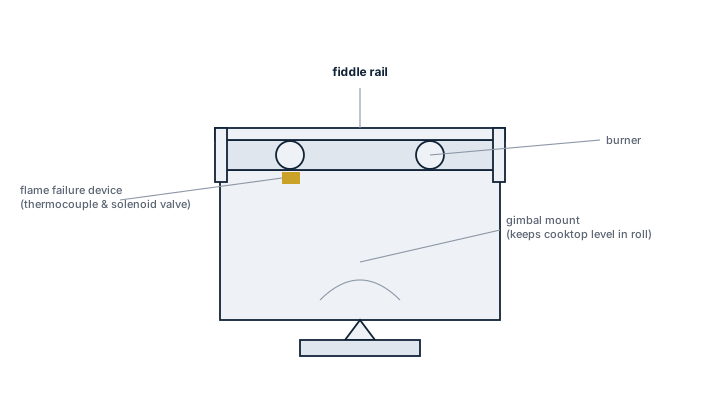
Main components
Ranges and ovens
Combined range-oven units are common on smaller ships to save galley footprint; larger vessels split them into separate ranges, convection ovens and combi-steamers. Electric induction ranges are increasingly specified over gas or diesel-fired ranges because they remove an open flame and a fuel line from the galley altogether.
Deep fat fryers
Fitted with a high-temperature cutout independent of the normal thermostat, and increasingly with a lid or splash guard that can be closed quickly, since a spilled fryer is one of the more common sources of galley fire and burn injury aboard.
Fiddle rails, gimbals and securing points
Pots and pans need fiddle rails on the range top to stop them sliding in a seaway. Larger vessels sometimes gimbal an entire stove so the cooking surface stays closer to level regardless of roll; smaller ships more often just rely on rails, non-slip surfaces and disciplined stowage.
Selection considerations
| Factor | Why it matters |
|---|---|
| Crew or passenger headcount | Sets required oven and range capacity, and mess room turnover |
| Available power supply (voltage, phase) | Electric galleys need enough generator capacity margin, especially with induction ranges |
| Ventilation and extraction capacity | Grease-laden exhaust must be ducted and filtered per fire safety requirements |
| Space for gimballing or fiddle rails | Retrofitting gimbals into an existing galley footprint is rarely simple |
Regulations and class
SOLAS Chapter II-2 fire safety provisions apply to galley installations, covering grease filter and duct fire protection, automatic extinguishing over deep fat fryers on larger passenger and cargo ships, and insulation of hot surfaces adjacent to accommodation bulkheads. Flag and class rules on food hygiene generally track ashore commercial kitchen practice for materials and surface finishes, stainless steel work surfaces, rounded internal corners, equipment that can be fully broken down for cleaning.
Typical faults
| Fault | Consequence |
|---|---|
| Grease buildup in the extraction duct | Major fire risk, a leading cause of galley fires aboard ship |
| Flame failure device disabled or bypassed on a gas range | Unburnt gas accumulates in the galley if the flame goes out unnoticed |
| Fiddle rails removed or left off after cleaning | Pans slide in a seaway, scalding injuries and spilled meals |
| Gimbal mechanism seized from lack of lubrication | Stove no longer levels correctly, defeating its purpose in a seaway |
What to look for in a supplier
- Marine type approval for the specific model, not a shore commercial unit adapted after the fact
- Documented flame-failure and tilt-cutoff performance for gas-fired appliances
- Stainless steel grades and surface finishes that hold up to salt air, not just standard catering-grade steel
- Spare parts and service support reachable at the ports the ship actually calls at
Grease duct cleaning gets deferred more often than any other galley maintenance item because it is dirty and inconvenient; treat the interval as a fire safety task, not a housekeeping one.
5 manufacturers · 6 models
Metos
2- Gas valve failure
- Gimbal bearing wear
- Ignition system fault
- Thermostat malfunction
- Gimbal mechanism keeps burners level during vessel motion, improving cooking safety and performance
- Integrated gas safety shutoff allows monthly testing to meet regulatory requirements
- Compact footprint suitable for limited galley spaces on passenger and offshore vessels
- Burners are stainless‑steel and can be cleaned daily for reliable operation
- Gas valve components have a known history of failure, requiring vigilant inspection
- Gimbal bearing wear can develop over time, increasing maintenance intervals
- Ignition system faults may occur in high humidity or salt‑air environments
- Thermostat malfunction can affect temperature control and fuel efficiency
- Thermostat failure
- Auto-extinguishing system false trigger
- Heating element burnout
- Oil drain valve leak
- SOLAS‑compliant auto‑extinguishing system meets mandatory safety regulations
- Relatively low power demand (12 kW) suitable for medium‑size vessel galleys
- Monthly test procedure built into service routine ensures fire‑suppression reliability
- Oil quality monitoring (TPC >25% trigger) helps maintain food quality and equipment life
- Compact design fits limited galley spaces
- Thermostat failures reported, requiring spare parts inventory
- False triggers of the auto‑extinguishing system can cause unnecessary shutdowns
- Heating element burnout observed under heavy use
- Oil drain valve leaks have been noted, increasing maintenance workload
- Mandatory monthly extinguishing test adds operational overhead
Electrolux Professional
1- Steam generator scale buildup
- Door gasket deterioration
- Control board failure from humidity
- Drain pump blockage
- Dual‑mode cooking (steam and dry heat) expands menu flexibility
- Relatively high power output (18 kW) ensures rapid heating
- Compact marine‑rated design fits limited galley spaces
- Integrated water‑treatment recommendation helps control steam quality
- Standardised door gasket replacement simplifies routine maintenance
- Steam generator prone to scale buildup; requires descaling every 500 hrs
- Door gasket material deteriorates and must be replaced annually
- Control board can fail from excessive humidity if not properly sealed
- Drain pump may become blocked by debris or condensate
- Maintenance schedule adds operational overhead for crews without dedicated engineers
Hobart
1- Gear drive wear
- Bowl lift mechanism failure
- Motor overload from heavy dough
- Safety interlock fault
- Compact footprint suitable for limited galley space
- Marine‑grade stainless steel construction resists corrosion
- Integrated safety interlock prevents operation when the bowl is open
- Gear oil change interval of 2000 hrs simplifies maintenance scheduling
- Low power draw (2.2 kW) fits typical ship electrical systems
- Limited bowl capacity compared with larger shore‑based mixers
- Gear drive wear can occur if repeatedly overloaded with heavy dough
- Bowl lift mechanism may fail and requires periodic inspection
- Motor overload protection can trip during very high‑viscosity mixes
- Requires regular oil changes to maintain gear longevity
Meiko
1- Wash pump seal failure
- Rinse booster heater element burnout
- Detergent dosing pump failure
- Drain valve blockage
- High‑temperature wash (65 °C) and rinse (85 °C) for superior sanitation
- Compact 15 kW power rating fits medium‑size vessel electrical budgets
- Integrated detergent dosing pump allows precise chemical control
- Meiko brand reputation for durability in harsh marine environments
- Service-friendly design – weekly descaling and annual jet replacement are straightforward
- Historical wash‑pump seal failures can lead to leaks if not monitored
- Rinse booster heater element prone to burnout under prolonged high‑temp operation
- Detergent dosing pump has a documented failure rate requiring spare parts stock
- Drain valve blockage reported; regular inspection needed
- Maintenance schedule (weekly descaling, annual jet change) adds crew workload
Rational
1
- Boiler scale buildup
- Cleaning tablet dispenser fault
- Temperature probe failure
- Steam valve leakage
- Dual‑mode (steam & convection) cooking provides versatile menu options
- Marine‑secured with anti‑vibration mounts reduces wear in high‑motion environments
- iCareSystem automates cleaning cycles, lowering crew workload
- Precise temperature and humidity control improves food quality and consistency
- Relatively compact footprint for limited galley space
- 22 kW power demand may be high for vessels with limited electrical generation capacity
- Requires regular descaling; performance degrades with hard water if not managed
- Proprietary cleaning tablets add consumable cost and supply‑chain dependency
- Steam valve leakage has been reported, necessitating vigilant maintenance
- Complex control interface can require additional crew training