What to check on a Galley Range (Electric / Steam).
A marine galley range does the same job as a commercial kitchen range ashore but under constraints that never apply on land: it must stay secured and usable through rolling and pitching, it must not become an open ignition source in a moving space full of loose crew and gear, and its energy source is usually whichever the ship already generates efficiently rather than the cook's preference. Electric ranges are the default on most cargo ships because the vessel already generates its own electrical power; steam ranges appear on vessels…
What Makes a Marine Galley Range Different
A marine galley range does the same job as a commercial kitchen range ashore but under constraints that never apply on land: it must stay secured and usable through rolling and pitching, it must not become an open ignition source in a moving space full of loose crew and gear, and its energy source is usually whichever the ship already generates efficiently rather than the cook's preference. Electric ranges are the default on most cargo ships because the vessel already generates its own electrical power; steam ranges appear on vessels with a substantial steam plant, historically steamships and some tankers, where using existing steam avoids adding electrical load. Gas ranges are rare at sea because of the fire and explosion risk of storing LPG or LNG aboard for domestic use, and where fitted they carry their own dedicated gas safety system separate from the range itself.
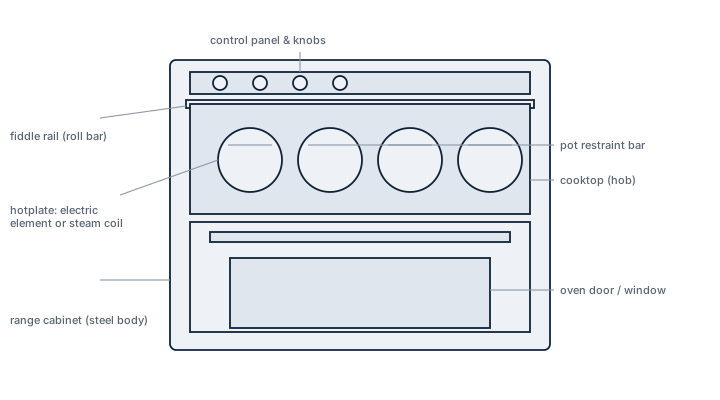
Main Components
Hob / Cooking Surface
Solid electric hot plates or induction elements are common on modern ranges; induction is increasingly specified for its faster response and lower ambient heat in the galley, though it requires induction-compatible cookware throughout the galley inventory.
Ovens
Electric or steam-heated ovens are built into the range base, sized to the crew complement, with secure door latches rated for the vessel's expected motion.
Fiddle Rails and Pot Restraints
Raised rails around the hob and clamps or bars over pots stop cookware sliding or lifting off the heat source in a seaway -- a feature with no equivalent in a shore kitchen and one inspectors specifically check.
Guard Rail and Cook's Belt Point
A rail in front of the range gives the cook something to brace against, and some vessels fit a belt or strap point so the cook can work hands-free during heavy weather without being thrown against the hot surface.
Selection and Sizing
Sizing follows crew or passenger numbers and the number of hot plates, ovens and hob zones needed to serve meals within the galley's working hours. Electrical load is checked against the ship's available generating capacity, since a large induction range drawing tens of kilowatts can be a meaningful fraction of hotel load on a smaller vessel.
| Vessel Type | Typical Range Configuration |
|---|---|
| Small cargo ship (10-25 crew) | Single range, 4-6 hob zones, one or two ovens |
| Larger cargo ship / OSV | Combination range with grill, larger oven capacity |
| Passenger vessel | Multiple ranges, dedicated grill, bratt pan and steamer stations |
Regulations and Class
Galley equipment falls under SOLAS Chapter II-2 fire safety provisions for galley fire protection, including the requirement for a fixed fire-extinguishing system over the cooking range on many vessel types, commonly a wet chemical system rated for cooking oil fires, and a means of shutting off electrical or fuel supply to the range from outside the galley in an emergency. Class societies additionally require securing arrangements for galley equipment to be adequate for the vessel's motion criteria, and food-contact surfaces to meet the same hygiene expectations covered under Maritime Labour Convention accommodation and catering standards.
Typical Faults
| Fault | Cause | Consequence |
|---|---|---|
| Uneven heating across the hob | Failed or unevenly worn heating element | Inconsistent cooking, crew complaints, wasted energy |
| Oven door seal failure | Gasket wear from heat cycling | Heat loss, longer cooking times, higher energy consumption |
| Tripped supply breaker under load | Element short or degraded insulation resistance | Loss of cooking capacity until repaired |
| Fixed fire system discharge false alarm | Detector fouled with grease and smoke residue | Unnecessary galley shutdown, crew loses confidence in the system |
What to Look for in a Supplier
- Marine type approval and fire safety certification for the fixed extinguishing interlock, not just a domestic or commercial-ashore rating.
- Securing and motion tolerance specification matching the vessel's expected roll and pitch angles.
- Spare parts support for heating elements and control thermostats at ports the vessel calls at.
- Compatibility with the vessel's available power source, electric or steam, confirmed against actual generating or steam capacity rather than nameplate assumption.
Test the galley's fixed fire-extinguishing system interlock at every drill schedule, not just when the range is inspected -- a system that has never actually tripped the fuel or power cut-off in a real test is an unknown quantity exactly when it matters most.