What to check on a Galley Ventilation Hood.
The extraction principle is identical to any commercial kitchen: capture grease-laden hot air at the cooking line before it spreads, filter out grease, and duct it clear of the vessel. What changes on board is everything around that principle. The ductwork has to be fire-rated and routed through watertight or fire-resistant divisions, the whole assembly has to survive continuous vibration without ducting joints working loose, and grease that would simply drain to a floor gully ashore has to be collected against a rolling deck without spilling back into the galley…
What sets a galley hood apart from shore commercial kitchen extraction
The extraction principle is identical to any commercial kitchen: capture grease-laden hot air at the cooking line before it spreads, filter out grease, and duct it clear of the vessel. What changes on board is everything around that principle. The ductwork has to be fire-rated and routed through watertight or fire-resistant divisions, the whole assembly has to survive continuous vibration without ducting joints working loose, and grease that would simply drain to a floor gully ashore has to be collected against a rolling deck without spilling back into the galley. Marine hoods are also built with corrosion resistance in mind from the start, since the same salt-laden air that attacks deck equipment reaches an exhaust duct that terminates on the open deck or funnel casing.
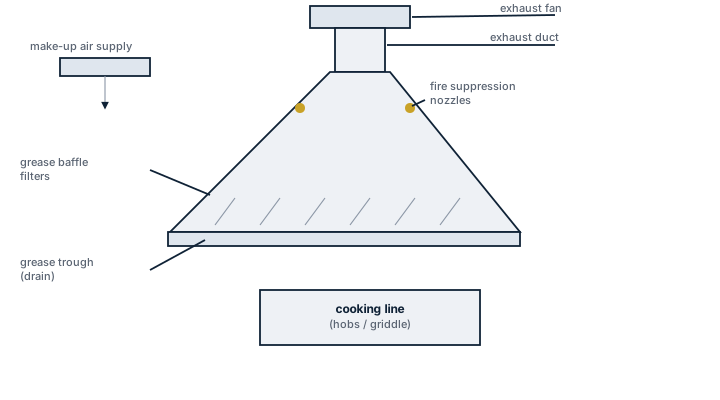
Main components
Canopy and grease filters
Baffle-type grease filters, not mesh, are standard on marine hoods because they trap grease more effectively and are far easier to remove and clean by hand between watches.
Exhaust fan and ducting
A dedicated exhaust fan, often with a spare or standby motor arrangement on larger galleys, draws air through fire-rated ducting routed to a weather-tight discharge point, usually on the funnel casing or open deck.
Grease collection and drainage
A collection trough or removable grease cup beneath the filters catches condensed grease; on a rolling vessel this needs a baffled design so grease does not simply slosh back out during heavy weather.
Fire suppression interface
Many galley hoods integrate with a dedicated wet chemical or CO2 fire suppression system covering the canopy, ductwork and cooking appliances, with automatic fuel and power shutoff on activation.
Selection and sizing
- Airflow capacity matched to the cooking line's heat output and the galley's overall ventilation balance against makeup air supply.
- Duct routing distance and number of fire divisions penetrated, which drives both fire damper requirements and fan power needed to overcome duct resistance.
- Filter type and ease of removal for daily cleaning, since a hood that is awkward to clean gets cleaned less often, whatever the manual says.
Regulations and class
SOLAS Chapter II-2 requirements for galley exhaust ducts cover fire dampers, fire-rated construction where ducts pass through divisions, and in some vessel types automatic extinguishing arrangements for the ductwork itself, since grease-lined ducting is a recognised fire path between decks. Class surveys the fire damper operation and duct integrity as part of periodic fire safety surveys, and grease filter and duct cleaning intervals are typically fixed in the vessel's planned maintenance system precisely because they are a fire risk, not just a housekeeping item.
Typical faults
| Fault | Cause | Consequence |
|---|---|---|
| Grease build-up inside ducting | Filters cleaned but duct interior never inspected | Serious fire propagation risk along the duct run |
| Fire damper stuck open or closed | Corrosion or lack of periodic exercise | Fails its one function exactly when needed, or blocks airflow in normal use |
| Reduced extraction | Fan belt wear or motor bearing failure | Heat and steam build-up in galley, crew discomfort and slower cooking turnaround |
| Grease trough overflow | Baffle design inadequate for the vessel's actual roll | Grease reaching the galley deck, slip and fire risk |
What to look for in a supplier
- Baffle-type filters as standard, with clearly stated cleaning intervals matched to the galley's actual cooking load.
- Fire damper and duct materials with documented fire rating matching the vessel's fire division requirements, not a generic commercial-kitchen specification.
- Integration support with the vessel's chosen galley fire suppression system, since a mismatched interface is a common cause of failed commissioning.
Inspect duct interior, not just the removable filters, on a fixed schedule; grease migrates past even well-maintained filters over months, and duct fires start exactly where nobody was looking.