What to check on a Hot Water Calorifier.
A calorifier is an indirect water heater: a storage vessel where fresh water is heated by a heating coil rather than by direct electrical immersion into the stored water or by an open-flame burner. The heating medium running through the coil is usually hot water or steam drawn from the main engine jacket cooling circuit, from a waste-heat boiler, or from an electric element built into the same shell as backup, normally used for port stays when the main engine is not delivering waste heat. This is the key difference…
What a Calorifier Does Differently From a Direct Heater
A calorifier is an indirect water heater: a storage vessel where fresh water is heated by a heating coil rather than by direct electrical immersion into the stored water or by an open-flame burner. The heating medium running through the coil is usually hot water or steam drawn from the main engine jacket cooling circuit, from a waste-heat boiler, or from an electric element built into the same shell as backup, normally used for port stays when the main engine is not delivering waste heat. This is the key difference against a simple electric water heater: a calorifier stores a buffer of hot water and reheats it from whichever source is running, so the crew gets hot water whether the ship is at sea or in port.
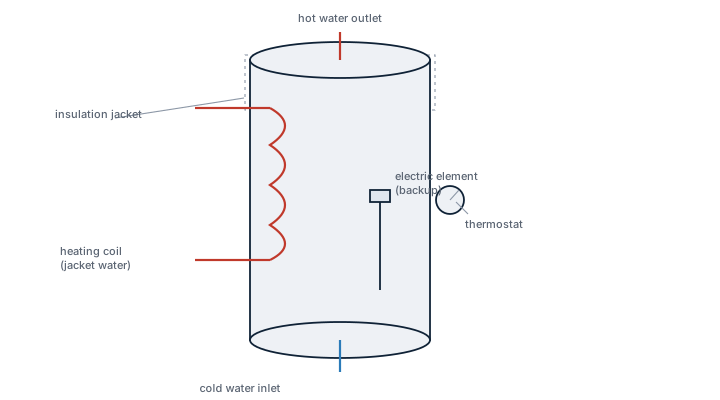
Main Components
Storage vessel
A vertical or horizontal pressure vessel, typically stainless steel or mild steel with a protective lining, sized to hold anywhere from roughly 100 to 1000 litres depending on crew size and vessel type.
Heating coil
A finned or plain tube coil carrying jacket water or steam, sized to reheat the full tank volume within a set period after a cold start, commonly under an hour on the jacket-water source.
Electric immersion element
A resistive element, usually 3 to 15 kW, wired through a thermostat and high-limit cutout, used as the sole heat source in port or as a top-up when engine heat is unavailable.
Sacrificial anode
A magnesium or zinc anode fitted inside the shell to protect it from galvanic corrosion, consumed over time and requiring periodic replacement rather than the tank itself.
Thermostatic mixing valve
Fitted downstream to blend stored water, often held above 60 degrees C to control Legionella growth, down to a safe delivery temperature at the tap.
Sizing
Selection runs off crew or passenger complement, simultaneous draw-off points such as galley, showers and laundry, storage capacity against recovery time, and the working pressure of the fresh water system it feeds. Passenger vessels and larger crew complements need either a bigger single vessel or two units in parallel so one can be isolated for descaling without losing hot water entirely.
Regulations and Class
The calorifier itself is a pressure vessel and falls under class rules for unfired pressure vessels, with periodic internal and hydraulic testing at survey intervals set by class. Where potable water is stored above ambient temperature, flag state and port health requirements on Legionella control, such as minimum storage temperature and periodic flushing of unused outlets, apply alongside the pressure vessel rules.
Typical Faults
- Scale buildup on the heating coil cuts heat transfer, so recovery time creeps up even though the source temperature is unchanged.
- Anode fully consumed and not replaced leads to pitting corrosion of the shell that is often only found at the next internal survey.
- Thermostat or high-limit cutout failure either starves the crew of hot water or, worse, lets the electric element run unchecked.
- Mixing valve failure delivers scalding or stagnant lukewarm water at the tap despite correct tank temperature.
What to Look for in a Supplier
- Coil material and surface area matched to the actual jacket-water temperature and flow available on that engine, not a generic figure.
- Access arrangement for anode replacement and coil descaling without cutting the shell.
- Documented pressure vessel test certificates accepted by the vessel's class society.
- Electric element rating that matches the ship's available port supply without tripping breakers.
Log the anode condition at every internal inspection: a calorifier that loses its anode silently is the one that shows up as a pinhole leak in the galley deckhead a year later.