What to check on a UV Sterilizer.
A UV sterilizer inactivates microorganisms by damaging their DNA as water passes through a chamber past a UV-C lamp, with no chemical dosing and no taste or odour change to the water. That is its strength and its limitation at the same time: it works only at the point the water actually passes the lamp, and it leaves no residual protection afterward. Water sitting in a tank or a long dead-leg pipe run downstream of a UV unit can still support bacterial regrowth, which is exactly the gap that chlorination…
What Sets UV Sterilization Apart
A UV sterilizer inactivates microorganisms by damaging their DNA as water passes through a chamber past a UV-C lamp, with no chemical dosing and no taste or odour change to the water. That is its strength and its limitation at the same time: it works only at the point the water actually passes the lamp, and it leaves no residual protection afterward. Water sitting in a tank or a long dead-leg pipe run downstream of a UV unit can still support bacterial regrowth, which is exactly the gap that chlorination is used to cover. On ships, UV is typically fitted close to the point of use, for example just before the potable water distribution manifold or on a dedicated drinking water line, rather than as the sole treatment for stored water.
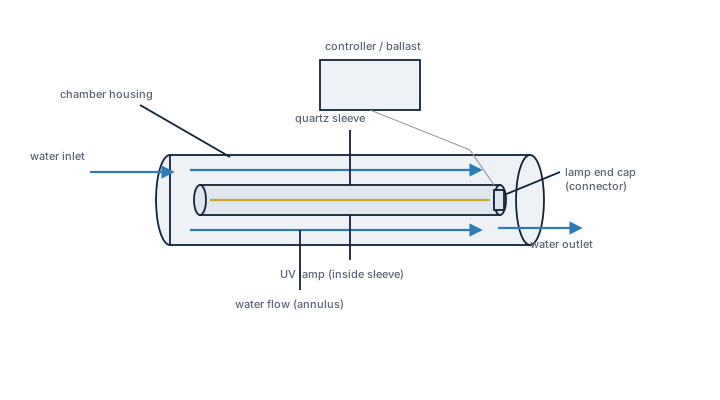
Main Components
UV Lamp
A low-pressure or medium-pressure mercury vapour lamp, or increasingly a UV-C LED array, generating radiation at the wavelength that damages microbial DNA, housed inside a quartz sleeve.
Quartz Sleeve
A sleeve that keeps the lamp dry and out of direct contact with the water while remaining transparent to UV light; fouling of this sleeve is the most common cause of falling dose delivered.
Reactor Chamber
The stainless steel vessel the water flows through, designed so every parcel of water gets adequate exposure time and does not short-circuit past the lamp.
UV Intensity Sensor
A sensor monitoring actual UV output through the water, allowing the controller to flag a failing lamp or a fouled sleeve before dose delivery drops below the safe threshold.
Automatic Wiper or Cleaning Mechanism
Fitted on some units to mechanically clean the quartz sleeve without shutting the unit down, reducing the manual cleaning burden.
Selection and Sizing
- Flow rate through the unit at the point it is installed, which sets chamber size and required lamp power to hold dose above the target at maximum flow.
- Water UV transmittance, since turbid or coloured water absorbs UV and reduces the effective dose reaching microorganisms.
- Target dose, generally expressed in mJ/cm2, sufficient to inactivate the organisms of concern at the design flow rate.
- Lamp type and expected service life, since output degrades over the lamp's life well before it fails outright.
Regulations and Class
UV treatment of potable water is assessed against the same flag state and WHO-based drinking water quality benchmarks as other treatment methods, with the focus on microbiological rather than chemical parameters since UV adds nothing to the water. Where UV treats ballast water rather than potable water, it typically forms part of a type-approved system under the IMO Ballast Water Management Convention, and that is a materially different application from a domestic potable water UV unit; the two should not be confused when specifying equipment or reviewing certification.
Typical Faults
| Fault | Cause | Consequence |
|---|---|---|
| Falling UV dose | Fouled quartz sleeve or lamp reaching end of rated life | Incomplete disinfection despite the unit still running normally |
| Lamp failure without alarm | Intensity sensor not fitted or not monitored | Water passes untreated with no indication to the crew |
| Reduced flow capacity | Scale buildup inside the reactor chamber | Increased contact time needed, or bypass of unit under high demand |
| Frequent lamp failures | Voltage fluctuations or vibration at the installation location | Rising spare lamp consumption and unplanned downtime |
What to Look for in a Supplier
- A UV intensity sensor with an alarm output, not just a lamp-on indicator, since a dim lamp still lights up.
- Rated dose delivery at the vessel's actual maximum flow rate and expected water transmittance, not a best-case laboratory figure.
- Lamp replacement interval and cost of consumables clearly stated, since lamps are a recurring maintenance item.
- Chamber material and fittings suited to shipboard vibration and the water chemistry on board.
A UV unit with no working intensity sensor gives false confidence, always confirm the sensor and its alarm are actually monitored, not just the lamp indicator light.