"> Hot Water Calorifier - Equipment Database

Hot Water Calorifier

medium 127 models total

A calorifier heats and stores domestic fresh water indirectly, drawing heat from a steam or thermal-oil coil, the engine jacket-water circuit, or an electric immersion element, so cabins and the galley get hot water without tapping the boiler or engine cooling system directly.

Read more — Hot Water Calorifier explained

What makes this type distinct

A calorifier is a pressure vessel that stores and heats domestic fresh water indirectly, never a direct-fired boiler. Heat comes from a coil or jacket carrying steam, thermal oil, or main engine jacket-cooling water, or from an electric immersion element bolted into the shell. Keeping the heat source separate from the potable water means a coil failure floods the tank with steam-side or cooling-side fluid rather than releasing domestic water into the engine's systems, and it lets the unit run on waste heat while under way and switch to electric heating in port without any change to the piping on the fresh water side. Most vessels fit both a heating coil and an immersion element in the same shell so the calorifier keeps working whichever source is available.
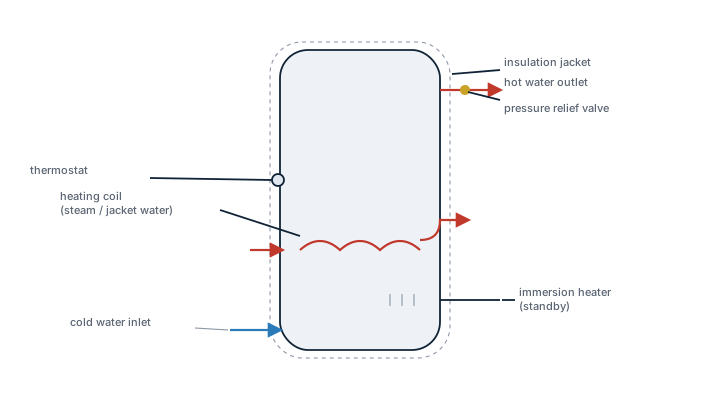
Hot water calorifier cross-section
Cross-section of a hot water calorifier tank showing the internal heating coil supplied with steam or jacket water, a standby electric immersion heater, the cold water inlet at the bottom, the hot water outlet with pressure relief valve at the top, the thermostat, and the surrounding insulation jacket.

Main components

Shell

Vertical or horizontal cylindrical vessel, mild steel with an internal protective coating or glass lining, or stainless steel on vessels avoiding coated tanks. Built to the working pressure of the domestic water system, typically several bar, with a corrosion allowance built into the wall thickness.

Heating coil or jacket

Copper-nickel or carbon steel coil running steam, thermal oil, or jacket water through the tank; sized so the stored volume recovers to set temperature within a defined time after a cold draw-down.

Electric immersion element

One or more resistive elements, often switched in stages, with its own thermostat and a separate high-limit cut-out that trips on dry-running or overheat.

Sacrificial anode

Magnesium or aluminium anode fitted through the shell to protect a steel tank against galvanic corrosion; consumed over time and needs renewal on a fixed interval, not on condition.

Fittings

Pressure relief valve set above working pressure, thermometer and pressure gauge, drain valve, inspection manway, and a non-return valve on the cold feed to stop backflow into the ship's water main.

Selection and sizing

Storage volume is set against peak simultaneous demand - showers, galley, laundry - not average daily consumption, since a calorifier that recovers slowly needs more stored volume to cover a morning peak. Recovery time depends on coil surface area and the temperature and flow of the heating medium; a jacket-water coil recovers more slowly than steam and needs a larger storage margin. Electric backup capacity is chosen to reheat the tank within an acceptable time using shore or generator power alone, since jacket water is not available alongside a quay.

  • Storage volume in litres per crew or passenger, against peak draw
  • Coil heat transfer area and available steam or jacket-water temperature
  • Electric element rating in kW and the number of stages
  • Working pressure rating of the shell
  • Insulation thickness, since heat loss from an uninsulated tank is significant over a long voyage

Regulations and class

The calorifier is a pressure vessel and comes under class rules for unfired pressure vessels, which set design pressure, relief valve capacity, and periodic internal and external survey. The relief valve is tested and the vessel opened for internal inspection at the class-required interval, and any coating or lining is checked for breakdown at that survey. Where the calorifier feeds drinking water outlets, potable water quality rules under SOLAS and flag administration requirements apply to the water itself, not the vessel, but a failed anode or coating breakdown that contaminates the stored water becomes a potable water compliance issue as much as a mechanical one.

Typical faults

FaultConsequence
Anode fully consumed and not renewedPitting corrosion of the shell, eventually a leak or a failed hydrostatic test
Coil leak, steam or jacket water into the water sideContaminated or discoloured domestic water, sudden loss of heating capacity
High-limit thermostat failed or bypassedOverheat, relief valve lifting, scalding risk at the tap
Relief valve seized or undersizedOverpressure on immersion element failure, vessel deformation in the worst case
Scale build-up on the coilReduced heat transfer, longer recovery time, higher electricity use in port

What to look for in a supplier

  • Pressure vessel certification matching the intended class society, not just a CE mark
  • Documented heat transfer calculation for the coil against the stated heating medium temperature
  • Anode and manway access designed for routine maintenance without cutting insulation
  • Options for dual heat source as standard, not a costly retrofit
  • Spare parts availability for the specific thermostat and relief valve fitted, not a generic substitute

Check the anode at every opportunity the manway is open, not only when someone remembers - a calorifier that lasted fifteen years on one ship can pit through in three on another simply because nobody logged anode renewals against running hours.

9 manufacturers · 127 models

Alfa Laval

25
Aalborg Industries (Alfa Laval) Calorifier XC
Calorifier XC
300-3000 L · Freshwater/Steam · dual‑source hot water calorifier
Medium
Freshwater/Steam
Type
Combined Calorifier
Common Failures & Inspection Points
  • Pump, heater or control failure causes low pressure, poor hot-water supply or repeated cycling
  • Pressure-switch, thermostat or level faults cause unstable operation or protective trips
  • Air-charge loss, vessel leakage or failed non-return valves cause frequent pump starts or pressure fluctuation
  • Scale or internal deposits reduce heating or water-flow performance
  • Seal, flange or relief-valve leakage causes visible water loss and corrosion
Service: Inspect pumps or heaters, pressure vessel or calorifier, valves, controls, relief devices and leakage. Check pressure cycling, hot-water temperature stability and sanitary condition under the vessel maintenance program. Verify safety valves and electrical protection using approved procedures. Refer to the manufacturer documentation for the exact figure for pressure, temperature and service settings.
Spare Parts: Carry pump seals, pressure switches, thermostats, heater elements where fitted, non-return valve parts, gaskets and control relays.
Strengths
  • Combined steam (engine waste heat) and electric heating gives flexibility on‑ and off‑shore
  • Compact, integrated design saves space in accommodation or galley areas
  • Integrated sacrificial anode reduces tank corrosion when maintained annually
  • Removable steam coil simplifies cleaning and descaling based on water quality
  • Fast heat‑up time thanks to high‑efficiency heat exchange surfaces
Weaknesses
  • Electric heating draws significant shipboard power, impacting load management in port
  • Performance depends on availability of engine waste heat; low‑speed operation reduces steam output
  • Requires regular anode inspection and coil descaling to avoid corrosion and fouling
  • Higher initial purchase price compared with single‑source water heaters
  • Maintenance access can be limited on very small vessels due to the integrated tank
Typical Vessels: Container shipBulk carrierProduct tankerCruise linerFerryOffshore supply vessel
Certifications: DNV
Decision Guide: Choose if: you need a reliable hot‑water source that can use waste heat at sea and electric power in port, space is limited, and you have an established maintenance regime for anodes and coils. Avoid if: the vessel has minimal engine waste heat, limited electrical generation capacity, or operates primarily on short voyages where dual heating adds unnecessary complexity.
Use Cases: Domestic cold- and hot-water service on merchant, passenger and offshore vessels.
Alfa Laval Marine Calorifier
Marine Calorifier
200-2000 L, 60-80°C · 12.0 kW · Freshwater · heat‑exchanger calorifier
Medium
Freshwater
Power (kW)
12
Type
Marine Calorifier
Common Failures & Inspection Points
  • Pump, heater or control failure causes low pressure, poor hot-water supply or repeated cycling
  • Pressure-switch, thermostat or level faults cause unstable operation or protective trips
  • Air-charge loss, vessel leakage or failed non-return valves cause frequent pump starts or pressure fluctuation
  • Scale or internal deposits reduce heating or water-flow performance
  • Seal, flange or relief-valve leakage causes visible water loss and corrosion
Service: Inspect pumps or heaters, pressure vessel or calorifier, valves, controls, relief devices and leakage. Check pressure cycling, hot-water temperature stability and sanitary condition under the vessel maintenance program. Verify safety valves and electrical protection using approved procedures. Refer to the manufacturer documentation for the exact figure for pressure, temperature and service settings.
Spare Parts: Carry pump seals, pressure switches, thermostats, heater elements where fitted, non-return valve parts, gaskets and control relays.
Strengths
  • Integrated coil and storage reduces footprint compared with separate boiler + tank
  • High thermal efficiency due to Alfa Laval’s heat‑transfer design
  • Marine‑class approved (DNV/ABS) for shipboard installation
  • Simple electrical control – thermostat regulated, easy to commission
  • Robust stainless‑steel construction with sacrificial anode for corrosion protection
Weaknesses
  • Scaling of the heating coil in hard water requires regular descaling
  • Electric element burnout can occur if power quality is poor
  • Limited hot‑water capacity versus larger dedicated boilers on high‑demand vessels
  • Requires annual anode replacement and thermostat calibration – maintenance overhead
  • Performance drops if water treatment is inadequate, increasing risk of Legionella
Typical Vessels: Cruise shipFerryOffshore supply vesselContainer ship (crew accommodation)Tanker (crew & galley hot‑water)
Certifications: DNV GL Type ApprovalABS Classification
Decision Guide: Choose if you need a space‑saving, electrically powered hot‑water source for moderate daily demand and have reliable water‑treatment to limit scaling. Avoid on vessels with very high hot‑water loads or where only diesel‑fired boilers are available, as the calorifier’s capacity may be insufficient.
Use Cases: Domestic cold- and hot-water service on merchant, passenger and offshore vessels.
Alfa Laval Aalborg Calorifier 200 unverified
200 L · 18.0 kW
Volume liters
200
Heating (kW)
18
Heating source
engine cooling water + electric backup
Application
marine domestic hot water
Common Failures & Inspection Points
  • Fouling or exhausted treatment media can reduce treatment effectiveness, seen as deteriorating outlet-water quality or rising differential pressure
  • Dosing-pump or chemical-feed faults can interrupt treatment, noticed as unstable readings, low dosing indication or quality alarms
  • Blocked strainers or restricted piping can reduce flow, seen as low throughput or abnormal pump loading
  • Sensor drift or contamination can give incorrect control feedback, noticed as implausible readings or unnecessary alarms
  • Valve, seal or hose leakage can cause loss of treatment fluid or water, seen as wetness around the skid and inability to maintain normal operation
Service: Check water quality indicators, strainers, dosing points, media condition, pumps, valves, sensors and leak tightness. Confirm the unit changes state correctly between service, regeneration, flushing or standby modes where fitted. For chemical concentration, flow limits or replacement criteria not stated in the source entry, refer to the manufacturer documentation for the exact figure.
Spare Parts: Carry the maker-recommended filter elements or treatment consumables, dosing-pump service parts, seals, hoses, sensor consumables and common electrical fuses.
Use Cases: Applied to potable-water production and conditioning, domestic-water systems and other shipboard water services on merchant, passenger and offshore vessels.
Alfa Laval Aalborg Calorifier 500 unverified
500 L · 36.0 kW
Volume liters
500
Heating (kW)
36
Heating source
engine cooling water + electric backup
Application
marine domestic hot water
Common Failures & Inspection Points
  • Fouling or exhausted treatment media can reduce treatment effectiveness, seen as deteriorating outlet-water quality or rising differential pressure
  • Dosing-pump or chemical-feed faults can interrupt treatment, noticed as unstable readings, low dosing indication or quality alarms
  • Blocked strainers or restricted piping can reduce flow, seen as low throughput or abnormal pump loading
  • Sensor drift or contamination can give incorrect control feedback, noticed as implausible readings or unnecessary alarms
  • Valve, seal or hose leakage can cause loss of treatment fluid or water, seen as wetness around the skid and inability to maintain normal operation
Service: Check water quality indicators, strainers, dosing points, media condition, pumps, valves, sensors and leak tightness. Confirm the unit changes state correctly between service, regeneration, flushing or standby modes where fitted. For chemical concentration, flow limits or replacement criteria not stated in the source entry, refer to the manufacturer documentation for the exact figure.
Spare Parts: Carry the maker-recommended filter elements or treatment consumables, dosing-pump service parts, seals, hoses, sensor consumables and common electrical fuses.
Use Cases: Applied to potable-water production and conditioning, domestic-water systems and other shipboard water services on merchant, passenger and offshore vessels.
Alfa Laval Aalborg Calorifier 1000 unverified
1000 L · 72.0 kW
Volume liters
1000
Heating (kW)
72
Heating source
engine cooling water + electric backup
Application
marine domestic hot water
Common Failures & Inspection Points
  • Fouling or exhausted treatment media can reduce treatment effectiveness, seen as deteriorating outlet-water quality or rising differential pressure
  • Dosing-pump or chemical-feed faults can interrupt treatment, noticed as unstable readings, low dosing indication or quality alarms
  • Blocked strainers or restricted piping can reduce flow, seen as low throughput or abnormal pump loading
  • Sensor drift or contamination can give incorrect control feedback, noticed as implausible readings or unnecessary alarms
  • Valve, seal or hose leakage can cause loss of treatment fluid or water, seen as wetness around the skid and inability to maintain normal operation
Service: Check water quality indicators, strainers, dosing points, media condition, pumps, valves, sensors and leak tightness. Confirm the unit changes state correctly between service, regeneration, flushing or standby modes where fitted. For chemical concentration, flow limits or replacement criteria not stated in the source entry, refer to the manufacturer documentation for the exact figure.
Spare Parts: Carry the maker-recommended filter elements or treatment consumables, dosing-pump service parts, seals, hoses, sensor consumables and common electrical fuses.
Use Cases: Applied to potable-water production and conditioning, domestic-water systems and other shipboard water services on merchant, passenger and offshore vessels.
Alfa Laval Aalborg Calorifier 1500 unverified
1500 L · 108.0 kW
Volume liters
1500
Heating (kW)
108
Heating source
engine cooling water + electric backup
Application
marine domestic hot water
Common Failures & Inspection Points
  • Fouling or exhausted treatment media can reduce treatment effectiveness, seen as deteriorating outlet-water quality or rising differential pressure
  • Dosing-pump or chemical-feed faults can interrupt treatment, noticed as unstable readings, low dosing indication or quality alarms
  • Blocked strainers or restricted piping can reduce flow, seen as low throughput or abnormal pump loading
  • Sensor drift or contamination can give incorrect control feedback, noticed as implausible readings or unnecessary alarms
  • Valve, seal or hose leakage can cause loss of treatment fluid or water, seen as wetness around the skid and inability to maintain normal operation
Service: Check water quality indicators, strainers, dosing points, media condition, pumps, valves, sensors and leak tightness. Confirm the unit changes state correctly between service, regeneration, flushing or standby modes where fitted. For chemical concentration, flow limits or replacement criteria not stated in the source entry, refer to the manufacturer documentation for the exact figure.
Spare Parts: Carry the maker-recommended filter elements or treatment consumables, dosing-pump service parts, seals, hoses, sensor consumables and common electrical fuses.
Use Cases: Applied to potable-water production and conditioning, domestic-water systems and other shipboard water services on merchant, passenger and offshore vessels.
Alfa Laval Hot Water Calorifier 100L Marine
Hot Water Calorifier 100L Marine unverified
Capacity (m³/h)
0.1
Treatment Type
Heat Exchange
Uv dose mj cm2
0
Common Failures & Inspection Points
  • Scale buildup on heating surfaces reduces heat transfer and causes slow hot-water recovery
  • Thermostat or temperature-sensor faults cause unstable temperature or heater shutdown
  • Heating-coil, element or control-valve faults cause inadequate hot-water production
  • Relief-valve, flange or tank leakage causes visible water loss and corrosion
  • Corrosion or internal coating deterioration contaminates water or weakens the vessel
Service: Inspect tank condition, heating element or coil, thermostats, relief devices, valves, insulation and leakage. Review water temperature stability and signs of scale or corrosion. Function-test safety controls under the approved procedure. Refer to the manufacturer documentation for the exact figure for pressure, temperature and service limits.
Spare Parts: Carry thermostats, heating elements or control-valve parts as applicable, relief-valve service items, gaskets, temperature sensors and approved anodes where fitted.
Use Cases: Domestic hot-water service on merchant, passenger and offshore vessels.
Alfa Laval Hot Water Calorifier 200L Marine
Hot Water Calorifier 200L Marine unverified
Capacity (m³/h)
0.2
Treatment Type
Heat Exchange
Uv dose mj cm2
0
Common Failures & Inspection Points
  • Scale buildup on heating surfaces reduces heat transfer and causes slow hot-water recovery
  • Thermostat or temperature-sensor faults cause unstable temperature or heater shutdown
  • Heating-coil, element or control-valve faults cause inadequate hot-water production
  • Relief-valve, flange or tank leakage causes visible water loss and corrosion
  • Corrosion or internal coating deterioration contaminates water or weakens the vessel
Service: Inspect tank condition, heating element or coil, thermostats, relief devices, valves, insulation and leakage. Review water temperature stability and signs of scale or corrosion. Function-test safety controls under the approved procedure. Refer to the manufacturer documentation for the exact figure for pressure, temperature and service limits.
Spare Parts: Carry thermostats, heating elements or control-valve parts as applicable, relief-valve service items, gaskets, temperature sensors and approved anodes where fitted.
Use Cases: Domestic hot-water service on merchant, passenger and offshore vessels.
Alfa Laval Hot Water Calorifier 300L Marine
Hot Water Calorifier 300L Marine unverified
Capacity (m³/h)
0.3
Treatment Type
Heat Exchange
Uv dose mj cm2
0
Common Failures & Inspection Points
  • Scale buildup on heating surfaces reduces heat transfer and causes slow hot-water recovery
  • Thermostat or temperature-sensor faults cause unstable temperature or heater shutdown
  • Heating-coil, element or control-valve faults cause inadequate hot-water production
  • Relief-valve, flange or tank leakage causes visible water loss and corrosion
  • Corrosion or internal coating deterioration contaminates water or weakens the vessel
Service: Inspect tank condition, heating element or coil, thermostats, relief devices, valves, insulation and leakage. Review water temperature stability and signs of scale or corrosion. Function-test safety controls under the approved procedure. Refer to the manufacturer documentation for the exact figure for pressure, temperature and service limits.
Spare Parts: Carry thermostats, heating elements or control-valve parts as applicable, relief-valve service items, gaskets, temperature sensors and approved anodes where fitted.
Use Cases: Domestic hot-water service on merchant, passenger and offshore vessels.
Hot Water Calorifier 500L Marine unverified
Capacity (m³/h)
0.5
Treatment Type
Heat Exchange
Uv dose mj cm2
0
Common Failures & Inspection Points
  • Scale buildup on heating surfaces reduces heat transfer and causes slow hot-water recovery
  • Thermostat or temperature-sensor faults cause unstable temperature or heater shutdown
  • Heating-coil, element or control-valve faults cause inadequate hot-water production
  • Relief-valve, flange or tank leakage causes visible water loss and corrosion
  • Corrosion or internal coating deterioration contaminates water or weakens the vessel
Service: Inspect tank condition, heating element or coil, thermostats, relief devices, valves, insulation and leakage. Review water temperature stability and signs of scale or corrosion. Function-test safety controls under the approved procedure. Refer to the manufacturer documentation for the exact figure for pressure, temperature and service limits.
Spare Parts: Carry thermostats, heating elements or control-valve parts as applicable, relief-valve service items, gaskets, temperature sensors and approved anodes where fitted.
Use Cases: Domestic hot-water service on merchant, passenger and offshore vessels.
Alfa Laval Hot Water Calorifier 750L Marine
Hot Water Calorifier 750L Marine unverified
Capacity (m³/h)
0.8
Treatment Type
Heat Exchange
Uv dose mj cm2
0
Common Failures & Inspection Points
  • Scale buildup on heating surfaces reduces heat transfer and causes slow hot-water recovery
  • Thermostat or temperature-sensor faults cause unstable temperature or heater shutdown
  • Heating-coil, element or control-valve faults cause inadequate hot-water production
  • Relief-valve, flange or tank leakage causes visible water loss and corrosion
  • Corrosion or internal coating deterioration contaminates water or weakens the vessel
Service: Inspect tank condition, heating element or coil, thermostats, relief devices, valves, insulation and leakage. Review water temperature stability and signs of scale or corrosion. Function-test safety controls under the approved procedure. Refer to the manufacturer documentation for the exact figure for pressure, temperature and service limits.
Spare Parts: Carry thermostats, heating elements or control-valve parts as applicable, relief-valve service items, gaskets, temperature sensors and approved anodes where fitted.
Use Cases: Domestic hot-water service on merchant, passenger and offshore vessels.
Alfa Laval Hot Water Calorifier 1000L Marine
Hot Water Calorifier 1000L Marine unverified
Capacity (m³/h)
1.0
Treatment Type
Heat Exchange
Uv dose mj cm2
0
Common Failures & Inspection Points
  • Heating-coil or element failure caused by scale, corrosion or electrical faults, resulting in slow or absent hot-water production
  • Thermostat or temperature-sensor failure caused by drift or wiring faults, resulting in unstable water temperature or overheating protection
  • Safety-valve or expansion problem caused by scaling, blockage or pressure faults, resulting in discharge, pressure fluctuation or leakage
  • Tank or connection corrosion caused by water chemistry or coating deterioration, resulting in visible leakage or rust contamination
  • Circulation-pump or check-valve failure where fitted caused by wear or blockage, resulting in poor hot-water circulation and temperature complaints
Service: Inspect vessel, heating elements or coil, thermostat, safety valve, drains, insulation and circulation connections. Check for scale, corrosion and leakage and maintain water treatment appropriate to domestic service. Verify temperature control and safety devices using approved procedures. Inspect electrical terminals where heaters are fitted and ensure pressure relief is not isolated. Investigate repeated safety-valve discharge or slow heating. Refer to the manufacturer documentation for the exact figure for pressure, temperature, element and inspection limits.
Spare Parts: Keep thermostats, temperature sensors, heating elements where fitted, safety-valve service parts, gaskets, circulation-pump seals and manufacturer-recommended anodes where applicable. Pressure-vessel repairs must follow approved procedures. Confirm all wetted parts are suitable for potable water.
Use Cases: Domestic hot-water generation and storage on merchant ships, passenger vessels and offshore accommodation units.
Alfa Laval Hot Water Calorifier 1500L Marine
Hot Water Calorifier 1500L Marine unverified
Capacity (m³/h)
1.5
Treatment Type
Heat Exchange
Uv dose mj cm2
0
Common Failures & Inspection Points
  • Heating-coil or element failure caused by scale, corrosion or electrical faults, resulting in slow or absent hot-water production
  • Thermostat or temperature-sensor failure caused by drift or wiring faults, resulting in unstable water temperature or overheating protection
  • Safety-valve or expansion problem caused by scaling, blockage or pressure faults, resulting in discharge, pressure fluctuation or leakage
  • Tank or connection corrosion caused by water chemistry or coating deterioration, resulting in visible leakage or rust contamination
  • Circulation-pump or check-valve failure where fitted caused by wear or blockage, resulting in poor hot-water circulation and temperature complaints
Service: Inspect vessel, heating elements or coil, thermostat, safety valve, drains, insulation and circulation connections. Check for scale, corrosion and leakage and maintain water treatment appropriate to domestic service. Verify temperature control and safety devices using approved procedures. Inspect electrical terminals where heaters are fitted and ensure pressure relief is not isolated. Investigate repeated safety-valve discharge or slow heating. Refer to the manufacturer documentation for the exact figure for pressure, temperature, element and inspection limits.
Spare Parts: Keep thermostats, temperature sensors, heating elements where fitted, safety-valve service parts, gaskets, circulation-pump seals and manufacturer-recommended anodes where applicable. Pressure-vessel repairs must follow approved procedures. Confirm all wetted parts are suitable for potable water.
Use Cases: Domestic hot-water generation and storage on merchant ships, passenger vessels and offshore accommodation units.
Alfa Laval Hot Water Calorifier 2000L Marine
Hot Water Calorifier 2000L Marine unverified
Capacity (m³/h)
2.0
Treatment Type
Heat Exchange
Uv dose mj cm2
0
Common Failures & Inspection Points
  • Heating-coil or element failure caused by scale, corrosion or electrical faults, resulting in slow or absent hot-water production
  • Thermostat or temperature-sensor failure caused by drift or wiring faults, resulting in unstable water temperature or overheating protection
  • Safety-valve or expansion problem caused by scaling, blockage or pressure faults, resulting in discharge, pressure fluctuation or leakage
  • Tank or connection corrosion caused by water chemistry or coating deterioration, resulting in visible leakage or rust contamination
  • Circulation-pump or check-valve failure where fitted caused by wear or blockage, resulting in poor hot-water circulation and temperature complaints
Service: Inspect vessel, heating elements or coil, thermostat, safety valve, drains, insulation and circulation connections. Check for scale, corrosion and leakage and maintain water treatment appropriate to domestic service. Verify temperature control and safety devices using approved procedures. Inspect electrical terminals where heaters are fitted and ensure pressure relief is not isolated. Investigate repeated safety-valve discharge or slow heating. Refer to the manufacturer documentation for the exact figure for pressure, temperature, element and inspection limits.
Spare Parts: Keep thermostats, temperature sensors, heating elements where fitted, safety-valve service parts, gaskets, circulation-pump seals and manufacturer-recommended anodes where applicable. Pressure-vessel repairs must follow approved procedures. Confirm all wetted parts are suitable for potable water.
Use Cases: Domestic hot-water generation and storage on merchant ships, passenger vessels and offshore accommodation units.
Alfa Laval Hot Water Calorifier 0.5m3h Alfa Marine
Hot Water Calorifier 0.5m3h Alfa Marine unverified
Capacity (m³/h)
0.5
Treatment Type
Hot Water Calorifier
Common Failures & Inspection Points
  • Reduced treatment performance caused by fouled filters, exhausted media, scaled membranes, aged lamps or contaminated process surfaces, resulting in poor water quality or increased pressure drop
  • Dosing, regeneration or process-control failure caused by empty consumables, pump faults or control errors, resulting in incorrect treatment conditions
  • Sensor or conductivity fault caused by fouling, calibration drift or wiring problems, resulting in implausible readings or alarms
  • Pump or valve failure caused by wear, blockage or electrical faults, resulting in low treatment flow or inability to route water correctly
  • Leakage caused by seal, housing, membrane, pressure-vessel or piping deterioration, resulting in water loss and unstable process conditions
Service: Inspect filters, membranes, lamps, dosing equipment, treatment vessels, pumps, valves, sensors and sample points as applicable to the installed process. Maintain hygienic conditions during opening of potable-water equipment. Trend pressure drop and water-quality indications and investigate abnormal values promptly. Verify alarms, regeneration, diversion or shutdown functions after maintenance. Store chemicals and treatment media according to approved procedures. Refer to the manufacturer documentation for the exact figure for dosing, replacement, cleaning and water-quality settings.
Spare Parts: Keep filter elements, membrane or lamp components, approved treatment media, dosing-pump service parts, seals, valves, sensors and sampling consumables recommended for the installed process. Chemicals must be approved for the intended water service.
Use Cases: It is used for freshwater, potable-water and sanitary treatment on merchant ships, passenger vessels, offshore units or other vessel types where this equipment category is fitted.
Alfa Laval Hot Water Calorifier 1m3h Alfa Marine
Hot Water Calorifier 1m3h Alfa Marine unverified
Capacity (m³/h)
1
Treatment Type
Hot Water Calorifier
Common Failures & Inspection Points
  • Heating-coil or element failure caused by scale, corrosion or electrical faults, resulting in slow or absent hot-water production
  • Thermostat or temperature-sensor failure caused by drift or wiring faults, resulting in unstable water temperature or overheating protection
  • Safety-valve or expansion problem caused by scaling, blockage or pressure faults, resulting in discharge, pressure fluctuation or leakage
  • Tank or connection corrosion caused by water chemistry or coating deterioration, resulting in visible leakage or rust contamination
  • Circulation-pump or check-valve failure where fitted caused by wear or blockage, resulting in poor hot-water circulation and temperature complaints
Service: Inspect vessel, heating elements or coil, thermostat, safety valve, drains, insulation and circulation connections. Check for scale, corrosion and leakage and maintain water treatment appropriate to domestic service. Verify temperature control and safety devices using approved procedures. Inspect electrical terminals where heaters are fitted and ensure pressure relief is not isolated. Investigate repeated safety-valve discharge or slow heating. Refer to the manufacturer documentation for the exact figure for pressure, temperature, element and inspection limits.
Spare Parts: Keep thermostats, temperature sensors, heating elements where fitted, safety-valve service parts, gaskets, circulation-pump seals and manufacturer-recommended anodes where applicable. Pressure-vessel repairs must follow approved procedures. Confirm all wetted parts are suitable for potable water.
Use Cases: Domestic hot-water generation and storage on merchant ships, passenger vessels and offshore accommodation units.
Alfa Laval Hot Water Calorifier 2m3h Alfa Marine
Hot Water Calorifier 2m3h Alfa Marine unverified
Capacity (m³/h)
2
Treatment Type
Hot Water Calorifier
Common Failures & Inspection Points
  • Heating-coil or element failure caused by scale, corrosion or electrical faults, resulting in slow or absent hot-water production
  • Thermostat or temperature-sensor failure caused by drift or wiring faults, resulting in unstable water temperature or overheating protection
  • Safety-valve or expansion problem caused by scaling, blockage or pressure faults, resulting in discharge, pressure fluctuation or leakage
  • Tank or connection corrosion caused by water chemistry or coating deterioration, resulting in visible leakage or rust contamination
  • Circulation-pump or check-valve failure where fitted caused by wear or blockage, resulting in poor hot-water circulation and temperature complaints
Service: Inspect vessel, heating elements or coil, thermostat, safety valve, drains, insulation and circulation connections. Check for scale, corrosion and leakage and maintain water treatment appropriate to domestic service. Verify temperature control and safety devices using approved procedures. Inspect electrical terminals where heaters are fitted and ensure pressure relief is not isolated. Investigate repeated safety-valve discharge or slow heating. Refer to the manufacturer documentation for the exact figure for pressure, temperature, element and inspection limits.
Spare Parts: Keep thermostats, temperature sensors, heating elements where fitted, safety-valve service parts, gaskets, circulation-pump seals and manufacturer-recommended anodes where applicable. Pressure-vessel repairs must follow approved procedures. Confirm all wetted parts are suitable for potable water.
Use Cases: Domestic hot-water generation and storage on merchant ships, passenger vessels and offshore accommodation units.
Alfa Laval Hot Water Calorifier 3m3h Alfa Marine
Hot Water Calorifier 3m3h Alfa Marine unverified
Capacity (m³/h)
3
Treatment Type
Hot Water Calorifier
Common Failures & Inspection Points
  • Heating-coil or element failure caused by scale, corrosion or electrical faults, resulting in slow or absent hot-water production
  • Thermostat or temperature-sensor failure caused by drift or wiring faults, resulting in unstable water temperature or overheating protection
  • Safety-valve or expansion problem caused by scaling, blockage or pressure faults, resulting in discharge, pressure fluctuation or leakage
  • Tank or connection corrosion caused by water chemistry or coating deterioration, resulting in visible leakage or rust contamination
  • Circulation-pump or check-valve failure where fitted caused by wear or blockage, resulting in poor hot-water circulation and temperature complaints
Service: Inspect vessel, heating elements or coil, thermostat, safety valve, drains, insulation and circulation connections. Check for scale, corrosion and leakage and maintain water treatment appropriate to domestic service. Verify temperature control and safety devices using approved procedures. Inspect electrical terminals where heaters are fitted and ensure pressure relief is not isolated. Investigate repeated safety-valve discharge or slow heating. Refer to the manufacturer documentation for the exact figure for pressure, temperature, element and inspection limits.
Spare Parts: Keep thermostats, temperature sensors, heating elements where fitted, safety-valve service parts, gaskets, circulation-pump seals and manufacturer-recommended anodes where applicable. Pressure-vessel repairs must follow approved procedures. Confirm all wetted parts are suitable for potable water.
Use Cases: Domestic hot-water generation and storage on merchant ships, passenger vessels and offshore accommodation units.
Alfa Laval Hot Water Calorifier 5m3h Alfa Marine
Hot Water Calorifier 5m3h Alfa Marine unverified
Capacity (m³/h)
5
Treatment Type
Hot Water Calorifier
Common Failures & Inspection Points
  • Heating-coil or element failure caused by scale, corrosion or electrical faults, resulting in slow or absent hot-water production
  • Thermostat or temperature-sensor failure caused by drift or wiring faults, resulting in unstable water temperature or overheating protection
  • Safety-valve or expansion problem caused by scaling, blockage or pressure faults, resulting in discharge, pressure fluctuation or leakage
  • Tank or connection corrosion caused by water chemistry or coating deterioration, resulting in visible leakage or rust contamination
  • Circulation-pump or check-valve failure where fitted caused by wear or blockage, resulting in poor hot-water circulation and temperature complaints
Service: Inspect vessel, heating elements or coil, thermostat, safety valve, drains, insulation and circulation connections. Check for scale, corrosion and leakage and maintain water treatment appropriate to domestic service. Verify temperature control and safety devices using approved procedures. Inspect electrical terminals where heaters are fitted and ensure pressure relief is not isolated. Investigate repeated safety-valve discharge or slow heating. Refer to the manufacturer documentation for the exact figure for pressure, temperature, element and inspection limits.
Spare Parts: Keep thermostats, temperature sensors, heating elements where fitted, safety-valve service parts, gaskets, circulation-pump seals and manufacturer-recommended anodes where applicable. Pressure-vessel repairs must follow approved procedures. Confirm all wetted parts are suitable for potable water.
Use Cases: Domestic hot-water generation and storage on merchant ships, passenger vessels and offshore accommodation units.
Alfa Laval Hot Water Calorifier 8m3h Alfa Marine
Hot Water Calorifier 8m3h Alfa Marine unverified
Capacity (m³/h)
8
Treatment Type
Hot Water Calorifier
Common Failures & Inspection Points
  • Heating-coil or element failure caused by scale, corrosion or electrical faults, resulting in slow or absent hot-water production
  • Thermostat or temperature-sensor failure caused by drift or wiring faults, resulting in unstable water temperature or overheating protection
  • Safety-valve or expansion problem caused by scaling, blockage or pressure faults, resulting in discharge, pressure fluctuation or leakage
  • Tank or connection corrosion caused by water chemistry or coating deterioration, resulting in visible leakage or rust contamination
  • Circulation-pump or check-valve failure where fitted caused by wear or blockage, resulting in poor hot-water circulation and temperature complaints
Service: Inspect vessel, heating elements or coil, thermostat, safety valve, drains, insulation and circulation connections. Check for scale, corrosion and leakage and maintain water treatment appropriate to domestic service. Verify temperature control and safety devices using approved procedures. Inspect electrical terminals where heaters are fitted and ensure pressure relief is not isolated. Investigate repeated safety-valve discharge or slow heating. Refer to the manufacturer documentation for the exact figure for pressure, temperature, element and inspection limits.
Spare Parts: Keep thermostats, temperature sensors, heating elements where fitted, safety-valve service parts, gaskets, circulation-pump seals and manufacturer-recommended anodes where applicable. Pressure-vessel repairs must follow approved procedures. Confirm all wetted parts are suitable for potable water.
Use Cases: Domestic hot-water generation and storage on merchant ships, passenger vessels and offshore accommodation units.
Alfa Laval Hot Water Calorifier 10m3h Alfa Marine
Hot Water Calorifier 10m3h Alfa Marine unverified
Capacity (m³/h)
10
Treatment Type
Hot Water Calorifier
Common Failures & Inspection Points
  • Reduced treatment performance caused by fouled filters, exhausted media, scaled membranes, aged lamps or contaminated process surfaces, resulting in poor water quality or increased pressure drop
  • Dosing, regeneration or process-control failure caused by empty consumables, pump faults or control errors, resulting in incorrect treatment conditions
  • Sensor or conductivity fault caused by fouling, calibration drift or wiring problems, resulting in implausible readings or alarms
  • Pump or valve failure caused by wear, blockage or electrical faults, resulting in low treatment flow or inability to route water correctly
  • Leakage caused by seal, housing, membrane, pressure-vessel or piping deterioration, resulting in water loss and unstable process conditions
Service: Inspect filters, membranes, lamps, dosing equipment, treatment vessels, pumps, valves, sensors and sample points as applicable to the installed process. Maintain hygienic conditions during opening of potable-water equipment. Trend pressure drop and water-quality indications and investigate abnormal values promptly. Verify alarms, regeneration, diversion or shutdown functions after maintenance. Store chemicals and treatment media according to approved procedures. Refer to the manufacturer documentation for the exact figure for dosing, replacement, cleaning and water-quality settings.
Spare Parts: Keep filter elements, membrane or lamp components, approved treatment media, dosing-pump service parts, seals, valves, sensors and sampling consumables recommended for the installed process. Chemicals must be approved for the intended water service.
Use Cases: It is used for freshwater, potable-water and sanitary treatment on merchant ships, passenger vessels, offshore units or other vessel types where this equipment category is fitted.
Alfa Laval Hot Water Calorifier 15m3h Alfa Marine
Hot Water Calorifier 15m3h Alfa Marine unverified
Capacity (m³/h)
15
Treatment Type
Hot Water Calorifier
Common Failures & Inspection Points
  • Reduced treatment performance caused by fouled filters, exhausted media, scaled membranes, aged lamps or contaminated process surfaces, resulting in poor water quality or increased pressure drop
  • Dosing, regeneration or process-control failure caused by empty consumables, pump faults or control errors, resulting in incorrect treatment conditions
  • Sensor or conductivity fault caused by fouling, calibration drift or wiring problems, resulting in implausible readings or alarms
  • Pump or valve failure caused by wear, blockage or electrical faults, resulting in low treatment flow or inability to route water correctly
  • Leakage caused by seal, housing, membrane, pressure-vessel or piping deterioration, resulting in water loss and unstable process conditions
Service: Inspect filters, membranes, lamps, dosing equipment, treatment vessels, pumps, valves, sensors and sample points as applicable to the installed process. Maintain hygienic conditions during opening of potable-water equipment. Trend pressure drop and water-quality indications and investigate abnormal values promptly. Verify alarms, regeneration, diversion or shutdown functions after maintenance. Store chemicals and treatment media according to approved procedures. Refer to the manufacturer documentation for the exact figure for dosing, replacement, cleaning and water-quality settings.
Spare Parts: Keep filter elements, membrane or lamp components, approved treatment media, dosing-pump service parts, seals, valves, sensors and sampling consumables recommended for the installed process. Chemicals must be approved for the intended water service.
Use Cases: It is used for freshwater, potable-water and sanitary treatment on merchant ships, passenger vessels, offshore units or other vessel types where this equipment category is fitted.
Alfa Laval Hot Water Calorifier 20m3h Alfa Marine
Hot Water Calorifier 20m3h Alfa Marine unverified
Capacity (m³/h)
20
Treatment Type
Hot Water Calorifier
Common Failures & Inspection Points
  • Reduced treatment performance caused by fouled filters, exhausted media, scaled membranes, aged lamps or contaminated process surfaces, resulting in poor water quality or increased pressure drop
  • Dosing, regeneration or process-control failure caused by empty consumables, pump faults or control errors, resulting in incorrect treatment conditions
  • Sensor or conductivity fault caused by fouling, calibration drift or wiring problems, resulting in implausible readings or alarms
  • Pump or valve failure caused by wear, blockage or electrical faults, resulting in low treatment flow or inability to route water correctly
  • Leakage caused by seal, housing, membrane, pressure-vessel or piping deterioration, resulting in water loss and unstable process conditions
Service: Inspect filters, membranes, lamps, dosing equipment, treatment vessels, pumps, valves, sensors and sample points as applicable to the installed process. Maintain hygienic conditions during opening of potable-water equipment. Trend pressure drop and water-quality indications and investigate abnormal values promptly. Verify alarms, regeneration, diversion or shutdown functions after maintenance. Store chemicals and treatment media according to approved procedures. Refer to the manufacturer documentation for the exact figure for dosing, replacement, cleaning and water-quality settings.
Spare Parts: Keep filter elements, membrane or lamp components, approved treatment media, dosing-pump service parts, seals, valves, sensors and sampling consumables recommended for the installed process. Chemicals must be approved for the intended water service.
Use Cases: It is used for freshwater, potable-water and sanitary treatment on merchant ships, passenger vessels, offshore units or other vessel types where this equipment category is fitted.
Hot Water Calorifier 30m3h Alfa Marine unverified
Capacity (m³/h)
30
Treatment Type
Hot Water Calorifier
Common Failures & Inspection Points
  • Reduced treatment performance caused by fouled filters, exhausted media, scaled membranes, aged lamps or contaminated process surfaces, resulting in poor water quality or increased pressure drop
  • Dosing, regeneration or process-control failure caused by empty consumables, pump faults or control errors, resulting in incorrect treatment conditions
  • Sensor or conductivity fault caused by fouling, calibration drift or wiring problems, resulting in implausible readings or alarms
  • Pump or valve failure caused by wear, blockage or electrical faults, resulting in low treatment flow or inability to route water correctly
  • Leakage caused by seal, housing, membrane, pressure-vessel or piping deterioration, resulting in water loss and unstable process conditions
Service: Inspect filters, membranes, lamps, dosing equipment, treatment vessels, pumps, valves, sensors and sample points as applicable to the installed process. Maintain hygienic conditions during opening of potable-water equipment. Trend pressure drop and water-quality indications and investigate abnormal values promptly. Verify alarms, regeneration, diversion or shutdown functions after maintenance. Store chemicals and treatment media according to approved procedures. Refer to the manufacturer documentation for the exact figure for dosing, replacement, cleaning and water-quality settings.
Spare Parts: Keep filter elements, membrane or lamp components, approved treatment media, dosing-pump service parts, seals, valves, sensors and sampling consumables recommended for the installed process. Chemicals must be approved for the intended water service.
Use Cases: It is used for freshwater, potable-water and sanitary treatment on merchant ships, passenger vessels, offshore units or other vessel types where this equipment category is fitted.
Alfa Laval Hot Water Calorifier 50m3h Alfa Marine
Hot Water Calorifier 50m3h Alfa Marine unverified
Capacity (m³/h)
50
Treatment Type
Hot Water Calorifier
Common Failures & Inspection Points
  • Reduced treatment performance caused by fouled filters, exhausted media, scaled membranes, aged lamps or contaminated process surfaces, resulting in poor water quality or increased pressure drop
  • Dosing, regeneration or process-control failure caused by empty consumables, pump faults or control errors, resulting in incorrect treatment conditions
  • Sensor or conductivity fault caused by fouling, calibration drift or wiring problems, resulting in implausible readings or alarms
  • Pump or valve failure caused by wear, blockage or electrical faults, resulting in low treatment flow or inability to route water correctly
  • Leakage caused by seal, housing, membrane, pressure-vessel or piping deterioration, resulting in water loss and unstable process conditions
Service: Inspect filters, membranes, lamps, dosing equipment, treatment vessels, pumps, valves, sensors and sample points as applicable to the installed process. Maintain hygienic conditions during opening of potable-water equipment. Trend pressure drop and water-quality indications and investigate abnormal values promptly. Verify alarms, regeneration, diversion or shutdown functions after maintenance. Store chemicals and treatment media according to approved procedures. Refer to the manufacturer documentation for the exact figure for dosing, replacement, cleaning and water-quality settings.
Spare Parts: Keep filter elements, membrane or lamp components, approved treatment media, dosing-pump service parts, seals, valves, sensors and sampling consumables recommended for the installed process. Chemicals must be approved for the intended water service.
Use Cases: It is used for freshwater, potable-water and sanitary treatment on merchant ships, passenger vessels, offshore units or other vessel types where this equipment category is fitted.

ENWA Marine

19
Hot Water Calorifier 100L Marine unverified
Capacity (m³/h)
0.1
Treatment Type
Heat Exchange
Uv dose mj cm2
0
Common Failures & Inspection Points
  • Heating-coil or element failure caused by scale, corrosion or electrical faults, resulting in slow or absent hot-water production
  • Thermostat or temperature-sensor failure caused by drift or wiring faults, resulting in unstable water temperature or overheating protection
  • Safety-valve or expansion problem caused by scaling, blockage or pressure faults, resulting in discharge, pressure fluctuation or leakage
  • Tank or connection corrosion caused by water chemistry or coating deterioration, resulting in visible leakage or rust contamination
  • Circulation-pump or check-valve failure where fitted caused by wear or blockage, resulting in poor hot-water circulation and temperature complaints
Service: Inspect vessel, heating elements or coil, thermostat, safety valve, drains, insulation and circulation connections. Check for scale, corrosion and leakage and maintain water treatment appropriate to domestic service. Verify temperature control and safety devices using approved procedures. Inspect electrical terminals where heaters are fitted and ensure pressure relief is not isolated. Investigate repeated safety-valve discharge or slow heating. Refer to the manufacturer documentation for the exact figure for pressure, temperature, element and inspection limits.
Spare Parts: Keep thermostats, temperature sensors, heating elements where fitted, safety-valve service parts, gaskets, circulation-pump seals and manufacturer-recommended anodes where applicable. Pressure-vessel repairs must follow approved procedures. Confirm all wetted parts are suitable for potable water.
Use Cases: Domestic hot-water generation and storage on merchant ships, passenger vessels and offshore accommodation units.
Hot Water Calorifier 200L Marine unverified
Capacity (m³/h)
0.2
Treatment Type
Heat Exchange
Uv dose mj cm2
0
Common Failures & Inspection Points
  • Heating-coil or element failure caused by scale, corrosion or electrical faults, resulting in slow or absent hot-water production
  • Thermostat or temperature-sensor failure caused by drift or wiring faults, resulting in unstable water temperature or overheating protection
  • Safety-valve or expansion problem caused by scaling, blockage or pressure faults, resulting in discharge, pressure fluctuation or leakage
  • Tank or connection corrosion caused by water chemistry or coating deterioration, resulting in visible leakage or rust contamination
  • Circulation-pump or check-valve failure where fitted caused by wear or blockage, resulting in poor hot-water circulation and temperature complaints
Service: Inspect vessel, heating elements or coil, thermostat, safety valve, drains, insulation and circulation connections. Check for scale, corrosion and leakage and maintain water treatment appropriate to domestic service. Verify temperature control and safety devices using approved procedures. Inspect electrical terminals where heaters are fitted and ensure pressure relief is not isolated. Investigate repeated safety-valve discharge or slow heating. Refer to the manufacturer documentation for the exact figure for pressure, temperature, element and inspection limits.
Spare Parts: Keep thermostats, temperature sensors, heating elements where fitted, safety-valve service parts, gaskets, circulation-pump seals and manufacturer-recommended anodes where applicable. Pressure-vessel repairs must follow approved procedures. Confirm all wetted parts are suitable for potable water.
Use Cases: Domestic hot-water generation and storage on merchant ships, passenger vessels and offshore accommodation units.
Hot Water Calorifier 300L Marine unverified
Capacity (m³/h)
0.3
Treatment Type
Heat Exchange
Uv dose mj cm2
0
Common Failures & Inspection Points
  • Heating-coil or element failure caused by scale, corrosion or electrical faults, resulting in slow or absent hot-water production
  • Thermostat or temperature-sensor failure caused by drift or wiring faults, resulting in unstable water temperature or overheating protection
  • Safety-valve or expansion problem caused by scaling, blockage or pressure faults, resulting in discharge, pressure fluctuation or leakage
  • Tank or connection corrosion caused by water chemistry or coating deterioration, resulting in visible leakage or rust contamination
  • Circulation-pump or check-valve failure where fitted caused by wear or blockage, resulting in poor hot-water circulation and temperature complaints
Service: Inspect vessel, heating elements or coil, thermostat, safety valve, drains, insulation and circulation connections. Check for scale, corrosion and leakage and maintain water treatment appropriate to domestic service. Verify temperature control and safety devices using approved procedures. Inspect electrical terminals where heaters are fitted and ensure pressure relief is not isolated. Investigate repeated safety-valve discharge or slow heating. Refer to the manufacturer documentation for the exact figure for pressure, temperature, element and inspection limits.
Spare Parts: Keep thermostats, temperature sensors, heating elements where fitted, safety-valve service parts, gaskets, circulation-pump seals and manufacturer-recommended anodes where applicable. Pressure-vessel repairs must follow approved procedures. Confirm all wetted parts are suitable for potable water.
Use Cases: Domestic hot-water generation and storage on merchant ships, passenger vessels and offshore accommodation units.
Hot Water Calorifier 500L Marine unverified
Capacity (m³/h)
0.5
Treatment Type
Heat Exchange
Uv dose mj cm2
0
Common Failures & Inspection Points
  • Heating-coil or element failure caused by scale, corrosion or electrical faults, resulting in slow or absent hot-water production
  • Thermostat or temperature-sensor failure caused by drift or wiring faults, resulting in unstable water temperature or overheating protection
  • Safety-valve or expansion problem caused by scaling, blockage or pressure faults, resulting in discharge, pressure fluctuation or leakage
  • Tank or connection corrosion caused by water chemistry or coating deterioration, resulting in visible leakage or rust contamination
  • Circulation-pump or check-valve failure where fitted caused by wear or blockage, resulting in poor hot-water circulation and temperature complaints
Service: Inspect vessel, heating elements or coil, thermostat, safety valve, drains, insulation and circulation connections. Check for scale, corrosion and leakage and maintain water treatment appropriate to domestic service. Verify temperature control and safety devices using approved procedures. Inspect electrical terminals where heaters are fitted and ensure pressure relief is not isolated. Investigate repeated safety-valve discharge or slow heating. Refer to the manufacturer documentation for the exact figure for pressure, temperature, element and inspection limits.
Spare Parts: Keep thermostats, temperature sensors, heating elements where fitted, safety-valve service parts, gaskets, circulation-pump seals and manufacturer-recommended anodes where applicable. Pressure-vessel repairs must follow approved procedures. Confirm all wetted parts are suitable for potable water.
Use Cases: Domestic hot-water generation and storage on merchant ships, passenger vessels and offshore accommodation units.
Hot Water Calorifier 750L Marine unverified
Capacity (m³/h)
0.8
Treatment Type
Heat Exchange
Uv dose mj cm2
0
Common Failures & Inspection Points
  • Heating-coil or element failure caused by scale, corrosion or electrical faults, resulting in slow or absent hot-water production
  • Thermostat or temperature-sensor failure caused by drift or wiring faults, resulting in unstable water temperature or overheating protection
  • Safety-valve or expansion problem caused by scaling, blockage or pressure faults, resulting in discharge, pressure fluctuation or leakage
  • Tank or connection corrosion caused by water chemistry or coating deterioration, resulting in visible leakage or rust contamination
  • Circulation-pump or check-valve failure where fitted caused by wear or blockage, resulting in poor hot-water circulation and temperature complaints
Service: Inspect vessel, heating elements or coil, thermostat, safety valve, drains, insulation and circulation connections. Check for scale, corrosion and leakage and maintain water treatment appropriate to domestic service. Verify temperature control and safety devices using approved procedures. Inspect electrical terminals where heaters are fitted and ensure pressure relief is not isolated. Investigate repeated safety-valve discharge or slow heating. Refer to the manufacturer documentation for the exact figure for pressure, temperature, element and inspection limits.
Spare Parts: Keep thermostats, temperature sensors, heating elements where fitted, safety-valve service parts, gaskets, circulation-pump seals and manufacturer-recommended anodes where applicable. Pressure-vessel repairs must follow approved procedures. Confirm all wetted parts are suitable for potable water.
Use Cases: Domestic hot-water generation and storage on merchant ships, passenger vessels and offshore accommodation units.
Hot Water Calorifier 1000L Marine unverified
Capacity (m³/h)
1.0
Treatment Type
Heat Exchange
Uv dose mj cm2
0
Common Failures & Inspection Points
  • Heating-coil or element failure caused by scale, corrosion or electrical faults, resulting in slow or absent hot-water production
  • Thermostat or temperature-sensor failure caused by drift or wiring faults, resulting in unstable water temperature or overheating protection
  • Safety-valve or expansion problem caused by scaling, blockage or pressure faults, resulting in discharge, pressure fluctuation or leakage
  • Tank or connection corrosion caused by water chemistry or coating deterioration, resulting in visible leakage or rust contamination
  • Circulation-pump or check-valve failure where fitted caused by wear or blockage, resulting in poor hot-water circulation and temperature complaints
Service: Inspect vessel, heating elements or coil, thermostat, safety valve, drains, insulation and circulation connections. Check for scale, corrosion and leakage and maintain water treatment appropriate to domestic service. Verify temperature control and safety devices using approved procedures. Inspect electrical terminals where heaters are fitted and ensure pressure relief is not isolated. Investigate repeated safety-valve discharge or slow heating. Refer to the manufacturer documentation for the exact figure for pressure, temperature, element and inspection limits.
Spare Parts: Keep thermostats, temperature sensors, heating elements where fitted, safety-valve service parts, gaskets, circulation-pump seals and manufacturer-recommended anodes where applicable. Pressure-vessel repairs must follow approved procedures. Confirm all wetted parts are suitable for potable water.
Use Cases: Domestic hot-water generation and storage on merchant ships, passenger vessels and offshore accommodation units.
Hot Water Calorifier 1500L Marine unverified
Capacity (m³/h)
1.5
Treatment Type
Heat Exchange
Uv dose mj cm2
0
Common Failures & Inspection Points
  • Heating-coil or element failure caused by scale, corrosion or electrical faults, resulting in slow or absent hot-water production
  • Thermostat or temperature-sensor failure caused by drift or wiring faults, resulting in unstable water temperature or overheating protection
  • Safety-valve or expansion problem caused by scaling, blockage or pressure faults, resulting in discharge, pressure fluctuation or leakage
  • Tank or connection corrosion caused by water chemistry or coating deterioration, resulting in visible leakage or rust contamination
  • Circulation-pump or check-valve failure where fitted caused by wear or blockage, resulting in poor hot-water circulation and temperature complaints
Service: Inspect vessel, heating elements or coil, thermostat, safety valve, drains, insulation and circulation connections. Check for scale, corrosion and leakage and maintain water treatment appropriate to domestic service. Verify temperature control and safety devices using approved procedures. Inspect electrical terminals where heaters are fitted and ensure pressure relief is not isolated. Investigate repeated safety-valve discharge or slow heating. Refer to the manufacturer documentation for the exact figure for pressure, temperature, element and inspection limits.
Spare Parts: Keep thermostats, temperature sensors, heating elements where fitted, safety-valve service parts, gaskets, circulation-pump seals and manufacturer-recommended anodes where applicable. Pressure-vessel repairs must follow approved procedures. Confirm all wetted parts are suitable for potable water.
Use Cases: Domestic hot-water generation and storage on merchant ships, passenger vessels and offshore accommodation units.
Hot Water Calorifier 2000L Marine unverified
Capacity (m³/h)
2.0
Treatment Type
Heat Exchange
Uv dose mj cm2
0
Common Failures & Inspection Points
  • Heating-coil or element failure caused by scale, corrosion or electrical faults, resulting in slow or absent hot-water production
  • Thermostat or temperature-sensor failure caused by drift or wiring faults, resulting in unstable water temperature or overheating protection
  • Safety-valve or expansion problem caused by scaling, blockage or pressure faults, resulting in discharge, pressure fluctuation or leakage
  • Tank or connection corrosion caused by water chemistry or coating deterioration, resulting in visible leakage or rust contamination
  • Circulation-pump or check-valve failure where fitted caused by wear or blockage, resulting in poor hot-water circulation and temperature complaints
Service: Inspect vessel, heating elements or coil, thermostat, safety valve, drains, insulation and circulation connections. Check for scale, corrosion and leakage and maintain water treatment appropriate to domestic service. Verify temperature control and safety devices using approved procedures. Inspect electrical terminals where heaters are fitted and ensure pressure relief is not isolated. Investigate repeated safety-valve discharge or slow heating. Refer to the manufacturer documentation for the exact figure for pressure, temperature, element and inspection limits.
Spare Parts: Keep thermostats, temperature sensors, heating elements where fitted, safety-valve service parts, gaskets, circulation-pump seals and manufacturer-recommended anodes where applicable. Pressure-vessel repairs must follow approved procedures. Confirm all wetted parts are suitable for potable water.
Use Cases: Domestic hot-water generation and storage on merchant ships, passenger vessels and offshore accommodation units.
Hot Water Calorifier 0.5m3h ENWA Marine unverified
Capacity (m³/h)
0.5
Treatment Type
Hot Water Calorifier
Common Failures & Inspection Points
  • Reduced treatment performance caused by fouled filters, exhausted media, scaled membranes, aged lamps or contaminated process surfaces, resulting in poor water quality or increased pressure drop
  • Dosing, regeneration or process-control failure caused by empty consumables, pump faults or control errors, resulting in incorrect treatment conditions
  • Sensor or conductivity fault caused by fouling, calibration drift or wiring problems, resulting in implausible readings or alarms
  • Pump or valve failure caused by wear, blockage or electrical faults, resulting in low treatment flow or inability to route water correctly
  • Leakage caused by seal, housing, membrane, pressure-vessel or piping deterioration, resulting in water loss and unstable process conditions
Service: Inspect filters, membranes, lamps, dosing equipment, treatment vessels, pumps, valves, sensors and sample points as applicable to the installed process. Maintain hygienic conditions during opening of potable-water equipment. Trend pressure drop and water-quality indications and investigate abnormal values promptly. Verify alarms, regeneration, diversion or shutdown functions after maintenance. Store chemicals and treatment media according to approved procedures. Refer to the manufacturer documentation for the exact figure for dosing, replacement, cleaning and water-quality settings.
Spare Parts: Keep filter elements, membrane or lamp components, approved treatment media, dosing-pump service parts, seals, valves, sensors and sampling consumables recommended for the installed process. Chemicals must be approved for the intended water service.
Use Cases: It is used for freshwater, potable-water and sanitary treatment on merchant ships, passenger vessels, offshore units or other vessel types where this equipment category is fitted.
Hot Water Calorifier 1m3h ENWA Marine unverified
Capacity (m³/h)
1
Treatment Type
Hot Water Calorifier
Common Failures & Inspection Points
  • Reduced treatment performance caused by fouled filters, exhausted media, scaled membranes, aged lamps or contaminated process surfaces, resulting in poor water quality or increased pressure drop
  • Dosing, regeneration or process-control failure caused by empty consumables, pump faults or control errors, resulting in incorrect treatment conditions
  • Sensor or conductivity fault caused by fouling, calibration drift or wiring problems, resulting in implausible readings or alarms
  • Pump or valve failure caused by wear, blockage or electrical faults, resulting in low treatment flow or inability to route water correctly
  • Leakage caused by seal, housing, membrane, pressure-vessel or piping deterioration, resulting in water loss and unstable process conditions
Service: Inspect filters, membranes, lamps, dosing equipment, treatment vessels, pumps, valves, sensors and sample points as applicable to the installed process. Maintain hygienic conditions during opening of potable-water equipment. Trend pressure drop and water-quality indications and investigate abnormal values promptly. Verify alarms, regeneration, diversion or shutdown functions after maintenance. Store chemicals and treatment media according to approved procedures. Refer to the manufacturer documentation for the exact figure for dosing, replacement, cleaning and water-quality settings.
Spare Parts: Keep filter elements, membrane or lamp components, approved treatment media, dosing-pump service parts, seals, valves, sensors and sampling consumables recommended for the installed process. Chemicals must be approved for the intended water service.
Use Cases: It is used for freshwater, potable-water and sanitary treatment on merchant ships, passenger vessels, offshore units or other vessel types where this equipment category is fitted.
Hot Water Calorifier 2m3h ENWA Marine unverified
Capacity (m³/h)
2
Treatment Type
Hot Water Calorifier
Common Failures & Inspection Points
  • Reduced treatment performance caused by fouled filters, exhausted media, scaled membranes, aged lamps or contaminated process surfaces, resulting in poor water quality or increased pressure drop
  • Dosing, regeneration or process-control failure caused by empty consumables, pump faults or control errors, resulting in incorrect treatment conditions
  • Sensor or conductivity fault caused by fouling, calibration drift or wiring problems, resulting in implausible readings or alarms
  • Pump or valve failure caused by wear, blockage or electrical faults, resulting in low treatment flow or inability to route water correctly
  • Leakage caused by seal, housing, membrane, pressure-vessel or piping deterioration, resulting in water loss and unstable process conditions
Service: Inspect filters, membranes, lamps, dosing equipment, treatment vessels, pumps, valves, sensors and sample points as applicable to the installed process. Maintain hygienic conditions during opening of potable-water equipment. Trend pressure drop and water-quality indications and investigate abnormal values promptly. Verify alarms, regeneration, diversion or shutdown functions after maintenance. Store chemicals and treatment media according to approved procedures. Refer to the manufacturer documentation for the exact figure for dosing, replacement, cleaning and water-quality settings.
Spare Parts: Keep filter elements, membrane or lamp components, approved treatment media, dosing-pump service parts, seals, valves, sensors and sampling consumables recommended for the installed process. Chemicals must be approved for the intended water service.
Use Cases: It is used for freshwater, potable-water and sanitary treatment on merchant ships, passenger vessels, offshore units or other vessel types where this equipment category is fitted.
Hot Water Calorifier 3m3h ENWA Marine unverified
Capacity (m³/h)
3
Treatment Type
Hot Water Calorifier
Common Failures & Inspection Points
  • Reduced treatment performance caused by fouled filters, exhausted media, scaled membranes, aged lamps or contaminated process surfaces, resulting in poor water quality or increased pressure drop
  • Dosing, regeneration or process-control failure caused by empty consumables, pump faults or control errors, resulting in incorrect treatment conditions
  • Sensor or conductivity fault caused by fouling, calibration drift or wiring problems, resulting in implausible readings or alarms
  • Pump or valve failure caused by wear, blockage or electrical faults, resulting in low treatment flow or inability to route water correctly
  • Leakage caused by seal, housing, membrane, pressure-vessel or piping deterioration, resulting in water loss and unstable process conditions
Service: Inspect filters, membranes, lamps, dosing equipment, treatment vessels, pumps, valves, sensors and sample points as applicable to the installed process. Maintain hygienic conditions during opening of potable-water equipment. Trend pressure drop and water-quality indications and investigate abnormal values promptly. Verify alarms, regeneration, diversion or shutdown functions after maintenance. Store chemicals and treatment media according to approved procedures. Refer to the manufacturer documentation for the exact figure for dosing, replacement, cleaning and water-quality settings.
Spare Parts: Keep filter elements, membrane or lamp components, approved treatment media, dosing-pump service parts, seals, valves, sensors and sampling consumables recommended for the installed process. Chemicals must be approved for the intended water service.
Use Cases: It is used for freshwater, potable-water and sanitary treatment on merchant ships, passenger vessels, offshore units or other vessel types where this equipment category is fitted.
Hot Water Calorifier 5m3h ENWA Marine unverified
Capacity (m³/h)
5
Treatment Type
Hot Water Calorifier
Common Failures & Inspection Points
  • Reduced treatment performance caused by fouled filters, exhausted media, scaled membranes, aged lamps or contaminated process surfaces, resulting in poor water quality or increased pressure drop
  • Dosing, regeneration or process-control failure caused by empty consumables, pump faults or control errors, resulting in incorrect treatment conditions
  • Sensor or conductivity fault caused by fouling, calibration drift or wiring problems, resulting in implausible readings or alarms
  • Pump or valve failure caused by wear, blockage or electrical faults, resulting in low treatment flow or inability to route water correctly
  • Leakage caused by seal, housing, membrane, pressure-vessel or piping deterioration, resulting in water loss and unstable process conditions
Service: Inspect filters, membranes, lamps, dosing equipment, treatment vessels, pumps, valves, sensors and sample points as applicable to the installed process. Maintain hygienic conditions during opening of potable-water equipment. Trend pressure drop and water-quality indications and investigate abnormal values promptly. Verify alarms, regeneration, diversion or shutdown functions after maintenance. Store chemicals and treatment media according to approved procedures. Refer to the manufacturer documentation for the exact figure for dosing, replacement, cleaning and water-quality settings.
Spare Parts: Keep filter elements, membrane or lamp components, approved treatment media, dosing-pump service parts, seals, valves, sensors and sampling consumables recommended for the installed process. Chemicals must be approved for the intended water service.
Use Cases: It is used for freshwater, potable-water and sanitary treatment on merchant ships, passenger vessels, offshore units or other vessel types where this equipment category is fitted.
Hot Water Calorifier 8m3h ENWA Marine unverified
Capacity (m³/h)
8
Treatment Type
Hot Water Calorifier
Common Failures & Inspection Points
  • Reduced treatment performance caused by fouled filters, exhausted media, scaled membranes, aged lamps or contaminated process surfaces, resulting in poor water quality or increased pressure drop
  • Dosing, regeneration or process-control failure caused by empty consumables, pump faults or control errors, resulting in incorrect treatment conditions
  • Sensor or conductivity fault caused by fouling, calibration drift or wiring problems, resulting in implausible readings or alarms
  • Pump or valve failure caused by wear, blockage or electrical faults, resulting in low treatment flow or inability to route water correctly
  • Leakage caused by seal, housing, membrane, pressure-vessel or piping deterioration, resulting in water loss and unstable process conditions
Service: Inspect filters, membranes, lamps, dosing equipment, treatment vessels, pumps, valves, sensors and sample points as applicable to the installed process. Maintain hygienic conditions during opening of potable-water equipment. Trend pressure drop and water-quality indications and investigate abnormal values promptly. Verify alarms, regeneration, diversion or shutdown functions after maintenance. Store chemicals and treatment media according to approved procedures. Refer to the manufacturer documentation for the exact figure for dosing, replacement, cleaning and water-quality settings.
Spare Parts: Keep filter elements, membrane or lamp components, approved treatment media, dosing-pump service parts, seals, valves, sensors and sampling consumables recommended for the installed process. Chemicals must be approved for the intended water service.
Use Cases: It is used for freshwater, potable-water and sanitary treatment on merchant ships, passenger vessels, offshore units or other vessel types where this equipment category is fitted.
Hot Water Calorifier 10m3h ENWA Marine unverified
Capacity (m³/h)
10
Treatment Type
Hot Water Calorifier
Common Failures & Inspection Points
  • Reduced treatment performance caused by fouled filters, exhausted media, scaled membranes, aged lamps or contaminated process surfaces, resulting in poor water quality or increased pressure drop
  • Dosing, regeneration or process-control failure caused by empty consumables, pump faults or control errors, resulting in incorrect treatment conditions
  • Sensor or conductivity fault caused by fouling, calibration drift or wiring problems, resulting in implausible readings or alarms
  • Pump or valve failure caused by wear, blockage or electrical faults, resulting in low treatment flow or inability to route water correctly
  • Leakage caused by seal, housing, membrane, pressure-vessel or piping deterioration, resulting in water loss and unstable process conditions
Service: Inspect filters, membranes, lamps, dosing equipment, treatment vessels, pumps, valves, sensors and sample points as applicable to the installed process. Maintain hygienic conditions during opening of potable-water equipment. Trend pressure drop and water-quality indications and investigate abnormal values promptly. Verify alarms, regeneration, diversion or shutdown functions after maintenance. Store chemicals and treatment media according to approved procedures. Refer to the manufacturer documentation for the exact figure for dosing, replacement, cleaning and water-quality settings.
Spare Parts: Keep filter elements, membrane or lamp components, approved treatment media, dosing-pump service parts, seals, valves, sensors and sampling consumables recommended for the installed process. Chemicals must be approved for the intended water service.
Use Cases: It is used for freshwater, potable-water and sanitary treatment on merchant ships, passenger vessels, offshore units or other vessel types where this equipment category is fitted.
Hot Water Calorifier 15m3h ENWA Marine unverified
Capacity (m³/h)
15
Treatment Type
Hot Water Calorifier
Common Failures & Inspection Points
  • Reduced treatment performance caused by fouled filters, exhausted media, scaled membranes, aged lamps or contaminated process surfaces, resulting in poor water quality or increased pressure drop
  • Dosing, regeneration or process-control failure caused by empty consumables, pump faults or control errors, resulting in incorrect treatment conditions
  • Sensor or conductivity fault caused by fouling, calibration drift or wiring problems, resulting in implausible readings or alarms
  • Pump or valve failure caused by wear, blockage or electrical faults, resulting in low treatment flow or inability to route water correctly
  • Leakage caused by seal, housing, membrane, pressure-vessel or piping deterioration, resulting in water loss and unstable process conditions
Service: Inspect filters, membranes, lamps, dosing equipment, treatment vessels, pumps, valves, sensors and sample points as applicable to the installed process. Maintain hygienic conditions during opening of potable-water equipment. Trend pressure drop and water-quality indications and investigate abnormal values promptly. Verify alarms, regeneration, diversion or shutdown functions after maintenance. Store chemicals and treatment media according to approved procedures. Refer to the manufacturer documentation for the exact figure for dosing, replacement, cleaning and water-quality settings.
Spare Parts: Keep filter elements, membrane or lamp components, approved treatment media, dosing-pump service parts, seals, valves, sensors and sampling consumables recommended for the installed process. Chemicals must be approved for the intended water service.
Use Cases: It is used for freshwater, potable-water and sanitary treatment on merchant ships, passenger vessels, offshore units or other vessel types where this equipment category is fitted.
Hot Water Calorifier 20m3h ENWA Marine unverified
Capacity (m³/h)
20
Treatment Type
Hot Water Calorifier
Common Failures & Inspection Points
  • Reduced treatment performance caused by fouled filters, exhausted media, scaled membranes, aged lamps or contaminated process surfaces, resulting in poor water quality or increased pressure drop
  • Dosing, regeneration or process-control failure caused by empty consumables, pump faults or control errors, resulting in incorrect treatment conditions
  • Sensor or conductivity fault caused by fouling, calibration drift or wiring problems, resulting in implausible readings or alarms
  • Pump or valve failure caused by wear, blockage or electrical faults, resulting in low treatment flow or inability to route water correctly
  • Leakage caused by seal, housing, membrane, pressure-vessel or piping deterioration, resulting in water loss and unstable process conditions
Service: Inspect filters, membranes, lamps, dosing equipment, treatment vessels, pumps, valves, sensors and sample points as applicable to the installed process. Maintain hygienic conditions during opening of potable-water equipment. Trend pressure drop and water-quality indications and investigate abnormal values promptly. Verify alarms, regeneration, diversion or shutdown functions after maintenance. Store chemicals and treatment media according to approved procedures. Refer to the manufacturer documentation for the exact figure for dosing, replacement, cleaning and water-quality settings.
Spare Parts: Keep filter elements, membrane or lamp components, approved treatment media, dosing-pump service parts, seals, valves, sensors and sampling consumables recommended for the installed process. Chemicals must be approved for the intended water service.
Use Cases: It is used for freshwater, potable-water and sanitary treatment on merchant ships, passenger vessels, offshore units or other vessel types where this equipment category is fitted.
Hot Water Calorifier 30m3h ENWA Marine unverified
Capacity (m³/h)
30
Treatment Type
Hot Water Calorifier
Common Failures & Inspection Points
  • Reduced treatment performance caused by fouled filters, exhausted media, scaled membranes, aged lamps or contaminated process surfaces, resulting in poor water quality or increased pressure drop
  • Dosing, regeneration or process-control failure caused by empty consumables, pump faults or control errors, resulting in incorrect treatment conditions
  • Sensor or conductivity fault caused by fouling, calibration drift or wiring problems, resulting in implausible readings or alarms
  • Pump or valve failure caused by wear, blockage or electrical faults, resulting in low treatment flow or inability to route water correctly
  • Leakage caused by seal, housing, membrane, pressure-vessel or piping deterioration, resulting in water loss and unstable process conditions
Service: Inspect filters, membranes, lamps, dosing equipment, treatment vessels, pumps, valves, sensors and sample points as applicable to the installed process. Maintain hygienic conditions during opening of potable-water equipment. Trend pressure drop and water-quality indications and investigate abnormal values promptly. Verify alarms, regeneration, diversion or shutdown functions after maintenance. Store chemicals and treatment media according to approved procedures. Refer to the manufacturer documentation for the exact figure for dosing, replacement, cleaning and water-quality settings.
Spare Parts: Keep filter elements, membrane or lamp components, approved treatment media, dosing-pump service parts, seals, valves, sensors and sampling consumables recommended for the installed process. Chemicals must be approved for the intended water service.
Use Cases: It is used for freshwater, potable-water and sanitary treatment on merchant ships, passenger vessels, offshore units or other vessel types where this equipment category is fitted.
Hot Water Calorifier 50m3h ENWA Marine unverified
Capacity (m³/h)
50
Treatment Type
Hot Water Calorifier
Common Failures & Inspection Points
  • Reduced treatment performance caused by fouled filters, exhausted media, scaled membranes, aged lamps or contaminated process surfaces, resulting in poor water quality or increased pressure drop
  • Dosing, regeneration or process-control failure caused by empty consumables, pump faults or control errors, resulting in incorrect treatment conditions
  • Sensor or conductivity fault caused by fouling, calibration drift or wiring problems, resulting in implausible readings or alarms
  • Pump or valve failure caused by wear, blockage or electrical faults, resulting in low treatment flow or inability to route water correctly
  • Leakage caused by seal, housing, membrane, pressure-vessel or piping deterioration, resulting in water loss and unstable process conditions
Service: Inspect filters, membranes, lamps, dosing equipment, treatment vessels, pumps, valves, sensors and sample points as applicable to the installed process. Maintain hygienic conditions during opening of potable-water equipment. Trend pressure drop and water-quality indications and investigate abnormal values promptly. Verify alarms, regeneration, diversion or shutdown functions after maintenance. Store chemicals and treatment media according to approved procedures. Refer to the manufacturer documentation for the exact figure for dosing, replacement, cleaning and water-quality settings.
Spare Parts: Keep filter elements, membrane or lamp components, approved treatment media, dosing-pump service parts, seals, valves, sensors and sampling consumables recommended for the installed process. Chemicals must be approved for the intended water service.
Use Cases: It is used for freshwater, potable-water and sanitary treatment on merchant ships, passenger vessels, offshore units or other vessel types where this equipment category is fitted.

RWO/Veolia

19
Hot Water Calorifier 100L Marine unverified
Capacity (m³/h)
0.1
Treatment Type
Heat Exchange
Uv dose mj cm2
0
Common Failures & Inspection Points
  • Scale buildup on heating surfaces reduces heat transfer and causes slow hot-water recovery
  • Thermostat or temperature-sensor faults cause unstable temperature or heater shutdown
  • Heating-coil, element or control-valve faults cause inadequate hot-water production
  • Relief-valve, flange or tank leakage causes visible water loss and corrosion
  • Corrosion or internal coating deterioration contaminates water or weakens the vessel
Service: Inspect tank condition, heating element or coil, thermostats, relief devices, valves, insulation and leakage. Review water temperature stability and signs of scale or corrosion. Function-test safety controls under the approved procedure. Refer to the manufacturer documentation for the exact figure for pressure, temperature and service limits.
Spare Parts: Carry thermostats, heating elements or control-valve parts as applicable, relief-valve service items, gaskets, temperature sensors and approved anodes where fitted.
Use Cases: Domestic hot-water service on merchant, passenger and offshore vessels.
Hot Water Calorifier 200L Marine unverified
Capacity (m³/h)
0.2
Treatment Type
Heat Exchange
Uv dose mj cm2
0
Common Failures & Inspection Points
  • Scale buildup on heating surfaces reduces heat transfer and causes slow hot-water recovery
  • Thermostat or temperature-sensor faults cause unstable temperature or heater shutdown
  • Heating-coil, element or control-valve faults cause inadequate hot-water production
  • Relief-valve, flange or tank leakage causes visible water loss and corrosion
  • Corrosion or internal coating deterioration contaminates water or weakens the vessel
Service: Inspect tank condition, heating element or coil, thermostats, relief devices, valves, insulation and leakage. Review water temperature stability and signs of scale or corrosion. Function-test safety controls under the approved procedure. Refer to the manufacturer documentation for the exact figure for pressure, temperature and service limits.
Spare Parts: Carry thermostats, heating elements or control-valve parts as applicable, relief-valve service items, gaskets, temperature sensors and approved anodes where fitted.
Use Cases: Domestic hot-water service on merchant, passenger and offshore vessels.
Hot Water Calorifier 300L Marine unverified
Capacity (m³/h)
0.3
Treatment Type
Heat Exchange
Uv dose mj cm2
0
Common Failures & Inspection Points
  • Scale buildup on heating surfaces reduces heat transfer and causes slow hot-water recovery
  • Thermostat or temperature-sensor faults cause unstable temperature or heater shutdown
  • Heating-coil, element or control-valve faults cause inadequate hot-water production
  • Relief-valve, flange or tank leakage causes visible water loss and corrosion
  • Corrosion or internal coating deterioration contaminates water or weakens the vessel
Service: Inspect tank condition, heating element or coil, thermostats, relief devices, valves, insulation and leakage. Review water temperature stability and signs of scale or corrosion. Function-test safety controls under the approved procedure. Refer to the manufacturer documentation for the exact figure for pressure, temperature and service limits.
Spare Parts: Carry thermostats, heating elements or control-valve parts as applicable, relief-valve service items, gaskets, temperature sensors and approved anodes where fitted.
Use Cases: Domestic hot-water service on merchant, passenger and offshore vessels.
Hot Water Calorifier 500L Marine unverified
Capacity (m³/h)
0.5
Treatment Type
Heat Exchange
Uv dose mj cm2
0
Common Failures & Inspection Points
  • Scale buildup on heating surfaces reduces heat transfer and causes slow hot-water recovery
  • Thermostat or temperature-sensor faults cause unstable temperature or heater shutdown
  • Heating-coil, element or control-valve faults cause inadequate hot-water production
  • Relief-valve, flange or tank leakage causes visible water loss and corrosion
  • Corrosion or internal coating deterioration contaminates water or weakens the vessel
Service: Inspect tank condition, heating element or coil, thermostats, relief devices, valves, insulation and leakage. Review water temperature stability and signs of scale or corrosion. Function-test safety controls under the approved procedure. Refer to the manufacturer documentation for the exact figure for pressure, temperature and service limits.
Spare Parts: Carry thermostats, heating elements or control-valve parts as applicable, relief-valve service items, gaskets, temperature sensors and approved anodes where fitted.
Use Cases: Domestic hot-water service on merchant, passenger and offshore vessels.
Hot Water Calorifier 750L Marine unverified
Capacity (m³/h)
0.8
Treatment Type
Heat Exchange
Uv dose mj cm2
0
Common Failures & Inspection Points
  • Scale buildup on heating surfaces reduces heat transfer and causes slow hot-water recovery
  • Thermostat or temperature-sensor faults cause unstable temperature or heater shutdown
  • Heating-coil, element or control-valve faults cause inadequate hot-water production
  • Relief-valve, flange or tank leakage causes visible water loss and corrosion
  • Corrosion or internal coating deterioration contaminates water or weakens the vessel
Service: Inspect tank condition, heating element or coil, thermostats, relief devices, valves, insulation and leakage. Review water temperature stability and signs of scale or corrosion. Function-test safety controls under the approved procedure. Refer to the manufacturer documentation for the exact figure for pressure, temperature and service limits.
Spare Parts: Carry thermostats, heating elements or control-valve parts as applicable, relief-valve service items, gaskets, temperature sensors and approved anodes where fitted.
Use Cases: Domestic hot-water service on merchant, passenger and offshore vessels.
Hot Water Calorifier 1000L Marine unverified
Capacity (m³/h)
1.0
Treatment Type
Heat Exchange
Uv dose mj cm2
0
Common Failures & Inspection Points
  • Heating-coil or element failure caused by scale, corrosion or electrical faults, resulting in slow or absent hot-water production
  • Thermostat or temperature-sensor failure caused by drift or wiring faults, resulting in unstable water temperature or overheating protection
  • Safety-valve or expansion problem caused by scaling, blockage or pressure faults, resulting in discharge, pressure fluctuation or leakage
  • Tank or connection corrosion caused by water chemistry or coating deterioration, resulting in visible leakage or rust contamination
  • Circulation-pump or check-valve failure where fitted caused by wear or blockage, resulting in poor hot-water circulation and temperature complaints
Service: Inspect vessel, heating elements or coil, thermostat, safety valve, drains, insulation and circulation connections. Check for scale, corrosion and leakage and maintain water treatment appropriate to domestic service. Verify temperature control and safety devices using approved procedures. Inspect electrical terminals where heaters are fitted and ensure pressure relief is not isolated. Investigate repeated safety-valve discharge or slow heating. Refer to the manufacturer documentation for the exact figure for pressure, temperature, element and inspection limits.
Spare Parts: Keep thermostats, temperature sensors, heating elements where fitted, safety-valve service parts, gaskets, circulation-pump seals and manufacturer-recommended anodes where applicable. Pressure-vessel repairs must follow approved procedures. Confirm all wetted parts are suitable for potable water.
Use Cases: Domestic hot-water generation and storage on merchant ships, passenger vessels and offshore accommodation units.
Hot Water Calorifier 1500L Marine unverified
Capacity (m³/h)
1.5
Treatment Type
Heat Exchange
Uv dose mj cm2
0
Common Failures & Inspection Points
  • Heating-coil or element failure caused by scale, corrosion or electrical faults, resulting in slow or absent hot-water production
  • Thermostat or temperature-sensor failure caused by drift or wiring faults, resulting in unstable water temperature or overheating protection
  • Safety-valve or expansion problem caused by scaling, blockage or pressure faults, resulting in discharge, pressure fluctuation or leakage
  • Tank or connection corrosion caused by water chemistry or coating deterioration, resulting in visible leakage or rust contamination
  • Circulation-pump or check-valve failure where fitted caused by wear or blockage, resulting in poor hot-water circulation and temperature complaints
Service: Inspect vessel, heating elements or coil, thermostat, safety valve, drains, insulation and circulation connections. Check for scale, corrosion and leakage and maintain water treatment appropriate to domestic service. Verify temperature control and safety devices using approved procedures. Inspect electrical terminals where heaters are fitted and ensure pressure relief is not isolated. Investigate repeated safety-valve discharge or slow heating. Refer to the manufacturer documentation for the exact figure for pressure, temperature, element and inspection limits.
Spare Parts: Keep thermostats, temperature sensors, heating elements where fitted, safety-valve service parts, gaskets, circulation-pump seals and manufacturer-recommended anodes where applicable. Pressure-vessel repairs must follow approved procedures. Confirm all wetted parts are suitable for potable water.
Use Cases: Domestic hot-water generation and storage on merchant ships, passenger vessels and offshore accommodation units.
Hot Water Calorifier 2000L Marine unverified
Capacity (m³/h)
2.0
Treatment Type
Heat Exchange
Uv dose mj cm2
0
Common Failures & Inspection Points
  • Heating-coil or element failure caused by scale, corrosion or electrical faults, resulting in slow or absent hot-water production
  • Thermostat or temperature-sensor failure caused by drift or wiring faults, resulting in unstable water temperature or overheating protection
  • Safety-valve or expansion problem caused by scaling, blockage or pressure faults, resulting in discharge, pressure fluctuation or leakage
  • Tank or connection corrosion caused by water chemistry or coating deterioration, resulting in visible leakage or rust contamination
  • Circulation-pump or check-valve failure where fitted caused by wear or blockage, resulting in poor hot-water circulation and temperature complaints
Service: Inspect vessel, heating elements or coil, thermostat, safety valve, drains, insulation and circulation connections. Check for scale, corrosion and leakage and maintain water treatment appropriate to domestic service. Verify temperature control and safety devices using approved procedures. Inspect electrical terminals where heaters are fitted and ensure pressure relief is not isolated. Investigate repeated safety-valve discharge or slow heating. Refer to the manufacturer documentation for the exact figure for pressure, temperature, element and inspection limits.
Spare Parts: Keep thermostats, temperature sensors, heating elements where fitted, safety-valve service parts, gaskets, circulation-pump seals and manufacturer-recommended anodes where applicable. Pressure-vessel repairs must follow approved procedures. Confirm all wetted parts are suitable for potable water.
Use Cases: Domestic hot-water generation and storage on merchant ships, passenger vessels and offshore accommodation units.
Hot Water Calorifier 0.5m3h RWO/Veolia Marine unverified
Capacity (m³/h)
0.5
Treatment Type
Hot Water Calorifier
Common Failures & Inspection Points
  • Fouling or exhausted treatment media can reduce treatment effectiveness, seen as deteriorating outlet-water quality or rising differential pressure
  • Dosing-pump or chemical-feed faults can interrupt treatment, noticed as unstable readings, low dosing indication or quality alarms
  • Blocked strainers or restricted piping can reduce flow, seen as low throughput or abnormal pump loading
  • Sensor drift or contamination can give incorrect control feedback, noticed as implausible readings or unnecessary alarms
  • Valve, seal or hose leakage can cause loss of treatment fluid or water, seen as wetness around the skid and inability to maintain normal operation
Service: Check water quality indicators, strainers, dosing points, media condition, pumps, valves, sensors and leak tightness. Confirm the unit changes state correctly between service, regeneration, flushing or standby modes where fitted. For chemical concentration, flow limits or replacement criteria not stated in the source entry, refer to the manufacturer documentation for the exact figure.
Spare Parts: Carry the maker-recommended filter elements or treatment consumables, dosing-pump service parts, seals, hoses, sensor consumables and common electrical fuses.
Use Cases: Applied to potable-water production and conditioning, domestic-water systems and other shipboard water services on merchant, passenger and offshore vessels.
Hot Water Calorifier 1m3h RWO/Veolia Marine unverified
Capacity (m³/h)
1
Treatment Type
Hot Water Calorifier
Common Failures & Inspection Points
  • Reduced treatment performance caused by fouled filters, exhausted media, scaled membranes, aged lamps or contaminated process surfaces, resulting in poor water quality or increased pressure drop
  • Dosing, regeneration or process-control failure caused by empty consumables, pump faults or control errors, resulting in incorrect treatment conditions
  • Sensor or conductivity fault caused by fouling, calibration drift or wiring problems, resulting in implausible readings or alarms
  • Pump or valve failure caused by wear, blockage or electrical faults, resulting in low treatment flow or inability to route water correctly
  • Leakage caused by seal, housing, membrane, pressure-vessel or piping deterioration, resulting in water loss and unstable process conditions
Service: Inspect filters, membranes, lamps, dosing equipment, treatment vessels, pumps, valves, sensors and sample points as applicable to the installed process. Maintain hygienic conditions during opening of potable-water equipment. Trend pressure drop and water-quality indications and investigate abnormal values promptly. Verify alarms, regeneration, diversion or shutdown functions after maintenance. Store chemicals and treatment media according to approved procedures. Refer to the manufacturer documentation for the exact figure for dosing, replacement, cleaning and water-quality settings.
Spare Parts: Keep filter elements, membrane or lamp components, approved treatment media, dosing-pump service parts, seals, valves, sensors and sampling consumables recommended for the installed process. Chemicals must be approved for the intended water service.
Use Cases: It is used for freshwater, potable-water and sanitary treatment on merchant ships, passenger vessels, offshore units or other vessel types where this equipment category is fitted.
Hot Water Calorifier 2m3h RWO/Veolia Marine unverified
Capacity (m³/h)
2
Treatment Type
Hot Water Calorifier
Common Failures & Inspection Points
  • Reduced treatment performance caused by fouled filters, exhausted media, scaled membranes, aged lamps or contaminated process surfaces, resulting in poor water quality or increased pressure drop
  • Dosing, regeneration or process-control failure caused by empty consumables, pump faults or control errors, resulting in incorrect treatment conditions
  • Sensor or conductivity fault caused by fouling, calibration drift or wiring problems, resulting in implausible readings or alarms
  • Pump or valve failure caused by wear, blockage or electrical faults, resulting in low treatment flow or inability to route water correctly
  • Leakage caused by seal, housing, membrane, pressure-vessel or piping deterioration, resulting in water loss and unstable process conditions
Service: Inspect filters, membranes, lamps, dosing equipment, treatment vessels, pumps, valves, sensors and sample points as applicable to the installed process. Maintain hygienic conditions during opening of potable-water equipment. Trend pressure drop and water-quality indications and investigate abnormal values promptly. Verify alarms, regeneration, diversion or shutdown functions after maintenance. Store chemicals and treatment media according to approved procedures. Refer to the manufacturer documentation for the exact figure for dosing, replacement, cleaning and water-quality settings.
Spare Parts: Keep filter elements, membrane or lamp components, approved treatment media, dosing-pump service parts, seals, valves, sensors and sampling consumables recommended for the installed process. Chemicals must be approved for the intended water service.
Use Cases: It is used for freshwater, potable-water and sanitary treatment on merchant ships, passenger vessels, offshore units or other vessel types where this equipment category is fitted.
Hot Water Calorifier 3m3h RWO/Veolia Marine unverified
Capacity (m³/h)
3
Treatment Type
Hot Water Calorifier
Common Failures & Inspection Points
  • Reduced treatment performance caused by fouled filters, exhausted media, scaled membranes, aged lamps or contaminated process surfaces, resulting in poor water quality or increased pressure drop
  • Dosing, regeneration or process-control failure caused by empty consumables, pump faults or control errors, resulting in incorrect treatment conditions
  • Sensor or conductivity fault caused by fouling, calibration drift or wiring problems, resulting in implausible readings or alarms
  • Pump or valve failure caused by wear, blockage or electrical faults, resulting in low treatment flow or inability to route water correctly
  • Leakage caused by seal, housing, membrane, pressure-vessel or piping deterioration, resulting in water loss and unstable process conditions
Service: Inspect filters, membranes, lamps, dosing equipment, treatment vessels, pumps, valves, sensors and sample points as applicable to the installed process. Maintain hygienic conditions during opening of potable-water equipment. Trend pressure drop and water-quality indications and investigate abnormal values promptly. Verify alarms, regeneration, diversion or shutdown functions after maintenance. Store chemicals and treatment media according to approved procedures. Refer to the manufacturer documentation for the exact figure for dosing, replacement, cleaning and water-quality settings.
Spare Parts: Keep filter elements, membrane or lamp components, approved treatment media, dosing-pump service parts, seals, valves, sensors and sampling consumables recommended for the installed process. Chemicals must be approved for the intended water service.
Use Cases: It is used for freshwater, potable-water and sanitary treatment on merchant ships, passenger vessels, offshore units or other vessel types where this equipment category is fitted.
Hot Water Calorifier 5m3h RWO/Veolia Marine unverified
Capacity (m³/h)
5
Treatment Type
Hot Water Calorifier
Common Failures & Inspection Points
  • Reduced treatment performance caused by fouled filters, exhausted media, scaled membranes, aged lamps or contaminated process surfaces, resulting in poor water quality or increased pressure drop
  • Dosing, regeneration or process-control failure caused by empty consumables, pump faults or control errors, resulting in incorrect treatment conditions
  • Sensor or conductivity fault caused by fouling, calibration drift or wiring problems, resulting in implausible readings or alarms
  • Pump or valve failure caused by wear, blockage or electrical faults, resulting in low treatment flow or inability to route water correctly
  • Leakage caused by seal, housing, membrane, pressure-vessel or piping deterioration, resulting in water loss and unstable process conditions
Service: Inspect filters, membranes, lamps, dosing equipment, treatment vessels, pumps, valves, sensors and sample points as applicable to the installed process. Maintain hygienic conditions during opening of potable-water equipment. Trend pressure drop and water-quality indications and investigate abnormal values promptly. Verify alarms, regeneration, diversion or shutdown functions after maintenance. Store chemicals and treatment media according to approved procedures. Refer to the manufacturer documentation for the exact figure for dosing, replacement, cleaning and water-quality settings.
Spare Parts: Keep filter elements, membrane or lamp components, approved treatment media, dosing-pump service parts, seals, valves, sensors and sampling consumables recommended for the installed process. Chemicals must be approved for the intended water service.
Use Cases: It is used for freshwater, potable-water and sanitary treatment on merchant ships, passenger vessels, offshore units or other vessel types where this equipment category is fitted.
Hot Water Calorifier 8m3h RWO/Veolia Marine unverified
Capacity (m³/h)
8
Treatment Type
Hot Water Calorifier
Common Failures & Inspection Points
  • Reduced treatment performance caused by fouled filters, exhausted media, scaled membranes, aged lamps or contaminated process surfaces, resulting in poor water quality or increased pressure drop
  • Dosing, regeneration or process-control failure caused by empty consumables, pump faults or control errors, resulting in incorrect treatment conditions
  • Sensor or conductivity fault caused by fouling, calibration drift or wiring problems, resulting in implausible readings or alarms
  • Pump or valve failure caused by wear, blockage or electrical faults, resulting in low treatment flow or inability to route water correctly
  • Leakage caused by seal, housing, membrane, pressure-vessel or piping deterioration, resulting in water loss and unstable process conditions
Service: Inspect filters, membranes, lamps, dosing equipment, treatment vessels, pumps, valves, sensors and sample points as applicable to the installed process. Maintain hygienic conditions during opening of potable-water equipment. Trend pressure drop and water-quality indications and investigate abnormal values promptly. Verify alarms, regeneration, diversion or shutdown functions after maintenance. Store chemicals and treatment media according to approved procedures. Refer to the manufacturer documentation for the exact figure for dosing, replacement, cleaning and water-quality settings.
Spare Parts: Keep filter elements, membrane or lamp components, approved treatment media, dosing-pump service parts, seals, valves, sensors and sampling consumables recommended for the installed process. Chemicals must be approved for the intended water service.
Use Cases: It is used for freshwater, potable-water and sanitary treatment on merchant ships, passenger vessels, offshore units or other vessel types where this equipment category is fitted.
Hot Water Calorifier 10m3h RWO/Veolia Marine unverified
Capacity (m³/h)
10
Treatment Type
Hot Water Calorifier
Common Failures & Inspection Points
  • Reduced treatment performance caused by fouled filters, exhausted media, scaled membranes, aged lamps or contaminated process surfaces, resulting in poor water quality or increased pressure drop
  • Dosing, regeneration or process-control failure caused by empty consumables, pump faults or control errors, resulting in incorrect treatment conditions
  • Sensor or conductivity fault caused by fouling, calibration drift or wiring problems, resulting in implausible readings or alarms
  • Pump or valve failure caused by wear, blockage or electrical faults, resulting in low treatment flow or inability to route water correctly
  • Leakage caused by seal, housing, membrane, pressure-vessel or piping deterioration, resulting in water loss and unstable process conditions
Service: Inspect filters, membranes, lamps, dosing equipment, treatment vessels, pumps, valves, sensors and sample points as applicable to the installed process. Maintain hygienic conditions during opening of potable-water equipment. Trend pressure drop and water-quality indications and investigate abnormal values promptly. Verify alarms, regeneration, diversion or shutdown functions after maintenance. Store chemicals and treatment media according to approved procedures. Refer to the manufacturer documentation for the exact figure for dosing, replacement, cleaning and water-quality settings.
Spare Parts: Keep filter elements, membrane or lamp components, approved treatment media, dosing-pump service parts, seals, valves, sensors and sampling consumables recommended for the installed process. Chemicals must be approved for the intended water service.
Use Cases: It is used for freshwater, potable-water and sanitary treatment on merchant ships, passenger vessels, offshore units or other vessel types where this equipment category is fitted.
Hot Water Calorifier 15m3h RWO/Veolia Marine unverified
Capacity (m³/h)
15
Treatment Type
Hot Water Calorifier
Common Failures & Inspection Points
  • Reduced treatment performance caused by fouled filters, exhausted media, scaled membranes, aged lamps or contaminated process surfaces, resulting in poor water quality or increased pressure drop
  • Dosing, regeneration or process-control failure caused by empty consumables, pump faults or control errors, resulting in incorrect treatment conditions
  • Sensor or conductivity fault caused by fouling, calibration drift or wiring problems, resulting in implausible readings or alarms
  • Pump or valve failure caused by wear, blockage or electrical faults, resulting in low treatment flow or inability to route water correctly
  • Leakage caused by seal, housing, membrane, pressure-vessel or piping deterioration, resulting in water loss and unstable process conditions
Service: Inspect filters, membranes, lamps, dosing equipment, treatment vessels, pumps, valves, sensors and sample points as applicable to the installed process. Maintain hygienic conditions during opening of potable-water equipment. Trend pressure drop and water-quality indications and investigate abnormal values promptly. Verify alarms, regeneration, diversion or shutdown functions after maintenance. Store chemicals and treatment media according to approved procedures. Refer to the manufacturer documentation for the exact figure for dosing, replacement, cleaning and water-quality settings.
Spare Parts: Keep filter elements, membrane or lamp components, approved treatment media, dosing-pump service parts, seals, valves, sensors and sampling consumables recommended for the installed process. Chemicals must be approved for the intended water service.
Use Cases: It is used for freshwater, potable-water and sanitary treatment on merchant ships, passenger vessels, offshore units or other vessel types where this equipment category is fitted.
Hot Water Calorifier 20m3h RWO/Veolia Marine unverified
Capacity (m³/h)
20
Treatment Type
Hot Water Calorifier
Common Failures & Inspection Points
  • Reduced treatment performance caused by fouled filters, exhausted media, scaled membranes, aged lamps or contaminated process surfaces, resulting in poor water quality or increased pressure drop
  • Dosing, regeneration or process-control failure caused by empty consumables, pump faults or control errors, resulting in incorrect treatment conditions
  • Sensor or conductivity fault caused by fouling, calibration drift or wiring problems, resulting in implausible readings or alarms
  • Pump or valve failure caused by wear, blockage or electrical faults, resulting in low treatment flow or inability to route water correctly
  • Leakage caused by seal, housing, membrane, pressure-vessel or piping deterioration, resulting in water loss and unstable process conditions
Service: Inspect filters, membranes, lamps, dosing equipment, treatment vessels, pumps, valves, sensors and sample points as applicable to the installed process. Maintain hygienic conditions during opening of potable-water equipment. Trend pressure drop and water-quality indications and investigate abnormal values promptly. Verify alarms, regeneration, diversion or shutdown functions after maintenance. Store chemicals and treatment media according to approved procedures. Refer to the manufacturer documentation for the exact figure for dosing, replacement, cleaning and water-quality settings.
Spare Parts: Keep filter elements, membrane or lamp components, approved treatment media, dosing-pump service parts, seals, valves, sensors and sampling consumables recommended for the installed process. Chemicals must be approved for the intended water service.
Use Cases: It is used for freshwater, potable-water and sanitary treatment on merchant ships, passenger vessels, offshore units or other vessel types where this equipment category is fitted.
Hot Water Calorifier 30m3h RWO/Veolia Marine unverified
Capacity (m³/h)
30
Treatment Type
Hot Water Calorifier
Common Failures & Inspection Points
  • Reduced treatment performance caused by fouled filters, exhausted media, scaled membranes, aged lamps or contaminated process surfaces, resulting in poor water quality or increased pressure drop
  • Dosing, regeneration or process-control failure caused by empty consumables, pump faults or control errors, resulting in incorrect treatment conditions
  • Sensor or conductivity fault caused by fouling, calibration drift or wiring problems, resulting in implausible readings or alarms
  • Pump or valve failure caused by wear, blockage or electrical faults, resulting in low treatment flow or inability to route water correctly
  • Leakage caused by seal, housing, membrane, pressure-vessel or piping deterioration, resulting in water loss and unstable process conditions
Service: Inspect filters, membranes, lamps, dosing equipment, treatment vessels, pumps, valves, sensors and sample points as applicable to the installed process. Maintain hygienic conditions during opening of potable-water equipment. Trend pressure drop and water-quality indications and investigate abnormal values promptly. Verify alarms, regeneration, diversion or shutdown functions after maintenance. Store chemicals and treatment media according to approved procedures. Refer to the manufacturer documentation for the exact figure for dosing, replacement, cleaning and water-quality settings.
Spare Parts: Keep filter elements, membrane or lamp components, approved treatment media, dosing-pump service parts, seals, valves, sensors and sampling consumables recommended for the installed process. Chemicals must be approved for the intended water service.
Use Cases: It is used for freshwater, potable-water and sanitary treatment on merchant ships, passenger vessels, offshore units or other vessel types where this equipment category is fitted.
Hot Water Calorifier 50m3h RWO/Veolia Marine unverified
Capacity (m³/h)
50
Treatment Type
Hot Water Calorifier
Common Failures & Inspection Points
  • Reduced treatment performance caused by fouled filters, exhausted media, scaled membranes, aged lamps or contaminated process surfaces, resulting in poor water quality or increased pressure drop
  • Dosing, regeneration or process-control failure caused by empty consumables, pump faults or control errors, resulting in incorrect treatment conditions
  • Sensor or conductivity fault caused by fouling, calibration drift or wiring problems, resulting in implausible readings or alarms
  • Pump or valve failure caused by wear, blockage or electrical faults, resulting in low treatment flow or inability to route water correctly
  • Leakage caused by seal, housing, membrane, pressure-vessel or piping deterioration, resulting in water loss and unstable process conditions
Service: Inspect filters, membranes, lamps, dosing equipment, treatment vessels, pumps, valves, sensors and sample points as applicable to the installed process. Maintain hygienic conditions during opening of potable-water equipment. Trend pressure drop and water-quality indications and investigate abnormal values promptly. Verify alarms, regeneration, diversion or shutdown functions after maintenance. Store chemicals and treatment media according to approved procedures. Refer to the manufacturer documentation for the exact figure for dosing, replacement, cleaning and water-quality settings.
Spare Parts: Keep filter elements, membrane or lamp components, approved treatment media, dosing-pump service parts, seals, valves, sensors and sampling consumables recommended for the installed process. Chemicals must be approved for the intended water service.
Use Cases: It is used for freshwater, potable-water and sanitary treatment on merchant ships, passenger vessels, offshore units or other vessel types where this equipment category is fitted.

Sasakura

19
Hot Water Calorifier 100L Marine unverified
Capacity (m³/h)
0.1
Treatment Type
Heat Exchange
Uv dose mj cm2
0
Common Failures & Inspection Points
  • Scale buildup on heating surfaces reduces heat transfer and causes slow hot-water recovery
  • Thermostat or temperature-sensor faults cause unstable temperature or heater shutdown
  • Heating-coil, element or control-valve faults cause inadequate hot-water production
  • Relief-valve, flange or tank leakage causes visible water loss and corrosion
  • Corrosion or internal coating deterioration contaminates water or weakens the vessel
Service: Inspect tank condition, heating element or coil, thermostats, relief devices, valves, insulation and leakage. Review water temperature stability and signs of scale or corrosion. Function-test safety controls under the approved procedure. Refer to the manufacturer documentation for the exact figure for pressure, temperature and service limits.
Spare Parts: Carry thermostats, heating elements or control-valve parts as applicable, relief-valve service items, gaskets, temperature sensors and approved anodes where fitted.
Use Cases: Domestic hot-water service on merchant, passenger and offshore vessels.
Hot Water Calorifier 200L Marine unverified
Capacity (m³/h)
0.2
Treatment Type
Heat Exchange
Uv dose mj cm2
0
Common Failures & Inspection Points
  • Scale buildup on heating surfaces reduces heat transfer and causes slow hot-water recovery
  • Thermostat or temperature-sensor faults cause unstable temperature or heater shutdown
  • Heating-coil, element or control-valve faults cause inadequate hot-water production
  • Relief-valve, flange or tank leakage causes visible water loss and corrosion
  • Corrosion or internal coating deterioration contaminates water or weakens the vessel
Service: Inspect tank condition, heating element or coil, thermostats, relief devices, valves, insulation and leakage. Review water temperature stability and signs of scale or corrosion. Function-test safety controls under the approved procedure. Refer to the manufacturer documentation for the exact figure for pressure, temperature and service limits.
Spare Parts: Carry thermostats, heating elements or control-valve parts as applicable, relief-valve service items, gaskets, temperature sensors and approved anodes where fitted.
Use Cases: Domestic hot-water service on merchant, passenger and offshore vessels.
Hot Water Calorifier 300L Marine unverified
Capacity (m³/h)
0.3
Treatment Type
Heat Exchange
Uv dose mj cm2
0
Common Failures & Inspection Points
  • Scale buildup on heating surfaces reduces heat transfer and causes slow hot-water recovery
  • Thermostat or temperature-sensor faults cause unstable temperature or heater shutdown
  • Heating-coil, element or control-valve faults cause inadequate hot-water production
  • Relief-valve, flange or tank leakage causes visible water loss and corrosion
  • Corrosion or internal coating deterioration contaminates water or weakens the vessel
Service: Inspect tank condition, heating element or coil, thermostats, relief devices, valves, insulation and leakage. Review water temperature stability and signs of scale or corrosion. Function-test safety controls under the approved procedure. Refer to the manufacturer documentation for the exact figure for pressure, temperature and service limits.
Spare Parts: Carry thermostats, heating elements or control-valve parts as applicable, relief-valve service items, gaskets, temperature sensors and approved anodes where fitted.
Use Cases: Domestic hot-water service on merchant, passenger and offshore vessels.
Hot Water Calorifier 500L Marine unverified
Capacity (m³/h)
0.5
Treatment Type
Heat Exchange
Uv dose mj cm2
0
Common Failures & Inspection Points
  • Scale buildup on heating surfaces reduces heat transfer and causes slow hot-water recovery
  • Thermostat or temperature-sensor faults cause unstable temperature or heater shutdown
  • Heating-coil, element or control-valve faults cause inadequate hot-water production
  • Relief-valve, flange or tank leakage causes visible water loss and corrosion
  • Corrosion or internal coating deterioration contaminates water or weakens the vessel
Service: Inspect tank condition, heating element or coil, thermostats, relief devices, valves, insulation and leakage. Review water temperature stability and signs of scale or corrosion. Function-test safety controls under the approved procedure. Refer to the manufacturer documentation for the exact figure for pressure, temperature and service limits.
Spare Parts: Carry thermostats, heating elements or control-valve parts as applicable, relief-valve service items, gaskets, temperature sensors and approved anodes where fitted.
Use Cases: Domestic hot-water service on merchant, passenger and offshore vessels.
Hot Water Calorifier 750L Marine unverified
Capacity (m³/h)
0.8
Treatment Type
Heat Exchange
Uv dose mj cm2
0
Common Failures & Inspection Points
  • Scale buildup on heating surfaces reduces heat transfer and causes slow hot-water recovery
  • Thermostat or temperature-sensor faults cause unstable temperature or heater shutdown
  • Heating-coil, element or control-valve faults cause inadequate hot-water production
  • Relief-valve, flange or tank leakage causes visible water loss and corrosion
  • Corrosion or internal coating deterioration contaminates water or weakens the vessel
Service: Inspect tank condition, heating element or coil, thermostats, relief devices, valves, insulation and leakage. Review water temperature stability and signs of scale or corrosion. Function-test safety controls under the approved procedure. Refer to the manufacturer documentation for the exact figure for pressure, temperature and service limits.
Spare Parts: Carry thermostats, heating elements or control-valve parts as applicable, relief-valve service items, gaskets, temperature sensors and approved anodes where fitted.
Use Cases: Domestic hot-water service on merchant, passenger and offshore vessels.
Hot Water Calorifier 1000L Marine unverified
Capacity (m³/h)
1.0
Treatment Type
Heat Exchange
Uv dose mj cm2
0
Common Failures & Inspection Points
  • Scale buildup on heating surfaces reduces heat transfer and causes slow hot-water recovery
  • Thermostat or temperature-sensor faults cause unstable temperature or heater shutdown
  • Heating-coil, element or control-valve faults cause inadequate hot-water production
  • Relief-valve, flange or tank leakage causes visible water loss and corrosion
  • Corrosion or internal coating deterioration contaminates water or weakens the vessel
Service: Inspect tank condition, heating element or coil, thermostats, relief devices, valves, insulation and leakage. Review water temperature stability and signs of scale or corrosion. Function-test safety controls under the approved procedure. Refer to the manufacturer documentation for the exact figure for pressure, temperature and service limits.
Spare Parts: Carry thermostats, heating elements or control-valve parts as applicable, relief-valve service items, gaskets, temperature sensors and approved anodes where fitted.
Use Cases: Domestic hot-water service on merchant, passenger and offshore vessels.
Hot Water Calorifier 1500L Marine unverified
Capacity (m³/h)
1.5
Treatment Type
Heat Exchange
Uv dose mj cm2
0
Common Failures & Inspection Points
  • Scale buildup on heating surfaces reduces heat transfer and causes slow hot-water recovery
  • Thermostat or temperature-sensor faults cause unstable temperature or heater shutdown
  • Heating-coil, element or control-valve faults cause inadequate hot-water production
  • Relief-valve, flange or tank leakage causes visible water loss and corrosion
  • Corrosion or internal coating deterioration contaminates water or weakens the vessel
Service: Inspect tank condition, heating element or coil, thermostats, relief devices, valves, insulation and leakage. Review water temperature stability and signs of scale or corrosion. Function-test safety controls under the approved procedure. Refer to the manufacturer documentation for the exact figure for pressure, temperature and service limits.
Spare Parts: Carry thermostats, heating elements or control-valve parts as applicable, relief-valve service items, gaskets, temperature sensors and approved anodes where fitted.
Use Cases: Domestic hot-water service on merchant, passenger and offshore vessels.
Hot Water Calorifier 2000L Marine unverified
Capacity (m³/h)
2.0
Treatment Type
Heat Exchange
Uv dose mj cm2
0
Common Failures & Inspection Points
  • Scale buildup on heating surfaces reduces heat transfer and causes slow hot-water recovery
  • Thermostat or temperature-sensor faults cause unstable temperature or heater shutdown
  • Heating-coil, element or control-valve faults cause inadequate hot-water production
  • Relief-valve, flange or tank leakage causes visible water loss and corrosion
  • Corrosion or internal coating deterioration contaminates water or weakens the vessel
Service: Inspect tank condition, heating element or coil, thermostats, relief devices, valves, insulation and leakage. Review water temperature stability and signs of scale or corrosion. Function-test safety controls under the approved procedure. Refer to the manufacturer documentation for the exact figure for pressure, temperature and service limits.
Spare Parts: Carry thermostats, heating elements or control-valve parts as applicable, relief-valve service items, gaskets, temperature sensors and approved anodes where fitted.
Use Cases: Domestic hot-water service on merchant, passenger and offshore vessels.
Hot Water Calorifier 0.5m3h Sasakura Marine unverified
Capacity (m³/h)
0.5
Treatment Type
Hot Water Calorifier
Common Failures & Inspection Points
  • Reduced treatment performance caused by fouled filters, exhausted media, scaled membranes, aged lamps or contaminated process surfaces, resulting in poor water quality or increased pressure drop
  • Dosing, regeneration or process-control failure caused by empty consumables, pump faults or control errors, resulting in incorrect treatment conditions
  • Sensor or conductivity fault caused by fouling, calibration drift or wiring problems, resulting in implausible readings or alarms
  • Pump or valve failure caused by wear, blockage or electrical faults, resulting in low treatment flow or inability to route water correctly
  • Leakage caused by seal, housing, membrane, pressure-vessel or piping deterioration, resulting in water loss and unstable process conditions
Service: Inspect filters, membranes, lamps, dosing equipment, treatment vessels, pumps, valves, sensors and sample points as applicable to the installed process. Maintain hygienic conditions during opening of potable-water equipment. Trend pressure drop and water-quality indications and investigate abnormal values promptly. Verify alarms, regeneration, diversion or shutdown functions after maintenance. Store chemicals and treatment media according to approved procedures. Refer to the manufacturer documentation for the exact figure for dosing, replacement, cleaning and water-quality settings.
Spare Parts: Keep filter elements, membrane or lamp components, approved treatment media, dosing-pump service parts, seals, valves, sensors and sampling consumables recommended for the installed process. Chemicals must be approved for the intended water service.
Use Cases: It is used for freshwater, potable-water and sanitary treatment on merchant ships, passenger vessels, offshore units or other vessel types where this equipment category is fitted.
Hot Water Calorifier 1m3h Sasakura Marine unverified
Capacity (m³/h)
1
Treatment Type
Hot Water Calorifier
Common Failures & Inspection Points
  • Reduced treatment performance caused by fouled filters, exhausted media, scaled membranes, aged lamps or contaminated process surfaces, resulting in poor water quality or increased pressure drop
  • Dosing, regeneration or process-control failure caused by empty consumables, pump faults or control errors, resulting in incorrect treatment conditions
  • Sensor or conductivity fault caused by fouling, calibration drift or wiring problems, resulting in implausible readings or alarms
  • Pump or valve failure caused by wear, blockage or electrical faults, resulting in low treatment flow or inability to route water correctly
  • Leakage caused by seal, housing, membrane, pressure-vessel or piping deterioration, resulting in water loss and unstable process conditions
Service: Inspect filters, membranes, lamps, dosing equipment, treatment vessels, pumps, valves, sensors and sample points as applicable to the installed process. Maintain hygienic conditions during opening of potable-water equipment. Trend pressure drop and water-quality indications and investigate abnormal values promptly. Verify alarms, regeneration, diversion or shutdown functions after maintenance. Store chemicals and treatment media according to approved procedures. Refer to the manufacturer documentation for the exact figure for dosing, replacement, cleaning and water-quality settings.
Spare Parts: Keep filter elements, membrane or lamp components, approved treatment media, dosing-pump service parts, seals, valves, sensors and sampling consumables recommended for the installed process. Chemicals must be approved for the intended water service.
Use Cases: It is used for freshwater, potable-water and sanitary treatment on merchant ships, passenger vessels, offshore units or other vessel types where this equipment category is fitted.
Hot Water Calorifier 2m3h Sasakura Marine unverified
Capacity (m³/h)
2
Treatment Type
Hot Water Calorifier
Common Failures & Inspection Points
  • Reduced treatment performance caused by fouled filters, exhausted media, scaled membranes, aged lamps or contaminated process surfaces, resulting in poor water quality or increased pressure drop
  • Dosing, regeneration or process-control failure caused by empty consumables, pump faults or control errors, resulting in incorrect treatment conditions
  • Sensor or conductivity fault caused by fouling, calibration drift or wiring problems, resulting in implausible readings or alarms
  • Pump or valve failure caused by wear, blockage or electrical faults, resulting in low treatment flow or inability to route water correctly
  • Leakage caused by seal, housing, membrane, pressure-vessel or piping deterioration, resulting in water loss and unstable process conditions
Service: Inspect filters, membranes, lamps, dosing equipment, treatment vessels, pumps, valves, sensors and sample points as applicable to the installed process. Maintain hygienic conditions during opening of potable-water equipment. Trend pressure drop and water-quality indications and investigate abnormal values promptly. Verify alarms, regeneration, diversion or shutdown functions after maintenance. Store chemicals and treatment media according to approved procedures. Refer to the manufacturer documentation for the exact figure for dosing, replacement, cleaning and water-quality settings.
Spare Parts: Keep filter elements, membrane or lamp components, approved treatment media, dosing-pump service parts, seals, valves, sensors and sampling consumables recommended for the installed process. Chemicals must be approved for the intended water service.
Use Cases: It is used for freshwater, potable-water and sanitary treatment on merchant ships, passenger vessels, offshore units or other vessel types where this equipment category is fitted.
Hot Water Calorifier 3m3h Sasakura Marine unverified
Capacity (m³/h)
3
Treatment Type
Hot Water Calorifier
Common Failures & Inspection Points
  • Reduced treatment performance caused by fouled filters, exhausted media, scaled membranes, aged lamps or contaminated process surfaces, resulting in poor water quality or increased pressure drop
  • Dosing, regeneration or process-control failure caused by empty consumables, pump faults or control errors, resulting in incorrect treatment conditions
  • Sensor or conductivity fault caused by fouling, calibration drift or wiring problems, resulting in implausible readings or alarms
  • Pump or valve failure caused by wear, blockage or electrical faults, resulting in low treatment flow or inability to route water correctly
  • Leakage caused by seal, housing, membrane, pressure-vessel or piping deterioration, resulting in water loss and unstable process conditions
Service: Inspect filters, membranes, lamps, dosing equipment, treatment vessels, pumps, valves, sensors and sample points as applicable to the installed process. Maintain hygienic conditions during opening of potable-water equipment. Trend pressure drop and water-quality indications and investigate abnormal values promptly. Verify alarms, regeneration, diversion or shutdown functions after maintenance. Store chemicals and treatment media according to approved procedures. Refer to the manufacturer documentation for the exact figure for dosing, replacement, cleaning and water-quality settings.
Spare Parts: Keep filter elements, membrane or lamp components, approved treatment media, dosing-pump service parts, seals, valves, sensors and sampling consumables recommended for the installed process. Chemicals must be approved for the intended water service.
Use Cases: It is used for freshwater, potable-water and sanitary treatment on merchant ships, passenger vessels, offshore units or other vessel types where this equipment category is fitted.
Hot Water Calorifier 5m3h Sasakura Marine unverified
Capacity (m³/h)
5
Treatment Type
Hot Water Calorifier
Common Failures & Inspection Points
  • Reduced treatment performance caused by fouled filters, exhausted media, scaled membranes, aged lamps or contaminated process surfaces, resulting in poor water quality or increased pressure drop
  • Dosing, regeneration or process-control failure caused by empty consumables, pump faults or control errors, resulting in incorrect treatment conditions
  • Sensor or conductivity fault caused by fouling, calibration drift or wiring problems, resulting in implausible readings or alarms
  • Pump or valve failure caused by wear, blockage or electrical faults, resulting in low treatment flow or inability to route water correctly
  • Leakage caused by seal, housing, membrane, pressure-vessel or piping deterioration, resulting in water loss and unstable process conditions
Service: Inspect filters, membranes, lamps, dosing equipment, treatment vessels, pumps, valves, sensors and sample points as applicable to the installed process. Maintain hygienic conditions during opening of potable-water equipment. Trend pressure drop and water-quality indications and investigate abnormal values promptly. Verify alarms, regeneration, diversion or shutdown functions after maintenance. Store chemicals and treatment media according to approved procedures. Refer to the manufacturer documentation for the exact figure for dosing, replacement, cleaning and water-quality settings.
Spare Parts: Keep filter elements, membrane or lamp components, approved treatment media, dosing-pump service parts, seals, valves, sensors and sampling consumables recommended for the installed process. Chemicals must be approved for the intended water service.
Use Cases: It is used for freshwater, potable-water and sanitary treatment on merchant ships, passenger vessels, offshore units or other vessel types where this equipment category is fitted.
Hot Water Calorifier 8m3h Sasakura Marine unverified
Capacity (m³/h)
8
Treatment Type
Hot Water Calorifier
Common Failures & Inspection Points
  • Reduced treatment performance caused by fouled filters, exhausted media, scaled membranes, aged lamps or contaminated process surfaces, resulting in poor water quality or increased pressure drop
  • Dosing, regeneration or process-control failure caused by empty consumables, pump faults or control errors, resulting in incorrect treatment conditions
  • Sensor or conductivity fault caused by fouling, calibration drift or wiring problems, resulting in implausible readings or alarms
  • Pump or valve failure caused by wear, blockage or electrical faults, resulting in low treatment flow or inability to route water correctly
  • Leakage caused by seal, housing, membrane, pressure-vessel or piping deterioration, resulting in water loss and unstable process conditions
Service: Inspect filters, membranes, lamps, dosing equipment, treatment vessels, pumps, valves, sensors and sample points as applicable to the installed process. Maintain hygienic conditions during opening of potable-water equipment. Trend pressure drop and water-quality indications and investigate abnormal values promptly. Verify alarms, regeneration, diversion or shutdown functions after maintenance. Store chemicals and treatment media according to approved procedures. Refer to the manufacturer documentation for the exact figure for dosing, replacement, cleaning and water-quality settings.
Spare Parts: Keep filter elements, membrane or lamp components, approved treatment media, dosing-pump service parts, seals, valves, sensors and sampling consumables recommended for the installed process. Chemicals must be approved for the intended water service.
Use Cases: It is used for freshwater, potable-water and sanitary treatment on merchant ships, passenger vessels, offshore units or other vessel types where this equipment category is fitted.
Hot Water Calorifier 10m3h Sasakura Marine unverified
Capacity (m³/h)
10
Treatment Type
Hot Water Calorifier
Common Failures & Inspection Points
  • Reduced treatment performance caused by fouled filters, exhausted media, scaled membranes, aged lamps or contaminated process surfaces, resulting in poor water quality or increased pressure drop
  • Dosing, regeneration or process-control failure caused by empty consumables, pump faults or control errors, resulting in incorrect treatment conditions
  • Sensor or conductivity fault caused by fouling, calibration drift or wiring problems, resulting in implausible readings or alarms
  • Pump or valve failure caused by wear, blockage or electrical faults, resulting in low treatment flow or inability to route water correctly
  • Leakage caused by seal, housing, membrane, pressure-vessel or piping deterioration, resulting in water loss and unstable process conditions
Service: Inspect filters, membranes, lamps, dosing equipment, treatment vessels, pumps, valves, sensors and sample points as applicable to the installed process. Maintain hygienic conditions during opening of potable-water equipment. Trend pressure drop and water-quality indications and investigate abnormal values promptly. Verify alarms, regeneration, diversion or shutdown functions after maintenance. Store chemicals and treatment media according to approved procedures. Refer to the manufacturer documentation for the exact figure for dosing, replacement, cleaning and water-quality settings.
Spare Parts: Keep filter elements, membrane or lamp components, approved treatment media, dosing-pump service parts, seals, valves, sensors and sampling consumables recommended for the installed process. Chemicals must be approved for the intended water service.
Use Cases: It is used for freshwater, potable-water and sanitary treatment on merchant ships, passenger vessels, offshore units or other vessel types where this equipment category is fitted.
Hot Water Calorifier 15m3h Sasakura Marine unverified
Capacity (m³/h)
15
Treatment Type
Hot Water Calorifier
Common Failures & Inspection Points
  • Reduced treatment performance caused by fouled filters, exhausted media, scaled membranes, aged lamps or contaminated process surfaces, resulting in poor water quality or increased pressure drop
  • Dosing, regeneration or process-control failure caused by empty consumables, pump faults or control errors, resulting in incorrect treatment conditions
  • Sensor or conductivity fault caused by fouling, calibration drift or wiring problems, resulting in implausible readings or alarms
  • Pump or valve failure caused by wear, blockage or electrical faults, resulting in low treatment flow or inability to route water correctly
  • Leakage caused by seal, housing, membrane, pressure-vessel or piping deterioration, resulting in water loss and unstable process conditions
Service: Inspect filters, membranes, lamps, dosing equipment, treatment vessels, pumps, valves, sensors and sample points as applicable to the installed process. Maintain hygienic conditions during opening of potable-water equipment. Trend pressure drop and water-quality indications and investigate abnormal values promptly. Verify alarms, regeneration, diversion or shutdown functions after maintenance. Store chemicals and treatment media according to approved procedures. Refer to the manufacturer documentation for the exact figure for dosing, replacement, cleaning and water-quality settings.
Spare Parts: Keep filter elements, membrane or lamp components, approved treatment media, dosing-pump service parts, seals, valves, sensors and sampling consumables recommended for the installed process. Chemicals must be approved for the intended water service.
Use Cases: It is used for freshwater, potable-water and sanitary treatment on merchant ships, passenger vessels, offshore units or other vessel types where this equipment category is fitted.
Hot Water Calorifier 20m3h Sasakura Marine unverified
Capacity (m³/h)
20
Treatment Type
Hot Water Calorifier
Common Failures & Inspection Points
  • Reduced treatment performance caused by fouled filters, exhausted media, scaled membranes, aged lamps or contaminated process surfaces, resulting in poor water quality or increased pressure drop
  • Dosing, regeneration or process-control failure caused by empty consumables, pump faults or control errors, resulting in incorrect treatment conditions
  • Sensor or conductivity fault caused by fouling, calibration drift or wiring problems, resulting in implausible readings or alarms
  • Pump or valve failure caused by wear, blockage or electrical faults, resulting in low treatment flow or inability to route water correctly
  • Leakage caused by seal, housing, membrane, pressure-vessel or piping deterioration, resulting in water loss and unstable process conditions
Service: Inspect filters, membranes, lamps, dosing equipment, treatment vessels, pumps, valves, sensors and sample points as applicable to the installed process. Maintain hygienic conditions during opening of potable-water equipment. Trend pressure drop and water-quality indications and investigate abnormal values promptly. Verify alarms, regeneration, diversion or shutdown functions after maintenance. Store chemicals and treatment media according to approved procedures. Refer to the manufacturer documentation for the exact figure for dosing, replacement, cleaning and water-quality settings.
Spare Parts: Keep filter elements, membrane or lamp components, approved treatment media, dosing-pump service parts, seals, valves, sensors and sampling consumables recommended for the installed process. Chemicals must be approved for the intended water service.
Use Cases: It is used for freshwater, potable-water and sanitary treatment on merchant ships, passenger vessels, offshore units or other vessel types where this equipment category is fitted.
Hot Water Calorifier 30m3h Sasakura Marine unverified
Capacity (m³/h)
30
Treatment Type
Hot Water Calorifier
Common Failures & Inspection Points
  • Reduced treatment performance caused by fouled filters, exhausted media, scaled membranes, aged lamps or contaminated process surfaces, resulting in poor water quality or increased pressure drop
  • Dosing, regeneration or process-control failure caused by empty consumables, pump faults or control errors, resulting in incorrect treatment conditions
  • Sensor or conductivity fault caused by fouling, calibration drift or wiring problems, resulting in implausible readings or alarms
  • Pump or valve failure caused by wear, blockage or electrical faults, resulting in low treatment flow or inability to route water correctly
  • Leakage caused by seal, housing, membrane, pressure-vessel or piping deterioration, resulting in water loss and unstable process conditions
Service: Inspect filters, membranes, lamps, dosing equipment, treatment vessels, pumps, valves, sensors and sample points as applicable to the installed process. Maintain hygienic conditions during opening of potable-water equipment. Trend pressure drop and water-quality indications and investigate abnormal values promptly. Verify alarms, regeneration, diversion or shutdown functions after maintenance. Store chemicals and treatment media according to approved procedures. Refer to the manufacturer documentation for the exact figure for dosing, replacement, cleaning and water-quality settings.
Spare Parts: Keep filter elements, membrane or lamp components, approved treatment media, dosing-pump service parts, seals, valves, sensors and sampling consumables recommended for the installed process. Chemicals must be approved for the intended water service.
Use Cases: It is used for freshwater, potable-water and sanitary treatment on merchant ships, passenger vessels, offshore units or other vessel types where this equipment category is fitted.
Hot Water Calorifier 50m3h Sasakura Marine unverified
Capacity (m³/h)
50
Treatment Type
Hot Water Calorifier
Common Failures & Inspection Points
  • Reduced treatment performance caused by fouled filters, exhausted media, scaled membranes, aged lamps or contaminated process surfaces, resulting in poor water quality or increased pressure drop
  • Dosing, regeneration or process-control failure caused by empty consumables, pump faults or control errors, resulting in incorrect treatment conditions
  • Sensor or conductivity fault caused by fouling, calibration drift or wiring problems, resulting in implausible readings or alarms
  • Pump or valve failure caused by wear, blockage or electrical faults, resulting in low treatment flow or inability to route water correctly
  • Leakage caused by seal, housing, membrane, pressure-vessel or piping deterioration, resulting in water loss and unstable process conditions
Service: Inspect filters, membranes, lamps, dosing equipment, treatment vessels, pumps, valves, sensors and sample points as applicable to the installed process. Maintain hygienic conditions during opening of potable-water equipment. Trend pressure drop and water-quality indications and investigate abnormal values promptly. Verify alarms, regeneration, diversion or shutdown functions after maintenance. Store chemicals and treatment media according to approved procedures. Refer to the manufacturer documentation for the exact figure for dosing, replacement, cleaning and water-quality settings.
Spare Parts: Keep filter elements, membrane or lamp components, approved treatment media, dosing-pump service parts, seals, valves, sensors and sampling consumables recommended for the installed process. Chemicals must be approved for the intended water service.
Use Cases: It is used for freshwater, potable-water and sanitary treatment on merchant ships, passenger vessels, offshore units or other vessel types where this equipment category is fitted.

BWT Marine

11
Hot Water Calorifier 0.5m3h BWT Marine unverified
Capacity (m³/h)
0.5
Treatment Type
Hot Water Calorifier
Common Failures & Inspection Points
  • Reduced treatment performance caused by fouled filters, exhausted media, scaled membranes, aged lamps or contaminated process surfaces, resulting in poor water quality or increased pressure drop
  • Dosing, regeneration or process-control failure caused by empty consumables, pump faults or control errors, resulting in incorrect treatment conditions
  • Sensor or conductivity fault caused by fouling, calibration drift or wiring problems, resulting in implausible readings or alarms
  • Pump or valve failure caused by wear, blockage or electrical faults, resulting in low treatment flow or inability to route water correctly
  • Leakage caused by seal, housing, membrane, pressure-vessel or piping deterioration, resulting in water loss and unstable process conditions
Service: Inspect filters, membranes, lamps, dosing equipment, treatment vessels, pumps, valves, sensors and sample points as applicable to the installed process. Maintain hygienic conditions during opening of potable-water equipment. Trend pressure drop and water-quality indications and investigate abnormal values promptly. Verify alarms, regeneration, diversion or shutdown functions after maintenance. Store chemicals and treatment media according to approved procedures. Refer to the manufacturer documentation for the exact figure for dosing, replacement, cleaning and water-quality settings.
Spare Parts: Keep filter elements, membrane or lamp components, approved treatment media, dosing-pump service parts, seals, valves, sensors and sampling consumables recommended for the installed process. Chemicals must be approved for the intended water service.
Use Cases: It is used for freshwater, potable-water and sanitary treatment on merchant ships, passenger vessels, offshore units or other vessel types where this equipment category is fitted.
Hot Water Calorifier 1m3h BWT Marine unverified
Capacity (m³/h)
1
Treatment Type
Hot Water Calorifier
Common Failures & Inspection Points
  • Heating-coil or element failure caused by scale, corrosion or electrical faults, resulting in slow or absent hot-water production
  • Thermostat or temperature-sensor failure caused by drift or wiring faults, resulting in unstable water temperature or overheating protection
  • Safety-valve or expansion problem caused by scaling, blockage or pressure faults, resulting in discharge, pressure fluctuation or leakage
  • Tank or connection corrosion caused by water chemistry or coating deterioration, resulting in visible leakage or rust contamination
  • Circulation-pump or check-valve failure where fitted caused by wear or blockage, resulting in poor hot-water circulation and temperature complaints
Service: Inspect vessel, heating elements or coil, thermostat, safety valve, drains, insulation and circulation connections. Check for scale, corrosion and leakage and maintain water treatment appropriate to domestic service. Verify temperature control and safety devices using approved procedures. Inspect electrical terminals where heaters are fitted and ensure pressure relief is not isolated. Investigate repeated safety-valve discharge or slow heating. Refer to the manufacturer documentation for the exact figure for pressure, temperature, element and inspection limits.
Spare Parts: Keep thermostats, temperature sensors, heating elements where fitted, safety-valve service parts, gaskets, circulation-pump seals and manufacturer-recommended anodes where applicable. Pressure-vessel repairs must follow approved procedures. Confirm all wetted parts are suitable for potable water.
Use Cases: Domestic hot-water generation and storage on merchant ships, passenger vessels and offshore accommodation units.
Hot Water Calorifier 2m3h BWT Marine unverified
Capacity (m³/h)
2
Treatment Type
Hot Water Calorifier
Common Failures & Inspection Points
  • Heating-coil or element failure caused by scale, corrosion or electrical faults, resulting in slow or absent hot-water production
  • Thermostat or temperature-sensor failure caused by drift or wiring faults, resulting in unstable water temperature or overheating protection
  • Safety-valve or expansion problem caused by scaling, blockage or pressure faults, resulting in discharge, pressure fluctuation or leakage
  • Tank or connection corrosion caused by water chemistry or coating deterioration, resulting in visible leakage or rust contamination
  • Circulation-pump or check-valve failure where fitted caused by wear or blockage, resulting in poor hot-water circulation and temperature complaints
Service: Inspect vessel, heating elements or coil, thermostat, safety valve, drains, insulation and circulation connections. Check for scale, corrosion and leakage and maintain water treatment appropriate to domestic service. Verify temperature control and safety devices using approved procedures. Inspect electrical terminals where heaters are fitted and ensure pressure relief is not isolated. Investigate repeated safety-valve discharge or slow heating. Refer to the manufacturer documentation for the exact figure for pressure, temperature, element and inspection limits.
Spare Parts: Keep thermostats, temperature sensors, heating elements where fitted, safety-valve service parts, gaskets, circulation-pump seals and manufacturer-recommended anodes where applicable. Pressure-vessel repairs must follow approved procedures. Confirm all wetted parts are suitable for potable water.
Use Cases: Domestic hot-water generation and storage on merchant ships, passenger vessels and offshore accommodation units.
Hot Water Calorifier 3m3h BWT Marine unverified
Capacity (m³/h)
3
Treatment Type
Hot Water Calorifier
Common Failures & Inspection Points
  • Heating-coil or element failure caused by scale, corrosion or electrical faults, resulting in slow or absent hot-water production
  • Thermostat or temperature-sensor failure caused by drift or wiring faults, resulting in unstable water temperature or overheating protection
  • Safety-valve or expansion problem caused by scaling, blockage or pressure faults, resulting in discharge, pressure fluctuation or leakage
  • Tank or connection corrosion caused by water chemistry or coating deterioration, resulting in visible leakage or rust contamination
  • Circulation-pump or check-valve failure where fitted caused by wear or blockage, resulting in poor hot-water circulation and temperature complaints
Service: Inspect vessel, heating elements or coil, thermostat, safety valve, drains, insulation and circulation connections. Check for scale, corrosion and leakage and maintain water treatment appropriate to domestic service. Verify temperature control and safety devices using approved procedures. Inspect electrical terminals where heaters are fitted and ensure pressure relief is not isolated. Investigate repeated safety-valve discharge or slow heating. Refer to the manufacturer documentation for the exact figure for pressure, temperature, element and inspection limits.
Spare Parts: Keep thermostats, temperature sensors, heating elements where fitted, safety-valve service parts, gaskets, circulation-pump seals and manufacturer-recommended anodes where applicable. Pressure-vessel repairs must follow approved procedures. Confirm all wetted parts are suitable for potable water.
Use Cases: Domestic hot-water generation and storage on merchant ships, passenger vessels and offshore accommodation units.
Hot Water Calorifier 5m3h BWT Marine unverified
Capacity (m³/h)
5
Treatment Type
Hot Water Calorifier
Common Failures & Inspection Points
  • Heating-coil or element failure caused by scale, corrosion or electrical faults, resulting in slow or absent hot-water production
  • Thermostat or temperature-sensor failure caused by drift or wiring faults, resulting in unstable water temperature or overheating protection
  • Safety-valve or expansion problem caused by scaling, blockage or pressure faults, resulting in discharge, pressure fluctuation or leakage
  • Tank or connection corrosion caused by water chemistry or coating deterioration, resulting in visible leakage or rust contamination
  • Circulation-pump or check-valve failure where fitted caused by wear or blockage, resulting in poor hot-water circulation and temperature complaints
Service: Inspect vessel, heating elements or coil, thermostat, safety valve, drains, insulation and circulation connections. Check for scale, corrosion and leakage and maintain water treatment appropriate to domestic service. Verify temperature control and safety devices using approved procedures. Inspect electrical terminals where heaters are fitted and ensure pressure relief is not isolated. Investigate repeated safety-valve discharge or slow heating. Refer to the manufacturer documentation for the exact figure for pressure, temperature, element and inspection limits.
Spare Parts: Keep thermostats, temperature sensors, heating elements where fitted, safety-valve service parts, gaskets, circulation-pump seals and manufacturer-recommended anodes where applicable. Pressure-vessel repairs must follow approved procedures. Confirm all wetted parts are suitable for potable water.
Use Cases: Domestic hot-water generation and storage on merchant ships, passenger vessels and offshore accommodation units.
Hot Water Calorifier 8m3h BWT Marine unverified
Capacity (m³/h)
8
Treatment Type
Hot Water Calorifier
Common Failures & Inspection Points
  • Heating-coil or element failure caused by scale, corrosion or electrical faults, resulting in slow or absent hot-water production
  • Thermostat or temperature-sensor failure caused by drift or wiring faults, resulting in unstable water temperature or overheating protection
  • Safety-valve or expansion problem caused by scaling, blockage or pressure faults, resulting in discharge, pressure fluctuation or leakage
  • Tank or connection corrosion caused by water chemistry or coating deterioration, resulting in visible leakage or rust contamination
  • Circulation-pump or check-valve failure where fitted caused by wear or blockage, resulting in poor hot-water circulation and temperature complaints
Service: Inspect vessel, heating elements or coil, thermostat, safety valve, drains, insulation and circulation connections. Check for scale, corrosion and leakage and maintain water treatment appropriate to domestic service. Verify temperature control and safety devices using approved procedures. Inspect electrical terminals where heaters are fitted and ensure pressure relief is not isolated. Investigate repeated safety-valve discharge or slow heating. Refer to the manufacturer documentation for the exact figure for pressure, temperature, element and inspection limits.
Spare Parts: Keep thermostats, temperature sensors, heating elements where fitted, safety-valve service parts, gaskets, circulation-pump seals and manufacturer-recommended anodes where applicable. Pressure-vessel repairs must follow approved procedures. Confirm all wetted parts are suitable for potable water.
Use Cases: Domestic hot-water generation and storage on merchant ships, passenger vessels and offshore accommodation units.
Hot Water Calorifier 10m3h BWT Marine unverified
Capacity (m³/h)
10
Treatment Type
Hot Water Calorifier
Common Failures & Inspection Points
  • Reduced treatment performance caused by fouled filters, exhausted media, scaled membranes, aged lamps or contaminated process surfaces, resulting in poor water quality or increased pressure drop
  • Dosing, regeneration or process-control failure caused by empty consumables, pump faults or control errors, resulting in incorrect treatment conditions
  • Sensor or conductivity fault caused by fouling, calibration drift or wiring problems, resulting in implausible readings or alarms
  • Pump or valve failure caused by wear, blockage or electrical faults, resulting in low treatment flow or inability to route water correctly
  • Leakage caused by seal, housing, membrane, pressure-vessel or piping deterioration, resulting in water loss and unstable process conditions
Service: Inspect filters, membranes, lamps, dosing equipment, treatment vessels, pumps, valves, sensors and sample points as applicable to the installed process. Maintain hygienic conditions during opening of potable-water equipment. Trend pressure drop and water-quality indications and investigate abnormal values promptly. Verify alarms, regeneration, diversion or shutdown functions after maintenance. Store chemicals and treatment media according to approved procedures. Refer to the manufacturer documentation for the exact figure for dosing, replacement, cleaning and water-quality settings.
Spare Parts: Keep filter elements, membrane or lamp components, approved treatment media, dosing-pump service parts, seals, valves, sensors and sampling consumables recommended for the installed process. Chemicals must be approved for the intended water service.
Use Cases: It is used for freshwater, potable-water and sanitary treatment on merchant ships, passenger vessels, offshore units or other vessel types where this equipment category is fitted.
Hot Water Calorifier 15m3h BWT Marine unverified
Capacity (m³/h)
15
Treatment Type
Hot Water Calorifier
Common Failures & Inspection Points
  • Reduced treatment performance caused by fouled filters, exhausted media, scaled membranes, aged lamps or contaminated process surfaces, resulting in poor water quality or increased pressure drop
  • Dosing, regeneration or process-control failure caused by empty consumables, pump faults or control errors, resulting in incorrect treatment conditions
  • Sensor or conductivity fault caused by fouling, calibration drift or wiring problems, resulting in implausible readings or alarms
  • Pump or valve failure caused by wear, blockage or electrical faults, resulting in low treatment flow or inability to route water correctly
  • Leakage caused by seal, housing, membrane, pressure-vessel or piping deterioration, resulting in water loss and unstable process conditions
Service: Inspect filters, membranes, lamps, dosing equipment, treatment vessels, pumps, valves, sensors and sample points as applicable to the installed process. Maintain hygienic conditions during opening of potable-water equipment. Trend pressure drop and water-quality indications and investigate abnormal values promptly. Verify alarms, regeneration, diversion or shutdown functions after maintenance. Store chemicals and treatment media according to approved procedures. Refer to the manufacturer documentation for the exact figure for dosing, replacement, cleaning and water-quality settings.
Spare Parts: Keep filter elements, membrane or lamp components, approved treatment media, dosing-pump service parts, seals, valves, sensors and sampling consumables recommended for the installed process. Chemicals must be approved for the intended water service.
Use Cases: It is used for freshwater, potable-water and sanitary treatment on merchant ships, passenger vessels, offshore units or other vessel types where this equipment category is fitted.
Hot Water Calorifier 20m3h BWT Marine unverified
Capacity (m³/h)
20
Treatment Type
Hot Water Calorifier
Common Failures & Inspection Points
  • Reduced treatment performance caused by fouled filters, exhausted media, scaled membranes, aged lamps or contaminated process surfaces, resulting in poor water quality or increased pressure drop
  • Dosing, regeneration or process-control failure caused by empty consumables, pump faults or control errors, resulting in incorrect treatment conditions
  • Sensor or conductivity fault caused by fouling, calibration drift or wiring problems, resulting in implausible readings or alarms
  • Pump or valve failure caused by wear, blockage or electrical faults, resulting in low treatment flow or inability to route water correctly
  • Leakage caused by seal, housing, membrane, pressure-vessel or piping deterioration, resulting in water loss and unstable process conditions
Service: Inspect filters, membranes, lamps, dosing equipment, treatment vessels, pumps, valves, sensors and sample points as applicable to the installed process. Maintain hygienic conditions during opening of potable-water equipment. Trend pressure drop and water-quality indications and investigate abnormal values promptly. Verify alarms, regeneration, diversion or shutdown functions after maintenance. Store chemicals and treatment media according to approved procedures. Refer to the manufacturer documentation for the exact figure for dosing, replacement, cleaning and water-quality settings.
Spare Parts: Keep filter elements, membrane or lamp components, approved treatment media, dosing-pump service parts, seals, valves, sensors and sampling consumables recommended for the installed process. Chemicals must be approved for the intended water service.
Use Cases: It is used for freshwater, potable-water and sanitary treatment on merchant ships, passenger vessels, offshore units or other vessel types where this equipment category is fitted.
Hot Water Calorifier 30m3h BWT Marine unverified
Capacity (m³/h)
30
Treatment Type
Hot Water Calorifier
Common Failures & Inspection Points
  • Reduced treatment performance caused by fouled filters, exhausted media, scaled membranes, aged lamps or contaminated process surfaces, resulting in poor water quality or increased pressure drop
  • Dosing, regeneration or process-control failure caused by empty consumables, pump faults or control errors, resulting in incorrect treatment conditions
  • Sensor or conductivity fault caused by fouling, calibration drift or wiring problems, resulting in implausible readings or alarms
  • Pump or valve failure caused by wear, blockage or electrical faults, resulting in low treatment flow or inability to route water correctly
  • Leakage caused by seal, housing, membrane, pressure-vessel or piping deterioration, resulting in water loss and unstable process conditions
Service: Inspect filters, membranes, lamps, dosing equipment, treatment vessels, pumps, valves, sensors and sample points as applicable to the installed process. Maintain hygienic conditions during opening of potable-water equipment. Trend pressure drop and water-quality indications and investigate abnormal values promptly. Verify alarms, regeneration, diversion or shutdown functions after maintenance. Store chemicals and treatment media according to approved procedures. Refer to the manufacturer documentation for the exact figure for dosing, replacement, cleaning and water-quality settings.
Spare Parts: Keep filter elements, membrane or lamp components, approved treatment media, dosing-pump service parts, seals, valves, sensors and sampling consumables recommended for the installed process. Chemicals must be approved for the intended water service.
Use Cases: It is used for freshwater, potable-water and sanitary treatment on merchant ships, passenger vessels, offshore units or other vessel types where this equipment category is fitted.
Hot Water Calorifier 50m3h BWT Marine unverified
Capacity (m³/h)
50
Treatment Type
Hot Water Calorifier
Common Failures & Inspection Points
  • Reduced treatment performance caused by fouled filters, exhausted media, scaled membranes, aged lamps or contaminated process surfaces, resulting in poor water quality or increased pressure drop
  • Dosing, regeneration or process-control failure caused by empty consumables, pump faults or control errors, resulting in incorrect treatment conditions
  • Sensor or conductivity fault caused by fouling, calibration drift or wiring problems, resulting in implausible readings or alarms
  • Pump or valve failure caused by wear, blockage or electrical faults, resulting in low treatment flow or inability to route water correctly
  • Leakage caused by seal, housing, membrane, pressure-vessel or piping deterioration, resulting in water loss and unstable process conditions
Service: Inspect filters, membranes, lamps, dosing equipment, treatment vessels, pumps, valves, sensors and sample points as applicable to the installed process. Maintain hygienic conditions during opening of potable-water equipment. Trend pressure drop and water-quality indications and investigate abnormal values promptly. Verify alarms, regeneration, diversion or shutdown functions after maintenance. Store chemicals and treatment media according to approved procedures. Refer to the manufacturer documentation for the exact figure for dosing, replacement, cleaning and water-quality settings.
Spare Parts: Keep filter elements, membrane or lamp components, approved treatment media, dosing-pump service parts, seals, valves, sensors and sampling consumables recommended for the installed process. Chemicals must be approved for the intended water service.
Use Cases: It is used for freshwater, potable-water and sanitary treatment on merchant ships, passenger vessels, offshore units or other vessel types where this equipment category is fitted.

Evoqua/Xylem Marine

11
Hot Water Calorifier 0.5m3h Evoqua/Xylem Marine unverified
Capacity (m³/h)
0.5
Treatment Type
Hot Water Calorifier
Common Failures & Inspection Points
  • Fouling or exhausted treatment media can reduce treatment effectiveness, seen as deteriorating outlet-water quality or rising differential pressure
  • Dosing-pump or chemical-feed faults can interrupt treatment, noticed as unstable readings, low dosing indication or quality alarms
  • Blocked strainers or restricted piping can reduce flow, seen as low throughput or abnormal pump loading
  • Sensor drift or contamination can give incorrect control feedback, noticed as implausible readings or unnecessary alarms
  • Valve, seal or hose leakage can cause loss of treatment fluid or water, seen as wetness around the skid and inability to maintain normal operation
Service: Check water quality indicators, strainers, dosing points, media condition, pumps, valves, sensors and leak tightness. Confirm the unit changes state correctly between service, regeneration, flushing or standby modes where fitted. For chemical concentration, flow limits or replacement criteria not stated in the source entry, refer to the manufacturer documentation for the exact figure.
Spare Parts: Carry the maker-recommended filter elements or treatment consumables, dosing-pump service parts, seals, hoses, sensor consumables and common electrical fuses.
Use Cases: Applied to potable-water production and conditioning, domestic-water systems and other shipboard water services on merchant, passenger and offshore vessels.
Hot Water Calorifier 1m3h Evoqua/Xylem Marine unverified
Capacity (m³/h)
1
Treatment Type
Hot Water Calorifier
Common Failures & Inspection Points
  • Fouling or exhausted treatment media can reduce treatment effectiveness, seen as deteriorating outlet-water quality or rising differential pressure
  • Dosing-pump or chemical-feed faults can interrupt treatment, noticed as unstable readings, low dosing indication or quality alarms
  • Blocked strainers or restricted piping can reduce flow, seen as low throughput or abnormal pump loading
  • Sensor drift or contamination can give incorrect control feedback, noticed as implausible readings or unnecessary alarms
  • Valve, seal or hose leakage can cause loss of treatment fluid or water, seen as wetness around the skid and inability to maintain normal operation
Service: Check water quality indicators, strainers, dosing points, media condition, pumps, valves, sensors and leak tightness. Confirm the unit changes state correctly between service, regeneration, flushing or standby modes where fitted. For chemical concentration, flow limits or replacement criteria not stated in the source entry, refer to the manufacturer documentation for the exact figure.
Spare Parts: Carry the maker-recommended filter elements or treatment consumables, dosing-pump service parts, seals, hoses, sensor consumables and common electrical fuses.
Use Cases: Applied to potable-water production and conditioning, domestic-water systems and other shipboard water services on merchant, passenger and offshore vessels.
Hot Water Calorifier 2m3h Evoqua/Xylem Marine unverified
Capacity (m³/h)
2
Treatment Type
Hot Water Calorifier
Common Failures & Inspection Points
  • Fouling or exhausted treatment media can reduce treatment effectiveness, seen as deteriorating outlet-water quality or rising differential pressure
  • Dosing-pump or chemical-feed faults can interrupt treatment, noticed as unstable readings, low dosing indication or quality alarms
  • Blocked strainers or restricted piping can reduce flow, seen as low throughput or abnormal pump loading
  • Sensor drift or contamination can give incorrect control feedback, noticed as implausible readings or unnecessary alarms
  • Valve, seal or hose leakage can cause loss of treatment fluid or water, seen as wetness around the skid and inability to maintain normal operation
Service: Check water quality indicators, strainers, dosing points, media condition, pumps, valves, sensors and leak tightness. Confirm the unit changes state correctly between service, regeneration, flushing or standby modes where fitted. For chemical concentration, flow limits or replacement criteria not stated in the source entry, refer to the manufacturer documentation for the exact figure.
Spare Parts: Carry the maker-recommended filter elements or treatment consumables, dosing-pump service parts, seals, hoses, sensor consumables and common electrical fuses.
Use Cases: Applied to potable-water production and conditioning, domestic-water systems and other shipboard water services on merchant, passenger and offshore vessels.
Hot Water Calorifier 3m3h Evoqua/Xylem Marine unverified
Capacity (m³/h)
3
Treatment Type
Hot Water Calorifier
Common Failures & Inspection Points
  • Fouling or exhausted treatment media can reduce treatment effectiveness, seen as deteriorating outlet-water quality or rising differential pressure
  • Dosing-pump or chemical-feed faults can interrupt treatment, noticed as unstable readings, low dosing indication or quality alarms
  • Blocked strainers or restricted piping can reduce flow, seen as low throughput or abnormal pump loading
  • Sensor drift or contamination can give incorrect control feedback, noticed as implausible readings or unnecessary alarms
  • Valve, seal or hose leakage can cause loss of treatment fluid or water, seen as wetness around the skid and inability to maintain normal operation
Service: Check water quality indicators, strainers, dosing points, media condition, pumps, valves, sensors and leak tightness. Confirm the unit changes state correctly between service, regeneration, flushing or standby modes where fitted. For chemical concentration, flow limits or replacement criteria not stated in the source entry, refer to the manufacturer documentation for the exact figure.
Spare Parts: Carry the maker-recommended filter elements or treatment consumables, dosing-pump service parts, seals, hoses, sensor consumables and common electrical fuses.
Use Cases: Applied to potable-water production and conditioning, domestic-water systems and other shipboard water services on merchant, passenger and offshore vessels.
Hot Water Calorifier 5m3h Evoqua/Xylem Marine unverified
Capacity (m³/h)
5
Treatment Type
Hot Water Calorifier
Common Failures & Inspection Points
  • Fouling or exhausted treatment media can reduce treatment effectiveness, seen as deteriorating outlet-water quality or rising differential pressure
  • Dosing-pump or chemical-feed faults can interrupt treatment, noticed as unstable readings, low dosing indication or quality alarms
  • Blocked strainers or restricted piping can reduce flow, seen as low throughput or abnormal pump loading
  • Sensor drift or contamination can give incorrect control feedback, noticed as implausible readings or unnecessary alarms
  • Valve, seal or hose leakage can cause loss of treatment fluid or water, seen as wetness around the skid and inability to maintain normal operation
Service: Check water quality indicators, strainers, dosing points, media condition, pumps, valves, sensors and leak tightness. Confirm the unit changes state correctly between service, regeneration, flushing or standby modes where fitted. For chemical concentration, flow limits or replacement criteria not stated in the source entry, refer to the manufacturer documentation for the exact figure.
Spare Parts: Carry the maker-recommended filter elements or treatment consumables, dosing-pump service parts, seals, hoses, sensor consumables and common electrical fuses.
Use Cases: Applied to potable-water production and conditioning, domestic-water systems and other shipboard water services on merchant, passenger and offshore vessels.
Hot Water Calorifier 8m3h Evoqua/Xylem Marine unverified
Capacity (m³/h)
8
Treatment Type
Hot Water Calorifier
Common Failures & Inspection Points
  • Fouling or exhausted treatment media can reduce treatment effectiveness, seen as deteriorating outlet-water quality or rising differential pressure
  • Dosing-pump or chemical-feed faults can interrupt treatment, noticed as unstable readings, low dosing indication or quality alarms
  • Blocked strainers or restricted piping can reduce flow, seen as low throughput or abnormal pump loading
  • Sensor drift or contamination can give incorrect control feedback, noticed as implausible readings or unnecessary alarms
  • Valve, seal or hose leakage can cause loss of treatment fluid or water, seen as wetness around the skid and inability to maintain normal operation
Service: Check water quality indicators, strainers, dosing points, media condition, pumps, valves, sensors and leak tightness. Confirm the unit changes state correctly between service, regeneration, flushing or standby modes where fitted. For chemical concentration, flow limits or replacement criteria not stated in the source entry, refer to the manufacturer documentation for the exact figure.
Spare Parts: Carry the maker-recommended filter elements or treatment consumables, dosing-pump service parts, seals, hoses, sensor consumables and common electrical fuses.
Use Cases: Applied to potable-water production and conditioning, domestic-water systems and other shipboard water services on merchant, passenger and offshore vessels.
Hot Water Calorifier 10m3h Evoqua/Xylem Marine unverified
Capacity (m³/h)
10
Treatment Type
Hot Water Calorifier
Common Failures & Inspection Points
  • Fouling or exhausted treatment media can reduce treatment effectiveness, seen as deteriorating outlet-water quality or rising differential pressure
  • Dosing-pump or chemical-feed faults can interrupt treatment, noticed as unstable readings, low dosing indication or quality alarms
  • Blocked strainers or restricted piping can reduce flow, seen as low throughput or abnormal pump loading
  • Sensor drift or contamination can give incorrect control feedback, noticed as implausible readings or unnecessary alarms
  • Valve, seal or hose leakage can cause loss of treatment fluid or water, seen as wetness around the skid and inability to maintain normal operation
Service: Check water quality indicators, strainers, dosing points, media condition, pumps, valves, sensors and leak tightness. Confirm the unit changes state correctly between service, regeneration, flushing or standby modes where fitted. For chemical concentration, flow limits or replacement criteria not stated in the source entry, refer to the manufacturer documentation for the exact figure.
Spare Parts: Carry the maker-recommended filter elements or treatment consumables, dosing-pump service parts, seals, hoses, sensor consumables and common electrical fuses.
Use Cases: Applied to potable-water production and conditioning, domestic-water systems and other shipboard water services on merchant, passenger and offshore vessels.
Hot Water Calorifier 15m3h Evoqua/Xylem Marine unverified
Capacity (m³/h)
15
Treatment Type
Hot Water Calorifier
Common Failures & Inspection Points
  • Fouling or exhausted treatment media can reduce treatment effectiveness, seen as deteriorating outlet-water quality or rising differential pressure
  • Dosing-pump or chemical-feed faults can interrupt treatment, noticed as unstable readings, low dosing indication or quality alarms
  • Blocked strainers or restricted piping can reduce flow, seen as low throughput or abnormal pump loading
  • Sensor drift or contamination can give incorrect control feedback, noticed as implausible readings or unnecessary alarms
  • Valve, seal or hose leakage can cause loss of treatment fluid or water, seen as wetness around the skid and inability to maintain normal operation
Service: Check water quality indicators, strainers, dosing points, media condition, pumps, valves, sensors and leak tightness. Confirm the unit changes state correctly between service, regeneration, flushing or standby modes where fitted. For chemical concentration, flow limits or replacement criteria not stated in the source entry, refer to the manufacturer documentation for the exact figure.
Spare Parts: Carry the maker-recommended filter elements or treatment consumables, dosing-pump service parts, seals, hoses, sensor consumables and common electrical fuses.
Use Cases: Applied to potable-water production and conditioning, domestic-water systems and other shipboard water services on merchant, passenger and offshore vessels.
Hot Water Calorifier 20m3h Evoqua/Xylem Marine unverified
Capacity (m³/h)
20
Treatment Type
Hot Water Calorifier
Common Failures & Inspection Points
  • Fouling or exhausted treatment media can reduce treatment effectiveness, seen as deteriorating outlet-water quality or rising differential pressure
  • Dosing-pump or chemical-feed faults can interrupt treatment, noticed as unstable readings, low dosing indication or quality alarms
  • Blocked strainers or restricted piping can reduce flow, seen as low throughput or abnormal pump loading
  • Sensor drift or contamination can give incorrect control feedback, noticed as implausible readings or unnecessary alarms
  • Valve, seal or hose leakage can cause loss of treatment fluid or water, seen as wetness around the skid and inability to maintain normal operation
Service: Check water quality indicators, strainers, dosing points, media condition, pumps, valves, sensors and leak tightness. Confirm the unit changes state correctly between service, regeneration, flushing or standby modes where fitted. For chemical concentration, flow limits or replacement criteria not stated in the source entry, refer to the manufacturer documentation for the exact figure.
Spare Parts: Carry the maker-recommended filter elements or treatment consumables, dosing-pump service parts, seals, hoses, sensor consumables and common electrical fuses.
Use Cases: Applied to potable-water production and conditioning, domestic-water systems and other shipboard water services on merchant, passenger and offshore vessels.
Hot Water Calorifier 30m3h Evoqua/Xylem Marine unverified
Capacity (m³/h)
30
Treatment Type
Hot Water Calorifier
Common Failures & Inspection Points
  • Fouling or exhausted treatment media can reduce treatment effectiveness, seen as deteriorating outlet-water quality or rising differential pressure
  • Dosing-pump or chemical-feed faults can interrupt treatment, noticed as unstable readings, low dosing indication or quality alarms
  • Blocked strainers or restricted piping can reduce flow, seen as low throughput or abnormal pump loading
  • Sensor drift or contamination can give incorrect control feedback, noticed as implausible readings or unnecessary alarms
  • Valve, seal or hose leakage can cause loss of treatment fluid or water, seen as wetness around the skid and inability to maintain normal operation
Service: Check water quality indicators, strainers, dosing points, media condition, pumps, valves, sensors and leak tightness. Confirm the unit changes state correctly between service, regeneration, flushing or standby modes where fitted. For chemical concentration, flow limits or replacement criteria not stated in the source entry, refer to the manufacturer documentation for the exact figure.
Spare Parts: Carry the maker-recommended filter elements or treatment consumables, dosing-pump service parts, seals, hoses, sensor consumables and common electrical fuses.
Use Cases: Applied to potable-water production and conditioning, domestic-water systems and other shipboard water services on merchant, passenger and offshore vessels.
Hot Water Calorifier 50m3h Evoqua/Xylem Marine unverified
Capacity (m³/h)
50
Treatment Type
Hot Water Calorifier
Common Failures & Inspection Points
  • Fouling or exhausted treatment media can reduce treatment effectiveness, seen as deteriorating outlet-water quality or rising differential pressure
  • Dosing-pump or chemical-feed faults can interrupt treatment, noticed as unstable readings, low dosing indication or quality alarms
  • Blocked strainers or restricted piping can reduce flow, seen as low throughput or abnormal pump loading
  • Sensor drift or contamination can give incorrect control feedback, noticed as implausible readings or unnecessary alarms
  • Valve, seal or hose leakage can cause loss of treatment fluid or water, seen as wetness around the skid and inability to maintain normal operation
Service: Check water quality indicators, strainers, dosing points, media condition, pumps, valves, sensors and leak tightness. Confirm the unit changes state correctly between service, regeneration, flushing or standby modes where fitted. For chemical concentration, flow limits or replacement criteria not stated in the source entry, refer to the manufacturer documentation for the exact figure.
Spare Parts: Carry the maker-recommended filter elements or treatment consumables, dosing-pump service parts, seals, hoses, sensor consumables and common electrical fuses.
Use Cases: Applied to potable-water production and conditioning, domestic-water systems and other shipboard water services on merchant, passenger and offshore vessels.

Lutz-Jesco Marine

11
Hot Water Calorifier 0.5m3h Lutz-Jesco Marine unverified
Capacity (m³/h)
0.5
Treatment Type
Hot Water Calorifier
Common Failures & Inspection Points
  • Fouling or exhausted treatment media can reduce treatment effectiveness, seen as deteriorating outlet-water quality or rising differential pressure
  • Dosing-pump or chemical-feed faults can interrupt treatment, noticed as unstable readings, low dosing indication or quality alarms
  • Blocked strainers or restricted piping can reduce flow, seen as low throughput or abnormal pump loading
  • Sensor drift or contamination can give incorrect control feedback, noticed as implausible readings or unnecessary alarms
  • Valve, seal or hose leakage can cause loss of treatment fluid or water, seen as wetness around the skid and inability to maintain normal operation
Service: Check water quality indicators, strainers, dosing points, media condition, pumps, valves, sensors and leak tightness. Confirm the unit changes state correctly between service, regeneration, flushing or standby modes where fitted. For chemical concentration, flow limits or replacement criteria not stated in the source entry, refer to the manufacturer documentation for the exact figure.
Spare Parts: Carry the maker-recommended filter elements or treatment consumables, dosing-pump service parts, seals, hoses, sensor consumables and common electrical fuses.
Use Cases: Applied to potable-water production and conditioning, domestic-water systems and other shipboard water services on merchant, passenger and offshore vessels.
Hot Water Calorifier 1m3h Lutz-Jesco Marine unverified
Capacity (m³/h)
1
Treatment Type
Hot Water Calorifier
Common Failures & Inspection Points
  • Fouling or exhausted treatment media can reduce treatment effectiveness, seen as deteriorating outlet-water quality or rising differential pressure
  • Dosing-pump or chemical-feed faults can interrupt treatment, noticed as unstable readings, low dosing indication or quality alarms
  • Blocked strainers or restricted piping can reduce flow, seen as low throughput or abnormal pump loading
  • Sensor drift or contamination can give incorrect control feedback, noticed as implausible readings or unnecessary alarms
  • Valve, seal or hose leakage can cause loss of treatment fluid or water, seen as wetness around the skid and inability to maintain normal operation
Service: Check water quality indicators, strainers, dosing points, media condition, pumps, valves, sensors and leak tightness. Confirm the unit changes state correctly between service, regeneration, flushing or standby modes where fitted. For chemical concentration, flow limits or replacement criteria not stated in the source entry, refer to the manufacturer documentation for the exact figure.
Spare Parts: Carry the maker-recommended filter elements or treatment consumables, dosing-pump service parts, seals, hoses, sensor consumables and common electrical fuses.
Use Cases: Applied to potable-water production and conditioning, domestic-water systems and other shipboard water services on merchant, passenger and offshore vessels.
Hot Water Calorifier 2m3h Lutz-Jesco Marine unverified
Capacity (m³/h)
2
Treatment Type
Hot Water Calorifier
Common Failures & Inspection Points
  • Fouling or exhausted treatment media can reduce treatment effectiveness, seen as deteriorating outlet-water quality or rising differential pressure
  • Dosing-pump or chemical-feed faults can interrupt treatment, noticed as unstable readings, low dosing indication or quality alarms
  • Blocked strainers or restricted piping can reduce flow, seen as low throughput or abnormal pump loading
  • Sensor drift or contamination can give incorrect control feedback, noticed as implausible readings or unnecessary alarms
  • Valve, seal or hose leakage can cause loss of treatment fluid or water, seen as wetness around the skid and inability to maintain normal operation
Service: Check water quality indicators, strainers, dosing points, media condition, pumps, valves, sensors and leak tightness. Confirm the unit changes state correctly between service, regeneration, flushing or standby modes where fitted. For chemical concentration, flow limits or replacement criteria not stated in the source entry, refer to the manufacturer documentation for the exact figure.
Spare Parts: Carry the maker-recommended filter elements or treatment consumables, dosing-pump service parts, seals, hoses, sensor consumables and common electrical fuses.
Use Cases: Applied to potable-water production and conditioning, domestic-water systems and other shipboard water services on merchant, passenger and offshore vessels.
Hot Water Calorifier 3m3h Lutz-Jesco Marine unverified
Capacity (m³/h)
3
Treatment Type
Hot Water Calorifier
Common Failures & Inspection Points
  • Fouling or exhausted treatment media can reduce treatment effectiveness, seen as deteriorating outlet-water quality or rising differential pressure
  • Dosing-pump or chemical-feed faults can interrupt treatment, noticed as unstable readings, low dosing indication or quality alarms
  • Blocked strainers or restricted piping can reduce flow, seen as low throughput or abnormal pump loading
  • Sensor drift or contamination can give incorrect control feedback, noticed as implausible readings or unnecessary alarms
  • Valve, seal or hose leakage can cause loss of treatment fluid or water, seen as wetness around the skid and inability to maintain normal operation
Service: Check water quality indicators, strainers, dosing points, media condition, pumps, valves, sensors and leak tightness. Confirm the unit changes state correctly between service, regeneration, flushing or standby modes where fitted. For chemical concentration, flow limits or replacement criteria not stated in the source entry, refer to the manufacturer documentation for the exact figure.
Spare Parts: Carry the maker-recommended filter elements or treatment consumables, dosing-pump service parts, seals, hoses, sensor consumables and common electrical fuses.
Use Cases: Applied to potable-water production and conditioning, domestic-water systems and other shipboard water services on merchant, passenger and offshore vessels.
Hot Water Calorifier 5m3h Lutz-Jesco Marine unverified
Capacity (m³/h)
5
Treatment Type
Hot Water Calorifier
Common Failures & Inspection Points
  • Fouling or exhausted treatment media can reduce treatment effectiveness, seen as deteriorating outlet-water quality or rising differential pressure
  • Dosing-pump or chemical-feed faults can interrupt treatment, noticed as unstable readings, low dosing indication or quality alarms
  • Blocked strainers or restricted piping can reduce flow, seen as low throughput or abnormal pump loading
  • Sensor drift or contamination can give incorrect control feedback, noticed as implausible readings or unnecessary alarms
  • Valve, seal or hose leakage can cause loss of treatment fluid or water, seen as wetness around the skid and inability to maintain normal operation
Service: Check water quality indicators, strainers, dosing points, media condition, pumps, valves, sensors and leak tightness. Confirm the unit changes state correctly between service, regeneration, flushing or standby modes where fitted. For chemical concentration, flow limits or replacement criteria not stated in the source entry, refer to the manufacturer documentation for the exact figure.
Spare Parts: Carry the maker-recommended filter elements or treatment consumables, dosing-pump service parts, seals, hoses, sensor consumables and common electrical fuses.
Use Cases: Applied to potable-water production and conditioning, domestic-water systems and other shipboard water services on merchant, passenger and offshore vessels.
Hot Water Calorifier 8m3h Lutz-Jesco Marine unverified
Capacity (m³/h)
8
Treatment Type
Hot Water Calorifier
Common Failures & Inspection Points
  • Fouling or exhausted treatment media can reduce treatment effectiveness, seen as deteriorating outlet-water quality or rising differential pressure
  • Dosing-pump or chemical-feed faults can interrupt treatment, noticed as unstable readings, low dosing indication or quality alarms
  • Blocked strainers or restricted piping can reduce flow, seen as low throughput or abnormal pump loading
  • Sensor drift or contamination can give incorrect control feedback, noticed as implausible readings or unnecessary alarms
  • Valve, seal or hose leakage can cause loss of treatment fluid or water, seen as wetness around the skid and inability to maintain normal operation
Service: Check water quality indicators, strainers, dosing points, media condition, pumps, valves, sensors and leak tightness. Confirm the unit changes state correctly between service, regeneration, flushing or standby modes where fitted. For chemical concentration, flow limits or replacement criteria not stated in the source entry, refer to the manufacturer documentation for the exact figure.
Spare Parts: Carry the maker-recommended filter elements or treatment consumables, dosing-pump service parts, seals, hoses, sensor consumables and common electrical fuses.
Use Cases: Applied to potable-water production and conditioning, domestic-water systems and other shipboard water services on merchant, passenger and offshore vessels.
Hot Water Calorifier 10m3h Lutz-Jesco Marine unverified
Capacity (m³/h)
10
Treatment Type
Hot Water Calorifier
Common Failures & Inspection Points
  • Fouling or exhausted treatment media can reduce treatment effectiveness, seen as deteriorating outlet-water quality or rising differential pressure
  • Dosing-pump or chemical-feed faults can interrupt treatment, noticed as unstable readings, low dosing indication or quality alarms
  • Blocked strainers or restricted piping can reduce flow, seen as low throughput or abnormal pump loading
  • Sensor drift or contamination can give incorrect control feedback, noticed as implausible readings or unnecessary alarms
  • Valve, seal or hose leakage can cause loss of treatment fluid or water, seen as wetness around the skid and inability to maintain normal operation
Service: Check water quality indicators, strainers, dosing points, media condition, pumps, valves, sensors and leak tightness. Confirm the unit changes state correctly between service, regeneration, flushing or standby modes where fitted. For chemical concentration, flow limits or replacement criteria not stated in the source entry, refer to the manufacturer documentation for the exact figure.
Spare Parts: Carry the maker-recommended filter elements or treatment consumables, dosing-pump service parts, seals, hoses, sensor consumables and common electrical fuses.
Use Cases: Applied to potable-water production and conditioning, domestic-water systems and other shipboard water services on merchant, passenger and offshore vessels.
Hot Water Calorifier 15m3h Lutz-Jesco Marine unverified
Capacity (m³/h)
15
Treatment Type
Hot Water Calorifier
Common Failures & Inspection Points
  • Fouling or exhausted treatment media can reduce treatment effectiveness, seen as deteriorating outlet-water quality or rising differential pressure
  • Dosing-pump or chemical-feed faults can interrupt treatment, noticed as unstable readings, low dosing indication or quality alarms
  • Blocked strainers or restricted piping can reduce flow, seen as low throughput or abnormal pump loading
  • Sensor drift or contamination can give incorrect control feedback, noticed as implausible readings or unnecessary alarms
  • Valve, seal or hose leakage can cause loss of treatment fluid or water, seen as wetness around the skid and inability to maintain normal operation
Service: Check water quality indicators, strainers, dosing points, media condition, pumps, valves, sensors and leak tightness. Confirm the unit changes state correctly between service, regeneration, flushing or standby modes where fitted. For chemical concentration, flow limits or replacement criteria not stated in the source entry, refer to the manufacturer documentation for the exact figure.
Spare Parts: Carry the maker-recommended filter elements or treatment consumables, dosing-pump service parts, seals, hoses, sensor consumables and common electrical fuses.
Use Cases: Applied to potable-water production and conditioning, domestic-water systems and other shipboard water services on merchant, passenger and offshore vessels.
Hot Water Calorifier 20m3h Lutz-Jesco Marine unverified
Capacity (m³/h)
20
Treatment Type
Hot Water Calorifier
Common Failures & Inspection Points
  • Fouling or exhausted treatment media can reduce treatment effectiveness, seen as deteriorating outlet-water quality or rising differential pressure
  • Dosing-pump or chemical-feed faults can interrupt treatment, noticed as unstable readings, low dosing indication or quality alarms
  • Blocked strainers or restricted piping can reduce flow, seen as low throughput or abnormal pump loading
  • Sensor drift or contamination can give incorrect control feedback, noticed as implausible readings or unnecessary alarms
  • Valve, seal or hose leakage can cause loss of treatment fluid or water, seen as wetness around the skid and inability to maintain normal operation
Service: Check water quality indicators, strainers, dosing points, media condition, pumps, valves, sensors and leak tightness. Confirm the unit changes state correctly between service, regeneration, flushing or standby modes where fitted. For chemical concentration, flow limits or replacement criteria not stated in the source entry, refer to the manufacturer documentation for the exact figure.
Spare Parts: Carry the maker-recommended filter elements or treatment consumables, dosing-pump service parts, seals, hoses, sensor consumables and common electrical fuses.
Use Cases: Applied to potable-water production and conditioning, domestic-water systems and other shipboard water services on merchant, passenger and offshore vessels.
Hot Water Calorifier 30m3h Lutz-Jesco Marine unverified
Capacity (m³/h)
30
Treatment Type
Hot Water Calorifier
Common Failures & Inspection Points
  • Fouling or exhausted treatment media can reduce treatment effectiveness, seen as deteriorating outlet-water quality or rising differential pressure
  • Dosing-pump or chemical-feed faults can interrupt treatment, noticed as unstable readings, low dosing indication or quality alarms
  • Blocked strainers or restricted piping can reduce flow, seen as low throughput or abnormal pump loading
  • Sensor drift or contamination can give incorrect control feedback, noticed as implausible readings or unnecessary alarms
  • Valve, seal or hose leakage can cause loss of treatment fluid or water, seen as wetness around the skid and inability to maintain normal operation
Service: Check water quality indicators, strainers, dosing points, media condition, pumps, valves, sensors and leak tightness. Confirm the unit changes state correctly between service, regeneration, flushing or standby modes where fitted. For chemical concentration, flow limits or replacement criteria not stated in the source entry, refer to the manufacturer documentation for the exact figure.
Spare Parts: Carry the maker-recommended filter elements or treatment consumables, dosing-pump service parts, seals, hoses, sensor consumables and common electrical fuses.
Use Cases: Applied to potable-water production and conditioning, domestic-water systems and other shipboard water services on merchant, passenger and offshore vessels.
Hot Water Calorifier 50m3h Lutz-Jesco Marine unverified
Capacity (m³/h)
50
Treatment Type
Hot Water Calorifier
Common Failures & Inspection Points
  • Fouling or exhausted treatment media can reduce treatment effectiveness, seen as deteriorating outlet-water quality or rising differential pressure
  • Dosing-pump or chemical-feed faults can interrupt treatment, noticed as unstable readings, low dosing indication or quality alarms
  • Blocked strainers or restricted piping can reduce flow, seen as low throughput or abnormal pump loading
  • Sensor drift or contamination can give incorrect control feedback, noticed as implausible readings or unnecessary alarms
  • Valve, seal or hose leakage can cause loss of treatment fluid or water, seen as wetness around the skid and inability to maintain normal operation
Service: Check water quality indicators, strainers, dosing points, media condition, pumps, valves, sensors and leak tightness. Confirm the unit changes state correctly between service, regeneration, flushing or standby modes where fitted. For chemical concentration, flow limits or replacement criteria not stated in the source entry, refer to the manufacturer documentation for the exact figure.
Spare Parts: Carry the maker-recommended filter elements or treatment consumables, dosing-pump service parts, seals, hoses, sensor consumables and common electrical fuses.
Use Cases: Applied to potable-water production and conditioning, domestic-water systems and other shipboard water services on merchant, passenger and offshore vessels.

Prominent Marine

11
Hot Water Calorifier 0.5m3h Prominent Marine unverified
Capacity (m³/h)
0.5
Treatment Type
Hot Water Calorifier
Common Failures & Inspection Points
  • Fouling or exhausted treatment media can reduce treatment effectiveness, seen as deteriorating outlet-water quality or rising differential pressure
  • Dosing-pump or chemical-feed faults can interrupt treatment, noticed as unstable readings, low dosing indication or quality alarms
  • Blocked strainers or restricted piping can reduce flow, seen as low throughput or abnormal pump loading
  • Sensor drift or contamination can give incorrect control feedback, noticed as implausible readings or unnecessary alarms
  • Valve, seal or hose leakage can cause loss of treatment fluid or water, seen as wetness around the skid and inability to maintain normal operation
Service: Check water quality indicators, strainers, dosing points, media condition, pumps, valves, sensors and leak tightness. Confirm the unit changes state correctly between service, regeneration, flushing or standby modes where fitted. For chemical concentration, flow limits or replacement criteria not stated in the source entry, refer to the manufacturer documentation for the exact figure.
Spare Parts: Carry the maker-recommended filter elements or treatment consumables, dosing-pump service parts, seals, hoses, sensor consumables and common electrical fuses.
Use Cases: Applied to potable-water production and conditioning, domestic-water systems and other shipboard water services on merchant, passenger and offshore vessels.
Hot Water Calorifier 1m3h Prominent Marine unverified
Capacity (m³/h)
1
Treatment Type
Hot Water Calorifier
Common Failures & Inspection Points
  • Fouling or exhausted treatment media can reduce treatment effectiveness, seen as deteriorating outlet-water quality or rising differential pressure
  • Dosing-pump or chemical-feed faults can interrupt treatment, noticed as unstable readings, low dosing indication or quality alarms
  • Blocked strainers or restricted piping can reduce flow, seen as low throughput or abnormal pump loading
  • Sensor drift or contamination can give incorrect control feedback, noticed as implausible readings or unnecessary alarms
  • Valve, seal or hose leakage can cause loss of treatment fluid or water, seen as wetness around the skid and inability to maintain normal operation
Service: Check water quality indicators, strainers, dosing points, media condition, pumps, valves, sensors and leak tightness. Confirm the unit changes state correctly between service, regeneration, flushing or standby modes where fitted. For chemical concentration, flow limits or replacement criteria not stated in the source entry, refer to the manufacturer documentation for the exact figure.
Spare Parts: Carry the maker-recommended filter elements or treatment consumables, dosing-pump service parts, seals, hoses, sensor consumables and common electrical fuses.
Use Cases: Applied to potable-water production and conditioning, domestic-water systems and other shipboard water services on merchant, passenger and offshore vessels.
Hot Water Calorifier 2m3h Prominent Marine unverified
Capacity (m³/h)
2
Treatment Type
Hot Water Calorifier
Common Failures & Inspection Points
  • Fouling or exhausted treatment media can reduce treatment effectiveness, seen as deteriorating outlet-water quality or rising differential pressure
  • Dosing-pump or chemical-feed faults can interrupt treatment, noticed as unstable readings, low dosing indication or quality alarms
  • Blocked strainers or restricted piping can reduce flow, seen as low throughput or abnormal pump loading
  • Sensor drift or contamination can give incorrect control feedback, noticed as implausible readings or unnecessary alarms
  • Valve, seal or hose leakage can cause loss of treatment fluid or water, seen as wetness around the skid and inability to maintain normal operation
Service: Check water quality indicators, strainers, dosing points, media condition, pumps, valves, sensors and leak tightness. Confirm the unit changes state correctly between service, regeneration, flushing or standby modes where fitted. For chemical concentration, flow limits or replacement criteria not stated in the source entry, refer to the manufacturer documentation for the exact figure.
Spare Parts: Carry the maker-recommended filter elements or treatment consumables, dosing-pump service parts, seals, hoses, sensor consumables and common electrical fuses.
Use Cases: Applied to potable-water production and conditioning, domestic-water systems and other shipboard water services on merchant, passenger and offshore vessels.
Hot Water Calorifier 3m3h Prominent Marine unverified
Capacity (m³/h)
3
Treatment Type
Hot Water Calorifier
Common Failures & Inspection Points
  • Fouling or exhausted treatment media can reduce treatment effectiveness, seen as deteriorating outlet-water quality or rising differential pressure
  • Dosing-pump or chemical-feed faults can interrupt treatment, noticed as unstable readings, low dosing indication or quality alarms
  • Blocked strainers or restricted piping can reduce flow, seen as low throughput or abnormal pump loading
  • Sensor drift or contamination can give incorrect control feedback, noticed as implausible readings or unnecessary alarms
  • Valve, seal or hose leakage can cause loss of treatment fluid or water, seen as wetness around the skid and inability to maintain normal operation
Service: Check water quality indicators, strainers, dosing points, media condition, pumps, valves, sensors and leak tightness. Confirm the unit changes state correctly between service, regeneration, flushing or standby modes where fitted. For chemical concentration, flow limits or replacement criteria not stated in the source entry, refer to the manufacturer documentation for the exact figure.
Spare Parts: Carry the maker-recommended filter elements or treatment consumables, dosing-pump service parts, seals, hoses, sensor consumables and common electrical fuses.
Use Cases: Applied to potable-water production and conditioning, domestic-water systems and other shipboard water services on merchant, passenger and offshore vessels.
Hot Water Calorifier 5m3h Prominent Marine unverified
Capacity (m³/h)
5
Treatment Type
Hot Water Calorifier
Common Failures & Inspection Points
  • Fouling or exhausted treatment media can reduce treatment effectiveness, seen as deteriorating outlet-water quality or rising differential pressure
  • Dosing-pump or chemical-feed faults can interrupt treatment, noticed as unstable readings, low dosing indication or quality alarms
  • Blocked strainers or restricted piping can reduce flow, seen as low throughput or abnormal pump loading
  • Sensor drift or contamination can give incorrect control feedback, noticed as implausible readings or unnecessary alarms
  • Valve, seal or hose leakage can cause loss of treatment fluid or water, seen as wetness around the skid and inability to maintain normal operation
Service: Check water quality indicators, strainers, dosing points, media condition, pumps, valves, sensors and leak tightness. Confirm the unit changes state correctly between service, regeneration, flushing or standby modes where fitted. For chemical concentration, flow limits or replacement criteria not stated in the source entry, refer to the manufacturer documentation for the exact figure.
Spare Parts: Carry the maker-recommended filter elements or treatment consumables, dosing-pump service parts, seals, hoses, sensor consumables and common electrical fuses.
Use Cases: Applied to potable-water production and conditioning, domestic-water systems and other shipboard water services on merchant, passenger and offshore vessels.
Hot Water Calorifier 8m3h Prominent Marine unverified
Capacity (m³/h)
8
Treatment Type
Hot Water Calorifier
Common Failures & Inspection Points
  • Fouling or exhausted treatment media can reduce treatment effectiveness, seen as deteriorating outlet-water quality or rising differential pressure
  • Dosing-pump or chemical-feed faults can interrupt treatment, noticed as unstable readings, low dosing indication or quality alarms
  • Blocked strainers or restricted piping can reduce flow, seen as low throughput or abnormal pump loading
  • Sensor drift or contamination can give incorrect control feedback, noticed as implausible readings or unnecessary alarms
  • Valve, seal or hose leakage can cause loss of treatment fluid or water, seen as wetness around the skid and inability to maintain normal operation
Service: Check water quality indicators, strainers, dosing points, media condition, pumps, valves, sensors and leak tightness. Confirm the unit changes state correctly between service, regeneration, flushing or standby modes where fitted. For chemical concentration, flow limits or replacement criteria not stated in the source entry, refer to the manufacturer documentation for the exact figure.
Spare Parts: Carry the maker-recommended filter elements or treatment consumables, dosing-pump service parts, seals, hoses, sensor consumables and common electrical fuses.
Use Cases: Applied to potable-water production and conditioning, domestic-water systems and other shipboard water services on merchant, passenger and offshore vessels.
Hot Water Calorifier 10m3h Prominent Marine unverified
Capacity (m³/h)
10
Treatment Type
Hot Water Calorifier
Common Failures & Inspection Points
  • Fouling or exhausted treatment media can reduce treatment effectiveness, seen as deteriorating outlet-water quality or rising differential pressure
  • Dosing-pump or chemical-feed faults can interrupt treatment, noticed as unstable readings, low dosing indication or quality alarms
  • Blocked strainers or restricted piping can reduce flow, seen as low throughput or abnormal pump loading
  • Sensor drift or contamination can give incorrect control feedback, noticed as implausible readings or unnecessary alarms
  • Valve, seal or hose leakage can cause loss of treatment fluid or water, seen as wetness around the skid and inability to maintain normal operation
Service: Check water quality indicators, strainers, dosing points, media condition, pumps, valves, sensors and leak tightness. Confirm the unit changes state correctly between service, regeneration, flushing or standby modes where fitted. For chemical concentration, flow limits or replacement criteria not stated in the source entry, refer to the manufacturer documentation for the exact figure.
Spare Parts: Carry the maker-recommended filter elements or treatment consumables, dosing-pump service parts, seals, hoses, sensor consumables and common electrical fuses.
Use Cases: Applied to potable-water production and conditioning, domestic-water systems and other shipboard water services on merchant, passenger and offshore vessels.
Hot Water Calorifier 15m3h Prominent Marine unverified
Capacity (m³/h)
15
Treatment Type
Hot Water Calorifier
Common Failures & Inspection Points
  • Fouling or exhausted treatment media can reduce treatment effectiveness, seen as deteriorating outlet-water quality or rising differential pressure
  • Dosing-pump or chemical-feed faults can interrupt treatment, noticed as unstable readings, low dosing indication or quality alarms
  • Blocked strainers or restricted piping can reduce flow, seen as low throughput or abnormal pump loading
  • Sensor drift or contamination can give incorrect control feedback, noticed as implausible readings or unnecessary alarms
  • Valve, seal or hose leakage can cause loss of treatment fluid or water, seen as wetness around the skid and inability to maintain normal operation
Service: Check water quality indicators, strainers, dosing points, media condition, pumps, valves, sensors and leak tightness. Confirm the unit changes state correctly between service, regeneration, flushing or standby modes where fitted. For chemical concentration, flow limits or replacement criteria not stated in the source entry, refer to the manufacturer documentation for the exact figure.
Spare Parts: Carry the maker-recommended filter elements or treatment consumables, dosing-pump service parts, seals, hoses, sensor consumables and common electrical fuses.
Use Cases: Applied to potable-water production and conditioning, domestic-water systems and other shipboard water services on merchant, passenger and offshore vessels.
Hot Water Calorifier 20m3h Prominent Marine unverified
Capacity (m³/h)
20
Treatment Type
Hot Water Calorifier
Common Failures & Inspection Points
  • Fouling or exhausted treatment media can reduce treatment effectiveness, seen as deteriorating outlet-water quality or rising differential pressure
  • Dosing-pump or chemical-feed faults can interrupt treatment, noticed as unstable readings, low dosing indication or quality alarms
  • Blocked strainers or restricted piping can reduce flow, seen as low throughput or abnormal pump loading
  • Sensor drift or contamination can give incorrect control feedback, noticed as implausible readings or unnecessary alarms
  • Valve, seal or hose leakage can cause loss of treatment fluid or water, seen as wetness around the skid and inability to maintain normal operation
Service: Check water quality indicators, strainers, dosing points, media condition, pumps, valves, sensors and leak tightness. Confirm the unit changes state correctly between service, regeneration, flushing or standby modes where fitted. For chemical concentration, flow limits or replacement criteria not stated in the source entry, refer to the manufacturer documentation for the exact figure.
Spare Parts: Carry the maker-recommended filter elements or treatment consumables, dosing-pump service parts, seals, hoses, sensor consumables and common electrical fuses.
Use Cases: Applied to potable-water production and conditioning, domestic-water systems and other shipboard water services on merchant, passenger and offshore vessels.
Hot Water Calorifier 30m3h Prominent Marine unverified
Capacity (m³/h)
30
Treatment Type
Hot Water Calorifier
Common Failures & Inspection Points
  • Fouling or exhausted treatment media can reduce treatment effectiveness, seen as deteriorating outlet-water quality or rising differential pressure
  • Dosing-pump or chemical-feed faults can interrupt treatment, noticed as unstable readings, low dosing indication or quality alarms
  • Blocked strainers or restricted piping can reduce flow, seen as low throughput or abnormal pump loading
  • Sensor drift or contamination can give incorrect control feedback, noticed as implausible readings or unnecessary alarms
  • Valve, seal or hose leakage can cause loss of treatment fluid or water, seen as wetness around the skid and inability to maintain normal operation
Service: Check water quality indicators, strainers, dosing points, media condition, pumps, valves, sensors and leak tightness. Confirm the unit changes state correctly between service, regeneration, flushing or standby modes where fitted. For chemical concentration, flow limits or replacement criteria not stated in the source entry, refer to the manufacturer documentation for the exact figure.
Spare Parts: Carry the maker-recommended filter elements or treatment consumables, dosing-pump service parts, seals, hoses, sensor consumables and common electrical fuses.
Use Cases: Applied to potable-water production and conditioning, domestic-water systems and other shipboard water services on merchant, passenger and offshore vessels.
Hot Water Calorifier 50m3h Prominent Marine unverified
Capacity (m³/h)
50
Treatment Type
Hot Water Calorifier
Common Failures & Inspection Points
  • Fouling or exhausted treatment media can reduce treatment effectiveness, seen as deteriorating outlet-water quality or rising differential pressure
  • Dosing-pump or chemical-feed faults can interrupt treatment, noticed as unstable readings, low dosing indication or quality alarms
  • Blocked strainers or restricted piping can reduce flow, seen as low throughput or abnormal pump loading
  • Sensor drift or contamination can give incorrect control feedback, noticed as implausible readings or unnecessary alarms
  • Valve, seal or hose leakage can cause loss of treatment fluid or water, seen as wetness around the skid and inability to maintain normal operation
Service: Check water quality indicators, strainers, dosing points, media condition, pumps, valves, sensors and leak tightness. Confirm the unit changes state correctly between service, regeneration, flushing or standby modes where fitted. For chemical concentration, flow limits or replacement criteria not stated in the source entry, refer to the manufacturer documentation for the exact figure.
Spare Parts: Carry the maker-recommended filter elements or treatment consumables, dosing-pump service parts, seals, hoses, sensor consumables and common electrical fuses.
Use Cases: Applied to potable-water production and conditioning, domestic-water systems and other shipboard water services on merchant, passenger and offshore vessels.

Wärtsilä

1
Wärtsilä (Hamworthy) Marine Hot Water Unit
Marine Hot Water Unit
200-1500 L · 9.0 kW · Freshwater · integrated hot water calorifier
Medium
Freshwater
Power (kW)
9
Type
Marine Hot Water Unit
Common Failures & Inspection Points
  • Pump, heater or control failure causes low pressure, poor hot-water supply or repeated cycling
  • Pressure-switch, thermostat or level faults cause unstable operation or protective trips
  • Air-charge loss, vessel leakage or failed non-return valves cause frequent pump starts or pressure fluctuation
  • Scale or internal deposits reduce heating or water-flow performance
  • Seal, flange or relief-valve leakage causes visible water loss and corrosion
Service: Inspect pumps or heaters, pressure vessel or calorifier, valves, controls, relief devices and leakage. Check pressure cycling, hot-water temperature stability and sanitary condition under the vessel maintenance program. Verify safety valves and electrical protection using approved procedures. Refer to the manufacturer documentation for the exact figure for pressure, temperature and service settings.
Spare Parts: Carry pump seals, pressure switches, thermostats, heater elements where fitted, non-return valve parts, gaskets and control relays.
Strengths
  • Integrated circulation pump reduces installation time and piping complexity
  • Low 9 kW power rating suits vessels with limited electrical capacity
  • Annual anode replacement is straightforward via accessible mounting points
  • Inspection hatch allows visual assessment of tank condition without disassembly
  • Reputable Wärtsilä brand known for marine‑grade durability
Weaknesses
  • Requires scheduled anode maintenance (once per year)
  • Historical issues with pump failure and heating element corrosion
  • Temperature sensor faults may necessitate periodic recalibration
  • Pressure relief valve weeping can cause minor water leakage
  • Limited heating capacity compared to larger calorifiers, unsuitable for high‑demand applications
Decision Guide: Choose if: you need a compact, low‑power hot‑water source with an integrated pump and easy visual inspection; vessel has routine maintenance capability for anode and sensor checks. Avoid if: the vessel requires high‑volume hot water or prefers larger capacity units, or if minimizing scheduled component replacement is critical.
Use Cases: Domestic cold- and hot-water service on merchant, passenger and offshore vessels.