What to check on a Commercial Oven / Combi Steamer.
A commercial oven or combi steamer heats an enclosed cooking cabinet by forced convection, injected steam, or both together, distinguishing it from a simple domestic-style oven by having a controlled steam generator and a programmable multi-stage cook cycle. The combi mode, alternating or blending hot air with steam, is what lets one unit replace a separate steamer, a proving cabinet and a convection oven in galleys where space does not allow all three. A plain convection oven has none of the steam generation or drain plumbing and is a simpler…
What defines this type
A commercial oven or combi steamer heats an enclosed cooking cabinet by forced convection, injected steam, or both together, distinguishing it from a simple domestic-style oven by having a controlled steam generator and a programmable multi-stage cook cycle. The combi mode, alternating or blending hot air with steam, is what lets one unit replace a separate steamer, a proving cabinet and a convection oven in galleys where space does not allow all three. A plain convection oven has none of the steam generation or drain plumbing and is a simpler, cheaper choice where steaming is not needed.
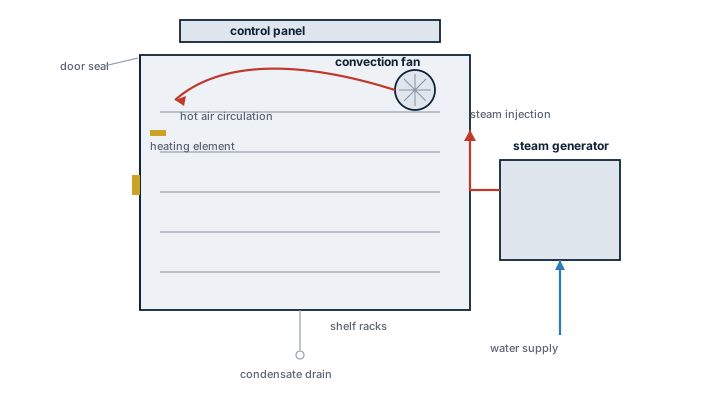
Main components
Heating system
Electric resistance elements or, on larger vessels, thermal-oil or steam-heated coils circulate hot air via a fan behind a baffle plate. Marine units are almost always electric given the galley's isolated services and the difficulty of running a gas line safely through accommodation spaces.
Steam generator
A separate boiler chamber or, on boiler-less designs, direct water injection onto a heated surface produces steam on demand. Boiler-type units hold better steam quality at low temperatures but need periodic descaling; boiler-less units are lighter and faster to respond but more sensitive to feed water quality.
Fan and reversing drive
Multi-speed fan with a reversing drive to even out heat distribution across multiple racks, critical on a rolling ship where natural convection alone would bake unevenly.
Controls and probe
Programmable controller with a core temperature probe for meat, letting the cycle end on product temperature rather than time alone, plus a self-clean cycle using the same steam and heat elements.
Selection and sizing
- Number of GN (gastronorm) pan positions against crew or passenger headcount and meal service pattern
- Water quality and whether a softener or reverse-osmosis pretreatment is needed to protect the steam generator from scale, particularly on vessels making their own fresh water
- Electrical supply available, since larger combi units draw significant three-phase load and compete with other galley equipment on the same feeder
- Drain connection and grease trap routing, since steam condensate and cleaning water both need a proper drain, not just a floor gully
- Gimbal or fixed mounting and rack retention suitable for the vessel's expected motion
Regulations and class
Galley equipment falls under the same fire safety requirements as the rest of the galley under SOLAS Chapter II-2, including clearance from combustibles and, where fitted, connection to the galley's fixed fire-extinguishing arrangements. The Maritime Labour Convention 2006 sets general requirements for galley equipment being suitable, safe and properly maintained for crew catering. Electrical installation of the unit is covered under the same class rules for electrical machinery as any other high-current galley appliance, including isolation and earthing requirements.
Typical faults
| Fault | Cause | Consequence |
|---|---|---|
| Uneven cooking across racks | Fan bearing wear or baffle plate damage disrupting airflow pattern | Complaints of undercooked product on one side, overcooked on the other |
| Steam generator scaling | Feed water not softened or RO-treated as specified | Reduced steam output, eventual element or boiler chamber failure |
| Door seal leakage | Gasket age or door misalignment from heavy daily use | Steam loss, longer cook times, moisture damage to nearby cabinetry |
| Core probe reading error | Probe tip fouled or connector corroded | Cycle ends on wrong product temperature, a food safety risk |
What to look for in a supplier
- Boiler versus boiler-less steam generation matched to the vessel's water treatment capability
- Gimbal mount or rack-retention hardware rated for the vessel's actual sea state exposure
- Self-clean cycle chemistry compatible with the galley's greywater and drain arrangements
- Service network reachable on the vessel's actual trading routes, not just the home port
Scale damage to the steam generator is almost always a feed-water problem, not a unit defect, so check the water treatment log before accepting a warranty claim on a repeat boiler failure.