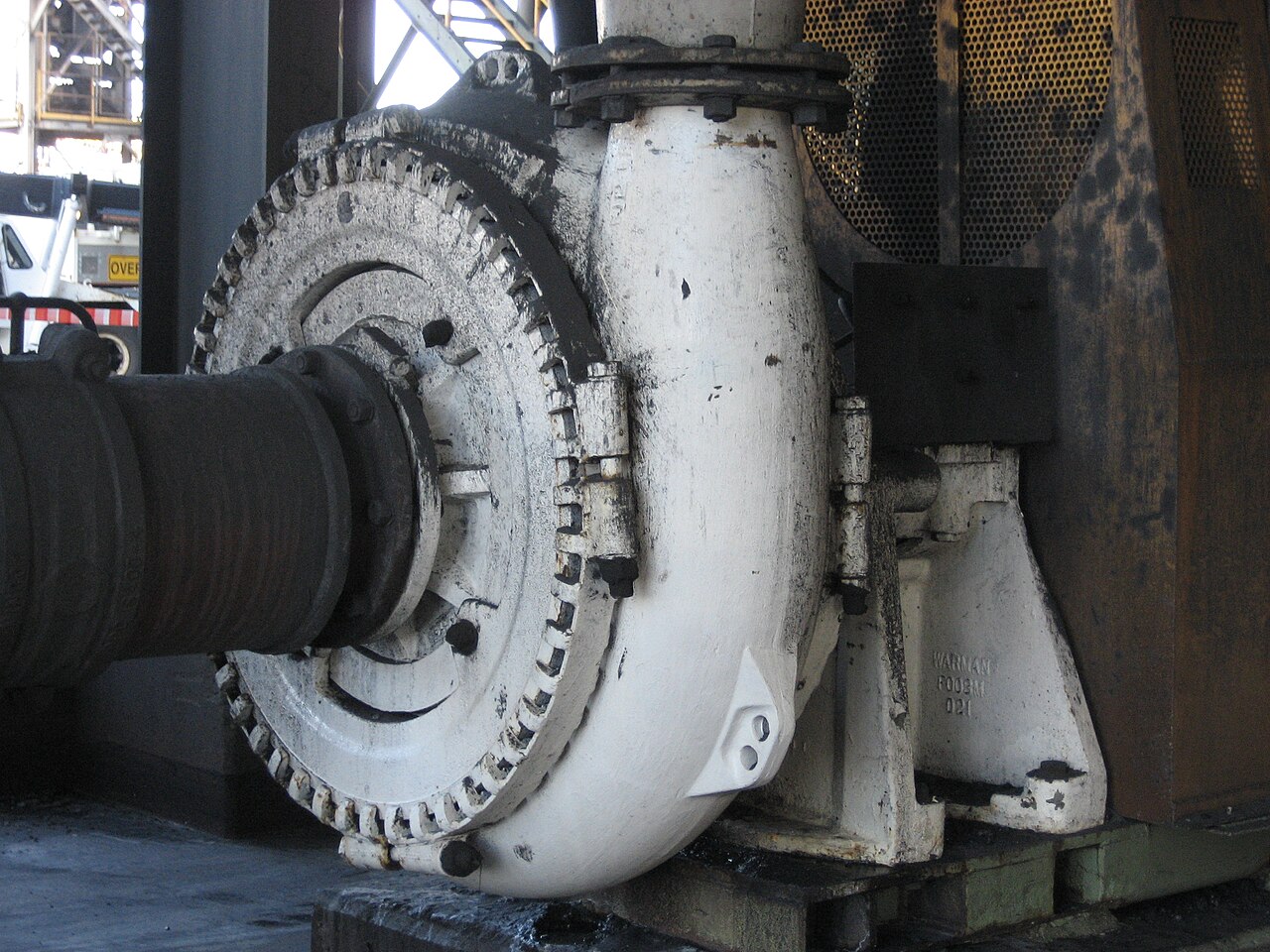
What to check on a Centrifugal Pump.
1 models from fike in Centrifugal Pump. Below: the full model list.
What defines this type
A centrifugal pump converts the rotational energy of an impeller into velocity, then into pressure as the fluid slows down through the volute casing. Its output flow is not fixed per revolution the way a gear or screw pump's is — flow and head move against each other along a curve, so the same pump delivers more flow at low head and less flow as the system resists it harder. That makes it well suited to seawater cooling, ballast, fire and general service duties where the fluid is thin and flow needs to vary with demand, and poorly suited to fuel oil or lube oil transfer at low temperature, where a positive displacement pump holds flow steady regardless of viscosity. Most centrifugal pumps also cannot self-prime without a special arrangement, since they rely on the fluid already filling the casing to build pressure.
Read the full guide
Main components
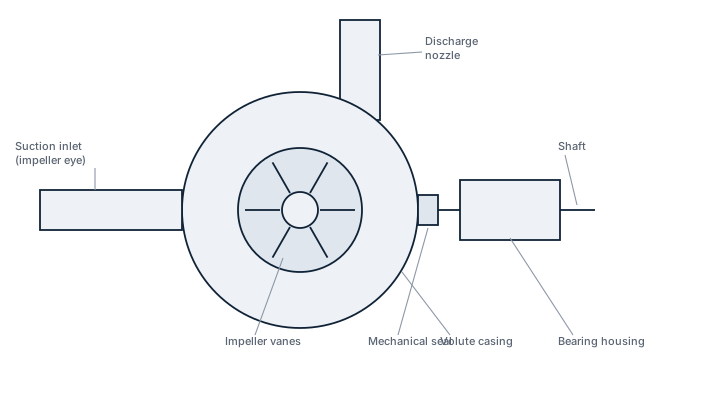
- Impeller — open, semi-open or closed design, the rotating element that does the actual work on the fluid.
- Volute casing — converts the impeller's velocity into pressure and directs flow to the discharge.
- Shaft seal — a mechanical seal or gland packing keeping fluid from tracking out along the shaft.
- Bearings — support the shaft and absorb radial and axial loads from the impeller.
- Wear rings — close clearances between impeller and casing that limit internal recirculation as they wear.
- Coupling — direct-coupled to the driving motor in most modern installations.
Selection / sizing
Sizing starts from the system curve: required flow in m3/h and head in metres or bar at that flow, checked against the pump's performance curve near its best efficiency point rather than at either extreme. Net positive suction head available on the installation must exceed what the pump requires with margin, particularly on suction-lift arrangements. Material selection follows the fluid — bronze or cast iron for general service and fresh water, duplex stainless or specially coated cast iron for raw seawater — and essential duties such as cooling, bilge, fire and ballast are fitted in duty/standby pairs so a single pump failure does not stop the function.
Regulations / Class
Class rules require duplication of pumps serving essential functions — cooling water, bilge, ballast and fire — so that one pump out of service for overhaul does not leave the ship without the function. SOLAS Chapter II-2 sets out fire pump capacity and pressure requirements, including the number of fire pumps and their independent power supplies. Bilge and ballast pumping capacity is checked at periodic survey against the figures the vessel was built to.
Typical faults
| Fault | Typical cause | Consequence |
|---|---|---|
| Cavitation | Insufficient NPSH available, blocked suction strainer | Impeller erosion, noise, falling flow and head |
| Mechanical seal failure | Dry running, worn faces, wrong seal for the fluid | Leakage, risk of unnoticed dry running and bearing damage |
| Bearing wear | Misalignment, lubrication failure | Vibration, shaft damage, eventual seizure |
| Wear ring clearance growth | Normal erosion over service life | Internal recirculation, reduced head and flow despite a normal-looking pump |
What to look for in a supplier
- Performance curve data matched to the actual system operating point, not only the pump's best efficiency point.
- Seal type and material suited to the specific fluid, temperature and pressure.
- Casing and impeller materials suited to the corrosion risk of the actual fluid, particularly for raw seawater duty.
- Spare parts commonality with pumps already in the fleet, to simplify stock.
Check the pump against the system curve at the actual operating point, not the catalogue's best efficiency point — a pump that looks oversized on paper often just means it is running off its curve and wearing faster than it should.