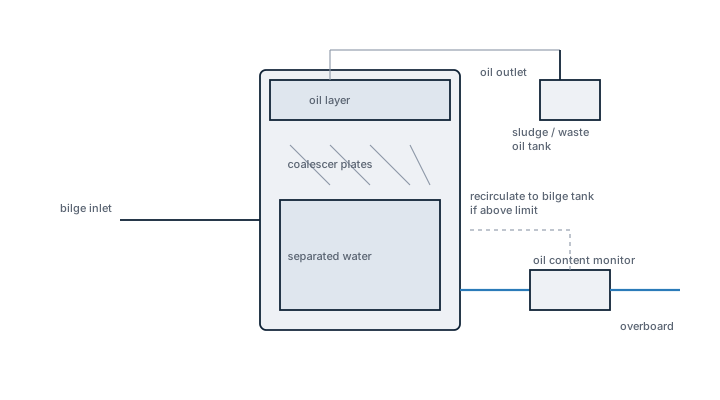
Bilge Water Separator
14 manufacturers · 163 models
GEA
31 ✓ 31 verified- Area: Oil content exceeding discharge limit (>15ppm)Check: Verify oil content monitor (OCM/15ppm bilge alarm) reading and ensure overboard discharge valve is closed when threshold exceeded. Check integrated data recorder logs for discharge violations during previous 18 months. Verify alarm activation within 5 seconds and auto-stop device activation within 20 seconds.
- Area: Sampling point contamination or improper installationCheck: Inspect sampling point location in vertical section of water effluent piping as close as practicable to separator outlet. Verify sample integrity (no floating oil layer), homogeneous mixture, and proper connection to oil content monitor. Ensure no bypass of OWS system and re-circulation facilities adjacent to overboard outlet.
- Area: Separator maintenance overdue or service interval exceededCheck: Confirm service interval tracking (16,000 operating hours for current models, 8,000 hours for legacy models). Verify maintenance records completion, including feed pump condition, automatic filter status, preheater function, bowl cleanliness, and oil monitor calibration. Check separator performance log for any efficiency degradation.
- Area: Oil monitor calibration accuracy loss or seal tamperingCheck: Verify 15ppm oil monitor calibration certificate and date of last calibration check (not exceeding 5 years from commissioning or manufacturer-specified interval). Inspect seal integrity on monitor access points. Confirm monitor cannot be accessed for cleaning or zeroing without breaking seal. Test alarm response with clean water to verify activation.
- Area: System bypass or incomplete separation during operationCheck: Inspect modular unit assembly (feed pump/preheater and separator units) for physical disconnection or valve bypass. Verify all key components installed: feed pump operational, automatic filter unblocked, preheater maintaining fluid temperature (60-85°C per model), separator bowl for cracks/erosion, and control panel displaying no fault codes. Check return piping configuration to prevent by-pass.
Typ-universelle Inspektionspunkte fuer Separators & Purifiers (verifiziert, 2026-06).
- Area: Oil content exceeding discharge limit (>15ppm)Check: Verify oil content monitor (OCM/15ppm bilge alarm) reading and ensure overboard discharge valve is closed when threshold exceeded. Check integrated data recorder logs for discharge violations during previous 18 months. Verify alarm activation within 5 seconds and auto-stop device activation within 20 seconds.
- Area: Sampling point contamination or improper installationCheck: Inspect sampling point location in vertical section of water effluent piping as close as practicable to separator outlet. Verify sample integrity (no floating oil layer), homogeneous mixture, and proper connection to oil content monitor. Ensure no bypass of OWS system and re-circulation facilities adjacent to overboard outlet.
- Area: Separator maintenance overdue or service interval exceededCheck: Confirm service interval tracking (16,000 operating hours for current models, 8,000 hours for legacy models). Verify maintenance records completion, including feed pump condition, automatic filter status, preheater function, bowl cleanliness, and oil monitor calibration. Check separator performance log for any efficiency degradation.
- Area: Oil monitor calibration accuracy loss or seal tamperingCheck: Verify 15ppm oil monitor calibration certificate and date of last calibration check (not exceeding 5 years from commissioning or manufacturer-specified interval). Inspect seal integrity on monitor access points. Confirm monitor cannot be accessed for cleaning or zeroing without breaking seal. Test alarm response with clean water to verify activation.
- Area: System bypass or incomplete separation during operationCheck: Inspect modular unit assembly (feed pump/preheater and separator units) for physical disconnection or valve bypass. Verify all key components installed: feed pump operational, automatic filter unblocked, preheater maintaining fluid temperature (60-85°C per model), separator bowl for cracks/erosion, and control panel displaying no fault codes. Check return piping configuration to prevent by-pass.
Typ-universelle Inspektionspunkte fuer Separators & Purifiers (verifiziert, 2026-06).
- Area: Oil content exceeding discharge limit (>15ppm)Check: Verify oil content monitor (OCM/15ppm bilge alarm) reading and ensure overboard discharge valve is closed when threshold exceeded. Check integrated data recorder logs for discharge violations during previous 18 months. Verify alarm activation within 5 seconds and auto-stop device activation within 20 seconds.
- Area: Sampling point contamination or improper installationCheck: Inspect sampling point location in vertical section of water effluent piping as close as practicable to separator outlet. Verify sample integrity (no floating oil layer), homogeneous mixture, and proper connection to oil content monitor. Ensure no bypass of OWS system and re-circulation facilities adjacent to overboard outlet.
- Area: Separator maintenance overdue or service interval exceededCheck: Confirm service interval tracking (16,000 operating hours for current models, 8,000 hours for legacy models). Verify maintenance records completion, including feed pump condition, automatic filter status, preheater function, bowl cleanliness, and oil monitor calibration. Check separator performance log for any efficiency degradation.
- Area: Oil monitor calibration accuracy loss or seal tamperingCheck: Verify 15ppm oil monitor calibration certificate and date of last calibration check (not exceeding 5 years from commissioning or manufacturer-specified interval). Inspect seal integrity on monitor access points. Confirm monitor cannot be accessed for cleaning or zeroing without breaking seal. Test alarm response with clean water to verify activation.
- Area: System bypass or incomplete separation during operationCheck: Inspect modular unit assembly (feed pump/preheater and separator units) for physical disconnection or valve bypass. Verify all key components installed: feed pump operational, automatic filter unblocked, preheater maintaining fluid temperature (60-85°C per model), separator bowl for cracks/erosion, and control panel displaying no fault codes. Check return piping configuration to prevent by-pass.
Typ-universelle Inspektionspunkte fuer Separators & Purifiers (verifiziert, 2026-06).
- Area: Oil content exceeding discharge limit (>15ppm)Check: Verify oil content monitor (OCM/15ppm bilge alarm) reading and ensure overboard discharge valve is closed when threshold exceeded. Check integrated data recorder logs for discharge violations during previous 18 months. Verify alarm activation within 5 seconds and auto-stop device activation within 20 seconds.
- Area: Sampling point contamination or improper installationCheck: Inspect sampling point location in vertical section of water effluent piping as close as practicable to separator outlet. Verify sample integrity (no floating oil layer), homogeneous mixture, and proper connection to oil content monitor. Ensure no bypass of OWS system and re-circulation facilities adjacent to overboard outlet.
- Area: Separator maintenance overdue or service interval exceededCheck: Confirm service interval tracking (16,000 operating hours for current models, 8,000 hours for legacy models). Verify maintenance records completion, including feed pump condition, automatic filter status, preheater function, bowl cleanliness, and oil monitor calibration. Check separator performance log for any efficiency degradation.
- Area: Oil monitor calibration accuracy loss or seal tamperingCheck: Verify 15ppm oil monitor calibration certificate and date of last calibration check (not exceeding 5 years from commissioning or manufacturer-specified interval). Inspect seal integrity on monitor access points. Confirm monitor cannot be accessed for cleaning or zeroing without breaking seal. Test alarm response with clean water to verify activation.
- Area: System bypass or incomplete separation during operationCheck: Inspect modular unit assembly (feed pump/preheater and separator units) for physical disconnection or valve bypass. Verify all key components installed: feed pump operational, automatic filter unblocked, preheater maintaining fluid temperature (60-85°C per model), separator bowl for cracks/erosion, and control panel displaying no fault codes. Check return piping configuration to prevent by-pass.
Typ-universelle Inspektionspunkte fuer Separators & Purifiers (verifiziert, 2026-06).
- Area: Oil content exceeding discharge limit (>15ppm)Check: Verify oil content monitor (OCM/15ppm bilge alarm) reading and ensure overboard discharge valve is closed when threshold exceeded. Check integrated data recorder logs for discharge violations during previous 18 months. Verify alarm activation within 5 seconds and auto-stop device activation within 20 seconds.
- Area: Sampling point contamination or improper installationCheck: Inspect sampling point location in vertical section of water effluent piping as close as practicable to separator outlet. Verify sample integrity (no floating oil layer), homogeneous mixture, and proper connection to oil content monitor. Ensure no bypass of OWS system and re-circulation facilities adjacent to overboard outlet.
- Area: Separator maintenance overdue or service interval exceededCheck: Confirm service interval tracking (16,000 operating hours for current models, 8,000 hours for legacy models). Verify maintenance records completion, including feed pump condition, automatic filter status, preheater function, bowl cleanliness, and oil monitor calibration. Check separator performance log for any efficiency degradation.
- Area: Oil monitor calibration accuracy loss or seal tamperingCheck: Verify 15ppm oil monitor calibration certificate and date of last calibration check (not exceeding 5 years from commissioning or manufacturer-specified interval). Inspect seal integrity on monitor access points. Confirm monitor cannot be accessed for cleaning or zeroing without breaking seal. Test alarm response with clean water to verify activation.
- Area: System bypass or incomplete separation during operationCheck: Inspect modular unit assembly (feed pump/preheater and separator units) for physical disconnection or valve bypass. Verify all key components installed: feed pump operational, automatic filter unblocked, preheater maintaining fluid temperature (60-85°C per model), separator bowl for cracks/erosion, and control panel displaying no fault codes. Check return piping configuration to prevent by-pass.
Typ-universelle Inspektionspunkte fuer Separators & Purifiers (verifiziert, 2026-06).
- Area: Oil content exceeding discharge limit (>15ppm)Check: Verify oil content monitor (OCM/15ppm bilge alarm) reading and ensure overboard discharge valve is closed when threshold exceeded. Check integrated data recorder logs for discharge violations during previous 18 months. Verify alarm activation within 5 seconds and auto-stop device activation within 20 seconds.
- Area: Sampling point contamination or improper installationCheck: Inspect sampling point location in vertical section of water effluent piping as close as practicable to separator outlet. Verify sample integrity (no floating oil layer), homogeneous mixture, and proper connection to oil content monitor. Ensure no bypass of OWS system and re-circulation facilities adjacent to overboard outlet.
- Area: Separator maintenance overdue or service interval exceededCheck: Confirm service interval tracking (16,000 operating hours for current models, 8,000 hours for legacy models). Verify maintenance records completion, including feed pump condition, automatic filter status, preheater function, bowl cleanliness, and oil monitor calibration. Check separator performance log for any efficiency degradation.
- Area: Oil monitor calibration accuracy loss or seal tamperingCheck: Verify 15ppm oil monitor calibration certificate and date of last calibration check (not exceeding 5 years from commissioning or manufacturer-specified interval). Inspect seal integrity on monitor access points. Confirm monitor cannot be accessed for cleaning or zeroing without breaking seal. Test alarm response with clean water to verify activation.
- Area: System bypass or incomplete separation during operationCheck: Inspect modular unit assembly (feed pump/preheater and separator units) for physical disconnection or valve bypass. Verify all key components installed: feed pump operational, automatic filter unblocked, preheater maintaining fluid temperature (60-85°C per model), separator bowl for cracks/erosion, and control panel displaying no fault codes. Check return piping configuration to prevent by-pass.
Typ-universelle Inspektionspunkte fuer Separators & Purifiers (verifiziert, 2026-06).
- Area: Oil content exceeding discharge limit (>15ppm)Check: Verify oil content monitor (OCM/15ppm bilge alarm) reading and ensure overboard discharge valve is closed when threshold exceeded. Check integrated data recorder logs for discharge violations during previous 18 months. Verify alarm activation within 5 seconds and auto-stop device activation within 20 seconds.
- Area: Sampling point contamination or improper installationCheck: Inspect sampling point location in vertical section of water effluent piping as close as practicable to separator outlet. Verify sample integrity (no floating oil layer), homogeneous mixture, and proper connection to oil content monitor. Ensure no bypass of OWS system and re-circulation facilities adjacent to overboard outlet.
- Area: Separator maintenance overdue or service interval exceededCheck: Confirm service interval tracking (16,000 operating hours for current models, 8,000 hours for legacy models). Verify maintenance records completion, including feed pump condition, automatic filter status, preheater function, bowl cleanliness, and oil monitor calibration. Check separator performance log for any efficiency degradation.
- Area: Oil monitor calibration accuracy loss or seal tamperingCheck: Verify 15ppm oil monitor calibration certificate and date of last calibration check (not exceeding 5 years from commissioning or manufacturer-specified interval). Inspect seal integrity on monitor access points. Confirm monitor cannot be accessed for cleaning or zeroing without breaking seal. Test alarm response with clean water to verify activation.
- Area: System bypass or incomplete separation during operationCheck: Inspect modular unit assembly (feed pump/preheater and separator units) for physical disconnection or valve bypass. Verify all key components installed: feed pump operational, automatic filter unblocked, preheater maintaining fluid temperature (60-85°C per model), separator bowl for cracks/erosion, and control panel displaying no fault codes. Check return piping configuration to prevent by-pass.
Typ-universelle Inspektionspunkte fuer Separators & Purifiers (verifiziert, 2026-06).
- Area: Oil content exceeding discharge limit (>15ppm)Check: Verify oil content monitor (OCM/15ppm bilge alarm) reading and ensure overboard discharge valve is closed when threshold exceeded. Check integrated data recorder logs for discharge violations during previous 18 months. Verify alarm activation within 5 seconds and auto-stop device activation within 20 seconds.
- Area: Sampling point contamination or improper installationCheck: Inspect sampling point location in vertical section of water effluent piping as close as practicable to separator outlet. Verify sample integrity (no floating oil layer), homogeneous mixture, and proper connection to oil content monitor. Ensure no bypass of OWS system and re-circulation facilities adjacent to overboard outlet.
- Area: Separator maintenance overdue or service interval exceededCheck: Confirm service interval tracking (16,000 operating hours for current models, 8,000 hours for legacy models). Verify maintenance records completion, including feed pump condition, automatic filter status, preheater function, bowl cleanliness, and oil monitor calibration. Check separator performance log for any efficiency degradation.
- Area: Oil monitor calibration accuracy loss or seal tamperingCheck: Verify 15ppm oil monitor calibration certificate and date of last calibration check (not exceeding 5 years from commissioning or manufacturer-specified interval). Inspect seal integrity on monitor access points. Confirm monitor cannot be accessed for cleaning or zeroing without breaking seal. Test alarm response with clean water to verify activation.
- Area: System bypass or incomplete separation during operationCheck: Inspect modular unit assembly (feed pump/preheater and separator units) for physical disconnection or valve bypass. Verify all key components installed: feed pump operational, automatic filter unblocked, preheater maintaining fluid temperature (60-85°C per model), separator bowl for cracks/erosion, and control panel displaying no fault codes. Check return piping configuration to prevent by-pass.
Typ-universelle Inspektionspunkte fuer Separators & Purifiers (verifiziert, 2026-06).
- Area: Oil content exceeding discharge limit (>15ppm)Check: Verify oil content monitor (OCM/15ppm bilge alarm) reading and ensure overboard discharge valve is closed when threshold exceeded. Check integrated data recorder logs for discharge violations during previous 18 months. Verify alarm activation within 5 seconds and auto-stop device activation within 20 seconds.
- Area: Sampling point contamination or improper installationCheck: Inspect sampling point location in vertical section of water effluent piping as close as practicable to separator outlet. Verify sample integrity (no floating oil layer), homogeneous mixture, and proper connection to oil content monitor. Ensure no bypass of OWS system and re-circulation facilities adjacent to overboard outlet.
- Area: Separator maintenance overdue or service interval exceededCheck: Confirm service interval tracking (16,000 operating hours for current models, 8,000 hours for legacy models). Verify maintenance records completion, including feed pump condition, automatic filter status, preheater function, bowl cleanliness, and oil monitor calibration. Check separator performance log for any efficiency degradation.
- Area: Oil monitor calibration accuracy loss or seal tamperingCheck: Verify 15ppm oil monitor calibration certificate and date of last calibration check (not exceeding 5 years from commissioning or manufacturer-specified interval). Inspect seal integrity on monitor access points. Confirm monitor cannot be accessed for cleaning or zeroing without breaking seal. Test alarm response with clean water to verify activation.
- Area: System bypass or incomplete separation during operationCheck: Inspect modular unit assembly (feed pump/preheater and separator units) for physical disconnection or valve bypass. Verify all key components installed: feed pump operational, automatic filter unblocked, preheater maintaining fluid temperature (60-85°C per model), separator bowl for cracks/erosion, and control panel displaying no fault codes. Check return piping configuration to prevent by-pass.
Typ-universelle Inspektionspunkte fuer Separators & Purifiers (verifiziert, 2026-06).
- Area: Oil content exceeding discharge limit (>15ppm)Check: Verify oil content monitor (OCM/15ppm bilge alarm) reading and ensure overboard discharge valve is closed when threshold exceeded. Check integrated data recorder logs for discharge violations during previous 18 months. Verify alarm activation within 5 seconds and auto-stop device activation within 20 seconds.
- Area: Sampling point contamination or improper installationCheck: Inspect sampling point location in vertical section of water effluent piping as close as practicable to separator outlet. Verify sample integrity (no floating oil layer), homogeneous mixture, and proper connection to oil content monitor. Ensure no bypass of OWS system and re-circulation facilities adjacent to overboard outlet.
- Area: Separator maintenance overdue or service interval exceededCheck: Confirm service interval tracking (16,000 operating hours for current models, 8,000 hours for legacy models). Verify maintenance records completion, including feed pump condition, automatic filter status, preheater function, bowl cleanliness, and oil monitor calibration. Check separator performance log for any efficiency degradation.
- Area: Oil monitor calibration accuracy loss or seal tamperingCheck: Verify 15ppm oil monitor calibration certificate and date of last calibration check (not exceeding 5 years from commissioning or manufacturer-specified interval). Inspect seal integrity on monitor access points. Confirm monitor cannot be accessed for cleaning or zeroing without breaking seal. Test alarm response with clean water to verify activation.
- Area: System bypass or incomplete separation during operationCheck: Inspect modular unit assembly (feed pump/preheater and separator units) for physical disconnection or valve bypass. Verify all key components installed: feed pump operational, automatic filter unblocked, preheater maintaining fluid temperature (60-85°C per model), separator bowl for cracks/erosion, and control panel displaying no fault codes. Check return piping configuration to prevent by-pass.
Typ-universelle Inspektionspunkte fuer Separators & Purifiers (verifiziert, 2026-06).
- Area: Oil content exceeding discharge limit (>15ppm)Check: Verify oil content monitor (OCM/15ppm bilge alarm) reading and ensure overboard discharge valve is closed when threshold exceeded. Check integrated data recorder logs for discharge violations during previous 18 months. Verify alarm activation within 5 seconds and auto-stop device activation within 20 seconds.
- Area: Sampling point contamination or improper installationCheck: Inspect sampling point location in vertical section of water effluent piping as close as practicable to separator outlet. Verify sample integrity (no floating oil layer), homogeneous mixture, and proper connection to oil content monitor. Ensure no bypass of OWS system and re-circulation facilities adjacent to overboard outlet.
- Area: Separator maintenance overdue or service interval exceededCheck: Confirm service interval tracking (16,000 operating hours for current models, 8,000 hours for legacy models). Verify maintenance records completion, including feed pump condition, automatic filter status, preheater function, bowl cleanliness, and oil monitor calibration. Check separator performance log for any efficiency degradation.
- Area: Oil monitor calibration accuracy loss or seal tamperingCheck: Verify 15ppm oil monitor calibration certificate and date of last calibration check (not exceeding 5 years from commissioning or manufacturer-specified interval). Inspect seal integrity on monitor access points. Confirm monitor cannot be accessed for cleaning or zeroing without breaking seal. Test alarm response with clean water to verify activation.
- Area: System bypass or incomplete separation during operationCheck: Inspect modular unit assembly (feed pump/preheater and separator units) for physical disconnection or valve bypass. Verify all key components installed: feed pump operational, automatic filter unblocked, preheater maintaining fluid temperature (60-85°C per model), separator bowl for cracks/erosion, and control panel displaying no fault codes. Check return piping configuration to prevent by-pass.
Typ-universelle Inspektionspunkte fuer Separators & Purifiers (verifiziert, 2026-06).
- Area: Oil content exceeding discharge limit (>15ppm)Check: Verify oil content monitor (OCM/15ppm bilge alarm) reading and ensure overboard discharge valve is closed when threshold exceeded. Check integrated data recorder logs for discharge violations during previous 18 months. Verify alarm activation within 5 seconds and auto-stop device activation within 20 seconds.
- Area: Sampling point contamination or improper installationCheck: Inspect sampling point location in vertical section of water effluent piping as close as practicable to separator outlet. Verify sample integrity (no floating oil layer), homogeneous mixture, and proper connection to oil content monitor. Ensure no bypass of OWS system and re-circulation facilities adjacent to overboard outlet.
- Area: Separator maintenance overdue or service interval exceededCheck: Confirm service interval tracking (16,000 operating hours for current models, 8,000 hours for legacy models). Verify maintenance records completion, including feed pump condition, automatic filter status, preheater function, bowl cleanliness, and oil monitor calibration. Check separator performance log for any efficiency degradation.
- Area: Oil monitor calibration accuracy loss or seal tamperingCheck: Verify 15ppm oil monitor calibration certificate and date of last calibration check (not exceeding 5 years from commissioning or manufacturer-specified interval). Inspect seal integrity on monitor access points. Confirm monitor cannot be accessed for cleaning or zeroing without breaking seal. Test alarm response with clean water to verify activation.
- Area: System bypass or incomplete separation during operationCheck: Inspect modular unit assembly (feed pump/preheater and separator units) for physical disconnection or valve bypass. Verify all key components installed: feed pump operational, automatic filter unblocked, preheater maintaining fluid temperature (60-85°C per model), separator bowl for cracks/erosion, and control panel displaying no fault codes. Check return piping configuration to prevent by-pass.
Typ-universelle Inspektionspunkte fuer Separators & Purifiers (verifiziert, 2026-06).
- Area: Oil content exceeding discharge limit (>15ppm)Check: Verify oil content monitor (OCM/15ppm bilge alarm) reading and ensure overboard discharge valve is closed when threshold exceeded. Check integrated data recorder logs for discharge violations during previous 18 months. Verify alarm activation within 5 seconds and auto-stop device activation within 20 seconds.
- Area: Sampling point contamination or improper installationCheck: Inspect sampling point location in vertical section of water effluent piping as close as practicable to separator outlet. Verify sample integrity (no floating oil layer), homogeneous mixture, and proper connection to oil content monitor. Ensure no bypass of OWS system and re-circulation facilities adjacent to overboard outlet.
- Area: Separator maintenance overdue or service interval exceededCheck: Confirm service interval tracking (16,000 operating hours for current models, 8,000 hours for legacy models). Verify maintenance records completion, including feed pump condition, automatic filter status, preheater function, bowl cleanliness, and oil monitor calibration. Check separator performance log for any efficiency degradation.
- Area: Oil monitor calibration accuracy loss or seal tamperingCheck: Verify 15ppm oil monitor calibration certificate and date of last calibration check (not exceeding 5 years from commissioning or manufacturer-specified interval). Inspect seal integrity on monitor access points. Confirm monitor cannot be accessed for cleaning or zeroing without breaking seal. Test alarm response with clean water to verify activation.
- Area: System bypass or incomplete separation during operationCheck: Inspect modular unit assembly (feed pump/preheater and separator units) for physical disconnection or valve bypass. Verify all key components installed: feed pump operational, automatic filter unblocked, preheater maintaining fluid temperature (60-85°C per model), separator bowl for cracks/erosion, and control panel displaying no fault codes. Check return piping configuration to prevent by-pass.
Typ-universelle Inspektionspunkte fuer Separators & Purifiers (verifiziert, 2026-06).
- Area: Oil content exceeding discharge limit (>15ppm)Check: Verify oil content monitor (OCM/15ppm bilge alarm) reading and ensure overboard discharge valve is closed when threshold exceeded. Check integrated data recorder logs for discharge violations during previous 18 months. Verify alarm activation within 5 seconds and auto-stop device activation within 20 seconds.
- Area: Sampling point contamination or improper installationCheck: Inspect sampling point location in vertical section of water effluent piping as close as practicable to separator outlet. Verify sample integrity (no floating oil layer), homogeneous mixture, and proper connection to oil content monitor. Ensure no bypass of OWS system and re-circulation facilities adjacent to overboard outlet.
- Area: Separator maintenance overdue or service interval exceededCheck: Confirm service interval tracking (16,000 operating hours for current models, 8,000 hours for legacy models). Verify maintenance records completion, including feed pump condition, automatic filter status, preheater function, bowl cleanliness, and oil monitor calibration. Check separator performance log for any efficiency degradation.
- Area: Oil monitor calibration accuracy loss or seal tamperingCheck: Verify 15ppm oil monitor calibration certificate and date of last calibration check (not exceeding 5 years from commissioning or manufacturer-specified interval). Inspect seal integrity on monitor access points. Confirm monitor cannot be accessed for cleaning or zeroing without breaking seal. Test alarm response with clean water to verify activation.
- Area: System bypass or incomplete separation during operationCheck: Inspect modular unit assembly (feed pump/preheater and separator units) for physical disconnection or valve bypass. Verify all key components installed: feed pump operational, automatic filter unblocked, preheater maintaining fluid temperature (60-85°C per model), separator bowl for cracks/erosion, and control panel displaying no fault codes. Check return piping configuration to prevent by-pass.
Typ-universelle Inspektionspunkte fuer Separators & Purifiers (verifiziert, 2026-06).
- Area: Oil content exceeding discharge limit (>15ppm)Check: Verify oil content monitor (OCM/15ppm bilge alarm) reading and ensure overboard discharge valve is closed when threshold exceeded. Check integrated data recorder logs for discharge violations during previous 18 months. Verify alarm activation within 5 seconds and auto-stop device activation within 20 seconds.
- Area: Sampling point contamination or improper installationCheck: Inspect sampling point location in vertical section of water effluent piping as close as practicable to separator outlet. Verify sample integrity (no floating oil layer), homogeneous mixture, and proper connection to oil content monitor. Ensure no bypass of OWS system and re-circulation facilities adjacent to overboard outlet.
- Area: Separator maintenance overdue or service interval exceededCheck: Confirm service interval tracking (16,000 operating hours for current models, 8,000 hours for legacy models). Verify maintenance records completion, including feed pump condition, automatic filter status, preheater function, bowl cleanliness, and oil monitor calibration. Check separator performance log for any efficiency degradation.
- Area: Oil monitor calibration accuracy loss or seal tamperingCheck: Verify 15ppm oil monitor calibration certificate and date of last calibration check (not exceeding 5 years from commissioning or manufacturer-specified interval). Inspect seal integrity on monitor access points. Confirm monitor cannot be accessed for cleaning or zeroing without breaking seal. Test alarm response with clean water to verify activation.
- Area: System bypass or incomplete separation during operationCheck: Inspect modular unit assembly (feed pump/preheater and separator units) for physical disconnection or valve bypass. Verify all key components installed: feed pump operational, automatic filter unblocked, preheater maintaining fluid temperature (60-85°C per model), separator bowl for cracks/erosion, and control panel displaying no fault codes. Check return piping configuration to prevent by-pass.
Typ-universelle Inspektionspunkte fuer Separators & Purifiers (verifiziert, 2026-06).
- Area: Oil content exceeding discharge limit (>15ppm)Check: Verify oil content monitor (OCM/15ppm bilge alarm) reading and ensure overboard discharge valve is closed when threshold exceeded. Check integrated data recorder logs for discharge violations during previous 18 months. Verify alarm activation within 5 seconds and auto-stop device activation within 20 seconds.
- Area: Sampling point contamination or improper installationCheck: Inspect sampling point location in vertical section of water effluent piping as close as practicable to separator outlet. Verify sample integrity (no floating oil layer), homogeneous mixture, and proper connection to oil content monitor. Ensure no bypass of OWS system and re-circulation facilities adjacent to overboard outlet.
- Area: Separator maintenance overdue or service interval exceededCheck: Confirm service interval tracking (16,000 operating hours for current models, 8,000 hours for legacy models). Verify maintenance records completion, including feed pump condition, automatic filter status, preheater function, bowl cleanliness, and oil monitor calibration. Check separator performance log for any efficiency degradation.
- Area: Oil monitor calibration accuracy loss or seal tamperingCheck: Verify 15ppm oil monitor calibration certificate and date of last calibration check (not exceeding 5 years from commissioning or manufacturer-specified interval). Inspect seal integrity on monitor access points. Confirm monitor cannot be accessed for cleaning or zeroing without breaking seal. Test alarm response with clean water to verify activation.
- Area: System bypass or incomplete separation during operationCheck: Inspect modular unit assembly (feed pump/preheater and separator units) for physical disconnection or valve bypass. Verify all key components installed: feed pump operational, automatic filter unblocked, preheater maintaining fluid temperature (60-85°C per model), separator bowl for cracks/erosion, and control panel displaying no fault codes. Check return piping configuration to prevent by-pass.
Typ-universelle Inspektionspunkte fuer Separators & Purifiers (verifiziert, 2026-06).
- Area: Oil content exceeding discharge limit (>15ppm)Check: Verify oil content monitor (OCM/15ppm bilge alarm) reading and ensure overboard discharge valve is closed when threshold exceeded. Check integrated data recorder logs for discharge violations during previous 18 months. Verify alarm activation within 5 seconds and auto-stop device activation within 20 seconds.
- Area: Sampling point contamination or improper installationCheck: Inspect sampling point location in vertical section of water effluent piping as close as practicable to separator outlet. Verify sample integrity (no floating oil layer), homogeneous mixture, and proper connection to oil content monitor. Ensure no bypass of OWS system and re-circulation facilities adjacent to overboard outlet.
- Area: Separator maintenance overdue or service interval exceededCheck: Confirm service interval tracking (16,000 operating hours for current models, 8,000 hours for legacy models). Verify maintenance records completion, including feed pump condition, automatic filter status, preheater function, bowl cleanliness, and oil monitor calibration. Check separator performance log for any efficiency degradation.
- Area: Oil monitor calibration accuracy loss or seal tamperingCheck: Verify 15ppm oil monitor calibration certificate and date of last calibration check (not exceeding 5 years from commissioning or manufacturer-specified interval). Inspect seal integrity on monitor access points. Confirm monitor cannot be accessed for cleaning or zeroing without breaking seal. Test alarm response with clean water to verify activation.
- Area: System bypass or incomplete separation during operationCheck: Inspect modular unit assembly (feed pump/preheater and separator units) for physical disconnection or valve bypass. Verify all key components installed: feed pump operational, automatic filter unblocked, preheater maintaining fluid temperature (60-85°C per model), separator bowl for cracks/erosion, and control panel displaying no fault codes. Check return piping configuration to prevent by-pass.
Typ-universelle Inspektionspunkte fuer Separators & Purifiers (verifiziert, 2026-06).
- Area: Oil content exceeding discharge limit (>15ppm)Check: Verify oil content monitor (OCM/15ppm bilge alarm) reading and ensure overboard discharge valve is closed when threshold exceeded. Check integrated data recorder logs for discharge violations during previous 18 months. Verify alarm activation within 5 seconds and auto-stop device activation within 20 seconds.
- Area: Sampling point contamination or improper installationCheck: Inspect sampling point location in vertical section of water effluent piping as close as practicable to separator outlet. Verify sample integrity (no floating oil layer), homogeneous mixture, and proper connection to oil content monitor. Ensure no bypass of OWS system and re-circulation facilities adjacent to overboard outlet.
- Area: Separator maintenance overdue or service interval exceededCheck: Confirm service interval tracking (16,000 operating hours for current models, 8,000 hours for legacy models). Verify maintenance records completion, including feed pump condition, automatic filter status, preheater function, bowl cleanliness, and oil monitor calibration. Check separator performance log for any efficiency degradation.
- Area: Oil monitor calibration accuracy loss or seal tamperingCheck: Verify 15ppm oil monitor calibration certificate and date of last calibration check (not exceeding 5 years from commissioning or manufacturer-specified interval). Inspect seal integrity on monitor access points. Confirm monitor cannot be accessed for cleaning or zeroing without breaking seal. Test alarm response with clean water to verify activation.
- Area: System bypass or incomplete separation during operationCheck: Inspect modular unit assembly (feed pump/preheater and separator units) for physical disconnection or valve bypass. Verify all key components installed: feed pump operational, automatic filter unblocked, preheater maintaining fluid temperature (60-85°C per model), separator bowl for cracks/erosion, and control panel displaying no fault codes. Check return piping configuration to prevent by-pass.
Typ-universelle Inspektionspunkte fuer Separators & Purifiers (verifiziert, 2026-06).
- Area: Oil content exceeding discharge limit (>15ppm)Check: Verify oil content monitor (OCM/15ppm bilge alarm) reading and ensure overboard discharge valve is closed when threshold exceeded. Check integrated data recorder logs for discharge violations during previous 18 months. Verify alarm activation within 5 seconds and auto-stop device activation within 20 seconds.
- Area: Sampling point contamination or improper installationCheck: Inspect sampling point location in vertical section of water effluent piping as close as practicable to separator outlet. Verify sample integrity (no floating oil layer), homogeneous mixture, and proper connection to oil content monitor. Ensure no bypass of OWS system and re-circulation facilities adjacent to overboard outlet.
- Area: Separator maintenance overdue or service interval exceededCheck: Confirm service interval tracking (16,000 operating hours for current models, 8,000 hours for legacy models). Verify maintenance records completion, including feed pump condition, automatic filter status, preheater function, bowl cleanliness, and oil monitor calibration. Check separator performance log for any efficiency degradation.
- Area: Oil monitor calibration accuracy loss or seal tamperingCheck: Verify 15ppm oil monitor calibration certificate and date of last calibration check (not exceeding 5 years from commissioning or manufacturer-specified interval). Inspect seal integrity on monitor access points. Confirm monitor cannot be accessed for cleaning or zeroing without breaking seal. Test alarm response with clean water to verify activation.
- Area: System bypass or incomplete separation during operationCheck: Inspect modular unit assembly (feed pump/preheater and separator units) for physical disconnection or valve bypass. Verify all key components installed: feed pump operational, automatic filter unblocked, preheater maintaining fluid temperature (60-85°C per model), separator bowl for cracks/erosion, and control panel displaying no fault codes. Check return piping configuration to prevent by-pass.
Typ-universelle Inspektionspunkte fuer Separators & Purifiers (verifiziert, 2026-06).
- Area: Oil content exceeding discharge limit (>15ppm)Check: Verify oil content monitor (OCM/15ppm bilge alarm) reading and ensure overboard discharge valve is closed when threshold exceeded. Check integrated data recorder logs for discharge violations during previous 18 months. Verify alarm activation within 5 seconds and auto-stop device activation within 20 seconds.
- Area: Sampling point contamination or improper installationCheck: Inspect sampling point location in vertical section of water effluent piping as close as practicable to separator outlet. Verify sample integrity (no floating oil layer), homogeneous mixture, and proper connection to oil content monitor. Ensure no bypass of OWS system and re-circulation facilities adjacent to overboard outlet.
- Area: Separator maintenance overdue or service interval exceededCheck: Confirm service interval tracking (16,000 operating hours for current models, 8,000 hours for legacy models). Verify maintenance records completion, including feed pump condition, automatic filter status, preheater function, bowl cleanliness, and oil monitor calibration. Check separator performance log for any efficiency degradation.
- Area: Oil monitor calibration accuracy loss or seal tamperingCheck: Verify 15ppm oil monitor calibration certificate and date of last calibration check (not exceeding 5 years from commissioning or manufacturer-specified interval). Inspect seal integrity on monitor access points. Confirm monitor cannot be accessed for cleaning or zeroing without breaking seal. Test alarm response with clean water to verify activation.
- Area: System bypass or incomplete separation during operationCheck: Inspect modular unit assembly (feed pump/preheater and separator units) for physical disconnection or valve bypass. Verify all key components installed: feed pump operational, automatic filter unblocked, preheater maintaining fluid temperature (60-85°C per model), separator bowl for cracks/erosion, and control panel displaying no fault codes. Check return piping configuration to prevent by-pass.
Typ-universelle Inspektionspunkte fuer Separators & Purifiers (verifiziert, 2026-06).
- Area: Oil content exceeding discharge limit (>15ppm)Check: Verify oil content monitor (OCM/15ppm bilge alarm) reading and ensure overboard discharge valve is closed when threshold exceeded. Check integrated data recorder logs for discharge violations during previous 18 months. Verify alarm activation within 5 seconds and auto-stop device activation within 20 seconds.
- Area: Sampling point contamination or improper installationCheck: Inspect sampling point location in vertical section of water effluent piping as close as practicable to separator outlet. Verify sample integrity (no floating oil layer), homogeneous mixture, and proper connection to oil content monitor. Ensure no bypass of OWS system and re-circulation facilities adjacent to overboard outlet.
- Area: Separator maintenance overdue or service interval exceededCheck: Confirm service interval tracking (16,000 operating hours for current models, 8,000 hours for legacy models). Verify maintenance records completion, including feed pump condition, automatic filter status, preheater function, bowl cleanliness, and oil monitor calibration. Check separator performance log for any efficiency degradation.
- Area: Oil monitor calibration accuracy loss or seal tamperingCheck: Verify 15ppm oil monitor calibration certificate and date of last calibration check (not exceeding 5 years from commissioning or manufacturer-specified interval). Inspect seal integrity on monitor access points. Confirm monitor cannot be accessed for cleaning or zeroing without breaking seal. Test alarm response with clean water to verify activation.
- Area: System bypass or incomplete separation during operationCheck: Inspect modular unit assembly (feed pump/preheater and separator units) for physical disconnection or valve bypass. Verify all key components installed: feed pump operational, automatic filter unblocked, preheater maintaining fluid temperature (60-85°C per model), separator bowl for cracks/erosion, and control panel displaying no fault codes. Check return piping configuration to prevent by-pass.
Typ-universelle Inspektionspunkte fuer Separators & Purifiers (verifiziert, 2026-06).
- Area: Oil content exceeding discharge limit (>15ppm)Check: Verify oil content monitor (OCM/15ppm bilge alarm) reading and ensure overboard discharge valve is closed when threshold exceeded. Check integrated data recorder logs for discharge violations during previous 18 months. Verify alarm activation within 5 seconds and auto-stop device activation within 20 seconds.
- Area: Sampling point contamination or improper installationCheck: Inspect sampling point location in vertical section of water effluent piping as close as practicable to separator outlet. Verify sample integrity (no floating oil layer), homogeneous mixture, and proper connection to oil content monitor. Ensure no bypass of OWS system and re-circulation facilities adjacent to overboard outlet.
- Area: Separator maintenance overdue or service interval exceededCheck: Confirm service interval tracking (16,000 operating hours for current models, 8,000 hours for legacy models). Verify maintenance records completion, including feed pump condition, automatic filter status, preheater function, bowl cleanliness, and oil monitor calibration. Check separator performance log for any efficiency degradation.
- Area: Oil monitor calibration accuracy loss or seal tamperingCheck: Verify 15ppm oil monitor calibration certificate and date of last calibration check (not exceeding 5 years from commissioning or manufacturer-specified interval). Inspect seal integrity on monitor access points. Confirm monitor cannot be accessed for cleaning or zeroing without breaking seal. Test alarm response with clean water to verify activation.
- Area: System bypass or incomplete separation during operationCheck: Inspect modular unit assembly (feed pump/preheater and separator units) for physical disconnection or valve bypass. Verify all key components installed: feed pump operational, automatic filter unblocked, preheater maintaining fluid temperature (60-85°C per model), separator bowl for cracks/erosion, and control panel displaying no fault codes. Check return piping configuration to prevent by-pass.
Typ-universelle Inspektionspunkte fuer Separators & Purifiers (verifiziert, 2026-06).
- Area: Oil content exceeding discharge limit (>15ppm)Check: Verify oil content monitor (OCM/15ppm bilge alarm) reading and ensure overboard discharge valve is closed when threshold exceeded. Check integrated data recorder logs for discharge violations during previous 18 months. Verify alarm activation within 5 seconds and auto-stop device activation within 20 seconds.
- Area: Sampling point contamination or improper installationCheck: Inspect sampling point location in vertical section of water effluent piping as close as practicable to separator outlet. Verify sample integrity (no floating oil layer), homogeneous mixture, and proper connection to oil content monitor. Ensure no bypass of OWS system and re-circulation facilities adjacent to overboard outlet.
- Area: Separator maintenance overdue or service interval exceededCheck: Confirm service interval tracking (16,000 operating hours for current models, 8,000 hours for legacy models). Verify maintenance records completion, including feed pump condition, automatic filter status, preheater function, bowl cleanliness, and oil monitor calibration. Check separator performance log for any efficiency degradation.
- Area: Oil monitor calibration accuracy loss or seal tamperingCheck: Verify 15ppm oil monitor calibration certificate and date of last calibration check (not exceeding 5 years from commissioning or manufacturer-specified interval). Inspect seal integrity on monitor access points. Confirm monitor cannot be accessed for cleaning or zeroing without breaking seal. Test alarm response with clean water to verify activation.
- Area: System bypass or incomplete separation during operationCheck: Inspect modular unit assembly (feed pump/preheater and separator units) for physical disconnection or valve bypass. Verify all key components installed: feed pump operational, automatic filter unblocked, preheater maintaining fluid temperature (60-85°C per model), separator bowl for cracks/erosion, and control panel displaying no fault codes. Check return piping configuration to prevent by-pass.
Typ-universelle Inspektionspunkte fuer Separators & Purifiers (verifiziert, 2026-06).
- Area: Oil content exceeding discharge limit (>15ppm)Check: Verify oil content monitor (OCM/15ppm bilge alarm) reading and ensure overboard discharge valve is closed when threshold exceeded. Check integrated data recorder logs for discharge violations during previous 18 months. Verify alarm activation within 5 seconds and auto-stop device activation within 20 seconds.
- Area: Sampling point contamination or improper installationCheck: Inspect sampling point location in vertical section of water effluent piping as close as practicable to separator outlet. Verify sample integrity (no floating oil layer), homogeneous mixture, and proper connection to oil content monitor. Ensure no bypass of OWS system and re-circulation facilities adjacent to overboard outlet.
- Area: Separator maintenance overdue or service interval exceededCheck: Confirm service interval tracking (16,000 operating hours for current models, 8,000 hours for legacy models). Verify maintenance records completion, including feed pump condition, automatic filter status, preheater function, bowl cleanliness, and oil monitor calibration. Check separator performance log for any efficiency degradation.
- Area: Oil monitor calibration accuracy loss or seal tamperingCheck: Verify 15ppm oil monitor calibration certificate and date of last calibration check (not exceeding 5 years from commissioning or manufacturer-specified interval). Inspect seal integrity on monitor access points. Confirm monitor cannot be accessed for cleaning or zeroing without breaking seal. Test alarm response with clean water to verify activation.
- Area: System bypass or incomplete separation during operationCheck: Inspect modular unit assembly (feed pump/preheater and separator units) for physical disconnection or valve bypass. Verify all key components installed: feed pump operational, automatic filter unblocked, preheater maintaining fluid temperature (60-85°C per model), separator bowl for cracks/erosion, and control panel displaying no fault codes. Check return piping configuration to prevent by-pass.
Typ-universelle Inspektionspunkte fuer Separators & Purifiers (verifiziert, 2026-06).
- Area: Oil content exceeding discharge limit (>15ppm)Check: Verify oil content monitor (OCM/15ppm bilge alarm) reading and ensure overboard discharge valve is closed when threshold exceeded. Check integrated data recorder logs for discharge violations during previous 18 months. Verify alarm activation within 5 seconds and auto-stop device activation within 20 seconds.
- Area: Sampling point contamination or improper installationCheck: Inspect sampling point location in vertical section of water effluent piping as close as practicable to separator outlet. Verify sample integrity (no floating oil layer), homogeneous mixture, and proper connection to oil content monitor. Ensure no bypass of OWS system and re-circulation facilities adjacent to overboard outlet.
- Area: Separator maintenance overdue or service interval exceededCheck: Confirm service interval tracking (16,000 operating hours for current models, 8,000 hours for legacy models). Verify maintenance records completion, including feed pump condition, automatic filter status, preheater function, bowl cleanliness, and oil monitor calibration. Check separator performance log for any efficiency degradation.
- Area: Oil monitor calibration accuracy loss or seal tamperingCheck: Verify 15ppm oil monitor calibration certificate and date of last calibration check (not exceeding 5 years from commissioning or manufacturer-specified interval). Inspect seal integrity on monitor access points. Confirm monitor cannot be accessed for cleaning or zeroing without breaking seal. Test alarm response with clean water to verify activation.
- Area: System bypass or incomplete separation during operationCheck: Inspect modular unit assembly (feed pump/preheater and separator units) for physical disconnection or valve bypass. Verify all key components installed: feed pump operational, automatic filter unblocked, preheater maintaining fluid temperature (60-85°C per model), separator bowl for cracks/erosion, and control panel displaying no fault codes. Check return piping configuration to prevent by-pass.
Typ-universelle Inspektionspunkte fuer Separators & Purifiers (verifiziert, 2026-06).
- Area: Oil content exceeding discharge limit (>15ppm)Check: Verify oil content monitor (OCM/15ppm bilge alarm) reading and ensure overboard discharge valve is closed when threshold exceeded. Check integrated data recorder logs for discharge violations during previous 18 months. Verify alarm activation within 5 seconds and auto-stop device activation within 20 seconds.
- Area: Sampling point contamination or improper installationCheck: Inspect sampling point location in vertical section of water effluent piping as close as practicable to separator outlet. Verify sample integrity (no floating oil layer), homogeneous mixture, and proper connection to oil content monitor. Ensure no bypass of OWS system and re-circulation facilities adjacent to overboard outlet.
- Area: Separator maintenance overdue or service interval exceededCheck: Confirm service interval tracking (16,000 operating hours for current models, 8,000 hours for legacy models). Verify maintenance records completion, including feed pump condition, automatic filter status, preheater function, bowl cleanliness, and oil monitor calibration. Check separator performance log for any efficiency degradation.
- Area: Oil monitor calibration accuracy loss or seal tamperingCheck: Verify 15ppm oil monitor calibration certificate and date of last calibration check (not exceeding 5 years from commissioning or manufacturer-specified interval). Inspect seal integrity on monitor access points. Confirm monitor cannot be accessed for cleaning or zeroing without breaking seal. Test alarm response with clean water to verify activation.
- Area: System bypass or incomplete separation during operationCheck: Inspect modular unit assembly (feed pump/preheater and separator units) for physical disconnection or valve bypass. Verify all key components installed: feed pump operational, automatic filter unblocked, preheater maintaining fluid temperature (60-85°C per model), separator bowl for cracks/erosion, and control panel displaying no fault codes. Check return piping configuration to prevent by-pass.
Typ-universelle Inspektionspunkte fuer Separators & Purifiers (verifiziert, 2026-06).
- Area: Oil content exceeding discharge limit (>15ppm)Check: Verify oil content monitor (OCM/15ppm bilge alarm) reading and ensure overboard discharge valve is closed when threshold exceeded. Check integrated data recorder logs for discharge violations during previous 18 months. Verify alarm activation within 5 seconds and auto-stop device activation within 20 seconds.
- Area: Sampling point contamination or improper installationCheck: Inspect sampling point location in vertical section of water effluent piping as close as practicable to separator outlet. Verify sample integrity (no floating oil layer), homogeneous mixture, and proper connection to oil content monitor. Ensure no bypass of OWS system and re-circulation facilities adjacent to overboard outlet.
- Area: Separator maintenance overdue or service interval exceededCheck: Confirm service interval tracking (16,000 operating hours for current models, 8,000 hours for legacy models). Verify maintenance records completion, including feed pump condition, automatic filter status, preheater function, bowl cleanliness, and oil monitor calibration. Check separator performance log for any efficiency degradation.
- Area: Oil monitor calibration accuracy loss or seal tamperingCheck: Verify 15ppm oil monitor calibration certificate and date of last calibration check (not exceeding 5 years from commissioning or manufacturer-specified interval). Inspect seal integrity on monitor access points. Confirm monitor cannot be accessed for cleaning or zeroing without breaking seal. Test alarm response with clean water to verify activation.
- Area: System bypass or incomplete separation during operationCheck: Inspect modular unit assembly (feed pump/preheater and separator units) for physical disconnection or valve bypass. Verify all key components installed: feed pump operational, automatic filter unblocked, preheater maintaining fluid temperature (60-85°C per model), separator bowl for cracks/erosion, and control panel displaying no fault codes. Check return piping configuration to prevent by-pass.
Typ-universelle Inspektionspunkte fuer Separators & Purifiers (verifiziert, 2026-06).
- Area: Oil content exceeding discharge limit (>15ppm)Check: Verify oil content monitor (OCM/15ppm bilge alarm) reading and ensure overboard discharge valve is closed when threshold exceeded. Check integrated data recorder logs for discharge violations during previous 18 months. Verify alarm activation within 5 seconds and auto-stop device activation within 20 seconds.
- Area: Sampling point contamination or improper installationCheck: Inspect sampling point location in vertical section of water effluent piping as close as practicable to separator outlet. Verify sample integrity (no floating oil layer), homogeneous mixture, and proper connection to oil content monitor. Ensure no bypass of OWS system and re-circulation facilities adjacent to overboard outlet.
- Area: Separator maintenance overdue or service interval exceededCheck: Confirm service interval tracking (16,000 operating hours for current models, 8,000 hours for legacy models). Verify maintenance records completion, including feed pump condition, automatic filter status, preheater function, bowl cleanliness, and oil monitor calibration. Check separator performance log for any efficiency degradation.
- Area: Oil monitor calibration accuracy loss or seal tamperingCheck: Verify 15ppm oil monitor calibration certificate and date of last calibration check (not exceeding 5 years from commissioning or manufacturer-specified interval). Inspect seal integrity on monitor access points. Confirm monitor cannot be accessed for cleaning or zeroing without breaking seal. Test alarm response with clean water to verify activation.
- Area: System bypass or incomplete separation during operationCheck: Inspect modular unit assembly (feed pump/preheater and separator units) for physical disconnection or valve bypass. Verify all key components installed: feed pump operational, automatic filter unblocked, preheater maintaining fluid temperature (60-85°C per model), separator bowl for cracks/erosion, and control panel displaying no fault codes. Check return piping configuration to prevent by-pass.
Typ-universelle Inspektionspunkte fuer Separators & Purifiers (verifiziert, 2026-06).
- Area: Oil content exceeding discharge limit (>15ppm)Check: Verify oil content monitor (OCM/15ppm bilge alarm) reading and ensure overboard discharge valve is closed when threshold exceeded. Check integrated data recorder logs for discharge violations during previous 18 months. Verify alarm activation within 5 seconds and auto-stop device activation within 20 seconds.
- Area: Sampling point contamination or improper installationCheck: Inspect sampling point location in vertical section of water effluent piping as close as practicable to separator outlet. Verify sample integrity (no floating oil layer), homogeneous mixture, and proper connection to oil content monitor. Ensure no bypass of OWS system and re-circulation facilities adjacent to overboard outlet.
- Area: Separator maintenance overdue or service interval exceededCheck: Confirm service interval tracking (16,000 operating hours for current models, 8,000 hours for legacy models). Verify maintenance records completion, including feed pump condition, automatic filter status, preheater function, bowl cleanliness, and oil monitor calibration. Check separator performance log for any efficiency degradation.
- Area: Oil monitor calibration accuracy loss or seal tamperingCheck: Verify 15ppm oil monitor calibration certificate and date of last calibration check (not exceeding 5 years from commissioning or manufacturer-specified interval). Inspect seal integrity on monitor access points. Confirm monitor cannot be accessed for cleaning or zeroing without breaking seal. Test alarm response with clean water to verify activation.
- Area: System bypass or incomplete separation during operationCheck: Inspect modular unit assembly (feed pump/preheater and separator units) for physical disconnection or valve bypass. Verify all key components installed: feed pump operational, automatic filter unblocked, preheater maintaining fluid temperature (60-85°C per model), separator bowl for cracks/erosion, and control panel displaying no fault codes. Check return piping configuration to prevent by-pass.
Typ-universelle Inspektionspunkte fuer Separators & Purifiers (verifiziert, 2026-06).
- Area: Oil content exceeding discharge limit (>15ppm)Check: Verify oil content monitor (OCM/15ppm bilge alarm) reading and ensure overboard discharge valve is closed when threshold exceeded. Check integrated data recorder logs for discharge violations during previous 18 months. Verify alarm activation within 5 seconds and auto-stop device activation within 20 seconds.
- Area: Sampling point contamination or improper installationCheck: Inspect sampling point location in vertical section of water effluent piping as close as practicable to separator outlet. Verify sample integrity (no floating oil layer), homogeneous mixture, and proper connection to oil content monitor. Ensure no bypass of OWS system and re-circulation facilities adjacent to overboard outlet.
- Area: Separator maintenance overdue or service interval exceededCheck: Confirm service interval tracking (16,000 operating hours for current models, 8,000 hours for legacy models). Verify maintenance records completion, including feed pump condition, automatic filter status, preheater function, bowl cleanliness, and oil monitor calibration. Check separator performance log for any efficiency degradation.
- Area: Oil monitor calibration accuracy loss or seal tamperingCheck: Verify 15ppm oil monitor calibration certificate and date of last calibration check (not exceeding 5 years from commissioning or manufacturer-specified interval). Inspect seal integrity on monitor access points. Confirm monitor cannot be accessed for cleaning or zeroing without breaking seal. Test alarm response with clean water to verify activation.
- Area: System bypass or incomplete separation during operationCheck: Inspect modular unit assembly (feed pump/preheater and separator units) for physical disconnection or valve bypass. Verify all key components installed: feed pump operational, automatic filter unblocked, preheater maintaining fluid temperature (60-85°C per model), separator bowl for cracks/erosion, and control panel displaying no fault codes. Check return piping configuration to prevent by-pass.
Typ-universelle Inspektionspunkte fuer Separators & Purifiers (verifiziert, 2026-06).
- Area: Oil content exceeding discharge limit (>15ppm)Check: Verify oil content monitor (OCM/15ppm bilge alarm) reading and ensure overboard discharge valve is closed when threshold exceeded. Check integrated data recorder logs for discharge violations during previous 18 months. Verify alarm activation within 5 seconds and auto-stop device activation within 20 seconds.
- Area: Sampling point contamination or improper installationCheck: Inspect sampling point location in vertical section of water effluent piping as close as practicable to separator outlet. Verify sample integrity (no floating oil layer), homogeneous mixture, and proper connection to oil content monitor. Ensure no bypass of OWS system and re-circulation facilities adjacent to overboard outlet.
- Area: Separator maintenance overdue or service interval exceededCheck: Confirm service interval tracking (16,000 operating hours for current models, 8,000 hours for legacy models). Verify maintenance records completion, including feed pump condition, automatic filter status, preheater function, bowl cleanliness, and oil monitor calibration. Check separator performance log for any efficiency degradation.
- Area: Oil monitor calibration accuracy loss or seal tamperingCheck: Verify 15ppm oil monitor calibration certificate and date of last calibration check (not exceeding 5 years from commissioning or manufacturer-specified interval). Inspect seal integrity on monitor access points. Confirm monitor cannot be accessed for cleaning or zeroing without breaking seal. Test alarm response with clean water to verify activation.
- Area: System bypass or incomplete separation during operationCheck: Inspect modular unit assembly (feed pump/preheater and separator units) for physical disconnection or valve bypass. Verify all key components installed: feed pump operational, automatic filter unblocked, preheater maintaining fluid temperature (60-85°C per model), separator bowl for cracks/erosion, and control panel displaying no fault codes. Check return piping configuration to prevent by-pass.
Typ-universelle Inspektionspunkte fuer Separators & Purifiers (verifiziert, 2026-06).
Victor Marine
20 ✓ 8 verified- Area: Bilge Water Level & Composition VerificationCheck: Daily inspection of bilge water level in separator and verification of composition (identify oil slicks, emulsions, sediment accumulation) to ensure proper operation and detect contamination sources before processing
- Area: 15ppm Alarm System Functionality TestCheck: Confirm that 15ppm bilge alarm is displaying correctly and functional; verify alarm sensor is properly installed in vertical section of water effluent piping close to separator outlet; test alarm response with sample line flow verification
- Area: Filter/Coalescer Element Inspection & CleaningCheck: Regular inspection and cleaning of coalescing filter elements and AGM (Adsorption Granular Media) filtration cartridges for sediment/oil accumulation; assess element saturation state; plan replacement intervals based on bilge composition and flow rate
- Area: Valve Position & Piping Integrity CheckCheck: Verify all three-way isolation and bypass valves are in correct operational position; inspect all pipe connections, flanges (cast iron three-way valve per IMO MEPC 107(49) Section 6.1.1), and valve seals for leaks; pressurize system to maximum 3.45 bar to detect micro-leaks
- Area: Data Recording Device & Sample Line VerificationCheck: Verify data recording device is functioning and storing operation/discharge records; confirm sample line from separator to 15ppm alarm is unobstructed and provides representative sample with adequate pressure and flow; check line connections for kinks, blockages, or sediment deposition
Typ-universelle Inspektionspunkte fuer Separators & Purifiers (verifiziert, 2026-06).
- Area: Bilge Water Level & Composition VerificationCheck: Daily inspection of bilge water level in separator and verification of composition (identify oil slicks, emulsions, sediment accumulation) to ensure proper operation and detect contamination sources before processing
- Area: 15ppm Alarm System Functionality TestCheck: Confirm that 15ppm bilge alarm is displaying correctly and functional; verify alarm sensor is properly installed in vertical section of water effluent piping close to separator outlet; test alarm response with sample line flow verification
- Area: Filter/Coalescer Element Inspection & CleaningCheck: Regular inspection and cleaning of coalescing filter elements and AGM (Adsorption Granular Media) filtration cartridges for sediment/oil accumulation; assess element saturation state; plan replacement intervals based on bilge composition and flow rate
- Area: Valve Position & Piping Integrity CheckCheck: Verify all three-way isolation and bypass valves are in correct operational position; inspect all pipe connections, flanges (cast iron three-way valve per IMO MEPC 107(49) Section 6.1.1), and valve seals for leaks; pressurize system to maximum 3.45 bar to detect micro-leaks
- Area: Data Recording Device & Sample Line VerificationCheck: Verify data recording device is functioning and storing operation/discharge records; confirm sample line from separator to 15ppm alarm is unobstructed and provides representative sample with adequate pressure and flow; check line connections for kinks, blockages, or sediment deposition
Typ-universelle Inspektionspunkte fuer Separators & Purifiers (verifiziert, 2026-06).
- Area: Bilge Water Level & Composition VerificationCheck: Daily inspection of bilge water level in separator and verification of composition (identify oil slicks, emulsions, sediment accumulation) to ensure proper operation and detect contamination sources before processing
- Area: 15ppm Alarm System Functionality TestCheck: Confirm that 15ppm bilge alarm is displaying correctly and functional; verify alarm sensor is properly installed in vertical section of water effluent piping close to separator outlet; test alarm response with sample line flow verification
- Area: Filter/Coalescer Element Inspection & CleaningCheck: Regular inspection and cleaning of coalescing filter elements and AGM (Adsorption Granular Media) filtration cartridges for sediment/oil accumulation; assess element saturation state; plan replacement intervals based on bilge composition and flow rate
- Area: Valve Position & Piping Integrity CheckCheck: Verify all three-way isolation and bypass valves are in correct operational position; inspect all pipe connections, flanges (cast iron three-way valve per IMO MEPC 107(49) Section 6.1.1), and valve seals for leaks; pressurize system to maximum 3.45 bar to detect micro-leaks
- Area: Data Recording Device & Sample Line VerificationCheck: Verify data recording device is functioning and storing operation/discharge records; confirm sample line from separator to 15ppm alarm is unobstructed and provides representative sample with adequate pressure and flow; check line connections for kinks, blockages, or sediment deposition
Typ-universelle Inspektionspunkte fuer Separators & Purifiers (verifiziert, 2026-06).
- Area: Bilge Water Level & Composition VerificationCheck: Daily inspection of bilge water level in separator and verification of composition (identify oil slicks, emulsions, sediment accumulation) to ensure proper operation and detect contamination sources before processing
- Area: 15ppm Alarm System Functionality TestCheck: Confirm that 15ppm bilge alarm is displaying correctly and functional; verify alarm sensor is properly installed in vertical section of water effluent piping close to separator outlet; test alarm response with sample line flow verification
- Area: Filter/Coalescer Element Inspection & CleaningCheck: Regular inspection and cleaning of coalescing filter elements and AGM (Adsorption Granular Media) filtration cartridges for sediment/oil accumulation; assess element saturation state; plan replacement intervals based on bilge composition and flow rate
- Area: Valve Position & Piping Integrity CheckCheck: Verify all three-way isolation and bypass valves are in correct operational position; inspect all pipe connections, flanges (cast iron three-way valve per IMO MEPC 107(49) Section 6.1.1), and valve seals for leaks; pressurize system to maximum 3.45 bar to detect micro-leaks
- Area: Data Recording Device & Sample Line VerificationCheck: Verify data recording device is functioning and storing operation/discharge records; confirm sample line from separator to 15ppm alarm is unobstructed and provides representative sample with adequate pressure and flow; check line connections for kinks, blockages, or sediment deposition
Typ-universelle Inspektionspunkte fuer Separators & Purifiers (verifiziert, 2026-06).
- Area: Bilge Water Level & Composition VerificationCheck: Daily inspection of bilge water level in separator and verification of composition (identify oil slicks, emulsions, sediment accumulation) to ensure proper operation and detect contamination sources before processing
- Area: 15ppm Alarm System Functionality TestCheck: Confirm that 15ppm bilge alarm is displaying correctly and functional; verify alarm sensor is properly installed in vertical section of water effluent piping close to separator outlet; test alarm response with sample line flow verification
- Area: Filter/Coalescer Element Inspection & CleaningCheck: Regular inspection and cleaning of coalescing filter elements and AGM (Adsorption Granular Media) filtration cartridges for sediment/oil accumulation; assess element saturation state; plan replacement intervals based on bilge composition and flow rate
- Area: Valve Position & Piping Integrity CheckCheck: Verify all three-way isolation and bypass valves are in correct operational position; inspect all pipe connections, flanges (cast iron three-way valve per IMO MEPC 107(49) Section 6.1.1), and valve seals for leaks; pressurize system to maximum 3.45 bar to detect micro-leaks
- Area: Data Recording Device & Sample Line VerificationCheck: Verify data recording device is functioning and storing operation/discharge records; confirm sample line from separator to 15ppm alarm is unobstructed and provides representative sample with adequate pressure and flow; check line connections for kinks, blockages, or sediment deposition
Typ-universelle Inspektionspunkte fuer Separators & Purifiers (verifiziert, 2026-06).
- Area: Bilge Water Level & Composition VerificationCheck: Daily inspection of bilge water level in separator and verification of composition (identify oil slicks, emulsions, sediment accumulation) to ensure proper operation and detect contamination sources before processing
- Area: 15ppm Alarm System Functionality TestCheck: Confirm that 15ppm bilge alarm is displaying correctly and functional; verify alarm sensor is properly installed in vertical section of water effluent piping close to separator outlet; test alarm response with sample line flow verification
- Area: Filter/Coalescer Element Inspection & CleaningCheck: Regular inspection and cleaning of coalescing filter elements and AGM (Adsorption Granular Media) filtration cartridges for sediment/oil accumulation; assess element saturation state; plan replacement intervals based on bilge composition and flow rate
- Area: Valve Position & Piping Integrity CheckCheck: Verify all three-way isolation and bypass valves are in correct operational position; inspect all pipe connections, flanges (cast iron three-way valve per IMO MEPC 107(49) Section 6.1.1), and valve seals for leaks; pressurize system to maximum 3.45 bar to detect micro-leaks
- Area: Data Recording Device & Sample Line VerificationCheck: Verify data recording device is functioning and storing operation/discharge records; confirm sample line from separator to 15ppm alarm is unobstructed and provides representative sample with adequate pressure and flow; check line connections for kinks, blockages, or sediment deposition
Typ-universelle Inspektionspunkte fuer Separators & Purifiers (verifiziert, 2026-06).
- Area: Bilge Water Level & Composition VerificationCheck: Daily inspection of bilge water level in separator and verification of composition (identify oil slicks, emulsions, sediment accumulation) to ensure proper operation and detect contamination sources before processing
- Area: 15ppm Alarm System Functionality TestCheck: Confirm that 15ppm bilge alarm is displaying correctly and functional; verify alarm sensor is properly installed in vertical section of water effluent piping close to separator outlet; test alarm response with sample line flow verification
- Area: Filter/Coalescer Element Inspection & CleaningCheck: Regular inspection and cleaning of coalescing filter elements and AGM (Adsorption Granular Media) filtration cartridges for sediment/oil accumulation; assess element saturation state; plan replacement intervals based on bilge composition and flow rate
- Area: Valve Position & Piping Integrity CheckCheck: Verify all three-way isolation and bypass valves are in correct operational position; inspect all pipe connections, flanges (cast iron three-way valve per IMO MEPC 107(49) Section 6.1.1), and valve seals for leaks; pressurize system to maximum 3.45 bar to detect micro-leaks
- Area: Data Recording Device & Sample Line VerificationCheck: Verify data recording device is functioning and storing operation/discharge records; confirm sample line from separator to 15ppm alarm is unobstructed and provides representative sample with adequate pressure and flow; check line connections for kinks, blockages, or sediment deposition
Typ-universelle Inspektionspunkte fuer Separators & Purifiers (verifiziert, 2026-06).
- Area: Bilge Water Level & Composition VerificationCheck: Daily inspection of bilge water level in separator and verification of composition (identify oil slicks, emulsions, sediment accumulation) to ensure proper operation and detect contamination sources before processing
- Area: 15ppm Alarm System Functionality TestCheck: Confirm that 15ppm bilge alarm is displaying correctly and functional; verify alarm sensor is properly installed in vertical section of water effluent piping close to separator outlet; test alarm response with sample line flow verification
- Area: Filter/Coalescer Element Inspection & CleaningCheck: Regular inspection and cleaning of coalescing filter elements and AGM (Adsorption Granular Media) filtration cartridges for sediment/oil accumulation; assess element saturation state; plan replacement intervals based on bilge composition and flow rate
- Area: Valve Position & Piping Integrity CheckCheck: Verify all three-way isolation and bypass valves are in correct operational position; inspect all pipe connections, flanges (cast iron three-way valve per IMO MEPC 107(49) Section 6.1.1), and valve seals for leaks; pressurize system to maximum 3.45 bar to detect micro-leaks
- Area: Data Recording Device & Sample Line VerificationCheck: Verify data recording device is functioning and storing operation/discharge records; confirm sample line from separator to 15ppm alarm is unobstructed and provides representative sample with adequate pressure and flow; check line connections for kinks, blockages, or sediment deposition
Typ-universelle Inspektionspunkte fuer Separators & Purifiers (verifiziert, 2026-06).
Alfa Laval
14 ✓ 4 verified- Area: Schuessel-/Teller-ErosionCheck: Paring-Disc, Top-Disc, Schlammportale auf matte Flecken/Auswaschung pruefen; Erosionstiefe >0,2 mm (Bowl/Kappe) bzw. >0,5 mm (andere) = Austausch.
- Area: DichtungsringeCheck: Lecks an Deckel/Verschraubung/Schlammauslauf; Dichtungsringe (EPDM) alle 6000-8000 h tauschen, nur Originalteile.
- Area: KugellagerCheck: Vibration/Geraeusch pruefen; Lager alle 12000-16000 h paarweise tauschen, korrekt schmieren; bei Vibration Durchsatz NICHT erhoehen.
- Area: Riemen & KupplungCheck: Riemen alle 3000 h (Spannung lt. Hersteller), Risse/Verschleiss; Kupplung auf axiales Spiel (>0,5 mm = Fehler), Korrosion.
- Area: Stromaufnahme/VerschmutzungCheck: Stromaufnahme Soll/Ist ueberwachen; Schuessel bei Stillstand reinigen; Vorfiltration + Schmierung pruefen; Schlammvolumen begrenzen.
Universelle Inspektions-/Wartungspunkte fuer Alfa-Laval-Tellerseparatoren (modellunabhaengig gueltig, verifiziert aus Alfa-Laval-Doku + premiersepservices, 2026-06). Per-Modell-Specs NICHT auto-gefuellt (kein erfundener Wert).
- Area: Schuessel-/Teller-ErosionCheck: Paring-Disc, Top-Disc, Schlammportale auf matte Flecken/Auswaschung pruefen; Erosionstiefe >0,2 mm (Bowl/Kappe) bzw. >0,5 mm (andere) = Austausch.
- Area: DichtungsringeCheck: Lecks an Deckel/Verschraubung/Schlammauslauf; Dichtungsringe (EPDM) alle 6000-8000 h tauschen, nur Originalteile.
- Area: KugellagerCheck: Vibration/Geraeusch pruefen; Lager alle 12000-16000 h paarweise tauschen, korrekt schmieren; bei Vibration Durchsatz NICHT erhoehen.
- Area: Riemen & KupplungCheck: Riemen alle 3000 h (Spannung lt. Hersteller), Risse/Verschleiss; Kupplung auf axiales Spiel (>0,5 mm = Fehler), Korrosion.
- Area: Stromaufnahme/VerschmutzungCheck: Stromaufnahme Soll/Ist ueberwachen; Schuessel bei Stillstand reinigen; Vorfiltration + Schmierung pruefen; Schlammvolumen begrenzen.
Universelle Inspektions-/Wartungspunkte fuer Alfa-Laval-Tellerseparatoren (modellunabhaengig gueltig, verifiziert aus Alfa-Laval-Doku + premiersepservices, 2026-06). Per-Modell-Specs NICHT auto-gefuellt (kein erfundener Wert).
- Area: Schuessel-/Teller-ErosionCheck: Paring-Disc, Top-Disc, Schlammportale auf matte Flecken/Auswaschung pruefen; Erosionstiefe >0,2 mm (Bowl/Kappe) bzw. >0,5 mm (andere) = Austausch.
- Area: DichtungsringeCheck: Lecks an Deckel/Verschraubung/Schlammauslauf; Dichtungsringe (EPDM) alle 6000-8000 h tauschen, nur Originalteile.
- Area: KugellagerCheck: Vibration/Geraeusch pruefen; Lager alle 12000-16000 h paarweise tauschen, korrekt schmieren; bei Vibration Durchsatz NICHT erhoehen.
- Area: Riemen & KupplungCheck: Riemen alle 3000 h (Spannung lt. Hersteller), Risse/Verschleiss; Kupplung auf axiales Spiel (>0,5 mm = Fehler), Korrosion.
- Area: Stromaufnahme/VerschmutzungCheck: Stromaufnahme Soll/Ist ueberwachen; Schuessel bei Stillstand reinigen; Vorfiltration + Schmierung pruefen; Schlammvolumen begrenzen.
Universelle Inspektions-/Wartungspunkte fuer Alfa-Laval-Tellerseparatoren (modellunabhaengig gueltig, verifiziert aus Alfa-Laval-Doku + premiersepservices, 2026-06). Per-Modell-Specs NICHT auto-gefuellt (kein erfundener Wert).
- Area: Schuessel-/Teller-ErosionCheck: Paring-Disc, Top-Disc, Schlammportale auf matte Flecken/Auswaschung pruefen; Erosionstiefe >0,2 mm (Bowl/Kappe) bzw. >0,5 mm (andere) = Austausch.
- Area: DichtungsringeCheck: Lecks an Deckel/Verschraubung/Schlammauslauf; Dichtungsringe (EPDM) alle 6000-8000 h tauschen, nur Originalteile.
- Area: KugellagerCheck: Vibration/Geraeusch pruefen; Lager alle 12000-16000 h paarweise tauschen, korrekt schmieren; bei Vibration Durchsatz NICHT erhoehen.
- Area: Riemen & KupplungCheck: Riemen alle 3000 h (Spannung lt. Hersteller), Risse/Verschleiss; Kupplung auf axiales Spiel (>0,5 mm = Fehler), Korrosion.
- Area: Stromaufnahme/VerschmutzungCheck: Stromaufnahme Soll/Ist ueberwachen; Schuessel bei Stillstand reinigen; Vorfiltration + Schmierung pruefen; Schlammvolumen begrenzen.
Universelle Inspektions-/Wartungspunkte fuer Alfa-Laval-Tellerseparatoren (modellunabhaengig gueltig, verifiziert aus Alfa-Laval-Doku + premiersepservices, 2026-06). Per-Modell-Specs NICHT auto-gefuellt (kein erfundener Wert).
- Area: Schuessel-/Teller-ErosionCheck: Paring-Disc, Top-Disc, Schlammportale auf matte Flecken/Auswaschung pruefen; Erosionstiefe >0,2 mm (Bowl/Kappe) bzw. >0,5 mm (andere) = Austausch.
- Area: DichtungsringeCheck: Lecks an Deckel/Verschraubung/Schlammauslauf; Dichtungsringe (EPDM) alle 6000-8000 h tauschen, nur Originalteile.
- Area: KugellagerCheck: Vibration/Geraeusch pruefen; Lager alle 12000-16000 h paarweise tauschen, korrekt schmieren; bei Vibration Durchsatz NICHT erhoehen.
- Area: Riemen & KupplungCheck: Riemen alle 3000 h (Spannung lt. Hersteller), Risse/Verschleiss; Kupplung auf axiales Spiel (>0,5 mm = Fehler), Korrosion.
- Area: Stromaufnahme/VerschmutzungCheck: Stromaufnahme Soll/Ist ueberwachen; Schuessel bei Stillstand reinigen; Vorfiltration + Schmierung pruefen; Schlammvolumen begrenzen.
Universelle Inspektions-/Wartungspunkte fuer Alfa-Laval-Tellerseparatoren (modellunabhaengig gueltig, verifiziert aus Alfa-Laval-Doku + premiersepservices, 2026-06). Per-Modell-Specs NICHT auto-gefuellt (kein erfundener Wert).
- Area: Schuessel-/Teller-ErosionCheck: Paring-Disc, Top-Disc, Schlammportale auf matte Flecken/Auswaschung pruefen; Erosionstiefe >0,2 mm (Bowl/Kappe) bzw. >0,5 mm (andere) = Austausch.
- Area: DichtungsringeCheck: Lecks an Deckel/Verschraubung/Schlammauslauf; Dichtungsringe (EPDM) alle 6000-8000 h tauschen, nur Originalteile.
- Area: KugellagerCheck: Vibration/Geraeusch pruefen; Lager alle 12000-16000 h paarweise tauschen, korrekt schmieren; bei Vibration Durchsatz NICHT erhoehen.
- Area: Riemen & KupplungCheck: Riemen alle 3000 h (Spannung lt. Hersteller), Risse/Verschleiss; Kupplung auf axiales Spiel (>0,5 mm = Fehler), Korrosion.
- Area: Stromaufnahme/VerschmutzungCheck: Stromaufnahme Soll/Ist ueberwachen; Schuessel bei Stillstand reinigen; Vorfiltration + Schmierung pruefen; Schlammvolumen begrenzen.
Universelle Inspektions-/Wartungspunkte fuer Alfa-Laval-Tellerseparatoren (modellunabhaengig gueltig, verifiziert aus Alfa-Laval-Doku + premiersepservices, 2026-06). Per-Modell-Specs NICHT auto-gefuellt (kein erfundener Wert).
- Area: Schuessel-/Teller-ErosionCheck: Paring-Disc, Top-Disc, Schlammportale auf matte Flecken/Auswaschung pruefen; Erosionstiefe >0,2 mm (Bowl/Kappe) bzw. >0,5 mm (andere) = Austausch.
- Area: DichtungsringeCheck: Lecks an Deckel/Verschraubung/Schlammauslauf; Dichtungsringe (EPDM) alle 6000-8000 h tauschen, nur Originalteile.
- Area: KugellagerCheck: Vibration/Geraeusch pruefen; Lager alle 12000-16000 h paarweise tauschen, korrekt schmieren; bei Vibration Durchsatz NICHT erhoehen.
- Area: Riemen & KupplungCheck: Riemen alle 3000 h (Spannung lt. Hersteller), Risse/Verschleiss; Kupplung auf axiales Spiel (>0,5 mm = Fehler), Korrosion.
- Area: Stromaufnahme/VerschmutzungCheck: Stromaufnahme Soll/Ist ueberwachen; Schuessel bei Stillstand reinigen; Vorfiltration + Schmierung pruefen; Schlammvolumen begrenzen.
Universelle Inspektions-/Wartungspunkte fuer Alfa-Laval-Tellerseparatoren (modellunabhaengig gueltig, verifiziert aus Alfa-Laval-Doku + premiersepservices, 2026-06). Per-Modell-Specs NICHT auto-gefuellt (kein erfundener Wert).
- Area: Schuessel-/Teller-ErosionCheck: Paring-Disc, Top-Disc, Schlammportale auf matte Flecken/Auswaschung pruefen; Erosionstiefe >0,2 mm (Bowl/Kappe) bzw. >0,5 mm (andere) = Austausch.
- Area: DichtungsringeCheck: Lecks an Deckel/Verschraubung/Schlammauslauf; Dichtungsringe (EPDM) alle 6000-8000 h tauschen, nur Originalteile.
- Area: KugellagerCheck: Vibration/Geraeusch pruefen; Lager alle 12000-16000 h paarweise tauschen, korrekt schmieren; bei Vibration Durchsatz NICHT erhoehen.
- Area: Riemen & KupplungCheck: Riemen alle 3000 h (Spannung lt. Hersteller), Risse/Verschleiss; Kupplung auf axiales Spiel (>0,5 mm = Fehler), Korrosion.
- Area: Stromaufnahme/VerschmutzungCheck: Stromaufnahme Soll/Ist ueberwachen; Schuessel bei Stillstand reinigen; Vorfiltration + Schmierung pruefen; Schlammvolumen begrenzen.
Universelle Inspektions-/Wartungspunkte fuer Alfa-Laval-Tellerseparatoren (modellunabhaengig gueltig, verifiziert aus Alfa-Laval-Doku + premiersepservices, 2026-06). Per-Modell-Specs NICHT auto-gefuellt (kein erfundener Wert).
- Area: Schuessel-/Teller-ErosionCheck: Paring-Disc, Top-Disc, Schlammportale auf matte Flecken/Auswaschung pruefen; Erosionstiefe >0,2 mm (Bowl/Kappe) bzw. >0,5 mm (andere) = Austausch.
- Area: DichtungsringeCheck: Lecks an Deckel/Verschraubung/Schlammauslauf; Dichtungsringe (EPDM) alle 6000-8000 h tauschen, nur Originalteile.
- Area: KugellagerCheck: Vibration/Geraeusch pruefen; Lager alle 12000-16000 h paarweise tauschen, korrekt schmieren; bei Vibration Durchsatz NICHT erhoehen.
- Area: Riemen & KupplungCheck: Riemen alle 3000 h (Spannung lt. Hersteller), Risse/Verschleiss; Kupplung auf axiales Spiel (>0,5 mm = Fehler), Korrosion.
- Area: Stromaufnahme/VerschmutzungCheck: Stromaufnahme Soll/Ist ueberwachen; Schuessel bei Stillstand reinigen; Vorfiltration + Schmierung pruefen; Schlammvolumen begrenzen.
Universelle Inspektions-/Wartungspunkte fuer Alfa-Laval-Tellerseparatoren (modellunabhaengig gueltig, verifiziert aus Alfa-Laval-Doku + premiersepservices, 2026-06). Per-Modell-Specs NICHT auto-gefuellt (kein erfundener Wert).
- Area: Schuessel-/Teller-ErosionCheck: Paring-Disc, Top-Disc, Schlammportale auf matte Flecken/Auswaschung pruefen; Erosionstiefe >0,2 mm (Bowl/Kappe) bzw. >0,5 mm (andere) = Austausch.
- Area: DichtungsringeCheck: Lecks an Deckel/Verschraubung/Schlammauslauf; Dichtungsringe (EPDM) alle 6000-8000 h tauschen, nur Originalteile.
- Area: KugellagerCheck: Vibration/Geraeusch pruefen; Lager alle 12000-16000 h paarweise tauschen, korrekt schmieren; bei Vibration Durchsatz NICHT erhoehen.
- Area: Riemen & KupplungCheck: Riemen alle 3000 h (Spannung lt. Hersteller), Risse/Verschleiss; Kupplung auf axiales Spiel (>0,5 mm = Fehler), Korrosion.
- Area: Stromaufnahme/VerschmutzungCheck: Stromaufnahme Soll/Ist ueberwachen; Schuessel bei Stillstand reinigen; Vorfiltration + Schmierung pruefen; Schlammvolumen begrenzen.
Universelle Inspektions-/Wartungspunkte fuer Alfa-Laval-Tellerseparatoren (modellunabhaengig gueltig, verifiziert aus Alfa-Laval-Doku + premiersepservices, 2026-06). Per-Modell-Specs NICHT auto-gefuellt (kein erfundener Wert).
- Area: Oil content exceeds discharge limitCheck: Verify oil content monitor (15ppm bilge alarm) calibration and sampling point integrity per IMO MEPC.107(49) paragraph 6.1-6.2; sampling point must be vertical, close to separator outlet for representative homogenous samples
- Area: Disc stack separation efficiency degradationCheck: Inspect disc stack and spindle for cracks, warping, corrosion, erosion, or deposit buildup at manufacturer-specified intervals; clean with approved chemical agents if needed
- Area: Bearing and seal failuresCheck: Check all bearing points per lubrication schedule, verify oil pressure gauge readings within normal range; inspect seals and gaskets for wear, leakage, or material degradation
- Area: Bowl corrosion or structural damageCheck: Inspect bowl and bearing housing for corrosion patterns, stress cracks, deformation, or wear marks that indicate internal component contact or fatigue
- Area: Operational compliance with MEPC.107(49)Check: Verify historical operational data is recorded in oil content monitor memory; confirm discharge is diverted back to OWS inlet or bilge tank when oil content exceeds 15ppm threshold per installed piping logic
Typ-universelle Inspektionspunkte fuer Separators & Purifiers (verifiziert, 2026-06).
- Area: Oil content exceeds discharge limitCheck: Verify oil content monitor (15ppm bilge alarm) calibration and sampling point integrity per IMO MEPC.107(49) paragraph 6.1-6.2; sampling point must be vertical, close to separator outlet for representative homogenous samples
- Area: Disc stack separation efficiency degradationCheck: Inspect disc stack and spindle for cracks, warping, corrosion, erosion, or deposit buildup at manufacturer-specified intervals; clean with approved chemical agents if needed
- Area: Bearing and seal failuresCheck: Check all bearing points per lubrication schedule, verify oil pressure gauge readings within normal range; inspect seals and gaskets for wear, leakage, or material degradation
- Area: Bowl corrosion or structural damageCheck: Inspect bowl and bearing housing for corrosion patterns, stress cracks, deformation, or wear marks that indicate internal component contact or fatigue
- Area: Operational compliance with MEPC.107(49)Check: Verify historical operational data is recorded in oil content monitor memory; confirm discharge is diverted back to OWS inlet or bilge tank when oil content exceeds 15ppm threshold per installed piping logic
Typ-universelle Inspektionspunkte fuer Separators & Purifiers (verifiziert, 2026-06).
- Area: Oil content exceeds discharge limitCheck: Verify oil content monitor (15ppm bilge alarm) calibration and sampling point integrity per IMO MEPC.107(49) paragraph 6.1-6.2; sampling point must be vertical, close to separator outlet for representative homogenous samples
- Area: Disc stack separation efficiency degradationCheck: Inspect disc stack and spindle for cracks, warping, corrosion, erosion, or deposit buildup at manufacturer-specified intervals; clean with approved chemical agents if needed
- Area: Bearing and seal failuresCheck: Check all bearing points per lubrication schedule, verify oil pressure gauge readings within normal range; inspect seals and gaskets for wear, leakage, or material degradation
- Area: Bowl corrosion or structural damageCheck: Inspect bowl and bearing housing for corrosion patterns, stress cracks, deformation, or wear marks that indicate internal component contact or fatigue
- Area: Operational compliance with MEPC.107(49)Check: Verify historical operational data is recorded in oil content monitor memory; confirm discharge is diverted back to OWS inlet or bilge tank when oil content exceeds 15ppm threshold per installed piping logic
Typ-universelle Inspektionspunkte fuer Separators & Purifiers (verifiziert, 2026-06).
- Area: Oil content exceeds discharge limitCheck: Verify oil content monitor (15ppm bilge alarm) calibration and sampling point integrity per IMO MEPC.107(49) paragraph 6.1-6.2; sampling point must be vertical, close to separator outlet for representative homogenous samples
- Area: Disc stack separation efficiency degradationCheck: Inspect disc stack and spindle for cracks, warping, corrosion, erosion, or deposit buildup at manufacturer-specified intervals; clean with approved chemical agents if needed
- Area: Bearing and seal failuresCheck: Check all bearing points per lubrication schedule, verify oil pressure gauge readings within normal range; inspect seals and gaskets for wear, leakage, or material degradation
- Area: Bowl corrosion or structural damageCheck: Inspect bowl and bearing housing for corrosion patterns, stress cracks, deformation, or wear marks that indicate internal component contact or fatigue
- Area: Operational compliance with MEPC.107(49)Check: Verify historical operational data is recorded in oil content monitor memory; confirm discharge is diverted back to OWS inlet or bilge tank when oil content exceeds 15ppm threshold per installed piping logic
Typ-universelle Inspektionspunkte fuer Separators & Purifiers (verifiziert, 2026-06).
RWO/Veolia
12 ✓ 12 verified- Area: Koalescer-Verschleiß und VerstopfungCheck: Visuell: Koalescer auf Verschleiß, Verfärbung, Verstopfung prüfen; Druckdifferenz über Koalescer messen (sollte <0.5 bar betragen)
- Area: 15ppm Bilge Alarm Genauigkeit und KalibrierungCheck: Alle 5 Jahre: Kalibrierungsprüfung des 15ppm Monitors durchführen; Sensorelektrode reinigen; Funktionsprüfung durchführen; Zertifikat ausstellen
- Area: Aktivkohle-Adsorberpatronen SättigungCheck: Jährlich: Adsorberpatronen wechseln; Effluent-Qualität auf <5 ppm überprüfen; Energieverbrauch monitoring
- Area: Kolbenventile und Magnetventile auf UndichtheitenCheck: Visuell und Druck-Test: Alle Kolben- und Magnetventile auf Leckagen prüfen; jährliche Wartung durchführen
- Area: Spülwasser-Zuleitung und LuftdruckCheck: Überprüfung: Spülwasser-Zuleitung auf Verstopfung prüfen; Luftdruck im System kontrollieren; Backflush-Funktion testen
Typ-universelle Inspektionspunkte fuer Separators & Purifiers (verifiziert, 2026-06).
- Area: Koalescer-Verschleiß und VerstopfungCheck: Visuell: Koalescer auf Verschleiß, Verfärbung, Verstopfung prüfen; Druckdifferenz über Koalescer messen (sollte <0.5 bar betragen)
- Area: 15ppm Bilge Alarm Genauigkeit und KalibrierungCheck: Alle 5 Jahre: Kalibrierungsprüfung des 15ppm Monitors durchführen; Sensorelektrode reinigen; Funktionsprüfung durchführen; Zertifikat ausstellen
- Area: Aktivkohle-Adsorberpatronen SättigungCheck: Jährlich: Adsorberpatronen wechseln; Effluent-Qualität auf <5 ppm überprüfen; Energieverbrauch monitoring
- Area: Kolbenventile und Magnetventile auf UndichtheitenCheck: Visuell und Druck-Test: Alle Kolben- und Magnetventile auf Leckagen prüfen; jährliche Wartung durchführen
- Area: Spülwasser-Zuleitung und LuftdruckCheck: Überprüfung: Spülwasser-Zuleitung auf Verstopfung prüfen; Luftdruck im System kontrollieren; Backflush-Funktion testen
Typ-universelle Inspektionspunkte fuer Separators & Purifiers (verifiziert, 2026-06).
- Area: Koalescer-Verschleiß und VerstopfungCheck: Visuell: Koalescer auf Verschleiß, Verfärbung, Verstopfung prüfen; Druckdifferenz über Koalescer messen (sollte <0.5 bar betragen)
- Area: 15ppm Bilge Alarm Genauigkeit und KalibrierungCheck: Alle 5 Jahre: Kalibrierungsprüfung des 15ppm Monitors durchführen; Sensorelektrode reinigen; Funktionsprüfung durchführen; Zertifikat ausstellen
- Area: Aktivkohle-Adsorberpatronen SättigungCheck: Jährlich: Adsorberpatronen wechseln; Effluent-Qualität auf <5 ppm überprüfen; Energieverbrauch monitoring
- Area: Kolbenventile und Magnetventile auf UndichtheitenCheck: Visuell und Druck-Test: Alle Kolben- und Magnetventile auf Leckagen prüfen; jährliche Wartung durchführen
- Area: Spülwasser-Zuleitung und LuftdruckCheck: Überprüfung: Spülwasser-Zuleitung auf Verstopfung prüfen; Luftdruck im System kontrollieren; Backflush-Funktion testen
Typ-universelle Inspektionspunkte fuer Separators & Purifiers (verifiziert, 2026-06).
- Area: Koalescer-Verschleiß und VerstopfungCheck: Visuell: Koalescer auf Verschleiß, Verfärbung, Verstopfung prüfen; Druckdifferenz über Koalescer messen (sollte <0.5 bar betragen)
- Area: 15ppm Bilge Alarm Genauigkeit und KalibrierungCheck: Alle 5 Jahre: Kalibrierungsprüfung des 15ppm Monitors durchführen; Sensorelektrode reinigen; Funktionsprüfung durchführen; Zertifikat ausstellen
- Area: Aktivkohle-Adsorberpatronen SättigungCheck: Jährlich: Adsorberpatronen wechseln; Effluent-Qualität auf <5 ppm überprüfen; Energieverbrauch monitoring
- Area: Kolbenventile und Magnetventile auf UndichtheitenCheck: Visuell und Druck-Test: Alle Kolben- und Magnetventile auf Leckagen prüfen; jährliche Wartung durchführen
- Area: Spülwasser-Zuleitung und LuftdruckCheck: Überprüfung: Spülwasser-Zuleitung auf Verstopfung prüfen; Luftdruck im System kontrollieren; Backflush-Funktion testen
Typ-universelle Inspektionspunkte fuer Separators & Purifiers (verifiziert, 2026-06).
- Area: Koalescer-Verschleiß und VerstopfungCheck: Visuell: Koalescer auf Verschleiß, Verfärbung, Verstopfung prüfen; Druckdifferenz über Koalescer messen (sollte <0.5 bar betragen)
- Area: 15ppm Bilge Alarm Genauigkeit und KalibrierungCheck: Alle 5 Jahre: Kalibrierungsprüfung des 15ppm Monitors durchführen; Sensorelektrode reinigen; Funktionsprüfung durchführen; Zertifikat ausstellen
- Area: Aktivkohle-Adsorberpatronen SättigungCheck: Jährlich: Adsorberpatronen wechseln; Effluent-Qualität auf <5 ppm überprüfen; Energieverbrauch monitoring
- Area: Kolbenventile und Magnetventile auf UndichtheitenCheck: Visuell und Druck-Test: Alle Kolben- und Magnetventile auf Leckagen prüfen; jährliche Wartung durchführen
- Area: Spülwasser-Zuleitung und LuftdruckCheck: Überprüfung: Spülwasser-Zuleitung auf Verstopfung prüfen; Luftdruck im System kontrollieren; Backflush-Funktion testen
Typ-universelle Inspektionspunkte fuer Separators & Purifiers (verifiziert, 2026-06).
- Area: Koalescer-Verschleiß und VerstopfungCheck: Visuell: Koalescer auf Verschleiß, Verfärbung, Verstopfung prüfen; Druckdifferenz über Koalescer messen (sollte <0.5 bar betragen)
- Area: 15ppm Bilge Alarm Genauigkeit und KalibrierungCheck: Alle 5 Jahre: Kalibrierungsprüfung des 15ppm Monitors durchführen; Sensorelektrode reinigen; Funktionsprüfung durchführen; Zertifikat ausstellen
- Area: Aktivkohle-Adsorberpatronen SättigungCheck: Jährlich: Adsorberpatronen wechseln; Effluent-Qualität auf <5 ppm überprüfen; Energieverbrauch monitoring
- Area: Kolbenventile und Magnetventile auf UndichtheitenCheck: Visuell und Druck-Test: Alle Kolben- und Magnetventile auf Leckagen prüfen; jährliche Wartung durchführen
- Area: Spülwasser-Zuleitung und LuftdruckCheck: Überprüfung: Spülwasser-Zuleitung auf Verstopfung prüfen; Luftdruck im System kontrollieren; Backflush-Funktion testen
Typ-universelle Inspektionspunkte fuer Separators & Purifiers (verifiziert, 2026-06).
- Area: Koalescer-Verschleiß und VerstopfungCheck: Visuell: Koalescer auf Verschleiß, Verfärbung, Verstopfung prüfen; Druckdifferenz über Koalescer messen (sollte <0.5 bar betragen)
- Area: 15ppm Bilge Alarm Genauigkeit und KalibrierungCheck: Alle 5 Jahre: Kalibrierungsprüfung des 15ppm Monitors durchführen; Sensorelektrode reinigen; Funktionsprüfung durchführen; Zertifikat ausstellen
- Area: Aktivkohle-Adsorberpatronen SättigungCheck: Jährlich: Adsorberpatronen wechseln; Effluent-Qualität auf <5 ppm überprüfen; Energieverbrauch monitoring
- Area: Kolbenventile und Magnetventile auf UndichtheitenCheck: Visuell und Druck-Test: Alle Kolben- und Magnetventile auf Leckagen prüfen; jährliche Wartung durchführen
- Area: Spülwasser-Zuleitung und LuftdruckCheck: Überprüfung: Spülwasser-Zuleitung auf Verstopfung prüfen; Luftdruck im System kontrollieren; Backflush-Funktion testen
Typ-universelle Inspektionspunkte fuer Separators & Purifiers (verifiziert, 2026-06).
- Area: Koalescer-Verschleiß und VerstopfungCheck: Visuell: Koalescer auf Verschleiß, Verfärbung, Verstopfung prüfen; Druckdifferenz über Koalescer messen (sollte <0.5 bar betragen)
- Area: 15ppm Bilge Alarm Genauigkeit und KalibrierungCheck: Alle 5 Jahre: Kalibrierungsprüfung des 15ppm Monitors durchführen; Sensorelektrode reinigen; Funktionsprüfung durchführen; Zertifikat ausstellen
- Area: Aktivkohle-Adsorberpatronen SättigungCheck: Jährlich: Adsorberpatronen wechseln; Effluent-Qualität auf <5 ppm überprüfen; Energieverbrauch monitoring
- Area: Kolbenventile und Magnetventile auf UndichtheitenCheck: Visuell und Druck-Test: Alle Kolben- und Magnetventile auf Leckagen prüfen; jährliche Wartung durchführen
- Area: Spülwasser-Zuleitung und LuftdruckCheck: Überprüfung: Spülwasser-Zuleitung auf Verstopfung prüfen; Luftdruck im System kontrollieren; Backflush-Funktion testen
Typ-universelle Inspektionspunkte fuer Separators & Purifiers (verifiziert, 2026-06).
- Area: Koalescer-Verschleiß und VerstopfungCheck: Visuell: Koalescer auf Verschleiß, Verfärbung, Verstopfung prüfen; Druckdifferenz über Koalescer messen (sollte <0.5 bar betragen)
- Area: 15ppm Bilge Alarm Genauigkeit und KalibrierungCheck: Alle 5 Jahre: Kalibrierungsprüfung des 15ppm Monitors durchführen; Sensorelektrode reinigen; Funktionsprüfung durchführen; Zertifikat ausstellen
- Area: Aktivkohle-Adsorberpatronen SättigungCheck: Jährlich: Adsorberpatronen wechseln; Effluent-Qualität auf <5 ppm überprüfen; Energieverbrauch monitoring
- Area: Kolbenventile und Magnetventile auf UndichtheitenCheck: Visuell und Druck-Test: Alle Kolben- und Magnetventile auf Leckagen prüfen; jährliche Wartung durchführen
- Area: Spülwasser-Zuleitung und LuftdruckCheck: Überprüfung: Spülwasser-Zuleitung auf Verstopfung prüfen; Luftdruck im System kontrollieren; Backflush-Funktion testen
Typ-universelle Inspektionspunkte fuer Separators & Purifiers (verifiziert, 2026-06).
- Area: Koalescer-Verschleiß und VerstopfungCheck: Visuell: Koalescer auf Verschleiß, Verfärbung, Verstopfung prüfen; Druckdifferenz über Koalescer messen (sollte <0.5 bar betragen)
- Area: 15ppm Bilge Alarm Genauigkeit und KalibrierungCheck: Alle 5 Jahre: Kalibrierungsprüfung des 15ppm Monitors durchführen; Sensorelektrode reinigen; Funktionsprüfung durchführen; Zertifikat ausstellen
- Area: Aktivkohle-Adsorberpatronen SättigungCheck: Jährlich: Adsorberpatronen wechseln; Effluent-Qualität auf <5 ppm überprüfen; Energieverbrauch monitoring
- Area: Kolbenventile und Magnetventile auf UndichtheitenCheck: Visuell und Druck-Test: Alle Kolben- und Magnetventile auf Leckagen prüfen; jährliche Wartung durchführen
- Area: Spülwasser-Zuleitung und LuftdruckCheck: Überprüfung: Spülwasser-Zuleitung auf Verstopfung prüfen; Luftdruck im System kontrollieren; Backflush-Funktion testen
Typ-universelle Inspektionspunkte fuer Separators & Purifiers (verifiziert, 2026-06).
- Area: Koalescer-Verschleiß und VerstopfungCheck: Visuell: Koalescer auf Verschleiß, Verfärbung, Verstopfung prüfen; Druckdifferenz über Koalescer messen (sollte <0.5 bar betragen)
- Area: 15ppm Bilge Alarm Genauigkeit und KalibrierungCheck: Alle 5 Jahre: Kalibrierungsprüfung des 15ppm Monitors durchführen; Sensorelektrode reinigen; Funktionsprüfung durchführen; Zertifikat ausstellen
- Area: Aktivkohle-Adsorberpatronen SättigungCheck: Jährlich: Adsorberpatronen wechseln; Effluent-Qualität auf <5 ppm überprüfen; Energieverbrauch monitoring
- Area: Kolbenventile und Magnetventile auf UndichtheitenCheck: Visuell und Druck-Test: Alle Kolben- und Magnetventile auf Leckagen prüfen; jährliche Wartung durchführen
- Area: Spülwasser-Zuleitung und LuftdruckCheck: Überprüfung: Spülwasser-Zuleitung auf Verstopfung prüfen; Luftdruck im System kontrollieren; Backflush-Funktion testen
Typ-universelle Inspektionspunkte fuer Separators & Purifiers (verifiziert, 2026-06).
- Area: Koalescer-Verschleiß und VerstopfungCheck: Visuell: Koalescer auf Verschleiß, Verfärbung, Verstopfung prüfen; Druckdifferenz über Koalescer messen (sollte <0.5 bar betragen)
- Area: 15ppm Bilge Alarm Genauigkeit und KalibrierungCheck: Alle 5 Jahre: Kalibrierungsprüfung des 15ppm Monitors durchführen; Sensorelektrode reinigen; Funktionsprüfung durchführen; Zertifikat ausstellen
- Area: Aktivkohle-Adsorberpatronen SättigungCheck: Jährlich: Adsorberpatronen wechseln; Effluent-Qualität auf <5 ppm überprüfen; Energieverbrauch monitoring
- Area: Kolbenventile und Magnetventile auf UndichtheitenCheck: Visuell und Druck-Test: Alle Kolben- und Magnetventile auf Leckagen prüfen; jährliche Wartung durchführen
- Area: Spülwasser-Zuleitung und LuftdruckCheck: Überprüfung: Spülwasser-Zuleitung auf Verstopfung prüfen; Luftdruck im System kontrollieren; Backflush-Funktion testen
Typ-universelle Inspektionspunkte fuer Separators & Purifiers (verifiziert, 2026-06).
Facet
10 ✓ 10 verified- Area: Membranverschleiß und -integritätCheck: Visuelle Inspektion der EBM/EMB Keramikmembranen auf Risse, Poren oder Verschleiß durchführen; Austausch nach ca. 3-6 Monaten Betrieb empfohlen oder bei sichtbarem Verschleiß
- Area: KoaleszenzplattenverunreinigungCheck: Koaleszenzblattstapel (FACET Mpak) regelmäßig abspritzen zur Entfernung von Verschmutzungen und Ölablagerungen durchführen; Chemikalien nicht erforderlich
- Area: Probenahmestelle für IMO MEPC.107(49) KonformitätCheck: Vertikaler Abschnitt der Effluent-Leitung nahe am Separator-Ausgang überprüfen; Probenahmestelle muss vorhanden sein und ungehindert zugänglich für Ölgehaltsmessungen
- Area: Flanschdichtungen und VerbindungsverlusteCheck: Alle Flanschdichtungen (DN-Anschlüsse), pneumatische Ventildichtungen und BSP-Auslassverbindungen auf Öl- oder Wasserlecks überprüfen; Dichtungszustand sicherstellen
- Area: Automatische SPS-Steuerung und SensorenCheck: Funktionsprüfung der vollautomatischen Steuerung durchführen; Ölgehalt-Sensor kalibrierung überprüfen; Alarm- und Abschaltfunktionen testen; Stromversorgung 380/440V bei 50/60 Hz verifizieren
Typ-universelle Inspektionspunkte fuer Separators & Purifiers (verifiziert, 2026-06).
- Area: Membranverschleiß und -integritätCheck: Visuelle Inspektion der EBM/EMB Keramikmembranen auf Risse, Poren oder Verschleiß durchführen; Austausch nach ca. 3-6 Monaten Betrieb empfohlen oder bei sichtbarem Verschleiß
- Area: KoaleszenzplattenverunreinigungCheck: Koaleszenzblattstapel (FACET Mpak) regelmäßig abspritzen zur Entfernung von Verschmutzungen und Ölablagerungen durchführen; Chemikalien nicht erforderlich
- Area: Probenahmestelle für IMO MEPC.107(49) KonformitätCheck: Vertikaler Abschnitt der Effluent-Leitung nahe am Separator-Ausgang überprüfen; Probenahmestelle muss vorhanden sein und ungehindert zugänglich für Ölgehaltsmessungen
- Area: Flanschdichtungen und VerbindungsverlusteCheck: Alle Flanschdichtungen (DN-Anschlüsse), pneumatische Ventildichtungen und BSP-Auslassverbindungen auf Öl- oder Wasserlecks überprüfen; Dichtungszustand sicherstellen
- Area: Automatische SPS-Steuerung und SensorenCheck: Funktionsprüfung der vollautomatischen Steuerung durchführen; Ölgehalt-Sensor kalibrierung überprüfen; Alarm- und Abschaltfunktionen testen; Stromversorgung 380/440V bei 50/60 Hz verifizieren
Typ-universelle Inspektionspunkte fuer Separators & Purifiers (verifiziert, 2026-06).
- Area: Membranverschleiß und -integritätCheck: Visuelle Inspektion der EBM/EMB Keramikmembranen auf Risse, Poren oder Verschleiß durchführen; Austausch nach ca. 3-6 Monaten Betrieb empfohlen oder bei sichtbarem Verschleiß
- Area: KoaleszenzplattenverunreinigungCheck: Koaleszenzblattstapel (FACET Mpak) regelmäßig abspritzen zur Entfernung von Verschmutzungen und Ölablagerungen durchführen; Chemikalien nicht erforderlich
- Area: Probenahmestelle für IMO MEPC.107(49) KonformitätCheck: Vertikaler Abschnitt der Effluent-Leitung nahe am Separator-Ausgang überprüfen; Probenahmestelle muss vorhanden sein und ungehindert zugänglich für Ölgehaltsmessungen
- Area: Flanschdichtungen und VerbindungsverlusteCheck: Alle Flanschdichtungen (DN-Anschlüsse), pneumatische Ventildichtungen und BSP-Auslassverbindungen auf Öl- oder Wasserlecks überprüfen; Dichtungszustand sicherstellen
- Area: Automatische SPS-Steuerung und SensorenCheck: Funktionsprüfung der vollautomatischen Steuerung durchführen; Ölgehalt-Sensor kalibrierung überprüfen; Alarm- und Abschaltfunktionen testen; Stromversorgung 380/440V bei 50/60 Hz verifizieren
Typ-universelle Inspektionspunkte fuer Separators & Purifiers (verifiziert, 2026-06).
- Area: Membranverschleiß und -integritätCheck: Visuelle Inspektion der EBM/EMB Keramikmembranen auf Risse, Poren oder Verschleiß durchführen; Austausch nach ca. 3-6 Monaten Betrieb empfohlen oder bei sichtbarem Verschleiß
- Area: KoaleszenzplattenverunreinigungCheck: Koaleszenzblattstapel (FACET Mpak) regelmäßig abspritzen zur Entfernung von Verschmutzungen und Ölablagerungen durchführen; Chemikalien nicht erforderlich
- Area: Probenahmestelle für IMO MEPC.107(49) KonformitätCheck: Vertikaler Abschnitt der Effluent-Leitung nahe am Separator-Ausgang überprüfen; Probenahmestelle muss vorhanden sein und ungehindert zugänglich für Ölgehaltsmessungen
- Area: Flanschdichtungen und VerbindungsverlusteCheck: Alle Flanschdichtungen (DN-Anschlüsse), pneumatische Ventildichtungen und BSP-Auslassverbindungen auf Öl- oder Wasserlecks überprüfen; Dichtungszustand sicherstellen
- Area: Automatische SPS-Steuerung und SensorenCheck: Funktionsprüfung der vollautomatischen Steuerung durchführen; Ölgehalt-Sensor kalibrierung überprüfen; Alarm- und Abschaltfunktionen testen; Stromversorgung 380/440V bei 50/60 Hz verifizieren
Typ-universelle Inspektionspunkte fuer Separators & Purifiers (verifiziert, 2026-06).
- Area: Membranverschleiß und -integritätCheck: Visuelle Inspektion der EBM/EMB Keramikmembranen auf Risse, Poren oder Verschleiß durchführen; Austausch nach ca. 3-6 Monaten Betrieb empfohlen oder bei sichtbarem Verschleiß
- Area: KoaleszenzplattenverunreinigungCheck: Koaleszenzblattstapel (FACET Mpak) regelmäßig abspritzen zur Entfernung von Verschmutzungen und Ölablagerungen durchführen; Chemikalien nicht erforderlich
- Area: Probenahmestelle für IMO MEPC.107(49) KonformitätCheck: Vertikaler Abschnitt der Effluent-Leitung nahe am Separator-Ausgang überprüfen; Probenahmestelle muss vorhanden sein und ungehindert zugänglich für Ölgehaltsmessungen
- Area: Flanschdichtungen und VerbindungsverlusteCheck: Alle Flanschdichtungen (DN-Anschlüsse), pneumatische Ventildichtungen und BSP-Auslassverbindungen auf Öl- oder Wasserlecks überprüfen; Dichtungszustand sicherstellen
- Area: Automatische SPS-Steuerung und SensorenCheck: Funktionsprüfung der vollautomatischen Steuerung durchführen; Ölgehalt-Sensor kalibrierung überprüfen; Alarm- und Abschaltfunktionen testen; Stromversorgung 380/440V bei 50/60 Hz verifizieren
Typ-universelle Inspektionspunkte fuer Separators & Purifiers (verifiziert, 2026-06).
- Area: Membranverschleiß und -integritätCheck: Visuelle Inspektion der EBM/EMB Keramikmembranen auf Risse, Poren oder Verschleiß durchführen; Austausch nach ca. 3-6 Monaten Betrieb empfohlen oder bei sichtbarem Verschleiß
- Area: KoaleszenzplattenverunreinigungCheck: Koaleszenzblattstapel (FACET Mpak) regelmäßig abspritzen zur Entfernung von Verschmutzungen und Ölablagerungen durchführen; Chemikalien nicht erforderlich
- Area: Probenahmestelle für IMO MEPC.107(49) KonformitätCheck: Vertikaler Abschnitt der Effluent-Leitung nahe am Separator-Ausgang überprüfen; Probenahmestelle muss vorhanden sein und ungehindert zugänglich für Ölgehaltsmessungen
- Area: Flanschdichtungen und VerbindungsverlusteCheck: Alle Flanschdichtungen (DN-Anschlüsse), pneumatische Ventildichtungen und BSP-Auslassverbindungen auf Öl- oder Wasserlecks überprüfen; Dichtungszustand sicherstellen
- Area: Automatische SPS-Steuerung und SensorenCheck: Funktionsprüfung der vollautomatischen Steuerung durchführen; Ölgehalt-Sensor kalibrierung überprüfen; Alarm- und Abschaltfunktionen testen; Stromversorgung 380/440V bei 50/60 Hz verifizieren
Typ-universelle Inspektionspunkte fuer Separators & Purifiers (verifiziert, 2026-06).
- Area: Membranverschleiß und -integritätCheck: Visuelle Inspektion der EBM/EMB Keramikmembranen auf Risse, Poren oder Verschleiß durchführen; Austausch nach ca. 3-6 Monaten Betrieb empfohlen oder bei sichtbarem Verschleiß
- Area: KoaleszenzplattenverunreinigungCheck: Koaleszenzblattstapel (FACET Mpak) regelmäßig abspritzen zur Entfernung von Verschmutzungen und Ölablagerungen durchführen; Chemikalien nicht erforderlich
- Area: Probenahmestelle für IMO MEPC.107(49) KonformitätCheck: Vertikaler Abschnitt der Effluent-Leitung nahe am Separator-Ausgang überprüfen; Probenahmestelle muss vorhanden sein und ungehindert zugänglich für Ölgehaltsmessungen
- Area: Flanschdichtungen und VerbindungsverlusteCheck: Alle Flanschdichtungen (DN-Anschlüsse), pneumatische Ventildichtungen und BSP-Auslassverbindungen auf Öl- oder Wasserlecks überprüfen; Dichtungszustand sicherstellen
- Area: Automatische SPS-Steuerung und SensorenCheck: Funktionsprüfung der vollautomatischen Steuerung durchführen; Ölgehalt-Sensor kalibrierung überprüfen; Alarm- und Abschaltfunktionen testen; Stromversorgung 380/440V bei 50/60 Hz verifizieren
Typ-universelle Inspektionspunkte fuer Separators & Purifiers (verifiziert, 2026-06).
- Area: Membranverschleiß und -integritätCheck: Visuelle Inspektion der EBM/EMB Keramikmembranen auf Risse, Poren oder Verschleiß durchführen; Austausch nach ca. 3-6 Monaten Betrieb empfohlen oder bei sichtbarem Verschleiß
- Area: KoaleszenzplattenverunreinigungCheck: Koaleszenzblattstapel (FACET Mpak) regelmäßig abspritzen zur Entfernung von Verschmutzungen und Ölablagerungen durchführen; Chemikalien nicht erforderlich
- Area: Probenahmestelle für IMO MEPC.107(49) KonformitätCheck: Vertikaler Abschnitt der Effluent-Leitung nahe am Separator-Ausgang überprüfen; Probenahmestelle muss vorhanden sein und ungehindert zugänglich für Ölgehaltsmessungen
- Area: Flanschdichtungen und VerbindungsverlusteCheck: Alle Flanschdichtungen (DN-Anschlüsse), pneumatische Ventildichtungen und BSP-Auslassverbindungen auf Öl- oder Wasserlecks überprüfen; Dichtungszustand sicherstellen
- Area: Automatische SPS-Steuerung und SensorenCheck: Funktionsprüfung der vollautomatischen Steuerung durchführen; Ölgehalt-Sensor kalibrierung überprüfen; Alarm- und Abschaltfunktionen testen; Stromversorgung 380/440V bei 50/60 Hz verifizieren
Typ-universelle Inspektionspunkte fuer Separators & Purifiers (verifiziert, 2026-06).
- Area: Membranverschleiß und -integritätCheck: Visuelle Inspektion der EBM/EMB Keramikmembranen auf Risse, Poren oder Verschleiß durchführen; Austausch nach ca. 3-6 Monaten Betrieb empfohlen oder bei sichtbarem Verschleiß
- Area: KoaleszenzplattenverunreinigungCheck: Koaleszenzblattstapel (FACET Mpak) regelmäßig abspritzen zur Entfernung von Verschmutzungen und Ölablagerungen durchführen; Chemikalien nicht erforderlich
- Area: Probenahmestelle für IMO MEPC.107(49) KonformitätCheck: Vertikaler Abschnitt der Effluent-Leitung nahe am Separator-Ausgang überprüfen; Probenahmestelle muss vorhanden sein und ungehindert zugänglich für Ölgehaltsmessungen
- Area: Flanschdichtungen und VerbindungsverlusteCheck: Alle Flanschdichtungen (DN-Anschlüsse), pneumatische Ventildichtungen und BSP-Auslassverbindungen auf Öl- oder Wasserlecks überprüfen; Dichtungszustand sicherstellen
- Area: Automatische SPS-Steuerung und SensorenCheck: Funktionsprüfung der vollautomatischen Steuerung durchführen; Ölgehalt-Sensor kalibrierung überprüfen; Alarm- und Abschaltfunktionen testen; Stromversorgung 380/440V bei 50/60 Hz verifizieren
Typ-universelle Inspektionspunkte fuer Separators & Purifiers (verifiziert, 2026-06).
- Area: Membranverschleiß und -integritätCheck: Visuelle Inspektion der EBM/EMB Keramikmembranen auf Risse, Poren oder Verschleiß durchführen; Austausch nach ca. 3-6 Monaten Betrieb empfohlen oder bei sichtbarem Verschleiß
- Area: KoaleszenzplattenverunreinigungCheck: Koaleszenzblattstapel (FACET Mpak) regelmäßig abspritzen zur Entfernung von Verschmutzungen und Ölablagerungen durchführen; Chemikalien nicht erforderlich
- Area: Probenahmestelle für IMO MEPC.107(49) KonformitätCheck: Vertikaler Abschnitt der Effluent-Leitung nahe am Separator-Ausgang überprüfen; Probenahmestelle muss vorhanden sein und ungehindert zugänglich für Ölgehaltsmessungen
- Area: Flanschdichtungen und VerbindungsverlusteCheck: Alle Flanschdichtungen (DN-Anschlüsse), pneumatische Ventildichtungen und BSP-Auslassverbindungen auf Öl- oder Wasserlecks überprüfen; Dichtungszustand sicherstellen
- Area: Automatische SPS-Steuerung und SensorenCheck: Funktionsprüfung der vollautomatischen Steuerung durchführen; Ölgehalt-Sensor kalibrierung überprüfen; Alarm- und Abschaltfunktionen testen; Stromversorgung 380/440V bei 50/60 Hz verifizieren
Typ-universelle Inspektionspunkte fuer Separators & Purifiers (verifiziert, 2026-06).
DVZ-Services
9 ✓ 9 verified- Area: Oil-in-water monitoring electrode contamination and sensor accuracy degradationCheck: Clean bilge alarm sensor electrode regularly; perform monthly electrode cleaning and quarterly calibration verification against certified standards per IMO MEPC.107(49)
- Area: Fine separation cartridge (FSC) blockage and filter pressure differential exceeding operational limitsCheck: Monitor differential pressure across FSC; replace cartridge when pressure exceeds 1.6 bar or when oil-monitor shows consistent 15 ppm exceedance; pre-soak new cartridges minimum 8 hours before installation
- Area: Sampling point representativeness and water effluent outlet line blockageCheck: Verify sampling point installed in vertical effluent pipe section; check for proper flow and adequate pressure to bilge alarm; ensure sampling loop at separator outlet complies with MEPC inspection requirements
- Area: Valve leakage in coarse separation stage, hydrocyclone stage, and 3-way bypass valve (FSU-B models)Check: Inspect all piston and solenoid valves for external leakage and proper operation; test FSU-bypass valve automatic switching at 10 ppm setpoint; flush water inlet annually
- Area: Inadequate system commissioning and operational setup of fine-separation cartridgeCheck: Before first use, completely submerge FSC under water minimum 8 hours for proper saturation; verify two-stage system operation (coalescence + FSU) or FSU-bypass function availability per model variant
Typ-universelle Inspektionspunkte fuer Separators & Purifiers (verifiziert, 2026-06).
- Area: Oil-in-water monitoring electrode contamination and sensor accuracy degradationCheck: Clean bilge alarm sensor electrode regularly; perform monthly electrode cleaning and quarterly calibration verification against certified standards per IMO MEPC.107(49)
- Area: Fine separation cartridge (FSC) blockage and filter pressure differential exceeding operational limitsCheck: Monitor differential pressure across FSC; replace cartridge when pressure exceeds 1.6 bar or when oil-monitor shows consistent 15 ppm exceedance; pre-soak new cartridges minimum 8 hours before installation
- Area: Sampling point representativeness and water effluent outlet line blockageCheck: Verify sampling point installed in vertical effluent pipe section; check for proper flow and adequate pressure to bilge alarm; ensure sampling loop at separator outlet complies with MEPC inspection requirements
- Area: Valve leakage in coarse separation stage, hydrocyclone stage, and 3-way bypass valve (FSU-B models)Check: Inspect all piston and solenoid valves for external leakage and proper operation; test FSU-bypass valve automatic switching at 10 ppm setpoint; flush water inlet annually
- Area: Inadequate system commissioning and operational setup of fine-separation cartridgeCheck: Before first use, completely submerge FSC under water minimum 8 hours for proper saturation; verify two-stage system operation (coalescence + FSU) or FSU-bypass function availability per model variant
Typ-universelle Inspektionspunkte fuer Separators & Purifiers (verifiziert, 2026-06).
- Area: Oil-in-water monitoring electrode contamination and sensor accuracy degradationCheck: Clean bilge alarm sensor electrode regularly; perform monthly electrode cleaning and quarterly calibration verification against certified standards per IMO MEPC.107(49)
- Area: Fine separation cartridge (FSC) blockage and filter pressure differential exceeding operational limitsCheck: Monitor differential pressure across FSC; replace cartridge when pressure exceeds 1.6 bar or when oil-monitor shows consistent 15 ppm exceedance; pre-soak new cartridges minimum 8 hours before installation
- Area: Sampling point representativeness and water effluent outlet line blockageCheck: Verify sampling point installed in vertical effluent pipe section; check for proper flow and adequate pressure to bilge alarm; ensure sampling loop at separator outlet complies with MEPC inspection requirements
- Area: Valve leakage in coarse separation stage, hydrocyclone stage, and 3-way bypass valve (FSU-B models)Check: Inspect all piston and solenoid valves for external leakage and proper operation; test FSU-bypass valve automatic switching at 10 ppm setpoint; flush water inlet annually
- Area: Inadequate system commissioning and operational setup of fine-separation cartridgeCheck: Before first use, completely submerge FSC under water minimum 8 hours for proper saturation; verify two-stage system operation (coalescence + FSU) or FSU-bypass function availability per model variant
Typ-universelle Inspektionspunkte fuer Separators & Purifiers (verifiziert, 2026-06).
- Area: Oil-in-water monitoring electrode contamination and sensor accuracy degradationCheck: Clean bilge alarm sensor electrode regularly; perform monthly electrode cleaning and quarterly calibration verification against certified standards per IMO MEPC.107(49)
- Area: Fine separation cartridge (FSC) blockage and filter pressure differential exceeding operational limitsCheck: Monitor differential pressure across FSC; replace cartridge when pressure exceeds 1.6 bar or when oil-monitor shows consistent 15 ppm exceedance; pre-soak new cartridges minimum 8 hours before installation
- Area: Sampling point representativeness and water effluent outlet line blockageCheck: Verify sampling point installed in vertical effluent pipe section; check for proper flow and adequate pressure to bilge alarm; ensure sampling loop at separator outlet complies with MEPC inspection requirements
- Area: Valve leakage in coarse separation stage, hydrocyclone stage, and 3-way bypass valve (FSU-B models)Check: Inspect all piston and solenoid valves for external leakage and proper operation; test FSU-bypass valve automatic switching at 10 ppm setpoint; flush water inlet annually
- Area: Inadequate system commissioning and operational setup of fine-separation cartridgeCheck: Before first use, completely submerge FSC under water minimum 8 hours for proper saturation; verify two-stage system operation (coalescence + FSU) or FSU-bypass function availability per model variant
Typ-universelle Inspektionspunkte fuer Separators & Purifiers (verifiziert, 2026-06).
- Area: Oil-in-water monitoring electrode contamination and sensor accuracy degradationCheck: Clean bilge alarm sensor electrode regularly; perform monthly electrode cleaning and quarterly calibration verification against certified standards per IMO MEPC.107(49)
- Area: Fine separation cartridge (FSC) blockage and filter pressure differential exceeding operational limitsCheck: Monitor differential pressure across FSC; replace cartridge when pressure exceeds 1.6 bar or when oil-monitor shows consistent 15 ppm exceedance; pre-soak new cartridges minimum 8 hours before installation
- Area: Sampling point representativeness and water effluent outlet line blockageCheck: Verify sampling point installed in vertical effluent pipe section; check for proper flow and adequate pressure to bilge alarm; ensure sampling loop at separator outlet complies with MEPC inspection requirements
- Area: Valve leakage in coarse separation stage, hydrocyclone stage, and 3-way bypass valve (FSU-B models)Check: Inspect all piston and solenoid valves for external leakage and proper operation; test FSU-bypass valve automatic switching at 10 ppm setpoint; flush water inlet annually
- Area: Inadequate system commissioning and operational setup of fine-separation cartridgeCheck: Before first use, completely submerge FSC under water minimum 8 hours for proper saturation; verify two-stage system operation (coalescence + FSU) or FSU-bypass function availability per model variant
Typ-universelle Inspektionspunkte fuer Separators & Purifiers (verifiziert, 2026-06).
- Area: Oil-in-water monitoring electrode contamination and sensor accuracy degradationCheck: Clean bilge alarm sensor electrode regularly; perform monthly electrode cleaning and quarterly calibration verification against certified standards per IMO MEPC.107(49)
- Area: Fine separation cartridge (FSC) blockage and filter pressure differential exceeding operational limitsCheck: Monitor differential pressure across FSC; replace cartridge when pressure exceeds 1.6 bar or when oil-monitor shows consistent 15 ppm exceedance; pre-soak new cartridges minimum 8 hours before installation
- Area: Sampling point representativeness and water effluent outlet line blockageCheck: Verify sampling point installed in vertical effluent pipe section; check for proper flow and adequate pressure to bilge alarm; ensure sampling loop at separator outlet complies with MEPC inspection requirements
- Area: Valve leakage in coarse separation stage, hydrocyclone stage, and 3-way bypass valve (FSU-B models)Check: Inspect all piston and solenoid valves for external leakage and proper operation; test FSU-bypass valve automatic switching at 10 ppm setpoint; flush water inlet annually
- Area: Inadequate system commissioning and operational setup of fine-separation cartridgeCheck: Before first use, completely submerge FSC under water minimum 8 hours for proper saturation; verify two-stage system operation (coalescence + FSU) or FSU-bypass function availability per model variant
Typ-universelle Inspektionspunkte fuer Separators & Purifiers (verifiziert, 2026-06).
- Area: Oil-in-water monitoring electrode contamination and sensor accuracy degradationCheck: Clean bilge alarm sensor electrode regularly; perform monthly electrode cleaning and quarterly calibration verification against certified standards per IMO MEPC.107(49)
- Area: Fine separation cartridge (FSC) blockage and filter pressure differential exceeding operational limitsCheck: Monitor differential pressure across FSC; replace cartridge when pressure exceeds 1.6 bar or when oil-monitor shows consistent 15 ppm exceedance; pre-soak new cartridges minimum 8 hours before installation
- Area: Sampling point representativeness and water effluent outlet line blockageCheck: Verify sampling point installed in vertical effluent pipe section; check for proper flow and adequate pressure to bilge alarm; ensure sampling loop at separator outlet complies with MEPC inspection requirements
- Area: Valve leakage in coarse separation stage, hydrocyclone stage, and 3-way bypass valve (FSU-B models)Check: Inspect all piston and solenoid valves for external leakage and proper operation; test FSU-bypass valve automatic switching at 10 ppm setpoint; flush water inlet annually
- Area: Inadequate system commissioning and operational setup of fine-separation cartridgeCheck: Before first use, completely submerge FSC under water minimum 8 hours for proper saturation; verify two-stage system operation (coalescence + FSU) or FSU-bypass function availability per model variant
Typ-universelle Inspektionspunkte fuer Separators & Purifiers (verifiziert, 2026-06).
- Area: Oil-in-water monitoring electrode contamination and sensor accuracy degradationCheck: Clean bilge alarm sensor electrode regularly; perform monthly electrode cleaning and quarterly calibration verification against certified standards per IMO MEPC.107(49)
- Area: Fine separation cartridge (FSC) blockage and filter pressure differential exceeding operational limitsCheck: Monitor differential pressure across FSC; replace cartridge when pressure exceeds 1.6 bar or when oil-monitor shows consistent 15 ppm exceedance; pre-soak new cartridges minimum 8 hours before installation
- Area: Sampling point representativeness and water effluent outlet line blockageCheck: Verify sampling point installed in vertical effluent pipe section; check for proper flow and adequate pressure to bilge alarm; ensure sampling loop at separator outlet complies with MEPC inspection requirements
- Area: Valve leakage in coarse separation stage, hydrocyclone stage, and 3-way bypass valve (FSU-B models)Check: Inspect all piston and solenoid valves for external leakage and proper operation; test FSU-bypass valve automatic switching at 10 ppm setpoint; flush water inlet annually
- Area: Inadequate system commissioning and operational setup of fine-separation cartridgeCheck: Before first use, completely submerge FSC under water minimum 8 hours for proper saturation; verify two-stage system operation (coalescence + FSU) or FSU-bypass function availability per model variant
Typ-universelle Inspektionspunkte fuer Separators & Purifiers (verifiziert, 2026-06).
- Area: Oil-in-water monitoring electrode contamination and sensor accuracy degradationCheck: Clean bilge alarm sensor electrode regularly; perform monthly electrode cleaning and quarterly calibration verification against certified standards per IMO MEPC.107(49)
- Area: Fine separation cartridge (FSC) blockage and filter pressure differential exceeding operational limitsCheck: Monitor differential pressure across FSC; replace cartridge when pressure exceeds 1.6 bar or when oil-monitor shows consistent 15 ppm exceedance; pre-soak new cartridges minimum 8 hours before installation
- Area: Sampling point representativeness and water effluent outlet line blockageCheck: Verify sampling point installed in vertical effluent pipe section; check for proper flow and adequate pressure to bilge alarm; ensure sampling loop at separator outlet complies with MEPC inspection requirements
- Area: Valve leakage in coarse separation stage, hydrocyclone stage, and 3-way bypass valve (FSU-B models)Check: Inspect all piston and solenoid valves for external leakage and proper operation; test FSU-bypass valve automatic switching at 10 ppm setpoint; flush water inlet annually
- Area: Inadequate system commissioning and operational setup of fine-separation cartridgeCheck: Before first use, completely submerge FSC under water minimum 8 hours for proper saturation; verify two-stage system operation (coalescence + FSU) or FSU-bypass function availability per model variant
Typ-universelle Inspektionspunkte fuer Separators & Purifiers (verifiziert, 2026-06).
Wärtsilä Senitec
8 ✓ 8 verified- Area: Oil Sensor Electrode ConditionCheck: Visual inspection and cleaning of oil content sensor electrode for deposits, corrosion, or fouling that would affect 15 ppm monitoring accuracy
- Area: Oil Content Discharge ComplianceCheck: Verify actual discharge sampling from vertical sampling point near separator outlet yields less than 15 ppm (target below 5 ppm); calibration accuracy must be within +/-5 ppm according to manufacturer instructions
- Area: Filter Media Saturation and PerformanceCheck: Inspect oleophilic coalescing filter element and high adsorption activated media for saturation; verify that media maintains >60% oil adsorption capacity; replace when discharge quality degrades
- Area: Automatic Three-Way Valve OperationCheck: Test 3-way discharge valve (if fitted) for proper operation to ensure rerouting to sludge tank when discharge exceeds set threshold; verify seals and actuator function
- Area: BilgeGuard Monitoring System FunctionCheck: Confirm BilgeGuard discharge monitoring system records quantity, oil content, time, and location; verify alarm triggers at 15 ppm threshold and automatic flow reroute occurs; audit recorded discharge log
Typ-universelle Inspektionspunkte fuer Separators & Purifiers (verifiziert, 2026-06).
- Area: Oil Sensor Electrode ConditionCheck: Visual inspection and cleaning of oil content sensor electrode for deposits, corrosion, or fouling that would affect 15 ppm monitoring accuracy
- Area: Oil Content Discharge ComplianceCheck: Verify actual discharge sampling from vertical sampling point near separator outlet yields less than 15 ppm (target below 5 ppm); calibration accuracy must be within +/-5 ppm according to manufacturer instructions
- Area: Filter Media Saturation and PerformanceCheck: Inspect oleophilic coalescing filter element and high adsorption activated media for saturation; verify that media maintains >60% oil adsorption capacity; replace when discharge quality degrades
- Area: Automatic Three-Way Valve OperationCheck: Test 3-way discharge valve (if fitted) for proper operation to ensure rerouting to sludge tank when discharge exceeds set threshold; verify seals and actuator function
- Area: BilgeGuard Monitoring System FunctionCheck: Confirm BilgeGuard discharge monitoring system records quantity, oil content, time, and location; verify alarm triggers at 15 ppm threshold and automatic flow reroute occurs; audit recorded discharge log
Typ-universelle Inspektionspunkte fuer Separators & Purifiers (verifiziert, 2026-06).
- Area: Oil Sensor Electrode ConditionCheck: Visual inspection and cleaning of oil content sensor electrode for deposits, corrosion, or fouling that would affect 15 ppm monitoring accuracy
- Area: Oil Content Discharge ComplianceCheck: Verify actual discharge sampling from vertical sampling point near separator outlet yields less than 15 ppm (target below 5 ppm); calibration accuracy must be within +/-5 ppm according to manufacturer instructions
- Area: Filter Media Saturation and PerformanceCheck: Inspect oleophilic coalescing filter element and high adsorption activated media for saturation; verify that media maintains >60% oil adsorption capacity; replace when discharge quality degrades
- Area: Automatic Three-Way Valve OperationCheck: Test 3-way discharge valve (if fitted) for proper operation to ensure rerouting to sludge tank when discharge exceeds set threshold; verify seals and actuator function
- Area: BilgeGuard Monitoring System FunctionCheck: Confirm BilgeGuard discharge monitoring system records quantity, oil content, time, and location; verify alarm triggers at 15 ppm threshold and automatic flow reroute occurs; audit recorded discharge log
Typ-universelle Inspektionspunkte fuer Separators & Purifiers (verifiziert, 2026-06).
- Area: Oil Sensor Electrode ConditionCheck: Visual inspection and cleaning of oil content sensor electrode for deposits, corrosion, or fouling that would affect 15 ppm monitoring accuracy
- Area: Oil Content Discharge ComplianceCheck: Verify actual discharge sampling from vertical sampling point near separator outlet yields less than 15 ppm (target below 5 ppm); calibration accuracy must be within +/-5 ppm according to manufacturer instructions
- Area: Filter Media Saturation and PerformanceCheck: Inspect oleophilic coalescing filter element and high adsorption activated media for saturation; verify that media maintains >60% oil adsorption capacity; replace when discharge quality degrades
- Area: Automatic Three-Way Valve OperationCheck: Test 3-way discharge valve (if fitted) for proper operation to ensure rerouting to sludge tank when discharge exceeds set threshold; verify seals and actuator function
- Area: BilgeGuard Monitoring System FunctionCheck: Confirm BilgeGuard discharge monitoring system records quantity, oil content, time, and location; verify alarm triggers at 15 ppm threshold and automatic flow reroute occurs; audit recorded discharge log
Typ-universelle Inspektionspunkte fuer Separators & Purifiers (verifiziert, 2026-06).
- Area: Oil Sensor Electrode ConditionCheck: Visual inspection and cleaning of oil content sensor electrode for deposits, corrosion, or fouling that would affect 15 ppm monitoring accuracy
- Area: Oil Content Discharge ComplianceCheck: Verify actual discharge sampling from vertical sampling point near separator outlet yields less than 15 ppm (target below 5 ppm); calibration accuracy must be within +/-5 ppm according to manufacturer instructions
- Area: Filter Media Saturation and PerformanceCheck: Inspect oleophilic coalescing filter element and high adsorption activated media for saturation; verify that media maintains >60% oil adsorption capacity; replace when discharge quality degrades
- Area: Automatic Three-Way Valve OperationCheck: Test 3-way discharge valve (if fitted) for proper operation to ensure rerouting to sludge tank when discharge exceeds set threshold; verify seals and actuator function
- Area: BilgeGuard Monitoring System FunctionCheck: Confirm BilgeGuard discharge monitoring system records quantity, oil content, time, and location; verify alarm triggers at 15 ppm threshold and automatic flow reroute occurs; audit recorded discharge log
Typ-universelle Inspektionspunkte fuer Separators & Purifiers (verifiziert, 2026-06).
- Area: Oil Sensor Electrode ConditionCheck: Visual inspection and cleaning of oil content sensor electrode for deposits, corrosion, or fouling that would affect 15 ppm monitoring accuracy
- Area: Oil Content Discharge ComplianceCheck: Verify actual discharge sampling from vertical sampling point near separator outlet yields less than 15 ppm (target below 5 ppm); calibration accuracy must be within +/-5 ppm according to manufacturer instructions
- Area: Filter Media Saturation and PerformanceCheck: Inspect oleophilic coalescing filter element and high adsorption activated media for saturation; verify that media maintains >60% oil adsorption capacity; replace when discharge quality degrades
- Area: Automatic Three-Way Valve OperationCheck: Test 3-way discharge valve (if fitted) for proper operation to ensure rerouting to sludge tank when discharge exceeds set threshold; verify seals and actuator function
- Area: BilgeGuard Monitoring System FunctionCheck: Confirm BilgeGuard discharge monitoring system records quantity, oil content, time, and location; verify alarm triggers at 15 ppm threshold and automatic flow reroute occurs; audit recorded discharge log
Typ-universelle Inspektionspunkte fuer Separators & Purifiers (verifiziert, 2026-06).
- Area: Oil Sensor Electrode ConditionCheck: Visual inspection and cleaning of oil content sensor electrode for deposits, corrosion, or fouling that would affect 15 ppm monitoring accuracy
- Area: Oil Content Discharge ComplianceCheck: Verify actual discharge sampling from vertical sampling point near separator outlet yields less than 15 ppm (target below 5 ppm); calibration accuracy must be within +/-5 ppm according to manufacturer instructions
- Area: Filter Media Saturation and PerformanceCheck: Inspect oleophilic coalescing filter element and high adsorption activated media for saturation; verify that media maintains >60% oil adsorption capacity; replace when discharge quality degrades
- Area: Automatic Three-Way Valve OperationCheck: Test 3-way discharge valve (if fitted) for proper operation to ensure rerouting to sludge tank when discharge exceeds set threshold; verify seals and actuator function
- Area: BilgeGuard Monitoring System FunctionCheck: Confirm BilgeGuard discharge monitoring system records quantity, oil content, time, and location; verify alarm triggers at 15 ppm threshold and automatic flow reroute occurs; audit recorded discharge log
Typ-universelle Inspektionspunkte fuer Separators & Purifiers (verifiziert, 2026-06).
- Area: Oil Sensor Electrode ConditionCheck: Visual inspection and cleaning of oil content sensor electrode for deposits, corrosion, or fouling that would affect 15 ppm monitoring accuracy
- Area: Oil Content Discharge ComplianceCheck: Verify actual discharge sampling from vertical sampling point near separator outlet yields less than 15 ppm (target below 5 ppm); calibration accuracy must be within +/-5 ppm according to manufacturer instructions
- Area: Filter Media Saturation and PerformanceCheck: Inspect oleophilic coalescing filter element and high adsorption activated media for saturation; verify that media maintains >60% oil adsorption capacity; replace when discharge quality degrades
- Area: Automatic Three-Way Valve OperationCheck: Test 3-way discharge valve (if fitted) for proper operation to ensure rerouting to sludge tank when discharge exceeds set threshold; verify seals and actuator function
- Area: BilgeGuard Monitoring System FunctionCheck: Confirm BilgeGuard discharge monitoring system records quantity, oil content, time, and location; verify alarm triggers at 15 ppm threshold and automatic flow reroute occurs; audit recorded discharge log
Typ-universelle Inspektionspunkte fuer Separators & Purifiers (verifiziert, 2026-06).
Hyde Marine Inc.
1 ✓ 1 verified- Area: Sludge and sediment accumulation in separation chambersCheck: Visual inspection of separator compartments; measure sludge level. Cleaning required when sludge reaches 25% of separator compartment volume or system reaches 75% retention capacity per IMO MEPC.107(49)
- Area: Oil content discharge exceeds 15 ppm regulatory limitCheck: Test bilge alarm system by simulating high oil content; verify 15ppm alarm displays correctly and system triggers discharge block. Inspect sample line for flow obstruction
- Area: Separator internal component degradation and loss of separation efficiencyCheck: Internal inspection of all separation chambers, coalescers, and baffle systems; check for clogging, particle breakthrough, physical damage, or delamination. Verify internal seals and gaskets for degradation or loss of integrity
- Area: Inlet blockage or debris accumulation preventing water flowCheck: Inspect inlet condition for blockages or accumulated debris; verify unobstructed flow path. Check inlet strainer or screen condition
- Area: Structural integrity and potential environmental discharge failureCheck: External visual inspection for corrosion, cracks, leaks, or previous spills. Pressure test if required by classification society. Verify structural condition at outlet and emergency discharge connections
Typ-universelle Inspektionspunkte fuer Separators & Purifiers (verifiziert, 2026-06).
Kangrim
18RWO (Veolia)
15GEA Westfalia
8- Drive System
- 3-phase AC motor with centrifugal clutch and flat belt drive to spindle
- Bowl Speed
- 12,000 rpm (typical for marine models OSE 5-120)
- Bearing Lubrication
- Splash-lubricated from central oil bath (spindle and motor)
- Bowl Design
- Self-cleaning disc-type (tellerpaket) with polyamide seals
- Operating Temperature Range
- ~95°C for mineral oil separation
- Fuel Capacity Density Limit
- Up to 1.01 g/ml
- First Service Interval
- 8,000 operating hours or 1 year maximum
- OSD Series (2000s): OSD 2, 6, 18, 30, 35, 50, 60
- OSE Series eagleclass (2008+): OSE 5, 10, 20, 40, 80, 120
- Area: Tellerpaket/Bowl Sealing Surfaces WearCheck: Check polyamide gasket (B) seating parallel in groove via measurements around circumference; Inspect sliding piston sealing surface (A) for wear; Document if remachining is required (up to manufacturer spec)
- Area: Spindle Bearing Lubrication & ConditionCheck: Verify oil level in central oil bath; Check bearing splash lubrication system function; At 8,000h intervals: measure neck bearing spring lengths; Inspect for discoloration/degradation of lube oil; Motor bearings per manufacturer instruction
- Area: Bowl Erosion, Corrosion & Material IntegrityCheck: Inspect bowl lock ring, bowl bottom, bowl top for corrosion (flat-spread/pit/crack patterns); Check for mechanical damage in high-diameter outer sections; Under aggressive/high-temp operation: document erosion patterns; Requires bowl disassembly per 16,000-hour maintenance
- Area: Drive Coupling & Flat Belt SystemCheck: Visually inspect flat belt for wear, fraying, cracks; Check centrifugal clutch engagement/disengagement function; Measure belt tension; Check all hydraulic system channels (holes/nozzles/chambers) for blockage; Clean hydraulic orifices during 16,000h service
- Area: Centripetal Pump Wear & Hydraulic LeakageCheck: After bowl removal: inspect pump impeller and casing for wear marks; Check all hydraulic flanges, valve glands for oil seepage; Pressure-test hydraulic lines if available; Review for signs of cavitation or blockage in sensing pump
- Area: Scheduled Maintenance Intervals Not MetCheck: Verify first service completion at 8,000h/1yr; Check documentation for 16,000h (2yr) and 48,000h (6yr) services; Under unfavorable conditions (aggressive feedstock, high temps, poor product quality): recommend shortened intervals; Replace vibration isolators after 48,000h
Typ-universelle Inspektions-/Wartungspunkte fuer Separators & Purifiers (GEA Westfalia, Mega-Schwarm 2026-06). Per-Modell-Specs nicht auto-gefuellt.
- Drive System
- 3-phase AC motor with centrifugal clutch and flat belt drive to spindle
- Bowl Speed
- 12,000 rpm (typical for marine models OSE 5-120)
- Bearing Lubrication
- Splash-lubricated from central oil bath (spindle and motor)
- Bowl Design
- Self-cleaning disc-type (tellerpaket) with polyamide seals
- Operating Temperature Range
- ~95°C for mineral oil separation
- Fuel Capacity Density Limit
- Up to 1.01 g/ml
- First Service Interval
- 8,000 operating hours or 1 year maximum
- OSD Series (2000s): OSD 2, 6, 18, 30, 35, 50, 60
- OSE Series eagleclass (2008+): OSE 5, 10, 20, 40, 80, 120
- Area: Tellerpaket/Bowl Sealing Surfaces WearCheck: Check polyamide gasket (B) seating parallel in groove via measurements around circumference; Inspect sliding piston sealing surface (A) for wear; Document if remachining is required (up to manufacturer spec)
- Area: Spindle Bearing Lubrication & ConditionCheck: Verify oil level in central oil bath; Check bearing splash lubrication system function; At 8,000h intervals: measure neck bearing spring lengths; Inspect for discoloration/degradation of lube oil; Motor bearings per manufacturer instruction
- Area: Bowl Erosion, Corrosion & Material IntegrityCheck: Inspect bowl lock ring, bowl bottom, bowl top for corrosion (flat-spread/pit/crack patterns); Check for mechanical damage in high-diameter outer sections; Under aggressive/high-temp operation: document erosion patterns; Requires bowl disassembly per 16,000-hour maintenance
- Area: Drive Coupling & Flat Belt SystemCheck: Visually inspect flat belt for wear, fraying, cracks; Check centrifugal clutch engagement/disengagement function; Measure belt tension; Check all hydraulic system channels (holes/nozzles/chambers) for blockage; Clean hydraulic orifices during 16,000h service
- Area: Centripetal Pump Wear & Hydraulic LeakageCheck: After bowl removal: inspect pump impeller and casing for wear marks; Check all hydraulic flanges, valve glands for oil seepage; Pressure-test hydraulic lines if available; Review for signs of cavitation or blockage in sensing pump
- Area: Scheduled Maintenance Intervals Not MetCheck: Verify first service completion at 8,000h/1yr; Check documentation for 16,000h (2yr) and 48,000h (6yr) services; Under unfavorable conditions (aggressive feedstock, high temps, poor product quality): recommend shortened intervals; Replace vibration isolators after 48,000h
Typ-universelle Inspektions-/Wartungspunkte fuer Separators & Purifiers (GEA Westfalia, Mega-Schwarm 2026-06). Per-Modell-Specs nicht auto-gefuellt.
- Drive System
- 3-phase AC motor with centrifugal clutch and flat belt drive to spindle
- Bowl Speed
- 12,000 rpm (typical for marine models OSE 5-120)
- Bearing Lubrication
- Splash-lubricated from central oil bath (spindle and motor)
- Bowl Design
- Self-cleaning disc-type (tellerpaket) with polyamide seals
- Operating Temperature Range
- ~95°C for mineral oil separation
- Fuel Capacity Density Limit
- Up to 1.01 g/ml
- First Service Interval
- 8,000 operating hours or 1 year maximum
- OSD Series (2000s): OSD 2, 6, 18, 30, 35, 50, 60
- OSE Series eagleclass (2008+): OSE 5, 10, 20, 40, 80, 120
- Area: Tellerpaket/Bowl Sealing Surfaces WearCheck: Check polyamide gasket (B) seating parallel in groove via measurements around circumference; Inspect sliding piston sealing surface (A) for wear; Document if remachining is required (up to manufacturer spec)
- Area: Spindle Bearing Lubrication & ConditionCheck: Verify oil level in central oil bath; Check bearing splash lubrication system function; At 8,000h intervals: measure neck bearing spring lengths; Inspect for discoloration/degradation of lube oil; Motor bearings per manufacturer instruction
- Area: Bowl Erosion, Corrosion & Material IntegrityCheck: Inspect bowl lock ring, bowl bottom, bowl top for corrosion (flat-spread/pit/crack patterns); Check for mechanical damage in high-diameter outer sections; Under aggressive/high-temp operation: document erosion patterns; Requires bowl disassembly per 16,000-hour maintenance
- Area: Drive Coupling & Flat Belt SystemCheck: Visually inspect flat belt for wear, fraying, cracks; Check centrifugal clutch engagement/disengagement function; Measure belt tension; Check all hydraulic system channels (holes/nozzles/chambers) for blockage; Clean hydraulic orifices during 16,000h service
- Area: Centripetal Pump Wear & Hydraulic LeakageCheck: After bowl removal: inspect pump impeller and casing for wear marks; Check all hydraulic flanges, valve glands for oil seepage; Pressure-test hydraulic lines if available; Review for signs of cavitation or blockage in sensing pump
- Area: Scheduled Maintenance Intervals Not MetCheck: Verify first service completion at 8,000h/1yr; Check documentation for 16,000h (2yr) and 48,000h (6yr) services; Under unfavorable conditions (aggressive feedstock, high temps, poor product quality): recommend shortened intervals; Replace vibration isolators after 48,000h
Typ-universelle Inspektions-/Wartungspunkte fuer Separators & Purifiers (GEA Westfalia, Mega-Schwarm 2026-06). Per-Modell-Specs nicht auto-gefuellt.
- Drive System
- 3-phase AC motor with centrifugal clutch and flat belt drive to spindle
- Bowl Speed
- 12,000 rpm (typical for marine models OSE 5-120)
- Bearing Lubrication
- Splash-lubricated from central oil bath (spindle and motor)
- Bowl Design
- Self-cleaning disc-type (tellerpaket) with polyamide seals
- Operating Temperature Range
- ~95°C for mineral oil separation
- Fuel Capacity Density Limit
- Up to 1.01 g/ml
- First Service Interval
- 8,000 operating hours or 1 year maximum
- OSD Series (2000s): OSD 2, 6, 18, 30, 35, 50, 60
- OSE Series eagleclass (2008+): OSE 5, 10, 20, 40, 80, 120
- Area: Tellerpaket/Bowl Sealing Surfaces WearCheck: Check polyamide gasket (B) seating parallel in groove via measurements around circumference; Inspect sliding piston sealing surface (A) for wear; Document if remachining is required (up to manufacturer spec)
- Area: Spindle Bearing Lubrication & ConditionCheck: Verify oil level in central oil bath; Check bearing splash lubrication system function; At 8,000h intervals: measure neck bearing spring lengths; Inspect for discoloration/degradation of lube oil; Motor bearings per manufacturer instruction
- Area: Bowl Erosion, Corrosion & Material IntegrityCheck: Inspect bowl lock ring, bowl bottom, bowl top for corrosion (flat-spread/pit/crack patterns); Check for mechanical damage in high-diameter outer sections; Under aggressive/high-temp operation: document erosion patterns; Requires bowl disassembly per 16,000-hour maintenance
- Area: Drive Coupling & Flat Belt SystemCheck: Visually inspect flat belt for wear, fraying, cracks; Check centrifugal clutch engagement/disengagement function; Measure belt tension; Check all hydraulic system channels (holes/nozzles/chambers) for blockage; Clean hydraulic orifices during 16,000h service
- Area: Centripetal Pump Wear & Hydraulic LeakageCheck: After bowl removal: inspect pump impeller and casing for wear marks; Check all hydraulic flanges, valve glands for oil seepage; Pressure-test hydraulic lines if available; Review for signs of cavitation or blockage in sensing pump
- Area: Scheduled Maintenance Intervals Not MetCheck: Verify first service completion at 8,000h/1yr; Check documentation for 16,000h (2yr) and 48,000h (6yr) services; Under unfavorable conditions (aggressive feedstock, high temps, poor product quality): recommend shortened intervals; Replace vibration isolators after 48,000h
Typ-universelle Inspektions-/Wartungspunkte fuer Separators & Purifiers (GEA Westfalia, Mega-Schwarm 2026-06). Per-Modell-Specs nicht auto-gefuellt.
- Drive System
- 3-phase AC motor with centrifugal clutch and flat belt drive to spindle
- Bowl Speed
- 12,000 rpm (typical for marine models OSE 5-120)
- Bearing Lubrication
- Splash-lubricated from central oil bath (spindle and motor)
- Bowl Design
- Self-cleaning disc-type (tellerpaket) with polyamide seals
- Operating Temperature Range
- ~95°C for mineral oil separation
- Fuel Capacity Density Limit
- Up to 1.01 g/ml
- First Service Interval
- 8,000 operating hours or 1 year maximum
- OSD Series (2000s): OSD 2, 6, 18, 30, 35, 50, 60
- OSE Series eagleclass (2008+): OSE 5, 10, 20, 40, 80, 120
- Area: Tellerpaket/Bowl Sealing Surfaces WearCheck: Check polyamide gasket (B) seating parallel in groove via measurements around circumference; Inspect sliding piston sealing surface (A) for wear; Document if remachining is required (up to manufacturer spec)
- Area: Spindle Bearing Lubrication & ConditionCheck: Verify oil level in central oil bath; Check bearing splash lubrication system function; At 8,000h intervals: measure neck bearing spring lengths; Inspect for discoloration/degradation of lube oil; Motor bearings per manufacturer instruction
- Area: Bowl Erosion, Corrosion & Material IntegrityCheck: Inspect bowl lock ring, bowl bottom, bowl top for corrosion (flat-spread/pit/crack patterns); Check for mechanical damage in high-diameter outer sections; Under aggressive/high-temp operation: document erosion patterns; Requires bowl disassembly per 16,000-hour maintenance
- Area: Drive Coupling & Flat Belt SystemCheck: Visually inspect flat belt for wear, fraying, cracks; Check centrifugal clutch engagement/disengagement function; Measure belt tension; Check all hydraulic system channels (holes/nozzles/chambers) for blockage; Clean hydraulic orifices during 16,000h service
- Area: Centripetal Pump Wear & Hydraulic LeakageCheck: After bowl removal: inspect pump impeller and casing for wear marks; Check all hydraulic flanges, valve glands for oil seepage; Pressure-test hydraulic lines if available; Review for signs of cavitation or blockage in sensing pump
- Area: Scheduled Maintenance Intervals Not MetCheck: Verify first service completion at 8,000h/1yr; Check documentation for 16,000h (2yr) and 48,000h (6yr) services; Under unfavorable conditions (aggressive feedstock, high temps, poor product quality): recommend shortened intervals; Replace vibration isolators after 48,000h
Typ-universelle Inspektions-/Wartungspunkte fuer Separators & Purifiers (GEA Westfalia, Mega-Schwarm 2026-06). Per-Modell-Specs nicht auto-gefuellt.
- Drive System
- 3-phase AC motor with centrifugal clutch and flat belt drive to spindle
- Bowl Speed
- 12,000 rpm (typical for marine models OSE 5-120)
- Bearing Lubrication
- Splash-lubricated from central oil bath (spindle and motor)
- Bowl Design
- Self-cleaning disc-type (tellerpaket) with polyamide seals
- Operating Temperature Range
- ~95°C for mineral oil separation
- Fuel Capacity Density Limit
- Up to 1.01 g/ml
- First Service Interval
- 8,000 operating hours or 1 year maximum
- OSD Series (2000s): OSD 2, 6, 18, 30, 35, 50, 60
- OSE Series eagleclass (2008+): OSE 5, 10, 20, 40, 80, 120
- Area: Tellerpaket/Bowl Sealing Surfaces WearCheck: Check polyamide gasket (B) seating parallel in groove via measurements around circumference; Inspect sliding piston sealing surface (A) for wear; Document if remachining is required (up to manufacturer spec)
- Area: Spindle Bearing Lubrication & ConditionCheck: Verify oil level in central oil bath; Check bearing splash lubrication system function; At 8,000h intervals: measure neck bearing spring lengths; Inspect for discoloration/degradation of lube oil; Motor bearings per manufacturer instruction
- Area: Bowl Erosion, Corrosion & Material IntegrityCheck: Inspect bowl lock ring, bowl bottom, bowl top for corrosion (flat-spread/pit/crack patterns); Check for mechanical damage in high-diameter outer sections; Under aggressive/high-temp operation: document erosion patterns; Requires bowl disassembly per 16,000-hour maintenance
- Area: Drive Coupling & Flat Belt SystemCheck: Visually inspect flat belt for wear, fraying, cracks; Check centrifugal clutch engagement/disengagement function; Measure belt tension; Check all hydraulic system channels (holes/nozzles/chambers) for blockage; Clean hydraulic orifices during 16,000h service
- Area: Centripetal Pump Wear & Hydraulic LeakageCheck: After bowl removal: inspect pump impeller and casing for wear marks; Check all hydraulic flanges, valve glands for oil seepage; Pressure-test hydraulic lines if available; Review for signs of cavitation or blockage in sensing pump
- Area: Scheduled Maintenance Intervals Not MetCheck: Verify first service completion at 8,000h/1yr; Check documentation for 16,000h (2yr) and 48,000h (6yr) services; Under unfavorable conditions (aggressive feedstock, high temps, poor product quality): recommend shortened intervals; Replace vibration isolators after 48,000h
Typ-universelle Inspektions-/Wartungspunkte fuer Separators & Purifiers (GEA Westfalia, Mega-Schwarm 2026-06). Per-Modell-Specs nicht auto-gefuellt.
- Drive System
- 3-phase AC motor with centrifugal clutch and flat belt drive to spindle
- Bowl Speed
- 12,000 rpm (typical for marine models OSE 5-120)
- Bearing Lubrication
- Splash-lubricated from central oil bath (spindle and motor)
- Bowl Design
- Self-cleaning disc-type (tellerpaket) with polyamide seals
- Operating Temperature Range
- ~95°C for mineral oil separation
- Fuel Capacity Density Limit
- Up to 1.01 g/ml
- First Service Interval
- 8,000 operating hours or 1 year maximum
- OSD Series (2000s): OSD 2, 6, 18, 30, 35, 50, 60
- OSE Series eagleclass (2008+): OSE 5, 10, 20, 40, 80, 120
- Area: Tellerpaket/Bowl Sealing Surfaces WearCheck: Check polyamide gasket (B) seating parallel in groove via measurements around circumference; Inspect sliding piston sealing surface (A) for wear; Document if remachining is required (up to manufacturer spec)
- Area: Spindle Bearing Lubrication & ConditionCheck: Verify oil level in central oil bath; Check bearing splash lubrication system function; At 8,000h intervals: measure neck bearing spring lengths; Inspect for discoloration/degradation of lube oil; Motor bearings per manufacturer instruction
- Area: Bowl Erosion, Corrosion & Material IntegrityCheck: Inspect bowl lock ring, bowl bottom, bowl top for corrosion (flat-spread/pit/crack patterns); Check for mechanical damage in high-diameter outer sections; Under aggressive/high-temp operation: document erosion patterns; Requires bowl disassembly per 16,000-hour maintenance
- Area: Drive Coupling & Flat Belt SystemCheck: Visually inspect flat belt for wear, fraying, cracks; Check centrifugal clutch engagement/disengagement function; Measure belt tension; Check all hydraulic system channels (holes/nozzles/chambers) for blockage; Clean hydraulic orifices during 16,000h service
- Area: Centripetal Pump Wear & Hydraulic LeakageCheck: After bowl removal: inspect pump impeller and casing for wear marks; Check all hydraulic flanges, valve glands for oil seepage; Pressure-test hydraulic lines if available; Review for signs of cavitation or blockage in sensing pump
- Area: Scheduled Maintenance Intervals Not MetCheck: Verify first service completion at 8,000h/1yr; Check documentation for 16,000h (2yr) and 48,000h (6yr) services; Under unfavorable conditions (aggressive feedstock, high temps, poor product quality): recommend shortened intervals; Replace vibration isolators after 48,000h
Typ-universelle Inspektions-/Wartungspunkte fuer Separators & Purifiers (GEA Westfalia, Mega-Schwarm 2026-06). Per-Modell-Specs nicht auto-gefuellt.
- Drive System
- 3-phase AC motor with centrifugal clutch and flat belt drive to spindle
- Bowl Speed
- 12,000 rpm (typical for marine models OSE 5-120)
- Bearing Lubrication
- Splash-lubricated from central oil bath (spindle and motor)
- Bowl Design
- Self-cleaning disc-type (tellerpaket) with polyamide seals
- Operating Temperature Range
- ~95°C for mineral oil separation
- Fuel Capacity Density Limit
- Up to 1.01 g/ml
- First Service Interval
- 8,000 operating hours or 1 year maximum
- OSD Series (2000s): OSD 2, 6, 18, 30, 35, 50, 60
- OSE Series eagleclass (2008+): OSE 5, 10, 20, 40, 80, 120
- Area: Tellerpaket/Bowl Sealing Surfaces WearCheck: Check polyamide gasket (B) seating parallel in groove via measurements around circumference; Inspect sliding piston sealing surface (A) for wear; Document if remachining is required (up to manufacturer spec)
- Area: Spindle Bearing Lubrication & ConditionCheck: Verify oil level in central oil bath; Check bearing splash lubrication system function; At 8,000h intervals: measure neck bearing spring lengths; Inspect for discoloration/degradation of lube oil; Motor bearings per manufacturer instruction
- Area: Bowl Erosion, Corrosion & Material IntegrityCheck: Inspect bowl lock ring, bowl bottom, bowl top for corrosion (flat-spread/pit/crack patterns); Check for mechanical damage in high-diameter outer sections; Under aggressive/high-temp operation: document erosion patterns; Requires bowl disassembly per 16,000-hour maintenance
- Area: Drive Coupling & Flat Belt SystemCheck: Visually inspect flat belt for wear, fraying, cracks; Check centrifugal clutch engagement/disengagement function; Measure belt tension; Check all hydraulic system channels (holes/nozzles/chambers) for blockage; Clean hydraulic orifices during 16,000h service
- Area: Centripetal Pump Wear & Hydraulic LeakageCheck: After bowl removal: inspect pump impeller and casing for wear marks; Check all hydraulic flanges, valve glands for oil seepage; Pressure-test hydraulic lines if available; Review for signs of cavitation or blockage in sensing pump
- Area: Scheduled Maintenance Intervals Not MetCheck: Verify first service completion at 8,000h/1yr; Check documentation for 16,000h (2yr) and 48,000h (6yr) services; Under unfavorable conditions (aggressive feedstock, high temps, poor product quality): recommend shortened intervals; Replace vibration isolators after 48,000h
Typ-universelle Inspektions-/Wartungspunkte fuer Separators & Purifiers (GEA Westfalia, Mega-Schwarm 2026-06). Per-Modell-Specs nicht auto-gefuellt.