OceanSphere
Engines

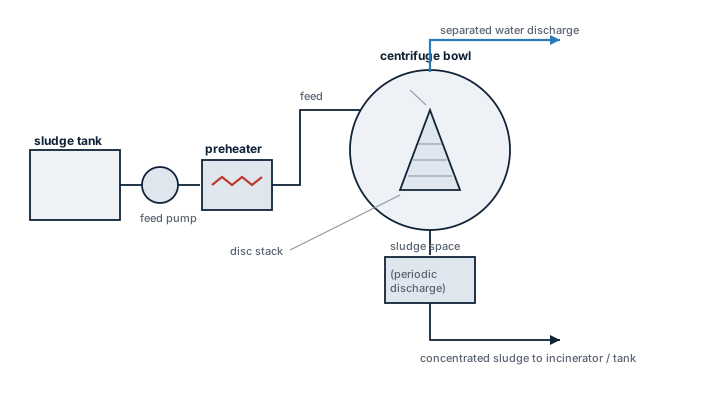
Sludge Separator

medium 131 models total
Separates sludge from fuel and lube oil systems for disposal
4000h
Service Interval
20 yr
Typical Lifetime

Typical Manufacturers

Alfa Laval GEA Westfalia

6 manufacturers · 131 models

Alfa Laval

44 ✓ 28 verified
Alfa Laval ALDEC G2-45
ALDEC G2-45
3 m3/h · 5.5 kW · Oil sludge · high-speed disc-stack separator
Common Failures & Inspection Points
  • Area: Schuessel-/Teller-Erosion
    Check: Paring-Disc, Top-Disc, Schlammportale auf matte Flecken/Auswaschung pruefen; Erosionstiefe >0,2 mm (Bowl/Kappe) bzw. >0,5 mm (andere) = Austausch.
  • Area: Dichtungsringe
    Check: Lecks an Deckel/Verschraubung/Schlammauslauf; Dichtungsringe (EPDM) alle 6000-8000 h tauschen, nur Originalteile.
  • Area: Kugellager
    Check: Vibration/Geraeusch pruefen; Lager alle 12000-16000 h paarweise tauschen, korrekt schmieren; bei Vibration Durchsatz NICHT erhoehen.
  • Area: Riemen & Kupplung
    Check: Riemen alle 3000 h (Spannung lt. Hersteller), Risse/Verschleiss; Kupplung auf axiales Spiel (>0,5 mm = Fehler), Korrosion.
  • Area: Stromaufnahme/Verschmutzung
    Check: Stromaufnahme Soll/Ist ueberwachen; Schuessel bei Stillstand reinigen; Vorfiltration + Schmierung pruefen; Schlammvolumen begrenzen.

Universelle Inspektions-/Wartungspunkte fuer Alfa-Laval-Tellerseparatoren (modellunabhaengig gueltig, verifiziert aus Alfa-Laval-Doku + premiersepservices, 2026-06). Per-Modell-Specs NICHT auto-gefuellt (kein erfundener Wert).

Service: Decanter centrifuge; remove solids deposit in drum regularly.
Spare Parts: Alfa Laval: O-Ring-Satz und Betriebswasserventil an Bord vorhalten. Lead time: 2-6 Wochen je nach Hersteller.
Strengths
  • Very high oil‑in‑water separation efficiency (typically >99 % at design flow)
  • Compact footprint suitable for vessels with restricted engine‑room space
  • Low power consumption relative to capacity due to high rotational speed
  • Easy access to the disc stack and inspection points for routine maintenance
Weaknesses
  • Disc wear can become significant when processing abrasive or high‑solid sludge; requires regular monitoring
  • Performance drops sharply if pre‑filtration is inadequate, leading to fouling of the discs
  • Requires periodic manual cleaning of the bowl and disc stack to maintain efficiency
  • Limited ability to handle very high flow rates compared with larger decanter centrifuges
Typical Vessels: Oil tankerChemical tankerBulk carrierContainer shipOffshore supply vessel
Certifications: IMO Type Approval (MARPOL Annex I Oily Water Separator)USCG Type ApprovalDNV Classification approval
Decision Guide: Choose if you need a high‑efficiency, space‑saving sludge/oil separator for bilge water on vessels where power budget is limited and regular maintenance can be scheduled. Avoid if the plant will receive heavily abrasive or very high solid loads that would accelerate disc erosion, or when a low‑maintenance solution with longer overhaul intervals is required.
Use Cases: Installed in engine rooms and cargo tank bilge lines to treat oily water before discharge, used as part of MARPOL‑compliant OWS systems on tankers and bulk carriers, and employed for sludge removal in ballast water pretreatment loops where compact equipment is essential.
Alfa Laval MMB 305
MMB 305
1.5 m3/h · 3.0 kW · Oil sludge · Self-cleaning centrifugal sludge separator
Common Failures & Inspection Points
  • Area: Schuessel-/Teller-Erosion
    Check: Paring-Disc, Top-Disc, Schlammportale auf matte Flecken/Auswaschung pruefen; Erosionstiefe >0,2 mm (Bowl/Kappe) bzw. >0,5 mm (andere) = Austausch.
  • Area: Dichtungsringe
    Check: Lecks an Deckel/Verschraubung/Schlammauslauf; Dichtungsringe (EPDM) alle 6000-8000 h tauschen, nur Originalteile.
  • Area: Kugellager
    Check: Vibration/Geraeusch pruefen; Lager alle 12000-16000 h paarweise tauschen, korrekt schmieren; bei Vibration Durchsatz NICHT erhoehen.
  • Area: Riemen & Kupplung
    Check: Riemen alle 3000 h (Spannung lt. Hersteller), Risse/Verschleiss; Kupplung auf axiales Spiel (>0,5 mm = Fehler), Korrosion.
  • Area: Stromaufnahme/Verschmutzung
    Check: Stromaufnahme Soll/Ist ueberwachen; Schuessel bei Stillstand reinigen; Vorfiltration + Schmierung pruefen; Schlammvolumen begrenzen.

Universelle Inspektions-/Wartungspunkte fuer Alfa-Laval-Tellerseparatoren (modellunabhaengig gueltig, verifiziert aus Alfa-Laval-Doku + premiersepservices, 2026-06). Per-Modell-Specs NICHT auto-gefuellt (kein erfundener Wert).

Service: Self-cleaning centrifugal; suitable for smaller vessels.
Spare Parts: Alfa Laval: O-Ring-Satz und Betriebswasserventil an Bord vorhalten. Lead time: 2-6 Wochen je nach Hersteller.
Strengths
  • Compact design suitable for small to medium vessels
  • Automatic self‑cleaning reduces manual intervention and downtime
  • Low power draw compared with belt‑driven separators of similar capacity
  • Robust bowl/teller construction tolerates moderate solids loading
  • Standardised inspection points simplify scheduled maintenance
Weaknesses
  • Maximum sludge handling capacity is limited; not ideal for high‑throughput ships
  • Bowl and disc wear (erosion >0.2 mm) requires regular visual checks and eventual part replacement
  • EPDM sealing rings need replacement every 6 000–8 000 h of operation
  • Bearings must be inspected/replaced at ~12 000‑16 000 h; vibration can affect performance
  • Belt‑driven drive demands periodic tension checks and belt replacement (~3 000 h)
Typical Vessels: Coastal tankersOffshore supply vesselsFerriesFishing vesselsSmall general cargo ships
Decision Guide: Choose if: you need a compact, low‑maintenance sludge separator for a vessel with modest sewage or bilge flow rates and limited deck space. Avoid if: the ship requires high‑capacity solid separation, operates continuously at full load, or prefers a fully sealed, oil‑free drive system.
Use Cases: The MMB 305 is commonly installed as part of an onboard sewage treatment plant on small to medium vessels, handling sludge from galley waste, toilet discharge and bilge water before the final effluent polishing stage. It is also used in pretreatment loops for ballast water or oily‑water separators where a reliable solid‑removal step is required.
Alfa Laval BOPX 210 unverified
· bilge water
Separator Type
disc_centrifugal
Flow Rate (m³/h)
10
Bowl Speed (1/min)
6000
Medium
bilge water
Common Failures & Inspection Points
  • Area: Schuessel-/Teller-Erosion
    Check: Paring-Disc, Top-Disc, Schlammportale auf matte Flecken/Auswaschung pruefen; Erosionstiefe >0,2 mm (Bowl/Kappe) bzw. >0,5 mm (andere) = Austausch.
  • Area: Dichtungsringe
    Check: Lecks an Deckel/Verschraubung/Schlammauslauf; Dichtungsringe (EPDM) alle 6000-8000 h tauschen, nur Originalteile.
  • Area: Kugellager
    Check: Vibration/Geraeusch pruefen; Lager alle 12000-16000 h paarweise tauschen, korrekt schmieren; bei Vibration Durchsatz NICHT erhoehen.
  • Area: Riemen & Kupplung
    Check: Riemen alle 3000 h (Spannung lt. Hersteller), Risse/Verschleiss; Kupplung auf axiales Spiel (>0,5 mm = Fehler), Korrosion.
  • Area: Stromaufnahme/Verschmutzung
    Check: Stromaufnahme Soll/Ist ueberwachen; Schuessel bei Stillstand reinigen; Vorfiltration + Schmierung pruefen; Schlammvolumen begrenzen.

Universelle Inspektions-/Wartungspunkte fuer Alfa-Laval-Tellerseparatoren (modellunabhaengig gueltig, verifiziert aus Alfa-Laval-Doku + premiersepservices, 2026-06). Per-Modell-Specs NICHT auto-gefuellt (kein erfundener Wert).

Alfa Laval WHPX 405 unverified
· waste/sludge
Separator Type
disc_centrifugal
Flow Rate (m³/h)
3
Bowl Speed (1/min)
9000
Medium
waste/sludge
Common Failures & Inspection Points
  • Area: Schuessel-/Teller-Erosion
    Check: Paring-Disc, Top-Disc, Schlammportale auf matte Flecken/Auswaschung pruefen; Erosionstiefe >0,2 mm (Bowl/Kappe) bzw. >0,5 mm (andere) = Austausch.
  • Area: Dichtungsringe
    Check: Lecks an Deckel/Verschraubung/Schlammauslauf; Dichtungsringe (EPDM) alle 6000-8000 h tauschen, nur Originalteile.
  • Area: Kugellager
    Check: Vibration/Geraeusch pruefen; Lager alle 12000-16000 h paarweise tauschen, korrekt schmieren; bei Vibration Durchsatz NICHT erhoehen.
  • Area: Riemen & Kupplung
    Check: Riemen alle 3000 h (Spannung lt. Hersteller), Risse/Verschleiss; Kupplung auf axiales Spiel (>0,5 mm = Fehler), Korrosion.
  • Area: Stromaufnahme/Verschmutzung
    Check: Stromaufnahme Soll/Ist ueberwachen; Schuessel bei Stillstand reinigen; Vorfiltration + Schmierung pruefen; Schlammvolumen begrenzen.

Universelle Inspektions-/Wartungspunkte fuer Alfa-Laval-Tellerseparatoren (modellunabhaengig gueltig, verifiziert aus Alfa-Laval-Doku + premiersepservices, 2026-06). Per-Modell-Specs NICHT auto-gefuellt (kein erfundener Wert).

Alfa Laval Alfa Laval SU 804 Series
Alfa Laval SU 804 Series unverified
Model Family
SU 804
Separator Type
sludge_separator
Common Failures & Inspection Points
  • Area: Schuessel-/Teller-Erosion
    Check: Paring-Disc, Top-Disc, Schlammportale auf matte Flecken/Auswaschung pruefen; Erosionstiefe >0,2 mm (Bowl/Kappe) bzw. >0,5 mm (andere) = Austausch.
  • Area: Dichtungsringe
    Check: Lecks an Deckel/Verschraubung/Schlammauslauf; Dichtungsringe (EPDM) alle 6000-8000 h tauschen, nur Originalteile.
  • Area: Kugellager
    Check: Vibration/Geraeusch pruefen; Lager alle 12000-16000 h paarweise tauschen, korrekt schmieren; bei Vibration Durchsatz NICHT erhoehen.
  • Area: Riemen & Kupplung
    Check: Riemen alle 3000 h (Spannung lt. Hersteller), Risse/Verschleiss; Kupplung auf axiales Spiel (>0,5 mm = Fehler), Korrosion.
  • Area: Stromaufnahme/Verschmutzung
    Check: Stromaufnahme Soll/Ist ueberwachen; Schuessel bei Stillstand reinigen; Vorfiltration + Schmierung pruefen; Schlammvolumen begrenzen.

Universelle Inspektions-/Wartungspunkte fuer Alfa-Laval-Tellerseparatoren (modellunabhaengig gueltig, verifiziert aus Alfa-Laval-Doku + premiersepservices, 2026-06). Per-Modell-Specs NICHT auto-gefuellt (kein erfundener Wert).

Alfa Laval Alfa Laval SU 804 500l/h sludge
Alfa Laval SU 804 500l/h sludge unverified
Model Family
SU 804
Separator Type
sludge_separator
Throughput (l/h)
500
Medium
sludge
Bowl Speed (1/min)
7500
Common Failures & Inspection Points
  • Area: Schuessel-/Teller-Erosion
    Check: Paring-Disc, Top-Disc, Schlammportale auf matte Flecken/Auswaschung pruefen; Erosionstiefe >0,2 mm (Bowl/Kappe) bzw. >0,5 mm (andere) = Austausch.
  • Area: Dichtungsringe
    Check: Lecks an Deckel/Verschraubung/Schlammauslauf; Dichtungsringe (EPDM) alle 6000-8000 h tauschen, nur Originalteile.
  • Area: Kugellager
    Check: Vibration/Geraeusch pruefen; Lager alle 12000-16000 h paarweise tauschen, korrekt schmieren; bei Vibration Durchsatz NICHT erhoehen.
  • Area: Riemen & Kupplung
    Check: Riemen alle 3000 h (Spannung lt. Hersteller), Risse/Verschleiss; Kupplung auf axiales Spiel (>0,5 mm = Fehler), Korrosion.
  • Area: Stromaufnahme/Verschmutzung
    Check: Stromaufnahme Soll/Ist ueberwachen; Schuessel bei Stillstand reinigen; Vorfiltration + Schmierung pruefen; Schlammvolumen begrenzen.

Universelle Inspektions-/Wartungspunkte fuer Alfa-Laval-Tellerseparatoren (modellunabhaengig gueltig, verifiziert aus Alfa-Laval-Doku + premiersepservices, 2026-06). Per-Modell-Specs NICHT auto-gefuellt (kein erfundener Wert).

Alfa Laval Alfa Laval SU 804 1000l/h sludge
Alfa Laval SU 804 1000l/h sludge unverified
Model Family
SU 804
Separator Type
sludge_separator
Throughput (l/h)
1000
Medium
sludge
Bowl Speed (1/min)
7500
Common Failures & Inspection Points
  • Area: Schuessel-/Teller-Erosion
    Check: Paring-Disc, Top-Disc, Schlammportale auf matte Flecken/Auswaschung pruefen; Erosionstiefe >0,2 mm (Bowl/Kappe) bzw. >0,5 mm (andere) = Austausch.
  • Area: Dichtungsringe
    Check: Lecks an Deckel/Verschraubung/Schlammauslauf; Dichtungsringe (EPDM) alle 6000-8000 h tauschen, nur Originalteile.
  • Area: Kugellager
    Check: Vibration/Geraeusch pruefen; Lager alle 12000-16000 h paarweise tauschen, korrekt schmieren; bei Vibration Durchsatz NICHT erhoehen.
  • Area: Riemen & Kupplung
    Check: Riemen alle 3000 h (Spannung lt. Hersteller), Risse/Verschleiss; Kupplung auf axiales Spiel (>0,5 mm = Fehler), Korrosion.
  • Area: Stromaufnahme/Verschmutzung
    Check: Stromaufnahme Soll/Ist ueberwachen; Schuessel bei Stillstand reinigen; Vorfiltration + Schmierung pruefen; Schlammvolumen begrenzen.

Universelle Inspektions-/Wartungspunkte fuer Alfa-Laval-Tellerseparatoren (modellunabhaengig gueltig, verifiziert aus Alfa-Laval-Doku + premiersepservices, 2026-06). Per-Modell-Specs NICHT auto-gefuellt (kein erfundener Wert).

Alfa Laval Alfa Laval SU 804 2000l/h sludge
Alfa Laval SU 804 2000l/h sludge unverified
Model Family
SU 804
Separator Type
sludge_separator
Throughput (l/h)
2000
Medium
sludge
Bowl Speed (1/min)
7500
Common Failures & Inspection Points
  • Area: Schuessel-/Teller-Erosion
    Check: Paring-Disc, Top-Disc, Schlammportale auf matte Flecken/Auswaschung pruefen; Erosionstiefe >0,2 mm (Bowl/Kappe) bzw. >0,5 mm (andere) = Austausch.
  • Area: Dichtungsringe
    Check: Lecks an Deckel/Verschraubung/Schlammauslauf; Dichtungsringe (EPDM) alle 6000-8000 h tauschen, nur Originalteile.
  • Area: Kugellager
    Check: Vibration/Geraeusch pruefen; Lager alle 12000-16000 h paarweise tauschen, korrekt schmieren; bei Vibration Durchsatz NICHT erhoehen.
  • Area: Riemen & Kupplung
    Check: Riemen alle 3000 h (Spannung lt. Hersteller), Risse/Verschleiss; Kupplung auf axiales Spiel (>0,5 mm = Fehler), Korrosion.
  • Area: Stromaufnahme/Verschmutzung
    Check: Stromaufnahme Soll/Ist ueberwachen; Schuessel bei Stillstand reinigen; Vorfiltration + Schmierung pruefen; Schlammvolumen begrenzen.

Universelle Inspektions-/Wartungspunkte fuer Alfa-Laval-Tellerseparatoren (modellunabhaengig gueltig, verifiziert aus Alfa-Laval-Doku + premiersepservices, 2026-06). Per-Modell-Specs NICHT auto-gefuellt (kein erfundener Wert).

Alfa Laval Alfa Laval SU 806 Series
Alfa Laval SU 806 Series unverified
Model Family
SU 806
Separator Type
sludge_separator
Common Failures & Inspection Points
  • Area: Schuessel-/Teller-Erosion
    Check: Paring-Disc, Top-Disc, Schlammportale auf matte Flecken/Auswaschung pruefen; Erosionstiefe >0,2 mm (Bowl/Kappe) bzw. >0,5 mm (andere) = Austausch.
  • Area: Dichtungsringe
    Check: Lecks an Deckel/Verschraubung/Schlammauslauf; Dichtungsringe (EPDM) alle 6000-8000 h tauschen, nur Originalteile.
  • Area: Kugellager
    Check: Vibration/Geraeusch pruefen; Lager alle 12000-16000 h paarweise tauschen, korrekt schmieren; bei Vibration Durchsatz NICHT erhoehen.
  • Area: Riemen & Kupplung
    Check: Riemen alle 3000 h (Spannung lt. Hersteller), Risse/Verschleiss; Kupplung auf axiales Spiel (>0,5 mm = Fehler), Korrosion.
  • Area: Stromaufnahme/Verschmutzung
    Check: Stromaufnahme Soll/Ist ueberwachen; Schuessel bei Stillstand reinigen; Vorfiltration + Schmierung pruefen; Schlammvolumen begrenzen.

Universelle Inspektions-/Wartungspunkte fuer Alfa-Laval-Tellerseparatoren (modellunabhaengig gueltig, verifiziert aus Alfa-Laval-Doku + premiersepservices, 2026-06). Per-Modell-Specs NICHT auto-gefuellt (kein erfundener Wert).

Alfa Laval Alfa Laval SU 806 1000l/h sludge
Alfa Laval SU 806 1000l/h sludge unverified
Model Family
SU 806
Separator Type
sludge_separator
Throughput (l/h)
1000
Medium
sludge
Bowl Speed (1/min)
7500
Common Failures & Inspection Points
  • Area: Schuessel-/Teller-Erosion
    Check: Paring-Disc, Top-Disc, Schlammportale auf matte Flecken/Auswaschung pruefen; Erosionstiefe >0,2 mm (Bowl/Kappe) bzw. >0,5 mm (andere) = Austausch.
  • Area: Dichtungsringe
    Check: Lecks an Deckel/Verschraubung/Schlammauslauf; Dichtungsringe (EPDM) alle 6000-8000 h tauschen, nur Originalteile.
  • Area: Kugellager
    Check: Vibration/Geraeusch pruefen; Lager alle 12000-16000 h paarweise tauschen, korrekt schmieren; bei Vibration Durchsatz NICHT erhoehen.
  • Area: Riemen & Kupplung
    Check: Riemen alle 3000 h (Spannung lt. Hersteller), Risse/Verschleiss; Kupplung auf axiales Spiel (>0,5 mm = Fehler), Korrosion.
  • Area: Stromaufnahme/Verschmutzung
    Check: Stromaufnahme Soll/Ist ueberwachen; Schuessel bei Stillstand reinigen; Vorfiltration + Schmierung pruefen; Schlammvolumen begrenzen.

Universelle Inspektions-/Wartungspunkte fuer Alfa-Laval-Tellerseparatoren (modellunabhaengig gueltig, verifiziert aus Alfa-Laval-Doku + premiersepservices, 2026-06). Per-Modell-Specs NICHT auto-gefuellt (kein erfundener Wert).

Alfa Laval Alfa Laval SU 806 2000l/h sludge
Alfa Laval SU 806 2000l/h sludge unverified
Model Family
SU 806
Separator Type
sludge_separator
Throughput (l/h)
2000
Medium
sludge
Bowl Speed (1/min)
7500
Common Failures & Inspection Points
  • Area: Schuessel-/Teller-Erosion
    Check: Paring-Disc, Top-Disc, Schlammportale auf matte Flecken/Auswaschung pruefen; Erosionstiefe >0,2 mm (Bowl/Kappe) bzw. >0,5 mm (andere) = Austausch.
  • Area: Dichtungsringe
    Check: Lecks an Deckel/Verschraubung/Schlammauslauf; Dichtungsringe (EPDM) alle 6000-8000 h tauschen, nur Originalteile.
  • Area: Kugellager
    Check: Vibration/Geraeusch pruefen; Lager alle 12000-16000 h paarweise tauschen, korrekt schmieren; bei Vibration Durchsatz NICHT erhoehen.
  • Area: Riemen & Kupplung
    Check: Riemen alle 3000 h (Spannung lt. Hersteller), Risse/Verschleiss; Kupplung auf axiales Spiel (>0,5 mm = Fehler), Korrosion.
  • Area: Stromaufnahme/Verschmutzung
    Check: Stromaufnahme Soll/Ist ueberwachen; Schuessel bei Stillstand reinigen; Vorfiltration + Schmierung pruefen; Schlammvolumen begrenzen.

Universelle Inspektions-/Wartungspunkte fuer Alfa-Laval-Tellerseparatoren (modellunabhaengig gueltig, verifiziert aus Alfa-Laval-Doku + premiersepservices, 2026-06). Per-Modell-Specs NICHT auto-gefuellt (kein erfundener Wert).

Alfa Laval Alfa Laval SU 806 3000l/h sludge
Alfa Laval SU 806 3000l/h sludge unverified
Model Family
SU 806
Separator Type
sludge_separator
Throughput (l/h)
3000
Medium
sludge
Bowl Speed (1/min)
6500
Common Failures & Inspection Points
  • Area: Schuessel-/Teller-Erosion
    Check: Paring-Disc, Top-Disc, Schlammportale auf matte Flecken/Auswaschung pruefen; Erosionstiefe >0,2 mm (Bowl/Kappe) bzw. >0,5 mm (andere) = Austausch.
  • Area: Dichtungsringe
    Check: Lecks an Deckel/Verschraubung/Schlammauslauf; Dichtungsringe (EPDM) alle 6000-8000 h tauschen, nur Originalteile.
  • Area: Kugellager
    Check: Vibration/Geraeusch pruefen; Lager alle 12000-16000 h paarweise tauschen, korrekt schmieren; bei Vibration Durchsatz NICHT erhoehen.
  • Area: Riemen & Kupplung
    Check: Riemen alle 3000 h (Spannung lt. Hersteller), Risse/Verschleiss; Kupplung auf axiales Spiel (>0,5 mm = Fehler), Korrosion.
  • Area: Stromaufnahme/Verschmutzung
    Check: Stromaufnahme Soll/Ist ueberwachen; Schuessel bei Stillstand reinigen; Vorfiltration + Schmierung pruefen; Schlammvolumen begrenzen.

Universelle Inspektions-/Wartungspunkte fuer Alfa-Laval-Tellerseparatoren (modellunabhaengig gueltig, verifiziert aus Alfa-Laval-Doku + premiersepservices, 2026-06). Per-Modell-Specs NICHT auto-gefuellt (kein erfundener Wert).

Alfa Laval Alfa Laval SU 810 Series
Alfa Laval SU 810 Series unverified
Model Family
SU 810
Separator Type
sludge_separator
Common Failures & Inspection Points
  • Area: Schuessel-/Teller-Erosion
    Check: Paring-Disc, Top-Disc, Schlammportale auf matte Flecken/Auswaschung pruefen; Erosionstiefe >0,2 mm (Bowl/Kappe) bzw. >0,5 mm (andere) = Austausch.
  • Area: Dichtungsringe
    Check: Lecks an Deckel/Verschraubung/Schlammauslauf; Dichtungsringe (EPDM) alle 6000-8000 h tauschen, nur Originalteile.
  • Area: Kugellager
    Check: Vibration/Geraeusch pruefen; Lager alle 12000-16000 h paarweise tauschen, korrekt schmieren; bei Vibration Durchsatz NICHT erhoehen.
  • Area: Riemen & Kupplung
    Check: Riemen alle 3000 h (Spannung lt. Hersteller), Risse/Verschleiss; Kupplung auf axiales Spiel (>0,5 mm = Fehler), Korrosion.
  • Area: Stromaufnahme/Verschmutzung
    Check: Stromaufnahme Soll/Ist ueberwachen; Schuessel bei Stillstand reinigen; Vorfiltration + Schmierung pruefen; Schlammvolumen begrenzen.

Universelle Inspektions-/Wartungspunkte fuer Alfa-Laval-Tellerseparatoren (modellunabhaengig gueltig, verifiziert aus Alfa-Laval-Doku + premiersepservices, 2026-06). Per-Modell-Specs NICHT auto-gefuellt (kein erfundener Wert).

Alfa Laval Alfa Laval SU 810 2000l/h sludge
Alfa Laval SU 810 2000l/h sludge unverified
Model Family
SU 810
Separator Type
sludge_separator
Throughput (l/h)
2000
Medium
sludge
Bowl Speed (1/min)
7500
Common Failures & Inspection Points
  • Area: Schuessel-/Teller-Erosion
    Check: Paring-Disc, Top-Disc, Schlammportale auf matte Flecken/Auswaschung pruefen; Erosionstiefe >0,2 mm (Bowl/Kappe) bzw. >0,5 mm (andere) = Austausch.
  • Area: Dichtungsringe
    Check: Lecks an Deckel/Verschraubung/Schlammauslauf; Dichtungsringe (EPDM) alle 6000-8000 h tauschen, nur Originalteile.
  • Area: Kugellager
    Check: Vibration/Geraeusch pruefen; Lager alle 12000-16000 h paarweise tauschen, korrekt schmieren; bei Vibration Durchsatz NICHT erhoehen.
  • Area: Riemen & Kupplung
    Check: Riemen alle 3000 h (Spannung lt. Hersteller), Risse/Verschleiss; Kupplung auf axiales Spiel (>0,5 mm = Fehler), Korrosion.
  • Area: Stromaufnahme/Verschmutzung
    Check: Stromaufnahme Soll/Ist ueberwachen; Schuessel bei Stillstand reinigen; Vorfiltration + Schmierung pruefen; Schlammvolumen begrenzen.

Universelle Inspektions-/Wartungspunkte fuer Alfa-Laval-Tellerseparatoren (modellunabhaengig gueltig, verifiziert aus Alfa-Laval-Doku + premiersepservices, 2026-06). Per-Modell-Specs NICHT auto-gefuellt (kein erfundener Wert).

Alfa Laval Alfa Laval SU 810 3000l/h sludge
Alfa Laval SU 810 3000l/h sludge unverified
Model Family
SU 810
Separator Type
sludge_separator
Throughput (l/h)
3000
Medium
sludge
Bowl Speed (1/min)
6500
Common Failures & Inspection Points
  • Area: Schuessel-/Teller-Erosion
    Check: Paring-Disc, Top-Disc, Schlammportale auf matte Flecken/Auswaschung pruefen; Erosionstiefe >0,2 mm (Bowl/Kappe) bzw. >0,5 mm (andere) = Austausch.
  • Area: Dichtungsringe
    Check: Lecks an Deckel/Verschraubung/Schlammauslauf; Dichtungsringe (EPDM) alle 6000-8000 h tauschen, nur Originalteile.
  • Area: Kugellager
    Check: Vibration/Geraeusch pruefen; Lager alle 12000-16000 h paarweise tauschen, korrekt schmieren; bei Vibration Durchsatz NICHT erhoehen.
  • Area: Riemen & Kupplung
    Check: Riemen alle 3000 h (Spannung lt. Hersteller), Risse/Verschleiss; Kupplung auf axiales Spiel (>0,5 mm = Fehler), Korrosion.
  • Area: Stromaufnahme/Verschmutzung
    Check: Stromaufnahme Soll/Ist ueberwachen; Schuessel bei Stillstand reinigen; Vorfiltration + Schmierung pruefen; Schlammvolumen begrenzen.

Universelle Inspektions-/Wartungspunkte fuer Alfa-Laval-Tellerseparatoren (modellunabhaengig gueltig, verifiziert aus Alfa-Laval-Doku + premiersepservices, 2026-06). Per-Modell-Specs NICHT auto-gefuellt (kein erfundener Wert).

Alfa Laval Alfa Laval SU 810 5000l/h sludge
Alfa Laval SU 810 5000l/h sludge unverified
Model Family
SU 810
Separator Type
sludge_separator
Throughput (l/h)
5000
Medium
sludge
Bowl Speed (1/min)
6500
Common Failures & Inspection Points
  • Area: Schuessel-/Teller-Erosion
    Check: Paring-Disc, Top-Disc, Schlammportale auf matte Flecken/Auswaschung pruefen; Erosionstiefe >0,2 mm (Bowl/Kappe) bzw. >0,5 mm (andere) = Austausch.
  • Area: Dichtungsringe
    Check: Lecks an Deckel/Verschraubung/Schlammauslauf; Dichtungsringe (EPDM) alle 6000-8000 h tauschen, nur Originalteile.
  • Area: Kugellager
    Check: Vibration/Geraeusch pruefen; Lager alle 12000-16000 h paarweise tauschen, korrekt schmieren; bei Vibration Durchsatz NICHT erhoehen.
  • Area: Riemen & Kupplung
    Check: Riemen alle 3000 h (Spannung lt. Hersteller), Risse/Verschleiss; Kupplung auf axiales Spiel (>0,5 mm = Fehler), Korrosion.
  • Area: Stromaufnahme/Verschmutzung
    Check: Stromaufnahme Soll/Ist ueberwachen; Schuessel bei Stillstand reinigen; Vorfiltration + Schmierung pruefen; Schlammvolumen begrenzen.

Universelle Inspektions-/Wartungspunkte fuer Alfa-Laval-Tellerseparatoren (modellunabhaengig gueltig, verifiziert aus Alfa-Laval-Doku + premiersepservices, 2026-06). Per-Modell-Specs NICHT auto-gefuellt (kein erfundener Wert).

Alfa Laval ALDEC G3-75
ALDEC G3-75 ✓ verified
Application
Municipal and industrial wastewater sludge thickening and dewatering
Common Failures & Inspection Points
  • Area: Nozzle blockage in water discharge system
    Check: Clean and inspect all operating water nozzles regularly; remove accumulated sludge using soft iron wire; verify nozzle holes are clear of deposits
  • Area: Bearing wear and degradation
    Check: Replace main and internal bearings every 15,000 operating hours; perform weekly lubrication checks; monitor for unusual noise or vibration during operation
  • Area: Bowl seal and gasket deterioration
    Check: Inspect bowl seals and gaskets for cracks and wear; perform seal replacement on schedule depending on application (every few weeks for abrasive fluids to every few months for benign applications); check for liquid leakage
  • Area: Corrosion and erosion damage in bowl and conveyor
    Check: Inspect regularly for corrosion damage; inspect frequently if process liquid is erosive; contact manufacturer if erosion damage exceeds 1.0 mm depth; check conveyor for wear
  • Area: Sludge discharge mechanism malfunction
    Check: Check for dirt and lime deposits in sludge discharge mechanism; thoroughly clean discharge parts; verify sludge ports for cracks in rotating parts and bowl wall pillars; test discharge operation

Typ-universelle Inspektionspunkte fuer Separators & Purifiers (verifiziert, 2026-06).

Alfa Laval ALDEC G3-85
ALDEC G3-85 ✓ verified
Application
Municipal and industrial wastewater sludge dewatering
Common Failures & Inspection Points
  • Area: Nozzle blockage in water discharge system
    Check: Clean and inspect all operating water nozzles regularly; remove accumulated sludge using soft iron wire; verify nozzle holes are clear of deposits
  • Area: Bearing wear and degradation
    Check: Replace main and internal bearings every 15,000 operating hours; perform weekly lubrication checks; monitor for unusual noise or vibration during operation
  • Area: Bowl seal and gasket deterioration
    Check: Inspect bowl seals and gaskets for cracks and wear; perform seal replacement on schedule depending on application (every few weeks for abrasive fluids to every few months for benign applications); check for liquid leakage
  • Area: Corrosion and erosion damage in bowl and conveyor
    Check: Inspect regularly for corrosion damage; inspect frequently if process liquid is erosive; contact manufacturer if erosion damage exceeds 1.0 mm depth; check conveyor for wear
  • Area: Sludge discharge mechanism malfunction
    Check: Check for dirt and lime deposits in sludge discharge mechanism; thoroughly clean discharge parts; verify sludge ports for cracks in rotating parts and bowl wall pillars; test discharge operation

Typ-universelle Inspektionspunkte fuer Separators & Purifiers (verifiziert, 2026-06).

Alfa Laval ALDEC G3-115
ALDEC G3-115 ✓ verified
Application
Wastewater and industrial sludge dewatering
Common Failures & Inspection Points
  • Area: Nozzle blockage in water discharge system
    Check: Clean and inspect all operating water nozzles regularly; remove accumulated sludge using soft iron wire; verify nozzle holes are clear of deposits
  • Area: Bearing wear and degradation
    Check: Replace main and internal bearings every 15,000 operating hours; perform weekly lubrication checks; monitor for unusual noise or vibration during operation
  • Area: Bowl seal and gasket deterioration
    Check: Inspect bowl seals and gaskets for cracks and wear; perform seal replacement on schedule depending on application (every few weeks for abrasive fluids to every few months for benign applications); check for liquid leakage
  • Area: Corrosion and erosion damage in bowl and conveyor
    Check: Inspect regularly for corrosion damage; inspect frequently if process liquid is erosive; contact manufacturer if erosion damage exceeds 1.0 mm depth; check conveyor for wear
  • Area: Sludge discharge mechanism malfunction
    Check: Check for dirt and lime deposits in sludge discharge mechanism; thoroughly clean discharge parts; verify sludge ports for cracks in rotating parts and bowl wall pillars; test discharge operation

Typ-universelle Inspektionspunkte fuer Separators & Purifiers (verifiziert, 2026-06).

Alfa Laval ALDEC G3-125
ALDEC G3-125 ✓ verified
Application
Municipal and industrial wastewater sludge dewatering
Common Failures & Inspection Points
  • Area: Nozzle blockage in water discharge system
    Check: Clean and inspect all operating water nozzles regularly; remove accumulated sludge using soft iron wire; verify nozzle holes are clear of deposits
  • Area: Bearing wear and degradation
    Check: Replace main and internal bearings every 15,000 operating hours; perform weekly lubrication checks; monitor for unusual noise or vibration during operation
  • Area: Bowl seal and gasket deterioration
    Check: Inspect bowl seals and gaskets for cracks and wear; perform seal replacement on schedule depending on application (every few weeks for abrasive fluids to every few months for benign applications); check for liquid leakage
  • Area: Corrosion and erosion damage in bowl and conveyor
    Check: Inspect regularly for corrosion damage; inspect frequently if process liquid is erosive; contact manufacturer if erosion damage exceeds 1.0 mm depth; check conveyor for wear
  • Area: Sludge discharge mechanism malfunction
    Check: Check for dirt and lime deposits in sludge discharge mechanism; thoroughly clean discharge parts; verify sludge ports for cracks in rotating parts and bowl wall pillars; test discharge operation

Typ-universelle Inspektionspunkte fuer Separators & Purifiers (verifiziert, 2026-06).

Alfa Laval ALDEC G3-160
ALDEC G3-160 ✓ verified
Application
High-capacity industrial wastewater sludge treatment
Common Failures & Inspection Points
  • Area: Nozzle blockage in water discharge system
    Check: Clean and inspect all operating water nozzles regularly; remove accumulated sludge using soft iron wire; verify nozzle holes are clear of deposits
  • Area: Bearing wear and degradation
    Check: Replace main and internal bearings every 15,000 operating hours; perform weekly lubrication checks; monitor for unusual noise or vibration during operation
  • Area: Bowl seal and gasket deterioration
    Check: Inspect bowl seals and gaskets for cracks and wear; perform seal replacement on schedule depending on application (every few weeks for abrasive fluids to every few months for benign applications); check for liquid leakage
  • Area: Corrosion and erosion damage in bowl and conveyor
    Check: Inspect regularly for corrosion damage; inspect frequently if process liquid is erosive; contact manufacturer if erosion damage exceeds 1.0 mm depth; check conveyor for wear
  • Area: Sludge discharge mechanism malfunction
    Check: Check for dirt and lime deposits in sludge discharge mechanism; thoroughly clean discharge parts; verify sludge ports for cracks in rotating parts and bowl wall pillars; test discharge operation

Typ-universelle Inspektionspunkte fuer Separators & Purifiers (verifiziert, 2026-06).

Alfa Laval i-DW
i-DW ✓ verified
Application
Municipal and industrial wastewater sludge dewatering and thickening
Common Failures & Inspection Points
  • Area: Nozzle blockage in water discharge system
    Check: Clean and inspect all operating water nozzles regularly; remove accumulated sludge using soft iron wire; verify nozzle holes are clear of deposits
  • Area: Bearing wear and degradation
    Check: Replace main and internal bearings every 15,000 operating hours; perform weekly lubrication checks; monitor for unusual noise or vibration during operation
  • Area: Bowl seal and gasket deterioration
    Check: Inspect bowl seals and gaskets for cracks and wear; perform seal replacement on schedule depending on application (every few weeks for abrasive fluids to every few months for benign applications); check for liquid leakage
  • Area: Corrosion and erosion damage in bowl and conveyor
    Check: Inspect regularly for corrosion damage; inspect frequently if process liquid is erosive; contact manufacturer if erosion damage exceeds 1.0 mm depth; check conveyor for wear
  • Area: Sludge discharge mechanism malfunction
    Check: Check for dirt and lime deposits in sludge discharge mechanism; thoroughly clean discharge parts; verify sludge ports for cracks in rotating parts and bowl wall pillars; test discharge operation

Typ-universelle Inspektionspunkte fuer Separators & Purifiers (verifiziert, 2026-06).

Alfa Laval NX 314
NX 314 ✓ verified
Application
Sludge dewatering and wastewater treatment
Common Failures & Inspection Points
  • Area: Nozzle blockage in water discharge system
    Check: Clean and inspect all operating water nozzles regularly; remove accumulated sludge using soft iron wire; verify nozzle holes are clear of deposits
  • Area: Bearing wear and degradation
    Check: Replace main and internal bearings every 15,000 operating hours; perform weekly lubrication checks; monitor for unusual noise or vibration during operation
  • Area: Bowl seal and gasket deterioration
    Check: Inspect bowl seals and gaskets for cracks and wear; perform seal replacement on schedule depending on application (every few weeks for abrasive fluids to every few months for benign applications); check for liquid leakage
  • Area: Corrosion and erosion damage in bowl and conveyor
    Check: Inspect regularly for corrosion damage; inspect frequently if process liquid is erosive; contact manufacturer if erosion damage exceeds 1.0 mm depth; check conveyor for wear
  • Area: Sludge discharge mechanism malfunction
    Check: Check for dirt and lime deposits in sludge discharge mechanism; thoroughly clean discharge parts; verify sludge ports for cracks in rotating parts and bowl wall pillars; test discharge operation

Typ-universelle Inspektionspunkte fuer Separators & Purifiers (verifiziert, 2026-06).

Alfa Laval NX 418
NX 418 ✓ verified
Application
Sludge and wastewater dewatering
Common Failures & Inspection Points
  • Area: Nozzle blockage in water discharge system
    Check: Clean and inspect all operating water nozzles regularly; remove accumulated sludge using soft iron wire; verify nozzle holes are clear of deposits
  • Area: Bearing wear and degradation
    Check: Replace main and internal bearings every 15,000 operating hours; perform weekly lubrication checks; monitor for unusual noise or vibration during operation
  • Area: Bowl seal and gasket deterioration
    Check: Inspect bowl seals and gaskets for cracks and wear; perform seal replacement on schedule depending on application (every few weeks for abrasive fluids to every few months for benign applications); check for liquid leakage
  • Area: Corrosion and erosion damage in bowl and conveyor
    Check: Inspect regularly for corrosion damage; inspect frequently if process liquid is erosive; contact manufacturer if erosion damage exceeds 1.0 mm depth; check conveyor for wear
  • Area: Sludge discharge mechanism malfunction
    Check: Check for dirt and lime deposits in sludge discharge mechanism; thoroughly clean discharge parts; verify sludge ports for cracks in rotating parts and bowl wall pillars; test discharge operation

Typ-universelle Inspektionspunkte fuer Separators & Purifiers (verifiziert, 2026-06).

NX 944 ✓ verified
Application
Industrial wastewater sludge dewatering
Common Failures & Inspection Points
  • Area: Nozzle blockage in water discharge system
    Check: Clean and inspect all operating water nozzles regularly; remove accumulated sludge using soft iron wire; verify nozzle holes are clear of deposits
  • Area: Bearing wear and degradation
    Check: Replace main and internal bearings every 15,000 operating hours; perform weekly lubrication checks; monitor for unusual noise or vibration during operation
  • Area: Bowl seal and gasket deterioration
    Check: Inspect bowl seals and gaskets for cracks and wear; perform seal replacement on schedule depending on application (every few weeks for abrasive fluids to every few months for benign applications); check for liquid leakage
  • Area: Corrosion and erosion damage in bowl and conveyor
    Check: Inspect regularly for corrosion damage; inspect frequently if process liquid is erosive; contact manufacturer if erosion damage exceeds 1.0 mm depth; check conveyor for wear
  • Area: Sludge discharge mechanism malfunction
    Check: Check for dirt and lime deposits in sludge discharge mechanism; thoroughly clean discharge parts; verify sludge ports for cracks in rotating parts and bowl wall pillars; test discharge operation

Typ-universelle Inspektionspunkte fuer Separators & Purifiers (verifiziert, 2026-06).

Alfa Laval STNX 418
STNX 418 ✓ verified
Application
Starch processing and industrial sludge dewatering
Common Failures & Inspection Points
  • Area: Nozzle blockage in water discharge system
    Check: Clean and inspect all operating water nozzles regularly; remove accumulated sludge using soft iron wire; verify nozzle holes are clear of deposits
  • Area: Bearing wear and degradation
    Check: Replace main and internal bearings every 15,000 operating hours; perform weekly lubrication checks; monitor for unusual noise or vibration during operation
  • Area: Bowl seal and gasket deterioration
    Check: Inspect bowl seals and gaskets for cracks and wear; perform seal replacement on schedule depending on application (every few weeks for abrasive fluids to every few months for benign applications); check for liquid leakage
  • Area: Corrosion and erosion damage in bowl and conveyor
    Check: Inspect regularly for corrosion damage; inspect frequently if process liquid is erosive; contact manufacturer if erosion damage exceeds 1.0 mm depth; check conveyor for wear
  • Area: Sludge discharge mechanism malfunction
    Check: Check for dirt and lime deposits in sludge discharge mechanism; thoroughly clean discharge parts; verify sludge ports for cracks in rotating parts and bowl wall pillars; test discharge operation

Typ-universelle Inspektionspunkte fuer Separators & Purifiers (verifiziert, 2026-06).

STNX 438 ✓ verified
Application
Starch processing and sludge separation
Common Failures & Inspection Points
  • Area: Nozzle blockage in water discharge system
    Check: Clean and inspect all operating water nozzles regularly; remove accumulated sludge using soft iron wire; verify nozzle holes are clear of deposits
  • Area: Bearing wear and degradation
    Check: Replace main and internal bearings every 15,000 operating hours; perform weekly lubrication checks; monitor for unusual noise or vibration during operation
  • Area: Bowl seal and gasket deterioration
    Check: Inspect bowl seals and gaskets for cracks and wear; perform seal replacement on schedule depending on application (every few weeks for abrasive fluids to every few months for benign applications); check for liquid leakage
  • Area: Corrosion and erosion damage in bowl and conveyor
    Check: Inspect regularly for corrosion damage; inspect frequently if process liquid is erosive; contact manufacturer if erosion damage exceeds 1.0 mm depth; check conveyor for wear
  • Area: Sludge discharge mechanism malfunction
    Check: Check for dirt and lime deposits in sludge discharge mechanism; thoroughly clean discharge parts; verify sludge ports for cracks in rotating parts and bowl wall pillars; test discharge operation

Typ-universelle Inspektionspunkte fuer Separators & Purifiers (verifiziert, 2026-06).

STNX 944 ✓ verified
Application
Starch and industrial wastewater sludge dewatering
Common Failures & Inspection Points
  • Area: Nozzle blockage in water discharge system
    Check: Clean and inspect all operating water nozzles regularly; remove accumulated sludge using soft iron wire; verify nozzle holes are clear of deposits
  • Area: Bearing wear and degradation
    Check: Replace main and internal bearings every 15,000 operating hours; perform weekly lubrication checks; monitor for unusual noise or vibration during operation
  • Area: Bowl seal and gasket deterioration
    Check: Inspect bowl seals and gaskets for cracks and wear; perform seal replacement on schedule depending on application (every few weeks for abrasive fluids to every few months for benign applications); check for liquid leakage
  • Area: Corrosion and erosion damage in bowl and conveyor
    Check: Inspect regularly for corrosion damage; inspect frequently if process liquid is erosive; contact manufacturer if erosion damage exceeds 1.0 mm depth; check conveyor for wear
  • Area: Sludge discharge mechanism malfunction
    Check: Check for dirt and lime deposits in sludge discharge mechanism; thoroughly clean discharge parts; verify sludge ports for cracks in rotating parts and bowl wall pillars; test discharge operation

Typ-universelle Inspektionspunkte fuer Separators & Purifiers (verifiziert, 2026-06).

Alfa Laval STNX 706
STNX 706 ✓ verified
Application
Large-capacity starch and industrial sludge processing
Common Failures & Inspection Points
  • Area: Nozzle blockage in water discharge system
    Check: Clean and inspect all operating water nozzles regularly; remove accumulated sludge using soft iron wire; verify nozzle holes are clear of deposits
  • Area: Bearing wear and degradation
    Check: Replace main and internal bearings every 15,000 operating hours; perform weekly lubrication checks; monitor for unusual noise or vibration during operation
  • Area: Bowl seal and gasket deterioration
    Check: Inspect bowl seals and gaskets for cracks and wear; perform seal replacement on schedule depending on application (every few weeks for abrasive fluids to every few months for benign applications); check for liquid leakage
  • Area: Corrosion and erosion damage in bowl and conveyor
    Check: Inspect regularly for corrosion damage; inspect frequently if process liquid is erosive; contact manufacturer if erosion damage exceeds 1.0 mm depth; check conveyor for wear
  • Area: Sludge discharge mechanism malfunction
    Check: Check for dirt and lime deposits in sludge discharge mechanism; thoroughly clean discharge parts; verify sludge ports for cracks in rotating parts and bowl wall pillars; test discharge operation

Typ-universelle Inspektionspunkte fuer Separators & Purifiers (verifiziert, 2026-06).

Alfa Laval X4
X4 ✓ verified
Application
Olive oil and food processing sludge separation
Common Failures & Inspection Points
  • Area: Nozzle blockage in water discharge system
    Check: Clean and inspect all operating water nozzles regularly; remove accumulated sludge using soft iron wire; verify nozzle holes are clear of deposits
  • Area: Bearing wear and degradation
    Check: Replace main and internal bearings every 15,000 operating hours; perform weekly lubrication checks; monitor for unusual noise or vibration during operation
  • Area: Bowl seal and gasket deterioration
    Check: Inspect bowl seals and gaskets for cracks and wear; perform seal replacement on schedule depending on application (every few weeks for abrasive fluids to every few months for benign applications); check for liquid leakage
  • Area: Corrosion and erosion damage in bowl and conveyor
    Check: Inspect regularly for corrosion damage; inspect frequently if process liquid is erosive; contact manufacturer if erosion damage exceeds 1.0 mm depth; check conveyor for wear
  • Area: Sludge discharge mechanism malfunction
    Check: Check for dirt and lime deposits in sludge discharge mechanism; thoroughly clean discharge parts; verify sludge ports for cracks in rotating parts and bowl wall pillars; test discharge operation

Typ-universelle Inspektionspunkte fuer Separators & Purifiers (verifiziert, 2026-06).

X6 ✓ verified
Application
Olive oil and industrial waste separation
Common Failures & Inspection Points
  • Area: Nozzle blockage in water discharge system
    Check: Clean and inspect all operating water nozzles regularly; remove accumulated sludge using soft iron wire; verify nozzle holes are clear of deposits
  • Area: Bearing wear and degradation
    Check: Replace main and internal bearings every 15,000 operating hours; perform weekly lubrication checks; monitor for unusual noise or vibration during operation
  • Area: Bowl seal and gasket deterioration
    Check: Inspect bowl seals and gaskets for cracks and wear; perform seal replacement on schedule depending on application (every few weeks for abrasive fluids to every few months for benign applications); check for liquid leakage
  • Area: Corrosion and erosion damage in bowl and conveyor
    Check: Inspect regularly for corrosion damage; inspect frequently if process liquid is erosive; contact manufacturer if erosion damage exceeds 1.0 mm depth; check conveyor for wear
  • Area: Sludge discharge mechanism malfunction
    Check: Check for dirt and lime deposits in sludge discharge mechanism; thoroughly clean discharge parts; verify sludge ports for cracks in rotating parts and bowl wall pillars; test discharge operation

Typ-universelle Inspektionspunkte fuer Separators & Purifiers (verifiziert, 2026-06).

X7 ✓ verified
Application
Food and industrial wastewater sludge dewatering
Common Failures & Inspection Points
  • Area: Nozzle blockage in water discharge system
    Check: Clean and inspect all operating water nozzles regularly; remove accumulated sludge using soft iron wire; verify nozzle holes are clear of deposits
  • Area: Bearing wear and degradation
    Check: Replace main and internal bearings every 15,000 operating hours; perform weekly lubrication checks; monitor for unusual noise or vibration during operation
  • Area: Bowl seal and gasket deterioration
    Check: Inspect bowl seals and gaskets for cracks and wear; perform seal replacement on schedule depending on application (every few weeks for abrasive fluids to every few months for benign applications); check for liquid leakage
  • Area: Corrosion and erosion damage in bowl and conveyor
    Check: Inspect regularly for corrosion damage; inspect frequently if process liquid is erosive; contact manufacturer if erosion damage exceeds 1.0 mm depth; check conveyor for wear
  • Area: Sludge discharge mechanism malfunction
    Check: Check for dirt and lime deposits in sludge discharge mechanism; thoroughly clean discharge parts; verify sludge ports for cracks in rotating parts and bowl wall pillars; test discharge operation

Typ-universelle Inspektionspunkte fuer Separators & Purifiers (verifiziert, 2026-06).

X9 ✓ verified
Application
High-capacity industrial sludge and waste separation
Common Failures & Inspection Points
  • Area: Nozzle blockage in water discharge system
    Check: Clean and inspect all operating water nozzles regularly; remove accumulated sludge using soft iron wire; verify nozzle holes are clear of deposits
  • Area: Bearing wear and degradation
    Check: Replace main and internal bearings every 15,000 operating hours; perform weekly lubrication checks; monitor for unusual noise or vibration during operation
  • Area: Bowl seal and gasket deterioration
    Check: Inspect bowl seals and gaskets for cracks and wear; perform seal replacement on schedule depending on application (every few weeks for abrasive fluids to every few months for benign applications); check for liquid leakage
  • Area: Corrosion and erosion damage in bowl and conveyor
    Check: Inspect regularly for corrosion damage; inspect frequently if process liquid is erosive; contact manufacturer if erosion damage exceeds 1.0 mm depth; check conveyor for wear
  • Area: Sludge discharge mechanism malfunction
    Check: Check for dirt and lime deposits in sludge discharge mechanism; thoroughly clean discharge parts; verify sludge ports for cracks in rotating parts and bowl wall pillars; test discharge operation

Typ-universelle Inspektionspunkte fuer Separators & Purifiers (verifiziert, 2026-06).

Alfa Laval P2-300
P2-300 ✓ verified
Application
Industrial erosive slurry and sludge dewatering
Common Failures & Inspection Points
  • Area: Nozzle blockage in water discharge system
    Check: Clean and inspect all operating water nozzles regularly; remove accumulated sludge using soft iron wire; verify nozzle holes are clear of deposits
  • Area: Bearing wear and degradation
    Check: Replace main and internal bearings every 15,000 operating hours; perform weekly lubrication checks; monitor for unusual noise or vibration during operation
  • Area: Bowl seal and gasket deterioration
    Check: Inspect bowl seals and gaskets for cracks and wear; perform seal replacement on schedule depending on application (every few weeks for abrasive fluids to every few months for benign applications); check for liquid leakage
  • Area: Corrosion and erosion damage in bowl and conveyor
    Check: Inspect regularly for corrosion damage; inspect frequently if process liquid is erosive; contact manufacturer if erosion damage exceeds 1.0 mm depth; check conveyor for wear
  • Area: Sludge discharge mechanism malfunction
    Check: Check for dirt and lime deposits in sludge discharge mechanism; thoroughly clean discharge parts; verify sludge ports for cracks in rotating parts and bowl wall pillars; test discharge operation

Typ-universelle Inspektionspunkte fuer Separators & Purifiers (verifiziert, 2026-06).

Alfa Laval P2-800
P2-800 ✓ verified
Application
Large-capacity erosive and aggressive sludge processing
Common Failures & Inspection Points
  • Area: Nozzle blockage in water discharge system
    Check: Clean and inspect all operating water nozzles regularly; remove accumulated sludge using soft iron wire; verify nozzle holes are clear of deposits
  • Area: Bearing wear and degradation
    Check: Replace main and internal bearings every 15,000 operating hours; perform weekly lubrication checks; monitor for unusual noise or vibration during operation
  • Area: Bowl seal and gasket deterioration
    Check: Inspect bowl seals and gaskets for cracks and wear; perform seal replacement on schedule depending on application (every few weeks for abrasive fluids to every few months for benign applications); check for liquid leakage
  • Area: Corrosion and erosion damage in bowl and conveyor
    Check: Inspect regularly for corrosion damage; inspect frequently if process liquid is erosive; contact manufacturer if erosion damage exceeds 1.0 mm depth; check conveyor for wear
  • Area: Sludge discharge mechanism malfunction
    Check: Check for dirt and lime deposits in sludge discharge mechanism; thoroughly clean discharge parts; verify sludge ports for cracks in rotating parts and bowl wall pillars; test discharge operation

Typ-universelle Inspektionspunkte fuer Separators & Purifiers (verifiziert, 2026-06).

Alfa Laval P3
P3 ✓ verified
Application
Mining tailings and abrasive sludge dewatering
Common Failures & Inspection Points
  • Area: Nozzle blockage in water discharge system
    Check: Clean and inspect all operating water nozzles regularly; remove accumulated sludge using soft iron wire; verify nozzle holes are clear of deposits
  • Area: Bearing wear and degradation
    Check: Replace main and internal bearings every 15,000 operating hours; perform weekly lubrication checks; monitor for unusual noise or vibration during operation
  • Area: Bowl seal and gasket deterioration
    Check: Inspect bowl seals and gaskets for cracks and wear; perform seal replacement on schedule depending on application (every few weeks for abrasive fluids to every few months for benign applications); check for liquid leakage
  • Area: Corrosion and erosion damage in bowl and conveyor
    Check: Inspect regularly for corrosion damage; inspect frequently if process liquid is erosive; contact manufacturer if erosion damage exceeds 1.0 mm depth; check conveyor for wear
  • Area: Sludge discharge mechanism malfunction
    Check: Check for dirt and lime deposits in sludge discharge mechanism; thoroughly clean discharge parts; verify sludge ports for cracks in rotating parts and bowl wall pillars; test discharge operation

Typ-universelle Inspektionspunkte fuer Separators & Purifiers (verifiziert, 2026-06).

Alfa Laval CDNX
CDNX ✓ verified
Application
High-capacity muck and sludge dewatering
Common Failures & Inspection Points
  • Area: Nozzle blockage in water discharge system
    Check: Clean and inspect all operating water nozzles regularly; remove accumulated sludge using soft iron wire; verify nozzle holes are clear of deposits
  • Area: Bearing wear and degradation
    Check: Replace main and internal bearings every 15,000 operating hours; perform weekly lubrication checks; monitor for unusual noise or vibration during operation
  • Area: Bowl seal and gasket deterioration
    Check: Inspect bowl seals and gaskets for cracks and wear; perform seal replacement on schedule depending on application (every few weeks for abrasive fluids to every few months for benign applications); check for liquid leakage
  • Area: Corrosion and erosion damage in bowl and conveyor
    Check: Inspect regularly for corrosion damage; inspect frequently if process liquid is erosive; contact manufacturer if erosion damage exceeds 1.0 mm depth; check conveyor for wear
  • Area: Sludge discharge mechanism malfunction
    Check: Check for dirt and lime deposits in sludge discharge mechanism; thoroughly clean discharge parts; verify sludge ports for cracks in rotating parts and bowl wall pillars; test discharge operation

Typ-universelle Inspektionspunkte fuer Separators & Purifiers (verifiziert, 2026-06).

Alfa Laval WS 10
WS 10 ✓ verified
Application
Industrial paint waste and surface treatment sludge
Common Failures & Inspection Points
  • Area: Nozzle blockage in water discharge system
    Check: Clean and inspect all operating water nozzles regularly; remove accumulated sludge using soft iron wire; verify nozzle holes are clear of deposits
  • Area: Bearing wear and degradation
    Check: Replace main and internal bearings every 15,000 operating hours; perform weekly lubrication checks; monitor for unusual noise or vibration during operation
  • Area: Bowl seal and gasket deterioration
    Check: Inspect bowl seals and gaskets for cracks and wear; perform seal replacement on schedule depending on application (every few weeks for abrasive fluids to every few months for benign applications); check for liquid leakage
  • Area: Corrosion and erosion damage in bowl and conveyor
    Check: Inspect regularly for corrosion damage; inspect frequently if process liquid is erosive; contact manufacturer if erosion damage exceeds 1.0 mm depth; check conveyor for wear
  • Area: Sludge discharge mechanism malfunction
    Check: Check for dirt and lime deposits in sludge discharge mechanism; thoroughly clean discharge parts; verify sludge ports for cracks in rotating parts and bowl wall pillars; test discharge operation

Typ-universelle Inspektionspunkte fuer Separators & Purifiers (verifiziert, 2026-06).

Alfa Laval WS 20
WS 20 ✓ verified
Application
Paint waste and surface treatment sludge dewatering
Common Failures & Inspection Points
  • Area: Nozzle blockage in water discharge system
    Check: Clean and inspect all operating water nozzles regularly; remove accumulated sludge using soft iron wire; verify nozzle holes are clear of deposits
  • Area: Bearing wear and degradation
    Check: Replace main and internal bearings every 15,000 operating hours; perform weekly lubrication checks; monitor for unusual noise or vibration during operation
  • Area: Bowl seal and gasket deterioration
    Check: Inspect bowl seals and gaskets for cracks and wear; perform seal replacement on schedule depending on application (every few weeks for abrasive fluids to every few months for benign applications); check for liquid leakage
  • Area: Corrosion and erosion damage in bowl and conveyor
    Check: Inspect regularly for corrosion damage; inspect frequently if process liquid is erosive; contact manufacturer if erosion damage exceeds 1.0 mm depth; check conveyor for wear
  • Area: Sludge discharge mechanism malfunction
    Check: Check for dirt and lime deposits in sludge discharge mechanism; thoroughly clean discharge parts; verify sludge ports for cracks in rotating parts and bowl wall pillars; test discharge operation

Typ-universelle Inspektionspunkte fuer Separators & Purifiers (verifiziert, 2026-06).

Alfa Laval WS 30
WS 30 ✓ verified
Application
Industrial paint waste and sludge dewatering
Common Failures & Inspection Points
  • Area: Nozzle blockage in water discharge system
    Check: Clean and inspect all operating water nozzles regularly; remove accumulated sludge using soft iron wire; verify nozzle holes are clear of deposits
  • Area: Bearing wear and degradation
    Check: Replace main and internal bearings every 15,000 operating hours; perform weekly lubrication checks; monitor for unusual noise or vibration during operation
  • Area: Bowl seal and gasket deterioration
    Check: Inspect bowl seals and gaskets for cracks and wear; perform seal replacement on schedule depending on application (every few weeks for abrasive fluids to every few months for benign applications); check for liquid leakage
  • Area: Corrosion and erosion damage in bowl and conveyor
    Check: Inspect regularly for corrosion damage; inspect frequently if process liquid is erosive; contact manufacturer if erosion damage exceeds 1.0 mm depth; check conveyor for wear
  • Area: Sludge discharge mechanism malfunction
    Check: Check for dirt and lime deposits in sludge discharge mechanism; thoroughly clean discharge parts; verify sludge ports for cracks in rotating parts and bowl wall pillars; test discharge operation

Typ-universelle Inspektionspunkte fuer Separators & Purifiers (verifiziert, 2026-06).

Alfa Laval WS 40
WS 40 ✓ verified
Application
Industrial sludge and waste dewatering
Common Failures & Inspection Points
  • Area: Nozzle blockage in water discharge system
    Check: Clean and inspect all operating water nozzles regularly; remove accumulated sludge using soft iron wire; verify nozzle holes are clear of deposits
  • Area: Bearing wear and degradation
    Check: Replace main and internal bearings every 15,000 operating hours; perform weekly lubrication checks; monitor for unusual noise or vibration during operation
  • Area: Bowl seal and gasket deterioration
    Check: Inspect bowl seals and gaskets for cracks and wear; perform seal replacement on schedule depending on application (every few weeks for abrasive fluids to every few months for benign applications); check for liquid leakage
  • Area: Corrosion and erosion damage in bowl and conveyor
    Check: Inspect regularly for corrosion damage; inspect frequently if process liquid is erosive; contact manufacturer if erosion damage exceeds 1.0 mm depth; check conveyor for wear
  • Area: Sludge discharge mechanism malfunction
    Check: Check for dirt and lime deposits in sludge discharge mechanism; thoroughly clean discharge parts; verify sludge ports for cracks in rotating parts and bowl wall pillars; test discharge operation

Typ-universelle Inspektionspunkte fuer Separators & Purifiers (verifiziert, 2026-06).

Alfa Laval WS 60
WS 60 ✓ verified
Application
Medium to high-capacity sludge and waste separation
Common Failures & Inspection Points
  • Area: Nozzle blockage in water discharge system
    Check: Clean and inspect all operating water nozzles regularly; remove accumulated sludge using soft iron wire; verify nozzle holes are clear of deposits
  • Area: Bearing wear and degradation
    Check: Replace main and internal bearings every 15,000 operating hours; perform weekly lubrication checks; monitor for unusual noise or vibration during operation
  • Area: Bowl seal and gasket deterioration
    Check: Inspect bowl seals and gaskets for cracks and wear; perform seal replacement on schedule depending on application (every few weeks for abrasive fluids to every few months for benign applications); check for liquid leakage
  • Area: Corrosion and erosion damage in bowl and conveyor
    Check: Inspect regularly for corrosion damage; inspect frequently if process liquid is erosive; contact manufacturer if erosion damage exceeds 1.0 mm depth; check conveyor for wear
  • Area: Sludge discharge mechanism malfunction
    Check: Check for dirt and lime deposits in sludge discharge mechanism; thoroughly clean discharge parts; verify sludge ports for cracks in rotating parts and bowl wall pillars; test discharge operation

Typ-universelle Inspektionspunkte fuer Separators & Purifiers (verifiziert, 2026-06).

Lynx 35 ✓ verified
Application
Drilling mud and slop oil sludge treatment
Common Failures & Inspection Points
  • Area: Nozzle blockage in water discharge system
    Check: Clean and inspect all operating water nozzles regularly; remove accumulated sludge using soft iron wire; verify nozzle holes are clear of deposits
  • Area: Bearing wear and degradation
    Check: Replace main and internal bearings every 15,000 operating hours; perform weekly lubrication checks; monitor for unusual noise or vibration during operation
  • Area: Bowl seal and gasket deterioration
    Check: Inspect bowl seals and gaskets for cracks and wear; perform seal replacement on schedule depending on application (every few weeks for abrasive fluids to every few months for benign applications); check for liquid leakage
  • Area: Corrosion and erosion damage in bowl and conveyor
    Check: Inspect regularly for corrosion damage; inspect frequently if process liquid is erosive; contact manufacturer if erosion damage exceeds 1.0 mm depth; check conveyor for wear
  • Area: Sludge discharge mechanism malfunction
    Check: Check for dirt and lime deposits in sludge discharge mechanism; thoroughly clean discharge parts; verify sludge ports for cracks in rotating parts and bowl wall pillars; test discharge operation

Typ-universelle Inspektionspunkte fuer Separators & Purifiers (verifiziert, 2026-06).

i-Dec ✓ verified
Application
Municipal and industrial wastewater sludge thickening and dewatering
Common Failures & Inspection Points
  • Area: Nozzle blockage in water discharge system
    Check: Clean and inspect all operating water nozzles regularly; remove accumulated sludge using soft iron wire; verify nozzle holes are clear of deposits
  • Area: Bearing wear and degradation
    Check: Replace main and internal bearings every 15,000 operating hours; perform weekly lubrication checks; monitor for unusual noise or vibration during operation
  • Area: Bowl seal and gasket deterioration
    Check: Inspect bowl seals and gaskets for cracks and wear; perform seal replacement on schedule depending on application (every few weeks for abrasive fluids to every few months for benign applications); check for liquid leakage
  • Area: Corrosion and erosion damage in bowl and conveyor
    Check: Inspect regularly for corrosion damage; inspect frequently if process liquid is erosive; contact manufacturer if erosion damage exceeds 1.0 mm depth; check conveyor for wear
  • Area: Sludge discharge mechanism malfunction
    Check: Check for dirt and lime deposits in sludge discharge mechanism; thoroughly clean discharge parts; verify sludge ports for cracks in rotating parts and bowl wall pillars; test discharge operation

Typ-universelle Inspektionspunkte fuer Separators & Purifiers (verifiziert, 2026-06).

Mitsubishi Kakoki

38 ✓ 38 verified
SJ10F ✓ verified
Application
Disc Separator - Liquid clarification, solid-liquid separation
Common Failures & Inspection Points
  • Area: Bowl and disc condition deterioration
    Check: Visual inspection of bowl interior for sludge deposits, disc wear, and separation disc integrity; check for discoloration, scaling, or corrosion on disc stacks
  • Area: Bearing lubrication inadequacy
    Check: Verify oil bath and splash lubrication levels in bearing housings; inspect for dark or contaminated lubrication oil; check bearing temperature during operation (should not exceed 70°C); confirm oil seals prevent leakage
  • Area: Sludge discharge system malfunction
    Check: Check sludge discharge interval timer calibration (0-720 minute range); verify pilot valve mechanism for partial/total discharge capability; inspect discharge piping for blockages; monitor discharge pressure and flow
  • Area: Motor and drive system performance degradation
    Check: Monitor motor vibration and noise during operation; verify rotation speed accuracy; check electrical connections and control panel indicator lights; confirm motor power output meets specification; inspect coupling alignment
  • Area: Feed pump and pressure system failure
    Check: Verify feed pump discharge pressure (standard range 3-5 bar); check for cavitation noise; inspect pump impeller wear; monitor inlet pressure; verify pressure relief valve function; check piping for leaks

Typ-universelle Inspektionspunkte fuer Separators & Purifiers (verifiziert, 2026-06).

SJ15F ✓ verified
Application
Disc Separator - Oil purification, sludge treatment
Common Failures & Inspection Points
  • Area: Bowl and disc condition deterioration
    Check: Visual inspection of bowl interior for sludge deposits, disc wear, and separation disc integrity; check for discoloration, scaling, or corrosion on disc stacks
  • Area: Bearing lubrication inadequacy
    Check: Verify oil bath and splash lubrication levels in bearing housings; inspect for dark or contaminated lubrication oil; check bearing temperature during operation (should not exceed 70°C); confirm oil seals prevent leakage
  • Area: Sludge discharge system malfunction
    Check: Check sludge discharge interval timer calibration (0-720 minute range); verify pilot valve mechanism for partial/total discharge capability; inspect discharge piping for blockages; monitor discharge pressure and flow
  • Area: Motor and drive system performance degradation
    Check: Monitor motor vibration and noise during operation; verify rotation speed accuracy; check electrical connections and control panel indicator lights; confirm motor power output meets specification; inspect coupling alignment
  • Area: Feed pump and pressure system failure
    Check: Verify feed pump discharge pressure (standard range 3-5 bar); check for cavitation noise; inspect pump impeller wear; monitor inlet pressure; verify pressure relief valve function; check piping for leaks

Typ-universelle Inspektionspunkte fuer Separators & Purifiers (verifiziert, 2026-06).

SJ30F ✓ verified
Application
Disc Separator - Liquid clarification, solid-liquid separation
Common Failures & Inspection Points
  • Area: Bowl and disc condition deterioration
    Check: Visual inspection of bowl interior for sludge deposits, disc wear, and separation disc integrity; check for discoloration, scaling, or corrosion on disc stacks
  • Area: Bearing lubrication inadequacy
    Check: Verify oil bath and splash lubrication levels in bearing housings; inspect for dark or contaminated lubrication oil; check bearing temperature during operation (should not exceed 70°C); confirm oil seals prevent leakage
  • Area: Sludge discharge system malfunction
    Check: Check sludge discharge interval timer calibration (0-720 minute range); verify pilot valve mechanism for partial/total discharge capability; inspect discharge piping for blockages; monitor discharge pressure and flow
  • Area: Motor and drive system performance degradation
    Check: Monitor motor vibration and noise during operation; verify rotation speed accuracy; check electrical connections and control panel indicator lights; confirm motor power output meets specification; inspect coupling alignment
  • Area: Feed pump and pressure system failure
    Check: Verify feed pump discharge pressure (standard range 3-5 bar); check for cavitation noise; inspect pump impeller wear; monitor inlet pressure; verify pressure relief valve function; check piping for leaks

Typ-universelle Inspektionspunkte fuer Separators & Purifiers (verifiziert, 2026-06).

Mitsubishi Kakoki SJ40F
SJ40F ✓ verified
Application
Disc Separator - Industrial sludge treatment, solids recovery
Common Failures & Inspection Points
  • Area: Bowl and disc condition deterioration
    Check: Visual inspection of bowl interior for sludge deposits, disc wear, and separation disc integrity; check for discoloration, scaling, or corrosion on disc stacks
  • Area: Bearing lubrication inadequacy
    Check: Verify oil bath and splash lubrication levels in bearing housings; inspect for dark or contaminated lubrication oil; check bearing temperature during operation (should not exceed 70°C); confirm oil seals prevent leakage
  • Area: Sludge discharge system malfunction
    Check: Check sludge discharge interval timer calibration (0-720 minute range); verify pilot valve mechanism for partial/total discharge capability; inspect discharge piping for blockages; monitor discharge pressure and flow
  • Area: Motor and drive system performance degradation
    Check: Monitor motor vibration and noise during operation; verify rotation speed accuracy; check electrical connections and control panel indicator lights; confirm motor power output meets specification; inspect coupling alignment
  • Area: Feed pump and pressure system failure
    Check: Verify feed pump discharge pressure (standard range 3-5 bar); check for cavitation noise; inspect pump impeller wear; monitor inlet pressure; verify pressure relief valve function; check piping for leaks

Typ-universelle Inspektionspunkte fuer Separators & Purifiers (verifiziert, 2026-06).

SJ80F ✓ verified
Application
Disc Separator - Large capacity sludge and solids separation
Common Failures & Inspection Points
  • Area: Bowl and disc condition deterioration
    Check: Visual inspection of bowl interior for sludge deposits, disc wear, and separation disc integrity; check for discoloration, scaling, or corrosion on disc stacks
  • Area: Bearing lubrication inadequacy
    Check: Verify oil bath and splash lubrication levels in bearing housings; inspect for dark or contaminated lubrication oil; check bearing temperature during operation (should not exceed 70°C); confirm oil seals prevent leakage
  • Area: Sludge discharge system malfunction
    Check: Check sludge discharge interval timer calibration (0-720 minute range); verify pilot valve mechanism for partial/total discharge capability; inspect discharge piping for blockages; monitor discharge pressure and flow
  • Area: Motor and drive system performance degradation
    Check: Monitor motor vibration and noise during operation; verify rotation speed accuracy; check electrical connections and control panel indicator lights; confirm motor power output meets specification; inspect coupling alignment
  • Area: Feed pump and pressure system failure
    Check: Verify feed pump discharge pressure (standard range 3-5 bar); check for cavitation noise; inspect pump impeller wear; monitor inlet pressure; verify pressure relief valve function; check piping for leaks

Typ-universelle Inspektionspunkte fuer Separators & Purifiers (verifiziert, 2026-06).

SJ120F ✓ verified
Application
Disc Separator - Extra large capacity industrial sludge treatment
Common Failures & Inspection Points
  • Area: Bowl and disc condition deterioration
    Check: Visual inspection of bowl interior for sludge deposits, disc wear, and separation disc integrity; check for discoloration, scaling, or corrosion on disc stacks
  • Area: Bearing lubrication inadequacy
    Check: Verify oil bath and splash lubrication levels in bearing housings; inspect for dark or contaminated lubrication oil; check bearing temperature during operation (should not exceed 70°C); confirm oil seals prevent leakage
  • Area: Sludge discharge system malfunction
    Check: Check sludge discharge interval timer calibration (0-720 minute range); verify pilot valve mechanism for partial/total discharge capability; inspect discharge piping for blockages; monitor discharge pressure and flow
  • Area: Motor and drive system performance degradation
    Check: Monitor motor vibration and noise during operation; verify rotation speed accuracy; check electrical connections and control panel indicator lights; confirm motor power output meets specification; inspect coupling alignment
  • Area: Feed pump and pressure system failure
    Check: Verify feed pump discharge pressure (standard range 3-5 bar); check for cavitation noise; inspect pump impeller wear; monitor inlet pressure; verify pressure relief valve function; check piping for leaks

Typ-universelle Inspektionspunkte fuer Separators & Purifiers (verifiziert, 2026-06).

Mitsubishi Kakoki SJ180F
SJ180F ✓ verified
Application
Disc Separator - Maximum capacity industrial sludge processing
Common Failures & Inspection Points
  • Area: Bowl and disc condition deterioration
    Check: Visual inspection of bowl interior for sludge deposits, disc wear, and separation disc integrity; check for discoloration, scaling, or corrosion on disc stacks
  • Area: Bearing lubrication inadequacy
    Check: Verify oil bath and splash lubrication levels in bearing housings; inspect for dark or contaminated lubrication oil; check bearing temperature during operation (should not exceed 70°C); confirm oil seals prevent leakage
  • Area: Sludge discharge system malfunction
    Check: Check sludge discharge interval timer calibration (0-720 minute range); verify pilot valve mechanism for partial/total discharge capability; inspect discharge piping for blockages; monitor discharge pressure and flow
  • Area: Motor and drive system performance degradation
    Check: Monitor motor vibration and noise during operation; verify rotation speed accuracy; check electrical connections and control panel indicator lights; confirm motor power output meets specification; inspect coupling alignment
  • Area: Feed pump and pressure system failure
    Check: Verify feed pump discharge pressure (standard range 3-5 bar); check for cavitation noise; inspect pump impeller wear; monitor inlet pressure; verify pressure relief valve function; check piping for leaks

Typ-universelle Inspektionspunkte fuer Separators & Purifiers (verifiziert, 2026-06).

SJ10G ✓ verified
Application
Selfjector G-Series Purifier - Oil and sludge separation
Common Failures & Inspection Points
  • Area: Bowl and disc condition deterioration
    Check: Visual inspection of bowl interior for sludge deposits, disc wear, and separation disc integrity; check for discoloration, scaling, or corrosion on disc stacks
  • Area: Bearing lubrication inadequacy
    Check: Verify oil bath and splash lubrication levels in bearing housings; inspect for dark or contaminated lubrication oil; check bearing temperature during operation (should not exceed 70°C); confirm oil seals prevent leakage
  • Area: Sludge discharge system malfunction
    Check: Check sludge discharge interval timer calibration (0-720 minute range); verify pilot valve mechanism for partial/total discharge capability; inspect discharge piping for blockages; monitor discharge pressure and flow
  • Area: Motor and drive system performance degradation
    Check: Monitor motor vibration and noise during operation; verify rotation speed accuracy; check electrical connections and control panel indicator lights; confirm motor power output meets specification; inspect coupling alignment
  • Area: Feed pump and pressure system failure
    Check: Verify feed pump discharge pressure (standard range 3-5 bar); check for cavitation noise; inspect pump impeller wear; monitor inlet pressure; verify pressure relief valve function; check piping for leaks

Typ-universelle Inspektionspunkte fuer Separators & Purifiers (verifiziert, 2026-06).

Mitsubishi Kakoki SJ20G
SJ20G ✓ verified
Application
Selfjector G-Series Purifier - Fuel and sludge treatment
Common Failures & Inspection Points
  • Area: Bowl and disc condition deterioration
    Check: Visual inspection of bowl interior for sludge deposits, disc wear, and separation disc integrity; check for discoloration, scaling, or corrosion on disc stacks
  • Area: Bearing lubrication inadequacy
    Check: Verify oil bath and splash lubrication levels in bearing housings; inspect for dark or contaminated lubrication oil; check bearing temperature during operation (should not exceed 70°C); confirm oil seals prevent leakage
  • Area: Sludge discharge system malfunction
    Check: Check sludge discharge interval timer calibration (0-720 minute range); verify pilot valve mechanism for partial/total discharge capability; inspect discharge piping for blockages; monitor discharge pressure and flow
  • Area: Motor and drive system performance degradation
    Check: Monitor motor vibration and noise during operation; verify rotation speed accuracy; check electrical connections and control panel indicator lights; confirm motor power output meets specification; inspect coupling alignment
  • Area: Feed pump and pressure system failure
    Check: Verify feed pump discharge pressure (standard range 3-5 bar); check for cavitation noise; inspect pump impeller wear; monitor inlet pressure; verify pressure relief valve function; check piping for leaks

Typ-universelle Inspektionspunkte fuer Separators & Purifiers (verifiziert, 2026-06).

SJ30G ✓ verified
Application
Selfjector G-Series Purifier - Industrial sludge handling
Common Failures & Inspection Points
  • Area: Bowl and disc condition deterioration
    Check: Visual inspection of bowl interior for sludge deposits, disc wear, and separation disc integrity; check for discoloration, scaling, or corrosion on disc stacks
  • Area: Bearing lubrication inadequacy
    Check: Verify oil bath and splash lubrication levels in bearing housings; inspect for dark or contaminated lubrication oil; check bearing temperature during operation (should not exceed 70°C); confirm oil seals prevent leakage
  • Area: Sludge discharge system malfunction
    Check: Check sludge discharge interval timer calibration (0-720 minute range); verify pilot valve mechanism for partial/total discharge capability; inspect discharge piping for blockages; monitor discharge pressure and flow
  • Area: Motor and drive system performance degradation
    Check: Monitor motor vibration and noise during operation; verify rotation speed accuracy; check electrical connections and control panel indicator lights; confirm motor power output meets specification; inspect coupling alignment
  • Area: Feed pump and pressure system failure
    Check: Verify feed pump discharge pressure (standard range 3-5 bar); check for cavitation noise; inspect pump impeller wear; monitor inlet pressure; verify pressure relief valve function; check piping for leaks

Typ-universelle Inspektionspunkte fuer Separators & Purifiers (verifiziert, 2026-06).

SJ50G ✓ verified
Application
Selfjector G-Series Purifier - Medium capacity sludge separation
Common Failures & Inspection Points
  • Area: Bowl and disc condition deterioration
    Check: Visual inspection of bowl interior for sludge deposits, disc wear, and separation disc integrity; check for discoloration, scaling, or corrosion on disc stacks
  • Area: Bearing lubrication inadequacy
    Check: Verify oil bath and splash lubrication levels in bearing housings; inspect for dark or contaminated lubrication oil; check bearing temperature during operation (should not exceed 70°C); confirm oil seals prevent leakage
  • Area: Sludge discharge system malfunction
    Check: Check sludge discharge interval timer calibration (0-720 minute range); verify pilot valve mechanism for partial/total discharge capability; inspect discharge piping for blockages; monitor discharge pressure and flow
  • Area: Motor and drive system performance degradation
    Check: Monitor motor vibration and noise during operation; verify rotation speed accuracy; check electrical connections and control panel indicator lights; confirm motor power output meets specification; inspect coupling alignment
  • Area: Feed pump and pressure system failure
    Check: Verify feed pump discharge pressure (standard range 3-5 bar); check for cavitation noise; inspect pump impeller wear; monitor inlet pressure; verify pressure relief valve function; check piping for leaks

Typ-universelle Inspektionspunkte fuer Separators & Purifiers (verifiziert, 2026-06).

SJ60G ✓ verified
Application
Selfjector G-Series Purifier - High capacity sludge treatment
Common Failures & Inspection Points
  • Area: Bowl and disc condition deterioration
    Check: Visual inspection of bowl interior for sludge deposits, disc wear, and separation disc integrity; check for discoloration, scaling, or corrosion on disc stacks
  • Area: Bearing lubrication inadequacy
    Check: Verify oil bath and splash lubrication levels in bearing housings; inspect for dark or contaminated lubrication oil; check bearing temperature during operation (should not exceed 70°C); confirm oil seals prevent leakage
  • Area: Sludge discharge system malfunction
    Check: Check sludge discharge interval timer calibration (0-720 minute range); verify pilot valve mechanism for partial/total discharge capability; inspect discharge piping for blockages; monitor discharge pressure and flow
  • Area: Motor and drive system performance degradation
    Check: Monitor motor vibration and noise during operation; verify rotation speed accuracy; check electrical connections and control panel indicator lights; confirm motor power output meets specification; inspect coupling alignment
  • Area: Feed pump and pressure system failure
    Check: Verify feed pump discharge pressure (standard range 3-5 bar); check for cavitation noise; inspect pump impeller wear; monitor inlet pressure; verify pressure relief valve function; check piping for leaks

Typ-universelle Inspektionspunkte fuer Separators & Purifiers (verifiziert, 2026-06).

SJ70G ✓ verified
Application
Selfjector G-Series Purifier - High capacity industrial sludge
Common Failures & Inspection Points
  • Area: Bowl and disc condition deterioration
    Check: Visual inspection of bowl interior for sludge deposits, disc wear, and separation disc integrity; check for discoloration, scaling, or corrosion on disc stacks
  • Area: Bearing lubrication inadequacy
    Check: Verify oil bath and splash lubrication levels in bearing housings; inspect for dark or contaminated lubrication oil; check bearing temperature during operation (should not exceed 70°C); confirm oil seals prevent leakage
  • Area: Sludge discharge system malfunction
    Check: Check sludge discharge interval timer calibration (0-720 minute range); verify pilot valve mechanism for partial/total discharge capability; inspect discharge piping for blockages; monitor discharge pressure and flow
  • Area: Motor and drive system performance degradation
    Check: Monitor motor vibration and noise during operation; verify rotation speed accuracy; check electrical connections and control panel indicator lights; confirm motor power output meets specification; inspect coupling alignment
  • Area: Feed pump and pressure system failure
    Check: Verify feed pump discharge pressure (standard range 3-5 bar); check for cavitation noise; inspect pump impeller wear; monitor inlet pressure; verify pressure relief valve function; check piping for leaks

Typ-universelle Inspektionspunkte fuer Separators & Purifiers (verifiziert, 2026-06).

SJ100G ✓ verified
Application
Selfjector G-Series Purifier - Extra high capacity sludge processing
Common Failures & Inspection Points
  • Area: Bowl and disc condition deterioration
    Check: Visual inspection of bowl interior for sludge deposits, disc wear, and separation disc integrity; check for discoloration, scaling, or corrosion on disc stacks
  • Area: Bearing lubrication inadequacy
    Check: Verify oil bath and splash lubrication levels in bearing housings; inspect for dark or contaminated lubrication oil; check bearing temperature during operation (should not exceed 70°C); confirm oil seals prevent leakage
  • Area: Sludge discharge system malfunction
    Check: Check sludge discharge interval timer calibration (0-720 minute range); verify pilot valve mechanism for partial/total discharge capability; inspect discharge piping for blockages; monitor discharge pressure and flow
  • Area: Motor and drive system performance degradation
    Check: Monitor motor vibration and noise during operation; verify rotation speed accuracy; check electrical connections and control panel indicator lights; confirm motor power output meets specification; inspect coupling alignment
  • Area: Feed pump and pressure system failure
    Check: Verify feed pump discharge pressure (standard range 3-5 bar); check for cavitation noise; inspect pump impeller wear; monitor inlet pressure; verify pressure relief valve function; check piping for leaks

Typ-universelle Inspektionspunkte fuer Separators & Purifiers (verifiziert, 2026-06).

SJ120G ✓ verified
Application
Selfjector G-Series Purifier - Maximum capacity sludge separation
Common Failures & Inspection Points
  • Area: Bowl and disc condition deterioration
    Check: Visual inspection of bowl interior for sludge deposits, disc wear, and separation disc integrity; check for discoloration, scaling, or corrosion on disc stacks
  • Area: Bearing lubrication inadequacy
    Check: Verify oil bath and splash lubrication levels in bearing housings; inspect for dark or contaminated lubrication oil; check bearing temperature during operation (should not exceed 70°C); confirm oil seals prevent leakage
  • Area: Sludge discharge system malfunction
    Check: Check sludge discharge interval timer calibration (0-720 minute range); verify pilot valve mechanism for partial/total discharge capability; inspect discharge piping for blockages; monitor discharge pressure and flow
  • Area: Motor and drive system performance degradation
    Check: Monitor motor vibration and noise during operation; verify rotation speed accuracy; check electrical connections and control panel indicator lights; confirm motor power output meets specification; inspect coupling alignment
  • Area: Feed pump and pressure system failure
    Check: Verify feed pump discharge pressure (standard range 3-5 bar); check for cavitation noise; inspect pump impeller wear; monitor inlet pressure; verify pressure relief valve function; check piping for leaks

Typ-universelle Inspektionspunkte fuer Separators & Purifiers (verifiziert, 2026-06).

SJ150G ✓ verified
Application
Selfjector G-Series Purifier - Ultra high capacity sludge treatment
Common Failures & Inspection Points
  • Area: Bowl and disc condition deterioration
    Check: Visual inspection of bowl interior for sludge deposits, disc wear, and separation disc integrity; check for discoloration, scaling, or corrosion on disc stacks
  • Area: Bearing lubrication inadequacy
    Check: Verify oil bath and splash lubrication levels in bearing housings; inspect for dark or contaminated lubrication oil; check bearing temperature during operation (should not exceed 70°C); confirm oil seals prevent leakage
  • Area: Sludge discharge system malfunction
    Check: Check sludge discharge interval timer calibration (0-720 minute range); verify pilot valve mechanism for partial/total discharge capability; inspect discharge piping for blockages; monitor discharge pressure and flow
  • Area: Motor and drive system performance degradation
    Check: Monitor motor vibration and noise during operation; verify rotation speed accuracy; check electrical connections and control panel indicator lights; confirm motor power output meets specification; inspect coupling alignment
  • Area: Feed pump and pressure system failure
    Check: Verify feed pump discharge pressure (standard range 3-5 bar); check for cavitation noise; inspect pump impeller wear; monitor inlet pressure; verify pressure relief valve function; check piping for leaks

Typ-universelle Inspektionspunkte fuer Separators & Purifiers (verifiziert, 2026-06).

SJ15H ✓ verified
Application
Selfjector Hercules Series - Compact sludge purification
Common Failures & Inspection Points
  • Area: Bowl and disc condition deterioration
    Check: Visual inspection of bowl interior for sludge deposits, disc wear, and separation disc integrity; check for discoloration, scaling, or corrosion on disc stacks
  • Area: Bearing lubrication inadequacy
    Check: Verify oil bath and splash lubrication levels in bearing housings; inspect for dark or contaminated lubrication oil; check bearing temperature during operation (should not exceed 70°C); confirm oil seals prevent leakage
  • Area: Sludge discharge system malfunction
    Check: Check sludge discharge interval timer calibration (0-720 minute range); verify pilot valve mechanism for partial/total discharge capability; inspect discharge piping for blockages; monitor discharge pressure and flow
  • Area: Motor and drive system performance degradation
    Check: Monitor motor vibration and noise during operation; verify rotation speed accuracy; check electrical connections and control panel indicator lights; confirm motor power output meets specification; inspect coupling alignment
  • Area: Feed pump and pressure system failure
    Check: Verify feed pump discharge pressure (standard range 3-5 bar); check for cavitation noise; inspect pump impeller wear; monitor inlet pressure; verify pressure relief valve function; check piping for leaks

Typ-universelle Inspektionspunkte fuer Separators & Purifiers (verifiziert, 2026-06).

SJ25H ✓ verified
Application
Selfjector Hercules Series - Small capacity sludge treatment
Common Failures & Inspection Points
  • Area: Bowl and disc condition deterioration
    Check: Visual inspection of bowl interior for sludge deposits, disc wear, and separation disc integrity; check for discoloration, scaling, or corrosion on disc stacks
  • Area: Bearing lubrication inadequacy
    Check: Verify oil bath and splash lubrication levels in bearing housings; inspect for dark or contaminated lubrication oil; check bearing temperature during operation (should not exceed 70°C); confirm oil seals prevent leakage
  • Area: Sludge discharge system malfunction
    Check: Check sludge discharge interval timer calibration (0-720 minute range); verify pilot valve mechanism for partial/total discharge capability; inspect discharge piping for blockages; monitor discharge pressure and flow
  • Area: Motor and drive system performance degradation
    Check: Monitor motor vibration and noise during operation; verify rotation speed accuracy; check electrical connections and control panel indicator lights; confirm motor power output meets specification; inspect coupling alignment
  • Area: Feed pump and pressure system failure
    Check: Verify feed pump discharge pressure (standard range 3-5 bar); check for cavitation noise; inspect pump impeller wear; monitor inlet pressure; verify pressure relief valve function; check piping for leaks

Typ-universelle Inspektionspunkte fuer Separators & Purifiers (verifiziert, 2026-06).

Mitsubishi Kakoki SJ35H
SJ35H ✓ verified
Application
Selfjector Hercules Series - Medium capacity sludge separation
Common Failures & Inspection Points
  • Area: Bowl and disc condition deterioration
    Check: Visual inspection of bowl interior for sludge deposits, disc wear, and separation disc integrity; check for discoloration, scaling, or corrosion on disc stacks
  • Area: Bearing lubrication inadequacy
    Check: Verify oil bath and splash lubrication levels in bearing housings; inspect for dark or contaminated lubrication oil; check bearing temperature during operation (should not exceed 70°C); confirm oil seals prevent leakage
  • Area: Sludge discharge system malfunction
    Check: Check sludge discharge interval timer calibration (0-720 minute range); verify pilot valve mechanism for partial/total discharge capability; inspect discharge piping for blockages; monitor discharge pressure and flow
  • Area: Motor and drive system performance degradation
    Check: Monitor motor vibration and noise during operation; verify rotation speed accuracy; check electrical connections and control panel indicator lights; confirm motor power output meets specification; inspect coupling alignment
  • Area: Feed pump and pressure system failure
    Check: Verify feed pump discharge pressure (standard range 3-5 bar); check for cavitation noise; inspect pump impeller wear; monitor inlet pressure; verify pressure relief valve function; check piping for leaks

Typ-universelle Inspektionspunkte fuer Separators & Purifiers (verifiziert, 2026-06).

SJ60H ✓ verified
Application
Selfjector Hercules Series - High capacity sludge and oil separation
Common Failures & Inspection Points
  • Area: Bowl and disc condition deterioration
    Check: Visual inspection of bowl interior for sludge deposits, disc wear, and separation disc integrity; check for discoloration, scaling, or corrosion on disc stacks
  • Area: Bearing lubrication inadequacy
    Check: Verify oil bath and splash lubrication levels in bearing housings; inspect for dark or contaminated lubrication oil; check bearing temperature during operation (should not exceed 70°C); confirm oil seals prevent leakage
  • Area: Sludge discharge system malfunction
    Check: Check sludge discharge interval timer calibration (0-720 minute range); verify pilot valve mechanism for partial/total discharge capability; inspect discharge piping for blockages; monitor discharge pressure and flow
  • Area: Motor and drive system performance degradation
    Check: Monitor motor vibration and noise during operation; verify rotation speed accuracy; check electrical connections and control panel indicator lights; confirm motor power output meets specification; inspect coupling alignment
  • Area: Feed pump and pressure system failure
    Check: Verify feed pump discharge pressure (standard range 3-5 bar); check for cavitation noise; inspect pump impeller wear; monitor inlet pressure; verify pressure relief valve function; check piping for leaks

Typ-universelle Inspektionspunkte fuer Separators & Purifiers (verifiziert, 2026-06).

SJ85H ✓ verified
Application
Selfjector Hercules Series - Large capacity sludge processing
Common Failures & Inspection Points
  • Area: Bowl and disc condition deterioration
    Check: Visual inspection of bowl interior for sludge deposits, disc wear, and separation disc integrity; check for discoloration, scaling, or corrosion on disc stacks
  • Area: Bearing lubrication inadequacy
    Check: Verify oil bath and splash lubrication levels in bearing housings; inspect for dark or contaminated lubrication oil; check bearing temperature during operation (should not exceed 70°C); confirm oil seals prevent leakage
  • Area: Sludge discharge system malfunction
    Check: Check sludge discharge interval timer calibration (0-720 minute range); verify pilot valve mechanism for partial/total discharge capability; inspect discharge piping for blockages; monitor discharge pressure and flow
  • Area: Motor and drive system performance degradation
    Check: Monitor motor vibration and noise during operation; verify rotation speed accuracy; check electrical connections and control panel indicator lights; confirm motor power output meets specification; inspect coupling alignment
  • Area: Feed pump and pressure system failure
    Check: Verify feed pump discharge pressure (standard range 3-5 bar); check for cavitation noise; inspect pump impeller wear; monitor inlet pressure; verify pressure relief valve function; check piping for leaks

Typ-universelle Inspektionspunkte fuer Separators & Purifiers (verifiziert, 2026-06).

SJ110H ✓ verified
Application
Selfjector Hercules Series - Extra large sludge and oil separation
Common Failures & Inspection Points
  • Area: Bowl and disc condition deterioration
    Check: Visual inspection of bowl interior for sludge deposits, disc wear, and separation disc integrity; check for discoloration, scaling, or corrosion on disc stacks
  • Area: Bearing lubrication inadequacy
    Check: Verify oil bath and splash lubrication levels in bearing housings; inspect for dark or contaminated lubrication oil; check bearing temperature during operation (should not exceed 70°C); confirm oil seals prevent leakage
  • Area: Sludge discharge system malfunction
    Check: Check sludge discharge interval timer calibration (0-720 minute range); verify pilot valve mechanism for partial/total discharge capability; inspect discharge piping for blockages; monitor discharge pressure and flow
  • Area: Motor and drive system performance degradation
    Check: Monitor motor vibration and noise during operation; verify rotation speed accuracy; check electrical connections and control panel indicator lights; confirm motor power output meets specification; inspect coupling alignment
  • Area: Feed pump and pressure system failure
    Check: Verify feed pump discharge pressure (standard range 3-5 bar); check for cavitation noise; inspect pump impeller wear; monitor inlet pressure; verify pressure relief valve function; check piping for leaks

Typ-universelle Inspektionspunkte fuer Separators & Purifiers (verifiziert, 2026-06).

SJ160H ✓ verified
Application
Selfjector Hercules Series - Maximum capacity sludge treatment
Common Failures & Inspection Points
  • Area: Bowl and disc condition deterioration
    Check: Visual inspection of bowl interior for sludge deposits, disc wear, and separation disc integrity; check for discoloration, scaling, or corrosion on disc stacks
  • Area: Bearing lubrication inadequacy
    Check: Verify oil bath and splash lubrication levels in bearing housings; inspect for dark or contaminated lubrication oil; check bearing temperature during operation (should not exceed 70°C); confirm oil seals prevent leakage
  • Area: Sludge discharge system malfunction
    Check: Check sludge discharge interval timer calibration (0-720 minute range); verify pilot valve mechanism for partial/total discharge capability; inspect discharge piping for blockages; monitor discharge pressure and flow
  • Area: Motor and drive system performance degradation
    Check: Monitor motor vibration and noise during operation; verify rotation speed accuracy; check electrical connections and control panel indicator lights; confirm motor power output meets specification; inspect coupling alignment
  • Area: Feed pump and pressure system failure
    Check: Verify feed pump discharge pressure (standard range 3-5 bar); check for cavitation noise; inspect pump impeller wear; monitor inlet pressure; verify pressure relief valve function; check piping for leaks

Typ-universelle Inspektionspunkte fuer Separators & Purifiers (verifiziert, 2026-06).

SJ220H ✓ verified
Application
Selfjector Hercules Series - Ultra maximum capacity sludge processing
Common Failures & Inspection Points
  • Area: Bowl and disc condition deterioration
    Check: Visual inspection of bowl interior for sludge deposits, disc wear, and separation disc integrity; check for discoloration, scaling, or corrosion on disc stacks
  • Area: Bearing lubrication inadequacy
    Check: Verify oil bath and splash lubrication levels in bearing housings; inspect for dark or contaminated lubrication oil; check bearing temperature during operation (should not exceed 70°C); confirm oil seals prevent leakage
  • Area: Sludge discharge system malfunction
    Check: Check sludge discharge interval timer calibration (0-720 minute range); verify pilot valve mechanism for partial/total discharge capability; inspect discharge piping for blockages; monitor discharge pressure and flow
  • Area: Motor and drive system performance degradation
    Check: Monitor motor vibration and noise during operation; verify rotation speed accuracy; check electrical connections and control panel indicator lights; confirm motor power output meets specification; inspect coupling alignment
  • Area: Feed pump and pressure system failure
    Check: Verify feed pump discharge pressure (standard range 3-5 bar); check for cavitation noise; inspect pump impeller wear; monitor inlet pressure; verify pressure relief valve function; check piping for leaks

Typ-universelle Inspektionspunkte fuer Separators & Purifiers (verifiziert, 2026-06).

DS-10V ✓ verified
Application
Vane Decanter Centrifuge - Sludge thickening and dewatering
Common Failures & Inspection Points
  • Area: Bowl and disc condition deterioration
    Check: Visual inspection of bowl interior for sludge deposits, disc wear, and separation disc integrity; check for discoloration, scaling, or corrosion on disc stacks
  • Area: Bearing lubrication inadequacy
    Check: Verify oil bath and splash lubrication levels in bearing housings; inspect for dark or contaminated lubrication oil; check bearing temperature during operation (should not exceed 70°C); confirm oil seals prevent leakage
  • Area: Sludge discharge system malfunction
    Check: Check sludge discharge interval timer calibration (0-720 minute range); verify pilot valve mechanism for partial/total discharge capability; inspect discharge piping for blockages; monitor discharge pressure and flow
  • Area: Motor and drive system performance degradation
    Check: Monitor motor vibration and noise during operation; verify rotation speed accuracy; check electrical connections and control panel indicator lights; confirm motor power output meets specification; inspect coupling alignment
  • Area: Feed pump and pressure system failure
    Check: Verify feed pump discharge pressure (standard range 3-5 bar); check for cavitation noise; inspect pump impeller wear; monitor inlet pressure; verify pressure relief valve function; check piping for leaks

Typ-universelle Inspektionspunkte fuer Separators & Purifiers (verifiziert, 2026-06).

DZ20 ✓ verified
Application
Vane Decanter Centrifuge - Compact sludge separation
Common Failures & Inspection Points
  • Area: Bowl and disc condition deterioration
    Check: Visual inspection of bowl interior for sludge deposits, disc wear, and separation disc integrity; check for discoloration, scaling, or corrosion on disc stacks
  • Area: Bearing lubrication inadequacy
    Check: Verify oil bath and splash lubrication levels in bearing housings; inspect for dark or contaminated lubrication oil; check bearing temperature during operation (should not exceed 70°C); confirm oil seals prevent leakage
  • Area: Sludge discharge system malfunction
    Check: Check sludge discharge interval timer calibration (0-720 minute range); verify pilot valve mechanism for partial/total discharge capability; inspect discharge piping for blockages; monitor discharge pressure and flow
  • Area: Motor and drive system performance degradation
    Check: Monitor motor vibration and noise during operation; verify rotation speed accuracy; check electrical connections and control panel indicator lights; confirm motor power output meets specification; inspect coupling alignment
  • Area: Feed pump and pressure system failure
    Check: Verify feed pump discharge pressure (standard range 3-5 bar); check for cavitation noise; inspect pump impeller wear; monitor inlet pressure; verify pressure relief valve function; check piping for leaks

Typ-universelle Inspektionspunkte fuer Separators & Purifiers (verifiziert, 2026-06).

DZ20-V1 ✓ verified
Application
Vane Decanter Centrifuge - Sludge treatment with vane stacks
Common Failures & Inspection Points
  • Area: Bowl and disc condition deterioration
    Check: Visual inspection of bowl interior for sludge deposits, disc wear, and separation disc integrity; check for discoloration, scaling, or corrosion on disc stacks
  • Area: Bearing lubrication inadequacy
    Check: Verify oil bath and splash lubrication levels in bearing housings; inspect for dark or contaminated lubrication oil; check bearing temperature during operation (should not exceed 70°C); confirm oil seals prevent leakage
  • Area: Sludge discharge system malfunction
    Check: Check sludge discharge interval timer calibration (0-720 minute range); verify pilot valve mechanism for partial/total discharge capability; inspect discharge piping for blockages; monitor discharge pressure and flow
  • Area: Motor and drive system performance degradation
    Check: Monitor motor vibration and noise during operation; verify rotation speed accuracy; check electrical connections and control panel indicator lights; confirm motor power output meets specification; inspect coupling alignment
  • Area: Feed pump and pressure system failure
    Check: Verify feed pump discharge pressure (standard range 3-5 bar); check for cavitation noise; inspect pump impeller wear; monitor inlet pressure; verify pressure relief valve function; check piping for leaks

Typ-universelle Inspektionspunkte fuer Separators & Purifiers (verifiziert, 2026-06).

DZ25 ✓ verified
Application
Vane Decanter Centrifuge - Medium sludge processing
Common Failures & Inspection Points
  • Area: Bowl and disc condition deterioration
    Check: Visual inspection of bowl interior for sludge deposits, disc wear, and separation disc integrity; check for discoloration, scaling, or corrosion on disc stacks
  • Area: Bearing lubrication inadequacy
    Check: Verify oil bath and splash lubrication levels in bearing housings; inspect for dark or contaminated lubrication oil; check bearing temperature during operation (should not exceed 70°C); confirm oil seals prevent leakage
  • Area: Sludge discharge system malfunction
    Check: Check sludge discharge interval timer calibration (0-720 minute range); verify pilot valve mechanism for partial/total discharge capability; inspect discharge piping for blockages; monitor discharge pressure and flow
  • Area: Motor and drive system performance degradation
    Check: Monitor motor vibration and noise during operation; verify rotation speed accuracy; check electrical connections and control panel indicator lights; confirm motor power output meets specification; inspect coupling alignment
  • Area: Feed pump and pressure system failure
    Check: Verify feed pump discharge pressure (standard range 3-5 bar); check for cavitation noise; inspect pump impeller wear; monitor inlet pressure; verify pressure relief valve function; check piping for leaks

Typ-universelle Inspektionspunkte fuer Separators & Purifiers (verifiziert, 2026-06).

DZ25-V1 ✓ verified
Application
Vane Decanter Centrifuge - Enhanced sludge separation with vanes
Common Failures & Inspection Points
  • Area: Bowl and disc condition deterioration
    Check: Visual inspection of bowl interior for sludge deposits, disc wear, and separation disc integrity; check for discoloration, scaling, or corrosion on disc stacks
  • Area: Bearing lubrication inadequacy
    Check: Verify oil bath and splash lubrication levels in bearing housings; inspect for dark or contaminated lubrication oil; check bearing temperature during operation (should not exceed 70°C); confirm oil seals prevent leakage
  • Area: Sludge discharge system malfunction
    Check: Check sludge discharge interval timer calibration (0-720 minute range); verify pilot valve mechanism for partial/total discharge capability; inspect discharge piping for blockages; monitor discharge pressure and flow
  • Area: Motor and drive system performance degradation
    Check: Monitor motor vibration and noise during operation; verify rotation speed accuracy; check electrical connections and control panel indicator lights; confirm motor power output meets specification; inspect coupling alignment
  • Area: Feed pump and pressure system failure
    Check: Verify feed pump discharge pressure (standard range 3-5 bar); check for cavitation noise; inspect pump impeller wear; monitor inlet pressure; verify pressure relief valve function; check piping for leaks

Typ-universelle Inspektionspunkte fuer Separators & Purifiers (verifiziert, 2026-06).

DZ25-V2 ✓ verified
Application
Vane Decanter Centrifuge - High performance sludge dewatering
Common Failures & Inspection Points
  • Area: Bowl and disc condition deterioration
    Check: Visual inspection of bowl interior for sludge deposits, disc wear, and separation disc integrity; check for discoloration, scaling, or corrosion on disc stacks
  • Area: Bearing lubrication inadequacy
    Check: Verify oil bath and splash lubrication levels in bearing housings; inspect for dark or contaminated lubrication oil; check bearing temperature during operation (should not exceed 70°C); confirm oil seals prevent leakage
  • Area: Sludge discharge system malfunction
    Check: Check sludge discharge interval timer calibration (0-720 minute range); verify pilot valve mechanism for partial/total discharge capability; inspect discharge piping for blockages; monitor discharge pressure and flow
  • Area: Motor and drive system performance degradation
    Check: Monitor motor vibration and noise during operation; verify rotation speed accuracy; check electrical connections and control panel indicator lights; confirm motor power output meets specification; inspect coupling alignment
  • Area: Feed pump and pressure system failure
    Check: Verify feed pump discharge pressure (standard range 3-5 bar); check for cavitation noise; inspect pump impeller wear; monitor inlet pressure; verify pressure relief valve function; check piping for leaks

Typ-universelle Inspektionspunkte fuer Separators & Purifiers (verifiziert, 2026-06).

DZ35 ✓ verified
Application
Vane Decanter Centrifuge - Large capacity sludge thickening
Common Failures & Inspection Points
  • Area: Bowl and disc condition deterioration
    Check: Visual inspection of bowl interior for sludge deposits, disc wear, and separation disc integrity; check for discoloration, scaling, or corrosion on disc stacks
  • Area: Bearing lubrication inadequacy
    Check: Verify oil bath and splash lubrication levels in bearing housings; inspect for dark or contaminated lubrication oil; check bearing temperature during operation (should not exceed 70°C); confirm oil seals prevent leakage
  • Area: Sludge discharge system malfunction
    Check: Check sludge discharge interval timer calibration (0-720 minute range); verify pilot valve mechanism for partial/total discharge capability; inspect discharge piping for blockages; monitor discharge pressure and flow
  • Area: Motor and drive system performance degradation
    Check: Monitor motor vibration and noise during operation; verify rotation speed accuracy; check electrical connections and control panel indicator lights; confirm motor power output meets specification; inspect coupling alignment
  • Area: Feed pump and pressure system failure
    Check: Verify feed pump discharge pressure (standard range 3-5 bar); check for cavitation noise; inspect pump impeller wear; monitor inlet pressure; verify pressure relief valve function; check piping for leaks

Typ-universelle Inspektionspunkte fuer Separators & Purifiers (verifiziert, 2026-06).

DZ35-V1 ✓ verified
Application
Vane Decanter Centrifuge - Enhanced large capacity with vanes
Common Failures & Inspection Points
  • Area: Bowl and disc condition deterioration
    Check: Visual inspection of bowl interior for sludge deposits, disc wear, and separation disc integrity; check for discoloration, scaling, or corrosion on disc stacks
  • Area: Bearing lubrication inadequacy
    Check: Verify oil bath and splash lubrication levels in bearing housings; inspect for dark or contaminated lubrication oil; check bearing temperature during operation (should not exceed 70°C); confirm oil seals prevent leakage
  • Area: Sludge discharge system malfunction
    Check: Check sludge discharge interval timer calibration (0-720 minute range); verify pilot valve mechanism for partial/total discharge capability; inspect discharge piping for blockages; monitor discharge pressure and flow
  • Area: Motor and drive system performance degradation
    Check: Monitor motor vibration and noise during operation; verify rotation speed accuracy; check electrical connections and control panel indicator lights; confirm motor power output meets specification; inspect coupling alignment
  • Area: Feed pump and pressure system failure
    Check: Verify feed pump discharge pressure (standard range 3-5 bar); check for cavitation noise; inspect pump impeller wear; monitor inlet pressure; verify pressure relief valve function; check piping for leaks

Typ-universelle Inspektionspunkte fuer Separators & Purifiers (verifiziert, 2026-06).

DZ35-V2 ✓ verified
Application
Vane Decanter Centrifuge - Maximum large capacity sludge dewatering
Common Failures & Inspection Points
  • Area: Bowl and disc condition deterioration
    Check: Visual inspection of bowl interior for sludge deposits, disc wear, and separation disc integrity; check for discoloration, scaling, or corrosion on disc stacks
  • Area: Bearing lubrication inadequacy
    Check: Verify oil bath and splash lubrication levels in bearing housings; inspect for dark or contaminated lubrication oil; check bearing temperature during operation (should not exceed 70°C); confirm oil seals prevent leakage
  • Area: Sludge discharge system malfunction
    Check: Check sludge discharge interval timer calibration (0-720 minute range); verify pilot valve mechanism for partial/total discharge capability; inspect discharge piping for blockages; monitor discharge pressure and flow
  • Area: Motor and drive system performance degradation
    Check: Monitor motor vibration and noise during operation; verify rotation speed accuracy; check electrical connections and control panel indicator lights; confirm motor power output meets specification; inspect coupling alignment
  • Area: Feed pump and pressure system failure
    Check: Verify feed pump discharge pressure (standard range 3-5 bar); check for cavitation noise; inspect pump impeller wear; monitor inlet pressure; verify pressure relief valve function; check piping for leaks

Typ-universelle Inspektionspunkte fuer Separators & Purifiers (verifiziert, 2026-06).

DZ50 ✓ verified
Application
Vane Decanter Centrifuge - Extra large sludge processing
Common Failures & Inspection Points
  • Area: Bowl and disc condition deterioration
    Check: Visual inspection of bowl interior for sludge deposits, disc wear, and separation disc integrity; check for discoloration, scaling, or corrosion on disc stacks
  • Area: Bearing lubrication inadequacy
    Check: Verify oil bath and splash lubrication levels in bearing housings; inspect for dark or contaminated lubrication oil; check bearing temperature during operation (should not exceed 70°C); confirm oil seals prevent leakage
  • Area: Sludge discharge system malfunction
    Check: Check sludge discharge interval timer calibration (0-720 minute range); verify pilot valve mechanism for partial/total discharge capability; inspect discharge piping for blockages; monitor discharge pressure and flow
  • Area: Motor and drive system performance degradation
    Check: Monitor motor vibration and noise during operation; verify rotation speed accuracy; check electrical connections and control panel indicator lights; confirm motor power output meets specification; inspect coupling alignment
  • Area: Feed pump and pressure system failure
    Check: Verify feed pump discharge pressure (standard range 3-5 bar); check for cavitation noise; inspect pump impeller wear; monitor inlet pressure; verify pressure relief valve function; check piping for leaks

Typ-universelle Inspektionspunkte fuer Separators & Purifiers (verifiziert, 2026-06).

DZ50-V1 ✓ verified
Application
Vane Decanter Centrifuge - Enhanced extra large with vanes
Common Failures & Inspection Points
  • Area: Bowl and disc condition deterioration
    Check: Visual inspection of bowl interior for sludge deposits, disc wear, and separation disc integrity; check for discoloration, scaling, or corrosion on disc stacks
  • Area: Bearing lubrication inadequacy
    Check: Verify oil bath and splash lubrication levels in bearing housings; inspect for dark or contaminated lubrication oil; check bearing temperature during operation (should not exceed 70°C); confirm oil seals prevent leakage
  • Area: Sludge discharge system malfunction
    Check: Check sludge discharge interval timer calibration (0-720 minute range); verify pilot valve mechanism for partial/total discharge capability; inspect discharge piping for blockages; monitor discharge pressure and flow
  • Area: Motor and drive system performance degradation
    Check: Monitor motor vibration and noise during operation; verify rotation speed accuracy; check electrical connections and control panel indicator lights; confirm motor power output meets specification; inspect coupling alignment
  • Area: Feed pump and pressure system failure
    Check: Verify feed pump discharge pressure (standard range 3-5 bar); check for cavitation noise; inspect pump impeller wear; monitor inlet pressure; verify pressure relief valve function; check piping for leaks

Typ-universelle Inspektionspunkte fuer Separators & Purifiers (verifiziert, 2026-06).

DZ50-V2 ✓ verified
Application
Vane Decanter Centrifuge - Maximum capacity sludge dewatering
Common Failures & Inspection Points
  • Area: Bowl and disc condition deterioration
    Check: Visual inspection of bowl interior for sludge deposits, disc wear, and separation disc integrity; check for discoloration, scaling, or corrosion on disc stacks
  • Area: Bearing lubrication inadequacy
    Check: Verify oil bath and splash lubrication levels in bearing housings; inspect for dark or contaminated lubrication oil; check bearing temperature during operation (should not exceed 70°C); confirm oil seals prevent leakage
  • Area: Sludge discharge system malfunction
    Check: Check sludge discharge interval timer calibration (0-720 minute range); verify pilot valve mechanism for partial/total discharge capability; inspect discharge piping for blockages; monitor discharge pressure and flow
  • Area: Motor and drive system performance degradation
    Check: Monitor motor vibration and noise during operation; verify rotation speed accuracy; check electrical connections and control panel indicator lights; confirm motor power output meets specification; inspect coupling alignment
  • Area: Feed pump and pressure system failure
    Check: Verify feed pump discharge pressure (standard range 3-5 bar); check for cavitation noise; inspect pump impeller wear; monitor inlet pressure; verify pressure relief valve function; check piping for leaks

Typ-universelle Inspektionspunkte fuer Separators & Purifiers (verifiziert, 2026-06).

Sludge Buster ACE Series ✓ verified
Application
Horizontal centrifugal separator - Marine sludge and bilge treatment
Common Failures & Inspection Points
  • Area: Bowl and disc condition deterioration
    Check: Visual inspection of bowl interior for sludge deposits, disc wear, and separation disc integrity; check for discoloration, scaling, or corrosion on disc stacks
  • Area: Bearing lubrication inadequacy
    Check: Verify oil bath and splash lubrication levels in bearing housings; inspect for dark or contaminated lubrication oil; check bearing temperature during operation (should not exceed 70°C); confirm oil seals prevent leakage
  • Area: Sludge discharge system malfunction
    Check: Check sludge discharge interval timer calibration (0-720 minute range); verify pilot valve mechanism for partial/total discharge capability; inspect discharge piping for blockages; monitor discharge pressure and flow
  • Area: Motor and drive system performance degradation
    Check: Monitor motor vibration and noise during operation; verify rotation speed accuracy; check electrical connections and control panel indicator lights; confirm motor power output meets specification; inspect coupling alignment
  • Area: Feed pump and pressure system failure
    Check: Verify feed pump discharge pressure (standard range 3-5 bar); check for cavitation noise; inspect pump impeller wear; monitor inlet pressure; verify pressure relief valve function; check piping for leaks

Typ-universelle Inspektionspunkte fuer Separators & Purifiers (verifiziert, 2026-06).

High-efficiency Differential Rotation Screw Press ✓ verified
Application
Sludge dewatering and thickening
Common Failures & Inspection Points
  • Area: Bowl and disc condition deterioration
    Check: Visual inspection of bowl interior for sludge deposits, disc wear, and separation disc integrity; check for discoloration, scaling, or corrosion on disc stacks
  • Area: Bearing lubrication inadequacy
    Check: Verify oil bath and splash lubrication levels in bearing housings; inspect for dark or contaminated lubrication oil; check bearing temperature during operation (should not exceed 70°C); confirm oil seals prevent leakage
  • Area: Sludge discharge system malfunction
    Check: Check sludge discharge interval timer calibration (0-720 minute range); verify pilot valve mechanism for partial/total discharge capability; inspect discharge piping for blockages; monitor discharge pressure and flow
  • Area: Motor and drive system performance degradation
    Check: Monitor motor vibration and noise during operation; verify rotation speed accuracy; check electrical connections and control panel indicator lights; confirm motor power output meets specification; inspect coupling alignment
  • Area: Feed pump and pressure system failure
    Check: Verify feed pump discharge pressure (standard range 3-5 bar); check for cavitation noise; inspect pump impeller wear; monitor inlet pressure; verify pressure relief valve function; check piping for leaks

Typ-universelle Inspektionspunkte fuer Separators & Purifiers (verifiziert, 2026-06).

GEA Westfalia

26 ✓ 16 verified
UCD 205
2 m3/h · 4.0 kW · Oil sludge · high‑speed disc‑type sludge separator
Technical Specifications
Drive System
3-phase AC motor with centrifugal clutch and flat belt drive to spindle
Bowl Speed
12,000 rpm (typical for marine models OSE 5-120)
Bearing Lubrication
Splash-lubricated from central oil bath (spindle and motor)
Bowl Design
Self-cleaning disc-type (tellerpaket) with polyamide seals
Operating Temperature Range
~95°C for mineral oil separation
Fuel Capacity Density Limit
Up to 1.01 g/ml
First Service Interval
8,000 operating hours or 1 year maximum
Product Lines
  • OSD Series (2000s): OSD 2, 6, 18, 30, 35, 50, 60
  • OSE Series eagleclass (2008+): OSE 5, 10, 20, 40, 80, 120
Common Failures & Inspection Points
  • Area: Tellerpaket/Bowl Sealing Surfaces Wear
    Check: Check polyamide gasket (B) seating parallel in groove via measurements around circumference; Inspect sliding piston sealing surface (A) for wear; Document if remachining is required (up to manufacturer spec)
  • Area: Spindle Bearing Lubrication & Condition
    Check: Verify oil level in central oil bath; Check bearing splash lubrication system function; At 8,000h intervals: measure neck bearing spring lengths; Inspect for discoloration/degradation of lube oil; Motor bearings per manufacturer instruction
  • Area: Bowl Erosion, Corrosion & Material Integrity
    Check: Inspect bowl lock ring, bowl bottom, bowl top for corrosion (flat-spread/pit/crack patterns); Check for mechanical damage in high-diameter outer sections; Under aggressive/high-temp operation: document erosion patterns; Requires bowl disassembly per 16,000-hour maintenance
  • Area: Drive Coupling & Flat Belt System
    Check: Visually inspect flat belt for wear, fraying, cracks; Check centrifugal clutch engagement/disengagement function; Measure belt tension; Check all hydraulic system channels (holes/nozzles/chambers) for blockage; Clean hydraulic orifices during 16,000h service
  • Area: Centripetal Pump Wear & Hydraulic Leakage
    Check: After bowl removal: inspect pump impeller and casing for wear marks; Check all hydraulic flanges, valve glands for oil seepage; Pressure-test hydraulic lines if available; Review for signs of cavitation or blockage in sensing pump
  • Area: Scheduled Maintenance Intervals Not Met
    Check: Verify first service completion at 8,000h/1yr; Check documentation for 16,000h (2yr) and 48,000h (6yr) services; Under unfavorable conditions (aggressive feedstock, high temps, poor product quality): recommend shortened intervals; Replace vibration isolators after 48,000h

Typ-universelle Inspektions-/Wartungspunkte fuer Separators & Purifiers (GEA Westfalia, Mega-Schwarm 2026-06). Per-Modell-Specs nicht auto-gefuellt.

Service: Nozzle-type separator; clean nozzles after each sludge batch.
Spare Parts: GEA Westfalia: O-Ring-Satz und Betriebswasserventil an Bord vorhalten. Lead time: 2-6 Wochen je nach Hersteller.
Strengths
  • 12 000 rpm bowl speed delivers rapid separation of fine sludge particles
  • Self‑cleaning disc (tellerpaket) reduces manual cleaning downtime
  • Splash‑lubricated spindle and motor bearings lower routine oil change frequency
  • Capable of handling fuel densities up to 1.01 g/ml, suitable for heavy bunker fuels
  • Standardised service intervals (8 000 h/1 yr) align with typical marine maintenance cycles
Weaknesses
  • Flat‑belt drive and centrifugal clutch require regular tension checks and belt replacement
  • Polyamide sealing gaskets wear and must be inspected frequently to avoid leakage
  • Maximum operating temperature (~95 °C) may limit use with very high‑temperature fuel streams
  • High bowl speed can generate vibration that needs adequate mounting isolation
  • Full bowl disassembly is required at 16 000 h for thorough inspection, increasing downtime
Typical Vessels: Product TankerBulk Carrier (with heavy fuel oil)Cruise ShipOffshore Supply VesselContainer Ship (large engine installations)
Certifications: IMO Type ApprovalDNV
Decision Guide: Choose the UCD 205 if you need fast, reliable sludge removal from heavy fuel oil on vessels that operate within ~95 °C temperature limits and can accommodate a belt‑driven drive. It is especially suitable where space is at a premium and regular self‑cleaning is valued. Avoid it in applications with excessively abrasive feedstock, temperatures above the design limit, or where a low‑maintenance direct‑drive system is required.
Use Cases: The UCD 205 is typically installed on large tankers and cruise ships to treat bunker fuel before it enters the main engine, on offshore supply vessels for generator set fuel conditioning, and on any marine platform that requires continuous removal of sludge and water from heavy fuel oil to protect engine wear and maintain combustion efficiency.
GEA Westfalia OSE 5 Series
Model Family
OSE 5
Separator Type
sludge_separator
Technical Specifications
Drive System
3-phase AC motor with centrifugal clutch and flat belt drive to spindle
Bowl Speed
12,000 rpm (typical for marine models OSE 5-120)
Bearing Lubrication
Splash-lubricated from central oil bath (spindle and motor)
Bowl Design
Self-cleaning disc-type (tellerpaket) with polyamide seals
Operating Temperature Range
~95°C for mineral oil separation
Fuel Capacity Density Limit
Up to 1.01 g/ml
First Service Interval
8,000 operating hours or 1 year maximum
Product Lines
  • OSD Series (2000s): OSD 2, 6, 18, 30, 35, 50, 60
  • OSE Series eagleclass (2008+): OSE 5, 10, 20, 40, 80, 120
Common Failures & Inspection Points
  • Area: Tellerpaket/Bowl Sealing Surfaces Wear
    Check: Check polyamide gasket (B) seating parallel in groove via measurements around circumference; Inspect sliding piston sealing surface (A) for wear; Document if remachining is required (up to manufacturer spec)
  • Area: Spindle Bearing Lubrication & Condition
    Check: Verify oil level in central oil bath; Check bearing splash lubrication system function; At 8,000h intervals: measure neck bearing spring lengths; Inspect for discoloration/degradation of lube oil; Motor bearings per manufacturer instruction
  • Area: Bowl Erosion, Corrosion & Material Integrity
    Check: Inspect bowl lock ring, bowl bottom, bowl top for corrosion (flat-spread/pit/crack patterns); Check for mechanical damage in high-diameter outer sections; Under aggressive/high-temp operation: document erosion patterns; Requires bowl disassembly per 16,000-hour maintenance
  • Area: Drive Coupling & Flat Belt System
    Check: Visually inspect flat belt for wear, fraying, cracks; Check centrifugal clutch engagement/disengagement function; Measure belt tension; Check all hydraulic system channels (holes/nozzles/chambers) for blockage; Clean hydraulic orifices during 16,000h service
  • Area: Centripetal Pump Wear & Hydraulic Leakage
    Check: After bowl removal: inspect pump impeller and casing for wear marks; Check all hydraulic flanges, valve glands for oil seepage; Pressure-test hydraulic lines if available; Review for signs of cavitation or blockage in sensing pump
  • Area: Scheduled Maintenance Intervals Not Met
    Check: Verify first service completion at 8,000h/1yr; Check documentation for 16,000h (2yr) and 48,000h (6yr) services; Under unfavorable conditions (aggressive feedstock, high temps, poor product quality): recommend shortened intervals; Replace vibration isolators after 48,000h

Typ-universelle Inspektions-/Wartungspunkte fuer Separators & Purifiers (GEA Westfalia, Mega-Schwarm 2026-06). Per-Modell-Specs nicht auto-gefuellt.

GEA Westfalia OSE 5 500l/h sludge
Model Family
OSE 5
Separator Type
sludge_separator
Throughput (l/h)
500
Medium
sludge
Bowl Speed (1/min)
7500
Technical Specifications
Drive System
3-phase AC motor with centrifugal clutch and flat belt drive to spindle
Bowl Speed
12,000 rpm (typical for marine models OSE 5-120)
Bearing Lubrication
Splash-lubricated from central oil bath (spindle and motor)
Bowl Design
Self-cleaning disc-type (tellerpaket) with polyamide seals
Operating Temperature Range
~95°C for mineral oil separation
Fuel Capacity Density Limit
Up to 1.01 g/ml
First Service Interval
8,000 operating hours or 1 year maximum
Product Lines
  • OSD Series (2000s): OSD 2, 6, 18, 30, 35, 50, 60
  • OSE Series eagleclass (2008+): OSE 5, 10, 20, 40, 80, 120
Common Failures & Inspection Points
  • Area: Tellerpaket/Bowl Sealing Surfaces Wear
    Check: Check polyamide gasket (B) seating parallel in groove via measurements around circumference; Inspect sliding piston sealing surface (A) for wear; Document if remachining is required (up to manufacturer spec)
  • Area: Spindle Bearing Lubrication & Condition
    Check: Verify oil level in central oil bath; Check bearing splash lubrication system function; At 8,000h intervals: measure neck bearing spring lengths; Inspect for discoloration/degradation of lube oil; Motor bearings per manufacturer instruction
  • Area: Bowl Erosion, Corrosion & Material Integrity
    Check: Inspect bowl lock ring, bowl bottom, bowl top for corrosion (flat-spread/pit/crack patterns); Check for mechanical damage in high-diameter outer sections; Under aggressive/high-temp operation: document erosion patterns; Requires bowl disassembly per 16,000-hour maintenance
  • Area: Drive Coupling & Flat Belt System
    Check: Visually inspect flat belt for wear, fraying, cracks; Check centrifugal clutch engagement/disengagement function; Measure belt tension; Check all hydraulic system channels (holes/nozzles/chambers) for blockage; Clean hydraulic orifices during 16,000h service
  • Area: Centripetal Pump Wear & Hydraulic Leakage
    Check: After bowl removal: inspect pump impeller and casing for wear marks; Check all hydraulic flanges, valve glands for oil seepage; Pressure-test hydraulic lines if available; Review for signs of cavitation or blockage in sensing pump
  • Area: Scheduled Maintenance Intervals Not Met
    Check: Verify first service completion at 8,000h/1yr; Check documentation for 16,000h (2yr) and 48,000h (6yr) services; Under unfavorable conditions (aggressive feedstock, high temps, poor product quality): recommend shortened intervals; Replace vibration isolators after 48,000h

Typ-universelle Inspektions-/Wartungspunkte fuer Separators & Purifiers (GEA Westfalia, Mega-Schwarm 2026-06). Per-Modell-Specs nicht auto-gefuellt.

GEA Westfalia OSE 5 1000l/h sludge
Model Family
OSE 5
Separator Type
sludge_separator
Throughput (l/h)
1000
Medium
sludge
Bowl Speed (1/min)
7500
Technical Specifications
Drive System
3-phase AC motor with centrifugal clutch and flat belt drive to spindle
Bowl Speed
12,000 rpm (typical for marine models OSE 5-120)
Bearing Lubrication
Splash-lubricated from central oil bath (spindle and motor)
Bowl Design
Self-cleaning disc-type (tellerpaket) with polyamide seals
Operating Temperature Range
~95°C for mineral oil separation
Fuel Capacity Density Limit
Up to 1.01 g/ml
First Service Interval
8,000 operating hours or 1 year maximum
Product Lines
  • OSD Series (2000s): OSD 2, 6, 18, 30, 35, 50, 60
  • OSE Series eagleclass (2008+): OSE 5, 10, 20, 40, 80, 120
Common Failures & Inspection Points
  • Area: Tellerpaket/Bowl Sealing Surfaces Wear
    Check: Check polyamide gasket (B) seating parallel in groove via measurements around circumference; Inspect sliding piston sealing surface (A) for wear; Document if remachining is required (up to manufacturer spec)
  • Area: Spindle Bearing Lubrication & Condition
    Check: Verify oil level in central oil bath; Check bearing splash lubrication system function; At 8,000h intervals: measure neck bearing spring lengths; Inspect for discoloration/degradation of lube oil; Motor bearings per manufacturer instruction
  • Area: Bowl Erosion, Corrosion & Material Integrity
    Check: Inspect bowl lock ring, bowl bottom, bowl top for corrosion (flat-spread/pit/crack patterns); Check for mechanical damage in high-diameter outer sections; Under aggressive/high-temp operation: document erosion patterns; Requires bowl disassembly per 16,000-hour maintenance
  • Area: Drive Coupling & Flat Belt System
    Check: Visually inspect flat belt for wear, fraying, cracks; Check centrifugal clutch engagement/disengagement function; Measure belt tension; Check all hydraulic system channels (holes/nozzles/chambers) for blockage; Clean hydraulic orifices during 16,000h service
  • Area: Centripetal Pump Wear & Hydraulic Leakage
    Check: After bowl removal: inspect pump impeller and casing for wear marks; Check all hydraulic flanges, valve glands for oil seepage; Pressure-test hydraulic lines if available; Review for signs of cavitation or blockage in sensing pump
  • Area: Scheduled Maintenance Intervals Not Met
    Check: Verify first service completion at 8,000h/1yr; Check documentation for 16,000h (2yr) and 48,000h (6yr) services; Under unfavorable conditions (aggressive feedstock, high temps, poor product quality): recommend shortened intervals; Replace vibration isolators after 48,000h

Typ-universelle Inspektions-/Wartungspunkte fuer Separators & Purifiers (GEA Westfalia, Mega-Schwarm 2026-06). Per-Modell-Specs nicht auto-gefuellt.

GEA Westfalia OSE 5 2000l/h sludge
Model Family
OSE 5
Separator Type
sludge_separator
Throughput (l/h)
2000
Medium
sludge
Bowl Speed (1/min)
7500
Technical Specifications
Drive System
3-phase AC motor with centrifugal clutch and flat belt drive to spindle
Bowl Speed
12,000 rpm (typical for marine models OSE 5-120)
Bearing Lubrication
Splash-lubricated from central oil bath (spindle and motor)
Bowl Design
Self-cleaning disc-type (tellerpaket) with polyamide seals
Operating Temperature Range
~95°C for mineral oil separation
Fuel Capacity Density Limit
Up to 1.01 g/ml
First Service Interval
8,000 operating hours or 1 year maximum
Product Lines
  • OSD Series (2000s): OSD 2, 6, 18, 30, 35, 50, 60
  • OSE Series eagleclass (2008+): OSE 5, 10, 20, 40, 80, 120
Common Failures & Inspection Points
  • Area: Tellerpaket/Bowl Sealing Surfaces Wear
    Check: Check polyamide gasket (B) seating parallel in groove via measurements around circumference; Inspect sliding piston sealing surface (A) for wear; Document if remachining is required (up to manufacturer spec)
  • Area: Spindle Bearing Lubrication & Condition
    Check: Verify oil level in central oil bath; Check bearing splash lubrication system function; At 8,000h intervals: measure neck bearing spring lengths; Inspect for discoloration/degradation of lube oil; Motor bearings per manufacturer instruction
  • Area: Bowl Erosion, Corrosion & Material Integrity
    Check: Inspect bowl lock ring, bowl bottom, bowl top for corrosion (flat-spread/pit/crack patterns); Check for mechanical damage in high-diameter outer sections; Under aggressive/high-temp operation: document erosion patterns; Requires bowl disassembly per 16,000-hour maintenance
  • Area: Drive Coupling & Flat Belt System
    Check: Visually inspect flat belt for wear, fraying, cracks; Check centrifugal clutch engagement/disengagement function; Measure belt tension; Check all hydraulic system channels (holes/nozzles/chambers) for blockage; Clean hydraulic orifices during 16,000h service
  • Area: Centripetal Pump Wear & Hydraulic Leakage
    Check: After bowl removal: inspect pump impeller and casing for wear marks; Check all hydraulic flanges, valve glands for oil seepage; Pressure-test hydraulic lines if available; Review for signs of cavitation or blockage in sensing pump
  • Area: Scheduled Maintenance Intervals Not Met
    Check: Verify first service completion at 8,000h/1yr; Check documentation for 16,000h (2yr) and 48,000h (6yr) services; Under unfavorable conditions (aggressive feedstock, high temps, poor product quality): recommend shortened intervals; Replace vibration isolators after 48,000h

Typ-universelle Inspektions-/Wartungspunkte fuer Separators & Purifiers (GEA Westfalia, Mega-Schwarm 2026-06). Per-Modell-Specs nicht auto-gefuellt.

GEA Westfalia OSE 20 Series
Model Family
OSE 20
Separator Type
sludge_separator
Technical Specifications
Drive System
3-phase AC motor with centrifugal clutch and flat belt drive to spindle
Bowl Speed
12,000 rpm (typical for marine models OSE 5-120)
Bearing Lubrication
Splash-lubricated from central oil bath (spindle and motor)
Bowl Design
Self-cleaning disc-type (tellerpaket) with polyamide seals
Operating Temperature Range
~95°C for mineral oil separation
Fuel Capacity Density Limit
Up to 1.01 g/ml
First Service Interval
8,000 operating hours or 1 year maximum
Product Lines
  • OSD Series (2000s): OSD 2, 6, 18, 30, 35, 50, 60
  • OSE Series eagleclass (2008+): OSE 5, 10, 20, 40, 80, 120
Common Failures & Inspection Points
  • Area: Tellerpaket/Bowl Sealing Surfaces Wear
    Check: Check polyamide gasket (B) seating parallel in groove via measurements around circumference; Inspect sliding piston sealing surface (A) for wear; Document if remachining is required (up to manufacturer spec)
  • Area: Spindle Bearing Lubrication & Condition
    Check: Verify oil level in central oil bath; Check bearing splash lubrication system function; At 8,000h intervals: measure neck bearing spring lengths; Inspect for discoloration/degradation of lube oil; Motor bearings per manufacturer instruction
  • Area: Bowl Erosion, Corrosion & Material Integrity
    Check: Inspect bowl lock ring, bowl bottom, bowl top for corrosion (flat-spread/pit/crack patterns); Check for mechanical damage in high-diameter outer sections; Under aggressive/high-temp operation: document erosion patterns; Requires bowl disassembly per 16,000-hour maintenance
  • Area: Drive Coupling & Flat Belt System
    Check: Visually inspect flat belt for wear, fraying, cracks; Check centrifugal clutch engagement/disengagement function; Measure belt tension; Check all hydraulic system channels (holes/nozzles/chambers) for blockage; Clean hydraulic orifices during 16,000h service
  • Area: Centripetal Pump Wear & Hydraulic Leakage
    Check: After bowl removal: inspect pump impeller and casing for wear marks; Check all hydraulic flanges, valve glands for oil seepage; Pressure-test hydraulic lines if available; Review for signs of cavitation or blockage in sensing pump
  • Area: Scheduled Maintenance Intervals Not Met
    Check: Verify first service completion at 8,000h/1yr; Check documentation for 16,000h (2yr) and 48,000h (6yr) services; Under unfavorable conditions (aggressive feedstock, high temps, poor product quality): recommend shortened intervals; Replace vibration isolators after 48,000h

Typ-universelle Inspektions-/Wartungspunkte fuer Separators & Purifiers (GEA Westfalia, Mega-Schwarm 2026-06). Per-Modell-Specs nicht auto-gefuellt.

GEA Westfalia OSE 20 1000l/h sludge
Model Family
OSE 20
Separator Type
sludge_separator
Throughput (l/h)
1000
Medium
sludge
Bowl Speed (1/min)
7500
Technical Specifications
Drive System
3-phase AC motor with centrifugal clutch and flat belt drive to spindle
Bowl Speed
12,000 rpm (typical for marine models OSE 5-120)
Bearing Lubrication
Splash-lubricated from central oil bath (spindle and motor)
Bowl Design
Self-cleaning disc-type (tellerpaket) with polyamide seals
Operating Temperature Range
~95°C for mineral oil separation
Fuel Capacity Density Limit
Up to 1.01 g/ml
First Service Interval
8,000 operating hours or 1 year maximum
Product Lines
  • OSD Series (2000s): OSD 2, 6, 18, 30, 35, 50, 60
  • OSE Series eagleclass (2008+): OSE 5, 10, 20, 40, 80, 120
Common Failures & Inspection Points
  • Area: Tellerpaket/Bowl Sealing Surfaces Wear
    Check: Check polyamide gasket (B) seating parallel in groove via measurements around circumference; Inspect sliding piston sealing surface (A) for wear; Document if remachining is required (up to manufacturer spec)
  • Area: Spindle Bearing Lubrication & Condition
    Check: Verify oil level in central oil bath; Check bearing splash lubrication system function; At 8,000h intervals: measure neck bearing spring lengths; Inspect for discoloration/degradation of lube oil; Motor bearings per manufacturer instruction
  • Area: Bowl Erosion, Corrosion & Material Integrity
    Check: Inspect bowl lock ring, bowl bottom, bowl top for corrosion (flat-spread/pit/crack patterns); Check for mechanical damage in high-diameter outer sections; Under aggressive/high-temp operation: document erosion patterns; Requires bowl disassembly per 16,000-hour maintenance
  • Area: Drive Coupling & Flat Belt System
    Check: Visually inspect flat belt for wear, fraying, cracks; Check centrifugal clutch engagement/disengagement function; Measure belt tension; Check all hydraulic system channels (holes/nozzles/chambers) for blockage; Clean hydraulic orifices during 16,000h service
  • Area: Centripetal Pump Wear & Hydraulic Leakage
    Check: After bowl removal: inspect pump impeller and casing for wear marks; Check all hydraulic flanges, valve glands for oil seepage; Pressure-test hydraulic lines if available; Review for signs of cavitation or blockage in sensing pump
  • Area: Scheduled Maintenance Intervals Not Met
    Check: Verify first service completion at 8,000h/1yr; Check documentation for 16,000h (2yr) and 48,000h (6yr) services; Under unfavorable conditions (aggressive feedstock, high temps, poor product quality): recommend shortened intervals; Replace vibration isolators after 48,000h

Typ-universelle Inspektions-/Wartungspunkte fuer Separators & Purifiers (GEA Westfalia, Mega-Schwarm 2026-06). Per-Modell-Specs nicht auto-gefuellt.

GEA Westfalia OSE 20 2000l/h sludge
Model Family
OSE 20
Separator Type
sludge_separator
Throughput (l/h)
2000
Medium
sludge
Bowl Speed (1/min)
7500
Technical Specifications
Drive System
3-phase AC motor with centrifugal clutch and flat belt drive to spindle
Bowl Speed
12,000 rpm (typical for marine models OSE 5-120)
Bearing Lubrication
Splash-lubricated from central oil bath (spindle and motor)
Bowl Design
Self-cleaning disc-type (tellerpaket) with polyamide seals
Operating Temperature Range
~95°C for mineral oil separation
Fuel Capacity Density Limit
Up to 1.01 g/ml
First Service Interval
8,000 operating hours or 1 year maximum
Product Lines
  • OSD Series (2000s): OSD 2, 6, 18, 30, 35, 50, 60
  • OSE Series eagleclass (2008+): OSE 5, 10, 20, 40, 80, 120
Common Failures & Inspection Points
  • Area: Tellerpaket/Bowl Sealing Surfaces Wear
    Check: Check polyamide gasket (B) seating parallel in groove via measurements around circumference; Inspect sliding piston sealing surface (A) for wear; Document if remachining is required (up to manufacturer spec)
  • Area: Spindle Bearing Lubrication & Condition
    Check: Verify oil level in central oil bath; Check bearing splash lubrication system function; At 8,000h intervals: measure neck bearing spring lengths; Inspect for discoloration/degradation of lube oil; Motor bearings per manufacturer instruction
  • Area: Bowl Erosion, Corrosion & Material Integrity
    Check: Inspect bowl lock ring, bowl bottom, bowl top for corrosion (flat-spread/pit/crack patterns); Check for mechanical damage in high-diameter outer sections; Under aggressive/high-temp operation: document erosion patterns; Requires bowl disassembly per 16,000-hour maintenance
  • Area: Drive Coupling & Flat Belt System
    Check: Visually inspect flat belt for wear, fraying, cracks; Check centrifugal clutch engagement/disengagement function; Measure belt tension; Check all hydraulic system channels (holes/nozzles/chambers) for blockage; Clean hydraulic orifices during 16,000h service
  • Area: Centripetal Pump Wear & Hydraulic Leakage
    Check: After bowl removal: inspect pump impeller and casing for wear marks; Check all hydraulic flanges, valve glands for oil seepage; Pressure-test hydraulic lines if available; Review for signs of cavitation or blockage in sensing pump
  • Area: Scheduled Maintenance Intervals Not Met
    Check: Verify first service completion at 8,000h/1yr; Check documentation for 16,000h (2yr) and 48,000h (6yr) services; Under unfavorable conditions (aggressive feedstock, high temps, poor product quality): recommend shortened intervals; Replace vibration isolators after 48,000h

Typ-universelle Inspektions-/Wartungspunkte fuer Separators & Purifiers (GEA Westfalia, Mega-Schwarm 2026-06). Per-Modell-Specs nicht auto-gefuellt.

GEA Westfalia GEA Westfalia OSE 20 3000l/h sludge
GEA Westfalia OSE 20 3000l/h sludge
Model Family
OSE 20
Separator Type
sludge_separator
Throughput (l/h)
3000
Medium
sludge
Bowl Speed (1/min)
6500
Technical Specifications
Drive System
3-phase AC motor with centrifugal clutch and flat belt drive to spindle
Bowl Speed
12,000 rpm (typical for marine models OSE 5-120)
Bearing Lubrication
Splash-lubricated from central oil bath (spindle and motor)
Bowl Design
Self-cleaning disc-type (tellerpaket) with polyamide seals
Operating Temperature Range
~95°C for mineral oil separation
Fuel Capacity Density Limit
Up to 1.01 g/ml
First Service Interval
8,000 operating hours or 1 year maximum
Product Lines
  • OSD Series (2000s): OSD 2, 6, 18, 30, 35, 50, 60
  • OSE Series eagleclass (2008+): OSE 5, 10, 20, 40, 80, 120
Common Failures & Inspection Points
  • Area: Tellerpaket/Bowl Sealing Surfaces Wear
    Check: Check polyamide gasket (B) seating parallel in groove via measurements around circumference; Inspect sliding piston sealing surface (A) for wear; Document if remachining is required (up to manufacturer spec)
  • Area: Spindle Bearing Lubrication & Condition
    Check: Verify oil level in central oil bath; Check bearing splash lubrication system function; At 8,000h intervals: measure neck bearing spring lengths; Inspect for discoloration/degradation of lube oil; Motor bearings per manufacturer instruction
  • Area: Bowl Erosion, Corrosion & Material Integrity
    Check: Inspect bowl lock ring, bowl bottom, bowl top for corrosion (flat-spread/pit/crack patterns); Check for mechanical damage in high-diameter outer sections; Under aggressive/high-temp operation: document erosion patterns; Requires bowl disassembly per 16,000-hour maintenance
  • Area: Drive Coupling & Flat Belt System
    Check: Visually inspect flat belt for wear, fraying, cracks; Check centrifugal clutch engagement/disengagement function; Measure belt tension; Check all hydraulic system channels (holes/nozzles/chambers) for blockage; Clean hydraulic orifices during 16,000h service
  • Area: Centripetal Pump Wear & Hydraulic Leakage
    Check: After bowl removal: inspect pump impeller and casing for wear marks; Check all hydraulic flanges, valve glands for oil seepage; Pressure-test hydraulic lines if available; Review for signs of cavitation or blockage in sensing pump
  • Area: Scheduled Maintenance Intervals Not Met
    Check: Verify first service completion at 8,000h/1yr; Check documentation for 16,000h (2yr) and 48,000h (6yr) services; Under unfavorable conditions (aggressive feedstock, high temps, poor product quality): recommend shortened intervals; Replace vibration isolators after 48,000h

Typ-universelle Inspektions-/Wartungspunkte fuer Separators & Purifiers (GEA Westfalia, Mega-Schwarm 2026-06). Per-Modell-Specs nicht auto-gefuellt.

GEA Westfalia OSE 20 5000l/h sludge
Model Family
OSE 20
Separator Type
sludge_separator
Throughput (l/h)
5000
Medium
sludge
Bowl Speed (1/min)
6500
Technical Specifications
Drive System
3-phase AC motor with centrifugal clutch and flat belt drive to spindle
Bowl Speed
12,000 rpm (typical for marine models OSE 5-120)
Bearing Lubrication
Splash-lubricated from central oil bath (spindle and motor)
Bowl Design
Self-cleaning disc-type (tellerpaket) with polyamide seals
Operating Temperature Range
~95°C for mineral oil separation
Fuel Capacity Density Limit
Up to 1.01 g/ml
First Service Interval
8,000 operating hours or 1 year maximum
Product Lines
  • OSD Series (2000s): OSD 2, 6, 18, 30, 35, 50, 60
  • OSE Series eagleclass (2008+): OSE 5, 10, 20, 40, 80, 120
Common Failures & Inspection Points
  • Area: Tellerpaket/Bowl Sealing Surfaces Wear
    Check: Check polyamide gasket (B) seating parallel in groove via measurements around circumference; Inspect sliding piston sealing surface (A) for wear; Document if remachining is required (up to manufacturer spec)
  • Area: Spindle Bearing Lubrication & Condition
    Check: Verify oil level in central oil bath; Check bearing splash lubrication system function; At 8,000h intervals: measure neck bearing spring lengths; Inspect for discoloration/degradation of lube oil; Motor bearings per manufacturer instruction
  • Area: Bowl Erosion, Corrosion & Material Integrity
    Check: Inspect bowl lock ring, bowl bottom, bowl top for corrosion (flat-spread/pit/crack patterns); Check for mechanical damage in high-diameter outer sections; Under aggressive/high-temp operation: document erosion patterns; Requires bowl disassembly per 16,000-hour maintenance
  • Area: Drive Coupling & Flat Belt System
    Check: Visually inspect flat belt for wear, fraying, cracks; Check centrifugal clutch engagement/disengagement function; Measure belt tension; Check all hydraulic system channels (holes/nozzles/chambers) for blockage; Clean hydraulic orifices during 16,000h service
  • Area: Centripetal Pump Wear & Hydraulic Leakage
    Check: After bowl removal: inspect pump impeller and casing for wear marks; Check all hydraulic flanges, valve glands for oil seepage; Pressure-test hydraulic lines if available; Review for signs of cavitation or blockage in sensing pump
  • Area: Scheduled Maintenance Intervals Not Met
    Check: Verify first service completion at 8,000h/1yr; Check documentation for 16,000h (2yr) and 48,000h (6yr) services; Under unfavorable conditions (aggressive feedstock, high temps, poor product quality): recommend shortened intervals; Replace vibration isolators after 48,000h

Typ-universelle Inspektions-/Wartungspunkte fuer Separators & Purifiers (GEA Westfalia, Mega-Schwarm 2026-06). Per-Modell-Specs nicht auto-gefuellt.

UCD 305 ✓ verified
Application
Dewatering industrial and municipal wastewater sludge
Common Failures & Inspection Points
  • Area: Bearing wear and lubrication degradation
    Check: Replace main and internal bearings every 15,000 operating hours; inspect for discoloration, noise, or abnormal heat; maintain weekly lubrication schedule; rotate bowl manually if idle
  • Area: Bowl gasket and radial packing ring deterioration
    Check: Monitor for leakage around bowl; inspect gasket condition visually; check for swelling caused by inadequate chemical flushing; replace gaskets according to maintenance schedule
  • Area: Differential speed optimization and scroll conveyor wear
    Check: Monitor differential speed between bowl and scroll; verify scroll conveyor condition for cracks or excessive wear; optimize differential speed based on application for maximum solids removal; inspect discharge nozzles for blockage
  • Area: Corrosion and material degradation from chemical exposure
    Check: Verify stainless steel material integrity (304/316/duplex as specified); inspect for chlorine-based cleaning agent damage; use appropriate flushing procedures post-cleaning; test pH of cleaning solutions
  • Area: Bowl speed stability and vibration anomalies
    Check: Daily visual inspection for unusual vibration or noise; monitor bowl speed accuracy (critical for g-force consistency); check motor and gearbox alignment; assess belt condition on models with belt drives; verify VFD settings where applicable

Typ-universelle Inspektionspunkte fuer Separators & Purifiers (verifiziert, 2026-06).

UCD 536 ✓ verified
Application
Dewatering industrial and municipal wastewater sludge, lowest power consumption
Common Failures & Inspection Points
  • Area: Bearing wear and lubrication degradation
    Check: Replace main and internal bearings every 15,000 operating hours; inspect for discoloration, noise, or abnormal heat; maintain weekly lubrication schedule; rotate bowl manually if idle
  • Area: Bowl gasket and radial packing ring deterioration
    Check: Monitor for leakage around bowl; inspect gasket condition visually; check for swelling caused by inadequate chemical flushing; replace gaskets according to maintenance schedule
  • Area: Differential speed optimization and scroll conveyor wear
    Check: Monitor differential speed between bowl and scroll; verify scroll conveyor condition for cracks or excessive wear; optimize differential speed based on application for maximum solids removal; inspect discharge nozzles for blockage
  • Area: Corrosion and material degradation from chemical exposure
    Check: Verify stainless steel material integrity (304/316/duplex as specified); inspect for chlorine-based cleaning agent damage; use appropriate flushing procedures post-cleaning; test pH of cleaning solutions
  • Area: Bowl speed stability and vibration anomalies
    Check: Daily visual inspection for unusual vibration or noise; monitor bowl speed accuracy (critical for g-force consistency); check motor and gearbox alignment; assess belt condition on models with belt drives; verify VFD settings where applicable

Typ-universelle Inspektionspunkte fuer Separators & Purifiers (verifiziert, 2026-06).

GEA Westfalia CA 220
CA 220 ✓ verified
Application
2-phase liquid-solid separation, food and hygienic processing
Common Failures & Inspection Points
  • Area: Bearing wear and lubrication degradation
    Check: Replace main and internal bearings every 15,000 operating hours; inspect for discoloration, noise, or abnormal heat; maintain weekly lubrication schedule; rotate bowl manually if idle
  • Area: Bowl gasket and radial packing ring deterioration
    Check: Monitor for leakage around bowl; inspect gasket condition visually; check for swelling caused by inadequate chemical flushing; replace gaskets according to maintenance schedule
  • Area: Differential speed optimization and scroll conveyor wear
    Check: Monitor differential speed between bowl and scroll; verify scroll conveyor condition for cracks or excessive wear; optimize differential speed based on application for maximum solids removal; inspect discharge nozzles for blockage
  • Area: Corrosion and material degradation from chemical exposure
    Check: Verify stainless steel material integrity (304/316/duplex as specified); inspect for chlorine-based cleaning agent damage; use appropriate flushing procedures post-cleaning; test pH of cleaning solutions
  • Area: Bowl speed stability and vibration anomalies
    Check: Daily visual inspection for unusual vibration or noise; monitor bowl speed accuracy (critical for g-force consistency); check motor and gearbox alignment; assess belt condition on models with belt drives; verify VFD settings where applicable

Typ-universelle Inspektionspunkte fuer Separators & Purifiers (verifiziert, 2026-06).

CA 450 ✓ verified
Application
2-phase decanter for efficient liquid-solids separation
Common Failures & Inspection Points
  • Area: Bearing wear and lubrication degradation
    Check: Replace main and internal bearings every 15,000 operating hours; inspect for discoloration, noise, or abnormal heat; maintain weekly lubrication schedule; rotate bowl manually if idle
  • Area: Bowl gasket and radial packing ring deterioration
    Check: Monitor for leakage around bowl; inspect gasket condition visually; check for swelling caused by inadequate chemical flushing; replace gaskets according to maintenance schedule
  • Area: Differential speed optimization and scroll conveyor wear
    Check: Monitor differential speed between bowl and scroll; verify scroll conveyor condition for cracks or excessive wear; optimize differential speed based on application for maximum solids removal; inspect discharge nozzles for blockage
  • Area: Corrosion and material degradation from chemical exposure
    Check: Verify stainless steel material integrity (304/316/duplex as specified); inspect for chlorine-based cleaning agent damage; use appropriate flushing procedures post-cleaning; test pH of cleaning solutions
  • Area: Bowl speed stability and vibration anomalies
    Check: Daily visual inspection for unusual vibration or noise; monitor bowl speed accuracy (critical for g-force consistency); check motor and gearbox alignment; assess belt condition on models with belt drives; verify VFD settings where applicable

Typ-universelle Inspektionspunkte fuer Separators & Purifiers (verifiziert, 2026-06).

CA 505 ✓ verified
Application
2-phase liquid-solids separation for industrial processes
Common Failures & Inspection Points
  • Area: Bearing wear and lubrication degradation
    Check: Replace main and internal bearings every 15,000 operating hours; inspect for discoloration, noise, or abnormal heat; maintain weekly lubrication schedule; rotate bowl manually if idle
  • Area: Bowl gasket and radial packing ring deterioration
    Check: Monitor for leakage around bowl; inspect gasket condition visually; check for swelling caused by inadequate chemical flushing; replace gaskets according to maintenance schedule
  • Area: Differential speed optimization and scroll conveyor wear
    Check: Monitor differential speed between bowl and scroll; verify scroll conveyor condition for cracks or excessive wear; optimize differential speed based on application for maximum solids removal; inspect discharge nozzles for blockage
  • Area: Corrosion and material degradation from chemical exposure
    Check: Verify stainless steel material integrity (304/316/duplex as specified); inspect for chlorine-based cleaning agent damage; use appropriate flushing procedures post-cleaning; test pH of cleaning solutions
  • Area: Bowl speed stability and vibration anomalies
    Check: Daily visual inspection for unusual vibration or noise; monitor bowl speed accuracy (critical for g-force consistency); check motor and gearbox alignment; assess belt condition on models with belt drives; verify VFD settings where applicable

Typ-universelle Inspektionspunkte fuer Separators & Purifiers (verifiziert, 2026-06).

GEA Westfalia CC 450
CC 450 ✓ verified
Application
Clarifying and 2-phase separation with high solids content handling
Common Failures & Inspection Points
  • Area: Bearing wear and lubrication degradation
    Check: Replace main and internal bearings every 15,000 operating hours; inspect for discoloration, noise, or abnormal heat; maintain weekly lubrication schedule; rotate bowl manually if idle
  • Area: Bowl gasket and radial packing ring deterioration
    Check: Monitor for leakage around bowl; inspect gasket condition visually; check for swelling caused by inadequate chemical flushing; replace gaskets according to maintenance schedule
  • Area: Differential speed optimization and scroll conveyor wear
    Check: Monitor differential speed between bowl and scroll; verify scroll conveyor condition for cracks or excessive wear; optimize differential speed based on application for maximum solids removal; inspect discharge nozzles for blockage
  • Area: Corrosion and material degradation from chemical exposure
    Check: Verify stainless steel material integrity (304/316/duplex as specified); inspect for chlorine-based cleaning agent damage; use appropriate flushing procedures post-cleaning; test pH of cleaning solutions
  • Area: Bowl speed stability and vibration anomalies
    Check: Daily visual inspection for unusual vibration or noise; monitor bowl speed accuracy (critical for g-force consistency); check motor and gearbox alignment; assess belt condition on models with belt drives; verify VFD settings where applicable

Typ-universelle Inspektionspunkte fuer Separators & Purifiers (verifiziert, 2026-06).

GEA Westfalia CC 458
CC 458 ✓ verified
Application
Clarifying and 2-phase separation, extended pond design
Common Failures & Inspection Points
  • Area: Bearing wear and lubrication degradation
    Check: Replace main and internal bearings every 15,000 operating hours; inspect for discoloration, noise, or abnormal heat; maintain weekly lubrication schedule; rotate bowl manually if idle
  • Area: Bowl gasket and radial packing ring deterioration
    Check: Monitor for leakage around bowl; inspect gasket condition visually; check for swelling caused by inadequate chemical flushing; replace gaskets according to maintenance schedule
  • Area: Differential speed optimization and scroll conveyor wear
    Check: Monitor differential speed between bowl and scroll; verify scroll conveyor condition for cracks or excessive wear; optimize differential speed based on application for maximum solids removal; inspect discharge nozzles for blockage
  • Area: Corrosion and material degradation from chemical exposure
    Check: Verify stainless steel material integrity (304/316/duplex as specified); inspect for chlorine-based cleaning agent damage; use appropriate flushing procedures post-cleaning; test pH of cleaning solutions
  • Area: Bowl speed stability and vibration anomalies
    Check: Daily visual inspection for unusual vibration or noise; monitor bowl speed accuracy (critical for g-force consistency); check motor and gearbox alignment; assess belt condition on models with belt drives; verify VFD settings where applicable

Typ-universelle Inspektionspunkte fuer Separators & Purifiers (verifiziert, 2026-06).

CB 505 ✓ verified
Application
High-speed solids-liquid separation for industrial wastewater
Common Failures & Inspection Points
  • Area: Bearing wear and lubrication degradation
    Check: Replace main and internal bearings every 15,000 operating hours; inspect for discoloration, noise, or abnormal heat; maintain weekly lubrication schedule; rotate bowl manually if idle
  • Area: Bowl gasket and radial packing ring deterioration
    Check: Monitor for leakage around bowl; inspect gasket condition visually; check for swelling caused by inadequate chemical flushing; replace gaskets according to maintenance schedule
  • Area: Differential speed optimization and scroll conveyor wear
    Check: Monitor differential speed between bowl and scroll; verify scroll conveyor condition for cracks or excessive wear; optimize differential speed based on application for maximum solids removal; inspect discharge nozzles for blockage
  • Area: Corrosion and material degradation from chemical exposure
    Check: Verify stainless steel material integrity (304/316/duplex as specified); inspect for chlorine-based cleaning agent damage; use appropriate flushing procedures post-cleaning; test pH of cleaning solutions
  • Area: Bowl speed stability and vibration anomalies
    Check: Daily visual inspection for unusual vibration or noise; monitor bowl speed accuracy (critical for g-force consistency); check motor and gearbox alignment; assess belt condition on models with belt drives; verify VFD settings where applicable

Typ-universelle Inspektionspunkte fuer Separators & Purifiers (verifiziert, 2026-06).

RCC 458 ✓ verified
Application
Refined 2-phase separation for food and industrial applications
Common Failures & Inspection Points
  • Area: Bearing wear and lubrication degradation
    Check: Replace main and internal bearings every 15,000 operating hours; inspect for discoloration, noise, or abnormal heat; maintain weekly lubrication schedule; rotate bowl manually if idle
  • Area: Bowl gasket and radial packing ring deterioration
    Check: Monitor for leakage around bowl; inspect gasket condition visually; check for swelling caused by inadequate chemical flushing; replace gaskets according to maintenance schedule
  • Area: Differential speed optimization and scroll conveyor wear
    Check: Monitor differential speed between bowl and scroll; verify scroll conveyor condition for cracks or excessive wear; optimize differential speed based on application for maximum solids removal; inspect discharge nozzles for blockage
  • Area: Corrosion and material degradation from chemical exposure
    Check: Verify stainless steel material integrity (304/316/duplex as specified); inspect for chlorine-based cleaning agent damage; use appropriate flushing procedures post-cleaning; test pH of cleaning solutions
  • Area: Bowl speed stability and vibration anomalies
    Check: Daily visual inspection for unusual vibration or noise; monitor bowl speed accuracy (critical for g-force consistency); check motor and gearbox alignment; assess belt condition on models with belt drives; verify VFD settings where applicable

Typ-universelle Inspektionspunkte fuer Separators & Purifiers (verifiziert, 2026-06).

UCA 501 ✓ verified
Application
Sludge dewatering and digested biomass separation
Common Failures & Inspection Points
  • Area: Bearing wear and lubrication degradation
    Check: Replace main and internal bearings every 15,000 operating hours; inspect for discoloration, noise, or abnormal heat; maintain weekly lubrication schedule; rotate bowl manually if idle
  • Area: Bowl gasket and radial packing ring deterioration
    Check: Monitor for leakage around bowl; inspect gasket condition visually; check for swelling caused by inadequate chemical flushing; replace gaskets according to maintenance schedule
  • Area: Differential speed optimization and scroll conveyor wear
    Check: Monitor differential speed between bowl and scroll; verify scroll conveyor condition for cracks or excessive wear; optimize differential speed based on application for maximum solids removal; inspect discharge nozzles for blockage
  • Area: Corrosion and material degradation from chemical exposure
    Check: Verify stainless steel material integrity (304/316/duplex as specified); inspect for chlorine-based cleaning agent damage; use appropriate flushing procedures post-cleaning; test pH of cleaning solutions
  • Area: Bowl speed stability and vibration anomalies
    Check: Daily visual inspection for unusual vibration or noise; monitor bowl speed accuracy (critical for g-force consistency); check motor and gearbox alignment; assess belt condition on models with belt drives; verify VFD settings where applicable

Typ-universelle Inspektionspunkte fuer Separators & Purifiers (verifiziert, 2026-06).

GEA Westfalia dryMaster CF 6000
dryMaster CF 6000 ✓ verified
Application
Sludge dewatering and clarification with optimized solids drying
Common Failures & Inspection Points
  • Area: Bearing wear and lubrication degradation
    Check: Replace main and internal bearings every 15,000 operating hours; inspect for discoloration, noise, or abnormal heat; maintain weekly lubrication schedule; rotate bowl manually if idle
  • Area: Bowl gasket and radial packing ring deterioration
    Check: Monitor for leakage around bowl; inspect gasket condition visually; check for swelling caused by inadequate chemical flushing; replace gaskets according to maintenance schedule
  • Area: Differential speed optimization and scroll conveyor wear
    Check: Monitor differential speed between bowl and scroll; verify scroll conveyor condition for cracks or excessive wear; optimize differential speed based on application for maximum solids removal; inspect discharge nozzles for blockage
  • Area: Corrosion and material degradation from chemical exposure
    Check: Verify stainless steel material integrity (304/316/duplex as specified); inspect for chlorine-based cleaning agent damage; use appropriate flushing procedures post-cleaning; test pH of cleaning solutions
  • Area: Bowl speed stability and vibration anomalies
    Check: Daily visual inspection for unusual vibration or noise; monitor bowl speed accuracy (critical for g-force consistency); check motor and gearbox alignment; assess belt condition on models with belt drives; verify VFD settings where applicable

Typ-universelle Inspektionspunkte fuer Separators & Purifiers (verifiziert, 2026-06).

proteinMaster CF 6000 ✓ verified
Application
High-speed separation for protein and food processing sludge
Common Failures & Inspection Points
  • Area: Bearing wear and lubrication degradation
    Check: Replace main and internal bearings every 15,000 operating hours; inspect for discoloration, noise, or abnormal heat; maintain weekly lubrication schedule; rotate bowl manually if idle
  • Area: Bowl gasket and radial packing ring deterioration
    Check: Monitor for leakage around bowl; inspect gasket condition visually; check for swelling caused by inadequate chemical flushing; replace gaskets according to maintenance schedule
  • Area: Differential speed optimization and scroll conveyor wear
    Check: Monitor differential speed between bowl and scroll; verify scroll conveyor condition for cracks or excessive wear; optimize differential speed based on application for maximum solids removal; inspect discharge nozzles for blockage
  • Area: Corrosion and material degradation from chemical exposure
    Check: Verify stainless steel material integrity (304/316/duplex as specified); inspect for chlorine-based cleaning agent damage; use appropriate flushing procedures post-cleaning; test pH of cleaning solutions
  • Area: Bowl speed stability and vibration anomalies
    Check: Daily visual inspection for unusual vibration or noise; monitor bowl speed accuracy (critical for g-force consistency); check motor and gearbox alignment; assess belt condition on models with belt drives; verify VFD settings where applicable

Typ-universelle Inspektionspunkte fuer Separators & Purifiers (verifiziert, 2026-06).

biosolids Decanter pro (series) ✓ verified
Application
Municipal sludge dewatering and thickening with optimized energy efficiency
Common Failures & Inspection Points
  • Area: Bearing wear and lubrication degradation
    Check: Replace main and internal bearings every 15,000 operating hours; inspect for discoloration, noise, or abnormal heat; maintain weekly lubrication schedule; rotate bowl manually if idle
  • Area: Bowl gasket and radial packing ring deterioration
    Check: Monitor for leakage around bowl; inspect gasket condition visually; check for swelling caused by inadequate chemical flushing; replace gaskets according to maintenance schedule
  • Area: Differential speed optimization and scroll conveyor wear
    Check: Monitor differential speed between bowl and scroll; verify scroll conveyor condition for cracks or excessive wear; optimize differential speed based on application for maximum solids removal; inspect discharge nozzles for blockage
  • Area: Corrosion and material degradation from chemical exposure
    Check: Verify stainless steel material integrity (304/316/duplex as specified); inspect for chlorine-based cleaning agent damage; use appropriate flushing procedures post-cleaning; test pH of cleaning solutions
  • Area: Bowl speed stability and vibration anomalies
    Check: Daily visual inspection for unusual vibration or noise; monitor bowl speed accuracy (critical for g-force consistency); check motor and gearbox alignment; assess belt condition on models with belt drives; verify VFD settings where applicable

Typ-universelle Inspektionspunkte fuer Separators & Purifiers (verifiziert, 2026-06).

biosolids Decanter prime (series) ✓ verified
Application
Municipal sludge dewatering with customizable complex process configurations
Common Failures & Inspection Points
  • Area: Bearing wear and lubrication degradation
    Check: Replace main and internal bearings every 15,000 operating hours; inspect for discoloration, noise, or abnormal heat; maintain weekly lubrication schedule; rotate bowl manually if idle
  • Area: Bowl gasket and radial packing ring deterioration
    Check: Monitor for leakage around bowl; inspect gasket condition visually; check for swelling caused by inadequate chemical flushing; replace gaskets according to maintenance schedule
  • Area: Differential speed optimization and scroll conveyor wear
    Check: Monitor differential speed between bowl and scroll; verify scroll conveyor condition for cracks or excessive wear; optimize differential speed based on application for maximum solids removal; inspect discharge nozzles for blockage
  • Area: Corrosion and material degradation from chemical exposure
    Check: Verify stainless steel material integrity (304/316/duplex as specified); inspect for chlorine-based cleaning agent damage; use appropriate flushing procedures post-cleaning; test pH of cleaning solutions
  • Area: Bowl speed stability and vibration anomalies
    Check: Daily visual inspection for unusual vibration or noise; monitor bowl speed accuracy (critical for g-force consistency); check motor and gearbox alignment; assess belt condition on models with belt drives; verify VFD settings where applicable

Typ-universelle Inspektionspunkte fuer Separators & Purifiers (verifiziert, 2026-06).

sludge Decanter pro (series) ✓ verified
Application
Industrial and municipal wastewater sludge treatment with standardized configuration
Common Failures & Inspection Points
  • Area: Bearing wear and lubrication degradation
    Check: Replace main and internal bearings every 15,000 operating hours; inspect for discoloration, noise, or abnormal heat; maintain weekly lubrication schedule; rotate bowl manually if idle
  • Area: Bowl gasket and radial packing ring deterioration
    Check: Monitor for leakage around bowl; inspect gasket condition visually; check for swelling caused by inadequate chemical flushing; replace gaskets according to maintenance schedule
  • Area: Differential speed optimization and scroll conveyor wear
    Check: Monitor differential speed between bowl and scroll; verify scroll conveyor condition for cracks or excessive wear; optimize differential speed based on application for maximum solids removal; inspect discharge nozzles for blockage
  • Area: Corrosion and material degradation from chemical exposure
    Check: Verify stainless steel material integrity (304/316/duplex as specified); inspect for chlorine-based cleaning agent damage; use appropriate flushing procedures post-cleaning; test pH of cleaning solutions
  • Area: Bowl speed stability and vibration anomalies
    Check: Daily visual inspection for unusual vibration or noise; monitor bowl speed accuracy (critical for g-force consistency); check motor and gearbox alignment; assess belt condition on models with belt drives; verify VFD settings where applicable

Typ-universelle Inspektionspunkte fuer Separators & Purifiers (verifiziert, 2026-06).

sludge Decanter prime (series) ✓ verified
Application
Industrial wastewater sludge treatment with customizable configurations
Common Failures & Inspection Points
  • Area: Bearing wear and lubrication degradation
    Check: Replace main and internal bearings every 15,000 operating hours; inspect for discoloration, noise, or abnormal heat; maintain weekly lubrication schedule; rotate bowl manually if idle
  • Area: Bowl gasket and radial packing ring deterioration
    Check: Monitor for leakage around bowl; inspect gasket condition visually; check for swelling caused by inadequate chemical flushing; replace gaskets according to maintenance schedule
  • Area: Differential speed optimization and scroll conveyor wear
    Check: Monitor differential speed between bowl and scroll; verify scroll conveyor condition for cracks or excessive wear; optimize differential speed based on application for maximum solids removal; inspect discharge nozzles for blockage
  • Area: Corrosion and material degradation from chemical exposure
    Check: Verify stainless steel material integrity (304/316/duplex as specified); inspect for chlorine-based cleaning agent damage; use appropriate flushing procedures post-cleaning; test pH of cleaning solutions
  • Area: Bowl speed stability and vibration anomalies
    Check: Daily visual inspection for unusual vibration or noise; monitor bowl speed accuracy (critical for g-force consistency); check motor and gearbox alignment; assess belt condition on models with belt drives; verify VFD settings where applicable

Typ-universelle Inspektionspunkte fuer Separators & Purifiers (verifiziert, 2026-06).

Mitsubishi Kakoki (MKK)

10
Mitsubishi Kakoki SJ-S 500 Series unverified
Model Family
SJ-S 500
Separator Type
sludge_separator
Mitsubishi Kakoki SJ-S 500 500l/h sludge unverified
Model Family
SJ-S 500
Separator Type
sludge_separator
Throughput (l/h)
500
Medium
sludge
Bowl Speed (1/min)
7500
Mitsubishi Kakoki SJ-S 500 1000l/h sludge unverified
Model Family
SJ-S 500
Separator Type
sludge_separator
Throughput (l/h)
1000
Medium
sludge
Bowl Speed (1/min)
7500
Mitsubishi Kakoki SJ-S 1000 Series unverified
Model Family
SJ-S 1000
Separator Type
sludge_separator
Mitsubishi Kakoki SJ-S 1000 1000l/h sludge unverified
Model Family
SJ-S 1000
Separator Type
sludge_separator
Throughput (l/h)
1000
Medium
sludge
Bowl Speed (1/min)
7500
Mitsubishi Kakoki SJ-S 1000 2000l/h sludge unverified
Model Family
SJ-S 1000
Separator Type
sludge_separator
Throughput (l/h)
2000
Medium
sludge
Bowl Speed (1/min)
7500
Mitsubishi Kakoki (MKK) Mitsubishi Kakoki SJ-S 2000 Series
Mitsubishi Kakoki SJ-S 2000 Series unverified
Model Family
SJ-S 2000
Separator Type
sludge_separator
Mitsubishi Kakoki SJ-S 2000 2000l/h sludge unverified
Model Family
SJ-S 2000
Separator Type
sludge_separator
Throughput (l/h)
2000
Medium
sludge
Bowl Speed (1/min)
7500
Mitsubishi Kakoki (MKK) Mitsubishi Kakoki SJ-S 2000 3000l/h sludge
Mitsubishi Kakoki SJ-S 2000 3000l/h sludge unverified
Model Family
SJ-S 2000
Separator Type
sludge_separator
Throughput (l/h)
3000
Medium
sludge
Bowl Speed (1/min)
6500
Mitsubishi Kakoki SJ-S 2000 5000l/h sludge unverified
Model Family
SJ-S 2000
Separator Type
sludge_separator
Throughput (l/h)
5000
Medium
sludge
Bowl Speed (1/min)
6500

Hi Fuji

7
Hi Fuji FDS-S 10 Series unverified
Model Family
FDS-S 10
Separator Type
sludge_separator
Hi Fuji FDS-S 10 500l/h sludge unverified
Model Family
FDS-S 10
Separator Type
sludge_separator
Throughput (l/h)
500
Medium
sludge
Bowl Speed (1/min)
7500
Hi Fuji FDS-S 10 1000l/h sludge unverified
Model Family
FDS-S 10
Separator Type
sludge_separator
Throughput (l/h)
1000
Medium
sludge
Bowl Speed (1/min)
7500
Hi Fuji FDS-S 20 Series unverified
Model Family
FDS-S 20
Separator Type
sludge_separator
Hi Fuji FDS-S 20 1000l/h sludge unverified
Model Family
FDS-S 20
Separator Type
sludge_separator
Throughput (l/h)
1000
Medium
sludge
Bowl Speed (1/min)
7500
Hi Fuji FDS-S 20 2000l/h sludge unverified
Model Family
FDS-S 20
Separator Type
sludge_separator
Throughput (l/h)
2000
Medium
sludge
Bowl Speed (1/min)
7500
Hi Fuji FDS-S 20 3000l/h sludge unverified
Model Family
FDS-S 20
Separator Type
sludge_separator
Throughput (l/h)
3000
Medium
sludge
Bowl Speed (1/min)
6500

Pieralisi

6
Pieralisi Pieralisi FP 600 SL Series
Pieralisi FP 600 SL Series unverified
Model Family
FP 600 SL
Separator Type
sludge_separator
Pieralisi Pieralisi FP 600 SL 500l/h sludge
Pieralisi FP 600 SL 500l/h sludge unverified
Model Family
FP 600 SL
Separator Type
sludge_separator
Throughput (l/h)
500
Medium
sludge
Bowl Speed (1/min)
7500
Pieralisi Pieralisi FP 600 SL 1000l/h sludge
Pieralisi FP 600 SL 1000l/h sludge unverified
Model Family
FP 600 SL
Separator Type
sludge_separator
Throughput (l/h)
1000
Medium
sludge
Bowl Speed (1/min)
7500
Pieralisi Pieralisi FP 1200 SL Series
Pieralisi FP 1200 SL Series unverified
Model Family
FP 1200 SL
Separator Type
sludge_separator
Pieralisi Pieralisi FP 1200 SL 1000l/h sludge
Pieralisi FP 1200 SL 1000l/h sludge unverified
Model Family
FP 1200 SL
Separator Type
sludge_separator
Throughput (l/h)
1000
Medium
sludge
Bowl Speed (1/min)
7500
Pieralisi Pieralisi FP 1200 SL 2000l/h sludge
Pieralisi FP 1200 SL 2000l/h sludge unverified
Model Family
FP 1200 SL
Separator Type
sludge_separator
Throughput (l/h)
2000
Medium
sludge
Bowl Speed (1/min)
7500