What to check on a Lube Oil Separator.
Both machines spin oil in a centrifugal bowl to throw out water and solids, but the oil they handle is different in ways that shape the whole design. Lubricating oil is far cleaner going in than heavy fuel — it is not carrying catalyst fines from a refinery process — so a lube oil separator is set up to run for long periods on a continuously bled side-stream from the circulating system rather than treating a full batch. It typically runs at a lower feed temperature than a fuel purifier…
What sets a lube oil separator apart from a fuel oil separator
Both machines spin oil in a centrifugal bowl to throw out water and solids, but the oil they handle is different in ways that shape the whole design. Lubricating oil is far cleaner going in than heavy fuel — it is not carrying catalyst fines from a refinery process — so a lube oil separator is set up to run for long periods on a continuously bled side-stream from the circulating system rather than treating a full batch. It typically runs at a lower feed temperature than a fuel purifier, since driving off water is the priority and excessive heat can degrade oil additive packages the ship needs to keep for the engine's full oil-change interval.
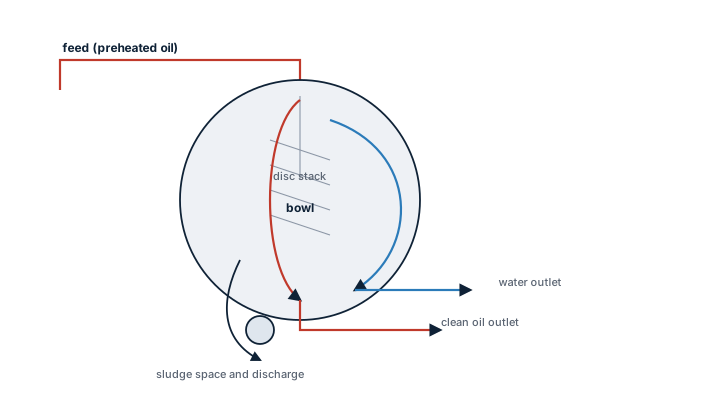
Main components
Bowl and disc stack
The rotating assembly that generates the centrifugal force separating oil, water and solids by density; disc spacing and count are matched to the oil's viscosity and the expected water content rather than to fuel-grade contamination levels.
Feed pump and heater
Draws the side-stream from the circulating tank or sump and brings it to the working temperature; on a lube oil service this is usually a modest, steady heat rise rather than the aggressive preheating a heavy fuel line needs.
Sludge discharge system
Ejects accumulated solids at set intervals, either on a timer or by water-detection trigger; sludge volume from lube oil is normally far lower than from fuel, so discharge intervals are longer.
Gravity disc
Sets the interface between the oil and water phases inside the bowl; selecting the correct gravity disc for the oil's density is what keeps clean oil from being lost to the water outlet.
Selection and sizing
Sizing is set against the throughput needed to turn over the full circulating oil charge within a practical time, not against engine fuel consumption:
- Circulating oil system volume and the target number of turnovers per day
- Oil viscosity grade and its effect on achievable throughput at the design temperature
- Expected water ingress rate, from cooler leaks, condensation, or piston cooling oil contamination on some engine types
- Whether the unit serves main engine oil alone or is shared with generator or hydraulic oil systems
Regulations and class
Class rules require lube oil purification arrangements for main propulsion machinery to be sized so the oil charge can be treated within a stated turnover period, checked at survey against the machinery manual. Continuous operation while the engine runs is generally required rather than treated as optional maintenance. Where separator sludge is discharged as oily waste, MARPOL Annex I processing and record-keeping in the Oil Record Book applies to how that sludge is handled, even though the separator itself is not a bilge water treatment unit.
Typical faults
| Fault | Consequence |
|---|---|
| Wrong gravity disc for the oil grade in use | Clean oil carried out with the water discharge, or water not fully removed |
| Sludge space allowed to fill between discharges | Falling separation efficiency and rising water content in the circulating oil |
| Feed temperature too low for the oil's viscosity | Poor throughput and incomplete water removal |
| Bowl seal or gasket wear | Cross-contamination between oil and water outlets, or vibration from an unbalanced bowl |
What to look for in a supplier
- Disc stack and gravity disc sets matched to the actual oil grades the ship carries, not a generic kit
- Documented throughput at the oil viscosity and temperature the ship will actually run, not only at test-fluid conditions
- Spare parts commonality with any fuel separators already on board, where the same manufacturer's range allows it
- Service support that can respond to a bowl vibration or bearing complaint without a long parts lead time
Track water content trends in the circulating oil rather than waiting for a low-level alarm on the separator — a slow rise usually means a cooler leak upstream, not a separator problem.