What to check on a Fuel Oil Purifier.
A fuel oil purifier is a disc-stack separator built and set up for continuous three-phase duty on fuel: oil out one outlet, separated water out a second, and solids ejected periodically through the self-cleaning bowl discharge. Unlike a lubricating oil purifier, which mainly removes water contamination and fine wear metal, the fuel purifier's main job since the low-sulphur fuel rules took effect is stripping catalytic fines (cat fines), the hard aluminium-silicon particles left over from refinery cracking that abrade injector components and liner walls if they reach the engine. Many…
What sets this type apart
A fuel oil purifier is a disc-stack separator built and set up for continuous three-phase duty on fuel: oil out one outlet, separated water out a second, and solids ejected periodically through the self-cleaning bowl discharge. Unlike a lubricating oil purifier, which mainly removes water contamination and fine wear metal, the fuel purifier's main job since the low-sulphur fuel rules took effect is stripping catalytic fines (cat fines), the hard aluminium-silicon particles left over from refinery cracking that abrade injector components and liner walls if they reach the engine. Many installations run two units in series, a purifier followed by a clarifier, precisely to push cat fine content down as far as practical before the fuel reaches the day tank.
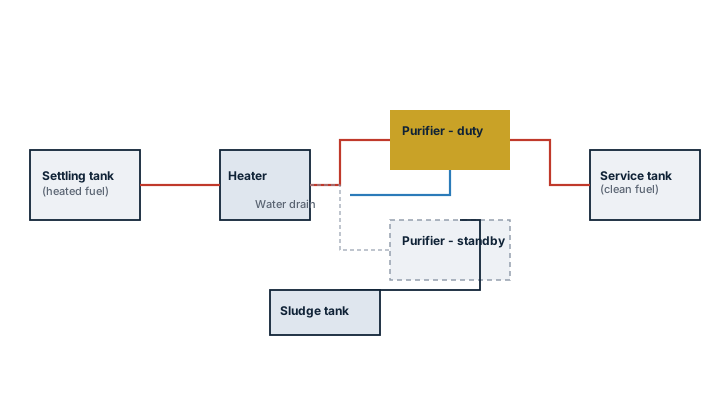
Main components
Preheater
Heavy fuel oil is heated to roughly 90-98 degrees C ahead of the bowl to bring viscosity down into the range the separator was designed for; distillate and low-viscosity blends need much less heat, and running a purifier too hot on light fuel can flash off lighter fractions and upset separation as much as running it too cold on heavy fuel.
Bowl and gravity disc
The gravity disc bore is selected against the fuel's density at separation temperature. VLSFO blends vary in density between bunkerings far more than the straight heavy fuel oil they replaced, so a disc sized for one delivery can be wrong for the next unless density is checked against the bunker delivery note each time.
Sludge discharge and monitoring
A water-in-oil sensor on the clean oil outlet triggers the self-cleaning discharge and, on a serious upset, can trip an alarm or shut the feed. Cat fine content is not something the standard water-in-oil sensor detects; laboratory analysis of the day tank fuel, not the separator's own instrumentation, is what confirms cat fine removal is actually working.
Feed and back-pressure control
A constant, moderate feed rate matched to fuel viscosity is more important for cat fine removal than for water removal, since fine solids need more residence time in the bowl to be thrown out than water droplets do. Running two purifiers at reduced individual throughput removes more cat fines than running one at full rated capacity.
Selection and sizing
| Parameter | Typical value |
|---|---|
| HFO separation temperature | 90-98 degrees C |
| MGO/MDO separation temperature | well below HFO, per maker's curve |
| Recommended throughput for cat fine removal | well under nameplate maximum |
| Target cat fine level at engine inlet | per engine builder's limit, confirmed by lab analysis |
Purifiers are sized against the largest engine's fuel consumption plus margin, with a standby unit sized the same as the duty unit so a single failure does not force a changeover to a lighter, unpurified grade.
Regulations and class
Purifier capacity and redundancy are checked as part of the essential auxiliary machinery survey. MARPOL Annex VI sulphur limits do not regulate the purifier directly, but the fuel quality rules under Annex VI and the fuel oil non-availability reporting obligation both assume the ship has working purification in place. Sludge disposal through the separator into the sludge tank, and from there ashore, is logged in the Oil Record Book under MARPOL Annex I.
Typical faults
- Wrong gravity disc after a bunker change - density mismatch causes oil losses to the water or sludge side, or incomplete water removal.
- Running above rated throughput - cat fines pass through despite normal water-in-oil readings, since the sensor does not detect solids directly.
- Preheater temperature drift - viscosity too high or too low for the bowl design, degrading separation without an obvious alarm.
- Sludge line blockage - incomplete bowl discharge, sludge re-entrained into clean oil over successive cycles.
- Skipped series clarifier duty - running only the purifier stage when cat fines are known to be high leaves no second pass to catch what the first stage misses.
What to look for in a supplier
- Genuine gravity discs across the density range the ship's bunkering pattern actually covers, not just one nominal disc.
- Spare bowl parts and gaskets held with short lead time, given how quickly a fuel treatment stoppage becomes a propulsion issue.
- Support and documented throughput curves for current low-sulphur fuel blends, not only legacy heavy fuel oil data.
After any bunker delivery with unfamiliar density or a cat fine warning on the delivery note, check and if needed change the gravity disc before the new fuel reaches the purifier - a disc sized for the old fuel is a common, avoidable cause of poor separation.