NX 314
Alfa Laval NX 314 — Sludge dewatering and wastewater treatment.
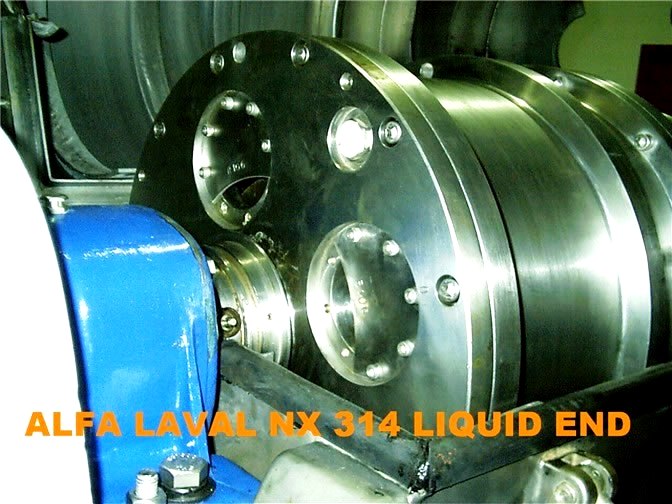
Inspector Detail
▸
Common issues
- Bowl imbalance from uneven sludge or sediment build-up, causing vibration
- Seal and gasket wear allowing sludge or process liquid leakage
- Bearing wear from age or inadequate lubrication at high bowl speed
- Bowl/valve mechanism sticking from solids build-up on disc-stack type separators
- Feed or discharge nozzle blockage reducing throughput
- Drive belt or gearbox wear causing bowl speed drift
- Vibration trips from foundation looseness or bowl wear
Inspection checklist
- Check bowl balance and vibration levels during operation
- Inspect bowl internals (discs or scroll, depending on separator type) for wear/erosion at each opening
- Check seals and gaskets for wear or leakage
- Verify bearing condition by noise, temperature, and vibration
- Check drive belt tension/condition or gearbox oil condition
- Confirm interlocks and bowl-speed monitoring function correctly
- Inspect sludge/discharge piping for blockage or restriction
- Check that vibration and motor-overload alarms operate correctly
Service intervals
| Bowl opening/cleaning | interval is strongly duty-dependent (sludge loading varies widely) - use running-hour or differential-pressure trigger from maker's manual, no universal figure |
| Bearing renewal | bauart-typical 8,000-16,000 running hours for this class of separator - confirm against maker's manual |
| Seal/gasket renewal | at each major bowl overhaul |
| Gear/belt drive inspection | every 2,000-4,000 running hours |
Typical wear limits
| Bowl/disc clearance and bearing radial clearance | maker-specific for this class of separator - confirm against the equipment's own manual before condemning parts |
Ranges are typical for this design class. Always confirm against the manufacturer documentation for your serial number.
Critical spares
- Bowl seal and gasket kit
- Bearing set as specified by the maker
- Drive belt set (if belt-driven)
- Feed/discharge nozzle set
Safety
- High rotational energy stored in the bowl - never open until fully stopped and confirmed by the maker's lock-out procedure
- Crush hazard from bowl/hood components during assembly and disassembly
- Hot surfaces where the process stream is heated (sludge/waste oil service)
- Never defeat a vibration trip - it protects against a genuine bowl-imbalance hazard
Class survey
Sludge/waste separators are generally not a dedicated class survey item unless tied to a MARPOL Annex I oily-water or sludge-management requirement, in which case the surveyor will want to see the equipment's certificate, operating log, and evidence of scheduled maintenance. Note: available source data for this unit points to an industrial decanter-type centrifuge rather than a confirmed marine-specific specification, so entries here are kept to bauart-general guidance for centrifugal separators used in shipboard sludge dewatering.
Components & Design
Component data being added…
Technical Data
🤖 Ask about this model
One free question — answered like a marine engineer. No account needed.
Common failures & inspection points
Clean and inspect all operating water nozzles regularly; remove accumulated sludge using soft iron wire; verify nozzle holes are clear of deposits
Replace main and internal bearings every 15,000 operating hours; perform weekly lubrication checks; monitor for unusual noise or vibration during operation
Inspect bowl seals and gaskets for cracks and wear; perform seal replacement on schedule depending on application (every few weeks for abrasive fluids to every few months for benign applications); check for liquid leakage
Inspect regularly for corrosion damage; inspect frequently if process liquid is erosive; contact manufacturer if erosion damage exceeds 1.0 mm depth; check conveyor for wear
Check for dirt and lime deposits in sludge discharge mechanism; thoroughly clean discharge parts; verify sludge ports for cracks in rotating parts and bowl wall pillars; test discharge operation
Type-general inspection and maintenance points for this equipment category — not model-specific.
Suppliers & Spare Parts
Direct links to manufacturer, datasheet, spare-parts portal and dealers — request access below.
📄 Request sourcing links & documentsCases, daily reports, timesheets and AI troubleshooting in the OceanSphere Marine app — free for 14 days.
Start free trial →Find manufacturers, repair shops and spare-part dealers in the Maritime Network — our global company directory.
Maritime Network →