Thermal Oil Heater
A thermal oil heater circulates a heat transfer fluid in a closed loop at near-atmospheric pressure instead of raising steam, which lets it reach higher temperatures than a steam boiler without the pressure vessel risk that comes with high-pressure steam.
Read more — Thermal Oil Heater explained ▾
What Makes This Type Different
A thermal oil heater does not make steam; it heats a synthetic or mineral heat transfer fluid that is pumped in a closed circuit to the consumers — cargo heating coils, fuel oil heaters, accommodation heating — and returns to the heater to be reheated. Because the fluid stays liquid and the circuit runs at low pressure even at high temperature, the system avoids the pressure vessel constraints of a steam boiler generating the same heat output, and it can reach fluid temperatures that would require very high steam pressure to match. The trade-off is that the system depends entirely on continuous flow: unlike a steam boiler's water, the thermal fluid will locally overheat, degrade and coke inside the heating coil the moment circulation stops while the burner is still firing.
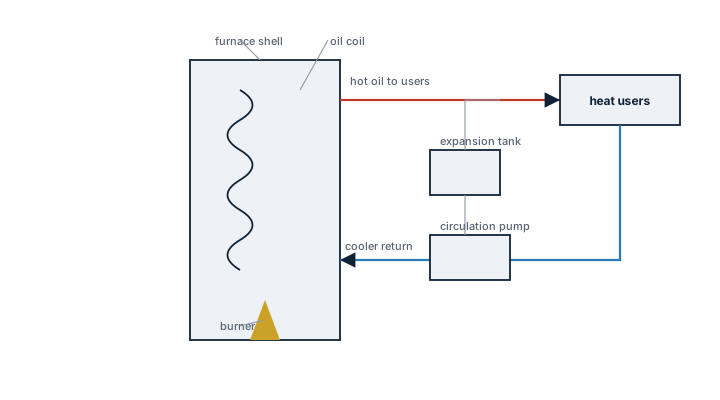
Main Components
Coil and Furnace
The fluid passes through a coiled tube inside the furnace, heated by an oil or gas burner; coil design keeps fluid velocity high enough to prevent local hot spots and film boiling at the tube wall.
Circulating Pump
Runs continuously whenever the burner fires, and is interlocked so the burner cannot operate without confirmed flow — loss of circulation with the burner still firing is the single most damaging fault mode for this equipment.
Expansion Tank
Vented tank at the top of the system that accommodates the fluid's thermal expansion and allows air and moisture to be driven off, kept under a nitrogen blanket or open to atmosphere depending on the installation.
Heat Transfer Fluid
Synthetic (for example certain aromatic-based fluids) or mineral thermal oil, selected for the required operating temperature and checked periodically for degradation, since a coked or oxidised fluid loses heat transfer performance and can foul the coil.
Consumers and Control Valves
Cargo heating coils, fuel oil heaters and accommodation heating loops, each controlled by a modulating valve that manages heat demand without upsetting the main circulation loop.
Selection and Sizing
- Heat output: sized for the combined peak demand of cargo heating, fuel heating and accommodation heating, with margin for the coldest expected ambient condition.
- Fluid operating temperature: chosen based on the highest required outlet temperature, typically driven by cargo heating requirements on product or chemical tankers.
- Fluid type: synthetic fluids tolerate higher film temperatures than mineral oils, relevant where local hot spots in the coil are a known risk.
- Circulation pump duty: matched to the coil's minimum required velocity across the whole system, not just the heater's own pressure drop.
Regulations and Class
Class rules cover thermal oil heater installations similarly to other fired pressure equipment, requiring flow and low-flow burner interlocks, high-temperature cut-outs, and periodic internal and external inspection intervals for the coil and furnace. Because the fluid is combustible and typically hot, fire protection and leak detection around the unit is checked at survey, and MARPOL and general environmental rules apply to disposal of degraded thermal fluid the same as other oily waste.
Typical Faults
| Fault | Consequence |
|---|---|
| Circulating pump trips or fails with burner still firing | Local fluid overheating and coking inside the coil within minutes |
| Thermal fluid degraded from prolonged overheating | Fouled coil, reduced heat transfer, higher fuel consumption for the same output |
| Air or moisture trapped in the circuit | Pump cavitation, uneven heating, noise in the circulation loop |
| Expansion tank vent blocked | Pressure build-up in a system designed to run near atmospheric pressure |
| Low-flow interlock bypassed or defeated | Loss of the main protection against coil overheating on pump failure |
What to Look for in a Supplier
- Fluid analysis service available, since fluid condition is the main indicator of system health over years of operation.
- Genuine compatibility of any replacement fluid with the existing charge — mixing incompatible fluid types can accelerate degradation.
- Spare coil sections or full coil replacement lead time understood in advance, since coil fouling or a leak takes the whole heater out of service.
Never bypass the low-flow burner interlock, even briefly during troubleshooting — a thermal oil heater with a stalled circulation and a firing burner can coke a coil section badly enough to need replacement within minutes.
8 manufacturers · 88 models
Pirobloc
18 ✓ 18 verified
- Area: Thermal fluid oxidation and degradationCheck: Periodic fluid analysis including acid number testing, viscosity measurements, and flash point verification to detect oxidation and tar/sludge formation
- Area: Thermal fluid leaks and seal integrityCheck: Daily and weekly visual inspection of leak points at valves, flanges, welds, instrument ports, threaded fittings, and pump seals; immediate replacement of failed seals; ensure drip pans are kept free of liquid
- Area: Burner combustion efficiency and emissionsCheck: Annual inspection of burner state, combustion efficiency, smoke composition analysis, and smoke temperature measurement to verify proper operation and compliance
- Area: System pressure and temperature monitoringCheck: Verification of working temperatures and pressures, confirmation that low-flow shutdown systems and alarms function properly, expansion tank remains cool (below 40°C) and sealed
- Area: Equipment component performance and corrosionCheck: Assessment of electrical recirculation pump groups, manual and automatic valves, thermal insulation integrity, and overall system behavior; check for signs of smoke/odor indicating thermal fluid seepage into insulation
Typ-universelle Inspektionspunkte fuer Boilers (verifiziert, 2026-06).
- Area: Thermal fluid oxidation and degradationCheck: Periodic fluid analysis including acid number testing, viscosity measurements, and flash point verification to detect oxidation and tar/sludge formation
- Area: Thermal fluid leaks and seal integrityCheck: Daily and weekly visual inspection of leak points at valves, flanges, welds, instrument ports, threaded fittings, and pump seals; immediate replacement of failed seals; ensure drip pans are kept free of liquid
- Area: Burner combustion efficiency and emissionsCheck: Annual inspection of burner state, combustion efficiency, smoke composition analysis, and smoke temperature measurement to verify proper operation and compliance
- Area: System pressure and temperature monitoringCheck: Verification of working temperatures and pressures, confirmation that low-flow shutdown systems and alarms function properly, expansion tank remains cool (below 40°C) and sealed
- Area: Equipment component performance and corrosionCheck: Assessment of electrical recirculation pump groups, manual and automatic valves, thermal insulation integrity, and overall system behavior; check for signs of smoke/odor indicating thermal fluid seepage into insulation
Typ-universelle Inspektionspunkte fuer Boilers (verifiziert, 2026-06).
- Area: Thermal fluid oxidation and degradationCheck: Periodic fluid analysis including acid number testing, viscosity measurements, and flash point verification to detect oxidation and tar/sludge formation
- Area: Thermal fluid leaks and seal integrityCheck: Daily and weekly visual inspection of leak points at valves, flanges, welds, instrument ports, threaded fittings, and pump seals; immediate replacement of failed seals; ensure drip pans are kept free of liquid
- Area: Burner combustion efficiency and emissionsCheck: Annual inspection of burner state, combustion efficiency, smoke composition analysis, and smoke temperature measurement to verify proper operation and compliance
- Area: System pressure and temperature monitoringCheck: Verification of working temperatures and pressures, confirmation that low-flow shutdown systems and alarms function properly, expansion tank remains cool (below 40°C) and sealed
- Area: Equipment component performance and corrosionCheck: Assessment of electrical recirculation pump groups, manual and automatic valves, thermal insulation integrity, and overall system behavior; check for signs of smoke/odor indicating thermal fluid seepage into insulation
Typ-universelle Inspektionspunkte fuer Boilers (verifiziert, 2026-06).
- Area: Thermal fluid oxidation and degradationCheck: Periodic fluid analysis including acid number testing, viscosity measurements, and flash point verification to detect oxidation and tar/sludge formation
- Area: Thermal fluid leaks and seal integrityCheck: Daily and weekly visual inspection of leak points at valves, flanges, welds, instrument ports, threaded fittings, and pump seals; immediate replacement of failed seals; ensure drip pans are kept free of liquid
- Area: Burner combustion efficiency and emissionsCheck: Annual inspection of burner state, combustion efficiency, smoke composition analysis, and smoke temperature measurement to verify proper operation and compliance
- Area: System pressure and temperature monitoringCheck: Verification of working temperatures and pressures, confirmation that low-flow shutdown systems and alarms function properly, expansion tank remains cool (below 40°C) and sealed
- Area: Equipment component performance and corrosionCheck: Assessment of electrical recirculation pump groups, manual and automatic valves, thermal insulation integrity, and overall system behavior; check for signs of smoke/odor indicating thermal fluid seepage into insulation
Typ-universelle Inspektionspunkte fuer Boilers (verifiziert, 2026-06).
- Area: Thermal fluid oxidation and degradationCheck: Periodic fluid analysis including acid number testing, viscosity measurements, and flash point verification to detect oxidation and tar/sludge formation
- Area: Thermal fluid leaks and seal integrityCheck: Daily and weekly visual inspection of leak points at valves, flanges, welds, instrument ports, threaded fittings, and pump seals; immediate replacement of failed seals; ensure drip pans are kept free of liquid
- Area: Burner combustion efficiency and emissionsCheck: Annual inspection of burner state, combustion efficiency, smoke composition analysis, and smoke temperature measurement to verify proper operation and compliance
- Area: System pressure and temperature monitoringCheck: Verification of working temperatures and pressures, confirmation that low-flow shutdown systems and alarms function properly, expansion tank remains cool (below 40°C) and sealed
- Area: Equipment component performance and corrosionCheck: Assessment of electrical recirculation pump groups, manual and automatic valves, thermal insulation integrity, and overall system behavior; check for signs of smoke/odor indicating thermal fluid seepage into insulation
Typ-universelle Inspektionspunkte fuer Boilers (verifiziert, 2026-06).
- Area: Thermal fluid oxidation and degradationCheck: Periodic fluid analysis including acid number testing, viscosity measurements, and flash point verification to detect oxidation and tar/sludge formation
- Area: Thermal fluid leaks and seal integrityCheck: Daily and weekly visual inspection of leak points at valves, flanges, welds, instrument ports, threaded fittings, and pump seals; immediate replacement of failed seals; ensure drip pans are kept free of liquid
- Area: Burner combustion efficiency and emissionsCheck: Annual inspection of burner state, combustion efficiency, smoke composition analysis, and smoke temperature measurement to verify proper operation and compliance
- Area: System pressure and temperature monitoringCheck: Verification of working temperatures and pressures, confirmation that low-flow shutdown systems and alarms function properly, expansion tank remains cool (below 40°C) and sealed
- Area: Equipment component performance and corrosionCheck: Assessment of electrical recirculation pump groups, manual and automatic valves, thermal insulation integrity, and overall system behavior; check for signs of smoke/odor indicating thermal fluid seepage into insulation
Typ-universelle Inspektionspunkte fuer Boilers (verifiziert, 2026-06).
- Area: Thermal fluid oxidation and degradationCheck: Periodic fluid analysis including acid number testing, viscosity measurements, and flash point verification to detect oxidation and tar/sludge formation
- Area: Thermal fluid leaks and seal integrityCheck: Daily and weekly visual inspection of leak points at valves, flanges, welds, instrument ports, threaded fittings, and pump seals; immediate replacement of failed seals; ensure drip pans are kept free of liquid
- Area: Burner combustion efficiency and emissionsCheck: Annual inspection of burner state, combustion efficiency, smoke composition analysis, and smoke temperature measurement to verify proper operation and compliance
- Area: System pressure and temperature monitoringCheck: Verification of working temperatures and pressures, confirmation that low-flow shutdown systems and alarms function properly, expansion tank remains cool (below 40°C) and sealed
- Area: Equipment component performance and corrosionCheck: Assessment of electrical recirculation pump groups, manual and automatic valves, thermal insulation integrity, and overall system behavior; check for signs of smoke/odor indicating thermal fluid seepage into insulation
Typ-universelle Inspektionspunkte fuer Boilers (verifiziert, 2026-06).
- Area: Thermal fluid oxidation and degradationCheck: Periodic fluid analysis including acid number testing, viscosity measurements, and flash point verification to detect oxidation and tar/sludge formation
- Area: Thermal fluid leaks and seal integrityCheck: Daily and weekly visual inspection of leak points at valves, flanges, welds, instrument ports, threaded fittings, and pump seals; immediate replacement of failed seals; ensure drip pans are kept free of liquid
- Area: Burner combustion efficiency and emissionsCheck: Annual inspection of burner state, combustion efficiency, smoke composition analysis, and smoke temperature measurement to verify proper operation and compliance
- Area: System pressure and temperature monitoringCheck: Verification of working temperatures and pressures, confirmation that low-flow shutdown systems and alarms function properly, expansion tank remains cool (below 40°C) and sealed
- Area: Equipment component performance and corrosionCheck: Assessment of electrical recirculation pump groups, manual and automatic valves, thermal insulation integrity, and overall system behavior; check for signs of smoke/odor indicating thermal fluid seepage into insulation
Typ-universelle Inspektionspunkte fuer Boilers (verifiziert, 2026-06).
- Area: Thermal fluid oxidation and degradationCheck: Periodic fluid analysis including acid number testing, viscosity measurements, and flash point verification to detect oxidation and tar/sludge formation
- Area: Thermal fluid leaks and seal integrityCheck: Daily and weekly visual inspection of leak points at valves, flanges, welds, instrument ports, threaded fittings, and pump seals; immediate replacement of failed seals; ensure drip pans are kept free of liquid
- Area: Burner combustion efficiency and emissionsCheck: Annual inspection of burner state, combustion efficiency, smoke composition analysis, and smoke temperature measurement to verify proper operation and compliance
- Area: System pressure and temperature monitoringCheck: Verification of working temperatures and pressures, confirmation that low-flow shutdown systems and alarms function properly, expansion tank remains cool (below 40°C) and sealed
- Area: Equipment component performance and corrosionCheck: Assessment of electrical recirculation pump groups, manual and automatic valves, thermal insulation integrity, and overall system behavior; check for signs of smoke/odor indicating thermal fluid seepage into insulation
Typ-universelle Inspektionspunkte fuer Boilers (verifiziert, 2026-06).
- Area: Thermal fluid oxidation and degradationCheck: Periodic fluid analysis including acid number testing, viscosity measurements, and flash point verification to detect oxidation and tar/sludge formation
- Area: Thermal fluid leaks and seal integrityCheck: Daily and weekly visual inspection of leak points at valves, flanges, welds, instrument ports, threaded fittings, and pump seals; immediate replacement of failed seals; ensure drip pans are kept free of liquid
- Area: Burner combustion efficiency and emissionsCheck: Annual inspection of burner state, combustion efficiency, smoke composition analysis, and smoke temperature measurement to verify proper operation and compliance
- Area: System pressure and temperature monitoringCheck: Verification of working temperatures and pressures, confirmation that low-flow shutdown systems and alarms function properly, expansion tank remains cool (below 40°C) and sealed
- Area: Equipment component performance and corrosionCheck: Assessment of electrical recirculation pump groups, manual and automatic valves, thermal insulation integrity, and overall system behavior; check for signs of smoke/odor indicating thermal fluid seepage into insulation
Typ-universelle Inspektionspunkte fuer Boilers (verifiziert, 2026-06).
- Area: Thermal fluid oxidation and degradationCheck: Periodic fluid analysis including acid number testing, viscosity measurements, and flash point verification to detect oxidation and tar/sludge formation
- Area: Thermal fluid leaks and seal integrityCheck: Daily and weekly visual inspection of leak points at valves, flanges, welds, instrument ports, threaded fittings, and pump seals; immediate replacement of failed seals; ensure drip pans are kept free of liquid
- Area: Burner combustion efficiency and emissionsCheck: Annual inspection of burner state, combustion efficiency, smoke composition analysis, and smoke temperature measurement to verify proper operation and compliance
- Area: System pressure and temperature monitoringCheck: Verification of working temperatures and pressures, confirmation that low-flow shutdown systems and alarms function properly, expansion tank remains cool (below 40°C) and sealed
- Area: Equipment component performance and corrosionCheck: Assessment of electrical recirculation pump groups, manual and automatic valves, thermal insulation integrity, and overall system behavior; check for signs of smoke/odor indicating thermal fluid seepage into insulation
Typ-universelle Inspektionspunkte fuer Boilers (verifiziert, 2026-06).
- Area: Thermal fluid oxidation and degradationCheck: Periodic fluid analysis including acid number testing, viscosity measurements, and flash point verification to detect oxidation and tar/sludge formation
- Area: Thermal fluid leaks and seal integrityCheck: Daily and weekly visual inspection of leak points at valves, flanges, welds, instrument ports, threaded fittings, and pump seals; immediate replacement of failed seals; ensure drip pans are kept free of liquid
- Area: Burner combustion efficiency and emissionsCheck: Annual inspection of burner state, combustion efficiency, smoke composition analysis, and smoke temperature measurement to verify proper operation and compliance
- Area: System pressure and temperature monitoringCheck: Verification of working temperatures and pressures, confirmation that low-flow shutdown systems and alarms function properly, expansion tank remains cool (below 40°C) and sealed
- Area: Equipment component performance and corrosionCheck: Assessment of electrical recirculation pump groups, manual and automatic valves, thermal insulation integrity, and overall system behavior; check for signs of smoke/odor indicating thermal fluid seepage into insulation
Typ-universelle Inspektionspunkte fuer Boilers (verifiziert, 2026-06).
- Area: Thermal fluid oxidation and degradationCheck: Periodic fluid analysis including acid number testing, viscosity measurements, and flash point verification to detect oxidation and tar/sludge formation
- Area: Thermal fluid leaks and seal integrityCheck: Daily and weekly visual inspection of leak points at valves, flanges, welds, instrument ports, threaded fittings, and pump seals; immediate replacement of failed seals; ensure drip pans are kept free of liquid
- Area: Burner combustion efficiency and emissionsCheck: Annual inspection of burner state, combustion efficiency, smoke composition analysis, and smoke temperature measurement to verify proper operation and compliance
- Area: System pressure and temperature monitoringCheck: Verification of working temperatures and pressures, confirmation that low-flow shutdown systems and alarms function properly, expansion tank remains cool (below 40°C) and sealed
- Area: Equipment component performance and corrosionCheck: Assessment of electrical recirculation pump groups, manual and automatic valves, thermal insulation integrity, and overall system behavior; check for signs of smoke/odor indicating thermal fluid seepage into insulation
Typ-universelle Inspektionspunkte fuer Boilers (verifiziert, 2026-06).
- Area: Thermal fluid oxidation and degradationCheck: Periodic fluid analysis including acid number testing, viscosity measurements, and flash point verification to detect oxidation and tar/sludge formation
- Area: Thermal fluid leaks and seal integrityCheck: Daily and weekly visual inspection of leak points at valves, flanges, welds, instrument ports, threaded fittings, and pump seals; immediate replacement of failed seals; ensure drip pans are kept free of liquid
- Area: Burner combustion efficiency and emissionsCheck: Annual inspection of burner state, combustion efficiency, smoke composition analysis, and smoke temperature measurement to verify proper operation and compliance
- Area: System pressure and temperature monitoringCheck: Verification of working temperatures and pressures, confirmation that low-flow shutdown systems and alarms function properly, expansion tank remains cool (below 40°C) and sealed
- Area: Equipment component performance and corrosionCheck: Assessment of electrical recirculation pump groups, manual and automatic valves, thermal insulation integrity, and overall system behavior; check for signs of smoke/odor indicating thermal fluid seepage into insulation
Typ-universelle Inspektionspunkte fuer Boilers (verifiziert, 2026-06).
- Area: Thermal fluid oxidation and degradationCheck: Periodic fluid analysis including acid number testing, viscosity measurements, and flash point verification to detect oxidation and tar/sludge formation
- Area: Thermal fluid leaks and seal integrityCheck: Daily and weekly visual inspection of leak points at valves, flanges, welds, instrument ports, threaded fittings, and pump seals; immediate replacement of failed seals; ensure drip pans are kept free of liquid
- Area: Burner combustion efficiency and emissionsCheck: Annual inspection of burner state, combustion efficiency, smoke composition analysis, and smoke temperature measurement to verify proper operation and compliance
- Area: System pressure and temperature monitoringCheck: Verification of working temperatures and pressures, confirmation that low-flow shutdown systems and alarms function properly, expansion tank remains cool (below 40°C) and sealed
- Area: Equipment component performance and corrosionCheck: Assessment of electrical recirculation pump groups, manual and automatic valves, thermal insulation integrity, and overall system behavior; check for signs of smoke/odor indicating thermal fluid seepage into insulation
Typ-universelle Inspektionspunkte fuer Boilers (verifiziert, 2026-06).
- Area: Thermal fluid oxidation and degradationCheck: Periodic fluid analysis including acid number testing, viscosity measurements, and flash point verification to detect oxidation and tar/sludge formation
- Area: Thermal fluid leaks and seal integrityCheck: Daily and weekly visual inspection of leak points at valves, flanges, welds, instrument ports, threaded fittings, and pump seals; immediate replacement of failed seals; ensure drip pans are kept free of liquid
- Area: Burner combustion efficiency and emissionsCheck: Annual inspection of burner state, combustion efficiency, smoke composition analysis, and smoke temperature measurement to verify proper operation and compliance
- Area: System pressure and temperature monitoringCheck: Verification of working temperatures and pressures, confirmation that low-flow shutdown systems and alarms function properly, expansion tank remains cool (below 40°C) and sealed
- Area: Equipment component performance and corrosionCheck: Assessment of electrical recirculation pump groups, manual and automatic valves, thermal insulation integrity, and overall system behavior; check for signs of smoke/odor indicating thermal fluid seepage into insulation
Typ-universelle Inspektionspunkte fuer Boilers (verifiziert, 2026-06).
- Area: Thermal fluid oxidation and degradationCheck: Periodic fluid analysis including acid number testing, viscosity measurements, and flash point verification to detect oxidation and tar/sludge formation
- Area: Thermal fluid leaks and seal integrityCheck: Daily and weekly visual inspection of leak points at valves, flanges, welds, instrument ports, threaded fittings, and pump seals; immediate replacement of failed seals; ensure drip pans are kept free of liquid
- Area: Burner combustion efficiency and emissionsCheck: Annual inspection of burner state, combustion efficiency, smoke composition analysis, and smoke temperature measurement to verify proper operation and compliance
- Area: System pressure and temperature monitoringCheck: Verification of working temperatures and pressures, confirmation that low-flow shutdown systems and alarms function properly, expansion tank remains cool (below 40°C) and sealed
- Area: Equipment component performance and corrosionCheck: Assessment of electrical recirculation pump groups, manual and automatic valves, thermal insulation integrity, and overall system behavior; check for signs of smoke/odor indicating thermal fluid seepage into insulation
Typ-universelle Inspektionspunkte fuer Boilers (verifiziert, 2026-06).
- Area: Thermal fluid oxidation and degradationCheck: Periodic fluid analysis including acid number testing, viscosity measurements, and flash point verification to detect oxidation and tar/sludge formation
- Area: Thermal fluid leaks and seal integrityCheck: Daily and weekly visual inspection of leak points at valves, flanges, welds, instrument ports, threaded fittings, and pump seals; immediate replacement of failed seals; ensure drip pans are kept free of liquid
- Area: Burner combustion efficiency and emissionsCheck: Annual inspection of burner state, combustion efficiency, smoke composition analysis, and smoke temperature measurement to verify proper operation and compliance
- Area: System pressure and temperature monitoringCheck: Verification of working temperatures and pressures, confirmation that low-flow shutdown systems and alarms function properly, expansion tank remains cool (below 40°C) and sealed
- Area: Equipment component performance and corrosionCheck: Assessment of electrical recirculation pump groups, manual and automatic valves, thermal insulation integrity, and overall system behavior; check for signs of smoke/odor indicating thermal fluid seepage into insulation
Typ-universelle Inspektionspunkte fuer Boilers (verifiziert, 2026-06).
Garioni Naval
13 ✓ 4 verified- Area: Thermal Oil Degradation and Fluid QualityCheck: Periodic sampling and laboratory analysis of thermal oil; visual inspection for discoloration, oxidation products, or sludge formation; monitor fluid viscosity and thermal properties; check fluid level in reservoir and refill with clean oil if low
- Area: Coil Surface Integrity and Heat Exchanger PerformanceCheck: Visual inspection of coil surfaces for flame erosion, cracks, and deformation; check for thermal stress damage and localized overheating (>10°C differential); inspect all pipe penetrations through shell walls; verify coil circulation and absence of blockages
- Area: Pressure System Safety and Gauge AccuracyCheck: Verify pressure gauges are within calibration period and functioning correctly; check for gauge fluctuations or sudden pressure increases during operation; perform hydrostatic pressure test at 1.5 times maximum allowable working pressure for new installations; inspect all accessible parts under pressure
- Area: Combustion Efficiency and Burner Assembly ConditionCheck: Inspect burner assembly for proper fuel atomization and flame characteristics; check combustion air flow and preheater performance (for TH/AR models); verify automatic flue damper operation; monitor flue gas temperature and combustion efficiency; check for air in oil circulation system
- Area: Insulation, Piping Integrity, and Leak PreventionCheck: Thoroughly inspect all external insulation for wetness, cracks, or damage; check all welds, flanges, instrument ports, and valve stem packings for thermal fluid leaks; verify piping supports and vibration isolation; inspect for any hot oil weeping which could indicate imminent leaks or safety hazards
Typ-universelle Inspektionspunkte fuer Boilers (verifiziert, 2026-06).
- Area: Thermal Oil Degradation and Fluid QualityCheck: Periodic sampling and laboratory analysis of thermal oil; visual inspection for discoloration, oxidation products, or sludge formation; monitor fluid viscosity and thermal properties; check fluid level in reservoir and refill with clean oil if low
- Area: Coil Surface Integrity and Heat Exchanger PerformanceCheck: Visual inspection of coil surfaces for flame erosion, cracks, and deformation; check for thermal stress damage and localized overheating (>10°C differential); inspect all pipe penetrations through shell walls; verify coil circulation and absence of blockages
- Area: Pressure System Safety and Gauge AccuracyCheck: Verify pressure gauges are within calibration period and functioning correctly; check for gauge fluctuations or sudden pressure increases during operation; perform hydrostatic pressure test at 1.5 times maximum allowable working pressure for new installations; inspect all accessible parts under pressure
- Area: Combustion Efficiency and Burner Assembly ConditionCheck: Inspect burner assembly for proper fuel atomization and flame characteristics; check combustion air flow and preheater performance (for TH/AR models); verify automatic flue damper operation; monitor flue gas temperature and combustion efficiency; check for air in oil circulation system
- Area: Insulation, Piping Integrity, and Leak PreventionCheck: Thoroughly inspect all external insulation for wetness, cracks, or damage; check all welds, flanges, instrument ports, and valve stem packings for thermal fluid leaks; verify piping supports and vibration isolation; inspect for any hot oil weeping which could indicate imminent leaks or safety hazards
Typ-universelle Inspektionspunkte fuer Boilers (verifiziert, 2026-06).
- Area: Thermal Oil Degradation and Fluid QualityCheck: Periodic sampling and laboratory analysis of thermal oil; visual inspection for discoloration, oxidation products, or sludge formation; monitor fluid viscosity and thermal properties; check fluid level in reservoir and refill with clean oil if low
- Area: Coil Surface Integrity and Heat Exchanger PerformanceCheck: Visual inspection of coil surfaces for flame erosion, cracks, and deformation; check for thermal stress damage and localized overheating (>10°C differential); inspect all pipe penetrations through shell walls; verify coil circulation and absence of blockages
- Area: Pressure System Safety and Gauge AccuracyCheck: Verify pressure gauges are within calibration period and functioning correctly; check for gauge fluctuations or sudden pressure increases during operation; perform hydrostatic pressure test at 1.5 times maximum allowable working pressure for new installations; inspect all accessible parts under pressure
- Area: Combustion Efficiency and Burner Assembly ConditionCheck: Inspect burner assembly for proper fuel atomization and flame characteristics; check combustion air flow and preheater performance (for TH/AR models); verify automatic flue damper operation; monitor flue gas temperature and combustion efficiency; check for air in oil circulation system
- Area: Insulation, Piping Integrity, and Leak PreventionCheck: Thoroughly inspect all external insulation for wetness, cracks, or damage; check all welds, flanges, instrument ports, and valve stem packings for thermal fluid leaks; verify piping supports and vibration isolation; inspect for any hot oil weeping which could indicate imminent leaks or safety hazards
Typ-universelle Inspektionspunkte fuer Boilers (verifiziert, 2026-06).
- Area: Thermal Oil Degradation and Fluid QualityCheck: Periodic sampling and laboratory analysis of thermal oil; visual inspection for discoloration, oxidation products, or sludge formation; monitor fluid viscosity and thermal properties; check fluid level in reservoir and refill with clean oil if low
- Area: Coil Surface Integrity and Heat Exchanger PerformanceCheck: Visual inspection of coil surfaces for flame erosion, cracks, and deformation; check for thermal stress damage and localized overheating (>10°C differential); inspect all pipe penetrations through shell walls; verify coil circulation and absence of blockages
- Area: Pressure System Safety and Gauge AccuracyCheck: Verify pressure gauges are within calibration period and functioning correctly; check for gauge fluctuations or sudden pressure increases during operation; perform hydrostatic pressure test at 1.5 times maximum allowable working pressure for new installations; inspect all accessible parts under pressure
- Area: Combustion Efficiency and Burner Assembly ConditionCheck: Inspect burner assembly for proper fuel atomization and flame characteristics; check combustion air flow and preheater performance (for TH/AR models); verify automatic flue damper operation; monitor flue gas temperature and combustion efficiency; check for air in oil circulation system
- Area: Insulation, Piping Integrity, and Leak PreventionCheck: Thoroughly inspect all external insulation for wetness, cracks, or damage; check all welds, flanges, instrument ports, and valve stem packings for thermal fluid leaks; verify piping supports and vibration isolation; inspect for any hot oil weeping which could indicate imminent leaks or safety hazards
Typ-universelle Inspektionspunkte fuer Boilers (verifiziert, 2026-06).
Alfa Laval Aalborg
3 ✓ 3 verified
- Area: Tube coil and combustion chamber inspectionCheck: Visual examination of heat exchanger tubes, double coil bare tube configuration, and combustion chamber for scale deposits, corrosion, and erosion. Access plates and manholes must be removed for thorough inspection.
- Area: Thermal fluid chemistry and degradationCheck: Verification of thermal fluid properties (viscosity index >100, flash point COC >180°C, film temperature capability ≥340°C) and check for oxidation/degradation indicating fluid change requirement
- Area: Pressure relief and safety valve functionCheck: Testing of safety valves (main system valve at 10 bar(g), expansion tank valve at 4 bar(g), minimum flow control at 2.5 bar(g)) and documentation of pressure test results per ASME/PED standards
- Area: Refractory condition and insulation integrityCheck: Examination of refractory lining for cracks, spalling, or deterioration; inspection of external insulation jacket for damage; thermal camera inspection for heat loss anomalies
- Area: Burner and combustion efficiencyCheck: Inspection of burner assembly (monoblock pressure jet or rotary cup), flue gas analysis, combustion chamber temperature verification, and soot accumulation assessment. For EX models, soot-cleaning nozzle functionality check
Typ-universelle Inspektionspunkte fuer Boilers (verifiziert, 2026-06).
- Area: Tube coil and combustion chamber inspectionCheck: Visual examination of heat exchanger tubes, double coil bare tube configuration, and combustion chamber for scale deposits, corrosion, and erosion. Access plates and manholes must be removed for thorough inspection.
- Area: Thermal fluid chemistry and degradationCheck: Verification of thermal fluid properties (viscosity index >100, flash point COC >180°C, film temperature capability ≥340°C) and check for oxidation/degradation indicating fluid change requirement
- Area: Pressure relief and safety valve functionCheck: Testing of safety valves (main system valve at 10 bar(g), expansion tank valve at 4 bar(g), minimum flow control at 2.5 bar(g)) and documentation of pressure test results per ASME/PED standards
- Area: Refractory condition and insulation integrityCheck: Examination of refractory lining for cracks, spalling, or deterioration; inspection of external insulation jacket for damage; thermal camera inspection for heat loss anomalies
- Area: Burner and combustion efficiencyCheck: Inspection of burner assembly (monoblock pressure jet or rotary cup), flue gas analysis, combustion chamber temperature verification, and soot accumulation assessment. For EX models, soot-cleaning nozzle functionality check
Typ-universelle Inspektionspunkte fuer Boilers (verifiziert, 2026-06).
- Area: Tube coil and combustion chamber inspectionCheck: Visual examination of heat exchanger tubes, double coil bare tube configuration, and combustion chamber for scale deposits, corrosion, and erosion. Access plates and manholes must be removed for thorough inspection.
- Area: Thermal fluid chemistry and degradationCheck: Verification of thermal fluid properties (viscosity index >100, flash point COC >180°C, film temperature capability ≥340°C) and check for oxidation/degradation indicating fluid change requirement
- Area: Pressure relief and safety valve functionCheck: Testing of safety valves (main system valve at 10 bar(g), expansion tank valve at 4 bar(g), minimum flow control at 2.5 bar(g)) and documentation of pressure test results per ASME/PED standards
- Area: Refractory condition and insulation integrityCheck: Examination of refractory lining for cracks, spalling, or deterioration; inspection of external insulation jacket for damage; thermal camera inspection for heat loss anomalies
- Area: Burner and combustion efficiencyCheck: Inspection of burner assembly (monoblock pressure jet or rotary cup), flue gas analysis, combustion chamber temperature verification, and soot accumulation assessment. For EX models, soot-cleaning nozzle functionality check
Typ-universelle Inspektionspunkte fuer Boilers (verifiziert, 2026-06).
Alfa Laval
16
- Dampfkapazität OL
- 12.500–55.000 kg/h (mit BOG-Management)
- Dampfkapazität D
- 25–120 t/h (Tanker-Hauptkessel)
- Designdrücke
- 9 or 18 bar(g)
- Konstruktion
- Zweritrommel (Dampftrommel/Wassertrommel), Membranwände, Generatorröhrenbank
- Rohrsystem
- Gerade Pin-Tubes mit Schwenk-Pins, externe Fallrohre (Aalborg D)
- Brenner-typ
- Oelgefeuert (Standard), Dual-Fuel optional, KBSD/Aalborg-Brenner
- Refraktär
- Minimal im Feuerraum, Isolations- + Formrefraktär an Rohrplatte
- Aalborg OL (12.5-55 t/h, 9/18 bar)
- Aalborg D (25-120 t/h, 18 bar, Tanker-Design)
- Aalborg OM (8-45 t/h, Mittelkapazität)
- Mission OS (bis 6 t/h, Vertical Auxiliary)
- Area: Tube body leakage due to corrosion, pitting, deposits (scale/sludge) or wearCheck: Internal visual inspection of all steam/water tubes; perform pressure test if suspected; seal leaking tube with conical stop valve after steel wire brush cleaning of tube ends. Leaking tubes must be renewed.
- Area: Water level regulation: failure of differential pressure transmitter or feedwater control valve leads to flooding/drying outCheck: Check DP transmitter unit (external reference/variable leg, 4–20 mA output); feedwater control valve functional test; sight glass for cracks, contamination; test alarm function in control unit
- Area: Safety valve failure or incorrect opening/closing pressures — overpressure or inadequate emergency steam reliefCheck: Test two safety valves under full-load steam: pressure build-up 7 min. max. +6% working pressure permissible (water tubes); pop-point of each valve max. ±3% from set pressure; class notation: perform opening + accumulation test under classifier supervision
- Area: Furnace refractory damage (cracks, spalling) or soot/corrosion → heat leaks, furnace instability, drum overheatingCheck: Inspect furnace walls and refractory lining visually (min. 2x/year); check for cracks, moisture, soot deposits. Check lower tube plate (insulation + form refractory). After 3–4 weeks operation: perform blow-down, inspect/clean boiler, remove sludge
- Area: Loss of pressure integrity due to corrosion, cracks, rivets or welds → leakage, operating loss, safety riskCheck: Hydrostatic test: fill boiler with water 21–65 °C (water tubes max. 71 °C). Pressure: 1.5× MAWP (non-entry) or 1.25× MAWP (entry). Secure safety valves with clamps. Check all seal surfaces, rivets, welds for leaks. Class notation: every 2 years (up to 8 years), then annually
- Area: Internal corrosion (water side), scale deposits or fire side soot/flocking → tube wear, heat loss, contaminationCheck: Class survey: water side (steam drum, water drum, all tubes) check for corrosion/cracks/deposits; fire side (furnace, flue gas path) check for soot/flocking (min. 2x/year). Man holes (top/bottom) permit access. If necessary use ultrasonic/endoscope for deeper defects
Type-universal inspection points for Alfa Laval Aalborg oil-fired marine steam boiler (Water Tube / D-Type) (Aalborg + Class/eCFR, 2026-06). Per-model specs not auto-populated.
- Dampfkapazität OL
- 12.500–55.000 kg/h (mit BOG-Management)
- Dampfkapazität D
- 25–120 t/h (Tanker-Hauptkessel)
- Designdrücke
- 9 or 18 bar(g)
- Konstruktion
- Zweritrommel (Dampftrommel/Wassertrommel), Membranwände, Generatorröhrenbank
- Rohrsystem
- Gerade Pin-Tubes mit Schwenk-Pins, externe Fallrohre (Aalborg D)
- Brenner-typ
- Oelgefeuert (Standard), Dual-Fuel optional, KBSD/Aalborg-Brenner
- Refraktär
- Minimal im Feuerraum, Isolations- + Formrefraktär an Rohrplatte
- Aalborg OL (12.5-55 t/h, 9/18 bar)
- Aalborg D (25-120 t/h, 18 bar, Tanker-Design)
- Aalborg OM (8-45 t/h, Mittelkapazität)
- Mission OS (bis 6 t/h, Vertical Auxiliary)
- Area: Tube body leakage due to corrosion, pitting, deposits (scale/sludge) or wearCheck: Internal visual inspection of all steam/water tubes; perform pressure test if suspected; seal leaking tube with conical stop valve after steel wire brush cleaning of tube ends. Leaking tubes must be renewed.
- Area: Water level regulation: failure of differential pressure transmitter or feedwater control valve leads to flooding/drying outCheck: Check DP transmitter unit (external reference/variable leg, 4–20 mA output); feedwater control valve functional test; sight glass for cracks, contamination; test alarm function in control unit
- Area: Safety valve failure or incorrect opening/closing pressures — overpressure or inadequate emergency steam reliefCheck: Test two safety valves under full-load steam: pressure build-up 7 min. max. +6% working pressure permissible (water tubes); pop-point of each valve max. ±3% from set pressure; class notation: perform opening + accumulation test under classifier supervision
- Area: Furnace refractory damage (cracks, spalling) or soot/corrosion → heat leaks, furnace instability, drum overheatingCheck: Inspect furnace walls and refractory lining visually (min. 2x/year); check for cracks, moisture, soot deposits. Check lower tube plate (insulation + form refractory). After 3–4 weeks operation: perform blow-down, inspect/clean boiler, remove sludge
- Area: Loss of pressure integrity due to corrosion, cracks, rivets or welds → leakage, operating loss, safety riskCheck: Hydrostatic test: fill boiler with water 21–65 °C (water tubes max. 71 °C). Pressure: 1.5× MAWP (non-entry) or 1.25× MAWP (entry). Secure safety valves with clamps. Check all seal surfaces, rivets, welds for leaks. Class notation: every 2 years (up to 8 years), then annually
- Area: Internal corrosion (water side), scale deposits or fire side soot/flocking → tube wear, heat loss, contaminationCheck: Class survey: water side (steam drum, water drum, all tubes) check for corrosion/cracks/deposits; fire side (furnace, flue gas path) check for soot/flocking (min. 2x/year). Man holes (top/bottom) permit access. If necessary use ultrasonic/endoscope for deeper defects
Type-universal inspection points for Alfa Laval Aalborg oil-fired marine steam boiler (Water Tube / D-Type) (Aalborg + Class/eCFR, 2026-06). Per-model specs not auto-populated.
- Dampfkapazität OL
- 12.500–55.000 kg/h (mit BOG-Management)
- Dampfkapazität D
- 25–120 t/h (Tanker-Hauptkessel)
- Designdrücke
- 9 or 18 bar(g)
- Konstruktion
- Zweritrommel (Dampftrommel/Wassertrommel), Membranwände, Generatorröhrenbank
- Rohrsystem
- Gerade Pin-Tubes mit Schwenk-Pins, externe Fallrohre (Aalborg D)
- Brenner-typ
- Oelgefeuert (Standard), Dual-Fuel optional, KBSD/Aalborg-Brenner
- Refraktär
- Minimal im Feuerraum, Isolations- + Formrefraktär an Rohrplatte
- Aalborg OL (12.5-55 t/h, 9/18 bar)
- Aalborg D (25-120 t/h, 18 bar, Tanker-Design)
- Aalborg OM (8-45 t/h, Mittelkapazität)
- Mission OS (bis 6 t/h, Vertical Auxiliary)
- Area: Tube body leakage due to corrosion, pitting, deposits (scale/sludge) or wearCheck: Internal visual inspection of all steam/water tubes; perform pressure test if suspected; seal leaking tube with conical stop valve after steel wire brush cleaning of tube ends. Leaking tubes must be renewed.
- Area: Water level regulation: failure of differential pressure transmitter or feedwater control valve leads to flooding/drying outCheck: Check DP transmitter unit (external reference/variable leg, 4–20 mA output); feedwater control valve functional test; sight glass for cracks, contamination; test alarm function in control unit
- Area: Safety valve failure or incorrect opening/closing pressures — overpressure or inadequate emergency steam reliefCheck: Test two safety valves under full-load steam: pressure build-up 7 min. max. +6% working pressure permissible (water tubes); pop-point of each valve max. ±3% from set pressure; class notation: perform opening + accumulation test under classifier supervision
- Area: Furnace refractory damage (cracks, spalling) or soot/corrosion → heat leaks, furnace instability, drum overheatingCheck: Inspect furnace walls and refractory lining visually (min. 2x/year); check for cracks, moisture, soot deposits. Check lower tube plate (insulation + form refractory). After 3–4 weeks operation: perform blow-down, inspect/clean boiler, remove sludge
- Area: Loss of pressure integrity due to corrosion, cracks, rivets or welds → leakage, operating loss, safety riskCheck: Hydrostatic test: fill boiler with water 21–65 °C (water tubes max. 71 °C). Pressure: 1.5× MAWP (non-entry) or 1.25× MAWP (entry). Secure safety valves with clamps. Check all seal surfaces, rivets, welds for leaks. Class notation: every 2 years (up to 8 years), then annually
- Area: Internal corrosion (water side), scale deposits or fire side soot/flocking → tube wear, heat loss, contaminationCheck: Class survey: water side (steam drum, water drum, all tubes) check for corrosion/cracks/deposits; fire side (furnace, flue gas path) check for soot/flocking (min. 2x/year). Man holes (top/bottom) permit access. If necessary use ultrasonic/endoscope for deeper defects
Type-universal inspection points for Alfa Laval Aalborg oil-fired marine steam boiler (Water Tube / D-Type) (Aalborg + Class/eCFR, 2026-06). Per-model specs not auto-populated.
- Dampfkapazität OL
- 12.500–55.000 kg/h (mit BOG-Management)
- Dampfkapazität D
- 25–120 t/h (Tanker-Hauptkessel)
- Designdrücke
- 9 or 18 bar(g)
- Konstruktion
- Zweritrommel (Dampftrommel/Wassertrommel), Membranwände, Generatorröhrenbank
- Rohrsystem
- Gerade Pin-Tubes mit Schwenk-Pins, externe Fallrohre (Aalborg D)
- Brenner-typ
- Oelgefeuert (Standard), Dual-Fuel optional, KBSD/Aalborg-Brenner
- Refraktär
- Minimal im Feuerraum, Isolations- + Formrefraktär an Rohrplatte
- Aalborg OL (12.5-55 t/h, 9/18 bar)
- Aalborg D (25-120 t/h, 18 bar, Tanker-Design)
- Aalborg OM (8-45 t/h, Mittelkapazität)
- Mission OS (bis 6 t/h, Vertical Auxiliary)
- Area: Tube body leakage due to corrosion, pitting, deposits (scale/sludge) or wearCheck: Internal visual inspection of all steam/water tubes; perform pressure test if suspected; seal leaking tube with conical stop valve after steel wire brush cleaning of tube ends. Leaking tubes must be renewed.
- Area: Water level regulation: failure of differential pressure transmitter or feedwater control valve leads to flooding/drying outCheck: Check DP transmitter unit (external reference/variable leg, 4–20 mA output); feedwater control valve functional test; sight glass for cracks, contamination; test alarm function in control unit
- Area: Safety valve failure or incorrect opening/closing pressures — overpressure or inadequate emergency steam reliefCheck: Test two safety valves under full-load steam: pressure build-up 7 min. max. +6% working pressure permissible (water tubes); pop-point of each valve max. ±3% from set pressure; class notation: perform opening + accumulation test under classifier supervision
- Area: Furnace refractory damage (cracks, spalling) or soot/corrosion → heat leaks, furnace instability, drum overheatingCheck: Inspect furnace walls and refractory lining visually (min. 2x/year); check for cracks, moisture, soot deposits. Check lower tube plate (insulation + form refractory). After 3–4 weeks operation: perform blow-down, inspect/clean boiler, remove sludge
- Area: Loss of pressure integrity due to corrosion, cracks, rivets or welds → leakage, operating loss, safety riskCheck: Hydrostatic test: fill boiler with water 21–65 °C (water tubes max. 71 °C). Pressure: 1.5× MAWP (non-entry) or 1.25× MAWP (entry). Secure safety valves with clamps. Check all seal surfaces, rivets, welds for leaks. Class notation: every 2 years (up to 8 years), then annually
- Area: Internal corrosion (water side), scale deposits or fire side soot/flocking → tube wear, heat loss, contaminationCheck: Class survey: water side (steam drum, water drum, all tubes) check for corrosion/cracks/deposits; fire side (furnace, flue gas path) check for soot/flocking (min. 2x/year). Man holes (top/bottom) permit access. If necessary use ultrasonic/endoscope for deeper defects
Type-universal inspection points for Alfa Laval Aalborg oil-fired marine steam boiler (Water Tube / D-Type) (Aalborg + Class/eCFR, 2026-06). Per-model specs not auto-populated.
- Dampfkapazität OL
- 12.500–55.000 kg/h (mit BOG-Management)
- Dampfkapazität D
- 25–120 t/h (Tanker-Hauptkessel)
- Designdrücke
- 9 or 18 bar(g)
- Konstruktion
- Zweritrommel (Dampftrommel/Wassertrommel), Membranwände, Generatorröhrenbank
- Rohrsystem
- Gerade Pin-Tubes mit Schwenk-Pins, externe Fallrohre (Aalborg D)
- Brenner-typ
- Oelgefeuert (Standard), Dual-Fuel optional, KBSD/Aalborg-Brenner
- Refraktär
- Minimal im Feuerraum, Isolations- + Formrefraktär an Rohrplatte
- Aalborg OL (12.5-55 t/h, 9/18 bar)
- Aalborg D (25-120 t/h, 18 bar, Tanker-Design)
- Aalborg OM (8-45 t/h, Mittelkapazität)
- Mission OS (bis 6 t/h, Vertical Auxiliary)
- Area: Tube body leakage due to corrosion, pitting, deposits (scale/sludge) or wearCheck: Internal visual inspection of all steam/water tubes; perform pressure test if suspected; seal leaking tube with conical stop valve after steel wire brush cleaning of tube ends. Leaking tubes must be renewed.
- Area: Water level regulation: failure of differential pressure transmitter or feedwater control valve leads to flooding/drying outCheck: Check DP transmitter unit (external reference/variable leg, 4–20 mA output); feedwater control valve functional test; sight glass for cracks, contamination; test alarm function in control unit
- Area: Safety valve failure or incorrect opening/closing pressures — overpressure or inadequate emergency steam reliefCheck: Test two safety valves under full-load steam: pressure build-up 7 min. max. +6% working pressure permissible (water tubes); pop-point of each valve max. ±3% from set pressure; class notation: perform opening + accumulation test under classifier supervision
- Area: Furnace refractory damage (cracks, spalling) or soot/corrosion → heat leaks, furnace instability, drum overheatingCheck: Inspect furnace walls and refractory lining visually (min. 2x/year); check for cracks, moisture, soot deposits. Check lower tube plate (insulation + form refractory). After 3–4 weeks operation: perform blow-down, inspect/clean boiler, remove sludge
- Area: Loss of pressure integrity due to corrosion, cracks, rivets or welds → leakage, operating loss, safety riskCheck: Hydrostatic test: fill boiler with water 21–65 °C (water tubes max. 71 °C). Pressure: 1.5× MAWP (non-entry) or 1.25× MAWP (entry). Secure safety valves with clamps. Check all seal surfaces, rivets, welds for leaks. Class notation: every 2 years (up to 8 years), then annually
- Area: Internal corrosion (water side), scale deposits or fire side soot/flocking → tube wear, heat loss, contaminationCheck: Class survey: water side (steam drum, water drum, all tubes) check for corrosion/cracks/deposits; fire side (furnace, flue gas path) check for soot/flocking (min. 2x/year). Man holes (top/bottom) permit access. If necessary use ultrasonic/endoscope for deeper defects
Type-universal inspection points for Alfa Laval Aalborg oil-fired marine steam boiler (Water Tube / D-Type) (Aalborg + Class/eCFR, 2026-06). Per-model specs not auto-populated.
- Dampfkapazität OL
- 12.500–55.000 kg/h (mit BOG-Management)
- Dampfkapazität D
- 25–120 t/h (Tanker-Hauptkessel)
- Designdrücke
- 9 or 18 bar(g)
- Konstruktion
- Zweritrommel (Dampftrommel/Wassertrommel), Membranwände, Generatorröhrenbank
- Rohrsystem
- Gerade Pin-Tubes mit Schwenk-Pins, externe Fallrohre (Aalborg D)
- Brenner-typ
- Oelgefeuert (Standard), Dual-Fuel optional, KBSD/Aalborg-Brenner
- Refraktär
- Minimal im Feuerraum, Isolations- + Formrefraktär an Rohrplatte
- Aalborg OL (12.5-55 t/h, 9/18 bar)
- Aalborg D (25-120 t/h, 18 bar, Tanker-Design)
- Aalborg OM (8-45 t/h, Mittelkapazität)
- Mission OS (bis 6 t/h, Vertical Auxiliary)
- Area: Tube body leakage due to corrosion, pitting, deposits (scale/sludge) or wearCheck: Internal visual inspection of all steam/water tubes; perform pressure test if suspected; seal leaking tube with conical stop valve after steel wire brush cleaning of tube ends. Leaking tubes must be renewed.
- Area: Water level regulation: failure of differential pressure transmitter or feedwater control valve leads to flooding/drying outCheck: Check DP transmitter unit (external reference/variable leg, 4–20 mA output); feedwater control valve functional test; sight glass for cracks, contamination; test alarm function in control unit
- Area: Safety valve failure or incorrect opening/closing pressures — overpressure or inadequate emergency steam reliefCheck: Test two safety valves under full-load steam: pressure build-up 7 min. max. +6% working pressure permissible (water tubes); pop-point of each valve max. ±3% from set pressure; class notation: perform opening + accumulation test under classifier supervision
- Area: Furnace refractory damage (cracks, spalling) or soot/corrosion → heat leaks, furnace instability, drum overheatingCheck: Inspect furnace walls and refractory lining visually (min. 2x/year); check for cracks, moisture, soot deposits. Check lower tube plate (insulation + form refractory). After 3–4 weeks operation: perform blow-down, inspect/clean boiler, remove sludge
- Area: Loss of pressure integrity due to corrosion, cracks, rivets or welds → leakage, operating loss, safety riskCheck: Hydrostatic test: fill boiler with water 21–65 °C (water tubes max. 71 °C). Pressure: 1.5× MAWP (non-entry) or 1.25× MAWP (entry). Secure safety valves with clamps. Check all seal surfaces, rivets, welds for leaks. Class notation: every 2 years (up to 8 years), then annually
- Area: Internal corrosion (water side), scale deposits or fire side soot/flocking → tube wear, heat loss, contaminationCheck: Class survey: water side (steam drum, water drum, all tubes) check for corrosion/cracks/deposits; fire side (furnace, flue gas path) check for soot/flocking (min. 2x/year). Man holes (top/bottom) permit access. If necessary use ultrasonic/endoscope for deeper defects
Type-universal inspection points for Alfa Laval Aalborg oil-fired marine steam boiler (Water Tube / D-Type) (Aalborg + Class/eCFR, 2026-06). Per-model specs not auto-populated.
- Dampfkapazität OL
- 12.500–55.000 kg/h (mit BOG-Management)
- Dampfkapazität D
- 25–120 t/h (Tanker-Hauptkessel)
- Designdrücke
- 9 or 18 bar(g)
- Konstruktion
- Zweritrommel (Dampftrommel/Wassertrommel), Membranwände, Generatorröhrenbank
- Rohrsystem
- Gerade Pin-Tubes mit Schwenk-Pins, externe Fallrohre (Aalborg D)
- Brenner-typ
- Oelgefeuert (Standard), Dual-Fuel optional, KBSD/Aalborg-Brenner
- Refraktär
- Minimal im Feuerraum, Isolations- + Formrefraktär an Rohrplatte
- Aalborg OL (12.5-55 t/h, 9/18 bar)
- Aalborg D (25-120 t/h, 18 bar, Tanker-Design)
- Aalborg OM (8-45 t/h, Mittelkapazität)
- Mission OS (bis 6 t/h, Vertical Auxiliary)
- Area: Tube body leakage due to corrosion, pitting, deposits (scale/sludge) or wearCheck: Internal visual inspection of all steam/water tubes; perform pressure test if suspected; seal leaking tube with conical stop valve after steel wire brush cleaning of tube ends. Leaking tubes must be renewed.
- Area: Water level regulation: failure of differential pressure transmitter or feedwater control valve leads to flooding/drying outCheck: Check DP transmitter unit (external reference/variable leg, 4–20 mA output); feedwater control valve functional test; sight glass for cracks, contamination; test alarm function in control unit
- Area: Safety valve failure or incorrect opening/closing pressures — overpressure or inadequate emergency steam reliefCheck: Test two safety valves under full-load steam: pressure build-up 7 min. max. +6% working pressure permissible (water tubes); pop-point of each valve max. ±3% from set pressure; class notation: perform opening + accumulation test under classifier supervision
- Area: Furnace refractory damage (cracks, spalling) or soot/corrosion → heat leaks, furnace instability, drum overheatingCheck: Inspect furnace walls and refractory lining visually (min. 2x/year); check for cracks, moisture, soot deposits. Check lower tube plate (insulation + form refractory). After 3–4 weeks operation: perform blow-down, inspect/clean boiler, remove sludge
- Area: Loss of pressure integrity due to corrosion, cracks, rivets or welds → leakage, operating loss, safety riskCheck: Hydrostatic test: fill boiler with water 21–65 °C (water tubes max. 71 °C). Pressure: 1.5× MAWP (non-entry) or 1.25× MAWP (entry). Secure safety valves with clamps. Check all seal surfaces, rivets, welds for leaks. Class notation: every 2 years (up to 8 years), then annually
- Area: Internal corrosion (water side), scale deposits or fire side soot/flocking → tube wear, heat loss, contaminationCheck: Class survey: water side (steam drum, water drum, all tubes) check for corrosion/cracks/deposits; fire side (furnace, flue gas path) check for soot/flocking (min. 2x/year). Man holes (top/bottom) permit access. If necessary use ultrasonic/endoscope for deeper defects
Type-universal inspection points for Alfa Laval Aalborg oil-fired marine steam boiler (Water Tube / D-Type) (Aalborg + Class/eCFR, 2026-06). Per-model specs not auto-populated.
- Dampfkapazität OL
- 12.500–55.000 kg/h (mit BOG-Management)
- Dampfkapazität D
- 25–120 t/h (Tanker-Hauptkessel)
- Designdrücke
- 9 or 18 bar(g)
- Konstruktion
- Zweritrommel (Dampftrommel/Wassertrommel), Membranwände, Generatorröhrenbank
- Rohrsystem
- Gerade Pin-Tubes mit Schwenk-Pins, externe Fallrohre (Aalborg D)
- Brenner-typ
- Oelgefeuert (Standard), Dual-Fuel optional, KBSD/Aalborg-Brenner
- Refraktär
- Minimal im Feuerraum, Isolations- + Formrefraktär an Rohrplatte
- Aalborg OL (12.5-55 t/h, 9/18 bar)
- Aalborg D (25-120 t/h, 18 bar, Tanker-Design)
- Aalborg OM (8-45 t/h, Mittelkapazität)
- Mission OS (bis 6 t/h, Vertical Auxiliary)
- Area: Tube body leakage due to corrosion, pitting, deposits (scale/sludge) or wearCheck: Internal visual inspection of all steam/water tubes; perform pressure test if suspected; seal leaking tube with conical stop valve after steel wire brush cleaning of tube ends. Leaking tubes must be renewed.
- Area: Water level regulation: failure of differential pressure transmitter or feedwater control valve leads to flooding/drying outCheck: Check DP transmitter unit (external reference/variable leg, 4–20 mA output); feedwater control valve functional test; sight glass for cracks, contamination; test alarm function in control unit
- Area: Safety valve failure or incorrect opening/closing pressures — overpressure or inadequate emergency steam reliefCheck: Test two safety valves under full-load steam: pressure build-up 7 min. max. +6% working pressure permissible (water tubes); pop-point of each valve max. ±3% from set pressure; class notation: perform opening + accumulation test under classifier supervision
- Area: Furnace refractory damage (cracks, spalling) or soot/corrosion → heat leaks, furnace instability, drum overheatingCheck: Inspect furnace walls and refractory lining visually (min. 2x/year); check for cracks, moisture, soot deposits. Check lower tube plate (insulation + form refractory). After 3–4 weeks operation: perform blow-down, inspect/clean boiler, remove sludge
- Area: Loss of pressure integrity due to corrosion, cracks, rivets or welds → leakage, operating loss, safety riskCheck: Hydrostatic test: fill boiler with water 21–65 °C (water tubes max. 71 °C). Pressure: 1.5× MAWP (non-entry) or 1.25× MAWP (entry). Secure safety valves with clamps. Check all seal surfaces, rivets, welds for leaks. Class notation: every 2 years (up to 8 years), then annually
- Area: Internal corrosion (water side), scale deposits or fire side soot/flocking → tube wear, heat loss, contaminationCheck: Class survey: water side (steam drum, water drum, all tubes) check for corrosion/cracks/deposits; fire side (furnace, flue gas path) check for soot/flocking (min. 2x/year). Man holes (top/bottom) permit access. If necessary use ultrasonic/endoscope for deeper defects
Type-universal inspection points for Alfa Laval Aalborg oil-fired marine steam boiler (Water Tube / D-Type) (Aalborg + Class/eCFR, 2026-06). Per-model specs not auto-populated.
- Dampfkapazität OL
- 12.500–55.000 kg/h (mit BOG-Management)
- Dampfkapazität D
- 25–120 t/h (Tanker-Hauptkessel)
- Designdrücke
- 9 or 18 bar(g)
- Konstruktion
- Zweritrommel (Dampftrommel/Wassertrommel), Membranwände, Generatorröhrenbank
- Rohrsystem
- Gerade Pin-Tubes mit Schwenk-Pins, externe Fallrohre (Aalborg D)
- Brenner-typ
- Oelgefeuert (Standard), Dual-Fuel optional, KBSD/Aalborg-Brenner
- Refraktär
- Minimal im Feuerraum, Isolations- + Formrefraktär an Rohrplatte
- Aalborg OL (12.5-55 t/h, 9/18 bar)
- Aalborg D (25-120 t/h, 18 bar, Tanker-Design)
- Aalborg OM (8-45 t/h, Mittelkapazität)
- Mission OS (bis 6 t/h, Vertical Auxiliary)
- Area: Tube body leakage due to corrosion, pitting, deposits (scale/sludge) or wearCheck: Internal visual inspection of all steam/water tubes; perform pressure test if suspected; seal leaking tube with conical stop valve after steel wire brush cleaning of tube ends. Leaking tubes must be renewed.
- Area: Water level regulation: failure of differential pressure transmitter or feedwater control valve leads to flooding/drying outCheck: Check DP transmitter unit (external reference/variable leg, 4–20 mA output); feedwater control valve functional test; sight glass for cracks, contamination; test alarm function in control unit
- Area: Safety valve failure or incorrect opening/closing pressures — overpressure or inadequate emergency steam reliefCheck: Test two safety valves under full-load steam: pressure build-up 7 min. max. +6% working pressure permissible (water tubes); pop-point of each valve max. ±3% from set pressure; class notation: perform opening + accumulation test under classifier supervision
- Area: Furnace refractory damage (cracks, spalling) or soot/corrosion → heat leaks, furnace instability, drum overheatingCheck: Inspect furnace walls and refractory lining visually (min. 2x/year); check for cracks, moisture, soot deposits. Check lower tube plate (insulation + form refractory). After 3–4 weeks operation: perform blow-down, inspect/clean boiler, remove sludge
- Area: Loss of pressure integrity due to corrosion, cracks, rivets or welds → leakage, operating loss, safety riskCheck: Hydrostatic test: fill boiler with water 21–65 °C (water tubes max. 71 °C). Pressure: 1.5× MAWP (non-entry) or 1.25× MAWP (entry). Secure safety valves with clamps. Check all seal surfaces, rivets, welds for leaks. Class notation: every 2 years (up to 8 years), then annually
- Area: Internal corrosion (water side), scale deposits or fire side soot/flocking → tube wear, heat loss, contaminationCheck: Class survey: water side (steam drum, water drum, all tubes) check for corrosion/cracks/deposits; fire side (furnace, flue gas path) check for soot/flocking (min. 2x/year). Man holes (top/bottom) permit access. If necessary use ultrasonic/endoscope for deeper defects
Type-universal inspection points for Alfa Laval Aalborg oil-fired marine steam boiler (Water Tube / D-Type) (Aalborg + Class/eCFR, 2026-06). Per-model specs not auto-populated.
- Dampfkapazität OL
- 12.500–55.000 kg/h (mit BOG-Management)
- Dampfkapazität D
- 25–120 t/h (Tanker-Hauptkessel)
- Designdrücke
- 9 or 18 bar(g)
- Konstruktion
- Zweritrommel (Dampftrommel/Wassertrommel), Membranwände, Generatorröhrenbank
- Rohrsystem
- Gerade Pin-Tubes mit Schwenk-Pins, externe Fallrohre (Aalborg D)
- Brenner-typ
- Oelgefeuert (Standard), Dual-Fuel optional, KBSD/Aalborg-Brenner
- Refraktär
- Minimal im Feuerraum, Isolations- + Formrefraktär an Rohrplatte
- Aalborg OL (12.5-55 t/h, 9/18 bar)
- Aalborg D (25-120 t/h, 18 bar, Tanker-Design)
- Aalborg OM (8-45 t/h, Mittelkapazität)
- Mission OS (bis 6 t/h, Vertical Auxiliary)
- Area: Tube body leakage due to corrosion, pitting, deposits (scale/sludge) or wearCheck: Internal visual inspection of all steam/water tubes; perform pressure test if suspected; seal leaking tube with conical stop valve after steel wire brush cleaning of tube ends. Leaking tubes must be renewed.
- Area: Water level regulation: failure of differential pressure transmitter or feedwater control valve leads to flooding/drying outCheck: Check DP transmitter unit (external reference/variable leg, 4–20 mA output); feedwater control valve functional test; sight glass for cracks, contamination; test alarm function in control unit
- Area: Safety valve failure or incorrect opening/closing pressures — overpressure or inadequate emergency steam reliefCheck: Test two safety valves under full-load steam: pressure build-up 7 min. max. +6% working pressure permissible (water tubes); pop-point of each valve max. ±3% from set pressure; class notation: perform opening + accumulation test under classifier supervision
- Area: Furnace refractory damage (cracks, spalling) or soot/corrosion → heat leaks, furnace instability, drum overheatingCheck: Inspect furnace walls and refractory lining visually (min. 2x/year); check for cracks, moisture, soot deposits. Check lower tube plate (insulation + form refractory). After 3–4 weeks operation: perform blow-down, inspect/clean boiler, remove sludge
- Area: Loss of pressure integrity due to corrosion, cracks, rivets or welds → leakage, operating loss, safety riskCheck: Hydrostatic test: fill boiler with water 21–65 °C (water tubes max. 71 °C). Pressure: 1.5× MAWP (non-entry) or 1.25× MAWP (entry). Secure safety valves with clamps. Check all seal surfaces, rivets, welds for leaks. Class notation: every 2 years (up to 8 years), then annually
- Area: Internal corrosion (water side), scale deposits or fire side soot/flocking → tube wear, heat loss, contaminationCheck: Class survey: water side (steam drum, water drum, all tubes) check for corrosion/cracks/deposits; fire side (furnace, flue gas path) check for soot/flocking (min. 2x/year). Man holes (top/bottom) permit access. If necessary use ultrasonic/endoscope for deeper defects
Type-universal inspection points for Alfa Laval Aalborg oil-fired marine steam boiler (Water Tube / D-Type) (Aalborg + Class/eCFR, 2026-06). Per-model specs not auto-populated.
- Dampfkapazität OL
- 12.500–55.000 kg/h (mit BOG-Management)
- Dampfkapazität D
- 25–120 t/h (Tanker-Hauptkessel)
- Designdrücke
- 9 or 18 bar(g)
- Konstruktion
- Zweritrommel (Dampftrommel/Wassertrommel), Membranwände, Generatorröhrenbank
- Rohrsystem
- Gerade Pin-Tubes mit Schwenk-Pins, externe Fallrohre (Aalborg D)
- Brenner-typ
- Oelgefeuert (Standard), Dual-Fuel optional, KBSD/Aalborg-Brenner
- Refraktär
- Minimal im Feuerraum, Isolations- + Formrefraktär an Rohrplatte
- Aalborg OL (12.5-55 t/h, 9/18 bar)
- Aalborg D (25-120 t/h, 18 bar, Tanker-Design)
- Aalborg OM (8-45 t/h, Mittelkapazität)
- Mission OS (bis 6 t/h, Vertical Auxiliary)
- Area: Tube body leakage due to corrosion, pitting, deposits (scale/sludge) or wearCheck: Internal visual inspection of all steam/water tubes; perform pressure test if suspected; seal leaking tube with conical stop valve after steel wire brush cleaning of tube ends. Leaking tubes must be renewed.
- Area: Water level regulation: failure of differential pressure transmitter or feedwater control valve leads to flooding/drying outCheck: Check DP transmitter unit (external reference/variable leg, 4–20 mA output); feedwater control valve functional test; sight glass for cracks, contamination; test alarm function in control unit
- Area: Safety valve failure or incorrect opening/closing pressures — overpressure or inadequate emergency steam reliefCheck: Test two safety valves under full-load steam: pressure build-up 7 min. max. +6% working pressure permissible (water tubes); pop-point of each valve max. ±3% from set pressure; class notation: perform opening + accumulation test under classifier supervision
- Area: Furnace refractory damage (cracks, spalling) or soot/corrosion → heat leaks, furnace instability, drum overheatingCheck: Inspect furnace walls and refractory lining visually (min. 2x/year); check for cracks, moisture, soot deposits. Check lower tube plate (insulation + form refractory). After 3–4 weeks operation: perform blow-down, inspect/clean boiler, remove sludge
- Area: Loss of pressure integrity due to corrosion, cracks, rivets or welds → leakage, operating loss, safety riskCheck: Hydrostatic test: fill boiler with water 21–65 °C (water tubes max. 71 °C). Pressure: 1.5× MAWP (non-entry) or 1.25× MAWP (entry). Secure safety valves with clamps. Check all seal surfaces, rivets, welds for leaks. Class notation: every 2 years (up to 8 years), then annually
- Area: Internal corrosion (water side), scale deposits or fire side soot/flocking → tube wear, heat loss, contaminationCheck: Class survey: water side (steam drum, water drum, all tubes) check for corrosion/cracks/deposits; fire side (furnace, flue gas path) check for soot/flocking (min. 2x/year). Man holes (top/bottom) permit access. If necessary use ultrasonic/endoscope for deeper defects
Type-universal inspection points for Alfa Laval Aalborg oil-fired marine steam boiler (Water Tube / D-Type) (Aalborg + Class/eCFR, 2026-06). Per-model specs not auto-populated.
- Dampfkapazität OL
- 12.500–55.000 kg/h (mit BOG-Management)
- Dampfkapazität D
- 25–120 t/h (Tanker-Hauptkessel)
- Designdrücke
- 9 or 18 bar(g)
- Konstruktion
- Zweritrommel (Dampftrommel/Wassertrommel), Membranwände, Generatorröhrenbank
- Rohrsystem
- Gerade Pin-Tubes mit Schwenk-Pins, externe Fallrohre (Aalborg D)
- Brenner-typ
- Oelgefeuert (Standard), Dual-Fuel optional, KBSD/Aalborg-Brenner
- Refraktär
- Minimal im Feuerraum, Isolations- + Formrefraktär an Rohrplatte
- Aalborg OL (12.5-55 t/h, 9/18 bar)
- Aalborg D (25-120 t/h, 18 bar, Tanker-Design)
- Aalborg OM (8-45 t/h, Mittelkapazität)
- Mission OS (bis 6 t/h, Vertical Auxiliary)
- Area: Tube body leakage due to corrosion, pitting, deposits (scale/sludge) or wearCheck: Internal visual inspection of all steam/water tubes; perform pressure test if suspected; seal leaking tube with conical stop valve after steel wire brush cleaning of tube ends. Leaking tubes must be renewed.
- Area: Water level regulation: failure of differential pressure transmitter or feedwater control valve leads to flooding/drying outCheck: Check DP transmitter unit (external reference/variable leg, 4–20 mA output); feedwater control valve functional test; sight glass for cracks, contamination; test alarm function in control unit
- Area: Safety valve failure or incorrect opening/closing pressures — overpressure or inadequate emergency steam reliefCheck: Test two safety valves under full-load steam: pressure build-up 7 min. max. +6% working pressure permissible (water tubes); pop-point of each valve max. ±3% from set pressure; class notation: perform opening + accumulation test under classifier supervision
- Area: Furnace refractory damage (cracks, spalling) or soot/corrosion → heat leaks, furnace instability, drum overheatingCheck: Inspect furnace walls and refractory lining visually (min. 2x/year); check for cracks, moisture, soot deposits. Check lower tube plate (insulation + form refractory). After 3–4 weeks operation: perform blow-down, inspect/clean boiler, remove sludge
- Area: Loss of pressure integrity due to corrosion, cracks, rivets or welds → leakage, operating loss, safety riskCheck: Hydrostatic test: fill boiler with water 21–65 °C (water tubes max. 71 °C). Pressure: 1.5× MAWP (non-entry) or 1.25× MAWP (entry). Secure safety valves with clamps. Check all seal surfaces, rivets, welds for leaks. Class notation: every 2 years (up to 8 years), then annually
- Area: Internal corrosion (water side), scale deposits or fire side soot/flocking → tube wear, heat loss, contaminationCheck: Class survey: water side (steam drum, water drum, all tubes) check for corrosion/cracks/deposits; fire side (furnace, flue gas path) check for soot/flocking (min. 2x/year). Man holes (top/bottom) permit access. If necessary use ultrasonic/endoscope for deeper defects
Type-universal inspection points for Alfa Laval Aalborg oil-fired marine steam boiler (Water Tube / D-Type) (Aalborg + Class/eCFR, 2026-06). Per-model specs not auto-populated.
- Dampfkapazität OL
- 12.500–55.000 kg/h (mit BOG-Management)
- Dampfkapazität D
- 25–120 t/h (Tanker-Hauptkessel)
- Designdrücke
- 9 or 18 bar(g)
- Konstruktion
- Zweritrommel (Dampftrommel/Wassertrommel), Membranwände, Generatorröhrenbank
- Rohrsystem
- Gerade Pin-Tubes mit Schwenk-Pins, externe Fallrohre (Aalborg D)
- Brenner-typ
- Oelgefeuert (Standard), Dual-Fuel optional, KBSD/Aalborg-Brenner
- Refraktär
- Minimal im Feuerraum, Isolations- + Formrefraktär an Rohrplatte
- Aalborg OL (12.5-55 t/h, 9/18 bar)
- Aalborg D (25-120 t/h, 18 bar, Tanker-Design)
- Aalborg OM (8-45 t/h, Mittelkapazität)
- Mission OS (bis 6 t/h, Vertical Auxiliary)
- Area: Tube body leakage due to corrosion, pitting, deposits (scale/sludge) or wearCheck: Internal visual inspection of all steam/water tubes; perform pressure test if suspected; seal leaking tube with conical stop valve after steel wire brush cleaning of tube ends. Leaking tubes must be renewed.
- Area: Water level regulation: failure of differential pressure transmitter or feedwater control valve leads to flooding/drying outCheck: Check DP transmitter unit (external reference/variable leg, 4–20 mA output); feedwater control valve functional test; sight glass for cracks, contamination; test alarm function in control unit
- Area: Safety valve failure or incorrect opening/closing pressures — overpressure or inadequate emergency steam reliefCheck: Test two safety valves under full-load steam: pressure build-up 7 min. max. +6% working pressure permissible (water tubes); pop-point of each valve max. ±3% from set pressure; class notation: perform opening + accumulation test under classifier supervision
- Area: Furnace refractory damage (cracks, spalling) or soot/corrosion → heat leaks, furnace instability, drum overheatingCheck: Inspect furnace walls and refractory lining visually (min. 2x/year); check for cracks, moisture, soot deposits. Check lower tube plate (insulation + form refractory). After 3–4 weeks operation: perform blow-down, inspect/clean boiler, remove sludge
- Area: Loss of pressure integrity due to corrosion, cracks, rivets or welds → leakage, operating loss, safety riskCheck: Hydrostatic test: fill boiler with water 21–65 °C (water tubes max. 71 °C). Pressure: 1.5× MAWP (non-entry) or 1.25× MAWP (entry). Secure safety valves with clamps. Check all seal surfaces, rivets, welds for leaks. Class notation: every 2 years (up to 8 years), then annually
- Area: Internal corrosion (water side), scale deposits or fire side soot/flocking → tube wear, heat loss, contaminationCheck: Class survey: water side (steam drum, water drum, all tubes) check for corrosion/cracks/deposits; fire side (furnace, flue gas path) check for soot/flocking (min. 2x/year). Man holes (top/bottom) permit access. If necessary use ultrasonic/endoscope for deeper defects
Type-universal inspection points for Alfa Laval Aalborg oil-fired marine steam boiler (Water Tube / D-Type) (Aalborg + Class/eCFR, 2026-06). Per-model specs not auto-populated.
- Dampfkapazität OL
- 12.500–55.000 kg/h (mit BOG-Management)
- Dampfkapazität D
- 25–120 t/h (Tanker-Hauptkessel)
- Designdrücke
- 9 or 18 bar(g)
- Konstruktion
- Zweritrommel (Dampftrommel/Wassertrommel), Membranwände, Generatorröhrenbank
- Rohrsystem
- Gerade Pin-Tubes mit Schwenk-Pins, externe Fallrohre (Aalborg D)
- Brenner-typ
- Oelgefeuert (Standard), Dual-Fuel optional, KBSD/Aalborg-Brenner
- Refraktär
- Minimal im Feuerraum, Isolations- + Formrefraktär an Rohrplatte
- Aalborg OL (12.5-55 t/h, 9/18 bar)
- Aalborg D (25-120 t/h, 18 bar, Tanker-Design)
- Aalborg OM (8-45 t/h, Mittelkapazität)
- Mission OS (bis 6 t/h, Vertical Auxiliary)
- Area: Tube body leakage due to corrosion, pitting, deposits (scale/sludge) or wearCheck: Internal visual inspection of all steam/water tubes; perform pressure test if suspected; seal leaking tube with conical stop valve after steel wire brush cleaning of tube ends. Leaking tubes must be renewed.
- Area: Water level regulation: failure of differential pressure transmitter or feedwater control valve leads to flooding/drying outCheck: Check DP transmitter unit (external reference/variable leg, 4–20 mA output); feedwater control valve functional test; sight glass for cracks, contamination; test alarm function in control unit
- Area: Safety valve failure or incorrect opening/closing pressures — overpressure or inadequate emergency steam reliefCheck: Test two safety valves under full-load steam: pressure build-up 7 min. max. +6% working pressure permissible (water tubes); pop-point of each valve max. ±3% from set pressure; class notation: perform opening + accumulation test under classifier supervision
- Area: Furnace refractory damage (cracks, spalling) or soot/corrosion → heat leaks, furnace instability, drum overheatingCheck: Inspect furnace walls and refractory lining visually (min. 2x/year); check for cracks, moisture, soot deposits. Check lower tube plate (insulation + form refractory). After 3–4 weeks operation: perform blow-down, inspect/clean boiler, remove sludge
- Area: Loss of pressure integrity due to corrosion, cracks, rivets or welds → leakage, operating loss, safety riskCheck: Hydrostatic test: fill boiler with water 21–65 °C (water tubes max. 71 °C). Pressure: 1.5× MAWP (non-entry) or 1.25× MAWP (entry). Secure safety valves with clamps. Check all seal surfaces, rivets, welds for leaks. Class notation: every 2 years (up to 8 years), then annually
- Area: Internal corrosion (water side), scale deposits or fire side soot/flocking → tube wear, heat loss, contaminationCheck: Class survey: water side (steam drum, water drum, all tubes) check for corrosion/cracks/deposits; fire side (furnace, flue gas path) check for soot/flocking (min. 2x/year). Man holes (top/bottom) permit access. If necessary use ultrasonic/endoscope for deeper defects
Type-universal inspection points for Alfa Laval Aalborg oil-fired marine steam boiler (Water Tube / D-Type) (Aalborg + Class/eCFR, 2026-06). Per-model specs not auto-populated.
- Dampfkapazität OL
- 12.500–55.000 kg/h (mit BOG-Management)
- Dampfkapazität D
- 25–120 t/h (Tanker-Hauptkessel)
- Designdrücke
- 9 or 18 bar(g)
- Konstruktion
- Zweritrommel (Dampftrommel/Wassertrommel), Membranwände, Generatorröhrenbank
- Rohrsystem
- Gerade Pin-Tubes mit Schwenk-Pins, externe Fallrohre (Aalborg D)
- Brenner-typ
- Oelgefeuert (Standard), Dual-Fuel optional, KBSD/Aalborg-Brenner
- Refraktär
- Minimal im Feuerraum, Isolations- + Formrefraktär an Rohrplatte
- Aalborg OL (12.5-55 t/h, 9/18 bar)
- Aalborg D (25-120 t/h, 18 bar, Tanker-Design)
- Aalborg OM (8-45 t/h, Mittelkapazität)
- Mission OS (bis 6 t/h, Vertical Auxiliary)
- Area: Tube body leakage due to corrosion, pitting, deposits (scale/sludge) or wearCheck: Internal visual inspection of all steam/water tubes; perform pressure test if suspected; seal leaking tube with conical stop valve after steel wire brush cleaning of tube ends. Leaking tubes must be renewed.
- Area: Water level regulation: failure of differential pressure transmitter or feedwater control valve leads to flooding/drying outCheck: Check DP transmitter unit (external reference/variable leg, 4–20 mA output); feedwater control valve functional test; sight glass for cracks, contamination; test alarm function in control unit
- Area: Safety valve failure or incorrect opening/closing pressures — overpressure or inadequate emergency steam reliefCheck: Test two safety valves under full-load steam: pressure build-up 7 min. max. +6% working pressure permissible (water tubes); pop-point of each valve max. ±3% from set pressure; class notation: perform opening + accumulation test under classifier supervision
- Area: Furnace refractory damage (cracks, spalling) or soot/corrosion → heat leaks, furnace instability, drum overheatingCheck: Inspect furnace walls and refractory lining visually (min. 2x/year); check for cracks, moisture, soot deposits. Check lower tube plate (insulation + form refractory). After 3–4 weeks operation: perform blow-down, inspect/clean boiler, remove sludge
- Area: Loss of pressure integrity due to corrosion, cracks, rivets or welds → leakage, operating loss, safety riskCheck: Hydrostatic test: fill boiler with water 21–65 °C (water tubes max. 71 °C). Pressure: 1.5× MAWP (non-entry) or 1.25× MAWP (entry). Secure safety valves with clamps. Check all seal surfaces, rivets, welds for leaks. Class notation: every 2 years (up to 8 years), then annually
- Area: Internal corrosion (water side), scale deposits or fire side soot/flocking → tube wear, heat loss, contaminationCheck: Class survey: water side (steam drum, water drum, all tubes) check for corrosion/cracks/deposits; fire side (furnace, flue gas path) check for soot/flocking (min. 2x/year). Man holes (top/bottom) permit access. If necessary use ultrasonic/endoscope for deeper defects
Type-universal inspection points for Alfa Laval Aalborg oil-fired marine steam boiler (Water Tube / D-Type) (Aalborg + Class/eCFR, 2026-06). Per-model specs not auto-populated.
- Dampfkapazität OL
- 12.500–55.000 kg/h (mit BOG-Management)
- Dampfkapazität D
- 25–120 t/h (Tanker-Hauptkessel)
- Designdrücke
- 9 or 18 bar(g)
- Konstruktion
- Zweritrommel (Dampftrommel/Wassertrommel), Membranwände, Generatorröhrenbank
- Rohrsystem
- Gerade Pin-Tubes mit Schwenk-Pins, externe Fallrohre (Aalborg D)
- Brenner-typ
- Oelgefeuert (Standard), Dual-Fuel optional, KBSD/Aalborg-Brenner
- Refraktär
- Minimal im Feuerraum, Isolations- + Formrefraktär an Rohrplatte
- Aalborg OL (12.5-55 t/h, 9/18 bar)
- Aalborg D (25-120 t/h, 18 bar, Tanker-Design)
- Aalborg OM (8-45 t/h, Mittelkapazität)
- Mission OS (bis 6 t/h, Vertical Auxiliary)
- Area: Tube body leakage due to corrosion, pitting, deposits (scale/sludge) or wearCheck: Internal visual inspection of all steam/water tubes; perform pressure test if suspected; seal leaking tube with conical stop valve after steel wire brush cleaning of tube ends. Leaking tubes must be renewed.
- Area: Water level regulation: failure of differential pressure transmitter or feedwater control valve leads to flooding/drying outCheck: Check DP transmitter unit (external reference/variable leg, 4–20 mA output); feedwater control valve functional test; sight glass for cracks, contamination; test alarm function in control unit
- Area: Safety valve failure or incorrect opening/closing pressures — overpressure or inadequate emergency steam reliefCheck: Test two safety valves under full-load steam: pressure build-up 7 min. max. +6% working pressure permissible (water tubes); pop-point of each valve max. ±3% from set pressure; class notation: perform opening + accumulation test under classifier supervision
- Area: Furnace refractory damage (cracks, spalling) or soot/corrosion → heat leaks, furnace instability, drum overheatingCheck: Inspect furnace walls and refractory lining visually (min. 2x/year); check for cracks, moisture, soot deposits. Check lower tube plate (insulation + form refractory). After 3–4 weeks operation: perform blow-down, inspect/clean boiler, remove sludge
- Area: Loss of pressure integrity due to corrosion, cracks, rivets or welds → leakage, operating loss, safety riskCheck: Hydrostatic test: fill boiler with water 21–65 °C (water tubes max. 71 °C). Pressure: 1.5× MAWP (non-entry) or 1.25× MAWP (entry). Secure safety valves with clamps. Check all seal surfaces, rivets, welds for leaks. Class notation: every 2 years (up to 8 years), then annually
- Area: Internal corrosion (water side), scale deposits or fire side soot/flocking → tube wear, heat loss, contaminationCheck: Class survey: water side (steam drum, water drum, all tubes) check for corrosion/cracks/deposits; fire side (furnace, flue gas path) check for soot/flocking (min. 2x/year). Man holes (top/bottom) permit access. If necessary use ultrasonic/endoscope for deeper defects
Type-universal inspection points for Alfa Laval Aalborg oil-fired marine steam boiler (Water Tube / D-Type) (Aalborg + Class/eCFR, 2026-06). Per-model specs not auto-populated.
Babcock Wanson
11