What to check on a Marine Burner.
The burner is the interface between fuel and flame: it atomises heavy fuel oil or marine diesel oil into droplets small enough to burn cleanly, mixes them with combustion air in the right ratio, and holds a stable flame across the boiler's load range. A poorly performing burner does not just waste fuel — it deposits unburned carbon on furnace surfaces and tubes, which then acts as insulation and cuts heat transfer, forcing the boiler to work harder to make the same steam output.
What a marine burner does
The burner is the interface between fuel and flame: it atomises heavy fuel oil or marine diesel oil into droplets small enough to burn cleanly, mixes them with combustion air in the right ratio, and holds a stable flame across the boiler's load range. A poorly performing burner does not just waste fuel — it deposits unburned carbon on furnace surfaces and tubes, which then acts as insulation and cuts heat transfer, forcing the boiler to work harder to make the same steam output.
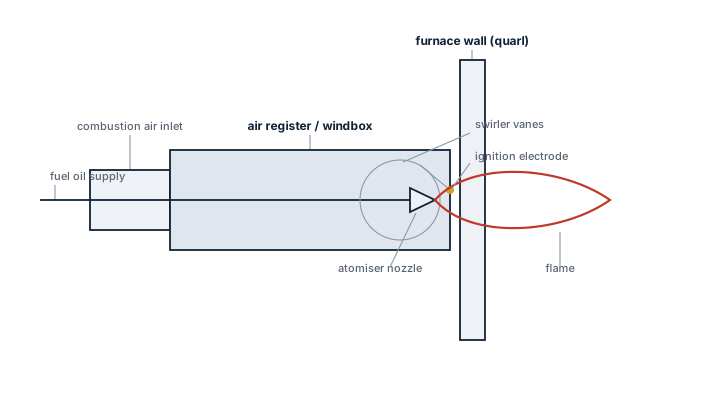
Main components
Atomiser
Breaks the fuel into a spray, either by forcing it through a small orifice under pressure (pressure-jet) or by using a jet of steam or compressed air to shear the fuel stream (steam- or air-atomising). Steam atomising tends to hold turndown better at low load.
Fuel oil heater and valve train
Heavy fuel oil needs to be brought to and held at a viscosity the atomiser can handle, typically checked in centistokes rather than by temperature alone, since different fuel batches reach the same viscosity at different temperatures.
Air register / diffuser
Shapes and swirls the combustion air around the atomised fuel to hold flame stability and control the air-to-fuel ratio across the load range.
Igniter and flame scanner
Electric or pilot-gas ignition, monitored by a flame scanner wired into the boiler's safety shutdown system so fuel supply cuts off automatically on flame failure.
Selection and sizing
Burner capacity is matched to the boiler's maximum firing rate, with turndown ratio — the range between minimum and maximum firing rate the burner can hold a stable flame across — chosen against how the ship actually operates the boiler, not just its rated maximum. A composite boiler cycling between exhaust-gas and oil-fired modes needs a burner that lights reliably from cold each time, which is a different requirement from one that mostly runs continuously at steady load.
Regulations and class
Class rules require a flame failure device that shuts off fuel automatically, purge sequencing before ignition to clear unburned vapour from the furnace, and high/low fuel pressure and low combustion air alarms. These safety functions are tested at each boiler survey, and a burner without a working, interlocked flame scanner will not pass.
Typical faults
| Fault | Consequence |
|---|---|
| Worn or fouled atomiser tip | Coarse spray causes incomplete combustion and carbon deposits on furnace tubes. |
| Fuel viscosity not held in range at low load | Poor atomisation, smoky exhaust, and flame instability during manoeuvring or in port. |
| Flame scanner fouled with soot | Nuisance trips, or worse, a false flame-present signal that masks an actual flame failure. |
| Air register swirl vanes seized or misaligned | Uneven air distribution, localised overheating or unburned fuel pockets in the furnace. |
What to look for in a supplier
- Turndown ratio confirmed against this ship's actual operating profile, not just the burner's maximum-load rating.
- Spares support for the atomiser and flame scanner, the two parts that wear or foul fastest in service.
- Compatibility of the fuel valve train and heater with the fuel grades this ship actually bunkers.
- Documented commissioning test results across the full turndown range, not only at maximum firing rate.
Inspect the atomiser tip at every opportunity the burner is out of service — a spray pattern that looks fine on a bench test can still be marginal enough to foul tubes slowly over weeks of running.