OceanSphere
Engines

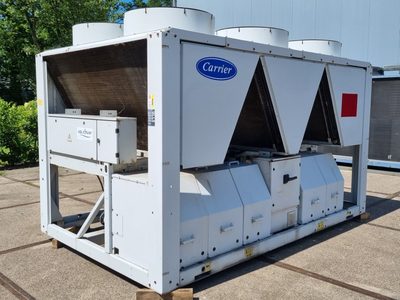
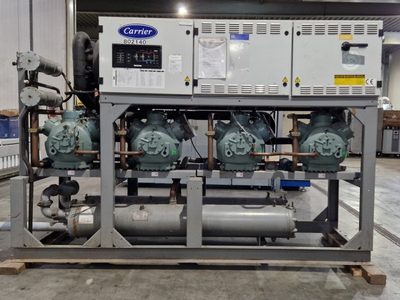
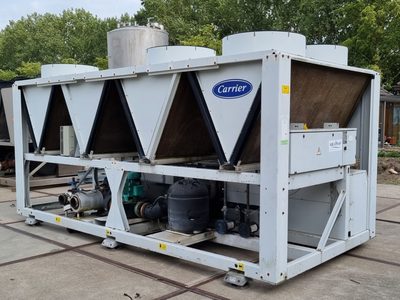
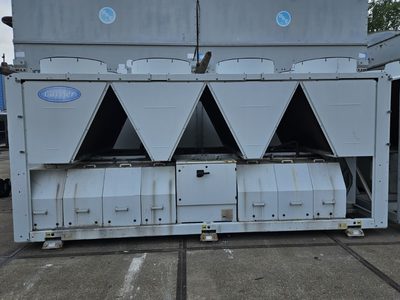
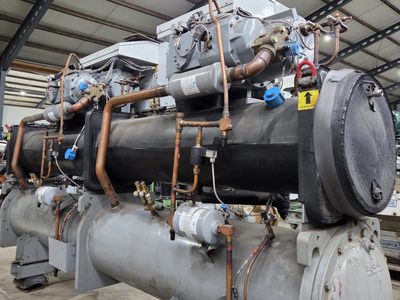
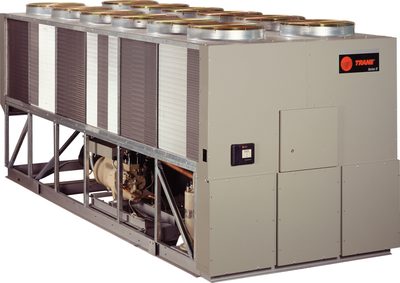
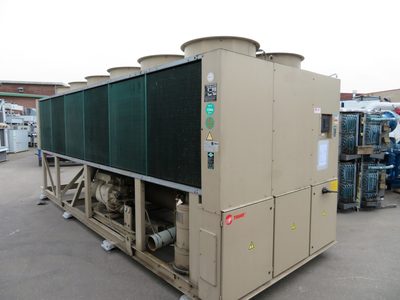
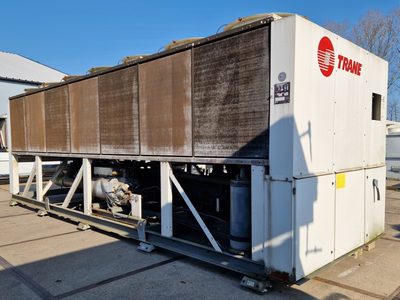
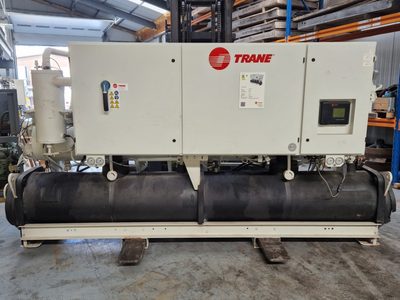
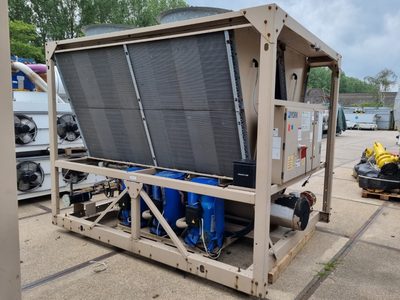
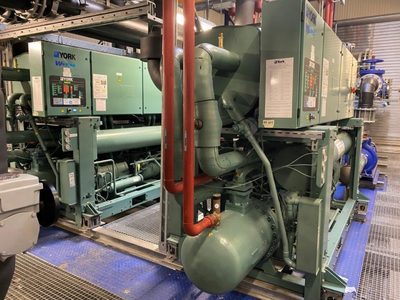
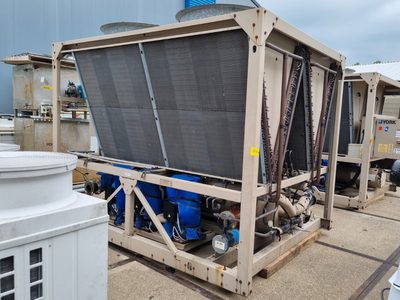
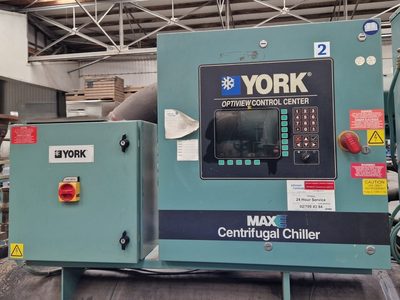
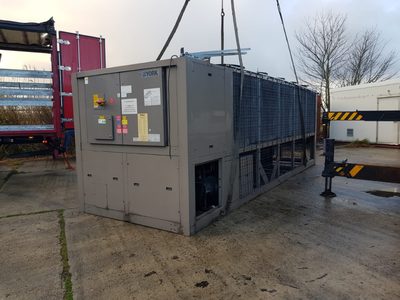
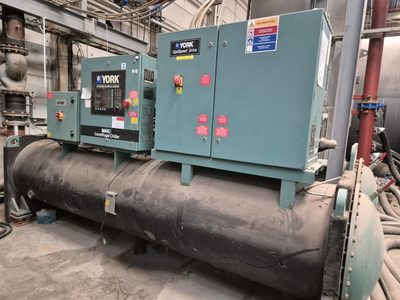
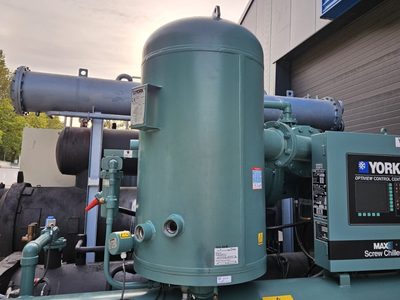
Chiller Unit

medium 689 models total

A marine chiller produces chilled water or brine centrally, then air handling units and fan coils distribute cooling through the ship; unlike self-contained cabin units, a chiller failure can take out cooling across whole decks at once.

Read more — Chiller Unit explained

What Defines a Chiller Unit

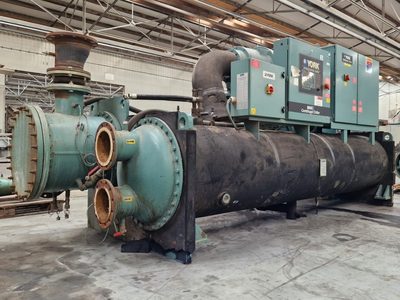
A chiller is the central refrigeration machine that cools water, or a glycol brine on vessels trading in freezing conditions, which is then pumped to air handling units, fan coil units and cargo cooling coils throughout the ship. This centralised approach is what separates a chiller plant from self-contained split or window air conditioning units: a single chiller serves many spaces through a chilled water loop, so its capacity, redundancy and controls matter far more than on a standalone unit. Most marine chillers use a vapour-compression cycle with a shell-and-tube or plate evaporator and condenser, though absorption chillers using waste heat appear on some vessels where exhaust or steam heat is abundant.

Chiller unit refrigeration cycle
Flow diagram of a marine chiller showing the compressor, the seawater-cooled condenser, the expansion valve and the evaporator, with refrigerant lines in red and blue and the chilled water return and supply to the air handling units.

Main components

Compressor

Reciprocating, screw or scroll compressors depending on capacity; screw compressors dominate larger marine chiller plants for their reliability and capacity control range.

Evaporator and condenser

Shell-and-tube or plate heat exchangers; the evaporator cools the chilled water circuit, the condenser rejects heat to sea water or to a fresh water cooling system on vessels avoiding direct sea water in the refrigerant circuit's heat exchangers.

Expansion device

A thermostatic or electronic expansion valve meters refrigerant flow into the evaporator, matching it to the actual cooling load.

Refrigerant and controls

HFC refrigerants, commonly R134a or R407C/R410A blends, circulate in a sealed system, with a control panel managing compressor staging, capacity control and safety cut-outs for high pressure, low pressure and low oil pressure.

Selection and sizing

  • Cooling capacity in kW or refrigeration tons, calculated from accommodation heat load, outside air load, and any process or cargo cooling duty served by the same plant
  • Number of compressors and redundancy: most vessels run two or more chillers so one can be serviced while the other carries load
  • Chilled water supply temperature and flow rate, matched to the air handling units and fan coils downstream
  • Refrigerant type, weighed against phase-out schedules for high-GWP refrigerants under evolving environmental rules
  • Condenser cooling medium - direct sea water versus a closed fresh water central cooling system, which reduces fouling and corrosion of the condenser

Class and regulatory requirements

MARPOL Annex VI and the Montreal Protocol framework restrict the use of ozone-depleting refrigerants, which is why older R22 plants have been phased out in favour of HFC or, increasingly, lower-GWP refrigerants. Classification societies require accommodation and habitability notations, where they apply, to specify minimum cooling capacity per occupied space, and periodic survey covers pressure vessel and piping inspection, refrigerant leak testing, and safety device function tests. Crews handling refrigerant must follow class and flag rules on recovery and logging of refrigerant quantities to avoid uncontrolled venting.

Typical faults

  • Refrigerant leakage - failed shaft seals or corroded joints slowly lose charge, reducing capacity and eventually tripping the low-pressure cut-out
  • Condenser fouling - marine growth or scale on sea-water-cooled condenser tubes raises condensing pressure and cuts efficiency
  • Compressor short-cycling - low refrigerant charge or a faulty pressure switch causes frequent starts, accelerating motor and bearing wear
  • Oil migration - poor oil return at part load starves the compressor of lubrication over time
  • Chilled water pump failure - loses circulation to the whole distribution loop even though the chiller itself is healthy

What to look for in a supplier

  • Documented capacity and efficiency figures at the actual sea water or ambient design temperature for the vessel's trading route
  • Redundancy configuration matched to the accommodation and process cooling load, not undersized to save first cost
  • Compatibility with the vessel's chosen refrigerant strategy, including any planned retrofit path away from higher-GWP gases
  • Spare parts and service network covering compressor overhaul kits, since a compressor rebuild is the most common major repair over a chiller's life

Track condenser approach temperature (condensing temperature minus sea water inlet temperature) over time; a steady rise with no change in sea water temperature is the earliest reliable sign of condenser fouling, well before the high-pressure cut-out ever trips.

16 manufacturers · 689 models

Daikin Marine

101 ✓ 5 verified
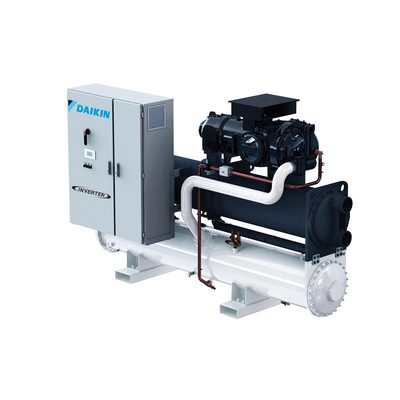
EWWD-VZ (incl. EWWD-VZPS, EWWD-VZSS, EWWD-VZXS) ✓ verified
Application
Water-cooled inverter screw chiller for comfort, process and marine applications. Marine version (option 167) with special cross-flow condenser for pitch/roll, oil reservoir, and accelerometer-controlled EEXV. Classification-society compliant (Lloyd's, DNV-GL, BV, RINA).
Common Failures & Inspection Points
  • Area: Inspect seawater/condenser water inlet strainer and heat exchanger tube bundle for biofouling, scale, and corrosion; clean per manufacturer interval
    Check: Inspect seawater/condenser water inlet strainer and heat exchanger tube bundle for biofouling, scale, and corrosion; clean per manufacturer interval
  • Area: Check refrigerant charge, look for oil contamination, and verify absence of leaks at fittings, valve stems, and brazed joints using electronic leak detector
    Check: Check refrigerant charge, look for oil contamination, and verify absence of leaks at fittings, valve stems, and brazed joints using electronic leak detector
  • Area: Verify operation of oil separator, oil reservoir level (critical for pitch/roll marine version), and oil heater function before startup
    Check: Verify operation of oil separator, oil reservoir level (critical for pitch/roll marine version), and oil heater function before startup
  • Area: Inspect and test accelerometers (marine VZ units) that trigger EEXV control during vessel pitch/roll; confirm correct alarm and control response
    Check: Inspect and test accelerometers (marine VZ units) that trigger EEXV control during vessel pitch/roll; confirm correct alarm and control response
  • Area: Check evaporator and condenser water flow rates, inlet/outlet temperatures, and pressure drops against design values; clean strainers
    Check: Check evaporator and condenser water flow rates, inlet/outlet temperatures, and pressure drops against design values; clean strainers
  • Area: Test safety and control devices: high/low refrigerant pressure cutouts, chilled water flow switch, motor overload relays, and anti-freeze protection
    Check: Test safety and control devices: high/low refrigerant pressure cutouts, chilled water flow switch, motor overload relays, and anti-freeze protection
  • Area: Inspect structural mounts, anti-vibration isolators, and pipe flexible connections for corrosion and mechanical integrity in the marine environment
    Check: Inspect structural mounts, anti-vibration isolators, and pipe flexible connections for corrosion and mechanical integrity in the marine environment
  • Area: Verify electrical panel condition: check terminal tightness, insulation resistance, inverter/VFD drive status and fault logs, and confirm earthing/bonding to sh
    Check: Verify electrical panel condition: check terminal tightness, insulation resistance, inverter/VFD drive status and fault logs, and confirm earthing/bonding to ship's structure

Typ-universelle Inspektionspunkte fuer Air Conditioning (verifiziert, 2026-06).
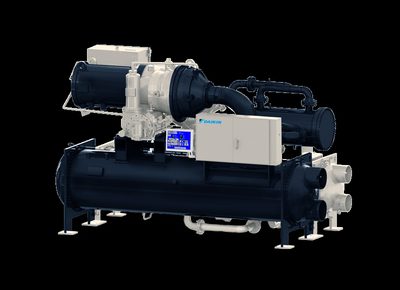
EWWS-VZ ✓ verified
Application
Water-cooled inverter screw chiller and heat pump; available in Land and Marine version. Marine version suitable for shipboard central HVAC cooling with seawater condenser operation.
Common Failures & Inspection Points
  • Area: Inspect seawater/condenser water inlet strainer and heat exchanger tube bundle for biofouling, scale, and corrosion; clean per manufacturer interval
    Check: Inspect seawater/condenser water inlet strainer and heat exchanger tube bundle for biofouling, scale, and corrosion; clean per manufacturer interval
  • Area: Check refrigerant charge, look for oil contamination, and verify absence of leaks at fittings, valve stems, and brazed joints using electronic leak detector
    Check: Check refrigerant charge, look for oil contamination, and verify absence of leaks at fittings, valve stems, and brazed joints using electronic leak detector
  • Area: Verify operation of oil separator, oil reservoir level (critical for pitch/roll marine version), and oil heater function before startup
    Check: Verify operation of oil separator, oil reservoir level (critical for pitch/roll marine version), and oil heater function before startup
  • Area: Inspect and test accelerometers (marine VZ units) that trigger EEXV control during vessel pitch/roll; confirm correct alarm and control response
    Check: Inspect and test accelerometers (marine VZ units) that trigger EEXV control during vessel pitch/roll; confirm correct alarm and control response
  • Area: Check evaporator and condenser water flow rates, inlet/outlet temperatures, and pressure drops against design values; clean strainers
    Check: Check evaporator and condenser water flow rates, inlet/outlet temperatures, and pressure drops against design values; clean strainers
  • Area: Test safety and control devices: high/low refrigerant pressure cutouts, chilled water flow switch, motor overload relays, and anti-freeze protection
    Check: Test safety and control devices: high/low refrigerant pressure cutouts, chilled water flow switch, motor overload relays, and anti-freeze protection
  • Area: Inspect structural mounts, anti-vibration isolators, and pipe flexible connections for corrosion and mechanical integrity in the marine environment
    Check: Inspect structural mounts, anti-vibration isolators, and pipe flexible connections for corrosion and mechanical integrity in the marine environment
  • Area: Verify electrical panel condition: check terminal tightness, insulation resistance, inverter/VFD drive status and fault logs, and confirm earthing/bonding to sh
    Check: Verify electrical panel condition: check terminal tightness, insulation resistance, inverter/VFD drive status and fault logs, and confirm earthing/bonding to ship's structure

Typ-universelle Inspektionspunkte fuer Air Conditioning (verifiziert, 2026-06).

EWWH-VZ ✓ verified
Application
Water-cooled inverter screw chiller with ultra-low GWP refrigerant for comfort, process and marine applications.
Common Failures & Inspection Points
  • Area: Inspect seawater/condenser water inlet strainer and heat exchanger tube bundle for biofouling, scale, and corrosion; clean per manufacturer interval
    Check: Inspect seawater/condenser water inlet strainer and heat exchanger tube bundle for biofouling, scale, and corrosion; clean per manufacturer interval
  • Area: Check refrigerant charge, look for oil contamination, and verify absence of leaks at fittings, valve stems, and brazed joints using electronic leak detector
    Check: Check refrigerant charge, look for oil contamination, and verify absence of leaks at fittings, valve stems, and brazed joints using electronic leak detector
  • Area: Verify operation of oil separator, oil reservoir level (critical for pitch/roll marine version), and oil heater function before startup
    Check: Verify operation of oil separator, oil reservoir level (critical for pitch/roll marine version), and oil heater function before startup
  • Area: Inspect and test accelerometers (marine VZ units) that trigger EEXV control during vessel pitch/roll; confirm correct alarm and control response
    Check: Inspect and test accelerometers (marine VZ units) that trigger EEXV control during vessel pitch/roll; confirm correct alarm and control response
  • Area: Check evaporator and condenser water flow rates, inlet/outlet temperatures, and pressure drops against design values; clean strainers
    Check: Check evaporator and condenser water flow rates, inlet/outlet temperatures, and pressure drops against design values; clean strainers
  • Area: Test safety and control devices: high/low refrigerant pressure cutouts, chilled water flow switch, motor overload relays, and anti-freeze protection
    Check: Test safety and control devices: high/low refrigerant pressure cutouts, chilled water flow switch, motor overload relays, and anti-freeze protection
  • Area: Inspect structural mounts, anti-vibration isolators, and pipe flexible connections for corrosion and mechanical integrity in the marine environment
    Check: Inspect structural mounts, anti-vibration isolators, and pipe flexible connections for corrosion and mechanical integrity in the marine environment
  • Area: Verify electrical panel condition: check terminal tightness, insulation resistance, inverter/VFD drive status and fault logs, and confirm earthing/bonding to sh
    Check: Verify electrical panel condition: check terminal tightness, insulation resistance, inverter/VFD drive status and fault logs, and confirm earthing/bonding to ship's structure

Typ-universelle Inspektionspunkte fuer Air Conditioning (verifiziert, 2026-06).

DWSC (C Series) — Water Cooled Centrifugal Chiller, Single Compressor ✓ verified
Application
Large marine central chiller plant. Confirmed installed on cruise vessels (4 × 2,800 kW units). Free cooling capability using seawater below ~6 °C. Inverter/VFD for part-load efficiency at sea.
Common Failures & Inspection Points
  • Area: Inspect seawater/condenser water inlet strainer and heat exchanger tube bundle for biofouling, scale, and corrosion; clean per manufacturer interval
    Check: Inspect seawater/condenser water inlet strainer and heat exchanger tube bundle for biofouling, scale, and corrosion; clean per manufacturer interval
  • Area: Check refrigerant charge, look for oil contamination, and verify absence of leaks at fittings, valve stems, and brazed joints using electronic leak detector
    Check: Check refrigerant charge, look for oil contamination, and verify absence of leaks at fittings, valve stems, and brazed joints using electronic leak detector
  • Area: Verify operation of oil separator, oil reservoir level (critical for pitch/roll marine version), and oil heater function before startup
    Check: Verify operation of oil separator, oil reservoir level (critical for pitch/roll marine version), and oil heater function before startup
  • Area: Inspect and test accelerometers (marine VZ units) that trigger EEXV control during vessel pitch/roll; confirm correct alarm and control response
    Check: Inspect and test accelerometers (marine VZ units) that trigger EEXV control during vessel pitch/roll; confirm correct alarm and control response
  • Area: Check evaporator and condenser water flow rates, inlet/outlet temperatures, and pressure drops against design values; clean strainers
    Check: Check evaporator and condenser water flow rates, inlet/outlet temperatures, and pressure drops against design values; clean strainers
  • Area: Test safety and control devices: high/low refrigerant pressure cutouts, chilled water flow switch, motor overload relays, and anti-freeze protection
    Check: Test safety and control devices: high/low refrigerant pressure cutouts, chilled water flow switch, motor overload relays, and anti-freeze protection
  • Area: Inspect structural mounts, anti-vibration isolators, and pipe flexible connections for corrosion and mechanical integrity in the marine environment
    Check: Inspect structural mounts, anti-vibration isolators, and pipe flexible connections for corrosion and mechanical integrity in the marine environment
  • Area: Verify electrical panel condition: check terminal tightness, insulation resistance, inverter/VFD drive status and fault logs, and confirm earthing/bonding to sh
    Check: Verify electrical panel condition: check terminal tightness, insulation resistance, inverter/VFD drive status and fault logs, and confirm earthing/bonding to ship's structure

Typ-universelle Inspektionspunkte fuer Air Conditioning (verifiziert, 2026-06).
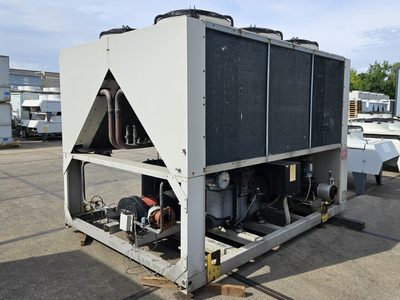
DWDC (C Series) — Water Cooled Centrifugal Chiller, Dual Compressor ✓ verified
Application
Very large marine central chiller plant. Customizable for marine application (explicitly stated by Daikin). Dual-compressor redundancy suitable for continuous shipboard operation. Free cooling compatible.
Common Failures & Inspection Points
  • Area: Inspect seawater/condenser water inlet strainer and heat exchanger tube bundle for biofouling, scale, and corrosion; clean per manufacturer interval
    Check: Inspect seawater/condenser water inlet strainer and heat exchanger tube bundle for biofouling, scale, and corrosion; clean per manufacturer interval
  • Area: Check refrigerant charge, look for oil contamination, and verify absence of leaks at fittings, valve stems, and brazed joints using electronic leak detector
    Check: Check refrigerant charge, look for oil contamination, and verify absence of leaks at fittings, valve stems, and brazed joints using electronic leak detector
  • Area: Verify operation of oil separator, oil reservoir level (critical for pitch/roll marine version), and oil heater function before startup
    Check: Verify operation of oil separator, oil reservoir level (critical for pitch/roll marine version), and oil heater function before startup
  • Area: Inspect and test accelerometers (marine VZ units) that trigger EEXV control during vessel pitch/roll; confirm correct alarm and control response
    Check: Inspect and test accelerometers (marine VZ units) that trigger EEXV control during vessel pitch/roll; confirm correct alarm and control response
  • Area: Check evaporator and condenser water flow rates, inlet/outlet temperatures, and pressure drops against design values; clean strainers
    Check: Check evaporator and condenser water flow rates, inlet/outlet temperatures, and pressure drops against design values; clean strainers
  • Area: Test safety and control devices: high/low refrigerant pressure cutouts, chilled water flow switch, motor overload relays, and anti-freeze protection
    Check: Test safety and control devices: high/low refrigerant pressure cutouts, chilled water flow switch, motor overload relays, and anti-freeze protection
  • Area: Inspect structural mounts, anti-vibration isolators, and pipe flexible connections for corrosion and mechanical integrity in the marine environment
    Check: Inspect structural mounts, anti-vibration isolators, and pipe flexible connections for corrosion and mechanical integrity in the marine environment
  • Area: Verify electrical panel condition: check terminal tightness, insulation resistance, inverter/VFD drive status and fault logs, and confirm earthing/bonding to sh
    Check: Verify electrical panel condition: check terminal tightness, insulation resistance, inverter/VFD drive status and fault logs, and confirm earthing/bonding to ship's structure

Typ-universelle Inspektionspunkte fuer Air Conditioning (verifiziert, 2026-06).
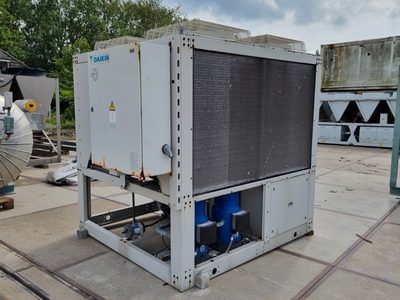
ZUV Chiller 30kW R410A unverified
Cooling Capacity (kW)
30
Heating Capacity (kW)
24.0
Refrigerant
R410A
Voltage (V)
440
Air Flow (m³/h)
4500
Common Failures & Inspection Points
  • Refrigerant leakage from joints, seals, hoses, or heat exchangers causes poor cooling and abnormal suction or discharge conditions
  • Condenser fouling or restricted cooling-air or cooling-water flow raises condensing temperature and can cause high-pressure trips
  • Evaporator or air-filter fouling reduces heat transfer and produces low airflow, icing, or poor room cooling
  • Compressor wear, lubrication problems, or electrical faults cause noise, overheating, reduced capacity, or protective trips
  • Thermostat, sensor, expansion device, fan, or control-board faults cause unstable temperature, short cycling, or failed automatic operation
Service: Check refrigerant circuit condition, compressor, condenser, evaporator, filters, fans, drains, insulation, temperature sensors, safety trips, and control history. Clean heat-transfer surfaces and verify cooling-water or airflow condition; refrigerant charging and exact pressure or temperature settings must follow manufacturer documentation.
Spare Parts: Typical spares include filters, fan or motor items, contactors and fuses, temperature sensors, drain components, approved refrigerant-circuit seals, and model-specific control or compressor service parts.
Use Cases: Used for accommodation, bridge electronics, control rooms, machinery spaces, stores, and process cooling on merchant, passenger, offshore, fishing, and workboat vessels.
ZUV Chiller 30kW R134a unverified
Cooling Capacity (kW)
30
Heating Capacity (kW)
24.0
Refrigerant
R134a
Voltage (V)
440
Air Flow (m³/h)
4500
Common Failures & Inspection Points
  • Refrigerant leakage from joints, seals, hoses, or heat exchangers causes poor cooling and abnormal suction or discharge conditions
  • Condenser fouling or restricted cooling-air or cooling-water flow raises condensing temperature and can cause high-pressure trips
  • Evaporator or air-filter fouling reduces heat transfer and produces low airflow, icing, or poor room cooling
  • Compressor wear, lubrication problems, or electrical faults cause noise, overheating, reduced capacity, or protective trips
  • Thermostat, sensor, expansion device, fan, or control-board faults cause unstable temperature, short cycling, or failed automatic operation
Service: Check refrigerant circuit condition, compressor, condenser, evaporator, filters, fans, drains, insulation, temperature sensors, safety trips, and control history. Clean heat-transfer surfaces and verify cooling-water or airflow condition; refrigerant charging and exact pressure or temperature settings must follow manufacturer documentation.
Spare Parts: Typical spares include filters, fan or motor items, contactors and fuses, temperature sensors, drain components, approved refrigerant-circuit seals, and model-specific control or compressor service parts.
Use Cases: Used for accommodation, bridge electronics, control rooms, machinery spaces, stores, and process cooling on merchant, passenger, offshore, fishing, and workboat vessels.
ZUV Chiller 50kW R410A unverified
Cooling Capacity (kW)
50
Heating Capacity (kW)
40.0
Refrigerant
R410A
Voltage (V)
440
Air Flow (m³/h)
7500
Common Failures & Inspection Points
  • Refrigerant leakage from joints, seals, hoses, or heat exchangers causes poor cooling and abnormal suction or discharge conditions
  • Condenser fouling or restricted cooling-air or cooling-water flow raises condensing temperature and can cause high-pressure trips
  • Evaporator or air-filter fouling reduces heat transfer and produces low airflow, icing, or poor room cooling
  • Compressor wear, lubrication problems, or electrical faults cause noise, overheating, reduced capacity, or protective trips
  • Thermostat, sensor, expansion device, fan, or control-board faults cause unstable temperature, short cycling, or failed automatic operation
Service: Check refrigerant circuit condition, compressor, condenser, evaporator, filters, fans, drains, insulation, temperature sensors, safety trips, and control history. Clean heat-transfer surfaces and verify cooling-water or airflow condition; refrigerant charging and exact pressure or temperature settings must follow manufacturer documentation.
Spare Parts: Typical spares include filters, fan or motor items, contactors and fuses, temperature sensors, drain components, approved refrigerant-circuit seals, and model-specific control or compressor service parts.
Use Cases: Used for accommodation, bridge electronics, control rooms, machinery spaces, stores, and process cooling on merchant, passenger, offshore, fishing, and workboat vessels.
ZUV Chiller 50kW R134a unverified
Cooling Capacity (kW)
50
Heating Capacity (kW)
40.0
Refrigerant
R134a
Voltage (V)
440
Air Flow (m³/h)
7500
Common Failures & Inspection Points
  • Refrigerant leakage from joints, seals, hoses, or heat exchangers causes poor cooling and abnormal suction or discharge conditions
  • Condenser fouling or restricted cooling-air or cooling-water flow raises condensing temperature and can cause high-pressure trips
  • Evaporator or air-filter fouling reduces heat transfer and produces low airflow, icing, or poor room cooling
  • Compressor wear, lubrication problems, or electrical faults cause noise, overheating, reduced capacity, or protective trips
  • Thermostat, sensor, expansion device, fan, or control-board faults cause unstable temperature, short cycling, or failed automatic operation
Service: Check refrigerant circuit condition, compressor, condenser, evaporator, filters, fans, drains, insulation, temperature sensors, safety trips, and control history. Clean heat-transfer surfaces and verify cooling-water or airflow condition; refrigerant charging and exact pressure or temperature settings must follow manufacturer documentation.
Spare Parts: Typical spares include filters, fan or motor items, contactors and fuses, temperature sensors, drain components, approved refrigerant-circuit seals, and model-specific control or compressor service parts.
Use Cases: Used for accommodation, bridge electronics, control rooms, machinery spaces, stores, and process cooling on merchant, passenger, offshore, fishing, and workboat vessels.
ZUV Chiller 75kW R410A unverified
Cooling Capacity (kW)
75
Heating Capacity (kW)
60.0
Refrigerant
R410A
Voltage (V)
440
Air Flow (m³/h)
11250
Common Failures & Inspection Points
  • Refrigerant leakage from joints, seals, hoses, or heat exchangers causes poor cooling and abnormal suction or discharge conditions
  • Condenser fouling or restricted cooling-air or cooling-water flow raises condensing temperature and can cause high-pressure trips
  • Evaporator or air-filter fouling reduces heat transfer and produces low airflow, icing, or poor room cooling
  • Compressor wear, lubrication problems, or electrical faults cause noise, overheating, reduced capacity, or protective trips
  • Thermostat, sensor, expansion device, fan, or control-board faults cause unstable temperature, short cycling, or failed automatic operation
Service: Check refrigerant circuit condition, compressor, condenser, evaporator, filters, fans, drains, insulation, temperature sensors, safety trips, and control history. Clean heat-transfer surfaces and verify cooling-water or airflow condition; refrigerant charging and exact pressure or temperature settings must follow manufacturer documentation.
Spare Parts: Typical spares include filters, fan or motor items, contactors and fuses, temperature sensors, drain components, approved refrigerant-circuit seals, and model-specific control or compressor service parts.
Use Cases: Used for accommodation, bridge electronics, control rooms, machinery spaces, stores, and process cooling on merchant, passenger, offshore, fishing, and workboat vessels.
ZUV Chiller 75kW R134a unverified
Cooling Capacity (kW)
75
Heating Capacity (kW)
60.0
Refrigerant
R134a
Voltage (V)
440
Air Flow (m³/h)
11250
Common Failures & Inspection Points
  • Refrigerant leakage from joints, seals, hoses, or heat exchangers causes poor cooling and abnormal suction or discharge conditions
  • Condenser fouling or restricted cooling-air or cooling-water flow raises condensing temperature and can cause high-pressure trips
  • Evaporator or air-filter fouling reduces heat transfer and produces low airflow, icing, or poor room cooling
  • Compressor wear, lubrication problems, or electrical faults cause noise, overheating, reduced capacity, or protective trips
  • Thermostat, sensor, expansion device, fan, or control-board faults cause unstable temperature, short cycling, or failed automatic operation
Service: Check refrigerant circuit condition, compressor, condenser, evaporator, filters, fans, drains, insulation, temperature sensors, safety trips, and control history. Clean heat-transfer surfaces and verify cooling-water or airflow condition; refrigerant charging and exact pressure or temperature settings must follow manufacturer documentation.
Spare Parts: Typical spares include filters, fan or motor items, contactors and fuses, temperature sensors, drain components, approved refrigerant-circuit seals, and model-specific control or compressor service parts.
Use Cases: Used for accommodation, bridge electronics, control rooms, machinery spaces, stores, and process cooling on merchant, passenger, offshore, fishing, and workboat vessels.
ZUV Chiller 100kW R410A unverified
Cooling Capacity (kW)
100
Heating Capacity (kW)
80.0
Refrigerant
R410A
Voltage (V)
440
Air Flow (m³/h)
15000
Common Failures & Inspection Points
  • Refrigerant leakage from joints, seals, hoses, or heat exchangers causes poor cooling and abnormal suction or discharge conditions
  • Condenser fouling or restricted cooling-air or cooling-water flow raises condensing temperature and can cause high-pressure trips
  • Evaporator or air-filter fouling reduces heat transfer and produces low airflow, icing, or poor room cooling
  • Compressor wear, lubrication problems, or electrical faults cause noise, overheating, reduced capacity, or protective trips
  • Thermostat, sensor, expansion device, fan, or control-board faults cause unstable temperature, short cycling, or failed automatic operation
Service: Check refrigerant circuit condition, compressor, condenser, evaporator, filters, fans, drains, insulation, temperature sensors, safety trips, and control history. Clean heat-transfer surfaces and verify cooling-water or airflow condition; refrigerant charging and exact pressure or temperature settings must follow manufacturer documentation.
Spare Parts: Typical spares include filters, fan or motor items, contactors and fuses, temperature sensors, drain components, approved refrigerant-circuit seals, and model-specific control or compressor service parts.
Use Cases: Used for accommodation, bridge electronics, control rooms, machinery spaces, stores, and process cooling on merchant, passenger, offshore, fishing, and workboat vessels.
ZUV Chiller 100kW R134a unverified
Cooling Capacity (kW)
100
Heating Capacity (kW)
80.0
Refrigerant
R134a
Voltage (V)
440
Air Flow (m³/h)
15000
Common Failures & Inspection Points
  • Refrigerant leakage from joints, seals, hoses, or heat exchangers causes poor cooling and abnormal suction or discharge conditions
  • Condenser fouling or restricted cooling-air or cooling-water flow raises condensing temperature and can cause high-pressure trips
  • Evaporator or air-filter fouling reduces heat transfer and produces low airflow, icing, or poor room cooling
  • Compressor wear, lubrication problems, or electrical faults cause noise, overheating, reduced capacity, or protective trips
  • Thermostat, sensor, expansion device, fan, or control-board faults cause unstable temperature, short cycling, or failed automatic operation
Service: Check refrigerant circuit condition, compressor, condenser, evaporator, filters, fans, drains, insulation, temperature sensors, safety trips, and control history. Clean heat-transfer surfaces and verify cooling-water or airflow condition; refrigerant charging and exact pressure or temperature settings must follow manufacturer documentation.
Spare Parts: Typical spares include filters, fan or motor items, contactors and fuses, temperature sensors, drain components, approved refrigerant-circuit seals, and model-specific control or compressor service parts.
Use Cases: Used for accommodation, bridge electronics, control rooms, machinery spaces, stores, and process cooling on merchant, passenger, offshore, fishing, and workboat vessels.
ZUV Chiller 150kW R410A unverified
Cooling Capacity (kW)
150
Heating Capacity (kW)
120.0
Refrigerant
R410A
Voltage (V)
440
Air Flow (m³/h)
22500
Common Failures & Inspection Points
  • Refrigerant leakage from joints, seals, hoses, or heat exchangers causes poor cooling and abnormal suction or discharge conditions
  • Condenser fouling or restricted cooling-air or cooling-water flow raises condensing temperature and can cause high-pressure trips
  • Evaporator or air-filter fouling reduces heat transfer and produces low airflow, icing, or poor room cooling
  • Compressor wear, lubrication problems, or electrical faults cause noise, overheating, reduced capacity, or protective trips
  • Thermostat, sensor, expansion device, fan, or control-board faults cause unstable temperature, short cycling, or failed automatic operation
Service: Check refrigerant circuit condition, compressor, condenser, evaporator, filters, fans, drains, insulation, temperature sensors, safety trips, and control history. Clean heat-transfer surfaces and verify cooling-water or airflow condition; refrigerant charging and exact pressure or temperature settings must follow manufacturer documentation.
Spare Parts: Typical spares include filters, fan or motor items, contactors and fuses, temperature sensors, drain components, approved refrigerant-circuit seals, and model-specific control or compressor service parts.
Use Cases: Used for accommodation, bridge electronics, control rooms, machinery spaces, stores, and process cooling on merchant, passenger, offshore, fishing, and workboat vessels.
ZUV Chiller 150kW R134a unverified
Cooling Capacity (kW)
150
Heating Capacity (kW)
120.0
Refrigerant
R134a
Voltage (V)
440
Air Flow (m³/h)
22500
Common Failures & Inspection Points
  • Refrigerant leakage from joints, seals, hoses, or heat exchangers causes poor cooling and abnormal suction or discharge conditions
  • Condenser fouling or restricted cooling-air or cooling-water flow raises condensing temperature and can cause high-pressure trips
  • Evaporator or air-filter fouling reduces heat transfer and produces low airflow, icing, or poor room cooling
  • Compressor wear, lubrication problems, or electrical faults cause noise, overheating, reduced capacity, or protective trips
  • Thermostat, sensor, expansion device, fan, or control-board faults cause unstable temperature, short cycling, or failed automatic operation
Service: Check refrigerant circuit condition, compressor, condenser, evaporator, filters, fans, drains, insulation, temperature sensors, safety trips, and control history. Clean heat-transfer surfaces and verify cooling-water or airflow condition; refrigerant charging and exact pressure or temperature settings must follow manufacturer documentation.
Spare Parts: Typical spares include filters, fan or motor items, contactors and fuses, temperature sensors, drain components, approved refrigerant-circuit seals, and model-specific control or compressor service parts.
Use Cases: Used for accommodation, bridge electronics, control rooms, machinery spaces, stores, and process cooling on merchant, passenger, offshore, fishing, and workboat vessels.
ZUV Chiller 200kW R410A unverified
Cooling Capacity (kW)
200
Heating Capacity (kW)
160.0
Refrigerant
R410A
Voltage (V)
440
Air Flow (m³/h)
30000
Common Failures & Inspection Points
  • Refrigerant leakage from joints, seals, hoses, or heat exchangers causes poor cooling and abnormal suction or discharge conditions
  • Condenser fouling or restricted cooling-air or cooling-water flow raises condensing temperature and can cause high-pressure trips
  • Evaporator or air-filter fouling reduces heat transfer and produces low airflow, icing, or poor room cooling
  • Compressor wear, lubrication problems, or electrical faults cause noise, overheating, reduced capacity, or protective trips
  • Thermostat, sensor, expansion device, fan, or control-board faults cause unstable temperature, short cycling, or failed automatic operation
Service: Check refrigerant circuit condition, compressor, condenser, evaporator, filters, fans, drains, insulation, temperature sensors, safety trips, and control history. Clean heat-transfer surfaces and verify cooling-water or airflow condition; refrigerant charging and exact pressure or temperature settings must follow manufacturer documentation.
Spare Parts: Typical spares include filters, fan or motor items, contactors and fuses, temperature sensors, drain components, approved refrigerant-circuit seals, and model-specific control or compressor service parts.
Use Cases: Used for accommodation, bridge electronics, control rooms, machinery spaces, stores, and process cooling on merchant, passenger, offshore, fishing, and workboat vessels.
ZUV Chiller 200kW R134a unverified
Cooling Capacity (kW)
200
Heating Capacity (kW)
160.0
Refrigerant
R134a
Voltage (V)
440
Air Flow (m³/h)
30000
Common Failures & Inspection Points
  • Refrigerant leakage from joints, seals, hoses, or heat exchangers causes poor cooling and abnormal suction or discharge conditions
  • Condenser fouling or restricted cooling-air or cooling-water flow raises condensing temperature and can cause high-pressure trips
  • Evaporator or air-filter fouling reduces heat transfer and produces low airflow, icing, or poor room cooling
  • Compressor wear, lubrication problems, or electrical faults cause noise, overheating, reduced capacity, or protective trips
  • Thermostat, sensor, expansion device, fan, or control-board faults cause unstable temperature, short cycling, or failed automatic operation
Service: Check refrigerant circuit condition, compressor, condenser, evaporator, filters, fans, drains, insulation, temperature sensors, safety trips, and control history. Clean heat-transfer surfaces and verify cooling-water or airflow condition; refrigerant charging and exact pressure or temperature settings must follow manufacturer documentation.
Spare Parts: Typical spares include filters, fan or motor items, contactors and fuses, temperature sensors, drain components, approved refrigerant-circuit seals, and model-specific control or compressor service parts.
Use Cases: Used for accommodation, bridge electronics, control rooms, machinery spaces, stores, and process cooling on merchant, passenger, offshore, fishing, and workboat vessels.
ZUV Chiller 300kW R410A unverified
Cooling Capacity (kW)
300
Heating Capacity (kW)
240.0
Refrigerant
R410A
Voltage (V)
440
Air Flow (m³/h)
45000
Common Failures & Inspection Points
  • Refrigerant leakage from joints, seals, hoses, or heat exchangers causes poor cooling and abnormal suction or discharge conditions
  • Condenser fouling or restricted cooling-air or cooling-water flow raises condensing temperature and can cause high-pressure trips
  • Evaporator or air-filter fouling reduces heat transfer and produces low airflow, icing, or poor room cooling
  • Compressor wear, lubrication problems, or electrical faults cause noise, overheating, reduced capacity, or protective trips
  • Thermostat, sensor, expansion device, fan, or control-board faults cause unstable temperature, short cycling, or failed automatic operation
Service: Check refrigerant circuit condition, compressor, condenser, evaporator, filters, fans, drains, insulation, temperature sensors, safety trips, and control history. Clean heat-transfer surfaces and verify cooling-water or airflow condition; refrigerant charging and exact pressure or temperature settings must follow manufacturer documentation.
Spare Parts: Typical spares include filters, fan or motor items, contactors and fuses, temperature sensors, drain components, approved refrigerant-circuit seals, and model-specific control or compressor service parts.
Use Cases: Used for accommodation, bridge electronics, control rooms, machinery spaces, stores, and process cooling on merchant, passenger, offshore, fishing, and workboat vessels.
Daikin Marine ZUV Chiller 300kW R134a
ZUV Chiller 300kW R134a unverified
Cooling Capacity (kW)
300
Heating Capacity (kW)
240.0
Refrigerant
R134a
Voltage (V)
440
Air Flow (m³/h)
45000
Common Failures & Inspection Points
  • Refrigerant leakage from joints, seals, hoses, or heat exchangers causes poor cooling and abnormal suction or discharge conditions
  • Condenser fouling or restricted cooling-air or cooling-water flow raises condensing temperature and can cause high-pressure trips
  • Evaporator or air-filter fouling reduces heat transfer and produces low airflow, icing, or poor room cooling
  • Compressor wear, lubrication problems, or electrical faults cause noise, overheating, reduced capacity, or protective trips
  • Thermostat, sensor, expansion device, fan, or control-board faults cause unstable temperature, short cycling, or failed automatic operation
Service: Check refrigerant circuit condition, compressor, condenser, evaporator, filters, fans, drains, insulation, temperature sensors, safety trips, and control history. Clean heat-transfer surfaces and verify cooling-water or airflow condition; refrigerant charging and exact pressure or temperature settings must follow manufacturer documentation.
Spare Parts: Typical spares include filters, fan or motor items, contactors and fuses, temperature sensors, drain components, approved refrigerant-circuit seals, and model-specific control or compressor service parts.
Use Cases: Used for accommodation, bridge electronics, control rooms, machinery spaces, stores, and process cooling on merchant, passenger, offshore, fishing, and workboat vessels.
ZUV Chiller 500kW R410A unverified
Cooling Capacity (kW)
500
Heating Capacity (kW)
400.0
Refrigerant
R410A
Voltage (V)
440
Air Flow (m³/h)
75000
Common Failures & Inspection Points
  • Refrigerant leakage from joints, seals, hoses, or heat exchangers causes poor cooling and abnormal suction or discharge conditions
  • Condenser fouling or restricted cooling-air or cooling-water flow raises condensing temperature and can cause high-pressure trips
  • Evaporator or air-filter fouling reduces heat transfer and produces low airflow, icing, or poor room cooling
  • Compressor wear, lubrication problems, or electrical faults cause noise, overheating, reduced capacity, or protective trips
  • Thermostat, sensor, expansion device, fan, or control-board faults cause unstable temperature, short cycling, or failed automatic operation
Service: Check refrigerant circuit condition, compressor, condenser, evaporator, filters, fans, drains, insulation, temperature sensors, safety trips, and control history. Clean heat-transfer surfaces and verify cooling-water or airflow condition; refrigerant charging and exact pressure or temperature settings must follow manufacturer documentation.
Spare Parts: Typical spares include filters, fan or motor items, contactors and fuses, temperature sensors, drain components, approved refrigerant-circuit seals, and model-specific control or compressor service parts.
Use Cases: Used for accommodation, bridge electronics, control rooms, machinery spaces, stores, and process cooling on merchant, passenger, offshore, fishing, and workboat vessels.
ZUV Chiller 500kW R134a unverified
Cooling Capacity (kW)
500
Heating Capacity (kW)
400.0
Refrigerant
R134a
Voltage (V)
440
Air Flow (m³/h)
75000
Common Failures & Inspection Points
  • Refrigerant leakage from joints, seals, hoses, or heat exchangers causes poor cooling and abnormal suction or discharge conditions
  • Condenser fouling or restricted cooling-air or cooling-water flow raises condensing temperature and can cause high-pressure trips
  • Evaporator or air-filter fouling reduces heat transfer and produces low airflow, icing, or poor room cooling
  • Compressor wear, lubrication problems, or electrical faults cause noise, overheating, reduced capacity, or protective trips
  • Thermostat, sensor, expansion device, fan, or control-board faults cause unstable temperature, short cycling, or failed automatic operation
Service: Check refrigerant circuit condition, compressor, condenser, evaporator, filters, fans, drains, insulation, temperature sensors, safety trips, and control history. Clean heat-transfer surfaces and verify cooling-water or airflow condition; refrigerant charging and exact pressure or temperature settings must follow manufacturer documentation.
Spare Parts: Typical spares include filters, fan or motor items, contactors and fuses, temperature sensors, drain components, approved refrigerant-circuit seals, and model-specific control or compressor service parts.
Use Cases: Used for accommodation, bridge electronics, control rooms, machinery spaces, stores, and process cooling on merchant, passenger, offshore, fishing, and workboat vessels.
ZUV Chiller 750kW R410A unverified
Cooling Capacity (kW)
750
Heating Capacity (kW)
600.0
Refrigerant
R410A
Voltage (V)
440
Air Flow (m³/h)
112500
Common Failures & Inspection Points
  • Refrigerant leakage from joints, seals, hoses, or heat exchangers causes poor cooling and abnormal suction or discharge conditions
  • Condenser fouling or restricted cooling-air or cooling-water flow raises condensing temperature and can cause high-pressure trips
  • Evaporator or air-filter fouling reduces heat transfer and produces low airflow, icing, or poor room cooling
  • Compressor wear, lubrication problems, or electrical faults cause noise, overheating, reduced capacity, or protective trips
  • Thermostat, sensor, expansion device, fan, or control-board faults cause unstable temperature, short cycling, or failed automatic operation
Service: Check refrigerant circuit condition, compressor, condenser, evaporator, filters, fans, drains, insulation, temperature sensors, safety trips, and control history. Clean heat-transfer surfaces and verify cooling-water or airflow condition; refrigerant charging and exact pressure or temperature settings must follow manufacturer documentation.
Spare Parts: Typical spares include filters, fan or motor items, contactors and fuses, temperature sensors, drain components, approved refrigerant-circuit seals, and model-specific control or compressor service parts.
Use Cases: Used for accommodation, bridge electronics, control rooms, machinery spaces, stores, and process cooling on merchant, passenger, offshore, fishing, and workboat vessels.
ZUV Chiller 750kW R134a unverified
Cooling Capacity (kW)
750
Heating Capacity (kW)
600.0
Refrigerant
R134a
Voltage (V)
440
Air Flow (m³/h)
112500
Common Failures & Inspection Points
  • Refrigerant leakage from joints, seals, hoses, or heat exchangers causes poor cooling and abnormal suction or discharge conditions
  • Condenser fouling or restricted cooling-air or cooling-water flow raises condensing temperature and can cause high-pressure trips
  • Evaporator or air-filter fouling reduces heat transfer and produces low airflow, icing, or poor room cooling
  • Compressor wear, lubrication problems, or electrical faults cause noise, overheating, reduced capacity, or protective trips
  • Thermostat, sensor, expansion device, fan, or control-board faults cause unstable temperature, short cycling, or failed automatic operation
Service: Check refrigerant circuit condition, compressor, condenser, evaporator, filters, fans, drains, insulation, temperature sensors, safety trips, and control history. Clean heat-transfer surfaces and verify cooling-water or airflow condition; refrigerant charging and exact pressure or temperature settings must follow manufacturer documentation.
Spare Parts: Typical spares include filters, fan or motor items, contactors and fuses, temperature sensors, drain components, approved refrigerant-circuit seals, and model-specific control or compressor service parts.
Use Cases: Used for accommodation, bridge electronics, control rooms, machinery spaces, stores, and process cooling on merchant, passenger, offshore, fishing, and workboat vessels.
ZUV Chiller 1000kW R410A unverified
Cooling Capacity (kW)
1000
Heating Capacity (kW)
800.0
Refrigerant
R410A
Voltage (V)
440
Air Flow (m³/h)
150000
Common Failures & Inspection Points
  • Refrigerant loss from leaking joints, seals or heat-exchanger circuits, typically indicated by reduced cooling capacity, low-pressure alarms or repeated compressor cycling
  • Condenser fouling or poor cooling-water flow from scale, marine growth or blocked strainers, typically indicated by high condensing pressure, elevated discharge temperature or capacity loss
  • Compressor wear or electrical fault from inadequate lubrication, contamination or repeated overload, typically indicated by abnormal noise, high current, trip alarms or failure to start
  • Evaporator or chilled-water flow restriction from fouling, air locks or pump problems, typically indicated by poor cooling, unstable temperatures or low-flow alarms
  • Sensor, controller or expansion-control malfunction from failed electronics or incorrect calibration, typically indicated by unstable superheat, hunting, nuisance trips or incorrect temperature indication
Service: Check refrigerant condition and leak evidence, compressor sound and oil condition where applicable, heat-exchanger cleanliness, cooling-water or chilled-water flow, filters, sensors, safeties and alarm history; use manufacturer documentation for exact pressures, temperatures, charge and test limits.
Spare Parts: Carry approved filter-driers, seals and gaskets, control sensors, contactors or relays, belts or fan components where fitted, and the specified refrigerant-handling consumables appropriate to the installed system.
Use Cases: Used for accommodation and machinery-space climate control on merchant ships, offshore units, passenger vessels, naval vessels and workboats. This entry applies specifically to the Chiller Unit variant identified as Daikin Marine ZUV Chiller 1000kW R410A.
ZUV Chiller 1000kW R134a unverified
Cooling Capacity (kW)
1000
Heating Capacity (kW)
800.0
Refrigerant
R134a
Voltage (V)
440
Air Flow (m³/h)
150000
Common Failures & Inspection Points
  • Refrigerant loss from leaking joints, seals or heat-exchanger circuits, typically indicated by reduced cooling capacity, low-pressure alarms or repeated compressor cycling
  • Condenser fouling or poor cooling-water flow from scale, marine growth or blocked strainers, typically indicated by high condensing pressure, elevated discharge temperature or capacity loss
  • Compressor wear or electrical fault from inadequate lubrication, contamination or repeated overload, typically indicated by abnormal noise, high current, trip alarms or failure to start
  • Evaporator or chilled-water flow restriction from fouling, air locks or pump problems, typically indicated by poor cooling, unstable temperatures or low-flow alarms
  • Sensor, controller or expansion-control malfunction from failed electronics or incorrect calibration, typically indicated by unstable superheat, hunting, nuisance trips or incorrect temperature indication
Service: Check refrigerant condition and leak evidence, compressor sound and oil condition where applicable, heat-exchanger cleanliness, cooling-water or chilled-water flow, filters, sensors, safeties and alarm history; use manufacturer documentation for exact pressures, temperatures, charge and test limits.
Spare Parts: Carry approved filter-driers, seals and gaskets, control sensors, contactors or relays, belts or fan components where fitted, and the specified refrigerant-handling consumables appropriate to the installed system.
Use Cases: Used for accommodation and machinery-space climate control on merchant ships, offshore units, passenger vessels, naval vessels and workboats. This entry applies specifically to the Chiller Unit variant identified as Daikin Marine ZUV Chiller 1000kW R134a.
ZUV Chiller 1500kW R410A unverified
Cooling Capacity (kW)
1500
Heating Capacity (kW)
1200.0
Refrigerant
R410A
Voltage (V)
440
Air Flow (m³/h)
225000
Common Failures & Inspection Points
  • Refrigerant loss from leaking joints, seals or heat-exchanger circuits, typically indicated by reduced cooling capacity, low-pressure alarms or repeated compressor cycling
  • Condenser fouling or poor cooling-water flow from scale, marine growth or blocked strainers, typically indicated by high condensing pressure, elevated discharge temperature or capacity loss
  • Compressor wear or electrical fault from inadequate lubrication, contamination or repeated overload, typically indicated by abnormal noise, high current, trip alarms or failure to start
  • Evaporator or chilled-water flow restriction from fouling, air locks or pump problems, typically indicated by poor cooling, unstable temperatures or low-flow alarms
  • Sensor, controller or expansion-control malfunction from failed electronics or incorrect calibration, typically indicated by unstable superheat, hunting, nuisance trips or incorrect temperature indication
Service: Check refrigerant condition and leak evidence, compressor sound and oil condition where applicable, heat-exchanger cleanliness, cooling-water or chilled-water flow, filters, sensors, safeties and alarm history; use manufacturer documentation for exact pressures, temperatures, charge and test limits.
Spare Parts: Carry approved filter-driers, seals and gaskets, control sensors, contactors or relays, belts or fan components where fitted, and the specified refrigerant-handling consumables appropriate to the installed system.
Use Cases: Used for accommodation and machinery-space climate control on merchant ships, offshore units, passenger vessels, naval vessels and workboats. This entry applies specifically to the Chiller Unit variant identified as Daikin Marine ZUV Chiller 1500kW R410A.
ZUV Chiller 1500kW R134a unverified
Cooling Capacity (kW)
1500
Heating Capacity (kW)
1200.0
Refrigerant
R134a
Voltage (V)
440
Air Flow (m³/h)
225000
Common Failures & Inspection Points
  • Refrigerant loss from leaking joints, seals or heat-exchanger circuits, typically indicated by reduced cooling capacity, low-pressure alarms or repeated compressor cycling
  • Condenser fouling or poor cooling-water flow from scale, marine growth or blocked strainers, typically indicated by high condensing pressure, elevated discharge temperature or capacity loss
  • Compressor wear or electrical fault from inadequate lubrication, contamination or repeated overload, typically indicated by abnormal noise, high current, trip alarms or failure to start
  • Evaporator or chilled-water flow restriction from fouling, air locks or pump problems, typically indicated by poor cooling, unstable temperatures or low-flow alarms
  • Sensor, controller or expansion-control malfunction from failed electronics or incorrect calibration, typically indicated by unstable superheat, hunting, nuisance trips or incorrect temperature indication
Service: Check refrigerant condition and leak evidence, compressor sound and oil condition where applicable, heat-exchanger cleanliness, cooling-water or chilled-water flow, filters, sensors, safeties and alarm history; use manufacturer documentation for exact pressures, temperatures, charge and test limits.
Spare Parts: Carry approved filter-driers, seals and gaskets, control sensors, contactors or relays, belts or fan components where fitted, and the specified refrigerant-handling consumables appropriate to the installed system.
Use Cases: Used for accommodation and machinery-space climate control on merchant ships, offshore units, passenger vessels, naval vessels and workboats. This entry applies specifically to the Chiller Unit variant identified as Daikin Marine ZUV Chiller 1500kW R134a.
ZUV Chiller 2000kW R410A unverified
Cooling Capacity (kW)
2000
Heating Capacity (kW)
1600.0
Refrigerant
R410A
Voltage (V)
440
Air Flow (m³/h)
300000
Common Failures & Inspection Points
  • Refrigerant loss from leaking joints, seals or heat-exchanger circuits, typically indicated by reduced cooling capacity, low-pressure alarms or repeated compressor cycling
  • Condenser fouling or poor cooling-water flow from scale, marine growth or blocked strainers, typically indicated by high condensing pressure, elevated discharge temperature or capacity loss
  • Compressor wear or electrical fault from inadequate lubrication, contamination or repeated overload, typically indicated by abnormal noise, high current, trip alarms or failure to start
  • Evaporator or chilled-water flow restriction from fouling, air locks or pump problems, typically indicated by poor cooling, unstable temperatures or low-flow alarms
  • Sensor, controller or expansion-control malfunction from failed electronics or incorrect calibration, typically indicated by unstable superheat, hunting, nuisance trips or incorrect temperature indication
Service: Check refrigerant condition and leak evidence, compressor sound and oil condition where applicable, heat-exchanger cleanliness, cooling-water or chilled-water flow, filters, sensors, safeties and alarm history; use manufacturer documentation for exact pressures, temperatures, charge and test limits.
Spare Parts: Carry approved filter-driers, seals and gaskets, control sensors, contactors or relays, belts or fan components where fitted, and the specified refrigerant-handling consumables appropriate to the installed system.
Use Cases: Used for accommodation and machinery-space climate control on merchant ships, offshore units, passenger vessels, naval vessels and workboats. This entry applies specifically to the Chiller Unit variant identified as Daikin Marine ZUV Chiller 2000kW R410A.
ZUV Chiller 2000kW R134a unverified
Cooling Capacity (kW)
2000
Heating Capacity (kW)
1600.0
Refrigerant
R134a
Voltage (V)
440
Air Flow (m³/h)
300000
Common Failures & Inspection Points
  • Refrigerant loss from leaking joints, seals or heat-exchanger circuits, typically indicated by reduced cooling capacity, low-pressure alarms or repeated compressor cycling
  • Condenser fouling or poor cooling-water flow from scale, marine growth or blocked strainers, typically indicated by high condensing pressure, elevated discharge temperature or capacity loss
  • Compressor wear or electrical fault from inadequate lubrication, contamination or repeated overload, typically indicated by abnormal noise, high current, trip alarms or failure to start
  • Evaporator or chilled-water flow restriction from fouling, air locks or pump problems, typically indicated by poor cooling, unstable temperatures or low-flow alarms
  • Sensor, controller or expansion-control malfunction from failed electronics or incorrect calibration, typically indicated by unstable superheat, hunting, nuisance trips or incorrect temperature indication
Service: Check refrigerant condition and leak evidence, compressor sound and oil condition where applicable, heat-exchanger cleanliness, cooling-water or chilled-water flow, filters, sensors, safeties and alarm history; use manufacturer documentation for exact pressures, temperatures, charge and test limits.
Spare Parts: Carry approved filter-driers, seals and gaskets, control sensors, contactors or relays, belts or fan components where fitted, and the specified refrigerant-handling consumables appropriate to the installed system.
Use Cases: Used for accommodation and machinery-space climate control on merchant ships, offshore units, passenger vessels, naval vessels and workboats. This entry applies specifically to the Chiller Unit variant identified as Daikin Marine ZUV Chiller 2000kW R134a.
ZRQ Chiller 30kW R410A unverified
Cooling Capacity (kW)
30
Heating Capacity (kW)
24.0
Refrigerant
R410A
Voltage (V)
440
Air Flow (m³/h)
4500
Common Failures & Inspection Points
  • Refrigerant leakage from joints, seals, hoses, or heat exchangers causes poor cooling and abnormal suction or discharge conditions
  • Condenser fouling or restricted cooling-air or cooling-water flow raises condensing temperature and can cause high-pressure trips
  • Evaporator or air-filter fouling reduces heat transfer and produces low airflow, icing, or poor room cooling
  • Compressor wear, lubrication problems, or electrical faults cause noise, overheating, reduced capacity, or protective trips
  • Thermostat, sensor, expansion device, fan, or control-board faults cause unstable temperature, short cycling, or failed automatic operation
Service: Check refrigerant circuit condition, compressor, condenser, evaporator, filters, fans, drains, insulation, temperature sensors, safety trips, and control history. Clean heat-transfer surfaces and verify cooling-water or airflow condition; refrigerant charging and exact pressure or temperature settings must follow manufacturer documentation.
Spare Parts: Typical spares include filters, fan or motor items, contactors and fuses, temperature sensors, drain components, approved refrigerant-circuit seals, and model-specific control or compressor service parts.
Use Cases: Used for accommodation, bridge electronics, control rooms, machinery spaces, stores, and process cooling on merchant, passenger, offshore, fishing, and workboat vessels.
ZRQ Chiller 30kW R134a unverified
Cooling Capacity (kW)
30
Heating Capacity (kW)
24.0
Refrigerant
R134a
Voltage (V)
440
Air Flow (m³/h)
4500
Common Failures & Inspection Points
  • Refrigerant leakage from joints, seals, hoses, or heat exchangers causes poor cooling and abnormal suction or discharge conditions
  • Condenser fouling or restricted cooling-air or cooling-water flow raises condensing temperature and can cause high-pressure trips
  • Evaporator or air-filter fouling reduces heat transfer and produces low airflow, icing, or poor room cooling
  • Compressor wear, lubrication problems, or electrical faults cause noise, overheating, reduced capacity, or protective trips
  • Thermostat, sensor, expansion device, fan, or control-board faults cause unstable temperature, short cycling, or failed automatic operation
Service: Check refrigerant circuit condition, compressor, condenser, evaporator, filters, fans, drains, insulation, temperature sensors, safety trips, and control history. Clean heat-transfer surfaces and verify cooling-water or airflow condition; refrigerant charging and exact pressure or temperature settings must follow manufacturer documentation.
Spare Parts: Typical spares include filters, fan or motor items, contactors and fuses, temperature sensors, drain components, approved refrigerant-circuit seals, and model-specific control or compressor service parts.
Use Cases: Used for accommodation, bridge electronics, control rooms, machinery spaces, stores, and process cooling on merchant, passenger, offshore, fishing, and workboat vessels.
ZRQ Chiller 50kW R410A unverified
Cooling Capacity (kW)
50
Heating Capacity (kW)
40.0
Refrigerant
R410A
Voltage (V)
440
Air Flow (m³/h)
7500
Common Failures & Inspection Points
  • Refrigerant leakage from joints, seals, hoses, or heat exchangers causes poor cooling and abnormal suction or discharge conditions
  • Condenser fouling or restricted cooling-air or cooling-water flow raises condensing temperature and can cause high-pressure trips
  • Evaporator or air-filter fouling reduces heat transfer and produces low airflow, icing, or poor room cooling
  • Compressor wear, lubrication problems, or electrical faults cause noise, overheating, reduced capacity, or protective trips
  • Thermostat, sensor, expansion device, fan, or control-board faults cause unstable temperature, short cycling, or failed automatic operation
Service: Check refrigerant circuit condition, compressor, condenser, evaporator, filters, fans, drains, insulation, temperature sensors, safety trips, and control history. Clean heat-transfer surfaces and verify cooling-water or airflow condition; refrigerant charging and exact pressure or temperature settings must follow manufacturer documentation.
Spare Parts: Typical spares include filters, fan or motor items, contactors and fuses, temperature sensors, drain components, approved refrigerant-circuit seals, and model-specific control or compressor service parts.
Use Cases: Used for accommodation, bridge electronics, control rooms, machinery spaces, stores, and process cooling on merchant, passenger, offshore, fishing, and workboat vessels.
ZRQ Chiller 50kW R134a unverified
Cooling Capacity (kW)
50
Heating Capacity (kW)
40.0
Refrigerant
R134a
Voltage (V)
440
Air Flow (m³/h)
7500
Common Failures & Inspection Points
  • Refrigerant leakage from joints, seals, hoses, or heat exchangers causes poor cooling and abnormal suction or discharge conditions
  • Condenser fouling or restricted cooling-air or cooling-water flow raises condensing temperature and can cause high-pressure trips
  • Evaporator or air-filter fouling reduces heat transfer and produces low airflow, icing, or poor room cooling
  • Compressor wear, lubrication problems, or electrical faults cause noise, overheating, reduced capacity, or protective trips
  • Thermostat, sensor, expansion device, fan, or control-board faults cause unstable temperature, short cycling, or failed automatic operation
Service: Check refrigerant circuit condition, compressor, condenser, evaporator, filters, fans, drains, insulation, temperature sensors, safety trips, and control history. Clean heat-transfer surfaces and verify cooling-water or airflow condition; refrigerant charging and exact pressure or temperature settings must follow manufacturer documentation.
Spare Parts: Typical spares include filters, fan or motor items, contactors and fuses, temperature sensors, drain components, approved refrigerant-circuit seals, and model-specific control or compressor service parts.
Use Cases: Used for accommodation, bridge electronics, control rooms, machinery spaces, stores, and process cooling on merchant, passenger, offshore, fishing, and workboat vessels.
ZRQ Chiller 75kW R410A unverified
Cooling Capacity (kW)
75
Heating Capacity (kW)
60.0
Refrigerant
R410A
Voltage (V)
440
Air Flow (m³/h)
11250
Common Failures & Inspection Points
  • Refrigerant leakage from joints, seals, hoses, or heat exchangers causes poor cooling and abnormal suction or discharge conditions
  • Condenser fouling or restricted cooling-air or cooling-water flow raises condensing temperature and can cause high-pressure trips
  • Evaporator or air-filter fouling reduces heat transfer and produces low airflow, icing, or poor room cooling
  • Compressor wear, lubrication problems, or electrical faults cause noise, overheating, reduced capacity, or protective trips
  • Thermostat, sensor, expansion device, fan, or control-board faults cause unstable temperature, short cycling, or failed automatic operation
Service: Check refrigerant circuit condition, compressor, condenser, evaporator, filters, fans, drains, insulation, temperature sensors, safety trips, and control history. Clean heat-transfer surfaces and verify cooling-water or airflow condition; refrigerant charging and exact pressure or temperature settings must follow manufacturer documentation.
Spare Parts: Typical spares include filters, fan or motor items, contactors and fuses, temperature sensors, drain components, approved refrigerant-circuit seals, and model-specific control or compressor service parts.
Use Cases: Used for accommodation, bridge electronics, control rooms, machinery spaces, stores, and process cooling on merchant, passenger, offshore, fishing, and workboat vessels.
ZRQ Chiller 75kW R134a unverified
Cooling Capacity (kW)
75
Heating Capacity (kW)
60.0
Refrigerant
R134a
Voltage (V)
440
Air Flow (m³/h)
11250
Common Failures & Inspection Points
  • Refrigerant leakage from joints, seals, hoses, or heat exchangers causes poor cooling and abnormal suction or discharge conditions
  • Condenser fouling or restricted cooling-air or cooling-water flow raises condensing temperature and can cause high-pressure trips
  • Evaporator or air-filter fouling reduces heat transfer and produces low airflow, icing, or poor room cooling
  • Compressor wear, lubrication problems, or electrical faults cause noise, overheating, reduced capacity, or protective trips
  • Thermostat, sensor, expansion device, fan, or control-board faults cause unstable temperature, short cycling, or failed automatic operation
Service: Check refrigerant circuit condition, compressor, condenser, evaporator, filters, fans, drains, insulation, temperature sensors, safety trips, and control history. Clean heat-transfer surfaces and verify cooling-water or airflow condition; refrigerant charging and exact pressure or temperature settings must follow manufacturer documentation.
Spare Parts: Typical spares include filters, fan or motor items, contactors and fuses, temperature sensors, drain components, approved refrigerant-circuit seals, and model-specific control or compressor service parts.
Use Cases: Used for accommodation, bridge electronics, control rooms, machinery spaces, stores, and process cooling on merchant, passenger, offshore, fishing, and workboat vessels.
ZRQ Chiller 100kW R410A unverified
Cooling Capacity (kW)
100
Heating Capacity (kW)
80.0
Refrigerant
R410A
Voltage (V)
440
Air Flow (m³/h)
15000
Common Failures & Inspection Points
  • Refrigerant leakage from joints, seals, hoses, or heat exchangers causes poor cooling and abnormal suction or discharge conditions
  • Condenser fouling or restricted cooling-air or cooling-water flow raises condensing temperature and can cause high-pressure trips
  • Evaporator or air-filter fouling reduces heat transfer and produces low airflow, icing, or poor room cooling
  • Compressor wear, lubrication problems, or electrical faults cause noise, overheating, reduced capacity, or protective trips
  • Thermostat, sensor, expansion device, fan, or control-board faults cause unstable temperature, short cycling, or failed automatic operation
Service: Check refrigerant circuit condition, compressor, condenser, evaporator, filters, fans, drains, insulation, temperature sensors, safety trips, and control history. Clean heat-transfer surfaces and verify cooling-water or airflow condition; refrigerant charging and exact pressure or temperature settings must follow manufacturer documentation.
Spare Parts: Typical spares include filters, fan or motor items, contactors and fuses, temperature sensors, drain components, approved refrigerant-circuit seals, and model-specific control or compressor service parts.
Use Cases: Used for accommodation, bridge electronics, control rooms, machinery spaces, stores, and process cooling on merchant, passenger, offshore, fishing, and workboat vessels.
ZRQ Chiller 100kW R134a unverified
Cooling Capacity (kW)
100
Heating Capacity (kW)
80.0
Refrigerant
R134a
Voltage (V)
440
Air Flow (m³/h)
15000
Common Failures & Inspection Points
  • Refrigerant leakage from joints, seals, hoses, or heat exchangers causes poor cooling and abnormal suction or discharge conditions
  • Condenser fouling or restricted cooling-air or cooling-water flow raises condensing temperature and can cause high-pressure trips
  • Evaporator or air-filter fouling reduces heat transfer and produces low airflow, icing, or poor room cooling
  • Compressor wear, lubrication problems, or electrical faults cause noise, overheating, reduced capacity, or protective trips
  • Thermostat, sensor, expansion device, fan, or control-board faults cause unstable temperature, short cycling, or failed automatic operation
Service: Check refrigerant circuit condition, compressor, condenser, evaporator, filters, fans, drains, insulation, temperature sensors, safety trips, and control history. Clean heat-transfer surfaces and verify cooling-water or airflow condition; refrigerant charging and exact pressure or temperature settings must follow manufacturer documentation.
Spare Parts: Typical spares include filters, fan or motor items, contactors and fuses, temperature sensors, drain components, approved refrigerant-circuit seals, and model-specific control or compressor service parts.
Use Cases: Used for accommodation, bridge electronics, control rooms, machinery spaces, stores, and process cooling on merchant, passenger, offshore, fishing, and workboat vessels.
ZRQ Chiller 150kW R410A unverified
Cooling Capacity (kW)
150
Heating Capacity (kW)
120.0
Refrigerant
R410A
Voltage (V)
440
Air Flow (m³/h)
22500
Common Failures & Inspection Points
  • Refrigerant leakage from joints, seals, hoses, or heat exchangers causes poor cooling and abnormal suction or discharge conditions
  • Condenser fouling or restricted cooling-air or cooling-water flow raises condensing temperature and can cause high-pressure trips
  • Evaporator or air-filter fouling reduces heat transfer and produces low airflow, icing, or poor room cooling
  • Compressor wear, lubrication problems, or electrical faults cause noise, overheating, reduced capacity, or protective trips
  • Thermostat, sensor, expansion device, fan, or control-board faults cause unstable temperature, short cycling, or failed automatic operation
Service: Check refrigerant circuit condition, compressor, condenser, evaporator, filters, fans, drains, insulation, temperature sensors, safety trips, and control history. Clean heat-transfer surfaces and verify cooling-water or airflow condition; refrigerant charging and exact pressure or temperature settings must follow manufacturer documentation.
Spare Parts: Typical spares include filters, fan or motor items, contactors and fuses, temperature sensors, drain components, approved refrigerant-circuit seals, and model-specific control or compressor service parts.
Use Cases: Used for accommodation, bridge electronics, control rooms, machinery spaces, stores, and process cooling on merchant, passenger, offshore, fishing, and workboat vessels.
ZRQ Chiller 150kW R134a unverified
Cooling Capacity (kW)
150
Heating Capacity (kW)
120.0
Refrigerant
R134a
Voltage (V)
440
Air Flow (m³/h)
22500
Common Failures & Inspection Points
  • Refrigerant leakage from joints, seals, hoses, or heat exchangers causes poor cooling and abnormal suction or discharge conditions
  • Condenser fouling or restricted cooling-air or cooling-water flow raises condensing temperature and can cause high-pressure trips
  • Evaporator or air-filter fouling reduces heat transfer and produces low airflow, icing, or poor room cooling
  • Compressor wear, lubrication problems, or electrical faults cause noise, overheating, reduced capacity, or protective trips
  • Thermostat, sensor, expansion device, fan, or control-board faults cause unstable temperature, short cycling, or failed automatic operation
Service: Check refrigerant circuit condition, compressor, condenser, evaporator, filters, fans, drains, insulation, temperature sensors, safety trips, and control history. Clean heat-transfer surfaces and verify cooling-water or airflow condition; refrigerant charging and exact pressure or temperature settings must follow manufacturer documentation.
Spare Parts: Typical spares include filters, fan or motor items, contactors and fuses, temperature sensors, drain components, approved refrigerant-circuit seals, and model-specific control or compressor service parts.
Use Cases: Used for accommodation, bridge electronics, control rooms, machinery spaces, stores, and process cooling on merchant, passenger, offshore, fishing, and workboat vessels.
ZRQ Chiller 200kW R410A unverified
Cooling Capacity (kW)
200
Heating Capacity (kW)
160.0
Refrigerant
R410A
Voltage (V)
440
Air Flow (m³/h)
30000
Common Failures & Inspection Points
  • Refrigerant leakage from joints, seals, hoses, or heat exchangers causes poor cooling and abnormal suction or discharge conditions
  • Condenser fouling or restricted cooling-air or cooling-water flow raises condensing temperature and can cause high-pressure trips
  • Evaporator or air-filter fouling reduces heat transfer and produces low airflow, icing, or poor room cooling
  • Compressor wear, lubrication problems, or electrical faults cause noise, overheating, reduced capacity, or protective trips
  • Thermostat, sensor, expansion device, fan, or control-board faults cause unstable temperature, short cycling, or failed automatic operation
Service: Check refrigerant circuit condition, compressor, condenser, evaporator, filters, fans, drains, insulation, temperature sensors, safety trips, and control history. Clean heat-transfer surfaces and verify cooling-water or airflow condition; refrigerant charging and exact pressure or temperature settings must follow manufacturer documentation.
Spare Parts: Typical spares include filters, fan or motor items, contactors and fuses, temperature sensors, drain components, approved refrigerant-circuit seals, and model-specific control or compressor service parts.
Use Cases: Used for accommodation, bridge electronics, control rooms, machinery spaces, stores, and process cooling on merchant, passenger, offshore, fishing, and workboat vessels.
ZRQ Chiller 200kW R134a unverified
Cooling Capacity (kW)
200
Heating Capacity (kW)
160.0
Refrigerant
R134a
Voltage (V)
440
Air Flow (m³/h)
30000
Common Failures & Inspection Points
  • Refrigerant leakage from joints, seals, hoses, or heat exchangers causes poor cooling and abnormal suction or discharge conditions
  • Condenser fouling or restricted cooling-air or cooling-water flow raises condensing temperature and can cause high-pressure trips
  • Evaporator or air-filter fouling reduces heat transfer and produces low airflow, icing, or poor room cooling
  • Compressor wear, lubrication problems, or electrical faults cause noise, overheating, reduced capacity, or protective trips
  • Thermostat, sensor, expansion device, fan, or control-board faults cause unstable temperature, short cycling, or failed automatic operation
Service: Check refrigerant circuit condition, compressor, condenser, evaporator, filters, fans, drains, insulation, temperature sensors, safety trips, and control history. Clean heat-transfer surfaces and verify cooling-water or airflow condition; refrigerant charging and exact pressure or temperature settings must follow manufacturer documentation.
Spare Parts: Typical spares include filters, fan or motor items, contactors and fuses, temperature sensors, drain components, approved refrigerant-circuit seals, and model-specific control or compressor service parts.
Use Cases: Used for accommodation, bridge electronics, control rooms, machinery spaces, stores, and process cooling on merchant, passenger, offshore, fishing, and workboat vessels.
ZRQ Chiller 300kW R410A unverified
Cooling Capacity (kW)
300
Heating Capacity (kW)
240.0
Refrigerant
R410A
Voltage (V)
440
Air Flow (m³/h)
45000
Common Failures & Inspection Points
  • Refrigerant leakage from joints, seals, hoses, or heat exchangers causes poor cooling and abnormal suction or discharge conditions
  • Condenser fouling or restricted cooling-air or cooling-water flow raises condensing temperature and can cause high-pressure trips
  • Evaporator or air-filter fouling reduces heat transfer and produces low airflow, icing, or poor room cooling
  • Compressor wear, lubrication problems, or electrical faults cause noise, overheating, reduced capacity, or protective trips
  • Thermostat, sensor, expansion device, fan, or control-board faults cause unstable temperature, short cycling, or failed automatic operation
Service: Check refrigerant circuit condition, compressor, condenser, evaporator, filters, fans, drains, insulation, temperature sensors, safety trips, and control history. Clean heat-transfer surfaces and verify cooling-water or airflow condition; refrigerant charging and exact pressure or temperature settings must follow manufacturer documentation.
Spare Parts: Typical spares include filters, fan or motor items, contactors and fuses, temperature sensors, drain components, approved refrigerant-circuit seals, and model-specific control or compressor service parts.
Use Cases: Used for accommodation, bridge electronics, control rooms, machinery spaces, stores, and process cooling on merchant, passenger, offshore, fishing, and workboat vessels.
ZRQ Chiller 300kW R134a unverified
Cooling Capacity (kW)
300
Heating Capacity (kW)
240.0
Refrigerant
R134a
Voltage (V)
440
Air Flow (m³/h)
45000
Common Failures & Inspection Points
  • Refrigerant leakage from joints, seals, hoses, or heat exchangers causes poor cooling and abnormal suction or discharge conditions
  • Condenser fouling or restricted cooling-air or cooling-water flow raises condensing temperature and can cause high-pressure trips
  • Evaporator or air-filter fouling reduces heat transfer and produces low airflow, icing, or poor room cooling
  • Compressor wear, lubrication problems, or electrical faults cause noise, overheating, reduced capacity, or protective trips
  • Thermostat, sensor, expansion device, fan, or control-board faults cause unstable temperature, short cycling, or failed automatic operation
Service: Check refrigerant circuit condition, compressor, condenser, evaporator, filters, fans, drains, insulation, temperature sensors, safety trips, and control history. Clean heat-transfer surfaces and verify cooling-water or airflow condition; refrigerant charging and exact pressure or temperature settings must follow manufacturer documentation.
Spare Parts: Typical spares include filters, fan or motor items, contactors and fuses, temperature sensors, drain components, approved refrigerant-circuit seals, and model-specific control or compressor service parts.
Use Cases: Used for accommodation, bridge electronics, control rooms, machinery spaces, stores, and process cooling on merchant, passenger, offshore, fishing, and workboat vessels.
ZRQ Chiller 500kW R410A unverified
Cooling Capacity (kW)
500
Heating Capacity (kW)
400.0
Refrigerant
R410A
Voltage (V)
440
Air Flow (m³/h)
75000
Common Failures & Inspection Points
  • Refrigerant leakage from joints, seals, hoses, or heat exchangers causes poor cooling and abnormal suction or discharge conditions
  • Condenser fouling or restricted cooling-air or cooling-water flow raises condensing temperature and can cause high-pressure trips
  • Evaporator or air-filter fouling reduces heat transfer and produces low airflow, icing, or poor room cooling
  • Compressor wear, lubrication problems, or electrical faults cause noise, overheating, reduced capacity, or protective trips
  • Thermostat, sensor, expansion device, fan, or control-board faults cause unstable temperature, short cycling, or failed automatic operation
Service: Check refrigerant circuit condition, compressor, condenser, evaporator, filters, fans, drains, insulation, temperature sensors, safety trips, and control history. Clean heat-transfer surfaces and verify cooling-water or airflow condition; refrigerant charging and exact pressure or temperature settings must follow manufacturer documentation.
Spare Parts: Typical spares include filters, fan or motor items, contactors and fuses, temperature sensors, drain components, approved refrigerant-circuit seals, and model-specific control or compressor service parts.
Use Cases: Used for accommodation, bridge electronics, control rooms, machinery spaces, stores, and process cooling on merchant, passenger, offshore, fishing, and workboat vessels.
ZRQ Chiller 500kW R134a unverified
Cooling Capacity (kW)
500
Heating Capacity (kW)
400.0
Refrigerant
R134a
Voltage (V)
440
Air Flow (m³/h)
75000
Common Failures & Inspection Points
  • Refrigerant leakage from joints, seals, hoses, or heat exchangers causes poor cooling and abnormal suction or discharge conditions
  • Condenser fouling or restricted cooling-air or cooling-water flow raises condensing temperature and can cause high-pressure trips
  • Evaporator or air-filter fouling reduces heat transfer and produces low airflow, icing, or poor room cooling
  • Compressor wear, lubrication problems, or electrical faults cause noise, overheating, reduced capacity, or protective trips
  • Thermostat, sensor, expansion device, fan, or control-board faults cause unstable temperature, short cycling, or failed automatic operation
Service: Check refrigerant circuit condition, compressor, condenser, evaporator, filters, fans, drains, insulation, temperature sensors, safety trips, and control history. Clean heat-transfer surfaces and verify cooling-water or airflow condition; refrigerant charging and exact pressure or temperature settings must follow manufacturer documentation.
Spare Parts: Typical spares include filters, fan or motor items, contactors and fuses, temperature sensors, drain components, approved refrigerant-circuit seals, and model-specific control or compressor service parts.
Use Cases: Used for accommodation, bridge electronics, control rooms, machinery spaces, stores, and process cooling on merchant, passenger, offshore, fishing, and workboat vessels.
ZRQ Chiller 750kW R410A unverified
Cooling Capacity (kW)
750
Heating Capacity (kW)
600.0
Refrigerant
R410A
Voltage (V)
440
Air Flow (m³/h)
112500
Common Failures & Inspection Points
  • Refrigerant leakage from joints, seals, hoses, or heat exchangers causes poor cooling and abnormal suction or discharge conditions
  • Condenser fouling or restricted cooling-air or cooling-water flow raises condensing temperature and can cause high-pressure trips
  • Evaporator or air-filter fouling reduces heat transfer and produces low airflow, icing, or poor room cooling
  • Compressor wear, lubrication problems, or electrical faults cause noise, overheating, reduced capacity, or protective trips
  • Thermostat, sensor, expansion device, fan, or control-board faults cause unstable temperature, short cycling, or failed automatic operation
Service: Check refrigerant circuit condition, compressor, condenser, evaporator, filters, fans, drains, insulation, temperature sensors, safety trips, and control history. Clean heat-transfer surfaces and verify cooling-water or airflow condition; refrigerant charging and exact pressure or temperature settings must follow manufacturer documentation.
Spare Parts: Typical spares include filters, fan or motor items, contactors and fuses, temperature sensors, drain components, approved refrigerant-circuit seals, and model-specific control or compressor service parts.
Use Cases: Used for accommodation, bridge electronics, control rooms, machinery spaces, stores, and process cooling on merchant, passenger, offshore, fishing, and workboat vessels.
ZRQ Chiller 750kW R134a unverified
Cooling Capacity (kW)
750
Heating Capacity (kW)
600.0
Refrigerant
R134a
Voltage (V)
440
Air Flow (m³/h)
112500
Common Failures & Inspection Points
  • Refrigerant leakage from joints, seals, hoses, or heat exchangers causes poor cooling and abnormal suction or discharge conditions
  • Condenser fouling or restricted cooling-air or cooling-water flow raises condensing temperature and can cause high-pressure trips
  • Evaporator or air-filter fouling reduces heat transfer and produces low airflow, icing, or poor room cooling
  • Compressor wear, lubrication problems, or electrical faults cause noise, overheating, reduced capacity, or protective trips
  • Thermostat, sensor, expansion device, fan, or control-board faults cause unstable temperature, short cycling, or failed automatic operation
Service: Check refrigerant circuit condition, compressor, condenser, evaporator, filters, fans, drains, insulation, temperature sensors, safety trips, and control history. Clean heat-transfer surfaces and verify cooling-water or airflow condition; refrigerant charging and exact pressure or temperature settings must follow manufacturer documentation.
Spare Parts: Typical spares include filters, fan or motor items, contactors and fuses, temperature sensors, drain components, approved refrigerant-circuit seals, and model-specific control or compressor service parts.
Use Cases: Used for accommodation, bridge electronics, control rooms, machinery spaces, stores, and process cooling on merchant, passenger, offshore, fishing, and workboat vessels.
ZRQ Chiller 1000kW R410A unverified
Cooling Capacity (kW)
1000
Heating Capacity (kW)
800.0
Refrigerant
R410A
Voltage (V)
440
Air Flow (m³/h)
150000
Common Failures & Inspection Points
  • Refrigerant loss from leaking joints, seals or heat-exchanger circuits, typically indicated by reduced cooling capacity, low-pressure alarms or repeated compressor cycling
  • Condenser fouling or poor cooling-water flow from scale, marine growth or blocked strainers, typically indicated by high condensing pressure, elevated discharge temperature or capacity loss
  • Compressor wear or electrical fault from inadequate lubrication, contamination or repeated overload, typically indicated by abnormal noise, high current, trip alarms or failure to start
  • Evaporator or chilled-water flow restriction from fouling, air locks or pump problems, typically indicated by poor cooling, unstable temperatures or low-flow alarms
  • Sensor, controller or expansion-control malfunction from failed electronics or incorrect calibration, typically indicated by unstable superheat, hunting, nuisance trips or incorrect temperature indication
Service: Check refrigerant condition and leak evidence, compressor sound and oil condition where applicable, heat-exchanger cleanliness, cooling-water or chilled-water flow, filters, sensors, safeties and alarm history; use manufacturer documentation for exact pressures, temperatures, charge and test limits.
Spare Parts: Carry approved filter-driers, seals and gaskets, control sensors, contactors or relays, belts or fan components where fitted, and the specified refrigerant-handling consumables appropriate to the installed system.
Use Cases: Used for accommodation and machinery-space climate control on merchant ships, offshore units, passenger vessels, naval vessels and workboats. This entry applies specifically to the Chiller Unit variant identified as Daikin Marine ZRQ Chiller 1000kW R410A.
ZRQ Chiller 1000kW R134a unverified
Cooling Capacity (kW)
1000
Heating Capacity (kW)
800.0
Refrigerant
R134a
Voltage (V)
440
Air Flow (m³/h)
150000
Common Failures & Inspection Points
  • Refrigerant loss from leaking joints, seals or heat-exchanger circuits, typically indicated by reduced cooling capacity, low-pressure alarms or repeated compressor cycling
  • Condenser fouling or poor cooling-water flow from scale, marine growth or blocked strainers, typically indicated by high condensing pressure, elevated discharge temperature or capacity loss
  • Compressor wear or electrical fault from inadequate lubrication, contamination or repeated overload, typically indicated by abnormal noise, high current, trip alarms or failure to start
  • Evaporator or chilled-water flow restriction from fouling, air locks or pump problems, typically indicated by poor cooling, unstable temperatures or low-flow alarms
  • Sensor, controller or expansion-control malfunction from failed electronics or incorrect calibration, typically indicated by unstable superheat, hunting, nuisance trips or incorrect temperature indication
Service: Check refrigerant condition and leak evidence, compressor sound and oil condition where applicable, heat-exchanger cleanliness, cooling-water or chilled-water flow, filters, sensors, safeties and alarm history; use manufacturer documentation for exact pressures, temperatures, charge and test limits.
Spare Parts: Carry approved filter-driers, seals and gaskets, control sensors, contactors or relays, belts or fan components where fitted, and the specified refrigerant-handling consumables appropriate to the installed system.
Use Cases: Used for accommodation and machinery-space climate control on merchant ships, offshore units, passenger vessels, naval vessels and workboats. This entry applies specifically to the Chiller Unit variant identified as Daikin Marine ZRQ Chiller 1000kW R134a.
ZRQ Chiller 1500kW R410A unverified
Cooling Capacity (kW)
1500
Heating Capacity (kW)
1200.0
Refrigerant
R410A
Voltage (V)
440
Air Flow (m³/h)
225000
Common Failures & Inspection Points
  • Refrigerant loss from leaking joints, seals or heat-exchanger circuits, typically indicated by reduced cooling capacity, low-pressure alarms or repeated compressor cycling
  • Condenser fouling or poor cooling-water flow from scale, marine growth or blocked strainers, typically indicated by high condensing pressure, elevated discharge temperature or capacity loss
  • Compressor wear or electrical fault from inadequate lubrication, contamination or repeated overload, typically indicated by abnormal noise, high current, trip alarms or failure to start
  • Evaporator or chilled-water flow restriction from fouling, air locks or pump problems, typically indicated by poor cooling, unstable temperatures or low-flow alarms
  • Sensor, controller or expansion-control malfunction from failed electronics or incorrect calibration, typically indicated by unstable superheat, hunting, nuisance trips or incorrect temperature indication
Service: Check refrigerant condition and leak evidence, compressor sound and oil condition where applicable, heat-exchanger cleanliness, cooling-water or chilled-water flow, filters, sensors, safeties and alarm history; use manufacturer documentation for exact pressures, temperatures, charge and test limits.
Spare Parts: Carry approved filter-driers, seals and gaskets, control sensors, contactors or relays, belts or fan components where fitted, and the specified refrigerant-handling consumables appropriate to the installed system.
Use Cases: Used for accommodation and machinery-space climate control on merchant ships, offshore units, passenger vessels, naval vessels and workboats. This entry applies specifically to the Chiller Unit variant identified as Daikin Marine ZRQ Chiller 1500kW R410A.
ZRQ Chiller 1500kW R134a unverified
Cooling Capacity (kW)
1500
Heating Capacity (kW)
1200.0
Refrigerant
R134a
Voltage (V)
440
Air Flow (m³/h)
225000
Common Failures & Inspection Points
  • Refrigerant loss from leaking joints, seals or heat-exchanger circuits, typically indicated by reduced cooling capacity, low-pressure alarms or repeated compressor cycling
  • Condenser fouling or poor cooling-water flow from scale, marine growth or blocked strainers, typically indicated by high condensing pressure, elevated discharge temperature or capacity loss
  • Compressor wear or electrical fault from inadequate lubrication, contamination or repeated overload, typically indicated by abnormal noise, high current, trip alarms or failure to start
  • Evaporator or chilled-water flow restriction from fouling, air locks or pump problems, typically indicated by poor cooling, unstable temperatures or low-flow alarms
  • Sensor, controller or expansion-control malfunction from failed electronics or incorrect calibration, typically indicated by unstable superheat, hunting, nuisance trips or incorrect temperature indication
Service: Check refrigerant condition and leak evidence, compressor sound and oil condition where applicable, heat-exchanger cleanliness, cooling-water or chilled-water flow, filters, sensors, safeties and alarm history; use manufacturer documentation for exact pressures, temperatures, charge and test limits.
Spare Parts: Carry approved filter-driers, seals and gaskets, control sensors, contactors or relays, belts or fan components where fitted, and the specified refrigerant-handling consumables appropriate to the installed system.
Use Cases: Used for accommodation and machinery-space climate control on merchant ships, offshore units, passenger vessels, naval vessels and workboats. This entry applies specifically to the Chiller Unit variant identified as Daikin Marine ZRQ Chiller 1500kW R134a.
ZRQ Chiller 2000kW R410A unverified
Cooling Capacity (kW)
2000
Heating Capacity (kW)
1600.0
Refrigerant
R410A
Voltage (V)
440
Air Flow (m³/h)
300000
Common Failures & Inspection Points
  • Refrigerant loss from leaking joints, seals or heat-exchanger circuits, typically indicated by reduced cooling capacity, low-pressure alarms or repeated compressor cycling
  • Condenser fouling or poor cooling-water flow from scale, marine growth or blocked strainers, typically indicated by high condensing pressure, elevated discharge temperature or capacity loss
  • Compressor wear or electrical fault from inadequate lubrication, contamination or repeated overload, typically indicated by abnormal noise, high current, trip alarms or failure to start
  • Evaporator or chilled-water flow restriction from fouling, air locks or pump problems, typically indicated by poor cooling, unstable temperatures or low-flow alarms
  • Sensor, controller or expansion-control malfunction from failed electronics or incorrect calibration, typically indicated by unstable superheat, hunting, nuisance trips or incorrect temperature indication
Service: Check refrigerant condition and leak evidence, compressor sound and oil condition where applicable, heat-exchanger cleanliness, cooling-water or chilled-water flow, filters, sensors, safeties and alarm history; use manufacturer documentation for exact pressures, temperatures, charge and test limits.
Spare Parts: Carry approved filter-driers, seals and gaskets, control sensors, contactors or relays, belts or fan components where fitted, and the specified refrigerant-handling consumables appropriate to the installed system.
Use Cases: Used for accommodation and machinery-space climate control on merchant ships, offshore units, passenger vessels, naval vessels and workboats. This entry applies specifically to the Chiller Unit variant identified as Daikin Marine ZRQ Chiller 2000kW R410A.
ZRQ Chiller 2000kW R134a unverified
Cooling Capacity (kW)
2000
Heating Capacity (kW)
1600.0
Refrigerant
R134a
Voltage (V)
440
Air Flow (m³/h)
300000
Common Failures & Inspection Points
  • Refrigerant loss from leaking joints, seals or heat-exchanger circuits, typically indicated by reduced cooling capacity, low-pressure alarms or repeated compressor cycling
  • Condenser fouling or poor cooling-water flow from scale, marine growth or blocked strainers, typically indicated by high condensing pressure, elevated discharge temperature or capacity loss
  • Compressor wear or electrical fault from inadequate lubrication, contamination or repeated overload, typically indicated by abnormal noise, high current, trip alarms or failure to start
  • Evaporator or chilled-water flow restriction from fouling, air locks or pump problems, typically indicated by poor cooling, unstable temperatures or low-flow alarms
  • Sensor, controller or expansion-control malfunction from failed electronics or incorrect calibration, typically indicated by unstable superheat, hunting, nuisance trips or incorrect temperature indication
Service: Check refrigerant condition and leak evidence, compressor sound and oil condition where applicable, heat-exchanger cleanliness, cooling-water or chilled-water flow, filters, sensors, safeties and alarm history; use manufacturer documentation for exact pressures, temperatures, charge and test limits.
Spare Parts: Carry approved filter-driers, seals and gaskets, control sensors, contactors or relays, belts or fan components where fitted, and the specified refrigerant-handling consumables appropriate to the installed system.
Use Cases: Used for accommodation and machinery-space climate control on merchant ships, offshore units, passenger vessels, naval vessels and workboats. This entry applies specifically to the Chiller Unit variant identified as Daikin Marine ZRQ Chiller 2000kW R134a.
MCQ Chiller 30kW R410A unverified
Cooling Capacity (kW)
30
Heating Capacity (kW)
24.0
Refrigerant
R410A
Voltage (V)
440
Air Flow (m³/h)
4500
Common Failures & Inspection Points
  • Refrigerant leakage from joints, seals, hoses, or heat exchangers causes poor cooling and abnormal suction or discharge conditions
  • Condenser fouling or restricted cooling-air or cooling-water flow raises condensing temperature and can cause high-pressure trips
  • Evaporator or air-filter fouling reduces heat transfer and produces low airflow, icing, or poor room cooling
  • Compressor wear, lubrication problems, or electrical faults cause noise, overheating, reduced capacity, or protective trips
  • Thermostat, sensor, expansion device, fan, or control-board faults cause unstable temperature, short cycling, or failed automatic operation
Service: Check refrigerant circuit condition, compressor, condenser, evaporator, filters, fans, drains, insulation, temperature sensors, safety trips, and control history. Clean heat-transfer surfaces and verify cooling-water or airflow condition; refrigerant charging and exact pressure or temperature settings must follow manufacturer documentation.
Spare Parts: Typical spares include filters, fan or motor items, contactors and fuses, temperature sensors, drain components, approved refrigerant-circuit seals, and model-specific control or compressor service parts.
Use Cases: Used for accommodation, bridge electronics, control rooms, machinery spaces, stores, and process cooling on merchant, passenger, offshore, fishing, and workboat vessels.
MCQ Chiller 30kW R134a unverified
Cooling Capacity (kW)
30
Heating Capacity (kW)
24.0
Refrigerant
R134a
Voltage (V)
440
Air Flow (m³/h)
4500
Common Failures & Inspection Points
  • Refrigerant leakage from joints, seals, hoses, or heat exchangers causes poor cooling and abnormal suction or discharge conditions
  • Condenser fouling or restricted cooling-air or cooling-water flow raises condensing temperature and can cause high-pressure trips
  • Evaporator or air-filter fouling reduces heat transfer and produces low airflow, icing, or poor room cooling
  • Compressor wear, lubrication problems, or electrical faults cause noise, overheating, reduced capacity, or protective trips
  • Thermostat, sensor, expansion device, fan, or control-board faults cause unstable temperature, short cycling, or failed automatic operation
Service: Check refrigerant circuit condition, compressor, condenser, evaporator, filters, fans, drains, insulation, temperature sensors, safety trips, and control history. Clean heat-transfer surfaces and verify cooling-water or airflow condition; refrigerant charging and exact pressure or temperature settings must follow manufacturer documentation.
Spare Parts: Typical spares include filters, fan or motor items, contactors and fuses, temperature sensors, drain components, approved refrigerant-circuit seals, and model-specific control or compressor service parts.
Use Cases: Used for accommodation, bridge electronics, control rooms, machinery spaces, stores, and process cooling on merchant, passenger, offshore, fishing, and workboat vessels.
Daikin Marine MCQ Chiller 50kW R410A
MCQ Chiller 50kW R410A unverified
Cooling Capacity (kW)
50
Heating Capacity (kW)
40.0
Refrigerant
R410A
Voltage (V)
440
Air Flow (m³/h)
7500
Common Failures & Inspection Points
  • Refrigerant leakage from joints, seals, hoses, or heat exchangers causes poor cooling and abnormal suction or discharge conditions
  • Condenser fouling or restricted cooling-air or cooling-water flow raises condensing temperature and can cause high-pressure trips
  • Evaporator or air-filter fouling reduces heat transfer and produces low airflow, icing, or poor room cooling
  • Compressor wear, lubrication problems, or electrical faults cause noise, overheating, reduced capacity, or protective trips
  • Thermostat, sensor, expansion device, fan, or control-board faults cause unstable temperature, short cycling, or failed automatic operation
Service: Check refrigerant circuit condition, compressor, condenser, evaporator, filters, fans, drains, insulation, temperature sensors, safety trips, and control history. Clean heat-transfer surfaces and verify cooling-water or airflow condition; refrigerant charging and exact pressure or temperature settings must follow manufacturer documentation.
Spare Parts: Typical spares include filters, fan or motor items, contactors and fuses, temperature sensors, drain components, approved refrigerant-circuit seals, and model-specific control or compressor service parts.
Use Cases: Used for accommodation, bridge electronics, control rooms, machinery spaces, stores, and process cooling on merchant, passenger, offshore, fishing, and workboat vessels.
MCQ Chiller 50kW R134a unverified
Cooling Capacity (kW)
50
Heating Capacity (kW)
40.0
Refrigerant
R134a
Voltage (V)
440
Air Flow (m³/h)
7500
Common Failures & Inspection Points
  • Refrigerant leakage from joints, seals, hoses, or heat exchangers causes poor cooling and abnormal suction or discharge conditions
  • Condenser fouling or restricted cooling-air or cooling-water flow raises condensing temperature and can cause high-pressure trips
  • Evaporator or air-filter fouling reduces heat transfer and produces low airflow, icing, or poor room cooling
  • Compressor wear, lubrication problems, or electrical faults cause noise, overheating, reduced capacity, or protective trips
  • Thermostat, sensor, expansion device, fan, or control-board faults cause unstable temperature, short cycling, or failed automatic operation
Service: Check refrigerant circuit condition, compressor, condenser, evaporator, filters, fans, drains, insulation, temperature sensors, safety trips, and control history. Clean heat-transfer surfaces and verify cooling-water or airflow condition; refrigerant charging and exact pressure or temperature settings must follow manufacturer documentation.
Spare Parts: Typical spares include filters, fan or motor items, contactors and fuses, temperature sensors, drain components, approved refrigerant-circuit seals, and model-specific control or compressor service parts.
Use Cases: Used for accommodation, bridge electronics, control rooms, machinery spaces, stores, and process cooling on merchant, passenger, offshore, fishing, and workboat vessels.
MCQ Chiller 75kW R410A unverified
Cooling Capacity (kW)
75
Heating Capacity (kW)
60.0
Refrigerant
R410A
Voltage (V)
440
Air Flow (m³/h)
11250
Common Failures & Inspection Points
  • Refrigerant leakage from joints, seals, hoses, or heat exchangers causes poor cooling and abnormal suction or discharge conditions
  • Condenser fouling or restricted cooling-air or cooling-water flow raises condensing temperature and can cause high-pressure trips
  • Evaporator or air-filter fouling reduces heat transfer and produces low airflow, icing, or poor room cooling
  • Compressor wear, lubrication problems, or electrical faults cause noise, overheating, reduced capacity, or protective trips
  • Thermostat, sensor, expansion device, fan, or control-board faults cause unstable temperature, short cycling, or failed automatic operation
Service: Check refrigerant circuit condition, compressor, condenser, evaporator, filters, fans, drains, insulation, temperature sensors, safety trips, and control history. Clean heat-transfer surfaces and verify cooling-water or airflow condition; refrigerant charging and exact pressure or temperature settings must follow manufacturer documentation.
Spare Parts: Typical spares include filters, fan or motor items, contactors and fuses, temperature sensors, drain components, approved refrigerant-circuit seals, and model-specific control or compressor service parts.
Use Cases: Used for accommodation, bridge electronics, control rooms, machinery spaces, stores, and process cooling on merchant, passenger, offshore, fishing, and workboat vessels.
MCQ Chiller 75kW R134a unverified
Cooling Capacity (kW)
75
Heating Capacity (kW)
60.0
Refrigerant
R134a
Voltage (V)
440
Air Flow (m³/h)
11250
Common Failures & Inspection Points
  • Refrigerant leakage from joints, seals, hoses, or heat exchangers causes poor cooling and abnormal suction or discharge conditions
  • Condenser fouling or restricted cooling-air or cooling-water flow raises condensing temperature and can cause high-pressure trips
  • Evaporator or air-filter fouling reduces heat transfer and produces low airflow, icing, or poor room cooling
  • Compressor wear, lubrication problems, or electrical faults cause noise, overheating, reduced capacity, or protective trips
  • Thermostat, sensor, expansion device, fan, or control-board faults cause unstable temperature, short cycling, or failed automatic operation
Service: Check refrigerant circuit condition, compressor, condenser, evaporator, filters, fans, drains, insulation, temperature sensors, safety trips, and control history. Clean heat-transfer surfaces and verify cooling-water or airflow condition; refrigerant charging and exact pressure or temperature settings must follow manufacturer documentation.
Spare Parts: Typical spares include filters, fan or motor items, contactors and fuses, temperature sensors, drain components, approved refrigerant-circuit seals, and model-specific control or compressor service parts.
Use Cases: Used for accommodation, bridge electronics, control rooms, machinery spaces, stores, and process cooling on merchant, passenger, offshore, fishing, and workboat vessels.
MCQ Chiller 100kW R410A unverified
Cooling Capacity (kW)
100
Heating Capacity (kW)
80.0
Refrigerant
R410A
Voltage (V)
440
Air Flow (m³/h)
15000
Common Failures & Inspection Points
  • Refrigerant leakage from joints, seals, hoses, or heat exchangers causes poor cooling and abnormal suction or discharge conditions
  • Condenser fouling or restricted cooling-air or cooling-water flow raises condensing temperature and can cause high-pressure trips
  • Evaporator or air-filter fouling reduces heat transfer and produces low airflow, icing, or poor room cooling
  • Compressor wear, lubrication problems, or electrical faults cause noise, overheating, reduced capacity, or protective trips
  • Thermostat, sensor, expansion device, fan, or control-board faults cause unstable temperature, short cycling, or failed automatic operation
Service: Check refrigerant circuit condition, compressor, condenser, evaporator, filters, fans, drains, insulation, temperature sensors, safety trips, and control history. Clean heat-transfer surfaces and verify cooling-water or airflow condition; refrigerant charging and exact pressure or temperature settings must follow manufacturer documentation.
Spare Parts: Typical spares include filters, fan or motor items, contactors and fuses, temperature sensors, drain components, approved refrigerant-circuit seals, and model-specific control or compressor service parts.
Use Cases: Used for accommodation, bridge electronics, control rooms, machinery spaces, stores, and process cooling on merchant, passenger, offshore, fishing, and workboat vessels.
MCQ Chiller 100kW R134a unverified
Cooling Capacity (kW)
100
Heating Capacity (kW)
80.0
Refrigerant
R134a
Voltage (V)
440
Air Flow (m³/h)
15000
Common Failures & Inspection Points
  • Refrigerant leakage from joints, seals, hoses, or heat exchangers causes poor cooling and abnormal suction or discharge conditions
  • Condenser fouling or restricted cooling-air or cooling-water flow raises condensing temperature and can cause high-pressure trips
  • Evaporator or air-filter fouling reduces heat transfer and produces low airflow, icing, or poor room cooling
  • Compressor wear, lubrication problems, or electrical faults cause noise, overheating, reduced capacity, or protective trips
  • Thermostat, sensor, expansion device, fan, or control-board faults cause unstable temperature, short cycling, or failed automatic operation
Service: Check refrigerant circuit condition, compressor, condenser, evaporator, filters, fans, drains, insulation, temperature sensors, safety trips, and control history. Clean heat-transfer surfaces and verify cooling-water or airflow condition; refrigerant charging and exact pressure or temperature settings must follow manufacturer documentation.
Spare Parts: Typical spares include filters, fan or motor items, contactors and fuses, temperature sensors, drain components, approved refrigerant-circuit seals, and model-specific control or compressor service parts.
Use Cases: Used for accommodation, bridge electronics, control rooms, machinery spaces, stores, and process cooling on merchant, passenger, offshore, fishing, and workboat vessels.
MCQ Chiller 150kW R410A unverified
Cooling Capacity (kW)
150
Heating Capacity (kW)
120.0
Refrigerant
R410A
Voltage (V)
440
Air Flow (m³/h)
22500
Common Failures & Inspection Points
  • Refrigerant leakage from joints, seals, hoses, or heat exchangers causes poor cooling and abnormal suction or discharge conditions
  • Condenser fouling or restricted cooling-air or cooling-water flow raises condensing temperature and can cause high-pressure trips
  • Evaporator or air-filter fouling reduces heat transfer and produces low airflow, icing, or poor room cooling
  • Compressor wear, lubrication problems, or electrical faults cause noise, overheating, reduced capacity, or protective trips
  • Thermostat, sensor, expansion device, fan, or control-board faults cause unstable temperature, short cycling, or failed automatic operation
Service: Check refrigerant circuit condition, compressor, condenser, evaporator, filters, fans, drains, insulation, temperature sensors, safety trips, and control history. Clean heat-transfer surfaces and verify cooling-water or airflow condition; refrigerant charging and exact pressure or temperature settings must follow manufacturer documentation.
Spare Parts: Typical spares include filters, fan or motor items, contactors and fuses, temperature sensors, drain components, approved refrigerant-circuit seals, and model-specific control or compressor service parts.
Use Cases: Used for accommodation, bridge electronics, control rooms, machinery spaces, stores, and process cooling on merchant, passenger, offshore, fishing, and workboat vessels.
MCQ Chiller 150kW R134a unverified
Cooling Capacity (kW)
150
Heating Capacity (kW)
120.0
Refrigerant
R134a
Voltage (V)
440
Air Flow (m³/h)
22500
Common Failures & Inspection Points
  • Refrigerant leakage from joints, seals, hoses, or heat exchangers causes poor cooling and abnormal suction or discharge conditions
  • Condenser fouling or restricted cooling-air or cooling-water flow raises condensing temperature and can cause high-pressure trips
  • Evaporator or air-filter fouling reduces heat transfer and produces low airflow, icing, or poor room cooling
  • Compressor wear, lubrication problems, or electrical faults cause noise, overheating, reduced capacity, or protective trips
  • Thermostat, sensor, expansion device, fan, or control-board faults cause unstable temperature, short cycling, or failed automatic operation
Service: Check refrigerant circuit condition, compressor, condenser, evaporator, filters, fans, drains, insulation, temperature sensors, safety trips, and control history. Clean heat-transfer surfaces and verify cooling-water or airflow condition; refrigerant charging and exact pressure or temperature settings must follow manufacturer documentation.
Spare Parts: Typical spares include filters, fan or motor items, contactors and fuses, temperature sensors, drain components, approved refrigerant-circuit seals, and model-specific control or compressor service parts.
Use Cases: Used for accommodation, bridge electronics, control rooms, machinery spaces, stores, and process cooling on merchant, passenger, offshore, fishing, and workboat vessels.
MCQ Chiller 200kW R410A unverified
Cooling Capacity (kW)
200
Heating Capacity (kW)
160.0
Refrigerant
R410A
Voltage (V)
440
Air Flow (m³/h)
30000
Common Failures & Inspection Points
  • Refrigerant leakage from joints, seals, hoses, or heat exchangers causes poor cooling and abnormal suction or discharge conditions
  • Condenser fouling or restricted cooling-air or cooling-water flow raises condensing temperature and can cause high-pressure trips
  • Evaporator or air-filter fouling reduces heat transfer and produces low airflow, icing, or poor room cooling
  • Compressor wear, lubrication problems, or electrical faults cause noise, overheating, reduced capacity, or protective trips
  • Thermostat, sensor, expansion device, fan, or control-board faults cause unstable temperature, short cycling, or failed automatic operation
Service: Check refrigerant circuit condition, compressor, condenser, evaporator, filters, fans, drains, insulation, temperature sensors, safety trips, and control history. Clean heat-transfer surfaces and verify cooling-water or airflow condition; refrigerant charging and exact pressure or temperature settings must follow manufacturer documentation.
Spare Parts: Typical spares include filters, fan or motor items, contactors and fuses, temperature sensors, drain components, approved refrigerant-circuit seals, and model-specific control or compressor service parts.
Use Cases: Used for accommodation, bridge electronics, control rooms, machinery spaces, stores, and process cooling on merchant, passenger, offshore, fishing, and workboat vessels.
MCQ Chiller 200kW R134a unverified
Cooling Capacity (kW)
200
Heating Capacity (kW)
160.0
Refrigerant
R134a
Voltage (V)
440
Air Flow (m³/h)
30000
Common Failures & Inspection Points
  • Refrigerant leakage from joints, seals, hoses, or heat exchangers causes poor cooling and abnormal suction or discharge conditions
  • Condenser fouling or restricted cooling-air or cooling-water flow raises condensing temperature and can cause high-pressure trips
  • Evaporator or air-filter fouling reduces heat transfer and produces low airflow, icing, or poor room cooling
  • Compressor wear, lubrication problems, or electrical faults cause noise, overheating, reduced capacity, or protective trips
  • Thermostat, sensor, expansion device, fan, or control-board faults cause unstable temperature, short cycling, or failed automatic operation
Service: Check refrigerant circuit condition, compressor, condenser, evaporator, filters, fans, drains, insulation, temperature sensors, safety trips, and control history. Clean heat-transfer surfaces and verify cooling-water or airflow condition; refrigerant charging and exact pressure or temperature settings must follow manufacturer documentation.
Spare Parts: Typical spares include filters, fan or motor items, contactors and fuses, temperature sensors, drain components, approved refrigerant-circuit seals, and model-specific control or compressor service parts.
Use Cases: Used for accommodation, bridge electronics, control rooms, machinery spaces, stores, and process cooling on merchant, passenger, offshore, fishing, and workboat vessels.
MCQ Chiller 300kW R410A unverified
Cooling Capacity (kW)
300
Heating Capacity (kW)
240.0
Refrigerant
R410A
Voltage (V)
440
Air Flow (m³/h)
45000
Common Failures & Inspection Points
  • Refrigerant leakage from joints, seals, hoses, or heat exchangers causes poor cooling and abnormal suction or discharge conditions
  • Condenser fouling or restricted cooling-air or cooling-water flow raises condensing temperature and can cause high-pressure trips
  • Evaporator or air-filter fouling reduces heat transfer and produces low airflow, icing, or poor room cooling
  • Compressor wear, lubrication problems, or electrical faults cause noise, overheating, reduced capacity, or protective trips
  • Thermostat, sensor, expansion device, fan, or control-board faults cause unstable temperature, short cycling, or failed automatic operation
Service: Check refrigerant circuit condition, compressor, condenser, evaporator, filters, fans, drains, insulation, temperature sensors, safety trips, and control history. Clean heat-transfer surfaces and verify cooling-water or airflow condition; refrigerant charging and exact pressure or temperature settings must follow manufacturer documentation.
Spare Parts: Typical spares include filters, fan or motor items, contactors and fuses, temperature sensors, drain components, approved refrigerant-circuit seals, and model-specific control or compressor service parts.
Use Cases: Used for accommodation, bridge electronics, control rooms, machinery spaces, stores, and process cooling on merchant, passenger, offshore, fishing, and workboat vessels.
Daikin Marine MCQ Chiller 300kW R134a
MCQ Chiller 300kW R134a unverified
Cooling Capacity (kW)
300
Heating Capacity (kW)
240.0
Refrigerant
R134a
Voltage (V)
440
Air Flow (m³/h)
45000
Common Failures & Inspection Points
  • Refrigerant leakage from joints, seals, hoses, or heat exchangers causes poor cooling and abnormal suction or discharge conditions
  • Condenser fouling or restricted cooling-air or cooling-water flow raises condensing temperature and can cause high-pressure trips
  • Evaporator or air-filter fouling reduces heat transfer and produces low airflow, icing, or poor room cooling
  • Compressor wear, lubrication problems, or electrical faults cause noise, overheating, reduced capacity, or protective trips
  • Thermostat, sensor, expansion device, fan, or control-board faults cause unstable temperature, short cycling, or failed automatic operation
Service: Check refrigerant circuit condition, compressor, condenser, evaporator, filters, fans, drains, insulation, temperature sensors, safety trips, and control history. Clean heat-transfer surfaces and verify cooling-water or airflow condition; refrigerant charging and exact pressure or temperature settings must follow manufacturer documentation.
Spare Parts: Typical spares include filters, fan or motor items, contactors and fuses, temperature sensors, drain components, approved refrigerant-circuit seals, and model-specific control or compressor service parts.
Use Cases: Used for accommodation, bridge electronics, control rooms, machinery spaces, stores, and process cooling on merchant, passenger, offshore, fishing, and workboat vessels.
MCQ Chiller 500kW R410A unverified
Cooling Capacity (kW)
500
Heating Capacity (kW)
400.0
Refrigerant
R410A
Voltage (V)
440
Air Flow (m³/h)
75000
Common Failures & Inspection Points
  • Refrigerant leakage from joints, seals, hoses, or heat exchangers causes poor cooling and abnormal suction or discharge conditions
  • Condenser fouling or restricted cooling-air or cooling-water flow raises condensing temperature and can cause high-pressure trips
  • Evaporator or air-filter fouling reduces heat transfer and produces low airflow, icing, or poor room cooling
  • Compressor wear, lubrication problems, or electrical faults cause noise, overheating, reduced capacity, or protective trips
  • Thermostat, sensor, expansion device, fan, or control-board faults cause unstable temperature, short cycling, or failed automatic operation
Service: Check refrigerant circuit condition, compressor, condenser, evaporator, filters, fans, drains, insulation, temperature sensors, safety trips, and control history. Clean heat-transfer surfaces and verify cooling-water or airflow condition; refrigerant charging and exact pressure or temperature settings must follow manufacturer documentation.
Spare Parts: Typical spares include filters, fan or motor items, contactors and fuses, temperature sensors, drain components, approved refrigerant-circuit seals, and model-specific control or compressor service parts.
Use Cases: Used for accommodation, bridge electronics, control rooms, machinery spaces, stores, and process cooling on merchant, passenger, offshore, fishing, and workboat vessels.
MCQ Chiller 500kW R134a unverified
Cooling Capacity (kW)
500
Heating Capacity (kW)
400.0
Refrigerant
R134a
Voltage (V)
440
Air Flow (m³/h)
75000
Common Failures & Inspection Points
  • Refrigerant leakage from joints, seals, hoses, or heat exchangers causes poor cooling and abnormal suction or discharge conditions
  • Condenser fouling or restricted cooling-air or cooling-water flow raises condensing temperature and can cause high-pressure trips
  • Evaporator or air-filter fouling reduces heat transfer and produces low airflow, icing, or poor room cooling
  • Compressor wear, lubrication problems, or electrical faults cause noise, overheating, reduced capacity, or protective trips
  • Thermostat, sensor, expansion device, fan, or control-board faults cause unstable temperature, short cycling, or failed automatic operation
Service: Check refrigerant circuit condition, compressor, condenser, evaporator, filters, fans, drains, insulation, temperature sensors, safety trips, and control history. Clean heat-transfer surfaces and verify cooling-water or airflow condition; refrigerant charging and exact pressure or temperature settings must follow manufacturer documentation.
Spare Parts: Typical spares include filters, fan or motor items, contactors and fuses, temperature sensors, drain components, approved refrigerant-circuit seals, and model-specific control or compressor service parts.
Use Cases: Used for accommodation, bridge electronics, control rooms, machinery spaces, stores, and process cooling on merchant, passenger, offshore, fishing, and workboat vessels.
MCQ Chiller 750kW R410A unverified
Cooling Capacity (kW)
750
Heating Capacity (kW)
600.0
Refrigerant
R410A
Voltage (V)
440
Air Flow (m³/h)
112500
Common Failures & Inspection Points
  • Refrigerant leakage from joints, seals, hoses, or heat exchangers causes poor cooling and abnormal suction or discharge conditions
  • Condenser fouling or restricted cooling-air or cooling-water flow raises condensing temperature and can cause high-pressure trips
  • Evaporator or air-filter fouling reduces heat transfer and produces low airflow, icing, or poor room cooling
  • Compressor wear, lubrication problems, or electrical faults cause noise, overheating, reduced capacity, or protective trips
  • Thermostat, sensor, expansion device, fan, or control-board faults cause unstable temperature, short cycling, or failed automatic operation
Service: Check refrigerant circuit condition, compressor, condenser, evaporator, filters, fans, drains, insulation, temperature sensors, safety trips, and control history. Clean heat-transfer surfaces and verify cooling-water or airflow condition; refrigerant charging and exact pressure or temperature settings must follow manufacturer documentation.
Spare Parts: Typical spares include filters, fan or motor items, contactors and fuses, temperature sensors, drain components, approved refrigerant-circuit seals, and model-specific control or compressor service parts.
Use Cases: Used for accommodation, bridge electronics, control rooms, machinery spaces, stores, and process cooling on merchant, passenger, offshore, fishing, and workboat vessels.
MCQ Chiller 750kW R134a unverified
Cooling Capacity (kW)
750
Heating Capacity (kW)
600.0
Refrigerant
R134a
Voltage (V)
440
Air Flow (m³/h)
112500
Common Failures & Inspection Points
  • Refrigerant leakage from joints, seals, hoses, or heat exchangers causes poor cooling and abnormal suction or discharge conditions
  • Condenser fouling or restricted cooling-air or cooling-water flow raises condensing temperature and can cause high-pressure trips
  • Evaporator or air-filter fouling reduces heat transfer and produces low airflow, icing, or poor room cooling
  • Compressor wear, lubrication problems, or electrical faults cause noise, overheating, reduced capacity, or protective trips
  • Thermostat, sensor, expansion device, fan, or control-board faults cause unstable temperature, short cycling, or failed automatic operation
Service: Check refrigerant circuit condition, compressor, condenser, evaporator, filters, fans, drains, insulation, temperature sensors, safety trips, and control history. Clean heat-transfer surfaces and verify cooling-water or airflow condition; refrigerant charging and exact pressure or temperature settings must follow manufacturer documentation.
Spare Parts: Typical spares include filters, fan or motor items, contactors and fuses, temperature sensors, drain components, approved refrigerant-circuit seals, and model-specific control or compressor service parts.
Use Cases: Used for accommodation, bridge electronics, control rooms, machinery spaces, stores, and process cooling on merchant, passenger, offshore, fishing, and workboat vessels.
MCQ Chiller 1000kW R410A unverified
Cooling Capacity (kW)
1000
Heating Capacity (kW)
800.0
Refrigerant
R410A
Voltage (V)
440
Air Flow (m³/h)
150000
Common Failures & Inspection Points
  • Refrigerant loss from leaking joints, seals or heat-exchanger circuits, typically indicated by reduced cooling capacity, low-pressure alarms or repeated compressor cycling
  • Condenser fouling or poor cooling-water flow from scale, marine growth or blocked strainers, typically indicated by high condensing pressure, elevated discharge temperature or capacity loss
  • Compressor wear or electrical fault from inadequate lubrication, contamination or repeated overload, typically indicated by abnormal noise, high current, trip alarms or failure to start
  • Evaporator or chilled-water flow restriction from fouling, air locks or pump problems, typically indicated by poor cooling, unstable temperatures or low-flow alarms
  • Sensor, controller or expansion-control malfunction from failed electronics or incorrect calibration, typically indicated by unstable superheat, hunting, nuisance trips or incorrect temperature indication
Service: Check refrigerant condition and leak evidence, compressor sound and oil condition where applicable, heat-exchanger cleanliness, cooling-water or chilled-water flow, filters, sensors, safeties and alarm history; use manufacturer documentation for exact pressures, temperatures, charge and test limits.
Spare Parts: Carry approved filter-driers, seals and gaskets, control sensors, contactors or relays, belts or fan components where fitted, and the specified refrigerant-handling consumables appropriate to the installed system.
Use Cases: Used for accommodation and machinery-space climate control on merchant ships, offshore units, passenger vessels, naval vessels and workboats. This entry applies specifically to the Chiller Unit variant identified as Daikin Marine MCQ Chiller 1000kW R410A.
Daikin Marine MCQ Chiller 1000kW R134a
MCQ Chiller 1000kW R134a unverified
Cooling Capacity (kW)
1000
Heating Capacity (kW)
800.0
Refrigerant
R134a
Voltage (V)
440
Air Flow (m³/h)
150000
Common Failures & Inspection Points
  • Refrigerant loss from leaking joints, seals or heat-exchanger circuits, typically indicated by reduced cooling capacity, low-pressure alarms or repeated compressor cycling
  • Condenser fouling or poor cooling-water flow from scale, marine growth or blocked strainers, typically indicated by high condensing pressure, elevated discharge temperature or capacity loss
  • Compressor wear or electrical fault from inadequate lubrication, contamination or repeated overload, typically indicated by abnormal noise, high current, trip alarms or failure to start
  • Evaporator or chilled-water flow restriction from fouling, air locks or pump problems, typically indicated by poor cooling, unstable temperatures or low-flow alarms
  • Sensor, controller or expansion-control malfunction from failed electronics or incorrect calibration, typically indicated by unstable superheat, hunting, nuisance trips or incorrect temperature indication
Service: Check refrigerant condition and leak evidence, compressor sound and oil condition where applicable, heat-exchanger cleanliness, cooling-water or chilled-water flow, filters, sensors, safeties and alarm history; use manufacturer documentation for exact pressures, temperatures, charge and test limits.
Spare Parts: Carry approved filter-driers, seals and gaskets, control sensors, contactors or relays, belts or fan components where fitted, and the specified refrigerant-handling consumables appropriate to the installed system.
Use Cases: Used for accommodation and machinery-space climate control on merchant ships, offshore units, passenger vessels, naval vessels and workboats. This entry applies specifically to the Chiller Unit variant identified as Daikin Marine MCQ Chiller 1000kW R134a.
MCQ Chiller 1500kW R410A unverified
Cooling Capacity (kW)
1500
Heating Capacity (kW)
1200.0
Refrigerant
R410A
Voltage (V)
440
Air Flow (m³/h)
225000
Common Failures & Inspection Points
  • Refrigerant loss from leaking joints, seals or heat-exchanger circuits, typically indicated by reduced cooling capacity, low-pressure alarms or repeated compressor cycling
  • Condenser fouling or poor cooling-water flow from scale, marine growth or blocked strainers, typically indicated by high condensing pressure, elevated discharge temperature or capacity loss
  • Compressor wear or electrical fault from inadequate lubrication, contamination or repeated overload, typically indicated by abnormal noise, high current, trip alarms or failure to start
  • Evaporator or chilled-water flow restriction from fouling, air locks or pump problems, typically indicated by poor cooling, unstable temperatures or low-flow alarms
  • Sensor, controller or expansion-control malfunction from failed electronics or incorrect calibration, typically indicated by unstable superheat, hunting, nuisance trips or incorrect temperature indication
Service: Check refrigerant condition and leak evidence, compressor sound and oil condition where applicable, heat-exchanger cleanliness, cooling-water or chilled-water flow, filters, sensors, safeties and alarm history; use manufacturer documentation for exact pressures, temperatures, charge and test limits.
Spare Parts: Carry approved filter-driers, seals and gaskets, control sensors, contactors or relays, belts or fan components where fitted, and the specified refrigerant-handling consumables appropriate to the installed system.
Use Cases: Used for accommodation and machinery-space climate control on merchant ships, offshore units, passenger vessels, naval vessels and workboats. This entry applies specifically to the Chiller Unit variant identified as Daikin Marine MCQ Chiller 1500kW R410A.
MCQ Chiller 1500kW R134a unverified
Cooling Capacity (kW)
1500
Heating Capacity (kW)
1200.0
Refrigerant
R134a
Voltage (V)
440
Air Flow (m³/h)
225000
Common Failures & Inspection Points
  • Refrigerant loss from leaking joints, seals or heat-exchanger circuits, typically indicated by reduced cooling capacity, low-pressure alarms or repeated compressor cycling
  • Condenser fouling or poor cooling-water flow from scale, marine growth or blocked strainers, typically indicated by high condensing pressure, elevated discharge temperature or capacity loss
  • Compressor wear or electrical fault from inadequate lubrication, contamination or repeated overload, typically indicated by abnormal noise, high current, trip alarms or failure to start
  • Evaporator or chilled-water flow restriction from fouling, air locks or pump problems, typically indicated by poor cooling, unstable temperatures or low-flow alarms
  • Sensor, controller or expansion-control malfunction from failed electronics or incorrect calibration, typically indicated by unstable superheat, hunting, nuisance trips or incorrect temperature indication
Service: Check refrigerant condition and leak evidence, compressor sound and oil condition where applicable, heat-exchanger cleanliness, cooling-water or chilled-water flow, filters, sensors, safeties and alarm history; use manufacturer documentation for exact pressures, temperatures, charge and test limits.
Spare Parts: Carry approved filter-driers, seals and gaskets, control sensors, contactors or relays, belts or fan components where fitted, and the specified refrigerant-handling consumables appropriate to the installed system.
Use Cases: Used for accommodation and machinery-space climate control on merchant ships, offshore units, passenger vessels, naval vessels and workboats. This entry applies specifically to the Chiller Unit variant identified as Daikin Marine MCQ Chiller 1500kW R134a.
MCQ Chiller 2000kW R410A unverified
Cooling Capacity (kW)
2000
Heating Capacity (kW)
1600.0
Refrigerant
R410A
Voltage (V)
440
Air Flow (m³/h)
300000
Common Failures & Inspection Points
  • Refrigerant loss from leaking joints, seals or heat-exchanger circuits, typically indicated by reduced cooling capacity, low-pressure alarms or repeated compressor cycling
  • Condenser fouling or poor cooling-water flow from scale, marine growth or blocked strainers, typically indicated by high condensing pressure, elevated discharge temperature or capacity loss
  • Compressor wear or electrical fault from inadequate lubrication, contamination or repeated overload, typically indicated by abnormal noise, high current, trip alarms or failure to start
  • Evaporator or chilled-water flow restriction from fouling, air locks or pump problems, typically indicated by poor cooling, unstable temperatures or low-flow alarms
  • Sensor, controller or expansion-control malfunction from failed electronics or incorrect calibration, typically indicated by unstable superheat, hunting, nuisance trips or incorrect temperature indication
Service: Check refrigerant condition and leak evidence, compressor sound and oil condition where applicable, heat-exchanger cleanliness, cooling-water or chilled-water flow, filters, sensors, safeties and alarm history; use manufacturer documentation for exact pressures, temperatures, charge and test limits.
Spare Parts: Carry approved filter-driers, seals and gaskets, control sensors, contactors or relays, belts or fan components where fitted, and the specified refrigerant-handling consumables appropriate to the installed system.
Use Cases: Used for accommodation and machinery-space climate control on merchant ships, offshore units, passenger vessels, naval vessels and workboats. This entry applies specifically to the Chiller Unit variant identified as Daikin Marine MCQ Chiller 2000kW R410A.
MCQ Chiller 2000kW R134a unverified
Cooling Capacity (kW)
2000
Heating Capacity (kW)
1600.0
Refrigerant
R134a
Voltage (V)
440
Air Flow (m³/h)
300000
Common Failures & Inspection Points
  • Refrigerant loss from leaking joints, seals or heat-exchanger circuits, typically indicated by reduced cooling capacity, low-pressure alarms or repeated compressor cycling
  • Condenser fouling or poor cooling-water flow from scale, marine growth or blocked strainers, typically indicated by high condensing pressure, elevated discharge temperature or capacity loss
  • Compressor wear or electrical fault from inadequate lubrication, contamination or repeated overload, typically indicated by abnormal noise, high current, trip alarms or failure to start
  • Evaporator or chilled-water flow restriction from fouling, air locks or pump problems, typically indicated by poor cooling, unstable temperatures or low-flow alarms
  • Sensor, controller or expansion-control malfunction from failed electronics or incorrect calibration, typically indicated by unstable superheat, hunting, nuisance trips or incorrect temperature indication
Service: Check refrigerant condition and leak evidence, compressor sound and oil condition where applicable, heat-exchanger cleanliness, cooling-water or chilled-water flow, filters, sensors, safeties and alarm history; use manufacturer documentation for exact pressures, temperatures, charge and test limits.
Spare Parts: Carry approved filter-driers, seals and gaskets, control sensors, contactors or relays, belts or fan components where fitted, and the specified refrigerant-handling consumables appropriate to the installed system.
Use Cases: Used for accommodation and machinery-space climate control on merchant ships, offshore units, passenger vessels, naval vessels and workboats. This entry applies specifically to the Chiller Unit variant identified as Daikin Marine MCQ Chiller 2000kW R134a.
FWN Chiller 30kW R410A unverified
Cooling Capacity (kW)
30
Heating Capacity (kW)
24.0
Refrigerant
R410A
Voltage (V)
440
Air Flow (m³/h)
4500
Common Failures & Inspection Points
  • Refrigerant leakage from joints, seals, hoses, or heat exchangers causes poor cooling and abnormal suction or discharge conditions
  • Condenser fouling or restricted cooling-air or cooling-water flow raises condensing temperature and can cause high-pressure trips
  • Evaporator or air-filter fouling reduces heat transfer and produces low airflow, icing, or poor room cooling
  • Compressor wear, lubrication problems, or electrical faults cause noise, overheating, reduced capacity, or protective trips
  • Thermostat, sensor, expansion device, fan, or control-board faults cause unstable temperature, short cycling, or failed automatic operation
Service: Check refrigerant circuit condition, compressor, condenser, evaporator, filters, fans, drains, insulation, temperature sensors, safety trips, and control history. Clean heat-transfer surfaces and verify cooling-water or airflow condition; refrigerant charging and exact pressure or temperature settings must follow manufacturer documentation.
Spare Parts: Typical spares include filters, fan or motor items, contactors and fuses, temperature sensors, drain components, approved refrigerant-circuit seals, and model-specific control or compressor service parts.
Use Cases: Used for accommodation, bridge electronics, control rooms, machinery spaces, stores, and process cooling on merchant, passenger, offshore, fishing, and workboat vessels.
FWN Chiller 30kW R134a unverified
Cooling Capacity (kW)
30
Heating Capacity (kW)
24.0
Refrigerant
R134a
Voltage (V)
440
Air Flow (m³/h)
4500
Common Failures & Inspection Points
  • Refrigerant leakage from joints, seals, hoses, or heat exchangers causes poor cooling and abnormal suction or discharge conditions
  • Condenser fouling or restricted cooling-air or cooling-water flow raises condensing temperature and can cause high-pressure trips
  • Evaporator or air-filter fouling reduces heat transfer and produces low airflow, icing, or poor room cooling
  • Compressor wear, lubrication problems, or electrical faults cause noise, overheating, reduced capacity, or protective trips
  • Thermostat, sensor, expansion device, fan, or control-board faults cause unstable temperature, short cycling, or failed automatic operation
Service: Check refrigerant circuit condition, compressor, condenser, evaporator, filters, fans, drains, insulation, temperature sensors, safety trips, and control history. Clean heat-transfer surfaces and verify cooling-water or airflow condition; refrigerant charging and exact pressure or temperature settings must follow manufacturer documentation.
Spare Parts: Typical spares include filters, fan or motor items, contactors and fuses, temperature sensors, drain components, approved refrigerant-circuit seals, and model-specific control or compressor service parts.
Use Cases: Used for accommodation, bridge electronics, control rooms, machinery spaces, stores, and process cooling on merchant, passenger, offshore, fishing, and workboat vessels.
FWN Chiller 50kW R410A unverified
Cooling Capacity (kW)
50
Heating Capacity (kW)
40.0
Refrigerant
R410A
Voltage (V)
440
Air Flow (m³/h)
7500
Common Failures & Inspection Points
  • Refrigerant leakage from joints, seals, hoses, or heat exchangers causes poor cooling and abnormal suction or discharge conditions
  • Condenser fouling or restricted cooling-air or cooling-water flow raises condensing temperature and can cause high-pressure trips
  • Evaporator or air-filter fouling reduces heat transfer and produces low airflow, icing, or poor room cooling
  • Compressor wear, lubrication problems, or electrical faults cause noise, overheating, reduced capacity, or protective trips
  • Thermostat, sensor, expansion device, fan, or control-board faults cause unstable temperature, short cycling, or failed automatic operation
Service: Check refrigerant circuit condition, compressor, condenser, evaporator, filters, fans, drains, insulation, temperature sensors, safety trips, and control history. Clean heat-transfer surfaces and verify cooling-water or airflow condition; refrigerant charging and exact pressure or temperature settings must follow manufacturer documentation.
Spare Parts: Typical spares include filters, fan or motor items, contactors and fuses, temperature sensors, drain components, approved refrigerant-circuit seals, and model-specific control or compressor service parts.
Use Cases: Used for accommodation, bridge electronics, control rooms, machinery spaces, stores, and process cooling on merchant, passenger, offshore, fishing, and workboat vessels.
FWN Chiller 50kW R134a unverified
Cooling Capacity (kW)
50
Heating Capacity (kW)
40.0
Refrigerant
R134a
Voltage (V)
440
Air Flow (m³/h)
7500
Common Failures & Inspection Points
  • Refrigerant leakage from joints, seals, hoses, or heat exchangers causes poor cooling and abnormal suction or discharge conditions
  • Condenser fouling or restricted cooling-air or cooling-water flow raises condensing temperature and can cause high-pressure trips
  • Evaporator or air-filter fouling reduces heat transfer and produces low airflow, icing, or poor room cooling
  • Compressor wear, lubrication problems, or electrical faults cause noise, overheating, reduced capacity, or protective trips
  • Thermostat, sensor, expansion device, fan, or control-board faults cause unstable temperature, short cycling, or failed automatic operation
Service: Check refrigerant circuit condition, compressor, condenser, evaporator, filters, fans, drains, insulation, temperature sensors, safety trips, and control history. Clean heat-transfer surfaces and verify cooling-water or airflow condition; refrigerant charging and exact pressure or temperature settings must follow manufacturer documentation.
Spare Parts: Typical spares include filters, fan or motor items, contactors and fuses, temperature sensors, drain components, approved refrigerant-circuit seals, and model-specific control or compressor service parts.
Use Cases: Used for accommodation, bridge electronics, control rooms, machinery spaces, stores, and process cooling on merchant, passenger, offshore, fishing, and workboat vessels.
FWN Chiller 75kW R410A unverified
Cooling Capacity (kW)
75
Heating Capacity (kW)
60.0
Refrigerant
R410A
Voltage (V)
440
Air Flow (m³/h)
11250
Common Failures & Inspection Points
  • Refrigerant leakage from joints, seals, hoses, or heat exchangers causes poor cooling and abnormal suction or discharge conditions
  • Condenser fouling or restricted cooling-air or cooling-water flow raises condensing temperature and can cause high-pressure trips
  • Evaporator or air-filter fouling reduces heat transfer and produces low airflow, icing, or poor room cooling
  • Compressor wear, lubrication problems, or electrical faults cause noise, overheating, reduced capacity, or protective trips
  • Thermostat, sensor, expansion device, fan, or control-board faults cause unstable temperature, short cycling, or failed automatic operation
Service: Check refrigerant circuit condition, compressor, condenser, evaporator, filters, fans, drains, insulation, temperature sensors, safety trips, and control history. Clean heat-transfer surfaces and verify cooling-water or airflow condition; refrigerant charging and exact pressure or temperature settings must follow manufacturer documentation.
Spare Parts: Typical spares include filters, fan or motor items, contactors and fuses, temperature sensors, drain components, approved refrigerant-circuit seals, and model-specific control or compressor service parts.
Use Cases: Used for accommodation, bridge electronics, control rooms, machinery spaces, stores, and process cooling on merchant, passenger, offshore, fishing, and workboat vessels.
FWN Chiller 75kW R134a unverified
Cooling Capacity (kW)
75
Heating Capacity (kW)
60.0
Refrigerant
R134a
Voltage (V)
440
Air Flow (m³/h)
11250
Common Failures & Inspection Points
  • Refrigerant leakage from joints, seals, hoses, or heat exchangers causes poor cooling and abnormal suction or discharge conditions
  • Condenser fouling or restricted cooling-air or cooling-water flow raises condensing temperature and can cause high-pressure trips
  • Evaporator or air-filter fouling reduces heat transfer and produces low airflow, icing, or poor room cooling
  • Compressor wear, lubrication problems, or electrical faults cause noise, overheating, reduced capacity, or protective trips
  • Thermostat, sensor, expansion device, fan, or control-board faults cause unstable temperature, short cycling, or failed automatic operation
Service: Check refrigerant circuit condition, compressor, condenser, evaporator, filters, fans, drains, insulation, temperature sensors, safety trips, and control history. Clean heat-transfer surfaces and verify cooling-water or airflow condition; refrigerant charging and exact pressure or temperature settings must follow manufacturer documentation.
Spare Parts: Typical spares include filters, fan or motor items, contactors and fuses, temperature sensors, drain components, approved refrigerant-circuit seals, and model-specific control or compressor service parts.
Use Cases: Used for accommodation, bridge electronics, control rooms, machinery spaces, stores, and process cooling on merchant, passenger, offshore, fishing, and workboat vessels.
FWN Chiller 100kW R410A unverified
Cooling Capacity (kW)
100
Heating Capacity (kW)
80.0
Refrigerant
R410A
Voltage (V)
440
Air Flow (m³/h)
15000
Common Failures & Inspection Points
  • Refrigerant leakage from joints, seals, hoses, or heat exchangers causes poor cooling and abnormal suction or discharge conditions
  • Condenser fouling or restricted cooling-air or cooling-water flow raises condensing temperature and can cause high-pressure trips
  • Evaporator or air-filter fouling reduces heat transfer and produces low airflow, icing, or poor room cooling
  • Compressor wear, lubrication problems, or electrical faults cause noise, overheating, reduced capacity, or protective trips
  • Thermostat, sensor, expansion device, fan, or control-board faults cause unstable temperature, short cycling, or failed automatic operation
Service: Check refrigerant circuit condition, compressor, condenser, evaporator, filters, fans, drains, insulation, temperature sensors, safety trips, and control history. Clean heat-transfer surfaces and verify cooling-water or airflow condition; refrigerant charging and exact pressure or temperature settings must follow manufacturer documentation.
Spare Parts: Typical spares include filters, fan or motor items, contactors and fuses, temperature sensors, drain components, approved refrigerant-circuit seals, and model-specific control or compressor service parts.
Use Cases: Used for accommodation, bridge electronics, control rooms, machinery spaces, stores, and process cooling on merchant, passenger, offshore, fishing, and workboat vessels.
FWN Chiller 100kW R134a unverified
Cooling Capacity (kW)
100
Heating Capacity (kW)
80.0
Refrigerant
R134a
Voltage (V)
440
Air Flow (m³/h)
15000
Common Failures & Inspection Points
  • Refrigerant leakage from joints, seals, hoses, or heat exchangers causes poor cooling and abnormal suction or discharge conditions
  • Condenser fouling or restricted cooling-air or cooling-water flow raises condensing temperature and can cause high-pressure trips
  • Evaporator or air-filter fouling reduces heat transfer and produces low airflow, icing, or poor room cooling
  • Compressor wear, lubrication problems, or electrical faults cause noise, overheating, reduced capacity, or protective trips
  • Thermostat, sensor, expansion device, fan, or control-board faults cause unstable temperature, short cycling, or failed automatic operation
Service: Check refrigerant circuit condition, compressor, condenser, evaporator, filters, fans, drains, insulation, temperature sensors, safety trips, and control history. Clean heat-transfer surfaces and verify cooling-water or airflow condition; refrigerant charging and exact pressure or temperature settings must follow manufacturer documentation.
Spare Parts: Typical spares include filters, fan or motor items, contactors and fuses, temperature sensors, drain components, approved refrigerant-circuit seals, and model-specific control or compressor service parts.
Use Cases: Used for accommodation, bridge electronics, control rooms, machinery spaces, stores, and process cooling on merchant, passenger, offshore, fishing, and workboat vessels.
FWN Chiller 150kW R410A unverified
Cooling Capacity (kW)
150
Heating Capacity (kW)
120.0
Refrigerant
R410A
Voltage (V)
440
Air Flow (m³/h)
22500
Common Failures & Inspection Points
  • Refrigerant leakage from joints, seals, hoses, or heat exchangers causes poor cooling and abnormal suction or discharge conditions
  • Condenser fouling or restricted cooling-air or cooling-water flow raises condensing temperature and can cause high-pressure trips
  • Evaporator or air-filter fouling reduces heat transfer and produces low airflow, icing, or poor room cooling
  • Compressor wear, lubrication problems, or electrical faults cause noise, overheating, reduced capacity, or protective trips
  • Thermostat, sensor, expansion device, fan, or control-board faults cause unstable temperature, short cycling, or failed automatic operation
Service: Check refrigerant circuit condition, compressor, condenser, evaporator, filters, fans, drains, insulation, temperature sensors, safety trips, and control history. Clean heat-transfer surfaces and verify cooling-water or airflow condition; refrigerant charging and exact pressure or temperature settings must follow manufacturer documentation.
Spare Parts: Typical spares include filters, fan or motor items, contactors and fuses, temperature sensors, drain components, approved refrigerant-circuit seals, and model-specific control or compressor service parts.
Use Cases: Used for accommodation, bridge electronics, control rooms, machinery spaces, stores, and process cooling on merchant, passenger, offshore, fishing, and workboat vessels.
FWN Chiller 150kW R134a unverified
Cooling Capacity (kW)
150
Heating Capacity (kW)
120.0
Refrigerant
R134a
Voltage (V)
440
Air Flow (m³/h)
22500
Common Failures & Inspection Points
  • Refrigerant leakage from joints, seals, hoses, or heat exchangers causes poor cooling and abnormal suction or discharge conditions
  • Condenser fouling or restricted cooling-air or cooling-water flow raises condensing temperature and can cause high-pressure trips
  • Evaporator or air-filter fouling reduces heat transfer and produces low airflow, icing, or poor room cooling
  • Compressor wear, lubrication problems, or electrical faults cause noise, overheating, reduced capacity, or protective trips
  • Thermostat, sensor, expansion device, fan, or control-board faults cause unstable temperature, short cycling, or failed automatic operation
Service: Check refrigerant circuit condition, compressor, condenser, evaporator, filters, fans, drains, insulation, temperature sensors, safety trips, and control history. Clean heat-transfer surfaces and verify cooling-water or airflow condition; refrigerant charging and exact pressure or temperature settings must follow manufacturer documentation.
Spare Parts: Typical spares include filters, fan or motor items, contactors and fuses, temperature sensors, drain components, approved refrigerant-circuit seals, and model-specific control or compressor service parts.
Use Cases: Used for accommodation, bridge electronics, control rooms, machinery spaces, stores, and process cooling on merchant, passenger, offshore, fishing, and workboat vessels.
FWN Chiller 200kW R410A unverified
Cooling Capacity (kW)
200
Heating Capacity (kW)
160.0
Refrigerant
R410A
Voltage (V)
440
Air Flow (m³/h)
30000
Common Failures & Inspection Points
  • Refrigerant leakage from joints, seals, hoses, or heat exchangers causes poor cooling and abnormal suction or discharge conditions
  • Condenser fouling or restricted cooling-air or cooling-water flow raises condensing temperature and can cause high-pressure trips
  • Evaporator or air-filter fouling reduces heat transfer and produces low airflow, icing, or poor room cooling
  • Compressor wear, lubrication problems, or electrical faults cause noise, overheating, reduced capacity, or protective trips
  • Thermostat, sensor, expansion device, fan, or control-board faults cause unstable temperature, short cycling, or failed automatic operation
Service: Check refrigerant circuit condition, compressor, condenser, evaporator, filters, fans, drains, insulation, temperature sensors, safety trips, and control history. Clean heat-transfer surfaces and verify cooling-water or airflow condition; refrigerant charging and exact pressure or temperature settings must follow manufacturer documentation.
Spare Parts: Typical spares include filters, fan or motor items, contactors and fuses, temperature sensors, drain components, approved refrigerant-circuit seals, and model-specific control or compressor service parts.
Use Cases: Used for accommodation, bridge electronics, control rooms, machinery spaces, stores, and process cooling on merchant, passenger, offshore, fishing, and workboat vessels.
FWN Chiller 200kW R134a unverified
Cooling Capacity (kW)
200
Heating Capacity (kW)
160.0
Refrigerant
R134a
Voltage (V)
440
Air Flow (m³/h)
30000
Common Failures & Inspection Points
  • Refrigerant leakage from joints, seals, hoses, or heat exchangers causes poor cooling and abnormal suction or discharge conditions
  • Condenser fouling or restricted cooling-air or cooling-water flow raises condensing temperature and can cause high-pressure trips
  • Evaporator or air-filter fouling reduces heat transfer and produces low airflow, icing, or poor room cooling
  • Compressor wear, lubrication problems, or electrical faults cause noise, overheating, reduced capacity, or protective trips
  • Thermostat, sensor, expansion device, fan, or control-board faults cause unstable temperature, short cycling, or failed automatic operation
Service: Check refrigerant circuit condition, compressor, condenser, evaporator, filters, fans, drains, insulation, temperature sensors, safety trips, and control history. Clean heat-transfer surfaces and verify cooling-water or airflow condition; refrigerant charging and exact pressure or temperature settings must follow manufacturer documentation.
Spare Parts: Typical spares include filters, fan or motor items, contactors and fuses, temperature sensors, drain components, approved refrigerant-circuit seals, and model-specific control or compressor service parts.
Use Cases: Used for accommodation, bridge electronics, control rooms, machinery spaces, stores, and process cooling on merchant, passenger, offshore, fishing, and workboat vessels.
FWN Chiller 300kW R410A unverified
Cooling Capacity (kW)
300
Heating Capacity (kW)
240.0
Refrigerant
R410A
Voltage (V)
440
Air Flow (m³/h)
45000
Common Failures & Inspection Points
  • Refrigerant leakage from joints, seals, hoses, or heat exchangers causes poor cooling and abnormal suction or discharge conditions
  • Condenser fouling or restricted cooling-air or cooling-water flow raises condensing temperature and can cause high-pressure trips
  • Evaporator or air-filter fouling reduces heat transfer and produces low airflow, icing, or poor room cooling
  • Compressor wear, lubrication problems, or electrical faults cause noise, overheating, reduced capacity, or protective trips
  • Thermostat, sensor, expansion device, fan, or control-board faults cause unstable temperature, short cycling, or failed automatic operation
Service: Check refrigerant circuit condition, compressor, condenser, evaporator, filters, fans, drains, insulation, temperature sensors, safety trips, and control history. Clean heat-transfer surfaces and verify cooling-water or airflow condition; refrigerant charging and exact pressure or temperature settings must follow manufacturer documentation.
Spare Parts: Typical spares include filters, fan or motor items, contactors and fuses, temperature sensors, drain components, approved refrigerant-circuit seals, and model-specific control or compressor service parts.
Use Cases: Used for accommodation, bridge electronics, control rooms, machinery spaces, stores, and process cooling on merchant, passenger, offshore, fishing, and workboat vessels.
FWN Chiller 300kW R134a unverified
Cooling Capacity (kW)
300
Heating Capacity (kW)
240.0
Refrigerant
R134a
Voltage (V)
440
Air Flow (m³/h)
45000
Common Failures & Inspection Points
  • Refrigerant leakage from joints, seals, hoses, or heat exchangers causes poor cooling and abnormal suction or discharge conditions
  • Condenser fouling or restricted cooling-air or cooling-water flow raises condensing temperature and can cause high-pressure trips
  • Evaporator or air-filter fouling reduces heat transfer and produces low airflow, icing, or poor room cooling
  • Compressor wear, lubrication problems, or electrical faults cause noise, overheating, reduced capacity, or protective trips
  • Thermostat, sensor, expansion device, fan, or control-board faults cause unstable temperature, short cycling, or failed automatic operation
Service: Check refrigerant circuit condition, compressor, condenser, evaporator, filters, fans, drains, insulation, temperature sensors, safety trips, and control history. Clean heat-transfer surfaces and verify cooling-water or airflow condition; refrigerant charging and exact pressure or temperature settings must follow manufacturer documentation.
Spare Parts: Typical spares include filters, fan or motor items, contactors and fuses, temperature sensors, drain components, approved refrigerant-circuit seals, and model-specific control or compressor service parts.
Use Cases: Used for accommodation, bridge electronics, control rooms, machinery spaces, stores, and process cooling on merchant, passenger, offshore, fishing, and workboat vessels.
FWN Chiller 500kW R410A unverified
Cooling Capacity (kW)
500
Heating Capacity (kW)
400.0
Refrigerant
R410A
Voltage (V)
440
Air Flow (m³/h)
75000
Common Failures & Inspection Points
  • Refrigerant leakage from joints, seals, hoses, or heat exchangers causes poor cooling and abnormal suction or discharge conditions
  • Condenser fouling or restricted cooling-air or cooling-water flow raises condensing temperature and can cause high-pressure trips
  • Evaporator or air-filter fouling reduces heat transfer and produces low airflow, icing, or poor room cooling
  • Compressor wear, lubrication problems, or electrical faults cause noise, overheating, reduced capacity, or protective trips
  • Thermostat, sensor, expansion device, fan, or control-board faults cause unstable temperature, short cycling, or failed automatic operation
Service: Check refrigerant circuit condition, compressor, condenser, evaporator, filters, fans, drains, insulation, temperature sensors, safety trips, and control history. Clean heat-transfer surfaces and verify cooling-water or airflow condition; refrigerant charging and exact pressure or temperature settings must follow manufacturer documentation.
Spare Parts: Typical spares include filters, fan or motor items, contactors and fuses, temperature sensors, drain components, approved refrigerant-circuit seals, and model-specific control or compressor service parts.
Use Cases: Used for accommodation, bridge electronics, control rooms, machinery spaces, stores, and process cooling on merchant, passenger, offshore, fishing, and workboat vessels.
FWN Chiller 500kW R134a unverified
Cooling Capacity (kW)
500
Heating Capacity (kW)
400.0
Refrigerant
R134a
Voltage (V)
440
Air Flow (m³/h)
75000
Common Failures & Inspection Points
  • Refrigerant leakage from joints, seals, hoses, or heat exchangers causes poor cooling and abnormal suction or discharge conditions
  • Condenser fouling or restricted cooling-air or cooling-water flow raises condensing temperature and can cause high-pressure trips
  • Evaporator or air-filter fouling reduces heat transfer and produces low airflow, icing, or poor room cooling
  • Compressor wear, lubrication problems, or electrical faults cause noise, overheating, reduced capacity, or protective trips
  • Thermostat, sensor, expansion device, fan, or control-board faults cause unstable temperature, short cycling, or failed automatic operation
Service: Check refrigerant circuit condition, compressor, condenser, evaporator, filters, fans, drains, insulation, temperature sensors, safety trips, and control history. Clean heat-transfer surfaces and verify cooling-water or airflow condition; refrigerant charging and exact pressure or temperature settings must follow manufacturer documentation.
Spare Parts: Typical spares include filters, fan or motor items, contactors and fuses, temperature sensors, drain components, approved refrigerant-circuit seals, and model-specific control or compressor service parts.
Use Cases: Used for accommodation, bridge electronics, control rooms, machinery spaces, stores, and process cooling on merchant, passenger, offshore, fishing, and workboat vessels.
FWN Chiller 750kW R410A unverified
Cooling Capacity (kW)
750
Heating Capacity (kW)
600.0
Refrigerant
R410A
Voltage (V)
440
Air Flow (m³/h)
112500
Common Failures & Inspection Points
  • Refrigerant leakage from joints, seals, hoses, or heat exchangers causes poor cooling and abnormal suction or discharge conditions
  • Condenser fouling or restricted cooling-air or cooling-water flow raises condensing temperature and can cause high-pressure trips
  • Evaporator or air-filter fouling reduces heat transfer and produces low airflow, icing, or poor room cooling
  • Compressor wear, lubrication problems, or electrical faults cause noise, overheating, reduced capacity, or protective trips
  • Thermostat, sensor, expansion device, fan, or control-board faults cause unstable temperature, short cycling, or failed automatic operation
Service: Check refrigerant circuit condition, compressor, condenser, evaporator, filters, fans, drains, insulation, temperature sensors, safety trips, and control history. Clean heat-transfer surfaces and verify cooling-water or airflow condition; refrigerant charging and exact pressure or temperature settings must follow manufacturer documentation.
Spare Parts: Typical spares include filters, fan or motor items, contactors and fuses, temperature sensors, drain components, approved refrigerant-circuit seals, and model-specific control or compressor service parts.
Use Cases: Used for accommodation, bridge electronics, control rooms, machinery spaces, stores, and process cooling on merchant, passenger, offshore, fishing, and workboat vessels.
FWN Chiller 750kW R134a unverified
Cooling Capacity (kW)
750
Heating Capacity (kW)
600.0
Refrigerant
R134a
Voltage (V)
440
Air Flow (m³/h)
112500
Common Failures & Inspection Points
  • Refrigerant leakage from joints, seals, hoses, or heat exchangers causes poor cooling and abnormal suction or discharge conditions
  • Condenser fouling or restricted cooling-air or cooling-water flow raises condensing temperature and can cause high-pressure trips
  • Evaporator or air-filter fouling reduces heat transfer and produces low airflow, icing, or poor room cooling
  • Compressor wear, lubrication problems, or electrical faults cause noise, overheating, reduced capacity, or protective trips
  • Thermostat, sensor, expansion device, fan, or control-board faults cause unstable temperature, short cycling, or failed automatic operation
Service: Check refrigerant circuit condition, compressor, condenser, evaporator, filters, fans, drains, insulation, temperature sensors, safety trips, and control history. Clean heat-transfer surfaces and verify cooling-water or airflow condition; refrigerant charging and exact pressure or temperature settings must follow manufacturer documentation.
Spare Parts: Typical spares include filters, fan or motor items, contactors and fuses, temperature sensors, drain components, approved refrigerant-circuit seals, and model-specific control or compressor service parts.
Use Cases: Used for accommodation, bridge electronics, control rooms, machinery spaces, stores, and process cooling on merchant, passenger, offshore, fishing, and workboat vessels.
FWN Chiller 1000kW R410A unverified
Cooling Capacity (kW)
1000
Heating Capacity (kW)
800.0
Refrigerant
R410A
Voltage (V)
440
Air Flow (m³/h)
150000
Common Failures & Inspection Points
  • Refrigerant loss from leaking joints, seals or heat-exchanger circuits, typically indicated by reduced cooling capacity, low-pressure alarms or repeated compressor cycling
  • Condenser fouling or poor cooling-water flow from scale, marine growth or blocked strainers, typically indicated by high condensing pressure, elevated discharge temperature or capacity loss
  • Compressor wear or electrical fault from inadequate lubrication, contamination or repeated overload, typically indicated by abnormal noise, high current, trip alarms or failure to start
  • Evaporator or chilled-water flow restriction from fouling, air locks or pump problems, typically indicated by poor cooling, unstable temperatures or low-flow alarms
  • Sensor, controller or expansion-control malfunction from failed electronics or incorrect calibration, typically indicated by unstable superheat, hunting, nuisance trips or incorrect temperature indication
Service: Check refrigerant condition and leak evidence, compressor sound and oil condition where applicable, heat-exchanger cleanliness, cooling-water or chilled-water flow, filters, sensors, safeties and alarm history; use manufacturer documentation for exact pressures, temperatures, charge and test limits.
Spare Parts: Carry approved filter-driers, seals and gaskets, control sensors, contactors or relays, belts or fan components where fitted, and the specified refrigerant-handling consumables appropriate to the installed system.
Use Cases: Used for accommodation and machinery-space climate control on merchant ships, offshore units, passenger vessels, naval vessels and workboats. This entry applies specifically to the Chiller Unit variant identified as Daikin Marine FWN Chiller 1000kW R410A.
FWN Chiller 1000kW R134a unverified
Cooling Capacity (kW)
1000
Heating Capacity (kW)
800.0
Refrigerant
R134a
Voltage (V)
440
Air Flow (m³/h)
150000
Common Failures & Inspection Points
  • Refrigerant loss from leaking joints, seals or heat-exchanger circuits, typically indicated by reduced cooling capacity, low-pressure alarms or repeated compressor cycling
  • Condenser fouling or poor cooling-water flow from scale, marine growth or blocked strainers, typically indicated by high condensing pressure, elevated discharge temperature or capacity loss
  • Compressor wear or electrical fault from inadequate lubrication, contamination or repeated overload, typically indicated by abnormal noise, high current, trip alarms or failure to start
  • Evaporator or chilled-water flow restriction from fouling, air locks or pump problems, typically indicated by poor cooling, unstable temperatures or low-flow alarms
  • Sensor, controller or expansion-control malfunction from failed electronics or incorrect calibration, typically indicated by unstable superheat, hunting, nuisance trips or incorrect temperature indication
Service: Check refrigerant condition and leak evidence, compressor sound and oil condition where applicable, heat-exchanger cleanliness, cooling-water or chilled-water flow, filters, sensors, safeties and alarm history; use manufacturer documentation for exact pressures, temperatures, charge and test limits.
Spare Parts: Carry approved filter-driers, seals and gaskets, control sensors, contactors or relays, belts or fan components where fitted, and the specified refrigerant-handling consumables appropriate to the installed system.
Use Cases: Used for accommodation and machinery-space climate control on merchant ships, offshore units, passenger vessels, naval vessels and workboats. This entry applies specifically to the Chiller Unit variant identified as Daikin Marine FWN Chiller 1000kW R134a.
FWN Chiller 1500kW R410A unverified
Cooling Capacity (kW)
1500
Heating Capacity (kW)
1200.0
Refrigerant
R410A
Voltage (V)
440
Air Flow (m³/h)
225000
Common Failures & Inspection Points
  • Refrigerant loss from leaking joints, seals or heat-exchanger circuits, typically indicated by reduced cooling capacity, low-pressure alarms or repeated compressor cycling
  • Condenser fouling or poor cooling-water flow from scale, marine growth or blocked strainers, typically indicated by high condensing pressure, elevated discharge temperature or capacity loss
  • Compressor wear or electrical fault from inadequate lubrication, contamination or repeated overload, typically indicated by abnormal noise, high current, trip alarms or failure to start
  • Evaporator or chilled-water flow restriction from fouling, air locks or pump problems, typically indicated by poor cooling, unstable temperatures or low-flow alarms
  • Sensor, controller or expansion-control malfunction from failed electronics or incorrect calibration, typically indicated by unstable superheat, hunting, nuisance trips or incorrect temperature indication
Service: Check refrigerant condition and leak evidence, compressor sound and oil condition where applicable, heat-exchanger cleanliness, cooling-water or chilled-water flow, filters, sensors, safeties and alarm history; use manufacturer documentation for exact pressures, temperatures, charge and test limits.
Spare Parts: Carry approved filter-driers, seals and gaskets, control sensors, contactors or relays, belts or fan components where fitted, and the specified refrigerant-handling consumables appropriate to the installed system.
Use Cases: Used for accommodation and machinery-space climate control on merchant ships, offshore units, passenger vessels, naval vessels and workboats. This entry applies specifically to the Chiller Unit variant identified as Daikin Marine FWN Chiller 1500kW R410A.
FWN Chiller 1500kW R134a unverified
Cooling Capacity (kW)
1500
Heating Capacity (kW)
1200.0
Refrigerant
R134a
Voltage (V)
440
Air Flow (m³/h)
225000
Common Failures & Inspection Points
  • Refrigerant loss from leaking joints, seals or heat-exchanger circuits, typically indicated by reduced cooling capacity, low-pressure alarms or repeated compressor cycling
  • Condenser fouling or poor cooling-water flow from scale, marine growth or blocked strainers, typically indicated by high condensing pressure, elevated discharge temperature or capacity loss
  • Compressor wear or electrical fault from inadequate lubrication, contamination or repeated overload, typically indicated by abnormal noise, high current, trip alarms or failure to start
  • Evaporator or chilled-water flow restriction from fouling, air locks or pump problems, typically indicated by poor cooling, unstable temperatures or low-flow alarms
  • Sensor, controller or expansion-control malfunction from failed electronics or incorrect calibration, typically indicated by unstable superheat, hunting, nuisance trips or incorrect temperature indication
Service: Check refrigerant condition and leak evidence, compressor sound and oil condition where applicable, heat-exchanger cleanliness, cooling-water or chilled-water flow, filters, sensors, safeties and alarm history; use manufacturer documentation for exact pressures, temperatures, charge and test limits.
Spare Parts: Carry approved filter-driers, seals and gaskets, control sensors, contactors or relays, belts or fan components where fitted, and the specified refrigerant-handling consumables appropriate to the installed system.
Use Cases: Used for accommodation and machinery-space climate control on merchant ships, offshore units, passenger vessels, naval vessels and workboats. This entry applies specifically to the Chiller Unit variant identified as Daikin Marine FWN Chiller 1500kW R134a.
Daikin Marine FWN Chiller 2000kW R410A
FWN Chiller 2000kW R410A unverified
Cooling Capacity (kW)
2000
Heating Capacity (kW)
1600.0
Refrigerant
R410A
Voltage (V)
440
Air Flow (m³/h)
300000
Common Failures & Inspection Points
  • Refrigerant loss from leaking joints, seals or heat-exchanger circuits, typically indicated by reduced cooling capacity, low-pressure alarms or repeated compressor cycling
  • Condenser fouling or poor cooling-water flow from scale, marine growth or blocked strainers, typically indicated by high condensing pressure, elevated discharge temperature or capacity loss
  • Compressor wear or electrical fault from inadequate lubrication, contamination or repeated overload, typically indicated by abnormal noise, high current, trip alarms or failure to start
  • Evaporator or chilled-water flow restriction from fouling, air locks or pump problems, typically indicated by poor cooling, unstable temperatures or low-flow alarms
  • Sensor, controller or expansion-control malfunction from failed electronics or incorrect calibration, typically indicated by unstable superheat, hunting, nuisance trips or incorrect temperature indication
Service: Check refrigerant condition and leak evidence, compressor sound and oil condition where applicable, heat-exchanger cleanliness, cooling-water or chilled-water flow, filters, sensors, safeties and alarm history; use manufacturer documentation for exact pressures, temperatures, charge and test limits.
Spare Parts: Carry approved filter-driers, seals and gaskets, control sensors, contactors or relays, belts or fan components where fitted, and the specified refrigerant-handling consumables appropriate to the installed system.
Use Cases: Used for accommodation and machinery-space climate control on merchant ships, offshore units, passenger vessels, naval vessels and workboats. This entry applies specifically to the Chiller Unit variant identified as Daikin Marine FWN Chiller 2000kW R410A.
FWN Chiller 2000kW R134a unverified
Cooling Capacity (kW)
2000
Heating Capacity (kW)
1600.0
Refrigerant
R134a
Voltage (V)
440
Air Flow (m³/h)
300000
Common Failures & Inspection Points
  • Refrigerant loss from leaking joints, seals or heat-exchanger circuits, typically indicated by reduced cooling capacity, low-pressure alarms or repeated compressor cycling
  • Condenser fouling or poor cooling-water flow from scale, marine growth or blocked strainers, typically indicated by high condensing pressure, elevated discharge temperature or capacity loss
  • Compressor wear or electrical fault from inadequate lubrication, contamination or repeated overload, typically indicated by abnormal noise, high current, trip alarms or failure to start
  • Evaporator or chilled-water flow restriction from fouling, air locks or pump problems, typically indicated by poor cooling, unstable temperatures or low-flow alarms
  • Sensor, controller or expansion-control malfunction from failed electronics or incorrect calibration, typically indicated by unstable superheat, hunting, nuisance trips or incorrect temperature indication
Service: Check refrigerant condition and leak evidence, compressor sound and oil condition where applicable, heat-exchanger cleanliness, cooling-water or chilled-water flow, filters, sensors, safeties and alarm history; use manufacturer documentation for exact pressures, temperatures, charge and test limits.
Spare Parts: Carry approved filter-driers, seals and gaskets, control sensors, contactors or relays, belts or fan components where fitted, and the specified refrigerant-handling consumables appropriate to the installed system.
Use Cases: Used for accommodation and machinery-space climate control on merchant ships, offshore units, passenger vessels, naval vessels and workboats. This entry applies specifically to the Chiller Unit variant identified as Daikin Marine FWN Chiller 2000kW R134a.

Novenco Marine & Offshore

52 ✓ 4 verified
AHU-M Chiller 30kW R410A unverified
Cooling Capacity (kW)
30
Heating Capacity (kW)
24.0
Refrigerant
R410A
Voltage (V)
440
Air Flow (m³/h)
4500
Common Failures & Inspection Points
  • Refrigerant loss from leaking joints, seals or heat-exchanger circuits, typically indicated by reduced cooling capacity, low-pressure alarms or repeated compressor cycling
  • Condenser fouling or poor cooling-water flow from scale, marine growth or blocked strainers, typically indicated by high condensing pressure, elevated discharge temperature or capacity loss
  • Compressor wear or electrical fault from inadequate lubrication, contamination or repeated overload, typically indicated by abnormal noise, high current, trip alarms or failure to start
  • Evaporator or chilled-water flow restriction from fouling, air locks or pump problems, typically indicated by poor cooling, unstable temperatures or low-flow alarms
  • Sensor, controller or expansion-control malfunction from failed electronics or incorrect calibration, typically indicated by unstable superheat, hunting, nuisance trips or incorrect temperature indication
Service: Check refrigerant condition and leak evidence, compressor sound and oil condition where applicable, heat-exchanger cleanliness, cooling-water or chilled-water flow, filters, sensors, safeties and alarm history; use manufacturer documentation for exact pressures, temperatures, charge and test limits.
Spare Parts: Carry approved filter-driers, seals and gaskets, control sensors, contactors or relays, belts or fan components where fitted, and the specified refrigerant-handling consumables appropriate to the installed system.
Use Cases: Used for accommodation and machinery-space climate control on merchant ships, offshore units, passenger vessels, naval vessels and workboats. This entry applies specifically to the Chiller Unit variant identified as Novenco Marine AHU-M Chiller 30kW R410A.
AHU-M Chiller 30kW R134a unverified
Cooling Capacity (kW)
30
Heating Capacity (kW)
24.0
Refrigerant
R134a
Voltage (V)
440
Air Flow (m³/h)
4500
Common Failures & Inspection Points
  • Refrigerant loss from leaking joints, seals or heat-exchanger circuits, typically indicated by reduced cooling capacity, low-pressure alarms or repeated compressor cycling
  • Condenser fouling or poor cooling-water flow from scale, marine growth or blocked strainers, typically indicated by high condensing pressure, elevated discharge temperature or capacity loss
  • Compressor wear or electrical fault from inadequate lubrication, contamination or repeated overload, typically indicated by abnormal noise, high current, trip alarms or failure to start
  • Evaporator or chilled-water flow restriction from fouling, air locks or pump problems, typically indicated by poor cooling, unstable temperatures or low-flow alarms
  • Sensor, controller or expansion-control malfunction from failed electronics or incorrect calibration, typically indicated by unstable superheat, hunting, nuisance trips or incorrect temperature indication
Service: Check refrigerant condition and leak evidence, compressor sound and oil condition where applicable, heat-exchanger cleanliness, cooling-water or chilled-water flow, filters, sensors, safeties and alarm history; use manufacturer documentation for exact pressures, temperatures, charge and test limits.
Spare Parts: Carry approved filter-driers, seals and gaskets, control sensors, contactors or relays, belts or fan components where fitted, and the specified refrigerant-handling consumables appropriate to the installed system.
Use Cases: Used for accommodation and machinery-space climate control on merchant ships, offshore units, passenger vessels, naval vessels and workboats. This entry applies specifically to the Chiller Unit variant identified as Novenco Marine AHU-M Chiller 30kW R134a.
AHU-M Chiller 50kW R410A unverified
Cooling Capacity (kW)
50
Heating Capacity (kW)
40.0
Refrigerant
R410A
Voltage (V)
440
Air Flow (m³/h)
7500
Common Failures & Inspection Points
  • Refrigerant loss from leaking joints, seals or heat-exchanger circuits, typically indicated by reduced cooling capacity, low-pressure alarms or repeated compressor cycling
  • Condenser fouling or poor cooling-water flow from scale, marine growth or blocked strainers, typically indicated by high condensing pressure, elevated discharge temperature or capacity loss
  • Compressor wear or electrical fault from inadequate lubrication, contamination or repeated overload, typically indicated by abnormal noise, high current, trip alarms or failure to start
  • Evaporator or chilled-water flow restriction from fouling, air locks or pump problems, typically indicated by poor cooling, unstable temperatures or low-flow alarms
  • Sensor, controller or expansion-control malfunction from failed electronics or incorrect calibration, typically indicated by unstable superheat, hunting, nuisance trips or incorrect temperature indication
Service: Check refrigerant condition and leak evidence, compressor sound and oil condition where applicable, heat-exchanger cleanliness, cooling-water or chilled-water flow, filters, sensors, safeties and alarm history; use manufacturer documentation for exact pressures, temperatures, charge and test limits.
Spare Parts: Carry approved filter-driers, seals and gaskets, control sensors, contactors or relays, belts or fan components where fitted, and the specified refrigerant-handling consumables appropriate to the installed system.
Use Cases: Used for accommodation and machinery-space climate control on merchant ships, offshore units, passenger vessels, naval vessels and workboats. This entry applies specifically to the Chiller Unit variant identified as Novenco Marine AHU-M Chiller 50kW R410A.
AHU-M Chiller 50kW R134a unverified
Cooling Capacity (kW)
50
Heating Capacity (kW)
40.0
Refrigerant
R134a
Voltage (V)
440
Air Flow (m³/h)
7500
Common Failures & Inspection Points
  • Refrigerant loss from leaking joints, seals or heat-exchanger circuits, typically indicated by reduced cooling capacity, low-pressure alarms or repeated compressor cycling
  • Condenser fouling or poor cooling-water flow from scale, marine growth or blocked strainers, typically indicated by high condensing pressure, elevated discharge temperature or capacity loss
  • Compressor wear or electrical fault from inadequate lubrication, contamination or repeated overload, typically indicated by abnormal noise, high current, trip alarms or failure to start
  • Evaporator or chilled-water flow restriction from fouling, air locks or pump problems, typically indicated by poor cooling, unstable temperatures or low-flow alarms
  • Sensor, controller or expansion-control malfunction from failed electronics or incorrect calibration, typically indicated by unstable superheat, hunting, nuisance trips or incorrect temperature indication
Service: Check refrigerant condition and leak evidence, compressor sound and oil condition where applicable, heat-exchanger cleanliness, cooling-water or chilled-water flow, filters, sensors, safeties and alarm history; use manufacturer documentation for exact pressures, temperatures, charge and test limits.
Spare Parts: Carry approved filter-driers, seals and gaskets, control sensors, contactors or relays, belts or fan components where fitted, and the specified refrigerant-handling consumables appropriate to the installed system.
Use Cases: Used for accommodation and machinery-space climate control on merchant ships, offshore units, passenger vessels, naval vessels and workboats. This entry applies specifically to the Chiller Unit variant identified as Novenco Marine AHU-M Chiller 50kW R134a.
AHU-M Chiller 75kW R410A unverified
Cooling Capacity (kW)
75
Heating Capacity (kW)
60.0
Refrigerant
R410A
Voltage (V)
440
Air Flow (m³/h)
11250
Common Failures & Inspection Points
  • Refrigerant loss from leaking joints, seals or heat-exchanger circuits, typically indicated by reduced cooling capacity, low-pressure alarms or repeated compressor cycling
  • Condenser fouling or poor cooling-water flow from scale, marine growth or blocked strainers, typically indicated by high condensing pressure, elevated discharge temperature or capacity loss
  • Compressor wear or electrical fault from inadequate lubrication, contamination or repeated overload, typically indicated by abnormal noise, high current, trip alarms or failure to start
  • Evaporator or chilled-water flow restriction from fouling, air locks or pump problems, typically indicated by poor cooling, unstable temperatures or low-flow alarms
  • Sensor, controller or expansion-control malfunction from failed electronics or incorrect calibration, typically indicated by unstable superheat, hunting, nuisance trips or incorrect temperature indication
Service: Check refrigerant condition and leak evidence, compressor sound and oil condition where applicable, heat-exchanger cleanliness, cooling-water or chilled-water flow, filters, sensors, safeties and alarm history; use manufacturer documentation for exact pressures, temperatures, charge and test limits.
Spare Parts: Carry approved filter-driers, seals and gaskets, control sensors, contactors or relays, belts or fan components where fitted, and the specified refrigerant-handling consumables appropriate to the installed system.
Use Cases: Used for accommodation and machinery-space climate control on merchant ships, offshore units, passenger vessels, naval vessels and workboats. This entry applies specifically to the Chiller Unit variant identified as Novenco Marine AHU-M Chiller 75kW R410A.
AHU-M Chiller 75kW R134a unverified
Cooling Capacity (kW)
75
Heating Capacity (kW)
60.0
Refrigerant
R134a
Voltage (V)
440
Air Flow (m³/h)
11250
Common Failures & Inspection Points
  • Refrigerant loss from leaking joints, seals or heat-exchanger circuits, typically indicated by reduced cooling capacity, low-pressure alarms or repeated compressor cycling
  • Condenser fouling or poor cooling-water flow from scale, marine growth or blocked strainers, typically indicated by high condensing pressure, elevated discharge temperature or capacity loss
  • Compressor wear or electrical fault from inadequate lubrication, contamination or repeated overload, typically indicated by abnormal noise, high current, trip alarms or failure to start
  • Evaporator or chilled-water flow restriction from fouling, air locks or pump problems, typically indicated by poor cooling, unstable temperatures or low-flow alarms
  • Sensor, controller or expansion-control malfunction from failed electronics or incorrect calibration, typically indicated by unstable superheat, hunting, nuisance trips or incorrect temperature indication
Service: Check refrigerant condition and leak evidence, compressor sound and oil condition where applicable, heat-exchanger cleanliness, cooling-water or chilled-water flow, filters, sensors, safeties and alarm history; use manufacturer documentation for exact pressures, temperatures, charge and test limits.
Spare Parts: Carry approved filter-driers, seals and gaskets, control sensors, contactors or relays, belts or fan components where fitted, and the specified refrigerant-handling consumables appropriate to the installed system.
Use Cases: Used for accommodation and machinery-space climate control on merchant ships, offshore units, passenger vessels, naval vessels and workboats. This entry applies specifically to the Chiller Unit variant identified as Novenco Marine AHU-M Chiller 75kW R134a.
AHU-M Chiller 100kW R410A unverified
Cooling Capacity (kW)
100
Heating Capacity (kW)
80.0
Refrigerant
R410A
Voltage (V)
440
Air Flow (m³/h)
15000
Common Failures & Inspection Points
  • Refrigerant loss from leaking joints, seals or heat-exchanger circuits, typically indicated by reduced cooling capacity, low-pressure alarms or repeated compressor cycling
  • Condenser fouling or poor cooling-water flow from scale, marine growth or blocked strainers, typically indicated by high condensing pressure, elevated discharge temperature or capacity loss
  • Compressor wear or electrical fault from inadequate lubrication, contamination or repeated overload, typically indicated by abnormal noise, high current, trip alarms or failure to start
  • Evaporator or chilled-water flow restriction from fouling, air locks or pump problems, typically indicated by poor cooling, unstable temperatures or low-flow alarms
  • Sensor, controller or expansion-control malfunction from failed electronics or incorrect calibration, typically indicated by unstable superheat, hunting, nuisance trips or incorrect temperature indication
Service: Check refrigerant condition and leak evidence, compressor sound and oil condition where applicable, heat-exchanger cleanliness, cooling-water or chilled-water flow, filters, sensors, safeties and alarm history; use manufacturer documentation for exact pressures, temperatures, charge and test limits.
Spare Parts: Carry approved filter-driers, seals and gaskets, control sensors, contactors or relays, belts or fan components where fitted, and the specified refrigerant-handling consumables appropriate to the installed system.
Use Cases: Used for accommodation and machinery-space climate control on merchant ships, offshore units, passenger vessels, naval vessels and workboats. This entry applies specifically to the Chiller Unit variant identified as Novenco Marine AHU-M Chiller 100kW R410A.
AHU-M Chiller 100kW R134a unverified
Cooling Capacity (kW)
100
Heating Capacity (kW)
80.0
Refrigerant
R134a
Voltage (V)
440
Air Flow (m³/h)
15000
Common Failures & Inspection Points
  • Refrigerant loss from leaking joints, seals or heat-exchanger circuits, typically indicated by reduced cooling capacity, low-pressure alarms or repeated compressor cycling
  • Condenser fouling or poor cooling-water flow from scale, marine growth or blocked strainers, typically indicated by high condensing pressure, elevated discharge temperature or capacity loss
  • Compressor wear or electrical fault from inadequate lubrication, contamination or repeated overload, typically indicated by abnormal noise, high current, trip alarms or failure to start
  • Evaporator or chilled-water flow restriction from fouling, air locks or pump problems, typically indicated by poor cooling, unstable temperatures or low-flow alarms
  • Sensor, controller or expansion-control malfunction from failed electronics or incorrect calibration, typically indicated by unstable superheat, hunting, nuisance trips or incorrect temperature indication
Service: Check refrigerant condition and leak evidence, compressor sound and oil condition where applicable, heat-exchanger cleanliness, cooling-water or chilled-water flow, filters, sensors, safeties and alarm history; use manufacturer documentation for exact pressures, temperatures, charge and test limits.
Spare Parts: Carry approved filter-driers, seals and gaskets, control sensors, contactors or relays, belts or fan components where fitted, and the specified refrigerant-handling consumables appropriate to the installed system.
Use Cases: Used for accommodation and machinery-space climate control on merchant ships, offshore units, passenger vessels, naval vessels and workboats. This entry applies specifically to the Chiller Unit variant identified as Novenco Marine AHU-M Chiller 100kW R134a.
AHU-M Chiller 150kW R410A unverified
Cooling Capacity (kW)
150
Heating Capacity (kW)
120.0
Refrigerant
R410A
Voltage (V)
440
Air Flow (m³/h)
22500
Common Failures & Inspection Points
  • Refrigerant loss from leaking joints, seals or heat-exchanger circuits, typically indicated by reduced cooling capacity, low-pressure alarms or repeated compressor cycling
  • Condenser fouling or poor cooling-water flow from scale, marine growth or blocked strainers, typically indicated by high condensing pressure, elevated discharge temperature or capacity loss
  • Compressor wear or electrical fault from inadequate lubrication, contamination or repeated overload, typically indicated by abnormal noise, high current, trip alarms or failure to start
  • Evaporator or chilled-water flow restriction from fouling, air locks or pump problems, typically indicated by poor cooling, unstable temperatures or low-flow alarms
  • Sensor, controller or expansion-control malfunction from failed electronics or incorrect calibration, typically indicated by unstable superheat, hunting, nuisance trips or incorrect temperature indication
Service: Check refrigerant condition and leak evidence, compressor sound and oil condition where applicable, heat-exchanger cleanliness, cooling-water or chilled-water flow, filters, sensors, safeties and alarm history; use manufacturer documentation for exact pressures, temperatures, charge and test limits.
Spare Parts: Carry approved filter-driers, seals and gaskets, control sensors, contactors or relays, belts or fan components where fitted, and the specified refrigerant-handling consumables appropriate to the installed system.
Use Cases: Used for accommodation and machinery-space climate control on merchant ships, offshore units, passenger vessels, naval vessels and workboats. This entry applies specifically to the Chiller Unit variant identified as Novenco Marine AHU-M Chiller 150kW R410A.
AHU-M Chiller 150kW R134a unverified
Cooling Capacity (kW)
150
Heating Capacity (kW)
120.0
Refrigerant
R134a
Voltage (V)
440
Air Flow (m³/h)
22500
Common Failures & Inspection Points
  • Refrigerant loss from leaking joints, seals or heat-exchanger circuits, typically indicated by reduced cooling capacity, low-pressure alarms or repeated compressor cycling
  • Condenser fouling or poor cooling-water flow from scale, marine growth or blocked strainers, typically indicated by high condensing pressure, elevated discharge temperature or capacity loss
  • Compressor wear or electrical fault from inadequate lubrication, contamination or repeated overload, typically indicated by abnormal noise, high current, trip alarms or failure to start
  • Evaporator or chilled-water flow restriction from fouling, air locks or pump problems, typically indicated by poor cooling, unstable temperatures or low-flow alarms
  • Sensor, controller or expansion-control malfunction from failed electronics or incorrect calibration, typically indicated by unstable superheat, hunting, nuisance trips or incorrect temperature indication
Service: Check refrigerant condition and leak evidence, compressor sound and oil condition where applicable, heat-exchanger cleanliness, cooling-water or chilled-water flow, filters, sensors, safeties and alarm history; use manufacturer documentation for exact pressures, temperatures, charge and test limits.
Spare Parts: Carry approved filter-driers, seals and gaskets, control sensors, contactors or relays, belts or fan components where fitted, and the specified refrigerant-handling consumables appropriate to the installed system.
Use Cases: Used for accommodation and machinery-space climate control on merchant ships, offshore units, passenger vessels, naval vessels and workboats. This entry applies specifically to the Chiller Unit variant identified as Novenco Marine AHU-M Chiller 150kW R134a.
AHU-M Chiller 200kW R410A unverified
Cooling Capacity (kW)
200
Heating Capacity (kW)
160.0
Refrigerant
R410A
Voltage (V)
440
Air Flow (m³/h)
30000
Common Failures & Inspection Points
  • Refrigerant loss from leaking joints, seals or heat-exchanger circuits, typically indicated by reduced cooling capacity, low-pressure alarms or repeated compressor cycling
  • Condenser fouling or poor cooling-water flow from scale, marine growth or blocked strainers, typically indicated by high condensing pressure, elevated discharge temperature or capacity loss
  • Compressor wear or electrical fault from inadequate lubrication, contamination or repeated overload, typically indicated by abnormal noise, high current, trip alarms or failure to start
  • Evaporator or chilled-water flow restriction from fouling, air locks or pump problems, typically indicated by poor cooling, unstable temperatures or low-flow alarms
  • Sensor, controller or expansion-control malfunction from failed electronics or incorrect calibration, typically indicated by unstable superheat, hunting, nuisance trips or incorrect temperature indication
Service: Check refrigerant condition and leak evidence, compressor sound and oil condition where applicable, heat-exchanger cleanliness, cooling-water or chilled-water flow, filters, sensors, safeties and alarm history; use manufacturer documentation for exact pressures, temperatures, charge and test limits.
Spare Parts: Carry approved filter-driers, seals and gaskets, control sensors, contactors or relays, belts or fan components where fitted, and the specified refrigerant-handling consumables appropriate to the installed system.
Use Cases: Used for accommodation and machinery-space climate control on merchant ships, offshore units, passenger vessels, naval vessels and workboats. This entry applies specifically to the Chiller Unit variant identified as Novenco Marine AHU-M Chiller 200kW R410A.
AHU-M Chiller 200kW R134a unverified
Cooling Capacity (kW)
200
Heating Capacity (kW)
160.0
Refrigerant
R134a
Voltage (V)
440
Air Flow (m³/h)
30000
Common Failures & Inspection Points
  • Refrigerant loss from leaking joints, seals or heat-exchanger circuits, typically indicated by reduced cooling capacity, low-pressure alarms or repeated compressor cycling
  • Condenser fouling or poor cooling-water flow from scale, marine growth or blocked strainers, typically indicated by high condensing pressure, elevated discharge temperature or capacity loss
  • Compressor wear or electrical fault from inadequate lubrication, contamination or repeated overload, typically indicated by abnormal noise, high current, trip alarms or failure to start
  • Evaporator or chilled-water flow restriction from fouling, air locks or pump problems, typically indicated by poor cooling, unstable temperatures or low-flow alarms
  • Sensor, controller or expansion-control malfunction from failed electronics or incorrect calibration, typically indicated by unstable superheat, hunting, nuisance trips or incorrect temperature indication
Service: Check refrigerant condition and leak evidence, compressor sound and oil condition where applicable, heat-exchanger cleanliness, cooling-water or chilled-water flow, filters, sensors, safeties and alarm history; use manufacturer documentation for exact pressures, temperatures, charge and test limits.
Spare Parts: Carry approved filter-driers, seals and gaskets, control sensors, contactors or relays, belts or fan components where fitted, and the specified refrigerant-handling consumables appropriate to the installed system.
Use Cases: Used for accommodation and machinery-space climate control on merchant ships, offshore units, passenger vessels, naval vessels and workboats. This entry applies specifically to the Chiller Unit variant identified as Novenco Marine AHU-M Chiller 200kW R134a.
AHU-M Chiller 300kW R410A unverified
Cooling Capacity (kW)
300
Heating Capacity (kW)
240.0
Refrigerant
R410A
Voltage (V)
440
Air Flow (m³/h)
45000
Common Failures & Inspection Points
  • Refrigerant loss from leaking joints, seals or heat-exchanger circuits, typically indicated by reduced cooling capacity, low-pressure alarms or repeated compressor cycling
  • Condenser fouling or poor cooling-water flow from scale, marine growth or blocked strainers, typically indicated by high condensing pressure, elevated discharge temperature or capacity loss
  • Compressor wear or electrical fault from inadequate lubrication, contamination or repeated overload, typically indicated by abnormal noise, high current, trip alarms or failure to start
  • Evaporator or chilled-water flow restriction from fouling, air locks or pump problems, typically indicated by poor cooling, unstable temperatures or low-flow alarms
  • Sensor, controller or expansion-control malfunction from failed electronics or incorrect calibration, typically indicated by unstable superheat, hunting, nuisance trips or incorrect temperature indication
Service: Check refrigerant condition and leak evidence, compressor sound and oil condition where applicable, heat-exchanger cleanliness, cooling-water or chilled-water flow, filters, sensors, safeties and alarm history; use manufacturer documentation for exact pressures, temperatures, charge and test limits.
Spare Parts: Carry approved filter-driers, seals and gaskets, control sensors, contactors or relays, belts or fan components where fitted, and the specified refrigerant-handling consumables appropriate to the installed system.
Use Cases: Used for accommodation and machinery-space climate control on merchant ships, offshore units, passenger vessels, naval vessels and workboats. This entry applies specifically to the Chiller Unit variant identified as Novenco Marine AHU-M Chiller 300kW R410A.
AHU-M Chiller 300kW R134a unverified
Cooling Capacity (kW)
300
Heating Capacity (kW)
240.0
Refrigerant
R134a
Voltage (V)
440
Air Flow (m³/h)
45000
Common Failures & Inspection Points
  • Refrigerant loss from leaking joints, seals or heat-exchanger circuits, typically indicated by reduced cooling capacity, low-pressure alarms or repeated compressor cycling
  • Condenser fouling or poor cooling-water flow from scale, marine growth or blocked strainers, typically indicated by high condensing pressure, elevated discharge temperature or capacity loss
  • Compressor wear or electrical fault from inadequate lubrication, contamination or repeated overload, typically indicated by abnormal noise, high current, trip alarms or failure to start
  • Evaporator or chilled-water flow restriction from fouling, air locks or pump problems, typically indicated by poor cooling, unstable temperatures or low-flow alarms
  • Sensor, controller or expansion-control malfunction from failed electronics or incorrect calibration, typically indicated by unstable superheat, hunting, nuisance trips or incorrect temperature indication
Service: Check refrigerant condition and leak evidence, compressor sound and oil condition where applicable, heat-exchanger cleanliness, cooling-water or chilled-water flow, filters, sensors, safeties and alarm history; use manufacturer documentation for exact pressures, temperatures, charge and test limits.
Spare Parts: Carry approved filter-driers, seals and gaskets, control sensors, contactors or relays, belts or fan components where fitted, and the specified refrigerant-handling consumables appropriate to the installed system.
Use Cases: Used for accommodation and machinery-space climate control on merchant ships, offshore units, passenger vessels, naval vessels and workboats. This entry applies specifically to the Chiller Unit variant identified as Novenco Marine AHU-M Chiller 300kW R134a.
AHU-M Chiller 500kW R410A unverified
Cooling Capacity (kW)
500
Heating Capacity (kW)
400.0
Refrigerant
R410A
Voltage (V)
440
Air Flow (m³/h)
75000
Common Failures & Inspection Points
  • Refrigerant loss from leaking joints, seals or heat-exchanger circuits, typically indicated by reduced cooling capacity, low-pressure alarms or repeated compressor cycling
  • Condenser fouling or poor cooling-water flow from scale, marine growth or blocked strainers, typically indicated by high condensing pressure, elevated discharge temperature or capacity loss
  • Compressor wear or electrical fault from inadequate lubrication, contamination or repeated overload, typically indicated by abnormal noise, high current, trip alarms or failure to start
  • Evaporator or chilled-water flow restriction from fouling, air locks or pump problems, typically indicated by poor cooling, unstable temperatures or low-flow alarms
  • Sensor, controller or expansion-control malfunction from failed electronics or incorrect calibration, typically indicated by unstable superheat, hunting, nuisance trips or incorrect temperature indication
Service: Check refrigerant condition and leak evidence, compressor sound and oil condition where applicable, heat-exchanger cleanliness, cooling-water or chilled-water flow, filters, sensors, safeties and alarm history; use manufacturer documentation for exact pressures, temperatures, charge and test limits.
Spare Parts: Carry approved filter-driers, seals and gaskets, control sensors, contactors or relays, belts or fan components where fitted, and the specified refrigerant-handling consumables appropriate to the installed system.
Use Cases: Used for accommodation and machinery-space climate control on merchant ships, offshore units, passenger vessels, naval vessels and workboats. This entry applies specifically to the Chiller Unit variant identified as Novenco Marine AHU-M Chiller 500kW R410A.
AHU-M Chiller 500kW R134a unverified
Cooling Capacity (kW)
500
Heating Capacity (kW)
400.0
Refrigerant
R134a
Voltage (V)
440
Air Flow (m³/h)
75000
Common Failures & Inspection Points
  • Refrigerant loss from leaking joints, seals or heat-exchanger circuits, typically indicated by reduced cooling capacity, low-pressure alarms or repeated compressor cycling
  • Condenser fouling or poor cooling-water flow from scale, marine growth or blocked strainers, typically indicated by high condensing pressure, elevated discharge temperature or capacity loss
  • Compressor wear or electrical fault from inadequate lubrication, contamination or repeated overload, typically indicated by abnormal noise, high current, trip alarms or failure to start
  • Evaporator or chilled-water flow restriction from fouling, air locks or pump problems, typically indicated by poor cooling, unstable temperatures or low-flow alarms
  • Sensor, controller or expansion-control malfunction from failed electronics or incorrect calibration, typically indicated by unstable superheat, hunting, nuisance trips or incorrect temperature indication
Service: Check refrigerant condition and leak evidence, compressor sound and oil condition where applicable, heat-exchanger cleanliness, cooling-water or chilled-water flow, filters, sensors, safeties and alarm history; use manufacturer documentation for exact pressures, temperatures, charge and test limits.
Spare Parts: Carry approved filter-driers, seals and gaskets, control sensors, contactors or relays, belts or fan components where fitted, and the specified refrigerant-handling consumables appropriate to the installed system.
Use Cases: Used for accommodation and machinery-space climate control on merchant ships, offshore units, passenger vessels, naval vessels and workboats. This entry applies specifically to the Chiller Unit variant identified as Novenco Marine AHU-M Chiller 500kW R134a.
AHU-M Chiller 750kW R410A unverified
Cooling Capacity (kW)
750
Heating Capacity (kW)
600.0
Refrigerant
R410A
Voltage (V)
440
Air Flow (m³/h)
112500
Common Failures & Inspection Points
  • Refrigerant loss from leaking joints, seals or heat-exchanger circuits, typically indicated by reduced cooling capacity, low-pressure alarms or repeated compressor cycling
  • Condenser fouling or poor cooling-water flow from scale, marine growth or blocked strainers, typically indicated by high condensing pressure, elevated discharge temperature or capacity loss
  • Compressor wear or electrical fault from inadequate lubrication, contamination or repeated overload, typically indicated by abnormal noise, high current, trip alarms or failure to start
  • Evaporator or chilled-water flow restriction from fouling, air locks or pump problems, typically indicated by poor cooling, unstable temperatures or low-flow alarms
  • Sensor, controller or expansion-control malfunction from failed electronics or incorrect calibration, typically indicated by unstable superheat, hunting, nuisance trips or incorrect temperature indication
Service: Check refrigerant condition and leak evidence, compressor sound and oil condition where applicable, heat-exchanger cleanliness, cooling-water or chilled-water flow, filters, sensors, safeties and alarm history; use manufacturer documentation for exact pressures, temperatures, charge and test limits.
Spare Parts: Carry approved filter-driers, seals and gaskets, control sensors, contactors or relays, belts or fan components where fitted, and the specified refrigerant-handling consumables appropriate to the installed system.
Use Cases: Used for accommodation and machinery-space climate control on merchant ships, offshore units, passenger vessels, naval vessels and workboats. This entry applies specifically to the Chiller Unit variant identified as Novenco Marine AHU-M Chiller 750kW R410A.
AHU-M Chiller 750kW R134a unverified
Cooling Capacity (kW)
750
Heating Capacity (kW)
600.0
Refrigerant
R134a
Voltage (V)
440
Air Flow (m³/h)
112500
Common Failures & Inspection Points
  • Refrigerant loss from leaking joints, seals or heat-exchanger circuits, typically indicated by reduced cooling capacity, low-pressure alarms or repeated compressor cycling
  • Condenser fouling or poor cooling-water flow from scale, marine growth or blocked strainers, typically indicated by high condensing pressure, elevated discharge temperature or capacity loss
  • Compressor wear or electrical fault from inadequate lubrication, contamination or repeated overload, typically indicated by abnormal noise, high current, trip alarms or failure to start
  • Evaporator or chilled-water flow restriction from fouling, air locks or pump problems, typically indicated by poor cooling, unstable temperatures or low-flow alarms
  • Sensor, controller or expansion-control malfunction from failed electronics or incorrect calibration, typically indicated by unstable superheat, hunting, nuisance trips or incorrect temperature indication
Service: Check refrigerant condition and leak evidence, compressor sound and oil condition where applicable, heat-exchanger cleanliness, cooling-water or chilled-water flow, filters, sensors, safeties and alarm history; use manufacturer documentation for exact pressures, temperatures, charge and test limits.
Spare Parts: Carry approved filter-driers, seals and gaskets, control sensors, contactors or relays, belts or fan components where fitted, and the specified refrigerant-handling consumables appropriate to the installed system.
Use Cases: Used for accommodation and machinery-space climate control on merchant ships, offshore units, passenger vessels, naval vessels and workboats. This entry applies specifically to the Chiller Unit variant identified as Novenco Marine AHU-M Chiller 750kW R134a.
AHU-M Chiller 1000kW R410A unverified
Cooling Capacity (kW)
1000
Heating Capacity (kW)
800.0
Refrigerant
R410A
Voltage (V)
440
Air Flow (m³/h)
150000
Common Failures & Inspection Points
  • Refrigerant loss from leaking joints, seals or heat-exchanger circuits, typically indicated by reduced cooling capacity, low-pressure alarms or repeated compressor cycling
  • Condenser fouling or poor cooling-water flow from scale, marine growth or blocked strainers, typically indicated by high condensing pressure, elevated discharge temperature or capacity loss
  • Compressor wear or electrical fault from inadequate lubrication, contamination or repeated overload, typically indicated by abnormal noise, high current, trip alarms or failure to start
  • Evaporator or chilled-water flow restriction from fouling, air locks or pump problems, typically indicated by poor cooling, unstable temperatures or low-flow alarms
  • Sensor, controller or expansion-control malfunction from failed electronics or incorrect calibration, typically indicated by unstable superheat, hunting, nuisance trips or incorrect temperature indication
Service: Check refrigerant condition and leak evidence, compressor sound and oil condition where applicable, heat-exchanger cleanliness, cooling-water or chilled-water flow, filters, sensors, safeties and alarm history; use manufacturer documentation for exact pressures, temperatures, charge and test limits.
Spare Parts: Carry approved filter-driers, seals and gaskets, control sensors, contactors or relays, belts or fan components where fitted, and the specified refrigerant-handling consumables appropriate to the installed system.
Use Cases: Used for accommodation and machinery-space climate control on merchant ships, offshore units, passenger vessels, naval vessels and workboats. This entry applies specifically to the Chiller Unit variant identified as Novenco Marine AHU-M Chiller 1000kW R410A.
AHU-M Chiller 1000kW R134a unverified
Cooling Capacity (kW)
1000
Heating Capacity (kW)
800.0
Refrigerant
R134a
Voltage (V)
440
Air Flow (m³/h)
150000
Common Failures & Inspection Points
  • Refrigerant loss from leaking joints, seals or heat-exchanger circuits, typically indicated by reduced cooling capacity, low-pressure alarms or repeated compressor cycling
  • Condenser fouling or poor cooling-water flow from scale, marine growth or blocked strainers, typically indicated by high condensing pressure, elevated discharge temperature or capacity loss
  • Compressor wear or electrical fault from inadequate lubrication, contamination or repeated overload, typically indicated by abnormal noise, high current, trip alarms or failure to start
  • Evaporator or chilled-water flow restriction from fouling, air locks or pump problems, typically indicated by poor cooling, unstable temperatures or low-flow alarms
  • Sensor, controller or expansion-control malfunction from failed electronics or incorrect calibration, typically indicated by unstable superheat, hunting, nuisance trips or incorrect temperature indication
Service: Check refrigerant condition and leak evidence, compressor sound and oil condition where applicable, heat-exchanger cleanliness, cooling-water or chilled-water flow, filters, sensors, safeties and alarm history; use manufacturer documentation for exact pressures, temperatures, charge and test limits.
Spare Parts: Carry approved filter-driers, seals and gaskets, control sensors, contactors or relays, belts or fan components where fitted, and the specified refrigerant-handling consumables appropriate to the installed system.
Use Cases: Used for accommodation and machinery-space climate control on merchant ships, offshore units, passenger vessels, naval vessels and workboats. This entry applies specifically to the Chiller Unit variant identified as Novenco Marine AHU-M Chiller 1000kW R134a.
AHU-M Chiller 1500kW R410A unverified
Cooling Capacity (kW)
1500
Heating Capacity (kW)
1200.0
Refrigerant
R410A
Voltage (V)
440
Air Flow (m³/h)
225000
Common Failures & Inspection Points
  • Refrigerant loss from leaking joints, seals or heat-exchanger circuits, typically indicated by reduced cooling capacity, low-pressure alarms or repeated compressor cycling
  • Condenser fouling or poor cooling-water flow from scale, marine growth or blocked strainers, typically indicated by high condensing pressure, elevated discharge temperature or capacity loss
  • Compressor wear or electrical fault from inadequate lubrication, contamination or repeated overload, typically indicated by abnormal noise, high current, trip alarms or failure to start
  • Evaporator or chilled-water flow restriction from fouling, air locks or pump problems, typically indicated by poor cooling, unstable temperatures or low-flow alarms
  • Sensor, controller or expansion-control malfunction from failed electronics or incorrect calibration, typically indicated by unstable superheat, hunting, nuisance trips or incorrect temperature indication
Service: Check refrigerant condition and leak evidence, compressor sound and oil condition where applicable, heat-exchanger cleanliness, cooling-water or chilled-water flow, filters, sensors, safeties and alarm history; use manufacturer documentation for exact pressures, temperatures, charge and test limits.
Spare Parts: Carry approved filter-driers, seals and gaskets, control sensors, contactors or relays, belts or fan components where fitted, and the specified refrigerant-handling consumables appropriate to the installed system.
Use Cases: Used for accommodation and machinery-space climate control on merchant ships, offshore units, passenger vessels, naval vessels and workboats. This entry applies specifically to the Chiller Unit variant identified as Novenco Marine AHU-M Chiller 1500kW R410A.
Novenco Marine AHU-M Chiller 1500kW R134a
AHU-M Chiller 1500kW R134a unverified
Cooling Capacity (kW)
1500
Heating Capacity (kW)
1200.0
Refrigerant
R134a
Voltage (V)
440
Air Flow (m³/h)
225000
Common Failures & Inspection Points
  • Refrigerant loss from leaking joints, seals or heat-exchanger circuits, typically indicated by reduced cooling capacity, low-pressure alarms or repeated compressor cycling
  • Condenser fouling or poor cooling-water flow from scale, marine growth or blocked strainers, typically indicated by high condensing pressure, elevated discharge temperature or capacity loss
  • Compressor wear or electrical fault from inadequate lubrication, contamination or repeated overload, typically indicated by abnormal noise, high current, trip alarms or failure to start
  • Evaporator or chilled-water flow restriction from fouling, air locks or pump problems, typically indicated by poor cooling, unstable temperatures or low-flow alarms
  • Sensor, controller or expansion-control malfunction from failed electronics or incorrect calibration, typically indicated by unstable superheat, hunting, nuisance trips or incorrect temperature indication
Service: Check refrigerant condition and leak evidence, compressor sound and oil condition where applicable, heat-exchanger cleanliness, cooling-water or chilled-water flow, filters, sensors, safeties and alarm history; use manufacturer documentation for exact pressures, temperatures, charge and test limits.
Spare Parts: Carry approved filter-driers, seals and gaskets, control sensors, contactors or relays, belts or fan components where fitted, and the specified refrigerant-handling consumables appropriate to the installed system.
Use Cases: Used for accommodation and machinery-space climate control on merchant ships, offshore units, passenger vessels, naval vessels and workboats. This entry applies specifically to the Chiller Unit variant identified as Novenco Marine AHU-M Chiller 1500kW R134a.
AHU-M Chiller 2000kW R410A unverified
Cooling Capacity (kW)
2000
Heating Capacity (kW)
1600.0
Refrigerant
R410A
Voltage (V)
440
Air Flow (m³/h)
300000
Common Failures & Inspection Points
  • Refrigerant loss from leaking joints, seals or heat-exchanger circuits, typically indicated by reduced cooling capacity, low-pressure alarms or repeated compressor cycling
  • Condenser fouling or poor cooling-water flow from scale, marine growth or blocked strainers, typically indicated by high condensing pressure, elevated discharge temperature or capacity loss
  • Compressor wear or electrical fault from inadequate lubrication, contamination or repeated overload, typically indicated by abnormal noise, high current, trip alarms or failure to start
  • Evaporator or chilled-water flow restriction from fouling, air locks or pump problems, typically indicated by poor cooling, unstable temperatures or low-flow alarms
  • Sensor, controller or expansion-control malfunction from failed electronics or incorrect calibration, typically indicated by unstable superheat, hunting, nuisance trips or incorrect temperature indication
Service: Check refrigerant condition and leak evidence, compressor sound and oil condition where applicable, heat-exchanger cleanliness, cooling-water or chilled-water flow, filters, sensors, safeties and alarm history; use manufacturer documentation for exact pressures, temperatures, charge and test limits.
Spare Parts: Carry approved filter-driers, seals and gaskets, control sensors, contactors or relays, belts or fan components where fitted, and the specified refrigerant-handling consumables appropriate to the installed system.
Use Cases: Used for accommodation and machinery-space climate control on merchant ships, offshore units, passenger vessels, naval vessels and workboats. This entry applies specifically to the Chiller Unit variant identified as Novenco Marine AHU-M Chiller 2000kW R410A.
AHU-M Chiller 2000kW R134a unverified
Cooling Capacity (kW)
2000
Heating Capacity (kW)
1600.0
Refrigerant
R134a
Voltage (V)
440
Air Flow (m³/h)
300000
Common Failures & Inspection Points
  • Refrigerant loss from leaking joints, seals or heat-exchanger circuits, typically indicated by reduced cooling capacity, low-pressure alarms or repeated compressor cycling
  • Condenser fouling or poor cooling-water flow from scale, marine growth or blocked strainers, typically indicated by high condensing pressure, elevated discharge temperature or capacity loss
  • Compressor wear or electrical fault from inadequate lubrication, contamination or repeated overload, typically indicated by abnormal noise, high current, trip alarms or failure to start
  • Evaporator or chilled-water flow restriction from fouling, air locks or pump problems, typically indicated by poor cooling, unstable temperatures or low-flow alarms
  • Sensor, controller or expansion-control malfunction from failed electronics or incorrect calibration, typically indicated by unstable superheat, hunting, nuisance trips or incorrect temperature indication
Service: Check refrigerant condition and leak evidence, compressor sound and oil condition where applicable, heat-exchanger cleanliness, cooling-water or chilled-water flow, filters, sensors, safeties and alarm history; use manufacturer documentation for exact pressures, temperatures, charge and test limits.
Spare Parts: Carry approved filter-driers, seals and gaskets, control sensors, contactors or relays, belts or fan components where fitted, and the specified refrigerant-handling consumables appropriate to the installed system.
Use Cases: Used for accommodation and machinery-space climate control on merchant ships, offshore units, passenger vessels, naval vessels and workboats. This entry applies specifically to the Chiller Unit variant identified as Novenco Marine AHU-M Chiller 2000kW R134a.
Novenco Marine BC-M Chiller 30kW R410A
BC-M Chiller 30kW R410A unverified
Cooling Capacity (kW)
30
Heating Capacity (kW)
24.0
Refrigerant
R410A
Voltage (V)
440
Air Flow (m³/h)
4500
Common Failures & Inspection Points
  • Refrigerant loss from leaking joints, seals or heat-exchanger circuits, typically indicated by reduced cooling capacity, low-pressure alarms or repeated compressor cycling
  • Condenser fouling or poor cooling-water flow from scale, marine growth or blocked strainers, typically indicated by high condensing pressure, elevated discharge temperature or capacity loss
  • Compressor wear or electrical fault from inadequate lubrication, contamination or repeated overload, typically indicated by abnormal noise, high current, trip alarms or failure to start
  • Evaporator or chilled-water flow restriction from fouling, air locks or pump problems, typically indicated by poor cooling, unstable temperatures or low-flow alarms
  • Sensor, controller or expansion-control malfunction from failed electronics or incorrect calibration, typically indicated by unstable superheat, hunting, nuisance trips or incorrect temperature indication
Service: Check refrigerant condition and leak evidence, compressor sound and oil condition where applicable, heat-exchanger cleanliness, cooling-water or chilled-water flow, filters, sensors, safeties and alarm history; use manufacturer documentation for exact pressures, temperatures, charge and test limits.
Spare Parts: Carry approved filter-driers, seals and gaskets, control sensors, contactors or relays, belts or fan components where fitted, and the specified refrigerant-handling consumables appropriate to the installed system.
Use Cases: Used for accommodation and machinery-space climate control on merchant ships, offshore units, passenger vessels, naval vessels and workboats. This entry applies specifically to the Chiller Unit variant identified as Novenco Marine BC-M Chiller 30kW R410A.
BC-M Chiller 30kW R134a unverified
Cooling Capacity (kW)
30
Heating Capacity (kW)
24.0
Refrigerant
R134a
Voltage (V)
440
Air Flow (m³/h)
4500
Common Failures & Inspection Points
  • Refrigerant loss from leaking joints, seals or heat-exchanger circuits, typically indicated by reduced cooling capacity, low-pressure alarms or repeated compressor cycling
  • Condenser fouling or poor cooling-water flow from scale, marine growth or blocked strainers, typically indicated by high condensing pressure, elevated discharge temperature or capacity loss
  • Compressor wear or electrical fault from inadequate lubrication, contamination or repeated overload, typically indicated by abnormal noise, high current, trip alarms or failure to start
  • Evaporator or chilled-water flow restriction from fouling, air locks or pump problems, typically indicated by poor cooling, unstable temperatures or low-flow alarms
  • Sensor, controller or expansion-control malfunction from failed electronics or incorrect calibration, typically indicated by unstable superheat, hunting, nuisance trips or incorrect temperature indication
Service: Check refrigerant condition and leak evidence, compressor sound and oil condition where applicable, heat-exchanger cleanliness, cooling-water or chilled-water flow, filters, sensors, safeties and alarm history; use manufacturer documentation for exact pressures, temperatures, charge and test limits.
Spare Parts: Carry approved filter-driers, seals and gaskets, control sensors, contactors or relays, belts or fan components where fitted, and the specified refrigerant-handling consumables appropriate to the installed system.
Use Cases: Used for accommodation and machinery-space climate control on merchant ships, offshore units, passenger vessels, naval vessels and workboats. This entry applies specifically to the Chiller Unit variant identified as Novenco Marine BC-M Chiller 30kW R134a.
BC-M Chiller 50kW R410A unverified
Cooling Capacity (kW)
50
Heating Capacity (kW)
40.0
Refrigerant
R410A
Voltage (V)
440
Air Flow (m³/h)
7500
Common Failures & Inspection Points
  • Refrigerant loss from leaking joints, seals or heat-exchanger circuits, typically indicated by reduced cooling capacity, low-pressure alarms or repeated compressor cycling
  • Condenser fouling or poor cooling-water flow from scale, marine growth or blocked strainers, typically indicated by high condensing pressure, elevated discharge temperature or capacity loss
  • Compressor wear or electrical fault from inadequate lubrication, contamination or repeated overload, typically indicated by abnormal noise, high current, trip alarms or failure to start
  • Evaporator or chilled-water flow restriction from fouling, air locks or pump problems, typically indicated by poor cooling, unstable temperatures or low-flow alarms
  • Sensor, controller or expansion-control malfunction from failed electronics or incorrect calibration, typically indicated by unstable superheat, hunting, nuisance trips or incorrect temperature indication
Service: Check refrigerant condition and leak evidence, compressor sound and oil condition where applicable, heat-exchanger cleanliness, cooling-water or chilled-water flow, filters, sensors, safeties and alarm history; use manufacturer documentation for exact pressures, temperatures, charge and test limits.
Spare Parts: Carry approved filter-driers, seals and gaskets, control sensors, contactors or relays, belts or fan components where fitted, and the specified refrigerant-handling consumables appropriate to the installed system.
Use Cases: Used for accommodation and machinery-space climate control on merchant ships, offshore units, passenger vessels, naval vessels and workboats. This entry applies specifically to the Chiller Unit variant identified as Novenco Marine BC-M Chiller 50kW R410A.
BC-M Chiller 50kW R134a unverified
Cooling Capacity (kW)
50
Heating Capacity (kW)
40.0
Refrigerant
R134a
Voltage (V)
440
Air Flow (m³/h)
7500
Common Failures & Inspection Points
  • Refrigerant loss from leaking joints, seals or heat-exchanger circuits, typically indicated by reduced cooling capacity, low-pressure alarms or repeated compressor cycling
  • Condenser fouling or poor cooling-water flow from scale, marine growth or blocked strainers, typically indicated by high condensing pressure, elevated discharge temperature or capacity loss
  • Compressor wear or electrical fault from inadequate lubrication, contamination or repeated overload, typically indicated by abnormal noise, high current, trip alarms or failure to start
  • Evaporator or chilled-water flow restriction from fouling, air locks or pump problems, typically indicated by poor cooling, unstable temperatures or low-flow alarms
  • Sensor, controller or expansion-control malfunction from failed electronics or incorrect calibration, typically indicated by unstable superheat, hunting, nuisance trips or incorrect temperature indication
Service: Check refrigerant condition and leak evidence, compressor sound and oil condition where applicable, heat-exchanger cleanliness, cooling-water or chilled-water flow, filters, sensors, safeties and alarm history; use manufacturer documentation for exact pressures, temperatures, charge and test limits.
Spare Parts: Carry approved filter-driers, seals and gaskets, control sensors, contactors or relays, belts or fan components where fitted, and the specified refrigerant-handling consumables appropriate to the installed system.
Use Cases: Used for accommodation and machinery-space climate control on merchant ships, offshore units, passenger vessels, naval vessels and workboats. This entry applies specifically to the Chiller Unit variant identified as Novenco Marine BC-M Chiller 50kW R134a.
BC-M Chiller 75kW R410A unverified
Cooling Capacity (kW)
75
Heating Capacity (kW)
60.0
Refrigerant
R410A
Voltage (V)
440
Air Flow (m³/h)
11250
Common Failures & Inspection Points
  • Refrigerant loss from leaking joints, seals or heat-exchanger circuits, typically indicated by reduced cooling capacity, low-pressure alarms or repeated compressor cycling
  • Condenser fouling or poor cooling-water flow from scale, marine growth or blocked strainers, typically indicated by high condensing pressure, elevated discharge temperature or capacity loss
  • Compressor wear or electrical fault from inadequate lubrication, contamination or repeated overload, typically indicated by abnormal noise, high current, trip alarms or failure to start
  • Evaporator or chilled-water flow restriction from fouling, air locks or pump problems, typically indicated by poor cooling, unstable temperatures or low-flow alarms
  • Sensor, controller or expansion-control malfunction from failed electronics or incorrect calibration, typically indicated by unstable superheat, hunting, nuisance trips or incorrect temperature indication
Service: Check refrigerant condition and leak evidence, compressor sound and oil condition where applicable, heat-exchanger cleanliness, cooling-water or chilled-water flow, filters, sensors, safeties and alarm history; use manufacturer documentation for exact pressures, temperatures, charge and test limits.
Spare Parts: Carry approved filter-driers, seals and gaskets, control sensors, contactors or relays, belts or fan components where fitted, and the specified refrigerant-handling consumables appropriate to the installed system.
Use Cases: Used for accommodation and machinery-space climate control on merchant ships, offshore units, passenger vessels, naval vessels and workboats. This entry applies specifically to the Chiller Unit variant identified as Novenco Marine BC-M Chiller 75kW R410A.
BC-M Chiller 75kW R134a unverified
Cooling Capacity (kW)
75
Heating Capacity (kW)
60.0
Refrigerant
R134a
Voltage (V)
440
Air Flow (m³/h)
11250
Common Failures & Inspection Points
  • Refrigerant loss from leaking joints, seals or heat-exchanger circuits, typically indicated by reduced cooling capacity, low-pressure alarms or repeated compressor cycling
  • Condenser fouling or poor cooling-water flow from scale, marine growth or blocked strainers, typically indicated by high condensing pressure, elevated discharge temperature or capacity loss
  • Compressor wear or electrical fault from inadequate lubrication, contamination or repeated overload, typically indicated by abnormal noise, high current, trip alarms or failure to start
  • Evaporator or chilled-water flow restriction from fouling, air locks or pump problems, typically indicated by poor cooling, unstable temperatures or low-flow alarms
  • Sensor, controller or expansion-control malfunction from failed electronics or incorrect calibration, typically indicated by unstable superheat, hunting, nuisance trips or incorrect temperature indication
Service: Check refrigerant condition and leak evidence, compressor sound and oil condition where applicable, heat-exchanger cleanliness, cooling-water or chilled-water flow, filters, sensors, safeties and alarm history; use manufacturer documentation for exact pressures, temperatures, charge and test limits.
Spare Parts: Carry approved filter-driers, seals and gaskets, control sensors, contactors or relays, belts or fan components where fitted, and the specified refrigerant-handling consumables appropriate to the installed system.
Use Cases: Used for accommodation and machinery-space climate control on merchant ships, offshore units, passenger vessels, naval vessels and workboats. This entry applies specifically to the Chiller Unit variant identified as Novenco Marine BC-M Chiller 75kW R134a.
BC-M Chiller 100kW R410A unverified
Cooling Capacity (kW)
100
Heating Capacity (kW)
80.0
Refrigerant
R410A
Voltage (V)
440
Air Flow (m³/h)
15000
Common Failures & Inspection Points
  • Refrigerant loss from leaking joints, seals or heat-exchanger circuits, typically indicated by reduced cooling capacity, low-pressure alarms or repeated compressor cycling
  • Condenser fouling or poor cooling-water flow from scale, marine growth or blocked strainers, typically indicated by high condensing pressure, elevated discharge temperature or capacity loss
  • Compressor wear or electrical fault from inadequate lubrication, contamination or repeated overload, typically indicated by abnormal noise, high current, trip alarms or failure to start
  • Evaporator or chilled-water flow restriction from fouling, air locks or pump problems, typically indicated by poor cooling, unstable temperatures or low-flow alarms
  • Sensor, controller or expansion-control malfunction from failed electronics or incorrect calibration, typically indicated by unstable superheat, hunting, nuisance trips or incorrect temperature indication
Service: Check refrigerant condition and leak evidence, compressor sound and oil condition where applicable, heat-exchanger cleanliness, cooling-water or chilled-water flow, filters, sensors, safeties and alarm history; use manufacturer documentation for exact pressures, temperatures, charge and test limits.
Spare Parts: Carry approved filter-driers, seals and gaskets, control sensors, contactors or relays, belts or fan components where fitted, and the specified refrigerant-handling consumables appropriate to the installed system.
Use Cases: Used for accommodation and machinery-space climate control on merchant ships, offshore units, passenger vessels, naval vessels and workboats. This entry applies specifically to the Chiller Unit variant identified as Novenco Marine BC-M Chiller 100kW R410A.
BC-M Chiller 100kW R134a unverified
Cooling Capacity (kW)
100
Heating Capacity (kW)
80.0
Refrigerant
R134a
Voltage (V)
440
Air Flow (m³/h)
15000
Common Failures & Inspection Points
  • Refrigerant loss from leaking joints, seals or heat-exchanger circuits, typically indicated by reduced cooling capacity, low-pressure alarms or repeated compressor cycling
  • Condenser fouling or poor cooling-water flow from scale, marine growth or blocked strainers, typically indicated by high condensing pressure, elevated discharge temperature or capacity loss
  • Compressor wear or electrical fault from inadequate lubrication, contamination or repeated overload, typically indicated by abnormal noise, high current, trip alarms or failure to start
  • Evaporator or chilled-water flow restriction from fouling, air locks or pump problems, typically indicated by poor cooling, unstable temperatures or low-flow alarms
  • Sensor, controller or expansion-control malfunction from failed electronics or incorrect calibration, typically indicated by unstable superheat, hunting, nuisance trips or incorrect temperature indication
Service: Check refrigerant condition and leak evidence, compressor sound and oil condition where applicable, heat-exchanger cleanliness, cooling-water or chilled-water flow, filters, sensors, safeties and alarm history; use manufacturer documentation for exact pressures, temperatures, charge and test limits.
Spare Parts: Carry approved filter-driers, seals and gaskets, control sensors, contactors or relays, belts or fan components where fitted, and the specified refrigerant-handling consumables appropriate to the installed system.
Use Cases: Used for accommodation and machinery-space climate control on merchant ships, offshore units, passenger vessels, naval vessels and workboats. This entry applies specifically to the Chiller Unit variant identified as Novenco Marine BC-M Chiller 100kW R134a.
BC-M Chiller 150kW R410A unverified
Cooling Capacity (kW)
150
Heating Capacity (kW)
120.0
Refrigerant
R410A
Voltage (V)
440
Air Flow (m³/h)
22500
Common Failures & Inspection Points
  • Refrigerant loss from leaking joints, seals or heat-exchanger circuits, typically indicated by reduced cooling capacity, low-pressure alarms or repeated compressor cycling
  • Condenser fouling or poor cooling-water flow from scale, marine growth or blocked strainers, typically indicated by high condensing pressure, elevated discharge temperature or capacity loss
  • Compressor wear or electrical fault from inadequate lubrication, contamination or repeated overload, typically indicated by abnormal noise, high current, trip alarms or failure to start
  • Evaporator or chilled-water flow restriction from fouling, air locks or pump problems, typically indicated by poor cooling, unstable temperatures or low-flow alarms
  • Sensor, controller or expansion-control malfunction from failed electronics or incorrect calibration, typically indicated by unstable superheat, hunting, nuisance trips or incorrect temperature indication
Service: Check refrigerant condition and leak evidence, compressor sound and oil condition where applicable, heat-exchanger cleanliness, cooling-water or chilled-water flow, filters, sensors, safeties and alarm history; use manufacturer documentation for exact pressures, temperatures, charge and test limits.
Spare Parts: Carry approved filter-driers, seals and gaskets, control sensors, contactors or relays, belts or fan components where fitted, and the specified refrigerant-handling consumables appropriate to the installed system.
Use Cases: Used for accommodation and machinery-space climate control on merchant ships, offshore units, passenger vessels, naval vessels and workboats. This entry applies specifically to the Chiller Unit variant identified as Novenco Marine BC-M Chiller 150kW R410A.
BC-M Chiller 150kW R134a unverified
Cooling Capacity (kW)
150
Heating Capacity (kW)
120.0
Refrigerant
R134a
Voltage (V)
440
Air Flow (m³/h)
22500
Common Failures & Inspection Points
  • Refrigerant loss from leaking joints, seals or heat-exchanger circuits, typically indicated by reduced cooling capacity, low-pressure alarms or repeated compressor cycling
  • Condenser fouling or poor cooling-water flow from scale, marine growth or blocked strainers, typically indicated by high condensing pressure, elevated discharge temperature or capacity loss
  • Compressor wear or electrical fault from inadequate lubrication, contamination or repeated overload, typically indicated by abnormal noise, high current, trip alarms or failure to start
  • Evaporator or chilled-water flow restriction from fouling, air locks or pump problems, typically indicated by poor cooling, unstable temperatures or low-flow alarms
  • Sensor, controller or expansion-control malfunction from failed electronics or incorrect calibration, typically indicated by unstable superheat, hunting, nuisance trips or incorrect temperature indication
Service: Check refrigerant condition and leak evidence, compressor sound and oil condition where applicable, heat-exchanger cleanliness, cooling-water or chilled-water flow, filters, sensors, safeties and alarm history; use manufacturer documentation for exact pressures, temperatures, charge and test limits.
Spare Parts: Carry approved filter-driers, seals and gaskets, control sensors, contactors or relays, belts or fan components where fitted, and the specified refrigerant-handling consumables appropriate to the installed system.
Use Cases: Used for accommodation and machinery-space climate control on merchant ships, offshore units, passenger vessels, naval vessels and workboats. This entry applies specifically to the Chiller Unit variant identified as Novenco Marine BC-M Chiller 150kW R134a.
BC-M Chiller 200kW R410A unverified
Cooling Capacity (kW)
200
Heating Capacity (kW)
160.0
Refrigerant
R410A
Voltage (V)
440
Air Flow (m³/h)
30000
Common Failures & Inspection Points
  • Refrigerant loss from leaking joints, seals or heat-exchanger circuits, typically indicated by reduced cooling capacity, low-pressure alarms or repeated compressor cycling
  • Condenser fouling or poor cooling-water flow from scale, marine growth or blocked strainers, typically indicated by high condensing pressure, elevated discharge temperature or capacity loss
  • Compressor wear or electrical fault from inadequate lubrication, contamination or repeated overload, typically indicated by abnormal noise, high current, trip alarms or failure to start
  • Evaporator or chilled-water flow restriction from fouling, air locks or pump problems, typically indicated by poor cooling, unstable temperatures or low-flow alarms
  • Sensor, controller or expansion-control malfunction from failed electronics or incorrect calibration, typically indicated by unstable superheat, hunting, nuisance trips or incorrect temperature indication
Service: Check refrigerant condition and leak evidence, compressor sound and oil condition where applicable, heat-exchanger cleanliness, cooling-water or chilled-water flow, filters, sensors, safeties and alarm history; use manufacturer documentation for exact pressures, temperatures, charge and test limits.
Spare Parts: Carry approved filter-driers, seals and gaskets, control sensors, contactors or relays, belts or fan components where fitted, and the specified refrigerant-handling consumables appropriate to the installed system.
Use Cases: Used for accommodation and machinery-space climate control on merchant ships, offshore units, passenger vessels, naval vessels and workboats. This entry applies specifically to the Chiller Unit variant identified as Novenco Marine BC-M Chiller 200kW R410A.
BC-M Chiller 200kW R134a unverified
Cooling Capacity (kW)
200
Heating Capacity (kW)
160.0
Refrigerant
R134a
Voltage (V)
440
Air Flow (m³/h)
30000
Common Failures & Inspection Points
  • Refrigerant loss from leaking joints, seals or heat-exchanger circuits, typically indicated by reduced cooling capacity, low-pressure alarms or repeated compressor cycling
  • Condenser fouling or poor cooling-water flow from scale, marine growth or blocked strainers, typically indicated by high condensing pressure, elevated discharge temperature or capacity loss
  • Compressor wear or electrical fault from inadequate lubrication, contamination or repeated overload, typically indicated by abnormal noise, high current, trip alarms or failure to start
  • Evaporator or chilled-water flow restriction from fouling, air locks or pump problems, typically indicated by poor cooling, unstable temperatures or low-flow alarms
  • Sensor, controller or expansion-control malfunction from failed electronics or incorrect calibration, typically indicated by unstable superheat, hunting, nuisance trips or incorrect temperature indication
Service: Check refrigerant condition and leak evidence, compressor sound and oil condition where applicable, heat-exchanger cleanliness, cooling-water or chilled-water flow, filters, sensors, safeties and alarm history; use manufacturer documentation for exact pressures, temperatures, charge and test limits.
Spare Parts: Carry approved filter-driers, seals and gaskets, control sensors, contactors or relays, belts or fan components where fitted, and the specified refrigerant-handling consumables appropriate to the installed system.
Use Cases: Used for accommodation and machinery-space climate control on merchant ships, offshore units, passenger vessels, naval vessels and workboats. This entry applies specifically to the Chiller Unit variant identified as Novenco Marine BC-M Chiller 200kW R134a.
BC-M Chiller 300kW R410A unverified
Cooling Capacity (kW)
300
Heating Capacity (kW)
240.0
Refrigerant
R410A
Voltage (V)
440
Air Flow (m³/h)
45000
Common Failures & Inspection Points
  • Refrigerant loss from leaking joints, seals or heat-exchanger circuits, typically indicated by reduced cooling capacity, low-pressure alarms or repeated compressor cycling
  • Condenser fouling or poor cooling-water flow from scale, marine growth or blocked strainers, typically indicated by high condensing pressure, elevated discharge temperature or capacity loss
  • Compressor wear or electrical fault from inadequate lubrication, contamination or repeated overload, typically indicated by abnormal noise, high current, trip alarms or failure to start
  • Evaporator or chilled-water flow restriction from fouling, air locks or pump problems, typically indicated by poor cooling, unstable temperatures or low-flow alarms
  • Sensor, controller or expansion-control malfunction from failed electronics or incorrect calibration, typically indicated by unstable superheat, hunting, nuisance trips or incorrect temperature indication
Service: Check refrigerant condition and leak evidence, compressor sound and oil condition where applicable, heat-exchanger cleanliness, cooling-water or chilled-water flow, filters, sensors, safeties and alarm history; use manufacturer documentation for exact pressures, temperatures, charge and test limits.
Spare Parts: Carry approved filter-driers, seals and gaskets, control sensors, contactors or relays, belts or fan components where fitted, and the specified refrigerant-handling consumables appropriate to the installed system.
Use Cases: Used for accommodation and machinery-space climate control on merchant ships, offshore units, passenger vessels, naval vessels and workboats. This entry applies specifically to the Chiller Unit variant identified as Novenco Marine BC-M Chiller 300kW R410A.
Novenco Marine BC-M Chiller 300kW R134a
BC-M Chiller 300kW R134a unverified
Cooling Capacity (kW)
300
Heating Capacity (kW)
240.0
Refrigerant
R134a
Voltage (V)
440
Air Flow (m³/h)
45000
Common Failures & Inspection Points
  • Refrigerant loss from leaking joints, seals or heat-exchanger circuits, typically indicated by reduced cooling capacity, low-pressure alarms or repeated compressor cycling
  • Condenser fouling or poor cooling-water flow from scale, marine growth or blocked strainers, typically indicated by high condensing pressure, elevated discharge temperature or capacity loss
  • Compressor wear or electrical fault from inadequate lubrication, contamination or repeated overload, typically indicated by abnormal noise, high current, trip alarms or failure to start
  • Evaporator or chilled-water flow restriction from fouling, air locks or pump problems, typically indicated by poor cooling, unstable temperatures or low-flow alarms
  • Sensor, controller or expansion-control malfunction from failed electronics or incorrect calibration, typically indicated by unstable superheat, hunting, nuisance trips or incorrect temperature indication
Service: Check refrigerant condition and leak evidence, compressor sound and oil condition where applicable, heat-exchanger cleanliness, cooling-water or chilled-water flow, filters, sensors, safeties and alarm history; use manufacturer documentation for exact pressures, temperatures, charge and test limits.
Spare Parts: Carry approved filter-driers, seals and gaskets, control sensors, contactors or relays, belts or fan components where fitted, and the specified refrigerant-handling consumables appropriate to the installed system.
Use Cases: Used for accommodation and machinery-space climate control on merchant ships, offshore units, passenger vessels, naval vessels and workboats. This entry applies specifically to the Chiller Unit variant identified as Novenco Marine BC-M Chiller 300kW R134a.
BC-M Chiller 500kW R410A unverified
Cooling Capacity (kW)
500
Heating Capacity (kW)
400.0
Refrigerant
R410A
Voltage (V)
440
Air Flow (m³/h)
75000
Common Failures & Inspection Points
  • Refrigerant loss from leaking joints, seals or heat-exchanger circuits, typically indicated by reduced cooling capacity, low-pressure alarms or repeated compressor cycling
  • Condenser fouling or poor cooling-water flow from scale, marine growth or blocked strainers, typically indicated by high condensing pressure, elevated discharge temperature or capacity loss
  • Compressor wear or electrical fault from inadequate lubrication, contamination or repeated overload, typically indicated by abnormal noise, high current, trip alarms or failure to start
  • Evaporator or chilled-water flow restriction from fouling, air locks or pump problems, typically indicated by poor cooling, unstable temperatures or low-flow alarms
  • Sensor, controller or expansion-control malfunction from failed electronics or incorrect calibration, typically indicated by unstable superheat, hunting, nuisance trips or incorrect temperature indication
Service: Check refrigerant condition and leak evidence, compressor sound and oil condition where applicable, heat-exchanger cleanliness, cooling-water or chilled-water flow, filters, sensors, safeties and alarm history; use manufacturer documentation for exact pressures, temperatures, charge and test limits.
Spare Parts: Carry approved filter-driers, seals and gaskets, control sensors, contactors or relays, belts or fan components where fitted, and the specified refrigerant-handling consumables appropriate to the installed system.
Use Cases: Used for accommodation and machinery-space climate control on merchant ships, offshore units, passenger vessels, naval vessels and workboats. This entry applies specifically to the Chiller Unit variant identified as Novenco Marine BC-M Chiller 500kW R410A.
BC-M Chiller 500kW R134a unverified
Cooling Capacity (kW)
500
Heating Capacity (kW)
400.0
Refrigerant
R134a
Voltage (V)
440
Air Flow (m³/h)
75000
Common Failures & Inspection Points
  • Refrigerant loss from leaking joints, seals or heat-exchanger circuits, typically indicated by reduced cooling capacity, low-pressure alarms or repeated compressor cycling
  • Condenser fouling or poor cooling-water flow from scale, marine growth or blocked strainers, typically indicated by high condensing pressure, elevated discharge temperature or capacity loss
  • Compressor wear or electrical fault from inadequate lubrication, contamination or repeated overload, typically indicated by abnormal noise, high current, trip alarms or failure to start
  • Evaporator or chilled-water flow restriction from fouling, air locks or pump problems, typically indicated by poor cooling, unstable temperatures or low-flow alarms
  • Sensor, controller or expansion-control malfunction from failed electronics or incorrect calibration, typically indicated by unstable superheat, hunting, nuisance trips or incorrect temperature indication
Service: Check refrigerant condition and leak evidence, compressor sound and oil condition where applicable, heat-exchanger cleanliness, cooling-water or chilled-water flow, filters, sensors, safeties and alarm history; use manufacturer documentation for exact pressures, temperatures, charge and test limits.
Spare Parts: Carry approved filter-driers, seals and gaskets, control sensors, contactors or relays, belts or fan components where fitted, and the specified refrigerant-handling consumables appropriate to the installed system.
Use Cases: Used for accommodation and machinery-space climate control on merchant ships, offshore units, passenger vessels, naval vessels and workboats. This entry applies specifically to the Chiller Unit variant identified as Novenco Marine BC-M Chiller 500kW R134a.
BC-M Chiller 750kW R410A unverified
Cooling Capacity (kW)
750
Heating Capacity (kW)
600.0
Refrigerant
R410A
Voltage (V)
440
Air Flow (m³/h)
112500
Common Failures & Inspection Points
  • Refrigerant loss from leaking joints, seals or heat-exchanger circuits, typically indicated by reduced cooling capacity, low-pressure alarms or repeated compressor cycling
  • Condenser fouling or poor cooling-water flow from scale, marine growth or blocked strainers, typically indicated by high condensing pressure, elevated discharge temperature or capacity loss
  • Compressor wear or electrical fault from inadequate lubrication, contamination or repeated overload, typically indicated by abnormal noise, high current, trip alarms or failure to start
  • Evaporator or chilled-water flow restriction from fouling, air locks or pump problems, typically indicated by poor cooling, unstable temperatures or low-flow alarms
  • Sensor, controller or expansion-control malfunction from failed electronics or incorrect calibration, typically indicated by unstable superheat, hunting, nuisance trips or incorrect temperature indication
Service: Check refrigerant condition and leak evidence, compressor sound and oil condition where applicable, heat-exchanger cleanliness, cooling-water or chilled-water flow, filters, sensors, safeties and alarm history; use manufacturer documentation for exact pressures, temperatures, charge and test limits.
Spare Parts: Carry approved filter-driers, seals and gaskets, control sensors, contactors or relays, belts or fan components where fitted, and the specified refrigerant-handling consumables appropriate to the installed system.
Use Cases: Used for accommodation and machinery-space climate control on merchant ships, offshore units, passenger vessels, naval vessels and workboats. This entry applies specifically to the Chiller Unit variant identified as Novenco Marine BC-M Chiller 750kW R410A.
BC-M Chiller 750kW R134a unverified
Cooling Capacity (kW)
750
Heating Capacity (kW)
600.0
Refrigerant
R134a
Voltage (V)
440
Air Flow (m³/h)
112500
Common Failures & Inspection Points
  • Refrigerant loss from leaking joints, seals or heat-exchanger circuits, typically indicated by reduced cooling capacity, low-pressure alarms or repeated compressor cycling
  • Condenser fouling or poor cooling-water flow from scale, marine growth or blocked strainers, typically indicated by high condensing pressure, elevated discharge temperature or capacity loss
  • Compressor wear or electrical fault from inadequate lubrication, contamination or repeated overload, typically indicated by abnormal noise, high current, trip alarms or failure to start
  • Evaporator or chilled-water flow restriction from fouling, air locks or pump problems, typically indicated by poor cooling, unstable temperatures or low-flow alarms
  • Sensor, controller or expansion-control malfunction from failed electronics or incorrect calibration, typically indicated by unstable superheat, hunting, nuisance trips or incorrect temperature indication
Service: Check refrigerant condition and leak evidence, compressor sound and oil condition where applicable, heat-exchanger cleanliness, cooling-water or chilled-water flow, filters, sensors, safeties and alarm history; use manufacturer documentation for exact pressures, temperatures, charge and test limits.
Spare Parts: Carry approved filter-driers, seals and gaskets, control sensors, contactors or relays, belts or fan components where fitted, and the specified refrigerant-handling consumables appropriate to the installed system.
Use Cases: Used for accommodation and machinery-space climate control on merchant ships, offshore units, passenger vessels, naval vessels and workboats. This entry applies specifically to the Chiller Unit variant identified as Novenco Marine BC-M Chiller 750kW R134a.
BC-M Chiller 1000kW R410A unverified
Cooling Capacity (kW)
1000
Heating Capacity (kW)
800.0
Refrigerant
R410A
Voltage (V)
440
Air Flow (m³/h)
150000
Common Failures & Inspection Points
  • Refrigerant loss from leaking joints, seals or heat-exchanger circuits, typically indicated by reduced cooling capacity, low-pressure alarms or repeated compressor cycling
  • Condenser fouling or poor cooling-water flow from scale, marine growth or blocked strainers, typically indicated by high condensing pressure, elevated discharge temperature or capacity loss
  • Compressor wear or electrical fault from inadequate lubrication, contamination or repeated overload, typically indicated by abnormal noise, high current, trip alarms or failure to start
  • Evaporator or chilled-water flow restriction from fouling, air locks or pump problems, typically indicated by poor cooling, unstable temperatures or low-flow alarms
  • Sensor, controller or expansion-control malfunction from failed electronics or incorrect calibration, typically indicated by unstable superheat, hunting, nuisance trips or incorrect temperature indication
Service: Check refrigerant condition and leak evidence, compressor sound and oil condition where applicable, heat-exchanger cleanliness, cooling-water or chilled-water flow, filters, sensors, safeties and alarm history; use manufacturer documentation for exact pressures, temperatures, charge and test limits.
Spare Parts: Carry approved filter-driers, seals and gaskets, control sensors, contactors or relays, belts or fan components where fitted, and the specified refrigerant-handling consumables appropriate to the installed system.
Use Cases: Used for accommodation and machinery-space climate control on merchant ships, offshore units, passenger vessels, naval vessels and workboats. This entry applies specifically to the Chiller Unit variant identified as Novenco Marine BC-M Chiller 1000kW R410A.
BC-M Chiller 1000kW R134a unverified
Cooling Capacity (kW)
1000
Heating Capacity (kW)
800.0
Refrigerant
R134a
Voltage (V)
440
Air Flow (m³/h)
150000
Common Failures & Inspection Points
  • Refrigerant loss from leaking joints, seals or heat-exchanger circuits, typically indicated by reduced cooling capacity, low-pressure alarms or repeated compressor cycling
  • Condenser fouling or poor cooling-water flow from scale, marine growth or blocked strainers, typically indicated by high condensing pressure, elevated discharge temperature or capacity loss
  • Compressor wear or electrical fault from inadequate lubrication, contamination or repeated overload, typically indicated by abnormal noise, high current, trip alarms or failure to start
  • Evaporator or chilled-water flow restriction from fouling, air locks or pump problems, typically indicated by poor cooling, unstable temperatures or low-flow alarms
  • Sensor, controller or expansion-control malfunction from failed electronics or incorrect calibration, typically indicated by unstable superheat, hunting, nuisance trips or incorrect temperature indication
Service: Check refrigerant condition and leak evidence, compressor sound and oil condition where applicable, heat-exchanger cleanliness, cooling-water or chilled-water flow, filters, sensors, safeties and alarm history; use manufacturer documentation for exact pressures, temperatures, charge and test limits.
Spare Parts: Carry approved filter-driers, seals and gaskets, control sensors, contactors or relays, belts or fan components where fitted, and the specified refrigerant-handling consumables appropriate to the installed system.
Use Cases: Used for accommodation and machinery-space climate control on merchant ships, offshore units, passenger vessels, naval vessels and workboats. This entry applies specifically to the Chiller Unit variant identified as Novenco Marine BC-M Chiller 1000kW R134a.
BC-M Chiller 1500kW R410A unverified
Cooling Capacity (kW)
1500
Heating Capacity (kW)
1200.0
Refrigerant
R410A
Voltage (V)
440
Air Flow (m³/h)
225000
Common Failures & Inspection Points
  • Refrigerant loss from leaking joints, seals or heat-exchanger circuits, typically indicated by reduced cooling capacity, low-pressure alarms or repeated compressor cycling
  • Condenser fouling or poor cooling-water flow from scale, marine growth or blocked strainers, typically indicated by high condensing pressure, elevated discharge temperature or capacity loss
  • Compressor wear or electrical fault from inadequate lubrication, contamination or repeated overload, typically indicated by abnormal noise, high current, trip alarms or failure to start
  • Evaporator or chilled-water flow restriction from fouling, air locks or pump problems, typically indicated by poor cooling, unstable temperatures or low-flow alarms
  • Sensor, controller or expansion-control malfunction from failed electronics or incorrect calibration, typically indicated by unstable superheat, hunting, nuisance trips or incorrect temperature indication
Service: Check refrigerant condition and leak evidence, compressor sound and oil condition where applicable, heat-exchanger cleanliness, cooling-water or chilled-water flow, filters, sensors, safeties and alarm history; use manufacturer documentation for exact pressures, temperatures, charge and test limits.
Spare Parts: Carry approved filter-driers, seals and gaskets, control sensors, contactors or relays, belts or fan components where fitted, and the specified refrigerant-handling consumables appropriate to the installed system.
Use Cases: Used for accommodation and machinery-space climate control on merchant ships, offshore units, passenger vessels, naval vessels and workboats. This entry applies specifically to the Chiller Unit variant identified as Novenco Marine BC-M Chiller 1500kW R410A.
BC-M Chiller 1500kW R134a unverified
Cooling Capacity (kW)
1500
Heating Capacity (kW)
1200.0
Refrigerant
R134a
Voltage (V)
440
Air Flow (m³/h)
225000
Common Failures & Inspection Points
  • Refrigerant loss from leaking joints, seals or heat-exchanger circuits, typically indicated by reduced cooling capacity, low-pressure alarms or repeated compressor cycling
  • Condenser fouling or poor cooling-water flow from scale, marine growth or blocked strainers, typically indicated by high condensing pressure, elevated discharge temperature or capacity loss
  • Compressor wear or electrical fault from inadequate lubrication, contamination or repeated overload, typically indicated by abnormal noise, high current, trip alarms or failure to start
  • Evaporator or chilled-water flow restriction from fouling, air locks or pump problems, typically indicated by poor cooling, unstable temperatures or low-flow alarms
  • Sensor, controller or expansion-control malfunction from failed electronics or incorrect calibration, typically indicated by unstable superheat, hunting, nuisance trips or incorrect temperature indication
Service: Check refrigerant condition and leak evidence, compressor sound and oil condition where applicable, heat-exchanger cleanliness, cooling-water or chilled-water flow, filters, sensors, safeties and alarm history; use manufacturer documentation for exact pressures, temperatures, charge and test limits.
Spare Parts: Carry approved filter-driers, seals and gaskets, control sensors, contactors or relays, belts or fan components where fitted, and the specified refrigerant-handling consumables appropriate to the installed system.
Use Cases: Used for accommodation and machinery-space climate control on merchant ships, offshore units, passenger vessels, naval vessels and workboats. This entry applies specifically to the Chiller Unit variant identified as Novenco Marine BC-M Chiller 1500kW R134a.
Novenco Marine BC-M Chiller 2000kW R410A
BC-M Chiller 2000kW R410A unverified
Cooling Capacity (kW)
2000
Heating Capacity (kW)
1600.0
Refrigerant
R410A
Voltage (V)
440
Air Flow (m³/h)
300000
Common Failures & Inspection Points
  • Refrigerant loss from leaking joints, seals or heat-exchanger circuits, typically indicated by reduced cooling capacity, low-pressure alarms or repeated compressor cycling
  • Condenser fouling or poor cooling-water flow from scale, marine growth or blocked strainers, typically indicated by high condensing pressure, elevated discharge temperature or capacity loss
  • Compressor wear or electrical fault from inadequate lubrication, contamination or repeated overload, typically indicated by abnormal noise, high current, trip alarms or failure to start
  • Evaporator or chilled-water flow restriction from fouling, air locks or pump problems, typically indicated by poor cooling, unstable temperatures or low-flow alarms
  • Sensor, controller or expansion-control malfunction from failed electronics or incorrect calibration, typically indicated by unstable superheat, hunting, nuisance trips or incorrect temperature indication
Service: Check refrigerant condition and leak evidence, compressor sound and oil condition where applicable, heat-exchanger cleanliness, cooling-water or chilled-water flow, filters, sensors, safeties and alarm history; use manufacturer documentation for exact pressures, temperatures, charge and test limits.
Spare Parts: Carry approved filter-driers, seals and gaskets, control sensors, contactors or relays, belts or fan components where fitted, and the specified refrigerant-handling consumables appropriate to the installed system.
Use Cases: Used for accommodation and machinery-space climate control on merchant ships, offshore units, passenger vessels, naval vessels and workboats. This entry applies specifically to the Chiller Unit variant identified as Novenco Marine BC-M Chiller 2000kW R410A.
BC-M Chiller 2000kW R134a unverified
Cooling Capacity (kW)
2000
Heating Capacity (kW)
1600.0
Refrigerant
R134a
Voltage (V)
440
Air Flow (m³/h)
300000
Common Failures & Inspection Points
  • Refrigerant loss from leaking joints, seals or heat-exchanger circuits, typically indicated by reduced cooling capacity, low-pressure alarms or repeated compressor cycling
  • Condenser fouling or poor cooling-water flow from scale, marine growth or blocked strainers, typically indicated by high condensing pressure, elevated discharge temperature or capacity loss
  • Compressor wear or electrical fault from inadequate lubrication, contamination or repeated overload, typically indicated by abnormal noise, high current, trip alarms or failure to start
  • Evaporator or chilled-water flow restriction from fouling, air locks or pump problems, typically indicated by poor cooling, unstable temperatures or low-flow alarms
  • Sensor, controller or expansion-control malfunction from failed electronics or incorrect calibration, typically indicated by unstable superheat, hunting, nuisance trips or incorrect temperature indication
Service: Check refrigerant condition and leak evidence, compressor sound and oil condition where applicable, heat-exchanger cleanliness, cooling-water or chilled-water flow, filters, sensors, safeties and alarm history; use manufacturer documentation for exact pressures, temperatures, charge and test limits.
Spare Parts: Carry approved filter-driers, seals and gaskets, control sensors, contactors or relays, belts or fan components where fitted, and the specified refrigerant-handling consumables appropriate to the installed system.
Use Cases: Used for accommodation and machinery-space climate control on merchant ships, offshore units, passenger vessels, naval vessels and workboats. This entry applies specifically to the Chiller Unit variant identified as Novenco Marine BC-M Chiller 2000kW R134a.
Novenco Marine & Offshore QCM-P-(S/T)-BHE
QCM-P-(S/T)-BHE ✓ verified
Application
Compact marine chiller with piston compressor and brazed plate heat exchanger. Available as single (S) or twin (T) unit. Suited for air conditioning (AC) and MGO/MDO fuel cooling on merchant vessels, offshore platforms, cruise ships, ferries, naval and special vessels.
Common Failures & Inspection Points
  • Area: Refrigerant circuit: check for leaks at compressor shaft seal, brazed plate heat exchanger connections, and all pipe joints; verify refrigerant charge and super
    Check: Refrigerant circuit: check for leaks at compressor shaft seal, brazed plate heat exchanger connections, and all pipe joints; verify refrigerant charge and superheat/subcooling values
  • Area: Compressor condition: monitor operating pressures (suction/discharge), oil level and oil quality, bearing temperatures, and vibration levels; check unloading me
    Check: Compressor condition: monitor operating pressures (suction/discharge), oil level and oil quality, bearing temperatures, and vibration levels; check unloading mechanism on piston compressors
  • Area: Heat exchangers (BHE/shell & tube): inspect for fouling, scaling, and corrosion on chilled-water and seawater/cooling-water sides; verify differential pressure
    Check: Heat exchangers (BHE/shell & tube): inspect for fouling, scaling, and corrosion on chilled-water and seawater/cooling-water sides; verify differential pressure across heat exchanger against design value
  • Area: Seawater/cooling-water circuit: inspect strainer and clean if fouled; check pump seals, flow rate, and inlet/outlet temperatures against design parameters; veri
    Check: Seawater/cooling-water circuit: inspect strainer and clean if fouled; check pump seals, flow rate, and inlet/outlet temperatures against design parameters; verify anti-corrosion anode condition
  • Area: Electrical and control system: verify SIEMENS PLC software version and alarm log; test safety devices (high/low pressure switches, thermal overloads, flow switc
    Check: Electrical and control system: verify SIEMENS PLC software version and alarm log; test safety devices (high/low pressure switches, thermal overloads, flow switches); check terminal torque and insulation resistance
  • Area: Safety and relief devices: test high-pressure cut-out, low-pressure cut-out, and relief valve operation; verify correct set-points per classification society re
    Check: Safety and relief devices: test high-pressure cut-out, low-pressure cut-out, and relief valve operation; verify correct set-points per classification society requirements (DNV, Lloyd's, BV, etc.)
  • Area: Vibration and mounting: inspect anti-vibration mounts and foundation bolts for loosening or deterioration; measure overall vibration signature and compare to ba
    Check: Vibration and mounting: inspect anti-vibration mounts and foundation bolts for loosening or deterioration; measure overall vibration signature and compare to baseline
  • Area: Chilled-water system: verify glycol concentration (freeze protection), system pressure, expansion vessel pre-charge, and strainer cleanliness; check chilled-wat
    Check: Chilled-water system: verify glycol concentration (freeze protection), system pressure, expansion vessel pre-charge, and strainer cleanliness; check chilled-water pump seal condition and flow balance across consumers

Typ-universelle Inspektionspunkte fuer Air Conditioning (verifiziert, 2026-06).
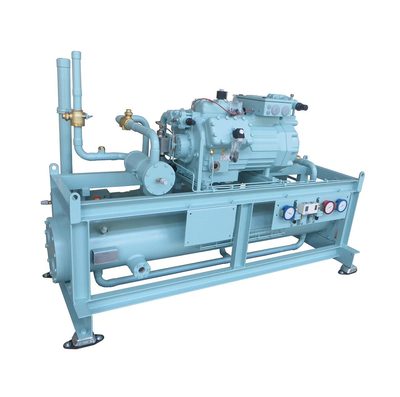
QCM-S-(S/T)-ST ✓ verified
Application
Compact marine chiller with screw compressor and shell & tube heat exchanger. Available as single (S) or twin (T) unit. Suited for AC and general chilled water applications. Up to 6 individual chillers connectable in sequence.
Common Failures & Inspection Points
  • Area: Refrigerant circuit: check for leaks at compressor shaft seal, brazed plate heat exchanger connections, and all pipe joints; verify refrigerant charge and super
    Check: Refrigerant circuit: check for leaks at compressor shaft seal, brazed plate heat exchanger connections, and all pipe joints; verify refrigerant charge and superheat/subcooling values
  • Area: Compressor condition: monitor operating pressures (suction/discharge), oil level and oil quality, bearing temperatures, and vibration levels; check unloading me
    Check: Compressor condition: monitor operating pressures (suction/discharge), oil level and oil quality, bearing temperatures, and vibration levels; check unloading mechanism on piston compressors
  • Area: Heat exchangers (BHE/shell & tube): inspect for fouling, scaling, and corrosion on chilled-water and seawater/cooling-water sides; verify differential pressure
    Check: Heat exchangers (BHE/shell & tube): inspect for fouling, scaling, and corrosion on chilled-water and seawater/cooling-water sides; verify differential pressure across heat exchanger against design value
  • Area: Seawater/cooling-water circuit: inspect strainer and clean if fouled; check pump seals, flow rate, and inlet/outlet temperatures against design parameters; veri
    Check: Seawater/cooling-water circuit: inspect strainer and clean if fouled; check pump seals, flow rate, and inlet/outlet temperatures against design parameters; verify anti-corrosion anode condition
  • Area: Electrical and control system: verify SIEMENS PLC software version and alarm log; test safety devices (high/low pressure switches, thermal overloads, flow switc
    Check: Electrical and control system: verify SIEMENS PLC software version and alarm log; test safety devices (high/low pressure switches, thermal overloads, flow switches); check terminal torque and insulation resistance
  • Area: Safety and relief devices: test high-pressure cut-out, low-pressure cut-out, and relief valve operation; verify correct set-points per classification society re
    Check: Safety and relief devices: test high-pressure cut-out, low-pressure cut-out, and relief valve operation; verify correct set-points per classification society requirements (DNV, Lloyd's, BV, etc.)
  • Area: Vibration and mounting: inspect anti-vibration mounts and foundation bolts for loosening or deterioration; measure overall vibration signature and compare to ba
    Check: Vibration and mounting: inspect anti-vibration mounts and foundation bolts for loosening or deterioration; measure overall vibration signature and compare to baseline
  • Area: Chilled-water system: verify glycol concentration (freeze protection), system pressure, expansion vessel pre-charge, and strainer cleanliness; check chilled-wat
    Check: Chilled-water system: verify glycol concentration (freeze protection), system pressure, expansion vessel pre-charge, and strainer cleanliness; check chilled-water pump seal condition and flow balance across consumers

Typ-universelle Inspektionspunkte fuer Air Conditioning (verifiziert, 2026-06).

Novenco Marine & Offshore QCM-SS-BHE
QCM-SS-BHE ✓ verified
Application
Compact marine chiller with screw compressor and brazed plate heat exchanger. Suited for AC and general chilled water applications on all vessel types including offshore.
Common Failures & Inspection Points
  • Area: Refrigerant circuit: check for leaks at compressor shaft seal, brazed plate heat exchanger connections, and all pipe joints; verify refrigerant charge and super
    Check: Refrigerant circuit: check for leaks at compressor shaft seal, brazed plate heat exchanger connections, and all pipe joints; verify refrigerant charge and superheat/subcooling values
  • Area: Compressor condition: monitor operating pressures (suction/discharge), oil level and oil quality, bearing temperatures, and vibration levels; check unloading me
    Check: Compressor condition: monitor operating pressures (suction/discharge), oil level and oil quality, bearing temperatures, and vibration levels; check unloading mechanism on piston compressors
  • Area: Heat exchangers (BHE/shell & tube): inspect for fouling, scaling, and corrosion on chilled-water and seawater/cooling-water sides; verify differential pressure
    Check: Heat exchangers (BHE/shell & tube): inspect for fouling, scaling, and corrosion on chilled-water and seawater/cooling-water sides; verify differential pressure across heat exchanger against design value
  • Area: Seawater/cooling-water circuit: inspect strainer and clean if fouled; check pump seals, flow rate, and inlet/outlet temperatures against design parameters; veri
    Check: Seawater/cooling-water circuit: inspect strainer and clean if fouled; check pump seals, flow rate, and inlet/outlet temperatures against design parameters; verify anti-corrosion anode condition
  • Area: Electrical and control system: verify SIEMENS PLC software version and alarm log; test safety devices (high/low pressure switches, thermal overloads, flow switc
    Check: Electrical and control system: verify SIEMENS PLC software version and alarm log; test safety devices (high/low pressure switches, thermal overloads, flow switches); check terminal torque and insulation resistance
  • Area: Safety and relief devices: test high-pressure cut-out, low-pressure cut-out, and relief valve operation; verify correct set-points per classification society re
    Check: Safety and relief devices: test high-pressure cut-out, low-pressure cut-out, and relief valve operation; verify correct set-points per classification society requirements (DNV, Lloyd's, BV, etc.)
  • Area: Vibration and mounting: inspect anti-vibration mounts and foundation bolts for loosening or deterioration; measure overall vibration signature and compare to ba
    Check: Vibration and mounting: inspect anti-vibration mounts and foundation bolts for loosening or deterioration; measure overall vibration signature and compare to baseline
  • Area: Chilled-water system: verify glycol concentration (freeze protection), system pressure, expansion vessel pre-charge, and strainer cleanliness; check chilled-wat
    Check: Chilled-water system: verify glycol concentration (freeze protection), system pressure, expansion vessel pre-charge, and strainer cleanliness; check chilled-water pump seal condition and flow balance across consumers

Typ-universelle Inspektionspunkte fuer Air Conditioning (verifiziert, 2026-06).

Novenco Marine & Offshore QCMB – Box Chiller
QCMB – Box Chiller ✓ verified
Application
Compact marine chiller in box enclosure, robust design optimised for marine application. Suited for AC and general chilled water applications. Supports sequential connection of up to 6 units.
Common Failures & Inspection Points
  • Area: Refrigerant circuit: check for leaks at compressor shaft seal, brazed plate heat exchanger connections, and all pipe joints; verify refrigerant charge and super
    Check: Refrigerant circuit: check for leaks at compressor shaft seal, brazed plate heat exchanger connections, and all pipe joints; verify refrigerant charge and superheat/subcooling values
  • Area: Compressor condition: monitor operating pressures (suction/discharge), oil level and oil quality, bearing temperatures, and vibration levels; check unloading me
    Check: Compressor condition: monitor operating pressures (suction/discharge), oil level and oil quality, bearing temperatures, and vibration levels; check unloading mechanism on piston compressors
  • Area: Heat exchangers (BHE/shell & tube): inspect for fouling, scaling, and corrosion on chilled-water and seawater/cooling-water sides; verify differential pressure
    Check: Heat exchangers (BHE/shell & tube): inspect for fouling, scaling, and corrosion on chilled-water and seawater/cooling-water sides; verify differential pressure across heat exchanger against design value
  • Area: Seawater/cooling-water circuit: inspect strainer and clean if fouled; check pump seals, flow rate, and inlet/outlet temperatures against design parameters; veri
    Check: Seawater/cooling-water circuit: inspect strainer and clean if fouled; check pump seals, flow rate, and inlet/outlet temperatures against design parameters; verify anti-corrosion anode condition
  • Area: Electrical and control system: verify SIEMENS PLC software version and alarm log; test safety devices (high/low pressure switches, thermal overloads, flow switc
    Check: Electrical and control system: verify SIEMENS PLC software version and alarm log; test safety devices (high/low pressure switches, thermal overloads, flow switches); check terminal torque and insulation resistance
  • Area: Safety and relief devices: test high-pressure cut-out, low-pressure cut-out, and relief valve operation; verify correct set-points per classification society re
    Check: Safety and relief devices: test high-pressure cut-out, low-pressure cut-out, and relief valve operation; verify correct set-points per classification society requirements (DNV, Lloyd's, BV, etc.)
  • Area: Vibration and mounting: inspect anti-vibration mounts and foundation bolts for loosening or deterioration; measure overall vibration signature and compare to ba
    Check: Vibration and mounting: inspect anti-vibration mounts and foundation bolts for loosening or deterioration; measure overall vibration signature and compare to baseline
  • Area: Chilled-water system: verify glycol concentration (freeze protection), system pressure, expansion vessel pre-charge, and strainer cleanliness; check chilled-wat
    Check: Chilled-water system: verify glycol concentration (freeze protection), system pressure, expansion vessel pre-charge, and strainer cleanliness; check chilled-water pump seal condition and flow balance across consumers

Typ-universelle Inspektionspunkte fuer Air Conditioning (verifiziert, 2026-06).

Webasto

29 ✓ 29 verified
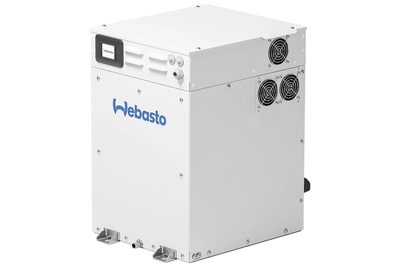
BlueCool C16 M ✓ verified
Application
Compact chilled-water system for small/medium boats; supplies multiple cabins via chilled-water circuit; reverse-cycle heating available
Common Failures & Inspection Points
  • Area: Sea-water strainer and heat exchanger: inspect for marine fouling, corrosion, and blockage; clean titanium or cupro-nickel condenser surfaces at each service in
    Check: Sea-water strainer and heat exchanger: inspect for marine fouling, corrosion, and blockage; clean titanium or cupro-nickel condenser surfaces at each service interval
  • Area: Refrigerant circuit: check operating pressures and temperatures, inspect for leaks at flare fittings and brazed joints, verify refrigerant charge (R32 or R410A)
    Check: Refrigerant circuit: check operating pressures and temperatures, inspect for leaks at flare fittings and brazed joints, verify refrigerant charge (R32 or R410A)
  • Area: Chilled-water circuit: verify flow rate and pressure drop, check pump operation, inspect for air locks, test glycol concentration (freeze/corrosion protection)
    Check: Chilled-water circuit: verify flow rate and pressure drop, check pump operation, inspect for air locks, test glycol concentration (freeze/corrosion protection)
  • Area: Compressor and electrical: inspect inverter drive, check running current against nameplate, verify soft-start or variable-speed control board, inspect wiring an
    Check: Compressor and electrical: inspect inverter drive, check running current against nameplate, verify soft-start or variable-speed control board, inspect wiring and terminals for corrosion
  • Area: Condensate drainage: clean condensate pans and drain lines on air handlers (A-Series / F-Series); test Instant Drain system if fitted
    Check: Condensate drainage: clean condensate pans and drain lines on air handlers (A-Series / F-Series); test Instant Drain system if fitted
  • Area: Filter inspection: replace G3 or F7 air filters in FreshAir units; clean evaporator coil fins as needed
    Check: Filter inspection: replace G3 or F7 air filters in FreshAir units; clean evaporator coil fins as needed
  • Area: Vibration isolation and mountings: check anti-vibration mounts, hose connections, and flexible pipe couplings for wear or deterioration
    Check: Vibration isolation and mountings: check anti-vibration mounts, hose connections, and flexible pipe couplings for wear or deterioration
  • Area: Controls and safety devices: test high/low pressure cut-outs, water-flow switches, and thermostatic controls; update firmware on BlueCool MyTouch / BlueCool Con
    Check: Controls and safety devices: test high/low pressure cut-outs, water-flow switches, and thermostatic controls; update firmware on BlueCool MyTouch / BlueCool Connect gateway if applicable

Typ-universelle Inspektionspunkte fuer Air Conditioning (verifiziert, 2026-06).

BlueCool C20 M ✓ verified
Application
Compact chilled-water system for small/medium boats; supplies multiple cabins via chilled-water circuit; reverse-cycle heating available
Common Failures & Inspection Points
  • Area: Sea-water strainer and heat exchanger: inspect for marine fouling, corrosion, and blockage; clean titanium or cupro-nickel condenser surfaces at each service in
    Check: Sea-water strainer and heat exchanger: inspect for marine fouling, corrosion, and blockage; clean titanium or cupro-nickel condenser surfaces at each service interval
  • Area: Refrigerant circuit: check operating pressures and temperatures, inspect for leaks at flare fittings and brazed joints, verify refrigerant charge (R32 or R410A)
    Check: Refrigerant circuit: check operating pressures and temperatures, inspect for leaks at flare fittings and brazed joints, verify refrigerant charge (R32 or R410A)
  • Area: Chilled-water circuit: verify flow rate and pressure drop, check pump operation, inspect for air locks, test glycol concentration (freeze/corrosion protection)
    Check: Chilled-water circuit: verify flow rate and pressure drop, check pump operation, inspect for air locks, test glycol concentration (freeze/corrosion protection)
  • Area: Compressor and electrical: inspect inverter drive, check running current against nameplate, verify soft-start or variable-speed control board, inspect wiring an
    Check: Compressor and electrical: inspect inverter drive, check running current against nameplate, verify soft-start or variable-speed control board, inspect wiring and terminals for corrosion
  • Area: Condensate drainage: clean condensate pans and drain lines on air handlers (A-Series / F-Series); test Instant Drain system if fitted
    Check: Condensate drainage: clean condensate pans and drain lines on air handlers (A-Series / F-Series); test Instant Drain system if fitted
  • Area: Filter inspection: replace G3 or F7 air filters in FreshAir units; clean evaporator coil fins as needed
    Check: Filter inspection: replace G3 or F7 air filters in FreshAir units; clean evaporator coil fins as needed
  • Area: Vibration isolation and mountings: check anti-vibration mounts, hose connections, and flexible pipe couplings for wear or deterioration
    Check: Vibration isolation and mountings: check anti-vibration mounts, hose connections, and flexible pipe couplings for wear or deterioration
  • Area: Controls and safety devices: test high/low pressure cut-outs, water-flow switches, and thermostatic controls; update firmware on BlueCool MyTouch / BlueCool Con
    Check: Controls and safety devices: test high/low pressure cut-outs, water-flow switches, and thermostatic controls; update firmware on BlueCool MyTouch / BlueCool Connect gateway if applicable

Typ-universelle Inspektionspunkte fuer Air Conditioning (verifiziert, 2026-06).

BlueCool C27 M ✓ verified
Application
Compact chilled-water system for small/medium boats; supplies multiple cabins via chilled-water circuit; reverse-cycle heating available
Common Failures & Inspection Points
  • Area: Sea-water strainer and heat exchanger: inspect for marine fouling, corrosion, and blockage; clean titanium or cupro-nickel condenser surfaces at each service in
    Check: Sea-water strainer and heat exchanger: inspect for marine fouling, corrosion, and blockage; clean titanium or cupro-nickel condenser surfaces at each service interval
  • Area: Refrigerant circuit: check operating pressures and temperatures, inspect for leaks at flare fittings and brazed joints, verify refrigerant charge (R32 or R410A)
    Check: Refrigerant circuit: check operating pressures and temperatures, inspect for leaks at flare fittings and brazed joints, verify refrigerant charge (R32 or R410A)
  • Area: Chilled-water circuit: verify flow rate and pressure drop, check pump operation, inspect for air locks, test glycol concentration (freeze/corrosion protection)
    Check: Chilled-water circuit: verify flow rate and pressure drop, check pump operation, inspect for air locks, test glycol concentration (freeze/corrosion protection)
  • Area: Compressor and electrical: inspect inverter drive, check running current against nameplate, verify soft-start or variable-speed control board, inspect wiring an
    Check: Compressor and electrical: inspect inverter drive, check running current against nameplate, verify soft-start or variable-speed control board, inspect wiring and terminals for corrosion
  • Area: Condensate drainage: clean condensate pans and drain lines on air handlers (A-Series / F-Series); test Instant Drain system if fitted
    Check: Condensate drainage: clean condensate pans and drain lines on air handlers (A-Series / F-Series); test Instant Drain system if fitted
  • Area: Filter inspection: replace G3 or F7 air filters in FreshAir units; clean evaporator coil fins as needed
    Check: Filter inspection: replace G3 or F7 air filters in FreshAir units; clean evaporator coil fins as needed
  • Area: Vibration isolation and mountings: check anti-vibration mounts, hose connections, and flexible pipe couplings for wear or deterioration
    Check: Vibration isolation and mountings: check anti-vibration mounts, hose connections, and flexible pipe couplings for wear or deterioration
  • Area: Controls and safety devices: test high/low pressure cut-outs, water-flow switches, and thermostatic controls; update firmware on BlueCool MyTouch / BlueCool Con
    Check: Controls and safety devices: test high/low pressure cut-outs, water-flow switches, and thermostatic controls; update firmware on BlueCool MyTouch / BlueCool Connect gateway if applicable

Typ-universelle Inspektionspunkte fuer Air Conditioning (verifiziert, 2026-06).

BlueCool C32 T ✓ verified
Application
Compact chilled-water system for small/medium boats; twin-compressor for increased redundancy; reverse-cycle heating
Common Failures & Inspection Points
  • Area: Sea-water strainer and heat exchanger: inspect for marine fouling, corrosion, and blockage; clean titanium or cupro-nickel condenser surfaces at each service in
    Check: Sea-water strainer and heat exchanger: inspect for marine fouling, corrosion, and blockage; clean titanium or cupro-nickel condenser surfaces at each service interval
  • Area: Refrigerant circuit: check operating pressures and temperatures, inspect for leaks at flare fittings and brazed joints, verify refrigerant charge (R32 or R410A)
    Check: Refrigerant circuit: check operating pressures and temperatures, inspect for leaks at flare fittings and brazed joints, verify refrigerant charge (R32 or R410A)
  • Area: Chilled-water circuit: verify flow rate and pressure drop, check pump operation, inspect for air locks, test glycol concentration (freeze/corrosion protection)
    Check: Chilled-water circuit: verify flow rate and pressure drop, check pump operation, inspect for air locks, test glycol concentration (freeze/corrosion protection)
  • Area: Compressor and electrical: inspect inverter drive, check running current against nameplate, verify soft-start or variable-speed control board, inspect wiring an
    Check: Compressor and electrical: inspect inverter drive, check running current against nameplate, verify soft-start or variable-speed control board, inspect wiring and terminals for corrosion
  • Area: Condensate drainage: clean condensate pans and drain lines on air handlers (A-Series / F-Series); test Instant Drain system if fitted
    Check: Condensate drainage: clean condensate pans and drain lines on air handlers (A-Series / F-Series); test Instant Drain system if fitted
  • Area: Filter inspection: replace G3 or F7 air filters in FreshAir units; clean evaporator coil fins as needed
    Check: Filter inspection: replace G3 or F7 air filters in FreshAir units; clean evaporator coil fins as needed
  • Area: Vibration isolation and mountings: check anti-vibration mounts, hose connections, and flexible pipe couplings for wear or deterioration
    Check: Vibration isolation and mountings: check anti-vibration mounts, hose connections, and flexible pipe couplings for wear or deterioration
  • Area: Controls and safety devices: test high/low pressure cut-outs, water-flow switches, and thermostatic controls; update firmware on BlueCool MyTouch / BlueCool Con
    Check: Controls and safety devices: test high/low pressure cut-outs, water-flow switches, and thermostatic controls; update firmware on BlueCool MyTouch / BlueCool Connect gateway if applicable

Typ-universelle Inspektionspunkte fuer Air Conditioning (verifiziert, 2026-06).

BlueCool C40 T ✓ verified
Application
Compact chilled-water system for small/medium boats; twin-compressor; reverse-cycle heating
Common Failures & Inspection Points
  • Area: Sea-water strainer and heat exchanger: inspect for marine fouling, corrosion, and blockage; clean titanium or cupro-nickel condenser surfaces at each service in
    Check: Sea-water strainer and heat exchanger: inspect for marine fouling, corrosion, and blockage; clean titanium or cupro-nickel condenser surfaces at each service interval
  • Area: Refrigerant circuit: check operating pressures and temperatures, inspect for leaks at flare fittings and brazed joints, verify refrigerant charge (R32 or R410A)
    Check: Refrigerant circuit: check operating pressures and temperatures, inspect for leaks at flare fittings and brazed joints, verify refrigerant charge (R32 or R410A)
  • Area: Chilled-water circuit: verify flow rate and pressure drop, check pump operation, inspect for air locks, test glycol concentration (freeze/corrosion protection)
    Check: Chilled-water circuit: verify flow rate and pressure drop, check pump operation, inspect for air locks, test glycol concentration (freeze/corrosion protection)
  • Area: Compressor and electrical: inspect inverter drive, check running current against nameplate, verify soft-start or variable-speed control board, inspect wiring an
    Check: Compressor and electrical: inspect inverter drive, check running current against nameplate, verify soft-start or variable-speed control board, inspect wiring and terminals for corrosion
  • Area: Condensate drainage: clean condensate pans and drain lines on air handlers (A-Series / F-Series); test Instant Drain system if fitted
    Check: Condensate drainage: clean condensate pans and drain lines on air handlers (A-Series / F-Series); test Instant Drain system if fitted
  • Area: Filter inspection: replace G3 or F7 air filters in FreshAir units; clean evaporator coil fins as needed
    Check: Filter inspection: replace G3 or F7 air filters in FreshAir units; clean evaporator coil fins as needed
  • Area: Vibration isolation and mountings: check anti-vibration mounts, hose connections, and flexible pipe couplings for wear or deterioration
    Check: Vibration isolation and mountings: check anti-vibration mounts, hose connections, and flexible pipe couplings for wear or deterioration
  • Area: Controls and safety devices: test high/low pressure cut-outs, water-flow switches, and thermostatic controls; update firmware on BlueCool MyTouch / BlueCool Con
    Check: Controls and safety devices: test high/low pressure cut-outs, water-flow switches, and thermostatic controls; update firmware on BlueCool MyTouch / BlueCool Connect gateway if applicable

Typ-universelle Inspektionspunkte fuer Air Conditioning (verifiziert, 2026-06).

BlueCool C55 T ✓ verified
Application
Compact chilled-water system for small/medium boats; twin-compressor; reverse-cycle heating
Common Failures & Inspection Points
  • Area: Sea-water strainer and heat exchanger: inspect for marine fouling, corrosion, and blockage; clean titanium or cupro-nickel condenser surfaces at each service in
    Check: Sea-water strainer and heat exchanger: inspect for marine fouling, corrosion, and blockage; clean titanium or cupro-nickel condenser surfaces at each service interval
  • Area: Refrigerant circuit: check operating pressures and temperatures, inspect for leaks at flare fittings and brazed joints, verify refrigerant charge (R32 or R410A)
    Check: Refrigerant circuit: check operating pressures and temperatures, inspect for leaks at flare fittings and brazed joints, verify refrigerant charge (R32 or R410A)
  • Area: Chilled-water circuit: verify flow rate and pressure drop, check pump operation, inspect for air locks, test glycol concentration (freeze/corrosion protection)
    Check: Chilled-water circuit: verify flow rate and pressure drop, check pump operation, inspect for air locks, test glycol concentration (freeze/corrosion protection)
  • Area: Compressor and electrical: inspect inverter drive, check running current against nameplate, verify soft-start or variable-speed control board, inspect wiring an
    Check: Compressor and electrical: inspect inverter drive, check running current against nameplate, verify soft-start or variable-speed control board, inspect wiring and terminals for corrosion
  • Area: Condensate drainage: clean condensate pans and drain lines on air handlers (A-Series / F-Series); test Instant Drain system if fitted
    Check: Condensate drainage: clean condensate pans and drain lines on air handlers (A-Series / F-Series); test Instant Drain system if fitted
  • Area: Filter inspection: replace G3 or F7 air filters in FreshAir units; clean evaporator coil fins as needed
    Check: Filter inspection: replace G3 or F7 air filters in FreshAir units; clean evaporator coil fins as needed
  • Area: Vibration isolation and mountings: check anti-vibration mounts, hose connections, and flexible pipe couplings for wear or deterioration
    Check: Vibration isolation and mountings: check anti-vibration mounts, hose connections, and flexible pipe couplings for wear or deterioration
  • Area: Controls and safety devices: test high/low pressure cut-outs, water-flow switches, and thermostatic controls; update firmware on BlueCool MyTouch / BlueCool Con
    Check: Controls and safety devices: test high/low pressure cut-outs, water-flow switches, and thermostatic controls; update firmware on BlueCool MyTouch / BlueCool Connect gateway if applicable

Typ-universelle Inspektionspunkte fuer Air Conditioning (verifiziert, 2026-06).

BlueCool C81 R ✓ verified
Application
Compact chilled-water system for larger boats; multi-compressor (R configuration); reverse-cycle heating
Common Failures & Inspection Points
  • Area: Sea-water strainer and heat exchanger: inspect for marine fouling, corrosion, and blockage; clean titanium or cupro-nickel condenser surfaces at each service in
    Check: Sea-water strainer and heat exchanger: inspect for marine fouling, corrosion, and blockage; clean titanium or cupro-nickel condenser surfaces at each service interval
  • Area: Refrigerant circuit: check operating pressures and temperatures, inspect for leaks at flare fittings and brazed joints, verify refrigerant charge (R32 or R410A)
    Check: Refrigerant circuit: check operating pressures and temperatures, inspect for leaks at flare fittings and brazed joints, verify refrigerant charge (R32 or R410A)
  • Area: Chilled-water circuit: verify flow rate and pressure drop, check pump operation, inspect for air locks, test glycol concentration (freeze/corrosion protection)
    Check: Chilled-water circuit: verify flow rate and pressure drop, check pump operation, inspect for air locks, test glycol concentration (freeze/corrosion protection)
  • Area: Compressor and electrical: inspect inverter drive, check running current against nameplate, verify soft-start or variable-speed control board, inspect wiring an
    Check: Compressor and electrical: inspect inverter drive, check running current against nameplate, verify soft-start or variable-speed control board, inspect wiring and terminals for corrosion
  • Area: Condensate drainage: clean condensate pans and drain lines on air handlers (A-Series / F-Series); test Instant Drain system if fitted
    Check: Condensate drainage: clean condensate pans and drain lines on air handlers (A-Series / F-Series); test Instant Drain system if fitted
  • Area: Filter inspection: replace G3 or F7 air filters in FreshAir units; clean evaporator coil fins as needed
    Check: Filter inspection: replace G3 or F7 air filters in FreshAir units; clean evaporator coil fins as needed
  • Area: Vibration isolation and mountings: check anti-vibration mounts, hose connections, and flexible pipe couplings for wear or deterioration
    Check: Vibration isolation and mountings: check anti-vibration mounts, hose connections, and flexible pipe couplings for wear or deterioration
  • Area: Controls and safety devices: test high/low pressure cut-outs, water-flow switches, and thermostatic controls; update firmware on BlueCool MyTouch / BlueCool Con
    Check: Controls and safety devices: test high/low pressure cut-outs, water-flow switches, and thermostatic controls; update firmware on BlueCool MyTouch / BlueCool Connect gateway if applicable

Typ-universelle Inspektionspunkte fuer Air Conditioning (verifiziert, 2026-06).

BlueCool C108 Q ✓ verified
Application
Compact chilled-water system for medium-large boats; quad-compressor; reverse-cycle heating; up to 108,000 BTU/h
Common Failures & Inspection Points
  • Area: Sea-water strainer and heat exchanger: inspect for marine fouling, corrosion, and blockage; clean titanium or cupro-nickel condenser surfaces at each service in
    Check: Sea-water strainer and heat exchanger: inspect for marine fouling, corrosion, and blockage; clean titanium or cupro-nickel condenser surfaces at each service interval
  • Area: Refrigerant circuit: check operating pressures and temperatures, inspect for leaks at flare fittings and brazed joints, verify refrigerant charge (R32 or R410A)
    Check: Refrigerant circuit: check operating pressures and temperatures, inspect for leaks at flare fittings and brazed joints, verify refrigerant charge (R32 or R410A)
  • Area: Chilled-water circuit: verify flow rate and pressure drop, check pump operation, inspect for air locks, test glycol concentration (freeze/corrosion protection)
    Check: Chilled-water circuit: verify flow rate and pressure drop, check pump operation, inspect for air locks, test glycol concentration (freeze/corrosion protection)
  • Area: Compressor and electrical: inspect inverter drive, check running current against nameplate, verify soft-start or variable-speed control board, inspect wiring an
    Check: Compressor and electrical: inspect inverter drive, check running current against nameplate, verify soft-start or variable-speed control board, inspect wiring and terminals for corrosion
  • Area: Condensate drainage: clean condensate pans and drain lines on air handlers (A-Series / F-Series); test Instant Drain system if fitted
    Check: Condensate drainage: clean condensate pans and drain lines on air handlers (A-Series / F-Series); test Instant Drain system if fitted
  • Area: Filter inspection: replace G3 or F7 air filters in FreshAir units; clean evaporator coil fins as needed
    Check: Filter inspection: replace G3 or F7 air filters in FreshAir units; clean evaporator coil fins as needed
  • Area: Vibration isolation and mountings: check anti-vibration mounts, hose connections, and flexible pipe couplings for wear or deterioration
    Check: Vibration isolation and mountings: check anti-vibration mounts, hose connections, and flexible pipe couplings for wear or deterioration
  • Area: Controls and safety devices: test high/low pressure cut-outs, water-flow switches, and thermostatic controls; update firmware on BlueCool MyTouch / BlueCool Con
    Check: Controls and safety devices: test high/low pressure cut-outs, water-flow switches, and thermostatic controls; update firmware on BlueCool MyTouch / BlueCool Connect gateway if applicable

Typ-universelle Inspektionspunkte fuer Air Conditioning (verifiziert, 2026-06).

Webasto BlueCool V50 M
BlueCool V50 M ✓ verified
Application
Variable-speed marine chiller for boats with 3+ independent cabins; inverter-controlled BLDC twin-rotary compressors; R410A refrigerant
Common Failures & Inspection Points
  • Area: Sea-water strainer and heat exchanger: inspect for marine fouling, corrosion, and blockage; clean titanium or cupro-nickel condenser surfaces at each service in
    Check: Sea-water strainer and heat exchanger: inspect for marine fouling, corrosion, and blockage; clean titanium or cupro-nickel condenser surfaces at each service interval
  • Area: Refrigerant circuit: check operating pressures and temperatures, inspect for leaks at flare fittings and brazed joints, verify refrigerant charge (R32 or R410A)
    Check: Refrigerant circuit: check operating pressures and temperatures, inspect for leaks at flare fittings and brazed joints, verify refrigerant charge (R32 or R410A)
  • Area: Chilled-water circuit: verify flow rate and pressure drop, check pump operation, inspect for air locks, test glycol concentration (freeze/corrosion protection)
    Check: Chilled-water circuit: verify flow rate and pressure drop, check pump operation, inspect for air locks, test glycol concentration (freeze/corrosion protection)
  • Area: Compressor and electrical: inspect inverter drive, check running current against nameplate, verify soft-start or variable-speed control board, inspect wiring an
    Check: Compressor and electrical: inspect inverter drive, check running current against nameplate, verify soft-start or variable-speed control board, inspect wiring and terminals for corrosion
  • Area: Condensate drainage: clean condensate pans and drain lines on air handlers (A-Series / F-Series); test Instant Drain system if fitted
    Check: Condensate drainage: clean condensate pans and drain lines on air handlers (A-Series / F-Series); test Instant Drain system if fitted
  • Area: Filter inspection: replace G3 or F7 air filters in FreshAir units; clean evaporator coil fins as needed
    Check: Filter inspection: replace G3 or F7 air filters in FreshAir units; clean evaporator coil fins as needed
  • Area: Vibration isolation and mountings: check anti-vibration mounts, hose connections, and flexible pipe couplings for wear or deterioration
    Check: Vibration isolation and mountings: check anti-vibration mounts, hose connections, and flexible pipe couplings for wear or deterioration
  • Area: Controls and safety devices: test high/low pressure cut-outs, water-flow switches, and thermostatic controls; update firmware on BlueCool MyTouch / BlueCool Con
    Check: Controls and safety devices: test high/low pressure cut-outs, water-flow switches, and thermostatic controls; update firmware on BlueCool MyTouch / BlueCool Connect gateway if applicable

Typ-universelle Inspektionspunkte fuer Air Conditioning (verifiziert, 2026-06).

[08.08.2026] Datenblattlink entfernt (fehler 404): https://www.webasto.com/en-us/cooling/marine-chiller-air-conditioning-units/bluecool-v-series.html
BlueCool V64 T ✓ verified
Application
Variable-speed marine chiller for boats with 3+ independent cabins; twin inverter-controlled BLDC compressors; R410A refrigerant
Common Failures & Inspection Points
  • Area: Sea-water strainer and heat exchanger: inspect for marine fouling, corrosion, and blockage; clean titanium or cupro-nickel condenser surfaces at each service in
    Check: Sea-water strainer and heat exchanger: inspect for marine fouling, corrosion, and blockage; clean titanium or cupro-nickel condenser surfaces at each service interval
  • Area: Refrigerant circuit: check operating pressures and temperatures, inspect for leaks at flare fittings and brazed joints, verify refrigerant charge (R32 or R410A)
    Check: Refrigerant circuit: check operating pressures and temperatures, inspect for leaks at flare fittings and brazed joints, verify refrigerant charge (R32 or R410A)
  • Area: Chilled-water circuit: verify flow rate and pressure drop, check pump operation, inspect for air locks, test glycol concentration (freeze/corrosion protection)
    Check: Chilled-water circuit: verify flow rate and pressure drop, check pump operation, inspect for air locks, test glycol concentration (freeze/corrosion protection)
  • Area: Compressor and electrical: inspect inverter drive, check running current against nameplate, verify soft-start or variable-speed control board, inspect wiring an
    Check: Compressor and electrical: inspect inverter drive, check running current against nameplate, verify soft-start or variable-speed control board, inspect wiring and terminals for corrosion
  • Area: Condensate drainage: clean condensate pans and drain lines on air handlers (A-Series / F-Series); test Instant Drain system if fitted
    Check: Condensate drainage: clean condensate pans and drain lines on air handlers (A-Series / F-Series); test Instant Drain system if fitted
  • Area: Filter inspection: replace G3 or F7 air filters in FreshAir units; clean evaporator coil fins as needed
    Check: Filter inspection: replace G3 or F7 air filters in FreshAir units; clean evaporator coil fins as needed
  • Area: Vibration isolation and mountings: check anti-vibration mounts, hose connections, and flexible pipe couplings for wear or deterioration
    Check: Vibration isolation and mountings: check anti-vibration mounts, hose connections, and flexible pipe couplings for wear or deterioration
  • Area: Controls and safety devices: test high/low pressure cut-outs, water-flow switches, and thermostatic controls; update firmware on BlueCool MyTouch / BlueCool Con
    Check: Controls and safety devices: test high/low pressure cut-outs, water-flow switches, and thermostatic controls; update firmware on BlueCool MyTouch / BlueCool Connect gateway if applicable

Typ-universelle Inspektionspunkte fuer Air Conditioning (verifiziert, 2026-06).

[08.08.2026] Datenblattlink entfernt (fehler 404): https://www.webasto.com/en-us/cooling/marine-chiller-air-conditioning-units/bluecool-v-series.html
BlueCool V77 T ✓ verified
Application
Variable-speed marine chiller for boats with 3+ independent cabins; twin inverter-controlled BLDC compressors; R410A refrigerant
Common Failures & Inspection Points
  • Area: Sea-water strainer and heat exchanger: inspect for marine fouling, corrosion, and blockage; clean titanium or cupro-nickel condenser surfaces at each service in
    Check: Sea-water strainer and heat exchanger: inspect for marine fouling, corrosion, and blockage; clean titanium or cupro-nickel condenser surfaces at each service interval
  • Area: Refrigerant circuit: check operating pressures and temperatures, inspect for leaks at flare fittings and brazed joints, verify refrigerant charge (R32 or R410A)
    Check: Refrigerant circuit: check operating pressures and temperatures, inspect for leaks at flare fittings and brazed joints, verify refrigerant charge (R32 or R410A)
  • Area: Chilled-water circuit: verify flow rate and pressure drop, check pump operation, inspect for air locks, test glycol concentration (freeze/corrosion protection)
    Check: Chilled-water circuit: verify flow rate and pressure drop, check pump operation, inspect for air locks, test glycol concentration (freeze/corrosion protection)
  • Area: Compressor and electrical: inspect inverter drive, check running current against nameplate, verify soft-start or variable-speed control board, inspect wiring an
    Check: Compressor and electrical: inspect inverter drive, check running current against nameplate, verify soft-start or variable-speed control board, inspect wiring and terminals for corrosion
  • Area: Condensate drainage: clean condensate pans and drain lines on air handlers (A-Series / F-Series); test Instant Drain system if fitted
    Check: Condensate drainage: clean condensate pans and drain lines on air handlers (A-Series / F-Series); test Instant Drain system if fitted
  • Area: Filter inspection: replace G3 or F7 air filters in FreshAir units; clean evaporator coil fins as needed
    Check: Filter inspection: replace G3 or F7 air filters in FreshAir units; clean evaporator coil fins as needed
  • Area: Vibration isolation and mountings: check anti-vibration mounts, hose connections, and flexible pipe couplings for wear or deterioration
    Check: Vibration isolation and mountings: check anti-vibration mounts, hose connections, and flexible pipe couplings for wear or deterioration
  • Area: Controls and safety devices: test high/low pressure cut-outs, water-flow switches, and thermostatic controls; update firmware on BlueCool MyTouch / BlueCool Con
    Check: Controls and safety devices: test high/low pressure cut-outs, water-flow switches, and thermostatic controls; update firmware on BlueCool MyTouch / BlueCool Connect gateway if applicable

Typ-universelle Inspektionspunkte fuer Air Conditioning (verifiziert, 2026-06).

[08.08.2026] Datenblattlink entfernt (fehler 404): https://www.webasto.com/en-us/cooling/marine-chiller-air-conditioning-units/bluecool-v-series.html
BlueCool VX 36M ✓ verified
· R32
Voltage: 230 V
Weight: 49.0 kg
Dimensions: 533 x 352 x 378 mm
Application
Variable-speed modular marine chiller for yachts; R32 refrigerant; combinable up to 216 kBTU/h system capacity; EER up to 5.6
Capacity kbtu (h)
36
Common Failures & Inspection Points
  • Area: Sea-water strainer and heat exchanger: inspect for marine fouling, corrosion, and blockage; clean titanium or cupro-nickel condenser surfaces at each service in
    Check: Sea-water strainer and heat exchanger: inspect for marine fouling, corrosion, and blockage; clean titanium or cupro-nickel condenser surfaces at each service interval
  • Area: Refrigerant circuit: check operating pressures and temperatures, inspect for leaks at flare fittings and brazed joints, verify refrigerant charge (R32 or R410A)
    Check: Refrigerant circuit: check operating pressures and temperatures, inspect for leaks at flare fittings and brazed joints, verify refrigerant charge (R32 or R410A)
  • Area: Chilled-water circuit: verify flow rate and pressure drop, check pump operation, inspect for air locks, test glycol concentration (freeze/corrosion protection)
    Check: Chilled-water circuit: verify flow rate and pressure drop, check pump operation, inspect for air locks, test glycol concentration (freeze/corrosion protection)
  • Area: Compressor and electrical: inspect inverter drive, check running current against nameplate, verify soft-start or variable-speed control board, inspect wiring an
    Check: Compressor and electrical: inspect inverter drive, check running current against nameplate, verify soft-start or variable-speed control board, inspect wiring and terminals for corrosion
  • Area: Condensate drainage: clean condensate pans and drain lines on air handlers (A-Series / F-Series); test Instant Drain system if fitted
    Check: Condensate drainage: clean condensate pans and drain lines on air handlers (A-Series / F-Series); test Instant Drain system if fitted
  • Area: Filter inspection: replace G3 or F7 air filters in FreshAir units; clean evaporator coil fins as needed
    Check: Filter inspection: replace G3 or F7 air filters in FreshAir units; clean evaporator coil fins as needed
  • Area: Vibration isolation and mountings: check anti-vibration mounts, hose connections, and flexible pipe couplings for wear or deterioration
    Check: Vibration isolation and mountings: check anti-vibration mounts, hose connections, and flexible pipe couplings for wear or deterioration
  • Area: Controls and safety devices: test high/low pressure cut-outs, water-flow switches, and thermostatic controls; update firmware on BlueCool MyTouch / BlueCool Con
    Check: Controls and safety devices: test high/low pressure cut-outs, water-flow switches, and thermostatic controls; update firmware on BlueCool MyTouch / BlueCool Connect gateway if applicable

Typ-universelle Inspektionspunkte fuer Air Conditioning (verifiziert, 2026-06).

BlueCool VX 48M ✓ verified
Application
Variable-speed modular marine chiller for yachts; R32 refrigerant; combinable; EER up to 5.6
Common Failures & Inspection Points
  • Area: Sea-water strainer and heat exchanger: inspect for marine fouling, corrosion, and blockage; clean titanium or cupro-nickel condenser surfaces at each service in
    Check: Sea-water strainer and heat exchanger: inspect for marine fouling, corrosion, and blockage; clean titanium or cupro-nickel condenser surfaces at each service interval
  • Area: Refrigerant circuit: check operating pressures and temperatures, inspect for leaks at flare fittings and brazed joints, verify refrigerant charge (R32 or R410A)
    Check: Refrigerant circuit: check operating pressures and temperatures, inspect for leaks at flare fittings and brazed joints, verify refrigerant charge (R32 or R410A)
  • Area: Chilled-water circuit: verify flow rate and pressure drop, check pump operation, inspect for air locks, test glycol concentration (freeze/corrosion protection)
    Check: Chilled-water circuit: verify flow rate and pressure drop, check pump operation, inspect for air locks, test glycol concentration (freeze/corrosion protection)
  • Area: Compressor and electrical: inspect inverter drive, check running current against nameplate, verify soft-start or variable-speed control board, inspect wiring an
    Check: Compressor and electrical: inspect inverter drive, check running current against nameplate, verify soft-start or variable-speed control board, inspect wiring and terminals for corrosion
  • Area: Condensate drainage: clean condensate pans and drain lines on air handlers (A-Series / F-Series); test Instant Drain system if fitted
    Check: Condensate drainage: clean condensate pans and drain lines on air handlers (A-Series / F-Series); test Instant Drain system if fitted
  • Area: Filter inspection: replace G3 or F7 air filters in FreshAir units; clean evaporator coil fins as needed
    Check: Filter inspection: replace G3 or F7 air filters in FreshAir units; clean evaporator coil fins as needed
  • Area: Vibration isolation and mountings: check anti-vibration mounts, hose connections, and flexible pipe couplings for wear or deterioration
    Check: Vibration isolation and mountings: check anti-vibration mounts, hose connections, and flexible pipe couplings for wear or deterioration
  • Area: Controls and safety devices: test high/low pressure cut-outs, water-flow switches, and thermostatic controls; update firmware on BlueCool MyTouch / BlueCool Con
    Check: Controls and safety devices: test high/low pressure cut-outs, water-flow switches, and thermostatic controls; update firmware on BlueCool MyTouch / BlueCool Connect gateway if applicable

Typ-universelle Inspektionspunkte fuer Air Conditioning (verifiziert, 2026-06).

BlueCool VX 60M ✓ verified
Application
Variable-speed modular marine chiller for yachts; R32 refrigerant; combinable; EER up to 5.6
Common Failures & Inspection Points
  • Area: Sea-water strainer and heat exchanger: inspect for marine fouling, corrosion, and blockage; clean titanium or cupro-nickel condenser surfaces at each service in
    Check: Sea-water strainer and heat exchanger: inspect for marine fouling, corrosion, and blockage; clean titanium or cupro-nickel condenser surfaces at each service interval
  • Area: Refrigerant circuit: check operating pressures and temperatures, inspect for leaks at flare fittings and brazed joints, verify refrigerant charge (R32 or R410A)
    Check: Refrigerant circuit: check operating pressures and temperatures, inspect for leaks at flare fittings and brazed joints, verify refrigerant charge (R32 or R410A)
  • Area: Chilled-water circuit: verify flow rate and pressure drop, check pump operation, inspect for air locks, test glycol concentration (freeze/corrosion protection)
    Check: Chilled-water circuit: verify flow rate and pressure drop, check pump operation, inspect for air locks, test glycol concentration (freeze/corrosion protection)
  • Area: Compressor and electrical: inspect inverter drive, check running current against nameplate, verify soft-start or variable-speed control board, inspect wiring an
    Check: Compressor and electrical: inspect inverter drive, check running current against nameplate, verify soft-start or variable-speed control board, inspect wiring and terminals for corrosion
  • Area: Condensate drainage: clean condensate pans and drain lines on air handlers (A-Series / F-Series); test Instant Drain system if fitted
    Check: Condensate drainage: clean condensate pans and drain lines on air handlers (A-Series / F-Series); test Instant Drain system if fitted
  • Area: Filter inspection: replace G3 or F7 air filters in FreshAir units; clean evaporator coil fins as needed
    Check: Filter inspection: replace G3 or F7 air filters in FreshAir units; clean evaporator coil fins as needed
  • Area: Vibration isolation and mountings: check anti-vibration mounts, hose connections, and flexible pipe couplings for wear or deterioration
    Check: Vibration isolation and mountings: check anti-vibration mounts, hose connections, and flexible pipe couplings for wear or deterioration
  • Area: Controls and safety devices: test high/low pressure cut-outs, water-flow switches, and thermostatic controls; update firmware on BlueCool MyTouch / BlueCool Con
    Check: Controls and safety devices: test high/low pressure cut-outs, water-flow switches, and thermostatic controls; update firmware on BlueCool MyTouch / BlueCool Connect gateway if applicable

Typ-universelle Inspektionspunkte fuer Air Conditioning (verifiziert, 2026-06).

BlueCool VX 72M ✓ verified
Application
Variable-speed modular marine chiller for yachts; R32 refrigerant; single-phase 230 V; EER up to 5.6
Common Failures & Inspection Points
  • Area: Sea-water strainer and heat exchanger: inspect for marine fouling, corrosion, and blockage; clean titanium or cupro-nickel condenser surfaces at each service in
    Check: Sea-water strainer and heat exchanger: inspect for marine fouling, corrosion, and blockage; clean titanium or cupro-nickel condenser surfaces at each service interval
  • Area: Refrigerant circuit: check operating pressures and temperatures, inspect for leaks at flare fittings and brazed joints, verify refrigerant charge (R32 or R410A)
    Check: Refrigerant circuit: check operating pressures and temperatures, inspect for leaks at flare fittings and brazed joints, verify refrigerant charge (R32 or R410A)
  • Area: Chilled-water circuit: verify flow rate and pressure drop, check pump operation, inspect for air locks, test glycol concentration (freeze/corrosion protection)
    Check: Chilled-water circuit: verify flow rate and pressure drop, check pump operation, inspect for air locks, test glycol concentration (freeze/corrosion protection)
  • Area: Compressor and electrical: inspect inverter drive, check running current against nameplate, verify soft-start or variable-speed control board, inspect wiring an
    Check: Compressor and electrical: inspect inverter drive, check running current against nameplate, verify soft-start or variable-speed control board, inspect wiring and terminals for corrosion
  • Area: Condensate drainage: clean condensate pans and drain lines on air handlers (A-Series / F-Series); test Instant Drain system if fitted
    Check: Condensate drainage: clean condensate pans and drain lines on air handlers (A-Series / F-Series); test Instant Drain system if fitted
  • Area: Filter inspection: replace G3 or F7 air filters in FreshAir units; clean evaporator coil fins as needed
    Check: Filter inspection: replace G3 or F7 air filters in FreshAir units; clean evaporator coil fins as needed
  • Area: Vibration isolation and mountings: check anti-vibration mounts, hose connections, and flexible pipe couplings for wear or deterioration
    Check: Vibration isolation and mountings: check anti-vibration mounts, hose connections, and flexible pipe couplings for wear or deterioration
  • Area: Controls and safety devices: test high/low pressure cut-outs, water-flow switches, and thermostatic controls; update firmware on BlueCool MyTouch / BlueCool Con
    Check: Controls and safety devices: test high/low pressure cut-outs, water-flow switches, and thermostatic controls; update firmware on BlueCool MyTouch / BlueCool Connect gateway if applicable

Typ-universelle Inspektionspunkte fuer Air Conditioning (verifiziert, 2026-06).

BlueCool VX 72M 3~ ✓ verified
Application
Variable-speed modular marine chiller for yachts; R32 refrigerant; three-phase 208 V version; EER up to 5.6
Common Failures & Inspection Points
  • Area: Sea-water strainer and heat exchanger: inspect for marine fouling, corrosion, and blockage; clean titanium or cupro-nickel condenser surfaces at each service in
    Check: Sea-water strainer and heat exchanger: inspect for marine fouling, corrosion, and blockage; clean titanium or cupro-nickel condenser surfaces at each service interval
  • Area: Refrigerant circuit: check operating pressures and temperatures, inspect for leaks at flare fittings and brazed joints, verify refrigerant charge (R32 or R410A)
    Check: Refrigerant circuit: check operating pressures and temperatures, inspect for leaks at flare fittings and brazed joints, verify refrigerant charge (R32 or R410A)
  • Area: Chilled-water circuit: verify flow rate and pressure drop, check pump operation, inspect for air locks, test glycol concentration (freeze/corrosion protection)
    Check: Chilled-water circuit: verify flow rate and pressure drop, check pump operation, inspect for air locks, test glycol concentration (freeze/corrosion protection)
  • Area: Compressor and electrical: inspect inverter drive, check running current against nameplate, verify soft-start or variable-speed control board, inspect wiring an
    Check: Compressor and electrical: inspect inverter drive, check running current against nameplate, verify soft-start or variable-speed control board, inspect wiring and terminals for corrosion
  • Area: Condensate drainage: clean condensate pans and drain lines on air handlers (A-Series / F-Series); test Instant Drain system if fitted
    Check: Condensate drainage: clean condensate pans and drain lines on air handlers (A-Series / F-Series); test Instant Drain system if fitted
  • Area: Filter inspection: replace G3 or F7 air filters in FreshAir units; clean evaporator coil fins as needed
    Check: Filter inspection: replace G3 or F7 air filters in FreshAir units; clean evaporator coil fins as needed
  • Area: Vibration isolation and mountings: check anti-vibration mounts, hose connections, and flexible pipe couplings for wear or deterioration
    Check: Vibration isolation and mountings: check anti-vibration mounts, hose connections, and flexible pipe couplings for wear or deterioration
  • Area: Controls and safety devices: test high/low pressure cut-outs, water-flow switches, and thermostatic controls; update firmware on BlueCool MyTouch / BlueCool Con
    Check: Controls and safety devices: test high/low pressure cut-outs, water-flow switches, and thermostatic controls; update firmware on BlueCool MyTouch / BlueCool Connect gateway if applicable

Typ-universelle Inspektionspunkte fuer Air Conditioning (verifiziert, 2026-06).

BlueCool VX 120M ✓ verified
Application
Variable-speed modular marine chiller for larger yachts; R410A refrigerant; combinable for highest system capacity; EER up to 5.6
Common Failures & Inspection Points
  • Area: Sea-water strainer and heat exchanger: inspect for marine fouling, corrosion, and blockage; clean titanium or cupro-nickel condenser surfaces at each service in
    Check: Sea-water strainer and heat exchanger: inspect for marine fouling, corrosion, and blockage; clean titanium or cupro-nickel condenser surfaces at each service interval
  • Area: Refrigerant circuit: check operating pressures and temperatures, inspect for leaks at flare fittings and brazed joints, verify refrigerant charge (R32 or R410A)
    Check: Refrigerant circuit: check operating pressures and temperatures, inspect for leaks at flare fittings and brazed joints, verify refrigerant charge (R32 or R410A)
  • Area: Chilled-water circuit: verify flow rate and pressure drop, check pump operation, inspect for air locks, test glycol concentration (freeze/corrosion protection)
    Check: Chilled-water circuit: verify flow rate and pressure drop, check pump operation, inspect for air locks, test glycol concentration (freeze/corrosion protection)
  • Area: Compressor and electrical: inspect inverter drive, check running current against nameplate, verify soft-start or variable-speed control board, inspect wiring an
    Check: Compressor and electrical: inspect inverter drive, check running current against nameplate, verify soft-start or variable-speed control board, inspect wiring and terminals for corrosion
  • Area: Condensate drainage: clean condensate pans and drain lines on air handlers (A-Series / F-Series); test Instant Drain system if fitted
    Check: Condensate drainage: clean condensate pans and drain lines on air handlers (A-Series / F-Series); test Instant Drain system if fitted
  • Area: Filter inspection: replace G3 or F7 air filters in FreshAir units; clean evaporator coil fins as needed
    Check: Filter inspection: replace G3 or F7 air filters in FreshAir units; clean evaporator coil fins as needed
  • Area: Vibration isolation and mountings: check anti-vibration mounts, hose connections, and flexible pipe couplings for wear or deterioration
    Check: Vibration isolation and mountings: check anti-vibration mounts, hose connections, and flexible pipe couplings for wear or deterioration
  • Area: Controls and safety devices: test high/low pressure cut-outs, water-flow switches, and thermostatic controls; update firmware on BlueCool MyTouch / BlueCool Con
    Check: Controls and safety devices: test high/low pressure cut-outs, water-flow switches, and thermostatic controls; update firmware on BlueCool MyTouch / BlueCool Connect gateway if applicable

Typ-universelle Inspektionspunkte fuer Air Conditioning (verifiziert, 2026-06).

BlueCool V-PRO 60M ✓ verified
Application
High-capacity variable-speed modular chiller for mid-large yachts; 3-phase power; titanium sea-water heat exchanger; up to 6 units combinable for 1.08M BTU/h system capacity
Common Failures & Inspection Points
  • Area: Sea-water strainer and heat exchanger: inspect for marine fouling, corrosion, and blockage; clean titanium or cupro-nickel condenser surfaces at each service in
    Check: Sea-water strainer and heat exchanger: inspect for marine fouling, corrosion, and blockage; clean titanium or cupro-nickel condenser surfaces at each service interval
  • Area: Refrigerant circuit: check operating pressures and temperatures, inspect for leaks at flare fittings and brazed joints, verify refrigerant charge (R32 or R410A)
    Check: Refrigerant circuit: check operating pressures and temperatures, inspect for leaks at flare fittings and brazed joints, verify refrigerant charge (R32 or R410A)
  • Area: Chilled-water circuit: verify flow rate and pressure drop, check pump operation, inspect for air locks, test glycol concentration (freeze/corrosion protection)
    Check: Chilled-water circuit: verify flow rate and pressure drop, check pump operation, inspect for air locks, test glycol concentration (freeze/corrosion protection)
  • Area: Compressor and electrical: inspect inverter drive, check running current against nameplate, verify soft-start or variable-speed control board, inspect wiring an
    Check: Compressor and electrical: inspect inverter drive, check running current against nameplate, verify soft-start or variable-speed control board, inspect wiring and terminals for corrosion
  • Area: Condensate drainage: clean condensate pans and drain lines on air handlers (A-Series / F-Series); test Instant Drain system if fitted
    Check: Condensate drainage: clean condensate pans and drain lines on air handlers (A-Series / F-Series); test Instant Drain system if fitted
  • Area: Filter inspection: replace G3 or F7 air filters in FreshAir units; clean evaporator coil fins as needed
    Check: Filter inspection: replace G3 or F7 air filters in FreshAir units; clean evaporator coil fins as needed
  • Area: Vibration isolation and mountings: check anti-vibration mounts, hose connections, and flexible pipe couplings for wear or deterioration
    Check: Vibration isolation and mountings: check anti-vibration mounts, hose connections, and flexible pipe couplings for wear or deterioration
  • Area: Controls and safety devices: test high/low pressure cut-outs, water-flow switches, and thermostatic controls; update firmware on BlueCool MyTouch / BlueCool Con
    Check: Controls and safety devices: test high/low pressure cut-outs, water-flow switches, and thermostatic controls; update firmware on BlueCool MyTouch / BlueCool Connect gateway if applicable

Typ-universelle Inspektionspunkte fuer Air Conditioning (verifiziert, 2026-06).

BlueCool V-PRO 90M ✓ verified
Application
High-capacity variable-speed modular chiller for mid-large yachts; 3-phase power; titanium sea-water heat exchanger; combinable in arrays
Common Failures & Inspection Points
  • Area: Sea-water strainer and heat exchanger: inspect for marine fouling, corrosion, and blockage; clean titanium or cupro-nickel condenser surfaces at each service in
    Check: Sea-water strainer and heat exchanger: inspect for marine fouling, corrosion, and blockage; clean titanium or cupro-nickel condenser surfaces at each service interval
  • Area: Refrigerant circuit: check operating pressures and temperatures, inspect for leaks at flare fittings and brazed joints, verify refrigerant charge (R32 or R410A)
    Check: Refrigerant circuit: check operating pressures and temperatures, inspect for leaks at flare fittings and brazed joints, verify refrigerant charge (R32 or R410A)
  • Area: Chilled-water circuit: verify flow rate and pressure drop, check pump operation, inspect for air locks, test glycol concentration (freeze/corrosion protection)
    Check: Chilled-water circuit: verify flow rate and pressure drop, check pump operation, inspect for air locks, test glycol concentration (freeze/corrosion protection)
  • Area: Compressor and electrical: inspect inverter drive, check running current against nameplate, verify soft-start or variable-speed control board, inspect wiring an
    Check: Compressor and electrical: inspect inverter drive, check running current against nameplate, verify soft-start or variable-speed control board, inspect wiring and terminals for corrosion
  • Area: Condensate drainage: clean condensate pans and drain lines on air handlers (A-Series / F-Series); test Instant Drain system if fitted
    Check: Condensate drainage: clean condensate pans and drain lines on air handlers (A-Series / F-Series); test Instant Drain system if fitted
  • Area: Filter inspection: replace G3 or F7 air filters in FreshAir units; clean evaporator coil fins as needed
    Check: Filter inspection: replace G3 or F7 air filters in FreshAir units; clean evaporator coil fins as needed
  • Area: Vibration isolation and mountings: check anti-vibration mounts, hose connections, and flexible pipe couplings for wear or deterioration
    Check: Vibration isolation and mountings: check anti-vibration mounts, hose connections, and flexible pipe couplings for wear or deterioration
  • Area: Controls and safety devices: test high/low pressure cut-outs, water-flow switches, and thermostatic controls; update firmware on BlueCool MyTouch / BlueCool Con
    Check: Controls and safety devices: test high/low pressure cut-outs, water-flow switches, and thermostatic controls; update firmware on BlueCool MyTouch / BlueCool Connect gateway if applicable

Typ-universelle Inspektionspunkte fuer Air Conditioning (verifiziert, 2026-06).

BlueCool V-PRO 130M ✓ verified
Application
High-capacity variable-speed modular chiller for large yachts; 3-phase power; titanium sea-water heat exchanger; combinable in arrays
Common Failures & Inspection Points
  • Area: Sea-water strainer and heat exchanger: inspect for marine fouling, corrosion, and blockage; clean titanium or cupro-nickel condenser surfaces at each service in
    Check: Sea-water strainer and heat exchanger: inspect for marine fouling, corrosion, and blockage; clean titanium or cupro-nickel condenser surfaces at each service interval
  • Area: Refrigerant circuit: check operating pressures and temperatures, inspect for leaks at flare fittings and brazed joints, verify refrigerant charge (R32 or R410A)
    Check: Refrigerant circuit: check operating pressures and temperatures, inspect for leaks at flare fittings and brazed joints, verify refrigerant charge (R32 or R410A)
  • Area: Chilled-water circuit: verify flow rate and pressure drop, check pump operation, inspect for air locks, test glycol concentration (freeze/corrosion protection)
    Check: Chilled-water circuit: verify flow rate and pressure drop, check pump operation, inspect for air locks, test glycol concentration (freeze/corrosion protection)
  • Area: Compressor and electrical: inspect inverter drive, check running current against nameplate, verify soft-start or variable-speed control board, inspect wiring an
    Check: Compressor and electrical: inspect inverter drive, check running current against nameplate, verify soft-start or variable-speed control board, inspect wiring and terminals for corrosion
  • Area: Condensate drainage: clean condensate pans and drain lines on air handlers (A-Series / F-Series); test Instant Drain system if fitted
    Check: Condensate drainage: clean condensate pans and drain lines on air handlers (A-Series / F-Series); test Instant Drain system if fitted
  • Area: Filter inspection: replace G3 or F7 air filters in FreshAir units; clean evaporator coil fins as needed
    Check: Filter inspection: replace G3 or F7 air filters in FreshAir units; clean evaporator coil fins as needed
  • Area: Vibration isolation and mountings: check anti-vibration mounts, hose connections, and flexible pipe couplings for wear or deterioration
    Check: Vibration isolation and mountings: check anti-vibration mounts, hose connections, and flexible pipe couplings for wear or deterioration
  • Area: Controls and safety devices: test high/low pressure cut-outs, water-flow switches, and thermostatic controls; update firmware on BlueCool MyTouch / BlueCool Con
    Check: Controls and safety devices: test high/low pressure cut-outs, water-flow switches, and thermostatic controls; update firmware on BlueCool MyTouch / BlueCool Connect gateway if applicable

Typ-universelle Inspektionspunkte fuer Air Conditioning (verifiziert, 2026-06).

BlueCool V-PRO 180M ✓ verified
Application
High-capacity variable-speed modular chiller for large yachts and superyachts; 3-phase power; titanium sea-water heat exchanger; up to 6 units = 1.08M BTU/h
Common Failures & Inspection Points
  • Area: Sea-water strainer and heat exchanger: inspect for marine fouling, corrosion, and blockage; clean titanium or cupro-nickel condenser surfaces at each service in
    Check: Sea-water strainer and heat exchanger: inspect for marine fouling, corrosion, and blockage; clean titanium or cupro-nickel condenser surfaces at each service interval
  • Area: Refrigerant circuit: check operating pressures and temperatures, inspect for leaks at flare fittings and brazed joints, verify refrigerant charge (R32 or R410A)
    Check: Refrigerant circuit: check operating pressures and temperatures, inspect for leaks at flare fittings and brazed joints, verify refrigerant charge (R32 or R410A)
  • Area: Chilled-water circuit: verify flow rate and pressure drop, check pump operation, inspect for air locks, test glycol concentration (freeze/corrosion protection)
    Check: Chilled-water circuit: verify flow rate and pressure drop, check pump operation, inspect for air locks, test glycol concentration (freeze/corrosion protection)
  • Area: Compressor and electrical: inspect inverter drive, check running current against nameplate, verify soft-start or variable-speed control board, inspect wiring an
    Check: Compressor and electrical: inspect inverter drive, check running current against nameplate, verify soft-start or variable-speed control board, inspect wiring and terminals for corrosion
  • Area: Condensate drainage: clean condensate pans and drain lines on air handlers (A-Series / F-Series); test Instant Drain system if fitted
    Check: Condensate drainage: clean condensate pans and drain lines on air handlers (A-Series / F-Series); test Instant Drain system if fitted
  • Area: Filter inspection: replace G3 or F7 air filters in FreshAir units; clean evaporator coil fins as needed
    Check: Filter inspection: replace G3 or F7 air filters in FreshAir units; clean evaporator coil fins as needed
  • Area: Vibration isolation and mountings: check anti-vibration mounts, hose connections, and flexible pipe couplings for wear or deterioration
    Check: Vibration isolation and mountings: check anti-vibration mounts, hose connections, and flexible pipe couplings for wear or deterioration
  • Area: Controls and safety devices: test high/low pressure cut-outs, water-flow switches, and thermostatic controls; update firmware on BlueCool MyTouch / BlueCool Con
    Check: Controls and safety devices: test high/low pressure cut-outs, water-flow switches, and thermostatic controls; update firmware on BlueCool MyTouch / BlueCool Connect gateway if applicable

Typ-universelle Inspektionspunkte fuer Air Conditioning (verifiziert, 2026-06).

BlueCool F500 FreshAir ✓ verified
Application
Fresh air ventilation unit for large yachts; supplies cooled and filtered outside air via chilled-water circuit; EC blower
Common Failures & Inspection Points
  • Area: Sea-water strainer and heat exchanger: inspect for marine fouling, corrosion, and blockage; clean titanium or cupro-nickel condenser surfaces at each service in
    Check: Sea-water strainer and heat exchanger: inspect for marine fouling, corrosion, and blockage; clean titanium or cupro-nickel condenser surfaces at each service interval
  • Area: Refrigerant circuit: check operating pressures and temperatures, inspect for leaks at flare fittings and brazed joints, verify refrigerant charge (R32 or R410A)
    Check: Refrigerant circuit: check operating pressures and temperatures, inspect for leaks at flare fittings and brazed joints, verify refrigerant charge (R32 or R410A)
  • Area: Chilled-water circuit: verify flow rate and pressure drop, check pump operation, inspect for air locks, test glycol concentration (freeze/corrosion protection)
    Check: Chilled-water circuit: verify flow rate and pressure drop, check pump operation, inspect for air locks, test glycol concentration (freeze/corrosion protection)
  • Area: Compressor and electrical: inspect inverter drive, check running current against nameplate, verify soft-start or variable-speed control board, inspect wiring an
    Check: Compressor and electrical: inspect inverter drive, check running current against nameplate, verify soft-start or variable-speed control board, inspect wiring and terminals for corrosion
  • Area: Condensate drainage: clean condensate pans and drain lines on air handlers (A-Series / F-Series); test Instant Drain system if fitted
    Check: Condensate drainage: clean condensate pans and drain lines on air handlers (A-Series / F-Series); test Instant Drain system if fitted
  • Area: Filter inspection: replace G3 or F7 air filters in FreshAir units; clean evaporator coil fins as needed
    Check: Filter inspection: replace G3 or F7 air filters in FreshAir units; clean evaporator coil fins as needed
  • Area: Vibration isolation and mountings: check anti-vibration mounts, hose connections, and flexible pipe couplings for wear or deterioration
    Check: Vibration isolation and mountings: check anti-vibration mounts, hose connections, and flexible pipe couplings for wear or deterioration
  • Area: Controls and safety devices: test high/low pressure cut-outs, water-flow switches, and thermostatic controls; update firmware on BlueCool MyTouch / BlueCool Con
    Check: Controls and safety devices: test high/low pressure cut-outs, water-flow switches, and thermostatic controls; update firmware on BlueCool MyTouch / BlueCool Connect gateway if applicable

Typ-universelle Inspektionspunkte fuer Air Conditioning (verifiziert, 2026-06).

BlueCool F1000 FreshAir ✓ verified
Application
Fresh air ventilation unit for large yachts; cooled and filtered ventilation; EC blower; F7 filter option
Common Failures & Inspection Points
  • Area: Sea-water strainer and heat exchanger: inspect for marine fouling, corrosion, and blockage; clean titanium or cupro-nickel condenser surfaces at each service in
    Check: Sea-water strainer and heat exchanger: inspect for marine fouling, corrosion, and blockage; clean titanium or cupro-nickel condenser surfaces at each service interval
  • Area: Refrigerant circuit: check operating pressures and temperatures, inspect for leaks at flare fittings and brazed joints, verify refrigerant charge (R32 or R410A)
    Check: Refrigerant circuit: check operating pressures and temperatures, inspect for leaks at flare fittings and brazed joints, verify refrigerant charge (R32 or R410A)
  • Area: Chilled-water circuit: verify flow rate and pressure drop, check pump operation, inspect for air locks, test glycol concentration (freeze/corrosion protection)
    Check: Chilled-water circuit: verify flow rate and pressure drop, check pump operation, inspect for air locks, test glycol concentration (freeze/corrosion protection)
  • Area: Compressor and electrical: inspect inverter drive, check running current against nameplate, verify soft-start or variable-speed control board, inspect wiring an
    Check: Compressor and electrical: inspect inverter drive, check running current against nameplate, verify soft-start or variable-speed control board, inspect wiring and terminals for corrosion
  • Area: Condensate drainage: clean condensate pans and drain lines on air handlers (A-Series / F-Series); test Instant Drain system if fitted
    Check: Condensate drainage: clean condensate pans and drain lines on air handlers (A-Series / F-Series); test Instant Drain system if fitted
  • Area: Filter inspection: replace G3 or F7 air filters in FreshAir units; clean evaporator coil fins as needed
    Check: Filter inspection: replace G3 or F7 air filters in FreshAir units; clean evaporator coil fins as needed
  • Area: Vibration isolation and mountings: check anti-vibration mounts, hose connections, and flexible pipe couplings for wear or deterioration
    Check: Vibration isolation and mountings: check anti-vibration mounts, hose connections, and flexible pipe couplings for wear or deterioration
  • Area: Controls and safety devices: test high/low pressure cut-outs, water-flow switches, and thermostatic controls; update firmware on BlueCool MyTouch / BlueCool Con
    Check: Controls and safety devices: test high/low pressure cut-outs, water-flow switches, and thermostatic controls; update firmware on BlueCool MyTouch / BlueCool Connect gateway if applicable

Typ-universelle Inspektionspunkte fuer Air Conditioning (verifiziert, 2026-06).

BlueCool F2000 FreshAir ✓ verified
Application
High-capacity fresh air ventilation unit for large yachts; cooled and filtered ventilation up to 2000 m3/h; EC blower; F7 filter option
Common Failures & Inspection Points
  • Area: Sea-water strainer and heat exchanger: inspect for marine fouling, corrosion, and blockage; clean titanium or cupro-nickel condenser surfaces at each service in
    Check: Sea-water strainer and heat exchanger: inspect for marine fouling, corrosion, and blockage; clean titanium or cupro-nickel condenser surfaces at each service interval
  • Area: Refrigerant circuit: check operating pressures and temperatures, inspect for leaks at flare fittings and brazed joints, verify refrigerant charge (R32 or R410A)
    Check: Refrigerant circuit: check operating pressures and temperatures, inspect for leaks at flare fittings and brazed joints, verify refrigerant charge (R32 or R410A)
  • Area: Chilled-water circuit: verify flow rate and pressure drop, check pump operation, inspect for air locks, test glycol concentration (freeze/corrosion protection)
    Check: Chilled-water circuit: verify flow rate and pressure drop, check pump operation, inspect for air locks, test glycol concentration (freeze/corrosion protection)
  • Area: Compressor and electrical: inspect inverter drive, check running current against nameplate, verify soft-start or variable-speed control board, inspect wiring an
    Check: Compressor and electrical: inspect inverter drive, check running current against nameplate, verify soft-start or variable-speed control board, inspect wiring and terminals for corrosion
  • Area: Condensate drainage: clean condensate pans and drain lines on air handlers (A-Series / F-Series); test Instant Drain system if fitted
    Check: Condensate drainage: clean condensate pans and drain lines on air handlers (A-Series / F-Series); test Instant Drain system if fitted
  • Area: Filter inspection: replace G3 or F7 air filters in FreshAir units; clean evaporator coil fins as needed
    Check: Filter inspection: replace G3 or F7 air filters in FreshAir units; clean evaporator coil fins as needed
  • Area: Vibration isolation and mountings: check anti-vibration mounts, hose connections, and flexible pipe couplings for wear or deterioration
    Check: Vibration isolation and mountings: check anti-vibration mounts, hose connections, and flexible pipe couplings for wear or deterioration
  • Area: Controls and safety devices: test high/low pressure cut-outs, water-flow switches, and thermostatic controls; update firmware on BlueCool MyTouch / BlueCool Con
    Check: Controls and safety devices: test high/low pressure cut-outs, water-flow switches, and thermostatic controls; update firmware on BlueCool MyTouch / BlueCool Connect gateway if applicable

Typ-universelle Inspektionspunkte fuer Air Conditioning (verifiziert, 2026-06).

BlueCool Q-Series ✓ verified
Application
Custom high-capacity chiller for superyachts and commercial vessels; designed to order; modular concept; titanium/steel frame construction; MCA electrical boxes available
Common Failures & Inspection Points
  • Area: Sea-water strainer and heat exchanger: inspect for marine fouling, corrosion, and blockage; clean titanium or cupro-nickel condenser surfaces at each service in
    Check: Sea-water strainer and heat exchanger: inspect for marine fouling, corrosion, and blockage; clean titanium or cupro-nickel condenser surfaces at each service interval
  • Area: Refrigerant circuit: check operating pressures and temperatures, inspect for leaks at flare fittings and brazed joints, verify refrigerant charge (R32 or R410A)
    Check: Refrigerant circuit: check operating pressures and temperatures, inspect for leaks at flare fittings and brazed joints, verify refrigerant charge (R32 or R410A)
  • Area: Chilled-water circuit: verify flow rate and pressure drop, check pump operation, inspect for air locks, test glycol concentration (freeze/corrosion protection)
    Check: Chilled-water circuit: verify flow rate and pressure drop, check pump operation, inspect for air locks, test glycol concentration (freeze/corrosion protection)
  • Area: Compressor and electrical: inspect inverter drive, check running current against nameplate, verify soft-start or variable-speed control board, inspect wiring an
    Check: Compressor and electrical: inspect inverter drive, check running current against nameplate, verify soft-start or variable-speed control board, inspect wiring and terminals for corrosion
  • Area: Condensate drainage: clean condensate pans and drain lines on air handlers (A-Series / F-Series); test Instant Drain system if fitted
    Check: Condensate drainage: clean condensate pans and drain lines on air handlers (A-Series / F-Series); test Instant Drain system if fitted
  • Area: Filter inspection: replace G3 or F7 air filters in FreshAir units; clean evaporator coil fins as needed
    Check: Filter inspection: replace G3 or F7 air filters in FreshAir units; clean evaporator coil fins as needed
  • Area: Vibration isolation and mountings: check anti-vibration mounts, hose connections, and flexible pipe couplings for wear or deterioration
    Check: Vibration isolation and mountings: check anti-vibration mounts, hose connections, and flexible pipe couplings for wear or deterioration
  • Area: Controls and safety devices: test high/low pressure cut-outs, water-flow switches, and thermostatic controls; update firmware on BlueCool MyTouch / BlueCool Con
    Check: Controls and safety devices: test high/low pressure cut-outs, water-flow switches, and thermostatic controls; update firmware on BlueCool MyTouch / BlueCool Connect gateway if applicable

Typ-universelle Inspektionspunkte fuer Air Conditioning (verifiziert, 2026-06).

Ti22 ProX 36 ✓ verified
Application
American-market marine chiller; titanium condenser with American scroll compressors; drop-in replacement for competitor systems; single or three-phase; combinable up to 6 units
Common Failures & Inspection Points
  • Area: Sea-water strainer and heat exchanger: inspect for marine fouling, corrosion, and blockage; clean titanium or cupro-nickel condenser surfaces at each service in
    Check: Sea-water strainer and heat exchanger: inspect for marine fouling, corrosion, and blockage; clean titanium or cupro-nickel condenser surfaces at each service interval
  • Area: Refrigerant circuit: check operating pressures and temperatures, inspect for leaks at flare fittings and brazed joints, verify refrigerant charge (R32 or R410A)
    Check: Refrigerant circuit: check operating pressures and temperatures, inspect for leaks at flare fittings and brazed joints, verify refrigerant charge (R32 or R410A)
  • Area: Chilled-water circuit: verify flow rate and pressure drop, check pump operation, inspect for air locks, test glycol concentration (freeze/corrosion protection)
    Check: Chilled-water circuit: verify flow rate and pressure drop, check pump operation, inspect for air locks, test glycol concentration (freeze/corrosion protection)
  • Area: Compressor and electrical: inspect inverter drive, check running current against nameplate, verify soft-start or variable-speed control board, inspect wiring an
    Check: Compressor and electrical: inspect inverter drive, check running current against nameplate, verify soft-start or variable-speed control board, inspect wiring and terminals for corrosion
  • Area: Condensate drainage: clean condensate pans and drain lines on air handlers (A-Series / F-Series); test Instant Drain system if fitted
    Check: Condensate drainage: clean condensate pans and drain lines on air handlers (A-Series / F-Series); test Instant Drain system if fitted
  • Area: Filter inspection: replace G3 or F7 air filters in FreshAir units; clean evaporator coil fins as needed
    Check: Filter inspection: replace G3 or F7 air filters in FreshAir units; clean evaporator coil fins as needed
  • Area: Vibration isolation and mountings: check anti-vibration mounts, hose connections, and flexible pipe couplings for wear or deterioration
    Check: Vibration isolation and mountings: check anti-vibration mounts, hose connections, and flexible pipe couplings for wear or deterioration
  • Area: Controls and safety devices: test high/low pressure cut-outs, water-flow switches, and thermostatic controls; update firmware on BlueCool MyTouch / BlueCool Con
    Check: Controls and safety devices: test high/low pressure cut-outs, water-flow switches, and thermostatic controls; update firmware on BlueCool MyTouch / BlueCool Connect gateway if applicable

Typ-universelle Inspektionspunkte fuer Air Conditioning (verifiziert, 2026-06).

Ti22 ProX 48 ✓ verified
Application
American-market marine chiller; titanium condenser; American scroll compressors; drop-in replacement; combinable up to 6 units
Common Failures & Inspection Points
  • Area: Sea-water strainer and heat exchanger: inspect for marine fouling, corrosion, and blockage; clean titanium or cupro-nickel condenser surfaces at each service in
    Check: Sea-water strainer and heat exchanger: inspect for marine fouling, corrosion, and blockage; clean titanium or cupro-nickel condenser surfaces at each service interval
  • Area: Refrigerant circuit: check operating pressures and temperatures, inspect for leaks at flare fittings and brazed joints, verify refrigerant charge (R32 or R410A)
    Check: Refrigerant circuit: check operating pressures and temperatures, inspect for leaks at flare fittings and brazed joints, verify refrigerant charge (R32 or R410A)
  • Area: Chilled-water circuit: verify flow rate and pressure drop, check pump operation, inspect for air locks, test glycol concentration (freeze/corrosion protection)
    Check: Chilled-water circuit: verify flow rate and pressure drop, check pump operation, inspect for air locks, test glycol concentration (freeze/corrosion protection)
  • Area: Compressor and electrical: inspect inverter drive, check running current against nameplate, verify soft-start or variable-speed control board, inspect wiring an
    Check: Compressor and electrical: inspect inverter drive, check running current against nameplate, verify soft-start or variable-speed control board, inspect wiring and terminals for corrosion
  • Area: Condensate drainage: clean condensate pans and drain lines on air handlers (A-Series / F-Series); test Instant Drain system if fitted
    Check: Condensate drainage: clean condensate pans and drain lines on air handlers (A-Series / F-Series); test Instant Drain system if fitted
  • Area: Filter inspection: replace G3 or F7 air filters in FreshAir units; clean evaporator coil fins as needed
    Check: Filter inspection: replace G3 or F7 air filters in FreshAir units; clean evaporator coil fins as needed
  • Area: Vibration isolation and mountings: check anti-vibration mounts, hose connections, and flexible pipe couplings for wear or deterioration
    Check: Vibration isolation and mountings: check anti-vibration mounts, hose connections, and flexible pipe couplings for wear or deterioration
  • Area: Controls and safety devices: test high/low pressure cut-outs, water-flow switches, and thermostatic controls; update firmware on BlueCool MyTouch / BlueCool Con
    Check: Controls and safety devices: test high/low pressure cut-outs, water-flow switches, and thermostatic controls; update firmware on BlueCool MyTouch / BlueCool Connect gateway if applicable

Typ-universelle Inspektionspunkte fuer Air Conditioning (verifiziert, 2026-06).

Ti22 ProX 60 ✓ verified
Application
American-market marine chiller; titanium condenser; American scroll compressors; drop-in replacement; combinable
Common Failures & Inspection Points
  • Area: Sea-water strainer and heat exchanger: inspect for marine fouling, corrosion, and blockage; clean titanium or cupro-nickel condenser surfaces at each service in
    Check: Sea-water strainer and heat exchanger: inspect for marine fouling, corrosion, and blockage; clean titanium or cupro-nickel condenser surfaces at each service interval
  • Area: Refrigerant circuit: check operating pressures and temperatures, inspect for leaks at flare fittings and brazed joints, verify refrigerant charge (R32 or R410A)
    Check: Refrigerant circuit: check operating pressures and temperatures, inspect for leaks at flare fittings and brazed joints, verify refrigerant charge (R32 or R410A)
  • Area: Chilled-water circuit: verify flow rate and pressure drop, check pump operation, inspect for air locks, test glycol concentration (freeze/corrosion protection)
    Check: Chilled-water circuit: verify flow rate and pressure drop, check pump operation, inspect for air locks, test glycol concentration (freeze/corrosion protection)
  • Area: Compressor and electrical: inspect inverter drive, check running current against nameplate, verify soft-start or variable-speed control board, inspect wiring an
    Check: Compressor and electrical: inspect inverter drive, check running current against nameplate, verify soft-start or variable-speed control board, inspect wiring and terminals for corrosion
  • Area: Condensate drainage: clean condensate pans and drain lines on air handlers (A-Series / F-Series); test Instant Drain system if fitted
    Check: Condensate drainage: clean condensate pans and drain lines on air handlers (A-Series / F-Series); test Instant Drain system if fitted
  • Area: Filter inspection: replace G3 or F7 air filters in FreshAir units; clean evaporator coil fins as needed
    Check: Filter inspection: replace G3 or F7 air filters in FreshAir units; clean evaporator coil fins as needed
  • Area: Vibration isolation and mountings: check anti-vibration mounts, hose connections, and flexible pipe couplings for wear or deterioration
    Check: Vibration isolation and mountings: check anti-vibration mounts, hose connections, and flexible pipe couplings for wear or deterioration
  • Area: Controls and safety devices: test high/low pressure cut-outs, water-flow switches, and thermostatic controls; update firmware on BlueCool MyTouch / BlueCool Con
    Check: Controls and safety devices: test high/low pressure cut-outs, water-flow switches, and thermostatic controls; update firmware on BlueCool MyTouch / BlueCool Connect gateway if applicable

Typ-universelle Inspektionspunkte fuer Air Conditioning (verifiziert, 2026-06).

Ti22 ProX 72 ✓ verified
Application
American-market marine chiller; titanium condenser; American scroll compressors; drop-in replacement; combinable up to 6 units
Common Failures & Inspection Points
  • Area: Sea-water strainer and heat exchanger: inspect for marine fouling, corrosion, and blockage; clean titanium or cupro-nickel condenser surfaces at each service in
    Check: Sea-water strainer and heat exchanger: inspect for marine fouling, corrosion, and blockage; clean titanium or cupro-nickel condenser surfaces at each service interval
  • Area: Refrigerant circuit: check operating pressures and temperatures, inspect for leaks at flare fittings and brazed joints, verify refrigerant charge (R32 or R410A)
    Check: Refrigerant circuit: check operating pressures and temperatures, inspect for leaks at flare fittings and brazed joints, verify refrigerant charge (R32 or R410A)
  • Area: Chilled-water circuit: verify flow rate and pressure drop, check pump operation, inspect for air locks, test glycol concentration (freeze/corrosion protection)
    Check: Chilled-water circuit: verify flow rate and pressure drop, check pump operation, inspect for air locks, test glycol concentration (freeze/corrosion protection)
  • Area: Compressor and electrical: inspect inverter drive, check running current against nameplate, verify soft-start or variable-speed control board, inspect wiring an
    Check: Compressor and electrical: inspect inverter drive, check running current against nameplate, verify soft-start or variable-speed control board, inspect wiring and terminals for corrosion
  • Area: Condensate drainage: clean condensate pans and drain lines on air handlers (A-Series / F-Series); test Instant Drain system if fitted
    Check: Condensate drainage: clean condensate pans and drain lines on air handlers (A-Series / F-Series); test Instant Drain system if fitted
  • Area: Filter inspection: replace G3 or F7 air filters in FreshAir units; clean evaporator coil fins as needed
    Check: Filter inspection: replace G3 or F7 air filters in FreshAir units; clean evaporator coil fins as needed
  • Area: Vibration isolation and mountings: check anti-vibration mounts, hose connections, and flexible pipe couplings for wear or deterioration
    Check: Vibration isolation and mountings: check anti-vibration mounts, hose connections, and flexible pipe couplings for wear or deterioration
  • Area: Controls and safety devices: test high/low pressure cut-outs, water-flow switches, and thermostatic controls; update firmware on BlueCool MyTouch / BlueCool Con
    Check: Controls and safety devices: test high/low pressure cut-outs, water-flow switches, and thermostatic controls; update firmware on BlueCool MyTouch / BlueCool Connect gateway if applicable

Typ-universelle Inspektionspunkte fuer Air Conditioning (verifiziert, 2026-06).

Frigomar

23 ✓ 23 verified
600NT ✓ verified
Application
Marine chiller / heat pump, ON/OFF, single-phase, small yachts, 230V centralized air conditioning
Common Failures & Inspection Points
  • Area: Inspect refrigerant circuit: check R410A charge level and operating pressures (high-side and low-side) against manufacturer specifications; verify for leaks at
    Check: Inspect refrigerant circuit: check R410A charge level and operating pressures (high-side and low-side) against manufacturer specifications; verify for leaks at fittings, valve caps, and compressor connections
  • Area: Inspect and clean sea-water (raw-water) heat exchanger: check cupro-nickel or titanium tubes for biofouling, scaling, or corrosion; verify water-side pressure d
    Check: Inspect and clean sea-water (raw-water) heat exchanger: check cupro-nickel or titanium tubes for biofouling, scaling, or corrosion; verify water-side pressure drop and flow rate against spec (e.g. 2.2–3.3 m3/h for CU70VFD)
  • Area: Inspect BLDC inverter drive and electrical connections: check DC bus voltage, inverter output waveform, tighten all power terminals, verify startup current does
    Check: Inspect BLDC inverter drive and electrical connections: check DC bus voltage, inverter output waveform, tighten all power terminals, verify startup current does not exceed 2 A limit, check for fault codes on touch-screen display
  • Area: Inspect freshwater (chilled-water) circuit: check pump operation, glycol concentration, expansion vessel pre-charge pressure, and all flexible hose connections
    Check: Inspect freshwater (chilled-water) circuit: check pump operation, glycol concentration, expansion vessel pre-charge pressure, and all flexible hose connections for leaks or chafing
  • Area: Inspect compressor operation: verify no abnormal noise or vibration, check oil level if sight glass present, confirm speed modulation across 20–100 Hz range and
    Check: Inspect compressor operation: verify no abnormal noise or vibration, check oil level if sight glass present, confirm speed modulation across 20–100 Hz range under varying load
  • Area: Inspect safety sensors and controls: test high-pressure switch, low-pressure switch, and water-flow safety switch (all 4 sensors on NT/604 series); verify tempe
    Check: Inspect safety sensors and controls: test high-pressure switch, low-pressure switch, and water-flow safety switch (all 4 sensors on NT/604 series); verify temperature sensor accuracy at chilled-water supply and return
  • Area: Inspect thermal insulation on cold surfaces and chilled-water piping: check for condensation, moisture ingress, or insulation delamination that could reduce eff
    Check: Inspect thermal insulation on cold surfaces and chilled-water piping: check for condensation, moisture ingress, or insulation delamination that could reduce efficiency or cause corrosion
  • Area: Inspect sea-water strainer and inlet/outlet seacocks: clean basket strainer, check seacock operation and seating, inspect anti-corrosion zinc anodes on sea-wate
    Check: Inspect sea-water strainer and inlet/outlet seacocks: clean basket strainer, check seacock operation and seating, inspect anti-corrosion zinc anodes on sea-water circuit fittings

Typ-universelle Inspektionspunkte fuer Air Conditioning (verifiziert, 2026-06).

601NT ✓ verified
Application
Marine chiller / heat pump, ON/OFF, single-phase, 230V centralized air conditioning
Common Failures & Inspection Points
  • Area: Inspect refrigerant circuit: check R410A charge level and operating pressures (high-side and low-side) against manufacturer specifications; verify for leaks at
    Check: Inspect refrigerant circuit: check R410A charge level and operating pressures (high-side and low-side) against manufacturer specifications; verify for leaks at fittings, valve caps, and compressor connections
  • Area: Inspect and clean sea-water (raw-water) heat exchanger: check cupro-nickel or titanium tubes for biofouling, scaling, or corrosion; verify water-side pressure d
    Check: Inspect and clean sea-water (raw-water) heat exchanger: check cupro-nickel or titanium tubes for biofouling, scaling, or corrosion; verify water-side pressure drop and flow rate against spec (e.g. 2.2–3.3 m3/h for CU70VFD)
  • Area: Inspect BLDC inverter drive and electrical connections: check DC bus voltage, inverter output waveform, tighten all power terminals, verify startup current does
    Check: Inspect BLDC inverter drive and electrical connections: check DC bus voltage, inverter output waveform, tighten all power terminals, verify startup current does not exceed 2 A limit, check for fault codes on touch-screen display
  • Area: Inspect freshwater (chilled-water) circuit: check pump operation, glycol concentration, expansion vessel pre-charge pressure, and all flexible hose connections
    Check: Inspect freshwater (chilled-water) circuit: check pump operation, glycol concentration, expansion vessel pre-charge pressure, and all flexible hose connections for leaks or chafing
  • Area: Inspect compressor operation: verify no abnormal noise or vibration, check oil level if sight glass present, confirm speed modulation across 20–100 Hz range and
    Check: Inspect compressor operation: verify no abnormal noise or vibration, check oil level if sight glass present, confirm speed modulation across 20–100 Hz range under varying load
  • Area: Inspect safety sensors and controls: test high-pressure switch, low-pressure switch, and water-flow safety switch (all 4 sensors on NT/604 series); verify tempe
    Check: Inspect safety sensors and controls: test high-pressure switch, low-pressure switch, and water-flow safety switch (all 4 sensors on NT/604 series); verify temperature sensor accuracy at chilled-water supply and return
  • Area: Inspect thermal insulation on cold surfaces and chilled-water piping: check for condensation, moisture ingress, or insulation delamination that could reduce eff
    Check: Inspect thermal insulation on cold surfaces and chilled-water piping: check for condensation, moisture ingress, or insulation delamination that could reduce efficiency or cause corrosion
  • Area: Inspect sea-water strainer and inlet/outlet seacocks: clean basket strainer, check seacock operation and seating, inspect anti-corrosion zinc anodes on sea-wate
    Check: Inspect sea-water strainer and inlet/outlet seacocks: clean basket strainer, check seacock operation and seating, inspect anti-corrosion zinc anodes on sea-water circuit fittings

Typ-universelle Inspektionspunkte fuer Air Conditioning (verifiziert, 2026-06).

602NT ✓ verified
Application
Marine chiller / heat pump, ON/OFF, single- or three-phase, 230V/400V centralized air conditioning
Common Failures & Inspection Points
  • Area: Inspect refrigerant circuit: check R410A charge level and operating pressures (high-side and low-side) against manufacturer specifications; verify for leaks at
    Check: Inspect refrigerant circuit: check R410A charge level and operating pressures (high-side and low-side) against manufacturer specifications; verify for leaks at fittings, valve caps, and compressor connections
  • Area: Inspect and clean sea-water (raw-water) heat exchanger: check cupro-nickel or titanium tubes for biofouling, scaling, or corrosion; verify water-side pressure d
    Check: Inspect and clean sea-water (raw-water) heat exchanger: check cupro-nickel or titanium tubes for biofouling, scaling, or corrosion; verify water-side pressure drop and flow rate against spec (e.g. 2.2–3.3 m3/h for CU70VFD)
  • Area: Inspect BLDC inverter drive and electrical connections: check DC bus voltage, inverter output waveform, tighten all power terminals, verify startup current does
    Check: Inspect BLDC inverter drive and electrical connections: check DC bus voltage, inverter output waveform, tighten all power terminals, verify startup current does not exceed 2 A limit, check for fault codes on touch-screen display
  • Area: Inspect freshwater (chilled-water) circuit: check pump operation, glycol concentration, expansion vessel pre-charge pressure, and all flexible hose connections
    Check: Inspect freshwater (chilled-water) circuit: check pump operation, glycol concentration, expansion vessel pre-charge pressure, and all flexible hose connections for leaks or chafing
  • Area: Inspect compressor operation: verify no abnormal noise or vibration, check oil level if sight glass present, confirm speed modulation across 20–100 Hz range and
    Check: Inspect compressor operation: verify no abnormal noise or vibration, check oil level if sight glass present, confirm speed modulation across 20–100 Hz range under varying load
  • Area: Inspect safety sensors and controls: test high-pressure switch, low-pressure switch, and water-flow safety switch (all 4 sensors on NT/604 series); verify tempe
    Check: Inspect safety sensors and controls: test high-pressure switch, low-pressure switch, and water-flow safety switch (all 4 sensors on NT/604 series); verify temperature sensor accuracy at chilled-water supply and return
  • Area: Inspect thermal insulation on cold surfaces and chilled-water piping: check for condensation, moisture ingress, or insulation delamination that could reduce eff
    Check: Inspect thermal insulation on cold surfaces and chilled-water piping: check for condensation, moisture ingress, or insulation delamination that could reduce efficiency or cause corrosion
  • Area: Inspect sea-water strainer and inlet/outlet seacocks: clean basket strainer, check seacock operation and seating, inspect anti-corrosion zinc anodes on sea-wate
    Check: Inspect sea-water strainer and inlet/outlet seacocks: clean basket strainer, check seacock operation and seating, inspect anti-corrosion zinc anodes on sea-water circuit fittings

Typ-universelle Inspektionspunkte fuer Air Conditioning (verifiziert, 2026-06).

603NTQM ✓ verified
Application
Marine chiller / heat pump, ON/OFF, single-phase, 60,000 BTU/h, available only for refit
Common Failures & Inspection Points
  • Area: Inspect refrigerant circuit: check R410A charge level and operating pressures (high-side and low-side) against manufacturer specifications; verify for leaks at
    Check: Inspect refrigerant circuit: check R410A charge level and operating pressures (high-side and low-side) against manufacturer specifications; verify for leaks at fittings, valve caps, and compressor connections
  • Area: Inspect and clean sea-water (raw-water) heat exchanger: check cupro-nickel or titanium tubes for biofouling, scaling, or corrosion; verify water-side pressure d
    Check: Inspect and clean sea-water (raw-water) heat exchanger: check cupro-nickel or titanium tubes for biofouling, scaling, or corrosion; verify water-side pressure drop and flow rate against spec (e.g. 2.2–3.3 m3/h for CU70VFD)
  • Area: Inspect BLDC inverter drive and electrical connections: check DC bus voltage, inverter output waveform, tighten all power terminals, verify startup current does
    Check: Inspect BLDC inverter drive and electrical connections: check DC bus voltage, inverter output waveform, tighten all power terminals, verify startup current does not exceed 2 A limit, check for fault codes on touch-screen display
  • Area: Inspect freshwater (chilled-water) circuit: check pump operation, glycol concentration, expansion vessel pre-charge pressure, and all flexible hose connections
    Check: Inspect freshwater (chilled-water) circuit: check pump operation, glycol concentration, expansion vessel pre-charge pressure, and all flexible hose connections for leaks or chafing
  • Area: Inspect compressor operation: verify no abnormal noise or vibration, check oil level if sight glass present, confirm speed modulation across 20–100 Hz range and
    Check: Inspect compressor operation: verify no abnormal noise or vibration, check oil level if sight glass present, confirm speed modulation across 20–100 Hz range under varying load
  • Area: Inspect safety sensors and controls: test high-pressure switch, low-pressure switch, and water-flow safety switch (all 4 sensors on NT/604 series); verify tempe
    Check: Inspect safety sensors and controls: test high-pressure switch, low-pressure switch, and water-flow safety switch (all 4 sensors on NT/604 series); verify temperature sensor accuracy at chilled-water supply and return
  • Area: Inspect thermal insulation on cold surfaces and chilled-water piping: check for condensation, moisture ingress, or insulation delamination that could reduce eff
    Check: Inspect thermal insulation on cold surfaces and chilled-water piping: check for condensation, moisture ingress, or insulation delamination that could reduce efficiency or cause corrosion
  • Area: Inspect sea-water strainer and inlet/outlet seacocks: clean basket strainer, check seacock operation and seating, inspect anti-corrosion zinc anodes on sea-wate
    Check: Inspect sea-water strainer and inlet/outlet seacocks: clean basket strainer, check seacock operation and seating, inspect anti-corrosion zinc anodes on sea-water circuit fittings

Typ-universelle Inspektionspunkte fuer Air Conditioning (verifiziert, 2026-06).

603NTLM ✓ verified
Application
Marine chiller / heat pump, ON/OFF, single-phase, 60,000 BTU/h, low-profile format
Common Failures & Inspection Points
  • Area: Inspect refrigerant circuit: check R410A charge level and operating pressures (high-side and low-side) against manufacturer specifications; verify for leaks at
    Check: Inspect refrigerant circuit: check R410A charge level and operating pressures (high-side and low-side) against manufacturer specifications; verify for leaks at fittings, valve caps, and compressor connections
  • Area: Inspect and clean sea-water (raw-water) heat exchanger: check cupro-nickel or titanium tubes for biofouling, scaling, or corrosion; verify water-side pressure d
    Check: Inspect and clean sea-water (raw-water) heat exchanger: check cupro-nickel or titanium tubes for biofouling, scaling, or corrosion; verify water-side pressure drop and flow rate against spec (e.g. 2.2–3.3 m3/h for CU70VFD)
  • Area: Inspect BLDC inverter drive and electrical connections: check DC bus voltage, inverter output waveform, tighten all power terminals, verify startup current does
    Check: Inspect BLDC inverter drive and electrical connections: check DC bus voltage, inverter output waveform, tighten all power terminals, verify startup current does not exceed 2 A limit, check for fault codes on touch-screen display
  • Area: Inspect freshwater (chilled-water) circuit: check pump operation, glycol concentration, expansion vessel pre-charge pressure, and all flexible hose connections
    Check: Inspect freshwater (chilled-water) circuit: check pump operation, glycol concentration, expansion vessel pre-charge pressure, and all flexible hose connections for leaks or chafing
  • Area: Inspect compressor operation: verify no abnormal noise or vibration, check oil level if sight glass present, confirm speed modulation across 20–100 Hz range and
    Check: Inspect compressor operation: verify no abnormal noise or vibration, check oil level if sight glass present, confirm speed modulation across 20–100 Hz range under varying load
  • Area: Inspect safety sensors and controls: test high-pressure switch, low-pressure switch, and water-flow safety switch (all 4 sensors on NT/604 series); verify tempe
    Check: Inspect safety sensors and controls: test high-pressure switch, low-pressure switch, and water-flow safety switch (all 4 sensors on NT/604 series); verify temperature sensor accuracy at chilled-water supply and return
  • Area: Inspect thermal insulation on cold surfaces and chilled-water piping: check for condensation, moisture ingress, or insulation delamination that could reduce eff
    Check: Inspect thermal insulation on cold surfaces and chilled-water piping: check for condensation, moisture ingress, or insulation delamination that could reduce efficiency or cause corrosion
  • Area: Inspect sea-water strainer and inlet/outlet seacocks: clean basket strainer, check seacock operation and seating, inspect anti-corrosion zinc anodes on sea-wate
    Check: Inspect sea-water strainer and inlet/outlet seacocks: clean basket strainer, check seacock operation and seating, inspect anti-corrosion zinc anodes on sea-water circuit fittings

Typ-universelle Inspektionspunkte fuer Air Conditioning (verifiziert, 2026-06).

603NTLT ✓ verified
Application
Marine chiller / heat pump, ON/OFF, three-phase, 60,000 BTU/h, available only for refit
Common Failures & Inspection Points
  • Area: Inspect refrigerant circuit: check R410A charge level and operating pressures (high-side and low-side) against manufacturer specifications; verify for leaks at
    Check: Inspect refrigerant circuit: check R410A charge level and operating pressures (high-side and low-side) against manufacturer specifications; verify for leaks at fittings, valve caps, and compressor connections
  • Area: Inspect and clean sea-water (raw-water) heat exchanger: check cupro-nickel or titanium tubes for biofouling, scaling, or corrosion; verify water-side pressure d
    Check: Inspect and clean sea-water (raw-water) heat exchanger: check cupro-nickel or titanium tubes for biofouling, scaling, or corrosion; verify water-side pressure drop and flow rate against spec (e.g. 2.2–3.3 m3/h for CU70VFD)
  • Area: Inspect BLDC inverter drive and electrical connections: check DC bus voltage, inverter output waveform, tighten all power terminals, verify startup current does
    Check: Inspect BLDC inverter drive and electrical connections: check DC bus voltage, inverter output waveform, tighten all power terminals, verify startup current does not exceed 2 A limit, check for fault codes on touch-screen display
  • Area: Inspect freshwater (chilled-water) circuit: check pump operation, glycol concentration, expansion vessel pre-charge pressure, and all flexible hose connections
    Check: Inspect freshwater (chilled-water) circuit: check pump operation, glycol concentration, expansion vessel pre-charge pressure, and all flexible hose connections for leaks or chafing
  • Area: Inspect compressor operation: verify no abnormal noise or vibration, check oil level if sight glass present, confirm speed modulation across 20–100 Hz range and
    Check: Inspect compressor operation: verify no abnormal noise or vibration, check oil level if sight glass present, confirm speed modulation across 20–100 Hz range under varying load
  • Area: Inspect safety sensors and controls: test high-pressure switch, low-pressure switch, and water-flow safety switch (all 4 sensors on NT/604 series); verify tempe
    Check: Inspect safety sensors and controls: test high-pressure switch, low-pressure switch, and water-flow safety switch (all 4 sensors on NT/604 series); verify temperature sensor accuracy at chilled-water supply and return
  • Area: Inspect thermal insulation on cold surfaces and chilled-water piping: check for condensation, moisture ingress, or insulation delamination that could reduce eff
    Check: Inspect thermal insulation on cold surfaces and chilled-water piping: check for condensation, moisture ingress, or insulation delamination that could reduce efficiency or cause corrosion
  • Area: Inspect sea-water strainer and inlet/outlet seacocks: clean basket strainer, check seacock operation and seating, inspect anti-corrosion zinc anodes on sea-wate
    Check: Inspect sea-water strainer and inlet/outlet seacocks: clean basket strainer, check seacock operation and seating, inspect anti-corrosion zinc anodes on sea-water circuit fittings

Typ-universelle Inspektionspunkte fuer Air Conditioning (verifiziert, 2026-06).

604NTQT ✓ verified
Application
Marine chiller / heat pump, ON/OFF, three-phase, 120,000 BTU/h, megayachts
Common Failures & Inspection Points
  • Area: Inspect refrigerant circuit: check R410A charge level and operating pressures (high-side and low-side) against manufacturer specifications; verify for leaks at
    Check: Inspect refrigerant circuit: check R410A charge level and operating pressures (high-side and low-side) against manufacturer specifications; verify for leaks at fittings, valve caps, and compressor connections
  • Area: Inspect and clean sea-water (raw-water) heat exchanger: check cupro-nickel or titanium tubes for biofouling, scaling, or corrosion; verify water-side pressure d
    Check: Inspect and clean sea-water (raw-water) heat exchanger: check cupro-nickel or titanium tubes for biofouling, scaling, or corrosion; verify water-side pressure drop and flow rate against spec (e.g. 2.2–3.3 m3/h for CU70VFD)
  • Area: Inspect BLDC inverter drive and electrical connections: check DC bus voltage, inverter output waveform, tighten all power terminals, verify startup current does
    Check: Inspect BLDC inverter drive and electrical connections: check DC bus voltage, inverter output waveform, tighten all power terminals, verify startup current does not exceed 2 A limit, check for fault codes on touch-screen display
  • Area: Inspect freshwater (chilled-water) circuit: check pump operation, glycol concentration, expansion vessel pre-charge pressure, and all flexible hose connections
    Check: Inspect freshwater (chilled-water) circuit: check pump operation, glycol concentration, expansion vessel pre-charge pressure, and all flexible hose connections for leaks or chafing
  • Area: Inspect compressor operation: verify no abnormal noise or vibration, check oil level if sight glass present, confirm speed modulation across 20–100 Hz range and
    Check: Inspect compressor operation: verify no abnormal noise or vibration, check oil level if sight glass present, confirm speed modulation across 20–100 Hz range under varying load
  • Area: Inspect safety sensors and controls: test high-pressure switch, low-pressure switch, and water-flow safety switch (all 4 sensors on NT/604 series); verify tempe
    Check: Inspect safety sensors and controls: test high-pressure switch, low-pressure switch, and water-flow safety switch (all 4 sensors on NT/604 series); verify temperature sensor accuracy at chilled-water supply and return
  • Area: Inspect thermal insulation on cold surfaces and chilled-water piping: check for condensation, moisture ingress, or insulation delamination that could reduce eff
    Check: Inspect thermal insulation on cold surfaces and chilled-water piping: check for condensation, moisture ingress, or insulation delamination that could reduce efficiency or cause corrosion
  • Area: Inspect sea-water strainer and inlet/outlet seacocks: clean basket strainer, check seacock operation and seating, inspect anti-corrosion zinc anodes on sea-wate
    Check: Inspect sea-water strainer and inlet/outlet seacocks: clean basket strainer, check seacock operation and seating, inspect anti-corrosion zinc anodes on sea-water circuit fittings

Typ-universelle Inspektionspunkte fuer Air Conditioning (verifiziert, 2026-06).

605NTQT ✓ verified
Application
Marine chiller / heat pump, ON/OFF, three-phase, 160,000 BTU/h, large megayachts over 60 m
Common Failures & Inspection Points
  • Area: Inspect refrigerant circuit: check R410A charge level and operating pressures (high-side and low-side) against manufacturer specifications; verify for leaks at
    Check: Inspect refrigerant circuit: check R410A charge level and operating pressures (high-side and low-side) against manufacturer specifications; verify for leaks at fittings, valve caps, and compressor connections
  • Area: Inspect and clean sea-water (raw-water) heat exchanger: check cupro-nickel or titanium tubes for biofouling, scaling, or corrosion; verify water-side pressure d
    Check: Inspect and clean sea-water (raw-water) heat exchanger: check cupro-nickel or titanium tubes for biofouling, scaling, or corrosion; verify water-side pressure drop and flow rate against spec (e.g. 2.2–3.3 m3/h for CU70VFD)
  • Area: Inspect BLDC inverter drive and electrical connections: check DC bus voltage, inverter output waveform, tighten all power terminals, verify startup current does
    Check: Inspect BLDC inverter drive and electrical connections: check DC bus voltage, inverter output waveform, tighten all power terminals, verify startup current does not exceed 2 A limit, check for fault codes on touch-screen display
  • Area: Inspect freshwater (chilled-water) circuit: check pump operation, glycol concentration, expansion vessel pre-charge pressure, and all flexible hose connections
    Check: Inspect freshwater (chilled-water) circuit: check pump operation, glycol concentration, expansion vessel pre-charge pressure, and all flexible hose connections for leaks or chafing
  • Area: Inspect compressor operation: verify no abnormal noise or vibration, check oil level if sight glass present, confirm speed modulation across 20–100 Hz range and
    Check: Inspect compressor operation: verify no abnormal noise or vibration, check oil level if sight glass present, confirm speed modulation across 20–100 Hz range under varying load
  • Area: Inspect safety sensors and controls: test high-pressure switch, low-pressure switch, and water-flow safety switch (all 4 sensors on NT/604 series); verify tempe
    Check: Inspect safety sensors and controls: test high-pressure switch, low-pressure switch, and water-flow safety switch (all 4 sensors on NT/604 series); verify temperature sensor accuracy at chilled-water supply and return
  • Area: Inspect thermal insulation on cold surfaces and chilled-water piping: check for condensation, moisture ingress, or insulation delamination that could reduce eff
    Check: Inspect thermal insulation on cold surfaces and chilled-water piping: check for condensation, moisture ingress, or insulation delamination that could reduce efficiency or cause corrosion
  • Area: Inspect sea-water strainer and inlet/outlet seacocks: clean basket strainer, check seacock operation and seating, inspect anti-corrosion zinc anodes on sea-wate
    Check: Inspect sea-water strainer and inlet/outlet seacocks: clean basket strainer, check seacock operation and seating, inspect anti-corrosion zinc anodes on sea-water circuit fittings

Typ-universelle Inspektionspunkte fuer Air Conditioning (verifiziert, 2026-06).

607NT ✓ verified
Application
Marine chiller / heat pump, Inverter BLDC, single-phase, 18,000–42,000 BTU/h, yachts 45–60 ft
Common Failures & Inspection Points
  • Area: Inspect refrigerant circuit: check R410A charge level and operating pressures (high-side and low-side) against manufacturer specifications; verify for leaks at
    Check: Inspect refrigerant circuit: check R410A charge level and operating pressures (high-side and low-side) against manufacturer specifications; verify for leaks at fittings, valve caps, and compressor connections
  • Area: Inspect and clean sea-water (raw-water) heat exchanger: check cupro-nickel or titanium tubes for biofouling, scaling, or corrosion; verify water-side pressure d
    Check: Inspect and clean sea-water (raw-water) heat exchanger: check cupro-nickel or titanium tubes for biofouling, scaling, or corrosion; verify water-side pressure drop and flow rate against spec (e.g. 2.2–3.3 m3/h for CU70VFD)
  • Area: Inspect BLDC inverter drive and electrical connections: check DC bus voltage, inverter output waveform, tighten all power terminals, verify startup current does
    Check: Inspect BLDC inverter drive and electrical connections: check DC bus voltage, inverter output waveform, tighten all power terminals, verify startup current does not exceed 2 A limit, check for fault codes on touch-screen display
  • Area: Inspect freshwater (chilled-water) circuit: check pump operation, glycol concentration, expansion vessel pre-charge pressure, and all flexible hose connections
    Check: Inspect freshwater (chilled-water) circuit: check pump operation, glycol concentration, expansion vessel pre-charge pressure, and all flexible hose connections for leaks or chafing
  • Area: Inspect compressor operation: verify no abnormal noise or vibration, check oil level if sight glass present, confirm speed modulation across 20–100 Hz range and
    Check: Inspect compressor operation: verify no abnormal noise or vibration, check oil level if sight glass present, confirm speed modulation across 20–100 Hz range under varying load
  • Area: Inspect safety sensors and controls: test high-pressure switch, low-pressure switch, and water-flow safety switch (all 4 sensors on NT/604 series); verify tempe
    Check: Inspect safety sensors and controls: test high-pressure switch, low-pressure switch, and water-flow safety switch (all 4 sensors on NT/604 series); verify temperature sensor accuracy at chilled-water supply and return
  • Area: Inspect thermal insulation on cold surfaces and chilled-water piping: check for condensation, moisture ingress, or insulation delamination that could reduce eff
    Check: Inspect thermal insulation on cold surfaces and chilled-water piping: check for condensation, moisture ingress, or insulation delamination that could reduce efficiency or cause corrosion
  • Area: Inspect sea-water strainer and inlet/outlet seacocks: clean basket strainer, check seacock operation and seating, inspect anti-corrosion zinc anodes on sea-wate
    Check: Inspect sea-water strainer and inlet/outlet seacocks: clean basket strainer, check seacock operation and seating, inspect anti-corrosion zinc anodes on sea-water circuit fittings

Typ-universelle Inspektionspunkte fuer Air Conditioning (verifiziert, 2026-06).

608NT ✓ verified
Application
Marine chiller / heat pump, Inverter BLDC, single-phase, 40,000–62,000 BTU/h
Common Failures & Inspection Points
  • Area: Inspect refrigerant circuit: check R410A charge level and operating pressures (high-side and low-side) against manufacturer specifications; verify for leaks at
    Check: Inspect refrigerant circuit: check R410A charge level and operating pressures (high-side and low-side) against manufacturer specifications; verify for leaks at fittings, valve caps, and compressor connections
  • Area: Inspect and clean sea-water (raw-water) heat exchanger: check cupro-nickel or titanium tubes for biofouling, scaling, or corrosion; verify water-side pressure d
    Check: Inspect and clean sea-water (raw-water) heat exchanger: check cupro-nickel or titanium tubes for biofouling, scaling, or corrosion; verify water-side pressure drop and flow rate against spec (e.g. 2.2–3.3 m3/h for CU70VFD)
  • Area: Inspect BLDC inverter drive and electrical connections: check DC bus voltage, inverter output waveform, tighten all power terminals, verify startup current does
    Check: Inspect BLDC inverter drive and electrical connections: check DC bus voltage, inverter output waveform, tighten all power terminals, verify startup current does not exceed 2 A limit, check for fault codes on touch-screen display
  • Area: Inspect freshwater (chilled-water) circuit: check pump operation, glycol concentration, expansion vessel pre-charge pressure, and all flexible hose connections
    Check: Inspect freshwater (chilled-water) circuit: check pump operation, glycol concentration, expansion vessel pre-charge pressure, and all flexible hose connections for leaks or chafing
  • Area: Inspect compressor operation: verify no abnormal noise or vibration, check oil level if sight glass present, confirm speed modulation across 20–100 Hz range and
    Check: Inspect compressor operation: verify no abnormal noise or vibration, check oil level if sight glass present, confirm speed modulation across 20–100 Hz range under varying load
  • Area: Inspect safety sensors and controls: test high-pressure switch, low-pressure switch, and water-flow safety switch (all 4 sensors on NT/604 series); verify tempe
    Check: Inspect safety sensors and controls: test high-pressure switch, low-pressure switch, and water-flow safety switch (all 4 sensors on NT/604 series); verify temperature sensor accuracy at chilled-water supply and return
  • Area: Inspect thermal insulation on cold surfaces and chilled-water piping: check for condensation, moisture ingress, or insulation delamination that could reduce eff
    Check: Inspect thermal insulation on cold surfaces and chilled-water piping: check for condensation, moisture ingress, or insulation delamination that could reduce efficiency or cause corrosion
  • Area: Inspect sea-water strainer and inlet/outlet seacocks: clean basket strainer, check seacock operation and seating, inspect anti-corrosion zinc anodes on sea-wate
    Check: Inspect sea-water strainer and inlet/outlet seacocks: clean basket strainer, check seacock operation and seating, inspect anti-corrosion zinc anodes on sea-water circuit fittings

Typ-universelle Inspektionspunkte fuer Air Conditioning (verifiziert, 2026-06).

CU50VFD ✓ verified
Application
Marine chiller / heat pump, Inverter BLDC, single-phase, up to 50,000 BTU/h, centralized marine AC systems
Common Failures & Inspection Points
  • Area: Inspect refrigerant circuit: check R410A charge level and operating pressures (high-side and low-side) against manufacturer specifications; verify for leaks at
    Check: Inspect refrigerant circuit: check R410A charge level and operating pressures (high-side and low-side) against manufacturer specifications; verify for leaks at fittings, valve caps, and compressor connections
  • Area: Inspect and clean sea-water (raw-water) heat exchanger: check cupro-nickel or titanium tubes for biofouling, scaling, or corrosion; verify water-side pressure d
    Check: Inspect and clean sea-water (raw-water) heat exchanger: check cupro-nickel or titanium tubes for biofouling, scaling, or corrosion; verify water-side pressure drop and flow rate against spec (e.g. 2.2–3.3 m3/h for CU70VFD)
  • Area: Inspect BLDC inverter drive and electrical connections: check DC bus voltage, inverter output waveform, tighten all power terminals, verify startup current does
    Check: Inspect BLDC inverter drive and electrical connections: check DC bus voltage, inverter output waveform, tighten all power terminals, verify startup current does not exceed 2 A limit, check for fault codes on touch-screen display
  • Area: Inspect freshwater (chilled-water) circuit: check pump operation, glycol concentration, expansion vessel pre-charge pressure, and all flexible hose connections
    Check: Inspect freshwater (chilled-water) circuit: check pump operation, glycol concentration, expansion vessel pre-charge pressure, and all flexible hose connections for leaks or chafing
  • Area: Inspect compressor operation: verify no abnormal noise or vibration, check oil level if sight glass present, confirm speed modulation across 20–100 Hz range and
    Check: Inspect compressor operation: verify no abnormal noise or vibration, check oil level if sight glass present, confirm speed modulation across 20–100 Hz range under varying load
  • Area: Inspect safety sensors and controls: test high-pressure switch, low-pressure switch, and water-flow safety switch (all 4 sensors on NT/604 series); verify tempe
    Check: Inspect safety sensors and controls: test high-pressure switch, low-pressure switch, and water-flow safety switch (all 4 sensors on NT/604 series); verify temperature sensor accuracy at chilled-water supply and return
  • Area: Inspect thermal insulation on cold surfaces and chilled-water piping: check for condensation, moisture ingress, or insulation delamination that could reduce eff
    Check: Inspect thermal insulation on cold surfaces and chilled-water piping: check for condensation, moisture ingress, or insulation delamination that could reduce efficiency or cause corrosion
  • Area: Inspect sea-water strainer and inlet/outlet seacocks: clean basket strainer, check seacock operation and seating, inspect anti-corrosion zinc anodes on sea-wate
    Check: Inspect sea-water strainer and inlet/outlet seacocks: clean basket strainer, check seacock operation and seating, inspect anti-corrosion zinc anodes on sea-water circuit fittings

Typ-universelle Inspektionspunkte fuer Air Conditioning (verifiziert, 2026-06).

CU50VFDT ✓ verified
Application
Marine chiller / heat pump, Inverter BLDC, single-phase, titanium heat exchanger, up to 50,000 BTU/h
Common Failures & Inspection Points
  • Area: Inspect refrigerant circuit: check R410A charge level and operating pressures (high-side and low-side) against manufacturer specifications; verify for leaks at
    Check: Inspect refrigerant circuit: check R410A charge level and operating pressures (high-side and low-side) against manufacturer specifications; verify for leaks at fittings, valve caps, and compressor connections
  • Area: Inspect and clean sea-water (raw-water) heat exchanger: check cupro-nickel or titanium tubes for biofouling, scaling, or corrosion; verify water-side pressure d
    Check: Inspect and clean sea-water (raw-water) heat exchanger: check cupro-nickel or titanium tubes for biofouling, scaling, or corrosion; verify water-side pressure drop and flow rate against spec (e.g. 2.2–3.3 m3/h for CU70VFD)
  • Area: Inspect BLDC inverter drive and electrical connections: check DC bus voltage, inverter output waveform, tighten all power terminals, verify startup current does
    Check: Inspect BLDC inverter drive and electrical connections: check DC bus voltage, inverter output waveform, tighten all power terminals, verify startup current does not exceed 2 A limit, check for fault codes on touch-screen display
  • Area: Inspect freshwater (chilled-water) circuit: check pump operation, glycol concentration, expansion vessel pre-charge pressure, and all flexible hose connections
    Check: Inspect freshwater (chilled-water) circuit: check pump operation, glycol concentration, expansion vessel pre-charge pressure, and all flexible hose connections for leaks or chafing
  • Area: Inspect compressor operation: verify no abnormal noise or vibration, check oil level if sight glass present, confirm speed modulation across 20–100 Hz range and
    Check: Inspect compressor operation: verify no abnormal noise or vibration, check oil level if sight glass present, confirm speed modulation across 20–100 Hz range under varying load
  • Area: Inspect safety sensors and controls: test high-pressure switch, low-pressure switch, and water-flow safety switch (all 4 sensors on NT/604 series); verify tempe
    Check: Inspect safety sensors and controls: test high-pressure switch, low-pressure switch, and water-flow safety switch (all 4 sensors on NT/604 series); verify temperature sensor accuracy at chilled-water supply and return
  • Area: Inspect thermal insulation on cold surfaces and chilled-water piping: check for condensation, moisture ingress, or insulation delamination that could reduce eff
    Check: Inspect thermal insulation on cold surfaces and chilled-water piping: check for condensation, moisture ingress, or insulation delamination that could reduce efficiency or cause corrosion
  • Area: Inspect sea-water strainer and inlet/outlet seacocks: clean basket strainer, check seacock operation and seating, inspect anti-corrosion zinc anodes on sea-wate
    Check: Inspect sea-water strainer and inlet/outlet seacocks: clean basket strainer, check seacock operation and seating, inspect anti-corrosion zinc anodes on sea-water circuit fittings

Typ-universelle Inspektionspunkte fuer Air Conditioning (verifiziert, 2026-06).

CU70VFD ✓ verified
Application
Marine chiller / heat pump, Inverter BLDC, single-phase, up to 70,000 BTU/h, centralized marine AC systems
Common Failures & Inspection Points
  • Area: Inspect refrigerant circuit: check R410A charge level and operating pressures (high-side and low-side) against manufacturer specifications; verify for leaks at
    Check: Inspect refrigerant circuit: check R410A charge level and operating pressures (high-side and low-side) against manufacturer specifications; verify for leaks at fittings, valve caps, and compressor connections
  • Area: Inspect and clean sea-water (raw-water) heat exchanger: check cupro-nickel or titanium tubes for biofouling, scaling, or corrosion; verify water-side pressure d
    Check: Inspect and clean sea-water (raw-water) heat exchanger: check cupro-nickel or titanium tubes for biofouling, scaling, or corrosion; verify water-side pressure drop and flow rate against spec (e.g. 2.2–3.3 m3/h for CU70VFD)
  • Area: Inspect BLDC inverter drive and electrical connections: check DC bus voltage, inverter output waveform, tighten all power terminals, verify startup current does
    Check: Inspect BLDC inverter drive and electrical connections: check DC bus voltage, inverter output waveform, tighten all power terminals, verify startup current does not exceed 2 A limit, check for fault codes on touch-screen display
  • Area: Inspect freshwater (chilled-water) circuit: check pump operation, glycol concentration, expansion vessel pre-charge pressure, and all flexible hose connections
    Check: Inspect freshwater (chilled-water) circuit: check pump operation, glycol concentration, expansion vessel pre-charge pressure, and all flexible hose connections for leaks or chafing
  • Area: Inspect compressor operation: verify no abnormal noise or vibration, check oil level if sight glass present, confirm speed modulation across 20–100 Hz range and
    Check: Inspect compressor operation: verify no abnormal noise or vibration, check oil level if sight glass present, confirm speed modulation across 20–100 Hz range under varying load
  • Area: Inspect safety sensors and controls: test high-pressure switch, low-pressure switch, and water-flow safety switch (all 4 sensors on NT/604 series); verify tempe
    Check: Inspect safety sensors and controls: test high-pressure switch, low-pressure switch, and water-flow safety switch (all 4 sensors on NT/604 series); verify temperature sensor accuracy at chilled-water supply and return
  • Area: Inspect thermal insulation on cold surfaces and chilled-water piping: check for condensation, moisture ingress, or insulation delamination that could reduce eff
    Check: Inspect thermal insulation on cold surfaces and chilled-water piping: check for condensation, moisture ingress, or insulation delamination that could reduce efficiency or cause corrosion
  • Area: Inspect sea-water strainer and inlet/outlet seacocks: clean basket strainer, check seacock operation and seating, inspect anti-corrosion zinc anodes on sea-wate
    Check: Inspect sea-water strainer and inlet/outlet seacocks: clean basket strainer, check seacock operation and seating, inspect anti-corrosion zinc anodes on sea-water circuit fittings

Typ-universelle Inspektionspunkte fuer Air Conditioning (verifiziert, 2026-06).

CU70VFDT ✓ verified
Application
Marine chiller / heat pump, Inverter BLDC, single-phase, titanium heat exchanger, up to 70,000 BTU/h
Common Failures & Inspection Points
  • Area: Inspect refrigerant circuit: check R410A charge level and operating pressures (high-side and low-side) against manufacturer specifications; verify for leaks at
    Check: Inspect refrigerant circuit: check R410A charge level and operating pressures (high-side and low-side) against manufacturer specifications; verify for leaks at fittings, valve caps, and compressor connections
  • Area: Inspect and clean sea-water (raw-water) heat exchanger: check cupro-nickel or titanium tubes for biofouling, scaling, or corrosion; verify water-side pressure d
    Check: Inspect and clean sea-water (raw-water) heat exchanger: check cupro-nickel or titanium tubes for biofouling, scaling, or corrosion; verify water-side pressure drop and flow rate against spec (e.g. 2.2–3.3 m3/h for CU70VFD)
  • Area: Inspect BLDC inverter drive and electrical connections: check DC bus voltage, inverter output waveform, tighten all power terminals, verify startup current does
    Check: Inspect BLDC inverter drive and electrical connections: check DC bus voltage, inverter output waveform, tighten all power terminals, verify startup current does not exceed 2 A limit, check for fault codes on touch-screen display
  • Area: Inspect freshwater (chilled-water) circuit: check pump operation, glycol concentration, expansion vessel pre-charge pressure, and all flexible hose connections
    Check: Inspect freshwater (chilled-water) circuit: check pump operation, glycol concentration, expansion vessel pre-charge pressure, and all flexible hose connections for leaks or chafing
  • Area: Inspect compressor operation: verify no abnormal noise or vibration, check oil level if sight glass present, confirm speed modulation across 20–100 Hz range and
    Check: Inspect compressor operation: verify no abnormal noise or vibration, check oil level if sight glass present, confirm speed modulation across 20–100 Hz range under varying load
  • Area: Inspect safety sensors and controls: test high-pressure switch, low-pressure switch, and water-flow safety switch (all 4 sensors on NT/604 series); verify tempe
    Check: Inspect safety sensors and controls: test high-pressure switch, low-pressure switch, and water-flow safety switch (all 4 sensors on NT/604 series); verify temperature sensor accuracy at chilled-water supply and return
  • Area: Inspect thermal insulation on cold surfaces and chilled-water piping: check for condensation, moisture ingress, or insulation delamination that could reduce eff
    Check: Inspect thermal insulation on cold surfaces and chilled-water piping: check for condensation, moisture ingress, or insulation delamination that could reduce efficiency or cause corrosion
  • Area: Inspect sea-water strainer and inlet/outlet seacocks: clean basket strainer, check seacock operation and seating, inspect anti-corrosion zinc anodes on sea-wate
    Check: Inspect sea-water strainer and inlet/outlet seacocks: clean basket strainer, check seacock operation and seating, inspect anti-corrosion zinc anodes on sea-water circuit fittings

Typ-universelle Inspektionspunkte fuer Air Conditioning (verifiziert, 2026-06).

609NT ✓ verified
Application
Marine chiller / heat pump, Inverter BLDC, three-phase, 180,000 BTU/h, megayachts
Common Failures & Inspection Points
  • Area: Inspect refrigerant circuit: check R410A charge level and operating pressures (high-side and low-side) against manufacturer specifications; verify for leaks at
    Check: Inspect refrigerant circuit: check R410A charge level and operating pressures (high-side and low-side) against manufacturer specifications; verify for leaks at fittings, valve caps, and compressor connections
  • Area: Inspect and clean sea-water (raw-water) heat exchanger: check cupro-nickel or titanium tubes for biofouling, scaling, or corrosion; verify water-side pressure d
    Check: Inspect and clean sea-water (raw-water) heat exchanger: check cupro-nickel or titanium tubes for biofouling, scaling, or corrosion; verify water-side pressure drop and flow rate against spec (e.g. 2.2–3.3 m3/h for CU70VFD)
  • Area: Inspect BLDC inverter drive and electrical connections: check DC bus voltage, inverter output waveform, tighten all power terminals, verify startup current does
    Check: Inspect BLDC inverter drive and electrical connections: check DC bus voltage, inverter output waveform, tighten all power terminals, verify startup current does not exceed 2 A limit, check for fault codes on touch-screen display
  • Area: Inspect freshwater (chilled-water) circuit: check pump operation, glycol concentration, expansion vessel pre-charge pressure, and all flexible hose connections
    Check: Inspect freshwater (chilled-water) circuit: check pump operation, glycol concentration, expansion vessel pre-charge pressure, and all flexible hose connections for leaks or chafing
  • Area: Inspect compressor operation: verify no abnormal noise or vibration, check oil level if sight glass present, confirm speed modulation across 20–100 Hz range and
    Check: Inspect compressor operation: verify no abnormal noise or vibration, check oil level if sight glass present, confirm speed modulation across 20–100 Hz range under varying load
  • Area: Inspect safety sensors and controls: test high-pressure switch, low-pressure switch, and water-flow safety switch (all 4 sensors on NT/604 series); verify tempe
    Check: Inspect safety sensors and controls: test high-pressure switch, low-pressure switch, and water-flow safety switch (all 4 sensors on NT/604 series); verify temperature sensor accuracy at chilled-water supply and return
  • Area: Inspect thermal insulation on cold surfaces and chilled-water piping: check for condensation, moisture ingress, or insulation delamination that could reduce eff
    Check: Inspect thermal insulation on cold surfaces and chilled-water piping: check for condensation, moisture ingress, or insulation delamination that could reduce efficiency or cause corrosion
  • Area: Inspect sea-water strainer and inlet/outlet seacocks: clean basket strainer, check seacock operation and seating, inspect anti-corrosion zinc anodes on sea-wate
    Check: Inspect sea-water strainer and inlet/outlet seacocks: clean basket strainer, check seacock operation and seating, inspect anti-corrosion zinc anodes on sea-water circuit fittings

Typ-universelle Inspektionspunkte fuer Air Conditioning (verifiziert, 2026-06).

610NT ✓ verified
Application
Marine chiller / heat pump, Inverter BLDC, three-phase, 130,000 BTU/h, large yachts and megayachts
Common Failures & Inspection Points
  • Area: Inspect refrigerant circuit: check R410A charge level and operating pressures (high-side and low-side) against manufacturer specifications; verify for leaks at
    Check: Inspect refrigerant circuit: check R410A charge level and operating pressures (high-side and low-side) against manufacturer specifications; verify for leaks at fittings, valve caps, and compressor connections
  • Area: Inspect and clean sea-water (raw-water) heat exchanger: check cupro-nickel or titanium tubes for biofouling, scaling, or corrosion; verify water-side pressure d
    Check: Inspect and clean sea-water (raw-water) heat exchanger: check cupro-nickel or titanium tubes for biofouling, scaling, or corrosion; verify water-side pressure drop and flow rate against spec (e.g. 2.2–3.3 m3/h for CU70VFD)
  • Area: Inspect BLDC inverter drive and electrical connections: check DC bus voltage, inverter output waveform, tighten all power terminals, verify startup current does
    Check: Inspect BLDC inverter drive and electrical connections: check DC bus voltage, inverter output waveform, tighten all power terminals, verify startup current does not exceed 2 A limit, check for fault codes on touch-screen display
  • Area: Inspect freshwater (chilled-water) circuit: check pump operation, glycol concentration, expansion vessel pre-charge pressure, and all flexible hose connections
    Check: Inspect freshwater (chilled-water) circuit: check pump operation, glycol concentration, expansion vessel pre-charge pressure, and all flexible hose connections for leaks or chafing
  • Area: Inspect compressor operation: verify no abnormal noise or vibration, check oil level if sight glass present, confirm speed modulation across 20–100 Hz range and
    Check: Inspect compressor operation: verify no abnormal noise or vibration, check oil level if sight glass present, confirm speed modulation across 20–100 Hz range under varying load
  • Area: Inspect safety sensors and controls: test high-pressure switch, low-pressure switch, and water-flow safety switch (all 4 sensors on NT/604 series); verify tempe
    Check: Inspect safety sensors and controls: test high-pressure switch, low-pressure switch, and water-flow safety switch (all 4 sensors on NT/604 series); verify temperature sensor accuracy at chilled-water supply and return
  • Area: Inspect thermal insulation on cold surfaces and chilled-water piping: check for condensation, moisture ingress, or insulation delamination that could reduce eff
    Check: Inspect thermal insulation on cold surfaces and chilled-water piping: check for condensation, moisture ingress, or insulation delamination that could reduce efficiency or cause corrosion
  • Area: Inspect sea-water strainer and inlet/outlet seacocks: clean basket strainer, check seacock operation and seating, inspect anti-corrosion zinc anodes on sea-wate
    Check: Inspect sea-water strainer and inlet/outlet seacocks: clean basket strainer, check seacock operation and seating, inspect anti-corrosion zinc anodes on sea-water circuit fittings

Typ-universelle Inspektionspunkte fuer Air Conditioning (verifiziert, 2026-06).

CU90VFD ✓ verified
Application
Marine chiller / heat pump, Inverter BLDC, three-phase 400V, 90,000 BTU/h, large yachts
Common Failures & Inspection Points
  • Area: Inspect refrigerant circuit: check R410A charge level and operating pressures (high-side and low-side) against manufacturer specifications; verify for leaks at
    Check: Inspect refrigerant circuit: check R410A charge level and operating pressures (high-side and low-side) against manufacturer specifications; verify for leaks at fittings, valve caps, and compressor connections
  • Area: Inspect and clean sea-water (raw-water) heat exchanger: check cupro-nickel or titanium tubes for biofouling, scaling, or corrosion; verify water-side pressure d
    Check: Inspect and clean sea-water (raw-water) heat exchanger: check cupro-nickel or titanium tubes for biofouling, scaling, or corrosion; verify water-side pressure drop and flow rate against spec (e.g. 2.2–3.3 m3/h for CU70VFD)
  • Area: Inspect BLDC inverter drive and electrical connections: check DC bus voltage, inverter output waveform, tighten all power terminals, verify startup current does
    Check: Inspect BLDC inverter drive and electrical connections: check DC bus voltage, inverter output waveform, tighten all power terminals, verify startup current does not exceed 2 A limit, check for fault codes on touch-screen display
  • Area: Inspect freshwater (chilled-water) circuit: check pump operation, glycol concentration, expansion vessel pre-charge pressure, and all flexible hose connections
    Check: Inspect freshwater (chilled-water) circuit: check pump operation, glycol concentration, expansion vessel pre-charge pressure, and all flexible hose connections for leaks or chafing
  • Area: Inspect compressor operation: verify no abnormal noise or vibration, check oil level if sight glass present, confirm speed modulation across 20–100 Hz range and
    Check: Inspect compressor operation: verify no abnormal noise or vibration, check oil level if sight glass present, confirm speed modulation across 20–100 Hz range under varying load
  • Area: Inspect safety sensors and controls: test high-pressure switch, low-pressure switch, and water-flow safety switch (all 4 sensors on NT/604 series); verify tempe
    Check: Inspect safety sensors and controls: test high-pressure switch, low-pressure switch, and water-flow safety switch (all 4 sensors on NT/604 series); verify temperature sensor accuracy at chilled-water supply and return
  • Area: Inspect thermal insulation on cold surfaces and chilled-water piping: check for condensation, moisture ingress, or insulation delamination that could reduce eff
    Check: Inspect thermal insulation on cold surfaces and chilled-water piping: check for condensation, moisture ingress, or insulation delamination that could reduce efficiency or cause corrosion
  • Area: Inspect sea-water strainer and inlet/outlet seacocks: clean basket strainer, check seacock operation and seating, inspect anti-corrosion zinc anodes on sea-wate
    Check: Inspect sea-water strainer and inlet/outlet seacocks: clean basket strainer, check seacock operation and seating, inspect anti-corrosion zinc anodes on sea-water circuit fittings

Typ-universelle Inspektionspunkte fuer Air Conditioning (verifiziert, 2026-06).

CU90VFD-U ✓ verified
Application
Marine chiller / heat pump, Inverter BLDC, three-phase 230V, 90,000 BTU/h, large yachts
Common Failures & Inspection Points
  • Area: Inspect refrigerant circuit: check R410A charge level and operating pressures (high-side and low-side) against manufacturer specifications; verify for leaks at
    Check: Inspect refrigerant circuit: check R410A charge level and operating pressures (high-side and low-side) against manufacturer specifications; verify for leaks at fittings, valve caps, and compressor connections
  • Area: Inspect and clean sea-water (raw-water) heat exchanger: check cupro-nickel or titanium tubes for biofouling, scaling, or corrosion; verify water-side pressure d
    Check: Inspect and clean sea-water (raw-water) heat exchanger: check cupro-nickel or titanium tubes for biofouling, scaling, or corrosion; verify water-side pressure drop and flow rate against spec (e.g. 2.2–3.3 m3/h for CU70VFD)
  • Area: Inspect BLDC inverter drive and electrical connections: check DC bus voltage, inverter output waveform, tighten all power terminals, verify startup current does
    Check: Inspect BLDC inverter drive and electrical connections: check DC bus voltage, inverter output waveform, tighten all power terminals, verify startup current does not exceed 2 A limit, check for fault codes on touch-screen display
  • Area: Inspect freshwater (chilled-water) circuit: check pump operation, glycol concentration, expansion vessel pre-charge pressure, and all flexible hose connections
    Check: Inspect freshwater (chilled-water) circuit: check pump operation, glycol concentration, expansion vessel pre-charge pressure, and all flexible hose connections for leaks or chafing
  • Area: Inspect compressor operation: verify no abnormal noise or vibration, check oil level if sight glass present, confirm speed modulation across 20–100 Hz range and
    Check: Inspect compressor operation: verify no abnormal noise or vibration, check oil level if sight glass present, confirm speed modulation across 20–100 Hz range under varying load
  • Area: Inspect safety sensors and controls: test high-pressure switch, low-pressure switch, and water-flow safety switch (all 4 sensors on NT/604 series); verify tempe
    Check: Inspect safety sensors and controls: test high-pressure switch, low-pressure switch, and water-flow safety switch (all 4 sensors on NT/604 series); verify temperature sensor accuracy at chilled-water supply and return
  • Area: Inspect thermal insulation on cold surfaces and chilled-water piping: check for condensation, moisture ingress, or insulation delamination that could reduce eff
    Check: Inspect thermal insulation on cold surfaces and chilled-water piping: check for condensation, moisture ingress, or insulation delamination that could reduce efficiency or cause corrosion
  • Area: Inspect sea-water strainer and inlet/outlet seacocks: clean basket strainer, check seacock operation and seating, inspect anti-corrosion zinc anodes on sea-wate
    Check: Inspect sea-water strainer and inlet/outlet seacocks: clean basket strainer, check seacock operation and seating, inspect anti-corrosion zinc anodes on sea-water circuit fittings

Typ-universelle Inspektionspunkte fuer Air Conditioning (verifiziert, 2026-06).

CU90VFDT ✓ verified
Application
Marine chiller / heat pump, Inverter BLDC, three-phase 400V, titanium heat exchanger, 90,000 BTU/h
Common Failures & Inspection Points
  • Area: Inspect refrigerant circuit: check R410A charge level and operating pressures (high-side and low-side) against manufacturer specifications; verify for leaks at
    Check: Inspect refrigerant circuit: check R410A charge level and operating pressures (high-side and low-side) against manufacturer specifications; verify for leaks at fittings, valve caps, and compressor connections
  • Area: Inspect and clean sea-water (raw-water) heat exchanger: check cupro-nickel or titanium tubes for biofouling, scaling, or corrosion; verify water-side pressure d
    Check: Inspect and clean sea-water (raw-water) heat exchanger: check cupro-nickel or titanium tubes for biofouling, scaling, or corrosion; verify water-side pressure drop and flow rate against spec (e.g. 2.2–3.3 m3/h for CU70VFD)
  • Area: Inspect BLDC inverter drive and electrical connections: check DC bus voltage, inverter output waveform, tighten all power terminals, verify startup current does
    Check: Inspect BLDC inverter drive and electrical connections: check DC bus voltage, inverter output waveform, tighten all power terminals, verify startup current does not exceed 2 A limit, check for fault codes on touch-screen display
  • Area: Inspect freshwater (chilled-water) circuit: check pump operation, glycol concentration, expansion vessel pre-charge pressure, and all flexible hose connections
    Check: Inspect freshwater (chilled-water) circuit: check pump operation, glycol concentration, expansion vessel pre-charge pressure, and all flexible hose connections for leaks or chafing
  • Area: Inspect compressor operation: verify no abnormal noise or vibration, check oil level if sight glass present, confirm speed modulation across 20–100 Hz range and
    Check: Inspect compressor operation: verify no abnormal noise or vibration, check oil level if sight glass present, confirm speed modulation across 20–100 Hz range under varying load
  • Area: Inspect safety sensors and controls: test high-pressure switch, low-pressure switch, and water-flow safety switch (all 4 sensors on NT/604 series); verify tempe
    Check: Inspect safety sensors and controls: test high-pressure switch, low-pressure switch, and water-flow safety switch (all 4 sensors on NT/604 series); verify temperature sensor accuracy at chilled-water supply and return
  • Area: Inspect thermal insulation on cold surfaces and chilled-water piping: check for condensation, moisture ingress, or insulation delamination that could reduce eff
    Check: Inspect thermal insulation on cold surfaces and chilled-water piping: check for condensation, moisture ingress, or insulation delamination that could reduce efficiency or cause corrosion
  • Area: Inspect sea-water strainer and inlet/outlet seacocks: clean basket strainer, check seacock operation and seating, inspect anti-corrosion zinc anodes on sea-wate
    Check: Inspect sea-water strainer and inlet/outlet seacocks: clean basket strainer, check seacock operation and seating, inspect anti-corrosion zinc anodes on sea-water circuit fittings

Typ-universelle Inspektionspunkte fuer Air Conditioning (verifiziert, 2026-06).

CU130VFD ✓ verified
Application
Marine chiller / heat pump, Inverter BLDC, three-phase 400V, 130,000 BTU/h, large yachts and superyachts
Common Failures & Inspection Points
  • Area: Inspect refrigerant circuit: check R410A charge level and operating pressures (high-side and low-side) against manufacturer specifications; verify for leaks at
    Check: Inspect refrigerant circuit: check R410A charge level and operating pressures (high-side and low-side) against manufacturer specifications; verify for leaks at fittings, valve caps, and compressor connections
  • Area: Inspect and clean sea-water (raw-water) heat exchanger: check cupro-nickel or titanium tubes for biofouling, scaling, or corrosion; verify water-side pressure d
    Check: Inspect and clean sea-water (raw-water) heat exchanger: check cupro-nickel or titanium tubes for biofouling, scaling, or corrosion; verify water-side pressure drop and flow rate against spec (e.g. 2.2–3.3 m3/h for CU70VFD)
  • Area: Inspect BLDC inverter drive and electrical connections: check DC bus voltage, inverter output waveform, tighten all power terminals, verify startup current does
    Check: Inspect BLDC inverter drive and electrical connections: check DC bus voltage, inverter output waveform, tighten all power terminals, verify startup current does not exceed 2 A limit, check for fault codes on touch-screen display
  • Area: Inspect freshwater (chilled-water) circuit: check pump operation, glycol concentration, expansion vessel pre-charge pressure, and all flexible hose connections
    Check: Inspect freshwater (chilled-water) circuit: check pump operation, glycol concentration, expansion vessel pre-charge pressure, and all flexible hose connections for leaks or chafing
  • Area: Inspect compressor operation: verify no abnormal noise or vibration, check oil level if sight glass present, confirm speed modulation across 20–100 Hz range and
    Check: Inspect compressor operation: verify no abnormal noise or vibration, check oil level if sight glass present, confirm speed modulation across 20–100 Hz range under varying load
  • Area: Inspect safety sensors and controls: test high-pressure switch, low-pressure switch, and water-flow safety switch (all 4 sensors on NT/604 series); verify tempe
    Check: Inspect safety sensors and controls: test high-pressure switch, low-pressure switch, and water-flow safety switch (all 4 sensors on NT/604 series); verify temperature sensor accuracy at chilled-water supply and return
  • Area: Inspect thermal insulation on cold surfaces and chilled-water piping: check for condensation, moisture ingress, or insulation delamination that could reduce eff
    Check: Inspect thermal insulation on cold surfaces and chilled-water piping: check for condensation, moisture ingress, or insulation delamination that could reduce efficiency or cause corrosion
  • Area: Inspect sea-water strainer and inlet/outlet seacocks: clean basket strainer, check seacock operation and seating, inspect anti-corrosion zinc anodes on sea-wate
    Check: Inspect sea-water strainer and inlet/outlet seacocks: clean basket strainer, check seacock operation and seating, inspect anti-corrosion zinc anodes on sea-water circuit fittings

Typ-universelle Inspektionspunkte fuer Air Conditioning (verifiziert, 2026-06).

CU130VFDT ✓ verified
Application
Marine chiller / heat pump, Inverter BLDC, three-phase 400V, titanium heat exchanger, 130,000 BTU/h
Common Failures & Inspection Points
  • Area: Inspect refrigerant circuit: check R410A charge level and operating pressures (high-side and low-side) against manufacturer specifications; verify for leaks at
    Check: Inspect refrigerant circuit: check R410A charge level and operating pressures (high-side and low-side) against manufacturer specifications; verify for leaks at fittings, valve caps, and compressor connections
  • Area: Inspect and clean sea-water (raw-water) heat exchanger: check cupro-nickel or titanium tubes for biofouling, scaling, or corrosion; verify water-side pressure d
    Check: Inspect and clean sea-water (raw-water) heat exchanger: check cupro-nickel or titanium tubes for biofouling, scaling, or corrosion; verify water-side pressure drop and flow rate against spec (e.g. 2.2–3.3 m3/h for CU70VFD)
  • Area: Inspect BLDC inverter drive and electrical connections: check DC bus voltage, inverter output waveform, tighten all power terminals, verify startup current does
    Check: Inspect BLDC inverter drive and electrical connections: check DC bus voltage, inverter output waveform, tighten all power terminals, verify startup current does not exceed 2 A limit, check for fault codes on touch-screen display
  • Area: Inspect freshwater (chilled-water) circuit: check pump operation, glycol concentration, expansion vessel pre-charge pressure, and all flexible hose connections
    Check: Inspect freshwater (chilled-water) circuit: check pump operation, glycol concentration, expansion vessel pre-charge pressure, and all flexible hose connections for leaks or chafing
  • Area: Inspect compressor operation: verify no abnormal noise or vibration, check oil level if sight glass present, confirm speed modulation across 20–100 Hz range and
    Check: Inspect compressor operation: verify no abnormal noise or vibration, check oil level if sight glass present, confirm speed modulation across 20–100 Hz range under varying load
  • Area: Inspect safety sensors and controls: test high-pressure switch, low-pressure switch, and water-flow safety switch (all 4 sensors on NT/604 series); verify tempe
    Check: Inspect safety sensors and controls: test high-pressure switch, low-pressure switch, and water-flow safety switch (all 4 sensors on NT/604 series); verify temperature sensor accuracy at chilled-water supply and return
  • Area: Inspect thermal insulation on cold surfaces and chilled-water piping: check for condensation, moisture ingress, or insulation delamination that could reduce eff
    Check: Inspect thermal insulation on cold surfaces and chilled-water piping: check for condensation, moisture ingress, or insulation delamination that could reduce efficiency or cause corrosion
  • Area: Inspect sea-water strainer and inlet/outlet seacocks: clean basket strainer, check seacock operation and seating, inspect anti-corrosion zinc anodes on sea-wate
    Check: Inspect sea-water strainer and inlet/outlet seacocks: clean basket strainer, check seacock operation and seating, inspect anti-corrosion zinc anodes on sea-water circuit fittings

Typ-universelle Inspektionspunkte fuer Air Conditioning (verifiziert, 2026-06).

CU180VFD ✓ verified
Application
Marine chiller / heat pump, Inverter BLDC, three-phase 400V, 180,000 BTU/h, megayachts
Common Failures & Inspection Points
  • Area: Inspect refrigerant circuit: check R410A charge level and operating pressures (high-side and low-side) against manufacturer specifications; verify for leaks at
    Check: Inspect refrigerant circuit: check R410A charge level and operating pressures (high-side and low-side) against manufacturer specifications; verify for leaks at fittings, valve caps, and compressor connections
  • Area: Inspect and clean sea-water (raw-water) heat exchanger: check cupro-nickel or titanium tubes for biofouling, scaling, or corrosion; verify water-side pressure d
    Check: Inspect and clean sea-water (raw-water) heat exchanger: check cupro-nickel or titanium tubes for biofouling, scaling, or corrosion; verify water-side pressure drop and flow rate against spec (e.g. 2.2–3.3 m3/h for CU70VFD)
  • Area: Inspect BLDC inverter drive and electrical connections: check DC bus voltage, inverter output waveform, tighten all power terminals, verify startup current does
    Check: Inspect BLDC inverter drive and electrical connections: check DC bus voltage, inverter output waveform, tighten all power terminals, verify startup current does not exceed 2 A limit, check for fault codes on touch-screen display
  • Area: Inspect freshwater (chilled-water) circuit: check pump operation, glycol concentration, expansion vessel pre-charge pressure, and all flexible hose connections
    Check: Inspect freshwater (chilled-water) circuit: check pump operation, glycol concentration, expansion vessel pre-charge pressure, and all flexible hose connections for leaks or chafing
  • Area: Inspect compressor operation: verify no abnormal noise or vibration, check oil level if sight glass present, confirm speed modulation across 20–100 Hz range and
    Check: Inspect compressor operation: verify no abnormal noise or vibration, check oil level if sight glass present, confirm speed modulation across 20–100 Hz range under varying load
  • Area: Inspect safety sensors and controls: test high-pressure switch, low-pressure switch, and water-flow safety switch (all 4 sensors on NT/604 series); verify tempe
    Check: Inspect safety sensors and controls: test high-pressure switch, low-pressure switch, and water-flow safety switch (all 4 sensors on NT/604 series); verify temperature sensor accuracy at chilled-water supply and return
  • Area: Inspect thermal insulation on cold surfaces and chilled-water piping: check for condensation, moisture ingress, or insulation delamination that could reduce eff
    Check: Inspect thermal insulation on cold surfaces and chilled-water piping: check for condensation, moisture ingress, or insulation delamination that could reduce efficiency or cause corrosion
  • Area: Inspect sea-water strainer and inlet/outlet seacocks: clean basket strainer, check seacock operation and seating, inspect anti-corrosion zinc anodes on sea-wate
    Check: Inspect sea-water strainer and inlet/outlet seacocks: clean basket strainer, check seacock operation and seating, inspect anti-corrosion zinc anodes on sea-water circuit fittings

Typ-universelle Inspektionspunkte fuer Air Conditioning (verifiziert, 2026-06).

CU180VFDT ✓ verified
Application
Marine chiller / heat pump, Inverter BLDC, three-phase 400V, titanium heat exchanger, 180,000 BTU/h, megayachts
Common Failures & Inspection Points
  • Area: Inspect refrigerant circuit: check R410A charge level and operating pressures (high-side and low-side) against manufacturer specifications; verify for leaks at
    Check: Inspect refrigerant circuit: check R410A charge level and operating pressures (high-side and low-side) against manufacturer specifications; verify for leaks at fittings, valve caps, and compressor connections
  • Area: Inspect and clean sea-water (raw-water) heat exchanger: check cupro-nickel or titanium tubes for biofouling, scaling, or corrosion; verify water-side pressure d
    Check: Inspect and clean sea-water (raw-water) heat exchanger: check cupro-nickel or titanium tubes for biofouling, scaling, or corrosion; verify water-side pressure drop and flow rate against spec (e.g. 2.2–3.3 m3/h for CU70VFD)
  • Area: Inspect BLDC inverter drive and electrical connections: check DC bus voltage, inverter output waveform, tighten all power terminals, verify startup current does
    Check: Inspect BLDC inverter drive and electrical connections: check DC bus voltage, inverter output waveform, tighten all power terminals, verify startup current does not exceed 2 A limit, check for fault codes on touch-screen display
  • Area: Inspect freshwater (chilled-water) circuit: check pump operation, glycol concentration, expansion vessel pre-charge pressure, and all flexible hose connections
    Check: Inspect freshwater (chilled-water) circuit: check pump operation, glycol concentration, expansion vessel pre-charge pressure, and all flexible hose connections for leaks or chafing
  • Area: Inspect compressor operation: verify no abnormal noise or vibration, check oil level if sight glass present, confirm speed modulation across 20–100 Hz range and
    Check: Inspect compressor operation: verify no abnormal noise or vibration, check oil level if sight glass present, confirm speed modulation across 20–100 Hz range under varying load
  • Area: Inspect safety sensors and controls: test high-pressure switch, low-pressure switch, and water-flow safety switch (all 4 sensors on NT/604 series); verify tempe
    Check: Inspect safety sensors and controls: test high-pressure switch, low-pressure switch, and water-flow safety switch (all 4 sensors on NT/604 series); verify temperature sensor accuracy at chilled-water supply and return
  • Area: Inspect thermal insulation on cold surfaces and chilled-water piping: check for condensation, moisture ingress, or insulation delamination that could reduce eff
    Check: Inspect thermal insulation on cold surfaces and chilled-water piping: check for condensation, moisture ingress, or insulation delamination that could reduce efficiency or cause corrosion
  • Area: Inspect sea-water strainer and inlet/outlet seacocks: clean basket strainer, check seacock operation and seating, inspect anti-corrosion zinc anodes on sea-wate
    Check: Inspect sea-water strainer and inlet/outlet seacocks: clean basket strainer, check seacock operation and seating, inspect anti-corrosion zinc anodes on sea-water circuit fittings

Typ-universelle Inspektionspunkte fuer Air Conditioning (verifiziert, 2026-06).

Carrier Marine & Offshore

15 ✓ 15 verified
19DV - AquaEdge® Centrifugal Chiller ✓ verified
Application
Water-cooled centrifugal liquid chiller for large marine and offshore cooling plants; uses ultra-low-GWP HFO refrigerant R-1233zd(E) with ceramic bearing, oil-free compressor
Common Failures & Inspection Points
  • Area: Refrigerant circuit integrity: check for leaks at compressor shaft seals, brazed joints, and service valves; verify refrigerant charge level and subcooling/supe
    Check: Refrigerant circuit integrity: check for leaks at compressor shaft seals, brazed joints, and service valves; verify refrigerant charge level and subcooling/superheat against published design values
  • Area: Heat exchanger fouling and tube condition: inspect evaporator and condenser tubes for scaling, biofouling (seawater side) and corrosion; verify tube wall thickn
    Check: Heat exchanger fouling and tube condition: inspect evaporator and condenser tubes for scaling, biofouling (seawater side) and corrosion; verify tube wall thickness on Cu/Ni seawater-side tubes against minimum allowance
  • Area: Compressor oil level, oil quality, and oil circuit: check sump level sight glass, sample oil for acid number and moisture; inspect oil filters, strainers, and h
    Check: Compressor oil level, oil quality, and oil circuit: check sump level sight glass, sample oil for acid number and moisture; inspect oil filters, strainers, and heater operation
  • Area: Control system and safety devices: test all protective cut-outs (high-pressure, low-pressure, oil pressure, motor overtemperature, anti-freeze); verify setpoint
    Check: Control system and safety devices: test all protective cut-outs (high-pressure, low-pressure, oil pressure, motor overtemperature, anti-freeze); verify setpoints match original commissioning records and classification society requirements
  • Area: Seawater/cooling-water flow and pump performance: measure condenser inlet/outlet temperature differential and flow rate; inspect strainer baskets, impeller wear
    Check: Seawater/cooling-water flow and pump performance: measure condenser inlet/outlet temperature differential and flow rate; inspect strainer baskets, impeller wear, and confirm pump curves within tolerance
  • Area: Electrical installation and motor insulation: megger-test compressor and fan motors; check contactor condition, terminal torques, VFD cooling fans, and harmonic
    Check: Electrical installation and motor insulation: megger-test compressor and fan motors; check contactor condition, terminal torques, VFD cooling fans, and harmonic filter integrity where fitted
  • Area: Structural and vibration integrity: inspect anti-vibration mounts, base-frame welds, and pipe support brackets for fatigue cracks; compare vibration signature a
    Check: Structural and vibration integrity: inspect anti-vibration mounts, base-frame welds, and pipe support brackets for fatigue cracks; compare vibration signature against baseline; check flexible hose connections
  • Area: Classification-society compliance documentation: verify current type-approval certificates (ABS, DNV, BV, LR, RINA etc.) are within validity; confirm maintenanc
    Check: Classification-society compliance documentation: verify current type-approval certificates (ABS, DNV, BV, LR, RINA etc.) are within validity; confirm maintenance log records are complete for next class survey

Typ-universelle Inspektionspunkte fuer Air Conditioning (verifiziert, 2026-06).

19XR/19XRV - AquaEdge® Single-stage Centrifugal Chiller ✓ verified
Application
Water-cooled single-stage centrifugal liquid chiller for large marine and offshore HVAC; all marine code certifications, heat exchangers PED-certified
Common Failures & Inspection Points
  • Area: Refrigerant circuit integrity: check for leaks at compressor shaft seals, brazed joints, and service valves; verify refrigerant charge level and subcooling/supe
    Check: Refrigerant circuit integrity: check for leaks at compressor shaft seals, brazed joints, and service valves; verify refrigerant charge level and subcooling/superheat against published design values
  • Area: Heat exchanger fouling and tube condition: inspect evaporator and condenser tubes for scaling, biofouling (seawater side) and corrosion; verify tube wall thickn
    Check: Heat exchanger fouling and tube condition: inspect evaporator and condenser tubes for scaling, biofouling (seawater side) and corrosion; verify tube wall thickness on Cu/Ni seawater-side tubes against minimum allowance
  • Area: Compressor oil level, oil quality, and oil circuit: check sump level sight glass, sample oil for acid number and moisture; inspect oil filters, strainers, and h
    Check: Compressor oil level, oil quality, and oil circuit: check sump level sight glass, sample oil for acid number and moisture; inspect oil filters, strainers, and heater operation
  • Area: Control system and safety devices: test all protective cut-outs (high-pressure, low-pressure, oil pressure, motor overtemperature, anti-freeze); verify setpoint
    Check: Control system and safety devices: test all protective cut-outs (high-pressure, low-pressure, oil pressure, motor overtemperature, anti-freeze); verify setpoints match original commissioning records and classification society requirements
  • Area: Seawater/cooling-water flow and pump performance: measure condenser inlet/outlet temperature differential and flow rate; inspect strainer baskets, impeller wear
    Check: Seawater/cooling-water flow and pump performance: measure condenser inlet/outlet temperature differential and flow rate; inspect strainer baskets, impeller wear, and confirm pump curves within tolerance
  • Area: Electrical installation and motor insulation: megger-test compressor and fan motors; check contactor condition, terminal torques, VFD cooling fans, and harmonic
    Check: Electrical installation and motor insulation: megger-test compressor and fan motors; check contactor condition, terminal torques, VFD cooling fans, and harmonic filter integrity where fitted
  • Area: Structural and vibration integrity: inspect anti-vibration mounts, base-frame welds, and pipe support brackets for fatigue cracks; compare vibration signature a
    Check: Structural and vibration integrity: inspect anti-vibration mounts, base-frame welds, and pipe support brackets for fatigue cracks; compare vibration signature against baseline; check flexible hose connections
  • Area: Classification-society compliance documentation: verify current type-approval certificates (ABS, DNV, BV, LR, RINA etc.) are within validity; confirm maintenanc
    Check: Classification-society compliance documentation: verify current type-approval certificates (ABS, DNV, BV, LR, RINA etc.) are within validity; confirm maintenance log records are complete for next class survey

Typ-universelle Inspektionspunkte fuer Air Conditioning (verifiziert, 2026-06).

19XR/19XRV - AquaEdge® Two-stage Centrifugal Chiller ✓ verified
Application
Water-cooled two-stage centrifugal liquid chiller for very large marine and offshore plants; VFD option for variable speed
Common Failures & Inspection Points
  • Area: Refrigerant circuit integrity: check for leaks at compressor shaft seals, brazed joints, and service valves; verify refrigerant charge level and subcooling/supe
    Check: Refrigerant circuit integrity: check for leaks at compressor shaft seals, brazed joints, and service valves; verify refrigerant charge level and subcooling/superheat against published design values
  • Area: Heat exchanger fouling and tube condition: inspect evaporator and condenser tubes for scaling, biofouling (seawater side) and corrosion; verify tube wall thickn
    Check: Heat exchanger fouling and tube condition: inspect evaporator and condenser tubes for scaling, biofouling (seawater side) and corrosion; verify tube wall thickness on Cu/Ni seawater-side tubes against minimum allowance
  • Area: Compressor oil level, oil quality, and oil circuit: check sump level sight glass, sample oil for acid number and moisture; inspect oil filters, strainers, and h
    Check: Compressor oil level, oil quality, and oil circuit: check sump level sight glass, sample oil for acid number and moisture; inspect oil filters, strainers, and heater operation
  • Area: Control system and safety devices: test all protective cut-outs (high-pressure, low-pressure, oil pressure, motor overtemperature, anti-freeze); verify setpoint
    Check: Control system and safety devices: test all protective cut-outs (high-pressure, low-pressure, oil pressure, motor overtemperature, anti-freeze); verify setpoints match original commissioning records and classification society requirements
  • Area: Seawater/cooling-water flow and pump performance: measure condenser inlet/outlet temperature differential and flow rate; inspect strainer baskets, impeller wear
    Check: Seawater/cooling-water flow and pump performance: measure condenser inlet/outlet temperature differential and flow rate; inspect strainer baskets, impeller wear, and confirm pump curves within tolerance
  • Area: Electrical installation and motor insulation: megger-test compressor and fan motors; check contactor condition, terminal torques, VFD cooling fans, and harmonic
    Check: Electrical installation and motor insulation: megger-test compressor and fan motors; check contactor condition, terminal torques, VFD cooling fans, and harmonic filter integrity where fitted
  • Area: Structural and vibration integrity: inspect anti-vibration mounts, base-frame welds, and pipe support brackets for fatigue cracks; compare vibration signature a
    Check: Structural and vibration integrity: inspect anti-vibration mounts, base-frame welds, and pipe support brackets for fatigue cracks; compare vibration signature against baseline; check flexible hose connections
  • Area: Classification-society compliance documentation: verify current type-approval certificates (ABS, DNV, BV, LR, RINA etc.) are within validity; confirm maintenanc
    Check: Classification-society compliance documentation: verify current type-approval certificates (ABS, DNV, BV, LR, RINA etc.) are within validity; confirm maintenance log records are complete for next class survey

Typ-universelle Inspektionspunkte fuer Air Conditioning (verifiziert, 2026-06).

30HX - AquaForce® Water-Cooled Screw Chiller (30HXA / 30HXC / 30HXS) ✓ verified
Application
Water-cooled hermetic twin-screw chiller for marine and offshore; seawater or freshwater condenser options; fits through standard doorway
Common Failures & Inspection Points
  • Area: Refrigerant circuit integrity: check for leaks at compressor shaft seals, brazed joints, and service valves; verify refrigerant charge level and subcooling/supe
    Check: Refrigerant circuit integrity: check for leaks at compressor shaft seals, brazed joints, and service valves; verify refrigerant charge level and subcooling/superheat against published design values
  • Area: Heat exchanger fouling and tube condition: inspect evaporator and condenser tubes for scaling, biofouling (seawater side) and corrosion; verify tube wall thickn
    Check: Heat exchanger fouling and tube condition: inspect evaporator and condenser tubes for scaling, biofouling (seawater side) and corrosion; verify tube wall thickness on Cu/Ni seawater-side tubes against minimum allowance
  • Area: Compressor oil level, oil quality, and oil circuit: check sump level sight glass, sample oil for acid number and moisture; inspect oil filters, strainers, and h
    Check: Compressor oil level, oil quality, and oil circuit: check sump level sight glass, sample oil for acid number and moisture; inspect oil filters, strainers, and heater operation
  • Area: Control system and safety devices: test all protective cut-outs (high-pressure, low-pressure, oil pressure, motor overtemperature, anti-freeze); verify setpoint
    Check: Control system and safety devices: test all protective cut-outs (high-pressure, low-pressure, oil pressure, motor overtemperature, anti-freeze); verify setpoints match original commissioning records and classification society requirements
  • Area: Seawater/cooling-water flow and pump performance: measure condenser inlet/outlet temperature differential and flow rate; inspect strainer baskets, impeller wear
    Check: Seawater/cooling-water flow and pump performance: measure condenser inlet/outlet temperature differential and flow rate; inspect strainer baskets, impeller wear, and confirm pump curves within tolerance
  • Area: Electrical installation and motor insulation: megger-test compressor and fan motors; check contactor condition, terminal torques, VFD cooling fans, and harmonic
    Check: Electrical installation and motor insulation: megger-test compressor and fan motors; check contactor condition, terminal torques, VFD cooling fans, and harmonic filter integrity where fitted
  • Area: Structural and vibration integrity: inspect anti-vibration mounts, base-frame welds, and pipe support brackets for fatigue cracks; compare vibration signature a
    Check: Structural and vibration integrity: inspect anti-vibration mounts, base-frame welds, and pipe support brackets for fatigue cracks; compare vibration signature against baseline; check flexible hose connections
  • Area: Classification-society compliance documentation: verify current type-approval certificates (ABS, DNV, BV, LR, RINA etc.) are within validity; confirm maintenanc
    Check: Classification-society compliance documentation: verify current type-approval certificates (ABS, DNV, BV, LR, RINA etc.) are within validity; confirm maintenance log records are complete for next class survey

Typ-universelle Inspektionspunkte fuer Air Conditioning (verifiziert, 2026-06).

30XW / 30XW-P - AquaForce® Water-Cooled Screw Chiller ✓ verified
Application
Fixed-speed water-cooled screw liquid chiller for marine and offshore HVAC; 30XW-P variant adds economizer for higher efficiency
Common Failures & Inspection Points
  • Area: Refrigerant circuit integrity: check for leaks at compressor shaft seals, brazed joints, and service valves; verify refrigerant charge level and subcooling/supe
    Check: Refrigerant circuit integrity: check for leaks at compressor shaft seals, brazed joints, and service valves; verify refrigerant charge level and subcooling/superheat against published design values
  • Area: Heat exchanger fouling and tube condition: inspect evaporator and condenser tubes for scaling, biofouling (seawater side) and corrosion; verify tube wall thickn
    Check: Heat exchanger fouling and tube condition: inspect evaporator and condenser tubes for scaling, biofouling (seawater side) and corrosion; verify tube wall thickness on Cu/Ni seawater-side tubes against minimum allowance
  • Area: Compressor oil level, oil quality, and oil circuit: check sump level sight glass, sample oil for acid number and moisture; inspect oil filters, strainers, and h
    Check: Compressor oil level, oil quality, and oil circuit: check sump level sight glass, sample oil for acid number and moisture; inspect oil filters, strainers, and heater operation
  • Area: Control system and safety devices: test all protective cut-outs (high-pressure, low-pressure, oil pressure, motor overtemperature, anti-freeze); verify setpoint
    Check: Control system and safety devices: test all protective cut-outs (high-pressure, low-pressure, oil pressure, motor overtemperature, anti-freeze); verify setpoints match original commissioning records and classification society requirements
  • Area: Seawater/cooling-water flow and pump performance: measure condenser inlet/outlet temperature differential and flow rate; inspect strainer baskets, impeller wear
    Check: Seawater/cooling-water flow and pump performance: measure condenser inlet/outlet temperature differential and flow rate; inspect strainer baskets, impeller wear, and confirm pump curves within tolerance
  • Area: Electrical installation and motor insulation: megger-test compressor and fan motors; check contactor condition, terminal torques, VFD cooling fans, and harmonic
    Check: Electrical installation and motor insulation: megger-test compressor and fan motors; check contactor condition, terminal torques, VFD cooling fans, and harmonic filter integrity where fitted
  • Area: Structural and vibration integrity: inspect anti-vibration mounts, base-frame welds, and pipe support brackets for fatigue cracks; compare vibration signature a
    Check: Structural and vibration integrity: inspect anti-vibration mounts, base-frame welds, and pipe support brackets for fatigue cracks; compare vibration signature against baseline; check flexible hose connections
  • Area: Classification-society compliance documentation: verify current type-approval certificates (ABS, DNV, BV, LR, RINA etc.) are within validity; confirm maintenanc
    Check: Classification-society compliance documentation: verify current type-approval certificates (ABS, DNV, BV, LR, RINA etc.) are within validity; confirm maintenance log records are complete for next class survey

Typ-universelle Inspektionspunkte fuer Air Conditioning (verifiziert, 2026-06).

30XW-PZE - AquaForce® Water-Cooled Screw Chiller (HFO) ✓ verified
Application
Premium fixed-speed water-cooled screw chiller with HFO refrigerant for marine and offshore; EU Eco-design MEPS compliant
Common Failures & Inspection Points
  • Area: Refrigerant circuit integrity: check for leaks at compressor shaft seals, brazed joints, and service valves; verify refrigerant charge level and subcooling/supe
    Check: Refrigerant circuit integrity: check for leaks at compressor shaft seals, brazed joints, and service valves; verify refrigerant charge level and subcooling/superheat against published design values
  • Area: Heat exchanger fouling and tube condition: inspect evaporator and condenser tubes for scaling, biofouling (seawater side) and corrosion; verify tube wall thickn
    Check: Heat exchanger fouling and tube condition: inspect evaporator and condenser tubes for scaling, biofouling (seawater side) and corrosion; verify tube wall thickness on Cu/Ni seawater-side tubes against minimum allowance
  • Area: Compressor oil level, oil quality, and oil circuit: check sump level sight glass, sample oil for acid number and moisture; inspect oil filters, strainers, and h
    Check: Compressor oil level, oil quality, and oil circuit: check sump level sight glass, sample oil for acid number and moisture; inspect oil filters, strainers, and heater operation
  • Area: Control system and safety devices: test all protective cut-outs (high-pressure, low-pressure, oil pressure, motor overtemperature, anti-freeze); verify setpoint
    Check: Control system and safety devices: test all protective cut-outs (high-pressure, low-pressure, oil pressure, motor overtemperature, anti-freeze); verify setpoints match original commissioning records and classification society requirements
  • Area: Seawater/cooling-water flow and pump performance: measure condenser inlet/outlet temperature differential and flow rate; inspect strainer baskets, impeller wear
    Check: Seawater/cooling-water flow and pump performance: measure condenser inlet/outlet temperature differential and flow rate; inspect strainer baskets, impeller wear, and confirm pump curves within tolerance
  • Area: Electrical installation and motor insulation: megger-test compressor and fan motors; check contactor condition, terminal torques, VFD cooling fans, and harmonic
    Check: Electrical installation and motor insulation: megger-test compressor and fan motors; check contactor condition, terminal torques, VFD cooling fans, and harmonic filter integrity where fitted
  • Area: Structural and vibration integrity: inspect anti-vibration mounts, base-frame welds, and pipe support brackets for fatigue cracks; compare vibration signature a
    Check: Structural and vibration integrity: inspect anti-vibration mounts, base-frame welds, and pipe support brackets for fatigue cracks; compare vibration signature against baseline; check flexible hose connections
  • Area: Classification-society compliance documentation: verify current type-approval certificates (ABS, DNV, BV, LR, RINA etc.) are within validity; confirm maintenanc
    Check: Classification-society compliance documentation: verify current type-approval certificates (ABS, DNV, BV, LR, RINA etc.) are within validity; confirm maintenance log records are complete for next class survey

Typ-universelle Inspektionspunkte fuer Air Conditioning (verifiziert, 2026-06).

30XW-V - AquaForce® Variable-Speed Water-Cooled Screw Chiller ✓ verified
Application
Variable-speed inverter-driven water-cooled screw chiller for marine and offshore; Greenspeed® variable-speed fans
Common Failures & Inspection Points
  • Area: Refrigerant circuit integrity: check for leaks at compressor shaft seals, brazed joints, and service valves; verify refrigerant charge level and subcooling/supe
    Check: Refrigerant circuit integrity: check for leaks at compressor shaft seals, brazed joints, and service valves; verify refrigerant charge level and subcooling/superheat against published design values
  • Area: Heat exchanger fouling and tube condition: inspect evaporator and condenser tubes for scaling, biofouling (seawater side) and corrosion; verify tube wall thickn
    Check: Heat exchanger fouling and tube condition: inspect evaporator and condenser tubes for scaling, biofouling (seawater side) and corrosion; verify tube wall thickness on Cu/Ni seawater-side tubes against minimum allowance
  • Area: Compressor oil level, oil quality, and oil circuit: check sump level sight glass, sample oil for acid number and moisture; inspect oil filters, strainers, and h
    Check: Compressor oil level, oil quality, and oil circuit: check sump level sight glass, sample oil for acid number and moisture; inspect oil filters, strainers, and heater operation
  • Area: Control system and safety devices: test all protective cut-outs (high-pressure, low-pressure, oil pressure, motor overtemperature, anti-freeze); verify setpoint
    Check: Control system and safety devices: test all protective cut-outs (high-pressure, low-pressure, oil pressure, motor overtemperature, anti-freeze); verify setpoints match original commissioning records and classification society requirements
  • Area: Seawater/cooling-water flow and pump performance: measure condenser inlet/outlet temperature differential and flow rate; inspect strainer baskets, impeller wear
    Check: Seawater/cooling-water flow and pump performance: measure condenser inlet/outlet temperature differential and flow rate; inspect strainer baskets, impeller wear, and confirm pump curves within tolerance
  • Area: Electrical installation and motor insulation: megger-test compressor and fan motors; check contactor condition, terminal torques, VFD cooling fans, and harmonic
    Check: Electrical installation and motor insulation: megger-test compressor and fan motors; check contactor condition, terminal torques, VFD cooling fans, and harmonic filter integrity where fitted
  • Area: Structural and vibration integrity: inspect anti-vibration mounts, base-frame welds, and pipe support brackets for fatigue cracks; compare vibration signature a
    Check: Structural and vibration integrity: inspect anti-vibration mounts, base-frame welds, and pipe support brackets for fatigue cracks; compare vibration signature against baseline; check flexible hose connections
  • Area: Classification-society compliance documentation: verify current type-approval certificates (ABS, DNV, BV, LR, RINA etc.) are within validity; confirm maintenanc
    Check: Classification-society compliance documentation: verify current type-approval certificates (ABS, DNV, BV, LR, RINA etc.) are within validity; confirm maintenance log records are complete for next class survey

Typ-universelle Inspektionspunkte fuer Air Conditioning (verifiziert, 2026-06).

30XW-VZE - AquaForce® Variable-Speed Water-Cooled Screw Chiller (HFO) ✓ verified
Application
Variable-speed water-cooled screw chiller with near-zero GWP HFO refrigerant for marine and offshore
Common Failures & Inspection Points
  • Area: Refrigerant circuit integrity: check for leaks at compressor shaft seals, brazed joints, and service valves; verify refrigerant charge level and subcooling/supe
    Check: Refrigerant circuit integrity: check for leaks at compressor shaft seals, brazed joints, and service valves; verify refrigerant charge level and subcooling/superheat against published design values
  • Area: Heat exchanger fouling and tube condition: inspect evaporator and condenser tubes for scaling, biofouling (seawater side) and corrosion; verify tube wall thickn
    Check: Heat exchanger fouling and tube condition: inspect evaporator and condenser tubes for scaling, biofouling (seawater side) and corrosion; verify tube wall thickness on Cu/Ni seawater-side tubes against minimum allowance
  • Area: Compressor oil level, oil quality, and oil circuit: check sump level sight glass, sample oil for acid number and moisture; inspect oil filters, strainers, and h
    Check: Compressor oil level, oil quality, and oil circuit: check sump level sight glass, sample oil for acid number and moisture; inspect oil filters, strainers, and heater operation
  • Area: Control system and safety devices: test all protective cut-outs (high-pressure, low-pressure, oil pressure, motor overtemperature, anti-freeze); verify setpoint
    Check: Control system and safety devices: test all protective cut-outs (high-pressure, low-pressure, oil pressure, motor overtemperature, anti-freeze); verify setpoints match original commissioning records and classification society requirements
  • Area: Seawater/cooling-water flow and pump performance: measure condenser inlet/outlet temperature differential and flow rate; inspect strainer baskets, impeller wear
    Check: Seawater/cooling-water flow and pump performance: measure condenser inlet/outlet temperature differential and flow rate; inspect strainer baskets, impeller wear, and confirm pump curves within tolerance
  • Area: Electrical installation and motor insulation: megger-test compressor and fan motors; check contactor condition, terminal torques, VFD cooling fans, and harmonic
    Check: Electrical installation and motor insulation: megger-test compressor and fan motors; check contactor condition, terminal torques, VFD cooling fans, and harmonic filter integrity where fitted
  • Area: Structural and vibration integrity: inspect anti-vibration mounts, base-frame welds, and pipe support brackets for fatigue cracks; compare vibration signature a
    Check: Structural and vibration integrity: inspect anti-vibration mounts, base-frame welds, and pipe support brackets for fatigue cracks; compare vibration signature against baseline; check flexible hose connections
  • Area: Classification-society compliance documentation: verify current type-approval certificates (ABS, DNV, BV, LR, RINA etc.) are within validity; confirm maintenanc
    Check: Classification-society compliance documentation: verify current type-approval certificates (ABS, DNV, BV, LR, RINA etc.) are within validity; confirm maintenance log records are complete for next class survey

Typ-universelle Inspektionspunkte fuer Air Conditioning (verifiziert, 2026-06).

90MPS - Sea Horse Indoor Water-Cooled Liquid Chiller ✓ verified
Application
Compact indoor freshwater- or seawater-cooled scroll chiller for marine and offshore; designed for easy retrofit through standard 36-inch doorways; double liquid outlets for pitch-and-roll operation
Common Failures & Inspection Points
  • Area: Refrigerant circuit integrity: check for leaks at compressor shaft seals, brazed joints, and service valves; verify refrigerant charge level and subcooling/supe
    Check: Refrigerant circuit integrity: check for leaks at compressor shaft seals, brazed joints, and service valves; verify refrigerant charge level and subcooling/superheat against published design values
  • Area: Heat exchanger fouling and tube condition: inspect evaporator and condenser tubes for scaling, biofouling (seawater side) and corrosion; verify tube wall thickn
    Check: Heat exchanger fouling and tube condition: inspect evaporator and condenser tubes for scaling, biofouling (seawater side) and corrosion; verify tube wall thickness on Cu/Ni seawater-side tubes against minimum allowance
  • Area: Compressor oil level, oil quality, and oil circuit: check sump level sight glass, sample oil for acid number and moisture; inspect oil filters, strainers, and h
    Check: Compressor oil level, oil quality, and oil circuit: check sump level sight glass, sample oil for acid number and moisture; inspect oil filters, strainers, and heater operation
  • Area: Control system and safety devices: test all protective cut-outs (high-pressure, low-pressure, oil pressure, motor overtemperature, anti-freeze); verify setpoint
    Check: Control system and safety devices: test all protective cut-outs (high-pressure, low-pressure, oil pressure, motor overtemperature, anti-freeze); verify setpoints match original commissioning records and classification society requirements
  • Area: Seawater/cooling-water flow and pump performance: measure condenser inlet/outlet temperature differential and flow rate; inspect strainer baskets, impeller wear
    Check: Seawater/cooling-water flow and pump performance: measure condenser inlet/outlet temperature differential and flow rate; inspect strainer baskets, impeller wear, and confirm pump curves within tolerance
  • Area: Electrical installation and motor insulation: megger-test compressor and fan motors; check contactor condition, terminal torques, VFD cooling fans, and harmonic
    Check: Electrical installation and motor insulation: megger-test compressor and fan motors; check contactor condition, terminal torques, VFD cooling fans, and harmonic filter integrity where fitted
  • Area: Structural and vibration integrity: inspect anti-vibration mounts, base-frame welds, and pipe support brackets for fatigue cracks; compare vibration signature a
    Check: Structural and vibration integrity: inspect anti-vibration mounts, base-frame welds, and pipe support brackets for fatigue cracks; compare vibration signature against baseline; check flexible hose connections
  • Area: Classification-society compliance documentation: verify current type-approval certificates (ABS, DNV, BV, LR, RINA etc.) are within validity; confirm maintenanc
    Check: Classification-society compliance documentation: verify current type-approval certificates (ABS, DNV, BV, LR, RINA etc.) are within validity; confirm maintenance log records are complete for next class survey

Typ-universelle Inspektionspunkte fuer Air Conditioning (verifiziert, 2026-06).

30KAV / 30KAVP - AquaForce® Vision Variable-Speed Air-Cooled Screw Chiller ✓ verified
Application
Variable-speed air-cooled screw liquid chiller for marine and offshore outdoor installation; Greenspeed® intelligence; operation up to 55°C ambient
Common Failures & Inspection Points
  • Area: Refrigerant circuit integrity: check for leaks at compressor shaft seals, brazed joints, and service valves; verify refrigerant charge level and subcooling/supe
    Check: Refrigerant circuit integrity: check for leaks at compressor shaft seals, brazed joints, and service valves; verify refrigerant charge level and subcooling/superheat against published design values
  • Area: Heat exchanger fouling and tube condition: inspect evaporator and condenser tubes for scaling, biofouling (seawater side) and corrosion; verify tube wall thickn
    Check: Heat exchanger fouling and tube condition: inspect evaporator and condenser tubes for scaling, biofouling (seawater side) and corrosion; verify tube wall thickness on Cu/Ni seawater-side tubes against minimum allowance
  • Area: Compressor oil level, oil quality, and oil circuit: check sump level sight glass, sample oil for acid number and moisture; inspect oil filters, strainers, and h
    Check: Compressor oil level, oil quality, and oil circuit: check sump level sight glass, sample oil for acid number and moisture; inspect oil filters, strainers, and heater operation
  • Area: Control system and safety devices: test all protective cut-outs (high-pressure, low-pressure, oil pressure, motor overtemperature, anti-freeze); verify setpoint
    Check: Control system and safety devices: test all protective cut-outs (high-pressure, low-pressure, oil pressure, motor overtemperature, anti-freeze); verify setpoints match original commissioning records and classification society requirements
  • Area: Seawater/cooling-water flow and pump performance: measure condenser inlet/outlet temperature differential and flow rate; inspect strainer baskets, impeller wear
    Check: Seawater/cooling-water flow and pump performance: measure condenser inlet/outlet temperature differential and flow rate; inspect strainer baskets, impeller wear, and confirm pump curves within tolerance
  • Area: Electrical installation and motor insulation: megger-test compressor and fan motors; check contactor condition, terminal torques, VFD cooling fans, and harmonic
    Check: Electrical installation and motor insulation: megger-test compressor and fan motors; check contactor condition, terminal torques, VFD cooling fans, and harmonic filter integrity where fitted
  • Area: Structural and vibration integrity: inspect anti-vibration mounts, base-frame welds, and pipe support brackets for fatigue cracks; compare vibration signature a
    Check: Structural and vibration integrity: inspect anti-vibration mounts, base-frame welds, and pipe support brackets for fatigue cracks; compare vibration signature against baseline; check flexible hose connections
  • Area: Classification-society compliance documentation: verify current type-approval certificates (ABS, DNV, BV, LR, RINA etc.) are within validity; confirm maintenanc
    Check: Classification-society compliance documentation: verify current type-approval certificates (ABS, DNV, BV, LR, RINA etc.) are within validity; confirm maintenance log records are complete for next class survey

Typ-universelle Inspektionspunkte fuer Air Conditioning (verifiziert, 2026-06).

30KAVZE / 30KAVPZE - AquaForce® Vision Variable-Speed Air-Cooled Screw Chiller (HFO) ✓ verified
Application
Variable-speed air-cooled screw chiller with HFO R-1234ze for marine and offshore; Super Enviro-shield coating for corrosive marine environments (5000 h ASTM B117 salt spray tested)
Common Failures & Inspection Points
  • Area: Refrigerant circuit integrity: check for leaks at compressor shaft seals, brazed joints, and service valves; verify refrigerant charge level and subcooling/supe
    Check: Refrigerant circuit integrity: check for leaks at compressor shaft seals, brazed joints, and service valves; verify refrigerant charge level and subcooling/superheat against published design values
  • Area: Heat exchanger fouling and tube condition: inspect evaporator and condenser tubes for scaling, biofouling (seawater side) and corrosion; verify tube wall thickn
    Check: Heat exchanger fouling and tube condition: inspect evaporator and condenser tubes for scaling, biofouling (seawater side) and corrosion; verify tube wall thickness on Cu/Ni seawater-side tubes against minimum allowance
  • Area: Compressor oil level, oil quality, and oil circuit: check sump level sight glass, sample oil for acid number and moisture; inspect oil filters, strainers, and h
    Check: Compressor oil level, oil quality, and oil circuit: check sump level sight glass, sample oil for acid number and moisture; inspect oil filters, strainers, and heater operation
  • Area: Control system and safety devices: test all protective cut-outs (high-pressure, low-pressure, oil pressure, motor overtemperature, anti-freeze); verify setpoint
    Check: Control system and safety devices: test all protective cut-outs (high-pressure, low-pressure, oil pressure, motor overtemperature, anti-freeze); verify setpoints match original commissioning records and classification society requirements
  • Area: Seawater/cooling-water flow and pump performance: measure condenser inlet/outlet temperature differential and flow rate; inspect strainer baskets, impeller wear
    Check: Seawater/cooling-water flow and pump performance: measure condenser inlet/outlet temperature differential and flow rate; inspect strainer baskets, impeller wear, and confirm pump curves within tolerance
  • Area: Electrical installation and motor insulation: megger-test compressor and fan motors; check contactor condition, terminal torques, VFD cooling fans, and harmonic
    Check: Electrical installation and motor insulation: megger-test compressor and fan motors; check contactor condition, terminal torques, VFD cooling fans, and harmonic filter integrity where fitted
  • Area: Structural and vibration integrity: inspect anti-vibration mounts, base-frame welds, and pipe support brackets for fatigue cracks; compare vibration signature a
    Check: Structural and vibration integrity: inspect anti-vibration mounts, base-frame welds, and pipe support brackets for fatigue cracks; compare vibration signature against baseline; check flexible hose connections
  • Area: Classification-society compliance documentation: verify current type-approval certificates (ABS, DNV, BV, LR, RINA etc.) are within validity; confirm maintenanc
    Check: Classification-society compliance documentation: verify current type-approval certificates (ABS, DNV, BV, LR, RINA etc.) are within validity; confirm maintenance log records are complete for next class survey

Typ-universelle Inspektionspunkte fuer Air Conditioning (verifiziert, 2026-06).

30RAP - AquaSnap® Air-Cooled Scroll Chiller ✓ verified
Application
Outdoor air-cooled scroll chiller for marine and offshore; compact all-in-one package with optional digital compressor unloading
Common Failures & Inspection Points
  • Area: Refrigerant circuit integrity: check for leaks at compressor shaft seals, brazed joints, and service valves; verify refrigerant charge level and subcooling/supe
    Check: Refrigerant circuit integrity: check for leaks at compressor shaft seals, brazed joints, and service valves; verify refrigerant charge level and subcooling/superheat against published design values
  • Area: Heat exchanger fouling and tube condition: inspect evaporator and condenser tubes for scaling, biofouling (seawater side) and corrosion; verify tube wall thickn
    Check: Heat exchanger fouling and tube condition: inspect evaporator and condenser tubes for scaling, biofouling (seawater side) and corrosion; verify tube wall thickness on Cu/Ni seawater-side tubes against minimum allowance
  • Area: Compressor oil level, oil quality, and oil circuit: check sump level sight glass, sample oil for acid number and moisture; inspect oil filters, strainers, and h
    Check: Compressor oil level, oil quality, and oil circuit: check sump level sight glass, sample oil for acid number and moisture; inspect oil filters, strainers, and heater operation
  • Area: Control system and safety devices: test all protective cut-outs (high-pressure, low-pressure, oil pressure, motor overtemperature, anti-freeze); verify setpoint
    Check: Control system and safety devices: test all protective cut-outs (high-pressure, low-pressure, oil pressure, motor overtemperature, anti-freeze); verify setpoints match original commissioning records and classification society requirements
  • Area: Seawater/cooling-water flow and pump performance: measure condenser inlet/outlet temperature differential and flow rate; inspect strainer baskets, impeller wear
    Check: Seawater/cooling-water flow and pump performance: measure condenser inlet/outlet temperature differential and flow rate; inspect strainer baskets, impeller wear, and confirm pump curves within tolerance
  • Area: Electrical installation and motor insulation: megger-test compressor and fan motors; check contactor condition, terminal torques, VFD cooling fans, and harmonic
    Check: Electrical installation and motor insulation: megger-test compressor and fan motors; check contactor condition, terminal torques, VFD cooling fans, and harmonic filter integrity where fitted
  • Area: Structural and vibration integrity: inspect anti-vibration mounts, base-frame welds, and pipe support brackets for fatigue cracks; compare vibration signature a
    Check: Structural and vibration integrity: inspect anti-vibration mounts, base-frame welds, and pipe support brackets for fatigue cracks; compare vibration signature against baseline; check flexible hose connections
  • Area: Classification-society compliance documentation: verify current type-approval certificates (ABS, DNV, BV, LR, RINA etc.) are within validity; confirm maintenanc
    Check: Classification-society compliance documentation: verify current type-approval certificates (ABS, DNV, BV, LR, RINA etc.) are within validity; confirm maintenance log records are complete for next class survey

Typ-universelle Inspektionspunkte fuer Air Conditioning (verifiziert, 2026-06).

30RBM / 30RBP - AquaSnap® Air-Cooled Liquid Screw Chiller ✓ verified
Application
Air-cooled scroll marine chiller for outdoor shipboard installation; 30RBM fixed-speed full-load optimised, 30RBP Greenspeed® part-load optimised; operating range up to +52°C
Common Failures & Inspection Points
  • Area: Refrigerant circuit integrity: check for leaks at compressor shaft seals, brazed joints, and service valves; verify refrigerant charge level and subcooling/supe
    Check: Refrigerant circuit integrity: check for leaks at compressor shaft seals, brazed joints, and service valves; verify refrigerant charge level and subcooling/superheat against published design values
  • Area: Heat exchanger fouling and tube condition: inspect evaporator and condenser tubes for scaling, biofouling (seawater side) and corrosion; verify tube wall thickn
    Check: Heat exchanger fouling and tube condition: inspect evaporator and condenser tubes for scaling, biofouling (seawater side) and corrosion; verify tube wall thickness on Cu/Ni seawater-side tubes against minimum allowance
  • Area: Compressor oil level, oil quality, and oil circuit: check sump level sight glass, sample oil for acid number and moisture; inspect oil filters, strainers, and h
    Check: Compressor oil level, oil quality, and oil circuit: check sump level sight glass, sample oil for acid number and moisture; inspect oil filters, strainers, and heater operation
  • Area: Control system and safety devices: test all protective cut-outs (high-pressure, low-pressure, oil pressure, motor overtemperature, anti-freeze); verify setpoint
    Check: Control system and safety devices: test all protective cut-outs (high-pressure, low-pressure, oil pressure, motor overtemperature, anti-freeze); verify setpoints match original commissioning records and classification society requirements
  • Area: Seawater/cooling-water flow and pump performance: measure condenser inlet/outlet temperature differential and flow rate; inspect strainer baskets, impeller wear
    Check: Seawater/cooling-water flow and pump performance: measure condenser inlet/outlet temperature differential and flow rate; inspect strainer baskets, impeller wear, and confirm pump curves within tolerance
  • Area: Electrical installation and motor insulation: megger-test compressor and fan motors; check contactor condition, terminal torques, VFD cooling fans, and harmonic
    Check: Electrical installation and motor insulation: megger-test compressor and fan motors; check contactor condition, terminal torques, VFD cooling fans, and harmonic filter integrity where fitted
  • Area: Structural and vibration integrity: inspect anti-vibration mounts, base-frame welds, and pipe support brackets for fatigue cracks; compare vibration signature a
    Check: Structural and vibration integrity: inspect anti-vibration mounts, base-frame welds, and pipe support brackets for fatigue cracks; compare vibration signature against baseline; check flexible hose connections
  • Area: Classification-society compliance documentation: verify current type-approval certificates (ABS, DNV, BV, LR, RINA etc.) are within validity; confirm maintenanc
    Check: Classification-society compliance documentation: verify current type-approval certificates (ABS, DNV, BV, LR, RINA etc.) are within validity; confirm maintenance log records are complete for next class survey

Typ-universelle Inspektionspunkte fuer Air Conditioning (verifiziert, 2026-06).

30XBE / 30XBP - AquaForce® Fixed-Speed Air-Cooled Screw Chiller ✓ verified
270-1700 kW · R-134a
Application
Fixed-speed air-cooled screw chiller for marine and offshore; 30XBP premium with EC fans; extended capacity range up to 1,700 kW
Compressor Type
screw fixed-speed
Common Failures & Inspection Points
  • Area: Refrigerant circuit integrity: check for leaks at compressor shaft seals, brazed joints, and service valves; verify refrigerant charge level and subcooling/supe
    Check: Refrigerant circuit integrity: check for leaks at compressor shaft seals, brazed joints, and service valves; verify refrigerant charge level and subcooling/superheat against published design values
  • Area: Heat exchanger fouling and tube condition: inspect evaporator and condenser tubes for scaling, biofouling (seawater side) and corrosion; verify tube wall thickn
    Check: Heat exchanger fouling and tube condition: inspect evaporator and condenser tubes for scaling, biofouling (seawater side) and corrosion; verify tube wall thickness on Cu/Ni seawater-side tubes against minimum allowance
  • Area: Compressor oil level, oil quality, and oil circuit: check sump level sight glass, sample oil for acid number and moisture; inspect oil filters, strainers, and h
    Check: Compressor oil level, oil quality, and oil circuit: check sump level sight glass, sample oil for acid number and moisture; inspect oil filters, strainers, and heater operation
  • Area: Control system and safety devices: test all protective cut-outs (high-pressure, low-pressure, oil pressure, motor overtemperature, anti-freeze); verify setpoint
    Check: Control system and safety devices: test all protective cut-outs (high-pressure, low-pressure, oil pressure, motor overtemperature, anti-freeze); verify setpoints match original commissioning records and classification society requirements
  • Area: Seawater/cooling-water flow and pump performance: measure condenser inlet/outlet temperature differential and flow rate; inspect strainer baskets, impeller wear
    Check: Seawater/cooling-water flow and pump performance: measure condenser inlet/outlet temperature differential and flow rate; inspect strainer baskets, impeller wear, and confirm pump curves within tolerance
  • Area: Electrical installation and motor insulation: megger-test compressor and fan motors; check contactor condition, terminal torques, VFD cooling fans, and harmonic
    Check: Electrical installation and motor insulation: megger-test compressor and fan motors; check contactor condition, terminal torques, VFD cooling fans, and harmonic filter integrity where fitted
  • Area: Structural and vibration integrity: inspect anti-vibration mounts, base-frame welds, and pipe support brackets for fatigue cracks; compare vibration signature a
    Check: Structural and vibration integrity: inspect anti-vibration mounts, base-frame welds, and pipe support brackets for fatigue cracks; compare vibration signature against baseline; check flexible hose connections
  • Area: Classification-society compliance documentation: verify current type-approval certificates (ABS, DNV, BV, LR, RINA etc.) are within validity; confirm maintenanc
    Check: Classification-society compliance documentation: verify current type-approval certificates (ABS, DNV, BV, LR, RINA etc.) are within validity; confirm maintenance log records are complete for next class survey

Typ-universelle Inspektionspunkte fuer Air Conditioning (verifiziert, 2026-06).

30XBEZE / 30XBPZE - AquaForce® Fixed-Speed Air-Cooled Screw Chiller (HFO) ✓ verified
Application
Fixed-speed air-cooled screw chiller with HFO R-1234ze for marine and offshore; 30XBPZE premium with EC fans
Common Failures & Inspection Points
  • Area: Refrigerant circuit integrity: check for leaks at compressor shaft seals, brazed joints, and service valves; verify refrigerant charge level and subcooling/supe
    Check: Refrigerant circuit integrity: check for leaks at compressor shaft seals, brazed joints, and service valves; verify refrigerant charge level and subcooling/superheat against published design values
  • Area: Heat exchanger fouling and tube condition: inspect evaporator and condenser tubes for scaling, biofouling (seawater side) and corrosion; verify tube wall thickn
    Check: Heat exchanger fouling and tube condition: inspect evaporator and condenser tubes for scaling, biofouling (seawater side) and corrosion; verify tube wall thickness on Cu/Ni seawater-side tubes against minimum allowance
  • Area: Compressor oil level, oil quality, and oil circuit: check sump level sight glass, sample oil for acid number and moisture; inspect oil filters, strainers, and h
    Check: Compressor oil level, oil quality, and oil circuit: check sump level sight glass, sample oil for acid number and moisture; inspect oil filters, strainers, and heater operation
  • Area: Control system and safety devices: test all protective cut-outs (high-pressure, low-pressure, oil pressure, motor overtemperature, anti-freeze); verify setpoint
    Check: Control system and safety devices: test all protective cut-outs (high-pressure, low-pressure, oil pressure, motor overtemperature, anti-freeze); verify setpoints match original commissioning records and classification society requirements
  • Area: Seawater/cooling-water flow and pump performance: measure condenser inlet/outlet temperature differential and flow rate; inspect strainer baskets, impeller wear
    Check: Seawater/cooling-water flow and pump performance: measure condenser inlet/outlet temperature differential and flow rate; inspect strainer baskets, impeller wear, and confirm pump curves within tolerance
  • Area: Electrical installation and motor insulation: megger-test compressor and fan motors; check contactor condition, terminal torques, VFD cooling fans, and harmonic
    Check: Electrical installation and motor insulation: megger-test compressor and fan motors; check contactor condition, terminal torques, VFD cooling fans, and harmonic filter integrity where fitted
  • Area: Structural and vibration integrity: inspect anti-vibration mounts, base-frame welds, and pipe support brackets for fatigue cracks; compare vibration signature a
    Check: Structural and vibration integrity: inspect anti-vibration mounts, base-frame welds, and pipe support brackets for fatigue cracks; compare vibration signature against baseline; check flexible hose connections
  • Area: Classification-society compliance documentation: verify current type-approval certificates (ABS, DNV, BV, LR, RINA etc.) are within validity; confirm maintenanc
    Check: Classification-society compliance documentation: verify current type-approval certificates (ABS, DNV, BV, LR, RINA etc.) are within validity; confirm maintenance log records are complete for next class survey

Typ-universelle Inspektionspunkte fuer Air Conditioning (verifiziert, 2026-06).

Veco SpA / Climma

13 ✓ 13 verified
Climma CWS Aquacontrol 161 RC ✓ verified
Application
Marine centralized chilled-water air conditioning for boats/yachts (compact, single-phase, entry-level units 55 ft and below)
Common Failures & Inspection Points
  • Area: Clean and inspect seawater strainer/sea-cock filter before each season and monthly during heavy use to prevent flow restriction to the condenser
    Check: Clean and inspect seawater strainer/sea-cock filter before each season and monthly during heavy use to prevent flow restriction to the condenser
  • Area: Flush and inspect the cupronickel seawater condenser tubes annually for fouling, biofouling, scale deposits, and corrosion — use approved descaling agents
    Check: Flush and inspect the cupronickel seawater condenser tubes annually for fouling, biofouling, scale deposits, and corrosion — use approved descaling agents
  • Area: Check refrigerant circuit for leaks at all fittings, service valves, and brazed joints; verify operating pressures and superheat/subcooling against manufacturer
    Check: Check refrigerant circuit for leaks at all fittings, service valves, and brazed joints; verify operating pressures and superheat/subcooling against manufacturer specification
  • Area: Inspect and clean the freshwater (chilled-water) circuit including pump, expansion vessel, flow switches, and heat exchanger for scale, air locks, and glycol co
    Check: Inspect and clean the freshwater (chilled-water) circuit including pump, expansion vessel, flow switches, and heat exchanger for scale, air locks, and glycol concentration
  • Area: Verify operation of safety devices: high/low pressure cut-outs, flow switches, compressor thermal protection, and overload relays
    Check: Verify operation of safety devices: high/low pressure cut-outs, flow switches, compressor thermal protection, and overload relays
  • Area: Check all electrical connections for tightness and corrosion; inspect control panel, terminal blocks, and contactor contacts; test emergency stop function
    Check: Check all electrical connections for tightness and corrosion; inspect control panel, terminal blocks, and contactor contacts; test emergency stop function
  • Area: Lubricate seawater pump bearings and circulating pump impellers as specified; check pump seals and shaft for leakage or wear
    Check: Lubricate seawater pump bearings and circulating pump impellers as specified; check pump seals and shaft for leakage or wear
  • Area: Verify correct operation of the microprocessor/inverter control and all remote display panels; update firmware if available and log system alarms
    Check: Verify correct operation of the microprocessor/inverter control and all remote display panels; update firmware if available and log system alarms

Typ-universelle Inspektionspunkte fuer Air Conditioning (verifiziert, 2026-06).
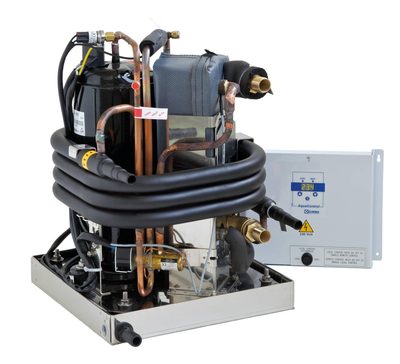
Veco SpA / Climma Climma CWS 201 Aquacontrol
Climma CWS 201 Aquacontrol ✓ verified
Application
Marine centralized chilled-water air conditioning, compact on/off chiller for smaller yachts
Common Failures & Inspection Points
  • Area: Clean and inspect seawater strainer/sea-cock filter before each season and monthly during heavy use to prevent flow restriction to the condenser
    Check: Clean and inspect seawater strainer/sea-cock filter before each season and monthly during heavy use to prevent flow restriction to the condenser
  • Area: Flush and inspect the cupronickel seawater condenser tubes annually for fouling, biofouling, scale deposits, and corrosion — use approved descaling agents
    Check: Flush and inspect the cupronickel seawater condenser tubes annually for fouling, biofouling, scale deposits, and corrosion — use approved descaling agents
  • Area: Check refrigerant circuit for leaks at all fittings, service valves, and brazed joints; verify operating pressures and superheat/subcooling against manufacturer
    Check: Check refrigerant circuit for leaks at all fittings, service valves, and brazed joints; verify operating pressures and superheat/subcooling against manufacturer specification
  • Area: Inspect and clean the freshwater (chilled-water) circuit including pump, expansion vessel, flow switches, and heat exchanger for scale, air locks, and glycol co
    Check: Inspect and clean the freshwater (chilled-water) circuit including pump, expansion vessel, flow switches, and heat exchanger for scale, air locks, and glycol concentration
  • Area: Verify operation of safety devices: high/low pressure cut-outs, flow switches, compressor thermal protection, and overload relays
    Check: Verify operation of safety devices: high/low pressure cut-outs, flow switches, compressor thermal protection, and overload relays
  • Area: Check all electrical connections for tightness and corrosion; inspect control panel, terminal blocks, and contactor contacts; test emergency stop function
    Check: Check all electrical connections for tightness and corrosion; inspect control panel, terminal blocks, and contactor contacts; test emergency stop function
  • Area: Lubricate seawater pump bearings and circulating pump impellers as specified; check pump seals and shaft for leakage or wear
    Check: Lubricate seawater pump bearings and circulating pump impellers as specified; check pump seals and shaft for leakage or wear
  • Area: Verify correct operation of the microprocessor/inverter control and all remote display panels; update firmware if available and log system alarms
    Check: Verify correct operation of the microprocessor/inverter control and all remote display panels; update firmware if available and log system alarms

Typ-universelle Inspektionspunkte fuer Air Conditioning (verifiziert, 2026-06).

[08.08.2026] Datenblattlink entfernt (fehler 404): https://penguinfrigo.com/product/climma-cws-201-aquacontrol-chiller-20000-btu-capacity/
Veco SpA / Climma Climma CWS251 Aquacontrol
Climma CWS251 Aquacontrol ✓ verified
Application
Marine centralized chilled-water air conditioning, on/off chiller for mid-range yachts
Common Failures & Inspection Points
  • Area: Clean and inspect seawater strainer/sea-cock filter before each season and monthly during heavy use to prevent flow restriction to the condenser
    Check: Clean and inspect seawater strainer/sea-cock filter before each season and monthly during heavy use to prevent flow restriction to the condenser
  • Area: Flush and inspect the cupronickel seawater condenser tubes annually for fouling, biofouling, scale deposits, and corrosion — use approved descaling agents
    Check: Flush and inspect the cupronickel seawater condenser tubes annually for fouling, biofouling, scale deposits, and corrosion — use approved descaling agents
  • Area: Check refrigerant circuit for leaks at all fittings, service valves, and brazed joints; verify operating pressures and superheat/subcooling against manufacturer
    Check: Check refrigerant circuit for leaks at all fittings, service valves, and brazed joints; verify operating pressures and superheat/subcooling against manufacturer specification
  • Area: Inspect and clean the freshwater (chilled-water) circuit including pump, expansion vessel, flow switches, and heat exchanger for scale, air locks, and glycol co
    Check: Inspect and clean the freshwater (chilled-water) circuit including pump, expansion vessel, flow switches, and heat exchanger for scale, air locks, and glycol concentration
  • Area: Verify operation of safety devices: high/low pressure cut-outs, flow switches, compressor thermal protection, and overload relays
    Check: Verify operation of safety devices: high/low pressure cut-outs, flow switches, compressor thermal protection, and overload relays
  • Area: Check all electrical connections for tightness and corrosion; inspect control panel, terminal blocks, and contactor contacts; test emergency stop function
    Check: Check all electrical connections for tightness and corrosion; inspect control panel, terminal blocks, and contactor contacts; test emergency stop function
  • Area: Lubricate seawater pump bearings and circulating pump impellers as specified; check pump seals and shaft for leakage or wear
    Check: Lubricate seawater pump bearings and circulating pump impellers as specified; check pump seals and shaft for leakage or wear
  • Area: Verify correct operation of the microprocessor/inverter control and all remote display panels; update firmware if available and log system alarms
    Check: Verify correct operation of the microprocessor/inverter control and all remote display panels; update firmware if available and log system alarms

Typ-universelle Inspektionspunkte fuer Air Conditioning (verifiziert, 2026-06).
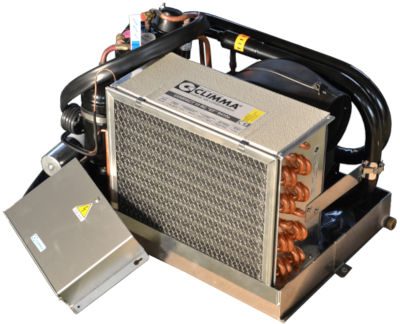
[08.08.2026] Datenblattlink entfernt (fehler 404): https://www.manelservice.com/en/air-conditioning/air-conditioners-for-vehicles-and-boats/climma-cws251-aquacontrol-chiller-nautical-air-conditioner-27500-btu-h
Climma CWS 301 Aquacontrol ✓ verified
Application
Marine centralized chilled-water air conditioning, on/off chiller for mid-range yachts
Common Failures & Inspection Points
  • Area: Clean and inspect seawater strainer/sea-cock filter before each season and monthly during heavy use to prevent flow restriction to the condenser
    Check: Clean and inspect seawater strainer/sea-cock filter before each season and monthly during heavy use to prevent flow restriction to the condenser
  • Area: Flush and inspect the cupronickel seawater condenser tubes annually for fouling, biofouling, scale deposits, and corrosion — use approved descaling agents
    Check: Flush and inspect the cupronickel seawater condenser tubes annually for fouling, biofouling, scale deposits, and corrosion — use approved descaling agents
  • Area: Check refrigerant circuit for leaks at all fittings, service valves, and brazed joints; verify operating pressures and superheat/subcooling against manufacturer
    Check: Check refrigerant circuit for leaks at all fittings, service valves, and brazed joints; verify operating pressures and superheat/subcooling against manufacturer specification
  • Area: Inspect and clean the freshwater (chilled-water) circuit including pump, expansion vessel, flow switches, and heat exchanger for scale, air locks, and glycol co
    Check: Inspect and clean the freshwater (chilled-water) circuit including pump, expansion vessel, flow switches, and heat exchanger for scale, air locks, and glycol concentration
  • Area: Verify operation of safety devices: high/low pressure cut-outs, flow switches, compressor thermal protection, and overload relays
    Check: Verify operation of safety devices: high/low pressure cut-outs, flow switches, compressor thermal protection, and overload relays
  • Area: Check all electrical connections for tightness and corrosion; inspect control panel, terminal blocks, and contactor contacts; test emergency stop function
    Check: Check all electrical connections for tightness and corrosion; inspect control panel, terminal blocks, and contactor contacts; test emergency stop function
  • Area: Lubricate seawater pump bearings and circulating pump impellers as specified; check pump seals and shaft for leakage or wear
    Check: Lubricate seawater pump bearings and circulating pump impellers as specified; check pump seals and shaft for leakage or wear
  • Area: Verify correct operation of the microprocessor/inverter control and all remote display panels; update firmware if available and log system alarms
    Check: Verify correct operation of the microprocessor/inverter control and all remote display panels; update firmware if available and log system alarms

Typ-universelle Inspektionspunkte fuer Air Conditioning (verifiziert, 2026-06).
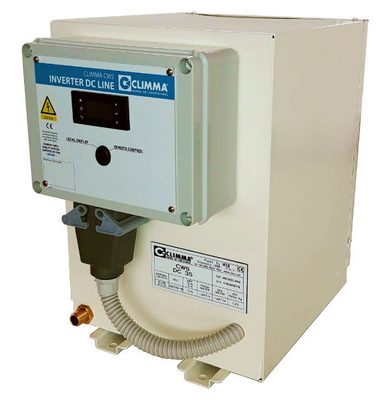
[08.08.2026] Datenblattlink entfernt (fehler 404): https://penguinfrigo.co.uk/product/climma-cws-301-aquacontrol-chiller-30000-btu-capacity/
Climma CWS 481 Aquacontrol ✓ verified
Application
Marine centralized chilled-water air conditioning, largest on/off Aquacontrol chiller
Common Failures & Inspection Points
  • Area: Clean and inspect seawater strainer/sea-cock filter before each season and monthly during heavy use to prevent flow restriction to the condenser
    Check: Clean and inspect seawater strainer/sea-cock filter before each season and monthly during heavy use to prevent flow restriction to the condenser
  • Area: Flush and inspect the cupronickel seawater condenser tubes annually for fouling, biofouling, scale deposits, and corrosion — use approved descaling agents
    Check: Flush and inspect the cupronickel seawater condenser tubes annually for fouling, biofouling, scale deposits, and corrosion — use approved descaling agents
  • Area: Check refrigerant circuit for leaks at all fittings, service valves, and brazed joints; verify operating pressures and superheat/subcooling against manufacturer
    Check: Check refrigerant circuit for leaks at all fittings, service valves, and brazed joints; verify operating pressures and superheat/subcooling against manufacturer specification
  • Area: Inspect and clean the freshwater (chilled-water) circuit including pump, expansion vessel, flow switches, and heat exchanger for scale, air locks, and glycol co
    Check: Inspect and clean the freshwater (chilled-water) circuit including pump, expansion vessel, flow switches, and heat exchanger for scale, air locks, and glycol concentration
  • Area: Verify operation of safety devices: high/low pressure cut-outs, flow switches, compressor thermal protection, and overload relays
    Check: Verify operation of safety devices: high/low pressure cut-outs, flow switches, compressor thermal protection, and overload relays
  • Area: Check all electrical connections for tightness and corrosion; inspect control panel, terminal blocks, and contactor contacts; test emergency stop function
    Check: Check all electrical connections for tightness and corrosion; inspect control panel, terminal blocks, and contactor contacts; test emergency stop function
  • Area: Lubricate seawater pump bearings and circulating pump impellers as specified; check pump seals and shaft for leakage or wear
    Check: Lubricate seawater pump bearings and circulating pump impellers as specified; check pump seals and shaft for leakage or wear
  • Area: Verify correct operation of the microprocessor/inverter control and all remote display panels; update firmware if available and log system alarms
    Check: Verify correct operation of the microprocessor/inverter control and all remote display panels; update firmware if available and log system alarms

Typ-universelle Inspektionspunkte fuer Air Conditioning (verifiziert, 2026-06).

[08.08.2026] Datenblattlink entfernt (fehler 404): https://penguinfrigo.com/product/climma-cws-481-aquacontrol-chiller-48000-btu-capacity/
Veco SpA / Climma Climma CWS DC Inverter DC35 RC
Climma CWS DC Inverter DC35 RC ✓ verified
2.5-10 kW (8k-35k Btu) · R410a
Voltage: 230V/1/50-60Hz
Weight: 45.0 kg
Dimensions: 335x342x472 mm
Application
Marine centralized chilled-water air conditioning, full variable-speed DC inverter chiller for yachts up to ~50 ft
Cold water flow (m³/h)
1.8
Seawater flow (m³/h)
1.8
Common Failures & Inspection Points
  • Area: Clean and inspect seawater strainer/sea-cock filter before each season and monthly during heavy use to prevent flow restriction to the condenser
    Check: Clean and inspect seawater strainer/sea-cock filter before each season and monthly during heavy use to prevent flow restriction to the condenser
  • Area: Flush and inspect the cupronickel seawater condenser tubes annually for fouling, biofouling, scale deposits, and corrosion — use approved descaling agents
    Check: Flush and inspect the cupronickel seawater condenser tubes annually for fouling, biofouling, scale deposits, and corrosion — use approved descaling agents
  • Area: Check refrigerant circuit for leaks at all fittings, service valves, and brazed joints; verify operating pressures and superheat/subcooling against manufacturer
    Check: Check refrigerant circuit for leaks at all fittings, service valves, and brazed joints; verify operating pressures and superheat/subcooling against manufacturer specification
  • Area: Inspect and clean the freshwater (chilled-water) circuit including pump, expansion vessel, flow switches, and heat exchanger for scale, air locks, and glycol co
    Check: Inspect and clean the freshwater (chilled-water) circuit including pump, expansion vessel, flow switches, and heat exchanger for scale, air locks, and glycol concentration
  • Area: Verify operation of safety devices: high/low pressure cut-outs, flow switches, compressor thermal protection, and overload relays
    Check: Verify operation of safety devices: high/low pressure cut-outs, flow switches, compressor thermal protection, and overload relays
  • Area: Check all electrical connections for tightness and corrosion; inspect control panel, terminal blocks, and contactor contacts; test emergency stop function
    Check: Check all electrical connections for tightness and corrosion; inspect control panel, terminal blocks, and contactor contacts; test emergency stop function
  • Area: Lubricate seawater pump bearings and circulating pump impellers as specified; check pump seals and shaft for leakage or wear
    Check: Lubricate seawater pump bearings and circulating pump impellers as specified; check pump seals and shaft for leakage or wear
  • Area: Verify correct operation of the microprocessor/inverter control and all remote display panels; update firmware if available and log system alarms
    Check: Verify correct operation of the microprocessor/inverter control and all remote display panels; update firmware if available and log system alarms

Typ-universelle Inspektionspunkte fuer Air Conditioning (verifiziert, 2026-06).

Climma CWS DC Inverter DC50 RC ✓ verified
Application
Marine centralized chilled-water air conditioning, full variable-speed DC inverter chiller for yachts up to ~55 ft
Common Failures & Inspection Points
  • Area: Clean and inspect seawater strainer/sea-cock filter before each season and monthly during heavy use to prevent flow restriction to the condenser
    Check: Clean and inspect seawater strainer/sea-cock filter before each season and monthly during heavy use to prevent flow restriction to the condenser
  • Area: Flush and inspect the cupronickel seawater condenser tubes annually for fouling, biofouling, scale deposits, and corrosion — use approved descaling agents
    Check: Flush and inspect the cupronickel seawater condenser tubes annually for fouling, biofouling, scale deposits, and corrosion — use approved descaling agents
  • Area: Check refrigerant circuit for leaks at all fittings, service valves, and brazed joints; verify operating pressures and superheat/subcooling against manufacturer
    Check: Check refrigerant circuit for leaks at all fittings, service valves, and brazed joints; verify operating pressures and superheat/subcooling against manufacturer specification
  • Area: Inspect and clean the freshwater (chilled-water) circuit including pump, expansion vessel, flow switches, and heat exchanger for scale, air locks, and glycol co
    Check: Inspect and clean the freshwater (chilled-water) circuit including pump, expansion vessel, flow switches, and heat exchanger for scale, air locks, and glycol concentration
  • Area: Verify operation of safety devices: high/low pressure cut-outs, flow switches, compressor thermal protection, and overload relays
    Check: Verify operation of safety devices: high/low pressure cut-outs, flow switches, compressor thermal protection, and overload relays
  • Area: Check all electrical connections for tightness and corrosion; inspect control panel, terminal blocks, and contactor contacts; test emergency stop function
    Check: Check all electrical connections for tightness and corrosion; inspect control panel, terminal blocks, and contactor contacts; test emergency stop function
  • Area: Lubricate seawater pump bearings and circulating pump impellers as specified; check pump seals and shaft for leakage or wear
    Check: Lubricate seawater pump bearings and circulating pump impellers as specified; check pump seals and shaft for leakage or wear
  • Area: Verify correct operation of the microprocessor/inverter control and all remote display panels; update firmware if available and log system alarms
    Check: Verify correct operation of the microprocessor/inverter control and all remote display panels; update firmware if available and log system alarms

Typ-universelle Inspektionspunkte fuer Air Conditioning (verifiziert, 2026-06).

Climma CWS Inverter DC65 RC ✓ verified
Application
Marine centralized chilled-water air conditioning, full variable-speed DC inverter chiller for mid-size yachts
Common Failures & Inspection Points
  • Area: Clean and inspect seawater strainer/sea-cock filter before each season and monthly during heavy use to prevent flow restriction to the condenser
    Check: Clean and inspect seawater strainer/sea-cock filter before each season and monthly during heavy use to prevent flow restriction to the condenser
  • Area: Flush and inspect the cupronickel seawater condenser tubes annually for fouling, biofouling, scale deposits, and corrosion — use approved descaling agents
    Check: Flush and inspect the cupronickel seawater condenser tubes annually for fouling, biofouling, scale deposits, and corrosion — use approved descaling agents
  • Area: Check refrigerant circuit for leaks at all fittings, service valves, and brazed joints; verify operating pressures and superheat/subcooling against manufacturer
    Check: Check refrigerant circuit for leaks at all fittings, service valves, and brazed joints; verify operating pressures and superheat/subcooling against manufacturer specification
  • Area: Inspect and clean the freshwater (chilled-water) circuit including pump, expansion vessel, flow switches, and heat exchanger for scale, air locks, and glycol co
    Check: Inspect and clean the freshwater (chilled-water) circuit including pump, expansion vessel, flow switches, and heat exchanger for scale, air locks, and glycol concentration
  • Area: Verify operation of safety devices: high/low pressure cut-outs, flow switches, compressor thermal protection, and overload relays
    Check: Verify operation of safety devices: high/low pressure cut-outs, flow switches, compressor thermal protection, and overload relays
  • Area: Check all electrical connections for tightness and corrosion; inspect control panel, terminal blocks, and contactor contacts; test emergency stop function
    Check: Check all electrical connections for tightness and corrosion; inspect control panel, terminal blocks, and contactor contacts; test emergency stop function
  • Area: Lubricate seawater pump bearings and circulating pump impellers as specified; check pump seals and shaft for leakage or wear
    Check: Lubricate seawater pump bearings and circulating pump impellers as specified; check pump seals and shaft for leakage or wear
  • Area: Verify correct operation of the microprocessor/inverter control and all remote display panels; update firmware if available and log system alarms
    Check: Verify correct operation of the microprocessor/inverter control and all remote display panels; update firmware if available and log system alarms

Typ-universelle Inspektionspunkte fuer Air Conditioning (verifiziert, 2026-06).

Veco SpA / Climma Climma CWS SOLO 601 RC (MOD601RCUD)
Climma CWS SOLO 601 RC (MOD601RCUD) ✓ verified
Application
Marine centralized chilled-water air conditioning for yachts 30–55 m, single large compressor with inverter
Common Failures & Inspection Points
  • Area: Clean and inspect seawater strainer/sea-cock filter before each season and monthly during heavy use to prevent flow restriction to the condenser
    Check: Clean and inspect seawater strainer/sea-cock filter before each season and monthly during heavy use to prevent flow restriction to the condenser
  • Area: Flush and inspect the cupronickel seawater condenser tubes annually for fouling, biofouling, scale deposits, and corrosion — use approved descaling agents
    Check: Flush and inspect the cupronickel seawater condenser tubes annually for fouling, biofouling, scale deposits, and corrosion — use approved descaling agents
  • Area: Check refrigerant circuit for leaks at all fittings, service valves, and brazed joints; verify operating pressures and superheat/subcooling against manufacturer
    Check: Check refrigerant circuit for leaks at all fittings, service valves, and brazed joints; verify operating pressures and superheat/subcooling against manufacturer specification
  • Area: Inspect and clean the freshwater (chilled-water) circuit including pump, expansion vessel, flow switches, and heat exchanger for scale, air locks, and glycol co
    Check: Inspect and clean the freshwater (chilled-water) circuit including pump, expansion vessel, flow switches, and heat exchanger for scale, air locks, and glycol concentration
  • Area: Verify operation of safety devices: high/low pressure cut-outs, flow switches, compressor thermal protection, and overload relays
    Check: Verify operation of safety devices: high/low pressure cut-outs, flow switches, compressor thermal protection, and overload relays
  • Area: Check all electrical connections for tightness and corrosion; inspect control panel, terminal blocks, and contactor contacts; test emergency stop function
    Check: Check all electrical connections for tightness and corrosion; inspect control panel, terminal blocks, and contactor contacts; test emergency stop function
  • Area: Lubricate seawater pump bearings and circulating pump impellers as specified; check pump seals and shaft for leakage or wear
    Check: Lubricate seawater pump bearings and circulating pump impellers as specified; check pump seals and shaft for leakage or wear
  • Area: Verify correct operation of the microprocessor/inverter control and all remote display panels; update firmware if available and log system alarms
    Check: Verify correct operation of the microprocessor/inverter control and all remote display panels; update firmware if available and log system alarms

Typ-universelle Inspektionspunkte fuer Air Conditioning (verifiziert, 2026-06).

Veco SpA / Climma Climma CWS SOLO 961 RC (MEF961RCVD)
Climma CWS SOLO 961 RC (MEF961RCVD) ✓ verified
Application
Marine centralized chilled-water air conditioning for yachts 30–55 m, three-phase inverter chiller
Common Failures & Inspection Points
  • Area: Clean and inspect seawater strainer/sea-cock filter before each season and monthly during heavy use to prevent flow restriction to the condenser
    Check: Clean and inspect seawater strainer/sea-cock filter before each season and monthly during heavy use to prevent flow restriction to the condenser
  • Area: Flush and inspect the cupronickel seawater condenser tubes annually for fouling, biofouling, scale deposits, and corrosion — use approved descaling agents
    Check: Flush and inspect the cupronickel seawater condenser tubes annually for fouling, biofouling, scale deposits, and corrosion — use approved descaling agents
  • Area: Check refrigerant circuit for leaks at all fittings, service valves, and brazed joints; verify operating pressures and superheat/subcooling against manufacturer
    Check: Check refrigerant circuit for leaks at all fittings, service valves, and brazed joints; verify operating pressures and superheat/subcooling against manufacturer specification
  • Area: Inspect and clean the freshwater (chilled-water) circuit including pump, expansion vessel, flow switches, and heat exchanger for scale, air locks, and glycol co
    Check: Inspect and clean the freshwater (chilled-water) circuit including pump, expansion vessel, flow switches, and heat exchanger for scale, air locks, and glycol concentration
  • Area: Verify operation of safety devices: high/low pressure cut-outs, flow switches, compressor thermal protection, and overload relays
    Check: Verify operation of safety devices: high/low pressure cut-outs, flow switches, compressor thermal protection, and overload relays
  • Area: Check all electrical connections for tightness and corrosion; inspect control panel, terminal blocks, and contactor contacts; test emergency stop function
    Check: Check all electrical connections for tightness and corrosion; inspect control panel, terminal blocks, and contactor contacts; test emergency stop function
  • Area: Lubricate seawater pump bearings and circulating pump impellers as specified; check pump seals and shaft for leakage or wear
    Check: Lubricate seawater pump bearings and circulating pump impellers as specified; check pump seals and shaft for leakage or wear
  • Area: Verify correct operation of the microprocessor/inverter control and all remote display panels; update firmware if available and log system alarms
    Check: Verify correct operation of the microprocessor/inverter control and all remote display panels; update firmware if available and log system alarms

Typ-universelle Inspektionspunkte fuer Air Conditioning (verifiziert, 2026-06).

Veco SpA / Climma Climma CWS SOLO 1201 RC (MOD1201RCV)
Climma CWS SOLO 1201 RC (MOD1201RCV) ✓ verified
Application
Marine centralized chilled-water air conditioning for superyachts 30–55 m, three-phase inverter chiller
Common Failures & Inspection Points
  • Area: Clean and inspect seawater strainer/sea-cock filter before each season and monthly during heavy use to prevent flow restriction to the condenser
    Check: Clean and inspect seawater strainer/sea-cock filter before each season and monthly during heavy use to prevent flow restriction to the condenser
  • Area: Flush and inspect the cupronickel seawater condenser tubes annually for fouling, biofouling, scale deposits, and corrosion — use approved descaling agents
    Check: Flush and inspect the cupronickel seawater condenser tubes annually for fouling, biofouling, scale deposits, and corrosion — use approved descaling agents
  • Area: Check refrigerant circuit for leaks at all fittings, service valves, and brazed joints; verify operating pressures and superheat/subcooling against manufacturer
    Check: Check refrigerant circuit for leaks at all fittings, service valves, and brazed joints; verify operating pressures and superheat/subcooling against manufacturer specification
  • Area: Inspect and clean the freshwater (chilled-water) circuit including pump, expansion vessel, flow switches, and heat exchanger for scale, air locks, and glycol co
    Check: Inspect and clean the freshwater (chilled-water) circuit including pump, expansion vessel, flow switches, and heat exchanger for scale, air locks, and glycol concentration
  • Area: Verify operation of safety devices: high/low pressure cut-outs, flow switches, compressor thermal protection, and overload relays
    Check: Verify operation of safety devices: high/low pressure cut-outs, flow switches, compressor thermal protection, and overload relays
  • Area: Check all electrical connections for tightness and corrosion; inspect control panel, terminal blocks, and contactor contacts; test emergency stop function
    Check: Check all electrical connections for tightness and corrosion; inspect control panel, terminal blocks, and contactor contacts; test emergency stop function
  • Area: Lubricate seawater pump bearings and circulating pump impellers as specified; check pump seals and shaft for leakage or wear
    Check: Lubricate seawater pump bearings and circulating pump impellers as specified; check pump seals and shaft for leakage or wear
  • Area: Verify correct operation of the microprocessor/inverter control and all remote display panels; update firmware if available and log system alarms
    Check: Verify correct operation of the microprocessor/inverter control and all remote display panels; update firmware if available and log system alarms

Typ-universelle Inspektionspunkte fuer Air Conditioning (verifiziert, 2026-06).

Climma CWS SOLO 1441 RC (MOD1441RCY) ✓ verified
Application
Marine centralized chilled-water air conditioning for superyachts 30–55 m, three-phase 400V inverter chiller
Common Failures & Inspection Points
  • Area: Clean and inspect seawater strainer/sea-cock filter before each season and monthly during heavy use to prevent flow restriction to the condenser
    Check: Clean and inspect seawater strainer/sea-cock filter before each season and monthly during heavy use to prevent flow restriction to the condenser
  • Area: Flush and inspect the cupronickel seawater condenser tubes annually for fouling, biofouling, scale deposits, and corrosion — use approved descaling agents
    Check: Flush and inspect the cupronickel seawater condenser tubes annually for fouling, biofouling, scale deposits, and corrosion — use approved descaling agents
  • Area: Check refrigerant circuit for leaks at all fittings, service valves, and brazed joints; verify operating pressures and superheat/subcooling against manufacturer
    Check: Check refrigerant circuit for leaks at all fittings, service valves, and brazed joints; verify operating pressures and superheat/subcooling against manufacturer specification
  • Area: Inspect and clean the freshwater (chilled-water) circuit including pump, expansion vessel, flow switches, and heat exchanger for scale, air locks, and glycol co
    Check: Inspect and clean the freshwater (chilled-water) circuit including pump, expansion vessel, flow switches, and heat exchanger for scale, air locks, and glycol concentration
  • Area: Verify operation of safety devices: high/low pressure cut-outs, flow switches, compressor thermal protection, and overload relays
    Check: Verify operation of safety devices: high/low pressure cut-outs, flow switches, compressor thermal protection, and overload relays
  • Area: Check all electrical connections for tightness and corrosion; inspect control panel, terminal blocks, and contactor contacts; test emergency stop function
    Check: Check all electrical connections for tightness and corrosion; inspect control panel, terminal blocks, and contactor contacts; test emergency stop function
  • Area: Lubricate seawater pump bearings and circulating pump impellers as specified; check pump seals and shaft for leakage or wear
    Check: Lubricate seawater pump bearings and circulating pump impellers as specified; check pump seals and shaft for leakage or wear
  • Area: Verify correct operation of the microprocessor/inverter control and all remote display panels; update firmware if available and log system alarms
    Check: Verify correct operation of the microprocessor/inverter control and all remote display panels; update firmware if available and log system alarms

Typ-universelle Inspektionspunkte fuer Air Conditioning (verifiziert, 2026-06).

Veco SpA / Climma Climma CWS Modul
Climma CWS Modul ✓ verified
Application
Marine centralized chilled-water air conditioning for superyachts 60 m and above; modular rack-mount multi-compressor configuration
Common Failures & Inspection Points
  • Area: Clean and inspect seawater strainer/sea-cock filter before each season and monthly during heavy use to prevent flow restriction to the condenser
    Check: Clean and inspect seawater strainer/sea-cock filter before each season and monthly during heavy use to prevent flow restriction to the condenser
  • Area: Flush and inspect the cupronickel seawater condenser tubes annually for fouling, biofouling, scale deposits, and corrosion — use approved descaling agents
    Check: Flush and inspect the cupronickel seawater condenser tubes annually for fouling, biofouling, scale deposits, and corrosion — use approved descaling agents
  • Area: Check refrigerant circuit for leaks at all fittings, service valves, and brazed joints; verify operating pressures and superheat/subcooling against manufacturer
    Check: Check refrigerant circuit for leaks at all fittings, service valves, and brazed joints; verify operating pressures and superheat/subcooling against manufacturer specification
  • Area: Inspect and clean the freshwater (chilled-water) circuit including pump, expansion vessel, flow switches, and heat exchanger for scale, air locks, and glycol co
    Check: Inspect and clean the freshwater (chilled-water) circuit including pump, expansion vessel, flow switches, and heat exchanger for scale, air locks, and glycol concentration
  • Area: Verify operation of safety devices: high/low pressure cut-outs, flow switches, compressor thermal protection, and overload relays
    Check: Verify operation of safety devices: high/low pressure cut-outs, flow switches, compressor thermal protection, and overload relays
  • Area: Check all electrical connections for tightness and corrosion; inspect control panel, terminal blocks, and contactor contacts; test emergency stop function
    Check: Check all electrical connections for tightness and corrosion; inspect control panel, terminal blocks, and contactor contacts; test emergency stop function
  • Area: Lubricate seawater pump bearings and circulating pump impellers as specified; check pump seals and shaft for leakage or wear
    Check: Lubricate seawater pump bearings and circulating pump impellers as specified; check pump seals and shaft for leakage or wear
  • Area: Verify correct operation of the microprocessor/inverter control and all remote display panels; update firmware if available and log system alarms
    Check: Verify correct operation of the microprocessor/inverter control and all remote display panels; update firmware if available and log system alarms

Typ-universelle Inspektionspunkte fuer Air Conditioning (verifiziert, 2026-06).

Johnson Controls / YORK Navy Systems

8 ✓ 8 verified
YORK YMC² (Model YMC2) Magnetic Bearing Centrifugal Chiller ✓ verified
Application
Ship water chiller for marine and naval vessels; oil-free magnetic bearing centrifugal design for energy-efficient shipboard cooling
Common Failures & Inspection Points
  • Area: Refrigerant leak check: pressure test all connections, sight glass inspection, electronic leak detection on all joints, fittings, and heat exchanger tubing
    Check: Refrigerant leak check: pressure test all connections, sight glass inspection, electronic leak detection on all joints, fittings, and heat exchanger tubing
  • Area: Compressor inspection: oil level and quality check, bearing wear assessment (or magnetic bearing controller diagnostics on oil-free units), vibration analysis,
    Check: Compressor inspection: oil level and quality check, bearing wear assessment (or magnetic bearing controller diagnostics on oil-free units), vibration analysis, motor winding insulation resistance test
  • Area: Heat exchanger fouling and corrosion: tube-side and shell-side inspection for scale, biofilm, corrosion, and pitting; tube wall thickness measurement; sacrifici
    Check: Heat exchanger fouling and corrosion: tube-side and shell-side inspection for scale, biofilm, corrosion, and pitting; tube wall thickness measurement; sacrificial anode condition check for seawater-cooled condensers
  • Area: Condenser and evaporator waterside: flow rate verification against design spec, entering/leaving water temperature differential check, water quality analysis (p
    Check: Condenser and evaporator waterside: flow rate verification against design spec, entering/leaving water temperature differential check, water quality analysis (pH, conductivity, inhibitor concentration), seawater strainer cleaning
  • Area: Control system and safety devices: calibration of temperature and pressure sensors, verification of high-pressure and low-pressure cutouts, flow switch operatio
    Check: Control system and safety devices: calibration of temperature and pressure sensors, verification of high-pressure and low-pressure cutouts, flow switch operation, motor overload relay settings, OptiView/PLC control log review
  • Area: Electrical systems: inspection of starter/VSD (variable speed drive) for loose connections, capacitor condition, harmonic distortion measurement, motor terminal
    Check: Electrical systems: inspection of starter/VSD (variable speed drive) for loose connections, capacitor condition, harmonic distortion measurement, motor terminal voltage balance, insulation resistance testing
  • Area: Vibration and shock isolation: inspection of anti-vibration mounts and flexible pipe connections for degradation, alignment check of compressor-motor coupling,
    Check: Vibration and shock isolation: inspection of anti-vibration mounts and flexible pipe connections for degradation, alignment check of compressor-motor coupling, shock-mount condition per MIL-S-901D requirements (naval units)
  • Area: Lubrication system (oil-bearing units): oil sample analysis for acid number, viscosity, and metallic particle content; oil filter replacement; oil heater functi
    Check: Lubrication system (oil-bearing units): oil sample analysis for acid number, viscosity, and metallic particle content; oil filter replacement; oil heater function check; oil pump performance verification

Typ-universelle Inspektionspunkte fuer Air Conditioning (verifiziert, 2026-06).

YORK Titan™ OM Custom Design Centrifugal Chiller ✓ verified
Application
Ship water chiller for large marine and naval platforms; multi-stage centrifugal design with electric or steam drive for water- or air-cooled condensing
Common Failures & Inspection Points
  • Area: Refrigerant leak check: pressure test all connections, sight glass inspection, electronic leak detection on all joints, fittings, and heat exchanger tubing
    Check: Refrigerant leak check: pressure test all connections, sight glass inspection, electronic leak detection on all joints, fittings, and heat exchanger tubing
  • Area: Compressor inspection: oil level and quality check, bearing wear assessment (or magnetic bearing controller diagnostics on oil-free units), vibration analysis,
    Check: Compressor inspection: oil level and quality check, bearing wear assessment (or magnetic bearing controller diagnostics on oil-free units), vibration analysis, motor winding insulation resistance test
  • Area: Heat exchanger fouling and corrosion: tube-side and shell-side inspection for scale, biofilm, corrosion, and pitting; tube wall thickness measurement; sacrifici
    Check: Heat exchanger fouling and corrosion: tube-side and shell-side inspection for scale, biofilm, corrosion, and pitting; tube wall thickness measurement; sacrificial anode condition check for seawater-cooled condensers
  • Area: Condenser and evaporator waterside: flow rate verification against design spec, entering/leaving water temperature differential check, water quality analysis (p
    Check: Condenser and evaporator waterside: flow rate verification against design spec, entering/leaving water temperature differential check, water quality analysis (pH, conductivity, inhibitor concentration), seawater strainer cleaning
  • Area: Control system and safety devices: calibration of temperature and pressure sensors, verification of high-pressure and low-pressure cutouts, flow switch operatio
    Check: Control system and safety devices: calibration of temperature and pressure sensors, verification of high-pressure and low-pressure cutouts, flow switch operation, motor overload relay settings, OptiView/PLC control log review
  • Area: Electrical systems: inspection of starter/VSD (variable speed drive) for loose connections, capacitor condition, harmonic distortion measurement, motor terminal
    Check: Electrical systems: inspection of starter/VSD (variable speed drive) for loose connections, capacitor condition, harmonic distortion measurement, motor terminal voltage balance, insulation resistance testing
  • Area: Vibration and shock isolation: inspection of anti-vibration mounts and flexible pipe connections for degradation, alignment check of compressor-motor coupling,
    Check: Vibration and shock isolation: inspection of anti-vibration mounts and flexible pipe connections for degradation, alignment check of compressor-motor coupling, shock-mount condition per MIL-S-901D requirements (naval units)
  • Area: Lubrication system (oil-bearing units): oil sample analysis for acid number, viscosity, and metallic particle content; oil filter replacement; oil heater functi
    Check: Lubrication system (oil-bearing units): oil sample analysis for acid number, viscosity, and metallic particle content; oil filter replacement; oil heater function check; oil pump performance verification

Typ-universelle Inspektionspunkte fuer Air Conditioning (verifiziert, 2026-06).

YORK YST Steam-Turbine Drive Centrifugal Liquid Chiller (Design Level F) ✓ verified
Application
Ship water chiller for vessels with combined-heat-and-power (CHP) plants; steam turbine driven centrifugal for large naval and commercial ships
Common Failures & Inspection Points
  • Area: Refrigerant leak check: pressure test all connections, sight glass inspection, electronic leak detection on all joints, fittings, and heat exchanger tubing
    Check: Refrigerant leak check: pressure test all connections, sight glass inspection, electronic leak detection on all joints, fittings, and heat exchanger tubing
  • Area: Compressor inspection: oil level and quality check, bearing wear assessment (or magnetic bearing controller diagnostics on oil-free units), vibration analysis,
    Check: Compressor inspection: oil level and quality check, bearing wear assessment (or magnetic bearing controller diagnostics on oil-free units), vibration analysis, motor winding insulation resistance test
  • Area: Heat exchanger fouling and corrosion: tube-side and shell-side inspection for scale, biofilm, corrosion, and pitting; tube wall thickness measurement; sacrifici
    Check: Heat exchanger fouling and corrosion: tube-side and shell-side inspection for scale, biofilm, corrosion, and pitting; tube wall thickness measurement; sacrificial anode condition check for seawater-cooled condensers
  • Area: Condenser and evaporator waterside: flow rate verification against design spec, entering/leaving water temperature differential check, water quality analysis (p
    Check: Condenser and evaporator waterside: flow rate verification against design spec, entering/leaving water temperature differential check, water quality analysis (pH, conductivity, inhibitor concentration), seawater strainer cleaning
  • Area: Control system and safety devices: calibration of temperature and pressure sensors, verification of high-pressure and low-pressure cutouts, flow switch operatio
    Check: Control system and safety devices: calibration of temperature and pressure sensors, verification of high-pressure and low-pressure cutouts, flow switch operation, motor overload relay settings, OptiView/PLC control log review
  • Area: Electrical systems: inspection of starter/VSD (variable speed drive) for loose connections, capacitor condition, harmonic distortion measurement, motor terminal
    Check: Electrical systems: inspection of starter/VSD (variable speed drive) for loose connections, capacitor condition, harmonic distortion measurement, motor terminal voltage balance, insulation resistance testing
  • Area: Vibration and shock isolation: inspection of anti-vibration mounts and flexible pipe connections for degradation, alignment check of compressor-motor coupling,
    Check: Vibration and shock isolation: inspection of anti-vibration mounts and flexible pipe connections for degradation, alignment check of compressor-motor coupling, shock-mount condition per MIL-S-901D requirements (naval units)
  • Area: Lubrication system (oil-bearing units): oil sample analysis for acid number, viscosity, and metallic particle content; oil filter replacement; oil heater functi
    Check: Lubrication system (oil-bearing units): oil sample analysis for acid number, viscosity, and metallic particle content; oil filter replacement; oil heater function check; oil pump performance verification

Typ-universelle Inspektionspunkte fuer Air Conditioning (verifiziert, 2026-06).

YORK YD Dual Centrifugal Chiller ✓ verified
Application
Ship water chiller; two centrifugal compressors in parallel on shared heat exchanger shells for highest capacity in smallest footprint; marine and naval large-capacity applications
Common Failures & Inspection Points
  • Area: Refrigerant leak check: pressure test all connections, sight glass inspection, electronic leak detection on all joints, fittings, and heat exchanger tubing
    Check: Refrigerant leak check: pressure test all connections, sight glass inspection, electronic leak detection on all joints, fittings, and heat exchanger tubing
  • Area: Compressor inspection: oil level and quality check, bearing wear assessment (or magnetic bearing controller diagnostics on oil-free units), vibration analysis,
    Check: Compressor inspection: oil level and quality check, bearing wear assessment (or magnetic bearing controller diagnostics on oil-free units), vibration analysis, motor winding insulation resistance test
  • Area: Heat exchanger fouling and corrosion: tube-side and shell-side inspection for scale, biofilm, corrosion, and pitting; tube wall thickness measurement; sacrifici
    Check: Heat exchanger fouling and corrosion: tube-side and shell-side inspection for scale, biofilm, corrosion, and pitting; tube wall thickness measurement; sacrificial anode condition check for seawater-cooled condensers
  • Area: Condenser and evaporator waterside: flow rate verification against design spec, entering/leaving water temperature differential check, water quality analysis (p
    Check: Condenser and evaporator waterside: flow rate verification against design spec, entering/leaving water temperature differential check, water quality analysis (pH, conductivity, inhibitor concentration), seawater strainer cleaning
  • Area: Control system and safety devices: calibration of temperature and pressure sensors, verification of high-pressure and low-pressure cutouts, flow switch operatio
    Check: Control system and safety devices: calibration of temperature and pressure sensors, verification of high-pressure and low-pressure cutouts, flow switch operation, motor overload relay settings, OptiView/PLC control log review
  • Area: Electrical systems: inspection of starter/VSD (variable speed drive) for loose connections, capacitor condition, harmonic distortion measurement, motor terminal
    Check: Electrical systems: inspection of starter/VSD (variable speed drive) for loose connections, capacitor condition, harmonic distortion measurement, motor terminal voltage balance, insulation resistance testing
  • Area: Vibration and shock isolation: inspection of anti-vibration mounts and flexible pipe connections for degradation, alignment check of compressor-motor coupling,
    Check: Vibration and shock isolation: inspection of anti-vibration mounts and flexible pipe connections for degradation, alignment check of compressor-motor coupling, shock-mount condition per MIL-S-901D requirements (naval units)
  • Area: Lubrication system (oil-bearing units): oil sample analysis for acid number, viscosity, and metallic particle content; oil filter replacement; oil heater functi
    Check: Lubrication system (oil-bearing units): oil sample analysis for acid number, viscosity, and metallic particle content; oil filter replacement; oil heater function check; oil pump performance verification

Typ-universelle Inspektionspunkte fuer Air Conditioning (verifiziert, 2026-06).

YORK YK-EP "Efficiency Plus" Centrifugal Chiller (Style B) ✓ verified
Application
Ship water chiller; economized two-compressor centrifugal for naval and marine large-capacity applications requiring superior part-load efficiency
Common Failures & Inspection Points
  • Area: Refrigerant leak check: pressure test all connections, sight glass inspection, electronic leak detection on all joints, fittings, and heat exchanger tubing
    Check: Refrigerant leak check: pressure test all connections, sight glass inspection, electronic leak detection on all joints, fittings, and heat exchanger tubing
  • Area: Compressor inspection: oil level and quality check, bearing wear assessment (or magnetic bearing controller diagnostics on oil-free units), vibration analysis,
    Check: Compressor inspection: oil level and quality check, bearing wear assessment (or magnetic bearing controller diagnostics on oil-free units), vibration analysis, motor winding insulation resistance test
  • Area: Heat exchanger fouling and corrosion: tube-side and shell-side inspection for scale, biofilm, corrosion, and pitting; tube wall thickness measurement; sacrifici
    Check: Heat exchanger fouling and corrosion: tube-side and shell-side inspection for scale, biofilm, corrosion, and pitting; tube wall thickness measurement; sacrificial anode condition check for seawater-cooled condensers
  • Area: Condenser and evaporator waterside: flow rate verification against design spec, entering/leaving water temperature differential check, water quality analysis (p
    Check: Condenser and evaporator waterside: flow rate verification against design spec, entering/leaving water temperature differential check, water quality analysis (pH, conductivity, inhibitor concentration), seawater strainer cleaning
  • Area: Control system and safety devices: calibration of temperature and pressure sensors, verification of high-pressure and low-pressure cutouts, flow switch operatio
    Check: Control system and safety devices: calibration of temperature and pressure sensors, verification of high-pressure and low-pressure cutouts, flow switch operation, motor overload relay settings, OptiView/PLC control log review
  • Area: Electrical systems: inspection of starter/VSD (variable speed drive) for loose connections, capacitor condition, harmonic distortion measurement, motor terminal
    Check: Electrical systems: inspection of starter/VSD (variable speed drive) for loose connections, capacitor condition, harmonic distortion measurement, motor terminal voltage balance, insulation resistance testing
  • Area: Vibration and shock isolation: inspection of anti-vibration mounts and flexible pipe connections for degradation, alignment check of compressor-motor coupling,
    Check: Vibration and shock isolation: inspection of anti-vibration mounts and flexible pipe connections for degradation, alignment check of compressor-motor coupling, shock-mount condition per MIL-S-901D requirements (naval units)
  • Area: Lubrication system (oil-bearing units): oil sample analysis for acid number, viscosity, and metallic particle content; oil filter replacement; oil heater functi
    Check: Lubrication system (oil-bearing units): oil sample analysis for acid number, viscosity, and metallic particle content; oil filter replacement; oil heater function check; oil pump performance verification

Typ-universelle Inspektionspunkte fuer Air Conditioning (verifiziert, 2026-06).

YORK Model YK Centrifugal Liquid Chillers Style G ✓ verified
Application
Ship water chiller for marine and naval vessels; single-stage centrifugal with marine water box configurations; proven in U.S. Navy and commercial marine applications
Common Failures & Inspection Points
  • Area: Refrigerant leak check: pressure test all connections, sight glass inspection, electronic leak detection on all joints, fittings, and heat exchanger tubing
    Check: Refrigerant leak check: pressure test all connections, sight glass inspection, electronic leak detection on all joints, fittings, and heat exchanger tubing
  • Area: Compressor inspection: oil level and quality check, bearing wear assessment (or magnetic bearing controller diagnostics on oil-free units), vibration analysis,
    Check: Compressor inspection: oil level and quality check, bearing wear assessment (or magnetic bearing controller diagnostics on oil-free units), vibration analysis, motor winding insulation resistance test
  • Area: Heat exchanger fouling and corrosion: tube-side and shell-side inspection for scale, biofilm, corrosion, and pitting; tube wall thickness measurement; sacrifici
    Check: Heat exchanger fouling and corrosion: tube-side and shell-side inspection for scale, biofilm, corrosion, and pitting; tube wall thickness measurement; sacrificial anode condition check for seawater-cooled condensers
  • Area: Condenser and evaporator waterside: flow rate verification against design spec, entering/leaving water temperature differential check, water quality analysis (p
    Check: Condenser and evaporator waterside: flow rate verification against design spec, entering/leaving water temperature differential check, water quality analysis (pH, conductivity, inhibitor concentration), seawater strainer cleaning
  • Area: Control system and safety devices: calibration of temperature and pressure sensors, verification of high-pressure and low-pressure cutouts, flow switch operatio
    Check: Control system and safety devices: calibration of temperature and pressure sensors, verification of high-pressure and low-pressure cutouts, flow switch operation, motor overload relay settings, OptiView/PLC control log review
  • Area: Electrical systems: inspection of starter/VSD (variable speed drive) for loose connections, capacitor condition, harmonic distortion measurement, motor terminal
    Check: Electrical systems: inspection of starter/VSD (variable speed drive) for loose connections, capacitor condition, harmonic distortion measurement, motor terminal voltage balance, insulation resistance testing
  • Area: Vibration and shock isolation: inspection of anti-vibration mounts and flexible pipe connections for degradation, alignment check of compressor-motor coupling,
    Check: Vibration and shock isolation: inspection of anti-vibration mounts and flexible pipe connections for degradation, alignment check of compressor-motor coupling, shock-mount condition per MIL-S-901D requirements (naval units)
  • Area: Lubrication system (oil-bearing units): oil sample analysis for acid number, viscosity, and metallic particle content; oil filter replacement; oil heater functi
    Check: Lubrication system (oil-bearing units): oil sample analysis for acid number, viscosity, and metallic particle content; oil filter replacement; oil heater function check; oil pump performance verification

Typ-universelle Inspektionspunkte fuer Air Conditioning (verifiziert, 2026-06).

Datenblatt-Link am 09.08.2026 entfernt: HTTP 410 (endgueltig weg, auch mit echtem Browser). Original: https://pdf.nauticexpo.com/pdf/johnson-controls-global-marine-navy/model-yk-centrifugal-liquid-chillers-style-g/31195-91126.html
YORK Marine Screw Chiller Units Type MCSH-S ✓ verified
Application
Marine screw chiller units designed specifically for shipboard HVAC; screw compressor with integrated condenser, liquid receiver, heat exchangers, and plate evaporator
Common Failures & Inspection Points
  • Area: Refrigerant leak check: pressure test all connections, sight glass inspection, electronic leak detection on all joints, fittings, and heat exchanger tubing
    Check: Refrigerant leak check: pressure test all connections, sight glass inspection, electronic leak detection on all joints, fittings, and heat exchanger tubing
  • Area: Compressor inspection: oil level and quality check, bearing wear assessment (or magnetic bearing controller diagnostics on oil-free units), vibration analysis,
    Check: Compressor inspection: oil level and quality check, bearing wear assessment (or magnetic bearing controller diagnostics on oil-free units), vibration analysis, motor winding insulation resistance test
  • Area: Heat exchanger fouling and corrosion: tube-side and shell-side inspection for scale, biofilm, corrosion, and pitting; tube wall thickness measurement; sacrifici
    Check: Heat exchanger fouling and corrosion: tube-side and shell-side inspection for scale, biofilm, corrosion, and pitting; tube wall thickness measurement; sacrificial anode condition check for seawater-cooled condensers
  • Area: Condenser and evaporator waterside: flow rate verification against design spec, entering/leaving water temperature differential check, water quality analysis (p
    Check: Condenser and evaporator waterside: flow rate verification against design spec, entering/leaving water temperature differential check, water quality analysis (pH, conductivity, inhibitor concentration), seawater strainer cleaning
  • Area: Control system and safety devices: calibration of temperature and pressure sensors, verification of high-pressure and low-pressure cutouts, flow switch operatio
    Check: Control system and safety devices: calibration of temperature and pressure sensors, verification of high-pressure and low-pressure cutouts, flow switch operation, motor overload relay settings, OptiView/PLC control log review
  • Area: Electrical systems: inspection of starter/VSD (variable speed drive) for loose connections, capacitor condition, harmonic distortion measurement, motor terminal
    Check: Electrical systems: inspection of starter/VSD (variable speed drive) for loose connections, capacitor condition, harmonic distortion measurement, motor terminal voltage balance, insulation resistance testing
  • Area: Vibration and shock isolation: inspection of anti-vibration mounts and flexible pipe connections for degradation, alignment check of compressor-motor coupling,
    Check: Vibration and shock isolation: inspection of anti-vibration mounts and flexible pipe connections for degradation, alignment check of compressor-motor coupling, shock-mount condition per MIL-S-901D requirements (naval units)
  • Area: Lubrication system (oil-bearing units): oil sample analysis for acid number, viscosity, and metallic particle content; oil filter replacement; oil heater functi
    Check: Lubrication system (oil-bearing units): oil sample analysis for acid number, viscosity, and metallic particle content; oil filter replacement; oil heater function check; oil pump performance verification

Typ-universelle Inspektionspunkte fuer Air Conditioning (verifiziert, 2026-06).

YORK HES-C (High-Efficiency Super Capacity) Shipboard Chiller ✓ verified
Application
Next-generation U.S. Navy shipboard chiller; mission-critical cooling for weapons, command/control systems, and crew comfort aboard naval surface vessels; also retrofit for 200+ existing fleet chillers
Common Failures & Inspection Points
  • Area: Refrigerant leak check: pressure test all connections, sight glass inspection, electronic leak detection on all joints, fittings, and heat exchanger tubing
    Check: Refrigerant leak check: pressure test all connections, sight glass inspection, electronic leak detection on all joints, fittings, and heat exchanger tubing
  • Area: Compressor inspection: oil level and quality check, bearing wear assessment (or magnetic bearing controller diagnostics on oil-free units), vibration analysis,
    Check: Compressor inspection: oil level and quality check, bearing wear assessment (or magnetic bearing controller diagnostics on oil-free units), vibration analysis, motor winding insulation resistance test
  • Area: Heat exchanger fouling and corrosion: tube-side and shell-side inspection for scale, biofilm, corrosion, and pitting; tube wall thickness measurement; sacrifici
    Check: Heat exchanger fouling and corrosion: tube-side and shell-side inspection for scale, biofilm, corrosion, and pitting; tube wall thickness measurement; sacrificial anode condition check for seawater-cooled condensers
  • Area: Condenser and evaporator waterside: flow rate verification against design spec, entering/leaving water temperature differential check, water quality analysis (p
    Check: Condenser and evaporator waterside: flow rate verification against design spec, entering/leaving water temperature differential check, water quality analysis (pH, conductivity, inhibitor concentration), seawater strainer cleaning
  • Area: Control system and safety devices: calibration of temperature and pressure sensors, verification of high-pressure and low-pressure cutouts, flow switch operatio
    Check: Control system and safety devices: calibration of temperature and pressure sensors, verification of high-pressure and low-pressure cutouts, flow switch operation, motor overload relay settings, OptiView/PLC control log review
  • Area: Electrical systems: inspection of starter/VSD (variable speed drive) for loose connections, capacitor condition, harmonic distortion measurement, motor terminal
    Check: Electrical systems: inspection of starter/VSD (variable speed drive) for loose connections, capacitor condition, harmonic distortion measurement, motor terminal voltage balance, insulation resistance testing
  • Area: Vibration and shock isolation: inspection of anti-vibration mounts and flexible pipe connections for degradation, alignment check of compressor-motor coupling,
    Check: Vibration and shock isolation: inspection of anti-vibration mounts and flexible pipe connections for degradation, alignment check of compressor-motor coupling, shock-mount condition per MIL-S-901D requirements (naval units)
  • Area: Lubrication system (oil-bearing units): oil sample analysis for acid number, viscosity, and metallic particle content; oil filter replacement; oil heater functi
    Check: Lubrication system (oil-bearing units): oil sample analysis for acid number, viscosity, and metallic particle content; oil filter replacement; oil heater function check; oil pump performance verification

Typ-universelle Inspektionspunkte fuer Air Conditioning (verifiziert, 2026-06).

Dometic

6 ✓ 6 verified
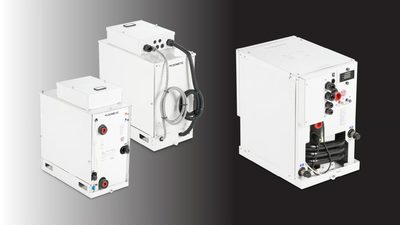
Dometic MCGX CW Module (MCGX24–MCGX180) ✓ verified
Application
Modular Titanium Chiller fuer Chilled-Water-Systeme auf Yachten ab 24 m; bis zu 6 Module stufenbar (24.000–180.000 BTU/h). Einzel-SKU MCGX90 3853 (90.000 BTU/h): 380 V 50 Hz 3-phasig, 11,3 A, 140,62 kg, 939,8 x 1066,8 x 939,8 mm. Titanium-Kondensator, R-410A, DDC-Steuerung.
Common Failures & Inspection Points
  • Area: Check refrigerant pressure (high and low pressure side) and compare with manufacturer specifications (R-410A); scan for leaks.
    Check: Check refrigerant pressure (high and low pressure side) and compare with manufacturer specifications (R-410A); scan for leaks.
  • Area: Inspect condenser and evaporator (Titanium or Cupronickel) for fouling, biofouling and corrosion; cleaning with approved acids or mechanically as
    Check: Inspect condenser and evaporator (Titanium or Cupronickel) for fouling, biofouling and corrosion; cleaning with approved acids or mechanically per manufacturer specification.
  • Area: Seawater circuit (seawater side): check sea valve, strainer/mud basket, impeller piston pump and all hose connections for leaks and flow
    Check: Seawater circuit (seawater side): check sea valve, strainer/mud basket, impeller piston pump and all hose connections for leaks and flow.
  • Area: Fresh water circuit (chilled water loop): monitor pressure, flow (m³/h), anti-corrosion agent concentration and pH value.
    Check: Fresh water circuit (chilled water loop): monitor pressure, flow (m³/h), anti-corrosion agent concentration and pH value.
  • Area: Electrical components: verify condition of protective switch, contactors, cable connections and grounding and tightening torques; measure insulation resistance.
    Check: Electrical components: verify condition of protective switch, contactors, cable connections and grounding and tightening torques; measure insulation resistance.
  • Area: DDC/control board and sensors (high pressure, low pressure, aquastat, flow switch) test for function and error codes.
    Check: DDC/control board and sensors (high pressure, low pressure, aquastat, flow switch) test for function and error codes.
  • Area: Check refrigerant charge and superheat/subcooling; record compressor operating hours and compare against service interval.
    Check: Check refrigerant charge and superheat/subcooling; record compressor operating hours and compare against service interval.
  • Area: Vibration dampers, fasteners, flex hoses and pipe insulation monitor for mechanical wear and integrity.
    Check: Vibration dampers, fasteners, flex hoses and pipe insulation monitor for mechanical wear and integrity.

Typ-universelle Inspektionspunkte fuer Air Conditioning (verifiziert, 2026-06).

Dometic MCGXLP CW Module (MCGX24LP–MCGX180LP, Low Profile) ✓ verified
Application
Flachbau-Titanium-Chiller (Low Profile) fuer beengte Einbauraeume an Bord; 24.000–180.000 BTU/h modular. Beispielmodell MCGXLP72 2361 (230 V 60 Hz): 21,1 kW Kaelteleistung, 14,2 A, 79,38 kg, 889 x 939,8 x 431,8 mm. R-410A, DDC-Steuerung.
Common Failures & Inspection Points
  • Area: Check refrigerant pressure (high and low pressure side) and compare with manufacturer specifications (R-410A); scan for leaks.
    Check: Check refrigerant pressure (high and low pressure side) and compare with manufacturer specifications (R-410A); scan for leaks.
  • Area: Inspect condenser and evaporator (Titanium or Cupronickel) for fouling, biofouling and corrosion; cleaning with approved acids or mechanically as
    Check: Inspect condenser and evaporator (Titanium or Cupronickel) for fouling, biofouling and corrosion; cleaning with approved acids or mechanically per manufacturer specification.
  • Area: Seawater circuit (seawater side): check sea valve, strainer/mud basket, impeller piston pump and all hose connections for leaks and flow
    Check: Seawater circuit (seawater side): check sea valve, strainer/mud basket, impeller piston pump and all hose connections for leaks and flow.
  • Area: Fresh water circuit (chilled water loop): monitor pressure, flow (m³/h), anti-corrosion agent concentration and pH value.
    Check: Fresh water circuit (chilled water loop): monitor pressure, flow (m³/h), anti-corrosion agent concentration and pH value.
  • Area: Electrical components: verify condition of protective switch, contactors, cable connections and grounding and tightening torques; measure insulation resistance.
    Check: Electrical components: verify condition of protective switch, contactors, cable connections and grounding and tightening torques; measure insulation resistance.
  • Area: DDC/control board and sensors (high pressure, low pressure, aquastat, flow switch) test for function and error codes.
    Check: DDC/control board and sensors (high pressure, low pressure, aquastat, flow switch) test for function and error codes.
  • Area: Check refrigerant charge and superheat/subcooling; record compressor operating hours and compare against service interval.
    Check: Check refrigerant charge and superheat/subcooling; record compressor operating hours and compare against service interval.
  • Area: Vibration dampers, fasteners, flex hoses and pipe insulation monitor for mechanical wear and integrity.
    Check: Vibration dampers, fasteners, flex hoses and pipe insulation monitor for mechanical wear and integrity.

Typ-universelle Inspektionspunkte fuer Air Conditioning (verifiziert, 2026-06).

Dometic VARCX (VARCX48E, VARCX60, VARCX72, VARCX120) ✓ verified
Application
Titanium Variable-Capacity-Chiller mit variabler Kompressorleistung (stufenlos 25–100 %); fuer Yachten ab 70 ft. Vier Modellgroessen: 48.000 / 60.000 / 72.000 / 120.000 BTU/h (max.). VARCX48E 2371: 208–230 V 50/60 Hz 1-phasig, ca. 81,6 kg, Breite 342,9 mm. R-410A, elektronisches Expansionsventil.
Common Failures & Inspection Points
  • Area: Check refrigerant pressure (high and low pressure side) and compare with manufacturer specifications (R-410A); scan for leaks.
    Check: Check refrigerant pressure (high and low pressure side) and compare with manufacturer specifications (R-410A); scan for leaks.
  • Area: Inspect condenser and evaporator (Titanium or Cupronickel) for fouling, biofouling and corrosion; cleaning with approved acids or mechanically as
    Check: Inspect condenser and evaporator (Titanium or Cupronickel) for fouling, biofouling and corrosion; cleaning with approved acids or mechanically per manufacturer specification.
  • Area: Seawater circuit (seawater side): check sea valve, strainer/mud basket, impeller piston pump and all hose connections for leaks and flow
    Check: Seawater circuit (seawater side): check sea valve, strainer/mud basket, impeller piston pump and all hose connections for leaks and flow.
  • Area: Fresh water circuit (chilled water loop): monitor pressure, flow (m³/h), anti-corrosion agent concentration and pH value.
    Check: Fresh water circuit (chilled water loop): monitor pressure, flow (m³/h), anti-corrosion agent concentration and pH value.
  • Area: Electrical components: verify condition of protective switch, contactors, cable connections and grounding and tightening torques; measure insulation resistance.
    Check: Electrical components: verify condition of protective switch, contactors, cable connections and grounding and tightening torques; measure insulation resistance.
  • Area: DDC/control board and sensors (high pressure, low pressure, aquastat, flow switch) test for function and error codes.
    Check: DDC/control board and sensors (high pressure, low pressure, aquastat, flow switch) test for function and error codes.
  • Area: Check refrigerant charge and superheat/subcooling; record compressor operating hours and compare against service interval.
    Check: Check refrigerant charge and superheat/subcooling; record compressor operating hours and compare against service interval.
  • Area: Vibration dampers, fasteners, flex hoses and pipe insulation monitor for mechanical wear and integrity.
    Check: Vibration dampers, fasteners, flex hoses and pipe insulation monitor for mechanical wear and integrity.

Typ-universelle Inspektionspunkte fuer Air Conditioning (verifiziert, 2026-06).

Dometic Condaria PCWM VAR (PCWM VAR 9001 / 15001 / 18001 / 30002 / 45003 / 54003) ✓ verified
Application
Variable-speed compressor chiller (Condaria line) for yachts and commercial vessels; inverter technology with Eco mode. Known models: VAR 15001 (60,000 BTU/h), VAR 18001 (72,000 BTU/h). Dimensions 15001/18001: 700 x 500 x 500 mm. Single- and three-phase, 230/400 V, 50/60 Hz, R-410A.
Common Failures & Inspection Points
  • Area: Check refrigerant pressure (high and low pressure side) and compare with manufacturer specifications (R-410A); scan for leaks.
    Check: Check refrigerant pressure (high and low pressure side) and compare with manufacturer specifications (R-410A); scan for leaks.
  • Area: Inspect condenser and evaporator (Titanium or Cupronickel) for fouling, biofouling and corrosion; cleaning with approved acids or mechanically as
    Check: Inspect condenser and evaporator (Titanium or Cupronickel) for fouling, biofouling and corrosion; cleaning with approved acids or mechanically per manufacturer specification.
  • Area: Seawater circuit (seawater side): check sea valve, strainer/mud basket, impeller piston pump and all hose connections for leaks and flow
    Check: Seawater circuit (seawater side): check sea valve, strainer/mud basket, impeller piston pump and all hose connections for leaks and flow.
  • Area: Fresh water circuit (chilled water loop): monitor pressure, flow (m³/h), anti-corrosion agent concentration and pH value.
    Check: Fresh water circuit (chilled water loop): monitor pressure, flow (m³/h), anti-corrosion agent concentration and pH value.
  • Area: Electrical components: verify condition of protective switch, contactors, cable connections and grounding and tightening torques; measure insulation resistance.
    Check: Electrical components: verify condition of protective switch, contactors, cable connections and grounding and tightening torques; measure insulation resistance.
  • Area: DDC/control board and sensors (high pressure, low pressure, aquastat, flow switch) test for function and error codes.
    Check: DDC/control board and sensors (high pressure, low pressure, aquastat, flow switch) test for function and error codes.
  • Area: Check refrigerant charge and superheat/subcooling; record compressor operating hours and compare against service interval.
    Check: Check refrigerant charge and superheat/subcooling; record compressor operating hours and compare against service interval.
  • Area: Vibration dampers, fasteners, flex hoses and pipe insulation monitor for mechanical wear and integrity.
    Check: Vibration dampers, fasteners, flex hoses and pipe insulation monitor for mechanical wear and integrity.

Typ-universelle Inspektionspunkte fuer Air Conditioning (verifiziert, 2026-06).

Dometic CHCG CW Module (Compact Chilled Water Module, 24.000 BTU/h) ✓ verified
Application
Kompakt-Chiller fuer Boote 45–70 ft; modulares Konzept (bis zu 6 Einheiten zusammenschaltbar). Kaelteleistung 7,03 kW (24.000 BTU/h ISO5151), R-410A, Cupronickel-Kondensator, Hot-Gas-Bypass. Abmessungen: 622,3 x 482,6 x 444,5 mm. Nettogew. 49,76 kg. 230 V 50/60 Hz, 8,5 A.
Common Failures & Inspection Points
  • Area: Check refrigerant pressure (high and low pressure side) and compare with manufacturer specifications (R-410A); scan for leaks.
    Check: Check refrigerant pressure (high and low pressure side) and compare with manufacturer specifications (R-410A); scan for leaks.
  • Area: Inspect condenser and evaporator (Titanium or Cupronickel) for fouling, biofouling and corrosion; cleaning with approved acids or mechanically as
    Check: Inspect condenser and evaporator (Titanium or Cupronickel) for fouling, biofouling and corrosion; cleaning with approved acids or mechanically per manufacturer specification.
  • Area: Seawater circuit (seawater side): check sea valve, strainer/mud basket, impeller piston pump and all hose connections for leaks and flow
    Check: Seawater circuit (seawater side): check sea valve, strainer/mud basket, impeller piston pump and all hose connections for leaks and flow.
  • Area: Fresh water circuit (chilled water loop): monitor pressure, flow (m³/h), anti-corrosion agent concentration and pH value.
    Check: Fresh water circuit (chilled water loop): monitor pressure, flow (m³/h), anti-corrosion agent concentration and pH value.
  • Area: Electrical components: verify condition of protective switch, contactors, cable connections and grounding and tightening torques; measure insulation resistance.
    Check: Electrical components: verify condition of protective switch, contactors, cable connections and grounding and tightening torques; measure insulation resistance.
  • Area: DDC/control board and sensors (high pressure, low pressure, aquastat, flow switch) test for function and error codes.
    Check: DDC/control board and sensors (high pressure, low pressure, aquastat, flow switch) test for function and error codes.
  • Area: Check refrigerant charge and superheat/subcooling; record compressor operating hours and compare against service interval.
    Check: Check refrigerant charge and superheat/subcooling; record compressor operating hours and compare against service interval.
  • Area: Vibration dampers, fasteners, flex hoses and pipe insulation monitor for mechanical wear and integrity.
    Check: Vibration dampers, fasteners, flex hoses and pipe insulation monitor for mechanical wear and integrity.

Typ-universelle Inspektionspunkte fuer Air Conditioning (verifiziert, 2026-06).

Dometic TWCX CW Module (TWCX24–TWCX72, Titan Compact) ✓ verified
Application
Titan compact chiller in modular design; 24,000–72,000 BTU/h (7–21.1 kW), reversible (heating+cooling). Multiplex capable. Titanium condenser, DDC control, high-pressure/low-pressure switch, water temperature sensors. Available in 230 V 50/60 Hz and 400 V 50/60 Hz 3-phase. R-410A.
Common Failures & Inspection Points
  • Area: Check refrigerant pressure (high and low pressure side) and compare with manufacturer specifications (R-410A); scan for leaks.
    Check: Check refrigerant pressure (high and low pressure side) and compare with manufacturer specifications (R-410A); scan for leaks.
  • Area: Inspect condenser and evaporator (Titanium or Cupronickel) for fouling, biofouling and corrosion; cleaning with approved acids or mechanically as
    Check: Inspect condenser and evaporator (Titanium or Cupronickel) for fouling, biofouling and corrosion; cleaning with approved acids or mechanically per manufacturer specification.
  • Area: Seawater circuit (seawater side): check sea valve, strainer/mud basket, impeller piston pump and all hose connections for leaks and flow
    Check: Seawater circuit (seawater side): check sea valve, strainer/mud basket, impeller piston pump and all hose connections for leaks and flow.
  • Area: Fresh water circuit (chilled water loop): monitor pressure, flow (m³/h), anti-corrosion agent concentration and pH value.
    Check: Fresh water circuit (chilled water loop): monitor pressure, flow (m³/h), anti-corrosion agent concentration and pH value.
  • Area: Electrical components: verify condition of protective switch, contactors, cable connections and grounding and tightening torques; measure insulation resistance.
    Check: Electrical components: verify condition of protective switch, contactors, cable connections and grounding and tightening torques; measure insulation resistance.
  • Area: DDC/control board and sensors (high pressure, low pressure, aquastat, flow switch) test for function and error codes.
    Check: DDC/control board and sensors (high pressure, low pressure, aquastat, flow switch) test for function and error codes.
  • Area: Check refrigerant charge and superheat/subcooling; record compressor operating hours and compare against service interval.
    Check: Check refrigerant charge and superheat/subcooling; record compressor operating hours and compare against service interval.
  • Area: Vibration dampers, fasteners, flex hoses and pipe insulation monitor for mechanical wear and integrity.
    Check: Vibration dampers, fasteners, flex hoses and pipe insulation monitor for mechanical wear and integrity.

Typ-universelle Inspektionspunkte fuer Air Conditioning (verifiziert, 2026-06).

Heinen & Hopman Engineering

6 ✓ 6 verified
Heinen & Hopman Engineering Cooling Plant (Chilled Water Unit)
Cooling Plant (Chilled Water Unit) ✓ verified
Application
Central chilled water supply for HVAC systems on marine and offshore vessels of all types (merchant, navy, offshore, cruise, yachts). Seawater- or freshwater-cooled direct-expansion and chilled-water configurations.
Common Failures & Inspection Points
  • Area: Refrigerant circuit: check for leaks at all fittings, sight glass clarity (no bubbles = full charge), and refrigerant pressure/temperature readings against desi
    Check: Refrigerant circuit: check for leaks at all fittings, sight glass clarity (no bubbles = full charge), and refrigerant pressure/temperature readings against design curves
  • Area: Compressor: verify oil level (reciprocating/screw) or magnetic bearing status (Turbocor), check for unusual noise/vibration, inspect electrical connections and
    Check: Compressor: verify oil level (reciprocating/screw) or magnetic bearing status (Turbocor), check for unusual noise/vibration, inspect electrical connections and motor insulation resistance
  • Area: Condenser (seawater-cooled): inspect titanium or Cu/Ni tube bundle for fouling, biological growth, and corrosion; verify seawater flow rate and differential pre
    Check: Condenser (seawater-cooled): inspect titanium or Cu/Ni tube bundle for fouling, biological growth, and corrosion; verify seawater flow rate and differential pressure across heat exchanger
  • Area: Evaporator / chilled-water circuit: check flow rate, inlet/outlet temperature differential (design: 6/12 °C), inspect glycol concentration and inhibitor levels,
    Check: Evaporator / chilled-water circuit: check flow rate, inlet/outlet temperature differential (design: 6/12 °C), inspect glycol concentration and inhibitor levels, clean strainers
  • Area: Control panel and safety devices: test high-pressure cut-out, low-pressure cut-out, flow switches, and anti-freeze thermostats; verify calibration of temperatur
    Check: Control panel and safety devices: test high-pressure cut-out, low-pressure cut-out, flow switches, and anti-freeze thermostats; verify calibration of temperature and pressure sensors
  • Area: Expansion valve / electronic expansion device: confirm superheat and subcooling settings match commissioning data; inspect for hunting or erratic operation
    Check: Expansion valve / electronic expansion device: confirm superheat and subcooling settings match commissioning data; inspect for hunting or erratic operation
  • Area: Structural and mounting integrity: inspect vibration isolators/anti-vibration mounts, check for corrosion on frame (especially SS316Ti on MCMV units), verify al
    Check: Structural and mounting integrity: inspect vibration isolators/anti-vibration mounts, check for corrosion on frame (especially SS316Ti on MCMV units), verify all bolts and pipe supports are tight
  • Area: Filter-drier and moisture indicators: inspect drier cartridge condition and moisture indicator sight-glass colour; replace drier if moisture is detected or afte
    Check: Filter-drier and moisture indicators: inspect drier cartridge condition and moisture indicator sight-glass colour; replace drier if moisture is detected or after refrigerant circuit opening

Typ-universelle Inspektionspunkte fuer Air Conditioning (verifiziert, 2026-06).

Heinen & Hopman Engineering Turbocor Chiller
Turbocor Chiller ✓ verified
Application
High-efficiency marine chilled water plant for all vessel types (navy, merchant, offshore, yachting, cruise/ferry). Primary purpose: reduce energy consumption versus conventional reciprocating/screw compressor chillers.
Common Failures & Inspection Points
  • Area: Refrigerant circuit: check for leaks at all fittings, sight glass clarity (no bubbles = full charge), and refrigerant pressure/temperature readings against desi
    Check: Refrigerant circuit: check for leaks at all fittings, sight glass clarity (no bubbles = full charge), and refrigerant pressure/temperature readings against design curves
  • Area: Compressor: verify oil level (reciprocating/screw) or magnetic bearing status (Turbocor), check for unusual noise/vibration, inspect electrical connections and
    Check: Compressor: verify oil level (reciprocating/screw) or magnetic bearing status (Turbocor), check for unusual noise/vibration, inspect electrical connections and motor insulation resistance
  • Area: Condenser (seawater-cooled): inspect titanium or Cu/Ni tube bundle for fouling, biological growth, and corrosion; verify seawater flow rate and differential pre
    Check: Condenser (seawater-cooled): inspect titanium or Cu/Ni tube bundle for fouling, biological growth, and corrosion; verify seawater flow rate and differential pressure across heat exchanger
  • Area: Evaporator / chilled-water circuit: check flow rate, inlet/outlet temperature differential (design: 6/12 °C), inspect glycol concentration and inhibitor levels,
    Check: Evaporator / chilled-water circuit: check flow rate, inlet/outlet temperature differential (design: 6/12 °C), inspect glycol concentration and inhibitor levels, clean strainers
  • Area: Control panel and safety devices: test high-pressure cut-out, low-pressure cut-out, flow switches, and anti-freeze thermostats; verify calibration of temperatur
    Check: Control panel and safety devices: test high-pressure cut-out, low-pressure cut-out, flow switches, and anti-freeze thermostats; verify calibration of temperature and pressure sensors
  • Area: Expansion valve / electronic expansion device: confirm superheat and subcooling settings match commissioning data; inspect for hunting or erratic operation
    Check: Expansion valve / electronic expansion device: confirm superheat and subcooling settings match commissioning data; inspect for hunting or erratic operation
  • Area: Structural and mounting integrity: inspect vibration isolators/anti-vibration mounts, check for corrosion on frame (especially SS316Ti on MCMV units), verify al
    Check: Structural and mounting integrity: inspect vibration isolators/anti-vibration mounts, check for corrosion on frame (especially SS316Ti on MCMV units), verify all bolts and pipe supports are tight
  • Area: Filter-drier and moisture indicators: inspect drier cartridge condition and moisture indicator sight-glass colour; replace drier if moisture is detected or afte
    Check: Filter-drier and moisture indicators: inspect drier cartridge condition and moisture indicator sight-glass colour; replace drier if moisture is detected or after refrigerant circuit opening

Typ-universelle Inspektionspunkte fuer Air Conditioning (verifiziert, 2026-06).

Replacement Chiller ✓ verified
Application
Drop-in chiller replacement for vessels where existing machinery spaces have no crane access; designed as a modular kit passable through standard shipboard doors and hatches.
Common Failures & Inspection Points
  • Area: Refrigerant circuit: check for leaks at all fittings, sight glass clarity (no bubbles = full charge), and refrigerant pressure/temperature readings against desi
    Check: Refrigerant circuit: check for leaks at all fittings, sight glass clarity (no bubbles = full charge), and refrigerant pressure/temperature readings against design curves
  • Area: Compressor: verify oil level (reciprocating/screw) or magnetic bearing status (Turbocor), check for unusual noise/vibration, inspect electrical connections and
    Check: Compressor: verify oil level (reciprocating/screw) or magnetic bearing status (Turbocor), check for unusual noise/vibration, inspect electrical connections and motor insulation resistance
  • Area: Condenser (seawater-cooled): inspect titanium or Cu/Ni tube bundle for fouling, biological growth, and corrosion; verify seawater flow rate and differential pre
    Check: Condenser (seawater-cooled): inspect titanium or Cu/Ni tube bundle for fouling, biological growth, and corrosion; verify seawater flow rate and differential pressure across heat exchanger
  • Area: Evaporator / chilled-water circuit: check flow rate, inlet/outlet temperature differential (design: 6/12 °C), inspect glycol concentration and inhibitor levels,
    Check: Evaporator / chilled-water circuit: check flow rate, inlet/outlet temperature differential (design: 6/12 °C), inspect glycol concentration and inhibitor levels, clean strainers
  • Area: Control panel and safety devices: test high-pressure cut-out, low-pressure cut-out, flow switches, and anti-freeze thermostats; verify calibration of temperatur
    Check: Control panel and safety devices: test high-pressure cut-out, low-pressure cut-out, flow switches, and anti-freeze thermostats; verify calibration of temperature and pressure sensors
  • Area: Expansion valve / electronic expansion device: confirm superheat and subcooling settings match commissioning data; inspect for hunting or erratic operation
    Check: Expansion valve / electronic expansion device: confirm superheat and subcooling settings match commissioning data; inspect for hunting or erratic operation
  • Area: Structural and mounting integrity: inspect vibration isolators/anti-vibration mounts, check for corrosion on frame (especially SS316Ti on MCMV units), verify al
    Check: Structural and mounting integrity: inspect vibration isolators/anti-vibration mounts, check for corrosion on frame (especially SS316Ti on MCMV units), verify all bolts and pipe supports are tight
  • Area: Filter-drier and moisture indicators: inspect drier cartridge condition and moisture indicator sight-glass colour; replace drier if moisture is detected or afte
    Check: Filter-drier and moisture indicators: inspect drier cartridge condition and moisture indicator sight-glass colour; replace drier if moisture is detected or after refrigerant circuit opening

Typ-universelle Inspektionspunkte fuer Air Conditioning (verifiziert, 2026-06).

Low-Magnetic Chiller ✓ verified
Application
Mine Counter Measure Vessels (MCMV); chilled water cooling with strict low-magnetic signature and shock/vibration requirements per NATO/US Navy military standards.
Common Failures & Inspection Points
  • Area: Refrigerant circuit: check for leaks at all fittings, sight glass clarity (no bubbles = full charge), and refrigerant pressure/temperature readings against desi
    Check: Refrigerant circuit: check for leaks at all fittings, sight glass clarity (no bubbles = full charge), and refrigerant pressure/temperature readings against design curves
  • Area: Compressor: verify oil level (reciprocating/screw) or magnetic bearing status (Turbocor), check for unusual noise/vibration, inspect electrical connections and
    Check: Compressor: verify oil level (reciprocating/screw) or magnetic bearing status (Turbocor), check for unusual noise/vibration, inspect electrical connections and motor insulation resistance
  • Area: Condenser (seawater-cooled): inspect titanium or Cu/Ni tube bundle for fouling, biological growth, and corrosion; verify seawater flow rate and differential pre
    Check: Condenser (seawater-cooled): inspect titanium or Cu/Ni tube bundle for fouling, biological growth, and corrosion; verify seawater flow rate and differential pressure across heat exchanger
  • Area: Evaporator / chilled-water circuit: check flow rate, inlet/outlet temperature differential (design: 6/12 °C), inspect glycol concentration and inhibitor levels,
    Check: Evaporator / chilled-water circuit: check flow rate, inlet/outlet temperature differential (design: 6/12 °C), inspect glycol concentration and inhibitor levels, clean strainers
  • Area: Control panel and safety devices: test high-pressure cut-out, low-pressure cut-out, flow switches, and anti-freeze thermostats; verify calibration of temperatur
    Check: Control panel and safety devices: test high-pressure cut-out, low-pressure cut-out, flow switches, and anti-freeze thermostats; verify calibration of temperature and pressure sensors
  • Area: Expansion valve / electronic expansion device: confirm superheat and subcooling settings match commissioning data; inspect for hunting or erratic operation
    Check: Expansion valve / electronic expansion device: confirm superheat and subcooling settings match commissioning data; inspect for hunting or erratic operation
  • Area: Structural and mounting integrity: inspect vibration isolators/anti-vibration mounts, check for corrosion on frame (especially SS316Ti on MCMV units), verify al
    Check: Structural and mounting integrity: inspect vibration isolators/anti-vibration mounts, check for corrosion on frame (especially SS316Ti on MCMV units), verify all bolts and pipe supports are tight
  • Area: Filter-drier and moisture indicators: inspect drier cartridge condition and moisture indicator sight-glass colour; replace drier if moisture is detected or afte
    Check: Filter-drier and moisture indicators: inspect drier cartridge condition and moisture indicator sight-glass colour; replace drier if moisture is detected or after refrigerant circuit opening

Typ-universelle Inspektionspunkte fuer Air Conditioning (verifiziert, 2026-06).

Maritime Absorption Chiller ✓ verified
Application
Waste-heat-driven chilled water plant for vessels with surplus steam or hot water from diesel engines (e.g. large cargo ships, tankers, cruise ships); achieves up to 95% energy saving by using heat otherwise rejected.
Common Failures & Inspection Points
  • Area: Refrigerant circuit: check for leaks at all fittings, sight glass clarity (no bubbles = full charge), and refrigerant pressure/temperature readings against desi
    Check: Refrigerant circuit: check for leaks at all fittings, sight glass clarity (no bubbles = full charge), and refrigerant pressure/temperature readings against design curves
  • Area: Compressor: verify oil level (reciprocating/screw) or magnetic bearing status (Turbocor), check for unusual noise/vibration, inspect electrical connections and
    Check: Compressor: verify oil level (reciprocating/screw) or magnetic bearing status (Turbocor), check for unusual noise/vibration, inspect electrical connections and motor insulation resistance
  • Area: Condenser (seawater-cooled): inspect titanium or Cu/Ni tube bundle for fouling, biological growth, and corrosion; verify seawater flow rate and differential pre
    Check: Condenser (seawater-cooled): inspect titanium or Cu/Ni tube bundle for fouling, biological growth, and corrosion; verify seawater flow rate and differential pressure across heat exchanger
  • Area: Evaporator / chilled-water circuit: check flow rate, inlet/outlet temperature differential (design: 6/12 °C), inspect glycol concentration and inhibitor levels,
    Check: Evaporator / chilled-water circuit: check flow rate, inlet/outlet temperature differential (design: 6/12 °C), inspect glycol concentration and inhibitor levels, clean strainers
  • Area: Control panel and safety devices: test high-pressure cut-out, low-pressure cut-out, flow switches, and anti-freeze thermostats; verify calibration of temperatur
    Check: Control panel and safety devices: test high-pressure cut-out, low-pressure cut-out, flow switches, and anti-freeze thermostats; verify calibration of temperature and pressure sensors
  • Area: Expansion valve / electronic expansion device: confirm superheat and subcooling settings match commissioning data; inspect for hunting or erratic operation
    Check: Expansion valve / electronic expansion device: confirm superheat and subcooling settings match commissioning data; inspect for hunting or erratic operation
  • Area: Structural and mounting integrity: inspect vibration isolators/anti-vibration mounts, check for corrosion on frame (especially SS316Ti on MCMV units), verify al
    Check: Structural and mounting integrity: inspect vibration isolators/anti-vibration mounts, check for corrosion on frame (especially SS316Ti on MCMV units), verify all bolts and pipe supports are tight
  • Area: Filter-drier and moisture indicators: inspect drier cartridge condition and moisture indicator sight-glass colour; replace drier if moisture is detected or afte
    Check: Filter-drier and moisture indicators: inspect drier cartridge condition and moisture indicator sight-glass colour; replace drier if moisture is detected or after refrigerant circuit opening

Typ-universelle Inspektionspunkte fuer Air Conditioning (verifiziert, 2026-06).

Subsea Chiller ✓ verified
Application
Temperature regulation inside hyperbaric rescue chambers post-launch (especially in high-ambient/Middle Eastern conditions); battery-powered, independent of ship or platform power.
Common Failures & Inspection Points
  • Area: Refrigerant circuit: check for leaks at all fittings, sight glass clarity (no bubbles = full charge), and refrigerant pressure/temperature readings against desi
    Check: Refrigerant circuit: check for leaks at all fittings, sight glass clarity (no bubbles = full charge), and refrigerant pressure/temperature readings against design curves
  • Area: Compressor: verify oil level (reciprocating/screw) or magnetic bearing status (Turbocor), check for unusual noise/vibration, inspect electrical connections and
    Check: Compressor: verify oil level (reciprocating/screw) or magnetic bearing status (Turbocor), check for unusual noise/vibration, inspect electrical connections and motor insulation resistance
  • Area: Condenser (seawater-cooled): inspect titanium or Cu/Ni tube bundle for fouling, biological growth, and corrosion; verify seawater flow rate and differential pre
    Check: Condenser (seawater-cooled): inspect titanium or Cu/Ni tube bundle for fouling, biological growth, and corrosion; verify seawater flow rate and differential pressure across heat exchanger
  • Area: Evaporator / chilled-water circuit: check flow rate, inlet/outlet temperature differential (design: 6/12 °C), inspect glycol concentration and inhibitor levels,
    Check: Evaporator / chilled-water circuit: check flow rate, inlet/outlet temperature differential (design: 6/12 °C), inspect glycol concentration and inhibitor levels, clean strainers
  • Area: Control panel and safety devices: test high-pressure cut-out, low-pressure cut-out, flow switches, and anti-freeze thermostats; verify calibration of temperatur
    Check: Control panel and safety devices: test high-pressure cut-out, low-pressure cut-out, flow switches, and anti-freeze thermostats; verify calibration of temperature and pressure sensors
  • Area: Expansion valve / electronic expansion device: confirm superheat and subcooling settings match commissioning data; inspect for hunting or erratic operation
    Check: Expansion valve / electronic expansion device: confirm superheat and subcooling settings match commissioning data; inspect for hunting or erratic operation
  • Area: Structural and mounting integrity: inspect vibration isolators/anti-vibration mounts, check for corrosion on frame (especially SS316Ti on MCMV units), verify al
    Check: Structural and mounting integrity: inspect vibration isolators/anti-vibration mounts, check for corrosion on frame (especially SS316Ti on MCMV units), verify all bolts and pipe supports are tight
  • Area: Filter-drier and moisture indicators: inspect drier cartridge condition and moisture indicator sight-glass colour; replace drier if moisture is detected or afte
    Check: Filter-drier and moisture indicators: inspect drier cartridge condition and moisture indicator sight-glass colour; replace drier if moisture is detected or after refrigerant circuit opening

Typ-universelle Inspektionspunkte fuer Air Conditioning (verifiziert, 2026-06).

J&E Hall International

4 ✓ 4 verified
AQUACHILL ✓ verified
Application
Air-cooled low-charge ammonia chiller for cold stores, ice rinks, process cooling, and marine applications. Uses HallScrew open-drive single-screw compressors with integral oil separator. Available in three efficiency levels (low/ultra-low noise). Deployed in naval and marine refrigeration projects including Queen Mary 2 (four packaged chillers) and Royal Navy vessels.
Common Failures & Inspection Points
  • Area: Check and clean refrigerant circuit: inspect for leaks (NH3 or HFC), verify refrigerant charge level, and test ammonia leak detection sensors (if fitted)
    Check: Check and clean refrigerant circuit: inspect for leaks (NH3 or HFC), verify refrigerant charge level, and test ammonia leak detection sensors (if fitted)
  • Area: Inspect and service compressor: check oil level and oil pressure, replace oil filter, verify bearing temperatures and vibration levels against manufacturer limi
    Check: Inspect and service compressor: check oil level and oil pressure, replace oil filter, verify bearing temperatures and vibration levels against manufacturer limits
  • Area: Clean heat exchangers: inspect and clean evaporator and condenser (water-side fouling, shell-and-tube or plate HX scaling; air-side coil cleaning for air-cooled
    Check: Clean heat exchangers: inspect and clean evaporator and condenser (water-side fouling, shell-and-tube or plate HX scaling; air-side coil cleaning for air-cooled units)
  • Area: Verify shock-mount and structural integrity: inspect anti-vibration/shock mounts for wear or deterioration, check skid/base-frame fastenings and pipe flex conne
    Check: Verify shock-mount and structural integrity: inspect anti-vibration/shock mounts for wear or deterioration, check skid/base-frame fastenings and pipe flex connections (critical for naval shock ratings up to 30g)
  • Area: Test safety and control systems: verify high-pressure and low-pressure cut-outs, flow switches, thermostatic controls, and SCADA/monitoring connectivity; test a
    Check: Test safety and control systems: verify high-pressure and low-pressure cut-outs, flow switches, thermostatic controls, and SCADA/monitoring connectivity; test ammonia/refrigerant alarms
  • Area: Inspect electrical components: check terminal connections, contactor condition, motor insulation resistance (megger test), and rating of variable-frequency driv
    Check: Inspect electrical components: check terminal connections, contactor condition, motor insulation resistance (megger test), and rating of variable-frequency drives; confirm SOLAS low-smoke wiring integrity
  • Area: Check glycol/brine secondary circuit: verify glycol concentration (freeze point), inhibitor levels, pH, and absence of corrosion or fouling in the secondary sid
    Check: Check glycol/brine secondary circuit: verify glycol concentration (freeze point), inhibitor levels, pH, and absence of corrosion or fouling in the secondary side; inspect pump seals and strainers
  • Area: Review classification society documentation: confirm pressure vessel inspection records are current (LR or equivalent), update service logbook, and verify compl
    Check: Review classification society documentation: confirm pressure vessel inspection records are current (LR or equivalent), update service logbook, and verify compliance with applicable marine standards (SOLAS, class rules)

Typ-universelle Inspektionspunkte fuer Air Conditioning (verifiziert, 2026-06).

J&E Hall International HallScrew Semi-hermetic Air-Cooled Ammonia Chiller
HallScrew Semi-hermetic Air-Cooled Ammonia Chiller ✓ verified
Application
Low-charge air-cooled ammonia chiller using HallScrew semi-hermetic single-screw compressors. Designed for cold store cooling, process cooling, and comfort cooling. Available in single or dual compressor configuration. Suitable for industrial and marine refrigeration applications.
Common Failures & Inspection Points
  • Area: Check and clean refrigerant circuit: inspect for leaks (NH3 or HFC), verify refrigerant charge level, and test ammonia leak detection sensors (if fitted)
    Check: Check and clean refrigerant circuit: inspect for leaks (NH3 or HFC), verify refrigerant charge level, and test ammonia leak detection sensors (if fitted)
  • Area: Inspect and service compressor: check oil level and oil pressure, replace oil filter, verify bearing temperatures and vibration levels against manufacturer limi
    Check: Inspect and service compressor: check oil level and oil pressure, replace oil filter, verify bearing temperatures and vibration levels against manufacturer limits
  • Area: Clean heat exchangers: inspect and clean evaporator and condenser (water-side fouling, shell-and-tube or plate HX scaling; air-side coil cleaning for air-cooled
    Check: Clean heat exchangers: inspect and clean evaporator and condenser (water-side fouling, shell-and-tube or plate HX scaling; air-side coil cleaning for air-cooled units)
  • Area: Verify shock-mount and structural integrity: inspect anti-vibration/shock mounts for wear or deterioration, check skid/base-frame fastenings and pipe flex conne
    Check: Verify shock-mount and structural integrity: inspect anti-vibration/shock mounts for wear or deterioration, check skid/base-frame fastenings and pipe flex connections (critical for naval shock ratings up to 30g)
  • Area: Test safety and control systems: verify high-pressure and low-pressure cut-outs, flow switches, thermostatic controls, and SCADA/monitoring connectivity; test a
    Check: Test safety and control systems: verify high-pressure and low-pressure cut-outs, flow switches, thermostatic controls, and SCADA/monitoring connectivity; test ammonia/refrigerant alarms
  • Area: Inspect electrical components: check terminal connections, contactor condition, motor insulation resistance (megger test), and rating of variable-frequency driv
    Check: Inspect electrical components: check terminal connections, contactor condition, motor insulation resistance (megger test), and rating of variable-frequency drives; confirm SOLAS low-smoke wiring integrity
  • Area: Check glycol/brine secondary circuit: verify glycol concentration (freeze point), inhibitor levels, pH, and absence of corrosion or fouling in the secondary sid
    Check: Check glycol/brine secondary circuit: verify glycol concentration (freeze point), inhibitor levels, pH, and absence of corrosion or fouling in the secondary side; inspect pump seals and strainers
  • Area: Review classification society documentation: confirm pressure vessel inspection records are current (LR or equivalent), update service logbook, and verify compl
    Check: Review classification society documentation: confirm pressure vessel inspection records are current (LR or equivalent), update service logbook, and verify compliance with applicable marine standards (SOLAS, class rules)

Typ-universelle Inspektionspunkte fuer Air Conditioning (verifiziert, 2026-06).

GESBES Semi-hermetic Single-Screw Glycol/Brine Chiller ✓ verified
Application
Semi-hermetic single-screw glycol and brine chiller for industrial refrigeration. Used in marine applications to cool glycol and Freezium for circulation to cold stores, freezer stores, refrigerated galleys and electronic equipment on naval vessels. Features continuous capacity control and advanced control system.
Common Failures & Inspection Points
  • Area: Check and clean refrigerant circuit: inspect for leaks (NH3 or HFC), verify refrigerant charge level, and test ammonia leak detection sensors (if fitted)
    Check: Check and clean refrigerant circuit: inspect for leaks (NH3 or HFC), verify refrigerant charge level, and test ammonia leak detection sensors (if fitted)
  • Area: Inspect and service compressor: check oil level and oil pressure, replace oil filter, verify bearing temperatures and vibration levels against manufacturer limi
    Check: Inspect and service compressor: check oil level and oil pressure, replace oil filter, verify bearing temperatures and vibration levels against manufacturer limits
  • Area: Clean heat exchangers: inspect and clean evaporator and condenser (water-side fouling, shell-and-tube or plate HX scaling; air-side coil cleaning for air-cooled
    Check: Clean heat exchangers: inspect and clean evaporator and condenser (water-side fouling, shell-and-tube or plate HX scaling; air-side coil cleaning for air-cooled units)
  • Area: Verify shock-mount and structural integrity: inspect anti-vibration/shock mounts for wear or deterioration, check skid/base-frame fastenings and pipe flex conne
    Check: Verify shock-mount and structural integrity: inspect anti-vibration/shock mounts for wear or deterioration, check skid/base-frame fastenings and pipe flex connections (critical for naval shock ratings up to 30g)
  • Area: Test safety and control systems: verify high-pressure and low-pressure cut-outs, flow switches, thermostatic controls, and SCADA/monitoring connectivity; test a
    Check: Test safety and control systems: verify high-pressure and low-pressure cut-outs, flow switches, thermostatic controls, and SCADA/monitoring connectivity; test ammonia/refrigerant alarms
  • Area: Inspect electrical components: check terminal connections, contactor condition, motor insulation resistance (megger test), and rating of variable-frequency driv
    Check: Inspect electrical components: check terminal connections, contactor condition, motor insulation resistance (megger test), and rating of variable-frequency drives; confirm SOLAS low-smoke wiring integrity
  • Area: Check glycol/brine secondary circuit: verify glycol concentration (freeze point), inhibitor levels, pH, and absence of corrosion or fouling in the secondary sid
    Check: Check glycol/brine secondary circuit: verify glycol concentration (freeze point), inhibitor levels, pH, and absence of corrosion or fouling in the secondary side; inspect pump seals and strainers
  • Area: Review classification society documentation: confirm pressure vessel inspection records are current (LR or equivalent), update service logbook, and verify compl
    Check: Review classification society documentation: confirm pressure vessel inspection records are current (LR or equivalent), update service logbook, and verify compliance with applicable marine standards (SOLAS, class rules)

Typ-universelle Inspektionspunkte fuer Air Conditioning (verifiziert, 2026-06).

HallScrew Marine Packaged Chiller (bespoke / Hall Thermotank Marine Systems) ✓ verified
Application
Bespoke packaged chillers supplied and installed by Hall Thermotank Marine Systems (Glasgow) for naval and merchant vessels. Designed to withstand shock loads up to 30g. Pressure vessels built to Lloyd's Register rules, installed on anti-vibration/shock mounts, electronic controllers rated 10g shock, SOLAS-compliant low-smoke wiring. Applied to Royal Navy Type 23 Frigates, HMS Ocean, Queen Elizabeth Aircraft Carriers, Hellenic Navy fast attack craft, and Cunard liners including Queen Mary 2 (four packaged chillers).
Common Failures & Inspection Points
  • Area: Check and clean refrigerant circuit: inspect for leaks (NH3 or HFC), verify refrigerant charge level, and test ammonia leak detection sensors (if fitted)
    Check: Check and clean refrigerant circuit: inspect for leaks (NH3 or HFC), verify refrigerant charge level, and test ammonia leak detection sensors (if fitted)
  • Area: Inspect and service compressor: check oil level and oil pressure, replace oil filter, verify bearing temperatures and vibration levels against manufacturer limi
    Check: Inspect and service compressor: check oil level and oil pressure, replace oil filter, verify bearing temperatures and vibration levels against manufacturer limits
  • Area: Clean heat exchangers: inspect and clean evaporator and condenser (water-side fouling, shell-and-tube or plate HX scaling; air-side coil cleaning for air-cooled
    Check: Clean heat exchangers: inspect and clean evaporator and condenser (water-side fouling, shell-and-tube or plate HX scaling; air-side coil cleaning for air-cooled units)
  • Area: Verify shock-mount and structural integrity: inspect anti-vibration/shock mounts for wear or deterioration, check skid/base-frame fastenings and pipe flex conne
    Check: Verify shock-mount and structural integrity: inspect anti-vibration/shock mounts for wear or deterioration, check skid/base-frame fastenings and pipe flex connections (critical for naval shock ratings up to 30g)
  • Area: Test safety and control systems: verify high-pressure and low-pressure cut-outs, flow switches, thermostatic controls, and SCADA/monitoring connectivity; test a
    Check: Test safety and control systems: verify high-pressure and low-pressure cut-outs, flow switches, thermostatic controls, and SCADA/monitoring connectivity; test ammonia/refrigerant alarms
  • Area: Inspect electrical components: check terminal connections, contactor condition, motor insulation resistance (megger test), and rating of variable-frequency driv
    Check: Inspect electrical components: check terminal connections, contactor condition, motor insulation resistance (megger test), and rating of variable-frequency drives; confirm SOLAS low-smoke wiring integrity
  • Area: Check glycol/brine secondary circuit: verify glycol concentration (freeze point), inhibitor levels, pH, and absence of corrosion or fouling in the secondary sid
    Check: Check glycol/brine secondary circuit: verify glycol concentration (freeze point), inhibitor levels, pH, and absence of corrosion or fouling in the secondary side; inspect pump seals and strainers
  • Area: Review classification society documentation: confirm pressure vessel inspection records are current (LR or equivalent), update service logbook, and verify compl
    Check: Review classification society documentation: confirm pressure vessel inspection records are current (LR or equivalent), update service logbook, and verify compliance with applicable marine standards (SOLAS, class rules)

Typ-universelle Inspektionspunkte fuer Air Conditioning (verifiziert, 2026-06).

Carrier Marine

120
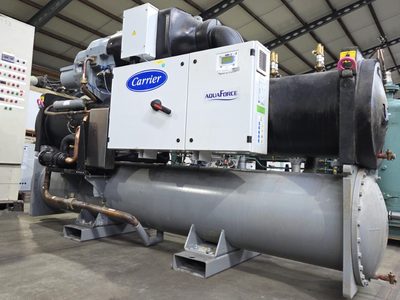
42CE Chiller 30kW R410A unverified
Cooling Capacity (kW)
30
Heating Capacity (kW)
24.0
Refrigerant
R410A
Voltage (V)
440
Air Flow (m³/h)
4500
Common Failures & Inspection Points
  • Refrigerant loss from leaking joints, seals or heat-exchanger circuits, typically indicated by reduced cooling capacity, low-pressure alarms or repeated compressor cycling
  • Condenser fouling or poor cooling-water flow from scale, marine growth or blocked strainers, typically indicated by high condensing pressure, elevated discharge temperature or capacity loss
  • Compressor wear or electrical fault from inadequate lubrication, contamination or repeated overload, typically indicated by abnormal noise, high current, trip alarms or failure to start
  • Evaporator or chilled-water flow restriction from fouling, air locks or pump problems, typically indicated by poor cooling, unstable temperatures or low-flow alarms
  • Sensor, controller or expansion-control malfunction from failed electronics or incorrect calibration, typically indicated by unstable superheat, hunting, nuisance trips or incorrect temperature indication
Service: Check refrigerant condition and leak evidence, compressor sound and oil condition where applicable, heat-exchanger cleanliness, cooling-water or chilled-water flow, filters, sensors, safeties and alarm history; use manufacturer documentation for exact pressures, temperatures, charge and test limits.
Spare Parts: Carry approved filter-driers, seals and gaskets, control sensors, contactors or relays, belts or fan components where fitted, and the specified refrigerant-handling consumables appropriate to the installed system.
Use Cases: Used for accommodation and machinery-space climate control on merchant ships, offshore units, passenger vessels, naval vessels and workboats. This entry applies specifically to the Chiller Unit variant identified as Carrier Marine 42CE Chiller 30kW R410A.
42CE Chiller 30kW R134a unverified
Cooling Capacity (kW)
30
Heating Capacity (kW)
24.0
Refrigerant
R134a
Voltage (V)
440
Air Flow (m³/h)
4500
Common Failures & Inspection Points
  • Refrigerant loss from leaking joints, seals or heat-exchanger circuits, typically indicated by reduced cooling capacity, low-pressure alarms or repeated compressor cycling
  • Condenser fouling or poor cooling-water flow from scale, marine growth or blocked strainers, typically indicated by high condensing pressure, elevated discharge temperature or capacity loss
  • Compressor wear or electrical fault from inadequate lubrication, contamination or repeated overload, typically indicated by abnormal noise, high current, trip alarms or failure to start
  • Evaporator or chilled-water flow restriction from fouling, air locks or pump problems, typically indicated by poor cooling, unstable temperatures or low-flow alarms
  • Sensor, controller or expansion-control malfunction from failed electronics or incorrect calibration, typically indicated by unstable superheat, hunting, nuisance trips or incorrect temperature indication
Service: Check refrigerant condition and leak evidence, compressor sound and oil condition where applicable, heat-exchanger cleanliness, cooling-water or chilled-water flow, filters, sensors, safeties and alarm history; use manufacturer documentation for exact pressures, temperatures, charge and test limits.
Spare Parts: Carry approved filter-driers, seals and gaskets, control sensors, contactors or relays, belts or fan components where fitted, and the specified refrigerant-handling consumables appropriate to the installed system.
Use Cases: Used for accommodation and machinery-space climate control on merchant ships, offshore units, passenger vessels, naval vessels and workboats. This entry applies specifically to the Chiller Unit variant identified as Carrier Marine 42CE Chiller 30kW R134a.
42CE Chiller 50kW R410A unverified
Cooling Capacity (kW)
50
Heating Capacity (kW)
40.0
Refrigerant
R410A
Voltage (V)
440
Air Flow (m³/h)
7500
Common Failures & Inspection Points
  • Refrigerant loss from leaking joints, seals or heat-exchanger circuits, typically indicated by reduced cooling capacity, low-pressure alarms or repeated compressor cycling
  • Condenser fouling or poor cooling-water flow from scale, marine growth or blocked strainers, typically indicated by high condensing pressure, elevated discharge temperature or capacity loss
  • Compressor wear or electrical fault from inadequate lubrication, contamination or repeated overload, typically indicated by abnormal noise, high current, trip alarms or failure to start
  • Evaporator or chilled-water flow restriction from fouling, air locks or pump problems, typically indicated by poor cooling, unstable temperatures or low-flow alarms
  • Sensor, controller or expansion-control malfunction from failed electronics or incorrect calibration, typically indicated by unstable superheat, hunting, nuisance trips or incorrect temperature indication
Service: Check refrigerant condition and leak evidence, compressor sound and oil condition where applicable, heat-exchanger cleanliness, cooling-water or chilled-water flow, filters, sensors, safeties and alarm history; use manufacturer documentation for exact pressures, temperatures, charge and test limits.
Spare Parts: Carry approved filter-driers, seals and gaskets, control sensors, contactors or relays, belts or fan components where fitted, and the specified refrigerant-handling consumables appropriate to the installed system.
Use Cases: Used for accommodation and machinery-space climate control on merchant ships, offshore units, passenger vessels, naval vessels and workboats. This entry applies specifically to the Chiller Unit variant identified as Carrier Marine 42CE Chiller 50kW R410A.
Carrier Marine 42CE Chiller 50kW R134a
42CE Chiller 50kW R134a unverified
Cooling Capacity (kW)
50
Heating Capacity (kW)
40.0
Refrigerant
R134a
Voltage (V)
440
Air Flow (m³/h)
7500
Common Failures & Inspection Points
  • Refrigerant loss from leaking joints, seals or heat-exchanger circuits, typically indicated by reduced cooling capacity, low-pressure alarms or repeated compressor cycling
  • Condenser fouling or poor cooling-water flow from scale, marine growth or blocked strainers, typically indicated by high condensing pressure, elevated discharge temperature or capacity loss
  • Compressor wear or electrical fault from inadequate lubrication, contamination or repeated overload, typically indicated by abnormal noise, high current, trip alarms or failure to start
  • Evaporator or chilled-water flow restriction from fouling, air locks or pump problems, typically indicated by poor cooling, unstable temperatures or low-flow alarms
  • Sensor, controller or expansion-control malfunction from failed electronics or incorrect calibration, typically indicated by unstable superheat, hunting, nuisance trips or incorrect temperature indication
Service: Check refrigerant condition and leak evidence, compressor sound and oil condition where applicable, heat-exchanger cleanliness, cooling-water or chilled-water flow, filters, sensors, safeties and alarm history; use manufacturer documentation for exact pressures, temperatures, charge and test limits.
Spare Parts: Carry approved filter-driers, seals and gaskets, control sensors, contactors or relays, belts or fan components where fitted, and the specified refrigerant-handling consumables appropriate to the installed system.
Use Cases: Used for accommodation and machinery-space climate control on merchant ships, offshore units, passenger vessels, naval vessels and workboats. This entry applies specifically to the Chiller Unit variant identified as Carrier Marine 42CE Chiller 50kW R134a.
42CE Chiller 75kW R410A unverified
Cooling Capacity (kW)
75
Heating Capacity (kW)
60.0
Refrigerant
R410A
Voltage (V)
440
Air Flow (m³/h)
11250
Common Failures & Inspection Points
  • Refrigerant loss from leaking joints, seals or heat-exchanger circuits, typically indicated by reduced cooling capacity, low-pressure alarms or repeated compressor cycling
  • Condenser fouling or poor cooling-water flow from scale, marine growth or blocked strainers, typically indicated by high condensing pressure, elevated discharge temperature or capacity loss
  • Compressor wear or electrical fault from inadequate lubrication, contamination or repeated overload, typically indicated by abnormal noise, high current, trip alarms or failure to start
  • Evaporator or chilled-water flow restriction from fouling, air locks or pump problems, typically indicated by poor cooling, unstable temperatures or low-flow alarms
  • Sensor, controller or expansion-control malfunction from failed electronics or incorrect calibration, typically indicated by unstable superheat, hunting, nuisance trips or incorrect temperature indication
Service: Check refrigerant condition and leak evidence, compressor sound and oil condition where applicable, heat-exchanger cleanliness, cooling-water or chilled-water flow, filters, sensors, safeties and alarm history; use manufacturer documentation for exact pressures, temperatures, charge and test limits.
Spare Parts: Carry approved filter-driers, seals and gaskets, control sensors, contactors or relays, belts or fan components where fitted, and the specified refrigerant-handling consumables appropriate to the installed system.
Use Cases: Used for accommodation and machinery-space climate control on merchant ships, offshore units, passenger vessels, naval vessels and workboats. This entry applies specifically to the Chiller Unit variant identified as Carrier Marine 42CE Chiller 75kW R410A.
42CE Chiller 75kW R134a unverified
Cooling Capacity (kW)
75
Heating Capacity (kW)
60.0
Refrigerant
R134a
Voltage (V)
440
Air Flow (m³/h)
11250
Common Failures & Inspection Points
  • Refrigerant loss from leaking joints, seals or heat-exchanger circuits, typically indicated by reduced cooling capacity, low-pressure alarms or repeated compressor cycling
  • Condenser fouling or poor cooling-water flow from scale, marine growth or blocked strainers, typically indicated by high condensing pressure, elevated discharge temperature or capacity loss
  • Compressor wear or electrical fault from inadequate lubrication, contamination or repeated overload, typically indicated by abnormal noise, high current, trip alarms or failure to start
  • Evaporator or chilled-water flow restriction from fouling, air locks or pump problems, typically indicated by poor cooling, unstable temperatures or low-flow alarms
  • Sensor, controller or expansion-control malfunction from failed electronics or incorrect calibration, typically indicated by unstable superheat, hunting, nuisance trips or incorrect temperature indication
Service: Check refrigerant condition and leak evidence, compressor sound and oil condition where applicable, heat-exchanger cleanliness, cooling-water or chilled-water flow, filters, sensors, safeties and alarm history; use manufacturer documentation for exact pressures, temperatures, charge and test limits.
Spare Parts: Carry approved filter-driers, seals and gaskets, control sensors, contactors or relays, belts or fan components where fitted, and the specified refrigerant-handling consumables appropriate to the installed system.
Use Cases: Used for accommodation and machinery-space climate control on merchant ships, offshore units, passenger vessels, naval vessels and workboats. This entry applies specifically to the Chiller Unit variant identified as Carrier Marine 42CE Chiller 75kW R134a.
42CE Chiller 100kW R410A unverified
Cooling Capacity (kW)
100
Heating Capacity (kW)
80.0
Refrigerant
R410A
Voltage (V)
440
Air Flow (m³/h)
15000
Common Failures & Inspection Points
  • Refrigerant loss from leaking joints, seals or heat-exchanger circuits, typically indicated by reduced cooling capacity, low-pressure alarms or repeated compressor cycling
  • Condenser fouling or poor cooling-water flow from scale, marine growth or blocked strainers, typically indicated by high condensing pressure, elevated discharge temperature or capacity loss
  • Compressor wear or electrical fault from inadequate lubrication, contamination or repeated overload, typically indicated by abnormal noise, high current, trip alarms or failure to start
  • Evaporator or chilled-water flow restriction from fouling, air locks or pump problems, typically indicated by poor cooling, unstable temperatures or low-flow alarms
  • Sensor, controller or expansion-control malfunction from failed electronics or incorrect calibration, typically indicated by unstable superheat, hunting, nuisance trips or incorrect temperature indication
Service: Check refrigerant condition and leak evidence, compressor sound and oil condition where applicable, heat-exchanger cleanliness, cooling-water or chilled-water flow, filters, sensors, safeties and alarm history; use manufacturer documentation for exact pressures, temperatures, charge and test limits.
Spare Parts: Carry approved filter-driers, seals and gaskets, control sensors, contactors or relays, belts or fan components where fitted, and the specified refrigerant-handling consumables appropriate to the installed system.
Use Cases: Used for accommodation and machinery-space climate control on merchant ships, offshore units, passenger vessels, naval vessels and workboats. This entry applies specifically to the Chiller Unit variant identified as Carrier Marine 42CE Chiller 100kW R410A.
42CE Chiller 100kW R134a unverified
Cooling Capacity (kW)
100
Heating Capacity (kW)
80.0
Refrigerant
R134a
Voltage (V)
440
Air Flow (m³/h)
15000
Common Failures & Inspection Points
  • Refrigerant loss from leaking joints, seals or heat-exchanger circuits, typically indicated by reduced cooling capacity, low-pressure alarms or repeated compressor cycling
  • Condenser fouling or poor cooling-water flow from scale, marine growth or blocked strainers, typically indicated by high condensing pressure, elevated discharge temperature or capacity loss
  • Compressor wear or electrical fault from inadequate lubrication, contamination or repeated overload, typically indicated by abnormal noise, high current, trip alarms or failure to start
  • Evaporator or chilled-water flow restriction from fouling, air locks or pump problems, typically indicated by poor cooling, unstable temperatures or low-flow alarms
  • Sensor, controller or expansion-control malfunction from failed electronics or incorrect calibration, typically indicated by unstable superheat, hunting, nuisance trips or incorrect temperature indication
Service: Check refrigerant condition and leak evidence, compressor sound and oil condition where applicable, heat-exchanger cleanliness, cooling-water or chilled-water flow, filters, sensors, safeties and alarm history; use manufacturer documentation for exact pressures, temperatures, charge and test limits.
Spare Parts: Carry approved filter-driers, seals and gaskets, control sensors, contactors or relays, belts or fan components where fitted, and the specified refrigerant-handling consumables appropriate to the installed system.
Use Cases: Used for accommodation and machinery-space climate control on merchant ships, offshore units, passenger vessels, naval vessels and workboats. This entry applies specifically to the Chiller Unit variant identified as Carrier Marine 42CE Chiller 100kW R134a.
42CE Chiller 150kW R410A unverified
Cooling Capacity (kW)
150
Heating Capacity (kW)
120.0
Refrigerant
R410A
Voltage (V)
440
Air Flow (m³/h)
22500
Common Failures & Inspection Points
  • Refrigerant loss from leaking joints, seals or heat-exchanger circuits, typically indicated by reduced cooling capacity, low-pressure alarms or repeated compressor cycling
  • Condenser fouling or poor cooling-water flow from scale, marine growth or blocked strainers, typically indicated by high condensing pressure, elevated discharge temperature or capacity loss
  • Compressor wear or electrical fault from inadequate lubrication, contamination or repeated overload, typically indicated by abnormal noise, high current, trip alarms or failure to start
  • Evaporator or chilled-water flow restriction from fouling, air locks or pump problems, typically indicated by poor cooling, unstable temperatures or low-flow alarms
  • Sensor, controller or expansion-control malfunction from failed electronics or incorrect calibration, typically indicated by unstable superheat, hunting, nuisance trips or incorrect temperature indication
Service: Check refrigerant condition and leak evidence, compressor sound and oil condition where applicable, heat-exchanger cleanliness, cooling-water or chilled-water flow, filters, sensors, safeties and alarm history; use manufacturer documentation for exact pressures, temperatures, charge and test limits.
Spare Parts: Carry approved filter-driers, seals and gaskets, control sensors, contactors or relays, belts or fan components where fitted, and the specified refrigerant-handling consumables appropriate to the installed system.
Use Cases: Used for accommodation and machinery-space climate control on merchant ships, offshore units, passenger vessels, naval vessels and workboats. This entry applies specifically to the Chiller Unit variant identified as Carrier Marine 42CE Chiller 150kW R410A.
42CE Chiller 150kW R134a unverified
Cooling Capacity (kW)
150
Heating Capacity (kW)
120.0
Refrigerant
R134a
Voltage (V)
440
Air Flow (m³/h)
22500
Common Failures & Inspection Points
  • Refrigerant loss from leaking joints, seals or heat-exchanger circuits, typically indicated by reduced cooling capacity, low-pressure alarms or repeated compressor cycling
  • Condenser fouling or poor cooling-water flow from scale, marine growth or blocked strainers, typically indicated by high condensing pressure, elevated discharge temperature or capacity loss
  • Compressor wear or electrical fault from inadequate lubrication, contamination or repeated overload, typically indicated by abnormal noise, high current, trip alarms or failure to start
  • Evaporator or chilled-water flow restriction from fouling, air locks or pump problems, typically indicated by poor cooling, unstable temperatures or low-flow alarms
  • Sensor, controller or expansion-control malfunction from failed electronics or incorrect calibration, typically indicated by unstable superheat, hunting, nuisance trips or incorrect temperature indication
Service: Check refrigerant condition and leak evidence, compressor sound and oil condition where applicable, heat-exchanger cleanliness, cooling-water or chilled-water flow, filters, sensors, safeties and alarm history; use manufacturer documentation for exact pressures, temperatures, charge and test limits.
Spare Parts: Carry approved filter-driers, seals and gaskets, control sensors, contactors or relays, belts or fan components where fitted, and the specified refrigerant-handling consumables appropriate to the installed system.
Use Cases: Used for accommodation and machinery-space climate control on merchant ships, offshore units, passenger vessels, naval vessels and workboats. This entry applies specifically to the Chiller Unit variant identified as Carrier Marine 42CE Chiller 150kW R134a.
42CE Chiller 200kW R410A unverified
Cooling Capacity (kW)
200
Heating Capacity (kW)
160.0
Refrigerant
R410A
Voltage (V)
440
Air Flow (m³/h)
30000
Common Failures & Inspection Points
  • Refrigerant loss from leaking joints, seals or heat-exchanger circuits, typically indicated by reduced cooling capacity, low-pressure alarms or repeated compressor cycling
  • Condenser fouling or poor cooling-water flow from scale, marine growth or blocked strainers, typically indicated by high condensing pressure, elevated discharge temperature or capacity loss
  • Compressor wear or electrical fault from inadequate lubrication, contamination or repeated overload, typically indicated by abnormal noise, high current, trip alarms or failure to start
  • Evaporator or chilled-water flow restriction from fouling, air locks or pump problems, typically indicated by poor cooling, unstable temperatures or low-flow alarms
  • Sensor, controller or expansion-control malfunction from failed electronics or incorrect calibration, typically indicated by unstable superheat, hunting, nuisance trips or incorrect temperature indication
Service: Check refrigerant condition and leak evidence, compressor sound and oil condition where applicable, heat-exchanger cleanliness, cooling-water or chilled-water flow, filters, sensors, safeties and alarm history; use manufacturer documentation for exact pressures, temperatures, charge and test limits.
Spare Parts: Carry approved filter-driers, seals and gaskets, control sensors, contactors or relays, belts or fan components where fitted, and the specified refrigerant-handling consumables appropriate to the installed system.
Use Cases: Used for accommodation and machinery-space climate control on merchant ships, offshore units, passenger vessels, naval vessels and workboats. This entry applies specifically to the Chiller Unit variant identified as Carrier Marine 42CE Chiller 200kW R410A.
42CE Chiller 200kW R134a unverified
Cooling Capacity (kW)
200
Heating Capacity (kW)
160.0
Refrigerant
R134a
Voltage (V)
440
Air Flow (m³/h)
30000
Common Failures & Inspection Points
  • Refrigerant loss from leaking joints, seals or heat-exchanger circuits, typically indicated by reduced cooling capacity, low-pressure alarms or repeated compressor cycling
  • Condenser fouling or poor cooling-water flow from scale, marine growth or blocked strainers, typically indicated by high condensing pressure, elevated discharge temperature or capacity loss
  • Compressor wear or electrical fault from inadequate lubrication, contamination or repeated overload, typically indicated by abnormal noise, high current, trip alarms or failure to start
  • Evaporator or chilled-water flow restriction from fouling, air locks or pump problems, typically indicated by poor cooling, unstable temperatures or low-flow alarms
  • Sensor, controller or expansion-control malfunction from failed electronics or incorrect calibration, typically indicated by unstable superheat, hunting, nuisance trips or incorrect temperature indication
Service: Check refrigerant condition and leak evidence, compressor sound and oil condition where applicable, heat-exchanger cleanliness, cooling-water or chilled-water flow, filters, sensors, safeties and alarm history; use manufacturer documentation for exact pressures, temperatures, charge and test limits.
Spare Parts: Carry approved filter-driers, seals and gaskets, control sensors, contactors or relays, belts or fan components where fitted, and the specified refrigerant-handling consumables appropriate to the installed system.
Use Cases: Used for accommodation and machinery-space climate control on merchant ships, offshore units, passenger vessels, naval vessels and workboats. This entry applies specifically to the Chiller Unit variant identified as Carrier Marine 42CE Chiller 200kW R134a.
42CE Chiller 300kW R410A unverified
Cooling Capacity (kW)
300
Heating Capacity (kW)
240.0
Refrigerant
R410A
Voltage (V)
440
Air Flow (m³/h)
45000
Common Failures & Inspection Points
  • Refrigerant loss from leaking joints, seals or heat-exchanger circuits, typically indicated by reduced cooling capacity, low-pressure alarms or repeated compressor cycling
  • Condenser fouling or poor cooling-water flow from scale, marine growth or blocked strainers, typically indicated by high condensing pressure, elevated discharge temperature or capacity loss
  • Compressor wear or electrical fault from inadequate lubrication, contamination or repeated overload, typically indicated by abnormal noise, high current, trip alarms or failure to start
  • Evaporator or chilled-water flow restriction from fouling, air locks or pump problems, typically indicated by poor cooling, unstable temperatures or low-flow alarms
  • Sensor, controller or expansion-control malfunction from failed electronics or incorrect calibration, typically indicated by unstable superheat, hunting, nuisance trips or incorrect temperature indication
Service: Check refrigerant condition and leak evidence, compressor sound and oil condition where applicable, heat-exchanger cleanliness, cooling-water or chilled-water flow, filters, sensors, safeties and alarm history; use manufacturer documentation for exact pressures, temperatures, charge and test limits.
Spare Parts: Carry approved filter-driers, seals and gaskets, control sensors, contactors or relays, belts or fan components where fitted, and the specified refrigerant-handling consumables appropriate to the installed system.
Use Cases: Used for accommodation and machinery-space climate control on merchant ships, offshore units, passenger vessels, naval vessels and workboats. This entry applies specifically to the Chiller Unit variant identified as Carrier Marine 42CE Chiller 300kW R410A.
42CE Chiller 300kW R134a unverified
Cooling Capacity (kW)
300
Heating Capacity (kW)
240.0
Refrigerant
R134a
Voltage (V)
440
Air Flow (m³/h)
45000
Common Failures & Inspection Points
  • Refrigerant loss from leaking joints, seals or heat-exchanger circuits, typically indicated by reduced cooling capacity, low-pressure alarms or repeated compressor cycling
  • Condenser fouling or poor cooling-water flow from scale, marine growth or blocked strainers, typically indicated by high condensing pressure, elevated discharge temperature or capacity loss
  • Compressor wear or electrical fault from inadequate lubrication, contamination or repeated overload, typically indicated by abnormal noise, high current, trip alarms or failure to start
  • Evaporator or chilled-water flow restriction from fouling, air locks or pump problems, typically indicated by poor cooling, unstable temperatures or low-flow alarms
  • Sensor, controller or expansion-control malfunction from failed electronics or incorrect calibration, typically indicated by unstable superheat, hunting, nuisance trips or incorrect temperature indication
Service: Check refrigerant condition and leak evidence, compressor sound and oil condition where applicable, heat-exchanger cleanliness, cooling-water or chilled-water flow, filters, sensors, safeties and alarm history; use manufacturer documentation for exact pressures, temperatures, charge and test limits.
Spare Parts: Carry approved filter-driers, seals and gaskets, control sensors, contactors or relays, belts or fan components where fitted, and the specified refrigerant-handling consumables appropriate to the installed system.
Use Cases: Used for accommodation and machinery-space climate control on merchant ships, offshore units, passenger vessels, naval vessels and workboats. This entry applies specifically to the Chiller Unit variant identified as Carrier Marine 42CE Chiller 300kW R134a.
42CE Chiller 500kW R410A unverified
Cooling Capacity (kW)
500
Heating Capacity (kW)
400.0
Refrigerant
R410A
Voltage (V)
440
Air Flow (m³/h)
75000
Common Failures & Inspection Points
  • Refrigerant loss from leaking joints, seals or heat-exchanger circuits, typically indicated by reduced cooling capacity, low-pressure alarms or repeated compressor cycling
  • Condenser fouling or poor cooling-water flow from scale, marine growth or blocked strainers, typically indicated by high condensing pressure, elevated discharge temperature or capacity loss
  • Compressor wear or electrical fault from inadequate lubrication, contamination or repeated overload, typically indicated by abnormal noise, high current, trip alarms or failure to start
  • Evaporator or chilled-water flow restriction from fouling, air locks or pump problems, typically indicated by poor cooling, unstable temperatures or low-flow alarms
  • Sensor, controller or expansion-control malfunction from failed electronics or incorrect calibration, typically indicated by unstable superheat, hunting, nuisance trips or incorrect temperature indication
Service: Check refrigerant condition and leak evidence, compressor sound and oil condition where applicable, heat-exchanger cleanliness, cooling-water or chilled-water flow, filters, sensors, safeties and alarm history; use manufacturer documentation for exact pressures, temperatures, charge and test limits.
Spare Parts: Carry approved filter-driers, seals and gaskets, control sensors, contactors or relays, belts or fan components where fitted, and the specified refrigerant-handling consumables appropriate to the installed system.
Use Cases: Used for accommodation and machinery-space climate control on merchant ships, offshore units, passenger vessels, naval vessels and workboats. This entry applies specifically to the Chiller Unit variant identified as Carrier Marine 42CE Chiller 500kW R410A.
42CE Chiller 500kW R134a unverified
Cooling Capacity (kW)
500
Heating Capacity (kW)
400.0
Refrigerant
R134a
Voltage (V)
440
Air Flow (m³/h)
75000
Common Failures & Inspection Points
  • Refrigerant loss from leaking joints, seals or heat-exchanger circuits, typically indicated by reduced cooling capacity, low-pressure alarms or repeated compressor cycling
  • Condenser fouling or poor cooling-water flow from scale, marine growth or blocked strainers, typically indicated by high condensing pressure, elevated discharge temperature or capacity loss
  • Compressor wear or electrical fault from inadequate lubrication, contamination or repeated overload, typically indicated by abnormal noise, high current, trip alarms or failure to start
  • Evaporator or chilled-water flow restriction from fouling, air locks or pump problems, typically indicated by poor cooling, unstable temperatures or low-flow alarms
  • Sensor, controller or expansion-control malfunction from failed electronics or incorrect calibration, typically indicated by unstable superheat, hunting, nuisance trips or incorrect temperature indication
Service: Check refrigerant condition and leak evidence, compressor sound and oil condition where applicable, heat-exchanger cleanliness, cooling-water or chilled-water flow, filters, sensors, safeties and alarm history; use manufacturer documentation for exact pressures, temperatures, charge and test limits.
Spare Parts: Carry approved filter-driers, seals and gaskets, control sensors, contactors or relays, belts or fan components where fitted, and the specified refrigerant-handling consumables appropriate to the installed system.
Use Cases: Used for accommodation and machinery-space climate control on merchant ships, offshore units, passenger vessels, naval vessels and workboats. This entry applies specifically to the Chiller Unit variant identified as Carrier Marine 42CE Chiller 500kW R134a.
42CE Chiller 750kW R410A unverified
Cooling Capacity (kW)
750
Heating Capacity (kW)
600.0
Refrigerant
R410A
Voltage (V)
440
Air Flow (m³/h)
112500
Common Failures & Inspection Points
  • Refrigerant loss from leaking joints, seals or heat-exchanger circuits, typically indicated by reduced cooling capacity, low-pressure alarms or repeated compressor cycling
  • Condenser fouling or poor cooling-water flow from scale, marine growth or blocked strainers, typically indicated by high condensing pressure, elevated discharge temperature or capacity loss
  • Compressor wear or electrical fault from inadequate lubrication, contamination or repeated overload, typically indicated by abnormal noise, high current, trip alarms or failure to start
  • Evaporator or chilled-water flow restriction from fouling, air locks or pump problems, typically indicated by poor cooling, unstable temperatures or low-flow alarms
  • Sensor, controller or expansion-control malfunction from failed electronics or incorrect calibration, typically indicated by unstable superheat, hunting, nuisance trips or incorrect temperature indication
Service: Check refrigerant condition and leak evidence, compressor sound and oil condition where applicable, heat-exchanger cleanliness, cooling-water or chilled-water flow, filters, sensors, safeties and alarm history; use manufacturer documentation for exact pressures, temperatures, charge and test limits.
Spare Parts: Carry approved filter-driers, seals and gaskets, control sensors, contactors or relays, belts or fan components where fitted, and the specified refrigerant-handling consumables appropriate to the installed system.
Use Cases: Used for accommodation and machinery-space climate control on merchant ships, offshore units, passenger vessels, naval vessels and workboats. This entry applies specifically to the Chiller Unit variant identified as Carrier Marine 42CE Chiller 750kW R410A.
42CE Chiller 750kW R134a unverified
Cooling Capacity (kW)
750
Heating Capacity (kW)
600.0
Refrigerant
R134a
Voltage (V)
440
Air Flow (m³/h)
112500
Common Failures & Inspection Points
  • Refrigerant loss from leaking joints, seals or heat-exchanger circuits, typically indicated by reduced cooling capacity, low-pressure alarms or repeated compressor cycling
  • Condenser fouling or poor cooling-water flow from scale, marine growth or blocked strainers, typically indicated by high condensing pressure, elevated discharge temperature or capacity loss
  • Compressor wear or electrical fault from inadequate lubrication, contamination or repeated overload, typically indicated by abnormal noise, high current, trip alarms or failure to start
  • Evaporator or chilled-water flow restriction from fouling, air locks or pump problems, typically indicated by poor cooling, unstable temperatures or low-flow alarms
  • Sensor, controller or expansion-control malfunction from failed electronics or incorrect calibration, typically indicated by unstable superheat, hunting, nuisance trips or incorrect temperature indication
Service: Check refrigerant condition and leak evidence, compressor sound and oil condition where applicable, heat-exchanger cleanliness, cooling-water or chilled-water flow, filters, sensors, safeties and alarm history; use manufacturer documentation for exact pressures, temperatures, charge and test limits.
Spare Parts: Carry approved filter-driers, seals and gaskets, control sensors, contactors or relays, belts or fan components where fitted, and the specified refrigerant-handling consumables appropriate to the installed system.
Use Cases: Used for accommodation and machinery-space climate control on merchant ships, offshore units, passenger vessels, naval vessels and workboats. This entry applies specifically to the Chiller Unit variant identified as Carrier Marine 42CE Chiller 750kW R134a.
42CE Chiller 1000kW R410A unverified
Cooling Capacity (kW)
1000
Heating Capacity (kW)
800.0
Refrigerant
R410A
Voltage (V)
440
Air Flow (m³/h)
150000
Common Failures & Inspection Points
  • Refrigerant loss from leaking joints, seals or heat-exchanger circuits, typically indicated by reduced cooling capacity, low-pressure alarms or repeated compressor cycling
  • Condenser fouling or poor cooling-water flow from scale, marine growth or blocked strainers, typically indicated by high condensing pressure, elevated discharge temperature or capacity loss
  • Compressor wear or electrical fault from inadequate lubrication, contamination or repeated overload, typically indicated by abnormal noise, high current, trip alarms or failure to start
  • Evaporator or chilled-water flow restriction from fouling, air locks or pump problems, typically indicated by poor cooling, unstable temperatures or low-flow alarms
  • Sensor, controller or expansion-control malfunction from failed electronics or incorrect calibration, typically indicated by unstable superheat, hunting, nuisance trips or incorrect temperature indication
Service: Check refrigerant condition and leak evidence, compressor sound and oil condition where applicable, heat-exchanger cleanliness, cooling-water or chilled-water flow, filters, sensors, safeties and alarm history; use manufacturer documentation for exact pressures, temperatures, charge and test limits.
Spare Parts: Carry approved filter-driers, seals and gaskets, control sensors, contactors or relays, belts or fan components where fitted, and the specified refrigerant-handling consumables appropriate to the installed system.
Use Cases: Used for accommodation and machinery-space climate control on merchant ships, offshore units, passenger vessels, naval vessels and workboats. This entry applies specifically to the Chiller Unit variant identified as Carrier Marine 42CE Chiller 1000kW R410A.
42CE Chiller 1000kW R134a unverified
Cooling Capacity (kW)
1000
Heating Capacity (kW)
800.0
Refrigerant
R134a
Voltage (V)
440
Air Flow (m³/h)
150000
Common Failures & Inspection Points
  • Refrigerant loss from leaking joints, seals or heat-exchanger circuits, typically indicated by reduced cooling capacity, low-pressure alarms or repeated compressor cycling
  • Condenser fouling or poor cooling-water flow from scale, marine growth or blocked strainers, typically indicated by high condensing pressure, elevated discharge temperature or capacity loss
  • Compressor wear or electrical fault from inadequate lubrication, contamination or repeated overload, typically indicated by abnormal noise, high current, trip alarms or failure to start
  • Evaporator or chilled-water flow restriction from fouling, air locks or pump problems, typically indicated by poor cooling, unstable temperatures or low-flow alarms
  • Sensor, controller or expansion-control malfunction from failed electronics or incorrect calibration, typically indicated by unstable superheat, hunting, nuisance trips or incorrect temperature indication
Service: Check refrigerant condition and leak evidence, compressor sound and oil condition where applicable, heat-exchanger cleanliness, cooling-water or chilled-water flow, filters, sensors, safeties and alarm history; use manufacturer documentation for exact pressures, temperatures, charge and test limits.
Spare Parts: Carry approved filter-driers, seals and gaskets, control sensors, contactors or relays, belts or fan components where fitted, and the specified refrigerant-handling consumables appropriate to the installed system.
Use Cases: Used for accommodation and machinery-space climate control on merchant ships, offshore units, passenger vessels, naval vessels and workboats. This entry applies specifically to the Chiller Unit variant identified as Carrier Marine 42CE Chiller 1000kW R134a.
42CE Chiller 1500kW R410A unverified
Cooling Capacity (kW)
1500
Heating Capacity (kW)
1200.0
Refrigerant
R410A
Voltage (V)
440
Air Flow (m³/h)
225000
Common Failures & Inspection Points
  • Refrigerant loss from leaking joints, seals or heat-exchanger circuits, typically indicated by reduced cooling capacity, low-pressure alarms or repeated compressor cycling
  • Condenser fouling or poor cooling-water flow from scale, marine growth or blocked strainers, typically indicated by high condensing pressure, elevated discharge temperature or capacity loss
  • Compressor wear or electrical fault from inadequate lubrication, contamination or repeated overload, typically indicated by abnormal noise, high current, trip alarms or failure to start
  • Evaporator or chilled-water flow restriction from fouling, air locks or pump problems, typically indicated by poor cooling, unstable temperatures or low-flow alarms
  • Sensor, controller or expansion-control malfunction from failed electronics or incorrect calibration, typically indicated by unstable superheat, hunting, nuisance trips or incorrect temperature indication
Service: Check refrigerant condition and leak evidence, compressor sound and oil condition where applicable, heat-exchanger cleanliness, cooling-water or chilled-water flow, filters, sensors, safeties and alarm history; use manufacturer documentation for exact pressures, temperatures, charge and test limits.
Spare Parts: Carry approved filter-driers, seals and gaskets, control sensors, contactors or relays, belts or fan components where fitted, and the specified refrigerant-handling consumables appropriate to the installed system.
Use Cases: Used for accommodation and machinery-space climate control on merchant ships, offshore units, passenger vessels, naval vessels and workboats. This entry applies specifically to the Chiller Unit variant identified as Carrier Marine 42CE Chiller 1500kW R410A.
42CE Chiller 1500kW R134a unverified
Cooling Capacity (kW)
1500
Heating Capacity (kW)
1200.0
Refrigerant
R134a
Voltage (V)
440
Air Flow (m³/h)
225000
Common Failures & Inspection Points
  • Refrigerant loss from leaking joints, seals or heat-exchanger circuits, typically indicated by reduced cooling capacity, low-pressure alarms or repeated compressor cycling
  • Condenser fouling or poor cooling-water flow from scale, marine growth or blocked strainers, typically indicated by high condensing pressure, elevated discharge temperature or capacity loss
  • Compressor wear or electrical fault from inadequate lubrication, contamination or repeated overload, typically indicated by abnormal noise, high current, trip alarms or failure to start
  • Evaporator or chilled-water flow restriction from fouling, air locks or pump problems, typically indicated by poor cooling, unstable temperatures or low-flow alarms
  • Sensor, controller or expansion-control malfunction from failed electronics or incorrect calibration, typically indicated by unstable superheat, hunting, nuisance trips or incorrect temperature indication
Service: Check refrigerant condition and leak evidence, compressor sound and oil condition where applicable, heat-exchanger cleanliness, cooling-water or chilled-water flow, filters, sensors, safeties and alarm history; use manufacturer documentation for exact pressures, temperatures, charge and test limits.
Spare Parts: Carry approved filter-driers, seals and gaskets, control sensors, contactors or relays, belts or fan components where fitted, and the specified refrigerant-handling consumables appropriate to the installed system.
Use Cases: Used for accommodation and machinery-space climate control on merchant ships, offshore units, passenger vessels, naval vessels and workboats. This entry applies specifically to the Chiller Unit variant identified as Carrier Marine 42CE Chiller 1500kW R134a.
42CE Chiller 2000kW R410A unverified
Cooling Capacity (kW)
2000
Heating Capacity (kW)
1600.0
Refrigerant
R410A
Voltage (V)
440
Air Flow (m³/h)
300000
Common Failures & Inspection Points
  • Refrigerant loss from leaking joints, seals or heat-exchanger circuits, typically indicated by reduced cooling capacity, low-pressure alarms or repeated compressor cycling
  • Condenser fouling or poor cooling-water flow from scale, marine growth or blocked strainers, typically indicated by high condensing pressure, elevated discharge temperature or capacity loss
  • Compressor wear or electrical fault from inadequate lubrication, contamination or repeated overload, typically indicated by abnormal noise, high current, trip alarms or failure to start
  • Evaporator or chilled-water flow restriction from fouling, air locks or pump problems, typically indicated by poor cooling, unstable temperatures or low-flow alarms
  • Sensor, controller or expansion-control malfunction from failed electronics or incorrect calibration, typically indicated by unstable superheat, hunting, nuisance trips or incorrect temperature indication
Service: Check refrigerant condition and leak evidence, compressor sound and oil condition where applicable, heat-exchanger cleanliness, cooling-water or chilled-water flow, filters, sensors, safeties and alarm history; use manufacturer documentation for exact pressures, temperatures, charge and test limits.
Spare Parts: Carry approved filter-driers, seals and gaskets, control sensors, contactors or relays, belts or fan components where fitted, and the specified refrigerant-handling consumables appropriate to the installed system.
Use Cases: Used for accommodation and machinery-space climate control on merchant ships, offshore units, passenger vessels, naval vessels and workboats. This entry applies specifically to the Chiller Unit variant identified as Carrier Marine 42CE Chiller 2000kW R410A.
42CE Chiller 2000kW R134a unverified
Cooling Capacity (kW)
2000
Heating Capacity (kW)
1600.0
Refrigerant
R134a
Voltage (V)
440
Air Flow (m³/h)
300000
Common Failures & Inspection Points
  • Refrigerant loss from leaking joints, seals or heat-exchanger circuits, typically indicated by reduced cooling capacity, low-pressure alarms or repeated compressor cycling
  • Condenser fouling or poor cooling-water flow from scale, marine growth or blocked strainers, typically indicated by high condensing pressure, elevated discharge temperature or capacity loss
  • Compressor wear or electrical fault from inadequate lubrication, contamination or repeated overload, typically indicated by abnormal noise, high current, trip alarms or failure to start
  • Evaporator or chilled-water flow restriction from fouling, air locks or pump problems, typically indicated by poor cooling, unstable temperatures or low-flow alarms
  • Sensor, controller or expansion-control malfunction from failed electronics or incorrect calibration, typically indicated by unstable superheat, hunting, nuisance trips or incorrect temperature indication
Service: Check refrigerant condition and leak evidence, compressor sound and oil condition where applicable, heat-exchanger cleanliness, cooling-water or chilled-water flow, filters, sensors, safeties and alarm history; use manufacturer documentation for exact pressures, temperatures, charge and test limits.
Spare Parts: Carry approved filter-driers, seals and gaskets, control sensors, contactors or relays, belts or fan components where fitted, and the specified refrigerant-handling consumables appropriate to the installed system.
Use Cases: Used for accommodation and machinery-space climate control on merchant ships, offshore units, passenger vessels, naval vessels and workboats. This entry applies specifically to the Chiller Unit variant identified as Carrier Marine 42CE Chiller 2000kW R134a.
Carrier Marine 42CO Chiller 30kW R410A
42CO Chiller 30kW R410A unverified
Cooling Capacity (kW)
30
Heating Capacity (kW)
24.0
Refrigerant
R410A
Voltage (V)
440
Air Flow (m³/h)
4500
Common Failures & Inspection Points
  • Refrigerant loss from leaking joints, seals or heat-exchanger circuits, typically indicated by reduced cooling capacity, low-pressure alarms or repeated compressor cycling
  • Condenser fouling or poor cooling-water flow from scale, marine growth or blocked strainers, typically indicated by high condensing pressure, elevated discharge temperature or capacity loss
  • Compressor wear or electrical fault from inadequate lubrication, contamination or repeated overload, typically indicated by abnormal noise, high current, trip alarms or failure to start
  • Evaporator or chilled-water flow restriction from fouling, air locks or pump problems, typically indicated by poor cooling, unstable temperatures or low-flow alarms
  • Sensor, controller or expansion-control malfunction from failed electronics or incorrect calibration, typically indicated by unstable superheat, hunting, nuisance trips or incorrect temperature indication
Service: Check refrigerant condition and leak evidence, compressor sound and oil condition where applicable, heat-exchanger cleanliness, cooling-water or chilled-water flow, filters, sensors, safeties and alarm history; use manufacturer documentation for exact pressures, temperatures, charge and test limits.
Spare Parts: Carry approved filter-driers, seals and gaskets, control sensors, contactors or relays, belts or fan components where fitted, and the specified refrigerant-handling consumables appropriate to the installed system.
Use Cases: Used for accommodation and machinery-space climate control on merchant ships, offshore units, passenger vessels, naval vessels and workboats. This entry applies specifically to the Chiller Unit variant identified as Carrier Marine 42CO Chiller 30kW R410A.
42CO Chiller 30kW R134a unverified
Cooling Capacity (kW)
30
Heating Capacity (kW)
24.0
Refrigerant
R134a
Voltage (V)
440
Air Flow (m³/h)
4500
Common Failures & Inspection Points
  • Refrigerant loss from leaking joints, seals or heat-exchanger circuits, typically indicated by reduced cooling capacity, low-pressure alarms or repeated compressor cycling
  • Condenser fouling or poor cooling-water flow from scale, marine growth or blocked strainers, typically indicated by high condensing pressure, elevated discharge temperature or capacity loss
  • Compressor wear or electrical fault from inadequate lubrication, contamination or repeated overload, typically indicated by abnormal noise, high current, trip alarms or failure to start
  • Evaporator or chilled-water flow restriction from fouling, air locks or pump problems, typically indicated by poor cooling, unstable temperatures or low-flow alarms
  • Sensor, controller or expansion-control malfunction from failed electronics or incorrect calibration, typically indicated by unstable superheat, hunting, nuisance trips or incorrect temperature indication
Service: Check refrigerant condition and leak evidence, compressor sound and oil condition where applicable, heat-exchanger cleanliness, cooling-water or chilled-water flow, filters, sensors, safeties and alarm history; use manufacturer documentation for exact pressures, temperatures, charge and test limits.
Spare Parts: Carry approved filter-driers, seals and gaskets, control sensors, contactors or relays, belts or fan components where fitted, and the specified refrigerant-handling consumables appropriate to the installed system.
Use Cases: Used for accommodation and machinery-space climate control on merchant ships, offshore units, passenger vessels, naval vessels and workboats. This entry applies specifically to the Chiller Unit variant identified as Carrier Marine 42CO Chiller 30kW R134a.
42CO Chiller 50kW R410A unverified
Cooling Capacity (kW)
50
Heating Capacity (kW)
40.0
Refrigerant
R410A
Voltage (V)
440
Air Flow (m³/h)
7500
Common Failures & Inspection Points
  • Refrigerant loss from leaking joints, seals or heat-exchanger circuits, typically indicated by reduced cooling capacity, low-pressure alarms or repeated compressor cycling
  • Condenser fouling or poor cooling-water flow from scale, marine growth or blocked strainers, typically indicated by high condensing pressure, elevated discharge temperature or capacity loss
  • Compressor wear or electrical fault from inadequate lubrication, contamination or repeated overload, typically indicated by abnormal noise, high current, trip alarms or failure to start
  • Evaporator or chilled-water flow restriction from fouling, air locks or pump problems, typically indicated by poor cooling, unstable temperatures or low-flow alarms
  • Sensor, controller or expansion-control malfunction from failed electronics or incorrect calibration, typically indicated by unstable superheat, hunting, nuisance trips or incorrect temperature indication
Service: Check refrigerant condition and leak evidence, compressor sound and oil condition where applicable, heat-exchanger cleanliness, cooling-water or chilled-water flow, filters, sensors, safeties and alarm history; use manufacturer documentation for exact pressures, temperatures, charge and test limits.
Spare Parts: Carry approved filter-driers, seals and gaskets, control sensors, contactors or relays, belts or fan components where fitted, and the specified refrigerant-handling consumables appropriate to the installed system.
Use Cases: Used for accommodation and machinery-space climate control on merchant ships, offshore units, passenger vessels, naval vessels and workboats. This entry applies specifically to the Chiller Unit variant identified as Carrier Marine 42CO Chiller 50kW R410A.
42CO Chiller 50kW R134a unverified
Cooling Capacity (kW)
50
Heating Capacity (kW)
40.0
Refrigerant
R134a
Voltage (V)
440
Air Flow (m³/h)
7500
Common Failures & Inspection Points
  • Refrigerant loss from leaking joints, seals or heat-exchanger circuits, typically indicated by reduced cooling capacity, low-pressure alarms or repeated compressor cycling
  • Condenser fouling or poor cooling-water flow from scale, marine growth or blocked strainers, typically indicated by high condensing pressure, elevated discharge temperature or capacity loss
  • Compressor wear or electrical fault from inadequate lubrication, contamination or repeated overload, typically indicated by abnormal noise, high current, trip alarms or failure to start
  • Evaporator or chilled-water flow restriction from fouling, air locks or pump problems, typically indicated by poor cooling, unstable temperatures or low-flow alarms
  • Sensor, controller or expansion-control malfunction from failed electronics or incorrect calibration, typically indicated by unstable superheat, hunting, nuisance trips or incorrect temperature indication
Service: Check refrigerant condition and leak evidence, compressor sound and oil condition where applicable, heat-exchanger cleanliness, cooling-water or chilled-water flow, filters, sensors, safeties and alarm history; use manufacturer documentation for exact pressures, temperatures, charge and test limits.
Spare Parts: Carry approved filter-driers, seals and gaskets, control sensors, contactors or relays, belts or fan components where fitted, and the specified refrigerant-handling consumables appropriate to the installed system.
Use Cases: Used for accommodation and machinery-space climate control on merchant ships, offshore units, passenger vessels, naval vessels and workboats. This entry applies specifically to the Chiller Unit variant identified as Carrier Marine 42CO Chiller 50kW R134a.
42CO Chiller 75kW R410A unverified
Cooling Capacity (kW)
75
Heating Capacity (kW)
60.0
Refrigerant
R410A
Voltage (V)
440
Air Flow (m³/h)
11250
Common Failures & Inspection Points
  • Refrigerant loss from leaking joints, seals or heat-exchanger circuits, typically indicated by reduced cooling capacity, low-pressure alarms or repeated compressor cycling
  • Condenser fouling or poor cooling-water flow from scale, marine growth or blocked strainers, typically indicated by high condensing pressure, elevated discharge temperature or capacity loss
  • Compressor wear or electrical fault from inadequate lubrication, contamination or repeated overload, typically indicated by abnormal noise, high current, trip alarms or failure to start
  • Evaporator or chilled-water flow restriction from fouling, air locks or pump problems, typically indicated by poor cooling, unstable temperatures or low-flow alarms
  • Sensor, controller or expansion-control malfunction from failed electronics or incorrect calibration, typically indicated by unstable superheat, hunting, nuisance trips or incorrect temperature indication
Service: Check refrigerant condition and leak evidence, compressor sound and oil condition where applicable, heat-exchanger cleanliness, cooling-water or chilled-water flow, filters, sensors, safeties and alarm history; use manufacturer documentation for exact pressures, temperatures, charge and test limits.
Spare Parts: Carry approved filter-driers, seals and gaskets, control sensors, contactors or relays, belts or fan components where fitted, and the specified refrigerant-handling consumables appropriate to the installed system.
Use Cases: Used for accommodation and machinery-space climate control on merchant ships, offshore units, passenger vessels, naval vessels and workboats. This entry applies specifically to the Chiller Unit variant identified as Carrier Marine 42CO Chiller 75kW R410A.
42CO Chiller 75kW R134a unverified
Cooling Capacity (kW)
75
Heating Capacity (kW)
60.0
Refrigerant
R134a
Voltage (V)
440
Air Flow (m³/h)
11250
Common Failures & Inspection Points
  • Refrigerant loss from leaking joints, seals or heat-exchanger circuits, typically indicated by reduced cooling capacity, low-pressure alarms or repeated compressor cycling
  • Condenser fouling or poor cooling-water flow from scale, marine growth or blocked strainers, typically indicated by high condensing pressure, elevated discharge temperature or capacity loss
  • Compressor wear or electrical fault from inadequate lubrication, contamination or repeated overload, typically indicated by abnormal noise, high current, trip alarms or failure to start
  • Evaporator or chilled-water flow restriction from fouling, air locks or pump problems, typically indicated by poor cooling, unstable temperatures or low-flow alarms
  • Sensor, controller or expansion-control malfunction from failed electronics or incorrect calibration, typically indicated by unstable superheat, hunting, nuisance trips or incorrect temperature indication
Service: Check refrigerant condition and leak evidence, compressor sound and oil condition where applicable, heat-exchanger cleanliness, cooling-water or chilled-water flow, filters, sensors, safeties and alarm history; use manufacturer documentation for exact pressures, temperatures, charge and test limits.
Spare Parts: Carry approved filter-driers, seals and gaskets, control sensors, contactors or relays, belts or fan components where fitted, and the specified refrigerant-handling consumables appropriate to the installed system.
Use Cases: Used for accommodation and machinery-space climate control on merchant ships, offshore units, passenger vessels, naval vessels and workboats. This entry applies specifically to the Chiller Unit variant identified as Carrier Marine 42CO Chiller 75kW R134a.
42CO Chiller 100kW R410A unverified
Cooling Capacity (kW)
100
Heating Capacity (kW)
80.0
Refrigerant
R410A
Voltage (V)
440
Air Flow (m³/h)
15000
Common Failures & Inspection Points
  • Refrigerant loss from leaking joints, seals or heat-exchanger circuits, typically indicated by reduced cooling capacity, low-pressure alarms or repeated compressor cycling
  • Condenser fouling or poor cooling-water flow from scale, marine growth or blocked strainers, typically indicated by high condensing pressure, elevated discharge temperature or capacity loss
  • Compressor wear or electrical fault from inadequate lubrication, contamination or repeated overload, typically indicated by abnormal noise, high current, trip alarms or failure to start
  • Evaporator or chilled-water flow restriction from fouling, air locks or pump problems, typically indicated by poor cooling, unstable temperatures or low-flow alarms
  • Sensor, controller or expansion-control malfunction from failed electronics or incorrect calibration, typically indicated by unstable superheat, hunting, nuisance trips or incorrect temperature indication
Service: Check refrigerant condition and leak evidence, compressor sound and oil condition where applicable, heat-exchanger cleanliness, cooling-water or chilled-water flow, filters, sensors, safeties and alarm history; use manufacturer documentation for exact pressures, temperatures, charge and test limits.
Spare Parts: Carry approved filter-driers, seals and gaskets, control sensors, contactors or relays, belts or fan components where fitted, and the specified refrigerant-handling consumables appropriate to the installed system.
Use Cases: Used for accommodation and machinery-space climate control on merchant ships, offshore units, passenger vessels, naval vessels and workboats. This entry applies specifically to the Chiller Unit variant identified as Carrier Marine 42CO Chiller 100kW R410A.
Carrier Marine 42CO Chiller 100kW R134a
42CO Chiller 100kW R134a unverified
Cooling Capacity (kW)
100
Heating Capacity (kW)
80.0
Refrigerant
R134a
Voltage (V)
440
Air Flow (m³/h)
15000
Common Failures & Inspection Points
  • Refrigerant loss from leaking joints, seals or heat-exchanger circuits, typically indicated by reduced cooling capacity, low-pressure alarms or repeated compressor cycling
  • Condenser fouling or poor cooling-water flow from scale, marine growth or blocked strainers, typically indicated by high condensing pressure, elevated discharge temperature or capacity loss
  • Compressor wear or electrical fault from inadequate lubrication, contamination or repeated overload, typically indicated by abnormal noise, high current, trip alarms or failure to start
  • Evaporator or chilled-water flow restriction from fouling, air locks or pump problems, typically indicated by poor cooling, unstable temperatures or low-flow alarms
  • Sensor, controller or expansion-control malfunction from failed electronics or incorrect calibration, typically indicated by unstable superheat, hunting, nuisance trips or incorrect temperature indication
Service: Check refrigerant condition and leak evidence, compressor sound and oil condition where applicable, heat-exchanger cleanliness, cooling-water or chilled-water flow, filters, sensors, safeties and alarm history; use manufacturer documentation for exact pressures, temperatures, charge and test limits.
Spare Parts: Carry approved filter-driers, seals and gaskets, control sensors, contactors or relays, belts or fan components where fitted, and the specified refrigerant-handling consumables appropriate to the installed system.
Use Cases: Used for accommodation and machinery-space climate control on merchant ships, offshore units, passenger vessels, naval vessels and workboats. This entry applies specifically to the Chiller Unit variant identified as Carrier Marine 42CO Chiller 100kW R134a.
42CO Chiller 150kW R410A unverified
Cooling Capacity (kW)
150
Heating Capacity (kW)
120.0
Refrigerant
R410A
Voltage (V)
440
Air Flow (m³/h)
22500
Common Failures & Inspection Points
  • Refrigerant loss from leaking joints, seals or heat-exchanger circuits, typically indicated by reduced cooling capacity, low-pressure alarms or repeated compressor cycling
  • Condenser fouling or poor cooling-water flow from scale, marine growth or blocked strainers, typically indicated by high condensing pressure, elevated discharge temperature or capacity loss
  • Compressor wear or electrical fault from inadequate lubrication, contamination or repeated overload, typically indicated by abnormal noise, high current, trip alarms or failure to start
  • Evaporator or chilled-water flow restriction from fouling, air locks or pump problems, typically indicated by poor cooling, unstable temperatures or low-flow alarms
  • Sensor, controller or expansion-control malfunction from failed electronics or incorrect calibration, typically indicated by unstable superheat, hunting, nuisance trips or incorrect temperature indication
Service: Check refrigerant condition and leak evidence, compressor sound and oil condition where applicable, heat-exchanger cleanliness, cooling-water or chilled-water flow, filters, sensors, safeties and alarm history; use manufacturer documentation for exact pressures, temperatures, charge and test limits.
Spare Parts: Carry approved filter-driers, seals and gaskets, control sensors, contactors or relays, belts or fan components where fitted, and the specified refrigerant-handling consumables appropriate to the installed system.
Use Cases: Used for accommodation and machinery-space climate control on merchant ships, offshore units, passenger vessels, naval vessels and workboats. This entry applies specifically to the Chiller Unit variant identified as Carrier Marine 42CO Chiller 150kW R410A.
42CO Chiller 150kW R134a unverified
Cooling Capacity (kW)
150
Heating Capacity (kW)
120.0
Refrigerant
R134a
Voltage (V)
440
Air Flow (m³/h)
22500
Common Failures & Inspection Points
  • Refrigerant loss from leaking joints, seals or heat-exchanger circuits, typically indicated by reduced cooling capacity, low-pressure alarms or repeated compressor cycling
  • Condenser fouling or poor cooling-water flow from scale, marine growth or blocked strainers, typically indicated by high condensing pressure, elevated discharge temperature or capacity loss
  • Compressor wear or electrical fault from inadequate lubrication, contamination or repeated overload, typically indicated by abnormal noise, high current, trip alarms or failure to start
  • Evaporator or chilled-water flow restriction from fouling, air locks or pump problems, typically indicated by poor cooling, unstable temperatures or low-flow alarms
  • Sensor, controller or expansion-control malfunction from failed electronics or incorrect calibration, typically indicated by unstable superheat, hunting, nuisance trips or incorrect temperature indication
Service: Check refrigerant condition and leak evidence, compressor sound and oil condition where applicable, heat-exchanger cleanliness, cooling-water or chilled-water flow, filters, sensors, safeties and alarm history; use manufacturer documentation for exact pressures, temperatures, charge and test limits.
Spare Parts: Carry approved filter-driers, seals and gaskets, control sensors, contactors or relays, belts or fan components where fitted, and the specified refrigerant-handling consumables appropriate to the installed system.
Use Cases: Used for accommodation and machinery-space climate control on merchant ships, offshore units, passenger vessels, naval vessels and workboats. This entry applies specifically to the Chiller Unit variant identified as Carrier Marine 42CO Chiller 150kW R134a.
42CO Chiller 200kW R410A unverified
Cooling Capacity (kW)
200
Heating Capacity (kW)
160.0
Refrigerant
R410A
Voltage (V)
440
Air Flow (m³/h)
30000
Common Failures & Inspection Points
  • Refrigerant loss from leaking joints, seals or heat-exchanger circuits, typically indicated by reduced cooling capacity, low-pressure alarms or repeated compressor cycling
  • Condenser fouling or poor cooling-water flow from scale, marine growth or blocked strainers, typically indicated by high condensing pressure, elevated discharge temperature or capacity loss
  • Compressor wear or electrical fault from inadequate lubrication, contamination or repeated overload, typically indicated by abnormal noise, high current, trip alarms or failure to start
  • Evaporator or chilled-water flow restriction from fouling, air locks or pump problems, typically indicated by poor cooling, unstable temperatures or low-flow alarms
  • Sensor, controller or expansion-control malfunction from failed electronics or incorrect calibration, typically indicated by unstable superheat, hunting, nuisance trips or incorrect temperature indication
Service: Check refrigerant condition and leak evidence, compressor sound and oil condition where applicable, heat-exchanger cleanliness, cooling-water or chilled-water flow, filters, sensors, safeties and alarm history; use manufacturer documentation for exact pressures, temperatures, charge and test limits.
Spare Parts: Carry approved filter-driers, seals and gaskets, control sensors, contactors or relays, belts or fan components where fitted, and the specified refrigerant-handling consumables appropriate to the installed system.
Use Cases: Used for accommodation and machinery-space climate control on merchant ships, offshore units, passenger vessels, naval vessels and workboats. This entry applies specifically to the Chiller Unit variant identified as Carrier Marine 42CO Chiller 200kW R410A.
Carrier Marine 42CO Chiller 200kW R134a
42CO Chiller 200kW R134a unverified
Cooling Capacity (kW)
200
Heating Capacity (kW)
160.0
Refrigerant
R134a
Voltage (V)
440
Air Flow (m³/h)
30000
Common Failures & Inspection Points
  • Refrigerant loss from leaking joints, seals or heat-exchanger circuits, typically indicated by reduced cooling capacity, low-pressure alarms or repeated compressor cycling
  • Condenser fouling or poor cooling-water flow from scale, marine growth or blocked strainers, typically indicated by high condensing pressure, elevated discharge temperature or capacity loss
  • Compressor wear or electrical fault from inadequate lubrication, contamination or repeated overload, typically indicated by abnormal noise, high current, trip alarms or failure to start
  • Evaporator or chilled-water flow restriction from fouling, air locks or pump problems, typically indicated by poor cooling, unstable temperatures or low-flow alarms
  • Sensor, controller or expansion-control malfunction from failed electronics or incorrect calibration, typically indicated by unstable superheat, hunting, nuisance trips or incorrect temperature indication
Service: Check refrigerant condition and leak evidence, compressor sound and oil condition where applicable, heat-exchanger cleanliness, cooling-water or chilled-water flow, filters, sensors, safeties and alarm history; use manufacturer documentation for exact pressures, temperatures, charge and test limits.
Spare Parts: Carry approved filter-driers, seals and gaskets, control sensors, contactors or relays, belts or fan components where fitted, and the specified refrigerant-handling consumables appropriate to the installed system.
Use Cases: Used for accommodation and machinery-space climate control on merchant ships, offshore units, passenger vessels, naval vessels and workboats. This entry applies specifically to the Chiller Unit variant identified as Carrier Marine 42CO Chiller 200kW R134a.
42CO Chiller 300kW R410A unverified
Cooling Capacity (kW)
300
Heating Capacity (kW)
240.0
Refrigerant
R410A
Voltage (V)
440
Air Flow (m³/h)
45000
Common Failures & Inspection Points
  • Refrigerant loss from leaking joints, seals or heat-exchanger circuits, typically indicated by reduced cooling capacity, low-pressure alarms or repeated compressor cycling
  • Condenser fouling or poor cooling-water flow from scale, marine growth or blocked strainers, typically indicated by high condensing pressure, elevated discharge temperature or capacity loss
  • Compressor wear or electrical fault from inadequate lubrication, contamination or repeated overload, typically indicated by abnormal noise, high current, trip alarms or failure to start
  • Evaporator or chilled-water flow restriction from fouling, air locks or pump problems, typically indicated by poor cooling, unstable temperatures or low-flow alarms
  • Sensor, controller or expansion-control malfunction from failed electronics or incorrect calibration, typically indicated by unstable superheat, hunting, nuisance trips or incorrect temperature indication
Service: Check refrigerant condition and leak evidence, compressor sound and oil condition where applicable, heat-exchanger cleanliness, cooling-water or chilled-water flow, filters, sensors, safeties and alarm history; use manufacturer documentation for exact pressures, temperatures, charge and test limits.
Spare Parts: Carry approved filter-driers, seals and gaskets, control sensors, contactors or relays, belts or fan components where fitted, and the specified refrigerant-handling consumables appropriate to the installed system.
Use Cases: Used for accommodation and machinery-space climate control on merchant ships, offshore units, passenger vessels, naval vessels and workboats. This entry applies specifically to the Chiller Unit variant identified as Carrier Marine 42CO Chiller 300kW R410A.
42CO Chiller 300kW R134a unverified
Cooling Capacity (kW)
300
Heating Capacity (kW)
240.0
Refrigerant
R134a
Voltage (V)
440
Air Flow (m³/h)
45000
Common Failures & Inspection Points
  • Refrigerant loss from leaking joints, seals or heat-exchanger circuits, typically indicated by reduced cooling capacity, low-pressure alarms or repeated compressor cycling
  • Condenser fouling or poor cooling-water flow from scale, marine growth or blocked strainers, typically indicated by high condensing pressure, elevated discharge temperature or capacity loss
  • Compressor wear or electrical fault from inadequate lubrication, contamination or repeated overload, typically indicated by abnormal noise, high current, trip alarms or failure to start
  • Evaporator or chilled-water flow restriction from fouling, air locks or pump problems, typically indicated by poor cooling, unstable temperatures or low-flow alarms
  • Sensor, controller or expansion-control malfunction from failed electronics or incorrect calibration, typically indicated by unstable superheat, hunting, nuisance trips or incorrect temperature indication
Service: Check refrigerant condition and leak evidence, compressor sound and oil condition where applicable, heat-exchanger cleanliness, cooling-water or chilled-water flow, filters, sensors, safeties and alarm history; use manufacturer documentation for exact pressures, temperatures, charge and test limits.
Spare Parts: Carry approved filter-driers, seals and gaskets, control sensors, contactors or relays, belts or fan components where fitted, and the specified refrigerant-handling consumables appropriate to the installed system.
Use Cases: Used for accommodation and machinery-space climate control on merchant ships, offshore units, passenger vessels, naval vessels and workboats. This entry applies specifically to the Chiller Unit variant identified as Carrier Marine 42CO Chiller 300kW R134a.
42CO Chiller 500kW R410A unverified
Cooling Capacity (kW)
500
Heating Capacity (kW)
400.0
Refrigerant
R410A
Voltage (V)
440
Air Flow (m³/h)
75000
Common Failures & Inspection Points
  • Refrigerant loss from leaking joints, seals or heat-exchanger circuits, typically indicated by reduced cooling capacity, low-pressure alarms or repeated compressor cycling
  • Condenser fouling or poor cooling-water flow from scale, marine growth or blocked strainers, typically indicated by high condensing pressure, elevated discharge temperature or capacity loss
  • Compressor wear or electrical fault from inadequate lubrication, contamination or repeated overload, typically indicated by abnormal noise, high current, trip alarms or failure to start
  • Evaporator or chilled-water flow restriction from fouling, air locks or pump problems, typically indicated by poor cooling, unstable temperatures or low-flow alarms
  • Sensor, controller or expansion-control malfunction from failed electronics or incorrect calibration, typically indicated by unstable superheat, hunting, nuisance trips or incorrect temperature indication
Service: Check refrigerant condition and leak evidence, compressor sound and oil condition where applicable, heat-exchanger cleanliness, cooling-water or chilled-water flow, filters, sensors, safeties and alarm history; use manufacturer documentation for exact pressures, temperatures, charge and test limits.
Spare Parts: Carry approved filter-driers, seals and gaskets, control sensors, contactors or relays, belts or fan components where fitted, and the specified refrigerant-handling consumables appropriate to the installed system.
Use Cases: Used for accommodation and machinery-space climate control on merchant ships, offshore units, passenger vessels, naval vessels and workboats. This entry applies specifically to the Chiller Unit variant identified as Carrier Marine 42CO Chiller 500kW R410A.
42CO Chiller 500kW R134a unverified
Cooling Capacity (kW)
500
Heating Capacity (kW)
400.0
Refrigerant
R134a
Voltage (V)
440
Air Flow (m³/h)
75000
Common Failures & Inspection Points
  • Refrigerant loss from leaking joints, seals or heat-exchanger circuits, typically indicated by reduced cooling capacity, low-pressure alarms or repeated compressor cycling
  • Condenser fouling or poor cooling-water flow from scale, marine growth or blocked strainers, typically indicated by high condensing pressure, elevated discharge temperature or capacity loss
  • Compressor wear or electrical fault from inadequate lubrication, contamination or repeated overload, typically indicated by abnormal noise, high current, trip alarms or failure to start
  • Evaporator or chilled-water flow restriction from fouling, air locks or pump problems, typically indicated by poor cooling, unstable temperatures or low-flow alarms
  • Sensor, controller or expansion-control malfunction from failed electronics or incorrect calibration, typically indicated by unstable superheat, hunting, nuisance trips or incorrect temperature indication
Service: Check refrigerant condition and leak evidence, compressor sound and oil condition where applicable, heat-exchanger cleanliness, cooling-water or chilled-water flow, filters, sensors, safeties and alarm history; use manufacturer documentation for exact pressures, temperatures, charge and test limits.
Spare Parts: Carry approved filter-driers, seals and gaskets, control sensors, contactors or relays, belts or fan components where fitted, and the specified refrigerant-handling consumables appropriate to the installed system.
Use Cases: Used for accommodation and machinery-space climate control on merchant ships, offshore units, passenger vessels, naval vessels and workboats. This entry applies specifically to the Chiller Unit variant identified as Carrier Marine 42CO Chiller 500kW R134a.
42CO Chiller 750kW R410A unverified
Cooling Capacity (kW)
750
Heating Capacity (kW)
600.0
Refrigerant
R410A
Voltage (V)
440
Air Flow (m³/h)
112500
Common Failures & Inspection Points
  • Refrigerant loss from leaking joints, seals or heat-exchanger circuits, typically indicated by reduced cooling capacity, low-pressure alarms or repeated compressor cycling
  • Condenser fouling or poor cooling-water flow from scale, marine growth or blocked strainers, typically indicated by high condensing pressure, elevated discharge temperature or capacity loss
  • Compressor wear or electrical fault from inadequate lubrication, contamination or repeated overload, typically indicated by abnormal noise, high current, trip alarms or failure to start
  • Evaporator or chilled-water flow restriction from fouling, air locks or pump problems, typically indicated by poor cooling, unstable temperatures or low-flow alarms
  • Sensor, controller or expansion-control malfunction from failed electronics or incorrect calibration, typically indicated by unstable superheat, hunting, nuisance trips or incorrect temperature indication
Service: Check refrigerant condition and leak evidence, compressor sound and oil condition where applicable, heat-exchanger cleanliness, cooling-water or chilled-water flow, filters, sensors, safeties and alarm history; use manufacturer documentation for exact pressures, temperatures, charge and test limits.
Spare Parts: Carry approved filter-driers, seals and gaskets, control sensors, contactors or relays, belts or fan components where fitted, and the specified refrigerant-handling consumables appropriate to the installed system.
Use Cases: Used for accommodation and machinery-space climate control on merchant ships, offshore units, passenger vessels, naval vessels and workboats. This entry applies specifically to the Chiller Unit variant identified as Carrier Marine 42CO Chiller 750kW R410A.
42CO Chiller 750kW R134a unverified
Cooling Capacity (kW)
750
Heating Capacity (kW)
600.0
Refrigerant
R134a
Voltage (V)
440
Air Flow (m³/h)
112500
Common Failures & Inspection Points
  • Refrigerant loss from leaking joints, seals or heat-exchanger circuits, typically indicated by reduced cooling capacity, low-pressure alarms or repeated compressor cycling
  • Condenser fouling or poor cooling-water flow from scale, marine growth or blocked strainers, typically indicated by high condensing pressure, elevated discharge temperature or capacity loss
  • Compressor wear or electrical fault from inadequate lubrication, contamination or repeated overload, typically indicated by abnormal noise, high current, trip alarms or failure to start
  • Evaporator or chilled-water flow restriction from fouling, air locks or pump problems, typically indicated by poor cooling, unstable temperatures or low-flow alarms
  • Sensor, controller or expansion-control malfunction from failed electronics or incorrect calibration, typically indicated by unstable superheat, hunting, nuisance trips or incorrect temperature indication
Service: Check refrigerant condition and leak evidence, compressor sound and oil condition where applicable, heat-exchanger cleanliness, cooling-water or chilled-water flow, filters, sensors, safeties and alarm history; use manufacturer documentation for exact pressures, temperatures, charge and test limits.
Spare Parts: Carry approved filter-driers, seals and gaskets, control sensors, contactors or relays, belts or fan components where fitted, and the specified refrigerant-handling consumables appropriate to the installed system.
Use Cases: Used for accommodation and machinery-space climate control on merchant ships, offshore units, passenger vessels, naval vessels and workboats. This entry applies specifically to the Chiller Unit variant identified as Carrier Marine 42CO Chiller 750kW R134a.
42CO Chiller 1000kW R410A unverified
Cooling Capacity (kW)
1000
Heating Capacity (kW)
800.0
Refrigerant
R410A
Voltage (V)
440
Air Flow (m³/h)
150000
Common Failures & Inspection Points
  • Refrigerant loss from leaking joints, seals or heat-exchanger circuits, typically indicated by reduced cooling capacity, low-pressure alarms or repeated compressor cycling
  • Condenser fouling or poor cooling-water flow from scale, marine growth or blocked strainers, typically indicated by high condensing pressure, elevated discharge temperature or capacity loss
  • Compressor wear or electrical fault from inadequate lubrication, contamination or repeated overload, typically indicated by abnormal noise, high current, trip alarms or failure to start
  • Evaporator or chilled-water flow restriction from fouling, air locks or pump problems, typically indicated by poor cooling, unstable temperatures or low-flow alarms
  • Sensor, controller or expansion-control malfunction from failed electronics or incorrect calibration, typically indicated by unstable superheat, hunting, nuisance trips or incorrect temperature indication
Service: Check refrigerant condition and leak evidence, compressor sound and oil condition where applicable, heat-exchanger cleanliness, cooling-water or chilled-water flow, filters, sensors, safeties and alarm history; use manufacturer documentation for exact pressures, temperatures, charge and test limits.
Spare Parts: Carry approved filter-driers, seals and gaskets, control sensors, contactors or relays, belts or fan components where fitted, and the specified refrigerant-handling consumables appropriate to the installed system.
Use Cases: Used for accommodation and machinery-space climate control on merchant ships, offshore units, passenger vessels, naval vessels and workboats. This entry applies specifically to the Chiller Unit variant identified as Carrier Marine 42CO Chiller 1000kW R410A.
42CO Chiller 1000kW R134a unverified
Cooling Capacity (kW)
1000
Heating Capacity (kW)
800.0
Refrigerant
R134a
Voltage (V)
440
Air Flow (m³/h)
150000
Common Failures & Inspection Points
  • Refrigerant loss from leaking joints, seals or heat-exchanger circuits, typically indicated by reduced cooling capacity, low-pressure alarms or repeated compressor cycling
  • Condenser fouling or poor cooling-water flow from scale, marine growth or blocked strainers, typically indicated by high condensing pressure, elevated discharge temperature or capacity loss
  • Compressor wear or electrical fault from inadequate lubrication, contamination or repeated overload, typically indicated by abnormal noise, high current, trip alarms or failure to start
  • Evaporator or chilled-water flow restriction from fouling, air locks or pump problems, typically indicated by poor cooling, unstable temperatures or low-flow alarms
  • Sensor, controller or expansion-control malfunction from failed electronics or incorrect calibration, typically indicated by unstable superheat, hunting, nuisance trips or incorrect temperature indication
Service: Check refrigerant condition and leak evidence, compressor sound and oil condition where applicable, heat-exchanger cleanliness, cooling-water or chilled-water flow, filters, sensors, safeties and alarm history; use manufacturer documentation for exact pressures, temperatures, charge and test limits.
Spare Parts: Carry approved filter-driers, seals and gaskets, control sensors, contactors or relays, belts or fan components where fitted, and the specified refrigerant-handling consumables appropriate to the installed system.
Use Cases: Used for accommodation and machinery-space climate control on merchant ships, offshore units, passenger vessels, naval vessels and workboats. This entry applies specifically to the Chiller Unit variant identified as Carrier Marine 42CO Chiller 1000kW R134a.
42CO Chiller 1500kW R410A unverified
Cooling Capacity (kW)
1500
Heating Capacity (kW)
1200.0
Refrigerant
R410A
Voltage (V)
440
Air Flow (m³/h)
225000
Common Failures & Inspection Points
  • Refrigerant loss from leaking joints, seals or heat-exchanger circuits, typically indicated by reduced cooling capacity, low-pressure alarms or repeated compressor cycling
  • Condenser fouling or poor cooling-water flow from scale, marine growth or blocked strainers, typically indicated by high condensing pressure, elevated discharge temperature or capacity loss
  • Compressor wear or electrical fault from inadequate lubrication, contamination or repeated overload, typically indicated by abnormal noise, high current, trip alarms or failure to start
  • Evaporator or chilled-water flow restriction from fouling, air locks or pump problems, typically indicated by poor cooling, unstable temperatures or low-flow alarms
  • Sensor, controller or expansion-control malfunction from failed electronics or incorrect calibration, typically indicated by unstable superheat, hunting, nuisance trips or incorrect temperature indication
Service: Check refrigerant condition and leak evidence, compressor sound and oil condition where applicable, heat-exchanger cleanliness, cooling-water or chilled-water flow, filters, sensors, safeties and alarm history; use manufacturer documentation for exact pressures, temperatures, charge and test limits.
Spare Parts: Carry approved filter-driers, seals and gaskets, control sensors, contactors or relays, belts or fan components where fitted, and the specified refrigerant-handling consumables appropriate to the installed system.
Use Cases: Used for accommodation and machinery-space climate control on merchant ships, offshore units, passenger vessels, naval vessels and workboats. This entry applies specifically to the Chiller Unit variant identified as Carrier Marine 42CO Chiller 1500kW R410A.
Carrier Marine 42CO Chiller 1500kW R134a
42CO Chiller 1500kW R134a unverified
Cooling Capacity (kW)
1500
Heating Capacity (kW)
1200.0
Refrigerant
R134a
Voltage (V)
440
Air Flow (m³/h)
225000
Common Failures & Inspection Points
  • Refrigerant loss from leaking joints, seals or heat-exchanger circuits, typically indicated by reduced cooling capacity, low-pressure alarms or repeated compressor cycling
  • Condenser fouling or poor cooling-water flow from scale, marine growth or blocked strainers, typically indicated by high condensing pressure, elevated discharge temperature or capacity loss
  • Compressor wear or electrical fault from inadequate lubrication, contamination or repeated overload, typically indicated by abnormal noise, high current, trip alarms or failure to start
  • Evaporator or chilled-water flow restriction from fouling, air locks or pump problems, typically indicated by poor cooling, unstable temperatures or low-flow alarms
  • Sensor, controller or expansion-control malfunction from failed electronics or incorrect calibration, typically indicated by unstable superheat, hunting, nuisance trips or incorrect temperature indication
Service: Check refrigerant condition and leak evidence, compressor sound and oil condition where applicable, heat-exchanger cleanliness, cooling-water or chilled-water flow, filters, sensors, safeties and alarm history; use manufacturer documentation for exact pressures, temperatures, charge and test limits.
Spare Parts: Carry approved filter-driers, seals and gaskets, control sensors, contactors or relays, belts or fan components where fitted, and the specified refrigerant-handling consumables appropriate to the installed system.
Use Cases: Used for accommodation and machinery-space climate control on merchant ships, offshore units, passenger vessels, naval vessels and workboats. This entry applies specifically to the Chiller Unit variant identified as Carrier Marine 42CO Chiller 1500kW R134a.
42CO Chiller 2000kW R410A unverified
Cooling Capacity (kW)
2000
Heating Capacity (kW)
1600.0
Refrigerant
R410A
Voltage (V)
440
Air Flow (m³/h)
300000
Common Failures & Inspection Points
  • Refrigerant loss from leaking joints, seals or heat-exchanger circuits, typically indicated by reduced cooling capacity, low-pressure alarms or repeated compressor cycling
  • Condenser fouling or poor cooling-water flow from scale, marine growth or blocked strainers, typically indicated by high condensing pressure, elevated discharge temperature or capacity loss
  • Compressor wear or electrical fault from inadequate lubrication, contamination or repeated overload, typically indicated by abnormal noise, high current, trip alarms or failure to start
  • Evaporator or chilled-water flow restriction from fouling, air locks or pump problems, typically indicated by poor cooling, unstable temperatures or low-flow alarms
  • Sensor, controller or expansion-control malfunction from failed electronics or incorrect calibration, typically indicated by unstable superheat, hunting, nuisance trips or incorrect temperature indication
Service: Check refrigerant condition and leak evidence, compressor sound and oil condition where applicable, heat-exchanger cleanliness, cooling-water or chilled-water flow, filters, sensors, safeties and alarm history; use manufacturer documentation for exact pressures, temperatures, charge and test limits.
Spare Parts: Carry approved filter-driers, seals and gaskets, control sensors, contactors or relays, belts or fan components where fitted, and the specified refrigerant-handling consumables appropriate to the installed system.
Use Cases: Used for accommodation and machinery-space climate control on merchant ships, offshore units, passenger vessels, naval vessels and workboats. This entry applies specifically to the Chiller Unit variant identified as Carrier Marine 42CO Chiller 2000kW R410A.
42CO Chiller 2000kW R134a unverified
Cooling Capacity (kW)
2000
Heating Capacity (kW)
1600.0
Refrigerant
R134a
Voltage (V)
440
Air Flow (m³/h)
300000
Common Failures & Inspection Points
  • Refrigerant loss from leaking joints, seals or heat-exchanger circuits, typically indicated by reduced cooling capacity, low-pressure alarms or repeated compressor cycling
  • Condenser fouling or poor cooling-water flow from scale, marine growth or blocked strainers, typically indicated by high condensing pressure, elevated discharge temperature or capacity loss
  • Compressor wear or electrical fault from inadequate lubrication, contamination or repeated overload, typically indicated by abnormal noise, high current, trip alarms or failure to start
  • Evaporator or chilled-water flow restriction from fouling, air locks or pump problems, typically indicated by poor cooling, unstable temperatures or low-flow alarms
  • Sensor, controller or expansion-control malfunction from failed electronics or incorrect calibration, typically indicated by unstable superheat, hunting, nuisance trips or incorrect temperature indication
Service: Check refrigerant condition and leak evidence, compressor sound and oil condition where applicable, heat-exchanger cleanliness, cooling-water or chilled-water flow, filters, sensors, safeties and alarm history; use manufacturer documentation for exact pressures, temperatures, charge and test limits.
Spare Parts: Carry approved filter-driers, seals and gaskets, control sensors, contactors or relays, belts or fan components where fitted, and the specified refrigerant-handling consumables appropriate to the installed system.
Use Cases: Used for accommodation and machinery-space climate control on merchant ships, offshore units, passenger vessels, naval vessels and workboats. This entry applies specifically to the Chiller Unit variant identified as Carrier Marine 42CO Chiller 2000kW R134a.
30XA Chiller 30kW R410A unverified
Cooling Capacity (kW)
30
Heating Capacity (kW)
24.0
Refrigerant
R410A
Voltage (V)
440
Air Flow (m³/h)
4500
Common Failures & Inspection Points
  • Refrigerant loss from leaking joints, seals or heat-exchanger circuits, typically indicated by reduced cooling capacity, low-pressure alarms or repeated compressor cycling
  • Condenser fouling or poor cooling-water flow from scale, marine growth or blocked strainers, typically indicated by high condensing pressure, elevated discharge temperature or capacity loss
  • Compressor wear or electrical fault from inadequate lubrication, contamination or repeated overload, typically indicated by abnormal noise, high current, trip alarms or failure to start
  • Evaporator or chilled-water flow restriction from fouling, air locks or pump problems, typically indicated by poor cooling, unstable temperatures or low-flow alarms
  • Sensor, controller or expansion-control malfunction from failed electronics or incorrect calibration, typically indicated by unstable superheat, hunting, nuisance trips or incorrect temperature indication
Service: Check refrigerant condition and leak evidence, compressor sound and oil condition where applicable, heat-exchanger cleanliness, cooling-water or chilled-water flow, filters, sensors, safeties and alarm history; use manufacturer documentation for exact pressures, temperatures, charge and test limits.
Spare Parts: Carry approved filter-driers, seals and gaskets, control sensors, contactors or relays, belts or fan components where fitted, and the specified refrigerant-handling consumables appropriate to the installed system.
Use Cases: Used for accommodation and machinery-space climate control on merchant ships, offshore units, passenger vessels, naval vessels and workboats. This entry applies specifically to the Chiller Unit variant identified as Carrier Marine 30XA Chiller 30kW R410A.
Carrier Marine 30XA Chiller 30kW R134a
30XA Chiller 30kW R134a unverified
Cooling Capacity (kW)
30
Heating Capacity (kW)
24.0
Refrigerant
R134a
Voltage (V)
440
Air Flow (m³/h)
4500
Common Failures & Inspection Points
  • Refrigerant loss from leaking joints, seals or heat-exchanger circuits, typically indicated by reduced cooling capacity, low-pressure alarms or repeated compressor cycling
  • Condenser fouling or poor cooling-water flow from scale, marine growth or blocked strainers, typically indicated by high condensing pressure, elevated discharge temperature or capacity loss
  • Compressor wear or electrical fault from inadequate lubrication, contamination or repeated overload, typically indicated by abnormal noise, high current, trip alarms or failure to start
  • Evaporator or chilled-water flow restriction from fouling, air locks or pump problems, typically indicated by poor cooling, unstable temperatures or low-flow alarms
  • Sensor, controller or expansion-control malfunction from failed electronics or incorrect calibration, typically indicated by unstable superheat, hunting, nuisance trips or incorrect temperature indication
Service: Check refrigerant condition and leak evidence, compressor sound and oil condition where applicable, heat-exchanger cleanliness, cooling-water or chilled-water flow, filters, sensors, safeties and alarm history; use manufacturer documentation for exact pressures, temperatures, charge and test limits.
Spare Parts: Carry approved filter-driers, seals and gaskets, control sensors, contactors or relays, belts or fan components where fitted, and the specified refrigerant-handling consumables appropriate to the installed system.
Use Cases: Used for accommodation and machinery-space climate control on merchant ships, offshore units, passenger vessels, naval vessels and workboats. This entry applies specifically to the Chiller Unit variant identified as Carrier Marine 30XA Chiller 30kW R134a.
30XA Chiller 50kW R410A unverified
Cooling Capacity (kW)
50
Heating Capacity (kW)
40.0
Refrigerant
R410A
Voltage (V)
440
Air Flow (m³/h)
7500
Common Failures & Inspection Points
  • Refrigerant loss from leaking joints, seals or heat-exchanger circuits, typically indicated by reduced cooling capacity, low-pressure alarms or repeated compressor cycling
  • Condenser fouling or poor cooling-water flow from scale, marine growth or blocked strainers, typically indicated by high condensing pressure, elevated discharge temperature or capacity loss
  • Compressor wear or electrical fault from inadequate lubrication, contamination or repeated overload, typically indicated by abnormal noise, high current, trip alarms or failure to start
  • Evaporator or chilled-water flow restriction from fouling, air locks or pump problems, typically indicated by poor cooling, unstable temperatures or low-flow alarms
  • Sensor, controller or expansion-control malfunction from failed electronics or incorrect calibration, typically indicated by unstable superheat, hunting, nuisance trips or incorrect temperature indication
Service: Check refrigerant condition and leak evidence, compressor sound and oil condition where applicable, heat-exchanger cleanliness, cooling-water or chilled-water flow, filters, sensors, safeties and alarm history; use manufacturer documentation for exact pressures, temperatures, charge and test limits.
Spare Parts: Carry approved filter-driers, seals and gaskets, control sensors, contactors or relays, belts or fan components where fitted, and the specified refrigerant-handling consumables appropriate to the installed system.
Use Cases: Used for accommodation and machinery-space climate control on merchant ships, offshore units, passenger vessels, naval vessels and workboats. This entry applies specifically to the Chiller Unit variant identified as Carrier Marine 30XA Chiller 50kW R410A.
Carrier Marine 30XA Chiller 50kW R134a
30XA Chiller 50kW R134a unverified
Cooling Capacity (kW)
50
Heating Capacity (kW)
40.0
Refrigerant
R134a
Voltage (V)
440
Air Flow (m³/h)
7500
Common Failures & Inspection Points
  • Refrigerant loss from leaking joints, seals or heat-exchanger circuits, typically indicated by reduced cooling capacity, low-pressure alarms or repeated compressor cycling
  • Condenser fouling or poor cooling-water flow from scale, marine growth or blocked strainers, typically indicated by high condensing pressure, elevated discharge temperature or capacity loss
  • Compressor wear or electrical fault from inadequate lubrication, contamination or repeated overload, typically indicated by abnormal noise, high current, trip alarms or failure to start
  • Evaporator or chilled-water flow restriction from fouling, air locks or pump problems, typically indicated by poor cooling, unstable temperatures or low-flow alarms
  • Sensor, controller or expansion-control malfunction from failed electronics or incorrect calibration, typically indicated by unstable superheat, hunting, nuisance trips or incorrect temperature indication
Service: Check refrigerant condition and leak evidence, compressor sound and oil condition where applicable, heat-exchanger cleanliness, cooling-water or chilled-water flow, filters, sensors, safeties and alarm history; use manufacturer documentation for exact pressures, temperatures, charge and test limits.
Spare Parts: Carry approved filter-driers, seals and gaskets, control sensors, contactors or relays, belts or fan components where fitted, and the specified refrigerant-handling consumables appropriate to the installed system.
Use Cases: Used for accommodation and machinery-space climate control on merchant ships, offshore units, passenger vessels, naval vessels and workboats. This entry applies specifically to the Chiller Unit variant identified as Carrier Marine 30XA Chiller 50kW R134a.
30XA Chiller 75kW R410A unverified
Cooling Capacity (kW)
75
Heating Capacity (kW)
60.0
Refrigerant
R410A
Voltage (V)
440
Air Flow (m³/h)
11250
Common Failures & Inspection Points
  • Refrigerant loss from leaking joints, seals or heat-exchanger circuits, typically indicated by reduced cooling capacity, low-pressure alarms or repeated compressor cycling
  • Condenser fouling or poor cooling-water flow from scale, marine growth or blocked strainers, typically indicated by high condensing pressure, elevated discharge temperature or capacity loss
  • Compressor wear or electrical fault from inadequate lubrication, contamination or repeated overload, typically indicated by abnormal noise, high current, trip alarms or failure to start
  • Evaporator or chilled-water flow restriction from fouling, air locks or pump problems, typically indicated by poor cooling, unstable temperatures or low-flow alarms
  • Sensor, controller or expansion-control malfunction from failed electronics or incorrect calibration, typically indicated by unstable superheat, hunting, nuisance trips or incorrect temperature indication
Service: Check refrigerant condition and leak evidence, compressor sound and oil condition where applicable, heat-exchanger cleanliness, cooling-water or chilled-water flow, filters, sensors, safeties and alarm history; use manufacturer documentation for exact pressures, temperatures, charge and test limits.
Spare Parts: Carry approved filter-driers, seals and gaskets, control sensors, contactors or relays, belts or fan components where fitted, and the specified refrigerant-handling consumables appropriate to the installed system.
Use Cases: Used for accommodation and machinery-space climate control on merchant ships, offshore units, passenger vessels, naval vessels and workboats. This entry applies specifically to the Chiller Unit variant identified as Carrier Marine 30XA Chiller 75kW R410A.
Carrier Marine 30XA Chiller 75kW R134a
30XA Chiller 75kW R134a unverified
Cooling Capacity (kW)
75
Heating Capacity (kW)
60.0
Refrigerant
R134a
Voltage (V)
440
Air Flow (m³/h)
11250
Common Failures & Inspection Points
  • Refrigerant loss from leaking joints, seals or heat-exchanger circuits, typically indicated by reduced cooling capacity, low-pressure alarms or repeated compressor cycling
  • Condenser fouling or poor cooling-water flow from scale, marine growth or blocked strainers, typically indicated by high condensing pressure, elevated discharge temperature or capacity loss
  • Compressor wear or electrical fault from inadequate lubrication, contamination or repeated overload, typically indicated by abnormal noise, high current, trip alarms or failure to start
  • Evaporator or chilled-water flow restriction from fouling, air locks or pump problems, typically indicated by poor cooling, unstable temperatures or low-flow alarms
  • Sensor, controller or expansion-control malfunction from failed electronics or incorrect calibration, typically indicated by unstable superheat, hunting, nuisance trips or incorrect temperature indication
Service: Check refrigerant condition and leak evidence, compressor sound and oil condition where applicable, heat-exchanger cleanliness, cooling-water or chilled-water flow, filters, sensors, safeties and alarm history; use manufacturer documentation for exact pressures, temperatures, charge and test limits.
Spare Parts: Carry approved filter-driers, seals and gaskets, control sensors, contactors or relays, belts or fan components where fitted, and the specified refrigerant-handling consumables appropriate to the installed system.
Use Cases: Used for accommodation and machinery-space climate control on merchant ships, offshore units, passenger vessels, naval vessels and workboats. This entry applies specifically to the Chiller Unit variant identified as Carrier Marine 30XA Chiller 75kW R134a.
30XA Chiller 100kW R410A unverified
Cooling Capacity (kW)
100
Heating Capacity (kW)
80.0
Refrigerant
R410A
Voltage (V)
440
Air Flow (m³/h)
15000
Common Failures & Inspection Points
  • Refrigerant loss from leaking joints, seals or heat-exchanger circuits, typically indicated by reduced cooling capacity, low-pressure alarms or repeated compressor cycling
  • Condenser fouling or poor cooling-water flow from scale, marine growth or blocked strainers, typically indicated by high condensing pressure, elevated discharge temperature or capacity loss
  • Compressor wear or electrical fault from inadequate lubrication, contamination or repeated overload, typically indicated by abnormal noise, high current, trip alarms or failure to start
  • Evaporator or chilled-water flow restriction from fouling, air locks or pump problems, typically indicated by poor cooling, unstable temperatures or low-flow alarms
  • Sensor, controller or expansion-control malfunction from failed electronics or incorrect calibration, typically indicated by unstable superheat, hunting, nuisance trips or incorrect temperature indication
Service: Check refrigerant condition and leak evidence, compressor sound and oil condition where applicable, heat-exchanger cleanliness, cooling-water or chilled-water flow, filters, sensors, safeties and alarm history; use manufacturer documentation for exact pressures, temperatures, charge and test limits.
Spare Parts: Carry approved filter-driers, seals and gaskets, control sensors, contactors or relays, belts or fan components where fitted, and the specified refrigerant-handling consumables appropriate to the installed system.
Use Cases: Used for accommodation and machinery-space climate control on merchant ships, offshore units, passenger vessels, naval vessels and workboats. This entry applies specifically to the Chiller Unit variant identified as Carrier Marine 30XA Chiller 100kW R410A.
Carrier Marine 30XA Chiller 100kW R134a
30XA Chiller 100kW R134a unverified
Cooling Capacity (kW)
100
Heating Capacity (kW)
80.0
Refrigerant
R134a
Voltage (V)
440
Air Flow (m³/h)
15000
Common Failures & Inspection Points
  • Refrigerant loss from leaking joints, seals or heat-exchanger circuits, typically indicated by reduced cooling capacity, low-pressure alarms or repeated compressor cycling
  • Condenser fouling or poor cooling-water flow from scale, marine growth or blocked strainers, typically indicated by high condensing pressure, elevated discharge temperature or capacity loss
  • Compressor wear or electrical fault from inadequate lubrication, contamination or repeated overload, typically indicated by abnormal noise, high current, trip alarms or failure to start
  • Evaporator or chilled-water flow restriction from fouling, air locks or pump problems, typically indicated by poor cooling, unstable temperatures or low-flow alarms
  • Sensor, controller or expansion-control malfunction from failed electronics or incorrect calibration, typically indicated by unstable superheat, hunting, nuisance trips or incorrect temperature indication
Service: Check refrigerant condition and leak evidence, compressor sound and oil condition where applicable, heat-exchanger cleanliness, cooling-water or chilled-water flow, filters, sensors, safeties and alarm history; use manufacturer documentation for exact pressures, temperatures, charge and test limits.
Spare Parts: Carry approved filter-driers, seals and gaskets, control sensors, contactors or relays, belts or fan components where fitted, and the specified refrigerant-handling consumables appropriate to the installed system.
Use Cases: Used for accommodation and machinery-space climate control on merchant ships, offshore units, passenger vessels, naval vessels and workboats. This entry applies specifically to the Chiller Unit variant identified as Carrier Marine 30XA Chiller 100kW R134a.
30XA Chiller 150kW R410A unverified
Cooling Capacity (kW)
150
Heating Capacity (kW)
120.0
Refrigerant
R410A
Voltage (V)
440
Air Flow (m³/h)
22500
Common Failures & Inspection Points
  • Refrigerant loss from leaking joints, seals or heat-exchanger circuits, typically indicated by reduced cooling capacity, low-pressure alarms or repeated compressor cycling
  • Condenser fouling or poor cooling-water flow from scale, marine growth or blocked strainers, typically indicated by high condensing pressure, elevated discharge temperature or capacity loss
  • Compressor wear or electrical fault from inadequate lubrication, contamination or repeated overload, typically indicated by abnormal noise, high current, trip alarms or failure to start
  • Evaporator or chilled-water flow restriction from fouling, air locks or pump problems, typically indicated by poor cooling, unstable temperatures or low-flow alarms
  • Sensor, controller or expansion-control malfunction from failed electronics or incorrect calibration, typically indicated by unstable superheat, hunting, nuisance trips or incorrect temperature indication
Service: Check refrigerant condition and leak evidence, compressor sound and oil condition where applicable, heat-exchanger cleanliness, cooling-water or chilled-water flow, filters, sensors, safeties and alarm history; use manufacturer documentation for exact pressures, temperatures, charge and test limits.
Spare Parts: Carry approved filter-driers, seals and gaskets, control sensors, contactors or relays, belts or fan components where fitted, and the specified refrigerant-handling consumables appropriate to the installed system.
Use Cases: Used for accommodation and machinery-space climate control on merchant ships, offshore units, passenger vessels, naval vessels and workboats. This entry applies specifically to the Chiller Unit variant identified as Carrier Marine 30XA Chiller 150kW R410A.
Carrier Marine 30XA Chiller 150kW R134a
30XA Chiller 150kW R134a unverified
Cooling Capacity (kW)
150
Heating Capacity (kW)
120.0
Refrigerant
R134a
Voltage (V)
440
Air Flow (m³/h)
22500
Common Failures & Inspection Points
  • Refrigerant loss from leaking joints, seals or heat-exchanger circuits, typically indicated by reduced cooling capacity, low-pressure alarms or repeated compressor cycling
  • Condenser fouling or poor cooling-water flow from scale, marine growth or blocked strainers, typically indicated by high condensing pressure, elevated discharge temperature or capacity loss
  • Compressor wear or electrical fault from inadequate lubrication, contamination or repeated overload, typically indicated by abnormal noise, high current, trip alarms or failure to start
  • Evaporator or chilled-water flow restriction from fouling, air locks or pump problems, typically indicated by poor cooling, unstable temperatures or low-flow alarms
  • Sensor, controller or expansion-control malfunction from failed electronics or incorrect calibration, typically indicated by unstable superheat, hunting, nuisance trips or incorrect temperature indication
Service: Check refrigerant condition and leak evidence, compressor sound and oil condition where applicable, heat-exchanger cleanliness, cooling-water or chilled-water flow, filters, sensors, safeties and alarm history; use manufacturer documentation for exact pressures, temperatures, charge and test limits.
Spare Parts: Carry approved filter-driers, seals and gaskets, control sensors, contactors or relays, belts or fan components where fitted, and the specified refrigerant-handling consumables appropriate to the installed system.
Use Cases: Used for accommodation and machinery-space climate control on merchant ships, offshore units, passenger vessels, naval vessels and workboats. This entry applies specifically to the Chiller Unit variant identified as Carrier Marine 30XA Chiller 150kW R134a.
30XA Chiller 200kW R410A unverified
Cooling Capacity (kW)
200
Heating Capacity (kW)
160.0
Refrigerant
R410A
Voltage (V)
440
Air Flow (m³/h)
30000
Common Failures & Inspection Points
  • Refrigerant loss from leaking joints, seals or heat-exchanger circuits, typically indicated by reduced cooling capacity, low-pressure alarms or repeated compressor cycling
  • Condenser fouling or poor cooling-water flow from scale, marine growth or blocked strainers, typically indicated by high condensing pressure, elevated discharge temperature or capacity loss
  • Compressor wear or electrical fault from inadequate lubrication, contamination or repeated overload, typically indicated by abnormal noise, high current, trip alarms or failure to start
  • Evaporator or chilled-water flow restriction from fouling, air locks or pump problems, typically indicated by poor cooling, unstable temperatures or low-flow alarms
  • Sensor, controller or expansion-control malfunction from failed electronics or incorrect calibration, typically indicated by unstable superheat, hunting, nuisance trips or incorrect temperature indication
Service: Check refrigerant condition and leak evidence, compressor sound and oil condition where applicable, heat-exchanger cleanliness, cooling-water or chilled-water flow, filters, sensors, safeties and alarm history; use manufacturer documentation for exact pressures, temperatures, charge and test limits.
Spare Parts: Carry approved filter-driers, seals and gaskets, control sensors, contactors or relays, belts or fan components where fitted, and the specified refrigerant-handling consumables appropriate to the installed system.
Use Cases: Used for accommodation and machinery-space climate control on merchant ships, offshore units, passenger vessels, naval vessels and workboats. This entry applies specifically to the Chiller Unit variant identified as Carrier Marine 30XA Chiller 200kW R410A.
Carrier Marine 30XA Chiller 200kW R134a
30XA Chiller 200kW R134a unverified
Cooling Capacity (kW)
200
Heating Capacity (kW)
160.0
Refrigerant
R134a
Voltage (V)
440
Air Flow (m³/h)
30000
Common Failures & Inspection Points
  • Refrigerant loss from leaking joints, seals or heat-exchanger circuits, typically indicated by reduced cooling capacity, low-pressure alarms or repeated compressor cycling
  • Condenser fouling or poor cooling-water flow from scale, marine growth or blocked strainers, typically indicated by high condensing pressure, elevated discharge temperature or capacity loss
  • Compressor wear or electrical fault from inadequate lubrication, contamination or repeated overload, typically indicated by abnormal noise, high current, trip alarms or failure to start
  • Evaporator or chilled-water flow restriction from fouling, air locks or pump problems, typically indicated by poor cooling, unstable temperatures or low-flow alarms
  • Sensor, controller or expansion-control malfunction from failed electronics or incorrect calibration, typically indicated by unstable superheat, hunting, nuisance trips or incorrect temperature indication
Service: Check refrigerant condition and leak evidence, compressor sound and oil condition where applicable, heat-exchanger cleanliness, cooling-water or chilled-water flow, filters, sensors, safeties and alarm history; use manufacturer documentation for exact pressures, temperatures, charge and test limits.
Spare Parts: Carry approved filter-driers, seals and gaskets, control sensors, contactors or relays, belts or fan components where fitted, and the specified refrigerant-handling consumables appropriate to the installed system.
Use Cases: Used for accommodation and machinery-space climate control on merchant ships, offshore units, passenger vessels, naval vessels and workboats. This entry applies specifically to the Chiller Unit variant identified as Carrier Marine 30XA Chiller 200kW R134a.
30XA Chiller 300kW R410A unverified
Cooling Capacity (kW)
300
Heating Capacity (kW)
240.0
Refrigerant
R410A
Voltage (V)
440
Air Flow (m³/h)
45000
Common Failures & Inspection Points
  • Refrigerant loss from leaking joints, seals or heat-exchanger circuits, typically indicated by reduced cooling capacity, low-pressure alarms or repeated compressor cycling
  • Condenser fouling or poor cooling-water flow from scale, marine growth or blocked strainers, typically indicated by high condensing pressure, elevated discharge temperature or capacity loss
  • Compressor wear or electrical fault from inadequate lubrication, contamination or repeated overload, typically indicated by abnormal noise, high current, trip alarms or failure to start
  • Evaporator or chilled-water flow restriction from fouling, air locks or pump problems, typically indicated by poor cooling, unstable temperatures or low-flow alarms
  • Sensor, controller or expansion-control malfunction from failed electronics or incorrect calibration, typically indicated by unstable superheat, hunting, nuisance trips or incorrect temperature indication
Service: Check refrigerant condition and leak evidence, compressor sound and oil condition where applicable, heat-exchanger cleanliness, cooling-water or chilled-water flow, filters, sensors, safeties and alarm history; use manufacturer documentation for exact pressures, temperatures, charge and test limits.
Spare Parts: Carry approved filter-driers, seals and gaskets, control sensors, contactors or relays, belts or fan components where fitted, and the specified refrigerant-handling consumables appropriate to the installed system.
Use Cases: Used for accommodation and machinery-space climate control on merchant ships, offshore units, passenger vessels, naval vessels and workboats. This entry applies specifically to the Chiller Unit variant identified as Carrier Marine 30XA Chiller 300kW R410A.
Carrier Marine 30XA Chiller 300kW R134a
30XA Chiller 300kW R134a unverified
Cooling Capacity (kW)
300
Heating Capacity (kW)
240.0
Refrigerant
R134a
Voltage (V)
440
Air Flow (m³/h)
45000
Common Failures & Inspection Points
  • Refrigerant loss from leaking joints, seals or heat-exchanger circuits, typically indicated by reduced cooling capacity, low-pressure alarms or repeated compressor cycling
  • Condenser fouling or poor cooling-water flow from scale, marine growth or blocked strainers, typically indicated by high condensing pressure, elevated discharge temperature or capacity loss
  • Compressor wear or electrical fault from inadequate lubrication, contamination or repeated overload, typically indicated by abnormal noise, high current, trip alarms or failure to start
  • Evaporator or chilled-water flow restriction from fouling, air locks or pump problems, typically indicated by poor cooling, unstable temperatures or low-flow alarms
  • Sensor, controller or expansion-control malfunction from failed electronics or incorrect calibration, typically indicated by unstable superheat, hunting, nuisance trips or incorrect temperature indication
Service: Check refrigerant condition and leak evidence, compressor sound and oil condition where applicable, heat-exchanger cleanliness, cooling-water or chilled-water flow, filters, sensors, safeties and alarm history; use manufacturer documentation for exact pressures, temperatures, charge and test limits.
Spare Parts: Carry approved filter-driers, seals and gaskets, control sensors, contactors or relays, belts or fan components where fitted, and the specified refrigerant-handling consumables appropriate to the installed system.
Use Cases: Used for accommodation and machinery-space climate control on merchant ships, offshore units, passenger vessels, naval vessels and workboats. This entry applies specifically to the Chiller Unit variant identified as Carrier Marine 30XA Chiller 300kW R134a.
30XA Chiller 500kW R410A unverified
Cooling Capacity (kW)
500
Heating Capacity (kW)
400.0
Refrigerant
R410A
Voltage (V)
440
Air Flow (m³/h)
75000
Common Failures & Inspection Points
  • Refrigerant loss from leaking joints, seals or heat-exchanger circuits, typically indicated by reduced cooling capacity, low-pressure alarms or repeated compressor cycling
  • Condenser fouling or poor cooling-water flow from scale, marine growth or blocked strainers, typically indicated by high condensing pressure, elevated discharge temperature or capacity loss
  • Compressor wear or electrical fault from inadequate lubrication, contamination or repeated overload, typically indicated by abnormal noise, high current, trip alarms or failure to start
  • Evaporator or chilled-water flow restriction from fouling, air locks or pump problems, typically indicated by poor cooling, unstable temperatures or low-flow alarms
  • Sensor, controller or expansion-control malfunction from failed electronics or incorrect calibration, typically indicated by unstable superheat, hunting, nuisance trips or incorrect temperature indication
Service: Check refrigerant condition and leak evidence, compressor sound and oil condition where applicable, heat-exchanger cleanliness, cooling-water or chilled-water flow, filters, sensors, safeties and alarm history; use manufacturer documentation for exact pressures, temperatures, charge and test limits.
Spare Parts: Carry approved filter-driers, seals and gaskets, control sensors, contactors or relays, belts or fan components where fitted, and the specified refrigerant-handling consumables appropriate to the installed system.
Use Cases: Used for accommodation and machinery-space climate control on merchant ships, offshore units, passenger vessels, naval vessels and workboats. This entry applies specifically to the Chiller Unit variant identified as Carrier Marine 30XA Chiller 500kW R410A.
Carrier Marine 30XA Chiller 500kW R134a
30XA Chiller 500kW R134a unverified
Cooling Capacity (kW)
500
Heating Capacity (kW)
400.0
Refrigerant
R134a
Voltage (V)
440
Air Flow (m³/h)
75000
Common Failures & Inspection Points
  • Refrigerant loss from leaking joints, seals or heat-exchanger circuits, typically indicated by reduced cooling capacity, low-pressure alarms or repeated compressor cycling
  • Condenser fouling or poor cooling-water flow from scale, marine growth or blocked strainers, typically indicated by high condensing pressure, elevated discharge temperature or capacity loss
  • Compressor wear or electrical fault from inadequate lubrication, contamination or repeated overload, typically indicated by abnormal noise, high current, trip alarms or failure to start
  • Evaporator or chilled-water flow restriction from fouling, air locks or pump problems, typically indicated by poor cooling, unstable temperatures or low-flow alarms
  • Sensor, controller or expansion-control malfunction from failed electronics or incorrect calibration, typically indicated by unstable superheat, hunting, nuisance trips or incorrect temperature indication
Service: Check refrigerant condition and leak evidence, compressor sound and oil condition where applicable, heat-exchanger cleanliness, cooling-water or chilled-water flow, filters, sensors, safeties and alarm history; use manufacturer documentation for exact pressures, temperatures, charge and test limits.
Spare Parts: Carry approved filter-driers, seals and gaskets, control sensors, contactors or relays, belts or fan components where fitted, and the specified refrigerant-handling consumables appropriate to the installed system.
Use Cases: Used for accommodation and machinery-space climate control on merchant ships, offshore units, passenger vessels, naval vessels and workboats. This entry applies specifically to the Chiller Unit variant identified as Carrier Marine 30XA Chiller 500kW R134a.
30XA Chiller 750kW R410A unverified
Cooling Capacity (kW)
750
Heating Capacity (kW)
600.0
Refrigerant
R410A
Voltage (V)
440
Air Flow (m³/h)
112500
Common Failures & Inspection Points
  • Refrigerant loss from leaking joints, seals or heat-exchanger circuits, typically indicated by reduced cooling capacity, low-pressure alarms or repeated compressor cycling
  • Condenser fouling or poor cooling-water flow from scale, marine growth or blocked strainers, typically indicated by high condensing pressure, elevated discharge temperature or capacity loss
  • Compressor wear or electrical fault from inadequate lubrication, contamination or repeated overload, typically indicated by abnormal noise, high current, trip alarms or failure to start
  • Evaporator or chilled-water flow restriction from fouling, air locks or pump problems, typically indicated by poor cooling, unstable temperatures or low-flow alarms
  • Sensor, controller or expansion-control malfunction from failed electronics or incorrect calibration, typically indicated by unstable superheat, hunting, nuisance trips or incorrect temperature indication
Service: Check refrigerant condition and leak evidence, compressor sound and oil condition where applicable, heat-exchanger cleanliness, cooling-water or chilled-water flow, filters, sensors, safeties and alarm history; use manufacturer documentation for exact pressures, temperatures, charge and test limits.
Spare Parts: Carry approved filter-driers, seals and gaskets, control sensors, contactors or relays, belts or fan components where fitted, and the specified refrigerant-handling consumables appropriate to the installed system.
Use Cases: Used for accommodation and machinery-space climate control on merchant ships, offshore units, passenger vessels, naval vessels and workboats. This entry applies specifically to the Chiller Unit variant identified as Carrier Marine 30XA Chiller 750kW R410A.
Carrier Marine 30XA Chiller 750kW R134a
30XA Chiller 750kW R134a unverified
Cooling Capacity (kW)
750
Heating Capacity (kW)
600.0
Refrigerant
R134a
Voltage (V)
440
Air Flow (m³/h)
112500
Common Failures & Inspection Points
  • Refrigerant loss from leaking joints, seals or heat-exchanger circuits, typically indicated by reduced cooling capacity, low-pressure alarms or repeated compressor cycling
  • Condenser fouling or poor cooling-water flow from scale, marine growth or blocked strainers, typically indicated by high condensing pressure, elevated discharge temperature or capacity loss
  • Compressor wear or electrical fault from inadequate lubrication, contamination or repeated overload, typically indicated by abnormal noise, high current, trip alarms or failure to start
  • Evaporator or chilled-water flow restriction from fouling, air locks or pump problems, typically indicated by poor cooling, unstable temperatures or low-flow alarms
  • Sensor, controller or expansion-control malfunction from failed electronics or incorrect calibration, typically indicated by unstable superheat, hunting, nuisance trips or incorrect temperature indication
Service: Check refrigerant condition and leak evidence, compressor sound and oil condition where applicable, heat-exchanger cleanliness, cooling-water or chilled-water flow, filters, sensors, safeties and alarm history; use manufacturer documentation for exact pressures, temperatures, charge and test limits.
Spare Parts: Carry approved filter-driers, seals and gaskets, control sensors, contactors or relays, belts or fan components where fitted, and the specified refrigerant-handling consumables appropriate to the installed system.
Use Cases: Used for accommodation and machinery-space climate control on merchant ships, offshore units, passenger vessels, naval vessels and workboats. This entry applies specifically to the Chiller Unit variant identified as Carrier Marine 30XA Chiller 750kW R134a.
30XA Chiller 1000kW R410A unverified
Cooling Capacity (kW)
1000
Heating Capacity (kW)
800.0
Refrigerant
R410A
Voltage (V)
440
Air Flow (m³/h)
150000
Common Failures & Inspection Points
  • Refrigerant loss from leaking joints, seals or heat-exchanger circuits, typically indicated by reduced cooling capacity, low-pressure alarms or repeated compressor cycling
  • Condenser fouling or poor cooling-water flow from scale, marine growth or blocked strainers, typically indicated by high condensing pressure, elevated discharge temperature or capacity loss
  • Compressor wear or electrical fault from inadequate lubrication, contamination or repeated overload, typically indicated by abnormal noise, high current, trip alarms or failure to start
  • Evaporator or chilled-water flow restriction from fouling, air locks or pump problems, typically indicated by poor cooling, unstable temperatures or low-flow alarms
  • Sensor, controller or expansion-control malfunction from failed electronics or incorrect calibration, typically indicated by unstable superheat, hunting, nuisance trips or incorrect temperature indication
Service: Check refrigerant condition and leak evidence, compressor sound and oil condition where applicable, heat-exchanger cleanliness, cooling-water or chilled-water flow, filters, sensors, safeties and alarm history; use manufacturer documentation for exact pressures, temperatures, charge and test limits.
Spare Parts: Carry approved filter-driers, seals and gaskets, control sensors, contactors or relays, belts or fan components where fitted, and the specified refrigerant-handling consumables appropriate to the installed system.
Use Cases: Used for accommodation and machinery-space climate control on merchant ships, offshore units, passenger vessels, naval vessels and workboats. This entry applies specifically to the Chiller Unit variant identified as Carrier Marine 30XA Chiller 1000kW R410A.
Carrier Marine 30XA Chiller 1000kW R134a
30XA Chiller 1000kW R134a unverified
Cooling Capacity (kW)
1000
Heating Capacity (kW)
800.0
Refrigerant
R134a
Voltage (V)
440
Air Flow (m³/h)
150000
Common Failures & Inspection Points
  • Refrigerant loss from leaking joints, seals or heat-exchanger circuits, typically indicated by reduced cooling capacity, low-pressure alarms or repeated compressor cycling
  • Condenser fouling or poor cooling-water flow from scale, marine growth or blocked strainers, typically indicated by high condensing pressure, elevated discharge temperature or capacity loss
  • Compressor wear or electrical fault from inadequate lubrication, contamination or repeated overload, typically indicated by abnormal noise, high current, trip alarms or failure to start
  • Evaporator or chilled-water flow restriction from fouling, air locks or pump problems, typically indicated by poor cooling, unstable temperatures or low-flow alarms
  • Sensor, controller or expansion-control malfunction from failed electronics or incorrect calibration, typically indicated by unstable superheat, hunting, nuisance trips or incorrect temperature indication
Service: Check refrigerant condition and leak evidence, compressor sound and oil condition where applicable, heat-exchanger cleanliness, cooling-water or chilled-water flow, filters, sensors, safeties and alarm history; use manufacturer documentation for exact pressures, temperatures, charge and test limits.
Spare Parts: Carry approved filter-driers, seals and gaskets, control sensors, contactors or relays, belts or fan components where fitted, and the specified refrigerant-handling consumables appropriate to the installed system.
Use Cases: Used for accommodation and machinery-space climate control on merchant ships, offshore units, passenger vessels, naval vessels and workboats. This entry applies specifically to the Chiller Unit variant identified as Carrier Marine 30XA Chiller 1000kW R134a.
30XA Chiller 1500kW R410A unverified
Cooling Capacity (kW)
1500
Heating Capacity (kW)
1200.0
Refrigerant
R410A
Voltage (V)
440
Air Flow (m³/h)
225000
Common Failures & Inspection Points
  • Refrigerant loss from leaking joints, seals or heat-exchanger circuits, typically indicated by reduced cooling capacity, low-pressure alarms or repeated compressor cycling
  • Condenser fouling or poor cooling-water flow from scale, marine growth or blocked strainers, typically indicated by high condensing pressure, elevated discharge temperature or capacity loss
  • Compressor wear or electrical fault from inadequate lubrication, contamination or repeated overload, typically indicated by abnormal noise, high current, trip alarms or failure to start
  • Evaporator or chilled-water flow restriction from fouling, air locks or pump problems, typically indicated by poor cooling, unstable temperatures or low-flow alarms
  • Sensor, controller or expansion-control malfunction from failed electronics or incorrect calibration, typically indicated by unstable superheat, hunting, nuisance trips or incorrect temperature indication
Service: Check refrigerant condition and leak evidence, compressor sound and oil condition where applicable, heat-exchanger cleanliness, cooling-water or chilled-water flow, filters, sensors, safeties and alarm history; use manufacturer documentation for exact pressures, temperatures, charge and test limits.
Spare Parts: Carry approved filter-driers, seals and gaskets, control sensors, contactors or relays, belts or fan components where fitted, and the specified refrigerant-handling consumables appropriate to the installed system.
Use Cases: Used for accommodation and machinery-space climate control on merchant ships, offshore units, passenger vessels, naval vessels and workboats. This entry applies specifically to the Chiller Unit variant identified as Carrier Marine 30XA Chiller 1500kW R410A.
Carrier Marine 30XA Chiller 1500kW R134a
30XA Chiller 1500kW R134a unverified
Cooling Capacity (kW)
1500
Heating Capacity (kW)
1200.0
Refrigerant
R134a
Voltage (V)
440
Air Flow (m³/h)
225000
Common Failures & Inspection Points
  • Refrigerant loss from leaking joints, seals or heat-exchanger circuits, typically indicated by reduced cooling capacity, low-pressure alarms or repeated compressor cycling
  • Condenser fouling or poor cooling-water flow from scale, marine growth or blocked strainers, typically indicated by high condensing pressure, elevated discharge temperature or capacity loss
  • Compressor wear or electrical fault from inadequate lubrication, contamination or repeated overload, typically indicated by abnormal noise, high current, trip alarms or failure to start
  • Evaporator or chilled-water flow restriction from fouling, air locks or pump problems, typically indicated by poor cooling, unstable temperatures or low-flow alarms
  • Sensor, controller or expansion-control malfunction from failed electronics or incorrect calibration, typically indicated by unstable superheat, hunting, nuisance trips or incorrect temperature indication
Service: Check refrigerant condition and leak evidence, compressor sound and oil condition where applicable, heat-exchanger cleanliness, cooling-water or chilled-water flow, filters, sensors, safeties and alarm history; use manufacturer documentation for exact pressures, temperatures, charge and test limits.
Spare Parts: Carry approved filter-driers, seals and gaskets, control sensors, contactors or relays, belts or fan components where fitted, and the specified refrigerant-handling consumables appropriate to the installed system.
Use Cases: Used for accommodation and machinery-space climate control on merchant ships, offshore units, passenger vessels, naval vessels and workboats. This entry applies specifically to the Chiller Unit variant identified as Carrier Marine 30XA Chiller 1500kW R134a.
30XA Chiller 2000kW R410A unverified
Cooling Capacity (kW)
2000
Heating Capacity (kW)
1600.0
Refrigerant
R410A
Voltage (V)
440
Air Flow (m³/h)
300000
Common Failures & Inspection Points
  • Refrigerant loss from leaking joints, seals or heat-exchanger circuits, typically indicated by reduced cooling capacity, low-pressure alarms or repeated compressor cycling
  • Condenser fouling or poor cooling-water flow from scale, marine growth or blocked strainers, typically indicated by high condensing pressure, elevated discharge temperature or capacity loss
  • Compressor wear or electrical fault from inadequate lubrication, contamination or repeated overload, typically indicated by abnormal noise, high current, trip alarms or failure to start
  • Evaporator or chilled-water flow restriction from fouling, air locks or pump problems, typically indicated by poor cooling, unstable temperatures or low-flow alarms
  • Sensor, controller or expansion-control malfunction from failed electronics or incorrect calibration, typically indicated by unstable superheat, hunting, nuisance trips or incorrect temperature indication
Service: Check refrigerant condition and leak evidence, compressor sound and oil condition where applicable, heat-exchanger cleanliness, cooling-water or chilled-water flow, filters, sensors, safeties and alarm history; use manufacturer documentation for exact pressures, temperatures, charge and test limits.
Spare Parts: Carry approved filter-driers, seals and gaskets, control sensors, contactors or relays, belts or fan components where fitted, and the specified refrigerant-handling consumables appropriate to the installed system.
Use Cases: Used for accommodation and machinery-space climate control on merchant ships, offshore units, passenger vessels, naval vessels and workboats. This entry applies specifically to the Chiller Unit variant identified as Carrier Marine 30XA Chiller 2000kW R410A.
Carrier Marine 30XA Chiller 2000kW R134a
30XA Chiller 2000kW R134a unverified
Cooling Capacity (kW)
2000
Heating Capacity (kW)
1600.0
Refrigerant
R134a
Voltage (V)
440
Air Flow (m³/h)
300000
Common Failures & Inspection Points
  • Refrigerant loss from leaking joints, seals or heat-exchanger circuits, typically indicated by reduced cooling capacity, low-pressure alarms or repeated compressor cycling
  • Condenser fouling or poor cooling-water flow from scale, marine growth or blocked strainers, typically indicated by high condensing pressure, elevated discharge temperature or capacity loss
  • Compressor wear or electrical fault from inadequate lubrication, contamination or repeated overload, typically indicated by abnormal noise, high current, trip alarms or failure to start
  • Evaporator or chilled-water flow restriction from fouling, air locks or pump problems, typically indicated by poor cooling, unstable temperatures or low-flow alarms
  • Sensor, controller or expansion-control malfunction from failed electronics or incorrect calibration, typically indicated by unstable superheat, hunting, nuisance trips or incorrect temperature indication
Service: Check refrigerant condition and leak evidence, compressor sound and oil condition where applicable, heat-exchanger cleanliness, cooling-water or chilled-water flow, filters, sensors, safeties and alarm history; use manufacturer documentation for exact pressures, temperatures, charge and test limits.
Spare Parts: Carry approved filter-driers, seals and gaskets, control sensors, contactors or relays, belts or fan components where fitted, and the specified refrigerant-handling consumables appropriate to the installed system.
Use Cases: Used for accommodation and machinery-space climate control on merchant ships, offshore units, passenger vessels, naval vessels and workboats. This entry applies specifically to the Chiller Unit variant identified as Carrier Marine 30XA Chiller 2000kW R134a.
30HX Chiller 30kW R410A unverified
Cooling Capacity (kW)
30
Heating Capacity (kW)
24.0
Refrigerant
R410A
Voltage (V)
440
Air Flow (m³/h)
4500
Common Failures & Inspection Points
  • Refrigerant loss from leaking joints, seals or heat-exchanger circuits, typically indicated by reduced cooling capacity, low-pressure alarms or repeated compressor cycling
  • Condenser fouling or poor cooling-water flow from scale, marine growth or blocked strainers, typically indicated by high condensing pressure, elevated discharge temperature or capacity loss
  • Compressor wear or electrical fault from inadequate lubrication, contamination or repeated overload, typically indicated by abnormal noise, high current, trip alarms or failure to start
  • Evaporator or chilled-water flow restriction from fouling, air locks or pump problems, typically indicated by poor cooling, unstable temperatures or low-flow alarms
  • Sensor, controller or expansion-control malfunction from failed electronics or incorrect calibration, typically indicated by unstable superheat, hunting, nuisance trips or incorrect temperature indication
Service: Check refrigerant condition and leak evidence, compressor sound and oil condition where applicable, heat-exchanger cleanliness, cooling-water or chilled-water flow, filters, sensors, safeties and alarm history; use manufacturer documentation for exact pressures, temperatures, charge and test limits.
Spare Parts: Carry approved filter-driers, seals and gaskets, control sensors, contactors or relays, belts or fan components where fitted, and the specified refrigerant-handling consumables appropriate to the installed system.
Use Cases: Used for accommodation and machinery-space climate control on merchant ships, offshore units, passenger vessels, naval vessels and workboats. This entry applies specifically to the Chiller Unit variant identified as Carrier Marine 30HX Chiller 30kW R410A.
30HX Chiller 30kW R134a unverified
Cooling Capacity (kW)
30
Heating Capacity (kW)
24.0
Refrigerant
R134a
Voltage (V)
440
Air Flow (m³/h)
4500
Common Failures & Inspection Points
  • Refrigerant loss from leaking joints, seals or heat-exchanger circuits, typically indicated by reduced cooling capacity, low-pressure alarms or repeated compressor cycling
  • Condenser fouling or poor cooling-water flow from scale, marine growth or blocked strainers, typically indicated by high condensing pressure, elevated discharge temperature or capacity loss
  • Compressor wear or electrical fault from inadequate lubrication, contamination or repeated overload, typically indicated by abnormal noise, high current, trip alarms or failure to start
  • Evaporator or chilled-water flow restriction from fouling, air locks or pump problems, typically indicated by poor cooling, unstable temperatures or low-flow alarms
  • Sensor, controller or expansion-control malfunction from failed electronics or incorrect calibration, typically indicated by unstable superheat, hunting, nuisance trips or incorrect temperature indication
Service: Check refrigerant condition and leak evidence, compressor sound and oil condition where applicable, heat-exchanger cleanliness, cooling-water or chilled-water flow, filters, sensors, safeties and alarm history; use manufacturer documentation for exact pressures, temperatures, charge and test limits.
Spare Parts: Carry approved filter-driers, seals and gaskets, control sensors, contactors or relays, belts or fan components where fitted, and the specified refrigerant-handling consumables appropriate to the installed system.
Use Cases: Used for accommodation and machinery-space climate control on merchant ships, offshore units, passenger vessels, naval vessels and workboats. This entry applies specifically to the Chiller Unit variant identified as Carrier Marine 30HX Chiller 30kW R134a.
30HX Chiller 50kW R410A unverified
Cooling Capacity (kW)
50
Heating Capacity (kW)
40.0
Refrigerant
R410A
Voltage (V)
440
Air Flow (m³/h)
7500
Common Failures & Inspection Points
  • Refrigerant loss from leaking joints, seals or heat-exchanger circuits, typically indicated by reduced cooling capacity, low-pressure alarms or repeated compressor cycling
  • Condenser fouling or poor cooling-water flow from scale, marine growth or blocked strainers, typically indicated by high condensing pressure, elevated discharge temperature or capacity loss
  • Compressor wear or electrical fault from inadequate lubrication, contamination or repeated overload, typically indicated by abnormal noise, high current, trip alarms or failure to start
  • Evaporator or chilled-water flow restriction from fouling, air locks or pump problems, typically indicated by poor cooling, unstable temperatures or low-flow alarms
  • Sensor, controller or expansion-control malfunction from failed electronics or incorrect calibration, typically indicated by unstable superheat, hunting, nuisance trips or incorrect temperature indication
Service: Check refrigerant condition and leak evidence, compressor sound and oil condition where applicable, heat-exchanger cleanliness, cooling-water or chilled-water flow, filters, sensors, safeties and alarm history; use manufacturer documentation for exact pressures, temperatures, charge and test limits.
Spare Parts: Carry approved filter-driers, seals and gaskets, control sensors, contactors or relays, belts or fan components where fitted, and the specified refrigerant-handling consumables appropriate to the installed system.
Use Cases: Used for accommodation and machinery-space climate control on merchant ships, offshore units, passenger vessels, naval vessels and workboats. This entry applies specifically to the Chiller Unit variant identified as Carrier Marine 30HX Chiller 50kW R410A.
30HX Chiller 50kW R134a unverified
Cooling Capacity (kW)
50
Heating Capacity (kW)
40.0
Refrigerant
R134a
Voltage (V)
440
Air Flow (m³/h)
7500
Common Failures & Inspection Points
  • Refrigerant loss from leaking joints, seals or heat-exchanger circuits, typically indicated by reduced cooling capacity, low-pressure alarms or repeated compressor cycling
  • Condenser fouling or poor cooling-water flow from scale, marine growth or blocked strainers, typically indicated by high condensing pressure, elevated discharge temperature or capacity loss
  • Compressor wear or electrical fault from inadequate lubrication, contamination or repeated overload, typically indicated by abnormal noise, high current, trip alarms or failure to start
  • Evaporator or chilled-water flow restriction from fouling, air locks or pump problems, typically indicated by poor cooling, unstable temperatures or low-flow alarms
  • Sensor, controller or expansion-control malfunction from failed electronics or incorrect calibration, typically indicated by unstable superheat, hunting, nuisance trips or incorrect temperature indication
Service: Check refrigerant condition and leak evidence, compressor sound and oil condition where applicable, heat-exchanger cleanliness, cooling-water or chilled-water flow, filters, sensors, safeties and alarm history; use manufacturer documentation for exact pressures, temperatures, charge and test limits.
Spare Parts: Carry approved filter-driers, seals and gaskets, control sensors, contactors or relays, belts or fan components where fitted, and the specified refrigerant-handling consumables appropriate to the installed system.
Use Cases: Used for accommodation and machinery-space climate control on merchant ships, offshore units, passenger vessels, naval vessels and workboats. This entry applies specifically to the Chiller Unit variant identified as Carrier Marine 30HX Chiller 50kW R134a.
30HX Chiller 75kW R410A unverified
Cooling Capacity (kW)
75
Heating Capacity (kW)
60.0
Refrigerant
R410A
Voltage (V)
440
Air Flow (m³/h)
11250
Common Failures & Inspection Points
  • Refrigerant loss from leaking joints, seals or heat-exchanger circuits, typically indicated by reduced cooling capacity, low-pressure alarms or repeated compressor cycling
  • Condenser fouling or poor cooling-water flow from scale, marine growth or blocked strainers, typically indicated by high condensing pressure, elevated discharge temperature or capacity loss
  • Compressor wear or electrical fault from inadequate lubrication, contamination or repeated overload, typically indicated by abnormal noise, high current, trip alarms or failure to start
  • Evaporator or chilled-water flow restriction from fouling, air locks or pump problems, typically indicated by poor cooling, unstable temperatures or low-flow alarms
  • Sensor, controller or expansion-control malfunction from failed electronics or incorrect calibration, typically indicated by unstable superheat, hunting, nuisance trips or incorrect temperature indication
Service: Check refrigerant condition and leak evidence, compressor sound and oil condition where applicable, heat-exchanger cleanliness, cooling-water or chilled-water flow, filters, sensors, safeties and alarm history; use manufacturer documentation for exact pressures, temperatures, charge and test limits.
Spare Parts: Carry approved filter-driers, seals and gaskets, control sensors, contactors or relays, belts or fan components where fitted, and the specified refrigerant-handling consumables appropriate to the installed system.
Use Cases: Used for accommodation and machinery-space climate control on merchant ships, offshore units, passenger vessels, naval vessels and workboats. This entry applies specifically to the Chiller Unit variant identified as Carrier Marine 30HX Chiller 75kW R410A.
30HX Chiller 75kW R134a unverified
Cooling Capacity (kW)
75
Heating Capacity (kW)
60.0
Refrigerant
R134a
Voltage (V)
440
Air Flow (m³/h)
11250
Common Failures & Inspection Points
  • Refrigerant loss from leaking joints, seals or heat-exchanger circuits, typically indicated by reduced cooling capacity, low-pressure alarms or repeated compressor cycling
  • Condenser fouling or poor cooling-water flow from scale, marine growth or blocked strainers, typically indicated by high condensing pressure, elevated discharge temperature or capacity loss
  • Compressor wear or electrical fault from inadequate lubrication, contamination or repeated overload, typically indicated by abnormal noise, high current, trip alarms or failure to start
  • Evaporator or chilled-water flow restriction from fouling, air locks or pump problems, typically indicated by poor cooling, unstable temperatures or low-flow alarms
  • Sensor, controller or expansion-control malfunction from failed electronics or incorrect calibration, typically indicated by unstable superheat, hunting, nuisance trips or incorrect temperature indication
Service: Check refrigerant condition and leak evidence, compressor sound and oil condition where applicable, heat-exchanger cleanliness, cooling-water or chilled-water flow, filters, sensors, safeties and alarm history; use manufacturer documentation for exact pressures, temperatures, charge and test limits.
Spare Parts: Carry approved filter-driers, seals and gaskets, control sensors, contactors or relays, belts or fan components where fitted, and the specified refrigerant-handling consumables appropriate to the installed system.
Use Cases: Used for accommodation and machinery-space climate control on merchant ships, offshore units, passenger vessels, naval vessels and workboats. This entry applies specifically to the Chiller Unit variant identified as Carrier Marine 30HX Chiller 75kW R134a.
30HX Chiller 100kW R410A unverified
Cooling Capacity (kW)
100
Heating Capacity (kW)
80.0
Refrigerant
R410A
Voltage (V)
440
Air Flow (m³/h)
15000
Common Failures & Inspection Points
  • Refrigerant loss from leaking joints, seals or heat-exchanger circuits, typically indicated by reduced cooling capacity, low-pressure alarms or repeated compressor cycling
  • Condenser fouling or poor cooling-water flow from scale, marine growth or blocked strainers, typically indicated by high condensing pressure, elevated discharge temperature or capacity loss
  • Compressor wear or electrical fault from inadequate lubrication, contamination or repeated overload, typically indicated by abnormal noise, high current, trip alarms or failure to start
  • Evaporator or chilled-water flow restriction from fouling, air locks or pump problems, typically indicated by poor cooling, unstable temperatures or low-flow alarms
  • Sensor, controller or expansion-control malfunction from failed electronics or incorrect calibration, typically indicated by unstable superheat, hunting, nuisance trips or incorrect temperature indication
Service: Check refrigerant condition and leak evidence, compressor sound and oil condition where applicable, heat-exchanger cleanliness, cooling-water or chilled-water flow, filters, sensors, safeties and alarm history; use manufacturer documentation for exact pressures, temperatures, charge and test limits.
Spare Parts: Carry approved filter-driers, seals and gaskets, control sensors, contactors or relays, belts or fan components where fitted, and the specified refrigerant-handling consumables appropriate to the installed system.
Use Cases: Used for accommodation and machinery-space climate control on merchant ships, offshore units, passenger vessels, naval vessels and workboats. This entry applies specifically to the Chiller Unit variant identified as Carrier Marine 30HX Chiller 100kW R410A.
30HX Chiller 100kW R134a unverified
Cooling Capacity (kW)
100
Heating Capacity (kW)
80.0
Refrigerant
R134a
Voltage (V)
440
Air Flow (m³/h)
15000
Common Failures & Inspection Points
  • Refrigerant loss from leaking joints, seals or heat-exchanger circuits, typically indicated by reduced cooling capacity, low-pressure alarms or repeated compressor cycling
  • Condenser fouling or poor cooling-water flow from scale, marine growth or blocked strainers, typically indicated by high condensing pressure, elevated discharge temperature or capacity loss
  • Compressor wear or electrical fault from inadequate lubrication, contamination or repeated overload, typically indicated by abnormal noise, high current, trip alarms or failure to start
  • Evaporator or chilled-water flow restriction from fouling, air locks or pump problems, typically indicated by poor cooling, unstable temperatures or low-flow alarms
  • Sensor, controller or expansion-control malfunction from failed electronics or incorrect calibration, typically indicated by unstable superheat, hunting, nuisance trips or incorrect temperature indication
Service: Check refrigerant condition and leak evidence, compressor sound and oil condition where applicable, heat-exchanger cleanliness, cooling-water or chilled-water flow, filters, sensors, safeties and alarm history; use manufacturer documentation for exact pressures, temperatures, charge and test limits.
Spare Parts: Carry approved filter-driers, seals and gaskets, control sensors, contactors or relays, belts or fan components where fitted, and the specified refrigerant-handling consumables appropriate to the installed system.
Use Cases: Used for accommodation and machinery-space climate control on merchant ships, offshore units, passenger vessels, naval vessels and workboats. This entry applies specifically to the Chiller Unit variant identified as Carrier Marine 30HX Chiller 100kW R134a.
30HX Chiller 150kW R410A unverified
Cooling Capacity (kW)
150
Heating Capacity (kW)
120.0
Refrigerant
R410A
Voltage (V)
440
Air Flow (m³/h)
22500
Common Failures & Inspection Points
  • Refrigerant loss from leaking joints, seals or heat-exchanger circuits, typically indicated by reduced cooling capacity, low-pressure alarms or repeated compressor cycling
  • Condenser fouling or poor cooling-water flow from scale, marine growth or blocked strainers, typically indicated by high condensing pressure, elevated discharge temperature or capacity loss
  • Compressor wear or electrical fault from inadequate lubrication, contamination or repeated overload, typically indicated by abnormal noise, high current, trip alarms or failure to start
  • Evaporator or chilled-water flow restriction from fouling, air locks or pump problems, typically indicated by poor cooling, unstable temperatures or low-flow alarms
  • Sensor, controller or expansion-control malfunction from failed electronics or incorrect calibration, typically indicated by unstable superheat, hunting, nuisance trips or incorrect temperature indication
Service: Check refrigerant condition and leak evidence, compressor sound and oil condition where applicable, heat-exchanger cleanliness, cooling-water or chilled-water flow, filters, sensors, safeties and alarm history; use manufacturer documentation for exact pressures, temperatures, charge and test limits.
Spare Parts: Carry approved filter-driers, seals and gaskets, control sensors, contactors or relays, belts or fan components where fitted, and the specified refrigerant-handling consumables appropriate to the installed system.
Use Cases: Used for accommodation and machinery-space climate control on merchant ships, offshore units, passenger vessels, naval vessels and workboats. This entry applies specifically to the Chiller Unit variant identified as Carrier Marine 30HX Chiller 150kW R410A.
30HX Chiller 150kW R134a unverified
Cooling Capacity (kW)
150
Heating Capacity (kW)
120.0
Refrigerant
R134a
Voltage (V)
440
Air Flow (m³/h)
22500
Common Failures & Inspection Points
  • Refrigerant loss from leaking joints, seals or heat-exchanger circuits, typically indicated by reduced cooling capacity, low-pressure alarms or repeated compressor cycling
  • Condenser fouling or poor cooling-water flow from scale, marine growth or blocked strainers, typically indicated by high condensing pressure, elevated discharge temperature or capacity loss
  • Compressor wear or electrical fault from inadequate lubrication, contamination or repeated overload, typically indicated by abnormal noise, high current, trip alarms or failure to start
  • Evaporator or chilled-water flow restriction from fouling, air locks or pump problems, typically indicated by poor cooling, unstable temperatures or low-flow alarms
  • Sensor, controller or expansion-control malfunction from failed electronics or incorrect calibration, typically indicated by unstable superheat, hunting, nuisance trips or incorrect temperature indication
Service: Check refrigerant condition and leak evidence, compressor sound and oil condition where applicable, heat-exchanger cleanliness, cooling-water or chilled-water flow, filters, sensors, safeties and alarm history; use manufacturer documentation for exact pressures, temperatures, charge and test limits.
Spare Parts: Carry approved filter-driers, seals and gaskets, control sensors, contactors or relays, belts or fan components where fitted, and the specified refrigerant-handling consumables appropriate to the installed system.
Use Cases: Used for accommodation and machinery-space climate control on merchant ships, offshore units, passenger vessels, naval vessels and workboats. This entry applies specifically to the Chiller Unit variant identified as Carrier Marine 30HX Chiller 150kW R134a.
30HX Chiller 200kW R410A unverified
Cooling Capacity (kW)
200
Heating Capacity (kW)
160.0
Refrigerant
R410A
Voltage (V)
440
Air Flow (m³/h)
30000
Common Failures & Inspection Points
  • Refrigerant loss from leaking joints, seals or heat-exchanger circuits, typically indicated by reduced cooling capacity, low-pressure alarms or repeated compressor cycling
  • Condenser fouling or poor cooling-water flow from scale, marine growth or blocked strainers, typically indicated by high condensing pressure, elevated discharge temperature or capacity loss
  • Compressor wear or electrical fault from inadequate lubrication, contamination or repeated overload, typically indicated by abnormal noise, high current, trip alarms or failure to start
  • Evaporator or chilled-water flow restriction from fouling, air locks or pump problems, typically indicated by poor cooling, unstable temperatures or low-flow alarms
  • Sensor, controller or expansion-control malfunction from failed electronics or incorrect calibration, typically indicated by unstable superheat, hunting, nuisance trips or incorrect temperature indication
Service: Check refrigerant condition and leak evidence, compressor sound and oil condition where applicable, heat-exchanger cleanliness, cooling-water or chilled-water flow, filters, sensors, safeties and alarm history; use manufacturer documentation for exact pressures, temperatures, charge and test limits.
Spare Parts: Carry approved filter-driers, seals and gaskets, control sensors, contactors or relays, belts or fan components where fitted, and the specified refrigerant-handling consumables appropriate to the installed system.
Use Cases: Used for accommodation and machinery-space climate control on merchant ships, offshore units, passenger vessels, naval vessels and workboats. This entry applies specifically to the Chiller Unit variant identified as Carrier Marine 30HX Chiller 200kW R410A.
30HX Chiller 200kW R134a unverified
Cooling Capacity (kW)
200
Heating Capacity (kW)
160.0
Refrigerant
R134a
Voltage (V)
440
Air Flow (m³/h)
30000
Common Failures & Inspection Points
  • Refrigerant loss from leaking joints, seals or heat-exchanger circuits, typically indicated by reduced cooling capacity, low-pressure alarms or repeated compressor cycling
  • Condenser fouling or poor cooling-water flow from scale, marine growth or blocked strainers, typically indicated by high condensing pressure, elevated discharge temperature or capacity loss
  • Compressor wear or electrical fault from inadequate lubrication, contamination or repeated overload, typically indicated by abnormal noise, high current, trip alarms or failure to start
  • Evaporator or chilled-water flow restriction from fouling, air locks or pump problems, typically indicated by poor cooling, unstable temperatures or low-flow alarms
  • Sensor, controller or expansion-control malfunction from failed electronics or incorrect calibration, typically indicated by unstable superheat, hunting, nuisance trips or incorrect temperature indication
Service: Check refrigerant condition and leak evidence, compressor sound and oil condition where applicable, heat-exchanger cleanliness, cooling-water or chilled-water flow, filters, sensors, safeties and alarm history; use manufacturer documentation for exact pressures, temperatures, charge and test limits.
Spare Parts: Carry approved filter-driers, seals and gaskets, control sensors, contactors or relays, belts or fan components where fitted, and the specified refrigerant-handling consumables appropriate to the installed system.
Use Cases: Used for accommodation and machinery-space climate control on merchant ships, offshore units, passenger vessels, naval vessels and workboats. This entry applies specifically to the Chiller Unit variant identified as Carrier Marine 30HX Chiller 200kW R134a.
30HX Chiller 300kW R410A unverified
Cooling Capacity (kW)
300
Heating Capacity (kW)
240.0
Refrigerant
R410A
Voltage (V)
440
Air Flow (m³/h)
45000
Common Failures & Inspection Points
  • Refrigerant loss from leaking joints, seals or heat-exchanger circuits, typically indicated by reduced cooling capacity, low-pressure alarms or repeated compressor cycling
  • Condenser fouling or poor cooling-water flow from scale, marine growth or blocked strainers, typically indicated by high condensing pressure, elevated discharge temperature or capacity loss
  • Compressor wear or electrical fault from inadequate lubrication, contamination or repeated overload, typically indicated by abnormal noise, high current, trip alarms or failure to start
  • Evaporator or chilled-water flow restriction from fouling, air locks or pump problems, typically indicated by poor cooling, unstable temperatures or low-flow alarms
  • Sensor, controller or expansion-control malfunction from failed electronics or incorrect calibration, typically indicated by unstable superheat, hunting, nuisance trips or incorrect temperature indication
Service: Check refrigerant condition and leak evidence, compressor sound and oil condition where applicable, heat-exchanger cleanliness, cooling-water or chilled-water flow, filters, sensors, safeties and alarm history; use manufacturer documentation for exact pressures, temperatures, charge and test limits.
Spare Parts: Carry approved filter-driers, seals and gaskets, control sensors, contactors or relays, belts or fan components where fitted, and the specified refrigerant-handling consumables appropriate to the installed system.
Use Cases: Used for accommodation and machinery-space climate control on merchant ships, offshore units, passenger vessels, naval vessels and workboats. This entry applies specifically to the Chiller Unit variant identified as Carrier Marine 30HX Chiller 300kW R410A.
30HX Chiller 300kW R134a unverified
Cooling Capacity (kW)
300
Heating Capacity (kW)
240.0
Refrigerant
R134a
Voltage (V)
440
Air Flow (m³/h)
45000
Common Failures & Inspection Points
  • Refrigerant loss from leaking joints, seals or heat-exchanger circuits, typically indicated by reduced cooling capacity, low-pressure alarms or repeated compressor cycling
  • Condenser fouling or poor cooling-water flow from scale, marine growth or blocked strainers, typically indicated by high condensing pressure, elevated discharge temperature or capacity loss
  • Compressor wear or electrical fault from inadequate lubrication, contamination or repeated overload, typically indicated by abnormal noise, high current, trip alarms or failure to start
  • Evaporator or chilled-water flow restriction from fouling, air locks or pump problems, typically indicated by poor cooling, unstable temperatures or low-flow alarms
  • Sensor, controller or expansion-control malfunction from failed electronics or incorrect calibration, typically indicated by unstable superheat, hunting, nuisance trips or incorrect temperature indication
Service: Check refrigerant condition and leak evidence, compressor sound and oil condition where applicable, heat-exchanger cleanliness, cooling-water or chilled-water flow, filters, sensors, safeties and alarm history; use manufacturer documentation for exact pressures, temperatures, charge and test limits.
Spare Parts: Carry approved filter-driers, seals and gaskets, control sensors, contactors or relays, belts or fan components where fitted, and the specified refrigerant-handling consumables appropriate to the installed system.
Use Cases: Used for accommodation and machinery-space climate control on merchant ships, offshore units, passenger vessels, naval vessels and workboats. This entry applies specifically to the Chiller Unit variant identified as Carrier Marine 30HX Chiller 300kW R134a.
30HX Chiller 500kW R410A unverified
Cooling Capacity (kW)
500
Heating Capacity (kW)
400.0
Refrigerant
R410A
Voltage (V)
440
Air Flow (m³/h)
75000
Common Failures & Inspection Points
  • Refrigerant leakage from joints, valves or seals caused by vibration or seal deterioration, noticed as reduced cooling capacity, oil staining or refrigerant alarms
  • Condenser fouling from scale, marine growth or dirty cooling water, noticed as rising condensing pressure and reduced capacity
  • Chilled-water flow loss from pump, strainer or air-lock problems, noticed as low-flow trips, unstable leaving-water temperature or evaporator freeze protection alarms
  • Compressor bearing, motor or oil-system deterioration from wear or poor lubrication, noticed as abnormal noise, vibration, temperature or protective trips
  • Sensor or transducer drift from age or wiring faults, noticed as implausible pressures, temperatures or erratic control
  • Electrical contactor, terminal or control-board faults from heat and humidity, noticed as nuisance trips, failed starts or burned connections
Service: Trend suction and discharge conditions, chilled-water temperatures, cooling-water temperatures, compressor current and alarm history as part of the vessel's HVAC PMS. Inspect refrigerant joints for oil traces, verify correct water flow, clean strainers and maintain condenser heat-transfer surfaces according to the actual freshwater or seawater arrangement. Check compressor oil condition and level only by the method specified for the installed compressor and controller. Test safeties, sensors, interlocks and water-flow proving devices without bypassing protective logic. Refrigerant charging quantities, pressure limits, oil specification and overhaul intervals must come from the Carrier documentation and unit nameplate for the exact configuration.
Spare Parts: Useful onboard spares include the control and sensor items identified by Carrier for the installed unit, water-side gaskets, strainer elements, approved refrigerant-service seals and selected electrical protection components. Where the vessel depends on a single chiller, holding critical sensors, transducers and a compatible control interface component can shorten downtime. Compressor internal parts, expansion devices and refrigerant should be stocked only in accordance with the vessel's service capability, environmental rules and the exact equipment parts list.
Use Cases: Used on merchant ships, offshore vessels, passenger ships and other vessels with central chilled-water air-conditioning. It can serve accommodation HVAC, control-room cooling and other chilled-water consumers designed for the same temperature regime. The marine 30HX family is particularly relevant where compact machinery-space installation and centralized cooling are required.
30HX Chiller 500kW R134a unverified
Cooling Capacity (kW)
500
Heating Capacity (kW)
400.0
Refrigerant
R134a
Voltage (V)
440
Air Flow (m³/h)
75000
Common Failures & Inspection Points
  • Refrigerant loss from leaking joints, seals or heat-exchanger circuits, typically indicated by reduced cooling capacity, low-pressure alarms or repeated compressor cycling
  • Condenser fouling or poor cooling-water flow from scale, marine growth or blocked strainers, typically indicated by high condensing pressure, elevated discharge temperature or capacity loss
  • Compressor wear or electrical fault from inadequate lubrication, contamination or repeated overload, typically indicated by abnormal noise, high current, trip alarms or failure to start
  • Evaporator or chilled-water flow restriction from fouling, air locks or pump problems, typically indicated by poor cooling, unstable temperatures or low-flow alarms
  • Sensor, controller or expansion-control malfunction from failed electronics or incorrect calibration, typically indicated by unstable superheat, hunting, nuisance trips or incorrect temperature indication
Service: Check refrigerant condition and leak evidence, compressor sound and oil condition where applicable, heat-exchanger cleanliness, cooling-water or chilled-water flow, filters, sensors, safeties and alarm history; use manufacturer documentation for exact pressures, temperatures, charge and test limits.
Spare Parts: Carry approved filter-driers, seals and gaskets, control sensors, contactors or relays, belts or fan components where fitted, and the specified refrigerant-handling consumables appropriate to the installed system.
Use Cases: Used for accommodation and machinery-space climate control on merchant ships, offshore units, passenger vessels, naval vessels and workboats. This entry applies specifically to the Chiller Unit variant identified as Carrier Marine 30HX Chiller 500kW R134a.
30HX Chiller 750kW R410A unverified
Cooling Capacity (kW)
750
Heating Capacity (kW)
600.0
Refrigerant
R410A
Voltage (V)
440
Air Flow (m³/h)
112500
Common Failures & Inspection Points
  • Refrigerant loss from leaking joints, seals or heat-exchanger circuits, typically indicated by reduced cooling capacity, low-pressure alarms or repeated compressor cycling
  • Condenser fouling or poor cooling-water flow from scale, marine growth or blocked strainers, typically indicated by high condensing pressure, elevated discharge temperature or capacity loss
  • Compressor wear or electrical fault from inadequate lubrication, contamination or repeated overload, typically indicated by abnormal noise, high current, trip alarms or failure to start
  • Evaporator or chilled-water flow restriction from fouling, air locks or pump problems, typically indicated by poor cooling, unstable temperatures or low-flow alarms
  • Sensor, controller or expansion-control malfunction from failed electronics or incorrect calibration, typically indicated by unstable superheat, hunting, nuisance trips or incorrect temperature indication
Service: Check refrigerant condition and leak evidence, compressor sound and oil condition where applicable, heat-exchanger cleanliness, cooling-water or chilled-water flow, filters, sensors, safeties and alarm history; use manufacturer documentation for exact pressures, temperatures, charge and test limits.
Spare Parts: Carry approved filter-driers, seals and gaskets, control sensors, contactors or relays, belts or fan components where fitted, and the specified refrigerant-handling consumables appropriate to the installed system.
Use Cases: Used for accommodation and machinery-space climate control on merchant ships, offshore units, passenger vessels, naval vessels and workboats. This entry applies specifically to the Chiller Unit variant identified as Carrier Marine 30HX Chiller 750kW R410A.
30HX Chiller 750kW R134a unverified
Cooling Capacity (kW)
750
Heating Capacity (kW)
600.0
Refrigerant
R134a
Voltage (V)
440
Air Flow (m³/h)
112500
Common Failures & Inspection Points
  • Refrigerant loss from leaking joints, seals or heat-exchanger circuits, typically indicated by reduced cooling capacity, low-pressure alarms or repeated compressor cycling
  • Condenser fouling or poor cooling-water flow from scale, marine growth or blocked strainers, typically indicated by high condensing pressure, elevated discharge temperature or capacity loss
  • Compressor wear or electrical fault from inadequate lubrication, contamination or repeated overload, typically indicated by abnormal noise, high current, trip alarms or failure to start
  • Evaporator or chilled-water flow restriction from fouling, air locks or pump problems, typically indicated by poor cooling, unstable temperatures or low-flow alarms
  • Sensor, controller or expansion-control malfunction from failed electronics or incorrect calibration, typically indicated by unstable superheat, hunting, nuisance trips or incorrect temperature indication
Service: Check refrigerant condition and leak evidence, compressor sound and oil condition where applicable, heat-exchanger cleanliness, cooling-water or chilled-water flow, filters, sensors, safeties and alarm history; use manufacturer documentation for exact pressures, temperatures, charge and test limits.
Spare Parts: Carry approved filter-driers, seals and gaskets, control sensors, contactors or relays, belts or fan components where fitted, and the specified refrigerant-handling consumables appropriate to the installed system.
Use Cases: Used for accommodation and machinery-space climate control on merchant ships, offshore units, passenger vessels, naval vessels and workboats. This entry applies specifically to the Chiller Unit variant identified as Carrier Marine 30HX Chiller 750kW R134a.
30HX Chiller 1000kW R410A unverified
Cooling Capacity (kW)
1000
Heating Capacity (kW)
800.0
Refrigerant
R410A
Voltage (V)
440
Air Flow (m³/h)
150000
Common Failures & Inspection Points
  • Refrigerant loss from leaking joints, seals or heat-exchanger circuits, typically indicated by reduced cooling capacity, low-pressure alarms or repeated compressor cycling
  • Condenser fouling or poor cooling-water flow from scale, marine growth or blocked strainers, typically indicated by high condensing pressure, elevated discharge temperature or capacity loss
  • Compressor wear or electrical fault from inadequate lubrication, contamination or repeated overload, typically indicated by abnormal noise, high current, trip alarms or failure to start
  • Evaporator or chilled-water flow restriction from fouling, air locks or pump problems, typically indicated by poor cooling, unstable temperatures or low-flow alarms
  • Sensor, controller or expansion-control malfunction from failed electronics or incorrect calibration, typically indicated by unstable superheat, hunting, nuisance trips or incorrect temperature indication
Service: Check refrigerant condition and leak evidence, compressor sound and oil condition where applicable, heat-exchanger cleanliness, cooling-water or chilled-water flow, filters, sensors, safeties and alarm history; use manufacturer documentation for exact pressures, temperatures, charge and test limits.
Spare Parts: Carry approved filter-driers, seals and gaskets, control sensors, contactors or relays, belts or fan components where fitted, and the specified refrigerant-handling consumables appropriate to the installed system.
Use Cases: Used for accommodation and machinery-space climate control on merchant ships, offshore units, passenger vessels, naval vessels and workboats. This entry applies specifically to the Chiller Unit variant identified as Carrier Marine 30HX Chiller 1000kW R410A.
30HX Chiller 1000kW R134a unverified
Cooling Capacity (kW)
1000
Heating Capacity (kW)
800.0
Refrigerant
R134a
Voltage (V)
440
Air Flow (m³/h)
150000
Common Failures & Inspection Points
  • Refrigerant loss from leaking joints, seals or heat-exchanger circuits, typically indicated by reduced cooling capacity, low-pressure alarms or repeated compressor cycling
  • Condenser fouling or poor cooling-water flow from scale, marine growth or blocked strainers, typically indicated by high condensing pressure, elevated discharge temperature or capacity loss
  • Compressor wear or electrical fault from inadequate lubrication, contamination or repeated overload, typically indicated by abnormal noise, high current, trip alarms or failure to start
  • Evaporator or chilled-water flow restriction from fouling, air locks or pump problems, typically indicated by poor cooling, unstable temperatures or low-flow alarms
  • Sensor, controller or expansion-control malfunction from failed electronics or incorrect calibration, typically indicated by unstable superheat, hunting, nuisance trips or incorrect temperature indication
Service: Check refrigerant condition and leak evidence, compressor sound and oil condition where applicable, heat-exchanger cleanliness, cooling-water or chilled-water flow, filters, sensors, safeties and alarm history; use manufacturer documentation for exact pressures, temperatures, charge and test limits.
Spare Parts: Carry approved filter-driers, seals and gaskets, control sensors, contactors or relays, belts or fan components where fitted, and the specified refrigerant-handling consumables appropriate to the installed system.
Use Cases: Used for accommodation and machinery-space climate control on merchant ships, offshore units, passenger vessels, naval vessels and workboats. This entry applies specifically to the Chiller Unit variant identified as Carrier Marine 30HX Chiller 1000kW R134a.
30HX Chiller 1500kW R410A unverified
Cooling Capacity (kW)
1500
Heating Capacity (kW)
1200.0
Refrigerant
R410A
Voltage (V)
440
Air Flow (m³/h)
225000
Common Failures & Inspection Points
  • Refrigerant loss from leaking joints, seals or heat-exchanger circuits, typically indicated by reduced cooling capacity, low-pressure alarms or repeated compressor cycling
  • Condenser fouling or poor cooling-water flow from scale, marine growth or blocked strainers, typically indicated by high condensing pressure, elevated discharge temperature or capacity loss
  • Compressor wear or electrical fault from inadequate lubrication, contamination or repeated overload, typically indicated by abnormal noise, high current, trip alarms or failure to start
  • Evaporator or chilled-water flow restriction from fouling, air locks or pump problems, typically indicated by poor cooling, unstable temperatures or low-flow alarms
  • Sensor, controller or expansion-control malfunction from failed electronics or incorrect calibration, typically indicated by unstable superheat, hunting, nuisance trips or incorrect temperature indication
Service: Check refrigerant condition and leak evidence, compressor sound and oil condition where applicable, heat-exchanger cleanliness, cooling-water or chilled-water flow, filters, sensors, safeties and alarm history; use manufacturer documentation for exact pressures, temperatures, charge and test limits.
Spare Parts: Carry approved filter-driers, seals and gaskets, control sensors, contactors or relays, belts or fan components where fitted, and the specified refrigerant-handling consumables appropriate to the installed system.
Use Cases: Used for accommodation and machinery-space climate control on merchant ships, offshore units, passenger vessels, naval vessels and workboats. This entry applies specifically to the Chiller Unit variant identified as Carrier Marine 30HX Chiller 1500kW R410A.
30HX Chiller 1500kW R134a unverified
Cooling Capacity (kW)
1500
Heating Capacity (kW)
1200.0
Refrigerant
R134a
Voltage (V)
440
Air Flow (m³/h)
225000
Common Failures & Inspection Points
  • Refrigerant loss from leaking joints, seals or heat-exchanger circuits, typically indicated by reduced cooling capacity, low-pressure alarms or repeated compressor cycling
  • Condenser fouling or poor cooling-water flow from scale, marine growth or blocked strainers, typically indicated by high condensing pressure, elevated discharge temperature or capacity loss
  • Compressor wear or electrical fault from inadequate lubrication, contamination or repeated overload, typically indicated by abnormal noise, high current, trip alarms or failure to start
  • Evaporator or chilled-water flow restriction from fouling, air locks or pump problems, typically indicated by poor cooling, unstable temperatures or low-flow alarms
  • Sensor, controller or expansion-control malfunction from failed electronics or incorrect calibration, typically indicated by unstable superheat, hunting, nuisance trips or incorrect temperature indication
Service: Check refrigerant condition and leak evidence, compressor sound and oil condition where applicable, heat-exchanger cleanliness, cooling-water or chilled-water flow, filters, sensors, safeties and alarm history; use manufacturer documentation for exact pressures, temperatures, charge and test limits.
Spare Parts: Carry approved filter-driers, seals and gaskets, control sensors, contactors or relays, belts or fan components where fitted, and the specified refrigerant-handling consumables appropriate to the installed system.
Use Cases: Used for accommodation and machinery-space climate control on merchant ships, offshore units, passenger vessels, naval vessels and workboats. This entry applies specifically to the Chiller Unit variant identified as Carrier Marine 30HX Chiller 1500kW R134a.
30HX Chiller 2000kW R410A unverified
Cooling Capacity (kW)
2000
Heating Capacity (kW)
1600.0
Refrigerant
R410A
Voltage (V)
440
Air Flow (m³/h)
300000
Common Failures & Inspection Points
  • Refrigerant loss from leaking joints, seals or heat-exchanger circuits, typically indicated by reduced cooling capacity, low-pressure alarms or repeated compressor cycling
  • Condenser fouling or poor cooling-water flow from scale, marine growth or blocked strainers, typically indicated by high condensing pressure, elevated discharge temperature or capacity loss
  • Compressor wear or electrical fault from inadequate lubrication, contamination or repeated overload, typically indicated by abnormal noise, high current, trip alarms or failure to start
  • Evaporator or chilled-water flow restriction from fouling, air locks or pump problems, typically indicated by poor cooling, unstable temperatures or low-flow alarms
  • Sensor, controller or expansion-control malfunction from failed electronics or incorrect calibration, typically indicated by unstable superheat, hunting, nuisance trips or incorrect temperature indication
Service: Check refrigerant condition and leak evidence, compressor sound and oil condition where applicable, heat-exchanger cleanliness, cooling-water or chilled-water flow, filters, sensors, safeties and alarm history; use manufacturer documentation for exact pressures, temperatures, charge and test limits.
Spare Parts: Carry approved filter-driers, seals and gaskets, control sensors, contactors or relays, belts or fan components where fitted, and the specified refrigerant-handling consumables appropriate to the installed system.
Use Cases: Used for accommodation and machinery-space climate control on merchant ships, offshore units, passenger vessels, naval vessels and workboats. This entry applies specifically to the Chiller Unit variant identified as Carrier Marine 30HX Chiller 2000kW R410A.
30HX Chiller 2000kW R134a unverified
Cooling Capacity (kW)
2000
Heating Capacity (kW)
1600.0
Refrigerant
R134a
Voltage (V)
440
Air Flow (m³/h)
300000
Common Failures & Inspection Points
  • Refrigerant loss from leaking joints, seals or heat-exchanger circuits, typically indicated by reduced cooling capacity, low-pressure alarms or repeated compressor cycling
  • Condenser fouling or poor cooling-water flow from scale, marine growth or blocked strainers, typically indicated by high condensing pressure, elevated discharge temperature or capacity loss
  • Compressor wear or electrical fault from inadequate lubrication, contamination or repeated overload, typically indicated by abnormal noise, high current, trip alarms or failure to start
  • Evaporator or chilled-water flow restriction from fouling, air locks or pump problems, typically indicated by poor cooling, unstable temperatures or low-flow alarms
  • Sensor, controller or expansion-control malfunction from failed electronics or incorrect calibration, typically indicated by unstable superheat, hunting, nuisance trips or incorrect temperature indication
Service: Check refrigerant condition and leak evidence, compressor sound and oil condition where applicable, heat-exchanger cleanliness, cooling-water or chilled-water flow, filters, sensors, safeties and alarm history; use manufacturer documentation for exact pressures, temperatures, charge and test limits.
Spare Parts: Carry approved filter-driers, seals and gaskets, control sensors, contactors or relays, belts or fan components where fitted, and the specified refrigerant-handling consumables appropriate to the installed system.
Use Cases: Used for accommodation and machinery-space climate control on merchant ships, offshore units, passenger vessels, naval vessels and workboats. This entry applies specifically to the Chiller Unit variant identified as Carrier Marine 30HX Chiller 2000kW R134a.
Carrier Marine 39SQ Chiller 30kW R410A
39SQ Chiller 30kW R410A unverified
Cooling Capacity (kW)
30
Heating Capacity (kW)
24.0
Refrigerant
R410A
Voltage (V)
440
Air Flow (m³/h)
4500
Common Failures & Inspection Points
  • Refrigerant loss from leaking joints, seals or heat-exchanger circuits, typically indicated by reduced cooling capacity, low-pressure alarms or repeated compressor cycling
  • Condenser fouling or poor cooling-water flow from scale, marine growth or blocked strainers, typically indicated by high condensing pressure, elevated discharge temperature or capacity loss
  • Compressor wear or electrical fault from inadequate lubrication, contamination or repeated overload, typically indicated by abnormal noise, high current, trip alarms or failure to start
  • Evaporator or chilled-water flow restriction from fouling, air locks or pump problems, typically indicated by poor cooling, unstable temperatures or low-flow alarms
  • Sensor, controller or expansion-control malfunction from failed electronics or incorrect calibration, typically indicated by unstable superheat, hunting, nuisance trips or incorrect temperature indication
Service: Check refrigerant condition and leak evidence, compressor sound and oil condition where applicable, heat-exchanger cleanliness, cooling-water or chilled-water flow, filters, sensors, safeties and alarm history; use manufacturer documentation for exact pressures, temperatures, charge and test limits.
Spare Parts: Carry approved filter-driers, seals and gaskets, control sensors, contactors or relays, belts or fan components where fitted, and the specified refrigerant-handling consumables appropriate to the installed system.
Use Cases: Used for accommodation and machinery-space climate control on merchant ships, offshore units, passenger vessels, naval vessels and workboats. This entry applies specifically to the Chiller Unit variant identified as Carrier Marine 39SQ Chiller 30kW R410A.
39SQ Chiller 30kW R134a unverified
Cooling Capacity (kW)
30
Heating Capacity (kW)
24.0
Refrigerant
R134a
Voltage (V)
440
Air Flow (m³/h)
4500
Common Failures & Inspection Points
  • Refrigerant loss from leaking joints, seals or heat-exchanger circuits, typically indicated by reduced cooling capacity, low-pressure alarms or repeated compressor cycling
  • Condenser fouling or poor cooling-water flow from scale, marine growth or blocked strainers, typically indicated by high condensing pressure, elevated discharge temperature or capacity loss
  • Compressor wear or electrical fault from inadequate lubrication, contamination or repeated overload, typically indicated by abnormal noise, high current, trip alarms or failure to start
  • Evaporator or chilled-water flow restriction from fouling, air locks or pump problems, typically indicated by poor cooling, unstable temperatures or low-flow alarms
  • Sensor, controller or expansion-control malfunction from failed electronics or incorrect calibration, typically indicated by unstable superheat, hunting, nuisance trips or incorrect temperature indication
Service: Check refrigerant condition and leak evidence, compressor sound and oil condition where applicable, heat-exchanger cleanliness, cooling-water or chilled-water flow, filters, sensors, safeties and alarm history; use manufacturer documentation for exact pressures, temperatures, charge and test limits.
Spare Parts: Carry approved filter-driers, seals and gaskets, control sensors, contactors or relays, belts or fan components where fitted, and the specified refrigerant-handling consumables appropriate to the installed system.
Use Cases: Used for accommodation and machinery-space climate control on merchant ships, offshore units, passenger vessels, naval vessels and workboats. This entry applies specifically to the Chiller Unit variant identified as Carrier Marine 39SQ Chiller 30kW R134a.
39SQ Chiller 50kW R410A unverified
Cooling Capacity (kW)
50
Heating Capacity (kW)
40.0
Refrigerant
R410A
Voltage (V)
440
Air Flow (m³/h)
7500
Common Failures & Inspection Points
  • Refrigerant loss from leaking joints, seals or heat-exchanger circuits, typically indicated by reduced cooling capacity, low-pressure alarms or repeated compressor cycling
  • Condenser fouling or poor cooling-water flow from scale, marine growth or blocked strainers, typically indicated by high condensing pressure, elevated discharge temperature or capacity loss
  • Compressor wear or electrical fault from inadequate lubrication, contamination or repeated overload, typically indicated by abnormal noise, high current, trip alarms or failure to start
  • Evaporator or chilled-water flow restriction from fouling, air locks or pump problems, typically indicated by poor cooling, unstable temperatures or low-flow alarms
  • Sensor, controller or expansion-control malfunction from failed electronics or incorrect calibration, typically indicated by unstable superheat, hunting, nuisance trips or incorrect temperature indication
Service: Check refrigerant condition and leak evidence, compressor sound and oil condition where applicable, heat-exchanger cleanliness, cooling-water or chilled-water flow, filters, sensors, safeties and alarm history; use manufacturer documentation for exact pressures, temperatures, charge and test limits.
Spare Parts: Carry approved filter-driers, seals and gaskets, control sensors, contactors or relays, belts or fan components where fitted, and the specified refrigerant-handling consumables appropriate to the installed system.
Use Cases: Used for accommodation and machinery-space climate control on merchant ships, offshore units, passenger vessels, naval vessels and workboats. This entry applies specifically to the Chiller Unit variant identified as Carrier Marine 39SQ Chiller 50kW R410A.
39SQ Chiller 50kW R134a unverified
Cooling Capacity (kW)
50
Heating Capacity (kW)
40.0
Refrigerant
R134a
Voltage (V)
440
Air Flow (m³/h)
7500
Common Failures & Inspection Points
  • Refrigerant loss from leaking joints, seals or heat-exchanger circuits, typically indicated by reduced cooling capacity, low-pressure alarms or repeated compressor cycling
  • Condenser fouling or poor cooling-water flow from scale, marine growth or blocked strainers, typically indicated by high condensing pressure, elevated discharge temperature or capacity loss
  • Compressor wear or electrical fault from inadequate lubrication, contamination or repeated overload, typically indicated by abnormal noise, high current, trip alarms or failure to start
  • Evaporator or chilled-water flow restriction from fouling, air locks or pump problems, typically indicated by poor cooling, unstable temperatures or low-flow alarms
  • Sensor, controller or expansion-control malfunction from failed electronics or incorrect calibration, typically indicated by unstable superheat, hunting, nuisance trips or incorrect temperature indication
Service: Check refrigerant condition and leak evidence, compressor sound and oil condition where applicable, heat-exchanger cleanliness, cooling-water or chilled-water flow, filters, sensors, safeties and alarm history; use manufacturer documentation for exact pressures, temperatures, charge and test limits.
Spare Parts: Carry approved filter-driers, seals and gaskets, control sensors, contactors or relays, belts or fan components where fitted, and the specified refrigerant-handling consumables appropriate to the installed system.
Use Cases: Used for accommodation and machinery-space climate control on merchant ships, offshore units, passenger vessels, naval vessels and workboats. This entry applies specifically to the Chiller Unit variant identified as Carrier Marine 39SQ Chiller 50kW R134a.
39SQ Chiller 75kW R410A unverified
Cooling Capacity (kW)
75
Heating Capacity (kW)
60.0
Refrigerant
R410A
Voltage (V)
440
Air Flow (m³/h)
11250
Common Failures & Inspection Points
  • Refrigerant loss from leaking joints, seals or heat-exchanger circuits, typically indicated by reduced cooling capacity, low-pressure alarms or repeated compressor cycling
  • Condenser fouling or poor cooling-water flow from scale, marine growth or blocked strainers, typically indicated by high condensing pressure, elevated discharge temperature or capacity loss
  • Compressor wear or electrical fault from inadequate lubrication, contamination or repeated overload, typically indicated by abnormal noise, high current, trip alarms or failure to start
  • Evaporator or chilled-water flow restriction from fouling, air locks or pump problems, typically indicated by poor cooling, unstable temperatures or low-flow alarms
  • Sensor, controller or expansion-control malfunction from failed electronics or incorrect calibration, typically indicated by unstable superheat, hunting, nuisance trips or incorrect temperature indication
Service: Check refrigerant condition and leak evidence, compressor sound and oil condition where applicable, heat-exchanger cleanliness, cooling-water or chilled-water flow, filters, sensors, safeties and alarm history; use manufacturer documentation for exact pressures, temperatures, charge and test limits.
Spare Parts: Carry approved filter-driers, seals and gaskets, control sensors, contactors or relays, belts or fan components where fitted, and the specified refrigerant-handling consumables appropriate to the installed system.
Use Cases: Used for accommodation and machinery-space climate control on merchant ships, offshore units, passenger vessels, naval vessels and workboats. This entry applies specifically to the Chiller Unit variant identified as Carrier Marine 39SQ Chiller 75kW R410A.
39SQ Chiller 75kW R134a unverified
Cooling Capacity (kW)
75
Heating Capacity (kW)
60.0
Refrigerant
R134a
Voltage (V)
440
Air Flow (m³/h)
11250
Common Failures & Inspection Points
  • Refrigerant loss from leaking joints, seals or heat-exchanger circuits, typically indicated by reduced cooling capacity, low-pressure alarms or repeated compressor cycling
  • Condenser fouling or poor cooling-water flow from scale, marine growth or blocked strainers, typically indicated by high condensing pressure, elevated discharge temperature or capacity loss
  • Compressor wear or electrical fault from inadequate lubrication, contamination or repeated overload, typically indicated by abnormal noise, high current, trip alarms or failure to start
  • Evaporator or chilled-water flow restriction from fouling, air locks or pump problems, typically indicated by poor cooling, unstable temperatures or low-flow alarms
  • Sensor, controller or expansion-control malfunction from failed electronics or incorrect calibration, typically indicated by unstable superheat, hunting, nuisance trips or incorrect temperature indication
Service: Check refrigerant condition and leak evidence, compressor sound and oil condition where applicable, heat-exchanger cleanliness, cooling-water or chilled-water flow, filters, sensors, safeties and alarm history; use manufacturer documentation for exact pressures, temperatures, charge and test limits.
Spare Parts: Carry approved filter-driers, seals and gaskets, control sensors, contactors or relays, belts or fan components where fitted, and the specified refrigerant-handling consumables appropriate to the installed system.
Use Cases: Used for accommodation and machinery-space climate control on merchant ships, offshore units, passenger vessels, naval vessels and workboats. This entry applies specifically to the Chiller Unit variant identified as Carrier Marine 39SQ Chiller 75kW R134a.
39SQ Chiller 100kW R410A unverified
Cooling Capacity (kW)
100
Heating Capacity (kW)
80.0
Refrigerant
R410A
Voltage (V)
440
Air Flow (m³/h)
15000
Common Failures & Inspection Points
  • Refrigerant loss from leaking joints, seals or heat-exchanger circuits, typically indicated by reduced cooling capacity, low-pressure alarms or repeated compressor cycling
  • Condenser fouling or poor cooling-water flow from scale, marine growth or blocked strainers, typically indicated by high condensing pressure, elevated discharge temperature or capacity loss
  • Compressor wear or electrical fault from inadequate lubrication, contamination or repeated overload, typically indicated by abnormal noise, high current, trip alarms or failure to start
  • Evaporator or chilled-water flow restriction from fouling, air locks or pump problems, typically indicated by poor cooling, unstable temperatures or low-flow alarms
  • Sensor, controller or expansion-control malfunction from failed electronics or incorrect calibration, typically indicated by unstable superheat, hunting, nuisance trips or incorrect temperature indication
Service: Check refrigerant condition and leak evidence, compressor sound and oil condition where applicable, heat-exchanger cleanliness, cooling-water or chilled-water flow, filters, sensors, safeties and alarm history; use manufacturer documentation for exact pressures, temperatures, charge and test limits.
Spare Parts: Carry approved filter-driers, seals and gaskets, control sensors, contactors or relays, belts or fan components where fitted, and the specified refrigerant-handling consumables appropriate to the installed system.
Use Cases: Used for accommodation and machinery-space climate control on merchant ships, offshore units, passenger vessels, naval vessels and workboats. This entry applies specifically to the Chiller Unit variant identified as Carrier Marine 39SQ Chiller 100kW R410A.
39SQ Chiller 100kW R134a unverified
Cooling Capacity (kW)
100
Heating Capacity (kW)
80.0
Refrigerant
R134a
Voltage (V)
440
Air Flow (m³/h)
15000
Common Failures & Inspection Points
  • Refrigerant loss from leaking joints, seals or heat-exchanger circuits, typically indicated by reduced cooling capacity, low-pressure alarms or repeated compressor cycling
  • Condenser fouling or poor cooling-water flow from scale, marine growth or blocked strainers, typically indicated by high condensing pressure, elevated discharge temperature or capacity loss
  • Compressor wear or electrical fault from inadequate lubrication, contamination or repeated overload, typically indicated by abnormal noise, high current, trip alarms or failure to start
  • Evaporator or chilled-water flow restriction from fouling, air locks or pump problems, typically indicated by poor cooling, unstable temperatures or low-flow alarms
  • Sensor, controller or expansion-control malfunction from failed electronics or incorrect calibration, typically indicated by unstable superheat, hunting, nuisance trips or incorrect temperature indication
Service: Check refrigerant condition and leak evidence, compressor sound and oil condition where applicable, heat-exchanger cleanliness, cooling-water or chilled-water flow, filters, sensors, safeties and alarm history; use manufacturer documentation for exact pressures, temperatures, charge and test limits.
Spare Parts: Carry approved filter-driers, seals and gaskets, control sensors, contactors or relays, belts or fan components where fitted, and the specified refrigerant-handling consumables appropriate to the installed system.
Use Cases: Used for accommodation and machinery-space climate control on merchant ships, offshore units, passenger vessels, naval vessels and workboats. This entry applies specifically to the Chiller Unit variant identified as Carrier Marine 39SQ Chiller 100kW R134a.
39SQ Chiller 150kW R410A unverified
Cooling Capacity (kW)
150
Heating Capacity (kW)
120.0
Refrigerant
R410A
Voltage (V)
440
Air Flow (m³/h)
22500
Common Failures & Inspection Points
  • Refrigerant loss from leaking joints, seals or heat-exchanger circuits, typically indicated by reduced cooling capacity, low-pressure alarms or repeated compressor cycling
  • Condenser fouling or poor cooling-water flow from scale, marine growth or blocked strainers, typically indicated by high condensing pressure, elevated discharge temperature or capacity loss
  • Compressor wear or electrical fault from inadequate lubrication, contamination or repeated overload, typically indicated by abnormal noise, high current, trip alarms or failure to start
  • Evaporator or chilled-water flow restriction from fouling, air locks or pump problems, typically indicated by poor cooling, unstable temperatures or low-flow alarms
  • Sensor, controller or expansion-control malfunction from failed electronics or incorrect calibration, typically indicated by unstable superheat, hunting, nuisance trips or incorrect temperature indication
Service: Check refrigerant condition and leak evidence, compressor sound and oil condition where applicable, heat-exchanger cleanliness, cooling-water or chilled-water flow, filters, sensors, safeties and alarm history; use manufacturer documentation for exact pressures, temperatures, charge and test limits.
Spare Parts: Carry approved filter-driers, seals and gaskets, control sensors, contactors or relays, belts or fan components where fitted, and the specified refrigerant-handling consumables appropriate to the installed system.
Use Cases: Used for accommodation and machinery-space climate control on merchant ships, offshore units, passenger vessels, naval vessels and workboats. This entry applies specifically to the Chiller Unit variant identified as Carrier Marine 39SQ Chiller 150kW R410A.
39SQ Chiller 150kW R134a unverified
Cooling Capacity (kW)
150
Heating Capacity (kW)
120.0
Refrigerant
R134a
Voltage (V)
440
Air Flow (m³/h)
22500
Common Failures & Inspection Points
  • Refrigerant loss from leaking joints, seals or heat-exchanger circuits, typically indicated by reduced cooling capacity, low-pressure alarms or repeated compressor cycling
  • Condenser fouling or poor cooling-water flow from scale, marine growth or blocked strainers, typically indicated by high condensing pressure, elevated discharge temperature or capacity loss
  • Compressor wear or electrical fault from inadequate lubrication, contamination or repeated overload, typically indicated by abnormal noise, high current, trip alarms or failure to start
  • Evaporator or chilled-water flow restriction from fouling, air locks or pump problems, typically indicated by poor cooling, unstable temperatures or low-flow alarms
  • Sensor, controller or expansion-control malfunction from failed electronics or incorrect calibration, typically indicated by unstable superheat, hunting, nuisance trips or incorrect temperature indication
Service: Check refrigerant condition and leak evidence, compressor sound and oil condition where applicable, heat-exchanger cleanliness, cooling-water or chilled-water flow, filters, sensors, safeties and alarm history; use manufacturer documentation for exact pressures, temperatures, charge and test limits.
Spare Parts: Carry approved filter-driers, seals and gaskets, control sensors, contactors or relays, belts or fan components where fitted, and the specified refrigerant-handling consumables appropriate to the installed system.
Use Cases: Used for accommodation and machinery-space climate control on merchant ships, offshore units, passenger vessels, naval vessels and workboats. This entry applies specifically to the Chiller Unit variant identified as Carrier Marine 39SQ Chiller 150kW R134a.
39SQ Chiller 200kW R410A unverified
Cooling Capacity (kW)
200
Heating Capacity (kW)
160.0
Refrigerant
R410A
Voltage (V)
440
Air Flow (m³/h)
30000
Common Failures & Inspection Points
  • Refrigerant loss from leaking joints, seals or heat-exchanger circuits, typically indicated by reduced cooling capacity, low-pressure alarms or repeated compressor cycling
  • Condenser fouling or poor cooling-water flow from scale, marine growth or blocked strainers, typically indicated by high condensing pressure, elevated discharge temperature or capacity loss
  • Compressor wear or electrical fault from inadequate lubrication, contamination or repeated overload, typically indicated by abnormal noise, high current, trip alarms or failure to start
  • Evaporator or chilled-water flow restriction from fouling, air locks or pump problems, typically indicated by poor cooling, unstable temperatures or low-flow alarms
  • Sensor, controller or expansion-control malfunction from failed electronics or incorrect calibration, typically indicated by unstable superheat, hunting, nuisance trips or incorrect temperature indication
Service: Check refrigerant condition and leak evidence, compressor sound and oil condition where applicable, heat-exchanger cleanliness, cooling-water or chilled-water flow, filters, sensors, safeties and alarm history; use manufacturer documentation for exact pressures, temperatures, charge and test limits.
Spare Parts: Carry approved filter-driers, seals and gaskets, control sensors, contactors or relays, belts or fan components where fitted, and the specified refrigerant-handling consumables appropriate to the installed system.
Use Cases: Used for accommodation and machinery-space climate control on merchant ships, offshore units, passenger vessels, naval vessels and workboats. This entry applies specifically to the Chiller Unit variant identified as Carrier Marine 39SQ Chiller 200kW R410A.
39SQ Chiller 200kW R134a unverified
Cooling Capacity (kW)
200
Heating Capacity (kW)
160.0
Refrigerant
R134a
Voltage (V)
440
Air Flow (m³/h)
30000
Common Failures & Inspection Points
  • Refrigerant loss from leaking joints, seals or heat-exchanger circuits, typically indicated by reduced cooling capacity, low-pressure alarms or repeated compressor cycling
  • Condenser fouling or poor cooling-water flow from scale, marine growth or blocked strainers, typically indicated by high condensing pressure, elevated discharge temperature or capacity loss
  • Compressor wear or electrical fault from inadequate lubrication, contamination or repeated overload, typically indicated by abnormal noise, high current, trip alarms or failure to start
  • Evaporator or chilled-water flow restriction from fouling, air locks or pump problems, typically indicated by poor cooling, unstable temperatures or low-flow alarms
  • Sensor, controller or expansion-control malfunction from failed electronics or incorrect calibration, typically indicated by unstable superheat, hunting, nuisance trips or incorrect temperature indication
Service: Check refrigerant condition and leak evidence, compressor sound and oil condition where applicable, heat-exchanger cleanliness, cooling-water or chilled-water flow, filters, sensors, safeties and alarm history; use manufacturer documentation for exact pressures, temperatures, charge and test limits.
Spare Parts: Carry approved filter-driers, seals and gaskets, control sensors, contactors or relays, belts or fan components where fitted, and the specified refrigerant-handling consumables appropriate to the installed system.
Use Cases: Used for accommodation and machinery-space climate control on merchant ships, offshore units, passenger vessels, naval vessels and workboats. This entry applies specifically to the Chiller Unit variant identified as Carrier Marine 39SQ Chiller 200kW R134a.
39SQ Chiller 300kW R410A unverified
Cooling Capacity (kW)
300
Heating Capacity (kW)
240.0
Refrigerant
R410A
Voltage (V)
440
Air Flow (m³/h)
45000
Common Failures & Inspection Points
  • Refrigerant loss from leaking joints, seals or heat-exchanger circuits, typically indicated by reduced cooling capacity, low-pressure alarms or repeated compressor cycling
  • Condenser fouling or poor cooling-water flow from scale, marine growth or blocked strainers, typically indicated by high condensing pressure, elevated discharge temperature or capacity loss
  • Compressor wear or electrical fault from inadequate lubrication, contamination or repeated overload, typically indicated by abnormal noise, high current, trip alarms or failure to start
  • Evaporator or chilled-water flow restriction from fouling, air locks or pump problems, typically indicated by poor cooling, unstable temperatures or low-flow alarms
  • Sensor, controller or expansion-control malfunction from failed electronics or incorrect calibration, typically indicated by unstable superheat, hunting, nuisance trips or incorrect temperature indication
Service: Check refrigerant condition and leak evidence, compressor sound and oil condition where applicable, heat-exchanger cleanliness, cooling-water or chilled-water flow, filters, sensors, safeties and alarm history; use manufacturer documentation for exact pressures, temperatures, charge and test limits.
Spare Parts: Carry approved filter-driers, seals and gaskets, control sensors, contactors or relays, belts or fan components where fitted, and the specified refrigerant-handling consumables appropriate to the installed system.
Use Cases: Used for accommodation and machinery-space climate control on merchant ships, offshore units, passenger vessels, naval vessels and workboats. This entry applies specifically to the Chiller Unit variant identified as Carrier Marine 39SQ Chiller 300kW R410A.
39SQ Chiller 300kW R134a unverified
Cooling Capacity (kW)
300
Heating Capacity (kW)
240.0
Refrigerant
R134a
Voltage (V)
440
Air Flow (m³/h)
45000
Common Failures & Inspection Points
  • Refrigerant loss from leaking joints, seals or heat-exchanger circuits, typically indicated by reduced cooling capacity, low-pressure alarms or repeated compressor cycling
  • Condenser fouling or poor cooling-water flow from scale, marine growth or blocked strainers, typically indicated by high condensing pressure, elevated discharge temperature or capacity loss
  • Compressor wear or electrical fault from inadequate lubrication, contamination or repeated overload, typically indicated by abnormal noise, high current, trip alarms or failure to start
  • Evaporator or chilled-water flow restriction from fouling, air locks or pump problems, typically indicated by poor cooling, unstable temperatures or low-flow alarms
  • Sensor, controller or expansion-control malfunction from failed electronics or incorrect calibration, typically indicated by unstable superheat, hunting, nuisance trips or incorrect temperature indication
Service: Check refrigerant condition and leak evidence, compressor sound and oil condition where applicable, heat-exchanger cleanliness, cooling-water or chilled-water flow, filters, sensors, safeties and alarm history; use manufacturer documentation for exact pressures, temperatures, charge and test limits.
Spare Parts: Carry approved filter-driers, seals and gaskets, control sensors, contactors or relays, belts or fan components where fitted, and the specified refrigerant-handling consumables appropriate to the installed system.
Use Cases: Used for accommodation and machinery-space climate control on merchant ships, offshore units, passenger vessels, naval vessels and workboats. This entry applies specifically to the Chiller Unit variant identified as Carrier Marine 39SQ Chiller 300kW R134a.
39SQ Chiller 500kW R410A unverified
Cooling Capacity (kW)
500
Heating Capacity (kW)
400.0
Refrigerant
R410A
Voltage (V)
440
Air Flow (m³/h)
75000
Common Failures & Inspection Points
  • Refrigerant loss from leaking joints, seals or heat-exchanger circuits, typically indicated by reduced cooling capacity, low-pressure alarms or repeated compressor cycling
  • Condenser fouling or poor cooling-water flow from scale, marine growth or blocked strainers, typically indicated by high condensing pressure, elevated discharge temperature or capacity loss
  • Compressor wear or electrical fault from inadequate lubrication, contamination or repeated overload, typically indicated by abnormal noise, high current, trip alarms or failure to start
  • Evaporator or chilled-water flow restriction from fouling, air locks or pump problems, typically indicated by poor cooling, unstable temperatures or low-flow alarms
  • Sensor, controller or expansion-control malfunction from failed electronics or incorrect calibration, typically indicated by unstable superheat, hunting, nuisance trips or incorrect temperature indication
Service: Check refrigerant condition and leak evidence, compressor sound and oil condition where applicable, heat-exchanger cleanliness, cooling-water or chilled-water flow, filters, sensors, safeties and alarm history; use manufacturer documentation for exact pressures, temperatures, charge and test limits.
Spare Parts: Carry approved filter-driers, seals and gaskets, control sensors, contactors or relays, belts or fan components where fitted, and the specified refrigerant-handling consumables appropriate to the installed system.
Use Cases: Used for accommodation and machinery-space climate control on merchant ships, offshore units, passenger vessels, naval vessels and workboats. This entry applies specifically to the Chiller Unit variant identified as Carrier Marine 39SQ Chiller 500kW R410A.
39SQ Chiller 500kW R134a unverified
Cooling Capacity (kW)
500
Heating Capacity (kW)
400.0
Refrigerant
R134a
Voltage (V)
440
Air Flow (m³/h)
75000
Common Failures & Inspection Points
  • Refrigerant loss from leaking joints, seals or heat-exchanger circuits, typically indicated by reduced cooling capacity, low-pressure alarms or repeated compressor cycling
  • Condenser fouling or poor cooling-water flow from scale, marine growth or blocked strainers, typically indicated by high condensing pressure, elevated discharge temperature or capacity loss
  • Compressor wear or electrical fault from inadequate lubrication, contamination or repeated overload, typically indicated by abnormal noise, high current, trip alarms or failure to start
  • Evaporator or chilled-water flow restriction from fouling, air locks or pump problems, typically indicated by poor cooling, unstable temperatures or low-flow alarms
  • Sensor, controller or expansion-control malfunction from failed electronics or incorrect calibration, typically indicated by unstable superheat, hunting, nuisance trips or incorrect temperature indication
Service: Check refrigerant condition and leak evidence, compressor sound and oil condition where applicable, heat-exchanger cleanliness, cooling-water or chilled-water flow, filters, sensors, safeties and alarm history; use manufacturer documentation for exact pressures, temperatures, charge and test limits.
Spare Parts: Carry approved filter-driers, seals and gaskets, control sensors, contactors or relays, belts or fan components where fitted, and the specified refrigerant-handling consumables appropriate to the installed system.
Use Cases: Used for accommodation and machinery-space climate control on merchant ships, offshore units, passenger vessels, naval vessels and workboats. This entry applies specifically to the Chiller Unit variant identified as Carrier Marine 39SQ Chiller 500kW R134a.
39SQ Chiller 750kW R410A unverified
Cooling Capacity (kW)
750
Heating Capacity (kW)
600.0
Refrigerant
R410A
Voltage (V)
440
Air Flow (m³/h)
112500
Common Failures & Inspection Points
  • Refrigerant loss from leaking joints, seals or heat-exchanger circuits, typically indicated by reduced cooling capacity, low-pressure alarms or repeated compressor cycling
  • Condenser fouling or poor cooling-water flow from scale, marine growth or blocked strainers, typically indicated by high condensing pressure, elevated discharge temperature or capacity loss
  • Compressor wear or electrical fault from inadequate lubrication, contamination or repeated overload, typically indicated by abnormal noise, high current, trip alarms or failure to start
  • Evaporator or chilled-water flow restriction from fouling, air locks or pump problems, typically indicated by poor cooling, unstable temperatures or low-flow alarms
  • Sensor, controller or expansion-control malfunction from failed electronics or incorrect calibration, typically indicated by unstable superheat, hunting, nuisance trips or incorrect temperature indication
Service: Check refrigerant condition and leak evidence, compressor sound and oil condition where applicable, heat-exchanger cleanliness, cooling-water or chilled-water flow, filters, sensors, safeties and alarm history; use manufacturer documentation for exact pressures, temperatures, charge and test limits.
Spare Parts: Carry approved filter-driers, seals and gaskets, control sensors, contactors or relays, belts or fan components where fitted, and the specified refrigerant-handling consumables appropriate to the installed system.
Use Cases: Used for accommodation and machinery-space climate control on merchant ships, offshore units, passenger vessels, naval vessels and workboats. This entry applies specifically to the Chiller Unit variant identified as Carrier Marine 39SQ Chiller 750kW R410A.
39SQ Chiller 750kW R134a unverified
Cooling Capacity (kW)
750
Heating Capacity (kW)
600.0
Refrigerant
R134a
Voltage (V)
440
Air Flow (m³/h)
112500
Common Failures & Inspection Points
  • Refrigerant loss from leaking joints, seals or heat-exchanger circuits, typically indicated by reduced cooling capacity, low-pressure alarms or repeated compressor cycling
  • Condenser fouling or poor cooling-water flow from scale, marine growth or blocked strainers, typically indicated by high condensing pressure, elevated discharge temperature or capacity loss
  • Compressor wear or electrical fault from inadequate lubrication, contamination or repeated overload, typically indicated by abnormal noise, high current, trip alarms or failure to start
  • Evaporator or chilled-water flow restriction from fouling, air locks or pump problems, typically indicated by poor cooling, unstable temperatures or low-flow alarms
  • Sensor, controller or expansion-control malfunction from failed electronics or incorrect calibration, typically indicated by unstable superheat, hunting, nuisance trips or incorrect temperature indication
Service: Check refrigerant condition and leak evidence, compressor sound and oil condition where applicable, heat-exchanger cleanliness, cooling-water or chilled-water flow, filters, sensors, safeties and alarm history; use manufacturer documentation for exact pressures, temperatures, charge and test limits.
Spare Parts: Carry approved filter-driers, seals and gaskets, control sensors, contactors or relays, belts or fan components where fitted, and the specified refrigerant-handling consumables appropriate to the installed system.
Use Cases: Used for accommodation and machinery-space climate control on merchant ships, offshore units, passenger vessels, naval vessels and workboats. This entry applies specifically to the Chiller Unit variant identified as Carrier Marine 39SQ Chiller 750kW R134a.
39SQ Chiller 1000kW R410A unverified
Cooling Capacity (kW)
1000
Heating Capacity (kW)
800.0
Refrigerant
R410A
Voltage (V)
440
Air Flow (m³/h)
150000
Common Failures & Inspection Points
  • Refrigerant loss from leaking joints, seals or heat-exchanger circuits, typically indicated by reduced cooling capacity, low-pressure alarms or repeated compressor cycling
  • Condenser fouling or poor cooling-water flow from scale, marine growth or blocked strainers, typically indicated by high condensing pressure, elevated discharge temperature or capacity loss
  • Compressor wear or electrical fault from inadequate lubrication, contamination or repeated overload, typically indicated by abnormal noise, high current, trip alarms or failure to start
  • Evaporator or chilled-water flow restriction from fouling, air locks or pump problems, typically indicated by poor cooling, unstable temperatures or low-flow alarms
  • Sensor, controller or expansion-control malfunction from failed electronics or incorrect calibration, typically indicated by unstable superheat, hunting, nuisance trips or incorrect temperature indication
Service: Check refrigerant condition and leak evidence, compressor sound and oil condition where applicable, heat-exchanger cleanliness, cooling-water or chilled-water flow, filters, sensors, safeties and alarm history; use manufacturer documentation for exact pressures, temperatures, charge and test limits.
Spare Parts: Carry approved filter-driers, seals and gaskets, control sensors, contactors or relays, belts or fan components where fitted, and the specified refrigerant-handling consumables appropriate to the installed system.
Use Cases: Used for accommodation and machinery-space climate control on merchant ships, offshore units, passenger vessels, naval vessels and workboats. This entry applies specifically to the Chiller Unit variant identified as Carrier Marine 39SQ Chiller 1000kW R410A.
39SQ Chiller 1000kW R134a unverified
Cooling Capacity (kW)
1000
Heating Capacity (kW)
800.0
Refrigerant
R134a
Voltage (V)
440
Air Flow (m³/h)
150000
Common Failures & Inspection Points
  • Refrigerant loss from leaking joints, seals or heat-exchanger circuits, typically indicated by reduced cooling capacity, low-pressure alarms or repeated compressor cycling
  • Condenser fouling or poor cooling-water flow from scale, marine growth or blocked strainers, typically indicated by high condensing pressure, elevated discharge temperature or capacity loss
  • Compressor wear or electrical fault from inadequate lubrication, contamination or repeated overload, typically indicated by abnormal noise, high current, trip alarms or failure to start
  • Evaporator or chilled-water flow restriction from fouling, air locks or pump problems, typically indicated by poor cooling, unstable temperatures or low-flow alarms
  • Sensor, controller or expansion-control malfunction from failed electronics or incorrect calibration, typically indicated by unstable superheat, hunting, nuisance trips or incorrect temperature indication
Service: Check refrigerant condition and leak evidence, compressor sound and oil condition where applicable, heat-exchanger cleanliness, cooling-water or chilled-water flow, filters, sensors, safeties and alarm history; use manufacturer documentation for exact pressures, temperatures, charge and test limits.
Spare Parts: Carry approved filter-driers, seals and gaskets, control sensors, contactors or relays, belts or fan components where fitted, and the specified refrigerant-handling consumables appropriate to the installed system.
Use Cases: Used for accommodation and machinery-space climate control on merchant ships, offshore units, passenger vessels, naval vessels and workboats. This entry applies specifically to the Chiller Unit variant identified as Carrier Marine 39SQ Chiller 1000kW R134a.
Carrier Marine 39SQ Chiller 1500kW R410A
39SQ Chiller 1500kW R410A unverified
Cooling Capacity (kW)
1500
Heating Capacity (kW)
1200.0
Refrigerant
R410A
Voltage (V)
440
Air Flow (m³/h)
225000
Common Failures & Inspection Points
  • Refrigerant loss from leaking joints, seals or heat-exchanger circuits, typically indicated by reduced cooling capacity, low-pressure alarms or repeated compressor cycling
  • Condenser fouling or poor cooling-water flow from scale, marine growth or blocked strainers, typically indicated by high condensing pressure, elevated discharge temperature or capacity loss
  • Compressor wear or electrical fault from inadequate lubrication, contamination or repeated overload, typically indicated by abnormal noise, high current, trip alarms or failure to start
  • Evaporator or chilled-water flow restriction from fouling, air locks or pump problems, typically indicated by poor cooling, unstable temperatures or low-flow alarms
  • Sensor, controller or expansion-control malfunction from failed electronics or incorrect calibration, typically indicated by unstable superheat, hunting, nuisance trips or incorrect temperature indication
Service: Check refrigerant condition and leak evidence, compressor sound and oil condition where applicable, heat-exchanger cleanliness, cooling-water or chilled-water flow, filters, sensors, safeties and alarm history; use manufacturer documentation for exact pressures, temperatures, charge and test limits.
Spare Parts: Carry approved filter-driers, seals and gaskets, control sensors, contactors or relays, belts or fan components where fitted, and the specified refrigerant-handling consumables appropriate to the installed system.
Use Cases: Used for accommodation and machinery-space climate control on merchant ships, offshore units, passenger vessels, naval vessels and workboats. This entry applies specifically to the Chiller Unit variant identified as Carrier Marine 39SQ Chiller 1500kW R410A.
39SQ Chiller 1500kW R134a unverified
Cooling Capacity (kW)
1500
Heating Capacity (kW)
1200.0
Refrigerant
R134a
Voltage (V)
440
Air Flow (m³/h)
225000
Common Failures & Inspection Points
  • Refrigerant loss from leaking joints, seals or heat-exchanger circuits, typically indicated by reduced cooling capacity, low-pressure alarms or repeated compressor cycling
  • Condenser fouling or poor cooling-water flow from scale, marine growth or blocked strainers, typically indicated by high condensing pressure, elevated discharge temperature or capacity loss
  • Compressor wear or electrical fault from inadequate lubrication, contamination or repeated overload, typically indicated by abnormal noise, high current, trip alarms or failure to start
  • Evaporator or chilled-water flow restriction from fouling, air locks or pump problems, typically indicated by poor cooling, unstable temperatures or low-flow alarms
  • Sensor, controller or expansion-control malfunction from failed electronics or incorrect calibration, typically indicated by unstable superheat, hunting, nuisance trips or incorrect temperature indication
Service: Check refrigerant condition and leak evidence, compressor sound and oil condition where applicable, heat-exchanger cleanliness, cooling-water or chilled-water flow, filters, sensors, safeties and alarm history; use manufacturer documentation for exact pressures, temperatures, charge and test limits.
Spare Parts: Carry approved filter-driers, seals and gaskets, control sensors, contactors or relays, belts or fan components where fitted, and the specified refrigerant-handling consumables appropriate to the installed system.
Use Cases: Used for accommodation and machinery-space climate control on merchant ships, offshore units, passenger vessels, naval vessels and workboats. This entry applies specifically to the Chiller Unit variant identified as Carrier Marine 39SQ Chiller 1500kW R134a.
39SQ Chiller 2000kW R410A unverified
Cooling Capacity (kW)
2000
Heating Capacity (kW)
1600.0
Refrigerant
R410A
Voltage (V)
440
Air Flow (m³/h)
300000
Common Failures & Inspection Points
  • Refrigerant loss from leaking joints, seals or heat-exchanger circuits, typically indicated by reduced cooling capacity, low-pressure alarms or repeated compressor cycling
  • Condenser fouling or poor cooling-water flow from scale, marine growth or blocked strainers, typically indicated by high condensing pressure, elevated discharge temperature or capacity loss
  • Compressor wear or electrical fault from inadequate lubrication, contamination or repeated overload, typically indicated by abnormal noise, high current, trip alarms or failure to start
  • Evaporator or chilled-water flow restriction from fouling, air locks or pump problems, typically indicated by poor cooling, unstable temperatures or low-flow alarms
  • Sensor, controller or expansion-control malfunction from failed electronics or incorrect calibration, typically indicated by unstable superheat, hunting, nuisance trips or incorrect temperature indication
Service: Check refrigerant condition and leak evidence, compressor sound and oil condition where applicable, heat-exchanger cleanliness, cooling-water or chilled-water flow, filters, sensors, safeties and alarm history; use manufacturer documentation for exact pressures, temperatures, charge and test limits.
Spare Parts: Carry approved filter-driers, seals and gaskets, control sensors, contactors or relays, belts or fan components where fitted, and the specified refrigerant-handling consumables appropriate to the installed system.
Use Cases: Used for accommodation and machinery-space climate control on merchant ships, offshore units, passenger vessels, naval vessels and workboats. This entry applies specifically to the Chiller Unit variant identified as Carrier Marine 39SQ Chiller 2000kW R410A.
Carrier Marine 39SQ Chiller 2000kW R134a
39SQ Chiller 2000kW R134a unverified
Cooling Capacity (kW)
2000
Heating Capacity (kW)
1600.0
Refrigerant
R134a
Voltage (V)
440
Air Flow (m³/h)
300000
Common Failures & Inspection Points
  • Refrigerant loss from leaking joints, seals or heat-exchanger circuits, typically indicated by reduced cooling capacity, low-pressure alarms or repeated compressor cycling
  • Condenser fouling or poor cooling-water flow from scale, marine growth or blocked strainers, typically indicated by high condensing pressure, elevated discharge temperature or capacity loss
  • Compressor wear or electrical fault from inadequate lubrication, contamination or repeated overload, typically indicated by abnormal noise, high current, trip alarms or failure to start
  • Evaporator or chilled-water flow restriction from fouling, air locks or pump problems, typically indicated by poor cooling, unstable temperatures or low-flow alarms
  • Sensor, controller or expansion-control malfunction from failed electronics or incorrect calibration, typically indicated by unstable superheat, hunting, nuisance trips or incorrect temperature indication
Service: Check refrigerant condition and leak evidence, compressor sound and oil condition where applicable, heat-exchanger cleanliness, cooling-water or chilled-water flow, filters, sensors, safeties and alarm history; use manufacturer documentation for exact pressures, temperatures, charge and test limits.
Spare Parts: Carry approved filter-driers, seals and gaskets, control sensors, contactors or relays, belts or fan components where fitted, and the specified refrigerant-handling consumables appropriate to the installed system.
Use Cases: Used for accommodation and machinery-space climate control on merchant ships, offshore units, passenger vessels, naval vessels and workboats. This entry applies specifically to the Chiller Unit variant identified as Carrier Marine 39SQ Chiller 2000kW R134a.

Heinen & Hopman

72
Heinen & Hopman HAC Chiller 30kW R410A
HAC Chiller 30kW R410A unverified
Cooling Capacity (kW)
30
Heating Capacity (kW)
24.0
Refrigerant
R410A
Voltage (V)
440
Air Flow (m³/h)
4500
Common Failures & Inspection Points
  • Refrigerant loss from leaking joints, seals or heat-exchanger circuits, typically indicated by reduced cooling capacity, low-pressure alarms or repeated compressor cycling
  • Condenser fouling or poor cooling-water flow from scale, marine growth or blocked strainers, typically indicated by high condensing pressure, elevated discharge temperature or capacity loss
  • Compressor wear or electrical fault from inadequate lubrication, contamination or repeated overload, typically indicated by abnormal noise, high current, trip alarms or failure to start
  • Evaporator or chilled-water flow restriction from fouling, air locks or pump problems, typically indicated by poor cooling, unstable temperatures or low-flow alarms
  • Sensor, controller or expansion-control malfunction from failed electronics or incorrect calibration, typically indicated by unstable superheat, hunting, nuisance trips or incorrect temperature indication
Service: Check refrigerant condition and leak evidence, compressor sound and oil condition where applicable, heat-exchanger cleanliness, cooling-water or chilled-water flow, filters, sensors, safeties and alarm history; use manufacturer documentation for exact pressures, temperatures, charge and test limits.
Spare Parts: Carry approved filter-driers, seals and gaskets, control sensors, contactors or relays, belts or fan components where fitted, and the specified refrigerant-handling consumables appropriate to the installed system.
Use Cases: Used for accommodation and machinery-space climate control on merchant ships, offshore units, passenger vessels, naval vessels and workboats. This entry applies specifically to the Chiller Unit variant identified as Heinen & Hopman HAC Chiller 30kW R410A.
HAC Chiller 30kW R134a unverified
Cooling Capacity (kW)
30
Heating Capacity (kW)
24.0
Refrigerant
R134a
Voltage (V)
440
Air Flow (m³/h)
4500
Common Failures & Inspection Points
  • Refrigerant loss from leaking joints, seals or heat-exchanger circuits, typically indicated by reduced cooling capacity, low-pressure alarms or repeated compressor cycling
  • Condenser fouling or poor cooling-water flow from scale, marine growth or blocked strainers, typically indicated by high condensing pressure, elevated discharge temperature or capacity loss
  • Compressor wear or electrical fault from inadequate lubrication, contamination or repeated overload, typically indicated by abnormal noise, high current, trip alarms or failure to start
  • Evaporator or chilled-water flow restriction from fouling, air locks or pump problems, typically indicated by poor cooling, unstable temperatures or low-flow alarms
  • Sensor, controller or expansion-control malfunction from failed electronics or incorrect calibration, typically indicated by unstable superheat, hunting, nuisance trips or incorrect temperature indication
Service: Check refrigerant condition and leak evidence, compressor sound and oil condition where applicable, heat-exchanger cleanliness, cooling-water or chilled-water flow, filters, sensors, safeties and alarm history; use manufacturer documentation for exact pressures, temperatures, charge and test limits.
Spare Parts: Carry approved filter-driers, seals and gaskets, control sensors, contactors or relays, belts or fan components where fitted, and the specified refrigerant-handling consumables appropriate to the installed system.
Use Cases: Used for accommodation and machinery-space climate control on merchant ships, offshore units, passenger vessels, naval vessels and workboats. This entry applies specifically to the Chiller Unit variant identified as Heinen & Hopman HAC Chiller 30kW R134a.
Heinen & Hopman HAC Chiller 50kW R410A
HAC Chiller 50kW R410A unverified
Cooling Capacity (kW)
50
Heating Capacity (kW)
40.0
Refrigerant
R410A
Voltage (V)
440
Air Flow (m³/h)
7500
Common Failures & Inspection Points
  • Refrigerant loss from leaking joints, seals or heat-exchanger circuits, typically indicated by reduced cooling capacity, low-pressure alarms or repeated compressor cycling
  • Condenser fouling or poor cooling-water flow from scale, marine growth or blocked strainers, typically indicated by high condensing pressure, elevated discharge temperature or capacity loss
  • Compressor wear or electrical fault from inadequate lubrication, contamination or repeated overload, typically indicated by abnormal noise, high current, trip alarms or failure to start
  • Evaporator or chilled-water flow restriction from fouling, air locks or pump problems, typically indicated by poor cooling, unstable temperatures or low-flow alarms
  • Sensor, controller or expansion-control malfunction from failed electronics or incorrect calibration, typically indicated by unstable superheat, hunting, nuisance trips or incorrect temperature indication
Service: Check refrigerant condition and leak evidence, compressor sound and oil condition where applicable, heat-exchanger cleanliness, cooling-water or chilled-water flow, filters, sensors, safeties and alarm history; use manufacturer documentation for exact pressures, temperatures, charge and test limits.
Spare Parts: Carry approved filter-driers, seals and gaskets, control sensors, contactors or relays, belts or fan components where fitted, and the specified refrigerant-handling consumables appropriate to the installed system.
Use Cases: Used for accommodation and machinery-space climate control on merchant ships, offshore units, passenger vessels, naval vessels and workboats. This entry applies specifically to the Chiller Unit variant identified as Heinen & Hopman HAC Chiller 50kW R410A.
HAC Chiller 50kW R134a unverified
Cooling Capacity (kW)
50
Heating Capacity (kW)
40.0
Refrigerant
R134a
Voltage (V)
440
Air Flow (m³/h)
7500
Common Failures & Inspection Points
  • Refrigerant loss from leaking joints, seals or heat-exchanger circuits, typically indicated by reduced cooling capacity, low-pressure alarms or repeated compressor cycling
  • Condenser fouling or poor cooling-water flow from scale, marine growth or blocked strainers, typically indicated by high condensing pressure, elevated discharge temperature or capacity loss
  • Compressor wear or electrical fault from inadequate lubrication, contamination or repeated overload, typically indicated by abnormal noise, high current, trip alarms or failure to start
  • Evaporator or chilled-water flow restriction from fouling, air locks or pump problems, typically indicated by poor cooling, unstable temperatures or low-flow alarms
  • Sensor, controller or expansion-control malfunction from failed electronics or incorrect calibration, typically indicated by unstable superheat, hunting, nuisance trips or incorrect temperature indication
Service: Check refrigerant condition and leak evidence, compressor sound and oil condition where applicable, heat-exchanger cleanliness, cooling-water or chilled-water flow, filters, sensors, safeties and alarm history; use manufacturer documentation for exact pressures, temperatures, charge and test limits.
Spare Parts: Carry approved filter-driers, seals and gaskets, control sensors, contactors or relays, belts or fan components where fitted, and the specified refrigerant-handling consumables appropriate to the installed system.
Use Cases: Used for accommodation and machinery-space climate control on merchant ships, offshore units, passenger vessels, naval vessels and workboats. This entry applies specifically to the Chiller Unit variant identified as Heinen & Hopman HAC Chiller 50kW R134a.
HAC Chiller 75kW R410A unverified
Cooling Capacity (kW)
75
Heating Capacity (kW)
60.0
Refrigerant
R410A
Voltage (V)
440
Air Flow (m³/h)
11250
Common Failures & Inspection Points
  • Refrigerant loss from leaking joints, seals or heat-exchanger circuits, typically indicated by reduced cooling capacity, low-pressure alarms or repeated compressor cycling
  • Condenser fouling or poor cooling-water flow from scale, marine growth or blocked strainers, typically indicated by high condensing pressure, elevated discharge temperature or capacity loss
  • Compressor wear or electrical fault from inadequate lubrication, contamination or repeated overload, typically indicated by abnormal noise, high current, trip alarms or failure to start
  • Evaporator or chilled-water flow restriction from fouling, air locks or pump problems, typically indicated by poor cooling, unstable temperatures or low-flow alarms
  • Sensor, controller or expansion-control malfunction from failed electronics or incorrect calibration, typically indicated by unstable superheat, hunting, nuisance trips or incorrect temperature indication
Service: Check refrigerant condition and leak evidence, compressor sound and oil condition where applicable, heat-exchanger cleanliness, cooling-water or chilled-water flow, filters, sensors, safeties and alarm history; use manufacturer documentation for exact pressures, temperatures, charge and test limits.
Spare Parts: Carry approved filter-driers, seals and gaskets, control sensors, contactors or relays, belts or fan components where fitted, and the specified refrigerant-handling consumables appropriate to the installed system.
Use Cases: Used for accommodation and machinery-space climate control on merchant ships, offshore units, passenger vessels, naval vessels and workboats. This entry applies specifically to the Chiller Unit variant identified as Heinen & Hopman HAC Chiller 75kW R410A.
HAC Chiller 75kW R134a unverified
Cooling Capacity (kW)
75
Heating Capacity (kW)
60.0
Refrigerant
R134a
Voltage (V)
440
Air Flow (m³/h)
11250
Common Failures & Inspection Points
  • Refrigerant loss from leaking joints, seals or heat-exchanger circuits, typically indicated by reduced cooling capacity, low-pressure alarms or repeated compressor cycling
  • Condenser fouling or poor cooling-water flow from scale, marine growth or blocked strainers, typically indicated by high condensing pressure, elevated discharge temperature or capacity loss
  • Compressor wear or electrical fault from inadequate lubrication, contamination or repeated overload, typically indicated by abnormal noise, high current, trip alarms or failure to start
  • Evaporator or chilled-water flow restriction from fouling, air locks or pump problems, typically indicated by poor cooling, unstable temperatures or low-flow alarms
  • Sensor, controller or expansion-control malfunction from failed electronics or incorrect calibration, typically indicated by unstable superheat, hunting, nuisance trips or incorrect temperature indication
Service: Check refrigerant condition and leak evidence, compressor sound and oil condition where applicable, heat-exchanger cleanliness, cooling-water or chilled-water flow, filters, sensors, safeties and alarm history; use manufacturer documentation for exact pressures, temperatures, charge and test limits.
Spare Parts: Carry approved filter-driers, seals and gaskets, control sensors, contactors or relays, belts or fan components where fitted, and the specified refrigerant-handling consumables appropriate to the installed system.
Use Cases: Used for accommodation and machinery-space climate control on merchant ships, offshore units, passenger vessels, naval vessels and workboats. This entry applies specifically to the Chiller Unit variant identified as Heinen & Hopman HAC Chiller 75kW R134a.
HAC Chiller 100kW R410A unverified
Cooling Capacity (kW)
100
Heating Capacity (kW)
80.0
Refrigerant
R410A
Voltage (V)
440
Air Flow (m³/h)
15000
Common Failures & Inspection Points
  • Refrigerant loss from leaking joints, seals or heat-exchanger circuits, typically indicated by reduced cooling capacity, low-pressure alarms or repeated compressor cycling
  • Condenser fouling or poor cooling-water flow from scale, marine growth or blocked strainers, typically indicated by high condensing pressure, elevated discharge temperature or capacity loss
  • Compressor wear or electrical fault from inadequate lubrication, contamination or repeated overload, typically indicated by abnormal noise, high current, trip alarms or failure to start
  • Evaporator or chilled-water flow restriction from fouling, air locks or pump problems, typically indicated by poor cooling, unstable temperatures or low-flow alarms
  • Sensor, controller or expansion-control malfunction from failed electronics or incorrect calibration, typically indicated by unstable superheat, hunting, nuisance trips or incorrect temperature indication
Service: Check refrigerant condition and leak evidence, compressor sound and oil condition where applicable, heat-exchanger cleanliness, cooling-water or chilled-water flow, filters, sensors, safeties and alarm history; use manufacturer documentation for exact pressures, temperatures, charge and test limits.
Spare Parts: Carry approved filter-driers, seals and gaskets, control sensors, contactors or relays, belts or fan components where fitted, and the specified refrigerant-handling consumables appropriate to the installed system.
Use Cases: Used for accommodation and machinery-space climate control on merchant ships, offshore units, passenger vessels, naval vessels and workboats. This entry applies specifically to the Chiller Unit variant identified as Heinen & Hopman HAC Chiller 100kW R410A.
HAC Chiller 100kW R134a unverified
Cooling Capacity (kW)
100
Heating Capacity (kW)
80.0
Refrigerant
R134a
Voltage (V)
440
Air Flow (m³/h)
15000
Common Failures & Inspection Points
  • Refrigerant loss from leaking joints, seals or heat-exchanger circuits, typically indicated by reduced cooling capacity, low-pressure alarms or repeated compressor cycling
  • Condenser fouling or poor cooling-water flow from scale, marine growth or blocked strainers, typically indicated by high condensing pressure, elevated discharge temperature or capacity loss
  • Compressor wear or electrical fault from inadequate lubrication, contamination or repeated overload, typically indicated by abnormal noise, high current, trip alarms or failure to start
  • Evaporator or chilled-water flow restriction from fouling, air locks or pump problems, typically indicated by poor cooling, unstable temperatures or low-flow alarms
  • Sensor, controller or expansion-control malfunction from failed electronics or incorrect calibration, typically indicated by unstable superheat, hunting, nuisance trips or incorrect temperature indication
Service: Check refrigerant condition and leak evidence, compressor sound and oil condition where applicable, heat-exchanger cleanliness, cooling-water or chilled-water flow, filters, sensors, safeties and alarm history; use manufacturer documentation for exact pressures, temperatures, charge and test limits.
Spare Parts: Carry approved filter-driers, seals and gaskets, control sensors, contactors or relays, belts or fan components where fitted, and the specified refrigerant-handling consumables appropriate to the installed system.
Use Cases: Used for accommodation and machinery-space climate control on merchant ships, offshore units, passenger vessels, naval vessels and workboats. This entry applies specifically to the Chiller Unit variant identified as Heinen & Hopman HAC Chiller 100kW R134a.
HAC Chiller 150kW R410A unverified
Cooling Capacity (kW)
150
Heating Capacity (kW)
120.0
Refrigerant
R410A
Voltage (V)
440
Air Flow (m³/h)
22500
Common Failures & Inspection Points
  • Refrigerant loss from leaking joints, seals or heat-exchanger circuits, typically indicated by reduced cooling capacity, low-pressure alarms or repeated compressor cycling
  • Condenser fouling or poor cooling-water flow from scale, marine growth or blocked strainers, typically indicated by high condensing pressure, elevated discharge temperature or capacity loss
  • Compressor wear or electrical fault from inadequate lubrication, contamination or repeated overload, typically indicated by abnormal noise, high current, trip alarms or failure to start
  • Evaporator or chilled-water flow restriction from fouling, air locks or pump problems, typically indicated by poor cooling, unstable temperatures or low-flow alarms
  • Sensor, controller or expansion-control malfunction from failed electronics or incorrect calibration, typically indicated by unstable superheat, hunting, nuisance trips or incorrect temperature indication
Service: Check refrigerant condition and leak evidence, compressor sound and oil condition where applicable, heat-exchanger cleanliness, cooling-water or chilled-water flow, filters, sensors, safeties and alarm history; use manufacturer documentation for exact pressures, temperatures, charge and test limits.
Spare Parts: Carry approved filter-driers, seals and gaskets, control sensors, contactors or relays, belts or fan components where fitted, and the specified refrigerant-handling consumables appropriate to the installed system.
Use Cases: Used for accommodation and machinery-space climate control on merchant ships, offshore units, passenger vessels, naval vessels and workboats. This entry applies specifically to the Chiller Unit variant identified as Heinen & Hopman HAC Chiller 150kW R410A.
Heinen & Hopman HAC Chiller 150kW R134a
HAC Chiller 150kW R134a unverified
Cooling Capacity (kW)
150
Heating Capacity (kW)
120.0
Refrigerant
R134a
Voltage (V)
440
Air Flow (m³/h)
22500
Common Failures & Inspection Points
  • Refrigerant loss from leaking joints, seals or heat-exchanger circuits, typically indicated by reduced cooling capacity, low-pressure alarms or repeated compressor cycling
  • Condenser fouling or poor cooling-water flow from scale, marine growth or blocked strainers, typically indicated by high condensing pressure, elevated discharge temperature or capacity loss
  • Compressor wear or electrical fault from inadequate lubrication, contamination or repeated overload, typically indicated by abnormal noise, high current, trip alarms or failure to start
  • Evaporator or chilled-water flow restriction from fouling, air locks or pump problems, typically indicated by poor cooling, unstable temperatures or low-flow alarms
  • Sensor, controller or expansion-control malfunction from failed electronics or incorrect calibration, typically indicated by unstable superheat, hunting, nuisance trips or incorrect temperature indication
Service: Check refrigerant condition and leak evidence, compressor sound and oil condition where applicable, heat-exchanger cleanliness, cooling-water or chilled-water flow, filters, sensors, safeties and alarm history; use manufacturer documentation for exact pressures, temperatures, charge and test limits.
Spare Parts: Carry approved filter-driers, seals and gaskets, control sensors, contactors or relays, belts or fan components where fitted, and the specified refrigerant-handling consumables appropriate to the installed system.
Use Cases: Used for accommodation and machinery-space climate control on merchant ships, offshore units, passenger vessels, naval vessels and workboats. This entry applies specifically to the Chiller Unit variant identified as Heinen & Hopman HAC Chiller 150kW R134a.
Heinen & Hopman HAC Chiller 200kW R410A
HAC Chiller 200kW R410A unverified
Cooling Capacity (kW)
200
Heating Capacity (kW)
160.0
Refrigerant
R410A
Voltage (V)
440
Air Flow (m³/h)
30000
Common Failures & Inspection Points
  • Refrigerant loss from leaking joints, seals or heat-exchanger circuits, typically indicated by reduced cooling capacity, low-pressure alarms or repeated compressor cycling
  • Condenser fouling or poor cooling-water flow from scale, marine growth or blocked strainers, typically indicated by high condensing pressure, elevated discharge temperature or capacity loss
  • Compressor wear or electrical fault from inadequate lubrication, contamination or repeated overload, typically indicated by abnormal noise, high current, trip alarms or failure to start
  • Evaporator or chilled-water flow restriction from fouling, air locks or pump problems, typically indicated by poor cooling, unstable temperatures or low-flow alarms
  • Sensor, controller or expansion-control malfunction from failed electronics or incorrect calibration, typically indicated by unstable superheat, hunting, nuisance trips or incorrect temperature indication
Service: Check refrigerant condition and leak evidence, compressor sound and oil condition where applicable, heat-exchanger cleanliness, cooling-water or chilled-water flow, filters, sensors, safeties and alarm history; use manufacturer documentation for exact pressures, temperatures, charge and test limits.
Spare Parts: Carry approved filter-driers, seals and gaskets, control sensors, contactors or relays, belts or fan components where fitted, and the specified refrigerant-handling consumables appropriate to the installed system.
Use Cases: Used for accommodation and machinery-space climate control on merchant ships, offshore units, passenger vessels, naval vessels and workboats. This entry applies specifically to the Chiller Unit variant identified as Heinen & Hopman HAC Chiller 200kW R410A.
HAC Chiller 200kW R134a unverified
Cooling Capacity (kW)
200
Heating Capacity (kW)
160.0
Refrigerant
R134a
Voltage (V)
440
Air Flow (m³/h)
30000
Common Failures & Inspection Points
  • Refrigerant loss from leaking joints, seals or heat-exchanger circuits, typically indicated by reduced cooling capacity, low-pressure alarms or repeated compressor cycling
  • Condenser fouling or poor cooling-water flow from scale, marine growth or blocked strainers, typically indicated by high condensing pressure, elevated discharge temperature or capacity loss
  • Compressor wear or electrical fault from inadequate lubrication, contamination or repeated overload, typically indicated by abnormal noise, high current, trip alarms or failure to start
  • Evaporator or chilled-water flow restriction from fouling, air locks or pump problems, typically indicated by poor cooling, unstable temperatures or low-flow alarms
  • Sensor, controller or expansion-control malfunction from failed electronics or incorrect calibration, typically indicated by unstable superheat, hunting, nuisance trips or incorrect temperature indication
Service: Check refrigerant condition and leak evidence, compressor sound and oil condition where applicable, heat-exchanger cleanliness, cooling-water or chilled-water flow, filters, sensors, safeties and alarm history; use manufacturer documentation for exact pressures, temperatures, charge and test limits.
Spare Parts: Carry approved filter-driers, seals and gaskets, control sensors, contactors or relays, belts or fan components where fitted, and the specified refrigerant-handling consumables appropriate to the installed system.
Use Cases: Used for accommodation and machinery-space climate control on merchant ships, offshore units, passenger vessels, naval vessels and workboats. This entry applies specifically to the Chiller Unit variant identified as Heinen & Hopman HAC Chiller 200kW R134a.
HAC Chiller 300kW R410A unverified
Cooling Capacity (kW)
300
Heating Capacity (kW)
240.0
Refrigerant
R410A
Voltage (V)
440
Air Flow (m³/h)
45000
Common Failures & Inspection Points
  • Refrigerant loss from leaking joints, seals or heat-exchanger circuits, typically indicated by reduced cooling capacity, low-pressure alarms or repeated compressor cycling
  • Condenser fouling or poor cooling-water flow from scale, marine growth or blocked strainers, typically indicated by high condensing pressure, elevated discharge temperature or capacity loss
  • Compressor wear or electrical fault from inadequate lubrication, contamination or repeated overload, typically indicated by abnormal noise, high current, trip alarms or failure to start
  • Evaporator or chilled-water flow restriction from fouling, air locks or pump problems, typically indicated by poor cooling, unstable temperatures or low-flow alarms
  • Sensor, controller or expansion-control malfunction from failed electronics or incorrect calibration, typically indicated by unstable superheat, hunting, nuisance trips or incorrect temperature indication
Service: Check refrigerant condition and leak evidence, compressor sound and oil condition where applicable, heat-exchanger cleanliness, cooling-water or chilled-water flow, filters, sensors, safeties and alarm history; use manufacturer documentation for exact pressures, temperatures, charge and test limits.
Spare Parts: Carry approved filter-driers, seals and gaskets, control sensors, contactors or relays, belts or fan components where fitted, and the specified refrigerant-handling consumables appropriate to the installed system.
Use Cases: Used for accommodation and machinery-space climate control on merchant ships, offshore units, passenger vessels, naval vessels and workboats. This entry applies specifically to the Chiller Unit variant identified as Heinen & Hopman HAC Chiller 300kW R410A.
HAC Chiller 300kW R134a unverified
Cooling Capacity (kW)
300
Heating Capacity (kW)
240.0
Refrigerant
R134a
Voltage (V)
440
Air Flow (m³/h)
45000
Common Failures & Inspection Points
  • Refrigerant loss from leaking joints, seals or heat-exchanger circuits, typically indicated by reduced cooling capacity, low-pressure alarms or repeated compressor cycling
  • Condenser fouling or poor cooling-water flow from scale, marine growth or blocked strainers, typically indicated by high condensing pressure, elevated discharge temperature or capacity loss
  • Compressor wear or electrical fault from inadequate lubrication, contamination or repeated overload, typically indicated by abnormal noise, high current, trip alarms or failure to start
  • Evaporator or chilled-water flow restriction from fouling, air locks or pump problems, typically indicated by poor cooling, unstable temperatures or low-flow alarms
  • Sensor, controller or expansion-control malfunction from failed electronics or incorrect calibration, typically indicated by unstable superheat, hunting, nuisance trips or incorrect temperature indication
Service: Check refrigerant condition and leak evidence, compressor sound and oil condition where applicable, heat-exchanger cleanliness, cooling-water or chilled-water flow, filters, sensors, safeties and alarm history; use manufacturer documentation for exact pressures, temperatures, charge and test limits.
Spare Parts: Carry approved filter-driers, seals and gaskets, control sensors, contactors or relays, belts or fan components where fitted, and the specified refrigerant-handling consumables appropriate to the installed system.
Use Cases: Used for accommodation and machinery-space climate control on merchant ships, offshore units, passenger vessels, naval vessels and workboats. This entry applies specifically to the Chiller Unit variant identified as Heinen & Hopman HAC Chiller 300kW R134a.
HAC Chiller 500kW R410A unverified
Cooling Capacity (kW)
500
Heating Capacity (kW)
400.0
Refrigerant
R410A
Voltage (V)
440
Air Flow (m³/h)
75000
Common Failures & Inspection Points
  • Refrigerant loss from leaking joints, seals or heat-exchanger circuits, typically indicated by reduced cooling capacity, low-pressure alarms or repeated compressor cycling
  • Condenser fouling or poor cooling-water flow from scale, marine growth or blocked strainers, typically indicated by high condensing pressure, elevated discharge temperature or capacity loss
  • Compressor wear or electrical fault from inadequate lubrication, contamination or repeated overload, typically indicated by abnormal noise, high current, trip alarms or failure to start
  • Evaporator or chilled-water flow restriction from fouling, air locks or pump problems, typically indicated by poor cooling, unstable temperatures or low-flow alarms
  • Sensor, controller or expansion-control malfunction from failed electronics or incorrect calibration, typically indicated by unstable superheat, hunting, nuisance trips or incorrect temperature indication
Service: Check refrigerant condition and leak evidence, compressor sound and oil condition where applicable, heat-exchanger cleanliness, cooling-water or chilled-water flow, filters, sensors, safeties and alarm history; use manufacturer documentation for exact pressures, temperatures, charge and test limits.
Spare Parts: Carry approved filter-driers, seals and gaskets, control sensors, contactors or relays, belts or fan components where fitted, and the specified refrigerant-handling consumables appropriate to the installed system.
Use Cases: Used for accommodation and machinery-space climate control on merchant ships, offshore units, passenger vessels, naval vessels and workboats. This entry applies specifically to the Chiller Unit variant identified as Heinen & Hopman HAC Chiller 500kW R410A.
HAC Chiller 500kW R134a unverified
Cooling Capacity (kW)
500
Heating Capacity (kW)
400.0
Refrigerant
R134a
Voltage (V)
440
Air Flow (m³/h)
75000
Common Failures & Inspection Points
  • Refrigerant loss from leaking joints, seals or heat-exchanger circuits, typically indicated by reduced cooling capacity, low-pressure alarms or repeated compressor cycling
  • Condenser fouling or poor cooling-water flow from scale, marine growth or blocked strainers, typically indicated by high condensing pressure, elevated discharge temperature or capacity loss
  • Compressor wear or electrical fault from inadequate lubrication, contamination or repeated overload, typically indicated by abnormal noise, high current, trip alarms or failure to start
  • Evaporator or chilled-water flow restriction from fouling, air locks or pump problems, typically indicated by poor cooling, unstable temperatures or low-flow alarms
  • Sensor, controller or expansion-control malfunction from failed electronics or incorrect calibration, typically indicated by unstable superheat, hunting, nuisance trips or incorrect temperature indication
Service: Check refrigerant condition and leak evidence, compressor sound and oil condition where applicable, heat-exchanger cleanliness, cooling-water or chilled-water flow, filters, sensors, safeties and alarm history; use manufacturer documentation for exact pressures, temperatures, charge and test limits.
Spare Parts: Carry approved filter-driers, seals and gaskets, control sensors, contactors or relays, belts or fan components where fitted, and the specified refrigerant-handling consumables appropriate to the installed system.
Use Cases: Used for accommodation and machinery-space climate control on merchant ships, offshore units, passenger vessels, naval vessels and workboats. This entry applies specifically to the Chiller Unit variant identified as Heinen & Hopman HAC Chiller 500kW R134a.
HAC Chiller 750kW R410A unverified
Cooling Capacity (kW)
750
Heating Capacity (kW)
600.0
Refrigerant
R410A
Voltage (V)
440
Air Flow (m³/h)
112500
Common Failures & Inspection Points
  • Refrigerant loss from leaking joints, seals or heat-exchanger circuits, typically indicated by reduced cooling capacity, low-pressure alarms or repeated compressor cycling
  • Condenser fouling or poor cooling-water flow from scale, marine growth or blocked strainers, typically indicated by high condensing pressure, elevated discharge temperature or capacity loss
  • Compressor wear or electrical fault from inadequate lubrication, contamination or repeated overload, typically indicated by abnormal noise, high current, trip alarms or failure to start
  • Evaporator or chilled-water flow restriction from fouling, air locks or pump problems, typically indicated by poor cooling, unstable temperatures or low-flow alarms
  • Sensor, controller or expansion-control malfunction from failed electronics or incorrect calibration, typically indicated by unstable superheat, hunting, nuisance trips or incorrect temperature indication
Service: Check refrigerant condition and leak evidence, compressor sound and oil condition where applicable, heat-exchanger cleanliness, cooling-water or chilled-water flow, filters, sensors, safeties and alarm history; use manufacturer documentation for exact pressures, temperatures, charge and test limits.
Spare Parts: Carry approved filter-driers, seals and gaskets, control sensors, contactors or relays, belts or fan components where fitted, and the specified refrigerant-handling consumables appropriate to the installed system.
Use Cases: Used for accommodation and machinery-space climate control on merchant ships, offshore units, passenger vessels, naval vessels and workboats. This entry applies specifically to the Chiller Unit variant identified as Heinen & Hopman HAC Chiller 750kW R410A.
HAC Chiller 750kW R134a unverified
Cooling Capacity (kW)
750
Heating Capacity (kW)
600.0
Refrigerant
R134a
Voltage (V)
440
Air Flow (m³/h)
112500
Common Failures & Inspection Points
  • Refrigerant loss from leaking joints, seals or heat-exchanger circuits, typically indicated by reduced cooling capacity, low-pressure alarms or repeated compressor cycling
  • Condenser fouling or poor cooling-water flow from scale, marine growth or blocked strainers, typically indicated by high condensing pressure, elevated discharge temperature or capacity loss
  • Compressor wear or electrical fault from inadequate lubrication, contamination or repeated overload, typically indicated by abnormal noise, high current, trip alarms or failure to start
  • Evaporator or chilled-water flow restriction from fouling, air locks or pump problems, typically indicated by poor cooling, unstable temperatures or low-flow alarms
  • Sensor, controller or expansion-control malfunction from failed electronics or incorrect calibration, typically indicated by unstable superheat, hunting, nuisance trips or incorrect temperature indication
Service: Check refrigerant condition and leak evidence, compressor sound and oil condition where applicable, heat-exchanger cleanliness, cooling-water or chilled-water flow, filters, sensors, safeties and alarm history; use manufacturer documentation for exact pressures, temperatures, charge and test limits.
Spare Parts: Carry approved filter-driers, seals and gaskets, control sensors, contactors or relays, belts or fan components where fitted, and the specified refrigerant-handling consumables appropriate to the installed system.
Use Cases: Used for accommodation and machinery-space climate control on merchant ships, offshore units, passenger vessels, naval vessels and workboats. This entry applies specifically to the Chiller Unit variant identified as Heinen & Hopman HAC Chiller 750kW R134a.
HAC Chiller 1000kW R410A unverified
Cooling Capacity (kW)
1000
Heating Capacity (kW)
800.0
Refrigerant
R410A
Voltage (V)
440
Air Flow (m³/h)
150000
Common Failures & Inspection Points
  • Refrigerant loss from leaking joints, seals or heat-exchanger circuits, typically indicated by reduced cooling capacity, low-pressure alarms or repeated compressor cycling
  • Condenser fouling or poor cooling-water flow from scale, marine growth or blocked strainers, typically indicated by high condensing pressure, elevated discharge temperature or capacity loss
  • Compressor wear or electrical fault from inadequate lubrication, contamination or repeated overload, typically indicated by abnormal noise, high current, trip alarms or failure to start
  • Evaporator or chilled-water flow restriction from fouling, air locks or pump problems, typically indicated by poor cooling, unstable temperatures or low-flow alarms
  • Sensor, controller or expansion-control malfunction from failed electronics or incorrect calibration, typically indicated by unstable superheat, hunting, nuisance trips or incorrect temperature indication
Service: Check refrigerant condition and leak evidence, compressor sound and oil condition where applicable, heat-exchanger cleanliness, cooling-water or chilled-water flow, filters, sensors, safeties and alarm history; use manufacturer documentation for exact pressures, temperatures, charge and test limits.
Spare Parts: Carry approved filter-driers, seals and gaskets, control sensors, contactors or relays, belts or fan components where fitted, and the specified refrigerant-handling consumables appropriate to the installed system.
Use Cases: Used for accommodation and machinery-space climate control on merchant ships, offshore units, passenger vessels, naval vessels and workboats. This entry applies specifically to the Chiller Unit variant identified as Heinen & Hopman HAC Chiller 1000kW R410A.
HAC Chiller 1000kW R134a unverified
Cooling Capacity (kW)
1000
Heating Capacity (kW)
800.0
Refrigerant
R134a
Voltage (V)
440
Air Flow (m³/h)
150000
Common Failures & Inspection Points
  • Refrigerant loss from leaking joints, seals or heat-exchanger circuits, typically indicated by reduced cooling capacity, low-pressure alarms or repeated compressor cycling
  • Condenser fouling or poor cooling-water flow from scale, marine growth or blocked strainers, typically indicated by high condensing pressure, elevated discharge temperature or capacity loss
  • Compressor wear or electrical fault from inadequate lubrication, contamination or repeated overload, typically indicated by abnormal noise, high current, trip alarms or failure to start
  • Evaporator or chilled-water flow restriction from fouling, air locks or pump problems, typically indicated by poor cooling, unstable temperatures or low-flow alarms
  • Sensor, controller or expansion-control malfunction from failed electronics or incorrect calibration, typically indicated by unstable superheat, hunting, nuisance trips or incorrect temperature indication
Service: Check refrigerant condition and leak evidence, compressor sound and oil condition where applicable, heat-exchanger cleanliness, cooling-water or chilled-water flow, filters, sensors, safeties and alarm history; use manufacturer documentation for exact pressures, temperatures, charge and test limits.
Spare Parts: Carry approved filter-driers, seals and gaskets, control sensors, contactors or relays, belts or fan components where fitted, and the specified refrigerant-handling consumables appropriate to the installed system.
Use Cases: Used for accommodation and machinery-space climate control on merchant ships, offshore units, passenger vessels, naval vessels and workboats. This entry applies specifically to the Chiller Unit variant identified as Heinen & Hopman HAC Chiller 1000kW R134a.
Heinen & Hopman HAC Chiller 1500kW R410A
HAC Chiller 1500kW R410A unverified
Cooling Capacity (kW)
1500
Heating Capacity (kW)
1200.0
Refrigerant
R410A
Voltage (V)
440
Air Flow (m³/h)
225000
Common Failures & Inspection Points
  • Refrigerant loss from leaking joints, seals or heat-exchanger circuits, typically indicated by reduced cooling capacity, low-pressure alarms or repeated compressor cycling
  • Condenser fouling or poor cooling-water flow from scale, marine growth or blocked strainers, typically indicated by high condensing pressure, elevated discharge temperature or capacity loss
  • Compressor wear or electrical fault from inadequate lubrication, contamination or repeated overload, typically indicated by abnormal noise, high current, trip alarms or failure to start
  • Evaporator or chilled-water flow restriction from fouling, air locks or pump problems, typically indicated by poor cooling, unstable temperatures or low-flow alarms
  • Sensor, controller or expansion-control malfunction from failed electronics or incorrect calibration, typically indicated by unstable superheat, hunting, nuisance trips or incorrect temperature indication
Service: Check refrigerant condition and leak evidence, compressor sound and oil condition where applicable, heat-exchanger cleanliness, cooling-water or chilled-water flow, filters, sensors, safeties and alarm history; use manufacturer documentation for exact pressures, temperatures, charge and test limits.
Spare Parts: Carry approved filter-driers, seals and gaskets, control sensors, contactors or relays, belts or fan components where fitted, and the specified refrigerant-handling consumables appropriate to the installed system.
Use Cases: Used for accommodation and machinery-space climate control on merchant ships, offshore units, passenger vessels, naval vessels and workboats. This entry applies specifically to the Chiller Unit variant identified as Heinen & Hopman HAC Chiller 1500kW R410A.
Heinen & Hopman HAC Chiller 1500kW R134a
HAC Chiller 1500kW R134a unverified
Cooling Capacity (kW)
1500
Heating Capacity (kW)
1200.0
Refrigerant
R134a
Voltage (V)
440
Air Flow (m³/h)
225000
Common Failures & Inspection Points
  • Refrigerant loss from leaking joints, seals or heat-exchanger circuits, typically indicated by reduced cooling capacity, low-pressure alarms or repeated compressor cycling
  • Condenser fouling or poor cooling-water flow from scale, marine growth or blocked strainers, typically indicated by high condensing pressure, elevated discharge temperature or capacity loss
  • Compressor wear or electrical fault from inadequate lubrication, contamination or repeated overload, typically indicated by abnormal noise, high current, trip alarms or failure to start
  • Evaporator or chilled-water flow restriction from fouling, air locks or pump problems, typically indicated by poor cooling, unstable temperatures or low-flow alarms
  • Sensor, controller or expansion-control malfunction from failed electronics or incorrect calibration, typically indicated by unstable superheat, hunting, nuisance trips or incorrect temperature indication
Service: Check refrigerant condition and leak evidence, compressor sound and oil condition where applicable, heat-exchanger cleanliness, cooling-water or chilled-water flow, filters, sensors, safeties and alarm history; use manufacturer documentation for exact pressures, temperatures, charge and test limits.
Spare Parts: Carry approved filter-driers, seals and gaskets, control sensors, contactors or relays, belts or fan components where fitted, and the specified refrigerant-handling consumables appropriate to the installed system.
Use Cases: Used for accommodation and machinery-space climate control on merchant ships, offshore units, passenger vessels, naval vessels and workboats. This entry applies specifically to the Chiller Unit variant identified as Heinen & Hopman HAC Chiller 1500kW R134a.
Heinen & Hopman HAC Chiller 2000kW R410A
HAC Chiller 2000kW R410A unverified
Cooling Capacity (kW)
2000
Heating Capacity (kW)
1600.0
Refrigerant
R410A
Voltage (V)
440
Air Flow (m³/h)
300000
Common Failures & Inspection Points
  • Refrigerant loss from leaking joints, seals or heat-exchanger circuits, typically indicated by reduced cooling capacity, low-pressure alarms or repeated compressor cycling
  • Condenser fouling or poor cooling-water flow from scale, marine growth or blocked strainers, typically indicated by high condensing pressure, elevated discharge temperature or capacity loss
  • Compressor wear or electrical fault from inadequate lubrication, contamination or repeated overload, typically indicated by abnormal noise, high current, trip alarms or failure to start
  • Evaporator or chilled-water flow restriction from fouling, air locks or pump problems, typically indicated by poor cooling, unstable temperatures or low-flow alarms
  • Sensor, controller or expansion-control malfunction from failed electronics or incorrect calibration, typically indicated by unstable superheat, hunting, nuisance trips or incorrect temperature indication
Service: Check refrigerant condition and leak evidence, compressor sound and oil condition where applicable, heat-exchanger cleanliness, cooling-water or chilled-water flow, filters, sensors, safeties and alarm history; use manufacturer documentation for exact pressures, temperatures, charge and test limits.
Spare Parts: Carry approved filter-driers, seals and gaskets, control sensors, contactors or relays, belts or fan components where fitted, and the specified refrigerant-handling consumables appropriate to the installed system.
Use Cases: Used for accommodation and machinery-space climate control on merchant ships, offshore units, passenger vessels, naval vessels and workboats. This entry applies specifically to the Chiller Unit variant identified as Heinen & Hopman HAC Chiller 2000kW R410A.
HAC Chiller 2000kW R134a unverified
Cooling Capacity (kW)
2000
Heating Capacity (kW)
1600.0
Refrigerant
R134a
Voltage (V)
440
Air Flow (m³/h)
300000
Common Failures & Inspection Points
  • Refrigerant loss from leaking joints, seals or heat-exchanger circuits, typically indicated by reduced cooling capacity, low-pressure alarms or repeated compressor cycling
  • Condenser fouling or poor cooling-water flow from scale, marine growth or blocked strainers, typically indicated by high condensing pressure, elevated discharge temperature or capacity loss
  • Compressor wear or electrical fault from inadequate lubrication, contamination or repeated overload, typically indicated by abnormal noise, high current, trip alarms or failure to start
  • Evaporator or chilled-water flow restriction from fouling, air locks or pump problems, typically indicated by poor cooling, unstable temperatures or low-flow alarms
  • Sensor, controller or expansion-control malfunction from failed electronics or incorrect calibration, typically indicated by unstable superheat, hunting, nuisance trips or incorrect temperature indication
Service: Check refrigerant condition and leak evidence, compressor sound and oil condition where applicable, heat-exchanger cleanliness, cooling-water or chilled-water flow, filters, sensors, safeties and alarm history; use manufacturer documentation for exact pressures, temperatures, charge and test limits.
Spare Parts: Carry approved filter-driers, seals and gaskets, control sensors, contactors or relays, belts or fan components where fitted, and the specified refrigerant-handling consumables appropriate to the installed system.
Use Cases: Used for accommodation and machinery-space climate control on merchant ships, offshore units, passenger vessels, naval vessels and workboats. This entry applies specifically to the Chiller Unit variant identified as Heinen & Hopman HAC Chiller 2000kW R134a.
HFC Chiller 30kW R410A unverified
Cooling Capacity (kW)
30
Heating Capacity (kW)
24.0
Refrigerant
R410A
Voltage (V)
440
Air Flow (m³/h)
4500
Common Failures & Inspection Points
  • Refrigerant loss from leaking joints, seals or heat-exchanger circuits, typically indicated by reduced cooling capacity, low-pressure alarms or repeated compressor cycling
  • Condenser fouling or poor cooling-water flow from scale, marine growth or blocked strainers, typically indicated by high condensing pressure, elevated discharge temperature or capacity loss
  • Compressor wear or electrical fault from inadequate lubrication, contamination or repeated overload, typically indicated by abnormal noise, high current, trip alarms or failure to start
  • Evaporator or chilled-water flow restriction from fouling, air locks or pump problems, typically indicated by poor cooling, unstable temperatures or low-flow alarms
  • Sensor, controller or expansion-control malfunction from failed electronics or incorrect calibration, typically indicated by unstable superheat, hunting, nuisance trips or incorrect temperature indication
Service: Check refrigerant condition and leak evidence, compressor sound and oil condition where applicable, heat-exchanger cleanliness, cooling-water or chilled-water flow, filters, sensors, safeties and alarm history; use manufacturer documentation for exact pressures, temperatures, charge and test limits.
Spare Parts: Carry approved filter-driers, seals and gaskets, control sensors, contactors or relays, belts or fan components where fitted, and the specified refrigerant-handling consumables appropriate to the installed system.
Use Cases: Used for accommodation and machinery-space climate control on merchant ships, offshore units, passenger vessels, naval vessels and workboats. This entry applies specifically to the Chiller Unit variant identified as Heinen & Hopman HFC Chiller 30kW R410A.
HFC Chiller 30kW R134a unverified
Cooling Capacity (kW)
30
Heating Capacity (kW)
24.0
Refrigerant
R134a
Voltage (V)
440
Air Flow (m³/h)
4500
Common Failures & Inspection Points
  • Refrigerant loss from leaking joints, seals or heat-exchanger circuits, typically indicated by reduced cooling capacity, low-pressure alarms or repeated compressor cycling
  • Condenser fouling or poor cooling-water flow from scale, marine growth or blocked strainers, typically indicated by high condensing pressure, elevated discharge temperature or capacity loss
  • Compressor wear or electrical fault from inadequate lubrication, contamination or repeated overload, typically indicated by abnormal noise, high current, trip alarms or failure to start
  • Evaporator or chilled-water flow restriction from fouling, air locks or pump problems, typically indicated by poor cooling, unstable temperatures or low-flow alarms
  • Sensor, controller or expansion-control malfunction from failed electronics or incorrect calibration, typically indicated by unstable superheat, hunting, nuisance trips or incorrect temperature indication
Service: Check refrigerant condition and leak evidence, compressor sound and oil condition where applicable, heat-exchanger cleanliness, cooling-water or chilled-water flow, filters, sensors, safeties and alarm history; use manufacturer documentation for exact pressures, temperatures, charge and test limits.
Spare Parts: Carry approved filter-driers, seals and gaskets, control sensors, contactors or relays, belts or fan components where fitted, and the specified refrigerant-handling consumables appropriate to the installed system.
Use Cases: Used for accommodation and machinery-space climate control on merchant ships, offshore units, passenger vessels, naval vessels and workboats. This entry applies specifically to the Chiller Unit variant identified as Heinen & Hopman HFC Chiller 30kW R134a.
Heinen & Hopman HFC Chiller 50kW R410A
HFC Chiller 50kW R410A unverified
Cooling Capacity (kW)
50
Heating Capacity (kW)
40.0
Refrigerant
R410A
Voltage (V)
440
Air Flow (m³/h)
7500
Common Failures & Inspection Points
  • Refrigerant loss from leaking joints, seals or heat-exchanger circuits, typically indicated by reduced cooling capacity, low-pressure alarms or repeated compressor cycling
  • Condenser fouling or poor cooling-water flow from scale, marine growth or blocked strainers, typically indicated by high condensing pressure, elevated discharge temperature or capacity loss
  • Compressor wear or electrical fault from inadequate lubrication, contamination or repeated overload, typically indicated by abnormal noise, high current, trip alarms or failure to start
  • Evaporator or chilled-water flow restriction from fouling, air locks or pump problems, typically indicated by poor cooling, unstable temperatures or low-flow alarms
  • Sensor, controller or expansion-control malfunction from failed electronics or incorrect calibration, typically indicated by unstable superheat, hunting, nuisance trips or incorrect temperature indication
Service: Check refrigerant condition and leak evidence, compressor sound and oil condition where applicable, heat-exchanger cleanliness, cooling-water or chilled-water flow, filters, sensors, safeties and alarm history; use manufacturer documentation for exact pressures, temperatures, charge and test limits.
Spare Parts: Carry approved filter-driers, seals and gaskets, control sensors, contactors or relays, belts or fan components where fitted, and the specified refrigerant-handling consumables appropriate to the installed system.
Use Cases: Used for accommodation and machinery-space climate control on merchant ships, offshore units, passenger vessels, naval vessels and workboats. This entry applies specifically to the Chiller Unit variant identified as Heinen & Hopman HFC Chiller 50kW R410A.
Heinen & Hopman HFC Chiller 50kW R134a
HFC Chiller 50kW R134a unverified
Cooling Capacity (kW)
50
Heating Capacity (kW)
40.0
Refrigerant
R134a
Voltage (V)
440
Air Flow (m³/h)
7500
Common Failures & Inspection Points
  • Refrigerant loss from leaking joints, seals or heat-exchanger circuits, typically indicated by reduced cooling capacity, low-pressure alarms or repeated compressor cycling
  • Condenser fouling or poor cooling-water flow from scale, marine growth or blocked strainers, typically indicated by high condensing pressure, elevated discharge temperature or capacity loss
  • Compressor wear or electrical fault from inadequate lubrication, contamination or repeated overload, typically indicated by abnormal noise, high current, trip alarms or failure to start
  • Evaporator or chilled-water flow restriction from fouling, air locks or pump problems, typically indicated by poor cooling, unstable temperatures or low-flow alarms
  • Sensor, controller or expansion-control malfunction from failed electronics or incorrect calibration, typically indicated by unstable superheat, hunting, nuisance trips or incorrect temperature indication
Service: Check refrigerant condition and leak evidence, compressor sound and oil condition where applicable, heat-exchanger cleanliness, cooling-water or chilled-water flow, filters, sensors, safeties and alarm history; use manufacturer documentation for exact pressures, temperatures, charge and test limits.
Spare Parts: Carry approved filter-driers, seals and gaskets, control sensors, contactors or relays, belts or fan components where fitted, and the specified refrigerant-handling consumables appropriate to the installed system.
Use Cases: Used for accommodation and machinery-space climate control on merchant ships, offshore units, passenger vessels, naval vessels and workboats. This entry applies specifically to the Chiller Unit variant identified as Heinen & Hopman HFC Chiller 50kW R134a.
HFC Chiller 75kW R410A unverified
Cooling Capacity (kW)
75
Heating Capacity (kW)
60.0
Refrigerant
R410A
Voltage (V)
440
Air Flow (m³/h)
11250
Common Failures & Inspection Points
  • Refrigerant loss from leaking joints, seals or heat-exchanger circuits, typically indicated by reduced cooling capacity, low-pressure alarms or repeated compressor cycling
  • Condenser fouling or poor cooling-water flow from scale, marine growth or blocked strainers, typically indicated by high condensing pressure, elevated discharge temperature or capacity loss
  • Compressor wear or electrical fault from inadequate lubrication, contamination or repeated overload, typically indicated by abnormal noise, high current, trip alarms or failure to start
  • Evaporator or chilled-water flow restriction from fouling, air locks or pump problems, typically indicated by poor cooling, unstable temperatures or low-flow alarms
  • Sensor, controller or expansion-control malfunction from failed electronics or incorrect calibration, typically indicated by unstable superheat, hunting, nuisance trips or incorrect temperature indication
Service: Check refrigerant condition and leak evidence, compressor sound and oil condition where applicable, heat-exchanger cleanliness, cooling-water or chilled-water flow, filters, sensors, safeties and alarm history; use manufacturer documentation for exact pressures, temperatures, charge and test limits.
Spare Parts: Carry approved filter-driers, seals and gaskets, control sensors, contactors or relays, belts or fan components where fitted, and the specified refrigerant-handling consumables appropriate to the installed system.
Use Cases: Used for accommodation and machinery-space climate control on merchant ships, offshore units, passenger vessels, naval vessels and workboats. This entry applies specifically to the Chiller Unit variant identified as Heinen & Hopman HFC Chiller 75kW R410A.
HFC Chiller 75kW R134a unverified
Cooling Capacity (kW)
75
Heating Capacity (kW)
60.0
Refrigerant
R134a
Voltage (V)
440
Air Flow (m³/h)
11250
Common Failures & Inspection Points
  • Refrigerant loss from leaking joints, seals or heat-exchanger circuits, typically indicated by reduced cooling capacity, low-pressure alarms or repeated compressor cycling
  • Condenser fouling or poor cooling-water flow from scale, marine growth or blocked strainers, typically indicated by high condensing pressure, elevated discharge temperature or capacity loss
  • Compressor wear or electrical fault from inadequate lubrication, contamination or repeated overload, typically indicated by abnormal noise, high current, trip alarms or failure to start
  • Evaporator or chilled-water flow restriction from fouling, air locks or pump problems, typically indicated by poor cooling, unstable temperatures or low-flow alarms
  • Sensor, controller or expansion-control malfunction from failed electronics or incorrect calibration, typically indicated by unstable superheat, hunting, nuisance trips or incorrect temperature indication
Service: Check refrigerant condition and leak evidence, compressor sound and oil condition where applicable, heat-exchanger cleanliness, cooling-water or chilled-water flow, filters, sensors, safeties and alarm history; use manufacturer documentation for exact pressures, temperatures, charge and test limits.
Spare Parts: Carry approved filter-driers, seals and gaskets, control sensors, contactors or relays, belts or fan components where fitted, and the specified refrigerant-handling consumables appropriate to the installed system.
Use Cases: Used for accommodation and machinery-space climate control on merchant ships, offshore units, passenger vessels, naval vessels and workboats. This entry applies specifically to the Chiller Unit variant identified as Heinen & Hopman HFC Chiller 75kW R134a.
HFC Chiller 100kW R410A unverified
Cooling Capacity (kW)
100
Heating Capacity (kW)
80.0
Refrigerant
R410A
Voltage (V)
440
Air Flow (m³/h)
15000
Common Failures & Inspection Points
  • Refrigerant loss from leaking joints, seals or heat-exchanger circuits, typically indicated by reduced cooling capacity, low-pressure alarms or repeated compressor cycling
  • Condenser fouling or poor cooling-water flow from scale, marine growth or blocked strainers, typically indicated by high condensing pressure, elevated discharge temperature or capacity loss
  • Compressor wear or electrical fault from inadequate lubrication, contamination or repeated overload, typically indicated by abnormal noise, high current, trip alarms or failure to start
  • Evaporator or chilled-water flow restriction from fouling, air locks or pump problems, typically indicated by poor cooling, unstable temperatures or low-flow alarms
  • Sensor, controller or expansion-control malfunction from failed electronics or incorrect calibration, typically indicated by unstable superheat, hunting, nuisance trips or incorrect temperature indication
Service: Check refrigerant condition and leak evidence, compressor sound and oil condition where applicable, heat-exchanger cleanliness, cooling-water or chilled-water flow, filters, sensors, safeties and alarm history; use manufacturer documentation for exact pressures, temperatures, charge and test limits.
Spare Parts: Carry approved filter-driers, seals and gaskets, control sensors, contactors or relays, belts or fan components where fitted, and the specified refrigerant-handling consumables appropriate to the installed system.
Use Cases: Used for accommodation and machinery-space climate control on merchant ships, offshore units, passenger vessels, naval vessels and workboats. This entry applies specifically to the Chiller Unit variant identified as Heinen & Hopman HFC Chiller 100kW R410A.
Heinen & Hopman HFC Chiller 100kW R134a
HFC Chiller 100kW R134a unverified
Cooling Capacity (kW)
100
Heating Capacity (kW)
80.0
Refrigerant
R134a
Voltage (V)
440
Air Flow (m³/h)
15000
Common Failures & Inspection Points
  • Refrigerant loss from leaking joints, seals or heat-exchanger circuits, typically indicated by reduced cooling capacity, low-pressure alarms or repeated compressor cycling
  • Condenser fouling or poor cooling-water flow from scale, marine growth or blocked strainers, typically indicated by high condensing pressure, elevated discharge temperature or capacity loss
  • Compressor wear or electrical fault from inadequate lubrication, contamination or repeated overload, typically indicated by abnormal noise, high current, trip alarms or failure to start
  • Evaporator or chilled-water flow restriction from fouling, air locks or pump problems, typically indicated by poor cooling, unstable temperatures or low-flow alarms
  • Sensor, controller or expansion-control malfunction from failed electronics or incorrect calibration, typically indicated by unstable superheat, hunting, nuisance trips or incorrect temperature indication
Service: Check refrigerant condition and leak evidence, compressor sound and oil condition where applicable, heat-exchanger cleanliness, cooling-water or chilled-water flow, filters, sensors, safeties and alarm history; use manufacturer documentation for exact pressures, temperatures, charge and test limits.
Spare Parts: Carry approved filter-driers, seals and gaskets, control sensors, contactors or relays, belts or fan components where fitted, and the specified refrigerant-handling consumables appropriate to the installed system.
Use Cases: Used for accommodation and machinery-space climate control on merchant ships, offshore units, passenger vessels, naval vessels and workboats. This entry applies specifically to the Chiller Unit variant identified as Heinen & Hopman HFC Chiller 100kW R134a.
HFC Chiller 150kW R410A unverified
Cooling Capacity (kW)
150
Heating Capacity (kW)
120.0
Refrigerant
R410A
Voltage (V)
440
Air Flow (m³/h)
22500
Common Failures & Inspection Points
  • Refrigerant loss from leaking joints, seals or heat-exchanger circuits, typically indicated by reduced cooling capacity, low-pressure alarms or repeated compressor cycling
  • Condenser fouling or poor cooling-water flow from scale, marine growth or blocked strainers, typically indicated by high condensing pressure, elevated discharge temperature or capacity loss
  • Compressor wear or electrical fault from inadequate lubrication, contamination or repeated overload, typically indicated by abnormal noise, high current, trip alarms or failure to start
  • Evaporator or chilled-water flow restriction from fouling, air locks or pump problems, typically indicated by poor cooling, unstable temperatures or low-flow alarms
  • Sensor, controller or expansion-control malfunction from failed electronics or incorrect calibration, typically indicated by unstable superheat, hunting, nuisance trips or incorrect temperature indication
Service: Check refrigerant condition and leak evidence, compressor sound and oil condition where applicable, heat-exchanger cleanliness, cooling-water or chilled-water flow, filters, sensors, safeties and alarm history; use manufacturer documentation for exact pressures, temperatures, charge and test limits.
Spare Parts: Carry approved filter-driers, seals and gaskets, control sensors, contactors or relays, belts or fan components where fitted, and the specified refrigerant-handling consumables appropriate to the installed system.
Use Cases: Used for accommodation and machinery-space climate control on merchant ships, offshore units, passenger vessels, naval vessels and workboats. This entry applies specifically to the Chiller Unit variant identified as Heinen & Hopman HFC Chiller 150kW R410A.
HFC Chiller 150kW R134a unverified
Cooling Capacity (kW)
150
Heating Capacity (kW)
120.0
Refrigerant
R134a
Voltage (V)
440
Air Flow (m³/h)
22500
Common Failures & Inspection Points
  • Refrigerant loss from leaking joints, seals or heat-exchanger circuits, typically indicated by reduced cooling capacity, low-pressure alarms or repeated compressor cycling
  • Condenser fouling or poor cooling-water flow from scale, marine growth or blocked strainers, typically indicated by high condensing pressure, elevated discharge temperature or capacity loss
  • Compressor wear or electrical fault from inadequate lubrication, contamination or repeated overload, typically indicated by abnormal noise, high current, trip alarms or failure to start
  • Evaporator or chilled-water flow restriction from fouling, air locks or pump problems, typically indicated by poor cooling, unstable temperatures or low-flow alarms
  • Sensor, controller or expansion-control malfunction from failed electronics or incorrect calibration, typically indicated by unstable superheat, hunting, nuisance trips or incorrect temperature indication
Service: Check refrigerant condition and leak evidence, compressor sound and oil condition where applicable, heat-exchanger cleanliness, cooling-water or chilled-water flow, filters, sensors, safeties and alarm history; use manufacturer documentation for exact pressures, temperatures, charge and test limits.
Spare Parts: Carry approved filter-driers, seals and gaskets, control sensors, contactors or relays, belts or fan components where fitted, and the specified refrigerant-handling consumables appropriate to the installed system.
Use Cases: Used for accommodation and machinery-space climate control on merchant ships, offshore units, passenger vessels, naval vessels and workboats. This entry applies specifically to the Chiller Unit variant identified as Heinen & Hopman HFC Chiller 150kW R134a.
HFC Chiller 200kW R410A unverified
Cooling Capacity (kW)
200
Heating Capacity (kW)
160.0
Refrigerant
R410A
Voltage (V)
440
Air Flow (m³/h)
30000
Common Failures & Inspection Points
  • Refrigerant loss from leaking joints, seals or heat-exchanger circuits, typically indicated by reduced cooling capacity, low-pressure alarms or repeated compressor cycling
  • Condenser fouling or poor cooling-water flow from scale, marine growth or blocked strainers, typically indicated by high condensing pressure, elevated discharge temperature or capacity loss
  • Compressor wear or electrical fault from inadequate lubrication, contamination or repeated overload, typically indicated by abnormal noise, high current, trip alarms or failure to start
  • Evaporator or chilled-water flow restriction from fouling, air locks or pump problems, typically indicated by poor cooling, unstable temperatures or low-flow alarms
  • Sensor, controller or expansion-control malfunction from failed electronics or incorrect calibration, typically indicated by unstable superheat, hunting, nuisance trips or incorrect temperature indication
Service: Check refrigerant condition and leak evidence, compressor sound and oil condition where applicable, heat-exchanger cleanliness, cooling-water or chilled-water flow, filters, sensors, safeties and alarm history; use manufacturer documentation for exact pressures, temperatures, charge and test limits.
Spare Parts: Carry approved filter-driers, seals and gaskets, control sensors, contactors or relays, belts or fan components where fitted, and the specified refrigerant-handling consumables appropriate to the installed system.
Use Cases: Used for accommodation and machinery-space climate control on merchant ships, offshore units, passenger vessels, naval vessels and workboats. This entry applies specifically to the Chiller Unit variant identified as Heinen & Hopman HFC Chiller 200kW R410A.
HFC Chiller 200kW R134a unverified
Cooling Capacity (kW)
200
Heating Capacity (kW)
160.0
Refrigerant
R134a
Voltage (V)
440
Air Flow (m³/h)
30000
Common Failures & Inspection Points
  • Refrigerant loss from leaking joints, seals or heat-exchanger circuits, typically indicated by reduced cooling capacity, low-pressure alarms or repeated compressor cycling
  • Condenser fouling or poor cooling-water flow from scale, marine growth or blocked strainers, typically indicated by high condensing pressure, elevated discharge temperature or capacity loss
  • Compressor wear or electrical fault from inadequate lubrication, contamination or repeated overload, typically indicated by abnormal noise, high current, trip alarms or failure to start
  • Evaporator or chilled-water flow restriction from fouling, air locks or pump problems, typically indicated by poor cooling, unstable temperatures or low-flow alarms
  • Sensor, controller or expansion-control malfunction from failed electronics or incorrect calibration, typically indicated by unstable superheat, hunting, nuisance trips or incorrect temperature indication
Service: Check refrigerant condition and leak evidence, compressor sound and oil condition where applicable, heat-exchanger cleanliness, cooling-water or chilled-water flow, filters, sensors, safeties and alarm history; use manufacturer documentation for exact pressures, temperatures, charge and test limits.
Spare Parts: Carry approved filter-driers, seals and gaskets, control sensors, contactors or relays, belts or fan components where fitted, and the specified refrigerant-handling consumables appropriate to the installed system.
Use Cases: Used for accommodation and machinery-space climate control on merchant ships, offshore units, passenger vessels, naval vessels and workboats. This entry applies specifically to the Chiller Unit variant identified as Heinen & Hopman HFC Chiller 200kW R134a.
HFC Chiller 300kW R410A unverified
Cooling Capacity (kW)
300
Heating Capacity (kW)
240.0
Refrigerant
R410A
Voltage (V)
440
Air Flow (m³/h)
45000
Common Failures & Inspection Points
  • Refrigerant loss from leaking joints, seals or heat-exchanger circuits, typically indicated by reduced cooling capacity, low-pressure alarms or repeated compressor cycling
  • Condenser fouling or poor cooling-water flow from scale, marine growth or blocked strainers, typically indicated by high condensing pressure, elevated discharge temperature or capacity loss
  • Compressor wear or electrical fault from inadequate lubrication, contamination or repeated overload, typically indicated by abnormal noise, high current, trip alarms or failure to start
  • Evaporator or chilled-water flow restriction from fouling, air locks or pump problems, typically indicated by poor cooling, unstable temperatures or low-flow alarms
  • Sensor, controller or expansion-control malfunction from failed electronics or incorrect calibration, typically indicated by unstable superheat, hunting, nuisance trips or incorrect temperature indication
Service: Check refrigerant condition and leak evidence, compressor sound and oil condition where applicable, heat-exchanger cleanliness, cooling-water or chilled-water flow, filters, sensors, safeties and alarm history; use manufacturer documentation for exact pressures, temperatures, charge and test limits.
Spare Parts: Carry approved filter-driers, seals and gaskets, control sensors, contactors or relays, belts or fan components where fitted, and the specified refrigerant-handling consumables appropriate to the installed system.
Use Cases: Used for accommodation and machinery-space climate control on merchant ships, offshore units, passenger vessels, naval vessels and workboats. This entry applies specifically to the Chiller Unit variant identified as Heinen & Hopman HFC Chiller 300kW R410A.
Heinen & Hopman HFC Chiller 300kW R134a
HFC Chiller 300kW R134a unverified
Cooling Capacity (kW)
300
Heating Capacity (kW)
240.0
Refrigerant
R134a
Voltage (V)
440
Air Flow (m³/h)
45000
Common Failures & Inspection Points
  • Refrigerant loss from leaking joints, seals or heat-exchanger circuits, typically indicated by reduced cooling capacity, low-pressure alarms or repeated compressor cycling
  • Condenser fouling or poor cooling-water flow from scale, marine growth or blocked strainers, typically indicated by high condensing pressure, elevated discharge temperature or capacity loss
  • Compressor wear or electrical fault from inadequate lubrication, contamination or repeated overload, typically indicated by abnormal noise, high current, trip alarms or failure to start
  • Evaporator or chilled-water flow restriction from fouling, air locks or pump problems, typically indicated by poor cooling, unstable temperatures or low-flow alarms
  • Sensor, controller or expansion-control malfunction from failed electronics or incorrect calibration, typically indicated by unstable superheat, hunting, nuisance trips or incorrect temperature indication
Service: Check refrigerant condition and leak evidence, compressor sound and oil condition where applicable, heat-exchanger cleanliness, cooling-water or chilled-water flow, filters, sensors, safeties and alarm history; use manufacturer documentation for exact pressures, temperatures, charge and test limits.
Spare Parts: Carry approved filter-driers, seals and gaskets, control sensors, contactors or relays, belts or fan components where fitted, and the specified refrigerant-handling consumables appropriate to the installed system.
Use Cases: Used for accommodation and machinery-space climate control on merchant ships, offshore units, passenger vessels, naval vessels and workboats. This entry applies specifically to the Chiller Unit variant identified as Heinen & Hopman HFC Chiller 300kW R134a.
HFC Chiller 500kW R410A unverified
Cooling Capacity (kW)
500
Heating Capacity (kW)
400.0
Refrigerant
R410A
Voltage (V)
440
Air Flow (m³/h)
75000
Common Failures & Inspection Points
  • Refrigerant loss from leaking joints, seals or heat-exchanger circuits, typically indicated by reduced cooling capacity, low-pressure alarms or repeated compressor cycling
  • Condenser fouling or poor cooling-water flow from scale, marine growth or blocked strainers, typically indicated by high condensing pressure, elevated discharge temperature or capacity loss
  • Compressor wear or electrical fault from inadequate lubrication, contamination or repeated overload, typically indicated by abnormal noise, high current, trip alarms or failure to start
  • Evaporator or chilled-water flow restriction from fouling, air locks or pump problems, typically indicated by poor cooling, unstable temperatures or low-flow alarms
  • Sensor, controller or expansion-control malfunction from failed electronics or incorrect calibration, typically indicated by unstable superheat, hunting, nuisance trips or incorrect temperature indication
Service: Check refrigerant condition and leak evidence, compressor sound and oil condition where applicable, heat-exchanger cleanliness, cooling-water or chilled-water flow, filters, sensors, safeties and alarm history; use manufacturer documentation for exact pressures, temperatures, charge and test limits.
Spare Parts: Carry approved filter-driers, seals and gaskets, control sensors, contactors or relays, belts or fan components where fitted, and the specified refrigerant-handling consumables appropriate to the installed system.
Use Cases: Used for accommodation and machinery-space climate control on merchant ships, offshore units, passenger vessels, naval vessels and workboats. This entry applies specifically to the Chiller Unit variant identified as Heinen & Hopman HFC Chiller 500kW R410A.
HFC Chiller 500kW R134a unverified
Cooling Capacity (kW)
500
Heating Capacity (kW)
400.0
Refrigerant
R134a
Voltage (V)
440
Air Flow (m³/h)
75000
Common Failures & Inspection Points
  • Refrigerant loss from leaking joints, seals or heat-exchanger circuits, typically indicated by reduced cooling capacity, low-pressure alarms or repeated compressor cycling
  • Condenser fouling or poor cooling-water flow from scale, marine growth or blocked strainers, typically indicated by high condensing pressure, elevated discharge temperature or capacity loss
  • Compressor wear or electrical fault from inadequate lubrication, contamination or repeated overload, typically indicated by abnormal noise, high current, trip alarms or failure to start
  • Evaporator or chilled-water flow restriction from fouling, air locks or pump problems, typically indicated by poor cooling, unstable temperatures or low-flow alarms
  • Sensor, controller or expansion-control malfunction from failed electronics or incorrect calibration, typically indicated by unstable superheat, hunting, nuisance trips or incorrect temperature indication
Service: Check refrigerant condition and leak evidence, compressor sound and oil condition where applicable, heat-exchanger cleanliness, cooling-water or chilled-water flow, filters, sensors, safeties and alarm history; use manufacturer documentation for exact pressures, temperatures, charge and test limits.
Spare Parts: Carry approved filter-driers, seals and gaskets, control sensors, contactors or relays, belts or fan components where fitted, and the specified refrigerant-handling consumables appropriate to the installed system.
Use Cases: Used for accommodation and machinery-space climate control on merchant ships, offshore units, passenger vessels, naval vessels and workboats. This entry applies specifically to the Chiller Unit variant identified as Heinen & Hopman HFC Chiller 500kW R134a.
HFC Chiller 750kW R410A unverified
Cooling Capacity (kW)
750
Heating Capacity (kW)
600.0
Refrigerant
R410A
Voltage (V)
440
Air Flow (m³/h)
112500
Common Failures & Inspection Points
  • Refrigerant loss from leaking joints, seals or heat-exchanger circuits, typically indicated by reduced cooling capacity, low-pressure alarms or repeated compressor cycling
  • Condenser fouling or poor cooling-water flow from scale, marine growth or blocked strainers, typically indicated by high condensing pressure, elevated discharge temperature or capacity loss
  • Compressor wear or electrical fault from inadequate lubrication, contamination or repeated overload, typically indicated by abnormal noise, high current, trip alarms or failure to start
  • Evaporator or chilled-water flow restriction from fouling, air locks or pump problems, typically indicated by poor cooling, unstable temperatures or low-flow alarms
  • Sensor, controller or expansion-control malfunction from failed electronics or incorrect calibration, typically indicated by unstable superheat, hunting, nuisance trips or incorrect temperature indication
Service: Check refrigerant condition and leak evidence, compressor sound and oil condition where applicable, heat-exchanger cleanliness, cooling-water or chilled-water flow, filters, sensors, safeties and alarm history; use manufacturer documentation for exact pressures, temperatures, charge and test limits.
Spare Parts: Carry approved filter-driers, seals and gaskets, control sensors, contactors or relays, belts or fan components where fitted, and the specified refrigerant-handling consumables appropriate to the installed system.
Use Cases: Used for accommodation and machinery-space climate control on merchant ships, offshore units, passenger vessels, naval vessels and workboats. This entry applies specifically to the Chiller Unit variant identified as Heinen & Hopman HFC Chiller 750kW R410A.
HFC Chiller 750kW R134a unverified
Cooling Capacity (kW)
750
Heating Capacity (kW)
600.0
Refrigerant
R134a
Voltage (V)
440
Air Flow (m³/h)
112500
Common Failures & Inspection Points
  • Refrigerant loss from leaking joints, seals or heat-exchanger circuits, typically indicated by reduced cooling capacity, low-pressure alarms or repeated compressor cycling
  • Condenser fouling or poor cooling-water flow from scale, marine growth or blocked strainers, typically indicated by high condensing pressure, elevated discharge temperature or capacity loss
  • Compressor wear or electrical fault from inadequate lubrication, contamination or repeated overload, typically indicated by abnormal noise, high current, trip alarms or failure to start
  • Evaporator or chilled-water flow restriction from fouling, air locks or pump problems, typically indicated by poor cooling, unstable temperatures or low-flow alarms
  • Sensor, controller or expansion-control malfunction from failed electronics or incorrect calibration, typically indicated by unstable superheat, hunting, nuisance trips or incorrect temperature indication
Service: Check refrigerant condition and leak evidence, compressor sound and oil condition where applicable, heat-exchanger cleanliness, cooling-water or chilled-water flow, filters, sensors, safeties and alarm history; use manufacturer documentation for exact pressures, temperatures, charge and test limits.
Spare Parts: Carry approved filter-driers, seals and gaskets, control sensors, contactors or relays, belts or fan components where fitted, and the specified refrigerant-handling consumables appropriate to the installed system.
Use Cases: Used for accommodation and machinery-space climate control on merchant ships, offshore units, passenger vessels, naval vessels and workboats. This entry applies specifically to the Chiller Unit variant identified as Heinen & Hopman HFC Chiller 750kW R134a.
HFC Chiller 1000kW R410A unverified
Cooling Capacity (kW)
1000
Heating Capacity (kW)
800.0
Refrigerant
R410A
Voltage (V)
440
Air Flow (m³/h)
150000
Common Failures & Inspection Points
  • Refrigerant loss from leaking joints, seals or heat-exchanger circuits, typically indicated by reduced cooling capacity, low-pressure alarms or repeated compressor cycling
  • Condenser fouling or poor cooling-water flow from scale, marine growth or blocked strainers, typically indicated by high condensing pressure, elevated discharge temperature or capacity loss
  • Compressor wear or electrical fault from inadequate lubrication, contamination or repeated overload, typically indicated by abnormal noise, high current, trip alarms or failure to start
  • Evaporator or chilled-water flow restriction from fouling, air locks or pump problems, typically indicated by poor cooling, unstable temperatures or low-flow alarms
  • Sensor, controller or expansion-control malfunction from failed electronics or incorrect calibration, typically indicated by unstable superheat, hunting, nuisance trips or incorrect temperature indication
Service: Check refrigerant condition and leak evidence, compressor sound and oil condition where applicable, heat-exchanger cleanliness, cooling-water or chilled-water flow, filters, sensors, safeties and alarm history; use manufacturer documentation for exact pressures, temperatures, charge and test limits.
Spare Parts: Carry approved filter-driers, seals and gaskets, control sensors, contactors or relays, belts or fan components where fitted, and the specified refrigerant-handling consumables appropriate to the installed system.
Use Cases: Used for accommodation and machinery-space climate control on merchant ships, offshore units, passenger vessels, naval vessels and workboats. This entry applies specifically to the Chiller Unit variant identified as Heinen & Hopman HFC Chiller 1000kW R410A.
HFC Chiller 1000kW R134a unverified
Cooling Capacity (kW)
1000
Heating Capacity (kW)
800.0
Refrigerant
R134a
Voltage (V)
440
Air Flow (m³/h)
150000
Common Failures & Inspection Points
  • Refrigerant loss from leaking joints, seals or heat-exchanger circuits, typically indicated by reduced cooling capacity, low-pressure alarms or repeated compressor cycling
  • Condenser fouling or poor cooling-water flow from scale, marine growth or blocked strainers, typically indicated by high condensing pressure, elevated discharge temperature or capacity loss
  • Compressor wear or electrical fault from inadequate lubrication, contamination or repeated overload, typically indicated by abnormal noise, high current, trip alarms or failure to start
  • Evaporator or chilled-water flow restriction from fouling, air locks or pump problems, typically indicated by poor cooling, unstable temperatures or low-flow alarms
  • Sensor, controller or expansion-control malfunction from failed electronics or incorrect calibration, typically indicated by unstable superheat, hunting, nuisance trips or incorrect temperature indication
Service: Check refrigerant condition and leak evidence, compressor sound and oil condition where applicable, heat-exchanger cleanliness, cooling-water or chilled-water flow, filters, sensors, safeties and alarm history; use manufacturer documentation for exact pressures, temperatures, charge and test limits.
Spare Parts: Carry approved filter-driers, seals and gaskets, control sensors, contactors or relays, belts or fan components where fitted, and the specified refrigerant-handling consumables appropriate to the installed system.
Use Cases: Used for accommodation and machinery-space climate control on merchant ships, offshore units, passenger vessels, naval vessels and workboats. This entry applies specifically to the Chiller Unit variant identified as Heinen & Hopman HFC Chiller 1000kW R134a.
HFC Chiller 1500kW R410A unverified
Cooling Capacity (kW)
1500
Heating Capacity (kW)
1200.0
Refrigerant
R410A
Voltage (V)
440
Air Flow (m³/h)
225000
Common Failures & Inspection Points
  • Refrigerant loss from leaking joints, seals or heat-exchanger circuits, typically indicated by reduced cooling capacity, low-pressure alarms or repeated compressor cycling
  • Condenser fouling or poor cooling-water flow from scale, marine growth or blocked strainers, typically indicated by high condensing pressure, elevated discharge temperature or capacity loss
  • Compressor wear or electrical fault from inadequate lubrication, contamination or repeated overload, typically indicated by abnormal noise, high current, trip alarms or failure to start
  • Evaporator or chilled-water flow restriction from fouling, air locks or pump problems, typically indicated by poor cooling, unstable temperatures or low-flow alarms
  • Sensor, controller or expansion-control malfunction from failed electronics or incorrect calibration, typically indicated by unstable superheat, hunting, nuisance trips or incorrect temperature indication
Service: Check refrigerant condition and leak evidence, compressor sound and oil condition where applicable, heat-exchanger cleanliness, cooling-water or chilled-water flow, filters, sensors, safeties and alarm history; use manufacturer documentation for exact pressures, temperatures, charge and test limits.
Spare Parts: Carry approved filter-driers, seals and gaskets, control sensors, contactors or relays, belts or fan components where fitted, and the specified refrigerant-handling consumables appropriate to the installed system.
Use Cases: Used for accommodation and machinery-space climate control on merchant ships, offshore units, passenger vessels, naval vessels and workboats. This entry applies specifically to the Chiller Unit variant identified as Heinen & Hopman HFC Chiller 1500kW R410A.
HFC Chiller 1500kW R134a unverified
Cooling Capacity (kW)
1500
Heating Capacity (kW)
1200.0
Refrigerant
R134a
Voltage (V)
440
Air Flow (m³/h)
225000
Common Failures & Inspection Points
  • Refrigerant loss from leaking joints, seals or heat-exchanger circuits, typically indicated by reduced cooling capacity, low-pressure alarms or repeated compressor cycling
  • Condenser fouling or poor cooling-water flow from scale, marine growth or blocked strainers, typically indicated by high condensing pressure, elevated discharge temperature or capacity loss
  • Compressor wear or electrical fault from inadequate lubrication, contamination or repeated overload, typically indicated by abnormal noise, high current, trip alarms or failure to start
  • Evaporator or chilled-water flow restriction from fouling, air locks or pump problems, typically indicated by poor cooling, unstable temperatures or low-flow alarms
  • Sensor, controller or expansion-control malfunction from failed electronics or incorrect calibration, typically indicated by unstable superheat, hunting, nuisance trips or incorrect temperature indication
Service: Check refrigerant condition and leak evidence, compressor sound and oil condition where applicable, heat-exchanger cleanliness, cooling-water or chilled-water flow, filters, sensors, safeties and alarm history; use manufacturer documentation for exact pressures, temperatures, charge and test limits.
Spare Parts: Carry approved filter-driers, seals and gaskets, control sensors, contactors or relays, belts or fan components where fitted, and the specified refrigerant-handling consumables appropriate to the installed system.
Use Cases: Used for accommodation and machinery-space climate control on merchant ships, offshore units, passenger vessels, naval vessels and workboats. This entry applies specifically to the Chiller Unit variant identified as Heinen & Hopman HFC Chiller 1500kW R134a.
HFC Chiller 2000kW R410A unverified
Cooling Capacity (kW)
2000
Heating Capacity (kW)
1600.0
Refrigerant
R410A
Voltage (V)
440
Air Flow (m³/h)
300000
Common Failures & Inspection Points
  • Refrigerant loss from leaking joints, seals or heat-exchanger circuits, typically indicated by reduced cooling capacity, low-pressure alarms or repeated compressor cycling
  • Condenser fouling or poor cooling-water flow from scale, marine growth or blocked strainers, typically indicated by high condensing pressure, elevated discharge temperature or capacity loss
  • Compressor wear or electrical fault from inadequate lubrication, contamination or repeated overload, typically indicated by abnormal noise, high current, trip alarms or failure to start
  • Evaporator or chilled-water flow restriction from fouling, air locks or pump problems, typically indicated by poor cooling, unstable temperatures or low-flow alarms
  • Sensor, controller or expansion-control malfunction from failed electronics or incorrect calibration, typically indicated by unstable superheat, hunting, nuisance trips or incorrect temperature indication
Service: Check refrigerant condition and leak evidence, compressor sound and oil condition where applicable, heat-exchanger cleanliness, cooling-water or chilled-water flow, filters, sensors, safeties and alarm history; use manufacturer documentation for exact pressures, temperatures, charge and test limits.
Spare Parts: Carry approved filter-driers, seals and gaskets, control sensors, contactors or relays, belts or fan components where fitted, and the specified refrigerant-handling consumables appropriate to the installed system.
Use Cases: Used for accommodation and machinery-space climate control on merchant ships, offshore units, passenger vessels, naval vessels and workboats. This entry applies specifically to the Chiller Unit variant identified as Heinen & Hopman HFC Chiller 2000kW R410A.
HFC Chiller 2000kW R134a unverified
Cooling Capacity (kW)
2000
Heating Capacity (kW)
1600.0
Refrigerant
R134a
Voltage (V)
440
Air Flow (m³/h)
300000
Common Failures & Inspection Points
  • Refrigerant loss from leaking joints, seals or heat-exchanger circuits, typically indicated by reduced cooling capacity, low-pressure alarms or repeated compressor cycling
  • Condenser fouling or poor cooling-water flow from scale, marine growth or blocked strainers, typically indicated by high condensing pressure, elevated discharge temperature or capacity loss
  • Compressor wear or electrical fault from inadequate lubrication, contamination or repeated overload, typically indicated by abnormal noise, high current, trip alarms or failure to start
  • Evaporator or chilled-water flow restriction from fouling, air locks or pump problems, typically indicated by poor cooling, unstable temperatures or low-flow alarms
  • Sensor, controller or expansion-control malfunction from failed electronics or incorrect calibration, typically indicated by unstable superheat, hunting, nuisance trips or incorrect temperature indication
Service: Check refrigerant condition and leak evidence, compressor sound and oil condition where applicable, heat-exchanger cleanliness, cooling-water or chilled-water flow, filters, sensors, safeties and alarm history; use manufacturer documentation for exact pressures, temperatures, charge and test limits.
Spare Parts: Carry approved filter-driers, seals and gaskets, control sensors, contactors or relays, belts or fan components where fitted, and the specified refrigerant-handling consumables appropriate to the installed system.
Use Cases: Used for accommodation and machinery-space climate control on merchant ships, offshore units, passenger vessels, naval vessels and workboats. This entry applies specifically to the Chiller Unit variant identified as Heinen & Hopman HFC Chiller 2000kW R134a.
Heinen & Hopman HAH Chiller 30kW R410A
HAH Chiller 30kW R410A unverified
Cooling Capacity (kW)
30
Heating Capacity (kW)
24.0
Refrigerant
R410A
Voltage (V)
440
Air Flow (m³/h)
4500
Common Failures & Inspection Points
  • Refrigerant loss from leaking joints, seals or heat-exchanger circuits, typically indicated by reduced cooling capacity, low-pressure alarms or repeated compressor cycling
  • Condenser fouling or poor cooling-water flow from scale, marine growth or blocked strainers, typically indicated by high condensing pressure, elevated discharge temperature or capacity loss
  • Compressor wear or electrical fault from inadequate lubrication, contamination or repeated overload, typically indicated by abnormal noise, high current, trip alarms or failure to start
  • Evaporator or chilled-water flow restriction from fouling, air locks or pump problems, typically indicated by poor cooling, unstable temperatures or low-flow alarms
  • Sensor, controller or expansion-control malfunction from failed electronics or incorrect calibration, typically indicated by unstable superheat, hunting, nuisance trips or incorrect temperature indication
Service: Check refrigerant condition and leak evidence, compressor sound and oil condition where applicable, heat-exchanger cleanliness, cooling-water or chilled-water flow, filters, sensors, safeties and alarm history; use manufacturer documentation for exact pressures, temperatures, charge and test limits.
Spare Parts: Carry approved filter-driers, seals and gaskets, control sensors, contactors or relays, belts or fan components where fitted, and the specified refrigerant-handling consumables appropriate to the installed system.
Use Cases: Used for accommodation and machinery-space climate control on merchant ships, offshore units, passenger vessels, naval vessels and workboats. This entry applies specifically to the Chiller Unit variant identified as Heinen & Hopman HAH Chiller 30kW R410A.
HAH Chiller 30kW R134a unverified
Cooling Capacity (kW)
30
Heating Capacity (kW)
24.0
Refrigerant
R134a
Voltage (V)
440
Air Flow (m³/h)
4500
Common Failures & Inspection Points
  • Refrigerant loss from leaking joints, seals or heat-exchanger circuits, typically indicated by reduced cooling capacity, low-pressure alarms or repeated compressor cycling
  • Condenser fouling or poor cooling-water flow from scale, marine growth or blocked strainers, typically indicated by high condensing pressure, elevated discharge temperature or capacity loss
  • Compressor wear or electrical fault from inadequate lubrication, contamination or repeated overload, typically indicated by abnormal noise, high current, trip alarms or failure to start
  • Evaporator or chilled-water flow restriction from fouling, air locks or pump problems, typically indicated by poor cooling, unstable temperatures or low-flow alarms
  • Sensor, controller or expansion-control malfunction from failed electronics or incorrect calibration, typically indicated by unstable superheat, hunting, nuisance trips or incorrect temperature indication
Service: Check refrigerant condition and leak evidence, compressor sound and oil condition where applicable, heat-exchanger cleanliness, cooling-water or chilled-water flow, filters, sensors, safeties and alarm history; use manufacturer documentation for exact pressures, temperatures, charge and test limits.
Spare Parts: Carry approved filter-driers, seals and gaskets, control sensors, contactors or relays, belts or fan components where fitted, and the specified refrigerant-handling consumables appropriate to the installed system.
Use Cases: Used for accommodation and machinery-space climate control on merchant ships, offshore units, passenger vessels, naval vessels and workboats. This entry applies specifically to the Chiller Unit variant identified as Heinen & Hopman HAH Chiller 30kW R134a.
HAH Chiller 50kW R410A unverified
Cooling Capacity (kW)
50
Heating Capacity (kW)
40.0
Refrigerant
R410A
Voltage (V)
440
Air Flow (m³/h)
7500
Common Failures & Inspection Points
  • Refrigerant loss from leaking joints, seals or heat-exchanger circuits, typically indicated by reduced cooling capacity, low-pressure alarms or repeated compressor cycling
  • Condenser fouling or poor cooling-water flow from scale, marine growth or blocked strainers, typically indicated by high condensing pressure, elevated discharge temperature or capacity loss
  • Compressor wear or electrical fault from inadequate lubrication, contamination or repeated overload, typically indicated by abnormal noise, high current, trip alarms or failure to start
  • Evaporator or chilled-water flow restriction from fouling, air locks or pump problems, typically indicated by poor cooling, unstable temperatures or low-flow alarms
  • Sensor, controller or expansion-control malfunction from failed electronics or incorrect calibration, typically indicated by unstable superheat, hunting, nuisance trips or incorrect temperature indication
Service: Check refrigerant condition and leak evidence, compressor sound and oil condition where applicable, heat-exchanger cleanliness, cooling-water or chilled-water flow, filters, sensors, safeties and alarm history; use manufacturer documentation for exact pressures, temperatures, charge and test limits.
Spare Parts: Carry approved filter-driers, seals and gaskets, control sensors, contactors or relays, belts or fan components where fitted, and the specified refrigerant-handling consumables appropriate to the installed system.
Use Cases: Used for accommodation and machinery-space climate control on merchant ships, offshore units, passenger vessels, naval vessels and workboats. This entry applies specifically to the Chiller Unit variant identified as Heinen & Hopman HAH Chiller 50kW R410A.
Heinen & Hopman HAH Chiller 50kW R134a
HAH Chiller 50kW R134a unverified
Cooling Capacity (kW)
50
Heating Capacity (kW)
40.0
Refrigerant
R134a
Voltage (V)
440
Air Flow (m³/h)
7500
Common Failures & Inspection Points
  • Refrigerant loss from leaking joints, seals or heat-exchanger circuits, typically indicated by reduced cooling capacity, low-pressure alarms or repeated compressor cycling
  • Condenser fouling or poor cooling-water flow from scale, marine growth or blocked strainers, typically indicated by high condensing pressure, elevated discharge temperature or capacity loss
  • Compressor wear or electrical fault from inadequate lubrication, contamination or repeated overload, typically indicated by abnormal noise, high current, trip alarms or failure to start
  • Evaporator or chilled-water flow restriction from fouling, air locks or pump problems, typically indicated by poor cooling, unstable temperatures or low-flow alarms
  • Sensor, controller or expansion-control malfunction from failed electronics or incorrect calibration, typically indicated by unstable superheat, hunting, nuisance trips or incorrect temperature indication
Service: Check refrigerant condition and leak evidence, compressor sound and oil condition where applicable, heat-exchanger cleanliness, cooling-water or chilled-water flow, filters, sensors, safeties and alarm history; use manufacturer documentation for exact pressures, temperatures, charge and test limits.
Spare Parts: Carry approved filter-driers, seals and gaskets, control sensors, contactors or relays, belts or fan components where fitted, and the specified refrigerant-handling consumables appropriate to the installed system.
Use Cases: Used for accommodation and machinery-space climate control on merchant ships, offshore units, passenger vessels, naval vessels and workboats. This entry applies specifically to the Chiller Unit variant identified as Heinen & Hopman HAH Chiller 50kW R134a.
HAH Chiller 75kW R410A unverified
Cooling Capacity (kW)
75
Heating Capacity (kW)
60.0
Refrigerant
R410A
Voltage (V)
440
Air Flow (m³/h)
11250
Common Failures & Inspection Points
  • Refrigerant loss from leaking joints, seals or heat-exchanger circuits, typically indicated by reduced cooling capacity, low-pressure alarms or repeated compressor cycling
  • Condenser fouling or poor cooling-water flow from scale, marine growth or blocked strainers, typically indicated by high condensing pressure, elevated discharge temperature or capacity loss
  • Compressor wear or electrical fault from inadequate lubrication, contamination or repeated overload, typically indicated by abnormal noise, high current, trip alarms or failure to start
  • Evaporator or chilled-water flow restriction from fouling, air locks or pump problems, typically indicated by poor cooling, unstable temperatures or low-flow alarms
  • Sensor, controller or expansion-control malfunction from failed electronics or incorrect calibration, typically indicated by unstable superheat, hunting, nuisance trips or incorrect temperature indication
Service: Check refrigerant condition and leak evidence, compressor sound and oil condition where applicable, heat-exchanger cleanliness, cooling-water or chilled-water flow, filters, sensors, safeties and alarm history; use manufacturer documentation for exact pressures, temperatures, charge and test limits.
Spare Parts: Carry approved filter-driers, seals and gaskets, control sensors, contactors or relays, belts or fan components where fitted, and the specified refrigerant-handling consumables appropriate to the installed system.
Use Cases: Used for accommodation and machinery-space climate control on merchant ships, offshore units, passenger vessels, naval vessels and workboats. This entry applies specifically to the Chiller Unit variant identified as Heinen & Hopman HAH Chiller 75kW R410A.
Heinen & Hopman HAH Chiller 75kW R134a
HAH Chiller 75kW R134a unverified
Cooling Capacity (kW)
75
Heating Capacity (kW)
60.0
Refrigerant
R134a
Voltage (V)
440
Air Flow (m³/h)
11250
Common Failures & Inspection Points
  • Refrigerant loss from leaking joints, seals or heat-exchanger circuits, typically indicated by reduced cooling capacity, low-pressure alarms or repeated compressor cycling
  • Condenser fouling or poor cooling-water flow from scale, marine growth or blocked strainers, typically indicated by high condensing pressure, elevated discharge temperature or capacity loss
  • Compressor wear or electrical fault from inadequate lubrication, contamination or repeated overload, typically indicated by abnormal noise, high current, trip alarms or failure to start
  • Evaporator or chilled-water flow restriction from fouling, air locks or pump problems, typically indicated by poor cooling, unstable temperatures or low-flow alarms
  • Sensor, controller or expansion-control malfunction from failed electronics or incorrect calibration, typically indicated by unstable superheat, hunting, nuisance trips or incorrect temperature indication
Service: Check refrigerant condition and leak evidence, compressor sound and oil condition where applicable, heat-exchanger cleanliness, cooling-water or chilled-water flow, filters, sensors, safeties and alarm history; use manufacturer documentation for exact pressures, temperatures, charge and test limits.
Spare Parts: Carry approved filter-driers, seals and gaskets, control sensors, contactors or relays, belts or fan components where fitted, and the specified refrigerant-handling consumables appropriate to the installed system.
Use Cases: Used for accommodation and machinery-space climate control on merchant ships, offshore units, passenger vessels, naval vessels and workboats. This entry applies specifically to the Chiller Unit variant identified as Heinen & Hopman HAH Chiller 75kW R134a.
HAH Chiller 100kW R410A unverified
Cooling Capacity (kW)
100
Heating Capacity (kW)
80.0
Refrigerant
R410A
Voltage (V)
440
Air Flow (m³/h)
15000
Common Failures & Inspection Points
  • Refrigerant loss from leaking joints, seals or heat-exchanger circuits, typically indicated by reduced cooling capacity, low-pressure alarms or repeated compressor cycling
  • Condenser fouling or poor cooling-water flow from scale, marine growth or blocked strainers, typically indicated by high condensing pressure, elevated discharge temperature or capacity loss
  • Compressor wear or electrical fault from inadequate lubrication, contamination or repeated overload, typically indicated by abnormal noise, high current, trip alarms or failure to start
  • Evaporator or chilled-water flow restriction from fouling, air locks or pump problems, typically indicated by poor cooling, unstable temperatures or low-flow alarms
  • Sensor, controller or expansion-control malfunction from failed electronics or incorrect calibration, typically indicated by unstable superheat, hunting, nuisance trips or incorrect temperature indication
Service: Check refrigerant condition and leak evidence, compressor sound and oil condition where applicable, heat-exchanger cleanliness, cooling-water or chilled-water flow, filters, sensors, safeties and alarm history; use manufacturer documentation for exact pressures, temperatures, charge and test limits.
Spare Parts: Carry approved filter-driers, seals and gaskets, control sensors, contactors or relays, belts or fan components where fitted, and the specified refrigerant-handling consumables appropriate to the installed system.
Use Cases: Used for accommodation and machinery-space climate control on merchant ships, offshore units, passenger vessels, naval vessels and workboats. This entry applies specifically to the Chiller Unit variant identified as Heinen & Hopman HAH Chiller 100kW R410A.
Heinen & Hopman HAH Chiller 100kW R134a
HAH Chiller 100kW R134a unverified
Cooling Capacity (kW)
100
Heating Capacity (kW)
80.0
Refrigerant
R134a
Voltage (V)
440
Air Flow (m³/h)
15000
Common Failures & Inspection Points
  • Refrigerant loss from leaking joints, seals or heat-exchanger circuits, typically indicated by reduced cooling capacity, low-pressure alarms or repeated compressor cycling
  • Condenser fouling or poor cooling-water flow from scale, marine growth or blocked strainers, typically indicated by high condensing pressure, elevated discharge temperature or capacity loss
  • Compressor wear or electrical fault from inadequate lubrication, contamination or repeated overload, typically indicated by abnormal noise, high current, trip alarms or failure to start
  • Evaporator or chilled-water flow restriction from fouling, air locks or pump problems, typically indicated by poor cooling, unstable temperatures or low-flow alarms
  • Sensor, controller or expansion-control malfunction from failed electronics or incorrect calibration, typically indicated by unstable superheat, hunting, nuisance trips or incorrect temperature indication
Service: Check refrigerant condition and leak evidence, compressor sound and oil condition where applicable, heat-exchanger cleanliness, cooling-water or chilled-water flow, filters, sensors, safeties and alarm history; use manufacturer documentation for exact pressures, temperatures, charge and test limits.
Spare Parts: Carry approved filter-driers, seals and gaskets, control sensors, contactors or relays, belts or fan components where fitted, and the specified refrigerant-handling consumables appropriate to the installed system.
Use Cases: Used for accommodation and machinery-space climate control on merchant ships, offshore units, passenger vessels, naval vessels and workboats. This entry applies specifically to the Chiller Unit variant identified as Heinen & Hopman HAH Chiller 100kW R134a.
Heinen & Hopman HAH Chiller 150kW R410A
HAH Chiller 150kW R410A unverified
Cooling Capacity (kW)
150
Heating Capacity (kW)
120.0
Refrigerant
R410A
Voltage (V)
440
Air Flow (m³/h)
22500
Common Failures & Inspection Points
  • Refrigerant loss from leaking joints, seals or heat-exchanger circuits, typically indicated by reduced cooling capacity, low-pressure alarms or repeated compressor cycling
  • Condenser fouling or poor cooling-water flow from scale, marine growth or blocked strainers, typically indicated by high condensing pressure, elevated discharge temperature or capacity loss
  • Compressor wear or electrical fault from inadequate lubrication, contamination or repeated overload, typically indicated by abnormal noise, high current, trip alarms or failure to start
  • Evaporator or chilled-water flow restriction from fouling, air locks or pump problems, typically indicated by poor cooling, unstable temperatures or low-flow alarms
  • Sensor, controller or expansion-control malfunction from failed electronics or incorrect calibration, typically indicated by unstable superheat, hunting, nuisance trips or incorrect temperature indication
Service: Check refrigerant condition and leak evidence, compressor sound and oil condition where applicable, heat-exchanger cleanliness, cooling-water or chilled-water flow, filters, sensors, safeties and alarm history; use manufacturer documentation for exact pressures, temperatures, charge and test limits.
Spare Parts: Carry approved filter-driers, seals and gaskets, control sensors, contactors or relays, belts or fan components where fitted, and the specified refrigerant-handling consumables appropriate to the installed system.
Use Cases: Used for accommodation and machinery-space climate control on merchant ships, offshore units, passenger vessels, naval vessels and workboats. This entry applies specifically to the Chiller Unit variant identified as Heinen & Hopman HAH Chiller 150kW R410A.
Heinen & Hopman HAH Chiller 150kW R134a
HAH Chiller 150kW R134a unverified
Cooling Capacity (kW)
150
Heating Capacity (kW)
120.0
Refrigerant
R134a
Voltage (V)
440
Air Flow (m³/h)
22500
Common Failures & Inspection Points
  • Refrigerant loss from leaking joints, seals or heat-exchanger circuits, typically indicated by reduced cooling capacity, low-pressure alarms or repeated compressor cycling
  • Condenser fouling or poor cooling-water flow from scale, marine growth or blocked strainers, typically indicated by high condensing pressure, elevated discharge temperature or capacity loss
  • Compressor wear or electrical fault from inadequate lubrication, contamination or repeated overload, typically indicated by abnormal noise, high current, trip alarms or failure to start
  • Evaporator or chilled-water flow restriction from fouling, air locks or pump problems, typically indicated by poor cooling, unstable temperatures or low-flow alarms
  • Sensor, controller or expansion-control malfunction from failed electronics or incorrect calibration, typically indicated by unstable superheat, hunting, nuisance trips or incorrect temperature indication
Service: Check refrigerant condition and leak evidence, compressor sound and oil condition where applicable, heat-exchanger cleanliness, cooling-water or chilled-water flow, filters, sensors, safeties and alarm history; use manufacturer documentation for exact pressures, temperatures, charge and test limits.
Spare Parts: Carry approved filter-driers, seals and gaskets, control sensors, contactors or relays, belts or fan components where fitted, and the specified refrigerant-handling consumables appropriate to the installed system.
Use Cases: Used for accommodation and machinery-space climate control on merchant ships, offshore units, passenger vessels, naval vessels and workboats. This entry applies specifically to the Chiller Unit variant identified as Heinen & Hopman HAH Chiller 150kW R134a.
Heinen & Hopman HAH Chiller 200kW R410A
HAH Chiller 200kW R410A unverified
Cooling Capacity (kW)
200
Heating Capacity (kW)
160.0
Refrigerant
R410A
Voltage (V)
440
Air Flow (m³/h)
30000
Common Failures & Inspection Points
  • Refrigerant loss from leaking joints, seals or heat-exchanger circuits, typically indicated by reduced cooling capacity, low-pressure alarms or repeated compressor cycling
  • Condenser fouling or poor cooling-water flow from scale, marine growth or blocked strainers, typically indicated by high condensing pressure, elevated discharge temperature or capacity loss
  • Compressor wear or electrical fault from inadequate lubrication, contamination or repeated overload, typically indicated by abnormal noise, high current, trip alarms or failure to start
  • Evaporator or chilled-water flow restriction from fouling, air locks or pump problems, typically indicated by poor cooling, unstable temperatures or low-flow alarms
  • Sensor, controller or expansion-control malfunction from failed electronics or incorrect calibration, typically indicated by unstable superheat, hunting, nuisance trips or incorrect temperature indication
Service: Check refrigerant condition and leak evidence, compressor sound and oil condition where applicable, heat-exchanger cleanliness, cooling-water or chilled-water flow, filters, sensors, safeties and alarm history; use manufacturer documentation for exact pressures, temperatures, charge and test limits.
Spare Parts: Carry approved filter-driers, seals and gaskets, control sensors, contactors or relays, belts or fan components where fitted, and the specified refrigerant-handling consumables appropriate to the installed system.
Use Cases: Used for accommodation and machinery-space climate control on merchant ships, offshore units, passenger vessels, naval vessels and workboats. This entry applies specifically to the Chiller Unit variant identified as Heinen & Hopman HAH Chiller 200kW R410A.
HAH Chiller 200kW R134a unverified
Cooling Capacity (kW)
200
Heating Capacity (kW)
160.0
Refrigerant
R134a
Voltage (V)
440
Air Flow (m³/h)
30000
Common Failures & Inspection Points
  • Refrigerant loss from leaking joints, seals or heat-exchanger circuits, typically indicated by reduced cooling capacity, low-pressure alarms or repeated compressor cycling
  • Condenser fouling or poor cooling-water flow from scale, marine growth or blocked strainers, typically indicated by high condensing pressure, elevated discharge temperature or capacity loss
  • Compressor wear or electrical fault from inadequate lubrication, contamination or repeated overload, typically indicated by abnormal noise, high current, trip alarms or failure to start
  • Evaporator or chilled-water flow restriction from fouling, air locks or pump problems, typically indicated by poor cooling, unstable temperatures or low-flow alarms
  • Sensor, controller or expansion-control malfunction from failed electronics or incorrect calibration, typically indicated by unstable superheat, hunting, nuisance trips or incorrect temperature indication
Service: Check refrigerant condition and leak evidence, compressor sound and oil condition where applicable, heat-exchanger cleanliness, cooling-water or chilled-water flow, filters, sensors, safeties and alarm history; use manufacturer documentation for exact pressures, temperatures, charge and test limits.
Spare Parts: Carry approved filter-driers, seals and gaskets, control sensors, contactors or relays, belts or fan components where fitted, and the specified refrigerant-handling consumables appropriate to the installed system.
Use Cases: Used for accommodation and machinery-space climate control on merchant ships, offshore units, passenger vessels, naval vessels and workboats. This entry applies specifically to the Chiller Unit variant identified as Heinen & Hopman HAH Chiller 200kW R134a.
Heinen & Hopman HAH Chiller 300kW R410A
HAH Chiller 300kW R410A unverified
Cooling Capacity (kW)
300
Heating Capacity (kW)
240.0
Refrigerant
R410A
Voltage (V)
440
Air Flow (m³/h)
45000
Common Failures & Inspection Points
  • Refrigerant loss from leaking joints, seals or heat-exchanger circuits, typically indicated by reduced cooling capacity, low-pressure alarms or repeated compressor cycling
  • Condenser fouling or poor cooling-water flow from scale, marine growth or blocked strainers, typically indicated by high condensing pressure, elevated discharge temperature or capacity loss
  • Compressor wear or electrical fault from inadequate lubrication, contamination or repeated overload, typically indicated by abnormal noise, high current, trip alarms or failure to start
  • Evaporator or chilled-water flow restriction from fouling, air locks or pump problems, typically indicated by poor cooling, unstable temperatures or low-flow alarms
  • Sensor, controller or expansion-control malfunction from failed electronics or incorrect calibration, typically indicated by unstable superheat, hunting, nuisance trips or incorrect temperature indication
Service: Check refrigerant condition and leak evidence, compressor sound and oil condition where applicable, heat-exchanger cleanliness, cooling-water or chilled-water flow, filters, sensors, safeties and alarm history; use manufacturer documentation for exact pressures, temperatures, charge and test limits.
Spare Parts: Carry approved filter-driers, seals and gaskets, control sensors, contactors or relays, belts or fan components where fitted, and the specified refrigerant-handling consumables appropriate to the installed system.
Use Cases: Used for accommodation and machinery-space climate control on merchant ships, offshore units, passenger vessels, naval vessels and workboats. This entry applies specifically to the Chiller Unit variant identified as Heinen & Hopman HAH Chiller 300kW R410A.
Heinen & Hopman HAH Chiller 300kW R134a
HAH Chiller 300kW R134a unverified
Cooling Capacity (kW)
300
Heating Capacity (kW)
240.0
Refrigerant
R134a
Voltage (V)
440
Air Flow (m³/h)
45000
Common Failures & Inspection Points
  • Refrigerant loss from leaking joints, seals or heat-exchanger circuits, typically indicated by reduced cooling capacity, low-pressure alarms or repeated compressor cycling
  • Condenser fouling or poor cooling-water flow from scale, marine growth or blocked strainers, typically indicated by high condensing pressure, elevated discharge temperature or capacity loss
  • Compressor wear or electrical fault from inadequate lubrication, contamination or repeated overload, typically indicated by abnormal noise, high current, trip alarms or failure to start
  • Evaporator or chilled-water flow restriction from fouling, air locks or pump problems, typically indicated by poor cooling, unstable temperatures or low-flow alarms
  • Sensor, controller or expansion-control malfunction from failed electronics or incorrect calibration, typically indicated by unstable superheat, hunting, nuisance trips or incorrect temperature indication
Service: Check refrigerant condition and leak evidence, compressor sound and oil condition where applicable, heat-exchanger cleanliness, cooling-water or chilled-water flow, filters, sensors, safeties and alarm history; use manufacturer documentation for exact pressures, temperatures, charge and test limits.
Spare Parts: Carry approved filter-driers, seals and gaskets, control sensors, contactors or relays, belts or fan components where fitted, and the specified refrigerant-handling consumables appropriate to the installed system.
Use Cases: Used for accommodation and machinery-space climate control on merchant ships, offshore units, passenger vessels, naval vessels and workboats. This entry applies specifically to the Chiller Unit variant identified as Heinen & Hopman HAH Chiller 300kW R134a.
HAH Chiller 500kW R410A unverified
Cooling Capacity (kW)
500
Heating Capacity (kW)
400.0
Refrigerant
R410A
Voltage (V)
440
Air Flow (m³/h)
75000
Common Failures & Inspection Points
  • Refrigerant loss from leaking joints, seals or heat-exchanger circuits, typically indicated by reduced cooling capacity, low-pressure alarms or repeated compressor cycling
  • Condenser fouling or poor cooling-water flow from scale, marine growth or blocked strainers, typically indicated by high condensing pressure, elevated discharge temperature or capacity loss
  • Compressor wear or electrical fault from inadequate lubrication, contamination or repeated overload, typically indicated by abnormal noise, high current, trip alarms or failure to start
  • Evaporator or chilled-water flow restriction from fouling, air locks or pump problems, typically indicated by poor cooling, unstable temperatures or low-flow alarms
  • Sensor, controller or expansion-control malfunction from failed electronics or incorrect calibration, typically indicated by unstable superheat, hunting, nuisance trips or incorrect temperature indication
Service: Check refrigerant condition and leak evidence, compressor sound and oil condition where applicable, heat-exchanger cleanliness, cooling-water or chilled-water flow, filters, sensors, safeties and alarm history; use manufacturer documentation for exact pressures, temperatures, charge and test limits.
Spare Parts: Carry approved filter-driers, seals and gaskets, control sensors, contactors or relays, belts or fan components where fitted, and the specified refrigerant-handling consumables appropriate to the installed system.
Use Cases: Used for accommodation and machinery-space climate control on merchant ships, offshore units, passenger vessels, naval vessels and workboats. This entry applies specifically to the Chiller Unit variant identified as Heinen & Hopman HAH Chiller 500kW R410A.
HAH Chiller 500kW R134a unverified
Cooling Capacity (kW)
500
Heating Capacity (kW)
400.0
Refrigerant
R134a
Voltage (V)
440
Air Flow (m³/h)
75000
Common Failures & Inspection Points
  • Refrigerant loss from leaking joints, seals or heat-exchanger circuits, typically indicated by reduced cooling capacity, low-pressure alarms or repeated compressor cycling
  • Condenser fouling or poor cooling-water flow from scale, marine growth or blocked strainers, typically indicated by high condensing pressure, elevated discharge temperature or capacity loss
  • Compressor wear or electrical fault from inadequate lubrication, contamination or repeated overload, typically indicated by abnormal noise, high current, trip alarms or failure to start
  • Evaporator or chilled-water flow restriction from fouling, air locks or pump problems, typically indicated by poor cooling, unstable temperatures or low-flow alarms
  • Sensor, controller or expansion-control malfunction from failed electronics or incorrect calibration, typically indicated by unstable superheat, hunting, nuisance trips or incorrect temperature indication
Service: Check refrigerant condition and leak evidence, compressor sound and oil condition where applicable, heat-exchanger cleanliness, cooling-water or chilled-water flow, filters, sensors, safeties and alarm history; use manufacturer documentation for exact pressures, temperatures, charge and test limits.
Spare Parts: Carry approved filter-driers, seals and gaskets, control sensors, contactors or relays, belts or fan components where fitted, and the specified refrigerant-handling consumables appropriate to the installed system.
Use Cases: Used for accommodation and machinery-space climate control on merchant ships, offshore units, passenger vessels, naval vessels and workboats. This entry applies specifically to the Chiller Unit variant identified as Heinen & Hopman HAH Chiller 500kW R134a.
Heinen & Hopman HAH Chiller 750kW R410A
HAH Chiller 750kW R410A unverified
Cooling Capacity (kW)
750
Heating Capacity (kW)
600.0
Refrigerant
R410A
Voltage (V)
440
Air Flow (m³/h)
112500
Common Failures & Inspection Points
  • Refrigerant loss from leaking joints, seals or heat-exchanger circuits, typically indicated by reduced cooling capacity, low-pressure alarms or repeated compressor cycling
  • Condenser fouling or poor cooling-water flow from scale, marine growth or blocked strainers, typically indicated by high condensing pressure, elevated discharge temperature or capacity loss
  • Compressor wear or electrical fault from inadequate lubrication, contamination or repeated overload, typically indicated by abnormal noise, high current, trip alarms or failure to start
  • Evaporator or chilled-water flow restriction from fouling, air locks or pump problems, typically indicated by poor cooling, unstable temperatures or low-flow alarms
  • Sensor, controller or expansion-control malfunction from failed electronics or incorrect calibration, typically indicated by unstable superheat, hunting, nuisance trips or incorrect temperature indication
Service: Check refrigerant condition and leak evidence, compressor sound and oil condition where applicable, heat-exchanger cleanliness, cooling-water or chilled-water flow, filters, sensors, safeties and alarm history; use manufacturer documentation for exact pressures, temperatures, charge and test limits.
Spare Parts: Carry approved filter-driers, seals and gaskets, control sensors, contactors or relays, belts or fan components where fitted, and the specified refrigerant-handling consumables appropriate to the installed system.
Use Cases: Used for accommodation and machinery-space climate control on merchant ships, offshore units, passenger vessels, naval vessels and workboats. This entry applies specifically to the Chiller Unit variant identified as Heinen & Hopman HAH Chiller 750kW R410A.
HAH Chiller 750kW R134a unverified
Cooling Capacity (kW)
750
Heating Capacity (kW)
600.0
Refrigerant
R134a
Voltage (V)
440
Air Flow (m³/h)
112500
Common Failures & Inspection Points
  • Refrigerant loss from leaking joints, seals or heat-exchanger circuits, typically indicated by reduced cooling capacity, low-pressure alarms or repeated compressor cycling
  • Condenser fouling or poor cooling-water flow from scale, marine growth or blocked strainers, typically indicated by high condensing pressure, elevated discharge temperature or capacity loss
  • Compressor wear or electrical fault from inadequate lubrication, contamination or repeated overload, typically indicated by abnormal noise, high current, trip alarms or failure to start
  • Evaporator or chilled-water flow restriction from fouling, air locks or pump problems, typically indicated by poor cooling, unstable temperatures or low-flow alarms
  • Sensor, controller or expansion-control malfunction from failed electronics or incorrect calibration, typically indicated by unstable superheat, hunting, nuisance trips or incorrect temperature indication
Service: Check refrigerant condition and leak evidence, compressor sound and oil condition where applicable, heat-exchanger cleanliness, cooling-water or chilled-water flow, filters, sensors, safeties and alarm history; use manufacturer documentation for exact pressures, temperatures, charge and test limits.
Spare Parts: Carry approved filter-driers, seals and gaskets, control sensors, contactors or relays, belts or fan components where fitted, and the specified refrigerant-handling consumables appropriate to the installed system.
Use Cases: Used for accommodation and machinery-space climate control on merchant ships, offshore units, passenger vessels, naval vessels and workboats. This entry applies specifically to the Chiller Unit variant identified as Heinen & Hopman HAH Chiller 750kW R134a.
HAH Chiller 1000kW R410A unverified
Cooling Capacity (kW)
1000
Heating Capacity (kW)
800.0
Refrigerant
R410A
Voltage (V)
440
Air Flow (m³/h)
150000
Common Failures & Inspection Points
  • Refrigerant loss from leaking joints, seals or heat-exchanger circuits, typically indicated by reduced cooling capacity, low-pressure alarms or repeated compressor cycling
  • Condenser fouling or poor cooling-water flow from scale, marine growth or blocked strainers, typically indicated by high condensing pressure, elevated discharge temperature or capacity loss
  • Compressor wear or electrical fault from inadequate lubrication, contamination or repeated overload, typically indicated by abnormal noise, high current, trip alarms or failure to start
  • Evaporator or chilled-water flow restriction from fouling, air locks or pump problems, typically indicated by poor cooling, unstable temperatures or low-flow alarms
  • Sensor, controller or expansion-control malfunction from failed electronics or incorrect calibration, typically indicated by unstable superheat, hunting, nuisance trips or incorrect temperature indication
Service: Check refrigerant condition and leak evidence, compressor sound and oil condition where applicable, heat-exchanger cleanliness, cooling-water or chilled-water flow, filters, sensors, safeties and alarm history; use manufacturer documentation for exact pressures, temperatures, charge and test limits.
Spare Parts: Carry approved filter-driers, seals and gaskets, control sensors, contactors or relays, belts or fan components where fitted, and the specified refrigerant-handling consumables appropriate to the installed system.
Use Cases: Used for accommodation and machinery-space climate control on merchant ships, offshore units, passenger vessels, naval vessels and workboats. This entry applies specifically to the Chiller Unit variant identified as Heinen & Hopman HAH Chiller 1000kW R410A.
Heinen & Hopman HAH Chiller 1000kW R134a
HAH Chiller 1000kW R134a unverified
Cooling Capacity (kW)
1000
Heating Capacity (kW)
800.0
Refrigerant
R134a
Voltage (V)
440
Air Flow (m³/h)
150000
Common Failures & Inspection Points
  • Refrigerant loss from leaking joints, seals or heat-exchanger circuits, typically indicated by reduced cooling capacity, low-pressure alarms or repeated compressor cycling
  • Condenser fouling or poor cooling-water flow from scale, marine growth or blocked strainers, typically indicated by high condensing pressure, elevated discharge temperature or capacity loss
  • Compressor wear or electrical fault from inadequate lubrication, contamination or repeated overload, typically indicated by abnormal noise, high current, trip alarms or failure to start
  • Evaporator or chilled-water flow restriction from fouling, air locks or pump problems, typically indicated by poor cooling, unstable temperatures or low-flow alarms
  • Sensor, controller or expansion-control malfunction from failed electronics or incorrect calibration, typically indicated by unstable superheat, hunting, nuisance trips or incorrect temperature indication
Service: Check refrigerant condition and leak evidence, compressor sound and oil condition where applicable, heat-exchanger cleanliness, cooling-water or chilled-water flow, filters, sensors, safeties and alarm history; use manufacturer documentation for exact pressures, temperatures, charge and test limits.
Spare Parts: Carry approved filter-driers, seals and gaskets, control sensors, contactors or relays, belts or fan components where fitted, and the specified refrigerant-handling consumables appropriate to the installed system.
Use Cases: Used for accommodation and machinery-space climate control on merchant ships, offshore units, passenger vessels, naval vessels and workboats. This entry applies specifically to the Chiller Unit variant identified as Heinen & Hopman HAH Chiller 1000kW R134a.
Heinen & Hopman HAH Chiller 1500kW R410A
HAH Chiller 1500kW R410A unverified
Cooling Capacity (kW)
1500
Heating Capacity (kW)
1200.0
Refrigerant
R410A
Voltage (V)
440
Air Flow (m³/h)
225000
Common Failures & Inspection Points
  • Refrigerant loss from leaking joints, seals or heat-exchanger circuits, typically indicated by reduced cooling capacity, low-pressure alarms or repeated compressor cycling
  • Condenser fouling or poor cooling-water flow from scale, marine growth or blocked strainers, typically indicated by high condensing pressure, elevated discharge temperature or capacity loss
  • Compressor wear or electrical fault from inadequate lubrication, contamination or repeated overload, typically indicated by abnormal noise, high current, trip alarms or failure to start
  • Evaporator or chilled-water flow restriction from fouling, air locks or pump problems, typically indicated by poor cooling, unstable temperatures or low-flow alarms
  • Sensor, controller or expansion-control malfunction from failed electronics or incorrect calibration, typically indicated by unstable superheat, hunting, nuisance trips or incorrect temperature indication
Service: Check refrigerant condition and leak evidence, compressor sound and oil condition where applicable, heat-exchanger cleanliness, cooling-water or chilled-water flow, filters, sensors, safeties and alarm history; use manufacturer documentation for exact pressures, temperatures, charge and test limits.
Spare Parts: Carry approved filter-driers, seals and gaskets, control sensors, contactors or relays, belts or fan components where fitted, and the specified refrigerant-handling consumables appropriate to the installed system.
Use Cases: Used for accommodation and machinery-space climate control on merchant ships, offshore units, passenger vessels, naval vessels and workboats. This entry applies specifically to the Chiller Unit variant identified as Heinen & Hopman HAH Chiller 1500kW R410A.
Heinen & Hopman HAH Chiller 1500kW R134a
HAH Chiller 1500kW R134a unverified
Cooling Capacity (kW)
1500
Heating Capacity (kW)
1200.0
Refrigerant
R134a
Voltage (V)
440
Air Flow (m³/h)
225000
Common Failures & Inspection Points
  • Refrigerant loss from leaking joints, seals or heat-exchanger circuits, typically indicated by reduced cooling capacity, low-pressure alarms or repeated compressor cycling
  • Condenser fouling or poor cooling-water flow from scale, marine growth or blocked strainers, typically indicated by high condensing pressure, elevated discharge temperature or capacity loss
  • Compressor wear or electrical fault from inadequate lubrication, contamination or repeated overload, typically indicated by abnormal noise, high current, trip alarms or failure to start
  • Evaporator or chilled-water flow restriction from fouling, air locks or pump problems, typically indicated by poor cooling, unstable temperatures or low-flow alarms
  • Sensor, controller or expansion-control malfunction from failed electronics or incorrect calibration, typically indicated by unstable superheat, hunting, nuisance trips or incorrect temperature indication
Service: Check refrigerant condition and leak evidence, compressor sound and oil condition where applicable, heat-exchanger cleanliness, cooling-water or chilled-water flow, filters, sensors, safeties and alarm history; use manufacturer documentation for exact pressures, temperatures, charge and test limits.
Spare Parts: Carry approved filter-driers, seals and gaskets, control sensors, contactors or relays, belts or fan components where fitted, and the specified refrigerant-handling consumables appropriate to the installed system.
Use Cases: Used for accommodation and machinery-space climate control on merchant ships, offshore units, passenger vessels, naval vessels and workboats. This entry applies specifically to the Chiller Unit variant identified as Heinen & Hopman HAH Chiller 1500kW R134a.
Heinen & Hopman HAH Chiller 2000kW R410A
HAH Chiller 2000kW R410A unverified
Cooling Capacity (kW)
2000
Heating Capacity (kW)
1600.0
Refrigerant
R410A
Voltage (V)
440
Air Flow (m³/h)
300000
Common Failures & Inspection Points
  • Refrigerant loss from leaking joints, seals or heat-exchanger circuits, typically indicated by reduced cooling capacity, low-pressure alarms or repeated compressor cycling
  • Condenser fouling or poor cooling-water flow from scale, marine growth or blocked strainers, typically indicated by high condensing pressure, elevated discharge temperature or capacity loss
  • Compressor wear or electrical fault from inadequate lubrication, contamination or repeated overload, typically indicated by abnormal noise, high current, trip alarms or failure to start
  • Evaporator or chilled-water flow restriction from fouling, air locks or pump problems, typically indicated by poor cooling, unstable temperatures or low-flow alarms
  • Sensor, controller or expansion-control malfunction from failed electronics or incorrect calibration, typically indicated by unstable superheat, hunting, nuisance trips or incorrect temperature indication
Service: Check refrigerant condition and leak evidence, compressor sound and oil condition where applicable, heat-exchanger cleanliness, cooling-water or chilled-water flow, filters, sensors, safeties and alarm history; use manufacturer documentation for exact pressures, temperatures, charge and test limits.
Spare Parts: Carry approved filter-driers, seals and gaskets, control sensors, contactors or relays, belts or fan components where fitted, and the specified refrigerant-handling consumables appropriate to the installed system.
Use Cases: Used for accommodation and machinery-space climate control on merchant ships, offshore units, passenger vessels, naval vessels and workboats. This entry applies specifically to the Chiller Unit variant identified as Heinen & Hopman HAH Chiller 2000kW R410A.
HAH Chiller 2000kW R134a unverified
Cooling Capacity (kW)
2000
Heating Capacity (kW)
1600.0
Refrigerant
R134a
Voltage (V)
440
Air Flow (m³/h)
300000
Common Failures & Inspection Points
  • Refrigerant loss from leaking joints, seals or heat-exchanger circuits, typically indicated by reduced cooling capacity, low-pressure alarms or repeated compressor cycling
  • Condenser fouling or poor cooling-water flow from scale, marine growth or blocked strainers, typically indicated by high condensing pressure, elevated discharge temperature or capacity loss
  • Compressor wear or electrical fault from inadequate lubrication, contamination or repeated overload, typically indicated by abnormal noise, high current, trip alarms or failure to start
  • Evaporator or chilled-water flow restriction from fouling, air locks or pump problems, typically indicated by poor cooling, unstable temperatures or low-flow alarms
  • Sensor, controller or expansion-control malfunction from failed electronics or incorrect calibration, typically indicated by unstable superheat, hunting, nuisance trips or incorrect temperature indication
Service: Check refrigerant condition and leak evidence, compressor sound and oil condition where applicable, heat-exchanger cleanliness, cooling-water or chilled-water flow, filters, sensors, safeties and alarm history; use manufacturer documentation for exact pressures, temperatures, charge and test limits.
Spare Parts: Carry approved filter-driers, seals and gaskets, control sensors, contactors or relays, belts or fan components where fitted, and the specified refrigerant-handling consumables appropriate to the installed system.
Use Cases: Used for accommodation and machinery-space climate control on merchant ships, offshore units, passenger vessels, naval vessels and workboats. This entry applies specifically to the Chiller Unit variant identified as Heinen & Hopman HAH Chiller 2000kW R134a.

Trane Marine

72
RTAC Chiller 30kW R410A unverified
Cooling Capacity (kW)
30
Heating Capacity (kW)
24.0
Refrigerant
R410A
Voltage (V)
440
Air Flow (m³/h)
4500
Common Failures & Inspection Points
  • Refrigerant leakage from joints, seals, hoses, or heat exchangers causes poor cooling and abnormal suction or discharge conditions
  • Condenser fouling or restricted cooling-air or cooling-water flow raises condensing temperature and can cause high-pressure trips
  • Evaporator or air-filter fouling reduces heat transfer and produces low airflow, icing, or poor room cooling
  • Compressor wear, lubrication problems, or electrical faults cause noise, overheating, reduced capacity, or protective trips
  • Thermostat, sensor, expansion device, fan, or control-board faults cause unstable temperature, short cycling, or failed automatic operation
Service: Check refrigerant circuit condition, compressor, condenser, evaporator, filters, fans, drains, insulation, temperature sensors, safety trips, and control history. Clean heat-transfer surfaces and verify cooling-water or airflow condition; refrigerant charging and exact pressure or temperature settings must follow manufacturer documentation.
Spare Parts: Typical spares include filters, fan or motor items, contactors and fuses, temperature sensors, drain components, approved refrigerant-circuit seals, and model-specific control or compressor service parts.
Use Cases: Used for accommodation, bridge electronics, control rooms, machinery spaces, stores, and process cooling on merchant, passenger, offshore, fishing, and workboat vessels.
RTAC Chiller 30kW R134a unverified
Cooling Capacity (kW)
30
Heating Capacity (kW)
24.0
Refrigerant
R134a
Voltage (V)
440
Air Flow (m³/h)
4500
Common Failures & Inspection Points
  • Refrigerant leakage from joints, seals, hoses, or heat exchangers causes poor cooling and abnormal suction or discharge conditions
  • Condenser fouling or restricted cooling-air or cooling-water flow raises condensing temperature and can cause high-pressure trips
  • Evaporator or air-filter fouling reduces heat transfer and produces low airflow, icing, or poor room cooling
  • Compressor wear, lubrication problems, or electrical faults cause noise, overheating, reduced capacity, or protective trips
  • Thermostat, sensor, expansion device, fan, or control-board faults cause unstable temperature, short cycling, or failed automatic operation
Service: Check refrigerant circuit condition, compressor, condenser, evaporator, filters, fans, drains, insulation, temperature sensors, safety trips, and control history. Clean heat-transfer surfaces and verify cooling-water or airflow condition; refrigerant charging and exact pressure or temperature settings must follow manufacturer documentation.
Spare Parts: Typical spares include filters, fan or motor items, contactors and fuses, temperature sensors, drain components, approved refrigerant-circuit seals, and model-specific control or compressor service parts.
Use Cases: Used for accommodation, bridge electronics, control rooms, machinery spaces, stores, and process cooling on merchant, passenger, offshore, fishing, and workboat vessels.
RTAC Chiller 50kW R410A unverified
Cooling Capacity (kW)
50
Heating Capacity (kW)
40.0
Refrigerant
R410A
Voltage (V)
440
Air Flow (m³/h)
7500
Common Failures & Inspection Points
  • Refrigerant leakage from joints, seals, hoses, or heat exchangers causes poor cooling and abnormal suction or discharge conditions
  • Condenser fouling or restricted cooling-air or cooling-water flow raises condensing temperature and can cause high-pressure trips
  • Evaporator or air-filter fouling reduces heat transfer and produces low airflow, icing, or poor room cooling
  • Compressor wear, lubrication problems, or electrical faults cause noise, overheating, reduced capacity, or protective trips
  • Thermostat, sensor, expansion device, fan, or control-board faults cause unstable temperature, short cycling, or failed automatic operation
Service: Check refrigerant circuit condition, compressor, condenser, evaporator, filters, fans, drains, insulation, temperature sensors, safety trips, and control history. Clean heat-transfer surfaces and verify cooling-water or airflow condition; refrigerant charging and exact pressure or temperature settings must follow manufacturer documentation.
Spare Parts: Typical spares include filters, fan or motor items, contactors and fuses, temperature sensors, drain components, approved refrigerant-circuit seals, and model-specific control or compressor service parts.
Use Cases: Used for accommodation, bridge electronics, control rooms, machinery spaces, stores, and process cooling on merchant, passenger, offshore, fishing, and workboat vessels.
RTAC Chiller 50kW R134a unverified
Cooling Capacity (kW)
50
Heating Capacity (kW)
40.0
Refrigerant
R134a
Voltage (V)
440
Air Flow (m³/h)
7500
Common Failures & Inspection Points
  • Refrigerant leakage from joints, seals, hoses, or heat exchangers causes poor cooling and abnormal suction or discharge conditions
  • Condenser fouling or restricted cooling-air or cooling-water flow raises condensing temperature and can cause high-pressure trips
  • Evaporator or air-filter fouling reduces heat transfer and produces low airflow, icing, or poor room cooling
  • Compressor wear, lubrication problems, or electrical faults cause noise, overheating, reduced capacity, or protective trips
  • Thermostat, sensor, expansion device, fan, or control-board faults cause unstable temperature, short cycling, or failed automatic operation
Service: Check refrigerant circuit condition, compressor, condenser, evaporator, filters, fans, drains, insulation, temperature sensors, safety trips, and control history. Clean heat-transfer surfaces and verify cooling-water or airflow condition; refrigerant charging and exact pressure or temperature settings must follow manufacturer documentation.
Spare Parts: Typical spares include filters, fan or motor items, contactors and fuses, temperature sensors, drain components, approved refrigerant-circuit seals, and model-specific control or compressor service parts.
Use Cases: Used for accommodation, bridge electronics, control rooms, machinery spaces, stores, and process cooling on merchant, passenger, offshore, fishing, and workboat vessels.
RTAC Chiller 75kW R410A unverified
Cooling Capacity (kW)
75
Heating Capacity (kW)
60.0
Refrigerant
R410A
Voltage (V)
440
Air Flow (m³/h)
11250
Common Failures & Inspection Points
  • Refrigerant leakage from joints, seals, hoses, or heat exchangers causes poor cooling and abnormal suction or discharge conditions
  • Condenser fouling or restricted cooling-air or cooling-water flow raises condensing temperature and can cause high-pressure trips
  • Evaporator or air-filter fouling reduces heat transfer and produces low airflow, icing, or poor room cooling
  • Compressor wear, lubrication problems, or electrical faults cause noise, overheating, reduced capacity, or protective trips
  • Thermostat, sensor, expansion device, fan, or control-board faults cause unstable temperature, short cycling, or failed automatic operation
Service: Check refrigerant circuit condition, compressor, condenser, evaporator, filters, fans, drains, insulation, temperature sensors, safety trips, and control history. Clean heat-transfer surfaces and verify cooling-water or airflow condition; refrigerant charging and exact pressure or temperature settings must follow manufacturer documentation.
Spare Parts: Typical spares include filters, fan or motor items, contactors and fuses, temperature sensors, drain components, approved refrigerant-circuit seals, and model-specific control or compressor service parts.
Use Cases: Used for accommodation, bridge electronics, control rooms, machinery spaces, stores, and process cooling on merchant, passenger, offshore, fishing, and workboat vessels.
RTAC Chiller 75kW R134a unverified
Cooling Capacity (kW)
75
Heating Capacity (kW)
60.0
Refrigerant
R134a
Voltage (V)
440
Air Flow (m³/h)
11250
Common Failures & Inspection Points
  • Refrigerant leakage from joints, seals, hoses, or heat exchangers causes poor cooling and abnormal suction or discharge conditions
  • Condenser fouling or restricted cooling-air or cooling-water flow raises condensing temperature and can cause high-pressure trips
  • Evaporator or air-filter fouling reduces heat transfer and produces low airflow, icing, or poor room cooling
  • Compressor wear, lubrication problems, or electrical faults cause noise, overheating, reduced capacity, or protective trips
  • Thermostat, sensor, expansion device, fan, or control-board faults cause unstable temperature, short cycling, or failed automatic operation
Service: Check refrigerant circuit condition, compressor, condenser, evaporator, filters, fans, drains, insulation, temperature sensors, safety trips, and control history. Clean heat-transfer surfaces and verify cooling-water or airflow condition; refrigerant charging and exact pressure or temperature settings must follow manufacturer documentation.
Spare Parts: Typical spares include filters, fan or motor items, contactors and fuses, temperature sensors, drain components, approved refrigerant-circuit seals, and model-specific control or compressor service parts.
Use Cases: Used for accommodation, bridge electronics, control rooms, machinery spaces, stores, and process cooling on merchant, passenger, offshore, fishing, and workboat vessels.
RTAC Chiller 100kW R410A unverified
Cooling Capacity (kW)
100
Heating Capacity (kW)
80.0
Refrigerant
R410A
Voltage (V)
440
Air Flow (m³/h)
15000
Common Failures & Inspection Points
  • Refrigerant leakage from joints, seals, hoses, or heat exchangers causes poor cooling and abnormal suction or discharge conditions
  • Condenser fouling or restricted cooling-air or cooling-water flow raises condensing temperature and can cause high-pressure trips
  • Evaporator or air-filter fouling reduces heat transfer and produces low airflow, icing, or poor room cooling
  • Compressor wear, lubrication problems, or electrical faults cause noise, overheating, reduced capacity, or protective trips
  • Thermostat, sensor, expansion device, fan, or control-board faults cause unstable temperature, short cycling, or failed automatic operation
Service: Check refrigerant circuit condition, compressor, condenser, evaporator, filters, fans, drains, insulation, temperature sensors, safety trips, and control history. Clean heat-transfer surfaces and verify cooling-water or airflow condition; refrigerant charging and exact pressure or temperature settings must follow manufacturer documentation.
Spare Parts: Typical spares include filters, fan or motor items, contactors and fuses, temperature sensors, drain components, approved refrigerant-circuit seals, and model-specific control or compressor service parts.
Use Cases: Used for accommodation, bridge electronics, control rooms, machinery spaces, stores, and process cooling on merchant, passenger, offshore, fishing, and workboat vessels.
RTAC Chiller 100kW R134a unverified
Cooling Capacity (kW)
100
Heating Capacity (kW)
80.0
Refrigerant
R134a
Voltage (V)
440
Air Flow (m³/h)
15000
Common Failures & Inspection Points
  • Refrigerant leakage from joints, seals, hoses, or heat exchangers causes poor cooling and abnormal suction or discharge conditions
  • Condenser fouling or restricted cooling-air or cooling-water flow raises condensing temperature and can cause high-pressure trips
  • Evaporator or air-filter fouling reduces heat transfer and produces low airflow, icing, or poor room cooling
  • Compressor wear, lubrication problems, or electrical faults cause noise, overheating, reduced capacity, or protective trips
  • Thermostat, sensor, expansion device, fan, or control-board faults cause unstable temperature, short cycling, or failed automatic operation
Service: Check refrigerant circuit condition, compressor, condenser, evaporator, filters, fans, drains, insulation, temperature sensors, safety trips, and control history. Clean heat-transfer surfaces and verify cooling-water or airflow condition; refrigerant charging and exact pressure or temperature settings must follow manufacturer documentation.
Spare Parts: Typical spares include filters, fan or motor items, contactors and fuses, temperature sensors, drain components, approved refrigerant-circuit seals, and model-specific control or compressor service parts.
Use Cases: Used for accommodation, bridge electronics, control rooms, machinery spaces, stores, and process cooling on merchant, passenger, offshore, fishing, and workboat vessels.
RTAC Chiller 150kW R410A unverified
Cooling Capacity (kW)
150
Heating Capacity (kW)
120.0
Refrigerant
R410A
Voltage (V)
440
Air Flow (m³/h)
22500
Common Failures & Inspection Points
  • Refrigerant leakage from joints, seals, hoses, or heat exchangers causes poor cooling and abnormal suction or discharge conditions
  • Condenser fouling or restricted cooling-air or cooling-water flow raises condensing temperature and can cause high-pressure trips
  • Evaporator or air-filter fouling reduces heat transfer and produces low airflow, icing, or poor room cooling
  • Compressor wear, lubrication problems, or electrical faults cause noise, overheating, reduced capacity, or protective trips
  • Thermostat, sensor, expansion device, fan, or control-board faults cause unstable temperature, short cycling, or failed automatic operation
Service: Check refrigerant circuit condition, compressor, condenser, evaporator, filters, fans, drains, insulation, temperature sensors, safety trips, and control history. Clean heat-transfer surfaces and verify cooling-water or airflow condition; refrigerant charging and exact pressure or temperature settings must follow manufacturer documentation.
Spare Parts: Typical spares include filters, fan or motor items, contactors and fuses, temperature sensors, drain components, approved refrigerant-circuit seals, and model-specific control or compressor service parts.
Use Cases: Used for accommodation, bridge electronics, control rooms, machinery spaces, stores, and process cooling on merchant, passenger, offshore, fishing, and workboat vessels.
RTAC Chiller 150kW R134a unverified
Cooling Capacity (kW)
150
Heating Capacity (kW)
120.0
Refrigerant
R134a
Voltage (V)
440
Air Flow (m³/h)
22500
Common Failures & Inspection Points
  • Refrigerant leakage from joints, seals, hoses, or heat exchangers causes poor cooling and abnormal suction or discharge conditions
  • Condenser fouling or restricted cooling-air or cooling-water flow raises condensing temperature and can cause high-pressure trips
  • Evaporator or air-filter fouling reduces heat transfer and produces low airflow, icing, or poor room cooling
  • Compressor wear, lubrication problems, or electrical faults cause noise, overheating, reduced capacity, or protective trips
  • Thermostat, sensor, expansion device, fan, or control-board faults cause unstable temperature, short cycling, or failed automatic operation
Service: Check refrigerant circuit condition, compressor, condenser, evaporator, filters, fans, drains, insulation, temperature sensors, safety trips, and control history. Clean heat-transfer surfaces and verify cooling-water or airflow condition; refrigerant charging and exact pressure or temperature settings must follow manufacturer documentation.
Spare Parts: Typical spares include filters, fan or motor items, contactors and fuses, temperature sensors, drain components, approved refrigerant-circuit seals, and model-specific control or compressor service parts.
Use Cases: Used for accommodation, bridge electronics, control rooms, machinery spaces, stores, and process cooling on merchant, passenger, offshore, fishing, and workboat vessels.
Trane Marine RTAC Chiller 200kW R410A
RTAC Chiller 200kW R410A unverified
Cooling Capacity (kW)
200
Heating Capacity (kW)
160.0
Refrigerant
R410A
Voltage (V)
440
Air Flow (m³/h)
30000
Common Failures & Inspection Points
  • Refrigerant leakage from joints, seals, hoses, or heat exchangers causes poor cooling and abnormal suction or discharge conditions
  • Condenser fouling or restricted cooling-air or cooling-water flow raises condensing temperature and can cause high-pressure trips
  • Evaporator or air-filter fouling reduces heat transfer and produces low airflow, icing, or poor room cooling
  • Compressor wear, lubrication problems, or electrical faults cause noise, overheating, reduced capacity, or protective trips
  • Thermostat, sensor, expansion device, fan, or control-board faults cause unstable temperature, short cycling, or failed automatic operation
Service: Check refrigerant circuit condition, compressor, condenser, evaporator, filters, fans, drains, insulation, temperature sensors, safety trips, and control history. Clean heat-transfer surfaces and verify cooling-water or airflow condition; refrigerant charging and exact pressure or temperature settings must follow manufacturer documentation.
Spare Parts: Typical spares include filters, fan or motor items, contactors and fuses, temperature sensors, drain components, approved refrigerant-circuit seals, and model-specific control or compressor service parts.
Use Cases: Used for accommodation, bridge electronics, control rooms, machinery spaces, stores, and process cooling on merchant, passenger, offshore, fishing, and workboat vessels.
Trane Marine RTAC Chiller 200kW R134a
RTAC Chiller 200kW R134a unverified
Cooling Capacity (kW)
200
Heating Capacity (kW)
160.0
Refrigerant
R134a
Voltage (V)
440
Air Flow (m³/h)
30000
Common Failures & Inspection Points
  • Refrigerant leakage from joints, seals, hoses, or heat exchangers causes poor cooling and abnormal suction or discharge conditions
  • Condenser fouling or restricted cooling-air or cooling-water flow raises condensing temperature and can cause high-pressure trips
  • Evaporator or air-filter fouling reduces heat transfer and produces low airflow, icing, or poor room cooling
  • Compressor wear, lubrication problems, or electrical faults cause noise, overheating, reduced capacity, or protective trips
  • Thermostat, sensor, expansion device, fan, or control-board faults cause unstable temperature, short cycling, or failed automatic operation
Service: Check refrigerant circuit condition, compressor, condenser, evaporator, filters, fans, drains, insulation, temperature sensors, safety trips, and control history. Clean heat-transfer surfaces and verify cooling-water or airflow condition; refrigerant charging and exact pressure or temperature settings must follow manufacturer documentation.
Spare Parts: Typical spares include filters, fan or motor items, contactors and fuses, temperature sensors, drain components, approved refrigerant-circuit seals, and model-specific control or compressor service parts.
Use Cases: Used for accommodation, bridge electronics, control rooms, machinery spaces, stores, and process cooling on merchant, passenger, offshore, fishing, and workboat vessels.
RTAC Chiller 300kW R410A unverified
Cooling Capacity (kW)
300
Heating Capacity (kW)
240.0
Refrigerant
R410A
Voltage (V)
440
Air Flow (m³/h)
45000
Common Failures & Inspection Points
  • Refrigerant leakage from joints, seals, hoses, or heat exchangers causes poor cooling and abnormal suction or discharge conditions
  • Condenser fouling or restricted cooling-air or cooling-water flow raises condensing temperature and can cause high-pressure trips
  • Evaporator or air-filter fouling reduces heat transfer and produces low airflow, icing, or poor room cooling
  • Compressor wear, lubrication problems, or electrical faults cause noise, overheating, reduced capacity, or protective trips
  • Thermostat, sensor, expansion device, fan, or control-board faults cause unstable temperature, short cycling, or failed automatic operation
Service: Check refrigerant circuit condition, compressor, condenser, evaporator, filters, fans, drains, insulation, temperature sensors, safety trips, and control history. Clean heat-transfer surfaces and verify cooling-water or airflow condition; refrigerant charging and exact pressure or temperature settings must follow manufacturer documentation.
Spare Parts: Typical spares include filters, fan or motor items, contactors and fuses, temperature sensors, drain components, approved refrigerant-circuit seals, and model-specific control or compressor service parts.
Use Cases: Used for accommodation, bridge electronics, control rooms, machinery spaces, stores, and process cooling on merchant, passenger, offshore, fishing, and workboat vessels.
RTAC Chiller 300kW R134a unverified
Cooling Capacity (kW)
300
Heating Capacity (kW)
240.0
Refrigerant
R134a
Voltage (V)
440
Air Flow (m³/h)
45000
Common Failures & Inspection Points
  • Refrigerant leakage from joints, seals, hoses, or heat exchangers causes poor cooling and abnormal suction or discharge conditions
  • Condenser fouling or restricted cooling-air or cooling-water flow raises condensing temperature and can cause high-pressure trips
  • Evaporator or air-filter fouling reduces heat transfer and produces low airflow, icing, or poor room cooling
  • Compressor wear, lubrication problems, or electrical faults cause noise, overheating, reduced capacity, or protective trips
  • Thermostat, sensor, expansion device, fan, or control-board faults cause unstable temperature, short cycling, or failed automatic operation
Service: Check refrigerant circuit condition, compressor, condenser, evaporator, filters, fans, drains, insulation, temperature sensors, safety trips, and control history. Clean heat-transfer surfaces and verify cooling-water or airflow condition; refrigerant charging and exact pressure or temperature settings must follow manufacturer documentation.
Spare Parts: Typical spares include filters, fan or motor items, contactors and fuses, temperature sensors, drain components, approved refrigerant-circuit seals, and model-specific control or compressor service parts.
Use Cases: Used for accommodation, bridge electronics, control rooms, machinery spaces, stores, and process cooling on merchant, passenger, offshore, fishing, and workboat vessels.
RTAC Chiller 500kW R410A unverified
Cooling Capacity (kW)
500
Heating Capacity (kW)
400.0
Refrigerant
R410A
Voltage (V)
440
Air Flow (m³/h)
75000
Common Failures & Inspection Points
  • Refrigerant leakage from joints, seals, hoses, or heat exchangers causes poor cooling and abnormal suction or discharge conditions
  • Condenser fouling or restricted cooling-air or cooling-water flow raises condensing temperature and can cause high-pressure trips
  • Evaporator or air-filter fouling reduces heat transfer and produces low airflow, icing, or poor room cooling
  • Compressor wear, lubrication problems, or electrical faults cause noise, overheating, reduced capacity, or protective trips
  • Thermostat, sensor, expansion device, fan, or control-board faults cause unstable temperature, short cycling, or failed automatic operation
Service: Check refrigerant circuit condition, compressor, condenser, evaporator, filters, fans, drains, insulation, temperature sensors, safety trips, and control history. Clean heat-transfer surfaces and verify cooling-water or airflow condition; refrigerant charging and exact pressure or temperature settings must follow manufacturer documentation.
Spare Parts: Typical spares include filters, fan or motor items, contactors and fuses, temperature sensors, drain components, approved refrigerant-circuit seals, and model-specific control or compressor service parts.
Use Cases: Used for accommodation, bridge electronics, control rooms, machinery spaces, stores, and process cooling on merchant, passenger, offshore, fishing, and workboat vessels.
RTAC Chiller 500kW R134a unverified
Cooling Capacity (kW)
500
Heating Capacity (kW)
400.0
Refrigerant
R134a
Voltage (V)
440
Air Flow (m³/h)
75000
Common Failures & Inspection Points
  • Refrigerant leakage from joints, seals, hoses, or heat exchangers causes poor cooling and abnormal suction or discharge conditions
  • Condenser fouling or restricted cooling-air or cooling-water flow raises condensing temperature and can cause high-pressure trips
  • Evaporator or air-filter fouling reduces heat transfer and produces low airflow, icing, or poor room cooling
  • Compressor wear, lubrication problems, or electrical faults cause noise, overheating, reduced capacity, or protective trips
  • Thermostat, sensor, expansion device, fan, or control-board faults cause unstable temperature, short cycling, or failed automatic operation
Service: Check refrigerant circuit condition, compressor, condenser, evaporator, filters, fans, drains, insulation, temperature sensors, safety trips, and control history. Clean heat-transfer surfaces and verify cooling-water or airflow condition; refrigerant charging and exact pressure or temperature settings must follow manufacturer documentation.
Spare Parts: Typical spares include filters, fan or motor items, contactors and fuses, temperature sensors, drain components, approved refrigerant-circuit seals, and model-specific control or compressor service parts.
Use Cases: Used for accommodation, bridge electronics, control rooms, machinery spaces, stores, and process cooling on merchant, passenger, offshore, fishing, and workboat vessels.
RTAC Chiller 750kW R410A unverified
Cooling Capacity (kW)
750
Heating Capacity (kW)
600.0
Refrigerant
R410A
Voltage (V)
440
Air Flow (m³/h)
112500
Common Failures & Inspection Points
  • Refrigerant leakage from joints, seals, hoses, or heat exchangers causes poor cooling and abnormal suction or discharge conditions
  • Condenser fouling or restricted cooling-air or cooling-water flow raises condensing temperature and can cause high-pressure trips
  • Evaporator or air-filter fouling reduces heat transfer and produces low airflow, icing, or poor room cooling
  • Compressor wear, lubrication problems, or electrical faults cause noise, overheating, reduced capacity, or protective trips
  • Thermostat, sensor, expansion device, fan, or control-board faults cause unstable temperature, short cycling, or failed automatic operation
Service: Check refrigerant circuit condition, compressor, condenser, evaporator, filters, fans, drains, insulation, temperature sensors, safety trips, and control history. Clean heat-transfer surfaces and verify cooling-water or airflow condition; refrigerant charging and exact pressure or temperature settings must follow manufacturer documentation.
Spare Parts: Typical spares include filters, fan or motor items, contactors and fuses, temperature sensors, drain components, approved refrigerant-circuit seals, and model-specific control or compressor service parts.
Use Cases: Used for accommodation, bridge electronics, control rooms, machinery spaces, stores, and process cooling on merchant, passenger, offshore, fishing, and workboat vessels.
RTAC Chiller 750kW R134a unverified
Cooling Capacity (kW)
750
Heating Capacity (kW)
600.0
Refrigerant
R134a
Voltage (V)
440
Air Flow (m³/h)
112500
Common Failures & Inspection Points
  • Refrigerant leakage from joints, seals, hoses, or heat exchangers causes poor cooling and abnormal suction or discharge conditions
  • Condenser fouling or restricted cooling-air or cooling-water flow raises condensing temperature and can cause high-pressure trips
  • Evaporator or air-filter fouling reduces heat transfer and produces low airflow, icing, or poor room cooling
  • Compressor wear, lubrication problems, or electrical faults cause noise, overheating, reduced capacity, or protective trips
  • Thermostat, sensor, expansion device, fan, or control-board faults cause unstable temperature, short cycling, or failed automatic operation
Service: Check refrigerant circuit condition, compressor, condenser, evaporator, filters, fans, drains, insulation, temperature sensors, safety trips, and control history. Clean heat-transfer surfaces and verify cooling-water or airflow condition; refrigerant charging and exact pressure or temperature settings must follow manufacturer documentation.
Spare Parts: Typical spares include filters, fan or motor items, contactors and fuses, temperature sensors, drain components, approved refrigerant-circuit seals, and model-specific control or compressor service parts.
Use Cases: Used for accommodation, bridge electronics, control rooms, machinery spaces, stores, and process cooling on merchant, passenger, offshore, fishing, and workboat vessels.
RTAC Chiller 1000kW R410A unverified
Cooling Capacity (kW)
1000
Heating Capacity (kW)
800.0
Refrigerant
R410A
Voltage (V)
440
Air Flow (m³/h)
150000
Common Failures & Inspection Points
  • Refrigerant loss from leaking joints, seals or heat-exchanger circuits, typically indicated by reduced cooling capacity, low-pressure alarms or repeated compressor cycling
  • Condenser fouling or poor cooling-water flow from scale, marine growth or blocked strainers, typically indicated by high condensing pressure, elevated discharge temperature or capacity loss
  • Compressor wear or electrical fault from inadequate lubrication, contamination or repeated overload, typically indicated by abnormal noise, high current, trip alarms or failure to start
  • Evaporator or chilled-water flow restriction from fouling, air locks or pump problems, typically indicated by poor cooling, unstable temperatures or low-flow alarms
  • Sensor, controller or expansion-control malfunction from failed electronics or incorrect calibration, typically indicated by unstable superheat, hunting, nuisance trips or incorrect temperature indication
Service: Check refrigerant condition and leak evidence, compressor sound and oil condition where applicable, heat-exchanger cleanliness, cooling-water or chilled-water flow, filters, sensors, safeties and alarm history; use manufacturer documentation for exact pressures, temperatures, charge and test limits.
Spare Parts: Carry approved filter-driers, seals and gaskets, control sensors, contactors or relays, belts or fan components where fitted, and the specified refrigerant-handling consumables appropriate to the installed system.
Use Cases: Used for accommodation and machinery-space climate control on merchant ships, offshore units, passenger vessels, naval vessels and workboats. This entry applies specifically to the Chiller Unit variant identified as Trane Marine RTAC Chiller 1000kW R410A.
RTAC Chiller 1000kW R134a unverified
Cooling Capacity (kW)
1000
Heating Capacity (kW)
800.0
Refrigerant
R134a
Voltage (V)
440
Air Flow (m³/h)
150000
Common Failures & Inspection Points
  • Refrigerant loss from leaking joints, seals or heat-exchanger circuits, typically indicated by reduced cooling capacity, low-pressure alarms or repeated compressor cycling
  • Condenser fouling or poor cooling-water flow from scale, marine growth or blocked strainers, typically indicated by high condensing pressure, elevated discharge temperature or capacity loss
  • Compressor wear or electrical fault from inadequate lubrication, contamination or repeated overload, typically indicated by abnormal noise, high current, trip alarms or failure to start
  • Evaporator or chilled-water flow restriction from fouling, air locks or pump problems, typically indicated by poor cooling, unstable temperatures or low-flow alarms
  • Sensor, controller or expansion-control malfunction from failed electronics or incorrect calibration, typically indicated by unstable superheat, hunting, nuisance trips or incorrect temperature indication
Service: Check refrigerant condition and leak evidence, compressor sound and oil condition where applicable, heat-exchanger cleanliness, cooling-water or chilled-water flow, filters, sensors, safeties and alarm history; use manufacturer documentation for exact pressures, temperatures, charge and test limits.
Spare Parts: Carry approved filter-driers, seals and gaskets, control sensors, contactors or relays, belts or fan components where fitted, and the specified refrigerant-handling consumables appropriate to the installed system.
Use Cases: Used for accommodation and machinery-space climate control on merchant ships, offshore units, passenger vessels, naval vessels and workboats. This entry applies specifically to the Chiller Unit variant identified as Trane Marine RTAC Chiller 1000kW R134a.
RTAC Chiller 1500kW R410A unverified
Cooling Capacity (kW)
1500
Heating Capacity (kW)
1200.0
Refrigerant
R410A
Voltage (V)
440
Air Flow (m³/h)
225000
Common Failures & Inspection Points
  • Refrigerant loss from leaking joints, seals or heat-exchanger circuits, typically indicated by reduced cooling capacity, low-pressure alarms or repeated compressor cycling
  • Condenser fouling or poor cooling-water flow from scale, marine growth or blocked strainers, typically indicated by high condensing pressure, elevated discharge temperature or capacity loss
  • Compressor wear or electrical fault from inadequate lubrication, contamination or repeated overload, typically indicated by abnormal noise, high current, trip alarms or failure to start
  • Evaporator or chilled-water flow restriction from fouling, air locks or pump problems, typically indicated by poor cooling, unstable temperatures or low-flow alarms
  • Sensor, controller or expansion-control malfunction from failed electronics or incorrect calibration, typically indicated by unstable superheat, hunting, nuisance trips or incorrect temperature indication
Service: Check refrigerant condition and leak evidence, compressor sound and oil condition where applicable, heat-exchanger cleanliness, cooling-water or chilled-water flow, filters, sensors, safeties and alarm history; use manufacturer documentation for exact pressures, temperatures, charge and test limits.
Spare Parts: Carry approved filter-driers, seals and gaskets, control sensors, contactors or relays, belts or fan components where fitted, and the specified refrigerant-handling consumables appropriate to the installed system.
Use Cases: Used for accommodation and machinery-space climate control on merchant ships, offshore units, passenger vessels, naval vessels and workboats. This entry applies specifically to the Chiller Unit variant identified as Trane Marine RTAC Chiller 1500kW R410A.
RTAC Chiller 1500kW R134a unverified
Cooling Capacity (kW)
1500
Heating Capacity (kW)
1200.0
Refrigerant
R134a
Voltage (V)
440
Air Flow (m³/h)
225000
Common Failures & Inspection Points
  • Refrigerant loss from leaking joints, seals or heat-exchanger circuits, typically indicated by reduced cooling capacity, low-pressure alarms or repeated compressor cycling
  • Condenser fouling or poor cooling-water flow from scale, marine growth or blocked strainers, typically indicated by high condensing pressure, elevated discharge temperature or capacity loss
  • Compressor wear or electrical fault from inadequate lubrication, contamination or repeated overload, typically indicated by abnormal noise, high current, trip alarms or failure to start
  • Evaporator or chilled-water flow restriction from fouling, air locks or pump problems, typically indicated by poor cooling, unstable temperatures or low-flow alarms
  • Sensor, controller or expansion-control malfunction from failed electronics or incorrect calibration, typically indicated by unstable superheat, hunting, nuisance trips or incorrect temperature indication
Service: Check refrigerant condition and leak evidence, compressor sound and oil condition where applicable, heat-exchanger cleanliness, cooling-water or chilled-water flow, filters, sensors, safeties and alarm history; use manufacturer documentation for exact pressures, temperatures, charge and test limits.
Spare Parts: Carry approved filter-driers, seals and gaskets, control sensors, contactors or relays, belts or fan components where fitted, and the specified refrigerant-handling consumables appropriate to the installed system.
Use Cases: Used for accommodation and machinery-space climate control on merchant ships, offshore units, passenger vessels, naval vessels and workboats. This entry applies specifically to the Chiller Unit variant identified as Trane Marine RTAC Chiller 1500kW R134a.
RTAC Chiller 2000kW R410A unverified
Cooling Capacity (kW)
2000
Heating Capacity (kW)
1600.0
Refrigerant
R410A
Voltage (V)
440
Air Flow (m³/h)
300000
Common Failures & Inspection Points
  • Refrigerant loss from leaking joints, seals or heat-exchanger circuits, typically indicated by reduced cooling capacity, low-pressure alarms or repeated compressor cycling
  • Condenser fouling or poor cooling-water flow from scale, marine growth or blocked strainers, typically indicated by high condensing pressure, elevated discharge temperature or capacity loss
  • Compressor wear or electrical fault from inadequate lubrication, contamination or repeated overload, typically indicated by abnormal noise, high current, trip alarms or failure to start
  • Evaporator or chilled-water flow restriction from fouling, air locks or pump problems, typically indicated by poor cooling, unstable temperatures or low-flow alarms
  • Sensor, controller or expansion-control malfunction from failed electronics or incorrect calibration, typically indicated by unstable superheat, hunting, nuisance trips or incorrect temperature indication
Service: Check refrigerant condition and leak evidence, compressor sound and oil condition where applicable, heat-exchanger cleanliness, cooling-water or chilled-water flow, filters, sensors, safeties and alarm history; use manufacturer documentation for exact pressures, temperatures, charge and test limits.
Spare Parts: Carry approved filter-driers, seals and gaskets, control sensors, contactors or relays, belts or fan components where fitted, and the specified refrigerant-handling consumables appropriate to the installed system.
Use Cases: Used for accommodation and machinery-space climate control on merchant ships, offshore units, passenger vessels, naval vessels and workboats. This entry applies specifically to the Chiller Unit variant identified as Trane Marine RTAC Chiller 2000kW R410A.
Trane Marine RTAC Chiller 2000kW R134a
RTAC Chiller 2000kW R134a unverified
Cooling Capacity (kW)
2000
Heating Capacity (kW)
1600.0
Refrigerant
R134a
Voltage (V)
440
Air Flow (m³/h)
300000
Common Failures & Inspection Points
  • Refrigerant loss from leaking joints, seals or heat-exchanger circuits, typically indicated by reduced cooling capacity, low-pressure alarms or repeated compressor cycling
  • Condenser fouling or poor cooling-water flow from scale, marine growth or blocked strainers, typically indicated by high condensing pressure, elevated discharge temperature or capacity loss
  • Compressor wear or electrical fault from inadequate lubrication, contamination or repeated overload, typically indicated by abnormal noise, high current, trip alarms or failure to start
  • Evaporator or chilled-water flow restriction from fouling, air locks or pump problems, typically indicated by poor cooling, unstable temperatures or low-flow alarms
  • Sensor, controller or expansion-control malfunction from failed electronics or incorrect calibration, typically indicated by unstable superheat, hunting, nuisance trips or incorrect temperature indication
Service: Check refrigerant condition and leak evidence, compressor sound and oil condition where applicable, heat-exchanger cleanliness, cooling-water or chilled-water flow, filters, sensors, safeties and alarm history; use manufacturer documentation for exact pressures, temperatures, charge and test limits.
Spare Parts: Carry approved filter-driers, seals and gaskets, control sensors, contactors or relays, belts or fan components where fitted, and the specified refrigerant-handling consumables appropriate to the installed system.
Use Cases: Used for accommodation and machinery-space climate control on merchant ships, offshore units, passenger vessels, naval vessels and workboats. This entry applies specifically to the Chiller Unit variant identified as Trane Marine RTAC Chiller 2000kW R134a.
CGAM Chiller 30kW R410A unverified
Cooling Capacity (kW)
30
Heating Capacity (kW)
24.0
Refrigerant
R410A
Voltage (V)
440
Air Flow (m³/h)
4500
Common Failures & Inspection Points
  • Refrigerant leakage from joints, seals, hoses, or heat exchangers causes poor cooling and abnormal suction or discharge conditions
  • Condenser fouling or restricted cooling-air or cooling-water flow raises condensing temperature and can cause high-pressure trips
  • Evaporator or air-filter fouling reduces heat transfer and produces low airflow, icing, or poor room cooling
  • Compressor wear, lubrication problems, or electrical faults cause noise, overheating, reduced capacity, or protective trips
  • Thermostat, sensor, expansion device, fan, or control-board faults cause unstable temperature, short cycling, or failed automatic operation
Service: Check refrigerant circuit condition, compressor, condenser, evaporator, filters, fans, drains, insulation, temperature sensors, safety trips, and control history. Clean heat-transfer surfaces and verify cooling-water or airflow condition; refrigerant charging and exact pressure or temperature settings must follow manufacturer documentation.
Spare Parts: Typical spares include filters, fan or motor items, contactors and fuses, temperature sensors, drain components, approved refrigerant-circuit seals, and model-specific control or compressor service parts.
Use Cases: Used for accommodation, bridge electronics, control rooms, machinery spaces, stores, and process cooling on merchant, passenger, offshore, fishing, and workboat vessels.
CGAM Chiller 30kW R134a unverified
Cooling Capacity (kW)
30
Heating Capacity (kW)
24.0
Refrigerant
R134a
Voltage (V)
440
Air Flow (m³/h)
4500
Common Failures & Inspection Points
  • Refrigerant leakage from joints, seals, hoses, or heat exchangers causes poor cooling and abnormal suction or discharge conditions
  • Condenser fouling or restricted cooling-air or cooling-water flow raises condensing temperature and can cause high-pressure trips
  • Evaporator or air-filter fouling reduces heat transfer and produces low airflow, icing, or poor room cooling
  • Compressor wear, lubrication problems, or electrical faults cause noise, overheating, reduced capacity, or protective trips
  • Thermostat, sensor, expansion device, fan, or control-board faults cause unstable temperature, short cycling, or failed automatic operation
Service: Check refrigerant circuit condition, compressor, condenser, evaporator, filters, fans, drains, insulation, temperature sensors, safety trips, and control history. Clean heat-transfer surfaces and verify cooling-water or airflow condition; refrigerant charging and exact pressure or temperature settings must follow manufacturer documentation.
Spare Parts: Typical spares include filters, fan or motor items, contactors and fuses, temperature sensors, drain components, approved refrigerant-circuit seals, and model-specific control or compressor service parts.
Use Cases: Used for accommodation, bridge electronics, control rooms, machinery spaces, stores, and process cooling on merchant, passenger, offshore, fishing, and workboat vessels.
CGAM Chiller 50kW R410A unverified
Cooling Capacity (kW)
50
Heating Capacity (kW)
40.0
Refrigerant
R410A
Voltage (V)
440
Air Flow (m³/h)
7500
Common Failures & Inspection Points
  • Refrigerant leakage from joints, seals, hoses, or heat exchangers causes poor cooling and abnormal suction or discharge conditions
  • Condenser fouling or restricted cooling-air or cooling-water flow raises condensing temperature and can cause high-pressure trips
  • Evaporator or air-filter fouling reduces heat transfer and produces low airflow, icing, or poor room cooling
  • Compressor wear, lubrication problems, or electrical faults cause noise, overheating, reduced capacity, or protective trips
  • Thermostat, sensor, expansion device, fan, or control-board faults cause unstable temperature, short cycling, or failed automatic operation
Service: Check refrigerant circuit condition, compressor, condenser, evaporator, filters, fans, drains, insulation, temperature sensors, safety trips, and control history. Clean heat-transfer surfaces and verify cooling-water or airflow condition; refrigerant charging and exact pressure or temperature settings must follow manufacturer documentation.
Spare Parts: Typical spares include filters, fan or motor items, contactors and fuses, temperature sensors, drain components, approved refrigerant-circuit seals, and model-specific control or compressor service parts.
Use Cases: Used for accommodation, bridge electronics, control rooms, machinery spaces, stores, and process cooling on merchant, passenger, offshore, fishing, and workboat vessels.
CGAM Chiller 50kW R134a unverified
Cooling Capacity (kW)
50
Heating Capacity (kW)
40.0
Refrigerant
R134a
Voltage (V)
440
Air Flow (m³/h)
7500
Common Failures & Inspection Points
  • Refrigerant leakage from joints, seals, hoses, or heat exchangers causes poor cooling and abnormal suction or discharge conditions
  • Condenser fouling or restricted cooling-air or cooling-water flow raises condensing temperature and can cause high-pressure trips
  • Evaporator or air-filter fouling reduces heat transfer and produces low airflow, icing, or poor room cooling
  • Compressor wear, lubrication problems, or electrical faults cause noise, overheating, reduced capacity, or protective trips
  • Thermostat, sensor, expansion device, fan, or control-board faults cause unstable temperature, short cycling, or failed automatic operation
Service: Check refrigerant circuit condition, compressor, condenser, evaporator, filters, fans, drains, insulation, temperature sensors, safety trips, and control history. Clean heat-transfer surfaces and verify cooling-water or airflow condition; refrigerant charging and exact pressure or temperature settings must follow manufacturer documentation.
Spare Parts: Typical spares include filters, fan or motor items, contactors and fuses, temperature sensors, drain components, approved refrigerant-circuit seals, and model-specific control or compressor service parts.
Use Cases: Used for accommodation, bridge electronics, control rooms, machinery spaces, stores, and process cooling on merchant, passenger, offshore, fishing, and workboat vessels.
CGAM Chiller 75kW R410A unverified
Cooling Capacity (kW)
75
Heating Capacity (kW)
60.0
Refrigerant
R410A
Voltage (V)
440
Air Flow (m³/h)
11250
Common Failures & Inspection Points
  • Refrigerant leakage from joints, seals, hoses, or heat exchangers causes poor cooling and abnormal suction or discharge conditions
  • Condenser fouling or restricted cooling-air or cooling-water flow raises condensing temperature and can cause high-pressure trips
  • Evaporator or air-filter fouling reduces heat transfer and produces low airflow, icing, or poor room cooling
  • Compressor wear, lubrication problems, or electrical faults cause noise, overheating, reduced capacity, or protective trips
  • Thermostat, sensor, expansion device, fan, or control-board faults cause unstable temperature, short cycling, or failed automatic operation
Service: Check refrigerant circuit condition, compressor, condenser, evaporator, filters, fans, drains, insulation, temperature sensors, safety trips, and control history. Clean heat-transfer surfaces and verify cooling-water or airflow condition; refrigerant charging and exact pressure or temperature settings must follow manufacturer documentation.
Spare Parts: Typical spares include filters, fan or motor items, contactors and fuses, temperature sensors, drain components, approved refrigerant-circuit seals, and model-specific control or compressor service parts.
Use Cases: Used for accommodation, bridge electronics, control rooms, machinery spaces, stores, and process cooling on merchant, passenger, offshore, fishing, and workboat vessels.
CGAM Chiller 75kW R134a unverified
Cooling Capacity (kW)
75
Heating Capacity (kW)
60.0
Refrigerant
R134a
Voltage (V)
440
Air Flow (m³/h)
11250
Common Failures & Inspection Points
  • Refrigerant leakage from joints, seals, hoses, or heat exchangers causes poor cooling and abnormal suction or discharge conditions
  • Condenser fouling or restricted cooling-air or cooling-water flow raises condensing temperature and can cause high-pressure trips
  • Evaporator or air-filter fouling reduces heat transfer and produces low airflow, icing, or poor room cooling
  • Compressor wear, lubrication problems, or electrical faults cause noise, overheating, reduced capacity, or protective trips
  • Thermostat, sensor, expansion device, fan, or control-board faults cause unstable temperature, short cycling, or failed automatic operation
Service: Check refrigerant circuit condition, compressor, condenser, evaporator, filters, fans, drains, insulation, temperature sensors, safety trips, and control history. Clean heat-transfer surfaces and verify cooling-water or airflow condition; refrigerant charging and exact pressure or temperature settings must follow manufacturer documentation.
Spare Parts: Typical spares include filters, fan or motor items, contactors and fuses, temperature sensors, drain components, approved refrigerant-circuit seals, and model-specific control or compressor service parts.
Use Cases: Used for accommodation, bridge electronics, control rooms, machinery spaces, stores, and process cooling on merchant, passenger, offshore, fishing, and workboat vessels.
CGAM Chiller 100kW R410A unverified
Cooling Capacity (kW)
100
Heating Capacity (kW)
80.0
Refrigerant
R410A
Voltage (V)
440
Air Flow (m³/h)
15000
Common Failures & Inspection Points
  • Refrigerant leakage from joints, seals, hoses, or heat exchangers causes poor cooling and abnormal suction or discharge conditions
  • Condenser fouling or restricted cooling-air or cooling-water flow raises condensing temperature and can cause high-pressure trips
  • Evaporator or air-filter fouling reduces heat transfer and produces low airflow, icing, or poor room cooling
  • Compressor wear, lubrication problems, or electrical faults cause noise, overheating, reduced capacity, or protective trips
  • Thermostat, sensor, expansion device, fan, or control-board faults cause unstable temperature, short cycling, or failed automatic operation
Service: Check refrigerant circuit condition, compressor, condenser, evaporator, filters, fans, drains, insulation, temperature sensors, safety trips, and control history. Clean heat-transfer surfaces and verify cooling-water or airflow condition; refrigerant charging and exact pressure or temperature settings must follow manufacturer documentation.
Spare Parts: Typical spares include filters, fan or motor items, contactors and fuses, temperature sensors, drain components, approved refrigerant-circuit seals, and model-specific control or compressor service parts.
Use Cases: Used for accommodation, bridge electronics, control rooms, machinery spaces, stores, and process cooling on merchant, passenger, offshore, fishing, and workboat vessels.
CGAM Chiller 100kW R134a unverified
Cooling Capacity (kW)
100
Heating Capacity (kW)
80.0
Refrigerant
R134a
Voltage (V)
440
Air Flow (m³/h)
15000
Common Failures & Inspection Points
  • Refrigerant leakage from joints, seals, hoses, or heat exchangers causes poor cooling and abnormal suction or discharge conditions
  • Condenser fouling or restricted cooling-air or cooling-water flow raises condensing temperature and can cause high-pressure trips
  • Evaporator or air-filter fouling reduces heat transfer and produces low airflow, icing, or poor room cooling
  • Compressor wear, lubrication problems, or electrical faults cause noise, overheating, reduced capacity, or protective trips
  • Thermostat, sensor, expansion device, fan, or control-board faults cause unstable temperature, short cycling, or failed automatic operation
Service: Check refrigerant circuit condition, compressor, condenser, evaporator, filters, fans, drains, insulation, temperature sensors, safety trips, and control history. Clean heat-transfer surfaces and verify cooling-water or airflow condition; refrigerant charging and exact pressure or temperature settings must follow manufacturer documentation.
Spare Parts: Typical spares include filters, fan or motor items, contactors and fuses, temperature sensors, drain components, approved refrigerant-circuit seals, and model-specific control or compressor service parts.
Use Cases: Used for accommodation, bridge electronics, control rooms, machinery spaces, stores, and process cooling on merchant, passenger, offshore, fishing, and workboat vessels.
CGAM Chiller 150kW R410A unverified
Cooling Capacity (kW)
150
Heating Capacity (kW)
120.0
Refrigerant
R410A
Voltage (V)
440
Air Flow (m³/h)
22500
Common Failures & Inspection Points
  • Refrigerant leakage from joints, seals, hoses, or heat exchangers causes poor cooling and abnormal suction or discharge conditions
  • Condenser fouling or restricted cooling-air or cooling-water flow raises condensing temperature and can cause high-pressure trips
  • Evaporator or air-filter fouling reduces heat transfer and produces low airflow, icing, or poor room cooling
  • Compressor wear, lubrication problems, or electrical faults cause noise, overheating, reduced capacity, or protective trips
  • Thermostat, sensor, expansion device, fan, or control-board faults cause unstable temperature, short cycling, or failed automatic operation
Service: Check refrigerant circuit condition, compressor, condenser, evaporator, filters, fans, drains, insulation, temperature sensors, safety trips, and control history. Clean heat-transfer surfaces and verify cooling-water or airflow condition; refrigerant charging and exact pressure or temperature settings must follow manufacturer documentation.
Spare Parts: Typical spares include filters, fan or motor items, contactors and fuses, temperature sensors, drain components, approved refrigerant-circuit seals, and model-specific control or compressor service parts.
Use Cases: Used for accommodation, bridge electronics, control rooms, machinery spaces, stores, and process cooling on merchant, passenger, offshore, fishing, and workboat vessels.
CGAM Chiller 150kW R134a unverified
Cooling Capacity (kW)
150
Heating Capacity (kW)
120.0
Refrigerant
R134a
Voltage (V)
440
Air Flow (m³/h)
22500
Common Failures & Inspection Points
  • Refrigerant leakage from joints, seals, hoses, or heat exchangers causes poor cooling and abnormal suction or discharge conditions
  • Condenser fouling or restricted cooling-air or cooling-water flow raises condensing temperature and can cause high-pressure trips
  • Evaporator or air-filter fouling reduces heat transfer and produces low airflow, icing, or poor room cooling
  • Compressor wear, lubrication problems, or electrical faults cause noise, overheating, reduced capacity, or protective trips
  • Thermostat, sensor, expansion device, fan, or control-board faults cause unstable temperature, short cycling, or failed automatic operation
Service: Check refrigerant circuit condition, compressor, condenser, evaporator, filters, fans, drains, insulation, temperature sensors, safety trips, and control history. Clean heat-transfer surfaces and verify cooling-water or airflow condition; refrigerant charging and exact pressure or temperature settings must follow manufacturer documentation.
Spare Parts: Typical spares include filters, fan or motor items, contactors and fuses, temperature sensors, drain components, approved refrigerant-circuit seals, and model-specific control or compressor service parts.
Use Cases: Used for accommodation, bridge electronics, control rooms, machinery spaces, stores, and process cooling on merchant, passenger, offshore, fishing, and workboat vessels.
Trane Marine CGAM Chiller 200kW R410A
CGAM Chiller 200kW R410A unverified
Cooling Capacity (kW)
200
Heating Capacity (kW)
160.0
Refrigerant
R410A
Voltage (V)
440
Air Flow (m³/h)
30000
Common Failures & Inspection Points
  • Refrigerant leakage from joints, seals, hoses, or heat exchangers causes poor cooling and abnormal suction or discharge conditions
  • Condenser fouling or restricted cooling-air or cooling-water flow raises condensing temperature and can cause high-pressure trips
  • Evaporator or air-filter fouling reduces heat transfer and produces low airflow, icing, or poor room cooling
  • Compressor wear, lubrication problems, or electrical faults cause noise, overheating, reduced capacity, or protective trips
  • Thermostat, sensor, expansion device, fan, or control-board faults cause unstable temperature, short cycling, or failed automatic operation
Service: Check refrigerant circuit condition, compressor, condenser, evaporator, filters, fans, drains, insulation, temperature sensors, safety trips, and control history. Clean heat-transfer surfaces and verify cooling-water or airflow condition; refrigerant charging and exact pressure or temperature settings must follow manufacturer documentation.
Spare Parts: Typical spares include filters, fan or motor items, contactors and fuses, temperature sensors, drain components, approved refrigerant-circuit seals, and model-specific control or compressor service parts.
Use Cases: Used for accommodation, bridge electronics, control rooms, machinery spaces, stores, and process cooling on merchant, passenger, offshore, fishing, and workboat vessels.
CGAM Chiller 200kW R134a unverified
Cooling Capacity (kW)
200
Heating Capacity (kW)
160.0
Refrigerant
R134a
Voltage (V)
440
Air Flow (m³/h)
30000
Common Failures & Inspection Points
  • Refrigerant leakage from joints, seals, hoses, or heat exchangers causes poor cooling and abnormal suction or discharge conditions
  • Condenser fouling or restricted cooling-air or cooling-water flow raises condensing temperature and can cause high-pressure trips
  • Evaporator or air-filter fouling reduces heat transfer and produces low airflow, icing, or poor room cooling
  • Compressor wear, lubrication problems, or electrical faults cause noise, overheating, reduced capacity, or protective trips
  • Thermostat, sensor, expansion device, fan, or control-board faults cause unstable temperature, short cycling, or failed automatic operation
Service: Check refrigerant circuit condition, compressor, condenser, evaporator, filters, fans, drains, insulation, temperature sensors, safety trips, and control history. Clean heat-transfer surfaces and verify cooling-water or airflow condition; refrigerant charging and exact pressure or temperature settings must follow manufacturer documentation.
Spare Parts: Typical spares include filters, fan or motor items, contactors and fuses, temperature sensors, drain components, approved refrigerant-circuit seals, and model-specific control or compressor service parts.
Use Cases: Used for accommodation, bridge electronics, control rooms, machinery spaces, stores, and process cooling on merchant, passenger, offshore, fishing, and workboat vessels.
CGAM Chiller 300kW R410A unverified
Cooling Capacity (kW)
300
Heating Capacity (kW)
240.0
Refrigerant
R410A
Voltage (V)
440
Air Flow (m³/h)
45000
Common Failures & Inspection Points
  • Refrigerant leakage from joints, seals, hoses, or heat exchangers causes poor cooling and abnormal suction or discharge conditions
  • Condenser fouling or restricted cooling-air or cooling-water flow raises condensing temperature and can cause high-pressure trips
  • Evaporator or air-filter fouling reduces heat transfer and produces low airflow, icing, or poor room cooling
  • Compressor wear, lubrication problems, or electrical faults cause noise, overheating, reduced capacity, or protective trips
  • Thermostat, sensor, expansion device, fan, or control-board faults cause unstable temperature, short cycling, or failed automatic operation
Service: Check refrigerant circuit condition, compressor, condenser, evaporator, filters, fans, drains, insulation, temperature sensors, safety trips, and control history. Clean heat-transfer surfaces and verify cooling-water or airflow condition; refrigerant charging and exact pressure or temperature settings must follow manufacturer documentation.
Spare Parts: Typical spares include filters, fan or motor items, contactors and fuses, temperature sensors, drain components, approved refrigerant-circuit seals, and model-specific control or compressor service parts.
Use Cases: Used for accommodation, bridge electronics, control rooms, machinery spaces, stores, and process cooling on merchant, passenger, offshore, fishing, and workboat vessels.
CGAM Chiller 300kW R134a unverified
Cooling Capacity (kW)
300
Heating Capacity (kW)
240.0
Refrigerant
R134a
Voltage (V)
440
Air Flow (m³/h)
45000
Common Failures & Inspection Points
  • Refrigerant leakage from joints, seals, hoses, or heat exchangers causes poor cooling and abnormal suction or discharge conditions
  • Condenser fouling or restricted cooling-air or cooling-water flow raises condensing temperature and can cause high-pressure trips
  • Evaporator or air-filter fouling reduces heat transfer and produces low airflow, icing, or poor room cooling
  • Compressor wear, lubrication problems, or electrical faults cause noise, overheating, reduced capacity, or protective trips
  • Thermostat, sensor, expansion device, fan, or control-board faults cause unstable temperature, short cycling, or failed automatic operation
Service: Check refrigerant circuit condition, compressor, condenser, evaporator, filters, fans, drains, insulation, temperature sensors, safety trips, and control history. Clean heat-transfer surfaces and verify cooling-water or airflow condition; refrigerant charging and exact pressure or temperature settings must follow manufacturer documentation.
Spare Parts: Typical spares include filters, fan or motor items, contactors and fuses, temperature sensors, drain components, approved refrigerant-circuit seals, and model-specific control or compressor service parts.
Use Cases: Used for accommodation, bridge electronics, control rooms, machinery spaces, stores, and process cooling on merchant, passenger, offshore, fishing, and workboat vessels.
CGAM Chiller 500kW R410A unverified
Cooling Capacity (kW)
500
Heating Capacity (kW)
400.0
Refrigerant
R410A
Voltage (V)
440
Air Flow (m³/h)
75000
Common Failures & Inspection Points
  • Refrigerant leakage from joints, seals, hoses, or heat exchangers causes poor cooling and abnormal suction or discharge conditions
  • Condenser fouling or restricted cooling-air or cooling-water flow raises condensing temperature and can cause high-pressure trips
  • Evaporator or air-filter fouling reduces heat transfer and produces low airflow, icing, or poor room cooling
  • Compressor wear, lubrication problems, or electrical faults cause noise, overheating, reduced capacity, or protective trips
  • Thermostat, sensor, expansion device, fan, or control-board faults cause unstable temperature, short cycling, or failed automatic operation
Service: Check refrigerant circuit condition, compressor, condenser, evaporator, filters, fans, drains, insulation, temperature sensors, safety trips, and control history. Clean heat-transfer surfaces and verify cooling-water or airflow condition; refrigerant charging and exact pressure or temperature settings must follow manufacturer documentation.
Spare Parts: Typical spares include filters, fan or motor items, contactors and fuses, temperature sensors, drain components, approved refrigerant-circuit seals, and model-specific control or compressor service parts.
Use Cases: Used for accommodation, bridge electronics, control rooms, machinery spaces, stores, and process cooling on merchant, passenger, offshore, fishing, and workboat vessels.
CGAM Chiller 500kW R134a unverified
Cooling Capacity (kW)
500
Heating Capacity (kW)
400.0
Refrigerant
R134a
Voltage (V)
440
Air Flow (m³/h)
75000
Common Failures & Inspection Points
  • Refrigerant leakage from joints, seals, hoses, or heat exchangers causes poor cooling and abnormal suction or discharge conditions
  • Condenser fouling or restricted cooling-air or cooling-water flow raises condensing temperature and can cause high-pressure trips
  • Evaporator or air-filter fouling reduces heat transfer and produces low airflow, icing, or poor room cooling
  • Compressor wear, lubrication problems, or electrical faults cause noise, overheating, reduced capacity, or protective trips
  • Thermostat, sensor, expansion device, fan, or control-board faults cause unstable temperature, short cycling, or failed automatic operation
Service: Check refrigerant circuit condition, compressor, condenser, evaporator, filters, fans, drains, insulation, temperature sensors, safety trips, and control history. Clean heat-transfer surfaces and verify cooling-water or airflow condition; refrigerant charging and exact pressure or temperature settings must follow manufacturer documentation.
Spare Parts: Typical spares include filters, fan or motor items, contactors and fuses, temperature sensors, drain components, approved refrigerant-circuit seals, and model-specific control or compressor service parts.
Use Cases: Used for accommodation, bridge electronics, control rooms, machinery spaces, stores, and process cooling on merchant, passenger, offshore, fishing, and workboat vessels.
CGAM Chiller 750kW R410A unverified
Cooling Capacity (kW)
750
Heating Capacity (kW)
600.0
Refrigerant
R410A
Voltage (V)
440
Air Flow (m³/h)
112500
Common Failures & Inspection Points
  • Refrigerant leakage from joints, seals, hoses, or heat exchangers causes poor cooling and abnormal suction or discharge conditions
  • Condenser fouling or restricted cooling-air or cooling-water flow raises condensing temperature and can cause high-pressure trips
  • Evaporator or air-filter fouling reduces heat transfer and produces low airflow, icing, or poor room cooling
  • Compressor wear, lubrication problems, or electrical faults cause noise, overheating, reduced capacity, or protective trips
  • Thermostat, sensor, expansion device, fan, or control-board faults cause unstable temperature, short cycling, or failed automatic operation
Service: Check refrigerant circuit condition, compressor, condenser, evaporator, filters, fans, drains, insulation, temperature sensors, safety trips, and control history. Clean heat-transfer surfaces and verify cooling-water or airflow condition; refrigerant charging and exact pressure or temperature settings must follow manufacturer documentation.
Spare Parts: Typical spares include filters, fan or motor items, contactors and fuses, temperature sensors, drain components, approved refrigerant-circuit seals, and model-specific control or compressor service parts.
Use Cases: Used for accommodation, bridge electronics, control rooms, machinery spaces, stores, and process cooling on merchant, passenger, offshore, fishing, and workboat vessels.
CGAM Chiller 750kW R134a unverified
Cooling Capacity (kW)
750
Heating Capacity (kW)
600.0
Refrigerant
R134a
Voltage (V)
440
Air Flow (m³/h)
112500
Common Failures & Inspection Points
  • Refrigerant leakage from joints, seals, hoses, or heat exchangers causes poor cooling and abnormal suction or discharge conditions
  • Condenser fouling or restricted cooling-air or cooling-water flow raises condensing temperature and can cause high-pressure trips
  • Evaporator or air-filter fouling reduces heat transfer and produces low airflow, icing, or poor room cooling
  • Compressor wear, lubrication problems, or electrical faults cause noise, overheating, reduced capacity, or protective trips
  • Thermostat, sensor, expansion device, fan, or control-board faults cause unstable temperature, short cycling, or failed automatic operation
Service: Check refrigerant circuit condition, compressor, condenser, evaporator, filters, fans, drains, insulation, temperature sensors, safety trips, and control history. Clean heat-transfer surfaces and verify cooling-water or airflow condition; refrigerant charging and exact pressure or temperature settings must follow manufacturer documentation.
Spare Parts: Typical spares include filters, fan or motor items, contactors and fuses, temperature sensors, drain components, approved refrigerant-circuit seals, and model-specific control or compressor service parts.
Use Cases: Used for accommodation, bridge electronics, control rooms, machinery spaces, stores, and process cooling on merchant, passenger, offshore, fishing, and workboat vessels.
CGAM Chiller 1000kW R410A unverified
Cooling Capacity (kW)
1000
Heating Capacity (kW)
800.0
Refrigerant
R410A
Voltage (V)
440
Air Flow (m³/h)
150000
Common Failures & Inspection Points
  • Refrigerant loss from leaking joints, seals or heat-exchanger circuits, typically indicated by reduced cooling capacity, low-pressure alarms or repeated compressor cycling
  • Condenser fouling or poor cooling-water flow from scale, marine growth or blocked strainers, typically indicated by high condensing pressure, elevated discharge temperature or capacity loss
  • Compressor wear or electrical fault from inadequate lubrication, contamination or repeated overload, typically indicated by abnormal noise, high current, trip alarms or failure to start
  • Evaporator or chilled-water flow restriction from fouling, air locks or pump problems, typically indicated by poor cooling, unstable temperatures or low-flow alarms
  • Sensor, controller or expansion-control malfunction from failed electronics or incorrect calibration, typically indicated by unstable superheat, hunting, nuisance trips or incorrect temperature indication
Service: Check refrigerant condition and leak evidence, compressor sound and oil condition where applicable, heat-exchanger cleanliness, cooling-water or chilled-water flow, filters, sensors, safeties and alarm history; use manufacturer documentation for exact pressures, temperatures, charge and test limits.
Spare Parts: Carry approved filter-driers, seals and gaskets, control sensors, contactors or relays, belts or fan components where fitted, and the specified refrigerant-handling consumables appropriate to the installed system.
Use Cases: Used for accommodation and machinery-space climate control on merchant ships, offshore units, passenger vessels, naval vessels and workboats. This entry applies specifically to the Chiller Unit variant identified as Trane Marine CGAM Chiller 1000kW R410A.
Trane Marine CGAM Chiller 1000kW R134a
CGAM Chiller 1000kW R134a unverified
Cooling Capacity (kW)
1000
Heating Capacity (kW)
800.0
Refrigerant
R134a
Voltage (V)
440
Air Flow (m³/h)
150000
Common Failures & Inspection Points
  • Refrigerant loss from leaking joints, seals or heat-exchanger circuits, typically indicated by reduced cooling capacity, low-pressure alarms or repeated compressor cycling
  • Condenser fouling or poor cooling-water flow from scale, marine growth or blocked strainers, typically indicated by high condensing pressure, elevated discharge temperature or capacity loss
  • Compressor wear or electrical fault from inadequate lubrication, contamination or repeated overload, typically indicated by abnormal noise, high current, trip alarms or failure to start
  • Evaporator or chilled-water flow restriction from fouling, air locks or pump problems, typically indicated by poor cooling, unstable temperatures or low-flow alarms
  • Sensor, controller or expansion-control malfunction from failed electronics or incorrect calibration, typically indicated by unstable superheat, hunting, nuisance trips or incorrect temperature indication
Service: Check refrigerant condition and leak evidence, compressor sound and oil condition where applicable, heat-exchanger cleanliness, cooling-water or chilled-water flow, filters, sensors, safeties and alarm history; use manufacturer documentation for exact pressures, temperatures, charge and test limits.
Spare Parts: Carry approved filter-driers, seals and gaskets, control sensors, contactors or relays, belts or fan components where fitted, and the specified refrigerant-handling consumables appropriate to the installed system.
Use Cases: Used for accommodation and machinery-space climate control on merchant ships, offshore units, passenger vessels, naval vessels and workboats. This entry applies specifically to the Chiller Unit variant identified as Trane Marine CGAM Chiller 1000kW R134a.
CGAM Chiller 1500kW R410A unverified
Cooling Capacity (kW)
1500
Heating Capacity (kW)
1200.0
Refrigerant
R410A
Voltage (V)
440
Air Flow (m³/h)
225000
Common Failures & Inspection Points
  • Refrigerant loss from leaking joints, seals or heat-exchanger circuits, typically indicated by reduced cooling capacity, low-pressure alarms or repeated compressor cycling
  • Condenser fouling or poor cooling-water flow from scale, marine growth or blocked strainers, typically indicated by high condensing pressure, elevated discharge temperature or capacity loss
  • Compressor wear or electrical fault from inadequate lubrication, contamination or repeated overload, typically indicated by abnormal noise, high current, trip alarms or failure to start
  • Evaporator or chilled-water flow restriction from fouling, air locks or pump problems, typically indicated by poor cooling, unstable temperatures or low-flow alarms
  • Sensor, controller or expansion-control malfunction from failed electronics or incorrect calibration, typically indicated by unstable superheat, hunting, nuisance trips or incorrect temperature indication
Service: Check refrigerant condition and leak evidence, compressor sound and oil condition where applicable, heat-exchanger cleanliness, cooling-water or chilled-water flow, filters, sensors, safeties and alarm history; use manufacturer documentation for exact pressures, temperatures, charge and test limits.
Spare Parts: Carry approved filter-driers, seals and gaskets, control sensors, contactors or relays, belts or fan components where fitted, and the specified refrigerant-handling consumables appropriate to the installed system.
Use Cases: Used for accommodation and machinery-space climate control on merchant ships, offshore units, passenger vessels, naval vessels and workboats. This entry applies specifically to the Chiller Unit variant identified as Trane Marine CGAM Chiller 1500kW R410A.
Trane Marine CGAM Chiller 1500kW R134a
CGAM Chiller 1500kW R134a unverified
Cooling Capacity (kW)
1500
Heating Capacity (kW)
1200.0
Refrigerant
R134a
Voltage (V)
440
Air Flow (m³/h)
225000
Common Failures & Inspection Points
  • Refrigerant loss from leaking joints, seals or heat-exchanger circuits, typically indicated by reduced cooling capacity, low-pressure alarms or repeated compressor cycling
  • Condenser fouling or poor cooling-water flow from scale, marine growth or blocked strainers, typically indicated by high condensing pressure, elevated discharge temperature or capacity loss
  • Compressor wear or electrical fault from inadequate lubrication, contamination or repeated overload, typically indicated by abnormal noise, high current, trip alarms or failure to start
  • Evaporator or chilled-water flow restriction from fouling, air locks or pump problems, typically indicated by poor cooling, unstable temperatures or low-flow alarms
  • Sensor, controller or expansion-control malfunction from failed electronics or incorrect calibration, typically indicated by unstable superheat, hunting, nuisance trips or incorrect temperature indication
Service: Check refrigerant condition and leak evidence, compressor sound and oil condition where applicable, heat-exchanger cleanliness, cooling-water or chilled-water flow, filters, sensors, safeties and alarm history; use manufacturer documentation for exact pressures, temperatures, charge and test limits.
Spare Parts: Carry approved filter-driers, seals and gaskets, control sensors, contactors or relays, belts or fan components where fitted, and the specified refrigerant-handling consumables appropriate to the installed system.
Use Cases: Used for accommodation and machinery-space climate control on merchant ships, offshore units, passenger vessels, naval vessels and workboats. This entry applies specifically to the Chiller Unit variant identified as Trane Marine CGAM Chiller 1500kW R134a.
Trane Marine CGAM Chiller 2000kW R410A
CGAM Chiller 2000kW R410A unverified
Cooling Capacity (kW)
2000
Heating Capacity (kW)
1600.0
Refrigerant
R410A
Voltage (V)
440
Air Flow (m³/h)
300000
Common Failures & Inspection Points
  • Refrigerant loss from leaking joints, seals or heat-exchanger circuits, typically indicated by reduced cooling capacity, low-pressure alarms or repeated compressor cycling
  • Condenser fouling or poor cooling-water flow from scale, marine growth or blocked strainers, typically indicated by high condensing pressure, elevated discharge temperature or capacity loss
  • Compressor wear or electrical fault from inadequate lubrication, contamination or repeated overload, typically indicated by abnormal noise, high current, trip alarms or failure to start
  • Evaporator or chilled-water flow restriction from fouling, air locks or pump problems, typically indicated by poor cooling, unstable temperatures or low-flow alarms
  • Sensor, controller or expansion-control malfunction from failed electronics or incorrect calibration, typically indicated by unstable superheat, hunting, nuisance trips or incorrect temperature indication
Service: Check refrigerant condition and leak evidence, compressor sound and oil condition where applicable, heat-exchanger cleanliness, cooling-water or chilled-water flow, filters, sensors, safeties and alarm history; use manufacturer documentation for exact pressures, temperatures, charge and test limits.
Spare Parts: Carry approved filter-driers, seals and gaskets, control sensors, contactors or relays, belts or fan components where fitted, and the specified refrigerant-handling consumables appropriate to the installed system.
Use Cases: Used for accommodation and machinery-space climate control on merchant ships, offshore units, passenger vessels, naval vessels and workboats. This entry applies specifically to the Chiller Unit variant identified as Trane Marine CGAM Chiller 2000kW R410A.
CGAM Chiller 2000kW R134a unverified
Cooling Capacity (kW)
2000
Heating Capacity (kW)
1600.0
Refrigerant
R134a
Voltage (V)
440
Air Flow (m³/h)
300000
Common Failures & Inspection Points
  • Refrigerant loss from leaking joints, seals or heat-exchanger circuits, typically indicated by reduced cooling capacity, low-pressure alarms or repeated compressor cycling
  • Condenser fouling or poor cooling-water flow from scale, marine growth or blocked strainers, typically indicated by high condensing pressure, elevated discharge temperature or capacity loss
  • Compressor wear or electrical fault from inadequate lubrication, contamination or repeated overload, typically indicated by abnormal noise, high current, trip alarms or failure to start
  • Evaporator or chilled-water flow restriction from fouling, air locks or pump problems, typically indicated by poor cooling, unstable temperatures or low-flow alarms
  • Sensor, controller or expansion-control malfunction from failed electronics or incorrect calibration, typically indicated by unstable superheat, hunting, nuisance trips or incorrect temperature indication
Service: Check refrigerant condition and leak evidence, compressor sound and oil condition where applicable, heat-exchanger cleanliness, cooling-water or chilled-water flow, filters, sensors, safeties and alarm history; use manufacturer documentation for exact pressures, temperatures, charge and test limits.
Spare Parts: Carry approved filter-driers, seals and gaskets, control sensors, contactors or relays, belts or fan components where fitted, and the specified refrigerant-handling consumables appropriate to the installed system.
Use Cases: Used for accommodation and machinery-space climate control on merchant ships, offshore units, passenger vessels, naval vessels and workboats. This entry applies specifically to the Chiller Unit variant identified as Trane Marine CGAM Chiller 2000kW R134a.
CCUH Chiller 30kW R410A unverified
Cooling Capacity (kW)
30
Heating Capacity (kW)
24.0
Refrigerant
R410A
Voltage (V)
440
Air Flow (m³/h)
4500
Common Failures & Inspection Points
  • Refrigerant leakage from joints, seals, hoses, or heat exchangers causes poor cooling and abnormal suction or discharge conditions
  • Condenser fouling or restricted cooling-air or cooling-water flow raises condensing temperature and can cause high-pressure trips
  • Evaporator or air-filter fouling reduces heat transfer and produces low airflow, icing, or poor room cooling
  • Compressor wear, lubrication problems, or electrical faults cause noise, overheating, reduced capacity, or protective trips
  • Thermostat, sensor, expansion device, fan, or control-board faults cause unstable temperature, short cycling, or failed automatic operation
Service: Check refrigerant circuit condition, compressor, condenser, evaporator, filters, fans, drains, insulation, temperature sensors, safety trips, and control history. Clean heat-transfer surfaces and verify cooling-water or airflow condition; refrigerant charging and exact pressure or temperature settings must follow manufacturer documentation.
Spare Parts: Typical spares include filters, fan or motor items, contactors and fuses, temperature sensors, drain components, approved refrigerant-circuit seals, and model-specific control or compressor service parts.
Use Cases: Used for accommodation, bridge electronics, control rooms, machinery spaces, stores, and process cooling on merchant, passenger, offshore, fishing, and workboat vessels.
CCUH Chiller 30kW R134a unverified
Cooling Capacity (kW)
30
Heating Capacity (kW)
24.0
Refrigerant
R134a
Voltage (V)
440
Air Flow (m³/h)
4500
Common Failures & Inspection Points
  • Refrigerant leakage from joints, seals, hoses, or heat exchangers causes poor cooling and abnormal suction or discharge conditions
  • Condenser fouling or restricted cooling-air or cooling-water flow raises condensing temperature and can cause high-pressure trips
  • Evaporator or air-filter fouling reduces heat transfer and produces low airflow, icing, or poor room cooling
  • Compressor wear, lubrication problems, or electrical faults cause noise, overheating, reduced capacity, or protective trips
  • Thermostat, sensor, expansion device, fan, or control-board faults cause unstable temperature, short cycling, or failed automatic operation
Service: Check refrigerant circuit condition, compressor, condenser, evaporator, filters, fans, drains, insulation, temperature sensors, safety trips, and control history. Clean heat-transfer surfaces and verify cooling-water or airflow condition; refrigerant charging and exact pressure or temperature settings must follow manufacturer documentation.
Spare Parts: Typical spares include filters, fan or motor items, contactors and fuses, temperature sensors, drain components, approved refrigerant-circuit seals, and model-specific control or compressor service parts.
Use Cases: Used for accommodation, bridge electronics, control rooms, machinery spaces, stores, and process cooling on merchant, passenger, offshore, fishing, and workboat vessels.
CCUH Chiller 50kW R410A unverified
Cooling Capacity (kW)
50
Heating Capacity (kW)
40.0
Refrigerant
R410A
Voltage (V)
440
Air Flow (m³/h)
7500
Common Failures & Inspection Points
  • Refrigerant leakage from joints, seals, hoses, or heat exchangers causes poor cooling and abnormal suction or discharge conditions
  • Condenser fouling or restricted cooling-air or cooling-water flow raises condensing temperature and can cause high-pressure trips
  • Evaporator or air-filter fouling reduces heat transfer and produces low airflow, icing, or poor room cooling
  • Compressor wear, lubrication problems, or electrical faults cause noise, overheating, reduced capacity, or protective trips
  • Thermostat, sensor, expansion device, fan, or control-board faults cause unstable temperature, short cycling, or failed automatic operation
Service: Check refrigerant circuit condition, compressor, condenser, evaporator, filters, fans, drains, insulation, temperature sensors, safety trips, and control history. Clean heat-transfer surfaces and verify cooling-water or airflow condition; refrigerant charging and exact pressure or temperature settings must follow manufacturer documentation.
Spare Parts: Typical spares include filters, fan or motor items, contactors and fuses, temperature sensors, drain components, approved refrigerant-circuit seals, and model-specific control or compressor service parts.
Use Cases: Used for accommodation, bridge electronics, control rooms, machinery spaces, stores, and process cooling on merchant, passenger, offshore, fishing, and workboat vessels.
CCUH Chiller 50kW R134a unverified
Cooling Capacity (kW)
50
Heating Capacity (kW)
40.0
Refrigerant
R134a
Voltage (V)
440
Air Flow (m³/h)
7500
Common Failures & Inspection Points
  • Refrigerant leakage from joints, seals, hoses, or heat exchangers causes poor cooling and abnormal suction or discharge conditions
  • Condenser fouling or restricted cooling-air or cooling-water flow raises condensing temperature and can cause high-pressure trips
  • Evaporator or air-filter fouling reduces heat transfer and produces low airflow, icing, or poor room cooling
  • Compressor wear, lubrication problems, or electrical faults cause noise, overheating, reduced capacity, or protective trips
  • Thermostat, sensor, expansion device, fan, or control-board faults cause unstable temperature, short cycling, or failed automatic operation
Service: Check refrigerant circuit condition, compressor, condenser, evaporator, filters, fans, drains, insulation, temperature sensors, safety trips, and control history. Clean heat-transfer surfaces and verify cooling-water or airflow condition; refrigerant charging and exact pressure or temperature settings must follow manufacturer documentation.
Spare Parts: Typical spares include filters, fan or motor items, contactors and fuses, temperature sensors, drain components, approved refrigerant-circuit seals, and model-specific control or compressor service parts.
Use Cases: Used for accommodation, bridge electronics, control rooms, machinery spaces, stores, and process cooling on merchant, passenger, offshore, fishing, and workboat vessels.
CCUH Chiller 75kW R410A unverified
Cooling Capacity (kW)
75
Heating Capacity (kW)
60.0
Refrigerant
R410A
Voltage (V)
440
Air Flow (m³/h)
11250
Common Failures & Inspection Points
  • Refrigerant leakage from joints, seals, hoses, or heat exchangers causes poor cooling and abnormal suction or discharge conditions
  • Condenser fouling or restricted cooling-air or cooling-water flow raises condensing temperature and can cause high-pressure trips
  • Evaporator or air-filter fouling reduces heat transfer and produces low airflow, icing, or poor room cooling
  • Compressor wear, lubrication problems, or electrical faults cause noise, overheating, reduced capacity, or protective trips
  • Thermostat, sensor, expansion device, fan, or control-board faults cause unstable temperature, short cycling, or failed automatic operation
Service: Check refrigerant circuit condition, compressor, condenser, evaporator, filters, fans, drains, insulation, temperature sensors, safety trips, and control history. Clean heat-transfer surfaces and verify cooling-water or airflow condition; refrigerant charging and exact pressure or temperature settings must follow manufacturer documentation.
Spare Parts: Typical spares include filters, fan or motor items, contactors and fuses, temperature sensors, drain components, approved refrigerant-circuit seals, and model-specific control or compressor service parts.
Use Cases: Used for accommodation, bridge electronics, control rooms, machinery spaces, stores, and process cooling on merchant, passenger, offshore, fishing, and workboat vessels.
CCUH Chiller 75kW R134a unverified
Cooling Capacity (kW)
75
Heating Capacity (kW)
60.0
Refrigerant
R134a
Voltage (V)
440
Air Flow (m³/h)
11250
Common Failures & Inspection Points
  • Refrigerant leakage from joints, seals, hoses, or heat exchangers causes poor cooling and abnormal suction or discharge conditions
  • Condenser fouling or restricted cooling-air or cooling-water flow raises condensing temperature and can cause high-pressure trips
  • Evaporator or air-filter fouling reduces heat transfer and produces low airflow, icing, or poor room cooling
  • Compressor wear, lubrication problems, or electrical faults cause noise, overheating, reduced capacity, or protective trips
  • Thermostat, sensor, expansion device, fan, or control-board faults cause unstable temperature, short cycling, or failed automatic operation
Service: Check refrigerant circuit condition, compressor, condenser, evaporator, filters, fans, drains, insulation, temperature sensors, safety trips, and control history. Clean heat-transfer surfaces and verify cooling-water or airflow condition; refrigerant charging and exact pressure or temperature settings must follow manufacturer documentation.
Spare Parts: Typical spares include filters, fan or motor items, contactors and fuses, temperature sensors, drain components, approved refrigerant-circuit seals, and model-specific control or compressor service parts.
Use Cases: Used for accommodation, bridge electronics, control rooms, machinery spaces, stores, and process cooling on merchant, passenger, offshore, fishing, and workboat vessels.
CCUH Chiller 100kW R410A unverified
Cooling Capacity (kW)
100
Heating Capacity (kW)
80.0
Refrigerant
R410A
Voltage (V)
440
Air Flow (m³/h)
15000
Common Failures & Inspection Points
  • Refrigerant leakage from joints, seals, hoses, or heat exchangers causes poor cooling and abnormal suction or discharge conditions
  • Condenser fouling or restricted cooling-air or cooling-water flow raises condensing temperature and can cause high-pressure trips
  • Evaporator or air-filter fouling reduces heat transfer and produces low airflow, icing, or poor room cooling
  • Compressor wear, lubrication problems, or electrical faults cause noise, overheating, reduced capacity, or protective trips
  • Thermostat, sensor, expansion device, fan, or control-board faults cause unstable temperature, short cycling, or failed automatic operation
Service: Check refrigerant circuit condition, compressor, condenser, evaporator, filters, fans, drains, insulation, temperature sensors, safety trips, and control history. Clean heat-transfer surfaces and verify cooling-water or airflow condition; refrigerant charging and exact pressure or temperature settings must follow manufacturer documentation.
Spare Parts: Typical spares include filters, fan or motor items, contactors and fuses, temperature sensors, drain components, approved refrigerant-circuit seals, and model-specific control or compressor service parts.
Use Cases: Used for accommodation, bridge electronics, control rooms, machinery spaces, stores, and process cooling on merchant, passenger, offshore, fishing, and workboat vessels.
Trane Marine CCUH Chiller 100kW R134a
CCUH Chiller 100kW R134a unverified
Cooling Capacity (kW)
100
Heating Capacity (kW)
80.0
Refrigerant
R134a
Voltage (V)
440
Air Flow (m³/h)
15000
Common Failures & Inspection Points
  • Refrigerant leakage from joints, seals, hoses, or heat exchangers causes poor cooling and abnormal suction or discharge conditions
  • Condenser fouling or restricted cooling-air or cooling-water flow raises condensing temperature and can cause high-pressure trips
  • Evaporator or air-filter fouling reduces heat transfer and produces low airflow, icing, or poor room cooling
  • Compressor wear, lubrication problems, or electrical faults cause noise, overheating, reduced capacity, or protective trips
  • Thermostat, sensor, expansion device, fan, or control-board faults cause unstable temperature, short cycling, or failed automatic operation
Service: Check refrigerant circuit condition, compressor, condenser, evaporator, filters, fans, drains, insulation, temperature sensors, safety trips, and control history. Clean heat-transfer surfaces and verify cooling-water or airflow condition; refrigerant charging and exact pressure or temperature settings must follow manufacturer documentation.
Spare Parts: Typical spares include filters, fan or motor items, contactors and fuses, temperature sensors, drain components, approved refrigerant-circuit seals, and model-specific control or compressor service parts.
Use Cases: Used for accommodation, bridge electronics, control rooms, machinery spaces, stores, and process cooling on merchant, passenger, offshore, fishing, and workboat vessels.
CCUH Chiller 150kW R410A unverified
Cooling Capacity (kW)
150
Heating Capacity (kW)
120.0
Refrigerant
R410A
Voltage (V)
440
Air Flow (m³/h)
22500
Common Failures & Inspection Points
  • Refrigerant leakage from joints, seals, hoses, or heat exchangers causes poor cooling and abnormal suction or discharge conditions
  • Condenser fouling or restricted cooling-air or cooling-water flow raises condensing temperature and can cause high-pressure trips
  • Evaporator or air-filter fouling reduces heat transfer and produces low airflow, icing, or poor room cooling
  • Compressor wear, lubrication problems, or electrical faults cause noise, overheating, reduced capacity, or protective trips
  • Thermostat, sensor, expansion device, fan, or control-board faults cause unstable temperature, short cycling, or failed automatic operation
Service: Check refrigerant circuit condition, compressor, condenser, evaporator, filters, fans, drains, insulation, temperature sensors, safety trips, and control history. Clean heat-transfer surfaces and verify cooling-water or airflow condition; refrigerant charging and exact pressure or temperature settings must follow manufacturer documentation.
Spare Parts: Typical spares include filters, fan or motor items, contactors and fuses, temperature sensors, drain components, approved refrigerant-circuit seals, and model-specific control or compressor service parts.
Use Cases: Used for accommodation, bridge electronics, control rooms, machinery spaces, stores, and process cooling on merchant, passenger, offshore, fishing, and workboat vessels.
CCUH Chiller 150kW R134a unverified
Cooling Capacity (kW)
150
Heating Capacity (kW)
120.0
Refrigerant
R134a
Voltage (V)
440
Air Flow (m³/h)
22500
Common Failures & Inspection Points
  • Refrigerant leakage from joints, seals, hoses, or heat exchangers causes poor cooling and abnormal suction or discharge conditions
  • Condenser fouling or restricted cooling-air or cooling-water flow raises condensing temperature and can cause high-pressure trips
  • Evaporator or air-filter fouling reduces heat transfer and produces low airflow, icing, or poor room cooling
  • Compressor wear, lubrication problems, or electrical faults cause noise, overheating, reduced capacity, or protective trips
  • Thermostat, sensor, expansion device, fan, or control-board faults cause unstable temperature, short cycling, or failed automatic operation
Service: Check refrigerant circuit condition, compressor, condenser, evaporator, filters, fans, drains, insulation, temperature sensors, safety trips, and control history. Clean heat-transfer surfaces and verify cooling-water or airflow condition; refrigerant charging and exact pressure or temperature settings must follow manufacturer documentation.
Spare Parts: Typical spares include filters, fan or motor items, contactors and fuses, temperature sensors, drain components, approved refrigerant-circuit seals, and model-specific control or compressor service parts.
Use Cases: Used for accommodation, bridge electronics, control rooms, machinery spaces, stores, and process cooling on merchant, passenger, offshore, fishing, and workboat vessels.
CCUH Chiller 200kW R410A unverified
Cooling Capacity (kW)
200
Heating Capacity (kW)
160.0
Refrigerant
R410A
Voltage (V)
440
Air Flow (m³/h)
30000
Common Failures & Inspection Points
  • Refrigerant leakage from joints, seals, hoses, or heat exchangers causes poor cooling and abnormal suction or discharge conditions
  • Condenser fouling or restricted cooling-air or cooling-water flow raises condensing temperature and can cause high-pressure trips
  • Evaporator or air-filter fouling reduces heat transfer and produces low airflow, icing, or poor room cooling
  • Compressor wear, lubrication problems, or electrical faults cause noise, overheating, reduced capacity, or protective trips
  • Thermostat, sensor, expansion device, fan, or control-board faults cause unstable temperature, short cycling, or failed automatic operation
Service: Check refrigerant circuit condition, compressor, condenser, evaporator, filters, fans, drains, insulation, temperature sensors, safety trips, and control history. Clean heat-transfer surfaces and verify cooling-water or airflow condition; refrigerant charging and exact pressure or temperature settings must follow manufacturer documentation.
Spare Parts: Typical spares include filters, fan or motor items, contactors and fuses, temperature sensors, drain components, approved refrigerant-circuit seals, and model-specific control or compressor service parts.
Use Cases: Used for accommodation, bridge electronics, control rooms, machinery spaces, stores, and process cooling on merchant, passenger, offshore, fishing, and workboat vessels.
Trane Marine CCUH Chiller 200kW R134a
CCUH Chiller 200kW R134a unverified
Cooling Capacity (kW)
200
Heating Capacity (kW)
160.0
Refrigerant
R134a
Voltage (V)
440
Air Flow (m³/h)
30000
Common Failures & Inspection Points
  • Refrigerant leakage from joints, seals, hoses, or heat exchangers causes poor cooling and abnormal suction or discharge conditions
  • Condenser fouling or restricted cooling-air or cooling-water flow raises condensing temperature and can cause high-pressure trips
  • Evaporator or air-filter fouling reduces heat transfer and produces low airflow, icing, or poor room cooling
  • Compressor wear, lubrication problems, or electrical faults cause noise, overheating, reduced capacity, or protective trips
  • Thermostat, sensor, expansion device, fan, or control-board faults cause unstable temperature, short cycling, or failed automatic operation
Service: Check refrigerant circuit condition, compressor, condenser, evaporator, filters, fans, drains, insulation, temperature sensors, safety trips, and control history. Clean heat-transfer surfaces and verify cooling-water or airflow condition; refrigerant charging and exact pressure or temperature settings must follow manufacturer documentation.
Spare Parts: Typical spares include filters, fan or motor items, contactors and fuses, temperature sensors, drain components, approved refrigerant-circuit seals, and model-specific control or compressor service parts.
Use Cases: Used for accommodation, bridge electronics, control rooms, machinery spaces, stores, and process cooling on merchant, passenger, offshore, fishing, and workboat vessels.
CCUH Chiller 300kW R410A unverified
Cooling Capacity (kW)
300
Heating Capacity (kW)
240.0
Refrigerant
R410A
Voltage (V)
440
Air Flow (m³/h)
45000
Common Failures & Inspection Points
  • Refrigerant leakage from joints, seals, hoses, or heat exchangers causes poor cooling and abnormal suction or discharge conditions
  • Condenser fouling or restricted cooling-air or cooling-water flow raises condensing temperature and can cause high-pressure trips
  • Evaporator or air-filter fouling reduces heat transfer and produces low airflow, icing, or poor room cooling
  • Compressor wear, lubrication problems, or electrical faults cause noise, overheating, reduced capacity, or protective trips
  • Thermostat, sensor, expansion device, fan, or control-board faults cause unstable temperature, short cycling, or failed automatic operation
Service: Check refrigerant circuit condition, compressor, condenser, evaporator, filters, fans, drains, insulation, temperature sensors, safety trips, and control history. Clean heat-transfer surfaces and verify cooling-water or airflow condition; refrigerant charging and exact pressure or temperature settings must follow manufacturer documentation.
Spare Parts: Typical spares include filters, fan or motor items, contactors and fuses, temperature sensors, drain components, approved refrigerant-circuit seals, and model-specific control or compressor service parts.
Use Cases: Used for accommodation, bridge electronics, control rooms, machinery spaces, stores, and process cooling on merchant, passenger, offshore, fishing, and workboat vessels.
CCUH Chiller 300kW R134a unverified
Cooling Capacity (kW)
300
Heating Capacity (kW)
240.0
Refrigerant
R134a
Voltage (V)
440
Air Flow (m³/h)
45000
Common Failures & Inspection Points
  • Refrigerant leakage from joints, seals, hoses, or heat exchangers causes poor cooling and abnormal suction or discharge conditions
  • Condenser fouling or restricted cooling-air or cooling-water flow raises condensing temperature and can cause high-pressure trips
  • Evaporator or air-filter fouling reduces heat transfer and produces low airflow, icing, or poor room cooling
  • Compressor wear, lubrication problems, or electrical faults cause noise, overheating, reduced capacity, or protective trips
  • Thermostat, sensor, expansion device, fan, or control-board faults cause unstable temperature, short cycling, or failed automatic operation
Service: Check refrigerant circuit condition, compressor, condenser, evaporator, filters, fans, drains, insulation, temperature sensors, safety trips, and control history. Clean heat-transfer surfaces and verify cooling-water or airflow condition; refrigerant charging and exact pressure or temperature settings must follow manufacturer documentation.
Spare Parts: Typical spares include filters, fan or motor items, contactors and fuses, temperature sensors, drain components, approved refrigerant-circuit seals, and model-specific control or compressor service parts.
Use Cases: Used for accommodation, bridge electronics, control rooms, machinery spaces, stores, and process cooling on merchant, passenger, offshore, fishing, and workboat vessels.
CCUH Chiller 500kW R410A unverified
Cooling Capacity (kW)
500
Heating Capacity (kW)
400.0
Refrigerant
R410A
Voltage (V)
440
Air Flow (m³/h)
75000
Common Failures & Inspection Points
  • Refrigerant leakage from joints, seals, hoses, or heat exchangers causes poor cooling and abnormal suction or discharge conditions
  • Condenser fouling or restricted cooling-air or cooling-water flow raises condensing temperature and can cause high-pressure trips
  • Evaporator or air-filter fouling reduces heat transfer and produces low airflow, icing, or poor room cooling
  • Compressor wear, lubrication problems, or electrical faults cause noise, overheating, reduced capacity, or protective trips
  • Thermostat, sensor, expansion device, fan, or control-board faults cause unstable temperature, short cycling, or failed automatic operation
Service: Check refrigerant circuit condition, compressor, condenser, evaporator, filters, fans, drains, insulation, temperature sensors, safety trips, and control history. Clean heat-transfer surfaces and verify cooling-water or airflow condition; refrigerant charging and exact pressure or temperature settings must follow manufacturer documentation.
Spare Parts: Typical spares include filters, fan or motor items, contactors and fuses, temperature sensors, drain components, approved refrigerant-circuit seals, and model-specific control or compressor service parts.
Use Cases: Used for accommodation, bridge electronics, control rooms, machinery spaces, stores, and process cooling on merchant, passenger, offshore, fishing, and workboat vessels.
CCUH Chiller 500kW R134a unverified
Cooling Capacity (kW)
500
Heating Capacity (kW)
400.0
Refrigerant
R134a
Voltage (V)
440
Air Flow (m³/h)
75000
Common Failures & Inspection Points
  • Refrigerant leakage from joints, seals, hoses, or heat exchangers causes poor cooling and abnormal suction or discharge conditions
  • Condenser fouling or restricted cooling-air or cooling-water flow raises condensing temperature and can cause high-pressure trips
  • Evaporator or air-filter fouling reduces heat transfer and produces low airflow, icing, or poor room cooling
  • Compressor wear, lubrication problems, or electrical faults cause noise, overheating, reduced capacity, or protective trips
  • Thermostat, sensor, expansion device, fan, or control-board faults cause unstable temperature, short cycling, or failed automatic operation
Service: Check refrigerant circuit condition, compressor, condenser, evaporator, filters, fans, drains, insulation, temperature sensors, safety trips, and control history. Clean heat-transfer surfaces and verify cooling-water or airflow condition; refrigerant charging and exact pressure or temperature settings must follow manufacturer documentation.
Spare Parts: Typical spares include filters, fan or motor items, contactors and fuses, temperature sensors, drain components, approved refrigerant-circuit seals, and model-specific control or compressor service parts.
Use Cases: Used for accommodation, bridge electronics, control rooms, machinery spaces, stores, and process cooling on merchant, passenger, offshore, fishing, and workboat vessels.
CCUH Chiller 750kW R410A unverified
Cooling Capacity (kW)
750
Heating Capacity (kW)
600.0
Refrigerant
R410A
Voltage (V)
440
Air Flow (m³/h)
112500
Common Failures & Inspection Points
  • Refrigerant leakage from joints, seals, hoses, or heat exchangers causes poor cooling and abnormal suction or discharge conditions
  • Condenser fouling or restricted cooling-air or cooling-water flow raises condensing temperature and can cause high-pressure trips
  • Evaporator or air-filter fouling reduces heat transfer and produces low airflow, icing, or poor room cooling
  • Compressor wear, lubrication problems, or electrical faults cause noise, overheating, reduced capacity, or protective trips
  • Thermostat, sensor, expansion device, fan, or control-board faults cause unstable temperature, short cycling, or failed automatic operation
Service: Check refrigerant circuit condition, compressor, condenser, evaporator, filters, fans, drains, insulation, temperature sensors, safety trips, and control history. Clean heat-transfer surfaces and verify cooling-water or airflow condition; refrigerant charging and exact pressure or temperature settings must follow manufacturer documentation.
Spare Parts: Typical spares include filters, fan or motor items, contactors and fuses, temperature sensors, drain components, approved refrigerant-circuit seals, and model-specific control or compressor service parts.
Use Cases: Used for accommodation, bridge electronics, control rooms, machinery spaces, stores, and process cooling on merchant, passenger, offshore, fishing, and workboat vessels.
Trane Marine CCUH Chiller 750kW R134a
CCUH Chiller 750kW R134a unverified
Cooling Capacity (kW)
750
Heating Capacity (kW)
600.0
Refrigerant
R134a
Voltage (V)
440
Air Flow (m³/h)
112500
Common Failures & Inspection Points
  • Refrigerant leakage from joints, seals, hoses, or heat exchangers causes poor cooling and abnormal suction or discharge conditions
  • Condenser fouling or restricted cooling-air or cooling-water flow raises condensing temperature and can cause high-pressure trips
  • Evaporator or air-filter fouling reduces heat transfer and produces low airflow, icing, or poor room cooling
  • Compressor wear, lubrication problems, or electrical faults cause noise, overheating, reduced capacity, or protective trips
  • Thermostat, sensor, expansion device, fan, or control-board faults cause unstable temperature, short cycling, or failed automatic operation
Service: Check refrigerant circuit condition, compressor, condenser, evaporator, filters, fans, drains, insulation, temperature sensors, safety trips, and control history. Clean heat-transfer surfaces and verify cooling-water or airflow condition; refrigerant charging and exact pressure or temperature settings must follow manufacturer documentation.
Spare Parts: Typical spares include filters, fan or motor items, contactors and fuses, temperature sensors, drain components, approved refrigerant-circuit seals, and model-specific control or compressor service parts.
Use Cases: Used for accommodation, bridge electronics, control rooms, machinery spaces, stores, and process cooling on merchant, passenger, offshore, fishing, and workboat vessels.
CCUH Chiller 1000kW R410A unverified
Cooling Capacity (kW)
1000
Heating Capacity (kW)
800.0
Refrigerant
R410A
Voltage (V)
440
Air Flow (m³/h)
150000
Common Failures & Inspection Points
  • Refrigerant loss from leaking joints, seals or heat-exchanger circuits, typically indicated by reduced cooling capacity, low-pressure alarms or repeated compressor cycling
  • Condenser fouling or poor cooling-water flow from scale, marine growth or blocked strainers, typically indicated by high condensing pressure, elevated discharge temperature or capacity loss
  • Compressor wear or electrical fault from inadequate lubrication, contamination or repeated overload, typically indicated by abnormal noise, high current, trip alarms or failure to start
  • Evaporator or chilled-water flow restriction from fouling, air locks or pump problems, typically indicated by poor cooling, unstable temperatures or low-flow alarms
  • Sensor, controller or expansion-control malfunction from failed electronics or incorrect calibration, typically indicated by unstable superheat, hunting, nuisance trips or incorrect temperature indication
Service: Check refrigerant condition and leak evidence, compressor sound and oil condition where applicable, heat-exchanger cleanliness, cooling-water or chilled-water flow, filters, sensors, safeties and alarm history; use manufacturer documentation for exact pressures, temperatures, charge and test limits.
Spare Parts: Carry approved filter-driers, seals and gaskets, control sensors, contactors or relays, belts or fan components where fitted, and the specified refrigerant-handling consumables appropriate to the installed system.
Use Cases: Used for accommodation and machinery-space climate control on merchant ships, offshore units, passenger vessels, naval vessels and workboats. This entry applies specifically to the Chiller Unit variant identified as Trane Marine CCUH Chiller 1000kW R410A.
CCUH Chiller 1000kW R134a unverified
Cooling Capacity (kW)
1000
Heating Capacity (kW)
800.0
Refrigerant
R134a
Voltage (V)
440
Air Flow (m³/h)
150000
Common Failures & Inspection Points
  • Refrigerant loss from leaking joints, seals or heat-exchanger circuits, typically indicated by reduced cooling capacity, low-pressure alarms or repeated compressor cycling
  • Condenser fouling or poor cooling-water flow from scale, marine growth or blocked strainers, typically indicated by high condensing pressure, elevated discharge temperature or capacity loss
  • Compressor wear or electrical fault from inadequate lubrication, contamination or repeated overload, typically indicated by abnormal noise, high current, trip alarms or failure to start
  • Evaporator or chilled-water flow restriction from fouling, air locks or pump problems, typically indicated by poor cooling, unstable temperatures or low-flow alarms
  • Sensor, controller or expansion-control malfunction from failed electronics or incorrect calibration, typically indicated by unstable superheat, hunting, nuisance trips or incorrect temperature indication
Service: Check refrigerant condition and leak evidence, compressor sound and oil condition where applicable, heat-exchanger cleanliness, cooling-water or chilled-water flow, filters, sensors, safeties and alarm history; use manufacturer documentation for exact pressures, temperatures, charge and test limits.
Spare Parts: Carry approved filter-driers, seals and gaskets, control sensors, contactors or relays, belts or fan components where fitted, and the specified refrigerant-handling consumables appropriate to the installed system.
Use Cases: Used for accommodation and machinery-space climate control on merchant ships, offshore units, passenger vessels, naval vessels and workboats. This entry applies specifically to the Chiller Unit variant identified as Trane Marine CCUH Chiller 1000kW R134a.
CCUH Chiller 1500kW R410A unverified
Cooling Capacity (kW)
1500
Heating Capacity (kW)
1200.0
Refrigerant
R410A
Voltage (V)
440
Air Flow (m³/h)
225000
Common Failures & Inspection Points
  • Refrigerant loss from leaking joints, seals or heat-exchanger circuits, typically indicated by reduced cooling capacity, low-pressure alarms or repeated compressor cycling
  • Condenser fouling or poor cooling-water flow from scale, marine growth or blocked strainers, typically indicated by high condensing pressure, elevated discharge temperature or capacity loss
  • Compressor wear or electrical fault from inadequate lubrication, contamination or repeated overload, typically indicated by abnormal noise, high current, trip alarms or failure to start
  • Evaporator or chilled-water flow restriction from fouling, air locks or pump problems, typically indicated by poor cooling, unstable temperatures or low-flow alarms
  • Sensor, controller or expansion-control malfunction from failed electronics or incorrect calibration, typically indicated by unstable superheat, hunting, nuisance trips or incorrect temperature indication
Service: Check refrigerant condition and leak evidence, compressor sound and oil condition where applicable, heat-exchanger cleanliness, cooling-water or chilled-water flow, filters, sensors, safeties and alarm history; use manufacturer documentation for exact pressures, temperatures, charge and test limits.
Spare Parts: Carry approved filter-driers, seals and gaskets, control sensors, contactors or relays, belts or fan components where fitted, and the specified refrigerant-handling consumables appropriate to the installed system.
Use Cases: Used for accommodation and machinery-space climate control on merchant ships, offshore units, passenger vessels, naval vessels and workboats. This entry applies specifically to the Chiller Unit variant identified as Trane Marine CCUH Chiller 1500kW R410A.
CCUH Chiller 1500kW R134a unverified
Cooling Capacity (kW)
1500
Heating Capacity (kW)
1200.0
Refrigerant
R134a
Voltage (V)
440
Air Flow (m³/h)
225000
Common Failures & Inspection Points
  • Refrigerant loss from leaking joints, seals or heat-exchanger circuits, typically indicated by reduced cooling capacity, low-pressure alarms or repeated compressor cycling
  • Condenser fouling or poor cooling-water flow from scale, marine growth or blocked strainers, typically indicated by high condensing pressure, elevated discharge temperature or capacity loss
  • Compressor wear or electrical fault from inadequate lubrication, contamination or repeated overload, typically indicated by abnormal noise, high current, trip alarms or failure to start
  • Evaporator or chilled-water flow restriction from fouling, air locks or pump problems, typically indicated by poor cooling, unstable temperatures or low-flow alarms
  • Sensor, controller or expansion-control malfunction from failed electronics or incorrect calibration, typically indicated by unstable superheat, hunting, nuisance trips or incorrect temperature indication
Service: Check refrigerant condition and leak evidence, compressor sound and oil condition where applicable, heat-exchanger cleanliness, cooling-water or chilled-water flow, filters, sensors, safeties and alarm history; use manufacturer documentation for exact pressures, temperatures, charge and test limits.
Spare Parts: Carry approved filter-driers, seals and gaskets, control sensors, contactors or relays, belts or fan components where fitted, and the specified refrigerant-handling consumables appropriate to the installed system.
Use Cases: Used for accommodation and machinery-space climate control on merchant ships, offshore units, passenger vessels, naval vessels and workboats. This entry applies specifically to the Chiller Unit variant identified as Trane Marine CCUH Chiller 1500kW R134a.
CCUH Chiller 2000kW R410A unverified
Cooling Capacity (kW)
2000
Heating Capacity (kW)
1600.0
Refrigerant
R410A
Voltage (V)
440
Air Flow (m³/h)
300000
Common Failures & Inspection Points
  • Refrigerant loss from leaking joints, seals or heat-exchanger circuits, typically indicated by reduced cooling capacity, low-pressure alarms or repeated compressor cycling
  • Condenser fouling or poor cooling-water flow from scale, marine growth or blocked strainers, typically indicated by high condensing pressure, elevated discharge temperature or capacity loss
  • Compressor wear or electrical fault from inadequate lubrication, contamination or repeated overload, typically indicated by abnormal noise, high current, trip alarms or failure to start
  • Evaporator or chilled-water flow restriction from fouling, air locks or pump problems, typically indicated by poor cooling, unstable temperatures or low-flow alarms
  • Sensor, controller or expansion-control malfunction from failed electronics or incorrect calibration, typically indicated by unstable superheat, hunting, nuisance trips or incorrect temperature indication
Service: Check refrigerant condition and leak evidence, compressor sound and oil condition where applicable, heat-exchanger cleanliness, cooling-water or chilled-water flow, filters, sensors, safeties and alarm history; use manufacturer documentation for exact pressures, temperatures, charge and test limits.
Spare Parts: Carry approved filter-driers, seals and gaskets, control sensors, contactors or relays, belts or fan components where fitted, and the specified refrigerant-handling consumables appropriate to the installed system.
Use Cases: Used for accommodation and machinery-space climate control on merchant ships, offshore units, passenger vessels, naval vessels and workboats. This entry applies specifically to the Chiller Unit variant identified as Trane Marine CCUH Chiller 2000kW R410A.
Trane Marine CCUH Chiller 2000kW R134a
CCUH Chiller 2000kW R134a unverified
Cooling Capacity (kW)
2000
Heating Capacity (kW)
1600.0
Refrigerant
R134a
Voltage (V)
440
Air Flow (m³/h)
300000
Common Failures & Inspection Points
  • Refrigerant loss from leaking joints, seals or heat-exchanger circuits, typically indicated by reduced cooling capacity, low-pressure alarms or repeated compressor cycling
  • Condenser fouling or poor cooling-water flow from scale, marine growth or blocked strainers, typically indicated by high condensing pressure, elevated discharge temperature or capacity loss
  • Compressor wear or electrical fault from inadequate lubrication, contamination or repeated overload, typically indicated by abnormal noise, high current, trip alarms or failure to start
  • Evaporator or chilled-water flow restriction from fouling, air locks or pump problems, typically indicated by poor cooling, unstable temperatures or low-flow alarms
  • Sensor, controller or expansion-control malfunction from failed electronics or incorrect calibration, typically indicated by unstable superheat, hunting, nuisance trips or incorrect temperature indication
Service: Check refrigerant condition and leak evidence, compressor sound and oil condition where applicable, heat-exchanger cleanliness, cooling-water or chilled-water flow, filters, sensors, safeties and alarm history; use manufacturer documentation for exact pressures, temperatures, charge and test limits.
Spare Parts: Carry approved filter-driers, seals and gaskets, control sensors, contactors or relays, belts or fan components where fitted, and the specified refrigerant-handling consumables appropriate to the installed system.
Use Cases: Used for accommodation and machinery-space climate control on merchant ships, offshore units, passenger vessels, naval vessels and workboats. This entry applies specifically to the Chiller Unit variant identified as Trane Marine CCUH Chiller 2000kW R134a.

York/Johnson

72
York/Johnson YCAL Chiller 30kW R410A
YCAL Chiller 30kW R410A unverified
Cooling Capacity (kW)
30
Heating Capacity (kW)
24.0
Refrigerant
R410A
Voltage (V)
440
Air Flow (m³/h)
4500
Common Failures & Inspection Points
  • Refrigerant leakage from joints, seals, hoses, or heat exchangers causes poor cooling and abnormal suction or discharge conditions
  • Condenser fouling or restricted cooling-air or cooling-water flow raises condensing temperature and can cause high-pressure trips
  • Evaporator or air-filter fouling reduces heat transfer and produces low airflow, icing, or poor room cooling
  • Compressor wear, lubrication problems, or electrical faults cause noise, overheating, reduced capacity, or protective trips
  • Thermostat, sensor, expansion device, fan, or control-board faults cause unstable temperature, short cycling, or failed automatic operation
Service: Check refrigerant circuit condition, compressor, condenser, evaporator, filters, fans, drains, insulation, temperature sensors, safety trips, and control history. Clean heat-transfer surfaces and verify cooling-water or airflow condition; refrigerant charging and exact pressure or temperature settings must follow manufacturer documentation.
Spare Parts: Typical spares include filters, fan or motor items, contactors and fuses, temperature sensors, drain components, approved refrigerant-circuit seals, and model-specific control or compressor service parts.
Use Cases: Used for accommodation, bridge electronics, control rooms, machinery spaces, stores, and process cooling on merchant, passenger, offshore, fishing, and workboat vessels.
York/Johnson YCAL Chiller 30kW R134a
YCAL Chiller 30kW R134a unverified
Cooling Capacity (kW)
30
Heating Capacity (kW)
24.0
Refrigerant
R134a
Voltage (V)
440
Air Flow (m³/h)
4500
Common Failures & Inspection Points
  • Refrigerant leakage from joints, seals, hoses, or heat exchangers causes poor cooling and abnormal suction or discharge conditions
  • Condenser fouling or restricted cooling-air or cooling-water flow raises condensing temperature and can cause high-pressure trips
  • Evaporator or air-filter fouling reduces heat transfer and produces low airflow, icing, or poor room cooling
  • Compressor wear, lubrication problems, or electrical faults cause noise, overheating, reduced capacity, or protective trips
  • Thermostat, sensor, expansion device, fan, or control-board faults cause unstable temperature, short cycling, or failed automatic operation
Service: Check refrigerant circuit condition, compressor, condenser, evaporator, filters, fans, drains, insulation, temperature sensors, safety trips, and control history. Clean heat-transfer surfaces and verify cooling-water or airflow condition; refrigerant charging and exact pressure or temperature settings must follow manufacturer documentation.
Spare Parts: Typical spares include filters, fan or motor items, contactors and fuses, temperature sensors, drain components, approved refrigerant-circuit seals, and model-specific control or compressor service parts.
Use Cases: Used for accommodation, bridge electronics, control rooms, machinery spaces, stores, and process cooling on merchant, passenger, offshore, fishing, and workboat vessels.
York/Johnson YCAL Chiller 50kW R410A
YCAL Chiller 50kW R410A unverified
Cooling Capacity (kW)
50
Heating Capacity (kW)
40.0
Refrigerant
R410A
Voltage (V)
440
Air Flow (m³/h)
7500
Common Failures & Inspection Points
  • Refrigerant leakage from joints, seals, hoses, or heat exchangers causes poor cooling and abnormal suction or discharge conditions
  • Condenser fouling or restricted cooling-air or cooling-water flow raises condensing temperature and can cause high-pressure trips
  • Evaporator or air-filter fouling reduces heat transfer and produces low airflow, icing, or poor room cooling
  • Compressor wear, lubrication problems, or electrical faults cause noise, overheating, reduced capacity, or protective trips
  • Thermostat, sensor, expansion device, fan, or control-board faults cause unstable temperature, short cycling, or failed automatic operation
Service: Check refrigerant circuit condition, compressor, condenser, evaporator, filters, fans, drains, insulation, temperature sensors, safety trips, and control history. Clean heat-transfer surfaces and verify cooling-water or airflow condition; refrigerant charging and exact pressure or temperature settings must follow manufacturer documentation.
Spare Parts: Typical spares include filters, fan or motor items, contactors and fuses, temperature sensors, drain components, approved refrigerant-circuit seals, and model-specific control or compressor service parts.
Use Cases: Used for accommodation, bridge electronics, control rooms, machinery spaces, stores, and process cooling on merchant, passenger, offshore, fishing, and workboat vessels.
York/Johnson YCAL Chiller 50kW R134a
YCAL Chiller 50kW R134a unverified
Cooling Capacity (kW)
50
Heating Capacity (kW)
40.0
Refrigerant
R134a
Voltage (V)
440
Air Flow (m³/h)
7500
Common Failures & Inspection Points
  • Refrigerant leakage from joints, seals, hoses, or heat exchangers causes poor cooling and abnormal suction or discharge conditions
  • Condenser fouling or restricted cooling-air or cooling-water flow raises condensing temperature and can cause high-pressure trips
  • Evaporator or air-filter fouling reduces heat transfer and produces low airflow, icing, or poor room cooling
  • Compressor wear, lubrication problems, or electrical faults cause noise, overheating, reduced capacity, or protective trips
  • Thermostat, sensor, expansion device, fan, or control-board faults cause unstable temperature, short cycling, or failed automatic operation
Service: Check refrigerant circuit condition, compressor, condenser, evaporator, filters, fans, drains, insulation, temperature sensors, safety trips, and control history. Clean heat-transfer surfaces and verify cooling-water or airflow condition; refrigerant charging and exact pressure or temperature settings must follow manufacturer documentation.
Spare Parts: Typical spares include filters, fan or motor items, contactors and fuses, temperature sensors, drain components, approved refrigerant-circuit seals, and model-specific control or compressor service parts.
Use Cases: Used for accommodation, bridge electronics, control rooms, machinery spaces, stores, and process cooling on merchant, passenger, offshore, fishing, and workboat vessels.
York/Johnson YCAL Chiller 75kW R410A
YCAL Chiller 75kW R410A unverified
Cooling Capacity (kW)
75
Heating Capacity (kW)
60.0
Refrigerant
R410A
Voltage (V)
440
Air Flow (m³/h)
11250
Common Failures & Inspection Points
  • Refrigerant leakage from joints, seals, hoses, or heat exchangers causes poor cooling and abnormal suction or discharge conditions
  • Condenser fouling or restricted cooling-air or cooling-water flow raises condensing temperature and can cause high-pressure trips
  • Evaporator or air-filter fouling reduces heat transfer and produces low airflow, icing, or poor room cooling
  • Compressor wear, lubrication problems, or electrical faults cause noise, overheating, reduced capacity, or protective trips
  • Thermostat, sensor, expansion device, fan, or control-board faults cause unstable temperature, short cycling, or failed automatic operation
Service: Check refrigerant circuit condition, compressor, condenser, evaporator, filters, fans, drains, insulation, temperature sensors, safety trips, and control history. Clean heat-transfer surfaces and verify cooling-water or airflow condition; refrigerant charging and exact pressure or temperature settings must follow manufacturer documentation.
Spare Parts: Typical spares include filters, fan or motor items, contactors and fuses, temperature sensors, drain components, approved refrigerant-circuit seals, and model-specific control or compressor service parts.
Use Cases: Used for accommodation, bridge electronics, control rooms, machinery spaces, stores, and process cooling on merchant, passenger, offshore, fishing, and workboat vessels.
York/Johnson YCAL Chiller 75kW R134a
YCAL Chiller 75kW R134a unverified
Cooling Capacity (kW)
75
Heating Capacity (kW)
60.0
Refrigerant
R134a
Voltage (V)
440
Air Flow (m³/h)
11250
Common Failures & Inspection Points
  • Refrigerant leakage from joints, seals, hoses, or heat exchangers causes poor cooling and abnormal suction or discharge conditions
  • Condenser fouling or restricted cooling-air or cooling-water flow raises condensing temperature and can cause high-pressure trips
  • Evaporator or air-filter fouling reduces heat transfer and produces low airflow, icing, or poor room cooling
  • Compressor wear, lubrication problems, or electrical faults cause noise, overheating, reduced capacity, or protective trips
  • Thermostat, sensor, expansion device, fan, or control-board faults cause unstable temperature, short cycling, or failed automatic operation
Service: Check refrigerant circuit condition, compressor, condenser, evaporator, filters, fans, drains, insulation, temperature sensors, safety trips, and control history. Clean heat-transfer surfaces and verify cooling-water or airflow condition; refrigerant charging and exact pressure or temperature settings must follow manufacturer documentation.
Spare Parts: Typical spares include filters, fan or motor items, contactors and fuses, temperature sensors, drain components, approved refrigerant-circuit seals, and model-specific control or compressor service parts.
Use Cases: Used for accommodation, bridge electronics, control rooms, machinery spaces, stores, and process cooling on merchant, passenger, offshore, fishing, and workboat vessels.
York/Johnson YCAL Chiller 100kW R410A
YCAL Chiller 100kW R410A unverified
Cooling Capacity (kW)
100
Heating Capacity (kW)
80.0
Refrigerant
R410A
Voltage (V)
440
Air Flow (m³/h)
15000
Common Failures & Inspection Points
  • Refrigerant leakage from joints, seals, hoses, or heat exchangers causes poor cooling and abnormal suction or discharge conditions
  • Condenser fouling or restricted cooling-air or cooling-water flow raises condensing temperature and can cause high-pressure trips
  • Evaporator or air-filter fouling reduces heat transfer and produces low airflow, icing, or poor room cooling
  • Compressor wear, lubrication problems, or electrical faults cause noise, overheating, reduced capacity, or protective trips
  • Thermostat, sensor, expansion device, fan, or control-board faults cause unstable temperature, short cycling, or failed automatic operation
Service: Check refrigerant circuit condition, compressor, condenser, evaporator, filters, fans, drains, insulation, temperature sensors, safety trips, and control history. Clean heat-transfer surfaces and verify cooling-water or airflow condition; refrigerant charging and exact pressure or temperature settings must follow manufacturer documentation.
Spare Parts: Typical spares include filters, fan or motor items, contactors and fuses, temperature sensors, drain components, approved refrigerant-circuit seals, and model-specific control or compressor service parts.
Use Cases: Used for accommodation, bridge electronics, control rooms, machinery spaces, stores, and process cooling on merchant, passenger, offshore, fishing, and workboat vessels.
York/Johnson YCAL Chiller 100kW R134a
YCAL Chiller 100kW R134a unverified
Cooling Capacity (kW)
100
Heating Capacity (kW)
80.0
Refrigerant
R134a
Voltage (V)
440
Air Flow (m³/h)
15000
Common Failures & Inspection Points
  • Refrigerant leakage from joints, seals, hoses, or heat exchangers causes poor cooling and abnormal suction or discharge conditions
  • Condenser fouling or restricted cooling-air or cooling-water flow raises condensing temperature and can cause high-pressure trips
  • Evaporator or air-filter fouling reduces heat transfer and produces low airflow, icing, or poor room cooling
  • Compressor wear, lubrication problems, or electrical faults cause noise, overheating, reduced capacity, or protective trips
  • Thermostat, sensor, expansion device, fan, or control-board faults cause unstable temperature, short cycling, or failed automatic operation
Service: Check refrigerant circuit condition, compressor, condenser, evaporator, filters, fans, drains, insulation, temperature sensors, safety trips, and control history. Clean heat-transfer surfaces and verify cooling-water or airflow condition; refrigerant charging and exact pressure or temperature settings must follow manufacturer documentation.
Spare Parts: Typical spares include filters, fan or motor items, contactors and fuses, temperature sensors, drain components, approved refrigerant-circuit seals, and model-specific control or compressor service parts.
Use Cases: Used for accommodation, bridge electronics, control rooms, machinery spaces, stores, and process cooling on merchant, passenger, offshore, fishing, and workboat vessels.
YCAL Chiller 150kW R410A unverified
Cooling Capacity (kW)
150
Heating Capacity (kW)
120.0
Refrigerant
R410A
Voltage (V)
440
Air Flow (m³/h)
22500
Common Failures & Inspection Points
  • Refrigerant leakage from joints, seals, hoses, or heat exchangers causes poor cooling and abnormal suction or discharge conditions
  • Condenser fouling or restricted cooling-air or cooling-water flow raises condensing temperature and can cause high-pressure trips
  • Evaporator or air-filter fouling reduces heat transfer and produces low airflow, icing, or poor room cooling
  • Compressor wear, lubrication problems, or electrical faults cause noise, overheating, reduced capacity, or protective trips
  • Thermostat, sensor, expansion device, fan, or control-board faults cause unstable temperature, short cycling, or failed automatic operation
Service: Check refrigerant circuit condition, compressor, condenser, evaporator, filters, fans, drains, insulation, temperature sensors, safety trips, and control history. Clean heat-transfer surfaces and verify cooling-water or airflow condition; refrigerant charging and exact pressure or temperature settings must follow manufacturer documentation.
Spare Parts: Typical spares include filters, fan or motor items, contactors and fuses, temperature sensors, drain components, approved refrigerant-circuit seals, and model-specific control or compressor service parts.
Use Cases: Used for accommodation, bridge electronics, control rooms, machinery spaces, stores, and process cooling on merchant, passenger, offshore, fishing, and workboat vessels.
York/Johnson YCAL Chiller 150kW R134a
YCAL Chiller 150kW R134a unverified
Cooling Capacity (kW)
150
Heating Capacity (kW)
120.0
Refrigerant
R134a
Voltage (V)
440
Air Flow (m³/h)
22500
Common Failures & Inspection Points
  • Refrigerant leakage from joints, seals, hoses, or heat exchangers causes poor cooling and abnormal suction or discharge conditions
  • Condenser fouling or restricted cooling-air or cooling-water flow raises condensing temperature and can cause high-pressure trips
  • Evaporator or air-filter fouling reduces heat transfer and produces low airflow, icing, or poor room cooling
  • Compressor wear, lubrication problems, or electrical faults cause noise, overheating, reduced capacity, or protective trips
  • Thermostat, sensor, expansion device, fan, or control-board faults cause unstable temperature, short cycling, or failed automatic operation
Service: Check refrigerant circuit condition, compressor, condenser, evaporator, filters, fans, drains, insulation, temperature sensors, safety trips, and control history. Clean heat-transfer surfaces and verify cooling-water or airflow condition; refrigerant charging and exact pressure or temperature settings must follow manufacturer documentation.
Spare Parts: Typical spares include filters, fan or motor items, contactors and fuses, temperature sensors, drain components, approved refrigerant-circuit seals, and model-specific control or compressor service parts.
Use Cases: Used for accommodation, bridge electronics, control rooms, machinery spaces, stores, and process cooling on merchant, passenger, offshore, fishing, and workboat vessels.
York/Johnson YCAL Chiller 200kW R410A
YCAL Chiller 200kW R410A unverified
Cooling Capacity (kW)
200
Heating Capacity (kW)
160.0
Refrigerant
R410A
Voltage (V)
440
Air Flow (m³/h)
30000
Common Failures & Inspection Points
  • Refrigerant leakage from joints, seals, hoses, or heat exchangers causes poor cooling and abnormal suction or discharge conditions
  • Condenser fouling or restricted cooling-air or cooling-water flow raises condensing temperature and can cause high-pressure trips
  • Evaporator or air-filter fouling reduces heat transfer and produces low airflow, icing, or poor room cooling
  • Compressor wear, lubrication problems, or electrical faults cause noise, overheating, reduced capacity, or protective trips
  • Thermostat, sensor, expansion device, fan, or control-board faults cause unstable temperature, short cycling, or failed automatic operation
Service: Check refrigerant circuit condition, compressor, condenser, evaporator, filters, fans, drains, insulation, temperature sensors, safety trips, and control history. Clean heat-transfer surfaces and verify cooling-water or airflow condition; refrigerant charging and exact pressure or temperature settings must follow manufacturer documentation.
Spare Parts: Typical spares include filters, fan or motor items, contactors and fuses, temperature sensors, drain components, approved refrigerant-circuit seals, and model-specific control or compressor service parts.
Use Cases: Used for accommodation, bridge electronics, control rooms, machinery spaces, stores, and process cooling on merchant, passenger, offshore, fishing, and workboat vessels.
YCAL Chiller 200kW R134a unverified
Cooling Capacity (kW)
200
Heating Capacity (kW)
160.0
Refrigerant
R134a
Voltage (V)
440
Air Flow (m³/h)
30000
Common Failures & Inspection Points
  • Refrigerant leakage from joints, seals, hoses, or heat exchangers causes poor cooling and abnormal suction or discharge conditions
  • Condenser fouling or restricted cooling-air or cooling-water flow raises condensing temperature and can cause high-pressure trips
  • Evaporator or air-filter fouling reduces heat transfer and produces low airflow, icing, or poor room cooling
  • Compressor wear, lubrication problems, or electrical faults cause noise, overheating, reduced capacity, or protective trips
  • Thermostat, sensor, expansion device, fan, or control-board faults cause unstable temperature, short cycling, or failed automatic operation
Service: Check refrigerant circuit condition, compressor, condenser, evaporator, filters, fans, drains, insulation, temperature sensors, safety trips, and control history. Clean heat-transfer surfaces and verify cooling-water or airflow condition; refrigerant charging and exact pressure or temperature settings must follow manufacturer documentation.
Spare Parts: Typical spares include filters, fan or motor items, contactors and fuses, temperature sensors, drain components, approved refrigerant-circuit seals, and model-specific control or compressor service parts.
Use Cases: Used for accommodation, bridge electronics, control rooms, machinery spaces, stores, and process cooling on merchant, passenger, offshore, fishing, and workboat vessels.
York/Johnson YCAL Chiller 300kW R410A
YCAL Chiller 300kW R410A unverified
Cooling Capacity (kW)
300
Heating Capacity (kW)
240.0
Refrigerant
R410A
Voltage (V)
440
Air Flow (m³/h)
45000
Common Failures & Inspection Points
  • Refrigerant leakage from joints, seals, hoses, or heat exchangers causes poor cooling and abnormal suction or discharge conditions
  • Condenser fouling or restricted cooling-air or cooling-water flow raises condensing temperature and can cause high-pressure trips
  • Evaporator or air-filter fouling reduces heat transfer and produces low airflow, icing, or poor room cooling
  • Compressor wear, lubrication problems, or electrical faults cause noise, overheating, reduced capacity, or protective trips
  • Thermostat, sensor, expansion device, fan, or control-board faults cause unstable temperature, short cycling, or failed automatic operation
Service: Check refrigerant circuit condition, compressor, condenser, evaporator, filters, fans, drains, insulation, temperature sensors, safety trips, and control history. Clean heat-transfer surfaces and verify cooling-water or airflow condition; refrigerant charging and exact pressure or temperature settings must follow manufacturer documentation.
Spare Parts: Typical spares include filters, fan or motor items, contactors and fuses, temperature sensors, drain components, approved refrigerant-circuit seals, and model-specific control or compressor service parts.
Use Cases: Used for accommodation, bridge electronics, control rooms, machinery spaces, stores, and process cooling on merchant, passenger, offshore, fishing, and workboat vessels.
York/Johnson YCAL Chiller 300kW R134a
YCAL Chiller 300kW R134a unverified
Cooling Capacity (kW)
300
Heating Capacity (kW)
240.0
Refrigerant
R134a
Voltage (V)
440
Air Flow (m³/h)
45000
Common Failures & Inspection Points
  • Refrigerant leakage from joints, seals, hoses, or heat exchangers causes poor cooling and abnormal suction or discharge conditions
  • Condenser fouling or restricted cooling-air or cooling-water flow raises condensing temperature and can cause high-pressure trips
  • Evaporator or air-filter fouling reduces heat transfer and produces low airflow, icing, or poor room cooling
  • Compressor wear, lubrication problems, or electrical faults cause noise, overheating, reduced capacity, or protective trips
  • Thermostat, sensor, expansion device, fan, or control-board faults cause unstable temperature, short cycling, or failed automatic operation
Service: Check refrigerant circuit condition, compressor, condenser, evaporator, filters, fans, drains, insulation, temperature sensors, safety trips, and control history. Clean heat-transfer surfaces and verify cooling-water or airflow condition; refrigerant charging and exact pressure or temperature settings must follow manufacturer documentation.
Spare Parts: Typical spares include filters, fan or motor items, contactors and fuses, temperature sensors, drain components, approved refrigerant-circuit seals, and model-specific control or compressor service parts.
Use Cases: Used for accommodation, bridge electronics, control rooms, machinery spaces, stores, and process cooling on merchant, passenger, offshore, fishing, and workboat vessels.
York/Johnson YCAL Chiller 500kW R410A
YCAL Chiller 500kW R410A unverified
Cooling Capacity (kW)
500
Heating Capacity (kW)
400.0
Refrigerant
R410A
Voltage (V)
440
Air Flow (m³/h)
75000
Common Failures & Inspection Points
  • Refrigerant leakage from joints, seals, hoses, or heat exchangers causes poor cooling and abnormal suction or discharge conditions
  • Condenser fouling or restricted cooling-air or cooling-water flow raises condensing temperature and can cause high-pressure trips
  • Evaporator or air-filter fouling reduces heat transfer and produces low airflow, icing, or poor room cooling
  • Compressor wear, lubrication problems, or electrical faults cause noise, overheating, reduced capacity, or protective trips
  • Thermostat, sensor, expansion device, fan, or control-board faults cause unstable temperature, short cycling, or failed automatic operation
Service: Check refrigerant circuit condition, compressor, condenser, evaporator, filters, fans, drains, insulation, temperature sensors, safety trips, and control history. Clean heat-transfer surfaces and verify cooling-water or airflow condition; refrigerant charging and exact pressure or temperature settings must follow manufacturer documentation.
Spare Parts: Typical spares include filters, fan or motor items, contactors and fuses, temperature sensors, drain components, approved refrigerant-circuit seals, and model-specific control or compressor service parts.
Use Cases: Used for accommodation, bridge electronics, control rooms, machinery spaces, stores, and process cooling on merchant, passenger, offshore, fishing, and workboat vessels.
York/Johnson YCAL Chiller 500kW R134a
YCAL Chiller 500kW R134a unverified
Cooling Capacity (kW)
500
Heating Capacity (kW)
400.0
Refrigerant
R134a
Voltage (V)
440
Air Flow (m³/h)
75000
Common Failures & Inspection Points
  • Refrigerant leakage from joints, seals, hoses, or heat exchangers causes poor cooling and abnormal suction or discharge conditions
  • Condenser fouling or restricted cooling-air or cooling-water flow raises condensing temperature and can cause high-pressure trips
  • Evaporator or air-filter fouling reduces heat transfer and produces low airflow, icing, or poor room cooling
  • Compressor wear, lubrication problems, or electrical faults cause noise, overheating, reduced capacity, or protective trips
  • Thermostat, sensor, expansion device, fan, or control-board faults cause unstable temperature, short cycling, or failed automatic operation
Service: Check refrigerant circuit condition, compressor, condenser, evaporator, filters, fans, drains, insulation, temperature sensors, safety trips, and control history. Clean heat-transfer surfaces and verify cooling-water or airflow condition; refrigerant charging and exact pressure or temperature settings must follow manufacturer documentation.
Spare Parts: Typical spares include filters, fan or motor items, contactors and fuses, temperature sensors, drain components, approved refrigerant-circuit seals, and model-specific control or compressor service parts.
Use Cases: Used for accommodation, bridge electronics, control rooms, machinery spaces, stores, and process cooling on merchant, passenger, offshore, fishing, and workboat vessels.
York/Johnson YCAL Chiller 750kW R410A
YCAL Chiller 750kW R410A unverified
Cooling Capacity (kW)
750
Heating Capacity (kW)
600.0
Refrigerant
R410A
Voltage (V)
440
Air Flow (m³/h)
112500
Common Failures & Inspection Points
  • Refrigerant leakage from joints, seals, hoses, or heat exchangers causes poor cooling and abnormal suction or discharge conditions
  • Condenser fouling or restricted cooling-air or cooling-water flow raises condensing temperature and can cause high-pressure trips
  • Evaporator or air-filter fouling reduces heat transfer and produces low airflow, icing, or poor room cooling
  • Compressor wear, lubrication problems, or electrical faults cause noise, overheating, reduced capacity, or protective trips
  • Thermostat, sensor, expansion device, fan, or control-board faults cause unstable temperature, short cycling, or failed automatic operation
Service: Check refrigerant circuit condition, compressor, condenser, evaporator, filters, fans, drains, insulation, temperature sensors, safety trips, and control history. Clean heat-transfer surfaces and verify cooling-water or airflow condition; refrigerant charging and exact pressure or temperature settings must follow manufacturer documentation.
Spare Parts: Typical spares include filters, fan or motor items, contactors and fuses, temperature sensors, drain components, approved refrigerant-circuit seals, and model-specific control or compressor service parts.
Use Cases: Used for accommodation, bridge electronics, control rooms, machinery spaces, stores, and process cooling on merchant, passenger, offshore, fishing, and workboat vessels.
York/Johnson YCAL Chiller 750kW R134a
YCAL Chiller 750kW R134a unverified
Cooling Capacity (kW)
750
Heating Capacity (kW)
600.0
Refrigerant
R134a
Voltage (V)
440
Air Flow (m³/h)
112500
Common Failures & Inspection Points
  • Refrigerant leakage from joints, seals, hoses, or heat exchangers causes poor cooling and abnormal suction or discharge conditions
  • Condenser fouling or restricted cooling-air or cooling-water flow raises condensing temperature and can cause high-pressure trips
  • Evaporator or air-filter fouling reduces heat transfer and produces low airflow, icing, or poor room cooling
  • Compressor wear, lubrication problems, or electrical faults cause noise, overheating, reduced capacity, or protective trips
  • Thermostat, sensor, expansion device, fan, or control-board faults cause unstable temperature, short cycling, or failed automatic operation
Service: Check refrigerant circuit condition, compressor, condenser, evaporator, filters, fans, drains, insulation, temperature sensors, safety trips, and control history. Clean heat-transfer surfaces and verify cooling-water or airflow condition; refrigerant charging and exact pressure or temperature settings must follow manufacturer documentation.
Spare Parts: Typical spares include filters, fan or motor items, contactors and fuses, temperature sensors, drain components, approved refrigerant-circuit seals, and model-specific control or compressor service parts.
Use Cases: Used for accommodation, bridge electronics, control rooms, machinery spaces, stores, and process cooling on merchant, passenger, offshore, fishing, and workboat vessels.
York/Johnson YCAL Chiller 1000kW R410A
YCAL Chiller 1000kW R410A unverified
Cooling Capacity (kW)
1000
Heating Capacity (kW)
800.0
Refrigerant
R410A
Voltage (V)
440
Air Flow (m³/h)
150000
Common Failures & Inspection Points
  • Refrigerant loss from leaking joints, seals or heat-exchanger circuits, typically indicated by reduced cooling capacity, low-pressure alarms or repeated compressor cycling
  • Condenser fouling or poor cooling-water flow from scale, marine growth or blocked strainers, typically indicated by high condensing pressure, elevated discharge temperature or capacity loss
  • Compressor wear or electrical fault from inadequate lubrication, contamination or repeated overload, typically indicated by abnormal noise, high current, trip alarms or failure to start
  • Evaporator or chilled-water flow restriction from fouling, air locks or pump problems, typically indicated by poor cooling, unstable temperatures or low-flow alarms
  • Sensor, controller or expansion-control malfunction from failed electronics or incorrect calibration, typically indicated by unstable superheat, hunting, nuisance trips or incorrect temperature indication
Service: Check refrigerant condition and leak evidence, compressor sound and oil condition where applicable, heat-exchanger cleanliness, cooling-water or chilled-water flow, filters, sensors, safeties and alarm history; use manufacturer documentation for exact pressures, temperatures, charge and test limits.
Spare Parts: Carry approved filter-driers, seals and gaskets, control sensors, contactors or relays, belts or fan components where fitted, and the specified refrigerant-handling consumables appropriate to the installed system.
Use Cases: Used for accommodation and machinery-space climate control on merchant ships, offshore units, passenger vessels, naval vessels and workboats. This entry applies specifically to the Chiller Unit variant identified as York/Johnson YCAL Chiller 1000kW R410A.
York/Johnson YCAL Chiller 1000kW R134a
YCAL Chiller 1000kW R134a unverified
Cooling Capacity (kW)
1000
Heating Capacity (kW)
800.0
Refrigerant
R134a
Voltage (V)
440
Air Flow (m³/h)
150000
Common Failures & Inspection Points
  • Refrigerant loss from leaking joints, seals or heat-exchanger circuits, typically indicated by reduced cooling capacity, low-pressure alarms or repeated compressor cycling
  • Condenser fouling or poor cooling-water flow from scale, marine growth or blocked strainers, typically indicated by high condensing pressure, elevated discharge temperature or capacity loss
  • Compressor wear or electrical fault from inadequate lubrication, contamination or repeated overload, typically indicated by abnormal noise, high current, trip alarms or failure to start
  • Evaporator or chilled-water flow restriction from fouling, air locks or pump problems, typically indicated by poor cooling, unstable temperatures or low-flow alarms
  • Sensor, controller or expansion-control malfunction from failed electronics or incorrect calibration, typically indicated by unstable superheat, hunting, nuisance trips or incorrect temperature indication
Service: Check refrigerant condition and leak evidence, compressor sound and oil condition where applicable, heat-exchanger cleanliness, cooling-water or chilled-water flow, filters, sensors, safeties and alarm history; use manufacturer documentation for exact pressures, temperatures, charge and test limits.
Spare Parts: Carry approved filter-driers, seals and gaskets, control sensors, contactors or relays, belts or fan components where fitted, and the specified refrigerant-handling consumables appropriate to the installed system.
Use Cases: Used for accommodation and machinery-space climate control on merchant ships, offshore units, passenger vessels, naval vessels and workboats. This entry applies specifically to the Chiller Unit variant identified as York/Johnson YCAL Chiller 1000kW R134a.
York/Johnson YCAL Chiller 1500kW R410A
YCAL Chiller 1500kW R410A unverified
Cooling Capacity (kW)
1500
Heating Capacity (kW)
1200.0
Refrigerant
R410A
Voltage (V)
440
Air Flow (m³/h)
225000
Common Failures & Inspection Points
  • Refrigerant loss from leaking joints, seals or heat-exchanger circuits, typically indicated by reduced cooling capacity, low-pressure alarms or repeated compressor cycling
  • Condenser fouling or poor cooling-water flow from scale, marine growth or blocked strainers, typically indicated by high condensing pressure, elevated discharge temperature or capacity loss
  • Compressor wear or electrical fault from inadequate lubrication, contamination or repeated overload, typically indicated by abnormal noise, high current, trip alarms or failure to start
  • Evaporator or chilled-water flow restriction from fouling, air locks or pump problems, typically indicated by poor cooling, unstable temperatures or low-flow alarms
  • Sensor, controller or expansion-control malfunction from failed electronics or incorrect calibration, typically indicated by unstable superheat, hunting, nuisance trips or incorrect temperature indication
Service: Check refrigerant condition and leak evidence, compressor sound and oil condition where applicable, heat-exchanger cleanliness, cooling-water or chilled-water flow, filters, sensors, safeties and alarm history; use manufacturer documentation for exact pressures, temperatures, charge and test limits.
Spare Parts: Carry approved filter-driers, seals and gaskets, control sensors, contactors or relays, belts or fan components where fitted, and the specified refrigerant-handling consumables appropriate to the installed system.
Use Cases: Used for accommodation and machinery-space climate control on merchant ships, offshore units, passenger vessels, naval vessels and workboats. This entry applies specifically to the Chiller Unit variant identified as York/Johnson YCAL Chiller 1500kW R410A.
York/Johnson YCAL Chiller 1500kW R134a
YCAL Chiller 1500kW R134a unverified
Cooling Capacity (kW)
1500
Heating Capacity (kW)
1200.0
Refrigerant
R134a
Voltage (V)
440
Air Flow (m³/h)
225000
Common Failures & Inspection Points
  • Refrigerant loss from leaking joints, seals or heat-exchanger circuits, typically indicated by reduced cooling capacity, low-pressure alarms or repeated compressor cycling
  • Condenser fouling or poor cooling-water flow from scale, marine growth or blocked strainers, typically indicated by high condensing pressure, elevated discharge temperature or capacity loss
  • Compressor wear or electrical fault from inadequate lubrication, contamination or repeated overload, typically indicated by abnormal noise, high current, trip alarms or failure to start
  • Evaporator or chilled-water flow restriction from fouling, air locks or pump problems, typically indicated by poor cooling, unstable temperatures or low-flow alarms
  • Sensor, controller or expansion-control malfunction from failed electronics or incorrect calibration, typically indicated by unstable superheat, hunting, nuisance trips or incorrect temperature indication
Service: Check refrigerant condition and leak evidence, compressor sound and oil condition where applicable, heat-exchanger cleanliness, cooling-water or chilled-water flow, filters, sensors, safeties and alarm history; use manufacturer documentation for exact pressures, temperatures, charge and test limits.
Spare Parts: Carry approved filter-driers, seals and gaskets, control sensors, contactors or relays, belts or fan components where fitted, and the specified refrigerant-handling consumables appropriate to the installed system.
Use Cases: Used for accommodation and machinery-space climate control on merchant ships, offshore units, passenger vessels, naval vessels and workboats. This entry applies specifically to the Chiller Unit variant identified as York/Johnson YCAL Chiller 1500kW R134a.
York/Johnson YCAL Chiller 2000kW R410A
YCAL Chiller 2000kW R410A unverified
Cooling Capacity (kW)
2000
Heating Capacity (kW)
1600.0
Refrigerant
R410A
Voltage (V)
440
Air Flow (m³/h)
300000
Common Failures & Inspection Points
  • Refrigerant loss from leaking joints, seals or heat-exchanger circuits, typically indicated by reduced cooling capacity, low-pressure alarms or repeated compressor cycling
  • Condenser fouling or poor cooling-water flow from scale, marine growth or blocked strainers, typically indicated by high condensing pressure, elevated discharge temperature or capacity loss
  • Compressor wear or electrical fault from inadequate lubrication, contamination or repeated overload, typically indicated by abnormal noise, high current, trip alarms or failure to start
  • Evaporator or chilled-water flow restriction from fouling, air locks or pump problems, typically indicated by poor cooling, unstable temperatures or low-flow alarms
  • Sensor, controller or expansion-control malfunction from failed electronics or incorrect calibration, typically indicated by unstable superheat, hunting, nuisance trips or incorrect temperature indication
Service: Check refrigerant condition and leak evidence, compressor sound and oil condition where applicable, heat-exchanger cleanliness, cooling-water or chilled-water flow, filters, sensors, safeties and alarm history; use manufacturer documentation for exact pressures, temperatures, charge and test limits.
Spare Parts: Carry approved filter-driers, seals and gaskets, control sensors, contactors or relays, belts or fan components where fitted, and the specified refrigerant-handling consumables appropriate to the installed system.
Use Cases: Used for accommodation and machinery-space climate control on merchant ships, offshore units, passenger vessels, naval vessels and workboats. This entry applies specifically to the Chiller Unit variant identified as York/Johnson YCAL Chiller 2000kW R410A.
YCAL Chiller 2000kW R134a unverified
Cooling Capacity (kW)
2000
Heating Capacity (kW)
1600.0
Refrigerant
R134a
Voltage (V)
440
Air Flow (m³/h)
300000
Common Failures & Inspection Points
  • Refrigerant loss from leaking joints, seals or heat-exchanger circuits, typically indicated by reduced cooling capacity, low-pressure alarms or repeated compressor cycling
  • Condenser fouling or poor cooling-water flow from scale, marine growth or blocked strainers, typically indicated by high condensing pressure, elevated discharge temperature or capacity loss
  • Compressor wear or electrical fault from inadequate lubrication, contamination or repeated overload, typically indicated by abnormal noise, high current, trip alarms or failure to start
  • Evaporator or chilled-water flow restriction from fouling, air locks or pump problems, typically indicated by poor cooling, unstable temperatures or low-flow alarms
  • Sensor, controller or expansion-control malfunction from failed electronics or incorrect calibration, typically indicated by unstable superheat, hunting, nuisance trips or incorrect temperature indication
Service: Check refrigerant condition and leak evidence, compressor sound and oil condition where applicable, heat-exchanger cleanliness, cooling-water or chilled-water flow, filters, sensors, safeties and alarm history; use manufacturer documentation for exact pressures, temperatures, charge and test limits.
Spare Parts: Carry approved filter-driers, seals and gaskets, control sensors, contactors or relays, belts or fan components where fitted, and the specified refrigerant-handling consumables appropriate to the installed system.
Use Cases: Used for accommodation and machinery-space climate control on merchant ships, offshore units, passenger vessels, naval vessels and workboats. This entry applies specifically to the Chiller Unit variant identified as York/Johnson YCAL Chiller 2000kW R134a.
York/Johnson YCIV Chiller 30kW R410A
YCIV Chiller 30kW R410A unverified
Cooling Capacity (kW)
30
Heating Capacity (kW)
24.0
Refrigerant
R410A
Voltage (V)
440
Air Flow (m³/h)
4500
Common Failures & Inspection Points
  • Refrigerant leakage from joints, seals, hoses, or heat exchangers causes poor cooling and abnormal suction or discharge conditions
  • Condenser fouling or restricted cooling-air or cooling-water flow raises condensing temperature and can cause high-pressure trips
  • Evaporator or air-filter fouling reduces heat transfer and produces low airflow, icing, or poor room cooling
  • Compressor wear, lubrication problems, or electrical faults cause noise, overheating, reduced capacity, or protective trips
  • Thermostat, sensor, expansion device, fan, or control-board faults cause unstable temperature, short cycling, or failed automatic operation
Service: Check refrigerant circuit condition, compressor, condenser, evaporator, filters, fans, drains, insulation, temperature sensors, safety trips, and control history. Clean heat-transfer surfaces and verify cooling-water or airflow condition; refrigerant charging and exact pressure or temperature settings must follow manufacturer documentation.
Spare Parts: Typical spares include filters, fan or motor items, contactors and fuses, temperature sensors, drain components, approved refrigerant-circuit seals, and model-specific control or compressor service parts.
Use Cases: Used for accommodation, bridge electronics, control rooms, machinery spaces, stores, and process cooling on merchant, passenger, offshore, fishing, and workboat vessels.
York/Johnson YCIV Chiller 30kW R134a
YCIV Chiller 30kW R134a unverified
Cooling Capacity (kW)
30
Heating Capacity (kW)
24.0
Refrigerant
R134a
Voltage (V)
440
Air Flow (m³/h)
4500
Common Failures & Inspection Points
  • Refrigerant leakage from joints, seals, hoses, or heat exchangers causes poor cooling and abnormal suction or discharge conditions
  • Condenser fouling or restricted cooling-air or cooling-water flow raises condensing temperature and can cause high-pressure trips
  • Evaporator or air-filter fouling reduces heat transfer and produces low airflow, icing, or poor room cooling
  • Compressor wear, lubrication problems, or electrical faults cause noise, overheating, reduced capacity, or protective trips
  • Thermostat, sensor, expansion device, fan, or control-board faults cause unstable temperature, short cycling, or failed automatic operation
Service: Check refrigerant circuit condition, compressor, condenser, evaporator, filters, fans, drains, insulation, temperature sensors, safety trips, and control history. Clean heat-transfer surfaces and verify cooling-water or airflow condition; refrigerant charging and exact pressure or temperature settings must follow manufacturer documentation.
Spare Parts: Typical spares include filters, fan or motor items, contactors and fuses, temperature sensors, drain components, approved refrigerant-circuit seals, and model-specific control or compressor service parts.
Use Cases: Used for accommodation, bridge electronics, control rooms, machinery spaces, stores, and process cooling on merchant, passenger, offshore, fishing, and workboat vessels.
York/Johnson YCIV Chiller 50kW R410A
YCIV Chiller 50kW R410A unverified
Cooling Capacity (kW)
50
Heating Capacity (kW)
40.0
Refrigerant
R410A
Voltage (V)
440
Air Flow (m³/h)
7500
Common Failures & Inspection Points
  • Refrigerant leakage from joints, seals, hoses, or heat exchangers causes poor cooling and abnormal suction or discharge conditions
  • Condenser fouling or restricted cooling-air or cooling-water flow raises condensing temperature and can cause high-pressure trips
  • Evaporator or air-filter fouling reduces heat transfer and produces low airflow, icing, or poor room cooling
  • Compressor wear, lubrication problems, or electrical faults cause noise, overheating, reduced capacity, or protective trips
  • Thermostat, sensor, expansion device, fan, or control-board faults cause unstable temperature, short cycling, or failed automatic operation
Service: Check refrigerant circuit condition, compressor, condenser, evaporator, filters, fans, drains, insulation, temperature sensors, safety trips, and control history. Clean heat-transfer surfaces and verify cooling-water or airflow condition; refrigerant charging and exact pressure or temperature settings must follow manufacturer documentation.
Spare Parts: Typical spares include filters, fan or motor items, contactors and fuses, temperature sensors, drain components, approved refrigerant-circuit seals, and model-specific control or compressor service parts.
Use Cases: Used for accommodation, bridge electronics, control rooms, machinery spaces, stores, and process cooling on merchant, passenger, offshore, fishing, and workboat vessels.
York/Johnson YCIV Chiller 50kW R134a
YCIV Chiller 50kW R134a unverified
Cooling Capacity (kW)
50
Heating Capacity (kW)
40.0
Refrigerant
R134a
Voltage (V)
440
Air Flow (m³/h)
7500
Common Failures & Inspection Points
  • Refrigerant leakage from joints, seals, hoses, or heat exchangers causes poor cooling and abnormal suction or discharge conditions
  • Condenser fouling or restricted cooling-air or cooling-water flow raises condensing temperature and can cause high-pressure trips
  • Evaporator or air-filter fouling reduces heat transfer and produces low airflow, icing, or poor room cooling
  • Compressor wear, lubrication problems, or electrical faults cause noise, overheating, reduced capacity, or protective trips
  • Thermostat, sensor, expansion device, fan, or control-board faults cause unstable temperature, short cycling, or failed automatic operation
Service: Check refrigerant circuit condition, compressor, condenser, evaporator, filters, fans, drains, insulation, temperature sensors, safety trips, and control history. Clean heat-transfer surfaces and verify cooling-water or airflow condition; refrigerant charging and exact pressure or temperature settings must follow manufacturer documentation.
Spare Parts: Typical spares include filters, fan or motor items, contactors and fuses, temperature sensors, drain components, approved refrigerant-circuit seals, and model-specific control or compressor service parts.
Use Cases: Used for accommodation, bridge electronics, control rooms, machinery spaces, stores, and process cooling on merchant, passenger, offshore, fishing, and workboat vessels.
YCIV Chiller 75kW R410A unverified
Cooling Capacity (kW)
75
Heating Capacity (kW)
60.0
Refrigerant
R410A
Voltage (V)
440
Air Flow (m³/h)
11250
Common Failures & Inspection Points
  • Refrigerant leakage from joints, seals, hoses, or heat exchangers causes poor cooling and abnormal suction or discharge conditions
  • Condenser fouling or restricted cooling-air or cooling-water flow raises condensing temperature and can cause high-pressure trips
  • Evaporator or air-filter fouling reduces heat transfer and produces low airflow, icing, or poor room cooling
  • Compressor wear, lubrication problems, or electrical faults cause noise, overheating, reduced capacity, or protective trips
  • Thermostat, sensor, expansion device, fan, or control-board faults cause unstable temperature, short cycling, or failed automatic operation
Service: Check refrigerant circuit condition, compressor, condenser, evaporator, filters, fans, drains, insulation, temperature sensors, safety trips, and control history. Clean heat-transfer surfaces and verify cooling-water or airflow condition; refrigerant charging and exact pressure or temperature settings must follow manufacturer documentation.
Spare Parts: Typical spares include filters, fan or motor items, contactors and fuses, temperature sensors, drain components, approved refrigerant-circuit seals, and model-specific control or compressor service parts.
Use Cases: Used for accommodation, bridge electronics, control rooms, machinery spaces, stores, and process cooling on merchant, passenger, offshore, fishing, and workboat vessels.
York/Johnson YCIV Chiller 75kW R134a
YCIV Chiller 75kW R134a unverified
Cooling Capacity (kW)
75
Heating Capacity (kW)
60.0
Refrigerant
R134a
Voltage (V)
440
Air Flow (m³/h)
11250
Common Failures & Inspection Points
  • Refrigerant leakage from joints, seals, hoses, or heat exchangers causes poor cooling and abnormal suction or discharge conditions
  • Condenser fouling or restricted cooling-air or cooling-water flow raises condensing temperature and can cause high-pressure trips
  • Evaporator or air-filter fouling reduces heat transfer and produces low airflow, icing, or poor room cooling
  • Compressor wear, lubrication problems, or electrical faults cause noise, overheating, reduced capacity, or protective trips
  • Thermostat, sensor, expansion device, fan, or control-board faults cause unstable temperature, short cycling, or failed automatic operation
Service: Check refrigerant circuit condition, compressor, condenser, evaporator, filters, fans, drains, insulation, temperature sensors, safety trips, and control history. Clean heat-transfer surfaces and verify cooling-water or airflow condition; refrigerant charging and exact pressure or temperature settings must follow manufacturer documentation.
Spare Parts: Typical spares include filters, fan or motor items, contactors and fuses, temperature sensors, drain components, approved refrigerant-circuit seals, and model-specific control or compressor service parts.
Use Cases: Used for accommodation, bridge electronics, control rooms, machinery spaces, stores, and process cooling on merchant, passenger, offshore, fishing, and workboat vessels.
York/Johnson YCIV Chiller 100kW R410A
YCIV Chiller 100kW R410A unverified
Cooling Capacity (kW)
100
Heating Capacity (kW)
80.0
Refrigerant
R410A
Voltage (V)
440
Air Flow (m³/h)
15000
Common Failures & Inspection Points
  • Refrigerant leakage from joints, seals, hoses, or heat exchangers causes poor cooling and abnormal suction or discharge conditions
  • Condenser fouling or restricted cooling-air or cooling-water flow raises condensing temperature and can cause high-pressure trips
  • Evaporator or air-filter fouling reduces heat transfer and produces low airflow, icing, or poor room cooling
  • Compressor wear, lubrication problems, or electrical faults cause noise, overheating, reduced capacity, or protective trips
  • Thermostat, sensor, expansion device, fan, or control-board faults cause unstable temperature, short cycling, or failed automatic operation
Service: Check refrigerant circuit condition, compressor, condenser, evaporator, filters, fans, drains, insulation, temperature sensors, safety trips, and control history. Clean heat-transfer surfaces and verify cooling-water or airflow condition; refrigerant charging and exact pressure or temperature settings must follow manufacturer documentation.
Spare Parts: Typical spares include filters, fan or motor items, contactors and fuses, temperature sensors, drain components, approved refrigerant-circuit seals, and model-specific control or compressor service parts.
Use Cases: Used for accommodation, bridge electronics, control rooms, machinery spaces, stores, and process cooling on merchant, passenger, offshore, fishing, and workboat vessels.
York/Johnson YCIV Chiller 100kW R134a
YCIV Chiller 100kW R134a unverified
Cooling Capacity (kW)
100
Heating Capacity (kW)
80.0
Refrigerant
R134a
Voltage (V)
440
Air Flow (m³/h)
15000
Common Failures & Inspection Points
  • Refrigerant leakage from joints, seals, hoses, or heat exchangers causes poor cooling and abnormal suction or discharge conditions
  • Condenser fouling or restricted cooling-air or cooling-water flow raises condensing temperature and can cause high-pressure trips
  • Evaporator or air-filter fouling reduces heat transfer and produces low airflow, icing, or poor room cooling
  • Compressor wear, lubrication problems, or electrical faults cause noise, overheating, reduced capacity, or protective trips
  • Thermostat, sensor, expansion device, fan, or control-board faults cause unstable temperature, short cycling, or failed automatic operation
Service: Check refrigerant circuit condition, compressor, condenser, evaporator, filters, fans, drains, insulation, temperature sensors, safety trips, and control history. Clean heat-transfer surfaces and verify cooling-water or airflow condition; refrigerant charging and exact pressure or temperature settings must follow manufacturer documentation.
Spare Parts: Typical spares include filters, fan or motor items, contactors and fuses, temperature sensors, drain components, approved refrigerant-circuit seals, and model-specific control or compressor service parts.
Use Cases: Used for accommodation, bridge electronics, control rooms, machinery spaces, stores, and process cooling on merchant, passenger, offshore, fishing, and workboat vessels.
YCIV Chiller 150kW R410A unverified
Cooling Capacity (kW)
150
Heating Capacity (kW)
120.0
Refrigerant
R410A
Voltage (V)
440
Air Flow (m³/h)
22500
Common Failures & Inspection Points
  • Refrigerant leakage from joints, seals, hoses, or heat exchangers causes poor cooling and abnormal suction or discharge conditions
  • Condenser fouling or restricted cooling-air or cooling-water flow raises condensing temperature and can cause high-pressure trips
  • Evaporator or air-filter fouling reduces heat transfer and produces low airflow, icing, or poor room cooling
  • Compressor wear, lubrication problems, or electrical faults cause noise, overheating, reduced capacity, or protective trips
  • Thermostat, sensor, expansion device, fan, or control-board faults cause unstable temperature, short cycling, or failed automatic operation
Service: Check refrigerant circuit condition, compressor, condenser, evaporator, filters, fans, drains, insulation, temperature sensors, safety trips, and control history. Clean heat-transfer surfaces and verify cooling-water or airflow condition; refrigerant charging and exact pressure or temperature settings must follow manufacturer documentation.
Spare Parts: Typical spares include filters, fan or motor items, contactors and fuses, temperature sensors, drain components, approved refrigerant-circuit seals, and model-specific control or compressor service parts.
Use Cases: Used for accommodation, bridge electronics, control rooms, machinery spaces, stores, and process cooling on merchant, passenger, offshore, fishing, and workboat vessels.
York/Johnson YCIV Chiller 150kW R134a
YCIV Chiller 150kW R134a unverified
Cooling Capacity (kW)
150
Heating Capacity (kW)
120.0
Refrigerant
R134a
Voltage (V)
440
Air Flow (m³/h)
22500
Common Failures & Inspection Points
  • Refrigerant leakage from joints, seals, hoses, or heat exchangers causes poor cooling and abnormal suction or discharge conditions
  • Condenser fouling or restricted cooling-air or cooling-water flow raises condensing temperature and can cause high-pressure trips
  • Evaporator or air-filter fouling reduces heat transfer and produces low airflow, icing, or poor room cooling
  • Compressor wear, lubrication problems, or electrical faults cause noise, overheating, reduced capacity, or protective trips
  • Thermostat, sensor, expansion device, fan, or control-board faults cause unstable temperature, short cycling, or failed automatic operation
Service: Check refrigerant circuit condition, compressor, condenser, evaporator, filters, fans, drains, insulation, temperature sensors, safety trips, and control history. Clean heat-transfer surfaces and verify cooling-water or airflow condition; refrigerant charging and exact pressure or temperature settings must follow manufacturer documentation.
Spare Parts: Typical spares include filters, fan or motor items, contactors and fuses, temperature sensors, drain components, approved refrigerant-circuit seals, and model-specific control or compressor service parts.
Use Cases: Used for accommodation, bridge electronics, control rooms, machinery spaces, stores, and process cooling on merchant, passenger, offshore, fishing, and workboat vessels.
YCIV Chiller 200kW R410A unverified
Cooling Capacity (kW)
200
Heating Capacity (kW)
160.0
Refrigerant
R410A
Voltage (V)
440
Air Flow (m³/h)
30000
Common Failures & Inspection Points
  • Refrigerant leakage from joints, seals, hoses, or heat exchangers causes poor cooling and abnormal suction or discharge conditions
  • Condenser fouling or restricted cooling-air or cooling-water flow raises condensing temperature and can cause high-pressure trips
  • Evaporator or air-filter fouling reduces heat transfer and produces low airflow, icing, or poor room cooling
  • Compressor wear, lubrication problems, or electrical faults cause noise, overheating, reduced capacity, or protective trips
  • Thermostat, sensor, expansion device, fan, or control-board faults cause unstable temperature, short cycling, or failed automatic operation
Service: Check refrigerant circuit condition, compressor, condenser, evaporator, filters, fans, drains, insulation, temperature sensors, safety trips, and control history. Clean heat-transfer surfaces and verify cooling-water or airflow condition; refrigerant charging and exact pressure or temperature settings must follow manufacturer documentation.
Spare Parts: Typical spares include filters, fan or motor items, contactors and fuses, temperature sensors, drain components, approved refrigerant-circuit seals, and model-specific control or compressor service parts.
Use Cases: Used for accommodation, bridge electronics, control rooms, machinery spaces, stores, and process cooling on merchant, passenger, offshore, fishing, and workboat vessels.
YCIV Chiller 200kW R134a unverified
Cooling Capacity (kW)
200
Heating Capacity (kW)
160.0
Refrigerant
R134a
Voltage (V)
440
Air Flow (m³/h)
30000
Common Failures & Inspection Points
  • Refrigerant leakage from joints, seals, hoses, or heat exchangers causes poor cooling and abnormal suction or discharge conditions
  • Condenser fouling or restricted cooling-air or cooling-water flow raises condensing temperature and can cause high-pressure trips
  • Evaporator or air-filter fouling reduces heat transfer and produces low airflow, icing, or poor room cooling
  • Compressor wear, lubrication problems, or electrical faults cause noise, overheating, reduced capacity, or protective trips
  • Thermostat, sensor, expansion device, fan, or control-board faults cause unstable temperature, short cycling, or failed automatic operation
Service: Check refrigerant circuit condition, compressor, condenser, evaporator, filters, fans, drains, insulation, temperature sensors, safety trips, and control history. Clean heat-transfer surfaces and verify cooling-water or airflow condition; refrigerant charging and exact pressure or temperature settings must follow manufacturer documentation.
Spare Parts: Typical spares include filters, fan or motor items, contactors and fuses, temperature sensors, drain components, approved refrigerant-circuit seals, and model-specific control or compressor service parts.
Use Cases: Used for accommodation, bridge electronics, control rooms, machinery spaces, stores, and process cooling on merchant, passenger, offshore, fishing, and workboat vessels.
York/Johnson YCIV Chiller 300kW R410A
YCIV Chiller 300kW R410A unverified
Cooling Capacity (kW)
300
Heating Capacity (kW)
240.0
Refrigerant
R410A
Voltage (V)
440
Air Flow (m³/h)
45000
Common Failures & Inspection Points
  • Refrigerant leakage from joints, seals, hoses, or heat exchangers causes poor cooling and abnormal suction or discharge conditions
  • Condenser fouling or restricted cooling-air or cooling-water flow raises condensing temperature and can cause high-pressure trips
  • Evaporator or air-filter fouling reduces heat transfer and produces low airflow, icing, or poor room cooling
  • Compressor wear, lubrication problems, or electrical faults cause noise, overheating, reduced capacity, or protective trips
  • Thermostat, sensor, expansion device, fan, or control-board faults cause unstable temperature, short cycling, or failed automatic operation
Service: Check refrigerant circuit condition, compressor, condenser, evaporator, filters, fans, drains, insulation, temperature sensors, safety trips, and control history. Clean heat-transfer surfaces and verify cooling-water or airflow condition; refrigerant charging and exact pressure or temperature settings must follow manufacturer documentation.
Spare Parts: Typical spares include filters, fan or motor items, contactors and fuses, temperature sensors, drain components, approved refrigerant-circuit seals, and model-specific control or compressor service parts.
Use Cases: Used for accommodation, bridge electronics, control rooms, machinery spaces, stores, and process cooling on merchant, passenger, offshore, fishing, and workboat vessels.
York/Johnson YCIV Chiller 300kW R134a
YCIV Chiller 300kW R134a unverified
Cooling Capacity (kW)
300
Heating Capacity (kW)
240.0
Refrigerant
R134a
Voltage (V)
440
Air Flow (m³/h)
45000
Common Failures & Inspection Points
  • Refrigerant leakage from joints, seals, hoses, or heat exchangers causes poor cooling and abnormal suction or discharge conditions
  • Condenser fouling or restricted cooling-air or cooling-water flow raises condensing temperature and can cause high-pressure trips
  • Evaporator or air-filter fouling reduces heat transfer and produces low airflow, icing, or poor room cooling
  • Compressor wear, lubrication problems, or electrical faults cause noise, overheating, reduced capacity, or protective trips
  • Thermostat, sensor, expansion device, fan, or control-board faults cause unstable temperature, short cycling, or failed automatic operation
Service: Check refrigerant circuit condition, compressor, condenser, evaporator, filters, fans, drains, insulation, temperature sensors, safety trips, and control history. Clean heat-transfer surfaces and verify cooling-water or airflow condition; refrigerant charging and exact pressure or temperature settings must follow manufacturer documentation.
Spare Parts: Typical spares include filters, fan or motor items, contactors and fuses, temperature sensors, drain components, approved refrigerant-circuit seals, and model-specific control or compressor service parts.
Use Cases: Used for accommodation, bridge electronics, control rooms, machinery spaces, stores, and process cooling on merchant, passenger, offshore, fishing, and workboat vessels.
York/Johnson YCIV Chiller 500kW R410A
YCIV Chiller 500kW R410A unverified
Cooling Capacity (kW)
500
Heating Capacity (kW)
400.0
Refrigerant
R410A
Voltage (V)
440
Air Flow (m³/h)
75000
Common Failures & Inspection Points
  • Refrigerant leakage from joints, seals, hoses, or heat exchangers causes poor cooling and abnormal suction or discharge conditions
  • Condenser fouling or restricted cooling-air or cooling-water flow raises condensing temperature and can cause high-pressure trips
  • Evaporator or air-filter fouling reduces heat transfer and produces low airflow, icing, or poor room cooling
  • Compressor wear, lubrication problems, or electrical faults cause noise, overheating, reduced capacity, or protective trips
  • Thermostat, sensor, expansion device, fan, or control-board faults cause unstable temperature, short cycling, or failed automatic operation
Service: Check refrigerant circuit condition, compressor, condenser, evaporator, filters, fans, drains, insulation, temperature sensors, safety trips, and control history. Clean heat-transfer surfaces and verify cooling-water or airflow condition; refrigerant charging and exact pressure or temperature settings must follow manufacturer documentation.
Spare Parts: Typical spares include filters, fan or motor items, contactors and fuses, temperature sensors, drain components, approved refrigerant-circuit seals, and model-specific control or compressor service parts.
Use Cases: Used for accommodation, bridge electronics, control rooms, machinery spaces, stores, and process cooling on merchant, passenger, offshore, fishing, and workboat vessels.
York/Johnson YCIV Chiller 500kW R134a
YCIV Chiller 500kW R134a unverified
Cooling Capacity (kW)
500
Heating Capacity (kW)
400.0
Refrigerant
R134a
Voltage (V)
440
Air Flow (m³/h)
75000
Common Failures & Inspection Points
  • Refrigerant leakage from joints, seals, hoses, or heat exchangers causes poor cooling and abnormal suction or discharge conditions
  • Condenser fouling or restricted cooling-air or cooling-water flow raises condensing temperature and can cause high-pressure trips
  • Evaporator or air-filter fouling reduces heat transfer and produces low airflow, icing, or poor room cooling
  • Compressor wear, lubrication problems, or electrical faults cause noise, overheating, reduced capacity, or protective trips
  • Thermostat, sensor, expansion device, fan, or control-board faults cause unstable temperature, short cycling, or failed automatic operation
Service: Check refrigerant circuit condition, compressor, condenser, evaporator, filters, fans, drains, insulation, temperature sensors, safety trips, and control history. Clean heat-transfer surfaces and verify cooling-water or airflow condition; refrigerant charging and exact pressure or temperature settings must follow manufacturer documentation.
Spare Parts: Typical spares include filters, fan or motor items, contactors and fuses, temperature sensors, drain components, approved refrigerant-circuit seals, and model-specific control or compressor service parts.
Use Cases: Used for accommodation, bridge electronics, control rooms, machinery spaces, stores, and process cooling on merchant, passenger, offshore, fishing, and workboat vessels.
York/Johnson YCIV Chiller 750kW R410A
YCIV Chiller 750kW R410A unverified
Cooling Capacity (kW)
750
Heating Capacity (kW)
600.0
Refrigerant
R410A
Voltage (V)
440
Air Flow (m³/h)
112500
Common Failures & Inspection Points
  • Refrigerant leakage from joints, seals, hoses, or heat exchangers causes poor cooling and abnormal suction or discharge conditions
  • Condenser fouling or restricted cooling-air or cooling-water flow raises condensing temperature and can cause high-pressure trips
  • Evaporator or air-filter fouling reduces heat transfer and produces low airflow, icing, or poor room cooling
  • Compressor wear, lubrication problems, or electrical faults cause noise, overheating, reduced capacity, or protective trips
  • Thermostat, sensor, expansion device, fan, or control-board faults cause unstable temperature, short cycling, or failed automatic operation
Service: Check refrigerant circuit condition, compressor, condenser, evaporator, filters, fans, drains, insulation, temperature sensors, safety trips, and control history. Clean heat-transfer surfaces and verify cooling-water or airflow condition; refrigerant charging and exact pressure or temperature settings must follow manufacturer documentation.
Spare Parts: Typical spares include filters, fan or motor items, contactors and fuses, temperature sensors, drain components, approved refrigerant-circuit seals, and model-specific control or compressor service parts.
Use Cases: Used for accommodation, bridge electronics, control rooms, machinery spaces, stores, and process cooling on merchant, passenger, offshore, fishing, and workboat vessels.
York/Johnson YCIV Chiller 750kW R134a
YCIV Chiller 750kW R134a unverified
Cooling Capacity (kW)
750
Heating Capacity (kW)
600.0
Refrigerant
R134a
Voltage (V)
440
Air Flow (m³/h)
112500
Common Failures & Inspection Points
  • Refrigerant leakage from joints, seals, hoses, or heat exchangers causes poor cooling and abnormal suction or discharge conditions
  • Condenser fouling or restricted cooling-air or cooling-water flow raises condensing temperature and can cause high-pressure trips
  • Evaporator or air-filter fouling reduces heat transfer and produces low airflow, icing, or poor room cooling
  • Compressor wear, lubrication problems, or electrical faults cause noise, overheating, reduced capacity, or protective trips
  • Thermostat, sensor, expansion device, fan, or control-board faults cause unstable temperature, short cycling, or failed automatic operation
Service: Check refrigerant circuit condition, compressor, condenser, evaporator, filters, fans, drains, insulation, temperature sensors, safety trips, and control history. Clean heat-transfer surfaces and verify cooling-water or airflow condition; refrigerant charging and exact pressure or temperature settings must follow manufacturer documentation.
Spare Parts: Typical spares include filters, fan or motor items, contactors and fuses, temperature sensors, drain components, approved refrigerant-circuit seals, and model-specific control or compressor service parts.
Use Cases: Used for accommodation, bridge electronics, control rooms, machinery spaces, stores, and process cooling on merchant, passenger, offshore, fishing, and workboat vessels.
York/Johnson YCIV Chiller 1000kW R410A
YCIV Chiller 1000kW R410A unverified
Cooling Capacity (kW)
1000
Heating Capacity (kW)
800.0
Refrigerant
R410A
Voltage (V)
440
Air Flow (m³/h)
150000
Common Failures & Inspection Points
  • Refrigerant loss from leaking joints, seals or heat-exchanger circuits, typically indicated by reduced cooling capacity, low-pressure alarms or repeated compressor cycling
  • Condenser fouling or poor cooling-water flow from scale, marine growth or blocked strainers, typically indicated by high condensing pressure, elevated discharge temperature or capacity loss
  • Compressor wear or electrical fault from inadequate lubrication, contamination or repeated overload, typically indicated by abnormal noise, high current, trip alarms or failure to start
  • Evaporator or chilled-water flow restriction from fouling, air locks or pump problems, typically indicated by poor cooling, unstable temperatures or low-flow alarms
  • Sensor, controller or expansion-control malfunction from failed electronics or incorrect calibration, typically indicated by unstable superheat, hunting, nuisance trips or incorrect temperature indication
Service: Check refrigerant condition and leak evidence, compressor sound and oil condition where applicable, heat-exchanger cleanliness, cooling-water or chilled-water flow, filters, sensors, safeties and alarm history; use manufacturer documentation for exact pressures, temperatures, charge and test limits.
Spare Parts: Carry approved filter-driers, seals and gaskets, control sensors, contactors or relays, belts or fan components where fitted, and the specified refrigerant-handling consumables appropriate to the installed system.
Use Cases: Used for accommodation and machinery-space climate control on merchant ships, offshore units, passenger vessels, naval vessels and workboats. This entry applies specifically to the Chiller Unit variant identified as York/Johnson YCIV Chiller 1000kW R410A.
York/Johnson YCIV Chiller 1000kW R134a
YCIV Chiller 1000kW R134a unverified
Cooling Capacity (kW)
1000
Heating Capacity (kW)
800.0
Refrigerant
R134a
Voltage (V)
440
Air Flow (m³/h)
150000
Common Failures & Inspection Points
  • Refrigerant loss from leaking joints, seals or heat-exchanger circuits, typically indicated by reduced cooling capacity, low-pressure alarms or repeated compressor cycling
  • Condenser fouling or poor cooling-water flow from scale, marine growth or blocked strainers, typically indicated by high condensing pressure, elevated discharge temperature or capacity loss
  • Compressor wear or electrical fault from inadequate lubrication, contamination or repeated overload, typically indicated by abnormal noise, high current, trip alarms or failure to start
  • Evaporator or chilled-water flow restriction from fouling, air locks or pump problems, typically indicated by poor cooling, unstable temperatures or low-flow alarms
  • Sensor, controller or expansion-control malfunction from failed electronics or incorrect calibration, typically indicated by unstable superheat, hunting, nuisance trips or incorrect temperature indication
Service: Check refrigerant condition and leak evidence, compressor sound and oil condition where applicable, heat-exchanger cleanliness, cooling-water or chilled-water flow, filters, sensors, safeties and alarm history; use manufacturer documentation for exact pressures, temperatures, charge and test limits.
Spare Parts: Carry approved filter-driers, seals and gaskets, control sensors, contactors or relays, belts or fan components where fitted, and the specified refrigerant-handling consumables appropriate to the installed system.
Use Cases: Used for accommodation and machinery-space climate control on merchant ships, offshore units, passenger vessels, naval vessels and workboats. This entry applies specifically to the Chiller Unit variant identified as York/Johnson YCIV Chiller 1000kW R134a.
York/Johnson YCIV Chiller 1500kW R410A
YCIV Chiller 1500kW R410A unverified
Cooling Capacity (kW)
1500
Heating Capacity (kW)
1200.0
Refrigerant
R410A
Voltage (V)
440
Air Flow (m³/h)
225000
Common Failures & Inspection Points
  • Refrigerant loss from leaking joints, seals or heat-exchanger circuits, typically indicated by reduced cooling capacity, low-pressure alarms or repeated compressor cycling
  • Condenser fouling or poor cooling-water flow from scale, marine growth or blocked strainers, typically indicated by high condensing pressure, elevated discharge temperature or capacity loss
  • Compressor wear or electrical fault from inadequate lubrication, contamination or repeated overload, typically indicated by abnormal noise, high current, trip alarms or failure to start
  • Evaporator or chilled-water flow restriction from fouling, air locks or pump problems, typically indicated by poor cooling, unstable temperatures or low-flow alarms
  • Sensor, controller or expansion-control malfunction from failed electronics or incorrect calibration, typically indicated by unstable superheat, hunting, nuisance trips or incorrect temperature indication
Service: Check refrigerant condition and leak evidence, compressor sound and oil condition where applicable, heat-exchanger cleanliness, cooling-water or chilled-water flow, filters, sensors, safeties and alarm history; use manufacturer documentation for exact pressures, temperatures, charge and test limits.
Spare Parts: Carry approved filter-driers, seals and gaskets, control sensors, contactors or relays, belts or fan components where fitted, and the specified refrigerant-handling consumables appropriate to the installed system.
Use Cases: Used for accommodation and machinery-space climate control on merchant ships, offshore units, passenger vessels, naval vessels and workboats. This entry applies specifically to the Chiller Unit variant identified as York/Johnson YCIV Chiller 1500kW R410A.
York/Johnson YCIV Chiller 1500kW R134a
YCIV Chiller 1500kW R134a unverified
Cooling Capacity (kW)
1500
Heating Capacity (kW)
1200.0
Refrigerant
R134a
Voltage (V)
440
Air Flow (m³/h)
225000
Common Failures & Inspection Points
  • Refrigerant loss from leaking joints, seals or heat-exchanger circuits, typically indicated by reduced cooling capacity, low-pressure alarms or repeated compressor cycling
  • Condenser fouling or poor cooling-water flow from scale, marine growth or blocked strainers, typically indicated by high condensing pressure, elevated discharge temperature or capacity loss
  • Compressor wear or electrical fault from inadequate lubrication, contamination or repeated overload, typically indicated by abnormal noise, high current, trip alarms or failure to start
  • Evaporator or chilled-water flow restriction from fouling, air locks or pump problems, typically indicated by poor cooling, unstable temperatures or low-flow alarms
  • Sensor, controller or expansion-control malfunction from failed electronics or incorrect calibration, typically indicated by unstable superheat, hunting, nuisance trips or incorrect temperature indication
Service: Check refrigerant condition and leak evidence, compressor sound and oil condition where applicable, heat-exchanger cleanliness, cooling-water or chilled-water flow, filters, sensors, safeties and alarm history; use manufacturer documentation for exact pressures, temperatures, charge and test limits.
Spare Parts: Carry approved filter-driers, seals and gaskets, control sensors, contactors or relays, belts or fan components where fitted, and the specified refrigerant-handling consumables appropriate to the installed system.
Use Cases: Used for accommodation and machinery-space climate control on merchant ships, offshore units, passenger vessels, naval vessels and workboats. This entry applies specifically to the Chiller Unit variant identified as York/Johnson YCIV Chiller 1500kW R134a.
York/Johnson YCIV Chiller 2000kW R410A
YCIV Chiller 2000kW R410A unverified
Cooling Capacity (kW)
2000
Heating Capacity (kW)
1600.0
Refrigerant
R410A
Voltage (V)
440
Air Flow (m³/h)
300000
Common Failures & Inspection Points
  • Refrigerant loss from leaking joints, seals or heat-exchanger circuits, typically indicated by reduced cooling capacity, low-pressure alarms or repeated compressor cycling
  • Condenser fouling or poor cooling-water flow from scale, marine growth or blocked strainers, typically indicated by high condensing pressure, elevated discharge temperature or capacity loss
  • Compressor wear or electrical fault from inadequate lubrication, contamination or repeated overload, typically indicated by abnormal noise, high current, trip alarms or failure to start
  • Evaporator or chilled-water flow restriction from fouling, air locks or pump problems, typically indicated by poor cooling, unstable temperatures or low-flow alarms
  • Sensor, controller or expansion-control malfunction from failed electronics or incorrect calibration, typically indicated by unstable superheat, hunting, nuisance trips or incorrect temperature indication
Service: Check refrigerant condition and leak evidence, compressor sound and oil condition where applicable, heat-exchanger cleanliness, cooling-water or chilled-water flow, filters, sensors, safeties and alarm history; use manufacturer documentation for exact pressures, temperatures, charge and test limits.
Spare Parts: Carry approved filter-driers, seals and gaskets, control sensors, contactors or relays, belts or fan components where fitted, and the specified refrigerant-handling consumables appropriate to the installed system.
Use Cases: Used for accommodation and machinery-space climate control on merchant ships, offshore units, passenger vessels, naval vessels and workboats. This entry applies specifically to the Chiller Unit variant identified as York/Johnson YCIV Chiller 2000kW R410A.
York/Johnson YCIV Chiller 2000kW R134a
YCIV Chiller 2000kW R134a unverified
Cooling Capacity (kW)
2000
Heating Capacity (kW)
1600.0
Refrigerant
R134a
Voltage (V)
440
Air Flow (m³/h)
300000
Common Failures & Inspection Points
  • Refrigerant loss from leaking joints, seals or heat-exchanger circuits, typically indicated by reduced cooling capacity, low-pressure alarms or repeated compressor cycling
  • Condenser fouling or poor cooling-water flow from scale, marine growth or blocked strainers, typically indicated by high condensing pressure, elevated discharge temperature or capacity loss
  • Compressor wear or electrical fault from inadequate lubrication, contamination or repeated overload, typically indicated by abnormal noise, high current, trip alarms or failure to start
  • Evaporator or chilled-water flow restriction from fouling, air locks or pump problems, typically indicated by poor cooling, unstable temperatures or low-flow alarms
  • Sensor, controller or expansion-control malfunction from failed electronics or incorrect calibration, typically indicated by unstable superheat, hunting, nuisance trips or incorrect temperature indication
Service: Check refrigerant condition and leak evidence, compressor sound and oil condition where applicable, heat-exchanger cleanliness, cooling-water or chilled-water flow, filters, sensors, safeties and alarm history; use manufacturer documentation for exact pressures, temperatures, charge and test limits.
Spare Parts: Carry approved filter-driers, seals and gaskets, control sensors, contactors or relays, belts or fan components where fitted, and the specified refrigerant-handling consumables appropriate to the installed system.
Use Cases: Used for accommodation and machinery-space climate control on merchant ships, offshore units, passenger vessels, naval vessels and workboats. This entry applies specifically to the Chiller Unit variant identified as York/Johnson YCIV Chiller 2000kW R134a.
YSDM Chiller 30kW R410A unverified
Cooling Capacity (kW)
30
Heating Capacity (kW)
24.0
Refrigerant
R410A
Voltage (V)
440
Air Flow (m³/h)
4500
Common Failures & Inspection Points
  • Refrigerant leakage from joints, seals, hoses, or heat exchangers causes poor cooling and abnormal suction or discharge conditions
  • Condenser fouling or restricted cooling-air or cooling-water flow raises condensing temperature and can cause high-pressure trips
  • Evaporator or air-filter fouling reduces heat transfer and produces low airflow, icing, or poor room cooling
  • Compressor wear, lubrication problems, or electrical faults cause noise, overheating, reduced capacity, or protective trips
  • Thermostat, sensor, expansion device, fan, or control-board faults cause unstable temperature, short cycling, or failed automatic operation
Service: Check refrigerant circuit condition, compressor, condenser, evaporator, filters, fans, drains, insulation, temperature sensors, safety trips, and control history. Clean heat-transfer surfaces and verify cooling-water or airflow condition; refrigerant charging and exact pressure or temperature settings must follow manufacturer documentation.
Spare Parts: Typical spares include filters, fan or motor items, contactors and fuses, temperature sensors, drain components, approved refrigerant-circuit seals, and model-specific control or compressor service parts.
Use Cases: Used for accommodation, bridge electronics, control rooms, machinery spaces, stores, and process cooling on merchant, passenger, offshore, fishing, and workboat vessels.
York/Johnson YSDM Chiller 30kW R134a
YSDM Chiller 30kW R134a unverified
Cooling Capacity (kW)
30
Heating Capacity (kW)
24.0
Refrigerant
R134a
Voltage (V)
440
Air Flow (m³/h)
4500
Common Failures & Inspection Points
  • Refrigerant leakage from joints, seals, hoses, or heat exchangers causes poor cooling and abnormal suction or discharge conditions
  • Condenser fouling or restricted cooling-air or cooling-water flow raises condensing temperature and can cause high-pressure trips
  • Evaporator or air-filter fouling reduces heat transfer and produces low airflow, icing, or poor room cooling
  • Compressor wear, lubrication problems, or electrical faults cause noise, overheating, reduced capacity, or protective trips
  • Thermostat, sensor, expansion device, fan, or control-board faults cause unstable temperature, short cycling, or failed automatic operation
Service: Check refrigerant circuit condition, compressor, condenser, evaporator, filters, fans, drains, insulation, temperature sensors, safety trips, and control history. Clean heat-transfer surfaces and verify cooling-water or airflow condition; refrigerant charging and exact pressure or temperature settings must follow manufacturer documentation.
Spare Parts: Typical spares include filters, fan or motor items, contactors and fuses, temperature sensors, drain components, approved refrigerant-circuit seals, and model-specific control or compressor service parts.
Use Cases: Used for accommodation, bridge electronics, control rooms, machinery spaces, stores, and process cooling on merchant, passenger, offshore, fishing, and workboat vessels.
YSDM Chiller 50kW R410A unverified
Cooling Capacity (kW)
50
Heating Capacity (kW)
40.0
Refrigerant
R410A
Voltage (V)
440
Air Flow (m³/h)
7500
Common Failures & Inspection Points
  • Refrigerant leakage from joints, seals, hoses, or heat exchangers causes poor cooling and abnormal suction or discharge conditions
  • Condenser fouling or restricted cooling-air or cooling-water flow raises condensing temperature and can cause high-pressure trips
  • Evaporator or air-filter fouling reduces heat transfer and produces low airflow, icing, or poor room cooling
  • Compressor wear, lubrication problems, or electrical faults cause noise, overheating, reduced capacity, or protective trips
  • Thermostat, sensor, expansion device, fan, or control-board faults cause unstable temperature, short cycling, or failed automatic operation
Service: Check refrigerant circuit condition, compressor, condenser, evaporator, filters, fans, drains, insulation, temperature sensors, safety trips, and control history. Clean heat-transfer surfaces and verify cooling-water or airflow condition; refrigerant charging and exact pressure or temperature settings must follow manufacturer documentation.
Spare Parts: Typical spares include filters, fan or motor items, contactors and fuses, temperature sensors, drain components, approved refrigerant-circuit seals, and model-specific control or compressor service parts.
Use Cases: Used for accommodation, bridge electronics, control rooms, machinery spaces, stores, and process cooling on merchant, passenger, offshore, fishing, and workboat vessels.
York/Johnson YSDM Chiller 50kW R134a
YSDM Chiller 50kW R134a unverified
Cooling Capacity (kW)
50
Heating Capacity (kW)
40.0
Refrigerant
R134a
Voltage (V)
440
Air Flow (m³/h)
7500
Common Failures & Inspection Points
  • Refrigerant leakage from joints, seals, hoses, or heat exchangers causes poor cooling and abnormal suction or discharge conditions
  • Condenser fouling or restricted cooling-air or cooling-water flow raises condensing temperature and can cause high-pressure trips
  • Evaporator or air-filter fouling reduces heat transfer and produces low airflow, icing, or poor room cooling
  • Compressor wear, lubrication problems, or electrical faults cause noise, overheating, reduced capacity, or protective trips
  • Thermostat, sensor, expansion device, fan, or control-board faults cause unstable temperature, short cycling, or failed automatic operation
Service: Check refrigerant circuit condition, compressor, condenser, evaporator, filters, fans, drains, insulation, temperature sensors, safety trips, and control history. Clean heat-transfer surfaces and verify cooling-water or airflow condition; refrigerant charging and exact pressure or temperature settings must follow manufacturer documentation.
Spare Parts: Typical spares include filters, fan or motor items, contactors and fuses, temperature sensors, drain components, approved refrigerant-circuit seals, and model-specific control or compressor service parts.
Use Cases: Used for accommodation, bridge electronics, control rooms, machinery spaces, stores, and process cooling on merchant, passenger, offshore, fishing, and workboat vessels.
YSDM Chiller 75kW R410A unverified
Cooling Capacity (kW)
75
Heating Capacity (kW)
60.0
Refrigerant
R410A
Voltage (V)
440
Air Flow (m³/h)
11250
Common Failures & Inspection Points
  • Refrigerant leakage from joints, seals, hoses, or heat exchangers causes poor cooling and abnormal suction or discharge conditions
  • Condenser fouling or restricted cooling-air or cooling-water flow raises condensing temperature and can cause high-pressure trips
  • Evaporator or air-filter fouling reduces heat transfer and produces low airflow, icing, or poor room cooling
  • Compressor wear, lubrication problems, or electrical faults cause noise, overheating, reduced capacity, or protective trips
  • Thermostat, sensor, expansion device, fan, or control-board faults cause unstable temperature, short cycling, or failed automatic operation
Service: Check refrigerant circuit condition, compressor, condenser, evaporator, filters, fans, drains, insulation, temperature sensors, safety trips, and control history. Clean heat-transfer surfaces and verify cooling-water or airflow condition; refrigerant charging and exact pressure or temperature settings must follow manufacturer documentation.
Spare Parts: Typical spares include filters, fan or motor items, contactors and fuses, temperature sensors, drain components, approved refrigerant-circuit seals, and model-specific control or compressor service parts.
Use Cases: Used for accommodation, bridge electronics, control rooms, machinery spaces, stores, and process cooling on merchant, passenger, offshore, fishing, and workboat vessels.
York/Johnson YSDM Chiller 75kW R134a
YSDM Chiller 75kW R134a unverified
Cooling Capacity (kW)
75
Heating Capacity (kW)
60.0
Refrigerant
R134a
Voltage (V)
440
Air Flow (m³/h)
11250
Common Failures & Inspection Points
  • Refrigerant leakage from joints, seals, hoses, or heat exchangers causes poor cooling and abnormal suction or discharge conditions
  • Condenser fouling or restricted cooling-air or cooling-water flow raises condensing temperature and can cause high-pressure trips
  • Evaporator or air-filter fouling reduces heat transfer and produces low airflow, icing, or poor room cooling
  • Compressor wear, lubrication problems, or electrical faults cause noise, overheating, reduced capacity, or protective trips
  • Thermostat, sensor, expansion device, fan, or control-board faults cause unstable temperature, short cycling, or failed automatic operation
Service: Check refrigerant circuit condition, compressor, condenser, evaporator, filters, fans, drains, insulation, temperature sensors, safety trips, and control history. Clean heat-transfer surfaces and verify cooling-water or airflow condition; refrigerant charging and exact pressure or temperature settings must follow manufacturer documentation.
Spare Parts: Typical spares include filters, fan or motor items, contactors and fuses, temperature sensors, drain components, approved refrigerant-circuit seals, and model-specific control or compressor service parts.
Use Cases: Used for accommodation, bridge electronics, control rooms, machinery spaces, stores, and process cooling on merchant, passenger, offshore, fishing, and workboat vessels.
YSDM Chiller 100kW R410A unverified
Cooling Capacity (kW)
100
Heating Capacity (kW)
80.0
Refrigerant
R410A
Voltage (V)
440
Air Flow (m³/h)
15000
Common Failures & Inspection Points
  • Refrigerant leakage from joints, seals, hoses, or heat exchangers causes poor cooling and abnormal suction or discharge conditions
  • Condenser fouling or restricted cooling-air or cooling-water flow raises condensing temperature and can cause high-pressure trips
  • Evaporator or air-filter fouling reduces heat transfer and produces low airflow, icing, or poor room cooling
  • Compressor wear, lubrication problems, or electrical faults cause noise, overheating, reduced capacity, or protective trips
  • Thermostat, sensor, expansion device, fan, or control-board faults cause unstable temperature, short cycling, or failed automatic operation
Service: Check refrigerant circuit condition, compressor, condenser, evaporator, filters, fans, drains, insulation, temperature sensors, safety trips, and control history. Clean heat-transfer surfaces and verify cooling-water or airflow condition; refrigerant charging and exact pressure or temperature settings must follow manufacturer documentation.
Spare Parts: Typical spares include filters, fan or motor items, contactors and fuses, temperature sensors, drain components, approved refrigerant-circuit seals, and model-specific control or compressor service parts.
Use Cases: Used for accommodation, bridge electronics, control rooms, machinery spaces, stores, and process cooling on merchant, passenger, offshore, fishing, and workboat vessels.
YSDM Chiller 100kW R134a unverified
Cooling Capacity (kW)
100
Heating Capacity (kW)
80.0
Refrigerant
R134a
Voltage (V)
440
Air Flow (m³/h)
15000
Common Failures & Inspection Points
  • Refrigerant leakage from joints, seals, hoses, or heat exchangers causes poor cooling and abnormal suction or discharge conditions
  • Condenser fouling or restricted cooling-air or cooling-water flow raises condensing temperature and can cause high-pressure trips
  • Evaporator or air-filter fouling reduces heat transfer and produces low airflow, icing, or poor room cooling
  • Compressor wear, lubrication problems, or electrical faults cause noise, overheating, reduced capacity, or protective trips
  • Thermostat, sensor, expansion device, fan, or control-board faults cause unstable temperature, short cycling, or failed automatic operation
Service: Check refrigerant circuit condition, compressor, condenser, evaporator, filters, fans, drains, insulation, temperature sensors, safety trips, and control history. Clean heat-transfer surfaces and verify cooling-water or airflow condition; refrigerant charging and exact pressure or temperature settings must follow manufacturer documentation.
Spare Parts: Typical spares include filters, fan or motor items, contactors and fuses, temperature sensors, drain components, approved refrigerant-circuit seals, and model-specific control or compressor service parts.
Use Cases: Used for accommodation, bridge electronics, control rooms, machinery spaces, stores, and process cooling on merchant, passenger, offshore, fishing, and workboat vessels.
YSDM Chiller 150kW R410A unverified
Cooling Capacity (kW)
150
Heating Capacity (kW)
120.0
Refrigerant
R410A
Voltage (V)
440
Air Flow (m³/h)
22500
Common Failures & Inspection Points
  • Refrigerant leakage from joints, seals, hoses, or heat exchangers causes poor cooling and abnormal suction or discharge conditions
  • Condenser fouling or restricted cooling-air or cooling-water flow raises condensing temperature and can cause high-pressure trips
  • Evaporator or air-filter fouling reduces heat transfer and produces low airflow, icing, or poor room cooling
  • Compressor wear, lubrication problems, or electrical faults cause noise, overheating, reduced capacity, or protective trips
  • Thermostat, sensor, expansion device, fan, or control-board faults cause unstable temperature, short cycling, or failed automatic operation
Service: Check refrigerant circuit condition, compressor, condenser, evaporator, filters, fans, drains, insulation, temperature sensors, safety trips, and control history. Clean heat-transfer surfaces and verify cooling-water or airflow condition; refrigerant charging and exact pressure or temperature settings must follow manufacturer documentation.
Spare Parts: Typical spares include filters, fan or motor items, contactors and fuses, temperature sensors, drain components, approved refrigerant-circuit seals, and model-specific control or compressor service parts.
Use Cases: Used for accommodation, bridge electronics, control rooms, machinery spaces, stores, and process cooling on merchant, passenger, offshore, fishing, and workboat vessels.
YSDM Chiller 150kW R134a unverified
Cooling Capacity (kW)
150
Heating Capacity (kW)
120.0
Refrigerant
R134a
Voltage (V)
440
Air Flow (m³/h)
22500
Common Failures & Inspection Points
  • Refrigerant leakage from joints, seals, hoses, or heat exchangers causes poor cooling and abnormal suction or discharge conditions
  • Condenser fouling or restricted cooling-air or cooling-water flow raises condensing temperature and can cause high-pressure trips
  • Evaporator or air-filter fouling reduces heat transfer and produces low airflow, icing, or poor room cooling
  • Compressor wear, lubrication problems, or electrical faults cause noise, overheating, reduced capacity, or protective trips
  • Thermostat, sensor, expansion device, fan, or control-board faults cause unstable temperature, short cycling, or failed automatic operation
Service: Check refrigerant circuit condition, compressor, condenser, evaporator, filters, fans, drains, insulation, temperature sensors, safety trips, and control history. Clean heat-transfer surfaces and verify cooling-water or airflow condition; refrigerant charging and exact pressure or temperature settings must follow manufacturer documentation.
Spare Parts: Typical spares include filters, fan or motor items, contactors and fuses, temperature sensors, drain components, approved refrigerant-circuit seals, and model-specific control or compressor service parts.
Use Cases: Used for accommodation, bridge electronics, control rooms, machinery spaces, stores, and process cooling on merchant, passenger, offshore, fishing, and workboat vessels.
YSDM Chiller 200kW R410A unverified
Cooling Capacity (kW)
200
Heating Capacity (kW)
160.0
Refrigerant
R410A
Voltage (V)
440
Air Flow (m³/h)
30000
Common Failures & Inspection Points
  • Refrigerant leakage from joints, seals, hoses, or heat exchangers causes poor cooling and abnormal suction or discharge conditions
  • Condenser fouling or restricted cooling-air or cooling-water flow raises condensing temperature and can cause high-pressure trips
  • Evaporator or air-filter fouling reduces heat transfer and produces low airflow, icing, or poor room cooling
  • Compressor wear, lubrication problems, or electrical faults cause noise, overheating, reduced capacity, or protective trips
  • Thermostat, sensor, expansion device, fan, or control-board faults cause unstable temperature, short cycling, or failed automatic operation
Service: Check refrigerant circuit condition, compressor, condenser, evaporator, filters, fans, drains, insulation, temperature sensors, safety trips, and control history. Clean heat-transfer surfaces and verify cooling-water or airflow condition; refrigerant charging and exact pressure or temperature settings must follow manufacturer documentation.
Spare Parts: Typical spares include filters, fan or motor items, contactors and fuses, temperature sensors, drain components, approved refrigerant-circuit seals, and model-specific control or compressor service parts.
Use Cases: Used for accommodation, bridge electronics, control rooms, machinery spaces, stores, and process cooling on merchant, passenger, offshore, fishing, and workboat vessels.
YSDM Chiller 200kW R134a unverified
Cooling Capacity (kW)
200
Heating Capacity (kW)
160.0
Refrigerant
R134a
Voltage (V)
440
Air Flow (m³/h)
30000
Common Failures & Inspection Points
  • Refrigerant leakage from joints, seals, hoses, or heat exchangers causes poor cooling and abnormal suction or discharge conditions
  • Condenser fouling or restricted cooling-air or cooling-water flow raises condensing temperature and can cause high-pressure trips
  • Evaporator or air-filter fouling reduces heat transfer and produces low airflow, icing, or poor room cooling
  • Compressor wear, lubrication problems, or electrical faults cause noise, overheating, reduced capacity, or protective trips
  • Thermostat, sensor, expansion device, fan, or control-board faults cause unstable temperature, short cycling, or failed automatic operation
Service: Check refrigerant circuit condition, compressor, condenser, evaporator, filters, fans, drains, insulation, temperature sensors, safety trips, and control history. Clean heat-transfer surfaces and verify cooling-water or airflow condition; refrigerant charging and exact pressure or temperature settings must follow manufacturer documentation.
Spare Parts: Typical spares include filters, fan or motor items, contactors and fuses, temperature sensors, drain components, approved refrigerant-circuit seals, and model-specific control or compressor service parts.
Use Cases: Used for accommodation, bridge electronics, control rooms, machinery spaces, stores, and process cooling on merchant, passenger, offshore, fishing, and workboat vessels.
YSDM Chiller 300kW R410A unverified
Cooling Capacity (kW)
300
Heating Capacity (kW)
240.0
Refrigerant
R410A
Voltage (V)
440
Air Flow (m³/h)
45000
Common Failures & Inspection Points
  • Refrigerant leakage from joints, seals, hoses, or heat exchangers causes poor cooling and abnormal suction or discharge conditions
  • Condenser fouling or restricted cooling-air or cooling-water flow raises condensing temperature and can cause high-pressure trips
  • Evaporator or air-filter fouling reduces heat transfer and produces low airflow, icing, or poor room cooling
  • Compressor wear, lubrication problems, or electrical faults cause noise, overheating, reduced capacity, or protective trips
  • Thermostat, sensor, expansion device, fan, or control-board faults cause unstable temperature, short cycling, or failed automatic operation
Service: Check refrigerant circuit condition, compressor, condenser, evaporator, filters, fans, drains, insulation, temperature sensors, safety trips, and control history. Clean heat-transfer surfaces and verify cooling-water or airflow condition; refrigerant charging and exact pressure or temperature settings must follow manufacturer documentation.
Spare Parts: Typical spares include filters, fan or motor items, contactors and fuses, temperature sensors, drain components, approved refrigerant-circuit seals, and model-specific control or compressor service parts.
Use Cases: Used for accommodation, bridge electronics, control rooms, machinery spaces, stores, and process cooling on merchant, passenger, offshore, fishing, and workboat vessels.
YSDM Chiller 300kW R134a unverified
Cooling Capacity (kW)
300
Heating Capacity (kW)
240.0
Refrigerant
R134a
Voltage (V)
440
Air Flow (m³/h)
45000
Common Failures & Inspection Points
  • Refrigerant leakage from joints, seals, hoses, or heat exchangers causes poor cooling and abnormal suction or discharge conditions
  • Condenser fouling or restricted cooling-air or cooling-water flow raises condensing temperature and can cause high-pressure trips
  • Evaporator or air-filter fouling reduces heat transfer and produces low airflow, icing, or poor room cooling
  • Compressor wear, lubrication problems, or electrical faults cause noise, overheating, reduced capacity, or protective trips
  • Thermostat, sensor, expansion device, fan, or control-board faults cause unstable temperature, short cycling, or failed automatic operation
Service: Check refrigerant circuit condition, compressor, condenser, evaporator, filters, fans, drains, insulation, temperature sensors, safety trips, and control history. Clean heat-transfer surfaces and verify cooling-water or airflow condition; refrigerant charging and exact pressure or temperature settings must follow manufacturer documentation.
Spare Parts: Typical spares include filters, fan or motor items, contactors and fuses, temperature sensors, drain components, approved refrigerant-circuit seals, and model-specific control or compressor service parts.
Use Cases: Used for accommodation, bridge electronics, control rooms, machinery spaces, stores, and process cooling on merchant, passenger, offshore, fishing, and workboat vessels.
YSDM Chiller 500kW R410A unverified
Cooling Capacity (kW)
500
Heating Capacity (kW)
400.0
Refrigerant
R410A
Voltage (V)
440
Air Flow (m³/h)
75000
Common Failures & Inspection Points
  • Refrigerant leakage from joints, seals, hoses, or heat exchangers causes poor cooling and abnormal suction or discharge conditions
  • Condenser fouling or restricted cooling-air or cooling-water flow raises condensing temperature and can cause high-pressure trips
  • Evaporator or air-filter fouling reduces heat transfer and produces low airflow, icing, or poor room cooling
  • Compressor wear, lubrication problems, or electrical faults cause noise, overheating, reduced capacity, or protective trips
  • Thermostat, sensor, expansion device, fan, or control-board faults cause unstable temperature, short cycling, or failed automatic operation
Service: Check refrigerant circuit condition, compressor, condenser, evaporator, filters, fans, drains, insulation, temperature sensors, safety trips, and control history. Clean heat-transfer surfaces and verify cooling-water or airflow condition; refrigerant charging and exact pressure or temperature settings must follow manufacturer documentation.
Spare Parts: Typical spares include filters, fan or motor items, contactors and fuses, temperature sensors, drain components, approved refrigerant-circuit seals, and model-specific control or compressor service parts.
Use Cases: Used for accommodation, bridge electronics, control rooms, machinery spaces, stores, and process cooling on merchant, passenger, offshore, fishing, and workboat vessels.
YSDM Chiller 500kW R134a unverified
Cooling Capacity (kW)
500
Heating Capacity (kW)
400.0
Refrigerant
R134a
Voltage (V)
440
Air Flow (m³/h)
75000
Common Failures & Inspection Points
  • Refrigerant leakage from joints, seals, hoses, or heat exchangers causes poor cooling and abnormal suction or discharge conditions
  • Condenser fouling or restricted cooling-air or cooling-water flow raises condensing temperature and can cause high-pressure trips
  • Evaporator or air-filter fouling reduces heat transfer and produces low airflow, icing, or poor room cooling
  • Compressor wear, lubrication problems, or electrical faults cause noise, overheating, reduced capacity, or protective trips
  • Thermostat, sensor, expansion device, fan, or control-board faults cause unstable temperature, short cycling, or failed automatic operation
Service: Check refrigerant circuit condition, compressor, condenser, evaporator, filters, fans, drains, insulation, temperature sensors, safety trips, and control history. Clean heat-transfer surfaces and verify cooling-water or airflow condition; refrigerant charging and exact pressure or temperature settings must follow manufacturer documentation.
Spare Parts: Typical spares include filters, fan or motor items, contactors and fuses, temperature sensors, drain components, approved refrigerant-circuit seals, and model-specific control or compressor service parts.
Use Cases: Used for accommodation, bridge electronics, control rooms, machinery spaces, stores, and process cooling on merchant, passenger, offshore, fishing, and workboat vessels.
YSDM Chiller 750kW R410A unverified
Cooling Capacity (kW)
750
Heating Capacity (kW)
600.0
Refrigerant
R410A
Voltage (V)
440
Air Flow (m³/h)
112500
Common Failures & Inspection Points
  • Refrigerant leakage from joints, seals, hoses, or heat exchangers causes poor cooling and abnormal suction or discharge conditions
  • Condenser fouling or restricted cooling-air or cooling-water flow raises condensing temperature and can cause high-pressure trips
  • Evaporator or air-filter fouling reduces heat transfer and produces low airflow, icing, or poor room cooling
  • Compressor wear, lubrication problems, or electrical faults cause noise, overheating, reduced capacity, or protective trips
  • Thermostat, sensor, expansion device, fan, or control-board faults cause unstable temperature, short cycling, or failed automatic operation
Service: Check refrigerant circuit condition, compressor, condenser, evaporator, filters, fans, drains, insulation, temperature sensors, safety trips, and control history. Clean heat-transfer surfaces and verify cooling-water or airflow condition; refrigerant charging and exact pressure or temperature settings must follow manufacturer documentation.
Spare Parts: Typical spares include filters, fan or motor items, contactors and fuses, temperature sensors, drain components, approved refrigerant-circuit seals, and model-specific control or compressor service parts.
Use Cases: Used for accommodation, bridge electronics, control rooms, machinery spaces, stores, and process cooling on merchant, passenger, offshore, fishing, and workboat vessels.
YSDM Chiller 750kW R134a unverified
Cooling Capacity (kW)
750
Heating Capacity (kW)
600.0
Refrigerant
R134a
Voltage (V)
440
Air Flow (m³/h)
112500
Common Failures & Inspection Points
  • Refrigerant leakage from joints, seals, hoses, or heat exchangers causes poor cooling and abnormal suction or discharge conditions
  • Condenser fouling or restricted cooling-air or cooling-water flow raises condensing temperature and can cause high-pressure trips
  • Evaporator or air-filter fouling reduces heat transfer and produces low airflow, icing, or poor room cooling
  • Compressor wear, lubrication problems, or electrical faults cause noise, overheating, reduced capacity, or protective trips
  • Thermostat, sensor, expansion device, fan, or control-board faults cause unstable temperature, short cycling, or failed automatic operation
Service: Check refrigerant circuit condition, compressor, condenser, evaporator, filters, fans, drains, insulation, temperature sensors, safety trips, and control history. Clean heat-transfer surfaces and verify cooling-water or airflow condition; refrigerant charging and exact pressure or temperature settings must follow manufacturer documentation.
Spare Parts: Typical spares include filters, fan or motor items, contactors and fuses, temperature sensors, drain components, approved refrigerant-circuit seals, and model-specific control or compressor service parts.
Use Cases: Used for accommodation, bridge electronics, control rooms, machinery spaces, stores, and process cooling on merchant, passenger, offshore, fishing, and workboat vessels.
YSDM Chiller 1000kW R410A unverified
Cooling Capacity (kW)
1000
Heating Capacity (kW)
800.0
Refrigerant
R410A
Voltage (V)
440
Air Flow (m³/h)
150000
Common Failures & Inspection Points
  • Refrigerant loss from leaking joints, seals or heat-exchanger circuits, typically indicated by reduced cooling capacity, low-pressure alarms or repeated compressor cycling
  • Condenser fouling or poor cooling-water flow from scale, marine growth or blocked strainers, typically indicated by high condensing pressure, elevated discharge temperature or capacity loss
  • Compressor wear or electrical fault from inadequate lubrication, contamination or repeated overload, typically indicated by abnormal noise, high current, trip alarms or failure to start
  • Evaporator or chilled-water flow restriction from fouling, air locks or pump problems, typically indicated by poor cooling, unstable temperatures or low-flow alarms
  • Sensor, controller or expansion-control malfunction from failed electronics or incorrect calibration, typically indicated by unstable superheat, hunting, nuisance trips or incorrect temperature indication
Service: Check refrigerant condition and leak evidence, compressor sound and oil condition where applicable, heat-exchanger cleanliness, cooling-water or chilled-water flow, filters, sensors, safeties and alarm history; use manufacturer documentation for exact pressures, temperatures, charge and test limits.
Spare Parts: Carry approved filter-driers, seals and gaskets, control sensors, contactors or relays, belts or fan components where fitted, and the specified refrigerant-handling consumables appropriate to the installed system.
Use Cases: Used for accommodation and machinery-space climate control on merchant ships, offshore units, passenger vessels, naval vessels and workboats. This entry applies specifically to the Chiller Unit variant identified as York/Johnson YSDM Chiller 1000kW R410A.
YSDM Chiller 1000kW R134a unverified
Cooling Capacity (kW)
1000
Heating Capacity (kW)
800.0
Refrigerant
R134a
Voltage (V)
440
Air Flow (m³/h)
150000
Common Failures & Inspection Points
  • Refrigerant loss from leaking joints, seals or heat-exchanger circuits, typically indicated by reduced cooling capacity, low-pressure alarms or repeated compressor cycling
  • Condenser fouling or poor cooling-water flow from scale, marine growth or blocked strainers, typically indicated by high condensing pressure, elevated discharge temperature or capacity loss
  • Compressor wear or electrical fault from inadequate lubrication, contamination or repeated overload, typically indicated by abnormal noise, high current, trip alarms or failure to start
  • Evaporator or chilled-water flow restriction from fouling, air locks or pump problems, typically indicated by poor cooling, unstable temperatures or low-flow alarms
  • Sensor, controller or expansion-control malfunction from failed electronics or incorrect calibration, typically indicated by unstable superheat, hunting, nuisance trips or incorrect temperature indication
Service: Check refrigerant condition and leak evidence, compressor sound and oil condition where applicable, heat-exchanger cleanliness, cooling-water or chilled-water flow, filters, sensors, safeties and alarm history; use manufacturer documentation for exact pressures, temperatures, charge and test limits.
Spare Parts: Carry approved filter-driers, seals and gaskets, control sensors, contactors or relays, belts or fan components where fitted, and the specified refrigerant-handling consumables appropriate to the installed system.
Use Cases: Used for accommodation and machinery-space climate control on merchant ships, offshore units, passenger vessels, naval vessels and workboats. This entry applies specifically to the Chiller Unit variant identified as York/Johnson YSDM Chiller 1000kW R134a.
YSDM Chiller 1500kW R410A unverified
Cooling Capacity (kW)
1500
Heating Capacity (kW)
1200.0
Refrigerant
R410A
Voltage (V)
440
Air Flow (m³/h)
225000
Common Failures & Inspection Points
  • Refrigerant loss from leaking joints, seals or heat-exchanger circuits, typically indicated by reduced cooling capacity, low-pressure alarms or repeated compressor cycling
  • Condenser fouling or poor cooling-water flow from scale, marine growth or blocked strainers, typically indicated by high condensing pressure, elevated discharge temperature or capacity loss
  • Compressor wear or electrical fault from inadequate lubrication, contamination or repeated overload, typically indicated by abnormal noise, high current, trip alarms or failure to start
  • Evaporator or chilled-water flow restriction from fouling, air locks or pump problems, typically indicated by poor cooling, unstable temperatures or low-flow alarms
  • Sensor, controller or expansion-control malfunction from failed electronics or incorrect calibration, typically indicated by unstable superheat, hunting, nuisance trips or incorrect temperature indication
Service: Check refrigerant condition and leak evidence, compressor sound and oil condition where applicable, heat-exchanger cleanliness, cooling-water or chilled-water flow, filters, sensors, safeties and alarm history; use manufacturer documentation for exact pressures, temperatures, charge and test limits.
Spare Parts: Carry approved filter-driers, seals and gaskets, control sensors, contactors or relays, belts or fan components where fitted, and the specified refrigerant-handling consumables appropriate to the installed system.
Use Cases: Used for accommodation and machinery-space climate control on merchant ships, offshore units, passenger vessels, naval vessels and workboats. This entry applies specifically to the Chiller Unit variant identified as York/Johnson YSDM Chiller 1500kW R410A.
YSDM Chiller 1500kW R134a unverified
Cooling Capacity (kW)
1500
Heating Capacity (kW)
1200.0
Refrigerant
R134a
Voltage (V)
440
Air Flow (m³/h)
225000
Common Failures & Inspection Points
  • Refrigerant loss from leaking joints, seals or heat-exchanger circuits, typically indicated by reduced cooling capacity, low-pressure alarms or repeated compressor cycling
  • Condenser fouling or poor cooling-water flow from scale, marine growth or blocked strainers, typically indicated by high condensing pressure, elevated discharge temperature or capacity loss
  • Compressor wear or electrical fault from inadequate lubrication, contamination or repeated overload, typically indicated by abnormal noise, high current, trip alarms or failure to start
  • Evaporator or chilled-water flow restriction from fouling, air locks or pump problems, typically indicated by poor cooling, unstable temperatures or low-flow alarms
  • Sensor, controller or expansion-control malfunction from failed electronics or incorrect calibration, typically indicated by unstable superheat, hunting, nuisance trips or incorrect temperature indication
Service: Check refrigerant condition and leak evidence, compressor sound and oil condition where applicable, heat-exchanger cleanliness, cooling-water or chilled-water flow, filters, sensors, safeties and alarm history; use manufacturer documentation for exact pressures, temperatures, charge and test limits.
Spare Parts: Carry approved filter-driers, seals and gaskets, control sensors, contactors or relays, belts or fan components where fitted, and the specified refrigerant-handling consumables appropriate to the installed system.
Use Cases: Used for accommodation and machinery-space climate control on merchant ships, offshore units, passenger vessels, naval vessels and workboats. This entry applies specifically to the Chiller Unit variant identified as York/Johnson YSDM Chiller 1500kW R134a.
YSDM Chiller 2000kW R410A unverified
Cooling Capacity (kW)
2000
Heating Capacity (kW)
1600.0
Refrigerant
R410A
Voltage (V)
440
Air Flow (m³/h)
300000
Common Failures & Inspection Points
  • Refrigerant loss from leaking joints, seals or heat-exchanger circuits, typically indicated by reduced cooling capacity, low-pressure alarms or repeated compressor cycling
  • Condenser fouling or poor cooling-water flow from scale, marine growth or blocked strainers, typically indicated by high condensing pressure, elevated discharge temperature or capacity loss
  • Compressor wear or electrical fault from inadequate lubrication, contamination or repeated overload, typically indicated by abnormal noise, high current, trip alarms or failure to start
  • Evaporator or chilled-water flow restriction from fouling, air locks or pump problems, typically indicated by poor cooling, unstable temperatures or low-flow alarms
  • Sensor, controller or expansion-control malfunction from failed electronics or incorrect calibration, typically indicated by unstable superheat, hunting, nuisance trips or incorrect temperature indication
Service: Check refrigerant condition and leak evidence, compressor sound and oil condition where applicable, heat-exchanger cleanliness, cooling-water or chilled-water flow, filters, sensors, safeties and alarm history; use manufacturer documentation for exact pressures, temperatures, charge and test limits.
Spare Parts: Carry approved filter-driers, seals and gaskets, control sensors, contactors or relays, belts or fan components where fitted, and the specified refrigerant-handling consumables appropriate to the installed system.
Use Cases: Used for accommodation and machinery-space climate control on merchant ships, offshore units, passenger vessels, naval vessels and workboats. This entry applies specifically to the Chiller Unit variant identified as York/Johnson YSDM Chiller 2000kW R410A.
YSDM Chiller 2000kW R134a unverified
Cooling Capacity (kW)
2000
Heating Capacity (kW)
1600.0
Refrigerant
R134a
Voltage (V)
440
Air Flow (m³/h)
300000
Common Failures & Inspection Points
  • Refrigerant loss from leaking joints, seals or heat-exchanger circuits, typically indicated by reduced cooling capacity, low-pressure alarms or repeated compressor cycling
  • Condenser fouling or poor cooling-water flow from scale, marine growth or blocked strainers, typically indicated by high condensing pressure, elevated discharge temperature or capacity loss
  • Compressor wear or electrical fault from inadequate lubrication, contamination or repeated overload, typically indicated by abnormal noise, high current, trip alarms or failure to start
  • Evaporator or chilled-water flow restriction from fouling, air locks or pump problems, typically indicated by poor cooling, unstable temperatures or low-flow alarms
  • Sensor, controller or expansion-control malfunction from failed electronics or incorrect calibration, typically indicated by unstable superheat, hunting, nuisance trips or incorrect temperature indication
Service: Check refrigerant condition and leak evidence, compressor sound and oil condition where applicable, heat-exchanger cleanliness, cooling-water or chilled-water flow, filters, sensors, safeties and alarm history; use manufacturer documentation for exact pressures, temperatures, charge and test limits.
Spare Parts: Carry approved filter-driers, seals and gaskets, control sensors, contactors or relays, belts or fan components where fitted, and the specified refrigerant-handling consumables appropriate to the installed system.
Use Cases: Used for accommodation and machinery-space climate control on merchant ships, offshore units, passenger vessels, naval vessels and workboats. This entry applies specifically to the Chiller Unit variant identified as York/Johnson YSDM Chiller 2000kW R134a.

Bronswerk Marine

48
BAC Chiller 30kW R410A unverified
Cooling Capacity (kW)
30
Heating Capacity (kW)
24.0
Refrigerant
R410A
Voltage (V)
440
Air Flow (m³/h)
4500
Common Failures & Inspection Points
  • Refrigerant loss from leaking joints, seals or heat-exchanger circuits, typically indicated by reduced cooling capacity, low-pressure alarms or repeated compressor cycling
  • Condenser fouling or poor cooling-water flow from scale, marine growth or blocked strainers, typically indicated by high condensing pressure, elevated discharge temperature or capacity loss
  • Compressor wear or electrical fault from inadequate lubrication, contamination or repeated overload, typically indicated by abnormal noise, high current, trip alarms or failure to start
  • Evaporator or chilled-water flow restriction from fouling, air locks or pump problems, typically indicated by poor cooling, unstable temperatures or low-flow alarms
  • Sensor, controller or expansion-control malfunction from failed electronics or incorrect calibration, typically indicated by unstable superheat, hunting, nuisance trips or incorrect temperature indication
Service: Check refrigerant condition and leak evidence, compressor sound and oil condition where applicable, heat-exchanger cleanliness, cooling-water or chilled-water flow, filters, sensors, safeties and alarm history; use manufacturer documentation for exact pressures, temperatures, charge and test limits.
Spare Parts: Carry approved filter-driers, seals and gaskets, control sensors, contactors or relays, belts or fan components where fitted, and the specified refrigerant-handling consumables appropriate to the installed system.
Use Cases: Used for accommodation and machinery-space climate control on merchant ships, offshore units, passenger vessels, naval vessels and workboats. This entry applies specifically to the Chiller Unit variant identified as Bronswerk Marine BAC Chiller 30kW R410A.
BAC Chiller 30kW R134a unverified
Cooling Capacity (kW)
30
Heating Capacity (kW)
24.0
Refrigerant
R134a
Voltage (V)
440
Air Flow (m³/h)
4500
Common Failures & Inspection Points
  • Refrigerant loss from leaking joints, seals or heat-exchanger circuits, typically indicated by reduced cooling capacity, low-pressure alarms or repeated compressor cycling
  • Condenser fouling or poor cooling-water flow from scale, marine growth or blocked strainers, typically indicated by high condensing pressure, elevated discharge temperature or capacity loss
  • Compressor wear or electrical fault from inadequate lubrication, contamination or repeated overload, typically indicated by abnormal noise, high current, trip alarms or failure to start
  • Evaporator or chilled-water flow restriction from fouling, air locks or pump problems, typically indicated by poor cooling, unstable temperatures or low-flow alarms
  • Sensor, controller or expansion-control malfunction from failed electronics or incorrect calibration, typically indicated by unstable superheat, hunting, nuisance trips or incorrect temperature indication
Service: Check refrigerant condition and leak evidence, compressor sound and oil condition where applicable, heat-exchanger cleanliness, cooling-water or chilled-water flow, filters, sensors, safeties and alarm history; use manufacturer documentation for exact pressures, temperatures, charge and test limits.
Spare Parts: Carry approved filter-driers, seals and gaskets, control sensors, contactors or relays, belts or fan components where fitted, and the specified refrigerant-handling consumables appropriate to the installed system.
Use Cases: Used for accommodation and machinery-space climate control on merchant ships, offshore units, passenger vessels, naval vessels and workboats. This entry applies specifically to the Chiller Unit variant identified as Bronswerk Marine BAC Chiller 30kW R134a.
BAC Chiller 50kW R410A unverified
Cooling Capacity (kW)
50
Heating Capacity (kW)
40.0
Refrigerant
R410A
Voltage (V)
440
Air Flow (m³/h)
7500
Common Failures & Inspection Points
  • Refrigerant loss from leaking joints, seals or heat-exchanger circuits, typically indicated by reduced cooling capacity, low-pressure alarms or repeated compressor cycling
  • Condenser fouling or poor cooling-water flow from scale, marine growth or blocked strainers, typically indicated by high condensing pressure, elevated discharge temperature or capacity loss
  • Compressor wear or electrical fault from inadequate lubrication, contamination or repeated overload, typically indicated by abnormal noise, high current, trip alarms or failure to start
  • Evaporator or chilled-water flow restriction from fouling, air locks or pump problems, typically indicated by poor cooling, unstable temperatures or low-flow alarms
  • Sensor, controller or expansion-control malfunction from failed electronics or incorrect calibration, typically indicated by unstable superheat, hunting, nuisance trips or incorrect temperature indication
Service: Check refrigerant condition and leak evidence, compressor sound and oil condition where applicable, heat-exchanger cleanliness, cooling-water or chilled-water flow, filters, sensors, safeties and alarm history; use manufacturer documentation for exact pressures, temperatures, charge and test limits.
Spare Parts: Carry approved filter-driers, seals and gaskets, control sensors, contactors or relays, belts or fan components where fitted, and the specified refrigerant-handling consumables appropriate to the installed system.
Use Cases: Used for accommodation and machinery-space climate control on merchant ships, offshore units, passenger vessels, naval vessels and workboats. This entry applies specifically to the Chiller Unit variant identified as Bronswerk Marine BAC Chiller 50kW R410A.
BAC Chiller 50kW R134a unverified
Cooling Capacity (kW)
50
Heating Capacity (kW)
40.0
Refrigerant
R134a
Voltage (V)
440
Air Flow (m³/h)
7500
Common Failures & Inspection Points
  • Refrigerant loss from leaking joints, seals or heat-exchanger circuits, typically indicated by reduced cooling capacity, low-pressure alarms or repeated compressor cycling
  • Condenser fouling or poor cooling-water flow from scale, marine growth or blocked strainers, typically indicated by high condensing pressure, elevated discharge temperature or capacity loss
  • Compressor wear or electrical fault from inadequate lubrication, contamination or repeated overload, typically indicated by abnormal noise, high current, trip alarms or failure to start
  • Evaporator or chilled-water flow restriction from fouling, air locks or pump problems, typically indicated by poor cooling, unstable temperatures or low-flow alarms
  • Sensor, controller or expansion-control malfunction from failed electronics or incorrect calibration, typically indicated by unstable superheat, hunting, nuisance trips or incorrect temperature indication
Service: Check refrigerant condition and leak evidence, compressor sound and oil condition where applicable, heat-exchanger cleanliness, cooling-water or chilled-water flow, filters, sensors, safeties and alarm history; use manufacturer documentation for exact pressures, temperatures, charge and test limits.
Spare Parts: Carry approved filter-driers, seals and gaskets, control sensors, contactors or relays, belts or fan components where fitted, and the specified refrigerant-handling consumables appropriate to the installed system.
Use Cases: Used for accommodation and machinery-space climate control on merchant ships, offshore units, passenger vessels, naval vessels and workboats. This entry applies specifically to the Chiller Unit variant identified as Bronswerk Marine BAC Chiller 50kW R134a.
BAC Chiller 75kW R410A unverified
Cooling Capacity (kW)
75
Heating Capacity (kW)
60.0
Refrigerant
R410A
Voltage (V)
440
Air Flow (m³/h)
11250
Common Failures & Inspection Points
  • Refrigerant loss from leaking joints, seals or heat-exchanger circuits, typically indicated by reduced cooling capacity, low-pressure alarms or repeated compressor cycling
  • Condenser fouling or poor cooling-water flow from scale, marine growth or blocked strainers, typically indicated by high condensing pressure, elevated discharge temperature or capacity loss
  • Compressor wear or electrical fault from inadequate lubrication, contamination or repeated overload, typically indicated by abnormal noise, high current, trip alarms or failure to start
  • Evaporator or chilled-water flow restriction from fouling, air locks or pump problems, typically indicated by poor cooling, unstable temperatures or low-flow alarms
  • Sensor, controller or expansion-control malfunction from failed electronics or incorrect calibration, typically indicated by unstable superheat, hunting, nuisance trips or incorrect temperature indication
Service: Check refrigerant condition and leak evidence, compressor sound and oil condition where applicable, heat-exchanger cleanliness, cooling-water or chilled-water flow, filters, sensors, safeties and alarm history; use manufacturer documentation for exact pressures, temperatures, charge and test limits.
Spare Parts: Carry approved filter-driers, seals and gaskets, control sensors, contactors or relays, belts or fan components where fitted, and the specified refrigerant-handling consumables appropriate to the installed system.
Use Cases: Used for accommodation and machinery-space climate control on merchant ships, offshore units, passenger vessels, naval vessels and workboats. This entry applies specifically to the Chiller Unit variant identified as Bronswerk Marine BAC Chiller 75kW R410A.
BAC Chiller 75kW R134a unverified
Cooling Capacity (kW)
75
Heating Capacity (kW)
60.0
Refrigerant
R134a
Voltage (V)
440
Air Flow (m³/h)
11250
Common Failures & Inspection Points
  • Refrigerant loss from leaking joints, seals or heat-exchanger circuits, typically indicated by reduced cooling capacity, low-pressure alarms or repeated compressor cycling
  • Condenser fouling or poor cooling-water flow from scale, marine growth or blocked strainers, typically indicated by high condensing pressure, elevated discharge temperature or capacity loss
  • Compressor wear or electrical fault from inadequate lubrication, contamination or repeated overload, typically indicated by abnormal noise, high current, trip alarms or failure to start
  • Evaporator or chilled-water flow restriction from fouling, air locks or pump problems, typically indicated by poor cooling, unstable temperatures or low-flow alarms
  • Sensor, controller or expansion-control malfunction from failed electronics or incorrect calibration, typically indicated by unstable superheat, hunting, nuisance trips or incorrect temperature indication
Service: Check refrigerant condition and leak evidence, compressor sound and oil condition where applicable, heat-exchanger cleanliness, cooling-water or chilled-water flow, filters, sensors, safeties and alarm history; use manufacturer documentation for exact pressures, temperatures, charge and test limits.
Spare Parts: Carry approved filter-driers, seals and gaskets, control sensors, contactors or relays, belts or fan components where fitted, and the specified refrigerant-handling consumables appropriate to the installed system.
Use Cases: Used for accommodation and machinery-space climate control on merchant ships, offshore units, passenger vessels, naval vessels and workboats. This entry applies specifically to the Chiller Unit variant identified as Bronswerk Marine BAC Chiller 75kW R134a.
BAC Chiller 100kW R410A unverified
Cooling Capacity (kW)
100
Heating Capacity (kW)
80.0
Refrigerant
R410A
Voltage (V)
440
Air Flow (m³/h)
15000
Common Failures & Inspection Points
  • Refrigerant loss from leaking joints, seals or heat-exchanger circuits, typically indicated by reduced cooling capacity, low-pressure alarms or repeated compressor cycling
  • Condenser fouling or poor cooling-water flow from scale, marine growth or blocked strainers, typically indicated by high condensing pressure, elevated discharge temperature or capacity loss
  • Compressor wear or electrical fault from inadequate lubrication, contamination or repeated overload, typically indicated by abnormal noise, high current, trip alarms or failure to start
  • Evaporator or chilled-water flow restriction from fouling, air locks or pump problems, typically indicated by poor cooling, unstable temperatures or low-flow alarms
  • Sensor, controller or expansion-control malfunction from failed electronics or incorrect calibration, typically indicated by unstable superheat, hunting, nuisance trips or incorrect temperature indication
Service: Check refrigerant condition and leak evidence, compressor sound and oil condition where applicable, heat-exchanger cleanliness, cooling-water or chilled-water flow, filters, sensors, safeties and alarm history; use manufacturer documentation for exact pressures, temperatures, charge and test limits.
Spare Parts: Carry approved filter-driers, seals and gaskets, control sensors, contactors or relays, belts or fan components where fitted, and the specified refrigerant-handling consumables appropriate to the installed system.
Use Cases: Used for accommodation and machinery-space climate control on merchant ships, offshore units, passenger vessels, naval vessels and workboats. This entry applies specifically to the Chiller Unit variant identified as Bronswerk Marine BAC Chiller 100kW R410A.
BAC Chiller 100kW R134a unverified
Cooling Capacity (kW)
100
Heating Capacity (kW)
80.0
Refrigerant
R134a
Voltage (V)
440
Air Flow (m³/h)
15000
Common Failures & Inspection Points
  • Refrigerant loss from leaking joints, seals or heat-exchanger circuits, typically indicated by reduced cooling capacity, low-pressure alarms or repeated compressor cycling
  • Condenser fouling or poor cooling-water flow from scale, marine growth or blocked strainers, typically indicated by high condensing pressure, elevated discharge temperature or capacity loss
  • Compressor wear or electrical fault from inadequate lubrication, contamination or repeated overload, typically indicated by abnormal noise, high current, trip alarms or failure to start
  • Evaporator or chilled-water flow restriction from fouling, air locks or pump problems, typically indicated by poor cooling, unstable temperatures or low-flow alarms
  • Sensor, controller or expansion-control malfunction from failed electronics or incorrect calibration, typically indicated by unstable superheat, hunting, nuisance trips or incorrect temperature indication
Service: Check refrigerant condition and leak evidence, compressor sound and oil condition where applicable, heat-exchanger cleanliness, cooling-water or chilled-water flow, filters, sensors, safeties and alarm history; use manufacturer documentation for exact pressures, temperatures, charge and test limits.
Spare Parts: Carry approved filter-driers, seals and gaskets, control sensors, contactors or relays, belts or fan components where fitted, and the specified refrigerant-handling consumables appropriate to the installed system.
Use Cases: Used for accommodation and machinery-space climate control on merchant ships, offshore units, passenger vessels, naval vessels and workboats. This entry applies specifically to the Chiller Unit variant identified as Bronswerk Marine BAC Chiller 100kW R134a.
BAC Chiller 150kW R410A unverified
Cooling Capacity (kW)
150
Heating Capacity (kW)
120.0
Refrigerant
R410A
Voltage (V)
440
Air Flow (m³/h)
22500
Common Failures & Inspection Points
  • Refrigerant loss from leaking joints, seals or heat-exchanger circuits, typically indicated by reduced cooling capacity, low-pressure alarms or repeated compressor cycling
  • Condenser fouling or poor cooling-water flow from scale, marine growth or blocked strainers, typically indicated by high condensing pressure, elevated discharge temperature or capacity loss
  • Compressor wear or electrical fault from inadequate lubrication, contamination or repeated overload, typically indicated by abnormal noise, high current, trip alarms or failure to start
  • Evaporator or chilled-water flow restriction from fouling, air locks or pump problems, typically indicated by poor cooling, unstable temperatures or low-flow alarms
  • Sensor, controller or expansion-control malfunction from failed electronics or incorrect calibration, typically indicated by unstable superheat, hunting, nuisance trips or incorrect temperature indication
Service: Check refrigerant condition and leak evidence, compressor sound and oil condition where applicable, heat-exchanger cleanliness, cooling-water or chilled-water flow, filters, sensors, safeties and alarm history; use manufacturer documentation for exact pressures, temperatures, charge and test limits.
Spare Parts: Carry approved filter-driers, seals and gaskets, control sensors, contactors or relays, belts or fan components where fitted, and the specified refrigerant-handling consumables appropriate to the installed system.
Use Cases: Used for accommodation and machinery-space climate control on merchant ships, offshore units, passenger vessels, naval vessels and workboats. This entry applies specifically to the Chiller Unit variant identified as Bronswerk Marine BAC Chiller 150kW R410A.
BAC Chiller 150kW R134a unverified
Cooling Capacity (kW)
150
Heating Capacity (kW)
120.0
Refrigerant
R134a
Voltage (V)
440
Air Flow (m³/h)
22500
Common Failures & Inspection Points
  • Refrigerant loss from leaking joints, seals or heat-exchanger circuits, typically indicated by reduced cooling capacity, low-pressure alarms or repeated compressor cycling
  • Condenser fouling or poor cooling-water flow from scale, marine growth or blocked strainers, typically indicated by high condensing pressure, elevated discharge temperature or capacity loss
  • Compressor wear or electrical fault from inadequate lubrication, contamination or repeated overload, typically indicated by abnormal noise, high current, trip alarms or failure to start
  • Evaporator or chilled-water flow restriction from fouling, air locks or pump problems, typically indicated by poor cooling, unstable temperatures or low-flow alarms
  • Sensor, controller or expansion-control malfunction from failed electronics or incorrect calibration, typically indicated by unstable superheat, hunting, nuisance trips or incorrect temperature indication
Service: Check refrigerant condition and leak evidence, compressor sound and oil condition where applicable, heat-exchanger cleanliness, cooling-water or chilled-water flow, filters, sensors, safeties and alarm history; use manufacturer documentation for exact pressures, temperatures, charge and test limits.
Spare Parts: Carry approved filter-driers, seals and gaskets, control sensors, contactors or relays, belts or fan components where fitted, and the specified refrigerant-handling consumables appropriate to the installed system.
Use Cases: Used for accommodation and machinery-space climate control on merchant ships, offshore units, passenger vessels, naval vessels and workboats. This entry applies specifically to the Chiller Unit variant identified as Bronswerk Marine BAC Chiller 150kW R134a.
BAC Chiller 200kW R410A unverified
Cooling Capacity (kW)
200
Heating Capacity (kW)
160.0
Refrigerant
R410A
Voltage (V)
440
Air Flow (m³/h)
30000
Common Failures & Inspection Points
  • Refrigerant loss from leaking joints, seals or heat-exchanger circuits, typically indicated by reduced cooling capacity, low-pressure alarms or repeated compressor cycling
  • Condenser fouling or poor cooling-water flow from scale, marine growth or blocked strainers, typically indicated by high condensing pressure, elevated discharge temperature or capacity loss
  • Compressor wear or electrical fault from inadequate lubrication, contamination or repeated overload, typically indicated by abnormal noise, high current, trip alarms or failure to start
  • Evaporator or chilled-water flow restriction from fouling, air locks or pump problems, typically indicated by poor cooling, unstable temperatures or low-flow alarms
  • Sensor, controller or expansion-control malfunction from failed electronics or incorrect calibration, typically indicated by unstable superheat, hunting, nuisance trips or incorrect temperature indication
Service: Check refrigerant condition and leak evidence, compressor sound and oil condition where applicable, heat-exchanger cleanliness, cooling-water or chilled-water flow, filters, sensors, safeties and alarm history; use manufacturer documentation for exact pressures, temperatures, charge and test limits.
Spare Parts: Carry approved filter-driers, seals and gaskets, control sensors, contactors or relays, belts or fan components where fitted, and the specified refrigerant-handling consumables appropriate to the installed system.
Use Cases: Used for accommodation and machinery-space climate control on merchant ships, offshore units, passenger vessels, naval vessels and workboats. This entry applies specifically to the Chiller Unit variant identified as Bronswerk Marine BAC Chiller 200kW R410A.
BAC Chiller 200kW R134a unverified
Cooling Capacity (kW)
200
Heating Capacity (kW)
160.0
Refrigerant
R134a
Voltage (V)
440
Air Flow (m³/h)
30000
Common Failures & Inspection Points
  • Refrigerant loss from leaking joints, seals or heat-exchanger circuits, typically indicated by reduced cooling capacity, low-pressure alarms or repeated compressor cycling
  • Condenser fouling or poor cooling-water flow from scale, marine growth or blocked strainers, typically indicated by high condensing pressure, elevated discharge temperature or capacity loss
  • Compressor wear or electrical fault from inadequate lubrication, contamination or repeated overload, typically indicated by abnormal noise, high current, trip alarms or failure to start
  • Evaporator or chilled-water flow restriction from fouling, air locks or pump problems, typically indicated by poor cooling, unstable temperatures or low-flow alarms
  • Sensor, controller or expansion-control malfunction from failed electronics or incorrect calibration, typically indicated by unstable superheat, hunting, nuisance trips or incorrect temperature indication
Service: Check refrigerant condition and leak evidence, compressor sound and oil condition where applicable, heat-exchanger cleanliness, cooling-water or chilled-water flow, filters, sensors, safeties and alarm history; use manufacturer documentation for exact pressures, temperatures, charge and test limits.
Spare Parts: Carry approved filter-driers, seals and gaskets, control sensors, contactors or relays, belts or fan components where fitted, and the specified refrigerant-handling consumables appropriate to the installed system.
Use Cases: Used for accommodation and machinery-space climate control on merchant ships, offshore units, passenger vessels, naval vessels and workboats. This entry applies specifically to the Chiller Unit variant identified as Bronswerk Marine BAC Chiller 200kW R134a.
BAC Chiller 300kW R410A unverified
Cooling Capacity (kW)
300
Heating Capacity (kW)
240.0
Refrigerant
R410A
Voltage (V)
440
Air Flow (m³/h)
45000
Common Failures & Inspection Points
  • Refrigerant loss from leaking joints, seals or heat-exchanger circuits, typically indicated by reduced cooling capacity, low-pressure alarms or repeated compressor cycling
  • Condenser fouling or poor cooling-water flow from scale, marine growth or blocked strainers, typically indicated by high condensing pressure, elevated discharge temperature or capacity loss
  • Compressor wear or electrical fault from inadequate lubrication, contamination or repeated overload, typically indicated by abnormal noise, high current, trip alarms or failure to start
  • Evaporator or chilled-water flow restriction from fouling, air locks or pump problems, typically indicated by poor cooling, unstable temperatures or low-flow alarms
  • Sensor, controller or expansion-control malfunction from failed electronics or incorrect calibration, typically indicated by unstable superheat, hunting, nuisance trips or incorrect temperature indication
Service: Check refrigerant condition and leak evidence, compressor sound and oil condition where applicable, heat-exchanger cleanliness, cooling-water or chilled-water flow, filters, sensors, safeties and alarm history; use manufacturer documentation for exact pressures, temperatures, charge and test limits.
Spare Parts: Carry approved filter-driers, seals and gaskets, control sensors, contactors or relays, belts or fan components where fitted, and the specified refrigerant-handling consumables appropriate to the installed system.
Use Cases: Used for accommodation and machinery-space climate control on merchant ships, offshore units, passenger vessels, naval vessels and workboats. This entry applies specifically to the Chiller Unit variant identified as Bronswerk Marine BAC Chiller 300kW R410A.
BAC Chiller 300kW R134a unverified
Cooling Capacity (kW)
300
Heating Capacity (kW)
240.0
Refrigerant
R134a
Voltage (V)
440
Air Flow (m³/h)
45000
Common Failures & Inspection Points
  • Refrigerant loss from leaking joints, seals or heat-exchanger circuits, typically indicated by reduced cooling capacity, low-pressure alarms or repeated compressor cycling
  • Condenser fouling or poor cooling-water flow from scale, marine growth or blocked strainers, typically indicated by high condensing pressure, elevated discharge temperature or capacity loss
  • Compressor wear or electrical fault from inadequate lubrication, contamination or repeated overload, typically indicated by abnormal noise, high current, trip alarms or failure to start
  • Evaporator or chilled-water flow restriction from fouling, air locks or pump problems, typically indicated by poor cooling, unstable temperatures or low-flow alarms
  • Sensor, controller or expansion-control malfunction from failed electronics or incorrect calibration, typically indicated by unstable superheat, hunting, nuisance trips or incorrect temperature indication
Service: Check refrigerant condition and leak evidence, compressor sound and oil condition where applicable, heat-exchanger cleanliness, cooling-water or chilled-water flow, filters, sensors, safeties and alarm history; use manufacturer documentation for exact pressures, temperatures, charge and test limits.
Spare Parts: Carry approved filter-driers, seals and gaskets, control sensors, contactors or relays, belts or fan components where fitted, and the specified refrigerant-handling consumables appropriate to the installed system.
Use Cases: Used for accommodation and machinery-space climate control on merchant ships, offshore units, passenger vessels, naval vessels and workboats. This entry applies specifically to the Chiller Unit variant identified as Bronswerk Marine BAC Chiller 300kW R134a.
BAC Chiller 500kW R410A unverified
Cooling Capacity (kW)
500
Heating Capacity (kW)
400.0
Refrigerant
R410A
Voltage (V)
440
Air Flow (m³/h)
75000
Common Failures & Inspection Points
  • Refrigerant loss from leaking joints, seals or heat-exchanger circuits, typically indicated by reduced cooling capacity, low-pressure alarms or repeated compressor cycling
  • Condenser fouling or poor cooling-water flow from scale, marine growth or blocked strainers, typically indicated by high condensing pressure, elevated discharge temperature or capacity loss
  • Compressor wear or electrical fault from inadequate lubrication, contamination or repeated overload, typically indicated by abnormal noise, high current, trip alarms or failure to start
  • Evaporator or chilled-water flow restriction from fouling, air locks or pump problems, typically indicated by poor cooling, unstable temperatures or low-flow alarms
  • Sensor, controller or expansion-control malfunction from failed electronics or incorrect calibration, typically indicated by unstable superheat, hunting, nuisance trips or incorrect temperature indication
Service: Check refrigerant condition and leak evidence, compressor sound and oil condition where applicable, heat-exchanger cleanliness, cooling-water or chilled-water flow, filters, sensors, safeties and alarm history; use manufacturer documentation for exact pressures, temperatures, charge and test limits.
Spare Parts: Carry approved filter-driers, seals and gaskets, control sensors, contactors or relays, belts or fan components where fitted, and the specified refrigerant-handling consumables appropriate to the installed system.
Use Cases: Used for accommodation and machinery-space climate control on merchant ships, offshore units, passenger vessels, naval vessels and workboats. This entry applies specifically to the Chiller Unit variant identified as Bronswerk Marine BAC Chiller 500kW R410A.
BAC Chiller 500kW R134a unverified
Cooling Capacity (kW)
500
Heating Capacity (kW)
400.0
Refrigerant
R134a
Voltage (V)
440
Air Flow (m³/h)
75000
Common Failures & Inspection Points
  • Refrigerant loss from leaking joints, seals or heat-exchanger circuits, typically indicated by reduced cooling capacity, low-pressure alarms or repeated compressor cycling
  • Condenser fouling or poor cooling-water flow from scale, marine growth or blocked strainers, typically indicated by high condensing pressure, elevated discharge temperature or capacity loss
  • Compressor wear or electrical fault from inadequate lubrication, contamination or repeated overload, typically indicated by abnormal noise, high current, trip alarms or failure to start
  • Evaporator or chilled-water flow restriction from fouling, air locks or pump problems, typically indicated by poor cooling, unstable temperatures or low-flow alarms
  • Sensor, controller or expansion-control malfunction from failed electronics or incorrect calibration, typically indicated by unstable superheat, hunting, nuisance trips or incorrect temperature indication
Service: Check refrigerant condition and leak evidence, compressor sound and oil condition where applicable, heat-exchanger cleanliness, cooling-water or chilled-water flow, filters, sensors, safeties and alarm history; use manufacturer documentation for exact pressures, temperatures, charge and test limits.
Spare Parts: Carry approved filter-driers, seals and gaskets, control sensors, contactors or relays, belts or fan components where fitted, and the specified refrigerant-handling consumables appropriate to the installed system.
Use Cases: Used for accommodation and machinery-space climate control on merchant ships, offshore units, passenger vessels, naval vessels and workboats. This entry applies specifically to the Chiller Unit variant identified as Bronswerk Marine BAC Chiller 500kW R134a.
BAC Chiller 750kW R410A unverified
Cooling Capacity (kW)
750
Heating Capacity (kW)
600.0
Refrigerant
R410A
Voltage (V)
440
Air Flow (m³/h)
112500
Common Failures & Inspection Points
  • Refrigerant loss from leaking joints, seals or heat-exchanger circuits, typically indicated by reduced cooling capacity, low-pressure alarms or repeated compressor cycling
  • Condenser fouling or poor cooling-water flow from scale, marine growth or blocked strainers, typically indicated by high condensing pressure, elevated discharge temperature or capacity loss
  • Compressor wear or electrical fault from inadequate lubrication, contamination or repeated overload, typically indicated by abnormal noise, high current, trip alarms or failure to start
  • Evaporator or chilled-water flow restriction from fouling, air locks or pump problems, typically indicated by poor cooling, unstable temperatures or low-flow alarms
  • Sensor, controller or expansion-control malfunction from failed electronics or incorrect calibration, typically indicated by unstable superheat, hunting, nuisance trips or incorrect temperature indication
Service: Check refrigerant condition and leak evidence, compressor sound and oil condition where applicable, heat-exchanger cleanliness, cooling-water or chilled-water flow, filters, sensors, safeties and alarm history; use manufacturer documentation for exact pressures, temperatures, charge and test limits.
Spare Parts: Carry approved filter-driers, seals and gaskets, control sensors, contactors or relays, belts or fan components where fitted, and the specified refrigerant-handling consumables appropriate to the installed system.
Use Cases: Used for accommodation and machinery-space climate control on merchant ships, offshore units, passenger vessels, naval vessels and workboats. This entry applies specifically to the Chiller Unit variant identified as Bronswerk Marine BAC Chiller 750kW R410A.
BAC Chiller 750kW R134a unverified
Cooling Capacity (kW)
750
Heating Capacity (kW)
600.0
Refrigerant
R134a
Voltage (V)
440
Air Flow (m³/h)
112500
Common Failures & Inspection Points
  • Refrigerant loss from leaking joints, seals or heat-exchanger circuits, typically indicated by reduced cooling capacity, low-pressure alarms or repeated compressor cycling
  • Condenser fouling or poor cooling-water flow from scale, marine growth or blocked strainers, typically indicated by high condensing pressure, elevated discharge temperature or capacity loss
  • Compressor wear or electrical fault from inadequate lubrication, contamination or repeated overload, typically indicated by abnormal noise, high current, trip alarms or failure to start
  • Evaporator or chilled-water flow restriction from fouling, air locks or pump problems, typically indicated by poor cooling, unstable temperatures or low-flow alarms
  • Sensor, controller or expansion-control malfunction from failed electronics or incorrect calibration, typically indicated by unstable superheat, hunting, nuisance trips or incorrect temperature indication
Service: Check refrigerant condition and leak evidence, compressor sound and oil condition where applicable, heat-exchanger cleanliness, cooling-water or chilled-water flow, filters, sensors, safeties and alarm history; use manufacturer documentation for exact pressures, temperatures, charge and test limits.
Spare Parts: Carry approved filter-driers, seals and gaskets, control sensors, contactors or relays, belts or fan components where fitted, and the specified refrigerant-handling consumables appropriate to the installed system.
Use Cases: Used for accommodation and machinery-space climate control on merchant ships, offshore units, passenger vessels, naval vessels and workboats. This entry applies specifically to the Chiller Unit variant identified as Bronswerk Marine BAC Chiller 750kW R134a.
BAC Chiller 1000kW R410A unverified
Cooling Capacity (kW)
1000
Heating Capacity (kW)
800.0
Refrigerant
R410A
Voltage (V)
440
Air Flow (m³/h)
150000
Common Failures & Inspection Points
  • Refrigerant loss from leaking joints, seals or heat-exchanger circuits, typically indicated by reduced cooling capacity, low-pressure alarms or repeated compressor cycling
  • Condenser fouling or poor cooling-water flow from scale, marine growth or blocked strainers, typically indicated by high condensing pressure, elevated discharge temperature or capacity loss
  • Compressor wear or electrical fault from inadequate lubrication, contamination or repeated overload, typically indicated by abnormal noise, high current, trip alarms or failure to start
  • Evaporator or chilled-water flow restriction from fouling, air locks or pump problems, typically indicated by poor cooling, unstable temperatures or low-flow alarms
  • Sensor, controller or expansion-control malfunction from failed electronics or incorrect calibration, typically indicated by unstable superheat, hunting, nuisance trips or incorrect temperature indication
Service: Check refrigerant condition and leak evidence, compressor sound and oil condition where applicable, heat-exchanger cleanliness, cooling-water or chilled-water flow, filters, sensors, safeties and alarm history; use manufacturer documentation for exact pressures, temperatures, charge and test limits.
Spare Parts: Carry approved filter-driers, seals and gaskets, control sensors, contactors or relays, belts or fan components where fitted, and the specified refrigerant-handling consumables appropriate to the installed system.
Use Cases: Used for accommodation and machinery-space climate control on merchant ships, offshore units, passenger vessels, naval vessels and workboats. This entry applies specifically to the Chiller Unit variant identified as Bronswerk Marine BAC Chiller 1000kW R410A.
BAC Chiller 1000kW R134a unverified
Cooling Capacity (kW)
1000
Heating Capacity (kW)
800.0
Refrigerant
R134a
Voltage (V)
440
Air Flow (m³/h)
150000
Common Failures & Inspection Points
  • Refrigerant loss from leaking joints, seals or heat-exchanger circuits, typically indicated by reduced cooling capacity, low-pressure alarms or repeated compressor cycling
  • Condenser fouling or poor cooling-water flow from scale, marine growth or blocked strainers, typically indicated by high condensing pressure, elevated discharge temperature or capacity loss
  • Compressor wear or electrical fault from inadequate lubrication, contamination or repeated overload, typically indicated by abnormal noise, high current, trip alarms or failure to start
  • Evaporator or chilled-water flow restriction from fouling, air locks or pump problems, typically indicated by poor cooling, unstable temperatures or low-flow alarms
  • Sensor, controller or expansion-control malfunction from failed electronics or incorrect calibration, typically indicated by unstable superheat, hunting, nuisance trips or incorrect temperature indication
Service: Check refrigerant condition and leak evidence, compressor sound and oil condition where applicable, heat-exchanger cleanliness, cooling-water or chilled-water flow, filters, sensors, safeties and alarm history; use manufacturer documentation for exact pressures, temperatures, charge and test limits.
Spare Parts: Carry approved filter-driers, seals and gaskets, control sensors, contactors or relays, belts or fan components where fitted, and the specified refrigerant-handling consumables appropriate to the installed system.
Use Cases: Used for accommodation and machinery-space climate control on merchant ships, offshore units, passenger vessels, naval vessels and workboats. This entry applies specifically to the Chiller Unit variant identified as Bronswerk Marine BAC Chiller 1000kW R134a.
BAC Chiller 1500kW R410A unverified
Cooling Capacity (kW)
1500
Heating Capacity (kW)
1200.0
Refrigerant
R410A
Voltage (V)
440
Air Flow (m³/h)
225000
Common Failures & Inspection Points
  • Refrigerant loss from leaking joints, seals or heat-exchanger circuits, typically indicated by reduced cooling capacity, low-pressure alarms or repeated compressor cycling
  • Condenser fouling or poor cooling-water flow from scale, marine growth or blocked strainers, typically indicated by high condensing pressure, elevated discharge temperature or capacity loss
  • Compressor wear or electrical fault from inadequate lubrication, contamination or repeated overload, typically indicated by abnormal noise, high current, trip alarms or failure to start
  • Evaporator or chilled-water flow restriction from fouling, air locks or pump problems, typically indicated by poor cooling, unstable temperatures or low-flow alarms
  • Sensor, controller or expansion-control malfunction from failed electronics or incorrect calibration, typically indicated by unstable superheat, hunting, nuisance trips or incorrect temperature indication
Service: Check refrigerant condition and leak evidence, compressor sound and oil condition where applicable, heat-exchanger cleanliness, cooling-water or chilled-water flow, filters, sensors, safeties and alarm history; use manufacturer documentation for exact pressures, temperatures, charge and test limits.
Spare Parts: Carry approved filter-driers, seals and gaskets, control sensors, contactors or relays, belts or fan components where fitted, and the specified refrigerant-handling consumables appropriate to the installed system.
Use Cases: Used for accommodation and machinery-space climate control on merchant ships, offshore units, passenger vessels, naval vessels and workboats. This entry applies specifically to the Chiller Unit variant identified as Bronswerk Marine BAC Chiller 1500kW R410A.
BAC Chiller 1500kW R134a unverified
Cooling Capacity (kW)
1500
Heating Capacity (kW)
1200.0
Refrigerant
R134a
Voltage (V)
440
Air Flow (m³/h)
225000
Common Failures & Inspection Points
  • Refrigerant loss from leaking joints, seals or heat-exchanger circuits, typically indicated by reduced cooling capacity, low-pressure alarms or repeated compressor cycling
  • Condenser fouling or poor cooling-water flow from scale, marine growth or blocked strainers, typically indicated by high condensing pressure, elevated discharge temperature or capacity loss
  • Compressor wear or electrical fault from inadequate lubrication, contamination or repeated overload, typically indicated by abnormal noise, high current, trip alarms or failure to start
  • Evaporator or chilled-water flow restriction from fouling, air locks or pump problems, typically indicated by poor cooling, unstable temperatures or low-flow alarms
  • Sensor, controller or expansion-control malfunction from failed electronics or incorrect calibration, typically indicated by unstable superheat, hunting, nuisance trips or incorrect temperature indication
Service: Check refrigerant condition and leak evidence, compressor sound and oil condition where applicable, heat-exchanger cleanliness, cooling-water or chilled-water flow, filters, sensors, safeties and alarm history; use manufacturer documentation for exact pressures, temperatures, charge and test limits.
Spare Parts: Carry approved filter-driers, seals and gaskets, control sensors, contactors or relays, belts or fan components where fitted, and the specified refrigerant-handling consumables appropriate to the installed system.
Use Cases: Used for accommodation and machinery-space climate control on merchant ships, offshore units, passenger vessels, naval vessels and workboats. This entry applies specifically to the Chiller Unit variant identified as Bronswerk Marine BAC Chiller 1500kW R134a.
BAC Chiller 2000kW R410A unverified
Cooling Capacity (kW)
2000
Heating Capacity (kW)
1600.0
Refrigerant
R410A
Voltage (V)
440
Air Flow (m³/h)
300000
Common Failures & Inspection Points
  • Refrigerant loss from leaking joints, seals or heat-exchanger circuits, typically indicated by reduced cooling capacity, low-pressure alarms or repeated compressor cycling
  • Condenser fouling or poor cooling-water flow from scale, marine growth or blocked strainers, typically indicated by high condensing pressure, elevated discharge temperature or capacity loss
  • Compressor wear or electrical fault from inadequate lubrication, contamination or repeated overload, typically indicated by abnormal noise, high current, trip alarms or failure to start
  • Evaporator or chilled-water flow restriction from fouling, air locks or pump problems, typically indicated by poor cooling, unstable temperatures or low-flow alarms
  • Sensor, controller or expansion-control malfunction from failed electronics or incorrect calibration, typically indicated by unstable superheat, hunting, nuisance trips or incorrect temperature indication
Service: Check refrigerant condition and leak evidence, compressor sound and oil condition where applicable, heat-exchanger cleanliness, cooling-water or chilled-water flow, filters, sensors, safeties and alarm history; use manufacturer documentation for exact pressures, temperatures, charge and test limits.
Spare Parts: Carry approved filter-driers, seals and gaskets, control sensors, contactors or relays, belts or fan components where fitted, and the specified refrigerant-handling consumables appropriate to the installed system.
Use Cases: Used for accommodation and machinery-space climate control on merchant ships, offshore units, passenger vessels, naval vessels and workboats. This entry applies specifically to the Chiller Unit variant identified as Bronswerk Marine BAC Chiller 2000kW R410A.
BAC Chiller 2000kW R134a unverified
Cooling Capacity (kW)
2000
Heating Capacity (kW)
1600.0
Refrigerant
R134a
Voltage (V)
440
Air Flow (m³/h)
300000
Common Failures & Inspection Points
  • Refrigerant loss from leaking joints, seals or heat-exchanger circuits, typically indicated by reduced cooling capacity, low-pressure alarms or repeated compressor cycling
  • Condenser fouling or poor cooling-water flow from scale, marine growth or blocked strainers, typically indicated by high condensing pressure, elevated discharge temperature or capacity loss
  • Compressor wear or electrical fault from inadequate lubrication, contamination or repeated overload, typically indicated by abnormal noise, high current, trip alarms or failure to start
  • Evaporator or chilled-water flow restriction from fouling, air locks or pump problems, typically indicated by poor cooling, unstable temperatures or low-flow alarms
  • Sensor, controller or expansion-control malfunction from failed electronics or incorrect calibration, typically indicated by unstable superheat, hunting, nuisance trips or incorrect temperature indication
Service: Check refrigerant condition and leak evidence, compressor sound and oil condition where applicable, heat-exchanger cleanliness, cooling-water or chilled-water flow, filters, sensors, safeties and alarm history; use manufacturer documentation for exact pressures, temperatures, charge and test limits.
Spare Parts: Carry approved filter-driers, seals and gaskets, control sensors, contactors or relays, belts or fan components where fitted, and the specified refrigerant-handling consumables appropriate to the installed system.
Use Cases: Used for accommodation and machinery-space climate control on merchant ships, offshore units, passenger vessels, naval vessels and workboats. This entry applies specifically to the Chiller Unit variant identified as Bronswerk Marine BAC Chiller 2000kW R134a.
Bronswerk Marine BFC Chiller 30kW R410A
BFC Chiller 30kW R410A unverified
Cooling Capacity (kW)
30
Heating Capacity (kW)
24.0
Refrigerant
R410A
Voltage (V)
440
Air Flow (m³/h)
4500
Common Failures & Inspection Points
  • Refrigerant loss from leaking joints, seals or heat-exchanger circuits, typically indicated by reduced cooling capacity, low-pressure alarms or repeated compressor cycling
  • Condenser fouling or poor cooling-water flow from scale, marine growth or blocked strainers, typically indicated by high condensing pressure, elevated discharge temperature or capacity loss
  • Compressor wear or electrical fault from inadequate lubrication, contamination or repeated overload, typically indicated by abnormal noise, high current, trip alarms or failure to start
  • Evaporator or chilled-water flow restriction from fouling, air locks or pump problems, typically indicated by poor cooling, unstable temperatures or low-flow alarms
  • Sensor, controller or expansion-control malfunction from failed electronics or incorrect calibration, typically indicated by unstable superheat, hunting, nuisance trips or incorrect temperature indication
Service: Check refrigerant condition and leak evidence, compressor sound and oil condition where applicable, heat-exchanger cleanliness, cooling-water or chilled-water flow, filters, sensors, safeties and alarm history; use manufacturer documentation for exact pressures, temperatures, charge and test limits.
Spare Parts: Carry approved filter-driers, seals and gaskets, control sensors, contactors or relays, belts or fan components where fitted, and the specified refrigerant-handling consumables appropriate to the installed system.
Use Cases: Used for accommodation and machinery-space climate control on merchant ships, offshore units, passenger vessels, naval vessels and workboats. This entry applies specifically to the Chiller Unit variant identified as Bronswerk Marine BFC Chiller 30kW R410A.
BFC Chiller 30kW R134a unverified
Cooling Capacity (kW)
30
Heating Capacity (kW)
24.0
Refrigerant
R134a
Voltage (V)
440
Air Flow (m³/h)
4500
Common Failures & Inspection Points
  • Refrigerant loss from leaking joints, seals or heat-exchanger circuits, typically indicated by reduced cooling capacity, low-pressure alarms or repeated compressor cycling
  • Condenser fouling or poor cooling-water flow from scale, marine growth or blocked strainers, typically indicated by high condensing pressure, elevated discharge temperature or capacity loss
  • Compressor wear or electrical fault from inadequate lubrication, contamination or repeated overload, typically indicated by abnormal noise, high current, trip alarms or failure to start
  • Evaporator or chilled-water flow restriction from fouling, air locks or pump problems, typically indicated by poor cooling, unstable temperatures or low-flow alarms
  • Sensor, controller or expansion-control malfunction from failed electronics or incorrect calibration, typically indicated by unstable superheat, hunting, nuisance trips or incorrect temperature indication
Service: Check refrigerant condition and leak evidence, compressor sound and oil condition where applicable, heat-exchanger cleanliness, cooling-water or chilled-water flow, filters, sensors, safeties and alarm history; use manufacturer documentation for exact pressures, temperatures, charge and test limits.
Spare Parts: Carry approved filter-driers, seals and gaskets, control sensors, contactors or relays, belts or fan components where fitted, and the specified refrigerant-handling consumables appropriate to the installed system.
Use Cases: Used for accommodation and machinery-space climate control on merchant ships, offshore units, passenger vessels, naval vessels and workboats. This entry applies specifically to the Chiller Unit variant identified as Bronswerk Marine BFC Chiller 30kW R134a.
BFC Chiller 50kW R410A unverified
Cooling Capacity (kW)
50
Heating Capacity (kW)
40.0
Refrigerant
R410A
Voltage (V)
440
Air Flow (m³/h)
7500
Common Failures & Inspection Points
  • Refrigerant loss from leaking joints, seals or heat-exchanger circuits, typically indicated by reduced cooling capacity, low-pressure alarms or repeated compressor cycling
  • Condenser fouling or poor cooling-water flow from scale, marine growth or blocked strainers, typically indicated by high condensing pressure, elevated discharge temperature or capacity loss
  • Compressor wear or electrical fault from inadequate lubrication, contamination or repeated overload, typically indicated by abnormal noise, high current, trip alarms or failure to start
  • Evaporator or chilled-water flow restriction from fouling, air locks or pump problems, typically indicated by poor cooling, unstable temperatures or low-flow alarms
  • Sensor, controller or expansion-control malfunction from failed electronics or incorrect calibration, typically indicated by unstable superheat, hunting, nuisance trips or incorrect temperature indication
Service: Check refrigerant condition and leak evidence, compressor sound and oil condition where applicable, heat-exchanger cleanliness, cooling-water or chilled-water flow, filters, sensors, safeties and alarm history; use manufacturer documentation for exact pressures, temperatures, charge and test limits.
Spare Parts: Carry approved filter-driers, seals and gaskets, control sensors, contactors or relays, belts or fan components where fitted, and the specified refrigerant-handling consumables appropriate to the installed system.
Use Cases: Used for accommodation and machinery-space climate control on merchant ships, offshore units, passenger vessels, naval vessels and workboats. This entry applies specifically to the Chiller Unit variant identified as Bronswerk Marine BFC Chiller 50kW R410A.
BFC Chiller 50kW R134a unverified
Cooling Capacity (kW)
50
Heating Capacity (kW)
40.0
Refrigerant
R134a
Voltage (V)
440
Air Flow (m³/h)
7500
Common Failures & Inspection Points
  • Refrigerant loss from leaking joints, seals or heat-exchanger circuits, typically indicated by reduced cooling capacity, low-pressure alarms or repeated compressor cycling
  • Condenser fouling or poor cooling-water flow from scale, marine growth or blocked strainers, typically indicated by high condensing pressure, elevated discharge temperature or capacity loss
  • Compressor wear or electrical fault from inadequate lubrication, contamination or repeated overload, typically indicated by abnormal noise, high current, trip alarms or failure to start
  • Evaporator or chilled-water flow restriction from fouling, air locks or pump problems, typically indicated by poor cooling, unstable temperatures or low-flow alarms
  • Sensor, controller or expansion-control malfunction from failed electronics or incorrect calibration, typically indicated by unstable superheat, hunting, nuisance trips or incorrect temperature indication
Service: Check refrigerant condition and leak evidence, compressor sound and oil condition where applicable, heat-exchanger cleanliness, cooling-water or chilled-water flow, filters, sensors, safeties and alarm history; use manufacturer documentation for exact pressures, temperatures, charge and test limits.
Spare Parts: Carry approved filter-driers, seals and gaskets, control sensors, contactors or relays, belts or fan components where fitted, and the specified refrigerant-handling consumables appropriate to the installed system.
Use Cases: Used for accommodation and machinery-space climate control on merchant ships, offshore units, passenger vessels, naval vessels and workboats. This entry applies specifically to the Chiller Unit variant identified as Bronswerk Marine BFC Chiller 50kW R134a.
BFC Chiller 75kW R410A unverified
Cooling Capacity (kW)
75
Heating Capacity (kW)
60.0
Refrigerant
R410A
Voltage (V)
440
Air Flow (m³/h)
11250
Common Failures & Inspection Points
  • Refrigerant loss from leaking joints, seals or heat-exchanger circuits, typically indicated by reduced cooling capacity, low-pressure alarms or repeated compressor cycling
  • Condenser fouling or poor cooling-water flow from scale, marine growth or blocked strainers, typically indicated by high condensing pressure, elevated discharge temperature or capacity loss
  • Compressor wear or electrical fault from inadequate lubrication, contamination or repeated overload, typically indicated by abnormal noise, high current, trip alarms or failure to start
  • Evaporator or chilled-water flow restriction from fouling, air locks or pump problems, typically indicated by poor cooling, unstable temperatures or low-flow alarms
  • Sensor, controller or expansion-control malfunction from failed electronics or incorrect calibration, typically indicated by unstable superheat, hunting, nuisance trips or incorrect temperature indication
Service: Check refrigerant condition and leak evidence, compressor sound and oil condition where applicable, heat-exchanger cleanliness, cooling-water or chilled-water flow, filters, sensors, safeties and alarm history; use manufacturer documentation for exact pressures, temperatures, charge and test limits.
Spare Parts: Carry approved filter-driers, seals and gaskets, control sensors, contactors or relays, belts or fan components where fitted, and the specified refrigerant-handling consumables appropriate to the installed system.
Use Cases: Used for accommodation and machinery-space climate control on merchant ships, offshore units, passenger vessels, naval vessels and workboats. This entry applies specifically to the Chiller Unit variant identified as Bronswerk Marine BFC Chiller 75kW R410A.
BFC Chiller 75kW R134a unverified
Cooling Capacity (kW)
75
Heating Capacity (kW)
60.0
Refrigerant
R134a
Voltage (V)
440
Air Flow (m³/h)
11250
Common Failures & Inspection Points
  • Refrigerant loss from leaking joints, seals or heat-exchanger circuits, typically indicated by reduced cooling capacity, low-pressure alarms or repeated compressor cycling
  • Condenser fouling or poor cooling-water flow from scale, marine growth or blocked strainers, typically indicated by high condensing pressure, elevated discharge temperature or capacity loss
  • Compressor wear or electrical fault from inadequate lubrication, contamination or repeated overload, typically indicated by abnormal noise, high current, trip alarms or failure to start
  • Evaporator or chilled-water flow restriction from fouling, air locks or pump problems, typically indicated by poor cooling, unstable temperatures or low-flow alarms
  • Sensor, controller or expansion-control malfunction from failed electronics or incorrect calibration, typically indicated by unstable superheat, hunting, nuisance trips or incorrect temperature indication
Service: Check refrigerant condition and leak evidence, compressor sound and oil condition where applicable, heat-exchanger cleanliness, cooling-water or chilled-water flow, filters, sensors, safeties and alarm history; use manufacturer documentation for exact pressures, temperatures, charge and test limits.
Spare Parts: Carry approved filter-driers, seals and gaskets, control sensors, contactors or relays, belts or fan components where fitted, and the specified refrigerant-handling consumables appropriate to the installed system.
Use Cases: Used for accommodation and machinery-space climate control on merchant ships, offshore units, passenger vessels, naval vessels and workboats. This entry applies specifically to the Chiller Unit variant identified as Bronswerk Marine BFC Chiller 75kW R134a.
BFC Chiller 100kW R410A unverified
Cooling Capacity (kW)
100
Heating Capacity (kW)
80.0
Refrigerant
R410A
Voltage (V)
440
Air Flow (m³/h)
15000
Common Failures & Inspection Points
  • Refrigerant loss from leaking joints, seals or heat-exchanger circuits, typically indicated by reduced cooling capacity, low-pressure alarms or repeated compressor cycling
  • Condenser fouling or poor cooling-water flow from scale, marine growth or blocked strainers, typically indicated by high condensing pressure, elevated discharge temperature or capacity loss
  • Compressor wear or electrical fault from inadequate lubrication, contamination or repeated overload, typically indicated by abnormal noise, high current, trip alarms or failure to start
  • Evaporator or chilled-water flow restriction from fouling, air locks or pump problems, typically indicated by poor cooling, unstable temperatures or low-flow alarms
  • Sensor, controller or expansion-control malfunction from failed electronics or incorrect calibration, typically indicated by unstable superheat, hunting, nuisance trips or incorrect temperature indication
Service: Check refrigerant condition and leak evidence, compressor sound and oil condition where applicable, heat-exchanger cleanliness, cooling-water or chilled-water flow, filters, sensors, safeties and alarm history; use manufacturer documentation for exact pressures, temperatures, charge and test limits.
Spare Parts: Carry approved filter-driers, seals and gaskets, control sensors, contactors or relays, belts or fan components where fitted, and the specified refrigerant-handling consumables appropriate to the installed system.
Use Cases: Used for accommodation and machinery-space climate control on merchant ships, offshore units, passenger vessels, naval vessels and workboats. This entry applies specifically to the Chiller Unit variant identified as Bronswerk Marine BFC Chiller 100kW R410A.
BFC Chiller 100kW R134a unverified
Cooling Capacity (kW)
100
Heating Capacity (kW)
80.0
Refrigerant
R134a
Voltage (V)
440
Air Flow (m³/h)
15000
Common Failures & Inspection Points
  • Refrigerant loss from leaking joints, seals or heat-exchanger circuits, typically indicated by reduced cooling capacity, low-pressure alarms or repeated compressor cycling
  • Condenser fouling or poor cooling-water flow from scale, marine growth or blocked strainers, typically indicated by high condensing pressure, elevated discharge temperature or capacity loss
  • Compressor wear or electrical fault from inadequate lubrication, contamination or repeated overload, typically indicated by abnormal noise, high current, trip alarms or failure to start
  • Evaporator or chilled-water flow restriction from fouling, air locks or pump problems, typically indicated by poor cooling, unstable temperatures or low-flow alarms
  • Sensor, controller or expansion-control malfunction from failed electronics or incorrect calibration, typically indicated by unstable superheat, hunting, nuisance trips or incorrect temperature indication
Service: Check refrigerant condition and leak evidence, compressor sound and oil condition where applicable, heat-exchanger cleanliness, cooling-water or chilled-water flow, filters, sensors, safeties and alarm history; use manufacturer documentation for exact pressures, temperatures, charge and test limits.
Spare Parts: Carry approved filter-driers, seals and gaskets, control sensors, contactors or relays, belts or fan components where fitted, and the specified refrigerant-handling consumables appropriate to the installed system.
Use Cases: Used for accommodation and machinery-space climate control on merchant ships, offshore units, passenger vessels, naval vessels and workboats. This entry applies specifically to the Chiller Unit variant identified as Bronswerk Marine BFC Chiller 100kW R134a.
BFC Chiller 150kW R410A unverified
Cooling Capacity (kW)
150
Heating Capacity (kW)
120.0
Refrigerant
R410A
Voltage (V)
440
Air Flow (m³/h)
22500
Common Failures & Inspection Points
  • Refrigerant loss from leaking joints, seals or heat-exchanger circuits, typically indicated by reduced cooling capacity, low-pressure alarms or repeated compressor cycling
  • Condenser fouling or poor cooling-water flow from scale, marine growth or blocked strainers, typically indicated by high condensing pressure, elevated discharge temperature or capacity loss
  • Compressor wear or electrical fault from inadequate lubrication, contamination or repeated overload, typically indicated by abnormal noise, high current, trip alarms or failure to start
  • Evaporator or chilled-water flow restriction from fouling, air locks or pump problems, typically indicated by poor cooling, unstable temperatures or low-flow alarms
  • Sensor, controller or expansion-control malfunction from failed electronics or incorrect calibration, typically indicated by unstable superheat, hunting, nuisance trips or incorrect temperature indication
Service: Check refrigerant condition and leak evidence, compressor sound and oil condition where applicable, heat-exchanger cleanliness, cooling-water or chilled-water flow, filters, sensors, safeties and alarm history; use manufacturer documentation for exact pressures, temperatures, charge and test limits.
Spare Parts: Carry approved filter-driers, seals and gaskets, control sensors, contactors or relays, belts or fan components where fitted, and the specified refrigerant-handling consumables appropriate to the installed system.
Use Cases: Used for accommodation and machinery-space climate control on merchant ships, offshore units, passenger vessels, naval vessels and workboats. This entry applies specifically to the Chiller Unit variant identified as Bronswerk Marine BFC Chiller 150kW R410A.
BFC Chiller 150kW R134a unverified
Cooling Capacity (kW)
150
Heating Capacity (kW)
120.0
Refrigerant
R134a
Voltage (V)
440
Air Flow (m³/h)
22500
Common Failures & Inspection Points
  • Refrigerant loss from leaking joints, seals or heat-exchanger circuits, typically indicated by reduced cooling capacity, low-pressure alarms or repeated compressor cycling
  • Condenser fouling or poor cooling-water flow from scale, marine growth or blocked strainers, typically indicated by high condensing pressure, elevated discharge temperature or capacity loss
  • Compressor wear or electrical fault from inadequate lubrication, contamination or repeated overload, typically indicated by abnormal noise, high current, trip alarms or failure to start
  • Evaporator or chilled-water flow restriction from fouling, air locks or pump problems, typically indicated by poor cooling, unstable temperatures or low-flow alarms
  • Sensor, controller or expansion-control malfunction from failed electronics or incorrect calibration, typically indicated by unstable superheat, hunting, nuisance trips or incorrect temperature indication
Service: Check refrigerant condition and leak evidence, compressor sound and oil condition where applicable, heat-exchanger cleanliness, cooling-water or chilled-water flow, filters, sensors, safeties and alarm history; use manufacturer documentation for exact pressures, temperatures, charge and test limits.
Spare Parts: Carry approved filter-driers, seals and gaskets, control sensors, contactors or relays, belts or fan components where fitted, and the specified refrigerant-handling consumables appropriate to the installed system.
Use Cases: Used for accommodation and machinery-space climate control on merchant ships, offshore units, passenger vessels, naval vessels and workboats. This entry applies specifically to the Chiller Unit variant identified as Bronswerk Marine BFC Chiller 150kW R134a.
BFC Chiller 200kW R410A unverified
Cooling Capacity (kW)
200
Heating Capacity (kW)
160.0
Refrigerant
R410A
Voltage (V)
440
Air Flow (m³/h)
30000
Common Failures & Inspection Points
  • Refrigerant loss from leaking joints, seals or heat-exchanger circuits, typically indicated by reduced cooling capacity, low-pressure alarms or repeated compressor cycling
  • Condenser fouling or poor cooling-water flow from scale, marine growth or blocked strainers, typically indicated by high condensing pressure, elevated discharge temperature or capacity loss
  • Compressor wear or electrical fault from inadequate lubrication, contamination or repeated overload, typically indicated by abnormal noise, high current, trip alarms or failure to start
  • Evaporator or chilled-water flow restriction from fouling, air locks or pump problems, typically indicated by poor cooling, unstable temperatures or low-flow alarms
  • Sensor, controller or expansion-control malfunction from failed electronics or incorrect calibration, typically indicated by unstable superheat, hunting, nuisance trips or incorrect temperature indication
Service: Check refrigerant condition and leak evidence, compressor sound and oil condition where applicable, heat-exchanger cleanliness, cooling-water or chilled-water flow, filters, sensors, safeties and alarm history; use manufacturer documentation for exact pressures, temperatures, charge and test limits.
Spare Parts: Carry approved filter-driers, seals and gaskets, control sensors, contactors or relays, belts or fan components where fitted, and the specified refrigerant-handling consumables appropriate to the installed system.
Use Cases: Used for accommodation and machinery-space climate control on merchant ships, offshore units, passenger vessels, naval vessels and workboats. This entry applies specifically to the Chiller Unit variant identified as Bronswerk Marine BFC Chiller 200kW R410A.
BFC Chiller 200kW R134a unverified
Cooling Capacity (kW)
200
Heating Capacity (kW)
160.0
Refrigerant
R134a
Voltage (V)
440
Air Flow (m³/h)
30000
Common Failures & Inspection Points
  • Refrigerant loss from leaking joints, seals or heat-exchanger circuits, typically indicated by reduced cooling capacity, low-pressure alarms or repeated compressor cycling
  • Condenser fouling or poor cooling-water flow from scale, marine growth or blocked strainers, typically indicated by high condensing pressure, elevated discharge temperature or capacity loss
  • Compressor wear or electrical fault from inadequate lubrication, contamination or repeated overload, typically indicated by abnormal noise, high current, trip alarms or failure to start
  • Evaporator or chilled-water flow restriction from fouling, air locks or pump problems, typically indicated by poor cooling, unstable temperatures or low-flow alarms
  • Sensor, controller or expansion-control malfunction from failed electronics or incorrect calibration, typically indicated by unstable superheat, hunting, nuisance trips or incorrect temperature indication
Service: Check refrigerant condition and leak evidence, compressor sound and oil condition where applicable, heat-exchanger cleanliness, cooling-water or chilled-water flow, filters, sensors, safeties and alarm history; use manufacturer documentation for exact pressures, temperatures, charge and test limits.
Spare Parts: Carry approved filter-driers, seals and gaskets, control sensors, contactors or relays, belts or fan components where fitted, and the specified refrigerant-handling consumables appropriate to the installed system.
Use Cases: Used for accommodation and machinery-space climate control on merchant ships, offshore units, passenger vessels, naval vessels and workboats. This entry applies specifically to the Chiller Unit variant identified as Bronswerk Marine BFC Chiller 200kW R134a.
BFC Chiller 300kW R410A unverified
Cooling Capacity (kW)
300
Heating Capacity (kW)
240.0
Refrigerant
R410A
Voltage (V)
440
Air Flow (m³/h)
45000
Common Failures & Inspection Points
  • Refrigerant loss from leaking joints, seals or heat-exchanger circuits, typically indicated by reduced cooling capacity, low-pressure alarms or repeated compressor cycling
  • Condenser fouling or poor cooling-water flow from scale, marine growth or blocked strainers, typically indicated by high condensing pressure, elevated discharge temperature or capacity loss
  • Compressor wear or electrical fault from inadequate lubrication, contamination or repeated overload, typically indicated by abnormal noise, high current, trip alarms or failure to start
  • Evaporator or chilled-water flow restriction from fouling, air locks or pump problems, typically indicated by poor cooling, unstable temperatures or low-flow alarms
  • Sensor, controller or expansion-control malfunction from failed electronics or incorrect calibration, typically indicated by unstable superheat, hunting, nuisance trips or incorrect temperature indication
Service: Check refrigerant condition and leak evidence, compressor sound and oil condition where applicable, heat-exchanger cleanliness, cooling-water or chilled-water flow, filters, sensors, safeties and alarm history; use manufacturer documentation for exact pressures, temperatures, charge and test limits.
Spare Parts: Carry approved filter-driers, seals and gaskets, control sensors, contactors or relays, belts or fan components where fitted, and the specified refrigerant-handling consumables appropriate to the installed system.
Use Cases: Used for accommodation and machinery-space climate control on merchant ships, offshore units, passenger vessels, naval vessels and workboats. This entry applies specifically to the Chiller Unit variant identified as Bronswerk Marine BFC Chiller 300kW R410A.
BFC Chiller 300kW R134a unverified
Cooling Capacity (kW)
300
Heating Capacity (kW)
240.0
Refrigerant
R134a
Voltage (V)
440
Air Flow (m³/h)
45000
Common Failures & Inspection Points
  • Refrigerant loss from leaking joints, seals or heat-exchanger circuits, typically indicated by reduced cooling capacity, low-pressure alarms or repeated compressor cycling
  • Condenser fouling or poor cooling-water flow from scale, marine growth or blocked strainers, typically indicated by high condensing pressure, elevated discharge temperature or capacity loss
  • Compressor wear or electrical fault from inadequate lubrication, contamination or repeated overload, typically indicated by abnormal noise, high current, trip alarms or failure to start
  • Evaporator or chilled-water flow restriction from fouling, air locks or pump problems, typically indicated by poor cooling, unstable temperatures or low-flow alarms
  • Sensor, controller or expansion-control malfunction from failed electronics or incorrect calibration, typically indicated by unstable superheat, hunting, nuisance trips or incorrect temperature indication
Service: Check refrigerant condition and leak evidence, compressor sound and oil condition where applicable, heat-exchanger cleanliness, cooling-water or chilled-water flow, filters, sensors, safeties and alarm history; use manufacturer documentation for exact pressures, temperatures, charge and test limits.
Spare Parts: Carry approved filter-driers, seals and gaskets, control sensors, contactors or relays, belts or fan components where fitted, and the specified refrigerant-handling consumables appropriate to the installed system.
Use Cases: Used for accommodation and machinery-space climate control on merchant ships, offshore units, passenger vessels, naval vessels and workboats. This entry applies specifically to the Chiller Unit variant identified as Bronswerk Marine BFC Chiller 300kW R134a.
BFC Chiller 500kW R410A unverified
Cooling Capacity (kW)
500
Heating Capacity (kW)
400.0
Refrigerant
R410A
Voltage (V)
440
Air Flow (m³/h)
75000
Common Failures & Inspection Points
  • Refrigerant loss from leaking joints, seals or heat-exchanger circuits, typically indicated by reduced cooling capacity, low-pressure alarms or repeated compressor cycling
  • Condenser fouling or poor cooling-water flow from scale, marine growth or blocked strainers, typically indicated by high condensing pressure, elevated discharge temperature or capacity loss
  • Compressor wear or electrical fault from inadequate lubrication, contamination or repeated overload, typically indicated by abnormal noise, high current, trip alarms or failure to start
  • Evaporator or chilled-water flow restriction from fouling, air locks or pump problems, typically indicated by poor cooling, unstable temperatures or low-flow alarms
  • Sensor, controller or expansion-control malfunction from failed electronics or incorrect calibration, typically indicated by unstable superheat, hunting, nuisance trips or incorrect temperature indication
Service: Check refrigerant condition and leak evidence, compressor sound and oil condition where applicable, heat-exchanger cleanliness, cooling-water or chilled-water flow, filters, sensors, safeties and alarm history; use manufacturer documentation for exact pressures, temperatures, charge and test limits.
Spare Parts: Carry approved filter-driers, seals and gaskets, control sensors, contactors or relays, belts or fan components where fitted, and the specified refrigerant-handling consumables appropriate to the installed system.
Use Cases: Used for accommodation and machinery-space climate control on merchant ships, offshore units, passenger vessels, naval vessels and workboats. This entry applies specifically to the Chiller Unit variant identified as Bronswerk Marine BFC Chiller 500kW R410A.
BFC Chiller 500kW R134a unverified
Cooling Capacity (kW)
500
Heating Capacity (kW)
400.0
Refrigerant
R134a
Voltage (V)
440
Air Flow (m³/h)
75000
Common Failures & Inspection Points
  • Refrigerant loss from leaking joints, seals or heat-exchanger circuits, typically indicated by reduced cooling capacity, low-pressure alarms or repeated compressor cycling
  • Condenser fouling or poor cooling-water flow from scale, marine growth or blocked strainers, typically indicated by high condensing pressure, elevated discharge temperature or capacity loss
  • Compressor wear or electrical fault from inadequate lubrication, contamination or repeated overload, typically indicated by abnormal noise, high current, trip alarms or failure to start
  • Evaporator or chilled-water flow restriction from fouling, air locks or pump problems, typically indicated by poor cooling, unstable temperatures or low-flow alarms
  • Sensor, controller or expansion-control malfunction from failed electronics or incorrect calibration, typically indicated by unstable superheat, hunting, nuisance trips or incorrect temperature indication
Service: Check refrigerant condition and leak evidence, compressor sound and oil condition where applicable, heat-exchanger cleanliness, cooling-water or chilled-water flow, filters, sensors, safeties and alarm history; use manufacturer documentation for exact pressures, temperatures, charge and test limits.
Spare Parts: Carry approved filter-driers, seals and gaskets, control sensors, contactors or relays, belts or fan components where fitted, and the specified refrigerant-handling consumables appropriate to the installed system.
Use Cases: Used for accommodation and machinery-space climate control on merchant ships, offshore units, passenger vessels, naval vessels and workboats. This entry applies specifically to the Chiller Unit variant identified as Bronswerk Marine BFC Chiller 500kW R134a.
BFC Chiller 750kW R410A unverified
Cooling Capacity (kW)
750
Heating Capacity (kW)
600.0
Refrigerant
R410A
Voltage (V)
440
Air Flow (m³/h)
112500
Common Failures & Inspection Points
  • Refrigerant loss from leaking joints, seals or heat-exchanger circuits, typically indicated by reduced cooling capacity, low-pressure alarms or repeated compressor cycling
  • Condenser fouling or poor cooling-water flow from scale, marine growth or blocked strainers, typically indicated by high condensing pressure, elevated discharge temperature or capacity loss
  • Compressor wear or electrical fault from inadequate lubrication, contamination or repeated overload, typically indicated by abnormal noise, high current, trip alarms or failure to start
  • Evaporator or chilled-water flow restriction from fouling, air locks or pump problems, typically indicated by poor cooling, unstable temperatures or low-flow alarms
  • Sensor, controller or expansion-control malfunction from failed electronics or incorrect calibration, typically indicated by unstable superheat, hunting, nuisance trips or incorrect temperature indication
Service: Check refrigerant condition and leak evidence, compressor sound and oil condition where applicable, heat-exchanger cleanliness, cooling-water or chilled-water flow, filters, sensors, safeties and alarm history; use manufacturer documentation for exact pressures, temperatures, charge and test limits.
Spare Parts: Carry approved filter-driers, seals and gaskets, control sensors, contactors or relays, belts or fan components where fitted, and the specified refrigerant-handling consumables appropriate to the installed system.
Use Cases: Used for accommodation and machinery-space climate control on merchant ships, offshore units, passenger vessels, naval vessels and workboats. This entry applies specifically to the Chiller Unit variant identified as Bronswerk Marine BFC Chiller 750kW R410A.
BFC Chiller 750kW R134a unverified
Cooling Capacity (kW)
750
Heating Capacity (kW)
600.0
Refrigerant
R134a
Voltage (V)
440
Air Flow (m³/h)
112500
Common Failures & Inspection Points
  • Refrigerant loss from leaking joints, seals or heat-exchanger circuits, typically indicated by reduced cooling capacity, low-pressure alarms or repeated compressor cycling
  • Condenser fouling or poor cooling-water flow from scale, marine growth or blocked strainers, typically indicated by high condensing pressure, elevated discharge temperature or capacity loss
  • Compressor wear or electrical fault from inadequate lubrication, contamination or repeated overload, typically indicated by abnormal noise, high current, trip alarms or failure to start
  • Evaporator or chilled-water flow restriction from fouling, air locks or pump problems, typically indicated by poor cooling, unstable temperatures or low-flow alarms
  • Sensor, controller or expansion-control malfunction from failed electronics or incorrect calibration, typically indicated by unstable superheat, hunting, nuisance trips or incorrect temperature indication
Service: Check refrigerant condition and leak evidence, compressor sound and oil condition where applicable, heat-exchanger cleanliness, cooling-water or chilled-water flow, filters, sensors, safeties and alarm history; use manufacturer documentation for exact pressures, temperatures, charge and test limits.
Spare Parts: Carry approved filter-driers, seals and gaskets, control sensors, contactors or relays, belts or fan components where fitted, and the specified refrigerant-handling consumables appropriate to the installed system.
Use Cases: Used for accommodation and machinery-space climate control on merchant ships, offshore units, passenger vessels, naval vessels and workboats. This entry applies specifically to the Chiller Unit variant identified as Bronswerk Marine BFC Chiller 750kW R134a.
BFC Chiller 1000kW R410A unverified
Cooling Capacity (kW)
1000
Heating Capacity (kW)
800.0
Refrigerant
R410A
Voltage (V)
440
Air Flow (m³/h)
150000
Common Failures & Inspection Points
  • Refrigerant loss from leaking joints, seals or heat-exchanger circuits, typically indicated by reduced cooling capacity, low-pressure alarms or repeated compressor cycling
  • Condenser fouling or poor cooling-water flow from scale, marine growth or blocked strainers, typically indicated by high condensing pressure, elevated discharge temperature or capacity loss
  • Compressor wear or electrical fault from inadequate lubrication, contamination or repeated overload, typically indicated by abnormal noise, high current, trip alarms or failure to start
  • Evaporator or chilled-water flow restriction from fouling, air locks or pump problems, typically indicated by poor cooling, unstable temperatures or low-flow alarms
  • Sensor, controller or expansion-control malfunction from failed electronics or incorrect calibration, typically indicated by unstable superheat, hunting, nuisance trips or incorrect temperature indication
Service: Check refrigerant condition and leak evidence, compressor sound and oil condition where applicable, heat-exchanger cleanliness, cooling-water or chilled-water flow, filters, sensors, safeties and alarm history; use manufacturer documentation for exact pressures, temperatures, charge and test limits.
Spare Parts: Carry approved filter-driers, seals and gaskets, control sensors, contactors or relays, belts or fan components where fitted, and the specified refrigerant-handling consumables appropriate to the installed system.
Use Cases: Used for accommodation and machinery-space climate control on merchant ships, offshore units, passenger vessels, naval vessels and workboats. This entry applies specifically to the Chiller Unit variant identified as Bronswerk Marine BFC Chiller 1000kW R410A.
BFC Chiller 1000kW R134a unverified
Cooling Capacity (kW)
1000
Heating Capacity (kW)
800.0
Refrigerant
R134a
Voltage (V)
440
Air Flow (m³/h)
150000
Common Failures & Inspection Points
  • Refrigerant loss from leaking joints, seals or heat-exchanger circuits, typically indicated by reduced cooling capacity, low-pressure alarms or repeated compressor cycling
  • Condenser fouling or poor cooling-water flow from scale, marine growth or blocked strainers, typically indicated by high condensing pressure, elevated discharge temperature or capacity loss
  • Compressor wear or electrical fault from inadequate lubrication, contamination or repeated overload, typically indicated by abnormal noise, high current, trip alarms or failure to start
  • Evaporator or chilled-water flow restriction from fouling, air locks or pump problems, typically indicated by poor cooling, unstable temperatures or low-flow alarms
  • Sensor, controller or expansion-control malfunction from failed electronics or incorrect calibration, typically indicated by unstable superheat, hunting, nuisance trips or incorrect temperature indication
Service: Check refrigerant condition and leak evidence, compressor sound and oil condition where applicable, heat-exchanger cleanliness, cooling-water or chilled-water flow, filters, sensors, safeties and alarm history; use manufacturer documentation for exact pressures, temperatures, charge and test limits.
Spare Parts: Carry approved filter-driers, seals and gaskets, control sensors, contactors or relays, belts or fan components where fitted, and the specified refrigerant-handling consumables appropriate to the installed system.
Use Cases: Used for accommodation and machinery-space climate control on merchant ships, offshore units, passenger vessels, naval vessels and workboats. This entry applies specifically to the Chiller Unit variant identified as Bronswerk Marine BFC Chiller 1000kW R134a.
BFC Chiller 1500kW R410A unverified
Cooling Capacity (kW)
1500
Heating Capacity (kW)
1200.0
Refrigerant
R410A
Voltage (V)
440
Air Flow (m³/h)
225000
Common Failures & Inspection Points
  • Refrigerant loss from leaking joints, seals or heat-exchanger circuits, typically indicated by reduced cooling capacity, low-pressure alarms or repeated compressor cycling
  • Condenser fouling or poor cooling-water flow from scale, marine growth or blocked strainers, typically indicated by high condensing pressure, elevated discharge temperature or capacity loss
  • Compressor wear or electrical fault from inadequate lubrication, contamination or repeated overload, typically indicated by abnormal noise, high current, trip alarms or failure to start
  • Evaporator or chilled-water flow restriction from fouling, air locks or pump problems, typically indicated by poor cooling, unstable temperatures or low-flow alarms
  • Sensor, controller or expansion-control malfunction from failed electronics or incorrect calibration, typically indicated by unstable superheat, hunting, nuisance trips or incorrect temperature indication
Service: Check refrigerant condition and leak evidence, compressor sound and oil condition where applicable, heat-exchanger cleanliness, cooling-water or chilled-water flow, filters, sensors, safeties and alarm history; use manufacturer documentation for exact pressures, temperatures, charge and test limits.
Spare Parts: Carry approved filter-driers, seals and gaskets, control sensors, contactors or relays, belts or fan components where fitted, and the specified refrigerant-handling consumables appropriate to the installed system.
Use Cases: Used for accommodation and machinery-space climate control on merchant ships, offshore units, passenger vessels, naval vessels and workboats. This entry applies specifically to the Chiller Unit variant identified as Bronswerk Marine BFC Chiller 1500kW R410A.
BFC Chiller 1500kW R134a unverified
Cooling Capacity (kW)
1500
Heating Capacity (kW)
1200.0
Refrigerant
R134a
Voltage (V)
440
Air Flow (m³/h)
225000
Common Failures & Inspection Points
  • Refrigerant loss from leaking joints, seals or heat-exchanger circuits, typically indicated by reduced cooling capacity, low-pressure alarms or repeated compressor cycling
  • Condenser fouling or poor cooling-water flow from scale, marine growth or blocked strainers, typically indicated by high condensing pressure, elevated discharge temperature or capacity loss
  • Compressor wear or electrical fault from inadequate lubrication, contamination or repeated overload, typically indicated by abnormal noise, high current, trip alarms or failure to start
  • Evaporator or chilled-water flow restriction from fouling, air locks or pump problems, typically indicated by poor cooling, unstable temperatures or low-flow alarms
  • Sensor, controller or expansion-control malfunction from failed electronics or incorrect calibration, typically indicated by unstable superheat, hunting, nuisance trips or incorrect temperature indication
Service: Check refrigerant condition and leak evidence, compressor sound and oil condition where applicable, heat-exchanger cleanliness, cooling-water or chilled-water flow, filters, sensors, safeties and alarm history; use manufacturer documentation for exact pressures, temperatures, charge and test limits.
Spare Parts: Carry approved filter-driers, seals and gaskets, control sensors, contactors or relays, belts or fan components where fitted, and the specified refrigerant-handling consumables appropriate to the installed system.
Use Cases: Used for accommodation and machinery-space climate control on merchant ships, offshore units, passenger vessels, naval vessels and workboats. This entry applies specifically to the Chiller Unit variant identified as Bronswerk Marine BFC Chiller 1500kW R134a.
BFC Chiller 2000kW R410A unverified
Cooling Capacity (kW)
2000
Heating Capacity (kW)
1600.0
Refrigerant
R410A
Voltage (V)
440
Air Flow (m³/h)
300000
Common Failures & Inspection Points
  • Refrigerant loss from leaking joints, seals or heat-exchanger circuits, typically indicated by reduced cooling capacity, low-pressure alarms or repeated compressor cycling
  • Condenser fouling or poor cooling-water flow from scale, marine growth or blocked strainers, typically indicated by high condensing pressure, elevated discharge temperature or capacity loss
  • Compressor wear or electrical fault from inadequate lubrication, contamination or repeated overload, typically indicated by abnormal noise, high current, trip alarms or failure to start
  • Evaporator or chilled-water flow restriction from fouling, air locks or pump problems, typically indicated by poor cooling, unstable temperatures or low-flow alarms
  • Sensor, controller or expansion-control malfunction from failed electronics or incorrect calibration, typically indicated by unstable superheat, hunting, nuisance trips or incorrect temperature indication
Service: Check refrigerant condition and leak evidence, compressor sound and oil condition where applicable, heat-exchanger cleanliness, cooling-water or chilled-water flow, filters, sensors, safeties and alarm history; use manufacturer documentation for exact pressures, temperatures, charge and test limits.
Spare Parts: Carry approved filter-driers, seals and gaskets, control sensors, contactors or relays, belts or fan components where fitted, and the specified refrigerant-handling consumables appropriate to the installed system.
Use Cases: Used for accommodation and machinery-space climate control on merchant ships, offshore units, passenger vessels, naval vessels and workboats. This entry applies specifically to the Chiller Unit variant identified as Bronswerk Marine BFC Chiller 2000kW R410A.
BFC Chiller 2000kW R134a unverified
Cooling Capacity (kW)
2000
Heating Capacity (kW)
1600.0
Refrigerant
R134a
Voltage (V)
440
Air Flow (m³/h)
300000
Common Failures & Inspection Points
  • Refrigerant loss from leaking joints, seals or heat-exchanger circuits, typically indicated by reduced cooling capacity, low-pressure alarms or repeated compressor cycling
  • Condenser fouling or poor cooling-water flow from scale, marine growth or blocked strainers, typically indicated by high condensing pressure, elevated discharge temperature or capacity loss
  • Compressor wear or electrical fault from inadequate lubrication, contamination or repeated overload, typically indicated by abnormal noise, high current, trip alarms or failure to start
  • Evaporator or chilled-water flow restriction from fouling, air locks or pump problems, typically indicated by poor cooling, unstable temperatures or low-flow alarms
  • Sensor, controller or expansion-control malfunction from failed electronics or incorrect calibration, typically indicated by unstable superheat, hunting, nuisance trips or incorrect temperature indication
Service: Check refrigerant condition and leak evidence, compressor sound and oil condition where applicable, heat-exchanger cleanliness, cooling-water or chilled-water flow, filters, sensors, safeties and alarm history; use manufacturer documentation for exact pressures, temperatures, charge and test limits.
Spare Parts: Carry approved filter-driers, seals and gaskets, control sensors, contactors or relays, belts or fan components where fitted, and the specified refrigerant-handling consumables appropriate to the installed system.
Use Cases: Used for accommodation and machinery-space climate control on merchant ships, offshore units, passenger vessels, naval vessels and workboats. This entry applies specifically to the Chiller Unit variant identified as Bronswerk Marine BFC Chiller 2000kW R134a.

McQuay Marine

48
AWS Chiller 30kW R410A unverified
Cooling Capacity (kW)
30
Heating Capacity (kW)
24.0
Refrigerant
R410A
Voltage (V)
440
Air Flow (m³/h)
4500
Common Failures & Inspection Points
  • Refrigerant leakage from joints, seals, hoses, or heat exchangers causes poor cooling and abnormal suction or discharge conditions
  • Condenser fouling or restricted cooling-air or cooling-water flow raises condensing temperature and can cause high-pressure trips
  • Evaporator or air-filter fouling reduces heat transfer and produces low airflow, icing, or poor room cooling
  • Compressor wear, lubrication problems, or electrical faults cause noise, overheating, reduced capacity, or protective trips
  • Thermostat, sensor, expansion device, fan, or control-board faults cause unstable temperature, short cycling, or failed automatic operation
Service: Check refrigerant circuit condition, compressor, condenser, evaporator, filters, fans, drains, insulation, temperature sensors, safety trips, and control history. Clean heat-transfer surfaces and verify cooling-water or airflow condition; refrigerant charging and exact pressure or temperature settings must follow manufacturer documentation.
Spare Parts: Typical spares include filters, fan or motor items, contactors and fuses, temperature sensors, drain components, approved refrigerant-circuit seals, and model-specific control or compressor service parts.
Use Cases: Used for accommodation, bridge electronics, control rooms, machinery spaces, stores, and process cooling on merchant, passenger, offshore, fishing, and workboat vessels.
AWS Chiller 30kW R134a unverified
Cooling Capacity (kW)
30
Heating Capacity (kW)
24.0
Refrigerant
R134a
Voltage (V)
440
Air Flow (m³/h)
4500
Common Failures & Inspection Points
  • Refrigerant leakage from joints, seals, hoses, or heat exchangers causes poor cooling and abnormal suction or discharge conditions
  • Condenser fouling or restricted cooling-air or cooling-water flow raises condensing temperature and can cause high-pressure trips
  • Evaporator or air-filter fouling reduces heat transfer and produces low airflow, icing, or poor room cooling
  • Compressor wear, lubrication problems, or electrical faults cause noise, overheating, reduced capacity, or protective trips
  • Thermostat, sensor, expansion device, fan, or control-board faults cause unstable temperature, short cycling, or failed automatic operation
Service: Check refrigerant circuit condition, compressor, condenser, evaporator, filters, fans, drains, insulation, temperature sensors, safety trips, and control history. Clean heat-transfer surfaces and verify cooling-water or airflow condition; refrigerant charging and exact pressure or temperature settings must follow manufacturer documentation.
Spare Parts: Typical spares include filters, fan or motor items, contactors and fuses, temperature sensors, drain components, approved refrigerant-circuit seals, and model-specific control or compressor service parts.
Use Cases: Used for accommodation, bridge electronics, control rooms, machinery spaces, stores, and process cooling on merchant, passenger, offshore, fishing, and workboat vessels.
AWS Chiller 50kW R410A unverified
Cooling Capacity (kW)
50
Heating Capacity (kW)
40.0
Refrigerant
R410A
Voltage (V)
440
Air Flow (m³/h)
7500
Common Failures & Inspection Points
  • Refrigerant leakage from joints, seals, hoses, or heat exchangers causes poor cooling and abnormal suction or discharge conditions
  • Condenser fouling or restricted cooling-air or cooling-water flow raises condensing temperature and can cause high-pressure trips
  • Evaporator or air-filter fouling reduces heat transfer and produces low airflow, icing, or poor room cooling
  • Compressor wear, lubrication problems, or electrical faults cause noise, overheating, reduced capacity, or protective trips
  • Thermostat, sensor, expansion device, fan, or control-board faults cause unstable temperature, short cycling, or failed automatic operation
Service: Check refrigerant circuit condition, compressor, condenser, evaporator, filters, fans, drains, insulation, temperature sensors, safety trips, and control history. Clean heat-transfer surfaces and verify cooling-water or airflow condition; refrigerant charging and exact pressure or temperature settings must follow manufacturer documentation.
Spare Parts: Typical spares include filters, fan or motor items, contactors and fuses, temperature sensors, drain components, approved refrigerant-circuit seals, and model-specific control or compressor service parts.
Use Cases: Used for accommodation, bridge electronics, control rooms, machinery spaces, stores, and process cooling on merchant, passenger, offshore, fishing, and workboat vessels.
AWS Chiller 50kW R134a unverified
Cooling Capacity (kW)
50
Heating Capacity (kW)
40.0
Refrigerant
R134a
Voltage (V)
440
Air Flow (m³/h)
7500
Common Failures & Inspection Points
  • Refrigerant leakage from joints, seals, hoses, or heat exchangers causes poor cooling and abnormal suction or discharge conditions
  • Condenser fouling or restricted cooling-air or cooling-water flow raises condensing temperature and can cause high-pressure trips
  • Evaporator or air-filter fouling reduces heat transfer and produces low airflow, icing, or poor room cooling
  • Compressor wear, lubrication problems, or electrical faults cause noise, overheating, reduced capacity, or protective trips
  • Thermostat, sensor, expansion device, fan, or control-board faults cause unstable temperature, short cycling, or failed automatic operation
Service: Check refrigerant circuit condition, compressor, condenser, evaporator, filters, fans, drains, insulation, temperature sensors, safety trips, and control history. Clean heat-transfer surfaces and verify cooling-water or airflow condition; refrigerant charging and exact pressure or temperature settings must follow manufacturer documentation.
Spare Parts: Typical spares include filters, fan or motor items, contactors and fuses, temperature sensors, drain components, approved refrigerant-circuit seals, and model-specific control or compressor service parts.
Use Cases: Used for accommodation, bridge electronics, control rooms, machinery spaces, stores, and process cooling on merchant, passenger, offshore, fishing, and workboat vessels.
AWS Chiller 75kW R410A unverified
Cooling Capacity (kW)
75
Heating Capacity (kW)
60.0
Refrigerant
R410A
Voltage (V)
440
Air Flow (m³/h)
11250
Common Failures & Inspection Points
  • Refrigerant leakage from joints, seals, hoses, or heat exchangers causes poor cooling and abnormal suction or discharge conditions
  • Condenser fouling or restricted cooling-air or cooling-water flow raises condensing temperature and can cause high-pressure trips
  • Evaporator or air-filter fouling reduces heat transfer and produces low airflow, icing, or poor room cooling
  • Compressor wear, lubrication problems, or electrical faults cause noise, overheating, reduced capacity, or protective trips
  • Thermostat, sensor, expansion device, fan, or control-board faults cause unstable temperature, short cycling, or failed automatic operation
Service: Check refrigerant circuit condition, compressor, condenser, evaporator, filters, fans, drains, insulation, temperature sensors, safety trips, and control history. Clean heat-transfer surfaces and verify cooling-water or airflow condition; refrigerant charging and exact pressure or temperature settings must follow manufacturer documentation.
Spare Parts: Typical spares include filters, fan or motor items, contactors and fuses, temperature sensors, drain components, approved refrigerant-circuit seals, and model-specific control or compressor service parts.
Use Cases: Used for accommodation, bridge electronics, control rooms, machinery spaces, stores, and process cooling on merchant, passenger, offshore, fishing, and workboat vessels.
AWS Chiller 75kW R134a unverified
Cooling Capacity (kW)
75
Heating Capacity (kW)
60.0
Refrigerant
R134a
Voltage (V)
440
Air Flow (m³/h)
11250
Common Failures & Inspection Points
  • Refrigerant leakage from joints, seals, hoses, or heat exchangers causes poor cooling and abnormal suction or discharge conditions
  • Condenser fouling or restricted cooling-air or cooling-water flow raises condensing temperature and can cause high-pressure trips
  • Evaporator or air-filter fouling reduces heat transfer and produces low airflow, icing, or poor room cooling
  • Compressor wear, lubrication problems, or electrical faults cause noise, overheating, reduced capacity, or protective trips
  • Thermostat, sensor, expansion device, fan, or control-board faults cause unstable temperature, short cycling, or failed automatic operation
Service: Check refrigerant circuit condition, compressor, condenser, evaporator, filters, fans, drains, insulation, temperature sensors, safety trips, and control history. Clean heat-transfer surfaces and verify cooling-water or airflow condition; refrigerant charging and exact pressure or temperature settings must follow manufacturer documentation.
Spare Parts: Typical spares include filters, fan or motor items, contactors and fuses, temperature sensors, drain components, approved refrigerant-circuit seals, and model-specific control or compressor service parts.
Use Cases: Used for accommodation, bridge electronics, control rooms, machinery spaces, stores, and process cooling on merchant, passenger, offshore, fishing, and workboat vessels.
AWS Chiller 100kW R410A unverified
Cooling Capacity (kW)
100
Heating Capacity (kW)
80.0
Refrigerant
R410A
Voltage (V)
440
Air Flow (m³/h)
15000
Common Failures & Inspection Points
  • Refrigerant leakage from joints, seals, hoses, or heat exchangers causes poor cooling and abnormal suction or discharge conditions
  • Condenser fouling or restricted cooling-air or cooling-water flow raises condensing temperature and can cause high-pressure trips
  • Evaporator or air-filter fouling reduces heat transfer and produces low airflow, icing, or poor room cooling
  • Compressor wear, lubrication problems, or electrical faults cause noise, overheating, reduced capacity, or protective trips
  • Thermostat, sensor, expansion device, fan, or control-board faults cause unstable temperature, short cycling, or failed automatic operation
Service: Check refrigerant circuit condition, compressor, condenser, evaporator, filters, fans, drains, insulation, temperature sensors, safety trips, and control history. Clean heat-transfer surfaces and verify cooling-water or airflow condition; refrigerant charging and exact pressure or temperature settings must follow manufacturer documentation.
Spare Parts: Typical spares include filters, fan or motor items, contactors and fuses, temperature sensors, drain components, approved refrigerant-circuit seals, and model-specific control or compressor service parts.
Use Cases: Used for accommodation, bridge electronics, control rooms, machinery spaces, stores, and process cooling on merchant, passenger, offshore, fishing, and workboat vessels.
AWS Chiller 100kW R134a unverified
Cooling Capacity (kW)
100
Heating Capacity (kW)
80.0
Refrigerant
R134a
Voltage (V)
440
Air Flow (m³/h)
15000
Common Failures & Inspection Points
  • Refrigerant leakage from joints, seals, hoses, or heat exchangers causes poor cooling and abnormal suction or discharge conditions
  • Condenser fouling or restricted cooling-air or cooling-water flow raises condensing temperature and can cause high-pressure trips
  • Evaporator or air-filter fouling reduces heat transfer and produces low airflow, icing, or poor room cooling
  • Compressor wear, lubrication problems, or electrical faults cause noise, overheating, reduced capacity, or protective trips
  • Thermostat, sensor, expansion device, fan, or control-board faults cause unstable temperature, short cycling, or failed automatic operation
Service: Check refrigerant circuit condition, compressor, condenser, evaporator, filters, fans, drains, insulation, temperature sensors, safety trips, and control history. Clean heat-transfer surfaces and verify cooling-water or airflow condition; refrigerant charging and exact pressure or temperature settings must follow manufacturer documentation.
Spare Parts: Typical spares include filters, fan or motor items, contactors and fuses, temperature sensors, drain components, approved refrigerant-circuit seals, and model-specific control or compressor service parts.
Use Cases: Used for accommodation, bridge electronics, control rooms, machinery spaces, stores, and process cooling on merchant, passenger, offshore, fishing, and workboat vessels.
AWS Chiller 150kW R410A unverified
Cooling Capacity (kW)
150
Heating Capacity (kW)
120.0
Refrigerant
R410A
Voltage (V)
440
Air Flow (m³/h)
22500
Common Failures & Inspection Points
  • Refrigerant leakage from joints, seals, hoses, or heat exchangers causes poor cooling and abnormal suction or discharge conditions
  • Condenser fouling or restricted cooling-air or cooling-water flow raises condensing temperature and can cause high-pressure trips
  • Evaporator or air-filter fouling reduces heat transfer and produces low airflow, icing, or poor room cooling
  • Compressor wear, lubrication problems, or electrical faults cause noise, overheating, reduced capacity, or protective trips
  • Thermostat, sensor, expansion device, fan, or control-board faults cause unstable temperature, short cycling, or failed automatic operation
Service: Check refrigerant circuit condition, compressor, condenser, evaporator, filters, fans, drains, insulation, temperature sensors, safety trips, and control history. Clean heat-transfer surfaces and verify cooling-water or airflow condition; refrigerant charging and exact pressure or temperature settings must follow manufacturer documentation.
Spare Parts: Typical spares include filters, fan or motor items, contactors and fuses, temperature sensors, drain components, approved refrigerant-circuit seals, and model-specific control or compressor service parts.
Use Cases: Used for accommodation, bridge electronics, control rooms, machinery spaces, stores, and process cooling on merchant, passenger, offshore, fishing, and workboat vessels.
AWS Chiller 150kW R134a unverified
Cooling Capacity (kW)
150
Heating Capacity (kW)
120.0
Refrigerant
R134a
Voltage (V)
440
Air Flow (m³/h)
22500
Common Failures & Inspection Points
  • Refrigerant leakage from joints, seals, hoses, or heat exchangers causes poor cooling and abnormal suction or discharge conditions
  • Condenser fouling or restricted cooling-air or cooling-water flow raises condensing temperature and can cause high-pressure trips
  • Evaporator or air-filter fouling reduces heat transfer and produces low airflow, icing, or poor room cooling
  • Compressor wear, lubrication problems, or electrical faults cause noise, overheating, reduced capacity, or protective trips
  • Thermostat, sensor, expansion device, fan, or control-board faults cause unstable temperature, short cycling, or failed automatic operation
Service: Check refrigerant circuit condition, compressor, condenser, evaporator, filters, fans, drains, insulation, temperature sensors, safety trips, and control history. Clean heat-transfer surfaces and verify cooling-water or airflow condition; refrigerant charging and exact pressure or temperature settings must follow manufacturer documentation.
Spare Parts: Typical spares include filters, fan or motor items, contactors and fuses, temperature sensors, drain components, approved refrigerant-circuit seals, and model-specific control or compressor service parts.
Use Cases: Used for accommodation, bridge electronics, control rooms, machinery spaces, stores, and process cooling on merchant, passenger, offshore, fishing, and workboat vessels.
AWS Chiller 200kW R410A unverified
Cooling Capacity (kW)
200
Heating Capacity (kW)
160.0
Refrigerant
R410A
Voltage (V)
440
Air Flow (m³/h)
30000
Common Failures & Inspection Points
  • Refrigerant leakage from joints, seals, hoses, or heat exchangers causes poor cooling and abnormal suction or discharge conditions
  • Condenser fouling or restricted cooling-air or cooling-water flow raises condensing temperature and can cause high-pressure trips
  • Evaporator or air-filter fouling reduces heat transfer and produces low airflow, icing, or poor room cooling
  • Compressor wear, lubrication problems, or electrical faults cause noise, overheating, reduced capacity, or protective trips
  • Thermostat, sensor, expansion device, fan, or control-board faults cause unstable temperature, short cycling, or failed automatic operation
Service: Check refrigerant circuit condition, compressor, condenser, evaporator, filters, fans, drains, insulation, temperature sensors, safety trips, and control history. Clean heat-transfer surfaces and verify cooling-water or airflow condition; refrigerant charging and exact pressure or temperature settings must follow manufacturer documentation.
Spare Parts: Typical spares include filters, fan or motor items, contactors and fuses, temperature sensors, drain components, approved refrigerant-circuit seals, and model-specific control or compressor service parts.
Use Cases: Used for accommodation, bridge electronics, control rooms, machinery spaces, stores, and process cooling on merchant, passenger, offshore, fishing, and workboat vessels.
AWS Chiller 200kW R134a unverified
Cooling Capacity (kW)
200
Heating Capacity (kW)
160.0
Refrigerant
R134a
Voltage (V)
440
Air Flow (m³/h)
30000
Common Failures & Inspection Points
  • Refrigerant leakage from joints, seals, hoses, or heat exchangers causes poor cooling and abnormal suction or discharge conditions
  • Condenser fouling or restricted cooling-air or cooling-water flow raises condensing temperature and can cause high-pressure trips
  • Evaporator or air-filter fouling reduces heat transfer and produces low airflow, icing, or poor room cooling
  • Compressor wear, lubrication problems, or electrical faults cause noise, overheating, reduced capacity, or protective trips
  • Thermostat, sensor, expansion device, fan, or control-board faults cause unstable temperature, short cycling, or failed automatic operation
Service: Check refrigerant circuit condition, compressor, condenser, evaporator, filters, fans, drains, insulation, temperature sensors, safety trips, and control history. Clean heat-transfer surfaces and verify cooling-water or airflow condition; refrigerant charging and exact pressure or temperature settings must follow manufacturer documentation.
Spare Parts: Typical spares include filters, fan or motor items, contactors and fuses, temperature sensors, drain components, approved refrigerant-circuit seals, and model-specific control or compressor service parts.
Use Cases: Used for accommodation, bridge electronics, control rooms, machinery spaces, stores, and process cooling on merchant, passenger, offshore, fishing, and workboat vessels.
AWS Chiller 300kW R410A unverified
Cooling Capacity (kW)
300
Heating Capacity (kW)
240.0
Refrigerant
R410A
Voltage (V)
440
Air Flow (m³/h)
45000
Common Failures & Inspection Points
  • Refrigerant leakage from joints, seals, hoses, or heat exchangers causes poor cooling and abnormal suction or discharge conditions
  • Condenser fouling or restricted cooling-air or cooling-water flow raises condensing temperature and can cause high-pressure trips
  • Evaporator or air-filter fouling reduces heat transfer and produces low airflow, icing, or poor room cooling
  • Compressor wear, lubrication problems, or electrical faults cause noise, overheating, reduced capacity, or protective trips
  • Thermostat, sensor, expansion device, fan, or control-board faults cause unstable temperature, short cycling, or failed automatic operation
Service: Check refrigerant circuit condition, compressor, condenser, evaporator, filters, fans, drains, insulation, temperature sensors, safety trips, and control history. Clean heat-transfer surfaces and verify cooling-water or airflow condition; refrigerant charging and exact pressure or temperature settings must follow manufacturer documentation.
Spare Parts: Typical spares include filters, fan or motor items, contactors and fuses, temperature sensors, drain components, approved refrigerant-circuit seals, and model-specific control or compressor service parts.
Use Cases: Used for accommodation, bridge electronics, control rooms, machinery spaces, stores, and process cooling on merchant, passenger, offshore, fishing, and workboat vessels.
AWS Chiller 300kW R134a unverified
Cooling Capacity (kW)
300
Heating Capacity (kW)
240.0
Refrigerant
R134a
Voltage (V)
440
Air Flow (m³/h)
45000
Common Failures & Inspection Points
  • Refrigerant leakage from joints, seals, hoses, or heat exchangers causes poor cooling and abnormal suction or discharge conditions
  • Condenser fouling or restricted cooling-air or cooling-water flow raises condensing temperature and can cause high-pressure trips
  • Evaporator or air-filter fouling reduces heat transfer and produces low airflow, icing, or poor room cooling
  • Compressor wear, lubrication problems, or electrical faults cause noise, overheating, reduced capacity, or protective trips
  • Thermostat, sensor, expansion device, fan, or control-board faults cause unstable temperature, short cycling, or failed automatic operation
Service: Check refrigerant circuit condition, compressor, condenser, evaporator, filters, fans, drains, insulation, temperature sensors, safety trips, and control history. Clean heat-transfer surfaces and verify cooling-water or airflow condition; refrigerant charging and exact pressure or temperature settings must follow manufacturer documentation.
Spare Parts: Typical spares include filters, fan or motor items, contactors and fuses, temperature sensors, drain components, approved refrigerant-circuit seals, and model-specific control or compressor service parts.
Use Cases: Used for accommodation, bridge electronics, control rooms, machinery spaces, stores, and process cooling on merchant, passenger, offshore, fishing, and workboat vessels.
AWS Chiller 500kW R410A unverified
Cooling Capacity (kW)
500
Heating Capacity (kW)
400.0
Refrigerant
R410A
Voltage (V)
440
Air Flow (m³/h)
75000
Common Failures & Inspection Points
  • Refrigerant leakage from joints, seals, hoses, or heat exchangers causes poor cooling and abnormal suction or discharge conditions
  • Condenser fouling or restricted cooling-air or cooling-water flow raises condensing temperature and can cause high-pressure trips
  • Evaporator or air-filter fouling reduces heat transfer and produces low airflow, icing, or poor room cooling
  • Compressor wear, lubrication problems, or electrical faults cause noise, overheating, reduced capacity, or protective trips
  • Thermostat, sensor, expansion device, fan, or control-board faults cause unstable temperature, short cycling, or failed automatic operation
Service: Check refrigerant circuit condition, compressor, condenser, evaporator, filters, fans, drains, insulation, temperature sensors, safety trips, and control history. Clean heat-transfer surfaces and verify cooling-water or airflow condition; refrigerant charging and exact pressure or temperature settings must follow manufacturer documentation.
Spare Parts: Typical spares include filters, fan or motor items, contactors and fuses, temperature sensors, drain components, approved refrigerant-circuit seals, and model-specific control or compressor service parts.
Use Cases: Used for accommodation, bridge electronics, control rooms, machinery spaces, stores, and process cooling on merchant, passenger, offshore, fishing, and workboat vessels.
AWS Chiller 500kW R134a unverified
Cooling Capacity (kW)
500
Heating Capacity (kW)
400.0
Refrigerant
R134a
Voltage (V)
440
Air Flow (m³/h)
75000
Common Failures & Inspection Points
  • Refrigerant leakage from joints, seals, hoses, or heat exchangers causes poor cooling and abnormal suction or discharge conditions
  • Condenser fouling or restricted cooling-air or cooling-water flow raises condensing temperature and can cause high-pressure trips
  • Evaporator or air-filter fouling reduces heat transfer and produces low airflow, icing, or poor room cooling
  • Compressor wear, lubrication problems, or electrical faults cause noise, overheating, reduced capacity, or protective trips
  • Thermostat, sensor, expansion device, fan, or control-board faults cause unstable temperature, short cycling, or failed automatic operation
Service: Check refrigerant circuit condition, compressor, condenser, evaporator, filters, fans, drains, insulation, temperature sensors, safety trips, and control history. Clean heat-transfer surfaces and verify cooling-water or airflow condition; refrigerant charging and exact pressure or temperature settings must follow manufacturer documentation.
Spare Parts: Typical spares include filters, fan or motor items, contactors and fuses, temperature sensors, drain components, approved refrigerant-circuit seals, and model-specific control or compressor service parts.
Use Cases: Used for accommodation, bridge electronics, control rooms, machinery spaces, stores, and process cooling on merchant, passenger, offshore, fishing, and workboat vessels.
AWS Chiller 750kW R410A unverified
Cooling Capacity (kW)
750
Heating Capacity (kW)
600.0
Refrigerant
R410A
Voltage (V)
440
Air Flow (m³/h)
112500
Common Failures & Inspection Points
  • Refrigerant leakage from joints, seals, hoses, or heat exchangers causes poor cooling and abnormal suction or discharge conditions
  • Condenser fouling or restricted cooling-air or cooling-water flow raises condensing temperature and can cause high-pressure trips
  • Evaporator or air-filter fouling reduces heat transfer and produces low airflow, icing, or poor room cooling
  • Compressor wear, lubrication problems, or electrical faults cause noise, overheating, reduced capacity, or protective trips
  • Thermostat, sensor, expansion device, fan, or control-board faults cause unstable temperature, short cycling, or failed automatic operation
Service: Check refrigerant circuit condition, compressor, condenser, evaporator, filters, fans, drains, insulation, temperature sensors, safety trips, and control history. Clean heat-transfer surfaces and verify cooling-water or airflow condition; refrigerant charging and exact pressure or temperature settings must follow manufacturer documentation.
Spare Parts: Typical spares include filters, fan or motor items, contactors and fuses, temperature sensors, drain components, approved refrigerant-circuit seals, and model-specific control or compressor service parts.
Use Cases: Used for accommodation, bridge electronics, control rooms, machinery spaces, stores, and process cooling on merchant, passenger, offshore, fishing, and workboat vessels.
AWS Chiller 750kW R134a unverified
Cooling Capacity (kW)
750
Heating Capacity (kW)
600.0
Refrigerant
R134a
Voltage (V)
440
Air Flow (m³/h)
112500
Common Failures & Inspection Points
  • Refrigerant leakage from joints, seals, hoses, or heat exchangers causes poor cooling and abnormal suction or discharge conditions
  • Condenser fouling or restricted cooling-air or cooling-water flow raises condensing temperature and can cause high-pressure trips
  • Evaporator or air-filter fouling reduces heat transfer and produces low airflow, icing, or poor room cooling
  • Compressor wear, lubrication problems, or electrical faults cause noise, overheating, reduced capacity, or protective trips
  • Thermostat, sensor, expansion device, fan, or control-board faults cause unstable temperature, short cycling, or failed automatic operation
Service: Check refrigerant circuit condition, compressor, condenser, evaporator, filters, fans, drains, insulation, temperature sensors, safety trips, and control history. Clean heat-transfer surfaces and verify cooling-water or airflow condition; refrigerant charging and exact pressure or temperature settings must follow manufacturer documentation.
Spare Parts: Typical spares include filters, fan or motor items, contactors and fuses, temperature sensors, drain components, approved refrigerant-circuit seals, and model-specific control or compressor service parts.
Use Cases: Used for accommodation, bridge electronics, control rooms, machinery spaces, stores, and process cooling on merchant, passenger, offshore, fishing, and workboat vessels.
AWS Chiller 1000kW R410A unverified
Cooling Capacity (kW)
1000
Heating Capacity (kW)
800.0
Refrigerant
R410A
Voltage (V)
440
Air Flow (m³/h)
150000
Common Failures & Inspection Points
  • Refrigerant loss from leaking joints, seals or heat-exchanger circuits, typically indicated by reduced cooling capacity, low-pressure alarms or repeated compressor cycling
  • Condenser fouling or poor cooling-water flow from scale, marine growth or blocked strainers, typically indicated by high condensing pressure, elevated discharge temperature or capacity loss
  • Compressor wear or electrical fault from inadequate lubrication, contamination or repeated overload, typically indicated by abnormal noise, high current, trip alarms or failure to start
  • Evaporator or chilled-water flow restriction from fouling, air locks or pump problems, typically indicated by poor cooling, unstable temperatures or low-flow alarms
  • Sensor, controller or expansion-control malfunction from failed electronics or incorrect calibration, typically indicated by unstable superheat, hunting, nuisance trips or incorrect temperature indication
Service: Check refrigerant condition and leak evidence, compressor sound and oil condition where applicable, heat-exchanger cleanliness, cooling-water or chilled-water flow, filters, sensors, safeties and alarm history; use manufacturer documentation for exact pressures, temperatures, charge and test limits.
Spare Parts: Carry approved filter-driers, seals and gaskets, control sensors, contactors or relays, belts or fan components where fitted, and the specified refrigerant-handling consumables appropriate to the installed system.
Use Cases: Used for accommodation and machinery-space climate control on merchant ships, offshore units, passenger vessels, naval vessels and workboats. This entry applies specifically to the Chiller Unit variant identified as McQuay Marine AWS Chiller 1000kW R410A.
AWS Chiller 1000kW R134a unverified
Cooling Capacity (kW)
1000
Heating Capacity (kW)
800.0
Refrigerant
R134a
Voltage (V)
440
Air Flow (m³/h)
150000
Common Failures & Inspection Points
  • Refrigerant loss from leaking joints, seals or heat-exchanger circuits, typically indicated by reduced cooling capacity, low-pressure alarms or repeated compressor cycling
  • Condenser fouling or poor cooling-water flow from scale, marine growth or blocked strainers, typically indicated by high condensing pressure, elevated discharge temperature or capacity loss
  • Compressor wear or electrical fault from inadequate lubrication, contamination or repeated overload, typically indicated by abnormal noise, high current, trip alarms or failure to start
  • Evaporator or chilled-water flow restriction from fouling, air locks or pump problems, typically indicated by poor cooling, unstable temperatures or low-flow alarms
  • Sensor, controller or expansion-control malfunction from failed electronics or incorrect calibration, typically indicated by unstable superheat, hunting, nuisance trips or incorrect temperature indication
Service: Check refrigerant condition and leak evidence, compressor sound and oil condition where applicable, heat-exchanger cleanliness, cooling-water or chilled-water flow, filters, sensors, safeties and alarm history; use manufacturer documentation for exact pressures, temperatures, charge and test limits.
Spare Parts: Carry approved filter-driers, seals and gaskets, control sensors, contactors or relays, belts or fan components where fitted, and the specified refrigerant-handling consumables appropriate to the installed system.
Use Cases: Used for accommodation and machinery-space climate control on merchant ships, offshore units, passenger vessels, naval vessels and workboats. This entry applies specifically to the Chiller Unit variant identified as McQuay Marine AWS Chiller 1000kW R134a.
AWS Chiller 1500kW R410A unverified
Cooling Capacity (kW)
1500
Heating Capacity (kW)
1200.0
Refrigerant
R410A
Voltage (V)
440
Air Flow (m³/h)
225000
Common Failures & Inspection Points
  • Refrigerant loss from leaking joints, seals or heat-exchanger circuits, typically indicated by reduced cooling capacity, low-pressure alarms or repeated compressor cycling
  • Condenser fouling or poor cooling-water flow from scale, marine growth or blocked strainers, typically indicated by high condensing pressure, elevated discharge temperature or capacity loss
  • Compressor wear or electrical fault from inadequate lubrication, contamination or repeated overload, typically indicated by abnormal noise, high current, trip alarms or failure to start
  • Evaporator or chilled-water flow restriction from fouling, air locks or pump problems, typically indicated by poor cooling, unstable temperatures or low-flow alarms
  • Sensor, controller or expansion-control malfunction from failed electronics or incorrect calibration, typically indicated by unstable superheat, hunting, nuisance trips or incorrect temperature indication
Service: Check refrigerant condition and leak evidence, compressor sound and oil condition where applicable, heat-exchanger cleanliness, cooling-water or chilled-water flow, filters, sensors, safeties and alarm history; use manufacturer documentation for exact pressures, temperatures, charge and test limits.
Spare Parts: Carry approved filter-driers, seals and gaskets, control sensors, contactors or relays, belts or fan components where fitted, and the specified refrigerant-handling consumables appropriate to the installed system.
Use Cases: Used for accommodation and machinery-space climate control on merchant ships, offshore units, passenger vessels, naval vessels and workboats. This entry applies specifically to the Chiller Unit variant identified as McQuay Marine AWS Chiller 1500kW R410A.
AWS Chiller 1500kW R134a unverified
Cooling Capacity (kW)
1500
Heating Capacity (kW)
1200.0
Refrigerant
R134a
Voltage (V)
440
Air Flow (m³/h)
225000
Common Failures & Inspection Points
  • Refrigerant loss from leaking joints, seals or heat-exchanger circuits, typically indicated by reduced cooling capacity, low-pressure alarms or repeated compressor cycling
  • Condenser fouling or poor cooling-water flow from scale, marine growth or blocked strainers, typically indicated by high condensing pressure, elevated discharge temperature or capacity loss
  • Compressor wear or electrical fault from inadequate lubrication, contamination or repeated overload, typically indicated by abnormal noise, high current, trip alarms or failure to start
  • Evaporator or chilled-water flow restriction from fouling, air locks or pump problems, typically indicated by poor cooling, unstable temperatures or low-flow alarms
  • Sensor, controller or expansion-control malfunction from failed electronics or incorrect calibration, typically indicated by unstable superheat, hunting, nuisance trips or incorrect temperature indication
Service: Check refrigerant condition and leak evidence, compressor sound and oil condition where applicable, heat-exchanger cleanliness, cooling-water or chilled-water flow, filters, sensors, safeties and alarm history; use manufacturer documentation for exact pressures, temperatures, charge and test limits.
Spare Parts: Carry approved filter-driers, seals and gaskets, control sensors, contactors or relays, belts or fan components where fitted, and the specified refrigerant-handling consumables appropriate to the installed system.
Use Cases: Used for accommodation and machinery-space climate control on merchant ships, offshore units, passenger vessels, naval vessels and workboats. This entry applies specifically to the Chiller Unit variant identified as McQuay Marine AWS Chiller 1500kW R134a.
AWS Chiller 2000kW R410A unverified
Cooling Capacity (kW)
2000
Heating Capacity (kW)
1600.0
Refrigerant
R410A
Voltage (V)
440
Air Flow (m³/h)
300000
Common Failures & Inspection Points
  • Refrigerant loss from leaking joints, seals or heat-exchanger circuits, typically indicated by reduced cooling capacity, low-pressure alarms or repeated compressor cycling
  • Condenser fouling or poor cooling-water flow from scale, marine growth or blocked strainers, typically indicated by high condensing pressure, elevated discharge temperature or capacity loss
  • Compressor wear or electrical fault from inadequate lubrication, contamination or repeated overload, typically indicated by abnormal noise, high current, trip alarms or failure to start
  • Evaporator or chilled-water flow restriction from fouling, air locks or pump problems, typically indicated by poor cooling, unstable temperatures or low-flow alarms
  • Sensor, controller or expansion-control malfunction from failed electronics or incorrect calibration, typically indicated by unstable superheat, hunting, nuisance trips or incorrect temperature indication
Service: Check refrigerant condition and leak evidence, compressor sound and oil condition where applicable, heat-exchanger cleanliness, cooling-water or chilled-water flow, filters, sensors, safeties and alarm history; use manufacturer documentation for exact pressures, temperatures, charge and test limits.
Spare Parts: Carry approved filter-driers, seals and gaskets, control sensors, contactors or relays, belts or fan components where fitted, and the specified refrigerant-handling consumables appropriate to the installed system.
Use Cases: Used for accommodation and machinery-space climate control on merchant ships, offshore units, passenger vessels, naval vessels and workboats. This entry applies specifically to the Chiller Unit variant identified as McQuay Marine AWS Chiller 2000kW R410A.
AWS Chiller 2000kW R134a unverified
Cooling Capacity (kW)
2000
Heating Capacity (kW)
1600.0
Refrigerant
R134a
Voltage (V)
440
Air Flow (m³/h)
300000
Common Failures & Inspection Points
  • Refrigerant loss from leaking joints, seals or heat-exchanger circuits, typically indicated by reduced cooling capacity, low-pressure alarms or repeated compressor cycling
  • Condenser fouling or poor cooling-water flow from scale, marine growth or blocked strainers, typically indicated by high condensing pressure, elevated discharge temperature or capacity loss
  • Compressor wear or electrical fault from inadequate lubrication, contamination or repeated overload, typically indicated by abnormal noise, high current, trip alarms or failure to start
  • Evaporator or chilled-water flow restriction from fouling, air locks or pump problems, typically indicated by poor cooling, unstable temperatures or low-flow alarms
  • Sensor, controller or expansion-control malfunction from failed electronics or incorrect calibration, typically indicated by unstable superheat, hunting, nuisance trips or incorrect temperature indication
Service: Check refrigerant condition and leak evidence, compressor sound and oil condition where applicable, heat-exchanger cleanliness, cooling-water or chilled-water flow, filters, sensors, safeties and alarm history; use manufacturer documentation for exact pressures, temperatures, charge and test limits.
Spare Parts: Carry approved filter-driers, seals and gaskets, control sensors, contactors or relays, belts or fan components where fitted, and the specified refrigerant-handling consumables appropriate to the installed system.
Use Cases: Used for accommodation and machinery-space climate control on merchant ships, offshore units, passenger vessels, naval vessels and workboats. This entry applies specifically to the Chiller Unit variant identified as McQuay Marine AWS Chiller 2000kW R134a.
ALS Chiller 30kW R410A unverified
Cooling Capacity (kW)
30
Heating Capacity (kW)
24.0
Refrigerant
R410A
Voltage (V)
440
Air Flow (m³/h)
4500
Common Failures & Inspection Points
  • Refrigerant leakage from joints, seals, hoses, or heat exchangers causes poor cooling and abnormal suction or discharge conditions
  • Condenser fouling or restricted cooling-air or cooling-water flow raises condensing temperature and can cause high-pressure trips
  • Evaporator or air-filter fouling reduces heat transfer and produces low airflow, icing, or poor room cooling
  • Compressor wear, lubrication problems, or electrical faults cause noise, overheating, reduced capacity, or protective trips
  • Thermostat, sensor, expansion device, fan, or control-board faults cause unstable temperature, short cycling, or failed automatic operation
Service: Check refrigerant circuit condition, compressor, condenser, evaporator, filters, fans, drains, insulation, temperature sensors, safety trips, and control history. Clean heat-transfer surfaces and verify cooling-water or airflow condition; refrigerant charging and exact pressure or temperature settings must follow manufacturer documentation.
Spare Parts: Typical spares include filters, fan or motor items, contactors and fuses, temperature sensors, drain components, approved refrigerant-circuit seals, and model-specific control or compressor service parts.
Use Cases: Used for accommodation, bridge electronics, control rooms, machinery spaces, stores, and process cooling on merchant, passenger, offshore, fishing, and workboat vessels.
ALS Chiller 30kW R134a unverified
Cooling Capacity (kW)
30
Heating Capacity (kW)
24.0
Refrigerant
R134a
Voltage (V)
440
Air Flow (m³/h)
4500
Common Failures & Inspection Points
  • Refrigerant leakage from joints, seals, hoses, or heat exchangers causes poor cooling and abnormal suction or discharge conditions
  • Condenser fouling or restricted cooling-air or cooling-water flow raises condensing temperature and can cause high-pressure trips
  • Evaporator or air-filter fouling reduces heat transfer and produces low airflow, icing, or poor room cooling
  • Compressor wear, lubrication problems, or electrical faults cause noise, overheating, reduced capacity, or protective trips
  • Thermostat, sensor, expansion device, fan, or control-board faults cause unstable temperature, short cycling, or failed automatic operation
Service: Check refrigerant circuit condition, compressor, condenser, evaporator, filters, fans, drains, insulation, temperature sensors, safety trips, and control history. Clean heat-transfer surfaces and verify cooling-water or airflow condition; refrigerant charging and exact pressure or temperature settings must follow manufacturer documentation.
Spare Parts: Typical spares include filters, fan or motor items, contactors and fuses, temperature sensors, drain components, approved refrigerant-circuit seals, and model-specific control or compressor service parts.
Use Cases: Used for accommodation, bridge electronics, control rooms, machinery spaces, stores, and process cooling on merchant, passenger, offshore, fishing, and workboat vessels.
ALS Chiller 50kW R410A unverified
Cooling Capacity (kW)
50
Heating Capacity (kW)
40.0
Refrigerant
R410A
Voltage (V)
440
Air Flow (m³/h)
7500
Common Failures & Inspection Points
  • Refrigerant leakage from joints, seals, hoses, or heat exchangers causes poor cooling and abnormal suction or discharge conditions
  • Condenser fouling or restricted cooling-air or cooling-water flow raises condensing temperature and can cause high-pressure trips
  • Evaporator or air-filter fouling reduces heat transfer and produces low airflow, icing, or poor room cooling
  • Compressor wear, lubrication problems, or electrical faults cause noise, overheating, reduced capacity, or protective trips
  • Thermostat, sensor, expansion device, fan, or control-board faults cause unstable temperature, short cycling, or failed automatic operation
Service: Check refrigerant circuit condition, compressor, condenser, evaporator, filters, fans, drains, insulation, temperature sensors, safety trips, and control history. Clean heat-transfer surfaces and verify cooling-water or airflow condition; refrigerant charging and exact pressure or temperature settings must follow manufacturer documentation.
Spare Parts: Typical spares include filters, fan or motor items, contactors and fuses, temperature sensors, drain components, approved refrigerant-circuit seals, and model-specific control or compressor service parts.
Use Cases: Used for accommodation, bridge electronics, control rooms, machinery spaces, stores, and process cooling on merchant, passenger, offshore, fishing, and workboat vessels.
ALS Chiller 50kW R134a unverified
Cooling Capacity (kW)
50
Heating Capacity (kW)
40.0
Refrigerant
R134a
Voltage (V)
440
Air Flow (m³/h)
7500
Common Failures & Inspection Points
  • Refrigerant leakage from joints, seals, hoses, or heat exchangers causes poor cooling and abnormal suction or discharge conditions
  • Condenser fouling or restricted cooling-air or cooling-water flow raises condensing temperature and can cause high-pressure trips
  • Evaporator or air-filter fouling reduces heat transfer and produces low airflow, icing, or poor room cooling
  • Compressor wear, lubrication problems, or electrical faults cause noise, overheating, reduced capacity, or protective trips
  • Thermostat, sensor, expansion device, fan, or control-board faults cause unstable temperature, short cycling, or failed automatic operation
Service: Check refrigerant circuit condition, compressor, condenser, evaporator, filters, fans, drains, insulation, temperature sensors, safety trips, and control history. Clean heat-transfer surfaces and verify cooling-water or airflow condition; refrigerant charging and exact pressure or temperature settings must follow manufacturer documentation.
Spare Parts: Typical spares include filters, fan or motor items, contactors and fuses, temperature sensors, drain components, approved refrigerant-circuit seals, and model-specific control or compressor service parts.
Use Cases: Used for accommodation, bridge electronics, control rooms, machinery spaces, stores, and process cooling on merchant, passenger, offshore, fishing, and workboat vessels.
ALS Chiller 75kW R410A unverified
Cooling Capacity (kW)
75
Heating Capacity (kW)
60.0
Refrigerant
R410A
Voltage (V)
440
Air Flow (m³/h)
11250
Common Failures & Inspection Points
  • Refrigerant leakage from joints, seals, hoses, or heat exchangers causes poor cooling and abnormal suction or discharge conditions
  • Condenser fouling or restricted cooling-air or cooling-water flow raises condensing temperature and can cause high-pressure trips
  • Evaporator or air-filter fouling reduces heat transfer and produces low airflow, icing, or poor room cooling
  • Compressor wear, lubrication problems, or electrical faults cause noise, overheating, reduced capacity, or protective trips
  • Thermostat, sensor, expansion device, fan, or control-board faults cause unstable temperature, short cycling, or failed automatic operation
Service: Check refrigerant circuit condition, compressor, condenser, evaporator, filters, fans, drains, insulation, temperature sensors, safety trips, and control history. Clean heat-transfer surfaces and verify cooling-water or airflow condition; refrigerant charging and exact pressure or temperature settings must follow manufacturer documentation.
Spare Parts: Typical spares include filters, fan or motor items, contactors and fuses, temperature sensors, drain components, approved refrigerant-circuit seals, and model-specific control or compressor service parts.
Use Cases: Used for accommodation, bridge electronics, control rooms, machinery spaces, stores, and process cooling on merchant, passenger, offshore, fishing, and workboat vessels.
ALS Chiller 75kW R134a unverified
Cooling Capacity (kW)
75
Heating Capacity (kW)
60.0
Refrigerant
R134a
Voltage (V)
440
Air Flow (m³/h)
11250
Common Failures & Inspection Points
  • Refrigerant leakage from joints, seals, hoses, or heat exchangers causes poor cooling and abnormal suction or discharge conditions
  • Condenser fouling or restricted cooling-air or cooling-water flow raises condensing temperature and can cause high-pressure trips
  • Evaporator or air-filter fouling reduces heat transfer and produces low airflow, icing, or poor room cooling
  • Compressor wear, lubrication problems, or electrical faults cause noise, overheating, reduced capacity, or protective trips
  • Thermostat, sensor, expansion device, fan, or control-board faults cause unstable temperature, short cycling, or failed automatic operation
Service: Check refrigerant circuit condition, compressor, condenser, evaporator, filters, fans, drains, insulation, temperature sensors, safety trips, and control history. Clean heat-transfer surfaces and verify cooling-water or airflow condition; refrigerant charging and exact pressure or temperature settings must follow manufacturer documentation.
Spare Parts: Typical spares include filters, fan or motor items, contactors and fuses, temperature sensors, drain components, approved refrigerant-circuit seals, and model-specific control or compressor service parts.
Use Cases: Used for accommodation, bridge electronics, control rooms, machinery spaces, stores, and process cooling on merchant, passenger, offshore, fishing, and workboat vessels.
ALS Chiller 100kW R410A unverified
Cooling Capacity (kW)
100
Heating Capacity (kW)
80.0
Refrigerant
R410A
Voltage (V)
440
Air Flow (m³/h)
15000
Common Failures & Inspection Points
  • Refrigerant leakage from joints, seals, hoses, or heat exchangers causes poor cooling and abnormal suction or discharge conditions
  • Condenser fouling or restricted cooling-air or cooling-water flow raises condensing temperature and can cause high-pressure trips
  • Evaporator or air-filter fouling reduces heat transfer and produces low airflow, icing, or poor room cooling
  • Compressor wear, lubrication problems, or electrical faults cause noise, overheating, reduced capacity, or protective trips
  • Thermostat, sensor, expansion device, fan, or control-board faults cause unstable temperature, short cycling, or failed automatic operation
Service: Check refrigerant circuit condition, compressor, condenser, evaporator, filters, fans, drains, insulation, temperature sensors, safety trips, and control history. Clean heat-transfer surfaces and verify cooling-water or airflow condition; refrigerant charging and exact pressure or temperature settings must follow manufacturer documentation.
Spare Parts: Typical spares include filters, fan or motor items, contactors and fuses, temperature sensors, drain components, approved refrigerant-circuit seals, and model-specific control or compressor service parts.
Use Cases: Used for accommodation, bridge electronics, control rooms, machinery spaces, stores, and process cooling on merchant, passenger, offshore, fishing, and workboat vessels.
ALS Chiller 100kW R134a unverified
Cooling Capacity (kW)
100
Heating Capacity (kW)
80.0
Refrigerant
R134a
Voltage (V)
440
Air Flow (m³/h)
15000
Common Failures & Inspection Points
  • Refrigerant leakage from joints, seals, hoses, or heat exchangers causes poor cooling and abnormal suction or discharge conditions
  • Condenser fouling or restricted cooling-air or cooling-water flow raises condensing temperature and can cause high-pressure trips
  • Evaporator or air-filter fouling reduces heat transfer and produces low airflow, icing, or poor room cooling
  • Compressor wear, lubrication problems, or electrical faults cause noise, overheating, reduced capacity, or protective trips
  • Thermostat, sensor, expansion device, fan, or control-board faults cause unstable temperature, short cycling, or failed automatic operation
Service: Check refrigerant circuit condition, compressor, condenser, evaporator, filters, fans, drains, insulation, temperature sensors, safety trips, and control history. Clean heat-transfer surfaces and verify cooling-water or airflow condition; refrigerant charging and exact pressure or temperature settings must follow manufacturer documentation.
Spare Parts: Typical spares include filters, fan or motor items, contactors and fuses, temperature sensors, drain components, approved refrigerant-circuit seals, and model-specific control or compressor service parts.
Use Cases: Used for accommodation, bridge electronics, control rooms, machinery spaces, stores, and process cooling on merchant, passenger, offshore, fishing, and workboat vessels.
ALS Chiller 150kW R410A unverified
Cooling Capacity (kW)
150
Heating Capacity (kW)
120.0
Refrigerant
R410A
Voltage (V)
440
Air Flow (m³/h)
22500
Common Failures & Inspection Points
  • Refrigerant leakage from joints, seals, hoses, or heat exchangers causes poor cooling and abnormal suction or discharge conditions
  • Condenser fouling or restricted cooling-air or cooling-water flow raises condensing temperature and can cause high-pressure trips
  • Evaporator or air-filter fouling reduces heat transfer and produces low airflow, icing, or poor room cooling
  • Compressor wear, lubrication problems, or electrical faults cause noise, overheating, reduced capacity, or protective trips
  • Thermostat, sensor, expansion device, fan, or control-board faults cause unstable temperature, short cycling, or failed automatic operation
Service: Check refrigerant circuit condition, compressor, condenser, evaporator, filters, fans, drains, insulation, temperature sensors, safety trips, and control history. Clean heat-transfer surfaces and verify cooling-water or airflow condition; refrigerant charging and exact pressure or temperature settings must follow manufacturer documentation.
Spare Parts: Typical spares include filters, fan or motor items, contactors and fuses, temperature sensors, drain components, approved refrigerant-circuit seals, and model-specific control or compressor service parts.
Use Cases: Used for accommodation, bridge electronics, control rooms, machinery spaces, stores, and process cooling on merchant, passenger, offshore, fishing, and workboat vessels.
ALS Chiller 150kW R134a unverified
Cooling Capacity (kW)
150
Heating Capacity (kW)
120.0
Refrigerant
R134a
Voltage (V)
440
Air Flow (m³/h)
22500
Common Failures & Inspection Points
  • Refrigerant leakage from joints, seals, hoses, or heat exchangers causes poor cooling and abnormal suction or discharge conditions
  • Condenser fouling or restricted cooling-air or cooling-water flow raises condensing temperature and can cause high-pressure trips
  • Evaporator or air-filter fouling reduces heat transfer and produces low airflow, icing, or poor room cooling
  • Compressor wear, lubrication problems, or electrical faults cause noise, overheating, reduced capacity, or protective trips
  • Thermostat, sensor, expansion device, fan, or control-board faults cause unstable temperature, short cycling, or failed automatic operation
Service: Check refrigerant circuit condition, compressor, condenser, evaporator, filters, fans, drains, insulation, temperature sensors, safety trips, and control history. Clean heat-transfer surfaces and verify cooling-water or airflow condition; refrigerant charging and exact pressure or temperature settings must follow manufacturer documentation.
Spare Parts: Typical spares include filters, fan or motor items, contactors and fuses, temperature sensors, drain components, approved refrigerant-circuit seals, and model-specific control or compressor service parts.
Use Cases: Used for accommodation, bridge electronics, control rooms, machinery spaces, stores, and process cooling on merchant, passenger, offshore, fishing, and workboat vessels.
ALS Chiller 200kW R410A unverified
Cooling Capacity (kW)
200
Heating Capacity (kW)
160.0
Refrigerant
R410A
Voltage (V)
440
Air Flow (m³/h)
30000
Common Failures & Inspection Points
  • Refrigerant leakage from joints, seals, hoses, or heat exchangers causes poor cooling and abnormal suction or discharge conditions
  • Condenser fouling or restricted cooling-air or cooling-water flow raises condensing temperature and can cause high-pressure trips
  • Evaporator or air-filter fouling reduces heat transfer and produces low airflow, icing, or poor room cooling
  • Compressor wear, lubrication problems, or electrical faults cause noise, overheating, reduced capacity, or protective trips
  • Thermostat, sensor, expansion device, fan, or control-board faults cause unstable temperature, short cycling, or failed automatic operation
Service: Check refrigerant circuit condition, compressor, condenser, evaporator, filters, fans, drains, insulation, temperature sensors, safety trips, and control history. Clean heat-transfer surfaces and verify cooling-water or airflow condition; refrigerant charging and exact pressure or temperature settings must follow manufacturer documentation.
Spare Parts: Typical spares include filters, fan or motor items, contactors and fuses, temperature sensors, drain components, approved refrigerant-circuit seals, and model-specific control or compressor service parts.
Use Cases: Used for accommodation, bridge electronics, control rooms, machinery spaces, stores, and process cooling on merchant, passenger, offshore, fishing, and workboat vessels.
ALS Chiller 200kW R134a unverified
Cooling Capacity (kW)
200
Heating Capacity (kW)
160.0
Refrigerant
R134a
Voltage (V)
440
Air Flow (m³/h)
30000
Common Failures & Inspection Points
  • Refrigerant leakage from joints, seals, hoses, or heat exchangers causes poor cooling and abnormal suction or discharge conditions
  • Condenser fouling or restricted cooling-air or cooling-water flow raises condensing temperature and can cause high-pressure trips
  • Evaporator or air-filter fouling reduces heat transfer and produces low airflow, icing, or poor room cooling
  • Compressor wear, lubrication problems, or electrical faults cause noise, overheating, reduced capacity, or protective trips
  • Thermostat, sensor, expansion device, fan, or control-board faults cause unstable temperature, short cycling, or failed automatic operation
Service: Check refrigerant circuit condition, compressor, condenser, evaporator, filters, fans, drains, insulation, temperature sensors, safety trips, and control history. Clean heat-transfer surfaces and verify cooling-water or airflow condition; refrigerant charging and exact pressure or temperature settings must follow manufacturer documentation.
Spare Parts: Typical spares include filters, fan or motor items, contactors and fuses, temperature sensors, drain components, approved refrigerant-circuit seals, and model-specific control or compressor service parts.
Use Cases: Used for accommodation, bridge electronics, control rooms, machinery spaces, stores, and process cooling on merchant, passenger, offshore, fishing, and workboat vessels.
ALS Chiller 300kW R410A unverified
Cooling Capacity (kW)
300
Heating Capacity (kW)
240.0
Refrigerant
R410A
Voltage (V)
440
Air Flow (m³/h)
45000
Common Failures & Inspection Points
  • Refrigerant leakage from joints, seals, hoses, or heat exchangers causes poor cooling and abnormal suction or discharge conditions
  • Condenser fouling or restricted cooling-air or cooling-water flow raises condensing temperature and can cause high-pressure trips
  • Evaporator or air-filter fouling reduces heat transfer and produces low airflow, icing, or poor room cooling
  • Compressor wear, lubrication problems, or electrical faults cause noise, overheating, reduced capacity, or protective trips
  • Thermostat, sensor, expansion device, fan, or control-board faults cause unstable temperature, short cycling, or failed automatic operation
Service: Check refrigerant circuit condition, compressor, condenser, evaporator, filters, fans, drains, insulation, temperature sensors, safety trips, and control history. Clean heat-transfer surfaces and verify cooling-water or airflow condition; refrigerant charging and exact pressure or temperature settings must follow manufacturer documentation.
Spare Parts: Typical spares include filters, fan or motor items, contactors and fuses, temperature sensors, drain components, approved refrigerant-circuit seals, and model-specific control or compressor service parts.
Use Cases: Used for accommodation, bridge electronics, control rooms, machinery spaces, stores, and process cooling on merchant, passenger, offshore, fishing, and workboat vessels.
ALS Chiller 300kW R134a unverified
Cooling Capacity (kW)
300
Heating Capacity (kW)
240.0
Refrigerant
R134a
Voltage (V)
440
Air Flow (m³/h)
45000
Common Failures & Inspection Points
  • Refrigerant leakage from joints, seals, hoses, or heat exchangers causes poor cooling and abnormal suction or discharge conditions
  • Condenser fouling or restricted cooling-air or cooling-water flow raises condensing temperature and can cause high-pressure trips
  • Evaporator or air-filter fouling reduces heat transfer and produces low airflow, icing, or poor room cooling
  • Compressor wear, lubrication problems, or electrical faults cause noise, overheating, reduced capacity, or protective trips
  • Thermostat, sensor, expansion device, fan, or control-board faults cause unstable temperature, short cycling, or failed automatic operation
Service: Check refrigerant circuit condition, compressor, condenser, evaporator, filters, fans, drains, insulation, temperature sensors, safety trips, and control history. Clean heat-transfer surfaces and verify cooling-water or airflow condition; refrigerant charging and exact pressure or temperature settings must follow manufacturer documentation.
Spare Parts: Typical spares include filters, fan or motor items, contactors and fuses, temperature sensors, drain components, approved refrigerant-circuit seals, and model-specific control or compressor service parts.
Use Cases: Used for accommodation, bridge electronics, control rooms, machinery spaces, stores, and process cooling on merchant, passenger, offshore, fishing, and workboat vessels.
ALS Chiller 500kW R410A unverified
Cooling Capacity (kW)
500
Heating Capacity (kW)
400.0
Refrigerant
R410A
Voltage (V)
440
Air Flow (m³/h)
75000
Common Failures & Inspection Points
  • Refrigerant leakage from joints, seals, hoses, or heat exchangers causes poor cooling and abnormal suction or discharge conditions
  • Condenser fouling or restricted cooling-air or cooling-water flow raises condensing temperature and can cause high-pressure trips
  • Evaporator or air-filter fouling reduces heat transfer and produces low airflow, icing, or poor room cooling
  • Compressor wear, lubrication problems, or electrical faults cause noise, overheating, reduced capacity, or protective trips
  • Thermostat, sensor, expansion device, fan, or control-board faults cause unstable temperature, short cycling, or failed automatic operation
Service: Check refrigerant circuit condition, compressor, condenser, evaporator, filters, fans, drains, insulation, temperature sensors, safety trips, and control history. Clean heat-transfer surfaces and verify cooling-water or airflow condition; refrigerant charging and exact pressure or temperature settings must follow manufacturer documentation.
Spare Parts: Typical spares include filters, fan or motor items, contactors and fuses, temperature sensors, drain components, approved refrigerant-circuit seals, and model-specific control or compressor service parts.
Use Cases: Used for accommodation, bridge electronics, control rooms, machinery spaces, stores, and process cooling on merchant, passenger, offshore, fishing, and workboat vessels.
ALS Chiller 500kW R134a unverified
Cooling Capacity (kW)
500
Heating Capacity (kW)
400.0
Refrigerant
R134a
Voltage (V)
440
Air Flow (m³/h)
75000
Common Failures & Inspection Points
  • Refrigerant leakage from joints, seals, hoses, or heat exchangers causes poor cooling and abnormal suction or discharge conditions
  • Condenser fouling or restricted cooling-air or cooling-water flow raises condensing temperature and can cause high-pressure trips
  • Evaporator or air-filter fouling reduces heat transfer and produces low airflow, icing, or poor room cooling
  • Compressor wear, lubrication problems, or electrical faults cause noise, overheating, reduced capacity, or protective trips
  • Thermostat, sensor, expansion device, fan, or control-board faults cause unstable temperature, short cycling, or failed automatic operation
Service: Check refrigerant circuit condition, compressor, condenser, evaporator, filters, fans, drains, insulation, temperature sensors, safety trips, and control history. Clean heat-transfer surfaces and verify cooling-water or airflow condition; refrigerant charging and exact pressure or temperature settings must follow manufacturer documentation.
Spare Parts: Typical spares include filters, fan or motor items, contactors and fuses, temperature sensors, drain components, approved refrigerant-circuit seals, and model-specific control or compressor service parts.
Use Cases: Used for accommodation, bridge electronics, control rooms, machinery spaces, stores, and process cooling on merchant, passenger, offshore, fishing, and workboat vessels.
ALS Chiller 750kW R410A unverified
Cooling Capacity (kW)
750
Heating Capacity (kW)
600.0
Refrigerant
R410A
Voltage (V)
440
Air Flow (m³/h)
112500
Common Failures & Inspection Points
  • Refrigerant leakage from joints, seals, hoses, or heat exchangers causes poor cooling and abnormal suction or discharge conditions
  • Condenser fouling or restricted cooling-air or cooling-water flow raises condensing temperature and can cause high-pressure trips
  • Evaporator or air-filter fouling reduces heat transfer and produces low airflow, icing, or poor room cooling
  • Compressor wear, lubrication problems, or electrical faults cause noise, overheating, reduced capacity, or protective trips
  • Thermostat, sensor, expansion device, fan, or control-board faults cause unstable temperature, short cycling, or failed automatic operation
Service: Check refrigerant circuit condition, compressor, condenser, evaporator, filters, fans, drains, insulation, temperature sensors, safety trips, and control history. Clean heat-transfer surfaces and verify cooling-water or airflow condition; refrigerant charging and exact pressure or temperature settings must follow manufacturer documentation.
Spare Parts: Typical spares include filters, fan or motor items, contactors and fuses, temperature sensors, drain components, approved refrigerant-circuit seals, and model-specific control or compressor service parts.
Use Cases: Used for accommodation, bridge electronics, control rooms, machinery spaces, stores, and process cooling on merchant, passenger, offshore, fishing, and workboat vessels.
ALS Chiller 750kW R134a unverified
Cooling Capacity (kW)
750
Heating Capacity (kW)
600.0
Refrigerant
R134a
Voltage (V)
440
Air Flow (m³/h)
112500
Common Failures & Inspection Points
  • Refrigerant leakage from joints, seals, hoses, or heat exchangers causes poor cooling and abnormal suction or discharge conditions
  • Condenser fouling or restricted cooling-air or cooling-water flow raises condensing temperature and can cause high-pressure trips
  • Evaporator or air-filter fouling reduces heat transfer and produces low airflow, icing, or poor room cooling
  • Compressor wear, lubrication problems, or electrical faults cause noise, overheating, reduced capacity, or protective trips
  • Thermostat, sensor, expansion device, fan, or control-board faults cause unstable temperature, short cycling, or failed automatic operation
Service: Check refrigerant circuit condition, compressor, condenser, evaporator, filters, fans, drains, insulation, temperature sensors, safety trips, and control history. Clean heat-transfer surfaces and verify cooling-water or airflow condition; refrigerant charging and exact pressure or temperature settings must follow manufacturer documentation.
Spare Parts: Typical spares include filters, fan or motor items, contactors and fuses, temperature sensors, drain components, approved refrigerant-circuit seals, and model-specific control or compressor service parts.
Use Cases: Used for accommodation, bridge electronics, control rooms, machinery spaces, stores, and process cooling on merchant, passenger, offshore, fishing, and workboat vessels.
ALS Chiller 1000kW R410A unverified
Cooling Capacity (kW)
1000
Heating Capacity (kW)
800.0
Refrigerant
R410A
Voltage (V)
440
Air Flow (m³/h)
150000
Common Failures & Inspection Points
  • Refrigerant loss from leaking joints, seals or heat-exchanger circuits, typically indicated by reduced cooling capacity, low-pressure alarms or repeated compressor cycling
  • Condenser fouling or poor cooling-water flow from scale, marine growth or blocked strainers, typically indicated by high condensing pressure, elevated discharge temperature or capacity loss
  • Compressor wear or electrical fault from inadequate lubrication, contamination or repeated overload, typically indicated by abnormal noise, high current, trip alarms or failure to start
  • Evaporator or chilled-water flow restriction from fouling, air locks or pump problems, typically indicated by poor cooling, unstable temperatures or low-flow alarms
  • Sensor, controller or expansion-control malfunction from failed electronics or incorrect calibration, typically indicated by unstable superheat, hunting, nuisance trips or incorrect temperature indication
Service: Check refrigerant condition and leak evidence, compressor sound and oil condition where applicable, heat-exchanger cleanliness, cooling-water or chilled-water flow, filters, sensors, safeties and alarm history; use manufacturer documentation for exact pressures, temperatures, charge and test limits.
Spare Parts: Carry approved filter-driers, seals and gaskets, control sensors, contactors or relays, belts or fan components where fitted, and the specified refrigerant-handling consumables appropriate to the installed system.
Use Cases: Used for accommodation and machinery-space climate control on merchant ships, offshore units, passenger vessels, naval vessels and workboats. This entry applies specifically to the Chiller Unit variant identified as McQuay Marine ALS Chiller 1000kW R410A.
ALS Chiller 1000kW R134a unverified
Cooling Capacity (kW)
1000
Heating Capacity (kW)
800.0
Refrigerant
R134a
Voltage (V)
440
Air Flow (m³/h)
150000
Common Failures & Inspection Points
  • Refrigerant loss from leaking joints, seals or heat-exchanger circuits, typically indicated by reduced cooling capacity, low-pressure alarms or repeated compressor cycling
  • Condenser fouling or poor cooling-water flow from scale, marine growth or blocked strainers, typically indicated by high condensing pressure, elevated discharge temperature or capacity loss
  • Compressor wear or electrical fault from inadequate lubrication, contamination or repeated overload, typically indicated by abnormal noise, high current, trip alarms or failure to start
  • Evaporator or chilled-water flow restriction from fouling, air locks or pump problems, typically indicated by poor cooling, unstable temperatures or low-flow alarms
  • Sensor, controller or expansion-control malfunction from failed electronics or incorrect calibration, typically indicated by unstable superheat, hunting, nuisance trips or incorrect temperature indication
Service: Check refrigerant condition and leak evidence, compressor sound and oil condition where applicable, heat-exchanger cleanliness, cooling-water or chilled-water flow, filters, sensors, safeties and alarm history; use manufacturer documentation for exact pressures, temperatures, charge and test limits.
Spare Parts: Carry approved filter-driers, seals and gaskets, control sensors, contactors or relays, belts or fan components where fitted, and the specified refrigerant-handling consumables appropriate to the installed system.
Use Cases: Used for accommodation and machinery-space climate control on merchant ships, offshore units, passenger vessels, naval vessels and workboats. This entry applies specifically to the Chiller Unit variant identified as McQuay Marine ALS Chiller 1000kW R134a.
ALS Chiller 1500kW R410A unverified
Cooling Capacity (kW)
1500
Heating Capacity (kW)
1200.0
Refrigerant
R410A
Voltage (V)
440
Air Flow (m³/h)
225000
Common Failures & Inspection Points
  • Refrigerant loss from leaking joints, seals or heat-exchanger circuits, typically indicated by reduced cooling capacity, low-pressure alarms or repeated compressor cycling
  • Condenser fouling or poor cooling-water flow from scale, marine growth or blocked strainers, typically indicated by high condensing pressure, elevated discharge temperature or capacity loss
  • Compressor wear or electrical fault from inadequate lubrication, contamination or repeated overload, typically indicated by abnormal noise, high current, trip alarms or failure to start
  • Evaporator or chilled-water flow restriction from fouling, air locks or pump problems, typically indicated by poor cooling, unstable temperatures or low-flow alarms
  • Sensor, controller or expansion-control malfunction from failed electronics or incorrect calibration, typically indicated by unstable superheat, hunting, nuisance trips or incorrect temperature indication
Service: Check refrigerant condition and leak evidence, compressor sound and oil condition where applicable, heat-exchanger cleanliness, cooling-water or chilled-water flow, filters, sensors, safeties and alarm history; use manufacturer documentation for exact pressures, temperatures, charge and test limits.
Spare Parts: Carry approved filter-driers, seals and gaskets, control sensors, contactors or relays, belts or fan components where fitted, and the specified refrigerant-handling consumables appropriate to the installed system.
Use Cases: Used for accommodation and machinery-space climate control on merchant ships, offshore units, passenger vessels, naval vessels and workboats. This entry applies specifically to the Chiller Unit variant identified as McQuay Marine ALS Chiller 1500kW R410A.
ALS Chiller 1500kW R134a unverified
Cooling Capacity (kW)
1500
Heating Capacity (kW)
1200.0
Refrigerant
R134a
Voltage (V)
440
Air Flow (m³/h)
225000
Common Failures & Inspection Points
  • Refrigerant loss from leaking joints, seals or heat-exchanger circuits, typically indicated by reduced cooling capacity, low-pressure alarms or repeated compressor cycling
  • Condenser fouling or poor cooling-water flow from scale, marine growth or blocked strainers, typically indicated by high condensing pressure, elevated discharge temperature or capacity loss
  • Compressor wear or electrical fault from inadequate lubrication, contamination or repeated overload, typically indicated by abnormal noise, high current, trip alarms or failure to start
  • Evaporator or chilled-water flow restriction from fouling, air locks or pump problems, typically indicated by poor cooling, unstable temperatures or low-flow alarms
  • Sensor, controller or expansion-control malfunction from failed electronics or incorrect calibration, typically indicated by unstable superheat, hunting, nuisance trips or incorrect temperature indication
Service: Check refrigerant condition and leak evidence, compressor sound and oil condition where applicable, heat-exchanger cleanliness, cooling-water or chilled-water flow, filters, sensors, safeties and alarm history; use manufacturer documentation for exact pressures, temperatures, charge and test limits.
Spare Parts: Carry approved filter-driers, seals and gaskets, control sensors, contactors or relays, belts or fan components where fitted, and the specified refrigerant-handling consumables appropriate to the installed system.
Use Cases: Used for accommodation and machinery-space climate control on merchant ships, offshore units, passenger vessels, naval vessels and workboats. This entry applies specifically to the Chiller Unit variant identified as McQuay Marine ALS Chiller 1500kW R134a.
ALS Chiller 2000kW R410A unverified
Cooling Capacity (kW)
2000
Heating Capacity (kW)
1600.0
Refrigerant
R410A
Voltage (V)
440
Air Flow (m³/h)
300000
Common Failures & Inspection Points
  • Refrigerant loss from leaking joints, seals or heat-exchanger circuits, typically indicated by reduced cooling capacity, low-pressure alarms or repeated compressor cycling
  • Condenser fouling or poor cooling-water flow from scale, marine growth or blocked strainers, typically indicated by high condensing pressure, elevated discharge temperature or capacity loss
  • Compressor wear or electrical fault from inadequate lubrication, contamination or repeated overload, typically indicated by abnormal noise, high current, trip alarms or failure to start
  • Evaporator or chilled-water flow restriction from fouling, air locks or pump problems, typically indicated by poor cooling, unstable temperatures or low-flow alarms
  • Sensor, controller or expansion-control malfunction from failed electronics or incorrect calibration, typically indicated by unstable superheat, hunting, nuisance trips or incorrect temperature indication
Service: Check refrigerant condition and leak evidence, compressor sound and oil condition where applicable, heat-exchanger cleanliness, cooling-water or chilled-water flow, filters, sensors, safeties and alarm history; use manufacturer documentation for exact pressures, temperatures, charge and test limits.
Spare Parts: Carry approved filter-driers, seals and gaskets, control sensors, contactors or relays, belts or fan components where fitted, and the specified refrigerant-handling consumables appropriate to the installed system.
Use Cases: Used for accommodation and machinery-space climate control on merchant ships, offshore units, passenger vessels, naval vessels and workboats. This entry applies specifically to the Chiller Unit variant identified as McQuay Marine ALS Chiller 2000kW R410A.
ALS Chiller 2000kW R134a unverified
Cooling Capacity (kW)
2000
Heating Capacity (kW)
1600.0
Refrigerant
R134a
Voltage (V)
440
Air Flow (m³/h)
300000
Common Failures & Inspection Points
  • Refrigerant loss from leaking joints, seals or heat-exchanger circuits, typically indicated by reduced cooling capacity, low-pressure alarms or repeated compressor cycling
  • Condenser fouling or poor cooling-water flow from scale, marine growth or blocked strainers, typically indicated by high condensing pressure, elevated discharge temperature or capacity loss
  • Compressor wear or electrical fault from inadequate lubrication, contamination or repeated overload, typically indicated by abnormal noise, high current, trip alarms or failure to start
  • Evaporator or chilled-water flow restriction from fouling, air locks or pump problems, typically indicated by poor cooling, unstable temperatures or low-flow alarms
  • Sensor, controller or expansion-control malfunction from failed electronics or incorrect calibration, typically indicated by unstable superheat, hunting, nuisance trips or incorrect temperature indication
Service: Check refrigerant condition and leak evidence, compressor sound and oil condition where applicable, heat-exchanger cleanliness, cooling-water or chilled-water flow, filters, sensors, safeties and alarm history; use manufacturer documentation for exact pressures, temperatures, charge and test limits.
Spare Parts: Carry approved filter-driers, seals and gaskets, control sensors, contactors or relays, belts or fan components where fitted, and the specified refrigerant-handling consumables appropriate to the installed system.
Use Cases: Used for accommodation and machinery-space climate control on merchant ships, offshore units, passenger vessels, naval vessels and workboats. This entry applies specifically to the Chiller Unit variant identified as McQuay Marine ALS Chiller 2000kW R134a.