Climma CWS DC Inverter DC35 RC
Veco SpA / Climma Climma CWS DC Inverter DC35 RC — Marine centralized chilled-water air conditioning, full variable-speed DC inverter chiller for yachts up to ~50 ft.
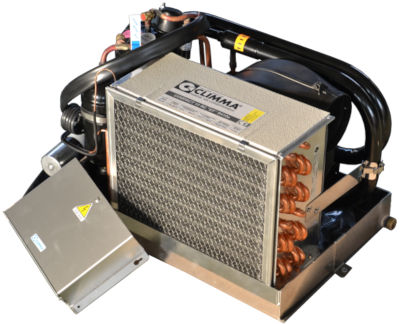
Inspector Detail
▸
Common issues
- Refrigerant undercharge or overcharge from field servicing without proper evacuation
- Seawater-cooled condenser fouling or scaling reducing heat rejection
- Compressor drive/inverter fault codes triggered by onboard supply voltage fluctuation
- Seawater pump impeller wear or airlock reducing condenser water flow
- Refrigerant leaks at brazed joints from vibration over time
- Condensate drain blockage causing water ingress into cabin spaces
Inspection checklist
- Electronic leak detection at refrigerant joints and fittings
- Suction and discharge pressure measurement against manufacturer's target range for the ambient/seawater condition
- Seawater strainer inspection and cleaning
- Condenser flow rate and tube-side cleanliness check, acid-clean if scaled
- Compressor current draw check against nameplate rating
- High/low pressure safety cutout function test
- Electrical connection and terminal tightness check
- Condensate drain and insulation check for leaks or sweating
Service intervals
| Seawater strainer cleaning | weekly to monthly depending on water quality |
| Refrigerant leak check | annually, or at each service visit |
| Condenser descaling/acid clean | annually or as fouling indicates |
| Seawater pump service | per manufacturer's manual, typically annual |
| Filter drier replacement | whenever the refrigerant circuit is opened for service |
Typical wear limits
| Seawater pump seal life | typically 1-3 years depending on running hours and water quality - inspect for leakage rather than a fixed replacement date |
| Refrigerant charge deviation | any deviation from the manufacturer's nameplate weight beyond a small margin should prompt leak investigation, not a simple top-up |
Ranges are typical for this design class. Always confirm against the manufacturer documentation for your serial number.
Critical spares
- Seawater pump (complete, or impeller/seal kit)
- Filter drier
- High/low pressure safety switches
- Compressor (inverter-matched, long lead time)
- R410A refrigerant plus recovery/charging equipment
Safety
- Refrigerant under pressure - frostbite/injury risk on accidental release
- Electrical hazard at compressor terminals and inverter drive
- Hot surfaces at the compressor discharge line
- Limited access in the machinery space where units are typically installed
Class survey
Air conditioning plant is not normally a classed item in itself. Refrigerant systems above certain charge quantities may fall under environmental/ODS regulation (F-Gas or equivalent) requiring logged leak checks and certified technicians. Where the unit interfaces with fire dampers in the accommodation ventilation system, that interface remains subject to normal fire safety survey.
Components & Design
Component data being added…
Technical Data
🤖 Ask about this model
One free question — answered like a marine engineer. No account needed.
Common failures & inspection points
Clean and inspect seawater strainer/sea-cock filter before each season and monthly during heavy use to prevent flow restriction to the condenser
Flush and inspect the cupronickel seawater condenser tubes annually for fouling, biofouling, scale deposits, and corrosion — use approved descaling agents
Check refrigerant circuit for leaks at all fittings, service valves, and brazed joints; verify operating pressures and superheat/subcooling against manufacturer specification
Inspect and clean the freshwater (chilled-water) circuit including pump, expansion vessel, flow switches, and heat exchanger for scale, air locks, and glycol concentration
Verify operation of safety devices: high/low pressure cut-outs, flow switches, compressor thermal protection, and overload relays
Check all electrical connections for tightness and corrosion; inspect control panel, terminal blocks, and contactor contacts; test emergency stop function
Lubricate seawater pump bearings and circulating pump impellers as specified; check pump seals and shaft for leakage or wear
Verify correct operation of the microprocessor/inverter control and all remote display panels; update firmware if available and log system alarms
Type-general inspection and maintenance points for this equipment category — not model-specific.
Suppliers & Spare Parts
Direct links to manufacturer, datasheet, spare-parts portal and dealers — request access below.
📄 Request sourcing links & documentsCases, daily reports, timesheets and AI troubleshooting in the OceanSphere Marine app — free for 14 days.
Start free trial →Find manufacturers, repair shops and spare-part dealers in the Maritime Network — our global company directory.
Maritime Network →