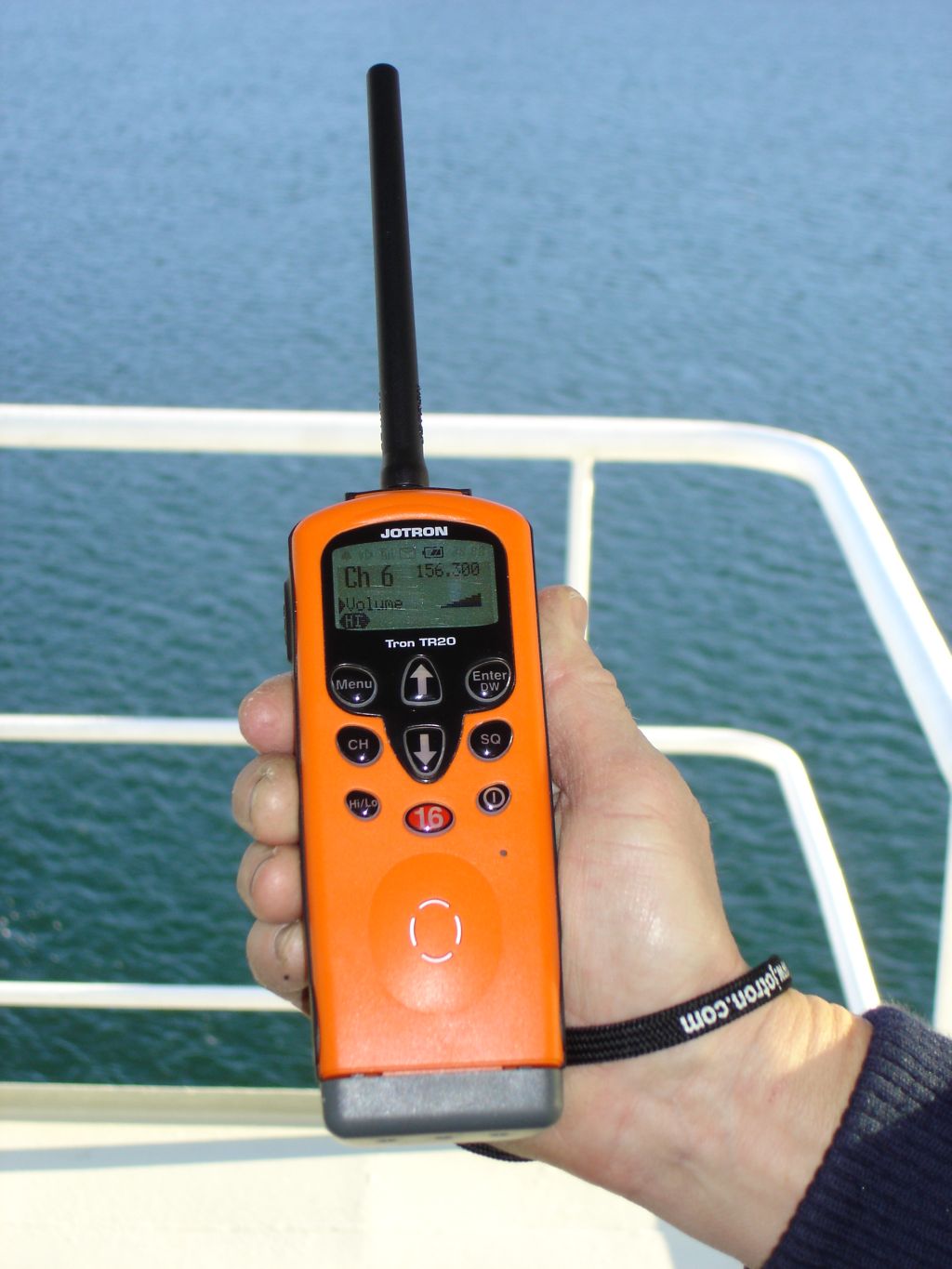
What to check on a VHF Radio (DSC).
VHF with Digital Selective Calling covers roughly line-of-sight range, commonly quoted as 20 to 30 nautical miles ship-to-ship depending on antenna height, which makes it the working radio for coastal traffic, port operations, pilot exchanges and bridge-to-bridge coordination. Its distress function sets it apart from a plain voice set: pressing the guarded DSC distress button on Channel 70 sends a digitally coded alert containing the vessel's MMSI, and if interfaced to a GPS, position and time, ahead of any voice call on Channel 16. This closes the gap left when…
What Sets This Type Apart
VHF with Digital Selective Calling covers roughly line-of-sight range, commonly quoted as 20 to 30 nautical miles ship-to-ship depending on antenna height, which makes it the working radio for coastal traffic, port operations, pilot exchanges and bridge-to-bridge coordination. Its distress function sets it apart from a plain voice set: pressing the guarded DSC distress button on Channel 70 sends a digitally coded alert containing the vessel's MMSI, and if interfaced to a GPS, position and time, ahead of any voice call on Channel 16. This closes the gap left when no one on the receiving end is listening on a voice channel at the moment of the emergency.

Main Components
Transceiver
Handles voice on the international marine VHF channel plan and digital data on Channel 70, normally with a dedicated DSC controller separate from the voice channel selector so a distress alert can be sent without interrupting ongoing traffic.
DSC controller and MMSI programming
Stores the vessel's Maritime Mobile Service Identity, which must be correctly programmed before commissioning; an unprogrammed or wrongly entered MMSI makes every DSC call from that set unidentifiable to the receiving station.
GPS interface
Feeds position and time into distress and routine DSC calls; without it the set can still transmit a distress alert but without position data, which materially slows a search.
Antenna and cabling
Fixed at the highest practical point for maximum range; a second, portable VHF/DSC set is often carried as backup on smaller vessels or fitted to the liferaft or lifeboat station.
Selection and Sizing
There is limited variation between fixed marine VHF sets at the equipment level; the selection points are as follows.
- Fixed installation versus survival-craft portable unit, both usually required aboard SOLAS vessels.
- GPS interface present and correctly wired, a common installation gap on retrofits.
- Output power, typically switchable between 1 W and 25 W, with the low setting used for short-range or crowded-channel traffic.
- Compatibility with AIS-SART and other DSC-capable equipment already on the bridge, so alerts and acknowledgements interoperate correctly.
Regulations and Class
VHF DSC carriage is mandated under SOLAS Chapter IV as part of GMDSS for the applicable sea areas, A1 in particular, where VHF coverage is assumed. Equipment must carry type approval to the relevant IMO/ITU performance standards, and the MMSI must be registered with the flag administration before the set is placed in service. GMDSS radio surveys, carried out by an approved radio surveyor, check DSC functionality including a test call, correct MMSI programming, battery backup where fitted, and that Channel 16 and 70 monitoring is functioning.
Typical Faults
| Fault | Cause | Consequence |
|---|---|---|
| DSC distress test fails | MMSI not programmed or programmed incorrectly at commissioning | Distress alert unidentifiable or rejected by shore stations |
| No position in DSC calls | GPS interface cable missing, damaged, or wrong data format selected | Distress alert sent without position, slowing search response |
| Reduced range | Corroded antenna connector or damaged coax from vibration and weather exposure | Missed calls with nearby traffic or VTS, degraded distress reach |
| Set unresponsive on Channel 70 | Firmware fault or accidental channel/squelch misconfiguration | Digital calls not received even though voice channels appear to work |
What to Look for in a Supplier
- Type approval certificate valid for the flag state and covering both voice and DSC functions.
- Confirmed GPS interface compatibility with the bridge's existing position source and data format.
- Straightforward MMSI programming procedure that can be verified by the crew, not only by a technician at commissioning.
- Support for firmware updates, since DSC standards and channel plans have been revised over time.
Test the DSC distress function's routine test call, not the emergency button, on a regular schedule; an untested set that has sat unused for months is the wrong moment to discover the MMSI was never entered.