SART
A SART does not send a distress message; it sits dormant until triggered by an X-band radar signal, then answers with a line of dots on the interrogating radar screen that grows into a distinctive series of arcs as the rescue craft closes range, giving survivors a homing beacon rather than a communication channel.
Read more — SART explained ▾
What sets a SART apart
SART stands for Search and Rescue Transponder and it is a passive homing device, not a transmitter that calls for help on its own. It stays dormant until it detects the pulse of an X-band (9 GHz) radar sweeping past, then transmits a response that appears on that radar as a line of twelve dots stretching outward from the SART's position, which resolves into a series of concentric arcs as the searching vessel gets closer. This is different from an AIS-SART, which instead broadcasts a position report visible on an AIS display or ECDIS rather than a radar screen, and different again from an EPIRB, which alerts the shore-based search and rescue system by satellite. All three are carried because they serve different stages and ranges of a rescue.
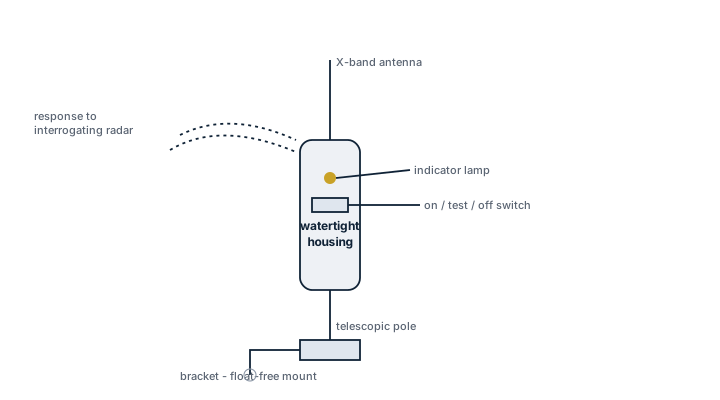
Main components
Transponder unit
Compact waterproof housing containing the receiver-transmitter, battery and antenna, designed to float upright when deployed in the water or be mounted on a survival craft.
Battery
Primary lithium battery sized to give a minimum standby and operating life set by the SOLAS carriage requirement, with a marked expiry date after which the unit must be replaced or the battery serviced.
Mounting bracket
Bracket on the liferaft or lifeboat holding the SART ready for immediate deployment, positioned so it can be lifted clear and mounted on an oar, mast or the craft's own fitting to maximise antenna height.
Self-test and indicator function
A test mode that confirms the unit responds correctly without triggering a live search alert, plus a visual or audible indicator showing it is receiving radar interrogation once activated.
Selection and sizing
Selection is largely about carriage requirement rather than a technical sizing exercise: SOLAS Ch III sets the number of SARTs required by vessel type and size, typically at least one per side or one per survival craft depending on ship category. The practical choice for the buyer is between a radar SART and an AIS-SART for any portion of the requirement flag state rules allow to be met that way, since AIS-SART gives an earlier position fix to any AIS-equipped vessel or aircraft in range, ahead of the radar SART becoming useful at closer range.
Regulations and class
SOLAS Ch III and the associated Life-Saving Appliance (LSA) Code set the carriage requirement, minimum operating range, and battery standby/operating life for SARTs, and every unit fitted must carry valid GMDSS type approval. Servicing intervals are set by the manufacturer and enforced through class and flag state survey, and battery expiry is a hard limit checked at each safety equipment survey, not a recommendation.
Typical faults
| Fault | Cause | Consequence |
|---|---|---|
| Unit fails self-test | Expired or degraded battery | SART unavailable exactly when it is needed, discovered only during drill or survey |
| Reduced detection range | Damaged or corroded antenna | Searching craft's radar picks up the SART response much later than expected |
| Not deployed with the craft | Bracket not checked during liferaft servicing, or unit left ashore after inspection | Survival craft launches without an active SART aboard |
| Housing cracked | Rough handling during drills or servicing | Water ingress disables the unit before it is ever needed |
What to look for in a supplier
- Current GMDSS type approval certificate matching the exact model supplied
- Battery expiry date clearly marked and matched against the ship's next scheduled safety equipment survey
- Service agent network able to reach the ship's trading ports within the certificate's servicing window
- Compatibility of the mounting bracket with the liferaft or lifeboat davit arrangement already fitted, avoiding an improvised fix at commissioning
A SART that passes self-test on the mounting bracket still needs someone to actually take it into the survival craft — check that step in every abandon-ship drill, not just the battery date.
Typical Manufacturers
1 manufacturers · 1 models
McMurdo
1- Battery deterioration prevents reliable emergency operation and is found during inspection or self-test
- Antenna or casing damage reduces transmitted signal quality and may lead to self-test failure
- Water ingress or corroded contacts cause intermittent or failed operation
- Damaged mounting or lanyard arrangements delay deployment or make the unit difficult to secure in a survival craft
- Incorrect test procedure or unauthorized transmission causes operational or regulatory problems even when the hardware is serviceable