What to check on a CPP Mechanism.
A controllable pitch propeller (CPP) lets the blades rotate around their own axis while the shaft keeps turning in a fixed direction and, usually, a fixed or narrow-band speed. Thrust and direction are changed by pitch angle alone, not by stopping or reversing the shaft. This is the core difference from a fixed pitch propeller (FPP), where astern thrust means reversing the engine or, with a reduction gearbox, engaging a reverse clutch. Because the shaft never has to stop, a CPP-fitted vessel can go from full ahead to full astern…
What Makes This Type
A controllable pitch propeller (CPP) lets the blades rotate around their own axis while the shaft keeps turning in a fixed direction and, usually, a fixed or narrow-band speed. Thrust and direction are changed by pitch angle alone, not by stopping or reversing the shaft. This is the core difference from a fixed pitch propeller (FPP), where astern thrust means reversing the engine or, with a reduction gearbox, engaging a reverse clutch. Because the shaft never has to stop, a CPP-fitted vessel can go from full ahead to full astern faster than most FPP arrangements, and the constant shaft speed keeps a shaft generator running at stable frequency regardless of the thrust demanded. That combination is why CPP is the default on tugs, ferries, offshore supply and DP-classed vessels, and why bulk carriers and tankers running one steady passage speed for weeks rarely bother with it.
Main Components
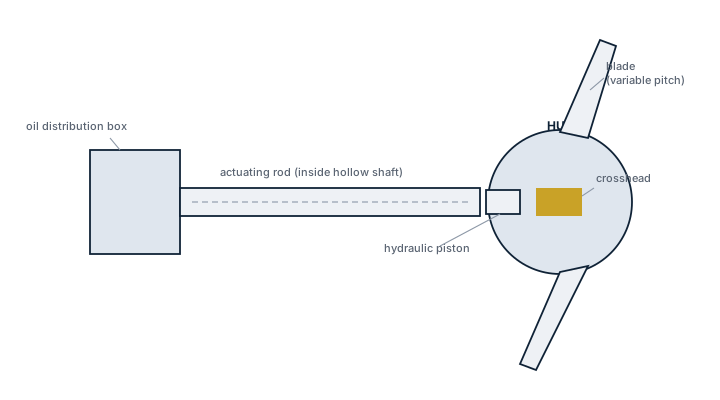
- Hub and blade carrier: houses the crosshead/spider mechanism that converts the axial movement of a pusher rod into rotation of each blade.
- Individual blades: bolted to the carrier flange, which allows one blade to be pulled and repaired without drydocking the vessel, unlike a cast FPP.
- Pusher rod and hollow tailshaft: the shaft is bored through to carry the rod that pushes the crosshead forward or aft to change pitch.
- Oil distribution box (OD box): mounted at the forward end of the shaft or inside the gearbox, it transfers hydraulic oil from the stationary piping into the rotating shaft bore through rotary seals.
- Hydraulic power unit (HPU): pumps, oil tank, filters and proportional valves that supply and meter the oil pressure driving the servo piston.
- Pitch feedback system: a follow-up rod or electronic transducer that reports actual blade angle back to the control system and bridge indicator.
Selection and Sizing
Diameter, blade area ratio and rated pitch range are matched to the engine's power and RPM curve, the hull's wake field and the vessel's operating profile. Pitch range on most CPP designs runs from roughly -5 degrees astern to +25 to +30 degrees ahead, though the exact figures vary by maker. Blade area ratio is pushed up on vessels that spend a lot of time at low speed and high thrust, such as tugs and anchor handlers, to keep cavitation under control at bollard pull. Hydraulic response time matters more for DP-classed vessels, where the pitch has to track a thrust demand from the DP controller within a set time window; slow oil system response shows up directly as position-keeping error.
Regulations and Class
Class societies require type approval of the hub casting, blade material and hydraulic control system, and the propeller shaft is subject to periodic survey under each class's rules, either at fixed intervals or under a continuous machinery survey scheme once the shaft has been in service long enough to qualify. Oil sampling from the hub and OD box is a normal part of these surveys, since water content in the sample is the earliest evidence of a failing rotating seal. Vessels with a DP notation carry additional requirements on propulsion redundancy that reference how a CPP failure mode is handled, since loss of pitch control on one thruster can defeat the whole DP capability plan.
Typical Faults
| Fault | Consequence |
|---|---|
| OD box rotary seal wear, oil leakage | Pitch feedback lag and, if seawater gets in instead of oil leaking out, corrosion of the hub bearings |
| Blade bolt loosening under vibration | Pitch scatter between blades, and in the worst case a lost blade with heavy vibration on the remaining shaft |
| Servo piston seal wear | Sluggish or hunting pitch response, harder to hold a steady RPM/pitch combination |
| Follow-up linkage misalignment | Bridge pitch indicator no longer matches actual blade angle, misleading the watchkeeper |
| Wrong pitch schedule against load | Cavitation erosion concentrated at the blade tips, thinning the blade over time |
What to Look for in a Supplier
- OEM parts traceability back to the original hub and blade type approval, not generic castings.
- A documented hydraulic overhaul procedure and access to the OD box seal kit specific to the model on board.
- Class-approved blade repair welding procedures if a damaged blade is to be repaired rather than replaced.
- A service network that can reach the vessel's trading area within the drydock or layup window, since CPP overhaul work is rarely a same-port job.
Watch the gap between commanded pitch and the feedback indicator over weeks, not just at the moment of an alarm - a slow, growing mismatch is usually OD box seal wear well before it becomes an oil sample failure.