Stern Tube Bearing
The stern tube bearing supports the propeller shaft where it passes through the hull, in the one place on the shaft line hardest to inspect without dry-docking, and its condition decides how long the shaft line runs without unplanned downtime.
Read more — Stern Tube Bearing explained ▾
What a stern tube bearing does
The stern tube bearing supports the propeller shaft where it passes through the hull, taking the propeller's weight and the radial loads from propeller thrust and shaft misalignment, in the one place on the shaft line that is hardest to inspect or repair without dry-docking. Its condition, more than almost any other single component, decides how long the shaft line runs without unplanned downtime.
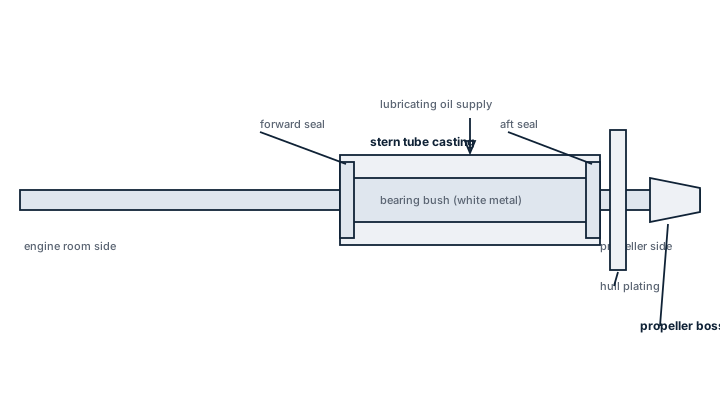
Main components
Bearing bush
A cylindrical bearing shell, traditionally lined with white metal for oil-lubricated systems or with a synthetic rubber or resin-based compound for water-lubricated systems, fitted inside the stern tube to carry the shaft.
Lubrication system
Oil-lubricated stern tubes run a sealed oil system with a header tank providing a static head above sea pressure, oil coolers, and filtration; water-lubricated systems rely on the surrounding sea water itself, fed through grooves in the bearing liner, and depend on the shaft turning to maintain a film rather than on a separate oil circuit.
Shaft seals
Aft seal keeps sea water out of an oil-lubricated stern tube, or, on water-lubricated systems, is arranged differently since water ingress into the bearing is expected; forward seal keeps stern tube oil out of the engine room bilge. Seal design ranges from lip seals to face-type mechanical seals on newer installations.
Wear-down monitoring
Most vessels carry a wear-down measurement point, a mechanical gauge or increasingly a permanently fitted sensor, to track bearing clearance increase over time without opening the stern tube, since clearance growth is the main indicator of remaining bearing life.
Selection and sizing
Bearing material and lubrication type follow from the shaft diameter, propeller-induced loading, and environmental rules the vessel trades under: white-metal oil-lubricated bearings remain common on larger, higher-powered vessels; synthetic water-lubricated bearings have grown in use, partly driven by regulation restricting oil discharge risk from stern tubes. Bearing length-to-diameter ratio, clearance tolerance, and permissible wear-down before renewal are all set against the shaft manufacturer's and class society's design values.
Regulations and class
MARPOL Annex I and the broader push to reduce oil pollution risk have driven a shift away from oil-lubricated stern tubes with a direct discharge risk toward water-lubricated or environmentally acceptable lubricant systems on newer builds, and several class societies and flag states set stricter monitoring requirements for oil-lubricated systems as a result. Class rules require periodic survey of the stern tube bearing, including wear-down measurement, at intervals tied to the vessel's survey cycle, with shaft withdrawal or in-situ inspection depending on class notation and monitoring system fitted; continuous survey notations can extend the interval between withdrawals where approved condition monitoring is in place.
Typical faults
- Excessive wear-down beyond class limits: found at routine measurement, requires bearing renewal, often meaning shaft withdrawal and dry-docking.
- Aft seal failure on oil-lubricated systems: sea water ingress into stern tube oil, or oil leakage into the sea, both reportable and both accelerating bearing wear.
- Overheating from inadequate lubrication or misalignment: babbitt bearing wiping damage that shows up as a sudden clearance jump rather than gradual wear.
- Vibration from shaft misalignment transmitted into the bearing: accelerated, uneven wear pattern rather than the expected uniform wear-down.
- Water-lubricated bearing dry-running at very low shaft speed or during prolonged stops: accelerated wear of the liner surface.
What to look for in a supplier
- Bearing material and clearance specification traceable to the shaft manufacturer's design and the vessel's class notation.
- Wear-down monitoring system compatible with the vessel's survey regime, particularly if aiming for a continuous survey notation to extend withdrawal intervals.
- Documented compliance route for oil-lubricated systems under current MARPOL Annex I discharge provisions, or a water-lubricated or EAL alternative if the trade requires it.
- Seal system proven for the vessel's shaft speed and draft range, since seal failure is the most common route to bearing damage.
Trend the wear-down readings over successive surveys rather than judging each one in isolation: a bearing that is within limits but accelerating toward them tells the real story before it becomes an unplanned dry-docking.
Typical Manufacturers
14 manufacturers · 33 models
SKF Marine
11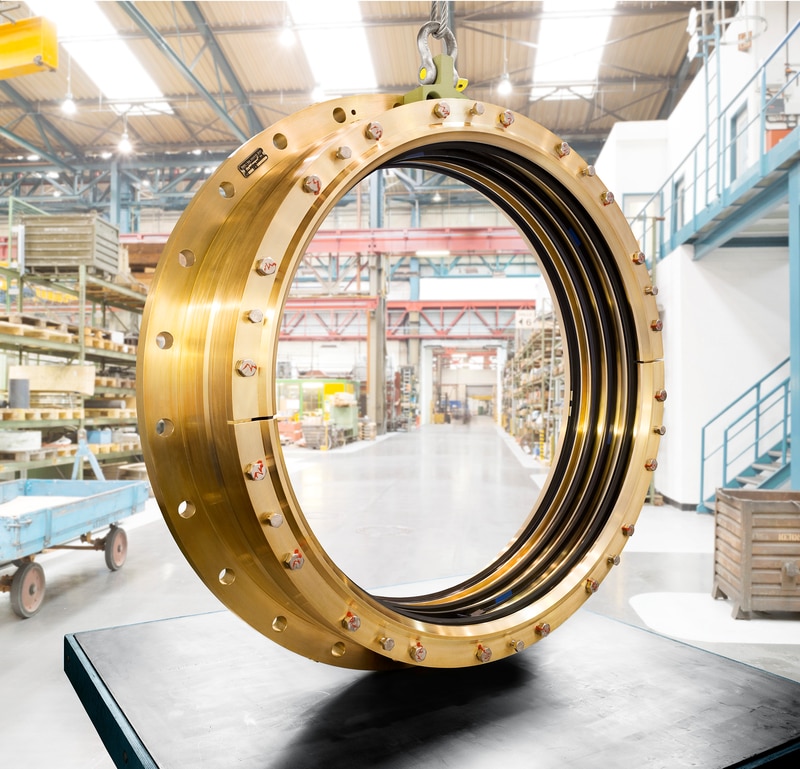
- Shaft bearing wear during coastal/shallow water operation (sand/silt)
- Wellenabdichtung-Leckage verursacht Ölverlust ins Meer
- Propellerflügel-Kavitationserosion
- Wellenfluchtungs-Abweichung verursacht ungleichmäßigen Lagerverschleiß
- Modular split design enables installation or replacement without dismantling the entire stern tube
- SKF’s high‑quality bearing materials give low friction and long service life under normal sea conditions
- DNV‑approved design meets recognised classification society standards
- Standardised dimensions simplify integration on new builds and retrofits
- Compatible with routine oil analysis programmes for condition monitoring
- Abrasive particles in coastal or shallow water can accelerate bearing wear
- Seal leakage will cause oil loss if daily drain inspection is missed
- Precise shaft alignment is required; mis‑alignment leads to uneven wear
- Higher upfront cost compared with basic non‑SKF bulkhead seals
- Split version adds additional sealing surfaces that must be correctly torqued
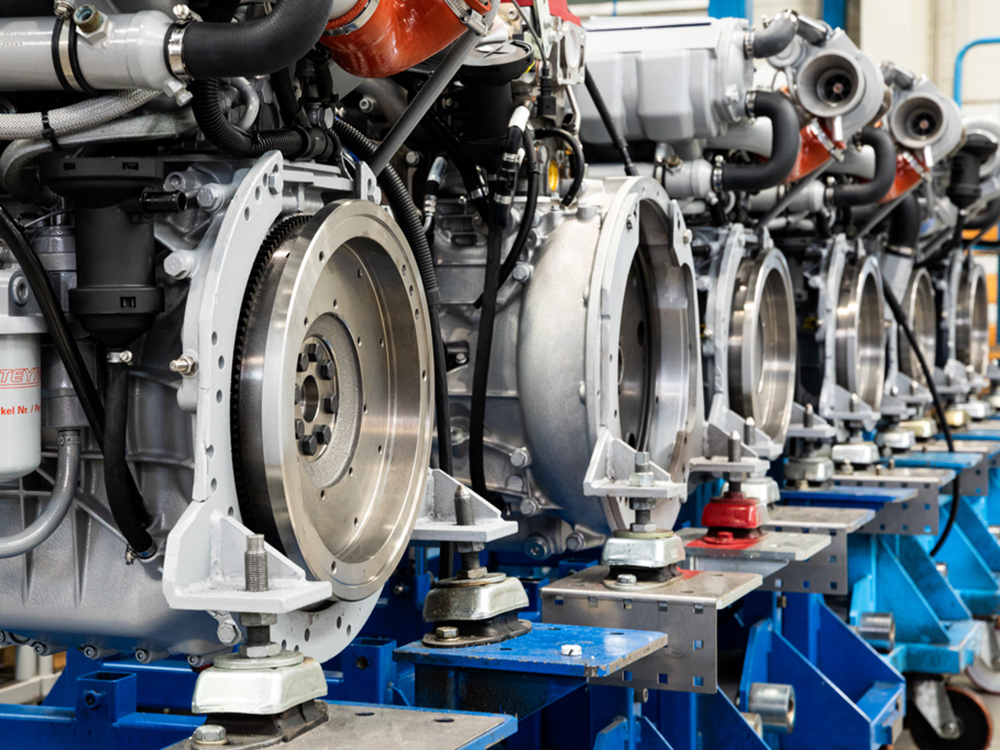
- Shaft bearing wear during coastal/shallow water operation (sand/silt)
- Wellenabdichtung-Leckage verursacht Ölverlust ins Meer
- Propellerflügel-Kavitationserosion
- Wellenfluchtungs-Abweichung verursacht ungleichmäßigen Lagerverschleiß
- Fully integrated bearing‑seal unit reduces installation time and alignment errors
- Modular adapter ring (option A) allows retrofit on existing shafts
- High load capacity suitable for medium to large propulsion systems
- DNV‑approved design provides recognized class society acceptance
- Proven track record with extensive service data from commercial fleets
- Sensitive to abrasive particles; wear accelerates in sand‑laden shallow water
- Seal leakage can occur if daily drain inspection and oil analysis are neglected
- Higher upfront cost compared with separate bearing‑and‑seal solutions
- Limited to shaft sizes covered by the CENTRAX product range
- Requires specialised tooling for removal/replacement
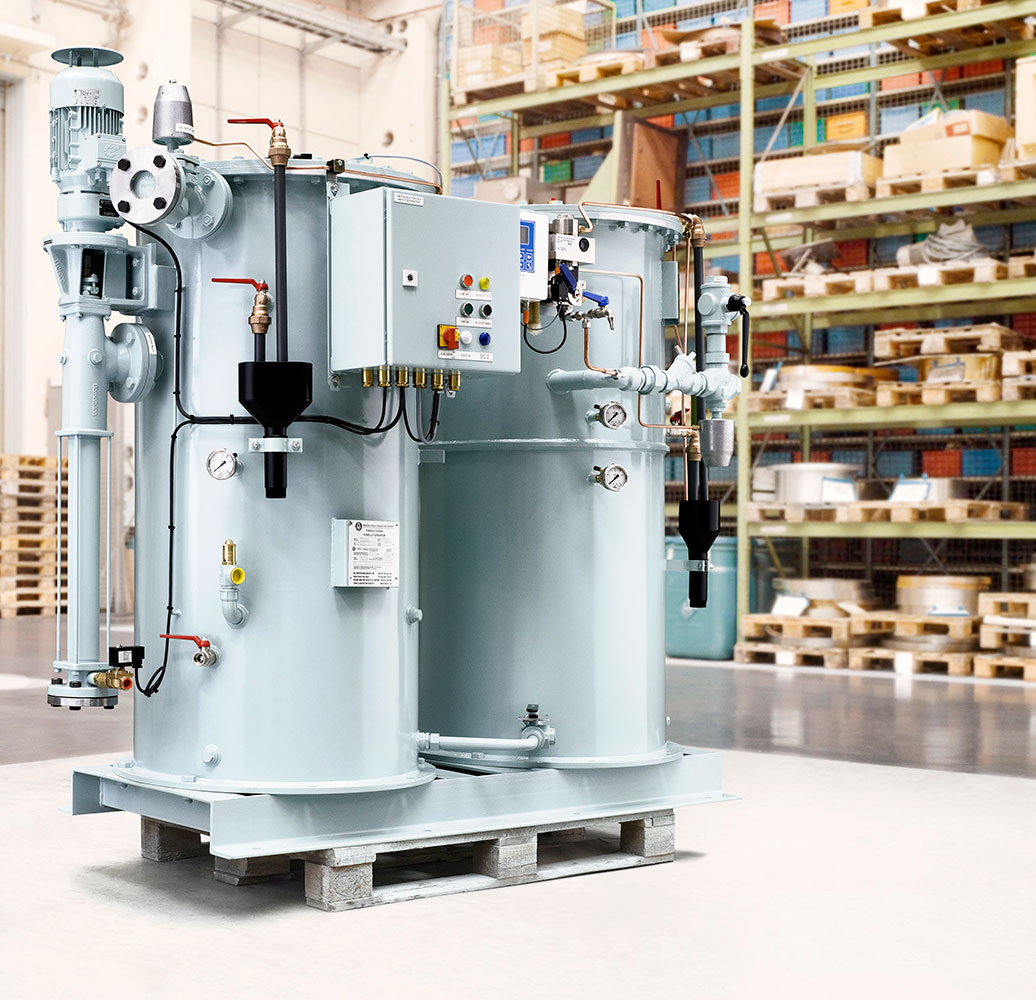
- Shaft bearing wear during coastal/shallow water operation (sand/silt)
- Wellenabdichtung-Leckage verursacht Ölverlust ins Meer
- Propellerflügel-Kavitationserosion
- Wellenfluchtungs-Abweichung verursacht ungleichmäßigen Lagerverschleiß
- No electrical power required – fully mechanical operation reduces failure points.
- Achieves very low water content (0.25–15 ppm) suitable for high‑sensitivity stern‑tube bearings.
- Compact, modular design allows installation in limited engine‑room spaces.
- Proven reliability on long‑haul vessels; low maintenance interval (oil analysis quarterly).
- Compatible with a wide range of fuel grades and can handle sand/sludge loads typical of coastal operations.
- Higher upfront cost compared with simple coalescer filters.
- Requires periodic manual cleaning of the separator bowl to maintain efficiency.
- Performance drops if inlet flow is highly turbulent or if water content exceeds design limits.
- Installation may need minor modifications to existing fuel‑line layout.
- Mechanical wear parts (rotor bearings) require scheduled inspection and replacement.
- Shaft bearing wear during coastal/shallow water operation (sand/silt)
- Wellenabdichtung-Leckage verursacht Ölverlust ins Meer
- Propellerflügel-Kavitationserosion
- Wellenfluchtungs-Abweichung verursacht ungleichmäßigen Lagerverschleiß
- High wear resistance – alloy steel rollers and cages designed for sand/shale environments
- Integrated double‑seal system (SIMPLAN‑C‑P / SIMPLAN‑SiC‑P) reduces oil leakage risk
- Modular construction allows quick replacement during dry‑dock periods
- Proven DNV class approval ensures compliance with major classification societies
- Low maintenance – routine oil analysis and clearance checks suffice for most operations
- Sensitive to misalignment; excessive shaft runout accelerates uneven wear
- Cavitation erosion can occur on adjacent propeller blades if seal pressure is not properly set
- Standard bearing sizes may be oversized for very small vessels, adding unnecessary weight
- Requires regular oil drain inspection to prevent environmental leakage in coastal service

- Shaft bearing wear during coastal/shallow water operation (sand/silt)
- Wellenabdichtung-Leckage verursacht Ölverlust ins Meer
- Propellerflügel-Kavitationserosion
- Wellenfluchtungs-Abweichung verursacht ungleichmäßigen Lagerverschleiß
- Integrated axial and radial load handling reduces the number of separate components on the shaft line.
- SKF’s proven bearing material and design give high load capacity and low friction, extending service intervals.
- DNV‑approved design simplifies classification approval for new builds and retrofits.
- Modular seal options allow tailored protection against oil leakage in various operating environments.
- Standardised mounting dimensions facilitate installation on a wide range of shaft sizes.
- Higher initial purchase cost compared with single‑function bearing solutions.
- Sensitive to abrasive particles; sand or silt ingress can accelerate wear (known issue in coastal/shallow water).
- Installation requires precise alignment; misalignment leads to uneven wear and premature failure.
- Seal maintenance is critical – daily drain inspections are required to avoid oil loss.
- Limited to shaft diameters covered by the SIMPLAN‑SC catalogue; may not suit very large or very small shafts.
- Shaft bearing wear during coastal/shallow water operation (sand/silt)
- Wellenabdichtung-Leckage verursacht Ölverlust ins Meer
- Propellerflügel-Kavitationserosion
- Wellenfluchtungs-Abweichung verursacht ungleichmäßigen Lagerverschleiß
- High load capacity in a reduced axial length – suitable for space‑constrained pod installations
- Integrated double‑lip seal reduces external sealing components and simplifies installation
- SKF’s proprietary bearing material offers good wear resistance under moderate abrasive conditions
- Standardised mounting dimensions facilitate retrofit on existing vessels
- DNV‑approved design provides recognised classification acceptance
- Sensitive to high sand or silt concentrations; abrasive particles can accelerate bearing wear in shallow‑water operations
- Seal leakage may occur if daily drain inspections are missed, leading to oil loss and environmental concerns
- Alignment tolerance is tight – misalignment of the shaft can cause uneven wear and premature failure
- Limited to low‑to‑moderate power ranges; not suitable for high‑power main‑propulsion shafts on large carriers
- Replacement requires dry‑dock or at‑sea specialized tooling, increasing maintenance downtime
- Shaft bearing wear during coastal/shallow water operation (sand/silt)
- Wellenabdichtung-Leckage verursacht Ölverlust ins Meer
- Propellerflügel-Kavitationserosion
- Wellenfluchtungs-Abweichung verursacht ungleichmäßigen Lagerverschleiß
- Very short overall length – saves space in the hull and reduces stern‑tube weight
- Integrated bearing and seal from a single supplier simplifies procurement and installation
- SKF rolling‑element technology delivers low friction losses and high reliability
- Designed for easy daily drain inspection and quarterly oil analysis, supporting condition‑based maintenance
- Suitable for low to medium power shafts (up to ~8 MW) on short‑sea and coastal vessels
- Maximum load capacity lower than larger conventional stern tube bearings – not ideal for high‑power (>10 MW) propulsion systems
- Abrasive particles (sand, silt) can accelerate seal wear if filtration is inadequate
- Requires regular oil drain and analysis; maintenance effort higher than a simple plain bearing
- Retrofit may need SKF‑specific housing dimensions, limiting applicability on older ships
- Seal lip wear can lead to oil leakage if daily inspections are missed
- Shaft bearing wear during coastal/shallow water operation (sand/silt)
- Wellenabdichtung-Leckage verursacht Ölverlust ins Meer
- Propellerflügel-Kavitationserosion
- Wellenfluchtungs-Abweichung verursacht ungleichmäßigen Lagerverschleiß
- Proven SKF design with long service history in merchant vessels
- Integrated oil lubrication channel reduces friction and wear
- Standardised dimensions simplify replacement and retrofit
- SKF global after‑sales support and spare‑parts availability
- Higher upfront cost compared with basic plain bushings
- Requires regular oil analysis and seal inspection to avoid leakage
- Limited to medium‑speed propulsion ranges; not optimal for high‑speed craft
- May need custom adapters for non‑standard shaft diameters
- Shaft bearing wear during coastal/shallow water operation (sand/silt)
- Wellenabdichtung-Leckage verursacht Ölverlust ins Meer
- Propellerflügel-Kavitationserosion
- Wellenfluchtungs-Abweichung verursacht ungleichmäßigen Lagerverschleiß
- High load capacity across a wide size range (0.25–10 in.)
- Modular design with interchangeable seal kits for easy installation and replacement
- Proven DNV approval and long‑track record of reliability in marine propulsion
- Corrosion‑resistant steel alloys suitable for seawater exposure
- Low friction operation reduces shaft power loss
- Higher initial cost compared with generic bearing options
- Requires precise alignment and regular oil quality monitoring to avoid seal leakage
- Performance can be affected by abrasive particles in coastal or shallow‑water operations
- Limited speed rating; not ideal for very high‑speed craft
- Maintenance interval (oil analysis, seal inspection) adds operational overhead

- Shaft bearing wear during coastal/shallow water operation (sand/silt)
- Wellenabdichtung-Leckage verursacht Ölverlust ins Meer
- Propellerflügel-Kavitationserosion
- Wellenfluchtungs-Abweichung verursacht ungleichmäßigen Lagerverschleiß
- Robust steel alloy construction with high load capacity
- Integrated oil seal reduces external leakage risk when properly maintained
- Standardised dimensions allow quick replacement during dockings
- Compatible with SKF condition‑monitoring sensors for predictive maintenance
- Class‑approved (DNV) and widely used in commercial fleets
- Seal wear can lead to oil loss and marine pollution if not inspected daily
- Abrasive sand or silt in coastal/shallow water accelerates bearing wear
- Misalignment of the shaft causes uneven wear and premature failure
- Higher upfront cost compared with basic plain‑bearing solutions
- Requires regular oil analysis and alignment checks to maintain performance
- Shaft bearing wear during coastal/shallow water operation (sand/silt)
- Wellenabdichtung-Leckage verursacht Ölverlust ins Meer
- Propellerflügel-Kavitationserosion
- Wellenfluchtungs-Abweichung verursacht ungleichmäßigen Lagerverschleiß
- High radial and axial load capacity suitable for large propulsion shafts
- Modular plummer block design simplifies installation and maintenance
- Integrated sealing system reduces risk of oil leakage into the sea
- Proven DNV approval ensures compliance with classification society standards
- Low friction operation contributes to fuel efficiency
- Sensitive to abrasive particles (sand, silt) in coastal or shallow‑water service unless extra filtration is used
- Requires regular seal inspection and oil analysis to prevent leakage and wear
- Higher upfront cost compared with basic plain bearings
- Limited size range; very large shafts may need custom solutions
- Precise alignment is critical – misalignment leads to uneven wear
Thordon Marine
8
- Misalignment or foundation movement causes vibration, bearing load changes and abnormal temperature
- Bearing, bush or coupling wear causes noise, vibration, backlash or rising temperature
- Seal deterioration causes lubricating-oil leakage or seawater ingress
- Lubrication contamination or low supply damages bearings and produces temperature or pressure alarms
- Control or hydraulic faults on controllable-pitch or PTO equipment cause incorrect response, alarms or loss of function
- Eliminates oil pollution risk
- Reduced maintenance due to water-lubrication
- Compliant with environmental regulations
- Increased durability and resistance to wear
- Easy to measure wear during drydock
- Bearing wear beyond class limit can occur
- Scoring from debris is a potential issue
- Misalignment wear pattern can be a problem
- May require more frequent inspections
- Higher upfront cost compared to traditional bearings
- Bearing wear or loss of bearing material increases shaft movement and is noticed as vibration, noise or abnormal clearance during inspection
- Poor lubrication or restricted water flow on water-lubricated designs causes heating, scoring or accelerated wear
- Misalignment or shaft deflection creates uneven loading and produces localized wear, elevated temperature or vibration
- Abrasive contamination or debris damages the bearing surface and causes scoring or rapid clearance growth
- Corrosion, delamination or material damage causes visible deterioration and may lead to unstable shaft support
- Corrosion‑resistant polymer eliminates need for oil lubrication and reduces environmental contamination risk.
- Low friction coefficient provides efficient power transmission and can extend propeller life.
- Long service intervals; the bearing material tolerates marine fouling without frequent maintenance.
- Lightweight compared with traditional bronze bearings, easing installation and reducing overall stern tube weight.
- Standardized dimensions allow straightforward fit on most 200 mm shaft arrangements.
- Higher upfront cost than conventional metal (bronze) bearings.
- Maximum operating temperature is lower; excessive heat can accelerate polymer wear.
- Requires precise alignment and clean water flow; poor installation can lead to premature failure.
- Not ideal for very high‑power shafts where metal bearings may offer greater load capacity.
- Limited availability of spare parts in remote ports compared with more common bearing types.
- Bearing wear or loss of bearing material increases shaft movement and is noticed as vibration, noise or abnormal clearance during inspection
- Poor lubrication or restricted water flow on water-lubricated designs causes heating, scoring or accelerated wear
- Misalignment or shaft deflection creates uneven loading and produces localized wear, elevated temperature or vibration
- Abrasive contamination or debris damages the bearing surface and causes scoring or rapid clearance growth
- Corrosion, delamination or material damage causes visible deterioration and may lead to unstable shaft support
- Eliminates the need for an oil lubrication system, reducing maintenance and environmental spill risk
- SXL polymer construction offers excellent corrosion resistance and low wear in seawater
- Optimised geometry for a 300 mm shaft provides compact installation and easy alignment
- Operates at lower temperatures than metal bearings, improving bearing life under normal loads
- Reduced noise and vibration compared with traditional bronze bearings
- Lower load‑capacity limit than conventional bronze or babbitt bearings, restricting use on high‑power vessels
- Higher sensitivity to particulate contamination in the cooling water, requiring effective filtration
- Potentially higher upfront cost versus standard metal stern tube bearings
- Limited documented classification approvals; some societies may require additional testing
- Polymer material can degrade if exposed to excessive temperatures or aggressive chemicals
- Bearing wear or lubrication loss can raise temperature and vibration, noticed through monitoring or abnormal noise
- Misalignment can produce uneven bearing loads, vibration and accelerated seal wear
- Seal deterioration can cause oil leakage or seawater ingress, seen in stern-tube levels or bilges
- Corrosion or fretting at interfaces can damage shafts, sleeves or bearing housings
- Loose foundations or damaged chocking can shift alignment and change vibration behavior
- Oil‑free operation eliminates the need for an oil lubrication system
- Corrosion‑resistant polymer material reduces maintenance in seawater environments
- Lightweight compared with traditional bronze bearings, lowering overall propeller assembly mass
- Low friction coefficient improves propulsion efficiency
- Generally lower load capacity than metal (bronze) bearings, limiting use on very high‑power shafts
- Polymer may be more susceptible to wear under abrasive water conditions if water quality is poor
- Limited long‑term field data compared with established metal bearing types
- Replacement intervals may be shorter in high‑stress applications
- Bearing wear or lubrication loss can raise temperature and vibration, noticed through monitoring or abnormal noise
- Misalignment can produce uneven bearing loads, vibration and accelerated seal wear
- Seal deterioration can cause oil leakage or seawater ingress, seen in stern-tube levels or bilges
- Corrosion or fretting at interfaces can damage shafts, sleeves or bearing housings
- Loose foundations or damaged chocking can shift alignment and change vibration behavior
- Eliminates the need for oil lubrication system, reducing maintenance and environmental risk
- Corrosion‑resistant polymer material provides long service life in seawater exposure
- Low friction coefficient improves propeller efficiency and reduces shaft wear
- Simplified installation with fewer ancillary components
- Maximum load rating lower than high‑performance oil‑lubricated bearings, limiting use on very high‑power vessels
- Polymer material may be sensitive to extreme temperature excursions beyond design limits
- Limited proven track record compared with legacy bearing manufacturers
- Potential for higher wear rates if water quality (e.g., debris, biofouling) is not adequately controlled
- Bearing wear or lubrication loss can raise temperature and vibration, noticed through monitoring or abnormal noise
- Misalignment can produce uneven bearing loads, vibration and accelerated seal wear
- Seal deterioration can cause oil leakage or seawater ingress, seen in stern-tube levels or bilges
- Corrosion or fretting at interfaces can damage shafts, sleeves or bearing housings
- Loose foundations or damaged chocking can shift alignment and change vibration behavior
- Eliminates oil sump and associated maintenance, reducing environmental risk.
- ThorPlas‑Blue material provides excellent corrosion resistance in seawater.
- Lightweight compared with traditional bronze bearings, lowering shaft line mass.
- Standard dimensions fit common 200 mm shafts, simplifying installation.
- Lower load and thrust capacity than metal (bronze) bearings; unsuitable for high‑power main engines.
- Polymer material has temperature limits (~80 °C), restricting use in high‑speed or hot‑water environments.
- Performance depends on continuous, clean water flow; blockage can cause rapid wear.
- Less extensive long‑term field history than legacy bearing designs.
- Bearing wear or loss of bearing material increases shaft movement and is noticed as vibration, noise or abnormal clearance during inspection
- Poor lubrication or restricted water flow on water-lubricated designs causes heating, scoring or accelerated wear
- Misalignment or shaft deflection creates uneven loading and produces localized wear, elevated temperature or vibration
- Abrasive contamination or debris damages the bearing surface and causes scoring or rapid clearance growth
- Corrosion, delamination or material damage causes visible deterioration and may lead to unstable shaft support
- Eliminates oil leakage risk – fully water lubricated
- Corrosion‑resistant polymer material reduces maintenance intervals
- Quiet operation compared with metal bearings
- Direct fit for standard 300 mm shafts, simplifying installation
- Lower environmental impact – no oil handling or disposal
- Load capacity lower than conventional oil‑lubricated bronze/steel bearings
- Performance can degrade in low cooling‑water flow or high‑temperature conditions
- Not recommended for very high‑power main engines (>10 MW) or heavy‑duty applications
- Requires precise alignment during installation to avoid premature wear
- Bearing wear or loss of bearing material increases shaft movement and is noticed as vibration, noise or abnormal clearance during inspection
- Poor lubrication or restricted water flow on water-lubricated designs causes heating, scoring or accelerated wear
- Misalignment or shaft deflection creates uneven loading and produces localized wear, elevated temperature or vibration
- Abrasive contamination or debris damages the bearing surface and causes scoring or rapid clearance growth
- Corrosion, delamination or material damage causes visible deterioration and may lead to unstable shaft support
- Corrosion‑resistant polymer material reduces wear in seawater environments
- Eliminates the need for an oil lubrication system, saving space and maintenance effort
- Designed specifically for 400 mm shafts common on medium‑speed vessels
- Lower weight than traditional cast‑iron or babbitt bearings, easing installation
- Fits standard stern tube housings without major modifications
- Load capacity generally lower than high‑performance oil‑lubricated bearings
- Performance can be sensitive to water quality and temperature extremes
- May require more frequent inspection in very high‑power applications
- Limited long‑term field data compared with legacy bearing manufacturers
- Not suitable for shafts larger than 400 mm without redesign
Wärtsilä
3
- Cutless 400
- Cutless 500
- Cutless 700 HP
- Rubber stave wear from sand/debris ingestion
- Rubber delamination from age/UV exposure (above waterline bearings)
- Shell corrosion (bronze — dezincification in stagnant seawater)
- No oil contamination risk – fully water lubricated
- Cutless design simplifies installation and removal, reducing dry‑dock time
- Low routine maintenance; no oil change or seal replacement required
- Effective sealing against external water ingress, protecting the shaft journal
- Proven performance for power ranges up to 700 HP (suitable for many medium‑size vessels)
- Rubber staves are susceptible to wear from sand, debris or abrasive particles in cooling water
- Ageing and UV exposure can cause rubber delamination, especially on above‑waterline installations
- Bronze shells may suffer dezincification or corrosion if water flow is stagnant
- Limited to lower power ranges compared with high‑power oil‑lubricated bearings
- Requires regular clearance checks at dry‑dock; life typically 5–15 years
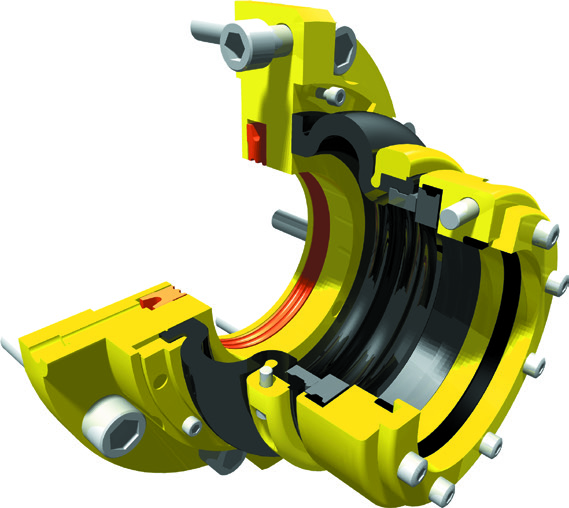
- Airguard
- Enviroguard
- FSTL
- FST
- Lip seal wear from shaft roughness/scoring — primary oil loss cause
- Seal ring hardening from age (rubber degradation after 10-15 years)
- Shaft liner scoring from debris trapped under seal lips
- Air supply system failure on Airguard models causing oil loss
- Proven design in service since the 1960s, widely accepted by classification societies
- Simple passive operation – no external drive required
- Airguard variant provides an active pressurised air barrier that reduces oil loss
- Straight‑forward daily inspection (drain check and air pressure verification)
- Available in several size families (Airguard, Enviroguard, FSTL, FST) to match a range of shaft diameters
- Seal wear accelerates if the shaft surface is rough or scored
- Rubber hardening after 10‑15 years necessitates scheduled replacement
- Air supply system for Airguard models adds complexity; failure can cause rapid oil loss
- Not ideal for very high shaft speeds (>200 rpm) where heat buildup may exceed seal limits
- Replacement generally requires dry‑dock, leading to planned downtime

- Misalignment or foundation movement causes vibration, bearing load changes and abnormal temperature
- Bearing, bush or coupling wear causes noise, vibration, backlash or rising temperature
- Seal deterioration causes lubricating-oil leakage or seawater ingress
- Lubrication contamination or low supply damages bearings and produces temperature or pressure alarms
- Control or hydraulic faults on controllable-pitch or PTO equipment cause incorrect response, alarms or loss of function
- Proven, long‑standing technology with extensive field experience
- High load capacity for medium‑speed shafts (up to ~20 000 kW)
- Simple oil lubrication system – compatible with existing shipboard lubricating plants
- Easy replacement and overhaul procedures
- Integrated temperature sensor enables real‑time condition monitoring
- Susceptible to white‑metal fatigue cracking if oil flow is interrupted
- Requires strict oil cleanliness and continuous supply; oil starvation leads to rapid damage
- Higher maintenance interval compared with foil or polymer bearings
- Temperature alarms can be triggered by normal load spikes, leading to false positives
- Not optimal for very high‑speed or ultra‑low‑vibration applications
Aegir Marine (Netherlands)
1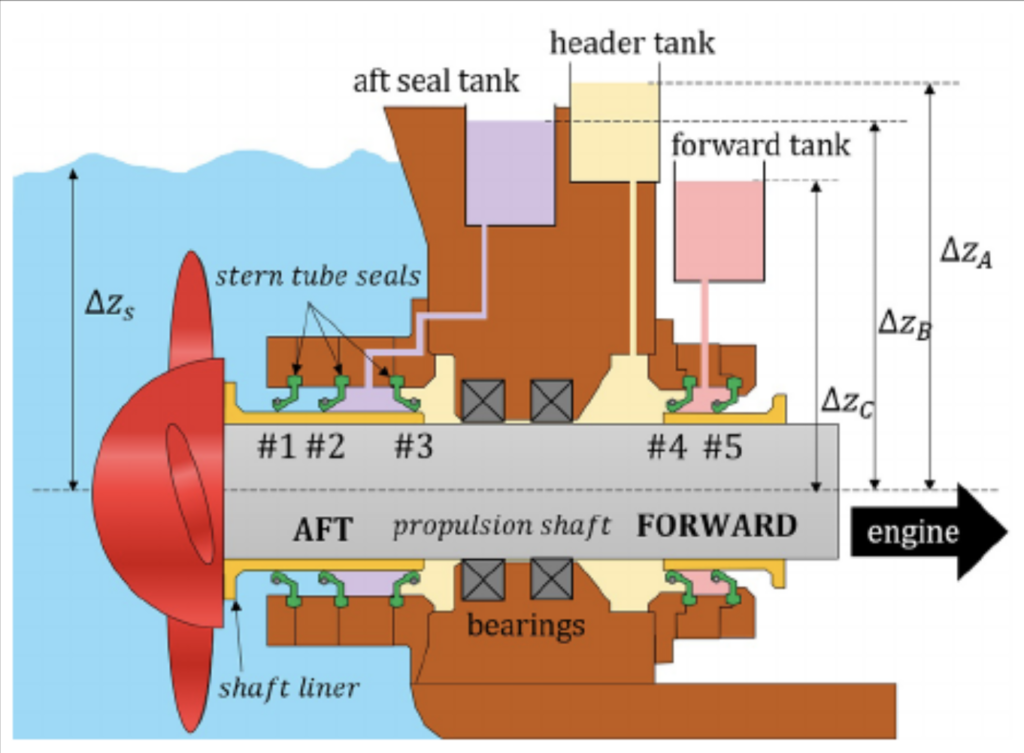
- AOFS-200
- AOFS-400
- AOFS-600
- AOFS-800
- Face seal wear from debris in seawater
- Polymer bearing wear in silty waters
- System air entrapment causing bearing noise
- Zero oil handling – no risk of oil leakage or MARPOL Annex I violations
- Reduced routine maintenance (no oil changes, simpler dry‑dock checks)
- Passive seawater lubrication lowers power loss compared with oil‑circulated systems
- Modular size range (AOFS‑200 to AOFS‑800) fits a variety of shaft diameters
- Simplified environmental compliance and lower operating cost
- Face seal wear accelerated by debris or marine growth in the seawater stream
- Polymer bearing wear can increase in silty or high‑particulate water conditions
- Air entrapment may cause audible bearing noise if filtration is inadequate
- Requires a reliable seawater supply and regular filter maintenance
- Load capacity lower than some traditional metal‑on‑metal stern tubes, limiting use on very high‑power vessels
Blohm+Voss / Aegir Marine (Germany/Netherlands)
1
- WM-150
- WM-300
- WM-500
- WM-700
- WM-1000
- White metal wiping from shaft misalignment or sudden load
- Oil contamination from seawater ingress past stern tube seal
- Oil loss to sea from seal failure — MARPOL environmental concern
- Bearing temperature rise from oil degradation
- Proven design dating back to early 1900s with extensive service history in merchant fleets.
- High static and dynamic load capacity suitable for medium‑to‑high power shafts.
- Compatible with standard stern‑tube oil systems; no need for special lubricants or cooling equipment.
- White‑metal can be re‑cast on‑shore, allowing repair of wiped bearings without full replacement.
- Widely stocked by Blohm+Voss/Aegir Marine, facilitating quick procurement and spare‑part availability.
- Requires precise shaft alignment; misalignment leads to rapid white‑metal wear or wiping.
- Sensitive to oil contamination (water ingress, particles) which can cause overheating and premature failure.
- Heavier and bulkier than modern polymer or composite bearings, affecting installation space.
- Environmental risk: oil loss through seal failure results in MARPOL‑regulated discharge.
- Maintenance intensive – daily oil level/quality checks, continuous temperature monitoring, quarterly oil analysis.
Duramax Marine
1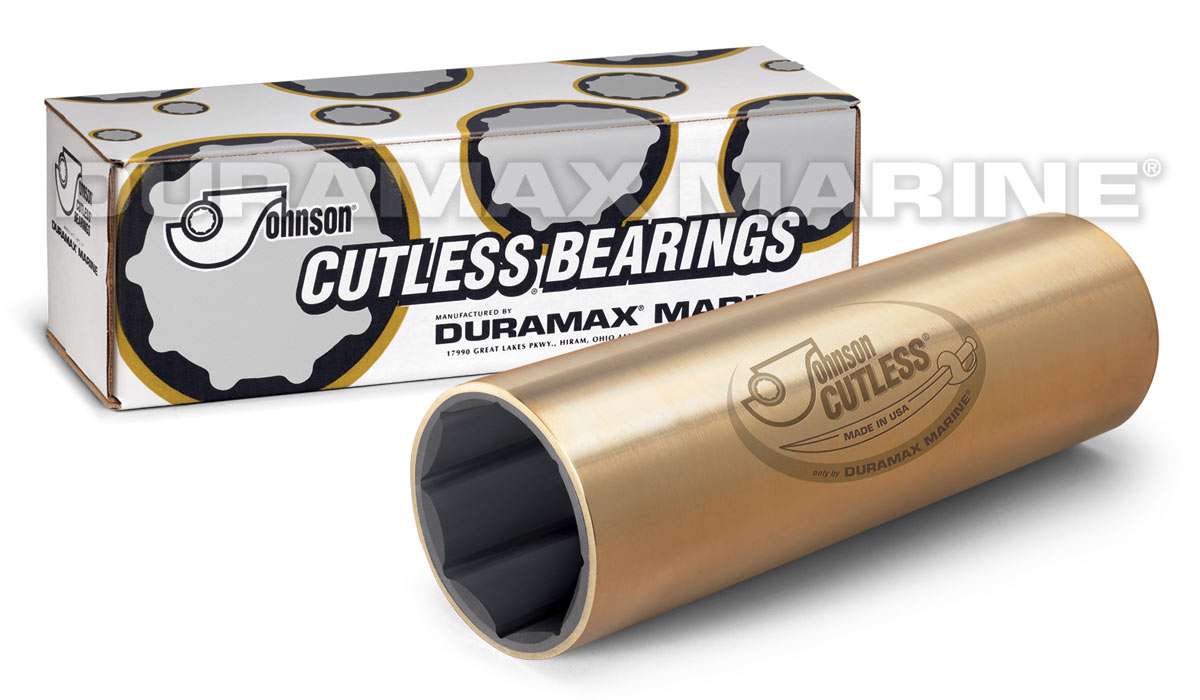
- Misalignment or foundation movement causes vibration, bearing load changes and abnormal temperature
- Bearing, bush or coupling wear causes noise, vibration, backlash or rising temperature
- Seal deterioration causes lubricating-oil leakage or seawater ingress
- Lubrication contamination or low supply damages bearings and produces temperature or pressure alarms
- Control or hydraulic faults on controllable-pitch or PTO equipment cause incorrect response, alarms or loss of function
- Oil‑free operation eliminates lubrication leakage and reduces environmental impact
- Composite material provides excellent corrosion resistance in seawater
- Long service life with low routine maintenance requirements
- Reduced noise and vibration compared with traditional metal bearings
- Suitable for retrofits where existing oil‑lubricated bearings are being replaced
- Higher upfront capital cost than conventional babbitt or bronze bearings
- Load capacity may be lower than heavy‑duty metal bearing designs
- Performance is sensitive to shaft misalignment; edge loading can accelerate wear
- Potential for damage from foreign objects entering the stern tube
- Requires careful installation and alignment procedures
Kamome Propeller (Japan)
1
- KP-150
- KP-300
- KP-500
- KP-700
- White metal wiping from alignment issues
- Seal wear causing oil loss
- Oil tank level drop from seal leakage
- Integrated package (bearing, seal and oil tank) simplifies procurement and installation
- Passive gravity‑fed oil system eliminates the need for pumps or pressure regulators
- White‑metal bearing offers low friction and high load capacity for medium‑power shafts
- Modular size range (KP‑150 to KP‑700) fits a wide variety of vessel classes
- Simple daily oil‑level check and quarterly oil analysis support straightforward maintenance
- White‑metal bearing is sensitive to misalignment; alignment errors can cause rapid wear
- Lip seal wear can lead to oil loss, requiring replacement at each dry‑dock
- Gravity oil tank limits oil capacity, which may be insufficient for very long voyages without frequent checks
- Passive lubrication provides less control over oil flow compared with active pressure systems on high‑power shafts
- No built‑in condition‑monitoring sensors; relies on manual inspection
Kobelco Eagle Marine (Japan)
1
- KE-150
- KE-300
- KE-500
- KE-800
- Lip seal wear from shaft liner surface deterioration
- Oil consumption increase from worn aft seal
- Ceramic liner chipping (ceramic variants)
- Proven design lineage since 1975, widely used in commercial shipping
- Multi‑lip rubber construction provides reliable oil retention under normal operating pressures
- Optional ceramic liner offers higher wear resistance for abrasive shaft surfaces
- Simple passive drive – no external power or hydraulic actuation required
- Straightforward replacement during scheduled dry‑dock periods
- Lip seal wear accelerates if the shaft liner surface deteriorates, leading to oil loss
- Ceramic liners can chip under impact or misalignment, requiring careful handling
- Oil consumption rises noticeably when aft lip becomes worn
- Limited to shaft diameters covered by KE‑150 – KE‑800 range; not suitable for very large or small shafts
- Requires daily drain inspection and periodic dry‑dock seal change – higher planned maintenance
Kongsberg Maritime
1
- Shaft bearing wear during coastal/shallow water operation (sand/silt)
- Wellenabdichtung-Leckage verursacht Ölverlust ins Meer
- Propellerflügel-Kavitationserosion
- Wellenfluchtungs-Abweichung verursacht ungleichmäßigen Lagerverschleiß
- Real‑time clearance measurement enables early detection of bearing wear before failure.
- Integrated with Kongsberg Condition Monitoring System for automated alarm thresholds.
- Robust marine‑grade housing suitable for harsh coastal and shallow‑water environments.
- DNV approved, providing recognised class society validation.
- Limited to specific shaft diameters; retro‑fit on older vessels may require mechanical adaptation.
- Requires periodic calibration and verification during dry‑dock periods.
- Additional wiring and integration effort with existing ship monitoring networks.
- Higher upfront cost compared with simple manual clearance gauges.
Micromatic (Italy)
1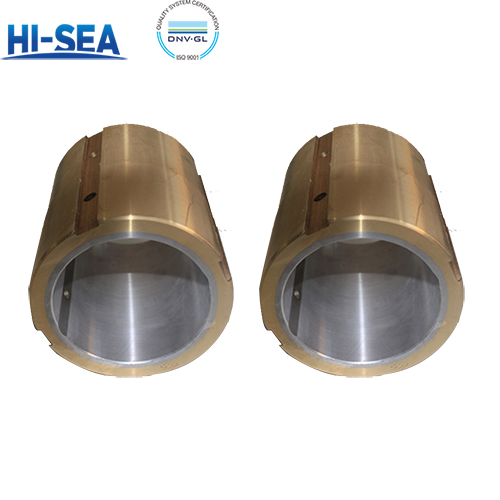
- MM-100
- MM-300
- MM-500
- MM-800
- White metal wiping from misalignment
- Polymer wear from debris ingestion (water-lubricated)
- Housing fit loosening from vibration
- Proven design lineage since 1985 with extensive field experience
- Two material options (white metal and polymer) allow selection between oil‑lubricated and water‑lubricated operation
- Standardised size range (MM‑100 to MM‑800) fits most low‑speed merchant shafts
- Robust bronze housing provides good resistance to corrosion and vibration
- Simple passive thrust design eases installation and reduces auxiliary system complexity
- White‑metal bearings are vulnerable to wiping if shaft alignment is poor
- Polymer bearings can experience accelerated wear when debris or sand enters the water‑lubricated circuit
- Requires regular clearance checks at dry‑dock for water‑lubricated units
- Not suited for very high thrust or high‑speed applications where active thrust control is required
- Limited to passive drive; no integrated thrust compensation mechanisms
Orkot / Trelleborg (UK/Sweden)
1- Orkot TLM
- Orkot TXMM
- Orkot C301
- Wear from contaminated lubrication water
- Swelling from incompatible lubricant contact
- Edge loading from shaft misalignment
- Self‑lubricating PTFE/polyester matrix eliminates the need for oil lubrication systems
- Long service life of 10–20 years reduces dry‑dock frequency
- Corrosion‑resistant and no risk of oil pollution in case of leakage
- Lightweight compared with metal bearings, easing installation
- Compatible with most class societies when installed per approved procedures
- Higher upfront purchase price than conventional white‑metal bearings
- Limited size range; very large shafts may require alternative solutions
- Swelling or degradation if incompatible lubricants or chemicals are introduced
- Edge loading is critical – misaligned shafts can cause premature wear
- Bearing cannot be re‑machined; failure usually requires full replacement
SKF Marine (Sweden)
1- Simplex Compact S
- Simplex Compact M
- Simplex Compact L
- Simplex Compact XL
- Lip seal wear from shaft liner scoring
- Chrome liner pitting from seawater corrosion
- Seal housing bolt corrosion/seizure
- Oil loss from worn aft seal
- Compact design fits restricted stern tube spaces (S, M, L, XL sizes).
- Passive drive eliminates external actuation mechanisms, reducing complexity and maintenance.
- Proven reliability since the 1950s with extensive field service history.
- Standardised dimensions allow easy replacement on most medium‑power vessels.
- Oil retention capability simplifies daily drain inspection routines.
- Rubber lip material limits maximum operating temperature and power compared with active seals.
- Chrome liner can suffer pitting if seawater ingress is not tightly controlled.
- Seal housing bolts are prone to corrosion in aggressive marine environments, requiring periodic inspection.
- Replacement typically requires dry‑dock access; not a quick‑change solution.
Thordon Bearings (Canada)
1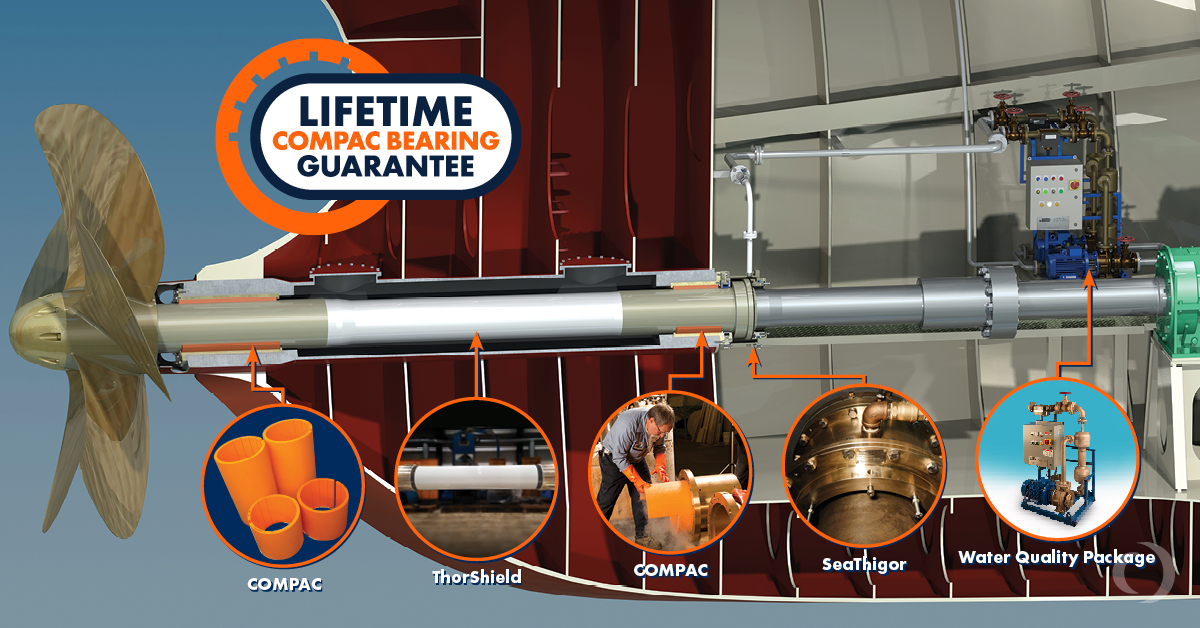
- SXL 150
- SXL 300
- SXL 500
- SXL 700
- COMPAC 150
- COMPAC 500
- Bearing wear from sand/silt ingestion in shallow/coastal waters
- Uneven wear from shaft misalignment
- Stave debonding from housing in extreme conditions
- Noise/vibration from stick-slip at low speeds
- Eliminates oil contamination risk – fully seawater lubricated and VGP/EPA compliant.
- Proven long service life (15–25 years) on deep‑sea vessels when operated in clean water conditions.
- Wide size range (SXL 150‑700, COMPAC 150‑500) covering most commercial propulsion shafts.
- Simple inspection method – clearance measured with a poker gauge at drydock.
- Robust elastomeric staves give good damping of vibration and noise under normal operation.
- Highly sensitive to sand/silt ingestion; accelerated wear in shallow or coastal waters.
- Requires precise shaft alignment; misalignment leads to uneven wear and premature failure.
- Stave‑to‑housing debonding can occur under extreme temperature or pressure cycles.
- Stick‑slip phenomenon may cause noise/vibration at low ship speeds.
- Not suited for very high‑power shafts beyond the size limits of the series.
Vesconite (South Africa)
1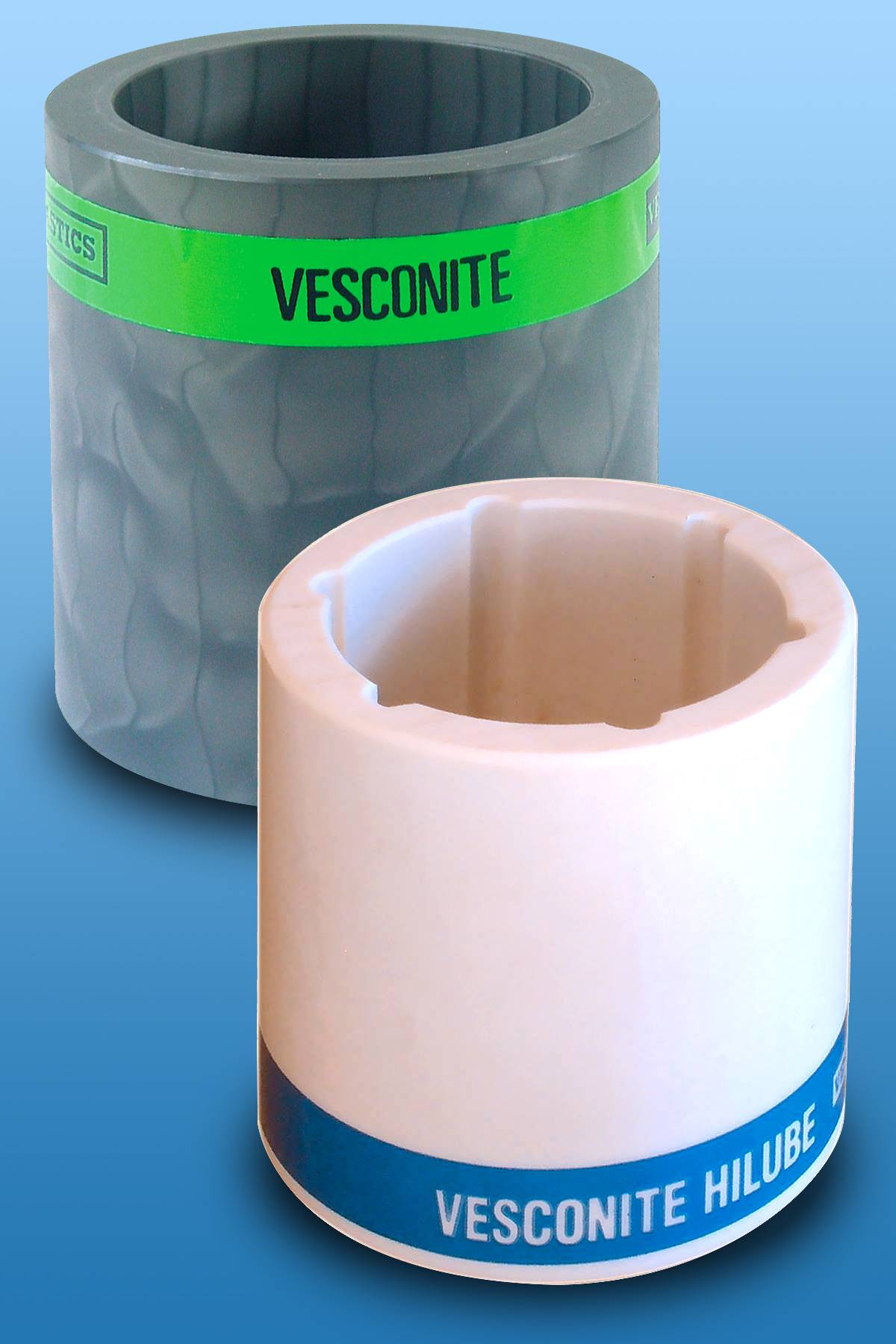
- Vesconite 25-100
- Vesconite 100-250
- Vesconite 250-500
- Thermal expansion at high operating temperatures
- Surface scratching from debris ingestion
- Dimensional instability in fluctuating temperature environments
- Self‑lubricating – eliminates routine oil greasing and reduces maintenance intervals.
- Can tolerate short dry‑run periods without immediate damage.
- Corrosion‑resistant polymer material suitable for marine environments.
- Machinable to match existing housing dimensions, facilitating retrofit installations.
- Lower friction coefficient than traditional bronze or steel bearings, improving shaft efficiency.
- Thermal expansion can become critical at high operating temperatures, requiring careful clearance checks.
- Dimensional instability when temperature fluctuates rapidly, potentially affecting bearing alignment.
- Surface scratching and premature wear if debris or foreign particles are ingested.
- Load‑capacity limits compared with metal bearings; not ideal for very high‑power shafts (>~500 kW).
- Limited long‑term field data in extreme Arctic or tropical temperature cycles.