Stern Tube Bearing
The stern tube bearing carries the propeller shaft at the one point it exits the hull, combining a load-bearing duty with a sealing duty that plain line bearings elsewhere in the shaft line never have to handle.
Read more — Stern Tube Bearing explained ▾
What defines this type
The stern tube bearing supports the propeller shaft at the single point where it exits the hull, carrying the weight of the shaft and propeller overhang while sealing against seawater ingress on the outside and lubricant loss on the inside. That combination of load-bearing and sealing duty at a rotating hull penetration is what separates it from the plain line bearings further forward in the shaft line, which only carry radial load and see no sealing duty at all.
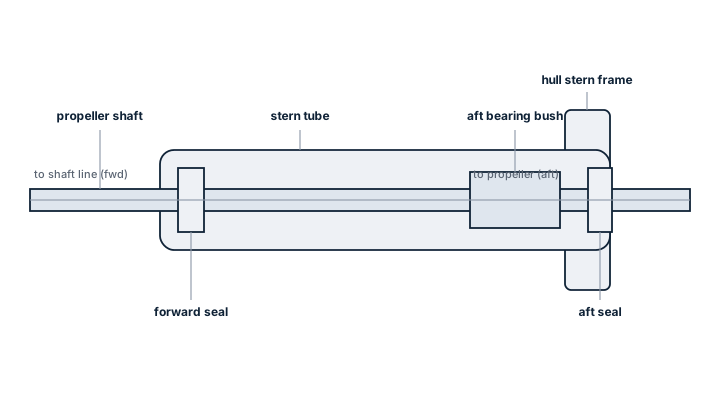
Main components
Bearing bush
Either white metal (babbitt) running in oil, or a synthetic rubber or polymer compound running in water — oil-lubricated white metal gives lower friction and less wear but depends entirely on seal integrity; water-lubricated synthetic bearings tolerate seal wear better since the lubricant is seawater itself, at the cost of higher sensitivity to grit and sand ingestion.
Forward and aft bearings
Most stern tubes carry two bearings, one at each end of the tube; the aft bearing takes the larger share of load from the propeller overhang and wears faster as a result, which is why wear-down readings are taken and logged separately for each.
Sealing arrangement
Lip seals or face seals at the forward and aft ends of the tube keep oil in (or, on water-lubricated systems, keep the lubrication water contained to the intended path) and keep the open sea out; seal condition and lubricant type together set the vessel's oil-to-sea pollution risk at this single point.
Lubrication system
Oil-lubricated tubes run from a header tank with a static head sufficient to keep tube pressure above surrounding sea pressure at the aft seal, with a sight glass and level alarm; water-lubricated tubes rely on grooved bearing surfaces to distribute seawater and carry away wear particles.
Selection / Sizing
| Parameter | Why it matters |
|---|---|
| Shaft diameter | Sets the bearing bore and load-carrying requirement |
| Length-to-diameter (L/D) ratio | Governs specific bearing pressure and heat generation |
| Lubrication type | Oil for lower friction/wear; water for pollution-risk reduction |
| Specific bearing load | Compared against the bush material's rated pressure limit |
| Shaft alignment tolerance | Poor alignment concentrates load at one edge of the bearing rather than spreading it evenly |
Regulations / Class
IACS Unified Requirements (the M-series covering shafting) set wear-down limit criteria and the survey basis for stern tube bearings, and class rules require periodic wear-down measurement — commonly at intermediate and special surveys, or on a continuous survey basis for vessels enrolled in that scheme — comparing measured clearance against the bearing's original and maximum permissible clearance. Where oil lubrication is used, MARPOL Annex I governs any discharge risk at the stern tube seal, and several port states and the US Vessel General Permit framework require environmentally acceptable lubricants (EAL) in oil-to-sea interfaces including stern tubes operating in their waters, which has pushed many owners toward EAL-compatible oils or water-lubricated systems entirely.
Typical faults
- Wear beyond class limit — gradual bush wear increases shaft clearance and vibration; caught late, it risks contact between shaft and bearing housing rather than a clean bush surface.
- Seal leakage — a worn or damaged seal on an oil-lubricated tube causes a slow oil-to-sea leak that can go undetected until a sheen is reported or a header tank level drops faster than expected.
- Overheating — insufficient lubrication flow or a misaligned bearing concentrates friction and heat at one point of the bush, accelerating wear at that spot specifically rather than evenly.
- Edge loading from misalignment — a shaft line out of alignment loads one edge of the bearing far harder than the rest, wearing a taper into the bush that a straightforward diameter check can miss.
- Abrasive wear on water-lubricated bearings — sand or grit drawn in with the lubrication water scores the synthetic bush surface, a failure mode oil-lubricated systems do not share.
What to look for in a supplier
- A bearing design with class type approval or design assessment for the vessel's shaft diameter and expected load.
- Clearly stated original and maximum permissible wear-down figures, matching what the class surveyor will measure against.
- EAL compatibility data if the vessel trades into waters requiring environmentally acceptable lubricants.
- A bush material recommendation based on the vessel's actual lubrication type and operating draft variation, not a default catalogue choice.
Log wear-down readings against the same reference marks every time, not just against the class limit — a bearing wearing unevenly across its length shows up as a trend long before it shows up as an out-of-limit single reading.
4 manufacturers · 103 models
Thordon Bearings
42- Corrosion‑resistant polymer matrix eliminates rust issues common with metal bearings
- Lightweight construction reduces overall stern tube assembly mass
- Self‑lubricating material lowers routine maintenance and oil consumption
- Compact length (250 mm) fits tight stern tube spaces on smaller vessels
- Lower load‑capacity compared with traditional bronze or steel bearings, limiting use to moderate power shafts
- Temperature rating is limited; performance may degrade in very high‑temperature environments
- No integrated seal type specified, requiring an external sealing solution
- Potential for higher wear rates under severe vibration or misalignment conditions
- Corrosion‑resistant material reduces maintenance in seawater environments
- Lightweight compared with traditional metal bearings
- Low friction coefficient improves shaft efficiency
- Standard 150 mm bore fits many mid‑size vessel propulsion lines
- Polymer composites may have lower load‑capacity than bronze or steel alternatives
- Limited high‑temperature performance; not suited for very hot oil lubrication
- No integrated seal type supplied – requires separate sealing arrangement
- Long‑term wear data less established than legacy metal bearings
- Self‑lubricating polymer material reduces routine oiling and maintenance intervals
- Excellent resistance to seawater corrosion compared with traditional metal bearings
- Lightweight construction (polymer vs. bronze) can lower overall stern tube assembly weight
- Quiet operation due to damping properties of the composite material
- Lower load‑capacity ceiling than high‑strength bronze or babbitt metal bearings, limiting use on very high thrust applications
- Temperature rating may be restricted; extreme heat can degrade polymer performance
- Proprietary composite formulation may make spare‑part sourcing more difficult in remote ports
- Long‑term wear data are less extensive than for conventional metal bearings
- Corrosion‑resistant polymer material eliminates rust in seawater environments
- Low friction reduces propulsion power loss and extends propeller life
- Compact 625 mm length fits vessels with limited stern tube space
- Reduced lubrication requirements compared with metal bearings
- Direct fit for standard 250 mm shaft sizes, simplifying installation or retrofit
- Lower load‑capacity than steel or bronze bearings; less suited to high‑power main engines
- Polymer material has tighter temperature and speed limits
- No integrated seal type; additional sealing arrangements may be required
- Long‑term wear data are limited, necessitating regular inspection
- Unit cost can be higher than conventional metal bearings
- Corrosion resistance – polymer matrix eliminates rust issues common with metal bearings
- Low friction and reduced wear, extending service intervals
- Lightweight construction (750 mm length) reduces overall propulsion system mass
- Self‑lubricating properties typical of composite designs lower oil consumption
- Lower static load capacity compared with traditional bronze or steel bearings
- Operating temperature range is more limited than metal counterparts
- Seal compatibility not specified – may require custom sealing solutions
- Potentially higher upfront cost versus conventional metal stern tube bearings
- Lightweight construction compared with traditional steel bearings
- Excellent resistance to seawater corrosion and biofouling
- Low friction coefficient reduces power loss
- Compact length (875 mm) eases installation in confined stern‑tube spaces
- Reduced routine lubrication requirements
- Polymer material may have lower load capacity than steel bearings in high‑power applications
- Limited temperature range typical of polymer composites (generally up to ~80 °C)
- No integrated seal type specified – additional sealing solutions may be required
- Long‑term wear data for this specific model is limited
- Self‑lubricating polymer material reduces routine greasing requirements
- High corrosion resistance suitable for seawater environments
- Compact length of 1000 mm simplifies installation in confined stern tube spaces
- Lightweight compared with traditional bronze or steel bearings, aiding overall vessel weight balance
- Designed specifically for a 400 mm shaft diameter, providing a precise fit
- Lower load‑carrying capacity than heavy‑duty metal bearings under high thrust conditions
- Maximum operating temperature limited by polymer material properties
- May require tighter alignment tolerances during installation
- Not ideal for very high RPM applications where metal bearings are preferred
- Initial purchase cost can be higher than conventional bronze bearings
- Corrosion‑resistant material eliminates rust in seawater environments
- Lightweight compared with traditional bronze or steel bearings, reducing overall shaft line mass
- Low friction coefficient improves propulsion efficiency and reduces fuel consumption
- Self‑lubricating polymer matrix can extend service intervals when used with compatible seals
- Maximum load capacity is lower than that of metal alloy bearings; not ideal for very high thrust applications
- Temperature rating limited (typically ≤ 80 °C), restricting use in high‑heat exhaust or aft turbine installations
- Polymer wear particles may require more frequent monitoring of oil cleanliness
- Seal compatibility must be verified because some elastomers can degrade polymer surfaces
- Corrosion resistant to seawater
- Self‑lubricating polymer reduces maintenance intervals
- Lightweight compared with traditional steel bearings
- Compact length of 1250 mm saves installation space
- Lower load capacity than metal alloy bearings
- Upper temperature limit is lower than metallic options
- Polymer wear may require periodic inspection
- Seal type not specified, may need additional sealing solutions
- Low friction and self‑lubricating surface reduces routine oiling requirements
- Excellent corrosion resistance in seawater, extending service intervals
- Lightweight compared with traditional bronze or steel bearings, aiding overall shaft line weight balance
- Quiet operation due to damping properties of the polymer matrix
- Lower load‑carrying capacity than metal bearings; not suited for very high‑power main propulsion
- Temperature limits (typically ≤80 °C) may restrict use on high‑speed or heavily loaded shafts
- Limited long‑term field data compared with established metal bearing families
- Potential compatibility issues with existing seal arrangements if a specific seal type is required
- Corrosion‑resistant material suitable for marine environments
- Self‑lubricating properties reduce routine oil maintenance
- Lower weight compared with traditional bronze or babbitt bearings
- Good vibration and noise damping characteristics
- Long service life when installed per manufacturer guidelines
- Higher upfront cost than conventional metal bearings
- Limited temperature range compared with steel‑based designs
- Seal type not specified; may require additional sealing solutions
- Less field‑proven data for very high‑power applications
- Installation tolerances can be tighter due to composite material
- Corrosion‑resistant polymer matrix eliminates metal‑to‑metal wear in seawater
- Low friction coefficient reduces power loss and extends propeller life
- Lightweight compared with traditional steel or bronze bearings, easing installation
- Integrated length of 2000 mm accommodates standard stern‑tube housings for large vessels
- Maximum load capacity lower than equivalent high‑strength metal bearings
- Upper temperature limit typically around 80–90 °C; not suited for extreme heat zones
- Requires compatible polymer‑friendly lubrication regime (standard oil may be unsuitable)
- Limited field history compared with long‑standing bronze designs, affecting risk perception
- Lightweight compared with traditional steel or bronze bearings, reducing overall shaft line mass
- Excellent corrosion resistance in seawater, extending service intervals
- Low friction coefficient leads to reduced power loss and fuel consumption
- Self‑lubricating polymer matrix can operate with minimal external lubrication
- Maximum load capacity lower than heavy‑duty metal bearings; may be unsuitable for very high thrust applications
- Operating temperature range limited by polymer material (typically up to ~120 °C)
- Long‑term wear monitoring required as polymer wear particles differ from metal and may affect oil analysis programs
- Replacement parts and spares can be less widely stocked than standard bronze bearings
- Polymer composite material provides excellent corrosion resistance in seawater environments
- Lower friction coefficient than traditional babbitt metal bearings, reducing shaft wear
- Reduced weight compared with cast‑iron or steel bearings, aiding overall vessel balance
- Long service intervals due to self‑lubricating properties of the composite matrix
- Designed for 1000 mm shafts, matching a common size on large merchant vessels
- Higher upfront cost than conventional metal stern tube bearings
- Polymer composites have a more limited temperature range; excessive heat can affect load capacity
- May require specific lubrication or seal arrangements not supplied with the base unit
- Spare‑part availability depends on Thordon’s regional service network
- Not ideal for vessels that experience extreme shock loads or very high shaft speeds
- Corrosion‑resistant polymer matrix eliminates rust in seawater environments
- Self‑lubricating properties reduce routine oiling and maintenance intervals
- Lightweight compared with traditional steel bearings, aiding overall shaft line weight budget
- Compact length (250 mm) fits vessels with limited stern‑tube space
- Lower load‑capacity than equivalent steel or bronze bearings, limiting use on high‑thrust shafts
- Maximum operating temperature is lower than metal bearings; unsuitable for very hot exhaust gases
- Potential for accelerated wear in highly abrasive water (e.g., heavy sand content)
- Limited field experience compared with long‑standing legacy brands
- Lightweight construction due to polymer composite material
- Corrosion‑resistant, suitable for marine environments
- Self‑lubricating properties reduce maintenance intervals
- Compact length (375 mm) eases installation in confined stern tube spaces
- Lower load‑capacity compared with steel or bronze bearings
- Temperature limits may restrict use on high‑power main engines
- Potential for higher wear rates under heavy thrust conditions
- Limited long‑term service data for this specific model
- Corrosion‑resistant material suitable for seawater environments
- Low friction coefficient reduces power loss
- Lightweight compared with traditional bronze bearings
- Potentially longer service intervals due to self‑lubricating properties
- May have lower load capacity than metal alloy bearings
- Upper temperature limit can be lower, restricting high‑speed applications
- Polymer wear characteristics require specific monitoring regimes
- Limited historical performance data for this exact model
- Corrosion‑resistant material reduces degradation in seawater and brackish environments
- Self‑lubricating polymer eliminates the need for regular oil lubrication, lowering maintenance intervals
- Lightweight compared with traditional steel bearings, easing installation and reducing overall shaft line weight
- Integrated design can simplify alignment and reduce vibration transmission
- Lower static and dynamic load capacity than comparable steel or bronze bearings, limiting suitability for high‑power shafts
- Restricted operating temperature range; polymer may soften at elevated temperatures
- Potential for material creep under sustained heavy loads, affecting long‑term alignment
- Limited field history for this specific model, which may affect class society acceptance on some vessels
- Corrosion‑resistant polymer composite material extends service intervals in seawater environments
- Compact overall length of 750 mm suits vessels with limited stern tube space
- Reduced lubrication requirements compared with traditional steel bearings
- Self‑aligning design accommodates minor shaft misalignment
- Lower static and dynamic load capacity than equivalent steel or bronze bearings
- Upper temperature limit may be lower than metal alternatives, restricting high‑power applications
- Seal type not supplied; additional sealing arrangements may be required
- Potential for higher wear rates under heavy thrust or frequent reversing
- Corrosion‑resistant material reduces maintenance in seawater environments
- Lower weight compared with traditional steel or bronze bearings
- Good vibration damping characteristics improve propeller run‑smoothness
- Self‑lubricating properties can extend service intervals
- Maximum load and thrust capacity generally lower than metal alloy equivalents
- Upper temperature limit may be lower, restricting use in high‑power applications
- Long‑term wear characteristics are less documented than conventional bearings
- Replacement parts may be less widely stocked than standard bronze types
- Corrosion‑resistant material suitable for long exposure to seawater
- Lower friction coefficient than traditional metal bearings, reducing power loss
- Lightweight construction simplifies installation and reduces overall shaft line weight
- Generally lower load‑capacity compared with steel or bronze bearings, limiting use on high‑thrust applications
- Polymer wear rates can increase at very high rotational speeds
- May require more frequent visual inspection to monitor material degradation
- Compact overall length (1125 mm) reduces hull penetration and installation space.
- Polymer‑composite material provides excellent corrosion resistance, especially in seawater environments.
- Lower friction compared with traditional metal bearings improves fuel efficiency.
- Reduced weight lessens shaft load and can contribute to overall vessel weight savings.
- Designed for standard 450 mm shafts, facilitating replacement or retrofit on many vessels.
- Maximum load capacity is lower than that of steel or bronze stern tube bearings.
- Operating temperature limit typically around 80 °C; not suitable for high‑temperature applications.
- No integrated seal type supplied; requires a compatible sealing system to be specified separately.
- Polymer wear characteristics differ from metal; may require more frequent inspection in heavy‑duty service.
- Relatively newer model, so long‑term field performance data may be limited.
- Lightweight material reduces overall shaft line weight
- Corrosion‑resistant polymer suitable for seawater exposure
- Compact 1250 mm length fits tight stern tube spaces
- Low friction coefficient improves propeller efficiency
- Self‑lubricating properties can reduce maintenance intervals
- Lower load capacity compared with traditional steel or bronze bearings
- Limited high‑temperature capability; polymer may soften above ~80 °C
- Higher wear risk if misaligned or contaminated with debris
- Seal type not integrated, requiring an additional sealing solution
- Polymer can be more vulnerable to mechanical impact damage
- Polymer composite material provides excellent corrosion resistance in seawater environments
- Reduced friction compared with traditional metal bearings, leading to lower fuel consumption
- Compact design (1500 mm length) eases installation in confined stern tube spaces
- Lightweight relative to steel bearings, decreasing overall shaft line mass
- Low maintenance interval due to self‑lubricating properties of the composite
- Load capacity generally lower than that of high‑strength steel or babbitt bearings
- Maximum operating temperature limited compared with metal alternatives
- May require specific oil formulations compatible with polymer surfaces
- Limited field history for very large propulsion systems, so some owners may be cautious
- Corrosion‑resistant polymer matrix eliminates metal‑to‑metal wear in seawater environments
- Lower friction coefficient compared with traditional babbitt or bronze bearings, improving fuel efficiency
- Self‑lubricating properties reduce routine greasing intervals
- Lightweight construction relative to all‑metal alternatives simplifies handling during installation
- Maximum operating temperature lower than steel/bronze bearings; may require additional cooling on high‑power vessels
- Limited proven service life under extreme cyclic loading for very large propulsion plants
- Absence of an integrated seal type in the catalog entry means a separate sealing solution must be specified
- Polymer composites can be more costly upfront than conventional metal bearings
- Lightweight construction compared with traditional steel bearings
- Excellent resistance to seawater corrosion and biofouling
- Low friction coefficient reduces power loss in the propulsion line
- No need for lubrication oil within the bearing material itself
- No integrated seal; requires an external sealing system to prevent water ingress
- Polymer composites generally have lower load‑capacity limits than steel bearings, restricting use on very high‑power shafts
- Potential temperature sensitivity – performance may degrade at elevated operating temperatures
- Limited long‑term field data for this specific model
- Corrosion‑resistant material eliminates rust problems in seawater environments
- Lower friction coefficient than traditional bronze bearings reduces power loss
- Lightweight compared with metal counterparts, easing installation and handling
- Self‑lubricating properties can extend service intervals when used with compatible oil systems
- Maximum load capacity is lower than that of heavy‑duty metal bearings; not suited for extreme thrust applications
- Limited operating temperature range compared with steel or bronze designs
- Polymer composites may be more sensitive to abrasive particles if filtration is inadequate
- Replacement parts and repair expertise can be less widely available than for conventional bearings
- Lightweight compared with traditional steel bearings, reducing overall vessel weight
- High corrosion resistance, suitable for saltwater environments
- Low friction coefficient leading to lower fuel consumption
- Integrated length of 2500 mm fits standard stern‑tube housings without modification
- No built‑in seal type; additional sealing arrangements may be required
- Polymer composites can have lower load‑carrying capacity than steel under extreme thrust conditions
- Limited long‑term field data for this specific model, raising reliability concerns
- Potential temperature limitations of the composite material in high‑heat applications
- Polymer composite construction gives inherent corrosion resistance, suitable for seawater environments
- Lightweight compared with traditional steel or bronze bearings, easing installation and reducing overall stern tube mass
- Compact length (250 mm) facilitates fitting in limited space arrangements
- Generally lower static and dynamic load capacity than equivalent metal bearings
- Operating temperature range may be more restricted than steel designs
- Potential for higher wear rates under high‑speed or heavy‑load conditions
- Low friction coefficient reduces power loss
- Corrosion‑resistant material suitable for saltwater environments
- Lightweight compared with traditional steel bearings, easing installation
- Self‑lubricating polymer eliminates need for frequent oil replenishment
- Standard length (375 mm) fits common stern tube housings
- Lower load‑capacity than comparable steel or bronze bearings
- Maximum operating temperature is limited; high‑speed/high‑power shafts may exceed limits
- Requires an external seal system because the bearing itself has no built‑in seal type
- Long‑term wear data are less extensive for polymer composites in heavy‑duty service
- Potential for abrasive wear if debris enters the stern tube
- Corrosion‑resistant material eliminates rust issues in seawater environments
- Reduced lubrication requirements compared with traditional metal bearings
- Lightweight construction helps lower overall shaft line weight
- Quiet operation due to damping properties of the polymer matrix
- Straightforward installation on standard 200 mm shafts
- Lower load‑carrying capacity than steel or bronze alternatives
- Limited high‑temperature performance; may require cooling in hot climates
- No integrated seal type, so external sealing arrangements are needed
- Potential for accelerated wear under very high thrust or shock loads
- Long‑term durability data less extensive than for conventional metal bearings
- Corrosion‑resistant material eliminates the need for regular greasing cycles
- Low friction coefficient reduces power loss across the shaft line
- Lightweight compared with traditional bronze or steel bearings, easing installation
- Self‑lubricating polymer matrix can extend maintenance intervals in moderate service conditions
- Maximum load capacity is lower than that of metal alloy bearings, limiting use on high‑thrust shafts
- Temperature rating is typically limited to around 80 °C; performance degrades at higher engine room temperatures
- Polymer wear particles may require filtration if the bearing operates near its design limit
- Limited historical service data for this exact model compared with legacy metal bearings
- Lightweight construction reduces overall shaft line weight and can improve vessel stability.
- High resistance to seawater corrosion extends service intervals compared with traditional metal bearings.
- Low friction coefficient lowers power loss, contributing to modest fuel savings.
- Self‑lubricating polymer matrix reduces the need for oil lubrication and associated maintenance.
- Modular design simplifies installation and alignment during new builds or retrofits.
- Lower load‑bearing capacity than conventional babbitt metal bearings; not suited for very high‑power shafts.
- Temperature limitation of the polymer matrix (typically <120 °C) restricts use on high‑temperature propulsion systems.
- Less field‑proven history than legacy designs, which may affect operator confidence and spare‑parts availability.
- Not recommended for ultra‑high speed or high‑rpm applications where metal bearings remain standard.
- Corrosion‑resistant material eliminates rust‑related wear in seawater environments
- Self‑lubricating polymer reduces need for frequent oil replenishment
- Lightweight compared with traditional bronze or steel bearings, easing installation
- Long service intervals due to reduced metal‑to‑metal contact
- Lower load‑capacity than high‑strength alloy bearings; not ideal for very high‑power shafts
- Temperature limits of polymer composites may restrict use in high‑heat applications
- Limited field data compared with legacy metal designs, requiring careful monitoring during early service
- Seal type not specified; additional sealing solutions may be required
- Corrosion‑resistant material eliminates metal‑to‑metal galvanic issues in seawater environments
- Self‑lubricating polymer reduces need for regular greasing and lowers maintenance intervals
- Lightweight compared with traditional bronze or steel bearings, easing installation and reducing overall shaft line weight
- Integrated sealing lip (if present) offers basic protection against water ingress without additional external seals
- Lower load‑carrying capacity than heavy‑duty metal bearings; may be unsuitable for very high thrust applications
- Temperature limits of polymer composites can restrict use in high‑heat zones or during prolonged high‑speed operation
- Long‑term wear characteristics are less documented than conventional materials, requiring closer monitoring
- Lightweight compared with traditional bronze or steel bearings, reducing overall stern tube mass
- Excellent corrosion resistance in seawater, extending service intervals
- Low coefficient of friction, improving propulsion efficiency
- Self‑lubricating polymer matrix reduces reliance on external oil feeds
- Maximum load capacity is lower than heavy‑duty metal bearings; unsuitable for very high thrust applications
- Operating temperature range is limited (typically up to ~120 °C), restricting use with high‑temperature exhaust gases
- Polymer wear particles may require filtration in the bearing oil system
- Corrosion‑resistant polymer composite eliminates rust in seawater environments
- Low friction operation reduces power loss and wear on the shaft
- No lubrication system required, simplifying maintenance routines
- Lightweight compared with traditional steel bearings, decreasing overall stern‑tube mass
- Lower load capacity than high‑strength metal bearings for extreme torque conditions
- Higher coefficient of thermal expansion may require tighter alignment tolerances
- Polymer material can be more vulnerable to impact damage or foreign object intrusion
- Long‑term aging of polymer under UV and chemical exposure may affect performance
- Polymer‑composite material offers excellent corrosion resistance in seawater environments.
- Eliminates the need for regular lubrication, reducing maintenance intervals.
- Sized for a 600 mm shaft and 1500 mm length, suitable for high‑power main engines.
- Lightweight compared with traditional steel bearings, potentially lowering overall stern‑tube weight.
- Load‑capacity may be lower than equivalent steel or bronze bearings under extreme overload conditions.
- Limited field history; few documented installations to verify long‑term performance.
- May require additional certification or approval from classification societies for certain vessel classes.
- Temperature limits of polymer composites can be lower than metal bearings in high‑heat applications.
- Corrosion‑resistant material suitable for seawater exposure
- Reduced friction compared with traditional metal bearings
- Lightweight relative to comparable metal designs, easing installation handling
- Self‑lubricating properties can lower routine maintenance intervals
- Lower load‑capacity limits than high‑strength steel or bronze alternatives
- Temperature sensitivity; performance may degrade above typical marine ambient ranges
- May require specialized seals or backup rings because seal_type is not specified
- Limited long‑term field data for very large shafts (700 mm) compared with legacy designs
- Corrosion‑resistant polymer material reduces maintenance intervals compared with traditional bronze bearings
- Low friction coefficient improves propeller efficiency and can lower fuel consumption
- Lightweight construction relative to all‑metal designs helps reduce overall shaft line weight
- Self‑lubricating properties allow longer dry‑run periods before oil replenishment is required
- Polymer composites have lower load‑carrying capacity than high‑grade bronze, limiting use on very high‑power shafts
- Maximum operating temperature is typically lower than metal bearings, requiring careful monitoring in hot climates
- Limited field experience for this specific model may affect confidence in long‑term durability
- Replacement parts and specialised repair kits may be less widely stocked than standard bearing types
- Lightweight compared with traditional steel bearings, reducing overall propulsion system weight
- Excellent corrosion resistance in seawater, extending service intervals
- Self‑lubricating properties can lower oil consumption and maintenance frequency
- Longer fatigue life for high‑speed or variable‑load applications
- Higher initial cost than conventional steel bearings
- Limited proven track record on very large vessels; some operators prefer metal for ultra‑high power shafts
- Polymer composites may be more sensitive to temperature extremes, requiring careful monitoring
- Replacement procedures differ from standard steel bearings, needing specialised tooling
- Self‑lubricating polymer matrix reduces routine oiling and maintenance intervals
- Excellent resistance to seawater corrosion and bio‑fouling compared with traditional metal bearings
- Lower overall weight helps reduce stern tube assembly loads
- Long service life when operated within the material’s temperature and load limits
- Maximum static and dynamic load capacity is lower than that of steel or bronze bearings, limiting use on very high‑power propulsion systems
- Upper temperature limit (~120 °C) may be restrictive for some high‑speed diesel engines
- Installation requires careful alignment to avoid point loading that can damage the composite material
- Limited field experience compared with legacy metal bearing families
Duramax Marine
32- Eliminates scheduled bearing removal – reduces dry‑dock time
- Nitrile rubber liner offers good corrosion resistance in seawater
- Compact length (≈150 mm) fits tight stern tube spaces on smaller vessels
- Simple installation with standard 50 mm shaft interface
- Nitrile rubber may degrade faster than bronze or polymer composites under high‑temperature service
- Limited load capacity compared with heavy‑duty metal bearings
- No integrated seal type listed – additional sealing may be required
- Cut‑less design can be less tolerant of misalignment than replaceable bearing packs
- No need to cut or machine the propeller shaft during installation
- Quick replacement with minimal dry‑dock time
- Nitrile rubber provides good vibration damping and corrosion resistance in seawater
- Compact 225 mm length fits confined stern‑tube spaces
- Specifically sized for standard 75 mm shafts used on many mid‑size vessels
- Load capacity lower than steel or babbitt bearings
- Nitrile rubber degrades above ~80 °C, limiting high‑temperature operation
- No integrated seal; additional sealing arrangement required
- Not suited for high‑speed or high‑power propulsion systems
- Requires periodic hydraulic pressure checks to maintain proper preload
- Eliminates shaft cutting and associated alignment issues
- Nitrile rubber liner offers good oil retention and wear resistance for moderate speeds
- Relatively simple installation and replacement compared with traditional bearings
- Compact length (300 mm) suitable for limited stern tube space
- Nitrile rubber may have lower temperature tolerance than advanced polymer composites
- Limited to shaft diameters around 100 mm; not suitable for larger main propulsion shafts
- Requires regular oil monitoring to avoid dry‑run wear
- No need to cut or modify the propeller shaft, reducing installation time and risk of misalignment
- Nitrile rubber liner provides good corrosion resistance in seawater environments
- Integrated design allows for straightforward retro‑fit on existing vessels
- Low friction surface helps improve propulsion efficiency for moderate thrust applications
- Limited to shaft diameters around 125 mm; not suitable for larger high‑power shafts
- Nitrile rubber may degrade faster under very high temperatures or ozone exposure
- Maximum load capacity lower than heavy‑duty metal (bronze/steel) bearings, limiting use on high‑thrust vessels
- Requires periodic inspection and possible re‑lubrication of the rubber liner
- Oil‑free operation eliminates the need for lubrication pumps and reduces contamination risk
- Simple installation – no machining of the stern tube required
- Corrosion‑resistant nitrile rubber liner suitable for seawater environments
- Lower routine maintenance costs compared with traditional journal bearings
- Compact length (450 mm) fits into limited stern tube spaces
- Load capacity lower than full‑size oil‑lubricated journal bearings, limiting use on high‑power shafts
- Nitrile rubber can degrade at elevated temperatures (>80 °C) or with aggressive chemicals
- Replacement intervals typically shorter (2–4 years) than for oil‑filled bearings
- Limited suitability for very high‑speed propulsion systems
- Spare part availability may be restricted to Duramax Marine distribution network
- Oil‑free operation eliminates the need for lubrication systems and reduces leakage risk
- Nitrile rubber liner offers good corrosion resistance in seawater environments
- Compact length (525 mm) eases installation in confined stern tube spaces
- Low maintenance – no oil changes or bearing re‑grinding required
- Suitable for shaft diameters up to 200 mm, covering a wide range of medium‑size vessels
- Load capacity is lower than that of traditional metal journal bearings, limiting use on high‑power shafts
- Nitrile rubber has temperature and chemical limits; performance degrades above ~80 °C or with certain contaminants
- Periodic visual inspection is still required to detect wear or cracking of the rubber liner
- May not be optimal for very high‑speed propulsion systems where metal bearings are preferred
- Cut‑less design eliminates the need for oil lubricants and associated maintenance.
- Nitrile rubber offers good corrosion resistance in seawater environments.
- Relatively easy to install and replace compared with metal journal bearings.
- Suitable for moderate speed vessels where shaft loads are within typical nitrile bearing limits.
- Limited load‑carrying capacity versus steel or babbitt metal bearings; not ideal for high‑power, high‑speed applications.
- Temperature sensitivity – performance can degrade at elevated operating temperatures.
- No integrated seal type specified; additional sealing may be required to prevent water ingress.
- Directly matches 250 mm shaft diameter – no custom machining required.
- Nitrile rubber liner offers good resistance to seawater corrosion and oil contamination.
- Compact 750 mm length reduces stern‑tube envelope space, useful on vessels with limited aft clearance.
- Cutless design eliminates the need for a removable bearing shoe, simplifying installation and maintenance.
- Nitrile rubber has a more limited temperature range than PTFE or metal‑on‑metal liners.
- No integrated seal type is specified; an external sealing arrangement must be provided.
- Designed only for shafts up to 250 mm – unsuitable for larger propulsion lines.
- Cutless design eliminates the need to cut the shaft, reducing installation time and risk of misalignment.
- Nitrile rubber liner offers good wear resistance and flexibility in typical marine temperature ranges.
- Integrated water lubrication reduces the requirement for external oil‑lubricated bearings.
- Standard length of 900 mm fits most conventional stern tube housings for 300 mm shafts.
- Absence of a dedicated seal may permit some ingress of debris if alignment is not perfect.
- Nitrile rubber can degrade faster than metal alloys under high‑temperature or high‑load conditions.
- Load‑capacity data are not publicly available, limiting confidence for high‑power applications.
- Catalog information flagged as needing verification; specifications may differ from actual product.
- Oil‑free operation eliminates the risk of lubricant leakage into the sea.
- Reduced routine maintenance compared with traditional lubricated bearings.
- Compact design (1050 mm length) fits tight stern tube spaces.
- Nitrile rubber element offers good abrasion resistance for typical service loads.
- Straightforward installation on new builds or during major overhauls.
- Higher upfront cost than conventional lubricated bearings.
- Load capacity may be lower than heavy‑duty oil‑lubricated alternatives.
- Nitrile rubber can degrade at elevated temperatures (>80 °C).
- Retrofit on existing stern tubes may require precise alignment and possible tube modification.
- Limited availability of spare parts in remote ports compared with more common brands.
- Cut‑less design allows bearing replacement without dismantling the shaft line, reducing dry‑dock time.
- Nitrile rubber provides good vibration damping and corrosion resistance in seawater environments.
- Compact 1200 mm length fits tighter stern‑tube arrangements on modern hull forms.
- Self‑aligning rubber element accommodates minor misalignment of the shaft.
- Rubber material has a lower temperature rating than metal bearings, limiting use in high‑heat applications.
- Potential for accelerated wear under very high thrust or shock loads compared with steel/bronze liners.
- Seal type not specified; additional sealing arrangements may be required to prevent water ingress.
- Limited documented service history for this exact model, requiring closer monitoring during early service.
- No packing gland adjustment – easier installation and reduced maintenance downtime
- Nitrile rubber liner provides good corrosion resistance in seawater environments
- Integrated alignment tolerance accommodates minor shaft mis‑alignment
- Compact length (1350 mm) fits standard stern tube housings for 450 mm shafts
- Nitrile rubber has a limited temperature range compared with metal or composite liners
- Wear rate can increase in high‑speed or heavily loaded applications, requiring more frequent inspections
- Not suitable for shafts exceeding the rated diameter or for very high‑power propulsion units without engineering review
- Eliminates oil lubrication and associated maintenance tasks thanks to its cut‑less design
- Nitrile rubber liner offers good shock absorption and resistance to seawater corrosion
- Modular length (1500 mm) simplifies installation and alignment on the shaft line
- Suitable for standard propulsion shafts up to 500 mm, common on many merchant vessels
- Lower operating temperature range compared with metal‑to‑metal bearings reduces heat buildup
- Nitrile rubber may degrade faster at elevated temperatures (>80 °C) or under high load cycles
- Not intended for very high power or high‑speed applications where metal bearings are required
- No integrated seal type provided, requiring an additional sealing solution to prevent water ingress
- Potentially heavier than advanced composite bearing alternatives
- Spare‑part availability may be limited if the manufacturer has a narrow distribution network
- Cutless design eliminates need for periodic grinding or re‑cutting of the bearing surface, reducing maintenance downtime.
- Nitrile rubber liner offers good shock absorption and noise reduction, improving crew comfort.
- Corrosion‑resistant material suitable for marine environments, extending service life in saltwater.
- Standard 600 mm shaft compatibility simplifies retrofits on many existing vessels.
- Relatively compact length (1800 mm) fits into constrained stern tube spaces.
- Nitrile rubber has a limited temperature range; performance may degrade in very high‑temperature applications.
- Load capacity is lower than that of metal or composite bearings, making it less suitable for high‑power propulsion units.
- No integrated seal type specified, potentially requiring an additional sealing solution to prevent water ingress.
- Rubber wear over time can lead to increased clearances if not monitored regularly.
- May not be ideal for vessels operating at very high shaft speeds where metal bearings are preferred.
- Oil‑free operation eliminates the risk of oil leakage in the stern tube.
- Low maintenance – no lubrication system required.
- Compact length (2100 mm) fits confined installation spaces.
- Nitrile rubber offers good resistance to seawater corrosion.
- Load capacity is lower than that of traditional metal journal bearings.
- Performance limited by the temperature range of nitrile rubber.
- May require periodic visual inspection and eventual replacement of the elastomeric element.
- Not ideal for very high‑speed or high‑power propulsion shafts.
- Oil‑free design eliminates leakage and reduces environmental risk
- Nitrile rubber liner offers good corrosion resistance in seawater
- Easy installation with cutless mounting system, no need for oil pumps or reservoirs
- Suitable for large shaft diameters (up to 800 mm) common on tankers and bulk carriers
- Low routine maintenance compared with traditional lubricated bearings
- Nitrile rubber has a limited temperature range; performance degrades above ~80 °C
- Not ideal for very high‑speed propulsion shafts where metal‑on‑metal bearings are preferred
- Seal type not specified; water ingress must be managed with external seals or protective sleeves
- Service life can be reduced under excessive radial loads or frequent shock loading
- No oil or grease required – eliminates routine lubrication and reduces contamination risk
- Simple installation with a split‑ring design that can be fitted around an existing shaft
- Nitrile rubber offers good resistance to seawater corrosion and moderate temperature ranges
- Compact length (150 mm) suitable for vessels with limited stern tube space
- Limited load‑carrying capacity compared with oil‑lubricated bronze bearings, making it unsuitable for high‑power propulsion shafts
- Operating life can be reduced in very warm water or under heavy cyclic loads
- No integrated seal; external sealing must be provided to prevent water ingress
- Oil‑free operation eliminates the need for bearing oil circulation and related maintenance.
- Compact length (225 mm) fits into tight stern tube spaces on smaller vessels.
- Nitrile rubber material provides good corrosion resistance in seawater environments.
- Easy retrofit onto existing shafts of 75 mm diameter, reducing installation time.
- Load‑capacity lower than metal or composite bearings; not suited for high‑power propulsion.
- Temperature limits of nitrile rubber may restrict use in very hot operating conditions.
- No integrated seal (seal_type is null), requiring an external sealing solution to prevent water ingress.
- Rubber wear over time can lead to higher replacement frequency compared with hardened steel bearings.
- Cut‑less design eliminates the need for oil‑filled bearing shells, reducing maintenance and risk of oil leaks.
- Nitrile rubber lining offers good corrosion resistance in seawater environments.
- Compact length (≈300 mm) eases installation in confined stern‑tube spaces.
- Suitable for vessels with moderate power ratings where a 100 mm shaft is standard.
- Rubber bearing material has lower load‑carrying capacity than metal or composite bearings, limiting use on high‑power main engines.
- Temperature range of nitrile rubber may be restricted (typically up to ~80 °C), making it less suitable for very hot operating conditions.
- No integrated seal type is specified; additional sealing arrangements may be required.
- Long‑term wear characteristics are less documented than for conventional oil‑filled bearings.
- Eliminates oil lubrication and associated maintenance tasks
- Compact length (375 mm) suitable for tight stern tube spaces
- Nitrile rubber liner provides good corrosion resistance in seawater
- Designed specifically for 125 mm shafts, simplifying fit‑up
- Cut‑less design reduces risk of oil leakage and environmental contamination
- Nitrile rubber may soften at elevated temperatures, limiting high‑speed applications
- No integrated seal type listed, potentially requiring additional sealing measures
- Load capacity generally lower than metal journal bearings for heavy‑duty propulsion
- Limited documented field history compared with more established bearing families
- Easy installation and removal – no need to dismantle the stern tube (cutless design).
- Nitrile rubber liner provides good vibration damping and noise reduction.
- Compact length (450 mm) fits into limited space aft sections.
- Suitable for moderate‑power vessels with shaft diameters up to 150 mm.
- Nitrile rubber has a relatively low upper temperature limit (~120 °C), restricting use in high‑heat applications.
- No integrated seal type specified; additional sealing may be required for water ingress protection.
- Limited load capacity compared with polymer or metal alloy bearings, making it less ideal for high‑speed/high‑power shafts.
- Service life can be shorter if exposed to aggressive seawater contaminants without proper maintenance.
- Self‑lubricating nitrile rubber eliminates the need for oil lubrication and reduces maintenance intervals.
- Compact 525 mm length fits standard stern tube arrangements for 175 mm shafts.
- Easy to install and replace compared with traditional journal bearings.
- Proven durability in moderate thrust, low‑to‑medium speed applications.
- Nitrile rubber may degrade faster in high temperature or aggressive seawater conditions.
- Not intended for very high thrust or high‑speed propulsion systems where metal journal bearings are preferred.
- No integrated seal; external sealing arrangements must be provided to prevent water ingress.
- Limited load capacity compared with some heavy‑duty metal bearing designs.
- Oil‑free operation eliminates the need for regular greasing and reduces environmental contamination risk.
- Nitrile rubber liner offers good corrosion resistance in seawater environments.
- Compact length (600 mm) eases installation in confined stern tube spaces.
- Low friction design improves shaft efficiency and can extend engine life.
- Designed specifically for 200 mm shafts, providing a close fit that reduces misalignment wear.
- Nitrile rubber has temperature limits (typically up to ~80 °C) which may restrict use on high‑power, high‑heat applications.
- Maximum thrust load is lower than that of metal journal bearings, limiting suitability for very large propulsion units.
- Long‑term wear can be accelerated if the bearing is not perfectly aligned during installation.
- Spare parts for this specific model may have limited availability in remote ports.
- Nitrile rubber offers good resistance to seawater and moderate temperatures.
- Cutless design eliminates the need for oil lubrication systems, reducing maintenance.
- Compact length (750 mm) fits in vessels with limited stern‑tube space.
- Easy installation – the bearing can be slipped onto the shaft without machining.
- Rubber elastomer wears faster than metal bearings, leading to shorter overhaul intervals.
- No integrated seal type; external gland or packing is required to prevent water ingress.
- Limited load‑capacity compared with bronze or babbitt metal bearings for high‑power applications.
- Performance can be affected by extreme temperature swings beyond the rubber’s rating.
- No oil lubrication required – lower operating and maintenance costs
- Simple installation with a single cutless liner
- Good vibration damping due to rubber material
- Corrosion‑resistant in seawater environments
- Suitable for shafts up to 300 mm on low‑to‑medium speed vessels
- Load and speed limits lower than metal journal bearings
- Nitrile rubber temperature range restricts use in high‑heat applications
- Periodic liner replacement required (typically every 5–7 years)
- Not ideal for high‑power propulsion systems or very large vessels
- Low‑maintenance – no oil bath required
- Compact length of 1050 mm fits confined stern tube spaces
- Nitrile rubber material offers good corrosion resistance in seawater
- Directly matches a 350 mm shaft diameter, simplifying installation
- Nitrile rubber has limited temperature and pressure range compared with metal bearings
- Cutless designs can be sensitive to mis‑alignment or excessive shaft deflection
- Load capacity may be lower than that of traditional oil‑filled bronze bearings
- No integrated seal type specified, requiring separate sealing solutions
- Eliminates the need for oil lubrication, reducing maintenance and risk of oil leakage
- Nitrile‑rubber bearing material offers good corrosion resistance in seawater environments
- Compact 1200 mm length fits a wide range of hull designs while providing adequate support
- Simplified installation compared with traditional oil‑filled bearings
- Nitrile rubber can lose elasticity at elevated temperatures, limiting use on high‑speed vessels
- No integrated seal type specified; additional sealing components may be required
- Cutless designs are generally limited to low‑to‑moderate shaft speeds (≤ 150 rpm)
- Replacement parts may be less widely stocked than standard oil‑filled bearing kits
- Eliminates oil lubrication and associated maintenance tasks
- Reduced risk of oil leakage and environmental contamination
- Corrosion‑resistant nitrile rubber liner suitable for seawater service
- Compact length (1350 mm) simplifies installation in confined stern tube spaces
- Long service intervals compared with traditional babbitt bearings
- Load capacity lower than heavy‑duty babbitt or bronze bearings, limiting use on very high‑power shafts
- Higher upfront purchase price than conventional oil‑filled units
- Nitrile rubber may be sensitive to extreme temperatures and aggressive seawater chemistry
- Requires precise alignment during installation; misalignment can accelerate wear
- Oil‑free operation eliminates the need for lubrication pumps and reduces contamination risk.
- Compact design saves space within the hull compared with traditional oil‑lubricated bearings.
- Nitrile rubber lining offers good corrosion resistance in seawater environments.
- Simplified installation – no hydraulic lines or oil reservoirs required.
- Service life generally shorter than heavy‑duty oil‑lubricated bearings under high load conditions.
- Temperature and pressure limits are tighter; extreme hot‑water cooling may be needed for very high power ships.
- Material wear can increase friction over time, requiring periodic visual inspection and possible replacement.
- Limited availability of spare parts compared with more common bearing types.
- Oil‑free operation eliminates the need for an onboard lubrication system.
- Nitrile rubber material offers good corrosion resistance in seawater environments.
- Reduced maintenance intervals compared with oil‑lubricated bearings.
- Simplified installation – no pumps, filters or oil reservoirs required.
- Long service life when operated within design speed and load limits.
- Load capacity is lower than that of conventional oil‑filled bearings for the same size.
- Nitrile rubber has temperature limits; performance may degrade in very high‑temperature zones.
- Not ideal for extremely high shaft speeds where heat buildup exceeds material rating.
- Periodic visual inspection and eventual liner replacement are still required.
- Oil‑free (cutless) design eliminates risk of oil leakage into the sea.
- Low maintenance – no routine oil changes or filter replacements required.
- Nitrile rubber offers good wear resistance and excellent vibration damping for medium‑size shafts.
- Compact length (2100 mm) fits a wide range of hull designs.
- Suitable for retrofits where space is limited.
- Temperature limit of nitrile rubber (~120 °C) may restrict use in high‑heat applications.
- No integrated seal; external sealing arrangements must be provided.
- Maximum thrust capacity lower than heavy‑duty metal bearings, limiting suitability for very high power ships.
- Replacement of the rubber liner can be costly compared with simple oil‑lubricated units.
- Cut‑less design eliminates the need for oil lubrication, reducing leakage risk.
- Nitrile rubber offers good wear resistance and corrosion protection in seawater environments.
- High load capacity suitable for large propulsion shafts up to 800 mm diameter.
- Relatively long service life with simple replacement procedures.
- Nitrile rubber has temperature limits; performance may degrade above ~80 °C.
- Cut‑less bearings can be more expensive upfront than conventional oil‑filled types.
- Speed rating may be lower than metal‑to‑metal bearings for high‑rpm applications.
- Installation requires precise alignment tools and trained personnel.
Orkot Marine
20- Self‑lubricating PTFE material eliminates the need for oil lubrication and reduces maintenance intervals.
- Corrosion‑resistant construction suitable for seawater environments.
- Compact design (200 mm length) fits vessels with limited stern‑tube space.
- Low friction coefficient improves shaft efficiency at moderate loads.
- Lower load‑carrying capacity compared with traditional metal bearings; not ideal for high thrust applications.
- Temperature limits of PTFE composites may restrict use in high‑heat engine rooms.
- Potential for higher wear rates under heavy cyclic loading, requiring more frequent inspections.
- Low friction coefficient reduces power loss
- Excellent chemical and seawater corrosion resistance
- Lightweight compared with traditional metal bearings
- Self‑lubricating properties minimise routine maintenance
- Lower load‑capacity than high‑strength steel or bronze bearings
- Temperature rating limited (typically up to ~120 °C)
- May not be suitable for very high‑speed or high‑power shafts
- Requires compatible seal arrangements; original spec lists no built‑in seal
- Self‑lubricating PTFE material reduces maintenance intervals
- Excellent resistance to seawater corrosion and biofouling
- Compact length (400 mm) eases installation in confined stern tubes
- Low friction coefficient improves propulsion efficiency
- Lower load‑capacity compared with steel or bronze bearings, limiting use on high‑power shafts
- PTFE material has a relatively low maximum operating temperature (~150 °C)
- No integrated seal type specified; additional sealing may be required
- May not meet classification societies’ high‑pressure stern tube requirements without supplemental approval
- Self‑lubricating PTFE material reduces routine greasing and maintenance intervals
- Corrosion‑resistant composition suitable for continuous seawater exposure
- Compact 500 mm length fits confined stern‑tube spaces on many vessels
- Standard 250 mm shaft interface simplifies replacement on existing installations
- Lower load‑carrying capacity than steel or bronze bearings, limiting use on high‑power propulsion systems
- PTFE temperature limits may restrict operation in extreme hot or cold environments
- No integrated seal (seal_type unspecified) requires an additional sealing arrangement
- Potentially higher unit cost compared with conventional metal bearings
- Self‑lubricating PTFE material eliminates the need for oil greasing, reducing maintenance intervals
- Excellent corrosion resistance in seawater environments
- Low friction coefficient improves shaft efficiency and reduces fuel consumption
- Relatively lightweight compared with traditional metal bearings, easing installation
- Load‑carrying capacity is lower than that of steel or bronze bearings; not suited for very high thrust applications
- Maximum operating temperature limited to around 120 °C for PTFE composites
- Long‑term wear may require periodic replacement in high‑rpm service
- Requires precise alignment and straightness of the shaft line to avoid premature edge loading
- Self‑lubricating PTFE material reduces friction and eliminates need for oil lubrication
- Excellent corrosion resistance in seawater environments
- Lightweight compared with traditional bronze or steel bearings, easing installation
- Long service intervals due to low wear rate of PTFE composite
- Lower load‑carrying capacity than metal (bronze/steel) bearings, limiting use on high‑power shafts
- Maximum operating temperature typically around 120 °C, restricting use in hot‑water applications
- PTFE can be more susceptible to mechanical damage from impact or misalignment
- Spare parts may be less widely stocked than standard metal bearings
- Low friction coefficient reduces power loss
- Excellent chemical and corrosion resistance in seawater
- Self‑lubricating PTFE eliminates need for external lubrication system
- Relatively lightweight compared with metal alloy bearings
- Easy to install and replace due to modular design
- Limited load‑carrying capacity versus steel or bronze bearings
- Upper temperature limit (~120 °C) may restrict high‑heat applications
- Potential for PTFE creep under prolonged heavy loads
- Requires precise alignment; misalignment can accelerate wear
- Seal type not specified, so additional sealing solutions may be needed
- Self‑lubricating PTFE reduces maintenance intervals
- Excellent resistance to seawater corrosion and biofouling
- Low friction torque loss improves propulsion efficiency
- Modular 1200 mm length eases installation in confined hull spaces
- Lower load‑carrying capacity than steel or bronze bearings
- Upper temperature limit (~150 °C) restricts use on high‑power engines
- PTFE wear can increase over long service periods, requiring periodic inspection
- Not certified for ice‑class or heavy‑duty towing applications
- Low friction coefficient reduces power loss through the shaft line
- PTFE composite resists seawater corrosion and eliminates the need for oil lubrication
- Lightweight compared with traditional bronze bearings, easing handling and installation
- Standard length of 1400 mm fits common aft tunnel dimensions
- Good thermal stability within typical marine operating temperatures
- Load‑capacity lower than high‑strength metal alloys under extreme overload conditions
- Not ideal for very high RPM applications where heat dissipation is critical
- Limited long‑term service history compared with legacy bronze bearings
- Replacement parts may be less widely stocked in remote ports
- Self‑lubricating PTFE reduces routine lubrication and maintenance intervals
- Excellent resistance to seawater corrosion and biofouling
- Compact 1.6 m length fits standard stern‑tube arrangements for large vessels
- Designed specifically for 800 mm shafts, common on many high‑power ships
- Low noise and vibration transmission compared with metal bearings
- Lower static and dynamic load capacity than steel or bronze bearings
- Upper temperature limit (typically around 120 °C) may restrict very high‑power applications
- PTFE wear over long service periods requires periodic inspection and possible replacement
- Limited tolerance for shaft misalignment compared with metal bearing designs
- Spare‑part availability depends on Orkot’s distribution network, which can be regional
- Self‑lubricating PTFE material reduces maintenance intervals
- Corrosion resistance suitable for saltwater service
- Standard 100 mm shaft size simplifies replacement logistics
- Compact 200 mm length fits confined stern tube spaces
- No separate oil seal required when paired with external sealing systems
- PTFE composite has lower load‑capacity than steel or bronze bearings, limiting use on high‑power shafts
- Temperature range is narrower than metal bearings; excessive heat can degrade PTFE
- Absence of an integrated seal means additional components are needed for oil containment
- Limited field data on long‑term wear compared with traditional metal bearings
- Spare parts availability may be constrained if Orkot Marine has limited distribution
- Low friction coefficient reduces power loss on the shaft line
- Excellent chemical and seawater corrosion resistance
- Lightweight compared with traditional metal bearings, easing installation
- Self‑lubricating PTFE eliminates need for external oiling systems
- Lower load‑capacity than high‑strength alloy or babbitt bronze bearings
- Maximum operating temperature limited to about 120 °C for PTFE
- Long‑term wear may require periodic inspection and replacement in high‑thrust applications
- Limited availability of spare parts in remote ports compared with more common bearing types
- Low friction coefficient reduces power loss in the shaft line
- PTFE composite offers excellent chemical resistance to seawater and lubricants
- Self‑lubricating material can extend maintenance intervals compared with metal bearings
- Compact length (400 mm) fits into standard stern tube spaces for 200 mm shafts
- Load capacity lower than high‑strength steel or babbitt bearings, limiting use on very high‑power vessels
- Maximum operating temperature is limited; PTFE degrades above ~150 °C
- Long‑term wear may be higher under heavy cyclic loads, requiring periodic inspection
- Seal type not specified, so additional sealing solutions may be needed
- Low friction and self‑lubricating PTFE surface reduces wear and maintenance intervals
- Excellent corrosion resistance in seawater environments
- Lightweight compared with traditional bronze bearings, easing installation
- Long service life when operated within design load and temperature limits
- Higher initial purchase cost than conventional metal (bronze) bearings
- Load capacity may be lower than heavy‑duty metal designs, limiting use on high‑power vessels
- Temperature range is limited; performance degrades above the material’s maximum service temperature
- Requires precise alignment and proper sealing to prevent abrasive ingress
- Low friction and wear due to PTFE liner
- Corrosion‑resistant material suitable for seawater environments
- Relatively simple installation with standard 300 mm shaft dimensions
- No need for oil lubrication in many applications
- PTFE has a lower temperature limit than metal bearings, limiting high‑heat use
- Load capacity may be lower than heavy‑duty steel or bronze bearings
- Absence of an integrated seal (seal_type is null) requires separate sealing arrangement
- May require more frequent inspection in high‑speed or high‑load service
- Self‑lubricating PTFE matrix reduces maintenance intervals
- Excellent corrosion resistance for seawater environments
- Low friction coefficient improves propeller efficiency
- Modular length (800 mm) eases installation on standard shaft lines
- Compatible with 400 mm shafts common on medium‑to‑large vessels
- Higher material cost compared with traditional babbitt or bronze bearings
- PTFE has a lower maximum operating temperature than metal alloys
- Load capacity may be limited for very high‑power, high‑torque applications
- Requires compatible sealing arrangement (seal type not specified)
- Potential sensitivity to severe misalignment
- Self‑lubricating PTFE material reduces maintenance and eliminates need for external greasing
- Excellent corrosion resistance, suitable for seawater environments
- Relatively lightweight compared with traditional metal bearings
- Compact length (1000 mm) fits standard stern tube arrangements for 500 mm shafts
- Easy installation due to modular design
- Lower load‑carrying capacity than steel or bronze bearings, limiting use on very high‑power propulsion systems
- PTFE temperature limit (~200 °C) restricts application in high‑temperature exhaust or shaft heating scenarios
- No integrated seal type specified; additional sealing arrangements may be required
- Potential for higher wear rates under abrasive conditions compared with metal alloys
- Low friction coefficient due to PTFE material, reducing power loss
- Excellent resistance to seawater corrosion and bio‑fouling
- Self‑lubricating – no external oil system required
- Compact length of 1 200 mm simplifies installation in confined stern tube spaces
- Lower load‑carrying capacity compared with traditional metal (bronze/steel) bearings, limiting use on very high thrust shafts
- Temperature rating limited to typical marine ambient ranges; performance degrades above ~120 °C
- Potential for higher wear rates under abrasive conditions if debris enters the bearing chamber
- Spare‑part availability may be restricted to Orkot’s distribution network
- Self‑lubricating PTFE material eliminates the need for oil lubrication and reduces maintenance intervals.
- Excellent resistance to seawater corrosion, suitable for harsh marine environments.
- Lightweight compared with traditional metal bearings, easing installation and alignment.
- Direct fit for 700 mm shafts with a standard 1400 mm length, simplifying retrofits.
- Lower load‑carrying capacity than bronze or steel bearings; not ideal for very high power applications.
- Temperature rating is limited relative to metal bearings (generally <120 °C).
- Wear rates can be higher under extreme loads, requiring periodic visual inspection.
- Availability of spare parts may be restricted to Orkot’s distribution network.
- Self‑lubricating PTFE matrix eliminates routine oiling and reduces maintenance intervals
- Excellent resistance to seawater corrosion, ideal for harsh marine environments
- Compact length (1600 mm) fits into limited stern tube spaces on large vessels
- Low friction coefficient improves propulsion efficiency
- Compatible with a range of seal arrangements (seal type not integral to the bearing)
- PTFE material has lower load‑carrying capacity than steel or bronze bearings, limiting use in very high thrust applications
- Maximum operating temperature is restricted (typically ≤120 °C), unsuitable for hot‑oil lubrication schemes
- Requires precise alignment and installation tolerances to avoid premature wear
- No built‑in mechanical seal; a separate seal must be specified and installed
- Potential for higher initial cost compared with conventional metal bearings
Blohm+Voss
9- Proven Blohm+Voss design with long service history in merchant vessels
- White‑metal material offers good conformability and embedment resistance for moderate loads
- Compact length of 600 mm fits vessels with limited stern tube space
- Standard 200 mm shaft size matches many medium‑size ships, simplifying replacement
- Requires regular lubrication and condition monitoring to avoid wear
- White‑metal bearings have lower load capacity than modern polymer or composite alternatives
- No integrated seal type provided – a separate sealing system must be installed
- Limited publicly available performance data; verification of catalog specs may be needed
- Proven Blohm+Voss design with long service history in merchant vessels
- White‑metal (Babbitt) lining offers good embedability and shock absorption for medium‑speed shafts
- Compact 900 mm length fits standard hull openings for 300 mm shafts
- Modular construction enables straightforward installation and replacement
- Can be paired with a variety of seal types (oil, lip or mechanical) as required
- Requires regular oil lubrication and monitoring; higher maintenance than polymer bearings
- No integrated seal type supplied; additional sealing components must be sourced separately
- Limited to shaft diameters around 300 mm; not suitable for larger high‑power shafts
- Lower temperature tolerance compared with ceramic or hybrid bearing solutions
- Installation demands precise alignment and tight tolerances
- White‑metal (Babbitt) lining provides high load capacity and good conformity to the rotating shaft.
- Blohm+Voss engineering ensures precise alignment tolerances, reducing vibration.
- Standard 400 mm bore fits a wide range of medium‑speed main engines.
- Modular design allows straightforward installation and removal during dry‑dock.
- White‑metal material requires regular oil lubrication and monitoring for wear.
- No integrated seal type specified; additional sealing system may be needed.
- Limited to moderate shaft speeds; not optimal for high‑speed diesel applications.
- Length of 1.2 m may restrict installation in vessels with tight stern tube spaces.
- Proven Blohm+Voss design with long service history in merchant vessels
- Rated for shafts up to 500 mm diameter and high thrust loads
- Standard overall length of 1500 mm fits common hull openings
- White‑metal material offers good conformability and load distribution
- Can be paired with a variety of seal arrangements (seal type not supplied)
- Requires regular oil replenishment and condition monitoring
- Not optimal for very high shaft speeds or elevated temperature environments
- Seal type is unspecified, potentially needing an additional custom seal solution
- Limited to shafts up to 500 mm – unsuitable for larger propulsion lines
- No built‑in vibration damping features
- Proven white‑metal material offers good conformability to shaft misalignments
- Standard 1800 mm length fits many medium‑size vessels without custom extensions
- Blohm+Voss reputation for robust German engineering and quality control
- Suitable for low‑ to medium‑speed diesel propulsion where oil lubrication is available
- Easily replaceable in existing installations that already use white‑metal bearings
- Requires continuous oil lubrication and regular wear monitoring
- Heavier than modern polymer or ceramic alternatives
- Seal type not specified; additional sealing components may be needed
- Not optimal for high‑speed or ultra‑low‑maintenance applications
- Longer lead time if a fully custom bore or integration is required
- White‑metal (Babbitt) bearing material offers excellent embedability and load distribution for high thrust loads.
- Standardised length of 2100 mm fits a wide range of hull designs, reducing engineering redesign time.
- Blohm+Voss proven design with long service history on ocean‑going vessels, giving confidence in reliability.
- Modular construction allows optional integration of mechanical seals or gland packing to suit owner preference.
- Robust housing provides good protection against external impacts and corrosion.
- Relatively heavy and bulky compared with some lightweight aluminium alternatives, affecting installation logistics.
- Seal type not specified; owners must select and procure a compatible seal system separately.
- Requires continuous oil lubrication monitoring; failure to maintain oil quality can lead to bearing wear.
- Longer overall length may be unsuitable for vessels with constrained stern space.
- Higher initial cost than basic generic stern tubes due to premium engineering and materials.
- High load capacity suitable for 800 mm shaft diameters
- Robust white‑metal material provides good heat dissipation and wear resistance
- Standardised 2400 mm length simplifies installation and replacement
- Blohm+Voss reputation for quality engineering and long service life
- Modular design allows integration with existing stern tube arrangements
- Requires regular oil lubrication and maintenance typical of white‑metal bearings
- Seal type not specified – may need a custom sealing solution
- Weight and handling can be significant due to large dimensions (exact weight not provided)
- Data marked as needing verification; some specifications may be incomplete
- Specifically sized for 900 mm shafts, matching the load requirements of large propulsion systems
- White‑metal alloy provides good embedability and distributes loads evenly across the bearing surface
- Standard 2700 mm length fits common stern‑tube housings, simplifying installation on new builds
- Manufactured by Blohm+Voss, a company with extensive shipyard experience and proven quality control
- No integrated mechanical seal (seal_type is null), requiring an external sealing solution
- White‑metal bearings need regular oil monitoring to avoid wear or seizure
- Large size and weight may limit applicability on smaller vessels or retrofit projects with space constraints
- Spare‑part availability depends on Blohm+Voss distribution network, which can be limited in some regions
- Designed for large 1000 mm shafts, handling high thrust loads
- Robust white‑metal alloy bearing offers excellent load capacity
- 3 m overall length accommodates deep shaft runs in large vessels
- Blohm+Voss engineering ensures tight tolerances and class‑approval readiness
- Modular construction simplifies installation and routine maintenance
- Relatively heavy due to size and material
- White‑metal bearings require regular lubrication and monitoring
- Seal type not specified; may need custom sealing solutions
- Longer lead time for a bespoke 3 m unit
- Not suitable for vessels with smaller than 1000 mm shafts