OceanSphereEnginesPartsWorkServiceNetworkAdditiveFree accountLog inDEENPL
OceanSphereENGINES
Library Engine Room Shaft Line Equipment Shaft Seal
Shaft Line Equipment

Shaft Seal

A shaft seal keeps seawater out of the stern tube and lubricant in, sealing the small running clearance where the rotating tail shaft passes through the hull, and its condition is judged less by visible wear than by how much it leaks per hour.

63models 5manufacturers
Models

Models in this type.

The 63 models with the most complete data of 63 in Shaft Seal. Every row links to full specifications, documents and service notes.

WärtsiläWartsila Airguard 1000mm WärtsiläWartsila Airguard 100mm WärtsiläWartsila Airguard 150mm WärtsiläWartsila Airguard 200mm WärtsiläWartsila Airguard 250mm WärtsiläWartsila Airguard 300mm WärtsiläWartsila Airguard 350mm WärtsiläWartsila Airguard 400mm WärtsiläWartsila Airguard 450mm WärtsiläWartsila Airguard 500mm WärtsiläWartsila Airguard 600mm WärtsiläWartsila Airguard 700mm WärtsiläWartsila Airguard 800mm WärtsiläWartsila Airguard 900mm WärtsiläWartsila Enviroguard 1000mm WärtsiläWartsila Enviroguard 100mm WärtsiläWartsila Enviroguard 150mm WärtsiläWartsila Enviroguard 200mm WärtsiläWartsila Enviroguard 250mm WärtsiläWartsila Enviroguard 300mm WärtsiläWartsila Enviroguard 350mm WärtsiläWartsila Enviroguard 400mm WärtsiläWartsila Enviroguard 450mm WärtsiläWartsila Enviroguard 500mm WärtsiläWartsila Enviroguard 600mm WärtsiläWartsila Enviroguard 700mm WärtsiläWartsila Enviroguard 800mm WärtsiläWartsila Enviroguard 900mm SKF MarineSimplex Compact 100mm SKF MarineSimplex Compact 150mm SKF MarineSimplex Compact 200mm SKF MarineSimplex Compact 250mm SKF MarineSimplex Compact 300mm SKF MarineSimplex Compact 350mm SKF MarineSimplex Compact 400mm SKF MarineSimplex Compact 500mm SKF MarineSimplex Compact 600mm SKF MarineSimplex Compact 700mm SKF MarineSimplex Compact 800mm SKF MarineSimplex Turbulo 100mm SKF MarineSimplex Turbulo 150mm SKF MarineSimplex Turbulo 200mm SKF MarineSimplex Turbulo 250mm SKF MarineSimplex Turbulo 300mm SKF MarineSimplex Turbulo 350mm SKF MarineSimplex Turbulo 400mm SKF MarineSimplex Turbulo 500mm SKF MarineSimplex Turbulo 600mm SKF MarineSimplex Turbulo 700mm SKF MarineSimplex Turbulo 800mm SEIMIJTPSS2545 SEIMIJTPSSPRO4570 SEIMIJTPSSPRO5064 SEIMIJTPSSPRO5076 SEIMIJTPSSPRO5576 SEIMIJTPSSPRO60102 SEIMIJTPSSPRO60108 SEIMIJTPSSPRO6089 SEIMIJTPSSPRO70102 SEIMIJTPSSPRO70108 SEIMIJTPSSPRO80114 DESMINSLV IN Ø330/415 02-COMB serowebcomSVG I SVM 110–550
By manufacturer

Manufacturers.

All 5 manufacturers with models of Shaft Seal. Every name opens a search across the full library.

Related types

Also in Shaft Line Equipment.

The other equipment types in this category.

Controllable Pitch PropellerIntermediate BearingShaft Alignment SystemStern Tube BearingStern Tube Seal
Knowledge

What to check on a Shaft Seal.

Within shaft line equipment, the stern tube seal is the one component working directly at the hull penetration, sealing a rotating shaft against sea pressure that increases with draught and speed. Unlike a bearing, which supports load, the seal's only job is to hold a thin film of lubricant or grease against ingress of seawater and against loss of lubricant to the sea, and it does this without touching the shaft with anything harder than a soft sealing lip or a controlled water film.
What sets the shaft seal apart

Within shaft line equipment, the stern tube seal is the one component working directly at the hull penetration, sealing a rotating shaft against sea pressure that increases with draught and speed. Unlike a bearing, which supports load, the seal's only job is to hold a thin film of lubricant or grease against ingress of seawater and against loss of lubricant to the sea, and it does this without touching the shaft with anything harder than a soft sealing lip or a controlled water film.

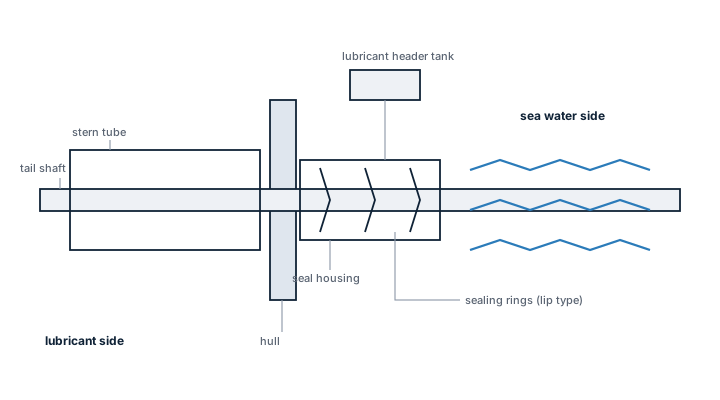
Stern tube shaft seal, cross-section
Side section through a tail shaft where it passes through the stern tube and hull, showing the sealing rings, lubricant header tank and the boundary between the lubricant side and the sea water side.

Main components

Sealing rings or lips

Most modern seals use two to four lip seals or face seals in series, arranged so an outer element takes the sea pressure and an inner element retains lubricant, with the middle elements as backup if the outer fails.

Housing and liner

A shaft liner, often bronze or a stainless overlay, gives the sealing elements a smooth, corrosion-resistant running surface, since the bare tail shaft steel would pit and wear unevenly under the seal.

Lubrication and monitoring lines

Oil-lubricated seals run from a header tank that keeps the seal chamber pressure slightly above sea pressure at the working draught; grease-lubricated seals use periodic injection instead.

Selection and sizing

  • Shaft diameter and running speed, which set the seal size and the lip material's wear life.
  • Design draught and operating depth, which set the sea pressure the seal must hold against.
  • Lubricant type: mineral oil, environmentally acceptable lubricant, or grease, each needing a matched seal design.
  • Access for maintenance, since some seal designs can be replaced afloat while others require drydocking.

Regulations and class

Class rules require periodic survey of the stern tube seal and lubricant condition, with sampling of the lubricant for water content as part of tailshaft survey regimes. Where an oil-lubricated seal is fitted, MARPOL Annex I and regional requirements increasingly push owners toward environmentally acceptable lubricants or a seal design certified to prevent any lubricant loss to the sea. Class societies also set minimum requirements for standby or emergency sealing arrangements on vessels without a means of drydocking at short notice.

Typical faults

FaultConsequence
Lip wear from a scored or pitted shaft linerRising oil consumption or water ingress into the stern tube lubricant
Header tank level not monitoredLoss of the pressure margin that keeps sea pressure out, undetected leakage
Seal chamber overheating from misalignmentAccelerated lip wear, premature seal failure
Contaminated lubricant left unchangedAbrasive wear on the sealing lips and liner surface

What to look for in a supplier

  • Type approval from the relevant class society for the exact seal design and shaft size.
  • Documented compatibility with the vessel's chosen lubricant, including environmentally acceptable lubricant approval if required.
  • Availability of an afloat repair kit or split seal design where drydock access is limited.
  • Clear guidance on running-in procedure, since a new seal often needs a controlled break-in period.

A slow but steady rise in stern tube lubricant water content is worth acting on immediately, since by the time a seal visibly leaks at the flange the sealing lips are usually already beyond a simple adjustment.

Search by manufacturer AFRISOWISKASwagelokAlfa Laval S.p.A.MAN Energy SolutionsWärtsiläEndress+HauserABB MarineAlfa LavalMacGregorNovenco MarineCarrier MarineseimiSiemens MarineHeinen & Hopman
Would you like to know more?

One request. A person answers within 24 hours on working days.

Tell us the manufacturer, the model and what you need — a part, a service call, a second opinion. Our desk asks the right suppliers from a network of over 114,000 companies and comes back with a quote or a sourcing plan, not a search page.

Frequently asked

Three things people ask first.

Is Shaft Seal data free?

Yes. Every model page, every guide and every datasheet for this type is readable without an account. An account adds saved searches and requests, nothing is taken away.

My model is missing — what now?

Send us the nameplate. We identify it by hand, add it to the library, and if you need a part or a service, the request is already on our desk.

Can you source a Shaft Seal part?

Yes. Tell us the manufacturer, the model and what you need — our desk asks the right suppliers from a network of over 114,000 companies and comes back with a quote or a sourcing plan.