What to check on a Controllable Pitch Propeller.
A fixed pitch propeller needs the shaft itself to reverse for astern power, which means the main engine on a direct-drive diesel has to be stopped and restarted in reverse rotation — slow, and hard on the engine. A controllable pitch propeller keeps the shaft turning one way and instead rotates the blades around their own axis inside the hub, from full ahead pitch through zero to full astern. That makes CPP the standard choice wherever fast, repeated manoeuvring matters — ferries, tugs, offshore support vessels, and any ship with…
What sets CPP apart from a fixed propeller
A fixed pitch propeller needs the shaft itself to reverse for astern power, which means the main engine on a direct-drive diesel has to be stopped and restarted in reverse rotation — slow, and hard on the engine. A controllable pitch propeller keeps the shaft turning one way and instead rotates the blades around their own axis inside the hub, from full ahead pitch through zero to full astern. That makes CPP the standard choice wherever fast, repeated manoeuvring matters — ferries, tugs, offshore support vessels, and any ship with a shaft generator that needs constant engine RPM regardless of thrust demand.
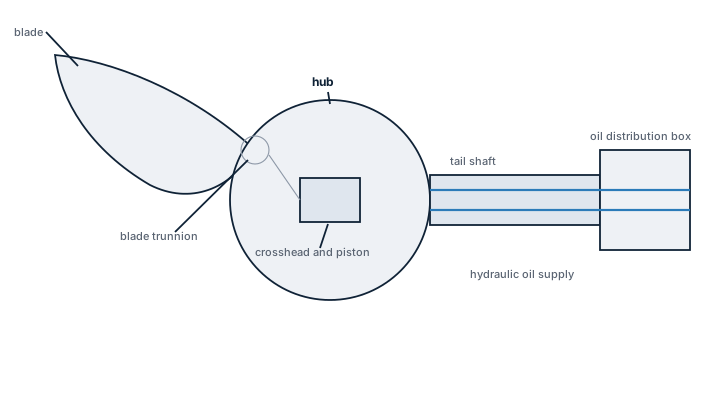
Main components
Propeller hub and blade carriers
Each blade sits on a carrier (crosshead or scotch-yoke mechanism) inside the hub, connected to a sliding piston rod running down the centre of the tailshaft. Blade seals in the hub keep sea water out of the oil-filled mechanism — this seal is the single most common source of CPP hub trouble.
Hydraulic actuating system
An oil distribution box (OD box) transfers hydraulic oil from a stationary servo system into the rotating shaft, pushing or pulling the piston rod to change pitch. Oil pressure, not electrical signal, does the physical work of moving the blades.
Pitch control and feedback
A pitch feedback unit reports actual blade angle back to the bridge control system, closing the loop between the telegraph or joystick command and the blade position achieved — without accurate feedback the bridge is commanding a pitch it cannot verify was reached.
Servo oil system
A dedicated hydraulic power pack, filters and cooler supply the pressure and flow the OD box needs; oil cleanliness here is as critical as in any high-pressure hydraulic system, since particulate contamination scores the OD box seal faces.
Selection and sizing
- Number of manoeuvres per day/hour expected — CPP earns its cost on vessels that manoeuvre often, less so on a ship running full ahead for weeks
- Whether a shaft generator is fitted, which forces constant-RPM operation and effectively requires CPP or an equivalent
- Blade material and cavitation margin for the expected loading (bollard pull duty for tugs is a different design case than free-running duty)
- Hub size versus available shaft diameter and stern tube arrangement
Regulations and class
Classification societies treat the CPP hub and hydraulic system as part of the propulsion shafting survey scope under their machinery survey rules, with periodical, typically five-year, hub opening and blade seal inspection tied into the class renewal cycle alongside the tailshaft survey regime. There is no CPP-specific SOLAS chapter, but where the CPP is integrated with a bridge control and alarm system, IACS UR requirements for remote propulsion control and fail-safe pitch behaviour on loss of control signal apply.
Typical faults
| Fault | Consequence |
|---|---|
| Blade seal leakage into the hub | Water contaminates hub oil, accelerates internal corrosion and wear |
| OD box seal wear | Loss of servo oil pressure, sluggish or erratic pitch response |
| Feedback unit drift or failure | Bridge display shows a pitch angle that does not match actual blade position |
| Contaminated servo oil | Scored seal faces, accelerated wear across the whole hydraulic chain |
What to look for in a supplier
- Spare blade seal kits matched to the exact hub model and generation, since seal design changes between production runs
- OD box overhaul capability or exchange units, given the long lead time for a custom-built replacement
- Oil analysis service or clear guidance on servo oil specification and change intervals
- Documented fail-safe pitch behaviour, usually fail-to-zero-pitch, on loss of control signal
Water in the hub oil sample is the earliest warning a CPP gives before a seal failure gets expensive — send a sample at every opportunity, not only when the class survey calls for one.