What to check on a Sterndrive / Inboard Engine (Petrol/SI).
773 models from 13 manufacturers. Below: the manufacturers at a glance and the full model list.
What defines this type
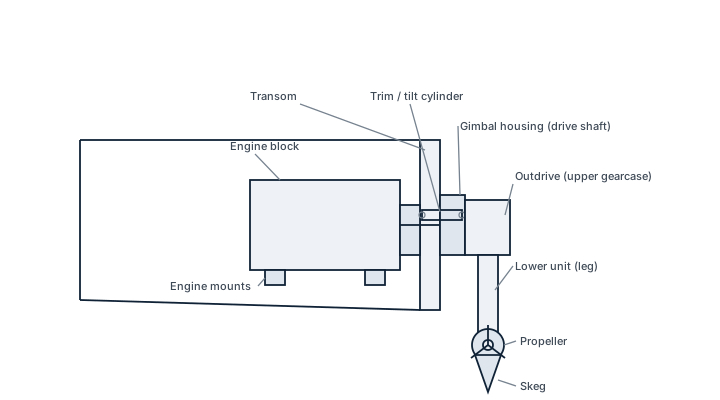
This type covers spark-ignition (SI) petrol engines in two installation forms: sterndrive, where the engine sits forward of the transom and drives an outdrive leg through the hull, and straight inboard, where the engine drives a conventional shaft, often through a V-drive gearbox to keep the engine aft. Both share the same certified engine family; what differs is the drive train behind the flywheel. The defining risk that separates this type from any diesel propulsion engine is fuel vapour: petrol vapour is heavier than air, ignitable at far lower concentrations than diesel fumes, and a source of engine-space explosions if ventilation is neglected.
Read the full guide
Main components
- Marinized SI block – an automotive-derived engine adapted with marine cooling, exhaust and ignition-protected ancillaries, sold under an EPA-certified engine family.
- Ignition system – coil-on-plug or distributor ignition; corrosion and moisture at plug boots and connectors are the leading cause of misfire in this environment.
- Fuel system – electronic fuel injection on current models, fitted with a flame arrestor on the air intake where the engine sits in an enclosed space.
- Raw water cooling – a rubber impeller pump drawing seawater through a heat exchanger, keeping the engine on a closed antifreeze circuit.
- Wet exhaust – raw water injected into the exhaust manifold and riser to cool the exhaust gas before it exits, avoiding a dry high-temperature exhaust run through a fibreglass or wood hull.
- Sterndrive leg or V-drive gearbox – the sterndrive unit carries its own gear ratio, trim range and bellows sealing the hull penetration; a V-drive routes shaft drive back through the boat to an aft-facing engine.
Selection and sizing
Selection is driven by installed horsepower against hull displacement and intended speed, then by the outdrive or gearbox ratio matched to the propeller. Relevant figures:
- Rated horsepower and torque curve for the certified engine family, not a tuned or aftermarket figure.
- Sterndrive gear ratio and trim range if steep hull deadrise or high-speed running is expected.
- Cooling system capacity relative to expected raw water temperature at the operating area.
- Propeller shaft diameter and material where the installation is a straight inboard rather than a sterndrive leg.
Regulations
The engine family itself is certified under EPA 40 CFR 1045 for spark-ignition marine engines. Around the installation, gasoline engine spaces are subject to mandatory power ventilation with a bilge blower run before starting, and electrical components in the engine space must be ignition-protected to avoid becoming an ignition source for accumulated vapour. Builders commonly reference recognised recreational marine industry standards for fuel systems, ventilation and ignition protection when specifying these installations.
Typical faults
| Fault | Consequence |
|---|---|
| Ventilation blower not run before starting, or blower failure | Fuel vapour accumulation in the bilge with explosion risk on ignition |
| Raw water pump impeller wear | Overheating that can warp the exhaust manifold and crack a cylinder head |
| Corroded ignition components | Misfire and rough running, worse in humid or salt-spray conditions |
| Sterndrive bellows or seal failure | Water ingress at the transom penetration, in the worst case sinking at the berth |
| Depleted outdrive anodes | Accelerated galvanic corrosion of the drive leg and propeller shaft |
What to look for in a supplier
- Confirmed EPA-certified engine family and emissions label for the installation's flag or market.
- Ignition-protected electrical fittings throughout the engine space, not just at the engine itself.
- Outdrive gear ratio and trim range matched to the specific hull, not a generic recommendation.
- Availability of the automotive-block parts platform locally, since this drives long-term serviceability more than any marine-specific part.
- A documented anode replacement programme as part of the supply and commissioning package.
Never skip the pre-start blower run on a petrol installation, even for a quick trip to the fuel dock; it is the one habit that separates a routine start from a bilge explosion.