"> FM-200/Novec System - Equipment Database

FM-200/Novec System

medium 166 models total

FM-200 (HFC-227ea) and Novec 1230 are clean agent gases that extinguish fire by removing heat rather than displacing oxygen, so unlike CO2 flooding a space dosed with either agent stays breathable for the short evacuation time these systems are designed around.

Read more — FM-200/Novec System explained

What makes a clean agent system different from CO2

Both FM-200 and Novec 1230 work primarily by physical heat absorption rather than oxygen displacement, so the design concentration used to extinguish a fire, typically in the range of six to nine percent by volume, remains within limits considered survivable for the short time needed to evacuate. This is the key difference from a CO2 flooding system, which extinguishes by reducing oxygen concentration to a level that also cannot support human life, and therefore demands stricter evacuation and lock-out procedures before discharge. Clean agents are stored as a liquefied gas under pressure and discharge in seconds, filling the protected space uniformly through a network of nozzles.
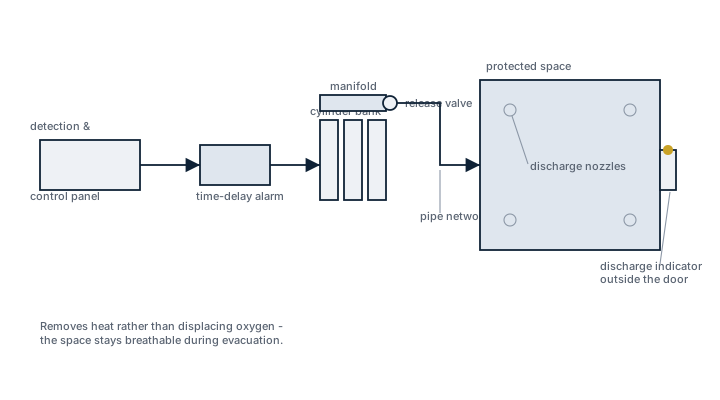
FM-200/Novec clean agent system, release path
Flow schematic from the detection and control panel through the time-delay alarm to the cylinder bank and manifold release valve, along the pipe network to discharge nozzles in the protected space, with the discharge indicator outside the entrance door.

Main components

Agent storage cylinders

Pressurised cylinders hold the liquefied agent with a nitrogen superpressurisation charge; cylinder pressure is checked periodically as the main indicator of agent retention.

Detection and control panel

Cross-zoned smoke or heat detection triggers an alarm sequence with a time delay before automatic release, giving personnel a window to evacuate or abort the discharge.

Distribution piping and nozzles

Fixed pipework sized by hydraulic calculation delivers agent to nozzles positioned to achieve uniform concentration throughout the protected space within the required discharge time, generally around ten seconds.

Manual release and abort stations

A manual pull station allows immediate discharge, while an abort station lets an occupant hold off automatic release if the space is occupied and the alarm is being investigated.

Space integrity features

Automatic dampers or shutdowns close ventilation openings and stop fans before discharge, since agent concentration cannot be held if the space keeps exchanging air with the outside.

Selection and sizing

Agent quantity is calculated from the protected space's net volume, the required design concentration for the agent and the fire risk class present, with a margin for the space's enclosure integrity (leakage through cable and pipe penetrations). Novec 1230 requires a larger stored liquid volume than FM-200 for the same protected volume, which affects cylinder room space and weight, a real consideration on smaller vessels.

Regulations and class

SOLAS Chapter II-2 and the IMO Fire Safety Systems (FSS) Code govern fixed gas fire-extinguishing systems, including agent quantity, discharge time and alarm sequencing, with the specific chapter applied depending on the protected space and its size. Flag and class requirements call for periodic weighing or pressure checks of cylinders and functional testing of the detection and release sequence, since these agents are also subject to environmental phase-out schedules that affect long-term parts and refill availability.

Typical faults

  • Low cylinder pressure or agent loss - a slow valve or fitting leak reduces the stored quantity below the calculated design amount, so a real discharge would not reach extinguishing concentration.
  • Space integrity loss - new cable runs or ventilation modifications after the original design create leak paths that let agent concentration fall below the effective level before the fire is out.
  • Detection system false alarms or failures - dust or oil mist fouling smoke detectors either triggers nuisance discharges or, if desensitised in response, delays real detection.
  • Damper or fan interlock failure - if ventilation does not shut down automatically on discharge, agent concentration is diluted continuously and never reaches design level.
  • Neglected abort station testing - an abort function that has not been tested may not work when actually needed, forcing an unnecessary full discharge during routine work in the space.

What to look for in a supplier

  • System design calculations matched to the actual as-built space volume and enclosure, not a generic per-cubic-metre estimate.
  • Cylinder refill and testing service available in the ship's trading area, given that agent and cylinder testing has specific handling requirements.
  • Clear guidance on the agent's long-term regulatory status, since environmental rules on fluorinated gases continue to evolve and affect future availability.
  • Documented compatibility with the ship's existing detection and alarm panel if only part of the system is being renewed.

Room integrity, not agent quantity on paper, decides whether a clean agent system actually extinguishes a fire - treat every new penetration through a protected space's boundary as a system modification that needs sign-off.

5 manufacturers · 166 models

NAFFCO Marine

43
NAFFCO FM200 Small unverified
Agent
FM200
Common Failures & Inspection Points
  • Blocked nozzles or piping from contamination/corrosion, typically indicated by poor test flow or impaired coverage
  • Pump, cylinder or pressure loss, typically indicated by low pressure, failed readiness check or discharge alarm
  • Valve/actuator sticking, typically indicated by section fails to open or close during testing
  • Detection/release control fault, typically indicated by failed automatic/manual release or incorrect indication
  • Leakage/corrosion in distribution piping, typically indicated by pressure loss, visible leaks or failed integrity test
Service: Inspect agent/pump readiness, valves, nozzles, piping, release controls, alarms and shutdown interlocks; flow, pressure and discharge tests must follow approved fire-system procedures and exact manufacturer criteria.
Spare Parts: Keep nozzle caps/filters, valve and actuator seal kits, release solenoids, pressure switches, detector/interface components and approved pump service parts.
Use Cases: Used in machinery spaces, RoRo decks, accommodation/technical compartments and special hazard areas according to the installed fire-extinguishing system. This entry applies specifically to the FM-200/Novec System variant identified as NAFFCO Marine NAFFCO FM200 Small.
NAFFCO FM200 Medium unverified
Agent
FM200
Common Failures & Inspection Points
  • Blocked nozzles or piping from contamination/corrosion, typically indicated by poor test flow or impaired coverage
  • Pump, cylinder or pressure loss, typically indicated by low pressure, failed readiness check or discharge alarm
  • Valve/actuator sticking, typically indicated by section fails to open or close during testing
  • Detection/release control fault, typically indicated by failed automatic/manual release or incorrect indication
  • Leakage/corrosion in distribution piping, typically indicated by pressure loss, visible leaks or failed integrity test
Service: Inspect agent/pump readiness, valves, nozzles, piping, release controls, alarms and shutdown interlocks; flow, pressure and discharge tests must follow approved fire-system procedures and exact manufacturer criteria.
Spare Parts: Keep nozzle caps/filters, valve and actuator seal kits, release solenoids, pressure switches, detector/interface components and approved pump service parts.
Use Cases: Used in machinery spaces, RoRo decks, accommodation/technical compartments and special hazard areas according to the installed fire-extinguishing system. This entry applies specifically to the FM-200/Novec System variant identified as NAFFCO Marine NAFFCO FM200 Medium.
NAFFCO FM200 Large unverified
Agent
FM200
Common Failures & Inspection Points
  • Blocked nozzles or piping from contamination/corrosion, typically indicated by poor test flow or impaired coverage
  • Pump, cylinder or pressure loss, typically indicated by low pressure, failed readiness check or discharge alarm
  • Valve/actuator sticking, typically indicated by section fails to open or close during testing
  • Detection/release control fault, typically indicated by failed automatic/manual release or incorrect indication
  • Leakage/corrosion in distribution piping, typically indicated by pressure loss, visible leaks or failed integrity test
Service: Inspect agent/pump readiness, valves, nozzles, piping, release controls, alarms and shutdown interlocks; flow, pressure and discharge tests must follow approved fire-system procedures and exact manufacturer criteria.
Spare Parts: Keep nozzle caps/filters, valve and actuator seal kits, release solenoids, pressure switches, detector/interface components and approved pump service parts.
Use Cases: Used in machinery spaces, RoRo decks, accommodation/technical compartments and special hazard areas according to the installed fire-extinguishing system. This entry applies specifically to the FM-200/Novec System variant identified as NAFFCO Marine NAFFCO FM200 Large.
NAFFCO FM200 XL unverified
Agent
FM200
Common Failures & Inspection Points
  • Blocked, damaged, corroded, or contaminated detectors, nozzles, piping, valves, or release components reduce coverage or prevent correct discharge
  • Loss of extinguishing medium, pressure, water supply, or foam concentrate causes low-level indications, failed tests, or reduced firefighting capability
  • Control-panel, power-supply, loop, cable, or communication faults produce alarms, disabled zones, or loss of remote release
  • Valve, damper, actuator, or interlock faults prevent the required shutdown, isolation, or agent release sequence
  • Poor maintenance, incorrect line-up, or obstructed access is identified during tests and can delay emergency response
Service: Inspect control panels, supplies, detectors or nozzles, valves, piping, alarms, remote releases, shutdown interlocks, signage, access, and system status. Functional testing, agent quantities, pressure settings, detector spacing, and discharge criteria must follow SOLAS, class, flag, approved fire-control plans, and manufacturer documentation.
Spare Parts: Carry approved detector or call-point units, fuses, seals and gaskets, valve or actuator service parts, nozzles or sprinkler heads where applicable, and critical control modules recommended for the installed system.
Use Cases: Used on all vessel types to protect machinery spaces, accommodation, cargo areas, vehicle decks, galleys, electrical rooms, and other fire-risk spaces.
NAFFCO Novec 1230 Small unverified
Agent
Novec 1230
NAFFCO Novec 1230 Medium unverified
Agent
Novec 1230
NAFFCO Novec 1230 Large unverified
Agent
Novec 1230
NAFFCO Novec 1230 XL unverified
Agent
Novec 1230
NAFFCO Marine FM-200 10kg-B unverified
Agent
FM-200
Charge
10kg
Common Failures & Inspection Points
  • Loss of extinguishing-agent inventory or pressure caused by leakage or poor maintenance, resulting in low-level or low-pressure indication and reduced system readiness
  • Nozzle, pipe or distribution blockage caused by corrosion, paint, deposits or mechanical damage, resulting in restricted discharge
  • Release-valve or actuator failure caused by corrosion, sticking or control faults, resulting in inability to discharge the system when commanded
  • Detection, interlock or alarm failure caused by wiring, sensor or control-panel faults, resulting in missing alarms or inhibited release sequence
  • Pump, cylinder or pressure-regulating equipment deterioration caused by wear, corrosion or electrical faults, resulting in inadequate discharge performance
Service: Inspect agent storage, pumps or cylinders, release controls, section valves, nozzles, piping and alarms in accordance with the approved maintenance plan. Keep nozzles and discharge openings clear of paint, cargo or modifications. Function-test release circuits and interlocks using the authorized non-discharge test method. Check cylinder or tank condition, pressure indication and securing arrangements and record any isolated section. Verify protected-space shutdowns and alarms where required by the approved design. Refer to the manufacturer documentation for the exact figure for test intervals, charge quantities, pressures and acceptance criteria.
Spare Parts: Keep approved valve service kits, nozzles, seals, actuators, detection or release components, fuses and manufacturer-recommended pump or pressure-regulating parts. Extinguishing agent and cylinder components must remain compatible with the certified system. Major pressure vessels or pumps are normally strategic spares.
Use Cases: Fixed fire protection for machinery spaces, cargo areas, accommodation or deck hazards on merchant ships, passenger vessels and offshore units.
NAFFCO Marine FM-200 25kg-B unverified
Agent
FM-200
Charge
25kg
Common Failures & Inspection Points
  • Loss of extinguishing-agent inventory or pressure caused by leakage or poor maintenance, resulting in low-level or low-pressure indication and reduced system readiness
  • Nozzle, pipe or distribution blockage caused by corrosion, paint, deposits or mechanical damage, resulting in restricted discharge
  • Release-valve or actuator failure caused by corrosion, sticking or control faults, resulting in inability to discharge the system when commanded
  • Detection, interlock or alarm failure caused by wiring, sensor or control-panel faults, resulting in missing alarms or inhibited release sequence
  • Pump, cylinder or pressure-regulating equipment deterioration caused by wear, corrosion or electrical faults, resulting in inadequate discharge performance
Service: Inspect agent storage, pumps or cylinders, release controls, section valves, nozzles, piping and alarms in accordance with the approved maintenance plan. Keep nozzles and discharge openings clear of paint, cargo or modifications. Function-test release circuits and interlocks using the authorized non-discharge test method. Check cylinder or tank condition, pressure indication and securing arrangements and record any isolated section. Verify protected-space shutdowns and alarms where required by the approved design. Refer to the manufacturer documentation for the exact figure for test intervals, charge quantities, pressures and acceptance criteria.
Spare Parts: Keep approved valve service kits, nozzles, seals, actuators, detection or release components, fuses and manufacturer-recommended pump or pressure-regulating parts. Extinguishing agent and cylinder components must remain compatible with the certified system. Major pressure vessels or pumps are normally strategic spares.
Use Cases: Fixed fire protection for machinery spaces, cargo areas, accommodation or deck hazards on merchant ships, passenger vessels and offshore units.
NAFFCO Marine FM-200 50kg-B unverified
Agent
FM-200
Charge
50kg
Common Failures & Inspection Points
  • Loss of extinguishing-agent inventory or pressure caused by leakage or poor maintenance, resulting in low-level or low-pressure indication and reduced system readiness
  • Nozzle, pipe or distribution blockage caused by corrosion, paint, deposits or mechanical damage, resulting in restricted discharge
  • Release-valve or actuator failure caused by corrosion, sticking or control faults, resulting in inability to discharge the system when commanded
  • Detection, interlock or alarm failure caused by wiring, sensor or control-panel faults, resulting in missing alarms or inhibited release sequence
  • Pump, cylinder or pressure-regulating equipment deterioration caused by wear, corrosion or electrical faults, resulting in inadequate discharge performance
Service: Inspect agent storage, pumps or cylinders, release controls, section valves, nozzles, piping and alarms in accordance with the approved maintenance plan. Keep nozzles and discharge openings clear of paint, cargo or modifications. Function-test release circuits and interlocks using the authorized non-discharge test method. Check cylinder or tank condition, pressure indication and securing arrangements and record any isolated section. Verify protected-space shutdowns and alarms where required by the approved design. Refer to the manufacturer documentation for the exact figure for test intervals, charge quantities, pressures and acceptance criteria.
Spare Parts: Keep approved valve service kits, nozzles, seals, actuators, detection or release components, fuses and manufacturer-recommended pump or pressure-regulating parts. Extinguishing agent and cylinder components must remain compatible with the certified system. Major pressure vessels or pumps are normally strategic spares.
Use Cases: Fixed fire protection for machinery spaces, cargo areas, accommodation or deck hazards on merchant ships, passenger vessels and offshore units.
NAFFCO Marine FM-200 100kg-B unverified
Agent
FM-200
Charge
100kg
Common Failures & Inspection Points
  • Loss of extinguishing-agent inventory or pressure caused by leakage or poor maintenance, resulting in low-level or low-pressure indication and reduced readiness
  • Nozzle, pipe or distribution blockage caused by corrosion, paint, deposits or mechanical damage, resulting in restricted discharge
  • Release-valve or actuator failure caused by corrosion, sticking or control faults, resulting in inability to discharge the system when commanded
  • Detection, interlock or alarm failure caused by wiring, sensor or panel faults, resulting in missing alarms or inhibited release sequence
  • Pump, cylinder or pressure-regulating equipment deterioration caused by wear, corrosion or electrical faults, resulting in inadequate discharge performance
Service: Inspect agent storage, pumps or cylinders, release controls, section valves, nozzles, piping and alarms in accordance with the approved maintenance plan. Keep nozzles and discharge openings clear of paint, cargo or modifications. Function-test release circuits and interlocks using the authorized non-discharge test method. Check cylinder or tank condition, pressure indication and securing arrangements and record any isolated section. Verify protected-space shutdowns and alarms where required. Refer to the manufacturer documentation for the exact figure for test intervals, charge quantities, pressures and acceptance criteria.
Spare Parts: Keep approved valve service kits, nozzles, seals, actuators, release components, fuses and manufacturer-recommended pump or pressure-regulating parts. Extinguishing-agent and cylinder components must remain compatible with the certified system.
Use Cases: It is used for fixed fire protection on merchant ships, passenger vessels, offshore units or other vessel types where this equipment category is fitted.
NAFFCO Marine FM-200 180kg-B unverified
Agent
FM-200
Charge
180kg
Common Failures & Inspection Points
  • Loss of extinguishing-agent inventory or pressure caused by leakage or poor maintenance, resulting in low-level or low-pressure indication and reduced readiness
  • Nozzle, pipe or distribution blockage caused by corrosion, paint, deposits or mechanical damage, resulting in restricted discharge
  • Release-valve or actuator failure caused by corrosion, sticking or control faults, resulting in inability to discharge the system when commanded
  • Detection, interlock or alarm failure caused by wiring, sensor or panel faults, resulting in missing alarms or inhibited release sequence
  • Pump, cylinder or pressure-regulating equipment deterioration caused by wear, corrosion or electrical faults, resulting in inadequate discharge performance
Service: Inspect agent storage, pumps or cylinders, release controls, section valves, nozzles, piping and alarms in accordance with the approved maintenance plan. Keep nozzles and discharge openings clear of paint, cargo or modifications. Function-test release circuits and interlocks using the authorized non-discharge test method. Check cylinder or tank condition, pressure indication and securing arrangements and record any isolated section. Verify protected-space shutdowns and alarms where required. Refer to the manufacturer documentation for the exact figure for test intervals, charge quantities, pressures and acceptance criteria.
Spare Parts: Keep approved valve service kits, nozzles, seals, actuators, release components, fuses and manufacturer-recommended pump or pressure-regulating parts. Extinguishing-agent and cylinder components must remain compatible with the certified system.
Use Cases: It is used for fixed fire protection on merchant ships, passenger vessels, offshore units or other vessel types where this equipment category is fitted.
NAFFCO Marine FM-200 250kg-B unverified
Agent
FM-200
Charge
250kg
Common Failures & Inspection Points
  • Loss of extinguishing-agent inventory or pressure caused by leakage or poor maintenance, resulting in low-level or low-pressure indication and reduced readiness
  • Nozzle, pipe or distribution blockage caused by corrosion, paint, deposits or mechanical damage, resulting in restricted discharge
  • Release-valve or actuator failure caused by corrosion, sticking or control faults, resulting in inability to discharge the system when commanded
  • Detection, interlock or alarm failure caused by wiring, sensor or panel faults, resulting in missing alarms or inhibited release sequence
  • Pump, cylinder or pressure-regulating equipment deterioration caused by wear, corrosion or electrical faults, resulting in inadequate discharge performance
Service: Inspect agent storage, pumps or cylinders, release controls, section valves, nozzles, piping and alarms in accordance with the approved maintenance plan. Keep nozzles and discharge openings clear of paint, cargo or modifications. Function-test release circuits and interlocks using the authorized non-discharge test method. Check cylinder or tank condition, pressure indication and securing arrangements and record any isolated section. Verify protected-space shutdowns and alarms where required. Refer to the manufacturer documentation for the exact figure for test intervals, charge quantities, pressures and acceptance criteria.
Spare Parts: Keep approved valve service kits, nozzles, seals, actuators, release components, fuses and manufacturer-recommended pump or pressure-regulating parts. Extinguishing-agent and cylinder components must remain compatible with the certified system.
Use Cases: It is used for fixed fire protection on merchant ships, passenger vessels, offshore units or other vessel types where this equipment category is fitted.
NAFFCO Marine FM-200 500kg-B unverified
Agent
FM-200
Charge
500kg
Common Failures & Inspection Points
  • Loss of extinguishing-agent inventory or pressure caused by leakage or poor maintenance, resulting in low-level or low-pressure indication and reduced readiness
  • Nozzle, pipe or distribution blockage caused by corrosion, paint, deposits or mechanical damage, resulting in restricted discharge
  • Release-valve or actuator failure caused by corrosion, sticking or control faults, resulting in inability to discharge the system when commanded
  • Detection, interlock or alarm failure caused by wiring, sensor or panel faults, resulting in missing alarms or inhibited release sequence
  • Pump, cylinder or pressure-regulating equipment deterioration caused by wear, corrosion or electrical faults, resulting in inadequate discharge performance
Service: Inspect agent storage, pumps or cylinders, release controls, section valves, nozzles, piping and alarms in accordance with the approved maintenance plan. Keep nozzles and discharge openings clear of paint, cargo or modifications. Function-test release circuits and interlocks using the authorized non-discharge test method. Check cylinder or tank condition, pressure indication and securing arrangements and record any isolated section. Verify protected-space shutdowns and alarms where required. Refer to the manufacturer documentation for the exact figure for test intervals, charge quantities, pressures and acceptance criteria.
Spare Parts: Keep approved valve service kits, nozzles, seals, actuators, release components, fuses and manufacturer-recommended pump or pressure-regulating parts. Extinguishing-agent and cylinder components must remain compatible with the certified system.
Use Cases: It is used for fixed fire protection on merchant ships, passenger vessels, offshore units or other vessel types where this equipment category is fitted.
NAFFCO Marine Novec 1230 10kg-B unverified
Agent
Novec 1230
Charge
10kg
Common Failures & Inspection Points
  • Loss of extinguishing-agent inventory or pressure caused by leakage or poor maintenance, resulting in low-level or low-pressure indication and reduced readiness
  • Nozzle, pipe or distribution blockage caused by corrosion, paint, deposits or mechanical damage, resulting in restricted discharge
  • Release-valve or actuator failure caused by corrosion, sticking or control faults, resulting in inability to discharge the system when commanded
  • Detection, interlock or alarm failure caused by wiring, sensor or panel faults, resulting in missing alarms or inhibited release sequence
  • Pump, cylinder or pressure-regulating equipment deterioration caused by wear, corrosion or electrical faults, resulting in inadequate discharge performance
Service: Inspect agent storage, pumps or cylinders, release controls, section valves, nozzles, piping and alarms in accordance with the approved maintenance plan. Keep nozzles and discharge openings clear of paint, cargo or modifications. Function-test release circuits and interlocks using the authorized non-discharge test method. Check cylinder or tank condition, pressure indication and securing arrangements and record any isolated section. Verify protected-space shutdowns and alarms where required. Refer to the manufacturer documentation for the exact figure for test intervals, charge quantities, pressures and acceptance criteria.
Spare Parts: Keep approved valve service kits, nozzles, seals, actuators, release components, fuses and manufacturer-recommended pump or pressure-regulating parts. Extinguishing-agent and cylinder components must remain compatible with the certified system.
Use Cases: It is used for fixed fire protection on merchant ships, passenger vessels, offshore units or other vessel types where this equipment category is fitted.
NAFFCO Marine Novec 1230 25kg-B unverified
Agent
Novec 1230
Charge
25kg
Common Failures & Inspection Points
  • Loss of extinguishing-agent inventory or pressure caused by leakage or poor maintenance, resulting in low-level or low-pressure indication and reduced readiness
  • Nozzle, pipe or distribution blockage caused by corrosion, paint, deposits or mechanical damage, resulting in restricted discharge
  • Release-valve or actuator failure caused by corrosion, sticking or control faults, resulting in inability to discharge the system when commanded
  • Detection, interlock or alarm failure caused by wiring, sensor or panel faults, resulting in missing alarms or inhibited release sequence
  • Pump, cylinder or pressure-regulating equipment deterioration caused by wear, corrosion or electrical faults, resulting in inadequate discharge performance
Service: Inspect agent storage, pumps or cylinders, release controls, section valves, nozzles, piping and alarms in accordance with the approved maintenance plan. Keep nozzles and discharge openings clear of paint, cargo or modifications. Function-test release circuits and interlocks using the authorized non-discharge test method. Check cylinder or tank condition, pressure indication and securing arrangements and record any isolated section. Verify protected-space shutdowns and alarms where required. Refer to the manufacturer documentation for the exact figure for test intervals, charge quantities, pressures and acceptance criteria.
Spare Parts: Keep approved valve service kits, nozzles, seals, actuators, release components, fuses and manufacturer-recommended pump or pressure-regulating parts. Extinguishing-agent and cylinder components must remain compatible with the certified system.
Use Cases: It is used for fixed fire protection on merchant ships, passenger vessels, offshore units or other vessel types where this equipment category is fitted.
NAFFCO Marine Novec 1230 50kg-B unverified
Agent
Novec 1230
Charge
50kg
Common Failures & Inspection Points
  • Loss of extinguishing-agent inventory or pressure caused by leakage or poor maintenance, resulting in low-level or low-pressure indication and reduced readiness
  • Nozzle, pipe or distribution blockage caused by corrosion, paint, deposits or mechanical damage, resulting in restricted discharge
  • Release-valve or actuator failure caused by corrosion, sticking or control faults, resulting in inability to discharge the system when commanded
  • Detection, interlock or alarm failure caused by wiring, sensor or panel faults, resulting in missing alarms or inhibited release sequence
  • Pump, cylinder or pressure-regulating equipment deterioration caused by wear, corrosion or electrical faults, resulting in inadequate discharge performance
Service: Inspect agent storage, pumps or cylinders, release controls, section valves, nozzles, piping and alarms in accordance with the approved maintenance plan. Keep nozzles and discharge openings clear of paint, cargo or modifications. Function-test release circuits and interlocks using the authorized non-discharge test method. Check cylinder or tank condition, pressure indication and securing arrangements and record any isolated section. Verify protected-space shutdowns and alarms where required. Refer to the manufacturer documentation for the exact figure for test intervals, charge quantities, pressures and acceptance criteria.
Spare Parts: Keep approved valve service kits, nozzles, seals, actuators, release components, fuses and manufacturer-recommended pump or pressure-regulating parts. Extinguishing-agent and cylinder components must remain compatible with the certified system.
Use Cases: It is used for fixed fire protection on merchant ships, passenger vessels, offshore units or other vessel types where this equipment category is fitted.
NAFFCO Marine Novec 1230 100kg-B unverified
Agent
Novec 1230
Charge
100kg
Common Failures & Inspection Points
  • Loss of extinguishing-agent inventory or pressure caused by leakage or poor maintenance, resulting in low-level or low-pressure indication and reduced readiness
  • Nozzle, pipe or distribution blockage caused by corrosion, paint, deposits or mechanical damage, resulting in restricted discharge
  • Release-valve or actuator failure caused by corrosion, sticking or control faults, resulting in inability to discharge the system when commanded
  • Detection, interlock or alarm failure caused by wiring, sensor or panel faults, resulting in missing alarms or inhibited release sequence
  • Pump, cylinder or pressure-regulating equipment deterioration caused by wear, corrosion or electrical faults, resulting in inadequate discharge performance
Service: Inspect agent storage, pumps or cylinders, release controls, section valves, nozzles, piping and alarms in accordance with the approved maintenance plan. Keep nozzles and discharge openings clear of paint, cargo or modifications. Function-test release circuits and interlocks using the authorized non-discharge test method. Check cylinder or tank condition, pressure indication and securing arrangements and record any isolated section. Verify protected-space shutdowns and alarms where required. Refer to the manufacturer documentation for the exact figure for test intervals, charge quantities, pressures and acceptance criteria.
Spare Parts: Keep approved valve service kits, nozzles, seals, actuators, release components, fuses and manufacturer-recommended pump or pressure-regulating parts. Extinguishing-agent and cylinder components must remain compatible with the certified system.
Use Cases: It is used for fixed fire protection on merchant ships, passenger vessels, offshore units or other vessel types where this equipment category is fitted.
NAFFCO Marine Novec 1230 180kg-B unverified
Agent
Novec 1230
Charge
180kg
Common Failures & Inspection Points
  • Loss of extinguishing-agent inventory or pressure caused by leakage or poor maintenance, resulting in low-level or low-pressure indication and reduced readiness
  • Nozzle, pipe or distribution blockage caused by corrosion, paint, deposits or mechanical damage, resulting in restricted discharge
  • Release-valve or actuator failure caused by corrosion, sticking or control faults, resulting in inability to discharge the system when commanded
  • Detection, interlock or alarm failure caused by wiring, sensor or panel faults, resulting in missing alarms or inhibited release sequence
  • Pump, cylinder or pressure-regulating equipment deterioration caused by wear, corrosion or electrical faults, resulting in inadequate discharge performance
Service: Inspect agent storage, pumps or cylinders, release controls, section valves, nozzles, piping and alarms in accordance with the approved maintenance plan. Keep nozzles and discharge openings clear of paint, cargo or modifications. Function-test release circuits and interlocks using the authorized non-discharge test method. Check cylinder or tank condition, pressure indication and securing arrangements and record any isolated section. Verify protected-space shutdowns and alarms where required. Refer to the manufacturer documentation for the exact figure for test intervals, charge quantities, pressures and acceptance criteria.
Spare Parts: Keep approved valve service kits, nozzles, seals, actuators, release components, fuses and manufacturer-recommended pump or pressure-regulating parts. Extinguishing-agent and cylinder components must remain compatible with the certified system.
Use Cases: It is used for fixed fire protection on merchant ships, passenger vessels, offshore units or other vessel types where this equipment category is fitted.
NAFFCO Marine Novec 1230 250kg-B unverified
Agent
Novec 1230
Charge
250kg
Common Failures & Inspection Points
  • Loss of extinguishing-agent inventory or pressure caused by leakage or poor maintenance, resulting in low-level or low-pressure indication and reduced readiness
  • Nozzle, pipe or distribution blockage caused by corrosion, paint, deposits or mechanical damage, resulting in restricted discharge
  • Release-valve or actuator failure caused by corrosion, sticking or control faults, resulting in inability to discharge the system when commanded
  • Detection, interlock or alarm failure caused by wiring, sensor or panel faults, resulting in missing alarms or inhibited release sequence
  • Pump, cylinder or pressure-regulating equipment deterioration caused by wear, corrosion or electrical faults, resulting in inadequate discharge performance
Service: Inspect agent storage, pumps or cylinders, release controls, section valves, nozzles, piping and alarms in accordance with the approved maintenance plan. Keep nozzles and discharge openings clear of paint, cargo or modifications. Function-test release circuits and interlocks using the authorized non-discharge test method. Check cylinder or tank condition, pressure indication and securing arrangements and record any isolated section. Verify protected-space shutdowns and alarms where required. Refer to the manufacturer documentation for the exact figure for test intervals, charge quantities, pressures and acceptance criteria.
Spare Parts: Keep approved valve service kits, nozzles, seals, actuators, release components, fuses and manufacturer-recommended pump or pressure-regulating parts. Extinguishing-agent and cylinder components must remain compatible with the certified system.
Use Cases: It is used for fixed fire protection on merchant ships, passenger vessels, offshore units or other vessel types where this equipment category is fitted.
NAFFCO Marine Novec 1230 500kg-B unverified
Agent
Novec 1230
Charge
500kg
Common Failures & Inspection Points
  • Loss of extinguishing-agent inventory or pressure caused by leakage or poor maintenance, resulting in low-level or low-pressure indication and reduced readiness
  • Nozzle, pipe or distribution blockage caused by corrosion, paint, deposits or mechanical damage, resulting in restricted discharge
  • Release-valve or actuator failure caused by corrosion, sticking or control faults, resulting in inability to discharge the system when commanded
  • Detection, interlock or alarm failure caused by wiring, sensor or panel faults, resulting in missing alarms or inhibited release sequence
  • Pump, cylinder or pressure-regulating equipment deterioration caused by wear, corrosion or electrical faults, resulting in inadequate discharge performance
Service: Inspect agent storage, pumps or cylinders, release controls, section valves, nozzles, piping and alarms in accordance with the approved maintenance plan. Keep nozzles and discharge openings clear of paint, cargo or modifications. Function-test release circuits and interlocks using the authorized non-discharge test method. Check cylinder or tank condition, pressure indication and securing arrangements and record any isolated section. Verify protected-space shutdowns and alarms where required. Refer to the manufacturer documentation for the exact figure for test intervals, charge quantities, pressures and acceptance criteria.
Spare Parts: Keep approved valve service kits, nozzles, seals, actuators, release components, fuses and manufacturer-recommended pump or pressure-regulating parts. Extinguishing-agent and cylinder components must remain compatible with the certified system.
Use Cases: It is used for fixed fire protection on merchant ships, passenger vessels, offshore units or other vessel types where this equipment category is fitted.
NAFFCO Marine IG-541 10kg-B unverified
Agent
IG-541
Charge
10kg
NAFFCO Marine IG-541 25kg-B unverified
Agent
IG-541
Charge
25kg
NAFFCO Marine IG-541 50kg-B unverified
Agent
IG-541
Charge
50kg
NAFFCO Marine IG-541 100kg-B unverified
Agent
IG-541
Charge
100kg
Common Failures & Inspection Points
  • Loss of extinguishing-agent inventory or pressure caused by leakage or poor maintenance, resulting in low-level or low-pressure indication and reduced readiness
  • Nozzle, pipe or distribution blockage caused by corrosion, paint, deposits or mechanical damage, resulting in restricted discharge
  • Release-valve or actuator failure caused by corrosion, sticking or control faults, resulting in inability to discharge the system when commanded
  • Detection, interlock or alarm failure caused by wiring, sensor or panel faults, resulting in missing alarms or inhibited release sequence
  • Pump, cylinder or pressure-regulating equipment deterioration caused by wear, corrosion or electrical faults, resulting in inadequate discharge performance
Service: Inspect agent storage, pumps or cylinders, release controls, section valves, nozzles, piping and alarms in accordance with the approved maintenance plan. Keep nozzles and discharge openings clear of paint, cargo or modifications. Function-test release circuits and interlocks using the authorized non-discharge test method. Check cylinder or tank condition, pressure indication and securing arrangements and record any isolated section. Verify protected-space shutdowns and alarms where required. Refer to the manufacturer documentation for the exact figure for test intervals, charge quantities, pressures and acceptance criteria.
Spare Parts: Keep approved valve service kits, nozzles, seals, actuators, release components, fuses and manufacturer-recommended pump or pressure-regulating parts. Extinguishing-agent and cylinder components must remain compatible with the certified system.
Use Cases: It is used for fixed fire protection on merchant ships, passenger vessels, offshore units or other vessel types where this equipment category is fitted.
NAFFCO Marine IG-541 180kg-B unverified
Agent
IG-541
Charge
180kg
Common Failures & Inspection Points
  • Loss of extinguishing-agent inventory or pressure caused by leakage or poor maintenance, resulting in low-level or low-pressure indication and reduced readiness
  • Nozzle, pipe or distribution blockage caused by corrosion, paint, deposits or mechanical damage, resulting in restricted discharge
  • Release-valve or actuator failure caused by corrosion, sticking or control faults, resulting in inability to discharge the system when commanded
  • Detection, interlock or alarm failure caused by wiring, sensor or panel faults, resulting in missing alarms or inhibited release sequence
  • Pump, cylinder or pressure-regulating equipment deterioration caused by wear, corrosion or electrical faults, resulting in inadequate discharge performance
Service: Inspect agent storage, pumps or cylinders, release controls, section valves, nozzles, piping and alarms in accordance with the approved maintenance plan. Keep nozzles and discharge openings clear of paint, cargo or modifications. Function-test release circuits and interlocks using the authorized non-discharge test method. Check cylinder or tank condition, pressure indication and securing arrangements and record any isolated section. Verify protected-space shutdowns and alarms where required. Refer to the manufacturer documentation for the exact figure for test intervals, charge quantities, pressures and acceptance criteria.
Spare Parts: Keep approved valve service kits, nozzles, seals, actuators, release components, fuses and manufacturer-recommended pump or pressure-regulating parts. Extinguishing-agent and cylinder components must remain compatible with the certified system.
Use Cases: It is used for fixed fire protection on merchant ships, passenger vessels, offshore units or other vessel types where this equipment category is fitted.
NAFFCO Marine IG-541 250kg-B unverified
Agent
IG-541
Charge
250kg
Common Failures & Inspection Points
  • Loss of extinguishing-agent inventory or pressure caused by leakage or poor maintenance, resulting in low-level or low-pressure indication and reduced readiness
  • Nozzle, pipe or distribution blockage caused by corrosion, paint, deposits or mechanical damage, resulting in restricted discharge
  • Release-valve or actuator failure caused by corrosion, sticking or control faults, resulting in inability to discharge the system when commanded
  • Detection, interlock or alarm failure caused by wiring, sensor or panel faults, resulting in missing alarms or inhibited release sequence
  • Pump, cylinder or pressure-regulating equipment deterioration caused by wear, corrosion or electrical faults, resulting in inadequate discharge performance
Service: Inspect agent storage, pumps or cylinders, release controls, section valves, nozzles, piping and alarms in accordance with the approved maintenance plan. Keep nozzles and discharge openings clear of paint, cargo or modifications. Function-test release circuits and interlocks using the authorized non-discharge test method. Check cylinder or tank condition, pressure indication and securing arrangements and record any isolated section. Verify protected-space shutdowns and alarms where required. Refer to the manufacturer documentation for the exact figure for test intervals, charge quantities, pressures and acceptance criteria.
Spare Parts: Keep approved valve service kits, nozzles, seals, actuators, release components, fuses and manufacturer-recommended pump or pressure-regulating parts. Extinguishing-agent and cylinder components must remain compatible with the certified system.
Use Cases: It is used for fixed fire protection on merchant ships, passenger vessels, offshore units or other vessel types where this equipment category is fitted.
NAFFCO Marine IG-541 500kg-B unverified
Agent
IG-541
Charge
500kg
Common Failures & Inspection Points
  • Loss of extinguishing-agent inventory or pressure caused by leakage or poor maintenance, resulting in low-level or low-pressure indication and reduced readiness
  • Nozzle, pipe or distribution blockage caused by corrosion, paint, deposits or mechanical damage, resulting in restricted discharge
  • Release-valve or actuator failure caused by corrosion, sticking or control faults, resulting in inability to discharge the system when commanded
  • Detection, interlock or alarm failure caused by wiring, sensor or panel faults, resulting in missing alarms or inhibited release sequence
  • Pump, cylinder or pressure-regulating equipment deterioration caused by wear, corrosion or electrical faults, resulting in inadequate discharge performance
Service: Inspect agent storage, pumps or cylinders, release controls, section valves, nozzles, piping and alarms in accordance with the approved maintenance plan. Keep nozzles and discharge openings clear of paint, cargo or modifications. Function-test release circuits and interlocks using the authorized non-discharge test method. Check cylinder or tank condition, pressure indication and securing arrangements and record any isolated section. Verify protected-space shutdowns and alarms where required. Refer to the manufacturer documentation for the exact figure for test intervals, charge quantities, pressures and acceptance criteria.
Spare Parts: Keep approved valve service kits, nozzles, seals, actuators, release components, fuses and manufacturer-recommended pump or pressure-regulating parts. Extinguishing-agent and cylinder components must remain compatible with the certified system.
Use Cases: It is used for fixed fire protection on merchant ships, passenger vessels, offshore units or other vessel types where this equipment category is fitted.
NAFFCO Marine IG-55 10kg-B unverified
Agent
IG-55
Charge
10kg
NAFFCO Marine IG-55 25kg-B unverified
Agent
IG-55
Charge
25kg
NAFFCO Marine IG-55 50kg-B unverified
Agent
IG-55
Charge
50kg
NAFFCO Marine IG-55 100kg-B unverified
Agent
IG-55
Charge
100kg
NAFFCO Marine IG-55 180kg-B unverified
Agent
IG-55
Charge
180kg
NAFFCO Marine IG-55 250kg-B unverified
Agent
IG-55
Charge
250kg
NAFFCO Marine IG-55 500kg-B unverified
Agent
IG-55
Charge
500kg
NAFFCO Marine FK-5-1-12 10kg-B unverified
Agent
FK-5-1-12
Charge
10kg
Common Failures & Inspection Points
  • Loss of extinguishing-agent inventory or pressure caused by leakage or poor maintenance, resulting in low-level or low-pressure indication and reduced readiness
  • Nozzle, pipe or distribution blockage caused by corrosion, paint, deposits or mechanical damage, resulting in restricted discharge
  • Release-valve or actuator failure caused by corrosion, sticking or control faults, resulting in inability to discharge the system when commanded
  • Detection, interlock or alarm failure caused by wiring, sensor or panel faults, resulting in missing alarms or inhibited release sequence
  • Pump, cylinder or pressure-regulating equipment deterioration caused by wear, corrosion or electrical faults, resulting in inadequate discharge performance
Service: Inspect agent storage, pumps or cylinders, release controls, section valves, nozzles, piping and alarms in accordance with the approved maintenance plan. Keep nozzles and discharge openings clear of paint, cargo or modifications. Function-test release circuits and interlocks using the authorized non-discharge test method. Check cylinder or tank condition, pressure indication and securing arrangements and record any isolated section. Verify protected-space shutdowns and alarms where required. Refer to the manufacturer documentation for the exact figure for test intervals, charge quantities, pressures and acceptance criteria.
Spare Parts: Keep approved valve service kits, nozzles, seals, actuators, release components, fuses and manufacturer-recommended pump or pressure-regulating parts. Extinguishing-agent and cylinder components must remain compatible with the certified system.
Use Cases: It is used for fixed fire protection on merchant ships, passenger vessels, offshore units or other vessel types where this equipment category is fitted.
NAFFCO Marine FK-5-1-12 25kg-B unverified
Agent
FK-5-1-12
Charge
25kg
Common Failures & Inspection Points
  • Loss of extinguishing-agent inventory or pressure caused by leakage or poor maintenance, resulting in low-level or low-pressure indication and reduced readiness
  • Nozzle, pipe or distribution blockage caused by corrosion, paint, deposits or mechanical damage, resulting in restricted discharge
  • Release-valve or actuator failure caused by corrosion, sticking or control faults, resulting in inability to discharge the system when commanded
  • Detection, interlock or alarm failure caused by wiring, sensor or panel faults, resulting in missing alarms or inhibited release sequence
  • Pump, cylinder or pressure-regulating equipment deterioration caused by wear, corrosion or electrical faults, resulting in inadequate discharge performance
Service: Inspect agent storage, pumps or cylinders, release controls, section valves, nozzles, piping and alarms in accordance with the approved maintenance plan. Keep nozzles and discharge openings clear of paint, cargo or modifications. Function-test release circuits and interlocks using the authorized non-discharge test method. Check cylinder or tank condition, pressure indication and securing arrangements and record any isolated section. Verify protected-space shutdowns and alarms where required. Refer to the manufacturer documentation for the exact figure for test intervals, charge quantities, pressures and acceptance criteria.
Spare Parts: Keep approved valve service kits, nozzles, seals, actuators, release components, fuses and manufacturer-recommended pump or pressure-regulating parts. Extinguishing-agent and cylinder components must remain compatible with the certified system.
Use Cases: It is used for fixed fire protection on merchant ships, passenger vessels, offshore units or other vessel types where this equipment category is fitted.
NAFFCO Marine FK-5-1-12 50kg-B unverified
Agent
FK-5-1-12
Charge
50kg
Common Failures & Inspection Points
  • Loss of extinguishing-agent inventory or pressure caused by leakage or poor maintenance, resulting in low-level or low-pressure indication and reduced readiness
  • Nozzle, pipe or distribution blockage caused by corrosion, paint, deposits or mechanical damage, resulting in restricted discharge
  • Release-valve or actuator failure caused by corrosion, sticking or control faults, resulting in inability to discharge the system when commanded
  • Detection, interlock or alarm failure caused by wiring, sensor or panel faults, resulting in missing alarms or inhibited release sequence
  • Pump, cylinder or pressure-regulating equipment deterioration caused by wear, corrosion or electrical faults, resulting in inadequate discharge performance
Service: Inspect agent storage, pumps or cylinders, release controls, section valves, nozzles, piping and alarms in accordance with the approved maintenance plan. Keep nozzles and discharge openings clear of paint, cargo or modifications. Function-test release circuits and interlocks using the authorized non-discharge test method. Check cylinder or tank condition, pressure indication and securing arrangements and record any isolated section. Verify protected-space shutdowns and alarms where required. Refer to the manufacturer documentation for the exact figure for test intervals, charge quantities, pressures and acceptance criteria.
Spare Parts: Keep approved valve service kits, nozzles, seals, actuators, release components, fuses and manufacturer-recommended pump or pressure-regulating parts. Extinguishing-agent and cylinder components must remain compatible with the certified system.
Use Cases: It is used for fixed fire protection on merchant ships, passenger vessels, offshore units or other vessel types where this equipment category is fitted.
NAFFCO Marine FK-5-1-12 100kg-B unverified
Agent
FK-5-1-12
Charge
100kg
Common Failures & Inspection Points
  • Loss of extinguishing-agent inventory or pressure caused by leakage or poor maintenance, resulting in low-level or low-pressure indication and reduced readiness
  • Nozzle, pipe or distribution blockage caused by corrosion, paint, deposits or mechanical damage, resulting in restricted discharge
  • Release-valve or actuator failure caused by corrosion, sticking or control faults, resulting in inability to discharge the system when commanded
  • Detection, interlock or alarm failure caused by wiring, sensor or panel faults, resulting in missing alarms or inhibited release sequence
  • Pump, cylinder or pressure-regulating equipment deterioration caused by wear, corrosion or electrical faults, resulting in inadequate discharge performance
Service: Inspect agent storage, pumps or cylinders, release controls, section valves, nozzles, piping and alarms in accordance with the approved maintenance plan. Keep nozzles and discharge openings clear of paint, cargo or modifications. Function-test release circuits and interlocks using the authorized non-discharge test method. Check cylinder or tank condition, pressure indication and securing arrangements and record any isolated section. Verify protected-space shutdowns and alarms where required. Refer to the manufacturer documentation for the exact figure for test intervals, charge quantities, pressures and acceptance criteria.
Spare Parts: Keep approved valve service kits, nozzles, seals, actuators, release components, fuses and manufacturer-recommended pump or pressure-regulating parts. Extinguishing-agent and cylinder components must remain compatible with the certified system.
Use Cases: It is used for fixed fire protection on merchant ships, passenger vessels, offshore units or other vessel types where this equipment category is fitted.
NAFFCO Marine FK-5-1-12 180kg-B unverified
Agent
FK-5-1-12
Charge
180kg
Common Failures & Inspection Points
  • Loss of extinguishing-agent inventory or pressure caused by leakage or poor maintenance, resulting in low-level or low-pressure indication and reduced readiness
  • Nozzle, pipe or distribution blockage caused by corrosion, paint, deposits or mechanical damage, resulting in restricted discharge
  • Release-valve or actuator failure caused by corrosion, sticking or control faults, resulting in inability to discharge the system when commanded
  • Detection, interlock or alarm failure caused by wiring, sensor or panel faults, resulting in missing alarms or inhibited release sequence
  • Pump, cylinder or pressure-regulating equipment deterioration caused by wear, corrosion or electrical faults, resulting in inadequate discharge performance
Service: Inspect agent storage, pumps or cylinders, release controls, section valves, nozzles, piping and alarms in accordance with the approved maintenance plan. Keep nozzles and discharge openings clear of paint, cargo or modifications. Function-test release circuits and interlocks using the authorized non-discharge test method. Check cylinder or tank condition, pressure indication and securing arrangements and record any isolated section. Verify protected-space shutdowns and alarms where required. Refer to the manufacturer documentation for the exact figure for test intervals, charge quantities, pressures and acceptance criteria.
Spare Parts: Keep approved valve service kits, nozzles, seals, actuators, release components, fuses and manufacturer-recommended pump or pressure-regulating parts. Extinguishing-agent and cylinder components must remain compatible with the certified system.
Use Cases: It is used for fixed fire protection on merchant ships, passenger vessels, offshore units or other vessel types where this equipment category is fitted.
NAFFCO Marine FK-5-1-12 250kg-B unverified
Agent
FK-5-1-12
Charge
250kg
Common Failures & Inspection Points
  • Loss of extinguishing-agent inventory or pressure caused by leakage or poor maintenance, resulting in low-level or low-pressure indication and reduced readiness
  • Nozzle, pipe or distribution blockage caused by corrosion, paint, deposits or mechanical damage, resulting in restricted discharge
  • Release-valve or actuator failure caused by corrosion, sticking or control faults, resulting in inability to discharge the system when commanded
  • Detection, interlock or alarm failure caused by wiring, sensor or panel faults, resulting in missing alarms or inhibited release sequence
  • Pump, cylinder or pressure-regulating equipment deterioration caused by wear, corrosion or electrical faults, resulting in inadequate discharge performance
Service: Inspect agent storage, pumps or cylinders, release controls, section valves, nozzles, piping and alarms in accordance with the approved maintenance plan. Keep nozzles and discharge openings clear of paint, cargo or modifications. Function-test release circuits and interlocks using the authorized non-discharge test method. Check cylinder or tank condition, pressure indication and securing arrangements and record any isolated section. Verify protected-space shutdowns and alarms where required. Refer to the manufacturer documentation for the exact figure for test intervals, charge quantities, pressures and acceptance criteria.
Spare Parts: Keep approved valve service kits, nozzles, seals, actuators, release components, fuses and manufacturer-recommended pump or pressure-regulating parts. Extinguishing-agent and cylinder components must remain compatible with the certified system.
Use Cases: It is used for fixed fire protection on merchant ships, passenger vessels, offshore units or other vessel types where this equipment category is fitted.
NAFFCO Marine FK-5-1-12 500kg-B unverified
Agent
FK-5-1-12
Charge
500kg
Common Failures & Inspection Points
  • Loss of extinguishing-agent inventory or pressure caused by leakage or poor maintenance, resulting in low-level or low-pressure indication and reduced readiness
  • Nozzle, pipe or distribution blockage caused by corrosion, paint, deposits or mechanical damage, resulting in restricted discharge
  • Release-valve or actuator failure caused by corrosion, sticking or control faults, resulting in inability to discharge the system when commanded
  • Detection, interlock or alarm failure caused by wiring, sensor or panel faults, resulting in missing alarms or inhibited release sequence
  • Pump, cylinder or pressure-regulating equipment deterioration caused by wear, corrosion or electrical faults, resulting in inadequate discharge performance
Service: Inspect agent storage, pumps or cylinders, release controls, section valves, nozzles, piping and alarms in accordance with the approved maintenance plan. Keep nozzles and discharge openings clear of paint, cargo or modifications. Function-test release circuits and interlocks using the authorized non-discharge test method. Check cylinder or tank condition, pressure indication and securing arrangements and record any isolated section. Verify protected-space shutdowns and alarms where required. Refer to the manufacturer documentation for the exact figure for test intervals, charge quantities, pressures and acceptance criteria.
Spare Parts: Keep approved valve service kits, nozzles, seals, actuators, release components, fuses and manufacturer-recommended pump or pressure-regulating parts. Extinguishing-agent and cylinder components must remain compatible with the certified system.
Use Cases: It is used for fixed fire protection on merchant ships, passenger vessels, offshore units or other vessel types where this equipment category is fitted.

Tyco / Johnson Controls

42
Sapphire FM200 25kg unverified
Agent
FM-200 (HFC-227ea)
Common Failures & Inspection Points
  • Loss of extinguishing-agent inventory or pressure caused by leakage or poor maintenance, resulting in low-level or low-pressure indication and reduced readiness
  • Nozzle, pipe or distribution blockage caused by corrosion, paint, deposits or mechanical damage, resulting in restricted discharge
  • Release-valve or actuator failure caused by corrosion, sticking or control faults, resulting in inability to discharge the system when commanded
  • Detection, interlock or alarm failure caused by wiring, sensor or panel faults, resulting in missing alarms or inhibited release sequence
  • Pump, cylinder or pressure-regulating equipment deterioration caused by wear, corrosion or electrical faults, resulting in inadequate discharge performance
Service: Inspect agent storage, pumps or cylinders, release controls, section valves, nozzles, piping and alarms in accordance with the approved maintenance plan. Keep nozzles and discharge openings clear of paint, cargo or modifications. Function-test release circuits and interlocks using the authorized non-discharge test method. Check cylinder or tank condition, pressure indication and securing arrangements and record any isolated section. Verify protected-space shutdowns and alarms where required. Refer to the manufacturer documentation for the exact figure for test intervals, charge quantities, pressures and acceptance criteria.
Spare Parts: Keep approved valve service kits, nozzles, seals, actuators, release components, fuses and manufacturer-recommended pump or pressure-regulating parts. Extinguishing-agent and cylinder components must remain compatible with the certified system.
Use Cases: It is used for fixed fire protection on merchant ships, passenger vessels, offshore units or other vessel types where this equipment category is fitted.
Sapphire FM200 50kg unverified
Agent
FM-200 (HFC-227ea)
Common Failures & Inspection Points
  • Loss of extinguishing-agent inventory or pressure caused by leakage or poor maintenance, resulting in low-level or low-pressure indication and reduced readiness
  • Nozzle, pipe or distribution blockage caused by corrosion, paint, deposits or mechanical damage, resulting in restricted discharge
  • Release-valve or actuator failure caused by corrosion, sticking or control faults, resulting in inability to discharge the system when commanded
  • Detection, interlock or alarm failure caused by wiring, sensor or panel faults, resulting in missing alarms or inhibited release sequence
  • Pump, cylinder or pressure-regulating equipment deterioration caused by wear, corrosion or electrical faults, resulting in inadequate discharge performance
Service: Inspect agent storage, pumps or cylinders, release controls, section valves, nozzles, piping and alarms in accordance with the approved maintenance plan. Keep nozzles and discharge openings clear of paint, cargo or modifications. Function-test release circuits and interlocks using the authorized non-discharge test method. Check cylinder or tank condition, pressure indication and securing arrangements and record any isolated section. Verify protected-space shutdowns and alarms where required. Refer to the manufacturer documentation for the exact figure for test intervals, charge quantities, pressures and acceptance criteria.
Spare Parts: Keep approved valve service kits, nozzles, seals, actuators, release components, fuses and manufacturer-recommended pump or pressure-regulating parts. Extinguishing-agent and cylinder components must remain compatible with the certified system.
Use Cases: It is used for fixed fire protection on merchant ships, passenger vessels, offshore units or other vessel types where this equipment category is fitted.
Sapphire FM200 100kg unverified
Agent
FM-200 (HFC-227ea)
Common Failures & Inspection Points
  • Loss of extinguishing-agent inventory or pressure caused by leakage or poor maintenance, resulting in low-level or low-pressure indication and reduced readiness
  • Nozzle, pipe or distribution blockage caused by corrosion, paint, deposits or mechanical damage, resulting in restricted discharge
  • Release-valve or actuator failure caused by corrosion, sticking or control faults, resulting in inability to discharge the system when commanded
  • Detection, interlock or alarm failure caused by wiring, sensor or panel faults, resulting in missing alarms or inhibited release sequence
  • Pump, cylinder or pressure-regulating equipment deterioration caused by wear, corrosion or electrical faults, resulting in inadequate discharge performance
Service: Inspect agent storage, pumps or cylinders, release controls, section valves, nozzles, piping and alarms in accordance with the approved maintenance plan. Keep nozzles and discharge openings clear of paint, cargo or modifications. Function-test release circuits and interlocks using the authorized non-discharge test method. Check cylinder or tank condition, pressure indication and securing arrangements and record any isolated section. Verify protected-space shutdowns and alarms where required. Refer to the manufacturer documentation for the exact figure for test intervals, charge quantities, pressures and acceptance criteria.
Spare Parts: Keep approved valve service kits, nozzles, seals, actuators, release components, fuses and manufacturer-recommended pump or pressure-regulating parts. Extinguishing-agent and cylinder components must remain compatible with the certified system.
Use Cases: It is used for fixed fire protection on merchant ships, passenger vessels, offshore units or other vessel types where this equipment category is fitted.
Sapphire FM200 180kg unverified
Agent
FM-200 (HFC-227ea)
Common Failures & Inspection Points
  • Loss of extinguishing-agent inventory or pressure caused by leakage or poor maintenance, resulting in low-level or low-pressure indication and reduced readiness
  • Nozzle, pipe or distribution blockage caused by corrosion, paint, deposits or mechanical damage, resulting in restricted discharge
  • Release-valve or actuator failure caused by corrosion, sticking or control faults, resulting in inability to discharge the system when commanded
  • Detection, interlock or alarm failure caused by wiring, sensor or panel faults, resulting in missing alarms or inhibited release sequence
  • Pump, cylinder or pressure-regulating equipment deterioration caused by wear, corrosion or electrical faults, resulting in inadequate discharge performance
Service: Inspect agent storage, pumps or cylinders, release controls, section valves, nozzles, piping and alarms in accordance with the approved maintenance plan. Keep nozzles and discharge openings clear of paint, cargo or modifications. Function-test release circuits and interlocks using the authorized non-discharge test method. Check cylinder or tank condition, pressure indication and securing arrangements and record any isolated section. Verify protected-space shutdowns and alarms where required. Refer to the manufacturer documentation for the exact figure for test intervals, charge quantities, pressures and acceptance criteria.
Spare Parts: Keep approved valve service kits, nozzles, seals, actuators, release components, fuses and manufacturer-recommended pump or pressure-regulating parts. Extinguishing-agent and cylinder components must remain compatible with the certified system.
Use Cases: It is used for fixed fire protection on merchant ships, passenger vessels, offshore units or other vessel types where this equipment category is fitted.
INERGEN 80L unverified
Agent
IG-541 INERGEN
INERGEN 140L unverified
Agent
IG-541 INERGEN
INERGEN 300L unverified
Agent
IG-541 INERGEN
Tyco FM-200 10kg-B unverified
Agent
FM-200
Charge
10kg
Common Failures & Inspection Points
  • Loss of extinguishing-agent inventory or pressure caused by leakage or poor maintenance, resulting in low-level or low-pressure indication and reduced readiness
  • Nozzle, pipe or distribution blockage caused by corrosion, paint, deposits or mechanical damage, resulting in restricted discharge
  • Release-valve or actuator failure caused by corrosion, sticking or control faults, resulting in inability to discharge the system when commanded
  • Detection, interlock or alarm failure caused by wiring, sensor or panel faults, resulting in missing alarms or inhibited release sequence
  • Pump, cylinder or pressure-regulating equipment deterioration caused by wear, corrosion or electrical faults, resulting in inadequate discharge performance
Service: Inspect agent storage, pumps or cylinders, release controls, section valves, nozzles, piping and alarms in accordance with the approved maintenance plan. Keep nozzles and discharge openings clear of paint, cargo or modifications. Function-test release circuits and interlocks using the authorized non-discharge test method. Check cylinder or tank condition, pressure indication and securing arrangements and record any isolated section. Verify protected-space shutdowns and alarms where required. Refer to the manufacturer documentation for the exact figure for test intervals, charge quantities, pressures and acceptance criteria.
Spare Parts: Keep approved valve service kits, nozzles, seals, actuators, release components, fuses and manufacturer-recommended pump or pressure-regulating parts. Extinguishing-agent and cylinder components must remain compatible with the certified system.
Use Cases: It is used for fixed fire protection on merchant ships, passenger vessels, offshore units or other vessel types where this equipment category is fitted.
Tyco FM-200 25kg-B unverified
Agent
FM-200
Charge
25kg
Common Failures & Inspection Points
  • Loss of extinguishing-agent inventory or pressure caused by leakage or poor maintenance, resulting in low-level or low-pressure indication and reduced readiness
  • Nozzle, pipe or distribution blockage caused by corrosion, paint, deposits or mechanical damage, resulting in restricted discharge
  • Release-valve or actuator failure caused by corrosion, sticking or control faults, resulting in inability to discharge the system when commanded
  • Detection, interlock or alarm failure caused by wiring, sensor or panel faults, resulting in missing alarms or inhibited release sequence
  • Pump, cylinder or pressure-regulating equipment deterioration caused by wear, corrosion or electrical faults, resulting in inadequate discharge performance
Service: Inspect agent storage, pumps or cylinders, release controls, section valves, nozzles, piping and alarms in accordance with the approved maintenance plan. Keep nozzles and discharge openings clear of paint, cargo or modifications. Function-test release circuits and interlocks using the authorized non-discharge test method. Check cylinder or tank condition, pressure indication and securing arrangements and record any isolated section. Verify protected-space shutdowns and alarms where required. Refer to the manufacturer documentation for the exact figure for test intervals, charge quantities, pressures and acceptance criteria.
Spare Parts: Keep approved valve service kits, nozzles, seals, actuators, release components, fuses and manufacturer-recommended pump or pressure-regulating parts. Extinguishing-agent and cylinder components must remain compatible with the certified system.
Use Cases: It is used for fixed fire protection on merchant ships, passenger vessels, offshore units or other vessel types where this equipment category is fitted.
Tyco FM-200 50kg-B unverified
Agent
FM-200
Charge
50kg
Common Failures & Inspection Points
  • Loss of extinguishing-agent inventory or pressure caused by leakage or poor maintenance, resulting in low-level or low-pressure indication and reduced readiness
  • Nozzle, pipe or distribution blockage caused by corrosion, paint, deposits or mechanical damage, resulting in restricted discharge
  • Release-valve or actuator failure caused by corrosion, sticking or control faults, resulting in inability to discharge the system when commanded
  • Detection, interlock or alarm failure caused by wiring, sensor or panel faults, resulting in missing alarms or inhibited release sequence
  • Pump, cylinder or pressure-regulating equipment deterioration caused by wear, corrosion or electrical faults, resulting in inadequate discharge performance
Service: Inspect agent storage, pumps or cylinders, release controls, section valves, nozzles, piping and alarms in accordance with the approved maintenance plan. Keep nozzles and discharge openings clear of paint, cargo or modifications. Function-test release circuits and interlocks using the authorized non-discharge test method. Check cylinder or tank condition, pressure indication and securing arrangements and record any isolated section. Verify protected-space shutdowns and alarms where required. Refer to the manufacturer documentation for the exact figure for test intervals, charge quantities, pressures and acceptance criteria.
Spare Parts: Keep approved valve service kits, nozzles, seals, actuators, release components, fuses and manufacturer-recommended pump or pressure-regulating parts. Extinguishing-agent and cylinder components must remain compatible with the certified system.
Use Cases: It is used for fixed fire protection on merchant ships, passenger vessels, offshore units or other vessel types where this equipment category is fitted.
Tyco FM-200 100kg-B unverified
Agent
FM-200
Charge
100kg
Common Failures & Inspection Points
  • Loss of extinguishing-agent inventory or pressure caused by leakage or poor maintenance, resulting in low-level or low-pressure indication and reduced readiness
  • Nozzle, pipe or distribution blockage caused by corrosion, paint, deposits or mechanical damage, resulting in restricted discharge
  • Release-valve or actuator failure caused by corrosion, sticking or control faults, resulting in inability to discharge the system when commanded
  • Detection, interlock or alarm failure caused by wiring, sensor or panel faults, resulting in missing alarms or inhibited release sequence
  • Pump, cylinder or pressure-regulating equipment deterioration caused by wear, corrosion or electrical faults, resulting in inadequate discharge performance
Service: Inspect agent storage, pumps or cylinders, release controls, section valves, nozzles, piping and alarms in accordance with the approved maintenance plan. Keep nozzles and discharge openings clear of paint, cargo or modifications. Function-test release circuits and interlocks using the authorized non-discharge test method. Check cylinder or tank condition, pressure indication and securing arrangements and record any isolated section. Verify protected-space shutdowns and alarms where required. Refer to the manufacturer documentation for the exact figure for test intervals, charge quantities, pressures and acceptance criteria.
Spare Parts: Keep approved valve service kits, nozzles, seals, actuators, release components, fuses and manufacturer-recommended pump or pressure-regulating parts. Extinguishing-agent and cylinder components must remain compatible with the certified system.
Use Cases: It is used for fixed fire protection on merchant ships, passenger vessels, offshore units or other vessel types where this equipment category is fitted.
Tyco FM-200 180kg-B unverified
Agent
FM-200
Charge
180kg
Common Failures & Inspection Points
  • Loss of extinguishing-agent inventory or pressure caused by leakage or poor maintenance, resulting in low-level or low-pressure indication and reduced readiness
  • Nozzle, pipe or distribution blockage caused by corrosion, paint, deposits or mechanical damage, resulting in restricted discharge
  • Release-valve or actuator failure caused by corrosion, sticking or control faults, resulting in inability to discharge the system when commanded
  • Detection, interlock or alarm failure caused by wiring, sensor or panel faults, resulting in missing alarms or inhibited release sequence
  • Pump, cylinder or pressure-regulating equipment deterioration caused by wear, corrosion or electrical faults, resulting in inadequate discharge performance
Service: Inspect agent storage, pumps or cylinders, release controls, section valves, nozzles, piping and alarms in accordance with the approved maintenance plan. Keep nozzles and discharge openings clear of paint, cargo or modifications. Function-test release circuits and interlocks using the authorized non-discharge test method. Check cylinder or tank condition, pressure indication and securing arrangements and record any isolated section. Verify protected-space shutdowns and alarms where required. Refer to the manufacturer documentation for the exact figure for test intervals, charge quantities, pressures and acceptance criteria.
Spare Parts: Keep approved valve service kits, nozzles, seals, actuators, release components, fuses and manufacturer-recommended pump or pressure-regulating parts. Extinguishing-agent and cylinder components must remain compatible with the certified system.
Use Cases: It is used for fixed fire protection on merchant ships, passenger vessels, offshore units or other vessel types where this equipment category is fitted.
Tyco FM-200 250kg-B unverified
Agent
FM-200
Charge
250kg
Common Failures & Inspection Points
  • Loss of extinguishing-agent inventory or pressure caused by leakage or poor maintenance, resulting in low-level or low-pressure indication and reduced readiness
  • Nozzle, pipe or distribution blockage caused by corrosion, paint, deposits or mechanical damage, resulting in restricted discharge
  • Release-valve or actuator failure caused by corrosion, sticking or control faults, resulting in inability to discharge the system when commanded
  • Detection, interlock or alarm failure caused by wiring, sensor or panel faults, resulting in missing alarms or inhibited release sequence
  • Pump, cylinder or pressure-regulating equipment deterioration caused by wear, corrosion or electrical faults, resulting in inadequate discharge performance
Service: Inspect agent storage, pumps or cylinders, release controls, section valves, nozzles, piping and alarms in accordance with the approved maintenance plan. Keep nozzles and discharge openings clear of paint, cargo or modifications. Function-test release circuits and interlocks using the authorized non-discharge test method. Check cylinder or tank condition, pressure indication and securing arrangements and record any isolated section. Verify protected-space shutdowns and alarms where required. Refer to the manufacturer documentation for the exact figure for test intervals, charge quantities, pressures and acceptance criteria.
Spare Parts: Keep approved valve service kits, nozzles, seals, actuators, release components, fuses and manufacturer-recommended pump or pressure-regulating parts. Extinguishing-agent and cylinder components must remain compatible with the certified system.
Use Cases: It is used for fixed fire protection on merchant ships, passenger vessels, offshore units or other vessel types where this equipment category is fitted.
Tyco FM-200 500kg-B unverified
Agent
FM-200
Charge
500kg
Common Failures & Inspection Points
  • Loss of extinguishing-agent inventory or pressure caused by leakage or poor maintenance, resulting in low-level or low-pressure indication and reduced readiness
  • Nozzle, pipe or distribution blockage caused by corrosion, paint, deposits or mechanical damage, resulting in restricted discharge
  • Release-valve or actuator failure caused by corrosion, sticking or control faults, resulting in inability to discharge the system when commanded
  • Detection, interlock or alarm failure caused by wiring, sensor or panel faults, resulting in missing alarms or inhibited release sequence
  • Pump, cylinder or pressure-regulating equipment deterioration caused by wear, corrosion or electrical faults, resulting in inadequate discharge performance
Service: Inspect agent storage, pumps or cylinders, release controls, section valves, nozzles, piping and alarms in accordance with the approved maintenance plan. Keep nozzles and discharge openings clear of paint, cargo or modifications. Function-test release circuits and interlocks using the authorized non-discharge test method. Check cylinder or tank condition, pressure indication and securing arrangements and record any isolated section. Verify protected-space shutdowns and alarms where required. Refer to the manufacturer documentation for the exact figure for test intervals, charge quantities, pressures and acceptance criteria.
Spare Parts: Keep approved valve service kits, nozzles, seals, actuators, release components, fuses and manufacturer-recommended pump or pressure-regulating parts. Extinguishing-agent and cylinder components must remain compatible with the certified system.
Use Cases: It is used for fixed fire protection on merchant ships, passenger vessels, offshore units or other vessel types where this equipment category is fitted.
Tyco Novec 1230 10kg-B unverified
Agent
Novec 1230
Charge
10kg
Common Failures & Inspection Points
  • Loss of extinguishing-agent inventory or pressure caused by leakage or poor maintenance, resulting in low-level or low-pressure indication and reduced readiness
  • Nozzle, pipe or distribution blockage caused by corrosion, paint, deposits or mechanical damage, resulting in restricted discharge
  • Release-valve or actuator failure caused by corrosion, sticking or control faults, resulting in inability to discharge the system when commanded
  • Detection, interlock or alarm failure caused by wiring, sensor or panel faults, resulting in missing alarms or inhibited release sequence
  • Pump, cylinder or pressure-regulating equipment deterioration caused by wear, corrosion or electrical faults, resulting in inadequate discharge performance
Service: Inspect agent storage, pumps or cylinders, release controls, section valves, nozzles, piping and alarms in accordance with the approved maintenance plan. Keep nozzles and discharge openings clear of paint, cargo or modifications. Function-test release circuits and interlocks using the authorized non-discharge test method. Check cylinder or tank condition, pressure indication and securing arrangements and record any isolated section. Verify protected-space shutdowns and alarms where required. Refer to the manufacturer documentation for the exact figure for test intervals, charge quantities, pressures and acceptance criteria.
Spare Parts: Keep approved valve service kits, nozzles, seals, actuators, release components, fuses and manufacturer-recommended pump or pressure-regulating parts. Extinguishing-agent and cylinder components must remain compatible with the certified system.
Use Cases: It is used for fixed fire protection on merchant ships, passenger vessels, offshore units or other vessel types where this equipment category is fitted.
Tyco Novec 1230 25kg-B unverified
Agent
Novec 1230
Charge
25kg
Common Failures & Inspection Points
  • Loss of extinguishing-agent inventory or pressure caused by leakage or poor maintenance, resulting in low-level or low-pressure indication and reduced readiness
  • Nozzle, pipe or distribution blockage caused by corrosion, paint, deposits or mechanical damage, resulting in restricted discharge
  • Release-valve or actuator failure caused by corrosion, sticking or control faults, resulting in inability to discharge the system when commanded
  • Detection, interlock or alarm failure caused by wiring, sensor or panel faults, resulting in missing alarms or inhibited release sequence
  • Pump, cylinder or pressure-regulating equipment deterioration caused by wear, corrosion or electrical faults, resulting in inadequate discharge performance
Service: Inspect agent storage, pumps or cylinders, release controls, section valves, nozzles, piping and alarms in accordance with the approved maintenance plan. Keep nozzles and discharge openings clear of paint, cargo or modifications. Function-test release circuits and interlocks using the authorized non-discharge test method. Check cylinder or tank condition, pressure indication and securing arrangements and record any isolated section. Verify protected-space shutdowns and alarms where required. Refer to the manufacturer documentation for the exact figure for test intervals, charge quantities, pressures and acceptance criteria.
Spare Parts: Keep approved valve service kits, nozzles, seals, actuators, release components, fuses and manufacturer-recommended pump or pressure-regulating parts. Extinguishing-agent and cylinder components must remain compatible with the certified system.
Use Cases: It is used for fixed fire protection on merchant ships, passenger vessels, offshore units or other vessel types where this equipment category is fitted.
Tyco Novec 1230 50kg-B unverified
Agent
Novec 1230
Charge
50kg
Tyco Novec 1230 100kg-B unverified
Agent
Novec 1230
Charge
100kg
Common Failures & Inspection Points
  • Loss of extinguishing-agent inventory or pressure caused by leakage or poor maintenance, resulting in low-level or low-pressure indication and reduced readiness
  • Nozzle, pipe or distribution blockage caused by corrosion, paint, deposits or mechanical damage, resulting in restricted discharge
  • Release-valve or actuator failure caused by corrosion, sticking or control faults, resulting in inability to discharge the system when commanded
  • Detection, interlock or alarm failure caused by wiring, sensor or panel faults, resulting in missing alarms or inhibited release sequence
  • Pump, cylinder or pressure-regulating equipment deterioration caused by wear, corrosion or electrical faults, resulting in inadequate discharge performance
Service: Inspect agent storage, pumps or cylinders, release controls, section valves, nozzles, piping and alarms in accordance with the approved maintenance plan. Keep nozzles and discharge openings clear of paint, cargo or modifications. Function-test release circuits and interlocks using the authorized non-discharge test method. Check cylinder or tank condition, pressure indication and securing arrangements and record any isolated section. Verify protected-space shutdowns and alarms where required. Refer to the manufacturer documentation for the exact figure for test intervals, charge quantities, pressures and acceptance criteria.
Spare Parts: Keep approved valve service kits, nozzles, seals, actuators, release components, fuses and manufacturer-recommended pump or pressure-regulating parts. Extinguishing-agent and cylinder components must remain compatible with the certified system.
Use Cases: It is used for fixed fire protection on merchant ships, passenger vessels, offshore units or other vessel types where this equipment category is fitted.
Tyco Novec 1230 180kg-B unverified
Agent
Novec 1230
Charge
180kg
Common Failures & Inspection Points
  • Loss of extinguishing-agent inventory or pressure caused by leakage or poor maintenance, resulting in low-level or low-pressure indication and reduced readiness
  • Nozzle, pipe or distribution blockage caused by corrosion, paint, deposits or mechanical damage, resulting in restricted discharge
  • Release-valve or actuator failure caused by corrosion, sticking or control faults, resulting in inability to discharge the system when commanded
  • Detection, interlock or alarm failure caused by wiring, sensor or panel faults, resulting in missing alarms or inhibited release sequence
  • Pump, cylinder or pressure-regulating equipment deterioration caused by wear, corrosion or electrical faults, resulting in inadequate discharge performance
Service: Inspect agent storage, pumps or cylinders, release controls, section valves, nozzles, piping and alarms in accordance with the approved maintenance plan. Keep nozzles and discharge openings clear of paint, cargo or modifications. Function-test release circuits and interlocks using the authorized non-discharge test method. Check cylinder or tank condition, pressure indication and securing arrangements and record any isolated section. Verify protected-space shutdowns and alarms where required. Refer to the manufacturer documentation for the exact figure for test intervals, charge quantities, pressures and acceptance criteria.
Spare Parts: Keep approved valve service kits, nozzles, seals, actuators, release components, fuses and manufacturer-recommended pump or pressure-regulating parts. Extinguishing-agent and cylinder components must remain compatible with the certified system.
Use Cases: It is used for fixed fire protection on merchant ships, passenger vessels, offshore units or other vessel types where this equipment category is fitted.
Tyco Novec 1230 250kg-B unverified
Agent
Novec 1230
Charge
250kg
Common Failures & Inspection Points
  • Loss of extinguishing-agent inventory or pressure caused by leakage or poor maintenance, resulting in low-level or low-pressure indication and reduced readiness
  • Nozzle, pipe or distribution blockage caused by corrosion, paint, deposits or mechanical damage, resulting in restricted discharge
  • Release-valve or actuator failure caused by corrosion, sticking or control faults, resulting in inability to discharge the system when commanded
  • Detection, interlock or alarm failure caused by wiring, sensor or panel faults, resulting in missing alarms or inhibited release sequence
  • Pump, cylinder or pressure-regulating equipment deterioration caused by wear, corrosion or electrical faults, resulting in inadequate discharge performance
Service: Inspect agent storage, pumps or cylinders, release controls, section valves, nozzles, piping and alarms in accordance with the approved maintenance plan. Keep nozzles and discharge openings clear of paint, cargo or modifications. Function-test release circuits and interlocks using the authorized non-discharge test method. Check cylinder or tank condition, pressure indication and securing arrangements and record any isolated section. Verify protected-space shutdowns and alarms where required. Refer to the manufacturer documentation for the exact figure for test intervals, charge quantities, pressures and acceptance criteria.
Spare Parts: Keep approved valve service kits, nozzles, seals, actuators, release components, fuses and manufacturer-recommended pump or pressure-regulating parts. Extinguishing-agent and cylinder components must remain compatible with the certified system.
Use Cases: It is used for fixed fire protection on merchant ships, passenger vessels, offshore units or other vessel types where this equipment category is fitted.
Tyco Novec 1230 500kg-B unverified
Agent
Novec 1230
Charge
500kg
Common Failures & Inspection Points
  • Loss of extinguishing-agent inventory or pressure caused by leakage or poor maintenance, resulting in low-level or low-pressure indication and reduced readiness
  • Nozzle, pipe or distribution blockage caused by corrosion, paint, deposits or mechanical damage, resulting in restricted discharge
  • Release-valve or actuator failure caused by corrosion, sticking or control faults, resulting in inability to discharge the system when commanded
  • Detection, interlock or alarm failure caused by wiring, sensor or panel faults, resulting in missing alarms or inhibited release sequence
  • Pump, cylinder or pressure-regulating equipment deterioration caused by wear, corrosion or electrical faults, resulting in inadequate discharge performance
Service: Inspect agent storage, pumps or cylinders, release controls, section valves, nozzles, piping and alarms in accordance with the approved maintenance plan. Keep nozzles and discharge openings clear of paint, cargo or modifications. Function-test release circuits and interlocks using the authorized non-discharge test method. Check cylinder or tank condition, pressure indication and securing arrangements and record any isolated section. Verify protected-space shutdowns and alarms where required. Refer to the manufacturer documentation for the exact figure for test intervals, charge quantities, pressures and acceptance criteria.
Spare Parts: Keep approved valve service kits, nozzles, seals, actuators, release components, fuses and manufacturer-recommended pump or pressure-regulating parts. Extinguishing-agent and cylinder components must remain compatible with the certified system.
Use Cases: It is used for fixed fire protection on merchant ships, passenger vessels, offshore units or other vessel types where this equipment category is fitted.
Tyco IG-541 10kg-B unverified
Agent
IG-541
Charge
10kg
Common Failures & Inspection Points
  • Loss of extinguishing-agent inventory or pressure caused by leakage or poor maintenance, resulting in low-level or low-pressure indication and reduced readiness
  • Nozzle, pipe or distribution blockage caused by corrosion, paint, deposits or mechanical damage, resulting in restricted discharge
  • Release-valve or actuator failure caused by corrosion, sticking or control faults, resulting in inability to discharge the system when commanded
  • Detection, interlock or alarm failure caused by wiring, sensor or panel faults, resulting in missing alarms or inhibited release sequence
  • Pump, cylinder or pressure-regulating equipment deterioration caused by wear, corrosion or electrical faults, resulting in inadequate discharge performance
Service: Inspect agent storage, pumps or cylinders, release controls, section valves, nozzles, piping and alarms in accordance with the approved maintenance plan. Keep nozzles and discharge openings clear of paint, cargo or modifications. Function-test release circuits and interlocks using the authorized non-discharge test method. Check cylinder or tank condition, pressure indication and securing arrangements and record any isolated section. Verify protected-space shutdowns and alarms where required. Refer to the manufacturer documentation for the exact figure for test intervals, charge quantities, pressures and acceptance criteria.
Spare Parts: Keep approved valve service kits, nozzles, seals, actuators, release components, fuses and manufacturer-recommended pump or pressure-regulating parts. Extinguishing-agent and cylinder components must remain compatible with the certified system.
Use Cases: It is used for fixed fire protection on merchant ships, passenger vessels, offshore units or other vessel types where this equipment category is fitted.
Tyco IG-541 25kg-B unverified
Agent
IG-541
Charge
25kg
Common Failures & Inspection Points
  • Loss of extinguishing-agent inventory or pressure caused by leakage or poor maintenance, resulting in low-level or low-pressure indication and reduced readiness
  • Nozzle, pipe or distribution blockage caused by corrosion, paint, deposits or mechanical damage, resulting in restricted discharge
  • Release-valve or actuator failure caused by corrosion, sticking or control faults, resulting in inability to discharge the system when commanded
  • Detection, interlock or alarm failure caused by wiring, sensor or panel faults, resulting in missing alarms or inhibited release sequence
  • Pump, cylinder or pressure-regulating equipment deterioration caused by wear, corrosion or electrical faults, resulting in inadequate discharge performance
Service: Inspect agent storage, pumps or cylinders, release controls, section valves, nozzles, piping and alarms in accordance with the approved maintenance plan. Keep nozzles and discharge openings clear of paint, cargo or modifications. Function-test release circuits and interlocks using the authorized non-discharge test method. Check cylinder or tank condition, pressure indication and securing arrangements and record any isolated section. Verify protected-space shutdowns and alarms where required. Refer to the manufacturer documentation for the exact figure for test intervals, charge quantities, pressures and acceptance criteria.
Spare Parts: Keep approved valve service kits, nozzles, seals, actuators, release components, fuses and manufacturer-recommended pump or pressure-regulating parts. Extinguishing-agent and cylinder components must remain compatible with the certified system.
Use Cases: It is used for fixed fire protection on merchant ships, passenger vessels, offshore units or other vessel types where this equipment category is fitted.
Tyco IG-541 50kg-B unverified
Agent
IG-541
Charge
50kg
Common Failures & Inspection Points
  • Loss of extinguishing-agent inventory or pressure caused by leakage or poor maintenance, resulting in low-level or low-pressure indication and reduced readiness
  • Nozzle, pipe or distribution blockage caused by corrosion, paint, deposits or mechanical damage, resulting in restricted discharge
  • Release-valve or actuator failure caused by corrosion, sticking or control faults, resulting in inability to discharge the system when commanded
  • Detection, interlock or alarm failure caused by wiring, sensor or panel faults, resulting in missing alarms or inhibited release sequence
  • Pump, cylinder or pressure-regulating equipment deterioration caused by wear, corrosion or electrical faults, resulting in inadequate discharge performance
Service: Inspect agent storage, pumps or cylinders, release controls, section valves, nozzles, piping and alarms in accordance with the approved maintenance plan. Keep nozzles and discharge openings clear of paint, cargo or modifications. Function-test release circuits and interlocks using the authorized non-discharge test method. Check cylinder or tank condition, pressure indication and securing arrangements and record any isolated section. Verify protected-space shutdowns and alarms where required. Refer to the manufacturer documentation for the exact figure for test intervals, charge quantities, pressures and acceptance criteria.
Spare Parts: Keep approved valve service kits, nozzles, seals, actuators, release components, fuses and manufacturer-recommended pump or pressure-regulating parts. Extinguishing-agent and cylinder components must remain compatible with the certified system.
Use Cases: It is used for fixed fire protection on merchant ships, passenger vessels, offshore units or other vessel types where this equipment category is fitted.
Tyco IG-541 100kg-B unverified
Agent
IG-541
Charge
100kg
Common Failures & Inspection Points
  • Loss of extinguishing-agent inventory or pressure caused by leakage or poor maintenance, resulting in low-level or low-pressure indication and reduced readiness
  • Nozzle, pipe or distribution blockage caused by corrosion, paint, deposits or mechanical damage, resulting in restricted discharge
  • Release-valve or actuator failure caused by corrosion, sticking or control faults, resulting in inability to discharge the system when commanded
  • Detection, interlock or alarm failure caused by wiring, sensor or panel faults, resulting in missing alarms or inhibited release sequence
  • Pump, cylinder or pressure-regulating equipment deterioration caused by wear, corrosion or electrical faults, resulting in inadequate discharge performance
Service: Inspect agent storage, pumps or cylinders, release controls, section valves, nozzles, piping and alarms in accordance with the approved maintenance plan. Keep nozzles and discharge openings clear of paint, cargo or modifications. Function-test release circuits and interlocks using the authorized non-discharge test method. Check cylinder or tank condition, pressure indication and securing arrangements and record any isolated section. Verify protected-space shutdowns and alarms where required. Refer to the manufacturer documentation for the exact figure for test intervals, charge quantities, pressures and acceptance criteria.
Spare Parts: Keep approved valve service kits, nozzles, seals, actuators, release components, fuses and manufacturer-recommended pump or pressure-regulating parts. Extinguishing-agent and cylinder components must remain compatible with the certified system.
Use Cases: It is used for fixed fire protection on merchant ships, passenger vessels, offshore units or other vessel types where this equipment category is fitted.
Tyco IG-541 180kg-B unverified
Agent
IG-541
Charge
180kg
Common Failures & Inspection Points
  • Loss of extinguishing-agent inventory or pressure caused by leakage or poor maintenance, resulting in low-level or low-pressure indication and reduced readiness
  • Nozzle, pipe or distribution blockage caused by corrosion, paint, deposits or mechanical damage, resulting in restricted discharge
  • Release-valve or actuator failure caused by corrosion, sticking or control faults, resulting in inability to discharge the system when commanded
  • Detection, interlock or alarm failure caused by wiring, sensor or panel faults, resulting in missing alarms or inhibited release sequence
  • Pump, cylinder or pressure-regulating equipment deterioration caused by wear, corrosion or electrical faults, resulting in inadequate discharge performance
Service: Inspect agent storage, pumps or cylinders, release controls, section valves, nozzles, piping and alarms in accordance with the approved maintenance plan. Keep nozzles and discharge openings clear of paint, cargo or modifications. Function-test release circuits and interlocks using the authorized non-discharge test method. Check cylinder or tank condition, pressure indication and securing arrangements and record any isolated section. Verify protected-space shutdowns and alarms where required. Refer to the manufacturer documentation for the exact figure for test intervals, charge quantities, pressures and acceptance criteria.
Spare Parts: Keep approved valve service kits, nozzles, seals, actuators, release components, fuses and manufacturer-recommended pump or pressure-regulating parts. Extinguishing-agent and cylinder components must remain compatible with the certified system.
Use Cases: It is used for fixed fire protection on merchant ships, passenger vessels, offshore units or other vessel types where this equipment category is fitted.
Tyco IG-541 250kg-B unverified
Agent
IG-541
Charge
250kg
Common Failures & Inspection Points
  • Loss of extinguishing-agent inventory or pressure caused by leakage or poor maintenance, resulting in low-level or low-pressure indication and reduced readiness
  • Nozzle, pipe or distribution blockage caused by corrosion, paint, deposits or mechanical damage, resulting in restricted discharge
  • Release-valve or actuator failure caused by corrosion, sticking or control faults, resulting in inability to discharge the system when commanded
  • Detection, interlock or alarm failure caused by wiring, sensor or panel faults, resulting in missing alarms or inhibited release sequence
  • Pump, cylinder or pressure-regulating equipment deterioration caused by wear, corrosion or electrical faults, resulting in inadequate discharge performance
Service: Inspect agent storage, pumps or cylinders, release controls, section valves, nozzles, piping and alarms in accordance with the approved maintenance plan. Keep nozzles and discharge openings clear of paint, cargo or modifications. Function-test release circuits and interlocks using the authorized non-discharge test method. Check cylinder or tank condition, pressure indication and securing arrangements and record any isolated section. Verify protected-space shutdowns and alarms where required. Refer to the manufacturer documentation for the exact figure for test intervals, charge quantities, pressures and acceptance criteria.
Spare Parts: Keep approved valve service kits, nozzles, seals, actuators, release components, fuses and manufacturer-recommended pump or pressure-regulating parts. Extinguishing-agent and cylinder components must remain compatible with the certified system.
Use Cases: It is used for fixed fire protection on merchant ships, passenger vessels, offshore units or other vessel types where this equipment category is fitted.
Tyco IG-541 500kg-B unverified
Agent
IG-541
Charge
500kg
Common Failures & Inspection Points
  • Loss of extinguishing-agent inventory or pressure caused by leakage or poor maintenance, resulting in low-level or low-pressure indication and reduced readiness
  • Nozzle, pipe or distribution blockage caused by corrosion, paint, deposits or mechanical damage, resulting in restricted discharge
  • Release-valve or actuator failure caused by corrosion, sticking or control faults, resulting in inability to discharge the system when commanded
  • Detection, interlock or alarm failure caused by wiring, sensor or panel faults, resulting in missing alarms or inhibited release sequence
  • Pump, cylinder or pressure-regulating equipment deterioration caused by wear, corrosion or electrical faults, resulting in inadequate discharge performance
Service: Inspect agent storage, pumps or cylinders, release controls, section valves, nozzles, piping and alarms in accordance with the approved maintenance plan. Keep nozzles and discharge openings clear of paint, cargo or modifications. Function-test release circuits and interlocks using the authorized non-discharge test method. Check cylinder or tank condition, pressure indication and securing arrangements and record any isolated section. Verify protected-space shutdowns and alarms where required. Refer to the manufacturer documentation for the exact figure for test intervals, charge quantities, pressures and acceptance criteria.
Spare Parts: Keep approved valve service kits, nozzles, seals, actuators, release components, fuses and manufacturer-recommended pump or pressure-regulating parts. Extinguishing-agent and cylinder components must remain compatible with the certified system.
Use Cases: It is used for fixed fire protection on merchant ships, passenger vessels, offshore units or other vessel types where this equipment category is fitted.
Tyco IG-55 10kg-B unverified
Agent
IG-55
Charge
10kg
Tyco IG-55 25kg-B unverified
Agent
IG-55
Charge
25kg
Tyco IG-55 50kg-B unverified
Agent
IG-55
Charge
50kg
Tyco IG-55 100kg-B unverified
Agent
IG-55
Charge
100kg
Common Failures & Inspection Points
  • Loss of extinguishing-agent inventory or pressure caused by leakage or poor maintenance, resulting in low-level or low-pressure indication and reduced readiness
  • Nozzle, pipe or distribution blockage caused by corrosion, paint, deposits or mechanical damage, resulting in restricted discharge
  • Release-valve or actuator failure caused by corrosion, sticking or control faults, resulting in inability to discharge the system when commanded
  • Detection, interlock or alarm failure caused by wiring, sensor or panel faults, resulting in missing alarms or inhibited release sequence
  • Pump, cylinder or pressure-regulating equipment deterioration caused by wear, corrosion or electrical faults, resulting in inadequate discharge performance
Service: Inspect agent storage, pumps or cylinders, release controls, section valves, nozzles, piping and alarms in accordance with the approved maintenance plan. Keep nozzles and discharge openings clear of paint, cargo or modifications. Function-test release circuits and interlocks using the authorized non-discharge test method. Check cylinder or tank condition, pressure indication and securing arrangements and record any isolated section. Verify protected-space shutdowns and alarms where required. Refer to the manufacturer documentation for the exact figure for test intervals, charge quantities, pressures and acceptance criteria.
Spare Parts: Keep approved valve service kits, nozzles, seals, actuators, release components, fuses and manufacturer-recommended pump or pressure-regulating parts. Extinguishing-agent and cylinder components must remain compatible with the certified system.
Use Cases: It is used for fixed fire protection on merchant ships, passenger vessels, offshore units or other vessel types where this equipment category is fitted.
Tyco IG-55 180kg-B unverified
Agent
IG-55
Charge
180kg
Common Failures & Inspection Points
  • Loss of extinguishing-agent inventory or pressure caused by leakage or poor maintenance, resulting in low-level or low-pressure indication and reduced readiness
  • Nozzle, pipe or distribution blockage caused by corrosion, paint, deposits or mechanical damage, resulting in restricted discharge
  • Release-valve or actuator failure caused by corrosion, sticking or control faults, resulting in inability to discharge the system when commanded
  • Detection, interlock or alarm failure caused by wiring, sensor or panel faults, resulting in missing alarms or inhibited release sequence
  • Pump, cylinder or pressure-regulating equipment deterioration caused by wear, corrosion or electrical faults, resulting in inadequate discharge performance
Service: Inspect agent storage, pumps or cylinders, release controls, section valves, nozzles, piping and alarms in accordance with the approved maintenance plan. Keep nozzles and discharge openings clear of paint, cargo or modifications. Function-test release circuits and interlocks using the authorized non-discharge test method. Check cylinder or tank condition, pressure indication and securing arrangements and record any isolated section. Verify protected-space shutdowns and alarms where required. Refer to the manufacturer documentation for the exact figure for test intervals, charge quantities, pressures and acceptance criteria.
Spare Parts: Keep approved valve service kits, nozzles, seals, actuators, release components, fuses and manufacturer-recommended pump or pressure-regulating parts. Extinguishing-agent and cylinder components must remain compatible with the certified system.
Use Cases: It is used for fixed fire protection on merchant ships, passenger vessels, offshore units or other vessel types where this equipment category is fitted.
Tyco IG-55 250kg-B unverified
Agent
IG-55
Charge
250kg
Common Failures & Inspection Points
  • Loss of extinguishing-agent inventory or pressure caused by leakage or poor maintenance, resulting in low-level or low-pressure indication and reduced readiness
  • Nozzle, pipe or distribution blockage caused by corrosion, paint, deposits or mechanical damage, resulting in restricted discharge
  • Release-valve or actuator failure caused by corrosion, sticking or control faults, resulting in inability to discharge the system when commanded
  • Detection, interlock or alarm failure caused by wiring, sensor or panel faults, resulting in missing alarms or inhibited release sequence
  • Pump, cylinder or pressure-regulating equipment deterioration caused by wear, corrosion or electrical faults, resulting in inadequate discharge performance
Service: Inspect agent storage, pumps or cylinders, release controls, section valves, nozzles, piping and alarms in accordance with the approved maintenance plan. Keep nozzles and discharge openings clear of paint, cargo or modifications. Function-test release circuits and interlocks using the authorized non-discharge test method. Check cylinder or tank condition, pressure indication and securing arrangements and record any isolated section. Verify protected-space shutdowns and alarms where required. Refer to the manufacturer documentation for the exact figure for test intervals, charge quantities, pressures and acceptance criteria.
Spare Parts: Keep approved valve service kits, nozzles, seals, actuators, release components, fuses and manufacturer-recommended pump or pressure-regulating parts. Extinguishing-agent and cylinder components must remain compatible with the certified system.
Use Cases: It is used for fixed fire protection on merchant ships, passenger vessels, offshore units or other vessel types where this equipment category is fitted.
Tyco IG-55 500kg-B unverified
Agent
IG-55
Charge
500kg
Common Failures & Inspection Points
  • Loss of extinguishing-agent inventory or pressure caused by leakage or poor maintenance, resulting in low-level or low-pressure indication and reduced readiness
  • Nozzle, pipe or distribution blockage caused by corrosion, paint, deposits or mechanical damage, resulting in restricted discharge
  • Release-valve or actuator failure caused by corrosion, sticking or control faults, resulting in inability to discharge the system when commanded
  • Detection, interlock or alarm failure caused by wiring, sensor or panel faults, resulting in missing alarms or inhibited release sequence
  • Pump, cylinder or pressure-regulating equipment deterioration caused by wear, corrosion or electrical faults, resulting in inadequate discharge performance
Service: Inspect agent storage, pumps or cylinders, release controls, section valves, nozzles, piping and alarms in accordance with the approved maintenance plan. Keep nozzles and discharge openings clear of paint, cargo or modifications. Function-test release circuits and interlocks using the authorized non-discharge test method. Check cylinder or tank condition, pressure indication and securing arrangements and record any isolated section. Verify protected-space shutdowns and alarms where required. Refer to the manufacturer documentation for the exact figure for test intervals, charge quantities, pressures and acceptance criteria.
Spare Parts: Keep approved valve service kits, nozzles, seals, actuators, release components, fuses and manufacturer-recommended pump or pressure-regulating parts. Extinguishing-agent and cylinder components must remain compatible with the certified system.
Use Cases: It is used for fixed fire protection on merchant ships, passenger vessels, offshore units or other vessel types where this equipment category is fitted.
Tyco FK-5-1-12 10kg-B unverified
Agent
FK-5-1-12
Charge
10kg
Common Failures & Inspection Points
  • Loss of extinguishing-agent inventory or pressure caused by leakage or poor maintenance, resulting in low-level or low-pressure indication and reduced readiness
  • Nozzle, pipe or distribution blockage caused by corrosion, paint, deposits or mechanical damage, resulting in restricted discharge
  • Release-valve or actuator failure caused by corrosion, sticking or control faults, resulting in inability to discharge the system when commanded
  • Detection, interlock or alarm failure caused by wiring, sensor or panel faults, resulting in missing alarms or inhibited release sequence
  • Pump, cylinder or pressure-regulating equipment deterioration caused by wear, corrosion or electrical faults, resulting in inadequate discharge performance
Service: Inspect agent storage, pumps or cylinders, release controls, section valves, nozzles, piping and alarms in accordance with the approved maintenance plan. Keep nozzles and discharge openings clear of paint, cargo or modifications. Function-test release circuits and interlocks using the authorized non-discharge test method. Check cylinder or tank condition, pressure indication and securing arrangements and record any isolated section. Verify protected-space shutdowns and alarms where required. Refer to the manufacturer documentation for the exact figure for test intervals, charge quantities, pressures and acceptance criteria.
Spare Parts: Keep approved valve service kits, nozzles, seals, actuators, release components, fuses and manufacturer-recommended pump or pressure-regulating parts. Extinguishing-agent and cylinder components must remain compatible with the certified system.
Use Cases: It is used for fixed fire protection on merchant ships, passenger vessels, offshore units or other vessel types where this equipment category is fitted.
Tyco FK-5-1-12 25kg-B unverified
Agent
FK-5-1-12
Charge
25kg
Common Failures & Inspection Points
  • Loss of extinguishing-agent inventory or pressure caused by leakage or poor maintenance, resulting in low-level or low-pressure indication and reduced readiness
  • Nozzle, pipe or distribution blockage caused by corrosion, paint, deposits or mechanical damage, resulting in restricted discharge
  • Release-valve or actuator failure caused by corrosion, sticking or control faults, resulting in inability to discharge the system when commanded
  • Detection, interlock or alarm failure caused by wiring, sensor or panel faults, resulting in missing alarms or inhibited release sequence
  • Pump, cylinder or pressure-regulating equipment deterioration caused by wear, corrosion or electrical faults, resulting in inadequate discharge performance
Service: Inspect agent storage, pumps or cylinders, release controls, section valves, nozzles, piping and alarms in accordance with the approved maintenance plan. Keep nozzles and discharge openings clear of paint, cargo or modifications. Function-test release circuits and interlocks using the authorized non-discharge test method. Check cylinder or tank condition, pressure indication and securing arrangements and record any isolated section. Verify protected-space shutdowns and alarms where required. Refer to the manufacturer documentation for the exact figure for test intervals, charge quantities, pressures and acceptance criteria.
Spare Parts: Keep approved valve service kits, nozzles, seals, actuators, release components, fuses and manufacturer-recommended pump or pressure-regulating parts. Extinguishing-agent and cylinder components must remain compatible with the certified system.
Use Cases: It is used for fixed fire protection on merchant ships, passenger vessels, offshore units or other vessel types where this equipment category is fitted.
Tyco FK-5-1-12 50kg-B unverified
Agent
FK-5-1-12
Charge
50kg
Common Failures & Inspection Points
  • Loss of extinguishing-agent inventory or pressure caused by leakage or poor maintenance, resulting in low-level or low-pressure indication and reduced readiness
  • Nozzle, pipe or distribution blockage caused by corrosion, paint, deposits or mechanical damage, resulting in restricted discharge
  • Release-valve or actuator failure caused by corrosion, sticking or control faults, resulting in inability to discharge the system when commanded
  • Detection, interlock or alarm failure caused by wiring, sensor or panel faults, resulting in missing alarms or inhibited release sequence
  • Pump, cylinder or pressure-regulating equipment deterioration caused by wear, corrosion or electrical faults, resulting in inadequate discharge performance
Service: Inspect agent storage, pumps or cylinders, release controls, section valves, nozzles, piping and alarms in accordance with the approved maintenance plan. Keep nozzles and discharge openings clear of paint, cargo or modifications. Function-test release circuits and interlocks using the authorized non-discharge test method. Check cylinder or tank condition, pressure indication and securing arrangements and record any isolated section. Verify protected-space shutdowns and alarms where required. Refer to the manufacturer documentation for the exact figure for test intervals, charge quantities, pressures and acceptance criteria.
Spare Parts: Keep approved valve service kits, nozzles, seals, actuators, release components, fuses and manufacturer-recommended pump or pressure-regulating parts. Extinguishing-agent and cylinder components must remain compatible with the certified system.
Use Cases: It is used for fixed fire protection on merchant ships, passenger vessels, offshore units or other vessel types where this equipment category is fitted.
Tyco FK-5-1-12 100kg-B unverified
Agent
FK-5-1-12
Charge
100kg
Common Failures & Inspection Points
  • Loss of extinguishing-agent inventory or pressure caused by leakage or poor maintenance, resulting in low-level or low-pressure indication and reduced readiness
  • Nozzle, pipe or distribution blockage caused by corrosion, paint, deposits or mechanical damage, resulting in restricted discharge
  • Release-valve or actuator failure caused by corrosion, sticking or control faults, resulting in inability to discharge the system when commanded
  • Detection, interlock or alarm failure caused by wiring, sensor or panel faults, resulting in missing alarms or inhibited release sequence
  • Pump, cylinder or pressure-regulating equipment deterioration caused by wear, corrosion or electrical faults, resulting in inadequate discharge performance
Service: Inspect agent storage, pumps or cylinders, release controls, section valves, nozzles, piping and alarms in accordance with the approved maintenance plan. Keep nozzles and discharge openings clear of paint, cargo or modifications. Function-test release circuits and interlocks using the authorized non-discharge test method. Check cylinder or tank condition, pressure indication and securing arrangements and record any isolated section. Verify protected-space shutdowns and alarms where required. Refer to the manufacturer documentation for the exact figure for test intervals, charge quantities, pressures and acceptance criteria.
Spare Parts: Keep approved valve service kits, nozzles, seals, actuators, release components, fuses and manufacturer-recommended pump or pressure-regulating parts. Extinguishing-agent and cylinder components must remain compatible with the certified system.
Use Cases: It is used for fixed fire protection on merchant ships, passenger vessels, offshore units or other vessel types where this equipment category is fitted.
Tyco FK-5-1-12 180kg-B unverified
Agent
FK-5-1-12
Charge
180kg
Common Failures & Inspection Points
  • Loss of extinguishing-agent inventory or pressure caused by leakage or poor maintenance, resulting in low-level or low-pressure indication and reduced readiness
  • Nozzle, pipe or distribution blockage caused by corrosion, paint, deposits or mechanical damage, resulting in restricted discharge
  • Release-valve or actuator failure caused by corrosion, sticking or control faults, resulting in inability to discharge the system when commanded
  • Detection, interlock or alarm failure caused by wiring, sensor or panel faults, resulting in missing alarms or inhibited release sequence
  • Pump, cylinder or pressure-regulating equipment deterioration caused by wear, corrosion or electrical faults, resulting in inadequate discharge performance
Service: Inspect agent storage, pumps or cylinders, release controls, section valves, nozzles, piping and alarms in accordance with the approved maintenance plan. Keep nozzles and discharge openings clear of paint, cargo or modifications. Function-test release circuits and interlocks using the authorized non-discharge test method. Check cylinder or tank condition, pressure indication and securing arrangements and record any isolated section. Verify protected-space shutdowns and alarms where required. Refer to the manufacturer documentation for the exact figure for test intervals, charge quantities, pressures and acceptance criteria.
Spare Parts: Keep approved valve service kits, nozzles, seals, actuators, release components, fuses and manufacturer-recommended pump or pressure-regulating parts. Extinguishing-agent and cylinder components must remain compatible with the certified system.
Use Cases: It is used for fixed fire protection on merchant ships, passenger vessels, offshore units or other vessel types where this equipment category is fitted.
Tyco FK-5-1-12 250kg-B unverified
Agent
FK-5-1-12
Charge
250kg
Common Failures & Inspection Points
  • Loss of extinguishing-agent inventory or pressure caused by leakage or poor maintenance, resulting in low-level or low-pressure indication and reduced readiness
  • Nozzle, pipe or distribution blockage caused by corrosion, paint, deposits or mechanical damage, resulting in restricted discharge
  • Release-valve or actuator failure caused by corrosion, sticking or control faults, resulting in inability to discharge the system when commanded
  • Detection, interlock or alarm failure caused by wiring, sensor or panel faults, resulting in missing alarms or inhibited release sequence
  • Pump, cylinder or pressure-regulating equipment deterioration caused by wear, corrosion or electrical faults, resulting in inadequate discharge performance
Service: Inspect agent storage, pumps or cylinders, release controls, section valves, nozzles, piping and alarms in accordance with the approved maintenance plan. Keep nozzles and discharge openings clear of paint, cargo or modifications. Function-test release circuits and interlocks using the authorized non-discharge test method. Check cylinder or tank condition, pressure indication and securing arrangements and record any isolated section. Verify protected-space shutdowns and alarms where required. Refer to the manufacturer documentation for the exact figure for test intervals, charge quantities, pressures and acceptance criteria.
Spare Parts: Keep approved valve service kits, nozzles, seals, actuators, release components, fuses and manufacturer-recommended pump or pressure-regulating parts. Extinguishing-agent and cylinder components must remain compatible with the certified system.
Use Cases: It is used for fixed fire protection on merchant ships, passenger vessels, offshore units or other vessel types where this equipment category is fitted.
Tyco FK-5-1-12 500kg-B unverified
Agent
FK-5-1-12
Charge
500kg
Common Failures & Inspection Points
  • Loss of extinguishing-agent inventory or pressure caused by leakage or poor maintenance, resulting in low-level or low-pressure indication and reduced readiness
  • Nozzle, pipe or distribution blockage caused by corrosion, paint, deposits or mechanical damage, resulting in restricted discharge
  • Release-valve or actuator failure caused by corrosion, sticking or control faults, resulting in inability to discharge the system when commanded
  • Detection, interlock or alarm failure caused by wiring, sensor or panel faults, resulting in missing alarms or inhibited release sequence
  • Pump, cylinder or pressure-regulating equipment deterioration caused by wear, corrosion or electrical faults, resulting in inadequate discharge performance
Service: Inspect agent storage, pumps or cylinders, release controls, section valves, nozzles, piping and alarms in accordance with the approved maintenance plan. Keep nozzles and discharge openings clear of paint, cargo or modifications. Function-test release circuits and interlocks using the authorized non-discharge test method. Check cylinder or tank condition, pressure indication and securing arrangements and record any isolated section. Verify protected-space shutdowns and alarms where required. Refer to the manufacturer documentation for the exact figure for test intervals, charge quantities, pressures and acceptance criteria.
Spare Parts: Keep approved valve service kits, nozzles, seals, actuators, release components, fuses and manufacturer-recommended pump or pressure-regulating parts. Extinguishing-agent and cylinder components must remain compatible with the certified system.
Use Cases: It is used for fixed fire protection on merchant ships, passenger vessels, offshore units or other vessel types where this equipment category is fitted.

Kidde Marine / Carrier

41
Kidde FM-200 Small unverified
Agent
FM-200
Common Failures & Inspection Points
  • Loss of extinguishing-agent inventory or pressure caused by leakage or poor maintenance, resulting in low-level or low-pressure indication and reduced system readiness
  • Nozzle, pipe or distribution blockage caused by corrosion, paint, deposits or mechanical damage, resulting in restricted discharge
  • Release-valve or actuator failure caused by corrosion, sticking or control faults, resulting in inability to discharge the system when commanded
  • Detection, interlock or alarm failure caused by wiring, sensor or control-panel faults, resulting in missing alarms or inhibited release sequence
  • Pump, cylinder or pressure-regulating equipment deterioration caused by wear, corrosion or electrical faults, resulting in inadequate discharge performance
Service: Inspect agent storage, pumps or cylinders, release controls, section valves, nozzles, piping and alarms in accordance with the approved maintenance plan. Keep nozzles and discharge openings clear of paint, cargo or modifications. Function-test release circuits and interlocks using the authorized non-discharge test method. Check cylinder or tank condition, pressure indication and securing arrangements and record any isolated section. Verify protected-space shutdowns and alarms where required by the approved design. Refer to the manufacturer documentation for the exact figure for test intervals, charge quantities, pressures and acceptance criteria.
Spare Parts: Keep approved valve service kits, nozzles, seals, actuators, detection or release components, fuses and manufacturer-recommended pump or pressure-regulating parts. Extinguishing agent and cylinder components must remain compatible with the certified system. Major pressure vessels or pumps are normally strategic spares.
Use Cases: Fixed fire protection for machinery spaces, cargo areas, accommodation or deck hazards on merchant ships, passenger vessels and offshore units.
Kidde FM-200 Medium unverified
Agent
FM-200
Common Failures & Inspection Points
  • Loss of extinguishing-agent inventory or pressure caused by leakage or poor maintenance, resulting in low-level or low-pressure indication and reduced readiness
  • Nozzle, pipe or distribution blockage caused by corrosion, paint, deposits or mechanical damage, resulting in restricted discharge
  • Release-valve or actuator failure caused by corrosion, sticking or control faults, resulting in inability to discharge the system when commanded
  • Detection, interlock or alarm failure caused by wiring, sensor or panel faults, resulting in missing alarms or inhibited release sequence
  • Pump, cylinder or pressure-regulating equipment deterioration caused by wear, corrosion or electrical faults, resulting in inadequate discharge performance
Service: Inspect agent storage, pumps or cylinders, release controls, section valves, nozzles, piping and alarms in accordance with the approved maintenance plan. Keep nozzles and discharge openings clear of paint, cargo or modifications. Function-test release circuits and interlocks using the authorized non-discharge test method. Check cylinder or tank condition, pressure indication and securing arrangements and record any isolated section. Verify protected-space shutdowns and alarms where required. Refer to the manufacturer documentation for the exact figure for test intervals, charge quantities, pressures and acceptance criteria.
Spare Parts: Keep approved valve service kits, nozzles, seals, actuators, release components, fuses and manufacturer-recommended pump or pressure-regulating parts. Extinguishing-agent and cylinder components must remain compatible with the certified system.
Use Cases: It is used for fixed fire protection on merchant ships, passenger vessels, offshore units or other vessel types where this equipment category is fitted.
Kidde FM-200 Large unverified
Agent
FM-200
Common Failures & Inspection Points
  • Loss of extinguishing-agent inventory or pressure caused by leakage or poor maintenance, resulting in low-level or low-pressure indication and reduced system readiness
  • Nozzle, pipe or distribution blockage caused by corrosion, paint, deposits or mechanical damage, resulting in restricted discharge
  • Release-valve or actuator failure caused by corrosion, sticking or control faults, resulting in inability to discharge the system when commanded
  • Detection, interlock or alarm failure caused by wiring, sensor or control-panel faults, resulting in missing alarms or inhibited release sequence
  • Pump, cylinder or pressure-regulating equipment deterioration caused by wear, corrosion or electrical faults, resulting in inadequate discharge performance
Service: Inspect agent storage, pumps or cylinders, release controls, section valves, nozzles, piping and alarms in accordance with the approved maintenance plan. Keep nozzles and discharge openings clear of paint, cargo or modifications. Function-test release circuits and interlocks using the authorized non-discharge test method. Check cylinder or tank condition, pressure indication and securing arrangements and record any isolated section. Verify protected-space shutdowns and alarms where required by the approved design. Refer to the manufacturer documentation for the exact figure for test intervals, charge quantities, pressures and acceptance criteria.
Spare Parts: Keep approved valve service kits, nozzles, seals, actuators, detection or release components, fuses and manufacturer-recommended pump or pressure-regulating parts. Extinguishing agent and cylinder components must remain compatible with the certified system. Major pressure vessels or pumps are normally strategic spares.
Use Cases: Fixed fire protection for machinery spaces, cargo areas, accommodation or deck hazards on merchant ships, passenger vessels and offshore units.
Kidde Novec 1230 Small unverified
Agent
Novec 1230
Common Failures & Inspection Points
  • Loss of extinguishing-agent inventory or pressure caused by leakage or poor maintenance, resulting in low-level or low-pressure indication and reduced readiness
  • Nozzle, pipe or distribution blockage caused by corrosion, paint, deposits or mechanical damage, resulting in restricted discharge
  • Release-valve or actuator failure caused by corrosion, sticking or control faults, resulting in inability to discharge the system when commanded
  • Detection, interlock or alarm failure caused by wiring, sensor or panel faults, resulting in missing alarms or inhibited release sequence
  • Pump, cylinder or pressure-regulating equipment deterioration caused by wear, corrosion or electrical faults, resulting in inadequate discharge performance
Service: Inspect agent storage, pumps or cylinders, release controls, section valves, nozzles, piping and alarms in accordance with the approved maintenance plan. Keep nozzles and discharge openings clear of paint, cargo or modifications. Function-test release circuits and interlocks using the authorized non-discharge test method. Check cylinder or tank condition, pressure indication and securing arrangements and record any isolated section. Verify protected-space shutdowns and alarms where required. Refer to the manufacturer documentation for the exact figure for test intervals, charge quantities, pressures and acceptance criteria.
Spare Parts: Keep approved valve service kits, nozzles, seals, actuators, release components, fuses and manufacturer-recommended pump or pressure-regulating parts. Extinguishing-agent and cylinder components must remain compatible with the certified system.
Use Cases: It is used for fixed fire protection on merchant ships, passenger vessels, offshore units or other vessel types where this equipment category is fitted.
Kidde Novec 1230 Medium unverified
Agent
Novec 1230
Common Failures & Inspection Points
  • Loss of extinguishing-agent inventory or pressure caused by leakage or poor maintenance, resulting in low-level or low-pressure indication and reduced readiness
  • Nozzle, pipe or distribution blockage caused by corrosion, paint, deposits or mechanical damage, resulting in restricted discharge
  • Release-valve or actuator failure caused by corrosion, sticking or control faults, resulting in inability to discharge the system when commanded
  • Detection, interlock or alarm failure caused by wiring, sensor or panel faults, resulting in missing alarms or inhibited release sequence
  • Pump, cylinder or pressure-regulating equipment deterioration caused by wear, corrosion or electrical faults, resulting in inadequate discharge performance
Service: Inspect agent storage, pumps or cylinders, release controls, section valves, nozzles, piping and alarms in accordance with the approved maintenance plan. Keep nozzles and discharge openings clear of paint, cargo or modifications. Function-test release circuits and interlocks using the authorized non-discharge test method. Check cylinder or tank condition, pressure indication and securing arrangements and record any isolated section. Verify protected-space shutdowns and alarms where required. Refer to the manufacturer documentation for the exact figure for test intervals, charge quantities, pressures and acceptance criteria.
Spare Parts: Keep approved valve service kits, nozzles, seals, actuators, release components, fuses and manufacturer-recommended pump or pressure-regulating parts. Extinguishing-agent and cylinder components must remain compatible with the certified system.
Use Cases: It is used for fixed fire protection on merchant ships, passenger vessels, offshore units or other vessel types where this equipment category is fitted.
Kidde Novec 1230 Large unverified
Agent
Novec 1230
Common Failures & Inspection Points
  • Loss of extinguishing-agent inventory or pressure caused by leakage or poor maintenance, resulting in low-level or low-pressure indication and reduced readiness
  • Nozzle, pipe or distribution blockage caused by corrosion, paint, deposits or mechanical damage, resulting in restricted discharge
  • Release-valve or actuator failure caused by corrosion, sticking or control faults, resulting in inability to discharge the system when commanded
  • Detection, interlock or alarm failure caused by wiring, sensor or panel faults, resulting in missing alarms or inhibited release sequence
  • Pump, cylinder or pressure-regulating equipment deterioration caused by wear, corrosion or electrical faults, resulting in inadequate discharge performance
Service: Inspect agent storage, pumps or cylinders, release controls, section valves, nozzles, piping and alarms in accordance with the approved maintenance plan. Keep nozzles and discharge openings clear of paint, cargo or modifications. Function-test release circuits and interlocks using the authorized non-discharge test method. Check cylinder or tank condition, pressure indication and securing arrangements and record any isolated section. Verify protected-space shutdowns and alarms where required. Refer to the manufacturer documentation for the exact figure for test intervals, charge quantities, pressures and acceptance criteria.
Spare Parts: Keep approved valve service kits, nozzles, seals, actuators, release components, fuses and manufacturer-recommended pump or pressure-regulating parts. Extinguishing-agent and cylinder components must remain compatible with the certified system.
Use Cases: It is used for fixed fire protection on merchant ships, passenger vessels, offshore units or other vessel types where this equipment category is fitted.
Kidde Marine FM-200 10kg-B unverified
Agent
FM-200
Charge
10kg
Common Failures & Inspection Points
  • Loss of extinguishing-agent inventory or pressure caused by leakage or poor maintenance, resulting in low-level or low-pressure indication and reduced readiness
  • Nozzle, pipe or distribution blockage caused by corrosion, paint, deposits or mechanical damage, resulting in restricted discharge
  • Release-valve or actuator failure caused by corrosion, sticking or control faults, resulting in inability to discharge the system when commanded
  • Detection, interlock or alarm failure caused by wiring, sensor or panel faults, resulting in missing alarms or inhibited release sequence
  • Pump, cylinder or pressure-regulating equipment deterioration caused by wear, corrosion or electrical faults, resulting in inadequate discharge performance
Service: Inspect agent storage, pumps or cylinders, release controls, section valves, nozzles, piping and alarms in accordance with the approved maintenance plan. Keep nozzles and discharge openings clear of paint, cargo or modifications. Function-test release circuits and interlocks using the authorized non-discharge test method. Check cylinder or tank condition, pressure indication and securing arrangements and record any isolated section. Verify protected-space shutdowns and alarms where required. Refer to the manufacturer documentation for the exact figure for test intervals, charge quantities, pressures and acceptance criteria.
Spare Parts: Keep approved valve service kits, nozzles, seals, actuators, release components, fuses and manufacturer-recommended pump or pressure-regulating parts. Extinguishing-agent and cylinder components must remain compatible with the certified system.
Use Cases: It is used for fixed fire protection on merchant ships, passenger vessels, offshore units or other vessel types where this equipment category is fitted.
Kidde Marine FM-200 25kg-B unverified
Agent
FM-200
Charge
25kg
Common Failures & Inspection Points
  • Loss of extinguishing-agent inventory or pressure caused by leakage or poor maintenance, resulting in low-level or low-pressure indication and reduced readiness
  • Nozzle, pipe or distribution blockage caused by corrosion, paint, deposits or mechanical damage, resulting in restricted discharge
  • Release-valve or actuator failure caused by corrosion, sticking or control faults, resulting in inability to discharge the system when commanded
  • Detection, interlock or alarm failure caused by wiring, sensor or panel faults, resulting in missing alarms or inhibited release sequence
  • Pump, cylinder or pressure-regulating equipment deterioration caused by wear, corrosion or electrical faults, resulting in inadequate discharge performance
Service: Inspect agent storage, pumps or cylinders, release controls, section valves, nozzles, piping and alarms in accordance with the approved maintenance plan. Keep nozzles and discharge openings clear of paint, cargo or modifications. Function-test release circuits and interlocks using the authorized non-discharge test method. Check cylinder or tank condition, pressure indication and securing arrangements and record any isolated section. Verify protected-space shutdowns and alarms where required. Refer to the manufacturer documentation for the exact figure for test intervals, charge quantities, pressures and acceptance criteria.
Spare Parts: Keep approved valve service kits, nozzles, seals, actuators, release components, fuses and manufacturer-recommended pump or pressure-regulating parts. Extinguishing-agent and cylinder components must remain compatible with the certified system.
Use Cases: It is used for fixed fire protection on merchant ships, passenger vessels, offshore units or other vessel types where this equipment category is fitted.
Kidde Marine FM-200 50kg-B unverified
Agent
FM-200
Charge
50kg
Common Failures & Inspection Points
  • Loss of extinguishing-agent inventory or pressure caused by leakage or poor maintenance, resulting in low-level or low-pressure indication and reduced readiness
  • Nozzle, pipe or distribution blockage caused by corrosion, paint, deposits or mechanical damage, resulting in restricted discharge
  • Release-valve or actuator failure caused by corrosion, sticking or control faults, resulting in inability to discharge the system when commanded
  • Detection, interlock or alarm failure caused by wiring, sensor or panel faults, resulting in missing alarms or inhibited release sequence
  • Pump, cylinder or pressure-regulating equipment deterioration caused by wear, corrosion or electrical faults, resulting in inadequate discharge performance
Service: Inspect agent storage, pumps or cylinders, release controls, section valves, nozzles, piping and alarms in accordance with the approved maintenance plan. Keep nozzles and discharge openings clear of paint, cargo or modifications. Function-test release circuits and interlocks using the authorized non-discharge test method. Check cylinder or tank condition, pressure indication and securing arrangements and record any isolated section. Verify protected-space shutdowns and alarms where required. Refer to the manufacturer documentation for the exact figure for test intervals, charge quantities, pressures and acceptance criteria.
Spare Parts: Keep approved valve service kits, nozzles, seals, actuators, release components, fuses and manufacturer-recommended pump or pressure-regulating parts. Extinguishing-agent and cylinder components must remain compatible with the certified system.
Use Cases: It is used for fixed fire protection on merchant ships, passenger vessels, offshore units or other vessel types where this equipment category is fitted.
Kidde Marine FM-200 100kg-B unverified
Agent
FM-200
Charge
100kg
Common Failures & Inspection Points
  • Closed, seized or incorrectly positioned isolation valves can block discharge, detected during functional checks or by valve-position indication
  • Loss of agent, water or system pressure through leakage can reduce readiness, seen as low-pressure indication or inventory discrepancy
  • Blocked or damaged nozzles and distribution piping can impair coverage, found by inspection or flow testing
  • Release-circuit, solenoid or control-panel faults can prevent actuation, seen as failed tests or system alarms
  • Corrosion, contamination or mechanical damage to storage and piping components can compromise integrity, found during inspection or pressure-related checks
Service: Inspect agent or water supply, release controls, alarms, valves, distribution piping, nozzles and protected-space interfaces. Confirm remote and local release arrangements, shutdown interlocks and system status indications are intact. Test intervals, agent quantities and pressure limits not provided in the source entry must be taken from the approved fire-control plan and manufacturer documentation.
Spare Parts: Onboard spares should follow the approved system list and may include release-device consumables, seals, valve service items, nozzles, fuses and control-panel components.
Use Cases: Used as fixed fire protection in machinery spaces, cargo spaces, galleys and other designated shipboard fire-risk areas.
Kidde Marine FM-200 180kg-B unverified
Agent
FM-200
Charge
180kg
Common Failures & Inspection Points
  • Closed, seized or incorrectly positioned isolation valves can block discharge, detected during functional checks or by valve-position indication
  • Loss of agent, water or system pressure through leakage can reduce readiness, seen as low-pressure indication or inventory discrepancy
  • Blocked or damaged nozzles and distribution piping can impair coverage, found by inspection or flow testing
  • Release-circuit, solenoid or control-panel faults can prevent actuation, seen as failed tests or system alarms
  • Corrosion, contamination or mechanical damage to storage and piping components can compromise integrity, found during inspection or pressure-related checks
Service: Inspect agent or water supply, release controls, alarms, valves, distribution piping, nozzles and protected-space interfaces. Confirm remote and local release arrangements, shutdown interlocks and system status indications are intact. Test intervals, agent quantities and pressure limits not provided in the source entry must be taken from the approved fire-control plan and manufacturer documentation.
Spare Parts: Onboard spares should follow the approved system list and may include release-device consumables, seals, valve service items, nozzles, fuses and control-panel components.
Use Cases: Used as fixed fire protection in machinery spaces, cargo spaces, galleys and other designated shipboard fire-risk areas.
Kidde Marine FM-200 250kg-B unverified
Agent
FM-200
Charge
250kg
Common Failures & Inspection Points
  • Closed, seized or incorrectly positioned isolation valves can block discharge, detected during functional checks or by valve-position indication
  • Loss of agent, water or system pressure through leakage can reduce readiness, seen as low-pressure indication or inventory discrepancy
  • Blocked or damaged nozzles and distribution piping can impair coverage, found by inspection or flow testing
  • Release-circuit, solenoid or control-panel faults can prevent actuation, seen as failed tests or system alarms
  • Corrosion, contamination or mechanical damage to storage and piping components can compromise integrity, found during inspection or pressure-related checks
Service: Inspect agent or water supply, release controls, alarms, valves, distribution piping, nozzles and protected-space interfaces. Confirm remote and local release arrangements, shutdown interlocks and system status indications are intact. Test intervals, agent quantities and pressure limits not provided in the source entry must be taken from the approved fire-control plan and manufacturer documentation.
Spare Parts: Onboard spares should follow the approved system list and may include release-device consumables, seals, valve service items, nozzles, fuses and control-panel components.
Use Cases: Used as fixed fire protection in machinery spaces, cargo spaces, galleys and other designated shipboard fire-risk areas.
Kidde Marine FM-200 500kg-B unverified
Agent
FM-200
Charge
500kg
Common Failures & Inspection Points
  • Closed, seized or incorrectly positioned isolation valves can block discharge, detected during functional checks or by valve-position indication
  • Loss of agent, water or system pressure through leakage can reduce readiness, seen as low-pressure indication or inventory discrepancy
  • Blocked or damaged nozzles and distribution piping can impair coverage, found by inspection or flow testing
  • Release-circuit, solenoid or control-panel faults can prevent actuation, seen as failed tests or system alarms
  • Corrosion, contamination or mechanical damage to storage and piping components can compromise integrity, found during inspection or pressure-related checks
Service: Inspect agent or water supply, release controls, alarms, valves, distribution piping, nozzles and protected-space interfaces. Confirm remote and local release arrangements, shutdown interlocks and system status indications are intact. Test intervals, agent quantities and pressure limits not provided in the source entry must be taken from the approved fire-control plan and manufacturer documentation.
Spare Parts: Onboard spares should follow the approved system list and may include release-device consumables, seals, valve service items, nozzles, fuses and control-panel components.
Use Cases: Used as fixed fire protection in machinery spaces, cargo spaces, galleys and other designated shipboard fire-risk areas.
Kidde Marine Novec 1230 10kg-B unverified
Agent
Novec 1230
Charge
10kg
Common Failures & Inspection Points
  • Closed, seized or incorrectly positioned isolation valves can block discharge, detected during functional checks or by valve-position indication
  • Loss of agent, water or system pressure through leakage can reduce readiness, seen as low-pressure indication or inventory discrepancy
  • Blocked or damaged nozzles and distribution piping can impair coverage, found by inspection or flow testing
  • Release-circuit, solenoid or control-panel faults can prevent actuation, seen as failed tests or system alarms
  • Corrosion, contamination or mechanical damage to storage and piping components can compromise integrity, found during inspection or pressure-related checks
Service: Inspect agent or water supply, release controls, alarms, valves, distribution piping, nozzles and protected-space interfaces. Confirm remote and local release arrangements, shutdown interlocks and system status indications are intact. Test intervals, agent quantities and pressure limits not provided in the source entry must be taken from the approved fire-control plan and manufacturer documentation.
Spare Parts: Onboard spares should follow the approved system list and may include release-device consumables, seals, valve service items, nozzles, fuses and control-panel components.
Use Cases: Used as fixed fire protection in machinery spaces, cargo spaces, galleys and other designated shipboard fire-risk areas.
Kidde Marine Novec 1230 25kg-B unverified
Agent
Novec 1230
Charge
25kg
Common Failures & Inspection Points
  • Closed, seized or incorrectly positioned isolation valves can block discharge, detected during functional checks or by valve-position indication
  • Loss of agent, water or system pressure through leakage can reduce readiness, seen as low-pressure indication or inventory discrepancy
  • Blocked or damaged nozzles and distribution piping can impair coverage, found by inspection or flow testing
  • Release-circuit, solenoid or control-panel faults can prevent actuation, seen as failed tests or system alarms
  • Corrosion, contamination or mechanical damage to storage and piping components can compromise integrity, found during inspection or pressure-related checks
Service: Inspect agent or water supply, release controls, alarms, valves, distribution piping, nozzles and protected-space interfaces. Confirm remote and local release arrangements, shutdown interlocks and system status indications are intact. Test intervals, agent quantities and pressure limits not provided in the source entry must be taken from the approved fire-control plan and manufacturer documentation.
Spare Parts: Onboard spares should follow the approved system list and may include release-device consumables, seals, valve service items, nozzles, fuses and control-panel components.
Use Cases: Used as fixed fire protection in machinery spaces, cargo spaces, galleys and other designated shipboard fire-risk areas.
Kidde Marine Novec 1230 50kg-B unverified
Agent
Novec 1230
Charge
50kg
Common Failures & Inspection Points
  • Closed, seized or incorrectly positioned isolation valves can block discharge, detected during functional checks or by valve-position indication
  • Loss of agent, water or system pressure through leakage can reduce readiness, seen as low-pressure indication or inventory discrepancy
  • Blocked or damaged nozzles and distribution piping can impair coverage, found by inspection or flow testing
  • Release-circuit, solenoid or control-panel faults can prevent actuation, seen as failed tests or system alarms
  • Corrosion, contamination or mechanical damage to storage and piping components can compromise integrity, found during inspection or pressure-related checks
Service: Inspect agent or water supply, release controls, alarms, valves, distribution piping, nozzles and protected-space interfaces. Confirm remote and local release arrangements, shutdown interlocks and system status indications are intact. Test intervals, agent quantities and pressure limits not provided in the source entry must be taken from the approved fire-control plan and manufacturer documentation.
Spare Parts: Onboard spares should follow the approved system list and may include release-device consumables, seals, valve service items, nozzles, fuses and control-panel components.
Use Cases: Used as fixed fire protection in machinery spaces, cargo spaces, galleys and other designated shipboard fire-risk areas.
Kidde Marine Novec 1230 100kg-B unverified
Agent
Novec 1230
Charge
100kg
Common Failures & Inspection Points
  • Closed, seized or incorrectly positioned isolation valves can block discharge, detected during functional checks or by valve-position indication
  • Loss of agent, water or system pressure through leakage can reduce readiness, seen as low-pressure indication or inventory discrepancy
  • Blocked or damaged nozzles and distribution piping can impair coverage, found by inspection or flow testing
  • Release-circuit, solenoid or control-panel faults can prevent actuation, seen as failed tests or system alarms
  • Corrosion, contamination or mechanical damage to storage and piping components can compromise integrity, found during inspection or pressure-related checks
Service: Inspect agent or water supply, release controls, alarms, valves, distribution piping, nozzles and protected-space interfaces. Confirm remote and local release arrangements, shutdown interlocks and system status indications are intact. Test intervals, agent quantities and pressure limits not provided in the source entry must be taken from the approved fire-control plan and manufacturer documentation.
Spare Parts: Onboard spares should follow the approved system list and may include release-device consumables, seals, valve service items, nozzles, fuses and control-panel components.
Use Cases: Used as fixed fire protection in machinery spaces, cargo spaces, galleys and other designated shipboard fire-risk areas.
Kidde Marine Novec 1230 180kg-B unverified
Agent
Novec 1230
Charge
180kg
Common Failures & Inspection Points
  • Closed, seized or incorrectly positioned isolation valves can block discharge, detected during functional checks or by valve-position indication
  • Loss of agent, water or system pressure through leakage can reduce readiness, seen as low-pressure indication or inventory discrepancy
  • Blocked or damaged nozzles and distribution piping can impair coverage, found by inspection or flow testing
  • Release-circuit, solenoid or control-panel faults can prevent actuation, seen as failed tests or system alarms
  • Corrosion, contamination or mechanical damage to storage and piping components can compromise integrity, found during inspection or pressure-related checks
Service: Inspect agent or water supply, release controls, alarms, valves, distribution piping, nozzles and protected-space interfaces. Confirm remote and local release arrangements, shutdown interlocks and system status indications are intact. Test intervals, agent quantities and pressure limits not provided in the source entry must be taken from the approved fire-control plan and manufacturer documentation.
Spare Parts: Onboard spares should follow the approved system list and may include release-device consumables, seals, valve service items, nozzles, fuses and control-panel components.
Use Cases: Used as fixed fire protection in machinery spaces, cargo spaces, galleys and other designated shipboard fire-risk areas.
Kidde Marine Novec 1230 250kg-B unverified
Agent
Novec 1230
Charge
250kg
Common Failures & Inspection Points
  • Closed, seized or incorrectly positioned isolation valves can block discharge, detected during functional checks or by valve-position indication
  • Loss of agent, water or system pressure through leakage can reduce readiness, seen as low-pressure indication or inventory discrepancy
  • Blocked or damaged nozzles and distribution piping can impair coverage, found by inspection or flow testing
  • Release-circuit, solenoid or control-panel faults can prevent actuation, seen as failed tests or system alarms
  • Corrosion, contamination or mechanical damage to storage and piping components can compromise integrity, found during inspection or pressure-related checks
Service: Inspect agent or water supply, release controls, alarms, valves, distribution piping, nozzles and protected-space interfaces. Confirm remote and local release arrangements, shutdown interlocks and system status indications are intact. Test intervals, agent quantities and pressure limits not provided in the source entry must be taken from the approved fire-control plan and manufacturer documentation.
Spare Parts: Onboard spares should follow the approved system list and may include release-device consumables, seals, valve service items, nozzles, fuses and control-panel components.
Use Cases: Used as fixed fire protection in machinery spaces, cargo spaces, galleys and other designated shipboard fire-risk areas.
Kidde Marine Novec 1230 500kg-B unverified
Agent
Novec 1230
Charge
500kg
Common Failures & Inspection Points
  • Closed, seized or incorrectly positioned isolation valves can block discharge, detected during functional checks or by valve-position indication
  • Loss of agent, water or system pressure through leakage can reduce readiness, seen as low-pressure indication or inventory discrepancy
  • Blocked or damaged nozzles and distribution piping can impair coverage, found by inspection or flow testing
  • Release-circuit, solenoid or control-panel faults can prevent actuation, seen as failed tests or system alarms
  • Corrosion, contamination or mechanical damage to storage and piping components can compromise integrity, found during inspection or pressure-related checks
Service: Inspect agent or water supply, release controls, alarms, valves, distribution piping, nozzles and protected-space interfaces. Confirm remote and local release arrangements, shutdown interlocks and system status indications are intact. Test intervals, agent quantities and pressure limits not provided in the source entry must be taken from the approved fire-control plan and manufacturer documentation.
Spare Parts: Onboard spares should follow the approved system list and may include release-device consumables, seals, valve service items, nozzles, fuses and control-panel components.
Use Cases: Used as fixed fire protection in machinery spaces, cargo spaces, galleys and other designated shipboard fire-risk areas.
Kidde Marine IG-541 10kg-B unverified
Agent
IG-541
Charge
10kg
Common Failures & Inspection Points
  • Loss of extinguishing-agent inventory or pressure caused by leakage or poor maintenance, resulting in low-level or low-pressure indication and reduced readiness
  • Nozzle, pipe or distribution blockage caused by corrosion, paint, deposits or mechanical damage, resulting in restricted discharge
  • Release-valve or actuator failure caused by corrosion, sticking or control faults, resulting in inability to discharge the system when commanded
  • Detection, interlock or alarm failure caused by wiring, sensor or panel faults, resulting in missing alarms or inhibited release sequence
  • Pump, cylinder or pressure-regulating equipment deterioration caused by wear, corrosion or electrical faults, resulting in inadequate discharge performance
Service: Inspect agent storage, pumps or cylinders, release controls, section valves, nozzles, piping and alarms in accordance with the approved maintenance plan. Keep nozzles and discharge openings clear of paint, cargo or modifications. Function-test release circuits and interlocks using the authorized non-discharge test method. Check cylinder or tank condition, pressure indication and securing arrangements and record any isolated section. Verify protected-space shutdowns and alarms where required. Refer to the manufacturer documentation for the exact figure for test intervals, charge quantities, pressures and acceptance criteria.
Spare Parts: Keep approved valve service kits, nozzles, seals, actuators, release components, fuses and manufacturer-recommended pump or pressure-regulating parts. Extinguishing-agent and cylinder components must remain compatible with the certified system.
Use Cases: It is used for fixed fire protection on merchant ships, passenger vessels, offshore units or other vessel types where this equipment category is fitted.
Kidde Marine IG-541 25kg-B unverified
Agent
IG-541
Charge
25kg
Common Failures & Inspection Points
  • Loss of extinguishing-agent inventory or pressure caused by leakage or poor maintenance, resulting in low-level or low-pressure indication and reduced readiness
  • Nozzle, pipe or distribution blockage caused by corrosion, paint, deposits or mechanical damage, resulting in restricted discharge
  • Release-valve or actuator failure caused by corrosion, sticking or control faults, resulting in inability to discharge the system when commanded
  • Detection, interlock or alarm failure caused by wiring, sensor or panel faults, resulting in missing alarms or inhibited release sequence
  • Pump, cylinder or pressure-regulating equipment deterioration caused by wear, corrosion or electrical faults, resulting in inadequate discharge performance
Service: Inspect agent storage, pumps or cylinders, release controls, section valves, nozzles, piping and alarms in accordance with the approved maintenance plan. Keep nozzles and discharge openings clear of paint, cargo or modifications. Function-test release circuits and interlocks using the authorized non-discharge test method. Check cylinder or tank condition, pressure indication and securing arrangements and record any isolated section. Verify protected-space shutdowns and alarms where required. Refer to the manufacturer documentation for the exact figure for test intervals, charge quantities, pressures and acceptance criteria.
Spare Parts: Keep approved valve service kits, nozzles, seals, actuators, release components, fuses and manufacturer-recommended pump or pressure-regulating parts. Extinguishing-agent and cylinder components must remain compatible with the certified system.
Use Cases: It is used for fixed fire protection on merchant ships, passenger vessels, offshore units or other vessel types where this equipment category is fitted.
Kidde Marine IG-541 50kg-B unverified
Agent
IG-541
Charge
50kg
Common Failures & Inspection Points
  • Loss of extinguishing-agent inventory or pressure caused by leakage or poor maintenance, resulting in low-level or low-pressure indication and reduced readiness
  • Nozzle, pipe or distribution blockage caused by corrosion, paint, deposits or mechanical damage, resulting in restricted discharge
  • Release-valve or actuator failure caused by corrosion, sticking or control faults, resulting in inability to discharge the system when commanded
  • Detection, interlock or alarm failure caused by wiring, sensor or panel faults, resulting in missing alarms or inhibited release sequence
  • Pump, cylinder or pressure-regulating equipment deterioration caused by wear, corrosion or electrical faults, resulting in inadequate discharge performance
Service: Inspect agent storage, pumps or cylinders, release controls, section valves, nozzles, piping and alarms in accordance with the approved maintenance plan. Keep nozzles and discharge openings clear of paint, cargo or modifications. Function-test release circuits and interlocks using the authorized non-discharge test method. Check cylinder or tank condition, pressure indication and securing arrangements and record any isolated section. Verify protected-space shutdowns and alarms where required. Refer to the manufacturer documentation for the exact figure for test intervals, charge quantities, pressures and acceptance criteria.
Spare Parts: Keep approved valve service kits, nozzles, seals, actuators, release components, fuses and manufacturer-recommended pump or pressure-regulating parts. Extinguishing-agent and cylinder components must remain compatible with the certified system.
Use Cases: It is used for fixed fire protection on merchant ships, passenger vessels, offshore units or other vessel types where this equipment category is fitted.
Kidde Marine IG-541 100kg-B unverified
Agent
IG-541
Charge
100kg
Common Failures & Inspection Points
  • Closed, seized or incorrectly positioned isolation valves can block discharge, detected during functional checks or by valve-position indication
  • Loss of agent, water or system pressure through leakage can reduce readiness, seen as low-pressure indication or inventory discrepancy
  • Blocked or damaged nozzles and distribution piping can impair coverage, found by inspection or flow testing
  • Release-circuit, solenoid or control-panel faults can prevent actuation, seen as failed tests or system alarms
  • Corrosion, contamination or mechanical damage to storage and piping components can compromise integrity, found during inspection or pressure-related checks
Service: Inspect agent or water supply, release controls, alarms, valves, distribution piping, nozzles and protected-space interfaces. Confirm remote and local release arrangements, shutdown interlocks and system status indications are intact. Test intervals, agent quantities and pressure limits not provided in the source entry must be taken from the approved fire-control plan and manufacturer documentation.
Spare Parts: Onboard spares should follow the approved system list and may include release-device consumables, seals, valve service items, nozzles, fuses and control-panel components.
Use Cases: Used as fixed fire protection in machinery spaces, cargo spaces, galleys and other designated shipboard fire-risk areas.
Kidde Marine IG-541 180kg-B unverified
Agent
IG-541
Charge
180kg
Common Failures & Inspection Points
  • Closed, seized or incorrectly positioned isolation valves can block discharge, detected during functional checks or by valve-position indication
  • Loss of agent, water or system pressure through leakage can reduce readiness, seen as low-pressure indication or inventory discrepancy
  • Blocked or damaged nozzles and distribution piping can impair coverage, found by inspection or flow testing
  • Release-circuit, solenoid or control-panel faults can prevent actuation, seen as failed tests or system alarms
  • Corrosion, contamination or mechanical damage to storage and piping components can compromise integrity, found during inspection or pressure-related checks
Service: Inspect agent or water supply, release controls, alarms, valves, distribution piping, nozzles and protected-space interfaces. Confirm remote and local release arrangements, shutdown interlocks and system status indications are intact. Test intervals, agent quantities and pressure limits not provided in the source entry must be taken from the approved fire-control plan and manufacturer documentation.
Spare Parts: Onboard spares should follow the approved system list and may include release-device consumables, seals, valve service items, nozzles, fuses and control-panel components.
Use Cases: Used as fixed fire protection in machinery spaces, cargo spaces, galleys and other designated shipboard fire-risk areas.
Kidde Marine IG-541 250kg-B unverified
Agent
IG-541
Charge
250kg
Common Failures & Inspection Points
  • Closed, seized or incorrectly positioned isolation valves can block discharge, detected during functional checks or by valve-position indication
  • Loss of agent, water or system pressure through leakage can reduce readiness, seen as low-pressure indication or inventory discrepancy
  • Blocked or damaged nozzles and distribution piping can impair coverage, found by inspection or flow testing
  • Release-circuit, solenoid or control-panel faults can prevent actuation, seen as failed tests or system alarms
  • Corrosion, contamination or mechanical damage to storage and piping components can compromise integrity, found during inspection or pressure-related checks
Service: Inspect agent or water supply, release controls, alarms, valves, distribution piping, nozzles and protected-space interfaces. Confirm remote and local release arrangements, shutdown interlocks and system status indications are intact. Test intervals, agent quantities and pressure limits not provided in the source entry must be taken from the approved fire-control plan and manufacturer documentation.
Spare Parts: Onboard spares should follow the approved system list and may include release-device consumables, seals, valve service items, nozzles, fuses and control-panel components.
Use Cases: Used as fixed fire protection in machinery spaces, cargo spaces, galleys and other designated shipboard fire-risk areas.
Kidde Marine IG-541 500kg-B unverified
Agent
IG-541
Charge
500kg
Common Failures & Inspection Points
  • Closed, seized or incorrectly positioned isolation valves can block discharge, detected during functional checks or by valve-position indication
  • Loss of agent, water or system pressure through leakage can reduce readiness, seen as low-pressure indication or inventory discrepancy
  • Blocked or damaged nozzles and distribution piping can impair coverage, found by inspection or flow testing
  • Release-circuit, solenoid or control-panel faults can prevent actuation, seen as failed tests or system alarms
  • Corrosion, contamination or mechanical damage to storage and piping components can compromise integrity, found during inspection or pressure-related checks
Service: Inspect agent or water supply, release controls, alarms, valves, distribution piping, nozzles and protected-space interfaces. Confirm remote and local release arrangements, shutdown interlocks and system status indications are intact. Test intervals, agent quantities and pressure limits not provided in the source entry must be taken from the approved fire-control plan and manufacturer documentation.
Spare Parts: Onboard spares should follow the approved system list and may include release-device consumables, seals, valve service items, nozzles, fuses and control-panel components.
Use Cases: Used as fixed fire protection in machinery spaces, cargo spaces, galleys and other designated shipboard fire-risk areas.
Kidde Marine IG-55 10kg-B unverified
Agent
IG-55
Charge
10kg
Common Failures & Inspection Points
  • Loss of extinguishing-agent inventory or pressure caused by leakage or poor maintenance, resulting in low-level or low-pressure indication and reduced readiness
  • Nozzle, pipe or distribution blockage caused by corrosion, paint, deposits or mechanical damage, resulting in restricted discharge
  • Release-valve or actuator failure caused by corrosion, sticking or control faults, resulting in inability to discharge the system when commanded
  • Detection, interlock or alarm failure caused by wiring, sensor or panel faults, resulting in missing alarms or inhibited release sequence
  • Pump, cylinder or pressure-regulating equipment deterioration caused by wear, corrosion or electrical faults, resulting in inadequate discharge performance
Service: Inspect agent storage, pumps or cylinders, release controls, section valves, nozzles, piping and alarms in accordance with the approved maintenance plan. Keep nozzles and discharge openings clear of paint, cargo or modifications. Function-test release circuits and interlocks using the authorized non-discharge test method. Check cylinder or tank condition, pressure indication and securing arrangements and record any isolated section. Verify protected-space shutdowns and alarms where required. Refer to the manufacturer documentation for the exact figure for test intervals, charge quantities, pressures and acceptance criteria.
Spare Parts: Keep approved valve service kits, nozzles, seals, actuators, release components, fuses and manufacturer-recommended pump or pressure-regulating parts. Extinguishing-agent and cylinder components must remain compatible with the certified system.
Use Cases: It is used for fixed fire protection on merchant ships, passenger vessels, offshore units or other vessel types where this equipment category is fitted.
Kidde Marine IG-55 25kg-B unverified
Agent
IG-55
Charge
25kg
Common Failures & Inspection Points
  • Loss of extinguishing-agent inventory or pressure caused by leakage or poor maintenance, resulting in low-level or low-pressure indication and reduced readiness
  • Nozzle, pipe or distribution blockage caused by corrosion, paint, deposits or mechanical damage, resulting in restricted discharge
  • Release-valve or actuator failure caused by corrosion, sticking or control faults, resulting in inability to discharge the system when commanded
  • Detection, interlock or alarm failure caused by wiring, sensor or panel faults, resulting in missing alarms or inhibited release sequence
  • Pump, cylinder or pressure-regulating equipment deterioration caused by wear, corrosion or electrical faults, resulting in inadequate discharge performance
Service: Inspect agent storage, pumps or cylinders, release controls, section valves, nozzles, piping and alarms in accordance with the approved maintenance plan. Keep nozzles and discharge openings clear of paint, cargo or modifications. Function-test release circuits and interlocks using the authorized non-discharge test method. Check cylinder or tank condition, pressure indication and securing arrangements and record any isolated section. Verify protected-space shutdowns and alarms where required. Refer to the manufacturer documentation for the exact figure for test intervals, charge quantities, pressures and acceptance criteria.
Spare Parts: Keep approved valve service kits, nozzles, seals, actuators, release components, fuses and manufacturer-recommended pump or pressure-regulating parts. Extinguishing-agent and cylinder components must remain compatible with the certified system.
Use Cases: It is used for fixed fire protection on merchant ships, passenger vessels, offshore units or other vessel types where this equipment category is fitted.
Kidde Marine IG-55 50kg-B unverified
Agent
IG-55
Charge
50kg
Common Failures & Inspection Points
  • Loss of extinguishing-agent inventory or pressure caused by leakage or poor maintenance, resulting in low-level or low-pressure indication and reduced readiness
  • Nozzle, pipe or distribution blockage caused by corrosion, paint, deposits or mechanical damage, resulting in restricted discharge
  • Release-valve or actuator failure caused by corrosion, sticking or control faults, resulting in inability to discharge the system when commanded
  • Detection, interlock or alarm failure caused by wiring, sensor or panel faults, resulting in missing alarms or inhibited release sequence
  • Pump, cylinder or pressure-regulating equipment deterioration caused by wear, corrosion or electrical faults, resulting in inadequate discharge performance
Service: Inspect agent storage, pumps or cylinders, release controls, section valves, nozzles, piping and alarms in accordance with the approved maintenance plan. Keep nozzles and discharge openings clear of paint, cargo or modifications. Function-test release circuits and interlocks using the authorized non-discharge test method. Check cylinder or tank condition, pressure indication and securing arrangements and record any isolated section. Verify protected-space shutdowns and alarms where required. Refer to the manufacturer documentation for the exact figure for test intervals, charge quantities, pressures and acceptance criteria.
Spare Parts: Keep approved valve service kits, nozzles, seals, actuators, release components, fuses and manufacturer-recommended pump or pressure-regulating parts. Extinguishing-agent and cylinder components must remain compatible with the certified system.
Use Cases: It is used for fixed fire protection on merchant ships, passenger vessels, offshore units or other vessel types where this equipment category is fitted.
Kidde Marine IG-55 100kg-B unverified
Agent
IG-55
Charge
100kg
Common Failures & Inspection Points
  • Loss of extinguishing-agent inventory or pressure caused by leakage or poor maintenance, resulting in low-level or low-pressure indication and reduced readiness
  • Nozzle, pipe or distribution blockage caused by corrosion, paint, deposits or mechanical damage, resulting in restricted discharge
  • Release-valve or actuator failure caused by corrosion, sticking or control faults, resulting in inability to discharge the system when commanded
  • Detection, interlock or alarm failure caused by wiring, sensor or panel faults, resulting in missing alarms or inhibited release sequence
  • Pump, cylinder or pressure-regulating equipment deterioration caused by wear, corrosion or electrical faults, resulting in inadequate discharge performance
Service: Inspect agent storage, pumps or cylinders, release controls, section valves, nozzles, piping and alarms in accordance with the approved maintenance plan. Keep nozzles and discharge openings clear of paint, cargo or modifications. Function-test release circuits and interlocks using the authorized non-discharge test method. Check cylinder or tank condition, pressure indication and securing arrangements and record any isolated section. Verify protected-space shutdowns and alarms where required. Refer to the manufacturer documentation for the exact figure for test intervals, charge quantities, pressures and acceptance criteria.
Spare Parts: Keep approved valve service kits, nozzles, seals, actuators, release components, fuses and manufacturer-recommended pump or pressure-regulating parts. Extinguishing-agent and cylinder components must remain compatible with the certified system.
Use Cases: It is used for fixed fire protection on merchant ships, passenger vessels, offshore units or other vessel types where this equipment category is fitted.
Kidde Marine IG-55 180kg-B unverified
Agent
IG-55
Charge
180kg
Common Failures & Inspection Points
  • Loss of extinguishing-agent inventory or pressure caused by leakage or poor maintenance, resulting in low-level or low-pressure indication and reduced readiness
  • Nozzle, pipe or distribution blockage caused by corrosion, paint, deposits or mechanical damage, resulting in restricted discharge
  • Release-valve or actuator failure caused by corrosion, sticking or control faults, resulting in inability to discharge the system when commanded
  • Detection, interlock or alarm failure caused by wiring, sensor or panel faults, resulting in missing alarms or inhibited release sequence
  • Pump, cylinder or pressure-regulating equipment deterioration caused by wear, corrosion or electrical faults, resulting in inadequate discharge performance
Service: Inspect agent storage, pumps or cylinders, release controls, section valves, nozzles, piping and alarms in accordance with the approved maintenance plan. Keep nozzles and discharge openings clear of paint, cargo or modifications. Function-test release circuits and interlocks using the authorized non-discharge test method. Check cylinder or tank condition, pressure indication and securing arrangements and record any isolated section. Verify protected-space shutdowns and alarms where required. Refer to the manufacturer documentation for the exact figure for test intervals, charge quantities, pressures and acceptance criteria.
Spare Parts: Keep approved valve service kits, nozzles, seals, actuators, release components, fuses and manufacturer-recommended pump or pressure-regulating parts. Extinguishing-agent and cylinder components must remain compatible with the certified system.
Use Cases: It is used for fixed fire protection on merchant ships, passenger vessels, offshore units or other vessel types where this equipment category is fitted.
Kidde Marine IG-55 250kg-B unverified
Agent
IG-55
Charge
250kg
Common Failures & Inspection Points
  • Loss of extinguishing-agent inventory or pressure caused by leakage or poor maintenance, resulting in low-level or low-pressure indication and reduced readiness
  • Nozzle, pipe or distribution blockage caused by corrosion, paint, deposits or mechanical damage, resulting in restricted discharge
  • Release-valve or actuator failure caused by corrosion, sticking or control faults, resulting in inability to discharge the system when commanded
  • Detection, interlock or alarm failure caused by wiring, sensor or panel faults, resulting in missing alarms or inhibited release sequence
  • Pump, cylinder or pressure-regulating equipment deterioration caused by wear, corrosion or electrical faults, resulting in inadequate discharge performance
Service: Inspect agent storage, pumps or cylinders, release controls, section valves, nozzles, piping and alarms in accordance with the approved maintenance plan. Keep nozzles and discharge openings clear of paint, cargo or modifications. Function-test release circuits and interlocks using the authorized non-discharge test method. Check cylinder or tank condition, pressure indication and securing arrangements and record any isolated section. Verify protected-space shutdowns and alarms where required. Refer to the manufacturer documentation for the exact figure for test intervals, charge quantities, pressures and acceptance criteria.
Spare Parts: Keep approved valve service kits, nozzles, seals, actuators, release components, fuses and manufacturer-recommended pump or pressure-regulating parts. Extinguishing-agent and cylinder components must remain compatible with the certified system.
Use Cases: It is used for fixed fire protection on merchant ships, passenger vessels, offshore units or other vessel types where this equipment category is fitted.
Kidde Marine IG-55 500kg-B unverified
Agent
IG-55
Charge
500kg
Common Failures & Inspection Points
  • Loss of extinguishing-agent inventory or pressure caused by leakage or poor maintenance, resulting in low-level or low-pressure indication and reduced readiness
  • Nozzle, pipe or distribution blockage caused by corrosion, paint, deposits or mechanical damage, resulting in restricted discharge
  • Release-valve or actuator failure caused by corrosion, sticking or control faults, resulting in inability to discharge the system when commanded
  • Detection, interlock or alarm failure caused by wiring, sensor or panel faults, resulting in missing alarms or inhibited release sequence
  • Pump, cylinder or pressure-regulating equipment deterioration caused by wear, corrosion or electrical faults, resulting in inadequate discharge performance
Service: Inspect agent storage, pumps or cylinders, release controls, section valves, nozzles, piping and alarms in accordance with the approved maintenance plan. Keep nozzles and discharge openings clear of paint, cargo or modifications. Function-test release circuits and interlocks using the authorized non-discharge test method. Check cylinder or tank condition, pressure indication and securing arrangements and record any isolated section. Verify protected-space shutdowns and alarms where required. Refer to the manufacturer documentation for the exact figure for test intervals, charge quantities, pressures and acceptance criteria.
Spare Parts: Keep approved valve service kits, nozzles, seals, actuators, release components, fuses and manufacturer-recommended pump or pressure-regulating parts. Extinguishing-agent and cylinder components must remain compatible with the certified system.
Use Cases: It is used for fixed fire protection on merchant ships, passenger vessels, offshore units or other vessel types where this equipment category is fitted.
Kidde Marine FK-5-1-12 10kg-B unverified
Agent
FK-5-1-12
Charge
10kg
Common Failures & Inspection Points
  • Closed, seized or incorrectly positioned isolation valves can block discharge, detected during functional checks or by valve-position indication
  • Loss of agent, water or system pressure through leakage can reduce readiness, seen as low-pressure indication or inventory discrepancy
  • Blocked or damaged nozzles and distribution piping can impair coverage, found by inspection or flow testing
  • Release-circuit, solenoid or control-panel faults can prevent actuation, seen as failed tests or system alarms
  • Corrosion, contamination or mechanical damage to storage and piping components can compromise integrity, found during inspection or pressure-related checks
Service: Inspect agent or water supply, release controls, alarms, valves, distribution piping, nozzles and protected-space interfaces. Confirm remote and local release arrangements, shutdown interlocks and system status indications are intact. Test intervals, agent quantities and pressure limits not provided in the source entry must be taken from the approved fire-control plan and manufacturer documentation.
Spare Parts: Onboard spares should follow the approved system list and may include release-device consumables, seals, valve service items, nozzles, fuses and control-panel components.
Use Cases: Used as fixed fire protection in machinery spaces, cargo spaces, galleys and other designated shipboard fire-risk areas.
Kidde Marine FK-5-1-12 25kg-B unverified
Agent
FK-5-1-12
Charge
25kg
Common Failures & Inspection Points
  • Closed, seized or incorrectly positioned isolation valves can block discharge, detected during functional checks or by valve-position indication
  • Loss of agent, water or system pressure through leakage can reduce readiness, seen as low-pressure indication or inventory discrepancy
  • Blocked or damaged nozzles and distribution piping can impair coverage, found by inspection or flow testing
  • Release-circuit, solenoid or control-panel faults can prevent actuation, seen as failed tests or system alarms
  • Corrosion, contamination or mechanical damage to storage and piping components can compromise integrity, found during inspection or pressure-related checks
Service: Inspect agent or water supply, release controls, alarms, valves, distribution piping, nozzles and protected-space interfaces. Confirm remote and local release arrangements, shutdown interlocks and system status indications are intact. Test intervals, agent quantities and pressure limits not provided in the source entry must be taken from the approved fire-control plan and manufacturer documentation.
Spare Parts: Onboard spares should follow the approved system list and may include release-device consumables, seals, valve service items, nozzles, fuses and control-panel components.
Use Cases: Used as fixed fire protection in machinery spaces, cargo spaces, galleys and other designated shipboard fire-risk areas.
Kidde Marine FK-5-1-12 50kg-B unverified
Agent
FK-5-1-12
Charge
50kg
Common Failures & Inspection Points
  • Closed, seized or incorrectly positioned isolation valves can block discharge, detected during functional checks or by valve-position indication
  • Loss of agent, water or system pressure through leakage can reduce readiness, seen as low-pressure indication or inventory discrepancy
  • Blocked or damaged nozzles and distribution piping can impair coverage, found by inspection or flow testing
  • Release-circuit, solenoid or control-panel faults can prevent actuation, seen as failed tests or system alarms
  • Corrosion, contamination or mechanical damage to storage and piping components can compromise integrity, found during inspection or pressure-related checks
Service: Inspect agent or water supply, release controls, alarms, valves, distribution piping, nozzles and protected-space interfaces. Confirm remote and local release arrangements, shutdown interlocks and system status indications are intact. Test intervals, agent quantities and pressure limits not provided in the source entry must be taken from the approved fire-control plan and manufacturer documentation.
Spare Parts: Onboard spares should follow the approved system list and may include release-device consumables, seals, valve service items, nozzles, fuses and control-panel components.
Use Cases: Used as fixed fire protection in machinery spaces, cargo spaces, galleys and other designated shipboard fire-risk areas.
Kidde Marine FK-5-1-12 100kg-B unverified
Agent
FK-5-1-12
Charge
100kg
Common Failures & Inspection Points
  • Closed, seized or incorrectly positioned isolation valves can block discharge, detected during functional checks or by valve-position indication
  • Loss of agent, water or system pressure through leakage can reduce readiness, seen as low-pressure indication or inventory discrepancy
  • Blocked or damaged nozzles and distribution piping can impair coverage, found by inspection or flow testing
  • Release-circuit, solenoid or control-panel faults can prevent actuation, seen as failed tests or system alarms
  • Corrosion, contamination or mechanical damage to storage and piping components can compromise integrity, found during inspection or pressure-related checks
Service: Inspect agent or water supply, release controls, alarms, valves, distribution piping, nozzles and protected-space interfaces. Confirm remote and local release arrangements, shutdown interlocks and system status indications are intact. Test intervals, agent quantities and pressure limits not provided in the source entry must be taken from the approved fire-control plan and manufacturer documentation.
Spare Parts: Onboard spares should follow the approved system list and may include release-device consumables, seals, valve service items, nozzles, fuses and control-panel components.
Use Cases: Used as fixed fire protection in machinery spaces, cargo spaces, galleys and other designated shipboard fire-risk areas.
Kidde Marine FK-5-1-12 180kg-B unverified
Agent
FK-5-1-12
Charge
180kg
Common Failures & Inspection Points
  • Closed, seized or incorrectly positioned isolation valves can block discharge, detected during functional checks or by valve-position indication
  • Loss of agent, water or system pressure through leakage can reduce readiness, seen as low-pressure indication or inventory discrepancy
  • Blocked or damaged nozzles and distribution piping can impair coverage, found by inspection or flow testing
  • Release-circuit, solenoid or control-panel faults can prevent actuation, seen as failed tests or system alarms
  • Corrosion, contamination or mechanical damage to storage and piping components can compromise integrity, found during inspection or pressure-related checks
Service: Inspect agent or water supply, release controls, alarms, valves, distribution piping, nozzles and protected-space interfaces. Confirm remote and local release arrangements, shutdown interlocks and system status indications are intact. Test intervals, agent quantities and pressure limits not provided in the source entry must be taken from the approved fire-control plan and manufacturer documentation.
Spare Parts: Onboard spares should follow the approved system list and may include release-device consumables, seals, valve service items, nozzles, fuses and control-panel components.
Use Cases: Used as fixed fire protection in machinery spaces, cargo spaces, galleys and other designated shipboard fire-risk areas.
Kidde Marine FK-5-1-12 250kg-B unverified
Agent
FK-5-1-12
Charge
250kg
Common Failures & Inspection Points
  • Closed, seized or incorrectly positioned isolation valves can block discharge, detected during functional checks or by valve-position indication
  • Loss of agent, water or system pressure through leakage can reduce readiness, seen as low-pressure indication or inventory discrepancy
  • Blocked or damaged nozzles and distribution piping can impair coverage, found by inspection or flow testing
  • Release-circuit, solenoid or control-panel faults can prevent actuation, seen as failed tests or system alarms
  • Corrosion, contamination or mechanical damage to storage and piping components can compromise integrity, found during inspection or pressure-related checks
Service: Inspect agent or water supply, release controls, alarms, valves, distribution piping, nozzles and protected-space interfaces. Confirm remote and local release arrangements, shutdown interlocks and system status indications are intact. Test intervals, agent quantities and pressure limits not provided in the source entry must be taken from the approved fire-control plan and manufacturer documentation.
Spare Parts: Onboard spares should follow the approved system list and may include release-device consumables, seals, valve service items, nozzles, fuses and control-panel components.
Use Cases: Used as fixed fire protection in machinery spaces, cargo spaces, galleys and other designated shipboard fire-risk areas.
Kidde Marine FK-5-1-12 500kg-B unverified
Agent
FK-5-1-12
Charge
500kg
Common Failures & Inspection Points
  • Closed, seized or incorrectly positioned isolation valves can block discharge, detected during functional checks or by valve-position indication
  • Loss of agent, water or system pressure through leakage can reduce readiness, seen as low-pressure indication or inventory discrepancy
  • Blocked or damaged nozzles and distribution piping can impair coverage, found by inspection or flow testing
  • Release-circuit, solenoid or control-panel faults can prevent actuation, seen as failed tests or system alarms
  • Corrosion, contamination or mechanical damage to storage and piping components can compromise integrity, found during inspection or pressure-related checks
Service: Inspect agent or water supply, release controls, alarms, valves, distribution piping, nozzles and protected-space interfaces. Confirm remote and local release arrangements, shutdown interlocks and system status indications are intact. Test intervals, agent quantities and pressure limits not provided in the source entry must be taken from the approved fire-control plan and manufacturer documentation.
Spare Parts: Onboard spares should follow the approved system list and may include release-device consumables, seals, valve service items, nozzles, fuses and control-panel components.
Use Cases: Used as fixed fire protection in machinery spaces, cargo spaces, galleys and other designated shipboard fire-risk areas.

Minimax Marine

35
Minimax Marine FM-200 10kg-B unverified
Agent
FM-200
Charge
10kg
Common Failures & Inspection Points
  • Loss of extinguishing-agent inventory or pressure caused by leakage or poor maintenance, resulting in low-level or low-pressure indication and reduced readiness
  • Nozzle, pipe or distribution blockage caused by corrosion, paint, deposits or mechanical damage, resulting in restricted discharge
  • Release-valve or actuator failure caused by corrosion, sticking or control faults, resulting in inability to discharge the system when commanded
  • Detection, interlock or alarm failure caused by wiring, sensor or panel faults, resulting in missing alarms or inhibited release sequence
  • Pump, cylinder or pressure-regulating equipment deterioration caused by wear, corrosion or electrical faults, resulting in inadequate discharge performance
Service: Inspect agent storage, pumps or cylinders, release controls, section valves, nozzles, piping and alarms in accordance with the approved maintenance plan. Keep nozzles and discharge openings clear of paint, cargo or modifications. Function-test release circuits and interlocks using the authorized non-discharge test method. Check cylinder or tank condition, pressure indication and securing arrangements and record any isolated section. Verify protected-space shutdowns and alarms where required. Refer to the manufacturer documentation for the exact figure for test intervals, charge quantities, pressures and acceptance criteria.
Spare Parts: Keep approved valve service kits, nozzles, seals, actuators, release components, fuses and manufacturer-recommended pump or pressure-regulating parts. Extinguishing-agent and cylinder components must remain compatible with the certified system.
Use Cases: It is used for fixed fire protection on merchant ships, passenger vessels, offshore units or other vessel types where this equipment category is fitted.
Minimax Marine FM-200 25kg-B unverified
Agent
FM-200
Charge
25kg
Common Failures & Inspection Points
  • Loss of extinguishing-agent inventory or pressure caused by leakage or poor maintenance, resulting in low-level or low-pressure indication and reduced readiness
  • Nozzle, pipe or distribution blockage caused by corrosion, paint, deposits or mechanical damage, resulting in restricted discharge
  • Release-valve or actuator failure caused by corrosion, sticking or control faults, resulting in inability to discharge the system when commanded
  • Detection, interlock or alarm failure caused by wiring, sensor or panel faults, resulting in missing alarms or inhibited release sequence
  • Pump, cylinder or pressure-regulating equipment deterioration caused by wear, corrosion or electrical faults, resulting in inadequate discharge performance
Service: Inspect agent storage, pumps or cylinders, release controls, section valves, nozzles, piping and alarms in accordance with the approved maintenance plan. Keep nozzles and discharge openings clear of paint, cargo or modifications. Function-test release circuits and interlocks using the authorized non-discharge test method. Check cylinder or tank condition, pressure indication and securing arrangements and record any isolated section. Verify protected-space shutdowns and alarms where required. Refer to the manufacturer documentation for the exact figure for test intervals, charge quantities, pressures and acceptance criteria.
Spare Parts: Keep approved valve service kits, nozzles, seals, actuators, release components, fuses and manufacturer-recommended pump or pressure-regulating parts. Extinguishing-agent and cylinder components must remain compatible with the certified system.
Use Cases: It is used for fixed fire protection on merchant ships, passenger vessels, offshore units or other vessel types where this equipment category is fitted.
Minimax Marine FM-200 50kg-B unverified
Agent
FM-200
Charge
50kg
Common Failures & Inspection Points
  • Loss of extinguishing-agent inventory or pressure caused by leakage or poor maintenance, resulting in low-level or low-pressure indication and reduced readiness
  • Nozzle, pipe or distribution blockage caused by corrosion, paint, deposits or mechanical damage, resulting in restricted discharge
  • Release-valve or actuator failure caused by corrosion, sticking or control faults, resulting in inability to discharge the system when commanded
  • Detection, interlock or alarm failure caused by wiring, sensor or panel faults, resulting in missing alarms or inhibited release sequence
  • Pump, cylinder or pressure-regulating equipment deterioration caused by wear, corrosion or electrical faults, resulting in inadequate discharge performance
Service: Inspect agent storage, pumps or cylinders, release controls, section valves, nozzles, piping and alarms in accordance with the approved maintenance plan. Keep nozzles and discharge openings clear of paint, cargo or modifications. Function-test release circuits and interlocks using the authorized non-discharge test method. Check cylinder or tank condition, pressure indication and securing arrangements and record any isolated section. Verify protected-space shutdowns and alarms where required. Refer to the manufacturer documentation for the exact figure for test intervals, charge quantities, pressures and acceptance criteria.
Spare Parts: Keep approved valve service kits, nozzles, seals, actuators, release components, fuses and manufacturer-recommended pump or pressure-regulating parts. Extinguishing-agent and cylinder components must remain compatible with the certified system.
Use Cases: It is used for fixed fire protection on merchant ships, passenger vessels, offshore units or other vessel types where this equipment category is fitted.
Minimax Marine FM-200 100kg-B unverified
Agent
FM-200
Charge
100kg
Common Failures & Inspection Points
  • Loss of extinguishing-agent inventory or pressure caused by leakage or poor maintenance, resulting in low-level or low-pressure indication and reduced readiness
  • Nozzle, pipe or distribution blockage caused by corrosion, paint, deposits or mechanical damage, resulting in restricted discharge
  • Release-valve or actuator failure caused by corrosion, sticking or control faults, resulting in inability to discharge the system when commanded
  • Detection, interlock or alarm failure caused by wiring, sensor or panel faults, resulting in missing alarms or inhibited release sequence
  • Pump, cylinder or pressure-regulating equipment deterioration caused by wear, corrosion or electrical faults, resulting in inadequate discharge performance
Service: Inspect agent storage, pumps or cylinders, release controls, section valves, nozzles, piping and alarms in accordance with the approved maintenance plan. Keep nozzles and discharge openings clear of paint, cargo or modifications. Function-test release circuits and interlocks using the authorized non-discharge test method. Check cylinder or tank condition, pressure indication and securing arrangements and record any isolated section. Verify protected-space shutdowns and alarms where required. Refer to the manufacturer documentation for the exact figure for test intervals, charge quantities, pressures and acceptance criteria.
Spare Parts: Keep approved valve service kits, nozzles, seals, actuators, release components, fuses and manufacturer-recommended pump or pressure-regulating parts. Extinguishing-agent and cylinder components must remain compatible with the certified system.
Use Cases: It is used for fixed fire protection on merchant ships, passenger vessels, offshore units or other vessel types where this equipment category is fitted.
Minimax Marine FM-200 180kg-B unverified
Agent
FM-200
Charge
180kg
Common Failures & Inspection Points
  • Loss of extinguishing-agent inventory or pressure caused by leakage or poor maintenance, resulting in low-level or low-pressure indication and reduced readiness
  • Nozzle, pipe or distribution blockage caused by corrosion, paint, deposits or mechanical damage, resulting in restricted discharge
  • Release-valve or actuator failure caused by corrosion, sticking or control faults, resulting in inability to discharge the system when commanded
  • Detection, interlock or alarm failure caused by wiring, sensor or panel faults, resulting in missing alarms or inhibited release sequence
  • Pump, cylinder or pressure-regulating equipment deterioration caused by wear, corrosion or electrical faults, resulting in inadequate discharge performance
Service: Inspect agent storage, pumps or cylinders, release controls, section valves, nozzles, piping and alarms in accordance with the approved maintenance plan. Keep nozzles and discharge openings clear of paint, cargo or modifications. Function-test release circuits and interlocks using the authorized non-discharge test method. Check cylinder or tank condition, pressure indication and securing arrangements and record any isolated section. Verify protected-space shutdowns and alarms where required. Refer to the manufacturer documentation for the exact figure for test intervals, charge quantities, pressures and acceptance criteria.
Spare Parts: Keep approved valve service kits, nozzles, seals, actuators, release components, fuses and manufacturer-recommended pump or pressure-regulating parts. Extinguishing-agent and cylinder components must remain compatible with the certified system.
Use Cases: It is used for fixed fire protection on merchant ships, passenger vessels, offshore units or other vessel types where this equipment category is fitted.
Minimax Marine FM-200 250kg-B unverified
Agent
FM-200
Charge
250kg
Common Failures & Inspection Points
  • Loss of extinguishing-agent inventory or pressure caused by leakage or poor maintenance, resulting in low-level or low-pressure indication and reduced readiness
  • Nozzle, pipe or distribution blockage caused by corrosion, paint, deposits or mechanical damage, resulting in restricted discharge
  • Release-valve or actuator failure caused by corrosion, sticking or control faults, resulting in inability to discharge the system when commanded
  • Detection, interlock or alarm failure caused by wiring, sensor or panel faults, resulting in missing alarms or inhibited release sequence
  • Pump, cylinder or pressure-regulating equipment deterioration caused by wear, corrosion or electrical faults, resulting in inadequate discharge performance
Service: Inspect agent storage, pumps or cylinders, release controls, section valves, nozzles, piping and alarms in accordance with the approved maintenance plan. Keep nozzles and discharge openings clear of paint, cargo or modifications. Function-test release circuits and interlocks using the authorized non-discharge test method. Check cylinder or tank condition, pressure indication and securing arrangements and record any isolated section. Verify protected-space shutdowns and alarms where required. Refer to the manufacturer documentation for the exact figure for test intervals, charge quantities, pressures and acceptance criteria.
Spare Parts: Keep approved valve service kits, nozzles, seals, actuators, release components, fuses and manufacturer-recommended pump or pressure-regulating parts. Extinguishing-agent and cylinder components must remain compatible with the certified system.
Use Cases: It is used for fixed fire protection on merchant ships, passenger vessels, offshore units or other vessel types where this equipment category is fitted.
Minimax Marine FM-200 500kg-B unverified
Agent
FM-200
Charge
500kg
Common Failures & Inspection Points
  • Loss of extinguishing-agent inventory or pressure caused by leakage or poor maintenance, resulting in low-level or low-pressure indication and reduced readiness
  • Nozzle, pipe or distribution blockage caused by corrosion, paint, deposits or mechanical damage, resulting in restricted discharge
  • Release-valve or actuator failure caused by corrosion, sticking or control faults, resulting in inability to discharge the system when commanded
  • Detection, interlock or alarm failure caused by wiring, sensor or panel faults, resulting in missing alarms or inhibited release sequence
  • Pump, cylinder or pressure-regulating equipment deterioration caused by wear, corrosion or electrical faults, resulting in inadequate discharge performance
Service: Inspect agent storage, pumps or cylinders, release controls, section valves, nozzles, piping and alarms in accordance with the approved maintenance plan. Keep nozzles and discharge openings clear of paint, cargo or modifications. Function-test release circuits and interlocks using the authorized non-discharge test method. Check cylinder or tank condition, pressure indication and securing arrangements and record any isolated section. Verify protected-space shutdowns and alarms where required. Refer to the manufacturer documentation for the exact figure for test intervals, charge quantities, pressures and acceptance criteria.
Spare Parts: Keep approved valve service kits, nozzles, seals, actuators, release components, fuses and manufacturer-recommended pump or pressure-regulating parts. Extinguishing-agent and cylinder components must remain compatible with the certified system.
Use Cases: It is used for fixed fire protection on merchant ships, passenger vessels, offshore units or other vessel types where this equipment category is fitted.
Minimax Marine Novec 1230 10kg-B unverified
Agent
Novec 1230
Charge
10kg
Common Failures & Inspection Points
  • Loss of extinguishing-agent inventory or pressure caused by leakage or poor maintenance, resulting in low-level or low-pressure indication and reduced readiness
  • Nozzle, pipe or distribution blockage caused by corrosion, paint, deposits or mechanical damage, resulting in restricted discharge
  • Release-valve or actuator failure caused by corrosion, sticking or control faults, resulting in inability to discharge the system when commanded
  • Detection, interlock or alarm failure caused by wiring, sensor or panel faults, resulting in missing alarms or inhibited release sequence
  • Pump, cylinder or pressure-regulating equipment deterioration caused by wear, corrosion or electrical faults, resulting in inadequate discharge performance
Service: Inspect agent storage, pumps or cylinders, release controls, section valves, nozzles, piping and alarms in accordance with the approved maintenance plan. Keep nozzles and discharge openings clear of paint, cargo or modifications. Function-test release circuits and interlocks using the authorized non-discharge test method. Check cylinder or tank condition, pressure indication and securing arrangements and record any isolated section. Verify protected-space shutdowns and alarms where required. Refer to the manufacturer documentation for the exact figure for test intervals, charge quantities, pressures and acceptance criteria.
Spare Parts: Keep approved valve service kits, nozzles, seals, actuators, release components, fuses and manufacturer-recommended pump or pressure-regulating parts. Extinguishing-agent and cylinder components must remain compatible with the certified system.
Use Cases: It is used for fixed fire protection on merchant ships, passenger vessels, offshore units or other vessel types where this equipment category is fitted.
Minimax Marine Novec 1230 25kg-B unverified
Agent
Novec 1230
Charge
25kg
Common Failures & Inspection Points
  • Loss of extinguishing-agent inventory or pressure caused by leakage or poor maintenance, resulting in low-level or low-pressure indication and reduced readiness
  • Nozzle, pipe or distribution blockage caused by corrosion, paint, deposits or mechanical damage, resulting in restricted discharge
  • Release-valve or actuator failure caused by corrosion, sticking or control faults, resulting in inability to discharge the system when commanded
  • Detection, interlock or alarm failure caused by wiring, sensor or panel faults, resulting in missing alarms or inhibited release sequence
  • Pump, cylinder or pressure-regulating equipment deterioration caused by wear, corrosion or electrical faults, resulting in inadequate discharge performance
Service: Inspect agent storage, pumps or cylinders, release controls, section valves, nozzles, piping and alarms in accordance with the approved maintenance plan. Keep nozzles and discharge openings clear of paint, cargo or modifications. Function-test release circuits and interlocks using the authorized non-discharge test method. Check cylinder or tank condition, pressure indication and securing arrangements and record any isolated section. Verify protected-space shutdowns and alarms where required. Refer to the manufacturer documentation for the exact figure for test intervals, charge quantities, pressures and acceptance criteria.
Spare Parts: Keep approved valve service kits, nozzles, seals, actuators, release components, fuses and manufacturer-recommended pump or pressure-regulating parts. Extinguishing-agent and cylinder components must remain compatible with the certified system.
Use Cases: It is used for fixed fire protection on merchant ships, passenger vessels, offshore units or other vessel types where this equipment category is fitted.
Minimax Marine Novec 1230 50kg-B unverified
Agent
Novec 1230
Charge
50kg
Common Failures & Inspection Points
  • Loss of extinguishing-agent inventory or pressure caused by leakage or poor maintenance, resulting in low-level or low-pressure indication and reduced readiness
  • Nozzle, pipe or distribution blockage caused by corrosion, paint, deposits or mechanical damage, resulting in restricted discharge
  • Release-valve or actuator failure caused by corrosion, sticking or control faults, resulting in inability to discharge the system when commanded
  • Detection, interlock or alarm failure caused by wiring, sensor or panel faults, resulting in missing alarms or inhibited release sequence
  • Pump, cylinder or pressure-regulating equipment deterioration caused by wear, corrosion or electrical faults, resulting in inadequate discharge performance
Service: Inspect agent storage, pumps or cylinders, release controls, section valves, nozzles, piping and alarms in accordance with the approved maintenance plan. Keep nozzles and discharge openings clear of paint, cargo or modifications. Function-test release circuits and interlocks using the authorized non-discharge test method. Check cylinder or tank condition, pressure indication and securing arrangements and record any isolated section. Verify protected-space shutdowns and alarms where required. Refer to the manufacturer documentation for the exact figure for test intervals, charge quantities, pressures and acceptance criteria.
Spare Parts: Keep approved valve service kits, nozzles, seals, actuators, release components, fuses and manufacturer-recommended pump or pressure-regulating parts. Extinguishing-agent and cylinder components must remain compatible with the certified system.
Use Cases: It is used for fixed fire protection on merchant ships, passenger vessels, offshore units or other vessel types where this equipment category is fitted.
Minimax Marine Novec 1230 100kg-B unverified
Agent
Novec 1230
Charge
100kg
Common Failures & Inspection Points
  • Loss of extinguishing-agent inventory or pressure caused by leakage or poor maintenance, resulting in low-level or low-pressure indication and reduced readiness
  • Nozzle, pipe or distribution blockage caused by corrosion, paint, deposits or mechanical damage, resulting in restricted discharge
  • Release-valve or actuator failure caused by corrosion, sticking or control faults, resulting in inability to discharge the system when commanded
  • Detection, interlock or alarm failure caused by wiring, sensor or panel faults, resulting in missing alarms or inhibited release sequence
  • Pump, cylinder or pressure-regulating equipment deterioration caused by wear, corrosion or electrical faults, resulting in inadequate discharge performance
Service: Inspect agent storage, pumps or cylinders, release controls, section valves, nozzles, piping and alarms in accordance with the approved maintenance plan. Keep nozzles and discharge openings clear of paint, cargo or modifications. Function-test release circuits and interlocks using the authorized non-discharge test method. Check cylinder or tank condition, pressure indication and securing arrangements and record any isolated section. Verify protected-space shutdowns and alarms where required. Refer to the manufacturer documentation for the exact figure for test intervals, charge quantities, pressures and acceptance criteria.
Spare Parts: Keep approved valve service kits, nozzles, seals, actuators, release components, fuses and manufacturer-recommended pump or pressure-regulating parts. Extinguishing-agent and cylinder components must remain compatible with the certified system.
Use Cases: It is used for fixed fire protection on merchant ships, passenger vessels, offshore units or other vessel types where this equipment category is fitted.
Minimax Marine Novec 1230 180kg-B unverified
Agent
Novec 1230
Charge
180kg
Common Failures & Inspection Points
  • Loss of extinguishing-agent inventory or pressure caused by leakage or poor maintenance, resulting in low-level or low-pressure indication and reduced readiness
  • Nozzle, pipe or distribution blockage caused by corrosion, paint, deposits or mechanical damage, resulting in restricted discharge
  • Release-valve or actuator failure caused by corrosion, sticking or control faults, resulting in inability to discharge the system when commanded
  • Detection, interlock or alarm failure caused by wiring, sensor or panel faults, resulting in missing alarms or inhibited release sequence
  • Pump, cylinder or pressure-regulating equipment deterioration caused by wear, corrosion or electrical faults, resulting in inadequate discharge performance
Service: Inspect agent storage, pumps or cylinders, release controls, section valves, nozzles, piping and alarms in accordance with the approved maintenance plan. Keep nozzles and discharge openings clear of paint, cargo or modifications. Function-test release circuits and interlocks using the authorized non-discharge test method. Check cylinder or tank condition, pressure indication and securing arrangements and record any isolated section. Verify protected-space shutdowns and alarms where required. Refer to the manufacturer documentation for the exact figure for test intervals, charge quantities, pressures and acceptance criteria.
Spare Parts: Keep approved valve service kits, nozzles, seals, actuators, release components, fuses and manufacturer-recommended pump or pressure-regulating parts. Extinguishing-agent and cylinder components must remain compatible with the certified system.
Use Cases: It is used for fixed fire protection on merchant ships, passenger vessels, offshore units or other vessel types where this equipment category is fitted.
Minimax Marine Novec 1230 250kg-B unverified
Agent
Novec 1230
Charge
250kg
Common Failures & Inspection Points
  • Loss of extinguishing-agent inventory or pressure caused by leakage or poor maintenance, resulting in low-level or low-pressure indication and reduced readiness
  • Nozzle, pipe or distribution blockage caused by corrosion, paint, deposits or mechanical damage, resulting in restricted discharge
  • Release-valve or actuator failure caused by corrosion, sticking or control faults, resulting in inability to discharge the system when commanded
  • Detection, interlock or alarm failure caused by wiring, sensor or panel faults, resulting in missing alarms or inhibited release sequence
  • Pump, cylinder or pressure-regulating equipment deterioration caused by wear, corrosion or electrical faults, resulting in inadequate discharge performance
Service: Inspect agent storage, pumps or cylinders, release controls, section valves, nozzles, piping and alarms in accordance with the approved maintenance plan. Keep nozzles and discharge openings clear of paint, cargo or modifications. Function-test release circuits and interlocks using the authorized non-discharge test method. Check cylinder or tank condition, pressure indication and securing arrangements and record any isolated section. Verify protected-space shutdowns and alarms where required. Refer to the manufacturer documentation for the exact figure for test intervals, charge quantities, pressures and acceptance criteria.
Spare Parts: Keep approved valve service kits, nozzles, seals, actuators, release components, fuses and manufacturer-recommended pump or pressure-regulating parts. Extinguishing-agent and cylinder components must remain compatible with the certified system.
Use Cases: It is used for fixed fire protection on merchant ships, passenger vessels, offshore units or other vessel types where this equipment category is fitted.
Minimax Marine Novec 1230 500kg-B unverified
Agent
Novec 1230
Charge
500kg
Common Failures & Inspection Points
  • Loss of extinguishing-agent inventory or pressure caused by leakage or poor maintenance, resulting in low-level or low-pressure indication and reduced readiness
  • Nozzle, pipe or distribution blockage caused by corrosion, paint, deposits or mechanical damage, resulting in restricted discharge
  • Release-valve or actuator failure caused by corrosion, sticking or control faults, resulting in inability to discharge the system when commanded
  • Detection, interlock or alarm failure caused by wiring, sensor or panel faults, resulting in missing alarms or inhibited release sequence
  • Pump, cylinder or pressure-regulating equipment deterioration caused by wear, corrosion or electrical faults, resulting in inadequate discharge performance
Service: Inspect agent storage, pumps or cylinders, release controls, section valves, nozzles, piping and alarms in accordance with the approved maintenance plan. Keep nozzles and discharge openings clear of paint, cargo or modifications. Function-test release circuits and interlocks using the authorized non-discharge test method. Check cylinder or tank condition, pressure indication and securing arrangements and record any isolated section. Verify protected-space shutdowns and alarms where required. Refer to the manufacturer documentation for the exact figure for test intervals, charge quantities, pressures and acceptance criteria.
Spare Parts: Keep approved valve service kits, nozzles, seals, actuators, release components, fuses and manufacturer-recommended pump or pressure-regulating parts. Extinguishing-agent and cylinder components must remain compatible with the certified system.
Use Cases: It is used for fixed fire protection on merchant ships, passenger vessels, offshore units or other vessel types where this equipment category is fitted.
Minimax Marine IG-541 10kg-B unverified
Agent
IG-541
Charge
10kg
Common Failures & Inspection Points
  • Loss of extinguishing-agent inventory or pressure caused by leakage or poor maintenance, resulting in low-level or low-pressure indication and reduced readiness
  • Nozzle, pipe or distribution blockage caused by corrosion, paint, deposits or mechanical damage, resulting in restricted discharge
  • Release-valve or actuator failure caused by corrosion, sticking or control faults, resulting in inability to discharge the system when commanded
  • Detection, interlock or alarm failure caused by wiring, sensor or panel faults, resulting in missing alarms or inhibited release sequence
  • Pump, cylinder or pressure-regulating equipment deterioration caused by wear, corrosion or electrical faults, resulting in inadequate discharge performance
Service: Inspect agent storage, pumps or cylinders, release controls, section valves, nozzles, piping and alarms in accordance with the approved maintenance plan. Keep nozzles and discharge openings clear of paint, cargo or modifications. Function-test release circuits and interlocks using the authorized non-discharge test method. Check cylinder or tank condition, pressure indication and securing arrangements and record any isolated section. Verify protected-space shutdowns and alarms where required. Refer to the manufacturer documentation for the exact figure for test intervals, charge quantities, pressures and acceptance criteria.
Spare Parts: Keep approved valve service kits, nozzles, seals, actuators, release components, fuses and manufacturer-recommended pump or pressure-regulating parts. Extinguishing-agent and cylinder components must remain compatible with the certified system.
Use Cases: It is used for fixed fire protection on merchant ships, passenger vessels, offshore units or other vessel types where this equipment category is fitted.
Minimax Marine IG-541 25kg-B unverified
Agent
IG-541
Charge
25kg
Common Failures & Inspection Points
  • Loss of extinguishing-agent inventory or pressure caused by leakage or poor maintenance, resulting in low-level or low-pressure indication and reduced readiness
  • Nozzle, pipe or distribution blockage caused by corrosion, paint, deposits or mechanical damage, resulting in restricted discharge
  • Release-valve or actuator failure caused by corrosion, sticking or control faults, resulting in inability to discharge the system when commanded
  • Detection, interlock or alarm failure caused by wiring, sensor or panel faults, resulting in missing alarms or inhibited release sequence
  • Pump, cylinder or pressure-regulating equipment deterioration caused by wear, corrosion or electrical faults, resulting in inadequate discharge performance
Service: Inspect agent storage, pumps or cylinders, release controls, section valves, nozzles, piping and alarms in accordance with the approved maintenance plan. Keep nozzles and discharge openings clear of paint, cargo or modifications. Function-test release circuits and interlocks using the authorized non-discharge test method. Check cylinder or tank condition, pressure indication and securing arrangements and record any isolated section. Verify protected-space shutdowns and alarms where required. Refer to the manufacturer documentation for the exact figure for test intervals, charge quantities, pressures and acceptance criteria.
Spare Parts: Keep approved valve service kits, nozzles, seals, actuators, release components, fuses and manufacturer-recommended pump or pressure-regulating parts. Extinguishing-agent and cylinder components must remain compatible with the certified system.
Use Cases: It is used for fixed fire protection on merchant ships, passenger vessels, offshore units or other vessel types where this equipment category is fitted.
Minimax Marine IG-541 50kg-B unverified
Agent
IG-541
Charge
50kg
Common Failures & Inspection Points
  • Loss of extinguishing-agent inventory or pressure caused by leakage or poor maintenance, resulting in low-level or low-pressure indication and reduced readiness
  • Nozzle, pipe or distribution blockage caused by corrosion, paint, deposits or mechanical damage, resulting in restricted discharge
  • Release-valve or actuator failure caused by corrosion, sticking or control faults, resulting in inability to discharge the system when commanded
  • Detection, interlock or alarm failure caused by wiring, sensor or panel faults, resulting in missing alarms or inhibited release sequence
  • Pump, cylinder or pressure-regulating equipment deterioration caused by wear, corrosion or electrical faults, resulting in inadequate discharge performance
Service: Inspect agent storage, pumps or cylinders, release controls, section valves, nozzles, piping and alarms in accordance with the approved maintenance plan. Keep nozzles and discharge openings clear of paint, cargo or modifications. Function-test release circuits and interlocks using the authorized non-discharge test method. Check cylinder or tank condition, pressure indication and securing arrangements and record any isolated section. Verify protected-space shutdowns and alarms where required. Refer to the manufacturer documentation for the exact figure for test intervals, charge quantities, pressures and acceptance criteria.
Spare Parts: Keep approved valve service kits, nozzles, seals, actuators, release components, fuses and manufacturer-recommended pump or pressure-regulating parts. Extinguishing-agent and cylinder components must remain compatible with the certified system.
Use Cases: It is used for fixed fire protection on merchant ships, passenger vessels, offshore units or other vessel types where this equipment category is fitted.
Minimax Marine IG-541 100kg-B unverified
Agent
IG-541
Charge
100kg
Common Failures & Inspection Points
  • Loss of extinguishing-agent inventory or pressure caused by leakage or poor maintenance, resulting in low-level or low-pressure indication and reduced readiness
  • Nozzle, pipe or distribution blockage caused by corrosion, paint, deposits or mechanical damage, resulting in restricted discharge
  • Release-valve or actuator failure caused by corrosion, sticking or control faults, resulting in inability to discharge the system when commanded
  • Detection, interlock or alarm failure caused by wiring, sensor or panel faults, resulting in missing alarms or inhibited release sequence
  • Pump, cylinder or pressure-regulating equipment deterioration caused by wear, corrosion or electrical faults, resulting in inadequate discharge performance
Service: Inspect agent storage, pumps or cylinders, release controls, section valves, nozzles, piping and alarms in accordance with the approved maintenance plan. Keep nozzles and discharge openings clear of paint, cargo or modifications. Function-test release circuits and interlocks using the authorized non-discharge test method. Check cylinder or tank condition, pressure indication and securing arrangements and record any isolated section. Verify protected-space shutdowns and alarms where required. Refer to the manufacturer documentation for the exact figure for test intervals, charge quantities, pressures and acceptance criteria.
Spare Parts: Keep approved valve service kits, nozzles, seals, actuators, release components, fuses and manufacturer-recommended pump or pressure-regulating parts. Extinguishing-agent and cylinder components must remain compatible with the certified system.
Use Cases: It is used for fixed fire protection on merchant ships, passenger vessels, offshore units or other vessel types where this equipment category is fitted.
Minimax Marine IG-541 180kg-B unverified
Agent
IG-541
Charge
180kg
Common Failures & Inspection Points
  • Loss of extinguishing-agent inventory or pressure caused by leakage or poor maintenance, resulting in low-level or low-pressure indication and reduced readiness
  • Nozzle, pipe or distribution blockage caused by corrosion, paint, deposits or mechanical damage, resulting in restricted discharge
  • Release-valve or actuator failure caused by corrosion, sticking or control faults, resulting in inability to discharge the system when commanded
  • Detection, interlock or alarm failure caused by wiring, sensor or panel faults, resulting in missing alarms or inhibited release sequence
  • Pump, cylinder or pressure-regulating equipment deterioration caused by wear, corrosion or electrical faults, resulting in inadequate discharge performance
Service: Inspect agent storage, pumps or cylinders, release controls, section valves, nozzles, piping and alarms in accordance with the approved maintenance plan. Keep nozzles and discharge openings clear of paint, cargo or modifications. Function-test release circuits and interlocks using the authorized non-discharge test method. Check cylinder or tank condition, pressure indication and securing arrangements and record any isolated section. Verify protected-space shutdowns and alarms where required. Refer to the manufacturer documentation for the exact figure for test intervals, charge quantities, pressures and acceptance criteria.
Spare Parts: Keep approved valve service kits, nozzles, seals, actuators, release components, fuses and manufacturer-recommended pump or pressure-regulating parts. Extinguishing-agent and cylinder components must remain compatible with the certified system.
Use Cases: It is used for fixed fire protection on merchant ships, passenger vessels, offshore units or other vessel types where this equipment category is fitted.
Minimax Marine IG-541 250kg-B unverified
Agent
IG-541
Charge
250kg
Common Failures & Inspection Points
  • Loss of extinguishing-agent inventory or pressure caused by leakage or poor maintenance, resulting in low-level or low-pressure indication and reduced readiness
  • Nozzle, pipe or distribution blockage caused by corrosion, paint, deposits or mechanical damage, resulting in restricted discharge
  • Release-valve or actuator failure caused by corrosion, sticking or control faults, resulting in inability to discharge the system when commanded
  • Detection, interlock or alarm failure caused by wiring, sensor or panel faults, resulting in missing alarms or inhibited release sequence
  • Pump, cylinder or pressure-regulating equipment deterioration caused by wear, corrosion or electrical faults, resulting in inadequate discharge performance
Service: Inspect agent storage, pumps or cylinders, release controls, section valves, nozzles, piping and alarms in accordance with the approved maintenance plan. Keep nozzles and discharge openings clear of paint, cargo or modifications. Function-test release circuits and interlocks using the authorized non-discharge test method. Check cylinder or tank condition, pressure indication and securing arrangements and record any isolated section. Verify protected-space shutdowns and alarms where required. Refer to the manufacturer documentation for the exact figure for test intervals, charge quantities, pressures and acceptance criteria.
Spare Parts: Keep approved valve service kits, nozzles, seals, actuators, release components, fuses and manufacturer-recommended pump or pressure-regulating parts. Extinguishing-agent and cylinder components must remain compatible with the certified system.
Use Cases: It is used for fixed fire protection on merchant ships, passenger vessels, offshore units or other vessel types where this equipment category is fitted.
Minimax Marine IG-541 500kg-B unverified
Agent
IG-541
Charge
500kg
Common Failures & Inspection Points
  • Loss of extinguishing-agent inventory or pressure caused by leakage or poor maintenance, resulting in low-level or low-pressure indication and reduced readiness
  • Nozzle, pipe or distribution blockage caused by corrosion, paint, deposits or mechanical damage, resulting in restricted discharge
  • Release-valve or actuator failure caused by corrosion, sticking or control faults, resulting in inability to discharge the system when commanded
  • Detection, interlock or alarm failure caused by wiring, sensor or panel faults, resulting in missing alarms or inhibited release sequence
  • Pump, cylinder or pressure-regulating equipment deterioration caused by wear, corrosion or electrical faults, resulting in inadequate discharge performance
Service: Inspect agent storage, pumps or cylinders, release controls, section valves, nozzles, piping and alarms in accordance with the approved maintenance plan. Keep nozzles and discharge openings clear of paint, cargo or modifications. Function-test release circuits and interlocks using the authorized non-discharge test method. Check cylinder or tank condition, pressure indication and securing arrangements and record any isolated section. Verify protected-space shutdowns and alarms where required. Refer to the manufacturer documentation for the exact figure for test intervals, charge quantities, pressures and acceptance criteria.
Spare Parts: Keep approved valve service kits, nozzles, seals, actuators, release components, fuses and manufacturer-recommended pump or pressure-regulating parts. Extinguishing-agent and cylinder components must remain compatible with the certified system.
Use Cases: It is used for fixed fire protection on merchant ships, passenger vessels, offshore units or other vessel types where this equipment category is fitted.
Minimax Marine IG-55 10kg-B unverified
Agent
IG-55
Charge
10kg
Common Failures & Inspection Points
  • Loss of extinguishing-agent inventory or pressure caused by leakage or poor maintenance, resulting in low-level or low-pressure indication and reduced readiness
  • Nozzle, pipe or distribution blockage caused by corrosion, paint, deposits or mechanical damage, resulting in restricted discharge
  • Release-valve or actuator failure caused by corrosion, sticking or control faults, resulting in inability to discharge the system when commanded
  • Detection, interlock or alarm failure caused by wiring, sensor or panel faults, resulting in missing alarms or inhibited release sequence
  • Pump, cylinder or pressure-regulating equipment deterioration caused by wear, corrosion or electrical faults, resulting in inadequate discharge performance
Service: Inspect agent storage, pumps or cylinders, release controls, section valves, nozzles, piping and alarms in accordance with the approved maintenance plan. Keep nozzles and discharge openings clear of paint, cargo or modifications. Function-test release circuits and interlocks using the authorized non-discharge test method. Check cylinder or tank condition, pressure indication and securing arrangements and record any isolated section. Verify protected-space shutdowns and alarms where required. Refer to the manufacturer documentation for the exact figure for test intervals, charge quantities, pressures and acceptance criteria.
Spare Parts: Keep approved valve service kits, nozzles, seals, actuators, release components, fuses and manufacturer-recommended pump or pressure-regulating parts. Extinguishing-agent and cylinder components must remain compatible with the certified system.
Use Cases: It is used for fixed fire protection on merchant ships, passenger vessels, offshore units or other vessel types where this equipment category is fitted.
Minimax Marine IG-55 25kg-B unverified
Agent
IG-55
Charge
25kg
Common Failures & Inspection Points
  • Loss of extinguishing-agent inventory or pressure caused by leakage or poor maintenance, resulting in low-level or low-pressure indication and reduced readiness
  • Nozzle, pipe or distribution blockage caused by corrosion, paint, deposits or mechanical damage, resulting in restricted discharge
  • Release-valve or actuator failure caused by corrosion, sticking or control faults, resulting in inability to discharge the system when commanded
  • Detection, interlock or alarm failure caused by wiring, sensor or panel faults, resulting in missing alarms or inhibited release sequence
  • Pump, cylinder or pressure-regulating equipment deterioration caused by wear, corrosion or electrical faults, resulting in inadequate discharge performance
Service: Inspect agent storage, pumps or cylinders, release controls, section valves, nozzles, piping and alarms in accordance with the approved maintenance plan. Keep nozzles and discharge openings clear of paint, cargo or modifications. Function-test release circuits and interlocks using the authorized non-discharge test method. Check cylinder or tank condition, pressure indication and securing arrangements and record any isolated section. Verify protected-space shutdowns and alarms where required. Refer to the manufacturer documentation for the exact figure for test intervals, charge quantities, pressures and acceptance criteria.
Spare Parts: Keep approved valve service kits, nozzles, seals, actuators, release components, fuses and manufacturer-recommended pump or pressure-regulating parts. Extinguishing-agent and cylinder components must remain compatible with the certified system.
Use Cases: It is used for fixed fire protection on merchant ships, passenger vessels, offshore units or other vessel types where this equipment category is fitted.
Minimax Marine IG-55 50kg-B unverified
Agent
IG-55
Charge
50kg
Common Failures & Inspection Points
  • Loss of extinguishing-agent inventory or pressure caused by leakage or poor maintenance, resulting in low-level or low-pressure indication and reduced readiness
  • Nozzle, pipe or distribution blockage caused by corrosion, paint, deposits or mechanical damage, resulting in restricted discharge
  • Release-valve or actuator failure caused by corrosion, sticking or control faults, resulting in inability to discharge the system when commanded
  • Detection, interlock or alarm failure caused by wiring, sensor or panel faults, resulting in missing alarms or inhibited release sequence
  • Pump, cylinder or pressure-regulating equipment deterioration caused by wear, corrosion or electrical faults, resulting in inadequate discharge performance
Service: Inspect agent storage, pumps or cylinders, release controls, section valves, nozzles, piping and alarms in accordance with the approved maintenance plan. Keep nozzles and discharge openings clear of paint, cargo or modifications. Function-test release circuits and interlocks using the authorized non-discharge test method. Check cylinder or tank condition, pressure indication and securing arrangements and record any isolated section. Verify protected-space shutdowns and alarms where required. Refer to the manufacturer documentation for the exact figure for test intervals, charge quantities, pressures and acceptance criteria.
Spare Parts: Keep approved valve service kits, nozzles, seals, actuators, release components, fuses and manufacturer-recommended pump or pressure-regulating parts. Extinguishing-agent and cylinder components must remain compatible with the certified system.
Use Cases: It is used for fixed fire protection on merchant ships, passenger vessels, offshore units or other vessel types where this equipment category is fitted.
Minimax Marine IG-55 100kg-B unverified
Agent
IG-55
Charge
100kg
Common Failures & Inspection Points
  • Loss of extinguishing-agent inventory or pressure caused by leakage or poor maintenance, resulting in low-level or low-pressure indication and reduced readiness
  • Nozzle, pipe or distribution blockage caused by corrosion, paint, deposits or mechanical damage, resulting in restricted discharge
  • Release-valve or actuator failure caused by corrosion, sticking or control faults, resulting in inability to discharge the system when commanded
  • Detection, interlock or alarm failure caused by wiring, sensor or panel faults, resulting in missing alarms or inhibited release sequence
  • Pump, cylinder or pressure-regulating equipment deterioration caused by wear, corrosion or electrical faults, resulting in inadequate discharge performance
Service: Inspect agent storage, pumps or cylinders, release controls, section valves, nozzles, piping and alarms in accordance with the approved maintenance plan. Keep nozzles and discharge openings clear of paint, cargo or modifications. Function-test release circuits and interlocks using the authorized non-discharge test method. Check cylinder or tank condition, pressure indication and securing arrangements and record any isolated section. Verify protected-space shutdowns and alarms where required. Refer to the manufacturer documentation for the exact figure for test intervals, charge quantities, pressures and acceptance criteria.
Spare Parts: Keep approved valve service kits, nozzles, seals, actuators, release components, fuses and manufacturer-recommended pump or pressure-regulating parts. Extinguishing-agent and cylinder components must remain compatible with the certified system.
Use Cases: It is used for fixed fire protection on merchant ships, passenger vessels, offshore units or other vessel types where this equipment category is fitted.
Minimax Marine IG-55 180kg-B unverified
Agent
IG-55
Charge
180kg
Common Failures & Inspection Points
  • Loss of extinguishing-agent inventory or pressure caused by leakage or poor maintenance, resulting in low-level or low-pressure indication and reduced readiness
  • Nozzle, pipe or distribution blockage caused by corrosion, paint, deposits or mechanical damage, resulting in restricted discharge
  • Release-valve or actuator failure caused by corrosion, sticking or control faults, resulting in inability to discharge the system when commanded
  • Detection, interlock or alarm failure caused by wiring, sensor or panel faults, resulting in missing alarms or inhibited release sequence
  • Pump, cylinder or pressure-regulating equipment deterioration caused by wear, corrosion or electrical faults, resulting in inadequate discharge performance
Service: Inspect agent storage, pumps or cylinders, release controls, section valves, nozzles, piping and alarms in accordance with the approved maintenance plan. Keep nozzles and discharge openings clear of paint, cargo or modifications. Function-test release circuits and interlocks using the authorized non-discharge test method. Check cylinder or tank condition, pressure indication and securing arrangements and record any isolated section. Verify protected-space shutdowns and alarms where required. Refer to the manufacturer documentation for the exact figure for test intervals, charge quantities, pressures and acceptance criteria.
Spare Parts: Keep approved valve service kits, nozzles, seals, actuators, release components, fuses and manufacturer-recommended pump or pressure-regulating parts. Extinguishing-agent and cylinder components must remain compatible with the certified system.
Use Cases: It is used for fixed fire protection on merchant ships, passenger vessels, offshore units or other vessel types where this equipment category is fitted.
Minimax Marine IG-55 250kg-B unverified
Agent
IG-55
Charge
250kg
Common Failures & Inspection Points
  • Loss of extinguishing-agent inventory or pressure caused by leakage or poor maintenance, resulting in low-level or low-pressure indication and reduced readiness
  • Nozzle, pipe or distribution blockage caused by corrosion, paint, deposits or mechanical damage, resulting in restricted discharge
  • Release-valve or actuator failure caused by corrosion, sticking or control faults, resulting in inability to discharge the system when commanded
  • Detection, interlock or alarm failure caused by wiring, sensor or panel faults, resulting in missing alarms or inhibited release sequence
  • Pump, cylinder or pressure-regulating equipment deterioration caused by wear, corrosion or electrical faults, resulting in inadequate discharge performance
Service: Inspect agent storage, pumps or cylinders, release controls, section valves, nozzles, piping and alarms in accordance with the approved maintenance plan. Keep nozzles and discharge openings clear of paint, cargo or modifications. Function-test release circuits and interlocks using the authorized non-discharge test method. Check cylinder or tank condition, pressure indication and securing arrangements and record any isolated section. Verify protected-space shutdowns and alarms where required. Refer to the manufacturer documentation for the exact figure for test intervals, charge quantities, pressures and acceptance criteria.
Spare Parts: Keep approved valve service kits, nozzles, seals, actuators, release components, fuses and manufacturer-recommended pump or pressure-regulating parts. Extinguishing-agent and cylinder components must remain compatible with the certified system.
Use Cases: It is used for fixed fire protection on merchant ships, passenger vessels, offshore units or other vessel types where this equipment category is fitted.
Minimax Marine IG-55 500kg-B unverified
Agent
IG-55
Charge
500kg
Common Failures & Inspection Points
  • Loss of extinguishing-agent inventory or pressure caused by leakage or poor maintenance, resulting in low-level or low-pressure indication and reduced readiness
  • Nozzle, pipe or distribution blockage caused by corrosion, paint, deposits or mechanical damage, resulting in restricted discharge
  • Release-valve or actuator failure caused by corrosion, sticking or control faults, resulting in inability to discharge the system when commanded
  • Detection, interlock or alarm failure caused by wiring, sensor or panel faults, resulting in missing alarms or inhibited release sequence
  • Pump, cylinder or pressure-regulating equipment deterioration caused by wear, corrosion or electrical faults, resulting in inadequate discharge performance
Service: Inspect agent storage, pumps or cylinders, release controls, section valves, nozzles, piping and alarms in accordance with the approved maintenance plan. Keep nozzles and discharge openings clear of paint, cargo or modifications. Function-test release circuits and interlocks using the authorized non-discharge test method. Check cylinder or tank condition, pressure indication and securing arrangements and record any isolated section. Verify protected-space shutdowns and alarms where required. Refer to the manufacturer documentation for the exact figure for test intervals, charge quantities, pressures and acceptance criteria.
Spare Parts: Keep approved valve service kits, nozzles, seals, actuators, release components, fuses and manufacturer-recommended pump or pressure-regulating parts. Extinguishing-agent and cylinder components must remain compatible with the certified system.
Use Cases: It is used for fixed fire protection on merchant ships, passenger vessels, offshore units or other vessel types where this equipment category is fitted.
Minimax Marine FK-5-1-12 10kg-B unverified
Agent
FK-5-1-12
Charge
10kg
Common Failures & Inspection Points
  • Loss of extinguishing-agent inventory or pressure caused by leakage or poor maintenance, resulting in low-level or low-pressure indication and reduced readiness
  • Nozzle, pipe or distribution blockage caused by corrosion, paint, deposits or mechanical damage, resulting in restricted discharge
  • Release-valve or actuator failure caused by corrosion, sticking or control faults, resulting in inability to discharge the system when commanded
  • Detection, interlock or alarm failure caused by wiring, sensor or panel faults, resulting in missing alarms or inhibited release sequence
  • Pump, cylinder or pressure-regulating equipment deterioration caused by wear, corrosion or electrical faults, resulting in inadequate discharge performance
Service: Inspect agent storage, pumps or cylinders, release controls, section valves, nozzles, piping and alarms in accordance with the approved maintenance plan. Keep nozzles and discharge openings clear of paint, cargo or modifications. Function-test release circuits and interlocks using the authorized non-discharge test method. Check cylinder or tank condition, pressure indication and securing arrangements and record any isolated section. Verify protected-space shutdowns and alarms where required. Refer to the manufacturer documentation for the exact figure for test intervals, charge quantities, pressures and acceptance criteria.
Spare Parts: Keep approved valve service kits, nozzles, seals, actuators, release components, fuses and manufacturer-recommended pump or pressure-regulating parts. Extinguishing-agent and cylinder components must remain compatible with the certified system.
Use Cases: It is used for fixed fire protection on merchant ships, passenger vessels, offshore units or other vessel types where this equipment category is fitted.
Minimax Marine FK-5-1-12 25kg-B unverified
Agent
FK-5-1-12
Charge
25kg
Common Failures & Inspection Points
  • Loss of extinguishing-agent inventory or pressure caused by leakage or poor maintenance, resulting in low-level or low-pressure indication and reduced readiness
  • Nozzle, pipe or distribution blockage caused by corrosion, paint, deposits or mechanical damage, resulting in restricted discharge
  • Release-valve or actuator failure caused by corrosion, sticking or control faults, resulting in inability to discharge the system when commanded
  • Detection, interlock or alarm failure caused by wiring, sensor or panel faults, resulting in missing alarms or inhibited release sequence
  • Pump, cylinder or pressure-regulating equipment deterioration caused by wear, corrosion or electrical faults, resulting in inadequate discharge performance
Service: Inspect agent storage, pumps or cylinders, release controls, section valves, nozzles, piping and alarms in accordance with the approved maintenance plan. Keep nozzles and discharge openings clear of paint, cargo or modifications. Function-test release circuits and interlocks using the authorized non-discharge test method. Check cylinder or tank condition, pressure indication and securing arrangements and record any isolated section. Verify protected-space shutdowns and alarms where required. Refer to the manufacturer documentation for the exact figure for test intervals, charge quantities, pressures and acceptance criteria.
Spare Parts: Keep approved valve service kits, nozzles, seals, actuators, release components, fuses and manufacturer-recommended pump or pressure-regulating parts. Extinguishing-agent and cylinder components must remain compatible with the certified system.
Use Cases: It is used for fixed fire protection on merchant ships, passenger vessels, offshore units or other vessel types where this equipment category is fitted.
Minimax Marine FK-5-1-12 50kg-B unverified
Agent
FK-5-1-12
Charge
50kg
Common Failures & Inspection Points
  • Loss of extinguishing-agent inventory or pressure caused by leakage or poor maintenance, resulting in low-level or low-pressure indication and reduced readiness
  • Nozzle, pipe or distribution blockage caused by corrosion, paint, deposits or mechanical damage, resulting in restricted discharge
  • Release-valve or actuator failure caused by corrosion, sticking or control faults, resulting in inability to discharge the system when commanded
  • Detection, interlock or alarm failure caused by wiring, sensor or panel faults, resulting in missing alarms or inhibited release sequence
  • Pump, cylinder or pressure-regulating equipment deterioration caused by wear, corrosion or electrical faults, resulting in inadequate discharge performance
Service: Inspect agent storage, pumps or cylinders, release controls, section valves, nozzles, piping and alarms in accordance with the approved maintenance plan. Keep nozzles and discharge openings clear of paint, cargo or modifications. Function-test release circuits and interlocks using the authorized non-discharge test method. Check cylinder or tank condition, pressure indication and securing arrangements and record any isolated section. Verify protected-space shutdowns and alarms where required. Refer to the manufacturer documentation for the exact figure for test intervals, charge quantities, pressures and acceptance criteria.
Spare Parts: Keep approved valve service kits, nozzles, seals, actuators, release components, fuses and manufacturer-recommended pump or pressure-regulating parts. Extinguishing-agent and cylinder components must remain compatible with the certified system.
Use Cases: It is used for fixed fire protection on merchant ships, passenger vessels, offshore units or other vessel types where this equipment category is fitted.
Minimax Marine FK-5-1-12 100kg-B unverified
Agent
FK-5-1-12
Charge
100kg
Common Failures & Inspection Points
  • Loss of extinguishing-agent inventory or pressure caused by leakage or poor maintenance, resulting in low-level or low-pressure indication and reduced readiness
  • Nozzle, pipe or distribution blockage caused by corrosion, paint, deposits or mechanical damage, resulting in restricted discharge
  • Release-valve or actuator failure caused by corrosion, sticking or control faults, resulting in inability to discharge the system when commanded
  • Detection, interlock or alarm failure caused by wiring, sensor or panel faults, resulting in missing alarms or inhibited release sequence
  • Pump, cylinder or pressure-regulating equipment deterioration caused by wear, corrosion or electrical faults, resulting in inadequate discharge performance
Service: Inspect agent storage, pumps or cylinders, release controls, section valves, nozzles, piping and alarms in accordance with the approved maintenance plan. Keep nozzles and discharge openings clear of paint, cargo or modifications. Function-test release circuits and interlocks using the authorized non-discharge test method. Check cylinder or tank condition, pressure indication and securing arrangements and record any isolated section. Verify protected-space shutdowns and alarms where required. Refer to the manufacturer documentation for the exact figure for test intervals, charge quantities, pressures and acceptance criteria.
Spare Parts: Keep approved valve service kits, nozzles, seals, actuators, release components, fuses and manufacturer-recommended pump or pressure-regulating parts. Extinguishing-agent and cylinder components must remain compatible with the certified system.
Use Cases: It is used for fixed fire protection on merchant ships, passenger vessels, offshore units or other vessel types where this equipment category is fitted.
Minimax Marine FK-5-1-12 180kg-B unverified
Agent
FK-5-1-12
Charge
180kg
Common Failures & Inspection Points
  • Loss of extinguishing-agent inventory or pressure caused by leakage or poor maintenance, resulting in low-level or low-pressure indication and reduced readiness
  • Nozzle, pipe or distribution blockage caused by corrosion, paint, deposits or mechanical damage, resulting in restricted discharge
  • Release-valve or actuator failure caused by corrosion, sticking or control faults, resulting in inability to discharge the system when commanded
  • Detection, interlock or alarm failure caused by wiring, sensor or panel faults, resulting in missing alarms or inhibited release sequence
  • Pump, cylinder or pressure-regulating equipment deterioration caused by wear, corrosion or electrical faults, resulting in inadequate discharge performance
Service: Inspect agent storage, pumps or cylinders, release controls, section valves, nozzles, piping and alarms in accordance with the approved maintenance plan. Keep nozzles and discharge openings clear of paint, cargo or modifications. Function-test release circuits and interlocks using the authorized non-discharge test method. Check cylinder or tank condition, pressure indication and securing arrangements and record any isolated section. Verify protected-space shutdowns and alarms where required. Refer to the manufacturer documentation for the exact figure for test intervals, charge quantities, pressures and acceptance criteria.
Spare Parts: Keep approved valve service kits, nozzles, seals, actuators, release components, fuses and manufacturer-recommended pump or pressure-regulating parts. Extinguishing-agent and cylinder components must remain compatible with the certified system.
Use Cases: It is used for fixed fire protection on merchant ships, passenger vessels, offshore units or other vessel types where this equipment category is fitted.
Minimax Marine FK-5-1-12 250kg-B unverified
Agent
FK-5-1-12
Charge
250kg
Common Failures & Inspection Points
  • Loss of extinguishing-agent inventory or pressure caused by leakage or poor maintenance, resulting in low-level or low-pressure indication and reduced readiness
  • Nozzle, pipe or distribution blockage caused by corrosion, paint, deposits or mechanical damage, resulting in restricted discharge
  • Release-valve or actuator failure caused by corrosion, sticking or control faults, resulting in inability to discharge the system when commanded
  • Detection, interlock or alarm failure caused by wiring, sensor or panel faults, resulting in missing alarms or inhibited release sequence
  • Pump, cylinder or pressure-regulating equipment deterioration caused by wear, corrosion or electrical faults, resulting in inadequate discharge performance
Service: Inspect agent storage, pumps or cylinders, release controls, section valves, nozzles, piping and alarms in accordance with the approved maintenance plan. Keep nozzles and discharge openings clear of paint, cargo or modifications. Function-test release circuits and interlocks using the authorized non-discharge test method. Check cylinder or tank condition, pressure indication and securing arrangements and record any isolated section. Verify protected-space shutdowns and alarms where required. Refer to the manufacturer documentation for the exact figure for test intervals, charge quantities, pressures and acceptance criteria.
Spare Parts: Keep approved valve service kits, nozzles, seals, actuators, release components, fuses and manufacturer-recommended pump or pressure-regulating parts. Extinguishing-agent and cylinder components must remain compatible with the certified system.
Use Cases: It is used for fixed fire protection on merchant ships, passenger vessels, offshore units or other vessel types where this equipment category is fitted.
Minimax Marine FK-5-1-12 500kg-B unverified
Agent
FK-5-1-12
Charge
500kg
Common Failures & Inspection Points
  • Loss of extinguishing-agent inventory or pressure caused by leakage or poor maintenance, resulting in low-level or low-pressure indication and reduced readiness
  • Nozzle, pipe or distribution blockage caused by corrosion, paint, deposits or mechanical damage, resulting in restricted discharge
  • Release-valve or actuator failure caused by corrosion, sticking or control faults, resulting in inability to discharge the system when commanded
  • Detection, interlock or alarm failure caused by wiring, sensor or panel faults, resulting in missing alarms or inhibited release sequence
  • Pump, cylinder or pressure-regulating equipment deterioration caused by wear, corrosion or electrical faults, resulting in inadequate discharge performance
Service: Inspect agent storage, pumps or cylinders, release controls, section valves, nozzles, piping and alarms in accordance with the approved maintenance plan. Keep nozzles and discharge openings clear of paint, cargo or modifications. Function-test release circuits and interlocks using the authorized non-discharge test method. Check cylinder or tank condition, pressure indication and securing arrangements and record any isolated section. Verify protected-space shutdowns and alarms where required. Refer to the manufacturer documentation for the exact figure for test intervals, charge quantities, pressures and acceptance criteria.
Spare Parts: Keep approved valve service kits, nozzles, seals, actuators, release components, fuses and manufacturer-recommended pump or pressure-regulating parts. Extinguishing-agent and cylinder components must remain compatible with the certified system.
Use Cases: It is used for fixed fire protection on merchant ships, passenger vessels, offshore units or other vessel types where this equipment category is fitted.

Fireboy-Xintex

5
Fireboy MA2 25 cu ft unverified
Agent
HFC-227ea
Automatic
ja
Fireboy MA2 50 cu ft unverified
Agent
HFC-227ea
Automatic
ja
Fireboy MA2 100 cu ft unverified
Agent
HFC-227ea
Automatic
ja
Fireboy MA2 200 cu ft unverified
Agent
HFC-227ea
Automatic
ja
Common Failures & Inspection Points
  • Loss of extinguishing medium, cylinder pressure or water supply reduces available firefighting capacity
  • Valve, nozzle, pump or release-system faults prevent correct discharge into the protected area
  • Corrosion, seal deterioration or mechanical damage causes leakage or unreliable operation
  • Detection, alarm, fan-stop or shutdown interlock faults create an incomplete or unsafe release sequence
  • Blocked nozzles, hoses or distribution piping reduce agent delivery to the fire area
Service: Inspect storage or pumps, valves, nozzles, piping, release controls, alarms and shutdown interfaces according to the system type. Verify access control, protected-space arrangements and signs of leakage or corrosion. Functional tests must follow the approved safety procedure without unintended discharge. Refer to manufacturer, class and statutory documentation for the exact figure for pressure, quantity and acceptance criteria.
Spare Parts: Carry approved valve or solenoid parts, pump seals where applicable, release components, alarms, fuses, nozzles and manufacturer-supported service parts.
Use Cases: Fixed fire protection of machinery, accommodation and technical spaces.
Fireboy MA2 400 cu ft unverified
Agent
HFC-227ea
Automatic
ja