What to check on a Vapor Recovery Unit.
Loading a tank pushes vapour-laden air out ahead of the incoming liquid; without recovery that vapour vents to atmosphere through the mast riser or P/V valve. A VRU is the equipment, either on the terminal side or fitted aboard the ship, that captures this displaced vapour and either returns it to shore, condenses it back into liquid, or processes it so what leaves the system is well below the flammable and toxic limits. It differs from the tank's normal venting arrangement (P/V valves, mast riser) in that it is an…
What sets a vapour recovery unit apart
Loading a tank pushes vapour-laden air out ahead of the incoming liquid; without recovery that vapour vents to atmosphere through the mast riser or P/V valve. A VRU is the equipment, either on the terminal side or fitted aboard the ship, that captures this displaced vapour and either returns it to shore, condenses it back into liquid, or processes it so what leaves the system is well below the flammable and toxic limits. It differs from the tank's normal venting arrangement (P/V valves, mast riser) in that it is an active recovery system, not a passive pressure-relief path, and it typically only engages during loading rather than running continuously.
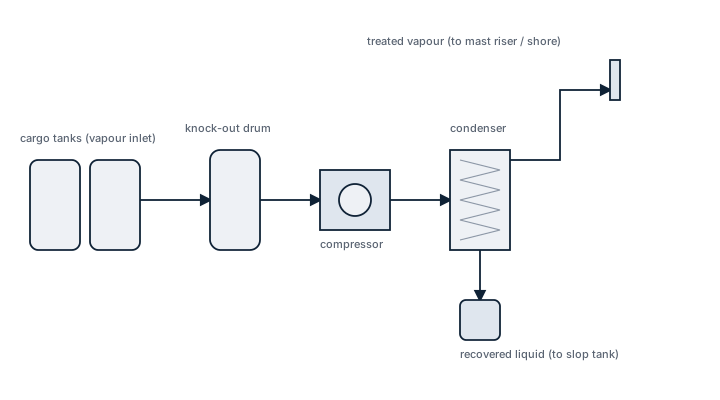
Main components
Vapour collection line and manifold
Connects the tank vapour space, through the deck main, to a dedicated vapour return connection at the manifold, separate from the liquid cargo lines.
Recovery process unit
Depending on design, this stage uses activated carbon absorption, refrigerated condensation, membrane separation, or a combination, to strip hydrocarbon from the vapour stream before the residual gas is released or returned.
Blower / compressor
Moves vapour from the tank through the recovery process against the system's back-pressure, sized to keep pace with the ship's maximum loading rate without over-pressuring the tanks.
Flame arrestors and detonation arrestors
Fitted in the vapour line to stop a flame front from travelling back toward the tank, a mandatory safety element wherever hydrocarbon vapour is being moved through piping.
Sizing and selection
- Loading rate the vessel or terminal needs to sustain, which sets the required vapour handling capacity.
- Cargo vapour pressure and composition, since light, volatile cargoes displace far more vapour per tonne loaded than heavier products.
- Whether recovery is shore-side only, with the ship simply connecting a vapour return line, or an onboard unit is required for the trade the ship runs.
- Compatibility of manifold connections and pressure ratings with the terminals the ship regularly calls at.
Regulations and class
MARPOL Annex VI and port-state VOC (volatile organic compound) management requirements drive most vapour recovery fitting decisions; many terminals, particularly for gasoline and similar light products, will not load a tanker that cannot connect a closed vapour return line. The ship's VOC Management Plan sets out how vapour emissions are controlled during loading, ballasting and tank cleaning, and class surveys the vapour piping, flame arrestors and any onboard recovery unit as part of the cargo system, checking arrestor condition and that pressure relief settings remain within the tank design range.
Typical faults
| Fault | Consequence |
|---|---|
| Flame arrestor element clogged with polymerised residue | Back-pressure rises during loading, risking overpressure of the tank or forcing an unplanned loading rate cut |
| Vapour return connection leaking at the manifold coupling | Vapour escapes locally even though the system is nominally closed, a VOC compliance and safety exposure |
| Recovery unit blower seal worn | Reduced vapour handling capacity, loading rate has to be throttled to stay within the system's limit |
| Detonation arrestor never inspected after a suspected flashback | Arrestor may be damaged and unable to stop a real flame front on the next event |
What to look for in a supplier
- Certified flame and detonation arrestors sized for the specific vapour composition the ship carries.
- Recovery capacity matched to the ship's actual maximum loading rate, not a generic mid-size unit.
- Manifold connection standard matching the terminals the vessel trades to.
- Service history and access for the arrestor elements, since these need periodic cleaning and cannot be inspected quickly if buried in the piping run.
Treat a rising back-pressure alarm during loading as a blocked arrestor until proven otherwise — throttling the loading rate buys time, but continuing at full rate against a partially blocked vapour path pushes the tank toward its relief valve setting.