Cargo Manifold Valve
The cargo manifold valve is the last isolation point between the ship's cargo piping and the shore connection at each manifold branch, and it is the single valve every cargo transfer, from hose connection to disconnection, depends on being leak-tight and quick to operate under pressure.
Read more — Cargo Manifold Valve explained ▾
What makes the manifold valve different from other cargo valves
Every valve inside the cargo system segregates tanks or grades from each other; the manifold valve is the one that segregates the ship from the shore. It sits at the end of the manifold branch piping, immediately before the reducer and the hose or loading arm connection, and it is the valve the ship's crew and the terminal both rely on as the definitive shutoff if anything goes wrong during transfer, so its condition gets more attention at survey and by terminal inspectors than almost any other valve aboard.
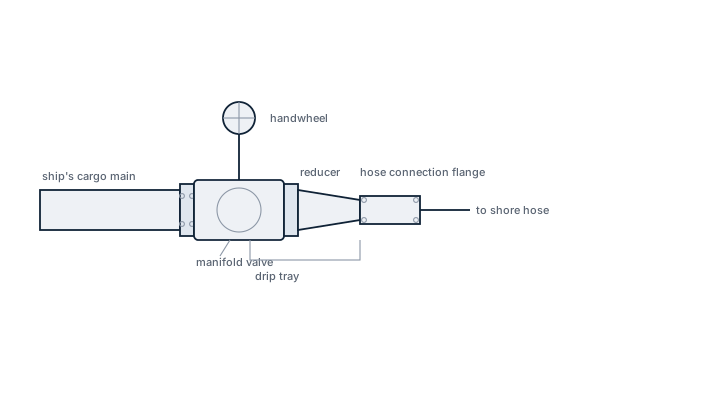
Main components
Valve body and disc/ball/gate element
Ball and gate types are both common on manifolds; ball valves give quicker quarter-turn operation and a straight bore, while gate valves are still specified on many tankers for their tight shutoff and resistance to solids in the cargo. Body material is steel or, on chemical carriers, often stainless or a lined design matched to the cargoes carried.
Actuator or handwheel
Manual handwheel operation remains common, but many manifolds now use hydraulic or pneumatic actuation for faster, less fatiguing closure during emergency shutdown sequences, tied into the ship's emergency shutdown (ESD) system.
Position indicator
A visible open/closed indicator, and on actuated valves a remote position feedback signal to the cargo control room, lets the officer of the watch confirm the manifold state without walking to the deck in poor weather.
Blank flange and spectacle blind
Fitted on the unused side of a manifold during single-hose operation or lay-up, to guarantee positive isolation beyond what a closed valve alone provides.
Selection and sizing
Manifold valve size and pressure rating must match the vessel's manifold dimensions as specified by the applicable OCIMF manifold recommendations for the vessel's deadweight range, since terminal loading arms and hoses are built to those standard spacings and sizes. Pressure/temperature rating is set by the highest-pressure, highest-temperature cargo the vessel is certified to carry, not by the average cargo. Fire safety of seals and packing (fire-safe design per API 607 or equivalent) is standard practice on crude and product carriers.
Regulations and class
- OCIMF's manifold recommendations set the standard spacing, size and flange rating so ships can connect at common terminals without special adaptors.
- SOLAS Ch. II-2 and the applicable IBC/IGC codes for chemical and gas carriers set remote shutdown and segregation requirements that the manifold valve's actuation and ESD tie-in must satisfy.
- Class surveys check valve tightness, actuator function, and ESD response time at renewal survey, and terminal vetting inspections (e.g. SIRE) check the same points independently before many port calls.
Typical faults
| Fault | Consequence |
|---|---|
| Seat or seal worn from repeated cycling and cargo abrasion | Valve fails to hold tight shutoff, leading to a weeping manifold flagged at the next terminal inspection |
| Actuator hydraulic or pneumatic supply leaking | ESD closure time lengthens beyond the certified figure, a finding that can stop cargo operations until repaired |
| Position indicator disconnected or drifted out of calibration | Cargo control room shows a valve as closed when it is actually open, a serious operational hazard during a transfer |
| Blank flange gasket reused past its service life | Weeping at the blank during lay-up, sometimes not discovered until a deck inspection |
What to look for in a supplier
- Manifold dimensions and flange rating built to the current OCIMF recommendation matching the vessel's size category.
- Fire-safe design certification where the cargoes carried require it.
- Actuator response time documented and tested against the ship's ESD closure time requirement, not just the valve's standalone cycle time.
- Spares and seat kits available in a form the crew can fit without a full valve overhaul at the next drydock.
Test the manifold valve's ESD closure time as its own item, separate from a general valve function test; a valve that closes fine on a slow manual turn can still fail an ESD timing check if the actuator supply pressure has dropped.
10 manufacturers · 153 models
Fort Vale
16 ✓ 16 verified- Area: Poppet and valve seat face sealing integrity - Check for wear, corrosion pits, or scratching that could prevent leak-tight sealing at 90% MAWP reseat pressureCheck: Visual inspection of poppet and seat sealing surfaces under magnification; seat leakage test at 80% MAWP
- Area: Alloy 625 crevice corrosion at union of sealing face and main valve seal - Risk particularly at seal crevices in corrosive cargo applicationsCheck: Examine seal crevice area and valve seat for discoloration, pitting, or deposits indicating crevice corrosion initiation
- Area: External corrosion, erosion, or physical damage to valve body or actuator - Can prevent safe operation of both manual and pneumatic/hydraulic valvesCheck: External visual inspection of valve casting, threads, and actuating mechanisms for corrosion products, erosion, or distortion
- Area: Pressure relief valve reseating and opening pressure drift - Valve must open at MAWP ±10% and reseat at minimum 90% MAWPCheck: Pressure relief test using calibrated test rig at no less than 80% MAWP and no more than 110% MAWP opening
- Area: Piping connections and secondary closure valves for leaks - Manifold integrity depends on all secondary closure points remaining leak-freeCheck: Leakage test with product piping at 80% MAWP with all valves and accessories in place; all self-closing stop valves tested for tightness
Typ-universelle Inspektionspunkte fuer Tanker Cargo Systems (verifiziert, 2026-06).
- Area: Poppet and valve seat face sealing integrity - Check for wear, corrosion pits, or scratching that could prevent leak-tight sealing at 90% MAWP reseat pressureCheck: Visual inspection of poppet and seat sealing surfaces under magnification; seat leakage test at 80% MAWP
- Area: Alloy 625 crevice corrosion at union of sealing face and main valve seal - Risk particularly at seal crevices in corrosive cargo applicationsCheck: Examine seal crevice area and valve seat for discoloration, pitting, or deposits indicating crevice corrosion initiation
- Area: External corrosion, erosion, or physical damage to valve body or actuator - Can prevent safe operation of both manual and pneumatic/hydraulic valvesCheck: External visual inspection of valve casting, threads, and actuating mechanisms for corrosion products, erosion, or distortion
- Area: Pressure relief valve reseating and opening pressure drift - Valve must open at MAWP ±10% and reseat at minimum 90% MAWPCheck: Pressure relief test using calibrated test rig at no less than 80% MAWP and no more than 110% MAWP opening
- Area: Piping connections and secondary closure valves for leaks - Manifold integrity depends on all secondary closure points remaining leak-freeCheck: Leakage test with product piping at 80% MAWP with all valves and accessories in place; all self-closing stop valves tested for tightness
Typ-universelle Inspektionspunkte fuer Tanker Cargo Systems (verifiziert, 2026-06).
- Area: Poppet and valve seat face sealing integrity - Check for wear, corrosion pits, or scratching that could prevent leak-tight sealing at 90% MAWP reseat pressureCheck: Visual inspection of poppet and seat sealing surfaces under magnification; seat leakage test at 80% MAWP
- Area: Alloy 625 crevice corrosion at union of sealing face and main valve seal - Risk particularly at seal crevices in corrosive cargo applicationsCheck: Examine seal crevice area and valve seat for discoloration, pitting, or deposits indicating crevice corrosion initiation
- Area: External corrosion, erosion, or physical damage to valve body or actuator - Can prevent safe operation of both manual and pneumatic/hydraulic valvesCheck: External visual inspection of valve casting, threads, and actuating mechanisms for corrosion products, erosion, or distortion
- Area: Pressure relief valve reseating and opening pressure drift - Valve must open at MAWP ±10% and reseat at minimum 90% MAWPCheck: Pressure relief test using calibrated test rig at no less than 80% MAWP and no more than 110% MAWP opening
- Area: Piping connections and secondary closure valves for leaks - Manifold integrity depends on all secondary closure points remaining leak-freeCheck: Leakage test with product piping at 80% MAWP with all valves and accessories in place; all self-closing stop valves tested for tightness
Typ-universelle Inspektionspunkte fuer Tanker Cargo Systems (verifiziert, 2026-06).
- Area: Poppet and valve seat face sealing integrity - Check for wear, corrosion pits, or scratching that could prevent leak-tight sealing at 90% MAWP reseat pressureCheck: Visual inspection of poppet and seat sealing surfaces under magnification; seat leakage test at 80% MAWP
- Area: Alloy 625 crevice corrosion at union of sealing face and main valve seal - Risk particularly at seal crevices in corrosive cargo applicationsCheck: Examine seal crevice area and valve seat for discoloration, pitting, or deposits indicating crevice corrosion initiation
- Area: External corrosion, erosion, or physical damage to valve body or actuator - Can prevent safe operation of both manual and pneumatic/hydraulic valvesCheck: External visual inspection of valve casting, threads, and actuating mechanisms for corrosion products, erosion, or distortion
- Area: Pressure relief valve reseating and opening pressure drift - Valve must open at MAWP ±10% and reseat at minimum 90% MAWPCheck: Pressure relief test using calibrated test rig at no less than 80% MAWP and no more than 110% MAWP opening
- Area: Piping connections and secondary closure valves for leaks - Manifold integrity depends on all secondary closure points remaining leak-freeCheck: Leakage test with product piping at 80% MAWP with all valves and accessories in place; all self-closing stop valves tested for tightness
Typ-universelle Inspektionspunkte fuer Tanker Cargo Systems (verifiziert, 2026-06).
- Area: Poppet and valve seat face sealing integrity - Check for wear, corrosion pits, or scratching that could prevent leak-tight sealing at 90% MAWP reseat pressureCheck: Visual inspection of poppet and seat sealing surfaces under magnification; seat leakage test at 80% MAWP
- Area: Alloy 625 crevice corrosion at union of sealing face and main valve seal - Risk particularly at seal crevices in corrosive cargo applicationsCheck: Examine seal crevice area and valve seat for discoloration, pitting, or deposits indicating crevice corrosion initiation
- Area: External corrosion, erosion, or physical damage to valve body or actuator - Can prevent safe operation of both manual and pneumatic/hydraulic valvesCheck: External visual inspection of valve casting, threads, and actuating mechanisms for corrosion products, erosion, or distortion
- Area: Pressure relief valve reseating and opening pressure drift - Valve must open at MAWP ±10% and reseat at minimum 90% MAWPCheck: Pressure relief test using calibrated test rig at no less than 80% MAWP and no more than 110% MAWP opening
- Area: Piping connections and secondary closure valves for leaks - Manifold integrity depends on all secondary closure points remaining leak-freeCheck: Leakage test with product piping at 80% MAWP with all valves and accessories in place; all self-closing stop valves tested for tightness
Typ-universelle Inspektionspunkte fuer Tanker Cargo Systems (verifiziert, 2026-06).
- Area: Poppet and valve seat face sealing integrity - Check for wear, corrosion pits, or scratching that could prevent leak-tight sealing at 90% MAWP reseat pressureCheck: Visual inspection of poppet and seat sealing surfaces under magnification; seat leakage test at 80% MAWP
- Area: Alloy 625 crevice corrosion at union of sealing face and main valve seal - Risk particularly at seal crevices in corrosive cargo applicationsCheck: Examine seal crevice area and valve seat for discoloration, pitting, or deposits indicating crevice corrosion initiation
- Area: External corrosion, erosion, or physical damage to valve body or actuator - Can prevent safe operation of both manual and pneumatic/hydraulic valvesCheck: External visual inspection of valve casting, threads, and actuating mechanisms for corrosion products, erosion, or distortion
- Area: Pressure relief valve reseating and opening pressure drift - Valve must open at MAWP ±10% and reseat at minimum 90% MAWPCheck: Pressure relief test using calibrated test rig at no less than 80% MAWP and no more than 110% MAWP opening
- Area: Piping connections and secondary closure valves for leaks - Manifold integrity depends on all secondary closure points remaining leak-freeCheck: Leakage test with product piping at 80% MAWP with all valves and accessories in place; all self-closing stop valves tested for tightness
Typ-universelle Inspektionspunkte fuer Tanker Cargo Systems (verifiziert, 2026-06).
- Area: Poppet and valve seat face sealing integrity - Check for wear, corrosion pits, or scratching that could prevent leak-tight sealing at 90% MAWP reseat pressureCheck: Visual inspection of poppet and seat sealing surfaces under magnification; seat leakage test at 80% MAWP
- Area: Alloy 625 crevice corrosion at union of sealing face and main valve seal - Risk particularly at seal crevices in corrosive cargo applicationsCheck: Examine seal crevice area and valve seat for discoloration, pitting, or deposits indicating crevice corrosion initiation
- Area: External corrosion, erosion, or physical damage to valve body or actuator - Can prevent safe operation of both manual and pneumatic/hydraulic valvesCheck: External visual inspection of valve casting, threads, and actuating mechanisms for corrosion products, erosion, or distortion
- Area: Pressure relief valve reseating and opening pressure drift - Valve must open at MAWP ±10% and reseat at minimum 90% MAWPCheck: Pressure relief test using calibrated test rig at no less than 80% MAWP and no more than 110% MAWP opening
- Area: Piping connections and secondary closure valves for leaks - Manifold integrity depends on all secondary closure points remaining leak-freeCheck: Leakage test with product piping at 80% MAWP with all valves and accessories in place; all self-closing stop valves tested for tightness
Typ-universelle Inspektionspunkte fuer Tanker Cargo Systems (verifiziert, 2026-06).
- Area: Poppet and valve seat face sealing integrity - Check for wear, corrosion pits, or scratching that could prevent leak-tight sealing at 90% MAWP reseat pressureCheck: Visual inspection of poppet and seat sealing surfaces under magnification; seat leakage test at 80% MAWP
- Area: Alloy 625 crevice corrosion at union of sealing face and main valve seal - Risk particularly at seal crevices in corrosive cargo applicationsCheck: Examine seal crevice area and valve seat for discoloration, pitting, or deposits indicating crevice corrosion initiation
- Area: External corrosion, erosion, or physical damage to valve body or actuator - Can prevent safe operation of both manual and pneumatic/hydraulic valvesCheck: External visual inspection of valve casting, threads, and actuating mechanisms for corrosion products, erosion, or distortion
- Area: Pressure relief valve reseating and opening pressure drift - Valve must open at MAWP ±10% and reseat at minimum 90% MAWPCheck: Pressure relief test using calibrated test rig at no less than 80% MAWP and no more than 110% MAWP opening
- Area: Piping connections and secondary closure valves for leaks - Manifold integrity depends on all secondary closure points remaining leak-freeCheck: Leakage test with product piping at 80% MAWP with all valves and accessories in place; all self-closing stop valves tested for tightness
Typ-universelle Inspektionspunkte fuer Tanker Cargo Systems (verifiziert, 2026-06).
- Area: Poppet and valve seat face sealing integrity - Check for wear, corrosion pits, or scratching that could prevent leak-tight sealing at 90% MAWP reseat pressureCheck: Visual inspection of poppet and seat sealing surfaces under magnification; seat leakage test at 80% MAWP
- Area: Alloy 625 crevice corrosion at union of sealing face and main valve seal - Risk particularly at seal crevices in corrosive cargo applicationsCheck: Examine seal crevice area and valve seat for discoloration, pitting, or deposits indicating crevice corrosion initiation
- Area: External corrosion, erosion, or physical damage to valve body or actuator - Can prevent safe operation of both manual and pneumatic/hydraulic valvesCheck: External visual inspection of valve casting, threads, and actuating mechanisms for corrosion products, erosion, or distortion
- Area: Pressure relief valve reseating and opening pressure drift - Valve must open at MAWP ±10% and reseat at minimum 90% MAWPCheck: Pressure relief test using calibrated test rig at no less than 80% MAWP and no more than 110% MAWP opening
- Area: Piping connections and secondary closure valves for leaks - Manifold integrity depends on all secondary closure points remaining leak-freeCheck: Leakage test with product piping at 80% MAWP with all valves and accessories in place; all self-closing stop valves tested for tightness
Typ-universelle Inspektionspunkte fuer Tanker Cargo Systems (verifiziert, 2026-06).
- Area: Poppet and valve seat face sealing integrity - Check for wear, corrosion pits, or scratching that could prevent leak-tight sealing at 90% MAWP reseat pressureCheck: Visual inspection of poppet and seat sealing surfaces under magnification; seat leakage test at 80% MAWP
- Area: Alloy 625 crevice corrosion at union of sealing face and main valve seal - Risk particularly at seal crevices in corrosive cargo applicationsCheck: Examine seal crevice area and valve seat for discoloration, pitting, or deposits indicating crevice corrosion initiation
- Area: External corrosion, erosion, or physical damage to valve body or actuator - Can prevent safe operation of both manual and pneumatic/hydraulic valvesCheck: External visual inspection of valve casting, threads, and actuating mechanisms for corrosion products, erosion, or distortion
- Area: Pressure relief valve reseating and opening pressure drift - Valve must open at MAWP ±10% and reseat at minimum 90% MAWPCheck: Pressure relief test using calibrated test rig at no less than 80% MAWP and no more than 110% MAWP opening
- Area: Piping connections and secondary closure valves for leaks - Manifold integrity depends on all secondary closure points remaining leak-freeCheck: Leakage test with product piping at 80% MAWP with all valves and accessories in place; all self-closing stop valves tested for tightness
Typ-universelle Inspektionspunkte fuer Tanker Cargo Systems (verifiziert, 2026-06).
- Area: Poppet and valve seat face sealing integrity - Check for wear, corrosion pits, or scratching that could prevent leak-tight sealing at 90% MAWP reseat pressureCheck: Visual inspection of poppet and seat sealing surfaces under magnification; seat leakage test at 80% MAWP
- Area: Alloy 625 crevice corrosion at union of sealing face and main valve seal - Risk particularly at seal crevices in corrosive cargo applicationsCheck: Examine seal crevice area and valve seat for discoloration, pitting, or deposits indicating crevice corrosion initiation
- Area: External corrosion, erosion, or physical damage to valve body or actuator - Can prevent safe operation of both manual and pneumatic/hydraulic valvesCheck: External visual inspection of valve casting, threads, and actuating mechanisms for corrosion products, erosion, or distortion
- Area: Pressure relief valve reseating and opening pressure drift - Valve must open at MAWP ±10% and reseat at minimum 90% MAWPCheck: Pressure relief test using calibrated test rig at no less than 80% MAWP and no more than 110% MAWP opening
- Area: Piping connections and secondary closure valves for leaks - Manifold integrity depends on all secondary closure points remaining leak-freeCheck: Leakage test with product piping at 80% MAWP with all valves and accessories in place; all self-closing stop valves tested for tightness
Typ-universelle Inspektionspunkte fuer Tanker Cargo Systems (verifiziert, 2026-06).
- Area: Poppet and valve seat face sealing integrity - Check for wear, corrosion pits, or scratching that could prevent leak-tight sealing at 90% MAWP reseat pressureCheck: Visual inspection of poppet and seat sealing surfaces under magnification; seat leakage test at 80% MAWP
- Area: Alloy 625 crevice corrosion at union of sealing face and main valve seal - Risk particularly at seal crevices in corrosive cargo applicationsCheck: Examine seal crevice area and valve seat for discoloration, pitting, or deposits indicating crevice corrosion initiation
- Area: External corrosion, erosion, or physical damage to valve body or actuator - Can prevent safe operation of both manual and pneumatic/hydraulic valvesCheck: External visual inspection of valve casting, threads, and actuating mechanisms for corrosion products, erosion, or distortion
- Area: Pressure relief valve reseating and opening pressure drift - Valve must open at MAWP ±10% and reseat at minimum 90% MAWPCheck: Pressure relief test using calibrated test rig at no less than 80% MAWP and no more than 110% MAWP opening
- Area: Piping connections and secondary closure valves for leaks - Manifold integrity depends on all secondary closure points remaining leak-freeCheck: Leakage test with product piping at 80% MAWP with all valves and accessories in place; all self-closing stop valves tested for tightness
Typ-universelle Inspektionspunkte fuer Tanker Cargo Systems (verifiziert, 2026-06).
- Area: Poppet and valve seat face sealing integrity - Check for wear, corrosion pits, or scratching that could prevent leak-tight sealing at 90% MAWP reseat pressureCheck: Visual inspection of poppet and seat sealing surfaces under magnification; seat leakage test at 80% MAWP
- Area: Alloy 625 crevice corrosion at union of sealing face and main valve seal - Risk particularly at seal crevices in corrosive cargo applicationsCheck: Examine seal crevice area and valve seat for discoloration, pitting, or deposits indicating crevice corrosion initiation
- Area: External corrosion, erosion, or physical damage to valve body or actuator - Can prevent safe operation of both manual and pneumatic/hydraulic valvesCheck: External visual inspection of valve casting, threads, and actuating mechanisms for corrosion products, erosion, or distortion
- Area: Pressure relief valve reseating and opening pressure drift - Valve must open at MAWP ±10% and reseat at minimum 90% MAWPCheck: Pressure relief test using calibrated test rig at no less than 80% MAWP and no more than 110% MAWP opening
- Area: Piping connections and secondary closure valves for leaks - Manifold integrity depends on all secondary closure points remaining leak-freeCheck: Leakage test with product piping at 80% MAWP with all valves and accessories in place; all self-closing stop valves tested for tightness
Typ-universelle Inspektionspunkte fuer Tanker Cargo Systems (verifiziert, 2026-06).
- Area: Poppet and valve seat face sealing integrity - Check for wear, corrosion pits, or scratching that could prevent leak-tight sealing at 90% MAWP reseat pressureCheck: Visual inspection of poppet and seat sealing surfaces under magnification; seat leakage test at 80% MAWP
- Area: Alloy 625 crevice corrosion at union of sealing face and main valve seal - Risk particularly at seal crevices in corrosive cargo applicationsCheck: Examine seal crevice area and valve seat for discoloration, pitting, or deposits indicating crevice corrosion initiation
- Area: External corrosion, erosion, or physical damage to valve body or actuator - Can prevent safe operation of both manual and pneumatic/hydraulic valvesCheck: External visual inspection of valve casting, threads, and actuating mechanisms for corrosion products, erosion, or distortion
- Area: Pressure relief valve reseating and opening pressure drift - Valve must open at MAWP ±10% and reseat at minimum 90% MAWPCheck: Pressure relief test using calibrated test rig at no less than 80% MAWP and no more than 110% MAWP opening
- Area: Piping connections and secondary closure valves for leaks - Manifold integrity depends on all secondary closure points remaining leak-freeCheck: Leakage test with product piping at 80% MAWP with all valves and accessories in place; all self-closing stop valves tested for tightness
Typ-universelle Inspektionspunkte fuer Tanker Cargo Systems (verifiziert, 2026-06).
- Area: Poppet and valve seat face sealing integrity - Check for wear, corrosion pits, or scratching that could prevent leak-tight sealing at 90% MAWP reseat pressureCheck: Visual inspection of poppet and seat sealing surfaces under magnification; seat leakage test at 80% MAWP
- Area: Alloy 625 crevice corrosion at union of sealing face and main valve seal - Risk particularly at seal crevices in corrosive cargo applicationsCheck: Examine seal crevice area and valve seat for discoloration, pitting, or deposits indicating crevice corrosion initiation
- Area: External corrosion, erosion, or physical damage to valve body or actuator - Can prevent safe operation of both manual and pneumatic/hydraulic valvesCheck: External visual inspection of valve casting, threads, and actuating mechanisms for corrosion products, erosion, or distortion
- Area: Pressure relief valve reseating and opening pressure drift - Valve must open at MAWP ±10% and reseat at minimum 90% MAWPCheck: Pressure relief test using calibrated test rig at no less than 80% MAWP and no more than 110% MAWP opening
- Area: Piping connections and secondary closure valves for leaks - Manifold integrity depends on all secondary closure points remaining leak-freeCheck: Leakage test with product piping at 80% MAWP with all valves and accessories in place; all self-closing stop valves tested for tightness
Typ-universelle Inspektionspunkte fuer Tanker Cargo Systems (verifiziert, 2026-06).
- Area: Poppet and valve seat face sealing integrity - Check for wear, corrosion pits, or scratching that could prevent leak-tight sealing at 90% MAWP reseat pressureCheck: Visual inspection of poppet and seat sealing surfaces under magnification; seat leakage test at 80% MAWP
- Area: Alloy 625 crevice corrosion at union of sealing face and main valve seal - Risk particularly at seal crevices in corrosive cargo applicationsCheck: Examine seal crevice area and valve seat for discoloration, pitting, or deposits indicating crevice corrosion initiation
- Area: External corrosion, erosion, or physical damage to valve body or actuator - Can prevent safe operation of both manual and pneumatic/hydraulic valvesCheck: External visual inspection of valve casting, threads, and actuating mechanisms for corrosion products, erosion, or distortion
- Area: Pressure relief valve reseating and opening pressure drift - Valve must open at MAWP ±10% and reseat at minimum 90% MAWPCheck: Pressure relief test using calibrated test rig at no less than 80% MAWP and no more than 110% MAWP opening
- Area: Piping connections and secondary closure valves for leaks - Manifold integrity depends on all secondary closure points remaining leak-freeCheck: Leakage test with product piping at 80% MAWP with all valves and accessories in place; all self-closing stop valves tested for tightness
Typ-universelle Inspektionspunkte fuer Tanker Cargo Systems (verifiziert, 2026-06).
Pres-Vac
12 ✓ 12 verified- Area: External corrosion or visible damage to valve body, flanges, and fastenersCheck: Visual inspection for corroded areas, dents, distortions, and surface defects on all exposed valve components and connections
- Area: Leakage at valve seals, gaskets, and connection pointsCheck: Pressure test for tightness with soap/water solution on all joints under pressure; verify blowdown and leakage per ISO 15364:2021 Annex J; document bubble sizes (isolated small bubbles acceptable, numerous larger bubbles indicate exceedance)
- Area: Valve disc and seat wear or erosion affecting sealing pressure integrityCheck: Verify valve holds prescribed pressure for minimum 10 minutes; confirm relief pressure setpoint remains within specified range (12 kPa minimum for HS-ISO); inspect internal wear parts without tools per Pres-Vac design
- Area: Flame arrester element clogging, corrosion or degradation reducing flame suppression capabilityCheck: Visual inspection of flame screens (0.65 MESG rating); verify removable elements can be accessed; check for salt deposit, oil accumulation or marine corrosion on flame path; test pressure drop remains within specifications
- Area: Loss of magnetic control effectiveness or moving parts restriction in magnet-assisted valves (DHM, Vacuum-M)Check: Verify smooth opening/closing operation without sticking; confirm pressure drop performance matches baseline; inspect sealed internal components for water ingress or debris; test responsiveness to pressure changes
Typ-universelle Inspektionspunkte fuer Tanker Cargo Systems (verifiziert, 2026-06).
- Area: External corrosion or visible damage to valve body, flanges, and fastenersCheck: Visual inspection for corroded areas, dents, distortions, and surface defects on all exposed valve components and connections
- Area: Leakage at valve seals, gaskets, and connection pointsCheck: Pressure test for tightness with soap/water solution on all joints under pressure; verify blowdown and leakage per ISO 15364:2021 Annex J; document bubble sizes (isolated small bubbles acceptable, numerous larger bubbles indicate exceedance)
- Area: Valve disc and seat wear or erosion affecting sealing pressure integrityCheck: Verify valve holds prescribed pressure for minimum 10 minutes; confirm relief pressure setpoint remains within specified range (12 kPa minimum for HS-ISO); inspect internal wear parts without tools per Pres-Vac design
- Area: Flame arrester element clogging, corrosion or degradation reducing flame suppression capabilityCheck: Visual inspection of flame screens (0.65 MESG rating); verify removable elements can be accessed; check for salt deposit, oil accumulation or marine corrosion on flame path; test pressure drop remains within specifications
- Area: Loss of magnetic control effectiveness or moving parts restriction in magnet-assisted valves (DHM, Vacuum-M)Check: Verify smooth opening/closing operation without sticking; confirm pressure drop performance matches baseline; inspect sealed internal components for water ingress or debris; test responsiveness to pressure changes
Typ-universelle Inspektionspunkte fuer Tanker Cargo Systems (verifiziert, 2026-06).
- Area: External corrosion or visible damage to valve body, flanges, and fastenersCheck: Visual inspection for corroded areas, dents, distortions, and surface defects on all exposed valve components and connections
- Area: Leakage at valve seals, gaskets, and connection pointsCheck: Pressure test for tightness with soap/water solution on all joints under pressure; verify blowdown and leakage per ISO 15364:2021 Annex J; document bubble sizes (isolated small bubbles acceptable, numerous larger bubbles indicate exceedance)
- Area: Valve disc and seat wear or erosion affecting sealing pressure integrityCheck: Verify valve holds prescribed pressure for minimum 10 minutes; confirm relief pressure setpoint remains within specified range (12 kPa minimum for HS-ISO); inspect internal wear parts without tools per Pres-Vac design
- Area: Flame arrester element clogging, corrosion or degradation reducing flame suppression capabilityCheck: Visual inspection of flame screens (0.65 MESG rating); verify removable elements can be accessed; check for salt deposit, oil accumulation or marine corrosion on flame path; test pressure drop remains within specifications
- Area: Loss of magnetic control effectiveness or moving parts restriction in magnet-assisted valves (DHM, Vacuum-M)Check: Verify smooth opening/closing operation without sticking; confirm pressure drop performance matches baseline; inspect sealed internal components for water ingress or debris; test responsiveness to pressure changes
Typ-universelle Inspektionspunkte fuer Tanker Cargo Systems (verifiziert, 2026-06).
- Area: External corrosion or visible damage to valve body, flanges, and fastenersCheck: Visual inspection for corroded areas, dents, distortions, and surface defects on all exposed valve components and connections
- Area: Leakage at valve seals, gaskets, and connection pointsCheck: Pressure test for tightness with soap/water solution on all joints under pressure; verify blowdown and leakage per ISO 15364:2021 Annex J; document bubble sizes (isolated small bubbles acceptable, numerous larger bubbles indicate exceedance)
- Area: Valve disc and seat wear or erosion affecting sealing pressure integrityCheck: Verify valve holds prescribed pressure for minimum 10 minutes; confirm relief pressure setpoint remains within specified range (12 kPa minimum for HS-ISO); inspect internal wear parts without tools per Pres-Vac design
- Area: Flame arrester element clogging, corrosion or degradation reducing flame suppression capabilityCheck: Visual inspection of flame screens (0.65 MESG rating); verify removable elements can be accessed; check for salt deposit, oil accumulation or marine corrosion on flame path; test pressure drop remains within specifications
- Area: Loss of magnetic control effectiveness or moving parts restriction in magnet-assisted valves (DHM, Vacuum-M)Check: Verify smooth opening/closing operation without sticking; confirm pressure drop performance matches baseline; inspect sealed internal components for water ingress or debris; test responsiveness to pressure changes
Typ-universelle Inspektionspunkte fuer Tanker Cargo Systems (verifiziert, 2026-06).
- Area: External corrosion or visible damage to valve body, flanges, and fastenersCheck: Visual inspection for corroded areas, dents, distortions, and surface defects on all exposed valve components and connections
- Area: Leakage at valve seals, gaskets, and connection pointsCheck: Pressure test for tightness with soap/water solution on all joints under pressure; verify blowdown and leakage per ISO 15364:2021 Annex J; document bubble sizes (isolated small bubbles acceptable, numerous larger bubbles indicate exceedance)
- Area: Valve disc and seat wear or erosion affecting sealing pressure integrityCheck: Verify valve holds prescribed pressure for minimum 10 minutes; confirm relief pressure setpoint remains within specified range (12 kPa minimum for HS-ISO); inspect internal wear parts without tools per Pres-Vac design
- Area: Flame arrester element clogging, corrosion or degradation reducing flame suppression capabilityCheck: Visual inspection of flame screens (0.65 MESG rating); verify removable elements can be accessed; check for salt deposit, oil accumulation or marine corrosion on flame path; test pressure drop remains within specifications
- Area: Loss of magnetic control effectiveness or moving parts restriction in magnet-assisted valves (DHM, Vacuum-M)Check: Verify smooth opening/closing operation without sticking; confirm pressure drop performance matches baseline; inspect sealed internal components for water ingress or debris; test responsiveness to pressure changes
Typ-universelle Inspektionspunkte fuer Tanker Cargo Systems (verifiziert, 2026-06).
- Area: External corrosion or visible damage to valve body, flanges, and fastenersCheck: Visual inspection for corroded areas, dents, distortions, and surface defects on all exposed valve components and connections
- Area: Leakage at valve seals, gaskets, and connection pointsCheck: Pressure test for tightness with soap/water solution on all joints under pressure; verify blowdown and leakage per ISO 15364:2021 Annex J; document bubble sizes (isolated small bubbles acceptable, numerous larger bubbles indicate exceedance)
- Area: Valve disc and seat wear or erosion affecting sealing pressure integrityCheck: Verify valve holds prescribed pressure for minimum 10 minutes; confirm relief pressure setpoint remains within specified range (12 kPa minimum for HS-ISO); inspect internal wear parts without tools per Pres-Vac design
- Area: Flame arrester element clogging, corrosion or degradation reducing flame suppression capabilityCheck: Visual inspection of flame screens (0.65 MESG rating); verify removable elements can be accessed; check for salt deposit, oil accumulation or marine corrosion on flame path; test pressure drop remains within specifications
- Area: Loss of magnetic control effectiveness or moving parts restriction in magnet-assisted valves (DHM, Vacuum-M)Check: Verify smooth opening/closing operation without sticking; confirm pressure drop performance matches baseline; inspect sealed internal components for water ingress or debris; test responsiveness to pressure changes
Typ-universelle Inspektionspunkte fuer Tanker Cargo Systems (verifiziert, 2026-06).
- Area: External corrosion or visible damage to valve body, flanges, and fastenersCheck: Visual inspection for corroded areas, dents, distortions, and surface defects on all exposed valve components and connections
- Area: Leakage at valve seals, gaskets, and connection pointsCheck: Pressure test for tightness with soap/water solution on all joints under pressure; verify blowdown and leakage per ISO 15364:2021 Annex J; document bubble sizes (isolated small bubbles acceptable, numerous larger bubbles indicate exceedance)
- Area: Valve disc and seat wear or erosion affecting sealing pressure integrityCheck: Verify valve holds prescribed pressure for minimum 10 minutes; confirm relief pressure setpoint remains within specified range (12 kPa minimum for HS-ISO); inspect internal wear parts without tools per Pres-Vac design
- Area: Flame arrester element clogging, corrosion or degradation reducing flame suppression capabilityCheck: Visual inspection of flame screens (0.65 MESG rating); verify removable elements can be accessed; check for salt deposit, oil accumulation or marine corrosion on flame path; test pressure drop remains within specifications
- Area: Loss of magnetic control effectiveness or moving parts restriction in magnet-assisted valves (DHM, Vacuum-M)Check: Verify smooth opening/closing operation without sticking; confirm pressure drop performance matches baseline; inspect sealed internal components for water ingress or debris; test responsiveness to pressure changes
Typ-universelle Inspektionspunkte fuer Tanker Cargo Systems (verifiziert, 2026-06).
- Area: External corrosion or visible damage to valve body, flanges, and fastenersCheck: Visual inspection for corroded areas, dents, distortions, and surface defects on all exposed valve components and connections
- Area: Leakage at valve seals, gaskets, and connection pointsCheck: Pressure test for tightness with soap/water solution on all joints under pressure; verify blowdown and leakage per ISO 15364:2021 Annex J; document bubble sizes (isolated small bubbles acceptable, numerous larger bubbles indicate exceedance)
- Area: Valve disc and seat wear or erosion affecting sealing pressure integrityCheck: Verify valve holds prescribed pressure for minimum 10 minutes; confirm relief pressure setpoint remains within specified range (12 kPa minimum for HS-ISO); inspect internal wear parts without tools per Pres-Vac design
- Area: Flame arrester element clogging, corrosion or degradation reducing flame suppression capabilityCheck: Visual inspection of flame screens (0.65 MESG rating); verify removable elements can be accessed; check for salt deposit, oil accumulation or marine corrosion on flame path; test pressure drop remains within specifications
- Area: Loss of magnetic control effectiveness or moving parts restriction in magnet-assisted valves (DHM, Vacuum-M)Check: Verify smooth opening/closing operation without sticking; confirm pressure drop performance matches baseline; inspect sealed internal components for water ingress or debris; test responsiveness to pressure changes
Typ-universelle Inspektionspunkte fuer Tanker Cargo Systems (verifiziert, 2026-06).
- Area: External corrosion or visible damage to valve body, flanges, and fastenersCheck: Visual inspection for corroded areas, dents, distortions, and surface defects on all exposed valve components and connections
- Area: Leakage at valve seals, gaskets, and connection pointsCheck: Pressure test for tightness with soap/water solution on all joints under pressure; verify blowdown and leakage per ISO 15364:2021 Annex J; document bubble sizes (isolated small bubbles acceptable, numerous larger bubbles indicate exceedance)
- Area: Valve disc and seat wear or erosion affecting sealing pressure integrityCheck: Verify valve holds prescribed pressure for minimum 10 minutes; confirm relief pressure setpoint remains within specified range (12 kPa minimum for HS-ISO); inspect internal wear parts without tools per Pres-Vac design
- Area: Flame arrester element clogging, corrosion or degradation reducing flame suppression capabilityCheck: Visual inspection of flame screens (0.65 MESG rating); verify removable elements can be accessed; check for salt deposit, oil accumulation or marine corrosion on flame path; test pressure drop remains within specifications
- Area: Loss of magnetic control effectiveness or moving parts restriction in magnet-assisted valves (DHM, Vacuum-M)Check: Verify smooth opening/closing operation without sticking; confirm pressure drop performance matches baseline; inspect sealed internal components for water ingress or debris; test responsiveness to pressure changes
Typ-universelle Inspektionspunkte fuer Tanker Cargo Systems (verifiziert, 2026-06).
- Area: External corrosion or visible damage to valve body, flanges, and fastenersCheck: Visual inspection for corroded areas, dents, distortions, and surface defects on all exposed valve components and connections
- Area: Leakage at valve seals, gaskets, and connection pointsCheck: Pressure test for tightness with soap/water solution on all joints under pressure; verify blowdown and leakage per ISO 15364:2021 Annex J; document bubble sizes (isolated small bubbles acceptable, numerous larger bubbles indicate exceedance)
- Area: Valve disc and seat wear or erosion affecting sealing pressure integrityCheck: Verify valve holds prescribed pressure for minimum 10 minutes; confirm relief pressure setpoint remains within specified range (12 kPa minimum for HS-ISO); inspect internal wear parts without tools per Pres-Vac design
- Area: Flame arrester element clogging, corrosion or degradation reducing flame suppression capabilityCheck: Visual inspection of flame screens (0.65 MESG rating); verify removable elements can be accessed; check for salt deposit, oil accumulation or marine corrosion on flame path; test pressure drop remains within specifications
- Area: Loss of magnetic control effectiveness or moving parts restriction in magnet-assisted valves (DHM, Vacuum-M)Check: Verify smooth opening/closing operation without sticking; confirm pressure drop performance matches baseline; inspect sealed internal components for water ingress or debris; test responsiveness to pressure changes
Typ-universelle Inspektionspunkte fuer Tanker Cargo Systems (verifiziert, 2026-06).
- Area: External corrosion or visible damage to valve body, flanges, and fastenersCheck: Visual inspection for corroded areas, dents, distortions, and surface defects on all exposed valve components and connections
- Area: Leakage at valve seals, gaskets, and connection pointsCheck: Pressure test for tightness with soap/water solution on all joints under pressure; verify blowdown and leakage per ISO 15364:2021 Annex J; document bubble sizes (isolated small bubbles acceptable, numerous larger bubbles indicate exceedance)
- Area: Valve disc and seat wear or erosion affecting sealing pressure integrityCheck: Verify valve holds prescribed pressure for minimum 10 minutes; confirm relief pressure setpoint remains within specified range (12 kPa minimum for HS-ISO); inspect internal wear parts without tools per Pres-Vac design
- Area: Flame arrester element clogging, corrosion or degradation reducing flame suppression capabilityCheck: Visual inspection of flame screens (0.65 MESG rating); verify removable elements can be accessed; check for salt deposit, oil accumulation or marine corrosion on flame path; test pressure drop remains within specifications
- Area: Loss of magnetic control effectiveness or moving parts restriction in magnet-assisted valves (DHM, Vacuum-M)Check: Verify smooth opening/closing operation without sticking; confirm pressure drop performance matches baseline; inspect sealed internal components for water ingress or debris; test responsiveness to pressure changes
Typ-universelle Inspektionspunkte fuer Tanker Cargo Systems (verifiziert, 2026-06).
- Area: External corrosion or visible damage to valve body, flanges, and fastenersCheck: Visual inspection for corroded areas, dents, distortions, and surface defects on all exposed valve components and connections
- Area: Leakage at valve seals, gaskets, and connection pointsCheck: Pressure test for tightness with soap/water solution on all joints under pressure; verify blowdown and leakage per ISO 15364:2021 Annex J; document bubble sizes (isolated small bubbles acceptable, numerous larger bubbles indicate exceedance)
- Area: Valve disc and seat wear or erosion affecting sealing pressure integrityCheck: Verify valve holds prescribed pressure for minimum 10 minutes; confirm relief pressure setpoint remains within specified range (12 kPa minimum for HS-ISO); inspect internal wear parts without tools per Pres-Vac design
- Area: Flame arrester element clogging, corrosion or degradation reducing flame suppression capabilityCheck: Visual inspection of flame screens (0.65 MESG rating); verify removable elements can be accessed; check for salt deposit, oil accumulation or marine corrosion on flame path; test pressure drop remains within specifications
- Area: Loss of magnetic control effectiveness or moving parts restriction in magnet-assisted valves (DHM, Vacuum-M)Check: Verify smooth opening/closing operation without sticking; confirm pressure drop performance matches baseline; inspect sealed internal components for water ingress or debris; test responsiveness to pressure changes
Typ-universelle Inspektionspunkte fuer Tanker Cargo Systems (verifiziert, 2026-06).
Econosto
11 ✓ 11 verified- Area: Pressure Boundary Integrity VerificationCheck: Verify hydrostatic test certificate at 1.5x MAWP (maximum allowable working pressure). For PN 16 models minimum 24 bar body test and 17.6 bar seat test required. Test documentation must be present and dated within certification validity period
- Area: Seal and Disc Material CompatibilityCheck: Inspect disc and seat materials match cargo type specifications. Bronze discs (Fig. 275-1276 series) for general marine cargoes; stainless steel (Fig. 3250-3251) for chemical/corrosive cargoes. Verify PTFE packing is asbestos-free and check for degradation signs (discoloration, brittleness) after operating temperature exposure
- Area: Flange/Connection Thread IntegrityCheck: For flanged models (Fig. 275-276, 1271): verify DIN PN 16 flange faces are flat, undamaged, and properly aligned with no corrosion pitting exceeding 0.5 mm depth. For threaded models (Fig. 1275-1276, 3250-3251): inspect BSP female threads for cross-threading marks, stripping, or seizing. Test with appropriate gauge plug/ring
- Area: Stem and Handwheel FunctionCheck: Operate handwheel with calibrated torque wrench: verify rising stem responds to rotation (1-3 mm per full rotation for globe valves per ISO 10497), no binding, and handwheel rotates freely. Verify PTFE gland packing is not leaking (dry to touch) and stem moves without excessive friction. Check for corrosion or pitting on stem exterior
- Area: Regulatory Compliance and CertificationCheck: Verify manufacturer nameplate with model designation (Fig. 275, 1275, 3250, etc.), pressure/temperature ratings match installation. Confirm compliance markings for maritime classification (Lloyd's Register, DNV, ABS, Classnk) and compliance with IMO/EU-MED standards. Check that serial number and date of manufacture are legible and documented
Typ-universelle Inspektionspunkte fuer Tanker Cargo Systems (verifiziert, 2026-06).
- Area: Pressure Boundary Integrity VerificationCheck: Verify hydrostatic test certificate at 1.5x MAWP (maximum allowable working pressure). For PN 16 models minimum 24 bar body test and 17.6 bar seat test required. Test documentation must be present and dated within certification validity period
- Area: Seal and Disc Material CompatibilityCheck: Inspect disc and seat materials match cargo type specifications. Bronze discs (Fig. 275-1276 series) for general marine cargoes; stainless steel (Fig. 3250-3251) for chemical/corrosive cargoes. Verify PTFE packing is asbestos-free and check for degradation signs (discoloration, brittleness) after operating temperature exposure
- Area: Flange/Connection Thread IntegrityCheck: For flanged models (Fig. 275-276, 1271): verify DIN PN 16 flange faces are flat, undamaged, and properly aligned with no corrosion pitting exceeding 0.5 mm depth. For threaded models (Fig. 1275-1276, 3250-3251): inspect BSP female threads for cross-threading marks, stripping, or seizing. Test with appropriate gauge plug/ring
- Area: Stem and Handwheel FunctionCheck: Operate handwheel with calibrated torque wrench: verify rising stem responds to rotation (1-3 mm per full rotation for globe valves per ISO 10497), no binding, and handwheel rotates freely. Verify PTFE gland packing is not leaking (dry to touch) and stem moves without excessive friction. Check for corrosion or pitting on stem exterior
- Area: Regulatory Compliance and CertificationCheck: Verify manufacturer nameplate with model designation (Fig. 275, 1275, 3250, etc.), pressure/temperature ratings match installation. Confirm compliance markings for maritime classification (Lloyd's Register, DNV, ABS, Classnk) and compliance with IMO/EU-MED standards. Check that serial number and date of manufacture are legible and documented
Typ-universelle Inspektionspunkte fuer Tanker Cargo Systems (verifiziert, 2026-06).
- Area: Pressure Boundary Integrity VerificationCheck: Verify hydrostatic test certificate at 1.5x MAWP (maximum allowable working pressure). For PN 16 models minimum 24 bar body test and 17.6 bar seat test required. Test documentation must be present and dated within certification validity period
- Area: Seal and Disc Material CompatibilityCheck: Inspect disc and seat materials match cargo type specifications. Bronze discs (Fig. 275-1276 series) for general marine cargoes; stainless steel (Fig. 3250-3251) for chemical/corrosive cargoes. Verify PTFE packing is asbestos-free and check for degradation signs (discoloration, brittleness) after operating temperature exposure
- Area: Flange/Connection Thread IntegrityCheck: For flanged models (Fig. 275-276, 1271): verify DIN PN 16 flange faces are flat, undamaged, and properly aligned with no corrosion pitting exceeding 0.5 mm depth. For threaded models (Fig. 1275-1276, 3250-3251): inspect BSP female threads for cross-threading marks, stripping, or seizing. Test with appropriate gauge plug/ring
- Area: Stem and Handwheel FunctionCheck: Operate handwheel with calibrated torque wrench: verify rising stem responds to rotation (1-3 mm per full rotation for globe valves per ISO 10497), no binding, and handwheel rotates freely. Verify PTFE gland packing is not leaking (dry to touch) and stem moves without excessive friction. Check for corrosion or pitting on stem exterior
- Area: Regulatory Compliance and CertificationCheck: Verify manufacturer nameplate with model designation (Fig. 275, 1275, 3250, etc.), pressure/temperature ratings match installation. Confirm compliance markings for maritime classification (Lloyd's Register, DNV, ABS, Classnk) and compliance with IMO/EU-MED standards. Check that serial number and date of manufacture are legible and documented
Typ-universelle Inspektionspunkte fuer Tanker Cargo Systems (verifiziert, 2026-06).
- Area: Pressure Boundary Integrity VerificationCheck: Verify hydrostatic test certificate at 1.5x MAWP (maximum allowable working pressure). For PN 16 models minimum 24 bar body test and 17.6 bar seat test required. Test documentation must be present and dated within certification validity period
- Area: Seal and Disc Material CompatibilityCheck: Inspect disc and seat materials match cargo type specifications. Bronze discs (Fig. 275-1276 series) for general marine cargoes; stainless steel (Fig. 3250-3251) for chemical/corrosive cargoes. Verify PTFE packing is asbestos-free and check for degradation signs (discoloration, brittleness) after operating temperature exposure
- Area: Flange/Connection Thread IntegrityCheck: For flanged models (Fig. 275-276, 1271): verify DIN PN 16 flange faces are flat, undamaged, and properly aligned with no corrosion pitting exceeding 0.5 mm depth. For threaded models (Fig. 1275-1276, 3250-3251): inspect BSP female threads for cross-threading marks, stripping, or seizing. Test with appropriate gauge plug/ring
- Area: Stem and Handwheel FunctionCheck: Operate handwheel with calibrated torque wrench: verify rising stem responds to rotation (1-3 mm per full rotation for globe valves per ISO 10497), no binding, and handwheel rotates freely. Verify PTFE gland packing is not leaking (dry to touch) and stem moves without excessive friction. Check for corrosion or pitting on stem exterior
- Area: Regulatory Compliance and CertificationCheck: Verify manufacturer nameplate with model designation (Fig. 275, 1275, 3250, etc.), pressure/temperature ratings match installation. Confirm compliance markings for maritime classification (Lloyd's Register, DNV, ABS, Classnk) and compliance with IMO/EU-MED standards. Check that serial number and date of manufacture are legible and documented
Typ-universelle Inspektionspunkte fuer Tanker Cargo Systems (verifiziert, 2026-06).
- Area: Pressure Boundary Integrity VerificationCheck: Verify hydrostatic test certificate at 1.5x MAWP (maximum allowable working pressure). For PN 16 models minimum 24 bar body test and 17.6 bar seat test required. Test documentation must be present and dated within certification validity period
- Area: Seal and Disc Material CompatibilityCheck: Inspect disc and seat materials match cargo type specifications. Bronze discs (Fig. 275-1276 series) for general marine cargoes; stainless steel (Fig. 3250-3251) for chemical/corrosive cargoes. Verify PTFE packing is asbestos-free and check for degradation signs (discoloration, brittleness) after operating temperature exposure
- Area: Flange/Connection Thread IntegrityCheck: For flanged models (Fig. 275-276, 1271): verify DIN PN 16 flange faces are flat, undamaged, and properly aligned with no corrosion pitting exceeding 0.5 mm depth. For threaded models (Fig. 1275-1276, 3250-3251): inspect BSP female threads for cross-threading marks, stripping, or seizing. Test with appropriate gauge plug/ring
- Area: Stem and Handwheel FunctionCheck: Operate handwheel with calibrated torque wrench: verify rising stem responds to rotation (1-3 mm per full rotation for globe valves per ISO 10497), no binding, and handwheel rotates freely. Verify PTFE gland packing is not leaking (dry to touch) and stem moves without excessive friction. Check for corrosion or pitting on stem exterior
- Area: Regulatory Compliance and CertificationCheck: Verify manufacturer nameplate with model designation (Fig. 275, 1275, 3250, etc.), pressure/temperature ratings match installation. Confirm compliance markings for maritime classification (Lloyd's Register, DNV, ABS, Classnk) and compliance with IMO/EU-MED standards. Check that serial number and date of manufacture are legible and documented
Typ-universelle Inspektionspunkte fuer Tanker Cargo Systems (verifiziert, 2026-06).
- Area: Pressure Boundary Integrity VerificationCheck: Verify hydrostatic test certificate at 1.5x MAWP (maximum allowable working pressure). For PN 16 models minimum 24 bar body test and 17.6 bar seat test required. Test documentation must be present and dated within certification validity period
- Area: Seal and Disc Material CompatibilityCheck: Inspect disc and seat materials match cargo type specifications. Bronze discs (Fig. 275-1276 series) for general marine cargoes; stainless steel (Fig. 3250-3251) for chemical/corrosive cargoes. Verify PTFE packing is asbestos-free and check for degradation signs (discoloration, brittleness) after operating temperature exposure
- Area: Flange/Connection Thread IntegrityCheck: For flanged models (Fig. 275-276, 1271): verify DIN PN 16 flange faces are flat, undamaged, and properly aligned with no corrosion pitting exceeding 0.5 mm depth. For threaded models (Fig. 1275-1276, 3250-3251): inspect BSP female threads for cross-threading marks, stripping, or seizing. Test with appropriate gauge plug/ring
- Area: Stem and Handwheel FunctionCheck: Operate handwheel with calibrated torque wrench: verify rising stem responds to rotation (1-3 mm per full rotation for globe valves per ISO 10497), no binding, and handwheel rotates freely. Verify PTFE gland packing is not leaking (dry to touch) and stem moves without excessive friction. Check for corrosion or pitting on stem exterior
- Area: Regulatory Compliance and CertificationCheck: Verify manufacturer nameplate with model designation (Fig. 275, 1275, 3250, etc.), pressure/temperature ratings match installation. Confirm compliance markings for maritime classification (Lloyd's Register, DNV, ABS, Classnk) and compliance with IMO/EU-MED standards. Check that serial number and date of manufacture are legible and documented
Typ-universelle Inspektionspunkte fuer Tanker Cargo Systems (verifiziert, 2026-06).
- Area: Pressure Boundary Integrity VerificationCheck: Verify hydrostatic test certificate at 1.5x MAWP (maximum allowable working pressure). For PN 16 models minimum 24 bar body test and 17.6 bar seat test required. Test documentation must be present and dated within certification validity period
- Area: Seal and Disc Material CompatibilityCheck: Inspect disc and seat materials match cargo type specifications. Bronze discs (Fig. 275-1276 series) for general marine cargoes; stainless steel (Fig. 3250-3251) for chemical/corrosive cargoes. Verify PTFE packing is asbestos-free and check for degradation signs (discoloration, brittleness) after operating temperature exposure
- Area: Flange/Connection Thread IntegrityCheck: For flanged models (Fig. 275-276, 1271): verify DIN PN 16 flange faces are flat, undamaged, and properly aligned with no corrosion pitting exceeding 0.5 mm depth. For threaded models (Fig. 1275-1276, 3250-3251): inspect BSP female threads for cross-threading marks, stripping, or seizing. Test with appropriate gauge plug/ring
- Area: Stem and Handwheel FunctionCheck: Operate handwheel with calibrated torque wrench: verify rising stem responds to rotation (1-3 mm per full rotation for globe valves per ISO 10497), no binding, and handwheel rotates freely. Verify PTFE gland packing is not leaking (dry to touch) and stem moves without excessive friction. Check for corrosion or pitting on stem exterior
- Area: Regulatory Compliance and CertificationCheck: Verify manufacturer nameplate with model designation (Fig. 275, 1275, 3250, etc.), pressure/temperature ratings match installation. Confirm compliance markings for maritime classification (Lloyd's Register, DNV, ABS, Classnk) and compliance with IMO/EU-MED standards. Check that serial number and date of manufacture are legible and documented
Typ-universelle Inspektionspunkte fuer Tanker Cargo Systems (verifiziert, 2026-06).
- Area: Pressure Boundary Integrity VerificationCheck: Verify hydrostatic test certificate at 1.5x MAWP (maximum allowable working pressure). For PN 16 models minimum 24 bar body test and 17.6 bar seat test required. Test documentation must be present and dated within certification validity period
- Area: Seal and Disc Material CompatibilityCheck: Inspect disc and seat materials match cargo type specifications. Bronze discs (Fig. 275-1276 series) for general marine cargoes; stainless steel (Fig. 3250-3251) for chemical/corrosive cargoes. Verify PTFE packing is asbestos-free and check for degradation signs (discoloration, brittleness) after operating temperature exposure
- Area: Flange/Connection Thread IntegrityCheck: For flanged models (Fig. 275-276, 1271): verify DIN PN 16 flange faces are flat, undamaged, and properly aligned with no corrosion pitting exceeding 0.5 mm depth. For threaded models (Fig. 1275-1276, 3250-3251): inspect BSP female threads for cross-threading marks, stripping, or seizing. Test with appropriate gauge plug/ring
- Area: Stem and Handwheel FunctionCheck: Operate handwheel with calibrated torque wrench: verify rising stem responds to rotation (1-3 mm per full rotation for globe valves per ISO 10497), no binding, and handwheel rotates freely. Verify PTFE gland packing is not leaking (dry to touch) and stem moves without excessive friction. Check for corrosion or pitting on stem exterior
- Area: Regulatory Compliance and CertificationCheck: Verify manufacturer nameplate with model designation (Fig. 275, 1275, 3250, etc.), pressure/temperature ratings match installation. Confirm compliance markings for maritime classification (Lloyd's Register, DNV, ABS, Classnk) and compliance with IMO/EU-MED standards. Check that serial number and date of manufacture are legible and documented
Typ-universelle Inspektionspunkte fuer Tanker Cargo Systems (verifiziert, 2026-06).
- Area: Pressure Boundary Integrity VerificationCheck: Verify hydrostatic test certificate at 1.5x MAWP (maximum allowable working pressure). For PN 16 models minimum 24 bar body test and 17.6 bar seat test required. Test documentation must be present and dated within certification validity period
- Area: Seal and Disc Material CompatibilityCheck: Inspect disc and seat materials match cargo type specifications. Bronze discs (Fig. 275-1276 series) for general marine cargoes; stainless steel (Fig. 3250-3251) for chemical/corrosive cargoes. Verify PTFE packing is asbestos-free and check for degradation signs (discoloration, brittleness) after operating temperature exposure
- Area: Flange/Connection Thread IntegrityCheck: For flanged models (Fig. 275-276, 1271): verify DIN PN 16 flange faces are flat, undamaged, and properly aligned with no corrosion pitting exceeding 0.5 mm depth. For threaded models (Fig. 1275-1276, 3250-3251): inspect BSP female threads for cross-threading marks, stripping, or seizing. Test with appropriate gauge plug/ring
- Area: Stem and Handwheel FunctionCheck: Operate handwheel with calibrated torque wrench: verify rising stem responds to rotation (1-3 mm per full rotation for globe valves per ISO 10497), no binding, and handwheel rotates freely. Verify PTFE gland packing is not leaking (dry to touch) and stem moves without excessive friction. Check for corrosion or pitting on stem exterior
- Area: Regulatory Compliance and CertificationCheck: Verify manufacturer nameplate with model designation (Fig. 275, 1275, 3250, etc.), pressure/temperature ratings match installation. Confirm compliance markings for maritime classification (Lloyd's Register, DNV, ABS, Classnk) and compliance with IMO/EU-MED standards. Check that serial number and date of manufacture are legible and documented
Typ-universelle Inspektionspunkte fuer Tanker Cargo Systems (verifiziert, 2026-06).
- Area: Pressure Boundary Integrity VerificationCheck: Verify hydrostatic test certificate at 1.5x MAWP (maximum allowable working pressure). For PN 16 models minimum 24 bar body test and 17.6 bar seat test required. Test documentation must be present and dated within certification validity period
- Area: Seal and Disc Material CompatibilityCheck: Inspect disc and seat materials match cargo type specifications. Bronze discs (Fig. 275-1276 series) for general marine cargoes; stainless steel (Fig. 3250-3251) for chemical/corrosive cargoes. Verify PTFE packing is asbestos-free and check for degradation signs (discoloration, brittleness) after operating temperature exposure
- Area: Flange/Connection Thread IntegrityCheck: For flanged models (Fig. 275-276, 1271): verify DIN PN 16 flange faces are flat, undamaged, and properly aligned with no corrosion pitting exceeding 0.5 mm depth. For threaded models (Fig. 1275-1276, 3250-3251): inspect BSP female threads for cross-threading marks, stripping, or seizing. Test with appropriate gauge plug/ring
- Area: Stem and Handwheel FunctionCheck: Operate handwheel with calibrated torque wrench: verify rising stem responds to rotation (1-3 mm per full rotation for globe valves per ISO 10497), no binding, and handwheel rotates freely. Verify PTFE gland packing is not leaking (dry to touch) and stem moves without excessive friction. Check for corrosion or pitting on stem exterior
- Area: Regulatory Compliance and CertificationCheck: Verify manufacturer nameplate with model designation (Fig. 275, 1275, 3250, etc.), pressure/temperature ratings match installation. Confirm compliance markings for maritime classification (Lloyd's Register, DNV, ABS, Classnk) and compliance with IMO/EU-MED standards. Check that serial number and date of manufacture are legible and documented
Typ-universelle Inspektionspunkte fuer Tanker Cargo Systems (verifiziert, 2026-06).
- Area: Pressure Boundary Integrity VerificationCheck: Verify hydrostatic test certificate at 1.5x MAWP (maximum allowable working pressure). For PN 16 models minimum 24 bar body test and 17.6 bar seat test required. Test documentation must be present and dated within certification validity period
- Area: Seal and Disc Material CompatibilityCheck: Inspect disc and seat materials match cargo type specifications. Bronze discs (Fig. 275-1276 series) for general marine cargoes; stainless steel (Fig. 3250-3251) for chemical/corrosive cargoes. Verify PTFE packing is asbestos-free and check for degradation signs (discoloration, brittleness) after operating temperature exposure
- Area: Flange/Connection Thread IntegrityCheck: For flanged models (Fig. 275-276, 1271): verify DIN PN 16 flange faces are flat, undamaged, and properly aligned with no corrosion pitting exceeding 0.5 mm depth. For threaded models (Fig. 1275-1276, 3250-3251): inspect BSP female threads for cross-threading marks, stripping, or seizing. Test with appropriate gauge plug/ring
- Area: Stem and Handwheel FunctionCheck: Operate handwheel with calibrated torque wrench: verify rising stem responds to rotation (1-3 mm per full rotation for globe valves per ISO 10497), no binding, and handwheel rotates freely. Verify PTFE gland packing is not leaking (dry to touch) and stem moves without excessive friction. Check for corrosion or pitting on stem exterior
- Area: Regulatory Compliance and CertificationCheck: Verify manufacturer nameplate with model designation (Fig. 275, 1275, 3250, etc.), pressure/temperature ratings match installation. Confirm compliance markings for maritime classification (Lloyd's Register, DNV, ABS, Classnk) and compliance with IMO/EU-MED standards. Check that serial number and date of manufacture are legible and documented
Typ-universelle Inspektionspunkte fuer Tanker Cargo Systems (verifiziert, 2026-06).
Klinger (KLINGER Schöneberg)
11 ✓ 11 verified- Area: Body, bonnet, and connection corrosion/degradationCheck: Visual external inspection for corroded areas, abraded surfaces, dents, distortions, and defects in welds that might render valve unsafe
- Area: Valve leakage at seat, stem packing, and flanged connectionsCheck: Pressure and leakage test (maintain test pressure minimum 5 minutes); check for any external moisture/drips; verify seat tightness after depressurization
- Area: Pressure relief valve set-point drift and reseal tightnessCheck: Functional test: valve must open at required set pressure (±0% to +10%); reseat to leak-tight at minimum 90% of discharge pressure
- Area: Stem movement restriction, corrosion, or pitting affecting operationCheck: Manual actuation test (if accessible) to verify smooth, free movement; inspect stem for corrosion, erosion, or damage preventing safe operation
- Area: Gasket and seal material hardening, cracking, or deteriorationCheck: Visual inspection of all visible gaskets and seals for cracks, hardening, deformation, shrinkage, or discoloration indicating thermal or chemical degradation
Typ-universelle Inspektionspunkte fuer Tanker Cargo Systems (verifiziert, 2026-06).
- Area: Body, bonnet, and connection corrosion/degradationCheck: Visual external inspection for corroded areas, abraded surfaces, dents, distortions, and defects in welds that might render valve unsafe
- Area: Valve leakage at seat, stem packing, and flanged connectionsCheck: Pressure and leakage test (maintain test pressure minimum 5 minutes); check for any external moisture/drips; verify seat tightness after depressurization
- Area: Pressure relief valve set-point drift and reseal tightnessCheck: Functional test: valve must open at required set pressure (±0% to +10%); reseat to leak-tight at minimum 90% of discharge pressure
- Area: Stem movement restriction, corrosion, or pitting affecting operationCheck: Manual actuation test (if accessible) to verify smooth, free movement; inspect stem for corrosion, erosion, or damage preventing safe operation
- Area: Gasket and seal material hardening, cracking, or deteriorationCheck: Visual inspection of all visible gaskets and seals for cracks, hardening, deformation, shrinkage, or discoloration indicating thermal or chemical degradation
Typ-universelle Inspektionspunkte fuer Tanker Cargo Systems (verifiziert, 2026-06).
- Area: Body, bonnet, and connection corrosion/degradationCheck: Visual external inspection for corroded areas, abraded surfaces, dents, distortions, and defects in welds that might render valve unsafe
- Area: Valve leakage at seat, stem packing, and flanged connectionsCheck: Pressure and leakage test (maintain test pressure minimum 5 minutes); check for any external moisture/drips; verify seat tightness after depressurization
- Area: Pressure relief valve set-point drift and reseal tightnessCheck: Functional test: valve must open at required set pressure (±0% to +10%); reseat to leak-tight at minimum 90% of discharge pressure
- Area: Stem movement restriction, corrosion, or pitting affecting operationCheck: Manual actuation test (if accessible) to verify smooth, free movement; inspect stem for corrosion, erosion, or damage preventing safe operation
- Area: Gasket and seal material hardening, cracking, or deteriorationCheck: Visual inspection of all visible gaskets and seals for cracks, hardening, deformation, shrinkage, or discoloration indicating thermal or chemical degradation
Typ-universelle Inspektionspunkte fuer Tanker Cargo Systems (verifiziert, 2026-06).
- Area: Body, bonnet, and connection corrosion/degradationCheck: Visual external inspection for corroded areas, abraded surfaces, dents, distortions, and defects in welds that might render valve unsafe
- Area: Valve leakage at seat, stem packing, and flanged connectionsCheck: Pressure and leakage test (maintain test pressure minimum 5 minutes); check for any external moisture/drips; verify seat tightness after depressurization
- Area: Pressure relief valve set-point drift and reseal tightnessCheck: Functional test: valve must open at required set pressure (±0% to +10%); reseat to leak-tight at minimum 90% of discharge pressure
- Area: Stem movement restriction, corrosion, or pitting affecting operationCheck: Manual actuation test (if accessible) to verify smooth, free movement; inspect stem for corrosion, erosion, or damage preventing safe operation
- Area: Gasket and seal material hardening, cracking, or deteriorationCheck: Visual inspection of all visible gaskets and seals for cracks, hardening, deformation, shrinkage, or discoloration indicating thermal or chemical degradation
Typ-universelle Inspektionspunkte fuer Tanker Cargo Systems (verifiziert, 2026-06).
- Area: Body, bonnet, and connection corrosion/degradationCheck: Visual external inspection for corroded areas, abraded surfaces, dents, distortions, and defects in welds that might render valve unsafe
- Area: Valve leakage at seat, stem packing, and flanged connectionsCheck: Pressure and leakage test (maintain test pressure minimum 5 minutes); check for any external moisture/drips; verify seat tightness after depressurization
- Area: Pressure relief valve set-point drift and reseal tightnessCheck: Functional test: valve must open at required set pressure (±0% to +10%); reseat to leak-tight at minimum 90% of discharge pressure
- Area: Stem movement restriction, corrosion, or pitting affecting operationCheck: Manual actuation test (if accessible) to verify smooth, free movement; inspect stem for corrosion, erosion, or damage preventing safe operation
- Area: Gasket and seal material hardening, cracking, or deteriorationCheck: Visual inspection of all visible gaskets and seals for cracks, hardening, deformation, shrinkage, or discoloration indicating thermal or chemical degradation
Typ-universelle Inspektionspunkte fuer Tanker Cargo Systems (verifiziert, 2026-06).
- Area: Body, bonnet, and connection corrosion/degradationCheck: Visual external inspection for corroded areas, abraded surfaces, dents, distortions, and defects in welds that might render valve unsafe
- Area: Valve leakage at seat, stem packing, and flanged connectionsCheck: Pressure and leakage test (maintain test pressure minimum 5 minutes); check for any external moisture/drips; verify seat tightness after depressurization
- Area: Pressure relief valve set-point drift and reseal tightnessCheck: Functional test: valve must open at required set pressure (±0% to +10%); reseat to leak-tight at minimum 90% of discharge pressure
- Area: Stem movement restriction, corrosion, or pitting affecting operationCheck: Manual actuation test (if accessible) to verify smooth, free movement; inspect stem for corrosion, erosion, or damage preventing safe operation
- Area: Gasket and seal material hardening, cracking, or deteriorationCheck: Visual inspection of all visible gaskets and seals for cracks, hardening, deformation, shrinkage, or discoloration indicating thermal or chemical degradation
Typ-universelle Inspektionspunkte fuer Tanker Cargo Systems (verifiziert, 2026-06).
- Area: Body, bonnet, and connection corrosion/degradationCheck: Visual external inspection for corroded areas, abraded surfaces, dents, distortions, and defects in welds that might render valve unsafe
- Area: Valve leakage at seat, stem packing, and flanged connectionsCheck: Pressure and leakage test (maintain test pressure minimum 5 minutes); check for any external moisture/drips; verify seat tightness after depressurization
- Area: Pressure relief valve set-point drift and reseal tightnessCheck: Functional test: valve must open at required set pressure (±0% to +10%); reseat to leak-tight at minimum 90% of discharge pressure
- Area: Stem movement restriction, corrosion, or pitting affecting operationCheck: Manual actuation test (if accessible) to verify smooth, free movement; inspect stem for corrosion, erosion, or damage preventing safe operation
- Area: Gasket and seal material hardening, cracking, or deteriorationCheck: Visual inspection of all visible gaskets and seals for cracks, hardening, deformation, shrinkage, or discoloration indicating thermal or chemical degradation
Typ-universelle Inspektionspunkte fuer Tanker Cargo Systems (verifiziert, 2026-06).
- Area: Body, bonnet, and connection corrosion/degradationCheck: Visual external inspection for corroded areas, abraded surfaces, dents, distortions, and defects in welds that might render valve unsafe
- Area: Valve leakage at seat, stem packing, and flanged connectionsCheck: Pressure and leakage test (maintain test pressure minimum 5 minutes); check for any external moisture/drips; verify seat tightness after depressurization
- Area: Pressure relief valve set-point drift and reseal tightnessCheck: Functional test: valve must open at required set pressure (±0% to +10%); reseat to leak-tight at minimum 90% of discharge pressure
- Area: Stem movement restriction, corrosion, or pitting affecting operationCheck: Manual actuation test (if accessible) to verify smooth, free movement; inspect stem for corrosion, erosion, or damage preventing safe operation
- Area: Gasket and seal material hardening, cracking, or deteriorationCheck: Visual inspection of all visible gaskets and seals for cracks, hardening, deformation, shrinkage, or discoloration indicating thermal or chemical degradation
Typ-universelle Inspektionspunkte fuer Tanker Cargo Systems (verifiziert, 2026-06).
- Area: Body, bonnet, and connection corrosion/degradationCheck: Visual external inspection for corroded areas, abraded surfaces, dents, distortions, and defects in welds that might render valve unsafe
- Area: Valve leakage at seat, stem packing, and flanged connectionsCheck: Pressure and leakage test (maintain test pressure minimum 5 minutes); check for any external moisture/drips; verify seat tightness after depressurization
- Area: Pressure relief valve set-point drift and reseal tightnessCheck: Functional test: valve must open at required set pressure (±0% to +10%); reseat to leak-tight at minimum 90% of discharge pressure
- Area: Stem movement restriction, corrosion, or pitting affecting operationCheck: Manual actuation test (if accessible) to verify smooth, free movement; inspect stem for corrosion, erosion, or damage preventing safe operation
- Area: Gasket and seal material hardening, cracking, or deteriorationCheck: Visual inspection of all visible gaskets and seals for cracks, hardening, deformation, shrinkage, or discoloration indicating thermal or chemical degradation
Typ-universelle Inspektionspunkte fuer Tanker Cargo Systems (verifiziert, 2026-06).
- Area: Body, bonnet, and connection corrosion/degradationCheck: Visual external inspection for corroded areas, abraded surfaces, dents, distortions, and defects in welds that might render valve unsafe
- Area: Valve leakage at seat, stem packing, and flanged connectionsCheck: Pressure and leakage test (maintain test pressure minimum 5 minutes); check for any external moisture/drips; verify seat tightness after depressurization
- Area: Pressure relief valve set-point drift and reseal tightnessCheck: Functional test: valve must open at required set pressure (±0% to +10%); reseat to leak-tight at minimum 90% of discharge pressure
- Area: Stem movement restriction, corrosion, or pitting affecting operationCheck: Manual actuation test (if accessible) to verify smooth, free movement; inspect stem for corrosion, erosion, or damage preventing safe operation
- Area: Gasket and seal material hardening, cracking, or deteriorationCheck: Visual inspection of all visible gaskets and seals for cracks, hardening, deformation, shrinkage, or discoloration indicating thermal or chemical degradation
Typ-universelle Inspektionspunkte fuer Tanker Cargo Systems (verifiziert, 2026-06).
- Area: Body, bonnet, and connection corrosion/degradationCheck: Visual external inspection for corroded areas, abraded surfaces, dents, distortions, and defects in welds that might render valve unsafe
- Area: Valve leakage at seat, stem packing, and flanged connectionsCheck: Pressure and leakage test (maintain test pressure minimum 5 minutes); check for any external moisture/drips; verify seat tightness after depressurization
- Area: Pressure relief valve set-point drift and reseal tightnessCheck: Functional test: valve must open at required set pressure (±0% to +10%); reseat to leak-tight at minimum 90% of discharge pressure
- Area: Stem movement restriction, corrosion, or pitting affecting operationCheck: Manual actuation test (if accessible) to verify smooth, free movement; inspect stem for corrosion, erosion, or damage preventing safe operation
- Area: Gasket and seal material hardening, cracking, or deteriorationCheck: Visual inspection of all visible gaskets and seals for cracks, hardening, deformation, shrinkage, or discoloration indicating thermal or chemical degradation
Typ-universelle Inspektionspunkte fuer Tanker Cargo Systems (verifiziert, 2026-06).
Klinger (Klinger-Westad)
5 ✓ 5 verified- Area: Body, bonnet, and connection corrosion/degradationCheck: Visual external inspection for corroded areas, abraded surfaces, dents, distortions, and defects in welds that might render valve unsafe
- Area: Valve leakage at seat, stem packing, and flanged connectionsCheck: Pressure and leakage test (maintain test pressure minimum 5 minutes); check for any external moisture/drips; verify seat tightness after depressurization
- Area: Pressure relief valve set-point drift and reseal tightnessCheck: Functional test: valve must open at required set pressure (±0% to +10%); reseat to leak-tight at minimum 90% of discharge pressure
- Area: Stem movement restriction, corrosion, or pitting affecting operationCheck: Manual actuation test (if accessible) to verify smooth, free movement; inspect stem for corrosion, erosion, or damage preventing safe operation
- Area: Gasket and seal material hardening, cracking, or deteriorationCheck: Visual inspection of all visible gaskets and seals for cracks, hardening, deformation, shrinkage, or discoloration indicating thermal or chemical degradation
Typ-universelle Inspektionspunkte fuer Tanker Cargo Systems (verifiziert, 2026-06).
- Area: Body, bonnet, and connection corrosion/degradationCheck: Visual external inspection for corroded areas, abraded surfaces, dents, distortions, and defects in welds that might render valve unsafe
- Area: Valve leakage at seat, stem packing, and flanged connectionsCheck: Pressure and leakage test (maintain test pressure minimum 5 minutes); check for any external moisture/drips; verify seat tightness after depressurization
- Area: Pressure relief valve set-point drift and reseal tightnessCheck: Functional test: valve must open at required set pressure (±0% to +10%); reseat to leak-tight at minimum 90% of discharge pressure
- Area: Stem movement restriction, corrosion, or pitting affecting operationCheck: Manual actuation test (if accessible) to verify smooth, free movement; inspect stem for corrosion, erosion, or damage preventing safe operation
- Area: Gasket and seal material hardening, cracking, or deteriorationCheck: Visual inspection of all visible gaskets and seals for cracks, hardening, deformation, shrinkage, or discoloration indicating thermal or chemical degradation
Typ-universelle Inspektionspunkte fuer Tanker Cargo Systems (verifiziert, 2026-06).
- Area: Body, bonnet, and connection corrosion/degradationCheck: Visual external inspection for corroded areas, abraded surfaces, dents, distortions, and defects in welds that might render valve unsafe
- Area: Valve leakage at seat, stem packing, and flanged connectionsCheck: Pressure and leakage test (maintain test pressure minimum 5 minutes); check for any external moisture/drips; verify seat tightness after depressurization
- Area: Pressure relief valve set-point drift and reseal tightnessCheck: Functional test: valve must open at required set pressure (±0% to +10%); reseat to leak-tight at minimum 90% of discharge pressure
- Area: Stem movement restriction, corrosion, or pitting affecting operationCheck: Manual actuation test (if accessible) to verify smooth, free movement; inspect stem for corrosion, erosion, or damage preventing safe operation
- Area: Gasket and seal material hardening, cracking, or deteriorationCheck: Visual inspection of all visible gaskets and seals for cracks, hardening, deformation, shrinkage, or discoloration indicating thermal or chemical degradation
Typ-universelle Inspektionspunkte fuer Tanker Cargo Systems (verifiziert, 2026-06).
- Area: Body, bonnet, and connection corrosion/degradationCheck: Visual external inspection for corroded areas, abraded surfaces, dents, distortions, and defects in welds that might render valve unsafe
- Area: Valve leakage at seat, stem packing, and flanged connectionsCheck: Pressure and leakage test (maintain test pressure minimum 5 minutes); check for any external moisture/drips; verify seat tightness after depressurization
- Area: Pressure relief valve set-point drift and reseal tightnessCheck: Functional test: valve must open at required set pressure (±0% to +10%); reseat to leak-tight at minimum 90% of discharge pressure
- Area: Stem movement restriction, corrosion, or pitting affecting operationCheck: Manual actuation test (if accessible) to verify smooth, free movement; inspect stem for corrosion, erosion, or damage preventing safe operation
- Area: Gasket and seal material hardening, cracking, or deteriorationCheck: Visual inspection of all visible gaskets and seals for cracks, hardening, deformation, shrinkage, or discoloration indicating thermal or chemical degradation
Typ-universelle Inspektionspunkte fuer Tanker Cargo Systems (verifiziert, 2026-06).
- Area: Body, bonnet, and connection corrosion/degradationCheck: Visual external inspection for corroded areas, abraded surfaces, dents, distortions, and defects in welds that might render valve unsafe
- Area: Valve leakage at seat, stem packing, and flanged connectionsCheck: Pressure and leakage test (maintain test pressure minimum 5 minutes); check for any external moisture/drips; verify seat tightness after depressurization
- Area: Pressure relief valve set-point drift and reseal tightnessCheck: Functional test: valve must open at required set pressure (±0% to +10%); reseat to leak-tight at minimum 90% of discharge pressure
- Area: Stem movement restriction, corrosion, or pitting affecting operationCheck: Manual actuation test (if accessible) to verify smooth, free movement; inspect stem for corrosion, erosion, or damage preventing safe operation
- Area: Gasket and seal material hardening, cracking, or deteriorationCheck: Visual inspection of all visible gaskets and seals for cracks, hardening, deformation, shrinkage, or discoloration indicating thermal or chemical degradation
Typ-universelle Inspektionspunkte fuer Tanker Cargo Systems (verifiziert, 2026-06).
Klinger (KITO/Klinger Sweden)
2 ✓ 2 verified
- Area: Body, bonnet, and connection corrosion/degradationCheck: Visual external inspection for corroded areas, abraded surfaces, dents, distortions, and defects in welds that might render valve unsafe
- Area: Valve leakage at seat, stem packing, and flanged connectionsCheck: Pressure and leakage test (maintain test pressure minimum 5 minutes); check for any external moisture/drips; verify seat tightness after depressurization
- Area: Pressure relief valve set-point drift and reseal tightnessCheck: Functional test: valve must open at required set pressure (±0% to +10%); reseat to leak-tight at minimum 90% of discharge pressure
- Area: Stem movement restriction, corrosion, or pitting affecting operationCheck: Manual actuation test (if accessible) to verify smooth, free movement; inspect stem for corrosion, erosion, or damage preventing safe operation
- Area: Gasket and seal material hardening, cracking, or deteriorationCheck: Visual inspection of all visible gaskets and seals for cracks, hardening, deformation, shrinkage, or discoloration indicating thermal or chemical degradation
Typ-universelle Inspektionspunkte fuer Tanker Cargo Systems (verifiziert, 2026-06).
- Area: Body, bonnet, and connection corrosion/degradationCheck: Visual external inspection for corroded areas, abraded surfaces, dents, distortions, and defects in welds that might render valve unsafe
- Area: Valve leakage at seat, stem packing, and flanged connectionsCheck: Pressure and leakage test (maintain test pressure minimum 5 minutes); check for any external moisture/drips; verify seat tightness after depressurization
- Area: Pressure relief valve set-point drift and reseal tightnessCheck: Functional test: valve must open at required set pressure (±0% to +10%); reseat to leak-tight at minimum 90% of discharge pressure
- Area: Stem movement restriction, corrosion, or pitting affecting operationCheck: Manual actuation test (if accessible) to verify smooth, free movement; inspect stem for corrosion, erosion, or damage preventing safe operation
- Area: Gasket and seal material hardening, cracking, or deteriorationCheck: Visual inspection of all visible gaskets and seals for cracks, hardening, deformation, shrinkage, or discoloration indicating thermal or chemical degradation
Typ-universelle Inspektionspunkte fuer Tanker Cargo Systems (verifiziert, 2026-06).
Framo
24Marflex
24
SVANEHØJ
24Wärtsilä
24