What to check on a Cargo Stripping Pump.
A tanker's main cargo pumps move bulk liquid efficiently at high flow but lose suction and start to cavitate once the tank is mostly empty and the pump can no longer keep its casing flooded. A stripping pump is a small-capacity, positive-displacement or self-priming centrifugal unit built to keep working after the main pumps give up, pulling the last centimetres of liquid, sludge and free water out of the tank bottom so the vessel meets its cargo retention and MARPOL discharge limits. Where the main pump is sized for throughput…
What makes a stripping pump different from a cargo pump
A tanker's main cargo pumps move bulk liquid efficiently at high flow but lose suction and start to cavitate once the tank is mostly empty and the pump can no longer keep its casing flooded. A stripping pump is a small-capacity, positive-displacement or self-priming centrifugal unit built to keep working after the main pumps give up, pulling the last centimetres of liquid, sludge and free water out of the tank bottom so the vessel meets its cargo retention and MARPOL discharge limits. Where the main pump is sized for throughput, the stripping pump is sized for suction lift and dry-running tolerance.
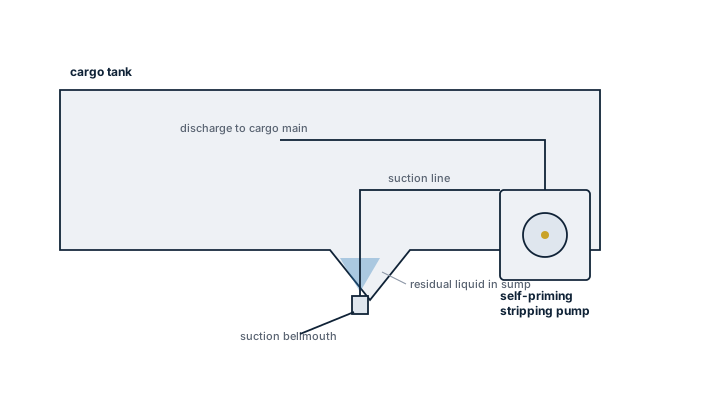
Main components
Pump element
Reciprocating piston, screw, or self-priming centrifugal design; screw types are common on chemical and product carriers for their tolerance of two-phase liquid/vapour flow at the end of stripping.
Suction arrangement
A dedicated stripping line and bellmouth set into the tank's lowest point, separate from the main cargo suction bellmouth, so it can reach liquid the main line has already lost contact with.
Drive
Hydraulic or steam-driven on most tankers, keeping ignition sources out of the cargo tank and pump room, with the prime mover located in a separate pump room or on deck.
Eductor as alternative
Many ships use a steam or water-driven eductor instead of, or alongside, a mechanical stripping pump for final tank drainage; it has no moving parts in the tank but needs a motive fluid supply and loses efficiency as tank residue drops.
Selection and sizing
Selection turns on suction lift capability at very low NPSH, tolerance for entrained vapour and two-phase flow, and compatibility of wetted materials with the cargo grades the vessel carries - stainless steel or duplex for corrosive or high-purity chemical cargoes, carbon steel acceptable for crude and fuel oil service. Capacity is modest, typically well under the main pump's rated flow, because the job is residue removal, not bulk discharge.
Regulations and class
MARPOL Annex II sets the cargo retention quantities a chemical tanker must achieve before tank washing, categorised by cargo type, and a ship's stripping system is assessed against these limits during construction and P&A Manual approval. Class rules require the stripping system to be tested against the retention figures declared in the vessel's Procedures and Arrangements Manual.
Typical faults
- Loss of suction lift - worn seals or clearances in the pump element let it lose priming ability, leaving cargo behind and failing the retention quantity test.
- Air/vapour lock - a self-priming centrifugal type can lose prime entirely if vapour ingress exceeds its self-priming capacity, needing a re-prime cycle mid-operation.
- Eductor motive fluid fault - a drop in driving steam or water pressure collapses eductor performance without any alarm on the stripping line itself.
- Blocked stripping bellmouth - sludge or scale at the tank low point starves the pump despite the pump itself being fully serviceable.
What to look for in a supplier
- Documented dry-running and cavitation tolerance for the pump element, not just a rated flow curve.
- Material certificates matching the cargo list the vessel is chartered for.
- Compatibility with the vessel's existing stripping line sizing and drive utility, steam or hydraulic.
Retention quantity tests are done with the ship at a fixed trim and list; a stripping pump that passes on a flat berth can still fail at sea trim if the bellmouth sits off the tank's actual low point.